SFBG Blogs

Oakland hosts Buzz band

0

By Sam Stander

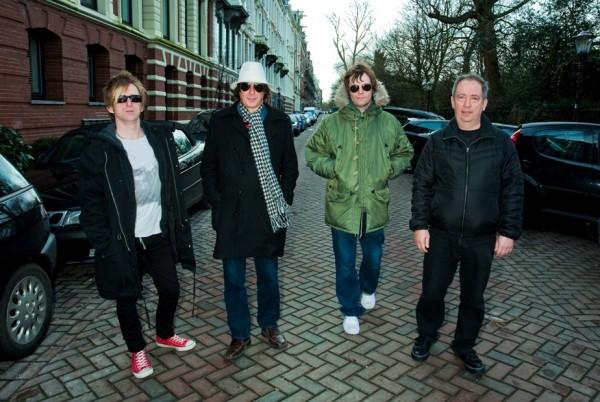
First-wave British punk’s pop geniuses the Buzzcocks have been reunited for some time now, currently sporting two members from the band’s heyday in the late ’70s, guitarist-vocalists Pete Shelley and Steve Diggle. They’re passing through the East Bay on Fri/4, at Oakland’s Uptown, backed by pop-punkers the Dollyrots. It’s their only Bay Area stop on this go-round, and a surprisingly small venue for such a heroic act. Buzzcocks monopolize a distinctive mixture of frankness and enthusiasm that still trumps their countless teen-bop imitators, and any chance to see them even at this late date should be relished. Videos (now and then) and show info after the jump.


THE BUZZCOCKS

With Images
8:30 p.m. (doors), $35
The Uptown
1928 Telegraph, Oakland
www.uptownnightclub.com

Hot sexy events June 2-8

0

I once took a memoir writing class that ended up being all women. One of the most powerful, if slightly cringe-inducing pieces that was read aloud was one from a fifty-something lady who’d just taken her first pole dancing class, a course which culminated in an amateur night at a local tattoo-and-piercing style strip club. This lady was absolutely, deep breathingly, tear jerkingly, blown away by the power surge of arousal that she got from trotting out her decidedly un-pinup lady parts on the floor. It made me wish that all moms got a gift certificate for stripper class upon their last child’s exodus from the family home. Gosh, and what if they all got to check out a Vagina Jenkins show (Fri/4)! Do you like? If you do, check out Slinky Productions’ little how-to on Sun/6. Sure, at $149 it’s spendy, but at what cost sexy?

——————————————-

Kinky Relationships

Just bridging that gap from vanilla to kinky with your naughty hottie? Learn to navigate the difference between “conventional” and pervy love – festish, BDSM – in addition to identifying who’s a good play mate for tonight, and who’s a keeper for tomorrow.

Thurs/3 7:30-10:30 p.m., $15-25 sliding scale

SF Citadel

1277 Mission, SF

(415) 626-1746

www.sfcitadel.org

——————————————-

Rebel Girl

‘Member the days when all it took to get known was a penchant for sharing personal stories… and scissors and a glue stick instead of quick index fingers and a smart phone? Them were the zine days, and they rocked it when it came to sexual revelation. Here to remind us about why they rocked are some of the sassiest queer zine scenesters everr. Don’t worry, zines themselves, and cupcakes of course, will be on sale for those voracious readers among us. The event’s a part of the National Queer Arts Festival, which is out and out awesome this year.

Thurs/3 8 p.m., $12-20

African-American Art and Culture Complex

762 Fulton, SF

www.queerculturalcenter.org

——————————————-

Bent

This month’s theme for the kinky youth play party is “Working Stiff,” which in Bent’s case means you’re going to have “The Office XXX” playing all night, sexy secretary strip teases, and a lot of jokes about “billable hours.” Tip from me: absolutely ignore them and please don’t turn in a time card for your floggings on Monday.

Fri/4 9 p.m.- 2 a.m., $20

SF Citadel

1277 Mission, SF

(415) 626-1746

www.stefanosandchey.com/bent

——————————————-

Exotic Dance Smorgasbord

They break the class schedule down pretty well for you: three kinds of hip gyrations, two “booty shows” (oh my!), three pole dance moves-swings, a lap dance routine and a floorshow routine await you here. And if that’s not a lot of pizazz to fit into six hours, I don’t know what is.

Sun/6 12-6 p.m., $149

Center for Sex and Culture

1519 Mission, SF

www.slinkyproductions.com

——————————————-

Make Sundae Nasty!

Kick off Pride month (if you haven’t by now, geez you’ve had five days already!) with this sexy, sexy ice cream bar at Renegade’s, the only leather and Levis gay bar in San Jose. Soak your cherries in vodka, smother your body in whipped cream, lick your lips — and if the paddle somehow found its way into your purse, well that’s okay, too.

Sun/6 3-7 p.m., free

Renegades Bar

501 W Taylor, San Jose

(408) 275-9902 

www.renegadesbar.com

——————————————-

Different Strokes

“About as fun as a hand job,” has been a good chum’s mantra when it comes to the lame and frictive events he’d rather miss. Ah, the much maligned hand job. Would that one of this gentleman’s partners had partook in this class, which promises a smooth rubdown from the ball sac massage to the triumphant fountain finish.

Mon/7 8-10 p.m., $25-30

Good Vibrations

2504 San Pablo, Berkl.

(510) 841-8987 

www.goodvibes.com

Newsom doesn’t read the Guardian!

13


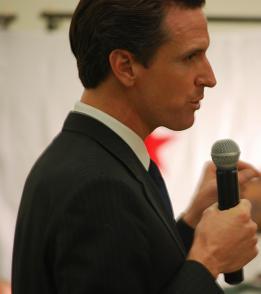
Gav was on KQED this morning, talking about his run for Lite Guv, and he started right off by saying how he doesn’t ever — ever — read the Bay Guardian


Michael Krasny started off by asking why Newsom refused to appear on the radio in a debate with Janice Hahn. “She agreed, you didn’t.” Krasny asked. “Why?”


Newsom’s comment: Gee, I didn’t have time for a debate. Too busy running the city, and trying to balance a budget– “the most complex budget in city history.” He insisted that he’d solved a $522 million deficit without laying off police or firefighters, while protecting the soc sev safety net and investing in homeless service and universal health care.


Krasny: “So the Guardian can’t beat you up any more?”


Gav: “Honestly, I haven’t read it in years, with all due respect to Tim Redmond and Brugmann and whatever the team is over there.”


Krasny, politely, tried to bring up the idea that a no-new-taxes budget means fewer jobs, but Newsom had none of it: “They seem to have a tax first policy,” he said (although he doesn’t read us, so he doesn’t know. He complained that San Franciscans are already paying 10 percent in sales tax — “a regressive tax,” and that “they (presumably the Guardian) consistently support it, I don’t.”


Read our paper, Mr. Mayor. The Guardian has consistently, for many years, argued that sales taxes are regressive, and we’ve consistently, for years, argued that there are far better options, ways the city can reclaim money from the wealthy. And we’ve argued that Newsom’s no-new-taxes policy is bad for the economy.


Oh, and by the way: You talked over and over about universal health care in San Francisco, and how proud you were of that policy. But if you were reading the Bay Guardian, you might recall that it wasn’t your policy. That initiative came from then-Sup. Tom Ammiano, and you opposed the key employer mandates that fund it. Hey, you could even pick that up by reading the Chron:


Why Comcast sucks

73

Ever wonder why Comcast routinely ranks among the worst companies in America for customer service? Let me tell you a story.


So my cable box stopped working, which meant I couldn’t get the Giants games and my daughter couldn’t watch Hannah Montana, which was something of a crisis in the Redmond household. So I called Comcast, and the nice woman on the phone tried a remote diagnosis, and told me the box was fried. “But don’t worry,” she said. “Just drop it by our office and we’ll give you a new one right away.”


Just drop it by our office. Here’s that that means: You arrive at the cramped, airless spot on Potrero and 16th and wait. And wait. And wait. When I got there, the line was 21 people long, and four customer service clerks were trying their best to sort out a wide range of problems — bill problems, service problems, people wanting more channels problems … by the time I got to the front, 41 minutes had passed, and the line stood at 28 people. There wasn’t any more room in the office; the 29th person was going to have to stand out on the street.


“It’s always like this,” an older woman in the line complained. And she’s right — at least, every time I’ve ever been there, the lines been long, the wait’s been long and every single person in the room was unhappy.


Here’s what’s going on: In the old days, when your cable service didn’t work, they sent a repair person to your house, and that person either fixed the problem or installed new equipment. Now it’s up to me to unscrew the box (easy enough for me, though maybe not for everyone), take my time to go wait in line for a new one, and reinstall it (again, easy for me, maybe not for everyone.) So I’m already saving Comcast the money it used to spend sending a trained technician to my house.  Now I’m paying, with my own time, to wait while an inadequate number of service people try to handle far too many problems.


Brian Roberts is the CEO of Comcast. I’ve sent him a note that says the following:


1. You need to hire more people for customer service. If you don’t want to pay to send techs out to my house, then properly staff your offices. Most people have jobs, and can’t afford to spend an hour or more (with travel time) to exchange a piece of your equipment every time it breaks.


2. Set up some orderly lines. One line for simple exchanges of gear, one for billing problems, one for people who want to spend 30 minutes deciding on a service upgrade. Even the DMV gets that; it shouldn’t be so hard.


3. But more reliable gear.


4. Or: Cut your prices. I’m paying way, way too much money to put up with this shit.

More Rara Tou Limen than tutu: Ethnic Dance Fest 2010

0

“It’s a great thing for us to be in the festival this year,” says Portsha Jefferson, artistic director of Ethnic Dance Festival first timer, the Rara Tou Limen Haitian dance company. “There’s so many misconceptions about Haiti and voudou — this gives the world a better idea of what makes the Haitian people so strong.” Her company is not the only one that sees the festival as a unique way to shout out to the world. Now in its 32nd year, the Ethnic Dance Festival (begins Sat/5) is cited as one of the reasons that our international dance scene is considered to be among the strongest in the country.

Rara Tou Limen was born on the streets in the Mission, the sole Haitian dancers in the neighborhood’s ecstatic Carnaval festivities. Jefferson, herself a Haitian-American, was compelled to start a group that  worked against negative stereotypes of Haiti, and captured “the beauty of the culture, the people, the music, the food,” the long time dancer says. She was also motivated by an urge to share what her people have achieved. “Knowing [the Haitians’] history, and what they’ve done in terms of revolution and fighting for their rights; the fact that they’re so strong and resilient, that really speaks to me. I think all of those characteristics of the people come through their music, and through the dance. It’s hard not to get caught in it.”

The success of Haitian dance in the Bay echoes a larger trend of SF dancers finding connection with ancestral artistic forms, and even with cultures apart from their own. Rara Tou Limen’s musical director, master Haitian drummer Daniel Brevil, was happy to see the resonance his homeland traditions had created when he arrived in the Bay in 2008. It was far away from the island where he learned rhythms from his father beginning at the age of eight, but “when I got here and I saw how many people taught Haitian dance,” Brevil says “I was so happy and proud to be Haitian. The people that teach it here, [some of them] they’re not even Haitian.”

That kind of exposure to new art forms is exactly what inspires festival organizer Julie Mushet. The executive director of World Arts West, the group that coordinates the festival, Mushet “was completely astounded the first time I got to experience [the festival].”.

Each year, prospective companies undergo a lengthy audition process – beginning with tryouts that can themselves attract crowds of dance fans. 130 local groups auditioned this year for eight dance experts, who then assembled a list of their top 20, and sent them to the World Arts West staff for the final decision on who got to dance in the festival’s three performance weekends.

Mushet says their choices come down to a matrix of qualities; choreography, dynamics between dancers, quality of music, props and regalia — but in the end the festival is also looking for cultural diversity. World Arts West believes that in the connections between dance and other artistic traditions lie a certain key to cross cultural participation.

“Parents tend to take their kids to the ballet, “The Nutcracker,” but it’s harder to figure out how to introduce kids to the hundreds of other [dance] forms they could learn about,” says Mushet. “[The festival] is a great way to see what the child might be interested in – many of the current dancers first attended as audience members, and now twenty years later, they’re part of a group that’s on stage.”

A tutu… or the beautiful, sparkling outfits Rara Tou Limen wears in their Carnaval performance? Pirouettes or the more elemental joy of their rhythmic ducks and twirls to pounding rara drums? With 37 companies dancing the traditional and updated forms of movement from countries like Korea, the Congo, Uzbekistan, and Puerto Rico, the Ethnic Dance Festival has a form of beauty for everyone, be it their own cultural tradition or one they’ll discover the day of the show.

Ethnic Dance Festival
Through June 27
Sat.-Sun., 2 p.m. (also Sat., 8 p.m.), $22-44
Palace of Fine Arts
3301 Lyon, SF
(415) 474-3914
www.worldartswest.org

SFBG Radio: Tim and Johnny on the election

15

Today, Johnny and Tim talk about California Republican gubernatorial cadidates Meg Whitman and Steve Poizner and the upcoming voter initiative to legalize marijuana in the November election. You can listen after the jump.


SFBG.com Radio 6/1/10 by SFBG

Street Threads: New York City

0

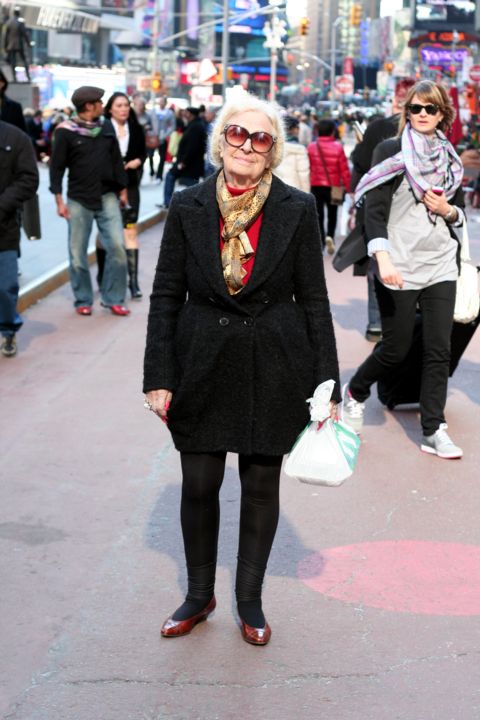
Today’s Look: Juli, Times Square

Tell us about your look: “I like clothes that are cute and comfortable.”

Newsom’s budget includes a few ideas “Supervisors can’t stand”

City department heads, members of the San Francisco Board of Supervisors, representatives from major news outlets, and others crowded into the Luggage Store Art Gallery at 6th and Market streets on June 1 to hear Mayor Gavin Newsom discuss his proposed 2010-2011 budget.

Colorful artwork, such as a collage fashioned from cereal boxes, adorned the walls, and Newsom said he’d selected the venue to emphasize his commitment to improving the blighted mid-Market area.

Newsom’s $6.48 billion budget is being put forth in the face of a roughly $480 million deficit, which places the city in a similar financial situation to last year, when the mayor’s budget proposal sparked an outcry from progressive supervisors and a wide array of advocacy organizations for its deep blows to public health programs and critical services.

At first glance, the Department of Public Health seems to have fared better this time around, as a partial result of outside funding through federal programs. However, Newsom proposed slashing $22 million from DPH, compared with a total department budget of approximately $1.4 billion.

Newsom’s budget eliminates a total of 993 positions that are filled and unfilled, though the mayor said he anticipated 350 actual layoffs, bringing the total number of city employees to the lowest level in more than a decade. He thanked those he referred to as “enlightened city employees” for wage concessions that made fewer layoffs possible. There were no layoffs in the San Francisco Police Department or the San Francisco Fire Department, Newsom noted. The mayor also announced that an additional $5.9 million would be allocated to remedy the plagued crime lab.

The most contentious issue to emerge from the budget announcement was a proposal to generate $8 million through condo-conversion fees, under a system that would make it easier for people to turn rental units and tenancy-in-common units into condominiums.

Newsom accounted for funding from this proposal despite a lack of support from the Board of Supervisors. “I know the Board of Supervisors can’t stand this,” he said. “But I can’t stand the alternative. … This is a debate that I want to have, because I think this is principled and right.” He added that he thought supervisors’ resistance to accelerated condo conversions was “so darn ideological that it gets in the way of having a real discussion.”

Sup. John Avalos, who chairs the Budget & Finance Committee, said that he and other supervisors fear this could lead to more owner move-in evictions, a trend that would upend tenants’ lives and ultimately deplete the city’s affordable housing stock. “That’s been a concern of mine for months,” Avalos noted. Newsom’s decision to go forward with including it in the budget means that if the Supes reject it, they’ll have to find an additional $8 million to make up for the gap. “It’s kind of like putting a gun to our heads,” he said.

Newsom asserted that the budget was balanced “Without draconian cuts,” saying, “We were able to avoid the kind of cataclysmic devastation that some had argued … was inevitable in this budget.”

Yet Avalos described it as “pretty much an all-cuts budget,” because it contained no new revenue generating measures. “There are no new taxes in this budget,” Newsom said. “I know some folks prefer tax increases. I don’t.”

Avalos said he and other members of the board were working on a number of revenue-generating measures, including a nickel-per-drink tax on alcoholic beverages that would be aimed at the level of distributors, not small independent businesses.

Expect more on the mayor’s budget in coming weeks.

The Daily Blurgh: Gaydar, crafting-as-protest

0

Curiosities, quirks, oddites, and items from around the Bay and beyond

Gaydar may actually exist.

*****
Who do you wanna see at Outside Lands this year? Lord, please let Janelle Monae and Al Green do a duet.

*****
Berkeley does indeed have a Tea Party: “Rogue knitters encamped along the Berkeley-Oakland border with lawn chairs, tea cakes and knitting projects to protest the city of Berkeley’s order that they remove an 8-foot knitted tea cozy they sewed over the T in a public sculpture they believe insults Oakland.”

*****
I’m all for going green and buying local but when you describe your business as, “[a] hipster green lifestyle market… celebrating all things cool about being a green localist,” my head can’t but help hit my desk. Go easy on the buzz-speak people.

*****

Deadly trips at Cow Palace rave.

******

RIP Louise Bourgeois. If you haven’t checked out “Mother and Child,” an exhibit of Bourgeois’ recent, maternally-fixated work currently hanging at Gallery Paule Anglim, please do so. There’s also the arachnid pile-up The Nest in SFMOMA’s sculpture garden and Crouching Spider at Pier 14. Peter Orlovsky, poet and longtime companion to Allen Ginsberg, and iconic actor Dennis Hopper also left this plane over the weekend.

“Leather Gimp” wins it!

0

Just in time for Pride Month, the winner of this year’s International Mr. Leather competition (held this past weekend in Chicago) is New Mexican transman wheelchair-user — and self-described “Leather Gimp” — Tyler McCormick. We teared up at his speech. Diversity x 1 million = work the runway. In a leather jockstrap, even.  

Snap Sounds: Kisses

0

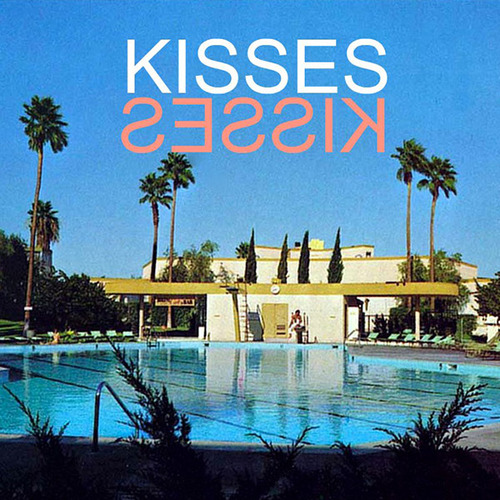
To name a song “Midnight Lover” is ambitious, and perhaps dangerous. A song with a title so classically charged with sex and romance had better deliver. Luckily, this track from Kisses’ upcoming album Heart of the Nightlife (Surround Sound) possesses enough swoon-worthiness to compensate for its relative lack of lust. This duo is romantic, and has the disco credentials – love of Cerrone and Gino Soccio; tutelage under Alec R. Constandinos – to deliver the sleek seduction.
http://www.youtube.com/watch?v=ZKRagSW56Os

Vegans and vegetarians might not like a chorus come-on that hinges on the appeal of an invitation to a “nice steak dinner,” but Jesse Kivel’s Jens Lekmanesque croon makes the sentiment hard to resist. (It’s also timely, what with Tracey Thorn calling out Lekman by name on the first track of her new album and singing a duet with him later.) Of course, Lekman covered a song by the true tremulous source of the waves of indie-tinged electronic pop and electronic-tinged indie pop in recent years: namely, Arthur Russell. No one to date has matched Russell’s emotional purity, but Kisses might be my favorite of his children-in-waiting because of the way Kivel manages to at least approximate the simple tenderness of Russell’s lyricism. He zeroes in on the feeling of happiness that occurs when one realizes old friends aren’t lost, or that an affair is on the horizon. In this case, perhaps a vacation resort sunset horizon rather than a hazy one on Russell’s urban pier haunting and cruising grounds..

Kisses’ first release “Bermuda” is a strong contender for my favorite song of spring-into-summer, and with this one, the twosome has got another in the running. Inspired in part by Kivel’s past gig as a travel writer, the loneliness of a luxury vagabond life seems to be a theme of Kivel’s and Zinzi Edmundson’s album. I’m ready to dive into Heart of the Nightlife.


“Beach, fun, drinks, girls, and a good time”: Chico Trujillo is your Memorial hangover cure

0

Thank you holiday weekend, you have memorialized whatever brain cells and desire to integrate into the everyday world of not being drunk by 2 p.m. I still had left. I suppose it was a fair trade for all the lovely memories that I of course won’t remember. Shall we turn then, to something fun that’s happening this upcoming weekend (Fri/4 La Peña Cultural Center) to keep us going? A lovely South American cumbia party that goes by the name of Chico Trujillo? Hurry, before sobriety catches you, cue the mp3 and hold on for the interview! 

Click here, then proceed.

Now that the tunes are swirling through those alcohol and sunshine wasted synapses — a note of historical significance. For those who have never ratcheted their hips to a sensual beat on a cobblestone colonial street, cumbia originated in the wilds of Colombia. It was originally played for courtship rituals by the area’s enslaved African population. Throughout the years, cumbia’s rolling stone gathered snippets of the culture around it, rhythms from the indigenous Colombians, the use of European instruments, etc, etc. Let’s just say it was adept at bringing people together to party.

Chico Trujillo (who are good old chicos from Chile), inherited this mish-mash legacy, and saw it the addition of ska — a fact which imparts an evident swagger to their most recent release, Chico de Oro. Although on the whole, Chilean cumbia’s been ceding its popularity to the ear drum exploding beats of reggaeton, Chico Trujillo’s gigs still get crazy and light roofs on fire, I guess symbolically speaking. 

Heartened by how cool it’s proven itself to be in the homeland, Chico’s now taking its show to Gringolandia — they’ll be rocking the stage at La Peña Cultural Center as part of that East Bay progressive organization’s 35th anniversary party. I chatted with the band recently via email, and their responses, I guarantee, will make that first day back on your grind a little smoother to jibe with.


San Francisco Bay Guardian: I’ve heard that most of your shows in Chile sell out. They sound like amazing parties. What makes a good party, in your opinion? 

Chico Trujillo: In Chile, a good party means the best loud music, best drinks, nicest women (and men, I guess), and everybody dancing and singing. But I think that is a good party anywhere. And yes, all of our shows sell out.


SFBG: Oh my. What makes cumbia so awesome?

CT: Its simplicity, and its hypnotizing effect on the people. Once we start, the people just can’t stop, and neither can we.


SFBG: Tell us about the social issues you touch on in your music. Do you consider yourselves activists?

CT: As human beings, we consider ourselves activists, and are very concerned with social issues happening in Chile. Although we may not always agree with the “left” all the time (and almost never with the “right”), we do actively participate in events that we feel are important. [There’s] a lot of things concerning the environment in Chile, the native people’s rights there, etc. We just arrived in the US, and have seen non-stop on the TV things about the oil spill.  We would love to do something, anything to help that out. But as for our lyrics, and the music of Chico Trujillo, well, they speak more to the utopian ideals that we have of beach, fun, drinks, girls, and a good time, a break from the real world – [which is] the only things people should think about when we hit the stage. If everyone lived by the lyrics of Chico Trujillo, the world would be a better place…

Chico Trujillo feat. Tokezon

8-10 p.m., $15-18

La Peña Cultural Center

3105 Shattuck, Berkl. 

(510) 849-2568

www.lapena.org

Benefits: June 2-June 8

0

Ways to have fun while giving back this week


Wednesday, June 2

Headlands Center for the Arts Auction
Attend this benefit featuring work by more than 85 contemporary artists with cocktails, hors d’oeuvres, and entertainment.
6:30 p.m., $100
Herbst International Exhibition Hall
The Presidio
385 Moraga, SF
www.headlands.org/auction

“Escape from the Opera House”
Catch “escapees” from Bay Area opera and musical theater companies performing an evening of fun and fine music to benefit the Life After Exoneration Program and the Unrepresented Death Row Prisoner Project. Reception to follow.
8 p.m., $15
First Congregational Church of Berkeley
2345 Channing, Berk.
(510) 486-8006

Thursday, June 3

WGirls Bachelor/Bachelorette Auction
Bid on some of the most eligible bachelors and bachelorettes in the Bay Area at this fundraiser for local charity Oasis for Girls featuring dancing, raffles, an hour open bar, and more.
6:30 p.m., $40
330 Rich, SF
http://wgirls.org


“Where is Tibet?”
Attend this Qinghai Earthquake Benefit featuring a two part presentation of Genny Lim’s “Where is Tibet?” performed by Tsering Bawa, Francis Wong, Lenora Lee, and Genny Lim followed by a slideshow by the Tibetan Association of Northern California on the earthquake devastation in Qinghai.
7 p.m., $10 suggested donation
Berkeley Fellowship of Unitarian Universalists
1924 Cedar, Berk.
(510) 841-4824

Friday, June 4

SummerTini
Kick off the summer at this fundraiser for Episcopal Community Services employment programs featuring live jazz, martinis, and specialty hors d’ oeuvres from Bay Area restaurants.
6 p.m., $75-$100
Galleria at the San Francisco Design Center
101 Henry Adams, SF
www.summertini.org

21 Grand Art Sale
Come early for the best view of everything because as the art is sold, it will come down immediately ready to go home with whomever buys it. Art is donated by nearly 90 different artists and sales will benefit 21 Grand.
7 p.m., free
21 Grand
416 25th St., Oakl.
www.21grand.org

Saturday, June 5

“Even More Glitter”
Enjoy a gallery talk with photographer Daniel Nicoletta, who’s show “More Glitter-Less Bitter” documents San Francisco’s gay, lesbian, bisexual, and transgender communities. Proceeds to benefit the Gay, Lesbian, Bisexual, Transgender Historical Society.
6 p.m., $100
Electric Works
130 8th St., SF
www.sfelectricworks.com

GLAAD Media Awards
The Gay & Lesbian Alliance Against Defamation (GLAAD) will recognize and honor media for their fair, accurate and inclusive representations of the lesbian, gay, bisexual and transgender community and the issues that affect their lives. GLAAD will also honor actress Cybill Shepard and filmmaker Lee Daniels.
4:30 p.m., $350
San Francisco Marriott Marquis
55 4th St., SF
www.glaad.org/mediaawards

VisionWalk
This fundraising walk for the Foundation Fighting Blindness brings hundreds of people together to take part in finding preventions, treatments, and cures for people with retinal degenerative diseases.
10 a.m., raise $100 or more for a t-shirt
Golden Gate Park
Music Concourse Bandshell, SF
www.visionwalk.org

Walk for Hope
This year City of Hope has expanded their annual 5k walk to benefit all women’s cancers, so sign up to walk or voluteer today.
9 a.m., $30 registration
Justin Herman Plaza
Market Street and Embarcadero, SF
www.walk4hope.org

“What the World Needs Now…”
Attend this gala fundraiser and opening night for a juried exhibit of children’s art featuring hors d’ oeuvres, wine tastings, an artists’ marketplace, and entertainment by youth performance troupes. The exhibit features artwork by Bay Area children in grades K-12 on the themes of social justice, community awareness, and world peace.
5 p.m., $50
Museum of Children’s Art
538 9th St., Oakl.
www.mocha.org

Sunday, June 6

Scavenger Crawl
Go on a scavenger hunt and pub crawl to build awareness and advocacy for Bay Area non-profits, where clues and puzzles lead you through different restaurants, bars, and retail shops throughout San Francisco. Gift certificate prizes for the winning teams.
2 p.m., $20
Start at Sports Basement
610 Old Mason, SF
www.scavengercrawl.org

Quick Lit: June 2-June 8

0

Literary readings, book tours, and talks this week

Maude Barlow, the female farming revolution, Babylon Salon, Mahnaz Afkhami, The Art of Baseball, Nerd Nite, and more.

Wednesday, June 2

Mahnaz Afkhami
Afkhami, exiled from Iran under threat of death during the Iranian Revolution, has worked as a leading advocate for women’s rights internationally for more than three decades. Hear her discuss some of the most pressing issues for women in the Middle East today.
6 p.m., $25
Omni Hotel
500 California, SF
RSVP at 415-543-4669 ext. 27, or email events@imow.org

Talk Softly
Author Cynthia O’Neal reads from her inspiring memoir.
7:30 p.m., free
Books Inc. Castro
2275 Market, SF
(415) 864-6777


Thursday, June 3

The Art of Baseball
Author and journalist Jeff Gillenkirk will read from his novel, Home, Away, about the evolving relationship of a father and his formerly estranged son, that develops at odds with the father’s multi-million dollar contract to pitch for the Colorado Rockies.
6 p.m., free
George Krevsky Gallery
77 Geary, SF
(415) 397-9748


Maude Barlow

Barlow is the Senior Advisor on Water to the President of the UN. Hear talk about how California’s misuse of water may actually be changing the hydrological cycle and contributing to global warming.
8 p.m., $20
Herbst Theater
401 Van Ness, SF
www.cityboxoffice.com

Nancy’s Theory of Style
Author Grace Coopersmith discusses her book that shows that happiness and love, like fashion, aren’t about playing it safe.
7 p.m., free
Books Inc. Berkeley
1760 4th St., SF
(510) 525-7777

Nerd Nite
Gather with other nerds to discuss nerdery of all sorts at this meet-up featuring talks “I Was  a Teenage Ichthyologist” with Bart Bernhardt, “It’s Not Its Size, But How You Work It” with Brady Burgess, and “Is It Fake Money If You Can Buy Real Hookers With It?” with Jennifer Russel.
8 p.m., $10
Rickshaw Stop
155 Fell, SF
www.nerdnite.com

79th Annual California Book Awards
Watch as gold medals are presented to D.A. Powell (Chronic) for poetry, Rebecca Solnit (A Paradise Built in Hell) for nonfiction, Lori Ostlund (The Bigness of the World) for first fiction, Yiyun Li (The Vagrants) for fiction,  Susan Patron (Lucky Breaks) for juvenile, Sherri Smith (Flygirl) for young adult Daniel C. Matt (Translation and Commentary, The Zohar Pritzker Edition, Volume Five ) for contribution to publishing, and Elaine Elinson and Stan Yogi (Wherever There’s a Fight) for Californiana. Silver medal awards will also be given out.
6 p.m., $20
Commonwealth Club
2nd floor
595 Market, SF
(415) 597-6700

Friday, June 4 

Farmer Jane: Women changing the way we eat
Featuring stories about over 30 women farmers, chefs, policy wonks, and educators, author Temra Costa celebrates women’s role in changing how we eat and farm for the better. Hear local food stories, taste delicious foods, and meet the author.
7 p.m., free
Green Arcade
1680 Market, SF
(415) 431-6800


Long Time Passing

Author Susan Galleymore began interviewing mothers across The U.S. and the Middle East about war and its consequences after her son was deployed to Afghanistan in 2003. Hear her read and discuss her book, Long Time Passing: Mothers speak out about war and terror.
7:30 p.m., free
St. Joseph the Worker Church Chapel
1640 Addison, Berk.
(510) 499-0537

Saturday, June 5

Babylon Salon
This installment of the reading and performance series presents poet Rusty Morrison, the true keeps calm biding its story and Whethering, and novelist Tom Barbash, The Last Good Chance and On Top of the World: Candor Fitzgerald, Howard Lutnick, and 9/11, along with writers Deborah P. Bloch, N.A. Jong, and more.
7:30 p.m., free
Cantina SF
580 Sutter, SF
www.babylonsalon.com

The Glorious World Cup
Alan Black presents this guide to the World Cup, filled with tales of the teams, fans, goals, saves, divas, divers, myths, and madness.
3 p.m., free
Borders
400 Post, SF
(415) 399-1633


Jim Nisbet

Hayes Valley resident, sailor, and author Nisbet celebrates his new book, Windward Passage, and the re-issue of his cult classic novel, Lethal Injection.
7 p.m., free
Green Arcade
1680 Market, SF
(415) 431-6800


Monday, June 7

A Soft Place to Land
Susan Rebecca White discusses her new book about sisters whose relationship becomes complicated by resentment, anger, and jealousy.
7:30 p.m., free
Books Inc. Marina
2251 Chestnut, SF
(415) 931-3633

Peter Allen
Hear the Green Party candidate for California Attorney General discuss energy policy as it relates to the tragic oil spill happening in the Gulf of Mexico, and what the spill can teach us when discussing nuclear energy.
7 p.m., free
Green Arcade
1680 Market, SF
(415) 431-6800

Second Nature: The inner lives of animals
Author Jonathan Balcombe, joined by the Berkeley Humane Society, presents his book that shakes human supremacy and opens the door to the inner lives of animals.
7 p.m., free
Books Inc. Berkeley
1760 4th St., SF
(510) 525-7777

Tuesday, June 8

The Accordionist’s Son
Stanford scholar and author Bernardo Atxaga will give a literary reading and discussion. Atxaga is a Basque novelist known for writing in Euskera, a language forbidden in Spain by the Franco regime. He will discuss his early experiences writing in a suppressed language and his identity as both a Spanish and Basque writer.
12:30 p.m., free
111 Minna Gallery
111 Minna, SF
(415) 974-1719

“Giacomo Puccini’s The Girl of the Golden West”
Join the San Francisco Opera and the California Historical Society for this presentation on Puccini’s opera about the California Gold Rush.
6 p.m., free
California Historical Society Museum
678 Mission, SF
RSVP at (415) 357-1848, ext. 229, or email kjacobson@calhist.org


The Golden Game: Writers on Soccer

Alon Raab will read and discuss his co-edited book of soccer stories. Share your own soccer stories and legends in celebration of the 2010 World Cup.
6 p.m., free
Unversity Press Books
2430 Bancroft, Berk.
(510) 548-0585

“How to Ride Anywhere and Fix a Flat”
Attend this cycling skills and basic maintenance class that will provide helpful instructions for people who bike in the city and want to learn more about urban cycling.
6:30 p.m., free
REI
840 Brannan, SF
www.sfbike.org

Missing Mentor
Mary Stutts wil discuss her book, Missing Mentor: Women advising women on power, progress, and priorities.
7:30 p.m., free
Books Inc. Alameda
1344 Park, Alameda
(510) 522-2226

The More I Owe You
Hear author Michael Sledge discuss his new book about the beloved poet Elizabeth Bishop, including her life in Brazil and her relationship with her lover Lota de Macedo Soares.
7 p.m., free
Books Inc. Laurel Village
3515 California, SF
(415) 221-3666


Peepshow

Author Joshua Braff will read and discuss his book about a 17 year old boy who chooses to help his father run a porn theater in New York’s Times Square instead of embracing his mother’s Hasidic Jewish sect.
7:30 p.m., free
Booksmith
1644 Haight, SF
www.booksmith.com

Writing on My Forehead
Nafisa Haji presents his bestselling book that meditates on the meaning of family, tradition, and the ties that bind.
7 p.m., free
Books Inc. Opera Plaza
601 Van Ness, SF
(415) 776-1111


Let the ICE picket begin

7

Members of the San Francisco Immigrant Rights Defense Committee launched a picket outside US Immigration and Customs Enforcement (ICE)’s Detention and Removal Operations office at 630 Sansome Street today to decry the activation of Secure Communities, which they describe as a “dangerous police-ICE collaboration program that threatens public safety.”


“In the wake of massive protests this weekend against Arizona’s anti-immigrant law, a broad coalition of immigrant rights advocates will stage a protest Tuesday in San Francisco against the implementation of a new police-ICE collaboration initiative which will harm public safety, the so-called ‘Secure’ Communities or S-Comm program,” SFIRDC’s press release states.

Concerned community members plan to form a picket line holding placards of enlarged fingerprints and multi-lingual messages “to expose the danger the program poses to the community.”

 “If we oppose Arizona’s SB1070, then we cannot stand aside while a dangerous policy with disturbing similarities to SB1070 is forced on our own city,” Carolina Morales of Community United Against Violence stated. “S-Comm gives dangerous discretion to police officers to falsely arrest or overcharge immigrant residents, who would then be automatically reported for deportation.”

The picket comes as a veto-proof majority of eight SF Supervisors stands poised to vote next week (there is no Board meeting today) on a resolution calling on local law enforcement to opt-out of S-Comm, noting that the policy “puts at risk even those subject to arrest for a minor infraction and those who did not commit any crime at all but were falsely arrested. “

To date, the Mayor’s Office has not indicated that Newsom has any concerns with the program.
But San Francisco Sheriff Michael Hennessey, who requested to opt out of the program, has stated that S-Comm “will widen the net (of people reported to ICE) excessively” and that ICE has a “record of secrecy.”

Last year, the California Dept. of Justice signed a memorandum with ICE on the S-Comm program; the cover letter indicated that counties needed to agree to the program by signing a “statement of intent.” But last week, Attorney General Brown denied the Sheriff’s request to opt out, so community and legal advocates continue to explore their options.
 
 “The Attorney General is mistaken in believing that this program will only affect people who have already been apprehended and deported by ICE or charged with serious offenses,” said Francisco Ugarte, an immigrant rights attorney with Dolores Street Community Services.

.
 According to ICE’s own data, 5  percent of the people identified under the S-Comm program were U.S. citizens, and some 9 out of 10 of the total identified were charged with low level offenses, including property and traffic violations, not serious crimes.
And then there’s the fact that ICE’s data does not indicate whether those deported were actually found guilty of crimes, or were simply charged with crimes—a key distinction for anyone who professes to believe in human rights.

 “Our city’s families are living in fear that if they report a threat to their own safety, they or their family member may risk deportation, “ Nour Chammas with the Arab Resource and Organizing Center stated in SFIRDC’s press release. “This policy will tear at the very fabric of San Francisco’s rich and diverse culture.”

And Bobbi Lopez of La Voz Latina observed that folks are working on a federal level for immigration reform because they know real solutions to a broken immigration system.  “However, we cannot just sit idly by and wait while ICE’s police collaboration schemes threaten our families daily,” Lopez warned. “ We are proud that city officials are standing with community members to halt this attack on our San Francisco community.” 

Today’s picket was called for by the following members of SFIRDC:
African Advocacy Network, Arab Resource and Organizing Center, Asian Law Caucus,
CARECEN, Causa Justa: Just Cause, Chinese for Affirmative Action, Chinese Progressive Association, Communities United Against Violence, Dolores Street Community Services, East Bay Alliance for Sustainable Economy, Immigrant Legal Resource Center, Instituto Familiar de la Raza, La Raza Centro Legal / SF Day Labor Program, La Voz Parents Council, Mujeres Unidas y Activas, National Lawyers Guild SF Bay Area Chapter, People Organizing to Demand Environmental & Economic Rights, People Organized to Win Employment Rights, SF Pride at Work, and South of Market Community Action Network.

Newsom’s lousy economics

0

EDITORIAL Every major newspaper in California should have plastered the May 2010 report from the UC Berkeley Center for Labor Research across the front page. The headline: “Governor’s budget will destroy 331,000 jobs.”

It’s a stunning analysis. Ken Jacobs, who heads the center, and two associates used a sophisticated computer program to track exactly how the cuts would play out in the current California economy. If the governor’s proposals are adopted, the job losses would greatly exceed any new job creation, causing the unemployment rate in the state to rise by 1.8 percent.

On the other hand, the study shows, raising taxes on rich people and oil companies would save 244,000 jobs.

So if, as nearly every politician of every party in the state insists, the biggest policy goal in California today is job creation, Gov. Arnold Schwarzenegger is going about it entirely the wrong way.

The good news is that the Democrats in the state Legislature are finally talking seriously about an alternative budget plan that includes about $5 billion in new revenue. The plans by the Assembly and Senate leadership aren’t perfect and will still require significant cuts to cover the budget gap. But after years of cuts-only budgets and a pervasive fear of tax increases in Sacramento, the Democratic proposals are encouraging. (Jerry Brown, the Democratic candidate for governor, shouldn’t worry about associating himself with the plans: two-thirds of Californians favor increased taxes on wealthy people to pay for better public education, according to the most recent Public Policy Institute of California poll.)

So at the very least, the state Capitol — a place not known as a bastion of progressive thought — is going to have an intelligent debate over how to address the budget deficit without further damaging the economy. Yet in San Francisco, Mayor Gavin Newsom continues to cling to a no-new-taxes budget that will devastate community services — and add to the city’s unemployment rate.

That’s just disgraceful.

Every city-employee union has stepped up to the plate and offered concessions. City workers are taking furloughs (actually, pay cuts) and layoffs. They’re giving back scheduled raises. They’re making a good faith effort to be part of the solution — in fact, labor is now pushing for an increase in the hotel tax to help cover the costs of public services.

Newsom isn’t asking any of the wealthy businesses or individuals in town to give anything.

That’s not just bad politics, it’s bad economics.

The Berkeley study acknowledges that raising taxes on the rich and big corporations has an economic impact — an oil severance tax, for example, would raise $1.4 billion a year for the state, reduce economic output by $128 million, and lead to the loss of 400 jobs. A 1.5 percent increase in the top income tax rate for individuals who earn more than $250,000 would bring the state $2.1 billion, and lead to the loss of 13,000 jobs.

But on balance, both of those are a good deal for the state — because cutting that $3.5 billion from the budget would cost the state far, far more than 13,400 jobs. That’s because when you eliminate public sector jobs, particularly lower-paid jobs, there’s a direct, immediate impact on consumer spending. Although a rich person may spend slightly less if he or she has to pay slightly higher taxes, a middle-income worker who gets laid off stops spending much of anything — and the local merchants who relied on that person’s spending see the impact.

In fact, the Berkeley study points out, more than half the jobs that would be lost under Schwarzenegger’s plan would be in the private sector. The same goes for San Francisco: saving jobs requires new revenue solutions. And if Newsom’s budget doesn’t address that, the San Francisco supervisors must.

Live Shots: SF Bay Area Labor Heritage Rockin’ Solidarity Chorus, City College, 5/27/2010

0

My auntie Yam is the ultimate SF activist, along with my mom, a.k.a. Snorkel Mom. The two of them are always out together, advocating for single-payer health care, participating in anti-war rallies, sharing new organic gardening techniques with each other, and attending all day lectures on Earth Day. I’ve learned so much from both of them, and I’m always awed by their commitment to change and their strong visions for a better world. So when auntie Yam invited me to go see her Labor Chorus perform at City College, I knew I was in for an uplifting and exciting show.

The SF Bay Area Labor Heritage Rockin’ Solidarity Chorus is no ordinary chorus. Their songs are dynamic and at times even hilarious, crying our for peace and justice for every worker. Labor songs go back over a hundred years and are the perfect combination of melody and spunkiness to get union workers riled up and excited as they unite for their cause.

The performance at City College was no different. Some of my favorite sing-alongs were “Bring Back My Factory to Me,” based of the traditional Scottish folk song “My Bonnie Lies over the Ocean” and an adapted version of Ted Warmbrand’s “Who’s the Criminal Here” that included lines about the Arizona police and questions like “And you, now, were you native born?” It’s true that this chorus sings some classic, almost antiquey songs, and yet they are all so relevant and necessary to our world today.

Thank you auntie Yam and Snorkel Mom for teaching me how to be a strong and conscientious citizen!

And now, just as the performance ended last night, let’s all join together and sing solidarity forever!

http://www.youtube.com/watch?v=kYiKdJoSsb8

Street Threads: New York City

0

Today’s Look: Irene, Times Square

Tell us about your look: “What I buy must be unique and must be really simple.”

Looking for a long weekend staycation adventure? Try Viracocha.

1

Stuck in town for Memorial Day weekend? I hear ya bro. But there’s no reason not to take the three days of relative calm in the city to explore some of its newish, dusty corners. You can start with Viracocha, Valencia’s antique store-community space that provides a room where we can all get a little folksy with it.

“So many people purchase things that fall apart in a few years,” owner Jonathan Siegel told me on a recent visit to the store. “We want to wean people from things that are being currently manufactured. These typewriters,” he gestures to a vintage one that soon after claimed a firm standing in my daydreams of possession acquisition, “when they first came out, the joke was that you could drop them out of a plane.”

The first time I encountered Viracocha was on a stroll one dusky evening in the Mission.  We peeped through the front window to see that some sort of eclectic ’60s ski lodge had taken over the space next to the Artists’ Television Access. A plump black cat sat on one of the chairs by the door.

To know me is to know I love plump black cats. So back I went, and glad I am. The cat’s name is Asha. Scant are the price tags in the wood paneled living room of a store (Siegel may or may not spend some nights in the back rooms), which gives the place an air of comfort — albeit comfort amongst treasure. An elaborate, 1950s custom made wicker chair sits at one angle, a pair of wooden ducks nestled on the table before it. There’s antique books, vintage clothes on a rack in the corner, a stack of goods at the counter by local artists.

The community feel is no happenstance. That was the point of Viracocha, kind of. Downstairs, Siegel hosts his extended family of artistic acquaintances, holding small shows for the up-and-coming. “We wanted the place to be a consistent anchor for people who are in that process of doing open mics, small scale productions,” Siegel, who moved here from New York to pursue his photography career, tells me in a calm, measured voice.

The flautist for that Saturday’s show wanders through to pick up a book of poetry she’d had her eye on. People from the neighborhood have dropped by on occasion to augment Siegel’s collection with their own hand-me-downs, telling him they thought the item “fit” at Viracocha. Proceeds from the goods go to support the shows at night, which Siegel has been accepting donations to attend.

Viracocha’s a  neighborhood place, or at the least a pretty construction of what neighborhood should be. Comfortable, creative — beauty that endures.

El Radio Fantastique feat. Shovelman
Sat/29 7:45-11:30 p.m., donations
Viracocha
998 Valencia, SF
(415) 374-7048
www.viracocha.blogspot.com


Finally, some talk of taxes in Sacramento

0

With the state careening toward another fiscal meltdown, and a new study showing (pdf) that the governor’s proposed budget cuts would cost California 330,000 jobs, increase the unemployment rate by 1.8 percent and deepen the recession, the Democrats in Sacramento are finally talking about serious new revenue sources.


The tax plans proposed by the Senate and Assembly leadership aren’t perfect, but they’re a very good start. The state Senate plan would raise $4.9 billion   by eliminating corporate tax breaks (which generally don’t produce jobs anyway), raising the Vehicle License Fee and keeping a modest income surtax. The Assembly plan, announced by Speaker John Perez, relies on repealing tax loopholes and imposing an oil-severance tax.


Wow! 29 Latinos for Meg Whitman

2

I wonder which is more remarkable — that there are only 29 members of the Latinos for Meg Whitman page — or that there are actually 29 Latinos for Meg Whitman. I mean, a candidate who over and over again insists that she really, really doesn’t want to do anything to allow people who have been living and working in this country for many years to get a chance at citizenship? I think it’s safe to say that won’t be her strongest base of support in November.

SFBG.COM Radio: Tim and Johnny on the real threat to business in California

5

Today, Johnny and Tim talk about the huge health insurance rates facing small businesses in California — and why that’s more of a threat to the viability of small business than tax increases. You can listen after the jump.

sfbg.comradio5/28/2010 by SFBG

Memorial Day in Rock Rapids, Iowa, circa 1940s-50s

3

When I was growing up in my hometown of Rock Rapids, Iowa, a farming community of 2,800 in the northwest corner of the state, Memorial Day was the official start of summer.

We headed off to YMCA camp at Camp Foster on West Okiboji Lake and Boy Scout camp at Lake Shetek in southwestern Minnesota. The less fortunate were trundled off to Bible School at the Methodist Church.

As I remember it, Memorial Day always seemed to be a glorious sunny day and full of action for Rock Rapids. The high school band in black and white uniform would march down Main Street under the baton of the local high school band teacher (in my day, Jim White.) A parade would feature floats carrying our town’s veterans of the First and Second World wars, young men I knew who suddenly were wearing their old uniforms. And there was for many years a veteran of the Spanish American War named Jess Callahan prominently displayed in a convertible. Lots of flags would be flying and the Rex Strait American Legion Post and Veterans of Foreign Wars would be out in force. We never really knew who Rex Strait was, except that he was said to be the first Rock Rapids boy to die in World War I and the post was named after him.

After the parade, we would make our way to our picture post card cemetery, atop a knoll just south of town overlooking the lush green of the trees and the fields along the lazy Rock River.

A local dignitary would give a blazing patriotic speech. A color guard of veterans would move the flags into position and then at the command fire their rifles off toward the river. I remember this was the first time I ever saw a color guard in action, with a sergeant who moved his men with rifles into position with strange “hut, hut, hut” commands.

After the ceremony, everyone would go to the graves of their family and friends and people they knew and look at the flowers that would be sitting in bouquets and little pots by the headstones. The cemetery was and is a beautiful spot and many of us who are natives have parents, friends, and relatives buried here. It is one of the wonderful things that connects us to the town, no matter where we end up.

And so this year I got my annual telephone call from the Flower Village florist in Rock Rapids, reminding me two weeks ahead of Memorial Day about the flowers I always place on the graves of my relatives in the Brugmann plot. I always get a kick out of doing business with Flower Village, because it once was in the Brugmann Drugstore building on Main Street that had housed our family store since l902. It later moved across the street to the building that once housed the Bernstein Department store.

I always ask for the most colorful flowers of the moment and the Flower Village people always put them out on the headstones in the Brugmann plot a couple of days ahead of Memorial Day. Then I call Janice Olsen Friedrichsen in Rock Rapids, a second cousin and my date to the junior high school prom, to remind her to pick them up later and use them at her home.

Ours is an unusual plot, because it holds the graves of my four grandparents, my parents, my aunt and uncle and someday my wife and I. My grandfather C. C.Brugmann and my father C.B.Brugmann spent their entire working lives in Brugmann’s drugstore, which my grandfather started in l902. My father (and my mother Bonnie) came into the store shortly after the depression.

My grandfather A. R. Rice (and his wife Allie) was an eloquent Congregational minister who had parishes throughout Iowa in Waverly, Eldora, Parkersburg,  and Rowan. He retired in Clarion. My aunt Mary was my father’s sister and her husband was her Rock Rapids high school classmate, Clarence Schmidt. He was a veterinarian and a reserve army officer who was called up immediately after Pearl Harbor and ordered to report to Camp Dodge in Des Moines within 48 hours. He did and served in Calcutta, India, as an inspector of meat that was flown over the hump to supply the Chinese forces under Generalissimo Chiang Kai-Shek.

Through the years, Elmer “Shinny” Sheneberger, the police chief when I was in school, would say to me, “Well, Bruce, you and I have to get along. We’ll be spending lots of time together someday.” I never knew what he meant until one day, visiting the Brugmann plot, I noticed that the Sheneberger family plot was next to ours. Every Memorial Day, Shinny took  pictures in color of the flowers on the Brugmann and Sheneberger family graves and sends them to me. I send them on to my sister Brenda in Phoenix and the families of the three Schmidt boys John in Cedar Falls, Iowa, and Conrad and Robert in Worthington, Minnesota.Well, Shinny died this year and so I won’t be getting his annual batch of pictures. But he was right. We will be together for a long, long time.

Every year the rep from our American Legion Post puts a small American flag on the grave of every person buried in the cemetery who served in the Armed Forces. Chip Berg, who was three years ahead of me in school, performs this chore every year. My uncle gets one. And, Chip assures me, I will get one someday. I earned it, I am happy to report, as a cold war veteran in 1958-60, an advanced infantryman at Ft. Carson, Colorado, a survivor of two weeks of winter bivouac in the foothills of the Rockies, and bureau chief in the Korea Bureau of Stars and Stripes, dateline Yongdongpo. I am proud of the flag already. B3, who never forgets how lucky he is to come from the best small town in the country.

P.S. As the years went by, I became more curious about how my uncle Schmitty, as he was known, could leave his three young boys and his veterinary practice in nearby Worthington, Minnesota,  and get to Camp  Dodge so fast and serve throughout the entire war. I asked him lots of questions. How, for example, did he handle his veterinary practice? Simple, he said, “my partner just said let’s split our salaries. You give me half of what you make in the Army and I’ll give you half of what I make in veterinary practice.” And that’s what they did and that’s how the veterinary practice kept going throughout the war. Schmitty returned to a healthy practice, retired in the 1960s, and turned it over to his second son Conrad.

P.S. 1: Confession: I was not drafted. I enlisted in the federal reserve in the summer of 1958, which amounted to the same thing. Two years of active duty, two years of active reserve, and two years of inactive reserve. I did this maneuver so that I could formally say that I beat Elmer Wohlers. Elmer was the local draft board chief who had spent a little time in World War I, “the big one,” as he would say. The word around town was that he never got out of Camp Dodge in Des  Moines. He had a bit of black humor about his job and we had a running skirmish for years.

Whenever he would see me on the street in Rock Rapids, he would say, ” Bruce, I’m going to get you, I’m going to get you.” And I would reply, “No, no, Elmer, you’ll never get me.”  I think he was particularly annoyed when I escaped his grasp and went off for a year to graduate school at the Columbia University Graduate School of Journalism in New York City. I would send him cards through the years, from an ATO  fraternity party at the University of Nebraska, or from my hangout bar  in New York City (the West End Bar, across from the Columbia Journalism building.) I would write in effect, but with elegant variations, “Elmer, having a wonderful time. Keep up the good work. Wish you were here.” And so I joined the federal reserve and ended up with the initials FR instead of  US on my dog tags that hung around my neck for two years. I was officially FR17507818 and rose from recruit in the 60th infantry at Ft Carson  to E-5 in the Stars and Stripes bureau in Yongdongpo.  But my big accomplishment  was that Elmer didn’t get me. I still feel good about beating Elmer at his own game.

P.S. 2: Here’s how things work in Rock Rapids.  I mentioned my annual Memorial Day drill in an email note to Rock Rapids alumni of my era. I recounted the Shinny anecdote and placed the Brugmann and Sheneberger plots in the southeastern corner of the cemetery. I promptly got an email note back from Joanne Schubert Vogel (class of ’49). She wrote that she had sent my note to her brother Dale Schubert in Rock Rapids (class of ’55, who was a halfback when I was a quarterback on the celebrated Rock Rapids Lions football team.) Dale called her and said that I had made an error and that the Brugmann and Sheneberger plots were in the southwestern corner of the cemetery, not in the southeast corner. Amazing.  He was right and I was wrong. Joanne softened the blow by saying she was sure that this was the first error I had ever made.