

Today’s Look: Kathryn, 18th Street and Valencia
Tell us about your look: “Urban appropriate. I can get away quickly, move quickly, and be nimble.”
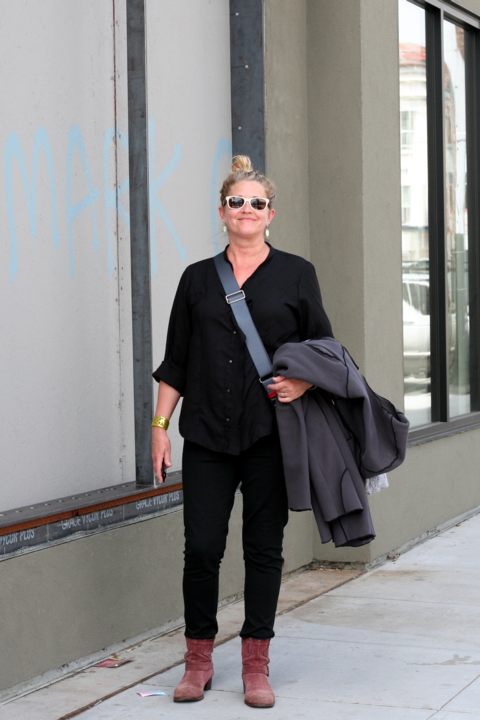
Today’s Look: Kathryn, 18th Street and Valencia
Tell us about your look: “Urban appropriate. I can get away quickly, move quickly, and be nimble.”
The California Court of Appeal heard oral arguments on the Bay Guardian’s lawsuit against SF Weekly and its chain parent June 11, and the discussion focused almost entirely on the Weekly’s assertion that it’s too easy to prove predatory pricing under California’s Unfair Practices Act.
Justices James J. Marchiano, Sandra L. Margulies and Robert L. Dondero peppered the Weekly’s lawyer, Dennis Maio, with questions as he attempted to argue that state law needed to be brought in line with federal standards.
The Unfair Practices Act bars companies from selling products below costs with the aim of harming a competitor. The Guardian sued the Weekly and its parent company, New Times, under that statute, claiming that the chain had deliberately sold ads below cost with the aim of driving a smaller, locally owned competitor out of business.
In March 2008, a San Francisco jury found in favor of the Guardian and awarded more than $6 million in damages. Judge Marla Miller trebled some of the damages, and with attorney’s fees and interest, the judgment is now close to $23 million.
Maio argued that the intent of the law was to protect consumers, and that below-cost sales were often beneficial. “Low prices are good,” he said. “Below-cost prices are even better, because they’re cheaper.” He compared the Village Voice Media chain, which owns the Weekly, to Costco, suggesting that the justices might shop there for better prices.
The thrust of Maio’s claim — and the heart of the Weekly’s appeal — is the argument that the Weekly shouldn’t have been held liable for predatory pricing unless the Guardian could prove that the chain would be able to recoup its losses after its competitor was gone. The federal courts have adopted that approach — and the result has been the effective end of predatory pricing suits in federal court.
But there’s nothing in California law that requires so-called “recoupment” proof, and the justices focused on that in their questions to Maio.
Maio argued that antitrust law was all about protecting consumers, and that the only danger of below-cost sales is if they lead to higher prices later, when a monopoly company has driven away competitors. “Causing a competitor to lose money isn’t a violation,” he said. “The purpose of the statute is to protect the public.”
Under questioning, Milo admitted that there’s no mention of recoupment in the Unfair Practices Act, and no discussion of it in the legislative history.
In a somewhat bizarre diversion, Maio tried to argue that the UPA had anti-semitic roots, because it could have been devised to hurt Jewish-owned chain stores. Then he compared below-cost pricing to pro-bono legal work — although it’s hard to make any rational argument that the SF Weekly owners were attempting to do a charitable act by putting the Guardian out of business.
Ralph Alldredge argued the Guardian’s case. “This is,” he said, “a plain and simple matter of statutory interpretation.
“This is black-letter law,” Alldredge continued. “You can’t take the preamble to a law and use it to add things that aren’t there — especially to add things that are completely inconsistent with the terms of the statute.”
When Dondero asked why there are so few cases under the California Unfair Practices Act, Alldredge explained that until 1987, federal antitrust law took the same approach as the state, so most cases went to federal court. The federal judges added the recoupment standard — “and essentially closed the door to these cases,” Alldredge said.
“And that’s what they’re asking this court to do.”
Alldredge pointed to a number of cases where state antitrust law goes beyond federal law. He also said that the standard or proving below-cost sales and intent to harm a competitor has been tested in other cases, “and the Unfair Practices Act has sailed through all those tests.”
Maio then tried to bring up the issue of whether New Times, now part of Village Voice Media, could be held liable for the actions of the Weekly, but the justices cut him off, saying they’d already read all the relevant briefs and testimony.
A ruling is expected in several weeks.
PS: Andy Van De Voorde, whose coverage of the trial has been nasty, bitter and personal, took a remarkably muted approach to the Appeals Court hearing. The Chron’s Bob Egelko turned in a typically clean, accurate account of the proceedings.
Curiosities, quirks, oddites, and items from around the Bay and beyond
Local, notable queers reminisce about their first Pride experiences.
*****
A breakdown of Berkeley’s food Meccas.
*****
The Kardashian bikini paradox. Mind-blowing.
*****
A guide for those who don’t know squat about the World Cup (but were afraid to ask).
*****
I, Hoarder: A Washington Post writer comes out of the clutter closet.
*****
Streetsblog debates “accessibility” versus “mobility” as a human right.
*****
The weather is supposed to be gorgeous this weekend, but if you dare to get sucked into Chronologically LOST you just might wind up housebound. As the project’s super-ambitious/freak genius creator writes:
“Chronologically LOST is a project I have undertaken to present the show LOST in its entirety in chronological order. That means taking every flashback, flash forward, and flash sideways, extracting them from the present day storyline, and creating one big timeline, that starts with the earliest flashbacks of the island, and goes through all the way to the end of the series in…well, I guess the end doesn’t really have a specific date.”
*****
I’ve always wanted a fluffy dog… so I could dye it to look like another animal?!?!
*****
And just because it’s Friday:
http://www.youtube.com/watch?v=oIc9b4A-cO8

Today, Johnny and Tim talk about why so many of the internet trolls — and conservatives in general — are writing and acting against their own interests. You can listen after the break.
sfbgradio6/11/2010 by sfbgradio
MEXICO CITY (June 11th) — The Caliente Sports Book down the street is buzzing with betters studying dog and horse races, Major League Baseball, even golf, on the multiple screens. Of particular interest are those channels running wrap-ups of the afternoon match between Mexico and 2006 World Cup champion Italy, from which the national team emerged victorious in a final prelim before this year’s edition of the Copa del Mundo gets underway later this week.
Italy, it may be remembered, won the much-coveted cup four years ago on penalty kicks after France was reduced to playing with ten men on the field when super-star Zenedine Zidane was disqualified for ferociously head-butting a rival who purportedly called his mother and sister “whores.” Beating Italy was a decided plus for Mexico’s downtrodden spirits as the Mundiales approach.
One group of aficionados was not much interested in Mexico’s fortunes in the upcoming fandango in South Africa. Instead, they gathered around a big screen in one corner of the betting parlor cheering on the Los Angeles Lakers in a National Basketball Association Finals match-up with the Boston Celtics. “Forget about football,” sneered “El Guerro” Gonzalez, a regular, “this is where the real money gets made.” Because pro basketball games routinely rack up hundred-point scores, betters have multiple opportunities to wager on winners and losers, over and under point spreads, total points in a quarter, and whether Kobe Bryant will hit the next three-pointer.
But the basketball euphoria will dissipate post haste as the World Cup takes center stage. Although the NBA’s despotic commissioner David Stern promotes his product as the world game, basketball hardly holds a candle to what the U.S. provincially terms “soccer” and the rest of the Planet Earth calls football.
Indeed, the “Copa del Mundo” (“Cup of the World”) will soon sweep every other sporting event from the screens — let alone political scandal, of which there is plenty in this distant neighbor nation, including the upcoming Super Sunday gubernatorial elections July 4th, and even droughts, floods, and other natural disasters. The interminable drug war that has taken 23,000 lives in the past three years will move to the backburner. Ditto an economy that is tailspinning out of control — a million workers lost their jobs in the first three months of this year alone despite President Felipe Calderon’s rosy claims of “recovery.”
Speculation about the disappearance of one of the nation’s most powerful politicians will fade from the primetime news, and the first year anniversary of the incineration of 49 babies in a government-run day care center owned in part by the first lady’s cousin will not even be noticed. The military takeover of the great Cananea copper mine and the dissolution of the miners union, is not news. New revolutions — this is, after all, the hundredth year anniversary of our landmark revolution — could rock the land, but for the next month, Mexico will live and die on what happens to the national team in South Africa.
“In football, we find our revenge against the adversaries of our lives,” philosophizes sociologist Jose Maria Candia in a recent Contralinea magazine interview, “if it goes badly at work, in the economy, politics, the project of the nation, when 11 boys put on the green jersey and do well in an international tournament, we feel vindicated by life.”
With 32 national teams from all five continents in the competition for the World Cup, the fate of the “seleccion” will have palpable impact on domestic tranquility. The political outfall of the Mundiales is unpredictable. Pumped up on toxic nationalism and xenophobia, football is a blood sport in southern climes. Honduras and El Salvador once fought a full-fledged war over soccer.
If the national team wins or acquits itself well, success will strengthen the government in charge no matter how poorly it has served the country. Likewise, a shoddy performance can topple rulers. In Mexico, increasingly unpopular president Felipe Calderon, who won high office in fraud-marred elections three years ago, is banking on the national selection’s triumphs in the opening round to invigorate his deteriorating image. Calderon’s bet is hardly a sure thing.
Mexico, Number 17 on the Federation of World Football Federation’s rankings (now the Coca Cola FIFA rankings), plays host South Africa in the inaugural match of the tournament, and “His Excellency” Felipe Calderon (dixit South African president Jacob Zuma) will be a guest of honor. The “Bafana Bafana” (“Boys Boys”) as the locals are worshipped, have won their last four prelim matches and in the 2009 Confederation Cup took Spain, which some football gurus fix as the best team in the world, into overtime. Their fanatics’ incessantly droning “vuvazelas” or plastic trumpets are said to drive opponents mad.
On the other hand, should Mexico beat sentimental favorite South Africa, it will make Calderon few friends on the African continent — five other African teams are in the draw, with war-torn Cote d’Ivoire the cream of the crop.
Aside from the Bafana Bafana, France and Uruguay are the real class of Mexico’s four-team group — while the French have appeared lackadaisical of late, whipping the South Americans is improbable. Anything less than reaching the quarterfinals will not rehabilitate Calderon’s popularity.
Mexico has a young team that fluctuates between indifference and playing out of control. It is anchored by seven Mexican players from the European and Turkish leagues, and the wily but slow-footed veteran Cuauhtemoc Blanco. Burned repeatedly by the national team’s poor performances in the Mundiales, many fans such as Manuel Garcia, a waiter at the old quarter Mexico City eatery Café La Blanca, consider that only divine intervention can save Mexico — and Calderon — from ignominious elimination.
When and if Mexico wins its matches though, wild celebrations are guaranteed to erupt around the gilded Angel of Independence on the bustling Paseo de Reforma — drunkenness, fisticuffs, and hooliganism are de rigor. Flag-draped caravans of honking cars will jam the boulevards of this conflictive megalopolis. On game days, half the population of Mexico, led by its president, will don green jerseys and play hooky from work and school. Saloons will fill to the brim with fans spilling out into the streets, jostling for a peek at the plasma screens. Masses to insure that God is on Mexico’s side will be pronounced from the altars and saints dressed up in the national colors.
Although football is tantamount to religion in this country where 70% of the population lives in and around the poverty line, only the super rich will have the wherewithal to jet off to Africa. Instead, the underclass will monitor the Mundiales at the “FIFA Fan Fest” on giant screens erected in the great Zocalo plaza from which nearly a hundred hunger-striking members of the Mexican Electricity Workers Union (SME), near death after a month of voluntary starvation, will no doubt be evicted so as not to dampen the fiesta.
Televisa and TV Azteca, Mexico’s two-headed television monopoly, which will transmit the games (the premium package includes 3-D) will have the nation eating out of its hands (and guzzling Corona beer.) The TV monoliths have leased rights to broadcast the Mundiales from the Swiss-based FIFA, the absolute dictator of the sport for the past 106 years that counts 204 out of 208 football federations worldwide on its roster. FIFA TV revenues are expected to top $167,000,000 for the 2010 World Cup.
This year’s Copa del Mundo is awash with drama. Will the Argentine selection, a perennial favorite, graced by the world’s best player, Leonel “the Flea” Messi, blow up under their sometimes psychotic coach Diego Maradona, himself a Mundiales’ immortal? Will the first round match between England and the U.S. (14th on the FIFA listings with a world-class star, Landon Donovan, to prove it) invoke the star-crossed Yanqui upset of the Brits 60 years ago in 1950 in Brazil, the only time these two teams have ever met in the World Cup?
If the U.S. gets by England, a match between Mexico and its hated gringo rival would up the drama quotient here considerably. A face-off between South Korea and North Korea, both of which are in the draw albeit in separate groups, could lead to nuclear confrontation.
How will tiny, bruised Honduras, which played through a coup d’etat to qualify, fare against the big guns? What kind of karmic reward is in store for France, which slimed its way into the World Cup with mega-star Thierry Henry’s illegal hand-slap goal against the Irish? Will Germany be dispirited by the suicide of its troubled veteran goalie (is this a Wim Wenders’ film)? Will five-time champ Brazil, which is hosting both the 2014 World Cup and the 2016 Olympics, be so overloaded with hubris that the selection will forget to play football?
But unquestionably the drama of dramas is focused on host South Africa, the land of blood and gold, Nelson Mandela, Steve Biko, Joe Slovo, and the last great struggle for liberation from colonialism.
South Africa, an unlikely site for the World Cup, was promised the games by Swiss football impresario Joseph Batter during his 1998 campaign to become the czar of the FIFA. Blatter, who was said to have been backed by Middle East oil money, needed African votes to put him over the top. Although Nigeria and Morocco were also proposed to host the 2010 Cup, South Africa, the continent’s fastest-growing economy, was chosen both as a tribute to African football and to Nelson Mandela. Blatter even flew the frail, aging apostle of African liberation, to London to ballyhoo the designation.
Whether the beloved Mandiba will be well enough to attend the inauguration is the drama within the drama.
In his youth, Nelson Mandela was a keen amateur boxer and enthusiasm for sports has colored his life. Football is indeed the national sport of black South Africans, 75% of the population. During Mandela’s 28 years of imprisonment on Robbin Island for the crime of defying apartheid, his fellow prisoners and comrades in the African National Congress (ANC), played football incessantly, taping up rags into balls, and booting them up and down the narrow prison corridors. But Madiba was held in isolation and could never participate.
Nelson Mandela’s vision for the new South Africa encompassed sports as a path to racial reconciliation. If football was a black sport in South Africa, rugby is an Afrikaner obsession — the Springboks were the maximum icon of the apartheid regime. As president, Mandela brought the 1995 World Rugby Cup to Johannesburg, a story fictionalized in the film “Invictus,” and won the hearts and minds of his former persecutors. Now the World Cup 2010 is slated to project South Africa before the world as a dynamic, multi-racial powerhouse.
The truth is always more diffuse. Jacob Zuma, the country’s very corruptible third president, and his predecessors have sunk between $3.7 and $6 billion USD in infrastructure to burnish their images in a nation where 43% of South Africa’s 45.000.000 peoples live on $2 or less a day. The gleaming $300,000,000 Soccer City Stadium where the July 11th finals will be staged, abuts Soweto, the festering high-crime enclave of 3,000,000 mostly threadbare citizens, 30% of whom suffer from AIDS, according to the World Health Organization. Gangs of orphaned children rule the street.
Similarly, the stadium at Port Elizabeth on Nelson Mandela Bay, which came in at $287,000,000, was built over a slum from which hundreds were evicted. A school complex was demolished to make way for the Neusprot venue (only $140,000,000) — 13 such stadiums have risen from the dust amidst a storm of charges of kickbacks, bribery, and favoritism.
If recent history is any hint, the new stadiums will quickly become certifiable white elephants. Even Beijing’s much-praised “Birds’ Nest” coliseum designed for the 2008 Olympics is reportedly tenantless, and the Greek economy just collapsed in part thanks to the burden of debt incurred for infrastructure for its Olympic Games.
With a population scuffling just to feed itself, filling all this dazzling stadia with paying customers is problematic. Even the $18 cheap seats — a week’s wages in the cities and a month’s income in some rural areas — are mostly out of reach in a country where 50% of the work force is out of work. To deflect a grave social crisis in the making, the FIFA is offering 120,000 free admissions, about 2,200 seats for each of the World Cup’s 62 contests. Riots have already occurred at “friendly” preliminary games.
Ever since the bad old days of ancient Rome, bread and circuses have been a powerful formula for social control. In South Africa, as in Mexico, the World Cup is designed to make the discontented forget their discontent. For the next month, the violence, corruption, and class and race hatreds that dominate daily life in Mexico, South Africa, and the rest of what used to be called the third world will disappear beneath the social surface.
Although conflict is my bread and butter, I’m not going to miss the 2010 Mundiales for the world.
John Ross is at home in the maw of the Monstruo watching the World Cup. You can complain to him at johnross@igc.org
–

By Sam Stander
As part of the Berkeley Art Museum’s eclectic performance series “L@TE: Friday Nights @ BAM/PFA,” a trio of noise- or distortion-oriented musicians takes the…well, there isn’t exactly a stage, but they’ll be playing in Gallery B, where Thom Faulders’ interactive sculpture installation, known as the BAMscape, resides.
The BAM calendar bills the Fri/11 show, titled “Summer Sounds,” as featuring “a lineup of old-school rock ‘n’ roll bands nurtured in our backyard.” First up are Sic Alps, who’ve received accolades of late. Formerly of noise rock pioneers Harry Pussy, guitarist Bill Orcutt — perhaps the headliner of the night — recently put out a solo record. Rounding out the evening are the Baths, a group signed to the verdant Woodsist label who have yet to release their debut record.
L@TE — FRIDAY NIGHTS @ BAM/PFA: SUMMER SOUNDS — SIC ALPS, BILL ORCUTT, THE BATHS
Fri/11, 7:30 p.m., $5 (free for UC students)
Berkeley Art Museum, Gallery B
2625 Durant #2250, Berkeley
(510) 642-0808
www.bampfa.berkeley.edu

“The only thing worse than a thug is an ineffective thug,” a source, who has closely tracked Pacific Gas & Electric Co.’s activities for years, told us yesterday. “And that’s what [PG&E CEO] Peter Darbee is revealing himself to be.”
That’s pretty harsh, and isn’t just some hot air blown off by a disgruntled employee or a customer angry about a power shutoff. PG&E’s problem now is that since Darbee set out on the political adventure known as Proposition 16, this kind of characterization isn’t so far off from the sentiments publicly expressed by a number of powerful figures that the company must continue to work with.
California Public Utilities Commission President Michael Peevey wrote in an op-ed in the San Jose Mercury News that, “Pure and simple, Proposition 16 is a clever, brazen, buzzword-driven effort by one company to manipulate the California Constitution to protect its current monopoly.” Peevey isn’t exactly known as a PG&E hater –- green-power advocates have complained to the Guardian in the past that they think he’s too willing to honor the company’s requests. But Prop 16 clearly irked Peevey, who presides over the commission that decides whether PG&E will be allowed to raise rates.
Half a dozen state senators, including Senate pro tem Darrell Steinberg, rebuked PG&E over Prop 16, writing in a formal letter in December that it “calls into question your company’s integrity.”
On June 9, the day after voters shot down Prop 16, PG&E shares dropped 2.2 percent — the greatest decline of electricity utilities in the S&P 500 — possibly signaling a fluctuation in shareholder confidence. The Los Angeles Times ran a story pointing out (as the Guardian did) that the majority of counties that voted “no” on Prop 16 overlap with PG&E’s service territory, suggesting that the initiative dubbed by opponents as “PG&E’s power grab” was roundly rejected by its own customers.
Yet amid all the signs that PG&E had gone too far, despite all the indications that the utility had alienated regulators and political allies and royally pissed off its customers to boot, CEO Peter Darbee was patting himself on the back. While others were beginning to see Darbee as an unaccountable power-monger, Darbee evidently regarded himself as a fearless, courageous leader.
In a memo obtained by the Guardian that the CEO sent out to PG&E employees the day after Prop 16 was defeated, Darbee compares PG&E’s $46 million, failed quest to alter the state constitution through Prop 16 to the company’s decision to withdraw from the U.S. Chamber of Commerce. The utility won the respect of environmentalists when it dumped the national business organization last fall, denouncing its do-nothing approach to climate change.
Darbee suggests that PG&E’s willingness to take a stand in both instances is evidence of strong corporate leadership, but it’s an odd comparison to make. As Steinberg and other senators pointed out in their December letter, Prop 16 would’ve served to limit renewable energy development, not facilitate it. “It is unacceptable for a company that is falling behind in meeting state adopted goals for clean energy to impede the efforts of others who would attain those goals through innovative means,” Steinberg wrote.
Without further ado, here’s what Darbee had to say after Prop 16 went down. The essay, which was submitted as an opinion piece to the San Francisco Chronicle, is prefaced with a note to employees.
——————————————————————————————–
From: A Message From Peter Darbee
Sent: Wednesday, June 09, 2010 2:18 PM
To: All PG&E Mail Recipients; All PGE Corp Employees
Subject: After Election Day, A Reflection On Leadership
To All Employees:
As we look forward after the culmination of a hard campaign on Proposition 16, I wanted to share with you a short opinion essay that we submitted today to the San Francisco Chronicle. It addresses head on some of the questions we have all seen about PG&E’s stance on tough issues-from Proposition 16 to climate change, or any number of other examples many of us can no doubt recall. It makes clear that, in each case, our focus is on leadership, even-or maybe especially-when it requires tremendous courage.
I believe passionately that this is one of the aspects of our character that sets PG&E apart from many other companies. That’s been true throughout our history, and it’s even more true today.
As is always the case, the paper may or may not choose to print this piece. We hope they will. It’s an important and timely message for our customers. But it’s just as important and timely for all of us as employees. And, whether it appears in print or not, it’s a message we can all take heart in and carry forward proudly to others.
________________________________
The Price of Leadership
By Peter Darbee, Chairman, CEO and President, PG&E Corporation
Prime Minister Tony Blair said a few years ago, “I do not seek unpopularity as a badge of honour, but sometimes it is the price of leadership. And the cost of conviction.”
I was reminded of that observation this spring, as Pacific Gas and Electric Company came under widespread criticism for its support of Proposition 16, a statewide initiative to give people the right to vote on proposals to create risky new public agencies to provide electric power.
Many of those who criticized our support of Proposition 16 have long applauded our leadership at the state and national level on environmental issues and as a clean-energy provider. At the state level, PG&E helped champion passage of AB32, the Global Warming Solutions Act of 2006.
PG&E also supported California’s aggressive vehicle emissions standards, opposing efforts by a national business organization to overturn them.
At the national level, we were instrumental in forging an historic alliance of major utilities, other large businesses, national environmental groups and labor unions to support comprehensive and effective clean-energy and climate change legislation in Congress. The work of the U.S. Climate Action Partnership, of which PG&E has been a major contributor, is widely credited with inspiring major congressional initiatives on this vital issue.
While PG&E has been frequently honored for its environmental performance and commitment, including Newsweek magazine’s ranking as the country’s greenest utility in 2009, our environmental leadership has aroused controversy as well.
Last year, in a widely discussed move, PG&E withdrew its membership in a national business organization over fundamental differences on the need for climate change legislation. While a number of other major businesses followed our lead, others questioned why we broke ranks to support actions that could increase energy costs. We have explained, without apology, the science behind our stand and our careful choice of policies to utilize market forces to minimize costs.
Some of our longtime supporters, who decried Proposition 16, believe the PG&E they once admired lost its way somewhere along the line. I would tell them that their disagreement with us-which we respect-is the price of our leadership on important issues of the day. By staking out bold positions, we of course invite controversy. But the alternative is to be cowed by fear of criticism into ducking our leadership opportunities and responsibilities. Surely our society needs more leadership, not less.
After a lively debate, the voters have now spoken on Proposition 16 and we respect the outcome. We hope our critics will equally respect our willingness to participate in the system and engage on the important issues of the day. Through mutual engagement and mutual dialog, we can improve our company, our communities and our country.
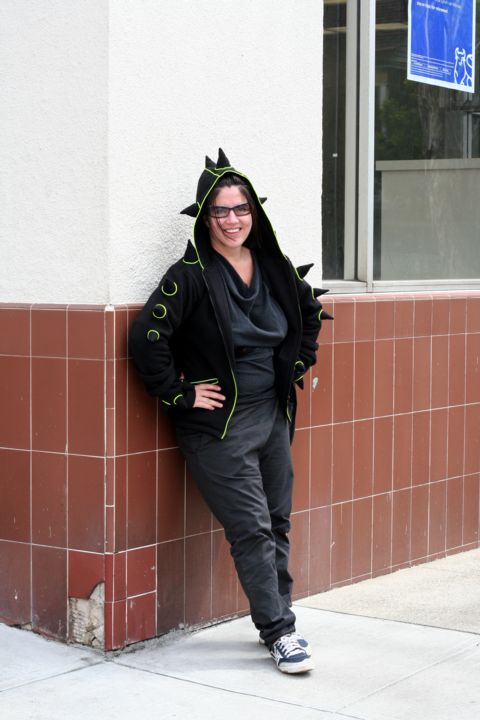
Today’s Look: Rima, 24th Street and Castro
Tell us about your look: “I got this jacket from a rave guy in Thailand.”
Should you be struck with a sharp desire for refined carbohydrates in a culturally authentic form while you whip down the Mission Street hill to Daly City, slow down, park that gas guzzling machine, and curb your wheels. You’re going to Bread Basket.
But not to linger. No, BB’s linoleum-glass-metal décor does not inspire a loitering perusal of their traditional Filipino bake stuffs. Though the woman behind the counter is a benevolent deity, generous and tolerant of your gringo tendency to stare gape mouthed at her wares, repeating the treats’ names softly. “Bakery” here does not signify Wi-fi. Or, for that matter, chairs.
It signifies baking, which they do quite a lot of here. Bread Basket has two other store, one in San Diego and another in SoCal, (all places with some of the largest Filipino communities in our fair land — Daly City alone is home to 32,000) and at all of them, the pandesal is the hype item. For those of us with little Filipino and/or Spanish linguistic wisdom, pandesal are the Filipino rolls that go well made into a sandwich, as a accompaniment to your caffiene, or perhaps stuffed into your mouth from their condensated bag on your way back to your (wheels curbed!) car. As with most bakeries, an early morning trip will serve you well in your quest for fresh specimens.
Sweet tooths will find sliced apple, blueberry, chocolate and banana breads, cupcakes, flan, and custard tarts, as well as the more traditionally Filipino offerings of buko pies (buko being Tagalog for “young coconut”), hopia (chewy biscuits filled with mung bean paste or pork), and bibingka (a dense cake made of rice flour).
And of course, the ube treats. Ube is a purple yam that imparts a color rarely seen outside of breakfast cereals to whatsover foodstuff you fancy. At Bread Basket, you can buy ube twist pastries, or if you really have had it up to here with that nutritional value thing, head straight for the pastillas de ube. The pastillas de ube are fantastically violet, sugar sprinkled pillows that taste like nothing more distinctive than a delicious tube of frosting. Made by the lovely woman who just handed you a plastic box-tray of them for $2.30. Just wonderful.
But that larger question, I think, remains. Why, when faced with a bakery full of freshly baked breads, does one immediately gravitate towards the bright purple nuggets? Can we attribute it to Sunday morning cartoons, or is a subconscious yen to challenge our dietary tracts?
Bread Basket
7099 Mission, Daly City
(650) 994-7741
Cash only
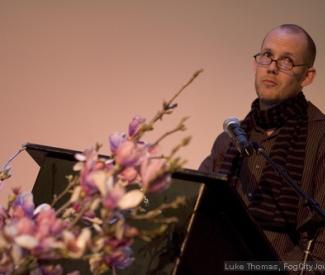
A day before Oliver Luby’s last day at the Ethics Commission, his union has called for a hearing into why his boss removed a special condition from the job that allowed him to be bumped and whether it was retaliation for Luby’s history of blowing the whistle on problems within the troubled agency.
“Special conditions are rare, specific to the position not the incumbent, and are put into place to promote the policy goal that specialists who are qualified serve in positions that require specific talents,” Gabrial Haaland of SEIU Local 1021 wrote to members of the Ethics Commission and Board of Supervisors. “Removing a special condition is more unusual than placing one on in the first place. It is likely that an inexperienced Fines Officer would not be able to accurately interpret the necessary and complicated web of statute, local code, case law and FPPC opinions.”
Ethics Commission Director John St. Croix has refused to comment of the controversy, citing the confidentiality associated with personnel matters, but Haaland requested the Board of Supervisors Budget and Finance Committee hold a hearing on it as part their review of the commission’s budget. And Haaland told the Guardian that his union generally doesn’t like special conditions to be placed on positions, but he’s concerned about St. Croix’s motives in removing it: “It seems like retaliation based on his past actions.”
Meanwhile, Luby’s last day is Friday (6/11) and he will gather with friends and supporters after work at Temple on Polk Street. Luby told us he appreciates SEIU’s efforts and supports the idea of a hearing into what happened, but he said he has accepted his fate: “I’m still a goner.”

Curiosities, quirks, oddites, and items from around the Bay and beyond
I want my LGBTV! Prop 8 Trial closing arguments will not be televised.
*****
Andrei Tarkovsky made a whole lotta gorgeous films. He also took a whole lotta gorgeous Polaroids. (Thanks Boing Boing).
*****
Mea Culpa: Sirron Norris offers this sincere, respectful open letter in regard to the mural dispute at 22nd and Mission. Whatever your opinion of his art, there is no denying that the man is all class.
*****
On the radar: The Bay Citizen previews the new, new media arts fest, City Centered, which kicks off in the Tenderloin starting tomorrow.
*****
UC librarians to Nature Publishing Group: We aren’t gonna take it!
*****
Speaking of libraries, the British Library has acquired all the papers of the late, great SF author J.G. Ballard. Lucky them.
*****
Cute overlords: Baby animals at the SF Zoo!
*****
“Oh, I’m a singer/ You’re a whore!” (NSFW, duh):
http://www.youtube.com/watch?v=eJ-2e5CyJgg
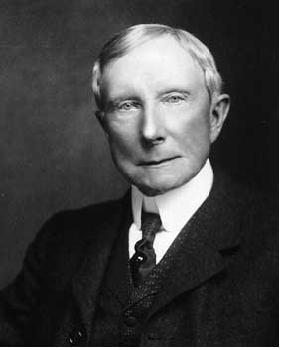
There’s an interesting story in the NY Times about a Texas billionaire whose entire estate will be passed along tax-free, thanks to a rather silly act of Congress. It’s obviously a bit of a scandal that a guy worth $9 billion will pay no estate tax at all, but the really interesting tidbit was deep in the story:
The United States enacted an estate tax in 1916, and when John D. Rockefeller, America’s first billionaire, died in 1937, his estate paid 70 percent. Since then, the rates have fluctuated, but this is the first time the tax has been repealed altogether.
John D. Rockefeller’s estate was taxed at 70 percent.
Of course, since the guy died with a couple of billion to his name, his kids had to make do with a paltry few hundred million — and oh, how it crimped their lifestyles. I grew up about five miles from the Rockefeller estate in Pocantico Hills, New York, and I can tell you: The family owned 7,000 acres of pristine, beautiful land only 30 miles north of New York City. Chauffers drove the brothers, Nelson and David, to their offices every day. Security guards armed with salt guns patrolled the property to keep kids like me out. Nelson managed to get elected governor of New York and became vice-president of the United States (before dying of a heart attack while having sex with his secretary). David was the chairman of Chase Manhattan Bank. The brothers donated an original Chagall window to their tiny church in the nearby town, and bought their wives brand new Rolls Royces every year.
Their kids have managed to survive on the tiny remants of that fortune, too. And their kids’ kids.
The point is, the 70 percent estate tax didn’t wipe out John D. Rockefeller’s wealth or harm his family’s future. There was plenty left. That’s the thing to remember when we talk about taxing the rich: They always wind up with plenty left.
By Brittany Baguio
About 400 hotel workers are wrapping up a three-day strike at the Hyatt Regency that began Tuesday morning to protest increasing workloads and efforts to increase their health care costs. This was the fifth strike UNITE-HERE Local 2, a union comprised of hotel workers in San Francisco and San Mateo Counties, has called during nearly a year of negotiations since the last contract expired for 9,000 San Francisco hotel employees.
UNITE-HERE Local 2 initiated the walkout as a way of putting pressure on Hyatt management to offer a fair contract. Although the economy is still lagging, the hospitality industry has remained profitable. Union leaders say that with the cost of living going up, low income wages have made it harder to afford expenses.
The Hyatt Regency released a statement on Tuesday, stating, “Today’s action by Local 2 Leadership is a continuation of the harm they are committing to our associates, the tourism industry, and the city of San Francisco. It has been six months since Local 2 has agreed to return to negotiations. The union should refrain from activities aimed at jeopardizing business in San Francisco during this unprecedented economic downturn and instead expend this energy at the bargaining table, where it belongs.”
Yet union leaders blame management for the continuing labor impasse and they say the Hyatt and other national hotel chains have used the faltering economy as an excuse to justify increasing workloads on hotel employees. According to PKF Hospitality Research, revenue is estimated to grow to 3 percent for the next six months, 12 percent in 2011, and 14 percent in 2012. According to UNITE-HERE financial reports, when the Hyatt became a publicly traded corporation on November 2009, Hyatt owners netted more than $1 billion.
Unite-Here Local 2 representative Riddhi Mehta rejected Hyatt’s claim that the city of San Francisco was hurting in any way. “We’re not launching a boycott of San Francisco, but we’re asking folks to boycott eight specific hotels,” Mehta told the Guardian, “We’ve moved $7 million out of boycotted hotels and the majority of the money has stayed in San Francisco.”
The Grand Hyatt, Westin St. Francis, Palace Hotel, W Hotel, Hilton Union Square, and Hyatt Regency are all on the boycott list. Le Meridien Hotel and Hyatt Fisherman’s Wharf are also on Local 2’s boycott list, but for a different reason. Workers from these two hotels have been fighting for 2 years to obtain the right to choose whether or not to form a union without any intimidation from management.
The SF strike was one of several used as part of UNITE-HERE’s strategy to create a national campaign against Hyatt. Other notable strikes included one that was organized by Local 2 workers from the Grand Hyatt on Union Square and took place the same day Hyatt became a publicly-traded company.
On May 26, 400 hotel workers from the Hyatt Regency in Chicago protested against increasing workloads. Tuesday’s strike occurred a day before Hyatt’s first shareholder meeting in Chicago that was held on Wednesday. The meeting was exclusive to shareholders and banned all media outlets from attending.
Hotel workers and community supporters protested on Wednesday in the cities of San Francisco, Chicago, Vancouver, Honolulu, and Los Angeles. In solidarity, these workers hoped to persuade Hyatt majority owners to consider hospitality working conditions.
Mehta said the union’s experience in dealing with hotel management from 2004 to 2006, after the last contract impasse, has taught workers that they need to keep the pressure on in order to get a fair contract. “We’re happy to go back to the negotiating table but it’s not worth the time when Hyatt is saying that they don’t have the money. If you look at their financial statements, they have $1.3 billion in cash, but they’re spending money renovating hotels and improving their portfolios.” [Editor’s Note: This paragraph was changed from it original version to correct information].
Hyatt Regency workers from the walkout plan to go back to work on Friday.
Two things I learned about Rosario Dawson last night:
When she was little, she spent time living in a San Francisco squat with her “free spirited” mother.
She’s heading up one of the most important non partisan political organizations in the country.
Dawson was honored with a Redford Center “Art of Activism” award at the Sundance Kabuki Theaters last night — and definitely not (should I feel bad saying this?) because she is the kind of natural beauty that made the host of the program and other honorees stutter through their on stage exchanges with her.
Voto Latino is an organization that was co founded by Dawson, Maria Teresa Kumar, and Brandon Hernandez as a way to encourage Latino participation in democracy. Which, given all this insanity in the aftermath of Arizona’s Senate Bill 1070, strikes me as what’s been missing in the back and forth vitrol; what it means to the people that it explicitly denegrates.
Dawson told the Art in Activism audience last night that her group’s mission is to take back the immigration issue from the divide and separate tactics of conservatives. Voto Latino’s anti 1070 ad campaign, which is slated to debut on national televisions shortly, is “about us together,” says the actress-activist. Privileged or not, she emphasived, we’ve all gotten to where we are today based on the labor of our community, even gorgeous movie stars.
The organization has been a pioneer in young Latino involvement in politics. They put together one of the first text message based political campaign in 2006, sent Latino youth to report on the 2008 party conventions that the young people identified as important to them, and have produced a tongue in cheek telenovela series, La Pasión de la Desición, that interjects talk of voter registration into the florid embraces of the popular genre. To combat the negative messaging of Arizona’s legislation, Dawson says they’ll be assembling an online map of the country where Latinos can publish their stories, becoming visible in a debate that often leaves out their voice.
Rosario Dawson and Wilmer Valdarama star in an episode of Voto Latino’s La Pasión de la Desición
So yay, Rosario’s awesome. We’re all awesome.
Although I must say, some of us may be extra-super awesome. Dawson was definitely upstaged last night by another one of the evening’s honorees; East Oakland’s Mandela Food Co-op worker-owner (and last week’s SFBG interviewee), the inspirational James Berk.
Berk, wearing a crisp suit and glasses, took a no-nonsense approach to a ceremony that at times ran dangerously close to hyperbole. It was immensely refreshing, especially when the 19 year old cautioned the audience not to regard him as an anomaly in the social activism field on account of his youth (Dawson took the moment to compare his struggle to hers with the media’s insistence that celebrities are different from us in some way, evoking about zero sympathy on my part. Still love you, Rosario!).
In all the labored modesty of the evening, Berk came across as a man who knows the worth of what he and his team have been able to accomplish. This is a guy who has gone from a malnourished teen whose neighborhood’s sole food sources were the corner store’s nutritional garbage, to the co owner of a place that sells low cost, fresh local food to his neighbors.
When asked what he wanted the people sitting out in the audience to take away from the night of awe inspiring activist stories, he took a moment to fully gauge what he was about to say. When he spoke, his message was clear. “Don’t forget. And don’t forget my name,” he said. Unsure about what to do to make change in this country? Look to our true leaders, people; Berk’s not.
P.S. Definitely not trying to forget the night’s other honoree, Martha Ryan. Ryan, a nurse who had never headed up her own program, started the Homeless Prenatal Program for at risk women and their families. Half of her staff is comprised of women that were once in the program.

Carly Fiorina just learned a key lesson in modern politics: Be sure the mike is off when you’re saying something stupid.
In this case, it’s no big deal — she wonders why Meg Whitman would go on the Hannity show (“he’s not an easy interview”) — as if what GOP candidates want now is someone who will lob softballs. She jokes about her staffers “wolfing down cheesburgers.” And she makes a really silly comment about Barbara Boxer’s hair being “sooo yesterday” — suggesting that fashion ought to be an issue in the race for United States Senate.
No real harm done — except to show that she’s not really ready for prime time.
By Lilan Kane
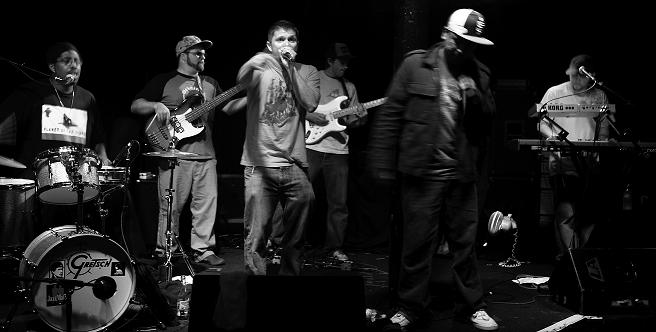
A capella, beatbox, theater, vaudeville, live band, and everything in between — that’s Felonious (playing tonite, Thu/10, at the Independent). Originally an a cappella hip-hop duo, Felonious has morphed into a hip-hop theater production receiving rave reviews in The Source magazine, Chronicle and Examiner, and have produced sold-out shows in SF, New York, Germany and Oakland. They have shared the stage with The Roots, De La Soul, Big Daddy Kane, DJ Premier, Black Eyed Peas, Zion I, Living Legends, Radioactive, and Crown City Rockers. Their shows capture different elements of entertainment creating something old school in principal but very innovative and contemporary.
Sharing the stage with notable SF musicians from the Jazz Mafia, Felonious has established themselves not only in the theater arts industry but also as respected musicians in the live circuit. They talked to us a bit about the whats and wherefores as they prepared to celebrate Live City‘s release.
Thu/10, 8:30pm, $15
The Independent
628 Divisadero, SF
415.771.1421
www.theindependentsf.com
www.feloniouslive.com
SFBG: What’s the story behind the title of your new album Live City?
MC/Beatboxer Carlos Aguirre aka Infinite: I think the name Live City represents the history of the city and how we are the next generation of artists to try and replicate that kind of energy that has made San Francisco a staple in live music for several decades..Plus we know all kinds of dope artists in the city and the bay in general that we got a real Live thing happening over here and if we try to consider ourselves more of a musical family then everyone would reap the benefits..we’re pushin for that vision…it’s not just a name…we believe in our city and the talent here is world class so we’re trying to push a movement…
MC Dan Wolf aka d.wolf: On the surface, we’re talking about San Francisco, the Bay Area, a geographic place that has a history of shaping underground culture (hip hop, rock music, street visual arts, culinary arts, circus arts, etc). On another level I look at it as very idealized place where live performance is cherished, where the city is a living breathing representation of all the creative energy pouring from the artists and culture makers who live there and shape the landscape. We are a live hip hop band who come from theater, you cant get any more live than that. We wanna take you to a place where taking risks is normal.
MC/Beatboxer/Drummer Tommy Shepherd aka Soulati: Well, the album was originally called Str8 No P@per, which is a word play of Thelonious Monks album Straight, No Chaser and the truth, we’re broke like everybody else. However not many of the songs supported that theme. This album is recorded all live so there’s part of the title right there. Felonious, at the beginning of the year, hosted and co-presented a weekly at Coda lounge in SF Called “Live City Revue” which was a night of showcase/cabaret talent. Basically, any Bay Area act that was working on anything and wanted to test it out with a crowd, or you just want to come through and build on a piece of text or music. We discussed the name of the show and how it was a statement that the Bay Area is STILL alive and always has been. So, if the event was the revue, this album is the soundtrack.
MC/Keyboardist Keith Pinto aka KP: We were gonna call it $tr8.n0.p@per after the thelonious monk album straight no chaser… and also living in an ever increasing digital world. plus having limited funds to produce a project. but then we started doing Live City Revue @coda lounge and it just seemed like a natural fit for the title of the new record. Live City is way more optimistic.
http://vimeo.com/12166935
SFBG: What was the recording process for the new album?
Bassist Dylan Mills aka Illin Ills: To record the band in the best rooms possible (Coast, Record Plant, Different Fur…), getting the drums sounding huge. We worked with producer Ben Yonas to capture the highest quality recordings possible and mixer Hernan Santiago to make the tracks shine. The group was adamant about making sure everything on the record really belonged there before letting it go out.
Infinite: Amazing…We haven’t truly represented what we do live in shows on an album since The List which was a few albums back so to be able to work in some of the premiere studios in the bay area that carry a lot of history and with an amazing mix team to round out the process, it was a dream come true.
d.wolf: Musically this was the best process we have been a part of. Recording live hip-hop is very challenging to do well. You have to retain the voice and power of the instruments while creating a sonic world that has booming drums and melodies that feel chopped and sampled yet fully fleshed out. We never have been able to capture the raw energy of Felonious on record until this one. Lyrically it allowed us to focus on our own personal styles and continue to try to mesh them together in the studio. Our last album (2007’s Up To Something) was totally lyrically driven. We recorded it in Hamburg, Germany over some of the hottest beats produced by Hamburg’s dopest producers. We lived together in the studio for three weeks and recorded 18 tracks in 22 days. The process for Live City was spread out over a few years with no real idea what the songs would become. First we built the beats and freestyled over them as we recorded the tracks and then spent the time writing and crafting the songs. It taught us how to craft songs based on the strongest verses in the best order.
Guitarist Jon Monahan: Live City was recorded over a span of about a year and a half at 5 Bay Area studios, including The Plant in Sausalito and Coast in SF. It would have been finished much sooner but so much else was going on in our lives- three members of the band became fathers, our producer got married, one of the people we were working with very closely developed some serious health problems. It forced us to take our time and allowed us to truly experiment with sounds and ideas that weren’t there when we started.
Soulati: The recording process was a lot of work, one, because it wasn’t recorded in four different studios, and two, because of budget. The treasure of the experience was we got record in the same room as many music legends such as Stevie wonder and Metallica. All in all it was a great experience and a very long process but when you’re birthing perfection, you take your time.
SFBG: Tell me about your new play “Stateless.”
d.wolf: Stateless is a hip hop vaudeville that takes what Felonious is doing in the present and mashes it with what my ancestors were doing 100 years ago in Hamburg Germany. The Wolf Brothers, my great grand father and his brother, were vaudevillians and singers who took popular melodies and changed the lyrics to reflect social and political issues of their time but in a very comical way. They wrote over 600 songs that were so popular that in 1938 the Nazis said the songs were ‘too German for Jews to sing”. Stateless is remixed folk songs written by the Brothers Wolf, re-imagined by Felonious and Brooklyn’s One Ring Zero and placed in a loose narrative that touches on brotherhood, performance and performers, history and lineage. It’s also an excuse for us to just get on stage and act stupid. Since they were known as the Hamburg Marx Brothers it gives us permission to be the Bay Area Marx Bros.
KP: On a basic level it’s a mash up of genres… hip hop and vaudeville. seemingly different… but the similarities are actually quite strong. most hip hop albums have a patched together mix tape quality to them… just like a variety show… which is vaudeville. hip hop artists often have funny (sometimes random) little skits on their albums… this is also like the comedic skits of vaudeville. plus visually hip hop/r’n’b videos are known to have b-boys/girls and line dances… which is just like the acrobats and dancers (usually tap) that you would have found at a vaudeville performance. not to mention the evolution of hip hop dance itself. as it incorporates many styles, including remnants of tap and swing dancing. look at the “kid n play” also known as the “funky charleston” (yes, the kid n play may be old but 90’s dances are coming back). as the choreographer of Stateless… those similarities give me more to work with than i could ever fit into one show.
Soulati: Stateless is live music, dance, beatbox, singin’, rappin’ with a twist of vaudeville. It takes you through a journey of past present and future, leaving you with a mind to want to go out and search your own history, if you’re not aware of it already. Super energetic and moving to boot, Stateless is the play to be looking out for cause it’s coming to you!!!
SFBG: How do you feel Felonious as a group, and the album Live City represent San Francisco?
Illin Ills: We’ve been making this music in the bay for over a decade now and we’ve seen the upturns an downturns and we put our experiences into our songs. The album Live City is fitting because throughout all that time there has always been a vibrant music and art scene in the city. Venues move and change, styles come and go, but people always appreciate live music so we try to keep putting on better shows and building up the scene here.
d.wolf: We’ve been working in San Francisco since 1998 so at this point we’re pretty much the OG’s on the scene. Everything has changed so much since we started. I am blown away when I think that during our 2000 – 2003 weekly New Roots to Hip Hop series at the Last Day Saloon we created this whole scene before MySpace was even around. Now there are so many tools to utilize and build a community. San Francisco needs to reclaim its place among the great cities of the world. I mean we have so much great food and great arts here but we’re there is such a lack of industry that even the artists have a hard time thinking strategically about how to have a sustainable career. Live City is our call to action to reclaim the power that was here in the 60s, 70s and 80s. We think that with all our angles – music, theater and arts ed – Felonious is ready to lead the charge.
Jon Monahan: “The album itself features Bay Area luminaries like Jazz Mafia horn players and DJs, and singers like Kimiko Joy and Cait La Dee, They’ve been a part of the SF scene as long as we have, a decade or more. And our band feels right at home in the counterculture tradition of San Francisco bands- from Sly to Dead Kennedys to Mike Patton… We’re not necessarily heirs to that throne, but if you came out to Live City Revue, the weekly we ran from Jan – April 2010, you saw some guests and collaborations that could only take place in San Francisco… live hip-hop with West African kora and balafon players, a 20 piece men’s choir singing the Leonard Cohen songbook, book readings from local MCs, some seriously bizarre shit.”
Soulati: Felonious as a group came to the Bay at a pinnacle moment of the music scene. Of course there were your track acts but live Jazz/Hip Hop was thriving. Alphabet soup was runnin thangs along with Brown Fellinis and other crews that were holding it down.Us, Crown City, Psycho Kinnetics, Most chill Slack mob among others were new to the scene and fit right into the mix. All these mentioned groups are still hittin to this day and representing SF like ganbusters. We keep pushing the scene to feel it push back. The album naturally speaks directly of the San Francisco scene. It IZZ live.
KP: Felonious has been a part of the SF music scene for over 10 years… sf has a rich history of musicians and hip hop artists working together from the acid jazz days to now. Felonious is a continuation of that. we are multicultural and multidisciplinary. in this time of ipod dj’s (and i mean… instead of a dj… just an ipod) we feel it’s important to keep the city’s music scene all the way live!
SFBG: What would you consider the group’s most notable accomplishments have been since Felonious started?
Infinite: Winning best of the bay two years in a row was super dope and opening for The Roots two nights in a row at The Justice League (now The Independent) and working with all the amazing artists we’ve been bless to collaborate with over the years.
Illin Ills: Playing the Fillmore, Maritime Hall, Berlin, Hamburg. Opening for the Roots, De La, LL, BEP. Taking Beatbox: A Raparetta to NYC.
Soulati: Since Felonious started we have become a household name in San Francisco/Bay Area. Among winning Bammy’s and Wammy’s and critics choice shwoompties, we are also published playwrights and educators. Staying relevant is, I think, our most notable accomplishment.
d.wolf: Survival is our most notable accomplishment. Along the way we’ve been blessed to travel together, play with some the hottest hip hop acts, produce and publish plays, and build some real deep, lasting personal and professional relationships.
SFBG: How important is it for you personally to put on a captivating live show?
Infinite: It’s absolutely fundamental to both the group and the art form of hip hop..and musical performance in general..i mean there are no rules really but there’s a code and decor and history behind being an emcee and you gotta respect that legacy by paying homage to the meaning behind the emcee..to be master of ceremonies..to control the crowd…to lead the crowd and to ultimately pass on an experience…that’s what playing live is all about for me…”so you remember the name, when you walk out the door.
d.wolf: Coming from the world of theater the live show is actually more important to me than the studio. That being said we’ve been killing live shows for years and have had a real hard time capturing that energy on our albums. Hip-hop is a studio art form but you have to kill on stage especially if there isn’t a capacity crowd chanting every word. You gotta give people a reason to remember you in this oversaturated world.
Soulati: Personally, Why come out to see someone stand there and sing songs? That, you can do at home. A live show should be just that, LIVE. And because more than half of Felonious are trained actors, theatrics is our tactic and we better come with a theatrical extravaganza you know? Cats gotta be their “super human” selves on the stage. Them times 10. That’s what makes me as an audience member want to pay 13 in advance or 15 at the door, right?
SFBG: What can people expect to see at your CD Release show at the Independent June 10th?
Infinite: Felonious playing banging beats with live string and horn orchestration ,courtesy of The Jazz Mafia, through out the set…we’re gonna play a whole range of material but alot off the new album ..most of the new album in fact..plus special guest singers Caitladee and Kamiko Joy..and really expect to see ONE OF THE BEST LIVE SHOWS OF 2010… guaranteed!
Illin Ills: The whole shebang. There will be horns, strings, singers, and more rocking with the Felonious Crew, playing songs from the new record, beatboxing, and generally carrying on. Shotgun Wedding is another great group from the bay who will be rocking the middle spot. The amazing Rondo Brothers will be there celebrating the release of their latest record.
Jon Monahan: We’ll premiere at least one brand new song, and play most of the new album reworked and fleshed out with a string section and horn section. Some top-shelf beatboxing as always. We’re putting together an all-star freestyle session as part of the set, plus I hear talk of some comedy/ dance routine by some friends of ours that sounds epic and possibly really creepy. AND sets by Shotgun Wedding Quintet and the Rondo Brothers!
Soulati: A full live band, a string trio, a horn duo, beatboxing, freestyling and some special guests coming to spit vocals. You’ll get a night of great music and fresh collaboration. There will be B-boyz and B-girlz, hot ladies if you be boyz and kept gentlemen if you be girlz. The night, from top to bottom, is gonna smash!!!!

Tony Winnicker, the mayor’s press secretary, was chatting with a group of folks at the Newsom victory party on election night, and Steven T. Jones, the Guardian city editor, asked how the stadium vote was going down in Santa Clara. “Oh, it’s winning, but it’s never going to get built,” Winnicker said. “Cities building stadiums is an economic loser.”
He’s right, of course — although it’s an odd comment coming from a press staffer for a mayor who is still dead set on building a stadium for the 49ers at Candlestick Point. I agree with Randy Shaw: The loss of the 49ers would be a good thing for San Francisco — particularly if the alternative is to pour public money into another expensive boondoggle like Candlestick Park.
Here’s the thing: You can argue that urban baseball stadiums bring economic benefits to the community. You can argue that the (mostly) privately financed Giants stadium has spruced up that neighborhood, spurred the creation of new bars and restaurants, brought in new tax dollars and created jobs. (It also displaced some blue-collar jobs and some poor people, but that’s a different argument.)
In fact, with limited parking and good transit access, the Giants ballpark encourages foot traffic, which encourages people to patronize local businesses before and after the game.
Football stadiums are traditionally very different. Football fans are tailgaters — they drive cars, bring their food and drinks to the parking lot, set up grills and picnic tables, go to the game — and then go right home. Almost nobody who attends a 49ers game at Candlestick stays around in the neighborhood afterward; the people who live nearby get virtually zero economic benefits.
Even as part of a shiny new development package, that won’t change much. The plans for a 49ers stadium in the new redevelopment area include a new roadway and bridge to make it easier to drive in and out, and a parking garage with room for tailgating; the fan base is largely from the Peninsula anyway. And in nearly every city that’s put up public money for a football stadium, the taxpayers have gotten screwed.
I love football, I love the 49ers, but I never go to the games, anyway — way too expensive. The TV feed from Santa Clara will be just fine.
By Peter Galvin
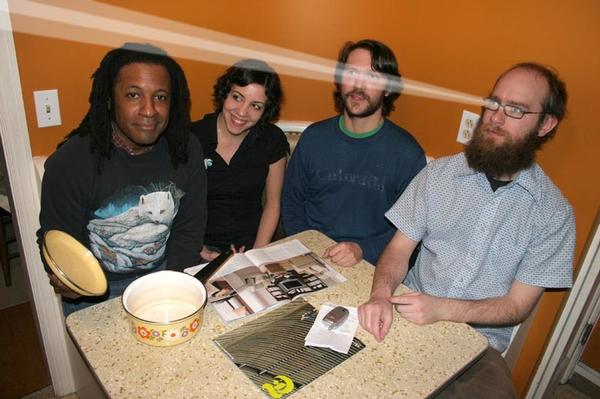
Like the musical counterpart of your everyday office workaholic, Tim Kasher has been pulling long hours for most of his life. Currently the frontman for the Good Life — playing Thurs/10 at Bottom of the Hill — and indie-rockers Cursive, Kasher has been making it in various bands since the age of 18, including a ’90s supergroup with members of the Faint and a 15-year-old Conor Oberst.
http://www.youtube.com/watch?v=MkscXnpg8vA
All of Kasher’s projects revolve around the travails of life, but none feel more personal than the Good Life, which began as a purely solo work and has since bloomed into a four-person band with a lush sound. The antithesis of Cursive’s rage and angst, Kasher’s songs here focus on acceptance and the struggle of growing up. Autobiographical narratives about drinking and playing childish relationship games squarely spotlight his weaknesses, but he seems cognizant of how immature it all is.
http://www.youtube.com/watch?v=EeaRM4_LcUs
The Good Life is Kasher expunging personal demons, and it’s easy to be drawn in, whether by fascination or relatability. Although the band hasn’t released any material since Kasher’s 2007 soundtrack to an unfinanced screenplay, *Help Wanted Nights* (Saddle Creek), the foursome struck up an impromptu tour for the love of it. Music is Kasher’s life and he is livin’ it.
THE GOOD LIFE
With the Parson Red Heads, the Contrail
9 p.m., $12, 21+
Bottom of the Hill
1233 17th St, SF
(415) 621-4455
www.bottomofthehill.com/
I’ve been to plenty of concerts in my life, and I’ve seen some pretty wild shows in various states of consciousness. That being said, nothing could have prepared me for this year’s Air Guitar Regional Championships at the Fillmore.
For those who don’t know, the Air Guitar championships are where bunch of costumed Air virtuosos compete for this title of the Best Air Guitarist and a chance to compete in the National finals in New York, and a chance to represent the good ol’ US of A in the world championship in Finland. With official rules and judging criteria, serious air performers have to do more than just wave their arms around to their favorite guitar based rock.
Serious competitors require some (if not all) the following: A guitar driven song that will resonate with the crowd/judges, a name that exudes rock, a ridiculous outfit, a collection of props, costumed assistants, dance moves, and the ability to rock the crowd. That’s not to say having all of the above will lead to success, as this years judges were especially tough (and tougher the more drinks they had). A high concept presentation may make the crowd excited, but a bring a weak performance and be ready to dodge a beer bottles.
http://www.youtube.com/watch?v=iyyng2ictZE
This year’s crop of competitors ranged from last years regional champion simply named “Awesome” to more surreal characters such as Singar the Goat Demon (with goat legs and horns), Crusher (a mashup of everything KISS), Captain Nowhere (a 70’s glam rock throwback complete with cape), and Snake Riffskin (complete with eyepatch and arrow in his leg) among others.
While the performances varied from rocktackular to downright painful, the overall showcase was a pretty wild experience complete with an abundance of surprises. Stage dives were performed (both intentional and not), drinks were thrown with abandon, clothes were torn off, bouncy balls rained down from the sky, and the crowd yelled louder than most “real” concerts. And after the dust settled we were given a new regional champion in Cold Steel Renegade.
That’s what I think makes this event so much fun. We’ve all been to the concert where the band doesn’t seem like they want to be there and perform accordingly. The Air Guitar Championships are the complete opposite, All the performers WANT to be on that stage. They WANT to rock you (if only for their 60 seconds). However the best part of the night was the close out song, in which all the performers and anyone who wanted to jump on stage got to perform together in an explosion of air guitar greatness. Try doing that at the next concert you attend.
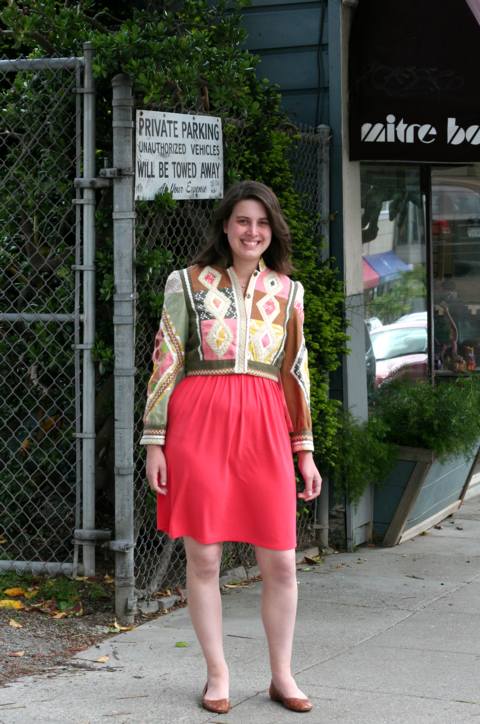
Today’s Look: Lee, 24th Street and Castro
Tell us about your look: “Tangerine is my color.”
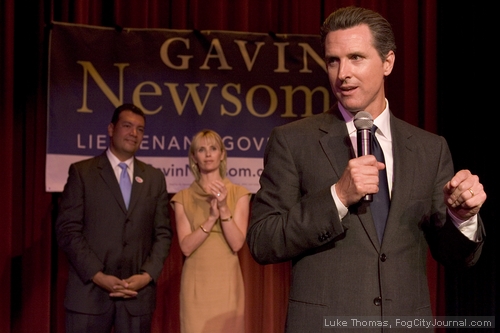
Gavin Newsom’s nomination for lieutenant governor places many San Franciscans in an uncomfortable position, one that was illustrated well by the victory speech that he gave last night just as our story our on his latest budget – in which he proudly rejected taxes in favor of deep spending cuts and future budget deficits — was coming off the presses.
Even though most San Francisco progressives don’t like our fiscally conservative mayor, few of us would rather vote for his Republican challenger, Abel Maldonado, despite the fact that this moderate Latino is actually fairly close to Newsom ideologically. “We don’t want to underestimate the challenge we have. There’s never been a moderate Latino on the statewide ballot,” Newsom pollster Ben Tulchin told me last night.
SF Labor Council President Tim Paulson was at the Newsom event gritting his teeth as he talked about the opportunity progressives now have to work with “a mayor of San Francisco we have issues with,” noting that, “What I find interesting in the easy win for Newsom is how there is going to be a real campaign around this man. It could establish a narrative for what California is about.”
And he’s right, but the danger is if Newsom sticks with his inflexible and longstanding “no new taxes” stance then the narrative could be that neither major political party’s top nominees are willing to tap millionaires, oil companies, and other entities that can afford it in order to fund education, health care, and the development of a green economy, which Newsom said are his top priorities. That and “jobs,” by which he means only private sector jobs, based on his past statements and actions and current failure to support new tax measures.
But Newsom doesn’t seem to see the glaring contradiction in his political philosophy, which he illustrated as he told a story about the potential to achieve strong economic growth while aggressively pursuing solutions to global warming and other environmental challenges, which he and progressives both seem to believe are not just possible, but “the opportunity of a lifetime.”
Newsom noted that the only four wealthy countries that signed the Kyoto Protocols and met their greenhouse gas reduction goals – Sweden, Denmark, United Kingdom, and Germany – have similar economic strategies. “All four of these countries had three things in common vis-a-vis the United States: Lower unemployment, higher growth, and lower income disparities,” he said.
Yet Newsom left out another key commonality that was even more central to their success, and big reason for two of Newsom’s three items: All have far higher tax rates than the U.S. and a more vibrant, respected, and well-funded public sector that was able to guide that economic transformation and ensure a smart, equitable distribution of the country’s wealth – something Newsom has been overtly hostile to as mayor and while campaigning for statewide office.
Nonetheless, he continued, “What’s interesting about these four countries is they dramatically shifted their framework in terms of economic growth and economic development towards a cleaner and greener energy future and they were rewarded with higher growth and lower unemployment. I think that’s suggestive, in the context of this debate.”
So do I, suggestive of the need for Newsom (and Jerry Brown) to finally realize it’s going to take money and a rejuvenated public sector to meet his stated goals for education, health care, and the environment. In San Francisco, his reluctance to challenge the Chamber of Commerce fallacy that taxes kill growth has left a legacy of dangerously diminished social services and increasing budget deficits running indefinitely into the future.
But the four countries that Newsom claims to admire don’t think that way. They don’t boast of cutting social services while proposing even more business tax cuts, and they don’t say things like, “It’ll take an entrepreneurial look at solving problems in this state.” He’s sounds like Meg Whitman and the Republicans.
What we need is the other Gavin Newsom, the one who last night also said, “Now is the time for serious problem solving in California….It is a time for California to fundamentally change.”
But first, Mr. Mayor, you’re going to need to embrace a few fundamental changes of your own.
By Peter Galvin
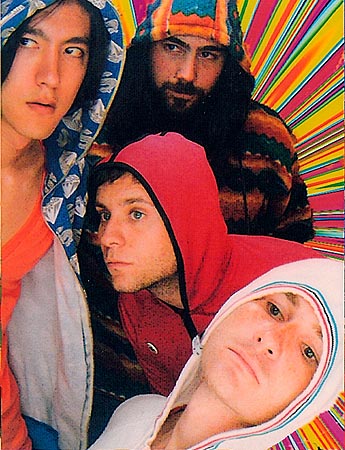
When the massive drums make their entrance on the first track of Get Color (Lovepump United), you’d be forgiven for thinking that HEALTH is a metal band. These L.A. electro-punks — playing Wed/9 at Slim’s — are noisy! There’s also a beauty in the reverberations of those drums, echoing over and over in the background of HEALTH’s tracks, and it makes their music more than a little spine-tingly.
http://www.youtube.com/watch?v=EWZxThGh5wQ&has_verified=1
But HEALTH aren’t really metal, and they’re more likely to be lumped in with the emergent electronic noise scene thanks to their 2007 remix of Crystal Castles’ breakout hit “Crimewave.” The comparison is apt, not just because both bands can bank their successes on the same song, but because the sounds of both are so discordant. Where Crystal Castles make noisy electronic music, HEALTH makes electronic noise, playing with grating machine sounds and textures in ways that question what it is that makes most music appealing in the first place. There’s no way to listen to HEALTH at low volume, you gotta crank it up, so I have to believe that seeing them live will be even better.
HEALTH
With Indian Jewelry, Gold Panda
Wed/9, 8 p.m., $15
Slim’s
333 11th St, SF
(415) 255-0333
www.slims-sf.com
Curiosities, quirks, oddites, and items from around the Bay and beyond
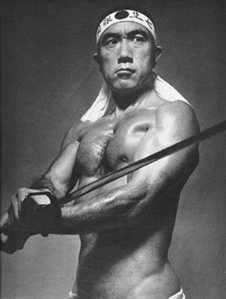
Education/Sex/Film/Art: UC Berkeley math prof produces and stars in Matthew Barney-like cinematic tribute to Yukio Mishima, has sex on screen to Wagner.
*****
LGBT/Crime: SF Appeal investigates “hook-up violence” against LGBT folks. Part two is here. Peeps, be safe out there this Pride season!
*****
Brains/Jobs: SF ranked “smartest” city in the US. Maybe the critical mass of advance degree holders is why it’s still hard to get a job.
*****
*****
Local Media: The Bay Area can expect to welcome another local media start-up, The Berkeley Times, come this fall.
*****
*****
Satan/Real Estate: The Richmond District’s Satanic past!
*****
Transit/Life: Take a ride in the front seat:
http://www.youtube.com/watch?v=xZ0gBsR9w74&feature=player_embedded
By Katie Gaydos
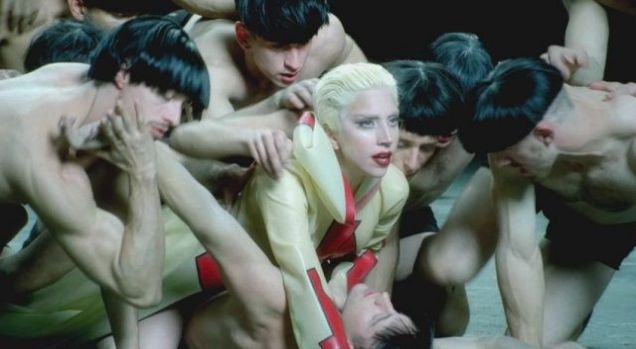
Swapping diamond dripping lingerie (a la “Bad Romance”) for nude-colored underwear and trading faux-Technicolor (a la “Telephone”) for black and white, the new music video “Alejandro” goes where no Gaga video has gone before. For that alone I’ll applaud it. But where’s the over-the-top burlesque, borderline grotesque fashion sensibility we’ve come to know and love?
Under the direction of fashion photographer Steven Klein (who’s worked with Madonna in the past), the visual aesthetic of “Alejandro” seems slightly toned down compared to Lady Gaga’s previous videos. As the camera scans Gaga holding a vintage calabash pipe, wearing a black Elizabethan ruff, steampunk goggles, and a heart shaped crown, it’s apparent that fashion plays a big role in “Alejandro.” Yet Gaga’s neo-Victorian look, while complimenting the video’s bleak, post-industrial vibe, is undeniably less exciting and less fun than the diamond studded Alexander McQueen stilettos and smoldering cigarette sunglasses we’ve seen before. Even the featured red leather nun habit and cross-on-crotch catholic tunic, while controversial, lack imagination.
In addition to the fashion letdown, the video as a whole doesn’t make much sense. The allusion to Madonna’s music video “Express Yourself” along with the Madonna-esque dance scene, complete with black pantsuit and rifle reinvention of Madge’s iconic cone bra, prove to be both visually and choreographically stunning. Unfortunately it’s not clear what channeling Madonna has to do with the video’s preoccupation with homosexuality in a catholic context. Gaga seems more infatuated with Madge than she does with Alejandro. Speaking of Alejandro, where is he anyway? Is he one of the many shirtless soldiers sporting bowl haircuts? Or is he the straight-faced man sporting a leather suit and cop hat at the end of the video?
Regardless of its disjointed plot, “Alejandro” does have its sparkling moments. Let’s not forget (like we could even if we wanted to) the highly erotic bed scene where Gaga writhes, grinds and rides her entourage of high-heel clad men. Our “Queen of Spectacle” certainly knows how to command a camera!
At the end of the day there’s no question Gaga outshines her fellow pop star peers in terms of creative music videos. After all, who else could rock skin-tone underwear with minimal eye make-up? Sadly, despite all the hype leading up to it’s highly anticipated release, “Alejandro” doesn’t quite trump Lady Gaga’s previous videos. The question still remains then: what will it take to outdo herself?