SFBG Blogs

Hot sexy events June 16-22

0

How’s this fix for ailing municipal governments across the country; quit using law enforcement to harass sex workers doing their thing. Good, right? The Desiree Alliance would have to agree. The sex worker led advocate coalition is taking over Las Vegas next month for their annual conference, where they’ll discuss implementation of the harm reduction, political advocacy, and health services they provide for fellow escorts. Sexy guest speakers include Stephen Eliot (who will lead a storytelling session, and speak in an expert panel on taking your sex worker art to the next level), and Lauren McClubbin (an ACLU lawyer and Las Vegas performer).

But they need your help to make it all the awesomeness it can be. A big old public performance-demonstration is planned for the Strip — but the gambling tourists won’t get their dose of reality unless the Alliance raises the $2,500 they need to make the damn thing happen. You can donate on their Kickstarter page here. And learn more about the group’s antics right here, if you’re wondering. And now, in local news…

——————————————-

Asking For What You Want in the Bedroom and Beyond

Do you find it difficult to speak up for what you want between the sheets? Out of the sheets? In life, generally speaking? Well, who doesn’t, really (besides maybe Kanye West). Enter Marcia Baczynski, whose skills as a relationship counselor and sex educator lead her to create Cuddle Party – and this class, which gives you some excellent universal pointers on how to speak up and get yours.

Wed/16 8-9:30 p.m.

Center for Sex and Culture

1519 Mission, SF

(415) 255-1155

www.sexandculture.org

——————————————-

Latex Fashion School

Polly Pandemonium has been making high quality latex couture since 1995 in the London fetish scene, and now she wants to teach you, her San Francisco disciples! Learn about the shiniest, stretchiest, naughtiest ways to DIY. Apparently, it’s a very forgiving medium for the beginning seamstress or seamster.

Wed/16 6-9 p.m., $250

central SF location

(415) 269-8616

email polly@superstaravatar.com for information and reservations

www.latexfashionschool.com

——————————————-

Daddy and Boy: A Journey

Daddy Sal (founder of The Exiles) and boyjean, long time activists in the leather community, explicate their daddy/boy BDSM relationship, and go into the different dynamics of ways to be romantically involved for the long run in the domme/sub rainbow.

Fri/18 8-10 p.m., $4-10

Women’s Building

3543 18th St., SF

www.theexiles.org

——————————————-

Rope Dance: Dynamic Passionate Movements

Japanese bondage expert Midori leads you in this course on dancing, stretching, seducing, connecting… on the ropes. Bring a yoga mat, comfy clothes to move in and your sexiest, sassiest ‘tude.

Sun/20 2-5 p.m., $30 solo, $50 couple

SF Citadel

1277 Mission, SF

(415) 626-1746

www.sfcitadel.org

——————————————-

David Jedeikin

What usually happens when you give up your liver in a risky transplant to your ailing man? Usually not a sexy solo journey around the world. But life is complicated, and that’s what happened to Mr. Jedeikin, whose “flashpacking” (apparently a term used to describe the party backpacker) took him all over the world to the sexiest spots and parties in the gay world. In his book Wander the Rainbow, we get to hear about his trysts with exchange students in Beijing, and sex club bartenders in Berlin. So read all about it, sticky hands – and get your copy signed at this in store appearance.

Tues/22 7:30 p.m., free

A Different Light bookstore

489 Castro, SF

(415) 431 0891

www.adleventscastro.blogspot.com

——————————————-

Amos Mac’s “Boys in their Bedrooms”

A photographic exhibition of the city’s hottest FTMs in their pjs and Power Ranger blankies shot by photog extraordinaire Amos Mac. DJ Katastrophe will spin as you take in the sexy studs featured in Original Plumbing magazine.

Tues/22 7 p.m., free

The Lexington Club

3464 19th St., SF

(415) 863-2052

www.originalplumbing.com

Mirkarimi to PG&E: We want our $46 million back

Speaking at the June 15 Board of Supervisors meeting, Sup. Ross Mirkarimi introduced a non-binding resolution calling on Pacific Gas & Electric Co. to refund ratepayers for the $46 million it spent on a failed bid to pass Proposition 16, a ballot initiative dubbed the “Taxpayer’s Right to Vote Act” that would have impeded the creation of municipal electricity programs.

While PG&E has publicly stated that its campaign costs were covered by “shareholder funds,” the sole source of income for the parent corporation is money that the utility makes selling electricity, so the $46 million originated in ratepayers’ pockets.

At the meeting, Mirkarimi displayed a map of PG&E’s service territory beside a map of the California counties that rejected Prop 16, highlighting the striking similarity. In San Francisco, Prop 16 was rejected by more than two-thirds of the vote.

Mirkarimi’s resolution included several other improbable requests. He extended an invitation to PG&E CEO Peter Darbee to attend a Board of Supervisors meeting, to “discuss what it really and truly means to peacefully coexist,” he explained. “We look forward to Mr. Darbee coming to meet with us.”

The third aspect of the resolution deals with SFERS, San Francisco’s employment retirement system, which owns 106,348 shares of PG&E common stock valued at $4.38 million on the day the information was accessed. Institutional investors such as CalPERS and SFERS account for more than a 60 percent share of ownership of PG&E, according to the resolution.

Mirkarimi is calling on PG&E to refund SFERS, and “urges CALPERS and SFERS to consider divesting its holdings in PG&E stock” if the company refuses.

The resolution also asks the California Public Utilities Commission to carefully scrutinize PG&E’s requested rate hike.

PG&E didn’t return our requests for comment the last 10 times we called, but we tried again — even though the result is predictable.

And now, the race to replace Kamala Harris

2

David Onek, who has strong political connections and little courtroom experience, sent out a email today announcing that he wants to be San Francisco’s next district attorney:


As many of you know, District Attorney Kamala Harris is very likely to become California’s next Attorney General. DA Harris is a friend and I would never run against her, but her victory in November will open up the office as early as the end of this year. This means the time to get organized is right now.


He adds his name to the list of people, including former chief homicide prosecutor Jim Hammer, who want the job. But it’s going to be an unconventional campaign, to say the least. Because if Harris wins, her successor won’t be chosen by the voters of San Francisco.


There are three relevant scenarios here.


1. Harris loses the AG race. Entirely possible; she’s got a tough campaign ahead of her. Then all of this talk is moot; Onek clearly isn’t going to run against her, although Hammer might.


2. Harris wins the AG race, and Newsom loses his race for lieutenant governor. In that case, Newsom will be mayor of San Francisco when Harris resigns to move up to Sacramento — and under the City Charter, he will appoint someone to serve out the rest of Harris’s term.


3. Harris and Newsom both win — in which case there’s a fascinating legal issue. Do Harris and Newsom leave at the same moment — in which case the Board of Supervisors appoint the next mayor, who appoints the next DA? Or does Newsom try to fill Harris’s job before he resigns himself? In the end, Matt Dorsey, spokesperson for City Attorney Dennis Herrera told me, “that’s a question that will be answered by the attorney general. Theoretically, it could get very complicated.”


Under the state Constitution, the governor, lt. governor and attorney general all take office the same day, the first monday after Jan. 1st, which in this case is Jan. 3. The constitution doesn’t say what time of day that happens. In theory, then, Harris could take the oath of office at 9 am, Newsom could wait until 10 am, and appoint a new DA in between. Then somebody who didn’t get appointed (or, frankly, any angry citizen of San Francisco) could sue — because if Newsom’s term technically starts at 12:01 am Jan. 3d, then at that moment, by city law, the president of the Board of Supervisors instantly becomes mayor, meaning David Chiu should be the one making the DA appointment.


Or Harris and Newsom (and whatever other parties wanted to play ball) could cut a deal. Harris could resign a day early, and Newsom could appoint her replacement with no legal consequences at all. That would look sleazy as hell and be a rotten way for the mayor to start his term as lieutentant governor, but he could do it.


Of course, that will all depend on an interpretation from the attorney general on when the AG and lt. gov. terms actually begin — and the AG at that point will be Jerry Brown, who may have just been elected governor on a ticket with Newsom and Harris.


What a clusterfuck.


At any rate, David Onek now has to build a campaign aimed not really at winning an election, but at convincing either Newsom or Chiu (or, potentially, the next mayor, who would be named by the supervisors) that he ought to be district attorney. Part of that calculation will hinge on whether he can hold onto the job when it comes up for a real election in November.


If it’s a simple deal with Newsom, Onek will be relying on his political allies. He notes:


A broad range of leaders in government, in law enforcement and in the broader criminal justice community have already pledged their support – including former San Francisco City Attorney and Police Commission President Louise Renne, former state Treasurer Phil Angelides, Supervisor Carmen Chu, School Board Commissioner Hydra Mendoza, former Mayor Art Agnos, former Police Chief Heather Fong, Berkeley Law School Dean Christopher Edley, Jr., Police Commission President Joe Marshall and former Chief Probation Officer Jeanne Woodford. 


Although I’m not sure that Newsom cares much these days what Louise Renne, Art Agnos or Phil Angelides think.


So what Onek — and anyone else who wants to be the next DA — needs to do is convince the next mayor that he’s not only going to be a good chief prosecutor (already a hurdle for someone with no background as a prosecutor) but that he has the political ability to convince the actual voters that he’s qualified. Otherwise he’s just another Kim Burton waiting to happen.


I haven’t been able to reach Onek yet to discuss all of this, but the minute he calls me I’ll post an update.

Obama blows his chance to confront oil addiction

1

President Obama had the right Oval Office setting, a moment in time of genuine public outrage with the oil industry, and even an eloquent setup, telling Americans “the time to embrace a clean energy future is now” and saying we shouldn’t deterred from bold action by “a lack of political courage and candor.” And then…nothing. Once again, Obama has failed to follow up his rhetorical candor with the courage to do what needs to be done.

As with the health care debate and casino culture on Wall Street, Obama did a good job of diagnosing the problem. In this case, he cited the billions of dollars we send to despots in oil-rich countries, how China is leaving us in the dust in developing clean energy, and the myriad problems created by Americans accounting for 20 percent of world oil consumption, from global warming to the BP spill.

With that kind of setup, he could have just said the magic words — carbon tax – and completely changed the national debate over energy and environmental policy, finally linking the two interconnected realms. He could have called for a steep tax on oil companies and a gasoline tax on consumers, correctly arguing that subsidies on fossil fuels must end now and those who have long benefited from them need to help fund our transition to renewable energy.

Instead, he mentioned a few tepid reforms, and he wouldn’t even pledge his support for any of those ridiculously inadequate half-measures, telling the audience, “The one approach I will not accept is inaction. The one answer I will not settle for is the idea that this challenge is too big and too difficult to meet.”

Pretty words and a fine sentiment, but it means nothing in a political climate in which leaders of both major parties are more concerned with maintaining the flow of political contributions than stopping the flow of oil. Meanwhile, climate scientists say we need to cut our use of fossil fuels in half in the next couple decades to avoid the worst global warming impacts, and all that even the most ambitious legislation in the country would do now is slow the rate of growth over that time.

The only person in this country who could change the political dynamics to really meet this challenge is Obama, and last night, when he had the best chance to do so, he failed.

Street Threads: Look of the Day

0

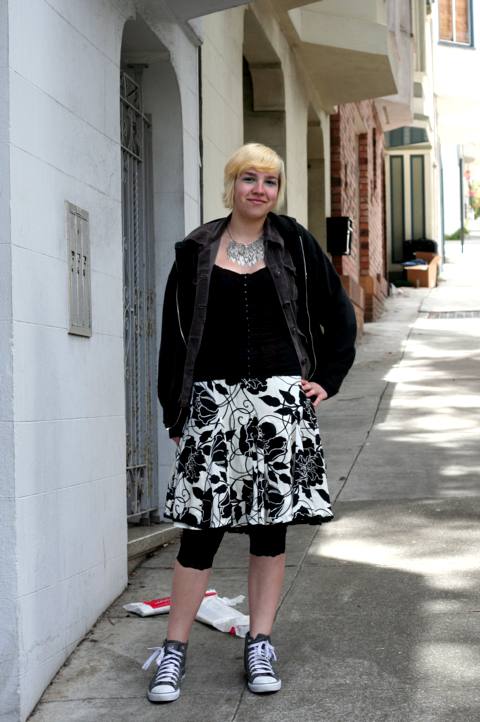
Today’s Look: Ibolya, Cortland and Coleridge

Tell us about your look: “I’m going to a school graduation.”

Summer in bloom

0

By Sam Stander

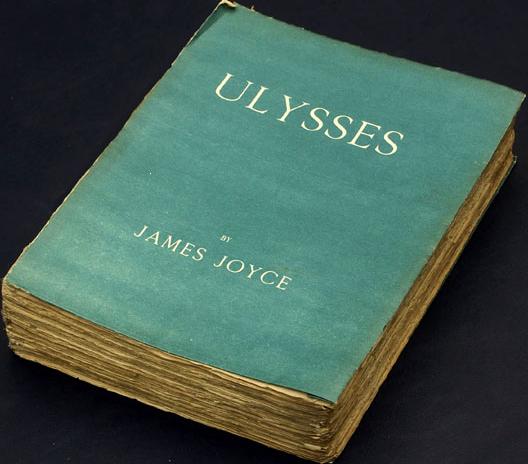
It’s that time of year again! You know, the time when Ulysses happens. That’s right, it’s Bloomsday, the holiday commemorating James Joyce’s epic modernist tome, ranked by the Modern Library as the greatest novel of the 20th century. The novel’s events span a single day — June 16, 1904, the date of Joyce’s first date with his future wife, Nora Barnacle.


Though the epicenter of all things Bloom-related is, for obvious reasons, Dublin, San Francisco hardly skips out on the fun. The Mechanics’ Institute Library is hosting ”The Voices of James Joyce: Readings from Ulysses and Beyond #2,” their ninth annual Bloomsday event. It will feature readings and musical performances, as well as a “special Bloom’s Menu” at the Mechanics’ Saloon.

http://www.youtube.com/watch?v=YbMOhRL6wsA

The Voices of James Joyce: Readings from Ulysses and Beyond #2
7 p.m., $10-$12
Mechanics’ Institute Library
57 Post, SF
(415) 393-0114
www.milibrary.org

Love stories, politics, yodeling, and more: Frameline 34 short takes

2

The Secret Diaries of Miss Anne Lister (James Kent, UK, 2010) A BBC production set in the northern English countryside of the early 19th century, James Kent’s The Secret Diaries of Miss Anne Lister depicts the amatory adventures of a gentlewoman landowner (Maxine Peake) in search of a “female companion” with whom to live out her days. The narrative is somewhat breathless, the seductions equally so and yet a bit anemic, and our strong-willed, fearless heroine is admirable without being entirely engaging. Still, besides tapping into the Jane Austen slash fiction demographic, this tale of pre-Victorian bodice ripping and skirt lifting among the female gentry offers the considerable thrill of being adapted from the actual secret diaries of the titular Miss Lister, decoded by a biographer 150 years after her death. A documentary in the festival, Matthew Hill’s The Real Anne Lister, offers a complementary version of her story. Thurs/17, 7 p.m., Castro. (Lynn Rapoport)

I Killed My Mother (Xavier Dolan, Canada, 2009) The title I Killed My Mother suggests a different kind of movie from what it actually is. But that’s OK: though not a crime thriller, the film is still a tightly wound, high stakes drama. Writer-director Xavier Dolan stars as Hubert, the angsty son of the titular mother. When you consider that Dolan’s script is autobiographical — and that he was only 20 when the film was made — his performance becomes all the more impressive. As the mother, Chantale, Anne Dorval is also a force to be reckoned with. Despite its presence as part of a queer film festival, I Killed My Mother is not all that “gay” in the traditional “gay movie” sense. Hubert’s relationship with Antonin (François Arnaud) is secondary — what’s important is how his refusal to share it with his mother affects her. That helps make the movie a refreshing alternative to many more mainstream offerings. Sat/19, 6:45 p.m., Castro. (Louis Peitzman)

The Owls (Cheryl Dunye, USA, 2010) Expectations are high for The Owls: writer-director Cheryl Dunye again collaborates with Guinevere Turner, V.S. Brodie, and other notable queer performers — you can’t not think of classics like Go Fish (1994) and The Watermelon Woman (1996). The Owls isn’t quite at that level, but it’s a fairly thought-provoking piece. Four middle-aged lesbians — played by Dunye, Turner, Brodie, and Lisa Gornick — accidentally kill a younger lesbian and try to cover up the murder. Their ages are central: the fear of getting older is a major thematic concern. So, too, ideas of gender identity, with the introduction of androgynous Skye (Skyler Cooper). But Dunye breaks the fourth wall, staging her film as a pseudo-mockumentary with both the characters and the actors offering commentary. At just over an hour, The Owls can’t sustain all the back-and-forth, and too many intriguing ideas are left unfinished. Fri/18, 7 p.m., Castro. (Peitzman)

The Topp Twins: Untouchable Girls (Leanne Pooley, New Zealand, 2009) It’s hard to name an American equivalent of New Zealand’s Topp Twins — a folk-singing, comedy-slinging, cross-dressing duo who’re the biggest Kiwi stars you’ve never heard of (but may be just as beloved as, say, Peter Jackson in their homeland). Recent inductees in the New Zealand Music Hall of Fame, the fiftysomething Jools and Lynda, both lesbians, sing country-tinged tunes that slide easily from broad and goofy (with an array of costumed personas) to extremely political, sounding off on LGBT and Maori rights, among other topics. Even if you’re not a fan of their musical style, it’s undeniable that their identical voices make for some stirring harmonies, and their optimism, even when a serious illness strikes, is inspiring. This doc — which combines interviews, home movies, and performance footage — will surely earn them scores of new stateside fans. Sun/20, 3:45 p.m., Castro. (Cheryl Eddy)

Out of the Blue (Alain Tasma, France, 2007) Wearily preparing for a dinner party on a day they’ve both forgotten is their anniversary, Marion (Mireille Perrier) suddenly realizes her 22-year-marriage to Paul (Robin Renucci) is dead. Her decision to end it, however, comes as an infuriating surprise to him and a destabilizing one to their teenage daughter Justine (Chloé Coulloud). They all get quite a surprise when Marion’s new friendship with younger, flamenco-dancing female antiques dealer Claude (Rachida Brakni) turns into something more. This latest in a long line of very good French made-for-TV dramas at Frameline typically handles its complex load of familial and sexual issues with grace and intelligence, if with an occasional excess of high dramatics. Sun/20, 9:30 p.m., Roxie. (Dennis Harvey)

The Consul of Sodom (Sigfrid Monleón, Spain, 2009) Late Spanish poet Jaime Gil de Biedma was many things: an intellectual, aesthete, hedonist, bohemian, discotheque owner, Communist sympathizer (though the Party wouldn’t have him), publisher, more-or-less out gay man, and an occasional lover of flamboyant women like Bel (played by pop singer Bimba Bose). Sheltered by wealth and privilege — to the extent possible in Franco’s Spain — he dabbled in ghetto flesh, sometimes on trips abroad for his family’s tobacco family. As portrayed by actor Jordi Mollá and director Sigfrid Monleon, he’s a mixture of arrogance,
compassion, self-destruction, and shark-like perpetual motion. Seldom missing a chance to drop some full-frontal nudity or a kitschy period song (from 1950s to 80s), this biographical drama — which has been decried as overly sensationalized by some Spanish cultural watchdogs, including a few of the subject’s surviving cronies — is a shamelessly flamboyant and entertaining portrait of a life lived large. Sun/20, 9:30 p.m., Castro. (Harvey)

Dzi Croquettes (Tatiana Issa and Raphael Alvarez, Brazil, 2009) Whatever magic fairy dust fuelled the Cockettes’ glitter-covered hippy drag must’ve drifted down south to Brazil to inspire the similarly named Dzi Croquettes. Of course, that’s not the real origin of the equally colorful cabaret troupe, whose fantastic story is told in Raphael Alvarez and Tatiana Issa’s riveting and rollicking documentary. Blending Ziegfeld Follies-style glamour with agitprop, Dzi Croquettes were more polished and more overtly political than their North American sisters; something which frequently landed the group in hot water with José Sarney’s dictatorship. Finding an unlikely and unexpected advocate in Liza Minnelli, Dzi Croquettes fled their homeland in the mid 70s, becoming the unexpected toast of Europe until AIDS began to take its toll. Filled with delightful archival footage and insightful interviews with alumni, Dzi Croquettes is a joyful affirmation of the power of art (and a feathered boa or two) to effect positive change. Mon/21, 11 a.m., Castro. (Matt Sussman)

Brotherhood (Nicolo Donato, Denmark, 2009) It’s hard to feel much sympathy for neo-Nazis. Perhaps that goes without saying, but Danish film Brotherhood asks us to do just that: Lars (Thure Lindhardt) and Jimmy (David Dencik) meet in the service of Hitler’s ideals, then find themselves drawn to each other. As they struggle to come to terms with their attraction, we’re supposed to care. Fat chance. Although Lars initially disproves of the neo-Nazis, he becomes quickly (read: unrealistically) interested in their cause. Soon, he’s writing his own anti-Pakistani propaganda. And Jimmy is devoted to the movement from the get-go, even condemning “faggots” despite his own same-sex attraction. Maybe I’d feel differently if either Lars showed any sign of internal conflict. Neither displays a sense of regret over being a racist, xenophobic, anti-semitic asshole. They’re down with the gay but only in relation to each other. Who gives a crap if these two make it work? Mon/21, 9:30 p.m., Castro. (Peitzman)

Plan B (Marco Berger, Argentina, 2009) It’s the oldest story in the book: boy meets girl, boy loses girl, boy seduces girl’s new boyfriend. OK, maybe not, but the set-up isn’t entirely unheard of either. It’s a credit to Plan B’s sharp aesthetic and strong performances that it still feels fresh. The Argentinean export stars Manuel Vignau as Bruno. When his girlfriend Laura (Mercedes Quinteros) breaks up with him, he decides to get revenge by making his move on Laura’s supposedly bisexual boyfriend Pablo (Lucas Ferraro). If you’ve seen any romantic comedy ever, you know that what begins as a game for Bruno becomes true love. But Plan B doesn’t go the comedy route, and instead offers a compelling, somewhat subtle drama. The love affair is slow but well-paced, so that the inevitable conclusion feels earned and completely satisfying. Mon/21, 9:30 p.m., Elmwood; June 24, 6:30 p.m., Victoria. (Peitzman)

Undertow (Javier Fuentes-León, Peru, 2009) This sexy and delicate drama is a bisexual triangle that continues beyond the grave. In a Peruvian coastal hamlet, fisherman Miguel (Cristian Mercado) loves his pregnant wife and fellow church leader Mariela (Tatiana Astengo). But he’s also having a secret, passionate affair with Santiago (Manolo Cardona), an urbanite who moved there to paint the land- and seascapes, and who chafes at the restrictions Miguel places on their relationship. At a certain point one character dies, and writer-director Javier Fuentes-León seamlessly handles Undertow’s transition to magical realism. The leisurely story doesn’t go where one expects, ending on a perfect grace note of bittersweet acceptance. Tues/22, 7 p.m., Castro. (Harvey)

Children of God (Kareem J. Mortimer, Bahamas, 2009) Likely the first gay-themed film not just shot in but produced by the Bahamas, Kareem J. Mortimer’s first feature is an occasionally heavy-handed but consistently engrossing mix of romance, religion, and homophobia. Johnny (Johnny Ferro) is a withdrawn Nassau art student who’s a target of gay taunts and bashers. A teacher who says his paintings lack emotion gives him keys to her cottage on the “ultimate landscape” of isle Eleuthera, where he promptly meets the aggressively friendly and inquisitive Romeo (Stephen Tyrone Williams). Also headed here is Lena (Margaret Laurena Kemp), righteous wife of pastor Ralph (Ralph Ford), with whom she shares a strong penchant to publicly denounce the moral threat of “the gays.” She has, however, just left her husband after he furiously denied giving her VD — to confess might reveal that he is, in fact, playing around on the downlow. That’s just the starting point for a complicated, perhaps over-ambitious but sometimes powerfully sensual and poignant film that is definitely amongst this year’s Frameline highlights. June 23, 9:30 p.m., Castro. (Harvey)

Spring Fever (Lou Ye, China, 2009) Shot surreptitiously and chock full of gay sex, Chinese director Lou Ye’s latest film isn’t likely to earn him any additional slack from Chinese government censors (his 2006 film, Summer Palace, got him banned from filmmaking for five years after he failed to preview it before it screened at Cannes). Using hand-held cameras, public settings, and natural lighting, Lou follows Wang Ping (Wu Wei), who’s been having a passionate, messy affair with travel agent Jiang Cheng (Qin Hao). Things get more complicated when the snoop Wang’s wife hires to follow her closeted husband winds up pursuing the two men in ways he never imagined. What Spring Fever lacks in continuity and psychological depth, it makes up for with sexual candor and a genuine frisson of risk, given the secretive conditions under which it was made. That thrill doesn’t quite last through the film’s duration, but as a document of defiance Spring Fever is commendable. June 24, 9:30 p.m., Castro. (Sussman)

The String (Medhi Ben Attia, France/Belgium, 2010) The cross-cultural coming out drama is a perennial at LGBT film festivals, but Medhi Ben Attia’s assured debut feature presents a familiar tale in new surroundings with flashes of charm. Handsome architect Malik (Antonin Stahly) returns to his posh, Tunisian homestead from France to lay his father to rest, fully intent on coming out to his overly doting, oblivious mother (former Fellini muse Claudia Cardinale). But when he falls for hunky house-boy Bilal (Salim Kechiouche), he finds that the truth has a way of outing itself. Although Attia unspools his film’s titular metaphor rather quickly (having hid his true feelings for so long, Malik feels continuously “tied-up” by a piece of imaginary string), he deserves credit for his nuanced portrayal of gay life in the Maghreb and his inspired casting of Cardinale, who can’t help but radiate an Auntie Mame-ish joie de vivre even when the script calls for “disappointed” over “daffy.” June 25, 7 p.m., Victoria. (Sussman)

Hideaway (Francois Ozon, France, 2009) The very French insouciance with which Francois Ozon usually treats his characters and narratives sometimes makes a film seem perilously slight — yet more often than not he manages to pull off a surprising climactic resonance. Which is the case with this latest. When they both overdose on heroin, Mousse (Isabelle Carré) wakes up pregnant in the hospital — but her boyfriend doesn’t wake at all. Declining his mother’s offer to pay for an abortion, she retreats to a friend’s empty seaside chateau. There she gets an unexpected visitor in Raul (Louis-Ronan Choisy), her late lover’s surviving sibling. Their prickly interplay (and his affair with a local handyman) sometimes seems to be drifting pleasantly nowhere in particular — yet it does end up somewhere, rather poignantly. June 25, 9:30 p.m., Castro. (Harvey)

From Beginning to End (Aluízio Abranches, Brazil/Argentina/Spain, 2009) Just about the definition of upscale gay male softcore, this “big brother” fantasy has nothing to do with George Orwell. Its protagonists are inseparable Brazilian half-brothers (played as adults by Joao Gabriel Vasconcellos and Rafael Cardoso) whose bond caves in to the physical once parental boundaries are removed by mom’s death. This over-the-top kinship is tested when the younger bro is invited to train as a swimmer in the Olympics … in Russia. Near-plotless and borderline senseless, this shamelessly sexy tale from The Three Marias (2002) director Aluízio Abranches succeeds as a guilty pleasure on the sheer, convincing ardor he and his actors bring to their “taboo” love story. June 26, 6 p.m., Castro. (Harvey)

Howl (Rob Epstein and Jeffrey Friedman, USA, 2010) Beatniks get the Mad Men treatment — with a cast that includes that AMC hit’s Jon Hamm, playing the lawyer who defended the publisher of Allen Ginsberg’s quintessential rebel yell, Lawrence Ferlinghetti, against obscenity charges in San Francisco’s most celebrated trial of the 1950s. It’s fun to see that anally nostalgic aesthetic translated to ramshackle North Beach apartments and sophomoric, filthy-mouthed literary heroes. Not so much fun: the overly literal animation chosen by the directors (famed documentarians Rob Epstein and Jeffrey Friedman). Yes, parts of “Howl,” the poem, are animated — unfortunately in a style that calls to mind bad 1980s French Canadian pseudo-spiritual arthouse schlock. Still, this brief slice of beats is juicy, confined to the trial and the tale of Ginsberg’s poetic and sexual awakening. James Franco is wonderful as the young, self-obsessed, epically needy yet still irresistible crank. It was the first time I found myself wishing to see more of Ginsberg naked. June 27, 7:30 p.m., Castro. (Marke B.)

Frameline34: San Francisco International LGBT Film Festival
June 17-27, most shows $8-15
Castro, 429 Castro, SF; Roxie, 3117 16th St, SF; Victoria, 2961 16th St, SF; Rialto Cinemas Elmwood, 2966 College, Berk
www.frameline.org


Festival front lines: Harmony 2010

5

Aerial photo by DJ Guacamole

Santa Rosa got a little more groovy this weekend for the estimated 30,000 to 35,000 that attended the 32nd annual Harmony Festival, three days that were so epic my ability to narrate them cohesively has been called into question. Assembled here are some bits and pieces from the scene.

*****************************************************************

Best year ever?

The longest running West Coast music and lifestyle festival seems to have resolved many of the problems it’s had with turning a profit in years past. “We tightened our ship, we did less with more, and we sold more tickets,” says festival CEO, Bo Sapper. Sapper cited the Eco Rally skate contest as a particular success – Harmony teamed up with eight local skate shops, and a passel of pros to put on an amateur mini ramp competition. They had 1,000 skaters sign up to ride, mainly from the local area. The festival also sold out it’s Saturday night shows, a rare occurrence for past years of Harmony.

*****************************************************************

Vendor madness

Call me monetarily minded (you’d be the first), but I said it before, and I’ll say it again; the stuff that’s selling can encapsulate the event itself. So what kind of hawkers of wares greeted you upon arrival a the front gates? Amongst the psychics and Mayan chocolate was a woman selling personal sized, portable saunas (she said she was having trouble getting people to experiment with it, temperatures topping out in the nineties and all), some berries from Ghana whose claim to fame were that they could effectively mess your sense of taste up (suggested to buyers as possible cocktail garnishes), and my favorite; Asturias, the sonic didgeridoo man who charms lions and tigers (and for $200/two hours, you too!) with his big, hollow, vibrating stick. 

*****************************************************************

Swami sanity

Don’t mourn last night’s loss of those fairy wings! “Everything is set, but the people are upset,” said Swami Chidanandji from his comfy pillow at the Wisdom Speakers Stage. Take it from a man who spent ages nine to 17 practicing solitude and yoga in the Himalaya; no matter how much festival flair you’ve stuffed into your backpack, happiness lies within. 

*****************************************************************

Seeding the future

The basket of striped fava beans were what brought me to the West County Community Seed Bank‘s booth, but hearing about their mission to provide Sonoma County with GMO-free seeds for sproutin’ kept me fingering favas for awhile. At the moment, they’re meeting at St. Stephen’s Episcopal Church in Sebastopol every last Saturday of the month, and the seeds are stored in their founder’s basement. Harmony Fest gave them their vendor booth for free; the same price they charge their seed buyers.

*****************************************************************

Yoga for the party kids

“Well, I got two hours of sleep last night. I’m not sure how, but we’ll make it through this,” said Yogaworks instructor Eric Monkhouse. Monkhouse took us through a few moderately paced asanas at the Eco-Wellness Sanctuary at 10:15 a.m. on Saturday morning — part of a full slate of yoga classes I thought I’d make it to, but obviously didn’t.

*****************************************************************

Goddess Grove

One of the festival’s most rockingest scenes was this shady little side stage, where crowd pleasers Delhi to Dublin and Diego’s Umbrella rolled about gleefully onstage and off (Diego’s guitarist at one point plunged into the crowd to squirm about in the grass). At night, laser lights tickled the tree leaves above the concerts, setting an entirely different stage for the late night lovin’ that any good festie inspires.

*****************************************************************

Festival babies: cooler than I am

Where do these little rascals come from? Big ups to the munchkin who was walking around performing courtesy sprays with his bubble gun, but my favorites were the pretty little girl and her buddies perched on the back of a truck that was making its slow way past the Goddess Stage. Next to her were two boys on skateboards, holding onto the fender for dear life. I attempted to make contact with the little thing,  but she shushed me through her ice cream cone, and pointed urgently, soundlessly to the truck’s cab. Festivating stowaways. Love it.

*****************************************************************

Crime! 

Of course, it wasn’t all ice cream cones and good vibrations. There’s the matter of the Saturday night theft of a borrowed moped, which Sapper cited as the weekend’s sole unpleasant incident (if you don’t count beer prices).

*****************************************************************

Lauryn Hill: ragingly good

So what if she spent a large portion of her first US concert in three years harassing the sound guys – the woman’s a legend, and if she wants to get a little surly, she’s entitled. “We’re all big fans of Lauryn Hill,” Sapper says. “We were aware she was quite reclusive, but she’s ready to come out of that now. Her agency was looking for a safe place for her [to restart her US performing career], and they thought Harmony Festival would be that place –and they were right.” Sapper recalls waiting with his wife and daughter backstage for Ms. Hill to emerge as one of the festival’s more magical moments.

Hill’s heavily remixed versions of such classics as “Turn Your Lights Down Low,” and “Ready or Not” struck a fine balance between crowd pleasing and innovative — and her red, white, and blue jumpsuit she wore struck an equally fine balance between Southern belle and Soul Train. Well worthy of a headliner. Thanks for coming out to play, Miss Hill. Now that she’s played a California hippie fest, can we finally quit with those stupid racism rumors?


The Daily Blurgh: Stakeout on 6th Street, Twilight tribute bands, tipsy artists

0

Curiosities, quirks, oddites, and items from around the Bay

Thomas Kinkade: “painter of light,” shameless boozehound. (Also: Doesn’t the mugshot totally make him look like a champion poker player or a washed up bookie? I always thought he would be more Bob Ross than Hunter S. Thompson).

*****

Ozzy Osbourne has donated his body to science. Will Keith Richards follow suit?

*****

The Bold Italic spends 24 hours on 6th Street.

*****

Drinking game: Do a shot for every one of the local watering holes that made Esquire‘s Best Bars in America list that you’ve been to.

*****

Save the date – The Cullens, the best Twlight tribute band you’ve never heard of, are set to play at the SF Public Library’s Richmond branch this Sunday. Twihardcore for life!

*****

Bigfoot lives, loves old-timey candy bars.


BP’s stock rises. How about Obama’s?

3

A month ago, when BP ascended to the top of the list of corporate villains, the company’s stock took a thrashing. But now the panic selling seems to have gone into reverse: BP’s stock rose today, even as lawmakers in Washington intensified their criticism, other oil companies claimed they would have done a better at handling the spill, and BP said it was speeding up payment of large commercial losses due to the Gulf of Mexico disaster.

So, is this just a temporary lull in BP’s stock market storm? Or will our addiction to the black stuff keep oil companies afloat, no matter how bad the environmental disaster? And how will Obama’s stock fare?

With the President set to address the American people from the Oval Office tonight, the first time since he was elected and nearly two months after the worst environmental catastrophe in U.S. history, tonight is being framed as a defining moment that could determine Obama’s relevancy.

The “Drill, baby, drill!” crowd would love it if this disaster brought Obama down, and his poll numbers have definitely  taken a beating in recent weeks. My money is on Obama to make a kickass speech tonight—and kick B.P. CEO Tony Hayward’s ass when they meet Wednesday, a day before Hayward testifies before Congress. How it goes after that will depend on the follow through, and that’s where Obama has an opportunity that he better not blow.


Activists angry about BP spill target Arco stations

2

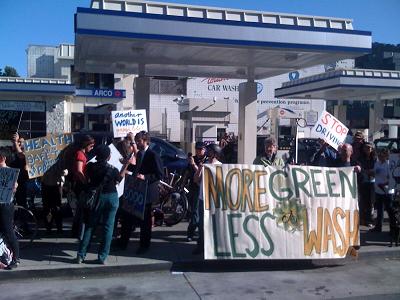
People have felt powerless to counter BP’s devastating and unstoppable oil leak, but Bay Area activists have finally settled on a target for their outrage: BP-owned Arco gas stations, which sell some of the cheapest gas around. On Friday, protesting activists blocked an entrance to the Arco on Fell Street, and tomorrow (6/16), the Sierra Club will hold an 11 a.m. protest outside the Arco at 3400 San Pablo Avenue in Oakland.

“There’s a reason why it’s so cheap, because they skimp on safety,” Josh Hart, one of the main organizers of Friday’s event, told the Guardian. That event targeted an Arco station that had already earned the ire of the bicycling community because motorists there regularly block the bike lane as they wait in line to fill their tanks.

Yet Hart said the protest is about more than just BP, but about Americans’ unquenchable reliance on cheap fossil fuels and an automobile-dependent lifestyle. “It’s not about boycotting BP,” Hart said. “It’s about boycotting oil.”

Tomorrow’s event in Oakland will feature a “mock oil spill” comprised of a black tarp surround by caution tape, a protest designed to send the message, “President Obama move us Beyond Oil.” Meanwhile, at 5 p.m. today, Obama plans to address the country about his adminstration’s so-far-futile efforts to address the spill.

Rubicon taps into the conspiracy TV treasure trove

0

By Ryan Lattanzio

“Story Matters Here.” AMC’s tagline should tell you something about their primetime gestalt. With two of television’s most acclaimed dramas in its lineup — Mad Men, a show I admire but can’t love, and Breaking Bad, hands down the best show on TV — AMC seems destined to be heir apparent to HBO’s kingdom of smartly written dramadies and tragicomedies (Treme, True Blood, and this fall’s Boardwalk Empire, to name a few).

Much to my chagrin, Breaking Bad just ended its third season and Mad Men isn’t returning for its fourth until August 1st. To triangulate its penchant for anti-heroes (Don Draper, Walter White) and dimly lit subterfuge, AMC has added another series, Rubicon, with a pilot slated for August 1st as well. So far, the puzzle-like plot remains veiled in mystery, but the cast is stellar: James Badge Dale (fresh out of HBO’s The Pacific), Miranda Richardson, and Dallas Roberts, among others.

After the season finale of Bad, AMC previewed the first episode of Rubicon, and it’s now available to stream online. Produced and directed by Allen Coulter, one of HBO’s brilliant episodic directors, the pilot is more enervating than enlightening in its piecemeal delivery of plot.

http://www.youtube.com/watch?v=bYZXdyJVwU8&feature=related

The pilot opens with a quote from Woodrow Wilson that sets the surreptitious stage: “Some of the biggest men in the United States…know that there is a power somewhere so organized…so pervasive, that they had better not speak above their breath when they speak in condemnation of it.” The next scene is pure bravado: the score swells and segues into a blank, white screen that soon reveals itself as an aerial shot of snow-laden ground. We then hear shots fire, and we know it has something to do with a four-leaf clover on the victim’s desk. It seems the clover is no longer the paradigm of good luck—one of the show’s many subversive elements.

“Not every conspiracy is a theory,” the show’s snarky tagline tells us—and that’s probably true considering how totally insane the protagonist often sounds to his colleagues. We soon meet Will Travers (Dale), a professional code-cracker who looks like a conspiracy theorist: disheveled hair, Oxford shirt, and the stoic gaze of a man who knows too much about something. (“He’s not mopey, he’s just introspective!,” one of Will’s coworkers says.)

In a montage of page-turning and shot-dissolving, Will spots a slippery pattern in an otherwise normal, everyday American pastime: his crossword puzzle. He brings it to his supervisor, who says, “It’s probably an inside joke.” But in a very X-Files-y way—and Will is almost like a dapper version of one of the Lone Gunmen—the boss brings the crossword to another unidentified man-in-a-suit. Something bad is going down. “What’s the big picture here?” Will asks. “You’ll know soon enough,” his associate tells him.

Series creator and writer Jason Horwitch makes Rubicon feel strangely familiar and entirely American in linking Will to September 11. The hysteria—and paranoia—of post-9/11 America is deftly portrayed in the passing of suspicious notes, mysterious phone calls, and train crashes. These tropes might feel tired elsewhere, but here they are fresh and rather chilling. Quickly we realize Will would probably dig something like that YouTube viral documentary sensation Zeitgeist.

Rubicon is a thriller steeped in a paranoid urban milieu — the city is the devil’s playground and it’s best to keep your head in the sand. Yet Will Travers, the kind of guy who shares tea and secrets with strangers after dark, is obsessed by the unexplained deaths of his code-cracking cohorts and isn’t willing to stay shut up about it.

Despite subtle, tightly-wound character development, Rubicon‘s pilot feels like watching a show for the first time in the middle of its season. There’s little to learn from the pilot, but its ambiguity is in the sly interest of bating the audience to come back. What you can see is promising, yet what exactly the series is about remains unclear. So far, it seems to focus on over-educated, conspiracy-crazed geeks who love intrigue and find espionage in the same way you might find shapes in the clouds: they’re there if you’re looking for them.

Regardless of its opacity (and that’s always a good thing in the end, right Lost fans?), Rubicon is poised to be another sparkling gem in the dark trove of AMC treasures that have made recent cable so fascinating and so…adult.

Reading the June election tea leaves

0

Everyone’s reading the tea leaves after the local election. The November supes races will be a huge deal, and it’s really tempting to try to figure out what the DCCC results mean for the fall. Paul Hogarth at BeyondChron takes it on here. Chris Daly (no surprise) disagrees.


Let me see if I can sort some of this out.


Hogarth’s basic argument is that the progressives didn’t really do so well in the election:


“In District 8, moderate Scott Wiener finished 1,400 votes ahead of progressive Rafael Mandelman – as the two face the same electorate in November. The renters’ financial hardship measure, Proposition F, lost badly citywide – and finished far worse in neighborhoods that are usually pro-tenant. Debra Walker fared well in her run for DCCC, but most of her votes were not in District 6 – and results there suggest that another candidate for Supervisor could make such a race highly competitive.”


Hogarth is completely upfront and honest about disclosing that he’s a supporter of one of Walker’s opponents, Jane Kim — a former Green who is now a Democrat (and is very much a progressive), but wasn’t in the DCCC race. Theresa Sparks wasn’t in the DCCC race either. Nor was Jim Meko. There are several strong candidates in that race, and they don’t break down along easy political lines. So looking at how many votes Walker got in D6 seems a little off point; there’s nobody to compare her to.


Back to D8. Hogarth:


“Now we know [the D8 breakdown], and the numbers are even worse for Mandelman. Scott Wiener finished approximately 1,400 votes ahead in District 8 (my vote count shows him at 5,954 to Mandelman’s 4,561.) As a comparison, in December 2002 – the last time District 8 saw a hotly contested race on “moderate v. progressive” lines – Bevan Dufty got 11,000 votes, Eileen Hansen 10,000.”


That would seem to make Wiener the much stronger candidate going into the fall.


But there’s another key factor here: turnout. Low-turnout races are mostly (not always, but mostly) better for the more conservative candidate, and in this case, the turnout was really low. Just 32 percent of the voters went to the polls.


Let’s take a look at the 2002 election, the last time we had an open seat in D 8 with a progressive and a moderate running. In the general election in November, progressive Eileen Hansen came in first, with 9,820 votes to Bevan Dufty’s 8,795. But another progressive, Tom Radulovich was also in the race, and this was before ranked-choice voting. Radulovich got 5,221 votes, the majority of which probably would have gone to Hansen.


Turnout was a little over 50 percent.


In the runoff, in December, turnout dropped to 38.8 percent. Dufty got 11,096 votes, and Hansen 9,995. You could argue that most of the Radulovich votes went to Dufty — possible — but more likely, in the runoff, the more liberal voters who had come out in November to vote for Gray Davis for governor and also voted for Hansen just stayed home in December.


And this fall, Wiener will be more in the position that Hansen was in: There’s a third candidate in the race, Rebecca Prozan, and she’s more likely to take votes from Wiener than from Mandelman. And, of course, there’s RCV this time around — and with two gay men and a lesbian in the race, nobody really knows how the second-choice votes will play out.


Daly plays with the turnout numbers:


For the sake of argument, let’s concede that Mandelman starts out 1000-1400 votes behind Wiener among the 11,000 or so District 8 Democrats who voted for DCCC last week. Given that over 31,000 District 8 residents voted in the 2006 Supervisor race (in a contest that was not the most competitive,) we can assume that at least 20,000 additional people will vote this November. In a 2-person contest, Mandelman would need to win 53.5% of these votes in order to win. Given that less frequent voters trend significantly more progressive, and with the addition of Democratic Party branding and the weight of its mail program, 53.5% is almost assured.


Well, I dunno — in 2002, with a contested governor’s race and a contested D8 race, only 26,600 people voted, but it’s safe to say the numbers will be well above 11,000. And it’s not a two-person contest. But I think it’s also safe to say that those higher-turnout voters are the votes most likely to swing toward Mandelman.  


Jim Stearns, a political consultant with long experience in San Francisco (and no candidate in the D8 race), has another interesting analysis he sent over to me:


“Mandelman’s strategy was to spend his limited resources as part of a team effort to maintain progressive leadership on the DCCC. In so doing, he focused more heavily on slate cards that went district-wide than on mailers in District 8 promoting his own candidacy.


 Wiener, on the other hand, abandoned his fellow moderates and spent his money mostly on his own candidacy. This shortsighted strategic blunder will be extremely costly for Wiener in November.


 The result? Wiener got more votes in District 8, but lost his bid to regain his position as chair of the DCCC. Mandelman got fewer votes, but has significantly increased his chances of winning the Democratic Party endorsement this November. That endorsement is worth far more than the mere 1,000 vote difference between Wiener and Mandelman today.”


None of this means Walker will beat Kim and Sparks in November, or that Mandelman will beat Wiener and Prozan. It just means that I suspect the DCCC results don’t really say much about the relative strengths of any of the candidates when it comes to a focused, district-centered race in a high-turnout fall election.


I emailed Hogarth and ran the turnout argument by him. His response:


I tried to caution in my piece that there’s only so much you can see in the numbers — and that you’re right; voter turnout in November will be a lot higher.  Maybe I should have made this a bigger point.  But progressives are deluding themselves if they think turnout will be as high as it was in November 2008.  And if I were Rafael, I would have reason to worry that Scott did so much better than me in D8.  Also keep in mind that, despite the drop-off of DCCC voters, 48% of people in D8 who participated in this election cast a ballot for Scott Wiener.


Correct — turnout won’t be as high as it was in the presidential race. But it might very well be as high as it was in 2002, when there was a contested race for governor, as there will be this fall. Lots of Democratic candidates — particularly Gavin Newsom and Kamala Harris — will be doing GOTV operations in the city, and while Newsom and Harris won’t be supporting Mandelman, I don’t think either of them will limit their turnout efforts to precincts that run toward Wiener. The more liberal dems who vote in November, the better Harris and Newsom do against Republicans; that’s what they care about.


There’s no question that Scott Wiener will be a formidable contender in November. He’s got money, he’s got Mark Leno, and he’s running in a district that has elected moderate gay men since the return of district elections. But it’s remarkable how well the progressives have done in swing districts of late (see: Eric Mar, John Avalos), and Mandelman will, as Daly says, be the consensus candidate of every progressive group in town. He’ll almost certainly have the Democratic Party — which matters even more when Democrats at the top of the ticket are driving turnout. And he’ll have the same sort of boots on the ground that gave Mar a victory in a very tight race.


At this point, I think Mandelman and Wiener both have a shot at finishing first; it will probably be very close. And Rebecca Prozan runs third.


Oh, and the tenant measure? It lost because there wasn’t an effective campaign behind it. Tenant measures don’t automatically win in tenant-heavy San Francisco; time and again over the years we’ve seen that when there’s a measure that pushes the edge (and face it, I strongly supported Prop. F, but it was pushing the edge) and there’s landlord money against it, you need a full-scale concerted campaign for it. Progressives were paying a lot of attention to the DCCC, and to defeating Props. 16 and 17. Prop. F got lost. I’m not happy about that, but I’m not terribly surprised, either — and I don’t think it means much in the long run.


Chris Daly went a bit too far attacking Hogarth for his connections to Mark Leno, who is a Wiener supporter, and suggesting that the folks at BeyondChron — who are, after all, first and foremost tenant lawyers — are going to be backing Scott Wiener in the fall. I don’t see that happening; I can’t imagine it happening. I just think they read a little too much into the DCCC results.

Why Newsom loves sit-lie

43

To the surprise of exactly nobody, Mayor Gavin Newsom is putting his sit-lie law on the November ballot. And I think he’s thrilled about it.


The last thing the mayor wanted was to have the supervisors approve its own version. He’d much rather have his name on it. This way, he not only gets a wedge issue to attack the progressives in the fall; he gets to run his statewide campaign as someone who’s cracking down on the homeless. It’s tough for a San Francisco politician to win in more conservative parts of the state — but if he can say he stood up to those crazy “ultra-liberals” on the board and is willing to beat up on the poor and homeless, he can shed some of that liberal image.


But it’s not clear that the strategy will work at home. Even David Latterman, a political consultant for Scott Wiener and other downtown-backed candidates, downplayed the role that sit-lie will play in the fall election. “It’s just a wedge issue and it’s not going to change people’s minds on who they support,” Latterman told a crowd that including Chron columnist CW Nevius — who is perhaps the most enthusiastic backer of the measure — during a post-election wrapup at SPUR on June 10.


And among the DCCC candidates in this election, the only one to really champion sit-lie and make it a part of his campaign was David Villa-Lobos, who is also running to replace Chris Daly on the Board of Supervisors, but who finished 26th out of 30 candidates in District 12.


The law also seems a little hinky. It would ban sitting on the sidewalk — or “any object placed on the sidewalk, like a crate or folding chair,” according to the Chron. Everywhere I go in the city these days, people are sitting on folding chairs on the sidewalk — typically eating at a restaurant or cafe that has outdoor seating. I suspect many of those eateries have no specific permits to put chairs on the sidewalk; they just do it, which is fine, and nobody minds.


But technically, I guess, outdoor diners could be cited under the mayor’s law. Or the cops could just ignore them, and decide how and where to enforce the law. Which is never a good thing.


I asked the mayor’s press office for clarification on this point, and I’m still waiting for a response.

Tomorrow is tonight in Gutenberg! The Musical!

1

By Sam Stander

Have you ever seen a musical where most of the characters couldn’t read? It really is a novel idea, isn’t it? That’s what Doug Simon and Bud Davenport are here for! The hack musical theater hopefuls who basically constitute the whole cast of Scott Brown and Anthony King’s Gutenberg! The Musical! know that writing a musical is hard, so they’ve done all the work. It’s just up to the bigshot Broadway producers in the audience (purportedly) to make their dreams come true. In Beards Beards Beards: A Theatre Company’s production of the rather madcap little play, which premiered Thursday at Exit Stage Left in San Francisco, Austin Ferris and Joey Price play the two sickeningly sincere song-and-dance men to a tee.

The whole show is composed of them acting out the play by wearing trucker hats with different character names written on them (sometimes as many as seven at once, to facilitate quick changes), while their compatriot Charles (Joe D’Emilio) fastidiously attends to the piano. The hats themselves are a riot, with labels for such crucial characters as “Anti-Semite,” “Feces,” and “Dead Baby.”

The duo’s ideas about what goes into a hit Broadway musical are a double-edged satirical sword, slashing at the formula and self-importance of that often bloated medium while also cutting deeply into the delusions of its archetypal characters. But their Ed Wood-esque mania for doing things the cockamamie way they think things ought to be done is mostly just endearing. Ferris and Price have real chemistry as they dance, declaim, and flirt their way through a cascade of really horrid musical numbers. They especially give it their all on the entirely-not-scary “Haunted German Wood.”

http://www.youtube.com/watch?v=q_vSOO-Inpc

Their failure to understand basic concepts of storytelling is one of the show’s finest points of humor. Their musical, about the inventor of the printing press, Johann Gutenberg, is described as historical fiction. What does that mean? “Fiction that’s true.” After one song is identified as foreshadowing, one of them asks, “What is foreshadowing?” The other’s response: “I’ll tell you…later!”

The play, of course, raises important issues. Doug and Bud are obsessed with illiteracy, and they explicitly state that the difficult issue their musical will tackle is the Holocaust, and how the invention of the printing press failed to prevent its atrocities. Oh, and a poignant discussion about the age-old debate between followers of God and followers of “stuff” is particularly thought-provoking.

Dropping in any more transcribed jokes out of context seems pointless, since so much of what sells these jokes is the full-on genuineness projected through the characters. But, suffice it to say, this thing is funny, and it will make an impression on you (with a printing press, get it?!).

GUTENBERG! THE MUSICAL!
Thurs-Sat, 8 p.m. (through June 26), $20
Exit Stage Left
156 Eddy, SF
(800) 838-3006
www.beardsbeards.com


Editorial: PG&E’s greed backfires

1

The defeat of Prop. 16 showed that unlimited corporate spending on a ballot initiative doesn’t guarantee victory.

EDITORIAL The single most important number to come out of San Francisco on election night was this: 67.49 percent. That’s how many people in this city voted against Pacific Gas and Electric Co.’s monopoly measure, Proposition 16. It’s a statistic that ought to be posted somewhere on a wall at City Hall to remind everyone in local government that the voters sided overwhelmingly against PG&E and in favor of a public option for local electricity.

It’s a landmark victory. On the state level, the defeat of Prop. 16 showed that unlimited corporate spending on a ballot initiative doesn’t guarantee victory, that an underfunded coalition can defeat a giant utility — and that a majority of those in PG&E’s own service area are unhappy with their electricity provider. Public power activists all over the state should take this as a signal that PG&E, and its once-formidable political clout, are on the wane.

In San Francisco — the only city in the nation with a legal mandate for public power — the vote was the most lopsided of any California county. It was the strongest local mandate for public power since the passage of the Raker Act in 1913.

That should be a huge boost for the city’s community choice aggregation (CCA) program. Sup. Ross Mirkarimi, who has been leading the fight for CCA, was pushing hard to get a contract signed before the June 8 vote; like a lot of observers, he feared that PG&E’s vast war chest would overwhelm the opposition. But now that Prop. 16 is dead — and nothing like it will be back in the near future, if at all — the city has a bit of a breather.

That doesn’t mean all work on the contract should slow down. The San Francisco PUC has been mucking around with this deal for more than a year, and needs to bring it to a close. And the city needs to start preparing to answer PG&E’s propaganda campaign with a concerted effort — from the mayor’s office on down — to remind San Franciscans that CCA power will be greener, safer, and in the long run, cheaper than the energy we’re now forced to buy from PG&E.

Any San Francisco politician who stands with PG&E and opposes CCA will do so at his or her peril.

And while San Francisco is moving to implement a modest public power program, state Sen. Mark Leno is moving in Sacramento to limit PG&E’s ability to try another Prop. 16 move — or to spend tens of millions of dollars trying to block local power initiatives. Leno has introduced a bill that would limit the utility’s ability to use ratepayer money on political or public relations campaigns.

The measure doesn’t have a number yet, but the language is brilliant. It directs the California Public Utilities Commission to disallow any political spending that PG&E tries to add into its regulated rates. And since the company has no source of income other that the money it gets from ratepayers, the impact would be to deny PG&E the ability to spend money working against the interests of ratepayers and the public.

"Over the past 10 years, PG&E has probably spent $150 million on political campaigns — and that’s money that came from the ratepayers," Leno said. "This bill is to protect ratepayers."

PG&E will howl about its First Amendment rights — and, indeed, the Supreme Court has of late given corporations who want to influence political campaigns and legislative issues a good bit of leeway. But the fact remains that PG&E is a regulated utility in California, and the state has every right to determine how much the company can charge its customers and to limit how that money is used.

Leno’s bill, of course, could radically change local politics. If PG&E couldn’t spend millions to defeat public power measures, the city would have far more options — and activists should be thinking about how a future campaign to take over the company’s infrastructure might work.

The Board of Supervisors should pass a resolution endorsing Leno’s bill, and the coalition that worked to defeat Prop. 16 should be working to get other cities and counties around the state to sign on.

PG&E’s greed in putting Prop. 16 on the ballot is starting to backfire — and it can’t happen too soon.

Street Threads: Look of the Day

0

Today’s Look: Emma and Madeline, 26th Street and Castro

Tell us about your look: “We’re coming from our brother’s middle school graduation.”

The Daily Blurgh: Poisoned fruit cocktails, tipsy crafts

0

Curiosities, quirks, oddites, and items from around the Bay and beyond

The moral imperative of the BP oil spill: Drive 20 percent less.

*****

Former gourmet chocolatier goes vegan.

*****

The crafting potential of the mini bar is limited only by your imagination/liver.

*****

Local punks clean up on Broadway’s big night

*****

What makes that children’s juice drink so delicious? Lead!

*****

Apple isn’t into (male) cartoon nudity or gay sexiness. What prudes.

*****

Wanna be the Greyson Chance of the art world? Then get to work! The Guggenheim is scouting Youtube for the next Ryan Trecartin. How democratic.

Meg Whitman, helluva boss

3

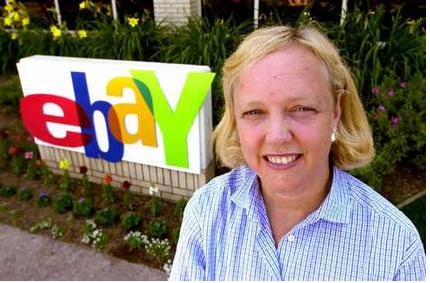
Meg is proud of her success at EBay. I wonder if she’s proud of shoving one of her employees. I know, I know — Meg was a tough-love employer who demanded the best and would tolerate nothing less. She relishes the reputation that, as the NY Times says, she


was known as a demanding leader who did not hesitate to express displeasure with employees who failed to live up to her standards.


Guess that’s what we want up in Sacramento, right? Someone tough enough to take on the special interests.


Except that in this case, she was tough enough, if the Times account is accurate, to bat around someone who worked for her. As some other tough folks have learned in the past, physical abuse of subordinates doesn’t tend to help your reputation.


Calitics asks:


Will she shove the Speaker of the Assembly when she doesn’t get her way? Verbally abuse her Director of Finance when it becomes clear her “fire everybody” strategy only worsens the budget deficit? It certainly does not speak well to Whitman’s judgement or her personality, which appears to be that of a pampered CEO who cannot deal with the rest of society as equals, but instead treats them like indentured servants.


So now we’ve got a GOP senate candidate who makes fun of her opponent’s hair and a GOP guv candidate who knocks around the help. Hell of a ticket.

Love Art Lab’s sexy shade of green

0

“She’s more high brow, and I’m more…” Golden girl of classic porn, and ex-prostitute, Annie Sprinkle and I are eating lunch in her Bernal Heights kitchen. She’s searching for the words to compare her partner Beth Stephens’ and her own artistic repertoires. The two women are in the midst of what they call the Love Art Lab, a far reaching, seven year project that’s seen them married eight times all over the globe in lavishly creative ceremonies that invoke Sprinkle’s and Stephens’ commitment to “ecosexuality.”

It’s a concept they’ve coined to connote sensual relationship with nature, and the two very much believe that it’s a message that should be heard. They’ll be exhibiting photos of their work and other pieces of art at the Good Vibrations gallery later this month (Thurs/24). Sprinkle has just invited me to their upcoming nuptials- this year she and Beth will be having two ceremonies, one in honor of the moon in LA, and one to the mountains, in Akron, Ohio.

“Low brow,” Sprinkle concludes. “No, let’s say more funky.” A tour of the two womens’ home offices confirm that the couple has somewhat different approaches to life. Stephens’ is the more orderly of the two. An art teacher at UC Santa Cruz who is taking classes towards a PhD in performance studies at UC Davis, her room is stacked with books in an appropriately scholarly manner. The two met when Beth contacted Sprinkle with an invitation to appear in her photography project at Rutgers University. A print from that shoot hangs on the office wall; Stephens, a dyke in a white tee shirt and crew cut, leans back against her motorcycle, Annie’s pendulous tits framing her face. They both look very happy to be there.

Sprinkle is a different kind of academic – she also has her PhD, awarded by the Institute for the Advanced Study of Human Sexuality in 2003, which may have made her the first adult film star-sex worker to earn their doctorate. Sprinkle rose to skin flick fame with projects like Deep Inside Annie Sprinkle (1982), which also starred Ron Jeremy and which Sprinkle wrote and directed. A staunch feminist, she’s played a big role in popularizing “alternative” porn – in her own words, “edu porn, doco porn, cancer erotica [Sprinkle and Stephens dealt with the pain of Sprinkle’s breast cancer diagnosis by shaving their heads and fucking while a photographer friend documented], eco sexuality, and feminist porn.” Padding around in her furry red slippers, square glasses, and an animal print camisole stretched over the famous knockers, Sprinkle shows me her “office.” It resembles the boudoir of a spiritual, sex positive Miss Piggy. It’s painted in Sprinkles beloved pinks and purples, and crammed with boas, trinkets, and statuettes of many armed deities arranged into shrines.

“We think of each other as exotic,” Stephens tells me when, at Annie’s insistence, we catch her on her cell phone midway through registering their new RV in Santa Cruz, which they plan to drive across the country. “Because we’re very different, we get a kick out of each other.” 

Que tetones!: Love Art Lab’s yellow wedding in Canada was the first to legally proclaim Stephens and Sprinkle married. Photo courtesy of Love Art Lab

The couple is on a mission to eroticize every aspect of life. Their ecosexualism seems to be the ultimate New Age belief system, a reimagining of the environmental movement – or is it nature worship?- to make the whole thing, well, sexier. Sprinkle explains that ecosexuality is the feeling that you get when the sun hits your skin a certain way, or when you see a sunset that blows your mind. “Everything is sex in a way,” Sprinkle muses. “It’s just that we have an expanded view of what sex is.” 

Sprinkle is no stranger to sex as activism. “I haven’t been so excited about something since the feminist porn wars,” she tells me, sweetly. Ecosexuality is her and Stephens’ way of bringing the environmental issue to the fore amongst their academic, artistic, and sex worker friends. “We’re trying to seduce people that aren’t normally into the environmental movement,” Sprinkle says of the attendees of her weddings. “They’re not Birkenstock people.”

It’s a sexual identity that clearly resonates deeply with the two. “We really think of ourselves as more ecosexuals than queer these days,” Sprinkle says. I mention her comment to Stephens, who replies “I can’t think of anything more queer than [ecosexuality] – I think it’s more of an evolution than a change for us.” Their upcoming mountain wedding was spurred by the mountain top removal going on in the Appalachians, where Beth spent her childhood. There, Stephens tells me, coal mining operations will literally blast off hundreds of feet from the summits to get to hidden loads. “The Appalachian area has been stereotypically made fun of and dehumanized,” she says. “This activity can go on and on and no one seems to care.”

But Annie and Beth do. And after seeing their lavishly attired ceremonies (the mono hued weddings feature fantastic costumes and, Annie tells me, can get rather risque), their friends will too. “We’re using sexuality as a potential tool to make people more environmentally conscious,” Sprinkle tells me as we sit at her kitchen table, eating the ecosexual friendly salad she’s prepared. “This whole thing is at the crest of something really big, I can feel it.” Insert naughty comment here – dirty talk need not be divorced from social change in the world of Love Art Lab. 

Annie Sprinkle and Beth Stephens in “Sybaritic Cougars with Ecosexual Tendencies”

Thurs/24 6-8 p.m., free

Good Vibrations

1620 Polk, SF

(415) 345-0400

www.loveartlab.org


SFBG Radio: Johnny and Tim on the stink of desperation

3

Today, Johnny and Tim discuss the World Cup, Carly Fiornia, Afghanistan and the stink of desperation. You can listen after the jump.


sfbgradio6/14/2010 by sfbgradio

Global-eyed: The street art of Chile

0

These pictures are a mix of Chilean street art I found in Santiago and Valparaíso (which is really similar to SF in too many ways to list). It was really cool walking though the back streets and stumbling across these beautiful and colorful pieces. I tried to focus my lens on the best murals, funniest cartoons, and the pieces that I felt were more than just “graffiti.”

Leno bill would limit PG&E political spending

5

State Senator Mark Leno is introducing a bill that could stop Pacific Gas and Electric Company from spending ratepayer money on political campaigns.


The bill, which doesn’t yet have a number, would put a serious crimp in the private utility’s ability to launch another effort like Prop. 16 — the $50 million campaign to block public power in California.


The bill wouldn’t stop PG&E from spending money on politics — that might fly in the face of the Supreme Court’s rulings on corporations and campaign finance. It just says that no ratepayer money can be spent — and since PG&E gets the vast majority of its money from ratepayers, the measure would at the very least significantly limit the company’s political efforts.


And since PG&E is a regulated utility, the state of California has every right to control how much money PG&E collects from its customers — and where that money goes.


Not only would the bill ban PG&E from running its own Prop. 16-style statewide campaign, it could block the company from spending tens of millions of dollars to oppose public-power efforts. The bill states that any gas and electric utility with more than three million customers in California (and there’s only one such company)


“shall not spend funds received from ratepayers as authorized revenues on political and public affairs related to state or local governments. For purposes of this section, political and public affairs spending includes any activities involving, directly or indirectly, advocacy of the election or defeat of political candidates and of the adoption or defeat of ballot measures, through the actions of the corporation or through a third party.”


A few years ago, a bill like this would have had little chance in the state Legislature, where PG&E spent lavishly and was relatively popular. But under CEO Peter Darbee, the company has done nothing but piss off legislators. Not one state lawmaker endorsed Prop. 16. It’s safe to say that today, PG&E doesn’t have many friends.


More details to come as I get them.


UPDATE: Here’s Leno’s comment, from a press release I just got:


“PG&E launched a dangerous and misleading political campaign – with ratepayer funds – that had only one goal, to preserve the corporation’s monopoly. The state’s largest electrical and gas company should not be able to use ratepayer-generated profits to write special rules into the state constitution protecting it from competition. This measure ensures that local communities across the state have the ability to launch their own municipal power agencies, which will in turn encourage competition and help keep our rates low.”


UPDATE TWO: I just spoke with Leno, and he noted that the bill has a decent chance, since PG&E at this point “would be hard pressed” to find any friends in Sacramento. “The bill is to protect ratepayers,” Leno said. “It requires the California Public Utilities Commission, when it hears PG&E’s rate cases, to disallow any spending on political campaigns.”


Even would-be terrorists love their kit-tehs

0

Or, birth of a meme: Princess Tuna! Not that we’re trolling for snuggly jihadis, but this pic of New Jersey’s recently detained (for the usual wannabe-terrorist idiocy) Mohamed Alessa, from this NYT story about his troubled but scarily typical teens, caught our attention. “Death to the West!” scream the crazy space-eyes of Princess Tuna (actual cat’s name).