

Take a peek at the robo-amazing Blue Sky Studios, as photographers Keeney + Law shoot three of this year’s Best of the Bay Local Heroes. Video by Michael Keeney.
SFBG Blogs
Board had to ask for Lennar’s approval…
Images by Luke Thomas
The Board of Supervisors found itself in the humiliating position July 27 of having to ask for the approval of Lennar and the city’s Redevelopment Agency before it could amend Lennar’s massive redevelopment plan for Candlestick Point-Hunters Point Shipyard.
If that’s not an argument for reforming how this city approaches redevelopment, I don’t know what is. Especially since the Board’s meeting illustrated only too well how thoroughly Lennar’s local executives, who used to work for the city under Mayor Willie Brown, understand this game and how to outfoxed any resistance to their ongoing effort to eat San Francisco whole.
“This is a rare opportunity,” Sup. Sophie Maxwell said ahead of the Board’s 10-1 vote (Sup. Chris Daly was the lone dissenting voice) to approve Lennar’s entire plan. “It focuses public and private investment into an area that has lacked it in the past,”continued Maxwell, who represents the district that encompasses the shipyard and Candlestick Point. ” It’s unmatched by any development project in San Francisco. This project is large and complicated, no doubt. But let us not be fearful of this project because of its scale, because how else can we transform a neglected landscape?”
But who wouldn’t be afraid of a deal that found Maxwell, Board President Chiu and Sups. Michela Alioto-Pier, Carmen Chu, Bevan Dufty and Sean Elsbernd joining forces to vote against Sup. Ross Mirkarimi’s proposal that Lennar be required to include a non-bridge alternative?
And who wouldn’t be doubly afraid, given that these six supervisors took that vote after Michael Cohen, Mayor Gavin Newsom’s top economic advisor, was unable to point to a single document to support his claims that Lennar’s $100 million bridge over an environmentally sensitive slough is actually needed?
Talk about scary.
To his credit, Mirkarimi did a good job of illustrating what’s wrong with a process that allows a private developer like Lennar to pitch plans and get mayoral appointees to approve them, but doesn’t allow San Francisco’s elected officials to make any amendments unless the developer and Redevelopment agree.
At the root of this travesty is the fact that redevelopment law trumps municipal law, a power imbalance that creates a shadow government in those few municipalities in California where the city council or board of supervisors is not the same entity as the Redevelopment Commission.
San Francisco is one such municipality, and, as Mirkarimi explained, this is not the first time that Redevelopment’s plans have trumped the concerns of local residents.
“I’m the supervisor for the Fillmore, the first urban renewal laboratory took place in my district, and I vowed to never let it happen again, ”Mirkarimi said, referring to the massive displacement of African Americans and Japanese Americans that took place when Redevelopment decided to makeover the Fillmore in the 1960s.
“I’ve been told, “Don’t worry, Ross, this is not going to happen. We’re not going to use eminent domain,’” Mirkarimi continued. “Well, Jeez, that’s a consolation! Because even when we’ve exercised our legislative influence and given our blessing, [Redevelopment] unilaterally changed the plan after it left the Board. That suggests a condescending role in which the developer is able to go to the Redevelopment Commission and have a unilateral change.”
Mirkarimi was referring to how proposed rental units on Parcel A, the first parcel of shipyard land released for redevelopment, became for-sale condos at Lennar’s request, without the Board having any recourse, even though the area surrounding the redevelopment is ground zero for the city’s last remaining African American community and home to other low-income communities of color.
Deputy City Attorney Charles Sullivan explained that the s supervisors would require the approval of the developer and Redevelopment to amend Lennar’s latest plan, under Redevelopment law. Failing that, their only recourse would be to reject Lennar’s plan in its entirety–a nuclear option that only Daly seemed prepared to carry through.
Sup. David Campos noted that the city’s legal advice had been “somewhat of a moving target.” His comment suggested the Board had been misled in the critical weeks before this final vote, including ahead of the Board’s July 14 vote to accept certification of the project’s final environmental impact report.
“When a number of us raised questions about the EIR, we were told we couldn’t, but that we would probably be able to make changes to the substantive plan,” Campos recalled. “But now we are getting a more complicated answer.”
Deputy City Attorney Sullivan said the situation was complicated, because some of the proposed amendments “don’t involve a simple stroke of the pen.”
But Campos pointed to the fact that Board President Chiu had introduced an amendment that only allows for a 41 ft. bridge across Yosemite Slough, thereby halving the width of the 82 ft. bridge that Lennar is proposing to build.
That amendment, which Chiu introduced July 12, leaves the door open for the 82 ft. version of the bridge, if the 49ers indicate interest in a new stadium on Hunters Point Shipyard, a possibility the city claims is still alive, even though Santa Clara voters approved a new stadium for the 49ers this June.
“So, why can you amend the plan to include a scaled-down version of the bridge but not eliminate it altogether?” Campos asked.
“You can make that motion by voting not to approve the project,” Sullivan said.
“So, the change has to point to something already embedded in the project?” Campos asked.
“Or not be a rejection of everything that’s already been brought forward,” Sullivan replied.
After Mirkarimi proposed his no-bridge alternative, along with a slew of other amendments that Daly, Campos, and Sups. Eric Mar and John Avalos had been working on to strengthen the proposed development, Cohen, Mayor Gavin Newsom’s top economic advisor, huddled somewhere in City Hall along with Kofi Bonner, Lennar’s top local executive and Fred Blackwell, the head of SF’s Redevelopment Agency to decide which of the Board’s amendments they would accept.
Cohen returned with the amendments organized into three categories: acceptable as written, modified, and completely unacceptable.
And predictably enough (to anyone tracking Lennar’s insistence on a bridge) Mirkarimi’s no-bridge amendment had been tossed into the “unacceptable” pile.
“With regards to your insistence on the economic reasons for the bridge, please point to which document says that,” Mirkarimi said, leafing through the project materials that were piled on his desk.
Cohen mentioned a number of factors, including an alleged “lessening of attractiveness,” “a lower density product” and a reduction of property tax revenue that would be available through tax increment financing to pay for Lennar’s proposed bridge.
“Yes, but I’m still trying to look for the information, and all I’m hearing is this pitch,” Mirkarimi replied. “The economic study is absent. There are no supporting documents here. This is why I feel it’s justified for use to have a review of this.”
Cohen talked some more about “rigorous public discussion over a number of years.”
“But there is no economic study,” Mirkarimi repeated. At which point a deafening silence pervaded the Board’s venerable chambers, much as if the emperor had shown up without his proverbial clothes.
Deputy City Attorney Sullivan broke the silence by indicating that the only way for the Board to move a no-bridge alternative forward would be to stop all project approvals and send the plan back to Redevelopment.
And Mirkarimi reminded the supervisors that at the Board’s July 13 hearing, Cohen had said that there was no conclusive evidence around the need for the bridge.
But then the Board voted 6-5 against Mirkarimi’s proposal, a move insiders said was more about not pissing off Labor, which hopes to create jobs for iron workers, and not pissing off Lennar, whose control runs deep and wide, and less about being convinced of the actual need to build over the last unbridged waterway in the city’s southeast sector.
And a couple of amendments later, the Board gave its blessing and it was all kisses and hugs and applause in the Board Chambers, even though the folks from Dwayne Jones Communities of Opportunities (COO) program, who usually show up to support the plan, strangely weren’t in attendance, rumoredly because their program has been cut off at the knees in the last few weeks, following Jones resignation as COO’s director.
“I wish we had been able to eliminate the bridge,” Campos told me after the Board’s final vote. “I think part of the challenge we have is to reexamine how Redevelopment works and explore the potential for taking it over.”
Mirkarimi was satisfied that he had dissected the arguments against the no-bridge alternative, but feared that institutional memory is lacking on the Board, and that without fundamental Redevelopment reform, the city is in danger of seeing this kind of travesty repeated, over and over.
“A lot of my colleagues have not been involved in the debacle,” Mirkarimo said, referring to how Redevelopment’s infamous role dates back five decades, and how Lennar has been working the local political scene for longer than most of the Board’s current members.
But Maxwell was all smiles.
“I did my homework a long time ago, that’s why they couldn’t touch the core of the project,” she said. “They just added to and augmented it.”
With Maxwell’s days on the Board drawing to a close, I asked what she’s contemplating doing next.
“Sophie is looking into water policies and conservation,” Maxwell said. “Without blue there is no green.
It was about then that Mayor Gavin Newsom released a press statement that blabbed on in vaguely frothing terms about what would happen next.
“Now we can truly begin the work of transforming an environmental blight into a new center of thousands of permanent and construction jobs, green technology investment, affordable housing and parks for our City,” Newsom said
His words came shortly before Bonner said that Lennar would now start looking for investors, and shortly after Cohen admitted that it could be years before anything in Lennar’s plan actually gets built. But none of them mentioned that the Sierra Club and other environmental groups are planning to sue the City over the bridge, an outcome that could have been averted, Sierra Club officials warned, if the No-bridge alternative had been included in the final redevelopment plan.
Stay tuned….
Street Threads: Look of the Day

Today’s Look: Lauren, Castro and Market
Tell us about your look: “I like color. These shoes are sexy but comfortable.”
Bug love: Paxton Gate’s insect mounting class
Say that this morning, as you swept aside your window-sash, eager to let in the “warm” summer breezes that are so characteristic of late July in San Francisco, you saw there on your sill a fuzzy little bumblebee – dead, but for all the world looking like the embodiment of the grassy field and sunflower days of your youth. Now. Have you the instinct to preserve the furry fella in, say a diorama also featuring a map of your childhood favorite municipal park and a cut out image of you at eight, perhaps attired in a swatch of that kitty cat dress you couldn’t bear to be apart from at the time? (Just sayin’.) If that sounds apt, have the local horticulture-taxidermy enthusiasts down at Paxton Gate got a class for you!
In fact, they’ve had a class for you for awhile now – at least as long as teacher Zenaida Sengo has been teaching the store’s weekly insect spreading courses. “People love the class,” she told me over the phone. “Not only do they take away a skill they want to use for their art, but they really seem to bond with each other. You’re sharing a very obscure fascination — you don’t meet people that often that have that fascination for spreading insects.”
Indeed. But Sengo says she’s approached on a regular basis by customers in the store – which, among rare plants and stones, sells taxidermied mice in papal costumes and an impressive rainbow of bugs winged and not winged — who want to immortalize a pretty bee they found on their windowsill, or a creepy crawly that caught their eye hiking.
She’s found that these encounters have happened more and more over the past few years, corresponding with a rise in Paxton Gate’s popularity that she attributes to increased awareness about the environment and natural world. When a particularly inquistive patron comes her way, she points them to the classes, which have the dual benefit of saving insect enthusiasts some cash on professional mounting (ha!), and involving participants more deeply in the nature around them.
It’s a rarefied setting, these courses. Take one, and you will be supplied with all the supplies needed to mount two new friends: a butterfly and a beetle, both of which are introduced to your care for the price of the class. Paxton Gate hopes to debut more subjects in their catalog shortly in response to customer questions about horticulture – orchid mounting and terrarium building are two that come to Sengo’s mind as possible future educational adventures.
Sengo herself came to Paxton Gate with horticulture experience alone but grew into the store’s unique creature comforts over time, appreciative of the intensively technical, detailed work that is incurred in the spreading, mounting, and pinning of insects. She’s even integrated the buggies into her art outside the store. Peruse her artist website and what surfaces are lucid dreamy, half-finished portraiture and half-animal, half-human forms – but she’s also soaked insects in water to make them pliable enough to pose in domestic settings.
Throughout the Valencia Street store Sengo’s sets are in evidence – beetles clinging to sticks encased in sheltering belljars, seemingly about to take off in flight. She hopes that this sort of visual stimulation brings more bug fans to the store’s classes. “Insects are beautiful animals. There’s not a large percentage of people that see that, but for the ones that do they’re very special.”
Insect Mounting Class
Every last Thursday through Aug 26 4-7 p.m., $60
Advance registration required
Paxton Gate
824 Valencia, SF
(415) 824-1872
DCCC seats are fine for Newsom, just not supervisors
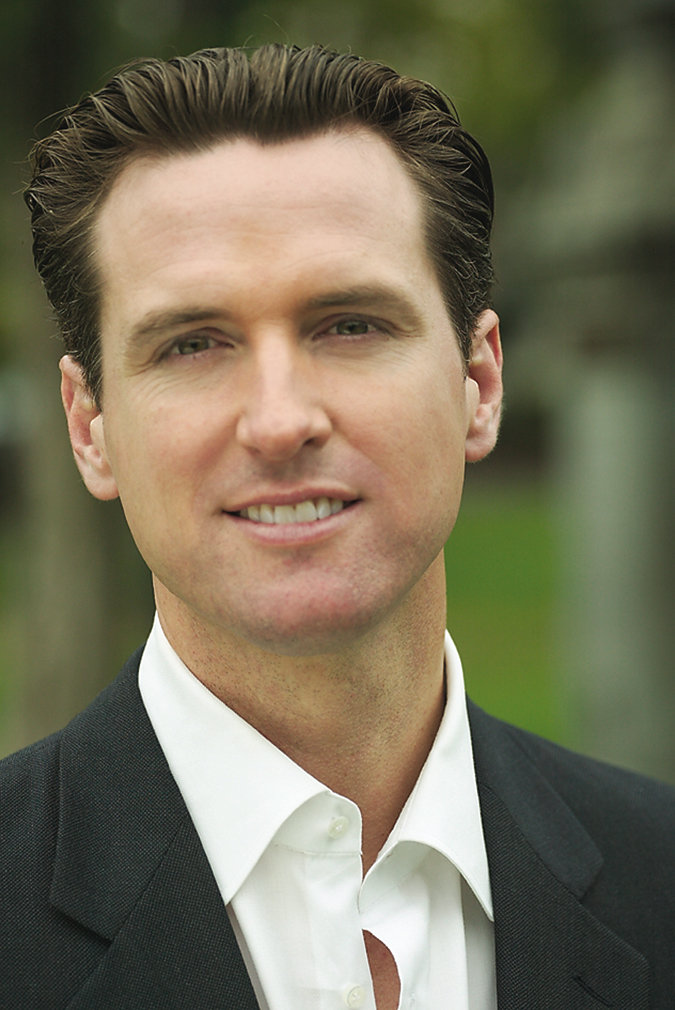
Mayor Gavin Newsom is seeking to be seated on the San Francisco Democratic County Central Committee when it swears in newly elected members tonight, even though the body’s legal counsel says he’s not entitled to a seat and Newsom has put a measure of the November ballot that would prohibit local officials from serving on that body.
Newsom and his supporters, most prominently DCCC member and District 8 supervisorial candidate Scott Wiener – who fears the progressive-dominated body will endorse and support his more progressive opponent, Rafael Mandelman – argue that being the Democratic nominee for lieutenant governor should give him a seat on the DCCC.
But the longtime legal counsel for DCCC, Lance Olson, doesn’t agree, citing bylaws that indicate that only nominees for statewide offices currently held by Democrats get seats on the body. So District Attorney Kamala Harris, the Democratic nominee to succeed Attorney General Jerry Brown, gets an ex officio seat (those held by state and federal elected officials and regional party leaders) but Newsom doesn’t because he’s running against incumbent Lieutenant Governor Abel Maldonado, a Republican.
DCCC chair Aaron Peskin, a political opponent of Newsom, told us the rules are the rules and that if Newsom thinks that it’s in the interests of the Democratic Party for him to have a seat, “He’s going to need to make an argument why we should amend the rules.” Peskin even offered to introduce a rule change for discussion if Newsom does so.
While Wiener wrote (in a letter quoted by the Chronicle) that seating Newsom would be about party unity, Peskin notes that Newsom has actually been a practitioner of the “politics of spite and division,” particularly after he responded to the success of the progressive DCCC slate in the June election by trying to ban local officeholders from the body (several progressive members of the Board of Supervisors successfully ran for the DCCC), claiming the body should be like a farm team for building the party.
“It really begs the question: why is he seeking to do himself what he doesn’t want others to do?” Peskin asked.
Newsom’s office didn’t respond to our inquires about the matter. BTW, in his letter to Peskin, Newsom proposed that attorney John Shanley be his proxy and journalist and political gadfly Warren Hinckle be his alternate. The meeting begins at 7 p.m. in the state building at 455 Golden Gate.
SFBG Radio: The Arizona ruling and the right wing

In today’s episode, Johnny and Tim celebrate the court ruling on Arizona’s immigration law — and talk about how the right wing is going to respond. You can listen in and join the fun after the jump.
The Performant: Upright Citizen’s Brigade and Fly Trap Theatre spelunk the absurd
Reviews of recent arts and culture happenings
When asked by the Upright Citizen’s Brigade touring company last Friday what his motto in life was, the random guy onstage we’ll call Nick (because that’s what he called himself) said “abandon all hope ye who enter here,” which seemed a little heavy for an evening of comedy, but the UCB took it in stride. This influential improv group, hosted locally by Bay Area improvisers Pan Theater, plumbed the depths of Nick’s predilections and peccadilloes with gusto. Got hit by an SUV on your motorcycle, must be those preciously extended pinkies, dude. Got slapped down by a bio-bitch down the street—why don’t you stick with the steampunk tranny hos in your own backyard? Why not launch a string of rockets into the street and call it installation art? Why not make sandwiches with a block of cheese containing the cremated ashes of your loved ones?
The second portion of the show was a series of short improvs based on text messages called out by the oddience (my personal favorite: “if they’re not playing D&D they should go to the demolition derby”) and included a round of double-jeopardy where the contestants drank themselves smart, a unique menstruation situation involving Beggin’ Strips, a few unfortunate deaths courtesy of the 911 call center, and a company policy of suicide handed down from “corporate”. Seriously, I can’t make this stuff up! But the lightning-quick, three-man-one-woman touring company of LA-based performers can and did, riffing on themes so absurd it made “The Young Ones” look like “Mr. Roger’s Neighborhood.” Or vice versa, depending on your brand of dada.
Dropping in on the “Fly Trap Theatre” at Paxton Gate Curiosities for Kids in the Mission on Saturday, I was treated to a different kind of improvisation, as Danielle Coe, a cheery volunteer from the Conservatory of Flowers dissected a pitcher plant for a handful of curious kiddies, who “eeewww”’d in satisfied unison when half-digested beetles plopped out into a plastic dish. The star of the “show” was indubitably the red-tinged Venus Flytrap snapping its leafy mandibles tightly shut on command (a soft nudge with a wooden dowel), a plant so insatiable that one of its several feeder “mouths” had closed tightly on the stem of another.
“I like doing the shows here in the Mission,” said Danielle, “it’s fun to work with the kids. You get to be less scripted, and more silly.” Sounds like improv
to me, albeit minus the beloved block of cremated mom + Montereyjack. But really, what could be more patently absurd than a carnivorous plant attempting to devour itself? The only auto-cannibal on the planet lower on the food chain than its usual meal.
Nothing to do with the above, but mention should be made somewhere of the Dan Plasma stage mural for “The 91’ Owl” which recently closed at the BurielClayTheatre. His distinctive design lent the bare bones set an air of urban authenticity, San Francisco-style.
Hot sexy events July 28- Aug 3
After the frenzied frotting of Pride, and the general onset of sex season in San Francisco (wait, is there a not-sex season? Perhaps that first part swims in the Sea of Redundant), you have perhaps found yourself lacking a certain skill you need to get you or yours off in the most spectacular way possible. No? Ah. Well anyways, there are lots of sex skills classes this week. Maybe you can tell your well meaning but awkward acquaintance about them.
Discover the Beauty of Your Body: the Ins and Outs of Female Masturbation
Must I describe this one? It would seem rather self explanatory. But for the sake of our titillation alone: this is a class that will teach all of you young ladies how to get yourself off in a manner more earth-shakingly profound than the one to which you are accustomed. Unless you already know all about it, to which I say, brava.
Wed/28 6-8 p.m., $25-30
Good Vibrations
1620 Polk, SF
(415) 345-0500
Whit’s-Knee Fundraiser
What to do when a beloved local burlesque performer finds a knee surgery lies between her and more tassel-twirling trickery? Well, arrange for a burlesque performance of course. Whitney Moses’ friends and lovers get up and take off to drum up some money for her medical bills. Vagabondage, Mark Growden, and Professor Shimmy are just three on a lineup that will raise more than just money.
Thurs/29 9 p.m., $5
Uptown Club
1928 Telegraph, Oakl.
(510) 451-8100
Automatic
Shift into drive at this weekly party, hosted by DJ Jeff Lawrence, pull up next to a hottie, and double park if you have to. Something something hydraulics, something something engines revved. Sorry, ran out of steam on that one, but hot gay men dancing around auto puns, Friday night anyone?
Fri/30 10 p.m.-2 a.m., free
Truck
1900 Folsom, SF
(415) 252-0306
Orgasmic Abundance: Going (or Coming) Beyond Your Wildest Dreams
Can you handle five hours of orgasm? Now now, it’s important to set personal goals. Sheri Winston, midwife-sexuality counselor, is here to help you achieve them. She’s all about the ways to maximize that O, holistically. Winston will be spending the week doing so, in fact – she also is offering a oral skills class (Thurs/29) and one on female arousal (Fri/30).
Sun/1 1-6 p.m., $65-120
Center for Sex and Culture
1519 Mission, SF
(415) 552-7399
Peer Rope Workshop
Mr. and Mrs. Madame Butterfly want you to learn the ropes – and teach a friend. Folks at this skill share course go over their hooks, slip knots, and bows (maybe not bows).
Mon/2 7:30-9:30 p.m., $10
SF Citadel
1277 Mission, SF
(415) 626-1746
Tantric Bliss in the Bedroom for Couples
There are no less than five essential steps to becoming the 2-D figures you so loved to ogle in your Eastern Religions college class (six if you count finding a partner similarly inclined). Hint: one of them may involve post-coital high fives, while breathing deeply of course.
Mon/2 6-8 p.m., $45-50/pair
Good Vibrations
1620 Polk, SF
(415) 345-0500
Big Brother? Body cams, face-recognition apps, and liquid body armor

The San Francisco Chronicle reported yesterday that several police departments in California are equipping officers with tiny cameras to wear while on duty. San Jose and Oakland police departments are reportedly testing out similar technology, and the so-called body cams are under consideration in Seattle too.
To be sure, this could be a welcome development for police-watchdog organizations who’ve found that it is difficult to hold an officer accountable for misconduct when you have little to go on besides an officer’s word versus that of the person alleging abuse.
According to a Popular Mechanics article about the Axon, a body cam worn behind the ear manufactured by Taser International, the technology was conceived of to fend off abuse allegations against police officers. It’s an ironic twist, considering that for 20 years activists affiliated with volunteer-run Copwatch groups have shadowed cops with their own cameras to capture police misconduct on film. Taser International also makes a miniature camera that clips onto a Taser and starts recording when the weapon is deployed.
Steve Tuttle of Taser International is quoted in the article explaining how body cams could benefit police:
“At first blush, it sounds like Big Brother. But if we’re not doing it, it’s the kid next door recording it with his cellphone. And what if he didn’t flip it open in time, and he doesn’t catch his buddy making verbal threats or attacking the officers first? What happens then?”
The presence of a camera lens could possibly deescalate situations by inducing violent offenders to think twice about their actions, or dissuading officers from using excessive force. But it gives rise to plenty of questions. What if people are recorded without probable cause? What if an officer decides to stop recording just before delivering a baton blow to someone’s head? Will the technology further erode community trust in law enforcement? Will police officers experience more anxiety because their every move could be subject to scrutiny?
Kellie Evans, associate director of the American Civil Liberties Union of Northern California, said the body cams have the potential to benefit police and police watchdogs, but warned that success would depend on regulations pinned down during implementation.
“Departments need to have very clear rules about when the camera will be turned on,” Evans said. It’s essential that departments clearly spell out how the recordings will be used and how the integrity of the footage will be preserved, she added. “We all know that police misconduct is taken more seriously when a video tape is involved,” she said.
We put in a call to the San Francisco Police Department to find out if anything is in the works to test out police body cams in the city, but haven’t received a response yet. Media Relations Officer Samson Chan did, however, chuckle ruefully and offer that he doubted if the department’s budget would permit such a thing. Axon cameras cost $1,700 each, according to the Chronicle story.
Meanwhile, there are other noteworthy developments on the high-tech police gear front. A new iPhone app that can instantly identify suspects is being tested out by a Massachusetts police department, PC World reports. Using facial recognition software, the app — called MORIS (Mobile Offender Recognition and Identification System) — allows officers to point their mobile phones at a person to call up identifying information. If a biometric match is found, information associated with that person is immediately sent back to the iPhone.
Asked what she thought about the app, Evans — who hadn’t heard anything about it before we forwarded her the article — told us, “This technology isn’t a substitute for traditional police work.”
Facial recognition technology is fraught with problems, she said, and agencies have abandoned it before because it tends to churn out a high degree of false positives and false negatives. “Too many mistakes can be made,” she cautioned.
“This does raise a lot of red flags for us,” Evans added. “It would be critical that police not be using it in some roving fashion.”
The third new product to land on our radar is perhaps the most sci-fi of all. Fast Company reports that team of U.K. scientists has unveiled liquid body armor that hardens on impact to become bulletproof, using something called “non-Newtonian fluid mechanics” that we do not pretend to understand.
We didn’t bother asking if police departments in Oakland or San Francisco have any plans to outfit their officers with liquid body armor just yet. Apparently, it’s anyone’s guess when it would be put to use in the field, and even then it will likely be shielding U.S. soldiers.
News of the weird on Mariposa
This morning, we spotted a giant pile of fire extinguishers blocking a traffic lane on Mariposa Street near the off-ramp of North 280, around the corner from the Guardian office.
The brand-new cherry red canisters had spilled out of a couple boxes and rolled across the distance of the entire street, and motorists exiting the highway appeared to be having a tough time maneuvering around the mess of valuable merchandise. It seemed to be a case of unsecured cargo slipping out the back of a truck.
What’s truly bizarre about this mess-up was that it happened only a few yards away from the scene of a freak accident that occurred last month. On June 14, a taxi cab that was experiencing brake problems exited the highway only to collide with a bridge pillar and erupt into a fiery blaze. A couple vacationing from Ohio was killed in the tragic wreck.
Minutes after snapping photos of the fire extinguisher pile, we saw city vehicles arrive and begin to clear the roadway.
Street Threads: Look of the Day

Today’s Look: Meryl, Columbus and Vallejo
Tell us about your look: “When in doubt, think French.”
Herrera’s right to appeal the Alioto-Pier decision
I’m not exactly sure what Ken Garcia was trying to say here — his argument is rambling and makes no sense — but Dennis Herrera really had no choice: He had to appeal the Alioto-Pier decision.
The Superior Court ruling in the case screws up the city’s term-limits law. It’s not clear now, for example, when Sup. Carmen Chu will be termed out. It’s not clear whether the mayor can appoint someone midway into a vacant term and essentially give that person an extra two years on the board. And one ruling from one Superior Court judge doesn’t clarify the law (which the judge acknowledged was at the very least ambiguous) or set a binding precedent.
When the voters approved district elections, they also approved term limits; everyone gets two four-year terms. But under Judge Peter Busch’s decision, that’s no longer true.
Suppose, for example (and this is a wild scenario, but such things happen in local politics) that Gavin Newsom gets elected lieutenant governor (entirely possible) and in January, the newly elected supervisors choose the next mayor. Here’s what happens: The board president becomes interim mayor until somebody lines up six votes.
So let’s say (and this just happened with David Chiu) that one of the newly-elected, first-time supervisors — Debra Walker, or Rafael Mandelman, or Scott Weiner, or Jane Kim, or someone else — lines up six votes and becomes board president, and thus mayor. Then he or she immediately appoints a successor as supervisor. That person gets a free four-year term that doesn’t count against term limits at all.
So the city needs clarity, and the only way to get it is to ask the Appeals Court to weigh in. And if it turns out that the current law does, indeed, set a double standard, and that appointed supervisors get special treatment, then the board needs to be a Charter amendment on the ballot fixing the problem.
If Sup. Alioto-Pier wants to claim this is just politics, let’s remember: She’s already run for Congress, for secretary of state, and was planning to run for insurance commissioner until she fell ill this spring. Now that nothing else has worked out, she wants another term on the board. She has every right to challenge Herrera’s opinion, but asking him to apologize is wrong; he’s just doing his job.
Local ‘bucha bottlers rise effervescently over booze content controversy
At first, we were frightened. My god, they’re taking our kombucha! But though distribution of our liquid love has drastically slowed, there’s one good thing about the ‘bucha alcohol labeling debacle: it’s been great for local businesses. That’s because while bigger companies are halting production, the small scale of the Bay Area’s local kombucha operations are allowing them to dodge the labeling problems of national chains.
In mid-June the hammer dropped. Trashy media found a way to link the sudden dearth of kombucha on shelves to Lindsey Lohan’s hot mess, but the official verdict was that the alcohol content in the live-fermentation tea drinks had tested at levels above the .5% legal limit for non-alcoholic beverages, causing a nationwide forehead slapping Eureka moment who all those who use the stuff as holistic hangover cure. Bay Area distributor UNFI stopped delivering the stuff. Whole Foods and Rainbow Grocery nearly emptied their shelves of our liquid love. GT’s, the country’s largest kombucha producer, halted production of its lines, its current voicemail stating “We are working quickly to identify the possible causes and which lot codes and or regions are being potentially affected. We are trying our best to have product back on the shelves of stores as soon as possible.”
But a few kombuchas remained serene in their squat little bottles. SoMa’s House Kombucha, which has been selling its wares in farmers markets since the fall of 2009 and bottling for stores since early this year, was one of them. “Rather than it sitting on a shelf for six months in a warehouse somewhere, we get our product to our customers pretty fast,” says founder Rana Chang. “We’re not distributing to Michigan.” The problem of heightened alcohol levels has been shown to be caused by the continued fermentation that takes place after kombucha has been bottled, usually after it has left company facilities. In other words, the longer your bottle of ‘bucha sits and waits to be shipped to you or yet another warehouse, the more boozy it will be.
So small outfits, which distribute to their local retail sources a few times a week, have a leg up on the competition. For once! “It’s about time,” says Chris Campagna of Bay Area-based Rejuvenation Company, who says his company ran “a gamut of tests” on its kombucha, but did not pull their bottles from shelves because no labeling disreprencies were found. “It’s becoming apparent the benefit of small local companies. We have to fight for the small amount of shelf space we get, but now we’re seeing an increase in volume, better presence in accounts, and new accounts on the horizon.”
Chang also noted a considerable uptick in business and said that House is now looking for expanded facilities and to hire new staff to keep up with demand. “It’s been an extraordinary opportunity to get into some stores where [before the voluntary recalls] shelves were so crowded with other products we couldn’t get in,” she told SFBG. A full list of stores selling both Rejunevation and House are available on their websites (including health food standards Rainbow, Other Avenues, and Berkeley Bowl), so dry your eyes, hop on your trike, and head out for some pro-biotic lovin’.
Board progressives ditch their own tax measures
After failing to win support from the small business community for a measure that would have helped it and fearing a well-funded attack from large corporations, Board of Supervisors President David Chiu today made the motion to reject his business tax reform ballot measure.
Labor leaders have also raised concerns about not having enough resources to fight for several revenue measures on the November ballot, mostly because they are focused on approving a hotel tax increase, supporting progressive supervisorial candidates, and defeating Jeff Adachi’s measure to increase how much city employees pay for health care and into their pensions.
“There is still not consensus about whether this should move forward,” Chiu said of his measure, which also suffered from being complicated and not easy to explain in an election campaign. It would have created a more progressive payroll tax structure – increasing taxes on large corporations and lowering them on small businesses – and a commercial rent tax that also would have exempted small businesses, raising about $25 million for the city and creating hundreds of private sector jobs, according to the city’s Office of Economic Analysis.
But the fear among some progressives is that too many revenue proposals would hurt their individual chances, given that the ballot will now include a hotel tax increase, a real estate transfer tax on properties worth more than $5 million (which the board approved today on an 8-3 vote), a $10 local surcharge on vehicle license fees, and a parcel tax from the Community College District.
So Sup. Ross Mirkarimi today also abandoned his proposal to increase the city’s parking tax from 25 percent to 35 percent, which would have raised about $25 million per year. Both Chiu and Mirkarimi said their measures were good policy and would have raised desperately needed revenue, but they were bowing to political reality.
“We’re challenged by the practicality of mounting a fall campaign around these revenue measures,” Mirkarimi said at the meeting.
The board voted 10-1 to table both measures, with a dissenting vote by Sup. Chris Daly, who said, “I just disagree with that political analysis.” He said voters would consider the measures individually and “I don’t think disappearing a progressive payroll tax and progressive parking tax are going to help the real estate transfer tax.”
Cab drivers sue over medallion sales

Five cab drivers have filed a lawsuit against the San Francisco Municipal Transportation Agency, arguing that the agency’s sale of taxi permits should legally be considered a tax and that the agency’s so-called Taxi Medallion Sales Pilot Program is invalid without the approval of two-thirds of the voters.
The pilot program was put in place in part to help close the city’s $483 million dollar deficit.
San Francisco taxi drivers need permits, called medallions, to place a vehicle in operation as a cab. Medallion owners can lease the permits to other drivers when they’re not in the car. But it isn’t that easy to get a medallion; only a limited number are available.
Before the Pilot Program was initiated on February 26, taxi drivers who met eligibility requirements to receive a medallion (including a full-time driving requirement) had to put their names on a waiting list. The mediallions cost nothing but a modest processing fee — but the average wait time was 15 years and there were 3,200 names on the waiting list before MTA closed it in December of last year.
The pilot program changes who gets priority in receiving a medallion. Essentially, the city’s going to begin selling them off — not necessarily to the people on the top of the list but to people who can afford the set price of $250,000. As many as 60 medallions will be sold, with 20 percent of the revenuegoing to the city, 15 percent to the MTA and five percent to a fund for driver welfare.
Drivers at the top of the list will get first shot at coming up with a down payment of $12,500, but if they don’t have the cash, others will get a chance.
The lawsuit, Willaim D. Pallas vs. SFMTA and City and County of San Francisco, states that the pilot program should be abolished on the grounds that the revenue from medallion sales far exceeds the operating costs of the program – and is thus considered a tax – and that this “tax” should have been approved by voters before the program was even implemented.
“The persons with money, which aren’t most cab drivers, will dominate the cab industry if this program continues,” plaintiff attorney George Surmaitis told the Guardian, “And the people who have put in the work and sweat to obtain a better life will just stay where they are on the waiting list.”
Deputy City Attorney Wayne Snodgrass didn’t return calls by press time.
According to the MTA pilot program proposal document, the program has its benefits of allowing its drivers who are 70 years or older to retire and sell their medallions, thus increasing public safety.
Surmaitis isn’t convinced. “It’s a response to the budget cuts and it’s an attempt to raise money very quickly without considering the impact on individuals,” he said.
The pilot program impacts individuals such as plaintiff Gerson Garcia, who has been a cab driver for 19 years and has been on the wait list for more than 10 years. “We’ve been waiting for like 10 to 15 years to follow the system they have implemented and now they want to change it because the city needs money,” Garcia told us, “I used to be the manager of taxi dispatch at the San Francisco Airport. I gave up that job in 2008 and became a full-time taxi driver because I wanted to qualify for the medallion.”
The other four plaintiffs in the lawsuit have been taxi drivers for 16 to 29 years and have been on the wait list an average of 13 years, with most of them turning down other job opportunities and hoping that the extra income from receiving a medallion would help them in retirement. None of these taxi drivers can afford to pay for a medallion and years of waiting will come to naught if the Pilot Program continues.
The city filed its answer to the lawsuit on July 21, denying the allegations. The plaintiffs in the case plan to have a writ asking the court to put a halt on the sale of medallions sometime before medallion sales are scheduled to start on August 3.
Quick Lit: July 28-Aug 3

Literary readings, book tours, and talks this week
Jennifer Weiner, Brande Roderick, Comedy Talks, Aging as a Feminist Issue, Seminars About Long-term Thinking, and more.
Wednesday, July 28
Fly Away Home
New York Times best-selling author Jennifer Weiner will read from her new book, answer questions, and sign copies.
6 p.m., free
Book Passage
Ferry Building #42
1 Ferry Building, SF
(415) 835-1020
Thursday, July 29
Before Sita Sang the Blues
Award-winning cartoonist and animator Nina Paley will showcase her new book, Before Sita Sang the Blues: Spotlight on Nina Paley, a retrospective filled with selections from Paley’s comic strip, illustrations, and prints, paintings, and other materials from Paley’s film, Sita Sings the Blues.
7 p.m., free
Cartoon Art Museum
655 Mission, SF
(415) CAR-TOON
Bounce, Don’t Break
Get tips on how to be resilient, work hard, create clear, defined goals, and become an overall successful woman from Playmate of the Year (2001), actress, reality star, and business woman, Brande Roderick.
7 p.m., free
Borders
400 Post, SF
(415) 399-1633
Dog Days
Celebrate the release of artist Michael Werts’ new children’s book Dog Days, that he wrote, illustrated, and letterpress printed, at this dog-friendly celebration.
6 p.m., free
Austin/Burch Gallery
San Francisco Center for the Book
300 De Haro, SF
(415) 565-0545
Over the Cliff
Authors David Neiwert and John Amato present their new book that explains the rise of right-wing threatening behavior and how ordinary Americans can stop the madness.
7 p.m., free
Books Inc. Berkeley
1760 4th St., Berk.
(510) 525-7777
Saturday, July 31
“Love in the Age of Enlightenment”
Abbot Paul Haller, from the Zen Center, and Polly Young-Eisendrath, Jungian psychologist, will discuss love and awakening from the perspectives of Zen and Jungian psychotherapy.
3 p.m., $20
Koret Auditorium
de Young Museum
Golden Gate Park
50 Hagiwara Tea Garden Drive, SF
(415) 354-0437
www.sfzc.org
Sick City
Tony O’Neill will read and sign his new book, about a legendary sex tape, dope fiends, and the trouble that ensued.
7:30 p.m., free
The Booksmith
1644 Haight, SF
(415) 863-8688
Sunday, Aug. 1
George Segal, Paul Mazursky, and Ronnie Schell
See a classic late night talk show format live on stage at this installment of Comedy Talks. Host Robert Strong talks with a panel of three comedy legends about their careers, personal lives, insider gossip, and comedic tips.
4 p.m., $35-$75
USF Presentation Theater
2350 Turk, SF
www.comedytalks.com
Monday, Aug. 2
“Life’s Future in the Cosmos”
Martin Reeves, president of the Royal Society and England’s Astronomer Royal, will discuss the whether human success on Earth determines life’s success in the universe as part of the Long Now Foundation’s series, Seminars About Long-term Thinking.
7:30 p.m., $10
Chabot Space and Science Center
10000 Skyline, Oakl.
www.longnow.org
“Population Aging as a Feminist Issue”
Adele M. Hayutin, Senior Research Scholar and Director of the Global Aging Program at Stanford’s Center on Longevity, will discuss the challenges facing women and provide a framework for understanding historical changes in the status of women.
5:45 p.m., $20
Commonwealth Club
2nd floor
595 Market, SF
(415) 597-6700
Sweetness and Blood
Author Michael Scott Moore will discuss his new book, Sweetness and Blood: How Surfing Spread from Hawaii and California to the Rest of the World, with Some Unexpected Results, about his discovery of a vibrant surfing community in Germany and some other unlikely places.
7:30 p.m., free
The Booksmith
1644 Haight, SF
www.booksmith.com
Quezada says don’t let “perfect” stand in way of immigration reform

The SF Bay Area Coalition for Immigration Reform is organizing a rally, Wednesday July 28 at 4 p.m., at the new federal building in San Francisco, at 90 7th Street at Mission to ask Speaker of the House Nancy Pelosi to help fix the nation’s broken immigration system.
The rally occurs hours before Arizona’s harsh new law, SB 1070, is set to go into effect. Members of the local clergy will be on hand to bless local immigrant families that are facing deportation. The protest kicks off an action-packed 24 hours, with activities planned in San Francisco, Oakland, and beyond.
“Arizona’s unworkable law threatens both our safety and our ideals. And it’s a symptom of a tragically broken immigration system at the national level,” said Eric Quezada of Dolores Street Community Services in a press release that notes that thanks to federal inaction on reform, “1,100 deportations happen every day.”
“Wednesday’s rally is not a protest of Speaker Pelosi, but we want to make sure she hears from her constituents who are suffering as a result of this broken system,” Quezada said. “And we’re calling on her to exercise leadership so we can work towards real solutions that reflect our values of fairness and community.”
With confirmed speakers including Board President David Chiu, I asked Quezada, who heads Dolores Street Community Services, how ICE’s new Secure Communities, or SecureComm, program is impacting deportation rates locally and what he hopes will happen on the immigration front this year.
“There has definitely been an increase,” Quezada said, referring to a recent SecureComm audit that was presented to the San Francisco Police Commission a month after the federal-state-local database hook-up got switched on, linking previously separate records.
“Part of our ask with this action is that Pelosi take a more active role,” Quezada continued, noting that Congressmember Zoe Lofgren has done much of the research.
Arizona’s SB 1070 is set to go into effect on Thursday, July 29. But it faces seven lawsuits, including a challenge from the US Department of Justice (DOJ). Several of the suits call for an injunction against the law. A federal judge in Phoenix heard arguments last week, but has not released any decision to date.
“We welcome the lawsuit that DOJ put in,” Quezada said. “At the same time, the Obama administration is rolling out SecureComm across the nation and we still have 287(g) programs in place. So, if the Arizona law gets implemented, it will be a really tragic day in U.S. history.”
To fix the current immigration system, rally organizers are advocating measures that would halt dangerous police-ICE collaboration programs, and would serve as a first step toward comprehensive reform. These include the DREAM Act, which offers a pathway to legal status for immigrant students, and a just and humane immigration reform that brings immigrant community members out of the shadows.
Quezada feels that Obama currently appears to be resisting bringing administrative relief forward, but he’s not exactly sure why the President is holding his cards back, or when he plans to lay them out on the table.
“But we know that pressure is building on a couple of fronts, prior to the November elections,” Quezada added. “Folks are going to see a lot of immigrant rights groups calling on members to register to vote. And we are going to support those who support us, oppose those who oppose us, and those sitting on the fence will get nothing. That’s a message that a lot of swing Democrats need to hear.”
With the 2012 presidential election approaching (in terms of campaigning and fund raising), Quezada observes that the Latino vote played a significant role in electing Obama in 2008.
“So, every day that there is no movement on this front in D.C., Obama loses strong support from the immigrant community. But we also know that pressure from the right sometimes holds more sway than ours.”
Quezada says the immigrant community is frustrated because it’s almost two years since Obama got elected, in part because of his promise to bring millions of undocumented immigrants out of the shadows. But to date, the Obama administration has not created a mechanism to even allow people to start getting in line to legalize their status.
‘There is no line to wait in,” Quezada said. “All these folks would be willing to wait in line, but there isn’t one for these 11 million people. We need legislative fixes.”
Quezada acknowledges that many Republicans will try to stop or amend any such fixes in unacceptable ways.
“We are worried that if the Dream Act goes ahead as a stand-alone bill, the right will try and put harsh enforcement measures into the bill,” Quezada said. “So, we have to ask, are we willing to live with that, if it helps 11 million people? How about, if it only helps 2 million? These are the questions the Hispanic Caucus is conflicted about. But what if we end up with amendments that would really hurt and the bill only helps 2 million people?”
With immigrant advocates arguing that comprehensive immigration reform would translate into $1.5 trillion in cumulative U.S. gross domestic product, the fireworks over the Arizona law and similar efforts in other states, aren’t about to stop soon.
But Quezada warns folks against insisting on an ideologically pure approach if they want to win this particular war.
‘If our position is open borders and legalization for everyone, then it won’t be obtainable, and we’d be leaving a lot of people in the lurch,” Quezada said We need 270 votes in the Senate and Congress, and we want relief for our people. We can no longer count on our sanctuary city to protect us. And the second we stop paying attention to this issue, they’ll eliminate some other piece of [existing protections and services for immigrants]. A lot of groups don’t want to engage in legislation that isn’t perfect. But only from a unified front will anything get done.”
With that aim in mind, Quezada says that immigrant advocates must work with evangelical churches and Republicans who are willing to support a reform package.
“Evangelical churches may sound like an unlikely ally, but we have to work with them, it’s the responsible thing to do. And we need to win and gain some Republican support, at least enough votes to get to the 60-vote threshold.”
.
The mayor’s horrible deal
The Supervisors should pass legislation outlawing vote trading for all local elected officials, including Newsom
EDITORIAL Mayor Gavin Newsom put the supervisors in a terrible position — and showed the worst kind of political arrogance — when he held $43 million worth of critical services hostage to his desire to continue packing commissions with political hacks. The deal he presented to the board was shameful, and the supervisors should have rejected it. And now they should pass legislation to make this sort of logrolling illegal.
The mayor’s original budget plan included sharp cuts to a wide range of services. The supervisors’ Budget Committee found a way to add back more than $40 million in funding for things like psychiatric beds at SF General Hospital, violence-prevention programs, and public financing for the next mayor’s race.
But under the City Charter, the mayor can simply refuse to spend that money — and that’s what Newsom said he would do. That is, unless the board would agree to reject two proposed charter amendments to reform the Municipal Transportation Agency and the Recreation and Park Commission.
Let’s remember: the MTA and Rec-Park measures have nothing to do with the budget. The board wanted to overhaul those departments (and give the board some appointments) because they’re a mess; the Rec-Park Commission, appointed entirely by the mayor, is a rubber-stamp agency that votes with nearly 100 percent unanimity on every issue. The MTA has served as a slush fund for the police department at a time when bus lines are cut and fares keep going up.
Newsom told board members that he could, indeed, restore the funding they wanted; the money was there. But he wouldn’t. In other words, he would allow desperately ill people to be turned away from SF General for lack of a bed — if the board didn’t stand down on its reforms. And by a 6-5 margin, with Board President David Chiu providing the critical vote for the mayor’s agenda, the board went along with the deal.
Even worse: Chiu and his colleagues gave up their charter amendments. But the mayor didn’t give up his: a Newsom measure that would prevent elected officials (like Chiu) from serving on the Democratic County Central Committee is still on the ballot.
Five of the progressives on the board hung tough, and Sups. John Avalos, David Campos, Chris Daly, Eric Mar, and Ross Mirkarimi deserve credit for refusing to accept a bad, embarrassing deal.
But in the end, the board got rolled. The mayor played tough and a majority of the supervisors folded. If a supervisor proposes trading one piece of legislation for another, it would violate state law. That doesn’t apply to the mayor — but it should. The board should immediately pass legislation outlawing vote trading for all local elected officials, including the chief executive. Let’s see if Newsom wants to veto that.
Street Threads: Look of the Day

Today’s Look: Aurora, Green and Grant
Tell us about your look: “Brighter is always better!”
SFBG Radio: Lies, truth and Meg Whitman

In today’s episode, Johnny and Tim talk about fact, fiction, reality – -and Meg Whitman. You can listen and join the fun after the jump.
Lennar’s plan illustrates San Francisco’s redevelopment problem
Today, the Board of Supervisors confirmed that though they are elected officials, they have been told that they can’t do anything except second a massive redevelopment plan for the Bayview that was developed, first by Mayor Willie Brown and then by Mayor Gavin Newsom’s administrations. in cohoots with Lennar, an out-of-state private developer, and approved by a bunch of Brown and Newsom’s political appointees.
“At this point, a deal has been done and the Board has been neutralized,” Arc Ecology’s Saul Bloom said today. “It says a great deal about the process.”
Bloom spent today visiting the supervisors to explain the problems with the current Lennar plan, including a bridge that is proposed to be built across the environmentally sensitive Yosemite Slough.
“Sup. Ross Mirkarimi said the bridge plan reminds him of the exact same through way that was argued for during the Fillmore plan,” Bloom said.”That would never happen now, at least not overtly,
Bloom added that shopping the no-bridge alternative around to the Board today wasn’t exactly uplifting.
“The sense we got was that we were dragging a dead body around.”
So far, Board President David Chiu has taken major heat by deciding to suggest a narrower bridge rather than no bridge.
But at least he took a stand. That is more than can be said for those colleagues of his on the Board that sat silently through the July 13/14 proceedings, presumably making sure they can be reelected with the help of deep-pocketed developers.
Here’s hoping that this latest redevelopment charade convinces the progressives on the Board to reform the Redevelopment Agency, so that private developers and political appointees can no longer trump the legitimate concerns of the residents of San Francisco and their duly elected supervisors
And no matter what people in the Bayview have been led to believe, the sad truth if that the promised jobs and housing aren’t likely to happen any time soon.
“The developer is not going to be running hog wild out there,” Bloom observed. “Part of the sad trick is that the only rush was for them to have control over the property.”
Bloom predicts that the plan will ultimately be headed to court.
“They will have lawsuits and elections to contend with,” he said. “The message that the environmental community takes away from all this is that it doesn’t pay to play well. No matter how much you spend to try and ensure that litigation is not the only way to obtain the desired outcome, ultimately the message that comes back from the city and the developer is, ‘Sue us!’ That brings out the worst political conduct not the most appropriate.”
The good news? Lennar’s Treasure Island’s EIR is on the street, and environmental justice advocates should be fully versed in reading such hefty tomes and figuring out where the body is buried. The bad news? Redevelopment and the Mayor’s Office still control the process.
The bridge isn’t the only problem with Lennar’s plan
I’m glad to see the New York Times circle back to the Candlestick-Shipyard development with an article that was a tad more critical than their previous piece.
But while I enjoyed NYT’s joke about how the proposed bridge over the Yosemite Slough “has become a 950-foot-long chicken bone that keeps getting stuck in San Francisco politicians’ throats,” I’m afraid the Board is in greater danger of choking on the bones of red herrings that they have been fed about this project, along with last week’s bombshell that the Board won’t be able to amend Lennar’s plan, after all, when it votes July 27 on this massive proposal..
D. 10 candidate Tony Kelly says if that bombshell turns out to be true, it’ll be another example of what he calls, “The bait and switch and switch,” on the deal.
“I’m worried that the Board is getting advice that is less about a case of not being able to vote, and more a case of, if you vote, you could open up the city to liability,” Kelly said.
“Back in 2008, folks were told, just vote for Prop. G because it’s just a concept and we’ll have a robust conversation about the plan itself, but they’ve been running away from that promise ever since,” Kelly explained. “And during the EIR hearings, we were told that folks were simply approving the environmental impact report, not the plan itself.”
Kelly’s critiques of Lennar’s plan and the process by which it has been winning final approvals helped him win former Board President Matt Gonzalez’s endorsement last week in the pivotal race to replace termed-out D. 10 Sup. Sophie Maxwell.
But Kelly worries about the fallout that the next D. 10 supervisor will be left to mop up, if the Board goes ahead and approves Lennar’s plan, as is.
“What I’d dread to see happen is that this plan get bullied through on an up and down vote, and then a fifth, or even a tenth of people’s concerns prove to be true, and the next D. 10 supervisor spends the next 4-8 years apologizing to the people of the Bayview, because they won’t be able to do anything else for the area, and this plan keeps lumbering along and doesn’t even work,” Kelly explained.
He says he wants to know who can amend the plan, if it’s not the Board and when.
“ My concern is that after the July 27 vote, the city and Lennar will never have to come before the Board again,” Kelly said, pointing to the uncritical endorsement of the project EIR that the Planning and Redevelopment Commissions, the lead agencies on the plan, made June 3, and who would likely be tasked with any additional studies and findings.
Sup. Ross Mirkarimi confirmed today that the Board has been told that it has limited reach because of Redevelopment law, which supercedes municipal law.”
“But, nonetheless, I’m going to try to make some amendments,” Mirkarimi said.
He noted that the five amendments that Board President David Chiu introduced July 12 during a Land Use Committee hearing were “very benign.”
‘They mostly restated what was already in the project agreement or project EIR,” Mirkarimi said. “So, they don’t amend much, because they are statements of what has already been evaluated or pre-agreed to by Lennar and the city. And they are very benign because they do not require any changes to the plan.”
Mirkarimi observes that the current process by which the city is trying to push this deal through is designed to lock the Board out.
“There are larger questions in play here about our relationship with the Redevelopment Agency and redevelopment law,” Mirkarimi continued. He notes that San Francisco is one of only a few counties in California where the Board is not the same entity as the Redevelopment Agency.
“It’s long overdue that we return to the idea of having the Board have authority over the Redevelopment Agency, it’s been a problem for 40 years,” Mirkarimi said, referring to Redevelopment’s disastrous handling of the Fillmore, which resulted in the massive and mostly permanent displacement of the Western Addition’s African American community—a negative consequence that many fear will be repeated by the plan for Candlestick-Hunters Point.
“There is a real capitalization on a starving population which is desirous of and at times desperate for positive changes and for jobs and housing, which is understandable,” Mirkarimi continued. “But absent of any alternative, it’s logical that this plan would move forward.”
In an effort to improve the plan, Mirkarimi says he will try to introduce a range of amendments at the Board’s July 27 meeting.
‘These include an attempt to make sure that whatever changes the Board makes are indeed enforceable,” he said. “And I am not satisfied with the discussion on the bridge, and how the gate has been left open on a bridge of any kind.”
Mirkarimi notes that there has been a lot of fanfare surrounding a community benefits agreement that various community-based organizations, labor and the project proponents entered into, in spring 2008.
“But I think they can do better, especially in reaching out to a community that has a high ex-offender population, and connecting to other disadvantaged communities throughout the city,” Mirkarimi said.
He also wants to ensure that if public power is not implemented, or fails, then Community Choice Aggregation program would automaticcally take over.
Mirkarimi is further concerned that there is nothing in the current plan that defines the percentages of housing units offered for rental and for home ownership.
“We are proposing to build 10,500 units but we have no idea what percentage is rental,” he said, noting that he also has concerns about air quality, air monitoring and parcels of land that have not yet been cleaned up to residential standards.
“Parcel E-2 is the most famous, but it’s not the only one,” he said. “The bridge and Parcel E-2 have become major distractions in that they have sucked the oxygen out of other areas of these gargantuan project.”
So, is it true that elected officials on the Board can’t amend a plan sent to them by the Redevelopment Agency, whose commissioners are all political appointees of the mayor?
“It’s a yes or no vote, if you will,” a deputy City Attorney told the Guardian, on background, noting that the Board could tell Redevelopment that it doesn’t like the plan and wants the Agency to make some changes and bring it some amendments.
“Ultimately, the Board has the final say, but it has to have gone through the Redevelopment process and its PAC (project area committee) and have seen a plan that has been referred to it by the Planning Commission,” the deputy city attorney continued.“So, they could communicate their dissatisfaction and the agency would have to take their view into account. It’s not that the Board has no authority, but it can’t decide unilaterally.”
The City Attorney’s Office also confirmed that under Redevelopment Law, local jurisdictions can decide how to implement redevelopment plans.
“In a number of jurisdictions, the city council has made itself a Redevelopment entity, just as our Board is also the Transportation Authority in San Francisco,” the deputy said.“And if the same body proposes the plan, it probably will be satisfied.”
The City Attorney’s office noted that if agencies that regulate permits to fill the Bay, as is required to build a bridge over Yosemite Slough, deny the city those permits, then the city would require amendments to its planning documents, but no further environmental impact review would be required, if the bridge was gone.
With the Board’s July 27 vote around the corner, D. 10 candidate Tony Kelly says he has a bunch of concerns that include, but are not limited to the bridge, starting with the projects financing mechanisms.
Kelly points to the fact that city staff recommended and the Board approved July 13 that “significant blight in the project area cannot be eliminated without the increase in the amount of bonded indebtedness from $221 million to $900 million and the increase in the limitation on the number of dollars to be allocated to the Agency from $881 million to $4.2 billion.”
Kelly wants the city to explain to the Board how much tax increment financing money will be left for the Bayview, now that the area’s debt ceiling has been tripled.
“Does this mean that all BVHP property tax revenues for the next 30 years will go towards paying down this debt and nothing else?” Kelly asked. “And what will that mean for the rest of BVHP in terms of service and programs it won’t be able to afford?
Kelly would also like to see the Board request an audit of Lennar’s record on Parcel A. As Kelly points out, the Navy conveyed Parcel to the city in 2004, and the city gave Lennar the green light to develop 1,600 mostly luxury condos on that parcel, in 2006.
“But no one has ever done an audit of Parcel A,” Kelly said. “Given the scrutiny that the Board usually brings to five figure numbers, the supervisors should be demanding this information, since we are dealing with a ten-figure number ($4,220,000,000) in future.”
It would be helpful if the City would also brief the Board as to who it believes will be investing in the project, including the investment companies’ names, their board of directors, and whether these companies are based in the US. Rumors are swirling that some project proponents have entered into side-deals that involve limited liability companies that are selling Lennar’s proposed condos to folks in China, and that a $1 million investment in a condo could translate into a work permit for the condo owner or occupant.
Kelly worries that the city and Lennar’s joint redevelopment plan is being allowed to squeak past the Board’s financial review simply on the basis of vague estimates.
“They rely once again on promises that won’t show up,” Kelly said, pointing to a recent report that emerged from the Controller’s Office.
Arc Ecology’s Saul Bloom notes that the Controller used averaged figures in that report, an approach that neatly obscures the fact that many of the project’s alleged and benefits– will not be created or felt for years. Bloom for his part is hoping the Board can introduce a maritime uses amendment. This would allow relatively unskilled jobs to be created at the shipyard in short order, compared to vague promises of building a green tech office park there, some day.
Last week, Mayor Gavin Newsom’s top economic advisor Michael Cohen suggested that plan amendments would delay project construction.
But Cohen was quick to add that, “702 acres of waterfront land in San Francisco is an irreplaceable asset. It’s not a question of if—but when—it gets developed.”
Others are less sure that Cohen’s much promoted vision will ever translate into reality.
So, here’s hoping the Board will grill Cohen and city staff over the financial details, including the internal rate of return (IRR) that Lennar is demanding, and what will happen to promised community benefits, if the IRR doesn’t pencil out. D. 10 candidates DeWitt Lacy, Chris Jackson and Tony Kelly have suggested that some form of liquidated damages are needed, but if the City believes these are unnecessary, it should explain why.
And then there are questions about the impact on air quality of the traffic related to an additional 24,500 residents and 10,000 workers into the city’s southeast.
Personally, I was fascinated by an April 2010 report from the Redevelopment Agency in which the agency discussed the challenges of driving piles through contaminated soil, which is what could happen if a bridge is built over the Yosemite Slough. In the past, the city made the argument that the NFL and the 49ers were requiring this bridge.
But last week, in the wake of Santa Clara’s vote in favor of a new stadium for the 49ers near Great America, the city began arguing that the bridge would make the project more attractive to financers, because employers want to get their employees quickly in and out.
This was the first time I ever heard city staff make that particular argument and they made it when it’s still not clear who these employers even are.
So, let’s flesh out the list of potential employers, so the Board can determine if design decisions are being made in the interest of the local community or out-of-state businesses.
And then there’s the fact that it appears that this proposed $100 million bridge would only save commuters a few minutes, while permanently filling the San Francisco Bay.
Today, the Sierra Club, the Golden Gate Audobon Society, the California Native Plant Society and San Francisco Tomorrow released a report that asserts that the Candlestick Point-Hunters Point Shipyard EIR “misrepresents the need for a bridge.”
“A statistical review demonstrates that a route around Yosemite Slough could be as efficient as a bridge route while being better for the environment,” stated a letter that the Sierra Club-led environmental coalition released today. “It’s time for the Board of Supervisors to reject the bridge alternative and insist that the feasible upland route around Yosemite Slough be seriously considered.”
The letter argues that a regression model result found in the Transportation Study Appendix F of the Candlestick Point-Hunters Point Phase 11 EIR provides “no statistically significant evidence to support the claim that a 5 minute increase in transit travel time would lead to a 15 percent decrease in transit ridership, or, indeed, to any decrease in ridership.”
“Therefore, routing the BRT around Yosemite Slough is as consistent with a transit-first redevelopment goal as a bridge alternative, but without the environmental damage wrought by the bridge,” the Sierra Club-led report states in summary. “The results of the regression analysis used in the EIR and relied upon to support the bridge alternative have been misinterpreted in such a way that even if they were statistically significant they are off by a factor of ten: the decrease in transit ridership associated with 5 extra minutes of transit time would be predicted to be approximately 1.5 percent, not 15 percent,” it concludes.
“When the analysis [presented in the Sierra Club’s letter] is combined with previous analyses by LSA Associates (which estimate the increase in travel time would be approximately 2 minutes, rather than the 5 minutes in the final EIR) and other available information, one must reach the conclusion that the FEIR misrepresents the effect on travel time and ridership that would result from a route around Yosemite Slough. Overall, it poses further questions about the need for a bridge over San Francisco’s largest wetland restoration project.”
The Sierra Club-led report lands two weeks after Board President David Chiu introduced his July 12 package of amendments which seeks to narrow the bridge, not eliminate it, and require the Board to hold hearings before the Navy transfers Parcel E-2 to the city.
It’s a good idea for the Board to require hearings before E-2 is transferred to the city. But does this mean the Board will be able to direct the Navy, when it’s time to decide whether to cap or excavate the contamination in that parcel? The answer appears to be no. All the Board can do is to reject the Navy’s proposed solution.
But how would this work? What would happen then? And Parcel E-2 isn’t the only parcel on the shipyard where seriously nasty stuff has been found and is still be cleaned up.
The good news is that at this point, the project still doesn’t belong to the Board.
The bad news is that, as of tomorrow, it could belong to them, if the supervisors opt to approve Lennar’s plan with a simple up-down vote. And given the rush and the political pressure that the process has been subjected to since 2006, it’s almost certain that some scandal will engulf the project, some time in the future. And this Board of Supervisors’ names will be on it. Even if nothing ever gets built at the shipyard.
“How can the city say nothing will be built for years, because we have promised so much, when they say out of the other side of their mouth, that the only way that we can make these promises to the community, is if the community supports the plan?” Kelly asks. “On what planet do we think this makes sense? I think we are moving out of the solar system with every passing week.”
There’s no crime in members of the Board admitting tomorrow that they have not read the entire plan and don’t understand all the details. As the folks in Alameda humbly admitted last week, when they kicked out developer SunCal, it took them years to understand what was being proposed—including the fact that the project might leave their city in the hole, financially.
But it would be a crime for the San Francisco Board of Supervisors to vote yes on this massive proposal without first having done that homework. Yes, I’ve heard supervisors say in the past they are deferring to Sup. Maxwell, since the project lies in her district. But Maxwell is termed out, and the project will impact all of the city, especially in terms of its ethnic and economic diversity, in future. So, as we’ve said, buyer beware!
Artists attack capitalism in the streets of San Francisco

A group of local artists and bloggers on the site Capitalism is Over! will hit the streets of San Francisco this week for a series of performance art pieces designed to highlight the damage that powerful players in our economic system are doing to people and the environment, an action they dubbed “Capitalism is Over! If You Want It (The Summer of Tough Love).”
“The inspiration was our fear about the insanity that’s happening out there, with BP, with Goldman Sachs, with all the people who are out of work, with all the sadness about what’s going on,” Megan Wilson, one of five event organizers, told the Guardian. “Our hope to to get people talking about it and hopefully get some political action.”
Among the pieces are a big pink pig giving back after going to the market, a repurposing of newsracks called Daily Slots, a consumer strike at Union Square, and distribution of “No We Can’t” buttons in the Mission. Check here for a complete list, along with times and places.
Van Jones misses Walter Cronkite
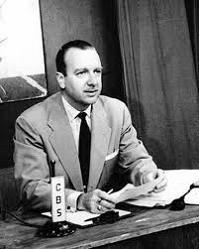
The world has become a very strange place when someone like Van Jones — a certified left-liberal, a member of the progressive political movement that has spent decades denoucning the biases and unfair coverage of the mainstream media — says he misses the old days when a few editors controlled what the public saw. From an oped he wrote in the NYTimes July 26:
Anyone with a laptop and a flip camera can engineer a fake info-virus and inject it into the body politic. Those with cable TV shows and axes to grind can concoct their own realities. The high standards and wise judgments of people like Walter Cronkite once acted as our national immune system, zapping scandal-mongers and quashing wild rumors. As a step toward further democratizing America, we shrunk those old gatekeepers — and ended up weakening democracy’s defenses.
Jones also wrote — and I agree — that the era of rampant character assassination by fraudulent bloggers will eventually end:
The worst of the partisans will get their comeuppance and become cautionary tales for others. Public leaders will learn to be more transparent. We will teach our children not to rush to judgment. Technology will evolve to better expose fakers.
But wow, when we start to miss the old CBS/ABC/NBC monopolies, things have gotten pretty bad. Or else we’ve finally started to realize that, in an era when anyone can be a mass-media publisher, credibility, standards and principles still matter.