Today’s Look: Mika and Howie, Market and Castro
Tell us about your look: “No comment.”
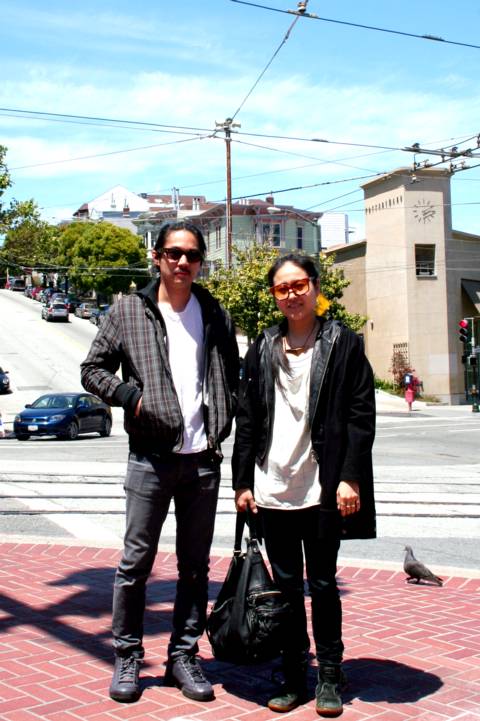
Today’s Look: Mika and Howie, Market and Castro
Tell us about your look: “No comment.”
One of the key questions at the Potrero Hill Democratic Club’s forum for D. 10 candidates revolved around Lennar’s Candlestick Point-Hunter’s Point Shipyard redevelopment plan.
The current Board of Supervisors recently approved Lennar’s plan by a 10-1 vote (D.6 Sup. Chris Daly dissented). Following that vote, Mayor Gavin Newsom rushed to sign twelve pieces of legislation that approve and enable what could shape up to be the largest redevelopment project in San Francisco´s history.
“Today is a historic day for San Francisco and a testament to so many who have worked for more than a decade to secure this critical engine for our City´s economic future,” Newsom said in a press statement, after he signed off on the Lennar deal. “I want to thank Sup. Sophie Maxwell for spearheading this effort throughout her entire tenure on the Board of Supervisors and our State and Federal representatives including Speaker Pelosi and Senator Feinstein as we take a giant leap forward towards our shared vision of jobs, housing, and hope for the Bayview-Hunters Point community.”
But with Maxwell termed out in January, the successful candidate in the D. 10 race stands to inherit a plan that has been approved, but apparently isn’t funded yet. And by my accounting, the majority of the candidates who spoke at the D. 10 forum expressed reservations with Lennar’s proposal, with only a few firmly against it, and only a few firmly in favor of it. But read their comments, decide for yourself–and keep tracking this fascinating race!
Asked how she would have voted on Lennar’s plan, Lynette Sweet, who voted to make Lennar the shipyard’s master developer when she was a member of the Redevelopment Commission in 1999, said she would have approved it.
“I voted for it then, and I would have voted for it now,” Sweet said. “And I want to be the person who shepherds it through in the next eight years.” But Sweet also sought to reduce the many ongoing questions about the plan–including housing affordability levels, local job creation, air quality impacts, and the Navy’s related shipyard clean-up–to one simplistic issue: the bridge over Yosemite Slough.
“There’s been a lot of controversy over a bridge,” Sweet said. “But we don’t give up on people for a bridge. We just can’t.”
Eric Smith said he was supportive of the plan and the community benefits agreement, but he voiced criticism of the project’s environmental Impact report (EIR).
“The project’s EIR wasn’t perfect,” Smith noted. “And I wasn’t a huge fan of the bridge, but I’ve walked around Alice Griffith [a dilapidated public housing project in the Bayview] and when you see folks with moldy pipes, broken ceilings, and rats, it moves you. So, I’m supportive of it, and I’m supportive of the community benefits agreement [that the SF Labor Council negotiated with Lennar] and the jobs it can bring.”
Nyese Joshua said she would have voted against the plan, starting years ago.
“I would have voted to stop that project in 2006, when the dust issue was going on,” Joshua said. “And it’s a misnomer to claim the Board voted 10-1 for Lennar,” Joshua contined, as she pointed out that five progressive supervisors on the Board voted against the bridge and for air quality analysis, greater affordability and greater workforce protections. But ultimately, this progressive core was unable to pass those amendments, because Sups. Maxwell, Bevan Dufty, Sean Elsbernd, Carmen Chu, Michela Alioto-Pier and Board President David Chiu did not support them.
“That 10-1 vote is being called a pyrrhic victory,” Joshua added.
Kristine Enea indicated that she would have voted yes, but with reservations.
“I would have consistently voted yes to amendments, but there was no comprehensive transportation analysis,” Enea said.
Enea, who has served on the now disbanded Navy’s Hunter’s Point Shipyard Restoration Advisory Board, noted that she is “intimately familiar with the technical data,” surrounding the Navy’s shipyard clean-up plans.
“And I live a stone’s throw from the shipyard, and I believe we are safe,” Enea added.
“There is hope soon to be a restored public process on the Navy’s clean up,” Enea continued, referring to the Navy’s 2009 decision to dissolve the RAB.“But we need to be very vigilant that cleanup of Parcel E2.”
Malia Cohen said she would have supported Lennar’s plan,
“Lennar has dominated the lion’s share of our conversations,” Cohen said, noting that there are a bunch of redevelopment projects in the southeast. “So, we can’t be singular in our vision of what we want our community to look like. We can’t let Lennar dominate. But I’d have supported the project because I believe what Lennar represents is an extraordinary opportunity for us to pick ourselves up, organize and collectively voice what we’d like our community to look like. It’s imperative that Lennar’s plan moves forward, but it has to be environmentally sound.”
Steve Moss said he probably would have voted for the project’s EIR, but voiced concern about the lack of affordability within the project’s 10,500 units of housing.
“But nothing is more toxic than the shipyard than the conversation about the shipyard,” Moss added, noting that the Navy and US EPA have collectively committed to spend millions and millions on shipyard cleanup, but the community doesn’t trust the process.
“So, what went wrong with the conversation in a community that is clearly wounded?” Moss said. “We need to start having honest conversations. And we’re programming a lot of housing [within the Lennar development,] but not enough jobs.”
Stephen Weber said he would have voted for it.
“ I believe that we need it, that we can’t wait any longer,” Weber said. “But it goes back to oversight. It’s the responsibility of the city to make sure the developer and everyone connected to the development is held accountable and is made to follow through on procedures, and make sure affordable housing is mixed into the plan. It has to be a neighborhood built on diversity.”
Isaac Bowers said he’d have been in favor of sending the plan back to Redevelopment to be amended.
“This is a very difficult decision,” Bowers observed. “We all know that the area has suffered from many decades of neglect. But when I looked closely at the plan’s environmental impact report and the process, I didn’t think the range of alternatives for the bridge were sufficient. The demands for [greater oversight] of the shipyard clean-up were legitimate. The analysis of how many jobs in research and development was insufficient. There was no analysis of displacement. There were inadequate levels of truly affordable housing. We need to look at real jobs when we look at development. And the Redevelopment Agency has to be put back under the control of the Board. It can’t be allowed to put out fake projects that don’t benefit the community.”
Diane Wesley Smith suggested she’d have voted no when she pointed to Lennar’s “trail of broken promises.”
“And talk about collusion,” Wesley Smith said. “ I understand this was a done deal, five years ago.”
Geoffrea Morris said she would have voted no.
“There was a lot of money, a lot of power pushing the shipyard project,” Morris said.
“If this happened in any other community [in the city], it wouldn’t have happened,” Morris continued. And they wouldn’t have got rid of the [Navy’s community-based] restoration advisory board,” Morris added.”But ours is a poor community of minority people and a majority are African Americans.”
Chris Jackson said he would have voted yes, but with amendments.
“I would have supported the plan, but with amendments to ensure the full clean-up of the shipyard to residential standards, and to work towards on agreement on the bridge,” Jackson said.
“We are a better city than just saying no,” Jackson continued, as he outlined ways to ensure that local workers get decent paying jobs, the community gets an expanded health clinic, the city includes a cooperative housing and land trust element to provide affordable housing, and the city is required to provide a supplemental environmental impact report.
Tony Kelly said he would have voted no–and noted that he was the only candidate to publicly testify against the certification of project’s EIR.
“I was the only candidate to testify against the environmental impact report and in support of the appeal [that three separate groups brought after the Redevelopment and Planning Commissions voted to certify the city’s EIR for Lennar’s plan],” Kelly said.
‘Michael Cohen, the Mayor of San Francisco,” Kelly half-jokingly continued, “has said the project is not going to be started to be built for at least 4 to 5 years. So, how can the city say, you must support the plan now, when it’s not going to happen for a long time?”
Marlene Tran said she can’t support the plan until the shipyard’s cleaned up.
Tran explained that initially, when Arc Ecology’s Saul Bloom gave the community a presentation about the plan, she was intrigued.
“It seemed to bring a lot of promises, but then Bloom presented ten of the deficiencies with the plan,” Tran said, referring to heavy metals and other toxins on the shipyard.
“I will make sure they will do the clean-up first,” Tran said. “If we go for it, and then construction workers and residents, get sick…well, there’s no way I can condone the project, until it’s absolutely clean. And what if the developer goes bankrupt?”
Espanola Jackson gave folks a history lesson
“When I learned that the shipyard was a Superfund site was not until 1990, because we was illiterate about environmental justice in a black community,” Jackson recalled. “I thought environmental justice was white kids chasing whales. But then I went to Monterey and learned about restoration advisory boards [RABs].”
Noting that the local community got its own RAB in 1994, Jackson recalled how former Mayor Willie Brown appointed Lynette Sweet to the Redevelopment Commission, before the Commission voted 4-3 in 1999 to select Lennar as master developer for the shipyard.
“Willie Brown brought in Lynette Sweet to be the swing vote to bring Lennar into the community,” Jackson said.
DeWitt Lacy said he wouldn’t have supported the plan, as it was, and given the Board’s limited ability to amend it under the city charter.
“I’d have supported the plan, if I’d had the power to amend the project’s environmental impact report and get it done right,” Lacy explained.
Lacy faulted the plan for carving up a state park, building a bridge over an environmentally sensitive slough, and not doing enough to ensure local jobs or guarantee benefits.
“Folks didn’t believe it was important for black folks to have state park land, but it’s important for our kids to have this,” Lacy said. “The state has spent $5 million to rehabilitate Yosemite Slough… And a ‘good faith’ agreement [around local hiring quotas] doesn’t get it for me. We have to have absolute certainties to make sure our people get the benefits.”
You can watch video of both the D. 10 forums, which were moderated by Keith Goldstein, here. And stay tuned for coverage of the endorsements and financing behind each candidates’ campaign. D. 10 is already shaping up to be one of the most fascinating and pivotal races in the fall.

In today’s epidsode, Johnny and Johnny talk about the most crucial under-reported issue of the day–net neutrality–plus Hurd’s fall at HP and Jerry’s Green jobs.
“It’s really one of the only places in the Castro that isn’t focused on drinking or shopping,” says events coordinator Oscar Raymundo of his book nook on the neighborhood’s main drag, A Different Light. Ambling down Castro Street, one really doesn’t see too much geared towards the intellectual pursuit – punnily-named beauty salons, cheap bars, and spendy restaurants are far more evocative of the enclave’s milieu. Raymundo would be the first to admit, however, that the bookstore where he works deals in a theme that plays a central role in Castro life: sexuality, and the varying ways in which the LGBT community lives the theme.
Inside the Light, you see the true meaning of this last sentence. A bin of DVDs cheerfully promising vivid anal sex scenes at quite reasonable prices. Evocative postcards, prints on the wall – and for the more literary minded among us, the books themselves. Raymundo says that A Different Light attempts to find “the stories that aren’t told as often. A lot of books fall into this Chelsea, West Hollywood kind of scene – we want to find the stories that are more off the beaten track.”
So for those that are looking for a less mainstream version of gay sex, there is a chapter here for you. Tales of love in the urban rural south, the vagaries of a more-or-less polygamous marriage. There is lesbian lit as well, how-tos for a healthy, sex-positive life like The Ethical Slut and The Bottoming Book. Hell, should everything in A Different Light be considered fodder for lust and liaison, the store has tales for even the most esoteric of arousals: a volume of Harry Potter, captured on audio for to make possible the most effusive sort of literary enjoyment.
Raymundo says that the store wants to be considered a sort of “community hub,” a sentiment that is fostered by a steady stream of authors that make their way to the small store for readings and signings of books by grateful fans. America’s favorite drag queen appeared here earlier in the year to promote Workin’ It: RuPaul’s Guide to Life, Liberty, and the Pursuit of Style (sans “face,” to the consternation of fans who had lined up around the block to bask in her bleached blonde light), and recent appearances have included Axel Ironrod, creator of Tarquin and Paul, the studly protagonists of Ironrod’s series Leather Masters and Slaves, as well as David Jedeikin, who talked about his book Wander the Rainbow, a self published account of the author’s foray through the sex tourism capitals of the world (sort of like Eat, Pray, Love without the womenfolk or aestheticism.)
A favorite event of the event coordinator himself? Raymundo harkens back to the day when Aiden Shaw, “the most highly paid male porn star of the ’90s,” lent his spark to A Different Light upon the release of the actor’s fourth memoir. “He was surprising, really eloquent,” Raymundo says.

Johnnie Waters ups the freaky celeb factor at his A Different Light author signing
Of course, reality TV hosts and porn stars do not a “community hub” make. To this end, A Different Light is partnering with the Magnet, the SF AIDS Foundation gallery-lounge around the corner from the bookstore whose lobby offers free Internet access and a chance for neighborhood gay men to connect on matters besides $2 well drinks and $200 designer denim. The two organizations have created a bi-monthly book club (second and fourth Tuesdays of the month 7:30 p.m. at the Magnet) to dish on the stories that come to life within the walls of A Different Light. Again, still sexy. Most of the selections to date have been from authors making stops in the bookstore: John Waters, dashing through with his odd little ode to those that made him how he be, Role Models, made a stop through, and next week the gang’ll be discussing Insignificant Others, a novel of the unraveling of a polygamous Boston couple (those exist?) by Stephen McCauley.
Upcoming author appearance:
Del Shores and the cast of TV’s Sordid Lives
Fri/13 7 p.m., free
A Different Light
489 Castro, SF
(415) 431-0891
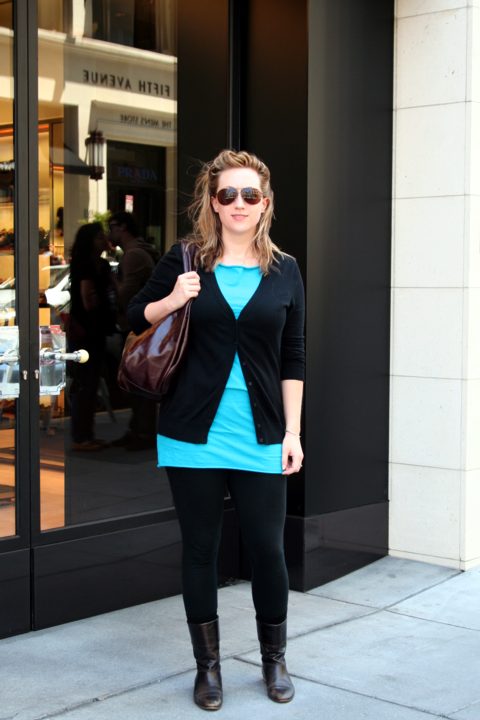
Today’s Look: Kristen, Post and Grant
Tell us about your look: “I just got these boots on Haight Street yesterday.”
As pretty much everyone knows by now, Jeff Adachi collected enough signatures to place a charter amendment on the November ballot that would reform the city’s retirement and health benefits plan. His amendment has become such a hot political topic that the Potrero Hill Democractic Club asked the 15 candidates who spoke at the club’s August 2 and 3 District 10 forums what they thought of Adachi’s “smart reform.”
By my understanding of what the candidates said, four seemed unsure what the Adachi amendment would do, or were open to the idea, while the other eleven were opposed. But read for yourself what the D. 10 candidates said and decide where they stand on this issue:
Kristine Enea: “Certainly something needs to be done. I did sign [Adachi’s] petition. Adjusting for new employees has an inherent fairness. The path we are on is not sustainable.”
Nyese Joshua: (After admitting that she didn’t know much about Adachi’s amendment), “In terms of bringing it to the ballot, I agree.”
Lynette Sweet: “What Jeff Adachi did was not a bad thing, but the way he went about it was.”
Stephen Weber: “I don’t believe it was done right way, but I like the idea. The labor leaders are willing to sit down and discuss the pension plan. They just want to discuss it with the Board that is sitting there now.”
Eric Smith. “I love Jeff Adachi. And initially it looked great. But Beyond Chron [for which Smith sometimes writes] has an interesting story: When I read it, it says the measure goes after people’s health benefits. That’s troubling. I can’t really get behind this. We need to do reform from the bottom up, not from the top down.”
Malia Cohen: “Adachi’s a great public defender, but he’s taken an approach that’s disrespectful of public policy. Instead, he’s created a policy. I’m not in favor of it, if it unfairly taxes those at the bottom.”
Steve Moss: “The labor unions are rightfully furious. Pensions need reform. Things are out of whack. But this could lead to folks losing healthcare because they have to pay more to cover their dependants.”
Geoffrea Morris: “He had a point. The unions are very powerful in the city, he didn’t want to go through the red tape. Something needs to be done to reform healthcare and pensions.”
Isaac Bowers: “I thoroughly reviewed the San Francisco civil grand jury’s ‘Pension Tsunami’ report. I don’t think his initiative is the right way to go. I fear copayments for healthcare will throw people back on the city.”
Tony Kelly: “Great guy, stupid idea.”
Espanola Jackson: “You should talk to Adachi. Don’t shoot him down.”
Chris Jackson: “The measure is popular, it’s polling in the 60 percent range. But Adachi never talked to the nurses and the workers who make $35,000. And then there is the fact that this in an attack on healthcare. So a large percentage of the ‘savings’ is what workers will have to contribute. It’s a move away from supporting working class individuals.”
DeWitt Lacy: “We need pension reform. But no one likes change rammed down their throats without any negotation with, or input from, the workers. It addresses an important issue, but it’s too divisive.”
Diane Wesley Smith: “It’s ridiculous. Some reform has to happen, but this isn’t it.”
Marlene Tran: “Jeff Adachi took a lot of risks in this pro-labor town. He claims a $170 million savings. I would support it, because everyone should pay into the pension fund.”

The fantastic crew at Polite in Public shot many of the adventurous winners and guests at our raucous Best of the Bay party last night. Check ’em out.
Recent trends on the arts and culture scene
As long as there has been art, I imagine that the phrase “starving artist” has been in use. I like to imagine prehistoric cave painters stopping halfway through a particularly thrilling rendition of a successful buffalo hunt to halt operations and hold a fundraising party. “Grod, your donation of three chunks of limestone and a sharpened flint chip will help to fund the portraiture of no fewer than five renegade buffalo heading over the edge of the cliff.” But it helps put the sacrifices made in art’s name into perspective when confronted with art created on the very fringes, where “starving” can be more than just a catchphrase but a grim reality.
Friday night at the Redstone building I attended a performance at LaborFest — a month-long celebration of organized labor, worker’s rights, and solidarity. A POOR Magazine project, “Hotel Voices” was written by and about the denizens of SROs — those reviled bastions of affordable housing. Co-directed by Allan Manalo of Bindlestiff Theatre, and Lisa “Tiny” Gray-Garcia of POOR the performance touched on themes such as institutionalization, infestation, violence, racial profiling, death of loved ones, and yes, starving, with a bite of humor provided by the flamboyant “El Bedbug” (Charles Pitts), a charismatic harmonica interlude played by “Nightmare Joey” (Dennis Wilmot), and a suckerpunch of survivalist wisdom from “Supertenant” (Lisa “Tiny” Gray-Garcia).
Told in a series of short vignettes, like scenes of a documentary film about the often unsavory conditions “enjoyed” by the occupants of residential hotel rooms, “Hotel Voices” raised a collective voice against the daily marginalization of its principle characters. More importantly, it underscored the basic tenet of artistic expression that’s so often overlooked — that the need to create isn’t dictated by economics, education, or public demand. On the contrary, it can be an impulse as deeply ingrained as the need for food, shelter, or companionship. In other words, an act of survival.
A very different aspect of survival in the arts occurred to me Sunday night, while watching a shaky staging of “Gillian’s Island” which hadn’t quite found its sea legs. But at least it was at the Garage, a favorite low-key venue where the anything-might-happen vibe pulsates like a club beacon in the SOMA night. Which seems especially important to acknowledge now that three of its neighbors have either shut their doors or announced a pending closure in the last few months: the Climate, Mama Calizo’s Voice Factory (which closed Saturday), and the Off-Market Theatre (scheduled to close January, 2011).
Yes, it’s been a bad year for black boxes, yet the Garage, despite its non-existent booth, minimal grid, and limited seating, remains a competitive player in the performing arts community with a full calendar, focused curation, and an array of artist-in-residency opportunities. And just as “Hotel Voices” helped to remind that the creation of art is an essential aspect of our collective survival, hanging out at The Garage reminds of the importance of maintaining a space for those arts and their creators to survive in.
SFPD Chief George Gascon kicked off today’s press conference about a Community Ambassadors program on the Third Street corridor by saying that it’s a grassroots pilot.
“This is not a police program, it’s a community program,” Gascon said, as he introduced Adrienne Pon from the Mayor’s Office to speak about what is being framed as a trailblazing effort to address violence on public transit at a time when money is tight all around.
Board President David Chiu, Sups. Carmen Chu, Sophie Maxwell and Eric Mar, and Chinese Chamber of Commerce consultant Rose Pak were also in attendance and everyone was all smiles and put on an apparent show of solidarity for what appears to be a desperately needed program
But Chiu did not know that the press conference was happening, when I called him last night for details. I’d assumed that he would be in the loop as the Board President and the most visible of the city’s top Asian American political leaders. But as Chiu confirmed today, he only was briefed a few hours before it took place.
Asked what was going on, Chiu waxed diplomatic.
“As you know, I didn’t know about it yesterday when you called,” Chiu said. “So, when I heard about it, I called the Chief and he sent the information. I’m happy this is happening.”
Oddly, when I called the SFPD this morning to confirm that today’s press conference was happening, I was asked who had told me about it. By then, I also knew that D. 10 candidate Marlene Tran was going to be speaking at the press conference. And while it’s great that Tran is an advocate for public safety programs, it’s weird that a candidate on the November ballot was in Gascon’s press conference loop, when Board President Chiu was not.
“We are in a neighborhood with serious public safety concerns,” Chiu told reporters today. “The issues that come from one of our ethnic communities are of concern for us all.
“We are working with the Mayor’s Office and the Chief,” Chiu continued, noting that the Board has been working hard to restore funding for violence prevention programs and to ensure there is funding for a new program for translation services.
“A multi-ethnic program is the type of program we need to move the healing process forward,” Chiu said, thanking the SFPD and the District Attorney’s Office for working to help victims of violence get help and translation services.
Sup. Maxwell talked about how the Ambassadors Program will be good for seniors, young people and very very young people.
“We need to make sure we continue these kinds of programs,” Maxwell said.
Sup. Eric Mar thanked AT& T for providing cell phones to the 12 outreach workers who have been trained as Community Ambassadors.
And Pon of the Mayor’s Office promised that this would be the first of many efforts to address public safety concerns.
‘There is no place for violence in the community,” Pon said. “Any time anyone gets hurt, it rips a hole in the fabric of society. It’s not just the recent acts of physical violence and threats against some of our residents. No one should have to contend with being spit upon and name-calling and threats.”
Thanking Sharen Hewitt, Rose Pak and “the courageous community members who came forward,” Pon said the pilot program will last until mid-September and will focus on the Number 9-San Bruno bus and the T-Third line. Funding is coming from the city’s general fund and federal job stimulus funds.
“Unfortunately, those funds are going to end in September, so we’re looking for funding from the corporate community,” Pon said, referring to AT&T.
She described the Community Ambassadors program as a “non-law enforcement presence.”
“People can get along regardless of their cultural and linguistic differences,” Pon said.
AT& T California President Ken McNeely talked about his company’s “long and storied history”, noting that the first transcontinental call happened over 100 years ago and involved a call from San Francisco’s Chinatown to New York City.
“We’re in the business of really connecting people,” McNeely said.
Sup. Carmen Chu said the pilot program is the beginning of efforts to build community across ethnic lines.
“It starts to sends a message about what we want to accomplish,” Chu said.
“Crime is not something we want to see tolerated,” Chu continued.
On August 3, the Board considered legislation that Chu authored to implement higher penalties for crimes on and around Muni. Like the Community Ambassadors program, Chu’s legislation came in response to recent attacks on Asian Americans by African-American teens. In one case, a group beat a 57-year-old woman then pushed her onto the tracks. In another, an 83-year-old man died in the hospital after he was assaulted.
If passed, Chu’s legislation would increase the penalties for aggressive pursuit and loitering while carrying a concealed weapon to $1,000 if the crime occurred on or around MUNI (as opposed to $500 for the same crime committed elsewhere.) The Board also recommended that juveniles convicted of these crimes be given community service or in-home sentences instead of probation or juvenile hall.
Police Commission President Dr. Joe Marshall was also on hand today to voice his enthusiasm for the Community Ambassadors pilot.
“This is pretty cool,” Marshall said. “We got a model. I don’t know if any other cities are doing this, but they should be. I commend the ambassadors for being involved.”
And D. 10 candidate Marlene Tran said the program represented an opportunity to work “for peace and harmony.”
“This is an auspicious occasion,” Tran said, noting that there would be “double happiness” in the Asian American community over two community hubs, one in Viz Valley, the other in the Bayview.
“We encourage more collaboration amongst our community,” she said.
Rose Pak, consultant to the Chinese Chamber of Commerce, hinted that she would be squeezing more money out of AT&T.
“I knew we had a problem, and I knew who to go to,” Pak said, noting that she wasn’t not going to let AT&T “get away with pilot support.”
“I expect them to write a big check,” she said.
Pon told reporters that the Community Ambassadors speak a total of seven languages: English, Cantonese, Mandarin, Vietnamese, Spanish, Samoan and Hawaiian.
But when reporters asked how City Attorney Dennis Herrera’s newly announced gang injunction against two warring street gangs, the Down Below Gangsters and Towerside Gang, in Viz Valley, might be compromised by the Community Ambassadors program, Gascon stepped forward.
“If thoughtfully implemented, gang injunctions can be a powerful tool,” Gascon said, noting he believes the Community Ambassadors will be a model that “we’d like to take to other neighborhoods.”
But how can 12 people armed solely with AT&T cell phones and fluorescent yellow jackets tackle what seems primarily to be youth violence against Asians? And what will happen in six weeks when the pilot program’s funding dries up?
“For the past two weeks, and continuously until mid-September, they are going through training at the SFPD and the MTA,” Pon said, noting that some of this training involved cultural and linguistic competency training.
“We’re building a pilot,” Pon continued. “The phones are preprogrammed to speed dial the SFPD, and we recruited these 12 ambassadors from over a hundred candidates in the Jobs Now program’s census outreach team. So, they are used to working in public and are comfortable with working with individuals of diverse backgrounds and ethnicities.
Pon acknowledged that the pilot has a shoestring budget.
“We are seeking private and foundation funding, so I’ll be doing lots of grant writing,” Pon continued, noting that a permanent program would need “at least half a million dollar budget.”
Asked if the Mayor’s Office was kept in the loop about today’s event more than Chiu, Pon smiled.
“SFPD called the conference and we are all making sure that we are working together,” Pon said.
But AT&T’s Ken McNeely was happy to talk about his company’s efforts to provide cell phones for connecting with first responders.
“Public-private partnerships are critically important,” McNeely told the Guardian.
“We’ve made education one of our key pillars for giving back,” he said. “ For us all to do well, it’s going to take public private partnerships.”
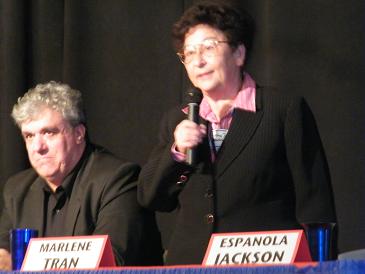
SFPD Chief George Gascon will roll out a pilot program today in an effort to address violence against Asians seniors on public transit.
A press release notes that the SFPD in conjunction with AT&T and the Office of Civic Engagement & Immigrant Affairs, which is a division of the City Administrator’s Office, has developed the San Francisco Community Ambassadors program.
“This is a pilot program, designed to enhance community awareness and safety,” the release states. “The pilot program will consist of community safety teams assigned to public transit locations in Visitation Valley and Bayview to provide a safe, visible and supportive presence for residents. This program will consist of 12 ambassadors who are from various cultural backgrounds. Many of the ambassadors are bilingual as well.”
D. 10 candidate Marlene Tran, who speaks Cantonese, Mandarin, understands Vietnamese and has taught English as a Second Language for 37 years, told the Guardian she has been working on community safety issues for 20 years. Tran also said that she recently did a bilingual survey in light of a wave of violence against seniors on the Third St. corridor.
“I have daily contact with students and residents, so I have my finger on the pulse of the community as a whole,” Tran said. “It’s a battleground out there, but for a long time no one knew about it, because many of the victims are not English speaking.”
“We want to be an integrated community,” Tran continued, “and seniors should have the flexibility to move around, but many of them don’t dare go out after 4 p.m., unless they are escorted, so having this program is a step in the right direction. Some of these cases are never reported. We need to encourage residents to be more proactive.”
Details of how the program will be funded and how long it will last remain sketchy at this point. Sharen Hewitt, founder of the Community Leadership Academy and Emergency Response Project (CLEAR), told the Guardian that she pitched the concept of having monitors on the bus some months ago, during her last meeting with Board President David Chiu and Sup. Carmen Chu.
“I suggested we take money from Trent Rohrer’s Jobs Now program to pay for it,” Hewitt said. “I also suggested we go to developers in the Bayview and engage them in a constructive conversation about donating dollars to help with translation services.”
Gascon and 12 ambassador staff will be present to speak about the program at today’s press conference, which takes place at 2:45 p.m. at 2574 San Bruno Ave.
Good god, y’all! If you parents out there (yeah, I know this is San Francisco, but I’m house-sitting up in Bernal for the week, I know the childrens still exist) have successfully protected your family from the dangers of I dosing, you now have a new challenge on your hands: making sure your loved ones are harboring enough bacteria.
Such is the message of a one Larry Weiss, who has been contracted under the illustrious moniker of “chief technology officer” by a one manufacturer of naturalish hygiene products known in certain circles as Cleanwell, to make you even more aware of the microscopic dangers that lurk in every damp sponge. And the microscopic wonders in every bite of Dannon’s! There’s good bacteria as well, which his product helpfully allows to survive another day in your epidermis and eventually, gut. He’ll be presenting the findings of his doctoral search for the truth today, Thurs/5, at an organic children’s store in the Marina named Sprout. Sounds like it’ll make a bangin’ pre-funk for our Best of the Bay Rock Party tonight.
Some sneak preview tips gleaned from the Cleanwell site:
-Eating yogurt or probiotic products help you to get that belly bacteria back in balance after a round of the antibiotics. Listen up you chronic infection people!
-76% of all liquid soaps include Triclosan, a devil juice that disrupts endochrins and makes teenage girls get their periods disturbingly early. Guess what soap has no Triclosan!
-Viral YouTube videos do not actually cause a single virus, or more than one virus! On a related note, did you know there is some debate as to whether the word ‘virus’ has a correct pluralization?!
Cleanwell appears to have caught wind of the SFBG staff’s penchant for rolling around in pungent “Free” boxes we find on the sidewalk curb, because they generously sent us no less than five spray bottles of their original flavor all-natural hand sanitizer. A question that perhaps Cleanwell can answer: why aren’t we calling the first ingredient on your list “aloe” instead of the slightly more processed sounding “aloe barbadensis?” To me, this suggests you’re not throwing plants in a pot and stirring, which is how we hippie typically prefer our toiletries to be made. One of my counterparts suggested your formal language was due to the fact that Cleanwell ingredients are so natural, one must use their Latin names to describe them.
Anyways, I got everybody to spritz their hands at the office, thereby putting off yet another pink eye epidemic. Thanks, Cleanwell!
Healthy Hygiene Tips from Dr. Larry Weiss
Thurs/5 6:30 p.m., free
Sprout
1828 Union, SF
(415) 359-9205
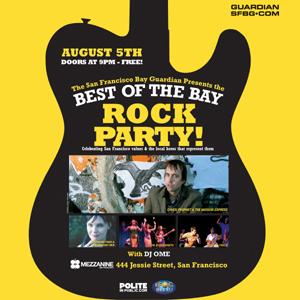
Whew! There’s a lot of throwdown and get lit opportunities in nightlife this week and weekend, beginning tonight, 8/5, at 9pm with the Guardian’s own Best of the Bay Rock Party revving up the amps at Mezzanine — with performances by Chuck Prophet, the Bitter Honeys, and Stephanie Finch and the Company Men, hosted by The Freeze and DJed by Ome. You’ll definitely want to hit this up, especially to schmooze with this year’s Best of the Bay winners. Your elbows will be rubbed down to the bone!
Here are some more shindigs you need to get into:
ZZK
The outstanding Argentinean electro-cumbia label and Zizek party source is hitting the road — with primo acts El Remolon, Chancha Via Circuito, and El G in tow. (Check this wonderful Chancha mix, basically a refresher course in the primal cumbia sound). Digital folklorico!
Thu/5, 9pm, $12. Rickshaw Stop, 155 Fell, SF. www.rickshawstop.com
http://www.youtube.com/watch?v=YHIoxQrcs2U
Matthew Dear
The shapeshifting heartthrob of emotional techno is back in town to promote forthcoming album Black City, this time without his full band — but it will be a dance floor show to remember. Nikola Baytala, Shoddy Lynn, and Blufarm open.
Fri/6, 10pm, $15. Mighty, 119 Utah, SF. www.mighty119.com
A-Trak
Those crazy-fun electro-lovin’ Blow Up kids are back, with another “summer concert series” rager, featuring young turntable wiz A-Trak as well as Peanut Butter Wolf (whose got a dun finger in the whole synth wave pie), Nacho Lovers, and the always great Jeffrey Paradise.
Sat/7, 10 pm, $15, 18+. Mission Rock Cafe, 817 Terry Francois Blvd., SF. www.blowupsf.com
Revelations in the Illuminated Forest
It’s one of your last chances to get in on the amazing “Green Sound” Soundwave Festival that’s taken over SF this summer and lit up many an adventurous, experimental-loving ear. The fest has set up the Lab as an Illuminated Forest — “a multimedia interactive exhibit and reactive performance space” (i.e., there are amazing things going on) — and this will be the de facto closing party. With plant sounds and other audiovisual wonders from Etraordinary Forest, Geraud Bec, and Takahiro Kawaguchi.
Sat/7, 7:30, $10-$15 sliding scale. The Lab, 2948 16th Street, SF. www.projectsoundwave.com
Hard French
Awesome soul music all afternoon on a patio filled with intensely stylish and friendly young queers? Bring on the thankful tongue kisses! Bonus: this month’s installment’s theme is Psycho Beach Party, naturally.
Sat/7, 3pm-8pm, $5 ($10 for tasty beer bust). El Rio, 3158 Mission, SF. www.elriosf.com
Le Perle Degli Squallor
Supersexi bodymotion and hot boy cruising at DJ Bus Station John’s monthly disco rareties hotspot at the wildly off-the-radar Hot Spot bar. Calling all fanny fondlers and tonsil-ticklers — come feel (an) Italian, stallion.
Sat/7, 9pm, $5. Hot Spot, 1414 Market, SF.

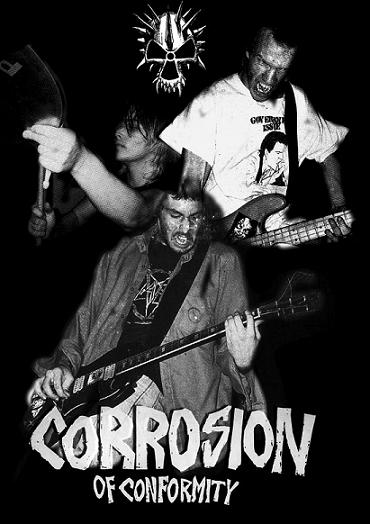
Check out Ben Richardson’s story on the Southern Lord Mini-Tour in this week’s Guardian. Here, he talks with Mike Dean, bassist and singer of Corrosion of Conformity.
San Francisco Bay Guardian: You guys are practicing in North Carolina now, in preparation for the tour?
Mike Dean: That’s right, yeah. It might be useful.
SFBG: How long has it been since you’ve played all these Animosity songs?
MD: Quite a while. Easily 23, 24 years, something like that. 23 years!
SFBG: How does that feel? Is it like putting on an old garment?
MD: Either I remember the stuff precisely, and it is like putting on an old garment – it feels just like yesterday, and I can play it – or there are parts of songs that I have no recollection of. It’s either completely natural or kind of strange.
SFBG: Can you point to any particular parts that seem unfamiliar?
MD: There’s a bridge-like part in the middle of the song “Holier,” that I completely forgot about!
SFBG: This must be due in part to the fact that your technique has changed a lot over the years. At this point you’re a veteran, a very well-schooled musician – not to say that you weren’t good to begin with…
MD: It’s funny that you should mention that. It’s an astute observation, because sometime around the time we did [1987’s] Technocracy, I started to play with my fingers more and more, and sort of leave the picking thing behind. Basically, it was like starting all over again, to some extent. Now, I can do all the things on Animosity and Technocracy with my fingers, as opposed to a pick, which I would just be dropping anyway.
SFBG: So you recorded Animosity playing with a pick, but now you can play all those parts with your fingers.
MD: Yeah, I guess I’m losing points for authenticity that way.
SFBG: Well, I’m a fan of the pick-less bass playing, in general, so I gotta support that approach.
MD: I am too, but I try to have a real open mind about it now. You’ll see videos, certain songs in which John Entwistle [of the Who] or John Paul Jones [of Led Zeppelin] use a pick to mix it up.
SFBG: Tell me a little bit about how you got involved with this Southern Lord Mini-Tour. How did it all come together?
MD: That’s an interesting story. I’ve done a little recording for a band that was on Southern Lord called Earthride. Maybe about five years ago. I kinda knew Greg [Anderson, owner of Southern Lord Records] from that business. Greg was kind of a hardcore fan when he was really young. I believe that Corrosion of Conformity stayed at his house in Seattle back in the day. I have a foggy recollection of that happening. It took me a while to sort of put that person together with the guy in SunnO)))) and Goatsnake, but eventually I made that connection. Dealing with him is pretty cool, and there are a lot of artists on his label that I admire, like Wino and Goatsnake, whom I thought were really good the first time I heard them – it’s hard to go wrong with basically the rhythm section from the California version of The Obsessed and the singer for Scream.
http://www.youtube.com/watch?v=Vk3rlgFrL3w&feature=related
SFBG: Did he reach out to you, or you to him?
MD: He reached out to us. He was looking to re-issue some old stuff, and that still hasn’t happened too much. We mentioned that we were gonna record a new release, and that may happen. So we just started talking to him about doing that, and he said “hey you wanna play some shows out here?” and we were like “oh yeah!” It kinda lit a fire under our ass to get some new songs down and go out and play ’em.
SFBG: This is the new release as a trio that I’m hearing rumors about, with the Animosity line-up?
MD: Yeah. The only tangible thing that’s done is a seven-inch vinyl, two versions of one song called “Your Tomorrow.” That should be available by the time we’re out playing on the West Coast. It was kind of a hurry-up production, though it sounds really good, and looks really good too.
SFBG: Are there any plans to do any new C.O.C. material with [singer-guitarist] Pepper [Keenan]?
MD: There are plans to do that. We have a multi-pronged general plan, to perhaps take this and do a full-length three-piece release, and get out there and play it some. That’ll be quite a story – it’s been a long time, and I think we have some new material that we’re excited about. I think at the point after we’ve done that, it’ll be a story to get the Deliverance line-up together. Before we got the three-piece together, we were supposed to go to Europe and play some festivals, we had some offers, but Pepper’s busy with his other group, Down, so his schedule’s a little jacked up. So almost as a joke, I said, “Well we should do a three-piece tour!” Everybody stopped and went “Uhhhh….maybe we should!”
SFBG: What had you been up to since C.O.C. went on hiatus, in 2006? You mentioned recording Earthride…
MD: Well, C.O.C. had been going without [drummer] Reed [Mullin], and in some point around 2004, we decided to make a record with Stanton Moore, from Galactic – In the Arms of God. That’s something I’m pretty proud of, something we did ourselves in Galactic’s now-demolished rehearsal space, which was flooded out of the warehouse district of New Orleans. We had a nice little tour with Clutch, in the UK. At that point, [C.O.C. guitarist] Woody [Weatherman] and I started a band that we tentatively called Righteous Fool, and he moved up to the mountains, to basically go into agriculture and have a kid — that kind of put a damper on our plans. Then I started getting in contact with Reed for the first time in quite a few years, and we started jamming together, and that became Righteous Fool, and through that combination of circumstances we have Righteous Fool opening up for the three-piece-C.O.C gigs we have lined up in a couple weeks. It’s a slightly greasier kind of feel.
SFBG: I was gonna ask, since there’s only one song up on the Righteous Fool MySpace, and it seems more in the uptempo vein, like the older C.O.C. stuff: what are your plans for the Righteous Fool sound? What side of your musical personality do you get to express in that project?
MD: Well…it’s kind of in its infancy. We’re a couple years into it, and some good songs have emerged, but it’s difficult to call where that’s gonna go. We have a pretty solid musical presence in the form of Jason Browning. I don’t really know what to say about that. There’re a lot of directions we could go. I think there’s going to be more of an emphasis on vocal harmonies, things like that. We have a couple fun things we do, with a Fleetwood Mac song, and a Skip James song.
SFBG: Well I think people are curious to see what’s going to happen with that, and excited to see the band live. You’ll be playing two sets in a pretty short duration on this tour. What do you think the audience reaction is going to be, going from a super-slow, enveloping Goatsnake set right into this pissed-off hardcore Animosity stuff.
MD: It’ll be interesting to see. There are a lot of people who perform that kind of music [doom metal, a la Goatsnake] at some point in their life, in their younger life, in their previous life, who might have been into the hardcore kind of thing, so there’s a lot of overlap there, in terms of the cast of characters who perform that kinda stuff well. At the time – it’s kind of humorous to think, now – some of the parts on Animosity that were slower, briefly dirge-like, somewhat Black Sabbath inspired – that was considered slow, and within a certain kind of close-minded scene, was actually controversial. It was a controversy that you would play a few measures of something slow or heavy rock-inspired.
I think we were credited with being on the forefront of that, but in a way, we were just imitating Black Flag, but taking our Black Sabbath influence a little more literally, and indulging some more regressive influences. We did something original with borrowed ideas. There are people that would say we were involved in the beginnings of that type of thing, y’know. I don’t think that would be too pompous to say. [Laughs] If it is, I just said it, so…
SFBG: You mentioned having respect for Wino earlier. Being in Saint Vitus in that SST scene, he encountered people who would really be pissed off that he would play slow, super-Sabbathy songs.
MD: That was a pretty crazy thing. I’d already been initiated to the music of the Obsessed by that time, and picked up an appreciation for it. And so to see that dude in Saint Vitus not playing a guitar! It was just absurd, but it kind of wound him up, and made him a more intense vocalist. He’s been playing some shows with Saint Vitus recently, and I’ve heard that that’s still the case. I haven’t witnessed any Saint Vitus in quite a few years.
SFBG: You should take the opportunity, if it arises. I’ve seen two shows in this resurrected Saint Vitus era and…
MD: There’s no Armando on drums…they have some other dude on drums…
SFBG: Yeah, they have a different drummer, but Wino and Dave [Chandler, guitarist] are still really potent.
MD: So Saint Vitus comes to Raleigh, NC in like 1986, and Wino stays at my house (it’s a house a lot of people live at) and here he is on this tour not playing guitar. He picks up an acoustic guitar and plays tunes in a couple funny different ways, and plays Robert Johnson songs verbatim, as they are on the one LP – Robert Johnson Complete Recordings – we were just like, “Oh, my God!”
SFBG: I’m curious as to how you got from playing hardcore with Sabbath interludes to playing that reinvented C.O.C. sound from the early nineties, which is much more directly Sabbath-influenced. But that transition corresponds with the time when you were out of the band…
MD: I think we were already looking in that direction. You go out there and you play hardcore music, and you’re on tour, and the quality of it – of some of the bands you see – isn’t that great, and you’re listening to music partially devoid of melody. You want to unwind, and listen to some older stuff, and you realize that the craftsmanship of the older stuff is a little more advanced, even though its time has come and gone. Whats the next logical thing if you’re listening to Sabbath, or the next logical regression, to try to take something new? Deep Purple! We were listening to a lot of that. It’s funny, because after I quit the band they ended up with a singer [Pepper Keenan] who’s obviously really Ian Gillian-inspired, and they hooked up with a producer who had really sound music theory ideas. That resulted in Blind.
I had kinda moved on. I met a nice girl and moved to San Francisco for half a year. I lived in Philadelphia and I was delivering things on my bike. I heard the Blind record, and I was like “Oh mah god, its really good!” That minute came and went, and around the end of 1993, they had a dispute coming up with new material, and they were looking for a bass player and a singer. They asked me, did I want to come and make a record, and I was like “Yeah, all right!”
SFBG: That’s been the thing doing research for this interview…I think the archetypal narrative for rock bands is that they have members in and out and it gets complicated, and there are a lot of hard feelings, whereas it seems like with C.O.C. there’ve been all these people in and out of the band, but it’s been very amicable. You left and came back; you’re playing in Righteous Fool with guys who had been in the band before…
MD: Well, you know, that’s not to say that there weren’t heated incidents involved in some of this revolving door activity. There might be some negativity that occasionally rears its head. But I think everybody tries to be an adult, and a compassionate person. I think Kyuss would be the band that had that more amicable situation. Drummers in and out, a couple bass players…
SFBG: I thought some guys from that band don’t even speak anymore…
MD: Well now, yeah, you’re right. The funny thing is that they were all supposed to be on Roadburn in Holland like the same day. Nick Oliveri playing his acoustic stuff. Mr. Garcia doing some Kyuss stuff…
SFBG: It seems like a lot of these differences are being put aside in the interest of these tours that are resurrecting bands – bands that have been broken up for awhile and are coming back to tour.
MD: There’s a big rash of that right now, and it’s one of things that actually kinda gives me pause about doing this, to some extent. The only thing I can do to allay my feelings of not wanting to be part of that is to attempt to offer something new. At this point, we have four or five new songs that we can perform. We’re doing this as part of readying ourselves to do something new. And I know people are excited about the old stuff, and its fun to play, fun to reinterpret, and we enjoy it, but it’s also about having something new. Because there are a lot of 40-, 45-year-old people who were in some moderately famous musical endeavor when they were 20, and they’re all coming out of the woodwork. There’s just a new market for it.
SFBG: Is it possible for you to expand on the drawbacks of these nostalgia tours? Not asking you to slag anyone off, obviously. Are there things that you could point to that give you the bad vibe with that trend?
MD: No, not really. I’m not going to point to anyone who’s substandard or insincere. At some point it just becomes a little redundant. I’m kind of an unlikely subject [for a retro-focused tour] because I’ve never been real big on the nostalgia factor. But here we are.
SFBG: It just seems like if it’s overdone, it can take away the spotlight from some of the cool new bands. But it cuts both ways, right, because if you have these nostalgia tours, you can have new bands as openers, and take advantage of the known quantity, the big name. If there’s a similarity in the music, then the fans of Saint Vitus, say, get exposed to up-and-coming bands in the same genre that the older cats who listen to Saint Vitus might not have heard of.
MD: Well Saint Vitus this doesn’t really even apply to…
SFBG: Well, yeah. You’re right…
MD: …regular time, the laws of time, don’t really apply to them. They started off working this old crazy freedom-rock ethos anyway. They started off being out of style, and they’re a special case.
SFBG: A bad example for me to cite. In general, do you think it’s a good time in musical history to be a metal band?
MD: It might be! One of these trips has a corporate sponsorship, so apparently someone believes that this can help with product placement and identity. That’s…pretty crazy.
SFBG: Do you follow any newer, up-and-coming music? I’ve been impressed in recent years by the resurgence of a lot of North Carolina-based bands that have been making names for themselves…
MD: You know, the funny thing is, Between the Buried and Me…we had no earthly idea that they were from Raleigh, North Carolina. I was just like “that band with the really badass drummer, and sort of exaggerated dynamics – they’re from Raleigh?! Really?!” I’m not actively following stuff like that, but I’ve heard of them, and I’ve heard them.
SFBG: How about Valient Thorr?
MD: Valient Thorr I’ve actually seen, and the funny thing is I do a lot of…I work a lot of events, I do rigging, and I used to do straight-up stagehand stuff, so I’ve moved Valient Thorr’s gear, at the Warped Tour. They were like, “No, no, you can’t move our gear, you’re Mike Dean!” And I was like, “Dude, the rent is due, every month, I will move it.” I like them, I like their crazy anti-war video from several years ago, with Mr. Brian Walsby. Have you seen that? Being on the Volcom label, no one ever sees their shit.
SFBG: It seems to me like Southern metal has experienced a crazy boom in the last five, 10 years or so. All these bands out of Georgia – Baroness, Mastodon, Kylesa, Black Tusk. You’re sort of in a unique position to speak to how well Southern rock can combine with heavy music.
MD: A lot of the bands that you just mentioned there are good, non-stereotypical versions of what you would call “Southern metal.” There are other acts that kind of exploit that in an uninteresting way. There’s a lot interesting musicianship in that stuff, which is pretty cool. I’m not a big flag-waver, but all those bands are pretty good. It’s kind of astounding how popular and successful Mastodon are.
SFBG: It’s crazy. I’ve seen them go from the club shows to the college amphitheaters. It’s crazy to see the change in the kind of people who you see at the show.
MD: I’ve never been to a Mastodon show. I’ve may have seen them open for somebody a long time ago, but I’ve never been to one of these big shows. I’d be curious to see.
SFBG: They’re total pros in one sense – the performance is really top notch. But the guitarist, Brent, is kind of a wild man, and I think they’re almost better when he’s three sheets to the wind, because it ups the intensity. If he’s getting angrier and angrier as the show goes on, his solos get more expressive…
MD: A whole album based on Moby Dick.
SFBG: Can’t argue with that, right?
MD: Those kids’ English teachers gotta be proud!
SFBG: One of the things I was struck by, listening to Animosity to prepare for this interview, was the strident political nature of a lot of the lyrics. Even though we live in very politically contentious times, there really hasn’t been the kind of musical reaction that existed under Reagan, when people were using music as a channel for their dissent. Do you have any insight, having written a seminal political hardcore album, about why that isn’t going on today?
MD: That’s an interesting observation. I don’t really know the answer to that. I don’t think there’s as much consensus, because of the disparate nature of media now, or the wider number of outlets. At that time, we had cable TV in its infancy, we had print media, we had three networks – I think that people would be more tuned in to the same media outlets at that point, and they would either accept it or reject it. I think there was more potential for mass consensus even in terms of dissent. Now it’s just so diffuse; people just look at things that reinforce their worldview. A lot of those worldviews don’t have anything to do with reacting to political situations, or reacting to wars that are going on. Also, I think expressing oneself through music didn’t result in any massive type of change. I don’t think its really an effective means of effecting any kind of change. It’s just blowing of steam…
SFBG: Well, Bono cured hunger in Africa. So, there’s that.
MD: I crewed for U2 on their 360 show as a local, working the spotlight, and the guy on the spotlight above me pissed himself in the spot chair – I got to watch the piss drip down.
SFBG: He couldn’t leave?
MD: Yeah, he couldn’t leave. I watched him drink some coffee beforehand, and I was wondering…
SFBG: You said it was the spotlight above you? That sounds like a bad situation…
MD: Fortunately, they were offset.
SFBG: Did you see a trickle of urine going by, a couple feet from you?
MD: I did. Yeah, I did.
SFBG: That’s brutal.
MD: They landed the truss, and the guy just left – he resigned on the spot.
THE SOUTHERN LORD WEST COAST MINI TOUR
Corrosion of Conformity, Goatsnake, Black Breath, Eagle Twin, Righteous Fool
Tue/10, 7 p.m., $25
DNA Lounge
375 11th St., SF
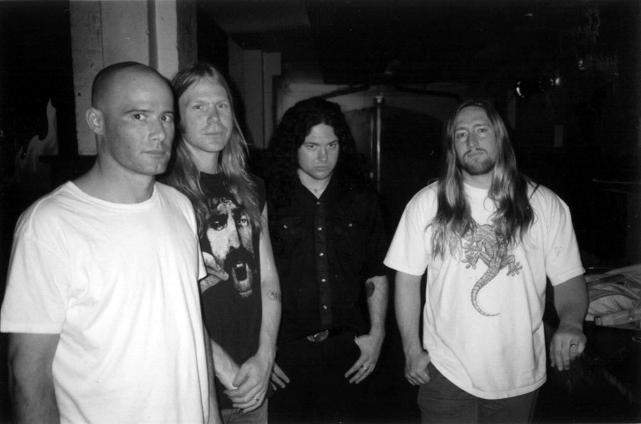
Check out Ben Richardson’s story on the Southern Lord Mini-Tour in this week’s Guardian. Here, he talks with Southern Lord founder and Goatsnake and SunnO))) guitarist Greg Anderson.
San Francisco Bay Guardian: So, first off, could you describe the planning of the Power of the Riff festival, and the Southern Lord Mini Tour that’s sort of spun off of that?
Greg Anderson: Well, last summer we did a Southern Lord event in Seattle with SunnO))), the other group that I play in. Basically it was two nights up there at this venue Neumo’s, and SunnO))) headlined each night, playing different sets each night. The support for both shows was Lord bands: we had Black Breath, Accused, Pelican, Earth, Trap Them. It was great! So the promoter of that venue – who put that on for us last year – called and asked if we wanted to do something similar this year – another Southern Lord event. So we were trying to put something together for that, and right around the same time, another good friend of mine told me that he’d been asked to put together something down here in Los Angeles, at the Echo and the Echoplex, and was I interested in getting involved in that. So with these things impending on the horizon, I thought I’d put together a decent line-up of Lord bands and make it happen.
Also, at the same time, I’d been talking with Mike Dean from C.O.C., who told me that they wanted to get out and play some shows with the three-piece line-up, the 80s Animosity line-up, and asked me if I was interested in working with them on that. So I thought I’d base it around them being the headliner and some of our bands on the bill as well. So that’s how it came together, and over the last couple months, I’ve been slowly putting together the pieces, getting other bands on board.
San Francisco just seemed like a natural choice, also, to do a show. San Francisco’s always been very supportive of Southern Lord and heavy music in general, so I thought “we’ve gotta do a show in San Francisco with this package – it’s gotta happen!”
SFBG: How long have you known Mike?
GA: He stayed at my house in 1986, when C.O.C. played in Seattle, actually, on the Animosity tour. It was an amazing show, and back then there were a lot of bands crashing on people’s floors. They still do, of course. I had a lot of bands stay at my house, and they were one of them. I met him then, but I didn’t reconnect with him as far as a working relationship goes until about 2003 – he was on the Probot record, as one of the vocalists on that, and I reconnected with him that way. A couple years later, he produced and recorded a record by this band on Southern Lord called Earthride.
It was kind of off and on. C.O.C.’s come to town, and I’ve talked to him and what-not. I have a lot of respect for his playing, over the years.
SFBG: Did the idea of playing the shows this summer precede the idea of releasing the seven-inch you guys are putting out, with the new track by that Animosity trio line-up?
GA: No, it all kinda came at the same time. I suggested it might be cool to have some new material, and he was really gung ho for doing that too, so we’re putting it together really for the shows that they’re playing – in time for the shows.
We thought it’d be cool. There are a lot of bands getting back together these days that rarely if ever have any new material, or really anything new. We had talked about that, and told me “hey, we’re actually playing a handful of new songs at these shows, so we’re really into writing new material.” So I said, “well, lets try to get something out there,” and that’s how the seven-inch happened.
SFBG: What’s your feeling on older, defunct, previously broken-up bands coming out of the woodwork? I saw an interesting comment of yours in another interview about the “Kyuss Syndrome,” in which a band isn’t a draw while they’re together, but if you give them some time, they build up this huge fanbase, whether or not they’re actually active and playing shows. What kind of ramifications do you see this trend having?
GA: First of all, I think it’s really great, actually. Some people kind of have a bitter attitude about it. They say “where were these people back in the day!” But the truth of the matter is that its really based around the internet, and the fact that information is so easily available, and cataloged and documented meticulously on the internet. You can find out a lot of stuff!
The other thing about the internet is that it’s like a trail, a path you can get on, on which you find one thing, and it leads to another thing, and it’s just a snowball effect. I think it’s just an amazing tool for discovery. It’s great, because there’s important music that’s been made, that before the internet, or without the internet, would have been much more difficult to learn about. Now, it’s easy, and I think people are getting turned on to all this stuff. The interest grows, and it makes it possible for these bands to come out and play to three to four times as many people as they did in their heyday.
It’s amazing! I’ve seen it in different genres. I saw At the Gates play in Los Angeles, and they sold out this huge place. I saw them in their first tour in the U.S., in the mid-nineties, and there were 50 people. It was the same thing with Saint Vitus. I saw them in the 80’s and it was a very select audience; very few people were there. Then, they come back, and they’re playing for three or four hundred people. I think it’s cool, I think it’s a real testament to the fact that this music is valid and incredible. It needs to be heard, and it needs to be given the respect that it’s due.
SFBG: Particularly in the case of At The Gates, there’s almost a sense of justice, in that a lot of people made a lot of money aping ATG when they weren’t around. Now they’re able to take advantage of a bunch of people who were introduced to the music through other bands that were playing an At the Gates style.
Do you think the proliferation of big summer metal festivals has had an effect on bands reforming? From what I can glean, that seemed to be an influence on Goatsnake getting back together, having this opportunity to play Roadburn, and you guys thinking “hey, why not?”
GA: I think there are two big factors: one – I won’t lie – the money is really attractive, especially when you get older, and you’ve got families, mortgages, etc. You can’t just crash on people’s couches – you’ve got responsibilities. When these festivals come along, or sponsorship from Scion or Converse comes along, it makes it so it can actually happen – the resources are there. And that’s something that wasn’t available – to my knowledge – in the 80s. These opportunities involving people with deep pockets who are willing to put it into underground music. It just didn’t exist. It definitely didn’t exist in the 80s and in the 90s, with the alternative music boom, stuff was available, but for underground metal and hardcore it wasn’t available.
Now, you’ve got these corporate sponsors who are putting together these insane events, and a lot of times – they’re free! Like the Power of the Riff fest that we’re putting on. We were able to get the funding to make it a free event. And at the request of the sponsor – they demanded that it be a free event – and we were like, “Wow! This is cool!” I think it’s an interesting time right now. There’s nothing like it. That wasn’t possible before. Like you’re saying with your question, it makes it so that these bands can get out there and do stuff. They have the resources to do that.
A lot of the bands I’ve seen are really kicking ass! I saw Saint Vitus a couple weeks ago, and it was mind-blowing – it was absolutely mind-blowing. They had it, man, they were killing. Eyehategod, same thing! These bands are charged! I saw Death Row play, which is like the original Pentagram – they were killer. It’s an interesting and cool time in music right now.
SFBG: Your bringing up Eyehategod and Death Row provides a good segue to my next question: does the doom metal genre have a particular affinity for a lot of interpollination between bands and musicians? For this kind of freewheeling collaboration, in which Goatsnake is tied into the Obsessed, and tied into SunnO))). I think of Eyehategod in the same way, with their connections to Down, and therefore C.O.C., and so forth. Do you think there’s something particular about doom-stoner metal that enables or inspires this kind of collaboration?
GA: I’ve never really thought about it before, to be honest with you. It’s just kind of a friendship or a brotherhood between the musicians, and kind of a desire to take things in different directions and do different things with it. You mentioned the Eyehategod thing, and that whole New Orleans scene is super, super-intertwined. Outlaw Order, Crowbar, Arson Anthem, and all these other bands that all share members. I think it’s really cool. Soilent Green. There’s tons of those bands, and I think it’s cool when bands can branch and do different side-projects. For me, as a fan, it’s interesting, and if you’re into the player or the players, and what they’re doing, it’s a real treat to have all these different outlets, rather than just doing one band, and one album a year.
I think it has to do with the punk rock roots that these people have and come from, and the DIY aesthetic of doing things on your own, and not really having to answer to a major label or someone telling you, “Well, you can’t do that, and you can only focus on this one band.” It’s kind of a shame, when you think about it. What if that spirit, and that mentality was happening with bands like Led Zeppelin and Sabbath? We’d have all these spin-offs and different projects that they were involved in, that were kind of pushing boundaries and doing different things. I think these [younger] people do what the hell they wanna do.
SFBG: Well you’re making my job easy, mentioning the punk rock ethos and the DIY ethos of these musicians, because my next question was about all the connections that exist between the 80s hardcore scene and the doom metal bands, and the doom bands that grow out of that scene and the musicians that play in hardcore bands and then do metal bands. I think I remember reading that you were a hardcore fan in your youth, and played in a more hardcore-oriented band. Do you have any insight into how those connections came to be? Stylistically, the types of music have some serious differences, and I know that at particular points in history, there was a lot of animosity between people who like their music fast and those who like it super-slow. Is there anything you can point to that speaks to the connection between those two worlds?
GA: I’m not sure I can explain or pinpoint why that’s a phenomenon, but you’re definitely right. What I was thinking when you were asking the question – I was thinking about Black Sabbath, because I think they’re one of those bands that everyone likes, and there are a couple hardcore bands like that too, like the Cro-Mags, and Bad Brains. Everyone can agree on those bands – at least a lot of people can.
I grew up in Seattle, and we didn’t get a chance to see a lot of outside, touring bands, because we were way up in the corner – we were sort of geographically isolated. There’s a lot of stuff that can happen because of that, and one result was the grunge explosion, where a strong local scene grew and was cultivated because there wasn’t a lot of outside influence. That also adds to how people got some of their open-mindedness. Grunge is a fusion of a bunch of different musical styles – punk included, metal included. What I thought was cool about Soundgarden, from the beginning, was that they sounded like a fusion of Zeppelin, Sabbath, and [Black] Flag. And the most important band in that scene growing up, at least for me, was the Melvins, who were the perfect combination of Black Sabbath and Black Flag. To have these prejudices against certain styles of music didn’t seem right to me, because there were all kinds of cool music happening around me. I know what you’re talking about – some of the punk rock attitude, and some of the metal attitude can be pretty narrow-minded at times. But at the time that I grew up in, the bands that I was heavily influenced by were available for me to see on a regular basis. That wasn’t the attitude, and it was obvious why it wasn’t the attitude.
I was turned onto metal first – Metallica, Motorhead, Raven, Slayer, Venom. Through those bands, and their attitude, and who they thanked on their records, and which T-shirts they wore, I got turned onto punk rock. And hardcore was a revelation because metal was played so fast and heavy, but then there were these hardcore bands that were playing even faster, like C.O.C. or D.R.I. The excitement involved in discovering new music has carried on throughout my entire life. And that was the start of it: being into metal, and then getting into hardcore.
SFBG: So the liner notes and sweaty T-shirts were like the internet of the 80s? Sticking with that theme of Seattle, and hardcore, and being psyched about discovering new music, can you talk to me about how you first came in contact with Black Breath, and the process of getting them on Southern Lord, and getting them on the tour this summer?
GA: It’s actually an interesting story! Over the last couple of years, especially playing with SunnO))), and working on this last record we were working on, I really turned away from, or wasn’t listening to much aggressive music. It was either experimental, or I was actually really into jazz music. It’s not like I was turning my back on heavy music, but my taste had just drifted a bit.
And then something snapped. I started listening to old hardcore records, like Jerry’s Kids, and Crucifix, which was sort of a reaction to where my mind was with the SunnO))) stuff. I wanted something that was the complete opposite of it. And so I was rediscovering stuff that I was listening to when I was younger, and I really got heavily into that. And I started searching about bands now that were happening, and I got turned onto His Hero is Gone, and a band called Cursed, and I was like “gosh, there’s actually some great music happening in the hardcore scene that I didn’t have any clue about!”
I got more into checking out the hardcore stuff that was happening over the last couple of years, and I got a record in the mail – a 12-inch, in the mail – by Black Breath. The font of their band logo was stolen from Celtic Frost, and they listed Poison Idea and Dismember as influences, and they were from Seattle, and I was like “Wow!” Because I actually get a lot of demo submissions, and most of it’s just CD-Rs, and honestly I just don’t have time to listen to ’em, but when we get a 12-inch we stop and think “that’s cool!”
SFBG: If I publish that information, you’re gonna get a lot more twelve-inches…
GA: [Laughs] If people are going to take the time to do that, it almost warrants me taking the time to listen to it. I think it’s a cool thing.
So I threw this record on, and I was totally blown away by the energy and intensity of it, and it so happened that this was close to a time that I was going back up to Seattle for Christmas. I ended up looking at the local paper to see what was going on around town, and they were playing one of the venues in Seattle. I went down to check it out, and their live show totally, totally blew me away. I hit ’em up after the show to see if they wanted to get a drink and talk about stuff, and it just kinda went from there.
SFBG: What was their reaction to that? It sounds sort of like the Miracle on 34th St. of metal…
GA: The funny thing is – and one of the things that really sold me on these guys – was that they were more impressed by the old hardcore band that I was in in Seattle – this band called Brotherhood, a hardcore band in the late 80’s. Being able to talk about that sold them on me. We bonded on a lot of different music. They’re really into the Swedish death metal of the 90s, which I’m really obsessed with as well.
Those guys actually turned me onto to a lot of other music as well. There’s this band that we just signed called Nails – they played a couple shows with Black Breath and I thought, “God, that’s great!”
SFBG: One last band-signing question. I noticed in another interview you did, you used a phrase “vigilantly heavy” to describe bands that you you appreciate. I can sort of figure out from context what you mean, but you applied it to Black Breath and I was hoping to get a more detailed description of how you’re using the word “vigilantly” in that way.
GA: I think it’s about being focused on what you’re doing. I notice a lot of intense focus from those guys on creating really amazing songs and riffs, especially. I’ve talked to them, and had in-depth conversations about that, and about how they write songs, and what they want. And they’re not just throwing the stuff together, and that’s pretty obvious. That’s one thing I’ve seen, with a lot of music these days. I won’t name any names, but there are more bands than ever, and more labels than ever – that’s kind of the curse of the internet, that there’s just too much music, too much information! It makes it more difficult to really find the good stuff. But I’m a seeker, man, and I enjoy that part of it, whether that’s going to a used record store and spending two hours flipping through all the used records, or really searching out music. When I find out about a band, I want to know everything about them – what other bands the members have been in, who’s influenced by them, who their influences were. That’s the same type of thing with Black Breath. They’re not just blowing stuff out there, and they’re really careful about what they do.
http://www.youtube.com/watch?v=HpOqsSV_S7c&feature=related
SFBG: To switch gears to a couple of Goatsnake questions to wrap up: do you remember the moment you first heard a Sunn amplifier?
GA: I do. I have two different recollections. One is Buzz Osbourne [of the Melvins], using the solid-state versions of the Sunn amps. I actually had no idea that Sunn had made a tube amp. I thought they were all about solid-state. In a lot of ways, to use a geek analogy, they were kind of the Peavey of the Northwest. They were based in central Oregon, in a town called Tualatin, and their whole thing, at least how I saw it, was that they were creating solid state amps and putting them out there at a reasonable price, for people who were getting into music. It was a good and cost-effective alternative to a Marshall, like a high-end model. Peavey was the same way – an inexpensive amplifier, usually solid-state, for people who were just learning to play guitar. Now, playing guitar is just so accepted and so huge that every company has a line of amps now that is targeted to this audience.
So this to me was what Sunn was about, and back in those days, you could go to any fucking pawn shop or any used store and get a Sunn head for really cheap! Especially pawn shops. That’s why bands like the Melvins picked up on them – because they were readily available.
The first time I heard the Model T, which is the amp I use in SunnO))), was actually in the mid-90’s. I was seeing this band in Olympia called Life, and the guitar player was this dude – actually a San Francisco dude, now – Tim Green, who went on to be in the [Fucking] Champs, and records bands now in San Francisco. And he played in this band that was amazing. Pretty Eyehategod-influenced. I went and saw him play in this basement, and he had this Sunn head, a tube amp, and I was like “what the hell is that!” It was super-loud, ripping, super-heavy, and immediately after I saw that, I searched one out – I had to have that amp. That was the beginning. I had never seen anyone play Sunn tube heads. I didn’t know they existed! And of course, after my search, I realized that they made a lot of them. But they stopped making them around the mid-70s, and that’s when they started making the solid-states, as a more reasonably-priced option.
SFBG: Do you remember the specific influences that were working on you around the time that Goatsnake was created?
GA: I moved to Los Angeles from Seattle in the mid-90s, and I had played in this band in Seattle called Engine Kid that was more – it was more about melody and dynamics, and we were really influenced by a lot of the stuff that was happening in Chicago, the Touch and Go style of bands like Shellac and Slint and Bastro and those kinda bands. But we were always into the heavy stuff too, and the Melvins, so there was that kinda influence.
When I moved to L.A., I had a chance to jam with the rhythm section from the Obsessed, because [Scott] Wino [Weinrich, singer-guitarist in the Obsessed] had just basically left town, and he was the leader of the band, and the band ended. They were just looking to do something new, and a friend of mine knew them and knew that I was looking to do something new too, so we put it together, under the guise of creating a heavy band, but with no guidelines.
At that point, I was listening to a ton of Eyehategod and a lot of Kyuss, and Slayer. Our common interests in that band – the bass player, drummer and I – were Pentagram, St. Vitus, and Trouble. That type of stuff. Basically, I started bringing them some music that I had written, and it was really heavy.
But we didn’t have a vocalist. And we thought, “how are we gonna do this?” We thought it would be too obvious to get a screamer, in the Eyehategod style. I really like that kind of music, but we wanted to go somewhere different, and to have some bit of melody in there. Pete Stahl was an old friend of all of ours, and we played him some of the demos, and he said “this is great, I think I could really do something with this.” It was a perfect combination, because the music’s really heavy, and I think you really expect someone to come screaming over it, but the vocals are really soulful, and really melodic. It was a really interesting contrast, and it set it apart from a lot of the other stuff coming out at that time.
SFBG: Was the harmonica Pete’s idea? That’s one of the things that put the music’s uniqueness over the top for me, is that it has this element that no other band takes advantage of.
GA: He’s a great harp player, too! When he first started doing it, I thought, “this reminds me of the first Sabbath record,” of “Wizard.” One thing I didn’t mention when you asked about the influences – at that point, I was overly super-obsessed with Sabbath. They’re my favorite band of all time, but at that time especially, I wanted to tap into something that had that sort of vibe. A lot of the music that was written for Goatsnake — all the time, but especially back then – was just sort of re-working Sabbath riffs. Turning them around, and playing them with much more distortion and tuned down a little bit more. Sabbath has always been, and always will be the most important inspiration for me. Also Sabbath, in my eyes, were basically just a heavy blues band. People ask me “Is Goatsnake stoner rock?” and I say, “No, it’s blues played slower, down-tuned and played a little heavier than you might have been used to hearing.”
SFBG: Can Goatsnake fans expect sort of a retrospective set? Is it gonna match up pretty closely with what you guys played at Roadburn?
GA: Yeah, it’s pretty much the same material that we’ve been working on. The big difference is that on Roadburn, we were playing with the original bass player for Goatsnake, Guy [Pinhas], who was in The Obsessed, and Acid King after that. But he lives in Europe, and he’s not able to come out for these other shows, so we’re going to be playing with Scott Reeder, who was in Kyuss, and who was actually in the Obsessed also – Guy took Scott’s place in the Obsessed. It’s amazing, because he’s actually played with Goatsnake before. He played on the last EP that we released, as well.
His playing is very different than Guy’s, and we’re going to attempt one song off the EP that we did with Scott. So we’re working on that, and he’s fitting in well with the other material. Actually, the last time Goatsnake played San Francisco was with Scott, in 2004. We played another Southern Lord showcase [at the Elbo Room].
SFBG: Is there a future plan for other Goatsnake shows down the road? I know you’re super-busy with your other band and, of course, your label, but I’m assuming that the people who read this interview will be dying to hear whether there’s a chance of a more extensive tour, or some new recordings.
GA: There definitely won’t be any extensive touring. Given all of our schedules, that’s just not possible. To be honest with you, I don’t think it’s an appropriate thing for this band to do. We’ve sort of made the decision, “We’re all having a good time, but let’s keep this special. Let’s do special events, and not beat it into the ground.” I think it’ll be every once in a while. We have actually already committed to doing one other show at the end of October, here in Los Angeles. Friends of ours and labelmates Pelican are doing their tenth anniversary show, and they asked us to play that show with them. That band Nails that I mentioned are going to open.
Other than that, we’ve gotten a lot of offers, and a lot of interesting ones, which have been really flattering. But we’re taking the mellow approach to it. Definitely not a “get in the van” kind of approach.
But I would love to make some more music with these guys. It’s just a matter of scheduling, and seeing what that’s about. That’s definitely something that I’m hoping for, but we’ll see. I don’t want to push anything. If it happens, it happens, and I’ll be stoked, but if it doesn’t, so be it.
THE SOUTHERN LORD WEST COAST MINI TOUR
Corrosion of Conformity, Goatsnake, Black Breath, Eagle Twin, Righteous Fool
7 p.m., $25
DNA Lounge
375 11th St., SF
SFBG What’s it’s like stepping in front of your camera?
Dean Dempsey I don’t have any strong feelings about it, perhaps because I know there is so much post-production involved. I certainly behave as though I am being watched, or surveyed. A bit like what John Berger said, “Women watch themselves being looked at,” and although I’m not a biological woman that rings true for me, and perhaps for many artists who turn the camera onto themselves.There is a spectacle element involved.
SFBG How about the process of being a different person or character or being? What does it feel like — is it experimental, psychological, revelatory, any or all of the above?
DD Sometimes I surprise myself in how unexperimental it feels. I’ve never really been a fan of experiment, perhaps because I feel that it suggests a sort of aimlessness. I do, however, feel it is playful, and there certainly is a revelatory aspect to it. Psychologically, I’m constantly having to imagine the presence of characters that aren’t in fact there — especially for the multiple self-composites. I have to imagine eye-contact, gestures, and conversation. In the process, it doesn’t make any sense. I just look a bit nutty as I pose in various positions to invent relationships with characters who are not immediately present. In this respect, there again is the resurfacing of “phantom.”
SFBG Has it taken you in directions or resulted in visions you didn’t anticipate? I ask this because your series’ seem to inform each other, and in a manner that doesn’t seem predictable, even if the realized images are obviously very carefully composed.
DD The playful,psychological or phantom? Or all three?
SFBG All three. Let’s be expansive, for now.
DD The series “You, Me and the Other” has really informed the bulk of these new series’, “Fragmentations” and “Artifice.” At first I was interested in a more literal interpretation of otherness and spectacle. I wanted, and continue to want, to explore notions of belonging while questioning the ways in which ideas of normality are constructed.
But as I continued with those images, which were about the multiple and theatrical side of my work, I began to explore a little deeper why I was doing them — why I was so invested in the gaze. I’m not at all interested in making “identity art,” but I can’t deny the pivotal ways childhood has informed my practice. So from having a whole lot of myself within a single frame, there has been a complete implosion in “Fragmentations.” That erasure takes place not just to anatomically dismember my characters, but to emphasise what is left over. There is a sort of implosion in “Artifice” as well, as the characters embody something more subhuman and alienated, making it more difficult to encapsulate into specific meanings, in a way.
SFBG What kinds of reactions have you encountered to “Artifice,” and in turn to “Fragmentations”? To me, these series’ manage to be interrelated, though in a surface sense “Artifice” is quite brash and overtly performative and imaginative, while ‘Fragmentations’ is more elliptical.
DD They are very much interrelated. I’ve been working on both series’ at the same time for quite some time now. There are images in each body of work that I haven’t shown anybody because there are other images that have to come first. But yes, on the surface, there is a difference. Conceptually, they are both informed by personal biographical history and each series investigates methods of spectacle and exclusion. Although with a difference in general aesthetic, each series is about the pieces that complete us; the pieces of our body, our process, our gender – pieces of social fabric.
SFBG Biographical history is present in your work in a variety of forms or absences. How has your family responded to your photography, and in what ways might you feel a familial influence in making an image or a series?
DD It’s funny, because the only familial influence with my work is more through a variety of absences — the absence of a father, the absence of a visible Mexican identity, the absence of siblings, and so on. I met my father in 2005, just a few months before I was about to move to San Francisco to attend college. And just two years after that he was hit by a Union Pacific train, losing two limbs. So again, there is a return of absence (this time anatomical) that emerges in my photoworks. He’s been very cooperative in letting me take portraits of him, even at the site of the accident. I even showed him my reenactments of him and he asked, “I don’t remember you taking those of me, when was that?” A lifetime of transiency and drug use hasn’t made him the sharpest of knives, but it certainly has made him an interesting subject.
It was only yesterday I told my mother about it. It took over 3 years for me to process and even begin to find the language to articulate how I felt. It wasn’t so much a secret, I just didn’t know how to say it. The details of his accident continue to reveal themselves in my work, even if they are depersonalized, so I knew it was something I couldn’t avoid much longer. She hasn’t seen him in 20 years. I recorded the conversation, maybe I’ll use it for This American Life. It really is a good story.
SFBG In a different sense, just as there is absence “present” in your photography, there’s also a multiplicity of self. Does that come naturally in relation to your personality? I don’t mean this in an MPD sense, but rather do you feel a creative urge to perform and discover things through performance?
DD It must come naturally because that is in some ways a more difficult part of my process to locate. I have an idea and I know what I need, or don’t need, to materialize it. But as my various bodies of work develop and expand, I’ve become more aware of their shared concept as well as what sets them apart. It is a constant discovery. Performance is fundamental in my work, whether in the act or in the idea behind the image. My content addresses performance in relationship to the constructs of gender and race, and notions of (dis)belonging. Everybody is always performing, even when there isn’t an audience to see it. So in this way, the performer becomes its spectator. By digitally inserting myself multiple times, or even by dismembering the figures I emobody, I’m envisioning a completed project. I’m thinking of how I will see myself, or the people I perform. Not to reference Berger again, but I’m watching myself being looked at.
SFBG What drew you to photography, and what photographic works have had the strongest impact on you in life?
DD I think I was, at first, most allured by the deceptive nature of photography. The medium is often falsely attributed as being very honest and undiscerning, yet a photo (and the photographer) always omits something from the frame. They deem what is worthy enough to be documented, and they choose what is seen. And I won’t begin to mention how Photoshop and image editing software furthers this point.
A good image, or least one I personally find most engaging, is one that suggests a larger narrative but refuses to explain itself. I call them little “cinematic babies,” because these sorts of pictures act as a still, forcing us to image what is happening before and after that with which we can see. What good is a piece of art, or anything, without the implication of its audience? Without outside interest it folds. But these are all my personal opinions, I could care less about constituting what is universally “good,” I’ll leave that to the bigger-headed.
Regarding influences, it’s always a tough question for me. I tend to jump around a lot, but I’ve always enjoyed folks like Carrie Mae Weems, Andreas Gursky, and even sculptural and installation artists like Santiago Serra and Sarah Lucas.
SFBG Ah, and now we segue to the inevitable question — do you have any interest in making films?
DD Yes! It’s funny because I feel sometime these photoworks began as studies for films. Beyond the technical aspect of putting a film or video together, there is still a conceptual formula of sorts that is in the works. But working more with the moving image is definitely in my horizon, I’d say before the end of this year.

The hot wonder behind the sound of Alexis’s “Lonely Sea” and “Like the Devil” and the “gayest music ever” made by H.U.N.X. is Nick Weiss. Weiss is also (along with Logan Takahashi) one half of Teengirl Fantasy, who have revived the spark of AngelFire while transforming old soul laments like Rose Royce’s “Love Don’t Live Here Anymore” into dance floor hallucinations for tonight. (Teengirl Fantasy has the Pitchfork “Rising” seal of approval, even if the site doesn’t seem aware of Alexis like Fader or responsive to H.U.N.X. like Vice.) In conjunction with a recent story about Alexis Penney and Myes Cooper, I asked Weiss some questions about music and men and here’s what he had to say.
SFBG Do you remember when you first met Alexis [Penney]?
Nick Weiss I met Alexis a year ago when Teengirl Fantasy threw a rave with Party Effects at the LiPo Lounge. Alexis was their “untrained female vocalist’”doing live PA. She mostly ended up talking about why she had a really hard day over Party Effects’ live technobass. It was amazing.
At the time Alexis and Seth [Bogart] were dating. The details of the night get fuzzy but we all ended up watching Michael Jackson’s memorial on TV the next morning. I instantly felt a musical connection with Alexis, and the shine of her confident aura. It was clear that we would meet again.
SFBG What’s it like working with Alexis? Can you tell me a bit about the writing and recording of “Lonely Sea”?
NW I came up to the Bay from LA to work with Alexis really soon after a breakup that had been particularly devastating for him. I had a general skeleton for “Lonely Sea” and Alexis had lyrics already written about pain and loss. My celebratory, buoyant house beat mixed with Alexis’ love-lost lyrics so instantly I knew we had a hit.
SFBG One touch that makes the song special is the horn harmony near the end.
NW I’m really proud of that MIDI saxophone solo. The club mix of “Lonely Sea” will include a very special extended sax solo.
SFBG What was your first memorable music experience? First memorable gay music experience?
NW The first album I can remember listening to and really loving was Annie Lennox’s Diva. My mom played it for me once in the car and I was hooked. I remember having some sense of the reasons I loved the production on that album, even though I was so young (I couldn’t have been older than 5 or 6). I would ask myself how “Walking on Broken Glass” could possibly hold so many layers of Lennox’s voice. That was the first time I understood the concept of multi-tracked vocals. Clearly it was also super influential as an early gay music experience.
SFBG What does the Teengirl Fantasy album sound like? When is it coming out, and on what label?
NW 7AM is out at the end of the summer on True Panther Sounds in the US and Merok Records in the UK and Europe. It somewhat follows our live set: starts out slow and dubby and moves into some pretty heavily ecstatic club bangers and sunrise tracks.
There’s one single on it that is some straight up ethereal vocal house. We also have an R&B torch song we wrote with vocalist Shannon Funchess (of Light Asylum and !!!). The album has been finished for a while but still sounds fresh to me. It’s definitely a repeat listener. We’re super proud of it.
SFBG What do you like about Myles Cooper? Have you two had the opportunity to nerd out over music and songwriting?
NW Myles’ music is amazing in that he makes incredibly catchy pop out of really tiny sounds, like a little Casio tone or pitched-up slap bass. He’s totally a visionary. We nerd out over music and songwriting all
the time, usually over text message.
http://www.vimeo.com/8350807
SFBG How does recording with Seth compare to recording with Alexis, and how would you describe your (artistic, whatever) relationships with both?
NW Seth and Alexis both are really hyper-specific about what they’re going for. Seth likes to work really fast and doesn’t usually go over two takes on a song. Alexis likes to throw out tons of reference
points while we’re writing – “give me something a little more trip-hop-acid-tropical-wave-current please! And could you make it a little more World?” I love Seth and Alexis and it’s seriously a blast
to work with either of them.
SFBG You recorded the H.U.N.X. tracks in Guerneville. What was that like?
NW All the H.U.N.X. tracks were recorded in a beautiful cabin in Guerneville overlooking the forest. Every day Seth and I would get up, write a song, go in the jacuzzi, [get out and] track the vocals, go back in the jacuzzi, and then maybe hit the gay bar or pizza parlor. It was perfect and really influenced the music to be able to record in such a beautiful gay resort town. Hopefully the next H.U.N.X. sessions can be in Palm Springs or Ibiza.
SFBG How did you like DJing at High Fantasy? What do you think of Aunt Charlie’s and the club?
NW Aunt Charlie’s is my favorite place, period. It has such an amazing feel, so comfortable and fun. DJing at High Fantasy was nuts. I can’t wait until Teengirl Fantasy can play live at High Fantasy.
East Oakland: beautiful, isn’t it? Deep in the Flickrs of its residents, the truth is out. Streets plagued by media images of gang violence and poverty are fodder for shots of kid’s games and preternatural beauty — and artists out there that care enough to capture it. Rene Yung, an artist who is heading the Our Oakland project, took issue with the way the community was being portrayed on TV: all the stories she saw were either crime or “rise above” tales of success. “I think so much of people’s everyday lives deserve to be celebrated.” The website she created for Our Oakland, meant to be a pride pump for this much maligned area of the Bay, sponsored a photography contest to find the photos they knew were out there. They received 22 entries, but this has gotta be due to the vagaries of Internet awareness and less a reflection of the material they sought, cuz they came up with some real pretty pictures. Care for an intro to the civic aesthetes who took the prizes? Wish granted. Check out this week’s SFBG for more stellar shots by Bay shutterbugs.
Oacia Williams has lived in East Oakland off and on since 2002. But she hasn’t seen too many rainbows there — at least skyward. The diversity on her street is part of the reason why she loves where she lives. “All the different colors and nationalities, everyone coming together. It is gorgeous,” Williams told us during the round of phone interviews we conducted with the Our Oakland winners. She took People’s Choice photo “See!! There is a Pot of Gold” (the same shot we picked out as an early favorite in the contest — see, who says community media isn’t influential?) on a day at home playing with her and her boyfriend’s kids. “The kids were tripping off the rainbow – first it was one rainbow and then the double. We were able to see it real well, which I was surprised because it was so dark out,” Williams remembered. Out came her Samsung. “Im always snapping it because you never know what you can do with it or who needs it.” She found out that Our Oakland needed it. Done and done.

“Tug of War” by Pauline Russell-Silva
“It’s just an authentic picture – I didn’t plan it. It’s from the perspective I have as an elementary school teacher, and of the kids in the area where I work,” says Pauline Russell-Silva of her first place shot. Russell Silva, a K-5 teacher at Encompass Elementary, Russell-Silva works with children on their English language development and reading skills. Her dynamic shot was taken on field day at Encompass. “We believe in educating the whole child, developing healthy body, mind and spirit,” she says. The days outside always end in a tug of war match, and the teacher’s Nikon D40 captured the shifting demographics in the East Oakland community. Russell-Silva finds it an apt photo of her neighborhood. “Sometimes there’s conflict and strife, sometimes there’s people working together.” She heard of the contest through the public library adjoining her school.

“Fanea” by Fanea Easterling
“We were so pleased by range of ages of winners in the contest,” Yung says. Taking the organization’s second place prize (and a Ipod shuffle in the bargain) was young person Fanae Clark, a student at the East Oakland Boxing Association who snapped her winning photo when Our Oakland hosted a photography workshop at the athletic center where she spars. In her artist’s statement, she said of her shot. “I also think this image shows hard work, which can get you where you want to be in life.” Yung found her shot appealing for the distinct perspective it offers. “As a young person she was being thoughtful relating to her life.”
New information about the health care costs associated with a pension reform measure backed by Public Defender Jeff Adachi suggests that the highest cost burden would fall to parents at the lowest end of the pay scale.
An analysis of the Adachi measure estimates that city employees with two or more dependents could face monthly healthcare cost increases of $220 a month, which would bring their total monthly contributions to $448, $765, or $1,630, depending on the health care plan. Dental care would bring those costs up an additional $82 per month.
Rael & Letson, an actuary firm hired to calculate premium contributions, completed the analysis on behalf of the Public Employees Committee of the San Francisco Labor Council. The city has not done a formal analysis of employee contribution increases to date.
Rael & Letson’s report estimates that for employees with a single dependent, the monthly employee contribution would go up an additional $240 under Kaiser, $352 under Blue Shield, and $419 under the city plan — bringing the total monthly contributions to $249, $473, and $1,098, respectively. Dental benefits would bring each of those costs up another $50 per month. That’s compared with current contribution levels of $8.84, $120, and $679 for employees in that category.
The analysis found that if approved, the policy change would result in “a relatively modest monthly out-of-pocket increase for Kaiser participants without dependents, but a significant shift in … costs paid by employees enrolled in other plans … especially those with employee + 1 dependent coverage. These increases could make covering dependents unaffordable for lower income employees.”
According to StateHealthFacts.org, a website run by the Kaiser Family Foundation, the average employee contribution to a family health insurance premium in the state of California amounted to about $290 per month in 2009.
Whether or not these proposed increases are manageable depends of course on an employee’s salary, whether or not they have assistance from a spouse or family members, and other personal circumstances. In the case of a single mother with two or more children at the lower end of the pay scale, the spike in health care costs could force some very difficult choices.
Meanwhile, an analysis of the pension reform measure written by the director of San Francisco’s Health Service System (HSS) at the request of the city’s Department of Elections suggests that the measure could jeopardize an estimated $23 million in federal funding that is expected to be awarded annually for the next four years under the new federal healthcare reform bill. HSS administers healthcare benefits to city employees.
A new program created under federal healthcare reform — the Early Retiree Reinsurance Program (ERRP) — is designed to ease employers’ financial burden of healthcare costs for retirees not eligible for Medicare. ERRP funds can be used reimburse 80 percent of claims between $15,000 and $90,000 for each retiree over 55 who isn’t eligible for Medicare. In San Francisco, this new federal subsidy amounts to an estimated $23 million annually over the next four years, which would be deposited into the city’s HSS trust fund and used to lower premium requirements.
The HSS memo warns that since Adachi’s measure proposes increasing employee healthcare contributions, “This proposed Charter amendment will therefore eliminate this anticipated subsidy of premium contributions not only for the City and County but also for City College and the Unified School District who are also employers within the San Francisco Health Service System.”
The memo also points out that just $53 million out of the $83 million in savings that the Adachi measure is expected to generate will go into the city’s General Fund, because more than a third of employees work for non-General Fund supported departments.
“If this Charter amendment becomes law, the balance of the contributions required to fully fund the HSS benefits will ultimately have to shift to the employees,” according to the HSS memo. “This Charter amendment does not address the underlying factors that will continue to drive increases in the cost of providing healthcare benefits.”
The recession has brought a recent spate of finger pointing at public-sector workers, and some might consider sharp healthcare cost increases to be a worthwhile tradeoff when it comes to the anticipated savings. Yet the decision to take more money out of the pockets of working people comes with its own set of consequences, which might be felt most acutely at the individual level but will also have a ripple effect on a broader economic scale.
Gabriel Haaland, an organizer with SEIU Local 1021, told the Guardian he believes that Adachi’s measure has been misrepresented as a pension-reform measure and ought to be discussed in the context of health care. “It’s a wolf in sheep’s clothing,” he said. Haaland added that he thought the sharp contribution increases would lead to more people opting out of healthcare benefits altogether, which could in turn place more of a strain on the city’s public healthcare system.
We contacted Adachi for comments, and we’ll be sure to post his response if and when we receive it.

Judge Vaughn Walker’s ruling that California’s Prop. 8 is unconstitutional got Assemblymember Tom Ammiano, Mayor Gavin Newsom and City Attorney Dennis Herrera issuing praise-filled statements today. And Herrera’s statement included comments that reaffirmed the pivotal role that the City Attorney’s Office played in this landmark case.
“U.S. District Court Judge Vaughn Walker has issued a powerful, thoughtful, and well-reasoned decision,” Ammiano said. “In overturning Proposition 8, this court fulfilled its legacy as a champion for equality. The court recognized that it is unconstitutional to put a minority’s rights up for a popular vote. Today’s decision reaffirmed our U.S. Constitution’s promise of equality for all.”
Newsom, who stuck out his neck in 2004 when he decided to issue marriage licenses to same-sex couples, said Walker’s decision, “is a victory for the fundamental American idea enshrined in our Constitution that separate is not equal and that all people deserve equal rights and treatment under the law. It is a victory for the thousands of California couples, their families and friends whose lives and loving, committed relationships have once again been affirmed in the eyes of the law.
“As Judge Walker states in his ruling,” Newsom continued, “Proposition 8 fails to advance any rational basis in singling out gay men and lesbians for denial of a marriage license. Indeed, the evidence shows Proposition 8 does nothing more than enshrine in the California Constitution the notion that opposite-sex couples are superior to same-sex couples. Because California has no interest in discriminating against gay men and lesbians, and because Proposition 8 prevents California from fulfilling its constitutional obligation to provide marriages on an equal basis, the court concludes that Proposition 8 is unconstitutional.’
“In the words of Dr. King, ‘the arc of history is long, but it bends towards justice.’” Newsom commented. “Today in California, history took another great step for all Americans towards fully realizing the principals of equality and fairness on the long march to justice. I salute the team of Ted Olsen, David Boies and City Attorney Dennis Herrera for so clearly and eloquently presenting the case against Prop 8. We will look to their commitment and wisdom again as the fight for marriage equality moves through appeal and, one day, to the Supreme Court of the United States.”
Herrera, for his part, said the ruling, “strikes a resonant chord against discrimination that should not only withstand appeal, but change hearts and minds.”
“I’m extremely grateful to Judge Walker for a thorough and well reasoned decision that powerfully affirms the U.S. Constitution’s promise of equal protection,” Herrera said. He noted that today’s federal court decision relied on key arguments and evidence presented by his office about the adverse governmental consequences of Prop. 8, the 2008 ballot measure, which eliminated fundamental marriage rights for same-sex partners in California.
Nearly a year ago, Walker granted Herrera’s motion to intervene in the case, which the American Foundation for Equal Rights orginally filed on behalf of two California couples. Today, Herrera noted that San Francisco was the first government in U.S. history to sue to strike down marriage laws that discriminate against same-sex partners.
“And the San Francisco City Attorney’s Office is the only party to have played a role in virtually every iteration of the legal battle for marriage equality in California,” Herrera continued, noting that his office entered the fight for equal marriage rights in defense of Newsom’s decision to issue marriage licenses to same-sex couples in 2004.
“Later, the office sued to strike down the anti-same sex marriage exclusion in state courts, a legal endeavor that ultimately succeeded with the California Supreme Court’s landmark ruling in 2008,” Herrera continued. “Later that year, after California voters narrowly passed Proposition 8, the City was among the co-plaintiffs to challenge the amendment in the California Supreme Court; that effort was unsuccessful.”
But while today’s news is a hopeful sign, same-sex couples are urged not to rush to get a license from City Hall, at least not just yet: Shortly after issuing the ruling, Judge Walker issued a temporary stay, and an appeal is expected.
The ocean breezes toss your hair haphazardly, whipping it from side to side for that perfect Saturday morning tousled look. Man that wind – or is that actually from all the mid-air flogging? At thiis peer workshop, you better watch out for the safety of your earlobes. A feller named Jonathan Eros (who often goes by his Burning Man Ranger name of Grizzly) puts on public bimonthly get-togethers and sweet bear that he is he’ll have loaner whips on hand for newbies. Grizzly also publishes a list of appropriate and accessible flogging devices on his website – truth be told, he’s quite comprehensive. Check out his al fresco flaying if you’re interested in jumping into the whip scene, or even if you’ve got a special flick of the wrist you’d care to share with some new friends.
Ask the Doctor: Anal Sex
Should the thought of the city’s unofficial sexpert Carol Queen explaining the ins and outs of anal sex not be enough motivation for you to ease your way into this talk, heed this: they’re giving away tickets to the new Giovanni Rebisi flick about the adult Internet website business, Middle Men.
Wed/4 6:30-7:30 p.m., free
Good Vibrations
603 Valencia, SF
(415) 522-5460
Steamworks DJ Night
My god – did you know $5 gets you a month’s entry to the steamiest spot in the East Bay (where SF’s prude “no closed doors” rules don’t apply – be safe out there, folks!). Get your heart pumping tonight to DJ Tristan Jaxx’s sweaty beats.
Sat/7 11 p.m., $5
Steamworks
2107 Fourth St., Berk.
(510) 845-8992
Bullwhips by the Bay
Like I said – outdoor whippery in the park. Protective earwear recommended.
Sun/8 11:30 a.m.-1 p.m., free
Golden Gate Park, southeast of Polo Field (see website for exact location)
“The Real L” Word Viewing Party
Bartenders Amy and Donny serve up cheap beer and strong drinks at the dyke dive’s weekly party to watch Showtime’s series about the hijinx of a bunch of lovely ladies in La-La Land.
Sun/8 10 p.m.-11 p.m.
Lexington Club
3464 19th St., SF
(415) 863-2052
Erotic Needlepoint Workshop
Oh my! Drop (stich) into Amy Leonard’s class to make your sweetie the gosh darn most exciting dish towel they’ve ever laid eyes on. Perhaps you’ll embroider a scene from those hot thirty minutes in the Sur La Table elevator? Who can say: the choice is yours.
Sun/8 3 p.m., $10
Femina Potens
2199 Market, SF
(415) 864-1558
The Art of Feminine Dominance
Mistress Midori, who performs a mean Japanese bondage scene, elaborates on how to find your dom within – the science, politics, practices, and fashion of the game. Are you ready for the upper hand?
Tues/10 6-8 p.m., $25-30
Good Vibrations
1620 Polk, SF
(415) 345-0400

The folks behind San Francisco’s Cutting Ball Theater have a lot to celebrate after ten years, so they are. The tenth anniversary of the company recently voted Best Theater in SFBG’s Best of the Bay readers poll is being marked by a year’s worth of special programs, all culminating in a season-opening party they’re calling “10-10-10 Tempest!” on October 10. But first, this Sat/7, the theater founded by Rob Melrose and Paige Rogers continues to advance its experimental mission with a rare (and free!) program of staged excerpts from new work by Latino and Latina playwrights called “Vanguardia.”
This is the first time Cutting Ball has featured the work of living Latino playwrights (they promise it won’t be the last either) and the evening will feature some of the country’s most vital voices — meaning both alive and ass-kicking: Kristoffer Diaz (author of Pulitzer-finalist The Elaborate Entrance of Chad Deity), Marisela Treviño Orta, Octavio Solis, Caridad Svich, Enrique Urueta (of the recent Impact Theatre hit Learn to Be Latina), and Karen Zacarías.
Cutting Ball is matching the lineup with top-notch directing and acting talent too. Take, for example, fucking vigwan by Kristoffer Diaz, which will be helmed by Campo Santo cofounder Sean San José. The snarky warning on the company’s website only whets the appetite:
“There are a lot of horrible people in the world. fucking vigwan is a horrible play about some of those horrible people. Warning: play contains sex, drugs, police brutality, horrendously (and stupidly) foul language, necrophilia, neo-colonialism, and some approximation of true love. This play should probably not be seen by anyone.”
Capped by an after-party featuring a DJ and (por supuesto) tequila shots, Vanguardia promises to be a high-spirited celebration all around. You can read more about the lineup and other important details at http://cuttingball.com/10th-anniversary.
Sat/7, 8 p.m. (pre-show soiree at 6 p.m.), free (donations accepted)
Cutting Ball Theater
In residence at the Exit on Taylor, 277 Taylor, SF
Sure, sure — you love your Prius. Or your fixie-skateboard-rollerblades-scooter-Clipper pass. But there’s something awfully rock n’ roll about a muscle car, especially one that’s been lovingly restored to roarin’-around-town condition.
Sat/7, local auto fanatics Chiselers Car Club host their first annual Chiselers Car Club Blowout — “blowout” in this context referring to a raucous party, of course, not a tire gone haywire. Revelers are encouraged to “bring your pre ’75 pimped-ass ride” (bikes are also welcome); the carless can gawk all they want. Arrive during the daytime hours (starts at 4 p.m., free) to check out the cars, scarf some barbecue, and listen to classic tunes by the Ramshackle Romeos, a two-man group incorporating an array of strange instruments, including the ever-haunting musical saw.
http://www.youtube.com/watch?v=p8bDhRMHrC8&feature=player_embedded
Stick around for the night show (starts at 8 p.m., $10), featuring the pop-punk Clorox Girls (one of those all-dude bands with “Girls” in their name), punk-punk Complaints, and the sassy, garage-y Midnite Snaxxx, whose MySpace “sounds like” is “making out with a burrito.” What’s not to love?
Chiselers Car Show Blowout
Sat/7, 4 p.m., free-$10
Thee Parkside
1600 17th St, SF