The Oakland mayor’s race appears to be demonstrating the ability of political coalitions to use a ranked-choice voting strategy to topple an established frontrunner, overturning the conventional wisdom that the top finishers on election day will usually hold their leads through the tally of everyone else’s second and third place votes.
That anomaly is also on display in San Francisco, where it appears the top finishers in supervisorial districts 2 and 10 may lose to the second or even third-place finishers. A preliminary run of the ranked-choice voting (RCV, also known as instant-runoff voting) tally was run in SF on Friday, and elections officials will do another one this afternoon, although votes are still being tabulated and the final results won’t be known for several days.
“Ninety-five percent of the time, RCV doesn’t topple the top finisher,” political analyst Alex Clemens said at SPUR’s post-election wrap-up on Nov. 4, a point echoed by his co-presenter, political consultant David Latterman, based on their research of voting pattern in Australia and other countries that have used the system for some time.
They said the results only change when the candidates finish within a few percentage points of one another, as is the case in San Francisco. But in Oakland, mayoral candidate Don Perata finished almost 10 percent points in front of Jean Quan (34 percent to 24.6 percent), with Rebecca Kaplan close behind at 21.5 percent.
Yet Perata, a classic Democratic Party power broker who once served as president of the California Senate, is disliked and distrusted among the progressives and other grassroots voters who liked both Quan and Kaplan, who encouraged their supporters to rank the other candidate second. And that strategy appears to have paid off.
After 10 round of eliminating candidates and redistributing their votes – with Kaplan the last go, and her votes breaking 3-1 in Quan’s favor – the preliminary results show Quan winning with 51.1 percent of the vote to Perata’s 48.9 percent.
Wow, talk about the power of political coalition-building.
In today’s episode, we talk about how ugly the next two years are going to be — and why Obama absolutely, positively must let the Bust tax cuts for the rich expire. Listen after the jump.
I guess it’s time to move past the Bay Area party blowout that was last week and into, well hell, more parties – San Fran’s no one-binge pony, after all.
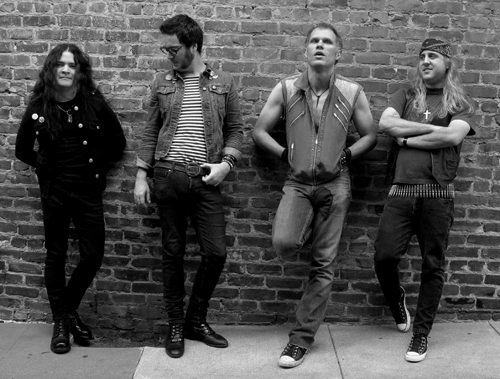
And holler, they’re bringing their newest handsintheairlikeyoudon’tcare banger with them, “Indian Summer.” We got the video (recorded last week using Red Bull and a dash-mounted flip camera somewhere in a desert that materialized between the group’s tour gigs) for your viewing pleasure. Sound quality is middling, but the sentiment we like.
Wallpaper’s “Indian Summer Desert Session”
The song is like, made for these November days of milk, honey, and short-wearing jags for the optimistic among us, right lead singer Eric Federic? “I was born and raised in the Bay Area. I have memories of being confused about why it was July and it was so cold — my birthday’s in July,” said Federic, an Oakland native, who took his eyes off the road between his shows in Boise and Seattle’s Showbox at the Market to talk to SFBG on the phone about that perma-fave topic of discussion among Bay Area-ites: meterological variances.
“I’d remember we’d be so hot and sweaty and restless, we’d all get Astro Pops or whatever. I have all these great memories of growing up in this Bay Area weather system – it being warm up until the wee hours of the morning,” Federic said.
Cause for celebration, or at least for another single. Wallpaper’s well-known for its ability to mock up hot videos in a timely manner, which may explain the group’s success over the last year or so. And regardless of the temperature outside, you can achieve maximum condensation levels at its live show. Jump around with Ricky Reed, Federic’s self-hyping flashbanger character of “I’ve Got Soul, I’m So Wasted” and feel good about heading into the championship rounds of holiday party season.
(For a review of Slough Feg’s latest, The Animal Spirits, go here. Read on for an interview with the band’s guitarist-singer, Mike Scalzi.)
San Francisco Bay Guardian: I noticed a clear theological theme running through the album. Was that – the Reformation – an area of historical interest to you? I’m interested in that choice, of a less exciting historical topic than maybe a more violent event…
Mike Scalzi: It’s not as metal, certainly. But in another way, Martin Luther was very metal, in that he was dedicated. Though he was Christian, in his dedication and his rebellion, he was metal. I was reading about all that stuff in an anthology of Western cultures. It was very general – I had to teach it. I’m a teacher. I started teaching Philosophy of Religion a year ago for the first time, and I’m not really that into teaching it, because its not my area of expertise, but I kinda had to.
[Writing music] helps me, actually. If I can write a song about it, it becomes more ingrained in my everyday thought. It becomes more second nature to say “oh, the 95 Theses!” It’s not just as a teaching aid, though. When it comes to Renaissance Christian theologians, he’s the most metal one. He’s out in the world. He’s out doing stuff, being a revolutionary. And a lot of his views are funny, a lot of the things he said were really funny and really extreme.
SFBG: Less metal for being ultimately successful, though. A lot of those so-called heretics were metal in the sense that they died for their principles, or were burnt at the stake or what have you.
MS: But he was the most badass one! Obviously, I don’t agree with him – he was a fundamentalist and all that, and he brought on fundamentalism in a way, I guess. But at least he said that trying to believe that the Bible is literal fact by reason alone is preposterous. That’s why he thought you had to exercise faith – because it’s preposterous. Everything in the Old Testament is preposterous, but you have to believe in it, purely to test your faith.
After seven records, you have to think of new things. I don’t want to repeat myself.
SFBG: What was the rubric for the lyrics that were included in the liner notes?
MS: Oh, those are the lyrics to “Trick the Vicar”
SFBG: Oh, so it’s just the one song?
MS: That was my decision. I’m sick of like…I’ve done that on every record and…
SFBG: People parse your lyrics?
MS: Oh, I don’t care about that. They come up with all sorts of weird interpretations, as if I really care that much. “Oh this means this and that means that. This is the deep meaning in this.” There’s no deep meaning in this shit! At least not that I know about! But at this point, trying to find things to say is a challenge.
With “Trick the Vicar,” I thought the lyrics to that would be important because it’s all one big pun. There’s obviously no deeper meaning, other than just being entertaining. It’s like something from a Benny Hill skit or something. So on the inside of the CD, I had all the puns – I came up with all those puns in the same month. They’re really silly, obviously.
SFBG: Well I did mean to confirm whether or not “boister” was a word.
MS: Good, good! No, its not. But when I say “There’s a boister that goes on in the cloister”…
SFBG: …from context it’s pretty clear.
MS: Yeah. It’s just a bunch of silliness, but it works for the song. I like silliness, and that’s one of the things that’s missing from a lot of metal: a good sense of humor. Metal used to have a sense of humor, in the 70s and 80s.
SFBG: That’s something that I was meaning to ask you about, if there’s a way to account for that sudden lack of humor. You have this form of music that has this potential to be taken seriously, but also the potential to be looked at with a sense of humor, or with an understanding of its many tongue-in-cheek aspects. It seems like a lot of its biggest fans, a lot of the people with the kind of familiarity with it that would enable them to see the humor, are the people least able to see it.
MS: Well, there are a lot of stupid people. You go to a metal show and you run into a lot of morons. Around here, you don’t have as many.
SFBG: I think it’s sort of like a dumbbell shaped-graph. On the one end, it attracts a lot of stupid people, but on the other end, it attracts a lot of people who are discerning and smart.
MS: I think, basically, they’re going to laugh at you one way or another. Being a metal guy, especially when you’re old, or older, or from the last generation of metal, they’re going to laugh at you. You make the choice of whether they’re going to laugh at you or with you. And I choose to laugh with them!
Also, metal, or indeed all rock and roll, is inherently funny. It is! People used to know that!
SFBG: Or inherently fun. That’s what a lot of people seem to lose sight of.
MS: Metal is inherently funny. No matter what! It’s funny. That’s one of the best things about it! It’s ridiculous, and it’s great because it’s ridiculous. People realized that way back. Black Sabbath, maybe not Led Zeppelin — they never had much of a sense of humor – Deep Purple, Judas Priest. The New Wave of British Heavy Metal. Early glam metal – Twisted Sister, Quiet Riot – they all had a sense of humor. Van Halen! Give me a break…that band was all humor until Sammy Hagar came, and it lost its sense of humor, and it started to suck.
The way that these things incorporated humor resembled vaudeville. That was David Lee Roth’s whole thing. Humor is part of entertainment. The most serious, heavy band, Black Sabbath, was also the most funny, because they realized – they were a British band with a British sense of humor.
SFBG: It’s interesting that you mention that. Do you think the trans-Atlantic shift had anything to do with that loss of humor?
MS: No, because Van Halen is the funniest. Maybe they’re not metal. Manowar! I don’t know if you want to open that can of worms. There’s a lot of evidence that they started out as a joke. They started out tongue-in-cheek and got serious as they went along. They know they’re funny; they may not want to acknowledge it, but they are.
SFBG: And the humor is bound up in the fact that everyone knows there is a joke, but no one will actually admit it. You can listen to it and pretend that you’re taking it seriously.
MS: It’s true of hardcore too. It used to be funny, now its all [imitates hardcore singing]. It’s lost its humor – some of it hasn’t, but most of it has. That’s one of my problems with a lot of the metal in this country, or in Germany too – people take it too seriously.
It’s the same thing with entertainment. I’m accused of being too traditionalist and narrow, but I’m bored by anything else. The way that entertainment used to be, in my opinion, was better. Period. It just used to be better. And now, it lacks.
I guess the question you’re asking is “why?” I don’t know why. I think it’s something about the world and the way people see entertainment. It has a much wider scope than it used to. People are much more involved in it as fans, and take it seriously as a statement, which is great, but maybe some of the actual enjoyment of it – from the performance standpoint and the artists’ standpoint – has been diminished by the fact that people hold it too close to their heart. The fragility of their egos and their identity are wrapped up in it in a way that causes problems.
SFBG: Like many discussions about the evolution and history of metal, I blame Nirvana. They taught people, or people took away from them this idea that if a band was trying to entertain you, that was somehow false.
MS: Well, that happened way before Nirvana, but that’s when it hit mainstream.
SFBG: There’s that line in Smells Like Teen Spirit: “Here we are now/Entertain us.”
MS: I don’t know if I have much to say about that. At the time, I didn’t like it. I heard their first album, before they were really popular, and I didn’t like it then. I was playing shows in San Francisco at the time, and I knew that I was not down with what was happening as a result of them. “Don’t try.” “Don’t give a shit.” “Nevermind.” “Be a loser.” I mean, sure, I thought that when I was a teenager. That’s the 14-year-old mentality: “everything sucks, so fuck it, man.” By the time you’re in your twenties you’ve grown out of that, you try to do something, unless you end up like Kurt Cobain, and you just fade off into negative, negative, everything sucks, and then die. [Sarcastically.] That’s great! That’s my hero! [Chuckles ruefully.] What the fuck is that?
SFBG: So, part and parcel of the conversation we’ve been having is the fact that you’re a very opinionated guy…
MS: So you’ve read my blog posts. There’s a new one today! I was just reading the comments.
SFBG: I did read them. I can only imagine what kind of comments you’re going to get on the most recent one. I was wondering if there’s something you can identify about metal that helps it attract opinionated people. Or, to reverse the chicken and the egg, if there’s something about being into metal that makes people opinionated?
MS: Well, I don’t think people get into metal for some other reason, and then get opinionated once they’re into metal. Unless you want to get into the fact that most metal is so bad now that you can get into it and say “oh god I’m so opinionated because there’s so much garbage out there. That’s true of a lot of kinds of music though.
It attracts opinionated people because it is extreme music. It attracts people who are into a certain kind of mentality. It happens from such an early age! I can’t analyze it. I got into metal, like a lot of people, when I was pretty young, and that was a long time ago! I don’t remember exactly. I don’t have immediate access to that feeling first being attracted to it. To me, its something that happened so far back that its like…
SFBG: …it’s like asking “why do you like mac ‘n’ cheese?”
MS: Exactly. And I have more access to what’s happened since then. But I don’t feel like I’m actively opinionated. People take things in, and they call them like they hear them. To me, things assault my sense, not the other way around. Nobody remembers being born into the world of music or food or anything and going “Hmm, I’m going to investigate this thing!” It’s more you hear something and you’re passed into this impression that you have. And some things, you get an impression and you go “Argh, that sucks! That really bothers me!” So my opinions, like those of most people who are opinionated, come from being stimulated by something in a positive or negative way. I would say I call it like I hear it.
I never thought of myself as opinionated until I moved here. People said that if I moved to San Francisco there would be all this great music. They said, “People out there are very enlightened.” And then I got here – 20 years ago – and I thought, “Everybody here’s not really that enlightened. There’s a lot of stupid bullshit going on out here.”
SFBG: Switching tacks completely, I’m curious about your master’s degree in philosophy. I read a little bit in another interview about what you teach, but I’m curious about what you focused on in your studies.
MS: I ended up studying Descartes for my thesis. I was interested in Descartes as a graduate student because his method was very simple and intuitive, and the whole point of it was a do-it-yourself type thing, rather than getting involved in this long academic tradition. Obviously, like anyone else, he comes from an academic tradition, but his point in Meditations [on First Philosophy] was to say “let’s erase everything that happened beforehand in philosophy and science and start on your own, with what you can know by yourself.”
I just found Descartes pretty easy to understand. I was able to maneuver in that ontology. I started taking seminars on Descartes, and I subsequently got interested in German idealism, like Kant and Schopenhauer, and like every metalhead, I was interested in Nietzsche.
In a master’s degree, you end up focusing on major guys because they have these comprehensive exams that test your knowledge of Plato, Descartes, Hume, etc. I stuck to a lot of that, because I knew I would have to take an exam on it.
SFBG: That Kantian or Cartesian originalist thinking – wiping the slate clean, starting with the Categorical Imperative, or something like that…
MS: …well, Kant is much more in the tradition, he’s not trying to wipe the slate clean. He’s just trying to be revolutionary.
SFBG: I’ll admit I’m only tenuously familiar with Kant, but I remember his ethics being founded on a sort “first principle” that ignores cultural baggage and so forth.
MS: Well, that’s what people say, but his point is to come up with something that is not dependent on circumstance in any way at all. Something that’s not empirical, that’s totally dependent on reason. Just like Descartes’ “I think, therefore I am,” in a way.
It’s something that you try to universalize by saying “what if everybody did this?” [Motions toward cookie on the table.] What if I were to steal this cookie? What if everybody did that? If it produces a contradiction – if its unreasonable for everybody to do something – you have to decide if it would be possible. Not if it would be right or wrong.
In order to establish a standard of right and wrong, you have to decide if it’s reasonable – could everyone do it. Suppose I don’t keep a promise – I say I’m going to show up here at 11, and I don’t. If I don’t do that, and I don’t keep my promise, what happens? It undermines the principle of the promise in the first place. If I don’t keep a promise, whatever, no big deal. What if nobody keeps promises. Could everybody do what I did? If no one keeps promises, there wouldn’t be promises in the first place.
SFBG: There’d be no point.
MS: You couldn’t make promises, because there’d be no such thing.
SFBG: Like if everyone stole, there would be no point in having property.
MS: If there were no property, you couldn’t steal. If there were no taking anybody’s word for anything, you couldn’t make a promise. It undermines its own possibility. It’s a contradiction that makes the act itself impossible. If its irrational to that extent, to the point where it makes the act itself a contradiction, then, according to Kant, its not morally permissible. That’s a little bit of a long answer.
SFBG: I’m going to attempt a sort of interviewer Triple Lutz here. Is Descartes’ idea of discarding what has come before, or Kant’s idea of ignoring circumstance to come up with principle…
MS: …Rational principle…
SFBG: …purely rational principle. Can that be applied to your creative process? In the sense that…
MS: No. [Laughs.] I wish I could say that it could. That’d be a brilliant piece of journalism. But as much as I’d love to be able to say that there’s some heavy metal calculus that I use in order to write by sheer principles of reason…no. At least, not for me. It’d be cool if there was some guy, some alchemist songwriter guy who was trying to find the principle of guitar or whatever.
SFBG: You could sort of take a stab at the categorical imperative of metal though, being like Maiden, Priest, and Sabbath, and not being affected by sort of the whims of circumstance.
MS: That’s the problem I’m encountering though. I don’t want to say that everything’s all based on the past. I don’t want to be a heavy metal anachronism. That’s what I’m getting in a lot of these responses to my Invisible Oranges articles. Again, to be philosophical about it, I get this confusion of cause and consequence. A lot of people say to me: “you don’t like death metal because you haven’t explored it.”
I try to keep the analysis somewhat objective, about why I don’t like the cookie monster vocals, the guitar sounds that are very brittle, and the drums that are triggered – clickety, clackety, clickety doesn’t sound “brutal.” It sounds like some bullshit to me.
People say, “You haven’t explored it enough. You haven’t heard the good stuff. You haven’t gone to the lengths that it takes to appreciate it.”
SFBG: If it’s good, it shouldn’t take any “lengths.”
MS: It’s confusing the cause with the consequence. It’s not that I don’t like extreme metal because I haven’t listened to enough of it. I haven’t listened to enough of it because I don’t like it. People think that I’ve come up with some sort of rigid heavy metal calculus and say “I like Priest, I like Maiden, I like Sabbath, Saint Vitus, whatever, some underground stuff too. These are the criteria of what I will listen to.”
It’s not like that! I grew up with the evolution of the whole thing, listening to it happen, and I heard things, and I said “I don’t like that! That’s crap! That sounds like someone who doesn’t care about what they’re doing.” It just sounds like shit to me, for whatever reason. And I heard more and more of it, and I chose not to investigate it.
SFBG: Getting back to philosophy just briefly, I saw in another interview that you described your music as having a Machiavellian aspect. I understand a Nietzschian aspect, but how does Machiavelli come into it?
MS: I was probably joking! I’m not sure. I was just being macho, talking about taking over the world. It’s a very vague characterization of Machiavelli, who I don’t really know shit about anyway.
SFBG: I was struck by the William Blake references in one of your old songs, “Tiger! Tiger!” Blake has always struck me as very metal.
MS: The reason that I put that stuff in there is not because of William Blake. It’s because of Alfred Bester, who quoted him.
SFBG: I noticed that you mentioned that author a lot in other interviews.
MS: A lot of sci-fi fans haven’t read him! This is insane to me. When people read The Stars My Destination – the original title of which was Tiger! Tiger! – they say “that’s the greatest fiction book I’ve ever read.” I was not a sci-fi or fantasy reader until I was 26, and someone got me that book. It was completely a fluke. I got it and I was like, “Ehh, I don’t really like science fiction books,” and then I finished it and said, “This is the best book I’ve ever read in my life.” Only on the basis of that did I get into science fiction.
SFBG: It’s tempting to ask you questions about Slough Feg’s distinctive sound, but seeing where my fellow interviewers have gone before, I was wary. It seems like we journalists want to get you to say “Oh, I choose to write songs with major chords because of this reason which is easy to print,” and your response is to say, “Look, this just my creative process; it’s how it sounds good to me.”
MS: Well, something that sounds good to me vocally sounds good because it’s catchy. If I remember it. I don’t always tape everything that I do. So, why do I remember it? That’s a whole question. Maybe I remember it because it sounds a little bit unique, maybe for some other reason.
SFBG: I think the music stands out to people, whether on record or live, because it makes melodic choices that almost seem like a deliberate subversion of the conventions of metal, like all those major chords. But I’m assuming that wasn’t a choice to subvert. That there wasn’t a point at which you were like, “Heavy metal is in minor keys – I’m going to do it a different way.”
MS: Well maybe there was! Again, it wasn’t a conscious choice. I don’t write Slough Feg songs according to music theory. I don’t say, “Now we’re going to do a song like this; now we’re going to do a song with these chords, or with this type of vocals.” If you do that, it ends up sounding overly stiff and deliberate.
But having said that, that’s not to say that there isn’t some kind of overall approach. When I do write stuff, what do I edit out? What do I keep? Stuff that reaches a certain criteria after the fact. Not when I come up with riffs, or vocals – that just happens. But what do I choose to keep? I don’t think about it consciously – it’s second nature to me now, so its hard to say – but basically, at one point, I wanted to write things that imitated Maiden, Sabbath, Thin Lizzy, Alice Cooper, Saint Vitus, Black Flag, and all that.
It became second nature to say “I want to pick up where Maiden left off,” but not to use major chords. The first “Irish-sounding” song I ever did was called “The Red Branch,” and I was sitting around in my living room, in a place I lived in years and years ago, I was sitting in my living room with an acoustic guitar, just joking around, singing to somebody as a joke, and I thought, “That’s a cool chord change!”
I keep a lot of things that other people would throw away, that they’d be scared to put on a record because it’s too silly-sounding. I say to myself “this is actually something that someone else wouldn’t do, and have the nerve to take seriously.” I think a lot of people are embarrassed to play Slough Feg-type songs. They were 20 years ago, at least. And now we’ve developed the sound to the point that it’s sort of obnoxious. People are like “what the hell man! This guy is willing to do this?!”
That’s what happened in San Francisco in the mid-nineties, playing this music. People would be like “God, you’re willing to get up onstage and play that? That sounds like nursery-rhyme music with metal instruments. It’s major. You’re singing like you’re in a 50s musical!”
Those are the kind of influences that I incorporate, maybe because it was something people weren’t willing to do, and so it sounded fresh to people.
SFBG: That sort of discomfort you describe is interesting, because you have this whole other offshoot of metal that’s built on discomfort. Black metal is based around saying “which chords can I play that will make people uncomfortable, that are the most dissonant.” You’ve come up with an incredibly unique way to do the same thing. You challenge people’s expectations, you make them uncomfortable, you take them out of their comfort zone, but instead of being really really heavy, or really fast, or really dissonant, or really down-tuned, you just have your own personal approach: to write chord changes that are, you know, silly.
MS: Or just really, really, traditional. Not that I intended that. But this is good, I think we hit the nail on the head in sense. When I started developing the sound, in the early nineties, a lot of it was a reaction. I didn’t write these looney tunes in 1989. I wrote them when I got here, and I started playing some shows, and I noticed that all the bands were drab, and all the bands played sort of one-dimensional speed metal. And I was totally nonplussed by it.
What I was writing was a reaction. I was saying “what can be done at this point?” Punk rock and speed metal and grindcore are just an extension of the same dirge – being obnoxious by being a dirge.
SFBG: And it’s an arms race, right? You can only go so fast. And then the next band that comes along has to go faster than that.
MS: And also it’s the attitude that’s so passe after a while. Spitting blood and whatever. I wanted touch on what people inevitably heard – kid’s music, or what your parents were playing – and pose the question: “are you willing to admit that this is enjoyable to you?” Slough Feg songs that do sound like they’re from a 50’s musical. Are you able to admit that this is catchy to you? That’s the punk rock maneuver, that I was able to think of it in those terms. And that’s what set us apart. But in a totally different way, in a way that goes back to like, “This is inherently enjoyable. Are you willing to partake in it, or are you too cool for it?”
SFBG: And it’s diametrically opposed to black metal. Black metal is “I will alienate you by doing something that is not enjoyable.” Your approach is “I will alienate you by doing something that is too enjoyable.”
MS: After the fact, that’s how we can analyze it. I think that’s a proper way to look at it. My songs do assault the listener, and people say “I can’t get it out of my head!” Because it’s written in very simple way – they’re really not that hard to write, but it’s a kind of songwriting that people aren’t willing to do.
Someone said to me in the 80’s, when I liked Venom a lot – they’re a very silly, vaudevillian form of Satanic metal – “Why do you like this? Anybody can do that. Anybody can play Venom songs.” And I said “yeah, that’s true. But nobody is willing to. That’s what makes it special.”
The Board of Supervisors plans to introduce a resolution at their Nov. 9 meeting denouncing the deportation of Shing Ma “Steve” Li, a 20-year-old DREAM Act student at City College of San Francisco, calling for Immigration and Customs Enforcement to grant him deferred action status, and urging Congress to pass the DREAM (Development, Relief and Education for Alien Minors) Act.
The move comes the same day San Francisco Unified School District Board President Jane Kim (leading in the as yet unresolved race to replace termed-out D6 Sup.Chris Daly) plans to introduce a similar resolution at the SFUSD Board meeting, and a week after City College Board Trustee Lawrence Wong introduced a resolution supporting Li, who has lived in California since 2002 and is studying to be a nurse , but is now in an immigration detention center in Arizona.
“It’s unreal how fast things change”, Li said in a statement made from Arizona, just seven weeks after ICE raided his home and arrested him.
Li, who is ethnically Chinese, was born in Peru as his parents fled political persecution in China. And ICE is allegedly preparing to deport him to Peru, which he left when he was 12. (Calls to ICE had not been returned as of blog post time, but I’ll update this blog, when I get a reply.)
“He knows no one in Peru,” said Li’s lawyer, Sin Yen Ling, senior staff attorney at the Asian Law Caucus, as she described how Li’s grandma returned to China, when his grandfather died.
Five years ago, the U.S. denied Li’s parents political asylum from China and issued a removal order. But Li says he was unaware of his immigration situation until his home was raided, and advocates and community members believe his case illustrates how the U.S.’s immigration system tears up families and targets contributing members of society.
Li’s Sept. 15 arrest occurred one week before Congress failed to vote on the DREAM Act, which would provide a pathway to legalization to undocumented students who’ve grown up in the US and atten two years of college or served two years of the military.
“It’s critical to pass the DREAM Act before the new Congressional session, but Steve literally cannot wait and is set for deportation any day now, that’s why we need our Senators’ leadership today,” Li’s attorney Sin Yen Ling told me, noting that so far their has been no response from Sen. Dianne Feinstein, and that advocates are planning to target Sen. Barbara Boxer, now that the election is over.
In their resolution, Board President David Chiu and Sups. Eric Mar, John Avalos, David Campos and Ross Mirkarimi note that the DREAM Act is “bipartisan legislation that addresses the situation faced by young people who were brought to the United States years ago as undocumented immigrant children, and who have since grown up here, stayed in school, and kept out of trouble.”
These five supervisors note that each year, 65,000 U.S.-raised students who qualify from the DREAM Act’s benefits graduate. They also note that Democratic Sen. Dick Durbin and Republican Sen. Richard Lugar asked Department of Homeland Security Secretary Janet Napolitano on April 21, 2010 to halt the deportation of immigrant students who could earn legal status under the DREAM Act, which has the support of the House and Senate leadership, all of the relevant committee chairs, the nation’s military leaders, and President Barack Obama.
“I will do whatever it takes to support efforts to pass this bill so I can sign it into law on behalf of students seeking a college education and those who wish to serve in our country’s uniform. It’s the right thing to do,” Obama told the Congressional Hispanic Caucus on September 15, 2010—the same day that Li was arrested in San Francisco.
Update: Since writing this blog, I got a call back from ICE’s Lori Haley, who said she was limited in how much information she could share, but sent me this statement concerning Li:
“Shing Ma Li was taken into custody by ICE Fugitive Operations team officers on September 15, 2010, based upon a final order of removal issued by an immigration judge in 2004. In 2005, the Board of Immigration Appeals (BIA) reviewed his case and upheld the immigration judge’s decision. Shing Ma Li currently remains in ICE custody while the agency seeks to make arrangements for his removal.”
Aboriginal Blacks United (ABU) President James Richards has asked UCSF Chancellor Susan Desmond-Hellmann to meet with the community before Nov. 15 about UCSF’s local hiring plan, or halt all work at its Mission Bay Hospital construction site.
Noting that ABU is still waiting for a call regarding a Nov. 2 letter that ABU hand delivered to the Chancellor’s office, requesting a meeting to discuss the lack of community jobs or even a community hiring policy at UCSF’s Mission Bay Hospital project, Richards is asking UCSF to “halt all work at the UCSF construction site until you sit down to sign a community hiring plan, one that guarantees local workers will perform half the work required to build the new Mission Bay Hospital.”
In his Nov. 2 letter to Desmond-Hellmann, Richards stated, “You are spending $1.7 billion on this construction right here in our backyard, but you and UCSF have no policy or plan in place to put San Francisco residents, especially those from neighboring committees such as Bayview-Hunters Point, to work on your project.”
‘Your staff’s excuse is that work has not yet started at the site and they are working on a plan,” Richards added. “This however is an untruth as there are people out there at the construction site as we speak and we have already seen your team’s haphazard attempts to hite a community worker only to fire them within a matter of days.”
“We represent men and women, black, brown, white and everything else, union workers from Bayview Hunters Point and the southeast sector, workers from our community, a community that no one gives a damn about,” Richards continued. “We believe that if the community doesn’t work, no one works and never again will we allow the lost opportunities before us pass us by as we struggle to survive and stay in the City.”
“Many hours have been wasted by many people in many meetings with various staff over the past year and a half, so now we come to meet with you,” Richards concluded.“We ask you to stop all work at the hospital immediately until you have a community hiring plan in place that has consensus approval from the community.”
Richard’s latest missive comes the same day that the Board’s land use and economic development committee is holding an informational hearing at 2 p.m. in Room 263 on San Francisco’s local hiring policy. And comes shortly after Barbara French, UCSF’s vice chancellor for university relations, told the Guardian that UCSF is working to evaluate hiring needs for phase of the project, talking to the unions, and intends to make its findings public in December.
“We have had a voluntary local hiring policy since 1993,” French told the Guardian, confirming that in the past 17 years, the university has reached a 12 percent local hire rate on average. “Sometimes it was 7 percent, sometimes it was 24 percent … Our [goal] is to reach a number that is beyond what we reached before but which is realistic.”
French also recently told community-based organizations that UCSF hadn’t signed a contract with the contractor at its Mission Bay hospital project, didn’t have the permits yet, and that the recent community celebrations didn’t mark the start of active construction at the site. French said general hiring at Mission Bay will begin in December. “We don’t get any city funds at this site, so our commitment is voluntary. But we feel very strongly that we have to reach out.”
To date, Sup. John Avalos, who has introduced legislation to impose phased-in fines on contractors that don’t achieve local hiring goals, has acknowledged that UC is not under San Francisco’s jurisdiction and can’t be compelled to do more local hiring.
“But we know that they are doing a critical amount of building and investing taxpayer dollars, and that this land use impacts the surrounding community,” Avalos told the Guardian. “So it makes sense that we have local hire legislation and access to serious end-use jobs at the hospital.”
Dick Meister is a San Francisco-based columnist who has covered political and labor issues for a half-century as a reporter, editor , author and commentator. Visit him at his website, www.dickmeister.com.
OK, the election is over and labor, Democrats and the other good guys came up a bit short. But what now? What next for the good guys?
Well, for starters, organized labor and its Democratic Party allies must be ready to block Republican plans to try to enact legislation that would cut taxes for the very wealthy, slash Medicare funding, and possibly even privatize Social Security. I know that may sound alarmist and far-fetched. But that’s what Republican leaders are actually talking about.
After all, the GOP’s anti-labor corporate allies spent nearly a billion dollars on the election and they damn well want their money’s worth. Larry Cohen, president of the communications workers union, thinks it’s getting like the way elections were 100 years ago when the big trusts and robber barons made sure their voices were the only ones heard during election campaigns.
Not yet, Larry. Not quite. Unions were able to make a lot of highly effective noise that helped elect some important pro-labor Democrats and defeat several Tea Party candidates and other anti-labor wackos who argued, as the AFL-CIO’s Mike Hall notes, “that government should do nothing to improve the economy or protect working families during the worst economic crisis since the Great Depression.”
Let’s me take a little closer look at how the election went for organized labor and its political friends in two of the country’s most important states politically, numbers one and two in population, California and Texas.
In California, as the AFL-CIO says, unions were a key factor propelling notably pro-labor Democrat Jerry Brown to the governorship and pro-labor Democrat Barbara Boxer to a third term in the Senate. Those victories were especially sweet, since the opponents of Governor-elect Brown and Senator Boxer were former business executives with tons of money, including their own, to spend on their campaigns.
Former eBay CEO Meg Whitman spent more than $141 million of her own money on her losing campaign against Jerry Brown for governor. And though Carly Fiorina, former Hewlett-Packard CEO, spent several million of her own money on her campaign, the total was nowhere near the obscene amount that Whitman pulled from her own pocket for her campaign.
Anyway, Meg Whitman lost, and good for Californians for making that happen. Labor couldn’t imagine a worse anti-labor governor than Meg Whitman, or more labor-friendly governor than Jerry Brown, a worse anti-labor senator than Carly Fiorini, or more labor-friendly senator than Barbara Boxer.
It was a bit different in most other states. As Executive Director Rose Ann DeMoro of the California Nurses Association notes, the election of Democratic, pro-labor candidates in California “provided a national alternative to the conservative, corporate-oriented economic program that won so many other races nationwide.”
DeMoro praised California’s voters “for seeing through the fool’s gold promises that the path to economic recovery and job creation is through corporate tax breaks and shifting more wealth and resources to those who need it the least.”
The news isn’t so good out of Texas, where, as Jim Lane of the People’s World says, “the second largest delegation to the U.S. House of Representatives, already heavily leaning to the right, tilted drastically further on November 2 – plus, many of the most popular Texas Democratic leaders were defeated.
The re-election of Gov. Rick Perry was more bad news for labor and its allies, given what the People’s World’s Lane notes as Perry’s “far-right, anti-worker vision.” Reporter Lane says “progressive Texans are not looking forward to extending the years of being shamed about their home state, as we have been since GW Bush took the national stage.”
But at least the Texas labor movement was able to run what Lane calls “a strong and largely independent political campaign.” Unions even dared to run “one of their own,” former national AFL-CIO official Linda Chavez-Thompson, for lieutenant governor. But, as Lane notes, “Like all other statewide Democratic candidates, Chavez-Thompson’s campaign was buried by big money.”
So, what next for Texas, California – the whole country?
What’s next should be in large part to carry out what AFL-CIO and Democratic Party leaders have been advocating for many years – rebuilding of our long crumbling infrastructure
President Obama has a plan that calls for rebuilding 150,000 miles of roads, laying and maintaining 4,000 miles of railway tracks, restoring 150 miles of airport runways and , in doing so, providing badly needed jobs for many of the country’s millions of unemployed workers.
That’s how labor and political leaders can – and must – begin to deliver on their election campaign promises to, above all, do what it takes to create “jobs, jobs, jobs.”
Dick Meister is a San Francisco-based columnist who has covered political and labor issues for a half-century as a reporter, editor , author and commentator. Visit him at his website, www.dickmeister.com.
With preliminary ranked choice results showing Mark Farrell ahead by a slim margin in D2 and Malia Cohen leading narrowly in D10, provisional ballots could prove to be of pivotal importance in these two races.
Or as Sharen Hewitt, executive director of the D10-based C.L.A.E.R. project, put it, “Never before has the weight of the provisional ballot counted so much.”
As Hewitt points out, folks who are in hospital, jail or serving in the U.S. military are voted most likely to be casting provisional or absentee ballots. And their votes need to be counted, just like anyone else’s. So, let’s keep asking how many provisional and absentee votes were cast and in which districts, before officially declaring who won the 2010 election.
A preliminary run of the ranked-choice ballots in San Francisco Board of Supervisors races shows D10 candidate Malia Cohen and D2 candidate Mark Farrell winning come-from-behind victories in those races while Jane Kim in D6 and Scott Wiener in D8 maintain their current leads to win their races. Yet with about 50,000 ballots citywide remaining to be counted, Election Department head John Arntz warned those results aren’t final.
“It’s going to change. Nothing is permanent, nothing is final. We have to go through every single ballot,” he told the Guardian.
Still, the results are interesting and could predict the final outcomes, which won’t be known for about another week. In the free-for-all that was the D10 race, Tony Kelly maintained his election night lead throughout 18 rounds of redistributing votes, with Kelly at 35.33 percent, Cohen at 33.44 percent, and Lynette Sweet at 31.23 percent. But on the next round, 429 of Sweet’s votes went to Cohen and 139 to Kelly, giving Cohen a 152-vote margin of victory: 51.4 percent to 48.6 percent.
In D2, the elections chart appears to show all four also-rans being eliminated at once (normally, the last place candidate is knocked out round by round) and that redistribution gives Farrell the edge over Reilly by just 97 votes, or having 50.3 percent of the vote. But given that there’s still lots of votes to count in high-turnout D2, that could change.
In D6, where there was a shootout between two progressives, Kim and Debra Walker, the two candidates appeared to hold their five-point margin of difference through nine rounds of elimination, until the downtown-backed candidate Theresa Sparks was eliminated in round 10, with 769 of her votes going to Kim and 572 to Walker, giving Kim a winning percentage of 54 percent to Walker’s 46 percent.
And in D8, the counting of ranked choice ballots shows election night winner Scott Wiener extending his seven-point election night lead to beat Rafael Mandelman with 55.65 percent of the vote.
Arntz said there are about 50,000 ballots remaining, maybe more once provisional ballots are tallied, and the department has been counting them at a rate of 15,000-18,000 per day. So ranked-choice tallies with all the ballot will probably occur by the end of next week, with the final canvassing and certification expected in about 20 days.
Guardian intern Nicole Dial contributed this report.
Hopes of legalizing marijuana may have gone up in smoke after Prop. 19’s defeat by a slim margin, but proponents are far from giving up. Groups such as Drug Policy Alliance, Just Say Now, and Bay Area proponents are already looking forward to 2012 to score more voters and support. But to win, they’re going to have to find solutions to the challenges they faced in this election.
While proponents are trying to rally people for 2012, others are scratching their heads and wondering what went wrong. Surprisingly, Prop. 19 failed to capture the vote in Humboldt, Mendocino and Trinity counties, one of the most pot friendly areas of California. According to Mother Jones, the initiative failed there because the growers in the so called Emerald Triangle fear the loss of their own pot heavy economy.
But our neighbors to the north aren’t the only reason why the initiative failed. Government opposition also turned away the vote along with the worry of the Fed, especially Attorney General Eric Holder fighting California on future marijuana issues. People are also speculating on a few other factors such as the small turnout of the younger generation of voters. Even though many are in favor, they did not turn out en masse to show their support and the vote went instead to the older generations.
And of course there was the vocal opposition of the proposition. In a recent post by Ryan Grim on the Huffington Post, the opposition ad campaign verged into paranoia. “A new Chamber of Commerce radio ad warns that in a dystopian, post-legalization world a Californian could be maimed in a car accident caused by a stoned driver and then treated in the hospital by nurses high off their gourds — all of it perfectly legal if the proposition passes, according to opponents,” wrote Grim.
Even with the loss, proponents are still hopeful for the future and see Prop. 19 as a stepping stone towards a future victory. According to Oaksterdam University Richard Lee, who funded the drive to create Prop. 19, the measure demonstrated a shift in opinions and a trend towards approving legalizing marijuana. “While we didn’t bring in enough votes tonight to pass Prop. 19, we know that we have achieved an enormous moral victory, and that there are millions of people across the country who are prepared to help finish the job they started here today when we come back to the polls stronger than ever in 2012,” Lee said in a statement following the defeat of the proposition.
Activists gathered in Oakland are reacting to the sentencing of former BART cop Johannes Mehserle, who has reportedly received a two-year prison sentence – the minimum possible of what could have been a 14-year sentence – for shooting Oscar Grant to death on a train platform early New Year’s Day 2009.
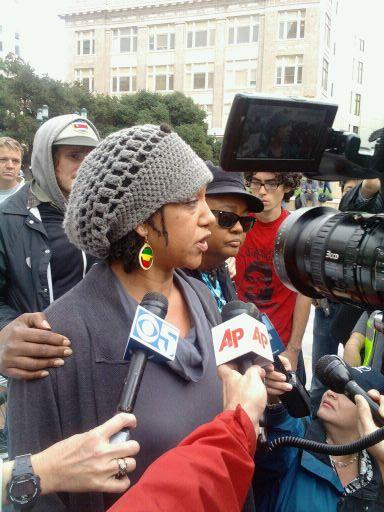
“We will provide a place for people to express their emotion. Civil disobedience is absolutely called for. We will continue to organize and mobilize. The nation has said, ‘No more!’,” said Cat Brooks, an organizer with the Coalition for Justice for Oscar Grant.
A television reporter asked whether she was saying that a violent reaction would be justified, and she corrected him by saying, “I said the anger was righteous.”
Listening to the verdict via a telephone call, Brooks literally shook with anger and sorrow when she initially thought that Mehserle got off with just probation. “This is beyond unacceptable,” she said, offering her “deepest, deepest sympathy” to Grant’s family members and those who “witnessed the execution of their friend.”
The judge reportedly threw out a gun enhancement charge, saying it was not justified, and that he believed the shooting was a tragic accident, not an intentional killing by Mehserle. The judge also gave Mehserle credit for the 292 days he’s already served in custody, meaning that with time off for good behavior, he’ll likely serve less than another year. The Guardian has reporters and photographers with the crowd in Oakland, so check back for updates.
Nancy Pelosi has announced that she is running for House minority leader, citing the need to defend health care and Wall Street reforms and Social Security and Medicare. And my friend Donnie Fowler, a top national Democratic Party consultant, thinks that’s a very good thing, even if I have a few doubts.
“She is a fighter and can bring the majority back in 2012 and no one more progressive would beat her,” Fowler said as he shared the news of Pelosi’s announcement, responding to my skeptical initial reaction. He said that having Pelosi remain in a leadership position was the best hope for pushing San Francisco values in a tumultuous country that has moved the House far to the right.
The Bay Guardian and other leading San Francisco progressive voices have criticized Pelosi for allowing the wars in Iraq and Afghanistan to drag on, for not taking stronger stands on gay rights (from same-sex marriage to the military’s “don’t ask, don’t tell” policy), and for pushing flawed reforms of Wall Street and the health care system that left big corporations with too much power.
Fowler said Pelosi is “better in term of ideology and she’s a strong fighter,” but he conceded that she’s also a pragmatist, so she’ll often fight for outcomes that are not nearly as progressive as she would prefer, as she’s done recently. “She fights hard for what she can get today,” said Fowler, who has played leading roles in Democratic presidential and other campaigns and came in second in the race to chair the national party a few years ago. “Over the last two years, she has felt throttled by other parts of the Democratic Party and other leaders in Washington.”
But many of the moderate to conservative Democrats who have made Pelosi’s life so difficult were voted out of office on Tuesday, leaving a far more liberal caucus. “The biggest hit was to moderates and Blue Dogs, just because of where they live,” Fowler said, citing people such as Rep. Chet Edwards, who represented George W. Bush’s Crawford, Texas district, which now went Republican. “The caucus is going to be more liberal.”
Does that mean that Pelosi could sound a more full-throated defense of progressive values as minority leader? Yes, Fowler said, she could and should, but he’s still not sure whether she will. “The Democrats have got to say what they believe, they have to stand up for progressive values, and they have to be unashamed about it,” he said, noting that the centrist waffling was a factor in the party’s defeat this week, moreso than a genuine desire of the electorate to bring back the Republicans. “If you won’t stand up for yourself, people won’t believe that you’ll stand up for them.”
Right now, moderate Democrats are already starting to make the case that the party needs to be more economically conservative. Rep. Heath Shuler, a Blue Dog Democrat from North Carolina, has announced his intention to run for minority leader on a pro-business platform. It’s also possible progressives could mount a challenge from Pelosi’s left, such as Reps. Barbara Lee (who was the only vote against invading Afghanistan in 2001), Dennis Kucinich, or Raul Grijalva (the Arizona Democrat who co-chairs the Progressive Caucus with Rep. Lynn Woolsey).
Yet Fowler continues to believe that Pelosi is the best person to lead the party back through what’s expected to be a difficult couple years. But does it play into Republican hands to stick with their greatest foil, someone whose liberal politics and connection to a famously liberal city made her the focus in GOP attack ads?
Fowler dismissed that notion, saying that Republicans are going to demonize whoever leads the party. He said the Democrats could elect the most conservative good ole boy with a thick Southern accent “and they’ll still call him a liberal socialist.”
So then why not nominate an actual liberal socialist, someone who can bring a stronger critique of this country’s economic and political systems and set the country up for a more fundamental shift in 2012, someone like Lee, Kucinich, Grijalva, or Woolsey? To Fowler, that’s a bridge too far. Even with a more progressive caucus, he doesn’t think they could win, and he doesn’t think the party ought to move that far to the left anyway.
But what do you think, Guardian readers? Is this a time for Democrats to stay the course, or is this perhaps a moment for progressives to step up – unafraid of the Tea Party rhetoric – and start pushing everyone from President Obama on down to finally address inherent flaws in this country’s unsustainable economic and political systems?
Let it rain, let it rain — compostable ticker tape, that is, as the Giants trundled up Market to the cheers of what must have been a million fans. This week rocked!
Today’s post-election analysis session at the San Francisco Planning and Urban Research Association featured the usual room full of smart political minds from across the ideological spectrum – including those of hosts Alex Clemens and David Latterman – but nobody had any real insights into the big question on everyone’s minds: who will be the next mayor?
Everyone agrees that Gavin Newsom is headed to Sacramento in January, and state law calls for him to become lieutenant governor (and resign as mayor) on Jan. 3. At that point, Board President David Chiu becomes acting mayor, and the current Board of Supervisors is scheduled to meet Jan. 4 and could vote for a new interim mayor. The newly elected board takes office a week later and as its first order of business it will elect a new president, who becomes the new acting mayor, and if the old board can’t elect an interim, then the new one could elect an interim mayor, who would serve until after the mayoral election in November.
It’s tough enough for anyone to get to six votes, particularly considering supervisors can’t vote for themselves, but the deal-making could also involve the district attorney’s job. If Kamala Harris holds her slim current lead for attorney general, the new mayor would get to appoint her replacement. And if Rep. Nancy Pelosi decides to resign, that plum job would mix things up further. So everything is revolving around the vote for mayor right now.
“Everything comes back to this,” Latterman said, as he and Clemens basically had to shrug off questions about who has the inside track to be mayor. There are just too many variables involved, too many possible deals that could be cut, too many ambitious politicians in the mix, not to mention innumerable outsiders who could be tapped (hmmm…Mayor Jones, it does have a ring to it).
Latterman, a downtown consultant who helps update the Progressive Voter Index (created by SF State Professor Rich DeLeon), noted that the citywide results in the election once again showed that the overall city electorate is more moderate than progressive, particularly because the districts that have the strongest voter turnout (Districts 2, 4, and 8) are also some of the city’s most conservative.
As a result, he said, “The city is not voting for a far left mayor come November, so [progressives] will do whatever they can to get a mayor now.” Progressives are indeed hoping to get one of their own into Room 200 in January, and they hope that would allow whoever is chosen to win over enough voters to remain after November.
As a result, conservatives and most moderates will dig in, with many pushing the idea of a “caretaker mayor” so the playing field between left and right is still fairly even this fall.
“This is a World Series for political junkies,” Clemens said, who had the funniest way of casting the question: Normally, about 11 people run for mayor and the whole city picks one, he said, “but this is the opposite.” These 11 supervisors have the whole city to pick a mayor from, and at this point, it’s anyone’s guess who that will be.
Lots of votes still to count in San Francisco — as of this morning, the Department of Elections said there were about 80,000 absentee and provisional ballots in the hopper. But some have been counted yesterday and today, and we can draw some conclusions.
Typically election-day absentees break fairly close to the way election-day votes break, and Kamala Harris is citing that — and her campaign’s own analysis — to claim victory;
“Uncounted ballots will only bolster Kamala Harris’s lead, as they will reflect Harris’s strong Election Day advantage.”
In San Francisco, though, I’ve seen progressive measures that won on election day go down to defeat when the late votes, which were not as conservative as the early absentees but more conservative than election-day votes — were counted.
We now have the newest results from the DOE, and a little quick math gives us some interesting trends. In D2, Janet Reilly has (marginally) increased her lead over Mark Farrell. She’s gone from 6253 yesterday to 6512 today, a pickup of 259 votes. Farrell picked up only 223. So Reilly will probably still lead this race when all the votes are counted, but the RCV calculation will depend entirely on whether supporters of the third and fourth candidates, Abraham Simmons and Kat Anderson, were voting for Anyone But Reilly or were willing to put Reilly as a second choice.
In D6, Jane Kim picked up about 100 votes over Debra Walker, enough to make her the clear front-runner. Again, though: Do the more conservative Theresa Sparks votes go to Kim, whose supporters tried to portray Walker as part of a liberal machine and who touted her support for Prop. G, or do a sizable number go to Walker, another LGBT candidate?
D10? Not much has changed. Tony Kelly picked up 65 votes. Lynette Sweet picked up 80. Malia Cohen picked up 72. Steve Moss picked up 64. The rankings aren’t going to change much. But this will be the mother of all RCV elections — and we’ll know more tomorrow, when DOE does its first RCV pass.
Right now, D10 watchers are driving themselves crazy trying to predict the ranked choice math in a 22-candidate race. And so far it looks like it’s a toss-up between Tony Kelly, Lynette Sweet and Malia Cohen, with Steve Moss and Marlene Tran trailing in fourth and fifth place in a contest in which race, neighborhood and inter-campaign alliances will likely prove to be the decisive factors.
So far, about 10,000 votes have been cast and counted in D10. Based on a preliminary vote count yesterday, Kelly was leading (13.19 percent, 1,310 votes) Sweet is in second place (12.29 percent, 1,220 votes) and Cohen is in third place (11.90 percent, 1,182 votes) yesterday. And as of 4 p.m. Thursday, Nov. 4, , Kelly remains first( 12.77 percent, 1, 375 votes), Sweet is second (12.08 percent, 1,300 votes), and Cohen is third (11.65 percent, or 1254 votes).
Together this trio account so far for 36.50 percent of the vote. But according to the Elections Department, there are 71,000 vote-by-mail ballots that have yet to be counted and 14,000 provisional ballots, so the outcome continues to be far from certain.
But of these 85,000 citywide votes, only 8 percent are estimated to be from D10. Still, it’s too early to count out Steve Moss and Marlene Tran. Moss was in fourth place (11.33 percent, or 1,125 votes) and Tran was in fifth place ( 9.91 percent, or 984 votes) yesterday. And as of 4 p.m. this afternoon, Moss remained fourth (11.13 percent, or 1198 votes) and Tran remained fifth ((10.83 percent, or 1,166 votes), and the odds remain against them. And here’s why:
The majority of the remaining 16 bottom-ranked candidates are based or have roots in the Bayview. And it seems fair to predict that their supporters will cast their second and third-place votes primarily along race and neighborhood lines, which will likely benefit Cohen and Sweet.
But the November 2010 election also illustrates the growing importance of the Asian-American vote in D10, as evidenced by Tran and Teresa Duque’s relatively strong showing. Kelly is most likely to benefit from Tran’s candidacy, since she endorsed Kelly as her 2nd choice, but that’s presuming that her supporters actually follow her advice.
Less clear is where Moss and Tran will get second or third place votes. Some observers believe Moss could benefit from Kristine Enea supporters and Tran could benefit from Kelly’s. But at this point, the money is on Sweet being pushed over the finish line by Cohen’s supporters, unless Cohen and/or Kelly manage to win a significant number of second and third-choice votes, district wide.
Elections will post a preliminary ranked-choice voting report at 4 p.m. Friday, November 5, so stay tuned. But Elections spokesperson Rachel Gosiengfiao warns that this report will “only provide a snapshot and not a final report”.
“We still have the vote-by-mails and the provisionals,” Gosiengfiao said.
In the meantime, here’s the complete list of the updated D10 results, so that you can look at the numbers and play the ongoing D10 crapshoot game :
ASHLEY H RHODES 173 1.61% MARLENE TRAN 1166 10.83% MALIA COHEN 1254 11.65% JAMES M. CALLOWAY 272 2.53% STEPHEN WEBER 221 2.05% DIANE WESLEY SMITH 239 2.22% TONY KELLY 1375 12.77% KRISTINE ENEA 324 3.01% NYESE JOSHUA 77 0.72% ELLSWORTH ”ELL” JENNISON 40 0.37% CHRIS JACKSON 645 5.99% DEWITT M. LACY 793 7.37% M.J. MARIE FRANKLIN 46 0.43% LYNETTE SWEET 1300 12.08% ERIC SMITH 295 2.74% JACKIE NORMAN 103 0.96% GEOFFREA MORRIS 202 1.88% STEVE MOSS 1198 11.13% ED DONALDSON 129 1.2% TERESA DUQUE 778 7.23% RODNEY HAMPTON, JR. 134 1.24%
As soon as it became clear on election night that Prop. L had passed, I wondered if opponents would organize some sort of mass sit-down or sleep-in as a response. Today, it appears that some San Franciscans are orchestrating just that. I’ve been alerted via Facebook to two different sidewalk sits in response to the passage of Prop. L.
Sidewalk sitters plan to stage the first one outside the Westfield Shopping Center on Sunday, Nov. 7. Here’s an excerpt from the event description, written in such colorful language that it almost comes off as a parody: “We are going assert our right (and the right of the homeless and homeless veterans) to sit anywhere we damn well fucking please by having lunch on the aforementioned fucking sidewalk in front of Westfield shopping center… this Sunday @ 1:00. The purpose is to hang out, have lunch, be visible, embody TRUE San Francisco values, network with folks about the next steps in the anti-prop L fight and to have fun. Of course getting cited for sitting on the sidewalk is a totally glamorous possibility that we will opportunistically use to the most dramatic effect possible. This is lunch, but it’s also a protest.” It urges participants to bring food to share. The post also encourages people to bring their kids along.
The second event is planned for Monday, Nov. 8, outside San Francicsco City Hall, and its organizers are more succint:
“calling all san franciscans and all humanity to a solidarity sit-in against the passage of proposition L–the so-called Sit/Lie law. bring your ASSets to city hall on monday, nov. 8 at 12 noon. if you can’t make it to city hall, sit on the closest sidewalk.”
Not sure if “all humanity” will mobilize for the cause, but it should be interesting.
Meanwhile, the drivers behind the official No on L campaign seem to be focusing their efforts on a more, um, lawful plan of attack. “We’re taking L to court,” declares a message posted today on the No on L campaign page on Facebook. “But we’re still ironing out the fundamentals of strategy. Keep an eye out for an announcement in the coming week.”
San Francisco voters approved Prop. L, the ordinance that bans sitting and lying down on city sidewalks, with 53 percent of the vote.
Sipping an egg cream soda is an all-American, very New York pastime, but nowadays the nostalgic sodas are popping up in increasing numbers in our fair city. I rounded up a trifecta of perfect SF spots to get your cream on, but first a historical rundown.
Though the identity of the creator of the original egg cream is somewhat debated, many credit Louis Auster, a Brooklyn candy store owner in the late 1800s. In his well-researched tome on the history of soda fountains, Fix the Pumps, Art of the Drink‘s Darcy S. O’Neil says the New York egg cream evolved as a variation on the original milkshakes served at soda fountains in the late 19th century.
The classic recipe, which contains no egg whatsoever, traditionally consists of milk (or cream, for added richness), chocolate syrup, and soda water, making for a gently effervescent imbibement. It has a creamy, chocolate-y tinge, and a pleasurable hint of sour from the soda. The best creations have a foamy, seltzer “head” and are reminiscent of an ice cream soda sans ice cream. Some claim the original recipe included actual egg, which was replaced when they became expensive and harder to procure during World War II.
Speculations aside, I find egg creams a delightful reminder of my high school years on the East Coast, when I sipped at diners in Manhattan, Brooklyn, and Jersey. To this day, I can’t be in proximity of Katz Deli in the Lower East Side without ordering one to go.
The recent proliferation of egg creams in San Francisco is a welcome trend. Though I can never seem to track down the Egg Cream Cart, which was launched earlier this year by a mysterious “Madame Bubbles” (and serves egg creams and Jewish treats like rugelach), there are a few more easy-to-find places to wash down a soda, whether you go for the original Brooklyn recipe with chocolate syrup, New York style with vanilla, or even a San Francisco egg cream made with both chocolate and hazelnut syrups.
Grand Coffee
Months back, I wrote about the new Grand Coffee on Mission Street, a humble little counter-window service that pumped out expertly prepared Four Barrel coffee, creative jam sodas, layered iced coffees, and yes, egg creams. Owner Nabeel Silmi makes a Brooklyn egg cream ($2.75), for which he first drizzles the glass with Brooklyn-made Fox’s U-bet chocolate syrup, then douses it with milk and seltzer water, ultimately handing you a freshly frothy drink.
2663 Mission, SF
(415) 206-1238
Tony’s Coal-Fired Pizza & Slice House
The new take-out shop next to Tony’s Pizza Napoletana is just what North Beach needed: addictive Neapolitan and East Coast pizzas, ordered by the pie or the slice (cheese, pepperoni and daily specials). Eat in at one of the couple of tables in the joint or trot across the street to Washington Square Park with pizza or giant Italian beef sandwich in hand. The deal is sweetened with three egg cream options: New York, Brooklyn, and SF versions. The downside? They’re a whopping five dollars each. But the balance is right and kudos to Tony for offering all the classic egg creams.
1556 Stockton Street, SF
(415) 835-9888
Cowgirl Creamery’s Sidekick
Cowgirl Creamery‘s brand new Ferry Building cafe, Sidekick, is a take-out venue for all things cheese, from challah rolls filled with the stuff to a fresh mozzarella bar where you can choose which mozza type you’d like to heap over salad. Sidekick starts with a San Francisco egg cream (chocolate and hazelnut syrups for four dollars), then offers three non-traditional versions: raspberry, coffee cream, and caramel cream ($3.75). The SF soda enhances that light, chocolate-drenched froth with a whisper of nuttiness. Consider it egg cream with a California twist.
It might have been unannounced, but there’s a ritual aspect to all this the Giants-Halloween-Dia de los Muertos mayhem all the same. And like any great autumnal rite, the cathartic frenzy implies a greater narrative — one last big harvest before the little death of winter, the rebirth of spring. How appropriate to the season then, was the Ragged Wing production “Persephone’s Roots” a site-specific re-imagining of the Persephone myth at Berkeley’s Cordornices Park.
Persephone — as you might remember — is the daughter of Demeter, and traditionally the story told is that she was kidnapped into the underworld by Hades, which caused Demeter to neglect the Earth while she searched for her, bringing barren winter to the land. Ragged Wing’s Persephone was a far more willful curator of her own destiny.
As an oddience, we followed her self-propelled journey into the underworld past a three-headed Hecate at the crossroads, around a despairing Sisyphus and Tantalus, through a spiral maze (Hecate’s Temple) where we wrote down our shadow thoughts and cast them into a basket to be burned later on during the climactic reunion scene. Then to the Fates picnic, where Persephone defiantly ate of an onion, and the three weird sisters snipped her thread.
No victim, this Persephone was a willing Queen of the Underworld, and when Demeter found her at last, beside the bonfires of the “hearth of the triple goddess” (Hecate again) their agreement that Persephone would spend the spring months above ground was hard won. The wooded paths, trickling waterways, and rapidly descending nightfall made the journey feel very otherworldly and the park seem downright mysterious.
Speaking of mysterious, I will never look at the Shakespeare Garden in Golden Gate Park in quite the same way now that I’ve seen it in the neon of glowsticks at midnight, the end station of the interactive, city-wide Journey to the End of the Night.
Beginning at Justin Hermann plaza at 8 p.m., the game spread out over much of the city—from Chinatown, to SoMa, to the Mission, to Haight, to Golden Gate Park. The goal was to get through to each checkpoint via public transportation and collect a signature after performing some minor task (most involved was probably the “Change of Face” station in Dore Alley, where we had to exchange parts of our costumes with strangers in the back room of Lennon Studios.
The challenge was getting to each checkpoint without being caught by a “chaser” since, like zombies, their powers of evil would then corrupt you and you would become one of them. Indeed, by the end of the night, chasers almost outnumbered survivors, and my group of three survivors were congratulated heartily on our triumph at the entrance to the garden.
The light at the end of the tunnel was a dreamy, participatory performance by nerd arcana swashbucklers Corpus Callosum, who exhorted us to “drink to the ghosts of the night”, a ritual appropriate for any season.
Mayor Gavin Newsom seemed to jokingly endorse Giants closer Brian Wilson for mayor at the parade Nov. 3rd (and Wilson might have endorsed his BDSM-loving neighbor), but maybe the mayor’s words have been misinterpreted. Maybe he was referring to another local player when he proclaimed the words “fear the beard.” Just a thought.
With four of the five Board of Supervisors races awaiting ranked-choice voting tallies, the San Francisco Department of Elections says it will run a preliminary ranked choice voting tally tomorrow (Friday) afternoon.
The department says there are still at least 52,000 ballots left to count (14,000 provisional ballots and 38,000 absentee ballots dropped off at the polls), plus an unknown number of absentee ballots still arriving by mail, so tomorrow won’t be the final word on who wins. But it will give a good idea where people’s second choices are going.
In District 10, just 90 votes separate leader Tony Kelly from runner-up Lynette Sweet, while Jane Kim has 470 votes more than Debra Walker in D6, and Janet Reilly is leading Mark Farrell by just 361 votes in D10. Looking slightly more settled is D8, where Scott Wiener leads Rafael Mandelman by 1,168 votes, particularly given the third place finisher is Rebecca Prozan. Like Wiener, she is a moderate former president of the Alice B. Toklas Democratic Club.
Election officials say they don’t have a breakdown of the outstanding votes by district.
OK somewhere between Giants madness and the election frenzy, this happened: one of our favorite, uniquely SF civic holidays went down in the Mission. Photographer Charlie Russo was there to capture all the morbid beauty, serene remembrance, and ghoulish fun.