Beach House, Teen Dream El Guincho, Pop Negro Girl Unit, I.R.L. Teengirl Fantasy, 7AM k**O, Espanish Boogie,Vol. 2 The Ruby Suns, Fighting Softly Kanye West, My Beautiful Dark Twisted Fantasy Ariel Pink, Before Today Tensnake, Coma Cat Glasser, Ring
The video for “Lover of Mine,” off of Beach House’s Teen Dream:
Democratic Party clubs are one of the most basic political building blocks in this basically one-party town, so it’s odd that politically active District 5 (the Haight and Western Addition) didn’t have one. But that changed last night with the launch of the District 5 Democratic Club, with fuel provided by current D5 Sup. Ross Mirkarimi and mayoral contenders Leland Yee and Dennis Herrera and with several potential Mirkarimi successors on-board.
“We saw it was a huge opportunity this year to get people engaged and involved,” newly elected D5DC president Jen Longley, a progressive activist who calls herself a “campaign gypsy,” told a gathering of about three dozen people at Cafe Divis. And she thanked Mirkarimi, who switched from the Green to Democratic parties about a year ago, for supporting the club’s creation. “This party would not have happened if not for the help of Ross Mirkarimi.”
And it wouldn’t have met its $1,000 fundraising goal if Yee and Herrera didn’t kick in big as they court D5 voters as part of their mayoral campaigns. Mirkarimi gave the keynote speech, calling D5 the “hippest district in the city” and one of its most progressive, something he wants to see the club help project onto the rest of the city. “I’m delighted to be a part of it,” he said, urging attendees to contribute financially.
In addition to being active in next year’s mayor’s race, the club will also play a role in determining who will succeed Mirkarimi in 2012, and there were some likely contenders for that slot on hand, including City College of San Francisco Trustee John Rizzo, progressive activist Julian Davis, and club owner Michael O’Connor, with labor activist Gabriel Haaland also supporting the club’s creation.
Longley noted that D5 has lots of very active neighborhood association, but few political organizations, and she said that she feel honored to be leading one at such a pivotal political moment.
It sounds like the Tennison and Goff story all over again: An innocent man has been locked up for 18 years on the basis of highly flawed testimony from a police informant. I know, I know, Caramad Conley hasn’t been proven innocent — but a Superior Court judge thinks he hasn’t been proven guilty, either. And it all traces back to retired homicide inspector and later police chief Earl Sanders.
District Attorney Kamala Harris is still talking about retrying Conley, but I don’t think that’s going to go anywhere — the one key witness is dead and his testimony has been utterly impeached be revelations that he lied on the stand.
What’s interesting is that none of this would have ever come out it the lawyers at Keker and Van Nest, along with Public Defender Jeff Adachi, hadn’t pursued the Tennison and Goff cases — and even then, a lot of the evidence was (literally) buried. So this makes two cases — so far — in which Sander and his partner, the late Napolean Hendrix, were accused of framing a defendant. I suspect there have to be more.
“When something like this happens, it’s usually a pattern and practice,” Adachi told me.
Dan Purcell, the Keker attorney who represented Conley, told me he thinks the district attorney should go back and review some of the other similar cases involving Sanders and Hendrix. “The documents show that there are other cases where they paid witnesses,” Purcell said. “Now, that’s perfectly fine if you inform the defense, but in this case they clearly didn’t.”
Adachi complained that “nothing happens to the inspectors” — and he’s right. Sanders is comfortably retired on a nice pension and Hendrix died of cancer in 2009. And since the pair handled more than 500 murders, it’s hard to imagine reviewing all of their cases.
But the district attorney can certainly go back and review the other cases in which Sanders and Hendrix paid witnesses — and any others where the evidence was slim. That’s a matter of basic justice.
Accurately summing up the music The Books create is a tall order. Folktronica, indie-pop, cut & paste, experimental — all these tags can loosely be assigned to it, but none can fully capture the group’s mix of acoustic virtuosity and trippy electronics. First meeting in New York City in 1999, Nick Zammuto and Paul de Jong soon began crafting their unique combination of found sounds, cello, guitars, vocals and studio experimentation. Their work has led to four albums, a remix collaboration with Prefuse 73, and a commission to create elevator music for the Ministry of Culture in Paris. Zammuto took some time to chat about the group’s use of samples and its newest release, The Way Out (Temporary Residence Limited). Below is a longer version of a Q&A that recently ran in the Guardian.
SFBGYou guys seem to put a lot of thought into the venues you perform at. How do you choose?
Nick Zammuto At first, beggars can’t be choosers, so we kinda just played wherever people would have us. And then I think the promoters started to realize that our show just works better when there’s a little more focus and when the ceiling is high enough for our projection to look the way it should. More than anything, the venue — the shape of it and the sound of it — creates the evening. And it’s amazing how it brings out different characteristics in an audience. Part of it is what they bring and part of it is what we do. But there’s that third element, which is the venue. It’s a mysterious thing. I love shows that are sitting down because I think it brings out this more careful detail that we try to bring out in our records, which is difficult to translate to the stage when it’s a noisy environment and beers bottles clinking and stuff like that. But then again, I love the energy of shows that are standing up because people can express themselves easier and we get more feedback from the audience. So both have their benefits.
SFBGYou’re playing with Gene Back this tour, which will be the first time you’ll be performing as a three-piece. How did this come about?
NZ He’s a guy from Brooklyn who we met through a project we did with a cellist named Zach Miskin. He was kinda Zach’s right-hand man for this project and he came up to record at my place and I was just really taken with his playing. He can play anything you put in front of him. He learns really fast, so it’s been great to throw stuff at him to see what he can do. He doesn’t disappoint.
SFBGHow much of a collaborative process was it in terms of him adding or not adding his own touches to the existing material you guys will be performing?
NZ It depends on your definition of collaboration, but I think the energy he brings with his playing, it changes our set drastically and that’s definitely something we have no control over, you know. That’s his thing. He’s tried to execute the parts that we’ve created for him, but he’s also solved a lot of problems that we wouldn’t have foreseen, not being able to play them ourselves. And he loves to dive into things. For example, he can actually play the guitar riff on “Tokyo.” He came up to us and was like, “Hey, look what I can do.” That’s something we never expected to be able to play live, and sure enough, it’s in the set now because of him.
SFBGSpeaking of the guitar line on “Tokyo,” that’s one of many parts on your guys’ albums that makes you wonder how exactly it was created and recorded.
NZ I think nothing is really what it seems on our records and we do a lot of work to cover our tracks in terms of where things come from and how things were made. But essentially, I played that guitar line just as it appears on the record, except it was about half the speed when I originally played it. I just sped it up to see what it would sound like. And it turned the tambour of the guitar into this high-strung, mandolin kind of sound, which was cool, so we kept it. My fingers just don’t move that fast. But luckily there are people out there who can execute my ideas (laughing).
SFBGAs diverse as your music can be, there is still a very recognizable overall sound. But it’s not always easy to describe. After all these years, have you guys settled on a fallback response when someone asks what kind of music you make?
NZ The word we go back to because it’s kind of open-ended is “collage.” We pull things from all different places and try to put them together in some compelling way, and I guess the most basic word for that is collage. I think people try to attach all kinds of genre names to it, but none of it has really felt comfortable to us. We just kinda do what we do. But you know, sampling is a big part of what we’ve always done. Figuring out a way to connect all these disparate elements is the basic work we do. So, it feels like collage.
SFBGI’ve always been curious about how you find the material you sample. Where did the material featured on The Way Out come from?
NZ During our tours in 2006 and 2007, we stopped at thrift shops all along the way, wherever we could. We’d pick [up] VHS tapes and audio tapes. Paul is kind of in charge of the audio side of the collection and I do more of the video side. Basically, we take the tapes and digitize them and then go through them and save all the stuff we think might be useful, having no idea what it might be used for. If it kind of has this memorable, emotional quality, we save it and keep it around. And the cream rises to the surface, in a way. We end up with these samples that are so far and above anything that anyone would expect, and you just have to use them. So, we throw all those in a folder called “Must Be Used.” And that’s what starts a lot of the ideas for the compositions.
SFBGThe answering machine messages in “Thirty Incoming” are simultaneously touching and kind of silly. How do you decide what musical tone and context you’re going to frame a sample in once you decide to use it?
NZ A sample like that just speaks to everyone, you know. And it’s interesting how the interpretation of that phone message varies from “Wow, this is the most sincere man I’ve ever heard in my life” — which was my interpretation when I first heard it — to “That’s creepy. I don’t know what I’d think if I got that message on my phone.” So, it just has this sort of supercharged quality to it where it means a lot to everyone who hears it, but for different reasons. You can’t really go wrong with it, unless you were to counteract its tone somehow. What it suggested to me was this oceanic kind of sound. Those lines go so deep, that it had to be this wave after wave of pulsating sound coming in and then receding. Then we tried to find musical elements that could achieve that sound. So, we ended up using cello and effected vocals, electric guitar and bass to pull it all together. And also this drum tom that I recorded last summer while we were in London. This is the first time we’ve used real drum sounds in forever. It was fun to work with that quality of sound.
SFBGHearing drums sprinkled throughout was a nice surprise on this album. I particularly like the hi-hat pattern throughout “I Didn’t Know That.”
NZ That was a lucky find. It was from a rare record with only like 500 copies made in the 1970s. It’s from this black history record. And it’s just this great hi-hat riff that’s just there between these two spoken word tracks. When we heard it, we were like, “Wow, that’s totally amazing.”
SFBGHave you ever been contacted by someone who appears in one of the found samples you’ve used throughout your career?
NZ People ask this a lot, and we haven’t, I think for a couple of reasons. Like going back to the “30 Incoming” samples, that tape must be 20 years old already, so who knows how old those people are now. And you know, we’re a pretty small band and it doesn’t really go outside of a certain circle of people who listen to this kind of thing. So, I don’t know how it would get to them, unless it was through some crazy kind of way. Maybe it will happen someday.
It would probably take some crazy series of connections. But it’d have to be a crazy feeling for someone to stumble upon a song that contains something they said or did and most likely forgot about 20 or 30 years ago.
It feels like archeology, even though it’s of the recent past. It feels like there’s some distance between now and then, so it takes on a totally different meaning. There’s all this inadvertent cultural information in these tapes. Stuff that was in the background when people were making them, but now they become the foreground because it’s so different from how we are now. And it often comes across as funny. But it also has this unconscious quality to it, which is what I like about it. That none of this stuff is planned. It’s not preconceived what this stuff means. It’s really honest in the way it comes though. It’s just people being themselves.
SFBGAs meticulous as you guys seem to be at crafting albums and each individual song, do you ever struggle with deciding when something is done being worked on?
NZ Yeah. I mean, I compose the stuff and it takes forever (laughing). And it’s a completely exhausting process. But you just kinda know when you’re done, because you don’t want to work on it anymore. It becomes like a zero-sum game. Nothing you can do can make it any better than what it is, so you just let it go. Tracks are never finished, they just kind of escape.
SFBGYou switched from the European label Tomlab to the US-based Temporary Residence Limited for The Way Out. Is there a difference between how Europeans and Americans approach your music?
NZ I think Europeans think of us as kind of like a freak show (laughing). And they like us for that reason. But I think when we play in the US, there’s this familiarity because there’s more nostalgia to it. Because we all grew up in the times that we’re sampling from, the ’80s and ’90s mostly. It’s less of a freak show and more of a warm look at the past and where we came from. Kind of reclaiming our childhoods in a way.
SFBGWhat kind of music inspired you both during the creation of the new album? And is there something you’ve been particularly into as of late?
NZ Me personally, I’ve been on a big Police kick. I don’t know why. But going back to their catalog, I love the way their records are produced. And I especially love Stewart Copeland’s contribution. He can play the drums like no one else. It all has this clarity and precision and energy to it that I really love. So, I’ve kind of been studying that from more of a production standpoint. As for inspiration during The Way Out, during our visit to London in 2009, Nigel Godrich’s engineer Drew Brown invited us to Nigel’s studio for about a week. Nigel was away working on something else and Drew was like, “You should just go and play,” and we were like, “Are you kidding me?” (laughing). And seeing how that studio is put together and the music that has come out of it, Nigel’s and Drew’s way or working is really inspiring to me in terms of getting a mix that’s kind of warm and transparent but also really powerful. I think that had a direct effect on our record.
Philadelphia’s Dr. Dog is the kind of band that can’t seem to get enough of life on the road. Earlier this fall, during the first of two nights at the Fillmore on what is the band’s second full tour in support of April’s Shame, Shame (Anti), fans were treated to a lengthy, lively set of retro-minded indie-rock.
The show kicked off with Shame, Shame opener “Stranger,” which showcased bassist Toby Leaman’s perfectly frayed vocals set amongst some soaring Beatles-esque harmonies and Motown posturing from his band mates. “Slowly I’ve become undone/ a stranger, with a stranger heart,” he yelped with a gruff clip to his voice, sounding like Harry Nilsson during his late, destroyed vocal cord phase.
Shame, Shame material filled most of the band’s set list, with Leaman and guitarist Scott McMicken trading off lead vocal duties nearly song for song. McMicken’s higher-pitched, smoother-around-the-edges voice offered a nice counterpoint to Leaman’s, and led to a couple of the show’s highlights. “The Old Days” from 2008’s Fate (park the Van) started with a slow, snaking piano line courtesy of Zach Miller (the band’s stoically efficient keyboardist/organist) and McMicken singing, “Let go of the old ones/ we’ve got some new ones.” By song’s end, the band was jumping around the stage during a rollicking outro section led by Leaman’s catchy bass line and McMicken’s classic-rock soloing. “The Breeze” offered maybe the best example of how well these guys have locked down their live arrangements, with tambourine, shakers, and three-part harmonies carrying the sparse opening lines before the whole band jumped in. Leaman took over vocals during the song’s breakdown, gazing right through the crowd, singing, “Are there dark parts, to your mind/ Hidden secrets, left behind/ Where no one ever goes/ But everybody knows” with an unsettling stare, finishing with a cathartic “It’s alright!”
Elsewhere, the brand new “Take Me Into Town” sounded like Beggars Banquet-lite, the Architecture in Helsinki cover “Heart it Races” took on a classic soul and R&B feel, and “Worst Trip” from 2007’s We All Belong (Park the Van) was rushed through at a breakneck, almost punk-rock pace. Props must be given to new(ish) drummer Eric Slick, who has stepped in seamlessly and added his own little touches to the band’s live shows.
The encore offered up some unexpected treats for long-time fans. “Say Something” and “Oh No,” two tracks from the 2005 EP Easy Beat (Park the Van) sounded great and far beefier than their lo-fi album counterparts. The highlight, however, was “California,” a stripped-down acoustic ditty with jug band and barbershop quartet touches that really separated itself stylistically from everything that’d come before it.
Tastemakers like Pitchfork have lazily written Dr. Dog off as derivative muggers of ‘60s and ‘70s rock standards, and the band still hasn’t experienced the mainstream success its devout followers know it deserves. But for lovers of good old-fashioned, no-bullshit rock and roll, this is one of the more fun, hardworking live bands around.
“How long do you plan on sitting down there?” said Damon Gough of Badly Drawn Boy as I stared up at him through my fifty millimeter lens perched on the steps of the stage. “Three songs,” I replied, holding up the appropriate number of digits. Our conversation ended there. It was the first time a musician had interacted with me at a concert, and to be honest, it was slightly awkward.
Badly Drawn Boy’s tunes originally entered my ears behind the images of Hugh Grant, in the movie About a Boy. There was something so playful about those soundtrack pieces that went perfectly with Grant’s crooked smile. Gough’s music is much more mellow these days, and actually rather melancholy. I’m not as comfortable with these kinds of songs, especially since I’m known to cry at anything in a minor key (top waterworks instigators include “All the pretty little horses” … no joke.).
But then again, Gough is from England and according to my amigo Craig, it’s cold and dark there, so maybe Gough is just expressing a bit of that gray and gloom with the help of his guitar.
One last question … what’s up with crocheted cap? He always wears the same one … I want to know the story behind, or rather under, it.
In today’s episode, we talk about Jerry Brown’s challenge: Can the new old governor wake the state out of a California dream that has become utterly unconnected to reality? Check it out after the jump.
Pacific Gas & Electric Co. is poised to receive millions in shareholder bonuses for successfully administering a statewide energy-efficiency program designed to curb customers’ energy consumption. But consumer advocates have sounded the alarm that the utility doesn’t deserve it. Although PG&E claims it earned the cash because it achieved the targets of the energy-saving program, the utility’s findings are unverified. In fact, an independent California Public Utilities Commission (CPUC) evaluation found that instead of the A+ grade PG&E claims it achieved by meeting the goals of the program, the utility’s performance actually amounts to a D.
The cycle for the incentive program spans 2006 to 2008, and PG&E was already awarded $76.2 million for savings the utility said it achieved, even though its progress had yet to be measured against the findings of the independent report. The matter will be revisited at a Dec. 16 CPUC meeting, when commissioners decide how to handle the “final true-up” of the program for all four investor-owned utilities. PG&E and the three other utilities could be awarded millions more in bonuses.
The program was crafted as a way to bring energy companies on board with a prospect that normally wouldn’t make sense for their bottom line – encouraging customers to use less of the electricity they sell. In exchange for participating in a program that attempted to slash energy use by getting energy-efficient appliances, light bulbs, and information into the hands of consumers, the CPUC offered utilities a carrot for stepping up to the plate.
If the companies managed to hit 85 percent of the energy-savings targets or better, the state’s investor-owned utilities could be awarded cash bonuses that would get progressively larger with their degree of success. If the companies reached just 65 to 85 percent of the goals, they wouldn’t realize any gains or suffer any losses. And, if they fell below the 65 percent threshold, they would have to pay a penalty.
Although PG&E found in its own results that it met the targets handily, the CPUC report offered a different picture. Released in April 2010, after the first incentive award had been granted, the report found that PG&E achieved 71 percent, 60 percent, and 63 percent of their targets in three energy-saving categories. Basically, it flunked two out of three.
Now that the CPUC faces a decision on whether to award an additional bonus, and how much should be granted, no one seems to agree on just how the energy savings ought to be calculated. Several proposed options are on the table, based on different sets of numbers and the correspoding calculations. The question of how much energy PG&E actually saved is extraordinarily complex, and there seem to be multiple answers. The reward money, by the way, comes from ratepayers.
Commission President Michael Peevey is proposing that PG&E and the three other utilities receive additional incentive rewards totaling $62 million, based on numbers that push the utilities into the higher-scoring categories. Meanwhile, a proposed decision by an Administrative Law Judge recommends that commissioners neither penalize the utilities nor grant them any extra money.
However, the Division of Ratepayer Advovcates (DRA), an consumer-protection arm of the state agency, noted in a recent press statement that PG&E should have to give back the $76.2 million it already received, and face penalties for not meeting its goals. “Why would you give them bonuses for unverified savings?” asks Cheryl Cox, policy advisor for the DRA.
According to a DRA statement, “A comprehensive CPUC staff report released in April 2010 found that from 2006 to 2008, PG&E and the state’s other three major utilities (Southern California Edison, San Diego Gas and Electric Company, and Southern California Gas Company) did not make enough progress to trigger bonus payments; in fact, the report found that all four of the state’s largest investor owned utilities failed to meet the performance threshold set by the CPUC, and based on the CPUC’s bonus mechanism three utilities, including PG&E, should owe penalties.”
The whole debacle highlights a good question: Why are California energy companies in charge of running programs that encourage people to use less energy, anyhow? Cox noted that she sees an inherent conflict-of-interest in the mechanism, and believes that ratepayer dollars for energy-savings programs might be better spent in a state-administered program that could use market leverage to get manufacturers to offer more efficient products.
The whole point of the energy efficiency program is to reduce the need to build new power plants, she pointed out, but utilities’ performance so far calls into question whether it’s really been effectively reducing energy consumption. After all, PG&E is seeking to construct a new power plant in Oakley. As things stand, “We’re creating the illusion of getting energy efficiency savings,” Cox said.
Barbara George, director of Women’s Energy Matters, noted that PG&E had mis-used energy efficiency funds by directing some of the money into campaigns to thwart a fledgling Community Choice Aggregation program in Marin County.
“Each proposed decision jumbles the inputs differently, with mind-numbing complexity, but the purpose is the same — to avoid the penalties they owe for failing to meet their targets, and to justify the profits CPUC already gave them,” George said. “The proposed decisions can’t agree on exactly how to justify screwing the public, because the record supports none of them.”
The 4th annual Board of Supervisors holiday treat throw down at City Hall today featured elegant trophies, celebrity judges and fierce competition. The desserts were judged in three categories: Most Tasty, Most Festive and Most Artistic. And the judges seemed to be enjoying themselves as they sampled the goodies and decided on the awards, as the rest of us waited hungrily, dessert forks in hand
Sup. Eric Mar’s legislative aide Cassandra Costello won—and lost—the “Most Tasty” category, after the judges (who city insiders say were playing by hardcore Top Chef rules) deemed her apple tart “most tasty” but too late to qualify.
Sup. Bevan Dufty’s former legislative aide Boe Hayward won the “Most Festive” category for his Giants inspired cake. It didn’t hurt that his super cute 51/2 week-old baby Eloise was on hand to help accept the award.
But when it came to the most artistic category, Board President David Chiu’s “Mud Wrestling on the Board” narrowly beat out Sup. Carmen Chu’s legislative aide Katy Tang’s “Board of Chess-Off”. (Oops: as readers will notice if they read the comments on this post, Katy Tang’s entry was actually titled “Board of Chess-Eff,” a subtle play on the Board of SF. Sorry for the error, KT, and thanks for your fabulous bake art.)
Chiu’s mud wrestling confection featured 11 snow people. Each snow person had a numbered clue attached to help cake eaters identify which supervisor they were supposedly eating. The clues were as follows: 1 Happy Meals. 2 Swans. 3 Gavel. 4 Her Dog Birdie. 5 Plastic Bags. 6 F-Bomb. 7 Throwing the Microphone. 8 Sidney. 9 Progressive Fists in the Air. 10 Stylishly Dressed. 11 Budget Chair. (Scroll down to find answers to Chiu’s quizz).
Chiu’s entry also came with a print out of what the Board President says is his favorite President Roosevelt quote: “The credit belongs to the man in the arena, whose face is marred by dust and sweat and blood.” A clue, perhaps, as to how Chiu is feeling about his often-embattled position on the Board.
But while Tang’s Chess-Eff didn’t win the “most artistic award,” it was a classic illustration of what Chiu described as “the three-dimensional game of chess” being played around the choice of the next mayor. Featuring marshmallows for interim mayors and/or mayoral candidates, the Board of Chess-Eff came with a warning that the dessert wasn’t actually edible. No kidding. Don’t know about you, but the never-ending speculation about the mayor is giving me major indigestion.
Answers to Chiu’s Mud Wrestling quiz: 1 Eric Mar. 2 Michela Alioto-Pier. 3 David Chiu. 4 Carmen Chu. 5 Ross Mirkarimi. 6 Chris Daly. 7 Sean Elsbernd. 8 Bevan Dufty. 9 David Campos. 10 Sophie Maxwell. 11 John Avalos. (The answers correspond to the numeric district that each supervisor represents. And while this looks a tad too obvious, Chiu said that until he organized it this way, no one could figure out which supervisor he was talking about.)
Sigh. I guess I’m supposed to be Christmas shopping right now. But all I can focus is on is another week of sweet and wild sex events – what’s a girl to do? In the spirit of at least trying to pretend I give a damn, however, here are five fantastic places to buy sexy somethings for the naughties on your list. And the weekly sex events, of course.
1. Quality SM – run by womens since 1988, this locally based online catalog specializes in British BDSM titles. www.qualitysm.com
2. Dark Garden – the hottest corsets money can buy for the love in your life that needs cinching. 321 Linden, SF. (415) 431-7684, www.darkgarden.com
3.Good Vibrations – duh, if you read this column at all, duh. Various Bay Area locations. www.goodvibes.com
4. Stormy Leather – leather goods for all! 1158 Howard, SF. (415) 626-1672, www.stormyleather.com
5. Big Al’s Adult Super Store – sample Yelp review: “Forget about stoopid goodvibes and their politically-correct-boring-medical-supply-store bullshit!” Great for bachelorette parties! 556 Broadway, SF. (415) 391-8510
—
Good Vibrations Customer Appreciation Night
Surely this night was formulated with the diligent holiday shopper in mind, but really Good Vibes – free wine and chocolate? One-on-one attention from sexperts? This is one shopping event (actually five – Fri/17, Sat/18, Weds/22 and Thurs/23 will see the same perks) that will nurture the sex life of the gifter and giftee in one fell swoop. Pick up a present for you and yours, how bout?
International Day to End Violence Against Sex Workers
Started in SF, this is the day to honor all those that lay down for our bullshit – and bucks – and to speak out against the violence and discrimination heaped on them in return. Friday’s memorial at City Hall features a performance piece entitled “Sex Worker Scream,” a reading of all of 2010’s victims, and a candlelit march to the Center for Sex and Culture for tea and cookies, for real.
Fri/17
Performance and vigil start at 4:17 p.m., march after to Center for Sex and Culture, free
Started by burlesque champion Michelle L’Amour in Chicago, this nudie reading series has spread to cities across the country – and none of the chapters have more sexy indie cred than SF’s franchise. Started by Burly Q beauty-erotica writer Lady Monster, this month’s event will see the women reading literature penned by sex workers. Annie Sprinkle makes a guest appearance, you can augment your literary arsenal, and see some boobies — what could be better, right?
Pansexual play party Pink has made a practice of having sexy pre-event lessons to ease you into a night of swinging and cavorting at Mission Control’s pillow strewn harem rooms. This month, come early for a crash course on flirting: Jasper from The New Eccentrics will be taking it deep and hard into the areas of the brain and the corresponding ways to get them all hot and bothered (in a metaphysical sense).
An encore performance by Ms. San Francisco Leather contestant Ms. Cat, singletail whip-throwing contests, vibrator races, and kinky raffles await you at this decidedly un-cotton candy carnival (although there will be a dessert table on hand). Plus, as befitting the holiday season, The Exiles (SF’s womens-only BDSM educational group) will be holding a children’s toy drive at their get-down.
Will all the big, beautiful, kinky women please stand up? That’s right, now find some car keys and roll to Milpitas, because there’s a far-flung party that’s being held in your honor. Yessir, here in the embrace of mesquite-grilled Southwestern fare you can find a diverse spread of those who’d be honored to engage in some rough play with you – men, women, doms, subs, everything in between. Appetites encouraged, as is street wear (you’ll be in a public room, no need to stress the squares).
Sat/18 11 a.m.-1 p.m., free (purchase of food or drink encouraged)
Jerry Brown’s message to educators was framed as bleak — but as I pointed out, there were some bright spots. At least the new gov mentioned that this is a rich state that ought to be able to afford education. Robert Cruickshank at Calitics has a nice post on the point:
A tax increase of about $20 billion would secure our public services for years to come with a very tiny impact on our economic activity. Surely 1% of our GDP can be harnessed to fund the services that we must have for broadly shared prosperity in this state.
Let me take it a step further. I just went through the Forbes 400 list of the richest Americans and started counting, and guess what? A full 80 of the 400 live in California. That’s one out of every five billionaires in America, living right here in a state that can’t afford to educate its kids.
Then I took out my calculator and added up a long row of numbers and got a big one: The total net worth of the billionaires in California is $231.8 billion. Ten percent of that wipes out the budget deficit. And that doesn’t even count the folks worth $900 million or less; they didn’t make the list.
Folks: This is a very, very rich state. A very modest tax increase on a very tiny number of people could solve our budget problems not just today but into the foreseeable future.
This is the message Brown needs to deliver to the people of the state — and if the antitax people (or my trolls) want to argue that all the rich people would leave if we taxed them just a little bit, let me say: That’s ridiculous. David Geffen is going to move out of Malibu because he has to pay a teeny bit more of his income, money he won’t miss, in taxes? Ain’t happening.
That’s it, Jerry. That’s your answer. Now get to work.
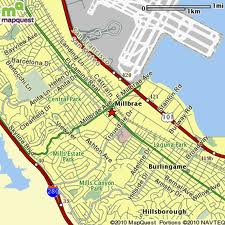
After Steve Kawa, Mayor Gavin Newsom’s chief of staff, started making noises about localhire’s impact on folks who work at San Francisco Airport, since technically it’s in Millbrae, I asked Sup. John Avalos, the legislation’s chief sponsor, to clarify this point.
“Project labor agreements trump this legislation,” Avalos said.
Avalos’ straightforward answer, coming on the heels of Kawa’s grumblings, Sparks claims about the program’s costs, and the striking absence of any analysis of the economic benefits of local hire (especially compared to the recent hooplah around the Americas Cup) made me wonder about the connection between the airport , Human Rights Commission director Theresa Sparks and the Mayor’s Office, since criticism of Avalos’ local hire legislation mainly seems to be coming from these three sources, these days.
Again, the Board of Supervisors scheduled a vote to select a new mayor to succeed Gavin Newsom. Again, members of the public lined up for almost an hour to urge the board to do so and to suggest names and qualities they’d like to see in Room 200. And again, the board delayed the decision with no reason offered for why.
Well, actually, this time, Sup. Sophie Maxwell – the maker of the motion to continue the item this week and last – did at least say something. “We have three weeks and to have someone floating out there for that time is not in the board’s best interests,” Maxwell said, and that’s all she said.
It’s unclear what she meant, and none of the seven supervisors who supported the motion in a 8-3 vote – with Sups. Chris Daly, David Campos, and Ross Mirkarimi in dissent – had anything to say. But Daly certainly did, accusing his colleagues of “doing an incredible disservice to the people of the city and county of San Francisco.”
He restated his points from the two previous hearings on the issue, noting that supervisors should at least be willing to talk about what they’re looking for in a mayor and to provide some leadership going into a politically uncertain period after Newsom becomes lieutenant governor on Jan. 3.
“At some point, we need to be putting forward a vision for San Francisco,” Daly said, later asking, “Are we going to take our charge?”
“It’s almost as if the members of the board don’t want to be here,” he observed, urging them to at least inform the public what’s going on.
“If it’s that you want the next board to decide, say that,” Daly said. “Say something, the people deserve it.”
Is this an effort to stall the decision until the next board is seated on Jan. 8? Is the current board just waiting until Newsom is gone, afraid that he’ll delay his swearing in if they choose a progressive mayor now, and planning to spring into action on Jan. 4? Is there a secret deal in the offing? Or are supervisors just too distracted by the holiday season to make a big decision?
I don’t know, but I’m going to spend this week doing interviews to figure it out for a story in next weeks’ paper.
If billionaire yachtsman and Oracle CEO Larry Ellison rejects San Francisco’s bid for the America’s Cup, the whole ordeal might conclude with the kind of sappy ending that used to punctuate every episode of the sitcom Full House. The moral of the story would go something like this: It was never about the $1.2 billion in economic activity generated by the Cup, San Francisco, but something far more precious — coming together as a “city family.”
I didn’t count how many times the phrase “city family” was uttered at yesterday’s Dec. 14 Board of Supervisors meeting, but it was repeated in so many glowing remarks that I half-expected all 11 supervisors to join hands and start swaying and singing Kumbaya. Board President David Chiu made an analogy of all the crew members having to work together to win a sailing race, and then he took that yachting reference one step further, saying, “I want to thank everyone on the starboard and port side of the Board of Supervisors.”
Even Sup. Chris Daly, who opposed the first plan, threw his support behind the new deal, making for a rare unanimous vote of the Board of Supervisors.
Shortly after, during a ceremony called by Mayor Gavin Newsom to sign the America’s Cup bid, the mayor — who’s often at odds with Board progressives — praised Sup. Ross Mirkarimi and Board President David Chiu, saying, “This process was made better because of their leadership and stewardship.” Newsom also remarked on the unusual spirit of collaboration, saying, “I have rarely been part of something that brought more people of diverse backgrounds together.”
Even Chronicle columnist C.W. Nevius jumped on the big-happy-family bandwagon with a nod to Daly, who’s typically on the receiving end of his rants. In a column published Dec. 14, advising the city to stick to its guns and approve the better deal, Nevius included this astounding assertion: “I will have to say (gulp) I agree with Supervisor Chris Daly.”
Although Ellison hasn’t yet selected San Francisco for the Cup, he’s already accomplished a feat that probably no one else — neither shaman nor top-dollar family therapist — could manage. He infused San Francisco City Hall with a sense of harmony. He put forward a deal that was so outrageous, yet with an economic benefit so immense, that the supervisors, the port, the mayor, and the economic advisors were forced to put their differences aside, rise to the challenge, and craft a compromise that everyone (except maybe Ellison) could live with.
We knew he was good at winning boat races and lawsuits, but who ever imagined that Ellison’s hidden talent could ever bring such warm holiday cheer to City Hall?
Steven T. Jones contributed to reporting for this piece.
So SFUSD just decided to cut half of its school bus routes (including, I believe, one that my son sometimes takes to Aptos Middle School). I should be outraged — but I’m not. Jerry Brown has made it clear that even if he raises taxes, it’s going to be an ugly year for schools and everyone else, and I’d rather see cuts in transportation than in teachers and classes.
But if this is the approach, then the city and the school district need to do a better job coordinating around Muni.
Elementary school kids shouldn’t be on Muni; I’d save the school bus routes for them. But older kids can use the city system, and many do — and more would, if it were just a little easier.
My son often takes Muni after school — to the library, to his Tae Kwon Do class — and soon I’ll let him ride the bus home. But to buy him a youth pass, I have to take him personally to a Muni pass outlet, once every month, and it’s a pain. I understand why they won’t sell me a youth pass for my kid; I could cheat (well, nobody would really believe I was under 18, sigh; I don’t even get carded in bars). But why don’t they sell youth passes in the schools?
It would be pretty simple: Muni issues a number of youth passes to each middle school and high school, the schools sell them out of the office and hand kids Muni maps with routes near the school marked off. I can use Nextbus to tell my son when to head out to the bus stop; there’s no reason the schools couldn’t do that, too. Post the schedules; sell the passes. Maybe even change a few Muni routes to make them more convenient for students.
It seems silly for a city as geographically small as San Francisco to have two parallel transportation systems. With a little creativity Muni could work for the schools, too.
The group has been trying since October to get records that would show a full picture of how prison officials wound up obtaining a drug that is not currently made in the United States.
On November 30, a Superior Court judge ordered CDCR to hand over any documents that were used in the procurement of the death drug sodium thiopental.
But of the 989 pages that CDCR sent to the ACLU, about 670 of those pages were redacted. Some pages were redacted to an even indecipherable extent. The ACLU attorneys were back in court this week trying to pry the remaining information from the CDCR’s stubborn and iron grip.
The legal documents posted on the ACLU site include declarations from ACLU Death Penalty Project Director Natasha Minsker and Bay Guardian Exective Editor Tim Remond, both arguing that the public ought to know the full story behind the execution drug.
According to the ACLU’s legal filings, much of the redacted information doesn’t even fall under the types of information they are allowed to withhold in the first place.
According to the the legal briefs, “the CDCR acknowledges that it has withheld five categories of information.” However, the statement claims that the CDCR withheld information that was outside the boundaries of these categories, from the identity of the physician who ordered the drug purchased from the CDCR to the drug’s packaging information.
CDCR has a record of delaying the release of information. We send our public records request (similar to the ACLU’s) on Oct. 20th, and have received nothing at all in response. Now if we want the information from November and December, we would have to submit yet another request. At this rate, we will be well into 2012 before we truly get all of the information we want.
According to Minsker, “the judge is now giving the CDCR more time to brief the issues and has asked us and CDCR to confer, to see if we can agree on any of the records.”
She also stated in an e-mail that the next briefs are due January 6th and the next hearing is on January 10.
Unemployed workers and community advocates hoping to secure Mayor Gavin Newsom’s support for Sup. John Avalos’ groundbreaking local hire legislation rallied at City Hall December 14 to meet with Newsom’s chief of staff Steve Kawa. But Newsom and Kawa were said to be in intense negotiations over the Americas Cup bid. So, James Richards, founder of Aboriginal Blacks United, waited until Kawa could see him, along with Florence Kong of the Bayview-based Kwan Wo Ironworkers. Joshua Arce of the Brightline Defense Project, and a group of local residents.
“‘Living in the city is so expensive,” Kong observed. “It’s not fair that a lot of local work is being done by workers from outside the city.”
Kawa finally emerged and shepherded folks out of the Mayor’s Office and into a meeting room close to the supervisors’ office. He was uncomfortable with having media at the meeting. But Richards said the group was OK with a reporter. And then he asked Kawa if Newsom would sign Avalos’ local hire law later that day.
“This is a very complex piece of legislation, and if it does become law, that’s when the work begins,” Kawa said, noting that Newsom will have ten days to review it, after its Dec. 14 reading. “Some folks are still concerned about it, partly on the trades union side,” Kawa added.
But Richards pressed his point. “After the Board acts today, we want to talk to the mayor,” Richards said. “We don’t want to wait around another ten days. We want him to assure us.”
But Kawa refused to give assurances. “At the end of the day, 42,000 San Francisco don’t have a job,” Kawa said, claiming the best local jobs program was Jobs Now, under Newsom. “But the federal government is refusing to extend that program, and now we can’t hire anybody at City Hall and we have to get this economy growing,” he said.
When Joshua Arce of Brightline expressed concern that folks had met privately with Newsom to exert pressure against Avalos’ legislation, Kawa replied that Newsom had concerns that some folks could lose their jobs around San Francisco airport, because, technically, it’s in San Mateo.
“And are we sure this legislation will be successful?” Kawa continued. “The worst thing a government can do is over promise and under deliver. Our question is, you tell me how it will not fail. Because, yes, we want to have local hire, but don’t mislead anybody by saying, we pass this legislation, she gets a job. Our issue is making sure that we are not misleading anyone. Those are the concerns that people have. Will it be successful, as written? Because we can’t mislead your members, James.”
“Tell the mayor, we are here,” Richards said. And then Kawa was shaking his hand and heading back to the Mayor’s Office, presumably to talk about cups and America.
“It’s a good thing, we are here today,” Richards said to the workers who remained sitting in the meeting room long after Kawa was gone. Many of them were young, black and male–and in search of a job. “Give a round of applause for your own self,” Richards continued. “It’s a good thing to let them know you come down here to take care of your own business.Because don’t nobody…”
He paused and the ABU members in the room immediately picked up the “don’t nobody give a damn” refrain, their voices ringing as one.
“Some times when we push too hard, when we get what we want, he get on a roll and tell all the reasons why he not going to sign. ‘I want to do this, but…” Richard added.
And then Richards turned to the issue of local hire at UC Mission Bay.“They gotta know today that we are hot on their trail,” he said. “Let them go tell that. Let Steve go tell that. Then they know we are fighting that.”
An hour later, when the Board gave Avalos’ legislation a veto-proof majority, Richards, Kong and the rest of the group burst into applause. “It’s been quite a road to get here,” Avalos said.
“This is the most substantive policy San Francisco has passed in a generation,” Julian Davis observed, as local hire supporters rejoiced by the Tree of Hope, outside the Board’s Chambers.
Inside the Chambers, the Board was voting unanimously to support the city’s Americas Cup bid.
“To win a sailing race, every member of the crew has to work together,” Board President David Chiu said. And his words could equally have applied to Avalos and the community’s effort to navigate treacherous political seas, get local hire legislation passed and, hopefully, lift everyone’s boat, in the process.
The Potrero power plant could be shut down entirely by the end of February, the Guardian has learned. According to a report prepared for the Dec. 15 meeting of the California Independent System Operator (Cal-ISO) Board of Governors, an energy regulatory body, the aging power plant will soon be released from a Reliability Must-Run (RMR) contract requiring its continued operation for grid-reliability purposes.
“The ISO will provide an RMR termination notice to Mirant at the end of this month or in early January,” the report states, “which would terminate the RMR agreement by February 28, 2011.”
In August of 2009, San Francisco City Attorney Dennis Herrera reached an accord with Mirant Potrero LLC, the company that owns and operates the Potrero Power Plant, to shut down the plant by Dec. 31, 2010. Although the company agreed to the terms of shuttering the plant by the end of this year, there was a catch — the Cal-ISO would first have to terminate Mirant Potrero’s RMR contract. Apparently, that won’t happen till early next year, but this latest Cal-ISO report marks the first time the agency has committed to a specific date.
The Potrero power plant won’t be a necessary power source for San Francisco now that a new energy transmission line has been installed. The Trans Bay Cable, a 53-mile submarine power line that can transmit 400 megawatts of electricity from a Pittsburg substation to San Francisco, became fully operational on Nov. 23.
“The Trans Bay Cable finished its testing successfully and was put into successful service,” spokesperson P.J. Johnston told the Guardian. Meanwhile, a PG&E re-cabling project deemed important to San Francisco’s electricity reliability was completed Dec. 5.
“Having both of these projects completed and proven operationally reliable were the two key conditions for enabling the ISO to release the entire Potrero power plant from its reliability must-run contract obligation,” the Cal-ISO report notes.
Removing the Potero power plant from service will benefit San Francisco’s air quality, particularly in the city’s southeastern neighborhoods.
The local hire ordinance that the Board of Supervisors approved last week once again puts the city on the cutting edge of progressive policy. San Francisco’s law, sponsored by Sup. John Avalos, is the strongest in the country, and ultimately will mandate that 50 percent of all the people hired on public works projects live in the city.
The politics of the bill were tricky; the local building trades unions opposed it on the grounds that many of their members live out of town and that hiring decisions should be based on seniority, not on residence. But eight supervisors recognized that a local hire law not only benefits the large numbers of unemployed San Franciscans; it’s also good economic policy for the city.
Numerous studies have shown that money paid out to local residents gets spent in town, and circulates in town, and creates more economic activity. That translates into fewer social and economic costs for the city and increased tax revenue.
There are costs to the law. Someone has to monitor compliance, and that requires additional city spending. Training local workers for union jobs may raise the price of some projects. But in the end, the studies all show that keeping money in the community is worth the price.
Avalos deserves tremendous credit for negotiating with labor and other interested parties, accepting compromises that don’t damage the impact of the measure and lining up eight votes to pass it, so even if Mayor Gavin Newsom vetoes it, the board can override the veto.
Now the board ought to apply the same principle to a local purchase law.
One of the major complaints small businesses have in San Francisco is their inability to get city contracts. The qualifying process is complicated and expensive — and when big out of town corporations with plenty of resources to put together bids can also offer lower prices, locals get left out.
The city spends vast sums of money, hundreds of millions of dollars a year, buying goods and services. Every dollar that leaves town translates into far more than a dollar lost to the local economy.
In fact, a 2007 study by Civic Economics showed that 38 percent of the money spent on locally based retailers in Phoenix, Ariz., remained in town and recirculated in the local economy; only 11 percent of the money spent at chain stores stayed in town.
That’s a huge difference, and would translate into many millions of dollars for the San Francisco economy. (Over time, the impact of local hire and local purchasing laws would be much greater than the one-time burst of income expected from the America’s Cup race.)
There are complications with any local purchase law. Not everything the city needs can be bought locally. Nobody in San Francisco, for example, makes train cars or fire engines. But on everything from office supplies and cars to uniforms and consulting contracts, there are (or could be) local companies handling the city’s business.
As with the Avalos law, there would be costs. Some small local suppliers would be unable to match the price that big chains offer. But the overall economic benefits to the city would greatly exceed those price differentials.
San Francisco currently gives a modest preference in bidding to local firms. But if the supervisors applied the Avalos principle and mandated that, within five years, a certain percentage of everything the city buys would have to go to local firms, city officials would be forced to do what they ought to do anyway: look local first.
Every year during the holiday season, the mayor and business leaders urge residents to shop locally. When the new Board of Supervisors takes over in January, the members should start looking beyond rhetoric and start working on legislation that would keep the city’s money in the city.
Assemblymember Tom Ammiano wants to change the way bicycles and cars are treated under state traffic laws.
He’s responding in part to the furor over the bike crackdowns in Berkeley, but it’s nothing new for Ammiano — he also tried to get bicycle traffic legislation through last year. This time, though, he told me, “I think we’re going to be able to pass something.” And incoming Gov. Jerry Brown ought to be willing to sign it.
Matt Bunch, an Ammiano staffer, told me that the bill isn’t final, but will certainly address the penalty for cars hitting bicycles. “A lot of these are preventable, but they’re treated as accidents,” he said. “They aren’t punished adequately.”
The measure could also address the wide disparity in traffic fines that bicyclists face in different cities and take on the Berkelely problem. “The fine you get depends on what they charge you with, and it’s all over the map,” Bunch said.
Bunch also suggested that Ammiano might be looking at the way some police officers in some jurisdictions charge bicyclists with vehicle-code violations that were written to apply to cars. “The vehicle code isn’t specific to bikes,” he said. “There’s a clear deficiency in law, and we’re going to look at it.”
One of the things they ought to be checking out: Why is it okay to make a biker get a point on his or her drivers license when he or she isn’t driving a motor vehicle?
Go, Tom. I’ll keep you posted when the bill is introduced.
One of the beauties of living in weirdo town is that the streets can always surprise you. The other day, I went out for a mushroom taco and came back with a bag of sparkly fabric from an artist collective’s yard sale on lower Divisadero. I’m sure something attractive will happen with that bag, but after subsequently stumbling into Scott Hammel‘s toy art show in Mini Bar (through Jan. 30), I can’t help but wonder: what would have happened if my plastic sack was instead a full trash bag of plastic kids toys, cigarette butts, and the odd syringe?
Besides the possibility of contagion, of course. But real talk, even in the heady first days of a blood-borne pathogen, I still wouldn’t have come up with stuff this cool. Hammel’s art looks like the productions of an adult Sid from Toy Story, if Sid had gotten fabulous and started doing LSD.
Plus, seasonal! The head of a retro plastic elf pokes unsettlingly from a gold wall sconse, teddy bears with guns drip from their ornament hooks and a wreath that I’d hang on my front door in a minute if it wouldn’t be covetously snatched by a fellow #24 bus-waiter-forer adorn Mini Bar’s back eyrie room like jars of rhinestone-speckled candy. Gleaming light fixtures made from orange prescription pill bottles and a Donald Duck diorama in which he inspects wide-eyed the drug paraphernalia around him. It’s all really colorful and delicious and freaky, love.
After picking up aforementioned trash bag ‘o’ fun on the corner of Jones and Eddy, the photographer-visual artist started to see the urban life cocktail in contained as a metaphor for his own strut through his TL home. “The first piece I created was titled “Living in the Tenderloin,” which featured a tiny hush puppy figurine snuggled in a nest of window glass, cigarette butts, and rusted beads, and nails,” says Hammel in our email exchange about the installation.
“The best describing word for my style and aesthetic would be brazen. This might have something to do with living in the Tenderloin, where being brazen can sometimes help shield me from the oddities of life here,” he confirms. The glue gun art he creates (that ranges from affordable detritus tree ornaments to less-so chaotic balls ‘o’ toy that drape strands of pearl to the floor below) “helps me find comfort and reliance in a pretty disturbingly creepy place.”
Which, y’know, is high praise for one’s own neighborhood — but it’s clear that Hammel has a soft spot for SF’s most maligned ‘hood. A stunning video clip called My Life in a Day he filmed tracks his own perspective whilst making his merry way through late awakenings, the SF Party store, and aesthetically motivated inspections of the random pieces of street beauty in the neighborhood, like a stand of orange flowers or particularly prettily-bedecked traffic sign.
A nice affirmation of the reason why we all pay out our ass for housing in these parts: these streets give back in a big way.
At its meeting today, Dec. 14, the Board of Supervisors unanimously approved a host city agreement for bringing the 34th America’s Cup to San Francisco. However, it’s still unclear whether billionaire yachtsman Larry Ellison and the BMW Oracle Racing Team will select San Francisco as the host city for the next world-famous sailing match.
The agreement solidified a less costly plan and a dramatic improvement over a prior proposal, which the Guardian covered in-depth in a recent cover story. Under the new terms, the America’s Cup Event Authority (ACEA) would be granted long-term leases on commercially reasonable terms for Piers 30-32, Seawall Lot 330, and possibly Piers 26 and 28.
The ACEA would receive rent credits in exchange for investing $55 to $80 million in infrastructure improvements for San Francisco port properties, and San Francisco would benefit from an estimated $20 million boost in revenues from the event. The America’s Cup Organizing Committee would also raise $32 million to help defray municipal costs. The major difference from the prior plan is that Pier 50, a 20-acre waterfront parcel requiring costly renovations that would have been ceded rent-free to the ACEA with development rights for 66 years, was removed from the equation. The America’s Cup is expected to generate more than $1 billion in economic activity, plus create the equivalent of more than 8,000 jobs.
Board president David Chiu called the new plan, which shifts the race venue to the Northern Waterfront instead of the Central Waterfront, “much better, from a business perspective, for the city.”
Sup. Ross Mirkarimi, who supported early efforts to bring the Cup to San Francisco but expressed reservations about the original plan, commended city officials for working around the clock to hammer out a deal on an unusually short timeline.
While doubts arose over the weekend concerning whether or not the BMW Oracle Racing Team and billionaire yachtsman Larry Ellison would accept the latest plan, Port staff member Brad Benson told the Board that he’d met with Stephen Barclay, a representative of the race organizing team, for hours following a Dec. 13 special meeting of the Budget & Finance Committee held to consider the financial impacts of the latest draft. “They would like to enter into an agreement by the end of this week,” Benson reported.
Sup. Chris Daly, who emerged as the most vocal opponent of the Cup in the early stages of the process, acknowledged that he had used “exciting language” to criticize the initial scheme. “The reason why I amplified the language is because I knew the city just could not afford that kind of financial outlay and cost,” he explained. Daly voted in favor of the revised deal because he said it would grant a “fair return for this city.”
Just before the vote, Daly likely caused representatives from the mayor’s office to groan when he announced that he wanted to propose one last amendment. “I need to borrow the Cup on Jan. 5,” he said. “I need a cup. To drink out of.” His joke elicited laughter. Daly will be the star of a roast scheduled for that date.
For more details on the improved America’s Cup agreement, see tomorrow’s issue of the Guardian.
Before the Board of Supervisors can adjourn for the year, it has some serious business to take care of at this afternoon’s regular meeting: approving the city’s ever-evolving America’s Cup bid, requiring party promoters to register with the city, giving final approval to the local hire ordinance, modifying the affordable housing requirements on developers, mandating building owners to study creating on-site childcare facilities, creating new special districts, strengthening local purchase standards for city contracts, and, oh yeah, selecting someone to replace Mayor Gavin Newsom.
Whoa, that’s quite a list, but you can follow the highlights – particularly on the successor mayor nominations and votes – by following the Bay Guardian’s Twitter feed at SFBG.
Despite strong progressive plays this week to elect David Campos as interim mayor – and the fallback plan of electing former Mayor Art Agnos as a caretaker interim mayor – the word around City Hall these days is that there probably aren’t yet six votes for anyone. But, asked about the chances of selecting a new mayor today, Sup. Chris Daly channeled Harvey Milk by saying, “You gotta give em hope.”
If the current board can’t make a decision today, it will get one more crack at it on Jan. 4 before the decision falls to the new board after it is sworn in on Jan. 8. While the new board is ideologically similar to the current one, its most progressive new member, Daly replacement Jane Kim, sounded very moderate themes in her recent interview with the Guardian.
Board President David Chiu will become acting mayor once Newsom becomes lieutenant governor (which he won’t delay if the current board fails to pick a new mayor), the city’s first Chinese-American mayor, something that will be politically difficult for the board to undo, particularly given his good relations with new supervisors Kim, Malia Cohen, and Scott Wiener.
But it’s still too early for that kind of speculation, particularly given the high stakes and squirrely politics at play right now. So stay tuned.