SFBG Blogs

Fall ballot gets stripped of progressive measures

25

The San Francisco Tenants Union suffered a pair of disappointing setbacks in the last week – first when a referendum on the Parkmerced project narrowly failed to qualify for the fall ballot, then when progressive supervisors withdrew a proposed ballot measure to prevent demolition of existing rental housing – leaving the fall ballot without any progressive measures (unless one counts the sales tax measure that was unanimously approved this week by the Board of Supervisors).

Also dropped from the ballot this week was another progressive measure that would have prevented the Recreation and Park Department from entering into new commercial leases of parks and recreation centers, a measure written by the citizens group Take Back Our Parks to reverse RPD’s recent push to monetize more of its assets.

Yet unlike last week’s removal of a third measure placed on the ballot by at least four progressive supervisors – the Fair Shelter Initiative, written by the Coalition on Homelessness, which was unhappy that Sup. Jane Kim dropped her support under pressure from the Mayor’s Office – it was the sponsoring groups that asked the supervisors to remove the two measures this week.

Sponsors of the parks measure say it had some legal problems that would have complicated the campaign, particularly after an analysis by the City Attorney’s Office concluded that it could affect things like private party reservations and leases associated with the America’s Cup.

Ted Gullicksen of the San Francisco Tenants Union said his group concluded there were legal problems with the anti-demolition measure as well and that it wouldn’t affect the demolition of 1,500 housing units associated with the Board of Supervisors’ 6-5 vote to approve the massive Parkmerced project, which was the catalyst for the measure.

SFTU sponsored the signature-gathering campaign to do a referendum on that vote, but the Elections Department concluded on July 29 that of the 18,487 signatures that were turned in, just 12,917 were valid, falling short of the 14,336 they needed. Gullicksen said delays in qualifying the 56-page petition gave them just three weeks to gather signatures, and a freak mid-June rainstorm hurt that effort as well.

“We knew from the get-go that it was going to be a challenge,” he said. “It was very disappointing that we fell just short.”

But he said there was a silver lining: “It sent a message to the supervisors. David Chiu [the swing vote on the Parkmerced approval] called me the next day to say he’d make sure demolitions don’t become an epidemic.”

Sup. David Campos – who helped sponsor all three measures and even kept his name on the shelter measure after Sups. Eric Mar and Kim had removed theirs – told us, “I think it’s disappointing that there isn’t a measure on the ballot to excite the progressive base, but at the end of the day, we do have an exciting mayor’s race and races for sheriff and district attorney.”

Campos has endorsed John Avalos of mayor and Ross Mirkarimi for sheriff, but has not yet made an endorsement for DA.

Behind the yuba: A trip to Hodo Soy Beanery’s factory floor

0

When I was fourteen, Snorkel Mom and I went to Japan to visit my Japanese “grandma” Kiyo. She lived in Tokyo and I remember one morning walking with her to a tiny, closet-sized building that had housed the neighborhood tofu shop in the very same spot for several hundred years. We took home a block of the freshest, most exquisite tofu I had ever eaten — nothing like the hard blocks of flavorless tofu found at most stores here in the States. So when I heard that there was a small company making fresh, traditional tofu in Oakland, I knew it would be worth hopping over the Bay to see what they had to offer.

On the first Wednesday of every month, Hodo Soy Beanery offers a tour to the public, giving folks a chance to sample the wide variety of soy products it creates and see first hand how it gets made. Hodo’s long list of organic, GMO-free soy delights includes fresh, creamy soymilk (nothing like that crap you can get in a box!), super-flavorful tofu in a wide range of textures, and ready-to-eat yummies like tofu salads, curry nuggets, and bricks of braised tofu with dense, potent flavors, perfect for adding to a sandwich in place of meat.

But probably the most exciting item at the beanery is its yuba. Hodo is the only place in the country making fresh yuba, a paper-thin tofu skin that comes together on the surface of heated soymilk. It’s carefully lifted off, drip-dried, and tenderly folded into small delicate rectangles. The texture is incredible and I can see this super-high protein soy food becoming a staple in home cooking on account of its versatility and delicacy.

And apart from being tasty, a visit to Hodo is fun. The staff was working hard and there’s big machines (eyes forward, people!), but there was a very human pace about the place. I got to chat with a few of the workers and they seemed to be enjoying their day.

That’s a beautiful thing, when companies are able to create an environment where their employees are having a good time and simultaneously making a product that is pure, simple, and scrumptious. There’s no longer the need to travel back to Japan to find that perfect piece of tofu, made in a centuries-old shop. Hodo’s right here.

Kind of makes me want to sing… 

Al Gore calls for an “American spring”

4


In an interview with Keith Olberman Tuesday night  on his Current TV show,   Al Gore called for “an American spring” to counter the assault of the teaparty Republicans

and to go on the offensive from the grassroots and on the internet.  Gore was eloquent in his Goreish way and made many of the right points.

Olberman asked him, quite diplomatically, if a Democrat ought to run against  Obama and if Gore would support a Democratic primary fight.

Gore said no, he supported Obama and would continue to support him, and that the history of primary fights meant that the President and his challenger would both

lose.  He said Obama needed lots of help and pressure from the grassroots. Here’s the interview:  The Keith Olberman show is at 8 p.m. weekdays at Channel 107 in San Francisco.

I think Olberman is even better in this  format than he was when he pioneered the progressive tv show on MSNBC.  B3

http://current.com/shows/countdown/videos/al-gore-on-why-america-needs-a-non-violent-tahrir-square-part-one


Street Threads: Look of the Day

0

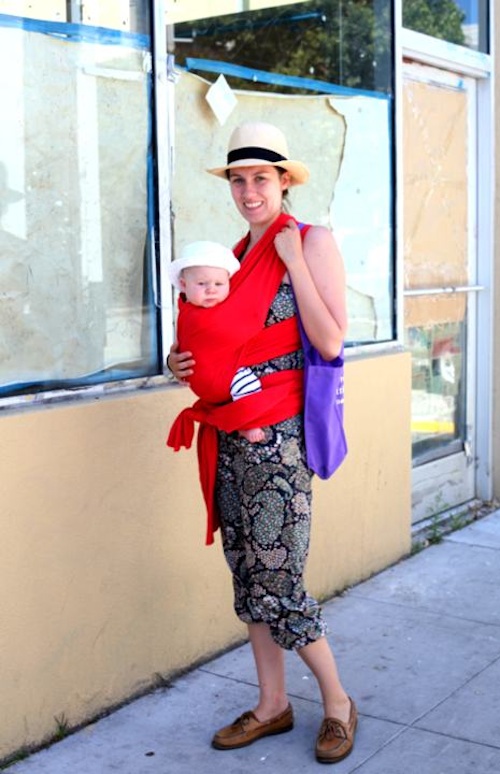
Today’s Look: Sandra (with Leon), 18th Street and San Carlos

Tell us about your look: “I got this jumpsuit from H&M.”

Happy birthday, Chet

0

Judy Davis, the longtime partner of the late Chet Helms, sent out her annual birthday card for Chet to his legion of friends and followers.

HIs birthday was Aug. 2 and he died in 2005 at the age of 69.   He was a legendary promoter of rock music, creator of Chet Helms and the Family Dog at the old Avalon Ballroom, icon of the Summr of Love,  loser to Bill Graham in the rock battles of the l960s, a great San Francisco spirit who spread good will and good vibes wherever he went.    I wrote his obituary for the Guardian and  ended  with the wonderful story of how Chet  died owing the city of San Francisco $30,000 for providing police protection for his 30th anniversary Summer of Love concert in Golden Gate Park.   In the famous Chet tradition, he had neglected to incorporate the Summer of Love concert group and so the city went after him personally as the promoter of record.

However, I noted that, given all that Chet had done for the city for so long  with concerts and good works,  it was more than a fair deal for the city. B3


SF Giants asked to take a stand against racism UPDATED

13

Updated with response from SF Giants at bottom of post

The San Francisco Giants will host the Arizona Diamondbacks tonight (July 31), beginning a three-game series that will determine the first place slot in the National League West. A lot of eyes will be on our 2010 league champions – all the more reason, says a classic Mission District arts and culture organization, for them to take a stand against racist anti-immigration laws.

In early June, community members who had been leaders of the 1960s to ’80s group Casa Hispana de Bellas Artes sent Giants CEO Bill Newcombe a letter with a simple request. They want the baseball team to wear its popular ‘Gigantes’ jerseys while playing the Arizona Diamondbacks and the Atlanta Braves, two squads that hail from states that have recently passed laws codifing racial profiling in the fight against illegal immigration. The letter tells the team “this kind of law has created a paralyzing climate of fear among Latino families, citizen and non-citizen alike.”

San Francisco, the Casa Hispana elders insist, does not swing at discriminatory government. Reminding the Giants organization of its long-standing support of the Latino community, they’re politely encouraging the team to represent its fans by speaking out against discrimination. We caught up with Casa Hispana elder Don Santina for an email interview to explain why his group asked its team for a wardrobe change. The Guardian was unable to reach the SF Giants for comment – but any organizational response we get will be added to this post.


San Francisco Bay Guardian: Tell us about the mission of Casa Hispana de Bellas Artes.

Don Santina: Casa Hispana de Bellas Artes was founded in 1966 in the Mission District by a group of artists and poets to promote cultural advocacy for Latino-Chicano-Raza culture. [Our] group produced and sponsored programs year-round but focused particularly on an annual two-month long Raza/Hispanidad Festival which opened on October 12, Dia de la Raza. Among the multitude of programs, exhibits, performances, and events produced included major undertakings like the Chichen Itza exhibit at SF State, the pre-Colombian artifacts at the De Young and 24th Street BART station opening, the Cisco Kid Festival with Duncan Renaldo, and the Latin American Theatre Festival with Enrique Buenaventura, and low rider car exhibit at the US Presidio. Casa faded into history in 1983 when its major funding sources withdrew. The National Endowment for the Arts was seized by Reaganites.

In 1975 Casa Hispana executive director Amilcar Lobos Yong read a bilingual version of “Casey at the Bat” at Candlestick Park as part of a program in honor of the Giant’s support of the Latino community. Photo by Joe Ramos

SFBG: Why did you send this letter to the Giants?

DS: The elders of Casa wrote to Bill Newcomb’s Giants organization because it had produced a pre-game program in Candlestick Park with Horace Stoneham’s Giants team in 1975 honoring the Giants for their “pioneer recognition of Latin players” in the racist world of major league baseball.  At the event, Casa Poets Theatre read “Casey at the Bat” in English and Spanish before the game and gave awards to the Giants, Juan Marichal, and Tito Fuentes for his works with youth in the Mission District (editor’s note: the awards were presented by long-time Bay Area Latino news legend Luis Echegoyen). Casa people felt that the Giants should continue that anti-racist policy by making a genuine statement against SB 1070 by at least wearing Gigantes uniforms when playing Arizona and Atlanta.


SFBG: What’s been the response from the team? Did they get back to you?

DS: The Giants received Casa’s letter on June 9, and the business has not responded. Casa is disappointed in this lack of response and respect from a San Francisco-based team which has many Latino players.


SFBG: What is a professional sports team role’s in their community? Should they be speaking out on political and social issues? 

DS: A professional sports team has the same responsibilities to the community as any other business; in a word: Spike Lee’s “do the right thing.” Unfortunately, these teams are all mega-corporate businesses with morality based on profit. Dave Zirin has covered this topic very thoroughly.


SFBG: How much of the artists and community members involved with Casa Hispana are baseball fans?

DS: Most of the Casa people love the Giants; however, they also love fútbol, a.k.a. the international game of soccer.   


SFBG: Do you think they’ll be wearing the Gigantes jerseys at AT&T Park tonight?  

DS: We don’t think they’ll wear the Gigantes uniforms without public pressure or embarrassment. [But] if they do, it will be beneficial as a public stand against racial profiling laws. 


UPDATED WEDNESDAY, AUGUST 3: The Guardian contacted Giants spokesperson Shana Daum, who said she couldn’t recall recieving Casa Hispana’s letter but that the Giants would not be wearing their Gigantes jerseys at all during this week’s Arizona series. “We try to support the community, but we don’t want to take a political stance,” she told us.

“There’s other ways for major league baseball to get involved.” Daum cited the team’s annual Fiesta Gigantes celebration during September’s Hispanic Heritage Month, HIV/AIDS awareness days, the team’s pioneering involvement in the It Gets Better campaign. She added “but we appreciate the spirit in which [Casa Hispana’s request to wear the Gigantes jersey] was asked.”

Stop the right-wing revolutionaries

59

The revolution has begun, but we aren’t the revolutionaries. That was the disturbing thought that occurred to me this morning as I listened to Fresh Air on KALW and its interview with Robert Draper, the New York Times Magazine journalist who is writing a book about the House of Representatives, where Tea Party backed members almost just succeeded in bringing down government as we know it.

That wasn’t how Draper cast the situation, although he did paint a vivid picture of the right-wing true believers who manufactured this debt ceiling “crisis” and their monomaniacal goals of slashing government to the bone, no matter what the consequences to the U.S. economy and way of life. Instead, the discussion triggered a memory of the powerful and prescient premise from economist Paul Krugman’s 2003 book The Great Unraveling.

In its opening pages, under the heading of “A Revolutionary Power,” Krugman cites an unlikely source for how to identify and oppose those bent on destroying a country’s institutions: Henry Kissinger. In 1957, as he was completing his doctorate at Harvard University, Kissinger wrote his dissertation, “A World Restored,” on Napoleon and the French reconstruction period after Waterloo, with some obvious parallels to the rise of fascism in Europe in the 1930s.

Kissinger argued for the importance of understanding the nature of a revolutionary force, and Krugman saw the inflexible right-wing movement in the U.S. as another example of that. “That is, it is a movement whose leaders do not accept the legitimacy of our current political system,” Krugman wrote, citing the oft-stated belief of modern Republicans that “long-established American political and social institutions should not, in principle, exist – and [they] do not accept the rules that the rest of us have taken for granted.”

At the time, Krugman cited the efforts of right-wing politicians and institutions to undo such New Deal era programs as Social Security, unemployment insurance, and Medicare, as well as their rejection of international treaties and cooperation in favor of empire and unilateralism. But since then, the right-wing has gone even further, willing to force the government into default in order to accomplish its ideological goal of destroying the federal government’s ability to ask anything of capital.

Kissinger made clear that such forces can’t be reasoned or compromised with, all you can do it try to defeat them before they destroy the country. The longer everyone delays arriving at that conclusion, the more difficult that task becomes, and that’s an important lesson for President Obama and the Democrats to learn right now.

“Lulled by a period of stability, which had seemed permanent, they find it nearly impossible to take at face value the assertion of the revolutionary power that it means to smash the existing framework. The defenders of the status quo therefore tend to begin by treating the revolutionary power as if protestation were merely tactical; as if it really accepted the existing legitimacy but overstated the case for bargaining purposes; as if it were motivated by specific grievances to be assuaged by limited concession. Those who warn against the danger in time are considered alarmists; those who counsel adaptation to circumstances are considered balanced and sane…But it is the essence of a revolutionary power that it possesses the courage of its convictions, that it is willing, indeed eager, to push its principles to their ultimate conclusion,” Kissinger wrote.

The Tea Party may have a fundamental misunderstanding of the principles and events surrounding the American Revolution, but make no mistakes that they do see themselves as revolutionaries, people who want to turn back the clock on the gains made in workers’ rights, environmental protection, tax equity, the creation of social safety net, and all the other hallmarks of civil society.

They’ve already taken over one of our two political parties, and succeeding in forcing the other one to do their bidding. Call me an “alarmist,” but if we don’t challenge the notion that Obama is “balanced and sane” and convince them that the American way of life is at stake, then we just might end up with another revolutionary war on our soil.

Complete interview: “Between Two Worlds” directors Deborah Kaufman and Alan Snitow

0

In 1981 Deborah Kaufman founded the nation’s first Jewish Film Festival in San Francisco. Thirteen years later, with similar festivals burgeoning in the wake of SFJFF‘s success — there are now over a hundred around the globe — she left the festival to make documentaries of her own with life partner and veteran local TV producer Alan Snitow.

Their latest, Between Two Worlds, which opens at the Roxie Fri/5 while playing festival dates, could hardly be a more personal project for the duo. Both longtime activists in various Jewish, political, and media spheres, Snitow and Kaufman were struck — as were plenty of others — by the rancor that erupted over the SFJFF’s 2009 screening of Simone Bitton’s Rachel. That doc was about Rachel Corrie, a young American International Solidarity Movement member killed in 2003 by an Israeli Defense Forces bulldozer while standing between it and a Palestinian home on the Gaza Strip.

As different sides argued whether Corrie’s death was accidental or deliberate, she became a lightning rod for ever-escalating tensions between positions within and without the U.S. Jewish populace on Israeli policy, settlements, Palestinian rights, and more — with not a few commentators amplifying the conservative notion that any criticism of Israel is anti-Semitic, even (or especially) when it comes from Jews themselves.

People who hadn’t seen (and boasted they wouldn’t see) the strenuously even-handed Rachel called the documentary an “anti-Israeli hate fest” akin to “Holocaust denial,” its SFJFF inclusion “symptomatic of a demonic strategy” by “anti-Semites on the left.” KGO radio’s John Rothmann opined on air that the festival had “crossed the line” and “sympathized with those who participate in terror.”

Stunned SFJFF executive director Peter Stein (who’s leaving the festival after its current edition) decried Jewish community “thought police” who pressured the institution and those connected to it with defunding and boycotting threats. The festival attempted damage control by inviting a public foe of the screening (Dr. Michael Harris of StandWithUs/Voice for Israel) to speak before it, which only amplified the hostile rhetoric.

Seeing the festival being used by extremists on both sides became a natural starting point for Between Two Worlds, which takes a many-sided, questioning, sometimes humorous look at culture wars in today’s American Jewish population. It touches on everything from divestment debates at UC Berkeley to the disputed site of a Museum of Tolerance in Jerusalem (atop a 600-year-old Muslim cemetery), from the tradition of progressive liberalism
among U.S. Jews to rising ethnic-identity worries spawned by intermarriage and declining birth rates.

The fundamental question here, as Kaufman puts it, is “Who is entitled to speak for the tribe?” For the first time, the filmmakers have made themselves part of the subject matter, exploring their own very different personal and familial experiences to illustrate the diversity of the U.S. Jewish experience. Snitow’s mother had to hide her prior Communist Party membership to remain active in social-justice movements after the 1940s, while Kaufman’s father was a devoted Zionist from his Viennese childhood who had to adjust to offspring like “Tevye’s daughters gone wild,” including one who converted to Islam.

They’re clearly in sympathy with other documentary interviewees insisting that one core of Jewish identity has been, and should remain, a stance against absolutism and injustice towards any peoples. Between their SFJFF screenings the filmmakers chatted with the Guardian.

SFBG: Is the Bay Area still a bastion of Jewish liberalism, relatively speaking? Watching your movie I wondered how many other places there are where a Jewish film festival audience would boo and heckle a conservative pro-Israeli speaker like Dr. Michael Harris.

Deborah Kaufman: What we saw at the festival during the Rachel uproar was a collapse of the center. It was really a moment when the extremes were at battle and the center simply disappeared. That’s what was and is so disturbing. A kind of apathy where the moderates just throw up their hands and walk away from what’s become a very toxic debate.

Alan Snitow: It’s not that the Bay Area is unique to boo a so-called “pro-Israel” speaker. It’s that the Bay Area has maintained an open debate about Israeli policies when other Jewish communities never countenanced such debate from the get-go. Rachel was not shown in other Jewish film festivals around the country because they are already creatures of conservative donors. The aim in this power grab by the right in San Francisco was and is to silence people and institutions like the festival that oppose a McCarthyite crackdown in a remaining bastion of free speech. And this is being mirrored in Israel itself where the Knesset recently passed a law punishing anyone who publicly supports the idea of a boycott of the West Bank settlements.

I think we also have to question this claim of “pro-Israel.” All criticism of Israel’s occupation is now being branded as “anti-Israel.” Theodore Bikel — a lifelong Zionist activist who went to jail with my mother at the Soviet consulate in Washington DC — was recently called an “anti-Zionist” because he supported an actors’ boycott of performing in the settlements. J Street — an explicitly and consistently pro-Israel voice that is critical of Israeli policies — is regularly attacked as not really pro-Israel for that very reason. “Pro-Israel” has come to mean pro the policies of the current, most right-wing government in Israeli history — a government that is now advocating the truly Orwellian position that there is no occupation at all! That’s not what pro-Israel or Zionist ever meant except to some ideologues on the far right.

DK: The Bay Area has had a history of passionate political commitment — to both the Zionist and anti-Zionist causes. But today the right wing is certainly louder and aside from what we saw at the theater that day, there has been a significant silencing of voices critical of Israel’s occupation policies.

SFBG: Conversely, have you perceived the local Jewish community as growing more conservative in recent years? In particular, more inclined to treat criticism of Israeli government policies as inherently anti-Semitic, even when voiced by fellow Jews?

DK: We were interested in the notion of excommunication — going back to Spinoza — and to the accusation “self-hating Jew” that some people used to attack Hannah Arendt when she wrote Eichmann in Jerusalem. Today, right-wing Jews are leveling charges of treason against Jewish academics, rabbis, and community members whose positions on israel aren’t as rabidly right wing as theirs. We didn’t have to look very far to find dramatic stories for our film on these themes. Censorship and the stifling of dissent are happening right in our home town.

AS: There’s conservative and there’s conservative. The Jewish community hasn’t become more conservative in terms of voting patterns or support for civil rights or the welfare state, but the establishment has become more and more dependent on an ever smaller number of big conservative donors who have bought out these institutions and compromised their independence and legitimacy as representing the whole Jewish community. This is a major reason for the crisis. More and more young Jews are finding the community’s institutions do not reflect their liberal beliefs and upbringing, particularly when it comes to Israel. The result is that many young people are not identifying with Israel because its actions are not consistent with their ideals as American Jews.

SFBG: Had you already been thinking about somehow addressing political rifts in the Jewish community before the SFJFF fracas?

DK: We began the film over a year before the JFF fracas. We were focusing more on Jewish identity than politics — looking at intermarriage, hybrid identities, a new generation of American Jews — we wanted to re-tell the Biblical story of Ruth, and we were following a fantastic feminist-queer internet discussion called “Rabbis: Out Of My Uterus!” that we thought would be fun to film — but we kept getting swept into the Israel vortex and realized we had to address the question of dissent and who speaks for the Jewish community at this historical moment for the film to be relevant.

SFBG: The festival had shown other movies relating to different aspects of the Palestinian conflict before, and Rachel does make an effort to represent all the different sides of its story. What do you think particularly ticked people off about that film?

DK: Over the years the festival had shown many films that were more controversial than Rachel. In fact, that same summer the festival showed a film called Defamation that we felt was far more critical of the Jewish establishment, but it went right under everybody’s radar. It was the Tea Party summer — almost anything could have been the spark that ignited a controversy. But the tragic death of Rachel Corrie had already made her an internationally famous symbol of opposition to Israel’s occupation, so the anger was focused on the program with her name.

AS: Rachel was just a pretext. In the months before the film festival, think tanks in Israel had declared the Bay Area a node of “delegitimization” of Israel (along with Toronto and London). The right was looking for a test case to make an example of Jewish institutions that step out of line. The San Francisco Jewish Film Festival was founded as a transgression right from the start — a place where unpopular and counter-cultural and diverse views could engage. It was a perfect target to attack.

One other item: when the festival allowed [Harris] on the podium to attack one of its own films and filmmakers it was a bad precedent, and the right smelled blood in the water. The festival’s good faith effort was viewed as a sign of weakness and the attacks only intensified. The people who wrote the attacking emails are people who think that any criticism of Israel is tantamount to anti-Semitism. They are not to be appeased by any symbolic action. They want control and silence.

SFBG: Deborah, since you left the festival it’s seen several well-regarded executive and programming directors depart, seemingly burnt out. Do you think the effort it takes to represent and placate the festival audience has gotten harder?

DK: I’m not sure things have changed so much. There has always been pressure on festival directors to do what major donors demand. I got a lot of that during my tenure but resisted the pressure. The difference is the political atmosphere which is more polarized and shrill, especially since the new, ultra-right government in Israel has come to power. It’s hard to withstand the bullying and accusations of treason and self-hate.

AS: I think it’s also important to add that Deborah and Janis [Plotkin] — who was director for many years — also had a lot of fun with the festival. This is a very hard job, but it’s a creative and fascinating one, and these attacks may come with the territory, but they don’t dominate it.

DK: In terms of the audience it’s always been a diverse group. I have fond memories of the midnight screening of the silent version of The Golem (1920) we did at the Roxie in our second year — where people in the audience were literally screaming at each other and at the projectionist during the whole screening about whether we should turn the volume up or down on the rock music sound track we had commissioned.

SFBG: You’ve shown Between Two Worlds to a variety of Jewish audiences so far, in Toronto, New York, and Jerusalem as well as SF. What have been some of the responses?

DK: The response has been great and sometimes surprising — we’ve had people from the left and right of the political spectrum both say the film has made them reconsider their own stridency. Non-Jews have said it mirrors what they felt they could not say out loud. Young people have told us it’s affirming of their perceptions and reveals a history they didn’t know existed. In Jerusalem one person felt the film was overly optimistic because it didn’t examine the support of right-wing Christian fundamentalists for the settlements!

AS: I think the personal stories we tell of our own families ring true to many people. Most Jews know deep down that if you look at the family histories of American Jews, you will find intense long term debates between those people at the Passover seder table who were Communists, Socialists, and Zionists. Often, the only way to sit down together was to maintain silence, but we wanted to bring those utopian hopes and ideals back into focus, and people across the political spectrum seem to take that as an opportunity to think about and question their own families and their own positions.

SFBG: How did the decision come about to put yourselves in the film? As filmmakers, was it awkward to become subjects?

DK: We’ve never been in our own films so it was something of a challenge for us. We don’t feel relaxed in front of the camera, but early in the production we realized we had to be in the film so that people would know where we were coming from, and also because our family histories shed a lot of light on debates inside the Jewish community today. We watched a lot of work by other documentary filmmakers who put themselves in their films like Marlon Riggs, Alan Berliner, and Ross McElwee, and decided we’d give it a try. We also felt this film was really about the intersection of the personal and the political, so the structure that moves back and forth between the two made sense to us.

AS: My daughter, Tania, is an actor, and I kept thinking that we needed to consult with her about being on camera. It’s not just something that you do. You have to work at it and learn how to do it. After we did it a couple of times, we realized that we weren’t dressing right, that the hair was wrong, that I was scratching my head, that we should have shot ourselves from above and not below. Rather than being an on camera ego-trip, it was a humbling experience.

Between Two Worlds opens Fri/5 at the Roxie.

Keith Olberman is back — and he’s mad as hell about four hypocrisies in Washington

1

It’s good to see Keith Olberman is back and in time to cover the end of the debt limit crisis. He’s on Current TV (Al Gore is chairman and Keith interviewed him Monday night) at 8 p.m. five days a week on Channel 170 in San Francisco.  Here’s his summing up of the crisis on his Monday night show.


A song and dance at City Hall

It was a lively scene on the steps of City Hall Aug. 2, as back-to-back press events featured live performances, lots of cheering, and support for new legislation that supporters hope will benefit low-wage workers, small businesses, and musicians.

Spirits were high at the Progressive Workers’ Alliance (PWA) rally, as organizers anticipated strong support for an ordinance they helped craft which aims to prevent wage theft by strengthening the powers of the city’s Office of Labor Standards & Enforcement (OLSE).

The Wage Theft Prevention Ordinance would double fees for employers who retaliate against employees seeking to have labor laws enforced, impose a timeline in which employee complaints must be addressed, and create new penalties for employers who fail to adhere to local labor standards. During the rally, workers speaking in various languages described their experiences of working long hours without receiving minimum wage or overtime pay.

Organized under PWA as part of a number of organizations including the Chinese Progressive Association, Young Workers United, the Filipino Community Center, the San Francisco Day Laborer’s Program, and others, the crowd of PWA members crammed into the Board Chambers and exploded into applause when the board voted unanimously to pass the ordinance on first reading.

Following a noon rally, youth with the Chinese Progressive Association’s high school program treated supporters and members of the press to a dance performance.

http://www.youtube.com/watch?v=X7CVb4K3tcw

Directly afterward, District 5 Supervisor Ross Mirkarimi appeared at the podium to drum up support for legislation he’d proposed to create a more affordable permit for cafes and restaurants wishing to host live performances in their establishments. He described it as a business-friendly idea that could “put musicians to work,” adding that more music in smaller venues could help dispel the notion that San Francsico isn’t as supportive of the arts as Chicago, Boston, New York, or even Paris. A preliminary survey found that some 700 restaurants could benefit from having access to less expensive live performance permits, he said.

Supervisors showed unanimous support for Mirkarimi’s idea, but Sups. David Chiu and Mark Farrell each added amendments to ensure that live performances couldn’t go past 10 p.m. in certain neighborhoods in their districts.

Mirkarimi invited Jazz Mafia to play a tune before the board meeting started. Here’s what they sounded like.

http://www.youtube.com/watch?v=WjRbGBTEdMk

Videos by Rebecca Bowe

Mayor’s race a tight pack, but Gascón lags in DA’s contest

25

Despite the hype and spin from various mayoral campaigns and newspapers, the big story in yesterday’s release of semi-annual campaign finance reports is that there isn’t much of a story: It’s pretty much what everyone has been expecting, a tight field of qualified mayoral candidates with comparable financial resources.

It was also no surprise that Progress for All, the deceptive committee behind the effort to draft Mayor Ed Lee into breaking his word and running to keep his job, was funded mostly by a narrow group of business interests connected to longtime power brokers Rose Pak and Willie Brown, mostly with $5,000 contributions, or 10 times the contribution limit for legitimate mayoral campaigns.

The real story in yesterday’s numbers was in the district attorney’s race where the conventional wisdom that incumbent George Gascón is the clear frontrunner (“wisdom” that we’ve always questioned given his lack of local roots) was cast into doubt by his lackluster fundraising, big spending for small results, and the fact that each of his two major challengers have twice as much money in the bank.

Alameda County prosecutor Sharmin Bock led the fundraising race this year with $240,337, about $6,000 more than Gascón. And after spending $156,916 in just six months, Gascón has just $77,570 in the bank. David Onek, who has been getting progressive support and retail campaigning up a storm, raised $126,386 this year, but his early start and frugal spending leaves him with $153,474 in the bank.

In the mayor’s race, while both the Chronicle and Examiner led with David Chiu’s impressive fundraising this year, leading the pack with almost $400,000, all that really did was put him into financial contention with the top-tier candidates who have been raising money since last year: Leland Yee, Dennis Herrera, Bevan Dufty, Joanna Rees, and Michela Alioto-Pier.

As of last month, their campaigns’ cash-on-hand was Herrera at $586,294, Dufty at $493,372, Yee at $444,820, Ress at $441,168, Alioto-Pier at $406,574, and Chiu at $396,754. On the next tier down, Phil Ting appears dead in the water, raising just $67,526 and having more debt than money in the bank, although his campaign consultant Eric Jaye said public funds are just starting to come in and the campaign is on track to meet its $300,000 fundraising goal.

Two other major candidates were also well behind the pack, but both are running with an outsiders’ appeal that should keep them in the running throughout the race. Tony Hall, a conservative with a strong independent appeal, raised $102,612, has $173,368, and will likely continue nipping at the heels of the mainstream pack.

And then there’s progressive favorite John Avalos, who has been running a visible, enthusiastic campaign with lots of volunteer support, although he raised just $86,882 this period and has about $100,000 in the bank (contrary the erroneous report in today’s Chronicle that he only had $500, apparently because the reporter looked at his supervisorial campaign report instead of his mayoral – whoops).

But Avalos supporter Chris Daly said the campaign has recently raised another $32,000 and is due to soon receive about $120,000 in matching funds, bringing them up to around $250,000. “That’s what [then-mayoral candidate Tom] Ammiano had in his entirety in ’99,” Daly said, noting that progressive mayoral favorites always get outspent and usually by margins greater than what Avalos now faces. “Our people don’t have as much money or city contracts.”

By contrast, Chiu has been raking in the dough this year, with lots of $500 contributions mostly from lawyers, bankers, developers, people with Chinese surnames, and employees of Google and other tech firms, with almost half of the contributions from out of town.

“We raised almost a hundred grand more than the closest competitor,” said Chiu campaign manager Nicole Derse. “We’re in a super strong position.”

In addition to the big money sources that usually gravitate to strong moderate candidates, Chiu also had some notable financial support from some progressive constituencies, including bicyclist activists (such as Gary Fisher, Dan Nguyen-Tan, Jason Henderson, architect David Baker, and MTA member Cheryl Brinkman), progressive activists Susan King and Amy Laitenen (Matt Gonzalez’s former board aide), and medical marijuana advocate Kevin Reed from Green Cross.

Jim Stearns, who is running the Yee and Bock campaigns, said the funding picture is about what he and others predicted would be the case given public financing (and its $1.475 million spending cap) and the large field of qualified candidates. “That’s the interesting thing about this race, it’s like the World Series of Poker with everyone getting the same stake,” he said. “This is unlike every other mayor’s race where there have been huge disparities in funding.”

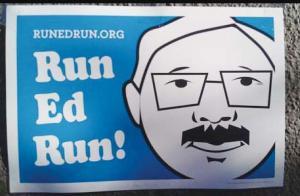
Many political analysts privately fear that this dynamic, with nobody really pulling away from the pack of candidates, could encourage Lee to get into the race. But Stearns notes that Lee, despite the power of incumbency, will have a hard time catching up in fundraising and a huge target on his back because of breaking his word, the sleazy “Run Ed Run” campaign tactics, and just the fact that he would become the instant frontrunner.

“In the ranked choice voting scenario, if there’s someone who looks like he’s going to come in first, you don’t lose anything by attacking him because his second place votes aren’t going anywhere,” said Stearns, who said the current mayor’s race appears to be a game of inches. “It’s an infantry game rather than an air game, where the gains are slow and people are proceeding carefully.”


The crucial question: why didn’t Obama invoke the 14th amendment and seize the day?

7

For me, the crucial question for President Obama is why he didn’t take the advice of former President Bill Clinton, Rep. John Garamendi, and others who urged him to invoke  the 14th Amendment and its “validity of the public debt” point and then unilaterally raise the debt ceiling.

The Tea Party Republicans had manufactured a phony crisis with the debt ceiling, linked it to their wrongway issue of tax reduction, and then held the nation hostage to their  maniacal demands for trillions of  cuts to domestic programs.
Armageddon was nigh.

Yet Obama, after caving on single payer health care, the public option,  restoring the Bush tax cuts, on and on, and after negotiating  the debt crisis on Republican turf with many of their arguments and much of their language, refused to take the one crucial  step that could have saved the day for him  and the country that will suffer further under Teapartyism.
 
Sure, Republicans would have screamed bloody murder. Tough.  They  forced Obama to the brink,  and public opinion would have supported him fighting it out for once and  taking this understandable position of executive authority under these draconian circumstances.

The legal experts I read and heard on television said that they didn’t think that Congress could have  been able to subvert this decision.  And consider the campaign issue: Obama took on the Teaparty Republicans and beat them at their own game. Instead, he allowed them to win the battle and allowed Speaker of the House John Boehner to claim that he had gotten 98 per cent of what he wanted.

And what did Obama and the Democrats get?  The prospect of  a Republican tax-cutting disaster moving in agonizing stages that will most likely deepen the recession, stunt job growth even further,  keep unemployment rising, and give the Republicans an armory full of ammunition to knock him out.

Shakespeare has a phrase for this in his sonnet 73:  Obama and his adminstration were  “consumed by that with which it was nourished by.”  B3

P.S. Paul Krugman was right. The MSNBC lineup has done a wonderful job of covering the crisis and laying out the issues with passion and not Beltway “objectivity.”  Cbris Matthews, Ed Schultz, Rachel Maddow, Lawrence O’Donnell and the guy who started it all, Keith Olberman now on Current TV on Channel 170 in San Francisco. Thomm Hartmann and Randi Rhodes did good work on Green 960.

Appetite: At Beefeater Distillery, London

0

One jumps at the chance to spend a day at London’s Beefeater Distillery, particularly when given a personal tour by Beefeater‘s master distiller Desmond Payne. Gracious and mannered, Payne has been making gin for over 40 years, his early days being at Plymouth Gin. As a guest of Beefeater, my trip to London was full of unforgettable days, and this was one of them.

Join me on the photo tour, above, through the distillery, one that has been in operation since 1820 – the longest running London Dry Gin actually made in London.

Beefeater’s unique process is that they steep their 9 botanicals (juniper, angelica root, angelica seeds, coriander, liquorice, almonds, orris root, Seville oranges, lemon peel) for 24-hours in copper pot stills with water and a neutral grain base of English wheat. All this with only five year-round staff? Impressive at over 2 million cases a year.

Payne has been producing a series of seasonal releases, like Beefeater Winter Gin in December, a  Summer Gin (floral notes from elderflower and hibiscus), and a brand new London Market Gin (with kaffir lime and cardamom) that sadly we won’t see released in the US.

— Subscribe to Virgina’s twice-monthly newsletter, The Perfect Spot. Read more about Virginia’s exciting cocktail adventures in London here.

Brian Wilson ain’t got nothing on the men of “Whisker Wars”

2

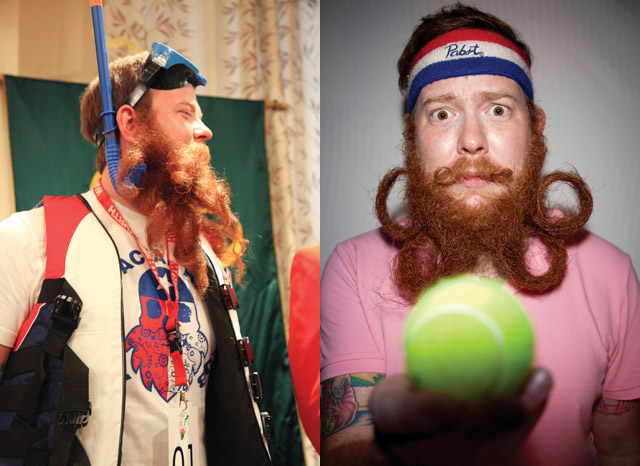
If the hirsute heroes of Deadliest Catch, Ice Road Truckers, and Ax Men haven’t fully satisfied your appetite for bearded he-men, the executive producer of those gems has ditched the “tough vocation” façade and introduced a show that’s purely about the fur: IFC’s Whisker Wars, which debuts Fri/5. The show trails men around the U.S. as they prep and groom for the World Beard and Moustache Championships in Trondhjem, Norway with the long-standing champs of Germany looming in the distance.

Competition categories run the gamut from Freestyle to Full Beard Natural (in one contender’s analogy, that boils down to “synchronized diving vs. marathon”). The former measures artistry and ingenuity, the latter demands “an unbroken line of unshaven ace from the temple to the chin to the other temple … to achieve natural fullness, size, and shape.” For some reason, Miss Oregon serves as a judge for the U.S. Nationals (where California beards killed, as we reported at the time) and looks repulsed as she’s forced to stroke and yank at waist-length beards. That face – filled with a bittersweet mix of disgust and morbid curiosity – seems to be the main driver of the documentary’s entertainment value.

We watch the dueling egos of the men, their interactions with surprisingly sane spouses, and overall grooming techniques. Reigning champ Jack Passion is derided for his narcissism and book deal, while Aarne Bielfeldt serves as a charming foil: a man who lives in the forest and is an avid harpsichordist. Bielfeldt’s beard is a dangling gray, though coincidentally, most of the men on Whisker Wars (including Passion) sport brilliant red beards of varying length and texture.

The beardsmen (beardos?) struggle with everyday tasks, such as eating, and other not-so-everyday tasks, like multiple brushing sessions. Just watching them wrangle unruly facial hair is exhausting, though the show is unexpectedly watchable, mostly because it isn’t afraid to acknowledge the self-seriousness and absurdity of it all.

Whisker Wars premieres Fri, August 5 at 11 p.m. on IFC.

Moonhearts beam a hazy summer light on Total Trash Fest 3

0

In the Wed/3 Guardian you can read the tale of Total Trash Fest 3, and what exactly it takes to be a trash band. Here I present another example of the Total Trash type: Moonhearts.

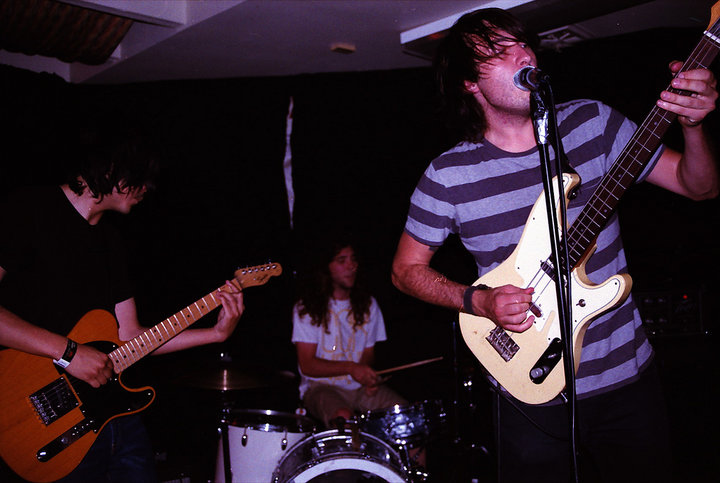
The band includes vocalist-bassist Mikal Cronin, who also has a solo album out — he’ll play two Trash Fest sets Sunday, August 28 (one with Moonhearts in the afternoon, and later that night by himself). On top of that, he occasionally tours with his friend, local garage rock wizard Ty Segall, who is in Traditional Fools, also set to play Total Trash. It’s a freaky web those trash types weave.

“We’ve played with a lot of those bands [in the fest] before,” Cronin says, adding with a laugh, “I guess we’re pretty trashy, but we try to keep it under control.”

But Moonhearts represents a newer side of trash, veering slightly away from the punk and more toward a dreamy California surf sound. (Don’t worry, the band definitely keeps up the noisy garage ethos of the genre.) It’s a modern, more distorted version of those psychedelic Nuggets box sets, which introduced a generation (whether it admits it or not) to bands like the Seeds and Strawberry Alarm Clock.

Some Moonhearts tracks, such as “I Said” off its eponymous 2010 album on Tic Tac Totally, evoke those bands more directly, while other songs veer toward a more straightforward Dick Dale and the Del-Tones style with the classic, wave-like reverb.

The trio grew up in Laguna Beach, Calif., discovering surfing first, and rock ‘n’ roll second. All three attended Laguna Beach High School and it was there that Cronin first met Segall. The pair started a band, a first for them both, which Cronin describes as a “Laguna Beach party band.”

After high school Cronin went away to college in Portland, Ore., but returned to the coastal Orange Country town in 2006 and started up Moonhearts. “Growing up, we were all obsessed with surf records, so [our music] seemed appropriate. We’ve never talked directly about it, but it seems to permeate everything we do.”

The band was originally called Charlie and the Moonhearts, after drummer Charlie Mootheart, the youngest member of the group, but it has since dropped the “Charlie.” In name only, though — Mootheart, who now lives in San Francisco, continues to play with Cronin and Moonhearts guitarist Roland Cosio, though they both live in Southern California. That’s about to change: Cronin and Cosio are planning to move to the Bay Area as soon as possible.

Moonhearts
With Pangea, King Lollipop, and Si Si Si
Aug. 28, 2 p.m., $7
Hemlock Tavern
1131 Polk, S.F.

Mikal Cronin
With Mouthbreathers, Cosmonauts
Aug. 28, 9 p.m., $7
Hemlock Tavern
1131 Polk, S.F.
www.hemlocktavern.com
Facebook: Total Trash Fest 3

Straightening out planking

0

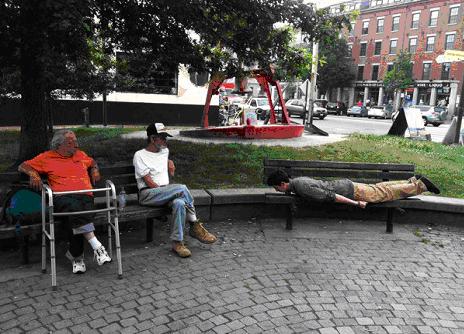
The newest international pastime involves lying face down on the ground with the ultimate goal of remaining as stiff as possible. I’d lump it in with parkour, mosh pits, and the car and phone booth stuffing competitions from the late 1950s and early ‘60s on account of its baffling physical appeal. For those of you unaware of this global craze and perhaps had no clue as to why Rosario Dawson was lying on a table on Jimmy Kimmel Live… they call it planking.

Although planking’s popularity has taken off this summer in the U.S, the trend goes back as far as 1994. It stayed under the radar as an underground hobby in Australia and Europe forever before its newfound seismic popularity.  

A written description of planking sounds neither amusing nor enticing. The goal of the practice is to find the most complex, unorthodox structure around and “plank” atop it, making sure to assume proper planking position — stiff as a board, arms at your sides. Planking is driven by a particular kind of oneupsmanship. Anything from fences to basketball hoops, forklifts to flagpoles, (yes flagpoles) plankers manage to find a way to remain as stiff as possible while their buddies quickly snap a photo of their latest feat. The higher the physical risk the better. 

But are bragging rights worth your life? 

On May 13, a man was arrested in Queensland, Australia for allegedly planking on top of an Australian police car. And sadly on May 15, a 20-year old Australian man made worldwide headlines after his failed attempt to plank on  a building’s balcony seven stories high resulted in the trend’s first casualty.

But for many, planking is nothing but clean harmless fun. Ryland Webb, an 18-year old from San Francisco, not only likes planking’s fun times — he also uses it as an opportunity to make a statement. 

Webb says he first started planking out of curiosity. “The first time I planked was with some friends on a long afternoon. We didn’t really know what to do so we gave [planking] a shot.”

While in Portland, Maine, Webb says that he used planking as a way of interaction. “We were in a different city and we viewed planking as an alternative way to interact with the natives. You really don’t know a place until you pretend you’re a board on its horizontal surfaces.”

“As times progressed we started to view the activity as our own innocent way of fucking shit up,” Webb says. “Planks began to be fashioned either to provoke reactions from bystanders, or symbolize some abstract form of youth rebellion.” He and his friends planked bike racks, benches, cars, newspaper stands, and fences.

And it’s not a trend if famous people aren’t doing it. Basketball players like Dwight Howard and former Golden State Warrior Gilbert Arenas, as well as mainstream artists like Katy Perry, Chris Brown, and Usher have all taken a plank now and then. 

But since planking’s breakout, there has been a growing amount of critics wary of the game’s origins and intentions. Some believe it to be an insulting representation of the horrific stacking of slaves atop wooden planks which took place during the Middle Passage. The idea of planking has sparked outrage from many; including Alvin Nathaniel Joiner IV, better known as rapper Xzibit, who tweeted “Planking is THE dumbest shit ever. #Planking was a way to transport slaves on ships during the slave trade, it’s not funny. Educate.”

It’s hard to say what the true intentions of planking really are. The game which has taken on many various monikers in the past, including “the lying down game”, “playing dead”, “extreme lying down,” and “facedowns.” 

But it does appear that the trend is sticking around, for the moment at least. Don’t be surprised if — on your next coffee run or hamster walk — you see someone lying face down atop of a bike rack or a public mail box. Planking may just be one of those things we’ll have to take lying down.


Street Threads: Look of the day

0

Today’s Look: Coco, 23rd St. and Valencia

Describe your look: “California meets Berlin.”

Editorial: Step up to save CCA and take on PG&E

110

Two things became abundantly clear at the San Francisco Public Utilities Commission meeting July 26th: The Community Choice Aggregation program is off track — and General Manager Ed Harrington has no interest in making in work. The supervisors need to move aggressively to save CCA.

Since 2007, when a draft implementation plan was released, the goals of the program — which is supposed to offer a cleaner alternative to Pacific Gas and Electric Co. — have shifted fairly dramatically. No longer does the plan seek to meet PG&E’s rates. No longer is it aimed at the entire city. And the PUC is putting most of its effort into a short-term contract to buy green power from Shell Energy North America — and all-but ignoring the more important moves to build a publicly owned energy-generation infrastructure.

CCA, which allows cities to buy power in bulk and resell it (along existing private utility lines) to customers, is a step in the right direction. The program now before the PUC would put San Francisco in the public power business — to a degree. But as the financial projections for the program demonstrate, the real savings and the real revenue won’t come until San Francisco replaces PG&E as the owner and operator of the local grid. A full-scale public power system would allow the city to both increase renewable power and cut rates — and would bring hundreds of millions into the treasury in the process (see “Mud Money,” 6/26/08).

Still, CCA offers many benefits — including the chance for the city to build local renewable energy facilities. And that’s where the PUC’s efforts ought to be focused.

During discussion of the proposed contract July 26th, Harrington was largely negative and talked repeatedly as if he didn’t think the original program could work. He kept saying that renewable power was more costly (true, today — but not after the city starts building its own facilities). He said that the goals the “advocates” (who include a majority of the Board of Supervisors) have demanded were unrealistic. And most of the commissioners seemed clueless.

That’s a terrible way to launch one of the most important environmental and financial initiatives in modern San Francisco history. Marin County is already well on the way to creating a working CCA system. Other counties are moving forward. And San Francisco, the only city in the nation with a federal mandate for public power, can’t get its civic act together.

The supervisors need to get involved, quickly. The Local Agency Formation Commission, which is overseeing this project, should haul Harrington in for a hearing as soon as possible. Among other things, the LAFCO members should ask why Harrington is so determined that the project won’t work; why his proposal is geared to a small number of residents and businesses who would face higher rates for power; and what his plans are to create a local energy generation infrastructure that over the long run would be dramatically cheaper and greener than anything PG&E will be able to offer.

The problems with CCA reflect the immense challenges of putting this program in the hands of a commission a majority of whose members were appointed by a mayor who opposed public power, managed by someone who has never supported municipalization efforts. Harrington and the SFPUC appear to be setting CCA up to fail. The supervisors need to step in before that happens.


Street Thread: Look of the Day

3

Today’s Look: Sarah, 24th St. and Poplar

What’s your style philosophy? “Go as classic as possible.”

Portuguese delights at the Secret Wine Shop and lenga|lenga

0

Up on the second floor of an industrial warehouse in SOMA, you can find a small, stylishly decorated loft filled with secret spirits. I’m not talking about a haunted house. I’m talking about the Secret Wine Shop. It’s also the home of owner Christy Bergman — and homebase for her endeavor to bring unique and delicious wines to an eager audience, in a nontraditional and extremely intimate environment.

On July 25, I went to Bergman’s Portuguese food and wine event, which was a collaboration with lenga|lenga, a new catering biz specializing in traditional Portuguese flavors.  Needless to say, it was one secret that deserves to be shared.

All six-courses were perfectly paired with a wonderfully robust, small-production wine, either from Portugal or made with Portuguese grapes. According to the chefs, there are 1001 ways to cook cod, so several of the dishes used this delicate, flaky fish, including the main course of creamy codfish, cooked with potatoes and white sauce, a Portuguese twist on potatoes au gratin or Spanish brandade.

As we made our way through the long list of wines, each one better than the last, we socialized with the resident cat Diesel, examined the eclectic art on the walls, and got to know our fellow wine aficionados, in what was essentially somebody’s living room. This is truly a special wine tasting experience, and with the expert wine selection by Bergman, your palette will be pleasantly surprised by the diversity of flavors that one evening can encompass. As they say in Portuguese as they clink their glasses together … saúde!

Ethics Commission to discuss Progress for All

San Francisco Chronicle reporter John Cote’s scoop highlighting how Recology executives were working behind the scenes under pressure from Chinatown power broker Rose Pak to encourage Mayor Ed Lee to seek a full term is just the latest development for a committee that’s raised eyebrows already, and it may be just the beginning.

Five mayoral candidates — board President David Chiu, City Attorney Dennis Herrera, state Sen. Leland Yee, former Supervisor Michela Alioto-Pier, and businesswoman Joanna Rees — have teamed up to encourage the San Francisco Ethics Commission to investigate whether Progress for All has run afoul of local election laws, rallying behind an effort spearheaded by Democratic County Central Committee Chair Aaron Peskin in a July 28 letter to commissioners.

At the heart of the issue is whether Lee or any of his representatives have been coordinating with agents of Progress for All. If they are, Progress for All would have to be considered Lee’s own, candidate-controlled committee, Peskin asserts in the letter.

“Given the close relationship between Ms. Pak, the Mayor, and Progress for All, it is very possible that the committee has ‘consulted’ or ‘coordinated’ with the Mayor, and therefore its expenditures should be deemed to be made ‘at his behest,'” Peskin’s letter to the Ethics Commission argues. A City Hall insider told the Guardian that Pak — a primary driver behind the Run, Ed, Run campaign — is regularly observed going to and from the mayor’s office.

“If Progress for All or any of these other committees has been acting on Mayor Lee’s behalf, those committees may have violated the $500 contribution limit and prohibitions against accepting corporate, union or city contractor money, restrictions that apply to all candidate committees,” the letter states.

Financial disclosure filings for committees fundraising for the Nov. 8 election are due Monday.

Aside from the question of whether there is coordination between Lee, who has not yet announced that he will run for mayor, and Progress for All, concerns have been raised about city contractors aiding in the efforts of the campaign. Under the city’s Campaign Finance Reform Ordinance, contractors doing business with the city are not allowed to make political contributions.

(Given the revelations that Recology executives’ signature gathering efforts were done in violation of company policy, it’s no wonder Recology executives become bashful when approached by reporters who ask tough questions.)

Meanwhile, Recology might not be the only city contractor that Pak has encouraged to support Run, Ed, Run. A column that former Mayor Willie Brown published recently in the San Francisco Chronicle suggests that this isn’t the first conversation of this kind.

“One thing you can say about Chinatown powerhouse Rose Pak, she is not shy,” Brown’s column begins. “Holding court at the party for the opening of the new airport terminal, Rose was seated at the table with interim Mayor Ed Lee and his wife, Anita, and a host of other local officials. ‘I want every one of you to call his office and tell him he should run for mayor,’ Rose told the table. ‘And do it right away so that there’s no misunderstanding.’ Then she turned to the architect David Gensler. ‘Didn’t you do this terminal?’ she asked. ‘Yes,’ he said. ‘Didn’t you remodel this terminal before?’ ‘Yes,’ he said. ‘Then your firm should raise a million dollars for his election campaign.'”

While Brown may not be a visible player in the Run, Ed, Run campaign, he’s certainly been at the table with a key driver behind it and Lee himself — and he’s using his platform in the Chronicle to get the word out about Lee’s potential mayoral campaign.

“The specific revelations of unethical and possibly illegal activity are very troubling and need to be fully investigated by the Ethics Commission as soon as possible,” Chiu told the Guardian.

Political consultant Jim Stearns, whose firm is managing Sen. Yee’s mayoral campaign, joined the chorus in calling for an investigation. “If you think about the fact that these guys still, according to press reports, are eating together once a week, and there’s not supposed to be any coordination … You have this committee that is essentially operating in complete disregard of the campaign law,” he said. “It’s sort of like there’s a crime being committed, and where’s the police?”

The San Francisco Ethics Commission will hold a policy discussion about how to treat Progress for All at its Aug. 8 meeting, Ethics director John St. Croix told the Guardian.

“We’ve told the committee that we believe they’re a primarily form committee, which is an independent expenditure committee on behalf of a candidate for office or a ballot measure,” St. Croix explained. “They’re claiming that there’s no candidate, so they can’t be that committee, even though they’re acting pretty much exactly like one would.”

As things stand, Progress for All has filed as a general purpose committee, he added. “A general purpose committee is what you would think of as a [political action committee]. They usually represent an organization or elected group of individuals, they tend to exist for a long period of time, and they contribute to multiple campaigns, whereas a primarily formed committee is created to support or oppose a single candidate or a single ballot measure in a single election,” he explained. Another key distinction: “Independent expenditure committees don’t have contribution limits the way that candidate committees do. Candidate committees have a $500-per-contributor contribution limit.”

Peskin, meanwhile, hinted that there may be more to come. “There’s a lot of it,” he said, “and I think there are many people who have stories to tell.”

The Crash Pad Series celebrates episode 100 with a list of San Francisco pleasures

0

Fierce femmes, bashful bois, fisting, wrestling, squirting, and squealing, The Crash Pad is one fictional apartment that any voyeur would love to call neighbor. Lucky for all, the key to this hotbed of locally produced, randy queer porn is under the mat and everyone is invited to crack the door and peek inside at the Pad’s celebration for hitting the triple digits.

The Crash Pad Series started in 2007 as the genius creation of Pink & White Productions, a film company that prides themselves on “beautifully fucked and beautifully produced” explorations in queer sex. The simple premise of the series keeps things hot and honest, nothing cheesy and nothing fake; the authenticity of pleasure is a big bonus in viewing quality. The rotating cast of characters are just as diverse as the sex itself and site subscribers can watch their favorites in action, scan stills from the shoot, and hear all the dirty details from performers in the behind the scenes interviews. Pink & White’s owner Shine Louise Houston chose genderqueer pornstar Jiz Lee and feminist porn icon Nina Hartley, (who many will recognize from Boogie Nights and a large collection of instructional videos popular in the ’90s) to hash it out for number 100. There’s a whole lot of chemistry between the daring duo and they waste little time before taking off the boots and getting down to the good stuff: saucy cock-sucking, female ejaculation, strap-ons, breath control, and impact play. 

“No poop, no blood, no glitter,” the only rules of the Pad, says performer Jiz Lee. “The first two are because the Credit Card company won’t allow it. The last is because the stuff is impossible to clean up.” Letting the pornstars control of the actions always turns out to be a major turn on. 

In honor of the show’s big birthday, The Guardian asked some of the Crash Pad’s regular performers to put-out and offer up their favorite San Francisco pleasures. 


SFBG: Name 5 things in San Francisco that turn you on.

Nina Hartley: Center for Sex and Culture, Good Vibrations, Greens restaurant, Colibri restaurant, and Absinthe restaurant.

Jiz Lee: My bicycle, El Rio’s back patio, Muir Beach, community gardens, and swimming.

Minax: Kabuki Spa, SF Citadel, my private play space, yoga with Skeeter, Bi-Rite!

James Darling: Mr. S Leather, ice cream from Bi-Rite, Vixen dildos, Eros, and the Center for Sex and Culture.


SFBG: What 4 places in the Bay would make hot Crash Pad field-trip episodes?

Stealth Machine: Sutro Baths, Marin Headlands, the grave yard at Mission Dolores (sacrilege!) and El Rio!

Scarlett Chaos: Dolores Park, the Lex, [somewhere with] the Golden Gate bridge in the background, the pier, the Armory.  

Kitty Stryker: Sutro Baths (mmm, outdoor cruising), the Looking Glass dungeon, a warehouse space in Oakland (Nimby, perhaps?), the Albany [Bulb].

Madison Young: The Lexington, Wicked Grounds, the Center for Sex and Culture, and Mojo Café. 


SFBG: Who are 3 of the sexiest San Franciscans you know?

Stealth Machine: Lance Holman (Mr SF Leather 2010), Annie Danger, and Storm Miguel Florez.

Minax: Jiz Lee, Carol Queen, and Annie Sprinkle.

Madison Young: Princess Donna, Syd Blakovich, and Ceci Dolores.

Ian Sparks: Jiz Lee, Nic Switch, Vid Tuesday (oops, he just moved to Oakland).


SFBG: Where are 2 great places for outdoor sex in the Bay? 

Jiz Lee: Dolores Park, Travel Lodge roof top.

Syd Blakovich: Sutro Baths and handjobs on the F line from Fisherman’s Wharf to the Castro.

Kitty Stryker: I love having sex on top of Twin Peaks looking out over the city! Tilden Park is nice for foresty fun.

Tristan Crane: On the rooftop of our apartment buildings, in the middle of Folsom Street during the street fair. Sort of dirty, but also a rite of passage. 


SFBG: If San Francisco had a signature sex position or kind of play, what would it be?

Nina Hartley: Pansexual play parties.

Jiz Lee: San Francisco’s signature sex position would be a big, throbbing, wet, FIST.

James Darling: Gangbang with friends.

Maxine Holloway: Is a big queer orgy kitten pile a position?