SFBG Blogs

Butthole Surfers, 400 Blows keep it weird/bloody at Regency Ballroom

1

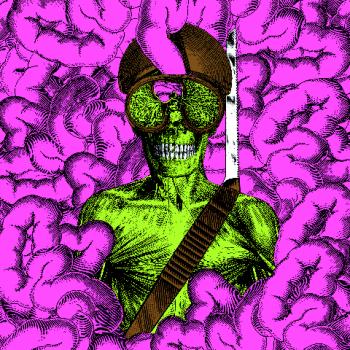
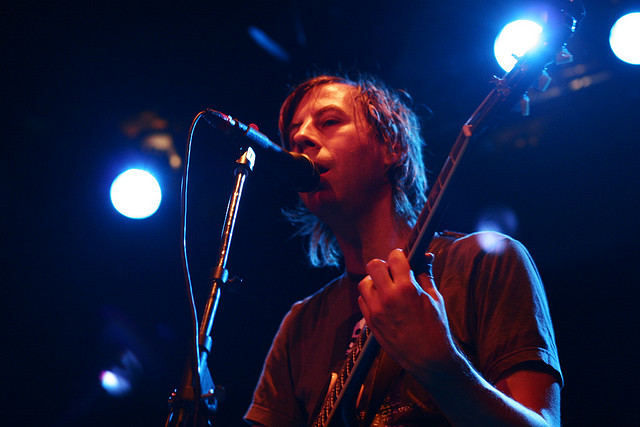
I had some pretty significant nightmares last night thanks to Butthole Surfers. Don’t get me wrong, the legendary avant-garde punk band, born in San Antonio, Tex. in 1981, was aces during its show at Regency Ballroom – just as weird and earsplitting as it ever was. The three enormous screens behind shaggy-haired lead vocalist-saxophonist-noise box manipulator Gibby Haynes and the rest of the band projected the images that stalked my dreams.

Slowed-down, reversed, and replayed horror flick scenes of gruesome bloody deaths, chopped up bodies, and viscous blood trickling down porcelain skin. But what else would one expect from hardcore’s longest-running freaks. Speaking of freaks, there’s a scene in the Flaming Lips documentary Fearless Freaks in which a chip-toothed Haynes claims Wayne Coyne stole his act. After seeing both live, and knowing their origins, I’m siding with Haynes. While there are obviously similiar elements (megaphones, blood, vintage footage, burning drums) The Flaming Lips’ stage show is like the top layer of Earth, all growing and green with frolicking animals and balloons filled with glitter. Butthole Surfers, however, occupy the dark and wormy space below the crust, with blood-soaked demons, creepy smiling dolls and eerie ’70s cheerleaders, pulsating shots of psychedelic color, and suped-up, high-speed vocal effects. It makes for a great live show.

But before Haynes and Co. set up shop, a far smaller crowd was gathered for openers 400 Blows, a longtime GSL act that mixes metal drop d guitar riffs with punk drum beats and hardcore talk-singing vocals. The L.A. band, currently on tour with the Butthole Surfers, has been around for more than a decade, and it shows. They seemed comfortable on stage, and with each other, despite the noticeably diminutive audience – it was only 8 p.m. Singer Skot Alexander kept trying, in vain, to incite the crowd, leaping on speakers and throwing a fist like Danzig, but for the most part the audience just stood there polite, yet cheerful – at one point someone thoughtfully offered Alexander a stack of napkins to wipe his brow. He likely could have cooled off if he had removed his signature black leather gloves, but that seemed unlikely.

There was a significant break between the bands, conceivably to wait for the space to fill up, which it eventually did. Then the projected footage began pumping, and the crowd of mostly 30-something men in black t-shirts and jeans began moshing. And yes, for those only aware of the band via its strangely radio-friendly 1996 hit, Butthole Surfers did play “Pepper” – though a noisier, quick and dirty version of it.

5 Things: August 30, 2011

0

>>A HURRICANE OF YIPS The great Chihuahua airlift of 2011 — in which a planeload of unwanted West Coast pups were to be flown from L.A. to new homes on the East Coast (where “there is a demand for them”), dubbed “Operation: Chihuahua,” has had to be delayed due to flight rescheduling around Hurricane Irene. But never fear small dog lovers (Chelsea gays)! Virgin is in the process of rescheduling what is surely the Saigon or Berlin airlift of our time, and even offering a “No Chuhuahua Left Behind” package — “each ticket to Mexico booked by 11:59 p.m. Thursday will contribute $25 to support ‘local dogs and future airlift flights.'”

>>24-HOUR VEGAN PIZZA ALERT! 24-HOUR VEGAN PIZZA ALERT! We’ve been really, really into vegan pizza lately here at the Guardian — and while our old standby is a simple veggie minus cheese from neighborhood spot Goat Hill Pizza, we finally had a post-clubbing opportunity to experience newly revamped pie parlour DNA Pizza, conveniently located right next to party-central DNA Lounge itself. It’s open 24 hours! It has lots of options! Best of all, there’s an excellent vegan overload called “The Whole Damn Vegan Garden”: spinach, basil, tomatoes, red onions, artichoke hearts, black olives, daiya vegan cheese, and bell pepper on some pretty great crust. No need to sink into dead grease after drinking at the goth party, y’all. 

>>RAISED VOICES A group from the San Francisco Girls Chorus will be singing and marching in protest today over the non-renewal of its longtime artist director, Dr. Susan McMane. The protestors, comprised of current singers and graduated alumnae, will meet at 5 p.m. at the San Francisco Opera House then sing-march to the San Francisco Girls Chorus building at 44 Page. McMane, who has been with the choir for over 10 years, learned in late July that her contract would not be renewed. The chorus is protesting for answers as to why this decision was made.

>>IF THE GLOVE FITS… Scene from last night’s birthday tribute to MJ at Showdown, hosted by our Fist Fam buddies. We’re still wearing ours today guys. It’s making it really hard to type this.

Photo by Dennis Beckmann

>>LAST NIGHT A BJ SAVED MY LIFE No one on Earth has every maintained a daily video blog for four years — besides BJ Dehut (disclaimer: this might not be true). We’re kind of sorry to turn you onto the LA DJ and marketing consultant’s deal because… well there goes the rest of your afternoon. Here, watch this one and try not to think of his 51 months of backlogged video weirdness, hip-hop, and 1950s knife-throwing mothers.

Street Threads: Downtown Edition

0

Today’s Look: Natalia, O’Farrell and Powell

Describe your fashion philosophy: “Natural style.”

BART protests continue (VIDEO)

27

Protesters returned to downtown San Francisco train stations on August 29, vowing to keep up their schedule of Monday evening rush hour protests until the  BART police are disarmed and retrained, or disbanded. This time, howevef, stations remained open and trains ran on schedule in a protest where both BART police and demonstrators took pains to reach out to commuters angered by recent train service disruptions.

A crowd of 200 people gathered outside of Civic Center station, the location of the July 3 fatal shooting of a 45 year old Charles Hill by BART police.

Hill’s physician, Dr. Rupa Marya, joined the protest a day after releasing an open letter on the shooing calling for BART police to re-examine its use of force policies and training.

“Charles was a member of the invisible class of people in SF–mentally ill, homeless and not reliably connected to the help he needed,” read Marya’s letter. “We often have to deal with agitated–sometimes even violent–patients in the hospital. Through teamwork, tools and training, we have not had to fatally wound our patients in order to subdue them.”

The protest made its way down Market Street entering each station briefly but remaining outside the fare gates. BART police have made it clear recently that their policies only allow freedom of expression outside the paid areas of the station. Previous protests on the train platforms have lead to station closures and train delays – delays that protesters and police have accused each other of causing.

Video taken by Josh Wolf, which includes protesters and counterprotesters, including a debate between Dr. Marya and a supporter of the cops.

As the protesters moved down the Market Street corridor they were shadowed by a small army of BART and San Francisco Police Department officers intent on preventing further station closures.

At Montgomery station Deputy BART Police Chief Daniel Hartwig told the Guardian, “Protesters appear to be following BART’s free speech rules and regulations and at this point we are happy they are. We support their right to protest.”

Behind him the station lobby filled protesters chanting, “How can they protect and serve us? BART police just make us nervous.”

At Embarcadero station an organizer with No Justice No BART challenged BART’s free speech rules.

“Right here you can say what you want. The moment you enter that fare gate you can’t say what you want,” he announced over a megaphone before crossing through the fair gates under heavy police presence.

After speaking out briefly in the paid area of the station, he exited of his own accord and was promptly arrested by BART police along with another protester in a Guy Fawkes mask who also had been using a megaphone.

Muni, which shares several downtown train stations with BART, has shifted in recent years away from police patrols to a “community ambassador” program, largely removing armed SFPD officers from those train and bus lines in favor of unarmed fare enforcement personal. The program has been praised from all sides as an appropriate balance of community safety, and fare enforcement on public transportation.

Robin, a young San Francisco native who said it was her first time participating in the police misconduct protests, characterized the gathering as a success. When asked if she found the presence of so many police intimidating she said “It was meant to be intimidating. That they would bring everyone out to police a small protest shows they fell they have something to be ashamed of.”

While the protesters focused on BART’s use of lethal force, civil liberties groups filed a petition Monday with the Federal Communications Commission, as the national fallout continues over BART’s decision to cut cellphone service to thwart a protest that never developed on August 11.

The coalition including Center for Democracy and Technology, Center for Media Justice, and Electronic Frontier Foundation argues that regardless of First Amendment augments for or against the disruption of cell service in the paid areas of BART’s stations, BART exceeded its authority under federal law. The complaint notes that the Communications Act, which governs cell phone service providers, clearly states the no carrier shall discontinue service without authorization from the FCC.

“It has been settled law for decades that law enforcement agencies have no authority to order discontinuation of phone service on mere suspicion of illegal activity without due process,” the complaint states.

The coalition urged the FCC to address the issue immediately in light of BART’s statements attempting to justify the cell service disruption, and the risk that other government agency may consider similar policies if the FCC does not assert its authority in the matter.

BART’s board of directors held an emergency meeting (Wed/25) to begin crafting a policy outlining to what future instances could lead further shutoffs.

BART has staff defended its disruption of service that took place August 11, saying their intent was to protect public safety.

What the mayoral polls mean

25

We’ve seen a lot of polls on the mayor’s race, and they’re all pretty similar to the one the Examiner reported today: Ed Lee has about 30 percent of the vote, and everyone else is in a big, undifferentiated pack way back in the single digits. A couple of thoughts to put this in perspective:


One: All of these polls have a margin of error; a poll of 500 voters, like this one, has an MOE of at least +/- 5 percent. Which means that Lee has somewhere between about 25% and 35% of the vote. The rest of them? They’re all effectively tied. Yee and Herrera at 7 percent and Avalos at 5 percent is a statistical dead heat.


Two: What a poll like this shows, among other things, is that 70 percent of the voters are not supporting the incumbent right now. About as many are undecided as are supporting Lee. That’s not a whopping show of support for the front-runner.


Three: On the other hand, nobody else in the race is even close to Lee at this point, and he’s far enough ahead that he will be hard to catch — unless either (a) one of the other candidates catches fire, comes up with a campaign that really takes off and pulls away from the pack, or (b) the other candidates attack Lee enough, and the attacks are effective enough, to bring his numbers down significantly.


Four: There’s never been a ranked-choice vote for mayor, so nobody knows exactly how it will play out.


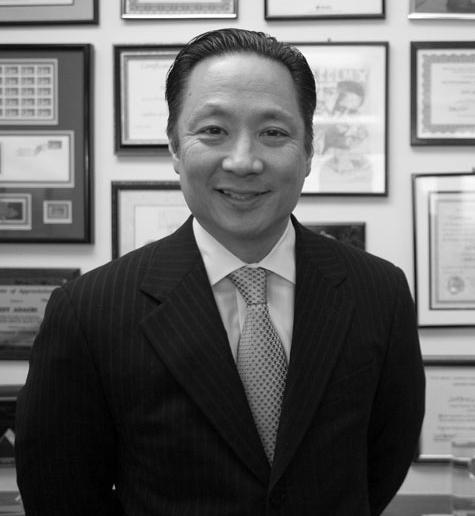
I don’t buy the line that Adachi is a “long shot” — not any more than anyone else. In fact, for better or for worse (and it cuts both ways) he’s better positioned than most of the candidates to get votes from both the right and the left. If I were running Adachi’s campaign, I’d be sending him out to the west side of town to tell everyone he was the only candidate tough enough to stand up to those damn city employee unions — then I’d be going to the east side of town and saying he was the only candidate who could stand up to the cops. Tell the conservatives that pension reform is about the greedy bureaucrats; tell the progressives that it’s about the greedy cops and firefighters. Wear a nice silk suit and look like a manager out west; take the tie off and talk about cops breaking into SRO rooms on the east. And with Ed Lee as an incumbent who supports a more modest pension reform plan, Adachi can run against City Hall wherever he goes.


I’m not saying he’s going to win, or even that he’s the number one challenger, but he did get 190,000 votes the last time he ran. And he can raise money. So he’s going to be a factor in the race.


What I’m waiting for is the breakout issue, the line that takes, say, John Avalos into striking range of Lee (at which point, he can start collecting “anyone but Ed” votes from the other candidates). Remember Harris Wofford, who was given absolutely zero chance of retaining his U.S. Senate seat in November, 1991? Wofford, who had been appointed that spring, was a virutal unknown (and something of a nerd) who was facing the slick and popular former Govenor Dick Thornburgh. Wofford’s campaign came up with a single-issue line that caught Thornburgh by surprise: “If every criminal has the right to a lawyer,” he asked in campaign ads, “then why doesn’t every sick person have the right to a doctor?” That  slogan, and that issue, brought him from about 30 points behind to a ten-point victory.


What’s going to catch the San Francisco public’s attention over the next two months? I don’t know. Here’s my suggestion:


“If San Francisco has 14 billionaires, why can’t we afford to buy pencils for the public schools?”


Editorial: Move forward two key housing projects for vulnerable youth

0

Somewhere between 4,500 and 6,800 young adults in San Francisco are either homeless or marginally housed, according to a 2007 report by the Mayor’s Transitional Youth Task Force. And the city has exactly 314 housing units for at-risk young people who have passed their 18th birthday and are kicked out of the foster housing program. That’s the definition of a crisis — yet two modest projects that would make a small dent in the problem have faced immense obstacles moving forward.

The Booker T. Washington Center and the Community Housing Partnership want to create a combined 74 units of affordable housing for vulnerable youth. But both have endured long delays in the planning process, thanks to opposition for people in upscale neighborhoods who clearly don’t want this kind of housing in their midst.

The Booker T. Washington project finally made it through the Board of Supervisors in July — although the small nonprofit is now facing a lawsuit to stop the housing. The CHP’s plan to build 24 units on the site of the old Edward II Hotel in the Marina comes before the board in September, and may also face litigation.

The supervisors need to approve the CHP project and send a strong message that this is housing San Francisco needs — and that all group housing for vulnerable populations shouldn’t be confined to a few central city neighborhoods.

Opponents of the CHP project argue that it’s too dense for the neighborhood. That makes little sense: The hotel that the project is replacing once offered 29 rooms, mostly double-occupied. And the majority of those temporary residents drove cars; the majority of the young people served by the project won’t be vehicle owners. So the level of congestion and neighborhood impact should be relatively minor.

The larger issue that both projects reflect is that much of the low-income, transitional and supportive housing in this city has been concentrated in a few neighborhoods. It makes sense to put some housing near services, but there’s no reason why projects that offer on-site support for young people who are transitioning from high school to either college or the job market can’t be spread all over the city. In fact, that’s what the Mayor’s Office initially suggested several years ago when it sought proposals for youth housing projects.

The notion (quietly voiced by some project foes) that transitional youth housing will attract crime isn’t supported by either rational thinking or evidence. Young people who have lived most of their lives in foster homes — and are facing homelessness simply because they have aged out of the system — are far less likely to have legal problems if they’re housed in a supportive environment.

The city needs to be building more of this sort of affordable housing — and a clear vote in favor of the CHP project might encourage other nonprofits to start looking at similar proposals.<


We got Forrest Day on our roof, rapping

0

Not all locals can live here. But MC-bandleader-all around solid individual Forrest Day is pretty much as local as they get, even if he does live in San Leandro. He’s into being able to pay his rent, but the guy’s grandparents met at Bimbo’s, for chrissakes.

And how’s this for San Francisco? “There was a pet monkey in my family that was like a brother to my dad. He lived until he was 33 and his name was Bimbo,” Day tells us.

We’re saying, all-around solid individual. Day’s grandma had a spot near Dolores Park when he was growing up, so SF got him on the weekends.

How he gives back to the community that influenced his upbringing: Day leads an eponymous band whose music veers from hip-hop, yes — but then back again into screaming punk, funk, ska. He’s well known for performing in a muu muu that he reportedly got from Mission Thrift (rumor unconfirmed, Forrest can you help us out on that one?). Basically, the man does what he wants. 

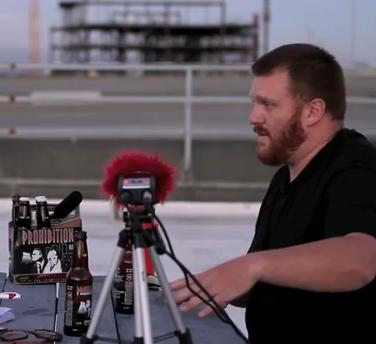
“I just want to explore what I want to explore,” he explains, sitting up on the Guardian roof with a sixer of Prohibition Ale and an unexpected microphone shoved into it, suspiciously close to his face. After busting out of San Leandro after high school to hitch hike the country, Day actually spent awhile in punk’s high decibel climes. “I was mostly screaming then. When I quit my punk band, I missed that release.”

We ask him if he worries about his commercial viability, being strung between so many genres. “Sometimes I do worry that maybe I should be more focused and just create, like side projects or something. But at the end of the day, I just want to be a one-stop shop.”

It strikes us as very Bay Area, this unwillingness to cram into a sole genre. Why not just conquer them all? After five years with more or less the same musicians in his band, Day is ready to take the next step — more national touring, more sharing of the live show that he says can be “a cerebral experience” for people seeing it for the first time. (“After the third show they really start to get it,” he tells us.) 

And hell yeah, more dance videos. We didn’t get him two-stepping for Tiny Town Production‘s dope video of our interview (by the way, thanks for the audio visual assist, Tiny Town) and — hell yeah — his impromptu a capella performance. But consider this self-made tour vid the action movie.

By the way, he’s got a real good show coming up. It’s no rooftop jam, but it’ll do:


Forrest Day

With Oona and Lavish Green

September 9, 9 p.m., $13-15

Independent

628 Divisadero, SF

(415) 771-1421

www.theindependentsf.com


Thee Oh Sees will release another LP; San Francisco rejoices

0

Yep, it’s true – another Thee Oh Sees record is on the way — not that we are complaining. Just six months after releasing their last LP (Castlemania), it was announced this week that John Dwyer and crew will release another dirty punk/psych garage record (Carrion Crawler/The Dream) this Nov.15 on In the Red Records. He just keeps churning them out. If you can remember that far back, the band released three albums in 2009. See below for the track listing and some fun videos.

Carrion Crawler/The Dream:
01 Carrion Crawler
02 Contraption/Soul Desert
03 Robber Barons
04 Chem-Farmer
05 Opposition
06 The Dream
07 Wrong Idea
08 Crushed Grasss
09 Crack in Your Eye
10 Heavy Doctor

Dwyer is a San Francisco staple at this point, like weed or broken down buses — as much as he’d probably hate to hear that. Depending on when you arrived in this city (oh, you were born here? Well, this sentence isn’t for you), you likely discovered his high-held, frenetic guitar attacks during one of three eras: Pink and Brown (1997), Coachwhips (2001) or the fully-evolved Thee Oh Sees (it originally began as his solo side-project). Of course, there were bands in between, but those mentioned were the era-defining acts.

In celebration of this always-welcome announcement, let’s look back at Dwyer’s career in video form:

Pink and Brown:
http://www.youtube.com/watch?v=2aqwzweFqjc

Coachwhips:
http://www.youtube.com/watch?v=VwK8sDJOJuA

Thee Oh Sees:
http://www.youtube.com/watch?v=z1bHddYhtDw

For those itching to see the band live again, its next local show is the Treasure Island Festival on Oct. 16.

Monty Python, AI and the end of the world

1

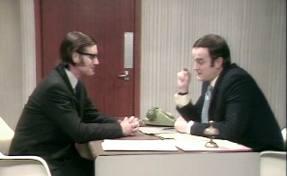
AI is already scary enough to Sci-Fi fans — you can go all the way back to Hal, or Mike, or just to Continuity, but the idea of an artificial intelligence that starts to fuck with its human creators is a deep part of modern mythology. And now it’s happening. For real. And instead of Clarke, Kubrick, Heinlein and Gibson, we get … John Cleese.


Check out this boingboing video, which appears to not be a joke.


 And then check out this Monty Python skit, which is pretty much the same discussion.


  This is the way the world ends — not with argument, but contradiction

5 Things: August 29, 2011

0

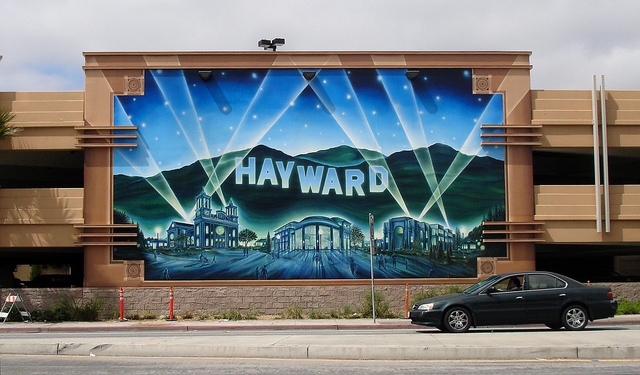
>>HOLLYWARD Hayward got a little more flash this week with the addition of Andrew Kong Knight’s two three-story-tall “Hollywood Meets Hayward” murals, which reimagine the town’s city center landmarks as an annex of Tinsel Town.

>>TWANG AID Twang to the Rescue – a concert for three local musicians displaced by the July 20th Waller Street fire – takes place tomorrow (Aug. 30) at Cafe Du Nord. It’s a mix of bluegrass and country bands coming together to support their fellow musicians: Pam Brandon, Tom Drohan, and Gayle Schmitt. The house at 434-436 Waller was so badly burnt that it was deemed uninhabitable (though luckily, no one was hurt). The fundraiser concert will include live performances by Windy Hill, The Royal Deuces, Lady A and the Heeldraggers, Misisipi Mike’s Midnight Gamblers and more. [Via Haighteration]

>>WE SWEAR WE’RE DONE TALKING ABOUT J-POP SUMMIT AFTER THIS We thought that just watching ourselves on camera in front of the throngs in Japantown’s New People mall was nerdy enough during the Japanese pop culture fest this week, but come to find out that the image on the flatscreen we were mugging for was actually connected to a livefeed leading to a Japanese website. Wait — so all those typed messages (“cowgirl!” and “we will get married now!” figured prominently on our turn) were from actual people on the other side of the world. Hope they enjoyed our manic fist-pumping — and thanks a lot, Niconico.com. But another fount of cat videos is always appreciated. 

>>THANKS FOR THIS, CORNELL UNIVERSITY Two AI bots decide to chat with each other, and what do they do? They argue — or rather, they contradict each other. Then they talk about God. If this is what the world is coming to, then John Cleese predicted it 45 years ago. 

>>LADY GAGA’S PERFORMANCE ON LAST NIGHT’S VMAS WAS EXTRAORDINARY


Don’t search my cell phone

7

Privacy and civil-liberties activists are thrilled by state Sen. Mark Leno’s bill the prevents the cops from searching cell phones without a warrant. And the bill makes perfect sense — if I get stopped and arrested and have a laptop computer in my backpack, the police can’t turn it on and start reading my email without a warrant. But right now, they can freely scroll through the same information on my cell phone.


But one of the more interesting things this bill would do is protect reporters.


Think about it: When I’m out covering a demonstration, I’m not only getting tips from sources (possibly confidential sources) about what’s going on, I’m probably writing dispatches for this website — and it’s pretty well established in law that the police can’t force me to give up sources or to show them unpublished drafts of news reports. But it’s all sitting there in my phone — which these days functions as a mobile office. I might have emails from my lawyer, discussing police access issues and possible litigation, on the phone. I might have messages from other reporters making comments about individual police officers that aren’t likely ever to be printed. And unless Gov. Brown signs the Leno bill, that’s all material that any police officer who arrests me for anything (and I was once arrested at a demonstration for “conspiracy to loiter”) can start reading.


Law enforcement gave Brown a lot of money, but come on — this one’s a no-brainer.

J-Pop Summit 2011: Style shots

0

Outside on Post Street and in the Japantown Peace Plaza, pastel-colored babydoll dresses flounce past homemade space-samauri hoods. Everyone’s wearing really long turquoise wigs (they’re clones of the Vocaloid character Hatsune Miku, try to stay with us here), gaudy plastic baubles glued to their fingernails. A judge at the Baby The Stars Shine Bright runway contest is pleased with one contestant’s canny use of a plush llama as accessory. “I like how you incorporated alpaca — that’s really ‘in’ in Japan these days.”

Whimsy was a central characteristic at the heart of this year’s J-Pop Summit Festival. But it wasn’t all eye-popping plastic and the gluing of themed objects to your pigtail hairpiece. Inside the welcome cool of the New People mall’s top-floor Superfrog Gallery, a more sober form of fashion was being explored. Sou Sou‘s Takeshi Wakabayashi was explaining his brand’s commitment to blending traditional forms of Japanese clothing with modern textiles.

“Downstairs there are a lot of people excited about Lolita fashions,” Wakabayashi says. “I hope next time they come they will be excited about Sou Sou fashions.”

Sharing the stage with the designer was five of his looks — handsome, dark colored kimonos, some with bold, geometrically patterned scarves and sashes would about. At their feet, the clothing items that the company is perhaps best known for: cloven-foot sneakers in vivid color combinations. 

They look a little space age, these shoes. They perhaps wouldn’t be out of place with the anime royalty strutting to the next Danceroid show on the Peace Pagoda stage. But Wakabayashi explains that the design is meant to be functional.

“You can actually get a very stable grip on the ground,” he says. He recommends the split-toe shoes for everything from sports to carpentry to mining and traditional festivals, his slide show clicking through photo examples of individuals using them for just those things. 

“We’re helping preserve traditions in Japan,” he tells the audience. He might just be right on that — his own outfit, flowing and kimono-y though it is, smacks of urbanity. The patterns are sleek, even if the profile is a bit billowing. He shows a slideshow of his production facilities, where textiles are designed on 100-year old looms made by Toyota (the designer tells us that a representative from the car company visited the factory once — now one of the looms are in the corporation’s musem for posterity).

New People founder Seiji Horibuchi introduced Wakabayashi to the audience assembled at Superfrog. He says he had trouble at first convincing the designer to open his mini-store in his San Francisco Japanese pop culture mall at first. But after a little convincing, he’s been there since day one of New People’s opening. Now, Wakabayashi says “simply put, it just thrills me [to see Americans wearing our designs]. I think that the craftsmen, they really get a kick out of seeing our designs in the States.”

Sou Sou’s textile designs are the true center of its traditional-modern aesthetic blend. Many of the colorful prints are modeled off of old patterns. One line is based around traditional Japanese sweets. At the reception hosted by the Japanese consulate following Wakabayashi’s presentation, these make an appearance on the refreshment table: candies placed carefuly on top of decorative postcards, meant to be souvenirs of culture sampled. 

Which is not to say that the circus-themed Lolita fashion show outside was any less cultural. “A” for inclusive, J-Pop Summit. 

Dick Meister: si se puede!

0

By Dick Meister

(The second part of a daily five part series)

For me, it all began on a hot summer night in 1965 in the little Kern County town of Delano. I’d been told repeatedly by people whose judgment I respected that, as the SF Chronicle’s labor editor, I should talk with some guy named Chavez who was pitting together an honest-to-God farm workers’ union in Delano.

I scoffed, but I went. Chavez, shining black hair trailing over the edge of a face brushed with traces of Indian ancestry, wearing a green plaid shirt that had become almost a uniform, sat behind a makeshift desk topped with bright red Formica.

“Si se puede!” he said repeatedly to me as we talked into the early morning hours there in the cluttered shack that served as headquarters for Chavez and the others who were trying to create an effective farm workers union.

“Si se puede – it can be done!

But I would not be swayed. Too many others, over too many years, had tried and failed to win for farm workers the union rights they had to have if they were to escape the severe economic and social deprivation inflicted on them by their grower employers.

The Industrial Workers of the World who stormed across western fields early in the last century, the Communists who followed, the socialists, the AFL and CIO organizers – all their efforts had collapsed under the relentless pressure of growers and their powerful political allies.

I was certain this effort would be no different. I was dead wrong. I had not accounted for the tactical brilliance of Cesar Chavez, a sad-eyed, disarmingly soft-spoken man who talked of militancy in calm, measured tones; a devout Roman Catholic; a gentle and incredibly patient man who hid great strategic talent behind shy smiles and an attitude of utter candor.

Chavez grasped the essential fact that farm workers had to organize themselves. Outside organizers, however well-intentioned, could not do it. Chavez, a farm worker himself, carefully put together a grass-roots organization that enabled the workers to form their own union, the United Farm Workers, which then sought out – and won – widespread support from influential outsiders, including major labor, religious and political figures.

The key weapon of the newly formed UFW was the boycott. The union’s boycotts against grape and lettuce growers and wineries in the late 1960s won the UFW union contracts that had been denied farm workers for more than a century.

That led ultimately to enactment of the California law that requires growers to bargain collectively with workers who vote for unionization, despite the workers exclusion from the federal law that grants most non-farm workers the legal right of collective bargaining. And with that came substantial improvements in the pay, benefits, working conditions and general status of the state’s farm workers.

The struggle was extremely difficult for the impoverished workers, and Chavez risked his health – if not his life – to provide them extreme examples of the sacrifices necessary for victory. Most notably, he engaged in lengthy, highly publicized fasts that helped rally the public to the farm workers cause and that may very well have contributed to his untimely death in 1993 at age 66.

Fasts, boycotts. It’s no coincidence that those were among the principal tools of Mohandas Gandhi, for Chavez drew much of his inspiration from the Indian leader. Like Gandhi and another of his models, Martin Luther King Jr., Chavez believed fervently in the tactics of non-violence. Like them, he showed the world how profoundly effective they can be in seeking justice from even the most powerful of opponents.

What the UFW accomplished, and how the union accomplished it, will never be forgotten – not by the millions of social activists who have been inspired and energized by the farm workers’ struggle, nor by the workers themselves.

The struggle continues, for despite the UFW’s successes, most farm workers are still mired in poverty. But because of the union, they have a genuine hope of bettering their condition.

The UFW won important legal rights for them. But more than union contracts, and more than laws, farm workers now have what Cesar Chavez insisted was needed above all else. That, as he told me so many years ago, “is to have the workers truly believe and understand and know that they are free, that they are free men and women, that they can stand up and say how they feel.”

Freedom. No leader has ever left a greater legacy.


Dick Meister, former labor editor of the SF Chronicle and KQED-TV Newsroom, has covered labor and politics for more than a half-century. Contact him through his website, www.dickmeister.com, which includes more than 350 of his columns.


Doctor questions BART shooting

28

Nice piece in the Bay Citizen by Rupa Marya, M.D., who treated Charles Hill, the man killed by BART police. She points to the essential problem — BART cops don’t seem to be able to deal with people who are agitated or mentally ill without shooting them:


While I had seen him agitated before and while I can’t speak to all of his behavior, I never would have described him as threatening in such a way as to warrant the use of deadly force. We often have to deal with agitated and sometimes even violent patients in the hospital. Through teamwork, tools and training, we have not had to fatally wound our patients in order to subdue them.


I understand the police are there to protect us and react to the situation around them, but I wonder why the officer who shot Charles did not aim for the leg if he felt the need to use a gun, instead of his vital organs. I wonder if he possessed other training methods to subdue an agitated man with a knife or bottle.


I feel this situation quite deeply. It is hard to watch our civil servants (police) brutally handle a person and their body when I spend my time and energy as a civil servant (physician) honoring the dignity of that person, regardless of their race or social class, their beliefs or their affiliations.


I can tell you why the officer didn’t shoot Hill in the leg. Cops are trained to to shoot to kill, and only to kill — once a cop draws a gun and fires, he or she has already decided to use lethal force and is supposed to aim for center body mass and fire until the target is down. There are reasons for that — shooting someone in the leg is hard, and if you miss and the person shoots back, you can get killed yourself. Also, if cops were allowed to shoot people in the legs to stop or slow them down, there’d be a lot more police shootings — and sometimes the cops would miss the legs and kill somone who was only supposed to be disabled. Bottom line: Cops shouldn’t be firing their weapons at all unless there’s an immediate threat to their lives or the lives of others.


But therin lies the problem: Since the death of Idriss Stelley, San Francisco cops have been getting additional training in dealing with mentally ill people. It hasn’t always worked, and it’s not a perfect system, but at least there’s been an effort. As Dr. Marya clearly knows, health-care workers in the city have to handle mentally ill people, sometimes agitated people, all the time –without killing them.


The BART cops who shot Hill handled the situation really badly


And I don’t blame Dr. Marya for wanting to join the next protest.

Dick Meister: the farmworkers are marching to Sacramento

4

By Dick Meister

(Part one of a five part daily series on the farmworkers)

It’s hot, very hot, in the Central Valley, but still they march on toward Sacramento, thousands of members and supporters of the United Farm Workers union. They’ve been at it since August 22nd, when the 13-day, 200-mile trek began. The UFW has done it before, and for good reason. Like the others in the past, this march has drawn public attention to the union’s cause, energized its members and current supporters and doubtless added to its many supporters worldwide.

But will the march accomplish its immediate goal? That’s to win passage of the Fair Treatment for Farm Workers Act that would overcome serious obstacles to farm worker unionization, and another bill that would grant farm workers the right to be paid overtime after eight hours a day, 40 hours a week like non-agricultural workers.

That is largely up to Gov. Jerry Brown, who in June vetoed the Fair Treatment for Farm Workers Act for being “too drastic,” despite direct pressure from more than 1000 workers during the 12 days he deliberated before acting on the bill. They fasted, held vigils outside his office and rallies on the capitol grounds, complaining loudly about the desperate need for firm union rights to improve their miserable pay and working conditions, including the great need to protect them from the severe – sometimes deadly – heat in which they must work.

As a Kern County vineyard worker, Eva Orozco, explained:

“The pay is very low, they pressure us heavily to produce, they don’t respect us and we have to run and drink water quickly and use the bathroom quickly because if we take long we could be fired. Sometimes I’m afraid to show up for work for fear that that I will not work fast enough and I will be fired.”

The marchers will bring their complaints and demands directly to Brown when their march ends Sept. 4 outside Brown’s office. Like his father, former Gov. Pat Brown, Jerry Brown once was one of the UFW’s closest allies. In his earlier term as governor, Jerry Brown pushed through the Legislature the pioneering bill that granted California farm workers the union rights denied them elsewhere.

Ironically, the first of the UFW’s marches to Sacramento, in 1966, was aimed at pressuring Gov. Pat Brown to sponsor a bill that would grant union rights to farm workers. He refused, despite the urgings of more than 8,000 UFW members and supporters who gathered outside the Capitol at the end of the 25-day march.

Farm workers did not get those rights until his son won passage of the bill – the Agricultural Labor Relations Act or ALRA – that granted the rights nine years later after a week long march from San Francisco to the Modesto headquarters of the huge Gallo winery, which had rebuffed vineyard workers’ demands for a union representation election.

More than 15,000 people marched into Modesto, convincing Jerry Brown and state legislators that the UFW retained a sizable and influential constituency and great organizational ability. That had very much to do with passage of the ALRA and the consequent success of the UFW in winning union contracts, The law, however, was barely enforced by Democrat Brown’s successors as governor, Republicans George Deukmejian and Pete Wilson and Democrat Gray Davis.

The latest march could very well convince Jerry Brown to come to the aid of some of the state’s neediest, yet most broadly supported workers. He did it before and he can do it again.


Dick Meister, former labor editor of the SF Chronicle and KQED-TV Newsroom, has covered labor and politics for more than a half-century. Contact him through his website, www.dickmeister.com, which includes more than 350 of his columns.


Appetite: 3 to watch — new restaurants, noteworthy bites

0

Open for a matter of weeks or months, these new spots show promise with dishes I’m still thinking about…

LE BORDEAUX – French sausage
The new Le Bordeaux, tucked away in North Beach, holds some subtle surprises. General description: ultra-traditional French bistro fare in a Euro cafe with woodsy, rustic country lodge feel. It’s a blessedly mellow respite for lunch or dinner. The winning dish thus far is Boudin blanc ($18), that light, gentle white pork sausage I love so, common in France as well as in New Orleans cuisine.

It sits atop a mound of caramelized apples and crumbled speculoos, a graham cracker-reminiscent cookie/biscuit. Savory and sweet, the plump sausage dribbles its juices over pastry crumbs. Just like dessert… but with sausage.

524 Union Street
(415) 529-1674

RENDEZVOUS TAPAS LOUNGE – orange blossom beignets
The new Rendezvous Tapas Lounge may be roomy to the point of stark, but shared plates at the hands of executive chef Mattin Noblia’s (who many know from Top Chef fame or at his previous restaurant, Iluna Basque) are made with care. Paper-thin, citrus-radiant octopus carpaccio ($12) and warm, stuffed piquillo peppers ($7) oozing with soft goat cheese, stand out. Orange blossom beignets ($7) truly do dissolve in the mouth. Yes, we’ve seen plenty of beignets on dessert menus in recent years, but orange blossom is an inspired accent, while these eggy-light beignets evoke my favorite Chinese baked goods by way of France. Not too sweet, they are fluffy and comforting.

Of note, the weekend brunch (savory or sweet crepes, crawfish bisque, mimosas, Bloody Marys, etc…) intrigues with a DJ spinning old school hip hop and bar manager Anthony Baker serving off-menu cereal cocktails. Golden Grahams are shaken with Jameson, milk and honey simple syrup (or Honey Nut Cheerios with Amaretto, Fruit Loops with berry vodka) for that finish one gets when nearing the milky bottom of a cereal bowl.

2080 Van Ness Avenue
(415) 409-0660

CANA – Cuban pastries
Oakland’s new Cuban cafe, Cana, is a welcome addition in a region sparse on Cuban treats. Pretty much a walk-up counter with one table inside plus patio seating, Cana scratches the Cuban itch with eats like a hefty Cubano ($8.50) loaded with pork, ham and Swiss cheese, crunchy with pickle, contrasted by hot mustard. But I go for the pastries, like a chocolate ancho chile cookie, or a flan-like guava tart (Pastry de Guayaba), silky subtle with guava. Sip a custom-ground Cafe Cubano or other espresso drink for a robustly sweet accompaniment. Watch for their soon-to-open, next door bar/lounge focused on rum & agricole cocktails, with an in-house cane press (!), cigars, their cafe menu, and live music.

530 Lake Park Avenue, Oakland
(510) 832-1515


— Subscribe to Virgina’s twice monthly newsletter, The Perfect Spot

Corporate vampires drink your blood

13

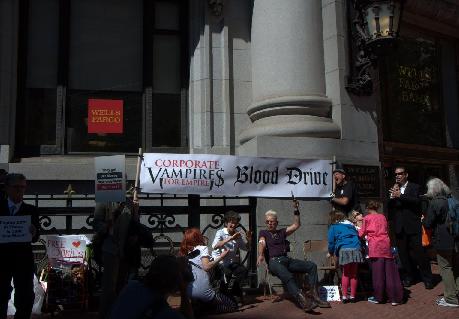
The same week that Warren Buffett gave an anemic Bank of America a $5 billion transfusion of capital, a score of protesters in downtown San Francisco said they know why the economy still sucks: corporate greed.

Demonstrators from US Uncut held a “corporate vampires for the empire” blood drive in front of several of Market Street’s most prominent storefronts August 27, pointing out corporations that haven’t paid their fair share of taxes.

“We have taken your money. We have taken your houses – now we want your blood!” cried out Vlad the Impaler in front of a Bank of America branch on Market street.

“No more, please no more,” his victim begged, a mock blood transfusion bag attached to her neck.

“More blood, more, you can give more!” laughed a jovial Vlad.

The victim fell to the sidewalk after giving her last ounce of blood to Bank of America.

According to US Uncut, Bank of America, despite having $2.2 trillion in assets, pays less in taxes than an average American household.

“Corporate tax evaders have no shame, they are sucking the economic vitality out of our country,” said protester and vampire hunter Bill Schwalb, who was quick to say he was in no way related to Charlies Schwab.

A crowd on lower Market drew its own picture of the American economy as a pair of women with shopping bags passed by in one direction and a homeless man with a bed roll passed the other way, both stopping a moment to observe the mock blood drive.

Pre-positioned victims at the Apple Store, Wells Fargo, FedEx, and Verizon were bitten and bled dry while waiting in line, to the shock and amusement of customers, while outside the blood donors were administered to by vampire nurses.

“Tax evasion, though vilified by the truthmongers of the left, is as American as apple pie. It’s an orgy of greed and blood lust,” Vlad told a crowd of bystanders who had stopped to gawk at the spectacle.
While the pantomime was funny, the issue is not. The group said the companies they targeted represented the worst of the worst of corporate tax dodgers. Together they represent billions of dollars in lost tax revenue – losses that are translating into service cuts to societies most vulnerable.

“No wonder we’re broke, all these corporations not paying their taxes,” exclaimed an irate passer-by in front of the Apple Store after listening to the group.

J-Pop Summit 2011: Baby, the Stars Shine Bright and Danceroid

0

Turn one direction and witness a costumed young woman performing a choreographed dance to popular Japanese vocaloid songs. Spin another and see a crowd of stack-heeled revelers, mimicking her dance moves while wearing poofy black tutus, striped tights,spidery false eyelashes dipped in inky color and glitter, and sporting tiny top hats above teased blue cotton candy wigs.

The performers and audience at this weekend’s J-Pop Summit Festival 2011 in Japantown were a sight to behold. The lines between singer, dancer,and costumed attendee were blurred; this could be due in part to the layered slab concrete stage below the Peace Pagoda that seems to flow directly into the wind-swept crowd. It was here, on these steps, below the looming structure, where Elegant Gothic Lolita-devotees competed in a Baby, the Stars Shine Bright circus-themed costume contest, where Ikura and Kozue of pop sensation Danceroid showcased the latest moves out of Japan, and where scores of Bay Area and Japan-based musicians took the stage.

All photos by Chris Stevens.

Tim Lincecum Bobble Head Day comes to AT&T Park. Giants fans get their Freak on.

1

“They’re taking torture to a new level.”

Such were the words of Giants manager Bruce Bochy after his team’s exhilarating 10th inning 2-1 walkoff win versus the visiting Houston Astros on Saturday night. Although it might not have been the best fielded game or the offensive show of force the Giants have been longing for, the team escaped with a win thanks to the bat of trade deadline acquisition Jeff Keppinger. 

But before the night’s climactic finish on the field, a different kind of celebration took place, just off it. It was Tim Lincecum Bobblehead Day at AT&T Park.

Giants fans impatiently lined up for their chance to get a miniature model of their beloved freak. Thousands of fans dressed in orange and black crammed their way into lines that surrounded every inch of the ballpark. 

The 25,000 bobbleheads available vanished within minutes of the gates being opened. If you didn’t line up at least two and a half hours before the game, you probably missed out on the action.

One of the die-hard fans anxiously waiting his opportunity to receive his figurine was Robert Novoa. A 52-year old San Francisco native, Novoa has been a Giants fan since 1963 and has memories of the Giants teams of the ‘60s and legends like Willie Mccovey and Willie Mays. He arrived in front of the Willie Mays gates six hours before the start of the Saturday night’s ballgame, but he was still all smiles at the prospect of scoring his one-of-a-kind Tim Lincecum bobblehead. “[Lincecum’s] the best there is right now. He’s got a unique way of pitching the ball. You have to watch him,” he said. 

But though the pregame chaos was pure Lincecum, the night’s on-field spotlight shined on another Giant. To a roaring, sold-out crowd, left handed pitcher Eric Surkamp took the mound, making his major league baseball debut. Prior to Saturday night’s game, Surkamp played for the Giants’ minor league team Richmond Flying Squirrels. 

“It was awesome. You dream about it your whole life. And for it to finally come true, is amazing,” he said.

The rookie pitched six solid innings, striking out four and allowing just one earned run. Surkamp, who admitted that he couldn’t feel his legs at the beginning of the game, was able to rid himself of the pre-game jitters and put on quite a performance in front of his friends, family, and 42,000 Giants fanatics. “The kid was impressive tonight,” said Bruce Bochy. “He comes in a packed house, pitching his first game. Believe me you’re nervous, you’re amped up, but he never showed it and looked very comfortable out there. I thought he did a great job.”

With the ups, come the downs. Outfielder Nate Schierholtz was placed on the 15 day disabled list with a bone fracture on his right foot; adding to the never ending list of injury ridden Giants. This marks the twenty-fifth time the Giants have used the disabled list, the most in the majors.

The win versus the Astros was the Giants second straight consecutive victory, something they hadn’t done since August 13th. However, they still remain three games back of the Arizona Diamondbacks who beat the San Diego Padres 3-1.

“Hopefully we’ll get on a roll here, keep this thing close, and get this offense clicking”

The Giants will look for production from right fielder Carlos Beltran to provide some offensive prowess for the ball club. Since returning from the disabled list and missing thirteen games, Beltran has been impressive; going 7-for-16 with a .438 average. Beltran went 2-for-4 on Saturday with a run batted in during the first inning.

Up next the Giants look to capitalize on a three game series against the struggling Chicago Cubs, and then will await the arrival of the Arizona Diamondbacks for a crucial weekend series.  

Game Note: On Sunday The Giants lost to the Astros 4-to-3 in eleven innings, and are now four games back of the Arizona Diamondbacks in the NL West Division.


Maximum Consumption: John Vanderslice’s tea time

0

Making a record takes a lot out of person. It’s actually grueling work; it requires obsessive attention to detail and long, ungodly hours. No one knows this more than revered local rocker-storyteller-recording studio owner John Vanderslice. He the creator of his own music (MK Ultra, a vast solo career) and the recorder of a great many others (Deerhoof, Death Cab for Cutie, Thao) at his Mission-based studio, Tiny Telephone. Perhaps this understanding of the stresses is why Vanderslice is quick to offer incoming bands a warm cup of calm.

Turns out, Vanderslice developed a taste for fragrant loose-leaf teas a while back, and has seen to it that his studio offerings come stocked with said caffeinated beverage. Naturally, I went to the source to discuss this obsession for Maximum Consumption. Enjoy the resulting interview with two lumps of sugar (or however you take it):

San Francisco Bay Guardian: When did you develop an interest in tea?
John Vanderslice: I lived in London for a year, that changed it for me. Bad coffee [plus] good tea [ equals] tea drinker.

SFBG: Where do you purchase your loose leaf teas?
JV: Rainbow Grocery, Five Mountains, and Red Blossom.

SFBG: What are the 11 loose leaf teas offered at Tiny Telephone?
JV: Right now there’s 12! They are: Gunpowder, Genmaicha, Keemun, China Black, Green Jasmine, Throat Coat (the real, strong organic blend from Rainbow), Chamomile, Assam Black, English Breakfast, Camellia Blossoms, Emperor Pu-erh, and JV’s Herbal Organic.

SFBG: When did you come up your own personal JV’s herbal organic tea blend?
JV:
I initially wrote it on a piece of masking tape affixed to a mason jar with my mix. I thought it would be kind of funny, but people just asked me what the ingredients were. Then I started to take it seriously, tweaking and improving it. It has Rainbow’s Love Tea blend (which is really good), dandelion, peppermint, blackberry bush, red clover blossoms, rose hips, and sage. Some things are there for taste, and others for medicinal reasons.

SFBG: Do you see any connection between the ways you approach creating music/writing songs/recording bands and mixing teas?
JV:
I’m a tweaker through and through, I imagine I could have worked on cars or hydroelectric dams. I love the intersection of the technical and the creative.

SFBG:Would you ever be interesting in putting out your own brand?
JV:
I can barely function as it is, I think adding more pursuit/business and I might crack. I love giving it away for free.

SFBG: Do you also drink coffee?
JV
:I love coffee but I find myself drinking a lot more tea. Usually very strong black in the morning and green in the afternoon.


A video of our interviewee for your viewing pleasure: http://www.youtube.com/watch?v=_VKpMDxhGQY

Getting to the bottom of Anal Sex Month

1

Open wide, sweet cheeks: August is for anal. Swap out this weekend’s BBQ plans and invite over a couple extra hands to give your rump the stimulating attention it deserves. Whether you’ve already succumbed to a heavy load of action in the previous weeks or you’re still feeling a bit shy about unlocking the back door, San Francisco’s adult-only retailers have some toys that will have you bending over with joy. 

While it has yet to reach Halmark holiday status, Anal Month does have a long-standing history (as “proved” by these mock-up ads). This celebration of bottom pleasure comes with the slogan, “Give in to haste and remain chaste” and encourages men and women to think outside the box when tempted by prenuptial, promiscuous desires. Today anal is cherished not as an alternative, but as an addition. The best thing about butts? Everybody has one and the all-inclusive play works well with fingers, lips, tounges, and of course, a variety of store-bought options. 

With only one week left, it’s time to get some gear for your rear. Check out these locally-foraged suggestions:


good_vibes_anal

“Romeo Silicone Anal Toy” from Good Vibrations

Good Vibrations has full shelves lined with props promising deep rectal pleasure, but if you’re uncertain where to start, take a peek at their online shopping guide before heading into the store or be brave and ask an employee for suggestions. These pretty magenta beads are slim at the top and grow wider down the string, making this toy ideal for testing the waters. When things get good, pull out one bead at a time to intesify your climax. 


amber_swirl

The “Amber Swirl” from Glass Kandi

Web shop Glass Dildo Me, has a wide web selection but head into their physical shop Glass Kandi, to see the gleaming glass beauties for yourself. Not only are they stunning visually, but glass dildos are hypoallergenic, odor free, and non-deteriorating. With a proper cleaning, even the dirtiest of play washes right off. If you like it hard, this toy offers absolute firmness and minimal friction with some super glossy lube. Get it hot, get it cold, this amber-colored gem will hold just what you like. 

mr_s_leather

“World’s Most Comfortable Butt Plug” from Mr. S Leather

Size large either looks intimidating or incredibly inviting– lucky for all, Mr. S Leather carries seven sizes in their signature plug, from mini to XXXL. They’re made of solid aluminum and can be worn for hours on end, fitting snug and hugging close to your prostate (if you have one, of course). Contrary to the way in-and-out of a dildo, butt plugs are meant to stay in place, filling up the anal cavity and adding intensity to an orgasm or an exciting walk around town. 

5 Things: August 26, 2011

0

>>WATER WORKS Everyone’s abuzz about Ali Farzat, the Syrian cartoonist whose hands were broken after creating wildly popular illustrated works critiquing the government. The assault on Farzat is a reminder that art has the power to change minds and lives — an idea that US artists with Estria Miyashiro’s Water Writes mural series were fully with when they teamed up with young people to create eight environmental justice-themed murals at water purification sites in eight days in Gaza. The beleaguered city was the project’s fifth stop — including already-completed Phillipines and Hawaii walls, the Water Writes project will go to 10 worldwide cities in total.

>>BABY BANKROLL Back in June, Tim Redmond looked at the reasons for why families stay in San Francisco. His isn’t the only clan that is sticking in the city: Broke Ass Stuart just launched a new column called Mommy No Bucks that’ll be looking at how all us broke asses (with children!!) make it work in the concrete jungle. 

Not til you’re 21, honey. 

>>CHEESE IT! With all the experimental mixologists in San Francisco and our very own grilled cheese food truck, Toasty Melts, you’d think we’d be the first to come up with this: the grilled cheese martini. The Internet has been aglow in gooey praise/disgust the past few days over this concoction, which can be ordered at Bennett’s Pure Food Bistro in Seattle and the Cellar at Beecher’s in New York – both owned by Kurt Beecher Dammeier. It consists of grilled cheese sandwich-infused vodka (“six piping hot sandwiches in 10 gallons of vodka”), fresh tomatoes, basil, and tomato juice. Sounds like vomit central.

>>WINING DOWN We went to check out the public premiere of Wine From Here, a documentary on California’s nascent natural wine culture. Natural wine, we say? Yeah, the definition’s under a fair amount of debate — never more evident than at the filmmaker Q&A after last night’s screening at the Victoria Theatre. The crowd quibbled over things like the use of oak barrels (shouldn’t the fragrant wood be considered an additive since it alters vino’s flavor profile?), labeling moratoriums, and relative price points of wine grown with and without the addition of foreign yeasts, dyes, and government-approved chemicals. Hopefully the differences of opinion were smoothed over at the screening’s after-party at natural wine-friendly Heart, where the profiled vignerons’ bottles were on the menu, including pours from Coturri Winery and Berkeley’s Edmund St. John.

>>BLAST-OFF TO THE WEEKEND When the aliens come for us, we hope they have noodle faces like the claymates in the new Hopie Spitshard and Del the Funky Homosapien video for Hopie’s single “Space Case,” shot outside Beauty Bar and around the Yay. And we hope they transmorgrify our faces with the same fly colorblock eyeshadow as Bay Area MC Hopie’s. And we hope that the ray of light doesn’t come for us today — we wanna catch Spitshard’s show at 111 Minna tonight, part of a fundraiser for Alameda’s Bohol Circle Filipino community center. 


The super-wealthy want our waterfront

13

We are at the Guardian have been raising questions about the deal that the city cut to bring the America’s Cup here – which involves turning prime waterfront property over to wealthy developers with long-term leases – since it was first proposed. But our valid concerns have been largely drowned out by economic development boosterism and the view that we need to simply accept whatever billionaire CEO/sailor Larry Ellison and his partners say they want.

So we were as cheered as we were dismayed to read writer John King’s article in this week’s San Francisco Chronicle about how race organizers are trying to build a harbor for the super-rich to park their yachts so they can watch the races right in the middle of the Embarcadero’s longest stretch of open water and unobstructed bay views, a harbor that would likely be permanent.

King supports the race and its economic benefits. “But we also need to remember that it never hurts to look a gift horse in the mouth. And the open water along Rincon Park is not a cavity that needs to be filled,” he writes. This proposal is so appalling that even Chronicle readers and blog commenters – usually a conservative and curmudgeonly lot that bristles at the idea of asking anything of capital – have overwhelmingly criticized the idea, filling most of today’s Letters the Editor section.

Hopefully, that’s a sign that this idea – which the EIR on the America’s Cup incomprehensibly concluded was not a “significant impact” – is dead in the water. But given how far city leaders like Mayor Ed Lee and Board President David Chiu have been willing to bend over backward to give race organizers what they want, I wouldn’t be so sure.

At its best, the America’s Cup could be a great opportunity to showcase San Francisco and bring in much-needed tax revenues. But if journalists, citizens, and city leaders don’t remain vigilant and skeptical, this race might be remembered most as the ruse that the greedy rich used to sully and exploit one of San Francisco’s most valuable public resources.

Kreayshawn gets some lady love at Slim’s

5

It was just fine, really. Oakland-bred rapper Kreayshawn’s big, sold-out show at Slim’s last night was amusing, mildly enjoyable, and packed with good people watching. Rapping over prerecorded beats, elfin Kreayshawn and her Chipmunks White Girl Mob (V-Nasty and Lil Debbie) ran through what I suspect is the gamut of their songs in a brief, hyper set.

This likely ages me, but if I’m being honest, I don’t totally get the appeal after seeing it live. Sure, “Gucci Gucci” and “Rich Whores” are fun romps through anti-consumerist hipsterdom, and, perhaps conversely, the rapper clearly has a unique aesthetic, but other than that, it felt almost false, even silly — and unsustainable.

For the first few tracks last night, Kreayshawn and Lil Debbie monster-walked back and forth across the stage in non-choreographed unison, casually shouting duel lyrics and yet somehow still revving up the crowd of mostly young women. This is another aspect about Kreayshawn that’s at least interesting – her followers. They dress like her in a pop culture mishmash of ’80s ripped punk, horn-rimmed glasses, and door-knocker earrings. Maybe I’m just seeing the ripped up shirts/shorts as reverential to punk because Kreayshawn’s mom was there last night – the very awesome Elka Zolot of the Trashwomen.

After a prerecorded “V-Nasty!” screamed through the speakers,  Kreayshawn was all, “what’s that? A special guest?” and V-Nasty, who has been at the center of her own controversies, bounded out and rapped with the others. And then there were three; similarly paced, mousy high-pitched voices stalking across stage. It must have been an intense night, she earlier tweeted “Doing home shows are hella stressful.”

However I might feel about the quality of music, as mentioned above, it is pretty cool to see teen girls and 20-somethings adopting this attitude of “fuck you” and aping Kreayshawn’s style of dress. They clearly adore her and were screaming along with every song. One climbed up on someone’s shoulders and whipped her shirt over her head. At least they’re not being submissive; I was jostled hard by a number of excited young people in light-up glasses throughout the night.

Who knows if Kreayshawn will stand the test of time. A nominee for “best new artist,” it was announced yesterday that she’ll be hosting the 2011 VMA Red Carpet Report for MTV.com, so that’s something. In some ways, I can see the early Madonna factor – sidenote: both have now rocked fishnets half-shirts –  if only based on the fans’ obvious obsession with this peculiar new pop culture figure. She could also go the way of so much niche hip-hop before her and disappear after the Next Big Thing. No more swag.

She’s definitely inspired an onslaught of parody videos, including these food-themed takes on “Gucci Gucci”:

Pizza Pizza:

http://www.youtube.com/watch?v=yi9Gfy52J7s

Fishy Fishy: