

The Department of Elections says there are about 34,500 ballots still to be counted — 27,000 election-day absentees and 7,500 provisionals. That would be about one sixth of the total votes. Not enough to make a huge difference, but if they break the way the election-day votes did, the mayor’s race will get tighter (although probably not enough to make a difference) and Ross Mirkarimi will pull further away in the sheriff’s race. The only other difference: Prop. H may wind up losing — not that it matters, since it’s only a policy statement anyway and the school board is not about to change a system it developed over two years of public hearings.
SFBG Blogs
Live Shots: The Guardian’s 45th Anniversary Happy Hour
On Thursday November 3rd the Guardian family descended upon Buck Tavern to toast 45 years of “Printing the News and Raising Hell.” The cadre included current and former staffers, as well as SF politicos and friends of the Guardian from over the years. While Chris Daly and his staff kept busy slinging stiff drinks and setting out yummy snacks, the Guardian family was aglow in celebrating four and half decades of representing San Francisco values. Hip Hip Hooray!
[Photos by Ariel Soto-Suver]
Guardian editorial: End the death penalty in 2012
It’s time to end the death penalty in California. And November, 2012, may be the best chance.
A coalition led by the ACLU is launching a campaign for a ballot initiative to end executions in this state. All the pieces are in place: an outmoded, dysfunctional system that a growing number of law-enforcement veterans say is a waste of time an money. An emerging majority of California voters who no longer support the death penalty. And what’s shaping up to be a well-funded, well-organized campaign aiming for a vote in a presidential election year, when turnout will be relatively high.
The moral and human case against the death penalty is obvious — giving the state the power to kill people is wrong. The implementation of the system is, to say the least, arbitrary and capricious: Poor people and people of color are way more likely to face capital punishment than white people who have money. Many, if not most, of the people on death row have serious mental health issues, organic brain damage or were victims of abuse. No other civilized country in the developed world still allows executions.
But there’s also hard, cold, financial evidence that the current system isn’t working, evidence that appeals to conservatives. Simply put, the death penalty is a phenomenal waste of money. Since 1978, a recent Los Angeles Times study showed, California has spent $4 billion to execute a grand total of 13 people. That’s $308 million per killing.
It costs $184 million more a year to keep 714 people on death row than it would cost if they were serving life without parole. It costs millions more to prosecute and defend capital cases (a relatively low-cost death penalty prosecution still costs $1 million more than a high-priced LWOP case) and the state spends more than $300,000 per inmate for publicly subsidized defense.
Most of the death row inmates have no appeals lawyers; the cost of appeals is so high, and the work so difficult, that few private lawyers will take those cases, and the wait for a publicly funded attorney is more than 15 years. Victims get little closure from executions, since the process (properly, and by law) takes so long and is so drawn out. In fact, the most common cause of death on death row is old age.
Then there’s the fact that the drugs used in California executions are no longer made in the United States — and imported drugs may not meet U.S. quality standards. So the lethal-injection protocol now in place — which is, by itself, cruel and unusual punishment — may not survive legal challenges.
So it’s time. Local governments in San Francisco and the East Bay should endorse the effort and help promote the ballot measure. The coalition needs money and volunteers for signature gathering. Go to safecalifornia. org and sign up.
Period Piece: Duels to death on the shores of Lake Merced
Leaving aside the wanton killing, there was something charming about olden-style justice. Back in the day, a political figure could draft a nasty note that ended with “your obedient servant,” pass it off to some friends to deliver to a sworn enemy, and wait for his duel to the death to be scheduled.
It’s probably good those days are over. Bay Area pacifists have two men to thank for the cessation of formalized murder: Senator David Broderick and Judge David Terry – who were probably not the original frenemies, but certainly early bearers of the standard. The two ensured the end of legal dueling with their fatal 1859 clash on the banks of Lake Merced.
San Franciscans of the 19th century already knew both Broderick and Terry to be firebrands. “Dave” Broderick worked as a barkeeper before making his way into a California Senate seat, a vocal working-class Democrat. In his first-ever speech to colleagues, Broderick stood up and criticized President Buchanan on the issue of slavery to a room of aghast murmurs.

(A) is for Assasination. Site of the 1859 Broderick-Terry duel.
Terry, a Democrat from the South and California Supreme Court judge, had stabbed an opponent in the neck a few years before the Lake Merced incident came to fruition. His victim survived, and Terry narrowly escaped hanging.
The Lecompton Constitution, attempting to install slavery in the new state of Kansas, met turmoil within the Democratic Party. Broderick took a cutting abolitionist stance and Terry a bloated pro-slavery one.
“A miserable remnant of a faction, sailing under false colors, trying to obtain votes under false pretenses,” Terry said of Broderick’s supporters in a speech that later compared Broderick (unfavorably) to Frederick Douglass.
Broderick perturbedly read the speech at breakfast a few days later. A friend of Terry’s sat nearby.
“I have said I considered him the only honest man on the Supreme bench, but now I take it all back,” remarked Broderick.
Letters were delivered between the two. Honors began to be questioned.
“I…require of you a retraction of those remarks,” wrote Terry, angrily.
“I have to desire you to state what were the remarks that you designate…as offensive,” Broderick obliquely replied.
Terry, frustrated, quoted his opponent, ending the note with an invocation of his honor as “an officer or a gentleman.” But Broderick seemed determined to cause Terry irritation.
“You are the best judge as to whether this language affords good ground of offence,” he wrote back, retraction not included.
Poked into a fury, Terry demanded a duel at “Laguna Merced,” and Broderick accepted.
Those present at the duel later pegged Terry as the more practiced marksman. Broderick, it was said, seemed unprepared and awkward from the get-go. He carelessly chose an unfamiliar hairtrigger pistol, which fired early and off-mark. Terry took careful aim an instant later and struck Broderick in the breast.
Broderick was to die within a few days. Anti-dueling legislation was enacted shortly afterwards. But Terry escaped legal retribution and joined up with Confederate forces at the start of the Civil War. For all the talk of glory and honor, he was shot and killed after slapping a U.S. Supreme Court judge in the face (an old friend of Broderick’s, the judge had jailed Terry for contempt during a hearing relating to Mrs. Terry).
“Slavery is old, decrepit and consumptive; freedom is young, strong and vigorous,” spoke Broderick early in his senatorial career. After his galvanizing death, much of California agreed, pushing pro-slavery Democrats out of office in favor of Republican ones.
Today, the shady spot hosts two stone markers that indicate where the duelers faced off.
Analyzing the numbers
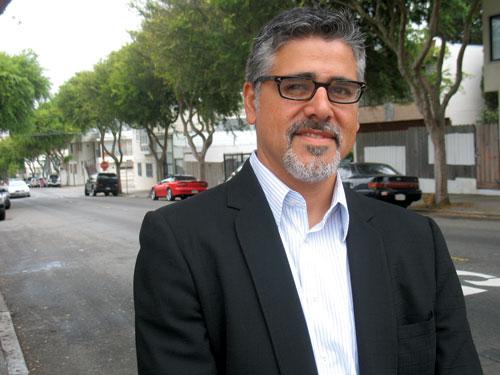
I keep looking at the election numbers, trying to make sense of it all, and the more I look and count and add, the more a couple of things become clear:
1. The absentee vote wasn’t just about Ed Lee. Clearly, the Lee forces got their troops out and did an absentee drive, but the total absentee votes for mayor (62,446) were about the same as the total votes for district attorney (63,354) and most of the propositions.So the people who voted early voted the entrie ballot.
2. The election-day votes were so dramatically different from the absentees that several factors had to be at work. One of them was the phenomenal campaign for John Avalos, which moblized thousands of people and demonstrated how much of a force progressives can be. Keep in mind — Avalos, who had no independent expenditure groups and less money than many of the other candidates — actually came in first on election day. His team worked hard and smart and pulled off a near miracle.
3. The drop-off in support for Lee between the absentees and election day suggests that his popularity was, indeed, declining fast in the past few weeks. The voter fraud scandals had something to do with it, but so did the attacks on Lee by the Herrera and Yee campaigns and by IE groups supporting those two candidates. If Lee hadn’t been so far out in front a month ago, he might not have won. As it is, if he holds on, it won’t be with the kind of mandate he would like to claim.
When the Department of Elections runs the first pass at ranked-choice voting, we’ll get a better idea of how much Lee’s support has fallen; RCV won’t be such a big deal with the absentees since Lee got so many of those first-place votes. The election-day votes will be more telling; when Adachi, Yee and Chiu are eliminated, where do those seconds go? How many will go to Lee — and how many will go anywhere but?
Ed Lee’s absentee coup
The most remarkable number in the election results was clear before a single election-day ballot was counted. The absentee ballots were released around 8:30 p.m., and they were stunning: Ed Lee has 26,621 votes. The nearest competitor, John Avalos, was at 7,080.
That’s right — Lee was almost 20,000 votes ahead before election day. And that turned out to be the margin of victory — Avalos actually got more votes than Lee from the people who voted Nov. 8.
The reason Lee is likely to be the next mayor is because — through a combination of traditonal hard work on identifying supporters and getting them to vote by mail and quite possibly some degree of illegal conduct — he had 26,000 votes in the bag long before the polls opened.
He was, of course, helped by the independent expenditure committees and by the fact that he had a natural base in Chinatown (and people on the ground there to get that base to vote). But none of the other campaigns managed to come close to that level of organizing. It’s something progressives have to keep in mind — elections in San Francisco are no longer won and lost on election day.
Ed Lee, Leland Yee and the progressive vote
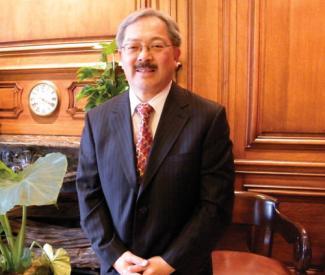
A couple of months ago, I got into an argument with Enrique Pearce, who runs Left Coast Communications, the firm that set up Run Ed Run and ran one of the independent expenditure committes for Ed Lee. I told him that his firm was misnamed, that Lee was not a “left” candidate; he told me that Lee was the best bet for progressives because he was the “only candidate who could stop Leland Yee.”
Now: We can all argue forever about Yee’s progressive credentials (I’ve done that in detail here). But if Pearce was telling the truth, he was wrong, so wrong, and the numbers show it. Leland Yee came in fourth. Lee didn’t prevent Yee from becoming mayor; he prevented John Avalos or Dennis Herrera from becoming mayor. Very different story, Mr. Pearce.
Willie Brown and his rich friends were all ecstatic at his party at the Palace Hotel, and why not? They’re back in the game, back in charge at City Hall. And if Brown — who, by the way, engineered this whole thing in one of the most brilliant political moves in San Francisco history — is that happy, there’s a reason for it. The wealthy and powerful interests in San Francisco think Lee is going to do what they want. That’s why they’re celebrating his election.
I’m not trying to be a downer here — it’s still possible that the ranked-choice voting system will put Avalos in first. But it’s not at all likely. The only way that could happen: If the “anybody but Ed” vote was so strong on election day that virtually all of the second-place votes from Bevan Dufty, Jeff Adachi, Yee, David Chiu and Dennis Herrera went to Avalos. Possible, but don’t be on it.
The reality is we’re probably facing four years of Mayor Ed Lee, and I hope he proves me wrong and shows that he’s willing to stand up to the people who put him in power. Possible, but don’t be on it.
Maximum Consumption: the Turntable Kitchen interview
I’d venture a guess that no one in this town knows the frosting tipped appeal of hand-mixing music and food more than the couple behind Turntable Kitchen. What started one year ago as a simple (yet highly aesthetically pleasing) website mashing up recipes and records, has grown into a celebrated multi-headed creative output machine, with food+music news, event sponsoring, giveaways, and the newly added physical pairings boxes – on top of the drool-inducing/stunning posts.
Last week I caught up with the duo to find out, among other queries, what ingredient you simply must have on hand – and the records every collection should include:
San Francisco Bay Guardian: For people who have never heard of Turntable Kitchen, can you give a brief rundown on how the concept came together?
Matthew Hickey: Turntable Kitchen is a website combining food and music. We do that by pairing recipes Kasey creates in the kitchen with some of my favorite albums. I try to find albums that share the same characteristics as her recipes, pairing them together the way a sommelier would pair wine with food. The idea to start the site was Kasey’s, but we were pairing food and music in our own foggy Inner Sunset apartment long before we launched the site. I’ve always been obsessive about music and Kasey loves to cook. Part of our evening ritual involved her explaining the recipe we were going to make and me then hitting my record collection to find an album to compliment our meal.
SFBG: What is it about food and music that goes so well together?
MH: For us, a good meal is about more than just consuming food. It is about creating an experience that pleases all of your senses. We believe that the soundtrack to that meal is a hugely important element of that experience. In fact, a recent study published in the British Journal of Psychology demonstrated that when people consume wine while listening to music they perceived the wine to share the same characteristics as the music. The result is something that Kasey and I instinctively felt to be true whether drinking wine or enjoying a good meal.
SFBG: How did you come up with the Pairings Box idea?
MH: We liked the idea of sending goodies to our readers in the mail, but we weren’t sure what form that would take. Whatever we did, we wanted it to stay true to the theme of our site. Speaking to the music specific elements: they just made sense for me. I love vinyl records and have an ever-growing record collection. With the ease of digital distribution, though, some of my favorite new music isn’t yet available on vinyl. So the singles we release feature music that I wanted for my collection, but which didn’t already exist on vinyl. I’ve been making mixtapes for my friends for as long as I can remember, so the digital mixtape we include gives me yet another opportunity to share music I love with our supporters.
Kasey Fleisher: I have always thought that a big barrier to cooking for many people is having a pantry. A lot of times, a recipe calls for a lot of expensive and/or hard to find ingredients and when you don’t cook often, it’s hard to think, “why not give this a try?” The concept of giving people three recipes and one to two premium dried ingredients gives them that nudge to experiment (and a reason to invite a few friends over to share the experience.). As for the sustainability of the Pairings Box, we think there’s still room to expand, but no matter what, we want to keep it limited. So far, we’ve sold out of every month’s box.
SFBG: What’s in the November pairings box and when does it go out? Is it sold out yet?
MH: The November Pairings Box had a harvest theme. We featured three new, original recipes; a hand-numbered, limited-edition (250 copies) 7″ vinyl single featuring Evenings (a.k.a. Virginia-based Nathan Broaddus); an exclusive digital mixtape; and our premium ingredient for the month was a French Grey Sea Salt and French Lavender blend.And, yes, we’re all sold out.
SFBG: December pairings box orders can start coming in Nov. 15, correct?
MH: Yes, we’ll start accepting new subscriptions for the December Pairings Box on November 15. We have a sign-up form on the site where you can enter your email and we’ll drop you an email to notify you of when we’re ready to start taking payments.
KF: We’ll have additional boxes available for the holidays.
SFBG: On the site, what have been the most popular pairing(s) so far?
KF: Some of the most (recent) popular pairings have been our Multi-Grain Pumpkin Donuts, paired with St. Vincent and Creamy White Grits with Chanterelle Mushrooms paired with Iron & Wine.
SFBG: What are your own personal favorite pairing(s)?
MH: One of my recent favorite pairings has been Kasey’s Fig, Mint and Honey Galette, paired with Brazilian artist Jorge Ben.
KF: One of my favorite pairings was our Wild Mushroom and Crescenza Pizza, paired with Revolving Birds. Matt loves mushrooms and pizza, and we’re both really into good
cheese…I could totally see myself cozied up on rainy day making this pizza and listening to Revolving Birds…what could be better?
SFBG: What’s the most important ingredient to keep in your cupboard?
KF: That is a tough question! But I’d probably have to say salt.
SFBG: What’s the most important album to keep in your record collection?
MH: That is a tough one. If you are going to listen to it by yourself then you’d want your favorite album – whatever that may be. If you want versatile music that sounds great and
can be played on any occasion, I highly recommend owning a few Motown records. I don’t think I’ve ever met anyone – young or old – who hates The Four Tops, The Jackson 5, The Supremes, Al Green, etc.
SFBG: You both have day jobs, correct? How feasible is it for you to cook together every night?
MH: Yes, we both have day jobs that can be relatively time consuming. Nonetheless, I’d say we normally find time to cook together at least five days a week or more. No matter how tough my day was at work, when I come home and start a record, open a bottle of wine and start cooking in the kitchen with Kasey, I feel great.
KF: I agree…Even though I like my day job, there’s nothing more that I love than making something with my hands after sitting in front of a computer. It’s a nice break until I
have to get back on the computer to work and/or blog/edit pictures, etc.
SFBG: On an off cooking night, what’s your favorite restaurant in the Bay Area?
MH: I have many favorite restaurants, but a few favorites are: Koo, NOPA, and Aziza.
KF: I would add Outerlands, Delfina Pizzeria, Lavash, and Contigo to this list.
SFBG: What are your future goals for Turntable Kitchen?
KF: Our goal is to continue producing great content, expand the food and music experiences that we’re offering offline, and grow our audience organically. In our opinion, food and music are some of the best things in life, and we think we’re making the two more fun and accessible to a broader range of people.
Justin Bua brings his hip-hop legends to the Bay
Justin Bua‘s new book Legends of Hip-Hop would look nice in your living room, but if you get a chance to snag the renowned portratist on his promotional swoop through the Bay Area this weekend (Thu/10-Sat/12) don’t feel like you have to call it a coffeetable book. This thing’s got wisdom to impart to the Beyonce feat. J. Cole generation.
You’ve probably seen Bua’s work before. He’s that “new urban realist” whose iconic DJ print hangs in just about every hip-hop gearhead’s hallway. He did the cityscapes for Slum Village’s “Tainted” video – a sober East Coast version of Sirron Norris’ Mission District send-ups.
In Legends of Hip-Hop readers get to find out exactly why Bua has dedicated his lifework to exploring hip-hop culture. The man feels it deeply. He chose 50 artists for the pages of the book, each honored with a luminous image and page-long reflection on their importance in history, in music, in Bua’s own life. He’s picked old school classics like Sha-Rock, B-boy Mr. Wiggles, and pioneering tagger Lady Pink, and goes up straight through today’s greats that even the MTV generation can recognize as legendary: Jay-Z, Jay Dilla, Missy Elliott.
And it’s not just rote explanations, either. Like any great hip-hop artist (he is one) Bua is unafraid to put some weird blanket statements out there, like his unexplicably tender profile of Snoop Dogg, subtitled “The Beloved,” no less.
“Snoop transcends definition, and everyone – from soccer moms to gang bangers – loves him.” [emphasis author’s own] Well…
Legends makes a good read for anyone stuck in that hip-hop-is-Auto-tuned miasma, and instructs also on the music’s greater influence on our culture as a whole. The book’s first profile is Muhammed Ali, progenitor of hip-hop’s swagger and patter. It ends with Obama, who Bua says quietly signaled hip-hop lovers when he gave daps to Michelle onstage and brushed his shoulders off during speeches. Perhaps those movements weren’t quite as under-the-radar as he thinks, but there’s no doubt that Obama is the first president to successfully use hip-hop’s power to organize his own campaign.
Legends of Hip-Hop concert
Thu/10 9 p.m., $25
Feat. DJs Qbert, Shortkut, and Apollo
The Independent
628 Divisadero, SF
(415) 771-1421
Legends of Hip-Hop book signing
Fri/11 6 p.m., free
The Booksmith
1644 Haight, SF
(415) 863-8688
Ross Mirkarimi is (cautiously) optimistic (VIDEO)
Spirits were high at Sup. Ross Mirkarimi’s election night party at Carnelian by the Bay Nov. 8, as polling numbers seemed to be trending in his favor in the race for San Francisco sheriff. Around 10:30 p.m., supporters were flooding into the main lounge, a spacious venue with low lighting and huge windows overlooking the Bay Bridge. Plastic deputy sheriff stars were being passed around as party favors.
“We’re winning,” Mirkarimi said as he greeted a supporter who had just walked through the door.
Cheers arose when a television news broadcast projected onto a big screen displayed Mirkarimi’s 10-point lead, and the candidate decided it was time to make an announcement. He thanked the people who worked on his campaign, but stressed that it wasn’t over yet. We captured the moment on film:
http://www.youtube.com/watch?v=OZP1MAjRRpA
Video by Rebecca Bowe
Live Shots: Das Racist at Ruby Skye
The disgruntled bouncer at Ruby Skye begrudgingly admitted my entry to the Das Racist show on Friday night, only after I managed to flag down the event’s promoter to confirm my legitimacy. It was a telling kick off to an evening riddled with problems on behalf of the club, but I wanted to approach with an open mind.
Leaving my issues with the hyper-vigilant door staff outside, I grabbed an $11 drink at the bar and headed toward the stage to wait for opener Danny Brown. I didn’t need to wait long, as I later learned Das Racist fans would be evacuated from the venue by 10 p.m. to make room for the usual clubutantes.
In his signature skinny jeans and choked-voice delivery, Brown pulled off a riveting set. The Detroit, Mich., rapper asked the audience to “give it up for all the beautiful ladies” before launching into verse after maniacal verse about sex, drugs, and debauchery.
Shortly after Brown stepped off, Das Racist sauntered on stage to soak up a feverish response from fans. The large, intoxicated dude in front of me would go ape throughout the night, knocking people’s drinks over and demanding more than his share of high fives from the group.
Right off the bat, Victor Vazquez (a.k.a. Kool AD) took a dive into the collegiate looking audience. As the microphones began to malfunction, Vazquez appeared to lose interest and spent much of the show seated in various places on stage. Vazquez did, however, manage to yank Hypeman Ashok Kondabolu by the collar of his jumpsuit just as he was about to pounce on some guy for getting too grabby.
Himanshu Suri (a.k.a. Heems) seemed less fazed by Ruby Skye’s sound problems. Suri mimed some air guitar and flashed rock star devil horns at fans between verses. In a hilarious moment of self-parody or unprecedented narcissism, Suri lifted his black Das Racist shirt to reveal yet another Das Racist shirt beneath it.
The group’s many collaborators doubled as stage hands, dipping backstage to find new microphones as others shorted out. The best cameo of the evening goes to the swagger-drenched re-work of Dr. Dre’s “Xplosive” by Boots Riley of the Coup. Newcomer Lakutis performed the absurdly catchy track “Lakutis In Da Haus” from his upcoming EP and re-appeared for Das Racist’s “Rapping 2 U.” Brown and Despot contributed verses on “Power.” Due to sound issues, I couldn’t really tell what Trackademicks was doing, but he was there, too.
Despite the unfortunate setting, fans went totally berserk for Das Racist, shouting along to hits like “Michael Jackson” so enthusiastically that the technical difficulties became nearly inconsequential.
Avalos campaign revives the progressive movement
As I walked into the John Avalos campaign party in Roccapulco around 11 pm, Sup. David Campos told me, “It’s the best party in town!” And he was right. The speeches were just getting underway on the stage and there was a palpable energy in the large crowd even though many of them had been out campaigning since early in the morning.
Avalos’ wife, veteran progressive organizer Karen Zapata, set the tone. First, she recognized Eric Quezada, the longtime housing rights activist who died in August, and the rest of the progressive leaders, such as Tom Ammiano and Chris Daly, who laid the foundation for a campaign that finished the night strongly in second place, less than 13 percentage points behind with voters’ second and third choices still to be tallied.
If Ed Lee hangs on to win, she said, “We could be screwed unless we work together and organize.” It was a theme and a feeling that would permeate the event, this sense that Avalos and the progressives are enjoying a resurgence in the last month thanks to what’s happening in the streets, both with this campaign and the OccupySF movement that Avalos has taken a lead role at City Hall in supporting.
“We have to stick together and we have to push from outside the system. We have to push John and we have to push everyone in the system,” Zapata said, firing up the young crowd as she introduced her husband.
Avalos praised the campaign for having so much heart and with filling his. “This has been a campaign of the people,” Avalos said, seeming genuinely touched by the energy in the room.
The progressive movement has been fighting for the soul of this city for a long time, he said, citing the anti-displacement movement that became a political force in 2000-01, a struggle that continues today with the latest tech boom. “In a way, we’re embracing change that is accelerating our displacement here in San Francisco,” Avalos said.
But he said people are waking up to the idea that the people need to stand up to the super rich and their political enablers. “The Occupy Wall Street movement is changing the consciousness of this country,” Avalos said, noting how it is echoing themes that progressive San Franciscans have been sounding for years. “Everyone is talking the same language we’ve been talking, because we’ve been talking about the 99 percent for a long time.”
But between that movement and this campaign, he said the battle was just beginning, praising the “new generation of leadership, that’s what this campaign is about. We’re going to take back this city one way or another!”
And he closed with a chant from the streets: “Whose city?” Avalos shouted, and the crowd roared back, “Our city!”
Onek supporters rally ’round
A small crowd of District Attorney Candidate David Onek’s most passionate supporters gravitated to the Pilsner Inn to celebrate the end of an energized campaign.
“The last four days of an election are complete chaos,” said one volunteer. “It’s exciting but I’m exhausted.”
San Francisco political icon Jane Morrison and school board candidate Sandra Fewer came to show their support as well as Onek’s father, Joe, who traveled from Washington D.C. to help with Onek’s campaign.
Onek stopped in briefly to thank his supporters and volunteers before returning to an undisclosed location to monitor the polls as they come in through the night.
“We’re looking forward to the next round of results, but I’m really just incredibly proud of all my supporters and every one else [from all] over the city who came by,” said David Onek after shaking hands with his supporters and expressing thanks to his campaign volunteers. “..We feel great and we’re about to head out and await the next results and we’ll go from there.”
Mirkarimi likes where it’s going
At the Carnelian by the Bay behind the Ferry Building, District 5 supervisor Ross Mirkarimi seemed like a guy who didn’t want to speak too soon.
But the cheers and hugs from supporters — and the smile spreading across his face — reflected polling results so far.Mirkarimi was ahead by 10 points.
“This isn’t over yet,” he said. “But I like where it’s going.”
Sen. Mark leno was more direct, saying, “I think you are the next sheriff of San Francisco.”
Adachi, smiles, frets about Prop C
By Shawn Gaynor
A montage of campaign pictures projected on the wall of the packed Harbor Court Hotel ballroom (totally fancy, good desert) show a man who wears a smile with a natural, genuine ease. Mayoral candidate Jeff Adachi arrives with that smile and looks up, reflecting on the photos for a moment before his supporters notice he has entered. Suddenly, a cheer goes up.
“We’re still in it, we have to be patient,” Adachi announces to about 200 supporters.
Adachi is concerned, though at the apparent passage of Prop C pension reform, saying this means $400 million more in SF budget woes.
“It’s just pushing the issue down the road,” says Adachi who worries that the voters’ choice will put additional pressure on the city’s social safety network.
Adachi encouraged his supporters to go out and “do the right thing and make change happen.”
“If you look at everything we’ve done together, it was honest and from the heart and real — and that’s what I’m proud of.”
With 100 percent (sort of) counted …
With 100 percent of the vote in — sort of — the election is shaping up this way:
Barring a real surprise, Ed Lee will win a four-year term.
Ross Mirkarimi is positioned 10 points ahead of Chris Cunnie, and ought to survive the RCV count to win the sheriff’s race.
George Gascon is too far ahead to catch.
The turnout was a miserable 31 percent.
That’s tonight, though — I’m getting reports that a lot of precincts had a lot of election-day absentees turned in. That could bump the turnout a few points — and since election-day absentees tend to break roughly the same as election-day votes, it will help Mirkarimi.
John Avalos really showed the strength of the progressive vote tonight and established himself as a leader in the movement. He and his campaign have a lot to be proud of; he lacked the big money and IE efforts that the other candidates had and he ran an impressive campaign. But without the type of early-voting effort that the Lee campaign had, it appears there was no way anyone could win this race.
That’s part of the lesson for progressives — the Avalos campaign surged in the last two weeks, but it was already too late. Those early votes can be decisive, and tonight, it appears they were.
93 percent of the votes are in
And it doesn’t look good for anyone except Ed Lee.
John Avalos has done really well — he’s in solid second place, almost 10,000 votes ahead of Dennis Herrera, who is in third. But he’s also 15,000 votes behind Lee — and that margin is entirely the absentee vote. Lee was 20,000 votes ahead in the absentees; if Avalos had been able to stay close in the early-vote race, he’d be very competitive right now. But it’s going to be hard for him, or anyone else, to make up the vote difference.
Too early to tell for sure — there could be a strong “anyone but Ed” vote that shows up in the second-place selections. But it would have to be far stronger than the polls have shown so far.
It looks tonight as if Lee has a commanding lead. He did what he had to do — he had an effective absentee effort that got his votes out and in the bank. If he wins in the RCV calculation and become the next mayor, that will be the deciding factor.
The sheriff’s race is a very different story. It’s going to be close — but Mirkarimi is looking very strong. He’s not only in first place — he’s getting almost 50 percent of the election-day vote.
The DA’s race is tighening a bit — but Gascon is still 20 points ahead at 42 percent and needs only a few seconds from the other three to make it over the top.
Herrera and ranked-choice voting
Dennis Herrera remains hopeful. “I want to see how the next round of votes goes,” he said.
But there was one thing that he was clear about: he does not like ranked choice voting. “I love the runoff system,” he said. “I have differences with candidates that need to be aired and it’s really hard to do it in a ranked-choice system.”
It is a point Herrera has made before. “I don’t like ranked choice voting and I never have, but I defended it all the way to the 9th Circuit [Court of Appeals in his role at City Attorney], but I think it’s bad policy,’ he said. Yet tonight, it was particularly stinging because he felt he could have beat Ed Lee in a head-to-head matchup.
At this point, though, it doesn’t look as if Herrea would have made a runoff anyway — John Avalos seems to be in a solid second place.
Chris Cunnie draws big supporters
Chris Cunnie’s event at the Delancey Street Foundation was packed early with top pub safety officials — San Francisco police chief Greg Suhr, San Francisco Firefighters Union president John Hanley, San Francisco Police Officers Association president Gary Delagnes.
Cunnie was greeted with applause when he arrived, saying “We’re going to win tonight — stick with me.” Numbers suggest he’s currently not leading, but the air of “It’s not over” is palpable.
Suhr told the Guardian, “I can’t tell you how much I’m hoping I get to work with Chris.”
California Attorney General Kamala Harris said, “The night is early and we’re in it for the long haul.”
Upstairs, former police chief turned district attorney gascon is also having an event. He’s bearing much better in the polls: supporters, clustered around a TV, cheered when early returns came back putting him at 48 percent with one percent of precincts reporting.
The latest numbers: The initiatives
Well, we can call the election on most of the initiatives.The two bond measures, A and B, are going to win handily. Prop. C and Prop. D are both going to win, but Prop. C is going to have more votes — and thus be the one that takes effect.
I think the sales tax (Prop. G) is going down; the election-day vote is almost even yes and no, and it needs two-thirds to win. Not going to happen.
The “neighborhood schools” measure is going to lose. So are Props. E and F.
Oh: George Gascon will be the district attorney for the next four years. Not even close.
New mumbers: Mirkarimi, Avalos surge
The next round of numbers are in, and the first clear trend is the Ross Mirkarimi is surging. Mirkarimi is 36 percent, to 28 percent for Miyamoto — but when you back out the absentee vote, he’s getting 45 percent of the election-day votes. Cunnie is going to finish second. If turnout is good, Mirkarimi’s in very good shape.
The mayor’s race is tightening up quite a bit, but Lee is still well ahead. He’s at 33 percent with Avalos at 16 percent — but here’s what’s interesting. In the election day (non absentee) votes, Avalos has gained 11,416 votes; Lee has gained 14,225. So in terms of the election day turnout, Avalos is only a few thousand votes behind.
Herrera, in third, has picked up 5,640 votes on election day.
So right now it looks like Lee first, Avalos second — and if Lee finishes with more than 30 percent, it’s going to be hard for anyone to catch him.
The word from Leland Yee
Leland Yee arrived at his campaign party defiantly hopeful despite being in fifth place. “The night is still young, and we continue to wait for the results,” he told reporters outside.
Then he went inside to a party packed with young volunteers and told them: “I’ve never had a better crew of individuals — and a younger crew of individuals — than in this election.” He said his campaign accomplished a lot: “No longer will San Francisco be run by machine politics. No longer will the power brokers run City Hall.”
We’re not sure how he arrived at that conclusion.
The race for sheriff
This one’s going to be interesting. In my hasty first post I wrote that Chris Cunnie was trailing Mirkarimi, but in fact, the second-place candidate is Paul Miyamoto. That’s interesting because I didn’t think Miyamoto could win — but he’s obviously getting some benefit from the strong Asian vote. I figured Cunnie was the real threat to Mirkarimi, and I still think he is — but Mirkarimi did well enough in the absentees that he’s probably going to get a fair number of Miyamoto’s second-place votes.
And I still think Miyamoto will drop to third by the end of the night, will be eliminated in the ranked-choice voting runoff — and his second-place votes will determine who the next sheriff will be.
What the early numbers show
For starters, they show that turnout is going to be low. Some people predict that the absentees will represent almnost half the votes cast; if that’s the case, then total turnout will be around 30 percent. I think that’s low — but it’s a safe bet that fewer than half the registered voters have gone to the polls.
If the low turnout trend continues, then Ed Lee’s lead is insurmountable.
The numbers suggest that Michela Alioto-Pier — who is in seventh place, only a few votes ahead of the widely discredited Tony Hall — is going nowhere. The same goes for Jeff Adachi, who is in sixth place.
Interesting also that David Chiu is ahead of Leland Yee (only by a handful of votes, but still ahead) in what looks like a westside and Chinatown absentee turnout.
Scott Wiener isn’t faring well tonight; both of his measures (Prop. E, which would allow the supervisors to amend some ballot initiatives) and Prop. F (which would change the registration requirements for political consultants) are losing badly.
I’m a little nervous about the sales tax, Prop. G., which needs a two-thirds vote and is now trailing 57-42. That’s a lot of ground to make up — and if it loses, it blows a big hole in the mayor’s budget.