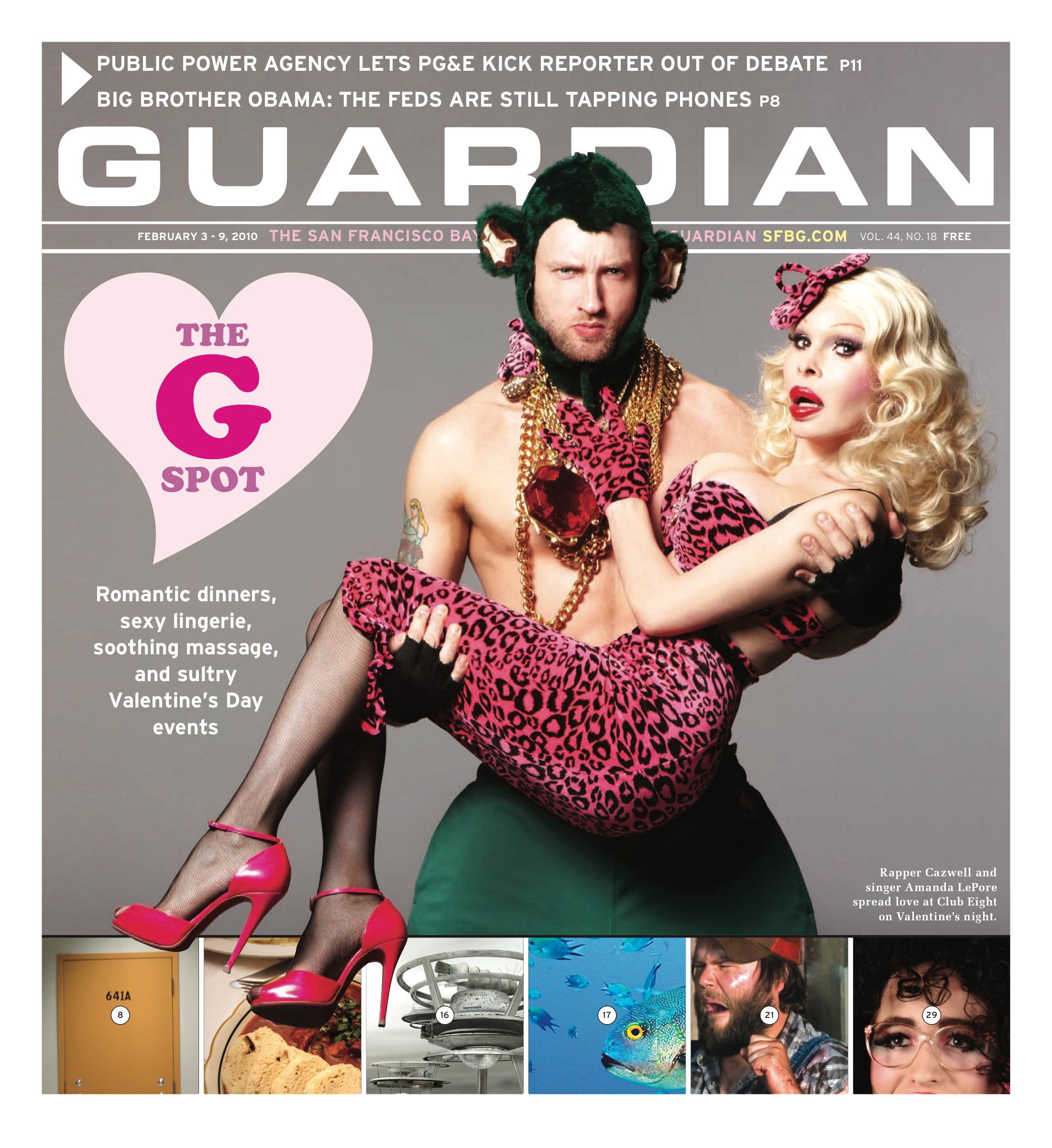
Print sections as they appeared in the early 2010s

To find articles by keyword or author, you may want to use our Search function.

Print Sections

It just so happens

0

CHEAP EATS Dear Earl Butter,

Like a cat always lands on its feet, your chicken farmer lands on a chicken farm. Weirdo the Cat would be proud of me, according to the Mountain.

Hard to believe, but life sometimes does that to you. Just when you need them, voilà: chickens. I had no idea! I just had to get somewhere friendly, and by sheer chance on the same day the anvil fell on my head I got a mass e-mail from Fabienne Gagagaga, telling my whole family, among other things, to keep in touch.

I last saw Fabienne 10 years ago, at my dad’s wedding. She was working at that time in marketing. A couple days after my anviling, when I still hadn’t regained my shape and it looked like I wasn’t going to, I decided it would be best for me to have my nervous breakdowns in another language — one I didn’t know at all, give or take voilà. And so I did, I kept in touch.

Fabienne’s reply was almost immediate, full of warmth, and just dripping with butter, but didn’t mention chickens. I arrived in the dark, by train, and very much in need of food, sleep, and kindness.

There was a lamb stew waiting for me. The lamb was from her farm. That night while I slept for the first time all year, two baby lambs were born. I watched the sunrise over some sailboat masts, then went with her to help Fabienne buy about 100 new chicks.

Over the next few days I helped fork, shovel, and broom out two chicken coops, I helped feed the chickens, closed the chicken doors at night, helped haul and stack sacks of feed, handled livers, and cleaned, cut, and cooked up 80 chicken hearts into a cherry beer stew with carrots and onions.

There aren’t a lot of lady farmers in France, and riding around on tractors and pickup trucks with this ‘un made me about as proud as I’ve ever been. Here was somebody doing for real what I make a living, in a way, pretending to do.

The Chicken Farmer, farming chickens. Not just four or five but hundreds. Imagine! It was as if John Wayne or Clint Eastwood ever actually found themselves roping steer, or something.

We even went to the dump once. Everyone loved us there!

I ate fresh scallops, many many oysters, and butter butter butter — the best butter ever, with some pretty good bread under it sometimes.

In Farmer Fabienne’s sisterly keeping, I not only found food, sleep, and kindness, but meaningful work. And Earl, in case you ever need to know this, there is no better balm for a broken heart than scraping chicken shit and cooking chicken hearts. The cherry beer was an accident, but a good one.

Dear Nice Lady,

That is great. The best thing about Java Supreme is that if you know when to go, you can get to talk to Joel almost every day of the week. He’s not always there, and those days are always hard. But most days he is. Me too. For the last 18 years, I have spent my mornings, almost all of them, at Java Supreme. It is also one of the few holdouts to the old Mission values that are no longer on Mission Street. Old Mission values are this: you can afford to eat.

I get a double espresso every morning, and it is $1.75. And when I make coffee at home, guess where I bought it?

Today I went back for lunch, too. I had the Italian roasted eggplant sandwich with pesto, roasted red peppers, mozzarella, and tomatoes, $3.95, with salad, $5.50, because the salads are great. I love this particular sandwich.

Someone suggested I get it with turkey instead of eggplant, and for years I did that. Ed makes it for you without blinking an eye. It is Ed’s place. He tries to keep things simple. I heard him say that on the phone, once.

Recently, in a cream cheese banishment program (not something I can recommend) me and Joel have been enjoying the Java No. 2, which is a bagel with avocado, tomato, sprouts and red onion. But neither of us gets the red onion. We didn’t plan it. It just so happens.

JAVA SUPREME

Daily: 6:30 a.m.–7:00 p.m.

703 Guerrero, SF

(415) 206-1832

No alcohol

Cash only

Cafe Prague

0

DINE When in Prague, one would naturally try to eat as Praguers do, and in my experience, this means lots of pizza. The city, as a physical artifact, is a gothic dream, a fantasy of spires, castellations, and cobblestones worthy of Walt Disney. And being sealed up in the aspic of communism for 40 years actually enhanced these charms. When Milos Forman was looking for a place to film Amadeus, his 1984 movie about Mozart in Vienna, he settled on Prague as the setting because it had changed so little since the 18th century.

Except for the people, that is, who emerged from behind the ruins of the Iron Curtain in 1989 with a hunger for all things western, from Bulgari to holidays in Thailand to pizza. I ate as much pizza in Prague as I did in Rome a few years later, and that is saying something. And the wonderful Czech beer, Budvar, was so cheap in the late 1990s it might as well have been pouring from the taps. What was trickier to find was a spot that served traditional Bohemian cooking in a bohemian atmosphere — a place, in other words, like our very own Café Prague.

We never found a place like Café Prague in Prague, but here you don’t have to do much searching, and you can even take BART, since the restaurant expanded last year from its home in the Financial District (once on Pacific Avenue, now on Merchant Sreet) to new digs in the Mission District — on Mission Street itself, in fact, just two blocks from the 16th Street BART Station. The set-up offers, in addition to convenience, a more authentically bohemian setting, or at least one farther removed from soaring glass towers full of bankers counting their taxpayer-funded bonuses. Inside it’s homey; the only bohemian touch that seems to be lacking is a pall of blue smoke from cigarettes being nervously puffed by sallow, Kafkaesque young men.

Today’s Kafka aspirants, from the look of it, are strapping lads (and lasses) who make quick work of huge mugs of Czechvar (Budvar’s North American label) before tucking into immense and satisfying platters of central European food. I have never seen so much food on plates. Even the appetizers are colossal. A bratwurst platter ($7), for instance, consisted of a stack of wonderful sweet and smears of mustard and ketchup to swipe them through, along with a tangle of sauerkraut, a heap of pepperoncini, coins of dill pickle, and a wealth of other pickled vegetables. There was easily enough here for a table of four, especially since we’d earlier loaded up with abandon on the seductive, warm bread in its bottomless basket.

A bowl of split-pea soup ($5) was likewise almost a meal in itself, especially with the addition of bacon and dumplings. When bacon is mentioned as an accoutrement on a menu, you might expect a few bits or crumblings, for a hint of flavor and crunch and some decorative effect. Here the bacon appeared in the guise of nicely crisped slats — enough of them to amount to some real heft. And the bacon was the meaty English kind, not the fatty American stuff. Just to make sure no one would go away hungry, the kitchen tossed in some dumplings as well.

A word on the dumplings, which are ubiquitous. They are dotted with caraway seeds and resemble large slices of the crustless white bread the English use to make their tea-time cucumber sandwiches and are not (as I was expecting) spheres of boiled potato dough. The dumplings were impressively stacked beside several flaps of sauerbraten ($15), a vinegar-marinated pot roast that seemed slightly tough but was smoothed and softened by a broad lake of velvety brown gravy, and beside the roast duck ($15), rich as a winter night. Another small pile of sauerkraut helped balance some of the duck’s fattiness.

After such an avalanche of food (plenty of protein and fat and, thanks to the dumplings, nearly limitless starch), the very thought of dessert might leave you queasy. I can’t say that Café Prague’s version of apple strudel ($5) is a pastry version of Alka-Seltzer, but it is good, with more apples than pastry for a somewhat lower center of gravity. It almost looks like (dare I say?) a slice of deep-dish pizza, except for a chocolate-speckled egg of whipped cream on each side, for a little flourish of bohemian decadence.

CAFÉ PRAGUE

Dinner: nightly, 5–10 p.m.

2140 Mission, SF

(415) 986-0269

Beer and wine

Cash only

Somewhat noisy

Wheelchair accessible

Lusty lingerie

0

By Chhavi Nanda

Legend has it that the feast of Saint Valentine might be based on myth — simply a Catholic invention meant to take the place of Lupercalia, a pagan holiday celebrating fertility. Chaste saint helping Christians marry? Or half-naked forest people drinking wine and wearing goat-skins? We’ll take the half-naked forest people. But since goat skins are so hard to come by these days, we’ve decided to honor our pagan past in a contemporary way, with an ode to lingerie, the unofficial uniform of modern heretics. The saints can keep their flannel pajamas and cotton nightgowns. We prefer the garters, thongs, bustiers, and bootie shorts in the city’s best temples of temptation.

DOLLHOUSE BETTIE

There’s a good reason Dollhouse Bettie is a perennial favorite for those who love what goes under clothes: the vintage and vintage-inspired offerings are beautiful, flattering, and reasonably priced. Fans of the ’50s will love the New Old Stock Exquisite Form ($89), a strapless corset with soft white cotton peaked bra cups, expanding spiral steel boning, and intricate details like lace mesh and satin ribbons. Looking for a full ensemble? Add an all-lace wrap ($127.50) with long, flowing sleeves and flowery embroidery, perfect for a dramatic unveiling or for slightly more cover during your postcoital cigarette.

1641 Haight, SF. (415) 252-7399, www.dollhousebettie.com

FELICITY’S FETICHE

If your style is a bit more black leather than white lace, you’ll love Felicity’s Fetiche, a delightful boutique branded as “apparel for the uninhibited” and geared toward professional dancers. This is where you’ll find costumes, bright-colored fishnets, sexy tank tops, and even affordable leather items like the OverBust Busk-Front Leather Corset ($22), many of which come in plus sizes.

1214 Sutter, SF. (415) 474-7874, www.felicitysfetiche.com

ARICIE LINGERIE

Don’t be deterred by the fact that Aricie Lingerie is in a mall. This local shop’s selection of European items can’t be beat. One of our favorites is the Sublime Silk Chemise ($299), a sexy, sophisticated take on the little white dress by Lise Charmel, one of France’s premier lingerie houses. Sure, it isn’t cheap, but neither are you.

50 Post, SF. (415) 989-0261, www.ariciesf.com

INJEANIOUS LOUNGEOf course, sexy undergarments aren’t just for the ladies. You can find everything sultry and silly — from break-aways to short shorts, from comic-book undies to banana sacks — at the Castro’s Injeanious Lounge. We especially like the offerings from Ginch Gonch ($20–<\d>$30), a line of “youthful underwear with an adult flare” (think hearts, trucks, or jungle themes).

432 Castro, SF. (415) 861-3963, www.injeanious.com

ARTIFICIAL FLAVOR

Another good bet for the boys is the signature Bandito ($5) from Artificial Flavor, a comfortable, form-fitting brief that comes in rich, vibrant colors with complementary color piping. The Cole Valley shop sells clothing too, just in case you want to carry your style from the bedroom to brunch.

912 Cole #208, SF. (800) 961-6705, www.aflavor.com

AGENT PROVOCATEUR

And finally, if you’re hell-bent on shopping at a store that’s not locally owned, we’d have to recommend U.K.-based Agent Provocateur, owned by Vivienne Westwood’s son. We can’t help but salivate over the Love Cream Love Garter ($50), a delicate lace piece with cream embroidery and silk ribbon detail. Or, for darker moments (in our millionaire dreams), we’ll take the Telescopic Whip ($590), a retractable accessory with a snap and wrist-hold made from metal and available in either black or red. BDSM on the go? Yes, please.

54 Geary, SF. (415) 421-0229, www.agentprovocateur.com


Good vibes

1

Many people consider massage a luxury, a kind of pampering or relaxation that is lovely but unnecessary. But done right, massage — or any kind of bodywork — is actually an integral part of overall well-being. A powerful tool to balance the body physically, mentally, and spiritually, bodywork is an act of self-love. And what better time to express love of any kind than Valentine’s Day? Whether you want to honor yourself, your partner, or your coupledom, now is the perfect moment to tend to your somatic needs. Below are three of our favorite spots for personal treatments, gift certificates, and couples’ sessions. Each place is focused on holistic health and all are refreshingly between the extremes of new age woo-woo hippie-dom and pretentious L.A. spa culture.

EARTHBODY

This intimate Hayes Valley spot is more healing center than mere day spa. Therapists are trained in several modalities and develop custom sessions for every client, including consultations before and after treatment. It’s also worth noting that Earthbody is uniquely committed to sustainability, using only organic materials (including fair-trade cotton sheets), plant-derived ingredients in balms and oils that are made in-house, and eco-safe cleaning products.

Individuals: No matter what you choose for yourself or for a loved one, you can’t go wrong. Those with chronic pain might try a body centering treatment ($95–<\d>$155), while those looking for a bit more pampering might like a classic facial ($75–<\d>$165). Not sure what you want? Let the therapist figure it out in a basic bodywork session, starting at $65 for 30 minutes, then find out what your bodyworker learned about you while you snack on almonds, fruits, tea, and specially filtered Kangen water.

Couples: Many couples’ massages are merely two individual massages happening in the same room. Not so at Earthbody. Meant to honor the special union between two people — whether they are lovers, friends, or family — these treatments feature two therapists performing a special synchronized choreography. “When people have a commitment to each other, they have an energy that radiates with another field,” says founder Denmo Ibrahim. “Each body is being addressed, but the field also is being addressed.” Treatments start at $225 per couple for 60 minutes and go up to $490 for the two-and-a-half-hour Lotus treatment.

534 Laguna, SF. (415) 552-7000, www.earthbody.net

THERAPEIA

Fans of contemporary design will drool over this gorgeous, 10,000-square-foot oasis, where walls are bedecked with art and mirrors and lounges look like sets for a photo shoot in Dwell. The nine-year-old center specializes in personalized, customized service, keeping charts on every client that include therapist notes after every session. An added bonus for Valentine’s Day: mention this article and get 14 percent (Get it?) off any service, along with a free soy-based candle.

Individual: Give yourself or your loved one the center’s specialty treatment, a 90-minute hot stone massage ($165). Unlike similar treatments at other places, bodyworkers at Therapeia actually use the heated stones as tools for massage, rather than simply placing them on the body. “The stones have such a smooth, even, wide surface area, it’s like two massages in one,” says studio coordinator Jacquelyn Moore. For something even more special, add the gift of ongoing self-care with a membership. For $49 a year, members get access to featured specials, including 20 percent off every treatment, 10 percent off products, and 40 percent off treatments during their birthday week. Anyone planning to visit more than three times a year will save money.

Couples: Special, larger rooms are reserved for couples’ treatments ($295–<\d>$385), which feature two therapists working on each person individually. “People enjoy relaxing in same room as a partner,” Moore says. Or if you’d like to share your space with four or more people, you can all enjoy your massage in a special lounge outfitted with a fireplace, fountains, and luxurious leather couches.

1801 Bush (lower level), SF. (415) 885-4450, www.therapeiamassage.com

SUCHADA

Exotic, elegant, and decadent, this locally-owned business specializes in traditional Thai massage. Not only are the treatments fantastic, but the new Embarcadero location is beautiful, accented with imported Thai furniture and fabrics, recycled wood, and floating flowers in a tinkling fountain. Bonus? If you book a treatment at the King Street location, you can get 10 percent off a meal at nearby Grand Pu Bah.

Individuals: A first-timer’s best bet is a one-hour traditional Thai massage ($60). You’ll slip on light, pajama-like garments and lie on a cushioned mat in a curtained room while your therapist — trained in Thailand as well as certified here — uses hands, elbows, and knees to knead, stretch, and press out your kinks. Both relaxing and active, many people call this modality a cross between a massage and a workout.

Couples: Book two massages together and you can receive tandem treatments, or spoil yourselves with the three-hour Royal Lanna or Royal Siam massage, both centuries-old combinations of traditional Thai bodywork, reflexology, and herbal massage. Finish with delicious homemade lemongrass tea and, a special for Valentine’s Day, chocolate.

38 Bryant, SF. (415) 644-0808; 690 King, SF. (415) 252-5020, www.suchadathaimassage.com

Cheap dates

0

By Chloe Roth

Crosby, Stills, and Nash once crooned, “If you can’t be with the one you love, love the one you’re with.” If you’re lucky enough (or unlucky, for the V-Day scrooges out there) to find yourself paired up with anyone on this recession-doomed Valentine’s Day, you might be worried about how to show appreciation for your significant other while staying within your budget. The Beatles aptly sang, “I don’t care too much for money, money can’t buy me love.” And unless you’re currently in love with an escort, they are absolutely right. So this Feb. 14, whether you’re engaged in a truly loving and reciprocal relationship, passing time with a willing partner while you look for the ideal one, or courting a gold-digging opportunist, you can show the one you’re with a good time without doling out a lot of cash.

After all, “cheap date” doesn’t have to be a pejorative term used to describe the town bicycle (yeah, yeah, everyone’s had a ride). In the current economic climate, “cheap date” may describe your only option, but fret not! If you can’t afford an expensive five-course meal or want to steer clear of the overpopulated movie theaters (i.e. avoid seeing the cheesy rom-com your partner picked out), there are plenty of alternatives. Here are a few non-dinner-and-a-movie examples of how to show your honey a good (and affordable) time in either San Francisco or the East Bay.

BIG KID ACTIVITIES

When you were six, falling down in public was routine and relatively painless (given you didn’t have very far to fall). It’s a little different now that you’re an adult, especially if your clumsy face-plant happens in front of someone you’re trying to get into bed. But, really, what better way to get to know someone than through total humiliation? For many cold-weather novices (and too-cool-for-Brian-Boitano snobs), ice-skating offers the perfect opportunity for mutual embarrassment and, thus, subsequent bonding. On Valentine’s Day, the Yerba Buena Ice Skating and Bowling Center (750 Folsom, SF. www.skatebowl.com, 415-820-3532) is open to the public from 1-2:30 p.m. and 4-5:30 p.m. Admission for adults is $8 (or $11 with skate rental), a pretty low price to pay for feeling like a kid again. If you find yourself on the other side of the Bay Bridge and still fancy a skate, head over to Oakland Ice Center (519 18th St., Oakl. 510-268-9000, www.oaklandice.com). It’s open for public skating on from 1-3 p.m. and 3:15-5:15 p.m. (also $8, $11 with skate rental).

THE GROPE-A-DOPE DETOUR

If you skip the Valentine’s Day movie but still hope to get some R-rated action from an old-fashioned guy or gal, take advantage of San Francisco’s topography and drive up to Twin Peaks (501 Twin Peaks Road, SF.). It’s timeless, it’s free, and it’s quintessentially San Franciscan. Plus, who doesn’t love the classic make-out session at a lookout point? If you’re lucky, sneaking some of this old-fashioned romance into your night will get you one step closer to the set of twin peaks you’ve been trying gain access to since your first date. Or, if you’d like to catch a view of the Bay from Berkeley, drive up to Indian Rock (950 Indian Rock Ave., Berk.) or the Lawrence Hall of Science (Centennial Dr., Berk. www.lawrencehallofscience.org).

THE SIP AND SOAK SERIES

If you’re in the East Bay and you’d like to get your date a little drunk in the middle of the afternoon (and why wouldn’t you?), take them to the Takara Tasting Room (708 Addison, Berk., 510-540-8250, www.takarasake.com). The popular local sake company offers five different courses of sake tasting for a mere $5. And since sake has an average alcohol content of 15 percent (that’s 3 times more than most beers), you can get a pretty nice buzz going. If you want to continue on a more pampering route, then head over to Piedmont Springs (3939 Piedmont, Oakland 510-652-9191, www.piedmontsprings.com) for a little soak in a rustic redwood tub. Sure, you could do the whole candle-lit bath thing at home, but who wants to spend the next day cleaning up puddles, soap rings, and melted wax when you could, well, not? Piedmont Springs offers private outdoor tubs ($15), saunas ($13), and their popular combination room ($20). And if you’d like to plan a little sip-and-soak series in SF, check out the Valentine’s Day lineup at the San Francisco Brewer’s Guild’s Beer Week 2010 (www.sfbeerweek.org/feb14). Then once you’re nice and drunk, head to one of SF’s more affordable spas: Kabuki Springs & Spa (1750 Geary, SF. 415-922-6000, www.kabukisprings.com), or Imperial Day Spa (1875 Geary, SF. 415-771-1114, www.imperialdayspa.com). Side note: please remember that hot-tubbing while inebriated is not the safest thing to do, so be smart about it. Drowning does not a romantic Valentine’s Day make.

FREE FLASHMOB FLIRTING

If it’s nearing the evening and you’re still seeking a last-minute hookup, the best (and strangest) place to look would be the Great San Francisco Pillow Fight (Embarcadero, SF. www.pillowfight.info), held annually in Justin Herman Plaza. When the Ferry Building clock strikes 6 p.m., grab a pillow you’re willing to destroy and start some feathery flashmob chaos. If you’re not familiar with the term “flashmob,” Wikipedia (that ever-reliable source of real information) defines it as “a large group of people who assemble suddenly in a public place, perform an unusual action for a brief time, then quickly disperse.” If all goes well, you’ll go home afterwards, sweaty and covered in feathers, and perform more unusual acts with your newfound Valentine.

On pension reform, a way forward

0

EDITORIAL Sup. Sean Elsbernd is taking on one of the most complicated and politically tricky issues in San Francisco — reforming the pension fund and health care system for retired city employees. He’s right that the system needs reform — but his measure has some serious drawbacks and needs some significant amendments.

The problems facing the system are so confusing, and the legal and financial aspects so arcane, that it’s hard for anyone to grasp the full situation. But we can sum it up pretty simply:

San Francisco’s pension fund is in far better shape than pension funds in many cities and is a long way from any financial crisis. But over the next few years, thanks to weak stock market performance, the city’s cash obligation — the amount of general fund money that must be paid into the retirement system — is going to rise quickly into the hundreds of millions of dollars.

The retiree health care system is in a lot more trouble — with the rising cost of care, the city will be on the hook for a serious amount of money over the next decade or two. And since the obvious answer — a single-payer system that would cut costs immensely — isn’t anywhere on the immediate political horizon, the San Francisco supervisors need to address the problem.

Elsbernd’s proposed fix is also complicated; the main legislation runs 61 pages. But in essence, he wants to make sure all city employees pay directly into the system; raise the amounts new employees, cops, and firefighters contribute; and set up a rainy-day fund to divert excess pension revenue in good years into a trust that could fund health care pension obligations in down years. He’s also going after a scam common in the police and fire departments where people about to retire get sudden promotions and big salary bumps for a few months, then collect pensions based on the higher pay scale.

The first part is — and should be — almost certainly dead. Members of the Service Employees International Union local 1021 agreed several years ago as part of contract negotiations to give up a pay hike; in exchange, the city agreed to take over the workers’ obligation to pay into the pension fund. Changing that, and outlawing any similar deals in the future, is unacceptable to labor and could drag down the whole proposal.

It’s also tricky to raise pension contributions for “new employees” since Mayor Gavin Newsom has been firing people then rehiring them at lower pay rates. Do those people lose their pension seniority? That has to be fixed.

But given the sweet deal cops and firefighters have, it’s entirely appropriate to ask them to contribute more to retirement. And while some city employees actually get and deserve raises in their final year of work (and the language in Elsbernd’s bill doesn’t address this and needs work), pension spiking is a problem that tends to give extra cash to people who are on the higher end of the pay scale at the expense of lower-paid workers.

And the heart of his proposal — to set up a trust fund for excess money in good years — deserves serious consideration. Yes, it’s a set-aside, and yes, there are legal complications. But the cost of doing nothing is too high to ignore.

Elsbernd should have done this differently — he should have met in advance with all the stakeholders and sought to hammer out a compromise. Even so, there’s a lot for progressives to work with here. If Elsbernd is willing to engage with labor and the board majority, and the progressive supervisors are willing to acknowledge the problem and look for amendments that make this bill acceptable, there’s a way for the city to come out ahead.

Sup. David Campos has moved to “split the file” — that is, to turn the Elsbernd bill into two identical measures. The move gives the progressives a chance to make amendments even if Elsbernd doesn’t want to go along, and could wind up giving the supervisors a choice between two competing measures. We’d prefer that Elsbernd work with his colleagues on a measure everyone can back. But in the end, the best option is a charter amendment that fixes the problems Elsbernd has identified — without being unfair to city employees.

And if Elsbernd and the progressives can come to a deal, there’s a lesson here for the mayor: if you try to work with your opponents, you can actually get things done.

Progressives should care about pension reform

2

OPINION In today’s failing economy, with double-digit unemployment and huge government deficits, progressives have a strong interest in ensuring that San Francisco’s pension system remains viable.

After years of working and contributing a percentage of their income to a pension fund, city employees receive a guaranteed annual pension based on an employee’s years of service and his or her pay level at retirement. In the private sector, most employees participate in a 401(k)-type of retirement plan, in which the pension is based on the amount contributed to the fund.

Under the city charter, the city is only required to pay into the pension fund when its liabilities exceed its income. When the fund loses money, as it has in recent years, the city is required to make up the difference.

In 2005, investments losses brought the fund below the break-even mark, requiring the city to pay $175 million in retiree pension and health premiums. Today, that number has grown to $525 million — an increase of 200 percent. Two years from now, in 2013, the amount will grow to $675 million, eclipsing what it costs to run San Francisco General Hospital for one year.

While headlines reporting pensioners who receive $100,000 or more raise the public’s ire, most retired city workers receive modest pensions. Still, there are abuses to the pension system that must be eliminated. A recent civil grand jury report found that some police and firefighters engage in pension “spiking” by promoting employees in their last year of service to increase the amount of their pensions. That practice has cost the city $132 million.

The question of how to address the city’s growing pension liability is now before the Board of Supervisors. A proposed charter amendment would change the contribution levels for police and fire employees hired after July 2010 from 7.5 percent to 9 percent and base pensions on the last three years of the employee’s salary to reduce pension spiking.

Some argue that the measure unfairly targets labor and city workers by eliminating pension formulas that have been used for decades. But with the city’s $522 million budget deficit, if San Francisco’s pension problem isn’t fixed, escalating pension costs will ultimately force city officials to confront this choice: make huge service cuts and layoffs or be unable to meet the city’s retirement obligations to its retired workers. That’s why we have to act now.

Other pension funds have faced this reality. One San Francisco union leader whose fund is paid by its workers told me that his union voted to reduce future pension benefits while increasing the amount of employees’ contributions. “It was a bitter pill, but we knew we had to do it,” he said.

The proposed charter amendment doesn’t go this far and only has a minimal impact on the city’s present pension liabilities since it only changes contribution levels for future employees. However, if the amendment reaches the June ballot, these modest reforms should not become a wedge issue.

Having a sustainable pension fund that protects the futures of workers without bankrupting the city is a progressive value. Progressives should also support ending pension abuses that only benefit a small number of workers at the expense of taxpayers and other workers who contribute to the fund. Pension reform is one step, among others, that must be taken to restore San Francisco’s fiscal stability.

Jeff Adachi is San Francisco’s public defender.

Editor’s Notes

0

The mayor of San Francisco is mad that the Board of Supervisors won’t even schedule a hearing on his proposals to stimulate business and job creation in San Francisco. He ought to be happy. If this loopy plan ever gets to the point of open, full discussion, Gavin Newsom will wind up with a real political embarrassment.

Let’s analyze, for example, the suggestion that the city waive payroll taxes for biotech companies. That’s supposed to make those companies more likely to hire new people. After all, any economist knows that taxing something discourages people from doing it, so taxing a payroll ought to make companies less likely to hire. And getting rid of that tax ought to create jobs.

Well, since one of the things I do is help run a small business in San Francisco, let me explain how it actually works.

Say you’re a biotech company that wants to hire a new entry-level worker at a modest $35,000 a year. Can you afford it? Let’s cost it out.

There’s the salary, of course. Then there’s the 7.5 percent you’re paying in federal Social Security tax. That’s $2,626 more. And since you’re in San Francisco, you’re paying for health insurance; that’s probably between $2,000 and $4,000 a year, depending on the plan, but let’s peg it at the city’s minimum mandate, which is $1.09 an hour, or $2,267.

So now your $35,000 worker costs $39,893. Then there’s unemployment and disability insurance and workers’ compensation. The person’s going to need a desk and a chair, or a lab bench and a stool (and they have to be ergonomically correct), and probably a computer, a phone line, and software. And you’re going to have to spend some money on training. You’re going to offer a couple weeks of paid vacation, right? And you have to give sick days. So you have to account for the money you’re spending to cover your new worker when he or she isn’t working. If it all pencils out at less than $42,000, you’re doing well.

Oh, wait, I forgot — there’s the damn city payroll tax. That job-killing factor that could make the difference between hiring and not hiring. Better account for that; it could be a deal breaker.

Are you holding your breath? Ready for the ax to fall? Here you go: the payroll tax on your new hire is a whopping $525 a year. About $10 a week. You probably spent more on the help wanted ads.

So let’s be honest — the payroll tax may sound awful (and actually, I think a gross receipts tax would be more fair, for a lot of reasons). But suspending it won’t create a single new job. It’s too small a factor to count as more than decimal dust in anyone’s hiring decisions.

Here’s what suspending the payroll tax for biotech companies will do: reduce city revenue, almost certainly by enough to force more program cuts, and that means more job cuts for city workers. So you gain no private sector jobs — zero — and you lose public sector jobs. How, exactly, is that encouraging employment growth?

Quit complaining, Mr. Mayor — the last thing your proposals need is real public scrutiny.

Building the movement

2

Frustrated by deep cuts to education spending and quality, momentum is building across California in support of the “Strike and Day of Action to Defend Public Education” on March 4.

Students, laborers, and faculty throughout the University of California system are trying to expand on last semester’s organizing efforts by strengthening ties to groups from all tiers of the public education system. But questions linger about the best way to proceed and what exactly the event should look like.

“I think that the regents and [UC President Mark] Yudof are very fearful of what would happen if the students and workers united. They could be unstoppable,” said Bob Samuels, president of the University Council-American Federation of Teachers (UC-AFT).

That collaboration is exactly what many grassroots organizers are hoping to achieve, although their central message is not limited to participants in the UC system alone. They argue that fee increases and cutbacks at the universities are symptomatic of a greater problem, namely the denigration of free and low-cost public education.

“This emerged as a movement of students and workers at the university level. What we’re doing now is going beyond the UCs,” said Blanca Misse, a graduate student and member of the Student Worker Action Team (SWAT).

By reaching out to members of preschool, K-12 public school, community college, and California State University communities, organizers hope to turn March 4 into a rallying moment for the entire public education system in the state. Organizers also want to ensure that the UC system isn’t funded at the expense of other institutions of public learning.

“We need to be fighting for money and political power,” Misse added. “The committees need to mobilize all of the fighting sectors and show them our strength.”

At the Jan. 17 meeting of the Berkeley March 4 organizing committee, one of many ad hoc groups set up across the state, a gathering of about 35 union members, graduate students, community activists, and undergraduates discussed what the day should look like locally. They also reported back on their attempts at organizing the local community, including garnering union support and reaching out to high school students.

Javier Garay noted that at a meeting of the Oakland Education Association, a union of public school workers, “89 percent of the nearly 800 attendees voted in solidarity with the March 4 Day of Action, possibly including a strike.”

Yet the most heated discussions centered on how to unite the interests and power of the university population behind the broader fight for public education funding.

During the meeting, Tanya Smith, president of the local chapter of the University Professional and Technical Employees union (UPTE), stressed the importance of “not being an ivory tower” by extending activism “beyond Berkeley’s campus and reaching out to the political center in Oakland.”

Student activist Nick Palmquist, a fourth-year development studies student at UC Berkeley, admitted that the “tuition issue” is a big motivating factor for college students. At the same time, he noted, “Students have a lot of potential to see the bigger picture. We’re trying to expand the consciousness of the movement.”

That movement stretches back to the beginning of the school year, when students realized that Yudof and the Board of Regents were planning on making up for the $814 million budget cut from 2008-09 and the additional $637 million cut in 2009-10 with layoffs, furloughs, and a possible fee hike.

On Sept. 24, 2009, groups organized strikes and walkouts across the University of California system, including an estimated 5,000-person protest in the legendary Sproul Plaza at UC Berkeley.

Exactly one month later, several hundred people gathered on the Berkeley campus for the Mobilizing Conference to Save Public Education. According to the invitation, the purpose of the conference was “to democratically decide on a statewide action plan capable of winning this struggle, which will define the future of public education in this state, particularly for the working-class and communities of color.”

After an intense day of discussion, the body voted to establish March 4 as a “statewide strike and day of action.” Though it remains unclear how the different interests would come together (the call left demands and tactics open for debate), the message was clear: to save public education, diverse groups need to stand together cohesively.

Tensions escalated dramatically in November when the regents approved a 32 percent fee increase. At UCLA, where the regents held the meeting, an estimated 2,000 students gathered in demonstration and protest.

UC Berkeley student Isaac Miller told the Guardian, “I think we left there feeling like even though the fee increase went through, this is a long-term fight. It was really empowering to connect to students from all over the UC community.”

Meanwhile, a three-day protest at UC Berkeley culminated in a day-long occupation of Wheeler Hall on Nov. 20. As the protesters outside multiplied in support of the occupiers, they expressed solidarity with their causes as well as anger at the fee hike.

Callie Maidhof, a graduate student and spokesperson for the occupiers, said at the time, “One of the reasons behind this particular action is that students realized that not only is the state an unreliable partner, so is the administration. The only thing students can do at this point is reach out to each other.”

Maidhof was referring to a frequently repeated refrain from the regents and Yudof: “The state is an unreliable partner.” They argue that their hands are tied by the budget shortfall and the UC system has to figure out ways to sustain itself apart from increasingly erratic state funding. “The message is if the state fixes the budget, all our problems will be over,” said Mike Rotkin, mayor of Santa Cruz and a former lecturer at UC Santa Cruz.

So when a Jan. 21 San Francisco Chronicle article (“Regents to Back UC Students’ Protest at Capitol”) reported that the regents and Yudof agreed to stand alongside the students in Sacramento on the March 4 Day of Action, many were shocked and angered. “This is a complete turn-around for them,” Palmquist said. “They were never in support of our efforts. But now they feel threatened and they also feel like they can capitalize on them.”

In an open-letter response, several unions wrote back: “This is a cynical publicity stunt, and we do not buy it.”

Victor Sanchez, president of the UC Students Association (UCSA), said the article misrepresented what Yudof and the Regents said. “The regents and Yudof agreed to participate with students on a separate March 1 day of activism, not March 4,” he said. Calls and e-mail to Yudof’s office to confirm were unreturned at press time.

Sanchez explained that the March 1 activities are the culmination of UCSA’s annual Student Lobbying Conference, which takes place in Sacramento from Feb. 28–March 1. Its actions focus primarily on lobbying the Legislature. That approach is more in tune with the administration’s message that the problem lies in Sacramento.

UCSA’s demands include increasing funding for higher education by $1 billion, creating alternative sources of revenue through comprehensive prison reform, preserving the California grant program, and passing Assembly Bill 656.

Sponsored by Assembly Majority Leader Alberto Torrico (D-Fremont), AB 656 would place a severance tax on oil companies and divert revenues toward higher education. “It is strategic for us to focus resources in Sacramento, because that’s where the negotiations are happening,” Sanchez said. “But we also understand that we’re fighting a two-front war and need to hold both the Legislature and the administration responsible.

“At the end of the day, it is our event and our day of action,” he continued. “We made it clear we aren’t going to change our demands. We stand in solidarity with the March 4 organizers. We’re all advocating a common goal, and folks are going to apply complementary pressure. Our end goal is prioritizing education, and we need to move forward with that collective mentality.”

If all this seems confusing, that’s because it is. The groups that have formed in reaction to cuts to public education are numerous, amorphous, and have slightly different agendas. Some subscribe to the position that the fault and solution primarily rests in Sacramento, while others argue that the administration and appointed, rather than elected, regents are to blame. Most agree with Sanchez that both are part of the problem.

As community organizers build toward March 4, it is clear that the day will be significant. The real question is, if students can maintain their momentum and their newfound network with other sectors of public education, what will happen on March 5 and beyond?

Big Brother Obama

0

The Federal Bureau of Investigation illegally collected thousands of telephone records between 2002 and 2006, a Jan. 20 Justice Department report revealed. Senate Judiciary Committee Chairman Patrick Leahy (D-Vt.) publicly scolded FBI Director Robert Mueller for the transgression, but the practice of secretly spying on Americans’ international communications has become standard practice, even under the new presidential administration.

In late 2005, The New York Times exposed how the George W. Bush administration authorized the National Security Agency (NSA) to spy on Americans’ e-mails and phone calls without then-required court orders. The scoop prompted retired AT&T technician Mark Klein to reveal the existence of a NSA-controlled secret room at a San Francisco AT&T facility, providing undisputed proof of this public-private spy operation and the extensive amount of personal data that is collected.

Not only was no one held accountable, but the Democrat-controlled Congress legalized the operation after the fact by passing the Foreign Intelligence Surveillance Amendments Act (FISA Amendments Act) in 2008. Klein responded last year with the self-published book Wiring Up the Big Brother Machine … And Fighting It to narrate his version of the civil liberties and privacy battle.

The creeping intrusion on Americans’ privacy continues unabated under the Obama administration, according to government watchdog groups and media pundits. “Things have changed slightly — for the worse,” said Rebecca Jeschke from the Electronic Frontier Foundation (EFF).

Barack Obama, while still a Senator, hinted what his later inclination might be when he voted for the FISA Amendments Act, arguing that it was needed to foil terrorist plots (after having previously stated his intention to oppose the bill). Now that the legislation is law, his administration is using the same rationale as its predecessor to fend off attempts to repeal it, namely that it is crucial to national security.

Yet the EFF and the American Civil Liberties Union (ACLU) deem the practice and the legislation that authorized it to be unconstitutional. They’re challenging it in courts but having a difficult time in light of executive branch opposition and national security claims.

The 1978 Foreign Intelligence Surveillance Act (FISA) was originally crafted to constrain and oversee the government’s spying activities on Americans after the Nixon administration abused its power to eavesdrop on Vietnam War protesters and political adversaries.

FISA required officials to obtain from a judge individual warrants with specific named individuals or specific phone numbers before it wiretapped phone calls or read e-mails in the U.S. Outside the borders, spying remained unrestricted. The FISA Amendments Act subtly blurs those lines and leaves loopholes whereby the government can intercept U.S. residents’ communications without having to notify the FISA court.

Under the new protocols, the FISA court can authorize NSA to conduct surveillance on U.S. soil as long as the target isn’t American and is “reasonably believed” to be located abroad, no matter who the interlocutor may be, foreigner or American. When information is incidentally collected on American citizens, “minimization procedures” are designed to prevent the unnecessary retention or dissemination of such information.

“Now under the new law, the FISA court is looking at bulk surveillance under which the government doesn’t specify who it’s going to wiretap, which phone numbers it’s going to monitor, or which e-mail addresses it’s going to surveil. All the government has to say to the court is that the targets of its surveillance are overseas. Once the government has said that, the court just checks a box and grants permission. So insofar as Americans engage in international communications, this is a law that gives the government carte blanche to monitor those communications,” explained ACLU National Security Project Director Jameel Jaffer.

Civil liberties advocates say this unchecked eavesdropping power violates the Fourth Amendment, which protects against unreasonable searches and seizures. Yet the Obama administration is “aggressively defending the FISA Amendments Act,” Jaffer said. It is arguing that the courts don’t even have a role in evaluating the constitutionality of the government’s surveillance activities.

A brief filed by the Justice Department in January 2009 maintains that the FAA “strikes a reasonable balance between the critical intelligence it serves and the privacy interests of Americans it indirectly affects,” and that “plaintiffs’ arguments from the start have rested on speculation and surmise.” In short: trust in the government’s good faith for not abusing its power.

Another worrisome aspect of the FISA Amendments Act is the immunity from liability it retroactively granted to telecommunications carriers that assisted the government in carrying out its warrantless wiretapping program before Congress consented to it.

In January 2006, Klein gave EFF critical engineering documents proving that AT&T, his former employer, let NSA access its 611 Folsom St. office building to tap into its Internet data flow to duplicate it and send it to a secret room the agency controlled. That included e-mails, Web browsing, voice-over Internet Protocol (VoIP) phone calls, pictures, and streaming video, be they international or domestic.

Thanks to this installation, anything transmitted on the AT&T network was swept by the NSA. And there were clues that the San Francisco secret room was just one in a series set up all over the country. In his book, available on Amazon, Klein gives an account of his personal protest and involvement in the case spearheaded by EFF against AT&T.

Klein tells how he figured out what the San Francisco room was about, how he struggled to get the story out, and how he tried in vain to inform Congress. But following approval of the FISA Amendments Act, the lawsuit was dismissed in June 2009, along with 32 other similar cases brought by customers against their telecommunications service providers.

“The surveillance system now approved by Congress provides the physical apparatus for the government to collect and store a huge database on virtually the entire population, available for data mining whenever the government wants to target its political opponents at any given moment — all in the hands of an unrestrained executive power. It is the infrastructure for a police state,” he wrote. According to his sources, the equipment is still in place. Security even has been beefed up at the Folsom Street building where he used to work: the entrance to the entire floor where the diversion device is inserted is now restricted.

EFF is appealing the dismissal of the AT&T lawsuit, arguing that the communications companies’ amnesty is unconstitutional in that it grants to the president broad discretion to block the courts from considering the core constitutional privacy claims of millions of Americans. Officials with the Justice Department told us they wouldn’t comment because of the ongoing litigation.

In the meantime, the current judicial and legal gridlock is barring the public from reviewing what took place under the Bush administration and what is going on right now. Can our communications channels be trusted? Klein says he won’t be appeased unless the equipment is torn out.

Sitting boundaries

0

Aggressive lobbying efforts by the San Francisco Police Department and some of its allies who are pushing a proposed sit/lie ordinance have irked some current and former members of the Board of Supervisors.

The legislation was privately created by new Police Chief George Gascón and then played up in the mainstream media. It would make it illegal to sit or lie down on public sidewalks. Supporters say it would make it easier for cops to target people who harass neighborhood residents.

But in other cities where similar laws have been passed, protests have erupted from homeless-advocacy organizations and civil liberties groups, which say criminalizing this behavior unfairly (and unconstitutionally) targets homeless people who have nowhere else to go.

In Portland, Ore., a similar law was enacted then overturned by the courts. In Los Angeles, an ordinance against sleeping on the sidewalk was challenged by the American Civil Liberties Union, resulting in the 9th Circuit Court of Appeals ruling in 2006 that unless adequate shelter is available for homeless people in L.A., arresting them for sleeping on the sidewalk amounted to cruel and unusual punishment.

But an e-mail action alert included in SFPD Central Station Capt. Anna Brown’s monthly community newsletter encouraged people to contact the mayor and the Board of Supervisors to support the creation of a sit/lie ordinance. “Naturally, there is resistance from the left-leaning Board of Supervisors who feel this is an attack on the homeless population,” it noted.

That unusually overt political plea caught the eye of Aaron Peskin, former president of the Board of Supervisors and current chair of the San Francisco Democratic Party, who called it “funky.” Peskin told us he’d never seen an advocacy pitch like this go out in a captain’s newsletter before, and he questioned whether this was an appropriate use of city resources.

But the City Attorney’s Office says this doesn’t fall under city laws banning electioneering by city employees, who are barred from using government resources to endorse a candidate or ballot initiative, or from doing any campaign-related work on city property.

Yet this kind of pitch “is not considered political activity,” Jack Song, a spokesperson for City Attorney Dennis Herrera, told the Guardian.

But Sup. David Campos, a former police commissioner, frowned upon it nonetheless. “Something like this is not really helpful to the Board of Supervisors and the Police Department working together,” Campos said.

Sup. Ross Mirkarimi took a similar view. At a recent Board of Supervisors meeting, he requested a hearing about the ordinance because he said the media-driven public debate had occurred without formal discussion. Anti-loitering and public nuisance laws are already on the books, Mirkarimi pointed out.

“What makes those laws inadequate?” he asked. “How would the proposed law augment what is already in effect?”

The alert wasn’t actually written by Capt. Brown, who included it in her newsletter. It was drafted by the Community Leadership Alliance, an organization headed by David Villa-Lobos, a longtime resident of the Tenderloin and a candidate for the District 6 Supervisor seat.

Since Gascón floated the idea of creating a sit/lie ordinance, CLA has kicked into high gear to mobilize support, most recently issuing its action alert e-mail to 8,000 recipients. Police captains were included in the e-mail blast, Villa-Lobos told us, but each captain decides independently what to include in his or her newsletter.

People sitting and lying on sidewalks is “a really, really big problem, especially in the crime-ridden areas,” Villa-Lobos said. “God bless the homeless, but it’s a big problem there too.” Several years ago, his organization tried to mount a campaign for a sit/lie ordinance, but it didn’t go anywhere. “People came out and said we were trying to violate civil rights,” he said.

The Community Leadership Alliance is active in the Tenderloin, SoMa, and the mid-Market Street area, and the group occasionally holds monthly meetings at the Infusion Lounge, an upscale nightclub owned by Scott Caroen, the chair of the organization.

Gascón worked with deputy city attorneys to draft the ordinance and all district police stations have submitted to their commanders a list of areas that they feel could benefit from the law, according to a Tenderloin district newsletter. Mirkarimi told the Guardian that some supervisors were kept in the dark for weeks about the fact that an ordinance had been drafted. “This wasn’t collaborative at all,” Mirkarimi told us. “We never received it until we demanded to see it.”

The Haight-Ashbury, where residents and visitors have been complaining about harassment from wayward traveling youth, has been ground zero for discussion about a sit/lie ordinance. A small group of irate residents there and the Park Station Capt. Teresa Barrett have rallied in support of the law, saying it would give police a new tool to target these disruptive street kids.

But it’s clear that the ordinance’s supporters want to see it applied broadly and to be used to roust the homeless in neighborhoods throughout the city.

“CLA feels that our sidewalks should be enjoyable and a place of social gathering, and that the ordinance could go a long way in helping our neighborhoods feel safer,” reads the Community Leadership Alliance alert that was included in the police captain’s newsletter. “It may also reduce the overall homeless population in San Francisco by discouraging people from coming to the city to beg for money.”

PG&E kicks press out of debate

2

By Brady Welch

news@sfbg.com

It sounded like a great story: a representative of Pacific Gas and Electric Co. agreed to a public debate over the merits of a ballot initiative the company essentially had paid to place on the California ballot. The measure seeks to curtail public power and clean energy in the state. And so far, PG&E has been loathe to discuss it in any open forum.

But on Jan. 27, PG&E’s political consultant, David Townsend, was scheduled to square off with state Sen. Mark Leno, a staunch foe of the measure, before what sounded like a great audience: the Northern California Power Agency, which represents 17 public power providers across the state.

At Sacramento’s Doubletree Inn, I headed to the lobby of the California Ballroom, where I found a woman sitting at a table adorned with the logo of the NCPA. “I’m a reporter here to cover the debate between Sen. Mark Leno and a representative from PG&E,” I said. “Would this be the right place?”

She smiled politely. Sorry, she said, you have to be an NCPA member and registered for the conference.

“I was invited by the senator,” I told her.

“Then you will have to wait until he gets here,” she said curtly.

I walked upstairs to the front desk — and just then, Leno walked through the main lobby’s sliding doors. I introduced myself, walked with him to the conference room, and quickly slipped in with some other attendees. Within three minutes, a man sitting next to me was called to the side by a steward who whispered something to him, and then just as quickly, returned to his seat. He turned to me.

Are you with the media? he whispered.

“I’m with a newspaper,” I said.

He then informed me that the conference was actually private, and sorry, I would have to leave. They would explain more outside.

After I was escorted out, Leno came up to me and explained that there had been a miscommunication. Turns out Townsend didn’t want the media around. And worse, the NCPA folks appeared to be taking his side. Leno arranged for me to hear his opening statement, but that was all.

The senator’s remarks were pointed. He noted that PG&E’s proposed legislation is not an initiative, but an amendment to the state Constitution. He mentioned the curtailing of free enterprise and a demise of state government. He likened the utility’s disrespect for the legislative process to a spit in the face, and at one point openly asked Townsend: “What good is your word?”

The political consultant, for his part, sat quietly. At times he rolled his eyes or bit his thumbs. When Leno was wrapping up, Townsend leaned over to the moderator and whispered something. The moderator then came over to me and said I’d have to leave.

So I walked out — but not without wondering: when exactly did PG&E hirelings get the right to exclude reporters from meetings filled with representatives of public agencies?

Leno himself wasn’t sure. “With all due respect to David Townsend,” he told the Guardian a few days later, “I don’t see why a consultant wouldn’t want to discuss the themes of his campaign in public. I think his decision not to allow the press to hear him speaks for itself.”

Despite multiple calls and e-mails, we couldn’t get NCPA director James H. Pope to tell us why he lets PG&E determine who can — and can’t — attend his sessions. Jane Cirrincione, NCPA’s assistant general manager for legislative and regulatory affairs, told us that Townsend was invited by her boss and was not authorized to speak publicly for PG&E.

But Peter Scheer, director of the California First Amendment Coalition, offered a possible explanation. NCPA, he contends, “is capitulating to PG&E’s demand for secrecy, not for ideological reasons, but simply because if the spokesperson walks, they don’t have a conference. The reasons for excluding the press are basically that mundane and stupid.”

DEIR in the headlights

0

GREEN CITY Public comments on the city’s draft environmental impact report (DEIR) for Lennar Corp.’s massive redevelopment proposal on Candlestick Point and the Hunters Points Shipyard includes complaints that the comment period was too short (see “The Candlestick Farce,” 12/23/09), concerns that the city violated state requirements to notify the Ohlone Tribe, and frustration that the city’s preferred plan represents the most significant and substantial impacts of any of the five scenarios analyzed in the DEIR.

These and many other concerns about the impacts of the 10,500-home project will need to be addressed in the final EIR, which Mayor Gavin Newsom and other project proponents expect to be completed by June.

Some object that the city is considering an early transfer of the shipyard and would undertake activities that are currently the Navy’s responsibility (see “Eliminating Dissent,” 06/17/09), saying the final EIR should prominently reference Proposition P, which voters approved in 2000, establishing community acceptance criteria for the cleanup.

Saul Bloom, executive director of Arc Ecology, submitted his organization’s comments “under protest for the inadequate extension of the public comment period, which we believe unfairly penalizes the public review of the draft EIR.”

Land use attorney Sue Hestor called the public comment submission schedule “abusive” in comments submitted for POWER (People Organized to Win Employment Rights). “The schedule is being driven by an insane desire to have the final EIR certified and all local approvals done by June,” Hestor said.

Ohlone chairperson Ann Marie Sayers and Neil MacClean of the Ohlone Profiles Project wondered why the Planning Department did not contact anyone on the city’s list of official Ohlone representatives. “We want the SF Planning Department to follow Senate Bill 18, which requires them to include Ohlone people in the planning process,” MacClean said, noting that there are at least four Ohlone villages within the proposed development area.

Jaime Michaels, coastal program analyst for the San Francisco Bay Conservation and Development Commission, expressed concerns about the DEIR’s proposal to make a 23.5 acre reduction in existing state park boundaries (see “Can I buy your park?” 08/12/09).

Project proponents, Michaels said, “would need to demonstrate that the decreased area would not compromise or reduce its value as a park/beach facility.” Michaels also worries about the impact of adding a minimum of 1.7 acres of fill in the bay to accommodate a bridge at Yosemite Slough, a plan she described as “a significant amount of coverage, particularly for a facility where the large majority of its coverage is needed to serve vehicles accessing the new stadium only 12 days a year.”

Michaels expressed concerns that the project’s plans to address sea level rise would negatively affect bay views and public access to the shoreline.

The project includes a 9.6-mile trail and a variety of other public amenities directly adjacent to the shoreline. Proposed building structures located away from the immediate shoreline would accommodate a 36-inch sea level rise by 2075, and the DEIR promises to employ adaptive management strategies along the perimeter beyond 2050.

“Unfortunately, partly due to illegibility and the scale of the drawings, it is difficult to assess precisely how these adaptations would appear,” Michaels observed. “However, it can be assumed that over time levees would need to be raised and likely widened at the base, thereby partly or entirely obstructing the public’s view of the bay from inland areas, encroaching on and reducing the area devoted for public use and impacting the overall public access experience.”

Arc Ecology discussed the DEIR’s failure to provide a comprehensive sustainability plan, address adjacent development projects, justify a 49ers stadium on the shipyard, or evaluate the potential for the development of port-related heavy industrial activities.

“The city is determined to get this project passed right now, and the developer is afraid that if someone else comes along as mayor and District 10 supervisor, they may not be as sympathetic,” Bloom said. “But the project — as outlined in the DEIR and the city’s way of approaching the deal — is against the interests of San Francisco.”

Hollywouldn’t

0

FILM In its 12th year, is the San Francisco Independent Film Festival entering awkward adolescence? One sign of growing pains, or maybe just a hankering to rebel, is its inaugural Winter Music Fest, which wraps up a week of shows Thurs/4, the same day films begin unspooling. Its lineup of variably notable local bands probably appealed to fans of the Mission Creek Music Festival and Noise Pop. But I gotta ask: doesn’t this town already have enough indie-rock festivals?

It sure has enough film festivals. IndieFest, for example, umbrellas over the summertime Another Hole in the Head horror fest (named, ironically, to mock the overabundance of fests in SF) and the autumn DocFest. I can see the need, I suppose — there’s a lotta independent horror that’s worthy of notice (IndieFest 2008 was one of the first platforms for Paranormal Activity, a micro-budget effort that became a huge mainstream hit in 2009.) Last year’s DocFest unleashed Cropsey, one of the best (if least-seen) true-crime tales in recent memory. In a time when even Hollywood is struggling, outlets like IndieFest provide crucial exposure for work made outside the system, often by first-time filmmakers working with meager funds. This year all the films screen at the Roxie, hardly a flashy venue. Seeking gloss at IndieFest? Maybe someone’ll dress up in Maude’s Viking fantasywear at the annual Big Lebowski party.

So, it’s a low-key festival, infused with DIY spirit, created by film lovers for film lovers. And they’ve been at it for over a decade. I dig that. Usually, I can find a handful of films to pimp in fest-preview articles like this, but to be truthful, 2010 proved a little challenging. (Give Godspeed a pass, for instance.) Closing-night film Harmony and Me, directed by Bob Byington, stars Justin Rice (who’s in indie-rock band Bishop Allen, and who I quite liked in Andrew Bujalski’s 2005 Mutual Appreciation). It reminded me of a lo-fi, quirkier, less art-directed (500) Days of Summer (2009), with its emotionally clueless lead character and breakup theme. It also inspired a breakup of my own: mumblecore, I wanted to like you. I’ll always embrace Bujalski’s films, especially 2002’s Funny Ha Ha. But it’s over. (Please don’t make a stridently poignant, chatty, self-consciously witty movie about our relationship.)

Exponentially more inspiring is local documentary Corner Store, Katherine Bruens’ portrait of Yousef Elhaj, who runs a liquor store at 15th and Church streets in the “Mistro” (as one neighborhood interviewee dubs it, because it’s neither Castro nor Mission). For 10 years, Elhaj, a Palestinian Christian, has lived at his store, carefully tidying the aisles and charming all who enter. He’s patiently saving money and waiting out the incredibly long paperwork process, first of getting his own green card, then of arranging for his family to come to San Francisco. Much of Bruens’ film takes place in Bethlehem, where Elhaj travels to visit his family (including a teenage son who’s not sold on the idea of uprooting to America). More than just a one-man story, Corner Store uses Elhaj’s journey to explore life in modern-day Palestine, leaving both grim and joyful impressions.

Also worth checking out: The Art of the Steal, Philadelphia documentarian Don Argott’s absorbing look at the Barnes Collection, a privately-amassed array of post-Impressionist paintings (including 181 Renoirs) worth billions — and the many people and corporate interests that schemed to control it. This film opens theatrically in March, justifiably. Fans of The Class (2008) shouldn’t miss West of Pluto, a Quebec-set, semi-improvised peek into the secret lives of teenagers. And surely there are more winners that my jaded ass hasn’t managed to see yet. Isn’t that always the fun of IndieFest — digging up those sparklers in the rough?

SAN FRANCISCO INDEPENDENT FILM FESTIVAL

Feb 4–19, most shows $11

Roxie Theater

3117 16th St., SF

www.sfindie.com

Buzz kill

0

GREEN CITY Everyone loves a juicy red tomato. But who knew that the burgeoning hothouse tomato industry, which now accounts for 17 percent of the U.S. fresh tomato supply, imports millions of loudly buzzing commercially reared bumble bees to pollinate its crops? And that pathogen spillover from Bombus impatiens, a bumblebee reared commercially on the East Coast, could be decimating wild bee populations in California and Oregon?

These concerns are outlined in a petition filed with the U. S. Department of Agriculture’s Animal and Plant Health Inspection Service to regulate the movement of commercially reared bumblebees.

“Bumblebees are excellent crop pollinators and serve as an insurance policy for farmers when honeybees are in short supply,” the Jan. 12 petition states. It’s signed by Robbin Thorp, professor emeritus of UC Davis’ entomology department, the Xerces Society for Invertebrate Conservation, Defenders of Wildlife, and the Natural Resources Defense Council.

Recent research by Thorp and Xerces established that four species of formerly common North American feral bumblebees have experienced steep declines and two species are teetering on the brink of extinction.

“The most dramatic decline in North American bumblebees is most likely caused by introduced disease from commercial bee-rearing and movement,” the petitioners state. They believe commercial bees spread pathogens by escaping into the wild where they forage for nectar on flowers visited by feral bees. And they want APHIS to prohibit the movement of bumblebees outside their native range, which the petitioners define as “the state line closest to the side of the 100th meridian,” which runs, roughly, from Texas to North Dakota.

USDA’s Larry Hawkins said APHIS is examining petitioners’ claims. “We need to evaluate whether there is a need, whether it’s practical, and whether the pest is so widely distributed to make that infeasible,” Hawkins said.

James Strange, a USDA-APHIS researcher, acknowledged that “a couple of scientists from Canada put out pretty convincing papers suggesting that something is happening to wild bumblebees that live in the close vicinity of commercial greenhouse operations that use commercial bumblebees to buzz-pollinate their crops.”

But he doesn’t believe Thorp and the Xerces Society have convincing proof that what’s happening to feral bumblebees in California and Oregon is related to commercially reared escape artists.

“They are basing their conclusions on anecdotal stuff,” Strange said. “The idea that the greenhouse tomato growers use of commercially reared bumblebees is what’s causing population declines in the wild is not a good connection because we found the pathogen in natural forests, too.”

Strange noted that the Xerces Society’s petition could be disastrous for some agricultural sectors, if such a rule became hard and fast tomorrow. “But if it’s phased in over the next five years, it could give the industry time to find an alternative,” he said.

Bumblebees are more effective pollinators than honeybees for plants like hybrid sunflowers, watermelon, squash, tomatoes, raspberries, blueberries, cranberries, and peppers. Their thick, tundra-adapted fur helps them survive cold, foggy conditions and their loud buzz, which sounds like someone blowing a raspberry, helps them pollinate plants like tomatoes by shaking pollen out of the flowers’ anthers and onto their velvety pelts.

But bumblebees don’t form permanent colonies, and hothouse tomato growers were forced to pollinate crops with handheld electric vibrators until R. De Jonghe, a Belgian veterinarian, figured how to trick pregnant queens into laying eggs year-round.

Today the four major U.S. hothouse tomato growers use commercially reared bumblebees to pollinate crops. A single greenhouse can be as large as 20 acres and contain 200,000 plants and 23,000 commercially reared bees. According to a hothouse tomato industry report, growers spend up to $2,000 per acre on importing bumblebees. In 2001, 309 million pounds of hothouse tomatoes were grown on 718 acres nationwide.

Strange is trying to find ways to raise local species of bumblebees in captivity so agriculture can use locals instead of the East Coast imports, a technique that involves tricking pregnant bumblebee queens into ending their winter hibernation early.

So far, he has managed to trick one West Coast species into nesting this way. “So it seems like it is possible,” Strange said.

All together now

0

SONIC REDUCER What do you get when you mix air and earth, combine boisterous and baroque exuberance and densely layered yet bouncily buoyant guitars, incorporate baby Scorpions with full-blown ELO?

Voila, you just ordered Citay, the city’s musical mega-maximalists — now jumpier, rockin’-er, and more exhilarating than ever, judging from the sound of the new ‘un from this fab fantasy confab of Bay Area music-makers, Dream Get Together (Dead Oceans), all united under the imagination of one man: songwriter and guitarist Ezra Feinberg.

“I love the first album [Important/Frenetic, 2006], and I love Little Kingdom [Dead Oceans, 2007]. But whenever I listen to Little Kingdom, I’d think, God, this is sooo mellow,” drawls the chatty Feinberg by phone as he maneuvers between the raindrops and tollbooths, making his way to, sorry, the citay by the Bay. “I don’t really feel like I’m this mellow. This doesn’t feel like me. So in a sense, it’s just been a more honest record. This record is more excitable, and I’m more excitable than Little Kingdom.”

Picture a well-attuned supergroup of SF musicians like Warren Huegel (Tussle), Josh Pollock (Daevid Allen’s University of Errors), Diego Gonzalez (3 Leafs), Sean Smith, and Tahlia Harbour — a dream get-together, if you will — woven together and levitating blissfully, beneath the intense gaze of Feinberg and longtime collaborator Tim Green (Fucking Champs) as they constructed the ornate “sonic architecture,” as Feinberg puts it, of Dream Get Together.

That edifice took a year to make — “I don’t churn it out,” Feinberg confesses — as the group assembled parts like the space-rock synth solo by Howlin’ Rain’s Josh Robinow, heard on “Hunter,” and flotillas of crazily interlocked, airborne guitars. (“I like a lot of what is considered to be pretty bloated and overly athletic 1980s heavy metal guitar playing,” Feinberg says.) Drummer Huegel turned to a full rock kit, in contrast to the last album, and the vocal harmonies came to the fore. The result: songs like the title track take classic rock as its starting point then swoop and soar and leave you shaking your shag, tucked in your party van, and marveling at the sound of a rippling guitar solo in flight. “I wanted to take Citay as it was known on the first two records and blow it up, set a grenade to the first two albums,” Feinberg muses. “It’s like the other albums went off their meds.”

The phrase Dream Get Together refers to a specific relationship, also the center of this collection of songs. “It’s about how difficult it can be if you have a fantasy of a relationship with somebody and it’s met with the reality of that other persona and the real relationship,” explains Feinberg. But it also nods to the dream community of musicians that Citay itself seems to have become — despite the issues of scheduling so many busy players (“Omigod, you have no idea,” the bandleader moans. “It’s a logistical nightmare”) — it’s the same idea, or dream, of supportive, collective art- or music-making that has inspired so many in recent years.

“Citay has become this solo project that also has aspects of a collective because there are so many people,” Feinberg observes. “We’re all friends, and we encompass so many bands in San Francisco — I think there’s something really ideal and beautiful at the heart of what Citay has become.”

Now if we can only get our dream on — together.

CITAY

With Fruit Bats and Extra Classic

Fri/29, 9 p.m., $15

Slim’s

333 11th St., SF

www.slims-sf.com

————

CLIPD BEAKS

Seventies-era Cali-rock was the starting point for the off-and-on-again-Oaklanders’ next-level To Realize (Lovepump Unlimited). With Late Young, White Cloud, and Raccoons. Fri/29, 9:30 p.m., $6. Hemlock Tavern, 1131 Polk, SF. www.hemlocktavern.com

DO MAKE SAY THINK

The Toronto post-rock thinkers make a rare appearance, toting the recent Other Truths (Constellation, 2009). With Happiness Project and Years. Tues/2, 8 p.m., $16. Great American Music Hall, 859 O’Farrell, SF. www.gamh.com

NOMO

Yes, mo’ super-heated Afro-rock-inspired awesomeness, pweeze. With the Actors. Tues/2, 9:30 p.m., $10–$12. Bottom of the Hill, 1233 17th St., SF. www.bottomofthehill.com

THEE OH SEES

Oh, say, can you see Kelley Stoltz, Ty Segall, and the Sandwitches joining with T.O.S. for this Stand with Haiti benefit. Tues/2, 9 p.m., $10–$50 sliding scale. Café Du Nord, 2170 Market, SF. www.cafedunord.com

Appetite: Hoist your stein for Beer Week

0

2/5-2/14 – SF Beer Week is going to be a big one this year

We’ve been buzzing awhile now about next week’s SF Beer Week. This one, only the second, is slated to be huge with over 200 events going on in a 10-day span. There’s a lot of beer sampling to be had, my friends! Celebrating craft beers at large, and the rich diversity of our local craft beers, the event is sponsored by local breweries in the SF Brewers Guild. There’s an event to suit every beer lover, from meet-the-brewer nights, to tours, tastings and dinners, to special casks and releases. Navigating the sudsy waters is a bit daunting, but here are a few to consider:

**The big shindig, 2/5, is an Opening Gala at Yerba Buena Center for the Arts, featuring 30 of Nor Cal’s best (including some rare) brews, a tapping of the Brewers Guild collaborative brew (a barrel-aged Imperial Common), live music, commemorative stemware for each attendee, and food for purchase from the likes of 4505 Meats, Tacolicious, and Tataki Sushi. Get tix now as they’re $45 but will be $55 after 1/31.

**Every day of Beer Week, kick-ass Humphry Slocombe, in collaboration with Beer & Nosh, is offering a variety of beer ice creams. If their boozy Laphroig, Secret Breakfast, Guinness Gingerbread-type flavors are any indication of what’s coming, it’ll be good.

** On 2/8, Bar Tartine, Chef Chris Kronner, and Chez Panisse chefs, Rusty Packer, Rayneil DeGuzman and Nico Monday, host a four-course dinner with beer pairings from Magnolia and Dogfish Head Breweries. Seatings are at 6 and 9pm; tickets at tartinebeerweek.eventbrite.com.

**I’m a fan of Allagash beers (particularly bourbon barrel-aged Curieux) from Portland, Maine. Just one of many brewers you could meet over the course of this week is Allagash brewmaster, Rob Tod. He’ll be at Monk’s Kettle on 2/7, Superbowl Sunday, from 6-9pm, and on 2/9 (6-8pm), he’s speaking over Allagash beers, charcuterie and cheese at Oakland’s The Trappist.

**On 2/14, it’s a proper Valentine’s Day at Beer Week’s closing party (4-8pm) at Trumer Brauerei in Berkeley. There’s BBQ, beers from 20 local breweries (like Anchor, Speakeasy, Sierra Nevada, Moylan’s), music, silent auction and free shuttles from downtown Berkeley BART. Tickets are $40 pre-party (including unlimited 4 oz. pours, dinner, free shuttle) at www.celebrator.com. Or maybe you’d prefer to break down a whole pig for Valentine’s? Then La Trappe’s Porcine Valentine (3-11:30pm; $95), where Belgian beers and butchery meet, will be just your speed.

www.sfbeerweek.org

Doom and decay

0

MUSIC The Bay Area has a strange relation with its musical past — accounts of Phil Lesh’s recent somnambulation among the living attest to this, but the same can be said about much of the past 10 years. For better or worse, as the early ’00s crawled back into the woods to die, many of us were left with the impression that the past 10 years were composed of a series of disorganized, vaguely parasitic gestures, a theme party where every group of new guests seems to ape a different decade. Was this an era where mainstream pop music spun its wheels, the occasional ingenious act breaking free from its orbit and gaining some degree of forward drive?

This was also a decade that saw heavy metal — as a music, aesthetic sensibility, and subculture — grow in labyrinthine complexity. Perhaps the hallmark of this growth was an awareness of its immediate history, redirecting its typical drive toward progress, increasing its speed and techniques with mechanized precession, into an exploration of the forgotten pathways and alcoves of its byzantine evolution.

It’s no coincidence that the emergence of a group of historically-aware metal titans ran parallel with the publication of several fantastic metal histories (Ian Christe’s 2003 Sound of the Beast being probably the most well known), a string of successful reunions and new releases from reenergized legends (Maiden, Priest, Dio Sabb … er, Heaven and Hell), and — what I would argue is most interesting — an influx of creative energy directed toward the supremely retrograde doom metal subgenre. Reemerging from the movement is Saint Vitus, a band that in many ways is the spiritual ancestor to this much-welcome ongoing metal mutation.

Though Saint Vitus’ slow, stoned sound had been marinating in fuzzy ’70s goodness, the band’s Scott “Wino” Weinrich-fronted classic lineup came into its own on SST Records, a label dedicated to pushing the boundaries of rock. In many ways, the members of Saint Vitus were the shitty longhairs at the party. The same year the group released its monolithic Born Too Late (SST, 1987), not to mention three years after the release of fragmentary, futuristic milestones like Hüsker Dü’s Zen Arcade and the Minutemen’s Double Nickels on the Dime, SST was busy signing Dinosaur Jr. and Sonic Youth.

On the metal side of the spectrum, Vitus was inevitably entrenched in the thick of the famed “growing arms race” of efficient, mechanized speed and aggression that defined progress in terms of BPMs. The emerging stoner doom set, which Vitus was in the process of engendering, erected towering, sustained riffs in the classical (metal) mode, watching them deteriorate after the initial attack, fading back into the mix’s opaque bass drone. In many ways, doom metal’s current obsession with the sound of decay can be traced to Saint Vitus’ still-audible feedback.

“Born Too Late,” the title track off of the group’s 1987 SST release (and the first Vitus record featuring Wino on vocals), expresses the genre’s sense of temporal exile. The verse deals with this disjoint on a surface level — the hypothetical peanut gallery hassles Wino over his long hair and clothes — but behind the sartorial concerns, there’s something gripping about the band’s conception of its place in time. The main chord progression is the kind of tough, three-power-chord stomp we’ve heard hundreds of times before in heavy rock, yet Dave Chandler allows each of the foreboding chords to linger, reverberating against the persistent low-end and metronome drumming, treating his SG like a monstrous 500-year-old pipe organ in the process. The riff is played with a cumulative power, repeatedly driving the chord progression into the song’s landscape; as one chord dissociates, another materializes to take its place. Wino howls that he was born too late, that he’ll never be like you; the last syllable devolves into an abstract growl, and Chandler annihilates the history of the song with an atonal, dive bomb solo.

While “Born Too Late” may have become the unofficial anthem of both Saint Vitus and perhaps the whole doom metal sensibility, “Living Backwards,” the opening track on its less famous but still awesome V (Hellhound, 1989), further articulates this nebulous relationship with time. Is the band moving backward through looking ahead, creating the forward momentum through facing backwards? Or, like the paradoxical title, does the band’s obsessive cycling back to metal’s origin point roll the group forward into the avant garde terrain of ’80s underground rock? Not incidentally, “Living Backwards” is probably Saint Vitus’ most driving song.

Of the three acts opening for Saint Vitus on its upcoming date at the DNA Lounge, Saviours’ music articulates this strange relationship to past and future in some of the most exciting ways. (Also on the bill are subtle, unsettling funeral doom masters Laudanum and Dusted Angel, a stony five-piece featuring members of Vitus’ SST Records contemporaries Bl’ast!.) Though by no means entrenched in the tradition of glacial, cavernous riffing, Saviours’ historically savvy songwriting approach picks up from the backward-facing cycles that wheeled Saint Vitus into new creative terrain.

Saviours’ most recent release, Accelerated Living (Kemado, 2009) is damn close to being the perfect heavy metal record, an overgrown wilderness of exceedingly heavy riffs that traverse the genre’s 40-plus years in existence. The metal-attuned ear can discern everything from Thin Lizzy to Slayer in the mix (as the band is from the Bay Area, I’d like to imagine I can even hear shades of Blue Cheer’s late, great Dickie Petersen in Austin Barber’s vocals). But, like any of the group’s guitar solos, the real explosive chemistry of this combination of patterns is unpredictable — the result is as heavy as it is timeless, a vision of heavy metal not segregated through arbitrary demarcations, but rather metal as a continuum, a nebulous, interwoven chain radiating from a dim, misremembered past. Accelerated living backwards?

SAINT VITUS

With Saviours, Laudanum, Dusted Angel

Fri/29, 8 p.m. (doors 7:30 p.m.), $15–$20

DNA Lounge

375 11th St., SF

www.dnalounge.com

Beneficence

0

SUPER EGO The Bay Area nightlife community is pulling out all the stops (and the big guns) to aid the victims of that horrifying earthquake in Haiti this week. There already have been some stellar benefits at Afrolicious, Element, Levende East, and others — and even our local stars of comedy came together at Deco last week to lend support. Below are some more huge efforts, as our club kids continue to spread the love and funds.

———–

SAN FRANCISCO HEARTS HAITI

It’s a live global funk extravaganza, blending Afrobeat, Latin roll, street strut, and bhangra bang at the Independent, with 100 percent of proceeds going to the Haiti Relief Fund (www.haitirelieffund.org). Featured: Sila, Haiti’s Kalbass Kreyol, Bayonics, Native Elements, DJ J-Boogie, Joe Bagale, Meklit Hadero, Aima the Dreamer, Thank You Julius, DJ Jeremiah & the Afrobeat Nation, NonStop Bhangra, DJ Felina, DJ Amar & Electric Vardo, Gibson Pearl, live belly dancers.

Wed/27, 7:30 p.m., $10. Independent, 628 Divisadero, SF. www.theindependentsf.com

————-

INDULGENCE HAITI CHARITY EVENT

Hey, even the fancy-pants crowd is activated (yes, bottle service and dress code is in effect). Harry Denton’s Starlight Room, high atop the Sir Francis Drake Hotel, is hosting a shindig with Sebastien Presents featuring ambitiously facial-haired stripper-rock DJ Meikee Magnetic and live drummer Mateo G of Heroes, plus funk-rap DJs Nile and Big Bad Bruce. Did I mention this is for charity? All proceeds from Ketel One sales (and a portion of the door) go to the American Red Cross, so drink up.

Wed/27 8 p.m., $20. Harry Denton’s Starlight Room, 450 Powell, SF. www.harrydenton.com

————

UNITE FOR HAITI

Surefire Sound, Big Up magazine, and YBR promotions offer up two big rooms and the Venus Tour Bus outside, bumping dubstep (DJs Joe Nice, Ultraviolet, Sam Supa, Blackheart, NTRLD, Dubsworth, Maneesh the Twister, Lud Dub), reggae (Green B and Daneekah, Stepwise, Nowtime Sound, I&I Vibration) and blunted breaks (Coop D’ville, Ripple, Bogl, Jon Holiday, DJ Cruz, General Nao). With classic MCs Emcee Child and Chronic G. All proceeds go to Yele.org.

Thu/28, 10 p.m., $5–$15. Mighty, 119 Utah, SF. www.mighty119.com

————-

HAITI AID

Woah. Woah, woah, woah. The city’s best electro, indie, and globaltronics clubs are joining forces to bring the relief, and it’s gonna be a madhouse. All door proceeds will be donated to the Red Cross. Tearing it up live: inimitable rap trio HOTTUB and live electro-bangers Tenderlions. Smashing DJ sets by Bad Neighbors, Eric Sharp, Disco Shawn, Jeffrey Paradise, Nisus, Omar, Richie Panic, Shane King, Sleazemore, Sticky K., and White Girl Lust.

Sat/30, 9 p.m., $10–<\d>$15 suggested donation. Mezzanine, 444 Jessie, SF. www.mezzaninesf.com

————-

HAITI SWING DANCE BENEFIT

C’mon, you know you want to do the Shorty George with Big Bea for Haiti. Join the Queer Jitterbugs (straight people, beginners, and straight beginners gladly welcomed!) for a night of whirling and twirling for the cause. No need to bring a partner, even — there’ll be plenty to go around.

Sun/31, 7 p.m. beginners lesson ($10 suggested donation), 7:30 p.m.–9:30 p.m. dance ($5–$10 suggested donation). Live Art Gallery, 151 Potrero, SF. www.queerjitterbugs.com

————–

HOPE FOR HAITI

Did someone say classic San Francisco house bonanza? I did. Mark Farina, Miguel Migs, Fred Everything, Garth, Jeno, Julius Papp, David Harness, J-Boogie, M3, Galen, Solar, MFR, Frankie Boissy, Chris Smith, Chris Lum, and Consuelo are taking us back in style. Part of the international House4Haiti.com movement, which is coordinating parties worldwide, this lovely event is giving 100 percent of its proceeds to Doctors Without Borders. It’s also going to wear out my new pumps.

Monday, Feb. 1, 7 p.m.–1 a.m., $10 suggested donation, Mighty, 119 Utah, SF. www.mighty119.com

Sound effects

0

MUSIC One can infer a lot about a musician’s relationship to hardcore from their effects pedals. Black Flag pissed off the jocks by growing their hair out and exploring ponderous jam-band territory, but modulating the guitar signal might have been a more serious affront. Black Dice took the latter tack, with Bjorn Copeland’s guitar playing the role of sound generator in contrast to Greg Ginn’s Tourette’s-stricken riff machine. Philadelphia’s David Harms goes by Mincemeat or Tenspeed and does the narrative one better by dispensing with the guitar altogether: his rig consists of a feedback circuit of effects pedals and a mixer.

There may be only one other notable instance of this kind of setup: Nurse With Wound’s uncharacteristic triple-LP of rippling metallic drones, Soliloquy for Lilith (Idle Hole, 1988). NWW’s Steven Stapleton claims to have created the album by gesturing in the air above the circuit — he puts it down to an electrical anomaly in the studio — but Mincemeat’s Harms is more accurately imagined trying, with limited success, to contain his own in-the-red squall by throwing his upper torso over a guitar-pedal-ringed Eye of Sauron. The sound-dust Harms assembles into the seven well-structured pieces that make up Strange Gods (Zum) moves at a velocity and with a restlessness that recall minimalist composers as well as the formal noise bacchanal of Kevin Drumm’s Sheer Hellish Miasma (Mego, 2002). It’s all-American, free-form blood ‘n’ guts noise that takes formal and textural cues from early electronic music — Hair Police listening to Gordon Mumma.

If Mincemeat or Tenspeed’s noise Ouroboros encircles hardcore, their Zum labelmates High Castle (note the initials) use it for rocket fuel. The band shares the bill for tomorrow’s show at the Stud Bar with Mincemeat, but invites comparison with late-1990s punk, though it’s hard to point to a single band. Easier to call out the signs: the trio takes their name from a Philip K. Dick novel, sings in unison without harmonies, features aggressive but rhythmically elastic drumming, and named their best song “Filth.” Fidelity-wise, High Castle’s debut 12″ You’re on Your Own Way sounds damp and fuzzy, like the band (all three members are So Cal natives) is trying to thrash their way to heat. Though the band’s lo-fi production style sounds rote, the way they’re pulling inspiration from neglected corners of underground rock gives a different impression.

MINCEMEAT OR TENSPEED

With High Castle, Strip Mall Seizures, Zoo

Thur/28, 9 p.m., $3

The Stud Bar

399 Ninth St.

www.studsf.com

Mockumentary, true love

0

QUOTABLE CULT CLASSIC I think Libby Mae said it best: Corky St. Clair has a vision. Or at least, Christopher Guest does — and since he cowrote, directed, and starred as Corky in Waiting for Guffman (1997), I’d say it’s fair to make the connection.

That vision (Guest’s, not Corky’s) became a cult classic, and it’s screening Jan. 31 as part of SF Sketchfest. Star Fred Willard will be on hand to relate his experience filming the mockumentary masterpiece. But because I don’t get to go on stage and talk about my relationship with Waiting for Guffman, I’m taking this opportunity to write it all out. You’re welcome.

Guffman wasn’t Guest’s first mockumentary — that would be Rob Reiner’s classic This Is Spinal Tap (1984), which costar Guest also cowrote. But it did usher in a new era for the genre, as well as an increased appreciation for improvisation. (Let’s not forget that most of Guffman is ad-libbed by its actors.) Guest has released more mockumentaries with many of the same cast members: Best in Show (2000) and the underrated A Mighty Wind (2003), plus the Hollywood satire For Your Consideration (2006). But Guffman has always been my favorite.

Maybe it’s the theater lover in me. I can’t think of a movie that better captures the passion (and yes, sometimes absurdity) of amateur productions. Corky and his actors are so damn committed to Red, White and Blaine — the play within the film — that you can almost overlook its flaws. I wouldn’t really want to watch Ron and Sheila ham it up for two hours, but look how much fun they’re having!

There’s also a charming simplicity to Guffman that doesn’t appear in Guest’s other mockumentaries. It’s not about rock stars or famous folk musicians. It doesn’t have canine costars. But like other quality documentaries — mock or otherwise — Guffman makes the mundane compelling. I care about Corky, no matter how hilariously misguided his dream may be. (“Stool Boom”? Really?)

“There’s a good reason some talent remains undiscovered,” the tagline notes. I suppose that’s true. Still, I’ve always been grateful that Red, White and Blaine gave these oddballs a chance to shine. No — spoiler alert — the long-awaited Guffman never shows, but that doesn’t mean our beloved characters won’t achieve fame eventually. As Corky puts it, “It’s like in a Hitchcock movie, where they tie you up in a rubber bag and throw you in the trunk of a car. You find people.” Well said.

“SF SKETCHFEST: AN AFTERNOON WITH FRED WILLARD AND WAITING FOR GUFFMAN”

Sun/31, 2 p.m., $15

Christopher B. Smith Rafael Film Center

1118 Fourth St,, San Rafael

(415) 454-1222

www.cafilm.org

Welcome to violence

0

MUSIC Late last year, Stones Throw Records announced it would release a full-length album of tunes by its veritable resident producer, Madlib, in 2010 … every month. Dubbed Madlib Medicine Show, the 12-part series sounds like a rap nerd fantasy.

Ever since his critically-lionized Quasimoto adventure, 2000’s The Unseen (Stones Throw), when he adopted a helium voice and crafted adult cartoons straight out of Fritz the Cat (1972) and Le Planete Sauvage (1973), Madlib has defined an idiom of crackling sampled loops, slightly buggered raps, and thick clouds of weed smoke. Over 15 years deep into a career that kicked off with a cameo on the Alkaholiks’ 1993 debut 21 and Over (Loud), the L.A. musician’s enigmatic vision perseveres, even as the idealistic underground scene he once occupied — remember back in the ’90s when his old group the Lootpack chastised wannabe gangsta rappers on “The Antidote”? — has turned cynical, becoming obsessed with the same “mainstream” guns-drugs-porn-money quadrangle it once criticized

Meanwhile, onetime critics who complained that Madlib produces too many records have been hushed by a rapacious Internet age, where weekly emissions of tracks and mixtapes are de rigueur. For example, L.A. indie rapper Blu, a promising inheritor of the West Coast hip-hop tradition, has been on “hiatus” for well over a year as he crafts his major label debut, yet still manages to upload several albums’ worth of free online “demos.” Madlib’s dozens of aliases (Yesterday’s New Quintet, DJ Rels, take your pick) and chaotic forays into post-bop, free jazz, soul-jazz broken beat, Brazilian tropicalia, and deep funk might seem quaint in comparison.

Smartly, Madlib doesn’t give his music away for free. The Madlib Medicine Show may resemble those Internet “loosies” and “street albums” you downloaded last night, but he makes you pay for the privilege of hearing his work. (Or at least he tries to; no one is immune to the Web’s torrential bootlegging.)

The first installment, No. 1: Before the Verdict, is particularly pointed in its message of commerce as a soul-destroying, mind-blowing shit-stem. The cover depicts a charred $1 bill (with a weed leaf embedded in a corner), an industrial plant spewing toxic waste, and the World Trade Center being bombed by an airplane. The interior features photos of strangely voodoo-fied Africans — one has a hand protruding from her mouth — and the cryptic message: “There were only three witnesses. Two are dead. The other isn’t talking.”

Before the Verdict’s 17 tracks consist of remixes of Guilty Simpson’s 2007 album Ode to the Ghetto, and a few previews of a forthcoming collaboration tentatively titled OJ Simpson. (Again, just like those damned Internet “street albums.”) Guilty is a decent if ornery thug rapper, but he’s clearly no match for Madlib’s symphony of ’70s soul “rapps,” funky howls, vinyl hiss, DJ cuts, burps and farts, pungent jokes culled from ’60s comedy albums (Redd Foxx and Millie Jackson!), and police scanner snippets. The Detroit rapper’s litanies about “Gettin’ Bitches” and “Robbery” are vocal anchors drowned by the Madlib Invazion’s furiously funky creativity.

Remember when that Quasimoto album intoned at the very beginning, “Welcome to violence”? These days, Madlib doesn’t just promise it. In rave terms, he has entered his hardcore phase. No longer positive and consciousness-expanding, the blessed weed smoke is fuel for a crank personality. The transformation is compelling, hilarious, and frightening. As the rap world’s version of “reality” narrows into a handful of masculine fantasies, Madlib has become the era’s pamphleteer, printing out screaming headlines like a crazed prophet of doom.

Not all of his current work sounds like a ghetto dystopia. On his 2008 homage to his late friend James “J Dilla” Yancey, Beat Konducta Vol. 5-6: A Tribute To …(Stones Throw), Madlib employed the same collagist techniques with melancholy, loving care. And then there’s the other album Madlib produced this month, Strong Arm Steady’s In Search of Stoney Jackson (Stones Throw). The L.A. group fares somewhat better than Guilty Simpson. Madlib lets their hard-rock rhymes breathe a little, before snuffing them with musical ether

MADLIB

with DJ Shortkut

Fri/29, 10 p.m., $20

Mighty

119 Utah, SF.

www.mighty119.com