Print sections as they appeared in the early 2010s

To find articles by keyword or author, you may want to use our Search function.

Print Sections

Hold BART accountable for deaths

1

EDITORIAL

Bay Area Rapid Transit made a deadly miscalculation last year — one that built on years of reckless decisions to value efficiency over safety — and nobody was ever held accountable. That’s not acceptable for a public agency, and it’s time for the people who made these decisions and the elected officials who enabled them to come clean and make amends.

Last year’s contentious contract negotiations between BART management and employees was marked by an ugly union-bashing media strategy and dangerous brinksmanship that forced two strikes. During the second strike in October, two BART workers were killed by a train operated by someone management was training to run replacement service to break the unions.

Whether that driver’s inexperience directly caused the deaths is still being investigated by the National Transportation Safety Board, but we do know that this tragedy was a direct result of the “simple approval process” that made these workers responsible for their own safety even though they couldn’t see or hear a train coming with enough time to safely get out of the way.

California’s Division of Occupational Safety and Health has been battling with BART for years to change this dangerous procedure that had killed workers before, but BART chose to aggressively litigate the mandate at every turn instead doing the right thing, finally acceding after these latest avoidable deaths.

DOSH last week concluded its investigation of the October deaths, finding BART guilty of “willful/serious” safety violations and leveling the maximum fine allowed by law, a mere $210,000. Civil wrongful death settlements are likely to reach into the millions of dollars, and the NTSB could soon bring more punishment down on BART.

But real accountability begins at home. This reckless management strategy should be an issue in every one of this year’s reelection races for BART’s Board of Directors, each of whom are culpable and none of whom have challenged the decisions by General Manager Grace Crunican and Assistant Manager of Operations Paul Oversier in any serious public way.

This arrogant agency has abused the public trust and been hostile to reasonable public oversight, whether that involves its trigger-happy Police Department or its callous disregard for the safety of workers and riders, something its unions have been calling out for many years.

The California Assembly Committee on Labor and Employment unveiled damning evidence of BART’s lax safety culture during a hearing in November, and it’s time for the Legislature to follow up and give DOSH the authority and funding it needs to hold BART and other serial safety violators accountable.

Voters should also consider replacing current elected directors this fall (we’ll offer our endorsements then), giving special consideration to those who want to clean house and change a management culture that is hostile to safety and its workers.

Moscow weather report

0

THEATER Moscow’s temperatures had been climbing up to 70 degrees just a week before my arrival, but by the first of April, it had slipped back into the 30s and 40s, collecting snow on the ground and clouds overhead in a gloomy replay of winter. In a novel this would have looked like a cheap literary device: nature manifesting a political climate that had also grown decidedly chillier. But with Russia’s recent reabsorption of Crimea, and talk everywhere of a new Cold War, it was pretty apt nonetheless.

At the same time, theatrical fires were burning brightly in the weeklong Russia Case, an annual mini-festival spotlighting (for an international audience of presenters, journalists, and others) exceptional theatrical work from the much larger national Golden Mask Festival, with some additional offerings thrown in for good measure.

Curated by Kristina Matvienko, theater critic and member of the Golden Mask board of experts, this year’s Russia Case included 20 productions, in addition to other public events, such as an absorbing tour of Moscow’s famed Taganka Theatre, the country’s center of theatrical innovation and radicalism in the 1960s–70s under founding director and actor Yuri Lyubimov. It’s now celebrating its 50th year with a special jubilee program of exhibitions, projects, and new work headed by a group of young theater artists, managers, and critics commissioned by the city’s Culture Committee and Cultural Minister Sergei Kapkov.

Things began auspiciously with a sparkling new piece by famed director Kama Ginkas at Moscow TYuZ (pronounced “tooz” and standing for Young Generation Theater), the theater led by his wife, Henrietta Yanovskaya, also an acclaimed director with a production in the festival. Lady Macbeth of Our District, based on a short story by 19th-century Russian writer Nikolai Leskov that was also adapted into an opera by Shostakovich, concerns the ebullient young wife of a village merchant whose lust for life entangles her with a brash laborer with tragic results. Staged with muscular precision and effortless invention — including a shrewd use of winter coats as malleable second-skins and visceral bursts of song and energetic movement — this excellent ensemble piece, led by the vibrant Elizaveta Boyarskaya in the title role, cut right through the serious jetlag of the hour.

Among other highlights was a new work by internationally renowned director Dmitry Krymov (whose In Paris premiered locally at the Berkeley Rep in 2012). The captivating Honoré de Balzac: Notes About Berdichev derives its title from a line in Three Sisters, and this inspired riff on Chekhov’s characters sneaks in a fitting depth of thought and emotion beneath its macabre comical surface. With the consummate attention to design and ensemble playing that Krymov and his collaborators have rightly become known for, the production unfolds as a kind of Grand Guignol spectacle, holding up a funhouse mirror to the iconic figures of Chekhov’s oeuvre in order to see them afresh as the pitiful, horrifying, hilarious, and beautiful creations they are. The production then shifts into a prolonged denouement in which the actors remove their elaborate makeup and converse and play with one another in a wistful and teasing middle ground between art and life that speaks quietly of that communion that is the essence of theater.

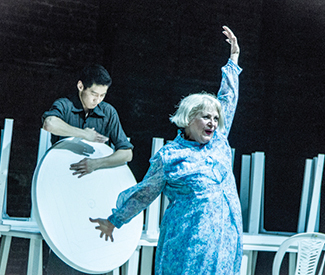
Equally effective was a timely adaptation of a Rainer Werner Fassbinder film at the vibrant Gogol-Centre, a new and leading venue with four resident companies and a popular youthful following. Fear, adapted by young playwright Lyubov Strizhak from Fassbinder’s Ali: Fear Eats the Soul, is one in a trilogy of works by Latvian director Vladislav Nastavshev that adapt famous films (the others being Visconti’s Rocco and His Brothers and Lars Von Trier’s The Idiots, each in some way dealing with the negotiation of borders and the plight of outsiders). The story concerns the socially unsanctioned love affair between a young Tajik migrant worker and an elderly Moscow widow. Unfolding with a bold, forceful grace on a spare arena-style stage that made dynamic use of a set of white plastic tables, this well acted and moving piece was also among the most overtly political, dealing head-on with the rising xenophobia that has plagued Russia in general and Moscow in particular in recent years. (The one other piece in the program with comparable political punch came from the tiny but intrepid Theater.doc, an independent documentary theater, run by Elena Gremina. Documentary theater is the mode of choice for much political work on Moscow stages, and perhaps not surprisingly Fear‘s playwright Strizhak is well associated with the form.)

In all, I took in half of the total program of the Russia Case, in a packed week of theater and discussion, as part of a group of Americans traveling under the auspices of the Center for International Theatre Development. Needless to say, politics were in the air throughout, and not only because of recent events in Ukraine. The theater in Russia is far more culturally important and influential than theater tends to be here. And while not overtly political in what it stages (except in some notable instances like those just mentioned), it remains a site of many progressive and antiauthoritarian voices as well as big personalities and vested interests. Even the Taganka jubilee was marked by internal turmoil and public scandal, stemming in part from Lyubimov’s contentious public departure from the theater in 2011 but sparked by a historical exhibition on the walls of the theater that provoked defacement from outraged members of the company.

More broadly and urgently, however, the Russians and their international guests mulled over the future of theater in a country drifting rapidly toward ultranationalist extremes. All seemed to agree that whatever happens, this year’s Russia Case will likely not look like next year’s, and that artists and audiences are in for a wild ride.


Saving Yosemite

0

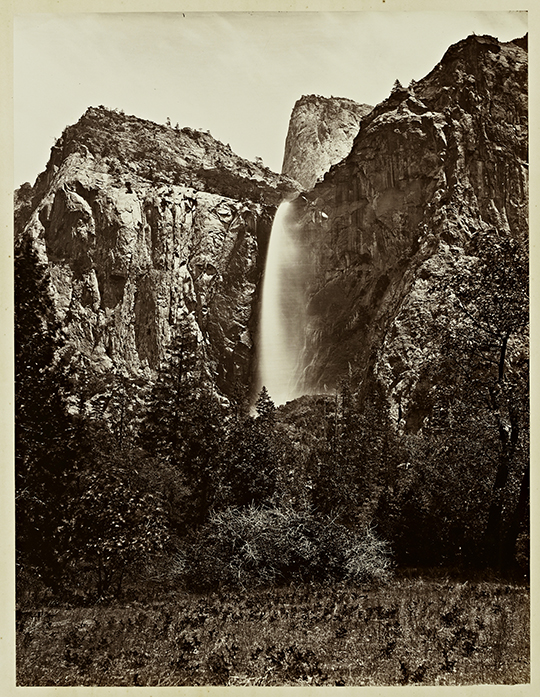
Long before Teddy Roosevelt and Ansel Adams swooned at the beauty of the place, ex-49er and early photographer Carleton Watkins (1829-1916) captured monumental Yosemite Valley for the public’s eyes. His stunning 1860s wet-plate negative photos — on view at Stanford’s Cantor Arts Gallery April 23-Aug. 17 (328 Lomita Way, Stanford, museum.stanford.edu) — convinced Abraham Lincoln to support the Yosemite Valley Grant Act, the land-preservation precedent for the National Park System. Watkins set up a shop on Montgomery Street in San Francisco, but it and most of his work were destroyed in the Great Quake of 1906.

Shot of Coachella

0

esilvers@sfbg.com

In case you were on some kind of self-imposed social media hiatus last weekend (early, tech-centered Lent ritual?), you’re probably aware of a little music festival called Coachella that comes around this time of year like a bass-thumping, hashtag-happy harbinger of Spring.

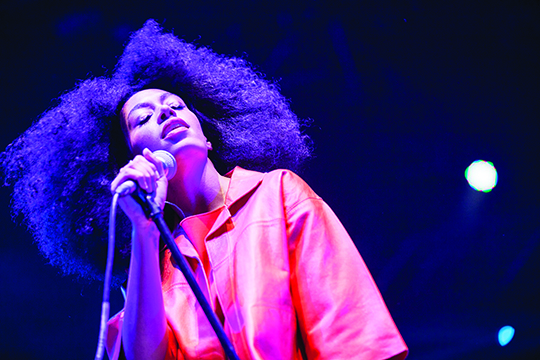
The festival’s first weekend (Fri/11 through Sun/13) wasn’t short on memorable moments: Solange bringing big sister Beyonce onstage for a choreographed dance routine on Saturday; Arcade Fire’s Win Butler putting the festival grounds’ VIP section and increasingly moneyed atmosphere on blast — before being joined by Debbie Harry, Pharrell and his hat seemingly welcoming the years 1998 through 2002 onstage on Sunday, by way of guests Gwen Stefani, Nelly, and Snoop Dogg. Then again, we hear OutKast’s reunion was met with an underwhelming response from the audience — we’ll have to wait for BottleRock Napa in May to find out for ourselves if that’s on them, or had more to do with an overheated, EDM-leaning crowd.

As is often the case with big festivals like this one, a lot of the best sets came from smaller acts whose names you’re not likely to see in the tabloids anytime soon. We sent photographer Eric Lynch to capture some impressions of everyone’s favorite hot, dusty, celebrity-filled, dance-until-you-can’t-feel-your-feet-oh-wait-maybe-that’s-the-drugs party, and boy did he deliver. Check ’em out, and feel free to send us your own snaps and stories if you’ve got something cool to share: esilvers@sfbg.com.

A little help

2

culture@sfbg.com

THE WEEKNIGHTER We were all there for Kelly Malone. It was the opening for an art show she’d done, as well as a fundraiser to help her kick cancer’s ass. At least I think that’s what it was. I don’t fully recall, to tell you the truth. Most of 2011 was a blurry, self-congratulatory, victory lap for me. I had done what I set out to do, create and host a TV show based on the Broke-Ass Stuart brand I’d been hustling for a million years.

I was having a moment and it seemed a lot of other makers, doers, and shakers, who’d been creating in San Francisco for a long time, were having one, too. At least on a professional level. On a personal level, a lot of us were not so successful; Kelly was still sick, I was in a half decade long relationship that was dissolving, and other people around us were falling prey to drug addiction and suicide. Every coin has two sides.

Mini Bar (837 Divisadero, SF. 415-525-3565) was packed that night and everyone was there. This was before the mass exodus of artists had begun in earnest, before the evictions and the shakedowns, before the sad headlines and the sadder stories. Mini Bar lives up to its name, and the lot of us who were crammed into that tiny and narrow space were sweatily and unintentionally bumping and grinding in order to get a drink. “This is really good,” I told Kelly, not meaning her cancer of course, but meaning the turnout and the support from the community that had grown around her. She understood what I meant. “I know! This is amazing!” she told me before swerving away to talk to somebody who was eyeing a piece of her work.

Divisadero has changed a lot in recent years and at the time, Mini Bar was a fairly recent but very welcome addition to the neighborhood. Part of the joint’s charm is that nearly every time I go there a different artist is being featured. On weeknights it isn’t too crowded so you can walk in, peruse the wall hangings, and then actually find a seat at either the bar or one of the small tables. And usually on these nights you can also find some of the neighborhood regulars who pop in to wet their whistles on whatever the featured cocktail is that week.

minibar

But this wasn’t a regular night. This was something special. It was a gathering of the tribes in order to support one of our own. Since it opened, Mini Bar has been a hub for people who do cool shit. Maybe it’s because the owners purposefully set that vibe, or maybe it’s because Mini Bar arrived at just the right moment in that space between what Divis was and what it was becoming.

Or then again maybe it’s just because I’m only there when I’m drunk.

Kelly sold a lot of art that night, and the money raised otherwise throughout the evening also went towards her mounting medical bills. Most of us realized then and there that what we were doing was the definition of being part of a community. We’d all always figure out ways to help out when the going got fucked. Or at least for as long as we were all able to stick around.

Stuart Schuffman aka Broke-Ass Stuart is a travel writer, poet, and TV host. You can find his online shenanigans at www.brokeassstuart.com


Psychic Dream Astrology: April 16 – 22, 2014

0

April 16-22, 2014

ARIES

March 21-April 19

Don’t try to create stability this week, because it’s not in the stars for you. You’re not in control, things aren’t stable, and it’s unclear what’ll happen next. So go with the flow, no matter how frightening it is. Participate in ways that are creative even when it’s tempting to hide or act out.

TAURUS

April 20-May 20

You don’t get to know the outcome of all life’s dynamics as a condition of whether or not you’ll participate, I’m afraid. Uncertainty and risk are just part of the game, Taurus. Decide on the boundaries of what you can do and feel good about before you venture off into the great unknown this week.

GEMINI

May 21-June 21

Focus on the energy with which you do things, Twin Star. Your life doesn’t need to be perfect and your path doesn’t need to be neatly laid out in front of you. The most important thing this week is to make sure you resonate with your choices, and that you feel stoked about where you’re headed. The rest will work itself out in time.

CANCER

June 22-July 22

It’s time to let go, Moonchild. Major change is brewing and you will achieve nothing by trying to keep it at bay. Let your past offer you wise counsel as you respond to all this instability. Stay emotionally present and responsive without getting swallowed whole by your feelings. Take it one day at a time.

LEO

July 23-Aug. 22

Take cues from what’s not working, Leo. If there’s no flow in the direction you’re going, don’t be so stubborn as to try to force it. You are capable of creating meaningful improvements in your life, but you’ll have to sift through some mental muck to get there. Follow the energy wherever it takes you this week.

VIRGO

Aug. 23-Sept. 22

Major change is shaking you up and the worst thing you could do is let it get you all jumpy. It won’t help you to be so reactive that you lose sight of your intentions, Virgo. Deal with how unsettled you feel separately from the tangible problems on your plate. Time and reflection will smooth out many of this week’s wrinkles.

LIBRA

Sept. 23-Oct. 22

Connect with the people who love you, Libra. This week is all about mending and strengthening bridges. Invest in the people whom you trust and most want in your inner circle, and not just the folks who are easy or socially relevant to you. Prize intimacy over getting along, even if that complicates things.

SCORPIO

Oct. 23-Nov. 21

Just because life is rough doesn’t mean that it’s bad. We need a homeopathic amount of darkness to gives us perspective on how wonderful the sunshine is. Investigate how much of the hard stuff you need to keep you appreciating the good, and try to have compassion and patience with yourself this week.

SAGITTARIUS

Nov. 22-Dec. 21

The healthiest and most effective approach to take in all matters is to stay centered in your emotional wisdom. Attempt to create internal balance, even if everyone around you is super chaotic. Embody kindness and tolerance this week. Your gut instincts paired with receptivity will bring you gold, Sag.

CAPRICORN

Dec. 22-Jan. 19

You are pregnant with potential, Capricorn. There are so many ways things could go, why assume they’ll go poorly? There’s a huge difference between having problems and being scared that there will one day maybe be problems. Don’t confuse your shaky self-esteem with your lot in life this week.

AQUARIUS

Jan. 20-Feb. 18

It’s not what you thought it would be, Aquarius. You’re in a great place, full of potential and creativity, so why focus on what you don’t have? This week is calling you to go with the flow. Don’t resist what you’re being shown and don’t try to force your will on others. Learn from what’s in front of you, pal.

PISCES

Feb. 19-March 20

Having limits is a healthy thing that doesn’t have to be a cause for the sads, Pisces. Don’t wait for shit to hit the fan before you let people know what you need this week. If you stop participating in what brings you down, you’ll be moving on up! Focus your energies on the people and things that bring you joy.

Want more in-depth, intuitive or astrological advice from Jessica? Schedule a one-on-one reading that can be done in person or by phone. Visit www.lovelanyadoo.com


Film Listings: April 16 – 22, 2014

0

Film listings are edited by Cheryl Eddy. Reviewers are Kimberly Chun, Dennis Harvey, Lynn Rapoport, and Sara Maria Vizcarrondo. For rep house showtimes, see Rep Clock.

OPENING

Bears John C. Reilly narrates this Disneynature documentary about grizzlies in Alaska. (1:26) Shattuck.

Faust See “Devil’s Advocate.” (2:14) Roxie.

A Haunted House 2 Marlon Wayans returns to star in this sequel, which spoofs last year’s The Conjuring, among other targets. (1:26)

Heaven is for Real No. (1:40)

Only Lovers Left Alive See “Blood Lush.” (2:03) Embarcadero.

The Railway Man The lackluster title — OK, it’s better than that of director Jonathan Teplitzky’s last movie, 2011’s Burning Man, which confused sad Burners everywhere — masks a sensitive and artful adaptation of Eric Lomax’s book, based on a true story, about an English survivor of WWII atrocities. As Railway Man unfolds, we find Eric (Colin Firth), a stammering, attractive eccentric, oddly obsessed with railway schedules, as he meets his sweet soul mate Patti (Nicole Kidman) in vaguely mid-century England. Their romance, however, takes a steep, downward spiral when Patti discovers her new husband’s quirks overlay a deeply damaged spirit, one with scars that never really healed. As Eric grows more isolated, his best friend Finlay (Stellan Skarsgard) reveals some of their experiences as POWs forced to toil on the seemingly impossible-to-build Thai-Burma Railway by Japanese forces. The brutality of the situation comes home when the young Eric (played by Jeremy Irvine of 2011’s War Horse) takes the rap for building a radio and undergoes a period of torture. The horror seems rectifiable when Finlay discovers that the most memorable torturer Nagase (played at various ages by Tanroh Ishida and Hiroyuki Sanada) is still alive and, outrageously, leading tours of the area. Revenge is sweet, as so many other movies looking at this era have told us, but Railway Man strives for a deeper, more difficult message while telling its story with the care and attention to detail that points away from the weedy jungle of a traumatic past — and toward some kind of true north where reconciliation lies. (1:53) Albany, Embarcadero. (Chun)

That Demon Within Hong Kong action director Dante Lam’s latest resides firmly within his preferred wheelhouse of hyper-stylized cops-and-robbers thriller, though this one’s more ghoulish than previous efforts like 2008’s Beast Stalker. Merciless bandits — identities concealed behind traditional masks — have been causing all kinds of trouble, heisting diamonds, mowing down bystanders, blowing up cars, exchanging mad gunfire with police, etc. After he’s injured in one such battle, sinister Hon (Nick Cheung), aka “the Demon King,” stumbles to the hospital, where cop Dave (Daniel Wu) donates blood to save the man’s life, not realizing he’s just revived HK’s public enemy number one. The gangster is soon back to his violent schemes, and Dave — a withdrawn loner given to sudden rage spirals — starts having spooky hallucinations (or are they memories?) that suggest either the duo has some kind of psychic connection, or that Dave is straight-up losing his mind. Meanwhile, a police inspector everyone calls “Pops” (Lam Kar-wah) becomes obsessed with taking Hon down, with additional tension supplied by crooked cops and infighting among the criminal organization. Does an overwrought, mind-warpingly brutal finale await? Hell yes it does. (1:52) Metreon. (Eddy)

Transcendence Academy Award-winning cinematographer Wally Pfister (2010’s Inception) makes his directorial debut with this sci-fi thriller about an AI expert (Johnny Depp) who downloads his own mind into a computer, with dangerously chaotic results. (1:59) California, Four Star, Marina.

Watermark Daring to touch the hem of — and then surpass — Godfrey Reggio’s trippy-movie-slash-visual-essays (1982’s Koyaanisqatsi, 2013’s Visitors) and their sumptuous visual delights and global expansivenesses, with none of the cheese or sensational aftertaste, Watermark reunites documentarian Jennifer Baichwal and photographer Edward Burtynsky, the latter the subject of her 2006 film, Manufactured Landscapes. Baichwal works directly with Burtynsky, as well as DP Nick de Pencier, as the artist assembles a book on the ways water has been shaped by humans. Using mostly natural sound and an unobtrusive score, she’s able to beautifully translate the sensibility of Burtynsky’s still images by following the photographer as he works, taking to the air and going to ground with succinct interviews that span the globe. We meet scientists studying ice cores drilled in Greenland, Chinese abalone farmers, leather workers in Bangladesh, and denizens on both sides of the US/Mexico border who reminisce about ways of life that have been lost to dams. Even as it continually, indirectly poses questions about humans’ dependence on, desire to control, and uses for water, the movie always reminds us of the presence and majesty of oceans, rivers, and tributaries with indelible images — whether it’s a time-lapse study of the largest arch dam in the world; the glorious mandalas of water drilling sites related to the Ogallala Aquifer; or a shockingly stylized scene of Chinese rice terraces that resembles some lost Oskar Kokoschka woodcut. While striking a relevant note in a drought-stricken California, Watermark reaches a kind of elegant earthbound poetry and leaves one wondering what Baichwal and Burtynsky will grapple with next. (1:31) Opera Plaza, Shattuck. (Chun)

ONGOING

Afternoon of a Faun: Tanaquil Le Clercq Writer-director Nancy Buirski’s documentary follows the short, brilliant career of a young dancer named Tanaquil Le Clercq, who came up in the New York City ballet world of the 1940s and ’50s. Le Clercq was discovered by George Balanchine, married him (as three other dancers had done before her), sparked a paradigm shift in the ballet world regarding what was considered the quintessential dancer’s body, had numerous ballets set on her by Balanchine and Jerome Robbins, and then, at the peak of her career, at age 27, was stricken by polio and left paralyzed in both legs. The film takes its time moving toward this catastrophe, recounting Le Clercq’s early adult life through interviews with her contemporaries and tracking her professional progress through gorgeous archival footage of her performances. Equally moving archival material are the letters from a longtime correspondence between Le Clercq and Robbins that documented two very different periods of her life: the first, when Robbins was choreographing ballets for her, including Afternoon of a Faun, and professing his love; the second, after her paralysis, when she wrote him a series of poignant communications describing her impressions of her illness and her new, circumscribed world. The film has some trouble holding on to its center — as in life, Balanchine proves a magnetic force, and Afternoon of a Faun feels inexorably drawn to his professional and personal details. We don’t get enough of Le Clercq, which you could say is the tragedy of her story — nobody did. But the letters do provide a sense of someone resourceful and responsive to life’s richness and joys, someone who would get past this crisis and find a way to reshape her life. (1:31) Opera Plaza. (Rapoport)

Bad Words Settling a grudge score whose precise origin remains unclear until late in the game, world-class misanthrope Guy Trilby (Jason Bateman) is celebrating his 40th birthday by competing in a national spelling bee. Yes, spelling bees are generally for children, and so is this one. But Guy has found a legal loophole permitting his participation, and the general hate wending his way from contest staff (Allison Janney, Philip Baker Hall) — let alone the tiger-mom-and-dad parents ready to form a lynch mob — is just icing on the cake where he’s concerned. What’s more, as some sort of majorly underachieving near-genius, he’s in fact well equipped to whup the bejesus out of overachieving eight-year-olds when it comes to saying the right letters out loud. The only people on his side, sorta, are the online journalist (Kathryn Hahn) reporting on his perverse quest, and the insidiously cute Indian American competitor (Rohan Chand) who wants to be besties, or perhaps just to psych him out. (Note: The tyke’s admitted favorite word is “subjugate.”) Written by Andrew Dodge, this comedy in the tradition (a little too obviously) of 2003’s Bad Santa and such provides the always enjoyable Bateman with not only a tailor-made lead role, but a directorial debut as well. He does just fine by both. Yet as nicely crafted and frequently-pretty-funny Bad Words is, at core it’s a rather petty movie — small, derivative, and cynically mean-spirited without the courage of genuine biliousness. It’s at once not-half-bad, and not half as badass as it pretends to be. (1:29) 1000 Van Ness. (Harvey)

Captain America: The Winter Soldier Marvel’s most wholesome hero returns in this latest film in the Avengers series, and while it doesn’t deviate from the expected formula (it’s not a spoiler to say that yes, the world is saved yet again), it manages to incorporate a surprisingly timely plot about the dangers of government surveillance. Steve Rogers (Chris Evans), hunkiest 95-year-old ever, is still figuring out his place in the 21st century after his post-World War II deep freeze. Nick Fury (Samuel L. Jackson) has him running random rescue missions with the help of Black Widow (Scarlett Johansson), but SHIELD is working on a top-secret project that will allow it to predict crimes before they occur. It isn’t long before Cap’s distrust of the weapon — he may be old-fashioned, but he ain’t stupid — uncovers a sinister plot led by a familiar enemy, with Steve’s former BFF Bucky doing its bidding as the science-experiment-turned-assassin Winter Soldier (Sebastian Stan). Anthony Mackie, Robert Redford, and series regular Cobie Smulders are fine in supporting roles, and Johansson finally gets more to do than punch and pose, but the likable Evans ably carries the movie — he may not have the charisma of Robert Downey Jr., but he brings wit and depth to a role that would otherwise be defined mainly by biceps and CG-heavy fights. Oh, and you know the drill by now: superfans will want to stick around for two additional scenes tucked into the end credits. (2:16) Balboa, Marina, Metreon, 1000 Van Ness, Sundance Kabuki. (Eddy)

Cesar Chavez “You always have a choice,” Cesar Chavez (Michael Peña) tells his bullied son when advising him to turn the other cheek. Likewise, actor-turned-director Diego Luna had a choice when it came to tackling his first English-language film; he could have selected a less complicated, sprawling story. So he gets props for that simple act — especially at a time when workers’ rights and union power have been so dramatically eroded — and for his attempts to impact some complicated nuance to Chavez’s fully evident heroism. Painting his moving pictures in dusty earth tones and burnt sunlight with the help of cinematographer Enrique Chediak, Luna vaults straight into Chavez’s work with the grape pickers that would come to join the United Farm Workers — with just a brief voiceover about Chavez’s roots as the native-born son of a farm owner turned worker, post-Depression. Uprooting wife Helen (America Ferrera) and his family and moving to Delano as a sign of activist commitment, Chavez is seemingly quickly drawn into the 1965 strike by the Mexican workers’ sometime rivals: Filipino pickers (see the recent CAAMFest short documentary Delano Manongs for some of their side of the story). From there, the focus hones in on Chavez, speaking out against violence and “chicken shit macho ideals,” hunger striking, and activating unions overseas, though Luna does give voice to cohorts like Dolores Huerta (Rosario Dawson), growers like Bogdanovitch (John Malkovich), and the many nameless strikers — some of whom lost their lives during the astonishingly lengthy, taxing five-year strike. Luna’s win would be a blue-collar epic on par with 1979’s Norma Rae, and on some levels, he succeeds; scanning the faces of the weathered, hopeful extras in crowd scenes, you can’t help but feel the solidarity. The people have the power, as a poet once put it, and tellingly, his choice of Peña, stolidly opaque when charismatic warmth is called for, might be the key weakness here. One suspects the director or his frequent costar Gael García Bernal would make a more riveting Chavez. (1:38) Metreon. (Chun)

Cuban Fury (1:37) Metreon, 1000 Van Ness.

Divergent Based on the blockbuster dystopian-future YA novel by Veronica Roth (the first in a trilogy), Divergent is set in a future city-state version of Chicago in which society is divided into five character-based, color-coded factions: Erudite, Amity, Candor, Abnegation, and Dauntless. Like her peers, Beatrice Prior (Shailene Woodley), the film’s Abnegation-born teenage heroine, must choose a permanent faction — with the help of a standardized aptitude test that forgoes penciling in bubbles in favor of virtual reality psychic manipulation. When the test fails to triangulate her sole innate personality trait, she learns that she belongs to a secret, endangered sixth category: Divergent, an astonishing set of people who are not only capable of, say, acts of selflessness but can also produce intelligent thought, or manifest bravery in the face of danger. Forced to hide her aberrant nature in a society whose leaders (Kate Winslet) are prone to statements like “The future belongs to those who know where they belong,” and seemingly bored among Abnegation’s hive of gray cardigan-wearing worker bees, Beatrice chooses Dauntless, a dashing gang of black-clad, alterna-rock music video extras who jump on and off moving trains and live in a warehouse-chic compound whose dining hall recalls the patio at Zeitgeist. Fittingly, a surly, tattooed young man named Four (Theo James) leads Beatrice, now Tris, and her fellow initiates through a harsh proving regimen that, if they fail, will cast them into an impoverished underclass. Director Neil Burger (2006’s The Illusionist, 2011’s Limitless) and the behemoth marketing force behind Divergent are clearly hoping to stir up the kind of madness stoked by the Twilight and Hunger Games series, but while there are bones a-plenty to pick with those franchises, Divergent may have them beat for pure daffiness of premise and diameter of plot holes — and that’s after screenwriters Evan Daugherty and Vanessa Taylor’s major suturing of the source material’s lacunae. The daffiness doesn’t translate into imaginative world-building, and while a couple of scenes convey the visceral thrills of life in Dauntless, the tension between Tris and Four is awkwardly ratcheted up, and the film’s shift into a mode of crisis is equally jolting without generating much heat. (2:20) Metreon, 1000 Van Ness. (Rapoport)

Dom Hemingway We first meet English safecracker Dom (Jude Law) as he delivers an extremely verbose and flowery ode to his penis, addressing no one in particular, while he’s getting blown in prison. Whether you find this opening a knockout or painfully faux will determine how you react to the rest of Richard Shepard’s new film, because it’s all in that same overwritten, pseudo-shocking, showoff vein, Sprung after 12 years, Dom is reunited with his former henchman Dickie (Richard E. Grant), and the two go to the South of France to collect the reward owed for not ratting out crime kingpin Mr. Fontaine (Demian Bichir). This detour into the high life goes awry, however, sending the duo back to London, where Dom — who admits having “anger issues,” which is putting it mildly — tries to woo a new employer (Jumayn Hunter) and, offsetting his general loutishness with mawkish interludes, to re-ingratiate himself with his long-estranged daughter (Emilia Clarke). Moving into Guy Ritchie terrain with none of the deftness the same writer-director had brought to debunking James Bond territory in 2006’s similarly black-comedic crime tale The Matador, Dom Hemingway might bludgeon some viewers into sharing its air of waggish, self conscious merriment. But like Law’s performance, it labors so effortfully hard after that affect that you’re just as likely to find the whole enterprise overbearing. (1:33) Metreon, Sundance Kabuki. (Harvey)

Draft Day (2:00) 1000 Van Ness, Presidio, SF Center, Sundance Kabuki.

Finding Vivian Maier Much like In the Realms of the Unreal, the 2004 doc about Henry Darger, Finding Vivian Maier explores the lonely life of a gifted artist whose talents were discovered posthumously. In this case, however, the filmmaker — John Maloof, who co-directs with Charlie Siskel — is responsible for Maier’s rise to fame. A practiced flea-market hunter, he picked up a carton of negatives at a 2007 auction; they turned out to be striking examples of early street photography. He was so taken with the work (snapped by a woman so obscure she was un-Google-able) that he began posting images online. Unexpectedly, they became a viral sensation, and Maloof became determined to learn more about the camerawoman. Turns out Vivian Maier was a career nanny in the Chicago area, with plenty of former employers to share their memories. She was an intensely private person who some remembered as delightfully adventurous and others remembered as eccentric, mentally unstable, or even cruel; she was a hoarder who was distrustful of men, and she spoke with a maybe-fake French accent. And she was obsessed with taking photographs that she never showed to anyone; the hundreds of thousands now in Maloof’s collection (along with 8mm and 16mm films) offer the only insight into her creative mind. “She had a great eye, a sense of humor, and a sense of tragedy,” remarks acclaimed photographer Mary Ellen Mark. “But there’s a piece of the puzzle missing.” The film’s central question — why was Maier so secretive about her hobby? — may never be answered. But as the film also suggests, that mystery adds another layer of fascination to her keenly observed photos. (1:23) Clay. (Eddy)

The Galapagos Affair: Satan Came to Eden Extensive archival footage and home movies (plus one short, narrative film) enhance this absorbing doc from San Francisco-based Dayna Goldfine and Dan Geller (2005’s Ballets Russes). It tells the tale of a double murder that occurred in the early 1930s on Floreana — the most remote of the already scarcely-populated Galapagos Islands. A top-notch cast (Cate Blanchett, Diane Kruger, Connie Nielsen, Josh Radnour) gives voice to the letters and diary entries of the players in this stranger-than-fiction story, which involved an array of Europeans who’d moved away from civilization in search of utopian simplicity — most intriguingly, a maybe-fake Baroness and her two young lovers — and realized too late that paradise isn’t all it’s cracked up to be. Goldfine and Geller add further detail to the historic drama by visiting the present-day Galapagos, speaking with residents about the lingering mystery and offering a glimpse of what life on the isolated islands is like today. (2:00) Embarcadero. (Eddy)

The Grand Budapest Hotel Is this the first Wes Anderson movie to feature a shootout? It’s definitely the first Anderson flick to include a severed head. That’s not to say The Grand Budapest Hotel, “inspired by” the works of Austrian novelist Stefan Zweig, represents too much of a shift for the director — his intricate approach to art direction is still very much in place, as are the deadpan line deliveries and a cast stuffed with Anderson regulars. But there’s a slightly more serious vibe here, a welcome change from 2012’s tooth-achingly twee Moonrise Kingdom. Thank Ralph Fiennes’ performance as liberally perfumed concierge extraordinaire M. Gustave, which mixes a shot of melancholy into the whimsy, and newcomer Tony Revolori as Zero, his loyal lobby boy, who provides gravitas despite only being a teenager. (Being played by F. Murray Abraham as an older adult probably helps in that department.) Hotel‘s early 20th century Europe setting proves an ideal canvas for Anderson’s love of detail — the titular creation rivals Stanley Kubrick’s rendering of the Overlook Hotel — and his supporting cast, as always, looks to be enjoying the hell out of being a part of Anderson’s universe, with Willem Dafoe, Jeff Goldblum, and Adrien Brody having particularly oversized fun. Is this the best Wes Anderson movie since 2001’s The Royal Tenenbaums? Yes. (1:40) Balboa, 1000 Van Ness, Presidio, SF Center, Sundance Kabuki, Vogue. (Eddy)

Jodorowsky’s Dune A Chilean émigré to Paris, Alejandro Jodorowsky had avant-garde interests that led him from theater and comic book art to film, making his feature debut with 1968’s Fando y Lis. Undaunted by its poor reception, he created El Topo (1970), a blood-soaked mix of spaghetti western, mysticism, and Buñuellian parabolic grotesquerie that became the very first “midnight movie.” After that success, he was given nearly a million dollars to “do what he wanted” with 1973’s similarly out-there The Holy Mountain, which became a big hit in Europe. French producer Michel Seydoux asked Jodorowsky what he’d like to do next. Dune, he said. In many ways it seemed a perfect match of director and material. Yet Dune would be an enormous undertaking in terms of scale, expense, and technical challenges. What moneymen in their right mind would entrust this flamboyant genius/nut job with it? They wouldn’t, as it turned out. So doc Jodorowsky’s Dune is the story of “the greatest film never made,” one that’s brain-exploding enough in description alone. But there’s more than description to go on here, since in 1975 the director and his collaborators created a beautifully detailed volume of storyboards and other preproduction minutiae they hoped would lure Hollywood studios aboard this space phantasmagoria. From this goldmine of material, as well as input from the surviving participants, Pavich is able to reconstruct not just the film’s making and unmaking, but to an extent the film itself — there are animated storyboard sequences here that offer just a partial yet still breathtaking glimpse of what might have been. (1:30) Embarcadero. (Harvey)

Joe “I know what keeps me alive is restraint,” says Nicolas Cage’s titular character, a hard-drinking, taciturn but honorable semi-loner who supervises a crew of laborers clearing undesirable trees in the Mississippi countryside. That aside, his business is mostly drinking, occasionally getting laid, and staying out of trouble — we glean he’s had more than enough of the latter in his past. Thus it’s against his better judgment that he helps out newly arrived transient teen Gary (the excellent Tye Sheridan, of 2012’s Mud and 2011’s The Tree of Life), who’s struggling to support his bedraggled mother and mute sister. Actually he takes a shine to the kid, and vice versa; the reason for caution is Gary’s father, whom he himself calls a “selfish old drunk.” And that’s a kind description of this vicious, violent, lazy, conscienceless boozehound, who has gotten his pitiful family thrown out of town many times before and no doubt will manage it once again in this new burg, where they’ve found an empty condemned house to squat in. David Gordon Green’s latest is based on a novel by the late Larry Brown, and like that writer’s prose, its considerable skill of execution manages to render serious and grimly palatable a steaming plate load of high white trash melodrama that might otherwise be undigestible. (Strip away the fine performances, staging and atmosphere, and there’s not much difference between Joe and the retro Southern grind house likes of 1969’s Shanty Tramp, 1974’s ‘Gator Bait or 1963’s Scum of the Earth.) Like Mud and 2011’s Killer Joe, this is a rural Gothic neither truly realistic or caricatured to the point of parody, but hanging between those two poles — to an effect that’s impressive and potent, though some may not enjoy wallowing in this particular depressing mire of grotesque nastiness en route to redemption. (1:57) Metreon, Presidio. (Harvey)

The Lego Movie (1:41) Metreon.

The Lunchbox Ila (Nimrat Kaur) is a self-possessed housewife and a great cook, whose husband confuses her for another piece of furniture. She tries to arouse his affections with elaborate lunches she makes and sends through the city’s lunchbox delivery service. Like marriage in India, lunchbox delivery has a failure rate of zero, which is what makes aberrations seem like magical occurrences. So when widow Saajan (Irrfan Khan) receives her adoring food, he humbly receives the magical lunches like a revival of the senses. Once Ila realizes her lunchbox is feeding the wrong man she writes a note and Saajan replies — tersely, like a man who hasn’t held a conversation in a decade — and the impossible circumstances lend their exchanges a romance that challenges her emotional fidelity and his retreat from society. She confides her husband is cheating. He confides his sympathy for men of lower castes. It’s a May/December affair if it’s an affair at all — but the chemistry we expect the actors to have in the same room is what fuels our urge to see it; that’s a rare and haunting dynamic. Newcomer Kaur is perfect as Ila, a beauty unmarked by her rigorous distaff; her soft features and exhausted expression lend a richness to the troubles she can’t share with her similarly stoic mother (Lillete Dubey). Everyone is sacrificing something and poverty seeps into every crack, every life, without exception — their inner lives are their richness. (1:44) Opera Plaza. (Vizcarrondo)

Mr. Peabody and Sherman Mr. P. (voiced by Ty Burrell) is a Nobel Prize-winning genius dog, Sherman (Max Charles) his adopted human son. When the latter attends his first day of school, his extremely precocious knowledge of history attracts jealous interest from bratty classmate Penny (Ariel Winter), with the eventual result that all three end up being transported in Peabody’s WABAC time machine to various fabled moments — involving Marie Antoinette, King Tut, the Trojan Horse, etc. — where Penny invariably gets them in deep trouble. Rob Minkoff’s first all-animation feature since The Lion King 20 years ago is spun off from the same-named segments in Jay Ward’s TV Rocky and Bullwinkle Show some decades earlier. It’s a very busy (sometimes to the brink of clutter), often witty, imaginatively constructed, visually impressive, and for the most part highly enjoyable comic adventure. The only minuses are some perfunctory “It’s about family”-type sentimentality — and scenarist Craig Wright’s determination to draw from history the “lesson” that nearly all women are pains in the ass who create problems they must then be rescued from. (1:30) 1000 Van Ness. (Harvey)

Muppets Most Wanted Building on the success of The Muppets, Jim Henson’s beloved creations return to capitalize on their revitalized (and Disney-owned) fame. This follow-up from Muppets director James Tobin — technically, it’s the seventh sequel to the original 1979 Muppet Movie, as Dr. Bunsen Honeydew points out in one of the film’s many meta moments — improves upon the 2011 film, which had its charms but suffered by concentrating too much on the Jason Segal-Amy Adams romance, not to mention annoying new kid Walter. Here, human co-stars Ricky Gervais, Tina Fey, and others (there are more cameos than you can count) are relegated to supporting roles, with the central conflict revolving around the Muppets’ inability to notice that Constantine, “the world’s most dangerous frog,” has infiltrated their group, sending Kermit to Siberian prison in his place. Constantine and his accomplice (Gervais, whose character’s last name is “Badguy”) use the Muppets’ world tour as a front for their jewel-heist operation; meanwhile, his infatuated warden (Fey) forces Kermit to direct the annual gulag musical. Not helping matters are a bumbling Interpol agent (Ty Burrell) and his CIA counterpart (Sam the American Eagle, natch). Really, all that’s needed is a simple plot, catchy songs, and plenty of room to let the Muppets do their thing — Miss Piggy and Animal are particularly enjoyable here; Walter’s still around, but he’s way more tolerable now that he’s gotten past his “man or muppet” angst — and the film delivers. All the knowing winks to the grown-up fans in the audience are just an appreciated bonus. (1:46) 1000 Van Ness, SF Center. (Eddy)

Noah Darren Aronofsky’s Biblical epic begins with a brief recap of prior Genesis events — creation is detailed a bit more in clever fashion later on — leading up to mankind’s messing up such that God wants to wipe the slate clean and start over. That means getting Noah (Russell Crowe), wife Naameh (Jennifer Connelly), and their three sons and one adopted daughter (Emma Watson) to build an ark that can save them and two of every animal species from the imminent slate-wiping Great Flood. (The rest of humanity, having sinned too much, can just feed the fishes.) They get some help from fallen angels turned into Ray Harryhausen-type giant rock creatures voiced by Nick Nolte and others. There’s an admirable brute force and some startling imagery to this uneven, somber, Iceland-shot tale “inspired” by the Good Book (which, needless to say, has endured more than its share of revisions over the centuries). Purists may quibble over some choices, including the device of turning minor Biblical figure Tubal-Cain (Ray Winstone) into a royal-stowaway villain, and political conservatives have already squawked a bit over Aronofsky’s not-so-subtle message of eco-consciousness, with Noah being bade to “replenish the Earth” that man has hitherto rendered barren. But for the most part this is a respectable, forceful interpretation that should stir useful discussion amongst believers and non believers alike. Its biggest problem is that after the impressively harrowing flood itself, we’re trapped on the ark dealing with the lesser crises of a pregnancy, a discontented middle son (Logan Lerman), and that stowaway’s plotting — ponderous intrigues that might have been leavened if the director had allowed us to hang out with the animals a little, rather than sedating the whole menagerie for the entire voyage. (2:07) 1000 Van Ness, SF Center, Sundance Kabuki. (Harvey)

Nymphomaniac: Volume I Found battered and unconscious in a back alley, Joe (Charlotte Gainsbourg) is taken in by good Samaritan Seligman (Stellan Skarsgaard), to whom she explains “It’s all my fault — I’m just a bad human being.” But he doesn’t believe there are such things. She seeks to enlighten him by narrating the story of her life so far, from carnally curious childhood to sexually voracious adulthood. Stacy Martin plays her younger self through a guided tour of excesses variously involving Christian Slater and Connie Nielsen as her parents; a buncha guys fucked on a train, on a teenage dare; Uma Thurman as one histrionically scorned woman; and Shai LaBeouf as a first love who’s a cipher either because he’s written that way, or because this particular actor can’t make sense out of him. For all its intended provocation, including some graphic but unsurprisingly (coming from this director) unerotic XXX action, von Trier’s latest is actually less offensive than much of his prior output: He’s regained his sense of humor here, and annoying as its “Look at me, I’m an unpredictable artist” crap can be (notably all the stuff about fly-fishing, cake forks, numerology, etc. that seems randomly drawn from some Great Big Book of Useless Trivia), the film’s episodic progress is divertingly colorful enough. But is Joe going to turn out to be more than a two-dimensional authorial device from a director who’s never exactly sussed women (or liked people in general)? Will Nymphomaniac arrive at some pointed whole greater than the sum of its naughty bits? The answer to both is probably “Nah.” But we won’t know for sure until the two-hour second half arrives (see review below) of a movie that, in fairness, was never really intended to be split up like this. (1:50) Smith Rafael. (Harvey)

Nymphomaniac, Volume II The second half of Lars von Trier’s anecdotal epic begins with Joe (Charlotte Gainsbourg) recalling the quasi-religious experience of her spontaneous first orgasm at age 12. Then she continues to tell bookish good Samaritan Seligman (Stellan Skarsgard) — who reveals he’s an asexual 60-something virgin — the story of her sexually compulsive life to date. Despite finding domestic stability at last with Jerome (Shia LeBeouf), she proves to have no talent for motherhood, and hits a tormenting period of frigidity eventually relieved only by the brutal ministrations of sadist K (Jamie Bell, burying Billy Elliott for good). She finds a suitable professional outlet for her peculiarly antisocial personality, working as a sometimes ruthless debt collector under the tutelage of L (Willem Dafoe), and he in turn encourages her to develop her own protégé in the form of needy teenager P (Mia Goth). If Vol. I raised the question “Will all this have a point?,” Vol. II provides the answer, and it’s (as expected) “Not really.” Still, there’s no room for boredom in the filmmaker’s most playfully arbitrary, entertaining, and least misanthropic (very relatively speaking) effort since his last four-hour-plus project 20 years ago, TV miniseries The Kingdom. Never mind that von Trier (in one of many moments when he uses Joe or Seligman as his mouthpiece) protests against the tyranny of political correctitude that renders a word like “Negro” unsayable — you’re still free to feel offended when his camera spends more time ogling two African men’s variably erect dicks in one brief scene that it does all the white actors’ cocks combined. But then there’s considerably more graphic content all around in this windup, which ends on a predictable note of cheap, melodramatic irony. But that’s part of the charm of the whole enterprise: Reeling heedlessly from the pedantic to the shocking to the trivial, like a spoiled child it manages to be kinda cute even when it’s deliberately pissing you off. (2:10) Opera Plaza, Smith Rafael. (Harvey)

Oculus Tim (Brenton Thwaites) and Kaylie (Karen Gillan) are grown siblings with a horrible shared past: When they were children, their parents (Rory Cochrane, Katee Sankhoff) moved them all into a nice suburban house, decorating it with, among other things, a 300-year-old mirror. But that antique seemed to have an increasingly disturbing effect on dad, then mom too, to ultimately homicidal, offspring-orphaning effect. Over a decade later, Tim is released from a juvenile mental lockup, ready to live a normal life after years of therapy have cleaned him of the supernatural delusions he think landed him there in the first place. Imagine his dismay when Kaylie announces she has spent the meantime researching aforementioned “evil mirror” — which turns out to have had a very gruesome history of mysteriously connected deaths — and painstakingly re-acquiring it. She means to destroy it so it can never wreak havoc, and has set up an elaborate room of camcorders and other equipment in which to “prove” its malevolence first, with Tim her very reluctant helper. Needless to say, this experiment (which he initially goes along with only in order to debunk the whole thing for good) turns out to be a very, very bad idea. The mirror is clever — demonically clever. It can warp time and perspective so our protagonists don’t know whether what they’re experiencing is real or not. Expanding on his 2006 short film (which was made before his excellent, little-seen 2011 horror feature Absentia), Mike Flanagan’s tense, atmospheric movie isn’t quite as scary as you might wish, partly because the villain (the spirit behind the mirror) isn’t particularly well-imagined in generic look or murky motivation. But it is the rare new horror flick that is genuinely intricate and surprising plot-wise — no small thing in the current landscape of endless remakes and rehashes. (1:44) Metreon, 1000 Van Ness. (Harvey)

On My Way Not for nothing too does the title On My Way evoke Going Places (1974): director Emmanuelle Bercot is less interested in exploring Catherine Deneuve’s at-times-chilled hauteur than roughing up, grounding, and blowing fresh country air through that still intimidatingly gorgeous image. Deneuve’s Bettie lost her way long ago — the former beauty queen, who never rose beyond her Miss Brittany status, is in a state of stagnation, working at her seafood restaurant, having affairs with married men, living with her mother, and still sleeping in her girlhood room. One workday mid-lunch hour, she gets in her car and drives, ignoring all her ordinary responsibilities and disappearing down the wormhole of dive bars and back roads. She seems destined to drift until her enraged, equally lost daughter Muriel (Camille) calls in a favor: give her son Charly (Nemo Schiffman) a ride to his paternal grandfather’s. It’s chance to reconnect and correct course, even after Bettie’s money is spent, her restaurant appears doomed, and the adorable, infuriating Charly acts out. The way is clear, however: what could have been a musty, predictable affair, in the style of so many boomer tales in the movie houses these days, is given a crucial infusion of humanity and life, as Bercot keeps an affectionate eye trained on the unglamorous everyday attractions of a French backwater and Deneuve works that ineffable charm that draws all eyes to her onscreen. Her Bettie may have kicked her cigarette habit long ago, but she’s still smokin’ — in every way. (1:53) Embarcadero. (Chun)

Particle Fever “We are hearing nature talk to us,” a physicist remarks in awe near the end of Particle Fever, Mark Levinson’s intriguing doc about the 2012 discovery of the Higgs boson particle. Earlier, another scientist says, “I’ve never heard of a moment like this in [science] history, where an entire field is hinging on a single event.” The event, of course, is the launch of the Large Hardon Collider, the enormous machine that enabled the discovery. Though some interest in physics is probably necessary to enjoy Particle Fever, extensive knowledge of quarks and such is not, since the film uses elegant animation to refresh the basics for anyone whose eyes glazed over during high-school science. But though he offers plenty of context, Levinson wisely focuses his film on a handful of genial eggheads who are involved in the project, either hands-on at the European Organization for Nuclear Research (CERN), or watching from afar as the mighty LHC comes to life. Their excitement brings a welcome warmth to the proceedings — and their “fever” becomes contagious. (1:39) Opera Plaza. (Eddy)

The Raid 2 One need not have seen 2011’s The Raid: Redemption to appreciate this latest collaboration between Welsh director Gareth Evans and Indonesian actor, martial artist, and fight choreographer Iko Uwais — it’s recommended, of course, but the sequel stands alone on its own merits. Overstuffed with gloriously brutal, cleverly choreographed fight scenes, The Raid 2 — sometimes written with the subtitle “Berendal,” which means “thugs” — picks up immediately after the events of the first film. Quick recap of part one: a special-forces team invades an apartment tower controlled by gangsters. Among the cops is idealistic Rama (Uwais). Seemingly bulletproof and fleet of fists and feet, Rama battles his way floor-by-floor, encountering machete-toting heavies and wild-eyed maniacs; he also soon realizes he’s working for a police department that’s as corrupt as the gangster crew. The Raid‘s gritty, unadorned approach resonated with thrillseeking audiences weary of CG overload. A second Raid film was inevitable, especially since Evans — who became interested in Indonesian martial arts, or pencak silat, while working on 2007 doc The Mystic Art of Indonesia — already had its story in mind: Rama goes undercover within a criminal organization, a ploy that necessitates he do a prison stint to gain the trust of a local kingpin. Naturally, not much goes according to plan, and much blood is shed along the way, as multiple power-crazed villains set their sinister plans into motion. With expanded locations and ever-more daring (yet bone-breakingly realistic) fight scenes aplenty — including a brawl inside a moving vehicle, and a muddy, bloody prison-yard riot — The Raid 2 more than delivers. Easily the action film of the year so far, with no contenders likely to topple it in the coming months. (2:19) Metreon, 1000 Van Ness, Sundance Kabuki. (Eddy)

Rio 2 (1:41) Four Star, Metreon, 1000 Van Ness, Presidio.

300: Rise of An Empire We pick up the 300 franchise right where director Zack Snyder left off in 2006, with this prequel-sequel, which spins off an as-yet-unreleased Frank Miller graphic novel. In the hands of director Noam Murro, with Snyder still in the house as writer, 300: Rise of an Empire contorts itself, flipping back and forth in time, in an attempt to explain the making of Persian evil prince stereotype Xerxes (Rodrigo Santoro) —all purring androgyny, fashionable piercings, and Iran-baiting, Bush-era malevolence — before following through on avenging 300‘s romantically outnumbered, chesty Spartans. As told by the angry, mourning Spartan Queen Gorgo (Lena Headey of Game of Thrones), the whole mess apparently began during the Battle of Marathon, when Athenian General Themistokles (Sullivan Stapleton) killed Xerxes’s royal father with a well-aimed miracle arrow. That act ushers in Xerxes’s transformation into a “God King” bent on vengeance, aided and encouraged by his equally vengeful, elegantly mega-goth naval commander Artemisia (Eva Green), a Greek-hating Greek who likes to up the perversity quotient by making out with decapitated heads. In case you didn’t get it: know that vengeance is a prime mover for almost all the parties (except perhaps high-minded hottie Themistokles). Very loosely tethered to history and supplied with plenty of shirtless Greeks, taut thighs, wildly splintering ships, and even proto-suicide bombers, Rise skews toward a more naturalistic, less digitally waxy look than 300, as dust motes and fire sparks perpetually telegraph depth of field, shrieking, “See your 3D dollars hard at work!” Also working hard and making all that wrath look diabolically effortless is Green, who as the pitch-black counterpart to Gorga, turns out to be the real hero of the franchise, saving it from being yet another by-the-book sword-and-sandal war-game exercise populated by wholesome-looking, buff, blond jock-soldiers. Green’s feline line readings and languid camp attitude have a way of cutting through the sausage fest of the Greek pec-ing order, even during the Battle of, seriously, Salamis. (1:43) Metreon. (Chun)

Under the Skin At the moment, Scarlett Johansson is playing a superhero in the world’s top blockbuster. Her concurrent role in Jonathan Glazer’s Under the Skin — the tale of an alien who comes to earth to capture men, but goes rogue once her curiosity about the human world gets the better of her — could not be more different in story or scope. Her character’s camouflage (dark wig, thickly-applied lipstick) was carefully calibrated to make her unrecognizable, since Glazer (2000’s Sexy Beast) filmed the alien’s “pick-up” scenes — in which Johansson’s unnamed character cruises around Glasgow in a nondescript van, prowling for prey — using hidden cameras and real people who had no idea they were interacting with a movie star. The film takes liberties with its source material (Michel Farber’s novel), with “feeding” scenes that are far more abstract than as written in the book, allowing for one of the film’s most striking visual motifs. After the alien seduces a victim, he’s lured into what looks like a run-down house. The setting changes into a dark room that seems to represent an otherworldly void, with composer Mica Levi’s spine-tingling score exponentially enhancing the dread. What happens next? It’s never fully explained, but it doesn’t need to be. When the alien begins to mistakenly believe that her fleshy, temporary form is her own, she abandons her predatory quest — but her ill-advised exploration of humanity leads her into another dark place. A chilling, visceral climax caps one of the most innovative sci-fi movies in recent memory. (1:47) SF Center, Sundance Kabuki. (Eddy)

Le Week-End Director Roger Michell and writer Hanif Kureishi first collaborated two decades ago on The Buddha of Suburbia, when the latter was still in the business of being Britain’s brashest multiculti hipster voice. But in the last 10 years they’ve made a habit of slowing down to sketching portraits of older lives — and providing great roles for the nation’s bottomless well of remarkable veteran actors. Here Lindsay Duncan and Jim Broadbent play a pair of English academics trying to re-create their long-ago honeymoon’s magic on an anniversary weekend in Paris. They love each other, but their relationship is thorny and complicated in ways that time has done nothing to smooth over. This beautifully observed duet goes way beyond the usual adorable-old-coot terrain of such stories on screen; it has charm and humor, but these are unpredictable, fully rounded characters, not comforting caricatures. Briefly turning this into a seriocomedy three-way is Most Valuable Berserker Jeff Goldblum as an old friend encountered by chance. It’s not his story, but damned if he doesn’t just about steal the movie anyway. (1:33) Embarcadero. (Harvey) *


 

Lucifer is such a drag

0

steve@sfbg.com

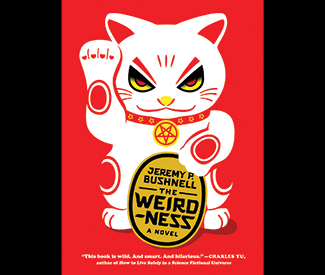
LIT In this workaday world we live in, it’s good to inject a little weirdness. Mix in moments of the metaphysical and dabs of the divine into our banal, everyday existence. And you can start by grabbing a copy of The Weirdness (Melville House, 288 pp., $16.95) and letting novelist Jeremy P. Bushnell do it for you.

The Faustian premise is a familiar one, with Lucifer showing up in hapless aspiring writer Billy Ridgeway’s living room with that timeless offer of earthly greatness in exchange eternal servitude. Or something like that, because Billy is skeptical and won’t sit through the Devil’s PowerPoint presentation (yes, this is Faust in the Information Age) even though it comes with really great coffee.

From there, the journey begins, a slow buildup of character development to what becomes a wild ride navigating the battlefield between the Adversarial Manifestation and the human forces secretly arrayed against him, à la Harry Potter. But the real appeal of The Weirdness isn’t the plot, as fun and fantastical as it may be.

No, the moments when I found myself enjoying this novel the most, the times when I laughed or smiled to myself with appreciation at the strength of the writing by this debut novelist, was when we peeked inside Billy’s mind as the weirdness was unfolding around him.

Self-absorbed and filled with doubt, preoccupied with petty gripes and grievances, obsessing about that last tiff with his girlfriend, and wondering whether he’s doing it right, the world inside Billy’s mind is a comically hilarious counterpoint to the epic clash of good and evil that is unfolding around him. I wasn’t sure whether I wanted to slap the kid and give him a big hug, but either way it was the stuff that really elevated this novel.

In many ways, this is an illuminating parable for these times, particularly among the young technology and finance workers here in San Francisco, who obsess about the latest deal or app or foodie delight, oblivious to the epic struggles around them except for when those strange societies of passionate warriors confront them, when Billy and those who want nothing more than their own personal success and happiness are made aware that there are larger struggles going on in the world.

And then, Billy is mostly just irritated by the inconvenience of it all. When members of the Right-Hand Path try to help Billy break free from the clutches of the devil, he just won’t be told what to do or trouble himself with taking a stand, even though the secret cabal is based on the set of his favorite sci-fi television show, Argentium Astrum.

After all, these nerdy do-gooders took his cell phone and won’t give it back, so Billy thinks that maybe he’s better off working with Lucifer, who is at least offering to get his novel published, even though his own father turns out to be a top tier warrior against Satan, which causes poor Billy to feel more betrayed than loved or saved.

Don’t worry, Billy is a piece of work, but he grows on you, even if you want to smack his whiny ass at times and maybe find yourself hoping the ever-charming Lucifer wins and subjects this kid to eternal hellfire. But by time Krishna shows up to save the day, you’ll just wish you had more of this delightful novel still left to read. *


Events: April 16 – 22, 2014

0

Listings are compiled by Guardian staff. Submit items for the listings at listings@sfbg.com. For further information on how to submit items for the listings, see Selector.

WEDNESDAY 16

“Globular Clusters of the Milky Way” Randall Museum, 199 Museum Way, SF; www.randallmuseum.org. 7:30pm, free. Calling all Cosmos fans: UC Santa Cruz Professor of Astronomy Graeme Smith delivers this talk as part of the San Francisco Amateur Astronomers’ 2014 lecture series.

Myra McPherson Green Arcade, 1680 Market, SF; www.thegreenarcade.com. 7pm, free. The author discusses The Scarlet Sisters: Sex, Suffrage, and Scandal in the Gilded Age.

Elizabeth Scarboro and Louise Aronson Booksmith, 1644 Haight, SF; www.booksmith.com. 7:30pm, free. The authors read from My Foreign Cities and A History of the Present Illness, respectively.

“Smack Dab” Magnet, 4122 18th St, SF; www.magnetsf.org. 8pm, free. Open mic for writers and musicians, with featured performer Blair Hansen.

Kevin Young City Lights Bookstore, 261 Columbus, SF; www.citylights.com. 7pm, free. The poet reads from his new collection, Book of Hours.

THURSDAY 17

Kaya Press 20th Anniversary City Lights Bookstore, 261 Columbus, SF; www.citylights.com. 7pm, free. With Sesshu Foster, Gene Oishi, Amamath Rawa, and Shailja Patel.

“The Natural and Cultural History of Yerba Buena Island” Randall Museum, 199 Museum Wy, SF; www.randallmuseum.org. 7:30pm, free. The 2014 SF Natural History Lecture Series continues with this talk about Yerba Buena Island’s ecological secrets by Ruth Gravanis.

FRIDAY 18

“Birding the Hill” Corona Heights Park, behind Randall Museum, 199 Museum Way, SF; www.randallmuseum.org. 8am, free. Beginning birders are welcome to this 2.5 hour walk scouting the park’s avian inhabitants.

SATURDAY 19

Emil DeAndreis Green Apple Books, 506 Clement, SF; www.greenapplebooks.com. 6pm, free. The author reads from Beyond Folly.

Earth Day Bay Area Discovery Museum, Fort Baker, 447 McReynolds, Sausalito; www.baykidsmuseum.org. 9am-5pm, $11. Live music, hands-on craft projects using recycled materials, storytelling, and more for kids and their families.

Earth Day SF UN Plaza, Civic Center, SF; www.earthdaysf.org. 10am-6pm, free. This year’s theme is “A Call to Action,” so look for speakers and booths addressing climate change, green activism, and other social-justice topics. Of course, there will also be plenty of music (by headliners New Monsoon and the Earth Day All Star Band, among others), dance performances, an eco fashion show, a sustainable chef showcase, and more.

“Earth Day on the Bay” Marine Science Institute, 500 Discovery Pkwy, Redwood City; www.sfbaymsi.org. 10am-5pm, free. The Institute opens to the public just once a year, and today’s the day. Families are invited for hands-on science fun (touch a shark!).

“Eggstravaganza 2014” Sharon Meadow, Golden Gate Park, SF; www.sfrecpark.org. 11am-3pm, $8. Egg hunts, carnival rides, games, live entertainment, and a barbecue competition between city agencies highlight this family-friendly Easter event.

“Great Egg Hunt” Dunsmuir Hellman Historic Estate, 2960 Peralta Oaks Court, Oakl; www.dunsmuir-hellman.com. Noon-3pm, $3-5. Oakland’s largest egg hunt (also on tap: a petting zoo, face painting, crafts, and more) covers the grounds of the 1899 mansion.

Northern California Cherry Blossom Festival Japantown, SF; www.sfcherryblossom.org. Times and prices vary. Through Sun/20. Celebrate Japanese culture and the Japanese American community at this 47th annual street fair, boasting food booths, live music, martial arts demonstrations, and more.

“Party for the Planet” Oakland Zoo, 9777 Golf Links Rd, Oakl; www.oaklandzoo.org. 10am-3pm, $11.75-15.75. 50 local environmental organizations participate in this zoo bash, which will feature over 50 “interactive Earth Stations” throughout the facility. Plus: live animal presentations, live music, and more.

“SuperAwesome: Art and Giant Robot” and “Vinyl: The Sound and Culture of Records” Oakland Museum of California, 1000 Oak, Oakl; www.museumca.org. 11am-5pm, $6-20. Through July 27. Two new exhibits open today at OMCA: the first highlighting 15 artists associated with Asian and Asian American pop culture-focused magazine Giant Robot, and the second exploring “the social and cultural phenomenon of listening to, collecting, and sharing records.”

SUNDAY 20

“Easter in Golden Gate Park” Hellman Hollow, Golden Gate Park, SF; www.thesisters.org. Children’s Easter, 10am; main event, noon. Free. Hunky Jesus has risen! And this year, he’s got Foxy Mary with him! It’s the 35th year for the Sisters of Perpetual Indulgence’s flamboyant Easter festivities. Crucial info: the theme is “The Emerald Jubilee, A ‘Trip” to Oz;” and since Dolores Park is temporarily closed, it all goes down in Golden Gate Park.

Jack Kerouac School of Disembodied Poetics 40th Anniversary Party City Lights Bookstore, 261 Columbus, SF; www.citylights.com. 5pm, free. Andrea Rexillus hosts readings by Robert Gluck, Juliana Spahr, Cedar Sigo, Eric Baus, Michelle Naka Pierce, and Chris Pusateri.

“The Szyk HaggadahContemporary Jewish Museum, 736 Mission, SF; www.thecjm.org. 1-2pm, free with museum admission ($10-12). Also April 27, 3-4pm. The Arthur Szyk scholar discusses the artist’s masterwork in this gallery talk.

Union Street Easter Parade and Spring Celebration Union between Gough and Fillmore, SF; www.sresproductions.com. 10am-5pm, free. A parade, an Easter bonnet contest, live entertainment, and lots of kid-friendly fun highlight this 23rd annual event.

TUESDAY 22

Doug Fine Booksmith, 1644 Haight, SF; www.booksmith.com. 7:30pm, free. Celebrate Earth Day with this reading by the author of Hemp Bound: Dispatches from the Front Lines of the Next Agricultural Revolution.

Sixteen Rivers Press reading City Lights Bookstore, 261 Columbus, SF; www.citylights.com. 7pm. With poetry readings by Beverly Burch and Murray Silverstein. *


East Bay Beats

0

esilvers@sfbg.com

LEFT OF THE DIAL Dayvid Michael, a West Oakland native and member of the CaliMade hip-hop crew, clearly has some mixed feelings about his debut record, Frienemy.

“I mean, I wrote those songs when I was 18,” says the rapper, drinking boba milk tea during an interview in downtown Oakland. “I’m still proud of them, but I’ve learned so much since then.”

That album dropped the last week of December 2012 — which means Michael’s reminiscing at the ripe old age of 21. But, to be fair, the past couple years have been big ones for someone who calls himself a “reluctant rapper” (until about age 17, he mostly wanted to sing and play guitar).

With CaliMade, a loose collective of Oakland-born guys who’ve been friends from elementary school, as well as other young DJs and producers, he performed at Hiero Day, steps away from Bay Area hip-hop legends. He’s guested on a few songs by Iamsu, a rapper whom, Michael rightly notes, you will hear if you put on 106.1 KMEL for more than 15 minutes right now; CaliMade is now working closely with the (slightly) elder rapper’s own crew, the HBK Gang. And 2014’s shaping up to be a big one: He just got done recording a new project with Azure, an Oakland rapper poised for big things in his own right as well as being Iamsu’s DJ, and Clyde Shankle, another member of CaliMade. Michael’s also working on his sophomore solo album, which will be out by the end of the year.

In other words, he’s an Oakland kid to keep your eye on — which makes him a perfect selection for Oakland Drops Beats, a new free, all-ages, quarterly music festival that features some 30-plus East Bay artists, spread out over 10 different stages and venues in downtown Oakland; the kickoff festival is April 19.

Its lineup is, in and of itself, a testament to the range of music coming out of Oakland right now: From the jazz-hip-hop blend of the Kev Choice Ensemble to the underrated indie rock of Oakland mainstays B. Hamilton to the funk-soul dance party music of Sal’s Greenhouse — not to mention a distinctly family-friendly vibe courtesy of Bay Area Girls Rock Camp and the presence of Youth Radio — the music “crawl,” as organizers are billing it, aims to serve as both a celebration of the city’s established artists and a new platform through which up-and-coming musicians can get some stage time.

Inspired by the Venice Music Crawl in LA, musician-organizer-founder Angelica Tavella first began reaching out to Oakland event producers over the summer, with the idea in mind that there are lots of community organizers and promoters “already doing cool stuff in other parts of Oakland, but really doing their own thing,” she says.

“This was, here’s a space where we could all do that together, for a couple hours, on this one day. And I really had in mind that it should be downtown Oakland — specifically not in Uptown, which already has the Art Murmur…there are a lot of great small shop owners, a lot of great energy, and cool new things going on downtown. But there aren’t a lot of venues for something like a public music performance to happen.”

Tavella was quickly overwhelmed by the level of interest and enthusiasm from business owners and event producers — especially considering that the festival is all volunteer-run for now (including pro bono performances by musicians). The goal for the next one, which will take place in the last week of July or the first week of August, is to fundraise enough to pay musicians for their performances, while keeping admission free to the public.

Eventually, Tavella hopes to have the free daytime performances segue into a nighttime music crawl that would bring business to the venues in downtown Oakland. And with more and more musicians and artists getting priced out of San Francisco and heading East, organizers shouldn’t have too hard a time finding fresh talent to fill a bill every three months.

Dayvid Michael will be performing in the afternoon with the CaliMade crew at Le Qui Vive, a gallery at 15th and Webster. He feels at home there — it’s one of the first venues where CaliMade began performing a few years ago, and he says the folks behind it are part of the community that makes him feel so lucky to be calling Oakland home.

“When people from outside the Bay Area think about the Bay Area, they think of two things — we’re hyphy, we know how to have fun; and also the diversity of the city,” says Michael, who also does graphics work for Youth Radio (he basically “hung around” until they let him). “I feel like as representatives, the HBK Gang and Cali Made can fulfill both of those perceptions. And my personal goal is to show the world that we’re more than just party music. We can do that too — but we want to offer more than that.”

“This place is so rich in culture, intelligence, legacy. I love it here,” he says, and thinks for a minute. “If Oakland had waterfalls, I would never go anywhere else.” Fair enough.

Oakland Drops Beats
Sat/19, 2pm (all day), free
10 venues between Broadway and Harrison/14th and 19th St, Oak.
www.oaklanddropsbeats.com  

ONLY YOU CAN SAVE COLLEGE RADIO

 Talk about “left of the dial.” If you’ve only been in the city a couple years, you might not be aware that there was a time when KUSF — that’s the student-run radio station of the University of San Francisco — wasn’t in exile. It’s been over three years since the university sold the station (which had been broadcasting since 1963 at 90.3 FM) without public input or comment, for $3.75 million, to the Classical Public Radio Network, aka CPRN, via a complex three-way deal between the University of Southern California, that station, and the corporate broadcasting giant Entercom.

Since that time, KUSF DJs and friends of the station have been operating the station online, 24 hours a day, from the Lightrail Studios, growing a registered nonprofit arm with a new name: San Francisco Community Radio. All the while, those who love the station have been embroiled in — to use the technical legal terminology — a bureaucratic shitshow, as they try to prove that the sale was illegal. They’ve had some small successes in proving certain aspects of the transaction were unlawful, and currently have an appeal before the FCC.

Then, at the end of 2013, the FCC began issuing low-power FM licenses for the first time in about a decade. KUSF-In-Exile has an application in for 102.5 — but they’re up against at least seven other groups, including, as KUSF members understand it, a mega-church. The central goal, say organizers, is simply to get back on the (non-internet based) airwaves, one way or another. But “It’s a lot of hurry up and wait,” says SFCR board member and treasurer Damin Esper of the situation. “Which, obviously, isn’t very satisfying to us or to our supporters.”

In the meantime, the station has been throwing fundraiser shows to help pay for ongoing legal fees, and the one this April 20, naturally, is the third incarnation of their annual stoner-rama affair. Oakland punks Violence Creeps, who’ll be opening for the current incarnation of Black Flag at Brick & Mortar in May, will be headlining, alongside psych-rockers Mondo Drag and plenty of other wild, weird, woolly favorites; visuals, should you happen to have ingested anything that would make you want to look at cool visuals, will be provided by veteran stock-footage auteurs Oddball Films. All of the funds raised will go to SFCR’s legal fight; there will also be members on hand to talk volunteer opportunities — college radio-loving grantwriters, are you out there?

When it comes to the original sale, Esper says, “It’s clear that laws were broken. It could be found to be illegal in court…but one of the reasons the big guys always win in situations like this is it’s hard to keep people engaged, reminded of the situation. This is bigger than just KUSF. This is happening all over the country. College radio is under attack.”

https://www.youtube.com/watch?v=a0MiS923Jfo

SFCR’s Blown-Out, Blowout Benefit III
Sun/20, 8pm, $7
Thee Parkside 1600 17th St, SF
www.theeparkside.com

Oh, one last thing: There’s also a little event called Record Store Day coming up, so get out that piggy bank — this is what people mean when they talk about having an “emergency fund,” right? Anyway: So much going on, so little space. Check the Bay Guardian’s Noise blog this week for special in-store events and one-day-only releases.

Save the world, work less

56

steve@sfbg.com

Save the world, work less. That dual proposition should have universal appeal in any sane society. And those two ideas are inextricably linked by the realities of global climate change because there is a direct connection between economic activity and greenhouse gas emissions.

Simply put, every hour of work we do cooks the planet and its sensitive ecosystems a little bit more, and going home to relax and enjoy some leisure time is like taking this boiling pot of water off the burner.

Most of us burn energy getting to and from work, stocking and powering our offices, and performing the myriad tasks that translate into digits on our paychecks. The challenge of working less is a societal one, not an individual mandate: How can we allow people to work less and still meet their basic needs?

This goal of slowing down and spending less time at work — as radical as it may sound — was at the center of mainstream American political discourse for much of our history, considered by thinkers of all ideological stripes to be the natural endpoint of technological development. It was mostly forgotten here in the 1940s, strangely so, even as worker productivity increased dramatically.

But it’s worth remembering now that we understand the environmental consequences of our growth-based economic system. Our current approach isn’t good for the health of the planet and its creatures, and it’s not good for the happiness and productivity of overworked Americans, so perhaps it’s time to revisit this once-popular idea.

Last year, there was a brief burst of national media coverage around this “save the world, work less” idea, triggered by a report by the Washington DC-based Center for Economic and Policy Research, entitled “Reduced Work Hours as a Means of Slowing Climate Change.”

“As productivity grows in high-income, as well as developing countries, social choices will be made as to how much of the productivity gains will be taken in the form of higher consumption levels versus fewer work hours,” author David Rosnick wrote in the introduction.

He notes that per capita work hours were reduced by 50 percent in recent decades in Europe compared to US workers who spend as much time as ever on the job, despite being a world leader in developing technologies that make us more productive. Working more means consuming more, on and off the job.

“This choice between fewer work hours versus increased consumption has significant implications for the rate of climate change,” the report said before going on to study various climate change and economic growth models.

It isn’t just global warming that working less will help address, but a whole range of related environmental problems: loss of biodiversity and natural habitat; rapid depletion of important natural resources, from fossil fuel to fresh water; and the pollution of our environment with harmful chemicals and obsolete gadgets.

Every day that the global workforce is on the job, those problems all get worse, mitigated only slightly by the handful of occupations devoted to cleaning up those messes. The Rosnick report contemplates only a slight reduction in working hours, gradually shaving a few hours off the week and offering a little more vacation time.

“The paper estimates the impact on climate change of reducing work hours over the rest of the century by an annual average of 0.5 percent. It finds that such a change in work hours would eliminate about one-quarter to one-half of the global warming that is not already locked in (i.e. warming that would be caused by 1990 levels of greenhouse gas concentrations already in the atmosphere),” the report concludes.

What I’m talking about is something more radical, a change that meets the daunting and unaddressed challenge that climate change is presenting. Let’s start the discussion in the range of a full day off to cutting our work hours in half — and eliminating half of the wasteful, exploitive, demeaning, make-work jobs that this economy-on-steroids is creating for us, and forcing us to take if we want to meet our basic needs.

Taking even a day back for ourselves and our environment will seem like crazy-talk to many readers, even though our bosses would still command more days each week than we would. But the idea that our machines and other innovations would lead us to work far less than we do now — and that this would be a natural and widely accepted and expected part of economic evolution — has a long and esteemed philosophical history.

Perhaps this forgotten goal is one worth remembering at this critical moment in our economic and environmental development.


HISTORY LESSON

Author and historian Chris Carlsson has been beating the “work less” drum in San Francisco since Jimmy Carter was president, when he and his fellow anti-capitalist activists decried the dawning of an age of aggressive business deregulation that continues to this day.

They responded with creative political theater and protests on the streets of the Financial District, and with the founding of a magazine called Processed World, highlighting how new information technologies were making corporations more powerful than ever without improving the lives of workers.

“What do we actually do all day and why? That’s the most basic question that you’d think we’d be talking about all the time,” Carlsson told us. “We live in an incredibly powerful and overarching propaganda society that tells you to get your joy from work.”

But Carlsson isn’t buying it, noting that huge swaths of the economy are based on exploiting people or the planet, or just creating unproductive economic churn that wastes energy for its own sake. After all, the Gross Domestic Product measures everything, the good, the bad, and the ugly.

“The logic of growth that underlies this society is fundamentally flawed,” Carlsson said. “It’s the logic of the cancer cell — it makes no sense.”

What makes more sense is to be smart about how we’re using our energy, to create an economy that economizes instead of just consuming everything in its path. He said that we should ask, “What work do we need to do and to what end?”

We used to ask such questions in this country. There was a time when working less was the goal of our technological development.

“Throughout the 19th century, and well into the 20th, the reduction of worktime was one of the nation’s most pressing issues,” professor Juliet B. Schor wrote in her seminal 1991 book The Overworked American: The Unexpected Decline of Leisure. “Through the Depression, hours remained a major social preoccupation. Today these debates and conflicts are long forgotten.”

Work hours were steadily reduced as these debates raged, and it was widely assumed that even greater reductions in work hours was all but inevitable. “By today, it was estimated that we could have either a 22-hour week, a six-month workyear, or a standard retirement age of 38,” Schor wrote, citing a 1958 study and testimony to Congress in 1967.

But that didn’t happen. Instead, declining work hours leveled off in the late 1940s even as worker productivity grew rapidly, increasing an average of 3 percent per year 1948-1968. Then, in the 1970s, workers in the US began to work steadily more hours each week while their European counterparts moved in the opposite direction.

“People tend to think the way things are is the way it’s always been,” Carlsson said. “Once upon a time, they thought technology would produce more leisure time, but that didn’t happen.”

Writer David Spencer took on the topic in a widely shared essay published in The Guardian UK in February entitled “Why work more? We should be working less for a better quality of life: Our society tolerates long working hours for some and zero hours for others. This doesn’t make sense.”

He cites practical benefits of working less, from reducing unemployment to increasing the productivity and happiness of workers, and cites a long and varied philosophical history supporting this forgotten goal, including opposing economists John Maynard Keynes and Karl Marx.

Keynes called less work the “ultimate solution” to unemployment and he “also saw merit in using productivity gains to reduce work time and famously looked forward to a time (around 2030) when people would be required to work 15 hours a week. Working less was part of Keynes’s vision of a ‘good society,'” Spencer wrote.

“Marx importantly thought that under communism work in the ‘realm of necessity’ could be fulfilling as it would elicit and harness the creativity of workers. Whatever irksome work remained in realm of necessity could be lessened by the harnessing of technology,” Spencer wrote.

He also cited Bertrand Russell’s acclaimed 1932 essay, “In Praise of Idleness,” in which the famed mathematician reasoned that working a four-hour day would cure many societal ills. “I think that there is far too much work done in the world, that immense harm is caused by the belief that work is virtuous, and that what needs to be preached in modern industrial countries is quite different from what always has been preached,” Russell wrote.

Spencer concluded his article by writing, “Ultimately, the reduction in working time is about creating more opportunities for people to realize their potential in all manner of activities including within the work sphere. Working less, in short, is about allowing us to live more.”


JOBS VS. WORK

Schor’s research has shown how long working hours — and the uneven distribution of those hours among workers — has hampered our economy, hurt our environment, and undermined human happiness.

“We have an increasingly poorly functioning economy and a catastrophic environmental situation,” Schor told us in a phone interview from her office at Boston College, explaining how the increasingly dire climate change scenarios add urgency to talking about how we’re working.

Schor has studied the problem with other researchers, with some of her work forming the basis for Rosnick’s work, including the 2012 paper Schor authored with University of Alabama Professor Kyle Knight entitled “Could working less reduce pressures on the environment?” The short answer is yes.

“As humanity’s overshoot of environmental limits become increasingly manifest and its consequences become clearer, more attention is being paid to the idea of supplanting the pervasive growth paradigm of contemporary societies,” the report says.

The United States seems to be a case study for what’s wrong.

“There’s quite a bit of evidence that countries with high annual work hours have much higher carbon emissions and carbon footprints,” Schor told us, noting that the latter category also takes into account the impacts of the products and services we use. And it isn’t just the energy we expend at work, but how we live our stressed-out personal lives.

“If households have less time due to hours of work, they do things in a more carbon-intensive way,” Schor said, with her research finding those who work long hours often tend to drive cars by themselves more often (after all, carpooling or public transportation take time and planning) and eat more processed foods.

Other countries have found ways of breaking this vicious cycle. A generation ago, Schor said, the Netherlands began a policy of converting many government jobs to 80 percent hours, giving employees an extra day off each week, and encouraging many private sector employers to do the same. The result was happier employees and a stronger economy.

“The Netherlands had tremendous success with their program and they’ve ended up with the highest labor productivity in Europe, and one of the happiest populations,” Schor told us. “Working hours is a triple dividend policy change.”

By that she means that reducing per capita work hours simultaneously lowers the unemployment rate by making more jobs available, helps address global warming and other environmental challenges, and allows people to lead happier lives, with more time for family, leisure, and activities of their choosing.

Ironically, a big reason why it’s been so difficult for the climate change movement to gain traction is that we’re all spending too much time and energy on making a living to have the bandwidth needed to sustain a serious and sustained political uprising.

When I presented this article’s thesis to Bill McKibben, the author and activist whose 350.org movement is desperately trying to prevent carbon concentrations in the atmosphere from passing critical levels, he said, “If people figure out ways to work less at their jobs, I hope they’ll spend some of their time on our too-often neglected work as citizens. In particular, we need a hell of a lot of people willing to devote some time to breaking the power of the fossil fuel industry.”

world

That’s the vicious circle we now find ourselves in. There is so much work to do in addressing huge challenges such as global warming and transitioning to more sustainable economic and energy systems, but we’re working harder than ever just to meet our basic needs — usually in ways that exacerbate these challenges.

“I don’t have time for a job, I have too much work to do,” is the dilemma facing Carlsson and others who seek to devote themselves to making the world a better place for all living things.

To get our heads around the problem, we need to overcome the mistaken belief that all jobs and economic activity are good, a core tenet of Mayor Ed Lee’s economic development policies and his relentless “jobs agenda” boosterism and business tax cuts. Not only has the approach triggered the gentrification and displacement that have roiled the city’s political landscape in the last year, but it relies on a faulty and overly simplistic assumption: All jobs are good for society, regardless of their pay or impact on people and the planet.

Lee’s mantra is just the latest riff on the fabled Protestant work ethic, which US conservatives and neoliberals since the Reagan Era have used to dismantle the US welfare system, pushing the idea that it’s better for a single mother to flip our hamburgers or scrub our floors than to get the assistance she needs to stay home and take care of her own home and children.

“There is a belief that work is the best form of welfare and that those who are able to work ought to work. This particular focus on work has come at the expense of another, far more radical policy goal, that of creating ‘less work,'” Spencer wrote in his Guardian essay. “Yet…the pursuit of less work could provide a better standard of life, including a better quality of work life.”

And it may also help save us from environmental catastrophe.


GLOBAL TIPPING POINT

The Intergovernmental Panel on Climate Change, the top research body on the issue recognized by the United Nations, recently released its fifth report summarizing and analyzing the science and policies around climate change, striking a more urgent tone than in previous reports.

On April 13 at a climate conference in Berlin, the panel released a new report noting that greenhouse gas emissions are rising faster than ever and urgent action is needed in the next decade to avert a serious crisis.

“We cannot afford to lose another decade,” Ottmar Edenhofer, a German economist and co-chairman of the committee that wrote the report, told The New York Times. “If we lose another decade, it becomes extremely costly to achieve climate stabilization.”

After the panel released an earlier section of the report on March 31, it wrote in a public statement: “The report concludes that responding to climate change involves making choices about risks in a changing world. The nature of the risks of climate change is increasingly clear, though climate change will also continue to produce surprises.”

The known impacts will be displaced populations in poor countries inundated by rising seas, significant changes to life-supporting ecosystems (such as less precipitation in California and other regions, creating possible fresh water shortages), food shortages from loss of agricultural land, and more extreme weather events.

What we don’t yet know, these “surprises,” could be even scarier because this is such uncharted territory. Never before have human activities had such an impact on the natural world and its delicate balances, such as in how energy circulates through the world’s oceans and what it means to disrupt half of the planet’s surface area.

Researchers have warned that we could be approaching a “global tipping point,” in which the impact of climate change affects other systems in the natural world and threatens to spiral out of control toward another mass extinction. And a new report funded partially by the National Science Foundation and NASA’s Goodard Space Center combines the environmental data with growing inequities in the distribution of wealth to warn that modern society as we know it could collapse.

“The fall of the Roman Empire, and the equally (if not more) advanced Han, Mauryan, and Gupta Empires, as well as so many advanced Mesopotamian Empires, are all testimony to the fact that advanced, sophisticated, complex, and creative civilizations can be both fragile and impermanent,” the report warned.

It cites two critical features that have triggered most major societal collapses in past, both of which are increasingly pervasive problems today: “the stretching of resources due to the strain placed on the ecological carrying capacity”; and “the economic stratification of society into Elites [rich] and Masses (or ‘Commoners’),” which makes it more difficult to deal with problems that arise.

Both of these problems would be addressed by doing less overall work, and distributing the work and the rewards for that work more evenly.


SYSTEMIC PROBLEM

Carol Zabin — research director for the Center for Labor Research and Education at UC Berkeley, who has studied the relation between jobs and climate change — has some doubts about the strategy of addressing global warming by reducing economic output and working less.

“Economic activity which uses energy is not immediately correlated with work hours,” she told us, noting that some labor-saving industrial processes use more energy than human-powered alternatives. And she also said that, “some leisure activities could be consumptive activities that are just as bad or worse than work.”

She does concede that there is a direct connection between energy use and climate change, and that most economic activity uses energy. Zabin also said there was a clear and measurable reduction in greenhouse gas emissions during the Great Recession that began with the 2008 economic crash, when economic growth stalled and unemployment was high.

“When we’re in recessions and output and consumption slow, we see a reduction in impact on the climate,” Zabin said, although she added, “They’re correlated, but they’re not causal.”

Other studies have made direct connections between work and energy use, at least when averaged out across the population, studies that Rosnick cited in his study. “Recent work estimated that a 1 percent increase in annual hours per employee is associated with a 1.5 percent increase in carbon footprint,” it said, citing the 2012 Knight study.

Zabin’s main stumbling block was a political one, rooted in the assumption that American-style capitalism, based on conspicuous consumption, would continue more or less as is. “Politically, reducing economic growth is really, really unviable,” she told us, noting how that would hurt the working class.

But again, doesn’t that just assume that the pain of an economic slowdown couldn’t be more broadly shared, with the rich absorbing more of the impact than they have so far? Can’t we move to an economic system that is more sustainable and more equitable?

“It seems a little utopian when we have a problem we need to address by reducing energy use,” Zabin said before finally taking that next logical step: “If we had socialism and central planning, we could shut the whole thing down a notch.”

Instead, we have capitalism, and she said, “we have a climate problem that is probably not going to be solved anyway.”

So we have capitalism and unchecked global warming, or we can have a more sustainable system and socialism. Hmm, which one should we pick? European leaders have already started opting for the latter option, slowing down their economic output, reducing work hours, and substantially lowering the continent’s carbon footprint.

That brings us back to the basic question set forth in the Rosnick study: As productivity increases, should those gains go to increase the wages of workers or to reduce their hours? From the perspective of global warming, the answer is clearly the latter. But that question is complicated in US these days by the bosses, investors, and corporations keeping the productivity gains for themselves.

“It is worth noting that the pursuit of reduced work hours as a policy alternative would be much more difficult in an economy where inequality is high and/or growing. In the United States, for example, just under two-thirds of all income gains from 1973-2007 went to the top 1 percent of households. In that type of economy, the majority of workers would have to take an absolute reduction in their living standards in order to work less. The analysis of this paper assumes that the gains from productivity growth will be more broadly shared in the future, as they have been in the past,” the study concludes.

So it appears we have some work to do, and that starts with making a connection between Earth Day and May Day.


EARTH DAY TO MAY DAY

The Global Climate Convergence (www.globalclimateconvergence.org) grew out of a Jan. 18 conference in Chicago that brought together a variety of progressive, environmental, and social justice groups to work together on combating climate change. They’re planning “10 days to change course,” a burst of political organizing and activism between Earth Day and May Day, highlighting the connection between empowering workers and saving the planet.

“It provides coordinated action and collaboration across fronts of struggle and national borders to harness the transformative power we already possess as a thousand separate movements. These grassroots justice movements are sweeping the globe, rising up against the global assault on our shared economy, ecology, peace and democracy. The accelerating climate disaster, which threatens to unravel civilization as soon as 2050, intensifies all of these struggles and creates new urgency for collaboration and unified action. Earth Day to May Day 2014 (April 22 — May 1) will be the first in a series of expanding annual actions,” the group announced.

San Mateo resident Ragina Johnson, who is coordinating events in the Bay Area, told us May Day, the international workers’ rights holiday, grew out of the struggle for the eight-hour workday in the United States, so it’s appropriate to use the occasion to call for society to slow down and balance the demands of capital with the needs of the people and the planet.

“What we’re seeing now is an enormous opportunity to link up these movements,” she told us. “It has really put us on the forefront of building a new progressive left in this country that takes on these issues.”

In San Francisco, she said the tech industry is a ripe target for activism.

“Technology has many employees working 60 hours a week, and what is the technology going to? It’s going to bottom line profits instead of reducing people’s work hours,” she said.

That’s something the researchers have found as well.

“Right now, the problem is workers aren’t getting any of those productivity gains, it’s all going to capital,” Schor told us. “People don’t see the connection between the maldistribution of hours and high unemployment.”

She said the solution should involve “policies that make it easier to work shorter hours and still meet people’s basic needs, and health insurance reform is one of those.”

Yet even the suggestion that reducing work hours might be a worthy societal goal makes the head of conservatives explode. When the San Francisco Chronicle published an article about how “working a bit less” could help many people qualify for healthcare subsidies under the Affordable Care Act (“Lower 2014 income can net huge health care subsidy,” 10/12/13), the right-wing blogosphere went nuts decrying what one site called the “toxic essence of the welfare state.”

Chronicle columnist Debra Saunders parroted the criticism in her Feb. 7 column. “The CBO had determined that ‘workers will choose to supply less labor — given the new taxes and other incentives they will face and the financial benefits some will receive.’ To many Democrats, apparently, that’s all good,” she wrote of Congressional Budget Office predictions that Obamacare could help reduce hours worked.

Not too many Democratic politicians have embraced the idea of working less, but maybe they should if we’re really going to attack climate change and other environmental challenges. Capitalism has given us great abundance, more than we need and more than we can safely sustain, so let’s talk about slowing things down.

“There’s a huge amount of work going on in society that nobody wants to do and nobody should do,” Carlsson said, imagining a world where economic desperation didn’t dictate the work we do. “Most of us would be free to do what we want to do, and most of us would do useful things.”

And what about those who would choose idleness and sloth? So what? At this point, Mother Earth would happily trade her legions of crazed workaholics for a healthy population of slackers, those content to work and consume less.

Maybe someday we’ll even look back and wonder why we ever considered greed and overwork to be virtues, rather than valuing a more healthy balance between our jobs and our personal lives, our bosses and our families, ourselves and the natural world that sustains us.

Revisionist future

6

news@sfbg.com

Acidified oceans. Dirty air. Superstorms. Food shortages. Mass migration. War. The International Panel on Climate Change last week released the final installment of its latest authoritative report on the catastrophic effects of global climate change.

In no uncertain terms, the report states, it is urgent that steps be taken to mitigate the worst impacts. The world’s cities are the most at risk — yet hold the greatest potential for turning the tide, IPCC scientists noted. Making cities greener is one of the most effective ways to minimize climate change.

But as experts turn to cities in hopes of reducing greenhouse gas emissions, newly released documents suggest that officials in San Francisco Mayor Ed Lee’s office ordered the most effective strategies for achieving clean energy goals to be removed from the city’s plan for combating climate change.


CHANGE OF PLANS

The city’s Climate Action Strategy sets out the overarching goal of reducing greenhouse gas emissions to 80 percent below 1990 levels by 2050, a yardstick consistent with state and regional goals. For 10 years, the San Francisco Public Utilities Commission worked on a program that would have given city residents and businesses more access to renewable energy sources to help meet that emissions reduction target.

CleanPowerSF, a municipal power program that would replace Pacific Gas & Electric power for San Francisco customers, would provide electricity from 100 percent, California-certified renewable sources such as solar, wind, small hydro, and other green energy sources.

The Climate Action Strategy calls creation of a renewable energy portfolio a critical strategy for meeting the goal — and that’s precisely what CleanPowerSF set out to achieve. Over the course of a decade, millions of dollars were invested and untold staff hours devoted to creating the program.

Yet at the direction of Roger Kim, the mayor’s senior advisor on the environment, the city’s Department of the Environment removed the Climate Action Strategy’s reference to CleanPowerSF before the document was released to the public. The Department of the Environment was also directed to remove reference to PG&E’s 100 percent Green Power Option, a program floated as an alternative to CleanPowerSF.

24

In a Sept. 30 memo to Kim, obtained via a public records request, former Department of Environment Director Melanie Nutter wrote, “At the request of the Mayor’s Office, mention of PG&E’s 100% Green Power Option and SFPUC’s CleanPowerSF program were removed from the Energy Chapter and replaced with the overarching goal of 100% renewable electricity (pgs 16,17).”

Nutter recently stepped down as the director of the agency.

The timing of Nutter’s memo is significant. Just weeks earlier, the SFPUC — whose five-member governing board is appointed by the mayor — refused to approve a not-to-exceed rate that would have allowed CleanPowerSF to move forward as planned. Instead of expressing opposition to the rate itself, commissioners expressed their overall opposition to CleanPowerSF before voting it down.

Lee had criticized the cost and mechanisms of CleanPowerSF, without proposing an alternative (see “Power struggle,” 9/17/13). His real motivations for deleting these two strategies from the city’s Climate Action Strategy report remain unclear, but Lee has long supported PG&E, which stands to lose customers if CleanPowerSF is successful.


NO REAL ANSWER

Both CleanPowerSF and PG&E’s green option were held up as pathways toward a greener future in the Climate Action Strategy until the Mayor’s Office intervened, leaving no city mechanisms for most San Franciscans to choose renewable energy sources.

“PG&E’s proposed green option and CleanPowerSF could operate in parallel,” Nutter wrote in a memo drafted a couple years ago. “CleanPowerSF is likely to have a much greater environmental benefit due to the size of the customer base that would be served, the program’s objective to create a market for local renewable power, and the amount of greenhouse gas reductions achieved.”

So why then were both of these efforts eliminated from the report at the last minute, after being incorporated by experts in the field? Lee Communications Director Christine Falvey did not provide an answer to this specific Guardian question about the removal decision despite being asked several times.

When the Guardian asked Mayor Lee in March why CleanPowerSF was removed from the report, Lee responded, “I don’t think I have a real answer for that.”

Also unanswered is the question of how the city will meet its greenhouse gas emission reductions target. A quarter of the city’s greenhouse gas emissions derive from residential and commercial electricity, according to the Climate Action Strategy. 

pgE 

Electricity provided by PG&E is only 50 percent emission-free, with nuclear energy as the company’s most significant carbon-free power source. SFPUC projections have shown that CleanPowerSF could reduce citywide greenhouse gas emissions by 25 percent by 2030.

Another quarter of our emissions come from natural gas usage, and 40 percent of total emissions are belched into the air by automobiles. Lee wants to encourage more electric vehicles, but that won’t help much if they’re powered by a dirty power portfolio.

Whereas CleanPowerSF represented a carefully crafted plan for hitting these long-term targets, Lee’s most recent comments on how these important goals will be reached seem vague at best.

“I think we take all our deliberations on climate action seriously,” Lee told the Guardian in March, “and I do think that our focus now has been on energy efficiencies. We are also trying now to beef up the GoSolar program to be sure to catch whatever the state is willing to do, because Governor [Jerry] Brown has been trying to tap where there can be more examples of that.”

“The Mayor is open to exploring all avenues that might be available to achieve our energy goals,” Falvey told us. “In fact, it will take a variety of strategies working in concert to achieve them, including increasing the energy efficiency of buildings to reduce the total power load, developing in-city renewables, and options for increasing the provision of renewable power at a utility-scale.”

Those last two goals are precisely what CleanPowerSF would have done. Critics have decried Lee’s move as harmful and politically motivated. “What Mayor Lee has succeeded in doing is to rip the guts out of the new Climate Action Strategy,” John Rizzo wrote in a recent Sierra Club newsletter, “rendering it as meaningless as the missed greenhouse-gas reduction targets from 2012.”


LOOKING AHEAD

At the Board of Supervisors’ mayor question time in March, Sup. John Avalos asked Lee to direct the Department of Environment to return CleanPowerSF to the Climate Action Strategy and commit to launching the program in 2014.

40

Lee answered that he could not, saying the program was too problematic and the SFPUC has too many infrastructure repair needs. The SFPUC has pulled its staff from the project to redirect that work into energy infrastructure improvements.

Some are still holding out hope that CleanPowerSF could move forward. San Francisco’s Local Agency Formation Commission is set to begin researching what CleanPowerSF “would look like and to address other concerns that the Mayor and SFPUC Commissioners have raised,” LAFCo’s Senior Program Officer Jason Fried said.

Proponents are also investigating ways to launch the program independently of the mayor and the SFPUC, by partnering with Marin County’s version of the program.

“There is talk about joining the Marin Joint Powers Authority,” Fried said, “but we will exhaust every option to run our own program. We want the PUC and mayor on board.”

While the mayor and the commissioners charged with overseeing the SFPUC seem content to let CleanPowerSF fade into memory, Avalos is not willing to let it go without a fight.

“We’re facing the greatest crisis for this city, and our government pulls back on how to achieve this,” Avalos said at a March 31 Board of Supervisors committee hearing on the Climate Action Strategy. “If we want to be a great city, it’s up to us to generate the political will to implement these strategies.”

Joe Fitzgerald Rodriguez contributed to this report.

Earth reads

0


WEST OF EDEN: COMMUNES AND UTOPIA IN NORTHERN CALIFORNIA (PM PRESS, 2012, $24.95)

Edited by Iain Boal, Janfrie Stone, Michael Watts, and Cal Winslow, this fresh history of radical communitarians and their cultural impact includes essays that encompass the San Francisco Mime Troupe, the Alcatraz occupation, and the Black Panthers, as well as famed (and doomed) communes like the Albion Nation along the Mendocino coast and Morning Star in Sonoma. There’s an emphasis on storytelling, roots activism, and personal relation to the earth here, as well as a bracing re-evaluation of what it meant to “get away from it all” and live free in the ’60s and ’70s.


THE SIXTH EXTINCTION: AN UNNATURAL HISTORY BY ELIZABETH KOLBERT (HENRY HOLT, 2014, $28)

Environmental staff writer at The New Yorker and author of the essential Field Notes from a Catastrophe, Kolbert turns an epochal eye toward our environmental fate. Proposing that, after the five major extinctions that have occurred in the history of life, the sixth one is us, her book guides us through the devastating effect we’re having on most of the planet’s species — and provides startling examples of animals almost gone, like the Panamanian golden frog and the great auk. After reading this, you will never snort ground-up black rhino horn as a party drug again.


THE BAY AREA FORAGER BY MIA ANDLER AND KEVIN FEINSTEIN (FORAGING SOCIETY PRESS, 2011, $24.95)

Miner’s Lettuce! Prickly Pear! Sour Clover! Blue Dicks! Where to find them, how to find them, when to use them, and how to eat them — all is revealed (along with some kick-ass recipes) in this wonderfully illustrated tome.


IN THE SIERRA: MOUNTAIN WRITINGS BY KENNETH REXROTH, EDITED BY KIM STANLEY ROBINSON (NEW DIRECTIONS, 2012 EDITION, $16.95)

Beloved San Francisco poet Rexroth (1905-1982) brought his cosmic playfulness and sly, erotic wit to his encounters with nature. Snow-freckled granite, wrinkled tableland, peaks like refrigerated teeth, “the ventriloquial belling of an owl” mingling with nighttime waterfalls: Rexroth maps out a familiarly strange mountainscape with an ethereal astrolabe. Selected prose writings, including those from his columns in the Bay Guardian and the Examiner, take on winter camping, the history of the Sierra Club, and proper furniture for horses.


CLIMATE CHANGE: WHAT IT MEANS FOR US, OUR CHILDREN, AND OUR GRANDCHILDREN (MIT PRESS, 2014, $22.95)

The folksy title of this MIT Press title may belie the eagerness of top scientists to reach everyday people before it’s too late. Edited by law professor and writer Joseph F.C. DiMento and energy specialist Pamela Doughman, the essays in Climate Change lays out up-to-the-minute information on the impending and present impact of our activities in practical terms of housing prices, taxes, and other relatable measurements in non-technical language.


A CALIFORNIA BESTIARY (HEYDAY, 2010, $12.95)

The pairing of writer Rebecca Solnit and muralist Mona Caron would cause major excitement even if it involved a book on differential equations. Here, however, is a gem-like compendium of iconic Golden State natives like the Chinook salmon, California condor, desert tortoise, and Mission butterfly. All seen through two of most important artists’ eyes. (Marke B.)

All titles available at Green Arcade Books (1680 Market, SF. www.thegreenarcade.com).


Blood lush

0

cheryl@sfbg.com

FILM It’s difficult to think of an American filmmaker who has so consistently conveyed a sense of cool more than Jim Jarmusch. Since his cinematic emergence — minimalistic, black-and-white early efforts Stranger than Paradise (1984) and Down By Law (1986) helped launch the era’s culture-changing indie film movement — he’s never been pretentious or tempted by a big paycheck to direct something that doesn’t adhere to his unique artistic vision. This vision tends to include characters who are highly intelligent loners; scenes of driving, especially at night; unexpected yet perfect soundtrack choices (Screamin’ Jay Hawkins!); and casting international actors (Roberto Benigni) in their first notable stateside roles, as well as musicians (Tom Waits, the RZA).

Jarmusch has subverted genre films before — you don’t have to dig deep to find fierce defenders of 1995 Western Dead Man or 1999 gangster tale Ghost Dog: The Way of the Samurai — but his latest, Only Lovers Left Alive, is poised to be his biggest commercial hit to date. That’s not merely because it’s a vampire film, though this concession to trendiness will certainly work in its favor, as will the casting of high-profile Avengers (2012) star Tom Hiddleston. But this is still a Jarmusch vampire movie, and though it may be more accessible than some of the director’s more existential entries, it’s still wonderfully weird, witty, and — natch — drenched in cool.

The opening credits deploy a gothic, blood red font across a night sky — a winking nod to the aesthetics of Hammer classics like Horror of Dracula (1958). Then, the camera begins to rotate, filming a record as it plays, and symbolizing the eternal life of the two figures who’ve entered the frame: gloomy Adam (Hiddleston, rocking a bedhead version of Loki’s dark ‘do), who lurks not in a crumbling Transylvanian castle, but a crumbling Detroit mansion, and exuberant Eve (Tilda Swinton, so pale she seems to glow), who dwells amid piles of books in Tangier.

These two — are they the first couple in history, or just named for them? — live apart, partially due to the hassle of traveling when one can’t be in the sun (red-eye flights are a must). Yet they remain entangled in spirit, a phenomenon referenced amid much talk of what Einstein called “spooky action at a distance.” Adam spends his nights stroking his rare-instrument collection and composing dirges he’s reluctantly been sharing, despite his distrust of the “rock ‘n’ roll kids” who like to ring his doorbell. In centuries past, he hung out with Byron and Shelley, but believes today’s humans are “zombies” who live in fear of their own imaginations. (Never before has anyone pronounced “YouTube” with such sneering disdain.) Basically, he’s over it — going so far as to enlist Ian (Anton Yelchin), the one Detroit scenester he trusts, to track down a very special type of bullet. Made of wood. You know where this is going.

Over the phone from Morocco (she uses an iPhone; he uses electronics wizardry to rig calls through his old-school TV), Eve senses something’s not right, so she mobilizes for a long-overdue visit. Their reunion is glorious, complete with cruises around Detroit’s decaying landscape, with an in-jokey pause outside the childhood home of Jack White, who appeared in Jarmusch’s 2003 Coffee and Cigarettes and no doubt inspired Adam’s character.

Since, lest we forget, these romantic, sunglass-clad hipsters are also ancient vampires, the acquisition of blood untainted by modern illnesses is shown to be a continuous concern. Murder is not ideal, especially when one is highly invested in keeping an extremely low profile, so Adam has a deal worked out with a nervous local doctor, hilariously played by Jeffrey Wright; Eve gets “the good stuff” from her Tangier hook-up, fellow undead-ite Christopher Marlowe (Jarmusch regular John Hurt). The drug-addiction metaphor, a frequent vampire-tale device, is made overtly obvious; sips of blood inspire ecstatic swoons, and a dwindling supply is seen as justification for reckless behavior.

Unlike those old Hammer films, there’s no stake-wielding Van Helsing type pursuing these creatures of the night. Unlike the Twilight films, there’s no rival supernatural faction, either. If there’s a villain, it’s actual and emotional vampire Ava (Mia Wasikowska), Eve’s bad-penny sibling, who swoops in during a full moon for a most unwelcome visit. She’s been bumming around LA (“Ugh, zombie central,” groans Adam), but misses her sister — and as exaggeratedly obnoxious as this character is, living forever while everyone else ages and dies around you would get lonely. Plus, it’s Jarmusch’s way of making sure things don’t get too serious. Sure, some vampires are soulful, existentially tortured musical geniuses — but some of ’em are shallow, impulsive brats who just wanna have fun. It takes all kinds.

Only Lovers Left Alive‘s biggest antagonist is simply the outside world, with its epidemics of dull minds and blood-borne diseases. “The vampire is a resonant metaphor,” Jarmusch writes in the film’s press notes. “Adam and Eve are metaphors for the present state of human life.” But the takeaway isn’t dour in the slightest, for this is also a gorgeously filmed (by frequent François Ozon collaborator Yorick Le Saux), sharply realized dark comedy. The delight Jarmusch takes in tweaking the vampire mythos — sunlight most certainly kills, but garlic is “a superstition” — is just as enjoyable as his interest in exploring the agony, ecstasy, and uneventful lulls of immortality. *


ONLY LOVERS LEFT ALIVE opens Fri/18 in San Francisco.

Devil’s advocate

0

arts@sfbg.com

FILM It’s taken nearly three years for Aleksandr Sokurov’s Faust to get to the Bay Area. That seems apt for what was surely, in 2011, the least popular recipient of the Venice Film Festival’s Golden Lion in decades. Jury chief Darren Aronofsky (whose own epic about God and man’s purpose and such, Noah, is stone sober by contrast) called it the kind of movie that “changes you forever after you see it.” Others — especially those who expect some resemblance to the “tragedy by Johann Wolfgang von Goethe” the film claims to be based on, perhaps its first insidious joke — registered reactions in the general realm of “WTF?”

But mostly, this Faust simply hasn’t been seen very much, an odd fate for a fairly expensive art movie that purportedly Putin himself hoped would demonstrate the glory of modern Russian culture to the world. (Even if it is a German-language period piece shot in the Czech Republic.)

One can only imagine Vladimir’s subsequent dismay, and possible avowals to never again back auteurs without the surnames Bondarchuk or Mikhalkov — men who can be counted on to grunt out macho, patriotic cine-blintzes that in proud testament to national nepotism invariably get chosen as Russia’s official Oscar contenders. (Nikita Mikhalkov’s massive 2011 bust Burnt by the Sun 2: Citadel nudged out Faust for that honor, prompting international hilarity.)

What can Sokurov be counted on for? He is a weirdo. Even his popular triumphs — 1997’s rhapsodic Mother and Son; 2002’s extraordinary 300-years-of-history-in-one-traveling-shot Russian Ark — are very rarefied stuff, disinterested in conventional narrative or making their meanings too clear. In production scale, Faust is Sokurov’s biggest project, which hardly stops it also being possibly his most perverse. Whose idea was it to give this guy millions of euros in anticipation of something beautiful, accessible, or at least non-maddening? Surely a few heads rolled at the Russian Cinema Fund, Golden Lion or no.

But whatever bureaucrats’ loss is our gain … finally. Faust is compellingly, often hypnotically dreamlike and grotesque, a film not quite like any other. It rings bells redolent of certain classic 1970s Herzog features, and of course Sokurov’s own prior ones (as well as those by his late mentor Tarkovsky). But it has a stoned strangeness all its own. It’s not 140 minutes you should enter lightly, because you are going to exit it headily, drunk off the kind of questionable homebrew elixir that has a worm floating in it.

Bruno Delbonnel’s camera dives headlong from celestial clouds into a clammy mittle-Yurropeon town in which the thin margin between pissy bourgeoisie and dirty swine is none too subtly delineated when a funeral march collides with a cartful of porkers. Starving — for love, for lunch, for any sign that God isn’t just a nagging personal delusion — is Professor Faust (the marvelously plastic Johannes Zeiler), whom we meet dissecting a corpse in his filthy studio. Asked by bonkers assistant Wagner (Georg Friedrich) where the soul dwells, he shrugs “There’s only rubbish in here,” yanking out the most gratuitous onscreen innards since Andy Warhol’s Frankenstein (1973). Impoverished and hungry, the questionably good doctor is an easy mark for Mephistophelean moneylender Mauricius Muller (physical theater specialist Anton Adasinsky), an insinuating snake who claims the soul is “no heavier than a coin,” and will happily relieve Faust of his in return for some slippery satisfactions.

Their endless day together encompasses a rowdy inn, the vaguely unsavory pursuit of dewy Margarete (Isolda Dychauk), and finally a sort of death in a volcanic landscape that’s like the setting for a creation myth — one encompassing both the religion Faust resists and the science he practices merely as “something to do to fill the void,” comparing it to his inamorata’s knitting.

There’s also the revelation of a naked Muller at the baths as some sort of a-human, asexual fleshy lump, with useless penis-tail on his backside; the unrecognizable fleeting specter of Hanna Schygulla as Frau Muller; a monkey on the moon glimpsed through telescope; poor Wagner revealing the “homunculus” he’s bred from “oils of asparagus and dandelion mixed with hyena’s liver,” a pathetic tiny monster as doomed as the Eraserhead (1977) baby.

Faust completes Sokurov’s tetralogy on power and corruption, which otherwise consisted of druggy fantasias about real historical leaders: 1999’s Moloch about Hitler, which showed once at the San Francisco International Film Festival; 2001’s Taurus (Stalin), which hardly played anywhere; and 2005’s stilted The Sun (Emperor Hirohito), which rather inexplicably played everywhere. Coming complete with the director’s trademark distortion effects (in both color tinting and image aspect), Faust has a soft, queasy, pickled feel, like a disquieting dream too fascinating to wake yourself from. Andrey Sigle’s orchestral score rolls beneath dislocating visuals, a constant wave assuring no one aboard gains their sea legs.

For all actual mention of the soul in a script devised with prior collaborators Yuri Arabov and Marina Koreneva, this is a less “spiritual” film than many Sokurov has managed before. God (or whomever) knows you are likelier to sense his very Russian mysticism as a redemptive force in Mother and Son, not to mention 2007’s Alexandra or such Soviet-era cries in the dark as Days of Eclipse (1988) or The Second Circle (1990). Faust is beautiful in its distinctive aesthetics, even if its view of human existence is philosophically, ornately ugly. It’s also antic in the semi-subterranean way you might expect from a once frequently-banned artist raised in Siberia. Nearly a decade ago he said this project would be “a very colorful, elegant picture with a lot of Strauss music and a smell of chocolate.” Always with the jokes, that Sokurov. *

FAUST opens Fri/18 at the Roxie Theater.

Like brothers do

2

SUPER EGO I’ve been a huge, squealing, panty-tossing fan of the Bronx-born Martinez Brothers since they were 14 and 17. Don’t call NAMBLA: If you’ve ever seen Chris and Steve work their supreme magic on the turntables, you know these two bopping, smiling dudes have wise old souls and an infectious spirit of musical joy.

When the brothers burst onto the scene, a new generation was rediscovering disco and house via the Internet: here, suddenly, like Athena springing from Zeus’s brow, appeared two vinyl wunderkinder versed fluently, it seemed, in Warehouse, Loft, and Paradise Garage — thanks, in part, to their club-hopping dad. Now they’re barely in their 20s, have gone through their globetrotting headliner and Ibiza-residency phases, tuned their style to a deeper post-minimal vibe (including some ace hip-hop), and started digging more extensively into their roots.

“You know, we just want to play good music, to treat music as an adventure again for everybody, not play to any tired expectations,” Chris told me over the phone as he headed from the brothers’ studio in Queens back to his house. “But we also want to bring our cultural background into it, keep repping where we and the music are from.”

To that end, the brothers have launched their own label Cuttin Headz, and paired with Detroit’s Seth Troxler for another label, Tuskegee, devoted to releasing dance music from black and Latino origin.

Cuttin’ Headz (the name’s cribbed from an ODB Wu-Tang demo) “is all about freedom for us,” Chris said. “We put so much care into each release, and now we’re taking that to a new level, learning some new skills to put it all in place.” As for Tuskegee, it’s bringing a necessary corrective to the pale, pale dance scene, as well as unearthing some surprising roots.

“Our point of view right now is coming from that moment in the ’90s right before house music became taboo to young kids into hip-hop. We want to bring the ‘urban environment’ feel back into house, real deep house and real techno that feels like the city.”

Meanwhile, they’re hitting Coachella before making it up here. “San Francisco has such a place in my heart,” Chris gushed. “We wish we were there back in the day when SF was so crazy, but luckily there’s still remnants of that spirit to be found. Hang in there, we love you!”

AS YOU LIKE IT WITH THE MARTINEZ BROTHERS Fri/18, 9pm-4am, $20–$25. Monarch, 101 Sixth St, SF. www.monarchsf.com


GUY GERBER

My favorite “emotive techno” Israeli wizard returns to up things to another level with his stylish musical chops. Prepare for liftoff. At the Base party.

Thu/17, 10pm, $10. Vessel, 85 Campton Pl., SF. www.vesselsf.com

MINILOGUE

Excellently deep electronic grooves with an intelligent, psychedelic glow from this Swedish duo. This party’s being put on by the Symbiosis folks, so there’ll be a little burner fairy dust in the air.

Thu/17, 10pm-4am, $20. Mighty, 119 Utah, SF. www.mighty119.com


INC.

Another brother act, Andrew and Daniel Aged from LA come on like “Black-winged angels of nu-R&B” and head up an evening of pretty darkness at the fantastic 120 Minutes monthly. With Brogan Bentley, S4NtA_MU3rTE, and Chauncey_CC. Fri/18, 10pm, $15 advance. Elbo Room, 647 Valencia, SF. www.elbo.com


FLIGHT FACILITIES

Looking back, 2009 was a year of epic (as in actually epic) house records. The dancefloor-devastating treatment these two remixing Australians visited upon the Lowbrows’ “Dream in the Desert” was a high point. They make their own lovely, hugely popular tunes as well.

Fri/18, 9pm, $20. Mezzanine, 444 Jessie, SF. www.mezzaninesf.com


NINA KRAVIZ

No matter where you fall in the polarizing debate about what she represents in terms of the current state of DJ stardom, Russia’s Nina Kraviz is defintely kinda weird and also definitely kinda magic. And she will make you dance.

Sat/19, 9pm-3am, $25 advance. Harlot, 46 Minna, SF. www.harlotsf.com


Think again

0

arts@sfbg.com

DANCE With three world premieres in its recent Spring Home Season performances, Hope Mohr Dance gave the audiences pieces that were both opaque and transparent. They were opaque because their physical imagery contained narrative traces that resonated beyond the stage, but was often equally focused on a gesture’s physicality in the moment. They were transparent because of the clarity and intensity that these fabulous dancers brought to their tasks. Their presence burnt itself into your retina and your soul. Any way you want to take this, Hope Mohr Dance is a head trip these days.

For Route 20, Connie Strayer put Jeremy Bannon-Neches, James Graham, and Tegan Schwab into off-white, hooded unitards. It made the dancers look like robotic extraterrestrials, except that the red streaks on their bodies suggested freshly spilled blood. Given enough time, designer David Szlasa’s dripping block of ice, which encased some dark mystery, might have revealed its secrets.

While the body suits encouraged seeing the dancers as gender-neutral — a hopeless task as far as I am concerned — the choreography treated the three performers as equals. The tension, such as it was, seemed to be based more on an inherent lack of stability within the triangle than on any specific movement patterns. It allowed for a constant flow of interactions without much emotional baggage. Abrupt turns, collapsing torsos, and dancers jumping on each other and being carried aloft felt neutral. The music’s brilliant pointillism seemed to encourage the lack of a clear trajectory in favor of an intense presence. And yet there were moments — the ice melting? — when Mohr’s neutral beings became more individualized. When Schwab streaked between the two men, was she breaking something up? When two dancers held on to each other at arms’ length, was one of them looking into a mirror? Repeatedly, a nuzzling gesture suggested skin-on-skin contact.

There are moments in ridetherhythm, a sextet for which theater director Mark Jackson signed on as dramaturge, when the work approached pure music in the way fractured language rose into a chorus to retreat again into individual voices. Fragments of text flew from dancer to dancer, and countdown patterns became threatening even as they tried to impose a sense of order. It’s rare that dancers become truly expert at delivering words and movement; Mohr’s troupe was first-rate in both.

The choreographer went for inspiration to Anne Carson’s Antigonick, the poet’s translation of Sophocles’ play, and to Todd Haynes’ 1995 Safe, in which Julianne Moore plays a housewife trapped in a poisonous environment. Katharine Hawthorne, in a beautifully subtle performance that ebbed and swelled, was the woman who went her own way despite the fact that she lived in a man’s world. When she fell, Schwab threw herself on top of her, in what was perhaps the work’s single most touching moment. The narrative emerged only in bits and pieces, but Mohr’s ability to suggest a pervading doom, despite Evan Johnson’s soothsaying along the lines of “everything is all right, we are safe,” and “he’s a jolly good fellow,” was impressive. In one spot, the group’s search for an oasis of safety was almost comical, and when the dancers kneeled you didn’t know whether they did so in despair or with hope.

I never could figure out the work’s connection between Hegel, Beckett, and Sophocles. But then Megan Brian, a character in high heels and sunglasses who tried to bring order into the chaotic proceedings by obsessively writing down whatever she saw — not unlike some dance critics — finally threw in the towel. ridetherhythm clearly warrants repeated viewing.

Exuberant and yet ever so controlled, Notes Toward a Supreme Fiction was a two-way street in terms of improvisation. Here the musicians — Michael Coleman on keyboard, Henry Hung on trumpet, Tommy Folen on bass, and Gerald Patrick Korte on percussion — responded as much to the dancers as the other way around. For this choreography the excellent Lindsey Renee Derry, Roche Janken, and David Schleiffers joined Bannon-Neches, Graham, and Schwab, who also individualized the dancers with color-saturated tank tops.

Schwab and Hung engaged each other in a playful duet, while Folen’s bass sent Bannon-Neches into spasmodic travels. Graham at one point strode upstage with every part of his torso alive to the music. I don’t know whether his greeting of dancers was a spur of the moment idea but it felt right on.

While some sections — unisons for instance — served as time markers and probably were planned, a duet between Schwab and Janken, for instance, could have been improvised. It was important that spontaneity blossomed within given parameters, sometimes determined by simple commands like “stop” and “go.” With Szlasa favoring slightly dimmed houselights, thus suggesting the breaking of the fourth wall, Notes came to look like a spacious and airy informal get-together. I kept thinking of watching outdoor ice skaters on a sunny afternoon. *


Wind it up

3

arts@sfbg.com

CULTURE They’re out there in the water at Ocean Beach and Crissy Field, whipping by the toll plaza, sailing giant kites like crescent moons. Those freaky, flying water monkeys — soaring around the bay via kites strong enough to tow cars — are kitesurfers, also called kiteboarders.

Thanks to its ideal mix of geography and weather, the Bay Area is a phenomenal place for the increasingly popular sport. “It’s a world-class kiteboarding destination,” says Jeff Kafka, owner of Burlingame kiteboarding school Wind Over Water. “You might have to wear a wetsuit most of the time, but we have some of the best wind in the world.”

Kitesurfing is a combination of sailing, surfing, and power kiting, in which a large kite is used to pull a rider on any and all types of boards (surfboards, wakeboards) with and without foot straps. The kites range in size from as small as a kitchen table to as big as a bus; smaller kites are used in heavier winds, while bigger kites are used in lighter winds. The most common size is probably 12 meters (about as big as an average parking spot). Almost all kitesurfing kites have inflatable frames that keep them from sinking in the event of a crash.

Most kites have four lines that run to a control bar — letting the rider steer — which is hooked to a body harness that takes most of the pull. Quick release systems have evolved to help reduce the kite’s speed and even disconnect the rigging in the blink of an eye, drastically improving the safety of the sport. Contrast this to the sport’s early-1980s origins, when brothers Bruno and Dominique Legaignoux launched the first water kites off the Atlantic coast of France. In those days, a hunting knife strapped to one’s leg was considered a quick release system.

“A lot of people were getting hurt back then and we needed a safer way to continue the sport,” says Sandy Parker of the Kitopia School of Kiteboarding, in the Sacramento Delta. “That was part of the reason for forming the school.”

While the Bay Area is a hotbed for the sport, there are International Kiteboarding Organization-certified schools all over the world equipped with jet skis and radio helmets, ready to get newbies into the water as safely as possible. Traditionally, students are started with “trainer” kites — two-lined kites with little more power than a toy stunt kite.

“The trainer kite’s a good practice kite,” says Kafka. “You can send somebody off and they can mess around with very little instruction.”

But as safety systems and kites have advanced, some schools have begun putting large, powerful kites in people’s hands sooner.

“I don’t really recommend any trainer kite usage prior to coming out,” says John von Tesmar, with Treasure Island’s KiteTheBay. (His jet boat is named, appropriately, Windseeker.) “I hook the kite to the boat and, right then, you can get someone’s virgin hands on the bar.”

Either way, the next step is learning the safety systems, and how to independently steer a full-size kite. After that comes water maneuvers and then board start, when the student hopefully gets up and riding. This usually takes about four to six hours and is generally broken into two sessions. With lessons averaging around $100 per hour, a lot of people — especially experienced surfers and snowboarders — try to avoid taking lessons.

“Saying that you’re accomplished at boardsports but have zero kite experience is akin to saying you’re excellent at hitting a ball with a mallet but don’t know how to ride a horse, and now you want to play polo,” says Rebbecca Geffert of Boardsports School, which operates around the Bay Area. (Full disclosure: I am an IKO-certified kitesurfing instructor and teach at Boardsports.) “The kite is the horse. It’s all about kite control. Board skills are secondary.”

Adds Royce Vaughn of Emeryville’s KGB Kitesurfing, “At the end of the day, there are a lot of variables in kiteboarding. It’s not just as easy as learning how to fly a kite and jumpin’ on a board. There’s a lot of safety involved.”

Though lessons can be a bit steep, most shops give a discount on gear to students. Some will even throw in free lessons if you buy a complete set-up. And being involved with a school opens up a worldwide network of education, socializing, and employment. There’s more than one globe-trotting telecommuter out there who supplements his or her traveling expenses by teaching kitesurfing. Or perhaps you want to get into snowkiting or racing. The sport is full of possibilities.

“Once you get the basic mechanics, it’s just where you want to take it, what board you want to ride on, what types of tricks you want to do, or if you don’t want to do any tricks at all,” says Kafka. “Maybe you just want to have a nice afternoon ridin’ along in the bay.” *


International Kiteboarding Organization

www.ikointl.com


Boardsports School

www.boardsportsschool.com

KiteTheBay

www.kitethebay.com

KGB Kiteboarding

www.kgbswag.com


Kitopia

www.kitopia.biz


Live 2 Kite

www.live2kite.com  

Wind over Water

www.windoverwatergear.com