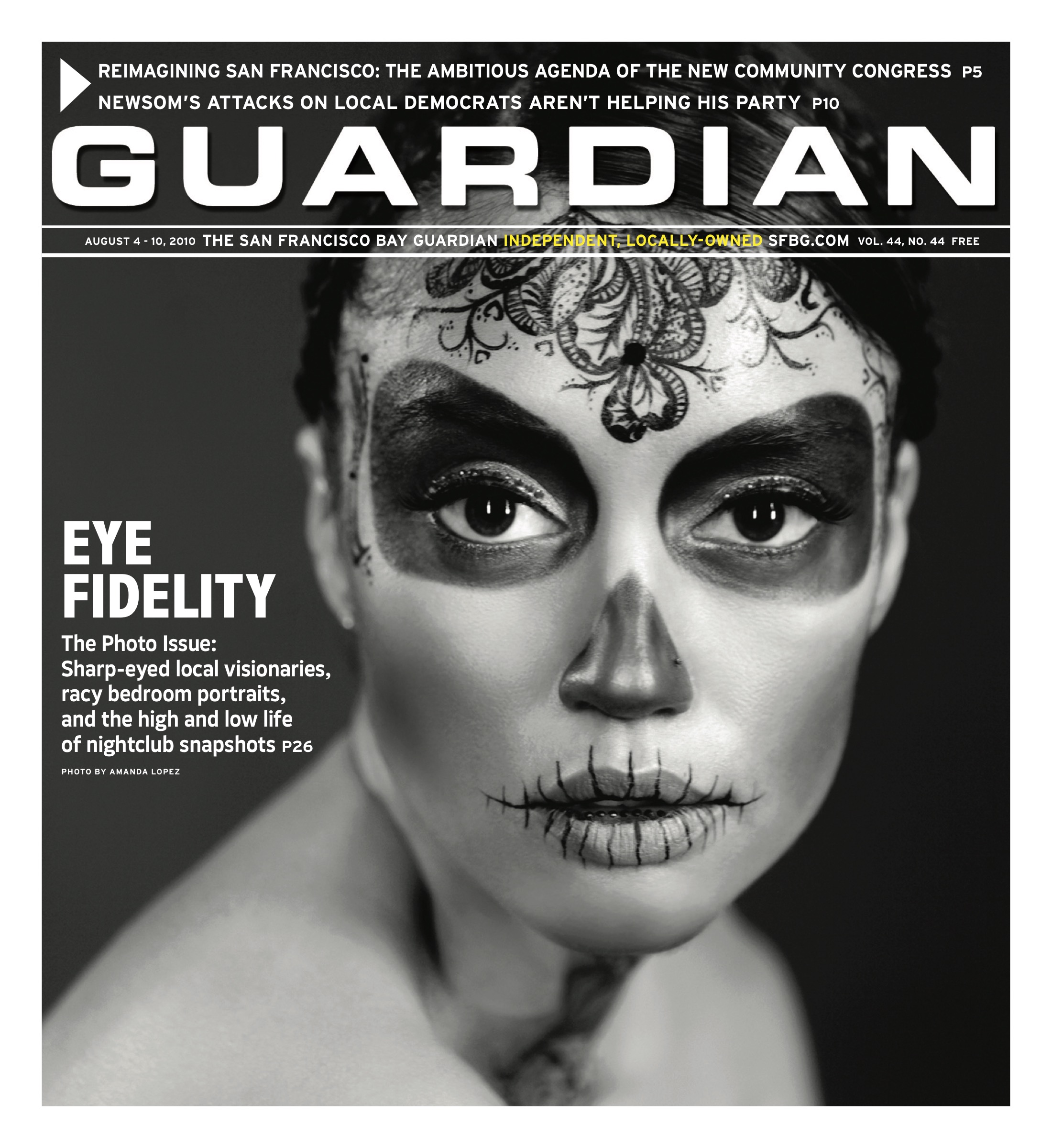
Print sections as they appeared in the early 2010s

To find articles by keyword or author, you may want to use our Search function.

Print Sections

Burmese Kitchen

1

paulr@sfbg.com

DINE Burma isn’t quite as isolated as North Korea, but it did take a new name about 20 years ago and isn’t exactly on the beaten path these days. Since I am an admirer of David Lean’s 1957 movie The Bridge on the River Kwai, starring Alec Guinness, I still think of that faraway land as Burma, not Mynanmar.

Even under authoritarian military rule, Burma/Myanmar has no real hope of matching North Korea in dreadfulness since, if nothing else, it has better food. You can find nice examples of Burmese cooking at a pair of longtime restaurants just a few blocks from each other in the Inner Richmond — Burma Superstar and Mandalay — but last year saw the arrival of a new entrant, Burmese Kitchen, a reinvented deli along a run of Larkin Street from the Civic Center to Geary densely populated with Asian restaurants.

Burmese cooking is distinctive, at least to this occidental person, in its blending of the effects of the southeast Asian peninsula and Indian subcontinent. So you will find ong no kau swer ($5.50), a marvelous soup based on coconut milk with diced chicken and fat wheat noodles. It’s as if a bowl of udon and tom kha gai had an impetuous liaison and produced, as a love child, an east Asian version of chicken-noodle soup.

On the other hand, you have a dish like chicken chana dal ($6.50), a piece of boneless chicken set on a coarse berm of yellow split peas, with a gentle hint of what we might call curry flavor. The use of legumes here seemed to be a nod to the west, toward India, land of legumes. If I’ve ever come across a lentil or other legume in Thai or Vietnamese cooking, I don’t remember it.

Burmese Kitchen also offers a version of the baked-rice dish known in India as biryani. Here it’s called dan pauk ($8.95) and is heavily laced with flaps of beef — not, maybe, the protein you’d be most likely to find in an Indian biryani.

Several of the dishes feature ingredients I hadn’t come across before. A tea-leaf salad ($5.95) included cabbage, tomato, fried garlic, and a heavy shower of sesame seeds and peanuts — the salad’s chief effects were crunch and tartness. But while the tea leaves themselves laid there docilely while we ate them, we felt their avenging presence later, in the middle of the night. Tea leaves might not have the caffeine charge of coffee beans, but they have enough to make themselves known.

Then there’s the prawn and sour leaf salad ($6.50). The owner, Dennis Lin, personally recommended this, and one taste revealed why. The salad (which includes bamboo shoots and sliced onions, along with tamarind leaves for sour power) was powerfully tart in a way unlike that of either vinegar or lemons and limes, our most common sources of tongue-curling acidity. If the sourness reminded me of anything, it was of verjus, the unfermented wine-grape juice the French sometimes use in vinaigrettes.

Lin, incidentally, roams the dining room like an Italian patrone, checking, recommending, chatting, confirming. When the owner of a restaurant actually does this, you are made aware of how few actually do it. It’s the restaurant-owners equivalent of boots on the ground, and there’s no substitute for it if the owner wants to know how a place is running and how people feel about the food and, indeed, the whole experience. And most diners tend to feel better about a place if the owner is at hand.

We did find a few dishes that flew slightly wide of the mark. The pork with pickled mango ($6.50), touted by Lin, had a muddy look that affected the way we perceived its taste. A sprig of something green would have been a simple corrective. And the fish with tamarind sauce ($6.50) seemed underpowered, the sauce tasting more of soy sauce than anything else, with just a suggestion of fruitiness.

Yet one is hard-pressed to think of a dish anywhere that overachieves as spectacularly as Burmese Kitchen’s fried golden tofu ($4.95). It sounds like something someone would bring to a hippie Thanksgiving potluck. But tofu need not be gelatinous and white; here it was made with yellow split peas, and when cut into wafers and fried, the result was something like polenta sticks. The spicy dipping sauce was so good that I finished it off like a shot of espresso after the tofu was gone. Did the owner catch this small affront to good manners? If so, he was too polite to say anything.

BURMESE KITCHEN

Mon., 10:30 a.m.–3 p.m.;

Tues.–Sat., 10:30 a.m.–8:30 p.m.

452 Larkin, SF

(415) 474-65569

www.burmesekitchen.com

Beer and wine

MC/V

Average noise

Wheelchair accessible


West Coast represents

0

arts@sfbg.com

DANCE Dance is inherently sexy. The millions of devoted fans obsessed with shows like So You Think You Can Dance and Dancing with the Stars certainly think so. But why, when so many people love watching dance, does the general public still place modern dance on an out-of-reach pedestal? Maybe the overly general words “modern dance” scare people away. Whatever the aversion, the question still remains: why is it so difficult to get people to go see something they’ll ultimately love?

ODC’s fourth annual “Summer Sampler,” held July 30-31, proved that ODC/Dance artistic directors and choreographers Brenda Way and KT Nelson not only know how to get people to see dance, they know how to create works that keep people coming back for more. “Summer Sampler” offered pre-performance wine and snacks, an early enough showtime (6:30 p.m.) to allow a Friday and Saturday night out, and most important, an hour of breathtaking dance.

The show opened with the epitome of dance-y dance, Nelson’s Stomp a Waltz (2006). Continually in motion, the dancers ran across the stage, threw each other into the air, and incorporated their entire bodies in fast-paced, rhythmically complex gestures. The ODC dancers possess great athleticism. and Friday night was no exception. Eating up the space around them, they took Nelson’s already daring choreography to the edge. I’ve seen these dancers command the large stage at Yerba Buena’s Novellus Theater, but watching them perform in the ODC Dance Commons — a space so intimate I could hear their breath and see their sweat — was an entirely new and exciting experience.

While Nelson’s very technical Stomp a Waltz was visually exhilarating, there was more to the piece than pretty tricks and leaps. A sense of raw emotion underlies Nelson’s abstract choreography. With the eye of an architect and spirit of a musician, she layered movement phrases that paired perfectly with Marcelo Zarvo’s rhythmically driving, highly emotional music.

Following Nelson’s piece, Way’s newest work Waving Not Drowning: (A Guide to Elegance) demonstrated that dance can be as tongue-in-check and cerebral as it is aesthetic. Inspired by Genevieve Antoine Dariaux’s 1963 A Guide to Elegance, the piece used playful humor and inventive movement to articulate the absurdity of gender norms. A commissioned score by Pamela Z looped text from Dariaux’s original guide, snippets of fashion advice, and a list of “important” feminine concerns like “adaptability, age, weddings, and Xmas” to confront everything from femininity and grace to sex and submission. The dancers — moving through doll-like movements, a sexy hip-swaying waltz, sexually-charged duets, and silly facial expressions — owned Way’s playful yet profound choreography with sassy elegance and bold maturity.

Though ODC is known as one of the nation’s top contemporary dance companies, it hasn’t lost sight of the importance of a local dance community. As a state of the art dance facility — housing a dance company, a pre-professional training school, recreational dance classes, a dancers’ clinic open to the public, and a performance space upstairs — the ODC Dance Commons is making dance accessible for Bay Area residents and visitors. A new ODC Theater is set to open at the end of September, making ODC’s 36,000-square-foot, two building campus the largest, most comprehensive dance facility on the West Coast.

Get that paper

0

caitlin@sfbg.com

CAREERS AND ED Our fair state gives out the most postsecondary degrees in the country. We’re so smart! But we rank somewhere around 43rd when you convert that number to a per capita figure — and of course there’s a budget kerfuffle afoot. Shucks. Still, there are a passel of innovative, unique degree programs available now to suit your unique self and give your career a boost. Consider these.


NATIVE STUDIES

Inspired by the Alcatraz takeover and the university’s late 1960s student strike, SF State’s Native studies was the nation’s first degree program of its kind. Students focus on how Native American populations are affected by everything from environmental justice issues to health practices.

San Francisco State, 1600 Holloway, SF. (415) 338-1111, www.sfsu.ca


HUMAN SEXUALITY

The institution that awarded the world’s first PhD to a porn star (Annie Sprinkle took home a diploma from IASHS) certainly has what it takes in this field. The school offers legit advanced degrees in that most delicate of our instruments.

Institute for Advanced Study of Human Sexuality, 1523 Franklin, SF. (415) 928-1133, www.iashs.edu


DOCTOR OF PSYCHOLOGY

It’s hard to say no to a psychologist with more field experience. The PsyD program at CIIS takes a relatively new approach to the advanced psychology degree, focusing less on lab and library research and more on clinical opportunities.

Center for the Institute of Integral Studies, 1453 Mission, SF. (415) 575-6100, www.ciis.edu


TEACHING ENGLISH AS A FOREIGN LANGUAGE

Yup, looks like Sarah Palin’s rearing her aspirational highlights again — that trip overseas is looking more attractive all the time. A TEFL certificate makes you eligible to teach English abroad, a perfect gig for the wannabe expat.

Teach English Abroad, www.onlinetefl.com


MUSIC FOR VISUAL MEDIA

Jingle writers, hum-along gamers, and stock characters in middling comedies like Three and a Half Men, Last Chance Harvey, and The Good Night: up your musical game to professional levels. Academy of Art offers a flexible schedule to help you reach your earworming goals.

Academy of Art University, SF. (800) 544-2787, www.academyart.edu


FIBER AND POLYMER SCIENCE

Sure, your Etsy store is kicking ass, but when it’s time to move to the next level, this program can deepen your understanding of the hang of that skirt. And how. Study physics, chemistry, and consumer science on this fashion-spelunking expedition.

UC Davis, Davis. (530) 752-2580, www.ucdavis.edu 


Selective electives

0

caitlin@sfbg.com

CAREERS AND ED Heed we now Mark Twain: “I never let my schooling interfere with my education.” Holler, MT — that degree on your wall don’t mean a thing if it ain’t got that swing. Why not finish out your coldest winter with an unexpected course in a new — and maybe even marketable — skill?


INTRODUCTION TO FIELD ORNITHOLOGY

“Isn’t that a magnificent sulfur-bellied flycatcher!” Joe Morlan has been teaching this City College course for more than 30 years, and his weekend field trips are sure to increase your feathered friend-spotting wingspan.

Sept 14–Oct 26, 7–9:30 p.m., $130–$140. Marina Middle School, 3500 Fillmore, SF. (415) 561-1860, www.ccsf.edu


INTRODUCTION TO ANIMATION

What kid doesn’t live in her own cartoon strip? Sirron Norris (painter of sardonic blue bears and “Victorion,” the gentrification bot) empowers young people to give birth to their illustrated worlds at his Mission District studio and gallery.

Aug 26–Sept. 16, 4–5 p.m. $100. Sirron Norris Studio and Gallery, 1406 Valencia, SF. (415) 648-4191, www.sirronnorris.com


VIDEO ACTION SKILLSHARE

Calling all activists: up the evocation of your iPhone captures, share production tips with camerapeople-in-arms, even make your footage into an episode of Berkeley’s BeTV at this East Bay Free Skool offering.

Third Thursdays, 7–8:30 p.m., free. Berkeley Community Media, 2238 Martin Luther King, Berk. eastbayfreeskool.wikia.com


BELLY DANCE FUNDAMENTALS

Grab your zils (scientific name: handheld clicky-clackers) and turn your paunch to power in this six-week course, which starts at hand floreos and undulates up to the shimmy step.

Tues and Fri 6:30–-7:30 p.m., Sat 11 a.m.–12 p.m., $10 drop-in, $48 for six classes. Fat Chance Belly Dance, 670 South Van Ness, SF. (415) 431-4322, www.fcbd.com


YOUTH SUPER SCULPTURE

The perfect class for young’uns to get started on their fire arts career — eight to eleven-year-olds can enjoy this Crucible primer on the joy of creative building.

Sept 20- Oct 26, 4–6 p.m. $240. The Crucible, 1260 Seventh St., Oakl. (510) 444-0919, www.thecrucible.org


HONEYBEE BASICS

Their hives were recently the victims of a distressing insecticide attack — but the urban agriculturists at Hayes Valley Farm soldier on in their mission to educate peeps on the beauty of urban beekeeping.

Sept 20, 10 a.m.- 12 p.m. $20–$40 sliding scale. Hayes Valley Farm, 450 Laguna, SF. www.hayesvalleyfarm.com


EXTREME STRETCHING

It’s the fast track to that contortionist career you’ve always dreamed about! A crash course in control, stability, and limber limbs at SF’s premier spot for circus learnin’.

Sept.8–Dec 8, 5:30–7:30 p.m., $480. Circus Center, 755 Frederick, SF. (415) 759-8123, www.circuscenter.org

To try a cop

0

news@sfbg.com

Proponents of civilian oversight for the San Francisco Police Department are hopeful that fresh blood on the Police Commission, along with a new set of rules designed to expedite disciplinary hearings, will improve the often-criticized, delay-plagued system of citizens policing cops.

The commission’s backlog of pending cases — which at its worst ballooned to more than 70, with at least one more than nine years old — prompted massive media coverage in 2009; a San Francisco Chronicle editorial calling for the system to be reformed early this year; and former Police Commissioner and District 10 Candidate Theresa Sparks’ recent statements to the Guardian that SFPD’s civilian oversight system is “broken” and that the power to fire police officers should go to the chief.

As it stands now, SFPD Chief George Gascón can handle any case in which punishment will not exceed more than a 10-day suspension, whether initiated from within the department and investigated by the Management Control Division — SFPD’s version of internal affairs — or resulting from complaints made by civilians through the Office of Citizen Complaints. The Police Commission must hold hearings for any case in which more severe discipline is recommended by either office.

“There are litigation delays that occur outside the control of the commission,” OCC Director Joyce Hicks told the Guardian. Appeals to superior courts can indefinitely stall cases before the commission, she said.

The OCC has its own backlog of investigations, which Hicks primarily attributes to budget constraints. San Francisco’s charter dictates that the OCC have one full-time investigator for every 150 SFPD officers. There are 2,317 sworn officers in the SFPD, according to the department’s most recent citywide CompStat report, which means that the OCC should have at least 15.5 investigators. Hicks says she has 14, and that supervising investigators are taking on cases to pick up the slack. OCC’s 2010 second-quarter report states that, due to budget constraints, the office will not be able to meet its full compliment of 17 front-line investigators.

“We do not have an adequate number of investigators for the size of our caseload,” Hicks said. “We are working very hard with the Police Commission to reduce the backlog. But they have to be scheduled by the commission for us to prosecute them.”

Hicks would like to see the number of investigators dictated by the number of complaints the OCC receives instead of the size of the SFPD, as a critical 2007 report by the Controller’s Office suggested.

Police Commissioner Jim Hammer, who was appointed by the Board of Supervisors early this year and has been instrumental in crafting new rules to speed hearings before the commission, said he believes the current system is beginning to work better and will continue to improve with future tweaks.

“I would not be opposed to the chief having more authority to impose discipline as long as a civilian body has the authority to make the final check on it,” he told the Guardian. “This isn’t just about Chief Gascón — this is about the system. Someday there will be another chief.”

A swelled backlog at the commission has real consequences for the city’s available police force and overall budget. Despite numerous attempts, no one in SFPD’s media relations unit, chief’s office, personnel division, or MCD could provide the Guardian with the number of officers taken off active police duty to work a desk while their complaint cases stall before the Police Commission.

Gascón refused to comment directly for this story, stating through SFPD spokesman Sgt. Troy Dangerfield that his thoughts on police discipline were “already out there.” But the chief did tell the Board of Supervisors Budget Committee that the lag in the discipline process was hurting the usable number of officers at his disposal. San Francisco’s charter mandates that the number of full-duty sworn police officers cannot fall below 1,971.

“Two weeks ago, we had an individual who had a case that was pending for nine years,” Gascón told the Budget Committee in June. “I am unable to use him in the field. He will be one of the many who will not be able to do police work as we would expect of someone with a police officer rank.”

And when Budget Committee Chair John Avalos asked if the officer was still on the payroll, Gascón responded: “Absolutely.”

The commission’s Procedural Rules Governing Trial of Disciplinary Cases, which were adopted in April, limit hearings to less than four hours and state several times that requests for delays, called continuances, are generally disfavored. “In the past they’ve turned into trials,” Hammer said. “But these are administrative hearings.”

Angela Chan, a stalwart San Francisco immigrant rights advocate and staff attorney for the Asian Law Caucus and new police commissioner appointed in May, said the commission is prioritizing tackling the backlog. “I know how to manage a docket,” she told the Guardian. “The very first thing I do when I have an initial conference call is set a hearing date.”

But if officers say their attorneys can’t make that date and request a continuance? “My response is to get another attorney,” Chan said. “There is no haggling. As a commission, we have to stay on top of the docket.”

In addition to the rules pushing police commissioners to hold prompt, fair hearings, Hammer and former Police Commissioner David Onek instituted an accountability report for the commission. The commissioners envisioned a monthly report published on the commission’s website — similar to the OCC’s quarterly reports — that outline the total number of disciplinary cases before the commission, the number of cases assigned to each commissioner for evidence intake, and measurements to gauge how well the commission was sticking to the rules adopted in April.

The actual document is a far cry from what the commission envisioned, listing only active cases before the commission, cases filed to date for 2010, and individual commissioner’s number of assigned hearings. It is not available online.

As of July 31, the commission has 44 pending cases, including appeals. Police Commission President Joe Marshall, whose recent reappointment stalled in the Board of Supervisors because of ambiguity about his position on the Secure Communities program, completed no hearings in 2010. He has been assigned eight. Hammer completed six hearings, has an additional three in progress, and has two more scheduled.

Commission Vice President Thomas Mazzucco has held and decided two hearings this year and has three more scheduled. Petra DeJesus completed one hearing, settled two cases, and has two more hearings scheduled. Angela Chan has scheduled four of the five cases she has been assigned. New mayoral Police Commission appointee Carol Kingsley was not included in the latest report because she began her term Aug. 4.

Hammer also wants to refine what is known as the hearing officer process, in which accused officers can elect to have the evidence portion of their case heard by a hearing officer. That officer then reports to the full commission, which makes the final ruling on disciplining the officer. The problem is that getting all parties to agree on a hearing officer takes a lot of time. In addition, final reports to the commission sometimes can take months to generate.

“They’re agreeing to it [using hearing officers] now because it builds in a huge delay,” Hammer said.

Chan wants to convince officers that quickly airing a hearing is just as likely to exonerate them as to create a headache, long suspension, or termination. Hicks, Chan, and Hammer all agreed that the value of civilian oversight of the SFPD outweighed slow, sometimes messy system. “The overwhelming majority of police officers are conscientious, hard-working public servants,” Hammer said. “The overwhelming majority of cops and citizens have a strong interest in making sure the few bad apples are weeded out.”

Appetite: Tales from Tales

0

In 100 percent humidity at nearly 100 degrees (and no relief at night), spending a week drinking and eating doesn’t sound like the best idea, but for eight years running, it happens every July in New Orleans at Tales of the Cocktail. For cocktail lovers and industry, this is THE drink event of the year.

My first, or virgin, year at Tales, was as sleepless and packed as everyone said it would be, but moderation is the name of my game (at least outside of the sleep arena), and I managed to indulge and enjoy without so much as one hangover from anything other than sleep deprivation. Of course, it meant merely tasting most drinks, eating a lot (NO problem in New Orleans!) and promptly turning around upon surveying nightly after crowds at Old Absinthe House, heading to quieter bars or the Monteleone lobby for civilized conversation instead.

Opening party at Elms Mansion — a truly magical setting

I already feel completely alive in my skin when I’m in New Orleans. Any reason to be in that queen of cities is a good reason for me. Tales itself grew progressively better as the week went on, despite awful heat and waning sleep… mainly because I continued to meet great people which led to further excursions, tastings, dinners, parties, and as the cumulative effect added up to a host of memories and experiences.  Let me try to summarize a mere few highlights for you – read more about the 2010 Tales and New Orleans in my upcoming 8/15 issue of The Perfect Spot:

LIFE-ALTERING TASTING of 1865 & 1805 COGNAC!
7/25 The Mysteries & Secrets of Distilling in Cognac
Cognac masters, Olivier Paultes and Alain Royer, moderator Dale DeGroff, and spirited bartender extraordinaire, Salvatore Calabrese, were keepers of the surprise that awaited at the end of a fascinating, seemingly routine seminar on the methods of distilling cognac, along with a token five cognac side-by-side tasting.

The seminar suddenly escalated to once-in-a-lifetime experience when Calabrese informed our small group that he had brought not only a bottle of 1865 Rouyer Guillet & Co. cognac to share together, but also an 1805 Maison De L’Emprereur cognac he was going to make a Sazerac with! The room erupted in applause as we stood on chairs to take photos and watch him mix what he called a “$10,000 cocktail”. We passed the Sazerac around, each savoring a profound sip.

Dale DeGroff pours us an 1865 cognac

We all had a pour of the silky 1865. I exhaled and placed my head down on the table after first taste. It was remarkably full, refined with raisin and floral notes initially, a finely balanced burn, evolving into chocolate and nutty notes. I could barely begin to fathom the history wrapped up in each sip. As Calabrese exclaimed, “This was made when Abraham Lincoln was alive!”

Worth far more than the $40 price of admission, the lucky few who happened to be in this seminar got an education beyond what we could have ever expected. We lived a moment that, for drink lovers, will remain a marker of earth-shattering tastes for the rest of our lives.

GREEN GORILLAS DESCENDING on the PELICAN CLUB
7/22 at The Pelican Club Spirited Dinner, French Quarter
Thursday night there were Spirited Dinners across town. I chose the one at Pelican Club mainly because of the all-star line-up of bartenders from across the country pairing cocktails with a six-course dinner: Marcos Tello – The Varnish, LA; Jim Meehan – PDT, NY; Misty Kalkofen – Drink, Boston; Peter Vestinos – Wirtz Beverage Group, Chicago; and our own rockstar, Neyah White, formerly of Nopa.

The food was not as fine as I’d hoped, but the atmosphere was convivial, festive, a warmly welcoming party. The cocktails all featured the night’s spirit: Bols Genever. Neyah clearly had fun creating the dessert cocktail, Drum Shag: Bols, sarsaparilla, PX sherry, infused with smoke.

But the highlight of the night? A foursome of green gorillas descended on the bar during aperitif hour before we were seated at our tables. I’d seen them at the pool of the Monteleone before, or roaming the streets, surely hot and sweaty in their cheap, neon green garb. The site of these guys at the elegant Pelican bar while some of our country’s best bartenders poured them shots was a memorable image, one that somehow typifies the wacky exuberance that is Tales.

DEL MAGUEY – RON COOPER – MEZCAL
7/25 La Verdad (The Truth) about Mezcal Seminar
Everyone who knows anything about mezcal knows Ron Cooper of Del Maguey is the master, having done more to further the mezcal gospel than anyone, even being called the “mezcal missionary”. As my friend whispered to me during the seminar, describing the panel of mezcal distillers: “They’ve all drunk the kool-aid, haven’t they?” Despite the fact that I’ve already been a mezcal fan for years, so did I… so did we all… by the end of the session.

I’m must be honest and say, much as I appreciated every distiller there (Illegal Mezcal, Los Amantes, and Sombra), as has been my common experience in previously tasting these and other mezcals, none hold a candle to Ron’s entire product line. This was sorely highlighted in a side-by-side tasting of all the above next to five Del Maguey mezcals. But all these guys were heartfelt and inspiring, while Ron himself is a small, peace-filled  powerhouse of a man… the Yoda of the mezcal world.

Every single Del Maguey mezcal is a revelation, whether the creamy, smoky sweet of Crema de Mezcal, or the chocolate earthiness of other-worldly Chichicapa. More to come soon in my Guardian column and here about his mezcals. Thanks to Neyah White, try Del Maguey by the shot at Nopalito, in cocktails throughout SF, or order some bottles. Once you dig further into mezcal, particularly through the Del Maguey lens, you, too, will “drink the kool-aid”.

SOUTHERN ROMANCE of DIXIELAND JAZZ under SWEEPING OAKS
7/22 William Grant & Sons Opening Party at Elms Mansion in the Garden District
Yes, by 1am it felt like it was actually getting hotter as I wilted in the oppressive humidity, but what could have been more romantic than the stately, white Elms Mansion with stunning wood carved fireplaces and ceilings, scotch bar in the drawing room, white lights and absinthe in the garden, and live Dixieland band playing under a white-pillared rotunda? Not much. As massive oak trees loomed over us, even larger than the mansion, I felt fully alive and grateful… I was in the South.

A SUDDEN DOWNPOUR entering the BARTENDER’S BREAKFAST
7/24 Bartender’s Breakfast – Spirited Awards after party
A second line jazz funeral was held for Sex on the Beach, a cocktail that surely needed to be buried, on the walk from the Spirited Awards Ceremony to the Bartender’s Breakfast, where the likes of Audrey Saunders and Jim Meehan were making us drinks. Before entering the building, a sultry Summer storm rushed through, dampening our dresses, suits and hair. A warm rain, it wasn’t exactly a respite from the unrelenting heat, but it somehow refreshed, invigorated, injecting us with energy to celebrate late into the night.

Rep Clock

0

Schedules are for Wed/11–Tues/17 except where noted. Director and year are given when available. Double and triple features are marked with a •. All times are p.m. unless otherwise specified.

ARTISTS’ TELEVISION ACCESS 992 Valencia, SF; www.atasite.org. $6. “Other Cinema and Alternative Digital Domain present: A Mid-Summer Night’s Delirium,” Other Cinema fundraiser with works by Omori, Craig Baldwin, and more, Sat, 9.

BERKELEY FELLOWSHIP OF UNITARIAN UNIVERSALISTS 1924 Cedar, Berk; (510) 841-4824, www.bfuu.org. Free. Inner Tour (Alexandrowicz, 2001), Thurs, 7:30.

CASTRO 429 Castro, SF; (415) 621-6120, www.castrotheatre.com. $7.50-10. Fruit Fly (Mendoza, 2009), Wed-Thurs, 2:30, 4:45, 7, 9:30. Metropolis (1927), Fri-Sun, 2, 5, 8. Restored version.

CAVALLO POINT Fort Baker, 601 Murray Circle, Sausalito; www.sausalitofilmfestival.com. Most shows $12. “Sausalito Film Festival,” indie films, Fri-Sun.

CERRITO 10070 San Pablo, El Cerrito; www.rialtocinemas.com. $7. “Cerrito Classics:” To Catch a Thief (Hitchcock, 1955), Thurs, 7:15.

CHRISTOPHER B. SMITH RAFAEL FILM CENTER 1118 Fourth St, San Rafael; (415) 454-1222, www.cafilm.org. $6.50-10.25. Anton Chekhov’s The Duel (Koshashvili, 2010), call for dates and times. The Girl Who Played With Fire (Alfredson, 2009), call for dates and times. The Girl With the Dragon Tattoo (Oplev, 2009), call for dates and times. Joan Rivers: A Piece of Work (Stern and Sundberg, 2010), Wed-Thurs, call for times. Lourdes (Hausner, 2009), Aug 13-19, call for times.

“FILM NIGHT IN THE PARK” This week: Creek Park, 451 Sir Francis Drake Blvd, San Anselmo; (415) 272-2756, www.filmnight.org. Donations accepted. The World’s Fastest Indian (Donaldson, 2005), Fri, 8; Mamma Mia! (Lloyd, 2008), Sat, 8.

FORBIDDEN ISLAND TIKI LOUNGE 1304 Lincoln, Alameda; www.forbiddenislandalameda.com. Free. “Forbidden Thrills: Elvis D-Day Tiki Party!”, clips of the King and drink specials, Mon, 9:15.

HUMANIST HALL 390 27th St, Oakl; www.humanisthall.org. $5. Destination Moon (Pichel, 1950), Wed, 7:30.

JACK LONDON SQUARE East lawn, Oakl; www.jacklondonsquare.com. Free. “Waterfront Flicks:” Monsters vs. Aliens (Letterman and Vernon, 2009), Thurs, 7:30.

PACIFIC FILM ARCHIVE 2575 Bancroft, Berk; (510) 642-5249, www.bampfa.berkeley.edu. $5.50-9.50. “Akira Kurosawa Centennial:” Dodes’ ka-den (1970), Wed, 7; Kagemusha (1980), Sun, 7; Seven Samurai (1954), Tues, 7. “Modernist Master: The Cinema of Francesco Rosi:” Chronicle of a Death Foretold (1987), Thurs, 7. “Criminal Minds: True Crime Cinema:” The Rise and Fall of Legs Diamond (Boetticher, 1960), Fri, 7; Al Capone (Wilson, 1959), Fri, 9. “Viva La Revolución: Celebrating the Hundredth Anniversary of Mexico’s Revolution:” Prisoner Number 13 (de Fuentes, 1933), Sat, 6:30; El Compadre Mendoza (de Fuentes, 1933), Sat, 8:15.

RED VIC 1727 Haight, SF; (415) 668-3994. $6-9. The Human Centipede (Six, 2009), Wed-Fri, 7:15, 9:20 (also Wed, 2). “Atheist Film Festival,” Sat, 10am-midnight. Visit www.atheistfilmfestival.org for details. All screenings free. Babies (Balmès, 2010), Sun-Mon, 7:15, 9:15 (also Sun, 2, 4). The Killer Inside Me (Winterbottom, 2010), Aug 17-19, 7, 9:20 (also Aug 18, 2).

REDWOOD GARDENS 2951 Derby, Berk; (510) 684-1787. $7-20. Cuba feliz (Dridi, 2000), Sun, 6. Benefit for Berkeley Palma Soriano Sister Cities Association.

ROXIE 3117 and 3125 16th St, SF; (415) 863-1087, www.roxie.com. $5-11.50. “Summer in Italy:” Swept Away (Wertmuller, 1974), Wed, 6:30, 8:45; Death in Venice (Visconti, 1971), Thurs, 6:15, 8:45. Lourdes (Hausner, 2009), Aug 13-19, 7, 9 (also Aug 14-15, 3, 5).

VIZ CINEMA New People, 1746 Post, SF; www.vizcinema.com. $10. “Winding Road to Peace: Three War Films by Kon Ichikawa and Nagisa Oshima:” Fires on the Plain (Ichikawa, 1959), Wed, 7; Merry Christmas, Mr. Lawrence (Oshima, 1983), Wed, 4:30 and Thurs, 7; The Burmese Harp (Ichikawa, 1956), Thurs, 4:30. “Bay Area Filmmakers Series Vol. 2: Junichi Suzuki War Documentaries:” Toyo’s Camera (2008), Aug 13-19, 12:50 and 5; 442: Live With Honor, Die With Dignity (2010), Aug 13-19, 2:50 and 7.

YERBA BUENA CENTER FOR THE ARTS 701 Mission, SF; (415) 978-2787, www.ybca.org. $6-8. “Something From Nothing: Films on Design and Architecture:” Infinite Space: The Architecture of John Lautner (Grigor, 2009), Sun, 2.

Stage listings

0

Stage listings are compiled by Guardian staff. Performance times may change; call venues to confirm. Reviewers are Robert Avila, Rita Felciano, and Nicole Gluckstern. Submit items for the listings at listings@sfbg.com.

THEATER

OPENING

Don’t Ask New Conservatory Theatre Center, 25 Van Ness; 861-8972; www.nctcsf.org. $24-36. Opens Fri/13, 8pm. Runs Wed-Sat, 8pm; Sun, 2pm. Through Sept. 19. New Conservatory Theatre Center presents the West Coast premiere of Bill Quigley’s play about the affair between a Private and his superior.

Skin Tight CounterPULSE, 1310 Mission; www.counterpulse.org. $20 ($35 for gala opening). Opens Thurs/12, 8pm. Runs Thurs-Sat, 8pm. Through August 28. Rapid Descent Physical Performance Company presents the SF premiere of Gary Henderson’s play.

BAY AREA


ONGOING

Abigail: The Salem Witch Trials Temple SF, 540 Howard; www.templesf.com. $10. Thurs/12, August 19, 26, 9pm. Through August 26. Buzz Productions, with Skycastle Music and Lunar Eclipse Records, presents an original rock opera based on the Salem witch trials.

Agnes the Barbarian EXIT Theatre, 156 Eddy; 289-6766, www.thunderbirdtheatre.com. $20-25. Thurs-Sat, 8pm. Through Sat/14. Most parents get annoyed when their offspring show signs of coarsening, particularly during those awkward teenage years, but not Conan the Barbarian (Jason Harding), oh no. Quite to the contrary, Conan despairs over his teenage daughter’s bookish ways and socialist inclinations, and determined to set her on the path to barbarism—partly out of fatherly pique and partly because his mind is being controlled by his evilly bureaucratic Grand Vizier (Dana Goldberg)—he sends her on a hero’s quest to kill the monstrous Gargranox (Cary Klataske). Clad in the requisite fur-and-chainmail bikini ensemble, young Agnes (Jaime Lee Currier) is aided on her journey by a pair of "Holy Grail"-styled peasants The Bastards (Jason Pienkowski and Mary Bishop), and the banished court magician Shitake (Tavis Kammet) plagued by the dread "curse of exposition". During her unwilling pursuit of her barbarian birthright—Agnes faces off with a 5,000 year-old sorceress, acquires an "enchanted sword", confronts a monster, avoids assassination, and rescues her father’s kingdom from the dread influence of Gygax’ 15-point takeover plan. Penned by Jason Harding, a core-member of the Thunderbirds for 10 years, and author of the ribald pirate farce "Lusty Booty," and directed by 6-year T-bird veteran Shay Casey. (Gluckstern)

*Streetcar Named Desire Boxcar Playhouse, 505 Natoma; 776-1747, www.boxcartheatre.org. $15-25. Wed-Sat, 8pm. Through Sept. 4. It’s no small feat, creating a sultry southern summer circa 1940’s smack-dab in the middle of a typically frosty San Francisco summer circa right here right now, but Boxcar Theatre rises admirably to the challenge. Rebecca Longworth’s creative staging of Tennessee Williams’ "A Streetcar Named Desire" includes musical interludes, ghostly apparitions, and the clattering of a cleverly impersonated streetcar that shakes the walls of Matt McAdon’s simply-detailed tenement flat and the spirits of one Blanche DuBois (Juliet Tanner), while the deliberately-muted lighting (Stephanie Buchner) and period-appropriate sound (Ted Crimy), add the appropriate layers of southern discomfort to the unfolding action. Especially captivating to watch are the performances of supporting characters Stella (Casi Maggio) and Mitch (Brian Jansen), who seem to almost helplessly orbit the hot flame of Stanley Kowalski’s sun (Nick A. Olivero) and the grimly flickering satellite of Blanche’s waning moon. As he does in "Cat on a Hot Tin Roof," Seth Thygesen stands in for one dearly-departed, in this case Blanche’s old beau, Allan Gray, whose abrupt suicide de-magnetized her moral compass. And in addition to a saucy turn as next-door neighbor Eunice, Linnea George tracks the fractured emotions of the main characters on her mournful violin. (Nicole Gluckstern)

Dead Certain Royce Gallery, 2901 Mariposa; (866) 811-4111. $12-28. Thurs-Sat, 8pm. Through Sat/14. Expression Productions presents a psychological thriller by Marcus Lloyd..

Divalicious New Conservatory Theatre Center, 25 Van Ness; 861-8972, www.nctcsf.org. $22-28. Wed-Sat, 8 p.m.; Sun, 2pm. Through August 22. Leanne Borghesi takes on the music of legends ranging from Garland to Midler.

Gilligan’s Island: Live on Stage! The Garage, 975 Howard; (800) 838-3006, www.brownpapertickets.com. $15-20. Sun, 8pm. Through August 29. Moore Theatre and SAFEhouse for the Performing Arts brings the TV show to the stage, lovey.

Peter Pan Threesixty Theater, Ferry Park (on Embarcadero across from the Ferry Bldg); www.peterpantheshow.com. $30-125. Tues and Thurs, 7pm; Fri-Sat, 7:30pm (also Sat, 2pm); Wed, 2pm; Sun, 1 and 5pm. Through August 29. JM Barrie’s tale is performed in a specially-built 360-degree CGI theater.

*Posibilidad, or Death of the Worker Dolores Park and other sites; 285-1717, www.sfmt.org. Free. Sat-Sun, 2pm; also Sept 6, 2pm; Sept 17, 8pm. Through Sept 17. It may have been just a coincidence, but it certainly seems auspicious that the San Francisco Mime Troupe, itself collectively run since the 1970’s, would preview their latest show Posibilidad on the United Nations International Day of Cooperatives. The show, which centers around the struggles of the last remaining workers in a hemp clothing factory ("Peaceweavers"), hones in on the ideological divide between business conducted as usual, and the impulse to create a different system. Taking a clip from the Ari Lewis/Naomi Klein documentary The Take, half of the play is set in Argentina, where textile-worker Sophia (Lisa Hori-Garcia) becomes involved in a factory takeover for the first time. Her past experiences help inform her new co-workers’ sitdown strike and takeover of their own factory after they are told it will close by their impossibly fey, new age boss Ernesto (Rotimi Agbabiaka). You don’t need professional co-op experience to find humor in the nascent collective’s endless rounds of meetings, wince at their struggles against capitalistic indoctrination, or cheer the rousing message of "Esta es Nuestra Lucha" passionately sung by Velina Brown, though in another welcome coincidence, the run of Posibilidad also coincides with the National Worker Cooperative conference being held in August, so if you get extra inspired, you can always try to join forces there. (Gluckstern)

Sex Tapes for Seniors Victoria Theatre, 2961 16th; (800) 838-3006. $20-40. Fri-Sat, 8pm; Sun, 2pm. Through August 22. An original musical by Mario Cossa, with a cast of characters between the ages of 52 and 75.

Show and Tell Thick House, 1695 18th St; (800) 838-3006, www.symmetrytheatre.com. Thurs-Sat, 8pm; Sun, 5:30 pm. Through August 22. $25. Symmetry Theatre Company presents a play by Anthony Clarvoe.

This Is All I Need NOHspace, 2840 Mariposa; www.mugwumpin.org. Thurs-Sun, 8pm. Through Sept. 4. $15-20. The kinetic company Mugwumpin presents a new show.

This World Is Good Phoenix Theater, 414 Mason; 913-7272, www.sleepwalkerstheatre.com. Thurs-Sat, 8pm. Through August 28. $18-24. The 1990s are giving way to a millennial moment of anti-climax known as Y2K, but the anxiety and dread are real, and the bloodiest century in human history looks poised to be outdone by the doom-drones of the next. Making at least academic sense of all that angst is Ally (Dina Percia), a brilliant young Latina writing her doctoral dissertation on Grunge and its landscape of youth alienation. Her best friend and occasional lover is a smitten young English prof (Damian Lanahan-Kalish), a dork with a degree and the pet name Scrotum Face. But as she delves into the world of ideas, Ally loses track of her family: single mother Emmy (Tessa Koning-Martinez) and, more tragically, talented but emotionally tortured younger brother Sam (Shoresh Alaudini), whose battered mind and compassionate heart craft a graphic story around a new "super hero" with no costume, no parallel identity, and indeed no special powers. When her family collapses, Ally reassembles the pieces from a new vantage, outside the ivory tower, where she makes art from a sort of crystalline "ordinariness" that complements her brother’s all-too-ordinary super hero. This World Is Good is the opening gambit in a new trilogy by local playwright J.C. Lee called This World and After, all being presented by Sleepwalkers Theatre this season. Artistic director Tore Ingersoll-Thorp helms a competently acted production, which helps lend Lee’s ambitious scope its tangible human proportions, though in truth the characters do not always feel fully drawn. There’s a fine monologue from Sam, both chilling and exhilarating, but also a proclivity throughout for awkwardly poetical speeches over dialogue. Still, there’s subtlety and real humor in the best parts, and enough here to want to see more. (Avila)

What Mama Said About Down There Our Little Theater, 287 Ellis; 820-3250, www.theatrebayarea.org. $15-25. Thurs-Sun, 8pm. Through August 28. Writer-performer-activist Sia Amma presents this largely political, a bit clinical, inherently sexual, and utterly unforgettable performance piece.

BAY AREA

Blithe Spirit Live Oak Theatre, 1301 Shattuck, Berk; (510) 649-5999, www.aeofberkely.org. $12-15. Fri-Sat, 8pm; also August 19, 8pm. Through August 21. Actors Ensemble of Berkeley essays the eternal Noel Coward comedy, about a (naturally) Coward-esque writer (Stanley Spenger) who for the purposes of research and any passing amusement it may provide invites over a celebrated medium (an amusingly puffed-up Chris Macomber), only to have her inadvertently summon the ghost of his ex-wife (Erin J. Hoffman), who mischievously begins to drive a wedge between him and his new wife (Shannon Veon Kase). Director Hector Correa’s not-always-fitting casting choices contribute to a drearily perfunctory tone at the outset, which makes the first scenes somewhat painful going. However, Spenger proves admirably dry and restrained in the lead, and things pick up measurably with the arrival of the titular ghost, played with playful, bounding energy and notable grace by Hoffman. (Avila)

*East 14th: True Tales of a Reluctant Player Marsh Berkeley, 2120 Allston, Berk; www.themarsh.org. $20-50. Dates and times vary. Through Sept 12. Don Reed’s solo play, making its Oakland debut after an acclaimed New York run, is truly a welcome homecoming twice over. (Avila)

*Machiavelli’s The Prince Berkeley City Club, 2315 Durant, Berk; (510) 558-1381, www.centralworks.org. $14-25. Thurs-Sat, 8 p.m.; Sun, 5pm. Through August 22. Set in an intimate salon-space in the Berkeley City Club, this stage adaptation of one of the most famous documents on political power ever written gains a certain conversational quality. In fact, the script, penned by Gary Graves, is really just one long conversation—an imagined encounter between Nicolo Machiavelli and the man he dedicated his treatise to, Lorenzo de Medici II. Machiavelli (Mark Farrell) has been called by de Medici (Cole Alexander Smith) to possibly regain favor in his court after a long banishment. With him he brings a notebook of his musings on gaining and retaining political power, which he bestows on Lorenzo for him to read. As the Duke of Florence, Smith plays his character with the measured dignity and watchful countenance of a career mobster. He protests the extremism of his former teacher’s philosophy of rule even as he is casually seduced by its implications. Farrell’s Machiavelli tries to play his position with calculated Mephistopheles cool. However, he cannot escape the obvious taint of his own failures, and eventually, for all his talk of power, he is revealed to be ultimately powerless, though his ideas remain with de Medici, long after he himself is let go. (Gluckstern)

The Norman Conquests The Ashby Stage, 901 Ashby, Berk; (510) 841-6500, www.shotgunplayers.com. $20-25. Dates and times vary. Through Sept. 5. Shotgun Players presents Alan Ayckbourn’s comic trilogy.

The Pirates of Penzance Mountain View Center for the Performing Arts, 500 Castro, Mountain View; 227-4797, www.lamplighters.org. $17-50. Sat/14, 8pm, Sun/15, 2pm. Lamplighters presents Gilbert and Sullivan’s swashbuckling classic.

The Taming of the Shrew Forest Meadows Amphitheatre, 1475 Grand, San Rafael; (415) 499-4488, www.marinshakespeare.org. $20-25. Fri-Sun, 8pm; also Sun, 4pm and 5pm. Through Sept. 26. Marin Theatre Company presents a swashbuckling version of the classic.

PERFORMANCE/DANCE

Charlie Ballard Purple Onion, 140 Columbus; www.brownpapertickets.com. Wed/11, 8:30pm. $10. The gay comedian records a show for DVD at Phyllis Diller’s old stomping grounds.

"Bare Bones Butoh Presents: Showcase 18" Studio 210, 3435 Cesar Chavez; 821-7124. Fri/13-Sat/14, 8pm. A pair of benefit performances for members of the butoh and performance art communities.

"City Solo" Off-Market Theater, 965 Mission; www.cafearts.com. Sun/15, 7pm. $15-20. Solo performances by Coke Nakamoto, Jawad Ali, Enzo Lombard, and Martha Rynberg.

Bobcat Goldthwait Cobb’s Comedy Club, 915 Columbus; 928-4320; www.cobbscomedyclub.com. Fri/13-Sat/14, 8 and 10pm. $20.50. The comedian and director hits town.

BAY AREA
"New Works Festival" Lucie Stern Theatre, 1355 Middlefield, Palo Alto; (650) 463-1960, www.theatreworks.org. Dates and times vary. Through August 22. $15-25 ($75 for festival pass). TheatreWorks presents its ninth annual festival, with Kevin Merritt and Kevin So’s Great Wall, Jeff Hughes’ Red Clay, and readings.

Film listings

0

Film listings are edited by Cheryl Eddy. Reviewers are Kimberly Chun, Michelle Devereaux, Max Goldberg, Dennis Harvey, Johnny Ray Huston, Louis Peitzman, Lynn Rapoport, Ben Richardson, and Matt Sussman. For rep house showtimes, see Rep Clock. For first-run showtimes, see Movie Guide.

OPENING

Eat Pray Love Julia Roberts has a midlife crisis. (2:30) Cerrito, Elmwood, Marina.

The Expendables Sylvester Stallone directs and stars (along with just about every other action hero, ever) in this mercenaries-in-the-jungle-with-big-guns adventure. (1:43)

The Extra Man The polar opposite of buddy cop action flicks and spoofs a la The Other Guys, with only a faint resemblance to the bromances of Judd Apatow, Adam McKay, Will Ferrell, Seth Rogen, and so on, The Extra Man is a gently weird throwback to another era, much like its title character, Henry Harrison (Kevin Kline). Sweet, cross-dressing-curious teacher and would-be writer Louis Ives (Paul Dano) is drifting though life passively when he stumbles on eccentric playwright Harrison’s room-for-let and his oddball realm of hangers-on. A blustery, prickly, proudly misogynistic collector of Christmas balls, given to spasms of improvisational dancing, Harrison relishes his role as an escort to aged socialites, crankily shucking and jiving to score invites to fancy dinner parties and vacation homes in Florida. When Ives isn’t courting environmental magazine editor Mary (Katie Holmes) or hiding from the fearsome-looking wooly recluse Gershon (John C. Reilly), the mentor-able young man turns out to be more adept at the role than Harrison ever imagined. And like fossilized grande dames in Chanel, literate audiences also might be charmed by director-writer Shari Springer Berman’s unassuming, crushed-out bon mot, based on the novel by Jonathan Ames, to a few mannered, less-than-examined, happily twisted New York City subcultures. (1:45) Elmwood, Embarcadero. (Chun)

Harimaya Bridge The Harimaya Bridge might be the first film I’ve seen that portrays the American-Japanese culture clash so beloved by stateside filmmakers (see: 2003’s Lost in Translation) from the viewpoint of an African American man in Japan. The debut feature for short-film director Aaron Woolfolk, Bridge follows a retired man who travels to Japan after the death of his estranged son, with intentions to retrieve his son’s paintings for an art show. Likely based on Woolfolk’s personal experiences living in Japan, The Harimaya Bridge has both the look and feel of a short, an attribute that makes the otherwise agreeable film seem much too long and drawn-out. Or maybe, all along Woolfolk intended to replicate the dour melodrama and often glacial pacing of popular Japanese film. Meta-filmmaking? (2:00) Presidio. (Peter Galvin)

Lourdes Jessica Hausner’s Lourdes is a film about the people who things happen to rather than the things that happen to people. This is one of its merits yet also its greatest handicap because, really, not much does happen. Wheelchair-bound Christine (Sylvie Testud) makes the pilgrimage to the titular site of Catholic healing in the Pyrenees. When a miracle occurs and Christine walks, the other, less-enlightened denizens of Lourdes lampoon her, and God, for her inexplicable recovery. Hausner limns every scene with exaggerated blues, reds, and whites while relying on long takes and a certain clinical distance from the characters. The film’s atmosphere recalls Julian Schnabel’s The Diving Bell and the Butterfly (2007) but since Christine, unlike Jean-Dominique in that film, can speak and move, she doesn’t need to rely on her imagination to make sense of the world, and that would’ve been nice. Testud is subtle and sweet, but personality falls short here. Maybe it went out with her character’s legs. (1:39) Roxie. (Ryan Lattanzio)

Patrik Age 1.5 Freshly settled in suburbia, gay couple Goran (Gustaf Skarsgard) and Sven (Torkel Petersson) are eager to adopt a child — or at least Goran is, with Sven reluctantly caving in. But when against the odds they’re informed a native-born boy is available, a misplaced bit of bureaucratic punctuation means they get not the 18-month-old toddler expected but 15-year-old Patrik (Tom Ljungman). He’s a foul-tempered foster home veteran who makes it clear he’s no happier cohabiting with two “homos” than they are with him. Nevertheless, they’re stuck with each other at least through the weekend, allowing a predictable mutual warming trend to course through Ella Lemhagen’s agreeable seriocomedy. While formulaic in concept, the film’s low-key charm and conviction earn emotions that might easily have felt sitcomishly pre-programmed. (1:38) Lumiere, Shattuck. (Harvey)

Peepli Live Bollywood superstar Aamir Khan uses his powers for good in producing Peepli Live, Anusha Rizvi’s occasionally funny but also sobering satire. Poor and possibly a bit simple-minded, farmer Natha (Omkar Das Manikpuri) declares he’ll commit suicide after learning his family will receive enough benefits to save their land if he offs himself. He’s encouraged by his unmarried brother, received with skepticism by his exasperated wife, and harangued (as he clearly has been his entire life) by his sharp-tongued, bedridden mother. Once the media gets wind of Natha’s decision, he becomes a cause célèbre; ambitious reporters descend on Peepli, his tiny village, hoping to launch or further their careers with exclusive scoops (including one camera crew who proudly shares an exclusive close-up of Natha’s bowel movements). The bewildered man also becomes a political pawn among government muckety-mucks, who eagerly use him as leverage in a fast-approaching election. Though obviously an exaggeration, Peepli Live is grounded by the fact that India has had a real-life epidemic of farmer suicides. Stirring original music (though the film is not a musical) and an unpretentious filming style help Peelpli Live convey pressing themes of class and economics without slipping into preachiness. (1:46) Balboa. (Eddy)

The Oxford Murders One doesn’t need the deductive skills of Sherlock Holmes to see that things don’t quite add up in The Oxford Murders, cult Spanish director Álex de la Iglesia’s surprisingly stuffy adaptation of Guillermo Martinez’s 2003 murder mystery of the same name. Martin (Elijah Wood), an American graduate student, arrives at Oxford with the hopes of studying with the famous and prickly Wittgenstein scholar Arthur Seldom (John Hurt). After Seldom drubs Martin in a post-lecture Q&A, both men simultaneously come upon the corpse of Martin’s elderly landlady, a discovery appended by a cryptic note that reads, “the first of the series.” What follows is both a philosophical and criminal investigation as professor and student seek to prevent the next murders by determining whether the killer is a master domino layer or just a bookish nut-job. Iglesia has built his following on flash, and aside from one impressive tracking shot cribbed from 1958’s Touch of Evil and a few grisly air kisses to 1995’s Se7en, he yields far too much screen time to Seldom and Martin’s tendentious Philosophy 101 sparring matches. Although certainly more clever than your average Dan Brown whodunit, The Oxford Murders is no less ludicrous (or entertaining for that matter) for kitting out the bones of a CSI episode in the upper-crust finery of a university don. (1:50) Opera Plaza. (Sussman)

*Scott Pilgrim vs. The World See “Geek Love.” (1:52) California, Four Star, Presidio.

Tales from Earthsea Goro Miyazaki (son of Hayao) directs this animated, environmentally-themed fantasy. (1:55)

Vengeance See “Triad Quartet.” (1:48) Sundance Kabuki.

ONGOING

Agora There’s a good movie somewhere in Agora, but finding it would require severe editing. It’s not that the film is too long, though it does drag in stretches. The problem is that there are too many stories being told: Hypatia of Alexandria, the central figure, only emerges as the focus well into the film. Meanwhile, there’s Davus (Max Minghella), the slave boy in love with her; Orestes (Oscar Isaac), the student who tries to win her affection; Synesius (Rupert Evans), the devout Christian. We jump from character to character and plot to plot — the conflict between the pagans and the Christians, the conflict between the Christians and the Jews, and Hypatia’s studies in astronomy. Agora is so scattered that by the time it reaches its tragic conclusion — only a spoiler if you haven’t already Googled Hypatia — there’s little room to breathe, let alone grieve. While Hypatia herself is a fascinating subject, Agora is weighed down by all the stories it’s intent on cramming in. (2:06) Opera Plaza, Shattuck. (Peitzman)

*Alamar Pedro González-Rubio’s gorgeous Alamar (“to the sea”) is set between landscapes (land and sea) and ways of telling (fiction and documentary). The bare frame of a plot places a young boy with his father and grandfather, Mayan fishermen working the Mexican Caribbean. The sweetness of this idyll is tempered by its provisional bounds: the boy will return to his mother in Rome at the end of his compressed experience of a father’s love. Every shot is earned: there are several in which the camera bucks with the boat, physically linked to the actors’ experience. The child is at an age of discovery, and González-Rubio channels this openness by fixing on the details of the fisher’s elegant way of life and the environmental contingencies of their home at sea. (1:13) Sundance Kabuki. (Goldberg)

*Anton Chekhov’s The Duel Conformity vs. freedom, small-town whispers vs. the heavy hand of the law — Georgian director Dover Kosashvili successfully teases out some of the tensions in the Anton Chekhov novella, encapsulating the provincial pressures brought to bear on deviants and nonconformists during a steamy summer in a seaside resort town in the Caucasus. Dissolute civil servant and would-be intellectual Laevsky (Andrew Scott) is in the bind, as he gripes to the town doctor Samoylenko (Niall Buggy). Laevsky has everything he wants: he’s coaxed the creamy, married Nadya (Fiona Glascott) into living with him openly, yet now that her husband has died, he desires nothing more than to be free of her. In the meantime upstanding zoologist Von Koren (Tobias Menzies) simmers in the background, gaging Laevsky’s social mores and practically oozing contempt. Matters come to a head as Laevsky begs a loan from Samoylenko to escape his ripening paramour, who is also beginning to feel the gracious perimeters of the town closing in around her. From the buttons-and-bows millinery details to the oppressive dark wood furnishings, Kosashvili even-handedly builds a compelling Victorian-era mise en scene that seems to perfectly evoke the Chekhov’s milieu — it’s only when the title entanglement comes to pass that we finally see which side he’s on. (1:35) Smith Rafael. (Chun)

Cats and Dogs: The Revenge of Kitty Galore (1:40) 1000 Van Ness, SF Center.

Charlie St. Cloud The best thing one can say about Charlie St. Cloud is that it isn’t quite as terrible as the trailers would have you believe. Yes, the story is Nicholas Sparks-level silly: the eponymous Charlie (Zac Efron) loses his brother Sam (Charlie Tahan) in a tragic drunk driving accident, then spends the rest of the film playing baseball with his ghost. Add to that a romantic subplot involving fellow sailor Tess (Amanda Crew). There’s nothing you don’t already know about Charlie St. Cloud: each scene is laid out far in advance. So while the film itself is reasonably competent, it never surprises or unnerves an audience well-versed in its tropes. Efron, star of Disney’s delightful High School Musical series, is predictably charming, but even a few wet t-shirt scenes — yes, really — don’t distract from the story. Not to mention the fact that Tahan’s Sam is seriously grating. You’re dead, it sucks: no need to whine about it. (1:40) 1000 Van Ness. (Peitzman)

The Concert (1:47) Embarcadero.

Cyrus It’s tempting to label Mark and Jay Duplass’ Cyrus as “mumblecore goes mainstream.” Yes, the mumblecore elements are all there: plentiful moments of awkward humiliation, characters fumbling verbally and sometimes physically in desperate attempts to establish emotional connections, and a meandering, character-driven plot, in the sense that the characters themselves possess precious little drive. The addition of bona fide indie movie stars John C. Reilly, Catherine Keener, and Marisa Tomei — not to mention Hollywood’s chubby-funny guy du jour, Jonah Hill — could lead some to believe that the DIY-loving Duplass brothers (2005’s The Puffy Chair, 2008’s Baghead) have gone from slacker disciples of John Cassavetes (informally known as “Slackavetes”) to worshippers at the slickly profane (with a heart) altar of Judd Apatow. But despite the presence of Apatow protégé Hill (2007’s Superbad) in the title role, Cyrus steers clear of crowd-pleasing bombast, instead favoring small, relatively naturalistic moments. That is to say, not much actually happens. Mumblecore? More or less. Mainstream? Not exactly. Despite playing a character with some serious psychological issues, Hill comes off as likeable. Unfortunately the movie is neither as broadly comic nor as emotionally poignant as it needs to be — the two opposing forces seem to cancel each other out like acids and bases. (1:32) Shattuck, Sundance Kabuki. (Devereaux)

Despicable Me Judging from the adorable, booty-shaking, highly merchandisable charm of its sunny-yellow Percocet-like minions, Despicable Me‘s makers have more than a few fond memories of the California Raisins. That gives you an idea of the 30-second attention-span level at work here. Thanks to Pixar and company, our expectations for animated features are high, but despite the single lob at Lehman Brothers aimed toward the grown-ups, the humor here is pitched straight at the eight and younger crowd: from the mugging, child-like minions to the all-in-good-fun, slightly quease-inducing 3-D roller-coaster ride. Gru (Steve Carell) is Despicable‘s also-ran supervillain — a bit too old and too unoriginal for a game that’s been rigged in the favor of the youthful, annoyingly perky Vector (Jason Segel), who’s managed to swipe the Giza Pyramids and become the world’s number one bad dude. When Vector steals away the crucial shrink ray needed for Gru’s plot to thieve the moon, the latter pulls out the big guns: three adorable orphans who have managed to penetrate Vector’s defenses with their fund-raising cookie sales. It turns out kids have their own insidiously heart-warming way of wrecking havoc on one’s well-laid plans. Filmmakers Pierre Coffin and Chris Renaud do their best to exploit the 3-D medium, but Avatar (2009) this is not. Nor will many adults be able to withstand the onslaught of cute undertaken by all those raisins, I mean, minions. (1:35) 1000 Van Ness, SF Center. (Chun)

Dinner for Schmucks When he attracts favorable notice and a possible promotion from his corporate boss, Tim (Paul Rudd) is invited to an annual affair in which executives compete to see who can dig up the freakiest loser dweeb for everyone to snicker at. He literally runs into the perfect candidate: Barry (Steve Carrell), an IRS employee whose hobby is making elaborate tableaux with stuffed dead nice in tiny human clothes. He’s also the sort of person who, in trying to be helpful, inevitably wreaks havoc on the unlucky person being helped. Which means the 24 hours or so before the “Biggest Idiot” contest provide plenty of time for well-intentioned Barry to nearly destroy Tim’s relationship with a girlfriend (Stephanie Szostak), reunite him with Crazy Stalker Chick (Lucy Punch), and imperil his wooing of a multimillion-dollar account. Director Jay Roach (of the Austin Powers and Meet the Fockers series) has a full load of comedy talent on board here. So why are the results so tepid? This remake softens the bite of Francis Veber’s 1998 original French The Dinner Game by making Tim not a yuppie scumbag but a nice guy who just happens to have a jerk’s job (his company seizes ailing firms and liquidates them), and who doesn’t really want to expose hapless Barry to humiliation. But even with that satirical angle removed and a wider streak of sentimentality, it should cough up more laughs than it does. (1:50) Four Star, 1000 Van Ness, Presidio, SF Center. (Harvey)

*The Disappearance of Alice Creed The reliably alarming Eddie Marsen (concurrently Life During Wartime‘s pederast) plays bullying Vic, one-half of a criminal duo — with puppyish Danny (Martin Compston) his younger subordinate — who abduct grown child of wealth Alice (Gemma Arterton) for ransom in a carefully-thought-out kidnapping. This simple setup, for the most part very simply set in the two abandoned-apartment-complex rooms where Alice is held captive, allows talented British writer-director J. Blakeson to spring a number of escalating narrative surprises. The whole endeavor is almost too chamber-scaled to justify being seen on the big screen (let alone being shot in widescreen format). But it does have some mighty satisfying tricks up its sleeve. (1:40) Sundance Kabuki. (Harvey)

Farewell (1:53) Lumiere, Shattuck.

Get Low Born from the true story of Felix Bush, an eccentric Tennessee hermit who invited the world to celebrate his funeral in advance of his own death, Get Low is a loose take on what might inspire a man to do a thing like that. It’s a small story, and unlikely to attract the attention of popcorn-addled viewers in the midst of the summer blockbuster season, but Get Low has a whopper of a character in Felix Bush. Robert Duvall becomes Bush, constructing a quiet man who sees it all and speaks only when he has something to say, and supporting roles from Sissy Spacek and Bill Murray are expectedly solid, but the real surprise is what a strong eye director Aaron Schnieder has. In allowing scenes to unfold on their own terms and in their own time, Schneider gives a real humanity to what could have been a Hallmark movie. (1:42) Albany, Embarcadero, Piedmont. (Galvin)

*The Girl Who Played With Fire Lisbeth Salander is cooler than you are. The heroine of Stieg Larsson’s bestselling book series is fierce, mysterious, and utterly captivating: in the movie adaptations, she’s perfectly realized by Noomi Rapace, who has the power to transform Lisbeth from literary hero to film icon. Rapace first impressed audiences in The Girl With the Dragon Tattoo (2009), a faithful adaptation of Larsson’s premiere novel, and she returns as Lisbeth in The Girl Who Played With Fire. The sequel, as is often the case, isn’t quite on par with the original, but it’s still a page-to-screen success. And while the first film spent equal time on journalist Mikael Blomkvist (Michael Nyqvist), The Girl Who Played With Fire is almost entirely Lisbeth’s story. Sure, there’s more to the movie than the hacker-turned-sleuth — and the actor who plays her — but she carries the film. Rapace is Lisbeth; Lisbeth is Rapace. I’d watch both in anything. (2:09) Albany, Embarcadero, Piedmont, Smith Rafael. (Peitzman)

*The Girl With the Dragon Tattoo By the time the first of Stieg Larsson’s so-called “Millennium” books had been published anywhere, the series already had an unhappy ending: he died (in 2004). The following year, The Girl With the Dragon Tattoo became a Swedish, then eventually international sensation, its sequels following suit. The books are addicting, to say the least; despite their essential crime-mystery-thriller nature, they don’t require putting your ear for writing of some literary value on sleep mode. Now the first of three adaptive features shot back-to-back has reached U.S. screens. (Sorry to say, yes, a Hollywood remake is already in the works — but let’s hope that’s years away.) Even at two-and-a-half hours, this Girl With the Dragon Tattoo by necessity must do some major truncating to pack in the essentials of a very long, very plotty novel. Still, all but the nitpickingest fans will be fairly satisfied, while virgins will have the benefit of not knowing what’s going to happen and getting scared accordingly. Soon facing jail after losing a libel suit brought against him by a shady corporate tycoon, leftie journalist Mikael Blomkvist (Michael Nyqvist) gets a curious private offer to probe the disappearance 40 years earlier of a teenage girl. This entangles him with an eccentric wealthy family and their many closet skeletons (including Nazi sympathies) — as well as dragon-tattooed Lisbeth Salander (Noomi Rapace), androgynous loner, 24-year-old court ward, investigative researcher, and skillful hacker. Director Niels Arden Oplev and his scenarists do a workmanlike job — one more organizational than interpretive, a faithful transcription without much style or personality all its own. Nonetheless, Larsson’s narrative engine kicks in early and hauls you right along to the depot. (2:32) Shattuck, Smith Rafael. (Harvey)

*I Am Love I Am Love opens in a chilly, Christmastime Milan and deliberately warms in tandem with its characters. Members of the blue-blood Recchi family are content hosting lavish parties and gossiping about one another, none more than the matriarch Emma (Tilda Swinton). But when prodigal son Edoardo befriends a local chef, Emma finds herself taken by both the chef’s food and his everyman personality, and is reminded of her poor Soviet upbringing. The courtship that follows is familiar on paper, but director Luca Guadagnino lenses with a strong style and small scenes acquire a distinct energy through careful editing and John Adams’ unpredictable score. Swinton portrays Emma’s unraveling with the same gritty gusto she brought to Julia (2008), and her commitment to the role recognizes few boundaries. You’ve probably seen this story before, but it has rarely been this powerful. (2:00) Opera Plaza, Shattuck. (Galvin)

Inception As my movie going companion pointed out, “Christopher Nolan must’ve shit a brick when he saw Shutter Island.” In Nolan’s Inception, as in Shutter Island, Leonardo DiCaprio is a troubled soul trapped in a world of mind-fuckery, with a tragic-vengeful wife (here, Marion Cotillard) and even some long-lost kids looming in his thoughts at all times. But Inception, about a team of corporate spies who infiltrate dreams to steal information and implant ideas, owes just as much to The Matrix (1999), Eternal Sunshine of the Spotless Mind (2004), and probably a James Bond flick or two. Familiar though it may feel, at least Inception is based on a creative idea — how many movies, much less summer blockbusters, actually require viewer brain power? If its complex house-of-cards plot (dreams within dreams within dreams) can’t quite withstand nit-picking, its action sequences are confidently staged and expertly directed, including a standout sequence involving a zero-gravity fist fight and elevator ride. Though it’s hardly genius — and Leo-recycle aside — Inception is worth it, if you don’t mind your puzzle missing a few pieces. (2:30) Empire, Marina, 1000 Van Ness, Sundance Kabuki. (Eddy)

*Joan Rivers: A Piece of Work Whether you’re a fan of its subject or not, Ricki Stern and Annie Sundberg’s documentary is an absorbing look at the business of entertainment, a demanding treadmill that fame doesn’t really make any easier. At 75, comedian Rivers has four decades in the spotlight behind her. Yet despite a high Q rating she finds it difficult to get the top-ranked gigs, no matter that as a workaholic who’ll take anything she could scarcely be more available. Funny onstage (and a lot ruder than on TV), she’s very, very focused off-, dismissive of being called a “trailblazer” when she’s still actively competing with those whose women comics trail she blazed for today’s hot TV guest spot or whatever. Anyone seeking a thorough career overview will have to look elsewhere; this vérité year-in-the-life portrait is, like the lady herself, entertainingly and quite fiercely focused on the here-and-now. (1:24) Empire, Opera Plaza, Smith Rafael. (Harvey)

*The Kids Are All Right In many ways, The Kids Are All Right is a straightforward family dramedy: it’s about parents trying to do what’s best for their children and struggling to keep their relationship together. But it’s also a film in which Jules (Julianne Moore) goes down on Nic (Annette Bening) while they’re watching gay porn. Director Lisa Cholodenko (1998’s High Art) co-wrote the script (with Stuart Blumberg), and the film’s blend between mainstream and queer is part of what makes Kids such an important — not to mention enjoyable — film. Despite presenting issues that might be contentious to large portions of the country, the movie maintains an approachability that’s often lacking in queer cinema. Of course, being in the gay mecca of the Bay Area skews things significantly — most locals wouldn’t bat an eye at Kids, which has Nic and Jules’ children inviting their biological father (“the sperm donor,” played by Mark Ruffalo) into their lives. But for those outside the liberal bubble, the idea of a nontraditional family might be more eye-opening. It’s not a message movie, but Kids may still change minds. And even if it doesn’t, the film is a success that works chiefly because it isn’t heavy-handed. It refuses to take itself too seriously. At its best, Kids is laugh-out-loud funny, handling the heaviest of issues with grace and humor. (1:47) Bridge, California, Cerrito, 1000 Van Ness, Piedmont, SF Center. (Peitzman)

*Let It Rain Well-known feminist author Agathe Villanova (writer-director Agnès Jaoui) is taking a rare break from her busy Paris life, visiting her hometown to see family, vacation with boyfriend Antoine (Frédéric Pierrot), and do a little stumping for her nascent political career. But despite the ever-picturesque French countryside as background, all is not harmonious. Antoine complains Agathe’s workaholism (among other things) is killing their relationship, particularly once she agrees to be time-consumingly interviewed for film about “successful women” by shambling documentarian Michel (coscenarist Jean-Pierre Bacri) and local Karim (Jamel Debbouze). Her married-with-children sister Florence (Pascale Arbillot) is having a secret affair with Michel, but seems more focused on old resentments springing from Agathe being their late mother’s favorite. Karim — son of the family’s longtime housekeeper (Mimouna Hadji) — bears his own grudge against the clan and brusque, officious Agathe in particular. Being happily wed, he’s further bothered at his hotel day job by his attraction to co-worker Aurélie (Florence Loiret-Caille). These various conflicts simmer, then boil over as the documentary shooting goes from bumbling to disastrous. In 2004, Jaoui delivered a pretty near perfect Gallic ensemble seriocomedy in Look at Me. This isn’t quite that good. Still, her seemingly effortless skill at managing complex character dynamics, eliciting expert performances (including her own), and weaving it all together with insouciant panache makes this a real pleasure. The problem with Agnès Jaoui: she’s so good it chafes that (acting-only gigs aside) she’s made just three films in ten years. Pick it up, girl! (1:39) Elmwood, Smith Rafael. (Harvey)

*Life During Wartime The Kids Are Alright isn’t the only film this summer that subtly skewers the suburban upper-middle class by following a seemingly well-adjusted family as they’re thrown into crisis when a shadowy father figure attempts to enter their orbit. Only in the case of Todd Solondz’s Life During Wartime, instead of a sperm donor, Dad is a convicted child molester. A quasi-sequel to 1998’s Happiness, Life picks up 10 years later to survey the still-damaged Jordan sisters. After discovering that her husband Allen (Michael Kenneth Williams) is still making sexually harassing phone calls, mousy Joy (squeaky-voiced British actress Shirley Henderson) flees to Florida, where her older sister Trish (Allison Janney) has attempted to start a new life for herself and her children. Oldest Billy (Chris Marquette) is now a bitter college student, and youngest son Timmy (Dylan Riley Snyder) still doesn’t know the horrible truth about his father Bill (Ciarán Hinds), who has just been released from prison. Third sister Helen (Ally Sheedy), has had success in Hollywood, but still feels victimized by her family. Despite the entirely new cast, happiness remains just as elusive as before. Pleasure, when it can be found, is fleeting. Characters’ awkward conversations with each other inevitably sputter and stall, and even the best intentions are no measure against disaster. Solondz may be a scathing observer, but he is not above being sympathetic when its called for. Neither does he gloss over the serious questions — what are the limits of forgiveness? When is forgetting necessary? (1:37) Clay, Shattuck. (Sussman)

Making Plans for Lena Christophe Honoré’s latest presents an ensemble of difficult characters related to or entangled with a recently divorced mother of two. The titular Lena (Chiara Mastroianni) feels somewhat like a Noah Baumbach protagonist, a failing human being who is nonetheless pitiable and even relatable. At the core of this tense family drama are Lena’s relationships with her young son Anton (Donatien Suner), who is in many ways more mature than she is, and with her ex-husband Nigel (Jean-Marc Barr), whose name inspired the pun of the title, which refers to the XTC track “Making Plans for Nigel.” In the film’s most intriguing sequence, bookworm Anton reads his mother a story, which is in turn reproduced onscreen, of a woman who kills many suitors by dancing them to death. Besides that fantastical interlude, which hardly lightens the movie’s fundamental sadness, the film’s naturalistic depiction of family life rings true if also worryingly dissonant. (1:47) Sundance Kabuki. (Sam Stander)

Middle Men George Gallo’s Middle Men, though far beyond the salvage of so-bad-it’s-good, makes for the ultimate airplane movie (re: mind-numbing). Nothing audible is ever interesting, there are visual gimmicks galore, and you can more or less doze off and avoid missing much. Purportedly the events that unfold, from the 80s onward, are based on actual ones — but that’s like the Coen Brothers claiming Fargo (1996) was a true story. Pish posh. Jack (Luke Wilson) is a Texan who cleans up people’s messes. He gets entangled with the biggest idiots of all time, played by Giovanni Ribisi and Gabriel Macht, and soon they launch what will become the bastion of Americana: Internet porn. Everything is tits-and-giggles until the Russian mob wants a cut. It’s downright apoplexing how shallow, flashy, and lazy this movie is. If you must go, bring a friend and play I Spy A Desperate Has-Been (James Caan, Kelsey Grammer, Kevin Pollak). And Luke Wilson, formerly known as Fire of My Loins? Definitely not cute anymore. (1:45) 1000 Van Ness, Shattuck, Sundance Kabuki. (Lattanzio)

The Other Guys Will Ferrell and Adam McKay can do no wrong in some bro-medy aficionados’ eyes, but The Other Guys is no Talladega Nights: The Ballad of Ricky Bobby (2006) or Anchorman: The Legend of Ron Burgundy (2004). The other two Ferrell-McKay team-ups made short work of men’s jobs, in addition to genre filmmaking tropes, with crisper, cut-to-the-gag punchiness. And despite its laugh-out-loud first quarter — and some surprising TLC references by Michael Keaton, of all people, The Other Guys is about half a genuinely hilarious film that pokes fun at masculinity, as well as, interestingly, whiteness and beyond-the-pale, big-bucks white-collar crime. This lampoon of action buddy-cop flicks is dealt a semi-fatal blow when excess-loving, damage-dealing supercops Samuel Jackson and Dwayne Johnson exit, manically chewing scenery as they go. Two forgotten desktop jocks, forensic accounting investigator-with-a-past Allen (Ferrell) and ragaholic screwup Terry (Mark Wahlberg), must step it up when the dynamic duo dissipates, and go after crooked financier David Ershon (Steve Coogan). The second half of The Other Guys could have used some of the dramatic tension budding between buddy team Jackson-Johnson and reluctant cohorts Ferrell-Wahlberg, especially when Wahlberg begins to get bogged down in single-gear disbelief. But perhaps we should just be grateful for what few yuks we can glean from the atrocities of Great Recession-era robber barons. (1:47) California, 1000 Van Ness, Presidio. (Chun)

Salt Angelina Jolie channels the existential crisis of Jason Bourne and the DIY spirit of MacGyver in a film positing that America’s most pressing concern is extant Russian cold warriors, who are plotting to reestablish their country’s pre-glasnost glory via nuclear holocaust and a Dark Angel–style army of spy kids. Jolie plays CIA agent Evelyn Salt, a woman who can stymie the top-shelf surveillance system at work using her undergarments and fashion a shoulder-mounted rocket out of interrogation-room furniture and cleaning supplies. These talents surface after Salt is accused of being a Russian operative in league with the aforementioned disturbers of the new world order and takes flight, with her agency coworkers (Liev Schreiber and Chiwetel Ejiofor) in hot pursuit. What ensues is a vicious and confounding assault on the highest levels of the U.S. government, most known rules of logic, and the viewer’s patience and powers of suspending disbelief. Salt’s off-the-ranch maneuverings are moderately engaging, particularly in the first leg of the chase, but clunky expository flashbacks, B-movie-grade dialogue, and an absurd plotline slow the momentum considerably. (1:31) Empire, Sundance Kabuki. (Rapoport)

The Sorcerer’s Apprentice Socially awkward science nerd Dave (Jay Baruchel) toils away on his suspiciously elaborate NYU physics project, unaware that he’s about to have a Harry Potter-style moment of awakening. Enter Balthazar (Nicolas Cage), a centuries-old, steampunky sorcerer who believes Dave to be “the Prime Merlinian” — i.e., the greatest conjurer since Merlin himself. (Literally) rising from ashes to provide conflict are fellow sorcerers Horvath (Alfred Molina) and Morgana (Alice Krige); signing on for romantic-interest purposes are Monica Bellucci and newcomer Teresa Palmer. The Sorcerer’s Apprentice spins off Disney classic Fantasia (1940) in only the loosest sense, though there is a scene of dancing brooms. The bland Baruchel’s rise to fame continues to mystify, but at least Cage and Molina seem to be having a blast exchanging insults and zapping each other around. (1:43) SF Center. (Eddy)

Step Up 3D The third installment of the Step Up enterprise graduates performing arts high school and moves to the sidewalks, rooftops, and warehouses of New York City, as well as the occasional venue — part underground club, part ad-plastered sports arena — where packs of street dancers battle and mop up the floor with their rivals, employing only the weaponry of a fierce routine. That, and the fast-forward button in the editing suite — beyond drop kicks and droplets of water coming out of the screen at your face, Step Up 3D unabashedly adopts the choreographed F/X of contemporary action films, manipulating footage to make the dancers look like nimble, ferocious, supernatural creatures with a youthful disdain for gravity and the space-time continuum. There is a plot of sorts, involving a crew called the Pirates; their fearless leader Luke (Rick Malambri); his mysterious lady friend Natalie (Sharni Vinson); an NYU freshman named Moose (Adam Sevani of 2008’s Step Up 2: The Streets), who was, in Luke’s oft-repeated words, “born from a boombox” (or BFAB); and the warehouse wonderland where the Pirates live and train, amid a decor of tape-deck-womb walls and galleries of limited-edition sneakers. It’s best, though, not to follow along too closely on the rare occasions when director Jon Chu (Step Up 2) mistakenly lets more than four lines of earnest dialogue stack up without a dance-scene intervention. The near-continuous wave of choreographed outbursts is like eye candy injected with multiple shots of 5-Hour Energy drink, but those who flinch at the idea of Auto-Tuning dance performance may want to stay home and rent 2000’s Center Stage. (1:46) 1000 Van Ness, SF Center. (Rapoport)

*Toy Story 3 You’ve got a friend in Pixar. We all do. The animation studio just can’t seem to make a bad movie — even at its relative worst, a Pixar film is still worlds better than most of what Hollywood churns out. Luckily, Toy Story 3 is far from the worst: it’s actually one of Pixar’s most enjoyable and poignant films yet. Waiting 11 years after the release of Toy Story 2 was, in fact, a stroke of genius, in that it amplifies the nostalgia that runs through so many of the studio’s releases. The kids who were raised on Toy Story and its first sequel have now grown up, gone to college, and, presumably, abandoned their toys. For these twentysomethings, myself included, Toy Story 3 is a uniquely satisfying and heartbreaking experience. While the film itself may not be the instant classic that WALL-E (2008) was, it’s near flawless regardless of a viewer’s age. Warm, funny, and emotionally devastating—it’s Pixar as it should be. (1:49) 1000 Van Ness, Shattuck, Sundance Kabuki. (Peitzman)

The Wildest Dream: Conquest of Everest The Everest documentary has, by now, become a genre unto itself. It’s got its own tropes (sweeping shots of the mountain’s face, somber voice-over philosophizing about the human struggle with nature) and its own canon (topped, perhaps, by the harrowing 1998 IMAX hit Everest). The latest entry into this field is National Geographic Entertainment’s The Wildest Dream, which chronicles early-20th century explorer George Mallory’s lifelong — and ultimately life-ending — quest to reach Everest’s summit, and modern mountaineer Conrad Anker’s attempt to recreate his predecessor’s final climb. Director Anthony Geffen unfolds his tale in standard adventure-doc fashion. We get a lot of scratchy footage from Mallory’s climbs, a few risibly awkward dramatic re-creations, and quite a lot of portentous voiceover work. These are worn techniques, to be sure, but that doesn’t make the story told any less compelling. Mallory himself emerges as a particularly fascinating figure — a talented and charming scholar, a devoted husband, and an irresponsible, borderline suicidal obsessive. It’s a shame that we’re only able to observe him at a century’s distance. (1:33) Embarcadero. (Zach Ritter)

*Winter’s Bone Winter’s Bone has already won awards at the Berlin International Film Festival and the Sundance Film Festival, but it’s the kind of downbeat, low-key, quiet film that may elude larger audiences (and, as these things go, Oscar voters). Like Andrea Arnold’s recent Fish Tank, it tells the story of a teenage girl who draws on unlikely reserves of toughness to navigate an unstable family life amid less-than-ideal economic circumstances. And it’s also directed by a woman: Debra Granik, whose previous feature, 2004’s Down to the Bone, starred Vera Farmiga (2009’s Up in the Air) as a checkout clerk trying to balance two kids and a secret coke habit. Drugs also figure into the plot of the harrowing Winter’s Bone, though its protagonist, Ree Dolly (Jennifer Lawrence), is faced with a different set of circumstances: her meth head father has jumped bail, leaving the family’s humble mountain home as collateral; the two kids at stake are her younger siblings. With no resources other than her own tenacity, Ree strikes out into her rural Missouri community, seeking information from relatives who clearly know where her father is — but ain’t sayin’ a word. It’s a journey fraught with menace, shot with an eye for near-documentary realism and an appreciation for slow-burn suspense; Lawrence anchors a solid cast with her own powerful performance. Who says American independent film is dead? (1:40) Empire, Lumiere, Shattuck. (Eddy)

On the Cheap listings

0

On the Cheap listings are compiled by Paula Connelly. Submit items for the listings at listings@sfbg.com.

WEDNESDAY 11

Ethical Borders  Modern Times Bookstore, 888 Valencia, SF; www.mtbs.com. 6pm, free. In his new book, Bill Ong Hing examines the relationship between NAFTA, globalization, and undocumented migration and discusses policy options for immigration control, including opening the U.S./Mexican border while improving the conditions that give people incentive to migrate.

THURSDAY 12

“What Cannot Be Taken Away” SOMArts Cultural Center, 934 Brannan, SF; (415) 863-1414. This new exhibition titled, “What Cannot Be Taken Away: Families and Prisons Project,” consists of eight collaboratively designed and created portraits that resulted from creative dialogue between Bay Area youth who have incarcerated parents and fathers who are currently incarcerated in San Francisco jail.

FRIDAY 13

American Craft Council Show Herbst and Festival Pavilions, Fort Mason Center, Laguna at Beach, SF; 1-800-836-3470. Fri. 10am-8pm, Sat. 10am-6pm, Sun. 10am-5pm; $5-$12. Check out crafts made by over 250 artists from around the country, an AltCraft exhibit featuring upcycled jewelry, “trashion”, and eclectic handmade pieces, an Etsy craft bar, wine tastings, and more for DIY enthusiasts and craft lovers alike.

“New Frequencies Unplugged” Grand Lobby, Yerba Buena Center for the Arts, 701 Mission, SF; (415) 978-2700. 6pm, free. Part of YBCA’s Thursday and Friday Art Tap happy hours, this week’s party invites attendees to stroll through the galleries while enjoying live jazz from the Nice Guy Trio, playing original compositions representing folk traditions from around the globe.

SATURDAY 14

“Color en el Barrio” Mission Cultural Center for Latino Arts, 2868 Mission, SF; (415) 643-5001. 5pm, free. Learn about the challenges that graffiti artists face when trying to transition from tagging to creating murals that serve a public function at this panel discussion with celebrated urban artists Francisco “Twick” Aquino, Jonathan Brumfield, Jet Martinez, and Marina “Mincho” Perez-Wong. All panelists have participated in the StreetSmARTS program, which connects urban artists with private property owners to create vibrant murals and reduce vandalism.

DIYbca Yerba Buena Center for the Arts, 701 Mission, SF; (415) 978-2787. 9pm, free. This TechnoCRAFT inspired, do-it-yourself night highlights the Bay Area’s pioneering brand of homemade, homespun crafting weirdness by inviting participants to create their own instruments, customize their own shoes with Mrs. Vera’s Sole Makeover, create stencils with public artist Jeremy Novy, and more.

Make Piñatas! Flax Art and Design, 1699 Market, SF; (415) 552-2355. 1pm, free. Get ready for your next fiesta at this workshop where you can learn to make your own piñata out of tissue and balloons. Supplies provided.

Sea Turtle Benefit Art Show 10 Arkansas, SF; www.seaturtles.org/artshow. Noon-6pm, free. Fifteen fine artists and craftspeople will exhibit work available for purchase at a silent auction to benefit the Sea Turtle Restoration Project. Show to feature on-site artisan food vendors, music performances, and presentations throughout the afternoon.

Sideshow Happening Root Division Gallery, 3175 17th St., SF; (415) 863-7668. 7pm, $5-$20 sliding scale. Celebrate the link between conceptual art and carnival at this exhibit featuring stand-up comedy, glass eating, lectures, living sculpture, noise music, snake charming fantasy travel, film, slideshow, dance, and more from Root Division Artists, artists from their Adult Ed program, and other performers.

Tomato Cooking Contest Omnivore Books, 3885a Ceasar Chavez, SF; (415)282-4712. 4pm, $5. Cook up an inventive dish that utilizes tomatoes from August’s fabulous tomato bounty and enter for a chance to win cash. Cut your dish into as many pieces as possible for judges and tasters. Free admission for all who enter a dish.

SUNDAY 15

Candlestick Park Antique Faire Candlestick Park, Hunter’s Point Expressway at Jamestown, SF; (510) 217-8696. 6am-3pm, $5-$15. Over 500 vendor booths filled with antiques and collectibles will be selling treasures all day at Candlestick Park. Food vendors will be available.

North Beach by Night Meet at Spec’s, 12 Saroyan Place, SF; www.sfcityguides.org. 7pm, free. There is plenty to do and see in North Beach during the day, but the most interesting things happen here by the light of the neon signs. Learn about this colorful neighborhood where food, culture, and history have intersected in many unexpected ways. Bring warm layers.

BAY AREA

Bike Church Manifesto Bicycles, 412 40th St., Oakl.; (510) 595-1155. 10:30am, free. Come one, come all to a non-religious community gathering for bike lovers featuring live music, brunch by Jon’s Street Eats, and lots of friendly people.

TUESDAY 17

Idiolexicon Rancho Parnassus, 132 6th St., SF; (415) 503-0700. 7pm, free. The new creative space, art gallery, café, and community gathering venue, Rancho Parnassus, is hosting the Idiolexicon poetry reading series featuring experimental poets Carrie Hunter, Della Watson, and Jessica Wickens.

One For None Space Gallery, 1141 Polk, SF; (415) 377-3325. 7pm; $10, includes copy of book. Attend the launch for m.g. martin’s first book of poems featuring performances by spoken word poet Charlie Getter, fiction writer Alia Volz, comedian Janine Brito, music performances by Jess Silva and Andrew Paul Nelson as HoneyBaby, and DJ Benito spinning funk, dub-step, and more.


Music listings

0

Music listings are compiled by Paula Connelly and Cheryl Eddy. Since club life is unpredictable, it’s a good idea to call ahead to confirm bookings and hours. Prices are listed when provided to us. Submit items at listings@sfbg.com.

WEDNESDAY 11

ROCK/BLUES/HIP-HOP

Autolux, This Will Destroy You Great American Music Hall. 9pm, $18.

*Carla Bozulich’s Evangelista, Common Eider King Eider Café du Nord. 9:30pm, $14.

Pancho-san, Dinosaur Feathers, Lonnie Walker Bottom of the Hill. 9pm, $10.

Porcupine Tree Warfield. 8pm, $30-35.

Sex Worker, Jason Urick Hemlock Tavern. 6pm, $5.

Superstitions, Impediments, Cum Stain, Trmrs Thee Parkside. 8pm, $5.

Thralls, Sunbeam Rd, Ghost Animal, Rangers Hemlock Tavern. 9pm, $7.

FOLK/WORLD/COUNTRY

"Buck Owens Birthday Tribute" Elbo Room. 8pm, $12. With Dave Gonzalez, Mike Barkield and the Stone River Boys, Maurice Tani, Jenn Courtney, and more.

Charles Lee Gardner Plough and Stars. 9pm.

DANCE CLUBS

Booty Call Q-Bar, 456 Castro, SF; www.bootycallwednesdays.com. 9pm. Juanita Moore hosts this dance party, featuring DJ Robot Hustle.

Hands Down! Bar on Church. 9pm, free. With DJs Claksaarb, Mykill, and guests spinning indie, electro, house, and bangers.

Jam Fresh Wednesdays Vessel, 85 Campton, SF; (415) 433-8585. 9:30pm, free. With DJs Slick D, Chris Clouse, Rich Era, Don Lynch, and more spinning top40, mashups, hip hop, and remixes.

Mary-Go-Round Lookout, 3600 16th St, SF; (415) 431-0306. 10pm, $5. A weekly drag show with hosts Cookie Dough, Pollo Del Mar, and Suppositori Spelling.

Nerd Nite Rickshaw Stop. 7:30pm, $8. With DJ Alpha Bravo.

Open Mic Night 330 Ritch. 9pm, $7.

RedWine Social Dalva. 9pm-2am, free. DJ TophOne and guests spin outernational funk and get drunk.

Respect Wednesdays End Up. 10pm, $5. Rotating DJs Daddy Rolo, Young Fyah, Irie Dole, I-Vier, Sake One, Serg, and more spinning reggae, dancehall, roots, lovers rock, and mash ups.

Synchronize Il Pirata, 2007 16th St, SF; (415) 626-2626. 10pm, free. Psychedelic dance music with DJs Helios, Gatto Matto, Psy Lotus, Intergalactoid, and guests.

THURSDAY 12

ROCK/BLUES/HIP-HOP

Delta Nove, Yo Mama’s Big Fat Booty Band Boom Boom Room. 9:30pm.

Donkeys, TV Mike and the Scarecrowes, Horns of Happiness Rickshaw Stop. 8pm, $10.

50 Million, Thee Headliners, Street Eaters, Fugitive Kind Thee Parkside. 9pm, $5.

*Reverend Horton Heat, Hillstomp Fillmore. 9pm, $25.

Laurie Morvan Band Biscuits and Blues. 8 and 10pm, $15.

Or, The Whale, These United States, Winter’s Fall Bottom of the Hill. 9pm, $12.

Outshined, Jordan and the Hashemites, Acousma DNA Lounge. 5:30pm, $12. With Neon Anyway, Socialized, Kavarzee, Skyway View, More, and Amply Hostile.

Chuck Ragan, Garrin Benfield Café du Nord. 9pm, $10.

Teen Daze, Gobble Gobble, Blackbird Blackbird, Sail High Milk. 8pm.

Keeley Valentino, Natalie Metcalf, Whitney Nichole Hotel Utah. 8pm, $10.

White Hills, Carlton Melton, Headless Hemlock Tavern. 9pm, $8.

FOLK/WORLD/COUNTRY

Ajal Esplanade at Yerba Buena Gardens, 760 Howard, SF; (415) 664-2200. 12:30pm, free.

East Bay Grass Atlas Café. 8pm, free.

Shannon Céilí Band Plough and Stars. 9pm.

DANCE CLUBS

Afrolicious Elbo Room. 9:30pm, $5-7. DJs Pleasuremaker and Señor Oz spin Afro-tropical, samba, and funk.

CakeMIX SF Wish, 1539 Folsom, SF; www.wishsf.com. 10pm, free. DJ Carey Kopp spinning funk, soul, and hip hop.

Caribbean Connection Little Baobab, 3388 19th St, SF; (415) 643-3558. 10pm, $3. DJ Stevie B and guests spin reggae, soca, zouk, reggaetón, and more.

Drop the Pressure Underground SF. 6-10pm, free. Electro, house, and datafunk highlight this weekly happy hour.

Good Foot Som., 2925 16th St, SF; (415) 558-8521. 10pm, free. With DJs spinning R&B, Hip hop, classics, and soul.

Gymnasium Matador, 10 Sixth St, SF; (415) 863-4629. 9pm, free. With DJ Violent Vickie and guests spinning electro, hip hop, and disco.

Jivin’ Dirty Disco Butter, 354 11th St., SF; (415) 863-5964. 8pm, free. With DJs spinning disco, funk, and classics.

Kissing Booth Make-Out Room. 9pm, free. DJs Jory, Commodore 69, and more spinning indie dance, disco, 80’s, and electro.

Koko Puffs Koko Cocktails, 1060 Geary, SF; (415) 885-4788. 10pm, free. Dubby roots reggae and Jamaican funk from rotating DJs.

Mestiza Bollywood Café, 3376 19th St, SF; (415) 970-0362. 10pm, free. Showcasing progressive Latin and global beats with DJ Juan Data.

Motion Sickness Vertigo, 1160 Polk, SF; (415) 674-1278. 10pm, free. Genre-bending dance party with DJs Sneaky P, Public Frenemy, and D_Ro Cyclist.

Nacht Musik Knockout. 10:30pm, $4. Dark, minimal, and electronic with Omar, Josh, and Justin.

Peaches Skylark, 10pm, free. With an all female DJ line up featuring Deeandroid, Lady Fingaz, That Girl, and Umami spinning hip hop.

Popscene 330 Rich. 10pm, $10. Rotating DJs spinning indie, Britpop, electro, new wave, and post-punk.

Solid Thursdays Club Six. 9pm, free. With DJs Daddy Rolo and Tesfa spinning roots, reggae, dancehall, soca, and mashups.

FRIDAY 13

ROCK/BLUES/HIP-HOP

Apache, Hammered Velvet, Death By Doll, Mustang Knockout. 9pm, $7.

Aratic, Domeshots, Calling Doctor Howard, Brooks Was Here Slim’s. 8pm, $15.

Cotton Jones, Parson Red Heads, Roadside Graves Bottom of the Hill. 9:30pm, $12.

*Deceased, Rumplestiltskin Grinder, Embryonic Devourment, Deadly Remains, DJ Rob Metal Thee Parkside. 9pm, $10-12.

Disgust of Us, Rademacher, Santiago Submission, 2183 Mission, SF; (415) 425-6137. 8pm, $8.

Notorious, Stung Bimbo’s 365 Club. 9pm, $20.

Rod Piazza and the Mighty Flyers Biscuits and Blues. 8 and 10pm, $22.

Leslie Stevens and the Badgers, Charlie Wadham, Amy Blaschke Hotel Utah. 9:30pm, $10.

Vacation Dad, Birthdays, DJ Danny White, DJ Rance Brown Amnesia. 9pm, $3-5.

JAZZ/NEW MUSIC

Audium 9 1616 Bush, SF; (415) 771-1616. 8:30pm, $15.

Black Market Jazz Orchestra Top of the Mark. 9pm, $10.

Betty Buckley Yoshi’s San Francisco. 8pm, $32.

Nice Guy Trio Art Tap, Yerba Buena Center for the Arts, 701 Mission, SF; (415) 978-2787, www.ybca.org. 6pm, free.

Colm Ó Riain and friends Red Poppy Art House. 9pm, $15.

Alice Russell Yoshi’s San Francisco. 10:30pm, $22.

FOLK/WORLD/COUNTRY

Pocket Full of Rye with Brandon Carroll and Caroline Alegre Dolores Park Café. 7pm, $4.

Eliza Rickman, Lily Taylor, Sara Payan Amnesia. 6pm, $8-10.

Santeroband, DJ Jeremiah and the Afrobeat Nation, Chiefboima Café du Nord. 9:30pm, $12.

Te Vaka Great American Music Hall. 9pm, $26.

Whiskey Richards Plough and Stars. 9pm.

DANCE CLUBS

Bearracuda DNA Lounge. 9pm, $10. House with DJs Rotten Robbie and Boyshapedbox.

Exhale, Fridays Project One Gallery, 251 Rhode Island, SF; (415) 465-2129. 5pm, $5. Happy hour with art, fine food, and music with Vin Sol, King Most, DJ Centipede, and Shane King.

Fat Stack Fridays Koko Cocktails, 1060 Geary, SF; (415) 885-4788. 10pm, free. With rotating DJs B-Cause, Vinnie Esparza, Mr. Robinson, Toph One, and Slopoke.

Fo’ Sho! Fridays Madrone Art Bar. 10pm, $5. DJs Kung Fu Chris and Makossa spin rare grooves, soul, funk, and hip-hop classics.

Friday the 13: Tales from the Hood Som. 9pm, $5. With DJs Tap 10, Ant-1, Ruby Red I, and Lo.

Fubar Fridays Butter, 354 11th St., SF; (415) 863-5964. 6pm, $5. With DJs spinning retro mashup remixes.

Club Dragon Club Eight, 1151 Folsom, SF; www.eightsf.com. 9pm, $8. A gay Asian paradise. Featuring two dance floors playing dance and hip hop, smoking patio, and 2 for 1 drinks before 10pm.

Good Life Fridays Apartment 24, 440 Broadway, SF; (415) 989-3434. 10pm, $10. With DJ Brian spinning hip hop, mashups, and top 40.

Heartical Roots Bollywood Café. 9pm, $5. Recession friendly reggae.

Hot Chocolate Milk. 9pm, $5. With DJs Big Fat Frog, Chardmo, DuseRock, and more spinning old and new school funk.

Rockabilly Fridays Jay N Bee Club, 2736 20th St, SF; (415) 824-4190. 9pm, free. With DJs Rockin’ Raul, Oakie Oran, Sergio Iglesias, and Tanoa "Samoa Boy" spinning 50s and 60s Doo Wop, Rockabilly, Bop, Jive, and more.

Some Thing The Stud. 10pm, $7. VivvyAnne Forevermore, Glamamore, and DJ Down-E give you fierce drag shows and afterhours dancing.

Strictly Video 111 Minna. 9pm, $10. With VDJs Shortkut, Swift Rock, GoldenChyld, and Satva spinning rap, 80s, R&B, and Dancehall.

Them Jeans, Chris Harnett, Richie Panic Vessel, 85 Campton, SF; (415) 433-8585. 7pm, $15. Beginning with an art reception for "Between serene and ridiculous."

Treat Em Right Elbo Room. 10pm, $5. Hip-hop, funk, and reggae with DJs Vinnie Esparza, B-Cause, and guest DJ Proof.

SATURDAY 14

ROCK/BLUES/HIP-HOP

Alejandro Escovedo and the Sensitive Boys, Amy Cook Bimbo’s 365 Club. 9pm, $25.

American Steel, Ghost and the City, Rattlesnakes! Bottom of the Hill. 10pm, $12.

Apples and Lemons Café du Nord. 9:30pm, $12.

Jello Biafra and the Guantanamo Bay School of Medicine, La Plebe Great American Music Hall. 9pm, $15.

*Malevolent Creation, Arise Elbo Room. 5pm, $12.

Os Beaches, Blank Tapes, Apache Thunderbolt Hemlock Tavern. 9:30pm, $7.

"Outside Lands Music and Arts Festival" Golden Gate Park; www.apeconcerts.com. Noon, $140.

Pie Rats, Rotton Core, Goolog Thee Parkside. 3pm, free.

Slang Chickens, Splinters, Sam Flax and the Higher Color, Spooks Amnesia. 9pm, $7.

Lavay Smith and Her Red Hot Skillet Lickers Biscuits and Blues. 8 and 10pm, $20.

Toys That Kill, Songs for Moms, Reaction, Kung Fu USA, Frozen Embryos Thee Parkside. 9pm, $5.

Carolyn Wonderland, Mother Truckers, Stone River Boys Slim’s. 9pm, $15.

JAZZ/NEW MUSIC

Audium 9 1616 Bush, SF; (415) 771-1616. 8:30pm, $15.

Betty Buckley Yoshi’s San Francisco. 8pm, $32.

Eric Kurtzrock Trio Ana Mandara, Ghirardelli Square, 891 Beach, SF; (415) 771-6800. 8pm, free.

Horace-Scope Amoeba San Francisco, 1855 Haight, SF; (415) 831-1200. 2pm, free.

Colm Ó Riain and friends Red Poppy Art House. 9pm, $15.

Rova Saxophone Quartet Community Music Center, Capp Street Concert Hall, 544 Capp, SF; (415) 647-6015. 8pm, $15.

Alice Russell Yoshi’s San Francisco. 10:30pm, $22.

FOLK/WORLD/COUNTRY

Wrenboys Plough and Stars. 9pm.

DANCE CLUBS

Bar on Church 9pm. Rotating DJs Foxxee, Joseph Lee, Zhaldee, Mark Andrus, and Nuxx.

Bootie DNA Lounge. 9pm, $10-15. Special 7 year anniversary celebration with mash-ups with Go Home Productions, Adrian and Mysterious D, and Dada.

Cockblock Rickshaw Stop. 10pm, $7. Homolicious dance party with a variety of music.

Electricity Knockout. 10pm, $4. Eighties with DJs Deadbeat and Yule Be Sorry, and guest Ryan Poulsen.

Frolic Stud. 9pm, $3-7. DJs Dragn’Fly, NeonBunny, and Ikkuma spin at this celebration of anthropomorphic costume and dance. Animal outfits encouraged.

Gemini Disco Underground SF. 10pm, $5. Disco with DJ Derrick Love and Nicky B. spinning deep disco.

HYP Club Eight, 1151 Folsom, SF; www.eightsf.com. 10pm, free. Gay and lesbian hip hop party, featuring DJs spinning the newest in the top 40s hip hop and hyphy.

Rock City Butter, 354 11th St., SF; (415) 863-5964. 6pm, $5 after 10pm. With DJs spinning party rock.

Same Sex Salsa and Swing Magnet, 4122 18th St, SF; (415) 305-8242. 7pm, free.

Spirit Fingers Sessions 330 Ritch. 9pm, free. With DJ Morse Code and live guest performances.

Spotlight Siberia, 314 11th St, SF; (415) 552-2100. 10pm. With DJs Slowpoke, Double Impact, and Moe1.

Tormenta Tropical Elbo Room. 10pm, $5-10. Electro cumbia with DJs Disco Shawn and Oro 11.

SUNDAY 15

ROCK/BLUES/HIP-HOP

*Black Cobra, Howl, Lions of Tsavo Bottom of the Hill. 9pm, $12.

Counter Clockwise, Death Alley Motor Cult, Devil Himself DNA Lounge. 7pm, $15. With White Minorities, Wild Wood Willy, and Thirty9 Fingers.

Nick Moss and the Flip Tops Biscuits and Blues. 8 and 10pm, $18.

"Outside Lands Music and Arts Festival" Golden Gate Park; www.apeconcerts.com. Noon, $140.

*Maceo Parker, Darondo Sigmund Stern Grove, 19th Ave at Sloat, SF; www.sterngrove.org. 2pm, free.

Rasputina, Larkin Grimm Great American Music Hall. 8pm, $16.

*Dan Sartain, Leopold and His Fiction, Twinks Hemlock Tavern. 9pm, $8.

Shellshag, Rvivr, Dirty Marquee Thee Parkside. 8pm, $5.

FOLK/WORLD/COUNTY

Kitchen Fire Thee Parkside. 4pm, free.

Marla Fibish and Friends Plough and Stars. 9pm.

DANCE CLUBS

Afterglow Nickies, 466 Haight, SF; (415) 255-0300. An evening of mellow electronics with resident DJs Matt Wilder, Mike Perry, Greg Bird, and guests.

DiscoFunk Mashups Cat Club. 10pm, free. House and 70’s music.

Dub Mission Elbo Room. 9pm, $6. Dub, roots, and classic dancehall with DJs Sep, Vinnie Esparza, and guest DJ Jah Yzer.

Gloss Sundays Trigger, 2344 Market, SF; (415) 551-CLUB. 7pm. With DJ Hawthorne spinning house, funk, soul, retro, and disco.

Honey Soundsystem Paradise Lounge. 8pm-2am. "Dance floor for dancers – sound system for lovers." Got that?

Jock! Lookout, 3600 16th St, SF; (415) 431-0306. 3pm, $2. This high-energy party raises money for LGBT sports teams.

Kick It Bar on Church. 9pm. Hip-hop with DJ Zax.

Lowbrow Sunday Delirium. 1pm, free. DJ Roost Uno and guests spinning club hip hop, indie, and top 40s.

Religion Bar on Church. 3pm. With DJ Nikita.

Stag AsiaSF. 6pm, $5. Gay bachelor parties are the target demo of this weekly erotic tea dance.

Swing Out Sundays Rock-It Room. 7pm, free (dance lessons $15). DJ BeBop Burnie spins 20s through 50s swing, jive, and more.

MONDAY 16

ROCK/BLUES/HIP-HOP

Dezarie, Reggae Angels Independent. 9pm, $27.

Upsidedown, Harderships!, Stomacher, 1776 Bottom of the Hill. 9pm, $10.

DANCE CLUBS

Black Gold Koko Cocktails, 1060 Geary, SF; (415) 885-4788. 10pm-2am, free. Senator Soul spins Detroit soul, Motown, New Orleans R&B, and more — all on 45!

Death Guild DNA Lounge. 9:30pm, $3-5. Gothic, industrial, and synthpop with Decay, Joe Radio, and Melting Girl.

Krazy Mondays Beauty Bar. 10pm, free. With DJs Ant-1, $ir-Tipp, Ruby Red I, Lo, and Gelo spinning hip hop.

M.O.M. Madrone Art Bar. 6pm, free. With DJ Gordo Cabeza and guests playing all Motown every Monday.

Manic Mondays Bar on Church. 9pm. Drink 80-cent cosmos with Djs Mark Andrus and Dangerous Dan.

Musik for Your Teeth Revolution Café, 3248 22nd St., SF; (415) 642-0474. 5pm, free. Soul cookin’ happy hour tunes with DJ Antonino Musco.

Network Mondays Azul Lounge, One Tillman Pl, SF; www.inhousetalent.com. 9pm, $5. Hip-hop, R&B, and spoken word open mic, plus featured performers.

Skylarking Skylark. 10pm, free. With resident DJs I & I Vibration, Beatnok, and Mr. Lucky and weekly guest DJs.

TUESDAY 17

ROCK/BLUES/HIP-HOP

Blank Tapes, Ash Reiter, Pat Hull Bottom of the Hill. 9pm, $8.

*Enthroned, Destroyer 666, Pathology, Estuary, Necrite DNA Lounge. 7:30pm, $20.

Fat Tuesday Band Biscuits and Blues. 8 and 10pm, $15.

*Fracas, Hashshashin Hemlock Tavern. 9pm, $5.

Billy Idol Fillmore. 9pm, $59.50.

Sonny Pete, Night Genes, Ricky Lee Robinson Hotel Utah. 8pm, $8.

Dave Smallen, Scott Allbright, Man and the Bearded Ladies Thee Parkside. 8pm, $5.

FOLK/WORLD/COUNTRY

Autumn Rhodes, Darcy Noonan, George Grasso and friends Plough and Stars. 9pm.

DANCE CLUBS

Alcoholocaust Presents Argus Lounge. 9pm, free. With DJ Denim Yeti and DJ Classic Bar Music.

Brazilian Wax Elbo Room. 9pm, $7. Samba with DJs Carioca and Fautso Sousa.

Eclectic Company Skylark, 9pm, free. DJs Tones and Jaybee spin old school hip hop, bass, dub, glitch, and electro.

Rock Out Karaoke! Amnesia. 7:30pm. With Glenny Kravitz.

Share the Love Trigger, 2344 Market, SF; (415) 551-CLUB. 5pm, free. With DJ Pam Hubbuck spinning house.

Womanizer Bar on Church. 9pm. With DJ Nuxx.

Finally, some logic on same-sex marriage

0

EDITORIAL Judge Vaughn Walker’s historic decision overturning Proposition 8 was remarkable not so much for its conclusion, but because it has taken so long for a federal court to conclude that same-sex marriage does no conceivable harm to anyone.

The legal scholars can debate whether this particular civil rights issue deserves strict scrutiny or must meet only a rational-basis test. And everyone knows the case will eventually wind up in the U.S. Supreme Court, where nine justices will decide whether official discrimination can be legal in the United States of America.

But what Walker did was crucial — he devoted the vast majority of his 138-page decision to discussing the facts of the case. As Bob Egelko notes in a nice San Francisco Chronicle piece Aug. 8, Walker provided a forum for the public debate that should have happened around the ballot measure but never did. Prop. 8 was decided after political consultants used carefully honed messages designed to play on people’s emotions; the real facts of the matter were hardly ever discussed on a statewide level.

The facts of the matter, as the record clearly shows and Walker eloquently related, are simple: there’s nothing wrong with same-sex marriage. The ability of same-sex couples to marry has no impact on the rights of opposite-sex couples. There is also no legal reason to believe that something rooted in an old tradition — from a time when gender roles were rigidly prescribed — has, in and of itself, any validity. "Tradition alone," Walker noted, citing a 1970 U.S. Supreme Court case, "cannot form a rational basis for a law." Furthermore, studies show that children brought up by same-sex couples fare just as well (and in some studies, better) than children raised in traditional households.

In fact, the judge concluded, the only real reason Prop. 8 supporters put the measure on the ballot is that they don’t like gay and lesbian people: "Proposition 8 was premised on the belief that same-sex couples simply are not as good as opposite-sex couples. Whether that belief is based on moral disapproval of homosexuality, animus toward gays and lesbians, or simply a belief that a relationship between a man and a woman is inherently better than a relationship between two men or two women, this belief is not a proper basis on which to legislate."

That record of factual evidence will make it harder for the Ninth Circuit Court of Appeals or Supreme Court to overturn Walker’s ruling. And the very essence of his decision — that no harm comes to anyone in society when same-sex couples are allowed to wed — is ample reason for him to deny any stay while the case is on appeal. A stay, which would leave Prop. 8 in effect for several more years while the case works its way through the system, would make sense only if some irreparable harm would come to some party. There’s no such harm — real or potential or imaginable — to anyone or anything except institutional and personal bigotry.

The decision demonstrates another crucial factor, one that politicians of both parties should pay attention to this fall. Courts tend to (slowly) reflect changing attitudes in society. And while the polls are still inconclusive, the demographics are not: Almost nobody under 30 opposes same-sex marriage, and every year that passes, California and the country come closer to the day when Prop. 8 will seem as silly as anti-miscegenation laws.

Both Attorney General Jerry Brown and Gov. Arnold Schwarzenegger have asked Walker not to stay his ruling. Sen. Barbara Boxer has hailed the decision. But Republican gubernatorial candidate Meg Whitman and Senate contender Carly Fiorina remain adamantly opposed to same-sex marriage. Brown and Boxer shouldn’t be afraid to make this part of their campaigns. There’s not a whole lot to bring young people to the ballot this fall, and making Prop. 8 an issue can only help the Democrats.

It’s also worth remembering that nearly every Democratic leader in the nation blanched when San Francisco, under Mayor Gavin Newsom did the right thing and legalized same-sex marriage in 2004. We warned then that Sens. Boxer and Dianne Feinstein, Speaker Nancy Pelosi, and the rest of the Washington crew would wind up on the wrong side of history. And now that a judge who has never been known as a leftist (or even a liberal) has made the case that marriage is a civil right and discrimination is never legally acceptable, they ought to admit they were wrong.

Ideas that work: a plan for a new San Francisco

6

OPINION San Francisco is a city of tremendous riches and problems — a locus of wealth, inequality, innovation, creativity, and sometimes stifling resistance by political and economic power brokers. It’s time to break through. We have the ability, and opportunity, to create a whole new set of economic, social, and political relationships between people and government. On everything from municipal banking, to Muni reform, to public-controlled sustainable energy production and community-driven budgeting, we have a flood of ideas from thinkers and activists across the city.

The Aug. 14-15 Community Congress at the University of San Francisco will focus on turning those ideas into a political platform the city can implement. Last week, we described the vision; this week, we offer some proposals that will be discussed at the event; following the event, others will be posted at sfbg.com.

The event runs Aug. 14 from 9 a.m.–5 p.m. and Aug. 15 from 9 a.m.–1 p.m. at USF’s McLaren Conference Center. For information, go to www.sfsummitcongress.wordpress.com. (Karl Beitel and Christopher Cook)

1. A MUNICIPAL BANK


San Francisco is rich — it has $16.1 billion in assets, with a net worth of $6.5 billion, according to the city treasurer. With a little maneuvering and political will, roughly a half-billion of that money could be devoted to creating a municipal bank: a fiscally solvent, federally insured economic engine that would invest in community development projects serving underfunded activities and endeavors, providing significant economic and social benefits to the residents of San Francisco.

With its own public bank, San Francisco could begin to fund and promote more community-centered forms of economic development. Worker co-ops, for instance, could get loans for projects that are socially beneficial and economically viable. The bank could also help generate new homegrown industries that produce both revenue and social value to the city. This would help democratize the city economy, giving financial muscle to community-based projects and neighborhood-serving businesses.

Over a period of three to five years, a modest portion of the city’s liquid investments can be transferred to create to the new bank. The bank could use this pool of capital to extend low-interest, long-term loans for projects located in San Francisco. The bank would offer a full spectrum of retail banking services, such as money market accounts, to attract additional deposits to supplement funds from the city.

A municipal bank has potential to grow into a major economic force in the city for financing community-centered development. With the right up-front commitment from the city, the total asset portfolio of loans and other investments would grow far beyond this initial public investment — representing a significant infusion of loan capital into currently underserved segments of the credit market in San Francisco.

The municipal bank would be a member-owned, federally chartered, and federally insured credit union. It would engage in rigorous vetting of loan applicants. But because the bank would not run as a profit-maximizing enterprise, loan officers would explicitly consider projects in light of their economic viability and potential contribution to the economic, social, and cultural well being of San Francisco.

Priority could, for instance, be given to loans for affordable housing development and community economic development. In particular, the bank could prioritize businesses and enterprises that represent alternative models of ownership such as worker co-ops and worker collectives, and smaller, community-serving, locally-based, social enterprise-type businesses.

To ensure that the bank’s lending activities reflect the need for more democratic modes of credit and finance, governance and oversight could include representation from social groups and constituents normally excluded from corporate governance. The bank’s member-owners would elect the board of directors.

Municipal bank funds would be completely separate from the city’s general fund, with strict firewalls imposed to assure that lending activities do not become intermingled in any way with the annual appropriations process.

By creating its own bank, San Francisco would be a national model for community-based development and economic democracy. It would be a national first, and has the potential to transform how cities think about local economic development. (Beitel)

2. HOUSING SAN FRANCISCO


Since the beginning of the dot-com boom, San Francisco has seen displacement of low-income families from rent-controlled housing in alarming numbers. Much of this displacement has been happening through conversion of small residential apartment buildings (between four and 12 units) into tenancy in common units. Small-site displacement tends to target seniors, disabled people, and working class families — and many of the units that were converted were, under rent control, de facto affordable housing.

In addition, over the past 15 years the city has lost 4,370 units due to Ellis Act evictions. At the same time, the city’s housing production model favors larger projects because of the economies of scale possible for new construction of big projects, with 70 or more units. While these projects are important in adding to the city’s affordable housing stock, sites to accommodate giant developments are in short supply.

So how do we address San Francisco’s chronic affordable housing crisis. First, stabilize low-income communities and preserve diverse neighborhoods by encouraging the city to invest in developing a small sites acquisition and rehabilitation program that could help nonprofits take over and operate affordable rental housing for low-income tenants. That property could also be converted to limited equity housing cooperatives and community land trust properties.

Next, the city should ban all TICs from becoming condos. The city can give landlords and speculators a choice: If you want your property to be eligible for condo conversion, with all the economic benefits that come with that designation, then you need to follow the process and abide by tenant protections in the condo law. If you want to ignore the condo law, then you’re stuck with a TIC.

To further protect renters, prior to sale of a renter-occupied unit, the city could require the owner to offer tenants the right to buy the unit, at a price based on the last best offer from a bona fide purchaser.

The Rent Board also needs reform. The panel, which oversees rent increases, consists of five members: two landlords, two tenants, and one homeowner. All are appointed by the mayor. We suggest three tenants, two landlords, and two homeowners — with the appointments split between the mayor and the supervisors.

There also must be a permanent, local source of funding for affordable housing development. A progressive increase in the real estate transfer tax could generate $45 million annually.

We further support Sup. Ross Mirkarimi’s proposed legislation that would protect resident’s rights during relocation and ensure their right to return to buildings that have been redeveloped. (Amy Beinart and the Council of Community Housing Organizations)

3. THE CRISIS IN CARE


More than any other American city, San Francisco relies on a network of faith- and community-based nonprofits to deliver critical health and human services to its poorest and sickest residents. More than 15,000 people are employed in this sector, which had a total budget of almost $800 million in 2000.

Health and human service nonprofits play a significant role in providing a substantial portion of the city’s services for seniors, people with AIDS, the homeless, children and youth, people with special physical and mental needs, and those who suffer from substance abuse.

Yet this critical sector finds itself bearing the brunt of cuts and reduction in services caused by the fiscal crisis facing San Francisco.

So what can we do? Here are seven suggestions.

First, conduct a coordinated citywide health and human services needs assessment driven by neighborhoods and communities.

Second, working with service users, service providers, and city employees, create a 10-year plan for health and human services that can guide yearly budget considerations.

Third, as the city implements the 2009 ballot measure that calls for a two-year budget cycle informed by five-year financial plans, require department heads and commissions to include the perspective of professional service providers and service users, including a standards analysis plan and a narrative about the impact on services.

Fourth, open a dialogue with the foundation community on addressing the changing needs of the nonprofit human services community, including community needs, accountability, and funding cycles.

Fifth, depoliticize the request-for-proposals (RFP) process by moving it out of city departments and into the Controller’s Office.

Sixth, require city departments that contract with nonprofit health and human service providers to complete their implementation of the recommendations to streamline the city’s contracting and monitoring processes approved by the 2003 City Nonprofit Contracting Task Force, and ensure that current procedures and processes are consistent with those recommendations.

And seventh, preserve services for the most vulnerable San Franciscans by focusing on revenue solutions to the city’s ongoing structural budget deficit, including November 2010 campaigns to increase the hotel tax and the real property transfer tax. (Debbi Lerman, Human Services Network)

4. BUILDING WORKER COOPERATIVES


Although these are hard times, there’s an opportunity for San Francisco to realize a new model of economic sustainability — by supporting worker cooperatives.

The worker cooperative model is a business form well-suited to the diverse needs of urban areas and is already viable in a broad variety of sectors including manufacturing, service, and retail. A key aspect of worker cooperative development is that its goal is not just the creation of jobs; it’s also about making business ownership accessible.

An inspiring new model of economic development is currently taking place with the Evergreen Cooperatives in Cleveland. In an ambitious effort, anchor institutions such as the local universities, hospitals, and the City of Cleveland have established procurement agreements with developing worker cooperatives rooted in the struggling urban communities of Cleveland (where unemployment rates are as high as 25 percent). The goal is to redirect the estimated $3 billion that these anchor institutions spend on goods and services toward worker cooperatives in the communities where these institutions are located. The first two business models underway are a commercial laundry service and a solar installation company.

There’s also a lot of inspiring work already being done by the worker cooperative community in the Bay Area. The Arizmendi Association continues to develop new worker-owned bakeries despite the economic recession. This fall, Arizmendi will launch its second SF location in the Mission District, creating new jobs and opportunities for local residents to have ownership over their work. Rainbow Grocery and Other Avenues are two extremely successful, long-lasting worker-owned grocery stores in San Francisco.

The city ought to officially recognize the worker cooperative model as both viable and preferable, and include it in the city’s various efforts of economic development. And city officials should take a leadership role in reimagining what a vibrant economy could look like and begin to promote worker cooperatives as central to that vision. (Poonam Whabi, Rick Simon, Steve Rice, Inno Nagara, and Nadia Khastagir)

Alerts

0

alert@sfbg.com

WEDNESDAY, AUG. 11

Anarchists Salon


Join this monthly discussion, sponsored by Bay Area anarchists, aimed at encouraging constructive dialogue and debate about strategies for social transformation. People from diverse anarchist perspectives are welcome to help brainstorm projects and organizing efforts. Proceeds benefit the Oakland 100.

7 p.m., $3–$5 suggested

Station 40

3030B 16th St., SF

www.myspace.com/station40

Bay Area Timebank

Learn how you can exchange services, save money, and build a stronger community using this new timebank website that allows you to earn one "time dollar" for every hour you spend doing something for another member. Time dollars can then be traded for something you need, like goods and services. Half the bar tips from this informal luncheon will be donated to the project.

9 p.m., free

Elixir

3200 16th St., SF

www.timebank.sfbace.org

THURSDAY, AUG. 12

"Problema 1070"


Poet and MC Yoshimar Reyes leads a night of creative expression by Bay Area performers, spoken word artists, poets, and artists "reflecting on an Arizona state of mind." The event is intended to heighten awareness and broaden perspective on recently enacted xenophobic laws as well as ongoing attacks on the Latino immigrant communities in Arizona, Utah, and California.

7 p.m., $7 suggested donation

Mission Cultural Center Theater

2868 Mission, SF

(415) 821-1155

Women of Color Theory


Join radical feminists for a discussion from the feminist anthology, This Bridge Called My Back. The event features excerpts from Racism in the Women’s Movement, including writers Judit Moschkovich, Rosario Morales, Audre Lorde, and Doris Davenport. A summer buffet will be available beforehand for $7.50.

7 p.m., free

New Valencia Hall

625 Larkin, SF

(415) 864-1278

SATURDAY, AUG. 14

Conspiracy Tour 2010


This nationwide tour aims to raise awareness for the political activists from Minneapolis who are facing felony charges under the Patriot Act for conspiracy to commit riot and criminal damage during the 2008 Republican National Convention. Featuring performances and presentations. Proceeds benefit the RNC 8 legal defense fund.

7 p.m., donations encouraged

Station 40

3030B 16th St., SF

www. conspiracytour.wordpress.com

Defend Social Security


Join the California Alliance for Retired Americans (CARA) and the San Francisco Central Labor Council to celebrate and defend Social Security, on it’s 75th anniversary. The protest aims to raise awareness for the negative impacts that cuts to Social Security programs will have on seniors, people with disabilities, kids, and low-income families.

11 a.m., free

New Federal Building Plaza

Mission at Seventh, SF

(415) 215-7575

Mail items for Alerts to the Guardian Building, 135 Mississippi St., SF, CA 94107; fax to (415) 437-3658; or e-mail alert@sfbg.com. Please include a contact telephone number. Items must be received at least one week prior to the publication date.

Psychic Dream Astrology

0

Aug. 11-17

ARIES

March 21-April 19

Regardless of how you feel about planning for your future, this week will provide inspirations you should invest in. Plant seeds in this metaphorical spring that will yield for you in the next three to six months.

TAURUS

April 20-May 20

"You can catch more flies with honey than vinegar" is an old-school way of saying that you should play nice and make inroads with others instead of stubbornly enforcing your influence. Win others over to your team with kindness.

GEMINI

May 21-June 21

Endings are the crappy side of beginnings; something always starts when something else begins. This week, look for openings where you feel distress. You are being called on to develop more internal balance and poise, Twin Star.

CANCER

June 22-July 22

You are grappling with so many unknowns that it’s hard to make a firm decision. But decisiveness is exactly what you need. Don’t let fears of what might happen rule you — invest in what you’re willing to make happen!

LEO

July 23-Aug. 22

Racing thoughts plus a grumpy and overactive imagination are all you need to make matters worse, Sunshine. Stop projecting into the future! Sprinkle your achy heart with TLC before you try to figure things out.

VIRGO

Aug. 23-Sept. 22

This is the time to accept your situation so you can move on to the next steps. Soon you’ll have the opportunity to make improvements, but first things first! Strive to see the present clearly.

LIBRA

Sept. 23-Oct. 22

Immersing yourself in relationships is hecka different from investing in them. Watch out for anxiety and bad mental mojo when you lose track of your independence! This week is a great time to pursue your autonomy.

SCORPIO

Oct. 23-Nov. 21

So many problems arise from not being direct about your limits, Scorpio. Don’t be a sledgehammer — be Paula Abdul back in the day and "straight-up now tell" your peeps what you will and won’t do.

SAGITTARIUS

Nov. 22-Dec. 21

Emo appeals don’t always get a person far, but this week you should put yourself out there, heart first. Share your feelings honestly, even if that means saying, "I don’t know what I feel." It will pave the way for future success.

CAPRICORN

Dec. 22-Jan. 19

Maintaining balance requires small but constant change. Hold too fixed and you’ll break. This week practice being present, steady, and flexible. You are poised for good things coming your way. Make sure you’re open to them!

AQUARIUS

Jan. 20-Feb. 18

No matter your fears, Aquarius, now is the time to let go of old crap and make major changes. Whether you need to edit your insides or your actions, forge foundations that you can grow into gracefully.

PISCES

Feb. 19-March 20

The best way to get ahead this week is to have balance between self-preservation and collaboration. You are moving on and that may entail a passage through some rocky roads. Make allies to help you on your way.

Jessica Lanyadoo has been a psychic dreamer for 16 years. Check out her website at www.lovelanyadoo.com or contact her for an astrology or intuitive reading at (415) 336-8354 or dreamyastrology@gmail.com.

Party Radar: Best of the Bay, ZZK, Illuminated Forest, A-Trak, more

0

Whew! There’s a lot of throwdown and get lit opportunities in nightlife this week and weekend, beginning tonight, 8/5, at 9pm with the Guardian’s own Best of the Bay Rock Party revving up the amps at Mezzanine — with performances by Chuck Prophet, the Bitter Honeys, and Stephanie Finch and the Company Men, hosted by The Freeze and DJed by Ome. You’ll definitely want to hit this up, especially to schmooze with this year’s Best of the Bay winners. Your elbows will be rubbed down to the bone! 

Here are some more shindigs you need to get into:

ZZK

The outstanding Argentinean electro-cumbia label and Zizek party source is hitting the road — with primo acts El Remolon, Chancha Via Circuito, and El G in tow. (Check this wonderful Chancha mix, basically a refresher course in the primal cumbia sound). Digital folklorico!

Thu/5, 9pm, $12. Rickshaw Stop, 155 Fell, SF. www.rickshawstop.com

http://www.youtube.com/watch?v=YHIoxQrcs2U


Matthew Dear

The shapeshifting heartthrob of emotional techno is back in town to promote forthcoming album Black City, this time without his full band — but it will be a dance floor show to remember. Nikola Baytala, Shoddy Lynn, and Blufarm open.

Fri/6, 10pm, $15. Mighty, 119 Utah, SF. www.mighty119.com


A-Trak

Those crazy-fun electro-lovin’ Blow Up kids are back, with another “summer concert series” rager, featuring young turntable wiz A-Trak as well as Peanut Butter Wolf (whose got a dun finger in the whole synth wave pie), Nacho Lovers, and the always great Jeffrey Paradise.

Sat/7, 10 pm, $15, 18+. Mission Rock Cafe, 817 Terry Francois Blvd., SF. www.blowupsf.com


Revelations in the Illuminated Forest 

It’s one of your last chances to get in on the amazing “Green Sound” Soundwave Festival that’s taken over SF this summer and lit up many an adventurous, experimental-loving ear. The fest has set up the Lab as an Illuminated Forest — “a multimedia interactive exhibit and reactive performance space” (i.e., there are amazing things going on) — and this will be the de facto closing party. With plant sounds and other audiovisual wonders from Etraordinary Forest, Geraud Bec, and Takahiro Kawaguchi. 

Sat/7, 7:30, $10-$15 sliding scale. The Lab, 2948 16th Street, SF. www.projectsoundwave.com


Hard French

Awesome soul music all afternoon on a patio filled with intensely stylish and friendly young queers? Bring on the thankful tongue kisses! Bonus: this month’s installment’s theme is Psycho Beach Party, naturally.

Sat/7, 3pm-8pm, $5 ($10 for tasty beer bust). El Rio, 3158 Mission, SF. www.elriosf.com 


Le Perle Degli Squallor

Supersexi bodymotion and hot boy cruising at DJ Bus Station John’s monthly disco rareties hotspot at the wildly off-the-radar Hot Spot bar. Calling all fanny fondlers and tonsil-ticklers — come feel (an) Italian, stallion.

Sat/7, 9pm, $5. Hot Spot, 1414 Market, SF.


The deal is done

1

Mayor Gavin Newsom was quick to frame the Board of Supervisors’ 10-1 vote for Lennar Corp.’s massive redevelopment proposal for Candlestick Point-Hunters Point Shipyard on July 27 as a sign that plans to revitalize the Bayview are about to begin.

“Now we can truly begin the work of transforming an environmental blight into a new center of thousands of permanent and construction jobs, green technology investment, affordable housing, and parks for our city,” Newsom claimed in a prepared statement after the board (with Sup. Chris Daly as the lone dissenter) approved Lennar’s 700-acre project.

The proposal calls for 10,500 residential units; 320 acres of parks, retail and entertainment facilities, green-tech office space; and a San Francisco 49ers stadium if the team decides not to move to Santa Clara.

But Kofi Bonner, who worked for Mayor Willie Brown before becoming Lennar’s top Bay Area executive in 2006, said the vote means he can start shopping the plan around. “Now we have to find some money to move forward with the project,” Bonner told the San Francisco Chronicle.

Given the stubbornness of the recession, Bonner’s revelation that Lennar has yet to find all the necessary investors means local workers and public housing residents could be waiting a long time for jobs and housing in Bayview. If and when the project finally breaks ground, it will involve building condos in the Bayview’s only major park.

These realities undermine the claims of Lennar, which used the mantra of “jobs, housing, and parks” in 2008 to sell Proposition G but made no mention of a bridge over environmentally sensitive Yosemite Slough or selling state parkland for condos.

Also disturbing, says Sierra Club local representative Arthur Feinstein, is the lack of any economic analysis to support Lennar’s claims that the bridge is needed.

Indeed, the only thing clear to longtime observers of the plan is that the much vaunted jobs won’t happen soon, most of the housing will be unaffordable to current Bayview residents, and Candlestick Point State Recreation Area, the only major open space in the Bayview, will be carved up so Lennar can build luxury condos on waterfront land.

These concerns have led the Sierra Club to threaten a lawsuit over issues on which Board President David Chiu was the swing vote in favor of the Lennar and Redevelopment Agency plan. Yet Chiu told the Guardian that the process got him thinking that it might be time to reform the redevelopment process.

“Now might be a good time to address concerns about the potential for inconsistency between Redevelopment and the city when it comes to land use and planning visions,” Chiu said. “And I have concerns about the tax increment financing process.” Tax increment financing allows the Redevelopment Agency to keep all property tax increases from the project, up to $4 billion, to use in redevelopment projects rather than into city coffers.

Chiu says the amendment he offered July 12, which narrows Lennar’s proposed bridge over Yosemite Slough by half, was based “on the belief that having a connection between jobs and housing is important. And I had understood that it would cost the developer an additional $100 million if the bridge was removed.”

But Feinstein counters that it’s hard to imagine that building a bridge over an environmentally sensitive slough will attract investors that support green technology. He is concerned that the development is expected to attract 24,465 new residents but that the Lennar plan fails to mitigate for transit-related impacts on air quality. “The Bayview already has the highest rates of asthma and cancer in the city,” Feinstein said.

Chiu says the supervisors can introduce separate legislation to address this concern. “It’s my understanding that an air quality analysis could be implemented by the board,” he said.

Although the board’s July 27 vote was a relief for termed-out Sup. Sophie Maxwell, its failure to support the no-bridge alternative, increased affordability standards, and an air quality analysis could result in expensive and time-consuming litigation, Feinstein warns.

And although Sups. Chris Daly, Ross Mirkarimi, David Campos, John Avalos, and Eric Mar supported all three of these amendments, they were ultimately thwarted by a redevelopment law that limits the city’s control of such projects.

During the meeting, Daly acknowledged that it would be impossible for Lennar to meet his 50 percent affordability amendment. But he noted that if the project becomes too expensive “there’s going to be a pretty new neighborhood with lots of white folks living in the Bayview.”

But after Michael Cohen, Newsom’s top economic advisor, said the project would not be financially viable with 50 percent affordability, Sups. Chiu, Maxwell, Bevan Dufty, Michela Alioto-Pier, Carmen Chu, and Sean Elsbernd voted against Daly’s amendment.

These same six supervisors voted against Mirkarimi’s proposal to eliminate plans for a bridge across Yosemite Slough, even though Cohen was unable to point to any economic analysis to support Lennar’s claims that the bridge is necessary.

Arc Ecology owner Saul Bloom, whose nonprofit did studies indicating that an alternative route wrapping around the slough is feasible, says Lennar’s plan illustrates the problem that San Francisco has with development. “Elected officials couldn’t do anything,” he said, except give the nod to a plan he describes as “developed by a mayoral administration and approved by that mayor’s political appointees [on the Redevelopment Agency board],” Bloom said.

“The message that the environmental community takes away from all this is that it doesn’t pay to play well,” Bloom continued. “No matter how much you spend to try and ensure that litigation is not the only way to obtain the desired outcome, ultimately the message that comes back from the city and the developer is ‘sue us!’ That brings out the worst political conduct, not the most appropriate.”

Feinstein wouldn’t confirm that a Sierra Club lawsuit is imminent, but predicted that if the coalition — which includes Golden Gate Audubon, the California Native Plant Society, and SF Tomorrow — goes to court, it’s likely to win. “If we do litigate, we’ll probably do it on a wide range of issues,” Feinstein said. “They approved a fatally flawed document, and they could provide no documented evidence of the need for a bridge — and admitted that publicly.”

Feinstein contends that Lennar’s plan has been a runaway project from the get-go. “The idea was to march it through before the mayor is gone with little regard for process. And despite all the much vaunted public meetings, little in the plan has changed,” he said.

Feinstein added that he was disappointed in Chiu’s stance on the bridge. “There were five supervisors in the Newsom camp, but as board President, Chiu had a responsibility to be more vigilant,” he said. “We told him what’s wrong with the bridge plan, but he didn’t share our view.”

“This is a rare opportunity,” Maxwell said before the board’s final vote. “It focuses public and private investment into an area that has lacked it in the past. It’s unmatched by any development project in San Francisco. This project is large and complicated, no doubt. But let us not be fearful of this project because of its scale, because how else can we transform a neglected landscape?”

But project opponents say everyone should fear a deal that required the board to ask Lennar’s approval to amend a plan that was pitched by the Newsom administration and approved by a bunch of mayoral appointees on the Redevelopment Commission with little chance for elected officials to make changes.

Mirkarimi said the problem with a process in which redevelopment law trumps municipal law is that it creates a shadow government in those few municipalities in California where the Board of Supervisors or City Council is not the same entity as the Redevelopment Commission.

“This is not the first time Redevelopment’s plans have trumped the concerns of local residents,” Mirkarimi said, referring to the agency’s botched handling of the Fillmore District in the 1960s, which led to massive displacement of African and Japanese Americans.

“I’ve been told, ‘Don’t worry, Ross, this is not going to happen, we’re not going to use eminent domain.’ Well, jeez, that’s a consolation, because even when we’ve exercised our legislative influence and given our blessing, [Redevelopment] unilaterally changed the plan after it left the board,” Mirkarimi said, referring to Lennar’s decision to replace rental units with for-sale condos when it first began work on the shipyard in 2006. “That suggests a condescending role in which the developer is able to go to the Redevelopment Commission and make a unilateral change.”

Mirkarimi’s concerns seemed justified after Cohen, Bonner, and Redevelopment Director Fred Blackwell huddled in a corner of City Hall during the board’s July 27 meeting to decide which of the supervisors’ slew of amendments they would accept. When Cohen returned with the amendments organized into three categories (acceptable as written, to be modified, and completely unacceptable), Mirkarimi’s no-bridge amendment had been sorted into the “unacceptable” pile.

“With regard to your insistence on the economic reasons [for the bridge], please point to which document says that,” Mirkarimi said, leafing in vain through the project materials.

Cohen mentioned “a lessening of attractiveness,” “a lower-density product,” and a reduction of revenue available through tax increment financing to pay for the bridge.

“Yes, but I’m still trying to look for the information and all I’m hearing is this pitch,” Mirkarimi said. “The economic study is absent. There are no supporting documents here. This is why I feel it’s justified for us to have a review of this.”

Cohen rambled on about “rigorous public discussion over a number of years” and claimed that a “huge amount of studies had been done.”

“But there is no economic study,” Mirkarimi repeated.

The board then voted 6-5 against Mirkarimi’s amendment after deputy City Attorney Charles Sullivan said that the only way to remove the bridge — since the project’s environmental impact report had rejected that option — would be to reject the entire plan. “I wish we had been able to eliminate the bridge,” Campos told the Guardian after the vote. “Part of the challenge we have is to reexamine how Redevelopment works and explore the potential for taking it over.”

Daly believes the bridge has nothing to do with connecting the neighborhood to the city. “The idea is to allow white people to get the fuck out of the neighborhood,” he said. “And it connects a different class of people to a new job without having to go through a low-income community of color. That’s why the bridge is needed.”

Mirkarimi said he was satisfied that he had dissected the arguments against the no-bridge alternative but fears that institutional memory is lacking on the current board. “A lot of my colleagues have not been involved in the debacle,” he said, referring to decades of problems with redevelopment in San Francisco. But Maxwell was all smiles. “I did my homework a long time ago — that’s why they couldn’t touch the core of the project,” she said. “They just added to and augmented it.”

alt.sex.column: Vanilla Shake

0

Dear Andrea:

My husband and I are in our early 40s. We have been together 15 years and married for nine. We have sex about once a week, which is all we can manage with two little kids, two full time jobs, and everything else.

For about the past five years much of our sex has centered around light B&D play. We both find this kind of play arousing. At first, my husband needed some encouragement, but now it’s all we do. Even though it is sometimes super-hot, I’m also, sometimes, a tiny bit bored. I sometimes wish he found me as sexy and irresistible as mySELF as he does when I am in my submissive, subservient role. However, I notice that on the rare occasions when we have non-B&D sex, it is not as exciting for either of us. And my master … er, I mean husband … is capable of very tender acts of lovemaking, but only, it seems, when I am blindfolded and tied to the bed. Is there any way to make non-B&D sex as arousing as our little games?

Thanks,

Sign me Mwlf

Dear Mwlf:

You’re actually doing fine in the “how often” department. Once a week may be few people’s fantasy, but it is something like most people’s reality. You are — surprise! — normal.

As for what you’re doing fine with … here are your kudos for branching out a good 10 years into your relationship. Despite constant exhortations to try! new! sex! tricks!, most couples tend to gradually contract their repertoires, not necessarily on purpose, but out of habit, lack of attention, and the sense that “good enough” is actually good enough. Don’t get me wrong, good enough actually is good enough, often enough. But just as often people stop exploring and then end up wondering why the surrounding territory looks so damned familiar and, dare we say it, dull.

You are hardly the first to find it hard to reacclimate to so-called vanilla sex after a sojourn in kinkland. I don’t believe you can get “addicted” to silk scarves and stilettos. Neither do I believe that our bodies/psyches/neurochemical receptors inevitably build tolerance to sexual sensation and require ever more extreme whatever-it-is to achieve the same response.

I am not sure that the answer for you lies in “making non-B&D sex as arousing as your little games.” Sure, that would be good, but remember how in all those columns about female libido it keeps coming back around to women responding strongly to feeling desired? Or, as you put it: “I sometimes wish he found me as sexy and irresistible as mySELF?”

You may well be a bit bored, of course, but I think you’re feeling a bit under-appreciated, a trifle invisible. You need him to see you, not just the damsel in distress he has tied to the railroad tracks. Tell him. And try not to think of BDSM and vanilla as opposites. This is, like practically everything else, more of a spectrum than an on/off switch. Try the S-M -inflected vanilla for a bit. At least it would be different.

Love,

Andrea

Got a question? Email Andrea at andrea@altsexcolumn.com

Chaos channel

0

arts@sfbg.com

MUSIC The first song on Crystal Castles’ new LP, “Fainting Spells,” is a test, a real Indiana Jones-style booby-trap, to ward off unwitting tourists. It opens with a high-pitched squeal, then a driving drum beat — if it came on in the car while your iPod was on shuffle, you’d probably leap out of your seat. The screeching and squealing continues for about two minutes, then plateaus for a breath, and when they return it’s like hearing them for the first time. In the context of a new back-beat, they make you nod your head a bit and notice they’ve been harnessed into a pattern.

Crystal Castles’ sounds are harsh, but they are a band keenly aware of what a difference a little context can make. I’m reminded of that old Jim Thompson quote: “A weed is a plant out of place. I find a hollyhock in my cornfield, it’s a weed. I find it in my yard, and it’s a flower.” Crystal Castles has made a career out of understanding the difference.

Crystal Castles their began their musical career as a lo-fi electronic outfit in Toronto made up of producer Ethan Kath and vocalist Alice Glass. Although they claim the name came from She-Ra’s sky fortress and not the 1983 Atari game, their sound has a catchy MIDI game soundtrack feel to it that makes you wonder if it wasn’t the other way around. When the band first started out, it was Glass’ ferocious voice and raucous stage show that claimed most of the attention. But on the duo’s second self-titled album released earlier this year, Glass’ fierce vocals and Kath’s exploratory coarseness are focused, so they stay harsh while coloring within the lines.

Make no mistake, although the duo’s sound has cleaned up, it’s still not the kind of music you want to spin at your grandparents’ anniversary get-together. The punk-rock attitude suits Kath and Glass just fine, and they return the favor tenfold, first with those aforementioned booby-traps. The albums’ initial single “Doe Deer” headlines a blazing guitar riff under Glass’ chaotic screaming, and has a structure not unlike “Fainting Spells,” where Kath builds on chaos then channels it. But songs like these recall the patchy design of the band’s 2008 debut. Much more surprising are the quieter moments, which see the band embracing the fact that no matter how punk its aesthetic, people are still dancing to this stuff.

Kath continues to experiment with vocal sounds, using repeated syllables that move to the beat and a wide array of samples. I thought “Year of Silence” had Glass singing either in German or backward; a little Googling revealed it not to be Glass at all, but a Sigur Rós sample. Crystal Castles’ 14 little experiments are tighter and slicker than on previous releases, a shift that was hinted at with last year’s “Baptism” single. The song returns here, retooled with additional beats and a quickened tempo that suggests Kath and Glass have more than a passing interest in real rave-style trance.

I don’t know, maybe aloof indie kids are afraid of the words “trance” and “rave-music,” envisioning a sea of candy bracelets and pacifiers. But in taking a punk music approach to electronic music, Crystal Castles is making it easier to convert the suspicious. Kath’s consistently imaginative use of crude noises and familiar-but-disassociated vocals makes Crystal Castles at once a profoundly jarring and catchy album. In an electronic landscape largely still populated by house and ambient, it’s nice to have a band that can churn out such beautiful flowers where other artists see pesky weeds.

CRYSTAL CASTLES

With Rusko, Sinden, and Proxy

Aug. 6, 7 p.m., $35

The Fox Theatre

1807 Telegraph, Oakl.

(800) 745-3000

www.thefoxoakland.com

The yellow wallpaper

0

arts@sfbg.com

HAIRY EYEBALL New York City construction workers at the World Trade Center site recently unearthed an 18th-century ship hull. More interesting is that scientists believe that the structure was part of the massive landfill that extended lower Manhattan further into the Hudson River. You don’t have to read too deep to hit on the symbolism of this story, even if the occurrence at its center isn’t so uncommon in a city as densely developed and old as New York (see the 1991 discovery of a 200-year old African burial ground, also in lower Manhattan). Beneath the site where the Twin Towers fell lies further wreckage, older ruins. Nothing is ever truly gone. What lies buried will eventually surface. The present is always haunted by the past.

The same could be said of the art world, which has recently been holding some flashy curatorial séances of its own. Two exhibits don’t necessarily make a trend, but the Berkeley Art Museum’s current “Hauntology,” recently reviewed in this paper, and the Solomon R. Guggenheim Musuem’s ongoing exhibit “Haunted: Contemporary: Photography/Video/Performance,” both summon the specters of late-1980s academic theory (Derrida in name and word, in the case of BAM’s show) in their selection of works that address the unseen yet felt presences — aesthetic, historical, political — floating amid the present.

You can also add “Now, It’s About What You Can’t See” to the list, although this group show at Triple Base Gallery of paintings, drawings, and installations is not as enthralled by its organizing principle — what is absent may not be forgotten — as the previously mentioned exhibits are to critical theory and now-old debates around appropriation in photography. As Triple Base’s statement declares, though the artists vary by age and medium, their works, “provide faint shadowy traces of moments to imagine what once existed and hint at an ever-evolving history.”

The faintest traces belong to Rachel E. Foster’s wall installation, which is practically invisible from certain angles. Only by moving back and forth in front of the surface does the repeatedly painted word “ghost” emerge from the seemingly contiguous white field of the gallery’s wall. As in her older works involving text, here, Foster cleverly collapses medium and message, using a representational strategy to bring a word’s meaning to life. In this case, the word “ghost” becomes just that.

Unfortunately, it’s hard not to read Foster’s installation as a commentary on the small group of Eleanor Kent’s early oil paintings, which are hung on the same wall. Inspired by her life in Noe Valley in the 1960s when she was still associated with the Bay Area Figurative movement, Kent’s small-scale domestic scenes — her son playing, a couple talking over dinner — aren’t by themselves elegiac. But Foster’s apparitional wallpaper imbues Kent’s facelessness figures and rough outlines with an air of loss that might not be present otherwise.

Wallpaper is put to different use in Mara Baldwin’s How to remember where you put something, the sharpest and most moving articulation of the show’s preoccupation with absence and memory. Baldwin, it appears, has removed and rehung a large section of old wallpaper. The yellowish pattern of red and yellow flowers has faded with age, as revealed by two brighter rectangles near the section’s center that suggest the spaces where perhaps art or photos had once been hung (curiously, no nail holes are visible). But looking closer, you realize that the paper in the less-faded sections is not the same paper at all, but a continuation of the wallpaper’s design in watercolor.

The piece’s two painted sections aren’t simply indexes for what’s gone missing (which may not have even existed in the first place). Executed by Baldwin’s steady, patient hand, the painted sections also draw attention to what they are intended to replicate: the banal, mass-produced wallpaper that surrounds them. By flattening background and subject, Baldwin makes painting the aid to memory of the piece’s title, while also suggesting that “putting on a new coat of paint” always involves some form of erasure. Chechu Alava’s soft-focus portrait of a sylph-like young woman in a slip is more conventionally ghostly, but not nearly as haunting as Foster’s hidden graffiti or Baldwin’s yellow wallpaper.


MORE TOPOGRAPHICS

As I wrote two columns ago in my review of the multi-gallery show “They Knew What They Wanted,” the George Eastman House’s 1975 exhibit “New Topographics” — currently hanging in a reassembled version at SFMOMA — continues to cast its shadow over contemporary art and curatorial practice, particularly where landscape is concerned.

“Land Use,” at Oakland’s Swarm Gallery, could easily be a satellite to both exhibits. Bill Mattick’s color photographs documenting the ecological cost of urban and industrial development in Southern California are the closest relatives to the grim indictments of such “New Topographic” participants as Joe Deal, Robert Adams, and Lewis Baltz. Chris Sicat’s pieces of reclaimed wood “colored in” with soft graphite pencils are less successful as sculptures than as documents of the artist’s attempts to work within natural form of his materials. Sculptor Reenie Charrière takes a similar tack with manmade waste, aggregating the plastic bits that don’t make it to the recycling center into playful, biologic forms.

NOW, IT’S ABOUT WHAT YOU CAN’T SEE

Through Aug. 29

Triple Base

3041 24th St., SF

(415) 643-3943

www.basebasebase.com

LAND USE

Through Sept. 12

Swarm Gallery

560 Second St, Oakl.

(510) 839-2787

www.swarmgallery.com

The kids aren’t alright

1

arts@sfbg.com

FILM The Kids Are Alright isn’t the only film this summer that subtly skewers the suburban upper-middle class by following a seemingly well-adjusted family as they’re thrown into crisis when a shadowy father figure attempts to enter their orbit. Only in the case of Todd Solondz’s Life During Wartime, instead of a sperm donor, Dad is a convicted child molester.

A quasi-sequel to 1998’s Happiness, Life picks up 10 years later to survey the still-damaged Jordan sisters. After discovering that her husband Allen (Michael Kenneth Williams) is still making sexually harassing phone calls, mousy Joy (squeaky-voiced British actress Shirley Henderson) flees to Florida, where her older sister Trish (Allison Janney) has attempted to start a new life for herself and her children. Oldest Billy (Chris Marquette) is now a bitter college student, and youngest son Timmy (Dylan Riley Snyder) still doesn’t know the horrible truth about his father Bill (Ciarán Hinds), who has just been released from prison. Third sister Helen (Ally Sheedy), has had success in Hollywood, but still feels victimized by her family.

Despite the entirely new cast, happiness remains just as elusive as before. Pleasure, when it can be found, is fleeting. Characters’ awkward conversations with each other inevitably sputter and stall, and even the best intentions are no measure against disaster. Solondz may be a scathing observer, but he is not above being sympathetic when its called for. Neither does he gloss over the serious questions — what are the limits of forgiveness? When is forgetting necessary? — Life grabbles with, something that was quite clear when I talked with the affable Solondz in his San Francisco hotel room.

SFBG Why did you decide to return to these characters?

Todd Solondz When I finished Happiness, I never imagined I would. But it just shows that my imagination wasn’t so fertile, because about 10 years later I wrote the first scene of Life During Wartime and I liked what I had written. Also, knowing that I could recast the movie freed me up to have fun and get at things I hadn’t gotten before in quite the same way.

SFBG Diverse casting is another hallmark of yours, and you always get such strong performances from your actors. Do you have specific people in mind once you’ve written the script?

TS I like to shake it up and try out different people. For this film, I knew I wanted Ally Sheedy but I wasn’t sure I was going to be able to get her. Almost everybody has read everything for my movies because I don’t have much in the way of rehearsal. Usually the audition is the rehearsal since we usually can’t afford anything more.

SFBG Your films elicit this queasy response. The audience’s laughter always seems nervous. How do you find a balance between humor and sadness?

TS It’s a moral challenge. As an audience member, you’re highly attuned to the laughter you like and the laughter you don’t like, and it becomes a moral decision — laughing or not laughing. My movies are comedies, but terribly sad comedies.

SFBG Life During Wartime interrogates the possibility of “forgiving and forgetting.” Yet you’re always careful not to condemn your characters too harshly, no matter how antisocial or appalling their behavior.

TS Yes, but you have to be careful. I have no sympathy for [Hinds’ character] Bill Maplewood or someone who could commit those crimes, but he is tragic since he also loved his son. People want to embrace humanity or love mankind, but those are abstractions so they don’t really mean anything. Rather, to what extent can you allow someone like Bill Maplewood into that embrace of humanity? To me pedophilia has no inherent interest. It’s how it serves as a metaphor for that which is most demonized, ostracized, and feared that interests me. I think in this country more people would rather have dinner with Osama bin Laden than with Bill Maplewood.

SFBG Can you divulge anything about the film you’re working on now?

TS The title is Dark Horse, and all I can say is that there is no child molestation, rape, or masturbation in it, so I know what’s left. But we’ll see how marketable it is.

LIFE DURING WARTIME opens Fri/6 in Bay Area theaters.

The man, the myth, the legend

0

arts@sfbg.com

FILM When Dennis Hopper died May 29 from prostate cancer, many obituaries — usually a place for polite, laundry-listed achievements — included unusually unflattering observations calling Hopper “difficult,” “unpredictable,” even “a pain in the ass.” It takes a lot to merit such treatment precisely when people are customarily at their most hypocritically respectful. But Hopper had about 55 years to drive directors, fellow actors, wives, friends, and sundry crazy.

The wild-man tendencies that made him a longtime hipster fan favorite also got him sued, blacklisted, and nearly killed. (An incensed John Wayne reportedly chased him with a gun on the set of 1969’s True Grit, likely not an isolated incident.) He burned though five marriages — one to The Mamas & The Papas’ Michelle Phillips lasting eight days — and was divorcing his longest-lasting latest wife on his deathbed, solely (she says) to disinherit her.

After years of world-class alcohol and drug abuse, he cleaned up in the early 1980s. At which point the hippie rebellion icon from Easy Rider (1969) became a Reagan Republican, dumping on the counterculture lifestyle he’d lived and promoted. Yet he remained a major avant-garde art collector, as well as a modernist painter and photographer of some repute. What’s not to like? Probably everything, given close proximity. Yet from a safe distance, Hopper somehow remained dead cool.

The Castro Theatre pays posthumous tribute with “Dennis Hopper: Misfits and Outsiders.” The five-day mini-retrospective strictly hits popular highlights: Rebel Without a Cause (1955) and Giant (1956), in which he appeared with James Dean (whose tic-ridden Method acting and unprofessional work habits were a major bad influence); the very dated Easy Rider, his hugely influential directorial debut; plus 1988’s Colors, the Sean Penn cops-vs.-gangs drama that commercially peaked a more mainstream return to the director’s chair.

There are also three disparate 1986 features that reignited his acting career: as harrowingly crazy Frank Booth in Blue Velvet (a role he told David Lynch he had to play because “it’s me”); the barely-less-freakish drug dealer in River’s Edge (facing off against spiritual heir Crispin Glover); and as a town drunk redeemed in inspirational sports drama Hoosiers. That last, natch, snagged his Oscar nomination.

Hopper undertook more villains in films like Speed (1994), Waterworld (1995), and Land of the Dead (2005). Plus recurring TV roles (24, Crash), voice work (videogames, cartoons) and just about any other job that fell into his lap, good or ill.

The Dennis Hopper retrospective I’d really like to see might, admittedly, roll tumbleweeds down the Castro’s aisles. But it would do the man’s crazier side, and craziest decade, justice. For during the 1970s, Hopper was basically a Hollywood outcast, roaming the globe in shambolic distress, choosing odd projects to bedevil. Every last one is interesting, eccentric, or simply unknowable.

His directorial career imploded in 1971 with endlessly delayed Easy Rider “follow-up” The Last Movie, possibly still the most experimental feature ever released by a major studio (an appalled MGM). Hopper then fell into French obscurities like 1972’s Crush Proof (costarring Pierre Clémenti … and Bo Diddley) and 1978’s Flesh Color (Veruschka and Bianca Jagger!) Good luck finding those.

He appeared in Orson Welles’ aborted final feature The Other Side of the Wind. In 1977 he played an unraveling Vietnam vet in pal Henry Jaglom’s still-most-serious first feature Tracks, then drove everyone nuts on-set as 19th-century Australian folk hero Mad Dog Morgan in Philippe Mora’s underrated 1976 film of that name. (Unfortunately it’s hard to see save in severely cut versions.)

He had a rare international success as a berserker edition of Patricia Highsmith’s sociopath Ripley in Wim Wenders’ breakout existential noir The American Friend (1977). Hopper sprang back into U.S. mainstream consciousness as another druggy nutjob — last stop before Brando’s black hole — in 1979’s Apocalypse Now. In all these he is a combustive element in a mad universe.

Equally if not more revealing are two little-known features also made on the cusp of the ’80s. Silvio Narizzano — a Canadian incongruously best known for Swinging London classic Georgy Girl (1966) — directed the incredible surreal tragicomedy Bloodbath, with Hopper as pathetic hippie-trail junkie “Chicken” and erstwhile Hollywood glamazon Carroll Baker as retired sex goddess “Treasure.” Both tempt doom, and get it, in a Spanish village that only tolerates Western decadence and wealth so far. Eventually Buñuel-type heavy symbolism requires a climactic slaughter both martyring and morally corrective. It’s amazing that a parable so thoroughly anti-bourgeoisie yet ruling-class paranoid — in short, so 1970 — was made as late as 1979.

Hopper often seems utterly mad, or at least mega-wasted, in that delirious film. Ditto 1980’s comparatively (barely) sober Out of the Blue, on which he was hired as actor but took over as director when the original one was fired. He plays a total fuckup just released from prison (having committed multiple manslaughter in a horrific school bus accident while drunk) who reunites with his drug-addicted wife (Sharon Farrell) and supremely alienated punk teen daughter CB (the extraordinary Linda Manz, from 1978’s Days of Heaven).

Out of the Blue offers genuinely shocking family dysfunction, as well as a little-heralded but great first-generation U.S. punk depiction. (Which nonetheless threads bits from the acoustic half of Hopper friend Neil Young’s Rust Never Sleeps through an eclectic soundtrack.) It’s terrific, exhilarating, arbitrary, and merciless. Apparently public domain, you can find it in DVD discount bins. Likewise Bloodbath, never released to DVD, can be had on used VHS for a couple of bucks online.

Those few dollars will get you closer to Hopper’s boastfully self-loathing perversity than anything on the Castro schedule. He might have been hell to work with — an easy rider who rode everyone else’s nerves raw — but the public expressions of his interior mess were always fun to watch.

DENNIS HOPPER: MISFITS AND OUTSIDERS

Wed/4-Fri/6 and Sun/8, $7.50–$10

Castro Theatre

429 Castro, SF

(415) 621-6120

www.castrotheatre.com