Print sections as they appeared in the early 2010s

To find articles by keyword or author, you may want to use our Search function.

Print Sections

Alerts: May 7 – 13, 2014

0

THURSDAY 8


12th Annual Human Rights Awards

Palace of Fine Arts, 3301 Lyon, SF. www.humanrightsaward.org. 6-8:30pm, $115. Each year, the Human Rights Awards honors the inspiring individuals and organizations who create radical change and real democracy. This year, we are honoring the 50 year anniversary of the Freedom Schools, anti-GMO activist María Estela Barco Huerta, and the Cuban Five, Cuban intelligence agents arrested in the United States while infiltrating anti-Castro organizations openly plotting attacks against the Cuban people. The evening will feature dining, dancing, and a presentation of the awards.


Wise Latinas: Writers on Higher Education

Modern Times Bookstore, 2919 24th St., SF. www.moderntimesbookstore.com. 7-9pm, free. For some Latinas, college, where they are vastly underrepresented, is the first time they are immersed in American culture outside their homes—and where the values of two cultures often clash. Wise Latinas: Writers on Higher Education is an anthology exploring this experience. This event will feature four Bay Area based contributors to anthology — Blanca Torres, Ingrid Rojas Contreras, Erika Martinez and Yalitza Ferreras. Join us to hear more about the anthology and a discussion.


FRIDAY 9


Dirty Energy, Clean Solutions: Climate Conference 2014

Unitarian Universalist Church, 1187 Franklin, SF. www.350bayarea.org. 7-9:30pm, $30 or $23 for students. Friday night will be the kick-off event for a three day interactive conference that will feature activists and leading scientists addressing technical and political climate topics in the Bay Area and beyond. Topics to be addressed include fracking, fossil fuels, and clean energy solutions, plus workshops and training sessions on how to live green. Expert scientists and activists will present cutting-edge information that will significantly raise our effectiveness as climate activists.


SATURDAY 10


Public Update and Open House on Ocean Beach Projects

County Fair Building, 1199 9th Ave., SF. www.spur.org. 9am-12pm, free. The Ocean Beach Master Plan, a vision for San Francisco’s western coast, recommends ways to improve coastal access, restore ecological function and protect critical infrastructure in the face of chronic erosion and sea level rise. Three projects — addressing coastal management, transportation, and open space — are currently underway to carry those recommendations forward. The project teams will be on hand to discuss their work and get your ideas and feedback.


TUESDAY 13

Examining Racial Equity in SF Education

California Historical Society, 678 Mission, SF. brownvboardat60.eventbrite.com. 5-8pm, free. Join the San Francisco Human Rights Commission, the Lawyers’ Committee for Civil Rights, the University of San Francisco School of Education and Coleman Advocates for Children and Youth for a conversation honoring the 60th Anniversary of the Brown v. Board of Education court decision. The event will focus on the continuing legacy of Brown v. Board of Education and the successes and continued challenges of achieving racial equity in the San Francisco schools. The evening will include historical context, student reflections, and an interactive panel discussion.

Chiu for Assembly

106

OPINION

San Francisco is at a crossroads. While some residents benefit from prosperity, an affordable housing crisis coupled with income inequality make this a time of struggle for other San Franciscans.

Our inclusive, diverse culture that has historically made San Francisco a haven for artists, immigrants, and innovators is at stake. Given this, effective progressive leadership is critical to ensuring that our city remains a place where all San Franciscans can afford to live and prosper. That’s why I urge you to vote for my friend, President of the Board of Supervisors David Chiu, to represent San Francisco in the California State Assembly.

As president, David has demonstrated an inclusive, unifying leadership style that has had a transformative impact at City Hall. He really listens to everyone, and brings people together to address our city’s most critical challenges. He combines rock solid progressive values with a fervent drive to do more than talk — to actually get the big stuff done.

The proof is in the pudding: he’s passed more pieces of legislation than any other current supervisor in every major policy arena, and his colleagues have elected him president three times.

David has delivered consistently on our city’s most critical issue: affordable housing. A tenant in San Francisco himself for the past 18 years, David has fought to protect and expand affordable housing across the city, leading efforts to build more housing for homeless veterans, transitional age youth, and seniors.

He supported rebuilding dilapidated public housing projects that have been in total disrepair. He has supported the strengthening of habitability standards in housing across the board. He led the charge to create a 10-year moratorium on condo conversions and to prioritize victims of Ellis Act evictions for our city’s affordable housing opportunities.

After multiple failed attempts by supervisors over two decades, he passed legislation to finally legalize in-law units, preserving one of our city’s largest existing stocks of affordable housing. David will continue to work to stem San Francisco’s affordable housing crisis in the Assembly, including pushing hard to reform the Ellis Act.

David has been a leader on a host of other important issues. An avid biker who doesn’t own a car, David has spearheaded groundbreaking environmental legislation, banning the sale of plastic water bottles on city property, expanding urban agriculture, and prohibiting the delivery of unwanted Yellow Pages. He’s increased funding for community arts, an issue close to my heart as an artist. He has championed language access for our city’s immigrants, and fought for the reunification of LGBT immigrant families.

Under his leadership, San Francisco is the first city in the country to establish the right to civil counsel for low-income residents being denied basic human rights such as housing, as well as to give workers the right to request flexible and predictable working arrangements to take care of their families. He passed progressive business tax reform that will bring $300 million of new revenues over the next decade.

When it comes down to it, we have two Assembly candidates, David Chiu and David Campos, who share the strongly held progressive values of the Guardian’s readers. I am a longtime supporter of the Guardian and have valued its endorsement in my previous races. The difference lies in style and effectiveness.

I know how urgently San Francisco needs a leader in the Assembly who can bring people together to get significant things done. The challenges and opportunities our city faces demand it. I know David Chiu can do this because he has done it, over and over again, in five and a half remarkably effective years of progressive leadership on the Board of Supervisors.

Please join me in supporting David Chiu for State Assembly.

Debra Walker is an artist who serves on the Building Inspection Commission, recently reappointed to that seat by David Chiu.

Watching the police

2

rebecca@sfbg.com

Nearly two years ago, on July 18, 2012, on-duty San Francisco police officer Mary Godfrey fired her weapon twice, killing 32-year-old Oakland resident Pralith Pralourng in an encounter at Washington and Davis streets.

Following the incident, police said Pralourng was mentally ill and had lunged at Godfrey with a box cutter, prompting her to fire in defense of her own life. Just before it happened, Pralourng had slashed his coworker at Tcho chocolate factory and fled.

Last September, the San Francisco Police Department honored Godfrey with a silver medal of valor for her conduct in that incident. The second-highest possible honor, silver medals are awarded in cases where an officer exhibits “outstanding bravery in the performance of duty,” according to a definition on the SFPD website, and “risks his or her life with full and unquestionable knowledge of the danger involved.”

However, an internal affairs investigation into the officer-involved shooting remained open at the time that the medal was awarded. In fact, in a May 5 voicemail, police spokesperson Albie Esparza confirmed to the Bay Guardian: “That case is still open, so there is no more information that we are going to release at this time.”

More than eight months have passed since Godfrey was honored — and yet the shooting is still under investigation.

The San Francisco Police Commission voted to approve Godfrey’s silver medal, along with a list of other medal of valor recipients, at its June 26, 2013 meeting. But it was Commissioner Angela Chan, who was recently denied reappointment to her post in a 7-4 vote by the Board of Supervisors, who cast the lone dissenting vote (See “SFBG Wrap” in this issue).

Chan was later quoted in press reports as saying she believed that awarding Godfrey with a medal of valor before the formal investigative process had concluded seemed to undermine that process. Internal affairs investigations are part of the city’s formal process to ensure police accountability. San Francisco also has an independent city department, the Office of Citizen Complaints, which provides civilian oversight by making determinations about citizen complaints alleging officer misconduct.

Chan’s dissenting vote prompted a backlash from the San Francisco Police Officers Association. In a blistering letter dated September 11, 2013, President Martin Halloran informed police commissioners of the POA’s “extreme disappointment” in the dissenting vote, also sending a copy of the letter to Mayor Ed Lee.

“Officer Godfrey was extremely upset when I met with her and immediately voiced her regret at having to take the life of another human being,” Halloran wrote. “It is every officer’s worst nightmare. The emotional and psychological trauma following an officer involved shooting can be severe, and it is absolutely essential that officers involved in these types of incidents receive positive reinforcement, as well as counseling, to reassure them that they did nothing wrong.”

Counseling seems appropriate, but Halloran’s blanket statement that officers involved in deadly use of force incidents should be reassured that “they did nothing wrong” seems to discount the city’s process for determining whether or not an officer’s action was justified.

The SFPOA president went on to note that his organization has long complained that “officers are left hanging for months, and in some cases years, before being recognized for their heroic acts, sometimes making them feel more insecure and raising more self-doubts about their actions.”

The SFPOA’s overt condemnation of Chan for her dissent suggests that the police commissioner faced strong opposition from a politically powerful entity when she came up for reappointment.

More importantly, it suggests that the SFPOA won’t hesitate to exert pressure on police commissioners who question the department’s actions — and raises questions about why top brass would ignore an open investigation that had yet to establish whether Godfrey “did nothing wrong.”

Internal affairs investigators weren’t the only ones looking into this fatal shooting of Pralourng. The OCC, the civilian police oversight board, was also investigating the incident when Godfrey was honored. Almost two years after the fact, the OCC investigation also remains open.

The OCC’s annual report, released March 12, was slated for presentation at the Police Commission on May 7. The 179-page report shines a light on the allegations filed against police officers, the process by which these complaints are investigated and addressed, and the rate at which complaints are sustained and followed up with disciplinary action.

Being a police officer isn’t easy, and can be very dangerous — even costing officers their lives in extreme circumstances. The OCC report notes that 75 percent of San Francisco police officers did not have any complaints filed against them in 2013. But of the remaining 25 percent, the report noted that 131 officers had been named in two or more complaints, while another 405 officers had each been flagged in a single complaint.

If the OCC determines that a complaint about officer misconduct is valid, then it is counted as “sustained.”

In 2013, according to the report, the OCC received 727 complaints, and closed 722 complaints. Of the 722 that were closed, 43 — or about 6 percent — were sustained. Of those sustained cases, 91 percent resulted in corrective or disciplinary action by the SFPD, the report noted, ranging from a verbal admonishment to a suspension.

Of the 43 cases that were sustained, 56 percent were for “neglect of duty,” the majority of which was issued for failure to collect traffic stop data. That was followed by “unwarranted action” at 24 percent, “conduct reflecting discredit represented” at 10 percent, “unnecessary force” at 7 percent, and “discourtesy” at 3 percent.

A synopsis of the “unnecessary force” findings provides examples, such as an incident in which “a sergeant and officers used unnecessary force when without cause, they entered a residence, grabbed, detained, arrested and removed an occupant from the residence, and took him to the ground.”

But according to the report, “By far the most frequent finding in all allegations was ‘not sustained,'” reflecting the outcome of 61 percent of allegations in OCC complaints.

The determination “not sustained” isn’t the same as finding that an officer acted appropriately, nor does it mean a complainant made false allegations. Instead, the finding is issued when “there is not a preponderance of evidence to prove or disprove,” the allegation, OCC Executive Director Joyce Hicks told us.

Put more simply: An officer responds to a complainant with a contradictory account, and since there isn’t enough evidence to prove otherwise, the case is closed.

“Officers were found to have engaged in proper conduct in 25 percent of the allegations,” the breakdown continued. “Complainants’ allegations were ‘unfounded,’ or not true, in 2 percent of the allegations.”

A chart of “findings closed” in 2013 (a separate measure from complaints) showed that out of 2,183 findings, just 72 — or 3 percent — were sustained. The vast majority, 1,337 were “not sustained.”

A breakdown showing the nature of complaints filed reveals that five allegations of unnecessary use of force were sustained in 2013, while 167 were not sustained, out of a total of 208 complaints alleging unnecessary use of force.

At the end of 2013, according to the OCC report, the civilian oversight board “continued to investigate three officer-involved shootings. Two of these shootings resulted in the death of the suspect. In 2013, the OCC closed two 2011 officer involved shooting cases with no sustained findings.”

Hicks noted that she faces budgetary constraints that have prevented her from hiring more investigators, an ongoing problem at the OCC. “We still don’t have the best practices number of cases,” she said, noting that the City Controller had issued a 2007 audit stating that investigators should be handling no more than 16 cases at once, while “my investigators’ caseloads have never fallen below 21.”

Aside from its investigations into citizen complaints, the OCC also makes policy recommendations. Following a number of officer-involved shootings in 2012 involving mentally ill individuals, the OCC issued a set of recommendations on handling responses to individuals experiencing mental crisis — the exact sort of situation that led to Pralourng’s death in 2012.

Samara Marion, an attorney with the OCC, noted that one recommendation pertains to how the Firearm Discharge Review Board, which evaluates whether a shooting was justified, performs its analysis. Rather than merely relying on the internal affairs and homicide reports, Marion said, the OCC recommendation is to “have the training division do an analysis that’s point by point,” so that the determination is made taking into account “all of the decision-making and tactical steps leading up to the officer-involved shooting.”

That work is expected to continue, but as far as the Police Commission is concerned, it will have to go forward without input from Chan, who had planned to take a close look at officer-involved shootings in her next term.

“It was shameful and outrageous what happened, because I was targeted for doing what I believe in,” Chan said later. But she said political pressures has thwarted that goal.

“What happened was not really about me,” she continued. “It was about whether something as important as a civilian police oversight body should be politicized.”

Politics trumps police oversight

4

EDITORIAL

A proven advocate for the public interest was removed from the San Francisco Police Commission last week. Not only was this a missed opportunity for stronger civilian oversight at a time when the San Francisco Police Department is under federal scrutiny, it raises disturbing implications about how things get done in City Hall.

The Board of Supervisors voted to oust Police Commissioner Angela Chan, voting 7-4 to strike Chan’s name from the appointment and replace it with contender Victor Hwang instead. City Hall insiders privately explained that Chinatown power broker Rose Pak, a friend of Mayor Ed Lee who wields great political influence, pressured supervisors to vote for Hwang specifically because she and her allies wanted Chan to be ousted. Supervisors who could not be relied upon to vote for Hwang were even reportedly cautioned that they shouldn’t be too vocal about their positions.

A civil rights attorney who proved effective and independent as a commissioner, Chan often directed pointed questions at police, for example drilling down on the finer details of officer-involved shootings.

Hwang, also a civil rights attorney, is qualified and respected, but he didn’t need to replace Chan. There’s another vacant seat on the commission — up to Mayor Ed Lee to appoint — so this vote was never about Hwang’s qualifications versus Chan’s. There was room for both.

This was about political patronage, pure and simple. It was about getting rid of an independent voice and replacing her with the former chair of the “Run Ed Run” committee, which urged Lee to break his pledge and run for mayor — a tradeoff that hurts police accountability.

Having two civil rights attorneys on the Police Commission would have sent a strong signal that the city is serious about addressing police misconduct at a time when the SFPD officers are facing federal charges for alleged civil rights violations (see “Crooked cops, March 4).

Supervisors should have called upon Lee to appoint Hwang rather than ousting Chan. Instead, the board majority was unwilling to challenge the consolidated power of Lee and his well-connected allies, who conducted an anti-democratic closed-door lobbying effort.

Board President David Chiu, who is running for Assembly, stated at the meeting that he’d asked Lee about appointing Hwang to the vacant seat, only to be told: “It is not something that will happen.”

So Chiu was unwilling to question the mayor’s bizarre refusal to appoint a candidate that Lee’s own allies were furiously advocating for. Instead of pushing for stronger civilian oversight of police, Chiu and six other supervisors voted to oust a commissioner with a proven track record.

If elected officials are casting votes for personal advancement, or out of fear that they’ll be rendered ineffective as punishment for pissing off the wrong people, then San Franciscans have a big problem: Their local government is beholden to the whims of entrenched power.


Waiting for transit

21

joe@sfbg.com

Transit options for wheelchair users and people with disabilities are under threat in the Bay Area, and riders are losing ground on multiple transit fronts.

In late April and early May, hundreds of advocates for those with disabilities took to the streets, protesting BART’s Fleet of the Future, a touring mockup of a new BART trains slated to roll out in 2017.

The trains are a step backward in wheelchair accessibility, among other issues, advocates said.

Just last month, advocates for senior and those with disabilities stormed a San Francisco Municipal Transportation Agency Board of Directors meeting, asking for free Muni for the most economically disadvantaged among them. They were denied based on dollar amounts, while drivers were given an $11 million giveback restoring free Sunday parking meters.

The SFMTA promised to revisit the issue in January. Meanwhile, San Francisco’s wheelchair accessible taxi fleet has seen its drivers flee to so-called “rideshare” companies — whose cars aren’t equipped to carry wheelchairs — causing what officials say is a record low number of wheelchair accessible taxi trips.

Compounding that decision was the SFMTA’s March adoption of its Transit Effectiveness Project, which the agency billed as expanding service by 12 percent and improving the system’s efficiency, but some advocates for seniors and the disabled noted it removed some bus stops, requiring longer walks by those who have a hard time getting around.

The transit troubles cover most of the transportation options available to San Franciscans with disabilities, and that’s the problem.

“We’re one of the most transit-dependent populations,” Peter Mendoza, a community organizer with the Independent Living Resource Center, told the Guardian. He also uses a wheelchair. “Everything we do in our everyday life, we mostly do with public transportation.”

Their needs are simple: getting groceries, seeing a movie, picking up their kids from school. People with disabilities are now in a multi-pronged fight for their right to everyday mobility, and to do so with dignity.


BART’S FLAWED NEW FLEET

A walking tour of BART’s Fleet of the Future shows much is new: computer screens with live GPS updates of the train’s location, triple-bike racks, and redesigned seats. BART Vehicle Systems Engineer Brian Bentley proudly showed us the new touch screens in the driver’s cockpit.

For people with disabilities, the Fleet of the Future is a step backward. Their first beef with BART’s new trains is a simple one: there’s a pole in the way of the door.

Hundreds of disability advocates protested BART’s public tour of its newly redesigned trains just last week, with more protests planned for the future. All they want is the damned pole moved.

The handhold in question features a triple-pronged design: what begins as one vertical metal column branches into three partway off the ground.

“Where the pole is now is in the path of travel for the accessible seating area,” Mendoza said. “People holding onto the poles and the power wheelchairs will be in a sense be trying to occupy the same space.”

BART’s Fleet of the Future will arrive in limited numbers in 2015, and fully roll out by 2017, according to the BART website. BART plans to use the new trains for decades. So will BART move the pole to a different location in the car before then?

“It’s too soon to say,” BART spokesperson Alicia Trost told the Guardian. “That’s why we’re doing outreach.”

Trost told us BART did its due diligence by garnering feedback from the BART Disability Task Force. But the DTF, a volunteer body serving like a consistent focus group, informed BART of the pole-problem years ago.

“From day one, they identified the pole as being a problem,” BART Access Coordinator Ike Nnaji told us. Now, he said, “the pole has been moved slightly.”

The triple column handhold has also been raised since the initial outcry. But advocates say the changes still haven’t solved mobility problems. And lack of BART access would be especially poignant, as the trains are now one of the most seamless public transit trips a wheelchair rider can take, advocates told us.

Unlike a Muni or AC Transit bus, no one needs to strap in a wheelchair user on a BART train. After an elevator ride to the train platform (assuming they’re working), they easily roll onto the train: no muss, no fuss.

“On BART, I can be a regular customer,” longtime disability rights activist Corbett O’Toole told the Guardian. “I can ride it with dignity.”

The wheelchair-using community isn’t the only one with BART concerns. Emergency intercoms have long been an issue with the deaf community, O’Toole told us. The BART train’s new video screen would be a natural place to integrate visual emergency communication, she said.

Trost told us BART is trying to balance the needs of many communities, from bicyclists to folks not tall enough to reach the handholds.

“It’s public transit, you try to help everyone,” she said. But people with disabilities are a group with federal law mandating consideration of their access, Mendoza said.

We asked BART if the agency had specific employees (besides the DTF) in charge of ensuring American with Disabilities Act compliance. BART spokesperson Luna Salaver told us the agency doesn’t have an ADA compliance officer, but its engineering staff and consultants are well-versed in ADA compliance issues.

BART’s board may take a direct vote on disability access modifications to the Fleet of the Future at its May 22 meeting, but that may be subject to change.

While the wheelchair accessibility of the Fleet of the Future is hotly contested, the future of rideshare disability access remains a mystery to most.


RIDESHARE TROUBLES

Regulations task the taxi industry with providing wheelchair accessible cabs, something the rideshares don’t do, at least not yet. And as taxi drivers flee to the more profitable rideshare industry, fewer and fewer wheelchair accessible taxis are being driven in San Francisco.

Worryingly, the newest numbers from the SFMTA paint a portrait of hundreds of stranded wheelchair users. In January 2013, there were 1,379 wheelchair trips via taxi cab, according to numbers provided by the SFMTA, which regulates taxis. This January, that number plummeted to nearly half that.

The drivers just weren’t there. The SFMTA Board of Directors voted in January to offer a $10-per-trip cash incentive for drivers that pick up wheelchair users. But it was like a bandage on a gaping wound: the number of taxis picking up wheelchair users in San Francisco has not yet increased.

And Uber, Lyft, and Sidecar aren’t yet equipped to pick up wheelchair users.

As we’ve previously reported, Lyft, Sidecar, and Uber were recently required to file disability access plans with the California Public Utilities Commission. Some mention researching wheelchair access in the future, but most of the one-page plans tout their apps’ ability to speak to visually impaired users. None promise wheelchair-accessible cars.

The SFMTA is trying to lure taxi drivers back from these Transportation Network Companies through waived permit fees. Deputy Director of Taxi Services Christiane Hayashi said, “the total cost to the public of the TNC phenomenon is over $3 million and counting.”

Despite the stark numbers offered by the SFMTA, the CPUC doesn’t see the situation as a crisis. At a hearing on accessible transit, Marzia Zafar, the director of policy and planning division at the CPUC, told the Guardian there isn’t enough data at this point to say why the disabled community isn’t riding taxis as often as they did before.

“The commission will step in once we have information, verifiable information, that there’s a divide between the disabled and abled communities,” she said. “If there is such discrimination (on part of the TNCs), we will step in and bridge that divide.”

The CPUC could require TNCs to provide access, BART may modify its Fleet of the Future, and the SFMTA can still provide free Muni for seniors and people with disabilities in January.

And in the meanwhile, people with disabilities are waiting for a ride which may or may not ever arrive.

Cycling to City Hall

56

steve@sfbg.com

When the first Bike to Work Day was held in San Francisco 20 years ago, cyclists had little support in City Hall. But on May 8, almost every one of the city’s top political leaders will take part in Bike to Work Day, pledging their support to an increasingly popular and important transportation option.

In fact, Bike to Work Day has become such an anticipated event in San Francisco that city officials and cycling advocates in recent years have used it as the deadline to unveil the latest high-profile bike project to demonstrate the city’s commitment to cycling.

This year, it’s the new contraflow bike lanes on lower Polk Street, an important connection from Market Street to City Hall that helps cyclists avoid dangerous, car-centric Van Ness Avenue or Larkin Street — without having to illegally cut up the one-way section of Polk.

When that $2.5 million bike and pedestrian project — with its attractive landscaping, pedestrian bulb-outs, pretty green lanes, and trio of special bike-only signal lights — was officially opened on May 2, bike activists kept circling the new lanes as if they were doing victory laps.

“I cannot think of a better way to kick off Bike Month in the Bay Area and the 20th anniversary of Bike to Work Day, coming up May 8, than to celebrate what I think is the most beautiful, functional, well-designed, and what is probably going to be the best used piece of bike infrastructure in our city,” San Francisco Bicycle Coalition Director Leah Shahum said at the ribbon-cutting ceremony.

She and the others who spoke at the event praised the city officials who moved quickly to complete this project, calling it a testament to the growing political will to make streets safer and more welcoming for cyclists.

“I will be honest, we put a lot of pressure on to get this done by Bike to Work Day,” Shahum said. “We really wanted to make sure you all and the folks throughout this city could, this year, for the first time in San Francisco’s history, make a safe and comfortable and direct link from Market Street…to City Hall.”

Building high-profile, separated cycletracks to the steps of City Hall seems to symbolically mark the arrival of cyclists into the political mainstream.


TIMES HAVE CHANGED

Twenty years ago, California Bicycle Coalition Director Dave Snyder was the head of SFBC, and he was able to persuade only one member of the Board of Supervisors to participate in that first Bike to Work Day.

“I should give a shout-out to Tom Ammiano because he was the first supervisor to care enough to ride on Bike to Work Day, back when the Board of Supervisors didn’t really care about cycling,” Snyder told us. “These days, it’s not uncommon for supervisors to ride for transportation, but back then none did.”

Shahum remembers it as well, back before the SFBC was one of the city’s largest member-based political advocacy organizations.

“Twenty years ago, Bike to Work Day was a fun but sort of lonely event,” Shahum told us, noting how the number of cyclists on the road has exploded in recent years. “Riding on a regular Thursday during rush hour feels like Bike to Work Day used to feel 20 years ago.”

But both Snyder and Shahum said the universal statements of support for cycling that emanate from City Hall these days are only half the battle.

“It’s a good idea to promote bicycling as a mainstream activity, and we won that battle,” Snyder said. “Now, we have to get them to put their money where their mouth is.”

With cycling projects receiving less than 1 percent of the city’s transportation funding, and city officials so far unwilling to pay for the projects that would allow the city to meet its official goal of 20 percent of all vehicle trips being by bike by the year 2020, Snyder said, “We haven’t accomplished that second goal yet.”

“We hear them all talk about investing money in bike infrastructure,” Shahum told us, “but now the decision makers need to do it.”

A report released in December by the Budget and Legislative Analyst’s Office shows that San Francisco spends less per capita on bike infrastructure, at just over $9 annually, than other bike-friendly US cities such as Portland, Minneapolis, and Seattle. And it found the city would need to spend about $580 million to reach its official goal of 20 percent bike mode-share by 2020.

Even meeting the SFMTA’s more moderate Strategic Plan Scenario — which aims to reach 8-10 percent mode-share by 2018 by creating 12 miles of new bike lanes and upgrading 50 existing miles and 50 intersections — would require $191 million. That’s $142 million more than the SFMTA now has budgeted for the work.


FUNDING PITCH

At the May 2 event on Polk Street, city officials used the new project to call on voters to approve a pair of transportation funding measure proposed by Mayor Ed Lee for the November ballot — an increase in the vehicle license fee and a $500 million general obligation bond — which the Board of Supervisors will consider later this month.

“Do you guys like what you see here?” SFMTA Director Ed Reiskin told the crowd, eliciting a rousing response. “Would you like to see more of this kind of work all over San Francisco?”

Then Reiskin connected that goal to the fall ballot measures, the lion’s share of which will go to Muni improvements.

“With the funds we have, there’s only so much of this we can do and we know the need is so great to make biking and walking a safer and more attractive means of getting around the city. If we want to do more of this, we’re going to need more support in November,” Reiskin said.

The city has make significant progress on new bike infrastructure in recent years, after a legal challenge of the city’s Bicycle Plan stalled projects for four years. Ben Jose, a spokesperson for the SFMTA, told us the Polk project is the 52nd of 60 bike improvement projects from the Bike Plan.

“And those that are left are signature projects like this one,” Jose said at the event, referring to high-profile bike lanes along Bayshore and Masonic boulevards, on upper Polk Street, and along Second Street that are among the bike projects now in the pipeline. But the city hasn’t yet devoted the resources to completing the city’s bike network.

“We want to do more projects like this with money from the fall ballot measure,” Rachel Gordon, a spokesperson for the Department of Public Works, told us. “We don’t have enough money in our general fund to do these projects and we hear loud and clear the streets need to be safer for bicyclists and pedestrians.”


LITTLE PROJECT, BIG GAIN

The new bikes lanes on Polk are only a few blocks, but it is those kinds of small but critical connections that determine whether cycling in the city is safe or scary.

“I want to know that I can bike safety going north and south on Polk Street, which is why I strongly, strongly support our protected bike lanes on Polk Street, so this is super exciting. As a beginning cyclist, these are the kinds of routes I need to see to get out of my car and onto a bike, so I’m really excited this is the direction our city is moving in,” Sup. Jane Kim said at the event.

Reiskin noted how awkward and unsafe it has been to get from Market Street to City Hall or up Polk Street: “Physically, it’s a pretty small project, but it’s so critically important for those of us who do get around by bike.”

Cyclist Shannon Dodge also spoke at the event, describing her previously awkward commute to work from the Mission District to Russian Hill: “It might look like a tiny stretch of bike lanes to most people, but to me and lots of other people it will make a huge difference. It means we can turn now directly onto Polk Street and we can do it safely.”

She also compared cycling in San Francisco today to the days just before Bike to Work Day began.

“Twenty-one years ago this month, I moved to San Francisco from the East Coast. I came in a van with three friends, so I didn’t bring a lot of possessions. But I did bring my bike and I’ve been biking in San Francisco ever since,” Dodge said.

Back then, in her younger days, she didn’t mind battling for space on the streets of San Francisco.

“When I first moved here, just out of college, safety was not that important to me. I kind of enjoyed the adrenaline rush of being out on a bike in traffic,” she said. “But now I’m a mom. I have a 3-year-old son, and my husband and I bike our son to and from his preschool everyday. And on the weekends we explore the city, which usually means he’s on one of our two bikes. Pretty soon, he’ll be riding his own bike out on San Francisco streets. So safety is incredibly important to me, as it is to all families.”

Drinking with DiMaggio

0

THE WEEKNIGHTER Weekends are for amateurs. Weeknights are for pros. That’s why each week Broke-Ass Stuart (www.brokeassstuart.com) will be exploring a different San Francisco bar, bringing you stories about the places and people who make San Francisco one of the most phenomenal cities in the world. Who wants a drink?

“It’s like we’re doing a double play tonight,” Anna said as she, Wes, and I sat down at the bar. “Oh! That’s good, are you gonna use that? If not I will,” I replied. We had just come from Prubechu, a new Guamanian restaurant on Mission Street where we’d had dinner. Anna is the food editor at SF Weekly so she was researching it for work, and since I am, in some capacity, a professional barfly, this was work for both of us. Wes is food photographer and the cat behind Wes Burger, but on this evening he was just along for the ride.

None of us had spent any time at the Double Play Bar and Grill (2401 16th St, SF. 415-621-9859) before so we didn’t know what to expect. I was hoping for weird looking old guys who’d been in the Mission their whole lives and still referred to Cesar Chavez as Army Street. Maybe cats who were old enough to have seen a game at Seals Stadium, the ballpark that had once been across the street but was now a shopping center housing a Safeway, a Boston Market, and a 24 Hour Fitness that always smells like chlorine and sweaty balls. It’s a terrible smell, really.

Seals Stadium had been a part of baseball history: It’s where the first West Coast MLB game took place when the Giants thrashed the Dodgers 8-0 in 1958. It was also the stadium where Joe DiMaggio played as a member of the San Francisco Seals, where Willie Mays played his first game as a San Francisco Giant, and the home stadium of the San Francisco Seals that Lefty O’Doul managed 1937-1951. In fact when Lefty heard they were building a new stadium at Candlestick Point he said it was, “…the most ridiculous site for a ball park I’ve ever seen. When I was a child, the wind would blow the sheep I was herding off Candlestick Hill.” Considering the Double Play Bar first opened in 1909, it had been witness to all of this.

Walking in the other night we were greeted by walls that were literally covered in sports memorabilia. There were old mitts, vintage photos, ball caps, and even original signage from Seals Stadium. There were also TVs broadcasting various sports highlights, a whole bunch of police badges framed, and even more sports memorabilia. What there wasn’t, though, were people.

“Does this place ever get busy?” I asked the bartender looking over at the three or four random drunk people at the short end of the bar. “Oh yeah,” she replied. “During the day it gets pretty slammed. We get a lot of people from the surrounding businesses who come in here for lunch and then from pretty much three o’clock till it gets dark we have a pretty steady crowd. Lots of union folks.” I suddenly realized that, if having a union job means getting to start drinking at 3pm, I’d chosen the wrong field.

As I got up to scope the place out and gawk at the walls, Wes asked the bartender, “Isn’t there some big backroom here?” Apparently there was one but it had gotten torn down so that the property owner could build new condos. The backroom had had a giant meticulously painted mural of a ball game at Seals Stadium; it had taken up the entire room. As I was sitting down back on my stool the barkeep was already closing up. “What time do you close?” I asked looking at my phone. It was 9pm.

“It varies,” the barkeep told me, “Usually around now. But you should really try coming by here at three.”

Can’t win ’em all.

Stuart Schuffman aka Broke-Ass Stuart is a travel writer, poet, and TV host. You can find his online shenanigans at www.brokeassstuart.com

Rep Clock: April 30 – May 6, 2014

0

Schedules are for Wed/30-Tue/6 except where noted. Director and year are given when available. Double and triple features marked with a •. All times pm unless otherwise specified.

ARTISTS’ TELEVISION ACCESS 992 Valencia, SF; www.atasite.org. $6-10. “Other Cinema:” “In and Out of Afghanistan,” Sat, 8:30.

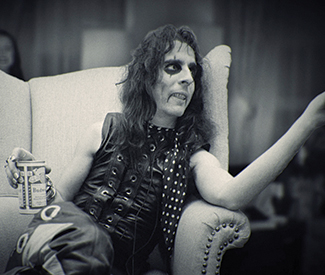
BALBOA THEATRE 3630 Balboa, SF; cinemasf.com/balboa. $7.50-10. Super Duper Alice Cooper (Dunn, Harkema, and McFadyen, 2014), Thu, 7, 9:30. “Popcorn Palace:” School of Rock (Linklater, 2003), Sat, 10am. Matinee for kids.

CASTRO 429 Castro, SF; (415) 621-6120, www.castrotheatre.com. $8.50-11. •The Bride Wore Black (Truffaut, 1968), Wed, 7, and Obsession (De Palma, 1975), Wed, 9. •Daisies (Chytilová, 1966), Thu, 7:30, and Times Square (Moyle, 1980), Thu, 9. San Francisco International Film Festival, Fri. See complete schedule and ticket info at festival.sffs.org. •Pee-Wee’s Big Adventure (Burton, 1985), Sat, 3:45, 8:30, and It’s a Mad, Mad, Mad, Mad World (Kramer, 1963), Sat, 5:30. Frozen (Buck and Lee, 2013), Sun, 1. Presented sing-along style; advance tickets ($10-16) at www.ticketweb.com.

CHRISTOPHER B. SMITH RAFAEL FILM CENTER 1118 Fourth St, San Rafael; (415) 454-1222, www.cafilm.org. $6.50-$10.75. times. Super Duper Alice Cooper (Dunn, Harkema, and McFadyen, 2014), Thu and May 8, 7. For No Good Reason (Paul, 2013), May 2-6, call for times. Locke (Knight, 2014), May 2-6, call for times. Decoding Annie Parker (Bernstein, 2013), Sun, 7. This event, $12.

CLAY 2261 Fillmore, SF; www.landmarktheatres.com. $10. “Midnight Movies:” The Neverending Story (Petersen, 1984), Fri-Sat, midnight.

GOETHE INSTITUT SAN FRANCISCO 530 Bush, Second Flr, SF; goethe.de/ins/us/saf/enindex.htm. $5. •Jonas in the Jungle (Sempel, 2013), Wed, 6:30, and Animals of Art (Sempel, 2011), Wed, 8:40. With director Peter Sempel in person.

JEWISH COMMUNITY CENTER OF SF 3200 California, SF; www.jccsf.org. $25. “Mark Cantor’s Giants of Jazz on Film: Broadway to Hollywood and All That Jazz,” films featuring jazz performances, Sat, 8.

MECHANICS’ INSTITUTE 57 Post, SF; milibrary.org/events. $10. “CinemaLit Film Series: Comedy Tonight:” Groundhog Day (Ramis, 1993), Fri, 6.

MISSION CULTURAL CENTER FOR LATINO ARTS 2868 Mission, SF; www.missionculturalcenter.org. $15. Tamale Road: A Memoir from El Salvador (Villatoro, 2012), Fri, 7.

PACIFIC FILM ARCHIVE 2575 Bancroft, Berk; (510) 642-5249, bampfa.berkeley.edu. $5.50-9.50. “Film 50: History of Cinema:” After Life (Kore-eda, 1999), Wed, 3:10. San Francisco International Film Festival, through May 8. See complete schedule and ticket info at festival.sffs.org.

PARAMOUNT THEATRE 2025 Broadway, Oakl; www.ticketmaster.com. $18-29.75. “Project YouthView 2014: The Power of Youth in Film,” youth-created short films and more, Fri, 7.

ROXIE 3117 and 3125 16th St, SF; (415) 863-1087, www.roxie.com. $6.50-11. “Iran Via Documentaries:” Bassidji (Tamadon, 2009), Wed, 7. Next Goal Wins (Jamison and Brett, 2014), Wed, 7, 9; Thu, 9:30. The Unknown Known (Morris, 2013), Wed, 9:30. “PlayGround Film Festival,” short films adapted from plays by Bay Area writers, Thu, 6:45, 8:15. This event, $10-20. “Synesthesia Film Festival: Screening #2,” short films, Thu, 7. The M Word (Jaglom, 2013), May 2-8, 6:45, 9:15.

YERBA BUENA CENTER FOR THE ARTS 701 Mission, SF; www.ybca.org. $8-10. “Astonishing Animation: The Films of Hayao Miyazaki and Studio Ghibli:” Nausicaä of the Valley of the Wind (Miyazaki, 1984), Thu, 7:30; Sun, 5; Whisper of the Heart (Kondo, 1995), Sat, 7:30; Sun, 3:30; Kiki’s Delivery Service (Miyazaki, 1989), Sun, 1. *


Psychic Dream Astrology: April 30 – May 6, 2014

0

April 30-May 5, 2014

ARIES

March 21-April 19

It’s time to put some things down, Aries, and to do it sensibly. When your arms are full how can you be open to new, more, and better? The energy is there for you to start something amazing, but it’ll require you to create some room first. Prioritize balance between your needs and wants, pleasures and responsibilities.

TAURUS

April 20-May 20

Nervousness and fear are the worst, but their crappiness doesn’t absolve you of learning how to deal with them, Taurus. No matter what you’ve got going on this week, know that the real crisis you’re confronted with is your own coping skills. Manage your mind before you try to handle your situation for best results.

GEMINI

May 21-June 21

You’ve gotta change, there’s no two ways about it. Don’t be so intimidated by the shifts in front of you that you fall apart and hide from progress, Twin Star. Take a minute to gather yourself, honestly deal with your feelings (especially the ones that suck), and then forge boldly ahead.

CANCER

June 22-July 22

Don’t get caught up in a reactive loop, Moonchild. You have vision and now’s the time to communicate your intent clearly to those around you. Initiate, assert and clarify your objectives this week. You’re more likely to get your needs met if other people know without a doubt what they are.

LEO

July 23-Aug. 22

Protect your investments by talking them out, Leo. You know what you care about most, and you know what you need from those things. What you haven’t necessarily done is map out an action plan and if you strike out brashly you’ll only complicate things. This is the time to talk or write your ideas into form.

VIRGO

Aug. 23-Sept. 22

You need your ego to be in tip-top shape so that you feel brave enough to have some durn adventures! It’s high time you did something just for the pleasure of doing it, Virgo, or tried to make a thing happen that feels ‘out of your league’. Assert yourself in the direction of your greatest desires this week.

LIBRA

Sept. 23-Oct. 22

You can’t do it all and you can’t fix much, Libra. What you can do is show grace under pressure and be willing to let go of your vision for how things ‘should’ be. Your world is changing and it may feel like you’re on a mechanical bull that keeps trying to knock you off. Lean back and into it, friend.

SCORPIO

Oct. 23-Nov. 21

Enjoy the present moment without attaching to it, Scorpio. Take stock of all that you’ve got going for you and really feel good about it with that big, huge heart of yours. This is not a great time for doing as much as for aligning with what is. Slow things down so you can catch up with yourself this week.

SAGITTARIUS

Nov. 22-Dec. 21

You’re burning your candle at both ends of the wick and you’re the only one who’ll get burned from such shortsightedness. Get ‘er done Sag, but be as metered about it as possible. You’re capable of great accomplishments so take the time to do things right instead of creating unnecessary unpleasantness.

CAPRICORN

Dec. 22-Jan. 19

If all you look for is fault then you won’t be happy with what you see, even if you find answers. You’ve got a lot on your plate and you’ll only serve to screw things up if you insist on looking for problems. Move onwards and upwards this week; deal with your feelings without looking for a scapegoat.

AQUARIUS

Jan. 20-Feb. 18

You only need to get your bearings, Aquarius. There’s so much going on for you that it’d be easy to get overwhelmed and thrown off course. Make time early this week to take a deep breath and to take stock of what you’re doing. Make sure that your actions are still aligned with your intentions.

PISCES

Feb. 19-March 20

If you’re feeling impatient you’re not being present. In a spiritual sense, there’s no such thing as ‘bad timing’. Everything happens as it’s meant to, and when it’s meant to. Make it your mission this week to stay in the moment and find value in whatever is happening instead of focusing on the future or your past.

Want more in-depth, intuitive or astrological advice from Jessica? Schedule a one-on-one reading that can be done in person or by phone. Visit www.lovelanyadoo.com


Theater Listings: April 30 – May 6, 2014

0

Stage listings are compiled by Guardian staff. Performance times may change; call venues to confirm. Reviewers are Robert Avila, Rita Felciano, and Nicole Gluckstern. Submit items for the listings at listings@sfbg.com.

THEATER

OPENING

“Des Voix: Found in Translation Biennial 2014” Various venues, SF; www.desvoixfestival.com. Prices vary. May 1-25. In addition to Communiqué N°10 (listed in Ongoing, below), this festival of contemporary French playwrights and cinema includes four new play translations, a “New Play Nightclub,” film screenings, and more. Presented by Playwrights Foundation, Tides Theatre, Cutting Ball Theater, French International School, and the French Consulate of San Francisco.

“DIVAfest” Exit Theatre, 156 Eddy, SF; www.divafest.info. Prices and showtimes vary. May 1-24. This 13th annual festival celebrates the work of women artists, with performances including the premiere of Rat Girl (adapted from the memoir by rocker Kristin Hersh), Margery Fairchild’s ballet comedy The Pas De Quatre, a reading by acclaimed poet Diane di Prima, and more.

Dracula Shelton Theater, 533 Sutter, SF; sfdracula.blogspot.com. $35. Opens Thu/1, 8pm. Runs Thu-Sat, 8pm. Through May 31. Kellerson Productions presents a new adaptation of the Bram Stoker classic.

Du Barry Was a Lady Eureka Theatre, 215 Jackson, SF; www.42ndstmoon.org. $25-75. Previews Wed/30-Thu/1, 7pm; Fri/2, 8pm. Opens Sat/3, 6pm. Runs Wed-Thu, 7pm; Fri, 8pm; Sat, 6pm (also May 10 and 17, 1pm); Sun, 3pm. Through May 18. 42nd Street Moon presents Cole Porter’s saucy musical comedy, with comedian and writer Bruce Vilanch starring.

Romeo and Juliet Phoenix Theatre, 414 Mason, Ste 601, SF; www.eventbrite.com. $20. Previews Thu/1, 8pm. Opens Fri/2, 8pm. Runs Thu-Sat, 8pm; May 11 and 24, 3pm. Through May 24. Ninjaz of Drama performs Shakespeare’s tragic romance.

Seminar San Francisco Playhouse, 450 Post, Second Flr, SF; www.sfplayhouse.org. $20-100. Previews Wed/30-Fri/2, 8pm. Opens Sat/3, 8pm. Runs Tue-Thu, 7pm; Fri-Sat, 8pm (also Sat, 3pm); May 18 and June 1 and 8, 2pm. Through June 14. San Francisco Playhouse performs Theresa Rebeck’s biting comedy.

Waxing West Brava Theater Center, 2781 24th St, SF; www.brava.org. $20. Opens Thu/1, 8pm. Runs Thu-Sat, 8pm (Sat/3, show at 3pm); Sun, 3pm. Through May 18. Brava! For Women in the Arts and RasaNova Theater present the West Coast premiere of Saviana Stanescu’s tale of a Romanian mail-order bride haunted by her country’s past.

BAY AREA

Nantucket Marsh Berkeley MainStage, 2120 Allston, Berk; www.themarsh.org. $25-100 (all tickets include a picnic dinner). Opens Sat/3, 7pm. Runs Thu and Sat, 7pm. Through June 14. Acclaimed solo perfomer Mark Kenward presents his “haunting yet hilarious” autobiographical show about growing up on Nantucket.

ONGOING

Communiqué N°10 Exit on Taylor, 277 Taylor, SF; www.cuttingball.com. $10-50. Opens Thu/1, 7:30pm. Runs Thu, 7:30; Fri-Sat, 8pm (also Sat, 2pm); Sun, 5pm. Through May 25. Cutting Ball Theater closes its 15th season with the American premiere of Samuel Gallet’s drama inspired by recent racial tensions in France.

E-i-E-i-OY! In Bed with the Farmer’s Daughter NOHSpace, 2840 Mariposa, SF; www.vivienstraus.com. $20. Fri-Sat, 8pm. Through May 10. Vivien Straus performs her autobiographical solo show.

Feisty Old Jew Marsh San Francisco Main Stage, 1062 Valencia, SF; www.themarsh.org. $25-100. Sat, 8pm; Sun, 7pm. Starting May 17, performance schedule changes to Sat-Sun, 5pm. Extended through July 13. Charlie Varon performs his latest solo show, a fictional comedy about “a 20th century man living in a 21st century city.”

Foodies! The Musical Shelton Theater, 533 Sutter, SF; www.foodiesthemusical.com. $32-34. Fri-Sat, 8pm. Open-ended. AWAT Productions presents Morris Bobrow’s musical comedy revue all about food.

Pearls Over Shanghai Hypnodrome Theatre, 575 10th St, SF; www.thrillpeddlers.com. $30-35. Thu-Sat, 8pm. Through May 31. Five years ago, Thrillpeddlers breathed new life into a glitter-dusted piece of Sixties flotsam, beautifully reimagining the Cockettes’ raunchy mock-operetta Pearls Over Shanghai (in collaboration with several surviving members of San Francisco’s storied acid-drag troupe) and running it for a whopping 22 months. Written by Cockette Link Martin as a carefree interpretation of a 1926 Broadway play, the baldly stereotyped Shanghai Gesture, it was the perfectly lurid vehicle for irreverence in all directions. It’s back in this revival, once again helmed by artistic director Russell Blackwood with musical direction by Cockette and local favorite Scrumbly Koldewyn. But despite the frisson of featuring some original-original cast members — including “Sweet Pam” Tent (who with Koldewyn also contributes some new dialogue) and Rumi Missabu (regally reprising the role of Madam Gin Sling) — there’s less fire the second time around as the production straddles the line between carefully slick and appropriately sloppy. Nevertheless, there are some fine musical numbers and moments throughout. Among these, Zelda Koznofsky, Birdie-Bob Watt, and Jesse Cortez consistently hit high notes as the singing Andrews Sisters-like trio of Americans thrown into white slavery; Bonni Suval’s Lottie Wu is a fierce vixen; and Noah Haydon (as the sultry Petrushka) is a class act. Koldewyn’s musical direction and piano accompaniment, meanwhile, provide strong and sure momentum as well as exquisite atmosphere. (Avila)

The Provoked Wife Fort Mason Center, Southside Theater, SF; www.generationtheatre.com. $15-35. Thu/1-Sat/3, 8pm; Sun/4, 3pm. Generation Theatre performs Sir John Vanbrugh’s Restoration comedy.

Shit & Champagne Rebel, 1772 Market, SF; shitandchampagne.eventbrite.com. $25. Fri-Sat, 8pm. Open-ended. D’Arcy Drollinger is Champagne White, bodacious blond innocent with a wicked left hook in this cross-dressing ’70s-style white-sploitation flick, played out live on Rebel’s intimate but action-packed barroom stage. Written by Drollinger and co-directed with Laurie Bushman (with high-flying choreography by John Paolillo, Drollinger, and Matthew Martin), this high-octane camp send-up of a favored formula comes dependably stocked with stock characters and delightfully protracted by a convoluted plot (involving, among other things, a certain street drug that’s triggered an epidemic of poopy pants) — all of it played to the hilt by an excellent cast that includes Martin as Dixie Stampede, an evil corporate dominatrix at the head of some sinister front for world domination called Mal*Wart; Alex Brown as Detective Jack Hammer, rough-hewn cop on the case and ambivalent love interest; Rotimi Agbabiaka as Sergio, gay Puerto Rican impresario and confidante; Steven Lemay as Brandy, high-end calf model and Champagne’s (much) beloved roommate; and Nancy French as Rod, Champagne’s doomed fiancé. Sprawling often literally across two buxom acts, the show maintains admirable consistency: The energy never flags and the brow stays decidedly low. (Avila)

Sleeping Cutie: A Fractured Fairy Tale Musical Thick House, 1695 18th St, SF; sleepingcutiemusical.tix.com. $30-40. Thu-Sat, 8pm; Sun, 2pm. Though May 11. Off a Cliff Productions and PlayGround present Diane Sampson and Doug Katsaros’ world-premiere musical.

The Speakeasy Undisclosed location (ticket buyers receive a text with directions), SF; www.thespeakeasysf.com. $70 (gambling chips, $5-10 extra; after-hours admission, $10). Thu-Sat, 7:40, 7:50, and 8pm admittance times. Extended through May 24. Boxcar Theater’s most ambitious project to date is also one of the more involved and impressively orchestrated theatrical experiences on any Bay Area stage just now. An immersive time-tripping environmental work, The Speakeasy takes place in an “undisclosed location” (in fact, a wonderfully redesigned version of the company’s Hyde Street theater complex) amid a period-specific cocktail lounge, cabaret, and gambling den inhabited by dozens of Prohibition-era characters and scenarios that unfold around an audience ultimately invited to wander around at will. At one level, this is an invitation to pure dress-up social entertainment. But there are artistic aims here too. Intentionally designed (by co-director and creator Nick A. Olivero with co-director Peter Ruocco) as a fractured super-narrative — in which audiences perceive snatches of overheard stories rather than complete arcs, and can follow those of their own choosing — there’s a way the piece becomes specifically and ever more subtly about time itself. This is most pointedly demonstrated in the opening vignettes in the cocktail lounge, where even the ticking of Joe’s Clock Shop (the “cover” storefront for the illicit 1920s den inside) can be heard underscoring conversations (deeply ironic in historical hindsight) about war, loss, and regained hope for the future. For a San Francisco currently gripped by a kind of historical double-recurrence of the roaring Twenties and dire Thirties at once, The Speakeasy is not a bad place to sit and ponder the simulacra of our elusive moment. (Avila)

The Suit ACT’s Geary Theater, 415 Geary, SF; www.act-sf.org. $20-120. Opens Wed/30, 8pm. Runs Wed-Sat, 8pm (also Sat and May 7 and 14, 2pm); Sun, 2pm (May 18, show at 1pm); Tue, 7pm (May 13, show at 8pm). Through May 18. ACT performs Peter Brook, Marie Hélène Estienne, and Franck Krawcyzk’s music-infused drama about betrayal and resentment adapted from the short story by South African author Can Themba.

Tipped & Tipsy Marsh Studio Theater, 1062 Valencia, SF; www.themarsh.org. $20-50. Sat, 5pm; Sun, 7pm. Extended through May 17. Last fall’s San Francisco Fringe Festival began on a high note with Jill Vice’s witty and deft solo, Tipped & Tipsy, and the Best of Fringe winner is now enjoying another round at solo theater outpost the Marsh. Without set or costume changes, Vice (who developed the piece with Dave Dennison and David Ford) brings the querulous regulars of a skid-row bar to life both vividly and with real quasi-Depression-Era charm. She’s a protean physical performer, seamlessly inhabiting the series of oddball outcasts lined up each day at Happy’s before bartender Candy — two names as loaded as the clientele. After some hilarious expert summarizing of the dos and don’ts of bar culture, a story unfolds around a battered former boxer and his avuncular relationship with Candy, who tries to cut him off in light of his clearly deteriorating health. Her stance causes much consternation, and even fear, in his barfly associates, while provoking a dangerous showdown with the bar’s self-aggrandizing sleazeball owner, Rico. With a love of the underdog and strong writing and acting at its core, Tipsy breezes by, leaving a superlative buzz. (Avila)

The World’s Funniest Bubble Show Marsh San Francisco, 1062 Valencia, SF; www.themarsh.org. $8-11. Sun, 11am. Extended through May 25. The popular, kid-friendly show by Louis Pearl (aka “The Amazing Bubble Man”) returns to the Marsh.

BAY AREA

Fences Marin Theatre Company, 397 Miller, Mill Valley; www.marintheatre.org. $37-58. Tue and Thu-Sat, 8pm (also Sat/3 and May 10, 2pm); Wed, 7:30pm; Sun, 2 and 7pm. Through May 11. Marin Theatre Company performs August Wilson’s Pulitzer- and Tony-winning drama, with an all-star cast of Bay Area talent: Carl Lumbly, Steven Anthony Jones, and Margo Hall.

The Letters Harry’s UpStage, Aurora Theatre Company, 2081 Addison, Berk; www.auroratheatre.org. $28-32. Wed-Sat, 8pm; Sun, 2pm. Through June 1. Aurora Theatre Company showcases its new second-stage performance space with John W. Lowell’s suspenseful thriller.

Not a Genuine Black Man Osher Studio, 2055 Center, Berk; www.berkeleyrep.org. $30-45. Wed, 7pm (no shows May 14, 21, or 28); Thu-Sat, 8pm (no shows Sat/3 or May 9-10). Through May 31. Brian Copeland brings his acclaimed, long-running solo show to Berkeley Rep for a 10th anniversary limited run.

Smash Dragon Theatre, 2120 Broadway, Redwood City; www.dragonproductions.net. $30. Thu/1-Sat/3, 8pm; Sun/4, 2pm. Dragon Theatre performs Jeffrey Hatcher’s political comedy.

Tribes Berkeley Repertory Theatre, Roda Theatre, 2015 Addison, Berk; www.berkeleyrep.org. $29-99. Tue and Thu-Sat, 8pm (also Sat, 2pm); Wed and Sun, 7pm (also Sun, 2pm; no 2pm show May 18). Through May 18. Berkeley Rep performs Nina Raine’s family drama about a young deaf man who comes of age.

The 25th Annual Putnam County Spelling Bee Julia Morgan Theater, 2640 College, Berk; www.berkeleyplayhouse.org. $18-60. Thu/1-Fri/2, 7pm; Sat/3, 1 and 6pm; Sun/4, noon and 5pm. Berkeley Playhouse performs the Tony-winning musical comedy.

Wittenberg Aurora Theatre, 2081 Addison, Berk; www.auroratheatre.org. $32-60. Tue, 7pm; Wed-Sat, 8pm; Sun, 2 and 7pm. Extended through May 11. Aurora Theatre Company performs David Davalos’ comedy about reason versus faith.

PERFORMANCE/DANCE

“Acting Out: For the Health of It” Brava Theater Center, 2781 24th St, SF; bcation.org/actingout2014. Thu/1, VIP reception 6-7pm; show 7:15-9pm. $35-75. Breast Cancer Action benefits from this variety show featuring author Peggy Orenstein, the Sarah Bush Dance Project, comedian Irene Tu, bluegrass band Beauty Operators, and host Tania Katan.

“Baile en la Calle: The Mural Dances” Precita Eyes Mural Center, 2981 24th St, and Balmy Alley, SF; www.brava.org. Sun/4, tours at 11am, noon, 1pm, and 2pm. Free. Epiphany Productions, CuicacallDance Company, Cuicacalli Escuela de Danza, and Loco Bloco offer dance interpretations of the murals along the Mission’s historic Balmy Alley.

“Bay Area National Dance Week” Various locations; www.bayareadance.org. Wed/30-Sun/4. Free. This year’s theme is “iconic dance moves from pop culture,” and includes film screenings, free classes, outdoor dance performances, and more.

Caroline Lugo and Carolé Acuña’s Ballet Flamenco Peña Pachamama, 1630 Powell, SF; www.carolinalugo.com. Sun/4, May 10, 17, and 25, 6:15pm; May 11, 1pm. $15-19. Flamenco performance by the mother-daughter dance company, featuring live musicians.

Company C Contemporary Ballet ODC Theater, 3153 17th St, SF; www.odcdance.org. Thu/1-Sat/3, 8pm. $25-48. Also May 8-10, 8pm; May 11, 2pm, $25-48, Lesher Center for the Arts, 1601 Civic, Walnut Creek; www.lesherartscenter.org. With two world premieres by Maurice Causey and Charles Moulton.

“Dancing on the Edge of the World” Dance Mission, 3316 24th St, SF; www.dancemission.com. Fri/2, 8pm; Sat/3-Sun/4, 3pm (also Sun/4, 7pm). $15-20. Grrrl Brigade performs an homage to Howard Zinn’s A People’s History of the United States.

“Dirty Little Ditties” Phoenix Theatre, 414 Mason, SF; www.brownpapertickets.com. Fri/2-Sat/3, 8pm. $20. Miss Jane Aquilina and Miss Robusta Capp perform a show that promises to be “not your mother’s cabaret.”

“The Eye of Horus” Jessie Square, 736 Mission, SF; www.dancersgroup.org. Wed/30 and Sat/3, 12:30pm. Free. Dancers’ Group and Yerba Buena Gardens Festival present a new, site-specific work by Sara Shelton Mann.

Feinstein’s at the Nikko 222 Mason, SF; www.feinsteinssf.com. This week: Jeremy Jordan, Thu/1-Fri/2, 8pm; Sat/3-Sun/4, 7pm, $45-60.

“Five Funny Females” Great Star Theater, 636 Jackson, SF; 5funnyfemales.eventbrite.com. Fri/2-Sat/3, 8 and 10pm. $20. A different bill of five female comedians at each show.

“Leonard Cohen Love Fest” Mechanics’ Institute Library and Chess Room, 57 Post, SF; www.milibrary.org. Wed/30, 7pm. $10-20. A capella choir Conspiracy of Beards and author-musician Sylvie Simmons pay tribute to the music of Leonard Cohen.

“The Lusty Month of May” Martuni’s, 4 Valencia, SF; www.tomshawtrio.com. Sat/3, 7pm. $10. Vocalist Karen Hirst salures spring, the Great American Songbook, and more, with singer-pianist Tom Shaw, drummer Roberta Drake, and violinist Donny Lobree.

“Magic at the Rex” Hotel Rex, 562 Sutter, SF; www.magicattherex.com. Sat, 8pm. Ongoing. $25. Magic and mystery with Adam Sachs and mentalist Sebastian Boswell III.

“Out of Line Improv” Stage Werx, 446 Valencia, SF; outoflineimprov.brownpapertickets.com. Sat, 10:30pm. $12. Ongoing. A new, completely improvised show every week.

“Purple: A Circus Tribute to Prince” Circus Center, 755 Frederick, SF; purpleshow.eventbrite.com. Sat/3, 7:30pm. $15-20. Circus acts set to Prince hits like “1999” and “Raspberry Beret.”

“Rotunda Dance Series” San Francisco City Hall, 1 Carlton B. Goodlett Place, SF; www.dancersgroup.org. Fri/2, noon. Free. This month: La Tania Baile Flamenco performs dances from Spain.

“San Francisco Comedy College” Purple Onion at Kells, 530 Jackson, SF; www.purpleonionatkells.com. $5-10. “New Talent Show,” Wed-Thu, 7. Ongoing. “The Cellar Dwellers,” stand-up comedy, Wed-Thu, 8:15pm and Fri-Sat, 7:30pm. Ongoing.

“Shiner” Mojo Theater, 2940 16th St, SF; www.faultlinetheater.com. Thu/1-Sat/3, 8pm; Sun/4, 7pm. $10-20. FaultLine Theater performs Christian Durso’s grunge-era drama.

“Terminator Too: Judgment Play” DNA Lounge, 373 11th St, SF; www.dnalounge.com. Thu/1, 9pm. $25-50. The creators of Point Break Live! take on James Cameron’s 1991 sci-fi classic, with an audience member picked on the night of the show to embody Schwarzenegger’s iconic role.

“Yerba Buena Gardens Festival” Yerba Buena Gardens, 760 Howard, SF; www.ybgfestival.org. Sun/4, 1pm. Free. Eddie Palmieri Salsa Orchestra kicks off the annual outdoor performance festival, which runs through Oct 26.

BAY AREA

“Cinderella” Lesher Center for the Arts, Margaret Lesher Theatre, 1601 Civic, Walnut Creek; www.fantasyforum.org. Thu/1-Fri/2, 9:30 and 11am (also Fri/1, 7pm); Sat/3, 10am, noon, 2pm, and 4pm; Sun/4, 11am and 1pm. $14. Fantasy Forum Actors Ensemble performs a family-friendly musical based on the fairy tale, with audience participation encouraged.

“Dance on Center” Osher Studio, 2055 Center, Berk; www.dlkdance.com. Sat/3, 8pm. $15-25. Kathryn Roszak’s Danse Lumiere kicks off a new series with dance works by Lissa Resnick, Dalia Rawson, and Kathryn Roszak, plus a film by Amy Seiwert.

“Doapcoev: A Town Where Dancing Was Not Allowed” Malonga Casquelourd Center for the Arts, 1428 Alice, Oakl; www.brownpapertickets.com. Sun/4, 3pm. $15-25. Dimensions Dance Theater and Rites of Passage present this dance performance inspired by Footloose.

“The Fifth String: Ziryab’s Passage to Cordoba” Islamic Cultural Center of Northern California, 1433 Madison, Oakl; www.goldenthread.org. Fri/2-Sat/3, 7pm; Sun/4, 3pm. $15-22. Also May 15-17, 8pm; May 18, 3pm, Brava Theatre Center, 2781 24th St, SF. Golden Thread continues its “Islam 101” performance series with this family-friendly play with live music.

“Lilith, The Night Demon in One Lewd Act” Hoytt Theater, Osher Marin JCC, 200 N. San Pedro, San Rafael; www.marinjcc.org. Thu/1, 7:30pm. $39-49. Also Sat/3, 8pm, $30-35, JCC of the East Bay, 1414 Walnut, Berk; www.jcceastbay.org. Also Sun/4, 3pm, $39-49, Menlo-Atherton High School, 555 Middlefield, Atherton; www.thecenteratma.org. “The bawdy alternate Jewish story of creation,” presented in folk-opera form.

“MarshJam Improv Comedy Show” Marsh Berkeley, 2120 Allston, Berk; www.themarsh.org. Fri, 8pm. Ongoing. $10. Improv comedy with local legends and drop-in guests.

“Pele Ma” Hamilton Amphitheater Park, Hamilton Parkway, Novato; www.hulaon.org. Sat/3, 1-3pm. $10. Hula performance directed by Kumu Hula Shawna Alapa’i and featuring the students of Halau Hula Na Pua O Ka La’akea.

“Piñata Dance Ritual” Shawl Anderson Dance Center, 2704 Alcatraz, Berk; www.lizboubion.org. Sun/4, 4pm. $5-50. Piñata Dance Collective presents this performance to benefit artistic director Liz Boubion’s 350 Xochi Quetzal Artist Residency. *


Stalin: Darkness Visible

0

arts@sfbg.com

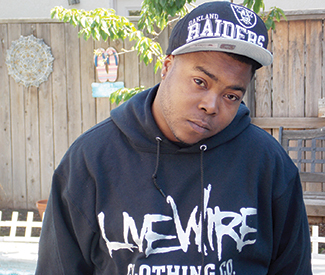
I remember the day I met J.Stalin, 10 years ago. He bounced into the Mekanix’s East Oakland studio, walked up to me, and shook my hand.

“I’m J.Stalin. I write and record two songs a day,” he said proudly. Rail-thin, barely 5 feet tall, he looked like a middle-schooler. While he’s thickened somewhat in adulthood, the pint-size rapper retains an air of adolescence that’s one of the keys to his enduring success. Kids in the hood love Stalin because he seems like them and his music speaks to them. He looks like what he once was, a d-boy on the corner slanging rocks. Yet his music is versatile, with a profound undercurrent of melancholy to his storytelling and a huge streak of ’80s R&B in his sound, both of which appeal to adults. Even without radio support, this potent combination has made him one of the most popular rappers not simply in Oakland but in the Bay Area, period, and when I hear a car roll up playing a local artist, more often than not these days, that artist is J.Stalin.

“Make sure you put that in,” Stalin says. “I’m the most played person on the streets in cars.”

It reminds me of our first meeting — but only a little, for, despite his youthful appearance, it’s hard to discern the eager youngster of a decade ago in the somber adult he’s become in his late 20s.

We’re sitting poolside in a middle-of-nowhere suburb where J’s tucked himself away with his girlfriend and 2-month-old son. I couldn’t imagine living out here, but it’s the perfect retreat for a rapper, away from the distractions of the hood. Coming from the cramped public housing of West Oakland’s Cypress Village, Stalin can appreciate the surrounding blandness in ways I can’t. And, of course, he’s on the road frequently, fresh from a sold-out West Coast tour with Husalah and Roach Gigz and about to embark on a series of appearances for his new album, S.I.D. (Shining In Darkness) (Livewire/Fontana), which will take him as far afield as Ohio.

https://www.youtube.com/watch?v=9ETUKFgYaEw

Named for his cousin, Sidney Malone, who died in 2008 at age 25 after suffering cardiac arrest during pacemaker surgery, S.I.D. showcases a different side of Stalin’s music than previous releases, even as it leans heavily on production from his longtime producers, the Mekanix, in addition to tracks by Mob Figaz maestro Roblo and HBK member P-Lo.

“With this record, I wanted to get back to making fun music,” he says. “When you come from the streets, and done been through hella shit, sometimes that’s all you want to talk about. It ain’t even like you rappin’. You just expressing your emotions. I love making street music, but my own music be depressing to me sometimes. I’m always going to give you that classic Stalin, but that’s the difference between this album and the last album: I wanted more uptempo tracks you can dance to.”

“I didn’t want to just name it, ‘In Memory of Sid,’ so I came up with Shining In Darkness, because that’s where the Bay at,” he continues. “We shining over here but the industry don’t put a spotlight on it. It’s just a darkness to the rest of the country. The more I started recording on it the more the meaning unfolded to me. Like when you hear it, you’re like, ‘Why don’t the world know about this nigga?’ But at the same time I just wanted to keep Sid’s memory alive; that was my biggest fan.”

In another departure, S.I.D. is Stalin’s first disc since July of last year, when he released his DJ Fresh-produced double-disc Miracle & Nightmare on 10th Street (Livewire/World’s Freshest), his first project to crack the Billboard rap charts, at #60.

“It’ll be like nine months since I dropped a project,” he says. “I’ve been focusing on putting out dope albums instead of flooding the music with quick mixtapes and shit.”

It’s a sign of how much rap has changed since the analog era, when E-40’s innovation as an independent artist was to drop an album “like a pregnant beeyatch, every 8 or 9 months,” compared with the lethargic, every year or two pace of major-label acts. Raised in the generation of the laptop studio, Stalin was among the innovators delivering a constant stream of music to his fans in the form of mixtapes, collaborations, and side projects in between proper solo albums. Waiting nine months between projects is almost unheard of for J, who has something like 30 discs to his credit at this point.

“I’ve been trying to work more strategically,” he says. “Work smarter, not harder. I’ve been doing more of the clothing line, selling Livewire Clothing at all my shows. Been doing a lot of pop-up stores in stores selling them, plus we got the online store. I popped off my website; I be giving away free music on there. My new artists Lil June and L’Jay, you can download they albums on my website.”

This is another key to Stalin’s success: He’s always thought of himself not simply as an artist, but as the CEO of Livewire Records, a company he has conjured into existence through sheer force of will, his own talent, and an uncanny ability to form alliances and develop artists. Even the short list of Livewire artists — Shady Nate, Philthy Rich, Stevie Joe, Lil Blood — is impressive, and Stalin is constantly building the roster. He still talks to major labels from time to time, but the decline of their business model, coupled with his success going through Universal’s independent distribution channel, Fontana, there’s not much the majors can offer him these days.

“Really, if ain’t nobody trying to give me money to put out multiple artists and projects, there’s not really no point. We at the position now where all the things that the label is talking about, we damn near can do ourselves,” he concludes. “Unless they giving out some millions — not one million, millions.”

https://www.youtube.com/watch?v=7e78hZlPwks

Events: April 30 – May 6, 2014

0

Listings are compiled by Guardian staff. Submit items for the listings at listings@sfbg.com. For further information on how to submit items for the listings, see Selector.

WEDNESDAY 30

“Saving the California Condor” Zimmer Auditorium, Oakland Zoo, 9777 Golf Links Rd, Oakl; www.oaklandzoo.org. 6:30-9:30pm, $12-20. Oakland Zoo’s Conservation Speaker Series presents biologist Joe Burnett of the Ventana Wildlife Society and Oakland Zoo veterinarian Dr. Andrea Goodnight.

THURSDAY 1

“Eating Cultures” SOMArts Cultural Center, 934 Brannan, SF; www.aawaa.net. Opening reception, 6-9pm. Free. Exhibit runs Tue-Fri, noon-7pm; Sat, noon-5pm. Through May 30. As part of the Asian Pacific Islander Cultural Center’s United States of Asian America Festival, the Asian American Women Artists Association presents a juried art exhibition featuring work inspired by food and food traditions.

“Jackpot NightLife” California Academy of Sciences, 55 Music Concourse, SF; www.calacademy.org. 6-10pm, $12. 21 and over. NightLife studies the statistics of luck, with visual FX wizards from Tippett Studio (Cosmos), Rat Pack-era tunes by DJ Tanoa, casino games, and more.

Ben Ross Green Arcade, 1680 Market, SF; www.thegreenarcade.com. 7pm, free. The author discusses Dead End: Suburban Sprawl and the Rebirth of American Urbanism.

FRIDAY 2

“Artwear” de Young Museum, Golden Gate Park, 50 Hagiwara Tea Garden, SF; www.famsf.org. 9:30am-8:30pm. Also Sat/3, 9:30am-4:30pm. Free. Shop wearable art by 16 local textile and jewelry artisans and designers.

Jo Becker Book Passage, 1 Ferry Building, SF; www.bookpassage.com. 12:30pm, free. The Pulitzer-winning journalist reads from Forcing the Spring: Inside the Fight for Marriage Equality.

SATURDAY 3

“Bikes to Books Rides Again!” Meet at Jack London Alley, near South Park and Second St, SF; www.burritojustice.com. 12:45pm, free. Burrito Justice and the San Francisco Bicycle Coalition host this seven-mile bike tour celebrating the literary history of San Francisco. Tips from the organizers: “Bring bikes with gears, snacks, and enthusiasm.”

“California Bookstore Day” Various locations; www.cabookstoreday.com. Nearly 100 bookstores across the state participate in this celebration with parties, author readings, in-store events, and exclusive day-of merch. Check website for local events.

“A La Carte and Art” Castro between Church and Evelyn, Mtn View; www.miramarevents.com. 10am-6pm. Free. Through Sun/4. This two-day festival features live music, a juried arts and crafts show, a classic car show, a farmers market, and more.

“Pegapalooza” Pegasus Downtown, 2349 Shattuck, Berk; Pegasus Oakland, 5560 College, Oakl; and Pegasus on Solano, 1855 Solano, Berk; www.pegasusbookstore.com. May 3-10. The bookstore marks its 45th anniversary with a full slate of festivities; tonight’s kick-off, in honor of California Bookstore Day, is a conversation between Dave Eggers and Malcolm Margolin at the Shattuck location (7:30pm, free).

Jenni Pulos Book Passage, 1 Ferry Building, SF; www.bookpassage.com. 11am, free. The Bravo star (Flipping Out) reads from her new memoir-advice tome, Grin and Bear It.

Shipyard Artists Spring Open Studios Hunters Point Shipyard, Innes at Donahue, SF; Islais Creek Studios, 1 Rankin, SF; www.shipyardartists.com/sos. 11am-6pm. Also Sat/4. Free. More than 125 artists participate in this 25th anniversary open studios event.

SUNDAY 4

“Poetry Unbound #4” Art House Gallery, 2905 Shattuck, Berk; berkeleyarthouse.wordpress.com. 5:15pm, $5. Readings by Deborah Fruchey, Blanca Torres, and Carol Hogan, followed by an open mic.

Urban Air Market Hayes Valley Octavia and Hayes, SF; www.urbanairmarket.com. 11am-6pm, free. Sustainable shopping (clothing, jewelry, home décor, body products, etc.) covers Hayes Valley at this open-air event.

MONDAY 5

“Cinco de Mayo at Habitot Children’s Museum” Habitot Children’s Museum, 2065 Kittredge, Berk; www.habitot.org. 9:30am-12:30pm, $8-10. Celebrate Mexican culture with special craft projects.

“The Cosmic Cocktail: Three Parts Dark Matter” Morrison Planetarium, California Academy of Sciences, 55 Music Concourse, SF; www.calacademy.org. 7:30pm, $8-12. University of Michigan physics professor Katherine Freese discusses the hunt for dark matter.

“Reclaiming Cinco de Mayo” San Francisco Living Wage Coalition, 2940 16th St, SF; www.livingwage-sf.org. 6-10pm, $5-25. Independent art and literature gala benefiting the SF Living Wage Coalition and its sister organization, Las Hormigas, in Ciudad Juarez.

TUESDAY 6

“An Evening with Benjamin Jealous and Belva Davis” Yerba Buena Center for the Arts, 701 Mission, SF; www.ybca.org. 7pm, $20-25. The former NAACP president and the pioneering journalist meet for an onstage conversation.

“Israel’s 66th Independence Day” Justin Herman Plaza, Embarcadero at Market, SF; www.sfjcsf.org. Noon-1:30pm, free. With live Israeli music, falafel vendors, community leaders, and more. *


Manscape

0

arts@sfbg.com

FILM It’s no wonder John Turturro’s Fading Gigolo is already shaping up as one of the year’s few indie hits so far — like many such before it, it offers a titillating surface premise belied by the reassuring confirmation of a staid moral outlook beneath. The writer-director plays Fioravante, a middle aged native Brooklynite whose working hours as a florist are shrinking; meanwhile older friend Murray (Woody Allen) faces closing the bookstore his family has operated for three generations. The latter hits upon an unlikely moneymaking scheme when his female dermatologist mentions she and her best friend would pay for the first-time novelty of a three-way. Murray proposes Fioravante provide the meat in their sandwich, and despite all initial resistance, he consents to a trial one-on-one with the client — played by Sharon Stone, so it’s not exactly a huge sacrifice. This goes well, as do appointments with her BFF Sofia Vergara, another socialite bombshell in unlikely need of professional erotic assistance.

It’s with the addition of a third customer that things get complicated: Fioravante gets referred to Avigal (Vanessa Paradis), whose status as widow of an older Hasidic rabbi requires a suffocating level of propriety. Starved for affection, she lets Fioravante (passing himself off as a Sephardic Jew) touch her ostensibly aching back, which is just as bad as a five-alarm coital orgasm so far as her community elders are concerned. Their clandestine meetings do not escape the vigilant notice of an officious neighborhood patroller (Liev Schreiber) already smitten with Avigal, and whose suspicions of criminal activity are enflamed by jealousy.

It’s ironic that while most screen depictions of heterosexual prostitution feature nothing but young, beautiful women servicing men of more realistically variable attractiveness, this ostensible role-reversal keeps the gender inequity just so. Fioravante is a not-so-young, not-particularly handsome man (albeit one made attractive by Turturro’s air of gentlemanly gravity here) who gets only hot numbers as Janes — it’s still a male fantasy, only now the guy is getting paid. Fading Gigolo‘s general affability lets it get away with a boatload of cultural and casting stereotypes, not least Vergara as a fiery Latina who might as well have muy caliente tattooed on her voluptuous flesh. For “plain,” virtuous contrast we get a glammed-down Paradis, the model-singer-actor who’s been France’s leading pop pinup for about a quarter-century. Then there’s Sharon Stone, playing Sharon Stone, which is to say archly channeling two things: a) Aren’t I hotter than ever? and b) I am smarter than the rest of you combined (and hotter too).

There are no unattractive women here — in fact Brooklyn itself seems to have been airbrushed free of clutter, human and otherwise. Even Allen, doing his usual dithery standup shtick, gets a spouse (Tunisian singer M’Barka Ben Taleb) half his age, and who further extends the film’s gloss of multiculturalism as harmless exotica. (It wasn’t clear to me whether the dark-skinned kids running around were their kids, or grandkids — while Avigal’s six children are kept conveniently off screen, lest they spoil the mood of desire.)

Fading Gigolo goes down very easily, even if on his fifth feature behind the camera Turturro remains a sometimes stilted director and careless scenarist. Taking a leaf from Allen’s notebook, this romantic fantasy is shot in warm, soft tones, draped in cool jazz, and takes place in an idealized New York City that’s part nostalgia, part pure imagination. The scented-bath atmosphere allows you to overlook the clumsier, poorly developed bits. And the film’s sometimes naive good nature almost lets it get away with being an entirely narcissistic male daydream of what women really want: an average (but secretly exceptional) guy whom beauties throw themselves at because he alone understands they want to be wooed.

Another guy performing a sort of perfected masculinity for the benefit of needy others is Tom Hardy’s titular character in Steven Knight’s Locke. This virtual solo show has the actor as Ivan Locke, a 40-ish construction manager driving to London on the eve of “the biggest cement pour” ever attempted in Europe. But he’s driving away from that, to the shrill indignation of superiors who expect his reliable on-site supervision, and the increasingly drunken panic of the flunky (voice of Andrew Scott) he’s deputized to take his place. The reason for this unprecedented dereliction of responsibility is that Ivan is committed to another responsibility, to “take care of my fuckup.”

As we gradually realize during his 85-minute drive, that means showing up for the premature birth of the baby he’s sired by a fragile, rather hysterical-sounding woman (Olivia Colman) in the brief sole detour from marital infidelity he’s ever taken. Doing so may well end his career, as well as his long-standing marriage to the mother of his sons. But our protagonist is determined at any cost not to become his own late father (with whom he has imaginary conversations), a wastrel who never made good on his obligations to family or anyone else.

Shot repeatedly in real time with multiple cameras over 12 nights (the actors voicing Bluetooth callers also performed “live” in conference-call fashion), then assembled from 16 full-length takes, Locke is a striking experiment that never quite escapes an air of theatrical stunt. In retrospect you realize most of its tension derives not from the core emotional crises, but from narrative red herrings — primarily our terror that anyone multitasking this recklessly behind the wheel is an accident waiting to happen. But the chameleonic Hardy, playing a rather square, middle-class, essentially humorless type unlike any he’s done before, makes this effortfully “decent” man so compelling you can’t look away. If there’s anything this actor can’t do, he hasn’t tried it yet. *


FADING GIGOLO and LOCKE open Fri/2 in SF.

Mr. Nice Guy

1

cheryl@sfbg.com

FILM Almost 10 years ago, a sprawling music doc entitled Metal: A Headbanger’s Journey kick-started the careers of Canadian filmmakers Sam Dunn and Scot McFadyen. Since 2005, the duo has worked on films about Rush, Iron Maiden, and Motorhead; they’ve also collaborated on a doc about Satan and will soon take on a project about “a very important heavy metal band who shall temporarily remain nameless.” Their current feature adds a third co-director, Reginald Harkema, for the colorful story of Alice Cooper, née Vincent Furnier, who’s as famous for songs like 1972’s “School’s Out” as he is for his horror-meets-vaudeville stage shtick.

Though Super Duper Alice Cooper retraces tales that will be familiar to anyone who’s read Cooper’s autobiographies or seen his Behind the Music episode, the directors tried to make the film as visually dynamic as possible, tapping old footage and animation and avoiding any talking heads. On the eve of the film’s premiere at the Tribeca Film Festival, and just ahead of its local screenings, I spoke to them about their approach.

SF Bay Guardian You’ve made a number of rock docs. What’s different about Super Duper Alice Cooper?

Scot McFadyen We’d finished doing Rush: Beyond the Lighted Stage (2010), and we were at an awards ceremony in London, where we were approached by Shep [Gordon, Alice Cooper’s longtime manager] about doing a doc on Alice. We decided that we’d be into it if we could do it in this sort of “doc opera,” highly visual way without talking heads. We thought that would be a really fun challenge. He’s such a cultural icon — I think it’s important for people to realize how much effect he’s had since the early 1970s, and how much an influence he’s been as a pioneering shock rocker.

SFBG Can you elaborate on “doc opera”?

Reginald Harkema The idea came because Sam and Scot have cut their teeth on documentaries, whereas I come in from a feature-drama side. I said, why don’t we take the approach of mythologizing our character? Why don’t we take the usual documentary material — TV appearances and magazine spreads, concerts and photos — and marry it with a rock opera concept? And Alice’s music is perfect for that because he’s very self-referential. His music became the soundtrack to his own rock opera.

SFBG Cooper has been open about his past and this film doesn’t contain any shocking new revelations. How did you strategize around that? 

SM Alice is such a showman. He does a lot of interviews, and we hear the same stories over and over. We did, like, 40 hours of interviews with him just trying to get him to go beyond the surface. And it was great to talk with [original Alice Cooper band bassist and Cooper childhood friend] Dennis Dunaway, because he was a big part of creating that character and bringing the band to life.

RH Also, when we were talking to Bernie Taupin, he wanted to tell the real story of his experiences with Alice, which involved cocaine and freebasing, which he felt a little bit guilty about bringing Alice into. And Alice has been very protective of that part of his past being revealed until now.

SFBG How did you choose your interview subjects? 

RH We didn’t want to have any journalistic voices in the film, or anyone observing Alice from an analytical point of view. We treated it more like a drama, in the sense that people enter the story as Alice moves through his life. So obviously, Dennis at the outset, meeting Shep Gordon, and eventually we hear from Elton John, who was really blown away by his concert at the Hollywood Bowl. We really wanted to talk to the pivotal characters in terms of Alice’s development as an artist.

SFBG Coincidentally, the doc Supermensch: The Legend of Shep Gordon is also about to hit theaters. Have you seen it?

SM Yes! It’s funny, because you’ll see there are a couple of stories in there that are similar to our film — and what’s great is that they’re completely different in his doc than in Alice’s doc. It really shows you how everyone’s memories are affected from that period. By the end, [Supermensch] is much more about Shep and his life than about him and Alice, but there are some moments of crossover for sure.

SFBG Supermensch is directed by Mike Myers, which leads to the obvious question: why no Wayne’s World (1992) clips in your movie?

SM We’d seen the docs about Alice in the past, but it seemed like the most Shakespearean, dramatic moment of his life was when he stepped onstage sober. And that was in 1986. That was the point where this Jekyll and Hyde character was able to overcome his demons. Yeah, he went on and did “Poison” and had a number one hit with that, and then did Wayne’s World, but that was after the endpoint of our story.

SFBG Ending the movie in the 1980s also allows you to avoid going into Alice’s conservative political views. 

RH He’s pretty apolitical, really — he’s a rich guy who lives in Arizona. He’s no Ted Nugent. But the goal of the story was to talk about how this kid, Vincent Furnier, transformed into the character of Alice Cooper. If you ask any performer, especially vocalists, they’ll tell you they go through some sort of transition before they go onstage. I think what makes Alice unique is that he becomes this character. And so while we didn’t necessarily want to touch on the political side of his life, we did want to show that this was a nice Christian kid from suburban Phoenix who became the godfather of shock rock. It was important to us to paint that picture. *

SUPER DUPER ALICE COOPER

Thu/1, 7 and 9:30pm, $7.50-10

Balboa Theater

3630 Balboa, SF

www.cinemasf.com


Thu/1 and May 8, 7pm, $7-11

Smith Rafael Film Center

1118 Fourth St, San Rafael

www.cafilm.org

Opening up

0

arts@sfbg.com

DANCE “Location, location, location” is real estate’s mantra, as those of us who keep running up against it know only too well. But location has also become essential to dance, especially for artists who want to forego the theater and make the outside world their stage.

For the last six years, Dancers’ Group, the Bay Area’s dance service organization, has sponsored the ONSITE series, weaving free dance performances into the urban fabric. Recent events have showcased Amara Tabor-Smith’s He Moved Swiftly (various locations), Jo Kreiter’s Niagara Falling (Seventh and Market streets), and Erika Chong Shuch’s Love Everywhere (City Hall Rotunda). Sara Shelton Mann’s The Eye of Horus, performed in Jessie Square, is the latest addition. She could not have chosen a better location.

Gently terraced and surrounded on three sides by glass and steel — but also the warmth of the old bricks of St. Patrick Church and the newer ones of the Contemporary Jewish Museum — Jessie Square opens itself to the greenery of Yerba Buena Gardens. The totality suggests an urban environment in which disparate perspectives (nature and culture, the past and the present, private and public spaces) harmoniously bump against each other.

In other words, Jessie Square was a perfect stage for Mann to send her dancer-disciples into a 40-minute performance in which they revealed different aspects of themselves, inspired by the way the Egyptian god Horus embodied multiple identities.

Each of the four — Christine Bonansea, Jorge de Hoyos, Jesse Hewit, and Sara Yassky — had developed a multi-sectional solo that, according to the preperformance information, was based on archetypes as derived from Caroline Myss’ book Sacred Contracts. Whatever the generating forces for these solos were, in performance they emerged and receded into the much larger activities at Jessie Square, the whole becoming a kind of moving tableau vivant. The dancers transformed lunchtime crowd actions — eating, talking, strolling, and waiting — into something beyond the commonplace. They injected poetry into daily life.

Generous and welcoming as these types of performances are, I personally miss the more intimate and more focused encounters that inside spaces offer. Mann and production designer David Szlasa stepped in with props or directions as needed. In a favorite moment, Szlasa’s breadcrumbs coaxed a flock of pigeons into a procession across the square. Mann pulled Bonansea up to her full height to send her off on an imaginary tightrope; she also shushed (or at least I think she did) Hewit’s screaming tantrum. Later on, when he sat immobile in a beggar’s pose, she brought him what I first saw as a fishing rod. It was a whip.

Eye is full of small incidents — some touching, some hilarious, some nonsensical — controlled by planning and a lot of serendipity. Hewit tried a shoulder stand, holding a carnation. De Hoyos raced along a diagonal as if shot from a bow. Yassick played what looked like a solitary game of bocce ball. Interspersing these lighter incidents were moments of anguish, lack of stability, and a sense of mortality. At one point or another, just about everyone looked dead as the plank that de Hoyos dragged around.

Bonansea bitterly wept as she put her clown makeup on; her mad laughter while racing the square became monstrous. Yassky, apparently in severe pain, rubbed a balloon against her belly and approached a passerby who politely put his phone away to acknowledge her.

Sometimes, the dancers disappeared in the crowd. I had lost sight of de Hoyos when someone pointed him out leaping and gesticulating on top of the parking garage. If there were any narrative suggestions, it was the ongoing give and take between de Hoyos and Mann. Or perhaps it was Bonansea marching up to de Hoyos, who had dropped to the ground after his lovely ballad fragment. In her best French rhetorical manner, the petite performer started a discourse (on, among other things, mortality) and the corpse in front of her. She finally decided that theory had run into reality and proceeded with mouth-to-mouth resuscitation.

If Bonansea was something of clown figure, the powerful Yassky seemed imprisoned inside her own body. She is a slender, gamine performer, and I don’t think I ever saw her relax. When she held her limbs tight to her body, they looked like they were enchaining her. When she crouched on a tiny stool on one leg, she repeatedly spilled water and salt offered to her. Whispering into a mike, she asked for help. Clawing her throat while lying on her back, she looked about ready to expire.

For all the portentous self-examination in Eye, the work was free-spirited, unpretentious, and yet quite serious. The boom box sound score, however, needs rethinking; much of it was too blatantly obvious. While Eye greatly benefited from its gorgeous location, at times it looked too thin, dissipating some of its energy. It probably will benefit from the additional performers — Sherwood Chen and a group of community volunteers — who will join the final show Sat/3. *

THE EYE OF HORUS

Wed/30 and Sat/3, 12:30pm, free

Jessie Square

736 Mission, SF

www.dancersgroup.org


Brilliant exodus

0

marke@sfbg.com

VISUAL ART/LIT

Passover ended last week — Bubbe’s back in Florida, gefilte fish leftovers have been composted, and matzoh crumbs no longer spangle your favorite hoodie. But the saga of an oppressed people throwing off its shackles under the auspices of a vengeful yet baffling god remains timeless. Arthur Szyk and the Art of the Haggadah, a magical exhibition at the Contemporary Jewish Museum (www.thecjm.org) through June 29, displays the story of the Jews’ ancient exodus from Egypt as illustrated in one of the world’s most beautiful books.

Szyk (1894-1951), a Jewish Pole who emigrated first to France in 1927 and then to the UK and US, was an ambitious and popular illustrator and artist whose work became more politically engaged with the rise of National Socialism in Germany. As early as 1933, he equated Hitler with the pharaoh of the Torah in his work. This eventually led to a fully illustrated Haggadah, the Passover dinner ceremony guide that retells the story of the Jews’ flight from Egypt.

Taking what seems like equal influence from illuminated medieval manuscripts, Art Nouveau style, Eastern European folk art, and satirical cartoons, the 48 exquisite illustrations teem with contemporary references — for example, the “wicked son” in the story of the four sons sports a Hitler-like mustache. (Many of the drawings also prominently featured swastikas, until they were painted over upon the book’s release in 1940, perhaps in capitulation to the British publisher.)

Beyond the prescient political bite, though, of this classic book — like many Jewish kids, my husband received a replica as a bar mitzvah present — lies its sheer artfulness. The small pages, Mughal miniature-like, brim with gorgeous calligraphy, eye-popping design elements (Szyk based his layouts on graph paper), touching portraits, and a veritable bestiary of symbolic animals. It’s an epic piece of storytelling, which has become part of the epic story itself.

Two views of the waterfront

31

rebecca@sfbg.com

The Golden State Warriors’ announcement that its planned 18,000-seat basketball arena would be moved off the San Francisco waterfront was fresh in everyone’s mind when former San Francisco Mayor Art Agnos visited the Bay Guardian office on April 23, and he was electrified by the win.

“I resent anyone suggesting that this is not a genuine people-powered victory — again,” Agnos said. “Because that’s what it was, bottom line.”

The former mayor has traveled up and down the city in recent months promoting Proposition B, an initiative on the June 3 ballot that may well have cleared the Warriors Arena from its proposed waterfront perch at Piers 30-32 had the team not announced that it would be taking that step independently.

If it passes, Prop. B will require voter approval for any development project along city-owned waterfront property that exceeds height limits set by the Waterfront Land Use Plan approved in 1997. Such a rule would have squarely targeted the Warriors’ proposal.

The sports arena had been slated for a 13-acre parcel a stone’s throw from the Bay Bridge that is now a parking lot, where it would have hovered above the water like a floating spacecraft. Across the street, at a site known as Seawall Lot 330, the Warriors had proposed installing shops, parking, a condo tower, and a hotel.

Agnos and the backers of Prop. B hadn’t anticipated the Warriors’ announcement that its waterfront venue would be moved to private property, a 12-acre lot in Mission Bay purchased from tech giant Salesforce.com.

“We thought, because people at the top of this city’s government told us so, they would prevail,” Agnos said of Mayor Ed Lee and others championing the waterfront arena. “They didn’t.”

Agnos and his allies say it was the prospect of voters having to sign off on a proposal that was hatched behind closed doors that caused the Warriors to choose a more appropriate location.

“We helped them go to a different place where we now support what they’re doing — because it makes more sense for this city, and for our bay, as well as our waterfront. That’s what the issue is,” Agnos told us. “The spin doctors had their ass handed to ’em … had their ass handed to ’em, by a low-income group of allies, over their $20,000–$30,000, gold-plated contracts per month. And so now, they understand.”

They understand that the waterfront of San Francisco is a battleground and the people are willing to fight to ensure the public interest trumps private profits.

pier70

A rendering of proposed development at Pier 70, envisioning tech offices and housing.

PRECIOUS PARCELS

A historic map hanging in a corridor at the Port of San Francisco building, in a rehabbed terminal at Pier 1 along The Embarcadero, traces the original curve of a coastline that once separated the city from San Francisco Bay.

The existing waterfront juts out considerably from where its natural edge once fell, and today’s urban landscape features a mix of entire neighborhoods, tall buildings, parks, restaurants, merchant corridors, and transport terminals, all perched atop fill covered by layers of concrete.

Its shipping days long gone, much of San Francisco’s human-constructed waterfront now serves as a draw for visitors, the iconic subject of countless tourist photographs. But at other locations along the shoreline, vacant waterfront parcels are hotly contested land-use battlefronts.

“We’re clearly in a period of significant controversy,” the Port’s Special Project Manager Brad Benson told us. The Warriors Arena, Benson said, had been an opportunity for the Port to rehabilitate and generate revenue from Piers 30-32, which originated as two finger piers constructed in 1912, joined by a concrete slab in the 1950s.

Despite being in control of some of the most valuable real estate along the West Coast, the Port of San Francisco remains in a perpetual financial pinch, due to its need to fix up crumbling piers and aging infrastructure. The Port is governed by a Waterfront Land Use Plan, outlining possible uses for each parcel, and it also conducted a survey to identify properties that could be developed to help generate revenue.

“The Port has a big capital need,” Benson said, noting that many of the “piers and buildings were beyond their useful life when they were transferred to the city” from the state in 1968. Facing nearly $2 billion in capital needs, the Port’s modus operandi is to seek out private developers to partner with on development projects for parcels under its ownership, in order to secure funding that would go toward backlogged improvements.

That didn’t happen with the Warriors, however — the sports team approached the city out of the blue, and the project quickly won the fervent backing of Mayor Lee, who has appointment power over the five-member commission that governs the Port. At one point, Lee even claimed that this flashy sports arena would be his “legacy project.”

To longtime grassroots activists who are deeply involved in how land-use decisions are made on valuable waterfront parcels, it looked to be yet another example of what Prop. B supporter Jennifer Clary called “kneejerk development” — out of sync with carefully thought out shoreline planning efforts.

“The Port gets jerked around by every mayor,” said Clary, president of San Francisco Tomorrow, part of the coalition backing Prop. B. “Every mayor comes up with some stupid project.” She ticked off a list of failed waterfront developments (such as Mills Mall, proposed for Piers 27-31; and a 50-story U.S. Steel Building that would have towered over the Ferry Building), only to have them voted down or halted by grassroots neighborhood activists who viewed them as inappropriate designs fueled by greed and greased by political connections.

Behind the objection to Prop. B, Clary added, “is that the mayor will have to think a little more” before backing projects of this nature.

Whether opponents of the Warriors Arena plan looked at it and saw a traffic nightmare, an inappropriate use of public land, or a bad financial deal for a city needing to contend with ever-growing pressures on its critical infrastructure, members of the coalition that’s backing Prop. B feared the public would have little sway when it came to the final decision-making. A bid to restore that balance, by arming voters with veto power under the law, was the impetus behind Prop. B.

City Hall has ignored the will of regular folks who collectively own Port land along the shoreline, said Agnos, campaign consultant Jon Golinger, and Prop. B proponent and Sierra Club volunteer Becky Evans — listening only to the Mayor’s Office and deep-pocketed developers who stand to make millions by building on extremely valuable land that’s held in the public trust under California law.

“The people are putting the developers in touch with the values of this city, and what we want in this city,” Agnos said, thumping his index finger on the table to emphasize the point. “Prop. B puts people in the room who have not been there, and now [developers] have to pay attention.”

The task of developing Piers 30-32 would have required expensive substructure modification, requiring the involvement of bureaucratic agencies such as the US Army Corps of Engineers, the Bay Conservation Development Commission, and the State Lands Commission. The Warriors estimated that it would invest $120 million in improvements such as seismic upgrades and an elevation grade to deal with the looming problem of sea-level rise, but the threat of having to win voter approval represented yet another hoop to jump through. So when a new option opened up offering greater certainty, the Warriors pulled the plug on Piers 30-32.

Even though Lee’s “legacy project,” the main physical target of Prop. B, is no longer a factor in the June election, backers of the initiative say the measure is still important to restore democratic balance in a development process that freezes out ordinary citizens. Opponents, meanwhile, say the initiative threatens to undermine a complex planning process that engages the public and needn’t be tampered with.


IN THE PIPELINE

Prop. B would prohibit city officials from approving taller buildings than are currently allowed under zoning for Port-owned waterfront parcels, unless voters give those height increases a green light at the ballot box.

Since many of the properties in question are already built out, or preserved by historic landmark designation, Prop. B would impact only a handful of waterfront lots that remain in play as potential sites for new development. Among them are Piers 30-32 and Seawall Lot 351, the site of the 8 Washington luxury condo tower that the electorate flushed down the tubes in a decisive ballot referendum vote last fall, despite Board of Supervisors’ approval.

The same group that opposed 8 Washington launched Prop. B. Last year’s ballot referendum — also named Prop. B, and buoyed by the campaign slogan No Wall on the Waterfront — asked voters whether they favored increasing building heights above the zoning limit at the waterfront site where the luxury condo project would have gone.

San Francisco voters, in no mood to support a high rise for the superrich at a time when anger over skyrocketing rents was bubbling over and droves of low-income residents were being edged out by eviction, shot it down. Many political observers took the outcome as a signal that City Hall politicians are out of touch with voters.

Simon Snellgrove, the developer of the failed 8 Washington project, is reportedly working on a new building design. But since any new plans for 8 Washington are embryonic at best, and the fate of Piers 30-32 is anyone’s guess, the Prop. B ballot measure has immediate implications for two waterfront developments in particular.

One, on and around Pier 48, is being pushed by the San Francisco Giants. The other lies farther south, at Pier 70, a sprawling strip of waterfront that runs behind Illinois Street, from The Ramp restaurant at Mariposa to the old Potrero Power Plant.

giantsdev

The Giants’ planned development would be a short distance from AT&T Park. 

During World War II, some 18,500 workers built ships at Pier 70 for the war effort, in brick and metal warehouses that still stand vacant and dilapidated. The site also housed a coal-fired power plant that was later converted to natural gas, leaving behind toxic residue that is up to Pacific Gas and Electric Co. to remediate. Farther north along Pier 70, BAE Systems conducts ship repair, a task that has been performed at the site since 1868.

Today, a 28-acre parcel of Pier 70 that is proposed for development by Forest City is home to nothing more than pigeons, feral cats, and the occasional hawk that swoops into a cavernous metal-roofed structure that stands near the waterfront and dates back to 1941, barely visible from the street. Someday in the not-so-distant future, developers imagine it will be populated with tech office workers (Google is used as an example of an anchor tenant in slides presented to the city), makers and small vendors, and thousands of residents who would call the place home.

The site is zoned with a 40-foot height limit, but developers are considering plans with a range of building heights that would be on a similar scale to Mission Bay. Part of the improvements to the property will require raising the elevation grade to deal with sea-level rise. Forest City has planned for a minimum of around 1,000 residential units — the majority market-rate, but with a mix of affordable housing as well.

Representatives from Forest City said that if Prop. B passes, “We’ll be prepared to seek voter approval with a dynamic project guided by … a community-based master plan,” and had not taken an official stance on the ballot measure. If voters were to reject an increase of the 40-foot height limit at the site, which is zoned for heavy industry, the project would no longer be financially feasible.


GIANT TOWER SCRUTINIZED

At Seawall Lot 337, a parcel near the Giants’ stadium which is primarily used as a parking lot during baseball games, the team is backing a project that would include 3.5 million square feet of new residential, office, and retail development, possibly including a 380-foot tower. Across the way at Pier 48 would be a new Anchor Steam brewery, and about five acres of open space.

The Giants plan resulted from the Port’s request for potential development partners to submit bids for that property, which went out in 2007.

“They very quietly have been pushing a plan that Prop. B made public,” Golinger said of the Giants’ plans. “They screamed at everyone involved in our coalition during the signature drive to get us to drop it. They funded a lawsuit … to get it kicked off the ballot.”

The Guardian independently confirmed that the team is part of the group that has challenged Prop. B in court. That legal challenge was unsuccessful in getting the initiative struck from the June ballot, but a judge could take up the question again if Prop. B is approved.

The parcel where the Giants have pitched a rental housing, office, and retail complex with a maximum height limit of 380 feet is zoned with a height limit of zero, zoned for open space in city plans. Nevertheless, “The [Port’s request for qualifications] called for developing up to 300 feet,” Benson explained, calling the current zoning “a remnant of the old Mission Bay plan,” which envisioned a park with wetlands and open space. The Port’s request for proposals went out after a subcommittee was formed, and public hearings were held on the design plans.

Asked why the Port would bake such a tall height limit into its RFQ, Benson responded, “There was a desire to avoid replicating the heights at Mission Bay,” the nearby redevelopment area characterized by lower, boxy buildings that seem to be universally regarded as ugly and lacking charm.

Few people are as intimately familiar with Mission Bay as Corinne Woods, whose houseboat is enveloped on either side by the sprawling development. When Woods first claimed a berth at Mission Creek for her floating home in 1985, “it was surrounded by open empty fields, abandoned warehouses, and lots of fennel,” she said. “We had wonderful parties.”

Outside her dock just off Channel Street is a community garden, a strip of green space shaded by willow and eucalyptus trees where night herons take refuge. Just beyond that is the Mission Bay South redevelopment area, a sprawling construction site that’s ushered in building cranes, swirling dust, pile drivers, and more recently, a five-alarm blaze that required the entire Fire Department to extinguish.

The fledgling neighborhood that now occupies the already-built part of Mission Bay might as well have dropped out of the sky, and the building profiles are wide and flat. “I would rather see slim, articulated towers, with more open space,” Woods admitted.

In the years between 1985 and today, Woods has fought the Port on behalf of her live-aboard community to be allowed to remain floating in place, becoming an unlikely expert on the byzantine process of waterfront planning along the way.

As a key member of half-dozen or so community advisory groups formed to weigh in on major waterfront developments, Woods has ardent faith in the civic engagement aspect of the planning process. She fears Prop. B could upset years of careful neighborhood negotiations by limiting the discussion to nothing more than a conversation about height limits.

houseboat

Corinne Woods opposes Prop. B.

Woods is a plaintiff in the lawsuit the Giants are funding to challenge Prop. B, aligned with developer-friendly housing activist Tim Colen and building trades head Michael Theriault on the side that opposes Prop. B. But despite the millions of dollars that are on the line, Woods insists she has no dog in this fight. “I can’t even get free tickets to Giants games,” she said.

She does hope for the five-acre park that the Giants plan would install as part of the Seawall 337 / Pier 48 plan, a short walk from her houseboat. But she says her opposition to Prop. B is rooted in her experience of a traditional planning process that rewards neighbors who have the patience to sit through hours of grueling advisory group meetings with negotiating power vis-à-vis developers. Asked directly what the problem is with letting voters weigh in, Woods responded, “Because they don’t know what the fuck they’re talking about!”

But that leave-it-to-the-experts attitude is just the thing that Prop. B’s backers say is dangerous for waterfront planning, since it places final decision-making in the hands of profit-seeking real estate interests, a public agency in dire need of funding, and a mayor with political ties to developers.


THE HOUSING QUESTION

Given that the thrust of Prop. B is to democratize the planning process, few are in a hurry to align themselves with the formal No on B campaign — most of the opposition money seems to have been funneled into the Giants’ lawsuit, even though the Giants have officially taken a neutral stance on Prop. B. However, the message from opponents of Prop. B is that the initiative would kill sorely needed housing.

The Port of San Francisco, which is legally barred from taking a position on the initiative, reported in a February analysis to the Department of Elections that it could have the effect of leaving between 1,990 and 3,690 new housing units “delayed, reduced, or abandoned,” including between 268 and 596 affordable units. Those figures are based on early project proposals brought by the Warriors, the Giants, and Forest City, assuming those planning proposals would be “delayed by a need for a vote, or rejected by the voters” under a Prop. B regime.

A nonbinding Giants term sheet notes that the team would build rental housing, 15-20 percent of those units affordable, while Forest City’s Pier 70 proposal includes 1,000 new housing units with on-site affordable that would exceed the 12 percent required under city law.

Targeting housing “is a scary message,” campaign consultant Golinger said, charging the opposition with preying on voters’ fears to encourage people to vote down a measure that would democratize waterfront planning.

“This myth that we’re trying to stop housing is just that,” Agnos chimed in. “It’s just a political ploy by those who want to build high-end, high-rise, luxury condos — a la 8 Washington, a la Giants — on public property.”

The housing question is key. At a time when so many people are facing eviction or being priced out, the refrain that building more housing is the only solution to relieve pressure is oft-repeated, particularly by developers. However, these projects would introduce far more market-rate units than affordable projects, plopping down well-to-do neighborhoods in spaces that have sat on the margins in recent history, further changing the social character of the city. And proponents of Prop. B question whether the waterfront is really the right place to add new affordable units.

Meanwhile, the affordable housing community seems to be aligned in its support of Prop. B. The San Francisco Tenants Union, the Affordable Housing Alliance, the AIDS Housing Alliance of San Francisco, and other organizations that have aligned to push for stronger tenants’ rights and promote affordable housing have all endorsed the measure.

WHO DECIDES?

Given the popularity of a measure that fundamentally seeks to democratize the planning process, all development teams with skin in the game have declined to take a position on the measure. So have Mayor Lee and Board of Supervisors President David Chiu, who each played significant roles in recent waterfront battles, with Lee championing the Warriors Arena and Chiu opposing 8 Washington and assisting with the signature-gathering effort to stop it.

Sup. David Campos, in contrast with Chiu and Lee, has taken a stance on Prop. B. In a recent interview, he outlined his reasons for supporting it.

“I think that something has happened in City Hall, where I think the approval process is such that it has led to certain projects being approved that don’t really reflect the reality of what this city needs, and that have truly left the public out of the process in a meaningful way,” Campos told us. “And 8 Washington passed 8-3 at the Board of Supervisors, with a supermajority. The fact that the voters overwhelmingly rejected that project tells you that there has been a disconnect between what the board and folks in City Hall are doing, and where the public actually is.” To correct that imbalance and allow more San Franciscans to shape the city’s waterfront, Campos said, “I think it’s appropriate for us to go to the ballot and let the voters decide.”

Lawsuits target Airbnb rentals

4

LAWSUITS TARGET AIRBNB RENTALS

The San Francisco City Attorney’s Office last week filed a pair of lawsuits against local landlords who illegally rent out apartments on a short-term basis, units that had been cleared of tenants using the Ellis Act. Meanwhile, the San Francisco Tenants Unions has hired attorney Joseph Tobener to file more such lawsuits, and he is preparing to file at least seven lawsuits involving 20 units.

The lawsuits are the latest actions in a fast-moving crackdown on Airbnb and other online companies that facilitate short-term apartment rentals that violate city laws against converting apartments into de facto hotel rooms, including VRBO.com and Homeaway.com.

Board of Supervisors President David Chiu recently introduced legalization that would legalize, limit, and regulate such rentals, a measure that will be considered this summer. That legislation comes on the heels of Airbnb’s decision to stop stonewalling the city (and us at the Guardian, which has been raising these issues for the last two years) by agreeing to start paying the transient occupancy taxes it owes to the city for its transactions and creating new terms of service that acknowledge its business model may violate local laws in San Francisco and elsewhere (see “Into thin air,” 6/6/13).

As we’ve reported, City Attorney Dennis Herrera has been working with tenant groups and others on a legal action aimed at curtailing the growing practice of landlords using online rental services to skirt rent control laws and other tenant protection, removing units from the permanent housing market while still renting them out at a profit.

“In the midst of a housing crisis of historic proportions, illegal short-term rental conversions of our scarce residential housing stock risks becoming a major contributing factor,” Herrera said in a public statement. “The cases I’ve filed today target two egregious offenders. These defendants didn’t just flout state and local law to conduct their illegal businesses, they evicted disabled tenants in order to do so. Today’s cases are the first among several housing-related matters under investigation by my office, and we intend to crack down hard on unlawful conduct that’s exacerbating—and in many cases profiting from—San Francisco’s alarming lack of affordable housing.”

Tobener tells the Guardian that the San Francisco Tenants Union hired him to discourage local landlords from removing units from the market. “The San Francisco Tenants Union is just fed up with the loss of affordable housing,” Tobener told us. “It’s not about the money, it’s about getting these units back on the market.” (Steven T. Jones)


SF LOOKS TO MARIN FOR RENEWABLES

Just in time for Earth Day, a renewed effort to reduce the city’s carbon emissions was introduced at the April 22 Board of Supervisors yesterday. Sup. John Avalos introduced a resolution calling for a study of San Francisco joining Marin Clean Energy, which provides renewable energy to that county’s residents.

The move is seen largely as an effort to circumvent Mayor Ed Lee’s opposition to implementing a controversial renewable energy plan called CleanPowerSF (see “Revisionist future,” April 15).

“Mayor Lee and the Public Utilities Commission objected to CleanPowerSF, but they have offered no other solution to provide San Franciscans with 100 percent renewable electricity,” Avalos said in a public statement. “With this ordinance, we can either join Marin or we can implement our own program, but we can no longer afford to do nothing.”

The resolution is the latest effort in the long saga to implement CleanPowerSF, San Francisco’s proposed renewable energy alternative to PG&E, whose current energy mix is only 19 percent renewable. Much of PG&E’s current mix is dirty and directly contributes to half of San Francisco’s carbon footprint, according to the city’s own recent Climate Action Strategy.

Joining Marin under a Joint Powers Authority would provide a vehicle for San Francisco to enact CleanPowerSF’s goals, long blocked by the mayor. San Francisco’s renewable energy effort may have lingered in legal limbo for years, but Marin made the switch to renewables in 2010.

“It’s something people want, and it also reduces greenhouse gas emissions,” Marin Clean Energy Executive Officer Dawn Weisz told the Guardian. Much of Northern California, she noted, has little choice but to use PG&E for their electricity.

“The people never chose to have a monopoly in place,” she said. “People like having choices.” (Joe Fitzgerald Rodriguez)

BEACH FIRES CONTAINED

The National Parks Service is once again moving to limit and maybe even ban fires on Ocean Beach, replaying an episode from 2007 that was temporarily solved by volunteers and artistic new fire rings placed by the group Burners Without Borders, despite a lack of follow-through by NPS’s Golden Gate National Recreation Area.

Citing complaints about burning toxic materials, leaving messes, and people drinking on the beach (gasp!), the GGNRA this week announced a summer pilot program that would include moving the curfew up from 10pm to 9pm, installing a dozen new fire rings, and improved public outreach and monitoring of the conditions on the beach.

“We [have] over the years seen a rising problem over safety and general breaking of park rules like broken bottles. And with incidents of assault and underage drinking, mostly occurring during the night, GGNRA Area Director Howard Levitt told the Guardian.

But Tom Price, who helped create the 2007 compromise, said GGNRA never kept its end of the bargain — such as installing more rings to supplement the half-dozen created by artists, or creating visible signage so visitors would know what the rules area — and now it’s acting in a rapid, unilateral, and unreasonable way to ban beach fires.

“They never did the outreach or education or put out more fire rings,” Price said, urging people to let GGNRA know they support allowing fires on Ocean Beach, one of just two spots within GGNRA jurisdiction where they’re allowed (Muir Beach is the other). “The Parks Service has to be reasonable, and banning fires after 9pm in not reasonable.” (Steven T. Jones and Bryan Augustus)

TAX WEALTH, PIKETTY SAYS

French economist Thomas Piketty got a warm welcome in San Francisco last week when nearly 200 people turned out to hear him discuss what is fast-becoming the defining book of this new Gilded Era of escalating disparities in wealth: Capital in the 21st Century.

“The book has been so popular that Harvard University Press has run out,” The Green Arcade owner Patrick Marks said in introducing Piketty at a the April 22 event held across Market Street from the bookstore, in the McRoskey Mattress Company, in order to accommodate the large crowd.

Indeed, Capital has recently been lauded by a string of influential publications, ranging from The Nation through The New York Times to the Wall Street Journal, all acknowledging this as perhaps the most exhaustive study on wealth data ever collected — and a clear-eyed warning that capitalism isn’t the self-correcting system that its biggest boosters claim it is.

Piketty’s work shows how when the return on capital is greater than the annual growth rate of the overall economy, which is usually the case (except when interrupted temporarily by the major wars of the 20th Century, or the 90 percent tax rate on the highest US incomes after World War II), that dynamic consolidates wealth in ever-fewer hands, which is bad for the health of the economic system. The only real cure, Piketty concludes, is a progressive global tax on wealth. Yet Piketty tries to avoid being too prescriptive, choosing to let his research speak for itself. “All I’m trying to do is present this book so everyone can make up his own mind,” Piketty told the gathering. In fact, he thinks the cure he outlines at the end of his book is less important than what comes before it: “You can disagree with everything in Part IV and still find interest in Parts I, II, and III.” (Steven T. Jones)