• No categories

Politics Blog

Onek supporters rally ’round

0

A small crowd of District Attorney Candidate David Onek’s most passionate supporters gravitated to the Pilsner Inn to celebrate the end of an energized campaign.

“The last four days of an election are complete chaos,” said one volunteer. “It’s exciting but I’m exhausted.”


San Francisco political icon Jane Morrison and school board candidate Sandra Fewer came to show their support as well as Onek’s father, Joe, who traveled from Washington D.C. to help with Onek’s campaign.

Onek stopped in briefly to thank his supporters and volunteers before returning to an undisclosed location to monitor the polls as they come in through the night.

“We’re looking forward to the next round of results, but I’m really just incredibly proud of all my supporters and every one else [from all] over the city who came by,” said David Onek after shaking hands with his supporters and expressing thanks to his campaign volunteers. “..We feel great and we’re about to head out and await the next results and we’ll go from there.”
Mirkarimi likes where it’s going

1

At the Carnelian by the Bay behind the Ferry Building, District 5 supervisor Ross Mirkarimi seemed like a guy who didn’t want to speak too soon.

But the cheers and hugs from supporters  — and the smile spreading across his face — reflected polling results so far.Mirkarimi was ahead by 10 points.

“This isn’t over yet,” he said. “But I like where it’s going.”

Sen. Mark leno was more direct, saying, “I think you are the next sheriff of San Francisco.”

Adachi, smiles, frets about Prop C

7

By Shawn Gaynor

A montage of campaign pictures projected on the wall of the packed Harbor Court Hotel ballroom (totally fancy, good desert) show a man who wears a smile with a natural, genuine ease. Mayoral candidate Jeff Adachi arrives with that smile and looks up, reflecting on the photos for a moment before his supporters notice he has entered. Suddenly, a cheer goes up.


“We’re still in it, we have to be patient,” Adachi announces to about 200 supporters.

Adachi is concerned, though at the apparent passage of Prop C pension reform, saying this means $400 million more in SF budget woes.

“It’s just pushing the issue down the road,” says Adachi who worries that the voters’ choice will put additional pressure on the city’s social safety network.

Adachi encouraged his supporters to go out and “do the right thing and make change happen.”

“If you look at everything we’ve done together, it was honest and from the heart and real — and that’s what I’m proud of.”

With 100 percent (sort of) counted …

2

With 100 percent of the vote in — sort of — the election is shaping up this way:

Barring a real surprise, Ed Lee will win a four-year term.

Ross Mirkarimi is positioned 10 points ahead of Chris Cunnie, and ought to survive the RCV count to win the sheriff’s race.

George Gascon is too far ahead to catch.

The turnout was a miserable 31 percent.

That’s tonight, though — I’m getting reports that a lot of precincts had a lot of election-day absentees turned in. That could bump the turnout a few points — and since election-day absentees tend to break roughly the same as election-day votes, it will help Mirkarimi.

John Avalos really showed the strength of the progressive vote tonight and established himself as a leader in the movement. He and his campaign have a lot to be proud of; he lacked the big money and IE efforts that the other candidates had and he ran an impressive campaign. But without the type of early-voting effort that the Lee campaign had, it appears there was no way anyone could win this race.

That’s part of the lesson for progressives — the Avalos campaign surged in the last two weeks, but it was already too late. Those early votes can be decisive, and tonight, it appears they were.


93 percent of the votes are in

22

And it doesn’t look good for anyone except Ed Lee.

John Avalos has done really well — he’s in solid second place, almost 10,000 votes ahead of Dennis Herrera, who is in third. But he’s also 15,000 votes behind Lee — and that margin is entirely the absentee vote. Lee was 20,000 votes ahead in the absentees; if Avalos had been able to stay close in the early-vote race, he’d be very competitive right now. But it’s going to be hard for him, or anyone else, to make up the vote difference.

Too early to tell for sure — there could be a strong “anyone but Ed” vote that shows up in the second-place selections. But it would have to be far stronger than the polls have shown so far.

It looks tonight as if Lee has a commanding lead. He did what he had to do — he had an effective absentee effort that got his votes out and in the bank. If he wins in the RCV calculation and become the next mayor, that will be the deciding factor.

The sheriff’s race is a very different story. It’s going to be close — but Mirkarimi is looking very strong. He’s not only in first place — he’s getting almost 50 percent of the election-day vote.

The DA’s race is tighening a bit — but Gascon is still 20 points ahead at 42 percent and needs only a few seconds from the other three to make it over the top.


Herrera and ranked-choice voting

2

Dennis Herrera remains hopeful. “I want to see how the next round of votes goes,” he said.

But there was one thing that he was clear about: he does not like ranked choice voting. “I love the runoff system,” he said. “I have differences with candidates that need to be aired and it’s really hard to do it in a ranked-choice system.”

It is a point Herrera has made before. “I don’t like ranked choice voting and I never have, but I defended it all the way to the 9th Circuit [Court of Appeals in his role at City Attorney], but I think it’s bad policy,’ he said. Yet tonight, it was particularly stinging because he felt he could have beat Ed Lee in a head-to-head matchup.

At this point, though, it doesn’t look as if Herrea would have made a runoff anyway — John Avalos seems to be in a solid second place.

Chris Cunnie draws big supporters

0

Chris Cunnie’s event at the Delancey Street Foundation was packed early with top pub safety officials — San Francisco police chief Greg Suhr, San Francisco Firefighters Union president John Hanley, San Francisco Police Officers Association president Gary Delagnes.

Cunnie was greeted with applause when he arrived, saying “We’re going to win tonight — stick with me.” Numbers suggest he’s currently not leading, but the air of “It’s not over” is palpable.

Suhr told the Guardian, “I can’t tell you how much I’m hoping I get to work with Chris.”

California Attorney General Kamala Harris said, “The night is early and we’re in it for the long haul.”

Upstairs, former police chief turned district attorney gascon is also having an event. He’s bearing much better in the polls: supporters, clustered around a TV, cheered when early returns came back putting him at 48 percent with one percent of precincts reporting. 

The latest numbers: The initiatives

4

Well, we can call the election on most of the initiatives.The two bond measures, A and B, are going to win handily. Prop. C and Prop. D are both going to win, but Prop. C is going to have more votes — and thus be the one that takes effect.

I think the sales tax (Prop. G) is going down; the election-day vote is almost even yes and no, and it needs two-thirds to win. Not going to happen.

The “neighborhood schools” measure is going to lose. So are Props. E and F.

Oh: George Gascon will be the district attorney for the next four years. Not even close.

New mumbers: Mirkarimi, Avalos surge

3

The next round of numbers are in, and the first clear trend is the Ross Mirkarimi is surging. Mirkarimi is 36 percent, to 28 percent for Miyamoto — but when you back out the absentee vote, he’s getting 45 percent of the election-day votes. Cunnie is going to finish second. If turnout is good, Mirkarimi’s in very good shape.

The mayor’s race is tightening up quite a bit, but Lee is still well ahead. He’s at 33 percent with Avalos at 16 percent — but here’s what’s interesting. In the election day (non absentee) votes, Avalos has gained 11,416 votes; Lee has gained 14,225. So in terms of the election day turnout, Avalos is only a few thousand votes behind.

Herrera, in third, has picked up 5,640 votes on election day.

So right now it looks like Lee first, Avalos second — and if Lee finishes with more than 30 percent, it’s going to be hard for anyone to catch him.

The word from Leland Yee

3

Leland Yee arrived at his campaign party defiantly hopeful despite being in fifth place. “The night is still young, and we continue to wait for the results,” he told reporters outside.

Then he went inside to a party packed with young volunteers and told them: “I’ve never had a better crew of individuals — and a younger crew of individuals — than in this election.” He said his campaign accomplished a lot: “No longer will San Francisco be run by machine politics. No longer will the power brokers run City Hall.”

We’re not sure how he arrived at that conclusion.

The race for sheriff

3

This one’s going to be interesting. In my hasty first post I wrote that Chris Cunnie was trailing Mirkarimi, but in fact, the second-place candidate is Paul Miyamoto. That’s interesting because I didn’t think Miyamoto could win — but he’s obviously getting some benefit from the strong Asian vote. I figured Cunnie was the real threat to Mirkarimi, and I still think he is — but Mirkarimi did well enough in the absentees that he’s probably going to get a fair number of Miyamoto’s second-place votes.

And I still think Miyamoto will drop to third by the end of the night, will be eliminated in the ranked-choice voting runoff — and his second-place votes will determine who the next sheriff will be.


What the early numbers show

0

For starters, they show that turnout is going to be low. Some people predict that the absentees will represent almnost half the votes cast; if that’s the case, then total turnout will be around 30 percent. I think that’s low — but it’s a safe bet that fewer than half the registered voters have gone to the polls.

If the low turnout trend continues, then Ed Lee’s lead is insurmountable.

The numbers suggest that Michela Alioto-Pier — who is in seventh place, only a few votes ahead of the widely discredited Tony Hall — is going nowhere. The same goes for Jeff Adachi, who is in sixth place.

Interesting also that David Chiu is ahead of Leland Yee (only by a handful of votes, but still ahead) in what looks like a westside and Chinatown absentee turnout. 

Scott Wiener isn’t faring well tonight; both of his measures (Prop. E, which would allow the supervisors to amend some ballot initiatives) and Prop. F (which would change the registration requirements for political consultants) are losing badly.

I’m a little nervous about the sales tax, Prop. G., which needs a two-thirds vote and is now trailing 57-42. That’s a lot of ground to make up — and if it loses, it blows a big hole in the mayor’s budget.

Sharmin Bock gets jazzed up

0

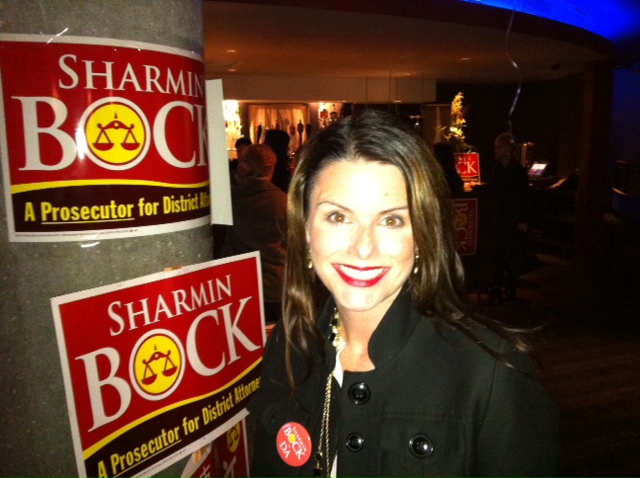
The first DA numbers have just come in: Gason 48%, Bock 21%, Onek 15%. But so far a smoking little jazz trio downstairs is about the only real excitement at DA candidate Sharmin Bock’s campaign party at Yoshi’s on Fillmore. No big reaction yet, and the candidate isn’t expected to arrive until 9:30.

Yet campaign coordinator Kimberly Walz Abando tells me there’s been a lot of energy in the Bock campaign. It even reminds her a little of Chicago, where she worked on Mayor Rahm Emmanuel’s last campaign before moving to San Francisco.

Rough-and-tumble Chicago is a very different place, she said, “but what’s the same is you get a lot of passionate volunteers who believe in the candidate and will work 15 hour days.”
She also has a policy background and liked how Bock raised big issues: “She was able to bring forward the issue of unsolved murders and rapes.”

The first numbers

0

The absentees are in, and it’s no surprise that Mayor Ed Lee is in the lead. In fact, he’s way in the lead — he’s got 39 percent of the 67,000 absentees. I expected him to have a big advantage here, since he did a lot of early GOTV.

Worth noting: John Avalos, the most progressive of the major candidates, is in second in the absentees. That’s a very good sign for the Avalos campaign. But Lee is almost 20,000 votes ahead of Avalos and Dennis Herrera, and that, folks, will be very hard to make up.

The district attorney’s race is over; George Gascon has won.

The sheriff’s race is interesting; Ross Mirkarimi — again, the most progressive candidate — is actually ahead in what is looking like a very conservative absentee vote. He’s only got a slight lead over Chris Cunnie (31.7 percent to 31.4 percent, a total of a couple hundred votes) but that margin will grow as the night moves on. Mirkarimi, it appears, will finish first.

Here’s why I say it’s a conservative absentee turnout: The sales tax, Prop G, is losing 57-42 and Prop. H, the neighborhood schools measure, is ahead 58-41. Both results suggest a strong westside turnout in the absentees.

I’m surprised that Mirkarimi is doing so well with this bunch.

And I’m a little surprised that Prop. C (the “consensus”) pension reform is so far ahead of Prop. D (the Adachi pension reform). Even in the conservative areas, C is leading by 7 percent.

By the way, the school and street bonds have won. If they’re over 66 percent (and both are) in this batch of votes, they’ll win handily.


Numbers coming soon

4

Steve Jones tweets that the Department of Elections is planning to release the first (absentee) numbers at 8:45. Election-day numbers will come about 45 minutes later. Which means that by 10 p.m. we’ll have a good idea what’s happening.

More good omens

0

The author of the racist Arizona law AB 1070 was just recalled. And Mississippi voters decided that life doesn’t begin at conception. Maybe some sanity is returning to America.

Oh, and those election monitors

0

The state has sent election monitors to SF, which sounds nice, but I think it’s a bit too late. The damage is already done; if the accounts of voter fraud and campaign finance problems are accurate, the monitors were needed weeks ago, not today.

There’s good news in Ohio

0

The terrible anti-union measure in Ohio — which was being watched nationwide — has gone down in flames. So that’s a good omen.

It’s all about turnout

0

Turnout in my Bernal Heights precinct tonight was pretty light, and that’s consistent with what I’ve been hearing all over town — except in Chinatown, where absentee turnout is high and the Ed Lee folks have done a great job of getting out the vote. This election may be a referendum on Ed Lee, it may be about whether any of the challengers can make a case for a change, it may be about how ranked-choice-voting works — but more than anything else, it’s going to be about who votes.

The flood of mailers was so overwhelming in the final days that I’m not sure how many people actually read them; the campaigns that put real resources into GOTV operations will probably fare better than the ones that relied on mail to reach the voters. And, of course, it’s likely that half the votes cast will be absentees.

So one of the numbers to watch tonight is total turnout. The lower that number, the better for Mayor Lee, who got a lot of votes in the bank early.

Another number to watch, and I’ll be running this for you as soon as I have data, is how the election-day votes contrast with the typically more conservative absentees. The absentees will be out soon, shortly after 8 p.m.; that will give us a sneak preview. But once the election-day votes come in about half an hour later, we’ll know where the trends are going.

The Department of Elections says the vote count will go quickly, since it’s a short ballot (only two cards).

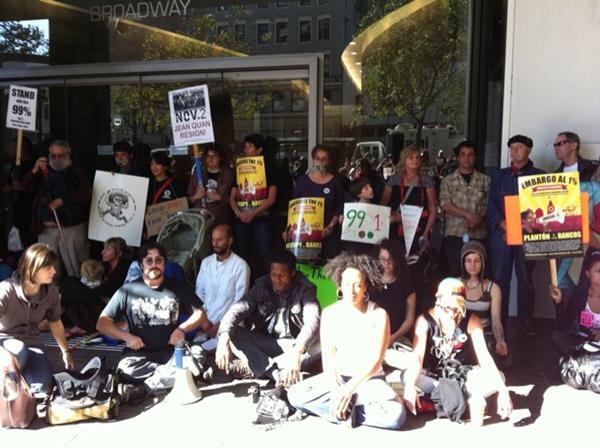
Why Occupy? Here’s why

2

The Chron buried the story below an item about Chevron cutting its grants to PBS, but if you want to see the case for the Occupy movement, it’s laid out perfectly in a powerful new report by the California Budget Project. Read it here (PDF) The data is solid; the policy impacts are clear.

For starters, California’s 33,900 millionaire taxpayers (people reporting more than $1 million in income in 2010) — that’s two-tenths of the top one percent — earned $104 billion — 11 times the amount needed to lift every single California out of poverty. That’s right — a ten-percent surtax on incomes of more than $1 million could end poverty in California.

California, the report states, has the 7th worst income gap in the nation, between Alabama and Texas.

The San Francisco/Marin/Oakland metropolitan area has the 7th worst income disparity of any major urban area in America.

And it’s not the Invisible Hand of Adam Smith that caused the problem: “Public policy,” the report states, “narrow income gaps less today than they did a generation ago.”

San Francisco’s electing a new mayor today. When you go to the polls, think about economic justice. And when you hear complaints about Occupy SF, think about the fact that before the Occupy movement, the wealth and income gap was barely on the political agenda.


Election night coverage and parties

7

As always, the Guardian will have a team of reporters in the field tonight covering the election parties and doing regular posts here on the Politics blog, where Executive Editor Tim Redmond will also be analyzing the results as they come in. But if you want to get out there mix and mingle with the campaigns yourself, here’s a list of the parties around San Francisco, most of which start around 8:30 and last until around 11. 

John Avalos for Mayor, Roccapulco, 3140 Mission St.

Dennis Herrera for Mayor, Club Mighty, 119 Utah St.

Leland Yee for Mayor, Rasselas Jazz Club, 1534 Fillmore St.

Jeff Adachi for Mayor, Harbour Court Hotel 165 Steuart St.

David Chiu for Mayor, Rendezvous Tapas, 2080 Van Ness

Bevan Dufty for Mayor, Don Ramon’s Mexican Restaurant, 225 11th St.

Ed Lee for Mayor, Tres, 130 Townsend St.

Tony Hall for Mayor, Campaign HQ, 99 West Portal Avenue

Joanna Rees for Mayor, Eastside West, 3154 Fillmore

Michela Alioto-Pier for Mayor, The Brick  Yard, 1787 Union St.

League of Pissed Off Voters, El Rio, 3158 Mission St. (mayoral candidate Terry Baum in attendance)

Yes on A, Mercury Lounge, 1582 Folsom St.

Yes on C/No on D, Slim’s, 333 11th St.

David Onek for DA, Pilsner Inn, 225 Church

Sharmin Bock for DA, Yoshi’s Jazz Club, 1330 Fillmore

Bill Fazio for DA, Tony Nik’s Cafe, 1534 Stockton

George Gascon for DA/Chris Cunnie for Sheriff, Delancey Street, 600 The Embarcadero

Ross Mirkarimi for Sheriff, Carnelian by the Bay, 1 Ferry Plaza

Paul Miyamoto for Sheriff, Pete’s Tavern, 128 King Street


The Chron’s Willie Brown problem

5

I’m glad someone else has noticed the problem with giving a political fixer his own newspaper column. I’ve been talking about this for years now, and the Chron doesn’t care. Brown is a walking conflict of interest — he represents clients who have business in the state and the city, and he can freely hype those clients in the Chronicle, and he can promote candidates who he is doing fundraisers for — and he never has to disclose anything.

Chronicle Editor Ward Bushee keeps saying that this is a celebrity, an-about-town column, but it’s really not. Brown mostly writes about politics, and he’s got a huge platform to help people who are paying him. It’s an embarassment.

I don’t expect the Chron to get rid of him, but at the very least, they ought to make him disclose when he has a financial interest in what he’s writing about.

Will all those mailers really work?

19

Political consultants love direct mail. It’s a perfect way to target your message. You buy an ad in the Chronicle, you have to pay to reach all of the readers — the ones outside of San Francisco, the ones who will never vote for your candidate anyway — and the ones who almost certainly won’t vote. With the Department of Elections database and a good computer, you can limit your mailings to people who vote regularly. You can mail only to Democrats, or you can mail only to women, or only to people in certain neighborhoods. “You want gay Lithuanians who are betwen 30 and 50 years old, voted in 4 of the last 5 local elections and live on the East side of town? I can give you that list,” one consultant told me a few years ago.

Direct mail not only ensures that your message goes to the people who matter — the actual voters — but it allows you to tell any population or demographic exactly what it wants to hear. A candidate for mayor may want to talk about liberal positions to voters in the Haight and more moderate stands to people West of Twin Peaks.

And unlike door hangers and hand-delivered pieces, things that arrive in the mail tend to get read. At least, they usually do.

Over the past few days, I’ve received about 30 mailers. Some people got even more. The stack has piled up so quickly that even someone like me, who loves all fo this stuff and pays close attention to all the messages, couldn’t get to it all. Most of my neighbors just chucked it all in the recycling.

When you have this many candidates, with this much money, and all of the independent expenditure groups, the mailers all start to look and sound the same. Nothing jumped out at me; nothing made me pay attention. There was just too much of it, total overload. So I fear that a lot of the money spent on mail this year wasn’t terribly effective.