• No categories

Politics Blog

Josh Wolf in the eye of the storm (again)

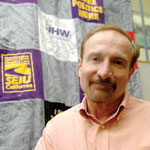
Josh Wolf has landed in hot water again — this time in connection with his reporting from inside the student occupation at Wheeler Hall on the University of California Berkeley campus to protest budget cuts.

The blogger and videographer was jailed in 2006 after resisting a subpoena to testify before a Federal grand jury because he had taken footage at a 2005 San Francisco protest against the G8 summit. His case was widely reported on, in part because he set a record for jail time served — 226 days — for refusing to give up newsgathering materials. Police believed Wolf possessed footage that could be used to press charges for vandalism of a police car and an assault on an officer. He didn’t.

Now the 27-year-old filmmaker, a student at the Graduate School of Journalism at UC Berkeley, faces a possible seven-month suspension in the wake of a student occupation of Wheeler Hall last November 20. Wolf was one of two reporters whose footage from inside Wheeler Hall was included in a Democracy Now! broadcast about the occupation — but he was the only UC Berkeley student who has said he was there documenting the event as a member of the press.

Wolf says he wore a police-issued press badge around his neck during the Wheeler Hall occupation. Press passes can serve to flag journalists as being in a separate category from civilians in situations involving law enforcement, but displaying one does not always provide a reporter immunity from arrest. The video he shot was integrated into a report produced with independent journalist Brandon Jourdan, who was also inside the building. Wolf and Jourdan were both arrested — but their footage was widely viewed on Democracy Now!, a national alternative news outlet.

In an “informal resolution” issued April 9, UC Berkeley’s Center for Student Conduct found that Wolf “participated in a disturbance of the peace,” charging him with multiple violations of the student conduct code. Wolf’s role as a journalist is not discussed in the list of charges, making it seem as if he’s being lumped in with the student protesters, despite being there as a reporter.

But the fact that he wears another hat as a journalist clearly hasn’t escaped the campus enforcers of the student conduct code. As part of the disciplinary measure, Wolf was also directed to write a 10-page essay reflecting on a list of questions, including: “How do you consider and reconcile the roles of being a student and being a journalist? At what points does either role become more important to you and why? What are your limits as a journalist? Where and how do you draw lines for yourself in terms of things you will or will not do to pursue professional goals?”

Wolf is being given the option of writing the paper and taking the seven-month suspension (a plea bargain of sorts), or moving on to a formal adjudication process that would entail going before a five-member hearing panel, like a court trial. His plan is to try and get an extension for the informal resolution process as a means of getting the charges dropped altogether.

Berkeley Associate Dean of Students Christina Gonzales, whose office oversees the Center of Student Conduct, was unable to discuss Wolf’s particular case because of a federal law prohibiting public disclosure on such matters. Nonetheless, she offered some general comments. “In the big picture, whenever you’re dealing with conduct, you do take into consideration circumstances,” Gonzales said. “If some one reported, ‘I have special credentials’ or whatever, then [the Center for Student Conduct] will go back as part of their research on any of the cases and try to find out as much information they can to determine if that was a known fact, whatever it is that the student’s telling us.” She stressed that the informal resolution was only a first step in the disciplinary process, and that no formal decision has been made at this point in time.

 “There’s always information that comes from others that’s taken into consideration with the whole picture,” Gonzales added.

Wolf says that when he asked Laura Bennett, Assistant Director at the Center for Student Conduct, whether it would impact the outcome of his case if he submitted a letter from Jourdan confirming that he was there as a reporter, he didn’t get a straightforward response. “Her response was, well, that kind of a letter would simply lead me to have more questions, such as, ‘how did you get into the building, who did what, what happened inside the building,’ a whole bunch of stuff that I’m not inclined to help with for any number of reasons,” Wolf said. “Some of this was given on a privileged basis. … And admittedly it’s like, wait, I went down this rabbit hole before, with the grand jury, and I’m not about to deviate from that path.”

Jourdan, who has contributed to the Huffington Post, Reuters, and the New York Times, among other outlets, told the Guardian that he wrote a letter supporting Wolf in this case. “To the best of his ability, he was there to capture a moment in history,” Jourdan said. Wolf is holding off on submitting the letter for now.

“I think what’s happening in the UC system is there’s a sort of crackdown,” added Jourdan, who faces his own charges after reporting on a March 4 demonstration against budget cuts to education that broke onto a West Oakland freeway. “When journalists are charged with criminal offenses … it’s impeding the work. The information is not free flowing. It’s imperative that journalists be given access to cover something … that in time will be seen as an historic movement.”

Pick up next week’s issue or visit us online for a more detailed report.

Listen to a blue whale call (without getting seasick)

Under just the right ocean conditions, the low-frequency call of a blue whale off the coast of California can be detected by another whale off the coast of Hawaii. As part of our annual Green Issue, we report this week on the noise impacts of shipping traffic on marine mammals that rely upon sound for their basic survival behaviors. Click on the player to hear a blue whale call, a form of communication that is often masked by shipping traffic.

Pacific Environment, a nonprofit that leads whale watch excursions featuring hydrophones to capture the underwater noise, has shared this sound clip from one of their ventures to Gulf of the Farallones National Marine Sanctuary. The call below has been sped up so that it can be detected in our hearing range.

Blue Whale Call by SFBG

Brown investigates destruction of Palin documents

0

Attorney General Jerry Brown, who is also running for governor, announced that his office has launched “a broad investigation” of CSU Stanislaus and its foundation following yesterday’s revelations that officials may have destroyed documents related to an upcoming speech by Sarah Palin.

Both Brown and Sen. Leland Yee, whose inquiries into how much Palin is being paid triggered the investigation, emphasized that this isn’t about a controversial conservative speaking at the university, but about government transparency and how scarce public resources are being used.

In his announcement, Brown echoed Yee’s criticism of how foundations can be used improperly and to hide public scrutiny. Officials from CSU Stanislaus haven’t returned Guardian calls, but they denied wrongdoing to the Chronicle without specifically addressing how or why the documents were destroyed.

Here is Brown’s complete announcement:

Brown Expands Probe into CSU Stanislaus Foundation

SAN FRANCISCO – Attorney General Edmund G. Brown Jr. announced today that he has launched a broad investigation into the California State University Stanislaus Foundation to include an examination of its finances and the alleged dumping of documents into a university dumpster.

This action follows an inquiry Brown began last week into whether the CSU Stanislaus Foundation violated the California Public Records Act. On April 7, State Senator Leland Yee asked Brown to investigate the refusal of California State University Stanislaus to turn over records, under the Public Records Act, pertaining to the $500-a-plate June 25 speaking engagement of former vice presidential candidate Sarah Palin at the university’s 50th anniversary gala. Palin’s compensation for speaking at the CSU Stanislaus gala hasn’t been disclosed, but she earned $100,000 for speaking in February at a Tea Party convention in Nashville.

The expanded inquiry will seek to determine whether the foundation, which has assets of more than $20 million, is spending its money to benefit the campus, as it promises donors, the university and the public. The CSU Stanislaus Foundation spends more than $3 million each year on university endeavors. The Attorney General is asking university officials to preserve foundation documents.

“We are taking this action to make sure that the money raised goes toward the intended educational purposes and not a dollar is wasted or misspent,” Brown said, “Prudent financial stewardship is crucial at a time in which universities face vastly decreased funding and increased student fees.”

The Attorney General oversees charitable organizations to make sure that they comply with the law. Brown’s office has recently sought records of several foundations following allegations of improprieties including a no-bid contract to a foundation board member, a loan — with a large loss — to a former foundation board member, a $1.5 million-dollar loss because of bad debts, a questionable real estate deal and a $200,000 low-interest loan to a university president.

The university foundations provide crucial financial help to state universities, supplementing student fees and state support for scholarships, academic programs, buildings and operating expenses.

Brown said his office would also review documents obtained from Yee today, including part of Palin’s speech contract, which students say they plucked out of a dumpster near the CSU Stanislaus administration building. Investigators will first attempt to determine whether the documents are authentic and how they ended up in the dumpster.

“This is not about Sarah Palin,” Brown said. “She has every right to speak at a university event, and schools should strive to bring to campus a broad range of speakers. The issues are public disclosure and financial accountability in organizations embedded in state-run universities. We’re not saying any allegation is true, but we owe it to the taxpayers to thoroughly check out every serious allegation.”

The assets controlled by 95 auxiliary bodies and foundations associated with the entire CSU system amount to $1.34 billion, according to the CSU chancellor’s office. UC system foundations control another $4 billion in assets.

The Attorney General’s investigation is being conducted by its Charitable Trusts Section, which works with charities to make sure they comply with the law and their articles of incorporation. The Attorney General is also authorized to bring legal actions against charities if they misuse funds under their control.

For more information on the Attorney General’s Charitable Trusts Division, see http://ag.ca.gov/charities.php.


Did Lennar hire an armed security guard from Andrews International?

11

I didn’t attend the April 12 hearing of the Board’s city operations and neighborhood services committee about Lennar’s decision to send an armed ex-SFPD officer to a Feb. 18 community meeting at the Nation of Islam’s mosque on Third Street.

But video footage shows that it was a packed house, during which plenty of folks stated loud and clear that they thought it was a really bad and potentially dangerous idea to send an armed ex-officer into a community meeting in the Bayview.


“What next? Concealed weapons at City Hall?” a member of the public asked.

At meeting’s end, Sups. John Avalos, Carmen Chu, Sean Elsbernd voted to refer a resolution urging Lennar Corporation to issue a formal, written apology to members of the Stop Lennar Action Movement (SLAM.) to the full Board without recommendation, after Elsbernd voiced concern that the ex-officer may have been threatened and had racial epithets hurled his way.

“If the gentleman was threatened, if racial language was used, in that case it should not be one- sided,” Elsbernd said. “There should be apologies on the other side as well.”

Meanwhile, it’s worth shining light on another question: Who was the ex-officer actually working for?

During the meeting, much was made of the fact that the ex-officer, who told police his name was Bob Tarantino though apparently that is not his real name, gave as his work contact an address in Miami, Florida, where PR agency Sitrick and Company, has an office.

(Lennar once sent a Sitrick employee to talk to me and my editors at the Guardian, after we published the first in a series of reports that showed that the company failed to adequately enforce promised asbestos dust mitigation plans at its Shipyard site.)

But Sitrick managing director Glenn Bunting, who oversees the company’s San Francisco, Silicon Valley and Miami offices, told the Guardian that the ex-officer in question has never worked for or been an employee of Sitrick.

“We know who is on our pay roll and we don’t provide security services,” Bunting said.

He confirmed that Sitrick recently opened an office in Miami and sublets space from another firm in the same building. “We have a very small presence in Miami,” Bunting said.

So, who could Tarantino work for who  also has the same address in Miami, Florida, where Lennar Corporation is headquartered?

The building in question looks pretty big, lies across the street from the court house and is home to Andrews International, which is headquartered in Los Angeles, and bills itself as “a full service provider of security and risk mitigation services” and the “largest private, American-owned full-service security provider in the United States.”

In October 2009, Andrews International acquired Verasys LLC, a Miami-based consulting firm focused on global risk mitigation, investigations and security services.

“The acquisition added new offices in Miami, Tampa, Dallas, Atlanta and Bogotá, expanding service capabilities in all 50 states and Latin America” an Andrews International press release states.“ This followed the June 2009 acquisition of the U.S. and Mexico guarding operations of Garda World Security Corporation (TSX: GW), encompassing 14 offices across the U.S. and abroad. Most recently in January 2010, Andrews International acquired A&S Security, a California-based full service security company, expanding operations in its Western U.S. Region.”

So, it’s possible Bob Tarantino, or whatever his name is, works for these folks?
Lennar Urban’s Kofi Bonner has not replied to this question, as of this blog posting. But in a March 15 letter to Board President David Chiu and D. 10 supervisor Sophie Maxwell, Bonner said he was “working with our vendors to prevent such an episode from happening again.”


Bonner’s letter wasn’t entirely apologetic.

“Lennar has become increasingly concerned that some community meetings have devolved into hostility accompanied by intimidation of our supporters,” Bonner stated. “For that reason, I decided against sending any employees or consultants to the meeting in question.”

“I am truly disturbed by the ensuing physical and verbal abuse directed at the security firm employee,” Bonner continued. “Not surprisingly, he is independently considering his legal options.”

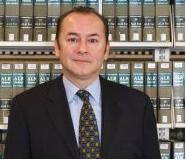
Candidates for judge: Robert Retana

0

The final installment of our interviews with candidates for Superior Court Judge in San Francisco: Robert Retana


Robert Retana by Endorse2010

The Chamber of Commerce scorecard: You gotta be kidding

4

The San Francisco Chamber of Commerce has released a voting scorecard on the supervisors — and it’s a bad joke. The Chamber says the scorecard shows who are top opponents of business in the city, the ones who don’t support “job creation and government efficiency” — two poll-tested buzzwords the Chamber will try to use in supervisorial campaigns this fall.


But there are only ten votes on the scorecard — and they don’t even remotely represents the most important jobs, business or economic issues the board has addressed in the past year.


Seriously: Does anyone think that naming rights for Candlestick Park has had a huge impact on the ability of businesses to create jobs in the city? How about a resolution supporting a proposed Contemporary Art Museum?


And since small, locally owned independent businesses are the single largest private-sector job generators, how does the Recurrent Energy deal — a giveaway to a big power company — help create jobs?


Of course, that’s not what this is about. The scorecard issues were carefully chosen to make the progressives look bad. And, as always, the Chamber has completely ignored the fact that the largest employers in San Francisco are public-sector agencies, and that cutting government programs and blocking new sources of revenue are the real “job killers.”


We’re putting together our own scorecard, measuring a wider range of votes on key issues in the past year. What were the most important? What really mattered to San Franciscans? The comment lines are open.

Officials accused of destroying public documents on Palin visit

2

The lesson of political scandals from Watergate through Monicagate is that the cover-up is often worse than the original crime, and that could once again prove true with the simmering conflict over large speaking fees that CSU-Stanislaus has agreed to pay Sarah Palin, particularly given new revelations that university officials might have destroyed public documents that had been requested by Sen. Leland Yee.

At a press conference convened by Yee this morning, two university students told the story of being informed by fellow students that administrators were shredding and disposing of documents in an administration building on Friday, which was particularly strange because the campus was shut down for a state-mandated furlough day.

So a group of five students started digging into a dumpster adjacent to the building that was being used that day and gathered all the documents in there, some shredded, some intact. And among those documents, they say, were pages four through nine of a contract with the Washington Speakers Bureau, which represents Palin. And although they don’t mention her by name, they reference “air travel for two between Anchorage, Alaska and event city.” (Read the document here) Palin — the former Alaska governor and vice presidential candidate who has become a darling of the Tea Baggers and other right-wing populists — is scheduled to speak at a $500 per plate fundraising on June 25.

That was precisely the kind of document that Yee and attorney Terry Francke of Californians Aware had recently requested of the university through a California Public Records Act request, although their response from the university last week was that it had no documents responsive to their request.

So Yee asked the Attorney General’s Office to look into the matter, which could be what triggered the document destruction session, with officials fearing they might get caught in a lie. The CPRA allows for civil penalties for refusing to disclose public documents, while the Penal Code indicates willful destruction of public records may be considered a criminal act.

“This is an issue of accountability and transparency that is fundamental to our democracy,” Yee told reporters, calling the actions “unconscionable” and “reprehensible.”

Yee has been a strong critic of secrecy in the CSU and UC systems, and has unsuccessfully tried to pass laws requiring college foundations to be bound by open government and public records laws. That’s an issue in this case considering it’s the CSU-Stanislaus foundation that is hosting Palin’s visit, although Yee has pointed out that the university president and other top officials control the foundation, which uses campus facilities and resources.

“What we’re finding is with more and more of these foundations, there’s unethical and illegal stuff going on and nobody knows what’s going on,” Yee said, citing as an example the indictment of former City College of San Francisco chancellor Phillip Day for illegally laundering public funds for private use through the foundation.

But if the students’ story holds up, it now appears that the university itself was in possession of the documents that Yee requested, the first evidence that it wasn’t just the foundation that was involved with the Palin visit. 

Francke told reporters that he plans to file a lawsuit over the matter this week, depending on what the AG’s Office does. “Our purpose is to get a court decision that regards these documents as university documents and not just foundation documents,” he said.

Calls to the CSU-Stanislaus and the AG’s Office have not yet been returned, so check back for more details later.  

New media sources win Pulitzers

2

American journalism’s biggest awards, the Pulitzer Prizes, were awarded today and among the honorees was a nonprofit newsroom, Pro Publica, which was recognized for groundbreaking work that it did on the aftermath of Hurricane Katrina.

Pro Publica reporter Sheri Fink was honored for “The Deadly Choices at Memorial,” which chronicled ethically questionable decisions made by medical staff about what to do with critically ill patients awaiting a delayed evacuation. The nonprofit operation partners with other newsrooms, and Fink’s story also ran in New York Times Magazine.

Although he was not part of the Pulitzer Prize, former Guardian writer A.C. Thompson has been part of the Pro Publica team covering the aftermath of Katrina, doing amazing work on troubling actions (and inaction) by the New Orleans Police Department in the wake of Katrina, partnering with The Nation, Frontline, and The Times-Picayune on his stories.

Closer to home, SFGate cartoonist Mark Fiore won the Pulitzer for editorial cartooning, the first time that prize went to an online-only cartoonist.    

Will Obama help Kamala Harris?

12

President Obama is coming to California to help raise money for Sen. Barbara Boxer, who already has more than $8 million on hand. The president has to do this; Boxer’s seat is critical to the Democrats hopes for hanging on to a majority in the Senate,and Obama will pull out all the stops in this fall’s campaign to help Dems in tough races.


And while Boxer’s not going to get an easy pass, she’s still the front-runner — whatever the polls may show, she’s always been a great campaigner and has overcome tough odds plenty of times before. And unless Tom Campbell pulls it out in the GOP primary, she’s going to face either Carly Fiorina or Chuck DeVore, and both of them are too far to the right for California.


But there’s another key race this fall where Obama could also be a huge help. I think San Francisco D.A. Kamala Harris is going to win the Democratic primary for attorney general, but in the general election, she’s going to get hit hard by the GOP dirt machine. It’s going to be death penalty and cop killers all day long. Harris is tough, and knows what’s coming, but I can guarantee that race will be nasty, mean, dirty, ugly and as negative as you can imagine.


And Harris is going to need to raise a lot of money to fight back.


Now let’s remember: Harris was one of the first California elected officials to support Obama for president. She was the co-chair of his state campaign. And this fall, he could return the favor by making a visible endorsement — and by coming to town for a major Harris fundraiser. The president of the United States can raise $5 million in one night for a candidate — and that kind of boost, along with the positive press it would generate, might make the difference.


Of course, Obama, who (sadly) won’t come out against the death penalty, will have to take some hard questions and a few hits himself, in a tough national election year for Democrats, if he gets to close to Harris. And she’ s enough of a pragmatist that she’ll understand if he ducks this one.


But he really shouldn’t.

Make PG&E get two-thirds for its initiative

2

Sacramento Bee columnist Dan Morain just joined the chorus of voices against Pacific Gas and Electric Co.’s Prop 16 with a piece that reminds us how PG&E just nine years ago last week went into bankruptcy. It’s particularly interesting to read the comments; the Bee publishes in a town that’s had public power for decades. The Sacramento Municipal Utility District offers lower rates and better service than PG&E — and while the public in general, and people who comment on newspaper blogs in particular, tend to be cynical about government these days, the folks in Sacramento seem quite pleased with their public utility.


Here’s one comment:


I used to live in a PG&E supplied house and my electric bills were unbelievably high… Now I live in SMUD house and my electric bills are sooo low. So I would definitely encourage people to vote NO. PG&E wants to monopolize the market knowing that a 2/3 vote is impossible. This is a case where a nonprofit efficient quasi govt. entity would be for our best interests. A for profit corporation like PG&E would suck us dry…

And another:

Why is this initiative known as the “Taxpayers Right to Vote” measure when it obviously should be names the “PG&E Profit and Monopoly Protection Act”? It’s the same disingenuous campaign that prevented Yolo County residents from enjoying the benefits of SMUD electricity. PG&E, along with their two-faced spokesman, the supposedly “honorable” Stan Atkinson, sold Yolo Co. down the river with a barrage of distorted facts, misinformation and scare tactics. When are voters going to stop approving these special interest propositions that are ruining this state? Quit relying on 30 second sound bites to make your decisions and see who’s really behind these initiatives and what their motives are. In fact, vote NO on all propositions unless they really have some merit. Prop 16 does not.

But here’s my favorite:


Here is an idea for a new initiative. I propose an initiative that would apply to all subsequent initiatives. For any initiative that seeks a 2/3 voter approval, or 2/3 legislature approval, that initiative itself would have to be passed by a 2/3 majority rather than by a simple majority. What is good for the goose ought to be good for the gander.

That makes a whole lot of sense. If PG&E thinks a two-thirds vote is fair, and the company wants to spend more than $30 million forcing that standard on all of us, then PG&E should have to get two-thirds of the vote for its own self-serving initiatives.

Just out of prison, Addis returns to SF with a message

60

Paul Addis is a playwright and performance artist best known for prematurely igniting Burning Man‘s eponymous central effigy during a Monday night lunar eclipse at the event in 2007, a crime for which he served two years in a Nevada prison. He was recently released and returned to San Francisco, where his new one-man show debuts at The Dark Room on April 30.

Last week, Addis sat down for an extended interview with the Guardian to discuss that momentous night – when he grabbed the Holy Grail of burner malcontents, lighting the Man early, and paid a heavy price for it – and its aftermath, including developing his play, “Dystopian Veneer,” while in a prison work camp near Las Vegas.

“It’s a brand new life and I’ve got all this potential and I want to make the most out of it,” said Addis, an intense guy who exhibited a wide range of emotions during the three-hour interview, from easy laughter to frustrations with what he sees as the lack of risk-taking in San Francisco to excitement over his future to flashes of real menace when discussing those who have done him wrong.

Addis is a lightning rod whose torching of the Man still elicits strong reactions from those who attend Burning Man. Some angrily condemn an act they see as destructive and dangerous, while others appreciate the ultimate symbolic assault on an event that they think had become too orderly and calcified.  
Paul Addis's mug shot after burning The Man.

Addis’s post-burn mug shot.

“Everybody knew it needed to be done for lots of reasons,” Addis said of an action that was his sole purpose in attending Burning Man that year. “I felt like Burning Man as an event was starting to coddle people way too much.”

But the event’s leaders certainly didn’t coddle Addis, instead testifying at his 2008 sentencing hearing about the high cost of replacing the Man (high enough to bump the destruction of property charge up to a felony) and the early burn’s negative impact on the event. “They didn’t have to do this,” Addis said of Burning Man board member Will Roger’s testimony at the hearing. “Instead, they decided to deliberately take action they knew would send me to prison.”

Marian Goodell, the director of business and communications for Burning Man, declined to discuss the accusation, or Addis’ complaint that she and others have publicly misrepresented the role of Burning Man brass in sending him to prison, including statements in the film “Dust & Illusions” that the sentencing was beyond their control. “It doesn’t do us or him any good to open that wound again,” Goodell told the Guardian. “We’re not going to discuss it.”

Starting the fire wasn’t Addis’s only crime of that era. Within weeks of returning to Burning Man, he was arrested in Washington for carrying guns in public (he says they were props for the one-man play about Hunter S. Thompson he was doing at the time) and for possession of fireworks and an air gun near Grace Cathedral (which police said at the time was a plot to burn down the stone church, a notion that Addis calls preposterous). Addis has innocent narratives for each incident, blaming others for overreacting.

Yet Addis now says that he’s let go of his old grudges, describing a moment of clarity and peace that came over him while driving his motorcycle through the Nevada desert on his way back to San Francisco. He said that he feels most happy and alive when he’s on stage, a passion that he said sustained him while in prison, “so it’s imperative for me to get back to what I love doing.”

Addis posted a promotional video for his new show on Laughing Squid (whose owner, Scott Beale, Addis has known for many years). It opens with Addis looking up at the camera, his mouth covered in duct tape that he slowly rips off and begins speaking. “In a society whose foundation is free expression under the First Amendment and liberty under the Constitution, this is probably the most desperate, despicable and disgusting thing that can be done to an outspoken and risk-taking performance artist,” he says, indicating the tape in his fingers, before tossing it aside and saying, “Well, that’s over now.”

He goes on to criticize how sanitized San Francisco has become, singling out the police crackdown on SoMa parties and nightclubs that we’ve been covering in the Guardian and calling for people to join him in pushing the edge. But just how San Franciscans will greet this controversial figure is still an open question. 

I’ll have more from my interview with Addis, along with reactions from other figures in the Burning Man world, in the Guardian in coming weeks; and even more in my upcoming book, “The Tribes of Burning Man: How an Experimental City in the Desert is Shaping the New American Counterculture,” due out later this year from CCC Publishing.  

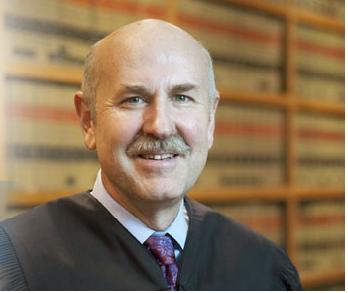
Candidates for judge: Richard Ulmer

1

Another candidate for judge, another interview, another sound file for your listening pleasure. This is incumbent Judge Richard Ulmer, who is facing two challengers, Michael Nava and Dan Dean.


Judge Ulmert by Endorse2010

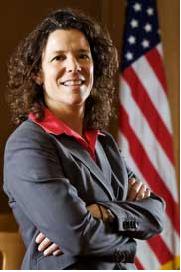
Candidates for judge: Linda Colfax

0

We’re interviewing all the candidates for Superior Court judge in San Francisco. Here’s Linda Colfax:

Linda Colfax by Endorse2010

Verdict leaves SEIU-NUHW fight unresolved

44

By Christopher D. Cook

In a mixed ruling this morning (April 9), a nine-member U.S. District Court jury awarded $1.5 million to the Service Employees International Union in its ongoing campaign to stymie a rival union created by former SEIU staffers, in a mixed ruling that’s unlikely to resolve the unions’ protracted battle over members and leadership in the labor movement. 

Coming after a tense and bruising two-week trial and several days of jury deliberations, the verdict includes a $724,000 penalty against the insurgent National Union of Healthcare Workers, led by Sal Rosselli, former long-time president of SEIU’s United Healthcare Workers West (UHW). Rosselli and 15 of his NUHW colleagues were also hit with smaller penalties ranging from $30,000 to $74,000.

The SEIU lawsuit originally sought $25 million in damages for an array of allegations that its former staffers, who launched NUHW a day after the local was put in trusteeship, had stolen union funds and used SEIU resources and staff time to build their rival organization.

In the process of litigating the case, SEIU deployed four law firms at an expense of $5 million, according to SEIU-UHW communications director Steve Trossman (NUHW’s attorneys estimate the figure at closer to $10 million)—so if the award is upheld, SEIU stands to lose at least $3.5 million on the case. 

“It’s absolutely worth it,” said Michelle Ringuette, SEIU’s strategic affairs director.  “There’s no price tag on justice.”  She called the verdict “an enormous slam-dunk victory for SEIU members, who wanted to hold [NUHW] accountable…they are exhilarated today.”

But in an interview a few hours after the verdict, Rosselli said he and NUHW are undaunted by the ruling.  “Their goal was to destroy NUHW, and they failed,” he said.  “They wanted us to walk away from NUHW, that’s what this is all about…This will go on for more than a year before they can try to see a dime” of NUHW money, Rosselli added, noting NUHW’s attorneys will ask Judge William Alsup to set aside the verdict, and if he doesn’t they’ll press on to the U.S. Court of Appeals.

According to Rosselli, SEIU “said I was in jail, they said that I stole $3 million, and it hasn’t resonated…This has the potential to backfire on them—what we got dinged for is fighting the trusteeship, fighting for democracy, and fighting for a voice.”

Meanwhile, on the ground, where the two unions are locked in a tough fight for members, a different verdict is playing out.  In nine hospital elections over the past year, NUHW has won seven, mostly by resounding margins. The new union has won elections for more than 3,000 workers so far, while more than 100,000 have signed petitions requesting NUHW representation. The biggest organizing prize is Kaiser, where 50,000 workers will decide which union they want in an election this June.  “Once we win the Kaiser election, it’s going to be all over for SEIU healthcare,” Roselli said.

Rosselli said there are 100 union elections pending, and SEIU has moved to block all but 30 elections at nursing homes where staff turnover has been nearly 100 percent in the past year.  “The only reason they’re blocking is because they think they’re going to lose,” he said.

As the ruling came down, prominent California leaders such as United Farm Workers co-founder Dolores Huerta and former California State Senate pro tem John Burton issued statements supporting NUHW. “Tens of thousands of healthcare workers are organizing with NUHW for a real voice at work and a democratic voice in their union, and that will continue in spite of this verdict,” Huerta said. “These reformers stood up for workers’ right to vote when SEIU tried to take it away, and that’s the only thing they’re guilty of.”

Candidates for judge: Harry Dorfman

1

We’ve been interviewing candidates for the two contested judicial races in San Francisco, and posting the sound files. The most recent candidate is Harry Dorfman; you can listen to his comments here


Harry Dorfman by endorse

SF smokers kicked to curb, by the cars

9

By Adam Lesser

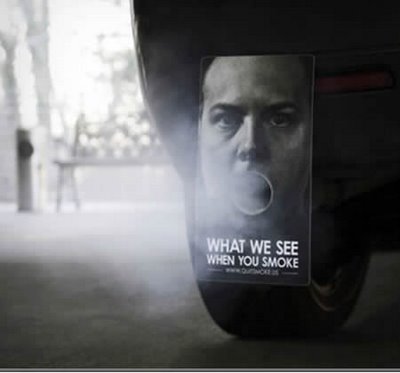
San Francisco smokers will be hit with the latest in a long lines of restrictions starting April 25, when they’ll be kicked to the curb, out by the cars whose tailpipes are at least as dangerous as secondhand smoke.

But drivers haven’t been as easy to demonize as smokers. Light up within 15 feet of a building entrance and you’ll be breaking the law. Other spots where smokers will be barred include outdoor areas at cafes and restaurants, farmer’s markets, and charity bingo games (grandma can take her wheelchair to the curb if she needs a puff).

But pot smokers need not fear. The new law maintains a provision allowing you to light up in licensed dispensaries. Smoking patios at bars are still okay, though smokers probably shouldn’t get too comfortable.

            The San Francisco Department of Public Health frames the smoking debate in terms of the impacts of secondhand smoke. And there’s some good data there. People tend to think lungs and cancer when they think smoking, but the real problem with second hand smoke is heart attacks.  A 2005 estimate from the California EPA put the number of heart attack deaths from second hand smoke at 3,600 annually. Second hand smoke contains a host of toxins from benzene to arsenic.

But it’s hard to know the incremental benefits of moving smokers to the curb. Almost all of the positive data on public health improvements from smoking bans has come from measures the city has already taken. But Mele Lau-Smith of DPH gave me a preview of the potential next battleground: third hand smoke.

“The new science that’s coming out on third hand smoke is interesting. Third hand smoke is everything that clings to furniture and hair and takes longer to dissipate. They’re smaller particles that get deeper into the lungs,” she says. The term was coined last year in the journal Pediatrics and a 2010 paper showed that nicotine reacts with nitrous acid to form carcinogenic molecules that hang around long after a smoker has left the room.

            So the news gets worse for smokers, and the anti-smoking crusade to completely eliminate smoking gains an inch. The smoking prevalence rate in California is among the lowest in the country at 14.3 percent. Most states are in the 18-20 percent range.

            And while it’s all well and good, one wonders if there are other problems in the air besides second hand smoke. Choosing to live in an urban area like San Francisco lowers one’s life expectancy by two years, and one of the major reasons for that is auto exhaust and illnesses related to poorer air quality.

            Mark Jacobson, Professor of Civil and Environmental Engineering at Stanford University, believes the government should keep regulating until smoking is eliminated. But when comparing deaths from automobile emissions versus second hand smoke, he added, “If you look at the mass of the automobile exhaust, then you’re looking at a much bigger figure than second hand smoke. Vehicle exhaust is still way under regulated for addressing health concerns.” Over 2 million people die globally from air pollution each year. About 500,000 die from second hand smoke.

            In the end, Jacobson says it comes down to combustion. When you start burning, you release toxins that eventually hurt or kill people. It doesn’t matter if it’s diesel fuel, gasoline, or tobacco. Combustible products harm public health, and in the case of oil, the environment.

Smokers have proven ideal targets for taxes. San Francisco smokers pay $2.08 in taxes on every pack of cigarettes. When you’re in the minority and the government needs cash, it’s a political no brainer. A 20 cent cigarette tax was tacked on by the Board of Supervisors last October, done under the argument that the money was needed to clean up cigarette butts. Recent proposals to add a local 10 cent tax on gasoline in order to help various cash strapped public transit agencies haven’t found much traction.

So smokers, enjoy the summer. It’ll be the last summer you can light up after an outdoor sunset meal. The smoking ban at restaurants won’t be implemented for another six months.

But come November you’ll be enjoying that smoke out by the curb, where you’ll also be treated to some car exhaust. But, hey, at this point you’re probably all in anyways.

The problem with Park Merced

7

It’s no secret that Park Merced, the sorta-suburban mega-housing complex in the southwest corner of the city, wants to expand. New mid-rise towers would house some 7,000 apartments, with space for maybe 12,000 new residents — which is fine if you like the idea of more rental housing in the city (although much of it not affordable). But it also means a huge amount of new traffic in the area, particularly on 19th Avenue, which is pretty crowded as it is.


Now, the developer and the city talk about adding new transit to the area — an underground Muni rail station at Park Merced, more buses, all that good stuff. Sup. Sean Elsebernd, who represents the district, is (properly) demanding it.


But here’s the hitch: Never once in the history of this city has a major new development paid enough fees or brought enough money into the city to pay for the infrastructure required to serve it. And that’s going to get even worse if the mayor gets his way and defers development fees.


The cost of the level of transit necessary to serve the new residents of Park Merced, along with the expanded number of students at San Francisco State, and the expansion of the Stonestown shopping center, is gong to be massive. Park Merced may pay to build a new station — but the developer won’t pay for the cost of buying new buses and trains, hiring operators, and paying them. The increased property tax revenue from the project won’t cover that, either — particularly since it also has to cover water and sewer expansion, police and fire expansion, new schools and parks, and all the other expensive things that 7,000 new residents will want.


I don’t think the city’s even come close to figuring out the total bill for all the infrastructure improvements this project will require. Let’s add that up first — before the city issues any permits — and present the developer with the bill. Then we can decide if this project is a good idea.

Force is the weapon of the weak: decrying the right’s violent rhetoric

16

American political discourse is being poisoned by some truly scary rhetoric from the right-wing, which is increasingly resorting to threats and condoning of violence, a trend that has played out in recent weeks right here on the Guardian’s Politics blog. Now is the time to recognize and stop it, just as a new coalition is calling for

San Francisco resident Greg Lee Giusti was arraigned in federal court this morning for making threatening phone calls to House Speaker Nancy Pelosi, one day after the arrest of Charles Alan Wilson for threatening to kill Sen. Patty Murray (D-Wash.). In both cases, the subject was the recent health care reform bill, the anger of the suspects stoked by misinformation and inflammatory rhetoric from top conservative politicians and media figures, as well as the Tea Party movement.

But these cases – along with the recent domestic terrorism plot by Christian fundamentalists and other incidents of overt and implied threats of violence – aren’t isolated examples; they are closer to the norm of rhetoric emanating from the right-wing these days, a trend not seen in this country since the months that led up to the bombing of the Oklahoma City federal building by right-wing radical Timothy McVeigh, the biggest act of domestic terrorism before 9/11.

Consider Giusti, who also wrote a scary letter to me and the Guardian in the midst of his threats against Pelosi, taking issue with our recent cover story that was critical of police crackdowns on SF nightlife. In additional to praising police violence and encouraging cops to “crack a few skulls open,” just like his NYPD cop uncle, who “knows how to inflect [sic] excruciating Paine [sic] on someone without leaving any signs of what happened.”

But Giusti was far from alone in promoting violence over the issues we’ve raised. SFPD Southern Station Capt. Daniel McDonough praised the sometimes-violent tactics of the two undercover cops who bust parties and nightclubs, strongly implying those tactics were justified to counter the unspecified threats of violence that nightclubs represent. “Because of their diligence and professionalism the amount of violence and disorder has been reduced,” McDonough wrote, echoing a troubling strain of right-wing political thought that condones violence to prevent even speculative threats of violence, a perspective that led us to invade Iraq.

And when I wrote about McDonough’s response yesterday, a commenter wrote that aggressive police tactics are justified because, “The unprecedented ascendancy of nightclubs and violation of the Constitutional rights of residents to peaceful use of their property calls for drastic measures.”

In a similar vein, our blog post this week on a newly released video of American soldiers in a helicopter opening fire on a crowd in Baghdad that included journalists and children while making disturbing comments that seemed to relish the opportunity to kill people also provoked some equally disturbing comments.

“So a couple of journalists embedded with terrorists killing Americans got wiped out…congrats to the shooters! A couple of terrorists in training got shot up in a terrorist rescue attempt…congrats to the shooters! Everyone on scene who died got what was coming to them,” one wrote, while another warned, “Raise a weapon against America or Americans and prepare to experience the worst day in the rest of your life. Hoowa!”

Even though the helicopter was miles away and the video showed no credible threats toward it or anyone else, supporters of the war seemed to think that quickly resorting to violence is acceptable. “This is the price we pay for are [sic] freedom. put yourself in that chopper and then put yourself on the ground they all no [sic] what can and will happen. It will happen at home again 911 just give it time. We will do are [sic] best to defend are [sic] country. GOD BLESS USA.”

And I will do my best to defend this country from right-wing extremists. That effort starts with challenging Sarah Palin’s winking exhortation for her followers to “lock and load,” and with letting commentators like Glenn Beck and Bill O’Reilly, on a nightly basis, cast liberals as enemies of the state to their well-armed listeners.

This is simply not OK, a point that’s being made by the prosecutors of Giusti and Wilson, as well as the new Stop Domestic Terrorism campaign by a coalition of organization concerns about the increasing violent rhetoric of the rights. 

“Law abiding Americans do not advocate violence against fellow Americans,” campaign spokesperson Brad Friedman said in a public statement. “As Americans, we all need to engage in a vigorous debate of the issues based on facts and reason rather than fear and prejudice.”

But even in San Francisco, it’s common for conservatives and so-called “moderates” to condone violence against the homeless, drug users, petty criminals, ravers, Critical Mass bicyclists, “illegal immigrants,” or others that they dismiss as “getting what’s coming to them” for daring to violate laws or social mores. I’ve personally had violence wished on me more times than I can count, in letters, phone messages, and to my face. 

As a full-time newspaper journalist for almost 20 years, I’ve dealt with right-wing crazies for a long time, but there are times when you can sense their indignation getting ratcheted up to dangerous levels. In 1994, I wrote stories for the Auburn Journal and Sacramento News & Review about right-wing “patriots” and “constitutionalists” that were part of the militia movement in Placer County.

They warned me that then-President Bill Clinton was an agent of the “New World Order” who was plotting a socialist takeover of the “real Americans,” and that violent resistance was necessary. They spun elaborate fantasies about the impending civil war, which they said the federal government had already started with their raids in Ruby Ridge and Waco. 

“You won’t be able to write an article like this anymore because the government will come and kick in your door and murder you and your children,” one militia member told me after my first article came out.

On April 19 of the next year, while I was working for the Santa Maria Times, I remember vividly when the federal building in Oklahoma City was bombed, killing 168 people. For the first 24 hours, most media outlets speculated that it was an attack by terrorists from the Middle East, but as soon as I heard it was the anniversary of the Waco incident, I knew exactly who was really responsible: the dangerous right wing extremism that pushed militia member Timothy McVeigh to attack his own country.

And now, it’s happening again. Overheated rhetoric on the right is casting Pelosi and fellow Democrats not just as political opponents, but as dangerous enemies of the “real Americans” that Palin claims to champion. They have, like Wilson said of Murray, “ a target on her back.”

When Sen. Leland Yee tried to find out how much Palin was being paid to speak at California State University-Stanislaus, he was aggressively attacked by her acolytes for trying to “take away her constitutional right to free speech,” according to an anonymous message left on his answering message yesterday, which his office shared with the Guardian. “Maybe we ought to have a homosexual with a long enough dick so he can stick it up his ass and fuck himself while he’s on stage giving a speech.”

Such crass, semi-literate, weirdly homophobic comments might be funny if they weren’t part of a larger, more dangerous trend in this country. Once again, a Democratic president is being actively accused of treasonous hostility to “real Americans” by major conservative figures with huge audiences, and once again, the lunatic fringe is being worked up into a frenzy.

The recently uncovered plot by Michigan militia members to murder police officers in the hopes of starting a holy war with the enemies of Christianity is just one indication for what this kind of rhetoric is leading to in isolated pockets around the country. Now is the time to put a stop to condoning violence in any of its forms, whether it’s cops cracking the skulls of clubbers or street denizens, soldiers firing on crowds of people, or citizens threatening our elected representatives.

“Force is the weapon of the weak,” said the radical pacifist-anarchist Ammon Hennacy, a quote that was often repeated by folk singer and progressive writer Utah Phillips, who I had the honor of covering at the same time I was covering the militia movement. It’s true, and at this difficult moment in our country’s history, let’s all try to stay strong.  

Recology can’t have it both ways

1

Critics of San Francisco’s plan to award Recology the city’s trash disposal contract just alerted me to the curious fact that if you watch this video link (scroll down through the video clips to “Garbage 2”), you’ll hear Recology COO George McGrath say that rail haul in California isn’t economically viable.

The link features three excerpts of a August 2009 hearing in Humboldt County regarding rail hauling of Bay Area waste to Winnemucca, Nevada–a plan that got blocked this week.

And as critics of San Francisco’s plan note, that’s a curious thing for McGrath to say in Nevada given that Recology is proposing to haul San Francisco’s trash by rail to the Ostrom Road landfill in Yuba County, which is a 238-mile round trip.

Recology spokesperson Adam Alberti told me that while he hasn’t viewed the video in question, he believes folks are taking McGrath’s comments out of context, since McGrath wasn’t talking about the San Francisco proposal.

“In this particular case,” Alberti said, referring to the San Francisco contract, “rail works fine. Clearly pricing on rail was superior and allowed us the recommendation based on that grading criteria.”

“At the end of the day,” Alberti said, turning the focus back on Waste Management, Recology’s main competition for the San Francisco landfill disposal contract, “we are looking at a very monied competitor who wants the business. Our proposal is recommended by the City and County of San Francisco as the best cost alternative and, we believe, the most environmentally sustainable.”


SFPD’s Capt. McDonough defends rogue cops

15

The San Francisco Police Department has steadfastly tried to ignore back-to-back cover stories in the Bay Guardian and SF Weekly that detailed the campaign of harassment and brutality against nightclubs and parties in SoMa by a pair of undercover cops.

The fact that those two cops – SFPC Officer Larry Bertrand and state agent Michelle Ott – have reportedly been absent from the scene in recent weeks might indicate that the department has heeded the outcry and put a leash on them. But now, in the “Captain’s Comments” in today’s Southern Station Newsletter, Capt. Daniel McDonough – who, along with Commander James Dudley, is believed by nightlife advocates to be behind the crackdown – has issued a full-throated defense of the pair’s actions.

Despite the fact that those actions (including repeated and selective harassment of certain clubs, illegal property seizures, threats and retaliation against complainants, and unnecessary force) have resulted in multiple legal actions against the city, McDonough claims they have somehow prevented unspecified “problems” and “violence and disorder.”

That negative claim is impossible to prove or disprove, but it’s certainly true that it was the arrival of aggressive cops at a January party that we wrote about that precipitated the “violence and disorder” that night.

McDonough writes, in full: 

There has been a recent deluge of articles about Nightlife in the Southern District.  The articles particularly focused on two fine individuals, Officer Bertrand of Southern Station and Agent Ott of the Alcoholic Beverage Commission. (ABC) 

One thing the articles didn’t have to focus on was the amount of violence occurring in the District at the late night venues.  This I believe has been directly related to the good work of these dedicated Officers.  In conjunction with the members of Southern Station, Officer Bertrand and Agent Ott would regularly inspect nightclubs and bars to ensure compliance with laws and codes that have been enacted to have an orderly establishment and to also stop the rampant amount of unpermitted parties that would arguably cause problems.  Because of their diligence and professionalism the amount of violence and disorder has been reduced.  Establishments that routinely would have numerous calls for services started to take responsibility to handle the influx of people and establish security procedures.  The benefits reaped by the citizens of San Francisco by the actions of Officer Bertrand and Agent Ott are measured in the lack of homicides shootings and knifings that haven’t occurred because of their good work.  They are to be commended.  I would also like to thank all of those establishment owners who communicate to me their positive relationships with those two officers.

Community Meeting 

Wednesday April 21 2010 6pm

Community Room

South Beach Harbor Pier 40

The shit show’s extended run

0

By Brady Welch

You really can’t make this shit up, people. Since we last reported on the shit show which had gone cross-bay all the way to Alice Waters’ backyard, further accusations have been lobbed, acid press releases have issued forth, and now there’s even a “legal complaint” against, get this, the UK’s Guardian newspaper.

Francesca Vietor, executive director of the Chez Panisse Foundation and vice president at the center of the San Francisco Public Utilities Commission, the agency at the center of this mess, has filed contested a story in the Guardian,” with that paper including the line “This article is the subject of a legal complaint made by Fransesca Vietor” at the top of its article online. What seems to be at issue is a line that states that the SFPUC’s giveaway “was overseen” by Vietor. While that’s exactly the claim that the Organic Consumers Association has made on its website and in press releases, its probably more accurate to say she was a member of the board that oversees the agency that oversees the program.

In an April 1 statement by the Chez Panisse Foundation (issued the day of the OCA’s original but sparsely attended protest), the organization claimed that, “Ms. Vietor has never promoted the SFPUC program. In fact, as soon as [the OCA] brought the program to her attention, Ms. Vietor asked the staff of the SFPUC to do three things,” which the statement lists as putting the program on hold, conducting additional testing, and issuing a public call for alternative solutions. The first has been put into effect (a fact curiously absent from today’s belated San Francisco Chronicle story on the subject), but as far as we can tell, the last two are still waiting to happen.

Nevertheless, while we’re willing to grant Vietor the benefit of the doubt regarding her initial ignorance about the giveaway program (and then successfully suspending it), what’s still troubling is that it was an outside advocacy group that had to bring the program to her attention in the first place. She’s the vice president of the SFPUC after all, and the compost giveaways were a very public campaign.

It’s one thing if Berkshire Hathaway CEO Warren Buffet claims he didn’t know Fruit of the Loom, a Berkshire-owned company, was using, say, endangered albino chimpanzee pelts in its trademark tighty-whities (which we’re not saying, so put down that lawsuit, Warren). But it’s quite another when the VP of the SFPUC board of commissioners (and executive director of the Chez Panisse foundation, as well as former director of the SF Department of the Environment) didn’t know about her agency’s program to greenwash sewage sludge and give it to the city’s gardeners. We’re not saying Vietor lied. We’re just suggesting that maybe she should have read her company emails. Or at least picked up the newspaper.

The Chez Panisse Foundation, for their part, has asked for a public apology for what they take to be the slanderous charges of the Organic Consumers Association. But if we know the OCA, and we’ve talked to them many times on the phone, this is unlikely to happen.

As far as we’re concerned, the most important thing in the matter is that the program be suspended—something which the OCA, the Center for Food Safety, and apparently, Vietor herself, all sought, and succeeded in doing. The second most important thing is putting all the issues and stakeholders out in the open, which if nothing else, our continued reporting of the story has attempted to do. And while this shit is beginning to get a little bit old, and perhaps less odorous, the Guardian will continue to keep you posted.

Man who threatened Pelosi sent hate mail to Guardian

Remember when we told you about that very special piece of fan mail from the guy who didn’t like our cover story about undercover cops targeting San Francisco nightlife?

Well, he appears to be the same person who just got picked up by the FBI for making threatening and harrassing phone calls to House Speaker Nancy Pelosi.

“[Federal officials] said he recited her home address and said if she wanted to see it again, she would not support the health care overhaul bill that since has been enacted,” according to the Chron piece about his arrest.

We didn’t publish his name with the post, because we weren’t able to verify his identity. But the name signed at the end of the email sent to the Guardian was Greg Giusti, and the Chronicle names Gregory Lee Giusti, 48, as the man who was arrested in San Francisco this afternoon after threatening Pelosi.

In his email to us, Giusti included the phrase “that ugly witch Nancy Pelosi.”

Some of our readers commenting on his over-the-top letter, which contained racist and homophobic language, wondered if it was some kind of joke. We wondered about that, too.

But as we wrote in our post, “Receiving a letter crammed with hate-filled speech while witnessing pockets of far-right extremists grab headlines, we thought it best not to ignore it, but to call attention to it.”

Recology’s Nevada landfill blocked

6

The Las Vegas Review-Journal is reporting that the Planning Commission in Humboldt County, Nevada blocked Recology’s landfill expansion application in Winnemucca, which is halfway between San Francisco and Salt Lake City.

The news comes close on the heels of the Guardian’s report that San Francisco has tentatively selected Recology to dispose of the city’s waste in Yuba County.

The LVRJ articles notes that “Recology wants to haul in 4,000 tons of garbage a day from Northern California communities for the next 95 years and dump it on the desert playa about 28 miles west of Winnemucca.”

Adam Alberti, a spokesman for Recology and the Jungo Land Co., is quoted as saying that the commission’s decision “could cost the region more than $660 million and new jobs.”

And U.S. Senate Majority Leader Harry Reid, D-Nev., is quoted as calling the proposed dump a threat to Nevada’s “sovereignty and dignity.”

“The proposal to dump a mountain of California trash in Nevada is a lose-lose proposition for our state,” Reid said. “The people of Humboldt County have made it clear they don’t want other states dumping trash in their backyards, and I applaud their decision. “

Asked if there was a connection between the proposed Nevada dump and San Francisco’s trash, given that the city is only proposing a ten-year contract with Recology in Yuba County, Alberti said the landfill Recology was pursuing in Nevada is a “speculative effort” and that San Francisco “prohibits its waste from being taken out of state.”

“Recology has no contract in Winnemucca, and you have to have a landfill open before you can enter into a contract,” he said.

Here in San Francisco, District 10 candidate Eric Smith said he wants to see a whole lot more light being shone on the debate about what to do with the city’s trash.

“There needs to more transparency and accountability in the debate, which needs to include looking at all aspects of the issue, including where and how we transport our trash,” Smith said. “Should we barge, rail or truck it? What are the economic and environmental consequences? And is this something the citizens and ratepayers of San Francisco can support? Instead, there appear to be three main companies duking it out under cloak of darkness.”

PG&E’s lies: The Prop. 16 ad

9

Pacific Gas and Electric Co. has its first TV ad out, blitzing the state with a Yes on Prop. 16 message paid for with some 30 million of your ratepayer dollars. And it’s breathtaking in the majesty of its lies and misinformation.