• No categories

Politics Blog

It’s not about taxes

3

I heard an executive from Coda Automotive, which makes electric cars, talking on NPR this morning about why the company is going to locate its manufacturing plant in Southern California. He talked about the quality of the workforce, about the demographics of the state, about the fact that Californians understand environmental issues … all sorts of reasons to build a plant here. And he never once mentioned taxes.


That’s not surprising — for all the whining the California Chamber of Commerce does, corporate taxes aren’t a major factor when businesses look at setting up shop in this state. We’d do a lot better to raise taxes to the level where we could afford to educate the next generation of workers. That’s far more important in building a strong economy.

The truth about Death Row

3

This story is really just tragic, but it does reflect a reality in the California prison system. Very few people on death row die by execution. The leading cause of death is old age.


George Smithey, for example, was 70, and had been on Death Row since 1989. That’s 21 years, during which the state has spent a fortune on high-security imprisonment and legal appeals. It costs millions to prosecute the death penalty to its conclusion, and in most cases, the state has to pay millions more to defend the accused. Those costs are mandatory; the Supreme Court (and the basic rules of human civilization) require that someone facing the ultimate penalty be given every possible avenue of appeal, every chance to make sure that the state isn’t making an irreversible mistake. 


Life without parole is way cheaper — and in most cases, gets you to the same place anyway.

SFBG Radio: Do-it-yourself politics

1

Today Johnny and Tim talk about the rise of DIY politics — from northern Michigan to San Francisco. Check it out after the jump.


SFBGRadio8/30/2010 by endorsements2010

Newsom and the mighty duck

5

Remarkable (or sadly, maybe not so remarkable) interview with Gavin Newsom on the Bay Citizen website. Remarkable because the candidate for lt. governor ducked every single significant issue. Not so remarkable, I guess, because it’s just more of what we’ve seen for years.

And because it really did show his political priorities.

His repsonse, for example, to a question about the cost of higher education in California: “You have to stop all these budget cuts. … Stop the draconian budget cuts. It’s counter to fiscal prudency, economic growth and competitive advantage.”

So how do you do that? How do you find the money?

Quack:

“It’s a question of priorities, what do you value. San Francisco … didn’t cut in those areas we value.”

Oh, so we don’t care about services for the poor?

Then there’s Prop. 13. His answer to the complete unfairness of the state’s property tax system? Quack:

“Difficult questions. It requires a debate, and I’m not afraid of saying we should have a debate about this.” Amazing. The almighty duck.


Endorsement Interviews: Debra Walker

Editors note: The Guardian is interviewing candidates for the fall elections, and to give everyone the broadest possible understanding of the issues and our endorsement process, we’re posting the sound files of all the interviews on the politics blog. Our endorsements will be coming out Oct. 6th.

Debra Walker, a candidate for District 6, has obviously thought a lot about sustainable development — and she isn’t just focused on what building materials are being selected. In addition to planning in ways that would limit traffic congestion and still make sense years from now when the city is grappling with sea-level rise, affordability ranks near the top of her list of priorities.

“Can we agree that we are not building enough below-market housing?” she asked.

A tenant representative on the city’s Building Inspection Commission, Walker is interested in integrating an analysis of the socioeconomic effects of development into the city planning process. “We need to look at our development proposals through a different lens,” she said. “We need to come at planning from the perspective of what we need.”

She’d like to see the city look at the larger picture of what kind of a future is being crafted through its planning decisions. “Land use is the primary issue in District 6 and District 10,” she said. “If we do it wrong, it will exacerbate every problem we have. It’s the future of San Francisco.”

As someone whose primary mode of transportation is a bicycle, Walker looks at MUNI from the perspective of some one who might take transit more often if her busy schedule permitted it. “None of our policies encourage people to ride transit,” she pointed out, adding that she would be interested in exploring ways to boost ridership in order to improve MUNI service, and looking at measures such as a vehicle license fee to create additional funding for transit.

Walker also talked with us about revenue generating measures, why she would support a Bank of San Francisco as a way to prime the pump for our local economy, and how to address issues surrounding local hiring. Listen to the full interview below.

dwalker by tim94107

ICE says Secure Communities opt-out is possible

5

On Aug. 10, national civil rights groups released documents on the Department of Homeland Security’s Secure Communities program.

These groups’ findings–based on information gleaned from materials obtained through a Freedom of Information Act request–included the startling statistic that the vast majority (79 percent) of people detained due to S-Comm are non-criminals, up for lower level offenses, such as traffic offenses or petty juvenile mischief. 

U.S. Immigration and Customs Enforcement (ICE) has since responded to claims made at that press conference, saying, among other things, that local jurisdictions can, in fact, opt out of the program–though the process sounds somewhat convoluted.
 

“Widespread confusion persists about how jurisdictions can choose not to participate in [Secure Communities] due to concern about how the program will impact community policing initiatives and public safety,” ICE’s statement notes.

“As part of the Secure Communities activation process, ICE conducts outreach to local jurisdictions, including providing information about the biometric information sharing capability, explaining the benefits of this capability, when they are scheduled for activation, and addressing any concerns they may have,” ICE continued.

“If a jurisdiction does not wish to activate on its scheduled date in the Secure Communities deployment plan, it must formally notify its state identification bureau and ICE in writing (email, letter or facsimile),” ICE concluded. “Upon receipt of that information, ICE will request a meeting with federal partners, the jurisdiction, and the state to discuss any issues and come to a resolution, which may include adjusting the jurisdiction’s activation date in or removing the jurisdiction from the deployment plan.”

Local immigrant rights groups are taking ICE’s statement as a hopeful sign that San Francisco could yet opt out of the program, even though attempts to do so earlier this year–initiated at the request of San Francisco Sheriff Mike Hennessey–fell apart at the state level. But maybe the winds have changed. Stay tuned…

SFBG Radio: Glenn Beck goes to Washington

8

Today Johnny and Tim talk about Glenn Beck’s march on Washington — and why all those people who rail about the inappropriateness of an Islamic cultural center in New York see nothing wrong with Beck dishonoring the memory of Martin Luther King Jr. Listen after the jump.


sfbgradio8272010 by endorsements2010

Endorsement Interviews: Kim-Shree Maufas

8

Editors note: The Guardian is interviewing candidates for the fall elections, and to give everyone the broadest possible understanding of the issues and our endorsement process, we’re posting the sound files of all the interviews on the politics blog. Our endorsements will be coming out Oct. 6th.

Equitable access, restorative justice, parental participation and the achievement gap. Those are the main issues that Kim-Shree Maufas brought up when she sat down with the Guardian to talk about why she is running for re-election to the School Board.

“It’s about education,” Maufas said, as she talked about the need for equitable access and opportunities throughout the San Francisco Unified School District.

In October 2009, the Board voted unanimously to develop a plan to replace some student suspensions with a restorative justice approach. Since then $1 million has come into the district to fund this initiative and those monies are being used to focus on the relationships between teachers and students, Maufas says.
‘The teacher is no longer the person at the chalkboard, handing out assignments,” Maufas said.

Now, Maufas wants to lessen the amount of time that some students—particularly African American, Latino and Samoan students— spend outside class because they have been sent to the principal’s office.
“The most important daytime relationship for these kids is the ones they have at school,” Maufas said.

Listen to Maufas talk about why she supports the new assignment process and open AP and honors classes for all, why she is in favor of a bond to raise more money for local schools, and the untold story of how she came to use a SFUSD credit card to pay for some personal expenses.
“The thing is that the Chronicle did not have all the information,” Maufas said.  “They just had the part where I had used the credit card.”


maufas by endorsements2010

The Chamber of Commerce is clueless

7

Check out the Chamber of Commerce and its vice president for public policy, Jim Lazarus, commenting on the state of the city’s finances in the Chron:


The Chamber opposes forcing the mayor to appear at “question time,” — “pure political theater,” — and an increase in property transfer tax — “Why do we need it? The budget is balanced.”


Yes, Jim — the budget is balanced. That’s a legal requirement. And it’s balanced by cutting all sorts of essential services. You like what’ s happening to Muni, and to public health? You like having mentally ill homeless people on the streets because there’s nowhere for them to get treatment?


But don’t worry — the budget is balanced.


Evaluating the criteria the city uses to classify folks as gang members

7

I recently asked Deputy City Attorney Yvonne Mere about the criteria the city uses to determine if someone is a member of a criminal street gang.

More precisely, I wanted to know if any of the 41 young black men named in City Attorney Dennis Herrerra’s recently filed gang injunction in Visitacion Valley were named simply because they were seen affiliating with documented gang members and frequenting gang areas.

I asked because those are two criteria local law enforcement officials use to classify gang members.

According to Penal Code Section 186.22, a minimum of two or more of the following criteria must be met to classify someone as a member of a criminal street gang:
1. Subject has admitted to being a gang member (to any peace officer, school official, or juvenile hall employee).
2. Subject has committed gang-related crimes or engaged in gang-related activities.
3. Subject has been identified as a gang member by a reliable informant/source.
4. Subject has been identified as a gang member by an untested informant or source with corroborative evidence.
5. Subject has been seen affiliating with documented gang members.
6. Subject has been seen displaying symbols and/or hand signs.
7. Subject has been seen frequenting gang areas.
8. Subject has been seen wearing gang clothing.
9. Subject has identifiable gang tattoos.
10. Subject is a registered gang member under Penal Code section 186.30
OR—as a single criteria:
11. Subject admits being a gang member in a custodial classification interview.

“I don’t have a cheat sheet that says X has number 3, 7 and 10 on that list,” Mere replied. “But I will tell you that this is not the case that these guys just happen to be hanging out in the area, and weren’t committing crimes, but just got swept up.”

Mere pointed to one of the declarations posted at the City Attorney’s website that alleges that one individual admitted to being a gang member, and was also convicted of second degree robbery, arrested in felony possession of firearms and ammunition, has been seen in the neighborhood with other documented gang members, frequenting gang areas and throwing a Down Below Gang’s hand sign.

“Our expert declaration lays out all the criteria,” Mere said. “And we have an opt out provision,” she added, noting that the Lawyer’s Committee has said it will help anyone with the opt-out petition. “But so far no lawyers or individuals have contacted us about opting out.”

Another expert declaration documents how the SFPD received a tip that gang members had buried a weapon after a chase with the police and that when the SFPD recovered the firearm, they found fingerprints of one of the individuals now on the Viz Valley list.
The declaration says that this individual was then arrested and found with a plastic baggie containing ten off-white rocks of suspected rock cocaine between his buttocks.
Another individual named on the list allegedly took police on a chase through the Britton Courts public housing project and was seen stopping to bury a small off-white object, which allegedly turned out to be two bags of suspected meth. On arrest, this individual, who is not on the Britton Courts lease, was found with a bag of marijuana on his person.

 I asked Mere if the City Attorney’s gang injunction could be impacted if voters approve Prop.19, which would legalize the sale of marijuana.

“I can’t say how Prop. 19 is going to affect numerous cases that have a gang component,” Mere said. “I will tell you that we put everything on the table. We have laid out our entire case. It gives transparency. And a judge still has to decide if the evidence is sufficient.”

But if there is all this evidence, why isn’t the District Attorney’s Office prosecuting these 41 individuals on criminal charges (a process that would also automatically give these men the right to a Public Defender)?

“I think [folks in the D.A’s office] do,” Mere said. “But we’re still seeing that despite the best efforts of the police department, that the nuisance behavior still occurs. This is just another tool to stop the violence.”

Mere said none of the funding to put together this particular case came from federal sources.
“We are the same eight lawyers that do neighborhood nuisance abatement,” Mere said.

Endorsement interviews: Rafael Mandelman

14

Rafael Mandelman told us that “local government matters.” He’s talking about a more rational budget process, with the supervisors offering their own alternative instead of just responding to the mayor. He’s in favor of raising new revenue — hundreds of millions in new revenue — to fund the critical priorities in the city, and he points out that there’s enough wealth in San Francisco to pay for it. He also thinks that all city commissions should have split appointments, with the mayor naming some members and the supervisors naming others. He’s running as the progressive candidate in a three-way race; you can listen to our discussion here:

mandelman by timred

Endorsement interviews: Margaret Brodkin

7

Editors note: The Guardian is interviewing candidates for the fall elections, and to give everyone the broadest possible understanding of the issues and our endorsement process, we’re posting the sound files of all the interviews on the politics blog. Our endorsements will be coming out Oct. 6th.

Margaret Brodkin’s spent her entire adult life as an advocate for children, youth and families. She been a nonprofit director (she ran Coleman Advocates for 24 years), a department manager (running the Department of Children, Youth and Families until Gavin Newsom fired her for refusing to go along with his budget plans) and was the author of the legislation that created the Children’s Fund. She has a wealth of knowledge about the school district and is full of ideas about what a 21st century education would look like.

Brodkin talks about big-picture issues — experiential learning, the problems with the Obama Administration’s education policies — and basic local issues (the need for a central kitchen to make healthy school lunches).

You can hear our interview with her here:

mbrodkin by endorsements2010

Endorsement interview: Jim Meko

5

Editors note: The Guardian is interviewing candidates for the fall elections, and to give everyone the broadest possible understanding of the issues and our endorsement process, we’re posting the sound files of all the interviews on the politics blog. Our endorsements will be coming out Oct. 6th.

Jim Meko’s been part of western SOMA for decades. He founded the SOMA Leadership Council, played a key role in Western SOMA planning, helped create the Entertainment Commission and now sits on that panel. He probably knows the details of land-use policy better than half the professional planners in the city and has all sorts of ideas about using zoning and traffic engineering to improve the neighborhood (two-way traffic on Folsom, for example). He’s pushing to be sure that market-rate housing development not skew the existing ration of affordable to expensive housing. He’s a small business owner and a supporter of the entertainment industry.

He’s got a bit of a fiscal conservative side, too: He told us he supports Jeff Adachi’s pension-reform measure and wants to get rid of many of the set-asides in the city budget. You can listen to his views here:


jimmeko by janwend

Legislators behaving badly

15

There’s only one country in the world that allows children to be sentenced to life without parole. Only one place on Earth where a 16-year-old can be sent to prison for life, without any chance at redemption. Only one place that doesn’t recognize that brain development, including judgment, isn’t complete until a person reaches his or her 20s.


And that’s the United States.


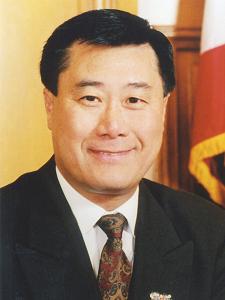
State Sen. Leland Yee, a child psychologist, had a very moderate bill in the Legislature this year that would have given juveniles sentenced to LWOP a chance after 15 years to be reconsidered for parole. That would put California somewhere close to the rest of the civilized world.


“SB 399 is not a get-out-of-jail-free card; it is an incredibly modest proposal that respects victims, international law, and the fact that children have a greater capacity for rehabilitation than adults,” Yee noted.


It cleared the state Senate, and should have cleared the Assembly Aug 24. But even with the Democrats firmly in control of that body, Yee failed to get enough votes for SB 399. And one of the people who refused to vote for it was San Francisco Assembly member Fiona Ma.


You expect this sort of shit from Republicans and from some conservative law-ond-order Democrats. But it’s inconceivable that a San Francisco Democrat would be against a bill like this. 


What on Earth was Ma thinking? I couldn’t get her on the phone, but her communications aide, Cataline Hayes-Bautista, sent the following Ma statement:


 “I did not come to my decision on SB 399 easily – it’s legislation that I have carefully reviewed and considered for months. While I acknowledge that some juveniles in the correctional system may have the capacity to be rehabilitated after decades of being incarcerated, I feel that we cannot reset a defendant’s clock 25 years later expecting a victim’s family will reset their hearts.


I know our District Attorneys do not take life sentences lightly. These crimes are limited to first and second degree murder offenses with a special circumstance which include the most troublesome crimes: murdering a peace officer, murdering to achieve a hate crime, committing a murder that’s especially heinous, murdering for financial gain, and murdering while escaping lawful custody.


All of these sentences were handed down after murder victims’ families had the chance to speak out and address the court on the impact of these murders. To re-open these closed cases to new sentencing hearings would re-open the wounds already suffered by murder victims’ families, forcing these victims to re-visit and re-live cases they were told had been closed forever. I think it would be unfair to these victims’ families to have to re-live these horrific crimes and for that reason I felt compelled to oppose this legislation.


There are already deliberative checks in place throughout the system where prosecutors, defense attorneys, jurors, and particularly our judges, have the ultimate discretion to choose a lesser juvenile sentence when sentencing a juvenile murderer. In addition, the Governor has the power to grant pardons and commute sentences. This already provides an avenue for juveniles to seek extraordinary relief if justice calls for it.


 While I appreciate Senator Yee’s intent to create opportunities to rehabilitate juvenile criminals, these particular crimes rise to a standard in which we need to hold those responsible accountable for their actions.”


Sorry, but that’s just terrible. To say that the victims’ families are better off if juveniles — people who were too young to be fully responsible for what they did, and who in some cases didn’t even kill anyone (just being present when someone kills someone can be a life sentence) are locked up until they die is just kind of sick. I don’t know what else to say. Except to give an example of who is serving life without parole (from Yee’s press release):


One such case involves Anthony C., who was 16 and had never before been in trouble with the law. Anthony belonged to a “tagging crew” that paints graffiti.  One day Anthony and his friend James went down to a wash (a cement-sided stream bed) to graffiti.  James revealed to Anthony that he had a gun in his backpack and when another group of kids came down to the wash, James decided to rob them. James pulled out the gun, and the victim told him, “If you don’t kill me, I’ll kill you.” At that point, Anthony thought the bluff had been called, and turned to pick up his bike. James shot the other kid.


 The police told Anthony’s parents that he did not need a lawyer. He was interviewed by the police and released, but later re-arrested on robbery and murder charges. Anthony was offered a 16-to-life sentence before trial if he pled, but he refused, believing he was innocent. Anthony was found guilty of first degree murder and sentenced to life in prison without parole. Charged with aiding and abetting, he was held responsible for the actions of James.


 Okay, this kid doesn’t belong in prison for life, without any chance of parole. Thanks, Fiona.


Meanwhile, without the support of Yee, Assemblymember Tom Ammiano’s bill that would allow a traffic camera at Market and Octavis narrowly squeaked by the state Senate Aug. 24 and will now head for the governor’s desk. The bill has generated a lot of commentary on this blog; bicyclists and pedestrians think it will save lives in a crazy intersection, and privacy types worry about the creeping police state.


Adam Keigwin, Yee’s chief of staff, insists that Yee didn’t do anything to block the bill:


FYI: Senator Yee did not block the bill.  In fact, he told his colleagues who were looking for his input on a San Francisco specific bill that it was ok for them to vote for it, even though he voted no.  The bill passed today.  Again, the Senator has opposed all camera enforcement bills for several reasons: such cameras create a police state; law enforcement could use the film to enforce other laws; we should use actual officers, have better traffic improvements – like we have done on 19th avenue where we have gone from several deaths a year to zero; open government problem – film (government document) is allowed to be destroyed without the public ever gaining access to it; and finally other privacy concerns.


Still, he didn’t vote for it, forcing Ammiano and Sen. Mark Leno to scramble around trying to find another vote to put it over the top.

Endorsement interviews: Glendon “Anna Conda” Hyde

2

Editors note: The Guardian is interviewing candidates for the fall elections, and to give everyone the broadest possible understanding of the issues and our endorsement process, we’re posting the sound files of all the interviews on the politics blog. Our endorsements will be coming out Oct. 6th.

District 6 candidate Glendon “Anna Conda” Hyde is full of intriguing ideas for how San Francisco can bring greater dignity into people’s lives.

These include a five-year moratorium on condominiums, the establishment of safe injection sites, building a grocery store in the Tenderloin, continuum housing for youth that age out of foster care, the charging of weight-based fees on vehicles that enter the city, and the creation of a theater and cultural district on the mid-Market Street corridor.

“We have been inspiring a whole lot of people that didn’t have a voice,” Hyde, who performs as the drag queen Anna Conda, told us in a conversation that touched on hot-button topics like decriminalizing homelessness, expanding rent control, creating safe and affordable housing, and providing better and basic services for folks in low-income areas,

“I was more into the idea of rent control but people are far more willing to talk about harm reduction and safe injection sites,” Hyde said of life on the campaign trail.

“San Francisco is a magical place that draws people to it, but it’s become the place that forces people out.”

Folks often talk about the divisive rise of NIMBYism in the South of Market, but Hyde thinks there is a way to create a more unified front in the district. “People don’t understand the ramifications of not taking care of the homelessness,” Hyde said. “Your tax is putting people in jail or on the streets, where it will cost twice as much. Three nights in jail equals the cost of an entire month of housing.”

To learn more about how Hyde intends to offer permanent solutions to these challengers, instead of simply sweeping folks from a doorstep to a jail cell, listen to the interview here:


glendon by janwend

SFBG Radio: We fight over tolls

2

In today’s episode, Tim and Johnny battle over whether raising the bridge tolls to fight congestion is a fair and progressive idea. You can listen to the argument after the jump.

sfbgradio8262010 by jangellw

Herrera’s gang injunction becomes part of D. 10 dialogue

0

As stated in this week’s article about City Attorney Dennis Herrera’s Viz Valley gang injunction, Herrera’s move gives D. 10 candidates an opportunity to show they are tracking all the issues in a district that is home to the city’s largest public housing site.

As C.L.A.E.R. Project director Sharen Hewitt put it at a debriefing session about the injunction, “D. 10 has been reduced to the Lennar issue, and that’s what’s criminal.”

And the injunction is becoming part of the dialogue in the D. 10 race, with eleven candidates in that race sounding off on the injunction, many of them critiquing Dennis Herrera’s approach and/or advocating for legal representation for those named in the suit, and more services in this historically neglected district.

Candidates Isaac Bowers, Kristine Enea, Chris Jackson, Nyese Joshua, Steve Moss and Marlene Tran attended Hewitt’s August 12 gang injunction debriefing.

And by meeting’s end, Bowers and Enea said they would help community members get legal representation.
“A lot of people being served, don’t know what an injunction is, or don’t show up at the hearing and then they become subject to the injunction,”  Bowers said.

Enea said she was glad that City Attorney Yvonne Mere clarified at the debriefing that the 41 young men named in Herrera’s filing could not be included in the actual injunction until they have been served.

“It was important to clarify the notice process,” Enea said.

Jackson said he’s committed to helping these men access job and education opportunities.
“If you i.d. folks as low-income gang members, there is a lot more you can do than simply hand over their names to law enforcement,” Jackson said.
“Before the City Attorney puts in a gang injunction, that office should talk about it with the community.” Jackson continued. “Ultimately this is about land use.”

“For the City Attorney to have a top down approach to gang injunctions is unfortunate,” Jackson said, noting that Herrera’s injunctions have been in predominantly
African American and Latino neighborhoods.

“And in terms of taking away people’s civil rights, it’s unacceptable, “ Jackson added, noting that the City Attorney’s list of targeted individuals is public information.

Reached by phone, Moss says he’d like to see a time limit imposed on gang injunctions. Currently, injunctions are indefinite, once they have been granted.

“I haven’t studied the precise details,” Moss said, noting that he went to Hewitt’s debriefing and has leaved through materials the City Attorney’s Office provided.
“Generally, no one likes gang injunctions because they potentially threaten civil liberties and sometimes the city gets it wrong,” Moss said, referring to cases where folks have been wrongly named in previous injunctions. “But in places where injunctions have been brought, they do seem to have reduced the violence and calmed down the district. I’d like there to be a time limit, a sunset clause.”

D. 10 candidate Marlene Tran said she thinks the injunction could help reduce violence in the neighborhood.
“I was trying to listen to the different input at the debriefing session,” Tran said. “But on TV, I heard that when Herrera talked to the Chinese press, he cited some 200 incidents in the proposed safety zone. About 100 of those incidents involved guns, and there have been ten homicides in three years. Those are really glaring statistics. And this morning I read that there is another injunction in Oakland, and they talked about success with gang injunctions in Salinas, where the homicide rate dropped from 50 to 5, compared to 2008/2009.”

Tran, who sits on the Community Advisory Board for the Police Department’s Ingleside Station, said she heard from Ingleside Captain Louis Cassenego that he wants to serve all 41 respondents named in the injunction peacefully.
“If this is done without any casualties to the district and the community, and if it prevents any further violence, then this is the way to go,” Tran said.

Tran expressed some due process concerns.
“If they spend that much personnel and time [on putting the injunction together], it should be done with due process,” Tran said.

But she feels the current level of violence in Viz Valley is unacceptable.
“I’ve lived here for twenty something years, and if you talk to residents and children, who wants to hear gun fire,” Tran said. “So I think we have to work for a peaceful community to prevent these problems. That’s why we call ourselves the emergent district.”

D. 10 candidate Ed Donaldson believes the injunctions are a product of neglect.
“It comes back to a question of overall neglect in the district,” Donaldson explained.  When you have that level of social and economic neglect, gang injunctions become “necessary’. But when you look at the resources coming into the district through local non-profits, which comes, I believe to $110 million a year, 80 percent of which is city money, paid mostly to non-profits that may not be based in the district, you have to ask, Are we getting what we paid for? And do these non-profits have enough integrity to make sure there is a level of impact to transform people’s lives? “

Donaldson says that, given the overall level of neglect in public housing, it’s not surprising the district has challenges.

“So, are we willing to invest in the neighborhood in a very transformative way, or are we going to continue to give money to police and prisons?” Donaldson asked.
He notes that every year, 1,600 men and women return to the southeast side of San Francisco, and there is a 71 percent recidivism rate among these folks.

“Why is this rate so high in a progressive city like San Francisco?” Donaldson said. “Part of the answer lies with our public housing policy: if you can’t get public housing, you can’t apply for a job, you can’t go to school to better yourself.”

Donaldson says there is a direct connection between the district’s homicide rate and the people getting out of prison, returning to the district and re-offending.
“So, what’s so hard about getting our arms around 1,600 people a year and stabilizing them? Because then a lot of stuff about public safety will go away.”

D. 10 candidate Tony Kelly believes that if there were gangs in Viz Valley, then Herrera’s injunction would be valid.
 “There is gang-like activity, but it’s small scale turf wars, shootings and retaliations, and it’s not organized,” Kelly said. “ Instead, you’ve got unorganized young black men with no other options, doing whatever it takes to get ahead. But instead of doing something constructive, the City Attorney calls them gangs.”

Kelly notes that the City Attorney claims that most of the individuals named in the Viz Valley injunction don’t live in the proposed safety zone.
“But according to what I’m hearing on the ground, a bunch of them do live here and/or grew up here,” Kelly said. “So, we want their families to get involved. They need safe havens. But combined with last year’s budget cuts, all this does is criminalize young people and pushes the problem around. As long as we have 40-50 percent unemployment, we are not going to solve our crime problem.”

DeWitt Lacy, also a D. 10 candidate, said he is concerned that gang injunctions are circumventing people’s due process rights.
“In a criminal case, you have the right to an attorney, but that’s not so in a civil action,” Lacy said.

Lacy worries that gang injunctions lend themselves to racial profiling.
“Folks have to stay in their house or quickly go to and fro because they can’t hang out in the neighborhood,” Lacy said. “A smarter approach would be to do community policy that Sup. Ross Mirkarimi introduced in the Western Addition. It’s been shown to have a positive impact on criminal activity. We should have officers walking around in troubled areas. The more we change a foot patrol pilot into citywide policy, the more we actually address serious issues and problems. Everyone understands the value that police bring and everyone wants to be able to rely on them. When we only use police to bring a punitive action it reinforces the notion that they are evil enforcers.”

D. 10 candidate Malia Cohen said she was concerned by Herrera’s approach.
“I think we need a more comprehensive approach, otherwise, we’ll simply be moving crime two blocks over,” Cohen said. “We need long-term, not short-term solutions.”

Cohen noted that there are Chinese and Russian gangs in town, as well as African American ones, and Latino gangs like the Nortenos and Sudenos.
“But the style of how each gang manifests is different, which makes African Americans an easy target. We need to have a uniform approach to how we deal with this.”

The 41 men identified in Herrera’s latest injunction all appear to be African American, and many have family ties and roots in Sunnydale, meaning the injunction impacts a much larger circle of folks than those simply named in Herrera’s filings.
“The impact on families caught up in this can’t be overstated,” Cohen said.  “Either they’ll have to take bus down to court, or drag down and pay hella money for parking, and for food, and even take a day off from work if they are employed. And then there’s the emotional effect. We could be using our resources in a more productive way. I understand that Dennis Herrera is ambitious, but this is playing on people’s racism. It’s tantamount to ethnic cleansing. Maybe Herrera wants to be seen as tough on crime, but ut how about being seen as big on compassion? Or big on fair? This is not going to help people get jobs and housing. And it prevents American citizens from being able to travel.”

Eric Smith, also a D. 10 candidate, says it’s right to question the injunctions.
“David Campos and Eric Quezada both expressed concerns about Herrera’s injunction against the Nortenos, when they were running in the 2008 race for D. 9,” Smith observed.
“They talked about the unintended consequences of that injunction in terms of deporting folks who then train the next generation in the ways of gangs.”

Smith questions how effective gang injunctions are in the long-term.
“They are a band-aid,” Smith said. “This is like putting a finger in the dike, or using a hammer to kill a flea. Because the root causes are not addressed. If you don’t deal with young people’s lack of education and joblessness, their hopelessness, their choicelessness, the gang becomes their family. So, if the city did community policing and had great youth programs, it would help.”

Smith, who is a professional jazz musician, wants to see more music, poetry and spoken word programs and activities in the neighborhood.
“There’s a lot of untapped talent,” he said. “When you have arts, music and theater, those are life-saving opportunities.”

Also a bio-diesel advocate, Smith wants to see people who are returning to the community after a stint inside, being able to access green jobs, instead of doing more of the same stuff, only better, than the activities that landed them inside in the first place.

“I care about everyone in the district, but most of all about those who have been kicked to the curb and end up in gangs, on drugs, or dead.”

And D. 10 candidate Diane Wesley Smith believes there are better solutions than gang injunctions

“African American culture is almost opposite in terms of physical mannerisms and gestures and tone of voice, and that can be scary to someone who is used to being conservative,” Wesley Smith said, speaking to the rising tensions between some black and Asian residents in the district.

“I believe these things could be solved with town hall meetings, where there is food and translators so folks could talk things out, “ she said. “It’s never going to be worked out through the police. Only law enforcement benefits from these kinds of proceedings. We need to reach out and touch each other, so that the Chinese community knows that the black community has the same goals as they do, which are employment, housing and safety.”

“When we talk about violating people’s civil rights, posting people’s pictures on websites, preying on people’s fears, well, that’s how we got into the war,” Wesley-Smith said. “Unemployment. Lack of access to opportunity. Lack of education. No money for our schools, but an increase in spending on our jails. These all send the same message: You are not wanted.”

Wesley Smith is concerned that the gang injunctions will accelerate the mass exodus of blacks and people of color from San Francisco.
“We all want a safe San Francisco,” she observed. “The solution is more jobs, not war. People are just going to go more underground in face of these injunctions. Meanwhile, the kids in my district don’t have toilet paper or computer paper in their schools.”

“I understand that Dennis Herrera is a career politician, and time will tell what his true aspirations are, but this is not legislation we propose in a caring society,” Wesley-Smith concluded. “We’re not showing any of these kids any love. All we need to do is partner with business and government and work this out. Te thought that four men standing on a corner drinking an energy drink could be considered gang members is shocking. That’s how they perpetuated slavery, and that’s why blacks have problems today. All my nephews dress similarly. So, are we going to consider them gang members? The good and the bad kids dress the same. We need people and parents to understand that none of us can be safe, until we take care of those who have the least in our community. I’d venture that everyone who is a safety concern has not pursued their education, has not been assisted in pursuing education, and has not been assisted in pursuing employment.”

D. 10 candidate Lynette Sweet promised to call me back to talk about the gang injunction, and if and when she does, I’ll be sure to include her comments here. The same goes for Nyese Joshua, Geoffrea Morris and Steve Weber  who had not returned my calls as of blog time, and for any other D. 10 candidates that I was unable to reach for this article. So, stay tuned…


EPA moves to protect California coasts from sewage dumping

Jared Blumenfeld told the Guardian that his son, who is in the sixth grade, was grossed out when he found out what his dad had been working on recently — crafting a new rule that would ban ships from dumping sewage into California’s coastal waters. The youngster quite sensibly expressed disbelief that up until now, such a thing hadn’t been adequately dealt with.

Blumenfeld, the U.S. Environmental Protection Agency (EPA) Region 9 Administrator and former director of the San Francisco Department of the Environment, signed a new rule on Aug. 25 establishing a No Discharge Zone for vessel sewage in California marine waters. The rule, which will become effective next year, places an enforceable ban on dumping treated and untreated sewage into coastal waters up to three miles offshore that will apply to cruise ships and major commercial vessels. “It will prevent up to 20 million gallons of sewage from going into coastal waters,” Blumenfeld explained, citing EPA estimates.

The No Discharge Zone will cover 1,624 miles of coastline, including major islands and tidally influenced bays, estuaries, and rivers, making it the largest protection zone of its kind nationwide.

A Clean Water Act ban on vessel discharges of untreated sewage already exists off the coast of California, and International Maritime Organization rules currently prohibit dumping treated or untreated sewage up to three miles offshore, and untreated sewage up to 12 miles offshore. However, the EPA’s new rule has teeth thanks to the introduction of a key player: The U.S. Coast Guard. The maritime arm of the Department of Homeland Security “has a very hands-on approach” to enforcement, Blumenfeld explained, and suggested that the Coast Guard’s involvement could go a long way toward ensuring compliance.

The creation of this new, enforceable rule has been in the works for nearly half a decade, but the process was slow going. “This administration came on board and said, let’s take some action and move this forward,” Blumenfeld said.

Unchecked sewage discharges have impacted beaches all along California’s coast, presenting health hazards and occasionally prompting beach closures. Statewide, 40 percent of beaches monitored in 2009 experienced advisories for exceeding water-quality standards due to pathogens found in sewage. In San Francisco, more than 85 percent of the beaches had advisories, likely a byproduct of the thousands of passengers aboard roughly 60 densely-packed cruise ships and 2,000 cargo ships coming into the San Francisco Bay each year. No one can pinpoint exactly what quantity of the sewage that is released is treated, or untreated, Blumenfeld noted.

Beachgoers aren’t the only ones impacted by harmful pathogens in organic waste. Inland waters such as those found in the Sacramento-San Joaquin Delta provide spawning grounds for important fishery species including striped bass, California halibut, white sea bass, herring, and various types of salmon. Coastal waters, meanwhile, serve as key habitat for kelp forests, which — in addition to providing refuge for many kinds of marine life — are routinely harvested for use in products like cosmetics or ice cream. Other species supported in coastal waters include sea urchin, squid, abalone, spiny lobster, California halibut, Pacific mackeral, rockfish, and several kinds of crab. Sewage is one of many different varieties of pollution that can impact inland and coastal waters in California.

While the EPA’s newly established No Discharge Zone signifies an important step forward in the realm of marine conservation, it’s still just one piece of the puzzle. Once the rule is implemented, cruise ship operators will likely opt to discharge their sewage outside of the three-mile protection zone, free of charge. To discourage these discharges farther out at sea, a whole new rulemaking process would probably have to be set in motion banning oceangoing vessels from discharging any sewage anywhere, and requiring docks to have infrastructure for ships to pump out when they come into port. No such requirement currently exists.

The theory behind allowing sewage discharges outside the No Discharge Zone is that waste is more effectively diluted in greater oceanic depths farther off the coast. But a sixth grader would probably tell you that at the end of the day, it still doesn’t remove the estimated 20 million gallons of sewage from the ocean.

Alioto-Pier vows to take D. 2 re-election bid to California Supreme Court

4

Sup. Michela Alioto-Pier announced today that she will file an appeal with the California Supreme Court by the end of tomorrow (August 25), following today’s California Court of Appeal ruling that found she was ineligible to seek another term.

Alioto-Pier’s announcement came shortly after City Attorney Dennis Herrera issued a press release, announcing that today’s California Court of Appeals’ decision “strongly vindicates” his office.

Herrera’s office advised Alioto-Pier in a February 2008 legal opinion that she was ineligible to seek another term on the Board due to the city charter’s term limits provisions.

“More than two years later, Alioto-Pier sued to force Elections Department officials to place her name on the ballot,” Herrera’s office stated, noting that a San Francisco Superior Court judge granted Alioto-Pier’s petition on July 22, holding that voters had implicitly rendered the 20-year-old term limits rule “ineffective” with subsequent charter amendments. 

“Today’s appellate court ruling restores the legal effect of the voter-approved ‘rounding-up rule,’ which provides that if an appointed incumbent serves more than two years of a term, it counts as a full four-year term for purposes of term limits,” Herrera’s office said.  “In so doing, the decision affirms Herrera’s original conclusion that Alioto-Pier is ineligible to seek another term on the Board.”

Herrera included a personal statement in his office’s press release, indicating that he does not want this decision to be seen as a personal attack on Alioto-Pier.

“I am grateful to the Court of Appeal for recognizing the obvious intent of San Francisco voters, and for affirming the clear meaning of the law,” Herrera stated. “This case has always been about the principle of upholding voters’ will, and I regret that some political pundits focused instead on personalities.  I’ve consistently defended Sup. Alioto-Pier’s right to pursue this dispute in the courts, and I wish her and her family every success in their future endeavors.  I know I join the vast majority of San Franciscans in expressing gratitude for her record of public service to the City we share.”

But Alioto-Pier isn’t about to give up on her bid just because of an appeal court ruling.

“Clearly, we disagree with that ruling,” Tom Pier, Alioto-Pier’s husband, told me. “We feel that the panel failed to look at the clear language of the charter in which voters expressed their clear intent that no supervisor should serve no more than two consecutive four-year terms.”

Pier noted that the City Attorney’s Office applied this same argument when it allowed now Assembly member Tom Ammiano to serve on the Board for 14 years, a decision Pier believes was rendered in 1998.

One difference between these two cases is that Ammiano was elected to serve all those years, while Alioto-Pier was initially appointed by Gavin Newsom to fill his D. 2 seat in January 2004, when he became  mayor. Alioto-Pier was then elected to the Board in November 2004. As a result, Alioto-Pier will have served on the Board for seven years, when her term expires in January 2011.

Rumor has it that Elections has had to print two versions of the ballot, one with Alioto-Pier’s name on it, and one without, in face of uncertainty about her appeal.
And now the question becomes if and when the California Supreme Court will agree to hear her appeal in time, given that the election is less than 10 weeks away.

 “The exact date by which they need to render an opinion is yet to be determined,” Pier said.

We sue the FBI

1

The Bay Guardian has joined the ACLU of Northern California and the Asian Law Caucus in suing the FBI to demand access to records of federal agents spying on Muslim communities and organizations.


We filed a Freedom of Information Act request five months ago, seeking access to key records, including documents that would show how the FBI is:


•       investigating Islamic centers and mosques (as well as Christian churches and Jewish synagogues);
•       “assessing” religious leaders;
•       infiltrating communities through the use of undercover agents and  informants;
•       training agents in Islam and Muslim culture;
•       using race, religion and national origin in deciding whom to investigate; and
•        identifying particular schools for its Junior Agent Program.


The FBI has not released the documents, leaving us no choice but to file suit. The law firm of Morrison and Foerster is representing the plaintiffs pro bono. (Thanks, MoFo.)


“Clear information about the FBI’s activities is necessary in order to understand the scope of their surveillance tactics to assess whether they have had a chilling effect on the right to worship freely or to exercise other forms of expression,” said Julia Harumi Mass, staff attorney for the ACLU of Northern California.
 
“This lawsuit is about transparency.  The public is entitled to this information under the Freedom of Information Act.  The FBI admitted in March that our clients’ FOIA requests are entitled to expedited processing because of the widespread media attention on these issues, but the government has yet to provide them a single document,” said attorney Raj Chatterjee of Morrison & Foerster.   


There’s plenty of evidence that the feds are engaged in dubious, perhaps unlawful surveillance of Muslim communities. Check out this, and this and this. We’re hoping to shed some light on what the FBI is really doing here.


You can see a copy of the complaint here (pdf)

Yee blocks traffic camera at Octavia

37

The Market-Octavia intersection is one of the most dangerous places in the city for bicyclists. Cars making an illegal right turn onto the freeway ramp hit riders; there were nine collisions in 2008 alone, and there have been 20 injury accidents since the freeway ramp opened. The city’s built barriers and traffic signs, but the illegal turns continue.


So with the backing of the SF Bicycle Coalition, Assemblymember Tom Ammiano introduced a bill that would allow the city to install a trafic camera to monitor illegal turns at that intersection. It’s a modest pilot project, a test run until 2014. It cleared the Assembly easily, with bipartisan support, and right now it’s just one state Senate vote away from the governor’s desk. That is, Ammiano is one state Senate vote short.


And Sen. Leland Yee of San Francisco is refusing to vote for it.


That kind of mystified me; why would Yee be against a fairly common-sense safety measure? I called Yee’s aide, Adam Keigwin, who said it was a matter of principle: “He’s never voted for traffic cameras,” Keigwin said. “He sees it as a police state issue. Once they take pictures of you driving, what else are they going to take pictures of?”


Again: That’s a bit odd. Yee’s usually a law-and-order type of guy. And I’m not for cameras everywhere; I have problems with the cops wanting to put “crime cameras” in neighborhoods. But this one seems fairly harmless — it’s a busy intersection where someone’s going to die one of these days, and I don’t think a traffic camera is going to take us down a slippery slope to a police state.


In fact, the bike coalition’s acting director, Renee Rivera, told me that she understands Yee’s concern, but “in this case, the safety concern takes precedence. This camera enforcement is going to make it safer for people walking and biking.”


Anyway, if you want to express an opinion on this, Yee’s office is (916) 651-4008.

Brilliant essay on the state of California

6

Vast treatises have been written about the California mess and how we got where we are today. But a professor at UC Berkeley’s school of public policy sums the whole thing up in one brilliant, short letter to his students. You can read the whole thing here (thanks, Calitics), but the gist is that today’s generation of California kids is the collective victim of a massive swindle:


Swindle–what happened? Well, before you were born, Californians now dead or in nursing homes made a remarkable deal with the future.  (Not from California? Keep reading, lots of this applies to you, with variations.) They agreed to invest money they could have spent on bigger houses, vacations, clothes, and cars into the world’s greatest educational system, and into building and operating water systems, roads, parks, and other public facilities, an infrastructure that was the envy of the world. They didn’t get everything right: too much highway and not enough public transportation. But they did a pretty good job.


Young people who enjoyed these ‘loans’ grew up smarter, healthier, and richer than they otherwise would have, and understood that they were supposed to “pay it forward” to future generations, for example by keeping the educational system staffed with lots of dedicated, well-trained teachers, in good buildings and in small classes, with college counselors and up-to-date books.  California schools had physical education, art for everyone, music and theater, buildings that looked as though people cared about them, modern languages and ancient languages, advanced science courses with labs where the equipment worked, and more. They were the envy of the world, and they paid off better than Microsoft stock. Same with our parks, coastal zone protection, and social services.


This deal held until about thirty years ago, when for a variety of reasons, California voters realized that while they had done very well from the existing contract, they could do even better by walking away from their obligations and spending what they had inherited on themselves.  “My kids are finished with school; why should I pay taxes for someone else’s?  Posterity never did anything for me!”  An army of fake ‘leaders’ sprang up to pull the moral and fiscal wool over their eyes, and again and again, your parents and their parents lashed out at government (as though there were something else that could replace it) with tax limits, term limits, safe districts, throw-away-the-key imprisonment no matter the cost, smoke-and-mirrors budgeting, and a rule never to use the words taxes and services in the same paragraph.


That about sums it up, and I hate to say it, but my generation — the baby boomers who were supposed to change the world in such a wonderful way — is guilty of just the opposite. If the WWII folks were the Greatest Generation, then the boomers are the Selfish Generation.

SFBG Radio: Conservative stupidity

6

Remember John Stuart Mill? Is it still true that, while all conservatives aren’t stupid, most stupid people are conservatives? Johnny and Tim discuss the relevance of the 19th Century philosopher’s wisdom to today’s Republican Party. You can listen after the jump.

sfbgradio8232010 by jangellw

Bay Bridge tolls a boost for congestion pricing?

5


San Francisco officials are watching closely to see if higher tolls on the Bay Bridge might help the city make the case for charging fees to drive into downtown in high-traffice periods — and so far, the evidence is promising.


Since tolls increased July 1, an additional 4,000 commuters turning to BART — and that means fewer cars on the bridge.
The Bay Area Toll Authority elevated fees during the hours of 5 am to 10 am and 3 pm until 7 pm for crossing all bridges except the Golden Gate, which is managed by a different agency.


Drivers crossing the Bay Bridge during weekday commute hours are now expected to pay $6. During other hours, the weekday toll remains at $4. The toll is $5 on both Saturday and Sunday.


The toll has also been bumped up to $5 on the Antioch, Carquinez, Dumbarton, San Mateo, Benicia-Martinez and Richmond bridges. Although previously exempt from charges, occupants in the carpool lane now pay $2.50.
These increased costs may have prompted discontented commuters to add to the approximately 335,000 individuals that use BART each day, spokesman Jim Allison said.


“We have seen 2,000 to 4,000 more people riding BART on an average weekday this month compared with last,” he said.
Allison was careful to note that because of the brief time element and other seasonal changes, it is hard to determine higher tolls as the only reason for a boost in ridership.


“It is just too soon to draw any conclusions,” he said. “While it may be a factor, the increase cannot necessarily be attributed to the changes on the Bay Bridge.”


However, executives from the San Francisco County Transportation Authority planning to bring a citywide congestion pricing plan before the Board of Supervisors this fall were encouraged by the trend toward public transit.
“We do think that it is too early to draw any conclusions,” SFCTA deputy director for planning Tilly Chang said. “But the general indication is that people are shifting their behavior in some way, which is the goal of congestion pricing.”
The toll hikes mark the Bay Area’s first quasi-attempt at congestion pricing, with officials hoping to encourage the use of public transportation while simultaneously decreasing travel time for those who choose to stay in the driver’s seat.
According to a preliminary study on the compounded tolls, there were more than 12,000 fewer carpoolers and 2,300 more drivers paying the full fare on their commutes.


Spokesman John Goodwin said that the increase in solo drivers could be due to the new system’s ability to weed out cheaters, with FasTrak identification and a guaranteed minimum toll putting a damper on disobedience.
“It may very well be that we didn’t have as many real carpoolers as we thought we did,” Goodwin said. “There is, of course, no way of quantifying exactly how many drivers who didn’t meet the occupancy requirement are now recalibrating