

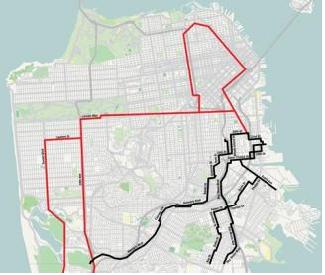
PG&E has been hiding the map of where its high-pressure pipes run under San Francisco, but we’ve got it. Or most of it. Using existing public records and open-source mapping software, we’ve pieced together a pretty complete map of where the hazardous 30-inch pipes are buried. Check it out here.
- No categories
Politics Blog
Plan C endorses Sweet and Moss in D10

Plan C, a group that promotes condo conversions and rails against tenant protections, claims to be working hard to elect “moderate candidates” to the Board this fall.
And now the group has invited its members to meet Plan C’s “endorsed candidates” on October 4 at St. Mary’s Cathedral on Gough Street.
The winners, according to Plan C’s website, are Mark Farrell in D2, Theresa Sparks in D6, Scott Wiener in D8 –and Lynette Sweet & Steve Moss in D10.
No big surprises here.
But candidates in the district elections might want to note that Plan C’s slate met with limited success in 2008: the group endorsed Sue Lee in D1, Joe Alioto Jr in D3, Eva Royale in D 9 and Ahsha Safai in D11, and none of these “moderate” political hopefuls made it into office.
In fact, the only folks on Plan C’s 2008 slate who actually won were incumbent supervisors: D4’s Carmen Chu and D7’s Sean Elsbernd.
Hey, maybe that explains why Sweet is trying to act like the incumbent in D10 and refusing to give interviews before she’s even been elected…
Holding corporations accountable for job creation claims
Amid the ongoing state budget impasse and an election season dominated by scapegoating public employee unions for public sector fiscal problems, Sen. Leland Yee (D-SF) today introduced legislation to hold corporations that receive tax breaks accountable for the jobs they claim to create, a bill that was quietly killed earlier this year after being approved by both houses of the Legislature.
Opposition to the bill by corporate interests should puncture the oft-repeated myth that tax breaks spur job creation rather than simply increased corporate profits, a myth that leads everyone from SF Mayor Gavin Newsom to Gov. Arnold Schwarzenegger to push business tax breaks that have hobbled the ability of governments to effectively function.
After intense lobbying against the measure by banks and the California Chamber of Commerce, SB 1391 fell one vote short on the concurrence approval it needed on the last night the Legislature’s regular session after some Southern California legislators who had originally voted for it decided to let it die. So Yee has reintroduced the bill as SBx6 20 for consideration during the upcoming special session that the governor called to deal with tax reform, which begins when legislators return to vote on the state budget as soon as this week.
The measure would require corporations that claim job creation tax credits to annually file information with the Franchise Tax Board listing how many full-time positions they offer. If the number of jobs at the company drops over a three-year period – a common occurrence in this era of outsourcing and downsizing – the corporations would be required to pay back taxpayers for their tax breaks.
“It is wrong for California to provide upwards of $14 billion in corporate tax credits without transparency and accountability,” Yee said in a public statement, also adding, “A working mother on CalWORKS or disabled senior receiving in-home supportive services has to jump through numerous bureaucratic hoops to receive minimal life-sustaining benefits, but if you are a Wall Street bank or big corporation looking for scarce tax credits, no one asks any questions.”
Numerous studies and books such as the Great American Jobs Scam have shown how the pervasive argument that cutting business taxes promotes job growth just isn’t true, even though it is taken as an article of faith by corporation and business-friendly politicians. But one need only consider the current jobless economic recovery – in which corporate profits have rebounded while unemployment remains stubbornly high – to doubt the Chamber of Commerce messaging.
Yee’s Chief of Staff Adam Keigwin tells the Guardian the measure simply makes sense, particularly in the context of a discussion about tax reform: “Here we have found a majority vote solution to a revenue issue and a fairness issue,” he told us. “If we’re going to give these tax breaks, fine, but make sure there’s accountability.”
Trash war hits Chamber of Commerce lunch

The San Francisco Chamber of Commerce is hosting a lunch with Recology today in an apparent effort to push a garbage transportation/disposal contract that the Board of Supervisors hasn’t yet approved.
The Guardian wrote about this ongoing landfill disposal contract dispute between Recology and Waste Management earlier this year, and to date, the Board has not voted on the matter.
But judging from the tone of the following press release, the Chamber, whose incoming chair elect is Recology Vice President John Legnitto, has already made its decision:
“Please join us for a lunch with Recology to learn about the San Francisco’s garbage by Green Rail to Ostrom Road project,” the Chamber states, noting that until the city’s goal of zero waste is reached, “some material will still need to be sent to landfill.”
“A panel of city officials from San Francisco and Oakland chose Recology Ostrom Road Landfill to receive garbage from San Francisco after the city’s current landfill agreement ends in 2015,” the Chamber continues, without bothering to note that this plan involves hauling the city’s waste all the way to Yuba County, which is three times further away than San Francisco’s current waste disposal contract with Waste Management at the Altamont Landfill, near Livermore.
“Officials say the plan to ship San Francisco’s garbage by Green Rail to Ostrom Road is the most cost-effective and environmental option for transporting waste,” the Chamber continues. “Rail haul is at least three times more efficient than trucking, takes trucks off the road, and cuts fuel consumption and air emissions.” And it encourages folks to learn more about the plan to ship the city’s garbage to Ostrom Road, by visiting Recology’s Ostrom Road site:
Not to be outdone, Waste Management, Inc.has put together a video clip that features on-the-street interviews in downtown San Francisco with local residents–including an amazing “Statue Man” in Justin Herman Plaza– about its competing plan to convert San Francisco’s garbage into liquid natural gas that would then fuels its garbage trucks.
Meanwhile, the Sierra Club has asked the Board of Supervisors to schedule a public hearing. In a September 17 email, sent to Board President David Chiu and the rest of the Board, Rebecca Evans, chair of the Sierra Club’s San Francisco Group, requested that the Board hold a public information hearing on the current status of the City’s contract for landfill operations, starting in 2015.
“Some months ago, the Department of the Environment ‘selected’ Recology’s proposal to transport San Francisco’s waste to Yuba County,” Evans notes. “A contract was to be released in June 2010. We understand the confidential nature of contract negotiations but it is September and no further information has been made public.”
“To be clear, the San Francisco Bay Chapter has no policy position on the plan to move landfill operations from the current Waste Management Alameda County Altamont site to Recology’s Ostrom Road destination,” Evans clarifies. “However our chapter and the Club’s Mother Lode Chapter have strong interests in the proposal and how it might be carried out. We ask you to hold a hearing in the near future so that the public can have a fuller understanding of this important issue.”
SFBG Radio: The recession’s not over

Today Johnny and Tim talk about the fact that only 5 percent of the people who lost their jobs in the recession have found new jobs. The receession’s over? My ass. Listen after the jump.
sfbgradio9/21/2010 by endorsements2010Texas hotels more progressive than San Francisco’s?

Prop. J would increase San Francisco’s hotel tax of 14 percent – which is lower than such big cities as Seattle, Chicago, and New York — by 2 percent. Opponents of the measure, such as District 8 supervisorial candidate Scott Wiener, say they are concerned that San Francisco would have the highest such tax in the country and that tourism could suffer as a result.
Yet in the city that actually has the highest hotel tax, San Antonio, Texas – where the 16.75 percent rate would still be higher than San Francisco’s even if Prop. J passes – representatives of the hotels have been among the bigger supporters of the tax, unlike in San Francisco where hotels are leading the campaign to defeat Prop. J with help of Mayor Gavin Newsom.
Dee Dee Poteete, the director of communications at the San Antonio Convention and Visitors Bureau, told the Guardian there are more than 25 million people that visit that city each year, a number that held steady even after the tax was put in place in 1999. The tax rate was reauthorized two years ago, with the hotels in support.
“Our city provides a very full and rich vacation or meeting experience that is an extremely good investment for [visitors],” Poteete said when asked about how tourism in San Antonio is affected by the tax, revenue from which is currently used to help support and promote tourism. And like San Antonio, San Francisco is a rich destination with a large tourism industry. Supporters of the tax believe the tax will also help keep San Francisco attractive to tourists.
“Money will go back into the general fund, but tourists use the same city services such as Muni and the parks so the money is also going back to them,” Gabriel Haaland with SEIU Local 1021, which helped gathered signatures to qualify the measure for the ballot, told us. “City services have been so dramatically cut that it would undermine the tourism industry if the city degraded and that’s what would deter tourists more than the $3 a night [that the measure would add to the average hotel bill].”
San Francisco Controller Ben Rosenfield has estimated that the revenue generated by the tax would be $38 million annually.
Spoof “Civil Sidewalks” site takes a swipe at Prop L
Voters seeking information about The Civil Sidewalks Coalition, the group backing Proposition L to establish a new San Francisco law against sitting and lying down on city sidewalks, might’ve gotten a shock if they visited CivilSidewalks.org instead of CivilSidewalks.com. The imposter web page was designed to look just like the official Civil Sidewalks campaign website, but includes a scathing description of the coalition as “NIMBYs, commuters, wealthy moguls, business associations and politicians” who “think it is our duty to rid San Francisco of poor people, the homeless and fun.”
Here’s the description from the real Civil Sidewalks page:
Welcome to Civil Sidewalks. We are a grassroots group of families, residents and small merchants who believe that sidewalks should be a safe place for our children, elderly and disabled.
Unfortunately the people who encamp on city sidewalks are becoming increasing intolerant of people who are merely trying to walk by. This had led to threats, violence, and physical retaliation.
Here’s how the spoof site interpreted it:
Welcome to Civil Sidewalks. We are an astroturf group led by suburbanites, political consultants and wealthy business interests who believe that sidewalks should be a safe place for enjoyment of the few.
Fortunately some well-off people who walk on city sidewalks have had enough and are becoming increasing intolerant of poor people who are merely trying to take a break. We have taken to threats, fear-mongering, and distorting facts to promote our cause.
The guerrilla campaign tactic brings to mind pranks pulled by The Yes Men, who’ve ruined many a corporate executive’s day by issuing fake press releases and occasionally impersonating company representatives at highly publicized events. If there’s a moral to this story, it’s this: Buy up domain names that are similar to your organization’s web address, especially if it’s election season and you’re up against a cadre of crafty progressives with web-design skills.
Endorsement interviews: Scott Wiener
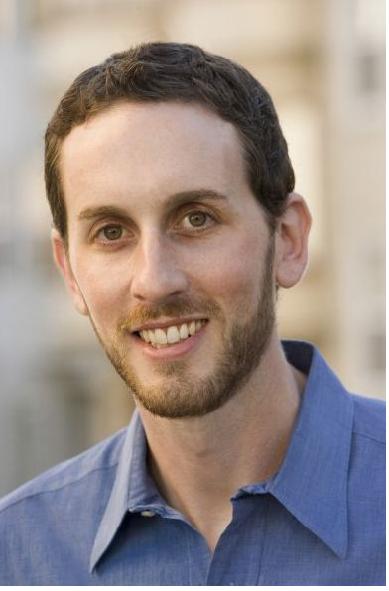
Scott Weiner has a long record in District 8. He helped build the LGBT Center, was the president of the Eureka Valley Improvement Association, co-founded Castro Community On Patrol, was co-chair of the Alice B. Toklas LGBT Club and chaired the San Francisco Democratic Party between 2006 and 2008.
He’s very much the political moderate; he told us he doesn’t want to see the city go into the retail electricity business with a full public-power system. He supports the sit-lie law (and opposes the ballot measure calling for community policing and foot patrols). He says he takes a “case by case” approach to taxes, and support the vehicle license fee, but doesn’t support the hotel tax increase. He’s got the support of the Small Property Owners, perhaps the most anti-tenant group in the city. He doesn’t think the city should go any further to stop Ellis Act evictions.
In fact, overall, Wiener thinks the city ought to address its financial problems with cuts and service reductions. “We have to live within our means …. Until the state gets its house in order, we can’t tax our way out of it,” he said.
You can listen to our interview here:
SFBG Radio: Poverty rising and the price of despair

Today we talk about the new data that shows one in seven Americans now live in poverty — and why the rich ought to be willing to pay more taxes. You can listen after the jump.
sfbgradio9.17.2010 by endorsements2010Adachi crosses the line
Former Mayor Willie Brown and Public Defender Jeff Adachi – author of Prop. B, which would require city employees to pay more for their pension and health care costs – yesterday crossed a union picket line at Le Méridien, which is being boycotted by hotel workers with Unite-Here Local 2, to attend a fundraiser for the measure.
http://www.youtube.com/watch?v=J6K8FkTt7pM
San Francisco Labor Council President Tim Paulson called it “such an outrageous thing in San Francisco.” Even Sup. Sean Elsbernd, perhaps the most conservative member of the Board of Supervisor, was shocked today when told of Adachi’s crossing the line, saying he would have never done so. Local 2 spokesperson Riddhi Mehta told us, “It shows their true colors. By no means are they for working families.”
Adachi has been public enemy number one of local labor leaders since he authored the measure with little input from unions or other public officials, and Paulson said this action was emblematic of Adachi’s hostility to unions, adding that it was even more surprising to see Brown, a longtime ally of unions, supporting the measure and crossing the line.
“It was not unexpected for Jeff Adachi, with the way he’s been acting lately, not caring about labor, but it was a little surprising for Willie Brown considering his career and record,” Paulson said.
Adachi told the Guardian that he was unaware at the time that it was a Local 2 picket line. “The honest truth is that when I got there, I thought it was a protest against Prop. B,” Adachi said. Yet he also that even if he had know, “I still would have went to the event.”
“I completely support the workers’ right to strike, but at the same time, I am on a mission to save the city $120 million a year,” Adachi told us. “The resources that the opponents are pouring into this are completely unreal.”
La Merdien has been on the Local 2 boycott list for several months, and both Paulson and Mehta said the picket was independent of Prop. B, although some SEIU members did show up with signs criticizing the measure. As for scheduling future fundraisers at other boycotted hotels, Adachi told us, “I’ll be more mindful of that.”
SFBG Radio: The $119 million question

In today’s episode, Johnny and Tim ask the $119 million question: How come after Meg Whitman has spent a fortune on advertising, she still isn’t ahead? And nobody knows who exactly is going to vote in November, either. Listen after the jump.
sfbgradio9162010 by endorsements2010Ships and whales don’t mix

Earlier this year, the Guardian reported on ongoing efforts to address threats to whales posed by huge shipping vessels in and around the San Francisco Bay. In addition to fatally striking the marine mammals – many of which are already on the decline under strain from myriad environmental pressures – cargo ships may inhibit whales’ ability to locate food, mates, or their young by masking the sounds they rely upon for those behaviors.
So it was especially sad to read the news on Sept. 16 that a whale carcass was found on the bow of a container ship coming into the Port of Oakland, especially if biologists determine that it was indeed an endangered blue whale. According to a researcher from Scripps Institution of Oceanography who we interviewed for the story, there are so few blue whales left that if even two die from ship strikes every few years, the entire species could be imperiled.
We received this statement from Jackie Dragon, marine sanctuaries program director for Pacific Environment:
“Another dead whale on the bow of a ship is a reminder that ships and whales don’t mix. Yet with the ever increasing number of ships calling on the busy Port of Oakland, and the fact that all ships must drive through the vital whale-rich marine sanctuary waters just beyond the Golden Gate – we need to step up our efforts to find ways to keep whales and ships apart.”
Ednorsement interviews: Bus drivers on Prop. G

Advocates for Muni drivers came to the Guardian this week to make the case for voters to reject Proposition G, which would remove their pay guarantees from the city charter, and to argue that the union has been unfairly demonized by Mayor Gavin Newsom, Sup. Sean Elsbernd and other city officials in an effort to deflect blame for problems with the troubled transit system.
The group included top Transport Workers Union Local 250A officials Irwin Lum and Rafael Cabrera, Bob Planthold with Senior Action Network, and Frank Lara with More Public Transit Coalition (which was spearheaded by the ANSWER Coalition). “Muni is broken and needs drastic change. It needs to be changed from the top to the bottom,” Lum began.
Yet he said targeting Muni drivers, most of whom are people of color doing a difficult job in one of the country’s most complex systems, doesn’t solve a problem that goes far beyond work rules and salaries. The problem lies with lack of resources and the political will to pursue them, they said, which is why the union supported proposals to reform the Municipal Transportation Authority governing structure and pursue significant revenue options, which were discussed but ultimately abandoned by the Board of Supervisors earlier this year.
“Too many people at City Hall are looking to cover their political rear ends,”said Planthold, who advocates for the rights of those with disabilities and has studied transit systems around the country.
Newsom has repeatedly singled out TWU as the one public employee union that didn’t agree to givebacks to help close the city’s budget deficit, and even some progressives have told the Guardian that the union hasn’t done itself any favors with its intransigent stance. But Lum said union leaders were prepared try to sell their members on a deal that included forgoing raises and accepting unpaid furlough days but that Newsom was too quick to leak news of the deal to the media for political reasons, causing TWU members to dig in and reject the deal before that education process could begin.
While the city and MTA may save $10 million through the measure, they said that was small change compared to the system’s real needs, which they estimated to be around $125 million, much of which could be brought in by creating transit assessment districts to charge big employers whose workers rely on Muni.
Click below to read the complete interview.
TWU by endorsements2010
Lynette Sweet, the “no comment” candidate
Lynette Sweet, who is running for D. 10 Supervisor, has already declined to give the Guardian an endorsement interview. And earlier this year, when Sweet sat down for a brief interview as part of our kick-off coverage of the D. 10 race, her campaign manager Shane Meyer kept trying to answer our questions before Sweet could even open her mouth.
But yesterday Meyer took the campaign’s habit of non-communicating to a new level, making us wonder just how much access or information anyone will be able to get out of Sweet, in the event that she actually gets elected, given how she is behaving as a candidate.
“We make no comments to the Guardian,” Meyer told us, when we called to ask if Sweet knew that workers with her campaign had stuck her campaign signs on the doors of the tenants association building in the Sunnydale public housing projects
Now, aside from the fact that Sweet is running a truly off-putting campaign by refusing to communicate on even the most straighforward issues, she might want to make sure her campaign staff are properly trained.
That’s because, as John St. Croix, executive director of the city’s Ethics Commission, told us, “It’s generally illegal to post any sign on public property.”
“All political signs can only be posted on utility poles and lamp posts,” St. Croix added, noting that the Department of Public Works regulates such activity and these regulations are clearly laid out in the Elections Department’s candidate guide.
That guide also states that local law prohibits the posting of signs in excess of 8-1/2 x 11” on all street poles—and that there is a total prohibition on historic lampposts, traffic signals (duh!) and poles with directional signage.
The guide lists common violations of the law regulating outdoor political advertising, which include posting more than one sign on the same pole, and failure to remove signs after Election Day.
“Candidates are strongly advised to become familiar with all applicable laws to avoid such violations,” the guide states.
Chron endorsement dishonestly attacks marijuana measure

Once again proving itself to be an corporate-run embarrassment to a city that has been at the forefront of progressive reform – including the movement to legalize medical marijuana – the San Francisco Chronicle this morning recommended that voters reject Prop. 19, which would allow cities and counties to legalize marijuana use by adults. And it did so with tortured logic and a cowardly, disingenuous claim to support legalizing marijuana.
As a journalist who has covered the medical marijuana industry in the Bay Area, I didn’t recognize the chaos that Chron editorial writers say resulted from the landmark 1996 measure Prop. 215, the medical marijuana measure written right here in San Francisco, home to a well-regulated, professional network of cannabis dispensaries, thanks to the city proactively setting guidelines. The cities cited in the Chron all did nothing to set standards for medical marijuana dispensaries, whereas in cities like San Francisco that did, an increasingly important sector of the local economy flourished with few problems.
Prop. 19 would similarly allow cities and counties to create systems for regulating marijuana for recreational use – or to not allow it if they so chooses. Yet the Chron takes issue with this localized approach, writing, “The measure establishes no state controls over distribution and product standards; it does nothing to help cure the state’s budget deficit.”
Both statements simply aren’t true. The measure explicitly gives the state authority to tax and regulate marijuana, Assembly member Tom Ammiano already has proposed legislation to do so if the Prop. 19 passes, and the California Legislative Analyst’s Office has estimated it could bring in more than $1.5 billion annually into state coffers.
Although the Chron claims “that the ‘war on drugs’ – especially as it applies to marijuana – has been an abject failure,” it bemoans a provision in the measure that prevent employers from firing employees simply for having marijuana in their systems, as it would be if someone smoked a joint three weeks ago, despite having no impact on job performance. “Pre-employment testing would be banned,” the Chron writes, as if that were a bad thing. The editorial also complains that people would be allowed to grow small plots of marijuana in their backyards. Again, and the problem with that is what exactly?
Bottom line: Chron editorial writers fall into the same old tired reefer madness stereotypes that have driven the drug war’s “abject failure,” but they just aren’t honest enough to admit the contradiction with their stated claim that “if this were simple a referendum on the status quo, and the ability of a 21-or-older Californian to possess an ounce or less for personal use, it might be an easy ‘yes’ vote.”
Because the reality is that’s what this measure does, simply lift the prohibition on pot, while also including language supporting local control and basic civil rights. There are some valid arguments against Prop. 19 – such as it lets jurisdictions tax or regulate pot too much – but those honest disagreements weren’t raised by the newspaper.
Instead, the paper made it sound like measure would fill the roads with stoned drivers and every neighborhood with the stench of marijuana, which is laughably alarmist. San Francisco’s experience with medical marijuana should serve as an indicator. This city has been the most accepting and legitimizing of marijuana for decades. It’s part of our culture. But drug surveys from our school district and others show that the rate of marijuana use among young people here is lower than the state average, and we have been at the forefront of world-renowned technological innovation and academic research, so clearly the normalization of marijuana hasn’t corrupted our youth or turned us all into menacing zombies.
The Chronicle’s presentation of the issue, and its recommendation on this measure, are anachronistic throwbacks to another era and should be tossed into the dustbin of history where they belong.
Endorsement interviews: Bert Hill

Bert Hill is running to represent western San Francisco on BART’s Board of Director, taking on incumbent James Fang, the city’s only Republican elected official. But even though Hill has the support of Democratic Party and a wide variety of progressive organizations, voters won’t see their party affiliation in this nonpartisan race. Instead, the race could be a referendum on an agency that Hill says isn’t responsive enough to the needs and experiences of riders.
“It’s important to figure out what are human needs on the trains,” Hill told us, citing the need to better accommodate passengers with bicycles and lots of luggage, the lack on working bathrooms and elevators in most stations, extending service beyond midnight on weekends, and the need for better station labels so passenger easily know when to get off.
Hill said BART is in need of major reforms in its financial planning (calling for the agency to build reserves during good times to avoid service cuts during recessions), its police force (saying the board should consider disbanding the BART Police and contracting out to local law enforcement agencies), and its transparency and accountability (telling a funny story about his own experience just trying to get permission to take a campaign photo by a BART train).
Listen to Hill full endorsement interview below. Fang has not responded to Guardian requests for an endorsement interview.
Endorsement interviews: Theresa Sparks

Theresa Sparks says her first priority is jobs and public safety. She wants to more agressively pursue clean technology, with tax breaks if necessary. She wants more development in the district (but “smart development.”) She argues that the city should do an “incubator,” to really focus on new technologies.
She’s also not a big fan of taxes — she supports the real-estate transfer tax, but not the hotel tax (“next year could be a great convention year,” she said, arguing that higher taxes would put that at risk.) She didn’t like Sup. David Chiu’s business tax reforms beause, she said, she thought it would replace private-sector jobs with public-sector jobs. And she said she thinks there’s more at City Hall to cut, particularly in the nonprofits that get city contracts.
She says she supports full staffing for the Police Department, wants to repair the “broken disciplinary” system — and supports sit-lie. You can listen to our entire interview here:
Sparks by endorsements2010
CityPlace, USA — and why Newsom wants developers involved in district elections
Speaking at the San Francisco Mariott Hotel today, Sept. 14, to a room packed full of developers, land-use attorneys, building owners and managers, members of the San Francisco Convention & Visitor’s Bureau, and others who had gathered for a San Francisco Business Times event, Mayor Gavin Newsom championed a retail development project proposed for San Francisco’s mid-Market area that is being opposed by Livable Cities and the San Francisco Bicycle Coalition. The project will come under consideration at today’s Board of Supervisors meeting.
“CityPlace will be an anchor of revitalization” in mid-Market between Fifth and Sixth streets, Newsom said. Members of the Board of Supervisors may try to block it, he added, but “we can’t afford to let that happen. It’s a quarter of a million square feet, and it connects right up from Nordstrom’s.”
“CityPlace is critical,” he added. Marcia Smolens of public relations firm HMS Associates is representing Urban Realty, the developer of CityPlace, according to a file included in the Board of Supervisors meeting packet. Smolens contributed $2,500 to Newsom’s run for Lieutenant Governor. An architect with a partnering firm on the project, Gensler, plunked down $1,000 for Newsom’s campaign.
The mid-Market area has long faced issues of blight and crime. Newsom put forth a vision for its revitalized future that would include “more cops” (the development would connect with a police officers’ substation planned near Sixth and Market streets, Newsom noted), a creative bent thanks to partnerships with artists, and an area “a little less crowded with folks panhandling.”
The proposed development is essentially a large glass box with a shopping mall inside. According to the project website, Urban Realty has not yet engaged potential tenants, but appears geared toward attracting low-end retail chains. “We intend to bring affordable, value-based retail tenants to the area and expand the shopping choices available to make this section of Market Street a shopping destination that truly caters to San Francisco’s diverse demographic,” the website notes. Our guess is that they aren’t talking about unique, independently owned thrift stores that offer affordable used items and encourage shoppers to support small business, but something more along the lines of TJ Maxx.
The project would also include 188 parking spaces in an underground garage. In contrast, the Westfield mall near Fourth and Market streets was built with no new parking.
Livable Cities has filed an appeal of the Environmental Impact Report (EIR) for CityPlace on the grounds that transportation issues weren’t adequately dealt with, and the board will vote on the appeal today after opening the item up for public comment. Livable Cities executive director Tom Radulovich noted that the project would demolish the St. Francis Theater, a 1910 building that some had envisioned as a structure that could be rehabbed as part of a revived theater district in that area. He also felt the development was out of character for the neighborhood. “They’ve been given a lot of bonuses, like surplus parking and an excess floor,” Radulovich noted. “We feel like the Planning Department gave them a lot more value — millions of dollars worth. The public should get something out of it.” Partly out of a desire to improve the area, he said, mid-Market amounted to a sort of “Wild West in terms of planning. That’s been the story is that the only way to move forward is to throw away our rules.”
The developer estimates that the project would create up to 250 union jobs during construction, and 760 new permanent retail positions (that is, non-union, low-wage jobs with high rates of turnover — but at least it’s something). This could present a quandary for supervisors who might otherwise hold their nose at the idea of approving a big-box mall in the heart of San Francisco. Construction workers are in dire straits right now, and unemployment in the city is nearing 10 percent — and even higher in communities of color such as the Bayview.
Meanwhile, Newsom urged the crowd of downtown real-estate big shots to get involved in disctrict elections for the Board of Supervisors, lest “you wake up and things get worse quickly.”
The mayor issued a strong warning that “ideology is too strong in this town,” and then referenced the Guardian, speaking to some dangerous influence wielded by “these people who write these blogs.”
“You are the only thing standing between a dramatic shift off course in this town,” he told the crowd. “But our opportunities are limitless as long as we have stable leadership. Please take the time to learn about these candidates. Get involved – even in the districts you don’t reside in.”
At the end of Newsom’s speech, everyone applauded and then turned their attention to a short, flashy video about America’s Cup.
Endorsement interviews: Emily Murase

Emily Murase has a lot on her plate. The mother of two daughters in the San Francisco public school system, she is also the executive director of the San Francisco Department on the Status of Women, a member of the Rosa Parks School Site Council, the Japanese Bilingual Bicultural Program Parent Teacher Community Council, and the Lowell Alumni Association Board of Directors; she also sits on the boards of the Lakeshore Acres Improvement Club, the San Francisco Girl Scouts, and Democratic Women in Action.
As if that weren’t enough, she’s running for school board, and has earned the endorsements of California Senators Mark Leno and Leland Yee, Mayor Gavin Newsom, five members of the Board of Supervisors, and United Educators.
When she met with the Guardian, Murase spoke about tackling the budget deficit, addressing the opportunity gap for African American, Latino, and Pacific Islander students, and fighting truancy. She said she’s in favor of reforming Prop. 13 to promote adequate funding for education, but in the short-term she envisions setting up a system to solicit ideas from people working within the school system to identify opportunities for savings.
Murase said she supports a parcel tax to generate more funding for schools. She’s also in favor of developing a formal system for evaluating teacher performance. Murase said she supported JROTC in the past, but would be interested in forging more robust partnerships between public schools and skilled trades in order to create a broader array of career pathways for students. School lunches should be prepared locally, she added, and this could also translate into a learning opportunity for kids.
Listen to the entire interview below.
SFBG Radio: PG&E and 9/11

In today’s episode, Tim talks about how PG&E blew up San Bruno — and Johnny complains about 9/11 symbolism. You can listen after the jump.
PG&E’s tragically misplaced priorities challenged

Throughout the spring political season, we at the Guardian argued there were more important things on which Pacific Gas & Electric could be spending $45 million – the amount it spent on Prop. 16, its losing effort to kill public power programs in California – such as infrastructure maintenance, lowering its high rates, or adding more renewable projects to its dirty energy portfolio.
Now that the deadly gas explosion in San Bruno has been linked to internal company warnings that PG&E’s 52-year-old line was dangerously in need of replacement and that it failed to heed customer complaints about smelling gas in the air for weeks before the explosion, it appears that the company could finally be called to account for its misplaced priorities.
State Sen. Mark Leno is calling a joint hearing into the matter before the Public Safety Committee, which he chairs, and the Utilities Committee. “The current leadership at PG&E has lost its way. Nobody is minding the ship,” Leno told the Guardian. He said that he’s furious about the explosion and PG&E’s shoddy safety record.
“Enough with the self-initiated, self-serving, self-funded political campaigns,” he told us. “Enough with the illegal attempts to interfere with community choice aggregation in Marin. Enough with the mad rush to smart meters. How about focusing on the current mission — to provide gas and electricity safely reliably and affordably, without death and destruction?”
Ironically, it’s possible that PG&E’s efforts to prevent a greater public role into how energy is provided to Californians could end up resulting in far more public oversight over a utility that has put more energy into regular political campaigns – from this year’s statewide campaign to similarly over-the-top spending to kill public power proposals recently in San Francisco, Yolo, and Sacramento counties – than the energy business. Leno told us the model of the private regulated utility no longer works. “This hybrid creation of sort of public, kind of private, state regulated but not really is a creation that no longer functions.”
Meanwhile, while the PG&E-friendly San Francisco Chronicle has yet to really connect the dots on this disaster, other mainstream San Francisco voices are. For example, Christine Pelosi – daughter of Speaker of the House Nancy Pelosi – yesterday penned a piece for the Huffington Post that explicitly connects the Prop. 16 campaign to the deadly explosion, entitled. “Deadly Priorities: Why Did PG&E Spend Millions on Politics, Instead of Pipelines?”
She closes the piece with an apt question, one that Leno’s committee will hopefully answer: “The San Bruno tragedy is a clarion call to rebuild America and insist on ratepayer say on utility pay. I think most taxpayers would reject deadly priorities that put politics over pipelines and choose repairs to the ground literally crumbling beneath our feet, and most ratepayers would choose crumbling infrastructure repairs over political campaigns. Wouldn’t you?”
Yes, we would.
Steve Moss responds
Editor’s note: On Sept. 10, we posted a story called “Steve Moss, carpetbagger,” explaining how a leading candidate for District 10 had had filed his intent to run for office while he still lived in another district. Moss sent us a response, which we’re posting below (and our response to him follows that).
There are many things you could say about me. You could say that you hope
someone else wins the race for Supervisor in District 10. You could say that
you don’t like my politics. You could say you think that if I were Supervisor,
the city would fall into the ocean (although that seems a bit extreme).
But to suggest that I’m not really in the district, as your reporter did in a
story on 9/10 – what’s up with that?
If you really wonder whether I live in District 10, you could send a reporter
over to my house on Potrero Hill. You’ll see a home lived in by a family (and a
very large mutt), my family…not a Potemkin village. Or come by my office at the
Potrero View. Or talk to the folks at Farley’s or Goat Hill Pizza or The Good
Life Grocery. I’m not saying that I’m known to everyone, but I’m hardly a
stranger.
Three years ago, after living in the district for years, I moved to Mission
Dolores so we could walk our daughter to her new school (Alvarado). When she
switched schools, and I decided to run for Supervisor, we moved back. That was
last winter.
That’s not a secret. There’s no secret life, no secret pied a’ terre, no
secret, period. I completed all the paper work the city and state asks of a
candidate, using my office address for mailing purposes and my home address on
the appropriate forms. I’m a resident of District 10. My daughter was born in
District 10. I work in District 10. I have history in District 10.
If you want to say that you don’t like what I think about development in the
district, schools, or post-modern theater – by all means, let’s have that
debate. But surely, even in San Francisco, we can find a way to disagree with
one another politically without resorting to something like this.
P.S. Regarding Form 501 referenced in your article, see the official FPPC
instructions on page 38 in this link, which states that using a
business address is fine.
Tim Redmond responds:
For the record, we never stated that Moss is “not really in the district.” He says he lives in D-10 now, and we have no reason to doubt him. What we said was that he didn’t live in the district when he launched his campaign by filing his statement of intent to run for supervisor. We reported that he had moved out of the district, and apparently — according to an email from his wife — moved back specifically to enter this race. I quote the July 8, 2009 email Debbie Findling, Moss’s wife, sent to friends:
“Steven has decided to run for City Supervisor in District 10!!! (Sophie Maxwell’s term ends in November 2010) so we’ll be moving back to the Hill in early spring! If you hear of any lovely rentals let us know. Or—I know it’s a crazy idea—but if you’re interested in swapping houses with us for a year as an even trade—you can move into our place on Dolores Park! (We’re hedging our bets in case he doesn’t win we’d be moving back to Dolores Park after the elections- If he does win, we’ll find a long-term place to live…).”
Here’s the key: “We’re hedging our bets in case he doesn’t win we’d be moving back to Dolores Park after the elections.” And, from his comment above: “When … I decided to run for supervisor, we moved back.”
That sounds like someone moving into a district just to run for office.
Now, Moss is singing a slightly different tune today. When I asked him if he intended to stay past the election, he said:
“We love our home on 18th and vermont street, and very much hope to stay here (its a rental). If I don’t win I’m thinking of launching a southside newspaper, to serve the neighborhoods of district 10.”
Good for him; we need more neighborhood newspapers.
Still, our point remains: Moss wasn’t living in the district when he started his campaign for D-10 supervisor.
It’s not illegal to move into a district to run for supervisor. You just have to live there 30 days prior to filing. But I still think it’s wrong. The law ought to mandate at least a year’s residency prior to filing an intent to run. And since Moss’s residency in D-10 seems based at least in part on his desire for a job at City Hall, that’s something the voters ought to know.
Chron badly scooped on PG&E blast

The San Francisco Chronicle used gigantic type on its front page two days in a row, and put out an entire special Sunday supplement on the San Bruno fire. The daily is struggling, but still has substantial staff, and this is a perfect daily-paper story — a dramatic explosion, events unfolding quickly, compelling visuals, dozens of story angles.
And the new, much smaller online Bay Citizen is making the Chron look weak.
The Bay Citizen got the real scoop that the Chron missed — area residents have been complaining about gas leaks for weeks, and PG&E more or less ignored them. And PG&E’s own internal reports said that the pipeline was dangerous and needed to be fixed.
Once news outlets have reported on the basic facts of an incident like this — how many dead, how many houses burned — they need to start looking immediately at why it happened — and that’s where the Chron has fallen down. None of this was all that hard to find — all the Bay Citizen reporters did was talk to people in the neighborhood about PG&E, then get a copy of a public report.
And with all the talented staff of reporters at the Chron, they couldn’t manage to take on PG&E.