


Every time I talk about taxing the rich, some cretin comments and tells me that if you raise their taxes, they’ll all leave California. I’ve heard the same thin about businesses — and there is no factual evidence to support that. Johnny and I talk about this lunacy after the break.
sfbgradio12162010 by endorsements2010- No categories
Politics Blog
San Francisco activists denounce WikiLeaks crackdown

A small group of protesters gathered outside the British Consulate in San Francisco’s financial district Dec. 16 to speak out against the recent crackdown on WikiLeaks founder Julian Assange, who is out on bail after being imprisoned for nine days by British authorities.
Assange, whose organization recently created an international stir with the release of secret diplomatic cables, could be extradited to Sweden to be tried on sex crimes charges following a hearing in January.
According to a recent New York Times article, U.S. government officials are trying to build a case against Assange for conspiracy. In the wake of the leak, Sen. Joe Lieberman was calling for the New York Times to be investigated for espionage for publishing information provided by WikiLeaks, and last week, a Fox news pundit even said he thought Assange should be assasinated.
Among the small crowd that gathered before twilight were representatives from Veterans for Peace, Courage to Resist, and the Electronic Frontier Foundation.
Rainey Reitman, an activist with the Electronic Frontier Foundation — a legal firm and nonprofit that defended WikiLeaks against a 2008 lawsuit from Swiss bank Julius Baer — called the recent backlash a threat to Internet freedom and freedom of speech.
“Let me be clear. Here in the United States of America, WikiLeaks has a fundamental right to publish truthful political information. And equally important, Internet users have a fundamental right to read that information and voice their opinions about it. We live in a society that values freedom of expression and shuns censorship. Unfortunately, those values are only as strong as the will to support them — a will that seems to be dwindling now in an alarming way,” Reitman said.
Reitman said the case touched on broader issues. “This isn’t just about WikiLeaks. It never was. It’s about the future of the Internet and the future of free speech.”
Among several other speakers, Reitman was joined by Jeff Patterson of Courage to Resist, which has mounted a support campaign for U.S. Army Private Bradley Manning. Manning has been accused of acting as WikiLeaks’ source for 250,000 secret government documents and classified military footage, which has now been made available to the general public.
Patterson noted that the Bradley Manning Support Network had raised $100,000 for Manning’s legal defense. Although many activists have sent letters of support to Manning, who is being held in solitary confinement in a prison outside of Washington, D.C., “the military is rejecting letters pretty much arbitrarily,” Patterson claimed.
To read more about the WikiLeaks saga, check out the blog of the Electronic Frontier Foundation.
The politics of the last great depression
The American economy’s worse now than at any time since the Great Depression — and whatever the Republicans say in Congress (and the president signs on to) the private sector alone can’t possible pull us out. The only reason we’re not at 1930s levels of unemployment is that we’ve had some modest federal stimulus money over the past two years.
But we’ve got this dilemma: Although every smart economist agrees that it will take more massive federal spending to turn things around, all we’re getting out of Washington is the worst kind of spending — tax cuts for the rich, which will cost $900 billion and do very little to help the economy.
Part of what’s going on — and Jerry Brown talked about it at his education summit — is that the public doesn’t trust government to spend their money wisely. Brown cited a poll saying that nearly half of Californians still think we can solve most of the budget problems in the state by getting rid of government waste.
The Pew Research Center has put together a couple of fascinating papers on attitudes toward the public sector, and they’re worth a rad. (Thanks, Gabriel Metcalf at SPUR for tipping me off about this.) The first one is called “How a different America responded to the Great Depression.” Researcher Jodie Allen’s conclusion:
Quite unlike today’s public, what Depression-era Americans wanted from their government was, on many counts, more not less. And despite their far more dire economic straits, they remained more optimistic than today’s public. Nor did average Americans then turn their ire upon their Groton-Harvard-educated president — this despite his failure, over his first term in office, to bring a swift end to their hardship. FDR had his detractors but these tended to be fellow members of the social and economic elite.
More:
The most striking difference between the 1930s and the present day is that, by the standards of today’s political parlance, average Americans of the mid-1930s revealed downright “socialistic” tendencies in many of their views about the proper role of government.
True, when asked to describe their political position, fewer than 2% of those surveyed were ready to describe themselves as “socialist” rather than as Republican, Democratic or independent. But by a lopsided margin of 54% to 34%, they expressed the opinion that if there were another depression (and fears of one were mounting), the government should follow the same spending pattern as FDR’s administration had followed before.
And, those surveyed said they supported Roosevelt, the architect of the New Deal’s expansive programs, over his 1936 Republican opponent, Alfred Landon by more than two-to-one (62%-30%).
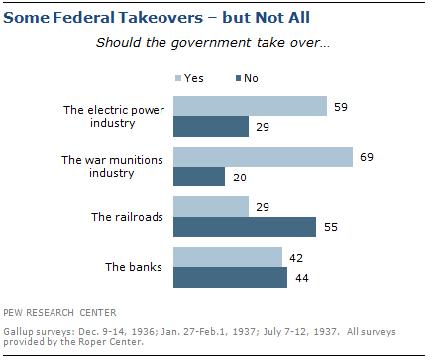
The charts are fascinating. A full 73 percent of Americans polled in 1936 thought government should provide free medical care to the poor. Sixty-four percent thought government should regulate and control war-time profits. In fact, 59 percent thought the government should take over the electric power industry and 69 percent favored nationalizing the wartime munitions industry.
And the people who were polled in these early surveys were overwhelmingly white, male and relatively well off. They were also socially conservative — 60 percent favored the death penalty and 67 percent wanted to deport all immigrants who were on public relief. Allen:
Is there a message in this for today’s America? Two possible lessons: First, it’s worth remembering that the social programs and banking controls that the New Deal era produced stood the nation in good stead over many decades of unprecedented prosperity. Second, Depression-era Americans’ faith in the country and its guiding institutions steeled them against the challenges of a double-dip recession and, years later, World War II. They had it worse, but they also expected it to get better, faster.
Compare that to a 1983 poll taken in the depth of the Reagan Recession, when 65 percent said that government had gone too far in regulating business, 62 percent rarely trusted the government in Washington and 78 percent opposed raising income taxes.
Fifty years, two generations, and the entire attitude of the American public toward government was turned on its head. It’s one of the fundamental dilemmas of American life, and one of the central reasons we’re in this mess.
Republicans are hypocrites, Democrats are spineless

Adding $800 billion to the federal deficit and exacerbating the inequitable, unprecedented, and unsustainable concentration of wealth in the richest 1 percent of Americans, Congress overwhelmingly approved a package of reckless tax cuts that President Barack Obama asked for and is expected to sign today.
The only saving grace in this dismal debacle is the fact that almost the entire Bay Area congressional delegation voted against the deal (while Speaker Nancy Pelosi didn’t vote at all), once again showing that if there’s even a glimmer of hope for saving the country from further descending into myopic and cowardly self-indulgence, it’s going to have to come from us.
Sure, I’ll happily spend the crumbs that they’ve dropped on me in the form of a payroll tax cut, and extending unemployment payments for the lingering victims of this stubborn recession isn’t a bad thing. But the vast majority of the benefits of this bill went to the wealthy, people who don’t need to be stealing from future generations.
Let’s be clear, as Sen. Bernie Sanders (I-Vermont) was during his nine-hour, one-man filibuster of the bill last week: this is about the greedy rich, who have purchased our political system, taking what they want and showing an indefensible disregard for the interests of this country and the vast majority of its citizens. And they have found a partner in President Obama, who was elected to office largely by criticizing Bush’s tax cuts for the wealthy that he’s now extending and the wasteful wars that he’s escalating.
Happy holidays, and please pass the egg nog, with extra brandy, please.
PG&E granted cash reward, green light on power plant
While news surrounding Pacific Gas & Electric Co. has been dominated by a faulty weld and early warnings on the the San Bruno gas pipeline, which ruptured in a fatal explosion Sept. 9, the giant utility company received some good news at the Dec. 16 California Public Utilities Commission (CPUC) meeting.
Not only was PG&E awarded an additional $29 million cash reward for its performance in an energy efficiency program, bringing the total amount it’s received to $104 million, but it was granted commission approval to construct a new, $1.5 billion power plant in Oakley.
Ironically, the energy-efficiency program is designed to reduce the need to construct new power plants, which contribute to greenhouse gas emissions that are blamed for climate change.
The additional bonus was approved with a 3-2 vote on the “final true-up” of the energy-saving program. An independent CPUC evaluation of the utility’s performance in that program found that it fell short of the targets required to receive a cash bonus.
Commission President Michael Peevey justified the additional cash reward by saying utilities could not have known that the numbers they used to estimate energy savings were inflated, and that they would not have been able to adjust their energy-saving tactics in the middle of the program cycle to improve performance.
According to the Division of Ratepayer Advocates (DRA), a consumer-advocacy branch of the regulatory agency, “The CPUC today approved the additional $29.1 million award to PG&E in a 3-2 split vote, despite an Administrative Law Judge’s finding that no further bonuses should be awarded, nor penalties levied. Rather than receiving an additional $29 million bonus, PG&E should repay $74.9 million in bonuses already awarded for energy efficiency programs that failed to meet CPUC-established energy savings goals, and it should pay an additional $1.3 million in penalties, based on the original incentive mechanism.”
Barbara George, executive director of Women’s Energy Matters, blasted the decision. “In this shaky economy, it’s incredible that the Commission would force ratepayers to pay profits for utilities that missed their targets by a mile. This hurts everyone in California. Cities, businesses, and residential ratepayers will all have to pay twice for utilities’ failures — once for these undeserved ‘rewards,’ and again in high monthly utility bills that should have been reduced by these programs, but were not.”
The 4-1 vote to approve PG&E’s Oakley power plant was a reversal of an earlier commission decision rejecting the proposal. DRA weighed in on this item, too, saying data on PG&E power reserves suggests that the new facility is unnecessary.
“PG&E ratepayers are now on the hook for $1.5 billion in costs for energy they don’t need while being shut out of the decision-making process that will leave all PG&E customers with higher utility bills,” said DRA acting director Joe Como.
Mirkarimi and mayoral hopefuls launch D5 Dem Club

Democratic Party clubs are one of the most basic political building blocks in this basically one-party town, so it’s odd that politically active District 5 (the Haight and Western Addition) didn’t have one. But that changed last night with the launch of the District 5 Democratic Club, with fuel provided by current D5 Sup. Ross Mirkarimi and mayoral contenders Leland Yee and Dennis Herrera and with several potential Mirkarimi successors on-board.
“We saw it was a huge opportunity this year to get people engaged and involved,” newly elected D5DC president Jen Longley, a progressive activist who calls herself a “campaign gypsy,” told a gathering of about three dozen people at Cafe Divis. And she thanked Mirkarimi, who switched from the Green to Democratic parties about a year ago, for supporting the club’s creation. “This party would not have happened if not for the help of Ross Mirkarimi.”
And it wouldn’t have met its $1,000 fundraising goal if Yee and Herrera didn’t kick in big as they court D5 voters as part of their mayoral campaigns. Mirkarimi gave the keynote speech, calling D5 the “hippest district in the city” and one of its most progressive, something he wants to see the club help project onto the rest of the city. “I’m delighted to be a part of it,” he said, urging attendees to contribute financially.
In addition to being active in next year’s mayor’s race, the club will also play a role in determining who will succeed Mirkarimi in 2012, and there were some likely contenders for that slot on hand, including City College of San Francisco Trustee John Rizzo, progressive activist Julian Davis, and club owner Michael O’Connor, with labor activist Gabriel Haaland also supporting the club’s creation.
Longley noted that D5 has lots of very active neighborhood association, but few political organizations, and she said that she feel honored to be leading one at such a pivotal political moment.
More innocents in prison
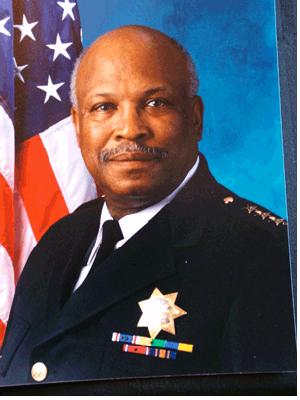
It sounds like the Tennison and Goff story all over again: An innocent man has been locked up for 18 years on the basis of highly flawed testimony from a police informant. I know, I know, Caramad Conley hasn’t been proven innocent — but a Superior Court judge thinks he hasn’t been proven guilty, either. And it all traces back to retired homicide inspector and later police chief Earl Sanders.
District Attorney Kamala Harris is still talking about retrying Conley, but I don’t think that’s going to go anywhere — the one key witness is dead and his testimony has been utterly impeached be revelations that he lied on the stand.
What’s interesting is that none of this would have ever come out it the lawyers at Keker and Van Nest, along with Public Defender Jeff Adachi, hadn’t pursued the Tennison and Goff cases — and even then, a lot of the evidence was (literally) buried. So this makes two cases — so far — in which Sander and his partner, the late Napolean Hendrix, were accused of framing a defendant. I suspect there have to be more.
“When something like this happens, it’s usually a pattern and practice,” Adachi told me.
Dan Purcell, the Keker attorney who represented Conley, told me he thinks the district attorney should go back and review some of the other similar cases involving Sanders and Hendrix. “The documents show that there are other cases where they paid witnesses,” Purcell said. “Now, that’s perfectly fine if you inform the defense, but in this case they clearly didn’t.”
Adachi complained that “nothing happens to the inspectors” — and he’s right. Sanders is comfortably retired on a nice pension and Hendrix died of cancer in 2009. And since the pair handled more than 500 murders, it’s hard to imagine reviewing all of their cases.
But the district attorney can certainly go back and review the other cases in which Sanders and Hendrix paid witnesses — and any others where the evidence was slim. That’s a matter of basic justice.
SFBG Radio: Can Callifornia wake up?

In today’s episode, we talk about Jerry Brown’s challenge: Can the new old governor wake the state out of a California dream that has become utterly unconnected to reality? Check it out after the jump.
PG&E may receive millions for unverified energy savings
Pacific Gas & Electric Co. is poised to receive millions in shareholder bonuses for successfully administering a statewide energy-efficiency program designed to curb customers’ energy consumption. But consumer advocates have sounded the alarm that the utility doesn’t deserve it.
Although PG&E claims it earned the cash because it achieved the targets of the energy-saving program, the utility’s findings are unverified. In fact, an independent California Public Utilities Commission (CPUC) evaluation found that instead of the A+ grade PG&E claims it achieved by meeting the goals of the program, the utility’s performance actually amounts to a D.
The cycle for the incentive program spans 2006 to 2008, and PG&E was already awarded $76.2 million for savings the utility said it achieved, even though its progress had yet to be measured against the findings of the independent report. The matter will be revisited at a Dec. 16 CPUC meeting, when commissioners decide how to handle the “final true-up” of the program for all four investor-owned utilities. PG&E and the three other utilities could be awarded millions more in bonuses.
The program was crafted as a way to bring energy companies on board with a prospect that normally wouldn’t make sense for their bottom line – encouraging customers to use less of the electricity they sell. In exchange for participating in a program that attempted to slash energy use by getting energy-efficient appliances, light bulbs, and information into the hands of consumers, the CPUC offered utilities a carrot for stepping up to the plate.
If the companies managed to hit 85 percent of the energy-savings targets or better, the state’s investor-owned utilities could be awarded cash bonuses that would get progressively larger with their degree of success. If the companies reached just 65 to 85 percent of the goals, they wouldn’t realize any gains or suffer any losses. And, if they fell below the 65 percent threshold, they would have to pay a penalty.
Although PG&E found in its own results that it met the targets handily, the CPUC report offered a different picture. Released in April 2010, after the first incentive award had been granted, the report found that PG&E achieved 71 percent, 60 percent, and 63 percent of their targets in three energy-saving categories. Basically, it flunked two out of three.
Now that the CPUC faces a decision on whether to award an additional bonus, and how much should be granted, no one seems to agree on just how the energy savings ought to be calculated. Several proposed options are on the table, based on different sets of numbers and the correspoding calculations. The question of how much energy PG&E actually saved is extraordinarily complex, and there seem to be multiple answers. The reward money, by the way, comes from ratepayers.
Commission President Michael Peevey is proposing that PG&E and the three other utilities receive additional incentive rewards totaling $62 million, based on numbers that push the utilities into the higher-scoring categories. Meanwhile, a proposed decision by an Administrative Law Judge recommends that commissioners neither penalize the utilities nor grant them any extra money.
However, the Division of Ratepayer Advovcates (DRA), an consumer-protection arm of the state agency, noted in a recent press statement that PG&E should have to give back the $76.2 million it already received, and face penalties for not meeting its goals. “Why would you give them bonuses for unverified savings?” asks Cheryl Cox, policy advisor for the DRA.
According to a DRA statement, “A comprehensive CPUC staff report released in April 2010 found that from 2006 to 2008, PG&E and the state’s other three major utilities (Southern California Edison, San Diego Gas and Electric Company, and Southern California Gas Company) did not make enough progress to trigger bonus payments; in fact, the report found that all four of the state’s largest investor owned utilities failed to meet the performance threshold set by the CPUC, and based on the CPUC’s bonus mechanism three utilities, including PG&E, should owe penalties.”
The whole debacle highlights a good question: Why are California energy companies in charge of running programs that encourage people to use less energy, anyhow? Cox noted that she sees an inherent conflict-of-interest in the mechanism, and believes that ratepayer dollars for energy-savings programs might be better spent in a state-administered program that could use market leverage to get manufacturers to offer more efficient products.
The whole point of the energy efficiency program is to reduce the need to build new power plants, she pointed out, but utilities’ performance so far calls into question whether it’s really been effectively reducing energy consumption. After all, PG&E is seeking to construct a new power plant in Oakley. As things stand, “We’re creating the illusion of getting energy efficiency savings,” Cox said.
Barbara George, director of Women’s Energy Matters, noted that PG&E had mis-used energy efficiency funds by directing some of the money into campaigns to thwart a fledgling Community Choice Aggregation program in Marin County.
“Each proposed decision jumbles the inputs differently, with mind-numbing complexity, but the purpose is the same — to avoid the penalties they owe for failing to meet their targets, and to justify the profits CPUC already gave them,” George said. “The proposed decisions can’t agree on exactly how to justify screwing the public, because the record supports none of them.”
Chiu wins holiday bake-off “most artistic” category
The 4th annual Board of Supervisors holiday treat throw down at City Hall today featured elegant trophies, celebrity judges and fierce competition. The desserts were judged in three categories: Most Tasty, Most Festive and Most Artistic. And the judges seemed to be enjoying themselves as they sampled the goodies and decided on the awards, as the rest of us waited hungrily, dessert forks in hand
Sup. Eric Mar’s legislative aide Cassandra Costello won—and lost—the “Most Tasty” category, after the judges (who city insiders say were playing by hardcore Top Chef rules) deemed her apple tart “most tasty” but too late to qualify.
Sup. Bevan Dufty’s former legislative aide Boe Hayward won the “Most Festive” category for his Giants inspired cake. It didn’t hurt that his super cute 51/2 week-old baby Eloise was on hand to help accept the award.
But when it came to the most artistic category, Board President David Chiu’s “Mud Wrestling on the Board” narrowly beat out Sup. Carmen Chu’s legislative aide Katy Tang’s “Board of Chess-Off”. (Oops: as readers will notice if they read the comments on this post, Katy Tang’s entry was actually titled “Board of Chess-Eff,” a subtle play on the Board of SF. Sorry for the error, KT, and thanks for your fabulous bake art.)
Chiu’s mud wrestling confection featured 11 snow people. Each snow person had a numbered clue attached to help cake eaters identify which supervisor they were supposedly eating. The clues were as follows: 1 Happy Meals. 2 Swans. 3 Gavel. 4 Her Dog Birdie. 5 Plastic Bags. 6 F-Bomb. 7 Throwing the Microphone. 8 Sidney. 9 Progressive Fists in the Air. 10 Stylishly Dressed. 11 Budget Chair. (Scroll down to find answers to Chiu’s quizz).
Chiu’s entry also came with a print out of what the Board President says is his favorite President Roosevelt quote: “The credit belongs to the man in the arena, whose face is marred by dust and sweat and blood.” A clue, perhaps, as to how Chiu is feeling about his often-embattled position on the Board.
But while Tang’s Chess-Eff didn’t win the “most artistic award,” it was a classic illustration of what Chiu described as “the three-dimensional game of chess” being played around the choice of the next mayor. Featuring marshmallows for interim mayors and/or mayoral candidates, the Board of Chess-Eff came with a warning that the dessert wasn’t actually edible. No kidding. Don’t know about you, but the never-ending speculation about the mayor is giving me major indigestion.
Answers to Chiu’s Mud Wrestling quiz: 1 Eric Mar. 2 Michela Alioto-Pier. 3 David Chiu. 4 Carmen Chu. 5 Ross Mirkarimi. 6 Chris Daly. 7 Sean Elsbernd. 8 Bevan Dufty. 9 David Campos. 10 Sophie Maxwell. 11 John Avalos. (The answers correspond to the numeric district that each supervisor represents. And while this looks a tad too obvious, Chiu said that until he organized it this way, no one could figure out which supervisor he was talking about.)
80 billionaires — and California’s broke?
Jerry Brown’s message to educators was framed as bleak — but as I pointed out, there were some bright spots. At least the new gov mentioned that this is a rich state that ought to be able to afford education. Robert Cruickshank at Calitics has a nice post on the point:
A tax increase of about $20 billion would secure our public services for years to come with a very tiny impact on our economic activity. Surely 1% of our GDP can be harnessed to fund the services that we must have for broadly shared prosperity in this state.
Let me take it a step further. I just went through the Forbes 400 list of the richest Americans and started counting, and guess what? A full 80 of the 400 live in California. That’s one out of every five billionaires in America, living right here in a state that can’t afford to educate its kids.
Then I took out my calculator and added up a long row of numbers and got a big one: The total net worth of the billionaires in California is $231.8 billion. Ten percent of that wipes out the budget deficit. And that doesn’t even count the folks worth $900 million or less; they didn’t make the list.
Folks: This is a very, very rich state. A very modest tax increase on a very tiny number of people could solve our budget problems not just today but into the foreseeable future.
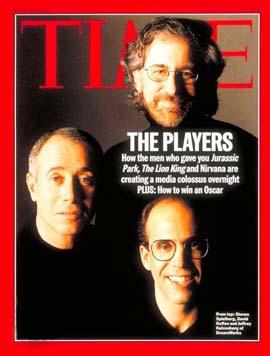
This is the message Brown needs to deliver to the people of the state — and if the antitax people (or my trolls) want to argue that all the rich people would leave if we taxed them just a little bit, let me say: That’s ridiculous. David Geffen is going to move out of Malibu because he has to pay a teeny bit more of his income, money he won’t miss, in taxes? Ain’t happening.
That’s it, Jerry. That’s your answer. Now get to work.
A funny thing happened on the way to the airport
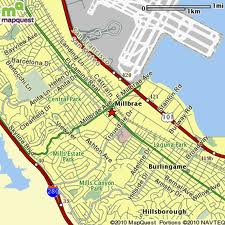
After Steve Kawa, Mayor Gavin Newsom’s chief of staff, started making noises about local hire’s impact on folks who work at San Francisco Airport, since technically it’s in Millbrae, I asked Sup. John Avalos, the legislation’s chief sponsor, to clarify this point.
“Project labor agreements trump this legislation,” Avalos said.
Avalos’ straightforward answer, coming on the heels of Kawa’s grumblings, Sparks claims about the program’s costs, and the striking absence of any analysis of the economic benefits of local hire (especially compared to the recent hooplah around the Americas Cup) made me wonder about the connection between the airport , Human Rights Commission director Theresa Sparks and the Mayor’s Office, since criticism of Avalos’ local hire legislation mainly seems to be coming from these three sources, these days.
The Mystery of the Missing Mayor

Again, the Board of Supervisors scheduled a vote to select a new mayor to succeed Gavin Newsom. Again, members of the public lined up for almost an hour to urge the board to do so and to suggest names and qualities they’d like to see in Room 200. And again, the board delayed the decision with no reason offered for why.
Well, actually, this time, Sup. Sophie Maxwell – the maker of the motion to continue the item this week and last – did at least say something. “We have three weeks and to have someone floating out there for that time is not in the board’s best interests,” Maxwell said, and that’s all she said.
It’s unclear what she meant, and none of the seven supervisors who supported the motion in a 8-3 vote – with Sups. Chris Daly, David Campos, and Ross Mirkarimi in dissent – had anything to say. But Daly certainly did, accusing his colleagues of “doing an incredible disservice to the people of the city and county of San Francisco.”
He restated his points from the two previous hearings on the issue, noting that supervisors should at least be willing to talk about what they’re looking for in a mayor and to provide some leadership going into a politically uncertain period after Newsom becomes lieutenant governor on Jan. 3.
“At some point, we need to be putting forward a vision for San Francisco,” Daly said, later asking, “Are we going to take our charge?”
“It’s almost as if the members of the board don’t want to be here,” he observed, urging them to at least inform the public what’s going on.
“If it’s that you want the next board to decide, say that,” Daly said. “Say something, the people deserve it.”
Is this an effort to stall the decision until the next board is seated on Jan. 8? Is the current board just waiting until Newsom is gone, afraid that he’ll delay his swearing in if they choose a progressive mayor now, and planning to spring into action on Jan. 4? Is there a secret deal in the offing? Or are supervisors just too distracted by the holiday season to make a big decision?
I don’t know, but I’m going to spend this week doing interviews to figure it out for a story in next weeks’ paper.
Larry Ellison, “city family” therapist

If billionaire yachtsman and Oracle CEO Larry Ellison rejects San Francisco’s bid for the America’s Cup, the whole ordeal might conclude with the kind of sappy ending that used to punctuate every episode of the sitcom Full House. The moral of the story would go something like this: It was never about the $1.2 billion in economic activity generated by the Cup, San Francisco, but something far more precious — coming together as a “city family.”
I didn’t count how many times the phrase “city family” was uttered at yesterday’s Dec. 14 Board of Supervisors meeting, but it was repeated in so many glowing remarks that I half-expected all 11 supervisors to join hands and start swaying and singing Kumbaya. Board President David Chiu made an analogy of all the crew members having to work together to win a sailing race, and then he took that yachting reference one step further, saying, “I want to thank everyone on the starboard and port side of the Board of Supervisors.”
Even Sup. Chris Daly, who opposed the first plan, threw his support behind the new deal, making for a rare unanimous vote of the Board of Supervisors.
Shortly after, during a ceremony called by Mayor Gavin Newsom to sign the America’s Cup bid, the mayor — who’s often at odds with Board progressives — praised Sup. Ross Mirkarimi and Board President David Chiu, saying, “This process was made better because of their leadership and stewardship.” Newsom also remarked on the unusual spirit of collaboration, saying, “I have rarely been part of something that brought more people of diverse backgrounds together.”
Even Chronicle columnist C.W. Nevius jumped on the big-happy-family bandwagon with a nod to Daly, who’s typically on the receiving end of his rants. In a column published Dec. 14, advising the city to stick to its guns and approve the better deal, Nevius included this astounding assertion: “I will have to say (gulp) I agree with Supervisor Chris Daly.”
Although Ellison hasn’t yet selected San Francisco for the Cup, he’s already accomplished a feat that probably no one else — neither shaman nor top-dollar family therapist — could manage. He infused San Francisco City Hall with a sense of harmony. He put forward a deal that was so outrageous, yet with an economic benefit so immense, that the supervisors, the port, the mayor, and the economic advisors were forced to put their differences aside, rise to the challenge, and craft a compromise that everyone (except maybe Ellison) could live with.
We knew he was good at winning boat races and lawsuits, but who ever imagined that Ellison’s hidden talent could ever bring such warm holiday cheer to City Hall?
Steven T. Jones contributed to reporting for this piece.
School kids and Muni

So SFUSD just decided to cut half of its school bus routes (including, I believe, one that my son sometimes takes to Aptos Middle School). I should be outraged — but I’m not. Jerry Brown has made it clear that even if he raises taxes, it’s going to be an ugly year for schools and everyone else, and I’d rather see cuts in transportation than in teachers and classes.
But if this is the approach, then the city and the school district need to do a better job coordinating around Muni.
Elementary school kids shouldn’t be on Muni; I’d save the school bus routes for them. But older kids can use the city system, and many do — and more would, if it were just a little easier.
My son often takes Muni after school — to the library, to his Tae Kwon Do class — and soon I’ll let him ride the bus home. But to buy him a youth pass, I have to take him personally to a Muni pass outlet, once every month, and it’s a pain. I understand why they won’t sell me a youth pass for my kid; I could cheat (well, nobody would really believe I was under 18, sigh; I don’t even get carded in bars). But why don’t they sell youth passes in the schools?
It would be pretty simple: Muni issues a number of youth passes to each middle school and high school, the schools sell them out of the office and hand kids Muni maps with routes near the school marked off. I can use Nextbus to tell my son when to head out to the bus stop; there’s no reason the schools couldn’t do that, too. Post the schedules; sell the passes. Maybe even change a few Muni routes to make them more convenient for students.
It seems silly for a city as geographically small as San Francisco to have two parallel transportation systems. With a little creativity Muni could work for the schools, too.
ACLU demanding more death-drug documents

The ACLU is going back to court to demand that the California Department of Corrections and Rehabilitation quit stalling and hand over the remaining documents showing how the state has scrambled to procure a drug for executions.
The group has been trying since October to get records that would show a full picture of how prison officials wound up obtaining a drug that is not currently made in the United States.
On November 30, a Superior Court judge ordered CDCR to hand over any documents that were used in the procurement of the death drug sodium thiopental.
But of the 989 pages that CDCR sent to the ACLU, about 670 of those pages were redacted. Some pages were redacted to an even indecipherable extent. The ACLU attorneys were back in court this week trying to pry the remaining information from the CDCR’s stubborn and iron grip.
The legal documents posted on the ACLU site include declarations from ACLU Death Penalty Project Director Natasha Minsker and Bay Guardian Exective Editor Tim Remond, both arguing that the public ought to know the full story behind the execution drug.
According to the ACLU’s legal filings, much of the redacted information doesn’t even fall under the types of information they are allowed to withhold in the first place.
According to the the legal briefs, “the CDCR acknowledges that it has withheld five categories of information.” However, the statement claims that the CDCR withheld information that was outside the boundaries of these categories, from the identity of the physician who ordered the drug purchased from the CDCR to the drug’s packaging information.
CDCR has a record of delaying the release of information. We send our public records request (similar to the ACLU’s) on Oct. 20th, and have received nothing at all in response. Now if we want the information from November and December, we would have to submit yet another request. At this rate, we will be well into 2012 before we truly get all of the information we want.
According to Minsker, “the judge is now giving the CDCR more time to brief the issues and has asked us and CDCR to confer, to see if we can agree on any of the records.”
She also stated in an e-mail that the next briefs are due January 6th and the next hearing is on January 10.
Local hire, Steve Kawa, and the Americas Cup
Unemployed workers and community advocates hoping to secure Mayor Gavin Newsom’s support for Sup. John Avalos’ groundbreaking local hire legislation rallied at City Hall December 14 to meet with Newsom’s chief of staff Steve Kawa. But Newsom and Kawa were said to be in intense negotiations over the Americas Cup bid. So, James Richards, founder of Aboriginal Blacks United, waited until Kawa could see him, along with Florence Kong of the Bayview-based Kwan Wo Ironworkers. Joshua Arce of the Brightline Defense Project, and a group of local residents.
“‘Living in the city is so expensive,” Kong observed. “It’s not fair that a lot of local work is being done by workers from outside the city.”
Kawa finally emerged and shepherded folks out of the Mayor’s Office and into a meeting room close to the supervisors’ office. He was uncomfortable with having media at the meeting. But Richards said the group was OK with a reporter. And then he asked Kawa if Newsom would sign Avalos’ local hire law later that day.
“This is a very complex piece of legislation, and if it does become law, that’s when the work begins,” Kawa said, noting that Newsom will have ten days to review it, after its Dec. 14 reading. “Some folks are still concerned about it, partly on the trades union side,” Kawa added.
But Richards pressed his point. “After the Board acts today, we want to talk to the mayor,” Richards said. “We don’t want to wait around another ten days. We want him to assure us.”
But Kawa refused to give assurances. “At the end of the day, 42,000 San Francisco don’t have a job,” Kawa said, claiming the best local jobs program was Jobs Now, under Newsom. “But the federal government is refusing to extend that program, and now we can’t hire anybody at City Hall and we have to get this economy growing,” he said.
When Joshua Arce of Brightline expressed concern that folks had met privately with Newsom to exert pressure against Avalos’ legislation, Kawa replied that Newsom had concerns that some folks could lose their jobs around San Francisco airport, because, technically, it’s in San Mateo.
“And are we sure this legislation will be successful?” Kawa continued. “The worst thing a government can do is over promise and under deliver. Our question is, you tell me how it will not fail. Because, yes, we want to have local hire, but don’t mislead anybody by saying, we pass this legislation, she gets a job. Our issue is making sure that we are not misleading anyone. Those are the concerns that people have. Will it be successful, as written? Because we can’t mislead your members, James.”
“Tell the mayor, we are here,” Richards said.
And then Kawa was shaking his hand and heading back to the Mayor’s Office, presumably to talk about cups and America.
“It’s a good thing, we are here today,” Richards said to the workers who remained sitting in the meeting room long after Kawa was gone. Many of them were young, black and male–and in search of a job. “Give a round of applause for your own self,” Richards continued. “It’s a good thing to let them know you come down here to take care of your own business.Because don’t nobody…”
He paused and the ABU members in the room immediately picked up the “don’t nobody give a damn” refrain, their voices ringing as one.
“Some times when we push too hard, when we get what we want, he get on a roll and tell all the reasons why he not going to sign. ‘I want to do this, but…” Richard added.
And then Richards turned to the issue of local hire at UC Mission Bay.“They gotta know today that we are hot on their trail,” he said. “Let them go tell that. Let Steve go tell that. Then they know we are fighting that.”
An hour later, when the Board gave Avalos’ legislation a veto-proof majority, Richards, Kong and the rest of the group burst into applause.
“It’s been quite a road to get here,” Avalos said.
“This is the most substantive policy San Francisco has passed in a generation,” Julian Davis observed, as local hire supporters rejoiced by the Tree of Hope, outside the Board’s Chambers.
Inside the Chambers, the Board was voting unanimously to support the city’s Americas Cup bid.
“To win a sailing race, every member of the crew has to work together,” Board President David Chiu said. And his words could equally have applied to Avalos and the community’s effort to navigate treacherous political seas, get local hire legislation passed and, hopefully, lift everyone’s boat, in the process.
Potrero power plant could be shut down in February
The Potrero power plant could be shut down entirely by the end of February, the Guardian has learned. According to a report prepared for the Dec. 15 meeting of the California Independent System Operator (Cal-ISO) Board of Governors, an energy regulatory body, the aging power plant will soon be released from a Reliability Must-Run (RMR) contract requiring its continued operation for grid-reliability purposes.
“The ISO will provide an RMR termination notice to Mirant at the end of this month or in early January,” the report states, “which would terminate the RMR agreement by February 28, 2011.”
In August of 2009, San Francisco City Attorney Dennis Herrera reached an accord with Mirant Potrero LLC, the company that owns and operates the Potrero Power Plant, to shut down the plant by Dec. 31, 2010. Although the company agreed to the terms of shuttering the plant by the end of this year, there was a catch — the Cal-ISO would first have to terminate Mirant Potrero’s RMR contract. Apparently, that won’t happen till early next year, but this latest Cal-ISO report marks the first time the agency has committed to a specific date.
The Potrero power plant won’t be a necessary power source for San Francisco now that a new energy transmission line has been installed. The Trans Bay Cable, a 53-mile submarine power line that can transmit 400 megawatts of electricity from a Pittsburg substation to San Francisco, became fully operational on Nov. 23.
“The Trans Bay Cable finished its testing successfully and was put into successful service,” spokesperson P.J. Johnston told the Guardian. Meanwhile, a PG&E re-cabling project deemed important to San Francisco’s electricity reliability was completed Dec. 5.
“Having both of these projects completed and proven operationally reliable were the two key conditions for enabling the ISO to release the entire Potrero power plant from its reliability must-run contract obligation,” the Cal-ISO report notes.
Removing the Potero power plant from service will benefit San Francisco’s air quality, particularly in the city’s southeastern neighborhoods.
Ammiano wants to change bike laws
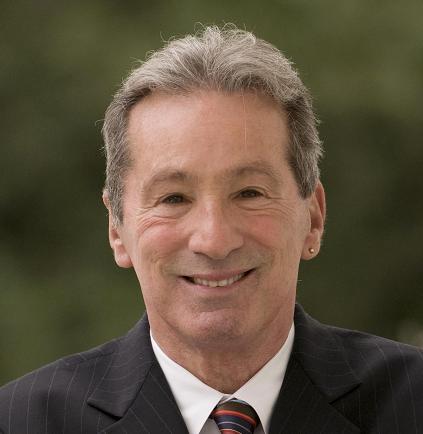
Assemblymember Tom Ammiano wants to change the way bicycles and cars are treated under state traffic laws.
He’s responding in part to the furor over the bike crackdowns in Berkeley, but it’s nothing new for Ammiano — he also tried to get bicycle traffic legislation through last year. This time, though, he told me, “I think we’re going to be able to pass something.” And incoming Gov. Jerry Brown ought to be willing to sign it.
Matt Bunch, an Ammiano staffer, told me that the bill isn’t final, but will certainly address the penalty for cars hitting bicycles. “A lot of these are preventable, but they’re treated as accidents,” he said. “They aren’t punished adequately.”
The measure could also address the wide disparity in traffic fines that bicyclists face in different cities and take on the Berkelely problem. “The fine you get depends on what they charge you with, and it’s all over the map,” Bunch said.
Bunch also suggested that Ammiano might be looking at the way some police officers in some jurisdictions charge bicyclists with vehicle-code violations that were written to apply to cars. “The vehicle code isn’t specific to bikes,” he said. “There’s a clear deficiency in law, and we’re going to look at it.”
One of the things they ought to be checking out: Why is it okay to make a biker get a point on his or her drivers license when he or she isn’t driving a motor vehicle?
Go, Tom. I’ll keep you posted when the bill is introduced.
Supes OK America’s Cup deal

At its meeting today, Dec. 14, the Board of Supervisors unanimously approved a host city agreement for bringing the 34th America’s Cup to San Francisco. However, it’s still unclear whether billionaire yachtsman Larry Ellison and the BMW Oracle Racing Team will select San Francisco as the host city for the next world-famous sailing match.
The agreement solidified a less costly plan and a dramatic improvement over a prior proposal, which the Guardian covered in-depth in a recent cover story. Under the new terms, the America’s Cup Event Authority (ACEA) would be granted long-term leases on commercially reasonable terms for Piers 30-32, Seawall Lot 330, and possibly Piers 26 and 28.
The ACEA would receive rent credits in exchange for investing $55 to $80 million in infrastructure improvements for San Francisco port properties, and San Francisco would benefit from an estimated $20 million boost in revenues from the event. The America’s Cup Organizing Committee would also raise $32 million to help defray municipal costs. The major difference from the prior plan is that Pier 50, a 20-acre waterfront parcel requiring costly renovations that would have been ceded rent-free to the ACEA with development rights for 66 years, was removed from the equation. The America’s Cup is expected to generate more than $1 billion in economic activity, plus create the equivalent of more than 8,000 jobs.
Board president David Chiu called the new plan, which shifts the race venue to the Northern Waterfront instead of the Central Waterfront, “much better, from a business perspective, for the city.”
Sup. Ross Mirkarimi, who supported early efforts to bring the Cup to San Francisco but expressed reservations about the original plan, commended city officials for working around the clock to hammer out a deal on an unusually short timeline.
While doubts arose over the weekend concerning whether or not the BMW Oracle Racing Team and billionaire yachtsman Larry Ellison would accept the latest plan, Port staff member Brad Benson told the Board that he’d met with Stephen Barclay, a representative of the race organizing team, for hours following a Dec. 13 special meeting of the Budget & Finance Committee held to consider the financial impacts of the latest draft. “They would like to enter into an agreement by the end of this week,” Benson reported.
Sup. Chris Daly, who emerged as the most vocal opponent of the Cup in the early stages of the process, acknowledged that he had used “exciting language” to criticize the initial scheme. “The reason why I amplified the language is because I knew the city just could not afford that kind of financial outlay and cost,” he explained. Daly voted in favor of the revised deal because he said it would grant a “fair return for this city.”
Just before the vote, Daly likely caused representatives from the mayor’s office to groan when he announced that he wanted to propose one last amendment. “I need to borrow the Cup on Jan. 5,” he said. “I need a cup. To drink out of.” His joke elicited laughter. Daly will be the star of a roast scheduled for that date.
For more details on the improved America’s Cup agreement, see tomorrow’s issue of the Guardian.
Big day at the Board of Supervisors

Before the Board of Supervisors can adjourn for the year, it has some serious business to take care of at this afternoon’s regular meeting: approving the city’s ever-evolving America’s Cup bid, requiring party promoters to register with the city, giving final approval to the local hire ordinance, modifying the affordable housing requirements on developers, mandating building owners to study creating on-site childcare facilities, creating new special districts, strengthening local purchase standards for city contracts, and, oh yeah, selecting someone to replace Mayor Gavin Newsom.
Whoa, that’s quite a list, but you can follow the highlights – particularly on the successor mayor nominations and votes – by following the Bay Guardian’s Twitter feed at SFBG.
Despite strong progressive plays this week to elect David Campos as interim mayor – and the fallback plan of electing former Mayor Art Agnos as a caretaker interim mayor – the word around City Hall these days is that there probably aren’t yet six votes for anyone. But, asked about the chances of selecting a new mayor today, Sup. Chris Daly channeled Harvey Milk by saying, “You gotta give em hope.”
If the current board can’t make a decision today, it will get one more crack at it on Jan. 4 before the decision falls to the new board after it is sworn in on Jan. 8. While the new board is ideologically similar to the current one, its most progressive new member, Daly replacement Jane Kim, sounded very moderate themes in her recent interview with the Guardian.
Board President David Chiu will become acting mayor once Newsom becomes lieutenant governor (which he won’t delay if the current board fails to pick a new mayor), the city’s first Chinese-American mayor, something that will be politically difficult for the board to undo, particularly given his good relations with new supervisors Kim, Malia Cohen, and Scott Wiener.
But it’s still too early for that kind of speculation, particularly given the high stakes and squirrely politics at play right now. So stay tuned.
Oooh, let’s have a border war

If San Francisco tries to enact a congestion management fee, San Mateo officials are going to fight back with their own. How fun; a border war. Since I’ve long suggested that our future may be in city-states, not nations, it strikes me as an interesting political moment.
But on a serious note: what would be wrong with a toll in both directions? What would be wrong with asking California motorists, who enjoy among the lowest gas tax rates in the western world and who for the past few years have had a dramatic reduction in annual registration fees, to pay a little more to local government? What’s wrong with making it cost more to drive your car during commute hours?
Yeah, that means it will cost more for a San Franciscan to go shop at Serramonte Mall (during rush hour; who shops then anyway?). So what? That might encourage San Franciscans to shop locally. Yeah, it will cost more to commute by car, in either direction; maybe more people will ride their bikes or take the bus. (Particularly if the money goes into improving transit.)
I’m not going all Smoot-Hawley here, but congestion-management fees — extra charges for driving in certain areas during certain times of day — are generally a good idea. And if San Mateo wants one, too, excellent.
Cities have been fighting for years over who can cut taxes more for big businesses. This seems a much more reasonable fight. So: Border war? Bring it on.
Brown’s education summit gives me hope
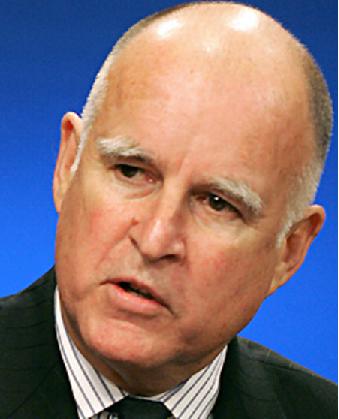
Most of what’s going on is just really, really disturbing — Brown is doing a good job of explaining just how bad the economy is, just how awful things are for education — and what that means for students. But he made one comment that struck me as critical (and that might, maybe, make Brown a great governor) came about an hour into the presentation.
Brown was talking about how the nation got into this crisis — about how people were forced to live on borrowing, and when the real estate market collapsed America became de-leveraged — when he took a slight sidetrack to say:
“Income redistribution upward from the middle class is comparable to the 1920s … it’s a societal crisis. We have to exercise discipline, but also fairness.”
A few points on this:
1. The incoming governor of California actually mentioned the words “income redistribution.” That’s a term almost entirely missing from the current debate. And he made it clear that part of the budget problem — part of the reason the state and the nation are in this crisis — is that the rich have gotten a larger and larger share of the pie.
2. Brown seems to think this is actually a problem, a “societal crisis.” Again: Obama doesn’t talk about that. Other than Bernie Sanders, most politicians in Washington are afraid of it. Just talking about wealth and income inequality (particularly in the context of education funding) is a huge step.
3. Brown talked about “fairness and discipline” together. Yes, we have to understand that resources right now are limited; but we also have to understand that part of the budget debate ought to be about the larger social issue of unfair distribution of wealth.
I know none of this seems like such a huge deal — it’s basic reality. But it’s so unusual that it’s refreshing.
The true cost of local hire

Chronicle columnists Phillip Matier and Andy Ross are claiming it will cost $2.2 million annually to carry out Sup. John Avalos’ newly approved legislation that mandates local hire rates on city-funded construction projects,
And Human Rights Commission director Theresa Sparks is claiming it will actually cost $3 million to run the program.
Neither Sparks nor Matier and Ross are talking about the savings the program will create in terms of the need for less law enforcement, if more local residents are hired. Nor do they mention the economic benefit of tax payer dollars being funneled into the local economy, if more San Francisco residents are hired on city-funded construction projects.
As a result, their conversation sounds like an attack on local hire legislation that Sparks says she supports.
“Matier & Ross are about a million dollars off,” Sparks told the Guardian in a voice mail message three days after I first called asking if it was true that HRC was pissed that the Office of Economic and Workforce Development was being charged with monitoring Avalos’ newly approved program.
‘We tried to get them to leave it with us,” Sparks said, noting that HRC already has contract compliance officers overseeing every city contract.
“This will cost $2-3 million more, and it’s unnecessary,” Sparks continued, noting that during her (ultimately unsuccessful) D6 campaign she talked about “inefficiency in government” and here was yet another example of that very same wasteful phenomenon.
‘Rather than approve a project, the agency that creates a program wants to hire its own people and create a whole new infrastructure, “ Sparks said. “We tried to participate in the local hire ordinance, but we were excluded from all the meetings.”
Sup. John Avalos’ legislative aide Raquel Redondiez disagrees that Sparks was omitted from the discussion. And Redondiez has the emails to prove it.
In an Oct. 21 email sent to Redevelopment director Fred Blackwell, Rhonda Simmons in the Office of Economic and Workforce Development, and Sparks at HRC, six weeks before Avalos’ legislation passed on its first reading, Redondiez wrote that Avalos would like to meet with Blackwell, Simmons and Sparks.
“Supervisor Avalos would like to meet with your offices to learn about how current contracts are now tracked for local hiring, lbe [local business enterprises], and union hours,” Redondiez wrote. “As we move forward with the local hiring legislation, we would like to have a deeper understanding of the current tracking practices and possibilities.Please let us know when we can meet in the next 10 days.”
Redondiez email thread shows she got a reply from Guillermo Rodriguez in the Mayor’s Office the same day. But there was no reply from Sparks. Blackwell and Simmons attended local hire hearings at City Hall in November and December. This reporter does not remember Sparks at those hearings, but community advocates say they saw her outside at least one hearing, in November.
So, does this add up to HRC being deliberately excluded from the discussion about how best to monitor local hire, or something entirely different?
Community and worker advocates, who support the legislation, say they tried to reach out to Sparks, but got mixed messages. They say Sparks said she was supportive of the legislation, but that they were left with the impression that HRC wasn’t interested in monitoring the program.
Michael Theriault, Secretary-Treasurer of the Building Trades, which opposes Avalos’ legislation because it believes the measure will pit workers who live here against workers who don’t, didn’t sound like he was advocating to put HRC in charge of monitoring compliance with the mandatory local hire ordinance.
“There is a sense that HRC is about small business advocacy,” Theriault said.
Sparks hasn’t returned my latest call, but I’ll be sure to post her comments here. So stay tuned as we follow the latest twist in the local hire debate. And don’tforget to tune in to tomorrow’s Board meeting (Dec. 14, 2 p.m. at City Hall), when the local hire legislation has its second reading.