• No categories

Pixel Vision

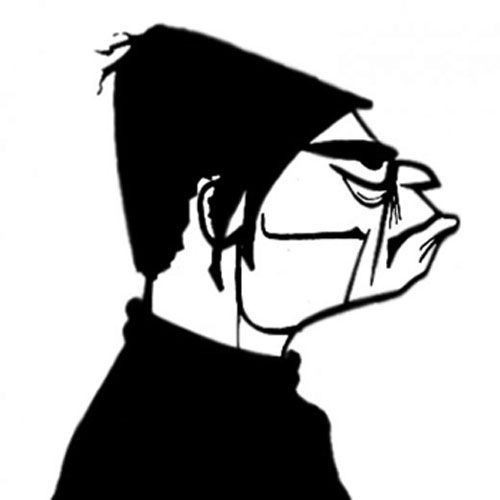
Brother Theodore hallucinates on tap water

0

In honor of the Brother Theodore documentary screening tonite (Thu/25) at Yerba Buena Center for the Arts, the time is ripe — as ripe as rancid pork — to dig into a YouTube treasure trove. The trove contains clips of Theodore on Late Night With David Letterman. Here’s my fave. Remember: One shouldn’t try to sell roses at a fish market.

http://www.youtube.com/watch?v=jzX84SXvFt4

http://www.youtube.com/watch?v=t01hnYVOrrw

The clue master takes it down to Chinatown

2

It was a casual question to end a brief interview with SF Treasure Hunts clue master Jayson Wechter. “What’s something about San Francisco’s history that most people who live in the city don’t know about?” “Hmm, let’s see,” Wechter begins, whose Chinese New Year hunt this weekend (Sat/27) is his mostly highly attended event of the year. Before I can apologize for putting him on the spot, he starts reeling off the following:

1. The CIA used a house on Telegraph Hill in the 1950s to perform unauthorized LSD trials on men they hired prostitutes to bring home from bars.

2. The bay used to come all the way up to Montgomery Street on the east side of the city before it was filled in. Land being in such short supply back then, dud ships were converted to hotels, saloons and warehouse space.

3. William Tecumseh Sherman was a banker in SF before the Civil War.

4. In 1845, newspaper man and devote Mormon, Sam Brannan chartered a boat to take him and his Latter Day Saint brethren from the east coast to San Francisco (still part of Mexico when their journey began). They eventually migrated away from the city, but not before good old Sam had a street downtown named after him. “Had they stayed,” concluded Wechter solemnly “the SF sound would not have been Jefferson Airplane or the Grateful Dead but the Mormon Tabernacle Choir.”

Clearly, this man trivias.

Gleening post-collegiate inspiration from Keroauc’s On the Road, Wechter moved to San Francisco to work as a freelance journalist, taxi driver and eventually, private investigator. But a quick mind and a knack for knowing “a little bit about everything” had led Wechter to creating treasure hunts for his friends from the time he was 11 years old. He began in earnest with the SF hunts 20 years ago, to the delight of history/culture knick-knackery aficionados. Nowadays, the games attract clue hunters from all over the country, none more so than for the annual Chinese New Year hunt.

“There’s a great sense of joy in discovering something new… It’s a team activity for people that don’t have any athletic prowess,” he says of the events’ popularity today. Just make sure you’re ready to take the ‘me’ out of ‘team.’ Many of the groups at the fast paced, high pressure event are made of friends and couples- at least, before the competition starts. “Let’s just say the treasure hunts accentuate the ‘dynamics’ of a relationship,” chuckles Wechter.

Saturday’s Chinese New Year hunt will involve participants in a sort of noir mystery of their own making, racing in and out of parade routes, answering questions on the city’s landmarks, cultural history and general knowledge to win the competition’s big pay-off. “People have the ability to see things they normally wouldn’t [during Chinese New Year celebrations], says Wechter. “It’s a pedestrian focused event and has a festival, carnival like atmosphere- like Mardi Gras without the alcohol!”

The competition is broken into four levels of play; beginner, regular, master’s and “thinks faster than runs” for the competition’s less mobile participants. Already, 1,500 players are signed up for this weekend’s event.

So pop quiz: do you have what it takes to match wits with Jayson Wechter?

Sat/27 4:30 p.m., $35 pre order, $40 at event

Justin Herman Plaza

1 Market, SF

(925) 866-9599

www.sftreasurehunts.com

Appetite: Don’t forget to remember

0

In the wake of a number of January closings, including some long-timers I’d rather not see go (like Vivande Porta Via), I’ve been reflecting on those neighborhood spots or classic restaurants we often forget are there but don’t want to lose. From time to time, I’d like to share reviews of places we’d do well to re-visit… or get to for the first time. They might be receiving a fresh infusion of flavor from recent chef or menu changes, or are good enough to remain noteworthy, despite the flood of new openings and (over)hyped hot spots. The Grand Cafe is one of them.


Elegant but relaxed, Grand Cafe is easy to overlook. For starters, it’s in a hotel (Hotel Monaco) which gives it the tourist stigma. It’s been there for years and is so centrally located right next to Union Square and ACT theaters, that locals often forget about it. It’s long been a solid place for a meal, but with new Lyon chef de cuisine, Sophiane Benaouda, at the helm, there’s new life being infused into every corner… whether you have a martini lunch in the grand dining room or wine and appetizers in the cafe/tavern area. Benauouda comes from France’s three-star Michelin restaurant, L’Auberge de L’Eridan, and was trained at none other than Paul Bocuse’s Chateau du Vivier.

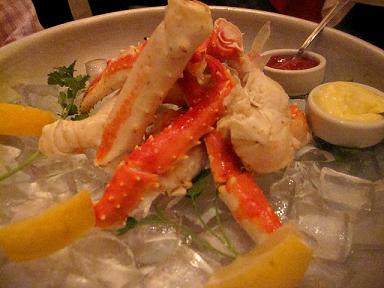
His energy is infectious, amping up classic Provençal dishes as well as fresh takes on specials like dark, pink, medium-rare buffalo with artistically-arranged scalloped potatoes. Benauouda’s scallops are seared perfectly, and a glass of champagne with garlicky escargots de Bourgogne is a fine respite all by itself. Maybe you add in a round of oysters or king crab legs. Or it’s an espresso and dessert break with a Lemon Meringue Tart (ask about pastry chef, Jessica Miller’s chocolates, particularly the buttery sea salt truffle). Whatever way you use the cafe, as a quick stop or a full meal, it’s truly a downtown asset and one of those touristy locations locals can appreciate.

501 Geary Street
in Hotel Monaco
415-292-0101
www.grandcafe-sf.com

A look back at the 2010 Sundance Film Festival (part three: docs!)

2

Check out Jesse’s two-part take on Sundance’s narrative side here and here.

Sporting the revamped tagline “This is the renewed rebellion. This Sundance, reminded,” the festival’s always-stellar documentary selections most often live up to their astonishing subject matter. This year was no different. First up for me was the controversial 8: The Mormon Proposition by Reed Cowan and Steven Greenstreet. The film explores the Mormon Church’s involvement (and sneaky double-dealings) in the pro-Prop 8 campaign in California, as well as exploring how many Mormon leaders use God’s will as a manipulation tatic towards preventing (or in this case, taking away) civil rights. The film’s most jaw-dropping revelation, which draws a connection between the persecution of a follower of Mormon Church founder Joseph Smith and today’s struggle for same-sex marriage, will chill your bones with irony.

But while the audience at 8‘s world premiere gave the film a five-minute standing ovation (the crowd included everyone from Dustin Lance Black, Oscar-winning screenwriter of 2008’s Milk, to San Francisco mayor Gavin Newsom), the filmmakers make a major misstep by undercutting an otherwise powerful and damning interview from a Mormon leader with gurgling, demon-like sounds and a backdrop cartoon of the man as the devil. This Michael Moore-esque technique of falling prey to “emotional ranting” not only contradicts Sundance director John Cooper’s catalog description of the film, but helps shuts down the “conversation” (which both filmmakers stressed numerous times during the Q&A) with people who voted for Prop 8. Unfortunately, this cheap shot lowers the film’s credibility and when questioned by an audience member (who had voted for Prop 8) why they had used such tactics as “altering the [Morman man’s] voice,” the filmmakers quickly became defensive, shouting, “We didn’t alter anything!” and “Listen to the words!” When re-questioned, they stated, without a doubt, that they “stood by” how they had presented the information. Where was that conversation again?

Expanding on a six-minute short co-directed by Alfonso Cuaron (2008’s Children of Men), The Shock Doctrine (an adaptation of Naomi Klein’s book about economist Milton Friedman’s “Free Market” idea), is a 79-minute whirlwind of film. Directors Michael Winterbottom and Matt Whitecross disturbingly deconstruct this “marginalized backwater economic theory” and expose it as the main philosophy applied towards many of the U.S. and U.K’s current international (mis)handlings. While it may be a simplification in many areas (and filled with George W. Bush and conservative bashing), this doc sheds light on deregulated trading between countries, and how it has had devastating aftereffects on the rest of the world.

Also expanding on a previous short film (2006’s A Conversation with Basquiat), Tamra Davis’ Jean-Michel Basquiat: The Radiant Child is a tightly woven overview of his life combined with poignant interviews with friends and ex-lovers, topped off with very personal footage that Davis herself conducted in the early 1980s. With an outstanding soundtrack of early 80s no-wave tracks as well as classic hip-hop tunes, this tribute is a genuine crowdpleaser for fans and the uninitiated alike.

Leon Gast’s Smash His Camera uncovers villified 1970s paparazzo Ron Galella in a deliciously contradictory manner. Exploring the constant battles revolving around privacy rights (claimed by both Galella and his subjects), freedom of the press, and obsession with fame, the film asks viewers to question our own fascination with stars. It raises the revolutionary, contemporary question as to how legit Galella actually might be as an artist. With priceless moments signed and delivered by Galella himself, you may find yourself walking out of the film wanting to scapegoat and demonize an individual for showing us exactly what we are captivated by and are constantly seeking out.

The latest doc from Stanley Nelson’ (2006’s Jonestown: The Life and Death of the Peoples Temple), Freedom Riders, delivers the type of archival footage that we’ve forgotten history is made of. Beginning in 1961, if follows a few groups of devoted individuals who were brave enough to take buses into the deepest of the segregated South, with hopes of ending racial discrimination. Nelson’s film is a genuine tribute to the audacious and non-violent struggle by protestors who even Martin Luther King Jr, John F. Kennedy, and Robert Kennedy didn’t know how to support. With the current civil rights struggles in the United States, Freedom Riders strikes more than a few heartbreaking chords, making it a must-see.

Yael Hersonski’s A Film Unfinished deconstructs an infamous Nazi-produced documentary about the Warsaw ghetto, incorporating a newly-discovered reel of outtakes and contradictory footage. What was meant to be a document of how happy the Jewish people supposedly were in the ghetto is overwhelmingly exposed as nothing but reenactments and revisionism. The importance of A Film Unfinished goes beyond the subject matter, for it not only examines the misrepresentation of certain historical documents and the long-standing destructive side effects of doing so, but also directly correlates to so many dilemmas we currently have with the delivery of information through cinema, TV, and online media. The film picked up Sundance’s World Cinema Documentary Editing Award.

Tim Hetherington and Sebastian Junger’s Restrepo, which won the festival’s Documentary Grand Jury Prize, chronicles the deployment of a platoon of U.S. soldiers in Afghanistan’s Korengal Valley. The visceral footage is quiet, haunting, and surprisingly non-judgemental. Interspersed with interviews with the soldiers after they’ve returned home from their 15-month outing, the audience gets to experience not just individual journeys, but also the contrasting after effects on the group, post-tour of duty. As Hetherington and Junger spoke after the screening, the revelation of how close they become with the battalion (during the ten trips they made with the soldiers) brought up a valid question about the filmmaker’s impartiality. These soldiers saw and did things in Afghanistan they don’t seem to understand and I left the theater with the same confusion. Since seeing Restrepo, I haven’t been able to stop thinking it.

Christian Frei’s Space Tourists follows the spectacular quest of 40-year-old Anousheh Ansari, an Iranian-American millionaire whose dreams of becoming a space traveler came true. The film does not use narration, allowing its images to connect with the audience as opposed to telling them what and how to feel. This filmmaking choice (reminiscent of documentarian Frederick Wiseman) is risky business nowadays (more than two thirds of the audience filed out of the theater mid-film), but has the possibilty of achieving a transcendental feeling if you stick with it. Watching Ansari live out her fantasies (at a cost of $20 million) in real life, in slow motion on board the space shuttle is truly mesmerizing. But makes Frei’s film so profound is his attention to the world below, focusing on people like a gang of junk collectors who survive by scavenging the hills, retrieving the shuttle’s segmented remains. How rare that a film can provide so much insight to the world’s dichotomies while at the same time exploring (wo)man’s final frontier.

Heidi Ewing and Rachel Grady’s follow-up to their Oscar-nominated Jesus Camp (2006), finds them on a corner in Florida: 12th & Delaware. This intersection has a pro-choice abortion clinic on one side of the street — and on the other, a pro-life pregnancy care center. Using the same techniques as their previous documentary (no narration, very few statistics, and no talking head interviews), Ewing and Grady get astoundingly up close and personal with both centers’ employees and clients. Unbiased, respectful, and remarkably candid, 12th & Delaware offers insight and clarity into both sides’ passion. While most will leave the theater with the same belief system as they had before going in (though I have to say that I sure believe the other side’s dedication a whole lot better now), there’s no doubting that this is genuine journalistic cinema at its best.

And finally: Waiting For Superman, Davis Guggenheim’s follow-up to his Oscar-winning An Inconvenient Truth (2006), deftly explores the American education system in grueling detail, from the horrifying statistics of “academic sinkholes” and “drop-out factories” that plague our nation to the specific children, parents, and teachers that are caught in the middle. The incredible amount of research, follow-through, and devastating footage that Guggenheim has skillfully combined  is enough to open anyone’s eyes. The film suggests that while we all are waiting for a Superman figure to come and magically fix it all, every one of us is somehow involved with and affected by this nightmare. Along the way, this apolitical film becomes inspired, accountable, and motivational cinema. Rightfully, it won Sundance’s Audience Award for Best Documentary Feature.


Funkin’ and flashin’ in Sebastopol

0

So you’re in wine country on your way to (or more likely, from) a bubbly tasting at Korbell when suddenly you realize something startling; you’re not feeling so effervescent yourself. The answer to your frump? Well, I’m guessing a wine colored tutu or red corduroy cowboy pants embroidered with sequined cacti wouldn’t hurt. Enter Funk & Flash, to my knowledge the best secondhand clothing store in the North Bay. Carnival/Sgt. Pepper/Mexicali fun time, here you come!

“Wild pants and marching band jackets really turn me on,” says the funkster-flasher himself, owner Shane Sterling on his store’s website. “Expressing yourself through clothing builds confidence, promotes self-love and makes life more fun.” I dig. If you can’t feel fly in ruffled retro tap pants and a St. Patrick’s themed stretch belt, you maybe just can’t feel fly.

Sterling has assembled a surprising collection in his recently opened little storefront on Sebastopol’s quiet main drag. Combat boots, darling tennis cardigans, old school green tortoise shell shades you’d pay top dollar for in the city pack the small, well edited space- no hours of shuffling through racks of clunkers here. Rumor has it, he culls the items from opera sales and other used clothing outlets, relying on the efforts of a vast supporting cast for their ‘fit spotting aptitudes. The team must be putting in their hours in, because some of the items at Funk & Flash are unlike anything I’ve ever seen at SF thrift/vintage stores- and I take these things seriously. The collection is packed with pieces that kiss at being costumey, but are old enough to look classic- if that’s what you’re going for (fyi, Burners, you’ve found your mecca- don’t wait til this summer to make the trip out to stock up).

But fashionistas, move fast- this hidden gem is bound to be good and dug up sooner or later. An employee of the store tells me that Sebastopol is fast becoming a destination for city dwellers cruising for retro threads like they were a chemical addiction. I got my fix with a totally legit $14 1982 Bay To Breakers tee… but I’ll be back out there soon enough. After all, you can’t fake the funk.

Sequin rack? Oh, baby. Check.

Rock this Funk & Flash jumpsuit this spring time strut season. Do it!


Funk & Flash

Open 11 a.m.- 6 p.m. everyday

228 S. Main, Sebastopol

(707) 829-1142

www.funkandflash.com

A look back at the 2010 Sundance Film Festival (part two)

0

For part one of Jesse’s Sundance report, click here.

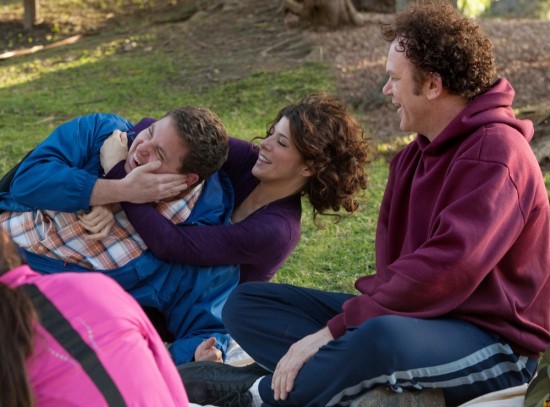
Rounding out the mumblecore minions was Cyrus from the genre-defining Duplass Brothers. Even while having name actors (John C. Reilly, Marisa Tomei, Catherine Keener, and Jonah Hill) as well as a seven million dollar budget to play around with (by comparison, their first film, 2005’s The Puffy Chair, cost $15,000), the siblings have not lost one iota of their charm or sincere humor. And most importantly, these characters and situations (no matter how complicated things get) are explored with depth and honesty. Jonah Hill is still the Jonah Hill from Judd Apatow films, but here he’s finally been allowed to explore his creepy-sad side, enabling a viewer to truly relate to his character, a son who’s a little too overprotective of his single mom. During what was one of Sundance’s greatest 9 a.m. Q&As, the hung-over directors and cast laughed about how they have no clue how to market this film. My suggestion: don’t miss Cyrus, sure to be one of the funniest, and most unexpectedly poignant, films of 2010. Derek Cianfrance’s Blue Valentine features a John Cassavetes-esque relationship that places a couple in the defining moments of their six-year marriage, including flashbacks to their initial meeting. The near-bipolar fluctuations that occur during fights are perfectly captured in this entirely improvised accomplishment. In a New York Times article about the film, star Ryan Gosling said, “It was really important to [Cianfrance] that we build an archive of home video of actual memories, and that we not really discuss or rehearse the scenes. We had fighting days where we just fought all day, and then we’d have to go have family fun day, and just pretend like we hadn’t been fighting all day, trying to have a good time.” Brooklyn folk-rockers Grizzly Bear provide a pitch-perfect soundtrack to the film. Make all efforts to experience Gosling and co-star Michelle Williams at the top of their games, allowed the freedom to dig down deep. Just be prepared for the experience to pull some serious hurt from your heart.

Debra Granik’s Winter Bone is a jaw-dropping study of backwoods meth-makers in the Ozark Mountains (between Southern Missouri and Northern Arkansas). The film has the feel of the Dardenne Brothers (2005’s L’enfant): a young girl attempts to locate her missing father, while her (literally) extended family seem to be hiding something much darker than their meth labs. Genuinely gripping, Winter Bone offered more suspense than I’ve felt in years. I didn’t want this film to end. No wonder it won the Grand Jury Prize and screenwriting award (with co-writer Anne Rosellini), furthering the trend of female filmmakers being recognized for their work (see also: Kathryn Bigelow). The film is an astounding way to kick off a new decade of American independant cinema.

Nothing can prepare you for the ADD insanity of Daddy Longlegs, directed by another team of brothers, fraternal twins Benny and Josh Safdie. This hyper clusterfuck contains an array of randoms, from Abel Ferrara to the children of Sonic Youth guitarist Lee Ranaldo. The film follows a NYC father who’s taking care of his kids for two weeks. Ronnie Bronstein (who directed the equally obsessive and uncomfortable 2007 triumph Frownland) encapsulates everything that our contemporary psychotic and distracted nervous systems are experiencing these days. I can’t think of a more disturbing film that also made me laugh so hard. 

When I heard Juan Carlos Valdivia’s Southern District being compared to the work of Argentinian master Lucretia Martel (2008’s The Headless Woman), I rearranged my entire schedule to see it — most thankfully, as it turned out to be the best film of Sundance 2010. This quiet study of an upper-class Bolivian family and their day-to-day interactions with their butler is captured gorgeously by a hypnotic rotating camera. While making some audience members dizzy (indeed, the film is not for everyone; walkouts ensued), Valdivia and cameraman Paul de Lumen’s brilliance allows the viewer to feel as if they are actually living in the house, feeling the minutes and hours slip by. How they were able to construct such complex camerawork, working within a house filled with so many reflective surfaces, combined with all of the actors improvising, is beyond comprehension. Winner of Sundance’s awards for excellence in world cinema for dramatic directing and screenwriting, Southern District may well be this year’s minimalist cinematic treasure..

And, for good measure, some honorable mentions (and misses):

Spencer Susser’s Hesher was one of the festival’s most-anticipated films. Joseph Gordon-Levitt delivers a performance so memorable that it may kick start a whole new generation of headbangers. His surprisingly crass dialogue sent many older audiences heading for the snowy outdoors, while that only made things all the more intriguing for those who stayed. The film does have some awkward shifts in tone from one scene to the next; at times, Hesher feels like it’s caught in between a pissed-off teenager and the baffled parent who’s trying to teach him a lesson.

Diane Bell’s Obselidia won not only Sundance’s award for best cinematography (for lensman Zak Mulligan), but also the Alfred P. Sloan award, which goes to films that focus on themes of science or technology. Previous awards have gone to Werner Herzog’s Grizzly Man (2005) and Shane Carruth’s Primer (2004). The film explores our ever-changing realtionship with “stuff.” As we throw out perfectly good items for whatever the newest model or invention is, what will happen to these old things that not only are still working but may even be better in quality and usefulness, like LPs, rotary phones, VHS videos, pens and paper? Ironically the film is shot using a Red Camera system which brings a level of High Definition so striking that you may have already thrown away your Canon GL-2 miniDV cameras and Sony HDCAMs to get one. This quirk-fest poses wonderful questions on the turn of a new decade, but unfortunately, the film slips into that dreaded, curmudgeony-elitist blabber (“Kids today just don’t understand Robert Bresson!”) that often comes from older generations who cling to ye olden times — as if their “walking uphill both ways” methods are somehow better than anything new.   

Adam Green’s low-budget Frozen hypnotized midnight audiences. The horror film strands three snowboarders on a ski lift and forces the audience to watch them die slowly. The truly screamworthy surprises balance out the awkward mistakes of discontinuity, including some irregular frozen-face ice (and the the lack of seeing the characters’ breath throughout the film). In any case, Green has proven he can freak an audience out. Can’t wait to see what comes next from him.
And lastly, Danny Perez’s hourlong music video for psych-folksters Animal Collective, Oddsac, felt like an amalgamation of images that play behind the band while they play live. As it happens, Perez is the tour manager for Black Dice and has gone on tour as the image designer for Animal Collective’s tours.

Stay tuned for Jesse Hawthorne Ficks’ take on Sundance 2010’s documentaries, coming soon!

Breakfast with a hot Guerrilla

9

By Robyn Johnson

My social media tuning fork started vibrating with reports of a new street food vendor making ground in Oakland. My unmitigated Oaktown pride compelled me to investigate.

Guerrilla Grub has indeed set up shop at the prime commuter hub of the MacArthur BART stop, serving breakfast burritos out of a pushcart adorned with its evocative fist-gripping-a-fork logo for early morning riders. Besides the hot dog guy, I have never seen a street food vendor at MacArthur. In fact, outside of Fruitvale taco trucks and the odd ambitious cupcakers at Art Murmur, I haven’t seen a street food vendor anywhere in the East Bay. Could a true revolution be at hand?

Guerrilla Grub is not a bad start by any means.

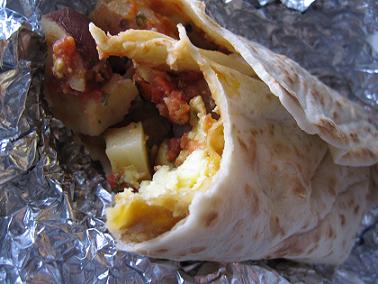
Although there’s nothing that you wouldn’t find outside of a “traditional” breakfast burrito — flour tortilla, scrambled eggs, potatoes, sautéed onions, salsa, cheddar cheese, and a chorizo option — it’s put together with a competency that makes one darn savory (yet not overwhelmingly heavy) morning meal.

I went with the chorizo version to maximize my pleasure. At three bucks, it was well worth it. The chorizo did not perspire grease, as it is apt to do, and the red potato pieces added a nice, solid texture. The spiciness was enough to keep it exciting but not too overloaded for the typical norteno palate… my lips were tingly and my nose was running, but I loved every minute of it. Upon first try, it wins for flavor, non-sogginess, balance of flavors, and for perfect portion size. I usually feel like I’ve OD’d on carbs after a burrito, but Guerrilla Grub’s fare is the right size to energize commuters just beginning their day.

All in all, the revolution gets my fist pump of approval. Hopefully, Oakland will see more carts in the future.

Gung Hay Fat Choy!

0

If 2010 wasn’t enough new year for you, fret not — for Chinese New Year is upon us in all its glory. The holiday season (which actually started on Valentine’s Day) culminates this weekend with a firecracker explosion of Asian culture and showmanship. San Francisco does the new year big, bigger than any city outside of Asia, in fact. We suggest you get out your red clothes, mandarin oranges, and yusheng raw fish salad (all believed to bring good fortune for your next 365 days) and hit up some of the following events. This is one of those weekends that make our city great.

Miss Chinatown U.S.A. Coronation Ball

The story goes that after they fought in WWII, Chinese-American servicemen wanted some pin-up girls of their own, forming the Miss Chinatown pageant so they could watch lovely young ladies of SF strut their stuff — misogynist or proud of their ethnic community? Either way, last year’s winner, Miss Cindy Wu of Houston enjoyed dancing, volleyball, reading, and bowling. What new Renaissance woman will take home the crown this year? Drop the dough for the spendy tickets and you can find out for yourself, no-host bar and dinner spread included!

Fri/26 6 p.m., $120

San Francisco Hilton & Towers

333 O’Farrell, SF

(415) 982-3000

www.chineseparade.com


Southwest Airlines Chinese New Year Parade

Counted as one of the top parades in the world, the Southwest Airlines bash has become San Francisco’s top celebration of Asian culture, featuring Gum Lung, the famous SF dragon who dances hundreds of feet long, school dance and music groups, and wild feats of float-making. Snag your curb seating early for the illuminated magic — downtown gets packed.  

Sat/27 5:15 p.m., free (bleacher seats $30)

parade route (below) starts @ Market & 2nd St., SF

www.chineseparade.com


Spring Festival Celebration

One of our favorite parts of CNY when we were kids was receiving red envelopes full of chocolate coins for good fortune in the new year — and, if you had luck on your side you got some cash in there, too. Answer three riddles correctly at the Chinese Cultural Center’s fair and you’ll cash in with a crimson satchel of your own. Be sure and check out the celebration’s daily lion dance at noon, get your fortune told and try not to hurt yourself at the Chinese paper cutting demonstrations.

Sat/27 & Sun/28 11 a.m.-4 p.m., free

Chinese Cultural Center

750 Kearny, SF

(415) 986-1822

www.c-c-c.org


Chinatown community street fair

Sure, now it’s the first stop your out-of-towner relatives want to make when they come to visit, but Chinatown means much more than affordable back scratchers and vacuum-sealed squid snacks. The hood’s been a balm to Chinese-Americans since the 1850’s. Its where they weathered the storms of nativism, erecting their now-famous pagoda buildings to burnish their “foreigner” image. This weekend the streets come alive with vendors, a petting zoo, and exhibitions of acrobatics, martial arts, calligraphy and craft making.

Sat/27 10 a.m.- 4:30 p.m., Sun/28 9 a.m.- 5 p.m., free

middle of fair @ Grant & Pacific, SF

www.chineseparade.com

A look back at the 2010 Sundance Film Festival (part one)

0

Over the years, the Sundance Film Festival has become known for its superior documentary selections, exciting experimental programs, mumblecore masterpieces, a few foreign delights, and buzz-worthy indie flicks that eventually become the year’s most under or overrated. The 2010 festival was no exception. Make sure to mark down any of these movies that sound interesting for the upcoming year — for some reason, post-Sundance film releases seem to be shorter, smaller, and becoming even non-existent. (Johan Renck’s decade-defining Downloading Nancy, which screened at Sundance in 2008, was finally released straight to DVD this past month.) Read on for the first in a series of posts detailing my top picks at this year’s fest.

Drake Doremus’ aptly titled Douchebag achieved the festival’s greatest achievement: I heard the word “douchebag” being used in every Utah restaurant, shop and theatre. Luckily the film also does a bang up job as it follows a beardo older brother (on the verge of his wedding) who takes a wild road-trip to find his younger brother’s fifth grade girlfriend. Not only will it cause you to mutter the word douchebag multiple times, the film perfectly captures the dominating and destructive characteristics of certain family members. Even the couple sitting next to me who said they “hated mumblecore films” loved Douchebag. David Dickler’s debut performance as the titular d-bag older brother should have been recognized when awards night came around.

Dickler also edited the film, a fact which brought attention to his quiet career in the medium. He edited Me and You and Everyone We Know (2005), Borat (2006), and Anvil! The Story of Anvil (2008). And at a compressed running time of 81 minutes, Douchebag is the most fun you’ll have hating a character this year.

One of Sundance’s hottest ticket was for Lisa Cholodenko’s The Kids Are Alright. Cholodenko won Sundance’s screenwriting award for her first film, High Art (1998); her latest is a pitch-perfect family drama for the Y2teens. Two kids who were raised by two different type of mothers (Annette Bening and Julianne Moore) track down their surrogate father (Mark Ruffalo) and find him to be a progressive, free-wheeling lone wolf. The film’s progression is presented with such confidence and sensitivity that the film transcends its sign of the times vibe, giving the viewer the feeling that it’s predicting the future.

Coincidentally, John Waters’ new film, Fruitcake, starring Johnny Knoxville and Parker Posey, also follows a boy (who runs away from home after his parents are busted for stealing meat at the grocery store) who meets up a with a girl who was raised by lesbian parents and who is looking for her surrogate father.

Pipiloti Rist’s Pepperminta is an inspired, unofficial remake of Czech New Wave director Vera Chytilova’s Daisies (1966). Its psychadelic set and color design felt like an episode of Pee Wee’s Playhouse wrapped up in feature-length Skittles commercial. Many audience members were overwhelmed by the film’s aesthetic, but those who finished it were rewarded with a killer quest through anarchy, feminism, and fearlessness. For anyone who’s been inspired by the music of Kate Bush and Björk, or the children’s books starring Madeline and Pippi Longstocking (after whom the director was nicknamed), this is the movie for you. Rist brings an excitement and inventiveness not only to the screen (and her wardrobe, showcased during the movie’s Q&A), but also to the multimedia exhibit that she also created to compliment the film. Don’t miss seeing Pepperminta in a theater.

Following his previous features I Stand Alone (1998) and Irreversible (2002), enfant terrible Gaspar Noe has now taken the digital revolution to a psychedelic hell with Enter the Void. The warning signs to epileptics upon entering the theater that a strobe effect was used throughout the film kicked things into overdrive right off the bat. Utilizing first person digicam, Noe takes the audience into strobing sexual scenes, deafening drug benders, and all-around supernatural swirly stuff … for two hours and 41 minutes! The film will eventually be released in two versions: a director’s cut and a commercial cut, which will run one reel shorter (by 20 minutes).  Pondering if this epic journey was made to watch while you are on drugs or instead of doing drugs is almost as debatable as the final moment of the voyage (it truly is worth it to make it all the way through to the end!)

Zeina Durra’s The Imperialists Are Still Alive explores a group of Manhattan socialites who by day, talk and make self-righteous Post-Modern art, but by night, wander the city looking for late night parties and showing off their audacious new dresses. Asya (played with a perfect balance of ignorance and irony by Elodie Bouchez) is not only participating in this scene, she’s also worrying herself sick about a kidnapped friend in Lebanon (the film takes place during the 2006 Israel-Hezbollah conflict). While Variety pointed out that the film’s title is taken from Jean-Luc Godard’s La Chinoise (1967), it’s the consistent ironic undertone that feels truly Godardian; no doubt it’ll  put off many audiences (more than half of the audience in the press screening left early.) The director was slammed after her introduction for being too pretentious and proud of her work. But that is exactly what rings so true to me about this mini-masterpiece, that reflection of our current contradiction that many of us living in big cities find ourselves in: We know and “care” so much about world events, yet seconds later we’re arguing about the Academy Award nominations. Irony is alive and well.

Coming tomorrow: Jesse Hawthorne Ficks’ top five picks and honorable mentions from the 2010 Sundance Film Festival.

Philosophy, get hip: “The Examined Life” comes to the Herbst

0

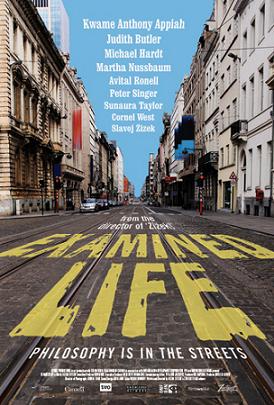
In new documentary The Examined Life, eight of the most famous minds in contemporary philosophy — Cornel West, Avital Ronell, Peter Singer, Kwame Anthony Appiah, Martha Nussbaum, Michael Hardt, Judith Butler, and Slavoj Zizek — seem almost unintimidating. Detached from the props of intellectual life and presented in public setting away from rapt crowds, miked podiums, and the protective custody of academia, these philosophers appear comfortingly average, for entire milliseconds. For instance, on a sunny afternoon, post-structuralist scholar Judith Butler could almost be any other leather-jacketed San Francisco Missionite with a cool haircut ambling down Clarion Alley, perhaps en route to Thrift Town for some more leather jackets. That is, until she begins to discuss, in a slow and deliberate manner with eyes fixed intently into the middle distance, the body’s morphologies as experienced by the subject. Cover blown.

Examined Life director Astra Taylor will be appearing — along with philosopher Judith Butler and activist-artist Sunaura Taylor (who appears with Butler during the segment filmed in Clarion Alley) — at a screening of her film at the Herbst Theater on Thu/25, at 7:30 PM. The three women will participate in a discussion and Q&A session following the screening.


In the last few years, Astra Taylor has become known for her documentaries about philosophy. Previously, she directed the film Zizek!. I hold Zizek! partly responsible for introducing American hipsters to the Slovenian Lacanian-Marxist with saliva glands as hyperactive as his intellect who so rapidly became for youngish creativeish urbanites a sort of Mitteleuropean Moses to Marx’s Abraham.

As a documentary filmmaker, Taylor is no neutral observer; she openly reveres her subjects. Though it has been criticized (A. O. Scott of the New York Times said the film was “too glamorized by its brainy stars to engage them critically”), Taylor’s reverence is fine by me. These eight philosophers are inspiring people who make it their business to think their way through some of life’s most difficult questions. Furthermore, I prefer to keep my philosophers on a pedestal, even when they’re rambling about jazz in the back of someone’s Volvo (ahem, Cornel West).

http://www.youtube.com/watch?v=1zwmum5_ofU

To be fair, Cornel West could talk about his favorite lunch foods and I would find it interesting. ‘Cerebrities’ opining about anything, literally anything, makes for entertainment. In this film, the entertainment value is heightened by some particularly bathetic physical settings. Taylor aims to represent her philosophers outside of the stereotypical realm of academe, and she attempts this by filming them in public places that are both neutral to the philosophers’ private lives and exist outside outside the structured environment of the workplace. In The Examined Life, Appiah is interviewed while waiting around at the Toronto airport. Hardt is filmed rowing a wooden boat, with some difficultly, on a lake in Central Park that is congested with loud, unseemly geese. And, not to be outdone, Zizek requested his segment be filmed at the dump.

But, funny public settings notwithstanding, there is a discernible soapbox in each section of The Examined Life, one all eight philosophers in the film are given time to use carte blanche. Each thinker is provided an open forum to deliver decontextualized soliloquies as if at an imaginary podium in front of some metaphysical audience, and the camera eyes this dotingly. Pretentious? Yes, but forgivably so. With their contributions to their disciplines, these eight thinkers have the right to believe they have important things to say. Watching them, I am inspired to think more critically and rigorously, perhaps from a contact high off the glaring epistemological glow.

In the middle of all this talking, the philosophers do experience occasional challenges in presenting their ideas in a way that make sense to listeners. This is to be expected; even if you limit the scope of the discussion, it is impossible to unpack an ‘examined life’ in the time it takes to watch a movie. I commend these philosophers for trying at all. I also commend them for managing to not be dull, even when in their labyrinthine monologues they’ve lost me completely.

For those interested, I encourage you to attend the screening at the Herbst Theater. If philosophy is the enormous pharmacy we raid to cure ourselves of an unexamined existence, and if an actual philosophy class would be akin to the smallpox vaccine, then The Examined Life is the equivalent a mild herbal supplement. While this film won’t heal anyone of a painfully unexamined existence, a dose of it has its benefits. Think of it as a gateway drug. A documentary may proffer only a minute, highly mediated glimpse into how a philosopher thinks, but it does have the power to ask an non-philosophizing audience to think more philosophically.

Herbst Theater
Thu/25, 7:30PM, $25
401 Van Ness, SF.
(415) 621-6600
www.cityboxoffice.com

Go directly to “Superjail!”

0

By Peter Galvin

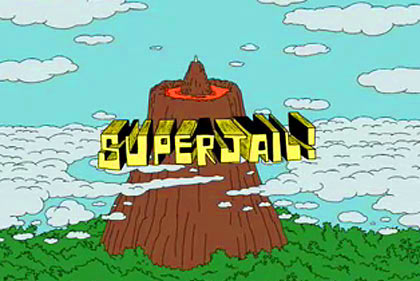
From the studio that produced the terrifically-offensive animated sequences from MTV’s Wonder Showzen, Superjail! is an 11-minute cartoon series about a prison located inside a volcano, which is itself located inside a larger volcano.

http://www.youtube.com/watch?v=Ty6M7c3rZiQ

In typical Adult Swim fashion, this acid trip of an animated series is mostly non-sequiturs and abrupt tonal shifts, but Superjail! easily skates by on its ruthless depictions of violence and throwback animation style. Like a skillful rendition of “Free Bird,” each episode starts out slow and builds to a manic crescendo of all-out slaughter. With the promise of a second season, this first season set is being released with little in the way of extras or special features, but the real gift is just having all the insanity on one disc. As an exercise in wringing comedy from excess, you could say Superjail! is like all Adult Swim shows: it really shouldn’t work, but it does.

Superjail!: Season One comes out on DVD Tues/23.

Why I love snowboarder girls

1

II mean, they’re really hot, of course, almost by definition.


But that’s not why I love the snowboarder girls. Here’s the thing (and it goes for the men, too; I just happened to be watching the women last night):


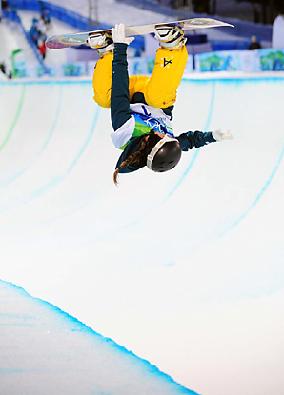
Every Olympics, every major competition, the boarders push the limits, try to do something they might not be able to pull off, and half of them fall, crash and burn, wipe out — and when they take off their helmet and goggles, they’re smiling.


It’s as if they love what they’re doing so much that it hardly matters if they just lost a shot at an Olympic gold medal.


It’s like, “dude — fuck the hardware. Did you see that sick move I almost landed? Whoa, I was like 20 feet above the pipe, man.”


For the snowboarders, it’s about the sport, not the winning. Sure, they’re intense competitors, but they also cheer each other on, and never play it cautious and just go out there and have a blast.


Compare that to the figure skaters, who are, of course, astonishing athletes and beautiful to watch — but they do their pre-scripted routines and seek perfection in planning and execution … and if they miss a jump or fall, it’s  as if the world has ended. They try to smile through the obvious pain and you almost don’t want to watch.


The boarders, though, they’re into the real Olympic spirit. Swifter, higher, stronger, dude! Party on.


Boogie Bird will save us all

0

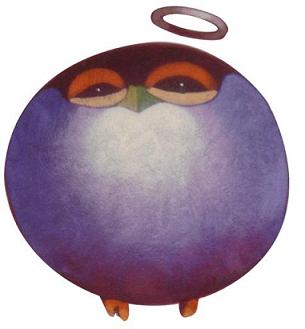
Health care bickering amongst our elected leaders, new wars on the horizon, the rising prominence of American Apparel — it’s no secret, San Fran: we need a hero. Enter Boogie Bird, a “curious creature” brought to us by spray paint artist Chor Boogie, who is displaying his tiny winged friends as part of his first post-stabbing gallery show.

The pocket sized birds are a much more simplistic design compared with Chor’s standard graffiti-inspired works, which are typically riotous parties of cobble stone shapes and half seen human forms. Boogie paints them with unusual spray paint techniques — one involves using low pressure to create more defined patterns. Murals form the core of his work, which includes “The Perception of Color Theory,” an all-seeing hurricane of form on Market Street. Chor completed the piece after he was physically assaulted mid-paint at the Tenderloin site- and after he subsequently picked up a kindly paraplegic as a guardian angel, from the looks of the vid below.

https://youtube.com/watch?v=FHPN-j6PUdg%26hl

The Boogie Birds have picked a roost at Air Castle gallery, an intimate showroom/artist’s studio in the crease between lower Pac Heights and Fillmore. Check ’em out, but be quick- I hear they’re fast little fellers.

“Boogie Birds”: The Art of Chor Boogie

through Feb. 28 noon – 8 p.m., Thurs-Sun

Air Castle

1706 Steiner, SF

(415) 328-2160

www.aircastlegallery.com

Sushi Raw: a fine place to drink twice as much as you usually would

0

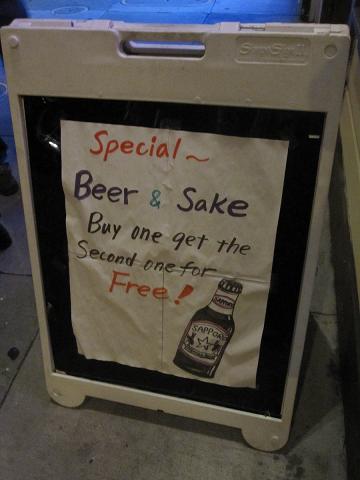
Ah, Sushi Raw. Although I would ding you for continuing to post your Grand Opening sign months after first rolling out your extravagantly plated Fuji Mountain rolls, you certainly have kept that working hard to please attitude. It is difficult to be mad at a place where the entire staff drops their duties to yell something cheery in Japanese every time anyone walks through the door (“Welcome?” “You look thin?”). And all pleasantries aside, you had me at the two for one beer and sake special.

That’s right, two for one big beers (Asahi and Sapporo on the menu) and large sake bottles, the bottles procurable for a scant five bucks. I’ve never seen the restaurant open without the sandwich board that announces the special outside. The lure of cheap booze pulled a pre-sated group of friends and I in after dinner at Axum the other day, and we received the same exuberant greeting and table service- despite the fact that only one gluttonous member of our party was still down for raw fishes and the rest of us were doing dessert.

So yes, the fish: fresh and creative, often stacked in towering spires of baked/drizzled artistry or arranged in a flower shape on your plate. Desserts: crap shoot. Avoid the glutinous green tea cheesecake but dive wholeheartedly into chocolate moshi. Booze: superlative. Again, two large bottles of sake for $5. Ambience: they played the same John Legend song three times while we were in there, but it was a song I like so I was pleased. The walls of the restaurant are more covered than art than your average bear/sushi joint- it makes for good eye candy should you get tired of John Legend or your dinner companions.

Domo arigato, Sushi Raw. But fellow pescaterians, please remember your identification if you plan to imbibe. The bf forgot his “big brother card” and wasn’t afforded even a sip of sake thanks to a waitress vigilant enough to defeat even the foxiest undercover ABC agent. Sushi Raw: nobody’s fool.


Sushi Raw

(three locations throughout Bay Area)

682 Haight, SF

(415) 863-6888

www.sushirawsf.com

Beer/wine

AE/MC/V

Not noisy

Wheelchair accessible

Appetite: Forecast — a downpour of delicious varietals and gourmet bites

0

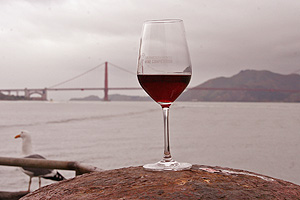
It’s been a stunning week of sunny weather… We may get a little rain on Saturday, but no problem if we can spend the afternoon indoors sipping delicious wine, right? On Sat/20, the largest competition of American wines in the world takes place in Fort Mason’s Festival Pavilion.

The San Francisco Chronicle Wine Competition features literally thousands of our country’s best with gourmet bites along the way. Maybe it’s Sonoma Artisan Foie Gras or A Perfect Pear‘s delicious jams. Or you can sample what the CCA students are cooking up.

The event started in 1983 as an annual fundraiser for the Santa Rosa Junior College Wine Studies Program & Culinary Arts Program (now that’s a mouthful), and was then known as the humble Cloverdale Citrus Fair wine competition — eventually growing to the point where it moved to SF. More than 4800 nationwide wines are judged in January by 60 industry judges. The gold medal wines are offered to you — that’s a lot of wine tasting!

You’ll taste wines of many a varietal and within a wide price range, like a Norton from Missouri, Rieslings from both coasts, or a Chambourcin from the Finger Lakes. Fort Mason is yours to roam: sipping, nibbling, taking in views of Golden Gate Bridge. Rainy or not, that sounds like a sweet Saturday.

San Francisco Chronicle Wine Competition
Sat/20; 2-5pm, $60 advance/ $80 at the door
Fort Mason Center Festival Pavillion, 38 Fort Mason 11
www.winejudging.com
twitter.com/sfcwinecomp

Check out Virginia’s culinary itinerary site www.theperfectspotsf.com for more food news and views.

Budget looks: Buy it, bejewel it, fix it, wear it, do it

6

By Chhavi Nanda

The dismal economy may be prompting us to keep our wallets shut, but it can’t curb our fashion obsession. Widespread job losses, declines in personal income, declines in real GDP — we’re still managing to look fabulous and sharp. The only difference now? We’re on a budget. Here are three ways to spruce up your look without breaking that cute little piggy bank. (Hint: find a way to wear it.)


Task #1: We have to get an outfit together for less than $20, all items collected from a thrift store. I headed to Thrift Town (2101 Mission, SF. 415-861-1132, www.thrifttown.com), in the Mission.
Dress: $5.99
Shoes: $3.00
Vest: $3.99
Belt: $1.50
Grand Total: $14.48


Task #2:   I was approached with the issue,  ” I have so many accessories, but nothing to wear them with. I only have $5.00. Help!” My response was, ” Of course.” Again, we headed to Thrift Town, picked out a dress that was perfect for the client’s body type, personal style, and wallet.
Dress: $2.99
add your own accessories


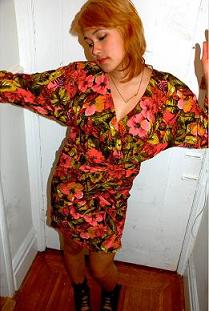
Task #3:  You may have found that almost-perfect dress with a great print and fit, but there’s just something off about it. It’s easy to nonprofessionally alter a dress to achieve the fit and shape you desire. Once again at Thrift Town, I found this dress, but there was something awkward about the shape of it. All we did was tie it around the client’s body, as if it were a wrap dress, and voila! The makeover is complete, for a recession friendly bargain of $5.99.
Dress: $5.99
Get creative!

Awkward!

So much better!

Comment wonkiness

0

Hey y’all, we realize everyone’s having a little difficulty posting comments — please bear with us while we work on it, thanks so much 

Uproot: Playing with the new Food Environment Atlas

0

By Robyn Johnson

The USDA’s freshly released Food Environment Atlas has been getting some buzz the last few days, coinciding with Michelle Obama’s recent vow to tackle childhood obesity and food accessibility issues and a lot of dialogue and ranting going on in the media about big bad Agribusiness and the hyper-idealism and hypocrisy of the locavore movement. (Mrs. Obama herself has drawn some fire — critics have taken aim at her overstatement of the severity of the rise of obesity and its possible fallout, the “inappropriateness” of mentioning her own daughters’ brush with chubbiness, and her dodginess about important societal causes of childhood obesity. Oh, the pitfalls of a crusading First Lady!)


The atlas interactively charts 90 indicators of the food environment, like availability of fresh produce, fast food restaurants, and grocery stores, amount of physical activity evidenced in the population, and food costs and taxes. Users can generate maps showing variations countywide, regionally, or by state, depending on the data available. Users can also make advance searches for multiple factors, like poverty prevalence plus number of farmers markets available, if you want to carefully dance the line between correlation and causation. Other features include percentages of low-income homes over a mile away from grocery stores, types and quantities of foods eaten at home, food insecurity, obesity rates, farm to school programs, and a slew of other statistical information. (For a real horror show search for low-income preschool obesity rates).

This map shows the availability of farmers markets (or lack thereof) throughout the country.

I can’t say for certain since the highly trafficked link has been breaking throughout the day, but the atlas seems to work best at giving a broader comparative perspective of the food-related socioeconomic issues of the US. When trying to identify the relative culinary desert commonly known as West Oakland, the entire Bay Area portion of the map stayed the same minty green that denotes a high access to grocery stores — clearly not the case. That being said, some interesting disparities crop up. Colorado is among the highest of the states for fast food spending per person, but also has one of the least obese populations — Coloradoans also drink the least amount of soda and rank in the highest category for exercise. Play around and see what you can find, but you may not want to jump to any conclusions ….

Snap your fingers for our new poet laureate

0

“The only war that matters is the war against the imagination.” Diane di Prima, San Francisco’s new poet laureate as of last year, should be an expert on imagination’s primacy. Her work in such volumes as The Revolutionary Letters (1971) helped to shine a light on the role women played in Bohemia- not always the most well-lit arena. On Fri/19, the Mission Cultural Center for Latino Arts holds a reception to laud the most well known female voice of the Beat movement, and celebrate her turn as our city’s bard.

Here’s the bio-in-a-nutshell; born Italian-American in Brooklyn, Di Prima was a precocious writer, corresponding with Ezra Pound by the age of 19. After attending Swarthmore she starting gettin’ wierd with in with the Beats in Manhattan, in 1966 spending time on Timothy Leary’s Millbrook psychedelic community. She’s worked closely with Amiri Baraka, and the two co-founded the New York Poet’s Theatre. She became a connective figure between the Beats and hippies, moving to California permanently in the ’60s where got in with the radical improv group, the Diggers, and started studying world religions. She’s written over 48 books. 48 books! Would that we all could have a paragraph like that written on our lives.

And the poetry? The words often often personal, serving to widen Di Prima’s scope beyond an individual life to constancies in the human condition. But rather than stretch my capacity as a poetry critic, let us just revel in the glory of the words themselves. Below, “Revolutionary Letter #1” from Revolutionary Letters.


I have just realized the stakes are myself

I have no other

ransom money, nothing to break or barter but my life

my spirit measured out, in bits, spread over

the roulette table, I recoup what I can

nothing else to shove under the nose of the maȋtre de jeu

nothing to thrust out the window, no white flag

this flesh all I have to offer, to make the play with

this immediate head, what it comes up with, my move

as we slither over this go board, stepping always

(we hope) between the lines


The poet laureate honor was first bestowed on Lawrence Ferlinghetti by Willie Brown in 1998. MCCLA’s event will also feature past honorees Devorah Major, Jack Hirschman and Janice Mirikitani, amongst other members of the rhymey profession.

Celebrate Diana di Prima

Fri/19 7:30 p.m., free

Mission Cultural Center for Latino Arts

2868 Mission, SF

(415) 821-1155

www.missionculturalcenter.org

SF Indiefest drops by the Corner Store

0

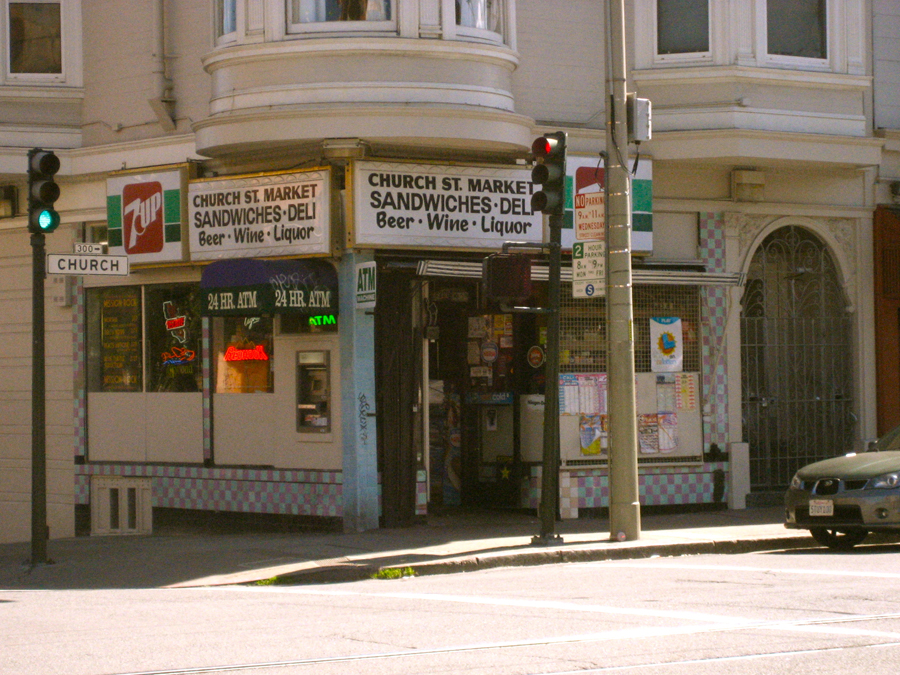
“We were looking for a working class hero story,” said Katherine Bruens, creator of feature film documentary Corner Store at its SF Indiefest preview this weekend. They found it. Corner Store (to be shown again on March 27) widens to include more, however- becoming a portrait of what it is to be an immigrant in this country, on missing home and personal conflict. On what it means to sleep in the back of the convenience store you work in 16 hours a day. The film joined a stellar lineup of shorts and features at the festival, a film geek’s delight which continues through Thur/18 around town.

The producers followed their protagonist, Yousef Elhaj, for 14 months, during which they say he was “too polite not to have a documentary made about him.” Elhaj hadn’t seen his family for the 10 years he’d spent funding a life for them at his Castro/Mission (“Mistro,” as an interview with some neighbors memorably dubs it) convenience store, where the majority of Corner Store takes place.

It’s a claustrophobic existence to say the least, marked by small talk with customers he’s seen year after year, and only occasional forays into the outside world. It would seem like the stuff of boring visuals, but Corner Store’s meticulous record of Yousef’s daily tasks around his space, straightening wine bottles and replacing his deli case, is fascinating. Corner stores are a fact of life in the city, but rarely does one stop to think about the dedication and perseverance that goes into maintaining a well run beer and grocery stop.

At long last, the green card process is achieved and Yousef heads back to Palestine to see his fam. Here, he’s surprised to initially feel like an outsider in his birthplace, and the scope widens. Does the family want to stay in their homeland or join Yousef in the New World? Yousef’s family lives in Bethlehem and has to pass through checkpoints to visit a town 10 miles away. The walls that run through their neighborhood become one of the film’s most evocative symbols — they are a touchstone for many of the world’s premier graffiti artists, and Banksy’s piece of a dove wearing a bullet proof vest seems to evoke Yousef’s journey to find the best life for his family.

Bruens seemed to shy from overtly political questions at the Indiefest post film question and answer session. The film, in its creators’ eyes, is far more about how a man’s life is affected by the Israeli-Palestine conflict than the conflict itself. How successful at convincing audiences of this fact remains to be seen, but I wish them the best. Corner Store is a remarkable achievement of documentary filmmaking; immortalizing the everyday to express a facet of human life.


Next showing w/ Q&A feat. Yousef Elhaj and Katherine Bruens

& Arab Film Festival executive director Michel Shehadeh

March 27th 3, 7 pm, $12-$25

Victoria Theater

2961 16th St., SF

 www.thecornerstoredocumentary.org

Lip-smacking kalbi burrito action at John’s Snacks and Deli

1

You didn’t even know you needed a kimchi taco till you began to hear about those trucks down in LA, didja? Sure, Namu at the Ferry Building delivers the Korea-Mex goods on Thursdays, but what about every other day of the week?

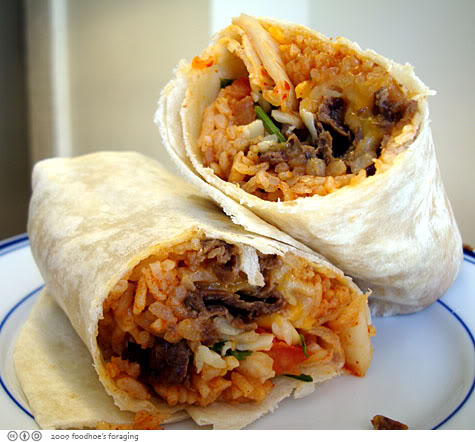
There’s absolutely no place to sit at John’s: it’s essentially a bodega with the teeny behind-the-counter operation that makes Yamo look like a kitchen stadium. Still, you can get all kinds of delectable pan-Korean specials to go. I haven’t tried the kimchi bulgogi hot dog or the soon doobu tofu stew or the japchae noodle yet, but I have dug the kimchi soft taco with bulgogi beef and sauteed kimchi and its messy, saucy goodness. The kalbi burrito comes with a deep pocket of fresh lettuce and salsa, crunchy and crisp amid the kimchi-flavored rice and savory hunks of short rib.

So is it authentic? Well, is a burrito real Mexican cuisine, hombre? I’ll leave those worries to the purists and instead concentrate on these getting the maximum amount of kimchi from my foil-wrapped snack into my waiting maw.

John’s Snack and Deli
40 Battery, SF
(415) 434-4634
www.snackanddeli.com

Film Pick: “Terribly Happy”

0

The Coen Brothers’ Blood Simple (1984) is the obvious corollary for this coolly humorous Danish import, though director/co-writer Henrik Ruben Genz’s firmly dampened-down thriller of sorts is also touched by David Lynch’s parochial surrealism and Aki Kaurismäki’s backwater puckishness.

Happy isn’t quite the word for handsome, seemingly upstanding cop Jakob (Robert Hansen), reassigned from the big city of Copenhagen to a tiny village in South Jutland. There he slowly learns that the insular and self-sufficient locals are accustomed to fixing problems on their own and that cows, trucks, and other troubles have a way of conveniently disappearing into the bog. When buxom blonde Ingerlise (Lene Maria Christensen) whispers to him that her husband Jørgen (Kim Bodnia) beats her, Jakob begins to find his moral ground slipping away from him — while his own dark secrets turn out to be not so secret after all. More of a winkingly paranoid, black-hearted comedy about the quicksand nature of provincial community and small-town complicity than a genuine murder mystery, Terribly Happy wears its inspirations on its sleeve, but that doesn’t stop this attractively-shot production from amusing from start to finish, never tarrying too long to make a point that it gets mired in the bog that swallows all else.

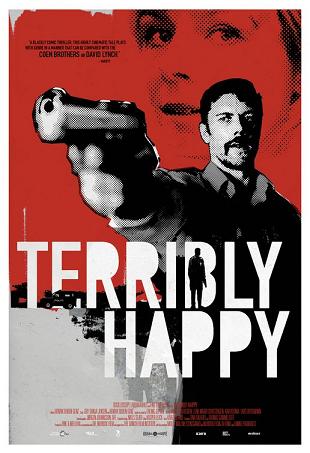
Bonus Danish poster: