• No categories

Pixel Vision

Appetite: 3 DIY books for spring

0

Spring is here, in fits and starts, and it’s a time for fresh inspiration. Whether you’re intrigued by curing fish, bottling homemade condiments, growing pineapple guava on your rooftop, or baking Chinese almond cookies, here’s some special books to walk you through it.

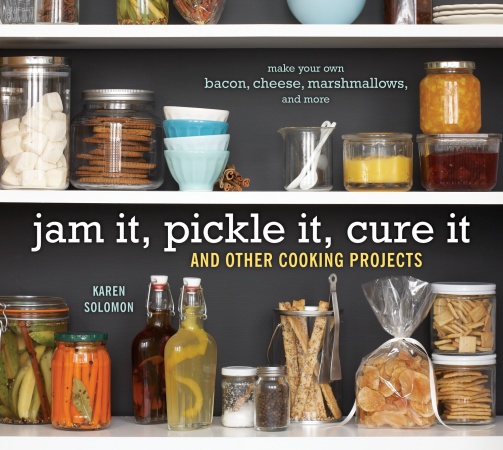
Jam It, Pickle It, Cure It by Karen Solomon
One of the best (comprehensive but approachable) books I’ve ever seen in the D.I.Y. food realm, Karen Solomon’s Jam It, Pickle It, Cure It covers a wide range of possible projects with appealing, natural photos. Solomon (a former Guardian alum, by the way), presents instructions and storage details for brining olives and kimchee, bottling dressings and mustard, preserving bacon or jerky, making jams. Popsicles have their own delectable section — coconut cream pops, anyone?

I’m delighted to see a drink section that leads you through spirit infusions, and brewing your own Jamaican ginger beer or Chai. Candies, butter, cheeses, marshmallows, chips, pasta, there’s nothing you can’t make. With the charming Solomon as your guide, it all becomes accessible.
P.S. Don’t miss the April 29 Jam and DIY session with Karen at 18 Reasons.

A Little Piece of Earth: How to Grow Your Own Food in Small Spaces by Maria Finn
Maria Finn lives the charmed life on a houseboat in Sausalito, growing her own food… and is a fine tango dancer to boot. Thankfully, she’s sharing her food knowledge in her just-released book, A Little Piece of Earth, a clean, straightforward resource for growing your own in small spaces (i.e. city dwellers). It could be strawberries or vanilla orchids in a window, passion fruit or olive trees on a rooftop, fig trees or serrano peppers on your balcony, bok choy or pea shoots on the back patio. Community gardening and foraging each get their own section, and there are recipes to preserve the lemons or candy the kumquats you’re growing, or use those foraged morels. Finn gets you thinking literally outside the box about endless possibilities for growing exotic produce within apartment limits.

Field Guide to Candy by Anita Chu
Bay Area local, Anita Chu, knows sweets. She’s honed her sweet tooth at pastry school and on her Dessert First blog. Her Field Guide to Candy is a thick, pocket-sized book jam-packed with recipes on chocolate, fruits and jellies, marshmallows, fudge, caramels, toffee, pralines, and peanut brittle… to name just a few. Chu goes well beyond American candy classics to recipes like daifuku mochi, a sweet rice Japanese dumpling, or burfi, a fudge-like confection native to India and Pakistan and made with ghee (Indian clarified butter). With concise, step-by-step directions and pictures of necessary baking tools next to each step, Chu does her best to make candy-making easy, even sharing a bit history behind each sweet.

Game Theory: San Francisco ShEvil Dead vs. Oakland Outlaws, 4/3/10

6

Caitlin Donohue isn’t a sports writer. But she sure likes to win. Check out the last installment of “Game Theory” here. Oh, and give us a shout if you’ve got a big game coming up in the Bay.


I expected a lot from my first roller derby. Clotheslining, fishnets, snarling. Beer. I had high hopes. And I found all that — and believe me, I found it good, you don’t get $3 Pyramid Ales at just any sporting event. But I also stumbled unwittingly into a world of highly unorthodox female empowerment, a world where ladies have serious thigh muscles and sweat blithely through their heavy makeup. It’s a place that reclaims sports for the XX chromosones of today. And I liked it.


Clearly, the closer a sporting arena’s vibe is to that of the Thunderdome, the better your spectator experience. At Fort Mason Center’s Herbst Pavilion, where the ShEvil Dead was set to take on the Oakland Outlaws (both teams in the Bay Area Derby Girls’ League), there was little room for the genteel derby onlooker — if such a thing does indeed exist. 


The chaos and din of the standing room only bleachers and the rows upon rows of fans sitting on the concrete floor went far to blur the lines between the audience and the women tearing circles around the pink tape demarcated oval track in the middle of the Pavilion. The energy was super hyped, channeled completely towards the female gladiators on the floor. Handmade signs were held up lauding individual players, and cheap tamales and booze vendors (Maker’s Mark is a sponsor) confirmed that derby lacks much of the pretense, and ego that mar other sporting events. The arena had completely sold out and the crowd of 1,600 set a new record for league attendance.


A ShEvil Dead skater beats the drum for the derby bout against the Oakland Outlaws to start


The bout began with some enthusiastic theatrics from both sides– glory laps taken by each ShEvil Dead team member as her name was announced by a commentator that was barely audible over the reverberating boos and cheers from the crowd. Derby games only come every once in awhile — the next match for the Outlaws isn’t until May — so every one counts. Particularly this one. 


“Last year, we lost a coach and a lot of players,” says Dead captain/coach Windigo Jones, whose online player bio explains she grew up in Northern Ontario, “chasing ever larger prey through the northern boreal forests.” This bout was an opportunity for the squad (which had been down to “eight or nine players, when a normal team has something like 22,” according to Jones) to show the world how far they’d come. 


It’s all a touching story for Jane Hammer, captain/coach of the Outlaws — but not touching enough that she wanted the other team to win. “We were a little nervous for this one,” Hammer tells me.


The ShEvil Dead do indeed make the game interesting. Watching the game from the safety of the sidelines, I didn’t see as much, oh I don’t know, animosity as I had expected in the player-on-player collisions, but there’s no doubt that these women are playing to win. Each play, or “jam” is a long, grinding affair where the elected “jammer” must slip through the pack of players from both teams, lapping everyone to get points before she is inevitably shoved careening from the marked track.


Oh yeah, we’re jammin’. I wanna jam it with you


There’s a lot of hip throwing, and grunting — sights and sounds that fit into what I expected of a derby bout. But there was also an unexpected element. These ladies were elite athletes. Skating quick circles around a track barely larger than a basketball court is no joke — and they were doing it while being buffeted and beaten by a bevy of butch beauties (sorry, I got catch up). They had the healthy stink of women un self consciously immersed in sport, despite their boy shorts and red lipstick.


The climax comes in a pivotal play towards the end of the second period. Hammer, jamming for the Outlaws, goes to the penalty box, and the Dead’s jammer, Knock Knock, gets knock-knocked off her feet, hard. So hard, in fact, that the starred spandex helmet panty that marks her as the jammer flies off her head. 


The jammer hat is what officially defines the jammer in the derby rule book. Whoever has that stretchy diaper on their head is the motor behind their team’s game. And without a designated jammer, your team is totally ass backwards . But just a week ago the Dead had practiced plays involving passing that jammer panty, and veteran Mexican Jumping Mean recalled the lesson instantly during the bout. She  swooped in for the star, replacing it on her own helmet, and racked up some vital points for the Dead before the Outlaws had time to react.


 “Only a real veteran would have thought to do that,” says her captain/coach Windigo Jones. “I was so proud of her.” The Outlaws ended up winning the bout, but only barely. “It came down to the last jam,” says Hammer.


Later on, I chatted with both coach/captains about the match, and what derby has meant to them. “This is a kind of empowerment you just can’t find anywhere else,” says three year veteran Hammer. She started skating while growing up in Las Vegas, where “you hung out at the rink, because that was the thing to do.” She quickly got into the scene upon her arrival in the Bay Area. 


Nowadays, she’s a legend. “Oh, everyone knows who Miss Jane is!” says aspiring roller derb-ette exclaims as she guides me to the locker rooms at half time. 


Half time in a close game brings a chance for the Outlaws to rehydrate, refocus, and reamp for battle


The league’s set up seems to encourage a culture of respect and camaraderie between players of all levels. It takes a shape similar to that of Manchester United; teams like the Outlaws and ShEvil Dead compete against each other in the regular season, but often have league wide practices together and combine their best players to represent them on the Bay Area Derby All Stars. That’s the travel team which rolls hard for the Bay against Women’s Flat Track Derby Association squads from all over the nation. The All Stars, of which Jones and Hammer are both members, are currently ranked 20th in the country, down from a standing in the top ten not too long ago. “We have a lot of work to do,” admits Hammer.


“The crowd we had Saturday was totally unexpected for me. It’s amazing how much this league has grown over the past few years,” says Jones, who entered the league around the same time as Hammer. It was a time when, Jones says “the league would take on pretty much anyone who was willing to learn the skills — they were pretty desperate for players.” 


That’s not the case anymore. Hammer hesitantly attributes the soaring popularity of derby in part to movies like last year’s Whip It, whose sexy depiction of the sport might have contributed to the sell out crowd at Saturday’s bout (the attendance of 1,600 was a league record). Still, the movie seemed to “Hollywood” the derby scene a little. “Underage skaters? That’s not really what we’re about,” Hammer tells me. This fledgling sport has a lot to deal with when it comes to how it will be represented in mainstream consciousness.


But there’s no doubt that more and more ladies will be getting their kicks in heavy eyeliner and elbow pads. BAD has announced that it’s putting its new West Oakland practice space to use this summer with a rec league, designed not only for retired league veterans but also “girls who might not have the most advanced skate skills. We’re going to have an introductory course to teach people the basic rules,” says Hammer. 


Like all the derby stars I talked to, the coach of the Outlaws was invested in the contributions that rookies make to her league’s future. The rec league seems like a great opportunity to evangelicize the uplift (and rock hard leg muscles) that come from a life in the derby. Just get your game face on, ladies. Hammer’s insistent that the rec league be no “walk in yoga class.” “We’re going to evaluate people’s skills like the system we use for who makes the [competitive] league. We have to add everybody onto our [practice space’s] insurance, so we’ve got to have some discretion when it comes to who plays. It’s a safety thing.”


Bay Area Derby Girls’ next league game:


Oakland Outlaws vs. TBA


May 1 doors @ 6:30 p.m., game @ 8:30 p.m., $10-12


Herbst Pavilion


Fort Mason Center, SF


www.bayareaderbygirls.com



Toothsome pie worthy of its cult following: Emilia’s Pizzeria

0

I think I embarrassed Emilia’s Pizzeria owner and chef Keith Freilich when I called him out as prominently featured in Sunset magazine’s recent Bay Area pizza roundup (one question on that, regarding the bit about Flour and Water being located on an abandoned, seedy stretch of the Mission — did the writer ever notice the relatively new yup-scale lofts blossoming all around that block?). Hey, it’s worth noting since Emilia’s is likely the least showy pizzeria of the entire lot.

First of all, it’s itty-bitty — about four tables large with questionable pinky-orange walls — and second, it’s extremely hands-on and intimate: Freilich makes all the pizzas himself, so be warned, the wait can get pretty long. Better to call ahead. Just ask what’s on the menu that day — usually red onion, mushrooms, pepperoni, sausage, sopressata, or spicy Italian sausage, are available as toppings for the 18-inch margherita, wrought with a bright tomato sauce, fresh mozzarella, and basil. Then give it about an hour, unless you’re hankering for a pie at the typical dinnertime — then who knows. The wait — and the price (pizzas are $18 and up) — are worth it: the pie is blissfully simple and fresh ala the Cheeseboard — so much so that the margherita will do me just fine next time — and with a delightfully blistered thin crust and truly toothsome sausage. Freilich has just the right touch when it comes to the application of basil, too.

A pizzeria has been in this teensy spot on Shattuck, obscured by the nearby taco spot and the corner bodega, for give or take a few decades, but Freilich is making his presence felt in the mere six months he’s been here — doing a few things very, very well. You just have to get there before he closes up shop each night: when he runs out of dough, out go the lights.

EMILIA’S PIZZERIA
2995 Shattuck, Berk.
(510) 704-1794
www.emiliaspizzeria.com

The Daily Blurgh: Splinters of the cross

0

Curiosities, quirks, oddites, and items from around the Bay and beyond

An unbelievably hermetically sealed spherical inalienable maze of light and sound seeing imagery expand in every direction.”

I was reminded of the words of visionary architect and late SF resident Achilles Rizzoli – who spent his life drafting gorgeous symbolic portraits of friends, family, and loved ones as fantastic buildings, the cornerstones of which would never be laid – when I saw this Wired video that Boing Boing posted about Rohnert Park artist Scott Weaver’s enormous sculpture of San Francisco done entirely in toothpicks.

Weaver has been at work on his creation for nearly three decades, having turned down multiple offers last year from Ripley’s Believe It or Not! Museum to buy what he views as an example of, as he told KGO at the time, “what can be done in life if you create and use your imagination.”

“But is toothpick art woodworking?” asks Fine Woodworking Senior Editor, Tom McKenna, in an article from last August about artist Steven J. Backman, who he describes as, “perhaps the preeminent toothpick sculptor in the country.” If Weaver’s accomplishment evokes Bosch’s Garden of Earthly Delights by its fantastic condensation, Backman’s pieces – many of which are based on local landmarks and attractions, such as the Golden Gate Bridge or a trolley car – go the route of Picasso’s early still life paintings, their forms connoted through pared down lines and simple, pronounced shapes. Even SF Mayor Gavin Newsom gave his seal of approval back in 2005, proclaiming January 11th of that year to be Steven J. Backman Day.

Backman’s art is a wonder of engineering. But Weaver’s is simply wondrous.


But what wonders of mental engineering also lurk in the virtual-pet analogue world?


And now, again, just in time for Easter, we turn to an Andy Rooney-inspired feature I’d like to call: “You got my goat!”

Do you Want Men Dressed as Women Teaching Your Kids?”

Hell yes!

But listen up, Traditional Values Coalition. We need to talk about your look. It’s busted. Don’t you know ominous, dark clouds went out of fashion after everyone and their mother mocked the National Organization for Marriage’s “Gathering Storm” ad? Weak. Sauce.

What you need is some drag queen valkyries or some shit like that thundering out of the heavenly maw, ready to swoop down and piss on the souls of those studious young folk, whose preciousness is so inviolate as to make Justin Bieber look like the next jailbait-hungry mark to get punked on To Catch a Predator (just give him time).

If you want fierce, bitch, you gotta go Wagner.

Appetite: 3 hoppin’ Easter meals

0

Then there was Easter…

Beer (and bunnies?) at Magnolia Pub

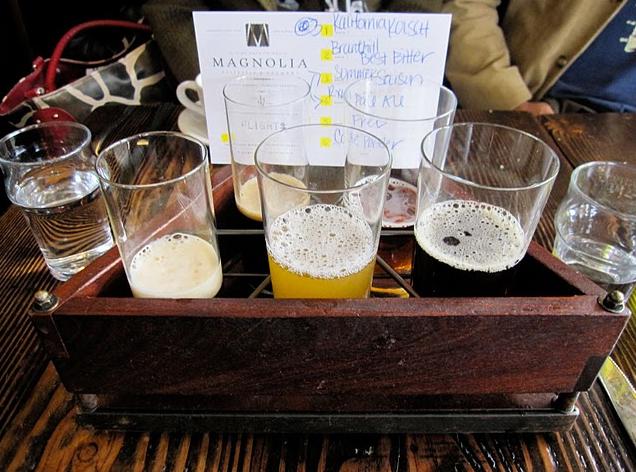
No, they’re not serving an Easter brunch, but with new chef, Matt Kerley, announced just this week, it’s as good a day as any to visit Magnolia Pub … especially if beer and Scotch duck eggs sound more your speed than a froufrou Easter menu. Kerley keeps the gastropub and farm-to-table approach intact, ever looking for ways to utilize all animal parts in his cooking (from local farms, of course).

His upbringing in both his native Australia, then South Carolina, influence his cooking. New brunch dishes you’ll see rotating through include beignets with roasted apple puree and bacon caramel (can we say “yes!”?), mushroom waffles with golden enoki butter and wildflower honey, or a Ploughman’s Board with Stilton and Montgomery cheddar, boiled duck egg, potted head (you heard right) and accompaniments of marmalade, pickled onions and levian bread. Whether you go for Easter or any time after, looks like there’s some new delights in store. And there’s always Dave McLean‘s awesome beers.

4/4, 10am-2:30pm
1398 Haight, SF.
415-864-7468
www.magnoliapub.com


Berkeley feasting at FIVE
Make Easter chic by slipping into downtown Berkeley’s Hotel Shattuck for brunch at FIVE. This gorgeous, historic, airy room is modern in black and white with a splash of red. Exec chef Scott Howard’s menu is a winner and brunch includes his signature mac ‘n cheese with smoked gouda and tomato jam, Belgian waffles, beef brisket, and banana bread pudding. Don’t forget unlimited mimosas.

4/4
$55 per person; $25 for children under 5-12
2086 Allston Way, Berk.
510-225-6055
www.five-berkeley.com


Waterfront views at CHAYA Brasserie
With one of the better deals for Easter feasting in the city ($35 for three courses and unlimited mimosas), not to mention those ever-inspiring Bay views, CHAYA Brasserie (www.thechaya.com) allows a customizable brunch from 18 dishes, like Chaya’s signature sushi (a sampler platter), mushroom spinach omelet with decadent foie gras and black truffle sauce, and shiso lime and strawberry guava sorbets.

4/4, 11am–2pm
$35 per person
132 The Embarcadero
415-777-8688
www.thechaya.com

Extreme museum live blogging!

0

You think you know mammals? You don’t know mammals. Those were the fighting words thrown at me by the Academy of Sciences with their invitation to the media preview of “Extreme Mammals,” a furry, live-birthin’ romp of a good time that opens up to the public Sat/3. The invite also promised a look into the museum’s famed dead thing vault, typically only accessible to swashbuckle biologists and moneybanks VIP tour guests. I saddled up and rode out to Golden Gate Park to investigate the goings-on. Only thing was, the event was structured around “live blogging.” I asked around the Guardian office, but none of us really seemed to know what that was, so I just wrote down what my cell phone clock for each note I took. I find the numbers made everything look more scientific, enjoy.  

2:10 Arrive at museum. Holy hell, there’s more families here than there will be at the Embarcadero when the zipline comes!

2:12 Coffee fixins and pagolin inspired/furry cupcakes! I heart press junkets. The chaps from wired.com and I discuss Life. Mammals now, please.

2:16 Greg Harrington, executive director of Academy, welcomes junketers. “You’re on the edge of extreme. As we know, anything extreme today is totally cool and totally exciting.” Museum folk, though not the hippest songs on the album, are adorably enthusiastic.

2:17 Shout out to the indricotherium, the biggest land animal. He’s 20 tons of love.

2:22 Enter exhibit. Four legged mega-muppet with floppy nose greets us as only a lifelike recreation can. He’s the reproduction of an animal discovered by Darwin during his voyage on the Beagle and looks like a big, brown Gonzo. Carol Tang, director of the mueseum’s public programs, tells us for all we know, he could have been purple in real life. Extreme!

2:26 A fossil with it’s skin and stomach content still intact? Extreme!

2:30 Unicorns! Oh wait, just a narwal’s modified skull tooth. Extreme.

2:31 Per tour guide’s suggestion, I “engage” with a mammoth’s tooth. Very rippley. 

2:32 Kitty skulls galore.

2:33 “People are the most extreme of all!” says Carol, as she stands next to a THUNDER-JAWED, SPOTTED HYENA THAT IS THE RELATED TO WHALES. 

2:34 “Engage” with the glyptodont’s freaky tiled armor. Yeesh.

2:36 Here come the pagolins! Armored anteaters — the 50 Cents of West African savannahs that have large termite populations.

2:40 Tang says this guy, a biological link between whales and land animals was “probably a little awkward on land.” He looks like the dopey sidekick in a Disney movie.

2:41 “Engage” with skunk pelt. Feels like kitty. Extreme?

2:44 Flying squirrels can’t really fly. FAKERS

2:46 Echidna display asks us “is egg laying extreme?”

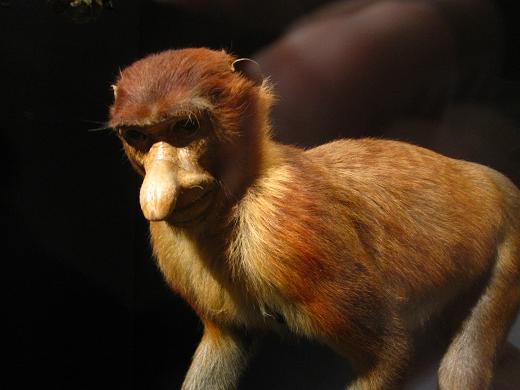
2:47 Proboscis monkey = penis nose.

2:48 I would give this squirrel peanuts if I saw it in the park. If I wasn’t incapacitated by the acid flashback it would doubtlessly trigger.

2:50 Fanged hippo!

2:51 Live blogging would be better with an actual Internet device in hand.

2:52 Am I the least wired person here? Wait, there’s a British guy with a notepad. Score, I’m not the only analog.

2:52 Was the smilodon the happiest of all dinos?

2:55 Band name spotting: Dire Wolf. They’ve found 3,600 of them in the La Brea tar pits. Such a rockstar way to go.

2:57 Wall of freaky things we’re still discovering (24 new mammals worldwide each year!). Want to squeeze the striped rabbit, found in 1999 near border of Laos and Vietnam.

2:58 Tube lipped nectar bat. Tongue is longer than rest of body. Discovered in 2005. Sick name, massive tongue: ultimate ladies’ man/bat.

3:04 Batodonoides vanhouteni. A nickel sized lemur. Smallest mammal eva!

3:05 Vamos to the vaults! Holler at Claude, the albino croc, en route.

3:06 Museum staff-only area. Woman steps out of elevator carrying what looks to be dead ospreys in Ziploc freezer bags. We also pass signs for the “visualization studios”? What the devil do these scientists have going on back here?

3:08 Answer to question: a five story library of 26 million dead animal samples. “The most tangible and complete collection of biodiversity on earth,” sez Jack Dumbacher, the museum’s curator of birds and mammals. Well then!

3:11 Dumbacher: “Let’s pull open a drawer!”

3:17 Omg. Have you ever seen an otter skeleton? They are sway backed hilarity!

3:20 Galen Rathburn, grey faced scholar of the grey faced sengi, shows us how he gets down. 

3:21 Sengis are related to elephant sea cows. 

3:22 Galen is wearing a studded belt and pocketchain, and is given to holding up obscure mammals while saying things like “that one I collected in Kenya in 1970.” 

3:23 “We’re off to Namibia at the end of this month.” According to Galen, shuttling never before seen dead animals through airport security presents unique challenges. This man embodies adventure.

3:27 I thought it was a dodo, but it was only a wandering albatross. Yawn.

3:43 Type specimens (preserved animal used to define its species)/extinct animal cabinet cracked open. Wonders unfold.

3:47 Within, an egg from the Madagascar elephant bird. It’s fucking massive.

3:49 Field mice, bunnies, boxes tied up with ribbon — it’s a taxonomist’s rendition of a Beatrix Potter book.

3:52 “Does the Academy collect plants?” “We sure do! Our plant collection is… extreme!”

3:53 I love my job.

3:55 I drop my camel (?) cupcake meant for later home consumption. Frosting everywhere. Junket over. Thumbs up on mammals, y’all.


“Extreme Mammals: The Biggest, Smallest and Most Amazing Mammals of all Time”

opens Sat/3 (through September 12), $14.95-24.95

Academy of Sciences

55 Music Concourse, SF

(415) 379-8000

www.calacademy.org


The Daily Blurgh: San Fran pranksters

0

Curiosities, quirks, oddites, and items from around the Bay

As Laughing Squid wisely reminds us, today is Internet Annoyance Day. So, rather than annoy you with fake news items that SURPRISE! Link to NSFWLOLfunnytimes, here’s a compedium of some of my favorite moments in which our city has played the fool at the hands of some trickster, egghead-with-a-funny bone, practical joker, anonymous collective, or plain ‘ol sick fuck.


“The Stockton Street Tunnelway, running South below this ‘Tunnel Top,’ is recognized as the first of 200 ‘Oriental labor tunnels’ dug within the state of California. Dating to the year 1894, the Oriental labor force indentured by the Moorlock-Datsun Company worked tirelessly in deep water and suffered many deaths in the pursuit of easy, underground passage for the residents of San Francisco.

This Plaque was erected in July 2002 in memoriam for the 3 men who lost their lives digging here, having succumbed to a sudden and terrible subterranean whirlpool.”


“Enter the world of the samurai, where more than seven centuries of martial rule are reduced to a single Disney-like trope of gentleman-warrior myth. Military prowess  meets cultural connoisseurship in an ideal of masculine perfection–selling militarism as beauty in a time of war.”


www.youtube.com/watch?v=MFHxn_9aVq8


“It’s Official…I am Running for Governor of California”


“Back in 1998 several San Francisco Bay Area radio stations had April Fool s-themed programming, including commercial station KITS (aka Live 105), which changed to KGAY for a day, airing gay-themed music. That same year college station KUSF read an announcement over the air stating that the university was selling off the station and commercial rock station KFOG devoted their 10 at 10 3 segment to big band music. Another year KFOG spent part of their program day playing the best 15 seconds of songs as their new format.”

(Yeah, yeah. “KGAY” is about as funny as Rudy Giuliani in drag, but props to KFOG’s 15 second rule)


For a true education pick up a copy of Re-Search #11: Pranks, as well as the follow-up volume, for interviews and invaluable tips from past and current local funny folks as Jello Biafra, Monte Cazazza, Mal Sharpe, and Bruce Conner, among many others.

Start your “Vinyl Addiction”

1

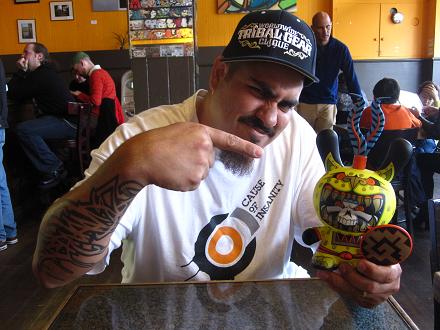
“Here’s my Jaguar Warrior.” Jesse Hernandez pulls out his toy, and sets it on our café table with a broad smile. Two women at the next table over are immediately intrigued. “Oh, that’s beautiful! What is that?” they coo. Hernandez seems flattered by the compliments, and patiently explains that it’s a vinyl toy and that he designed the elaborate yellow cat figurine with the sweeping blue plumes and fierce, fanged skull peering out of its face. And yes, it’s pretty cool.

One gets the impression that, as host of MYX TV’s new show “Vinyl Addiction,” (who celebrates its launch party and the release of an exclusive Hernandez toy Sat/3 at New People) Hernandez is used to explaining to people just what these cute/creepy little dolls are. He certainly got me to understand their appeal.

“There’s a multi-faceted quality to [vinyl toys],” Hernandez explains. The toys, which are often designed by well known artists, are manufactured in runs ranging from the mass release to the limited edition, to the one-off “custom,” hand painted by the artist themselves. Springing initially from the heavy character culture in Japan and Hong Kong in the late nineties, their designs can range from precious to unsettling, from manga to menacing. “They’re usually both,” says Hernandez “they’re cute, but really messed up. Or it’s dangerous and cute.” 

It’s easy to see why the seniors at the next table were intrigued by Hernandez’s design. The “jaguar” design is painted onto a bunny doll, the cat ears superimposed on the floppy rabbit ones. Though simplified from many of his custom runs, the artwork on the doll is at once, fierce, tribal and modern. It’s only slightly adorable when taken in with its globular cartoon rabbit form.

Hernandez has dubbed his style “urban Aztec,” and he deploys it in a dizzying array of mediums. He creates beautiful drawings (“everything I do is based on drawing,” he says) and fine art paintings of Aztec warriors and mythological figures, reflecting his Yaqui/Chicano heritage. “You have to push the limits,” he says. “I wanna make something timeless.”

He shows a slightly more city-oriented side in his animated sequences, painting a picture of life in the Bay Area, where he grew up, with “The Nutshack,” his original MYX series that he art directs and co-created. Hernandez says many artists come to vinyl toys as an offshoot of their production of other kinds of art. “Vinyl toys can be a stepping stone, a rite of passage for an artist to have something [mass produced].”

With all these projects, it baffles the mind that Hernandez could take on another job. But it’s clear that “Vinyl Addiction” sprang from his respect for the vinyl toy movement- and a desire that an artist be the one to tell their story. 

Most episode shoots, it’s just him and the cameraman. Though he now holds the titles of the show’s host/producer/creater/director/editor/animator, Hernandez was loathe, at first, to become the oncamera host of “Vinyl Addiction.” But now that two years after shooting the pilot with co-field producer Roland Posadas, he sees his involvement as key to part of the show’s effectiveness. “I think it brings out that level of authenticity,” he says. “This is my culture. Everyone knows I’m a part of it, and I want everyone to be shown in the best light possible.” 

His expertise of the topic is evident in the preview reels of the program, which will air nationwide through On Demand and in MYX’s three urban markets of the Bay, Orange County and Northern Virginia. Hernandez goes to his colleagues’ gallery and custom shows, profiling artists and companies involved in making the toys. 

“The hardest challenge,” he says, was to figure out a way to cover the topic in a way that made sense to people who didn’t know much about vinyl toys, to educate them on the art form. He resoved the issue with “Vinyl Vocab” segments, which take a moment to teach viewers the definition of one of the scene’s specialty terms. Hernandez’s voiceovers during the lessons are done in a faux British accent, which seems to poke fun at the concept of codifying a scene that, up to now, has been pretty esoteric.

But Hernandez is sure that the popularity of vinyl toy art is on the rise in America. He says mainstream companies are picking up on the toys’ aesthetic to appeal to consumers. “So many people are into the look [of vinyl toys], even if they don’t understand it. It’s an unknown art form.” Two years ago, he told MYX that they had to produce “Vinyl Addiction” to be in on the first wave of the toys’ growing US popularity.

I’m going to have to agree with him that it’s hard not to love the vinyl doll. Even I, with whom the verb “collect” and the concept of the “collectible” sit poorly due to my inveterate nomadism, couldn’t help but paw at some of the more striking pieces. Hernandez met me at Kidrobot, a store on Haight street that’s been selling it’s own line of vinyl toy figurines and T-shirts since 2002. He tells me he always used to love coming here to see the new releases. 

Inside, the stark white walls are lined with glass cases full of nicely displayed vinyl friends. Here, a couple of blasé kids sumple, only their shaggy heads and limbs protruding from cans labeled “Boring Juice,” there, an adorable rhino brandishing a revolver. Not to mention all the spikey, snarling things that are just… so cute. 

Suddenly, I can understand the motivation of all the friends I have with vast toy collections. They’re witty. They’re creative. They’re art. I like them. And, judging from the drive of Hernandez and “Vinyl Addiction,” I don’t think I’ll be the only one.


“Vinyl Addiction” launch party

Sat/3 7-10 p.m., free

New People

1740 Post, SF

www.vinyladdiction.tv


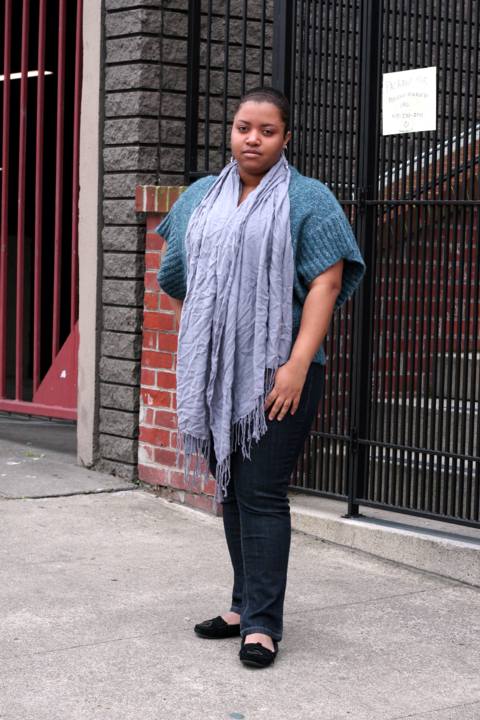
Street Threads: Look of the Day

0

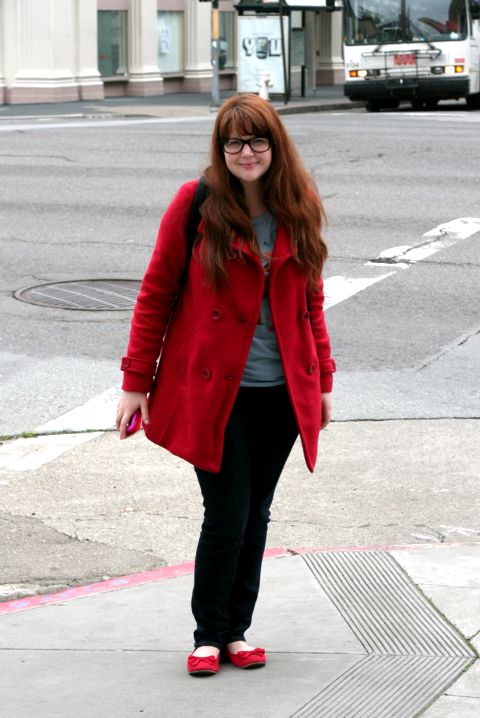
Today’s Look: Shannon, Van Ness and Jackson

Tell us about your look: “I wore this shirt as my pj shirt last night.”


The Daily Blurgh: Bee warned, Purple Sylvester

0

Curiosities, quirks, oddites, and items from around the Bay

I’m all for local businesses and delicious honey and getting to use the word “apiarist” in a sentence, but if any kind of this shit goes down you’ll know which type of urban farmer to give the stink eye. You say 15 beehives hidden in “‘borrowed spaces’ around SF,” NY Times — I say bio-terrorist cells. Hell, if you can train bees to detect bombs, who’s to say they also couldn’t be trained to detonate them?

Meanwhile in Science: “While dominant hyenas have a steady, confident-sounding giggle, subordinate ones produce a more variable call, allowing the animals to keep track of their social hierarchy, according to a new University of California, Berkeley, study.” Who’s laughing now, bitch?


Remember in Basquiat when David Bowie’s Andy Warhol crows, “you always get the good stuff,” to dealer Bruno Bischofberger (Dennis Hopper, in an equally meta bit of casting) over their power lunch? Well, that’s how I felt when I read the news on Fecal Face that uber-cool-for-Mission-School gallery Jack Hanley is closing shop in SF to focus on its New York space. If you want to pour out some beer on the corner of 15th and Valencia, the SF institution’s final show opens this Saturday. It’s a family affair, including work by old and new Hanley favorites such as Tauba Auerbach, Chris Johanson, Alicia Mccarthy, Shaun O’Dell, and Leslie Shows.

In more encouraging gallery-related news: last Friday, the GLBT Historical Society’s Dom Romesburg sent out an email announcing that the org just signed a lease for, “a new Gay, Lesbian, Bisexual, and Transgender Historical Society History Museum in the Castro.” Romesburg continues, “The new exhibit space is on 18th near Castro, in the old laundromat right across from Magnet.” This is indeed exciting news, as the rotating exhibits at the Society’s intimate downtown space, along with Passionate Struggle, last year’s long-running panorama of SF LGBT history in the old Wolf Camera shop on Castro Street, have largely been great, but have also felt like so many amuse-bouches for what must be some pretty fabulous main-course holdings (Sylvester’s Purple People Eater sequined stage costume, one of Passionate Struggle’s highlights, notwithstanding).

Benefits: March 31-April 6

0

Ways to have fun while giving back this week

Wednesday, March 31

Wet Wednesday
Party for a great cause at this benefit for the Edgewood Center for Children and Families, a center that provides services for children, teens, and families. Enjoy free food, music by DJ Paul, a raffle for a $450 gift certificate to Las Olas Surfboards and other prizes, and Sierra Nevada beer who will donate $1 for every pint sold.
8 p.m., free
Riptide Cocktails
3639 Taraval, SF
www.riptidesf.com

Friday, April 2

Benefit for Ed Hannigan
Attend this WonderCon Weekend party where a portion of the proceeds will go to the currently exhibited comic book artist Ed Hannigan who suffers from multiple sclerosis. Featuring a silent auction and food and drink.
8 p.m., $10-35 sliding scale
Cartoon Art Museum
655 Mission, SF
(415) CAR-TOON
www.cartoonart.org

Saturday, April 3

Shoebox Studios
Help Shoebox Studios celebrate their recent move to a larger location, which will help them to offer their body positive, safe dance, art, and martial arts classes to more members of the community. Cocktail reception and silent auction of goods, services, and artworks followed by party featuring live music by Rhubarb Whiskey, dance performances, and more.
Cocktail reception and silent auction: 5 p.m., free
Party: 7 p.m., $5 donation
Shoebox Studios
864 Folsom, SF
(415) 861-5976

Monday, April 5

“Relief”
Attend this San Francisco Art Institute MFA candidate silent auction event, where all proceeds will be donated to the Clinton Bush Haiti Fund. Work of painters, photographers, sculptors, designers, filmmakers, and more will be showcased. Featuring music performances and hors d’oeuvres.
5 p.m.
San Francisco Art Institute
Courtyard
800 Chestnut, SF
www.sfai.edu

Quick Lit: March 31-April 6

0

Literary readings, book tours, and talks this week

Wednesday, March 31

Vito Acconci
Hear writer/visual artist turned designer and architect, Vito Acconci, talk about “Words/Action/Architecture,” where he will discuss recent and upcoming projects of Acconci Studio like an artificial island in Graz, an elevated subway station in Coney Island, and a street that runs through a building in Indianapolis.
7:30 p.m., free
Mills College
Lisser Theater
5000 MacArthur, Oak.
(510) 430-2164


Performing South Africa’s Truth Commission: Stages of Transition
Join author Catherine M. Cole as she discusses South Africa’s Truth and Reconciliation Commissions, which helped to end apartheid by providing a public forum to exposed human rights abuses, and how the truth commission as public ritual and national theater provided a medium for performing evidence and truth to legitimize a new South Africa.
5:30 p.m., free
University Press Books
2430 Bancroft, Berk.
(510) 548-0585


Thursday, April 1

James Hannaham and Andrew Sean Greer
McSweeney’s and Modern Times Bookstore present an April Fool’s Day evening of literary debauchery with James Hannaham reading from his award-winning novel, God Says No, and Andrew Sean Greer reading his acclaimed NASCAR piece from the McSweeney’s publication, San Francisco Panorama.
7 p.m., free
Amnesia
853 Valencia, SF
(415) 970-0012
www.mtbs.com

April Martin Chartrand
Attend this audio visual presentation of April Martin Chartrand’s book, Angel’s Destiny: A novel story of poems and illustrations, and experience the emotional life of a multi-cultural woman in the United States trying to overcome violent adversities and embrace self-love.
6 p.m., free
San Francisco Main Library
100 Larkin, SF
angelsdestiny2009.blogspot.com

K.M. Soehnlein
Hear Soehnlein read from his new book, Robin and Ruby, a sequel to The World of Normal Boys where he introduces the character Robin MacKenzie. In this new story of love and loss we meet Robin’s sister Ruby.
7:30 p.m., free
Books Inc.
2275 Market, SF
(415) 864-6777

Surviving the Dragon
Hear author Arjia Rinpoche share his inspiring survival story of the years he spent in Tibet during the Cultural Revolution at this reading for his book, Surviving the Dragon: A Tibetan Lama’s life under Chinese rule. Rinopoche witnessed the torture and arrest of his monastery family, spent 16 years in a forced labor camp, and endured many other hardships before he escaped to the United Stated in 1998.
7:30 p.m., free
The Booksmith
1644 Haight, SF
(415) 863-8688
www.booksmith.com
World Poetry Night in the Oral Tradition
Enjoy recited poetry from diverse cultures and time periods in the “oral tradition,” where one poem inspires another from classics such as Rumi, Sappho, Hafiz, Whitman, Shakespeare, T.S. Eliot, Dickinson, Neruda, and more.
7 p.m., $12
Mechanics’ Institute
57 Post, SF
(415) 393-0100
www.milibrary.org

Friday, April 2

Litpunk
Enjoy intense, punk-edged lit readings and music at this punk rock alternative to the popular Litquake annual reading series. Featuring Penelope Houston, lead singer of the Avengers, reading poetry, prose, and singing, John Shirley, author and former lead singer of SadoNation, Eddie Jetson, of Ice 9, “Jennifer Blowdryer,” Johnny Genocide, and more.
7:30 p.m., $5
Makeout Room
3225 22nd St., SF
(415) 647-2888


Reality Hunger: A manifesto

Author David Shields argues that our culture is obsessed with reality because we experience hardly any. At this reading, Shields will share his stance that aims to reframe how we think about “truthiness.”
7:30 p.m., free
The Booksmith
1644 Haight, SF
(415) 863-8688
www.booksmith.com

Saturday, April 3

Indivisible: An anthology of Contemporary South Asian American Poetry
Kick off national poetry month at this book launch, reading, and signing of this collection of poetry from contemporary American poets from different cultures and faiths who trace their origins back to Bangladesh, India, Nepal, Pakistan, and Sri Lanka. The anthology aims to capture the simultaneous tensions of belonging and not belonging in America.
Featured contributors: Ravi Chandra, Tanuja Mehrotra, and Swati Rana
7:30 p.m., free
Booksmith
1644 Haight, SF
(415) 863-8688
www.booksmith.com

Monday, April 5

The Hills in Berkeley
Attend this UC Berkeley geology talk where professor Dr. Doris Sloan will discuss the formation of the Hills in Berkeley.
7:30 p.m., $5
The Hillside Club
2286 Cedar, Berk.
(510) 848-3277
www.hillsideclub.org

Tuesday, April 6

Homero Aridjis with Lawrence Ferlinghetti
Hear Mexican poet, novelist, and environmentalist, Homero Aridjis read from his new collection of poetry, Solar Poems, addressing both his ecological concerns and a mystical relationship to the sun. Lawrence Ferlinghetti will also read several poems from the new bilingual edition of his book, What is Poetry?/¿Qué es la Poesía?, which Aridjis translated.
7 p.m., free
City Lights Bookstore
261 Columbus, SF
www.citylights.com

Biking Book Club
Join members of the SF Bike Coalition and other biking enthusiasts for this book club and discussion group about bike and transportation related books. The current book up for discussion is Traffic: Why we drive the way we do by Tom Vanderbilt. Bring ideas for future reads.
6:30 p.m., free
San Francisco Bicycle Coalition
995 Market, SF
www.sfbike.org/books

Insectopedia
Hear author Hugh Raffles discuss his new book that pays tribute to bugs of all kinds in this collection of 26 offbeat and bizarre essays and philosophical musings.
7 p.m., free
BookShop West Portal
80 West Portal, SF
(415) 564-8080

A 40-year Last Gasp that’s getting stronger

0

By Cécile Lepage

Last Gasp, San Francisco’s landmark independent and underground publisher, is turning 40. To celebrate this feat – in four decades, Last Gasp has spawned more than 300 comics and 250 books – it is throwing a party and an art show Thurs/April 1 at 111 Minna Gallery.

Who dared wager, in the mid-1970s, that Last Gasp would survive the withering of the underground comix scene? Head shops, the main outlet for unedited explicit sex-, drug-, and violence-ridden content (the “x” in comix stands for X-rated), were being prosecuted and forced to shut down due to anti-drug paraphernalia laws. Comics stores favored the more mainstream adventures of masked men in tights. Finally,“there wasn’t the same appetite for comics anymore,” according to Colin Turner, associate publisher to his dad Ron, who founded Last Gasp. No matter: the small venture outlived its peers by continually adapting, tuning to consumer demand and catering to bookstores’ standards and their stapled-leaflet scorn. Over the years, Last Gasp branched out into artist monographs, coloring pads, music-related books and graphic novels.

Yet, browsing its odds-and-ends catalogue, one gets the sense that Last Gasp hasn’t compromised its bizarre and satirical bent. Sure, it might carry such mundane items as coloring books, but beware of the twist! Gangsta Rap Coloring Book flaunts 48-pages of line drawn gangsta rappers. As for Tee Corinne’s Cunt Coloring Book, well, the title says it all. Last Gasp may have diversified, but it never reneged on complete artistic license, the hallmark of underground comix.

Today, Last Gasp thrives in the areas of lowbrow art and pop surrealism. Lowbrow is an umbrella label for “art forms that are popular and wonderful, that people love, but that aren’t respected in the fine art world”, according to Colin. It ranges from tattoos and Kustom Kulture to street art and graffiti – artistic expressions rooted in pop culture that take place on canvases ranging from car exteriors to skin..

As for pop surrealism, the genre emerged from cartoon-y visuals only to reclaim traditional old master painting craftsmanship. Artists such as Scott Musgrove, Camille Rose Garcia and Mark Ryden colonize canvasses with impeccably-rendered phantasmagorical creatures and weird visions. Neglected for years by art institutions, the loose-knit community of lowbrow artists is gradually being endorsed by upscale galleries and museums, a shift that once again attests to Ron Turner’s prescient flair. Back in the day, he promptly discerned underground comix’ wide appeal and cultural relevance, supporting the work of then-young and aspiring artists such as R. Crumb, Bill Griffith, and Spain Rodriguez, all of whom matured into cult or mainstream icons.

It could be said that Ron Turner got sidetracked into publishing. In the late 1960s, the Fresno native enrolled in the SF State psychology department. The Peace Corps volunteer, freshly returned from a stint in Sri Lanka, was thrust into the Bay Area countercultural upheaval and its myriad of grassroots movements. As a Berkeley Ecology Center activist, he figured that he could raise funds by releasing an environmentally-oriented comic book.

“I thought the graphic approach would engage teenagers, help them thwart authority figures, and provide answers to ecological concerns”, Ron recalls. With the mentorship of Gary Arlington, the San Francisco Comic Book Company owner who was selling Zap Comix under the counter, he compiled and printed 20,000 copies of Slow Death Funnies 1. By that time, his Ecology Center accomplices had dispersed, and their successors only agreed to redeem 10 copies of the title. “My garage was filled with 19,990 Slow Death Funnies 1 and I had to find a way to get rid of them”, he laughs.

This task proved easier than one might initially presume: with his good-humored nature, Turner unloaded his goods at 200 locations, not just head shops but also universities, hairdressers and even a leather jacket store. Eventually,Last Gasp reprinted the comic and sold around 45,000 copies. After this initiation, the socially-aware Turner satyed in the business because “it was a kooky way to shed some light on issues that needed attention.”

Last Gasp’s second publication was the all-woman feminist first It Ain’t Me Babe. “At the time, I was living alone with my newly-born daughter and I was drawing comics,” says Trina Robbins, who put together the title. “But you wouldn’t know it, because the 98% male underground comix industry had shut me out. I heard that Ron was looking for material for a women’s liberation comic book. I phoned him. The next day he visited me, wrote me a check for $1,000 — which in those days was quite an amount of money — and voilà!”

The 1975 book Amputee Love probed another rarely addressed topic, the sexual life of a crippled couple. “UC medical centers purchased some copies to sensitize nurses to the fact that amputation does not mean death of sexuality,” says Ron Turner. Other notable contributions to unconventional subject matters include Anarchy (1978) and Cocaine Comix (1976).

According to Ron Turner, cartoonists hold the highest rank in creativity because they can communicate their vision the most clearly: “Most art is some form of propaganda. The artist wants to sell you on his vision and what it leads to.” Turner’s fascination with human behavior conditioning stems from his psychology studies.

At 70, Ron Turner still sports a hippie hairstyle: a white hair ponytail and an eccentric plaited beard running down to the navel of his buddha-like belly. Comix aficionados regard him not only as a pillar but also as a guardian angel. “Last Gasp is unique in that it’s a publishing house and also a distributor. It has kept many smaller and larger presses afloat,” explains Cartoon Art Museum curator Andrew Farago.

Niched in a corner room of Last Gasp’s Florida Street offices, Turner’s personal collection of popular art is an eclectic mix of original drawings and paintings, side show banners, circus items and vinyl sculptures. “Are these for real?”, hollers a guy named Charlie, who is lending a hand in preparing the anniversary art show. He has uncovered a pile of four framed paintings that serial killer John Wayne Gacy made while on death row. Lowbrow art is definitely not for the fainthearted.

Appetite: It’s Passover — so come on over

0

As Passover begins tonight through next Monday, here’s a few places where you know you can eat quite well and stay quite kosher:

4/5 – SLOW FOOD Seder at Mission Beach Cafe
Heeb magazine teams up with one of my favorite neighborhood restaurants, Mission Beach Café for a Slow Food Seder. Yes, that’s slow food principles, modern cooking sensibilities, traditional Jewish dishes. In fact, with each course, you have the choice of traditional or California-style dishes, each made with local ingredients. Will it be smoked black cod with potato kugel or matzo flatbread with haroset, balsamic reduction, basil scallion pesto and messo seco cheese?

Braised Prather Ranch lamb shank with butter beans, oyster mushrooms, baby carrots and red pearl onions or roasted duck with Israeli couscous, Jerusalem artichokes, pea shoots and orange sabayon? Thankfully, Mission Beach’s wonderful pastry chef, Alan Carter, has dessert in hand.
$55 for four courses, excluding tax and tip
Monday, April 5
5:30-10:30pm
Mission Beach Café
198 Guerrero Street
415-861-0198
www.missionbeachcafesf.com


Firefly’s Eight Days of Passover menu
Right by my former home in Noe Valley, beloved Firefly does an “Eight Days of Passover” menu all week long, a bevy of Jewish greats made with Firefly’s usual homey, gourmet flair: chopped chicken livers, Grandma Rose’s matzo ball soup, owner, Brad’s housemade gefilte fish, vegetable matzo kugel, grilled lamb sirloin and beef brisket (or vegan brisket, if you so desire).
March 29–April 5
a la carte menu during regular hours
4288 24th Street, SF.
415-821-7652
www.fireflyrestaurant.com


TAKE-OUT at Sweet Jo’s
Jo and her best-there-is biscuits  are always available at Sweet Jo’s in the Jewish Community Center, but she also knows Passover foods and has plenty for you to take home to suppliment or be your complete Passover meal. Maybe braised Kobe beef brisket, felfite fish, potato kugel, mashed potatoes, rosemary broccoli, and a side of horseradish cream?
Available for pick-up a la carte or to eat in the cafe through Passover
Sweet Jo’s, inside the Jewish Community Center
3200 California, SF.
415-345-0090
www.sweetjoscafe.com

Street Threads: Look of the Day

0

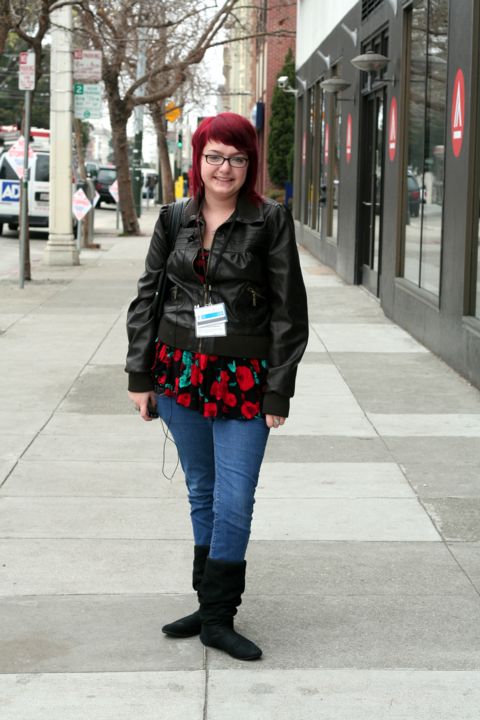
Today’s Look: Raeann, Van Ness and Washington

Tell us about your look: “I got these from Forever 21.”

The cheeseman can

0

The subtitle of Rainbow Grocery cheesemonger Gordon “Zola” Edgar’s new memoir (supertitled Cheesemonger, appropriately enough) would be enough for me to count the book a success; “Life on the wedge.” Ha! See, right there, he had me ready to head out to his Omnivore Books reading (Sat/3) fangirl style, washed rind Taleggio in hand, hounding for an autograph. Luckily, the rest of his book is pretty good too. 

Where Cheesemonger triumphs is its accessibility. Edgar covers a lot of ground within its pages — Bay area agricultural/urban history, the ins and outs and importance of worker collectives, food justice, and of course, the art and science that is cheese. But it is all tied together with that rare liberal ethos that is both positive, and commonsensical. 

A word about those first three topics. Edgar’s tome ties how we eat to how we live to how our world works, coherently and colorfully enough that it stays interesting even to the casual reader. Cheesemakers, unlike produce farmers or vintners, have yet to really have their day in the sustainable food mania’s sun. Here in Cheesemonger, we get a clear picture of how factory produced cheese differs from that which is made from the milk of grass-fed cows and handcrafted by sustainable methodologies- and an explanation of why many dairy farmers have been forced to turn to mass production methods. Edgar utilizes his middle-man status at Rainbow’s worker collective in the book to neatly connect the latter with the stomachs and wallets of SF’s working Joes. Michael Pollan’s Omnivore’s Dillemma functions similarly — but Pollan’s got nothing on Edgar’s encyclopedic knowledge of the most delicious of all foods. 

Ah, cheese. On my journalist’s salary, most of the cheese I’m eating these days ranges between the gold standard “block” cheddar and whatever brie I can swipe off of art reception buffet tables, so this book’s vivid descriptions of handcrafted Telemes and Sainte-Maure de Touraines were awe inspiring. I now have a grocery list the length of one of my legs, full of fancy cheeses to try (thanks for that, Gordon).

I kid, because Edgar does a great job of acknowledging how fine cheese’s price tag can keep out of the mouths of most Americans. “When American foodies mock other Americans for not appreciating fine cheese, they should remember that the US equivalent to French Bried is a forty-pound block of commodity Cheddar,” he writes.

So milk thistle coagulated Serra de Estrela doesn’t often make it’s oozy, pungent way into your grocery basket- Cheesemonger still makes for great food porn. Edgar breaks down how cheeses are made, gives helpful information on basic categories, explains what makes a rind and why the hell cheese is aged in caves, and perhaps most importantly, what to look out for when you do decide to splurge on a wedge (tip: stay away from rBGH hormone). I learned things about how the dairy industry works that every milk-and-cheese consumer should know — particularly about our government’s regulations and how ridiculous allocations of subsidies affect the food that’s available on our shelves. As a self-identified “cheese punk,” Edgar convinces you that to try the raw milk, the stinky, the smaller portions of local, expensive stuff- when you can afford it, of course, is to fight the man’s influence over the standardization and control of our larders.

Now that is tasty radicalism. And now, pass the Roquefort.

Gordon Edgar

Sat/3 3 p.m., free

Omnivore Books

3885A Cesar Chavez, SF

(415) 282-4712

www.omnivorebooks.com


Video game review: “Yakuza 3”

0

By Peter Galvin

Yakuza 3
(CS1 Team, Sega)
PS3

Yakuza 3 is a Japanese import title that recalls a time when our game consoles were dominated by similarly wacky culture-clash experiences instead of the American-made games that dominate the charts today. In the late 90s, it seemed every other game released was from Japan, and the bumping and grinding of East meets West was a large part of the enjoyment of these games. A game from this era that springs to mind is 1999’s Shenmue, the story of a Japanese boy setting out to avenge his father’s death. It was largely story-centric, free-roaming and often criticized for encouraging players to bask in the mundanities of modern Japanese life.

Well if you weren’t a Shenmue fan, steer clear of Yakuza 3, because the game offers another chance to experience an incredibly foreign culture by engaging in such daily Japanese life-activities as batting practice, blogging, mahjong and beating the crap out of Tokyo gangsters. You play as Kazuma Kiryu, ex-Yakuza who now tends to a group of orphans in Okinawa, and who is thrust back into the lifestyle when a Yakuza land deal threatens to destroy his orphanage. With more twists, betrayals and “are they or aren’t they dead”s than a weekday soap, the story could have sagged under the pressure but instead remains surprisingly complex. It’s Yakuza 3’s strongest feature.

However, Yakuza 3 is also reminiscent of Sega’s past action titles in its gameplay department: clunky movement, lots of loading, and fight sequences that more than anything recall 1991’s Streets of Rage. It also has a knack for interrupting the seat-of-your-pants thrills that make the story so compelling by forcing you to spend nearly as much time bandaging boo-boos at the Okinawa orphanage as you do kicking butt. If it weren’t for its thoroughly cinematic feel and a perspective that is wildly different from anything else on the market right now, I’m not sure Yakuza 3 could hang with triple-A games like Grand Theft Auto or Mass Effect, but in this instance the well-written story and sheer amount of stuff to do make it a worthwhile package.

For Jim: Jim Marshall, 1936-2010

2

Legendary Bay-based rock photographer Jim Marshall, who was featured in a Guardian cover story on March 3, 2010, passed away in his sleep Tuesday night in New York at the age of 74. The people who worked with him on the cover story, Johnny Ray Huston and Mirissa Neff, remember him.

Johnny Ray Huston, writer: When someone dies it’s impossible not to think of the last time you saw them. With Jim Marshall, I wish that last time had been different. Jim had called me in the morning to see if I wanted to meet him at his favorite dinner spot. That night, I arrived about 15 minutes late, finding him alone at a table in the center of the place with a glass of wine. It was noisy, and I had to shout more than usual for Jim to hear what I said. I showed him some crummy digital shots I’d taken of a few Bay Area musicians I’d daydreamed about him really photographing, but he seemed distracted, quieter than usual. When we said goodbye later on the corner by his apartment, I assumed his mind was on the future. He was about to leave on a trip, first going to Texas for the monster that is South by Southwest, and then to New York, for a gallery show of his photography and the release of Match Prints, his latest book, a collaboration with Timothy White.

Jim was unfailingly generous. On the day the article I’d written about him was published, he called to say he wanted to give me a print, any print, from his body of work. This kind of offering was second nature for him, but overwhelming for me to contemplate considering the breadth of his vision. At a time when music photography is consumed and tamed by style, all one has to do is look to Jim’s photos for their untamed depth. When my boyfriend Cedar recently interviewed Nancy Wilson, he was amazed to hear her say she had always styled herself for album cover photos. Jim’s peak photos are of true musical artists who had been styling themselves for years. They stepped in front of Jim’s camera without some trite go-between in the way, and with a trust forged by their relationship to him and respect for what he did.

One night after some whiskey at my apartment, I coerced Jim to go to a birthday party for one of my friends, even though it was a Chinese restaurant and Jim hated Chinese food. Jim’s matter-of-fact profanity or vulgarity could be hilarious, as when crab rangoon was placed on the table in front of him and he suspiciously grabbed some, muttering under his breath, “This better not make me puke.” Jim took the tab, even though he had only met the birthday host an hour before. Jim always took the tab.

Jim loved Cadillacs. It was a pleasure to ride with him because of how well he knew his cars. In his newest model, it could also be funny — he didn’t wear a seat belt, so a drive with him meant listening to the incessant ringing of the seat belt alarm coupled with the instructive but useless voice of the GPS. He was blissfully oblivious to both, thanks to deafening encounters with the likes of Jimi Hendrix.

My best friend Corina works at the place where Jim most loved to eat, and while I’m forever grateful to Tim Redmond for encouraging me to meet Jim, I’d first heard about him from her. One Sunday Corina texted me that Jim was at the restaurant and wanted me to come over for drinks after dinner. Corina, Cedar, Corina’s boyfriend Nathan and I all wound up at Jim’s place, as well as a young woman visiting from another country who Jim was romancing when I first got to the restaurant. She had been eating at a different table, but he’d soon gotten her to sit with him. Back at Jim’s apartment, as we talked and drank, the woman put on a CD. It turned out she was a musician, and she wanted us to hear her band. They weren’t bad in an avant-folk 12-piece way, but Jim’s critique of their off-kilter noise was merciless and entertaining. (And it didn’t stop him from getting a kiss from her later.)

When Jim – “Jaguar Jim” back in the Beat era’s heyday – found out that Cedar was a poet with a book due from City Lights, he gave him some rare volumes, including one by David Meltzer. I remember standing on Jim’s front steps that night talking with Nathan about how great the young year was, and how glad I was to be getting to know Jim. At that moment, partly through Corina’s affection for him, I found myself alone with my boyfriend and two best friends in the city, something that wasn’t happening often enough.

Jim had lived in his apartment in the Castro for decades, and he liked to joke that they’d have to wheel him out of it, so it’s one of those deep ironies of life and death that he left this world in New York City. To have met Jim so late in his life is something I can’t fully understand right now. There are so many people I wanted Jim to meet and get to know. But he knew plenty, and many of the best, perhaps better than they could know him. Because of how well he saw them. I feel lucky to have met him, and am grateful he showed me the scrapbook he kept when he was first dreaming about owning a camera. More attention is going to be paid to Jim’s work in the coming months and years. He had a lot of famous admirers, but his day-to-day life in San Francisco was buoyed by people like his friend and assistant Amelia Davis, and Corina and the people at La Med. I can still hear Jim’s pirate-y laugh, and that craggy, lively voice that Corina and I loved to imitate. I can still see his photos.

Mirissa Neff, art director: I met Jim Marshall just a few weeks ago. Our senior arts editor Johnny Ray Huston was interviewing him for the cover story and thought I should meet Jim to go over images, saying “he’d love you.” We all met at his Castro apartment and then walked around the corner to his regular lunch spot, La Mediterranee. For a little guy of 74 Jim had an outsized personality, a gruff demeanor, and a nose that showed signs of his old coke addiction (he was happy to complain to anyone who’d listen that his doctor had made him quit a few years back).

Yet Jim remained completely endearing. As Johnny and I flipped through hundreds of Jim’s stellar portraits, attempting to choose a few images to run (which was no easy task), Jim centered the conversation around an art opening he wanted to attend that night. After describing the event he looked at me and said, “So I’ll pick you up in my Cadillac around 7?” It was less of a question than a directive. I couldn’t make it… which of course I now regret. But being in his presence for that afternoon was a gift.

Japanese avant-garde, Tropicalismo, and North Korean ideology — onscreen at SxSW

0

Just as Downtown 81 is worth watching for its live DNA footage, the Japanese avant-garde music documentary We don’t care about music anyway… is worth a look for the five minutes of two-piece noise rock band Umi No Yeah!. The boy/girl duo jams on a trash-filled beach in Tokyo- — he bent over an old Casio and drum machine and her flailing in a silver body suit while thrashing on a blown-out guitar. The song begins in a swell of noise and ends with an intoxicating dance groove and the girl shed to a polka-dot bikini bottom. The rest of Cédric Dupire’s and Gaspard Kuentz’s documentary intersperses the John Cage-like practice of various male musicians with Koyaanisqatsi-like clips of Tokyo’s industrialized megapolis. Interesting reinterpretations of instruments are revealed — a human heart gets used as a signal and the cello is reclaimed from the bourgeois — but it’s the bikini that distorts the dryness usually associated with avant-garde music.

Beyond Impanema will be fun for anyone who’s still naive to Tropicalia music. Guto Barra’s film has a rich blend of live footage and interviews with the originators from the late-1960’s movement, but for those already convinced and obsessed, it provides little more than a Wikipedia-type history gloss with cool YouTube-like clips. Your enjoyment depends on how difficult it is to find those clips — the ones of Carmen Miranda and Os Mutantes being some of the best — and how much you’re interested in hearing about the import of Tropicalia to America via David Byrne and Arto Lindsay. I could have done with a little more rigor and a little less CSS, Bonde Do Role, and MIA, but because of the great Tom Zé interview three-quarters through, I can’t complain.

North Korea is disturbing. Everyone from CNN to Vice Magazine has revealed this fact with video coverage from inside the Hermit Kingdom. In Red Chapel, Danish journalist and film director Mads Brüger takes this realization a step further by exposing the ideological insides through comedy. Accompanied by two Danish-Koreans — one disabled, the other sumo-wrestler fat — Brüger convinces the DPRK to not only let them into their country but also welcome and embrace them with an open, breast-filled hug that only a desperate, lonely mother could provide. The result is both terrifying and beautiful: blinding naïveté and endearing sincerity get exposed via irony and socio-political concern. Red Chapel goes beyond the pointed-finger approach of “OMG, look at those N. Korean crazies and their anti-US terrorist campaign” and into a genuine, individualized concern that offers a priveleged glimpse into the contradictions of both Cold War-retained communism and post-modern democratic capitalism.

Hungry hippos get their munch on with new delivery service

0

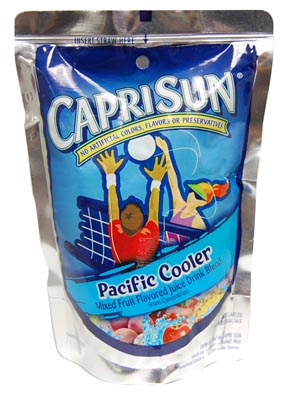
It’s 3 a.m. and you’ve been up all night at the best sleepover imaginable— but unfortunately you’re not seven and your mom didn’t stock the fridge with juice packs and frozen treats in case you got hungry…or stoned. Capri Sun, curly fries and wings; the folks at Munchy Munchy Hippos have your back and your kid-inspired snack pack all set for late night emergencies. 

The best part about the menu? Its three categories: I’m Hungry, I’m Thirsty and I’m Broke. For the parched, Hippo’s got a sweet line-up of fructose-happy drinks that used to consistently show up in my middle school lunch box, like strawberry-kiwi Capri Sun and grape Kool-Aid pouches. Don’t you just love jammin’ those little straws in the bag of faux-fruit juice? 


grlchese0310

Rumbling tums will appreciate the list of fatty-delish foods, including, but not limited to burgers, baby back ribs, popcorn chicken, “We Sell Seashells” cheese-stuffed pasta, and the “Ghetto Dog”, a bacon-wrapped fat-ass wiener. 


And for those with only a few jingling coins to spare, the “I’m Broke” menu keeps costs to a max of two bones! Talk about a new contender for Joe’s “Two-Buck-Chuck.” Hashbrown? One dollar. Grilled cheese and ham? Two. Juices galore? Only seventy-five cents.


The delivery region is stuck in the North Bay and currently confined to Berkeley, Emeryville and Albany, with delivery charges (a.k.a. gas money) from $1.50-$3.00, depending on location. 


Not only is Hippo recession friendly, but this late-night delivery offers some fun flash-backs to your childhood eating habits, maybe ones that shouldn’t become adult habits, and still, an occasional solution for sobering up mid-morning. So cash in your marbles, kids and the first one to gobble up the most jalapeno poppers wins! Or maybe that’s just the game I’d have to play…


Check the complete Munchy Munchy Hippos menu at http://www.munchymunchyhippos.com/


Appetite: Dreaming of the islands …

1

This weekend affords the last of a series of Hawaiian escapes here in San Francisco, especially Aloha Fridays at Gordon Biersch, which would be especially idyllic in the Spring gorgeousness we’ve been experiencing. 


But it’s also a time to dream of stealing away to the islands not just for drinks but for food. A recent event at Burlingame’s striking Sub-Zero & Wolf Showroom highlighted the locavore, farm-fresh movements infusing Hawaii’s culinary scene with new life.


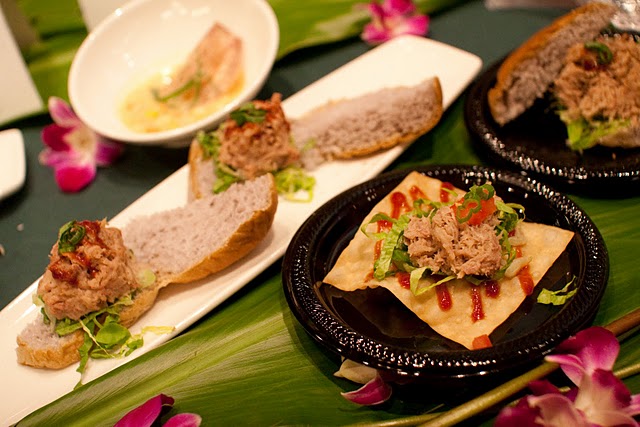
It was a February night of island breezes and mai tais with three of Hawaii’s biggest chefs, Roy Yamaguchi (yes, that Roy of Roy’s restaurants), Alan Wong and D.K. Kodama, plus a mixologist, winemaker, Hawaiian products (like sweet and spicy Kilauea hot sauce), transforming Sub Zero’s kitchens into a Hawaiian luau.


Roy Yamaguchi serves us his latest


Fresh-flower leis were draped over our necks as we were handed shiso, ginger, and elderflower soju-based cocktails, then escorted to a three-course tasting in a back room before other guests joined us in the main areas. The table was laden with flowers and artistic fish dishes from all three chefs. I was pleasantly surprised at the range and quality of tastes. Proud of Hawaii’s recent resurgence in locally grown produce and sustainable, local seafood and animals (they’re even raising Maine lobsters on the islands), everyone from chefs to farm owners (brought together by Hawaii’s Visitors Bureau) talked of Hawaiian grass-fed cows and a new iPhone app, What Chefs Eat, which gives Hawaiian chefs’ recommends for the best in non-touristy food joints. Keep up with Hawaiian food news at Share Your Table, and head to Gordon Biersch this Saturday, transported to Hawaii via the Bay. 


La guerra de los Jarritos

4

In the mid-Pacific Mexican state of Jalisco, jarritos, small earthenware pots, are used for many things– drinking and decoration of homes, primarily. But multi national corporation Novamex has claimed the word for itself — and is forcing small businesses, like Los Jarritos Restaurant on South Van Ness Avenue, to change their longheld names to accommodate that fact.

Dolores Reyes opened her family run Mission District restaurant in 1988, about the same year that Novamex began importing their popular fruit sodas into the United States. Though the Reyes initially stocked the drink, the decision to name their restaurant ‘Los Jarritos’ was based on their family’s heritage down south. Los Jarritos became a neighborhood fixture, famous for their breakfast chilaquiles.

“Jarritos are an important cultural item in Jalisco,” says Roy Gordet, the Reyes’ attorney. “By naming her restaurant after them, Dolores felt more connected to her family back in Mexico.” 

She could have hardly expected that, 15 years later, she’d be fighting her soda supplier over use of this cultural invocation. And they weren’t the only ones. Novamex targeted restaurants and taquerias with the name all over the country with legal action — approximately 30 by Gordet’s count.

“In my situation, I think they brought the lawyer because they move by money, not by anything else,” says Edith Marisol-Rivera. Marisol-Rivera’s own Los Jarritos taqueria in Eugene, Oregon, had been open for seven years when she received news from Novamex that she would have to change her businesses’ name- or else.

No one’s drinking soda with their late afternoon lunch at Los Jarritos Restaurant

“They were suing us for more than $50,000 if we didn’t change our name,” she says. “We are a small business, and we don’t have a lot of money, so I didn’t think there was a good reason to fight them.” Edith, whose mother had brought hundreds of jarritos when she moved from El Salvador, still decorates her taqueria with the jars- but the sign over the door now read El Jarro Azul. “We thought if they’re located in Texas, they should let people have their own name. But I guess not,” she gives a rueful laugh. “They’re thinking we’re going to steal their name and start making sodas or something like that.”

In contrast, Reyes decided to stand her ground. “We claimed some of their trademark registrations were invalid,” says Gordet. Reyes filed counter claims against Novamex’s, hoping to show that the restaurant had committed no legal infringement on the name Jarritos. The corporation’s case was thrown out by federal judge Jeffery White, but then reinstated by the Ninth Circuit Court. It had been a lengthy legal battle.

Dolores’ struggle resonated with other small business owners. “I talked to Dolores and she said she had the business for 18 years. I told her if she has the money she should fight,” says Marisol-Rivera. “It’s hard to fight these big companies, they’re everywhere now. I gave up because it was a lot of stress for me, but I was glad Senora Dolores kept doing it.”

But eventually, the wearing court battle was too much for Reyes. “The case has now been dismissed by the court,” says Gordet. According to the dismissal filed with the court, all claims have been dropped and the restaurant will change its name. “They didn’t expect Dolores Reyes to fight as valiantly as she did,” says Gordet. “But now everybody is going to move on. Generally, that’s considered a good thing.” Novamex refused to comment on the case for this article, saying they were under a confidentiality agreement to remain silent.

Times va cambiando for Los Jarritos Restaurant

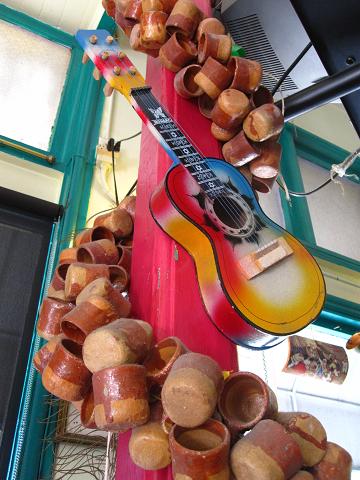
On a recent sunny afternoon, a diverse crowd sat in Los Jarritos, enjoying a late lunch. Construction workers, Latino and White, sat at the lunch counter with plates of food and a beer (not surprising, the restaurant stopped carrying the Jarritos soda five or six years ago- around the time the legal battle began). Families lounged at tables, enjoying the sunny atmosphere imparted by the dining room’s colorful decorations- shelves upon shelves of traditional pottery, and strings of small jarritos looped around pillars.

But stuck to the front door, there is a bilingual sign that invokes Novamex’s legal challenge. “Los Jarritos restaurant will be changing its name… but we will be run by the same family members and owners. Thank you for understanding.”

Los Jarritos Restaurant (for now)

901 South Van Ness, SF

(415) 648-8383

www.losjarritos.com


Street Threads: Look of the Day

0

Today’s Look: Jay, Van Ness and Broadway

Tell us about your look: “I got this sweater at Dillard’s.”