• No categories

Pixel Vision

Sundance Diary, volume five: it’s Mark Duplass’ world, we just live in it

1

In a series of posts, Midnites for Maniacs curator-host and Academy of Art film-history teacher Jesse Hawthorne Ficks reports on the 2012 Sundance Film Festival. Check out his first, second, third, and fourth entries.

Colin Trevorrow’s quasi-romantic quirkfest Safety Not Guaranteed, which won the Waldo Salt Screenwriting Award, also achieved a near-miracle by coaxing smiles out of some of Sundance’s grumpiest audiences. Speaking of wonderfully grumpy, this movie stars Parks and Recreation fave Aubrey Plaza and Jake M. Johnson of The New Girl; their priceless personas are in big-screen effect as their characters hunt down a man who posted a classified ad in search of a time-travel companion.

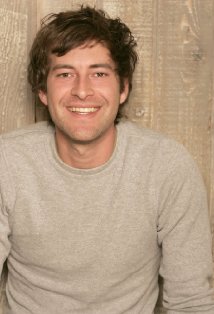
What makes this film truly work is the sheer sincerity of Mark Duplass (as the would-be time traveller). His performance not only hilariously channels Michael J. Fox in 1985’s Back to the Future, but he genuinely achieves a level of poignancy that perfectly fits the film’s motif of loneliness. Safety Not Guaranteed looks to have the same mainstream crossover appeal that Miguel Arteta tapped into last year with Cedar Rapids.

The busy Duplass was part of two other films at this year’s festival, including Lynn Shelton’s pitch-perfect indie flick Your Sister’s Sister, the follow-up to her genre-defining bromance Humpday (2009). Depressed and confused 30-something Jack (Duplass, who is truly a master of casual awkwardness) heads off to a remote island to figure out where his life is headed. The only trouble: his best friend (a mesmerizing Emily Blunt) also has a lesbian sister (Rosemarie DeWitt) who is already on the island doing her own soul searching. With this contemplative, honest, and hilarious film, Shelton proves herself to be quite a splendid voice for our current generation of progressive pitfallers. Once again, Duplass brings a sensitivity to his modern-male roles that generations to come will still be deconstructing.

Duplass also wrote the screenplay for Black Rock, directed by (and starring) his wife, Katie Aselton (2010’s improvised marriage drama The Freebie). Easily the best entry in this year’s Park City at Midnight category, Black Rock is about three BFFs (Aselton, Kate Bosworth, and Lake Bell) whose weekend reunion on a remote island goes awry when they run into some … threatening situations. This tense, brilliantly revisionist genre flick manages to pave new roads for a genuine, even primal feminism long overdue in the horror genre. Let me be the first to put this on the same level as Neil Marshall’s The Descent (2005).

On Monday: Jesse Hawthorne Ficks takes on Sundance’s Dramatic Competition films. Oh, the drama!

Appetite: Alchemical delights at Science of Cocktails 2012

2

Although the Science of Cocktails event may be on hiatus next year due to the Exploratorium‘s big move to the Embarcadero, this year’s party is worth highlighting. Attending since the inaugural event three years ago (check out my previous review here), I enjoy Science of Cocktails more each year.

I’m not sure if the new VIP area added much other than a bird’s-eye view from above with a few additional (but minimal) bites and drinks, the bulk of food being downstairs. Options were more enticing than ever in the ideal museum space, where one can interact with exhibits, kid-free, cocktails in hand. The cavernous space easily holds hundreds of people without feeling packed.

Drinks were poured by some of the Bay’s best bartenders and distillers, sporting white lab-coats, delivering concoctions from test tubes, beakers and hand-crafted contraptions. Cocktails were served in pre-bottled, liquid nitrogen, jello, even powdered forms. (Let us not forget the shiny, porcelain toilet spouting Speakeasy beer).

The biggest treat of the night was a special barrel from distiller Dave Smith at St. George Spirits in collaboration with bartenders Darren Crawford (Bourbon and Branch) and Russell Davis (Rickhouse). The three of them call the endeavor the Manhattan Project, a tribute to Frank Oppenheimer, founder of the Exploratorium — whose brother Robert was scientific director of the Manhattan Project that produced the first atomic bomb.

No bombs here. however. Only fine whiskey. Using St. George’s new Breaking and Entering Bourbon (B&E), the dynamic trio aged Manhattan cocktails with their own precise blend of vermouths (Punt E Mes, Dolin Rouge, Carpano Antica), serving a balanced, aged Manhattan. The unexpected came when they followed that up with a pour of B&E bourbon finished in the barrel used to age the Manhattan.

The first whiskey aged in a cocktail barrel, whispers of spice and bitters from the Manhattan up the B&E experience. This beauty won’t be for sale but you might just see the like of it at special drink events such as this.

My favorite cocktail of the night was Christina Cabrera’s (Michael Mina) Roses Foxtrot. Made with Four Roses bourbon, Calvados apple brandy, Gran Classico, Benedictine, Angostura bitters, and her own cardamom pear syrup and coffee tincture, the pièce de résistance was a thick absinthe foam and gently fried sage leaf Cabrera topped the drink with. Lush and light, the absinthe foam endowed a creamy crown and anise spirit to the cocktail. I could eat the foam and softly sugared sage leaves all on their own (and did). As a whole, the drink melded into a textural, breezy pleasure.

Other highlights included Jennifer Colliau’s (Slanted Door) mocktails using her own unmatched Small Hand Foods http://smallhandfoods.com/ line of gum syrups, grenadine and the like. Leave it to skilled hands to make some of the best drinks of a cocktail event sans alcohol (I was in love with her coconut water/orgeat drink).

It’s a long wait until 2014, but here’s to many more years of Science of Cocktails in the new Exploratorium.

Subscribe to Virgina’s twice-monthly newsletter, The Perfect Spot, www.theperfectspotsf.com

Burning Man ticket fiasco creates an uncertain future

259

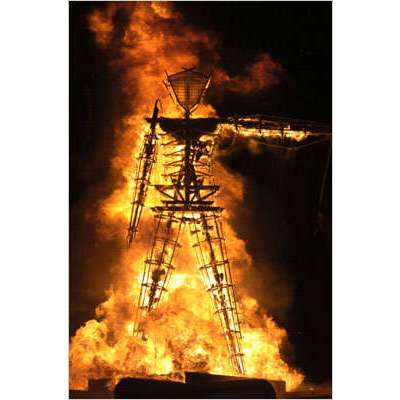
UPDATED WITH LLC RESPONSES BELOW   Is it the end of Burning Man as we know it? That’s certainly the way things are looking to thousands of longtime burners who didn’t get tickets when the results of a controversial new ticket lottery system were announced on Tuesday evening, particularly as big picture information emerged in online discussions yesterday.

[SFBG update: Will theme camps receive the remaining tickets?]

Personally, I was awarded the maximum two tickets I requested at the $320 level (my sister already claimed the other, so don’t even ask), but I’m feeling a little survivor’s guilt as I hear from the vast majority of my burner friends who didn’t get tickets. And if it wasn’t already clear that scalpers have effectively gamed the new system, that became apparent yesterday when batches of up to eight tickets were listed for as much as $1,500 each on eBay and other online outlets.

As I’ve attended Burning Man since 2001 and covered it for the Guardian and my book, The Tribes of Burning Man, I’ve become involved with many camps and collectives over the years. So over the last couple days, I’ve been privy to lots of online discussions and surveys, and it appears that only about a third of burners who registered for tickets actually received them (organizers have refused to say how many people registered for the 40,000 tickets sold this week, so it’s tough to assess whether scalpers were more effective than burners at buying them).

The huge number of burners without tickets is a big problem for theme camps and art collectives that rely heavily on their members to pay dues and work long hours to prepare often elaborate camps, art cars, or installations, some of which are now in doubt. Many people are so frustrated that they’ve pledged not to attend this year, and even those of us that did get tickets are questioning whether we want to go if some of our favorite people aren’t – particularly if they’re replaced by rich newbies willing to spend a grand on a ticket.

Theme camps are the basic building blocks of Black Rock City – a central tenet of my book and regular claim of event organizers – and the work they do to build their camps and plan fundraisers to pay for them has already begun, only with far more uncertainty than usual this year. And that will also exacerbate a tension that already exists between grant-funded art projects (which usually get free tickets for their volunteer builders) and big camps that don’t qualify for tickets, such as sound camps or independently funded art projects.

For now, most burners seem to be willing to wait a beat or two – as Black Rock City LLC is urging, a message that I willingly helped disseminate and that I support – to see whether enough extra tickets purchased by community-minded burners are offered for sale at face value using an aftermarket ticket exchange the LLC is hurriedly setting up right now. Some camps and projects have created internal ticket exchanges to try to take care of their own first. And there’s still the secondary ticket sale with the last 10,000 tickets coming on March 28.

But the frustrations are palpable, and there is widespread concern that Burning Man has jumped the shark and will be changed by the series of official missteps in the last year. Dozens of people have independently asked why, after the event sold out last year and scalpers made a killing, the LLC didn’t require each ticket to be registered to an individual and transferred only through a regulated aftermarket system, which would prevent gouging by scalpers. I’ve asked organizers that same question each of the last two years, and I was only told that it seemed like too much trouble and that things would work out.

Well, most burners don’t think things are working out very well. Many are still willing to wait and see, and this certainly is a resourceful community, so perhaps things seem more bleak now than they will in a month or two when playa preparations really kick into gear. But if not, the LLC could be facing a real crisis of confidence in its leadership of an event that we all help create, and perhaps even an open rebellion of its core members.

Many longtime burners are already making other vacation plans for this year, some are even pondering plans to create alternative events, and there are a significant number of them who have tapped the spirit of these political times and suggested it’s time to “Occupy Burning Man” or “Occupy Black Rock City.”

Whatever happens, the Year of the Dragon seems to have brought with it the old Chinese proverb: may you live in interesting times. I’ll continue covering new developments in this most interesting of years, so stay in touch.

Sincerely, Scribe

UPDATE (5 PM): LLC board member Marian Goodell just returned my call and said the organization leaders huddled up today to work on solutions to problems raised by the ticket shortfalls. “We’re genuinely really putting our heads together today. We’re listening, we really are,” she said. “It’s very real for us, I get it.”

She recognizes that it’s a big problem for established theme camps and art collectives having tickets for only about a third of their members, a figure that she also confirmed. “It’s clear that the theme camps and art projects are a significant part of the community, and this situation is causing problems for them,” she said. “That’s the part that will hurt us if we don’t take another look at this.”

Goodell also acknowledges that it doesn’t appear there are as many tickets available within those established burner networks as she had hoped would be the case: “I doesn’t look like camps are sitting on a lot of tickets.” But she also said that she doesn’t think the lion’s share went to scalpers. “We don’t think there are 10,000 people out there looking to scalp tickets,” she said. “Putting them up for sale is not the same thing as them being sold.” She reiterated her appeal that people don’t use scalpers for tickets but wait for community-based sources and solutions.

But Goodell said it was too late to re-do this week’s lottery — “not possible,” she said — even though the physical tickets won’t be mailed out until June. She said the LLC has divided up information-gathering tasks now and will regroup soon to decide how to proceed, with options including tweaks to the rules for the March 28 ticket sale or working with the BLM to bump up the population cap, an option that would raise other problems.

“We have many different challenges: scalping, community development, and population,” Goodell said, reiterating her concern that increasing the population would make logistical problems like the long exodus wait even worse. But whether that’s even a possibility will depend on the Environmental Impact Statement that is expected to be completed in March.

The Performant: Strangers in a strange land

0

Dan Carbone and Kitka resculpt old terrain

From the dark corner of the stage throbs the low rhythm of a skin-clad, Celtic-style drum and the strum of acoustic guitar, while in the light a man clad in a white dress shirt sways in hypnotic time, eyes shut tight, arms flung wide. “Sleeping, sleeping,” he croons softly, “I’m only sleeping.” Still swaying, he begins to tell the tale from the beginning, about a little baby boy whose “brain is knitting itself in an unusual way.”

You’d be forgiven for thinking in this first moment that the man is speaking of his own infancy, after all, brains don’t come knit much more unusually than that of East Bay-based avant-gardian Dan Carbone. But the infant’s name is not Dan’s, and though his brief and tragic backstory reverberates through much of the rest of the play, the infant soon yields the spotlight to his younger brother, the creator of the piece, “Father Panic,” which made its stage debut at the Garage on Friday. 

Although “Father Panic,” is indubitably Carbone’s most autobiographical work, a fretful monologue about a precocious childhood both hideously warped yet strangely innocent, familiarly eccentric, flourishes abound throughout. Puppets, poltergeists, twisted songs that expose the tortured inner monologues of the characters to the surface, a live video installation curated by Philip Bonner (a.k.a. Bulk Foodveyor) of childhood detritus and memory bank fodder.

Catherine Debon takes a turn as television-land language teacher, who translates self-loathing lyrics such as “maybe we can hate ourselves together,” into mellifluous French. And instrumentation is handily provided by swampabilly guitarist Andrew Goldfarb, who comprises, with Carbone, the performative music duo The Wounded Stag. But the unacknowledged star of the show is probably Carbone’s mother, who gradually takes over the piece, a raw bundle of outré obsessions and an embattled nature, the very embodiment of a stranger in a strange land — like a Raëlian without a cause, or an aquatic African frog in a solitary tank.

***

The mountains of Serbia, and a vocal tradition almost unknown this side of the “pond,” lie thousands of miles away from the basements of Connecticut. But an intriguing collaboration between Kitka, Oakland’s premiere ensemble of acapella Eastern European music and Svetlana Spajic, a renowned Serbain folk singer, brought that faraway land to stirring life during a two-part concert staged over the weekend at CounterPULSE.

After a video of venerable vocalist Jandrija Baljak teaching his technique to Spajic’s homeland ensemble, the concert began in earnest when Spajic took the stage. Dressed in Sunday best attire suggesting a peasant en route to Ellis Island circa 1914, Spajic’s passionate ululations did little to dispel the sensation of being transported backwards through time and space. Joined in the second half by Kitka, the remaining songs were characterized by an almost medieval lack of vibrato and elongated interludes of dissonant voice-bending harmonies. Even when comprehension of the lyrics was impossible, the music tapped into a complexity of almost primal emotion—though some slyly inserted San Francisco-centric lines did bring us briefly back to home before we were whisked once more into the territory of the unfamiliar by our fearless musical guides.

Sundance Diary, volume four: more docs!

0

In a series of posts, Midnites for Maniacs curator-host and Academy of Art film-history teacher Jesse Hawthorne Ficks reports on the 2012 Sundance Film Festival. Check out his first, second, and third entries.

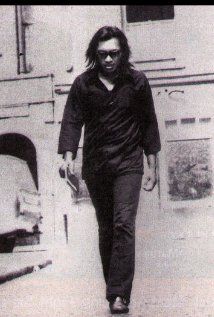
Winner of both the World Documentary Audience Award and the Special Jury Prize for its celebration of the artistic spirit is every musicologist’s dream film: Malik Bendjelloul’s Searching for Sugar Man. This larger-than-life tale is about obscure Detroit singer-songwriter Rodriguez, who created two brilliant albums, Cold Fact (1969) and Coming from Reality (1971), which some have compared to Bob Dylan’s greatest works. Yet virtually no one bought either of the records … except South Africans. The film reveals a fan base of millions, comprised of multiple generations who have viewed Rodriguez’s songs as political anthems for 40 years. And that’s just the first 15 minutes of the film!

Rodriguez’s lyrics and lifestyle celebrated a working-class hero mentality that seems to be as precious as the songs themselves, and Benjelloul’s film about his impact on a seemingly far-removed audience is a standout. But here’s a warning: be careful while reading any reviews of this film before you see it! Every single critic I’ve read has spoiled major dramatic points in the film, so try your best to catch it before you come into contact with any spoilers.

A few more for your doc queue:

The makers of 2006’s Jesus Camp, Heidi Ewing and Rachel Grady, picked up the U.S. Documentary Editing Award for their latest, Detropia. It poetically unearths a hopeless, dying city using beautifully dramatic storytelling, though the film itself feels a bit unfinished towards the final act. Kristi Jacobson and Lori Silverbush’s Finding North takes on hunger in America; many left the film wondering how they could take action to help ease the epidemic. David France’s superb How to Survive a Plague, about AIDS activists in the late 80s, left me and quite a few other critics totally devastated. France’s film is truly an emotional equivalent to last year’s U.S. Documentary Grand Jury Award winner about assisted suicide, How to Die in Oregon. This year’s World Cinema Documentary Editing Award went to Lisanne Pajot and James Swirsky’s Indie Game: The Movie, which follows a group of independent video game designers pouring a psychotic amount of hard work into their creation, Super Meat Boy.

But the most memorable among this year’s crop of socially-aware docs was Lauren Greenfield’s Queen of Versailles, which won the U.S. Directing Award for Best Documentary. The film follows an uber-rich U.S. family whose lavish lifestyle is slowly being toppled by the current recession. The inverted journey invites audiences to begin by scapegoating the couple (as it happens, the paterfamilias, David Siegel, is suing Sundance and the filmmakers for defamation). But as things onscreen turn sour, director Greenfield masterfully brings things back around, holding up a culture-of-entitlement mirror to the audience. This film stuck with me for days after the screening.  

Coming up next: Jesse Hawthorne Ficks on Sundance’s midnight movies (duh), and more!

Sundance Diary, volume three: docs!

0

In a series of posts, Midnites for Maniacs curator-host and Academy of Art film-history teacher Jesse Hawthorne Ficks reports on the 2012 Sundance Film Festival. Check out his first and second entries.

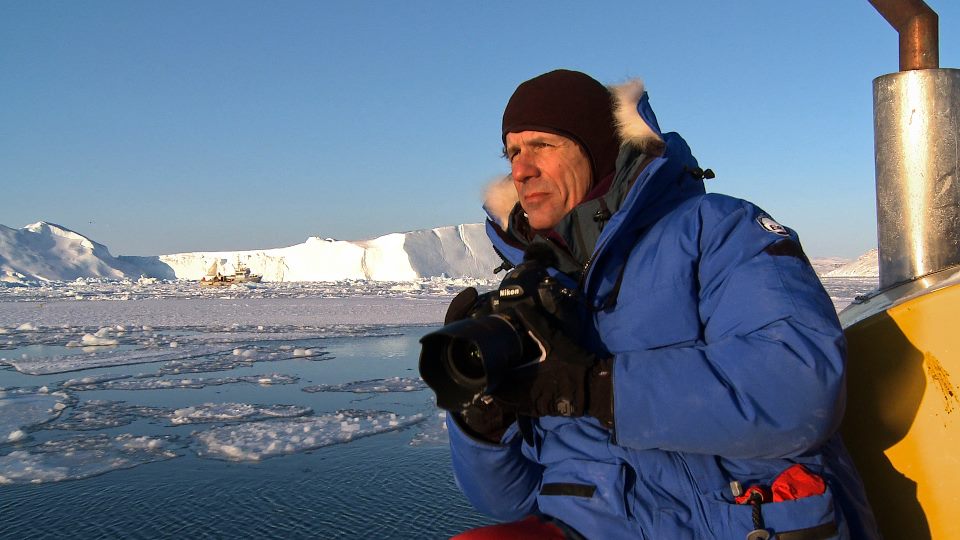
Jeff Orlowski’s Chasing Ice, which won this year’s Excellence in Cinematography Award for a U.S. Documentary, manages to sidestep the frivolous argument between liberals and conservatives as to whether or not the polar ice caps are melting. In fact, this beautiful documentary is so jaw-droppingly visual, you end up interacting with and understanding the planet’s ice structures as if they were your own grandparents. Trekking out to the furthest spots in the Northern Hemisphere, National Geographic photographer James Balog, his hard working-crew, and director Jeff Orlowski have created a document that will force the world to actually see what is happening as opposed to arguing assumptions. What I found even more unnerving is how beautiful I found crumbling ice caps to be. Am I part of the problem?
 
Doc fans will recognize the name Kirby Dick; his previous works include This Film is Not Yet Rated (2006), which exposed the MPAA (the highly-secretive, surprisingly small group which has been censoring cinema since 1968), and his controversial 2009 film Outrage, which aggressively outed closeted gay politicians who have and continue to vote against gay rights.

http://www.youtube.com/watch?v=1ifc_ongQFQ

At this year’s fest, Dick picked up the U.S. Documentary Audience Award for his latest disturbing documentary, The Invisible War. The film launches a massive exploration into the epidemic of rape in the US military, and the unbelievable actions taken within the system’s hierarchy to cover it up. It is utterly awful to realize that there are thousands of women and men who have been violated, humiliated, and robbed of justice, all while serving their country. You will leave this film a changed person.

Movies about artists always have the possibility of turning into an extended commercial — which isn’t necessarily a bad thing; it’s just important to not lose sight of that. Two documentaries from last year’s festival, Richard Press’s Bill Cunningham New York and Ricki Stern and Anne Sundberg’s Joan Rivers: A Piece of Work, highlighted not just the artist but managed to achieve something much deeper and more profound. This year, Matthew Akers’s Marina Abramović: The Artist is Present was similarly able to uncover something extremely haunting and even beguiling about its subject.

Abramović, one of the godmothers of performance art, is brilliantly shown to be audacious, committed, and finally successful, yet totally alone. This beautifully-constructed piece knows that what we are really dealing with is a person who wants to connect with every single other person on the planet. Abramović’s art is her life, and Akers’ film practices what its subject preaches by exporting her message to moviegoers, enabling her to touch even the people that she doesn’t come into direct contact with. Easily the best documentary of the Sundance Film Festival, it’s also an early contender for best doc of 2012. 

Up next: Jesse Hawthorne Ficks reports on even more docs!

3 recipes for a (booze-filled) vegan Super Bowl

3

Leaving aside the fact that the Niners will not be playing in it, Super Bowl 2012 is shaping up to be a helluva game. For one, you’ll be able to get your play-by-play commentary from polar bears, corporate trickery though it may be. Two, the Bay Area will not be subjected to dead fetus ads at half-time. Three, Madonna’s probably bringing M.I.A. and Nikki Minaj to whatever color of glitter explosion halftime will be. Four, you will undoubtedly have the opportunity to gorge yourself on salty snacks, cold beers, and hearty stew, all of the above because we live in Amurrca and that’s how it works. 

Yes vegans, even you! John Schlimm, author of the Tipsy Vegan (Da Capo, 176pp, $17)— which we reviewed in this winter’s Guardian Books Issue — was good enough to share with us some recipes for a nice little lineup of vegan Big Game treats, including whiskey-specked hot-to-trot peanuts, aforementioned hearty veggie-and-beer stew, and a prescription for guacamole that necessitates tequila. See that? Each of Sclimm’s dishes are not only animal product-free, but also embued with that lifeblood of all vegans, alcohol. Sure, not all vegans booze, but don’t tell that to the denizens of the monthly SF Vegan Drinks because those kids get some serious networking done over happy hour. Are you ready for some cow, pig, chicken, and fish-free football?!?!!? 

(all recipe descriptions are Schlimm’s)

Flaming Hot Peanuts

For those who like it hot, you’ve come to the right place. Have a fire extinguisher (or, in tipsy vegan speak, a cool cocktail) on standby and open your hatch for these blazing little dazzlers, which have been paired with a few swigs of whiskey. But, if you must, you can control the heat in this zippy snack by selecting bottled sauces with less flame. Though I plead with you to have a heart — this recipe is really intended for adventure seekers who like their kissers ignited with flavor.

2 pounds dry-roasted, salted peanuts

1⁄8 cup Tabasco sauce

1⁄8 cup peanut oil

Juice of 1 lime

1 teaspoon sugar, or 2 teaspoons prepared sweet red pepper relish

1/4 cup bottled crushed jalapeños, drained

3 tablespoons whiskey

8 droplets of liquid smoke (optional)

Other hot sauces of your choice to make 1 cup of liquid (or mild sauces for a little less kick)

Pour the peanuts into a large, resealable plastic bag. In a 1-cup glass measure, blend the remaining ingredients.

Stir the mixture thoroughly and pour over the peanuts, seal the bag, and squeeze it to mix thoroughly.

Marinate the peanuts overnight in the refrigerator, turning the bag a few times.

Preheat the oven to 250°F. Line a baking sheet or jelly roll pan with parchment paper. Spread the peanut mixture evenly over the sheet. Roast slowly for 2 to 21/2 hours, stirring every half hour.

Turn the oven off, and let the peanuts rest in the closed oven overnight to dry out.

Store in airtight container(s) lined with paper towels.

Yield: 2 pounds hot peanuts

Note: begin the recipe two days before you want to serve the peanuts.


Tequila Seduces Guacamole

What would guacamole be without a tequila chaser? ¡Ay caramba! Luckily for us, with this recipe we’ll never again have to ponder that terrifying question. Share the love and mix a few tablespoons of the lively spirit directly into this classic south-of-the-border dip. Just beware the fire hazard: when adding the jalapeños, carefully taste a slice to determine the sizzle factor, which can vary wildly. as for the limes, usually the smoother the skin, the juicier the lime.

3 ripe Hass avocados

1/4 cup fresh cilantro leaves, nicely chopped

1/2 medium red onion, diced

1 to 3 jalapeños (depending on your heat preferences), stemmed, seeded, and finely diced

Juice of 1 lime, about 3 tablespoons

2 to 3 tablespoons good tequila

1 teaspoon salt

1/2 teaspoon pepper

lightly warmed tortilla chips, for serving

Halve the avocados and remove the pits by whacking them with a knife blade and twisting them out. Use a spoon to scrape the avocado flesh into a large mixing bowl and mash with a fork just until chunky. Add the cilantro, red onion, jalapeños, lime juice, tequila, salt, and pepper and combine with the fork. If the mixture seems too thick, add a bit more tequila. Serve at room temperature with plenty of warm tortilla chips.

Yield: About 2 cups


Bottom’s Up VegeBean Stew

Served warm on a snowy Sunday or chilled on a hot summer afternoon, a good basic golden lager or dark beer of choice tops off this festival of vegetables and beans, infusing the ingredients with the hearty twist and twang of earthy hops. also, feel free to roll out a barrel of your own homebrew or favorite fresh ingredients, making this dish a true original every time.

1 (14 1/2-ounce) can cut green beans

1 (15-ounce) can black beans

1 (15 1/4-ounce) can corn

1 (15-ounce) can light red kidney beans

1 (15 1/2-ounce) can pinto beans

1 (15-ounce) can green and white lima beans

1 (14 1/2-ounce) can green and shelled beans

1 quart (14-ounces) regular V-8 juice

1 (7-ounce) can peeled and chopped green chiles

2 (16-ounce) bags frozen stir-fry vegetables (thawed)

1 small head cabbage, chopped

1/4 to 1/2 cup chopped fresh chives

2 to 4 (or to taste) tablespoons barley

3 tablespoons (or to taste) minced garlic

Season salt (to taste)

Garlic salt (to taste)

1 (12-ounce) bottle lager or dark beer (preferred) of choice

In a large pot, combine all the ingredients, except the beer. Cook, covered, over medium heat for 21/2 to 3 hours, until the vegetables are soft. Slowly pour the beer into the pot about 45 minutes before serving. Simmer until ready to serve.

This is a very versatile dish. Feel free to experiment by adding other beans, vegetables, or seasonings (i.e., crushed red pepper flakes, vegan Worcestershire sauce, hot sauce) of choice. There is even a variety of V-8 juices, including a “Spicy Hot” version, that could each add a really unique kick to the stew.

Yield: 12 to 15 servings.

Sundance Diary, volume two: ‘Beasts’ and ‘Daughters’

0

In a series of posts, Midnites for Maniacs curator-host and Academy of Art film-history teacher Jesse Hawthorne Ficks reports on the 2012 Sundance Film Festival. Check out his first entry here.

The surprise hit at this year’s Sundance Film Festival was Benh Zeitlin’s Beasts of the Southern Wild, which not only has the power to hypnotize but to also enlighten with its striking cinematography, fantastical special effects (wonderfully designed by San Francisco’s own Academy of Art University), and a truly guttural performance by newcomer Quvenzhané Wallis. She plays Hushpuppy, a precocious six-year-old searching to understand a world post-Katrina, post-race, and more importantly post-childhood.

Combining David Gordon Green’s George Washington (2001), Spike Jonze’s Where the Wild Things Are (2008), and most appropriately Julie Dash’s Daughters of the Dust (1991), Zeitlin has created a genuinely haunting enigma for modern audiences that deserves multiple viewings for maximum understanding. But even though it won both the U.S. Dramatic Grand Jury Prize and the U.S. Dramatic Excellence in Cinematography Award at this year’s festival, will Beasts ultimately be able to find an audience outside of the festival?

As it happens, Daughters of the Dust was restored for this year’s festival (and correctly color timed for the first time ever!) This visual poem exploring South Carolina’s coastal Gullah culture is as modern, historical, profound, and universal as Jane Campion’s The Piano (1993) and Terrence Malick’s Tree of Life. Yet for some reason, the film did not find a very large audience. With Sundance holding a 30-plus minute Q&A with Dash herself following the screening, many historical and symbolic details were explored — but more importantly, you were able to just sit with the film.

http://www.youtube.com/watch?v=c4PEcVK6gbM

When I was in college, Daughters was truly was one of the most difficult movies for me to keep up with (I fell asleep multiple times, couldn’t understand the character’s accents, etc.) Seeing it again for its 20th anniversary, the film feels more than ever like a revelatory example of visual narrative cinema: images and sounds sweep the viewer into a place where they can slow down and absorb the kind of filmmaking that can resonate in your soul.

Up next: Jesse Hawthorne Ficks goes doc-wild in his third Sundance Diary.

An expert’s pour: What and where to drink during SF Beer Week

0

Now that Drynuary has basically curled up into a ball and died (take that, seasonal sobriety!), it’s time to turn our gaze to SF Beer Week. 10 days of heavyweight gourmet beer drinking lie ahead of us, Bay Area. Even if your hankering for a beer paunch pales in comparison, say, to your desire to fit into your Valentine’s Day party dress, you have a responsibility to indulge.

For Beer Week is not just a gustatory pleasure — it supports what has burgeoned in SF into a thriving biz. Breweries sized from nano to Anchor are filling a six pack near you. Feb. 10-19 will conjure everything from urban beer hikes to beer-and-chocolate pairing events, beer-and-cheese couplings to the finest in bitter ales. Quite recently, we had the pleasure to one-on-one (via email) with David McLean, the mastermind behind all the brews at Magnolia Brewery. This isn’t his first time talking with the Guardian about the miracles of local boozing, but this time we’ve captured his can’t-miss picks for hobnobbing and hops that will take place Feb. 10-19 (and yes, they include an stout made with Hog Island oysters).

San Francisco Bay Guardian: In general, what are your top picks for Beer Week this year? 

David McLean: There are still so many incoming events in the queue to be posted to the schedule that I’m not sure we’ve even been exposed to half of what 2012’s SF Beer Week has to offer. But what I think we are starting to see is a more developed, organic process of brewers and other food-beverage professionals coming together in all kinds of great collaborations. This being the fourth year, my sense is that everyone’s creativity is much better developed following a few years of trying things out, seeing what works, seeing what other people are doing, and so forth. I’m not sure events like the SpeakeasySchmaltzNinkasiHomebrew Chef [tasting dinner with circus performers at the Elk Lodge] or the Trumer and Bols dinner at Comstock Saloon could have happened in year one, for example. And, the big opening celebration (Feb. 10) got a lot bigger this year, having moved to a new venue for us — the Concourse Exhibition Center. [Plus, we’ve] partnered with Noise Pop for the music and Off the Grid and other great vendors for the food. 

SFBG: Anyone new on the scene whose brews you’re excited to sample?

DM: After many delays (all par for the course) it is super-exciting to have Southern Pacific Brewing Company open just in time for SF Beer Week. As the first new brewery built in San Francisco in many years (close to 10), that one leads the pack in terms of excitement level. But the big story in craft beer this year is growth and newcomers to the industry — there are a number of other new beers and brewing companies in the Bay Area that are all worth trying. Another SF company just getting off the ground is Pacific Brewing Laboratories, which is starting to get its Squid Ink IPA and a couple of other beers into bars and restaurants. Almanac’s latest seasonal release, Winter Wit, should be hitting the streets just in time for Beer Week too, and it’s worth hunting down.

SFBG: A new release from a well-established local brewery you’re excited about?

DM: There are a handful of interesting collaborations among established breweries timed for Beer Week releases, but the one I am most excited about is the SF Strong Ale event that all members of the SF Brewers Guild collaborated on (and which was brewed at Speakeasy). It will debut at the opening celebration and then will be available in a very limited draft release around San Francisco (including at all Guild brewpubs).

SFBG: A food-beer pairing event you think is a can’t-miss?

DM: The creativity now happening in the world of beer dinners is something to behold. To me, the range of pairing dinners throughout Beer Week is one of its most impressive strengths. But some pairings are just so perfect as to be timeless — they’re less about being creative and more about flavors that need no help fitting together. A personal favorite is oysters and beer, particularly oysters and certain kinds of stout (especially dry stouts). We go a step further at Magnolia with an oyster stout we make using Hog Island Sweetwater oysters in the beer. The effect is subtle, and maybe it is gilding the lily, but a few freshly-shucked Sweetwaters and a glass of that beer (Oysterhead Stout) is about as good as it gets. We’ll be spending all day on Valentines Day shucking a variety of oysters and serving them with that stout and some other good oyster-pairing beers until the oysters run out. But, if I was free on February 13, you might find me at the Butcher and the Beer at the Beast and the Hare – it’s a dinner with Ryan Farr and Almanac Beer.

SFBG: Your tip for making it through Beer Week — how DO you do it?

DM: The well-timed vacation waiting on the other side of Beer Week helps maintain my sanity during Beer Week. I think many of us are already buried in Beer Week-related planning and work and the week hasn’t even started yet. With multiple events to work everyday, some near, some far, it’s a definitely a marathon and not a sprint. But it is also one of the premier celebrations of craft beer in the country and the sense of enthusiasm, camaraderie, and support from the beer community is more than enough to help us all get through the week. It’s energizing, actually. But don’t forget to hydrate.

SFBG: Has there been an increase in Bay Area craft breweries over the past year? What are the new ones?

DM: Here and everywhere. We started in 2011 with about 1,700 breweries in the country. We are creeping up on 2,000 a year later and there are something like 800 or so known to be in planning. It’s safe to say craft beer is exploding right now, and consumers have never had more quality choices for their beer drinking. In the Bay Area, some notable highlights are Southern Pacific, Elevation 66, Dying Vines, Pacific Brewing Laboratories, and Heretic Brewing. But, there are plenty more on the way in 2012.

For a full list of SF Beer Week events, head over to www.sfbeerweek.org


Sundance Diary, volume one: the hipster chronicles

0

In a series of posts, Midnites for Maniacs curator-host and Academy of Art film-history teacher Jesse Hawthorne Ficks reports on the 2012 Sundance Film Festival.

This was my 22nd consecutive Sundance Film Festival (which is well over half of my life), and I found myself more excited than ever to pack in as many films as humanly possible in seven days. Thirty-seven programs were achieved, and mind you: the trick is not to fall asleep, which so often happens at press screenings, resulting in many critics hypocritically denouncing whatever film they slept through.

Oddly enough, two of the biggest world premieres of the festival, Lee Toland Krieger’s Celeste and Jesse Forever and Josh Radnor’s Liberal Arts both explore the lives of thirtysomething men named Jesse who “have a lot of potential” but for some reason just aren’t making the most of their lives.

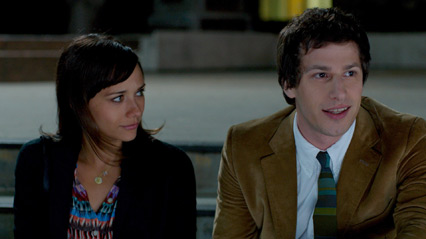
Krieger’s film is about a couple who have decided to get a divorce, yet find themselves spending even more time together than when they were married. Rashida Jones (from Parks and Recreation) and Andy Samberg (can we just talk about how underrated his 2007 film Hot Rod was?) star in an amazing dramatic comedy that allows a difficult subject (“How to break up with a loved one?”) to sneak up on you by the gripping third act. Allusions to Marc Webb’s decade-defining 500 Days of Summer (2009) are well-deserved; I found this film to be an instant classic.

Liberal Arts is Radnor’s follow-up to last year’s Dramatic Audience Award winner, Happythankyoumoreplease; it tells the (terrifyingly) relatable story of a thirtysomething intellectual (Radnor as Jesse) who falls for a plucky young student who is wise beyond her years; she’s played by Elizabeth Olsen, fresh off her astounding performance in last year’s Sundance hit Martha Marcy May Marlene. But this ode to Woody Allen’s Manhattan (1979) has more going for it than just an age-gap relationship dilemma. Not only does Zac Efron pop up as Jesse’s spiritual guru (which garnered major gasps from many audience members), but Richard Jenkins delivers a haunting performance as Jesse’s “second favorite professor” who has finally decided to retire from his tenured position. Radnor achieves a surprising amount of poignancy by way of light-hearted comedy. Woody Allen would no doubt approve.

With two films at the festival, cult actor-directors Tim Heidecker and Eric Wareheim (Tim and Eric Awesome Show, Great Job!) proved that they could tackle both heaven and hell. The comedy duo’s directorial debut, Tim and Eric’s Billion Dollar Movie, brought their purposefully clunky and abstract comedy to the big screen with some very mixed results. Following in the footsteps of such surreal “nonsense” masterpieces as H.C. Potter’s Hellzapoppin’ (1941), Bob Rafelson’s Head (1970), and Tom Green’s Freddy Got Fingered (2001), fans of the show will be treated to many truly disgusting and hilarious sequences along with a ton of cameos, leaving the uninitiated understandably dumbfounded.

However, the 90-minute film did seem to have some trouble translating the chaotic immediacy of Awesome Show‘s 11-minute episodes, leaving many in the midnight premiere wanting desperately to laugh a whole lot more. (Not sure I agree with the film’s “Better than The Lorax” ad campaign, but they get points for inventive advertising.)

But not to fear, Rick Alverson‘s ironically titled The Comedy was the jewel of the festival, or the anti-jewel — it was the most polarizing film of Sundance 2012. It follows a 35-year-old Williamsberg hipster named Swanson (stunningly played by Heidecker) as he antics through his daily quest: attempting to get any reaction from any sort of person. This leads him to say and do some of the most confusing and borderline offensive stuff imaginable.

While this sent many towards the exit doors (and left a fair amount baffled in their seats, whispering “This has got to be the worst film ever made!”), audience members who dared remain were treated to a perceptive, modern-day study of hipster culture that reveals a despicable and terrible truth. You may find yourself relating to Alverson’s perceptive anti-hero in ways comparable to Robert DeNiro in Taxi Driver (1976), Peter Falk in Husbands (1970), and Jack Nicholson in Five Easy Pieces (1970). And since The Comedy was made not necessarily to be enjoyed, it will probably, sadly, take 20 years for people to recognize that there is no finer film to define this generation.

This isn’t to say that there aren’t going to be more films presenting what it is to be modern day man-child — after all, mumblecore movies and hipster cinema emerged as early as 1991 with Richard Linklater’s Slacker. I noticed that many people at Sundance were immediately averting themselves from Destin Daniel Cretton’s I Am Not a Hipster, just because of its title. It’s a curious dilemma that plagues this era (and it relates directly to Alvie Singer’s life philosophy: “I would never want to belong to any club that would have someone like me for a member.” This quote from Woody Allen’s 1977 Annie Hall, itself a Groucho Marx reference, seems to be one of the most difficult hurdles for super-self-aware hipster culture to overcome.)

Cretton’s film focuses on Brook (played by Dominic Bogart), a skinny-jeaned indie rocker who finds himself trapped in a cycle of contempt and cynicism. Suddenly his three sisters arrive (Greek chorus, anyone?), thus beginning a surprisingly genuine exploration of the kind of grumpy guy that most of us thirtysomethings have either been or encountered this past decade. Some very true emotions are earned by the end of this 90 minutes; hopefully audiences will confront their individual issues and start taking that next step towards embracing their own hipster tendencies. Or not.


Up next: Jesse Hawthorne Ficks’ second Sundance Diary, covering even more dramatic competition films, midnight movies, and more. He saw 37 films, people. His diary is epic!

Live Shots: Paufve Dance’s So I Married Abraham Lincoln

0

This weekend Paufve Dance is winding its way through all the rooms at Dance Mission Theater, making the audience follow, as it performs So I Married Abraham Lincoln. There are only three performances left for the production, so snag those tickets quick before this little gem passes you by.

During a recent performance that the Guardian was privy to, the sparse set filled with the monochromatic tone of the dancers’ clothing, gave an air of desperate times, with just the right amount of humor. Music ranged from opera to punk rock, giving the impression that dancers moved between time and space, free of affilation to a specific era. 

So I Married Abe Lincoln

Fri/27 and Sat/28, 8 p.m.; Sun/29, 7 p.m., $15-18

Dance Mission Theater 

3316 24th St., SF

www.dancemission.com


Headshots for the homeless? Photographer Joe Ramos connects art and social work

6

Images of homelessness are not hard to come by. These scenes are often pathetic, clichéd. In the worst cases, the homeless are portrayed as inhuman heaps of blanket and facial disfigurement, people reduced to their time spent sleeping on the streets or begging for money. But in “Acknowledged,” photographer Joe Ramos’ exhibit at the Main Library that opens Sat/28, unhoused subjects are shown in a way that’s truly radical: as people just like us.

The tradition of using poor peoples’ image as exploitative art can be traced back to Jacob Riis’s photos of New York City tenement housing in his 1890 photojournalism book How the Other Half Lives. The project launched a spate of tenement tourism among the upperclass in New York City — a phenomenon which finds its equivalent today in the slum tours conducted in Mumbai, Rio, Nairobi, and other developing cities.

The stated intention of these enterprises is admirable: to raise awareness of a societal problem that needs to be addressed. But their results can be a dehumanization and objectification of the “other half,” the poor becoming art and entertainment rather than harbingers of a culture gone awry and, most importantly, fellow human beings. 

But that is why Ramos’s photography project is so exceptional. Instead of randomly snapping pictures of the homeless on the street, the photographer works for Project Homeless Connect, a non-profit that provides medical and social services to the homeless in San Francisco. For the past six years, Ramos has been photographing program participants — he told the Guardian, at their own request.

The results are striking, studio-style portraits in both color and black-and-white. For “Acknowledged””s exhibition, many of the pictures are displayed alongside stories and interviews. Respect, empathy, and a strange glamor suffuse each portrait. 

Like John Steinbeck, Ramos was born and raised in Salinas, California. Mentored by Richard Conrat, the former assistant of the famed photographer of Dust Bowl families, Dorothea Lange, Ramos brings a neo-Depression era aesthetic to his work. As the child of farmhands, he understands poverty. Ramos’ subjects are not the other — they are unmistakably like any of us, after a bout of bad luck or a few missed paychecks.

In a recent phone interview with the Guardain, Ramos was emphatic about his project’s goals. “There are as many reasons for being homeless as there are homeless people,” he said. “Not all of them are out on the street. Many are in the shelter system. There are families with children in the school system who are technically homeless.” 

He said because of this invisible class of struggling, unhoused people, most of us don’t associate homelessness with anything other than the panhandler on the corner of Geary and Powell Streets. Through his work, Ramos wants to show the true face of homelessness — in all its complexity, dignity, and humanity.

“Acknowledged” features portraits of well-dressed, loving families. There is the man in a business suit with haunting eyes who lost his way after accidentally causing a fatal accident. There are transgender adults who faced harsh family rejection, discrimination, and unemployment as a result of their need to express what they felt inside.

Ramos says that after hearing his subjects’ stories, he finds himself befriending them, seeing them again and again. He has photographed some of them up to 10 times. After each photo is developed, he sends a copy to his subject, or their subject’s family upon request. Sometimes his portraits are used to show family back home that estranged members are doing all right. 

Ramos subjects pose on a completely voluntary basis. While his project is undoubtedly artistic, it’s hard not to see it through another lens: as a free studio portrait service for those who would never be able to record their lives in any other way. The surprising sense of ease visible in the photos’ faces makes sense. These people are clients, not art objects. They feel at ease because they feel acknowledged. 


“Acknowledged”: Joe Ramos photo exhibit

Through March 25

Opening program (including expert panel on SF homelessness): 

Sat/28 2 p.m., free

San Francisco Public Library

100 Larkin, SF

(415) 557-4000

www.sfpl.org


CORRECTION: An earlier version of this article mistakenly identified Joe Ramos’ mentor. He was actually taught by Richard Conrat. The Guardian apologizes for the error. 

This is our country, too: Fred Korematsu’s daughter on her father’s civil rights legacy

1

“One never knows after someone dies what happens to their legacy. Sometimes it becomes a part of history and sometimes it grows,” Karen Korematsu -remarked in a phone interview with the Guardian this week. Her father, civil rights activist Fred Korematsu, will be honored statewide with his own official day on Mon/30. You can celebrate his legacy locally at the Oakland Museum of California’s Lunar New Year event on Sun/29, where Karen will be speaking about her dad’s contribution to our cultural heritage.

“In the case of my father, his legacy seems to be growing,” Karen continued. “His story resonates and remains important to people.” Last year was the first time California celebrated the Fred Korematsu Day of Civil Liberties and the Constitution. This year, events from a photo exhibition in the Smithsonian National Portrait Gallery, panel discussions, and teacher workshops in Humboldt, San Diego, Davis, San Francisco, and San Jose will commemorate his work.

The Oakland Museum of California’s celebration will be especially meaningful — Korematsu was born and raised in Oakland.  The event will include remarks from Oakland Mayor Jean Quan, a talk by Karen, performances by students from the Korematsu Discovery Academy in Oakland, vocalist Shirley Kazuyo Muramoto, and koto player Brian Mitsuhiro, and a screening of the Emmy Award-winning Of Civil Wrongs and Rights: the Fred Korematsu Story.

The elder Korematsu was a civil rights hero who refused to be incarcerated in the Japanese internment camps during World War II. When President Roosevelt signed Executive Order 9066 on February 19, 1942 requiring Japanese Americans to be placed in internment camps, the 23-year-old Korematsu refused to report. He attempted to continue his life as a normal American citizen, but was spotted and arrested in San Leandro three months later. Convicted for violating military orders, he lived for several months at the Tanforan assembly center in San Bruno and subsequently was transferred to Topaz, Utah — one of the 10 incarceration camps that were set up for Japanese Americans during WWII — where his family was also being held. 

Korematsu refused to let go of the belief that his civil liberties as guaranteed by the constitution were being directly violated. He appealed his case to the U.S. Supreme Court to no avail. 

That is, until 1983, when researcher Aiko Herzig-Yoshinaga and professor Peter Irons brought to light previously-suppressed documents detailing the FBI and military intelligence agencies’ conclusion that Japanese Americans were not threats to national security. 

Korematsu’s case was re-opened by a legal team of pro bono attorneys and at long last, his conviction was overturned in a federal court in San Francisco. In 2011, the U.S. Department of Justice released an admission of error in the case of the Japanese American internment camp. 

Karen is disappointed that her father didn’t live to see the apology. But she sees the confession as an important step towards bringing “accountability to people in government who need to take responsibility in making sure that decisions are always in the best interests of all Americans.”

She holds that actions like those of her father are especially relevant today, in these times of anti-immigrant sentiment. “He took a stance against racial profiling in issues such as national security and immigration,” she said. 

Following 9/11, Fred, along with the Japanese American Citizen League, spoke out against the national security measures the U.S. government was taking towards Muslim inmates being held at Guantanamo Bay. He became an active member of the National Coalition for Redress and Reparations. He assisted in the passage of a bill that prompted an official apology from the U.S. government, granting $20,000 for each surviving Japanese American who was incarcerated.

Today, Fred’s legacy lives on through the work of the Korematsu Institute. Founded in 2009 through the Asian Law Caucus, the institute’s mission is to advance pan-ethnic civil and human rights through education. 

Karen said that one of the many ventures of the institute is creating supplemental curriculum for K-12 schools to provide historical information that is missing in textbooks. She believes that her father’s story is an important lesson for children. “It tells the truth about American history, the Constitution, and their own backgrounds,” she said. 

Sensitive to the current financial troubles of California’s school system, the Korematsu Institute raises funds independently to create educational kits that it distributes to schools free-of-cost. 

Upon her father’s death, Karen believed that she had been passed on the torch in terms of challenging prejudice through education — so that nothing similar to the Japanese internment camps will ever happen again. “It’s heartwarming to tell my father’s story and see his legacy grow,” she concluded.


Lunar New Year celebration

Sun/29 noon-4:30 p.m., free with museum admission

Oakland Museum of California

1000 Oak, Oakl.

(510) 318-8400

www.museumca.org


The Performant: Discord fever

0

San Francisco Tape Music Festival unwinds at ODC

The fact that it’s raining makes it an unexpectedly perfect night to attend the San Francisco Tape Music Festival. The water rushing through pipes and sweeping across the rooftop of the ODC Theatre adds an extra layer of ambience to the cacophonic tones emitting from a modest bank of speakers, squatting on the stage like forbidding monoliths. The here-and-now intrusion of the rainfall ties even the most outré compositions of the evening together in an entirely unanticipated manner, from the oldest (dated 1857) to those created this still-young year by members of the current incarnation of the San Francisco Tape Music Collective and sfSound.


Snugly protected from the bluster of the elements, we sit in patient anticipation as the lights dim to as near a full blackout as can be achieved with glowing EXIT signs and lighted soundboard. The darkness forces focus on the content of the composition, not the conduit, freeing the senses from the unconscious tyranny of vision. And a certain amount of focus does come in handy for an evening spent listening to the trajectories of polyphonic dissonance whizzing through the room at reckless speeds. Field recordings, samples of radio-age music scores, spoken murmurings of French, English, Greek, percussive clatterings, static-y white noise, and a host of sonic curiosities stack up on top of each other like the building blocks of childhood, leaning precariously, threatening to topple. “Purposeless play,” John Cage once described it, though of course such purposelessness contains a purpose all its own.

Maggi Payne, SF Tape Music Fest, SFBG.com

Composer Maggi Payne

A 16-minute Matthew Barnard composition entitled The Piano Makers sweeps the oddience into the Kemble piano factory, where Barnard made a series of field recordings of piano manufacturing: all clatter of machinery, zing of taut strings and tuning forks, and pounding of keys. John Cage’s Williams Mix kicks off a centennial celebration of Cage’s birth with a frenetic mélange of classic cartoon scores, old jazz standards, church hymns, radio announcements, and a lonesome foghorn. One of the evening’s most distinctive aural pleasures comes courtesy of noted theatrical sound-designer Cliff Caruthers, whose eerie, affecting Underneath would serve perfectly as the ambient score of some great, underwater epic — Gilgamesh perhaps — all creaking boards, and groaning depths, punctuated by the primal bellow of some unfathomable creature and a twinkle of silvery fish. Maggi Payne’s Glassy Metals rounds out the first half with a textural layering of metallic sounds manipulated to mimic the wet gurgle of a deep forest brook and rush of dry desert winds.

Ma++ Ingalls, SF Tape Music Fest, SFBG.com

Performer Ma++ Ingalls. Photo by Lenny Gonzalez

Two of the highlights of the second half include the second John Cage piece of the night, Imaginary Landscape No. 5. Composed on a block graph designating eight tracks and 42 separate sound clips, the realization of this version was created collaboratively by the Tape Music Collective, and performed by Ma++ Ingalls. Sterfos, by Orestis Karamanlis, also performed by Ingalls, transports the listener to a fishing village on the edge of the Aegean Sea. Bucolic village sounds such as the somber clang of church bells, footsteps crunching on gravel, the lapping of waves, dogs barking, children playing, and an elderly man with the oratory tone of a storyteller, all layered over with the urgent textural tones of aggressive modernity. More than any other piece of the evening, Sterfos embodies the cinematic quality of the music, a clearly defined story arc winding through the village entire. Only a minor technical glitch halfway through the piece mars the otherwise seamless meander along the shoreline of a strangely familiar sea.


Live Shots: The old-timey escapades of the Edwardian Ball

1

The Edwardian Ball, thrown by Rosin Coven and the Vau de Vire Society, never fails to amaze — and absinthe-addled though we were, we managed to take in all the sights, from petticoats a-plenty to splendid corsetry to handsome haberdashery from an era gone by.

Despite the fact that stunning vintage apparel has come to be expected, the Edward Gorey-inspired event — now in its 12th year — is anything but old hat.

Between the World’s Faire, the Vendor Bazaar, and the ball itself, organizers of the old-timey escapade had plenty to add: midway games, an artist lineup that included a neo-Victorian hip-hop time-traveler and his dancing gorilla, a carousel of bikes by Cyclicide, Gorey-themed puppetry, plus freakshow performers with tricks that were anything but same-old. Forget slipping doller bills into your sideshow gal’s panties, and think staple-gunning fivers to her tongue. Strictly period? Not exactly. But lots of fun — for the audience, at least.


Dim the lights: sad news for local film fans

0

It’s been a sad few weeks for the local film community. First came the news that film critic Rossiter Drake — who wrote for the SF Examiner and 7×7 among other publications, and was a fellow member of the San Francisco Film Critics Circle — passed away in his Alameda home. He was only 34. SFFCC peer Omar Moore wrote a moving tribute to Drake, touching on not just his love of movies (and Boston sports teams), but also what a good-hearted person he was. Check out Drake’s top ten films of 2011, topped by War Horse, here.

Today, even more tragic news, with the announcement that the newly-appointed San Francisco Film Society Executive Director Bingham Ray died following a stroke he suffered while attending the Sundance Film Festival in Park City, Utah. (Read his impressive bio as part of SFFS’ official press release here.) Only on the job since November, Ray came to San Francisco after the previous Executive Director, Graham Leggat, died after a battle with cancer in August.

As the 55th San Francisco International Film Festival approaches (opening night is April 19), SFFS year-round programming continues at the SF Film Society Cinema in Japantown, and Hollywood ramps up its annual Oscar frenzy, the show goes on — but short a pair of passionate film fans, who turned their love of movies into their respective careers, and will be missed.

There’s no crying in football…

0

It was the crying jag seen round the world. With seconds left in last Saturday’s divisional playoff game 49ers tight end (and Guardian cover model) Vernon Davis caught the game-winning touchdown, kept the Niners’ Super Bowl hopes alive, and ran headlong into the arms of coach Jim Harbaugh while bawling his eyes out.

While the touchdown incited hysteria at Candlestick, Vernon’s “man tears” left many a couch quarterback verklempt (or at least with something “stuck” in their eye). This fan video captured the drama at the stadium:

This isn’t the first time that Vernon’s cried openly on the field. And he’s far from the first 49er to do so… check out this eerily similar last-second playoff TD followed by Terrell Owens’ teary display back in 1998:

But there was something different about this particular jag. Something that spoke to a feeling of destiny about this season, and the sense that disappointment need not reign supreme at The Stick. Maybe, just maybe things could be different this time around. 

The season’s 13 wins never seemed to be enough to override the pundits’ doubts about the Niners. And on Saturday, as the Saints erased their lead in last minutes of the game it seemed the naysayers were about to be proven right.

Yet once Vernon shed those tears it was clear the 49ers had truly arrived. And with this Sunday’s game against the NY Giants they have the chance to lay to rest any doubt of their elite status. As a native New Yawker I’ll be happy with either team going to the Super Bowl… but on behalf of the SF Bay Guardian staff: GO NINERS!


Occupy Art by Guardian cover illustrator Eric Drooker

0

This week’s Guardian cover was illustrated by Eric Drooker. Drooker is best known for creating amazing paintings that have graced many a New Yorker cover and for the fact that he designed the illustrations used in the recent film adaptation of Allen Ginsberg’s HOWL.

The illustrator is also an outspoken supporter of all things OCCUPY. He’s designed several posters for the movement and we were beyond pleased to have him capture our thoughts on how to take back the country. Have a look through some recent illustrations that he’s done for the cause, including one that promotes tomorrow’s Occupy Wall Street West protests…


The Performant: World on fire

1

The Crucible’s “Machine: A Fire Opera” puts a blowtorch on it

First off let’s just all admit that fire is freaking cool. Or, rather, hot. And fire art? That’s about as hot as it gets. ‘Cause it’s art, see, but it’s also fire, and fire is awesome. Unless it’s busy burning down your apartment, then maybe not so much. But we are talking abut fire art right now, and if it’s fire art you want, then the first place you’re going to want to go is West Oakland’s Crucible, one of the most intriguing arts studios in the Bay Area.

With a focus on the industrial arts, The Crucible offers classes in all kinds of crafting, including blacksmithing, stoneworking, jewelry-making, and leather-working. But probably the most memorable pieces to come out of the Crucible are the signature large-scale sculptures and installations with flaming components that dominate its Fire Arts Festivals and stage productions. Currently lighting up the warehouse stage is their latest exploration of fire and art, “Machine,” an opera written by composer Clark Suprynowicz and librettist Mark Streshinsky, which — probably not incidentally — manages to showcase a large spectrum of Crucible-created work.

In fact, not long into the opera, it becomes apparent that the true star of the show may be the multi-level, interactive set, designed by Jean-François Revon, which gives a solid foundation to the abbreviated tale of a man enslaved by a great machine, which in turn sustains an imprisoned goddess. Solid metal scaffolding encloses an army of percussionists as well as the center stage, and the supertitles are displayed on a chunk of detritus emblazoned with the ghostly remnants of an EXIT sign. The rest of the musicians huddle beneath a large platform, above which a bare-chested strongman turns an enormous wheel, while beside them a cage of laser-like beams keeps the Goddess, Brigid (Dawn McCarthy) in her chamber. What appears to be a modified shipping container hulks in the background of the center platform, sliding open occasionally as a portal into memory. A scattered array of monitors display an understated video montage designed by Lucas Benjamin Krech, and the low throb of factory sounds and ambience by Phil Lockwood set the overall tone, sometimes more so than the actual score. Theatre design and industrial arts nerds will find much to praise.

Whether the opera nerds will concur is somewhat debatable, not least because the singers are all miked, and the libretto often seems at odds with the musical composition. But it seems safe to say that they’re probably not the target audience anyhow. Of the performers, the true standout is Eugene Brancoveanu, whose mellow baritone and expressive features serve the staging well, even during moments when the staging fails to serve him. Playing the role of a man awakening from a 10-year-long trance during which he has worked in the machine without memories of himself as a man, he is aided in his quest to escape by one of the only self-aware individuals in the establishment, the controller Sonya (Valentina Osinski), whose Thunderdome dominatrix gear brooks no subordination. Naturally they fall in love, and naturally there are unforeseen consequences for same, but really what’s important to know is that surrounding all the action is fire and fire—especially on a cold winter night—totally rules.

Through January 21
8:30 pm, $45-$65
The Crucible
1260 7th St., Oakl.
www.thecrucible.org

A Bay Area kind of stand-up: Frankie Quinones of For the People Comedy

2

Common knowledge states that if you’re serious about becoming a stand-up comedian on the West Coast, you move to Los Angeles. But Frankie Quinones created the diversity of For the People Comedy here in San Francisco and despite his rising star on the stand-up scene, he’s sticking around for the moment.

Maybe that’s because Carmelita lives here. “She’s taken on a whole thing of her own, her own career,” says the Ventura County native of his sassed-up, club-going Latina sexpot. “Carmelita’s got her own list of things to do in 2012.” You can check out Quinones — and possibly Carmelita or his popular “Cholo Whisperer” skit — at the next For the People event at Cobb’s on Thu/19. 

Carmelita was created back in 1996 in Quinones’ high school improv class. She hails from Quinones’ stable of characters inspired by – well, what else – the people he sees on an everyday basis. In Carmelita’s case that’s his female family members, mixed with Quinones’ own mannerisms. “She’s really confident, but not really conceited,” he says. 

Her star vehicle was “Eh-So Eh-Spicy,” in which she half-dishes, half-raps about men looking at her tits in line at the store and courts suitors in a San Francisco bar. You’re definitely laughing at her, but somehow, Quinones escapes reducing the brash Carmelita into a stereotype like so many other male comedian’s female alter egos. Carmelita shares set time with a host of Quinones’ other personas, including a hippie character named Sun Diamond whose mannerisms are culled from the patchouli-scented denizens of our fair city.

Quinones is proud of being a Latino comic, part of a tradition that also includes his personal role models Gabriel “Fluffy” Iglesias and Paul Rodriguez, who his parents used to watch on TV when he was young. He often performs at Latino comedy nights in Los Angeles, but in San Francisco — where successful Latino comics are well-known for relocating quickly down south when fame beckons — he’s used to being the only Hispanic name on otherwise all-black and all-white bills.

His comedy often dances along the edge of racial tensions, ultimately resolving them in a feel-good way. In “Cholo Whisperer,” a upper-middle class suburban couple hires an expert to deal with the shanking, 40-drinking gangster (played by Quinones) they’ve adopted after being charmed by their neighbor’s cholo. The cholo whisperer, who walks with a mystic’s bauble-topped scepter but dresses in everyday street wear and a blue bandana, teaches the white husband how to be “the jefe,” a role that mainly involves puffing out his chest and barking short orders. 

“Some people think I’m stupid for not moving to LA already,” says Quinones, drinking a Negra Modelo in front of his combination plate on a sidewalk tables at the Valencia Street Puerto Alegre. “But I feel like I’m doing something for the San Francisco comedy scene.” You can check out For the People’s new monthly gig every last Wednesday at SoMa’s Sofa nightclub on Eighth Street and Minna. Quinones crafts the program for these nights with the newbie comedy fan in mind — usually they’ll feature stand-ups from all kinds of backgrounds, even a live DJ for musical interludes. 

“I’ve always been that fool in my family, like ah, fucking Frankie,” Quinones laughs. “People in my life are not surprised that I’m a stand-up comedian.”

Maybe that’s why they’ve been so supportive. “I have a good team of homies that believe in this as much as I do,” says Quinones, who says the word of mouth hype his group of friends give him is invaluable in promoting his shows – indeed, a word from a mutual friend was how I heard about his work. “Our brand of comedy is like, this is all of us, together. It’s like, I’m no better than you because I’m on stage. I try to create a family vibe so that when people come in they feel a part of it.”

Just don’t heckle him – that positivity has its limits. “If somebody heckles me that’s the green light,” he laughs forbodingly, for a moment seeming like the snarky comedians we’re used to from network television and BET. That impression doesn’t last long before we’re back to the group experience: “But my goal is to make it funny for everyone.”


For the People Comedy

Thu/19 8 p.m., $15

Cobb’s Comedy Club

915 Columbus, SF

(415) 928-4320

www.cobbscomedyclub.com

The Performant: Power to the people

0

Mugwumpin’s deconstructive history of Tesla electrifies

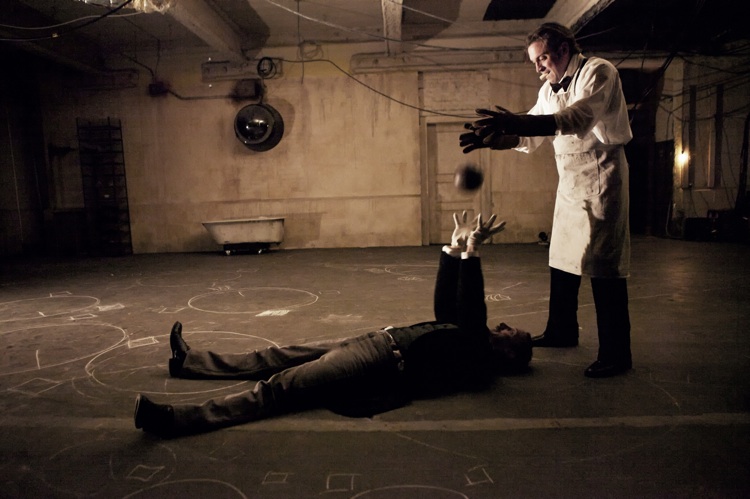
It is one day and 69 years after prolific inventor and notable oddball Nikola Tesla died of a heart attack, yet in the raw, unfurnished basement of the Old Mint, he stands quite alive before a contingent of captive theatre-goers, explaining his views on solitude.

“Be alone. That is the secret of invention,” he assures us, smiling in the manner of a man who knows he is about to be disagreed with. He has a lot of opportunities to display that same tight-lipped countenance throughout Mugwumpin’s “Future Motive Power,” as being disagreed with is one of the most recurring themes of Tesla’s biography. A man of compulsive and erratic habits and stubbornly-held views on the future impact of his own inventions, Tesla’s indomitable personality could be as hard to fathom as his scientific contributions were impossible to discredit. Channeled by Mugwumpin artistic director Christopher W. White, he alternates — in a manner akin to his most famous electrical system — between comedic mania and tragic inflexibility, as the patterns of his life entwine literally and figuratively with those of his dearest-held principles and hard-won triumphs.

As kinetic as White’s performance is, the attention is grabbed initially by a trio of players: Misti Boettiger, Natalie Greene, and Rami Margron, who personify, among other things, electrical forces, rotating magnetic fields, flocks of pigeons, and Greek choruses of skeptics and admirers, buzzing and zapping across the stage or encircling Tesla with a web of cables or a Kabbalistic variety of diagrams chalked out on the bare concrete floor. Founding company member Joseph Estlack plays a rough-necked, cigar-chomping Thomas Edison — one of Tesla’s main rivals — with gusto, parroting banal platitudes while swaggering around the stage. (Read Guardian writer Robert Avila’s review here.)

“Genius is one percent inspiration and 99 percent perspiration,” he boasts to Tesla with a wink, to which Tesla responds dryly that he certainly does seem to sweat a lot. A disagreement over money and methods is further exacerbated by an aggressive game of catch with a leather ball, and a charged scene involving the first execution by electric chair gives Edison the opportunity to assert that death by “electricide” should bear Tesla’s name, just as the unfortunate guillotine bears the name of its own well-meaning champion.

Like many site-specific performances, part of the pleasure of the production lies within its use of space, especially a space as intriguing as the Old Mint, and about three-quarters of the way through the piece, we are split into two groups and given brief reign to explore the warren of small brick rooms and an oppressively weighted corridor that take up the rest of the lower level. Eventually reunited, we are led to the end of the hall by a frail, geriatric Tesla, who lies on a single bed, surrounded only by his beloved pigeons. “Never mind my absence in body,” he assures before his dying, “it is no consequence. I am with you in spirit.” And when the lights come back on for the curtain call, in a blaze of AC glory, you see exactly what he means.


“Future Motive Power”

Through Jan. 29

8 p.m., $15-$30

Old Mint

Mission and Fifth St., SF

(415) 967-1574

www.mugwumpin.org


Ceviche secrets with Culture Kitchen

0

After an incredibly steep hike up 24th Street, Sam Love and I arrived on the doorstep of Culture Kitchen, a traveling cooking class that hires immigrant women to teach their home recipes and share spicy and savory secrets of their culture. 

Using the kitchen that a friend offered up, our chef for the night was Maria, a native of Peru, who gave us a lesson in ceviche — that beloved raw fish dish one “cooks” in lime juice — a classic chicken dish called aji de gallina, and sweet filled alfajores.

We all got to work squeezing limes, chopping onions, mixing dough, and swapping travel-food stories. We discovered some great cooking tips, like how to make instant dulce de leche by sticking a can of condensed milk in a boiling pot of water and letting it simmer for a few hours. We also learned how to properly plate Peruvian ceviche, a style that includes two kinds of corn, yam, iceberg lettuce (for show. Ok, I ate it!) and of course delicious white fish, smothered in onions and tangy lime juice. 

Two hours after we started, we all sat down at a long communal table, the full moon glistening over the city (the kitchen we were using had the most amazing view. Bonus!), to enjoy the foods of our labor. We asked Maria how she learned to cook and she said that in Peru, her abuela is a master home chef and taught her all these recipes. She also told us that her abuela won’t like her sharing them with us. Good cooking is a way to a man’s heart and you don’t want just anyone to know how to make all the good dishes. Sworn to secrecy, Sam Love and I left that evening with over-stuffed bellies, a few lovely new friends, the recipes to throw a super-authentic Peruvian dinner party (that not even friends of Abuela can replicate) and, I kid you not, leftovers.

For information on the next Culture Kitchen get-together, head to www.culturekitchensf.com


Live Shots: New Fire at Brava Theatre

1

Stirring together a mix of contemporary theater and actual traditional ceremonies, New Fire (which opened last night and runs through Jan. 29) is a play that gives its audience insight into the beautiful world of Indigenous American culture. 

The performance attempts to show how ancient ceremonies are relevant in today’s modern society, especially in a world with so much suffering. There is wonderful live music, video montages, dancing, and a trouble-making Coyote, that is always getting herself into mischief. The Brava Theater is celebrating 25 years of women’s theater and this play, by Cherríe Moraga, is a perfect way to commemorate two-and-a-half decades of female-fueled creativity on stage.

NEW FIRE

Jan. 11-29, $10-$30

Brava Theater

2781 24th St., SF. 

www.brava.org