Bay Guardian Archives

The Performant: People are Strange

0

Ape faces and hocus-pocuses

She was a medical marvel in an age where such marvels were not entirely uncommon. Forced into sideshows or the superficially more genteel lecture circuit, these Victorian-era human wonders were often exploited by their handlers and employers, but in an age where there were already limited possibilities for earning one’s keep, the ability to transform a physical disability into a money-making attribute was at least a more attractive proposition than starving.

For Julia Pastrana, the so-called “Nondescript,” her unusual condition — a form of hypertrichosis which covered her body in thick black hair and deformed her face — touring the world was better than staying in her home state of Sinaloa, Mexico, where she was a marginalized house servant. By all accounts, many of which are recited verbatim onstage in May van Oskan’s The Ape Woman, which played at the EXIT Theatre last weekend, she was an intellectually curious woman who spoke three languages, had a beautiful singing voice and a gracious manner, and even believed in romantic love, even though to outsiders her own marriage had the appearance of an exploitative measure on the part of her husband, Theodore Lent, who also happened to be her “manager”.

In van Oskan’s musical enactment of the Pastrana saga (billed as a “rock opera” despite long passages of spoken text), Julia, at last, is given a voice — and a ukulele — plus a backing band of folksy musicians. Portrayed by van Oskan, who eschewed appearing in “apeface,” which would certainly be a distraction, this Julia lulled us into a kind of melancholy trance as she related her troubled childhood; her escape, of sorts, into the exhibition business; and her journey into adulthood as medical curiosity, wife, and, briefly, mother to a child whose difficult birth resulted in both of their deaths.

Her external circumstances mainly described by a parade of carnival barkers, anatomists, and her exhibitor-turned-husband, Julia’s internal landscape was illuminated through song, a blend of harmony and shimmering introspection, of gracious acceptance of her strange lot, and a wistful yearning for normalcy.

“I keep letting the dreams in,” she confessed in song, as she reminisced over her unusual life path, from obscurity to celebrity, like a reverse kind of supermodel, an exploitable image for others to hang their fantasies and preconceived perceptions on, without taking into account the human soul beneath the exposed skin.

Unusual life paths are what the Dark Room Theater’s summertime Twilight Zone series is all about. Now entering its tenth year, The Twilight Zone is a collection of new plays written to vaguely resemble the Twilight Zone episodes of yore, taking ordinary people and dropping them into unexplainable scenarios that defy reason. This past weekend, a small-town hanging in I Am the Night, Color Me Black, became a metaphor for a creeping wave of hatred that threatened to engulf, not only the stage, but the entire world, and a small-town liar became an unlikely ambassador to the outer reaches of the galaxy in Hocus Pocus and Frisby.

Spoof commercials, a dreadlocked “Rod Serling,” and an intriguing implication for pool noodles reminded the odd-ience that they were no longer in Kansas, nor even in any stale remake, but in a uniquely San Francisco kind of world, where the unlikely lurks around every corner, and the curiosities are all of us.

Community awaits benefits as Lennar finally breaks ground in Hunters Point

26

More than five years after San Francisco voters approved a massive redevelopment plan for the Hunters Point Shipyard and much the southeast part of the city — giving Lennar Corp., the country’s biggest home builder, the largest tracts of open land in the city — that project is now finally, slowly, getting underway.

But activists who have been following the project say the city is getting played by Lennar because of an agreement that lacks performance standards and has allowed the company to drag its feet to maximize its profits despite an affordable housing crisis in the city. And some community members say Lennar hasn’t lived up to promises of jobs and other benefits.

“The modus operandi of Lennar is bait and switch and delay,” Saul Bloom of Arc Ecology, who consulted on this development deal for the Redevelopment Agency before his contract was dropped in 2010 after publicly raising concerns, told us. Bloom and his firm have decades of experience analyzing complex development deals, and he has been tracking Lennar’s pattern of behavior around the country. 

Bloom said that when Lennar cut its initial deals with then-Mayor Willie Brown and other local officials in 1997, the company said it needed no external financing and that it would build housing affordable to Hunters Point residents, including rentals. Since then, the deal has gotten steadily better for the company and worse for San Francisco, and the groundbreaking date has been repeatedly pushed back.

“The city was not smart enough to build in liquidated damage and a performance schedule and that kind of thing,” Bloom said. “Lennar tells them what they want and the city tends to roll over, and there’s been no pushback.”

When Lennar ended up needing financing after all, the project stood by while a $1.7 billion deal with the China Development Bank Corp. was structured in 2012. Despite Mayor Lee personally participating in the quest for capital in China alongside the developer, the deal quickly collapsed. It is yet to be seen how Lennar will satisfy its commitments in the Bayview and at its separate Treasure Island site since the plug was pulled on the loan deal.

Lennar Urban Director of Community Affairs Cheryl Smith referred our questions to communications consultant David Satterfield of G.F. Bunting, who said that he passed them on to Lennar officials and, “They don’t have anything to say.” The Mayor’s Office also has not responded to our request for comment on the issues that Bloom is raising.

With a weak agreement and a lack of political will to push the company to expedite construction of affordable housing, Bloom said Lennar has simply waited for housing prices to increase and for other developers to lead the way in gentrifying Bayview Hunters Point before moving forward on the nearly 1,400 acres of land it controls in San Francisco — an area equivalent in size to the Presidio.

“Their incentive is to wait for the property values to rise…Lennar understands how much this land is worth,” Bloom said. “What Lennar has done is crafted a strategically smart box that the city is in.”

Yet after years of delays, the project did officially get underway last week (Wed/27), with a well-attended hilltop ceremony.  Mayor Ed Lee, former Mayor Willie Brown, District 10 Sup. Malia Cohen, and Cohen’s predecessor, Sophie Maxwell, joined Lennar Urban President Kofi Bonner to speak at the long-anticipated event.

Lennar’s local subsidiary, Lennar Urban, unveiled a master plan to convert the land to a brand new mixed-use community. At the ceremony, Brown remarked that “there is no other piece of soil that is as lucrative” as the Bayview Hunters Point peninsula and that it promises to be the “ideal place to live.”

The Hunters Point Shipyard, occupies roughly 500 acres of southeastern San Francisco and when taken together with neighboring Candlestick Point and parts of Bayview, it is the largest single tract of land in San Francisco designated for redevelopment. The other big redevelopment site in the city, Treasure Island, is also controlled by Lennar and its partners.

A former naval base, the shipyard was transferred to the city in 2004. Most naval operations there had ceased in 1974 and commercial uses declined in the 20 years that followed, steadily displacing black workers employed on the premises.

Affordable housing and job creation for neighborhood locals were two major stipulations in the ballot measure San Francisco voters approved in 2008. The “Bayview Jobs, Parks, and Housing Initiative,” however, entrusted that goal fulfillment almost wholly to Lennar and Bloom now questions whether that trust was well placed.

Phase 1 of the project will consist of construction of 1,400 new residential units in the shipyard, approximately 30 percent of which will one day be affordable housing. But Bloom said that Lennar has delayed construction of the affordable units until after much of the more lucrative market rate housing is done.

At the event, Bonner enthusiastically outlined the goal of having 800 of 1,100 market rate homes in this first phase constructed and occupied within 36 months time and Mayor Lee opened his remarks with the celebratory chant “Welcome to The Bayview! We need housing for everybody!”

But Bloom said that the city is rapidly gentrifying as Lennar waits to meet its affordable housing obligations, noting that the city was 11 percent African-American when Lennar cuts its first deal to develop Hunters Point in 1997, and that population is now 4 percent and falling.

Reconstruction of the Alice Griffith Public Housing Project will help Lennar to satisfy its affordable housing quota. Announcements of these plans garnered large applause from community activists in attendance, though they are slated for the project’s second phase, which likely won’t begin for years.

“They could build all of Alice Griffith on Parcel A, but they’re not going to do it,” Bloom said. “When is this community going to get what was promised to them?”

A group of picketers from Aboriginal Blackman United (ABU) was contained by SFPD at the bottom of the hill during the afternoon’s proceedings. As black town cars chauffeured officials to the event site, the protesters’ cries were drowned out by the music of Miles Davis playing from stage speakers.

ABU was protesting non-inclusive hiring practices at the shipyard site. Members, who were outnumbered by police 2-to-1, argued that they were being wrongfully barred access to the ceremony above and by the event’s conclusion, they had been relocated from the main intersection at Innes Avenue and Donahue Street to a side access road.

Job creation was trumpeted generally in the afternoon’s speeches, with Sup. Cohen applauding the public-private partnership between Lennar and Bayview organizations and Mayor Lee praising the project for “honoring labor and honoring local residents.” However, ABU’s founder and president, James Richards, said “we’re not getting the jobs or the contracts that the community people are supposed to get and that’s why we’re out here.”

Though ABU wants to see local residents of color placed in many of the new positions opening up, workers in the community have only been promised good faith consideration rather than actual job guarantees by the San Francisco Building and Construction Trades Council, which is in charge of staffing the project. Attempts to reach Michael Theriault, Secretary-General of the Council, were unsuccessful.

Bloom said Lennar has insulated itself from community criticism with an agreement that promises money to community groups that refrain from publicly criticizing Lennar or the project. He said Lennar has followed a similar pattern here as it has elsewhere, using its clout and political contacts to get lucrative redevelopment deals, then using delay and bait-and-switch tactics to make those projects more lucrative. He cited Lennar’s Mare Island project, which is now in bankruptcy, and its massive Newhall Ranch project north of Los Angeles.

In that latter deal, the California Public Employees’ Retirement System lost the $970 million it paid Lennar in 2007 for part of its stake in Newhall Land Development Co., which went bankrupt when the housing market crashed the next year. But Lennar built in an option to reclaim the shares, which a bankruptcy judge allowed Lennar to do in 2009 for just $138 million.

Bloom said that deal is typical behavior for a manipulative company that has a history of acting contrary to the public interest, but in which local political officials have given tremendous control over the city’s future.

“We remain skeptical about their commitment to getting it done,” Bloom said of the affordable housing that Lennar has promised. “What we’d like to see is some real action on the promises that were made to the public.”


BART on strike

BART drivers and maintenance workers went on strike after a weekend of negotiations failed to result in a contract agreement, essentially bringing the transit system to a halt.

The unions who moved ahead with the strike just as their contracts expired at the end of June 30 are SEIU 1021, representing about 1,400 BART inspectors and maintenance workers, and the Amalgamated Transit Union Local 1555, representing BART drivers.

This morning I stopped by Civic Center plaza, where union reps were camped out with signs and distributing fliers about the strike. I spoke with Karen Joubert, vice president of representation for SEIU Local 1021. She told me the ten-hour “negotiating session” that transpired at BART’s Oakland headquarters this past weekend was not really much of a negotiation at all. Instead of considering new proposals or hashing out details, little exchange took place between the union representatives and the transit agency, Joubert said.

“It’s been, come back at 1, come back at 3, come back at 6,” to no avail, she said. Since no progress was made, the workers went ahead with the strike they had authorized days prior, which was mounted due to concerns around safety issues, workers’ requested wage increases, higher health care costs, and pension contributions. (More background here.)

“We’re meeting this morning and we’re trying to get them back to negotiate,” Joubert said.

Anti-gentrification activists “GET OUT” with Pride

A group of activists used the Pride Parade to make a political statement by marching with a faux Google bus, an action meant to call attention to gentrification in San Francisco. They rented a white coach and covered it with signs printed up in a similar font to Google’s coroporate logo, proclaiming: “Gentrification & Eviction Technologies (GET) OUT: Integrated Displacement and Cultural Erasure.”

Some trailed the faux Google bus with an 8-foot banner depicting a blown-up version of an Ellis Act evictions map.

Others donned red droplets stamped with “evicted” to signify Google map markers, while a few toted suitcases to represent tenants who’d been sent packing.

However, their ranks were thin in comparison with the parade contingents surrounding them, which included crowds of workers representing eBay, DropBox, and, of course, Google.

A member of the small anti-gentrification contingent gazes in the direction of the Google contingent, where a crowd of tech workers is bursting with energy and carrying balloons.

A member of the anti-gentrification part of the march gazes in the direction of the Google contingent, where a huge crowd of tech workers was bursting with energy.


Google workers clad in identical tees wore colorful sunglasses, carried balloons and held a banner.

Activist Leslie Dreyer was one of six activists who put together the faux Google bus contingent. She used crowd-funding to raise roughly $2,000 for parade registry, bus rental, and custom-made decals.

“All of us have either been affected, or are in a position where we wouldn’t be able to afford to stay in the Bay Area if something were to happen to our housing situations,” Dreyer said. “There’s really no security to stay here.”

They selected the Google bus as a symbol because “we think the tech boom is directly responsible for creating a population of people who can actually afford these market-rate rents,” while also fueling real-estate speculation and giving rise to a deep-pocketed political lobby. “It’s not targeting tech workers individually,” Dreyer added.

Zeph Fishlyn, a sculptor and activist who earns a living as a tattoo artist, also helped launch the Pride Parade action. “My communities that I’m a part of – not just the queer community, but also artists and activists – are being forced out,” said Fishlyn, who suffered through two separate evictions in 2012. “I know 34 people who got evicted last year.”

Housing advocates are gearing up for a campaign targeting landlords that are infamous for gobbling up rental properties and serially evicting long-term San Francisco renters. Dubbed Eviction Free Summer, the campaign could get underway in coming weeks.

Activists handed out fliers encouraging people to join them by visiting heart-of-the-city.org.

City College students a step closer to earning SF minimum wage

Student workers at City College may soon be paid San Francisco’s minimum wage of $10.55 an hour, thanks to a motion made by Student Trustee Shanell Williams at last night’s college board meeting.

It was Williams’ first night on the job, and she drew cheers from students and faculty when she voiced support for students’ fair pay. 

“The (federal) loans for students are set to double in days,” Trustee Chris Jackson told the board and more than 75 meeting attendees gathered at the college’s Ocean Campus. “It’s hard working nine dollars an hour and maintaining residency in San Francisco.”

Francisco employs student workers for a myriad of positions, from clerical workers to advertising agents on the school newspaper. Students are required to be enrolled in at least six credit units in order to enter the college’s work-study program, and must also file an application for federal aid. Notably, San Francisco’s minimum wage is the highest in the country – but according to a recent article in the San Francisco Public Press, it is not widely enforced.

As a state agency housed in state facilities, City College is exempt from the city’s minimum wage ordinance, according to the city’s Office of Standards and Labor Enforcement. The institution is only required to pay its employees the state minimum wage of $8 an hour, though it pays them $9 an hour. 

Williams’ motion came as the college’s Chief Financial Officer, Peter Goldstein, outlined the potential budget future of the school.

“This has been a nightmare of a fiscal year. We’re holding onto any balance that we could to end it on a positive side,” he said. 

Goldstein couldn’t provide an exact number on how much a minimum wage increase for student workers would cost the school, but told the Bay Guardian it could amount to hundreds of thousands of dollars out of City College’s nearly $200 million budget. At the meeting, Williams was asked where she would draw the money for the wage increase. 

“I would like to amend that our CFO Peter Goldstein analyze the budget, look at consulting, and move that funding to raise student wages,” she said. 

When she met resistance for suggesting that funding be diverted from consulting, and the motion was nearly killed.

Trustee Rafael Mandelman voiced opposition to pulling funding from college consultants, which include public relations and technology professionals. 

“I am relatively supportive of the idea of paying our student workers the city minimum wage,” he said. “But I am not going to vote for that amendment tonight because I want to know how much that will cost. I’m nervous about making a bunch of changes on the spot.”

Student Lalo Gonzalez then addressed the board in public comment, taking aim directly at Mandelman. “Back in November, I passed out signs saying, ‘vote for Mandelman, he’ll save City College,’ but you just said you wouldn’t vote on raising student minimum wages,” she said. “Who are you trying to save?”

Ultimately, Goldstein was directed to determine the total cost of raising the student minimum wage, and to identify potential places where funding could be diverted from the budget to fund the wage increase. The board will take up the matter again at its next meeting in July. 

The college’s newspaper, The Guardsman, reported on the school’s lack of adherence to the San Francisco minimum wage in 2012. In an article by student reporter Lance Kramer, 21-year-old student Kirk Ireland said he depended on his job as a docent for City College’s Diego Rivera Theater, which houses Diego’s historic painting “Pan-American Unity.” Ireland told Kramer: “I don’t have to go home and I don’t have to commute to a job later at night, so it actually helps a lot. It’s part of my success that I attribute to working on campus.”

Before Outside Lands: Youth Lagoon on Art Garfunkel, the spiritual significance of pelicans

0

Youth Lagoon, the aloof youth that is Trevor Powers, has explored new land in latest album Wondrous Bughouse (Fat Possum). Revealing, yet withholding, the album proved his ability to not just create cosmic bliss, but deliver a few deep messages while doing it.

With the album, the 24-year-old Idaho native takes us through the fires of temptation in song “Mute,” dances with death on “Raspberry Cane” and paints an immensely disturbing and bloody image of love and sacrifice in “Pelican Man.”

Currently on tour in Europe, Powers will be here in SF to perform at Outside Lands this Aug. 9-11 (he plays Saturday, Aug. 10).The professional effects tinkerer and melody craftsman talked with me about his afro days, his penchant for destroy-and-create-again style of making music, and how bloody violence can really be sweet: 

San Francisco Bay Guardian Most of the songs on Wondrous Bughouse sound melancholic, pensive, or a bit glum. Would you say this was a reflection of where your mind was at when recording this album or have you simply felt more compelled to write songs of this nature?

Trevor Powers I always feel pulled different ways at different times, so what I write is always a reflection of where I am at the moment. I stay in certain obsessions for long periods of time so when I write for months at a time, usually those blocks of time show a type of consistency with whatever I’m working on.

I’ll have periods where I hate melody or how it’s portrayed, and other times where I go back to it and take the music and rip it into pieces mentally to see how I can put it back together. With this record, I wanted to go a deeper with the melancholy.

SFBG You have said before that you’re getting more into heavy expressive sounds lately and in Wondrous Bughouse,’is there something this specific style of music does for you that maybe straight rock or grunge doesn’t?

TP I guess I don’t usually think of music in styles like a lot of people. I just hear sounds being used in altered ways. Maybe I’m just desensitized to it all by now. Everybody hears sounds differently. Something I find relatable or exciting that I show to someone else could make the other person cringe, and vice versa. So it really has nothing to do with musical styles, but with speaking through sounds and noise, and that never looks the same.

SFBG What’s the best concert you have ever been to and why?

TP Art Garfunkel — it was my first concert and I was a little boy with an afro.

SFBG  Could you talk a little bit about the meaning of song “Pelican Man”?

TP Pelicans have a lot of history for spiritual significance. There are legends that say when a pelican’s babies are starving, the mother will stab her own breast with her beak to draw blood that her children can then drink. She’ll bleed out so her babies can drink her up, giving her life for theirs. A sacrifice similar to that of Jesus. Lyrically, that idea is contrasted with one of murder and serial killing. Violence out of ultimate love juxtaposed with violence out of complete hate.

SFBG Are there any artists at Outside Lands you’re looking forward to seeing?

TP I’m actually not sure who is playing so I’ll have to look up the schedule tonight and start getting my planning on. I will wear my new camouflage jumpsuit.

http://www.youtube.com/watch?v=SvWDUN57Cko

‘Alternative to Pride Parade’ announced

57

In the wake of all the kerfuffles besetting Pride this year — from the Pride Board’s egregiously mismanaged reaction to the election of Bradley Manning as a community grand marshal (his supporters have plans of their own), to the recent announcement that military recruiters would be descending upon the celebration in earnest, and, well, just the continued corporatization of Pride in general — it comes as no surprise that a radical Pride-questioning movement has been reawakened.  Just like the ’90s are back, so is Gay Shame, at least in spirit.

And thus an alternative parade to the Pride one on Sunday has been announced — let us not be surprised that it is a bar crawl! In any case, it’s a nice start to getting us back to our gay, unlicensed roots while joining with other activists who are Over the Rainbow(TM). Here’s the statement from the organizers with more details.

Have you had enough with the poor political choices of some community leaders that claim to represent you? Are you over the over-corporatizing of SF PRIDE??? Or just tired of the same old events that don’t reflect who you are, and how you want to celebrate your queer pride?

Want to be part of something different, something fun, something that will challenge conventional thought within the SF LGBTQ community?

Then join us for an ALTERNATIVE TO PRIDE PARADE (AND BAR CRAWL).

We will be getting back to our gay roots, meeting at THE CINCH BAR at 1723 Polk Street at 12 NOON with the parade beginning at 1pm (we don’t think a 10:30am start time for a Pride Parade is appropriate), ending up at THE SF EAGLE.

We will make stops along the way, passing through SF PRIDE at Civic Center to express (peacefully) our displeasure with what passes for gay pride at this event, and then we will continue on to SOMA with stops at THE POWERHOUSE/HOLE IN THE WALL, and finally we will end up at The SF EAGLE.

We encourage you to DRESS UP, whatever you want: Drag, Leather, Freak, Nerd, Casual, Beach Wear, Furry, Punk, etc. We also encourage you to BRING PROTEST SIGNS, be creative (body paint?), be original! We will definitely want folks to know what we are up to and perhaps get people thinking about why we need BUDWEISER, VIRGIN AMERICA, VERIZON, WELLS FARGO, BANK OF AMERICA, and COMCAST to have a good time!

RSVP TODAY!!!

Buddy cops, a one-man army, a boozy doc, and more: new movies!

0

This week: two music docs, a buddy-cop movie starring Sandra Bullock and Melissa McCarthy, and America’s Sweetmeat Channing Tatum saves the White House and, ergo, the world. Plus, more! Read on for takes from our critics.

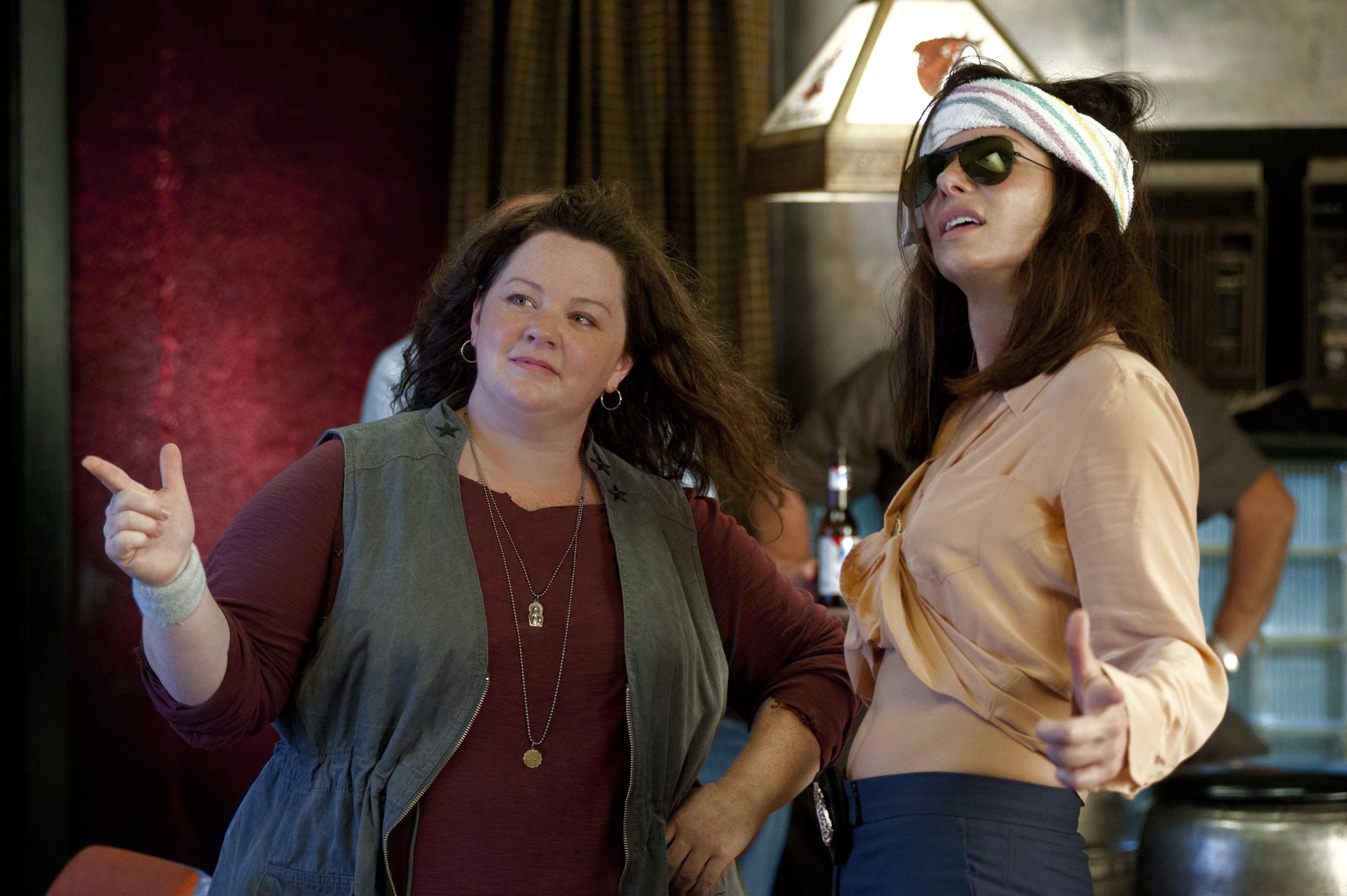
The Heat First things first: I hated Bridesmaids (2011). Even the BFF love fest between Maya Rudolph and Kristen Wiig couldn’t wash away the bad taste of another wolf pack in girl’s clothing. Dragging and dropping women into dude-ly storylines is at best wonky and at worst degrading, but The Heat finds an alternate route. Its women are unlikable; you don’t root for them, and you’re not hoping they become princesses because such horrifying awkwardness can only be redeemed by a prince. In Bridesmaids and Heat director Paul Feig’s universe, friendship saves the day. Sandra Bullock is Murtaugh to Melissa McCarthy’s Riggs, with tidy Bullock angling for a promotion and McCarthy driving a busted hoopty through Boston like she’s in Grand Theft Auto. Circumstances conspire to bring them together on a case, in one of many elements lifted from traditional buddy-cop storylines. But! The jokes are constant, pelting, and whiz by like so much gunfire. In one running gag, a low-rung villain’s worst insult is telling the women they look old — but neither character is bothered by it. It’s refreshing to see embarrassment humor, so beloved by chick flicks, get taken down a peg by female leads who don’t particularly care what anyone thinks of them. (1:57) (Sara Maria Vizcarrondo)

http://www.youtube.com/watch?v=3HUwmDqi2kA

Hey Bartender Hey, have you heard of this trendy thing called craft cocktails? Be warned, sophisticated San Francisco drinkers: Douglas Tirola’s upbeat documentary mentions our fair city in passing only a handful of times; instead, it concentrates on New York City’s relatively recent “cocktail revolution,” interviewing movers and (literal) shakers on the scene while giving a brief history of cocktails in America (again, with an emphasis on NYC). Hey Bartender‘s focal points are well-chosen studies in contrast: ex-Marine Scott — tattooed and scrupulously mustached — who’s working his way up the ranks at hipster lounge Employees Only; and middle-aged Steve, who runs a struggling blue-collar bar just outside the city and is slowly coming around to the idea of adding fancier drinks to his menu. Though dive-bar denizens may roll their eyes at some of Hey Bartender‘s more pretentious trappings (the movie doesn’t mention it, but drinks at Employees Only are in the $15-16 range), it does make the case that today’s superstar “mixologists” deserve just as much recognition as superstar restaurateurs. And the film has a point: can a Top Chef spinoff for bartenders be that far off? (1:32) Roxie. (Cheryl Eddy)

http://www.youtube.com/watch?v=rwDzRzqFaIE

Laurence Anyways Xavier Dolan’s latest is yet another gorgeously-designed love story; it fits perfectly alongside his extremely personal I Killed My Mother (2009) and the devastating Heartbeats (2010). Although some critics have suggested that this young director needs to hire an editor (Laurence Anyways clocks in at two hours and 48 minutes), I would argue that this epic, gender-bending love story needed to take its stylized time to achieve what most films never do: humanize a transgendered lead character. Melvil Poupaud (Raúl Ruiz’s favorite ingénue) is stunning as Laurence; as his longtime lover, Fred, Suzanne Clément performs with a guttural passion that should keep audiences glued to the screen. For those willing to accept a decade’s worth of hypnotic set and costume designs (the film spans 1989-1999); cryptic character development; a crew of campy castaways; and an electric, eclectic soundtrack (Depeche Mode, Celine Dion), Laurence Anyways is well worthy of its epic running time. Could this be the film that elevates Canada’s best-kept secret to being the leader of a post-gender film movement that’s just about to explode? (2:48) Metreon. (Jesse Hawthorne Ficks)

The Secret Disco Revolution Jamie Kaster’s Canadian documentary chronicles the rise and fall of the 70s booty shaking phenomenon — though what with the subsequent developments of house music, rave culture, et al., you might say disco never really went away. It’s got a goldmine of kitschy vintage clips, and plenty of enjoyable interviews with the scene’s erstwhile stars (Thelma Houston, “KC” Casey, etc.), producers, and observers. (The weirdest are scenes with the Village People, who today are staples on the corporate-party circuit and seem bizarrely eager to deny they were ever a subversively gay act.) Unfortunately, Kaster also burdens the film with sometimes overreaching arguments for disco’s sociopolitical radicalism, as mostly articulated by academic Alice Echols. And there’s a labored staged thread in which an arch narrator informs of us the behind-the-scenes mechanizations of three fictive “masterminds” (played by actors) who propagated disco to liberate gays, women and ethnic minorities. It’s a whimsical conceit that falls completely flat. As a result, there’s plenty of fun to be had here, but the conceptual missteps make this less than the definite disco doc it aims to be. (1:25) (Dennis Harvey)

20 Feet From Stardom Singing the praises of those otherwise neglected backup vocalists who put the soul into that Wall of Sound, brought heft to “Young Americans,” and lent real fury to “Gimme Shelter,” 20 Feet From Stardom is doing the rock ‘n’ roll true believer’s good work. Director Morgan Neville follows a handful of mainly female, mostly African American backing vocal legends, charts their skewed career trajectories as they rake in major credits and keep working long after one-hit wonders are forgotten (the Waters family) but fail to make their name known to the public (Merry Clayton), grasp Grammy approval yet somehow fail to follow through (Lisa Fischer), and keep narrowly missing the prize (Judith Hill) as label recording budgets shrivel and the tastes, technology, and the industry shift. Neville gives these industry pros and soulful survivors in a rocked-out, sample-heavy, DIY world their due on many levels, covering the low-coverage minis, Concert for Bangladesh high points, gossipy rumors, and sheer love for the blend that those intertwined voices achieve. One wishes the director had done more than simply touch in the backup successes out there, like Luther Vandross, and dug deeper to break down the reasons Fischer succumbed to the sophomore slump. But one can’t deny the passion in the voices he’s chosen to follow — and the righteous belief the Neville clearly has in his subjects, especially when, like Hill, they are ready to pick themselves up and carry on after being told they’re not “the Voice.” (1:30) (Kimberly Chun)

Unfinished Song A grumpy widower (Terrence Stamp) learns to enjoy life again by joining an unconventional choir group. Vanessa Redgrave, Gemma Arterton, and Christopher Eccleston round out the cast. (1:36)

http://www.youtube.com/watch?v=Wa5aasz5VXg

White House Down Ah, the mid-1990s: a time when two big-budget movies on the same subject were regularly released within months of each other (1997’s Volcano and Dante’s Peak; 1998’s Armageddon and Deep Impact). When a director named Roland Emmerich ascended into the blockbuster pantheon with Independence Day (1996), a film that’s best-remembered for that iconic shot of the White House exploding under alien death rays. The intervening years have seen Emmerich plunge ever-deeper into various flavors of disaster, and White House Down — which reignites that ’90s copycat-rivalry thing by riding the fumes of March’s Olympus Has Fallen — finds its boogeyman in domestic terrorism. It beings on a triumphant day for President James Sawyer (Jamie Foxx), who has just ordered all US troops removed from the Middle East — angering some high-up men in his administration, as well as some ex-military goons with axes of their own to grind. When the White House is compromised, a wannabe Secret Service agent (Channing Tatum), at the Prez’s house for a tour with his precocious daughter, shoulders one-man-army duties. Rockets are launched; there’s a high-speed limo chase across the White House lawn; we learn the truth about Marilyn and JFK; and thanks to evil genius Skip Tyler (Jimmi Simpson), “the greatest hack the world has ever seen” is about to unleash World War III. Yep, that’s right: 17 years after ID4‘s Jeff Goldblum broke into the alien mainframe, thereby saving the White House-less planet, Emmerich has decided that hackers are actually bad guys. It goes with White House Down‘s warning that the enemy is no longer an external threat, but something lurking right under your nose. Better start working out, America — and working on your one-liners. (2:17) (Cheryl Eddy)

Wrongfully terminated Oakland Airport workers still fighting to get their jobs back

A year ago, Hakima Arhab, a former Subway employee at Oakland International Airport, spoke up about the restaurant breaking living wage laws that guarantee paid sick days for employees. For this, she believes she was fired.

Since then, a campaign has been launched to raise awareness about Subway and Jamba Juice workers at the Oakland airport who say they were terminated for speaking out. This afternoon, June 27, members of service workers’ union Unite Here will join with Arhab and other terminated employees in picketing outside the Port of Oakland’s Port Commission meeting, from 4 to 6 p.m. 

According to Arhab, “I left for a vacation for a month and a half, and I had told my employers four months before the fact. They were fine with it.” Nevertheless, “When I came back, they said they had no hours for me, and I was fired. I then knew they had fired me not because I took a vacation, but I had complained about them breaking living wage laws.” 

Arhab said Subway had not given paid sick days since 2009. The Port of Oakland’s living wage law requires employers to provide 12 paid sick days per year. 

Last year, the National Labor Relations Board charged the operators of the airport Subway and Jamba Juice with breaking labor laws by terminating workers who had made complaints to the Port of Oakland. According to a report in the East Bay Express, the port conducted its own investigation, and also concluded that the store operators were in violation.

Unite Here representatives filed an appeal earlier this year to demand that Arhab and Diamond Ford, a former Jamba Juice employee, be reinstated to their jobs. Following an appeals hearing, the port agreed and ordered the operators to reinstate the terminated employees. 

But that still hasn’t happened. Though Arhab has participated in the campaign to shed light on unfair labor practices at the Oakland Airport, she says she still feels powerless. 

“I feel mad and un-powerful that these companies were breaking laws, and they had the power to fire me just because I complained,” Arhab said. “I did the right thing. When will they?”

Picketers who plan to gather outside the Port Commission today aim to pressure the agency to compel the fast food restaurants to comply with orders to reinstate the terminated employees.

Sarah Norr, an Organizer for Unite Here, feels that Arhab and the other employees are being served an injustice. “The airport is on public land and is a public resource,” Norr said. “When workers don’t have sick days or job security, there’s something wrong with that.” 

Chatting up Daily Kos founder Markos Moulitsas

Chances are, you probably have the Daily Kos blog open on one of your browser tabs right now. The fiercely progressive blog and community hub showcasing an array of liberal activists and organizers has been at the forefront of a number 21st political battles. Markos Moulitsas, founder and publisher of Daily Kos, started Netroots (then known as YearlyKos) as a way to bring an online community together in a shared physical space. Eight years later, Moulitsas attends as a “private citizen.” When I caught sight of him at the conference, I approached him for a conversation on how the conference has changed over the years, the relationship between liberals and Obama, and his take on current voter demographics.

SFBG: What’s your been your experience at Netroots Nation 2013?

Moulitsas: What’s been different than previous ones is, it’s kind of lot younger. There seems to be a sort of a new generation of network activists. And so, we have this new generation of activists that’s emerging, which is to me is kind of cool. Because any movement cannot sustain itself without youth, that new blood and … the skills they’re bringing to the table — this intimate knowledge of social networks — are skills that I can definitely benefit from, and some of these young guys can actually benefit from some of the wisdom that old-timers have.

How has the conference progressed since the first one in 2006?

You know what was amazing about that conference, is that it was organized by the community. I didn’t organize it, it was the community that decided that they wanted to meet in person and then they made it happen. It was truly volunteer and amateur-driven, from day one, but it didn’t feel like an amateur conference. So they accomplished kind of the impossible just by sheer will and desire to make this happen, and so what I would say is … this is going to grow into something much further beyond the Daily Kos community.

What do you say to liberals who are disillusioned and cynical about Obama and other Democratic Party leaders?

You know, change is incremental. It always is in the political realm. A lot of that disappointment with him really stems from the fact that we have a shitty Congress. A lot of that had nothing to do with the shitty Congress. We’re not going to get everything we want and we could never get everything we want. We’ve got to keep creating that space, politically, for people to do so. Obama couldn’t be pro-gay marriage his first term, until the very, very, very end of his first term, when finally the political space has been created, where he could be a better progressive. So to me, that’s what it’s all about, is to continue to create that space and move the American public. I mean, the American public is already there. It’s getting them to realize they’re actually more liberal than they think they are.

It’s making sure that growth demographics that are very democratic are engaged politically, not taken granted but make sure that African Americans, Latino, Asians are engaged politically because there are going to be key components of our future majorities in the direction our nation takes. Conservatives really began their movement, building their movement in 1964, after the Barry Goldwater defeat. From the point, it took them 16 years to win the White house with Ronald Regan. It took him 30 years to win Congress in 1994 with the Newt Gingrich revolution.

But while the Democratic Party has moved left on issues like pot and gay marriage, a lot of people are saying the neoliberals have taken over the Democratic Party.

I actually think some of the most excitement coming from the Democratic Party are people like Elizabeth Warren, who are actually more progressive on economic issues than any democrat I’ve seen on the scene long time.

Do you think the emerging “Democratic Majority” has arrived?

Obama lost the white vote. The white votes were 75 percent of the electorate 2012. Mitt Romney won them 59-39 and Obama didn’t hit 40 percent with white voters. If the election were held in 2016, nothing else changes, same percentages, instead of winning by 5 votes, Obama would win by 9 points. So, not only is it here, but it’s growing at an incredible pace. Right now the only way Republicans can win elections is if our voters stay home. That’s a problem, because our core voters are also the least performing of voters – young people, African-Americans, Latinos, and single women have the worst turnout rates, particularly in midterm elections. 

Normon Solomon: Terminal

5

Edward Snowden has provided, in my estimation and that of many others, a valuable journalistic and public service. And he has accomplished what he said he wanted to do: start a public debate on the NSA and its heretofore unknown amassing of our emails and phone messages, et al.  Here’s how you can help him.

The Guardian is dead, long live the Guardian

8

EDITORIAL First of all, we at the Bay Guardian want to thank our community for its support since the abrupt departure of our beloved leader, longtime Guardian Editor Tim Redmond, on June 13. It was a shock to us and the larger community, and the outpouring of concern and support is a testament to the important role the Redmond and the Guardian have played in San Francisco.

We’ve all been wondering where we go from here, vacillating between emotional extremes. So we want to take this opportunity to start a conversation with our readers in the hopes that our next steps can be constructive and deliberate, hopefully leading to a renewal of an important media institution that has sadly been in a period of decline for far too long. Moments of crisis can also be important opportunities, and it is our intention for that to be the case here.

It is ironic that the seeds of Redmond’s departure were sown on June 12, just as he was leaving to moderate an inspiring community forum on Plan Bay Area and the future of San Francisco, which he organized. Owner Todd Vogt and newly named Guardian Publisher Stephen Buel were there as well, and they share the view of longtime Guardian staffers that the energy in that room represented an important moment of potential progressive resurgence that shows the Guardian is more vital and relevant than ever.

Yet Vogt and Buel also believe that the Guardian isn’t resonating with either our readers or advertisers like we should, and those of us who remain want to achieve that resonance once again. We believe in the mission of the Guardian, to raise hell and be forum for progressive change in San Francisco, and we want to reinvigorate that mission with the new generation of Guardianistas who now find ourselves at the helm of this venerable old publication.

So we want to hear from you, our readers and advertisers, about what you want from the Guardian. We want you to help us formulate the plan for achieving greater journalistic relevance and economic sustainability. This is the transition point where the Guardian charts its future or fades into the past.

We have enormous respect for the people who made the Guardian what it is, particularly Redmond, Bruce Brugmann, and Jean Dibble — and we appreciate our new owners’ efforts to keep the Guardian going. But we’re also ready to help formulate a new progressive vision for the Bay Area and to find new ways of speaking to residents who may not have been engaged with the Guardian or the movements that it has chronicled and advocated, without neglecting those who have stuck with us over the years.

In the coming weeks, we plan to announce another community forum focused on the future of journalism and the progressive movement in San Francisco, and to provide other avenues for you to get involved and shape the new Guardian. Come offer constructive advice — or tell us whatever you’re feeling now, whatever ideas you have: we want to hear them.

Let’s make a plan and have you hold us to it, and in turn, we ask for your support. The Guardian is dead, long live the Guardian.

Images from a big gay victory celebration

0

It was an amazing day of celebration in San Francisco yesterday, from the early morning crowd that gathered in City Hall to hear the ruling legalizing same-sex marriages in California to the evening celebration in the Castro. Here are some of the faces of that celebration by photographer Tim Daw (except the Newsom image, which was taken by Steven T. Jones)

From around the Internet: San Franciscans celebrate marriage equality

All around San Francisco yesterday, gay couples, city leaders, and street revelers celebrated the Supreme Court’s rulings striking down Proposition 8 and the Defense of Marriage Act. Here’s a glimpse of the how the city reacted to the news on June 26, as told by San Franciscans who uploaded videos to YouTube (video after the jump):

Our video mashup features (in order of appearance) Jay and Bryan Leffew with their two kids, Daniel and Selena; a crowd reacting with cheers as they attended an early-morning gathering at San Francisco City Hall (video uploaded by Will Kivinski); San Francisco City Attorney Dennis Herrera, Lt. Gov. Gavin Newsom, and District 9 Supervisor David Campos (all featured in a video of the press conference produced by the city); Cindy Sunshine and friends (uploaded by Prana Fitte); and scenes of a street-party celebration in the Castro uploaded by HiWorld798 and Elena Olzark.

Solomon: David Brooks, Tom Friedman, Bill Keller wish Snowden had just followed orders

27

Norman Solomon is co-founder of RootsAction.org and founding director of the Institute for Public Accuracy. His books include “War Made Easy: How Presidents and Pundits Keep Spinning Us to Death.”

Edward Snowden’s disclosures, the New York Times reported on Sunday, “have renewed a longstanding concern: that young Internet aficionados whose skills the agencies need for counterterrorism and cyberdefense sometimes bring an anti-authority spirit that does not fit the security bureaucracy.

Agencies like the NSA and CIA — and private contractors like Booz Allen — can’t be sure that all employees will obey the rules without interference from their own idealism. This is a basic dilemma for the warfare/surveillance state, which must hire and retain a huge pool of young talent to service the digital innards of a growing Big Brother.

With private firms scrambling to recruit workers for top-secret government contracts, the current situation was foreshadowed by novelist John Hersey in his 1960 book The Child Buyer. When the vice president of a contractor named United Lymphomilloid, “in charge of materials procurement,” goes shopping for a very bright ten-year-old, he explains that “my duties have an extremely high national-defense rating.” And he adds: “When a commodity that you need falls in short supply, you have to get out and hustle. I buy brains.”

That’s what Booz Allen and similar outfits do. They buy brains. And obedience.

But despite the best efforts of those contractors and government agencies, the brains still belong to people. And, as the Times put it, an “anti-authority spirit” might not fit “the security bureaucracy.”

In the long run, Edward Snowden didn’t fit. Neither did Bradley Manning. They both had brains that seemed useful to authority. But they also had principles and decided to act on them.

Like the NSA and its contractors, the U.S. military is in constant need of personnel. “According to his superiors . . . Manning was not working out as a soldier, and they discussed keeping him back when his unit was deployed to Iraq,” biographer Chase Madar writes in The Passion of Bradley Manning. “However, in the fall of 2009, the occupation was desperate for intelligence analysts with computer skills, and Private Bradley Manning, his superiors hurriedly concluded, showed signs of improvement as a workable soldier. This is how, on October 10, 2009, Private First Class Bradley Manning was deployed . . . to Iraq as an intelligence analyst.”

In their own ways, with very different backgrounds and circumstances, Bradley Manning and Edward Snowden have confounded the best-laid plans of the warfare/surveillance state. They worked for “the security bureaucracy,” but as time went on they found a higher calling than just following orders. They leaked information that we all have a right to know.

This month, not only with words but also with actions, Edward Snowden is transcending the moral limits of authority and insisting that we can fully defend the Bill of Rights, emphatically including the Fourth Amendment.

What a contrast with New York Times columnists David Brooks, Thomas Friedman and Bill Keller, who have responded to Snowden’s revelations by siding with the violators of civil liberties at the top of the U.S. government.

Brooks denounced Snowden as “a traitor” during a June 14 appearance on the PBS NewsHour, saying indignantly: “He betrayed his oath, which was given to him and which he took implicitly and explicitly. He betrayed his company, the people who gave him a job, the people who trusted him. . . . He betrayed the democratic process. It’s not up to a lone 29-year-old to decide what’s private and public. We have — actually have procedures for that set down in the Constitution and established by tradition.”

Enthralled with lockstep compliance, Brooks preached the conformist gospel: “When you work for an institution, any institution, a company, a faculty, you don’t get to violate the rules of that institution and decide for your own self what you’re going to do in a unilateral way that no one else can reverse. And that’s exactly what he did. So he betrayed the trust of the institution. He betrayed what creates a government, which is being a civil servant, being a servant to a larger cause, and not going off on some unilateral thing because it makes you feel grandiose.”

In sync with such bombast, Tom Friedman and former Times executive editor Bill Keller have promoted a notably gutless argument for embracing the NSA’s newly revealed surveillance programs. Friedman wrote (on June 12) and Keller agreed (June 17) that our government is correct to curtail privacy rights against surveillance — because if we fully retained those rights and then a big terrorist attack happened, the damage to civil liberties would be worse.

What a contrast between big-name journalists craven enough to toss the Fourth Amendment overboard and whistleblowers courageous enough to risk their lives for civil liberties.

Norman Solomon is co-founder of RootsAction.org and founding director of the Institute for Public Accuracy. His books include “War Made Easy: How Presidents and Pundits Keep Spinning Us to Death.”

Disillusionment, “Everyman,” and Netroots Nation

For nearly the entire Caltrain ride to down San Jose last Thursday morning, my thoughts were fully consumed by the subject of liberal disillusionment and cynicism. I pondered the question, “How much progress have the things that liberals care about made since the start of the new millennium?”

The issue of gay rights was the only glimmer of hope I could conjure up. Since 2000, income inequality has increased astronomically, the military-industrial complex grows unabated, the drug war continues to destroy millions of lives, women are having to protest the same idiotic conservatives policies their mothers protested, we are realizing the tangible repercussions of climate change, the Citizens United ruling and Republicans have become the John Birch Party and Democrats, by and large, have become identical to the Republicans of 30 years ago.

And while it may be true that progressives were responsible for electing the first black president, the Obama Administration has, for the most part, ignored, shunned, and at times insulted progressives. If Obama governed like a progressive, he would have jailed Wall Street executives for their roles in the financial crisis and HSBC bankers for laundering terrorist and drug cartel money, he would have rejected the Keystone pipeline in resounding fashion, he would have fought harder for a public option, he would have ended or at least decreased the surveillance state, and he wouldn’t be prosecuting medical pot dispensaries with extreme vigor.

Like a lot of the other media there, I came in search of demoralized liberals and to see if the Democratic Party leaders and other notable figures in attendance would feel the brunt of this dismay.

Unsurprisingly, the boogeyman of John Boehner, the Koch Brothers, and other rightwing caricatures were paraded out in order to stomp out any reservations you may have had about the president. One of the most notable lines of the conference was Howard Dean’s unfunny salvo of how the president isn’t perfect, “but it sure beats having Bain Capital, oops, I mean Mitt Romney in the White House!”

When our Rep. Nancy Pelosi was booed for saying that Edward Snowden should be prosecuted for his leaks, she tried shouting over the jeers by repeatedly saying that Obama’s second term was not Bush’s fourth. Then she tried to calm the crowd down (in a twist of irony, a man named Marc Peckel was kicked out for voicing objection to a police state), saying she welcomed the booing and debate about privacy. But would we be having this debate now, if it weren’t for Snowden’s leaks?

I attempted to ask Rep. Pelosi some follow-up questions as she exited the building (flanked by numerous aides and security) but oddly enough, my shouts of “I’m with the San Francisco Bay Guardian!” didn’t faze her one bit.

From the dozens of interviews I conducted with a wide range of attendees, the overall consensus seemed to be that Obama, his administration and other Democratic Party leaders are still on their side – though a good number of my interviewees expressed profound disappointment that the president hasn’t been liberal enough. One healthcare organizer from Chicago said he was immensely dissatisfied by Obamacare, but believes that it’s right the step toward implementing universal healthcare.

Obama’s most visible critic for the three days was a man who goes by the name Stan Everyman, who came on behalf of the San Jose Peace & Justice Center and carried a sign everywhere he went that read “OBAMA=CHENEY”. Everyman, who fervently believes that “Netroots is firmly under control of the Democratic party,” saw the conference as an opportunity to connect with other progressives who have gripes with Obama. The majority of reactions to his sign were positive, he said, but he did wind up engaging in some mild confrontations with what he calls “Democrat loyalists.” He was aghast when he encountered someone who came to Netroots on behalf of a liberal dating service, saying, “she didn’t mind if her emails and calls were tapped and didn’t care if there were helicopters hovering over her house as long as it caught the terrorists.” and when it did elicit a reaction, did nothing more than get a thumbs up or an eye-roll.

Meanwhile, some Democratic figures urged progressives to pressure elected leaders as much as possible. Keith Ellison, a Minnesota representative and co-chair of the progressive caucus, stated: “If people who came before us got discouraged because things were hard, we’d still have slavery, have no right to collective bargaining, the air quality would be horrible. The problem isn’t that you’re not involved and you didn’t get what you wanted, the problem is that you got to stay involved.”

When I countered that a big reason behind liberal disillusionment was that our own guy didn’t come through for us, Ellison’s responded, “Let me say this, never ever organize around a personality – even if it’s an awesome personality like Obama’s. Organize around the principles that guide you. Somewhere along the way we stopped saying ‘yes we can’ and started saying ‘yes he can,’ and when he didn’t do certain things we want, we got discouraged. What personality does the Tea Party coalesce around? None! They coalesce around, ‘we hate government, we love guns’ and ‘if you’re not quite like us, you’re not all right.’ So the progressive movement should coalesce around generosity, inclusion, fairness, sustainability, and leaders need to live up to that, and if they do, they’re good, and if they don’t, they’re not. But it shouldn’t be a personality-driven thing.”

If you want change, you have to keep on keeping on, no matter. Sure, town halls, letter campaigns, and protests are great ways to engage your politicians and in democracy, but when you got to go to work or tend to your family, six-figure lobbyists walk through the halls of Congress retracting whatever impact the people’s efforts made. Politicians want us to give them the political will to do what’s right even though we elected them to do what’s right. I don’t naively believe politicians are perfect and that they’re our friends and that we can sit back and relax after we pull the voting lever. However I do have a problem with “I’ll fight for you!” during the campaign season and “Fight for me!” during the legislative sessions. The latter due to this being a non-election year, was the unofficial theme of Netroots Nation 2013, which also possessed a palpable feeling that the reason why many of the big names showed up was to throw the progressive wing a bone and quell whatever qualms they have.

I do admit that Netroots, in the past, has resulted in a concrete impact (namely, helping to get Obama elected and being instrumental in manufacturing a 21st century online campaign apparatus). However, the chances that it will be able to pull Hillary Clinton—who’s just as hawkish as Dianne Feinstein— to the left beyond the duration of the conference are lower than the probability of Obama appointing Angela Davis as his Chief of Staff. A piece on Salon.com a couple days ago reported that progressives are open to a Clinton run, which should come as no surprise to given how good the left is at reconciling their beliefs with that of their leaders.

So between now and NN14 (which is in Detroit), when the Democratic Leadership will come begging for the left’s help to return the Speakership crown back to Pelosi, pretty much everything the left holds dear will wallow in purgatory or regress to hell. But cheer up: At least Bain Capital isn’t president!

HOT PINK LIST 2013: Faetopians

0

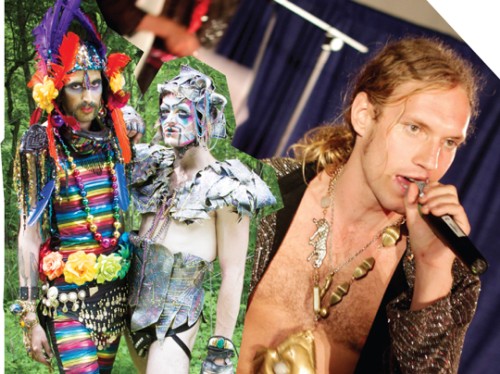
Once a year, a mystical gathering of artists, musicians, cultural visionaries, political agitators, sexual explorers, spiritual travelers, and just plain magickal beings gathers to share knowledge and intertwine in giant spontaneous puppy piles at Faetopia (www.faetopia.org). A collaboration between the radical faerie Feyboy Collective, the Sisters of Perpetual Indulgence, the Calamus Fellowship, Comfort and Joy Burning Man Camp, and more, the week-long extravaganza, now through Fri/28) presents everything from ritual drum circles and wild, neon-lit dance performances to workshops devoted to the history of gay porn and “Hastening the Post-Capitalist Post-Patriarchy through Post-Monogamous Practice.” Its a wonderfully woolly queer freak happening, a necessary complement to Pride’s relatively straight-laced affairs.

Some Faetopians: Pinkfeather, Dino, Kyle DeVries, Ian MacKinnon, Jon Ginoli, Javier Rocabado artwork, Miss Rahni, Justin Morrison


HOT PINK LIST 2013: COMICS GEEKS

0

It’s been a big year for queer comics. A movie based on a lesbian comic book, Blue is the Warmest Color, swept the top prizes at Cannes. The first textbook history of queer comics No Straight Lines was released by local hero Justin Hall, and snagged the Lambda Literary Award for Best Anthology. Heck, even Green Lantern went queer in “Earth Two,” and there was a gay wedding in Archie’s hometown, Riverdale. Here in the Bay, of course, comics have been queer for decades: from the pioneering work of Mary Wings and Lee Marrs in the 1970s to a lively slew of young upstarts, eager to expand the genre. Take, for example, this year’s packed “Batman on Robin” show, curated by Hall and Rick Worley, which imagined the Dynamic Duo in comic contortions that had many saying, “Shazam!”

Comics Geeks: Cartoonists: Agnes Czaja, Beth Dean, Christine Smith, Diego Gomez, Ed Luce, Jon Macy, Justin Hall, MariNaomi, Paige Braddock, Rick Worley.

(Photo of Diego Gomez by Sloan Kanter)

BONUS! Legendary groundbreaker Lee Marrs just sent her picture to us, and it may be our favorite yet:


HOT PINK LIST 2013: BOOT BLACKS

0

Midway through Folsom Street’s dark Powerhouse leather bar, you’ll find the bootblack, toiling away with a kit of rags and polish — break out your Stompers for a sublime shine. “What I’ve learned is that for me, bootblacking is religion,” says seven-year bootblacker Ms. V. “What I do is simple, slow, and uncluttered — and it reveres the authenticity of the boot and shoe above all.” She was first introduced to bootblacking seven years ago at Folsom Street Fair. “What a mystical experience seeing this polish-smeared wizard at work,” she recalls. “I wondered if I could do this with a female sensibility.” Bootblacking has long been the purview of males, but Ms. V embarked on her journey to learn the craft from leather community members and old school shoeshine experts anyway. She picked up a protege, Luna, with whom she teams up to keep leather footwear in prime condition. It’s a business transaction, driven by passion, power, and polish. “There is a dance that goes on between the customer and me,” says Ms. V.

Bootblacks Ms. V, International Ms. Bootblack 2007, and Luna, International Community Bootblack 2011  

HOT PINK LIST 2013: DRAG PHANTASMS

1

Hip-hop swagger meets goth-electro darkness, with the specters of legendary club disturber Leigh Bowery and e-art wunderkind Ryan Trecartin shimmering over the proceedings. But why stop there? Add in agitating performance art hijinks and a fundamental decontextualization of drag practices rooted in the shivery, negative emotions that the Internet pukes up on our screens. The new drag generation isn’t interested in conventional beauty or humor; instead it’s guided by hyperreal thrills, out-of-body chills, and post-Tumblr spills. SF’s most prominent phantasmagorian, boychild, is now hopping the globe as a fashion and video sensation, while seminal Dia Dear is blazing a performance “happening” trail in established venues, and godmother VivvyAnne ForeverMore is rising in art circles. Phantasmic supergroup Daddies Plastik and Persia produced sardonic anti-gentrification anthem “Google Google Apps Apps.” Spooky.

Phantasms: boychild, Daddies Plastik, Dick Van Dick, Rheal’Tea, Persia, Jem Jehova, VivvyAnne Forevermore, Julez Hale Mary, Amoania, Dia Dear, Craig Calderwood

Religious leaders celebrate Supreme Court decision upholding marriage equality

Photos by Rebecca Bowe

While proponents of the now-unenforceable Proposition 8 might have pointed to scripture to justify opposition to same-sex marriage, a group of religious leaders from throughout the Bay Area came together this afternoon to celebrate an historic Supreme Court ruling upholding marriage equality.

Clergy from a variety of faiths including Christianity, Judaism, Islam, Buddhism and the Church of Latter Day Saints gathered on the steps of Grace Cathedral on San Francisco’s Nob Hill on June 26 for a buoyant press conference held in celebration of the Supreme Court’s decision to strike down Prop. 8 and the Defense of Marriage Act (DOMA).

“The lies of separate but equal have no place on this holy hill,” said the Rev. Marc Handley Andrus of Episcopal Bishop of California. “Gay marriage is marriage, gay parents are parents, and all people are people.”

“For 20 years I’ve been marrying gay and lesbian couples, because in the eyes of God, that love and commitment was real, even when it wasn’t in the eyes of the state,” said Rabbi Michael Lerner of the Beyt Tikkun Synagogue. “We as religious people have to apologize to the gay community,” he added, for religious texts that gave opponents of gay marriage ammunition to advance an agenda of discrimination.

He added that the take-home message of the long fight for marriage equality is, “don’t be ‘realistic.’ Thank God the gay community vigorously fought for the right to be married – because they were not ‘realistic,’ the reality changed. Do not limit your vision to what the politicians and the media tell you is possible.” Their message caught on, he said, because “The theme of love touched people who had stony hearts in other respects.”

Mitch Mayne’s presence was especially significant.“I am an openly gay, active Mormon,” he explained to the crowd. “I am an optimist. I think you have to be, to be a gay Mormon,” he added, eliciting some chuckling from the crowd. “As a gay man, and as a Mormon, I believe Prop. 8 was one of the most un-Christlike things we have ever done as a religion,” Mayne stated. But he said he’d witnessed an unexpected outcome as a result. “Out of this troubling time has come a mighty change in heart from inside the Mormon community, with greater tolerance than ever before,” he said, adding that many Mormons had marched in solidary with gay and lesbian couples.

Rev. Kamal Hassan, pastor of Sojourner Truth Presbyterian in Richmond, said, “I am glad that DOMA was struck down, because it did not defend marriage – it exclusivized it, and defended heterosexual privilege.” But Hassan, like many other clergy members who spoke, seized on the Supreme Court’s decision striking down part of the Voting Rights Act the day before its ruling on same-sex marriage as yet another civil rights cause that needed to be fought.

“The work is not finished – it continues until the rights of all people are protected and defended,” he said. Referencing the famous quote by Dr. Martin Luther King that the arc of history is long but bends toward justice, Hassan said, “We’ve got to be some arc drivers. We should not be as patient as we’ve been so far. We have to push in order for these things to move forward.”