Bay Guardian Archives

Downwardly mobile

0

arts@sfbg.com

FILM The good news about Blue Jasmine isn’t that it’s set in San Francisco — more on that later — but that it’s Woody Allen’s best movie in years. Although some familiar characteristics are duly present, it’s not quite like anything he’s done before, and carries its essentially dramatic weight more effectively than he’s managed in at least a couple decades. Yes, Match Point (2005) and Cassandra’s Dream (2007) were “serious” too, but they were basically thrillers (one pretty good, one awful) that, whatever their other qualities, demonstrated that he doesn’t have much feel for suspense.

Blue Jasmine is, in a very different way, full of tension — because its protagonist is uncomfortable in almost any situation, often teetering on the edge of a full-on anxiety attack. Yet these are recent developments. Not long ago Jasmine (Cate Blanchett) was the quintessential Manhattan society hostess, with homes hither and thither (including the Hamptons, naturally), ever-so-busy planning dinner parties, sitting on charity boards, and going to Pilates class. Her immaculately put-together elegance isn’t Brahmin-bred: a natural upscaler, she remade herself from humble roots to suit the role of picture-perfect wife to Hal (Alec Baldwin), a master of the universe type whose questionably legal investment schemes and not-particularly-discreet infidelities she turns a willful blind eye toward. (It helps that he’s a really, really good liar.)

But at the start here, that glittering bubble of money and privilege has burst — exactly how revealed in flashbacks that spring surprises up to the script’s end — with the result that marriage and material comfort are now gone. Penniless, fleeing her husband’s public disgrace (he seems Allen’s belated commentary on the bankster-induced crash of ’08), Jasmine has crawled to the West Coast to “start over” in the sole place available where she won’t be mortified by the pity of erstwhile society friends. That would be the SF apartment of Ginger (Sally Hawkins), a fellow adoptive sister who was always looked down on by comparison to pretty, popular, clever Jasmine.

Theirs is an uneasy alliance — arguably the most discomfiting flashback is to Ginger’s Manhattan visit with now ex-husband Augie (Andrew Dice Clay), a mini-festival of thinly veiled class snobbery. Ginger has good reason to resent her big sis, whose attempted financial assistance via slippery Hal actually wound up destroying the visitors’ marriage. (Allen’s casting can sometimes seem stunt-like and overdependent on “who’s hot now.” Yet its top to-bottom brilliance here is personified by comedian Clay’s excellence in a small but important role.) Still, she’s too big-hearted to say no.

Ergo, Jasmine arrives at the flat Ginger shares with her two young sons — nose immediately curling at its IKEA/thrift-shop modesty and the boys’ noisy energy — with no clear idea what she’ll do, or how she’ll support herself. She has no marketable skills, and god forbid she’d take something as lowly as Ginger’s supermarket-cashier job. Yet she continues to judge everything by standards she can no longer afford, notably sis’s new beau Chili (a terrific Bobby Cannavale), another working-class stiff who justifiably worries Jasmine will convince her she can “do better.”

Surfacing later in the SF portion of the narrative are three men who might actually fulfill that “bettering” function: Dr. Flicker (Boardwalk Empire‘s Michael Stuhlbarg), a grab-handy dentist from whom she reluctantly accepts a receptionist gig. Then at a party she drags Ginger to in order to blatantly find men of the “quality” they both “deserve,” the latter duly meets seemingly good catch Al (Louis C.K.), while the former reels in a much bigger fish in Dwight (Peter Sarsgaard), a dreamboat diplomat who’s just the ticket for a woman who’s never paid her own way in anything but trophy-wife good taste.

It’s somewhat disappointing that Blue Jasmine doesn’t really do much with San Francisco. Ginger lives in a nondescript neighborhood (near the start of South Van Ness). There are no gay characters, racial diversity is limited to background players, and good as they are, Cannavale and Clay have the kinds of personalities that yell “Jersey!” and “Brooklyn!,” respectively. There are a few shots nodding at the colorful, pretty, touristy side of the city, but that’s not the world Ginger lives or that Jasmine lands in. Really, the film could take place anywhere — although setting it in a non-picture-postcard SF (despite the warm tones of Javier Aguirresarobe’s cinematography) does bolster the film’s unsettled, unpredictable air.

Without being an outright villain, Jasmine is one of the least likable characters to carry a major US film since Noah Baumbach’s underrated Margot at the Wedding (2007), whose central dynamics (Nicole Kidman as neurotic older sister who destroyed Jennifer Jason Leigh’s prior marriage, and might now destroy her imminent second one) bear an eerie similarity. The general plot shell, moreover, is strongly redolent of A Streetcar Named Desire.

But whatever inspiration Allen took from prior works, Blue Jasmine is still distinctively his own invention. It’s frequently funny in throwaway performance bits, yet disturbing, even devastating in cumulative impact. Like Streetcar (and Margot for that matter), this is a movie as much about undiagnosed mental illness as it is about family (dis-)loyalties and class conflicts.

One of those actors who can do just about anything, Blanchett is fearless here — it’s a great role she burrows into so deeply it’s a wonder she ever came back out. Her Jasmine is cringe-inducing, terrified, superficial, unconsciously cruel. Yet she’s simultaneously so helpless that we can’t help but hope she’ll find her feet again, a rooting interest answered by the most haunting Woody Allen fadeout since 1985’s The Purple Rose of Cairo

BLUE JASMINE opens Fri/2 in Bay Area theaters.

Drawing inspiration

0

arts@sfbg.com

DANCE Though only in its third incarnation, Amy Seiwert’s wide-open “Sketch” has become a hit. The idea behind this annual summer project is to give acclaimed choreographers a chance to tread unfamiliar territory. One of the drawbacks of having a sizable repertoire to your credit is that you develop a comfort zone. You know what’s worked for you in the past, but the world is not nearly as wide open as it used to be.

“Sketch” tries to be something like a playground for experienced dance makers, who are given between 40-50 hours to come up with a piece for Seiwert’s Imagery company dancers. This year’s version, “Sketch 3: Expectations,” for which Val Caniparoli, Marc Brew, and Seiwert herself stepped up to the challenge, must be considered a success. Not everything worked, but that’s to be expected. Still, you could see minds stretching themselves all evening long. The eight dancers — some local, some from other parts — performed heroically; they were Brandon “Private” Freeman, Rachel Furst, James Gilmer, Sarah Griffin, Weston Krukow, Annali Rose, Ben Needham-Wood, and Katherine Wells.

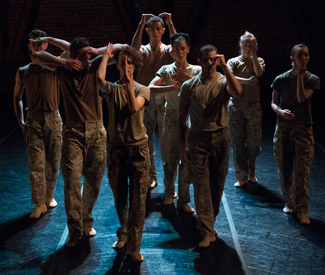
The most transparently cohesive work proved to be Caniparoli’s Triptych, which moved with consummate ease through its singular unisons that split up into multiple smaller configurations, only to gather its dancers again and again in the anonymity of military stand-at-attention stances. Caniparoli’s command of dance language is impressive.

He found inspiration for Triptych in Lalage Snow’s portraits of British soldiers deployed in Afghanistan. Contrasting contemporary string scores by John Tavener and Alexander Balanescu — meditative and quiet from the first, dramatic and dissonant from the second — worked well.

Instead of focusing on the horrors of war, Caniparoli investigated how it feels to be an anonymous cog in a machine. Again and again, he sent lineups around the stage, their precision and discipline suggesting confinement. Even the individualized gesture language suggested regimentation. Yet at Triptych’s center he placed a languid and intimate pas de deux for Griffin and Krukow, surely one of Caniparoli’s finest creations. But at the end, when the dancers moved straight toward the audience, you could only see their empty eyes.

For Australian-born, UK-based Brew, Awkward Beauty was a return to ballet — the style he trained in until an accident ended his performing career. As a choreographer he works in a wide variety of styles and media, but ballet is not usually one of them.

Awkward is, perhaps, ironically and yet appropriately named. A rather non-descript commissioned score by Dan Wool and murky lighting by Jim French didn’t bring much to a work in which Brew seemed interested in exploring some of ballet’s classic tenets, among them verticality. He appears to have assembled a lot of individual ideas that, unfortunately, didn’t coalesce into a comprehensive statement.

He put three of the women in pointe shoes — Wells is primarily a modern and post-modern dancer — and opened the piece with a striking image of the women standing on the men’s shoulders. From there, they individually worked their way to the ground. The maneuvers, however, looked forced and insecure — not something to attempt unless there is a lot more rehearsal time.

Upstage, a dance gesture traveled wave-like along a line; women were passed overhead in upside down splits, and (somewhat inexplicably) the dancers made repeated use of theater’s metal support beams. Center stage was given over to smaller units. The women’s trio — with the gorgeous Griffin as its center — looked balletically demure until the women literally let their hair down. Then Furst and Rose bourréed across the stage in lovely sync after a moment of looking like a sculpture of puppies.

An intricate duet for Wells and Needham-Wood played with verticality, and the giving and taking of support. Subtly, athletically, and with some poignancy, the piece showed what could have been by showing how awkwardness and beauty can coexist.

Seiwert has said that her work The Devil Ties My Tongue was inspired by Leonard Cohen’s poem S.O.S, fragments of which became part of Olafur Arnalds’ weather-inspired score. It also buzzed through dancers’ intimate whisperings. The piece opened with the dancers in semi-darkness watching a vulnerable Gilmer unfolding himself, before segueing into small units — double and triple duets, a male trio, and two contrasting pas de deux for Griffin and Krukow, and, to end the piece, Freeman and Wells.

Seiwert’s ability to layer complex, tension-filled structures that change kaleidoscopically with jutting limbs and interlocking legs — yet always look as if etched moment by moment — continues to surprise. Here, some of the encounters had a newfound intimacy about them, none more than the one for Freeman and Wells. The way he snuck around her, it wasn’t clear whether he was courting, protecting, or preying on her. Still, I want to see Devil again in a different context. It was not well suited as a closer. *


Warm-ups

0

culture@sfbg.com

COCKTAIL HOUR Yes, the rest of the country is sipping piña coladas and pink lemonade margaritas, while we shiver and pour whiskey into our hot tea. No problem: this is a primo time to ditch the sickly sweet and explore some solid bellywarmers in the cocktail category.


IRISH COFFEE AT BUENA VISTA CAFE

Let’s start with this classic — Buena Vista claims that it was invented here, why not, and the Fisherman’s Wharf-adjacent cafe’s gotten a rep for being a tourist magnet. Don’t let that detour you, it’s all super-charming. Served piping hot with coffee, whiskey and topped with whipped cream, the Buena’s Irish Coffee ($8) is pretty perfect for sipping as you imagine knitting little sweaters for the seagulls darting over the frigid bay.

2765 Hyde, SF. www.thebuenavista.com


MEXICAN HOT CHOCOLATE AT TRADITION

Coffee not your thing? Pop over to Tradition in the Tenderloin and see if you can handle its version of Mexican Hot Chocolate ($10). Rich in vitamin agave (this drink contains both mezcal and tequila), a few sips of this will thaw you out in no time. It’s usually on radition’s winter menu, but asking for it at the bar is well worth a try: even if they can’t whip one up, the bartenders will steer you in a warm direction.

441 Jones, SF. www.tradbar.com


CHAMOMILE TODDY AT BRASSERIE S&P

The easy-to-make hot toddy cocktail is a staple during cold weather. But the lovely Brasserie S&P in the Mandarin Oriental kicks it up a notch on the serenity scale by replacing the traditional bourbon with gin — and adding a pour of chamomile tea ($12). All that’s missing is the purr of a cat and a good hardcover book.

222 Sansome, SF. www.mandarinoriental.com


MANHATTAN SHAKE AT THE CORNER STORE

There’s nothing like a milkshake on a warm day, but yeah, about that…. This thick, rich Manhattan Shake ($10) is a nice compromise with SF weather. A cold concoction with the kick of a well-made Manhattan, the Corner Store’s treat will booze you up to the point that you’ll forget you’re drinking it in the fog.

5 masonic, SF. www.thecornerstore-sf.com


WHATAMELON AT ELIXIR

When the clouds part and we are blessed with hot day, Elixir has the perfect summer, fruit-filled cocktail menu. I originally visited in search of another warm drink for this list, but was instantly swayed by the bartender’s suggestion: a Whatamelon ($11). A tequila drink with watermelon juice, elderflower liqueur, agave nectar, and mint, it was light, tasty, and refreshing. Perfect for summer, even if just the summer in your mind.

3200 16th St., SF. www.elixirsf.com


Mayor on local health care policy: “Everything is on the table”

A recent controversy has been brewing around San Francisco’s Health Care Security Ordinance, the 2006 legislation authored by then-Sup. Tom Ammiano that created Healthy San Francisco, the city’s medical services safety net program for the uninsured.

As we explain in greater depth in an article for tomorrow’s issue of the Guardian, influential forces in the business community such as the San Francisco Chamber of Commerce and the Golden Gate Restaurant Association have been publicly raising questions about the Health Care Security Ordinance in light of the federal implementation of the Affordable Care Act, aka Obamacare.

In a recent article in the San Francisco Business Times, Small Business California President Scott Hauge was quoted as saying, “We question whether Healthy San Francisco should continue in its current form with the ACA coming in.” And an article published today suggests that some are continuing to question whether the HCSO can legally coexist alongside the federal requirements under the ACA despite clarification given by Jon Givner of the San Francisco City Attorney’s Office last Thursday stating that the ACA expressly allows jurisdictions like San Francisco to adopt health-care policies such as the HCSO.

Meanwhile, the message from defenders of the city’s health care policy at a hearing called by Sup. David Campos last week was clear: Funding for employee health care generated by employer contribution provisions under the HCSO will be needed more than ever once the ACA is implemented, because many people who now rely on the low-cost Healthy San Francisco for medical care will suddenly find themselves ineligible for that program and automatically funneled into a new system where they are eligible to sign up for subsidized health care, but won’t necessarily be able to afford it.

The ACA will begin enrollment in October, and will take effect in January of 2014. At that point, roughly two-thirds of current enrollees in Healthy San Francisco will either transition to Medi-Cal (if they earn up to 138 percent of the federal poverty level) or qualify for subsidized health care coverage under Covered California, the health benefit exchange created under the ACA. Things are apt to be the most complicated for Healthy San Francisco enrollees who discover they cannot actually afford to take advantage of the options offered under Covered California. 

For this reason, Campos stressed that the HCSO should remain in place without being scaled back or tampered with, because medical reimbursement accounts provided by employer contributions under the ordinance could serve to fill those gaps and help low-wage earners obtain coverage regardless of income. As things stand, Campos and Healthy San Francisco advocates said, gaps created under the ACA will be filled by stronger HCSO provisions, so the programs stand to complement one another.

But the business community, seeking what GGRA executive director Rob Black described to the Guardian as “guidance” from the city on how to move forward given the pending implantation of federal health care reform, wishes instead to open up a new policy dialogue about the HCSO. The mayor has been receptive to their concerns, and recently reconstituted the Universal Healthcare Council, a body that was previously formed to hash out local health care policy.

A key question is who will be appointed serve on that board: Department of Public Health Director Barbara Garcia will chair it, but so far the only indication of who else will be named is that it will consist of “community, healthcare, labor and business stakeholders,” according to a quote attributed to Garcia in the Business Times. Will the makeup include members of the GGRA, the business organization that sued the city to overturn the employer contribution mandate under the HCSO? 

In response to questions about whether the mayor believed the employer spending requirement ought to be revisited in light of ACA implementation, and who would be appointed to the newly convened healthcare council, mayoral spokesperson Christine Falvey responded ot the Guardian with the following statement: “Everything is on the table as the City develops a plan to best implement [the Affordable Care Act]. This is a great opportunity to see how the city can continue to be a leader in making sure San Franciscans have access to quality healthcare. We are currently updating a membership list for the Universal Healthcare Council. More information on that as it becomes available.”

Immigrants vulnerable to domestic violence

0

In San Francisco Sup. John Avalos’ District 11, half of all residents were born outside the U.S. In Sup. Jane Kim’s District 6, more than a third of residents are foreign-born, and almost half speak a language other than English.

Given the sizable immigrant population in San Francisco, it may not come as a surprise that Secure Communities (S-Comm), a federal immigration program administered by the U.S. Immigration and Customs Enforcement (ICE), is highly unpopular. What might not be so obvious is how dramatically S-Comm can impact the lives of foreign-born women who are survivors of domestic violence.

The reason for this is simple. “If you are a victim or a survivor of domestic violence and you call the police, you do not want to end up deported,” Beverly Upton of the San Francisco Domestic Violence Consortium explained at a July 23 rally, where advocates from organizations such as Mujeres Unidas y Activas, Causa Justa, the Filipino Community Center, and others stood and held banners demonstrating opposition to S-Comm. “We want it to be safer to call the police, not less safe.”

A member of Mujeres Unidas y Activas who introduced herself as Lourdes and spoke through a translator delivered a personal account of feeling fearful of police as well as an abusive partner. “Many times, abusers tell us not to call the police, because the police will not believe us. They say the police will probably deport us.”

The domestic violence and immigrant community advocates were there to champion Avalos’ Due Process for All Ordinance, which is being introduced at today’s Board meeting and is co-sponsored by seven other supervisors, essentially guaranteeing its passage. Avalos himself didn’t speak, and Sups. David Campos and Board President David Chiu, co-sponsors of the legislation, sent female staff members to make statements on their behalf as part of the all-female roster of speakers.

The legislation prohibits law enforcement officials from detaining individuals solely in response to immigration detainer requests issued by immigration authorities under S-Comm. As things stand, “the request has been honored in many cases,” Avalos explained in comments to the Guardian, even though California Attorney General Kamala Harris has affirmed that local law enforcement agencies are not obligated to comply with ICE detainers because they are mere “requests” and not legally binding. Since 2010, according to data provided be Avalos’ office, 784 San Franciscans have been deported after being turned over to federal authorities due to ICE detainers.

Sup. Jane Kim called S-Comm “a giant step backward when it comes to equality and fairness,” and added that S-Comm “makes our neighborhoods less safe.”

Legal Counsel Freya Horne read a statement on behalf of San Francisco Sheriff Ross Mirkarimi, stating that the sheriff has reduced the number of ICE detainers leading to deportations, and was supportive of Avalos’ legislation. She added that Mirkarimi had made it a policy to honor immigration detainer requests only in cases of criminal convictions of serious or violent felonies.

Avalos said he was compelled to move the legislation forward because “I’ve talked to so many people whose families have been separated, and have been devastated,” due to deportations under S-Comm. “We want to make sure we’re maintaining a level of due process,” he added, since the detainer requests are routinely issued without warrants or a requirement to show probable cause.

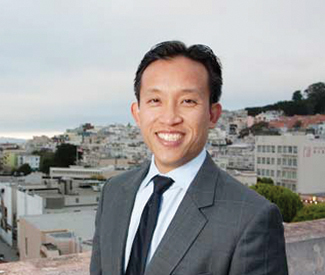
Chiu: centrist compromiser, effective legislator, or both

0

At the start of this year, when I wrote a Guardian cover story profile of Sup. Scott Wiener (which SF Weekly and San Francisco Magazine followed shortly thereafter with their own long Wiener profiles), he seemed like the one to watch on the Board of Supervisors, even though I noted at the time that Board President David Chiu was actually the more prolific legislator.

Now, it’s starting to seem like maybe we all focused on the wrong guy, because it is Chiu and his bustling office of top aides that have done most of the heavy legislative lifting this year, finding compromise solutions to some of the most vexing issues facing the city (ironically, even cleaning up some of Wiener’s messes).

The latest example is Wiener’s CEQA reform legislation, which the board unanimously approved on July 23, a kumbaya moment that belies the opposition and acrimony that accompanied its introduction.

That effort comes on the heels of Chiu’s office solving another big, ugly, seemingly intractable fight: the condominium lottery bypass legislation sponsored by Wiener and Sup. Mark Farrell. To solve that one in the face of real estate industry intransigence, Chiu showed a willingness to play hardball, winning over swing vote Sup. Norman Yee to get six votes using some hostile amendments.

In the end, Chiu won enough support to override a possible veto by the waffling Mayor Ed Lee, who has always echoed Chiu’s rhetoric on seeking compromise and consensus and “getting things done,” but who lacks the political skills and willingness to really engage with all sides. For example, it was Chiu — along with Sups. Farrell and David Campos — who spent months forging a true compromise on the hospital projects proposed by California Pacific Medical Center, replacing the truly awful CPMC proposal that Lee readily accepted.

“It’s been a very long year,” Chiu told the Guardian. “It’s been important for me to not just to seek common ground, but legislative solutions that reflect our shared San Francisco values.”

Next, Chiu will wade into another thorny legislative thicket by introducing legislation that will regulate the operations of Airbnb, the online housing rental corporation with a problematic business model.

After posting the preceding analysis of Chiu on the SFBG.com Politics blog on July 23, we heard lots of back channel concerns and complaints from progressive San Franciscans (and even some from moderates and conservatives who consider Chiu a raving socialist for helping suspend the condo lottery).

Nobody really wanted to speak on the record against Chiu, which is understandable given the powerful and pivotal position that he’s carved out for himself as a swing vote between the two ideological poles and on the Land Use Committee, whose makeup he personally created to enhance that role.

The main issue seems to be that Chiu allows both progressive and anti-progressive legislation to be watered down until it is palatable to both sides, empowering the moderates over the progressives. That’s a legitimate point. It’s certainly true that Chiu’s worldview is generally more centrist than that of the Guardian and its progressive community, and we’ve leveled that criticism at Chiu many times over the years.

The fact that he ends up in a deciding role on controversial legislation is clearly a role that Chiu has carved out from himself, no doubt about it. And that’s certainly why he played the pivotal role that he has this year. But when he uses that role to empower and support tenant groups, as he did on the condo lottery bypass measure, I think that’s something worth noting and praising.

On the CEQA reform legislation, it’s also a valid criticism of Chiu to note that Sup. Jane Kim had five votes for her legislation and that it was only Chiu who stood in the way of its passage (whether Mayor Ed Lee would have vetoed it, necessitating the need for two more votes, is another question).

In the end, Chiu can be seen as an effective legislator, a centrist compromiser, or both. Perspective is everything in politics.

Plan Bay Area: better, but it still gentrifies

0

By Peter Cohen and Fernando Martí

Council of Community Housing Organizations

OPINION On July 18, the Metropolitan Transportation Commission (MTC) and the Association of Bay Area Governments (ABAG) adopted the region’s first so-called “sustainable communities strategy,” as required under new state environmental laws. Plan Bay Area will direct the largest share of the region’s growth to the region’s urban cores — two-thirds of the region’s overall housing production is directed to 15 specific cities.

The vision is what environmentalists refer to as “smart growth” — shrinking the footprint of the region’s future development as a more environmentally friendly and geographically efficient pattern to absorb ever-increasing population. San Francisco alone has a very tall order: Our city will absorb 25 percent of new urban development, which equates to 92,000 new housing units and a pace of housing construction averaging around 3,100 units annually (a rate that has been reached only twice over the last 50 years since the era of 1960s urban renewal development).

The question that framed debates through the three-year process in drafting and finally adopting the plan is how that amount of new growth can be “done right;” that is, without gentrifying working class and poor communities and ensuring that infrastructure, including affordable housing and transit service, will keep up with that pace of growth. Tim Redmond’s feature article in the June 4 issue of the Guardian (“Planning for displacement”) and a June 12 forum sponsored by the Guardian, CCHO, and UrbanIDEA very thoroughly laid out the issues and critiques of the Plan Bay Area draft that was released by MTC/ABAG earlier this spring.

With such fundamental flaws when the draft plan was released in April, how did the July 18 adopted final Plan Bay Area fare? First, there is no question this regional “smart growth” plan will make combating gentrification at ground-level harder. But second, the plan could have been worse if not for a tremendous final pushback by progressive advocates from San Francisco and throughout the region loosely united in a “Six Wins for Social Equity” coalition and the committed leadership of a small core of progressive regional leaders — including two of San Francisco’s representatives, David Campos (MTC) and Eric Mar (ABAG) — who championed some final amendments.

Those “wins” (in reality, concessions by MTC/ABAG) achieved in this final push include: adding a public process to develop priorities for the Bay Area’s $3.1 billion share of state cap and trade funding, such as to affordable housing and local transit operations; strengthening the $14 billion transportation block-grant funds program (“OBAG”) to link it directly to local cities’ affordable housing production and displacement-prevention policies; and adding a requirement for MTC to develop a comprehensive strategy to prioritize funding of local transit service and transit maintenance.

Though the details of those amendments are fairly squishy and do not alter the development trajectory of the plan, they are potentially valuable handholds to work with going forward as Plan Bay Area gets implemented (and updated in four years).

That said, San Francisco’s front line working class neighborhoods and communities of color still stand to take the brunt of potential negative impacts from this regional “smart growth” plan. Theoretically they could receive the potential benefits of public infrastructure investments and stimulated economic activity. But while the risks are real, the potential benefits are still illusory.

We must become more engaged if we are to move Plan Bay Area beyond policy statements and promises of future “best-practices” to make sure vulnerable people are not displaced from their neighborhoods in the tide of infill real estate development and are guaranteed a real share of the fruits from “equitable” smart growth.

Building on progress

0

news@sfbg.com

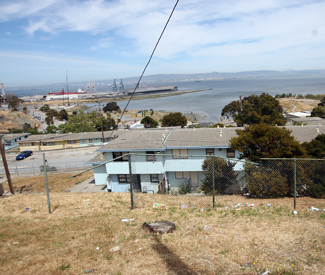
A month-long labor standoff at the Hunters Point Shipyard redevelopment project has been put on hold as the city steps in to provide workforce mediation and oversight. But community-based organizations are left wondering how their workers will actually benefit.

Aboriginal Blackman United (ABU), a Bayview organization representing roughly 300 construction workers, announced on July 15 that it was calling off demonstrations at the construction site that had begun just before a June 26 groundbreaking ceremony (see “Lennar finally breaks ground amid controversies,” July 10).

ABU President James Richards suspended the protests after the Successor Agency to the San Francisco Redevelopment Agency informed him that Young Community Developers (YCD), another neighborhood nonprofit, would no longer exclusively manage job placements at Lennar Urban’s shipyard project.

The Hunters Point construction is expected to create 1,500 jobs annually, over the course of a 15- to 20-year build out. But critics have taken issue with local hiring guidelines hashed out in a 2003 development agreement with Lennar Corp. that are limited to good-faith promises rather than binding quotas.

Since then, community-based organizations have urged Lennar and the Building Trades Council to formalize their commitment to hiring from within the Bayview-Hunters Point community.

Building Trades Secretary-Treasurer Michael Theriault has so far been resistant to these efforts. “There is no inherent flaw in good faith,” Theriault said of local hire promises by Lennar. “Like any system, you have to enforce it.”

Until last week, Young Community Developers (YCD) was tasked with meeting local hire goals by recruiting and training tradespeople from the neighborhood and facilitating their placement on the project.

But Richards and other community advocates were skeptical of this arrangement because Theriault is vice president of YCD’s executive board. “How can [Theriault] be against mandatory hiring and be on YCD’s board?” asked Richards, who viewed it as an obvious conflict of interest.

ABU’s protests finally prompted Lennar and the Building Trades Council to seek the involvement of CityBuild, a workforce-training program and centralized referral network administered by the San Francisco Office of Economic and Workforce Development.

YCD Executive Director Shamann Walton said a meeting between the two organizations produced “a gentleman’s agreement that there will be an MOU in place between YCD and CityBuild,” designating CityBuild, rather than YCD, as the primary recruiting coordinator on the project.

YCD will be just one of a handful of community-based organizations that will assist in training and placement — others will include ABU, Anders & Anders, and the A. Philip Randolph Institute (APRI). APRI San Francisco Executive Director Jacqueline Flin says she supports a switch to CityBuild because it provides “a very good prospect of goal delivery. They have a fair process that’s been proven to work and the city’s invested in the effort.” Flin added, however, that she hadn’t yet heard any real details of the new arrangement with CityBuild. SFOEWD did not respond to the Guardian’s requests for comment. Terry Anders, director of the Anders & Anders Foundation, expressed disappointment that negotiations were taking place behind closed doors. Anders wants to see all the stakeholders brought to the table. He was quick to point out that, though CityBuild promises to be above board, “it is not a neighborhood organization.” “Somebody is making backroom deals,” Anders asserted, “and I am not for it. I don’t like being left out of the process.” He demanded an inclusive and transparent discussion, but a week after bargaining seemingly began and ended, it was unclear whether he would get one. “Lennar’s main concern is getting the buildings up, and they don’t care who does it,” he said. And though Richards is hopeful that CityBuild will be an improvement over YCD, he too was measured in expressing full confidence in the municipal agency just yet. For a lasting solution, CityBuild will need to work very closely with ABU and others. “We stopped all traffic ongoing to the shipyard and coming out for about a month,” to get this far, explained Richards, “the only way we guarantee that our people get jobs is that we are involved.”

Under fire again

0

rebecca@sfbg.com

At a recent hearing on San Francisco’s Health Care Security Ordinance — once-controversial legislation that is now in the business community’s crosshairs once again — a nursing student stood at the podium to address members of the Board of Supervisors Neighborhood Services & Safety Committee.

She told them about her mother, who battled illness but did not have access to healthcare for 14 years due to her immigration status, recalling a day when her mother explained why she wasn’t seeking medical attention: “If I go to the hospital, I’ll bury you in debt.”

For the uninsured and undocumented, going without medical care or going into insurmountable debt could be the only options if it weren’t for Healthy San Francisco, a medical services safety net that was created by the HSCO in 2006. The program is expected to continue to provide care for undocumented enrollees who won’t be eligible for federal assistance once the Affordable Care Act, also called Obamacare, takes effect early next year.

The HCSO’s mandate that businesses provide some healthcare coverage for their employees was fiercely opposed by the business community, which challenged it all the way to the US Supreme Court. Now, those same powerful forces are gearing up for a fresh challenge that could jeopardize HCSO’s potential to fill coverage gaps that will be created under Obamacare.

Under federal health care reform, two-thirds of the enrollees in Healthy San Francisco will become ineligible to continue receiving coverage because they will automatically gain eligibility for some form of federal assistance. Those earning up to 138 percent of the federal poverty level will be guaranteed coverage under Medi-Cal. But for low-income earners whose wages hover around $14 an hour, things are far less certain because they will be eligible to enroll in the federally created health benefit exchange, Covered California, although they won’t necessarily be able to afford it. For someone earning around $30,000 per year before taxes, the estimated monthly cost for a health insurance plan under Covered California hovers at more than $200 per month, in many cases making it too much of a stretch.

As things stand, uninsured San Francisco employees who earn too much to qualify for Medi-Cal, but not enough to afford enrollment in Covered California — despite being eligible — can still access funds set aside for them in medical reimbursement accounts under the HCSO. This option may provide enough of a financial boost for low-wage earners to take advantage of federally subsidized health insurance after all.

“For working people, the implementation of the Affordable Care Act actually makes the Health Care Security Ordinance more important,” explains Ian Lewis, research director at UNITE-HERE Local 2. “There are many consequences of the ACA … and the Health Care Security Ordinance is a buffer against them.”

As it stands, the local law “makes Covered California actually work in a high-cost city like ours,” Lewis added.

Under HCSO, San Francisco employers are required to contribute toward employees’ health care on a per-hour basis for each employee working more than eight hours per week, regardless of immigration status or city of residence, amounting to an estimated $255 per participant per month.

This mandate, known as the Employer Spending Requirement, has been the target of multiple lawsuits brought against the city by the Golden Gate Restaurant Association since the landmark health care ordinance, authored by then-Sup. Tom Ammiano, was first enacted in 2006.

That same requirement also makes the local ordinance stronger than the federal law when it comes to worker protections, because the federal mandate only requires employers to offer coverage for workers who put in 30 hours a week or more. That has prompted businesses nationwide to reschedule their workers down to 29 hours per week in a gesture of opposition to health care reform, but no such incentive exists in San Francisco because of the hourly contribution requirement.

Now that federal health care reform is poised for implementation, with enrollment set to begin in October and a transition to the new system slated for early next year, GGRA and the San Francisco Chamber of Commerce are urging the city to open up a new policy dialogue about employer requirements under the local health care law — and Mayor Ed Lee has been receptive.

“We question whether Healthy San Francisco should continue in its current form with the ACA coming in,” Small Business California President Scott Hauge told the San Francisco Business Times (“Healthy San Francisco, related program to shrink dramatically, but not price tag,” July 16). Hauge has met with Jim Lazarus, the Chamber’s senior vice president for public policy, and GGRA Director Rob Black on the issue, the article noted.

Reached by phone, Black emphasized to the Guardian that GGRA employers are merely seeking guidance on how businesses should comply with the local and federal mandates. “It’s important that we really focus on getting together, and getting together quickly,” Black said, to ensure “San Franciscans have access to the full benefits and subsidies of the Affordable Care Act.”

Longtime advocates of Healthy San Francisco and progressive policymakers are watching closely. “They’ve been trying to get out of their responsibility to provide worker’s health care since the law was passed,” Hillary Ronen, a legislative aide for Sup. David Campos, said of business interests who are airing complaints about employer requirements.

Once the federal law takes effect, San Francisco employers will have the option of either providing coverage, or contributing to a city program that establishes medical reimbursement accounts for employees administered by city government, Ronen explained. A third option, “standalone health reimbursement accounts,” under which employers manage reimbursement funds for employees, will be rendered illegal under Obamacare. That system generated controversy in recent years because employers were placing undue restrictions on the use of those funds, and in some cases even pocketing the money after neglecting to inform their workers that it was available (see “Check, please,” 4/23/13).

On July 25, Lee announced that the city’s Universal Health Care Council, a body previously tasked with guiding local health care policy, would be reconvened to “examine San Francisco’s implementation of the Federal Affordable Care Act (ACA) and engage stakeholders in identifying necessary local policies” to support the transition.

In response to signals that the business community is gearing up for a fresh challenge to the city’s health care law using the ACA as ammunition, Campos convened a hearing July 25 to discuss the importance of the HCSO in relation to the federal law.

For several hours, advocates of Healthy San Francisco — many of them members of the immigrant community who would have no other options if it weren’t for the program — delivered passionate defenses of the current program. Campos emphasized that federal health care reform stood to be a great success in combination with the local health care ordinance, which would serve to fill in any gaps in coverage.

Deputy Director of the Department of Public Health Colleen Chawla explained during the hearing that of the 60,000 San Franciscans currently enrolled either in Healthy San Francisco or SF Path, a second medical assistance program, roughly 40,500 will automatically become eligible to enroll either in Medi-Cal or Covered California under federal health care reform come January. The remaining 19,500 won’t be eligible, however, mostly due to immigration status. Healthy San Francisco is expected to continue providing a safety net for those who would otherwise fall through the cracks. But when it comes to the two-thirds who are eligible for federal assistance, but may not be able to actually afford it, things would be thrown into uncertainty if the Employer Spending Requirement were altered or eliminated. “Folks in the business community would be happy to say, the Affordable Care Act is enough, and businesses shouldn’t be complicated with an additional burden,” notes Le Ly, program director at the Chinese Progressive Association. But the HCSO “is an important pillar of the total continuum of care,” he said. “We see it as continuing to complement and strengthen health care coverage.”

Supporting unions helps all workers

0

EDITORIAL The San Francisco Bay Area has traditionally been very pro-labor, from the days when legendary longshoreman leader Harry Bridges led the San Francisco General Strike of 1934 to the modern era when labor unions have lent the muscle and money to myriad progressive reforms that San Francisco and California have proudly exported to the rest of the country.

But sadly, that sense of solidarity seems to be changing during these times of widespread economic anxiety, declining union membership, increasing urban gentrification, and a divide-and-conquer political climate created by both major parties. Too often, Bay Area residents are indifferent or even hostile to the plight of the working class.

We’ve seen it in the public reactions to the labor contract impasse and strikes at Bay Area Rapid Transit, whose unions staged a four-day strike that ended July 4 and which could resume again after a 30-day contract extension and cooling off period ends on Aug. 4. If the strike resumes — which seems likely at this point, disrupting commutes on a non-holiday workweek — the public’s anger and finger-pointing could be even worse than last time.

We heard similar resentments expressed in reaction to last week’s cover story (see “Striking Out,” July 24) about the stadium concession workers at San Francisco Giants’ games, who have been without a contract since 2010 and are even denied tip jars to supplement pay that is actually less than San Francisco’s minimum wage in many cases.

The common criticism is that these workers should just be glad to have a job, regardless of pay and benefits. And when it comes to the full-funded pensions of BART workers, critics rightfully point out that few of us enjoy that kind of retirement security.

But that criticism turns the real problem on its head. We all need far more retirement security than we have now, a reality that will hit hard in the coming years as the so-called “silver tsunami” breaks, leaving families and society to care for baby boomers who run out of retirement savings (which could happen quickly given that three-quarters of Americans aged 50-64 have less than $30,000 in retirement savings).

Bay Area residents should be supporting our brothers and sisters in organized labor, helping them so they can in turn help us, as SEIU Local 1021 and other unions are trying to do on the issue of retirement security for all (last year’s approval of SB1234 in California was a good start, but far more is needed).

When unions win good contracts, it generally increases wages and benefits in the region, even for non-union jobs (the opposite is also true, that wages stagnate when unions lose these fights), so it should be in our enlightened self-interest to support BART and Giants workers. Particularly during these times of economic uncertainty and woe, it’s important to overcome our resentments and stand in solidarity with our fellow workers — for their sake, for our own, and for the long-term best interests of our region and country.

Yahoo and other tech companies are squeezing the Chronicle’s newsroom

17

With high demand for office space in San Francisco these days — thanks largely to the latest technology bubble, Mayor Ed Lee’s economic development focus, and its amplification by the San Francisco Chronicle — Hearst Corp., which owns both the paper and the Chronicle Building, seems to be more focused on property management than journalism these days.

Following up on blogs that broke the story, Chronicle Technology Columnist James Temple today reported that Yahoo is negotiating with Hearst to move its headquarters into the Chronicle Building at 5th and Mission streets. What Temple didn’t say — and what sources at the Chronicle confirmed to the Guardian, despite the fact that it hasn’t yet been announced to Chronicle staff — is that the third floor newsroom will soon be relocated while the space undergoes a renovation.

It’s not clear whether the two pieces of news are related, and we’re still waiting for a response to our questions on the subject from Chronicle Editor Ward Bushee. But it certainly seems true that Hearst and the Chronicle are doing everything they can to profit from the commercial real estate market that they have helped to heat up while operating a newspaper that has struggled to become profitable in recent years.

Valued at more than $30 million and covering nearly a full city block in the heart of the city, the Chronicle Building has been steadily taken over by outside companies in recent years, many of them technology corporations such as Square, the online payment company. The newsroom that used to occupy the second and third floors has already been squeezed onto the third, and now even that space is getting an overhaul.

Meanwhile, Hearst has been working with Forest City and Strada Investment Group on a plan to redevelop the property, reportedly replacing the old Hearst headquarters and other buildings that share the block with an office and residential tower and trying to win historic landmark status for the Chronicle Building itself.

Chronicle staffers tell the Guardian that they were surprised to hear about the newsroom relocation last week and they don’t have many details, except that they will remain in the building. And given how valuable it has become, they say they’re just happy to not be totally squeezed out by the tech boom.

Pedaling slowly

0

news@sfbg.com

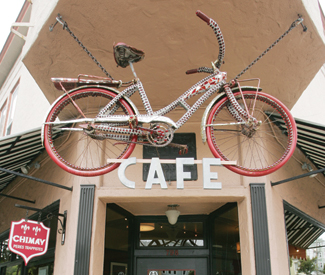
With San Francisco bicycle rental companies such as Blazing Saddles and Bay City Bicycle Rentals and Tours having bike fleets numbering in the thousands, why does the new San Francisco bike share program only have 350 bikes? And can that really be effective?

In August, San Francisco and a handful of other Bay Area cities will join the ranks of the dozens of cities in the country that have bicycle share programs, although most are more robust than ours. For example, New York City’s bike share program offer 6,000 bikes.

Sponsored by the Bay Area Air Quality Management District and bankrolled by the Metropolitan Transportation Commission with more than $7 million, the program will bring 700 bikes to the region — half of which will make their way to San Francisco.

In the following months, San Francisco could be allotted 500 total bikes. For the initial launch, 35 bike share stations will be spread throughout the city, and when the bicycle count rises, the number of stations will jump to 50.

MTC spokesperson Sean Co told us that most of the money for the program goes to the cost of the bikes themselves. Each bike costs $5,000, is outfitted with tracking technology, and is expected to last 10 years. In addition to being high-tech, all bike share bikes are unique to Alta Bike Share Systems, and require special tools to be taken apart, another factor in the high price tag.

The rest of money goes toward the stations and fees for a consultant that helps run the program. Co believes that the membership fees alone will make up for the over $7 million spent on the program. But that’s assuming the program isn’t a flop, which some fear it could be given the anemic number of bikes being offered.


WHY SO FEW?

New York City’s bike share, Citi Bike — financed completely by Citigroup Inc. with no public funds — launched in May with 6,000 bikes and 300 stations. That program is already approaching a million total rides. Chicago’s Divvy bike share system started off with 750 bikes at the beginning of July and will increase to 3,000 at the end of August.

Kit Hodge, deputy director of the San Francisco Bicycle Coalition, is one of the people who says that 350 bikes just isn’t enough for San Francisco. “The city and SFMTA have estimated that it would take 3,000 bikes to have an effective bicycle share,” Hodge told us. “We definitely are pushing for more bikes.”

But San Francisco’s bicycle share may get the thousands of bikes that some believe it needs. The Board of Supervisors recently passed a resolution that calls on the San Francisco Municipal Transportation Agency and Department of Public Works to have a much larger system by 2014.

“Five hundred bikes isn’t enough for a citywide bike share,” Sup. Scott Wiener, who sponsored the resolution, told us. “If you look at other cities with a large population and a lot of people biking, bicycle share stations have to be heavily concentrated in many different areas. With the 500 bikes, other areas of the city will be excluded.”

But critics like Wiener and Hodge may not have taken into account that this program is only a trial run, with enough funding to last a year, according to BAAQMD representatives.

BAAQMD Director of Strategic Incentives Damian Breen told us the program is just the right size: “We feel the pilot is appropriately sized. I don’t think we’ve limited ourselves at all. This is to test the waters and see what it can grow into.”

Breen also thinks that mainly focusing on San Francisco for the Bay Area-wide bicycle sharing program would be unfair to other cities. Unlike other bicycle sharing programs, such as New York City and Chicago, San Francisco’s bicycle sharing system is just one part of a regional program that includes Redwood City, Palo Alto, Mountain View, and San Jose.

“This stage of the program is to see what works and what doesn’t,” Breen said. “Maybe the bicycle share might be used more in the suburbs than in San Francisco. When you do something regionally you have to take all cities and all outcomes into account.”

When asked if the bicycle sharing program would have increased the number of bikes in San Francisco if there was additional funding, he said no.

“I think obviously all partners would have liked the program to be bigger in certain areas,” Breen said. “Whether or not it would have been bigger in places like San Francisco, if there was more funding, I cannot say.”

Breen says BAAQMD will consider corporate sponsorship for the bike share once the initial money from the pilot runs out.


THE LAST MILE

The possibility of more stations and bike share rides in the city isn’t appealing to Blazing Saddles bicycle rental company owner Jeff Sears.

“If stations are placed in areas like the Fisherman’s Wharf, or North Beach, people may be tempted to use bike share instead,” Sears said. “But, we’ve been assured by the BAAQMD that that’s not going to happen.”

Breen says the service is directed at residents who commute, and may need the bike for that “last mile” of their trek.

“This is different than bicycle rentals, which are usually meant for a day of riding,” Breen said. “They are designed for 30 minute use — the main audience is folks who are looking for that last mile after they get off of Caltrain or BART.”

Breen went on to say that areas with bicycle sharing programs also saw bicycle renting programs go up as a whole. But Jeanne Orellana of Bay City Bicycle Rentals and Tours believes otherwise.

“We absolutely feel that it would affect business,” Orellana said. “We wish that it would coexist with our business, but other cities with bicycle sharing programs have seen bicycle rental shops close down due to the competition.” A scenario similar to what Orellana imagined played out in Miami Beach, Fla. Unlike the program in store for the Bay Area, Miami Beach’s DecoBike offers pricing plans for residents and tourists, and many of the tourists find themselves choosing the bike share over rental shops in the area, causing business in bicycle rental shops to reportedly drop 40 to 50 percent. Wiener acknowledges the reservations that Orellana and Sears hold about bike share, but he said that both options can coexist in the same city. “They’re two completely different markets,” Wiener said. “I understand the concerns that they have but comparing bike sharing and bicycle rental is like comparing apples to oranges.” And the BAAQMD, SFBC, SFMTA, and Wiener all agree on one thing: Tourists choosing bike share over bicycle rental companies just doesn’t make sense economically. Renting a bicycle for a day at Bay City Bicycle Rentals and Tours is $32. Taking a bicycle out for the day at the bike share comes at a heftier price. For $9, customers can get a 24-hour subscription with unlimited 30 minute rides from station to station. But after those 30 minutes are up, fees get added. A 31- to 60-minute ride costs $4, and each 30-minute increment after that costs $7, which can build up to over $150 in a day if the bicycle is not returned to a station. In the meantime, Orellana hopes that consumers will make the right decision for themselves. “I trust and hope that many people will do the math and find that bike share isn’t cheaper for exploring the city,” Orellana said. Co said that more than 300 people purchased memberships for the Bay Area bicycle share 24 hours after memberships were up for grabs a couple weeks ago. BAAQMD is pleased with the results, and viewed it as a good turnout. The official launch date has not been released, but its infrastructure is now being put into place with its imminent launch.

Alerts: July 31 – August 7, 2013

0

Whose paper? Your paper! A community forum about the Guardian LGBT Community Center, 1800 Market, SF. tinyurl.com/lvl9vla. 6-8pm, free. Join the staff of the SF Bay Guardian for a community forum on the future of San Francisco’s oldest alternative newsweekly. Nearly a month after longtime editor-publisher Tim Redmond left the newspaper after 31 years, Guardian staff members have reached an agreement with our parent company ensuring full editorial autonomy and control. This forum will help us determine where to go from here. We will seek community input, engage in dialogue with our readers, and discuss the Guardian’s important role in the Bay Area media and political landscape as we work to rejuvenate the newspaper and reach a new generation of readers.


Hear Alice Walker’s deliciously enlightened poetry and prose First Congregational Church of Berkeley, 2345 Channing, Berk. tinyurl.com/lqcsfph. 7:30pm, $15–$18. Internationally celebrated author, poet and activist Alice Walker will speak at this benefit for KPFA Radio and read from her recent works, The Cushion in the Road: Meditation and Wandering as the Whole World Awakens (Essays); and The World Will Follow Joy: Turning Madness Into Flowers (New Poems) Walker has written seven novels, four collections of short stories, four children’s books, and many volumes of essays and poetry. She’s best known for The Color Purple, the 1983 novel for which she won the Pulitzer Prize in Fiction. This event will be hosted by Brian Edwards Tiekert.

THURSDAY 1

Rally for a human rights attorney stuck in prison with cancer Federal Building, 90 Seventh St., SF. lynnestewart.org. Noon-2pm, free. Roughly 10 years ago, the Guardian wrote about the case of Lynne Stewart, a National Lawyers Guild member and radical human rights attorney who dedicated her career to representing unpopular clients who faced civil liberties violations. She was convicted of providing material support to terrorists in 2005, an accusation supporters say is false, and was eventually sentenced to federal prison for 10 years. Now age 73, Stewart is battling cancer behind bars and has petitioned the Federal Bureau of Prisons for compassionate release. The request has been denied, and so supporters are rallying to show their support for Stewart.

FRIDAY 2

Panel: How to win the environment Nourse Theater, 275 Hayes, SF. tinyurl.com/n77mqsv. 7pm, $10. Want to know how the build “a winning movement” on climate change? If so, these folks know what they’re talking about. Bill McKibben, founder of 350.org, will speak on this panel along with Gopal Dayaneni of the Oakland-based Movement Generation Justice and Ecology Project, Rev. Sally Bingham of Interfaith Power & Light, Katy Roemer of the California Nurses Association, and Antonia Juhasz, author of The Tyranny of Oil and Black Tide.

The Performant: Brave Old World

1

Tweaking tradition with Minor Empire and Thingamajigs

There are as many roads down the path of “world music” as there are countries represented within that nebulous category. And while there’re still plenty of purists adhering strictly to the musical traditions of the past, it’s just as common for today’s world musicians to use those traditions as a kind of jumping-off point for their compositions, in much the same way that the 12-bar blues have been the foundation for numerous offshoots of “American” music.

A good example of this conscious hybridization between past and present, old word and new, is Toronto-based Turkish-Canadian combo Minor Empire, who blend sinuous Eastern folk tunes with Western jazz-jam, desert rock, and pulsing electronica, providing multiple entrance points to their specific sound.

In an intimate show at Yoshi’s San Francisco, the touring band seemed simultaneously dwarfed by the lofty ceiling and genteel table seating and yet musically unconfined as they introduced their set with building blocks of drone, guitar, bass, percussion, and kanun (a kind of zither), creating an elegant setting for the jewel-like vocals of Ozgu Ozman. Gracious and grounded, Ozman took time to translate some of the lyrics later in the set, but the first songs were left tantalizingly ambiguous, layering different kinds of familiarity on top of one another.

Plaintive traditional melodies of love and loss, an undercurrent of electronic glitch, the occasional flourish of Calexico-style guitar riffs and funky bass lines, the insistent twinned rhythms of the kanun and the doumbek. The resultant mélange sounded to my ears a little like Wovenhand’s Eastern-tinged album The Threshing Floor, a little like Baba Zula, an alt-jazz/psychedelic combo from Istanbul, and a lot like a band I’d want to get to know better in slightly less refined surroundings — a sweatier nightclub, perhaps, or a sunlit outdoor stage. A space where not just the ears could be transported by the complex compositions, but the body entire.

Architecture favored Thingamajigs Performance Ensemble better at the Berkeley Art Museum on Friday, where a trio of trios performed experimental music in the cavernous atrium of Gallery B. Although, like Yoshi’s, the ceiling soared far above the huddle of intently concentrating musicians, and the room sprawled far beyond the tight confines of their performance area, they managed to fill in the gaps with their judicious addition of a multimedia dimension. From the ground to the lofty balconies above, three long scrolls marked with arcane symbols, half-recognizable words, and morse-code like rhythm tablature were slowly unfurled before each trio in sedate counterpoint to the deliberately atonal improvisations.

Live video projections of a poet at work (Sasha Hom) further helped to fill the empty spaces above, while below the oddience was encouraged to shift position and wander the wings during the concert. Scattered about the room, brightly-colored, padded shapes — trapezoids and triangles — designed by Rebar served as seating and further added another playful visual aspect to the event.

Using a variety of traditional instruments in some very non-traditional ways, Thingamajigs has been experimenting with the creation of differently-structured sound since the mid-nineties. It’s an artform with a long lineage, and as such cannot be championed as an entirely new concept. But given the rare confluence of disparate factors in any given concert — space, spectators, ever-evolving interpretations of the potential locked within each instrument and each composition — every performance is in itself as new and as fleeting as the first few moments of a half-remembered dream. Thingamajigs will be in residence at BAM through August 16; check out the website for ways to dream along.

Heads Up: 7 must-see concerts this week

1

There will be R. Kelly “Trapped in the Closet” sing-alongs all weekend long at the Castro Theatre. It’s not quite a show, though I wouldn’t dare describe it as a standard film either. It’ll be an experience, so it’s on the list of must-sees. Sorry not sorry.

Add to that El-P and Killer Mike, Sebadoh, Rye Rye’s Hard French “After Party,” Rancid, and more — and you won’t be hurting for choices this week. Hop to it, furry friends.

Here are your must-see Bay Area concerts this week/end:

El-P and Killer Mike
Last year, Brooklyn producer-rapper El-P told the Guardian, “I want to make music that is the signifier of fighting to live, fighting for sanity, recognizing that it ain’t what it should be. So…I’m going to run into the middle of the street, and take my clothes off, and scream.” This year, he and frequent collaborator rapper Killer Mike released shiny yet hart-hitting Run the Jewels through an eponymous project, in which the two swiftly exchange verses — which should make for a poppin’ live show. (Note: they also play the Indy Tue/30, but it’s sold out. Try your luck elsewhere on the web for tickets to that one.)
With Despot, Kool AD
Wed/31, 8pm, $20
Independent
628 Divisadero, SF
www.theindependentsf.com
http://www.youtube.com/watch?v=c_rwa4ZbKgA

Al Lover
Experimental electronic producer Al Lover has been quoted as saying “the psych music of today is what the producers of tomorrow will sample.” So the local music-maker recently cut out the middle man, and went straight to the source, creating his own tripped out electro-psych tracks. That meant collaborating with Tim Presley a.k.a. White Fence on this month’s seven-inch “Snake Hands,” released through the UK’s PNKSLM Records, which is Lover’s first ever solo vinyl release. (Note that White Fence also has a show coming up Aug. 7 at the Rickshaw Stop.) “Snake Hands” is a single from Lover’s forthcoming LP Space Magick.
With Coo Coo Birds, Face Tat, Bubblegum Crises.
Wed/31, 9pm, $8
Bottom of the Hill
1233 17th St., SF
www.bottomofthehill.com
http://www.youtube.com/watch?v=zn_32zQmOn4

Sebadoh
“Attention fuzz pedal enthusiasts and indie rock fans alike: Lo-fi godfathers Sebadoh are coming to town! Formed as an offshoot of vocalist and guitarist Lou Barlow’s band, Dinosaur Jr., Sebadoh takes influences from proto punk and noise bands and presents it in a tight, dissonant package. The band has two sides: Barlow’s folk-infused songs and vocalist and bass player Jason Loewenstein’s more aggressive punk tunes. Both combine for an energetic, all be it schizophrenic set. Sebadoh will be hitting the Bay Area, promoting its newest EP, Secret EP and building up hype for its first full length album in 14 years, Defend Yourself, expected to drop in September.” — Erin Dage
With Octa#grape
Wed/31, 9pm, $15
Cafe Du Nord
2170 Market, SF
(415) 861-5016
www.cafedunord.com
http://www.youtube.com/watch?v=OG_YsBHWVag

R. Kelly Trapped in the Closet: The Interactive Sing-Along
“What’s the only thing better than watching R. Kelly’s “Trapped in the Closet”? Packing in the Castro with hundreds of like-minded hip-hopera fans and singing along to that shizz. That’s right: “R. Kelly Trapped in the Closet: The Interactive Sing-Along” brings the controversial, inimitable R&B star’s soapy extravaganza (well, the first 22 chapters of it, anyway) to the big screen for all to croon along, complete with “custom subtitles.” Prepare your pipes for “Bump ‘N Grind,” “Ignition (Remix),” and other hits — plus cliffhangers galore (“Oh my god, a rubber!”), careless gunplay, a little-person stripper named “Big Man,” a Will Oldham cameo, and further lurid, hilarious, and — at last! — participatory insanity.” — Cheryl Eddy
Fri/2-Sun/4, 8pm, $12
Castro Theatre
429 Castro, SF
www.ticketweb.com
http://www.youtube.com/watch?v=zFosUj6A22c

Rancid
Don’t you remember hearing …And Out Comes the Wolves (1995) hit “Time Bomb” over the crackling speakers of Tower Records and your friend’s older, cooler sibling behind the counter telling you the pop-punk band was formed after the demise of Operation Ivy, and by the way, that was a very important ska-punk band that fizzled before its time? Just me? Most now-grownup kids of a certain breed, of certain suburban pockets, went through this period of connection to Tim Armstrong, Matt Freeman, and Co., be it “Ruby Soho,” “Roots Radicals,” or the endless conversations about why Rancid will never be Op Ivy/Op Ivy would never have made it big like Rancid. Blah, blah, blah. Relive youth, and blast out of guilty pleasureville.
Fri/2-Sat/3, 7:30pm, $28
Warfield
982 Market, SF
www.thewarfieldtheatre.com
http://www.youtube.com/watch?v=DhKHAopx7D0

Rye Rye
After a great many guest spots and collaborations, Rye Rye came roaring back solo in 2012 with the release of debut, Go! Pop! Bang!, and an acting gig in the film remake of 21 Jump Street. She popped up again in 2013 with her spring-released track “After Party” off casually impending mixtape RYEde or Die, and this June as a guest star on Asher Roth’s “Actin Up” (which later ended up also including Justin Bieber and Chris Brown). She’ll be back in the Bay Area this week, after swinging through Oakland as the opener for Scissor Sisters last year at the Fox. This Hard French after-party with Micahtron, however, should be a much more intimate, Rye Rye-centric event.
Sat/3, 9pm, $20
Public Works
161 Erie, SF
www.publicsf.com
http://www.youtube.com/watch?v=zJez9DKoxX0

Space Vacation
You guys, Space Vacation is like SF’s own Spinal Tap, distilling the many aspects of theatrical heavy metal into an entertaining metal act you must see live. The group plays actual sing-along heavy metal (in the vein of Iron Maiden and Def Leppard) but also brings along show-enhancing efforts like smoke and lasers. The quartet plays the all-day, all-ages Summer Throwdown event at DNA Lounge this weekend With Son of a SuperCar, Systemic Decay, Look a Flying Pig, Dammit, Serville, and more
Sun/4, 4:30pm, $15
DNA
375 11th St, SF
www.dnalounge.com
http://www.youtube.com/watch?v=6SUrYbxHZ-k

Counterpoint: an appreciation of ‘The Lone Ranger’

11

Warning: slight spoilers ahead.

I will say it and I will say it loudly: Gore Verbinski’s The Lone Ranger is perhaps the most subversive Hollywood film since Paul Verhoeven’s still misunderstood sci-fi masterpiece, Starship Troopers (1997).

Not only does this sneaky, revisionist epic attempt to recontextualize the history of Western films, screenwriters Justin Haythe, Ted Elliott, and Terry Rossio — working directly from Zane Grey’s 1915 novel The Lone Star Ranger — have designed an ambitious journey through America’s tainted, tattered history. And like Starship Troopers, the combination of ruthless “all-American” violence, ironic historical references, and off-beat slapstick comedy give The Lone Ranger legs that audiences will get to uncover for decades to come. (Sadly it will have to happen after the film leaves US theaters this week.)
http://www.youtube.com/watch?v=Myl32ezlRSo

I watched this uniquely uncompromising popcorn-pleaser three times. By my second viewing, I caught even more references to old Westerns, ranging from the countless scenes set in John Ford’s Monument Valley to the ironic singing of the Christian hymn “Shall We Gather at the River” (as in Sam Peckinpah’s 1969 The Wild Bunch). But what surprised me even more than the homages to, say, the beginning of Sergio Leone’s Once Upon a Time in the West (1966), or the train-chase climax of Buster Keaton’s The General (1926), was the feeling that Verbinski and company were exploring not just the different styles from different decades, but the historical themes of those films.

Consider the nod to Frank Capra’s Mr. Smith Goes To Washington (1939): “Willet Creek” — the name of a corrupt government dam project in the Capra film — is hinted at as a conquest by the corrupt railroad boss played by Tom Wilkinson. Or, during a bank-robbing sequence that’s reminscent of Arthur Penn’s Bonnie & Clyde (1967), the scene suddenly freeze-frames, challenging the morality of the heroes by even having a character in the film stating his own confusion.

Another consistent theme throughout The Lone Ranger‘s big-budget spectacle is “nature is out of balance.”  A spirit horse drinks bottles of alcohol and chooses the “wrong” hero as its master, while innocent fluffy bunnies suddenly sprout fangs and launch attacks on scorpions. While these sudden shifts in tone may feel off-beat or random, I would argue that these screwball comedy moments are in fact motivated allegorical references to the traumatic events that coincided with the building of America’s cross-country railroad.  The film rebounds from an horrific event — as when a very bad dude cuts the heart out of a character we’re rooting for — by leaping right into the Buster Keaton-esque antics of Johnny Depp’s surreally wacked-out Tonto, which are inevitably played for dark comedy laughs.

Consider also the scene in which Tonto and the Lone Ranger (played stupendously stupid by the subtly subdued Armie Hammer) follow a horse, presumably returning to its wanted-outlaw master, through miles of empty desert. At a crucial juncture, the horse suddenly keels over. The cruelty is purposeful, even relentless — and what does Tonto do? He shuffles up to it, gives it a knock (literally, kicking a dead horse), and states to his partner, “He’s dead.”

Another example comes when Tonto and the Lone Ranger have been buried neck-deep in sand. Suddenly, a potential rescuer appears on the horizon. “The US Army! Finally, someone who’ll listen to reason!” our optimistic hero exclaims — only to barely avoid getting his skull hoof-clopped when the military men gallop right over them. The two feel like they are channelling Laurel and Hardy, or perhaps Jack and Wang from John Carpenter’s Big Trouble in Little China (1986).

The film’s unrelenting flair for layered irony regarding “How the West Was (Actually) Won” is solidified with its revisionist narrator in the form of an ancient Tonto, miraculously still alive in Depression-era San Francisco. The true complexity of The Lone Ranger is due to its frame story, in which Old Tonto spins his Wild West yarn for a wide-eyed youngster who represents the audience. Is he sharing truth, or are they all tall tales? Are Tonto’s truth-stretching stories in fact emblematic of how America chooses to interpret its own history?

Often, when the film cuts from the 1860s to 1933, Tonto slips items between the eras: a rock, an arrow, a bag of peanuts. This sort of inconsistency is quite purposeful in its awareness of how often American history is re-written by its storyteller — it’s also a bold attempt of this subversive masterpiece to undo as many of our history’s inaccuracies as possible.

Though a common criticism of The Lone Ranger was its nearly two and a half hour running time, I’m actually curious to know what Verbinski cut from the film. There’s a shocking amount of mindless bloodshed among the film’s innocent bystanders: Chinese railroad workers, American Indians, random townsfolk. This is perfectly punctuated when digging beneath the seemingly irrelevant prostitute played by Helena Bonham Carter (who is cleverly named Red Harrington.) Her ivory leg (which conceals a lascivious leg-gun) is yet another bloodied byproduct of the men who are blazing their train-of-terror across America. Ironically, the train is named The Constitution.

At one point Tonto wonders, “What does the white man kill for?” The Lone Ranger makes it clear: in this case, heartless slaughter is a necessary step in acquiring as much silver as possible. This “gold rush” allegory is perhaps even unpleasant to consider, and even more so to watch on the big screen for 149 minutes. (Remember, The Lone Ranger wasn’t exactly showered with glowing reviews.)

Which brings us to the final shot of this magnus opus of sorts. It arrives — in the fashion of other blockbuster-type movies these days — after the credits have started to roll. Tonto appears, all dressed up in a white-man’s suit and heading back into Monument Valley. This melancholic, even transcendental sequence delivers a different kind of message as opposed to hinting at what characters will appear in the sequel. (Given the film’s disastrous box-office take, Lone Ranger 2 seems nigh impossible, anyway.)

This meditative walk can be interpreted as history (represented by Tonto) slipping back into the past, or perhaps the truth leaving without anyone noticing. For me, it proved how intricately thoughtful The Lone Ranger truly is. Perhaps this film about two old-school heroes (who urge anyone who’d listen never take their own masks off) was a bit too modern for audiences in 2013. Hopefully, eventually, viewers will come to appreciate this inspired, unlikely, uncompromised, maniacal treasure.

Jesse Hawthorne Ficks runs MiDNiTES FOR MANiACS, a series devoted to celebrating dismissed, underrated, and overlooked films. He is also the Film History Coordinator at Academy of Art University.

For further reading, check out Cheryl Eddy’s Guardian review of The Lone Ranger here.

*UPDATED* Bradley Manning supporters to converge in SF Tue/30

UPDATE: Bradley Manning has been found not guilty of aiding the enemy, guilty on five espionage charges, and guilty on five theft charges. You can find detailed coverage on Democracy Now.

A verdict in the trial of gay whistleblower Pfc. Bradley Manning is expected to be announced tomorrow, July 30, at 1pm Eastern time. Local activists with the Bradley Manning Support Network are gearing up to converge in San Francisco at 5pm at Market and Powell streets to respond publicly to the judge’s ruling.

Manning was arrested in 2010 in Iraq on suspicion of having passed classified material to Wikileaks, the whistleblower website that publicized secret U.S. diplomatic cables and aired classified footage capturing a military helicopter strike that fatally struck journalists and civilians.

U.S. Army Judge Denise Lind recently refused to dismiss the government charge of aiding the enemy. If found guilty on this charge, Manning could face life in prison.

After the verdict is announced, a month-long sentencing process will begin.

Cave of garage rock dreams: Primitive Hearts, Pinkslime, Lunch, Sweat Lodge

1

I came to an Undisclosed Cavernous Area (let’s call it U.C.A from here out) on Saturday in the greater Bay Area with the promise of two things. First, that I would see an array of garage and surf punk bands for free — and second, that I would be going to something possibly illegal, which is fairly punk, as well.

The setting was, as mentioned, a fairly damp U.C. A. The stage was to be determined by the bands that played. Powered by a generator and dimly lit with a couple of clamp lamps, the show boasted dozens of people gathered close to hear the bands and to (literally) be kept in the light.

The first band up was Primitive Hearts, a garage-pop band from Oakland. Airing on the side of Ramones-worship, the trio cranked through its set playing selections from its latest full length released this year, High and Tight. Throwing a bunch of glow sticks into the audience, Primitive Hearts set the party-like atmosphere of the show.

Up next was Pinkslime, yet another band from Oakland via Portland, Ore. (definitely a trend for this show). The duo served up good and sludgy surf-punk. Some songs were similar to Thee Oh Sees with buckling riffs, and vocals that take a backseat to said riffs. Either way, the audience ate it up, and things got a little rowdy with a few po-goers. Unfortunately, this was Pinkslime’s last show for the next few months.

Lunch, which is a messy garage pop-punk band from Portland, pretty much killed it. The touring group, hot off the release of its newest full length cassette, Quinn Touched The Sun on Resurrection Records, ripped through its set, ending with a cover of “Skulls” by the Misfits.

Last was San Francisco’s Sweat Lodge, self-described “pow wow punk”. With overwhelming bass lines, sleepy vocals, and fits of thrashy-ness, Sweat Lodge draws from psych, punk, and garage rock influences.

The nature of the band, loud and sloppy, was greatly reflected in the U.C.A.  The singer beckoned people to get as close as possible to the group. But this caused problems. The vocalist darted in and out of the audience, every which way, falling and leaning into the crowd-goers pinned against craggy walls.

In a turn of events, he fell and knocked over Lunch’s sound equipment, possibly damaging it irreparably (according to one member from Lunch). Though he apologized, the atmosphere in the U.C.A was tense as Sweat Lodge cranked out its last few songs.

But still, I commend Sweat Lodge for taking the no boundaries approach — it brought everybody closer in an actual and sentimental sense, and ended the show on an interesting note.

All the folks that played that night were solid, and all had one thing in common: they were all people of the punk ilk trying to jam in a U.C.A.

Also of note: On August 3, Sweat Lodge is playing with Nobunny and The Shrills at El Rio in San Francisco for $8. The show starts at 10 p.m. and is 21+.

Is the Guardian empowering Chiu or just recognizing his power?

67

I’ve been hearing lots of back channel complaints and concerns from progressive San Franciscans since last week’s blog post on Board of Supervisors President David Chiu and the role he’s played forging compromises on controversial pieces of legislation this year.

Some have even suggested that the Guardian has gone centrist under my freshly minted editorship, which I actually find kinda funny given my history, perspective, and the righteously anti-corporate and progressive perspective stories that I’ve written and edited in recent weeks. I can honestly tell you that I call ‘em like I see ‘em, now as always, even if that doesn’t always hew to the progressive orthodoxy of some.

Nobody really wants to speak on the record against Chiu, which is understandable given the powerful and pivotal position that he’s carved out for himself as a swing vote between the two ideological poles and on the Land Use Committee, whose makeup he personally created to enhance that role.

So for now, let me just air some of the criticisms and offer some responses and perspective. The main issue seems to be that Chiu allows both progressive and anti-progressive legislation to be watered down until it is palatable to both sides, empowering the moderates over the progressives.

That’s a legitimate point, it’s certainly true that Chiu’s worldview is generally more centrist than that of the Guardian and its progressive community, and we’ve leveled that criticism at Chiu many times over the years. The fact that he ends up in a deciding role on controversial legislation is clearly a role that Chiu has carved out from himself, no doubt about it. And that’s certainly why he played the pivotal role that he has this year.

But when he uses that role to empower and support tenant groups, as he did on the condo lottery bypass measure, I think that’s something worth noting and praising, particularly in my quick little blog post that seems to have grown in perceived significance beyond what I may have intended.   

Many of the criticisms involved the CEQA reform legislation that was unanimously approved by the board last week after progressives opposed its initial iteration by Sup. Scott Wiener.

As some have suggested, Sup. Jane Kim does deserve tremendous credit for resisting the initial legislation and working with activists on an alternative, and I included that recognition in my initial story on the legislation. And it’s valid criticism of Chiu to note that Kim had five votes for her legislation and that it was only Chiu who stood in the way of its passage (whether Mayor Ed Lee would have vetoed it, necessitating the need for two more votes, is another question).

But I quoted Eric Brooks, an activist who spent months working on the compromise, as saying the CEQA legislation ultimately does make it easier to oppose bad projects. And when it was approved unanimously by the board, I figured it was safe to place that piece of legislation on the list of Chiu legislative accomplishments for the year.

We at the Guardian will make mistakes, as we always have from time to time. But I’m going to try to err on the side of open, transparent public debates — while supporting a rejuvenation of the city’s progressive movement, so that it is able to start playing offense and protecting this city’s diversity, vitality, and progressive values.

And if you have any criticisms or advice for the Guardian, please come to our forum on Wednesday or offer them to me directly. Thanks for reading.

Q&A: If Sebadoh was a meal, it’d be chili over spaghetti

4

Many things have changed since Sebadoh released its last full-length album, The Sebadoh, 14 years ago. We’ve seen three respective presidents hold terms, have started and ended wars, and the Backstreet Boys have broken up and reunited once again.

Taking influences from proto-punk masters such as Captain Beefheart and noise bands like Unwound, Sebadoh comes together to form a delightful trio with varying musical influences. With its latest full-length release, Defend Yourself, expected to drop in September, Sebadoh is returning to do-it-yourself ethics, recording the album on its own terms on a smaller record label, Joyful Noise.

Sebadoh is coming to the Bay Area on July 31, playing with San Diego garage rock revivalists Octa#grape at Cafe Du Nord. Here’s what Sebadoh’s vocalist and bass player Jason Loewenstein had to say about the new record, Sebadoh-as-food, Courtney Love, and returning to the DIY:

San Francisco Bay Guardian Why hasn’t there been an album in 14 years? Will this album be extra-special?

Jason Loewenstein We’re not trying to make up for extra years we went without having an album, but it is a a little bit special because we made it by ourselves, unlike our past six albums. The album returns to the early days of Sebadoh.

SFBG What are some influences for the new album? What has changed since the last album?

JW Since we made our last record, I’ve indulged in country music, so there will be a few songs on there that have that feel. As always, we’re a fan of noisy bands like Unwound. When it comes to guitar, there’s some nods at Captain Beefheart. But all of this would be fairly obvious listening to Sebadoh. Also having a new member of the band has influenced this album. We went from having Russell [Pollard] on drums to Bob [D’Amico], and it’s changed the way the band sounds. So, Bob is the main influence.

SFBG
Why have you returned back to DIY ethics on this record?

JW We spent the most money we ever spent on last record, and we’ve learned about what we don’t need and do need. Since the last record I’ve done a lot of engineering and have helped other bands record. We’re saving a tremendous amount of money by doing it ourselves and doing what we want.

SFBG If Sebadoh was food, what would it be and would you eat it?

JW Sebadoh is chili over spaghetti with oyster crackers, chopped onion and hot sauce. The reason is because there’s a lot of random stuff that goes into Sebadoh, and you don’t think it would go good together but it turns out pretty good…I’d definitely eat it.

SFBG What was it like being on Sub Pop Records during its heyday?

JW They were a big label with the excitement held for fan zines. It was a coup of underdogs! Possibilities were a big question mark, and there was the possibility that what you did could get on the radio, though it wasn’t what we really expected or wanted. You just couldn’t expect or predict bands like Nirvana (Sub-Pop label mates) exploding the way they did.

SFBG What’s the oddest thing that has happened while on tour?

JW We were playing in front of 5,000 people, and strings (on the guitars) just started breaking. Lou (Barlow, vocalist and guitarist) got so frustrated he broke his guitar, so they handed him a new guitar. Trying to keep the crowd entertained, Bob Fay (the drummer at the time) just started jamming and and I started yelling into mic. All while this was happening Courtney Love was at the side of the stage intoxicated yelling “Don’t disrespect Kurt!” I don’t know why. He had died a year ago? Yeah, that was really weird.

SFBG Are there any grand plans in the future for Sebadoh?

JW We’re just hoping to hit the road a lot in 2014. We want to do a couple US tours and keep super busy. We’ve been waiting for our turn with Lou [Note: Barlow has been touring with his other band, Dinosaur Jr.]

Sebadoh
With OCTA#Grape
July 31, 9pm, $15
Café Du Nord
2170 Market, SF
www.cafedunord.com

Party Radar: Banjee Report reports on Sat/27

1

Last May I “blew through” the huge International Mr. Leather Competition gathering in Chicago and, after I’d cleaned up a bit, had the pleasure of visiting one of the coolest Boystown spots, Wang’s, a tiny, fog-filled opium den of a gay bar which, back then at least (it’s since seen some upscale hetero incursion) was the place to be, at least if you were looking to somewhat escape the macho IML scene and get down to some sweet, sweet music.

One of the things that made Wang’s pop for me was the totally hot guy at the door. “Oh he’s from Banjee Report,” DJ P-Play told me as we entered. “They’re pretty much going to rule the queer hip-hop world in a couple years.” Oh, hi there!

P-Play’s crew Honey Soundsystem put out a pretty killer (and awesomely challenging) Banjee Report mixtape soon afterwards, introducing them to SF. And now here come the three Banjee rappers themselves, to Marco De La Vega’s great 120 Minutes party at the Elbo Room this Sat.

If you want to see what’s going on in the queer hip-hop world, beyond the incredibly diverse Mykki Blanco (multigender artsy), Le1f (avante-dark musing), Frank Ocean (ambiguous pop soul), and Big Dipper (novelty sex-rap) styles, Banjee’s great combo of vogue sensibility, street delivery, and sexy swagger may turn up your boots.

Also, I’m sorry for objectifying them but they are really cute, so wut. 

Read a neat inteview with Banjee Report here.

BANJEE REPORT

with Matrixxman and oOoOO

at 120 Minutes

Sat/27, 10pm, $5-$10

Elbo Room

647 Valencia

SF Jewish Film Festival, Hugh Jackman, killer whales, and more: new movies!

3

This week: the 33rd San Francisco Jewish Film Festival takes off with screenings all over the Bay Area; check out my take on some of the documentary selections here. Also, the harrowing documentary Blackfish opens, a film that will make you never want to visit SeaWorld again (with good reason). My interview with the film’s director, Gabriela Cowperthwaite, here.

Elsewhere, Hollywood hopes you’re ready for yet more claw-bearing Hugh Jackman (in The Wolverine), Danish actor Mads Mikklesen shines as a falsely-accused man in The Hunt; indie darling Andrew Bujalski delivers what may be his finest film to date with Computer Chess; a majorly great/bad/quotable/mind-blowing cult film plays the Clay’s midnight series; and more. Read on for our short takes.

http://www.youtube.com/watch?v=vnoHSnJsy6Q

Computer Chess Mumblecore maestro Andrew Bujalski (2002’s Funny Ha Ha; 2005’s Mutual Appreciation) makes his first period picture, kinda, with this stubbornly, gloriously retro saga set at an early-1980s computer-chess tournament (with a few ventures into the freaky couples-therapy seminar being held at the same hotel). The technology is dated, both on and off-screen, as hulking machines with names like “Tsar 3.0” and “Logic Fortress” battle for nerdly supremacy as a cameraman, wielding the vintage cameras that were actually used to film the feature, observes. Tiny dramas highlighting the deeply human elements lurking amid all that computer code emerge along the way, and though the Poindexters (and the grainy cinematography) are authentically old-school, the humor is wry and awkwardly dry — very 21st century. Keep an eye out for indie icon Wiley Wiggins, last seen hiding from Ben Affleck’s hazing techniques in 1993’s Dazed and Confused, as a stressed-out programmer. (1:32) (Cheryl Eddy)

http://www.youtube.com/watch?v=qNHPB-dS1t0

Fame High This doc by Scott Hamilton Kennedy (2008’s The Garden) steps behind the doors of the LA County High School for the Arts, where teens toil in (and out of) the classroom to achieve their artistic dreams. There’s the jazz pianist with the overbearing stage dad; the sheltered ballerina whose Juilliard aspirations depend on her learning to loosen up on the dance floor; the sparkplug actress who hails from a theatrical family; and the harpist-singer whose mother moved with her from small-town Wisconsin to nurture her talents. As the year progresses, Fame High tracks each teen’s struggle to negotiate academics and arts, their relationships with their parents, budding romances, and rebellions both tentative and full-blown. In a culture in which insta-fame seems the norm, thanks to reality TV competitions and the internet, Fame High serves as a reminder that most show-biz careers are built on hard work and difficult lessons — with the added bonus of likeable, well-chosen subjects, all of whom happen to be easy to root for. (1:41) Elmwood. (Cheryl Eddy)

http://www.youtube.com/watch?v=ieLIOBkMgAQ

The Hunt Mads Mikkelsen has the kind of face that is at once strikingly handsome and unconventional enough to get him typecast in villain roles. Like so many great foreign-accented actors, he got his big international break playing a bad guy in a James Bond film — as groin-torturing gambler Le Chiffre in 2006 franchise reviver Casino Royale. Currently, he’s creeping TV viewers out as a young Dr. Lecter on Hannibal. His ability to evoke both sympathy and a suspicion of otherness are particularly well deployed in Thomas Vinterberg’s very Danish The Hunt, which won Mikkelsen the Best Actor prize at Cannes last year. He plays Lucas, a lifelong small-town resident recently divorced from his son’s mother, and who currently works at the local kindergarten. One day one of his charges says something to the principal that suggests Lucas has exposed himself to her. Once the child’s misguided “confession” is made, Lucas’ boss immediately assumes the worst. She announces her assumptions at a parent-teachers meeting even before police can begin their investigation. By the time they have, the viral paranoia and suggestive “questioning” of other potential victims has created a full-on, massive pederasty scandal with no basis in truth whatsoever. The Hunt is a valuable depiction of child-abuse panic, in which there’s a collective jumping to drastic conclusions about one subject where everyone is judged guilty before being proven innocent. Its emotional engine is Lucas’ horror at the speed and extremity with which he’s ostracized by his own community — and its willingness to believe the worst about him on anecdotal evidence. Engrossing, nuanced, and twisty right up to the fade-out, The Hunt deftly questions one of our era’s defining public hysterias. (1:45) (Dennis Harvey)

http://www.youtube.com/watch?v=S4uPcFRBJbM

Plimpton! Starring George Plimpton as Himself Tom Bean and Luke Poling’s Plimpton! Starring George Plimpton as Himself, an affectionate portrait of the longtime Paris Review editor and “professional collector of experiences” who wrote books, articles, and made TV specials about his delight in being “the universal amateur.” His endeavors included playing football with the Detroit Lions, hockey with the Boston Bruins, and the triangle with the New York Philharmonic, among even more unusual pursuits. Some called him a dilettante (to his face while he was alive, and in this doc, too), but most of the friends, colleagues, and family members here recall Plimpton — born to an upper-crust New York family, he was friends with the Kennedys and worshipped Hemingway — as an irrepressible adventurer who more or less tailored a journalism career around his talents and personality. (1:29) Roxie. (Cheryl Eddy)

http://www.youtube.com/watch?v=R6OoZNdAQuA

Samurai Cop Terrible movies deserve restoration too! Such is the case with this under-the-radar 1989 direct-to-video atrocity whose slowly accumulated cult audience now has a newly restored print to watch in apt contexts like the Clay’s midnight series. It’s a martial arts movie shot in the US by an Iranian director (Amir Shervan), with at least one porn star (Krista Lane of such classics as Fatal Erection, Days Gone Bi, Mammary Lane, and The Bitches of Westwood) in the cast. Shervan also wrote the script, and to say the dialogue is a tad ESL would be a very kind way of putting it. Low-end Miami Vice-like duo Joe (Matt Hannon) and Frank (Mark Frazer) are cops on the trail of Japanese gangsters led by Mr. Fugiyama (Gerard Okamura), with Robert Z’Dar (from 1988’s Manic Cop) as their main enforcer. Joe acts like the slimiest swingin’-dick stud on the fern bar scene, his spray-tanned, long-feathered-hair vanity just partially excused when he takes off his shirt to reveal Tarzan-worthy musculature. (Hitherto a film-crew carpenter, Hannon understandably never acted again.) Frank is, er, African American. (Black sidekicks never require much character definition in this sort of movie.) Between fight scenes that feature some of the most ludicrous martial-arts howls ever (personal favorite: “Wafu!”), we get numerous gratuitous soft core sex scenes that briefly provide a female full-frontal glimpse. Other highlights include the peppy aerobics-workout synth score, an outrageously swishy “comedy gay” Costa Rican waiter, and the opening credit “Hollywood Royal Pictures presents.” You will laugh, you will cry (from the pain). While Samurai Cop will no doubt be an experience to remember watched on the big screen with an unruly crowd, you might also want to check out its DVD extras, the most memorable of which is an interview with today’s Z’Dar — a huge, burly actor now incongruously hair-dyed, rouge-painted and otherwise completely weird-looking. (1:36) Clay. (Dennis Harvey)

http://www.youtube.com/watch?v=7UrOOoOXLV8

The To Do List Mistress of deadpan Aubrey Plaza stars in this raunchy comedy about a recent high-school grad determined to go all the way (and then some) before she ships off to college. (1:44)

http://www.youtube.com/watch?v=AWemNKXIou4

The Wolverine James Mangold’s contribution to the X-Men film franchise sidesteps the dizzy ambition of 2009’s X-Men Origins: Wolverine and 2011’s X-Men: First Class, opting instead for a sleek, mostly smart genre piece. This movie takes its basics from the 1982 Wolverine series by Chris Claremont and Frank Miller, a stark dramatic comic, but can’t avoid the convoluted, bad sci-fi plot devices endemic to the X-Men films. The titular mutant with the healing factor and adamantium-laced skeleton travels to Tokyo, to say farewell to a dying man who he rescued at the bombing of Nagasaki. But the dying man’s sinister oncologist has other plans, sapping Wolverine of his healing powers as he faces off against ruthless yakuza and scads of ninjas. The movie’s finest moments come when Mangold pays attention to context, taking superhero or Western movie clichés and revamping them for the modern Tokyo setting, such as a thrilling duel on top of a speeding bullet train. Another highlight: Rila Fukushima’s refreshing turn as badass bodyguard Yukio. Oh, and stay for the credits. (2:06) (Sam Stander)