Caitlin Donohue

Play the game, preserve the wetlands for your grandkids

0

Things we like: halting environmentally harmful development projects, healthy waterways, online timesucks, and free booze. So Save The Bay, thanks bunches for your new fundraising Internet game — but in the future, thanksmuch for staying out of our heads, regardless of the potential benefits of whatever mind reading technology you’ve got your benevolent little mitts on.

At the risk of revealing the pathway to our sasstivist hearts, meet Battle for the Bay. It’s Save The Bay’s newest gizmo, giving water-loving point-and-clickers the chance to journey from the 1960s (when the bay advocacy group was founded) to present day times, all the while besting historically accurate environmental menaces to our local lands, from David Rockefeller’s 1970s bid to level the San Bruno Mountains and create a Manhattanized version of the San Mateo County shoreline, to the Costco Busan spill, to Cargill’s current ploy to transform 1,436 acres of Redwood City salt ponds to suit its freaky agribusiness needs. (Coincidentally, Save The Bay is not in favor of this plan.)

You’ll never get your stubby fingers on Bair Island, 1980s Mobil man! 

And it’s not just an opportunity to crusade against cartoonized powers that be! Trivia questions give you a chance to brush up on your ephemeral wisdom of the Bay Area (from brothel main drags to historical transportation lines), and there are prizes: the Bay city with the most players will win a free happy hour at a watering hole in their ‘hood. 

Genius. “We worked with Free Range Studios to design the game,” says Cara Longpre, online communications manager at Save the Bay. “We heart them.” (You’ll heart them too after watching The Meatrix, the company’s viral video hit from 2003). 

Other people Longpre hearts: George A. Miller and Janet McKinley, two longtime Save The Bay members who’ve agreed to front up to $10,000 in $1 increments each time you (you!) click over to the site to defeat the evil Pete Wilson beast. 

So quick, go! We’ve already lost 90 percent of our tidal marsh to development. And we want our free happy hour, dammit. Longpre told us not to count our chickens before we hatch on that one, but hey, we know some people in the media. 


Chor Boogie’s curatorial vision… officially

0

The San Francisco spray art community loves a good collaboration. From the “Four Squared” aerosol collage, to our superlative mural alley collectives, to Otter’s 2010 tagfest over Banksy – creations can gain dimension with the addition of new cooks to the kitchen.

Maybe that’s the inspiration behind Chor Boogie’s first curatorial role in SF: “Art Official Truth,” which opens at Project One gallery on Fri/17. The SF muralist, whose stencil-defying spray-only pieces loop hypnotically across many of the city’s most photographed wall spaces, has selected over 25 artists in a variety of mediums whose works fit his vision of creativity.

Without getting hung up on the method to the madness, Friday’s reception is a chance to snag a sangria from Project One’s beautiful people-bartenders, shake around to DJ sets by Sake, and occupy a room filled with visuals pertaining to what one of the city’s most influential street artists thinks truly, officially, constitutes art these days. When you consider the midway that Boogie currently occupies between ecstatic street art love and major art world kudos, it’s interesting stuff indeed. 

You know how we love to get hung up on the analytics, and to make matters worse, we’re having a hard time waiting for the weekend, so in the pursuit of being nosy and over-literal, we hit Boogie up today for an email interview on what to expect from “Art Official Truth…” You’ll find the results below: a true-to-form blast of information-metaphor mix. Serves us right for trying to quantify so damn much.


San Francisco Bay Guardian: Is this the first show you’ve curated? 

Chor Boogie: Not really – I curated a show for the Museum of Contemporary Art of San Diego about street-spray paint art back in 2005 called “WriterzBlok on the Wall.” But it’s officially my first [time involving] many different mediums under one roof. 


SFBG: How did that concept come to be?

CB: The concept of curating basically came about [so I could] explore new avenues of the art world. The show is at Project One gallery, [and owner] Brooke Waterhouse asked me to do a solo show again. I felt I had [already done a] few shows of my own there, so why not give some other artists [whose] work I appreciate some shine? So I decided to curate. [It] has been a long journey to produce this show…

Faces of “Art Official Truth…”: works by Akira Beard, Chor Boogie, Aaron Nagel

SFBG: Once you decided you were going to give it a shot, how’d you make sense of the curating process? What’s the “Art Official” message — did it come from your grey matter, or was it inspired by a general zeitgeist?

CB: It took some time a few months to really decide on what I wanted to do. At first I was going to collaborate with each and every artist, but due to my schedule it could not possibly work out – but [it was] still a good idea, so during my artistic voyages across the great planes I compiled artists I met or was introduced to by others [whose work I was] really feeling. I asked all of them if they would like to do this show called the “Art Official Truth…” Originally it came from the concept of whether art is official, if it’s the truth. The title itself is an artistic creation, same with the flier for which I painted the snails, lol. There is significance with that as well: the snails represent artists and the long road on this “Art Official Truth…” to where we can live comfortably. Bringing all these truths-mediums under one roof is, officially, “art.” 


SFBG: How’d you select the artists that would be in the show with you?

CB: I was really connected to a lot of people whose work is in the show. I also had some help from some close art friends who told me ‘you need to see these artists work, they may be a good fit for your show.’ Once I saw those people, there was nothing but good feelings about their work. The main factor here was trusting what the artists create, rather than giving them a direction. Basically giving them their creative freedom. 

Mexico’s Alfredo “Libre” Guitierrez lends his party oxen to the affair

SFBG: Choose one piece from the show and tell me how it reflects your vision.

CB: That’s impossible. Every piece in the show reflects its own purpose and its own vision ..it’s ART, it’s OFFICIAL…it’s TRUTH.


SFBG: Can we get an update on the Berlin Wall piece? Are you totally sick of talking about that?

CB: Yes I am. Let’s just say a lot of balanced things happened in Berlin.  


SFBG: Are you looking for interns? I know some people who’d be interested…

CB: Possibly… soon enough. Building a dynasty is hard work, lots of dedication and discipline. 


“Art Official Truth…”

Through Aug. 6

Opening reception: Fri/17 7 p.m.-late, free

Project One gallery

251 Rhode Island, SF

(415) 938-7173

www.p1sf.com


Alameda all at once

0

caitlin@sfbg.com

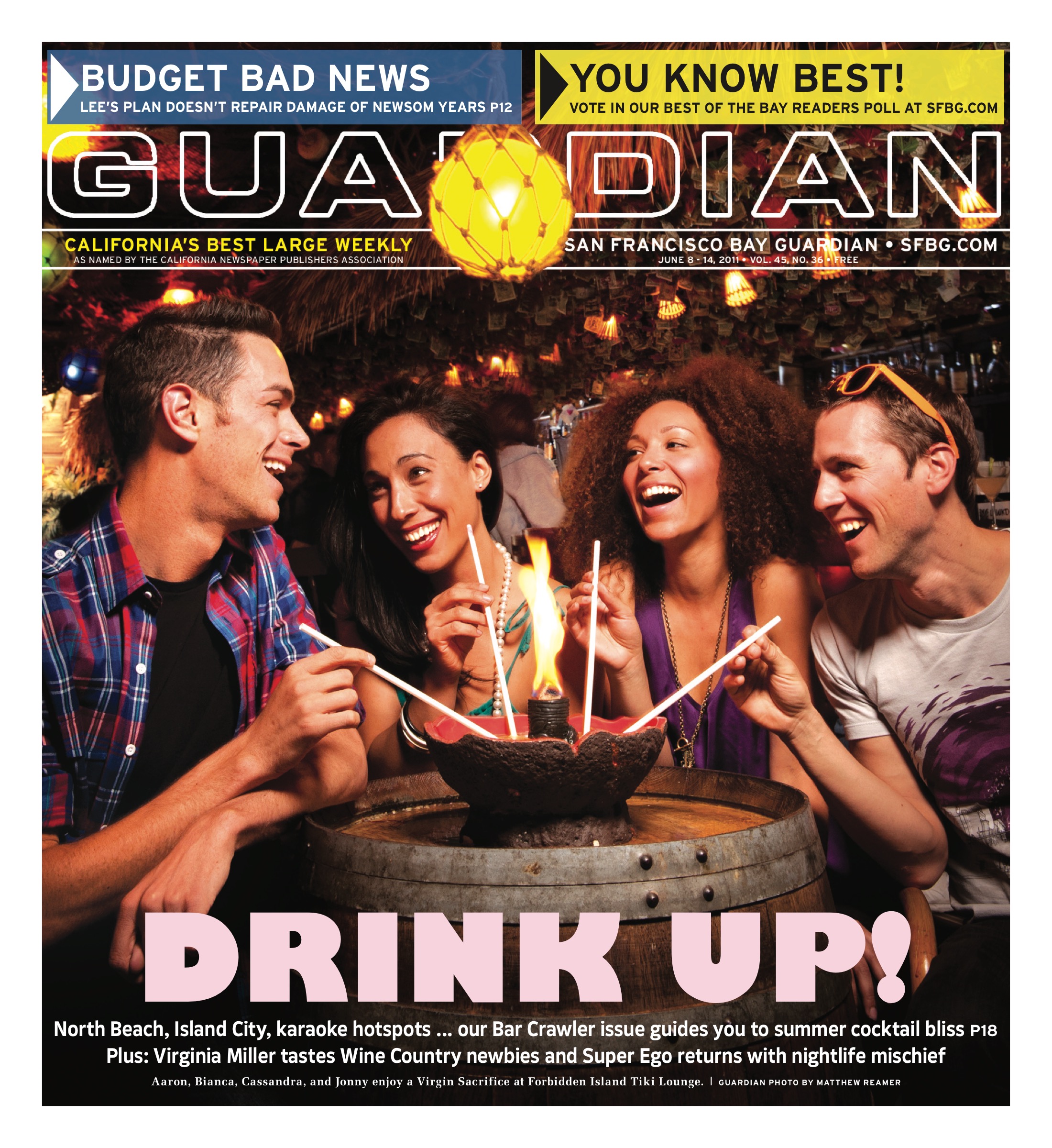
BAR CRAWLER Rumored to have given birth to the snow cone, the Popsicle, and the Kewpie doll back in its amusement park days, Alameda still gives off a summery island vibe. (With Playland at the Beach, Oakland’s Idora Park, and Alameda’s Neptune Beach, the primary mode of transportation in the Bay used to be a Big Dipper. Picture rush hour.) The golden sun, rad flea market, and laid-back neighborhoods — well, the place screams “stay a while.” So you may as well get drunk. FYI, the flatlands crawl works best on a bike, but if you soldier up and walk it, you don’t risk getting tipsy and bloody — to each her own. (Caitlin Donohue)


ALAMEDA FERRY

No, you’re not driving out there. Hop the ferry, ’cause guess what? It’s the first stop on the crawl. Take advantage of the bracing winds to order a beer, or better yet, a bay-ready cocktail. Affable bartenders will recommend a bloody or one of the Campari concoctions that sometimes make the specials board. Take your sweet-ass time and ascend to the top deck with your glass — you have 30 to 45 minutes to kill coming from San Francisco. Once you disembark, you’ll be flush with the possibility of a new island lifestyle. Steady on captain, much boozing lies ahead.

Departs from SF Ferry Building, Pier 41, and Jack London Square. www.eastbayferry.com


ST. GEORGE SPIRITS

Surprise! Not only is Alameda a great bar town, it’s also home to a burgeoning alcohol-making district. The island’s northwestern blocks — once the Naval Air Station and still fetchingly speckled at the edges with behemoth military boats — went through an era of tumbleweed rule but are now being reinvigorated by pioneer businesses that enjoy the commercial, wide-open spaces that only airplane hangers can provide. St. George Spirits moved here in 2004 and now produces pleasant, not-too-cloying Hangar One-flavored vodkas (mandarin blossom and chipotle versions are amazing), absinthe, superlative Firelit coffee liqueur, and more. Check out the $15 tasting menu in the jovial tasting room and toast to Alameda with every tiny, long-stemmed glass the good saint presents you with.

2601 Monarch, Alameda. (510) 769-1601, www.stgeorgespirits.com

(Click here for larger Google map.)

ROCK WALL WINES

Don’t worry if your St. George tasting ended with a disorienting absinthe-root beer closer — you don’t have far to bike to the next stop on the crawl. A few hangars over, step into the sleek tasting room of Rock Wall Wines, where you can order flights of swishes from Rock Wall’s father-daughter team plus nine other small wineries that share production space next door in the massive urban vintner hangar-hangout. Feel good about supporting the little guys along with another chance to sample an array of finely-crafted local booze.

2301 Monarch, Suite No. 300, Alameda. (510) 522-5700, www.rockwallwineco.com


BLADIUM BAR AND GRILL

So you’re a few drinks deep — time to check out the actual Alameda haunts. Bar! Well, a gym bar. Once you arrive at the Bladium (you’ll pedal past an impressive lineup of battleships on the way), smile sousedly at the front desk of the Bladium athletic center and weave your way through in-line hockey and indoor lacrosse arenas to the comfortable second-floor sports bar, where you can knock a pint back and take in some of the heated amateur action going on among the athletic types below. Don’t let all the secondhand endorphins make you feel lazy — the kind of drinking you’re doing takes endurance.

800 West Tower, Building 40, Alameda. (510) 814-4999, www.bladium.com


FORBIDDEN ISLAND TIKI LOUNGE

Enough crawling with the generalists — let’s get dark ‘n’ sugary the way only a quality tiki bar can encourage. Find the flavor at the low-lit Forbidden Island, where there will be a luau in progress, if you play your cards right, and sufficient vats of rum and juice even if you didn’t schedule your crawl around roast pig. Hoist a Neptune’s Garden (it’s blue and has fruit garnishes!) to discovering more about the Forbidden Island’s watering holes and continue on your way.

1304 Lincoln, Alameda. (510) 749-0332, www.forbiddenislandalameda.com


LOST WEEKEND LOUNGE

See how we planned this out? We started with sober sea legs on the ferry, pinky-up tastings while you can still bullshit about noses and mouthfeels, then the limber tiki limbo — enter now the dives. Lost Weekend is a good one, and it’s smack in the center of Alameda’s fun downtown, which is worth a saunter about if you’re feeling a little shaky after Forbidden Island. Otherwise, belly up the bar, gaze at the TVs and myriad ephemera on the walls from hazy sports meccas — Philly? Texas? — and discover that here in the Island City, the jock and black-clad hipster crowds can oftentimes merge into one.

2320 Santa Clara, Alameda. (510) 523-4700, www.lostweekendlounge.com


LUCKY 13

Turn the corner onto Park Street and you, my friend, have come to the end of your bar crawl — lucky for SF residents, it’s on familiar turf. The Lucky 13’s East Bay branch is just as good a rockabilly dive into a heavy, microbrew-tinged blackout as its Castro counterpart. Same wooden tables to back-slap and talk trash over without blazing TVs to distract your train of thought, same walled patio for fresh air and lighting of the cancer stick (yeah, alright, you’re wasted). Two big points for the Alameda Lucky: you can bring in take-out stromboli and french fries from Scolari’s next door — and the Fruitvale BART Station is only a happy downhill ride away when you’re ready for the mainland. Lean your bike against the wall and find a comfy seat for yourself, brave crawler — you’ve earned it.

1301 Park, Alameda. (510) 523-2118, www.lucky13alameda.com 

“Unadulterated, uncensored kids”: Youth Speaks’ grand slam is back

0

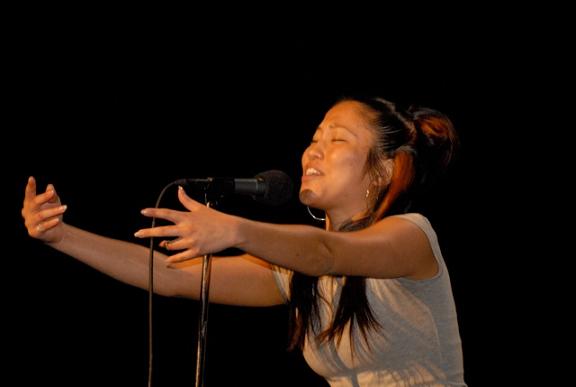
When the then-17 year old Erica McMath-Sheppard became one of our Best of the Bay Local Heroes last year, she hadn’t just earned the distinction – she had taken it as her own. What else could we have done when we heard about her winning presence onstage at the Youth Speaks grand slam spoken word finals?

And from her firey performance sprang something greater – Erica, a foster child, was able to cast a light on a system that is royally messed-up but largely unseen, since the main people who have to deal with its fall-out are young, voiceless.

All this is to say that the Youth Speaks grand slam is taking place once again this Fri/30, and that you should be there if you really want to hear what’s up with today’s youth. Screw the evening news, turn off your MTV, get real.

“To me, it’s the voice of 21st century America. Unadulterated, uncensored kids.” Youth Speaks executive director James Kass was a Jewish kid from New York who was a little discouraged with the lack of diversity in his MFA program at SF State. And “I was sick of boring poetry readings.”

So he started a slam himself, featuring people who are many things, but never boring: high school kids. The first month, the slam attracted 70 people. With the help of spoken word artist Justin Chin, traditional competition rules were subverted to make them more kid-friendly – judges’ ratings of each contestant were done in private, rather than putting developing artists on blast in front of a crowd. It’s its second month of existence, the slam sold out. Kass realized that a place for kids to nuture their poetry skills just didn’t exist in San Francisco — and (roughly)that is the Youth Speaks school program was born. 

Now, the non-profit works with 30,000-40,000 Bay Area kids a year, by Kass’ count. Yep. Many of those kids are attendees of the group’s assembly programs, but narrow that down to the students who participate in the slams (including Queeriousity, YS’ popular queer slam series), afterschool programs, one-on-one partnerships with adult working artists, and in-house youth publishing label, First Word Press, and that number is still a solid 3,000-4,000.

Who are these kids? Kass says they come from the suburbs, the city, all socioeconomic levels, races, and represent the gamut of teenage sexualities. “It really is representative of the demographics of the Bay Area.”

Poetry slams reward the innate literacy in all of us, our fervent desire to be heard and share thoughts. You don’t need to be a Spellbound letter savant to spit a pentameter that’ll make people shift in their seats, or leave that night beaming. But performing can inspire those who have found success onstage to hone their craft off of it. “As a first step into literacy, spoken word removes barriers,” says Kass, who also points out that most world cultures have strong oral poetry traditions.

Plus, stand-up poetry fits the dramatic arch of the life of an adolescent today, their ability to believe two completely different things – passionately – from one day to the next. “The kids can, and literally do, write a poem on the bus on the way to [a slam.]. It’s super-fresh and they can get feedback on it right away. Sometimes that urgency translates to something a lot of people will relate to.”

Should you need more proof of the way kids take to spoken word, one need only look at the brief history of Brave New Voices, the national championship that Kass organized back in 1998, he says, “with one other teacher from Connecticut,” the only other place he found organized youth spoken word programs at the time.

It’s thrived. Recently, Brave New Voices was the subject of an HBO-Russell Simmons reality series (Kass comments: “we struggled with HBO at first about how they wanted to define the kids,” but that the finished product turned out pretty good).

This year, Brave New Voices will feature 550 kid champions from 53 parts of the world – including the brave new voices that win this weekend’s Bay Area slam. Those kids, incidentally, will be your home team. On July 20-23, the competition will be held in the Bay for the first time ever. Check them out this weekend at the YS grand slam to witness one step in their rise to glory – or just to hear what the young adults of the Bay Area have to say these days. 


Youth Speaks 15th annual Grand Slam Finals

Fri/20 7 p.m., $6-50

Davies Symphony Hall

201 Van Ness, SF

www.youthspeaks.org

www.cityboxoffice.com 


After-party featuring guest DJ will.i.am

Fri/20 10 p.m.-1 a.m., free with grand slam ticket purchase

Brick and Mortar Music Hall

1710 Mission, SF

www.brickandmortarmusic.com

Rolling recreation

4

caitlin@sfbg.com

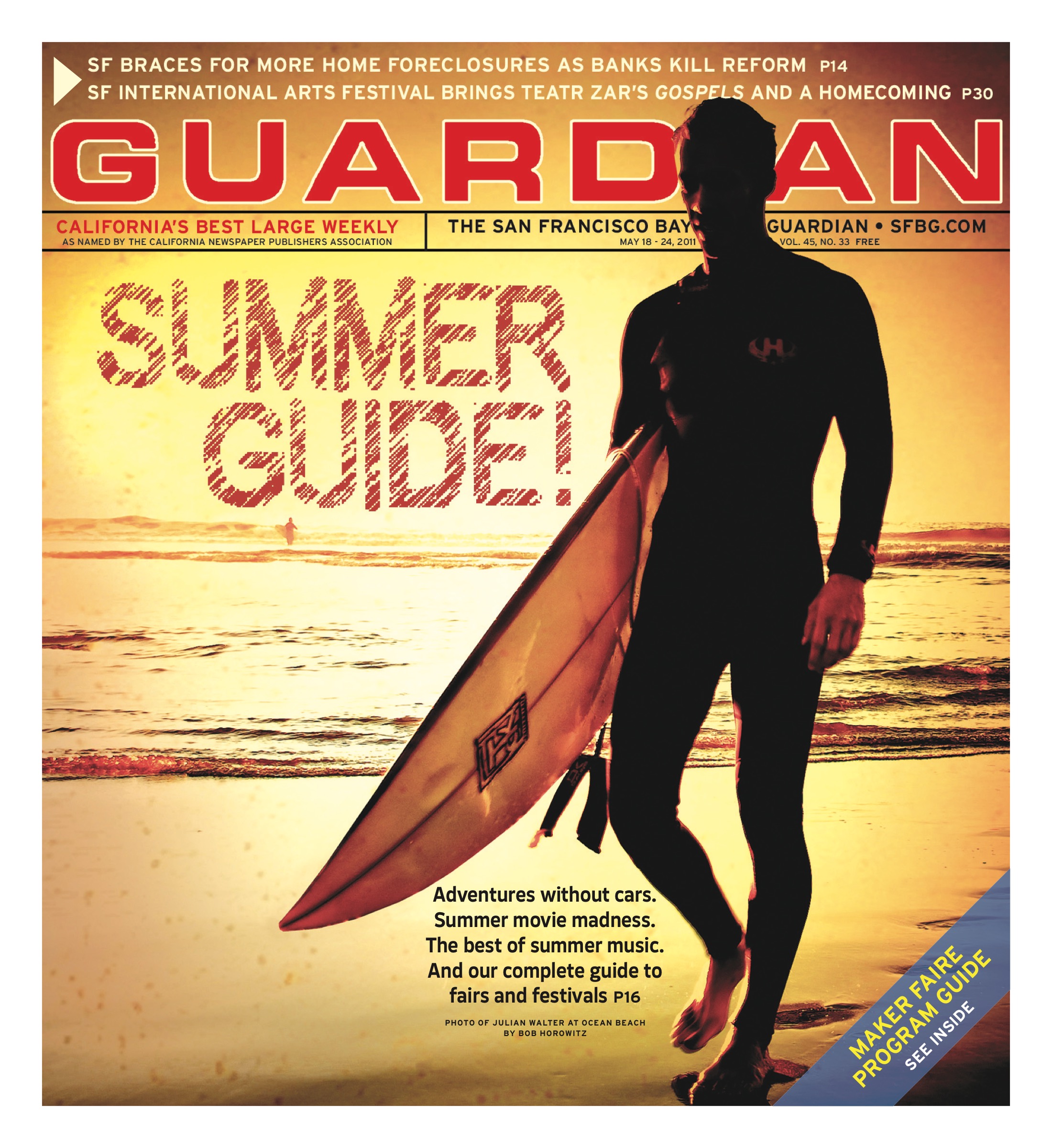
SUMMER GUIDE “We definitely try to de-emphasize Iron Man trips,” says Justin Eichenlaub, author of Post-Car Adventuring, the eminently usable guide to low carbon camping, hiking, and cruising trips around the Bay Area, Although Eichenlaub and coauthor Kelly Gregory want to include all fitness levels in the fun, make no mistake — they’re hardcore.

The two met through a Craigslist posting for a multi-day group bike trip to Monterey and now publish guidebooks and a blog under the name Post-Car Press. They’re virtual encyclopedias of info: locations of wide highway berms, how to avoid Devil’s Slide on Highway 101 (incidentally, by a route bikers have dubbed Planet of the Apes Road), and the absolute best for-bikers-by-bikers maps money can buy (Krebs cycle maps, available at www.krebscycleproducts.com).

But they’re adamant that it doesn’t take quads of steel to master the roads — even ones to far-flung campsites — sans car with the help of trains, county buses, and the occasional ferry. Indeed, even if you’re not the biking type, auto-less camping is still within your grasp. Shoulder your backpack and head out to Marin’s Samuel P. Taylor State Park via the Golden Gate Transit express bus to San Rafael, then the Marin Stagecoach No. 68. The stagecoach drops you a quarter-mile from campsites tucked into a redwood grove — where walk and bike-in camping doesn’t require reservation and costs only $3 per person per night.

A few tips for the road, courtesy of Eichenlaub. “Have a bike that you’re comfy on — it doesn’t have to be a road bike, or even have a rack, because you can stow your gear in a backpack. Realize you’re allowed to go really slow and the bike will always feel lighter than you expect.” Always familiarize yourself with your route before you leave, and — duh — bring a flat tire kit, pump, and bike lights. “Even if you’re planning a day ride, it can sometimes turn into a dusk ride.”

Here’s a partial guide to three of the pair’s fave summer adventures. Make sure to look up detailed directions before you roll out to recreate. Transit time and bike mileage numbers are for round trips.


MERCEY HOT SPRINGS

Public transit time: eight hours

Total bike mileage: 68 miles

“This is really a slice of California that Bay Area people don’t go to,” says Eichenlaub of Fresno County’s desert lands, which house a natural spa center that’s been around since 1912. Take BART to the MacArthur Station and bike about 1.2 miles to the Emeryville Amtrak Station. Load your steed onto a train bound for Merced — trains in California never charge fees for stowing bikes — then hop the Route 10 Merced County Transit bus (schedules at www.mercedthebus.com) to Dos Palos. Get off near the Reynolds and Christian streets intersection and begin the 33-mile ride through dry, wildflower-studded lands.

“There are few, if any, trees — only sweeping sandy plains dotted with desert brush,” according to Gregory. After an especially beautiful 12 miles on Little Panoche Road, two lanes of thoroughfare where cars rarely pass — you’ll reach Mercey Hot Springs, where you’ll find cabins (starting at $120/night) and campsites ($30 per person/night) for your well-deserved slumber.

“It feels as though you are far, far away from the city,” Gregory says. The center hosts regular yoga seminars and has a disc golf course that guests can use for free. But if you’re trying to make this a quick jaunt, day use of the pool, sauna, and baths costs only $20.

Side trip: Eichenlaub swears on the Panoche Inn, a “cowboy saloon” 10 miles down the road from Mercey. Hey, what’s better on a detox trip than getting wasted with the cowpokes? Of course, the place does have a website (www.panocheinn.com), so it can’t be too back roads.


PALAMERES ROAD VINEYARD DAYTRIP

Public transit time: 77 minutes

Total bike mileage: 27 miles

Take BART to the West Dublin-Pleasanton Station and then break out your bike for the ride down beautiful, shaded back roads to Sunol, a tiny town whose most famous inhabitant is probably Bosco, a golden retriever who was elected honorary mayor from 1981 until his death in 1994 (and was featured in a Chinese newspaper as an example of Western democracy’s failings).

From there, it’s a gentle hill climb up to a pair of vineyards: Westover and Chouinard. Just, ahem, don’t be expecting a Napa scene. “The first time we went out there, one of the vintners was blowing his own leaves, wearing a muscle shirt,” says Eichenlaub. Vino, sans pretension? Well worth the trip.

Drink your fill from the pleasant tasting rooms and — here’s the beauty of this ride — roll tipsily down the sloping route to the Castro Valley Station, and home.

Side trip: If you’re in the mood to make this an overnight adventure, Eichenlaub recommends taking on the extra 30 miles to the enormous Lake Del Valle, where there’s kickass family campsites tucked into a bend in the shoreline, kayak rentals, and lots of sun.


LOMA-PRIETA SIERRA CLUB HIKER’S HUT

Transit time: two hours Total bike journey: 50 miles

Snuggled into the Santa Cruz Mountains is an A-frame cabin with a kitchen, wood stove, and a tranquil view of the ocean you just can’t find within city limits. It’s operated by the Sierra Club, but non-club members (up to 14 at a time) can crash within its logs at prices starting at $20 per night. Be sure you make a reservation before you go at www.lomaprieta.sierraclub.org.

To become a woodland creature, take Caltrain to the Menlo Park Station and begin riding out Sand Hill Road, toward the mountains. After about seven miles, turn onto beautiful Old La Honda Road (“car-lite and redwood-lined,” says Eichenlaub) a three-mile climb to the ridge line. After summiting the hill, he recommends a pit stop at Apple Jack’s in La Honda, where Ken Kesey used to kick it — “a very quirky, very local, and surprisingly friendly bar.”

From there, continue west on Highway 84 until you get to Pescadero Road and then the entrance of Sam MacDonald County Park. After a few loops and a little climbing, make a left onto the Old Towne fire road (across from a park station parking lot) and navigate 1.2 miles of beautiful trail out to the hiker’s hut and outdoor playtime galore. Return the same way after your stay or use your Krebs map to explore West Alpine Road for fresh scenery on the loop back. 

For more info on Post-Car Adventuring and carfree trips to Big Sur, Tassajara Hot Springs, flat routes in Marin County, and even Yosemite, go to postcarpress.tumblr.com.


Let ’em know, Vieux Farka Touré

0

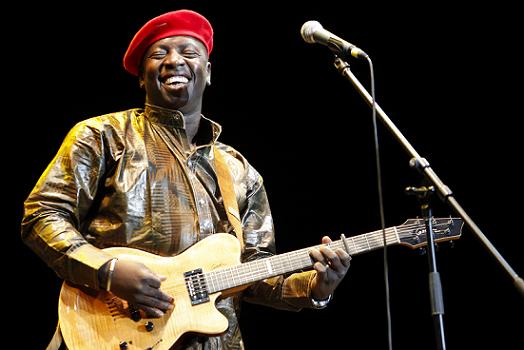
Sunny, fresh spring days like these make me want to grab my Nishiki and ride out to — screw work — dappled country roads. For this kind of idyllic impetuousity, one could ask for no better soundtrack than the thoroughly African, thoroughly rock ‘n’ roll riffs of Vieux Farka Touré, heir apparent to the dad Ali Farka Touré’s indigo Malian blues throne.

To mark the release of The Secret, a recent relase featuring traditional African instruments like the n’goni and vocal stylings by — Dave Matthews? (He is — South — African, after all, and Touré calls his voice “diabolical,” which we hope is a good thing.) Touré is making a much-anticipated voyage to the Bay Area that will kick off this weekend with a concert at the Independent (Sun/15). But perhaps most exciting of all, he’ll be teaching an African blues guitar master class the next day at St. Cyprian’s Church. Crib some of his skills and you can be on the guest list for my next backroads cruise (does your six string fit in your pannier?). 

We caught him via electronic mail for a chat about teaching, and having a kickass dad. 

San Francisco Bay Guardian: I’m interested in this guitar class you’re giving next week. What can you really teach someone in a single day about playing an instrument?  

Vieux Farka Touré: Of course I can’t teach more than the basic idioms of playing Malian blues. But I can show some basic styles and methods that open up the guitar to African style improvisation. There are several differences, technical and mental, between playing African music and Western music. So we’ll explore those difference and I’ll offer a few “secrets.”   


SFBG: Have you taught many other classes? Why do you spend time teaching?  

VFT: I have students in Mali a lot, including Americans. In life, one must always be a student and a teacher. It does good for humanity.   


SFBG: Was your dad your teacher growing up? What was that like learning from a musical legend? 

VFT: I was not aware of my father’s international fame until I traveled with him to France when I was a teenager. Of course, I knew how he was respected in Mali. But anyways, I didnt really learn guitar from him (though I learned so many other lessons about life from him). It was my uncle Afel Bocoum who brought me into music in niafunke when I was young, and then I studied at the Arts Institute in Bamako. Then both Toumani Diabate and my father began teaching me things. I am very lucky to have had these mentors. They hold wisdom of hundreds of years in their fingers.   


SFBG: At this point in your career, what are you still learning about on the guitar? 

VFT: I am always learning. I’m learning different styles, different scales and modes, and above all control. You can never have 100 percent control of your instrument, but you can also get closer to 100 percent.   


SFBG: You’re getting the chance to share your music all over the world — and learn from the rest of the world in return. How is that opportunity affecting your music? 

VFT: I think you can hear that in my albums and in my live show. There is a consistent base, like the base of a soup, but thrown in are rock, funk, reggae, Arabic styles, even hip-hop sometimes. All together they make my personal sound and make me a new branch on the tree of Malian music.


Guitar master class with Vieux Farka Touré

Mon/16 7 p.m., $40

St. Cyprian’s Church

2097 Turk, SF

(415) 259-1658

www.brownpapertickets.com/event/171012


Upcoming concerts:  

Sun/15 8 p.m., $15

The Independent

628 Divisadero, SF

(415) 771-1421

www.theindependentsf.com


Tues/17 8 p.m., $21

Mystic Theatre

23 Petaluma Blvd. North, Petaluma

(707) 765-9211

www.mystictheatre.com

Hot sexy events: May 11-17

2

On the website for Kink Studios – Kink.com‘s foray into the world of arthouse porn cinema – one scrolls down a quote from, of all people, that strapping hunk of man meat Roger Ebert. It’s about The Last Tango in Paris

The movie frightened off imitators, and instead of being the first of many X-rated films dealing honestly with sexuality, it became almost the last. Hollywood made a quick U-turn into movies about teenagers, technology, action heroes and special effects. And with the exception of a few isolated films like The Unbearable Lightness of Being (1988) and In the Realm of the Senses (1976), the serious use of graphic sexuality all but disappeared from the screen.

But being the innovators, perverts, and getting-things-done Type A’s that they are, the minds behind Kink.com decided to do something about this dearth of sexy, smart art. To wit, they made a film, Indietro, that combines all the flogging and excited screams that you’ve come to expect from the website’s more conventional BDSM flicks, with haunting piano trills and – gasp! – character development. They stocked the film with acting turns by Madison Young, Aurora Snow, and William Van Toland, and is written and directed by Vivian Darkbloom. 

It’s playing at Mission Control (via Femina Potens‘ programming) on Thurs/12, along with a Q&A with cast and crew. See it to believe it – and bring Mr. Ebert, won’t you?


Virgie Tovar presents “Burlesque Basics for the Shy and Awkward”

Amazing alert: the fantabulously fat burlesque star Dulce de Lecherous (Miss Tovar if you’re nasty) is doing this course on Burly Q gratis for the wonky and discombobulated set. I bet you never thought you’d be able to shimmy in stilettos, or twirl tassels with tact – but this here Virgie is ready to ease all comers – boys, girls, bois, “girls” – into stageside sexiness. Or, at least get you on the right path. We’re only talking about an hour-long class here, people. 

Thurs/12 6:30-7:30 p.m., free

Good Vibrations

1620 Polk, SF

(415) 345-0500

www.goodvibes.com


First Full of Kink: Indietro

Watch Kink Studios’ first foray into art porn, ask all your perverted wonderings of its cast and crew, then enjoy black and white porn and live burlesque performances. Afterwards, you can stay for the play party – if you’re a member of Femina Potens. Keep it classy, art freaks. 

Thurs/12 8 p.m.-1 a.m., $15

Mission Control

www.feminapotens.org


“Saburau: The Warrior’s Path of Service”

A educational run-down of positive power exchange practices in the Japanese samauri tradition. Sure, it’s not your run-of-the-mill Exiles class (they tend to focus on more explicitly S&M teachings), but that’s why this course sounds so cool. Ground your play time in a background of service-oriented community. 

Fri/13 8-10 p.m., $4 members/$10 non-members

The Women’s Building

3543 18th St., SF

www.theexiles.org


Dungeon monitor training

This training is not about loving control – or maybe it is, but don’t walk into it whip in hand. Being a dungeon monitor is a big deal, a crucial role in the pursuit of a healthy S&M scene. This orientation is open to everyone, and features interactive scenes showing problematic dungeon happenings in which you’re asked to practice your better judgement to mediate. Not into becoming a monitor, per se? You’re still welcome to learn and hone your skills as a member of a smart and safe community. 

Sat/14 4:30-7:30 p.m., $5-10 suggested donation

SF Citadel

1277 Mission, SF

(415) 626-2746

www.sfcitadel.org 


Naked Girls Reading: Burlesque legends

SF’s regularily-occurring lit night is famous for letting it all hang out. Really — the women on stage are naked as jaybirds. And though once again local luminaries like Lili St. Cyr, Lady Monster, and Cherry Galette will be orating from honored texts, this time around at least part of the show will be occuring offstage. Burlesque legends from Holiday O’Hara to Satan’s Angel will be in attendance – and you can sit next to one of the lovelies, if you’re down to shell out another five bucks. Deal! 

Sun/15 8:30-10 p.m., $15-20

Center for Sex and Culture

1349 Mission, SF

(415) 552-7399

www.sexandculture.org


Cycling race

2

caitlin@sfbg.com

In contrast to the alley cat fixie fiends and placid Venice Beach cruisers, some of Los Angeles’ most ardent bicyclists were going unnoticed and underserved by bike advocacy groups. Working class Latinos are often the only ones on two wheels in several of the city’s most disadvantaged communities — but you weren’t going to catch them at Critical Mass or grabbing a seat at L.A. County Bike Coalition meetings.

The organizers of the community group Ciudad de Luces recognized that these riders, often stuck commuting on the L.A.’s most dangerous roads with substandard safety gear and rickety bikes, needed a voice in the development of the city’s biking infrastructure, and were being missed by the biking movement’s traditional outreach tactics.

The organization started distributing bike lights and Day-Glo visibility vests at day laborer centers; started a weekly bike repair workshop at one of the sites in response to popular demand from workers; and, in 2010, convinced the city to install 73 much-needed bike racks throughout the low income Pico-Union neighborhood. Ciudad de Luces coined a term to describe the community it works with: the invisible riders.

Biking is not a white middle class privilege, but many times the popular face of bike activism is perceived as such. In the case of Ciudad de Luce’s struggle for recognition, that meant the minority communities that do ride aren’t given necessary resources to keep them safe and secure. And according to Jenna Burton of the Oakland community bike group Red, Bike and Green, it also harms cycling’s popularity among some prospective riders.

“If you see something that is predominantly white, it’s automatically not going to be as appealing to the black community,” she said in a phone interview with the Guardian. Burton moved to the Bay Area from the East Coast, and was taken by the strong biking culture. Looking for community, she assumed there had to be some kind of African American bicycle meet-up. (“The Bay Area has everything, right?”) She was surprised to find that one didn’t exist.

Burton realized that blacks were underrepresented in the biking community. When she asked acquaintances about their reluctance to pedal through their daily lives, she found that many were intimidated by the ubiquity of bikes in the area. “It can be really intimidating to get out there for the first time. The culture is so strong here, it seems hardcore to people who are curious about biking.”

“There needed to be a targeted effort toward the black community.” Burton’s solution: create an organization that spoke directly to African Americans about why they should bike. She developed a Black Panthers-style three-point plan to break it down. Black people on average make less money and biking is cheap; black people are subject to chronic health problems and biking makes people stronger; black people are often the subjects of environmental racism and biking is a way to speak out against carcinogenic injustice. To spread the word, the group would hold social rides so riders could see that black bike riders really did exist.

Nick James didn’t own a bike, but when Burton told him about Red, Bike and Green, he was compelled to buy one. Already an activist for HIV/AIDS, education, youth, and health causes, James said in an e-mail interview with the Guardian that he believed Burton had hit upon a way to pull all those social issues together — through an experience that would not only be positive, but fun. Now he uses his bike to get to work and run everyday errands.

“Any space where African Americans can get out stress, laugh, communicate, or heal, I’m there,” he said. “Red, Bike and Green is a space where exercise, socializing, and activism flows seamlessly.”

Core volunteers publicized early rides through word of mouth, often handing out flyers to other black bicyclists that they passed in the streets. They found partners in the East Bay’s burgeoning minority biking advocacy network: Cycles of Change, an umbrella organization that includes the LGBT and minority-run Bikery and Changing Gears Bicycle Shop, and P.O.K.E.R. (People of Kolor Everyday Ridin’).

On Saturday, April 23, Red, Bike and Green held its first ride of 2011. Seventy people rode a route that took them through many of Oakland’s black residential neighborhoods — a tactic that organizers employ, as Burton puts it, to make other black people aware that they can rock some handlebars “to build community in our community.”

Since last year, the rides have attracted cyclists from age seven to 65, families, and strangers who can spend the ride connecting and networking. People have used the rides to announce impending garden harvest surpluses, Oscar Grant protests, and job openings.

As Bay Area bike lanes grow smarter and more numerous, and as gas prices soar and environmental issues become more troublesome, it’s pretty much a done deal that more people are going to be riding bikes. And yes, bike movement, that’s something to ring those bells over. But we have to turn the gears democratically: to really improve access to cycling, the needs of all communities have to be taken into account — and that means getting creative with outreach strategies.

Red, Bike and Green uses bikes to carve out a space for its riders — not only in the velo advocacy movement, but in the social fabric of the Bay Area. Burton is confident that the sight of so many black people rolling by will introduce a thought into the heads of spectators — a thought that really shouldn’t need to be introduced but does anyway: “This is our community, there needs to be space made for us too.”


Say si to the Latino Comics Expo

0

Last month we got all amped up about the growing voice of Asian Americans in the comics industry, and this weekend the diversification of the comics nation continues with the Cartoon Art Museum’s Latino Comics Expo (Sat/7 and Sun/8) — purported to be the first all-Latino comic convention, ever. So enough with your sad, gringo-fied alcoholic binge of a Cinco de Mayo — read on for looks at the expo artists with whom you can spend the weekend celebrating the Hispanic contribution to that paneled place in our hearts.

Anthony Oporeza created Amigoman to combat the dearth of Latino superheroes on American shelves. Amigoman is the crime-fighting alter ego of schoolteacher Antonio Alverado, out to avenge the death of his good-natured Gramps. Will he defeat the sexpot overtures of Señorita Sin and the murderous musicality of DJ Kill to make the city of Del Oro safe for all? Oporeza’s titles have been available in bilingual editions since 2005, so it’ll be easy for Spanish and English monolinguists to keep up. 

Rafael Navarro will be at the expo touting Sonambulo, his lucha libre-masked noir hero who has been battling werewolves and Dia de los Muertos zombies since 1996. The name is no coincidence — Navarro’s Hammet-esque stories take on the cast of dreams. Is this really, really real?

Hector Cantú‘s Baldo is supposed to be the first daily comic about a Latino family ever marketed to the general public, which makes me think of the George Lopez Show, but the strip (going strong since 2000) is actually pretty good. The title character, a 15 year old boy, has to navigate all the pitfalls of classic daily comic adolescence (lame parental expectations, driving lessons, being broke), but also run-ins with peer pressure, racist website comments, and lowrider envy. 

And your special guest! Mario Hernandez helped to start the genre of alternative comics, let alone create one of the most well-known Latino series of all time. He and brothers Jaime and Gilbert started Love and Rockets in 1982, the soap operatic tales of punk culture, lesbian love, violence, divorce, and other dramatic turns that saw their main characters progress into middle age. Hernandez will be signing and reading from the series — which is due for a special exhibition at the Cartoon Art Museum in honor of its 30th anniversary in 2012. 


Latino Comics Expo

Sat/7-Sun/8 11 a.m.-5 p.m., free with $7 museum admission

Cartoon Art Museum

655 Mission, SF

(415) CAR-TOON

www.cartoonart.org


Hot sexy events: May 4-10

3

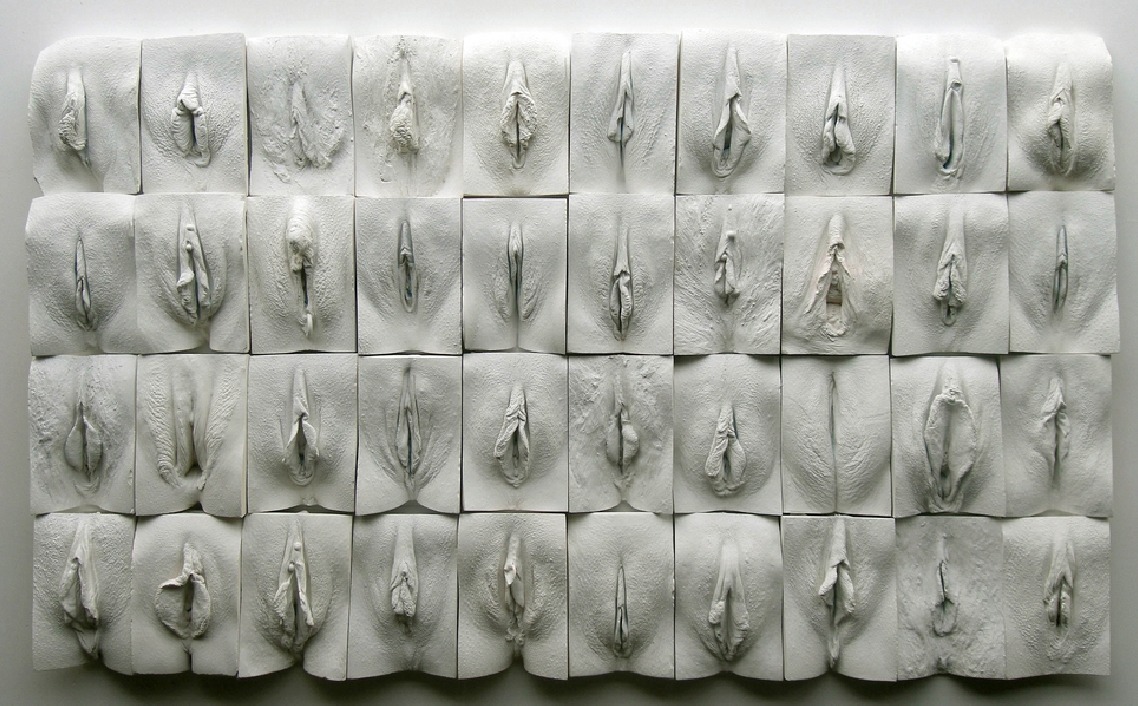
I’ve been informed that there is an art installation being installed at the English bohemian seaside town of Brighton that will change my life – “the lives of all women, forever”! It’s a wall of 400 plaster cast lady’s genitals, entitled “The Great Wall of Vagina.”

Included in the nine meter wall installation (which will debut at the Brighton Fringe Festival, according to Juxtapoz) are the pussies of transgendered folks, recent mothers, family members, before and after shots of a woman who underwent labiaplasty. It seeks to represent the genitalia gamut, defy the cult of normalcy that’s been drummed into us by the perfect pussies of mainstream pornography. 

It is a phenomenal work — it took five years to cast the participants and then cast their body parts – and I applaud anything that brings feminine sexuality into the public mindframe. I want to like this project, I do! And yet, and yet… 

A one Jamie McCartney was the brave soul to undertake the project, which explains but does not excuse his lack of anatomical knowledge (the casts rarely show their subjects’ vaginas, but rather their labias, “vaginal vestibule,” and clitoris).

Anatomy lesson, for those inclined.

And change the lives of women? That’s what his website says about the piece, and though I think the “Wall” is a neat idea, if we’re digressing with the over-Barbification of women’s sexuality, we need to think about who exactly that message needs to be addressed to. If nothing else, every woman has her own vagina to look at – the same cannot be said of men. 

And before I escort you onto the weekly sex events, let me beat my fist once more against the Wall. 400 vaginas, all makes and models, all bald as a cueball. In the interest of education, can Mr. McCartney please post a plaque next to his pussies that says “not pictured: pubic hair”?


“100 Ways to Play: A Catalog of Kink”

“A plethora of perversity.” “It still seems scary, but now in a good way.” “Like drinking from a fire hose. I attended, twice.” God bless participant surveys at sex events. The Citadel hosts this buffet of BDSM every once in awhile so that newbies can sample a taste of all sorts of sex play (fetish, impact, medical, and psychological are all represented) and old hands can get out of that metal-studded rut they may have found their dungeon-time stuck in. 

Thurs/5 7-10:30 p.m., $15-25

SF Citadel

1277 Mission, SF

(415) 626-2746

www.sfcitadel.org


Lube Wrestling Party

We’re taking “bump and grind” to the next level here. Because not only will the lovelies from Red Hots Burlesque be shimmy-shaking all over El Rio’s stage – getting down on the floor will be some sweaty, shiny girls hammerlocking and elbow dropping (maybe?) all over the damn place. Well, hopefully in the designated lube wrestling area, unless you like a little slick in your seven and seven. 

Thurs/5 9 p.m., $10-15 sliding scale

El Rio 

3158 Mission, SF

(415) 282-3325

www.elrio.com


Essence: On Fire

Calling all Sagittari, Leos, and Aries(es?): Mission Control’s sacred sexuality party turns the dial to fire for this month’s celebration of the life force-giving powers of Eros. New Age? In fact, Essence features a temple of innocence, temple of deep Eros, and chamber of dark arts. So leave your cynical friend at home – this is not their sex party. 

Sat/7 10 p.m.-3 a.m., $25-35 members only

Mission Control 

www.missioncontrolsf.org


Get your master’s in the filthy arts

Do you faun behind your drink at our city’s dirty storytelling nights, yearning to be among the foul-mouthed floozies onstage? Bawdy Storytelling’s grande dame Dixie De La Tour recognizes your needs, and to help out her less filthily verbose community members, is offering this three week course in staged dirty storytelling. Participants receive a diploma, a coursebook, and a video of themselves regailing classmates to study and share (perhaps with some special someones?)

Sun/8, May 15, and May 22 2-6 p.m., $250 for three class series

The Jellyfish Gallery

1286 Folsom, SF

www.dirtystorytellingworkshop.eventbrite.com


The San Francisco Men’s Spanking Party

Now don’t get this party wrong, this isn’t a play party for the hardcore leathermen. No no, this is more for the frisky fella interested in a little “fraternity hazing” or a scene where daddy spanks his bad boy into submission (um, leathermen: don a polo and flip-flops or maybe a tie?). Traipse on down to this safe environment to explore your yen for a little punishment (given or received) in your life. 

Sun/8 1-6 p.m., $20

Power Exchange

220 Jones, SF

www.voy.com/201188


“Give Spanks: Spanking for Sexual Pleasure”

So our story on Mistress Minax’s toy box piqued your pleasure points – but now you’re not quite sure how to make that first step down the BDSM dungeon stairs? Your wish is Good Vibes’ command – Minax will be lending a strong, swift hand to the sex toy company’s spanking workshop. A clothed demo will accompany this class, as well as tips on how to coax an unsure partner into the pleasure of pain. 

Tues/10 6-8 p.m., $20-25

1620 Polk, SF

(415) 345-0500

www.goodvibes.com

Clare Rojas’ safe space

3

As far as books go, Everything Flowers (Chronicle Books, $22.95) may just be my favorite to come out of the Bay Area this year. And not for its revelatory prose or whip-smart characters (it has neither). The small volume is filled with Clare Rojas’ quietly woman-centric, garden-toned designs that – can a book do this? – make me feel supported. I found myself breathing deeply while reading it, as if I’d just shook an asymmetrically packed satchel from my shoulders.

Resolved: I’d either get the heliotropic flower design tattooed on my skin, or I would meet the illustrator. Life being what it is, the latter proved to be the most accessible mission — and I’m glad that it was. Being in a room with Mission School vanguard Rojas is an experience akin to sitting quietly with Everything Flowers – or for that matter, listening to the breathy guitar folk of her alter ego, singer Peggy Honeywell. She creates calming, deep, feminine moments. 

“I feel so much pain being a woman in this world that I just wanted to create a safe place for them.”

Rojas barely seems to take up space in the interview room we’ve somewhat incongruously occupied at Chronicle Books, the company that published her most recent bound project. But behind her quiet presence, there’s a solidity. You have to lean in close to hear what she’s saying – in making you come to her, it’s like she’s subverting the model of self-promotional artist.

Everything Flowers, like the rest of Rojas’ canon, draws on the “super Americana, super Ohio” quilt art she saw her mother create when she was young. Rojas is fond of telling a story about visiting the place her mother used to attend quilting circles. All the cars in the parking lot, she says, were of the radical bumper sticker variety.

“There’s a certain energy and power with the way women express themselves,” she reflects when I ask her why she draws on these historical forms for her own very modern work. “When you make somebody lasagna it’s like love – and not sexy-time love either.”

When Chronicle Books approached her to do a book from which they could also cull art for pretty notecards and a gardening journal, it seemed a perfect fit for Rojas. After many years of what she felt to be acutely political work – the feminist mythology obliquely present behind her past gallery shows – she was ready to “let go of politics and just focus on beauty.” She was ready to draw some flowers, to heal for a moment.

She says. But as she takes me through the gorgeous pages of the book, it’s clear that some of the images (which were created between 2004 and 2010), hold significance for her past the simple desire to represent beauty. But good luck finding out the dirt on them – Rojas is an extraordinarily private person for our world of status updates and “about the author” pages. She tells me she’s “shy” about the paintings in the book, their hidden meanings so deeply personal that she feels weird seeing them on the page for others to examine. The most I get are small chinks in the armor I can peek through if I feel so inclined:

“Becoming an adult, figuring out what you stand for – the garden couldn’t be a better metaphor for growth.” 

Turning to a page with a fuschia design: “That one, I just enjoy painting flowers.” 

A radiating eye: “This one’s political for me.”

What are these politics Rojas keeps talking about? Again, personal. “I always feel like politics start in the home. If we can’t get it straight there…” she shrugs her shoulders, and holds my gaze.

It could have made for a real boring interview. But there’s something about Rojas that put me at ease, even if I didn’t understand quite what she was talking about, or even if we were talking about anything at all besides the literal words coming out of our mouths. After so many years of creating art in San Francisco, she is comfortable in her work. I’d entered the safe space.

“Blue Deer,” whose original now hangs in gate room G of SFO’s international terminal

Now, I’ll look at Everything Flowers and read my own stories on its pages, my frustrations and quiet victories as a female. This too, it seems, is part of Rojas’ plan. “You can only tend your own garden. If you’re happy and taking care of yourself, that resonates too.” 


Everything Flowers book release

Fri/6 6-8 p.m., free

Park Life

220 Clement, SF

(415) 386-7275

www.parklifestore.com


Nothing’s fixed

0

CYCLING The SF Bike Coalition’s valet parking was strangely empty for a blazingly sunny Saturday event by the Ferry Building. “They’ve just been leaving their bikes around,” a bored attendant told me of the crowd assembled for the Red Bull Ride + Style fixed-gear competition. But that wasn’t out of apathy to their rides — these attendees wanted to keep their bikes close.

Candy-colored fixies were turned upside-down on their handlebars, stacked in piles with the steeds of their owners’ friends. Young men (there were a lot of young men) kept their hands firmly locked in riding position, rolling their bikes back and forth as they spoke, some times gesticulating with them for added effect. Those slim, messenger-style backpacks were much in evidence.

In the competition arena, no one strayed far from their bikes either, except for the spectacular falls that sporadically broke up the action. Strap-on fixed-gear pedals make for epic wipe-outs; one soldier was taken off the field on a stretcher.

Save for the lone female who rolled about during the event’s interminable “practice times,” all riders were male. This was about bros on bikes. Indeed, as the final race around the hazardous, hairpin track was announced between Bay Area childhood friends Jason Clary and Kell McKenzie (Clary won), the announcer took a moment to salute their relationship. “You guys have known each other since you were 14? It’s bro versus bro! Fixed-gear nation!”

Competitive fixed-gear racing is, relatively speaking, a nascent addition to the legion of bone-cracking thrill fests enjoyed by extreme sports fans. The sport’s lexicon is borrowed from the death-defying ride tactics of gonzo bike messengers, a profession that has to sprint to keep up with e-mail and 3-D projection technology to stay salient for corporate America.

San Francisco is one of the messenger bike meccas. The city has given birth to some epically fly-terrifying fixie films — guys slaloming down from Twin Peaks, diving into traffic, holding onto buses for acceleration, basically using the ridiculous speed you can achieve on a fixed- gear bike for pure chaos (in the eyes of the pedestrian, surely).

But street stunts do not a competitive sport make. On Saturday, it was apparent that everyone was trying to figure out just what Ride + Style meant. The week before the event, the Guardian interviewed Austin Horse, one of New York City’s best-known bike messengers, by e-mail.

“Nobody knows what to expect about Ride N Style,” he wrote. “It’s very mysterious, but the riders know it’s going to be a challenging and compelling event because it’s coming from Red Bull. [Editor’s note: Apparently Red Bull’s sponsorship is a big deal. Red Bull also sponsored a downhill bike race through a Brazilian favela, the aerodynamic inanity of Flutag, and your most jittery friend in college who had a dorm room full of Red Bull crates. Remember that guy?] The result is that all the riders are a little more anxious about this race than other events. What we do know is that it’s gonna be a sprint with features some guys aren’t going to be comfortable with. It’s a little scary.”

The second half of the day was given over to what was billed as the most cutting edge part of the competition: the freestyle contest. Covered in sherbet colors, spiders, geometric whorls, and playing card designs, they looked every bit the background for an extreme sports tournament.

“Only rarely have events invested in features tailored to the constraints and potential of this type of riding,” Horse says. When the cameras are off “people practice wherever they can — skate parks and street spots.”

In San Francisco, one of the most reliable spots to watch good fixed-gear freestyling is in the Harry Bridges Plaza, the strip of asphalt between the Ferry Building and where Ride + Style was erected in the more ample Justin Herman Plaza. You can go out to Harry Bridges at dusk most days and see people hopping their bikes off the ground, spinning in the air, twerking their handlebars, riding backward in tight figure eights, and stopping on dimes.

But the ramps took it up a notch — so up that spectators began to compare the competition to those of BMX bikes, which can catch a lot more air than fixed gears. It wasn’t a coincidental connection: some of the competitors announced on the microphone that they were usually on a BMX, and Jeremy Witek, the lead designer of the ramps, told me during the construction phase that this was the first time he’d been asked to make structures like these for a fixed-gear competition.

There were some hands-down highlights of the freestyle portion — Kohei “Kozo” Fuji flew in from Osaka to bust the first fixed-gear back flip in international competition. But many of the routines seemed strangely suited for their setting. The beauty of the fixed-gear lies in its simplicity — one pump of the legs, one rotation of the wheels, the easy mathematics of human body and machine.

But the novelty of seeing these lifestyle bikes thrust into the bright lights and loud announcers of the X Games variety wasn’t lost on those least jaded of San Franciscans — the Embarcadero tourists. Washing my hands in the Embarcadero Center bathroom, I heard a young woman essentially ask her mom what the hell this crazy city of bikes is up to. “Does San Francisco always have this?”

Girl, it does now. 


Hot sexy events: April 27-May 3

0

Hey there sexy, how’s life on the other side of the Intertubes? I wanna get real with some real questions in this week’s sexy events column. Don’t worry, it’s about you. Namely, we here at the SF of BG would like to know just what you feel is missing from sex coverage in this age of Aquarius (ha!) in which we live. Are you feeling like you have pressing sex ed questions that need answering? Are you wishing that there was more event coverage of the parties and perv-a-thons in our fair Sodom By the Bay?

See, we’re going through an evolution with our sex coverage, and though we’ve got some pretty hot and wild ideas up in our noggins, youse the readers are just that, and maybe you’re thinking something we missed. So how bout it – new voices, dildo reviews, heavy breathing monolouges? The Guardian’s mission is to be a voice for the community of San Francisco, so have at us. Um, our safe word is spelt. 


Erotic Reading Circle

Share your thoughts, air out those tired old insecurities – get real pervy with, whatever. The monthly Erotic Reading Circle at the Center for Sex and Culture provides a safe space for writers to share their bedroom-related materials. Carol Queen and Jen Cross of Writing Ourselves Whole facilitate the gathering, pretty much a must-do for any aspiring sex scribe. 

Weds/27 7:30 p.m., $5 suggested donation

Center for Sex and Culture 

1349 Mission, SF

www.sexandculture.org


Hot Draw

Unleash your wild, artistic side at these live drawing sessions – one need only peep the galleries on Mark I. Chester’s website to see that he doesn’t play when it comes to drawing dirty players. Kinky leathermen strut about for a crowd of strictly sketchy, strictly gay male artist scribblers.

Thurs/28 6:30-9:30 p.m., free

Mark I. Chester Studio

1229 Folsom, SF

(415) 621-6294

www.markichester.com


Art of Restraint

How would you like to be situated right in the center of a high-art, surround sound bondage performance? It’s all within your grasp, baby – this week’s Femina Potens event at Mission Control will string up local lovelies Fivestar and Madison Young, while adult film performers and submissives offering up chocolate-covered strawberries romp about. Does it sound too good to be true? Believe, child, believe. 

Sat/30 8 p.m.-3 a.m., $50-75

Mission Control 

www.missioncontrolsf.org


How Weird Street Faire

While not sexy per se, this fair sure is freaky: How Weird takes over a good portion of SoMa for stage upon stage of electronic ass-shaking, and community bonding. What community, you say? Bonding how, you ask? Well maybe just maybe that’s up to you, sailor. Head over in whatever state of disarray you like and get funky. 

Sun/1 noon- 8 p.m., $10 suggested donation

Howard and Second St., SF

www.howweird.org 


Kentucky Fried Woman’s Guilty Pleasures

You need this bucket of crispy, greasy, lip-smackin’ queers stripping down to their burlesque bundles like you need to watch your cholesterol intake. For reals, put down the trans fat. Instead, pop on over to Oakland’s Bench and Bar bar, and feast your eyes on the talents of Alotta Boutté, Scotty the Blue Bunny, and oh! So much more. Heart-stopping, in a good way. 

Sun/1 7:30-10:30 p.m., $10

Bench and Bar

510 17th St., Oakl.

(415) 374-1924

Facebook: Kentucky Fried Woman’s Guilty Pleasures 


“Finding and Maintaining a Happily Ever After: A Relationship Workshop for Lesbian Couples”

How do you make relationships last past the original courting period? Davina and Molly have married each other countless times in protest of unequal civil rights, and so they’re uniquely qualified (maybe) to talk about how to make matrimony mutually awesome (in and out of the bedroom).

Tues/3 6:30-8:30 p.m. $20-25 for singles $35-45 for pairs

Center for Sex and Culture 

1349 Mission, SF

www.sexandculture.org


A new brand of fixie competition ramps up for Saturday

0

“We’re just trying to make it look pretty.” N8 Van Dyke, an SF illustrator, is posted up in the Marine Westar Services Bayview warehouse, unrolling wheatpaste designs on the concrete floor. In other corners of the building, burly men hustle about towing heavy boxes, performing mysterious, industrial functions. But we’re (I didn’t do any of the work, per se, but having watched the process for the better part of a half hour I feel entitled) involved in a different sort of badassery – creating ramps for what might be the biggest fixed gear competition like, ever: Saturday’s Red Bull Ride + Style.

“When the guys are riding their bikes on them,” Van Dyke tells me. “I want it to look Honey I Shrunk the Kids.” The artist, who has a penchant for drawing dark, somewhat tormented-looking chimps, was assigned to decorate a stacked freestyle structure that resembles a game of 52 card pick-up. Fresh from a trip to Kinko’s, he’s now plotting to paste his me-sized playing card designs all over the structure’s flat surfaces. 

N8 Van Dyke plays with his monkey

Also scattered throughout the warehouse is Aaron De La Cruz, swirling his signature black designs over another ramp, plus a brightly-colored monster spider by Arlo Eisenberg. There’s also a cooler full of beer and I guess other liquids, thoughtfully provided by Red Bull, which is sponsoring this boy’s club of extreme athleticism and creativity as part of the brand’s ongoing mission to promote heart-racing, energy drink-necessitating feats of daring, like downhill bike races through Brazilian favelas.

It would appear that this weekend’s competition is somewhat of a first. Jeremy Witek and Ryan Corrigan (the only one drinking a beer, what the hell guys), two BMX riders and ramp builders that are in charge of constructing the designs that the artists are decorating for Ride + Style, tell me that they’ve never heard of a fixie competition like this one. 

Van Dyke and Aaron De La Cruz talk shop behind the De La Cruz ramp-creation

Generally, fixie freestyle competitions, Witek and Corrigan tell me, are held at skate parks – but the ramps they’re building for Saturday are made specifically for fixed gears, an unusual specialization that provided them with an extra challenge — no one’s done these before. “It’s a learning process for us – it’s hard trying to figure out what they want,” Witek told me of the people at Red Bull that contracted them to build the pieces. “They don’t really know what they want.”

The contest is going down at Justin Herman Plaza, just across the street from Harry Bridges Plaza, where SF fixie riders can be seen practicing their endos and bunnyhops on most days. It’ll feature two categories of competition: track (a more common type of fixie contest) and freestyle. This is one of the two cities, after all (New York is the other one), where the bike messenger culture really took root, giving rise to the sport of fixed gear in the first place. 

Tools of the trade

To advise on the construction process, a bunch of fixie riders came out to Bayview to test out what the team was cooking up. Witek says they liked what they saw. “They’re extremely pumped,” he says. “They’re always stuck riding out at stranded skate parks. This is more than just a sport, you know – it’s a culture.”

“This is going to be a real eye-opener for the public, they’ll be able to see what fixed gears can really do,” he sums up. To get a sense before Saturday so you’re not all gawky, you could do worse than going here.


Red Bull Ride + Style

Sat/30 noon-4 p.m., free

Justin Herman Plaza

1 Market, SF

Facebook: Red Bull Ride + Style


La vida vegan

5

caitlin@sfbg.com

DINE It’s a wild, woolly world when you won’t eat its cheeseburgers. Or so I discovered last autumn when I read Jonathan Safran Foer’s Eating Animals and found that my inner logician could no longer justify consuming products from the loins (and udders, and uteri) of animals that spent their lives experiencing the systematic abuse of factory farms.

But the most shocking tiding from Foer? A University of Chicago study, he writes, found that omnivores contribute seven times the volume of greenhouse gas of vegans. My bicycle eyed me from its perch on the storage hook in our apartment’s foyer. Environmentalists, are we?

So we traipse along the hippie-liberal continuum — just one more step to independence from fossil fuels, I suppose. But though I’ve been riding the pescatarian train for years, going animal product-free was harder than a piquant wedge of manchego (Jesus, even my metaphors have dairy products in them).

I was surprised how many places I would go — even here, in the befigged plate of the Bay Area! — where wearing my vegan hat meant going underfed and, by extension, becoming a whiny envelope-full of social anthrax addressed to my dining companions. Some restaurants even ghettoize our kind with separate menus, as if vegan food holds no interest for the general dining public.

Surely, though, this is nothing compared to the brave, ice cream-rejecting, pizza cheese-peeling pioneers of the vegan world! Even if it’s still hard to break society’s “five food groups” programming, as a whole our country is well out of the “what’s a vegan?” stage of cultural development.

It was high time for a pulse check. So one rainy spring day, I met with some of the Bay’s best and brightest vegans for a potluck and chat on where living animal-free is at these days. Food activists, chefs, moms, a boyfriend, a blogger. We ate like kings and bitched about steaks. We called it the Summit of the Vegans. I’ll tell you more — but first, a word on our vegans …


TAMEARRA DYSON

Vegan cred: Owner of Souley Vegan and self-taught chef

Comes natural: “When someone asks me what I use instead of milk or butter, I don’t even know how to answer that. What do you use? You just don’t use it!”


MARK BENEDETTO AND CARMEN VAZQUEZ

Vegan cred: Chefs. Started the now-defunct vegan Brassica Supperclub. Now the manager of Frog Hollow Farm’s Ferry Building store and kitchen supervisor at Gracias Madre, with a restaurant of their own on the horizon.

Vegans on the lam: The couple’s underground supper club was shut down by the fuzz in 2009 for lacking required permits.

A love that knows no animal products: “There are a ton of factions, splinter cells,” Benedetto says, “but all vegans secretly, quietly love other vegans.”


NANCY LOEWEN

Vegan cred: Nurse and vice president of the SF Vegetarian Society

Don’t even try to win that argument: “The Vegetarian Society has been around for 40 years. We continue to be a small group, but the number of vegetarians continue to grow. I love animals; I don’t like to go to the doctor; there are the environmental reasons; and I love the food. You just can’t win that argument!”


BILL EVANS

Vegan cred: Guardian production manager. Has been animal product-free for years. Our Joe Vegan.

Breaking down the meat lines: “The things that crack me up and annoy me at the same time: my girlfriend is the opposite of vegan and she’ll order a steak and invariably the waiter will come back and give me the steak and her my salad. There are some societal expectations about what’s a manly food.”


LAURA BECK

Vegan cred: Founding blogger of vegansaurus.com

Loves her job because: “The vast majority of my commenter are so rad. They’re smart, awesome activists, not preachy dicks, which is what a lot of people think vegans are.”

When’s she’s not blogging: Beck’s favorite Bay Area vegan eats include Encuentro, Golden Era, the flan at Gracias Madre, schwarmas from Herbivore, Saha, Jay’s Cheesesteaks, and Souley Vegan.

Note: Beck was sick for our summit but I hollered at her afterward so she could still join the conversation.

Elbow-deep as we were in the toothsome culinary contributions my summit attendees had whipped up for the occasion, it was perhaps no surprise to learn that food cravings were the least of the challenges to their vegan lifestyles. Indeed, to a (wo)man, our panel participants — many of whom had been vegans for the better part of a decade — found their eats superior to more omnivorous spreads.

“There are only five or six animals that people eat for meat,” said Loewen, who works at a senior citizen center by day and spends her free time organizing events like the Vegetarian Society’s annual Meat Out. “But we’ve got so many options in terms of grains and vegetables.”

One of the upsides to being vegan — in addition to the animal treatment and health and well-being issues that panelists cited as their salient motivations to make their lifestyle switch — is that it compels a certain amount of creativity in the kitchen. When you’re operating largely outside the parameters of what your family considers a standard meal, you tend to think outside the prepackaged box.

Dyson runs my favorite reason to cross the Bay Bridge — Souley Vegan’s crispy tofu burger and mac ‘n’ cheese have magical properties. She came to veganism when she had a visceral reaction as a teenager to a chicken bone, and now can’t imagine life any other way. She started her cooking career at a farmers market booth and now brings Souley Vegan’s cuisine to African American expos and public schools, where it teaches people about life, post-pork flavoring.

We talked about living vegan in the Bay Area, where my panelists agreed the vegan community had yet to come together the way in has in places like Austin. They pinned this lack of cohesion on the dearth of a central cultural hub, and Beck affirmed that a need for just such a meeting space was one of her motivations behind Vegansaurus.

Evans bemoaned the “ideological chasm” that separates omnivores and vegans and makes it difficult to share information and understanding between the two. The group debated over whether the “vegan movement” could truly be said to exist — and yeah, we talked shit too.

“I think it’s bullshit!” Loewen opined suddenly when I asked the group how they felt about Michael Pollan’s assertion that eating sustainably is more important than eating animal-product-free. “[That view] takes out the ethical aspect. That animal is going to die — free range animals want to live even more than other animals.”

Benedetto and Vazquez attended the California Culinary Academy (where they met and Vazquez became vegan) and were the summit’s official “vegans on the front lines” because of it. The school, they said, accommodated their desire not to work with meat — to a point. They still had to cook a steak for a final exam and take a two-week butchery course. “It smelled like death,” grimaced Benedetto. “Postgrad, I decided I would rather work retail than have to cook meat.”

Bottom line? There are challenges to being a Bay Area vegan. But there are victories as well: feeling “lighter,” minimizing your impact on the environment, being your own person, and delicious meals, to name a few. After hearing everyone’s stories, I realized that becoming a vegan in the Bay is a lot like being a human in the Bay: endlessly frustrating, completely crazy, but also a chance to be a part of an earnest try for a more sustainable world.


Your world, in toothpicks

0

I rolled underneath the Rice A Roni cable car, dodged security at the Transamerica Pyramid, ricocheted down the curves of Lombard. Passing the Cliff House, I waved at the ocean, but all too soon I’m back by the dragons of Chinatown, still spinning. Oh hey, there’s the Palace of Fine Arts, enclosing the heart Tony Bennett left behind (there it is!). My tour ricocheted me by the windmills near Ocean Beach, and then I’m somersaulting (rapidly! picking up speed!) til I hit the Golden Gate Bridge, where Humphrey the Whale flipped me an appreciative hey-ho with his tail. Nearing the end of the journey, I hit Alcatraz en route to my resting place in Fleishhacker Pool. 

Oh, to be a ping pong ball in the thrall of Scott Weaver‘s universe.

Weaver is the father of “Rolling Through the Bay,” a towering testament to the romance of San Francisco now on view at the Exploratorium that has taken Weaver approximately 3,000 hours to complete. The epic video in which Weaver — a long time Bay resident whose great-grandpappy owned a vineyard a block from where the Transamerican Pyramid now stands — genially describes his work of art has scored the discovery museum big points with media outlets throughout the city (seriously, this video — this video is blog GOLD). 

The video proved so popular, in fact, that it spawned a follow-up focusing on the charismatic Weaver and the tricks of his trade themselves. Spoiler: his preferred toothpick brand to work with is Diamond.

The sculpture, Weaver estimates, is the third or fourth largest in the world, but the other guys don’t have the finely tuned kinetic features of his creation. Or, one imagines, the intricately worked personal references to the artist himself: Tony Bennett’s heart is made from toothpicks thrown at Weaver’s wedding. Golden Gate Park’s shubbery is partially composed of toothpicks Weaver has collected from around the world, including some bizarro ones from Morocco. Weaver’s built sculptures of his face into the wooden, pointy metropolis, and the toll booth on the Golden Gate Bridge proudly displays the time his son was born.

Anyways, major claps to the Exploratorium for putting the whole shebang on display. Kudos also to toothpicks for impeling me to revisit the Exploratorium website, which is totally chockful of ridiculously scientifical content like this

Click here to see a large-size image of the sculpture and revel in its majesty.

Scott Weaver’s “Rolling Through the Bay”

Through June 18

Exploratorium

3601 Lyon, SF

(415) 561-0363

www.exploratorium.edu


4/20 fantasy: Ziggy’s new comic book

0

Attention, WonderCon, Ziggy is missing. Repeat, we are missing Ziggy Marley. But only for a second – turns out the “Love is My Religion” star had only wandered away from the Image Comics booth into the dizzying panorama of the comics convention for a moment to snag his son some of the new Green Lantern toys. “He’s into it,” he tells me, smiling as his fixers and Image staff scramble to set up the seats for our interview.

But to be clear about what exactly we’re doing here: Ziggy Marley is releasing a comic book on 4/20. It’s called Marijuana Man, obviously. 

It’s about a hero (a white guy!) named Sedona, a being from the planet Yelram – like, read it backwards — on Exodus, where the for-real (a.k.a., the weed smoking, freedom-fighting, down) Earthlings are trying their best to defeat the evil, environment-ruining, pill-pushing Pharma-Con. Sample Pharma-Con line: “I want to get this over with so we can get back to the business of selling people chemicals they don’t need.” Hiss.

The book really is gorgeous, illustrated by Jim Mahfood of 40 Oz. Comics, who pretty much has the sexy street art graphic novel on lock. I mean, the guy illustrated Colt 45’s label, for chrissakes.

“There’s quality in the textures,” Marley tells me (still smiling, he’s always smiling because love is his religion). “It’s a collector’s edition.” Some characters’ speak with a smoker’s patois, a lushly-proportioned-yet-badass guerilla named MJ – like, think about it – bonds with Sedona in a ecstatic, abstract sex session also patronized by the Lion of Judah and the crashing wave from Katsushika Hokusai’s 36 Views of Mt. Fuji series. And there’s whizzing, crashing battles between Sedona and a Pharma-Con mercenary on a motorcycle that leaps and murders. 

The Marijuana Man gang

But. Ziggy Marley, you have never once made a comic book before. I had doubts, doubts as to whether this book, with its “Ziggy Marley’s” inscribed over its title, was indeed the work of the genial reggae star in front of me. I put it to him: Ziggy, was Marijuana Man really your idea?

He says: yes. Ziggy uses the royal “we,” which is fine because Bob Marley is his dad.

“We had the idea to create a superhero who gets his powers from a plant.” It seems that royal Ziggy, or team Ziggy (this last probably includes Snoopy, his genial bodyguard who takes photos of Ziggy bonding with childrens in Brazil and later bemoaned to me the fact that Shakira got a helicopter to airlift her to a concert in Argentina that the two headlined, while team Love = My Religion had to proceed on a congested road, which I agree isn’t right) were ready for a superhero that got righteous not through the ingestion of toxic chemicals, or prosthetics, or capitalism, but rather natural medicine. 

So Marley had the original idea for the comic, but then chose a crack team of comic professionals to make it come to fruition. “Jim and Joe [Casey, another big deal-guy who wrote the book] would do their thing, and every once in awhile I’d say ‘what about this.’” 

Basically, there’s a cause involved here, and not least because Marley plans to make Marijuana Man‘s 4/20 release an annual occurrence. “Sedona’s a metaphor for the plant itself. We believe the plant is special, if used properly,” he says, admitting that Marijuana Man carries an additional message. To wit: “to get rid of the stigma and the demonization of the plant.”

“I have a vivid imagination,” he smiiiiles. There is nothing more that I want to do with my day past hang out with this happy, sun-shiney man and his comic book dreams, so I start asking him what comic books he likes.

He likes Jonah Hex, “the weirdest Western hero” who was born to a prostitute mother and a father who sells him to the Apaches, whose respect he earns and then loses at the hands of a jealous chief’s son, who messes up his face with a hot tomahawk. Hex becomes a bounty hunter anti-hero. At some point, Hex is catapulted into 2050. When he dies (card game) his body is stolen, stuffed, and unfairly displayed by a touring circus. I think he is later resurrected, and takes to fighting for and against crime again with the Black Lantern Corps. 

“Jonah Hex, he’s a bad good guy, he’s a good bad guy,” Ziggy says. I wish I could walk around WonderCon all weekend with Ziggy Marley and talk about this, but his next interview is already waiting for him and then he has a big stack of Marijuana Man posters to sign for fans. 

“The thing about comic books, it’s a deep thing. They’re not frivolous, they have meaning,” he tells me. “Music fans who love our philosophies and ideas, I think they can relate to that. They’re art. They’re not just about drawing people, hands, and feet.” 

That man, I swear, love him. To celebrate your holiday with Marijuana Man, here’s a website that’ll point you to the nearest comic book store. 

Welcome to the neighborhood, museum mural

1

Ellen and Lance Anderson are visiting their son in the Sunset, all the way from upstate New York. They’d read about the mural they’re now standing in front of in the newspaper that morning, and decided to make a trip out to the Mission to check it out. “And maybe get something to eat,” Lance told me, looking around at the vendors setting up around us and the mural for the Mission Community Market‘s first day of 2011. 

No snacks being forthcoming, the Andersons settled on peppering artist Ben Wood with questions about the seven years of work that had culminated on the wall in question. Was he really the one who had photographed the 1700s mural on an interior wall of the Mission Dolores, a mural hidden for centuries by the main reredos?

He was, he told them. Wood must be used to answering such questions – his project to transcribe a historic mural has gotten tons of press. But here I zone out and regard the mural itself. I’ve heard its back story

It is something to see the mural there’s been so much buzz about in paint-and-plaster person, and mainly because it’s not what I was expecting. For one, it’s not very pretty, strictly speaking. 

Being familiar with Wood’s work, I probably could have anticipated its realness. He’s not in the business of creating ornamental works, that one. Most of Woods’ projects to date have involved digging up historical events and subjecting them to the public imagination. In the past, that’s meant projecting images of Ohlone Indians on the Coit Tower on the Fourth of July and making a short film that animates the Diego Rivera mural that was removed from the Rockefeller Center with videos of people telling its story.

So here’s the Mission Dolores mural, an exact translation of a piece of what you’d see if you had dropped into that foot and a half crawl space between the altar and the wall on the day that Wood and historian-archaeologist Eric Blind photographed it in 2004. There are meticulously rendered dents, areas where the paint was torn off by less-than-meticulous workers, cracks in the wall, all faithfully recorded by Clarion Alley artists Jet Martinez, Bunnie Reiss, and Ezra Eismont. 

Between the blemishes and the colorful geometric pattern taken from a different part of the church that frames the mural, it’s certainly an artistic statement. But what I find interesting about the piece is that it uses the form of street mural to communicate history and open up years gone by to neighbohood discussion.

Passer-bys and Mission Community Market-goers can interprete for themselves just how much of the Ohlones’ own faith was put into the work, how much Christianity had already penetrated their lives. Maybe it can be a hint to what life was like back then, at the dawning of the Mission District.

At the mural’s official unveiling ceremony and market kick-off, Supervisor David Campos addressed the crowd that had formed as the farmers and vendors finished pyramiding their mandarins, angling their mini-pies, and smoothing their Mission bus line t-shirts for optimal visual appeal. “The Mission is thriving because of the organizing that happens here,” he said.  

Campos passes the mic to Wood, who wonders out loud how much of the journey to the wall behind him he has time to share (not a lot). Blind gets the mic next, and comments on how great it was to work with Woods, sharing his archaeologist’s pleasure at seeing his findings erected in a busy neighborhood farmers market.

“So often we find things like this that are hundreds of years old and it’s so hard to figure out how to share them with large groups of people.”

Martinez talks about the piece’s future on this block as his little boy Lazlo runs circles around him. “We’re not trying to combat graffiti, we’re trying to share the space.” 

The owner of the Mission Market building was surely attracted to the mural project as a way of preventing the tags that still cover the non-muraled side of his property’s wall (for which there is plans for another Martinez mural). One hopes for the best for the Ohlone mural, but even with the explicatory paragraph that Martinez lettered over the door of the indoor marketplace on which it’s painted, the unassuming nature of the piece seems a ripe target for taggers. 

Lazlo cuts the ribbon hastily strung up across the wall and bam: the Mission has a new mural. I hope it treats it well, but either way, welcome to the neighborhood. 


Hot sexy events: April 13-19

1

Where better to talk dirty than on the techno-verse? Nowhere, that’s where. Our fave SF sex blogger – c’mon, besides ourselves — Fleur De Lis SF makes an appearance at this used-to-be (before it expanded it occasional East Bay nights) monthly storytelling event, as does Reid Mihalko, a sexpert who has made appearances on Tyra Banks’ TV show, in addition to other seemingly unlikely places for a perv like him. Hot tip: Fleur De Lis just wrote about how Mihalko ahem, enjoyed meeting her the other day at Monika Thomas’ Sex Geek Potluck – knowing these two, could a round two be far behind? 

Bawdy Storytelling: Taking Dirty and Technology

It’s shocking how often people use the Internet these days for things that don’t involve sex. Well, not these folks. This month’s Bawdy has assembled a top shelf lineup of pervs, including Allison Moon, creator of Burning Man’s home for queer women, Camp Beaverton, and as-of-recently author of a new lesbian werewolf novel. Everyone will be talking about how they’ve used technology to get super viral. Sexting during the event encouraged.  

Weds/13 8 p.m., $10

The Blue Macaw

2565 Mission, SF

www.bawdystorytelling.com


“Advanced CBT: Ready for the Ride?”

EMS/TENS-type electrical stimulation, cock and ball bondage, how to torture and tease your partner – who is ready for a walk on the wild side? Surely, that would be the attendees of this workshop, led by Gabriele Hoff, who has interviewed over 1200 couples and individuals for her research into the topic. 

Weds/13 6-8 p.m., $20-25

Good Vibrations

1620 Polk, SF

(415) 345-0500

www.goodvibes.com 


Eddie Dane memorial

Good night, sweet clown. Eddie Dane was a lot of things to a lot of people in the burlesque community, but a bummer to mourn – never! Help the tassel-twirlers say goodbye to one of the country’s great Burly Q troupe leaders at this free memorial burlesque revue, why don’t you?

Thurs/14 8 p.m., free

DNA Lounge

375 11th St., SF

(415) 626-1409

www.hubbahubbarevue.com


International Ms. Leather 25th Anniversary weekend

So very much for leatherwomen going on this weekend! The International Ms. Leather celebration hits town on Thursday, and if speed tricking, uniform parties, and of course, the yearly competitions for Ms. Leather and Ms. Bootblack are up your alley, you’d be best served by getting down that of this weekend-long celebration of women in hides. 

Thurs/14-Sun/17, $25-155

www.imsl.org


Kinky Salon: Prohibition

You know what wasn’t outlawed during Prohibition? That’s right, ukuleles. So dance I say, to the organic pluckings of Five Cent Coffee, just one of the live music and performances acts that will be going on at Kinky Salon – while a building full of new friends have sex all around you. Kazoo orgy? 

Sat/16 10 p.m.-late, $25-35 members only

Mission Control 

www.missioncontrolsf.org


“Let’s Talk About Sex”

Lee Harrington thinks you – yes you! – deserve to live the sex life of your dreams. To that end, he’s holding this frank discussion about what turns us all on when no one is looking. It’s all about airing your dirty laundry, and feeling good about it. Are you in?

Tues/19 7:30 p.m., $15-25 sliding scale

Center for Sex and Culture

1349 Mission, SF

(415) 552-7399

www.sexandculture.org


Behind the panel

2

caitlin@sfbg.com

CAREERS AND ED Graphic novelist Gene Yang has a theory about how the comic industry came to be home to more Asian American artists than probably any other North American media form. “American comics have always been an outsider’s medium,” he wrote in a recent e-mail correspondence with the Guardian. “Most of the American comic book icons — Superman, Batman, the Hulk, Captain America — were created by poor Jewish boys living in the ghettos of New York. All you needed was a pencil, some paper, and a tiny bit of talent. Asian Americans took advantage of the same dynamic.”

Suppositions aside, Yang’s point is this: these days, Asian Americans are at the top of the comic book game. Yang has published many comic titles that creatively explore what it was like for him and his siblings growing up in the Bay Area (he was born in Alameda). American Born Chinese pits a high schooler against a monkey king from Chinese folklore who compels him to face his discomfort with his family’s heritage. Level Up looks at a video game fanatic’s transition to med school, a journey undertaken by Yang’s brother in real life.

Yang is by no means the only Asian American excelling in the comic industry. Jim Lee, a Korean American who was named copublisher of DC Comics last year, is often regarded as the modern era’s quintessential comic artist. And many of the genre’s biggest names — including the man behind DC’s Supergirl series; Bernard Chang, creator of the syndicated strip Liberty Meadows Frank Cho; and Human Target illustrator Cliff Chiang (all interviewed via e-mail for this article) — are first- or second-generation Asian Americans.

“If you were to ask any comic book fan who their favorite artists are, odds are there will be an Asian American creator — or two, or three, if not four — on that list,” Chang says.

This wasn’t always the case. When most of today’s comic book artists were growing up, there were few stories being told about Asian Americans in popular entertainment. Chang moved to Miami from Taiwan as a child, and apart from comic books sent to him by relatives overseas, saw very little in the mass media that could relate to his own experience. “For the most part, you had the Bruce Lee kung fu movies that played on the secondary television stations on the weekends,” he says.

“Everything seemed to be about people in Asia or recent immigrants,” remembers American-born Chiang. “I didn’t go out of my way to seek out those stories. What I did respond to was art and animation created by Asians in the form of cartoons like Speed Racer or Battle of the Planets.”

He wasn’t the only one who turned to cartoons as a child. Yang fondly remembers the commonalities he found in superhero comics, even going as far as attributing his and other Asian American boys’ attraction to Superman to a subconscious recognition of a kindred soul. It was a connection he copped from Jeff Yang, editor of Secret Identities: The Asian American Superhero Anthology, a collection that assembled some of today’s top comic art talent in creating an illustrated shadow history of the United States.

To wit: “Here’s a guy with two identities, one American and the other foreign — Kryptonian. He has two names, one American — Clark — and the other foreign with a hyphen in the middle, Kal-El. He came to America at a young age. He’s black haired, mild-mannered, and wears glasses. All of his superpowers derive from the fact that he’s a foreigner.”

And there’s the art form itself, Yang continues: words and pictures side by side, typically avoided in Western art save in children’s books and advertising but embraced in Asian tradition. “You could have the best brush-painted image in the world,” Yang says, “but if the poem paired with it sucked, the whole piece sucked.”


THE SAGA OF RYAN CHOI

But if so many of the genre’s artists are Asian American, why are so few of its protagonists? Despite the prevalence of minority fans at comic conventions and the ever-diversifying profile of the people who create comics, their characters — with the important exception of those in manga — are mainly Caucasian.

And the big publishing houses in comics appear to sticking with this monotone. For a time, Marvel and DC experimented with retiring their big name heroes, replacing them — in the words of Yang — with “younger, hipper, often ethnic versions.” As an example, he offers the saga of the Atom, originally a white guy named Ray Palmer. Palmer was made to disappear mysteriously, and in the logic of the comic universe, was replaced by his
Chinese protégé, Ryan Choi.

But “the young ones just weren’t selling,” says Yang. Ryan Choi got a blade to the chest and Ray Palmer got his job back.

Most of the widely-known artists we spoke to think diversifying the superhero world wasn’t something that could happen overnight. Most fans, they said, are attracted to comics out of a sense of nostalgia that doesn’t hold up well with change, especially one as drastic as switching up a character’s race.

“Supergirl is an established character with years of history and story lines,” Chang says. “I can’t simply come in and change her to be an Asian girl, that wouldn’t make sense. But I make an effort to draw new supporting characters with different ethnicities, not just Asians but blacks, Latinos, and others.”

Cho thinks the reason Asians have thrived in the comics industry is the genre’s relative anonymity. “You have to understand there’s a strong and subtle undercurrent of racism in America. But comics are color-blind. It’s the ideas, art, and stories that matter — not how you look or who you are.” And he wants to keep it that way. “I don’t want to read any Asian-centric stories, or any black stories. I just want to read a good story.”


“I DEMAND SOME REPRESENTATION!”

Of course, not everyone shares his views. Hellen Jo is a SF comic artist who draws because she considers comics “a beautiful narrative medium with boundless potential.”

“Despite the ‘enlightened’ age we live in, I still can’t find many Asian American narratives that resonate with me personally,” Jo says. So she makes her own gorgeous comic strips and books that tell stories that fall far outside the standard comic canon, distinct even from the genre’s occasional tries at depicting Asian women.

“We don’t often see Asian American women shown as brash, plain, ugly, dirty, and without ambition — and it certainly isn’t because those types of API [Asian Pacific Islander] women don’t exist,” Jo says. “I identify as a gross, stupid, ugly Asian American girl and I demand some representation!”

But she’s not waiting for Marvel to release Gross, Stupid, Ugly API No. 1. Jo is taking the bull by the horns — just like Yang, who draws his own works, and the many mainstream artists we spoke with who contribute to books like Secret Identities and have side projects that speak more directly to the API experience. Sure, these books don’t sell as much as the blockbuster Batman and Avengers titles — but at least they exist now.

As do more and more Asian Americans and other minorities among the genre’s most talented creators. It’s hard not to believe that Ryan Choi will rise again, in his own series this time, with a decidedly unambitious API girl at his side.


The loveliness of libraries, now at your local library

0

En route to City Hall the other day, the wind must have been at my back. Because? I got there very early, nearly a half hour before the intermidable Board of Appeals hearing I’d convinced myself was a good idea to attend was slated to begin. A couple options here:

a. Arrive at City Hall early and see how the government is coping with loiterers these days. 

b. Lounge about on the wind-swept tundra that the Civic Center often becomes in this uncertain world in which we live

c. Go to the library.

So thank goodness for the library. Of course, my holds queue is currently stuffed with requests for Joan Didion and David Byrne’s The Bicycle Diaries, but even setting aside its magic book-producing capabilities, consider what the institution of the free library brings to us all. A place to hang or hide or study, mercifully free of commerce, the last place in polite society where you can use someone else’s computer.

Charming people, those libraries. Sadly, along with everything else that is neither money-grubbing nor environmentally harmful, they are on the chopping block of many a local government these days. And though here in San Francisco we’d be able to go make asses of ourselves in any number of community and cultural centers across town, in many places in America if the library closes, it marks the end of any indoors public space not geared towards selling stuff. Or specifically built for the education of children, who get all the breaks. 

At any rate, it is a good moment to breathe in the steadfastness of the library, illustrated nicely in the photos of Robert Dawson and on display in our main library through June. Our main library, by the way, has these amazing historical-artistic exhibitions, on view free of charge of course, all the time. Last go-round, it was a round-up of San Francisco restaurant ephemera.

Dawson is showing up later today to do an artist Q&A on what would appear to be a very nice road trip he took all about the country, snapping shots of our book receptacles, public rec rooms, bastions of civilization. I’d like to ask him how big of a late fee balance it is acceptable to carry, in this era of cash-strapped social services and people. 

For a more extensive slideshow of Dawson’s libraries, you can go here


“Public Library: An American Commons”

Through June 12

Artist talk with Robert Dawson:

Tues/12 6 p.m., free

Koret Auditorium

Main Library

100 Larkin, SF

www.sfpl.org