Zombies

Our Weekly Picks: September 22-28, 2010

0

WEDNESDAY 22

MUSIC

Mary Wilson

As one of the founding members of the Supremes, Mary Wilson sang on countless classic rock, R&B, soul, and doo-wop hits, including “Baby Love,” “Come See About Me,” “Stop! In The Name Of Love,” “Back In My Arms Again,” and many, many more. While that legendary group’s rise to fame has been celebrated in fictionalized form with the hit film and stage production Dreamgirls, Wilson has continued to perform and record, wowing fans with her outstanding voice that still powerfully belts out her hits, along with her interpretations of jazz standards. Fans can expect a bit of both when she comes to the city for a series of special, intimate shows. (Sean McCourt)

Wed/22-Sat/25, 8 p.m.; Sun/26, 7 p.m., $40–$55

Rrazz Room

Hotel Nikko

222 Mason, SF

1-866-468-3399

www.therrazzroom.com


EVENT

Jonathan Safran Foer

Every once in a while, a nonfiction book arrives that makes my head hurt, my tear ducts blow, and my appetite long for more discerning times ahead. Last time it was The Omnivore’s Dilemma. This time it’s Eating Animals, the author of loss literature Everything is Illuminated and Extremely Loud and Incredibly Close Jonathan Safran Foer’s voyage into the depraved bowels of our country’s factory farms. Since I lack the power of Safran Foer’s elegant prose, lemme summarize his findings: they are a stain upon our earth. Let him tell you himself at this benefit for the ever-fantastic 826 Valencia. (Caitlin Donohue)

8 p.m., $20

Herbst Theater

401 Van Ness, SF

(415) 392-4400

www.cityarts.net


DANCE

Alyce Finwall Dance Theater and PunkkiCo Dance

From the outside, a red door is all that distinguishes performing arts venue the Garage from other warehouse-like SoMa buildings. Once inside, the intimate space seems too small to function as a theater. Yet the diverse range of upcoming and established choreographers that RAW (the venue’s resident artist workshop) hosts always manages to bring explosive dance to the small, box-like space. This week RAW hosts PunkkiCo Dance and Alyce Finwall Dance Theater. Using the Garage’s interior space for inspiration, choreographer Raisa Punkki and her company present End Trance, a piece exploring large movement within claustrophobic spaces. Similarly, Alyce Finwall Dance Theater (directed by choreographer-dancer Finwall) explores explosive and raw movement in a piece that investigates femininity, beauty, and identity, to name a few. (Katie Gaydos)

Through Thurs/23

8 p.m., $15

Garage

975 Howard, SF

(415) 518-1517

www.975howard.com


THURSDAY 23

MUSIC

Big Boi

When is Outkast dropping its next album? When it damn well feels like it, that’s when. In the meantime, get up with the more elegant side of the ATL hip-hop duo — the checkered space-ghetto luxe of André 3000’s “Hey Ya!” partied hard, but when you found your dance partner and were ready to really get down, where’d you turn? “The Way You Move,” that’s where. Big Boi’s double time flows fill in languorous beats on new solo album Sir Lucious Leftfoot: The Son of Dusty Chico, which Jive demurred on because it was too much “a piece of art.” Their loss, and when Def Jam picked it up again, our gain. (Donohue)

8 p.m., $35

Regency Ballroom

1300 Van Ness, SF

www.theregencyballroom.com


EVENT

Oktoberfest by the Bay

Can’t make it all the way to Munich this year to mark the 200th anniversary of Oktoberfest? Then throw on your lederhosen and dirndls and bring your appetite for beer, bratwurst, and Bavarian-themed good times and head down to our own San Francisco waterfront for the 11th annual Oktoberfest by the Bay. A smorgasbord of food awaits to soak up the specialty suds being offered up by Spaten, as will a host of bands playing traditional music for all the partygangers raising their steins and dancing the schuhplattln. Prost! (McCourt)

Thurs/23–Fri/24, 5 p.m.–midnight; Sat/25, 11 a.m.–midnight;

Sun/26, 11 a.m.–6 p.m., $25–$30

Pier 48 (across from AT&T Park), SF

1-888-746-7522

www.oktoberfestbythebay.com


FRIDAY 24

PERFORMANCE

3 For All

Some veteran performers think they know it all already, feeling sufficient unto themselves. But despite the dizzying level of expertise evinced by 3 For All’s Rafe Chase, Stephen Kearin, and Tim Orr, these guys still take suggestions. In fact, they don’t do what they do without a little help from the audience, by way of nouns, adjectives, and odd phrases shouted out in eager expectation that these three improv masters will take their idea and transform it into a breathless and hysterical wonder of theatrical spontaneity. Really, if you haven’t seen 3 For All do its thing, you haven’t seen all that improv has to offer. These are the troupe’s last San Francisco performances of 2010. (Robert Avila)

Through Sat/25

8 p.m., $22–$25

Bayfront Theater

Fort Mason Center, Bldg. B

Marina at Laguna, SF

www.improv.org


FILM

“Radical Light: Return to Canyon, Program II”

Filmmaker Bruce Baillie first conceived of Canyon Cinema as a communal gathering in the redwood groves between Oakland and Moraga. The screenings showcased fresh, avant-garde work and self-produced newsreels, along with classic serials and government films. “We’d sit under the trees in the summer with all the dogs and people and watch,” Baillie once reminisced to interviewer Scott MacDonald. Canyon came down the mountain soon enough, but this special 50th anniversary event revives its original al fresco spirit. The show features many fine Canyon films new and old, as well as a newsreel produced by the kids of the Canyon School with help from USF’s film students. Baillie will be there too, still tossing the seeds of creative growth. (Max Goldberg)

6 p.m., free

Canyon School

187 Pinehurst, Canyon

www.sfcinematheque.org


EVENT

“24 Days of Central Market Arts: Kick-off Event”

In an area known for its uninviting sights and smells, visitors to the central Market Street area can instead treat themselves to the sights and sounds of art during 24 Days of Central Market Arts. The three-week festival kicks off today with LEVYdance, Robert Moses’ Kin, and Kunst-Stoff, followed by Cali & Co & The Welcome Matt, and vocalist Joshua Klipp with Sarah Bush Dance Project. Saturday continues with performers including La Alternativa and Hope Mohr Dance. The event culminates Sunday with more performances, belly dance classes, an improv dance jam, and indie rockers Handshake. (Emmaly Wiederholt)

Through Oct. 17

Kick-off: Fri/24, 1–2 p.m. and 5–7 p.m.;

Sat/25-Sun/26, 1–-5 p.m., free

Mint Plaza

Fifth St. between Market and Mission, SF

www.centralmarketarts.org


DANCE

Lenora Lee

In Lenora Lee’s Passages, politics and art work in tandem to tell the story of one person. Yet the piece also speaks for the courage and determination of thousands of others who left — and still leave — everything behind to make a better life for themselves, their children, and in Lee’s case, a grandchild. Lee’s grandmother was married in China and spent 10 years waiting to reunite with her husband on Gold Mountain, as California was called. She became an anchor in the little girl’s life, one in which dance lessons and visits with Grandma fused. The interdisciplinary Passages — with media design by Olivia Ting and a score by Francis Wong — commemorates the centennial of the Angel Island Immigration Station. (Rita Felciano)

Fri/24–Sat/25, 8 p.m.; Sun/26, 2:30 p.m., $20

Dance Mission Theater

3316 24th St., SF

1-800-838-3006

www.asianimprov.org


SUNDAY 26

MUSIC

Git Some

Gotta love hard rockers — and even harder livers — like those in Denver’s Git Some. Mixing hardcore maximalism with post-punkin’ Jesus Lizard freewheelery, the foursome — founded by ex-Planes Mistaken for Stars members Chuck French and Neil Keener — tear through bulldozers à la “There Is So Much Blood” and thrashers such as “Entrails for the Altar” on the new Loose Control with the barely harnessed ferocity of zombies served a groaning sideboard of fresh body parts. Translation: meaty satisfaction — the added wrinkle being the occasional butt-wiggling, cheese-gobblin’ guitar-god flourish found on, say, “Broken Bodies Glisten.” Taste the glove — and Git Some love? (Kimberly Chun)

With Pins of Light and Hazzard’s Cure

8 p.m., $6

Knockout

3223 Mission, SF

(415) 550-6994

www.theknockoutsf.com


TUESDAY 28

MUSIC

Odd Nosdam

Get your cerebral and head-bopping fix at this show featuring two all-star experimental electronic artists. The Bay Area’s Odd Nosdam makes sound collages with ideas and samples pulled from the worlds of hip-hop, ambient music, drone, and indie-rock, often set among creative drum patterns you can still tap your foot to. Austria-based musician Christian Fennesz (see music feature) combines spacey, manipulated electric guitar with dissonant textures and glitchy beats. Either of these guys playing on their own would make for a fantastic show. Together, for $10 per set, you’d be a fool to miss it. (Landon Moblad)

With Fennesz

8 p.m., $20

Swedish American Hall (above Café Du Nord)

2170 Market, SF

(415) 861-5016

www.cafedunord.com


EVENT

Guillermo del Toro

In addition to directing superbly haunting, dark, atmospheric films like Hellboy (2004) and Pan’s Labyrinth (2006), Guillermo del Toro also pens novels (with cowriter Chuck Hogan), the second of which, The Fall, hits stores this week. Though the topic of vampires may seem worn out to some, with the teenybopper Twilight series driving some genre fans to swear they’ll stake themselves at the mention of one more fang-based outing, del Toro brings the bite back into the fold with this second part of a planned trilogy of tales. Join the talented artist for a special evening of discussion about his work on the written page and silver screen. (McCourt)

7:30 p.m., $12–$75

Sundance Kabuki Theater

1881 Post, SF

1-800-838-3006

www.booksmith.com 


The Guardian listings deadline is two weeks prior to our Wednesday publication date. To submit an item for consideration, please include the title of the event, a brief description of the event, date and time, venue name, street address (listing cross streets only isn’t sufficient), city, telephone number readers can call for more information, telephone number for media, and admission costs. Send information to Listings, the Guardian Building, 135 Mississippi St., SF, CA 94107; fax to (415) 487-2506; or e-mail (paste press release into e-mail body — no text attachments, please) to listings@sfbg.com. We cannot guarantee the return of photos, but enclosing an SASE helps. Digital photos may be submitted in jpeg format; the image must be at least 240 dpi and four inches by six inches in size. We regret we cannot accept listings over the phone.

Let them eat mayhem

0

arts@sfbg.com

CULTURE/LIT “I work in advertising,” says Shannon O’Malley. “I just want to make people read my evil shit.” The evil shit O’Malley refers to isn’t a sales jingle, but recipes for apocalyptic cakes. Want to know how to make an Agent Orange Carrot Cake? Rachael Ray, Paula Dean, and even Sandra Lee probably can’t help, but O’Malley has just the right ingredients to tantalize your “cyst-ridden pus hole.” A collaboration with photographer Keith Wilson, her colorful picture book Apocalypse Cakes: Recipes From the End will be published by Running Press in the spring of 2011 — for now, you can feast on some appetizers from the tome (and order recipe cards) on her website. I recently met with O’Malley to discuss the sweet and the deadly. We were at a cafe, but neither of us ate dessert.

SFBG I guess I look at apocalyptic cakes from an arty angle, and also from a nihilistic one.

Shannon O’Malley Yeah! Fatalist gluttons! [Laughs]

SFBG I like the juxtaposition of something tasty and sweet with something harsh and disastrous.

SO Me too.

SFBG How did the first cake come about?

SO Not from any preoccupation on my behalf. I’m not a good cook, I don’t bake cakes. It happened because in December of 2008, it was my partner’s birthday. She’s obsessed with the apocalypse and actually wrote her undergraduate thesis on zombies. She got me into reading J.G. Ballard.

When you’re with someone who talks about something a lot, it sort of seeps into your brain. Her birthday came around, and I didn’t want to buy her something, I wanted to make something for her. Around the same time, she was obsessing about cake, so that whenever anything went wrong, she’d say, “I want cake.”

The whole week before her birthday I thought I’d make her a cake cookbook — a zine of fucked up cakes. But I thought that was sort of vanilla, excuse the pun. The night before, I started to really ask myself what she liked, and I thought of the apocalypse. Cake and the apocalypse — it made perfect sense. I stayed up all night on the computer making this eight-page color zine called Apocalypse Cakes. I started thinking about the plagues, and just took this shitty JPG I found on the Internet of red velvet cake, and called it Raining Blood Red Velvet Cake.

I did all the writing and Photoshopping and layout. I started at 11 p.m. and basically stayed up all night because I loved it so much.

At the time I was living in Austin, and I went to Kinko’s before I had to go to my ad agency job. I bound it and made a couple copies. That night I gave it to her for birthday. Then I started showing the zine to my friends and being like, “Look what I made — isn’t this funny? Aren’t I fucking funny?” That’s when I decided it should be a book.

SFBG Is that when you began your blog?

SO Yes. At first I thought it would only be text. But then I got with my friend Keith Wilson, who is a filmmaker here in town, and he said, “No, you need pictures.”

He and I got together, and our first two cakes were the Raining Blood Red Velvet Cake and the Branch Davidian Texas Pecan Pie. We made them at my house. We set the Branch Davidian Texas Pecan Pie on fire in the yard in front of my house. He styled it. He’s super meticulous and way more object- and space-oriented than I am, and he has a great eye for macabre details.

SFBG How did your Photoshop project compare to images that were set designed?

SO It totally changed things. Keith adds something that on my own would give me trouble. I don’t want to go through the trouble to make things just-so, but he totally gets into that. His mom was a caterer, and that helped him with his food assembly skills.

SFBG Do you often have the name of the cake first and go from there?

SO It started with me having all these different names and themes. Some of the early ones included the Sodom and Gomorrah Fruit Cake — traditional apocalyptic myths from the Bible. But then I started to branch out and Keith and I would talk. He’d say, “A lot of people think that immigrants coming to the United States is apocalyptic — why don’t we do an immigration cake?” So I came up with Immigration Mayhem Mexican Chocolate Cake. We started riffing off of each other and decided the recipe should be in Spanish, so honkies can’t read it.

Now, either of us can have the original idea. I name them and do the write-ups and pay for the production, and on Saturdays, he comes over with his camera and we art direct the set together. He snaps the photos, and then I retouch them. We’ve done that for eight or nine months.

SFBG Do current events have a larger presence within the project than they did initially?

SO Definitely. Now it has become more overtly political. The Immigration Mayhem Mexican Chocolate Cake looks at certain people’s fears of their world crumbling. In addition to a cake with a swarm of locusts, we also have President Palin Half-Baked Alaska. Some of them come from our political perspective, and some of them are just stupid and gross and fun. Like Whore of Babylon Fruit Tart. Science fiction is also inspiring. We have a meteorite cake, and one about insurgent robots.

SFBG What does your girlfriend think of the project now? Does she give feedback?

SO She loves it. She’s been integral to it. When it was just a blog, a local art show had a call for entries and I thought, “Man, I wish I could enter a blog in the art show.” I thought that maybe I could have a computer at the gallery so people could browse the blog. She collects vintage cookbooks and has all this retro cooking imagery, and she said, “Why don’t you make old-timey recipe cards?” I don’t know if you’ve seen this one: Jonestown Kool-Aid Cake.

Once I got started working with the cakes, friends would come up to me and say things like, “What about Jonestown?” An old roommate suggested that cake. You know one day they’re going to build condos where the compound was in Guyana.

At a certain point I realized that every region has its apocalypse. The Seismic Haitian Mud Cake — that isn’t the end of the world, but it’s their fucking end of the world.

SFBG Do you find the format of a recipe lends itself to your sarcasm and sensibility?

SO The template has helped me. I know how long each write-up will be and that I have to make a recipe. But I’m apart from the text — when you make something that resonates with people, it sort of becomes its own thing. People get excited about it, so it’s gotta be made.

SFBG What are some of your favorite cakes?

SO I really like the China World Domination Red Bean Cake. It was conceptual, it was easy to make — I bought the cakes at a Chinese grocery store — and it makes fun of people who are xenophobic.

SFBG Since you began working on this, has the apocalyptic materialized for you more often?

SO I’ve always been into the archetype of the murderous housewife — situations that seem so perfectly dainty and wonderful, but have something dark behind them.

SFBG Like John Waters’ Serial Mom.

SO Exactly. I was just thinking of Kathleen Turner, and how John Waters’ movies are about seeing how shitty the strait-laced people are from the perspective of the people of the underworld. I like the dichotomy of, “You think it’s nice, don’t you? Well, it’s not.”

When I was writing a lot of this, I was working at an ad agency, and I was constantly bombarded with product names and messages about why products are awesome. There are write-ups where I talk of specific company names. One cake that we did for the book is all about the ubiquity of antidepressants and other blockbuster pharmaceuticals like Lipitor. It’s called Big Pharma Nut Cake.

People talk and write to me about the apocalypse more. Someone will say, “Hey, I found this article about the Super Hadron Collider and black holes.” But do I see the apocalyptic in the everyday? Not really.

In writing this book, I had to learn about the ten plagues of Egypt. The apocalypse hasn’t come to me — I had to go to it. *

www.shannonomalley.com

Chron endorsement dishonestly attacks marijuana measure

5

Once again proving itself to be an corporate-run embarrassment to a city that has been at the forefront of progressive reform – including the movement to legalize medical marijuana – the San Francisco Chronicle this morning recommended that voters reject Prop. 19, which would allow cities and counties to legalize marijuana use by adults. And it did so with tortured logic and a cowardly, disingenuous claim to support legalizing marijuana.

As a journalist who has covered the medical marijuana industry in the Bay Area, I didn’t recognize the chaos that Chron editorial writers say resulted from the landmark 1996 measure Prop. 215, the medical marijuana measure written right here in San Francisco, home to a well-regulated, professional network of cannabis dispensaries, thanks to the city proactively setting guidelines. The cities cited in the Chron all did nothing to set standards for medical marijuana dispensaries, whereas in cities like San Francisco that did, an increasingly important sector of the local economy flourished with few problems.

Prop. 19 would similarly allow cities and counties to create systems for regulating marijuana for recreational use – or to not allow it if they so chooses. Yet the Chron takes issue with this localized approach, writing, “The measure establishes no state controls over distribution and product standards; it does nothing to help cure the state’s budget deficit.”

Both statements simply aren’t true. The measure explicitly gives the state authority to tax and regulate marijuana, Assembly member Tom Ammiano already has proposed legislation to do so if the Prop. 19 passes, and the California Legislative Analyst’s Office has estimated it could bring in more than $1.5 billion annually into state coffers.

Although the Chron claims “that the ‘war on drugs’ – especially as it applies to marijuana – has been an abject failure,” it bemoans a provision in the measure that prevent employers from firing employees simply for having marijuana in their systems, as it would be if someone smoked a joint three weeks ago, despite having no impact on job performance. “Pre-employment testing would be banned,” the Chron writes, as if that were a bad thing. The editorial also complains that people would be allowed to grow small plots of marijuana in their backyards. Again, and the problem with that is what exactly?

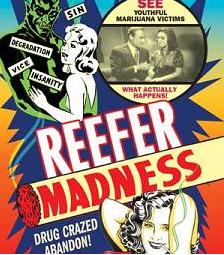
Bottom line: Chron editorial writers fall into the same old tired reefer madness stereotypes that have driven the drug war’s “abject failure,” but they just aren’t honest enough to admit the contradiction with their stated claim that “if this were simple a referendum on the status quo, and the ability of a 21-or-older Californian to possess an ounce or less for personal use, it might be an easy ‘yes’ vote.”

Because the reality is that’s what this measure does, simply lift the prohibition on pot, while also including language supporting local control and basic civil rights. There are some valid arguments against Prop. 19 – such as it lets jurisdictions tax or regulate pot too much – but those honest disagreements weren’t raised by the newspaper.

Instead, the paper made it sound like measure would fill the roads with stoned drivers and every neighborhood with the stench of marijuana, which is laughably alarmist. San Francisco’s experience with medical marijuana should serve as an indicator. This city has been the most accepting and legitimizing of marijuana for decades. It’s part of our culture. But drug surveys from our school district and others show that the rate of marijuana use among young people here is lower than the state average, and we have been at the forefront of world-renowned technological innovation and academic research, so clearly the normalization of marijuana hasn’t corrupted our youth or turned us all into menacing zombies.

The Chronicle’s presentation of the issue, and its recommendation on this measure, are anachronistic throwbacks to another era and should be tossed into the dustbin of history where they belong.

Rep Clock

0

Schedules are for Wed/15–Tues/21 except where noted. Director and year are given when available. Double and triple features are marked with a •. All times are p.m. unless otherwise specified.

ARTISTS’ TELEVISION ACCESS 992 Valencia, SF; www.atasite.org. $5-10. "OpenScreening," Thurs, 8. For participation info, contact ataopenscreening@atasite.org. "Other Cinema:" "Blows Against BP!", works by Rick Prelinger and others, Sat, 8. "3rd I’s Green Eye: The Anatomy of a Carbon Footprint:" Climate of Change (Hill, 2007) Sun, 3:30; "Around the World Without Flying: A Year of Carbon Footprints, Cargo Ships, and Climate Uprisings," multimedia presentation, Sun, 5:30.

CASTRO 429 Castro, SF; (415) 621-6120, www.castrotheatre.com. $7.50-10. The Bridge on the River Kwai (Lean, 1957), Wed-Thurs, 7:30 (also Wed, 1, 4:15). "Midnites for Maniacs: Reinventing Prom:" •Peggy Sue Got Married (Coppola, 1986), Fri, 7:30; Back to the Future (Zemeckis, 1985), Fri, 9:45; and Zapped! (Rosenthal, 1982), Fri, 11:59. "Janus Films Presents: Charlie Chaplin:" •The Circus (1931) and The Idle Class (1921) with "A Day’s Pleasure" (1919), Sat, 2, 4:30, 7, 9:20; •City Lights (1931), A Dog’s Life (1981), and Sunnyside (1919), Sun, 2, 5, 8; •Modern Times (1936) with "Payday" (1922), Mon, 2:30, 4:45, 7, 9:15; •The Great Dictator (1940), Tues, 3:30, 7, and The Kid (1921), Tues, 5:50, 9:20.

CHRISTOPHER B. SMITH RAFAEL FILM CENTER 1118 Fourth St, San Rafael; (415) 454-1222, www.cafilm.org. $6.50-10.25. The Agony and the Ecstasy of Phil Spector (Jayanti, 2009), call for dates and times. Cairo Time (Nadda, 2009), call for dates and times. The Girl Who Played With Fire (Alfredson, 2009), call for dates and times. The Sicilian Girl (Amenta, 2008), Sept 17-23, call for times.

FORBIDDEN ISLAND TIKI LOUNGE 1304 Lincoln, Alameda; www.forbiddenislandalameda.com. Free. "Forbidden Thrills: Incredibly Strange and Strangely Incredible Films:" •The Incredibly Strange Creatures Who Stopped Living and Became Mixed-Up Zombies (Steckler, 1964), and Spider Baby (Hill, 1965), Mon, 7:30.

HUMANIST HALL 390 27th St, Oakl; www.humanisthall.org. $5. Crude Impact (Wood, 2006), Wed, 7:30.

MECHANICS’ INSTITUTE 57 Post, SF; (415) 393-0100 (reservations required). $10. "CinemaLit: Loves Labours: Leo McCarey Revisited:" Love Affair (McCarey, 1939), Fri, 6.

PACIFIC FILM ARCHIVE 2575 Bancroft, Berk; (510) 642-5249, www.bampfa.berkeley.edu. $5.50-9.50. "Unseen Cinema:" "The Amateur as Auteur," Wed, 7:30. "Drawn From Life: Comic Books and Graphic Novels Adapted:" Popeye (Altman, 1980), Thurs, 7; Sin City (Miller and Rodriguez, 2005), Sat, 8:50. "Swoon: Great Leading Men in Gorgeous 35mm Prints:" Breathless (Godard, 1959), Fri, 7. "Shakespeare on Film:" A Midsummer Night’s Film (Dieterle and Reinhardt, 1935), Sun, 4; King Lear (Godard, 1987), Fri, 9. "Elegant Perversions: The Cinema of João César Monteiro:" Recollections of a Yellow House (1989), Sat, 6:30; Silvestre (1981), Sun, 4. "Radical Light: Alternative Film and Video in the San Francisco Bay Area:" "Landscape as Expression," Sun, 6:30.

RED VIC 1727 Haight, SF; (415) 668-3994. $6-10. Cyrus (Duplass and Duplass, 2010), Wed-Thurs, 7:15, 9:15 (also Wed, 2). The Room (Wiseau, 2003), Fri-Sat, 8 and midnight. Director and star Tommy Wiseau in person at all shows. The 400 Blows (Truffaut, 1959), Sun-Mon, 7:15, 9:25 (also Sun, 2). "Good Vibrations Fifth Annual Independent Erotic Film Festival: Hot Euro Porn Night," short films, Tues, 8. Visit www.events.goodvibes.com for complete schedule.

ROXIE 3117 and 3125 16th St, SF; (415) 863-1087, www.roxie.com. $5-9.75. The Agony and the Ecstasy of Phil Spector (Jayanti, 2008), Wed-Thurs, 7, 9:15. Exit Through the Gift Shop (Banksy, 2010), Wed, 7, 9:15. The Two Escobars (Zimbalist and Zimbalist, 2010), Wed, 7, 9:15. "San Francisco Latino Film Festival," Thurs-Sun. Check www.sflatinofilmfestival.com for program information. "Robert Altman vs…:" "Robert Altman vs. Teenagers!: •Brewster McCloud (1972), Mon, 7, and O.C. and Stiggs (1984), Mon, 9; "Robert Altman vs. Friendship!: •California Split (1974), Tues, 7, and 3 Women (1977), Tues, 9.

SAN FRANCISCO ART INSTITUTE 800 Chestnut, SF; www.iranianfilmfestival.org. $10. "Third Annual Iranian Film Festival," independent feature and short films made by or about Iranians, Sat-Sun, 11am.

SAN FRANCISCO PUBLIC LIBRARY Koret Auditorium, 100 Larkin, SF; www.sfpl.org. Free. "Amandla! South Africa During and After Apartheid:" Amandla! A Revolution in Four Part Harmony (Hirsch, 2003), Thurs, noon.

VIZ CINEMA New People, 1746 Post, SF; www.vizcinema.com. $10-15. Detroit Metal City (Lee, 2008), Sept 18-30, check website for times.

YERBA BUENA CENTER FOR THE ARTS 701 Mission, SF; (415) 978-2787, www.ybca.org. $6-8. A Brighter Summer Day (Yang, 1991), Thurs, 7; Sun, 2.

Film listings

0

Film listings are edited by Cheryl Eddy. Reviewers are Kimberly Chun, Michelle Devereaux, Peter Galvin, Max Goldberg, Dennis Harvey, Johnny Ray Huston, Louis Peitzman, Lynn Rapoport, Ben Richardson, and Matt Sussman. For rep house showtimes, see Rep Clock. For first-run showtimes, see Movie Guide. Due to the Labor Day holiday, theater information was incomplete at presstime.

OPENING

*The Agony and the Ecstasy of Phil Spector See “Agony Uncle.” (1:42) Roxie, Smith Rafael.

Bran Nue Dae An energetic screen translation of a 1990 Australian stage musical, Rachel Perkins’ film is tourist cliché spun into crowd-pleasing slop, like a Down Under Riverdance. Young Aboriginal Willie (Rockie McKenzie) escapes the “corrective” environ of a 1969 Perth Catholic boarding school and flees homeward, only to be pursued by mercilessly hammy Geoffrey Wright’s racist priest baddie. The crude humor, generic tunes, and hectically shot and dance-poor numbers have about as much to do with Aussie abo culture as The Lion King does with “Africa” — it’s prefab feel-good pap posing as multicultural representation. (1:28) Sundance Kabuki. (Harvey)

Change of Plans Emmanuelle Seigner stars in this ensemble comedy revolving around a dysfunctional Parisian dinner party. (1:40) Sundance Kabuki.

I’m Still Here Casey Affleck’s long-awaited Joaquin Phoenix documentary follows the maybe-crazy actor during his mountain man-bearded hip-hop phase. (1:48)

*Mademoiselle Chambon See “Mellow Noir.” (1:41)

Resident Evil: Afterlife Milla Jovovich picks up her guns again, this time to fight zombies in 3D. (1:30)

*White Wedding Every culture’s gotta have its own version of the wacky road-trip movie, in which a series of snafus (mechanical failure, miscommunication, booze, rednecks, farm animals, etc.) sidetrack hapless travelers en route to their (inevitably very important) destination. If the basic structure of Jann Turner’s White Wedding feels rather familiar, at least this South African import has its share of original charm. Groom-to-be Elvis (Kenneth Nkosi) misses a bus at the beginning of the film (we know he’s a nice guy, because he misses it helping a lost child), setting in motion a series of mostly comical disasters en route to his Johannesburg wedding. While his beloved, Ayanda (Zandile Msutwana), clashes with her mother over her choice of wedding (she wants a modern, sophisticated affair; mom wants a more traditional party) — and fends off the advances of a suave ex — Elvis and best friend Tumi (Rapulana Seiphemo, who co-wrote with Turner and Nkosi) attempt to cross miles of countryside despite fate throwing every kind of theoretical and metaphorical roadblock in their paths. One happy distraction is Rose (Jodie Whittaker), an English doctor grappling with travel woes of her own. There’s never any real doubt that Elvis and Ayanda will get hitched at film’s end, but White Wedding‘s journey, which is mostly featherlight despite some eye-opening insights into South Africa’s post-apartheid culture, is worth taking. (1:33) (Eddy)

A Woman, a Gun and a Noodle Shop Zhang Yimou remakes (kind of) the Coen Brothers’ 1984 Blood Simple. (1:35)

ONGOING

*The American George Clooney caught in a moodily paranoid, yet exquisitely photographed, ’70s-style suspense-arthouse death-trap? Belmondo and Beatty could empathize. Nonetheless, veteran rock photographer and Control (2007) director Anton Corbijn suffuses the chilly proceedings with a fresh, wintry beauty, the carefully balanced sense of highly charged tension and silky smoothness that a gunsmith would appreciate, and a resonance that feels personal. How else would an ex-rock shooter like Corbijn, who’s made iconic images of the Clash, U2, and others, connect with this tale of an assassin masquerading as a photographer, one who’s constantly glancing behind and around himself — justifiably wary of being caught in another killer’s sights — and seemingly just as wary of the director’s, and audience’s, gaze? A character who wouldn’t be out of place in a Camus novella or a Melville brooder, Jack/Edward, or more accurately “the American,” (Clooney) is in exile after a bad collision with a girlfriend and hitmen in Sweden and hiding out in a picturesque Italian village, conspicuously the more-cold-than-cool outsider and doing one immaculate job for a gorgeous mysterious woman (Thekla Reuten). Is he a good or bad guy? The local priest (Paolo Bonacelli), who knows and sees all like a great eye in the sky, is trying to find out, as is the most beautiful prostitute in town (Violante Placido). The answers are nowhere near as clear or as plainly painted as a Sergio Leone Western, although Corbijn nods to the maestro when stone-cold killer Henry Fonda, then playing shockingly against type, appears on a cafe TV screen in Once Upon a Time in the West (1968). But the director’s care and attention to beauty — as well as the lines carved in the face of Clooney’s lean, mean-looking American, a whore like any other — say more than words. (1:43) (Chun)

*Animal Kingdom More renowned for its gold rush history and Victorian terrace homes than its criminal communities, Melbourne, Australia gets put on the same gritty map as Martin Scorsese’s ’70s-era New York City and Quentin Tarantino’s ’90s Los Angeles with the advent of director-writer David Michôd’s masterful debut feature. The metropolis’ sun-blasted suburban homes, wood-paneled bedrooms, and bleached-bone streets acquire a chilling, slowly building power, as Michôd follows the life and death of the Cody clan through the eyes of its newest member, an unformed, ungainly teenager nicknamed J (James Frecheville). When J’s mother ODs, he’s tossed into the twisted arms of her family: the Kewpie doll-faced, too-close-for-comfort matriarch Smurf (Jacki Weaver), dead-eyed armed robber Pope (Ben Mendelsohn), Pope’s best friend Baz (Joel Edgerton), volatile younger brother and dealer Craig (Sullivan Stapleton), and baby bro Darren (Luke Ford). Learning to hide his responses to the escalating insanity surrounding the Codys’ war against the police — and the rest of the world — and finding respite with his girlfriend, Nicky (Laura Wheelwright), J becomes the focus of a cop (Guy Pearce) determined to take the Codys down — and discovers he’s going to have use all his cunning to survive in the jungle called home. Stunning performances abound — from Frecheville, who beautifully hides a growing awareness behind his character’s monolithic passivity, to the adorably scarifying Weaver — in this carefully, brilliantly detailed crime-family drama bound to land at the top of aficionados’ favored lineups, right alongside 1972’s The Godfather and 1986’s At Close Range and cult raves 1970’s Bloody Mama and 1974’s Big Bad Mama. (2:02) (Chun)

Avatar: Special Edition (2:51)

Cairo Time (1:29)

*Centurion Neil Marshall is the kind of filmmaker who inspires glee among horror and action junkies, but indifference among mainstream moviegoers. Centurion isn’t likely to change this. It’s the second century, and Romans are invading what’s now the Scottish Highlands, much to the displeasure of the Picts, the tribal people who’re already living there. Enter Quintus Dias (Michael Fassbender), a Roman soldier who becomes the de facto leader of an ever-shrinking group of men trapped behind enemy lines after their general (The Wire‘s Dominic West) is captured. Devotees of Marshall (2002’s Dog Soldiers, 2005’s The Descent, 2008’s Doomsday) will recognize certain elements: an ensemble cast, a military setting, the presence of a fierce female (Bond heroine Olga Kurylenko, who makes Pict warrior drag both spooky and sexy). Unlike his earlier films, though, there’s no supernatural twist; it’s just good old battlefield guts and gore. Sure, the romantic subplot feels a little forced, but this is genre filmmaking in its purest form, to be celebrated with gusto by those who appreciate grisly decapitations and the like. (Read my interview with Marshall at www.sfbg.com/pixel_vision.) (1:39) (Eddy)

The Concert (1:47)

Despicable Me Judging from the adorable, booty-shaking, highly merchandisable charm of its sunny-yellow Percocet-like minions, Despicable Me‘s makers have more than a few fond memories of the California Raisins. That gives you an idea of the 30-second attention-span level at work here. Thanks to Pixar and company, our expectations for animated features are high, but despite the single lob at Lehman Brothers aimed toward the grown-ups, the humor here is pitched straight at the eight and younger crowd: from the mugging, child-like minions to the all-in-good-fun, slightly quease-inducing 3-D roller-coaster ride. Gru (Steve Carell) is Despicable‘s also-ran supervillain — a bit too old and too unoriginal for a game that’s been rigged in the favor of the youthful, annoyingly perky Vector (Jason Segel), who’s managed to swipe the Giza Pyramids and become the world’s number one bad dude. When Vector steals away the crucial shrink ray needed for Gru’s plot to thieve the moon, the latter pulls out the big guns: three adorable orphans who have managed to penetrate Vector’s defenses with their fund-raising cookie sales. It turns out kids have their own insidiously heart-warming way of wrecking havoc on one’s well-laid plans. Filmmakers Pierre Coffin and Chris Renaud do their best to exploit the 3-D medium, but Avatar (2009) this is not. Nor will many adults be able to withstand the onslaught of cute undertaken by all those raisins, I mean, minions. (1:35) (Chun)

Dinner for Schmucks When he attracts favorable notice and a possible promotion from his corporate boss, Tim (Paul Rudd) is invited to an annual affair in which executives compete to see who can dig up the freakiest loser dweeb for everyone to snicker at. He literally runs into the perfect candidate: Barry (Steve Carrell), an IRS employee whose hobby is making elaborate tableaux with stuffed dead nice in tiny human clothes. He’s also the sort of person who, in trying to be helpful, inevitably wreaks havoc on the unlucky person being helped. Which means the 24 hours or so before the “Biggest Idiot” contest provide plenty of time for well-intentioned Barry to nearly destroy Tim’s relationship with a girlfriend (Stephanie Szostak), reunite him with Crazy Stalker Chick (Lucy Punch), and imperil his wooing of a multimillion-dollar account. Director Jay Roach (of the Austin Powers and Meet the Fockers series) has a full load of comedy talent on board here. So why are the results so tepid? This remake softens the bite of Francis Veber’s 1998 original French The Dinner Game by making Tim not a yuppie scumbag but a nice guy who just happens to have a jerk’s job (his company seizes ailing firms and liquidates them), and who doesn’t really want to expose hapless Barry to humiliation. But even with that satirical angle removed and a wider streak of sentimentality, it should cough up more laughs than it does. (1:50) (Harvey)

Dogtooth A man, his wife, and their three children live in a country house with a swimming pool and a huge yard enclosed by a high fence. So far, so good. But the kids, who don’t have names, appear to be in their 20s. They’ve never left the property, and they won’t, Dad (Christos Stergioglou) says, until they lose a “dogtooth,” at which time they’ll be mature enough to deal with the terrors of the outside world. In the meantime, they’re trapped in the only world they’ve ever known, carefully constructed by their domineering father. Greek writer-director Yorgos Lanthimos, who picked up the Prize Un Certain Regard at Cannes for this slice of disturbing domesticity, offers little explanation for Dad’s motives, or why Mom (Michelle Valley) goes along with his plan. The only hint comes from one of few scenes set outside the family’s compound, in which Dad goes to check on the progress of the family’s soon-to-be new dog. “Dogs are like clay, and our job here is to mold them,” the trainer explains. “Every dog is waiting for us to show it how to behave.” Indeed. It’s pretty clear Dad — master of his own private North Korea — is aware of that concept. Though Dogtooth‘s main themes enfold cruelty and child abuse, it also deploys the kind of black humor and button-pushing that fans of shock-trader Harmony Korine would appreciate. There is casual violence, extreme animal cruelty, full-frontal nudity, several disturbing sex scenes, and maybe the most alarming dance routine ever captured on film. (1:36) (Eddy)

Eat Pray Love The new film based on Elizabeth Gilbert’s chart-busting memoir, Eat Pray Love, benefits greatly from the lead performance by Julia Roberts, an actor who can draw from her own reserves of pathos when a project has none of its own. The adaptation, about a whiny American author farting around the globe in search of what amounts to spiritual room service, is nothing without her. The journey begins with the Type-A, book contract-inspired premise that Gilbert will travel to three appointed countries over the course of a year in order that, having thrice denied herself absolutely nothing, she might come out the other end a better-balanced human being. The first stop is Italy, where her entire plan is to finally unbutton her jeans and indulge in a celebrated cuisine, as if her home base of Manhattan were a culinary backwater. But this film is all about tired equivalencies, so Italy equals food, and expressive hand gestures, and “the art of doing nothing.” India, her next stop, equals enlightenment (her discovery that the guru she’s come to see is currently at an ashram in New York is an irony lost on the movie). And Bali, her final getaway, apparently equals contradictory but flattering aphorisms and thematically hypocritical romances. The sole appeal to a moviegoer here is aspirational. What’s so embarrassing about Eat Pray Love is its insistence that this appeal sprouts from the spiritual quest itself, and not just from the privilege that enables Gilbert to have such an extravagant quest in the first place. But then, self-awareness is supposed to be a obstacle to enlightenment. She’s got nothing to worry about there. (2:30) (Jason Shamai)

The Expendables Exactly what you’re expecting: a completely ludicrous explosion-o-thon about mercenaries hired by Bruce Willis to take down a South American general who’s actually a puppet for evil CIA agent-turned-coke kingpin Eric Roberts. Clearly, Sylvester Stallone (who directed, co-wrote, stars, and even coaxed a cameo out of Schwarzenegger) knows his audience, but The Expendables — bulging with a muscle-bound cast, including Dolph Lundgren, Terry Crews, Jason Statham, and Steve Austin, plus Jet Li, who suffers many a short-guy joke — is content to simply tap every expected rung on the 80s-actioner homage ladder. There’s no self-awareness, no truly witty one-liners, no plot twists, and certainly no making a badass out of any female characters (really, couldn’t the South American general’s daughter have packed some heat, or kicked someone in the balls — anything besides simply heaving her cleavage around?) The only truly memorable thing here is the inclusion of Mickey Rourke as Stallone’s tattoo-artist pal; I would possibly wager that Rourke was allowed to write his own weepy monologue, delivered in a close-up so extreme it’s more mind-searing than any of the film’s many machine-gun brawls. (1:43) (Eddy)

The Extra Man The polar opposite of buddy cop action flicks and spoofs a la The Other Guys, with only a faint resemblance to the bromances of Judd Apatow, Adam McKay, Will Ferrell, Seth Rogen, and so on, The Extra Man is a gently weird throwback to another era, much like its title character, Henry Harrison (Kevin Kline). Sweet, cross-dressing-curious teacher and would-be writer Louis Ives (Paul Dano) is drifting though life passively when he stumbles on eccentric playwright Harrison’s room-for-let and his oddball realm of hangers-on. A blustery, prickly, proudly misogynistic collector of Christmas balls, given to spasms of improvisational dancing, Harrison relishes his role as an escort to aged socialites, crankily shucking and jiving to score invites to fancy dinner parties and vacation homes in Florida. When Ives isn’t courting environmental magazine editor Mary (Katie Holmes) or hiding from the fearsome-looking wooly recluse Gershon (John C. Reilly), the mentor-able young man turns out to be more adept at the role than Harrison ever imagined. And like fossilized grande dames in Chanel, literate audiences also might be charmed by director-writer Shari Springer Berman’s unassuming, crushed-out bon mot, based on the novel by Jonathan Ames, to a few mannered, less-than-examined, happily twisted New York City subcultures. (1:45) (Chun)

Flipped I’m sure a “he said/she said” film exists that makes good on the premise, but Rob Reiner’s Flipped doesn’t quite cut it. Nestled safely in 1960s small-town America, the film is first narrated by Bryce, an eighth grader who’s spent the past four years rebuking the advances of Juli, the girl who lives across the street. Bryce is a pretty typical boy, bumbling and unsure of just what he wants, but soon the story “flips” and we see the same events narrated from Juli’s POV. Juli is drawn to Bryce’s “sparkling eyes,” yes, but with a poor family and an annoyingly sincere love for life, she has problems outside of lusting for Bryce. Based on a tween-hit novel by author Wendelin Van Draanen, the story’s familiarity perhaps stems from the source material — in my experience those sorts of novels rarely invite readers older than high school — and similarly in the case of Flipped, I think this might be something we should leave to the kids. (1:30) (Galvin)

Get Low Born from the true story of Felix Bush, an eccentric Tennessee hermit who invited the world to celebrate his funeral in advance of his own death, Get Low is a loose take on what might inspire a man to do a thing like that. It’s a small story, and unlikely to attract the attention of popcorn-addled viewers in the midst of the summer blockbuster season, but Get Low has a whopper of a character in Felix Bush. Robert Duvall becomes Bush, constructing a quiet man who sees it all and speaks only when he has something to say, and supporting roles from Sissy Spacek and Bill Murray are expectedly solid, but the real surprise is what a strong eye director Aaron Schnieder has. In allowing scenes to unfold on their own terms and in their own time, Schneider gives a real humanity to what could have been a Hallmark movie. (1:42) (Galvin)

*The Girl Who Played With Fire Lisbeth Salander is cooler than you are. The heroine of Stieg Larsson’s bestselling book series is fierce, mysterious, and utterly captivating: in the movie adaptations, she’s perfectly realized by Noomi Rapace, who has the power to transform Lisbeth from literary hero to film icon. Rapace first impressed audiences in The Girl With the Dragon Tattoo (2009), a faithful adaptation of Larsson’s premiere novel, and she returns as Lisbeth in The Girl Who Played With Fire. The sequel, as is often the case, isn’t quite on par with the original, but it’s still a page-to-screen success. And while the first film spent equal time on journalist Mikael Blomkvist (Michael Nyqvist), The Girl Who Played With Fire is almost entirely Lisbeth’s story. Sure, there’s more to the movie than the hacker-turned-sleuth — and the actor who plays her — but she carries the film. Rapace is Lisbeth; Lisbeth is Rapace. I’d watch both in anything. (2:09) Smith Rafael. (Peitzman)

Going the Distance If you live in San Francisco, don’t try to date someone in New York. It’s just not worth the hassle. But hey, maybe you’re as adorable as Drew Barrymore, and your boyfriend’s as charming as Justin Long — you can’t be expected to let a little geographical complication get in the way. That’s the driving force behind Going the Distance, a romcom that stars real-life couple Barrymore and Long as Erin and Garrett, two crazy kids trying to make it work cross-country. In many ways, the film is your standard boy-meets-girl story, but it’s cute enough that the predictability factor doesn’t really matter. The cast is universally strong, with bonus points to the standouts: It’s Always Sunny in Philadelphia‘s Charlie Day as Garrett’s embarrassing roommate, and Christina Applegate as Erin’s germaphobe sister. The humor is surprisingly sharp — and raunchy, which earned Going the Distance an R-rating. I’m not going to say Long’s bare ass is worth the price of admission, but it’s certainly a selling point. (1:43) (Peitzman)

Highwater The latest from the first family of surf movies comes courtesy of Dana Brown (2003’s Step Into Liquid), son of Bruce (1964’s The Endless Summer) and father of Wes (an up-and-comer who co-edited Highwater). The film focuses on Oahu’s legendary North Shore — “the one path all surfers must take,” per Dana’s occasionally woo-woo narration — and the annual big-wave contests held there each year. Though the majority of screen time is (of course) taken up by sweeping, slo-mo shots of pros tangling with looming walls of water, Highwater reaches out to civilian audiences with sidebars on the North Shore’s eccentric local culture, the science behind the 10-mile beach’s massive waves, and profiles of the sport’s more colorful characters. Brown is also careful to highlight the growing amount of women in the sport, who surf the exact same breaks as the men but earn far less prize money for it. Diehards might notice events in the film feel a bit dated, and indeed, Highwater was shot in 2005. But since surfers operate under the assumption that “one wave can make a person’s career” (especially if it’s captured on film), there’s presumably no sell-by date violation here. (1:30) (Eddy)

Inception As my movie going companion pointed out, “Christopher Nolan must’ve shit a brick when he saw Shutter Island.” In Nolan’s Inception, as in Shutter Island, Leonardo DiCaprio is a troubled soul trapped in a world of mind-fuckery, with a tragic-vengeful wife (here, Marion Cotillard) and even some long-lost kids looming in his thoughts at all times. But Inception, about a team of corporate spies who infiltrate dreams to steal information and implant ideas, owes just as much to The Matrix (1999), Eternal Sunshine of the Spotless Mind (2004), and probably a James Bond flick or two. Familiar though it may feel, at least Inception is based on a creative idea — how many movies, much less summer blockbusters, actually require viewer brain power? If its complex house-of-cards plot (dreams within dreams within dreams) can’t quite withstand nit-picking, its action sequences are confidently staged and expertly directed, including a standout sequence involving a zero-gravity fist fight and elevator ride. Though it’s hardly genius — and Leo-recycle aside — Inception is worth it, if you don’t mind your puzzle missing a few pieces. (2:30) (Eddy)

Jean-Michel Basquiat: The Radiant Child In 1986, filmmaker Tamra Davis was six years away from her breakthrough (1992’s Guncrazy; she also made 1998’s Half Baked and 2002 Britney Spears misfire Crossroads, and is married to one of the Beastie Boys). But she was already friends with artist Jean-Michel Basquiat, then at the height of his career. He died two years later of a heroin overdose, equally shaken by close friend Andy Warhol’s death and the pressures of his own skyrocketing fame. This tender doc weaves Davis’ 1986 interview with a low-key Basquiat (shot in a Beverly Hills hotel room) with recollections from his New York City circle (girlfriends, gallery owners, fellow artists, art critics). Though his art-world rise was breathtaking — he went from graffiti-scrawling kid to a hip painter whose works sold for hundreds of thousands (and now, multi-millions) — Davis’ doc suggests it was too much, too soon, creating distractions that first interfered with his creativity, then his well-being. Even if you don’t care for his art, Radiant Child is a compelling, insidery look at the dark side of celebrity. (1:34) (Eddy)

*Joan Rivers: A Piece of Work Whether you’re a fan of its subject or not, Ricki Stern and Annie Sundberg’s documentary is an absorbing look at the business of entertainment, a demanding treadmill that fame doesn’t really make any easier. At 75, comedian Rivers has four decades in the spotlight behind her. Yet despite a high Q rating she finds it difficult to get the top-ranked gigs, no matter that as a workaholic who’ll take anything she could scarcely be more available. Funny onstage (and a lot ruder than on TV), she’s very, very focused off-, dismissive of being called a “trailblazer” when she’s still actively competing with those whose women comics trail she blazed for today’s hot TV guest spot or whatever. Anyone seeking a thorough career overview will have to look elsewhere; this vérité year-in-the-life portrait is, like the lady herself, entertainingly and quite fiercely focused on the here-and-now. (1:24) (Harvey)

*The Kids Are All Right In many ways, The Kids Are All Right is a straightforward family dramedy: it’s about parents trying to do what’s best for their children and struggling to keep their relationship together. But it’s also a film in which Jules (Julianne Moore) goes down on Nic (Annette Bening) while they’re watching gay porn. Director Lisa Cholodenko (1998’s High Art) co-wrote the script (with Stuart Blumberg), and the film’s blend between mainstream and queer is part of what makes Kids such an important — not to mention enjoyable — film. Despite presenting issues that might be contentious to large portions of the country, the movie maintains an approachability that’s often lacking in queer cinema. Of course, being in the gay mecca of the Bay Area skews things significantly — most locals wouldn’t bat an eye at Kids, which has Nic and Jules’ children inviting their biological father (“the sperm donor,” played by Mark Ruffalo) into their lives. But for those outside the liberal bubble, the idea of a nontraditional family might be more eye-opening. It’s not a message movie, but Kids may still change minds. And even if it doesn’t, the film is a success that works chiefly because it isn’t heavy-handed. It refuses to take itself too seriously. At its best, Kids is laugh-out-loud funny, handling the heaviest of issues with grace and humor. (1:47) (Peitzman)

The Last Exorcism Latest in a long line of Louisiana preachers, genial extrovert Cotton Marcus (Patrick Fabian) isn’t even sure he believes in God anymore — but it’s the family business, and it’s a living. He definitely doesn’t believe in demonic possession, yet has presided over many an “exorcism” if only to fool the psychologically damaged into thinking they’re “cured” of delusional ails. But now he’s decided such hijinks might be more harmful than helpful. So to debunk the whole idea, he takes a documentary filmmaking crew on one last “soul-saving” trek, answering a desperate letter from a widowed farmer (Louis Herthum) whose 16-year-old daughter (Ashley Bell) is believed possessed. Cotton deploys theatrical tricks to rig an alleged purging of Satan’s minion. And it works … but this wouldn’t be a horror movie if that rationalist triumph didn’t turn out to be a false finish, followed by all kinds of inexplicable WTF. German director Daniel Stamm’s first English-language feature (written by Huck Botko and Andrew Gurland) is being positioned by Lionsgate as the next viral word-of-mouth horror sensation a la prior faux-docs The Blair Witch Project (1999) and Paranormal Activity (2007). But the “reality” illusion is more transparent here. Despite some clever buildup tactics, okay twists, and a handful of scares, this ultimately disappoints — a preview audience’s catcalls at its underwhelming fadeout suggested there will be no Last Exorcism 2. (1:27) (Harvey)

Lebanon Das Boot in a tank” has been the thumbnail summary of writer-director Samuel Maoz’s film in its festival travels to date, during which it’s picked up various prizes including a Venice Golden Lion. On the first day of Israel’s 1982 invasion (which Maoz fought in), an Israeli army tank with a crew of three fairly green 20-somethings — soon joined by a fourth with even less battle experience — crosses the border, enters a city already halfway reduced to rubble, and promptly gets its inhabitants in the worst possible fix, stranded without backup. Highly visceral and, needless to say, claustrophobic (there are almost no exterior shots), Lebanon may for some echo The Hurt Locker (2009) in its intense focus on physical peril. It also echoes that film’s lack of equally gripping character development. But taken on its own willfully narrow terms, this is a potent exercise in squirmy combat you-are-thereness. (1:33) Smith Rafael. (Harvey)

The Life and Times of Allen Ginsberg Here’s your chance to get to know the late poet before he’s portrayed by non-doppelgänger James Franco in the upcoming Howl. Whereas Howl, title drawn from his most famous and controversial creation, focuses on Ginsberg’s 1957 obscenity trial, Jerry Aronson’s 1994 doc offers a more sweeping take on his life. Friends and relatives (in both new and archival interviews), home-movie footage and photographs, talk show excerpts (William F. Buckley: so not down with the counterculture), and the man himself (reading his work, powerfully) help piece together what was undeniably a passionate and remarkable existence. (1:22) Roxie. (Eddy)

Lottery Ticket (1:39)

*Machete Probably the first movie that was initially conceived solely as a fake-movie trailer (as part of Quentin Tarantino and Robert Rodriguez’s 2007 Grindhouse), Rodriguez’s Machete emerges in full-length form to take on everyone’s sky-high expectations. I mean, the trailer promised motorcycles soaring through flames, a gun-toting priest, and the line “You just fucked with the wrong Mexican.” Fortunately, Machete the film does Machete the trailer proud; its deliberately silly revenge plot is both spot-on vintage homage and semi-serious commentary on America’s ongoing immigration debate. In addition, it features more severed limbs, gunshots to the head, irresponsible sex, and smirking Steven Seagal close-ups than any other movie in recent memory. Frequent Rodriguez supporting player Danny Trejo pretty much kills it as the title badass — but then, you already knew he would. (1:45) (Eddy)

*Mao’s Last Dancer Based on the subject’s autobiography of the same name, this Australian-produced drama chronicles the real-life saga of Li Cunxin (played as child, teen, and adult by Huang Wen Bin, Chengwu Guo, and Chi Cao), who was plucked from his rural childhood village in 1972 to study far from home at the Beijing Dance Academy. He attracted notice from Houston Ballet artistic director Ben Stevenson (Bruce Greenwood) during a cultural-exchange visit, and was allowed to go abroad for a Texas summer residency. At first the film looks headed toward well-handled but slightly pat inspirational territory pitting bad China against good America, as it cuts between Li’s grueling training by (mostly) humorless Party ideologues, and his astonishment at the prosperity and freedom in a country he’d been programmed to believe was a capitalist hellhole of injustice and deprivation. (Though as a Chinese diplomat cautions, not untruthfully, he’s only been exposed to “the nice parts.”) Swayed by love and other factors, Li created an international incident — tensely staged here — when he chose to defect rather than return home. But Jan Sardi’s script and reliable Aussie veteran Bruce Beresford’s direction refuse to settle for easy sentiment, despite a corny situation or two. Our hero’s new life isn’t all dream-come-true, nor is his past renounced without serious consequence (a poignant Joan Chen essays his peasant mother). The generous ballet excerpts (only slightly marred by occasional slow-mo gimmickry) offer reward enough, but the film’s greatest achievement is its honestly earning the right to jerk a few tears. (1:57) (Harvey)

*Mesrine: Killer Instinct This first half of a two-part film about notorious French bank robber Jacques Mesrine examines the early life of its subject, before he was a flamboyant, headline-grabbing folk hero. The very first scene uses 70s-style split-screens to revel Mesrine’s violent 1979 death; writer-director Jean-François Richet (2005’s Assault on Precinct 13) then jumps back 15 or so years for a glimpse of our (anti-) hero’s soldiering days in Algeria. Before long, “Jacky” (an outstanding Vincent Cassel, in a César-winning performance) is back in Paris, horrifying his upper-class parents and young wife by choosing the underworld over conventional pencil-pushing. (A near-unrecognizable Gérard Depardieu appears as a mob boss.) Killer Instinct, which is adapted from Mesrine’s own prison-penned autobiography, suffers from some standard biopic problems — it tries to cram in too much, and feels mighty rushed at times. But there’s still plenty of bad, bad behavior to enjoy, including the film’s spectacular last act, a breakneck recreation of one of the daring prison escapes that helped make Mesrine a legend. Continuation Mesrine: Public Enemy No. 1, which beings where this film ends, is now playing. (1:53) (Eddy)

*Mesrine: Public Enemy No. 1 If you see writer-director Jean-François Richet’s Mesrine: Killer Instinct (review below), you’re pretty much obligated to see this sequel, especially since the earlier film beings with the main character’s death, then flashes back and never catches up to it. This installment was actually filmed first, allowing star Vincent Cassell to pack on nearly 50 pounds to play the oldier, portlier version of the legendary French bank robber. Mesrine’s prowess as an escape artist allows him to spend much of this film on the lam with partner François (Mathieu Amalric) and girlfriend Sylvia (Ludivine Sagnier). Along the way, the headline-hungry crook declares himself a revolutionary, poses for Paris Match, kidnaps a billionaire, spends his ill-gotten money on diamonds and BMWs, tortures a journalist, and does as much as he can to further the Myth of Mesrine. The foreknowledge of Mesrine’s ultimate end lends a sense of ticking-clock doom; the first time we see it, in Killer Instinct, it’s from the point of view of Mesrine and Sylvia. Richet films the death scene here from the perspective of the police who tracked him, with increasing frustration, for years. Clever twists like this make it preferable to watch both films back-to-back, though Cassell’s commanding performance makes each a worthwhile stand-alone. (2:14) (Eddy)

Nanny McPhee Returns Emma Thompson is back as the titular Mary Poppins type who’s far from practically perfect, her extreme case of the uglies lessening whenever children in her charge learn a “lesson.” The family in need this time belongs to harried Isabel Green (Maggie Gyllenhaal, trying a little too hard like everyone here), who’s got way more than she can handle raising three unruly children and running an English farm while her husband’s away fighting World War II. Making matters worse is the arrival of a horribly bratty nephew and niece fleeing the London Blitz, not to mention the constant pestering of a brother-in-law (Rhys Ifans) who wants the farm sold to cover his secret gambling debts. Enter guess who, restoring order and civility with the thump of her magic walking stick. The first Nanny McPhee (2005) movie, adapted from Christianna Brand’s children’s books by Thompson and directed by Kirk Jones, was an old-fashioned delight adults could thoroughly enjoy. This sequel, again written by Thomson though directed by Susanna White, is roughly what Babe: Pig in the City (1998) was to the original Babe (1995): something endearingly simple and charming turned shrill, overproduced, and charmless, with way too many CGI animals doing stupid things (like porcine synchronized swimming). It’s bad enough that Ralph Fiennes and Ewan McGregor — no doubt beguiled by the earlier film — chose to do thankless cameos in such dross. But it’s pretty unforgivable that Dame Maggie Smith should suffer a career nadir as a senile old dear who at one point happily plops down on a big pat of cow shit. (1:48) (Harvey)

The Other Guys Will Ferrell and Adam McKay can do no wrong in some bro-medy aficionados’ eyes, but The Other Guys is no Talladega Nights: The Ballad of Ricky Bobby (2006) or Anchorman: The Legend of Ron Burgundy (2004). The other two Ferrell-McKay team-ups made short work of men’s jobs, in addition to genre filmmaking tropes, with crisper, cut-to-the-gag punchiness. And despite its laugh-out-loud first quarter — and some surprising TLC references by Michael Keaton, of all people, The Other Guys is about half a genuinely hilarious film that pokes fun at masculinity, as well as, interestingly, whiteness and beyond-the-pale, big-bucks white-collar crime. This lampoon of action buddy-cop flicks is dealt a semi-fatal blow when excess-loving, damage-dealing supercops Samuel Jackson and Dwayne Johnson exit, manically chewing scenery as they go. Two forgotten desktop jocks, forensic accounting investigator-with-a-past Allen (Ferrell) and ragaholic screwup Terry (Mark Wahlberg), must step it up when the dynamic duo dissipates, and go after crooked financier David Ershon (Steve Coogan). The second half of The Other Guys could have used some of the dramatic tension budding between buddy team Jackson-Johnson and reluctant cohorts Ferrell-Wahlberg, especially when Wahlberg begins to get bogged down in single-gear disbelief. But perhaps we should just be grateful for what few yuks we can glean from the atrocities of Great Recession-era robber barons. (1:47) (Chun)

The People I’ve Slept With Legions of walk-ons lay claim to the title role in the latest from Quentin Lee (1997’s Shopping for Fangs). The People I’ve Slept With‘s heroine, late-twentysomething L.A. dweller Angela (Karin Anna Cheung), leads a life of qualm-free sexual rapaciousness. That is, until the day when she finds herself — whether owing to a drunken bout of bad judgment or a breakdown in latex technology — pregnant, perplexed in regard to the issue of paternity, and forced to consult the thick stack of homemade baseball-style trading cards with which she documents her sexploits, using descriptive monikers and salient stats. Is Daddy dildo-lovin’ Mr. Hottie from down the hall? The smarmy gent with whom she briefly exchanged intimacies in the bathroom of a bar, a.k.a. Five-Second-Guy? Or the most appealing and least absurd contender, a local politico dubbed Mystery Man? Nothing in Angela’s track record suggests that the answer should matter as much as the location of the nearest Planned Parenthood clinic, but as in Knocked Up (2007), if it was less inexplicable, it would be a much shorter film. Instead, Angela, with the help of her snarky, romantically challenged gay BFF Gabriel (Wilson Cruz), sets off in pursuit of DNA samples from the likeliest candidates and, with slightly unhinged optimism, starts planning her nuptials. These events offer some very mild comedy and the occasional gross-out gag; the film’s maneuverings as Angela fumbles toward a position on motherhood, slutdom, and constructing the perfect life are sweet, earnest, and a little clumsy. (1:29) Viz Cinema. (Rapoport)

Piranha 3D (1:29)

Salt Angelina Jolie channels the existential crisis of Jason Bourne and the DIY spirit of MacGyver in a film positing that America’s most pressing concern is extant Russian cold warriors, who are plotting to reestablish their country’s pre-glasnost glory via nuclear holocaust and a Dark Angel–style army of spy kids. Jolie plays CIA agent Evelyn Salt, a woman who can stymie the top-shelf surveillance system at work using her undergarments and fashion a shoulder-mounted rocket out of interrogation-room furniture and cleaning supplies. These talents surface after Salt is accused of being a Russian operative in league with the aforementioned disturbers of the new world order and takes flight, with her agency coworkers (Liev Schreiber and Chiwetel Ejiofor) in hot pursuit. What ensues is a vicious and confounding assault on the highest levels of the U.S. government, most known rules of logic, and the viewer’s patience and powers of suspending disbelief. Salt’s off-the-ranch maneuverings are moderately engaging, particularly in the first leg of the chase, but clunky expository flashbacks, B-movie-grade dialogue, and an absurd plotline slow the momentum considerably. (1:31) (Rapoport)

*Scott Pilgrim vs. The World For fans of Bryan Lee O’Malley’s just-completed comics saga Scott Pilgrim, the announcement that Edgar Wright (2004’s Shaun of the Dead, 2007’s Hot Fuzz) would direct a film version was utterly surreal. Geeks get promises like this all the time, all too often empty (Guillermo del Toro’s Hobbit, anyone?). But miraculously, Wright indeed spent the past five years crafting the winning Scott Pilgrim vs. the World. The film follows hapless Toronto 20-something Scott Pilgrim (Michael Cera), bassist for crappy band Sex Bob-omb, as he falls for delivery girl Ramona Flowers (Mary Elizabeth Winstead), only to find he must defeat her seven evil exes — like so many videogame bosses — before he can comfortably date her. As it happens, he’s already dating a high-schooler, Knives (Ellen Wong), who’s not coping well with Scott moving on. Cera plays a good feckless twerp; his performance isn’t groundbreaking, but it dodges the Cera-playing-his-precious-self phenomenon so many have lamented. The film’s ensemble cast maintains a sardonic tone, with excellent turns by Alison Pill, Aubrey Plaza, and newcomer Wong. Jason Schwartzman is perfectly cast as the ultimate evil ex-boyfriend — there’s really no one slimier, at least under 35.The film brilliantly cops the comics’ visual language, including snarky captions and onomatopoetic sound effects, reminiscent onscreen of 1960s TV Batman. Sometimes this tends toward sensory overload, but it’s all so stylistically distinctive and appropriate that excess is easily forgiven. (1:52) (Sam Stander)

Soul Kitchen Director Fatih Akin (2004’s Head-On) offers a tribute to the German Heimat (“homeland”) film, as well as to his own hometown, Hamburg, with this gritty comedy set in a restaurant dubbed Soul Kitchen. Star Adam Bousdoukos, who co-wrote the script with Akin, really did own a similar greasy spoon, and his knowledge of what makes an eatery soar or fail is exaggerated here to humorous and occasionally surreal effect. Bousdoukos’ character, the scruffy Zinos, loves funk music; he’s also in an existential funk, having just seen his girlfriend move to Shanghai. What’s worse, he’s just injured his back, necessitating the hiring of snooty chef Shayn (Head-On‘s Birol Ünel); his ne’er-do-well brother (Moritz Bleibtreu) is freshly out of jail; and he owes big bucks to the local tax board. Also, an old childhood pal turned sleazy businessman (Wotan Wilke Möhring) is circling his property with sharky hunger. Will everything that can possibly go wrong, go wrong, with a side of ketchup and mayonnaise? Of course it will. Stylish direction and a game cast, including winning newcomer Anna Bederke as Zinos’ shot-gulping waitress, make Soul Kitchen a fun if non-essential diversion. (1:33) Smith Rafael. (Eddy)

Step Up 3D The third installment of the Step Up enterprise graduates performing arts high school and moves to the sidewalks, rooftops, and warehouses of New York City, as well as the occasional venue — part underground club, part ad-plastered sports arena — where packs of street dancers battle and mop up the floor with their rivals, employing only the weaponry of a fierce routine. That, and the fast-forward button in the editing suite — beyond drop kicks and droplets of water coming out of the screen at your face, Step Up 3D unabashedly adopts the choreographed F/X of contemporary action films, manipulating footage to make the dancers look like nimble, ferocious, supernatural creatures with a youthful disdain for gravity and the space-time continuum. There is a plot of sorts, involving a crew called the Pirates; their fearless leader Luke (Rick Malambri); his mysterious lady friend Natalie (Sharni Vinson); an NYU freshman named Moose (Adam Sevani of 2008’s Step Up 2: The Streets), who was, in Luke’s oft-repeated words, “born from a boombox” (or BFAB); and the warehouse wonderland where the Pirates live and train, amid a decor of tape-deck-womb walls and galleries of limited-edition sneakers. It’s best, though, not to follow along too closely on the rare occasions when director Jon Chu (Step Up 2) mistakenly lets more than four lines of earnest dialogue stack up without a dance-scene intervention. The near-continuous wave of choreographed outbursts is like eye candy injected with multiple shots of 5-Hour Energy drink, but those who flinch at the idea of Auto-Tuning dance performance may want to stay home and rent 2000’s Center Stage. (1:46) (Rapoport)

*The Switch Has any hard-working actor ever made as many mediocre, albeit vigorously marketed, movies as Jennifer Aniston? It seems like an age since her last good one, Nicole Holofcener’s Friends with Money (2006), though some might go as far back as 2002’s The Good Girl, her dramatic and cinematic breakthrough. Perhaps that dry spell seems extra long due to Aniston’s tabloid overexposure, or maybe it’s just the feeble conceits (a la 2009’s Love Happens) that Aniston allows herself to get roped into. In any case, armed with a sharp script based on a Jeffrey Eugenides short story and a less-than-perfect but comically well-equipped everyman foil in Jason Bateman, The Switch turns out to be a refreshing break from Aniston’s run of predictability: it’s actually good, girl (if a bit far-fetched that even a neurotic, successful financial whiz could be so emotionally constipated). Heeding her biological alarm clock over the objections of best friend Wally (Bateman), Kassie (Aniston) decides to get artificially inseminated by handsome, smart, and charming donor Roland (Patrick Wilson), but nothing goes according to plan when Wally gets wasted at her insemination party and — no use crying over spilled semen — woozily decides to substitute his own emissions for Roland’s. Funny, tender, heart-strings-tugging shenanigans ensue when Kassie returns to NYC after seven years with her adorable, neurotic mini-Wally Sebastian (Thomas Robinson). Bateman is as reliably excellent as ever. Blades of Glory (2007) directors Will Speak and Josh Gordon put care into the details — from the lighting, to the scene-swiping cameos by Juliette Lewis and Jeff Goldblum, to the on-point yet relatively realistic dialogue, and it shows, making this, along with The Kids Are All Right, a, ahem, seminal year for donor-coms. (1:56) (Chun)

*Takers Likely the best movie to be advertised on billboards all over Oakland in a while, Takers is one of those likeable, smart, and faintly ludicrous genre flicks — a gangsta B with a hip-hop heart, centered on a cadre of high-style, Rat Pack-like bank robbers — that redeems its playas all around. It gives T.I., in both starring and executive producer roles and tellingly emerging from the clink in his first scene, a career beyond the rap game and the pen: he’s a snottily charmismatic Little Caesar here, a slight, serpentine mini-Snoop. It gives the formidable Idris Elba (The Wire) as the group’s leader something to wrap his sonorous Cockney around as he plays off crack ‘ho sister (Marianne Jean-Baptiste) as if they were English-accented castaways on island L.A. It gives Paul Walker, the second-banana princeling of the urban action flick, something to do: namely function as Elba’s lieutenant. And it gives the benighted Chris Brown, who gets his share of fast-stepping glory via a nice, meaty chase scene, a way to recast and strive toward redeeming himself on the silver screen — while giving the little-girls-who-love-bad-boys something to scream about. See, something for everyone (except maybe Zoe Saldana, who gets saddled with the arm candy role). (1:57) (Chun)

*The Tillman Story To what extent is our government prepared to lie to us? Not just on a policy level, but a personal level, perverting actual instances of heroic self-sacrifice into propagandistic pablum? The answer during our prior White House administration was clearly: as far as possible, until caught. Perhaps the most egregious such instance was the case of Pat Tillman, who gave up a lucrative NFL contract, becoming a U.S. Army Ranger enlistee in a burst of genuine patriotic fervor post-9/11. He was subsequently killed in Afghanistan — but the “friendly fire” circumstances of that death, and its apparent cover-up, scandalized not only his military superiors but a command chain of deliberate disinformation stretching all the way to the White House. Amir Bar-Lev’s The Tillman Story is a documentary expose of unusual immediacy, narrative thrust, and outrage, which may partly stem from its being such a Bay Area story. The deceased subject’s South Bay family were diehard liberals dedicated to values that might be considered eccentric anywhere else. The mistake authorities made in casting Tillman’s death as a battlefield martyrdom — a scenario amply undermined by footage and testimony here — lay in underestimating the well-educated skepticism and doggedness of his blood relations, most notably mom, Mary. While other families might have simply accepted an official scenario, the Tillmans found logistical gaps, then pushed, and pushed. The Tillman Story is a journey toward justice (if not nearly enough). It’s engrossing, appalling, heartrending, and enraging, the nonfiction equivalent to last year’s underseen body bag drama The Messenger. (1:34) (Harvey)

Vampires Suck (1:40)

The Wildest Dream: Conquest of Everest The Everest documentary has, by now, become a genre unto itself. It’s got its own tropes (sweeping shots of the mountain’s face, somber voice-over philosophizing about the human struggle with nature) and its own canon (topped, perhaps, by the harrowing 1998 IMAX hit Everest). The latest entry into this field is National Geographic Entertainment’s The Wildest Dream, which chronicles early-20th century explorer George Mallory’s lifelong — and ultimately life-ending — quest to reach Everest’s summit, and modern mountaineer Conrad Anker’s attempt to recreate his predecessor’s final climb. Director Anthony Geffen unfolds his tale in standard adventure-doc fashion. We get a lot of scratchy footage from Mallory’s climbs, a few risibly awkward dramatic re-creations, and quite a lot of portentous voiceover work. These are worn techniques, to be sure, but that doesn’t make the story told any less compelling. Mallory himself emerges as a particularly fascinating figure — a talented and charming scholar, a devoted husband, and an irresponsible, borderline suicidal obsessive. It’s a shame that we’re only able to observe him at a century’s distance. (1:33) (Zach Ritter)

*Winter’s Bone Winter’s Bone has already won awards at the Berlin International Film Festival and the Sundance Film Festival, but it’s the kind of downbeat, low-key, quiet film that may elude larger audiences (and, as these things go, Oscar voters). Like Andrea Arnold’s recent Fish Tank, it tells the story of a teenage girl who draws on unlikely reserves of toughness to navigate an unstable family life amid less-than-ideal economic circumstances. And it’s also directed by a woman: Debra Granik, whose previous feature, 2004’s Down to the Bone, starred Vera Farmiga (2009’s Up in the Air) as a checkout clerk trying to balance two kids and a secret coke habit. Drugs also figure into the plot of the harrowing Winter’s Bone, though its protagonist, Ree Dolly (Jennifer Lawrence), is faced with a different set of circumstances: her meth head father has jumped bail, leaving the family’s humble mountain home as collateral; the two kids at stake are her younger siblings. With no resources other than her own tenacity, Ree strikes out into her rural Missouri community, seeking information from relatives who clearly know where her father is — but ain’t sayin’ a word. It’s a journey fraught with menace, shot with an eye for near-documentary realism and an appreciation for slow-burn suspense; Lawrence anchors a solid cast with her own powerful performance. Who says American independent film is dead? (1:40) (Eddy)


Listen to the animals

0

MUSIC Moira Scar is from the Bay Area, but it would be better to put it this way: from a time and space at the edge of one of Jack Smith’s 15-hour performances in a crustacean imaginative nethersphere, the musical entity that is Moira Scar has arrived. The duo’s self-released vinyl debut Slink to Intensity is made up of seven songs. Some manifest in frenetic outer space garage sounds. Others conjure sprawling free-jazz fantasy lands just beyond the negative space of a film frame. Slink to Intensity also features three photos of the group’s LuLu Gamma Ray and Roxy Monoxide in nakedly wild attire. The spirit of Mary Daly would approve. I recently asked Moira Scar about itself.

SFBG Moira Scar moves, but not in a typical running or walking way. it meanders or sallies forth, wiggles like a wildebeest, dances or slinks to intensity. What kind of human or animal actions do you find inspiring, and what reactions do you want people to have to your music?

Roxy Monoxide To become your own mystical beast. Still influenced by the made-up animal friends of childhood, along with the ideal that we can somehow stand up with the wild animals of the world and learn to coexist as animals again. But then again, stuck between predator and prey, the tiger mouth chews on her own zebra hinds, kind of like ouroboros.

LuLu Gamma Ray Haunting tones of the waddell seals inspire, along with loud boomings of the Lyrebird, which has two sound sources and can produce a far greater variety of sounds than human beings. Animals and plants have wide ranges of emotions, vast intelligence, and can impart important information if only we’d listen.

SFBG Can you tell me a bit about the vintage-horror film analog sounds in "You Make Me Scream" and how you made them?

LLGR The eerie entrancing sounds are made with a CAT SRM2 70’s analog synth’s pulse width modulation. I play electronic music and musique concrete in the lineage of Delia Derbyshire, Ruth White, Sun Ra, and David Tudor, as well as other courageous musical astronauts.

SFBG What is Moira Scar’s favorite Nino Rota score? For me, you also bring to mind the organ sounds in the movie Carnival of Souls.

LLGR Nina Rota’s cut-up method in Juliette of the Spirits is influential, and also the camp and beauty of organists Korla Pandit and Anton LaVey. Many spirits passed and future possess the vessel’s Pelvis and Saphoid, and are warped and distorted through our lens to create the Muse-ick

SFBG What do you like about Jean Vigo’s L’Atalante?

RM The bittersweet realism with poetic montage, the slacker anarchy and feebleness of our lives expressed through human and cat coexistence aboard barge on 1930s Seine and Paris backdrops, with antagonistic relationships and the wise drunken fool; Moira Scar can’t help but being romantic in spite of our psycho-depressive tendencies, or maybe because of them.

SFBG What drug is most recommended for listening to Moira Scar?

RM Moira is the drug. We have been told that we are like watching Forbidden Zone on acid, and some fans enjoy their lubricants while dancing to Scar. But for us the muse possession is the best high.

SFBG What is Moira Scar’s vision of the future?

RM A show with Bambi Lake, M. Lamar, the Deepthroats, and Omnivourous Sinsillium; and us as vegan witches in a world of cannibal zombies.

LLGR To wake the audience from corporate hypnosis with insect and alien soundscapes. Realign nutrinos and journey through the wormhole with us!

RM and LLGR Transmogrify!

MOIRA SCAR

With Tongue and Teeth, Deep Teens

Aug. 26, 9 p.m., 21 and over

The Stud Bar

399 Ninth St., SF

www.studsf.com


Aug. 31, 10 p.m., all ages

SubMission

2183 Mission, SF

www.sf-submission.com

The Performant: A mutable feast — or, theater, buffet-style

0

If the venerable San Francisco Fringe Festival is a full-on Circus Circus-style, all-you-can-eat-buffet, I like to think of its kid cousin the San Francisco Theatre Festival  — which took place Sunday, August 8 — as more of a pu-pu platter. Tasty little morsels of performance presented in manageable, bite-sized chunks designed to whet the appetite for the main courses (the full productions) to come. I don’t know about you, but when I’m confronted with the choice between dainty nibbling, or cleaning each plate as it comes, I tend to adapt the life-is-uncertain principle and gorge myself on all the available goodies in sight.


Gorging comes more easily than restraint at all-day festivals, and it’s hard to determine before you bite whether your picks will be sweet or savory. A delectable treat, first of the day, was an excerpt from a brand new company: The 11th Hour Ensemble. The 11th Hour members’ 20-minute preview of their movement-based, Lewis Carroll-inspired “Alice” was fresh, exciting, hilarious, and completely unexpected. If their full-length production (opening September 8th) is half as charming as their highlights reel, it’ll be a don’t-miss. A quick dash across the park and into the Metreon brought me to Mugwumpin’s excerpt of their current show “This is all I Need” (playing at NOHspace through September 4). Thematically-connected to their last, site-specific “Occurrence” which took place in a semi-residential motel in June, “Need” explores the relationships between ourselves and our possessions. A particularly funny bit involved a convoluted daydream of property ownership and a barricade of berry boxes, but over too soon, it was back outside for a glimpse of No Nude Men (ha! there weren’t any! But there were zombies!). On my way to see San Francisco Recovery Theatre’s modernized take on the Amiri Baraka classic “Dutchman” (opening in October, I believe) I slipped into Ray of Light’s “Jerry Springer, the Opera” (opens September 10). Classically-trained singers reveling in lyrics about adult diaper-play, stripping, and self-abuse? Someone ought to write a show about that.

*******
A one-man smorgasbord of theatrical tropes and truisms, Will Franken played the Clubhouse this past weekend,serving up a bubbling stew of new material mixed in with a few old favorites. As physical as he is cerebral, commedian Franken’s act conforms far less to the traditional stand-up routine but rather to that of the highly-refined, abstracted-reality sketch comedy of Monty Python, The Kids in the Hall, and The Cody Rivers Show. Jim Carrey might be the man with the rubber face, but Franken’s whole persona is as elastic as a rubber band, and in a whirlwind 20-minute set, Franken portrayed a panoply of distinct characters from cross-dressing panhandler to schizophrenic marriage counselor, Al Gore to General Petraeus, an outsourced solar panel salesman in China to a well-meaning yet ultimately self-deluding “condom lady” in Whitechapel circa 1888. No passively-progressive sacred cow ever emerges from Franken’s contrarian logic unscathed—he’s out there gleefully hacking off the hindquarters and serving them up on a slightly tarnished platter before you can say “yoga mat.” But even late on a Friday night with no BYOB, just a taste of Franken’s mad creations left us salivating for more.

Film listings

0

Film listings are edited by Cheryl Eddy. Reviewers are Kimberly Chun, Michelle Devereaux, Max Goldberg, Dennis Harvey, Johnny Ray Huston, Erik Morse, Louis Peitzman, Lynn Rapoport, Ben Richardson, and Matt Sussman. For rep house showtimes, see Rep Clock. For first-run showtimes, see Movie Guide at www.sfbg.com. Due to early deadlines for this issue, theater information was incomplete at press time.

SAN FRANCISCO JEWISH FILM FESTIVAL

The 30th San Francisco Jewish Film Festival runs through Aug 9 at the Castro, 429 Castro, SF; Roda Theatre, 2025 Addison, Berk; CineArts@Palo Alto Square, 3000 El Camino Real Bldg Six, Palo Alto; and Christopher B. Smith Rafael Film Center, 118 Fourth St, San Rafael. Tickets (most shows $11) are available by calling (415) 256-TIXX or visiting www.sfjff.org. All times pm unless otherwise indicated.

WED/28

Castro Mrs. Moskowitz and the Cats 11:30am. Ingelore with "Surviving Hitler: A Love Story" 1:15. Budrus 4. Arab Labor: Season Two 6:30. Army of Crime 9.

THURS/29

Castro "Panel: Is Dialogue Possible? How Films Help Us Talk About Israel (…Or Not) 11:30am. Bugsy 1. Sayed Kashua: Forever Scared with Arab Labor: Season One, Episode 10 3:45. A Film Unfinished 8:45. The Klezmatics: On Holy Ground with "Seltzer Works" 8:45.

SAT/31

CineArts A Small Act noon. Jews and Baseball: An American Love Story 2. A Film Unfinished 4:15. Saviors in the Night 6:45. Father’s Footsteps 9.

Roda Bena noon. "Arab Labor: Season Two" 2. "Utopia in Four Movements" (live event) 4:30. The Klezmatics: On Holy Ground with "Seltzer Works" 7. Protektor 9:45.

SUN/1

CineArts My So Called Enemy noon. My Perestroika 2. The Worst Company in the World with "Baabaa the Sheep" 4. Anita 6:30. "Arab Labor: Season Two" 8:45.

Roda "Grace Paley: Collected Shorts" (shorts program) noon. Jews and Baseball: An American Love Story 2:15. A Film Unfinished 4:15. Budrus 6:45. Gruber’s Journey 9:15.

MON/2

CineArts Ahead of Time 2. Surrogate with "Guided Tour" 4. Te Extraño (I Miss You) with "Escape from Suburbia" 6:15. Bena 8:30.

Roda Long Distance with "You Can Dance" 2:15. Sayed Kashua: Forever Scared with "Arab Labor: Season One, Episode 10" 4. A Room and a Half 6. "Jews in Shorts: Focus on Israeli Narratives" (shorts program) 8:45.

TUES/3

CineArts Mrs. Moscowitz and the Cats 2. Long Distance with "You Can Dance" 4. The Wolberg Family with "Perfect Mother" 6. Jaffa with "The Orange" 8.

Roda 9 Years Later with "Perin’s Dual Identity" 2:30. Amos Oz: The Nature of Dreams 4:30. Anita 6:30. Illusiones Ópticas with "What About Me?" 8:45.

OPENING

*Alamar Pedro González-Rubio’s gorgeous Alamar ("to the sea") is set between landscapes (land and sea) and ways of telling (fiction and documentary). The bare frame of a plot places a young boy with his father and grandfather, Mayan fishermen working the Mexican Caribbean. The sweetness of this idyll is tempered by its provisional bounds: the boy will return to his mother in Rome at the end of his compressed experience of a father’s love. Every shot is earned: there are several in which the camera bucks with the boat, physically linked to the actors’ experience. The child is at an age of discovery, and González-Rubio channels this openness by fixing on the details of the fisher’s elegant way of life and the environmental contingencies of their home at sea. (1:13) Sundance Kabuki. (Goldberg)

Cats and Dogs: The Revenge of Kitty Galore Secret agent pets return, in 3-D. (1:40)

Charlie St. Cloud Zac Efron goes boating. (1:40)

Countdown to Zero This documentary takes on the nuclear arms race. (1:30) Embarcadero, Shattuck.

Dark House On a dare, a little girl enters the house "where the weird kids live," and finds a slew of children slaughtered, their murdering foster mother in suicidal death throes. Fourteen years later, Claire (Meghan Ory) is plagued by nightmares. Her therapist has the bright idea that she should "face the past" and unlock her repressed memories by visiting the house in question. Yeah, that’ll work. The arrival of high-tech spookhouse impresario Walston (Jeffrey Combs) provides a convenient plan of action, as he wants to hire her entire college acting class as live performers in a press preview of his latest creepy creation, a house of holographic horrors tastelessly located in the still-vacant site of that child massacre. Natch, before you can say "avenging evil spirit," the illusory frights turn into cast-winnowing real perils. This allows director-scenarist Darin Scott (who previously wrote 1995 horror omnibus Tales from the Hood) to toss in a bevy of genre familiars, from zombies to an axe-wielding scary clown. But Dark House isn’t meta-horror so much as a fairly ordinary slasher that’s more silly than it is self-aware (let alone scary). Meh. (1:26) Opera Plaza. (Harvey)

Dinner for Schmucks When he attracts favorable notice and a possible promotion from his corporate boss, Tim (Paul Rudd) is invited to an annual affair in which executives compete to see who can dig up the freakiest loser dweeb for everyone to snicker at. He literally runs into the perfect candidate: Barry (Steve Carrell), an IRS employee whose hobby is making elaborate tableaux with stuffed dead nice in tiny human clothes. He’s also the sort of person who, in trying to be helpful, inevitably wreaks havoc on the unlucky person being helped. Which means the 24 hours or so before the "Biggest Idiot" contest provide plenty of time for well-intentioned Barry to nearly destroy Tim’s relationship with a girlfriend (Stephanie Szostak), reunite him with Crazy Stalker Chick (Lucy Punch), and imperil his wooing of a multimillion-dollar account. Director Jay Roach (of the Austin Powers and Meet the Fockers series) has a full load of comedy talent on board here. So why are the results so tepid? This remake softens the bite of Francis Veber’s 1998 original French The Dinner Game by making Tim not a yuppie scumbag but a nice guy who just happens to have a jerk’s job (his company seizes ailing firms and liquidates them), and who doesn’t really want to expose hapless Barry to humiliation. But even with that satirical angle removed and a wider streak of sentimentality, it should cough up more laughs than it does. (1:50) (Harvey)

Farewell In Joyeux Noel (2005) director Christian Carion’s new drama, a KGB agent slips top-secret documents to a French businessman, hoping to bring about the end of the Cold War. Fun fact: Fred Ward plays Reagan. (1:53) Embarcadero, Shattuck, Smith Rafael.

*Kisses Sweet as a lingering caress or a smooch swiftly snatched, Kisses is besotted with the feel, lights, and ambiance of Dublin and the sensation of being young, free, and all too ready to plunge into the mysteries of adulthood. Next-door neighbors living on the outskirts of the big city, Kylie (Kelly O’Neill) and Dylan (Shane Curry) have a few things in common: they’re both children forced to grow up far faster than they like. When Dylan strikes back at his abusive father, the two flee, vowing never to return. Their goal is to find Dylan’s older brother, who ran from their father’s beatings long ago. And through their street-wise but still innocent eyes — and Kisses‘ gradual, graceful transition from black and white to color — Dublin takes on a subtle magic, one that darkens as the night and its dangers progress. To his credit, director and writer Lance Daly avoids striving for epic statements with Kisses. Rather, he keeps his unashamedly romantic focus tight on the moment and his two riveting leads, coaxing a wonderful performance in particular from O’Neill, whose angelic contenance, giving-as-good-as-it-gets lip, and bulldog feistiness stays with you long after Kisses‘ tender touch has faded. (1:15) (Chun)

*Orlando The director Sally Potter recently revealed during a panel discussion in New York that she was once told, "There’s only one golden rule: nobody should ever try to adapt Virginia Woolf!" Eighteen years later Potter’s fantastic Orlando (1992) stands as proof to the contrary. As whip smart and thick with history and allusion as Woolf’s 1928 "biography" of its titular time-traveling, gender-bending hero, Orlando feels less like an adaptation of its source material than a collaboration with it. While the sumptuous costumes and lush production design certainly do their part, Woolf’s sharp humor and nuanced observations about art, nature, gender, and, well, nearly everything else, truly come alive thanks to Tilda Swinton’s performance in the title role. With her androgynous features, dry delivery, and winking, direct addresses to the camera, Swinton carries Orlando‘s journey from male consort to Queen Elizabeth (Quentin Crisp, in a brilliant bit of casting that would be his last onscreen appearance), to the most desired woman in 18th century London, to modern day published author and mother, with the practiced ease of a prima ballerina. Orlando elevated the flame-haired actor from Derek Jarman-muse to full-blown art house star. Come and see why. (1:33) Lumiere, Shattuck. (Sussman)

Winnebago Man This documentary tells the strange story of Jack Rebney, a YouTube sensation (thanks to a cussin’-tastic RV commercial outtake) who has no idea of his viral fame. (1:15) Shattuck.

ONGOING

Agora There’s a good movie somewhere in Agora, but finding it would require severe editing. It’s not that the film is too long, though it does drag in stretches. The problem is that there are too many stories being told: Hypatia of Alexandria, the central figure, only emerges as the focus well into the film. Meanwhile, there’s Davus (Max Minghella), the slave boy in love with her; Orestes (Oscar Isaac), the student who tries to win her affection; Synesius (Rupert Evans), the devout Christian. We jump from character to character and plot to plot — the conflict between the pagans and the Christians, the conflict between the Christians and the Jews, and Hypatia’s studies in astronomy. Agora is so scattered that by the time it reaches its tragic conclusion — only a spoiler if you haven’t already Googled Hypatia — there’s little room to breathe, let alone grieve. While Hypatia herself is a fascinating subject, Agora is weighed down by all the stories it’s intent on cramming in. (2:06) (Peitzman)

*Anton Chekhov’s The Duel Conformity vs. freedom, small-town whispers vs. the heavy hand of the law — Georgian director Dover Kosashvili successfully teases out some of the tensions in the Anton Chekhov novella, encapsulating the provincial pressures brought to bear on deviants and nonconformists during a steamy summer in a seaside resort town in the Caucasus. Dissolute civil servant and would-be intellectual Laevsky (Andrew Scott) is in the bind, as he gripes to the town doctor Samoylenko (Niall Buggy). Laevsky has everything he wants: he’s coaxed the creamy, married Nadya (Fiona Glascott) into living with him openly, yet now that her husband has died, he desires nothing more than to be free of her. In the meantime upstanding zoologist Von Koren (Tobias Menzies) simmers in the background, gaging Laevsky’s social mores and practically oozing contempt. Matters come to a head as Laevsky begs a loan from Samoylenko to escape his ripening paramour, who is also beginning to feel the gracious perimeters of the town closing in around her. From the buttons-and-bows millinery details to the oppressive dark wood furnishings, Kosashvili even-handedly builds a compelling Victorian-era mise en scene that seems to perfectly evoke the Chekhov’s milieu — it’s only when the title entanglement comes to pass that we finally see which side he’s on. (1:35) Smith Rafael. (Chun)

Beetle Queen Conquers Tokyo Opening with the humid buzz of crickets and the probings of bug aficionados in the thick of a forest, first-time documentarian Jessica Oreck puts Japan’s fascination with insects under the microscope. Preferring to let the images and interview subjects speak for themselves, she turns a lens to young children who clamor to buy sleek, shiny, obsidian beetles, as well as the giant big city gatherings of insect collectors — events that likely are less than familiar to western audiences. Oreck’s intent is to get at the ineffable attraction behind such astonishing sales as that of a single beetle for $90,000 not so long ago, and to that end, she weaves in looks at insect literature and art, visits to Buddhist temples, and historical factoids about, for instance, the first cricket-selling business in the early 1800s. (1:30) (Chun)

Breathless (1:30)

*City Island The Rizzo family of City Island, N.Y. — a tiny atoll associated historically with fishing and jurisdictionally with the Bronx — have reached a state where their primary interactions consist of sniping, yelling, and storming out of rooms. These storm clouds operate as cover for the secrets they’re all busy keeping from one another. Correctional officer Vince (Andy Garcia) pretends he’s got frequent poker nights so he can skulk off to his true shameful indulgence: a Manhattan acting class. Perpetually fuming spouse Joyce (Julianna Margulies) assumes he’s having an affair. Daughter Vivian (Dominik García-Lorido) has dropped out of school to work at a strip joint, while the world class-sarcasms of teenager Vinnie (Ezra Miller) deflect attention from his own hidden life as an aspiring chubby chaser. All this (plus everyone’s sneaky cigarette habit) is nothing, however, compared to Vince’s really big secret: he conceived and abandoned a "love child" before marrying, and said guilty issue has just turned up as a 24-year-old car thief on his cell block. Writer-director Raymond De Felitta made a couple other features in the last 15 years, none widely seen; if this latest is typical, we need more of him, more often. Perfectly cast, City Island is farcical without being cartoonish, howl-inducing without lowering your brain-cell count. It’s arguably a better, less self-conscious slice of dysfunctional family absurdism than Little Miss Sunshine (2006) — complete with an Alan Arkin more inspired in his one big scene here than in all of that film’s Oscar-winning performance. (1:40) (Harvey)

Cyrus It’s tempting to label Mark and Jay Duplass’ Cyrus as "mumblecore goes mainstream." Yes, the mumblecore elements are all there: plentiful moments of awkward humiliation, characters fumbling verbally and sometimes physically in desperate attempts to establish emotional connections, and a meandering, character-driven plot, in the sense that the characters themselves possess precious little drive. The addition of bona fide indie movie stars John C. Reilly, Catherine Keener, and Marisa Tomei — not to mention Hollywood’s chubby-funny guy du jour, Jonah Hill — could lead some to believe that the DIY-loving Duplass brothers (2005’s The Puffy Chair, 2008’s Baghead) have gone from slacker disciples of John Cassavetes (informally known as "Slackavetes") to worshippers at the slickly profane (with a heart) altar of Judd Apatow. But despite the presence of Apatow protégé Hill (2007’s Superbad) in the title role, Cyrus steers clear of crowd-pleasing bombast, instead favoring small, relatively naturalistic moments. That is to say, not much actually happens. Mumblecore? More or less. Mainstream? Not exactly. Despite playing a character with some serious psychological issues, Hill comes off as likeable. Unfortunately the movie is neither as broadly comic nor as emotionally poignant as it needs to be — the two opposing forces seem to cancel each other out like acids and bases. (1:32) (Devereaux)

Despicable Me Judging from the adorable, booty-shaking, highly merchandisable charm of its sunny-yellow Percocet-like minions, Despicable Me‘s makers have more than a few fond memories of the California Raisins. That gives you an idea of the 30-second attention-span level at work here. Thanks to Pixar and company, our expectations for animated features are high, but despite the single lob at Lehman Brothers aimed toward the grown-ups, the humor here is pitched straight at the eight and younger crowd: from the mugging, child-like minions to the all-in-good-fun, slightly quease-inducing 3-D roller-coaster ride. Gru (Steve Carell) is Despicable‘s also-ran supervillain — a bit too old and too unoriginal for a game that’s been rigged in the favor of the youthful, annoyingly perky Vector (Jason Segel), who’s managed to swipe the Giza Pyramids and become the world’s number one bad dude. When Vector steals away the crucial shrink ray needed for Gru’s plot to thieve the moon, the latter pulls out the big guns: three adorable orphans who have managed to penetrate Vector’s defenses with their fund-raising cookie sales. It turns out kids have their own insidiously heart-warming way of wrecking havoc on one’s well-laid plans. Filmmakers Pierre Coffin and Chris Renaud do their best to exploit the 3-D medium, but Avatar (2009) this is not. Nor will many adults be able to withstand the onslaught of cute undertaken by all those raisins, I mean, minions. (1:35) (Chun)

*Exit Through the Gift Shop Exit Through the Gift Shop is not a film about the elusive graffiti-cum-conceptual artist and merry prankster known as Banksy, even though he takes up a good chunk of this sly and by-no-means impartial documentary and is listed as its director. Rather, as he informs us — voice electronically altered, face hidden in shadow — in the film’s opening minutes, the film’s real subject is one Thierry Guetta, a French expat living in LA whose hangdog eyes, squat stature, and propensity for mutton chops and polyester could pass him off as Ron Jeremy’s long lost twin. Unlike Jeremy, Guetta is not blessed with any prodigious natural talent to propel him to stardom, save for a compulsion to videotape every waking minute of his life (roughly 80 percent of the footage in Exit is Guetta’s) and a knack for being in the right place at the right time. When Guetta is introduced by his tagger cousin to a pre-Obamatized Shepard Fairey in 2007, he realizes his true calling: to make a documentary about the street art scene that was then only starting to get mainstream attention. Enter Banksy, who, at first, is Guetta’s ultimate quarry. Eventually, the two become chummy, with Guetta acting as lookout and documenter for the artist just as the art market starts clambering for its piece of, "the Scarlet Pimpernel of street art," as one headline dubs him. When, at about three quarters of the way in, Guetta, following Banksy’s casual suggestion, drops his camcorder and tries his hand at making street art, Exit becomes a very different beast. Guetta’s flashy debut as Mr. Brainwash is as obscenely successful as his "art" is terribly unimaginative — much to the chagrin of his former documentary subjects. But Guetta is no Eve Harrington and Banksy, who has the last laugh here, gives him plenty of rope with which to truss himself. Is Mr. Brainwash really the ridiculous and inevitable terminus of street art’s runaway mainstream success (which, it must be said, Banksy has handsomely profited from)? That question begs another: with friends like Banksy, who needs enemies? (1:27) Roxie. (Sussman)

Get Him to the Greek At this point movie execs can throw producer Judd Apatow’s name on the marquee of a film and it’s a guaranteed blockbuster. It’s hard to say whether this Forgetting Sarah Marshall (2008) spin-off benefits from the Apatow sign of approval or if it would be better off standing on its own, but it definitely doesn’t benefit from comparisons to its predecessor. Russell Brand returns as the British rock star Aldous Snow, and Jonah Hill, playing a different character this time, is given the task of chaperoning the uncooperative Snow from London to LA in 48 hours. Despite a great cast, including a surprisingly animated P. Diddy, the story is pretty bland and can’t match the blend of drama and comedy that Marshall achieved. Of course, none of that matters because the movie execs are right: if you like Apatow’s brand of humor, you’re going to have a good time anyway. (1:49) (Peter Galvin)

*The Girl Who Played With Fire Lisbeth Salander is cooler than you are. The heroine of Stieg Larsson’s bestselling book series is fierce, mysterious, and utterly captivating: in the movie adaptations, she’s perfectly realized by Noomi Rapace, who has the power to transform Lisbeth from literary hero to film icon. Rapace first impressed audiences in The Girl With the Dragon Tattoo (2009), a faithful adaptation of Larsson’s premiere novel, and she returns as Lisbeth in The Girl Who Played With Fire. The sequel, as is often the case, isn’t quite on par with the original, but it’s still a page-to-screen success. And while the first film spent equal time on journalist Mikael Blomkvist (Michael Nyqvist), The Girl Who Played With Fire is almost entirely Lisbeth’s story. Sure, there’s more to the movie than the hacker-turned-sleuth — and the actor who plays her — but she carries the film. Rapace is Lisbeth; Lisbeth is Rapace. I’d watch both in anything. (2:09) Smith Rafael. (Peitzman)

*The Girl With the Dragon Tattoo By the time the first of Stieg Larsson’s so-called "Millennium" books had been published anywhere, the series already had an unhappy ending: he died (in 2004). The following year, The Girl With the Dragon Tattoo became a Swedish, then eventually international sensation, its sequels following suit. The books are addicting, to say the least; despite their essential crime-mystery-thriller nature, they don’t require putting your ear for writing of some literary value on sleep mode. Now the first of three adaptive features shot back-to-back has reached U.S. screens. (Sorry to say, yes, a Hollywood remake is already in the works — but let’s hope that’s years away.) Even at two-and-a-half hours, this Girl With the Dragon Tattoo by necessity must do some major truncating to pack in the essentials of a very long, very plotty novel. Still, all but the nitpickingest fans will be fairly satisfied, while virgins will have the benefit of not knowing what’s going to happen and getting scared accordingly. Soon facing jail after losing a libel suit brought against him by a shady corporate tycoon, leftie journalist Mikael Blomkvist (Michael Nyqvist) gets a curious private offer to probe the disappearance 40 years earlier of a teenage girl. This entangles him with an eccentric wealthy family and their many closet skeletons (including Nazi sympathies) — as well as dragon-tattooed Lisbeth Salander (Noomi Rapace), androgynous loner, 24-year-old court ward, investigative researcher, and skillful hacker. Director Niels Arden Oplev and his scenarists do a workmanlike job — one more organizational than interpretive, a faithful transcription without much style or personality all its own. Nonetheless, Larsson’s narrative engine kicks in early and hauls you right along to the depot. (2:32) Smith Rafael. (Harvey)

*Great Directors Sussing taste in movies isn’t always as easy as perusing a shelf — not everyone necessarily cares to watch repeatedly even the films they esteem most. (Of course 1941’s Citizen Kane is brilliant, but do I own that? Nix. But 2000’s Dude, Where’s My Car? Yup.) Thus Angela Ismailos’ new documentary Great Directors is as interesting for what it reveals about the curator as for insights from "great" filmmakers themselves. Ismailos has tony taste: good if idiosyncratic, the kind you can respect yet argue with. She’s a real cineaste. And a narcissist, falling into that realm of filmmakers who make movies about other people yet incessantly insert themselves into the frame. Still, there have been far worse offenders in the realm of Gratuitous Me: The Documentary, and Ismailos chooses her subjects — plus filmic excerpts — with beguiling intelligence. The interviewees are very articulate. Are all "great"? Well, it’s hard to argue against Bernardo Bertolucci and David Lynch. Richard Linklater and Todd Haynes are inspired next-generation American choices. With John Sayles we enter the land of good intentions. Likewise Ken Loach and Stephen Frears. The jury’s still out on Catherine Breillat, while one truly odd choice is Liliana Cavani (1974’s S–M Nazi romance The Night Porter); offering contrast is Agnès Varda, whose puckish cinema is hobbit-like in its denial of sex. Several participants share tales of production travails, like Lynch claiming "It’s beautiful to have a great failure" (i.e., 1984’s Dune) since it freed him to make smaller, more personal projects like next-stop Blue Velvet (1986). Preening and adoring her idols in camera view, Ismailos flashes her good taste around. This would be more annoying if her taste wasn’t, in fact, pretty choice. (1:26) Opera Plaza, Shattuck. (Harvey)

Grown Ups In order of star power, Grown Ups casts Adam Sandler, Kevin James, Chris Rock, Rob Schneider, and David Spade as five fortysomething friends who reunite to attend the funeral of their high school basketball coach, and play catch-up over a long weekend together at a cabin by the lake. If you’re expecting five of America’s biggest comedy stars to form like Voltron and make the most hilarious movie of the year, you’ve got a sad day coming. Grown Ups is never the sum of its parts, it’s about on par with Sandler’s other producing/starring affairs, and probably features a lot of the same jokes. People fall in poop and little kids say cute things designed to make audiences awww, but history has shown that’s exactly what a popcorn viewer is looking for. By these standards, Grown Ups is a perfectly summer-y movie. (1:42) (Galvin)

*I Am Love I Am Love opens in a chilly, Christmastime Milan and deliberately warms in tandem with its characters. Members of the blue-blood Recchi family are content hosting lavish parties and gossiping about one another, none more than the matriarch Emma (Tilda Swinton). But when prodigal son Edoardo befriends a local chef, Emma finds herself taken by both the chef’s food and his everyman personality, and is reminded of her poor Soviet upbringing. The courtship that follows is familiar on paper, but director Luca Guadagnino lenses with a strong style and small scenes acquire a distinct energy through careful editing and John Adams’ unpredictable score. Swinton portrays Emma’s unraveling with the same gritty gusto she brought to Julia (2008), and her commitment to the role recognizes few boundaries. You’ve probably seen this story before, but it has rarely been this powerful. (2:00) (Galvin)

Inception As my movie going companion pointed out, "Christopher Nolan must’ve shit a brick when he saw Shutter Island." In Nolan’s Inception, as in Shutter Island, Leonardo DiCaprio is a troubled soul trapped in a world of mind-fuckery, with a tragic-vengeful wife (here, Marion Cotillard) and even some long-lost kids looming in his thoughts at all times. But Inception, about a team of corporate spies who infiltrate dreams to steal information and implant ideas, owes just as much to The Matrix (1999), Eternal Sunshine of the Spotless Mind (2004), and probably a James Bond flick or two. Familiar though it may feel, at least Inception is based on a creative idea — how many movies, much less summer blockbusters, actually require viewer brain power? If its complex house-of-cards plot (dreams within dreams within dreams) can’t quite withstand nit-picking, its action sequences are confidently staged and expertly directed, including a standout sequence involving a zero-gravity fist fight and elevator ride. Though it’s hardly genius — and Leo-recycle aside — Inception is worth it, if you don’t mind your puzzle missing a few pieces. (2:30) (Eddy)

*Joan Rivers: A Piece of Work Whether you’re a fan of its subject or not, Ricki Stern and Annie Sundberg’s documentary is an absorbing look at the business of entertainment, a demanding treadmill that fame doesn’t really make any easier. At 75, comedian Rivers has four decades in the spotlight behind her. Yet despite a high Q rating she finds it difficult to get the top-ranked gigs, no matter that as a workaholic who’ll take anything she could scarcely be more available. Funny onstage (and a lot ruder than on TV), she’s very, very focused off-, dismissive of being called a "trailblazer" when she’s still actively competing with those whose women comics trail she blazed for today’s hot TV guest spot or whatever. Anyone seeking a thorough career overview will have to look elsewhere; this vérité year-in-the-life portrait is, like the lady herself, entertainingly and quite fiercely focused on the here-and-now. (1:24) Smith Rafael. (Harvey)

John Rabe John Rabe (Ulrich Tukur) was the Oskar Schindler of Nanking: A man who, under discreetly opportunist pretenses, attempted to keep the Chinese in a safety zone from the Japanese in the late 30s. Steve Buscemi plays Robert Wilson, a surly American doctor. He’s to Tukur as Ben Kingsley was to Liam Neeson in 1993’s Schindler’s List, but without the nuance or iconic chemistry. Tukur is understated, bordering on uninteresting, and Buscemi is just over-the-top. Unlike Spielberg’s film, John Rabe grants us little access to the stories of civilians. The film is so preoccupied with people of power and those like Rabe, couched in a world of privilege, that the film lacks an emotional, human center. It’s impossible to feel much of anything because we’re never asked to feel, nor are we ever asked to endure any especially difficult scenes. Even the occasional rain of hellfire isn’t as wallop-packing as it ought to be. (2:14) (Ryan Lattanzio)

*The Kids Are All Right In many ways, The Kids Are All Right is a straightforward family dramedy: it’s about parents trying to do what’s best for their children and struggling to keep their relationship together. But it’s also a film in which Jules (Julianne Moore) goes down on Nic (Annette Bening) while they’re watching gay porn. Director Lisa Cholodenko (1998’s High Art) co-wrote the script (with Stuart Blumberg), and the film’s blend between mainstream and queer is part of what makes Kids such an important — not to mention enjoyable — film. Despite presenting issues that might be contentious to large portions of the country, the movie maintains an approachability that’s often lacking in queer cinema. Of course, being in the gay mecca of the Bay Area skews things significantly — most locals wouldn’t bat an eye at Kids, which has Nic and Jules’ children inviting their biological father ("the sperm donor," played by Mark Ruffalo) into their lives. But for those outside the liberal bubble, the idea of a nontraditional family might be more eye-opening. It’s not a message movie, but Kids may still change minds. And even if it doesn’t, the film is a success that works chiefly because it isn’t heavy-handed. It refuses to take itself too seriously. At its best, Kids is laugh-out-loud funny, handling the heaviest of issues with grace and humor. (1:47) (Peitzman)

*Knight and Day A Bourne-again Vanilla Sky (2001)? Considerably better than that embarrassingly silly stateside remake, though not quite as fulfilling as director James Mangold’s 3:10 to Yuma (2007) rework, this action caper played for yuks still isn’t the most original article in the cineplex. But coasting on the dazzling Cheshire grins of its stars, Tom Cruise and Cameron Diaz, reunited for the first time since Sky, you can just make out the birth of a beautiful new franchise. Everygirl June Havens (Diaz) is on her way to her sister’s wedding when she collides-cute at the airport with Roy Miller (Cruise). After killing the passengers and pilots on their plane, he literally sweeps her off her feet — thanks to some potent drugs. Picture a would-be Bond girl dragged against a spy-vs.-spy thriller semi-against-her-will — grappling with the subtextual anxiety rushing beneath all brief romantic encounters as well as some very justifiable survival fears. Can June overcome her trust issues? Is Roy the man of her dreams — or nightmares? Mangold and company miss a few opportunities to have more fun with those barely teased out ideas, and the polished, adult-yet-far-from-knowing charisma of the leads doesn’t quite live up to sophisticated interplay of Cary Grant and Grace Kelly, or even the down-home fun of Burt Reynolds and Sally Field, but it’s substantial enough for Knight and Day to coast on, for about 90 minutes tops. (2:10) (Chun)

The Last Airbender There must be some M. Night Shyamalan fans out there. How else does one explain the fact that he keeps making movies? And yet, most of his post-Sixth Sense (1999) work has ranged from forgettable to downright reviled. His latest disaster is sure to fall into the latter category: in The Last Airbender, he takes a much-loved Nickelodeon cartoon and transforms it into an awkwardly paced, poorly acted mess. Woefully miscast Noah Ringer stars as Aang, the avatar with the power to end the Fire Nation’s dominion. Along with his friends, siblings Sokka (Jackson Rathbone) and Katara (Nicola Peltz), Aang must — oh, just watch the damn show. For newcomers, the film is as confusing as Shyamalan’s equally self-indulgent Lady in the Water (2006). For fans of the TV show, The Last Airbender is nearly unbearable, condensing the entire first season into one film by removing the humor, the heart, and the complexity of the characters. There’s no twist here — we expect Shyamalan to disappoint, and he does. (1:34) (Peitzman)

*Let It Rain Well-known feminist author Agathe Villanova (writer-director Agnès Jaoui) is taking a rare break from her busy Paris life, visiting her hometown to see family, vacation with boyfriend Antoine (Frédéric Pierrot), and do a little stumping for her nascent political career. But despite the ever-picturesque French countryside as background, all is not harmonious. Antoine complains Agathe’s workaholism (among other things) is killing their relationship, particularly once she agrees to be time-consumingly interviewed for film about "successful women" by shambling documentarian Michel (coscenarist Jean-Pierre Bacri) and local Karim (Jamel Debbouze). Her married-with-children sister Florence (Pascale Arbillot) is having a secret affair with Michel, but seems more focused on old resentments springing from Agathe being their late mother’s favorite. Karim — son of the family’s longtime housekeeper (Mimouna Hadji) — bears his own grudge against the clan and brusque, officious Agathe in particular. Being happily wed, he’s further bothered at his hotel day job by his attraction to co-worker Aurélie (Florence Loiret-Caille). These various conflicts simmer, then boil over as the documentary shooting goes from bumbling to disastrous. In 2004, Jaoui delivered a pretty near perfect Gallic ensemble seriocomedy in Look at Me. This isn’t quite that good. Still, her seemingly effortless skill at managing complex character dynamics, eliciting expert performances (including her own), and weaving it all together with insouciant panache makes this a real pleasure. The problem with Agnès Jaoui: she’s so good it chafes that (acting-only gigs aside) she’s made just three films in ten years. Pick it up, girl! (1:39) Smith Rafael. (Harvey)

The Lottery (1:21) Roxie.

Micmacs An urge to baby-talk at the screen underlines what is wrong with Jean-Pierre Jeunet’s new film: it is like a precocious child all too aware how to work a room, reprising adorable past behaviors with pushy determination and no remaining spontaneity whatsoever. There will be cooing. There will be clucking. But there will also a few viewers rolling their eyes, thinking "This kid rides my last nerve." It’s easy to understand why Jeunet’s movies (including 2001’s Amélie) are so beloved, doubtless by many previously allergic to subtitles. (Of course, few filmmakers need dialogue less.) They are eye-candy, and brain-candy too: fantastical, hyper, exotic, appealing to the child within but with dark streaks, byzantine of plot yet requiring no close narrative attention at all. The artistry and craftsmanship are unmissable, no ingenious design or whimsical detail left unemphasized. In Micmacs, hero Bazil (Dany Boon) is a lovable misfit who lost his father to an Algerian landmine, then loses his own job and home when he’s brain-injured by a stray bullet. He falls in with a crazy coterie of lovable misfits who live underground, make wacky contraptions from junk, and each have their own special, not-quite-super "power." They help him wreak elaborate, fanciful revenge on the greedy arms manufacturers (André Dussollier, Nicolas Marié) behind his misfortunes, as well as various human rights-y global ones. So there’s a message here, couched in fun. But the effect is rather like a birthday clown begging funds for Darfur — or Robert Benigni’s dreaded Life is Beautiful (1997), good intentions coming off a bit hubristic, even distasteful. (1:44) (Harvey)

Predators Anyone who claims to be disappointed by Predators has clearly never seen parts one and two in the series; all three are straight B-movie affairs (though 1990’s Predator 2 takes everything oh-so-slightly over the top. Gary Busey’ll do that). And if you’ve seen either of the recent Predator-versus-Alien flicks, Predators should feel like a masterpiece. Nimród Antal directs under the banner of Robert Rodriguez’s production company, which explains the presence of Danny "Machete" Trejo in the cast. Adrien Brody stashes his Oscar in a safe place to star as Royce, a well-armed mercenary who awakes to find himself in free fall, plummeting into a strange jungle along with other elite-forces types (including Brazilian Alice Braga, playing an Israeli soldier). It doesn’t take long before Royce realizes that "this is a game preserve, and we’re the game." I wish Predators had allowed itself to have a little more fun with its uniquely skilled characters (the yakuza guy does have a nice, if culturally-stereotyped, swordplay scene); there’s also an underdeveloped "plot twist" involving the presence of the decidedly un-badass Topher Grace among the human prey. But all is forgiven when Laurence Fishburne turns up as Crazy Old Dude Who’s Been Hiding Out With Predators a Little Too Long. Fishburne’s presence also adds to the heart-of-darkness vibe the movie seems vaguely interested in conveying. (1:51) (Eddy)

Ramona and Beezus (1:44)

*Restrepo Starting mid-’07, journalists-filmmakers Tim Hetherington and Sebastian Junger spent some 15 months off and on embedded with a U.S. Army platoon in Afghanistan’s Korengal Valley, a Taliban stronghold with steep, mountainous terrain that could hardly be more advantageous for snipers. Particularly once a second, even more isolated outpost is built, the soldiers’ days are fraught with tension, whether they’re ordered out into the open on a mission or staying put under frequent fire. Strictly vérité, with no political commentary overt or otherwise, the documentary could be (and has been) faulted for not having enough of a "narrative arc" — as if life often does, particularly under such extreme circumstances. But it’s harrowingly immediate (the filmmakers themselves often have to dive for cover) and revelatory as a glimpse not just of active warfare, but of the near-impossible challenges particular to foreign armed forces trying to make any kind of "progress" in Afghanistan. (1:33) (Harvey)

Salt Angelina Jolie channels the existential crisis of Jason Bourne and the DIY spirit of MacGyver in a film positing that America’s most pressing concern is extant Russian cold warriors, who are plotting to reestablish their country’s pre-glasnost glory via nuclear holocaust and a Dark Angel–style army of spy kids. Jolie plays CIA agent Evelyn Salt, a woman who can stymie the top-shelf surveillance system at work using her undergarments and fashion a shoulder-mounted rocket out of interrogation-room furniture and cleaning supplies. These talents surface after Salt is accused of being a Russian operative in league with the aforementioned disturbers of the new world order and takes flight, with her agency coworkers (Liev Schreiber and Chiwetel Ejiofor) in hot pursuit. What ensues is a vicious and confounding assault on the highest levels of the U.S. government, most known rules of logic, and the viewer’s patience and powers of suspending disbelief. Salt’s off-the-ranch maneuverings are moderately engaging, particularly in the first leg of the chase, but clunky expository flashbacks, B-movie-grade dialogue, and an absurd plotline slow the momentum considerably. (1:31) (Rapoport)

The Secret in Their Eyes (2:07)

The Sorcerer’s Apprentice Socially awkward science nerd Dave (Jay Baruchel) toils away on his suspiciously elaborate NYU physics project, unaware that he’s about to have a Harry Potter-style moment of awakening. Enter Balthazar (Nicolas Cage), a centuries-old, steampunky sorcerer who believes Dave to be "the Prime Merlinian" — i.e., the greatest conjurer since Merlin himself. (Literally) rising from ashes to provide conflict are fellow sorcerers Horvath (Alfred Molina) and Morgana (Alice Krige); signing on for romantic-interest purposes are Monica Bellucci and newcomer Teresa Palmer. The Sorcerer’s Apprentice spins off Disney classic Fantasia (1940) in only the loosest sense, though there is a scene of dancing brooms. The bland Baruchel’s rise to fame continues to mystify, but at least Cage and Molina seem to be having a blast exchanging insults and zapping each other around. (1:43) (Eddy)

South of the Border After a prolific career of dramatic films steeped in political commentary, Oliver Stone drops the pretext. South of the Border is his Michael Moore moment, a chance for the filmmaker to make a direct and focused documentary in which his bias is readily apparent. Stone travels to South American nations and meets with their political leaders, men and women — including Hugo Chávez, Evo Morales, and Rafael Correa — who have long been considered enemies of the United States. His goal is to show that they are not ruthless dictators but rather democratically elected representatives of their country, cast in a negative light by a mainstream media with ulterior motives. Stone’s rapport with these politicians is intimate: at one point, he plays soccer with Morales. Even if you’re skeptical of his assertions, you can at least appreciate the unique perspective South of the Border offers. As a film, it’s somewhat slipshod, not nearly as glossy as a Moore production. But provided you’re willing to fill in the blanks, it’s a captivating and well-intentioned endeavor. (1:18) (Peitzman)

*Stonewall Uprising On the night of June 28, 1969, police embarked on what they thought would be a routine raid on a gay bar in New York’s Greenwich Village, the sleazy, Mafia-run Stonewall Inn. The ensuing three days of rioting — during which mostly young men and drag queens accustomed to being marginalized and hauled off to jail stood their ground and fought back — became what historian Lillian Faderman has called "the shot heard round the world" for LGBT activism: a spontaneous expression of street-level outrage that fueled the birth of a movement. Kate Davis and David Heilbroner’s solid documentary Stonewall Uprising takes a "just the facts, ma’am" approach to this historic flashpoint that makes for an information-packed, if at times dry, 80 minutes. Working around the paucity of photographic documentation of the actual riots (itself a testament to the marginalization of homosexuality in the late 1960s), Davis and Heilbroner make extensive use of period news footage and photography, reenactments, and most important, the first-person testimonies of who those who witnessed and participated in what one interviewee terms "our Rosa Parks moment." The filmmakers’ contextual groundwork is as impressive for its archival research as it is repetitive in its message: pre-Stonewall life was hell. The documentary becomes more nuanced as it zeros in on reconstructing the first night of rioting via eyewitness accounts. (1:22) (Sussman)

*Toy Story 3 You’ve got a friend in Pixar. We all do. The animation studio just can’t seem to make a bad movie — even at its relative worst, a Pixar film is still worlds better than most of what Hollywood churns out. Luckily, Toy Story 3 is far from the worst: it’s actually one of Pixar’s most enjoyable and poignant films yet. Waiting 11 years after the release of Toy Story 2 was, in fact, a stroke of genius, in that it amplifies the nostalgia that runs through so many of the studio’s releases. The kids who were raised on Toy Story and its first sequel have now grown up, gone to college, and, presumably, abandoned their toys. For these twentysomethings, myself included, Toy Story 3 is a uniquely satisfying and heartbreaking experience. While the film itself may not be the instant classic that WALL-E (2008) was, it’s near flawless regardless of a viewer’s age. Warm, funny, and emotionally devastating—it’s Pixar as it should be. (1:49) (Peitzman)

The Twilight Saga: Eclipse The only person more bored by the Twilight franchise than I am is Kristen Stewart. In Eclipse, the third installment of the film series, she mopes her way through further adventures with creepily obsessive vampire Edward (Robert Pattinson). Look, you’re either sold on this star-crossed love story or you’re not, and it’s clear which camp I fall into. Besides, Eclipse is at least better than New Moon, the dreadful Twilight film that preceded it last year. But the story is still ponderous and predictable — Eclipse sets up a conflict and then quickly resolves it, just so it can spend more time on the Bella-Edward-Jacob love triangle. (As if we don’t know how that ends.) Then there’s the unfortunate anti-sex subtext: carnal relations are cast as dirty, wrong, and soul-destroying. I’m not saying we should be encouraging all teenagers to have sex, but that doesn’t mean we should make them feel ashamed of their desires. And what parent would approve of Eclipse‘s conclusion? Marrying your first boyfriend at 18 — not always the best move. (2:04) (Peitzman)

*Winter’s Bone Winter’s Bone has already won awards at the Berlin International Film Festival and the Sundance Film Festival, but it’s the kind of downbeat, low-key, quiet film that may elude larger audiences (and, as these things go, Oscar voters). Like Andrea Arnold’s recent Fish Tank, it tells the story of a teenage girl who draws on unlikely reserves of toughness to navigate an unstable family life amid less-than-ideal economic circumstances. And it’s also directed by a woman: Debra Granik, whose previous feature, 2004’s Down to the Bone, starred Vera Farmiga (2009’s Up in the Air) as a checkout clerk trying to balance two kids and a secret coke habit.

Drugs also figure into the plot of the harrowing Winter’s Bone, though its protagonist, Ree Dolly (Jennifer Lawrence), is faced with a different set of circumstances: her meth head father has jumped bail, leaving the family’s humble mountain home as collateral; the two kids at stake are her younger siblings. With no resources other than her own tenacity, Ree strikes out into her rural Missouri community, seeking information from relatives who clearly know where her father is — but ain’t sayin’ a word. It’s a journey fraught with menace, shot with an eye for near-documentary realism and an appreciation for slow-burn suspense; Lawrence anchors a solid cast with her own powerful performance. Who says American independent film is dead? (1:40) (Eddy)

Will the Thrill says good-bye (kinda) to movies — and hello to “Mermaid”

0

I received an email the other day with the terribly alarming subject line “FINAL. THRILLVILLES. EVER. No fooling.” Could Will “The Thrill” Viharo, a veteran host of cult movie nights around the Bay Area, be hanging up his fez and smoking jacket for good?

Well, not exactly. Fans already know he’s been scaling back his “Thrillville” events since the Parkway Theater closed and the Cerrito Theater changed ownership in 2009 (both East Bay venues, operated by Speakeasy Theaters, had hosted Viharo’s regularly-scheduled B-movie extravaganzas). Over the past year, Viharo’s taken his show — which includes his wife and assistant, Monica Tiki Goddess, and usually a pre-movie band or performing group — on the road, sprinkling a bit of sleaze, gore, trash, and monster mayhem on an assortment of Bay Area theaters.

Now, he explains in his (sorta) sign-off email, “I am giving up the Thrillville road show concept and sticking exclusively to my new home base at Forbidden Island in Alameda, where I’ll be hosting my mellower movie series ‘Forbidden Thrills’ one Monday a month, for as long as people show up. It’s a stripped down version of Thrillville — (mostly) public domain cult classics, cocktail specials, prizes, no cover, [and] free popcorn.” In other words, you can take the Thrill off the B-movie road, but you can’t take him out of the tiki bar. Or something.

Fear not, Viharo devotees: you have some excellent upcoming chances to support all he’s done for fans of obscure cult cinema over the years. First, he’s got two more movie-theater gigs in the works: “Thrillville’s Tribute to Bob Wilkins,” paying homage to the Creature Features legend with another legend, John Stanley, in person — that’s tonight at San Jose’s Camera 3 Cinema. The event also features a screening of The Creature Walks Among Us, the 1956 second sequel to The Creature From the Black Lagoon (1954).

Then next week, Viharo will show ’em how it’s done at the Another Hole in the Head Film Festival, presenting a Luchadore-sploitation double feature of 2007’s Mil Mascaras vs. The Aztec Mummy (did ever a more Thrillville-esque title exist?) and 2008’s Academy of Doom, both at San Francisco’s Roxie. Viharo dares to suggest that this event will be the last-ever appearance of the prize-giving Magic Tiki, so unless you’re a total square, or you happen to be Vincent Price in the Brady Bunch Hawaii episode, you should probably be there.

So with this phasing-out of larger-scale movie events, what’s next for the Thrill? Seems all this time he was programming movies, Viharo was also an author in disguise. His latest novel is entitled A Mermaid Drowns in the Midnight Lounge.

“When Speakeasy Theaters suddenly crashed and burned in mid-2009, my 12 year career as programmer-publicist suddenly ended as well, and my future, which I’d been taking for granted, was suddenly a big blank,” Viharo explains. “I kept my Thrillville show going as a road show, but I felt it too had run its course. For most of the general public, diehard fans aside, Thrillville in its ‘cult movie cabaret’ incarnation effectively died with Speakeasy, and I was determined to carve out a niche for myself unattached to that debacle. The show was no longer giving me any creative satisfaction and I never thought of myself as primarily a live entertainer, anyway.”

Being a writer was, it seems, a natural progression. “I’d seemingly shown every B movie ever made, except the one I really wanted to see: Mermaid is like the ultimate Thrillville movie as directed by David Lynch, but in literary form,” he says of his new book. “It is a sexy, stylized smorgasbord of hardcore exploitation elements — crime, horror, zombies, Elvis, and lots of gratuitous sex, which you don’t see enough of in cinema of any kind these days (though violence is not a taboo, which I find odd). Along with this you’ll find my characters musing on universal mysteries like loneliness, love, death and all that jazz as they’re swept away in this cross-dimensional whirlwind.”

As it turns out, Viharo began writing Mermaid soon after he started his Parkway gig (fun fact: Thrillville was originally called “The Midnight Lounge.”) He became so busy that he set Mermaid aside — but he always intended it to be a temporary break.

“Thrillville was a fun ride, but I’m happy to have returned to my original dream of being a novelist,” he says. “I feel like I was coasting on my lounge lizard laurels for too long, waiting for Christian Slater to finally make good on his perpetual optioning of my detective novel Love Stories Are Violent For Me, originally published by Wild Card Press back in 1996. It was time for me to get back to work.”

After giving it some thought, Viharo decided he’d release Mermaid himself. “As for why I decided to self-publish (via Lulu): I won’t mention names but I have several prominent author friends who privately expressed disgust and contempt for the current state of the publishing industry, which, in its desperation, is increasingly mid-listing or simply dropping established, professional novelists in search of that elusive mass-market commodity,” he explains. “I’ve always known my stuff would have “cult appeal” at best — more Harvey Pekar than Stephen King — so when I finished Mermaid, and suffered from the usual ‘post-novel depression,’ I thought to myself: why waste any more of my life and dreams awaiting mainstream acceptance and recognition, especially when I can’t relate to most popular media nowadays myself?”

Fortunately, as he points out, 21st century (if retro-leaning) hep cats have all the tools to get their work out to the public, the Man be damned.

“Unlike when I first began writing fiction over 30 years ago, I now have a platform and online resources that didn’t exist back then, enabling me to bypass corporate compromising or mainstream middlemen and take my stuff straight to the people,” he says. “Nobody but me really ‘gets’ my work, so who better than me to promote it, especially since PR has been my professional racket for the past dozen or so years? I am simply pooling my resources and re-channeling my promo skills into my literary ambitions. Mermaid is the first of many novels, past and future, I plan to roll out of ‘Thrillville Press’ in the months and years to come. I may not make a living at it, but the creative freedom and fulfillment it’s giving me already is priceless.”

Appropriately enough, Viharo’s having his book release party at Forbidden Island, in tandem with his Forbidden Thrills series. Even more appropriately, the double-feature deals in magical sea creatures: the Dennis Hopper-starring Night Tide (1961) and Mermaids of Tiburon (1962). Though the book itself may not be available by July 19, Viharo hopes to have copies of the book’s “soundtrack” (by Actual Rafiq) and, you know, just get people jazzed about his latest project. Mermaids? Zombies? Sex? Elvis? As Viharo himself likes to say, cheers!

“Thrillville’s Tribute to Bob Wilkins”
Wed/14, 8 p.m., $10
Camera 3 Cinema
288 S. Second St, San Jose
www.thrillville.net

A Mermaid Drowns in the Midnight Lounge release party
With screenings of Night Tide and Mermaids of Tiburon
Mon/19, 7:30 p.m., free
Forbidden Island Tiki Lounge
1304 Lincoln, Alameda
www.forbiddenislandalameda.com

Mil Mascaras vs. The Aztec Mummy and Academy of Doom
Thurs/22, 9 p.m., $15
Roxie, 3117 16th St, SF
www.sfindie.com

666-ZOMB

0

arts@sfbg.com

FILM Yes, vampires and werewolves are getting pretty dang tired lately.

Yet even they haven’t risked getting so overexposed as our shuffling undead friends.

George Romero’s last couple Dead films felt tapped out — if you were Romero, wouldn’t you be bored with zombies by now too? We’ve had remakes of Romero sequels, fer chrissakes. Plus we’ve had so many zombie comedies (2004’s Shaun of the Dead being the gold standard) that parodying the genre has itself become a cliché. There’ve been Zombie Strippers (2004), Nazi zombies (last year’s Dead Snow pretty much completed that concept), gay zombies (Bruce La Bruce’s oddly poignant 2008 Otto), a zombie feature made by an 11-year-old girl (Emily Hagins’ 2006 Pathogen), a documentary about that (2009’s Zombie Girl) … yada, yada. Of course there’s still fun to be had on occasion. But mainstream hit Zombieland (2009) worked not ‘cuz of zombies per se, but because Woody Harrelson and Jesse Eisenberg were funnier than their routine spoofy material.

Let’s face it: zombies are a limited concept. You can make them go slow or fast (pausing naturally to debate whether “fast zombies” betray all things sacred). They can be silent, grunty, or banshee-screamy. That’s about it. Vary the formula much farther and you’re outta zombie territory.

[Rec] 2 does fudge matters somewhat. This sequel to the successful 2007 Spanish original (decently Hollywood-remade in 2008 as Quarantine) elaborates its hints that what’s going on here is not just some bite-driven viral thingie but a supernatural evil. It’s home-lab “contagious enzyme” germ warfare — meets Satan. The zombies are, indeed, recently-munched living beings who can be perma-killed with the traditional headshot. Yet they are also Exorcist-y “possessed” who speak in many voices, including the classic Mercedes McCambridge-through-Linda-Blair obscene croak. Whatever.

Explication wasn’t the first film’s strong suit. It isn’t for this superior follow-up, either, which starts with [Rec]‘s memorable final shot (which Quarantine shamelessly surrendered in trailers): last survivor Ángela Vidal (Manuela Velasco) dragged from first-person camera range by something that surely ended her career as both glam TV reporter and living human.

Picking up moments later, [Rec] 2 then switches to the camcording POV of special-forces cops speeding to a Barcelona apartment building whose residents, responding firefighters, and fluff-story-pursuing TV news guests are now presumed undead. No one is allowed in or out save the SWAT-equivalent team whose imposed outside leader (Jonathan Mellor) turns out to be no Ministry of Health official, but a priest.

After various really bad things happen, their camera dies. [Rec] 2 cleverly then restarts the narrative from other live-video viewpoints, first wielded by three neighboring bourgeois teens who elude site barriers in search of “something really cool.” Once they realize what they’ve gotten themselves into, they do what comes naturally: panic and demand adults save them. But mummy and daddy can’t help you now.

Returning writing-directing duo Juame Balagueró and Paco Plaza know the slow build won’t work a second time, so [Rec] 2 quickly turns headlong. That it works pays testament to their screenplay — which cleverly develops original tropes rather than simply reprising them — and ability to invest the exhausted mockumentary form with visceral potency. (A couple deaths here are truly memorable despite the usually obfuscating shaky-cam format.)

There are silly ideas — otherwise invisible ephemera can be seen by night-vision cameras? Satan hasn’t covered his Radio Shack ass yet? — but [Rec] 2 proves there’s still imaginative life in zombie cinema, even if it requires bending the rules. [Rec] 3 and 4 are reportedly moving forward. This might become the rare film series — living or undead — that steadily improves.

[REC] 2 opens Fri/16 in Bay Area theaters.


Gore … and bores: more Another Hole in the Head reviews

0

More bloodthirsty coverage of the San Francisco IndieFest’s horror-fest offshoot, Another Hole in the Head, in this week’s Guardian.

Grotesque (Koji Shiraishi, Japan, 2009) When did gorno stop being sick and start becoming sad? In Koji Shiraishi’s Gurotesuku, or Grotesque – banned in the UK – a chainsaw is brought to chests, arms, legs, and fingers when really it should be brought down on this celluloid garbage. Shiraishi presents a film that is sloppy, badly written, badly acted, and is above all things, deeply unentertaining. The plot is as thin and drawn-out as one of the protagonist’s intestines: While on a date, two dumbfucks get picked up by a craaaaaazy doctor (at least I think he’s a doctor – and I think he’s lost his board certification) who proceeds to do sick but unoriginal things to them (sawing off a girl’s fingers and stringing them on a necklace for her BF? C’MON!). There are some brief moments of respite, albeit painfully acted and ridiculous respite, but the torture tries not to let up its chokehold on the audience. Unfortunately, it just ends up being a chokehold on our time. Fri/16, 5 p.m. and Sun/18, 7 p.m., Roxie.

Ticked-Off Trannies With Knives (Israel Luna, USA, 2010) Trannies should get ticked-off more often. In a mock-exploitation fest like this one – which has the candid crudeness of a John Waters film – the tranny is the ultimate hero because she embodies the street smarts and agility of a woman, and the muscles and thirst for vengeance of a man. After an aggressive brush-up with some nasty bros (and what’s worse than a weapon-wielding homophobe?) the titular trannies in Ticked-Off set out to put the ol’ Hammurabi’s Code to the test – and with results both hilarious and flat-out gross. The cheeseball aesthetics and maudlin acting are surprisingly funny and self-conscious rather than self-effacing – yet in dealing with something like a hate crime, how else can you approach the material? July 22, 5 p.m., Roxie and July 23, 9 p.m., Viz.

Doctor S Battles the Sex Crazed Reefer Zombies (Bryan Ortiz, USA, 2008) Apparently, Reefer Madness (1936) and the public health warnings like it were right: weed does turn you into a monster. But in this underachieving student film, the message arrives a little too late. Doctor S has a promising start: some hilarious faux-film reel ads, and many a nod to cult horror films. In stark black-and-white, it’s as if Candace Hilligoss were running from stoners in Carnival of Souls (1962). But once the PhD of the title teams up with a cheerleader, saved from her post-puff zombified boyfriend at Make Out Hill, the film quickly devolves into amateurism. The thrills are cheap – too cheap – and the laughs are forced. Not to mention the title is way cooler than the movie itself. July 23, 7 p.m and July 26, 9 p.m., Viz.

ANOTHER HOLE IN THE HEAD FILM FESTIVAL
July 8–29, $11
Roxie, 3117 16th St, SF
Viz Cinema, New People, 1746 Post, SF
www.sfindie.com

SCENE: Shannon and the Clams open up

0


A long version of the interview in the current issue of SCENE:

If I’m going to stay up late and go as deep as I can into the night, so far that I’m just about lost and in trouble, I want the sounds of Shannon and the Clams with me. The Oakland group’s album I Wanna Go Home (1-2-3-4-Go! Records) is packed with songs that have been there and will shine a light to lead you back into the day, while letting you have a sip or two and an adventure or three along the way. This is rock ‘n’ roll music, electric-charged by bassist Shannon Shaw’s wild wonder of a voice, guitarist Cody Blanchard’s flair for classic crooning and crying, and drummer Ian Amberson’s fierce reliability. See Shannon and the Clams live. You will believe.

SFBG Shannon, when did you start to sing for fun? What singers did you love as a kid? What kind of stuff forms what you’ve called a “rage cage,” and does singing help you break out of it?
SHANNON SHAW I have been making up songs since I could talk at the ripe age of two. The first song I remember in full came about because I was cast off to spend time in my room for being bad. There, I formed a rage cage (rage cage: an explosion of anger you can’t escape from) and sang a song that lasted the duration of my time out. The lyrics were something like: ‘I’m really a princess, and my mom doesn’t know because she’s evil, and I’m a princess, and my gramma is my real mom who is a queen and she loves me and lives in a castle…my castle, I’m a princess, where’s my castle?” Very sophisticated, eh? I think I was 4ish at the time.
My favorite singers growing up were definitely Roy Orbison, Kermit the Frog, the Mouse Girl from An American Tale, Mrs. Brisby from The Secret of N.I.M.H., Eric Burdon, George Strait, Les Claypool, Ronnie Spector, Shelley Fabares, the Supremes, and Connie Francis. I know it’s a strange combo, but it’s true.

http://www.youtube.com/watch?v=ndApsVCeM54

SFBG Did you all meet at California College of the Arts? What was that experience (meeting and being there) like?
CODY BLANCHARD Yeah, I met Ian and Shannon [during] my second year there. And me and Ian lived in a big house together with 5 people, but we were always really busy with school stuff, so we didn’t even hang out much. We used to have crazy gigantic parties there — that’s where Shannon and the Clams started playing as a band. I wasn’t in the band yet, but I would listen to them practice. 
IAN AMBERSON Cody and I used to live together, but we all joined forces by way of CCA. The music my peers introduced me to had a big impact on my knowledge and taste. CCA is so small that sometimes you form relationships and exchange ideas with people at a higher rate, just by your proximity to others in a context that attempts to promote creativity.

SFBG Cody, you sing an amazing song called “Warlock in the Woods.” Can you tell me a bit about the warlock?
CB The warlock was a child whose mother didn’t want him and ditched him in the forest and tied him up with tree roots. The roots started to grow around him and tell him their secrets and poison his mind. He sort of went into a cocoon of roots, then was released decades later, very mixed-up and manipulated by the dark spirits of the forest. He took a cave as his new home and was convinced that he must capture the hearts of young children and travelers in the woods and put them inside this amulet, which the trees had given him, in order to find his way home and to be free of the forest. In the end, he realizes that all the hundreds of hearts he has taken have done nothing for him and he was still living in a cave, lost in the woods, and that he was tricked by the evil forest into doing their bidding.
I like to write songs about fantastical stuff these days, weird little stories set to song. That’s my favorite kind of song; one that tells a tiny story that you are easily able to follow just by listening.

SFBG What is your favorite item of clothing right now?
CB A rope belt.
SS A ripped-up white Adam Ant V-neck T-shirt that Seth of Hunx and His Punx gave me. While I was on tour with them in France I saw him wearing it one day and said, “I love Adam Ant, I need your shirt.” He took it off of his back and handed it to me. What a good friend! He stood there, nearly naked as a jaybird, to give me the shirt of my dreams. I wear it every Friday night if you ever wanna see it.

SFBG Whose sense of style do you admire?
CB The members of the Lollipop Guild — you know, from The Wizard of Oz. We represent the Lollipop Guild!
SS A really pleasant pie-baking mother of the ’50s, mixed with an ’80s skateboardin’ bad boy.

SFBG What do you like and not like about Oakland?
CB I love that’s it’s not too big or too busy, not overwhelming. All of the neighborhoods are really small and you can find a totally hip fancy neighborhood and then walk a few blocks and be in some scary warehouse district full of abandoned hot dog stands. I like that it’s kind of like San Francisco’s more relaxed little brother. Less freaks here, more quiet — less happening, but still tons of cool stuff. I like a place that doesn’t have too much going on.
I love that there is crazy scary Ghost Town and West Oakland, but then there’s also the Oakland hills with amazing parks like Tilden and Joaquin Miller. I generally wish there were more trees and foliage. I thrive on fauna, and I grew up in a very woodsy suburb. I love the Berkeley Bowl — I guess that’s in Berkeley.
One thing I’m on the fence about is gentrification. On one hand, I don’t like burned-out neighborhoods, but on the other, I hate really expensive stuff and excess and money as an oppressive force. And I know all that stuff is catering to people like me. It makes me feel mixed-up and bad. It sort of destroys the charm of a more naturally evolved neighborhood.
IA Oakland is just a great hub. It sort of feels like being in the middle of a giant cultural sample platter. Having places like Berkeley and San Francisco nearby is nice, while not having to live in those more demanding environments.

SFBG Where do you like to go out at night? 

CB I love movie theaters so much. Usually they’re too expensive, though. My favorite thing is when a theater plays an old movie. I’ve seen Blade Runner, El Topo, The Thing, Jurassic Park, Maximum Overdrive and a bunch of other stuff in the theater. I also love to go to the video store and rent movies. It’s way more fun than Netflix or something, because it’s impulsive and you’re not sure what to get and all these other movies or snacks can catch your eye. Or I love to be around a BBQ or a campfire. My parents have a fire pit. And if there can be fireworks too, then it’s my #1 dream. Or bicycling through the empty night. Or being in a car or a train going across the country, staring out the window.

SS If I had my choice, I would hang out in a wooded area by some railroad tracks with a boombox and a bike.I used to hand out at this old Sunsweet prune factory by train tracks in an old deserted part of downtown Napa. I loved it so much. It was super overgrown with weeds, and surrounded by foliage and abandoned factories. There was a little campfire area nearby and a perfect place to sip on a Friday night sneaky flask. I think I like the feeling of being kind of like a hobo, waiting to hop a train, or camping all hidden in the middle of town. I like having freedom and privacy outside. Part of why Oakland is so rad.

SFBG Shannon, your brothers were at one of your recent shows. What’s it like to have them in the audience?
SS Lucky for me they come to most of my shows. I like them a lot. They are giant and hilarious and love to shake it. They both walk around and seem to have these magic invisible love vests on at all times. It’s really nice to see them dancing around and making people happy.

SFBG Cody, why do think there have been so many great songs about crying?
CB Umm, well crying is something you do instinctively as a baby, and you do it all the time. I guess you laugh and shit and barf a lot too. But maybe when people think of crying it brings them back to that primal state — baby times. It’s a very powerful, uncontrollable emotion. People are drawn to powerful things like that, like when a song has so much power over you it brings you back to a time when you had no control, crying. It is attractive because it is so powerful and so rare. And we try not to cry, so when there’s a song that lets us feel as if we are crying, maybe we love it because we miss that feeling. Or maybe people just want to pretend they are babies. A song about crying might make you feel like a helpless baby, which can be fun. I like to do that. Like Muppet Babies.

SFBG How about death songs, doomed teenage romance or otherwise – do you have any favorites?
SS “Johnny Angel” by Shelley Fabares, “Earth Angel” by the Penguins, “Leader of the Pack” by the Shangri-Las, “Little Town Flirt” by Del Shannon, “I Think We’re Alone Now” by Tommy James and the Shondelles, “Last Kiss” by Ricky Nelson, “Patches” by Dickey Lee. So tragic. Listen to those lyrics — oh my!
CB I love “The Gypsy Cried” by Lou Christie as a doomed romance song. Mostly because the music is soooo great. But also because you don’t really get an answer in that song; the man goes to the gypsy to see what the future holds for his love, and the premonition is so sad and devastating that the gypsy can’t even speak, all she can do is cry.
“Snowman” by Diane Ray is awesome, it’s about building a snowman to replace your former lover. “Don’t Drag No More” by Susan Lynne includes death, and the hook and title are grammatically incorrect — that’s awesome.

SFBG Who are your favorite record producers, past and present?
CB I really love Joe Meek. Ian turned me on to him. Such a weirdo, and his stuff is so experimental for the time [when he was recording]. And he was crazy, which is double interesting, also gay and he couldn’t play any instruments or read notation. So I hear.
Also, Giorgio Moroder is incredible, both his crazy awesome stuff with Donna Summer and his solo stuff. I think he produced the theme for The Neverending Story.
Ennio Morricone is so awesome, such an experimental freak. Big influence. I so dearly love the music from Leon Schlesinger and Harman & Ising cartoons, MGM and Warner Bros. studios. Not sure who was in charge of the music.
Also, those Italian synth weirdos who did soundtracks for all those ’70s Lucio Fulci movies, like Fabio Frizzi and Claudio Simonetti.

SFBG Shannon, what were some of your wildest and favorite experiences on the road in Europe with Hunx and the Punkettes, and what were some of your favorite ones?
SS Probably full-group ghost hunting in underwear in Liege, Belgium, in this abandoned college where we had to sleep. Lots of screaming and giggling and inappropriate flashlight shining.
Also, maybe full-band nude sauna with King Khan and his wife and kids. Those Europeans are quite comfortable with nudity. ‘Twas hard for me, because I’m a former Mormon and a bit of a chunker if you haven’t noticed. In the end, no one gave a shit and it was fun! Glad I did it.
In Paris, we played along a canal that was basically a gypsy camp. Seth wore a banana hammock made of candy that broke at a very inconvenient time. Instead of helping him with his suddenly public family jewels, some demon of entertainment overtook me and made me tear the remaining candies off his bod and throw them to the audience. I think he thought it was funny.

SFBG If you could set up a dream bill packed with bands you’ve never played a show with, who would be on it? What place would be the venue?
SS Gene Pitney, Roy Oribson, Gem, Danzig, Lou Christie and the Tammys, and the Muppet Band.
CB Oh boy, Ennio Morricone, the Lollipop Guild, the Ramones, Devo, King Tuff, Best Coast, Mark Sultan, the Ooga Boogas, Pissed Jeans, the Seven Dwarves (from the Disney cartoon), Roger Miller, King Louie (from The Jungle Book), Motorhead, Jonathan Richman, the Monks and the Frogs.

SFBG Rollercoasters or haunted houses?

SS Haunted houses. Not the fake kind at fairs and stuff. Real ones.
IA Haunted houses. Our favorite is in the Enchanted Forest theme park in Salem, Oregon. It has lots of creepy automatons and surprisingly scary uses of compressed air to scar the crap out of ya.
CB Gosh, tough call. Haunted houses. They have more character and their creation and construction is a more nuanced art form I think. They’re longer and more entertaining and weird and freaky. Although I do love rollercoaster art more than almost anything. The glitter and lightbulbs and bold stripes and stuff. So wonderful, so American.

SFBG Hot dogs or hamburgers?
SS Hamdoggers, I think.
IA The process leading up to both is disgusting, but I really prefer a well-cooked brat over a patty of beef. Hot dogs are so much more mysterious, and have a pleasant snap to them.
CB Hamburger, no contest. Hamburgers are bigger and more filling and it’s easier to fit more cool toppings on them, like cheese and mayonnaise and avocado and pickles and onions and stuff. Although Pink’s Hot Dogs in LA makes me think twice about that statement. Also, vegetarian hot dogs taste like a garbage can, and vegetarian burgers come in all types of weird flavors and textures.

SFBG 45 record parties or drive-in double features?
SS Drive-in! I’ve never been to one. Somebody wanna give me a ride?
CB Drive-in for sure. I go to record parties all the time, but I never get to go to the drive-in because they are so rare these days. I love movies so much, and the drive-in is the ultimate movie experience. You’re outside in the magical summer night and you can do whatever you want in your car. It’s very nostalgic for me. I saw Honey, I Shrunk the Kids at a drive-in when it came out. I don’t think I’ve been to one since.

SFBG Have any of you ever had a curfew, and if so, did you break it? Do you like staying up late at night, and if so, why?
SS Our curfew system at both houses was crappy and confusing. My mom only had one if she was mad or awake, so most of the time me and my brothers would stay under the radar because she went to bed so early.
My little brother Paddy and I would sleep way deep out in our field with our dogs at night when it was hot in the summer. We would wait until we were sure Mom was passed out and then go sneak around in the country with sticks to hit stuff, or dig holes, or whatever hilbilly kids do. And at my dad’s house the curfew was always conveniently right before Are You Afraid of the Dark? came on Nickelodeon or X-Files started. He hates “scary stuff” so much. He didn’t want me and my bros exposed to it because he saw the original Mummy in the ’50s when he was little and is still scarred from it.
CB Yes, I had a curfew, and yes, I broke it constantly. I got grounded once because me and my neighbor friends camped in my backyard with a bunch of TVs and video games and Doritos and 2-liter Cokes and we got bored and snuck out of the yard and ran around the neighborhood, hid from cars, and climbed on the roof of the junior high. When we came back to go to sleep, my parents were waiting and came out with flashlights. A flashlight in your face is so disturbing. We got grounded from each other for a month.
I like the late night and early morning equally. The only thing I don’t like about the late night is that you will probably miss the early morning. Both times are really quiet and there are certain things that are off-limits, like calling people and going to the store. It limits your activity in a fun way. You have to find something weird to do. Someone once told me that there’s a theory that, since more people are asleep at night, there’s less “psychic energy” flying around at night, and so your mind feels different, quieter, more focused. I’m not sure, but I like to believe it.

SFBG It’s perfect that you’ve performed at the Stud. Etta James used to sing there, and  Shannon’s vocal on “Troublemaker” reminds me of her. Do either of you ever feel the presence of ghosts or artists or people you love when writing or performing a song? Who would you most like to join you on stage?
IA I think it would be really awesome to jam with Dick Dale or maybe the piano stylings of Zombies-era Rod Argent.
CB I don’t think think about songwriting enough to feel that. Or maybe I think about it too much. I like to think about Marc Bolan when I sing some new thing to myself. He seemed so enchanted and magical and possessed by some uncontrollable musical spirit. I like to think part of his ghost is inside me, like maybe just the ghost of his hair or something. Or I like to think at least that his ghost likes what I’m singing, and he can hear me through all the noise of the astral plane, because we are alike somehow. I would most like to share a stage with Marc Bolan. We would dress like psychedelic elves and do duets.
SS Roy Orbison is totally my #1, Gene Pitney is my #2, Frankie Valli is my #3, the Beach Boys are my #4, Danzig is my #5.
What would I give to do a show with Roy O.? I don’t think I coild ever have enough gold, doubloons, or talent to sign with him or his ghost. He was so special and unique and genuine. You can feel his troubles and pain like they’re yours when you listen. Earthshattering heartache and longing is his forte.

SFBG What are the Clams up to these days? Are you recording a new album? Can you tell me about some of your new songs?
IA We should be recording our new stuff soon, but soon might mean in several months. We are playing with the Pharmacy and Guantanamo Baywatch at Pissed Off Pete’s on 25th. That will be a show worth going to.
CB We’re getting a bunch of material ready for a new album. We have a 7″ of some really old awesome stuff coming out on Southpaw Records, it’s called “Paddy’s Birthday” and it’s so good.
We’re trying to lay off playing so much, we overwork and distract ourselves doing so many shows, although it seems like Oakland loves it when we play two parties a week. We love them!
We’re spending some money on recording equipment. The new stuff has some Buddy Holly-type poppy sparse hop jump fun songs and some dark scary Disney soundtrack haunted forest type stuff, like “Teddy Bear’s Picnic.” Also a lot of ballads like we’ve always done, but they’re vocally weirder, lots of weird doo-wop yelps, Muppet singing and Morricone primal yowling. We’re trying to finally perfect some powerful Everly Brothers/girl group-style harmonies. And we’re experimenting with some super-evil-sounding ’80s punk thrash stuff. I can’t wait to record ’em!


Film listings

0

Film listings are edited by Cheryl Eddy. Reviewers are Kimberly Chun, Michelle Devereaux, Max Goldberg, Dennis Harvey, Johnny Ray Huston, Erik Morse, Louis Peitzman, Lynn Rapoport, Ben Richardson, and Matt Sussman. For rep house showtimes, see Rep Clock. For first-run showtimes, see Movie Guide. Due to the Memorial Day holiday, theater information was incomplete at presstime.

OPENING

*Best Worst Movie See "Green is Good." (1:33)

Get Him to the Greek At this point movie execs can throw producer Judd Apatow’s name on the marquee of a film and it’s a guaranteed blockbuster. It’s hard to say whether this Forgetting Sarah Marshall (2008) spin-off benefits from the Apatow sign of approval or if it would be better off standing on its own, but it definitely doesn’t benefit from comparisons to its predecessor. Russell Brand returns as the British rock star Aldous Snow, and Jonah Hill, playing a different character this time, is given the task of chaperoning the uncooperative Snow from London to LA in 48 hours. Despite a great cast, including a surprisingly animated P. Diddy, the story is pretty bland and can’t match the blend of drama and comedy that Marshall achieved. Of course, none of that matters because the movie execs are right: if you like Apatow’s brand of humor, you’re going to have a good time anyway. (1:49) (Galvin)

Killers Katherine Heigl and Ashton Kutcher star in this comedy about marriage and hired assassins. (1:40)

Living in Emergency Filmmakers follow four volunteers of Médecins Sans Frontiéres (MSF) in Liberia and the Congo, from the initial shock of a first-timer to the overwhelming exhaustion of a veteran. Morally ambiguous decisions have left many of them arrogant and bitter and it’s apparent that these people are not the inflated heroes that we might wish, but normal people who were drawn to test themselves in circumstances of little hope. Some fail. Living in Emergency is an interesting glimpse into a provocative world, and the morally icky stuff is sometimes worse than the blood and death on screen. But a glimpse is all it is. The filmmakers clearly have an agenda that doesn’t include time for exploring the lives of any of the doctors, patients or procedures, and they leave the audience wondering whether there might be more lurking beneath the surface. (1:33) (Galvin)

Marmaduke Big. Talking. Dog. (1:27)

Micmacs See "Cute Is What He Aims For." (1:44) Smith Rafael.

*Ran Akira Kurosawa’s 1985 historical epic Ran brings the old adage that absolute power corrupts absolutely to life with such veracity and ambition, such magnificence and devastation, that its like has never been equaled since. Storyboarded by Kurosawa in paintings a decade prior to filming and equipped with the largest budget for a Japanese film up until that time, Ran is gorgeous to behold (in no small part to Emi Wada’s Oscar-winning costumes and thousands of extras) and harrowing to experience. Kurosawa fuses the premise of Shakespeare’s King Lear with historical accounts of Warring States-era general Mori Motonari to tell the tragedy of Lord Hidetora (Tatsuya Nakadai), the senile patriarch of the once powerful Ichimonji clan who erroneously decides to divide his kingdom among his three sons. Like his Shakespearean counterpart, Hidetora is certainly a fool, but unlike Lear, he’s also a merciless despot who learns firsthand, as his empire crumbles around him and he sinks further into dementia, that bloodshed can only be repaid with further bloodshed. Nakadai, his face made up to resemble the furrowed intensity of a Noh mask, turns out a performance as resplendent as it is terrifying, equaled only by Mieko Harada’s turn as the Lady MacBeth-like Lady Kaede, who welcomes Hidetora’s downfall with vengeful relish.Catch this 35mm restored print while you can, since no home entertainment system, no matter how pimped out, can truly do Kurosawa’s late masterpiece justice. (2:42) (Sussman)

Solitary Man Michael Douglas has a (post?) midlife crisis. (1:30)

*Splice See "In the Cut." (1:45)

*Trash Humpers What is Trash Humpers? Is it filmmaker Harmony Korine’s rage against his experiences making 2007’s Mister Lonely? Despite being characteristically bizarre, with tales of celebrity impersonators and flying nuns, Mister Lonely was Korine’s most technically polished (i.e., expensive-looking) film to date. By contrast, Trash Humpers, shot on the quick and mega-cheap, literally looks like "an old VHS tape that was in some attick [sic] or buried in some ditch," per the film’s charmingly lo-fi press kit. There’s also Trash Humpers’ rather, uh, subversive content. Basically, it’s 78 minutes of shenanigans, starring a trio of ne’er-do-wells who are either wearing elderly-burn-victim masks or are actually supposed to be elderly burn victims. The creepy crew and their pals cavort through an unidentified Nashville, smashing TVs, slipping razor blades into apples, guzzling booze, spanking hookers, setting off firecrackers, cracking racist and/or homophobic jokes, eating pancakes doused in dish soap, and humping trash cans. Lots of trash cans. Primitive video technology (the film was edited on two VCRs) makes everything look even worse, if that’s even possible. Now, if you or I submitted Trash Humpers, the programmers at the Toronto International Film Festival would chuckle condescendingly and fling it into the nearest (humpable) trash bin. But you have to consider the source: Salon recently dubbed Korine "the most hated man in art-house cinema," which if true is probably the director’s most cherished triumph. (1:18) Yerba Buena Center for the Arts. (Eddy)

Women Without Men Potent imagery has always been at the forefront of photographer and installation artist Shirin Neshat’s explorations of gender in Islamic society, and her debut feature Women Without Men certainly has its share. Loosely based on Shahrnush Parsipur’s novel of the same name, the film follows four Iranian women (down from the novel’s original five) — Fakhri, an upper-class military wife who longs to reconnect with an old lover; Zarin, a traumatized prostitute who escapes captivity; Munis, a housebound young woman reborn as a political dissident; and her friend, Faezeh, who longs to marry Munis’ domineering brother — in the days leading up to the 1953 coup d’etat that overturned democracy and restored the Shah to power. From the suicidal leap — filmed so as to suggest flight as much as falling — which opens the film, to the mist-shrouded groves of a rural orchard that becomes a refuge for the women, each shot is as striking for its beauty as it is uneven in conveying the allegorical significance behind all the lushness. The casts’ largely stilted performances don’t help much in this regard either. "All that we wanted to was to find a new form, a new way," says Munis in voiceover. As a creative act of mourning for Iran’s short-lived experiment in democracy — a moment, Neshat acknowledges in the film’s postscript, that clearly resonated with last year’s Green revolution — Women Without Men ambitiously attempts, albeit with mixed success, to envision just that. (1:35) (Sussman)

ONGOING

Alice in Wonderland Tim Burton’s take on the classic children’s tale met my mediocre expectations exactly, given its months of pre-release hype (in the film world, fashion magazines, and even Sephora, for the love of brightly-colored eye shadows). Most folks over a certain age will already know the story, and much of the dialogue, before the lights go down and the 3-D glasses go on; it’s up to Burton and his all-star cast (including numerous big-name actors providing voices for animated characters) to make the tale seem newly enthralling. The visuals are nearly as striking as the CG, with Helena Bonham Carter’s big-headed Red Queen a particularly marvelous human-computer creation. But Wonderland suffers from the style-over-substance dilemma that’s plagued Burton before; all that spooky-pretty whimsy can’t disguise the film’s fairly tepid script. Teenage Alice (Mia Wasikowska) displaying girl-power tendencies is a nice, if not surprising, touch, but Johnny Depp’s grating take on the Mad Hatter will please only those who were able to stomach his interpretation of Willy Wonka. (1:48) (Eddy)

*Babies Thomas Balmes’ camera records the first year in the lives of four infants in vastly different circumstances. They’re respectively born to hip young couple in Tokyo’s high-tech clutter; familiar moderately alterna-types (the father is director Frazer Bradshaw of last year’s excellent indie drama Everything Strange and New) in SF’s Mission District; a yurt-dwelling family isolated in the vast Mongolian tundra; and a Namibian village so maternally focused that adult menfolk seem to have been banished. Yes, on one level this is the cutest li’l documentary you ever saw. But if you were planning to avoid thinking that is all (or most) of what Babies would be like, you will miss out big time. Void of explanatory titles, voice-over narration, or subtitle translations, this is a purely observatory piece that reveals just how fascinating the business of being a baby is. There’s very little predictable pooping, wailing, or coddling. Instead, Balmes’ wonderful eye captures absorbing moments of sussing things out, decision-making, and skill learning. While the First World tykes firstborns both — are hauled off to (way) pre-school classes, the much less day planned Third Worlders have more complex, unmediated dealings with community. Those range from fending off devilish older siblings to Mongol Bayarjargal’s startlingly casual consorting with large furry livestock. (Imagine the horror of parents you know were their baby found surrounded by massive cows — a situation that here causes no concern whatsoever for adults, children, or bovines.) So accustomed to the camera that it doesn’t influence their behavior, the subjects here are viewed with an intimacy that continually surprises. Babies is getting a wider-than-usual release for a documentary, one cannily timed to coincide with Mother’s Day. But don’t be fooled: this movie is actually very cool. (1:19) Smith Rafael. (Harvey)

*Big River Man Some people are just larger than life. Martin Strel is 53-year-old overweight, alcoholic, endurance swimmer from Slovenia who has made it his calling to swim the world’s longest rivers. Borut Strel, his son and primary publicist, might say his father does it to increase awareness about pollution or, in the Amazon’s case, deforestation, but we quickly see that there is a deeper compulsion that goes into Martin’s swims. Big River Man chronicles Martin’s descent down the Amazon river, from Peru to Brazil, as he scoffs at piranhas and alligators, all while drinking two bottles of wine a day. Martin is definitely a funny guy and he helps make Big River Man a funny film, but most impressive is the subtle shift from quirky human interest documentary to Heart of Darkness-style thriller when too many days in the sun cause Martin to lose his grip on reality. (1:34) Roxie. (Peter Galvin)

*City Island The Rizzo family of City Island, N.Y. — a tiny atoll associated historically with fishing and jurisdictionally with the Bronx — have reached a state where their primary interactions consist of sniping, yelling, and storming out of rooms. These storm clouds operate as cover for the secrets they’re all busy keeping from one another. Correctional officer Vince (Andy Garcia) pretends he’s got frequent poker nights so he can skulk off to his true shameful indulgence: a Manhattan acting class. Perpetually fuming spouse Joyce (Julianna Margulies) assumes he’s having an affair. Daughter Vivian (Dominik García-Lorido) has dropped out of school to work at a strip joint, while the world class-sarcasms of teenager Vinnie (Ezra Miller) deflect attention from his own hidden life as an aspiring chubby chaser. All this (plus everyone’s sneaky cigarette habit) is nothing, however, compared to Vince’s really big secret: he conceived and abandoned a "love child" before marrying, and said guilty issue has just turned up as a 24-year-old car thief on his cell block. Writer-director Raymond De Felitta made a couple other features in the last 15 years, none widely seen; if this latest is typical, we need more of him, more often. Perfectly cast, City Island is farcical without being cartoonish, howl-inducing without lowering your brain-cell count. It’s arguably a better, less self-conscious slice of dysfunctional family absurdism than Little Miss Sunshine (2006) — complete with an Alan Arkin more inspired in his one big scene here than in all of that film’s Oscar-winning performance. (1:40) (Harvey)

The City of Your Final Destination In James Ivory’s latest literary adaptation, Omar (Omar Metwally), an Iranian American graduate student of Latin American literature, precipitously descends on a rural estate in Paraguay, hoping to petition the relatives of deceased writer Jules Gund for authorization to write his biography. Numbering among the somewhat complicated ménage are Gund’s widow, Caroline (Laura Linney), his mistress, Arden (Charlotte Gainsbourg), their child, Portia (Ambar Mallman), the author’s brother, Adam (Anthony Hopkins), and Adam’s lover, Pete (Hiroyuki Sanada), a household that the film depicts as caught in a sedative isolation obstructing any progress or flourishing or change. But where Gund’s violent suicide has failed to produce a cataclysmic shift, the somewhat hapless Omar manages to interrupt their idle routines and mobilize them, stirring up sentiment and ambition. The notion of redirected fate is telegraphed by the title, but what the film does best is show the calm before the storm (really more of a heavy downpour) — and showcase the fineness of Hopkins’s and Linney’s dramatic abilities. In the final act, we see the characters being moved about rather than moved, and the sound of screeching brakes applied as the film reaches its conclusion undoes much of the subtlety invested in their performances. (1:58) (Rapoport)

Clash of the Titans The minds behind Clash of the Titans decided their movie should be 3D at the last possible moment before release. Consequently, the 3D is pretty janky. I don’t know what the rest of the film’s excuse is. Clash of the Titans retreads the 1981 cult classic with reasonable faithfulness, though Ray Harryhausen’s stop-motion effects have been (of course) replaced with CG renderings of all the expected monsters, magic, gods, etc. Liam Neeson and Ralph Fiennes — as other reviews have pointed out: Schindler’s List (1993) reunion! — glow and glower as Zeus and Hades, while Sam Worthington (2009’s Avatar) once again fills the role of bland hero, this time as a snooze-worthy Perseus. You might have fun in the moment with Clash of the Titans, but it’s hardly memorable, and certainly nowhere near epic. (1:58) (Eddy)

*Exit Through the Gift Shop Exit Through the Gift Shop is not a film about the elusive graffiti-cum-conceptual artist and merry prankster known as Banksy, even though he takes up a good chunk of this sly and by-no-means impartial documentary and is listed as its director. Rather, as he informs us — voice electronically altered, face hidden in shadow — in the film’s opening minutes, the film’s real subject is one Thierry Guetta, a French expat living in LA whose hangdog eyes, squat stature, and propensity for mutton chops and polyester could pass him off as Ron Jeremy’s long lost twin. Unlike Jeremy, Guetta is not blessed with any prodigious natural talent to propel him to stardom, save for a compulsion to videotape every waking minute of his life (roughly 80 percent of the footage in Exit is Guetta’s) and a knack for being in the right place at the right time. When Guetta is introduced by his tagger cousin to a pre-Obamatized Shepard Fairey in 2007, he realizes his true calling: to make a documentary about the street art scene that was then only starting to get mainstream attention. Enter Banksy, who, at first, is Guetta’s ultimate quarry. Eventually, the two become chummy, with Guetta acting as lookout and documenter for the artist just as the art market starts clambering for its piece of, "the Scarlet Pimpernel of street art," as one headline dubs him. When, at about three quarters of the way in, Guetta, following Banksy’s casual suggestion, drops his camcorder and tries his hand at making street art, Exit becomes a very different beast. Guetta’s flashy debut as Mr. Brainwash is as obscenely successful as his "art" is terribly unimaginative — much to the chagrin of his former documentary subjects. But Guetta is no Eve Harrington and Banksy, who has the last laugh here, gives him plenty of rope with which to truss himself. Is Mr. Brainwash really the ridiculous and inevitable terminus of street art’s runaway mainstream success (which, it must be said, Banksy has handsomely profited from)? That question begs another: with friends like Banksy, who needs enemies? (1:27) (Sussman)

*The Father of My Children Grégoire Canvel (Louis-Do de Lencquesaing) is a perpetual motion machine: a Paris-based veteran film producer of complicated multinational whose every waking moment is spent pleading, finessing, reassuring, and generally putting out fires of the artistic, logistic, or financial kind. But lately the strain has begun to surpass even his Herculean coping abilities. Debtors are closing in; funding might collapse for a brilliant but uncommercial director’s already half-finished latest. After surviving any number of prior crises, Gregoire’s whole production company might finally dissolve into a puddle of red ink and lawsuits. He barely has time to enjoy his perfect family, with Italian wife Sylvia (Chiara Caselli) and three young daughters happily ensconced in a charming country house. Something’s got to give — and when it does, writer-director Mia Hansen-Love’s drama (very loosely based on the life of a late European film producer) drastically shifts its focus midway. Her film’s first half is so arresting — with its whirlwind glimpse at a job so few of us know much about, yet which couldn’t be more important in keeping cinema afloat — that the second half inevitably seems less interesting by comparison. Still, for about 55 minutes The Father of My Children offers something you haven’t quite seen before, an experience well worthwhile even if the subsequent 55 are less memorable. (1:50) (Harvey)

*The Ghost Writer Roman Polanski’s never-ending legal woes have inspired endless debates on the interwebs and elsewhere; they also can’t help but add subtext to the 76-year-old’s new film, which is chock full o’ anti-American vibes anyway. It’s also a pretty nifty political thriller about a disgraced former British Prime Minister (Pierce Brosnan) who’s hanging out in his Martha’s Vineyard mansion with his whip-smart, bitter wife (Olivia Williams) and Joan Holloway-as-ice-queen assistant (Kim Cattrall), plus an eager young biographer (Ewan McGregor) recently hired to ghost-write his memoirs. But as the writer quickly discovers, the politician’s past contains the kinds of secrets that cause strange cars with tinted windows to appear in one’s rearview mirror when driving along deserted country roads. Polanski’s long been an expert when it comes to escalating tension onscreen; he’s also so good at adding offbeat moments that only seem tossed-off (as when the PM’s groundskeeper attempts to rake leaves amid relentless sea breezes) and making the utmost of his top-notch actors (Tom Wilkinson and Eli Wallach have small, memorable roles). Though I found The Ghost Writer‘s ZOMG! third-act revelation to be a bit corny, I still didn’t think it detracted from the finely crafted film that led up to it. (1:49) (Eddy)

*The Girl With the Dragon Tattoo By the time the first of Stieg Larsson’s so-called "Millennium" books had been published anywhere, the series already had an unhappy ending: he died (in 2004). The following year, The Girl With the Dragon Tattoo became a Swedish, then eventually international sensation, its sequels following suit. The books are addicting, to say the least; despite their essential crime-mystery-thriller nature, they don’t require putting your ear for writing of some literary value on sleep mode. Now the first of three adaptive features shot back-to-back has reached U.S. screens. (Sorry to say, yes, a Hollywood remake is already in the works — but let’s hope that’s years away.) Even at two-and-a-half hours, this Girl With the Dragon Tattoo by necessity must do some major truncating to pack in the essentials of a very long, very plotty novel. Still, all but the nitpickingest fans will be fairly satisfied, while virgins will have the benefit of not knowing what’s going to happen and getting scared accordingly. Soon facing jail after losing a libel suit brought against him by a shady corporate tycoon, leftie journalist Mikael Blomkvist (Michael Nyqvist) gets a curious private offer to probe the disappearance 40 years earlier of a teenage girl. This entangles him with an eccentric wealthy family and their many closet skeletons (including Nazi sympathies) — as well as dragon-tattooed Lisbeth Salander (Noomi Rapace), androgynous loner, 24-year-old court ward, investigative researcher, and skillful hacker. Director Niels Arden Oplev and his scenarists do a workmanlike job — one more organizational than interpretive, a faithful transcription without much style or personality all its own. Nonetheless, Larsson’s narrative engine kicks in early and hauls you right along to the depot. (2:32) Smith Rafael. (Harvey)

Harry Brown Shades of Dirty Harry (1971) for the tea cozy and tweed set: elegantly rendered and very nicely played, Harry Brown might be the dark, late-in-the-day elder brother to 1971’s Get Carter, in the hands of eponymous lead Michael Caine. He’s a pensioner mourning the passing of his beloved wife, his mysterious life as a Marine stationed in Northern Ireland firmly behind him. Then his chess-playing pal Leonard (David Bradley) is terrorized and killed by the unsavory gang of heroin dealing hoodlums who lurk near their projects in a tunnel walkway like gun-toting, foul-mouthed, sociopathic trolls. Harry Brown is, er, forced to forsake a vow of peace and go commando on the culprits’ asses, triggering some moments of ultraviolence that are unsettling in their whole-hearted embrace of vigilante justice. Like predecessors similarly fixated on vengeance in their respective urban hells, a la Hardcore (1979) and Taxi Driver (1976) (Harry Brown echoes key moments in the latter, in particular — see, for instance, its keenly tense, eerily humorous gun shopping scene), Harry Brown is essentially an arch-conservative film, if good looking and even likable with Caine meting out the punishment. The overall denouement just might make some seniors feel very, very good about the coiled potential for hurt embedded in their aging frames. (1:42) (Chun)

How to Train Your Dragon (1:38)

The Human Centipede (First Sequence) Director Tom Six had a vision, a glorious dream of surgically connecting three human beings via their gastro-intestinal systems, or as Kevin Smith would say — "ass to mouth." When two girlfriends on a road trip across Europe get a flat tire, they stumble upon the home of a mad doctor (Dieter Laser) with a similar dream, who drugs them and ties them up in his basement laboratory. The Human Centipede is an entry into the torture porn arena, but it feels especially icky because you just know that the girls have zero chance of escaping the "100 percent medically accurate!" surgery. Once hooked up, there’s nowhere for the film to go and two out of three actors can’t talk because they are sewn to someone else’s anus. Still, as one-note as The Human Centipede is, I think we’d do well to encourage more films to be as batshit insane as this one. (1:30) (Galvin)

*Iron Man 2 Tony Stark (Robert Downey Jr.) returns, just as rich and self-involved as before, though his ego his inflated to unimaginable heights due to his superheroic fame. Pretty much, he’s put the whole "with great power comes great responsibility" thing on the back burner, exasperating everyone from Girl Friday Pepper Potts (Gwyneth Paltrow); to BFF military man Rhodey (Don Cheadle, replacing the first installment’s Terrence Howard); to certain mysterious Marvels played by Samuel L. Jackson and Scarlett Johansson; to a doofus-y rival defense contractor (Sam Rockwell); to a sanctimonius Senator (Garry Shandling). Frankly, the fact that a vengeful Russian scientist (Mickey Rourke) is plotting Tony’s imminent death is a secondary threat here — for much of the film, Tony’s biggest enemy is himself. Fortunately, this is conveyed with enjoyable action (props to director Jon Favreau, who also has a small role), a witty script (actor Justin Theroux — who knew? He also co-wrote 2008’s Tropic Thunder, by the way), and gusto-going performances by everyone, from Downey on down. Stay for the whole credits or miss out on the geek-gasm. (2:05) (Eddy)

Just Wright (1:51)

*Kick-Ass Based on a comic book series by Mark Millar, whose work was also the model for 2008’s Wanted, Kick Ass is a similarly over-the-top action flick that plays up its absurdity to even greater comedic effect. High school nerd Dave (Aaron Johnson) decides to become the world’s first real superhero. Donning a green wetsuit he bought on the internet and mustering some unlikely courage, he takes to the streets to avenge wrongdoing. Unsurprisingly, Dave is immediately beaten almost to death because he’s just a kid who has no idea what he’s doing, but Kick-Ass‘ greatest achievement is knowing exactly how to subvert audience expectations. Scenes that marry the film’s innocent story with enormously exaggerated violence enhance the otherwise Superbad-lite high-school comedy unfolding around them, and a parallel plot-line involving Nicolas Cage instructing his 12-year-old daughter to commit grievous murders will probably end up being the most gratifying aspect of the film. Though too much set-up and spinning gears mars the middle act, it’s hard to fault the film for competently setting up one of the most crowd-pleasing endings in recent memory. (1:58) (Galvin)

Kites As randomly exuberant, shamelessly cheesy, and as garishly OTT as an amalgam of Bollywood song-and-dance flash and ’80s Hollywood blockbuster can get, Kites is a lovable mutt through and through — ready for its stateside close-up with by way of a forthcoming Brett Ratner English-language "remix" treatment. But first the two-hour original: J (Hrithik Roshan) is a poor but studly, V-chested dance teacher who hits the jackpot in Vegas with Gina (Kangna), his besotted student and the daughter of a powerful and deadly casino owner. Their dance competition number — jumpily cut like a hybrid of Dancing With the Stars, Saturday Night Fever (1977), and Fame (1980) — lands J in the bosom of Gina’s family, where he meets her sadistic bro, Tony (Nick Brown), and his fiancée, Natasha (Barbara Mori), an illegal immigrant from Mexico. But J and Natasha have met briefly before, when she hired him to marry her for a green card. How can a connected, killer family possibly get in the way of true love — between two leads who resemble a youthful, performance-enhanced, manically happily Nicolas Cage and Megan Fox? Smoothly integrating the dance numbers into the predictable narrative, Kites has polished off any possible edge from its high-energy Bollywood riff on the movies of Michael Bay and Ridley Scott, but that doesn’t mean you can tear your eyes from the screen, or stop the music. (1:30) (Chun)

Letters to Juliet If you can stomach the inevitable Barbara Cartland/Harlequin-romance-style clichés — and believe that Amanda Seyfried as a New Yorker fact-checker — then Letters to Juliet might be the ideal Tuscan-sunlit valentine for you. Seyfried’s Sophie is on a pre-honeymoon trip to Verona with her preoccupied chef-restaurateur intended, Victor (Gael Garcia Bernal), who’s more interested in sampling cheese and purchasing vino than taking in the romantic attractions of Verona with his fiancée. Luckily she finds the perfect diversion for a wannabe scribe: a small clutch of diehard romantics enlisted by the city of Verona to answer the letters to Juliet posted by lovelorn ladies. They’re Juliet’s secretaries — never mind that Juliet never managed to maintain a successful or long-term relationship herself. When Sophie finds a lost, unanswered letter from the ’50s, she sets off sequence of unlikely events, as the letter’s English writer, Claire (Vanessa Redgrave), returns to Verona with her grandson Charlie (Christopher Egan), in search of her missed-connection, Lorenzo. Alas, Lorenzo’s long gone, and the fact-checker decides to help the warm-hearted, hopeful Claire find her lost lover. Unfortunately Sophie’s chemistry with both her matches isn’t as powerful as Redgrave’s with real-life husband Franco Nero — after all he was Lancelot to her Guenevere in 1967’s Camelot and the father of her son. Still, Redgrave’s power as an actress — and her relationship with Nero — adds a resonance that takes this otherwise by-the-numbers romance to another level. (1:46) (Chun)

*Looking for Eric Eric Bishop (Steve Everts) is a single dad, frustrated at his inability to bond with his teenage sons and heartbroken over his failed marriage to Lily (Stephanie Bishop), the woman he walked out on 20 years ago but never managed to get over. Just when things are looking dire, Eric is delivered in surprising, magical fashion by hallucinatory visitations from Eric Cantona, his favorite soccer player, a philosophical Frenchman who was as renowned for his inscrutable press conferences as he was for his scintillating goals. Cantona plays himself, and passes pensive joints with Bishop as they slowly piece his shattered life back together. American viewers might be have trouble deciphering the intricacies of soccer culture or the molasses-thick Mancunian accents, but at its heart the movie (by Brit director Ken Loach) is an amusing, tautly crafted fable of middle-aged alienation giving way to hope and gumption. (1:57) Smith Rafael. (Richardson)

MacGruber Mudflaps, moptops, box-office flippity-flops, such is the sad transition Saturday Night Live skits make to the big screen. Handicapped as such MacGruber also has a very specific demographic in mind: the Gen-Xers who popularized the use of MacGyver as a verb and harbor a picture-tube-deep ironic affection for the lousy ’80s TV action shows of their youth. Does anyone younger — or older — than that population get MacGruber‘s interest in Howard Stern-style transgressive humor, its "Cunth"/dick/poop/butt jokes, and its shameful identification with badly dated hair styles? That said, MacGruber isn’t half bad if one keeps expectations nice ‘n’ low, much like its hero’s brow, and one enjoys a comic antihero who uses his buds as human shields and can’t MacGyver a weapon out of a tennis ball and rubber-band to save his life. Laughs can be had — as long as your bad Gen-X self is still in touch with your inner 13-year-old. MacGruber won’t make the Bay Area-born-and-bred Will Forte a superstar, but at least it gives Kristen Wiig fans another, if somewhat inexplicable, chance to glimpse their heroine in action, with little to do — someone get this smart, likable actress into a Nicole Holofcener comedy ASAP. (1:39) (Chun)

*Mid-August Lunch Gianni Di Gregorio’s loose, engaging comedy is about an aging bachelor still living with his ancient mum in their Rome flat. When his landlord offers to forgive some debts in return for briefly taking in his own elderly ma, Gianni (played by the director himself) soon finds himself in cat-herding charge of no less than five old ladies who delight in one another’s company while running him ragged. Gomorrah (2008) screenwriter Di Gregorio used nonprofessionals to play those parts in this semi improvised miniature, which is as light and flavorful as a first course of prosciutto and mozzarella. It’s a solid addition to the canon of palate-pleasing culinary flicks such as Big Night (1996) and Babette’s Feast (1987), as opposed to the repulsive ones like Super Size Me (2004) or Monty Python’s The Meaning of Life (1983). (1:15) (Harvey)

La Mission A veteran S.F. vato turned responsible — if still muy macho — widower, father, and Muni driver, fortysomething Che (Benjamin Bratt) isn’t the type for mushy displays of sentiment. But it’s clear his pride and joy is son Jess (Jeremy Ray Valdez), a straight-A high school grad bound for UCLA. That filial bond, however, sustains some serious damage when Che discovers Jes has a secret life — with a boyfriend, in the Castro, just a few blocks away from their Mission walkup but might as well be light-years away as far as old-school dad is concerned. This Bratt family project (Benjamin’s brother Peter writes-directs, his wife Talisa Soto Bratt has a supporting role) has a bit of a predictable TV-movie feel, but its warm heart is very much in the right place. (1:57) Roxie. (Harvey)

Mother and Child Adoption advocates who railed against Orphan (2009) should turn their sights on Mother and Child, a ridiculous melodrama with a thoroughly vile message. I’d wager writer-director Rodrigo García didn’t set out to make an anti-adoption film: this is a movie about the relationship between mothers and daughters. But the undertones are impossible to miss. Annette Bening plays Karen, a miserable woman consumed by regret for putting her daughter up for adoption 37 years ago. That biological daughter is Elizabeth (Naomi Watts), who — despite having been adopted at birth — speaks dismissively of her "adoptive" parents as though they were never really hers. She’s cold and manipulative, sleeping with her boss and married neighbor because she can. Mother and Child offers no real explanation for why these women are so unpleasant, so we’re forced to conclude it’s the four decades-old adoption. Despite a stellar cast, which also includes Kerry Washington, Samuel L. Jackson, and S. Epatha Merkerson, the film’s misguided politics are too distracting to ignore. (2:06) (Peitzman)

*OSS 117: Lost in Rio The Cold War heated up a public appetite for spy adventures well before James Bond became a pop phenomenon. In fact, Ian Fleming hadn’t yet created 007 in 1949, when Jean Bruce commenced writing novels about Hubert Bonisseur de La Bath, a.k.a. Agent OSS 117. This French superspy was ready-made to join the ranks of umpteen 007 wannabes, appearing in somewhere between six and 11 films (it’s unclear whether all involved de La Bath, or were just Bruce-based) through 1970, played by at least four actors. The series remained well-known enough to get a new life in 2006 when director Michel Hazanavicius and top French comedy star Jean Dujardin sought to spoof 1960s espionage flicks a la Austin Powers: International Man of Mystery (1997). That was a big hit, so now we’ve got a sequel. OSS 117: Lost in Rio isn’t as fresh or funny as the preceding Cairo, Nest of Spies. But it’s still a whole lot fresher and funnier than Austin Powers Nos. two (1999) and three (2002). Dujardin’s de La Bath is the very model of jet-set masculinity, twisting the night away at a ski chalet with umpteen soon-to-be-machine gunned "Oriental" lovelies in the opening sequence. Of course such pleasure pursuits take place strictly between car chases, shootouts, and karate fights. Agreeably silly, Lost in Rio doesn’t go for Hollywood-style slapstick and gross out yuks. Instead, its biggest laughs are usually droll throwaways, as when 117 explains a shocking sudden costume change with the unlikely declaration "I sew," or during an LSD-dosed hippie orgy proves quite willing to go with the flow — even when that involves another guy’s groovy finger breaching security up the pride of French intelligence’s derriere. (1:37) (Harvey)

*Please Give Manhattan couple Kate (Catherine Keener) and Alex (Oliver Platt) are the proprietors of an up-market vintage furniture store — they troll the apartments of the recently deceased, redistributing the contents at an astonishing markup — and they’ve purchased the entire apartment of their elderly next-door neighbor (Ann Guilbert). As they wait for her to expire so they can knock down a wall, they try not to loom in anticipation in front of her granddaughters, the softly melancholic Rebecca (Rebecca Hall) and the brittle pragmatist Mary (Amanda Peet). Filmmaker Nicole Holofcener has entered this territory before, examining the interpersonal pressures that a sizable income gap can exert in 2006’s Friends with Money. Here she turns to the pangs and blunderings of the liberal existence burdened with the discomforts of being comfortable and the desire to do some good in the world. The film capably explores the unexamined impulses of liberal guilt, though the conclusion it reaches is unsatisfying. Like Holofcener’s other work, Please Give is constructed from the episodic material of mundane, intimate encounters between characters whose complexity forces us to take them seriously, whether or not we like them. Here, though, it offers these private connections as the best one can hope for, a sort of domestic grace accrued by doing right, authentically, instinctively, by the people in your immediate orbit, leaving the larger world to muddle along on its axis as best it can. (1:30) (Rapoport)

Prince of Persia: The Sands of Time It takes serious effort to make a movie with a story dumber than the video game it’s based on. Director Mike Newell somehow accomplishes this feat with Prince of Persia: The Sands of Time, a Disneyfied flop that flails clumsily in the PG-13 demilitarized zone, delivering sanitized violence, chaste romance, and dreary drama. Jake Gyllenhaal plays Dastan, an urchin boy — one jump, ahead of the bread line — adopted by the king and raised to be the wise-cracking black sheep in a family of feuding princes. He’s got Middle East ninja skills — one swing, ahead of the sword — and his infiltration of a sacred city nets him the magical Dagger of Time, a gilded rewind button coveted by his evil uncle Nizam (Ben Kingsley), who wants to use it for, well, evil, and Princess Tamina (Gemma Arterton), who’s sworn to protect it. Pressing a button on the dagger’s hilt allows its wielder to undo past events. If you have the misfortune of seeing this movie, you’ll want one for yourself. (2:10) (Richardson)

Princess Kaiulani Well-meaning and controversial (the independent’s first title, Barbarian Princess, and the tragic events it depicts has distressed some native Hawaiians) in its own inoffensive way, Princess Kaiulani is unfortunately overshadowed by star Q’orianka Kilcher’s first film, 2005’s The New World, in which she portrayed Pocahontas. The Hawaii-raised Kilcher appears to be getting typecast as a tragic, romanticized native royal. Still, if you can get past director Marc Forby’s weak attempts to match New World director Terrence Malick’s searingly poetic montages and the clunky History Channel-by-the-numbers screenplay, you might give a little credit to the makers for bringing to the screen the tale of Hawaii’s last intelligent, beautiful, and accomplished princess — a young woman determined to fight an overthrow of the Hawaiian monarchy and battle its annexation against the white land owners and descendents of missionaries who tried to block the voting rights of native Hawaiians. Kilcher possesses some of the noble charisma claimed by the real Kaiulani, but the obligatory romance superimposed on the narrative and the neglect of some of genuinely promising threads, such as Kaiulani’s friendship with Robert Louis Stevenson, make Princess Kaiulani feel as faux as those who pretended to Hawaii’s rule. (2:10) (Chun)

Robin Hood Like it or not, we live in the age of the origin story. Ridley Scott’s Robin Hood introduces us to the outlaw while he’s still in France, wending his way back to Albion in the service of King Richard III. The Lionheart soon takes an arrow in the neck in order to demonstrate the film’s historical bona fides, and yeoman archer Robin Longstride (Russell Crowe) — surrounded by a nascent band of merry men — accidentally embroils himself in a conspiracy to wrest control of England. The complications of this intrigue hie Robin to Nottingham, where he is thrown together with Maid Marion (Cate Blanchett), a plucky rural aristocrat who likes getting her hands dirty almost as much as she likes a bit of smoldering Crowe seduction. A lot of hollow medieval verisimilitude ensues, along with a good bit of slow-mo swordplay, but the cumulative effect is tepid and rote. (2:20) (Richardson)

The Secret in Their Eyes (2:07)

Sex and the City 2 Sex and the City 2 couldn’t be anymore brazenly shameless, dizzyingly shallow, or patently offensive if it tried. This is aspiration porn, pure and simple, kitted out in the Orientalist trappings of a Vogue spread and with all the emotional intelligence of a 12 year-old brat. As the first SATC film nearly made short work of any shred of nuance or humanity that Carrie, Samantha, Charlotte, and Miranda carried over from their televised selves, SATC 2 fully embraces the bad pun-spewing, couture-clad clichés the girls have hardened into. Sure they have kids, husbands, career changes, and menopause to deal with, but who cares about those tired signposts of middle age when there is more shit to buy, more champagne to swill, private airlines to fly on, $22,000-a-night luxury suites to inhabit, Helen Reddy songs to butcher, and whole other peoples — specifically, the people of Abu Dhabi, who speak funny, dress funnier, and have craaazy notions about what it means to be "one of the girls" — to alternately boss around, offend, and pity? (Fun SATC2 fact: did you know that in the "new Middle East" women secretly wear designer duds underneath their abayas?) Oh, that one tiny pang of sympathy you feel during the tipsy confessional between Charlotte and Miranda in which they bond over how being a mother and giving up one’s life ambition is difficult? A mirage. Because really, the greater concern is flying back to JFK first class or bust. And let’s not even get into the few bones the film tosses to the homos, such as the opening set piece: a gay wedding only a straight man could’ve thought up, replete with a shopworn Liza Minnelli having her Gene Kelly-in-Xanadu moment. But seriously, Michael Patrick King, don’t get it twisted: Stanford may call it such, but it’s not "cheating" if you’re already in an open relationship. Then again, if being a foil for your straight BFF’s insecurities about the luxe confines of monogamy gets you a gift registry at Bergdorf’s, why not? The laughs are cheaper this time around, but SATC 2‘s fuckery is strictly price-upon-request. (2:24) Castro. (Sussman)

Shrek Forever After 3D It’s easy to give Dreamworks a hard time for pumping out a fourth sequel to a film that never really needed a sequel in the first place. But Shrek Forever After isn’t all that bad — it’s mostly just irrelevant. The film does begin on an interesting note, with Shrek discovering the consequences of settling down with a wife and kids: serious ennui. It’s refreshing to see a fairy tale in which "happily ever after" is revealed to be rather mundane. But soon there are wacky magical hijinks that spawn an alternate universe, a cheap way to inject new life into tired old characters. (You like Puss in Boots? Well, he’s fat now.) Luckily, the voice actors are still game and the animation remains top-notch. The 3D effects are well used for once, fleshing out Shrek’s world rather than providing an unnecessary distraction. The end result is a mildly entertaining addition to the franchise, but like the alternate universe in which Shrek finds himself stranded, there’s no real reason it should exist. (1:33) (Peitzman)

Survival of the Dead George A. Romero’s 2007 Diary of the Dead was a surprise hit, and with an eye toward delivering similar results, Survival of the Dead spins off one of its predecessor’s minor characters. Amid a zombie attack that already seems like old news by movie’s start, a disaffected soldier (Alan Van Sprang) goes AWOL with a few comrades and a teenage drifter they meet along the way. A possible refuge from the undead presents itself in the form of Plum Island, which despite being in the United States is populated by two extremely Irish families with a long-standing hillbilly-style feud that simply won’t be mended, zombies be damned. Props to Romero for finding a way to make movies on his own terms; the horror legend is back to working with a small budget and enjoying the kind of creative control that shaped his earliest films. But Survival of the Dead is tonally uneven, and its Western-inspired story veers into the ridiculous (surprise twins?!) End result: there’s more human drama than zombie fun. (1:30) (Eddy)

Touching Home Hometown boys (Logan and Noah Miller) make good in this based-on-a-true-story tale of identical twins who must divide their time at home between training for major league baseball and looking after their alcoholic father. The brothers, who also wrote and directed the film, aim for David Gordon Green by way of Marin, but fall short of mastering that director’s knack for natural dialogue. Ed Harris is, unsurprisingly, compelling as the alcoholic father, but the actors in the film who are not named Ed Harris tend to contribute to the script’s distracting histrionics. Touching Home has some amazing NorCal cinematography, and I could see how family audiences might enjoy its "feel bad, then feel good" style of melodrama. But while it’s awkward to say that someone’s real-life experiences come off as trite, there are moments here that feel as clichéd as a Lifetime movie. (1:48) Smith Rafael. (Galvin)

King Z

2

FILMMAKER INTERVIEW In the event of an actual zombie outbreak, legendary horror director George A. Romero would no doubt survive. For one thing, he stands an imposing six-feet, five inches, and happens to maintain an anti-zombie stronghold — er, getaway — in Cabo San Lucas, Mexico, where he’d just been vacationing before the press tour for the sixth film in his "Dead" series, Survival of the Dead. Plus, Night of the Living Dead came out in 1968, meaning Romero has more than 40 years of experience wrangling the undead. I asked him about that, and more, on his recent visit to San Francisco.

SFBG Did you ever think in 1968 that you’d still be making zombie movies in 2010?

George A. Romero Never. And I never thought of it as a series — it was a film. I didn’t want to make another one, especially after [Night] got "discovered." I said, I really can’t do another one unless I have a strong idea. Ten years later, I knew the people who were developing the first indoor shopping mall that any of us had ever seen, near Pittsburgh. I went out to visit it before it was even open, and the trucks were bringing in all this stuff, and I said, "Jesus Christ, it’s like this Taj Mahal to consumerism" — and then I said, "Ok, this might serve."

Completely serendipitously, I got a call from [Italian horror filmmaker] Dario Argento, and he said, "George, please, you must make another." He flew me over to Rome, stuck me in a little apartment, and told me to write the script [for 1978’s Dawn of the Dead]. That’s when I first started to think, "Boy, I could have fun with this." I could express myself, express my politics a little bit, poke a finger at society, and bring the zombies out every once in a while. The first four [Dead movies] were more than 10 years or more apart from each other. And I liked the idea that they were snapshots of different decades, stylistically and everything else.

After Land of the Dead (2005) — which was the first sort of big one, and I’m not sure I should have studio’d it up, if you know what I mean — I wanted to do something about emerging media and citizen journalism, so I had this idea to go back to Night [for 2007’s Diary of the Dead], go back to the roots, do it real guerrilla-style. Just like with Night, I thought it would be a one-shot deal: "I’m gonna take this little sidebar now, and try to have fun while I’m at it." [The company that financed the film] gave me final cut, creative control — first time since the very early films that I made — and [since] I stayed within a certain budget range, even though it had a limited distribution, it wound up making a lot of money. That’s why [Survival of the Dead] is here.

SFBG Survival of the Dead spins off a minor character from Diary of the Dead. Did you have that story line in mind while you were making Diary?

GAM When [the financers] said, "Well, we made so much money, we gotta do it again," I said, "OK, what if we do it again, and it makes a lot of money? You’re gonna want to do it again. So why don’t we go in thinking of a plan? I could take these characters from Diary, I had ’em all picked out — we could make three films, and I know exactly where they’re gonna go. And I will interweave the stories and introduce plot elements that recur, and characters that meet each other again." Which is something I always wanted to do, but I couldn’t with the first four films because they’re all owned by different people. So I said, we’ll take a broader topic like war, enmities that don’t die, and do this sort of structured set piece. Small budget but bigger scope. Then I thought, well, let’s play around with style too. So I got the idea for doing it like a Western, which came from an old William Wyler film called The Big Country (1958) — it’s the same two old farts shooting at each other. The next one, if we do it, I’d love to do it noir.

SFBG The zombie attack is already underway when Survival begins. The human survivors are almost jaded by their presence — the undead take a back seat to the human conflict more often than not.

GAM Yes, in this film, more than any of the other ones that I’ve done. In a way, if you think of it, my stories are all about the humans, because the zombies could be almost any disaster — it’s just that zombies are more fun for me and for horror fans. But in this one, they’re almost just an annoyance, like mosquitoes. Also, except for Night and Diary, they’ve always started with the thing well underway. I think there’s also a horror tradition there, too — from the second Godzilla movie on, it’s, "Oh, it’s just Godzilla."

SFBG Zombies seem to be enjoying a particularly high pop culture profile these days. What do you think is the reason behind their neverending popularity?

GAM I think video games really popularized them. There’s only been one real blockbuster zombie film, Zombieland (2009), and that’s very recent. It started with Resident Evil, House of the Dead. Now there’s this huge thing, Left 4 Dead. Zombies are perfect targets for a first-person shooter — they’re like the coyotes of monsterland. It’s fun to see them eat a stick of dynamite. But zombie walks — I’ve had my voice piped into Budapest for a zombie walk. What? Thousands of people coming out and doing this. It’s sort of a happening — go out and get drunk. It’s cheap costuming — smear up your clothes, slap some goop on your face, and go stumbling out. Even if you’re drunk, you can still stumble.

SFBG Do you watch the new zombie movies, like Zombieland?

GAM I don’t like them very much. As I said, I think it all started with video games — they have to move fast in video games to make the game fun. So filmmakers like Zack [Snyder], when he did the remake of Dawn of the Dead (2004), made the zombies run. I thought that was crazy. That whole evolution seems to have just warped it. To me, zombies should be like my guys, kind of stupidly stumbling along, and only have power in numbers or when people make mistakes.

SFBG Final question. Do you ever get tired of talking about zombies?

GAM [Laughs] Yeah! *

SURVIVAL OF THE DEAD opens Fri/28 in Bay Area theaters.

The Daily Blurgh: Terrorists get Triscuits, fascists get beans, gingers get MIA

0

Curiosities, quirks, oddites, and items from around the Bay and beyond.

Today in refried beans: from ingredient of burrito indulgence, to bane of the greenhouse, to weapon of protest. Even Dennis Herrera is (rightfully) pissed. Arizona goddam!

*****

In “Calfornia lawmakers with no grip on reality” news: this again? When will you learn, Maude Flanders of Sacramento? Whatever kids won’t be able to glean from Left 4 Dead 2 because of your “good intentions,” they can easily pick up in any one of the Saw films (or the evening news). What you gonna do when the zombies come, anyway?

*****

Debate: If a street artist who has already sold out (but is hip to that fact, so “selling out” becomes a meta-commentary on selling out), goes shopping for pricey, “heritage” jeans spun from the souls of kodama on looms built from the remnants of the true cross, is he still a sell out?

*****

It doesn’t matter what your favorite crackers or cookies are. They are not more important than the hegemonic wars the West is fighting against Islam.”

*****

“Walter Benjamin, or rather, the now-beloved figure of Benjamin — shuffling, myopic, mustachioed, fat, unhealthy, small round glasses glinting like flashlights — was largely unattractive in his own lifetime.” I smell an Oscar-in-waiting for Richard Dreyfuss.

*****

98 years ago: man in drunk-tank saved from fiery death by boozy ways, Providence.

*****

Yes, but what, exactly, is she getting political about? (Besides swiping that riff from Suicide — sampling kills!) NSFW, unless W is Xe.

Major Lazer ‘waan show you’ his weapon of choice

0

Major Lazer— playing Fri/15 at Mezzanine– is a cartoon Jamaican commando who lost an arm during the secret Zombie War of 1984 and then was ever so fortunate to have the US Military replace his flesh with a prosthetic laser gun. Diplo and Switch, a.k.a. the producers behind the music mascot, have quite the imaginations and as they put it, an extensive love for the Jamaican music our country often forgets to credit. Major Lazer is their way of exploiting the exploitation. 

His thick accent, dead-sexy arm and dirt-nasty attitude pair perfectly with the sounds Diplo and Switch attach to the name, Major Lazer. Tracks off his debut album, Guns Don’t Kill People– Lazers Do [Downtown, 2009] are filled with heavy bass rumbles that moan and plead for your thighs and loins to get low and scrub the dancehall floor. Lewd lyrics are plentiful if you can pick them out from between the sticky sheets of rapid, vibrating percussion and grinding, surf-like, space guitars. A-list Jamaican artists lend their vocals to Lazer’s songs, as well as hipster-favorites like Santigold, for a variety of sassy chorus melodies and hooks. 

So how does Mr. Lazer stay so sexy? And his beats so fresh? And what exactly does he do with that laser of his? Only the cartoon-man himself could answer such questions and let me tell you, he was very persuasive. Don’t blame me if you end up in his ‘yard’, looking at his ‘lazer.’ 


SFBG: What do you love most about your Jamaican roots?

ML: MAN AH JAMAICAN. BORN AN BRED. JERK CHICKEN, WESTMORELAND WEED AND USAIN BOLT. TO DI WORL! 


SFBG: Your shows are wild– how should fans prepare for a night with Major Lazer?

ML: DO NUFF PUSH UPS. DRINK NUFF RED BULL. GET READY FOR DI DAGGERIN!


SFBG: “Keep It Goin’ Louder” is stacked with major babes– how do you charm the ladies? Got a winning pick-up line?

ML: IF ME SEE A GIRL ME LIKE. ME JUS SAY “BABY. COME BACK TO MI YARD, MI WAAN SHOW YOU MI LAZER.”


SFBG: Are you dating anyone?

ML: ME LOVE ALL DI LADIES. IF DEM WAAN GO PON A DATE, JUST LINK ME UP! COME TO NEGRIL, WE GO FOR SOME STEW FISH.


SFBG: I get the impression that you’re a nasty, dirty boy. Do you have a soft side? And for what?

ME LOVE MY ORCHIDS. NUFF ORCHIDS INNA MI MOUNTAIN MANSION. 


SFBG: Tell me about your lazer-gun arm. Why not a hook? Have you used your gun for good or evil?

ML: COME BACK TO ME YARD. LET’S TALK ABOUT MI LAZER. 


SFBG: I hear you’re getting your own show on Adult Swim? What’s gonna happen? Major drama?

ML: NUFF DRAMA. NUFF ZOMBIES GONNA LOSE DEM HEAD. TUNE EEN!


Pon De Floor featuring Afro Jack & VYBZ Cartel from Mad Decent on Vimeo.


Major Lazer

Fri/15, 9pm, $30

Mezzanine

444 Jessie St, SF

www.Mezzanine.com


Our weekly picks

0

WEDNESDAY (10th)

EVENT

Electronic Frontier Foundation: 20 Years

With technology becoming ever more an integral part of our daily lives, important issues surrounding digital rights continue to arise in new forms, be they regarding net neutrality, government wiretapping, or downloading music. The Electronic Frontier Foundation, a nonprofit civil liberties organization, was founded in 1990 to defend people’s rights in the areas of free speech, innovation, privacy and more. EFF celebrates its 20th anniversary tonight with a party and fundraiser hosted by Mythbusters’ Adam Savage, featuring music, entertainment, and tech luminaries such as Apple cofounder Steve Wozniak and Lotus 1-2-3 program designer Mitch Kapor. (Sean McCourt)

8 p.m., $30

DNA Lounge

375 11th St., SF.

(415) 626-1409

www.dnalounge.com, www.eff.org

THURSDAY (11th)

VISUAL ART

ARTEMIO: “Gersamkunstwerk”; Frankie Martin: “Through the Vortex”

Nothing sounds more disparate than “guns, grenades, bombs, and machetes” assembled into a mandala; and video of a “1,000 mile, California coastal bicycle” voyage. But who knows, juxtapositions create funny things like frisson. What distinguishes Mexico City conceptual artist ARTEMIO from New York “nomadic inter-media artist” Frankie Martin could potentially create a third work where the paradoxical polarities and politics of drug wars infiltrate the narratives of mobile subjectivity this side of the leisure-born border. I’m thinking something like Road Rash, the 1991 Sega Genesis video game where motorcyclists beat each other with chains and baseball bats in a race to the champagne and bikini line. You might see something a bit more sophisticated. (Spencer Young)

7–11 p.m. (through March 13), free

Queen’s Nails Projects

3191 Mission, SF

(415) 314-6785

www.queensnailsprojects.com

FRIDAY (12th)

FILM

“A Valentine’s Tribute Weekend to John Hughes”

When the Oscars’ people-who-died montage rolls around in March, more than one child of the ’80s will raise a fist for John Hughes, the writer-director-producer of many of the era’s most beloved teen films. Midnites for Maniacs programmer and host Jesse Hawthorne Ficks feels your pain — he’s assembled seven of Hughes’ enduring classics for a two-day feast of class- and clique-disrupting romances, multiple Ringwalds, touchy-feely grandmas, homemade prom dresses, Ferraris, the best fucking movie about travel ever (you can bet your John Candy it ain’t Up in the Air), and Bueller … Bueller … Bueller. The marathon begins tonight with Some Kind of Wonderful . Angst ahead! (Cheryl Eddy)

7:30 p.m. (Some Kind of Wonderful), 9:30 p.m. (Ferris Bueller’s Day Off) and 11:45 p.m. (National Lampoon’s Vacation); through Sat/13, $10 per day

Castro Theater

429 Castro, SF

(415) 621-6120

www.ticketweb.com

MUSIC

San Francisco Bluegrass and Old-Time Festival

Old-timey — it’s not just for lemonade, hoop skirts, handlebar mustaches, and dial-ups. It’s also for the retro-coolly acronymed SFBOT, raising its analog arms and taking over dozens of the Bay’s venues with that sweet, sweet sound of everyone’s favorite time period: yore. Loudon Wainwright III, Stairwell Sisters, Water Tower Bucket Boys, Asylum Street Spankers, and a strummin’ army of fiddlers, yelpers, crooners, stompers, hoofers, and juggers blow wildly through the roots of this 11th annual harmonic convergence. Oh yes, there shall be banjos. (Marke B.)

Various times, venues, and prices (through Feb. 24)

Tonight: Red Molly, Stairwell Sisters

8 p.m., $19.50

Freight and Salvage

2020 Addison, Berk.

www.sfbluegrass.org

MUSIC

Mahogany Soul Series: Chico DeBarge, Martin Luther

It’s Friday night — time to mellow out to some old school soul sounds. Chico DeBarge is a charismatic and skilled songwriter and producer long known for making the ladies swoon with his sensual singing style. He’s joined by fellow R&B man Martin Luther. Also in the mix is DJ Sake-1. Part of Ineffable Music Group’s Mahogany Soul Series, this event is a trifecta for R&B lovers. (Lilan Kane)

9 p.m. $16–$20

Shattuck Down Low

2284 Shattuck, Berk.

(650) 291-1732

ineffablerecords.inticketing.com

MUSIC

Badfish: A Tribute to Sublime

Badfish, named after a song on Sublime’s 40 Oz. to Freedom (Gasoline Alley/MCA, 1992), has helped keep the Sublime spirit alive. The group formed in 2001 when they met at the University of Rhode Island, where they were computer science majors. They’ve quickly garnered a fanbase in the college music scene and have played to sold out crowds since 2006. The members are also in their own non-tribute band, Scotty Don’t, which usually serves as the opening act for Badfish shows. (Kane)

9 p.m., $65–$84

Regency Ballroom

1290 Sutter, SF

(415) 673-5716

www.theregencyballroom.com

SATURDAY (13th)

EVENT

Alameda Zombie Crawl

Movies (and music videos) have taught us that zombies can run, swim, operate amusement park machinery, and perform synchronized dances. It turns out the undead even enjoy exotic cocktails — ergo, the first annual Alameda Zombie Crawl, which kicks off with drink specials (including, duh, Zombies) at the Forbidden Island Tiki Lounge. The brain-chomping masses will then head to Scobies Sports Bar and Grill and Lost Weekend Lounge, before breaking off into smaller groups to terrorize shopping malls and farmhouses in rural Pennsylvania. Come dressed to kill — er, like you’ve already been killed; there’ll be makeup assistance ashore the Island for anyone who doesn’t have Tom Savini-style gore-and-latex skills. (Eddy)

7 p.m. (makeup starting at 5 p.m., $5–$50), free

Forbidden Island Tiki Lounge

1304 Lincoln, Alameda

alamedazombie@live.com

EVENT/DANCE

Black Choreographers Festival

The Black Choreographers Festival kicks off its three-weekend run in Oakland with workshops, public discussions, $10 master classes, and seminars. New this is year is a free film series presented in partnership with see.think.dance. Starting this Saturday in Oakland, it includes documentaries, feature films, and shorts from Africa and the diaspora. Also this weekend is a Sunday morning youth meet, after which the young dancers invite the public to an afternoon concert. Despite videos and all manner of documentation, dance still gets passed on directly from one body to the next. This is an opportunity to see the next generation. Participating groups include Dimensions Extensions Dance Ensemble, Destiny Arts, Oakland School of the Arts, San Francisco School of the Arts, and On Demand. (Rita Felciano)

1–6 p.m. (also Sun/14, 4 p.m.; festival through Feb 28), free–$10

Malonga Casquelourd Center for the Arts

1428 Alice, Oakl.

(888) 819-9106

www.bcfhereandnow.com

EVENT

Workshop: “DIY Valentine — Sexy Bedroom”

Extravagant gifts and pricey candlelit dinners for the big V day have, more or less, become a thing of the past. In this economy, many are having to craft new ways of celebrating the day dedicated to all things love. Fortunately Kelly Malone is giving a sultry tutorial on how the ladies, and even gents, can spice up their bedrooms for the big night. At Workshop, you’ll learn how perfect a seductive cocktail, tease your hair like Brigitte Bardot, create alluring smoky eyes, and transform your unadorned room into a lair fit for a sex kitten. (Elise-Marie Brown)

5:30 p.m., $40 (sign-up required)

Workshop

1798 McAllister, SF

(415) 874-9186

www.workshopsf.org

DANCE

Company C Contemporary Ballet

At nine, Company C Contemporary Ballet has found its groove. Two things stood out at last month’s Walnut Creek performances that will be repeated on this side of the Bay this weekend. These are beautifully alert dancers who can shine in a wide range of repertoire. Being in a small company, they switch gears rapidly and admirably. Also, founding Artistic Director Charles Anderson has a gift for programming. He commissioned Amy Seiwert in a hot nightclub number, brought Lar Lubovitch’s flowing Cavalcade to a tough Steve Reich score, introduced Charles Moulton’s ingenious Nine Person Ball Passing to a new generation, and choreographed his own Akimbo. He knows what’s he’s doing. (Felciano)

8 p.m. (also Sun/14, 2 p.m.), $18–$40

Yerba Buena Center for the Arts

Novellus Theater

701 Mission, SF

415 978-ARTS

www.ybca.org

SUNDAY (14th)

EVENT/FILM/MUSIC

Marc Huestis Presents “Justin Bond: Close to You” and Whatever Happened to Susan Jane?

“Did he beat you, girl? You got burned if he didn’t beat you, girl.” I can’t think of any better romantic advice than that, gleaned from a scene in Marc Huestis’ San Francisco new wave comedy from 1982, Whatever Happened to Susan Jane? Besides drag queen wisdom, the flick dispenses some great back-in-vogue music, including tunes from Tuxedo Moon and Indoor Life. A DVD release screening of it is just the prelude to a night with SF girl-gone-good Justin Bond, who’ll be singing Carpenters hits with a 10-piece orchestra, and hosting special guests the Thrillpeddlers. Trash the Ipecac and be my bloody, melancholy valentine. (Johnny Ray Huston)

Susan Jane: noon, $8

Justin Bond: 8:15 p.m., $25–$75

Castro Theatre

419 Castro, SF

(415) 621-6120

www.ticketweb.com

MUSIC

Girls, Smith Westerns

Girls were last year’s critical darlings, but their tour mates the Smith Westerns have perhaps a more interesting rise to fame. Hailing from Chicago, the four members range from 17 to 19 years old. They play the sort of Nuggets rock that went out of style 20 years before they were born. With songs like “Girl in Love” and “Be My Girl,” these guys wear their hearts on their sleeves — and really, isn’t that what Valentine’s Day is all about? (Peter Galvin)

With Magic Kinds, Hunx and the Punkettes

7 30 p.m., $16, sold out

Great American Music Hall

859 O’Farrell, SF

(415) 885-0750

www.gamh.com

MUSIC

The Damned

Planting its stake in music history as the first U.K. punk band to release a single and tour the U.S., the Damned turned heads with “New Rose” and “Neat Neat Neat.” But since today is Valentine’s Day, perhaps its tune “Love Song” is most appropriate to sing along to: “I’ll be the ticket if you’re my collector/ I’ve got the fare if you’re my inspector/ I’ll be the luggage, if you’ll be the porter/ I’ll be the parcel, if you’ll be my sorter.” Join founding members Dave Vanian and Captain Sensible for a chaotic romp through the old days and slam dance with your sweetheart. (McCourt)

With Hewhocannotbenamed and the Generators

8 p.m. (7 p.m. doors), $30 ($54.95 with dinner)

Slim’s

333 11th St., SF

(415) 255-0333

www.slims-sf.com

MUSIC

Leela James

Leela James’s debut album A Change Is Gonna Come (Warner Bros., 2005) received rave reviews from critics and comparisons to Aretha Franklin and Chaka Khan. After four years and a break from a major label, she’s returned with her self-produced sophomore record, Let’s Do It Again (Shanachie Records). The album was recorded using live takes, much like the original soul recordings created at Stax and Muscle Shoals. James pays homage to her musical influences with covers by Betty Wright, Bobby Womack, and the Staples Singers, to name a few. Attention soul lovers: let loose some raw emotion on V-Day. (Kane)

7 p.m. $30

Yoshi’s SF

1330 Fillmore, SF.

(415) 655-5600

www.yoshis.com

TUESDAY (16th)

MUSIC

Fat Tuesday Mardi Gras Party!: Dirty Dozen Brass Band, Zigaboo Modeliste & the New Aahkesstra, DJ Harry D

Oh Mardi Gras, the time of year where beads almost help people avert indecent exposure and jazz bands blare throughout the streets. It’s one of those rare moments that I find myself wanting to be in a city other than San Francisco. But since some of us can’t fly down to New Orleans for the week, the next best thing to the Southern goodness that is Louisiana is the Fat Tuesday party going down at the Independent. Listen to the sounds of the Dirty Dozen Brass Band while downing a glass of bourbon, and be transported to the place of deep, dark bayous and ambrosial gumbo. (Brown)

7:30 p.m., $22

Independent

628 Divisadero, SF

(415) 771-1421

theindependentsf.com

EVENT

“Ask a Scientist: Quantum Mechanics”

Although most of us are glad to be done with school and liberated from 10-page papers and final exams, every now and then it’s nice to learn something new. With the “Ask A Scientist” series anyone can unfold the scientific mysteries that make up the world we inhabit, at least on a level that can be taught in two hours. Discover how energy and matter make up quantum mechanics, how an object can be in two places at once, and other science stuff. (Brown)

7:00 p.m., free (excluding food or drinks)

Horatius

350 Kansas, SF

www.askascientistsf.com

The Guardian listings deadline is two weeks prior to our Wednesday publication date. To submit an item for consideration, please include the title of the event, a brief description of the event, date and time, venue name, street address (listing cross streets only isn’t sufficient), city, telephone number readers can call for more information, telephone number for media, and admission costs. Send information to Listings, the Guardian Building, 135 Mississippi St., SF, CA 94107; fax to (415) 487-2506; or e-mail (paste press release into e-mail body — no text attachments, please) to listings@sfbg.com. We cannot guarantee the return of photos, but enclosing an SASE helps. Digital photos may be submitted in jpeg format; the image must be at least 240 dpi and four inches by six inches in size. We regret we cannot accept listings over the phone.


Events Listings

0

Events listings are compiled by Paula Connelly. Submit items for the listings at listings@sfbg.com. For further information on how to submit items for the listings, see Picks.

WEDNESDAY 10

Bear Rendezvous Locations throughout San Francisco Wed. through Mon., visit www.bosf.org/bearrendezvous for a schedule of events, times, and prices. The theme of this year’s Bear Rendezvous is "Sin, Fire, and Gold" and includes events like beer busts, dance lessons, happy hours, movie screenings, art shows, pub crawls, beer busts, and more to raise funds for non-profit organizations that promote and assist the GLBTQQI community.

How to do Magic Tricks Bazaar Café, 5927 California, SF; (415) 831-5620. 7pm, $1 suggested donation. Attend this month’s "How – To Night" and learn how to do magic tricks with professional magician Robert Strong. Suggested items to bring include coins, a deck of cards, a dollar bill, business card, 6 feet of rope, and scissors. Extra supplies will also be available there.

THURSDAY 11

BAY AREA

"Counter Culture" Pegasus Books Downtown, 2349 Shattuck, Berk.; (510) 649-1320. 7:30pm, free. Hear oral historian, photographer, and former waitress Candacy Taylor discuss her new book, Counter Culture: The American Coffee Shop Waitress, and uncover the experiences of diner waitresses from a sociological perspective.

Sweetheart Bingo Rhythmix Cultural Works, 2513 Blanding, Alameda; (510) 865-5060. 7:30pm; $20 for 10 games, includes a free drink. This three ring bingo circus is not like your grandmother’s bingo, with cash and gift certificate prizes, circus arts, food and drinks for purchase, music and carnival games. Proceeds benefit Rhythmix Cultural Works.

FRIDAY 12

Love on Wheels Rickshaw Stop, 155 Fell, SF; www.sfbike.org/love. 6pm, $10. Join other single cyclists for a chance at romance at this recreation of the original 1970’s Dating Game where bachelors and bachelorettes select hidden dates to roll away with to hip local spots.

Lunar New Year Flowers San Francisco Conservatory of Flowers, 100 John F Kennedy Drive, Golden Gate Park, SF; (415) 831-2090. 9am, $5; runs through Feb. 28. Celebrate the year of the Tiger by enjoying a special display of Chinese miniature plant landscapes, a tradition that dates back over 2,000 years.

Soul Food for Thought Herbst Theater, 401 Van Ness, SF; (415) 392-4400. 8pm, $10-40. Celebrate Black History Month at this fundraiser for the International Fund for Africa featuring comedian MC Leo Flowers, music from R&B legend Lenny Williams, live music, dance, thought-provoking speakers, and more.

SATURDAY 13

Hot glass, Cold beer Public Glass, 1750 Armstrong, SF; (415) 671-4916. 6pm, $25 includes a glass drinking vessel or glass heart made by Public Glass artists. Enjoy a cold one while watching glassblowing demonstrations by artists Jaime Guerrero and Guido Gerlitz. Featuring live music with Joel Streeter and Max Delaney.

Love Dub Yoga Tree Castro Studio, 97 Collingwood, SF; (415) 701-YOGA. 8:30pm, $45. Open your heart and share the love with those in need at this fundraiser for the Save the Redwood Tree Foundation, Surfriders, and Power to the Peaceful featuring a Native American blessing, a Hatha yoga session, guided meditation, and ending in a live reggae concert.

Sea Watch Meet at Louis’ Restaurant, 902 Point Lobos, SF; (415) 349-5787, email mbzlat@yahoo.com to RSVP. 8am, free. Look for the Marbled Murrelet, California Sea Otter, and Steller Sea Lion on this sea watch for endangered sea creatures.

Vegan Bakesale Ike’s Place, 3506 16th St., SF; www.vegansaurus.com. 11am, free. Enjoy goods from local professional and amateur bakers while helping to raise money for the Harvest Home Sanctuary, a rescue for domesticated and farmed animals, and Cycles of Change APC, a non-profit community bike shop in Alameda.

BAY AREA

Alameda Zombie Crawl Starts at Forbidden Island Tiki Lounge, 1304 Lincoln, Alameda; (510) 749-0332. 7pm; free. Zombie make-up available at 5pm, from $5-25. Join other zombie lovers for a "Valentine’s Eve of the Living Dead" starting at the Forbidden Island Tiki lounge and continuing to Scobies Sports Bar and Grill and Lost Weekend Lounge before the zombies are unleashed on the rest of Alameda.

Love Mission Chabot Space and Science Center, 10000 Skyline, Oak; (510) 336-7311. 1:30pm and 3:30pm, $85 per couple. Go on a Valentine’s Day love mission at this simulated space mission to find the red planet.

SUNDAY 14

LoveSick 3 Mighty, 119 Utah, SF; (650) 524-0056. 7pm, $15-20. Cure what ails you at this lingerie fashion show featuring live music, DJ sets, an art installation, trunk sale, kissing booth, raffle, and more.

Pet Adoption Day Amoeba Music S.F., 1855 Haight, SF; (415) 831-1200. 11am, free. Find yourself somebody to love at this pet adoption event on Valentine’s Day in support of Muttville Senior Dog Rescue, a non-profit dedicated to creating better lives for older dogs.

BAY AREA

Muir Woods after Dark Meet at Muir Woods National Monument Visitors Center, Mill Valley; (415) 349-5787. 5pm, $5. Hear the rich sounds of nature in Muir Woods after dark and learn about the nesting Northern Spotted Owl. Bring a flashlight and wear sturdy shoes.

TUESDAY 16

Eve Ensler Commonwealth Club, 2nd floor, 595 Market, SF; (415) 597-6705. 6:30pm, $20. Hear author and anti-violence feminist Eve Ensler discuss the daily struggles faced by women around the world and how they have overcome obstacles at this talk and booksigning for "I am an Emotional Creature."

Best of the Bay 2009: Arts and Nightlife

0

Editors Picks: Arts and Nightlife

BEST BLOODY QUEEN

A gut-spewing zombie drag queen roller derby in honor of Evil Dead 2. An interview with The Exorcist‘s Linda Blair preceded by a rap number that includes the line, “I don’t care if they suck their mother’s cock, as long as they line up around the block!” A virtual wig-pulling catfight with Elvira, Mistress of the Dark. All this and more have graced the proscenium of the Bridge Theater as part of the jaw-dropping (literally) Midnight Mass summertime B-movie fun series, brought to us by the always perfectly horrific Peaches Christ. Her wigs alone are usually enough to scare the jellybean-bejeezus out of us, but Peaches combines live craziness with wince-worthy flicks to take everything over the top. After this, her 12th season of disembowelled joy, Peaches is moving on from Midnight Mass to become a director in her own right — she just wrapped up filming All About Evil with Natasha Lyonne and a cast of local fleshbots. Look for it in your googleplex soon, and know that Peaches still stumbles among us.

www.peacheschrist.com

BEST FLAMIN’ FUN

Kids, really, don’t try this at home. Don’t hook up your two-player Dance Dance Revolution game to a row of flamethrowers. Don’t rig said game to blast your dance competitior with a faceful of fire in front of an adoring crowd if they miss a step. Don’t invest in enough propane to fuel a small jet, a flaming movie screen for projecting all those awkward dance moves onto, and a booming sound system to play all the Japanese bubblegum techno you could ever hope to hear. Leave the setup to Interpretive Arson, whose Dance Dance Immolation game has wowed participants and spectators alike from Black Rock City to Oaktown — and will scorch Denmark’s footsies this fall. Do, however, seek out these intrepid firestarters, and don a giant silver fireproof suit with a Robby the Robot hood. Do the hippie shake to the mellifluous tones of Fatboy Slim and Smile.dk, and prepare yourself to get flamed, both figuratively and literally.

www.interpretivearson.com

BEST PENGUIN PARTY, PLANETARIUM INCLUDED

Penguins are damn funny when you’re drunk. They’re pretty entertaining animals to begin with, but after a couple martinis those little bastards bring better slapstick than Will Ferrell or Jack Black. But tipsily peeping innocent flightless birds — plus bats, butterflies, sea turtles, and manta rays — is just one of many reasons to attend Nightlife, the stunningly rebuilt California Academy of Sciences’ weekly Thursday evening affair. This outrageously popular (get there early) and ingenious party pairs gonzo lineups of internationally renowned DJs and live bands with intellectual talks by some of the world’s best-known natural scientists. Cocktails are served, the floor is packed, intellects are high — and where else can you order cosmos before visiting the planetarium? Another perk: the cost of admission, which includes most of the academy’s exhibits, is less than half the regular price, although you must be 21 or older to attend. Come for the inebriated entertainment, stay for the personal enrichment.

Thursdays, 6 p.m., $8-<\d>$10. California Academy of Sciences, 55 Music Concourse Dr., Golden Gate Park, SF. (415) 379-8000, www.calacademy.org/events/nightlife

BEST LINDY HOP TO LIL’ WAYNE

Retain a fond nostalgia for the 1990s swing revival scene? Swing Goth is the event you’ve been waiting for. Not quite swing and not even remotely goth, Swing Goth gives swing enthusiasts the go-ahead to boogie-woogie to modern tunes at El Rio. This isn’t your grandmother’s fox trot: rock, rap, ’80s, alternative, Madchester, Gypsy punk, and almost anything else gets swung. Held on the first and third Tuesday of each month and tailored for beginners, this event draws an eclectic crowd that includes dudes who call themselves “hep cats,” Mission hipsters, and folks who rock unironic mom jeans and Reebok trainers. If you’re new to swing, arrive at 7:30 and take a one-hour group lesson with ringleader Brian Gardner, who orchestrates the event, to get a quick introduction to swing basics before the free dance. Lessons are $5, but no extra charge for ogling the cute dykes who call El Rio their local watering hole. Swing? Schwing!

First and third Tuesdays, 7 p.m., free. El Rio, 3158 Mission, SF. (415) 282-3325, www.swinggoth.com

BEST CELESTIAL TRAJECTORISTS

Who can take a sunburst of boomer rock inspirations — like The Notorious Byrd Brothers-<\d>era Byrds and Meddle-some Pink Floyd — sprinkle it with dew, and cover it with chocolaty nouveau-hippie-hipster blues-rock and a miracle or two? The fresh-eyed, positive-minded folks of Assemble Head in Sunburst Sound can, ’cause they mix it with love and make a world many believed had grown hack and stale taste good. Riding a wave of local ensembles with a hankering for classic rock, hard-edged Cali psych, Japanese noise, and wild-eyed film scores, the San Francisco band is the latest to make the city safe once more for musical adventurers with open minds and big ears. What’s more, the Assemble Head in Sunburst Sound’s inspired new third album, When Sweet Sleep Returned (Tee Pee) — recorded with help from Tim Green at Louder Studios — has fielded much press praise for space-traveling fuzzbox boogie blowouts like “Drunken Leaves” and blissed-out, sitar-touched jangle rambles such as “Kolob Canyon.” Consider your mind burst.

www.myspace.com/theassembleheadinsunburstsound

BEST DANCE DYNAMO

You can’t miss him. He has legs like tree trunks and arm muscles that ripple like lava. When he leaps you think he’ll never come down, and his turns suggest the power of a hurricane. He is dancer Ramón Ramos Alayo, Six years ago he founded the CubaCaribe Festival that now packs in dance aficionados of all stripes, and he’s one of the shaping forces behind the wild San Francisco Carnaval celebration. He runs Alayo Dance Company, for which he choreographs contemporary works with Afro-Cuban roots, and he teaches all over the Bay Area — as many as 60 people show up for his Friday salsa classes at Dance Mission Theater. But Ramos is most strikingly unique as a performer. Ramos is as comfortable embodying Oshoshi, the forest hunter in the Yoruba mythology, as he is taking on “Grace Notes,” a jazz improvisation with bassist Jeff Chambers. No wonder Bay Area choreographers as radically different as Joanna Haigood, Sara Shelton Mann, and Robert Moses have wanted to work with him.

www.cubacaribe.org

BEST BLUEGRASS AMNESIAC

Toshio Hirano packs a mean sucker punch. At first glance he’s a wonderfully eccentric Bay Area novelty, a yodeling Japanese cowboy playing native songs of the American heartland. Yet upon further inspection, it becomes as clear as the skies of Kentucky that Toshio is the real deal when it comes to getting deep into the Mississippi muck of Jimmie Rodgers-<\d>style bluegrass. Enchanted by the sound of American folk music as a Japanese college student, Toshio soon ventured stateside to spend years traveling and playing from Georgia to Nashville to Austin before finally settling in the Bay Area. Today, Toshio plays once a month at Amnesia’s free Bluegrass Mondays to standing-room-only crowds. Stay awhile to hear him play Hank Williams’s “Ramblin’ Man” or Rodgers’s “Blue Yodel No. 1(T for Texas).” It’ll clear that Toshio’s novelty is merely a hook — his true appeal lies in his ability to show that there’s a cowboy lurking inside all of us.

www.toshiohirano.com

BEST COMMUNITY CHOREOGRAPHERS

A collective howl went up in 1995 when it was announced that the annual festival Black Choreographers: Moving into the 21st Century at Theater Artaud was ending due in part to lack of funding. But two East Bay dancers, Laura Elaine Ellis and Kendra Kimbrough Barnes, actually did something about it, working to ensure that African-American dancers and dance-makers received attention for the range and spirit of their work. It took 10 years, but in 2005, Ellis and Kimbrough Barnes helped launch Black Choreographers Festival: Here and Now, which takes place every February in San Francisco and Oakland. The three-week event is a fabulous way for a community to celebrate itself and to invite everyone to the party. While the choreographers’ range of talent and imagination has been impressive — and getting better every year — the performances are merely the icing on the cake. Master classes, mentoring opportunites for emerging artists, and a technical theater-training program for local high school and college students are building a dance infrastructure the next generation can plug into.

www.bcfhereandnow.com

BEST MADCAP POP MAIDENS

San Francisco can always use another all-female band — and Grass Widow satisfies that need beautifully, cackling with brisk, madcap rhythms and rolling out a happy, crazy quilt of dissonant wails. Drummer-vocalist Lillian Maring, guitarist-vocalist Raven Mahon, and bassist-vocalist Hannah Lew are punk as fuck, of course — in the classic, pre-pre-packaged noncodified mode — though many will instead compare the trio’s inspired, decentered pop to dyed-in-the-bluestockings lo-fi riot grrrl. Still, there’s a highly conscious intensity to Grass Widow’s questioning of the digital givens that dominate life in the late ’00s, as they sing wistfully then rage raggedly amid accelerating rhythms and a roughly tumbling guitar line on “Green Screen,” from their self-titled debut on Make a Mess: “Flying low into trees. We exist on the screen. Computer can you hear me? Understand more than 1s and 0s?” Grass Widow may sweetly entreat the listener, “Don’t make a scene,” but if we’re lucky, these ladies will kick off a new generation of estrogen-enhanced music-making.

www.myspace.com/grasswidowmusic

BEST PURPLE SING-ALONG

Karaoke is one of those silly-but-fun nightlife activities that always has the potential to be awesome but usually isn’t. The song lists at most karaoke bars suck, the sound systems are underwhelming, and no matter where you go there’s always some asshole bumming everyone out with painful renditions of Neil Diamond tearjerkers. Well, not anymore! Steve Hays, a.k.a. DJ Purple, is a karaoke DJ — or KJ — who has single-handedly turned the Bay Area’s once tired sing-along scene into a mother funkin’ party y’all. DJ Purple’s Karaoke Dance Party happens every Thursday night at Jack’s Club. Forget the sloppy drunks half-assing their way through Aerosmith and Beyoncé songs. DJ Purple’s Karaoke Dance Party is all about Iron Maiden, Snoop Dogg, Led Zeppelin, and Riskay. No slow songs allowed. An actual experienced DJ, Hays keeps the beats running smooth, fading and blending as each person stumbles onstage, and even stepping in for saxophone solos and backup vocals when a song calls for it. And sometimes even when it doesn’t.

Thursdays, 9 p.m., free. Jack’s Club, 2545 24th St., SF. (415) 641-5371, www.djpurple.com

BEST FLANNEL REVIVAL

In this age of continual retro, it comes as a surprise that listening to mainstream ’90s alternative rock can give you, under the right inebriated circumstances, the kind of pleasure not experienced since heroin went out of vogue. Debaser at the Knockout has become one of the best monthly parties in San Francisco, largely because it gives ’80s babies, who were stuck playing Oregon Trail in computer class while Courtney Love and Kat Bjelland were rocking it out in Portland, the chance to live out their Nirvana-era dreams. Debaser promoter Jamie Jams is the only DJ in San Francisco who will spin the Cranberries after a Pavement song, and his inspired mixology is empirically proven to induce moshing en masse until last call, an enticingly dangerous sport now that lead-footed Doc Martens are back in style. Sporting flannel gets you comped, so for those still hung up over Jordan Catalano and the way he leans, Debaser is rife with contemporary, albeit less angsty, equivalents.

First Saturdays, 9 p.m., Knockout, 3223 Mission, SF. (415) 550-6994, www.myspace.com/debaser90s

BEST CRANIUM MONOPOLY SCRABBLE RISK

The shaky economy’s probably put your $60 concert plans on hold and relegated those high-rolling VIP nights to the back burner. So it’s a great time to return to the simpler forms of social interaction, such as shaking some dice and screaming, “Yahtzee, bitches!” or guffawing maniacally every time some poor fool attempts to pass your two hotels on Boardwalk. Fortunately, game night at On the Corner café on Divisadero fills your staid Wednesday evenings with enough card-shuffling, Pop-o-matic popping, I-want-to-be-the-thimble classics to sink your battleship blues. Plus, there’s coffee and beer. Working in collusion with the colossal collection of neighboring Gamescape, On the Corner provides a plethora of gaming options to fit its large tables and vibrant atmosphere. Stratego, Scattergories, and other trivial pursuits are all available, and the 7 p.m.-<\d>to-<\d>closing happy hour includes $2.50 draft beers and sangria specials. The tables fill up quickly, though — arrive early so you won’t be sorry.

Wednesdays, 7–10 p.m., free. 359 Divisadero, SF. (415) 522-1101, www.sfcorner.com

BEST PARTY OF ONE

Perfect moments are never the ones you work hard to create. Too much effort kills the magic. Instead, the moments we treasure are those that steal up on us, slipping past our defenses to reveal, for just an instant, the sublime wonder of the universe. This is precisely what happens during one’s first encounter with the Lexington Street disco ball, innocuously spinning its multifaceted heart out on a quiet neighborly block in the heart of the Mission District. One moment you’re just walking down the street minding your own business — perhaps rehashing the “should have saids” or the “could have beens” in the muddled disquiet of your mind — when suddenly you spot it, the incongruously located disco ball suspended from a low-hanging branch, throwing a carpet of stars across the sidewalk for anyone to enjoy. All is still, but the music in your heart will lead you. Hold your hands in the air, walk into the light, and dance.

Lexington between 20th and 21st streets, SF

BEST BLOCK-ROCKIN’ BIKE

Amandeep Jawa’s bright blue, sound-rigged party-cycle — Trikeasaurus — is our bestest Critical Mass compadre and bike lane buddy, and an essential component of his impromptu FlashDance parties. This three-wheelin’, free-wheelin’, pedal-and-battery-powered funk machine has been bringing the party to the people — and leading spontaneous Michael Jackson tributes — from the Embarcadero to the Broadway tunnel for the past two years. Even if you’re just out for a stroll or a bit of that ephemeral San Francisco “sun”-bathing, when Trikeasaurus comes rolling along you just have to boogie on down the road, bust a move, get your groove thing on, let your freak flag fly, and insert ecstatic cliché here. We can pretend all we want in the privacy of our own hip sancta sanctorum that Destiny’s Child or OutKast will never move us, but somehow when Trikeasaurus comes bumping by, we just can’t help but bump right back. Don’t fight the feeling! Join the 500-watt, 150-decibel velolution today.

www.deeptrouble.com

BEST HOLES FOR YOUR KRAUTROCK SOUL

If you’ve done ketamine, you know what it’s like to get lost in the cosmic K-hole. To those who have entered the mystical D-hole, however, your ketamine story is child’s play. The Donuts dance party, thrown at various times and locations throughout the year by DJ Pickpocket and visual artist AC, provides adventurous club-goers with that most delicious of drugs: donuts, given away free. First timers, be careful: these potent little sugar bombs are highly addictive and can often lead to an all-night binge of ecstatic power-boogie, which can result in terrible withdrawal symptoms. Like many other popular club drugs, donuts are offered in powdered form, though they can also be glazed, which leaves no tell-tale residue around the mouth. But as long as you indulge responsibly, entering the Hole of the Donut is perfectly safe. Amp up your experience to fever-pitch perfection with Donuts’ pulse-pumping Krautrock, new wave, retro disco, and dance punk live acts and beats.

www.myspace.com/donutparty

BEST PLACE TO PARTY LIKE A SLOVENIAN

If there’s one thing all Slovenians have in common, it’s that they know how to deck a muthafunkin’ hall, y’all. It stands to reason then that Slovenians run one of the biggest and best halls in town. The Slovenian Hall in Potrero Hill is available for all your partying needs — birthdays, anniversary bashes, coming-out fests, etc. The rooms inside the hall are spacious and clean, the kitchen and bar spaces are outfitted to serve an entire army, and there are plenty of tables and chairs. But it’s the decor that makes this place unique: Soviet-era and vintage tourism advertisements are sprinkled throughout the place and banners promoting Slovenian pride hang from the ceiling. The hall also hosts live music events — recently an Argentine tango troupe took up residence there, making things border-fuzzingly interesting, to say the least.

2101 Mariposa, SF. (415) 864-9629

BEST FUTURE RAP CEO

Odds are you’ve not yet heard of East Bay teen hip-hop talent Yung Nittlz — but one day soon you will. The ambitious, gifted Berkeley High student has already amassed five albums worth of smooth and funky material that he wrote, produced, and rapped and sang on. In August 2007, when he was just 13, the rapper born Nyles Roberson scored media attention when Showtime at the Apollo auditions came to town and he was spotted very first in line, having camped out the night before. And while Yung Nittlz wasn’t among the lucky final few to be picked, he did make a lasting impression on the judges with his strong performance of the song “Money in the Air” and choreography that included him strategically tossing custom-made promo dollars that he designed and made. The gifted artist also designed the professional-looking cover for his latest demo CD, which suggests fans should request the hit-sounding “Feelin’ U” on KMEL 106 FM. Stay tuned. You’ll likely be hearing it soon.

www.myspace.com/yungnittlz

BEST B-MOVIE SURVIVOR

The crappy economy has ruined many things. It’s the reason both the Parkway and the Cerrito Speakeasy theaters — where you could openly drink a beer you’d actually purchased at the concession stand, not smuggled in under your sweatshirt — closed their doors this year. But even a bummer cash crunch can’t dampen a true cult movie fan’s love of all things B. Deprived of a permanent venue for his long-running “Thrillville,” programmer and host Will “The Thrill” Viharo adjusted his fez, brushed off his velvet lapels, and started booking his popular film ‘n’ cabaret extravaganzas at other Bay Area movie houses, including the 4-Star and the Balboa in San Francisco, and San Jose’s Camera 3. Fear not, devotees of film noir, tiki culture, the swingin’ ’60s, big-haired babes, Aztec mummies, William Shatner, the Rat Pack, Elvis, creature features, Japanese monsters, and zombies — the Thrill ain’t never gonna be gone.

www.thrillville.net

BEST GAY FLIPPER ACTION

Much like travel agents, beepers, and modesty, pinball machines are slowly becoming relics of the past. But it’s difficult to understand why these quarter-fed games would fall by the wayside, since they’re especially fun in a bar atmosphere. What else is there to do besides stare at your drink, hopelessly chat up the bartender, constantly check your phone, and try to catch that one cute patron’s eye. At the Castro’s Moby Dick, pinball saves you from such doldrums. Sure, the place has the requisite video screens blaring Snap! and Cathy Dennis chestnuts, and plenty of hunky drunkies to serve as distractions. But its quarter-action collection — unfortunately whittled down to three machines, ever since Theater of Magic was retired due to the difficulty of finding replacement parts — is a delightful retro rarity in this gay day and age. So tilt not, World Cup Soccer, Addams Family, and Attack from Mars fans. There’s still a queer home for your lightning-quick flipping.

4049 18th St., SF. www.mobydicksf.com

BEST BLAST OF JUSTICE

Founded in 2002, the many-membered Brass Liberation Orchestra has been blowing their horns for social justice all over the Bay Area — from the San Francisco May Day March and Oakland rallies for Oscar Grant, to protests against city budget cuts and jam sessions at the 16th Street BART station. Trombones out and bass drums at the ready, this tight-knit organization of funky folk recently returned from New Orleans, where they played to support community rebuilding projects in the Lower Ninth Ward. With a membership as diverse as they come, the BLO toots their horns specifically to “support political causes with particular emphasis on peace, and racial and social justice” — especially concerning immigrants’ rights and anti-gentrification issues. But the most joyful part of their practice is the spontaneous street parties they engender wherever they pop up, and their seemingly impromptu romps through neighborhoods and street festivals. Viva la tuba-lution!

www.brassliberation.org

BEST WITTY WONG

Is your idea of hell being trapped in a room with a white, collegiate, spoken-word “artist” — or worse yet, being forced to wear an Ed Hardy t-shirt? Are you a veteran of the 30 Stockton and the 38 Geary, with the wounds and the stories to prove it? Can you just not help but stare at someone who somehow can’t resist an act of street corner masturbation? Then you’re ready to lend an ear to Ali Wong, the funniest comedian to stomp onto a San Francisco stage in a long time. Some people get offended by Wong, which is one reason she’s funny — comedy isn’t about making friends, and she’s not sentimental. She draws on her family history and writing and performing experience in implicit rather than overt ways while remaining as blunt as your funniest friend on a bender.

www.aliwong.com

BEST SITE FOR SHUTTERBUGS

Take a picture, it’ll last longer. Especially if you take it to — or even at — RayKo Photo Center, a large SoMA space that boasts a studio, a shop stocked with new and used cameras, a variety of black-and-white and color darkrooms, a digital imaging lab (with discount last-Friday-of-the-month nighttime hours), and classes where one can learn the latest digital skills as well as older and arcane processes such as Ambrotype (glass plate) and Tintype (metal plate) image-making. Devoted in part to local photographers, RayKo’s gallery has showcased Bill Daniel’s panoramic yet raw shots of a post-Katrina Louisiana and has likely influenced a new generation of shutterbugs affiliated with groups and sites like Cutter Photozine and Photo Epicenter. One of its coolest and truly one-of-a-kind features is the Art*O*Mat Vending Machine, an old ciggie vendor converted into a $5-a-piece art dispenser. And of course RayKo has an old photo booth, so you can take some quick candid snapshots with or without a honey.

428 Third St., SF. (415) 495-3773, www.raykophoto.com

BEST RAPPING CABBIE

The great myth about cab drivers is that they’re a bunch of underappreciated geniuses who write poetry and paint masterpieces when they’re not busy shuttling drunks around. Most cabbies, however, aren’t Picassos with pine-scent air fresheners. They clock in and out just like we all do, and then they go home and watch reality TV. There are, however, a few exceptions to the rule: true artists who have deliberately chosen the cabbie lifestyle because it allows them the freedom to pursue their passions on the side. MC Mars is such a cabbie. A 20-year veteran on the taxi scene, Mars is also a hip-hop performer, a published author, and an HIV activist. You can check his flow every Wednesday night at the Royale’s open-mic sessions. Or, if you’re lucky enough to hail his DeSoto, you can get a free backseat show on weekends. And don’t forget to pick up his latest CD, “Letz Cabalaborate,” available on Mars’ Web site.

www.mcmars.net

BEST FRESH POETICS

The Bay Area knows poetry. And people in the Bay Area who know poetry today realize that the San Francisco Renaissance, the Beats, the Language poets, and even the New Brutalists might inspire contemporary writers, but they don’t own them. You can encounter proof in places like Books and Bookshelves, and read it in publications like Try. As the Bay Area Poetics anthology edited by Stephanie Young made clear in 2006, Bay Area verse is enormous and ever-changing. One year earlier, David Larsen established a space for it in Oakland with his New Yipes Reading Series, which frequently paired poets with filmmakers. He’s since moved to the East Coast, but Ali Warren and Brandon Brown re-energized the concept, simplifying its name to The New Reading Series and refining its content to readings with musical interludes. It’s the best place around to hear Tan Lin and Ariana Reines and confront notions of the self through Heath Ledger. It’s also hosted a kissing booth, for all you wordsmiths who aren’t above romantic trappings.

416 25th St., Oakl. www.newyipes.blogspot.com

BEST HOUSE OUTSIDE

For 15 years, the much-loved and lovable warm weather Sunset parties have shaken various hills, isles, parks, patios, and boats with funky, techy house sounds. Launched by underground hero DJ Galen in 1994, the outdoor Sunset gigs have amassed a huge following of excited party newbies and familiar old-school ravers — and now even their kids. Early on in the game, Galen was soon joined by fellow Bay favorite DJs Solar and J-Bird, and the three — collectively known as Pacific Sound — have kept the vibe strong ever since. This year saw a remarkable expansion on the Sunset fan base: attendance at the season opener at Stafford Lake reached almost 4,000, and Pacific Sound just launched an annual — and truly moving — party on Treasure Island that had multiple generations putting their hands in the air. The recent Sunset Campout in Belden drew hundreds for an all-weekend romp with some of the biggest names in electronic music — true fresh air freshness.

www.pacificsound.net

BEST SECRET OF ETERNAL RAVE

According to murky local legend, sometime in the early ’90s a Finnish archaeologist named Mr. Floppy passed through Oakland on a quest to find an inverted pyramid rumored to hold the secret to eternal life. He didn’t find anything like that, of course, but he did discover a really cool apartment complex run by an obsessive builder named George Rowan. The sprawling place, which housed multiple dwelling units as well as an outdoor dance area and an out-of-use bordello and saloon famously frequented by Jack London in the 1800s, was an interconnected maze of rooms decorated with found objects and outsider art. It was a perfect spot to throw underground raves, which is exactly what Floppy and Rowan did until the day they got slapped with a fire-hazard citation. Nobody really knows what happened to the psychedelic archaeologist after that, although his spirit lives on: Mr. Floppy’s Flophouse has recently re-opened as a venue for noise shows, freaky circuses, and all-night moonlit orgies.

1247 E. 12th St., Oakl

The year in film

0

YEAR IN FILM More than $10 billion in movie tickets were sold in 2009 — a new all-time high in a year stuffed with so many all-time lows, cinematic and otherwise. Many of those tickets, I’m afraid, provided entry to the garish, ghoulish Transformers: Revenge of the Fallen, far and away the year’s top-grossing release, though the top 10 did include at least one movie I can recommend (Star Trek) without feeling like a sellout. Nestled at No. 5 is The Twilight Saga: New Moon, part of a cultural phenomenon so huge the movie itself seemed like an afterthought. You have to scroll all the way to the 27th slot to find the year’s true top grosser: Paranormal Activity, which earned over $100 mil off a reportedly sub-$15,000 budget (less than a third what it cost to make 1999’s The Blair Witch Project, an obvious influence).

Paranormal Activity‘s success gives me hope, though I fear its inevitable shaky-cam imitators more than unexplained bumps in the night. Where there’s a buck, Hollywood will follow. This year, big-budget movies stepped up their games, employing IMAX, 3-D, and ever-more sophisticated CG to lure crowds on opening weekend. Avatar, which uses all three to greater effect than perhaps ever before, appears to be attracting gobs of people who’re simply curious to see what the fuss is about (my take: effects good, story crap. And for the record, I actually liked 1997’s Titanic). Multiplexes, with their corporate hookups and direct lines to movie studios, are thrilled by cinemaniacs eager to binge on new technology; brisk business proves 10-foot tall alien Smurfs are alluring enough to fill seats with butts that usually spend Friday nights at home, on the couch, watching DVR’d TV on a 60-inch flat-screen.

Of course, small, independently-owned theaters that can’t afford to upgrade their projection equipment to accommodate films like Avatar just might be screwed in 2010 and beyond. Hell, even the big guys have to contend with ever-shorter time periods between theatrical and DVD releases — sometimes these events happen simultaneously — and increasingly popular video-on-demand services offered by cable companies. Sometimes there’s a disconnect between versions that can affect the experience: Norwegian chiller Dead Snow was available to home audiences in dubbed form weeks before it rolled out at the Roxie, with subtitles (FYI: Nazi zombies are far more enjoyable when subtitled).

Still, think of all the scary shit you have to put up with simply by going to the movies: incessant texters; $15 tickets; people who cart their wee ones to hard-R fare; chatterboxes; seat-kickers; teenagers; jerks who sit in the middle of the row despite their pea-sized bladders; I could go on. Can you blame people who’d rather unspool their bootlegged copies of District 9 from the comfort of their own La-Z-Boys?

Yes! I can (and will) blame ’em — because true movie magic absolutely must include a big screen, preferably one that won’t fit into your living room. Even if you fear the megaplex, in the Bay Area we have access to a huge array of rep-house, art-house, and independently-owned screening venues. In short, there are still plenty of places to kick it old-school, movie geeks. So get out there and pass the popcorn!

Film listings

0

Film listings are edited by Cheryl Eddy. Reviewers are Kimberly Chun, Michelle Devereaux, Max Goldberg, Dennis Harvey, Johnny Ray Huston, Louis Peitzman, Lynn Rapoport, Ben Richardson, Matt Sussman, and Laura Swanbeck. The film intern is Fernando F. Croce. For rep house showtimes, see Rep Clock. For first-run showtimes, see Movie Guide.

OPENING

Art and Copy Doc maker Doug Pray (1996’s Hype!, 2001’s Scratch, 2007’s Surfwise) uses the mid-twentieth century’s revolution in advertising to background an absorbing portrait of the industry’s leading edge, with historical commentary, philosophical observations, and pop-psych self-scrutiny by some of the rebel forces and their descendants (including locals Jeff Goodby and Rich Silverstein). We see the ads that made a permanent dent in our consciousness over the past five decades. We hear conference-room tales of famous campaigns, like "Got Milk?" and "I Want My MTV." And during quieter interludes, stats on advertising’s global cultural presence drift on-screen to astonish and unnerve. Lofty self-comparisons to cave painters and midwives may raise eyebrows, but Pray has gathered some of the industry’s brighter, more engaging lights, and his subjects discuss their métier thoughtfully, wittily, and quite earnestly. There are elisions in the moral line some of them draw in the process, and it would have been interesting to hear, amid the exalted talk of advertising that rises to the level of art, some philosophizing on where all this packaging and selling gets us, in a branding-congested age when it’s hard to deny that breakneck consumption is having a deleterious effect on the planet. Instead the film occasionally veers in the direction of becoming an advertisement for advertising. Still, Art and Copy complicates our impressions of a vilified profession, and what it reveals about these creatives’ perceptions of their vocation (one asserts that "you can manufacture any feeling that you want to manufacture") makes it worth watching, even if you usually fast-forward through the ads. (1:30) Roxie. (Rapoport)

The Boondock Saints II: All Saint’s Day Track down 2003’s Overnight if you have any urge to see this. (1:57)

For the Love of Movies: The Story of American Film Criticism Informative, nostalgic, and incredibly depressing, Gerald Peary’s For the Love of Movies traces film criticism from ye olden days (Vachel Lindsay’s appreciation of Mary Pickford) to today (Harry Knowles drooling over Michael Bay). Peary, himself a film critic, captures big-name writers working (or recently out-of-work) today, with Roger Ebert, A.O. Scott, J. Hoberman, Jonathan Rosenbaum, and multiple others explaining why they chose to make a career out of their love for movies, and how the gig has changed over the years. Peary clearly believes the heyday of film criticism is over, having hit peak in the 60s and 70s, when new releases by filmmakers like Scorsese and Altman were argued-about in print and on talk shows by longtime rivals Andrew Sarris (who weighs in here) and the late Pauline Kael. Of course, these days, anyone with a blog can call him or herself a film critic, and while For the Love of Movies acknowledges the importance of the internet, it also points out that when "everyone’s a critic," quality control suffers. Welcome to the future. (1:21) Roxie, Smith Rafael. (Eddy)

The Maid See "Clean Freak." (1:35) Shattuck, Smith Rafael.

Pirate Radio I wanted to like Pirate Radio, a.k.a., The Boat That Rocked –- really, I did. The raging, stormy sounds of the British Invasion –- sex, drugs, rock ‘n’ roll, and all that rot. Pirate radio outlaw sexiness, writ large, influential, and mind-blowingly popular. This shaggy-dog of a comedy about the boat-bound, rollicking Radio Rock is based loosely on the history of Radio Caroline, which blasted transgressive rock ‘n’ roll (back when it was still subversive) and got around stuffy BBC dominance by broadcasting from a ship off British waters. Alas, despite the music and the attempts by filmmaker Richard Curtis to inject life, laughs, and girls into the mix (by way of increasingly absurd scenes of imagined listeners creaming themselves over Radio Rock’s programming), Pirate Radio will be a major disappointment for smart music fans in search of period accuracy (are we in the mid- or late ’60s or early or mid-’70s –- tough to tell judging from the time-traveling getups on the DJs, played by Philip Seymour Hoffman and Rhys Darby, among others?) and lame writing that fails to rise above the paint-by-the-numbers narrative buttressing, irksome literalness (yes, a betrayal by a lass named Marianne is followed by "So Long, Marianne"), and easy sexist jabs at all those slutty birds. Still, there’s a reason why so many artists –- from Leonard Cohen to the Stones –- have lent their songs to this shaky project, and though it never quite gets its sea legs, Pirate Radio has its heart in the right place –- it just lost its brains somewhere along the way down to its crotch. (2:00) Oaks, Piedmont. (Chun)

*Precious: Based on the Novel Push By Sapphire This gut-wrenching, little-engine-that-could of a film shows the struggles of Precious, an overweight, illiterate 16-year-old girl from Harlem. Newcomer Gabourey Sidibe is so believably vigilant (she was only 15 at the time of filming) that her performance alone could bring together the art-house viewers as well as take the Oscars by storm. But people need to actually go and experience this film. While Precious did win Sundance’s Grand Jury and Audience Award awards this year, there is a sad possibility that filmgoers will follow the current trend of "discussing" films that they’ve actually never seen. The daring casting choices of comedian Mo’Nique (as Precious’ all-too-realistically abusive mother) and Mariah Carey (brilliantly understated as an undaunted and dedicated social counselor) are attempts to attract a wider audience, but cynics can hurdle just about anything these days. What’s most significant about this Dancer in the Dark-esque chronicle is how Damien Paul’s screenplay and director Lee Daniels have taken their time to confront the most difficult moments in Precious’ story –- and if that sounds heavy-handed, so be it. Stop blahging for a moment and let this movie move you. (1:49) Shattuck. (Jesse Hawthorne Ficks)

2012 Smash-happy director Roland Emmerich (1996’s Independence Day; 2004’s The Day After Tomorrow) returns with yet another sapocalyptic tale. (2:40) California.

ONGOING

Amelia Unending speculation surrounds the fate of aviator Amelia Earhart, who, with navigator Fred Noonan, disappeared in 1937 over the Pacific while attempting to circumnavigate the globe. However, Mira Nair’s biopic Amelia clarifies at least one fact: that Earhart (played by Hilary Swank) was a free-spirited freedom-loving lover of being free. We learn this through passages of her writing intoned in voice-over; during scenes with publisher and eventual husband George Putnam (Richard Gere); and via wildlife observations as she flies her Lockheed Electra over some 22,000 miles of the world. Not much could diminish the glory of Earhart’s achievements in aviation, particularly in helping open the field to other female pilots. And Swank creates the impression of a charming, intelligent, self-possessed woman who manages to sidestep many of fame’s pitfalls while remaining resolute in her lofty aims. She’s also slightly unknowable in her cheery, near-seamless virtue, and the film’s adoring depiction, with its broad, heavy strokes, at times inspires a different sort of restlessness than the kind that compels Earhart to take flight. Amelia is structured as a series of flashbacks in which the aviator, while circling the earth, retraces her life –- or rather, the highlights of her career in flying, her marriage to Putnam, and her affair with Gene Vidal (Ewan McGregor), another champion of aviation (and the father of author Gore). And this, too, begins to feel lazily repetitive, as we return and return again to that cockpit to stare at a doomed woman as she stares emotively into the wild blue yonder. (1:51) Oaks. (Rapoport)

Antichrist Will history judge Lars von Trier as the genius he’s sure he is? Or as a humorless, slightly less cartoonish Ken Russell, whipping images and actors into contrived frenzies for ersatz art’s sake? You’re probably already on one side of the fence or the other. Notorious Cannes shocker Antichrist will only further divide the yeas and nays, though the film does offers perhaps the most formally beautiful filmmaking von Trier’s bothered with since 1984’s The Element of Crime. Grieving parents Charlotte Gainsbourg and Willem Dafoe retreat to a forest primeval enabling widescreen images of poetic succulence. Yet that beauty only underlines Antichrist‘s garishness. One film festival viewer purportedly barfed onto the next row — and you too might recoil, particularly if unaccustomed to gore levels routinely surpassed by mainstream horror. Does Antichrist earn such viewer punishment by dint of moral, character, narrative, or artistic heft? Like slurp it does. What could be more reactionary than an opening in which our protagonists "cause" their angelic babe’s accidental death by obliviously enjoying one another? Shot in "lyrical" slow-mo black and white, it’s a shampoo commercial hard-selling Victorian sexual guilt. Later, Dafoe’s "He" clings to hollow psychiatric reason as only an embittered perennial couch case might imagine. Gainsbourg’s "She" morphs from maternal mourner to castrating shrike as only one terrified of femininity could contrive. They’re tortured by psychological and/or supernatural events existing solely to bend game actors toward a tyrant artiste’s whims. There’s no devil here — just von Trier’s punitive narcissism. (1:49) Smith Rafael. (Harvey)

*The Box In recent interviews, Donnie Darko (2001) director Richard Kelly has sounded like he’s outright begging to go Hollywood with The Box. But try as he might (and the horribly cheesy trailer does try to puff up this dread-imbued, downbeat thriller into the stuff of big-box blockbuster numbers), Kelly can’t stop himself from making a movie that rises above its intentions — and its trashy entertainment value. Norma (Cameron Diaz) and Arthur (James Marsden) seem like a perfect, beautiful couple, until the cracks begin to quickly appear in their sporty, well-groomed facade: the victim of a girlhood accident, Norma has a startling masochistic streak, while NASA engineer and would-be astronaut Arthur is eager to channel his interest in exploring outer space toward mysteries closer to home: a box that suddenly appears, courtesy of the maimed, besuited Arlington Stewart (Frank Langella). Press the button and someone will die — but the couple will receive one million dollars. Pointing to the existential parable of No Exit like a pretentious, AP-course-loaded high-schooler, The Box also touches on such memorable genre-busters as Kiss Me Deadly (1955) with its Pandora’s box conceit, but more obviously it’s boxed in and stuck in the ’70s, fascinated by the fear, loathing, and paranoia generated by conspiracy-obsessed flicks like The Parallax View (1974) and Three Days of the Condor (1975). Those films reveled in a romantic fatalism and radiating all-encompassing negativity that had its roots in the conformity-fearing Invasion of the Body Snatchers (1956) and found its amplified, arguable apotheosis in the body horror of David Cronenberg. The analog synth score by Arcade Fire’s Win Butler and Regine Chassagne and Final Fantasy’s Owen Pallett also cues memories of Cronenberg, while the soft-focus shots of Cameron Diaz with Charlie’s Angels hair and well-chosen songs like "Bell Bottom Blues" conjure a mood that overcomes narrative potholes as big as the Scanners-like gap in Arlington Stewart’s face. (1:56) 1000 Van Ness, Presidio, SF Center, Shattuck. (Chun)

*Capitalism: A Love Story Gun control. The Bush administration. Healthcare. Over the past decade, Michael Moore has tackled some of the most contentious issues with his trademark blend of humor and liberal rage. In Capitalism: A Love Story, he sets his sights on an even grander subject. Where to begin when you’re talking about an economic system that has defined this nation? Predictably, Moore’s focus is on all those times capitalism has failed. By this point, his tactics are familiar, but he still has a few tricks up his sleeve. As with Sicko (2007), Moore proves he can restrain himself — he gets plenty of screen time, but he spends more time than ever behind the camera. This isn’t about Moore; it’s about the United States. When he steps out of the limelight, he’s ultimately more effective, crafting a film that’s bipartisan in nature, not just in name. No, he’s not likely to please all, but for every Glenn Beck, there’s a sane moderate wondering where all the money has gone. (2:07) California. (Peitzman)

Cirque du Freak: The Vampire’s Assistant (1:48) SF Center.

Coco Before Chanel Like her designs, Gabrielle "Coco" Chanel was elegant, très chic, and utterly original. Director Anne Fontaine’s French biopic traces Coco (Audrey Tautou) from her childhood as a struggling orphan to one of the most influential designers of the 20th century. You’ll be disappointed if you expect a fashionista’s up close and personal look at the House of Chanel, as Fontaine keeps her story firmly rooted in Coco’s past, including her destructive relationship with French playboy Etienne Balsar (Benoît Poelvoorde) and her ill-fated love affair with dashing Englishman Arthur "Boy" Capel (Alessandro Nivola). The film functions best in scenes that display Coco’s imagination and aesthetic magnetism, like when she dances with Capel in her now famous "little black dress" amidst a sea of stiff, white meringues. Tautou imparts a quiet courage and quick wit as the trailblazing designer, and Nivola is unmistakably charming and compassionate as Boy. Nevertheless, Fontaine rushes the ending and never truly seizes the opportunity to explore how Coco’s personal life seeped into her timeless designs that were, in the end, an extension of herself. (1:50) Albany, SF Center, Sundance Kabuki. (Swanbeck)

Couples Retreat You could call Couples Retreat a romantic comedy, but that would imply that it was romantic and funny instead of an insipid, overlong waste of time. This story of a group of married friends trying to bond with their spouses in an exotic island locale is a failure on every level. Romantic? The titular couples — four total — represent eight of the most obnoxious characters in recent memory. Sure, you’re rooting for them to work out their issues, but that’s only because awful people deserve one another. (And in a scene with an almost-shark attack, you’re rooting for the shark.) Funny? The jokes are, at best, juvenile (boners are silly!) and, at worse, offensive (sexism and homophobia once more reign supreme). There is an impressive array of talent here: Vince Vaugh, Jason Bateman, Kristen Bell, Jean Reno, etc. Alas, there’s no excusing the script, which puts these otherwise solid actors into exceedingly unlikable roles. Even the gorgeous island scenery — Couples Retreat was filmed on location in Bora-Bora — can’t make up for this waterlogged mess. (1:47) 1000 Van Ness, Presidio, SF Center. (Peitzman)

Disney’s A Christmas Carol (1:36) 1000 Van Ness, Presidio, Sundance Kabuki.

*An Education The pursuit of knowledge — both carnal and cultural — are at the tender core of this end-of-innocence valentine by Danish filmmaker Lone Scherfig (who first made her well-tempered voice heard with her 2000 Dogme entry, Italian for Beginners), based on journalist Lynn Barber’s memoir. Screenwriter Nick Hornby breaks further with his Peter Pan protagonists with this adaptation: no man-boy mopers or misfits here. Rather, 16-year-old schoolgirl Jenny (Carey Mulligan) is a good girl and ace student. It’s 1961, and England is only starting to stir from its somber, all-too-sober post-war slumber. The carefully cloistered Jenny is on track for Oxford, though swinging London and its high-style freedoms beckon just around the corner. Ushering in those freedoms — a new, more class-free world disorder — is the charming David (Peter Sarsgaard), stopping to give Jenny and her cello a ride in the rain and soon proffering concerts and late-night suppers in the city. He’s a sweet-faced, feline outsider: cultured, Jewish, and given to playing fast and loose in the margins of society. David can see Jenny for the gem she is and appreciate her innocence with the knowing pleasure of a decadent playing all the angles. The stakes are believably high, thanks to An Education‘s careful attention to time and place and its gently glamored performances. Scherfig revels in the smart, easy-on-eye curb appeal of David and his friends while giving a nod to the college-educated empowerment Jenny risks by skipping class to jet to Paris. And Mulligan lends it all credence by letting all those seduced, abandoned, conflicted, rebellious feelings flicker unbridled across her face. (1:35) Albany, Piedmont, Sundance Kabuki. (Chun)

The Fourth Kind (1:38) 1000 Van Ness.

*Gentlemen Broncos One of the sweet (and pleasantly sour) surprises to come out of the otherwise deadly serious fall movie season, Gentlemen Broncos is both a jab in the gut and loving wink to freaks and geeks of the homeschooled, sci-fi/fantasy-loving variety. Napoleon Dynamite (2004) director Jared Hess is apparently their chief champion — and tormenter — by the looks of Gentlemen Broncos, which wallows in the quirk of high-waisted, acid-washed mom jeans; mullets and outta-hand facial hair; and the clumsily airbrushed, outsider fantasies that accompany them. Perpetually put-upon, home-schooled Benjamin (Michael Angarano) has a healthy fantasy life, which he jots down in the form of thinly veiled and highly sexualized sci-fi stories collected in collaged binders when he isn’t helping his mother Judith (Jennifer Coolidge) sell her "country balls" and prim nighties. The latest — starring redneck space-cowboy figure Bronco (Sam Rockwell) who bears an uncanny resemblance to Benjamin’s dead father and a lost yeti member of Lynyrd Skynyrd — makes its way to a writing workshop and into the hands of pompous sci-fi author Dr. Chevalier (Jemaine Clement of Flight of the Conchords). Benjamin must cope with a Hollywood screenwriter’s fate as his work is (hilariously) mangled by friends and would-be indie filmmakers Tabatha (Halley Feiffer) and Lonnie (Hector Jimenez) and mooched by the plagiarizing Chevalier. Much snake poo and many ardent would-be Wondercon attendees later, Benjamin learns how to fight for his vision — and we learn that Hess is the Mormon nerd bard, its latest latter-day cinematic saint. (1:51) Embarcadero. (Chun)

Inglourious Basterds With Inglourious Basterds Quentin Tarantino pulls off something that seemed not only impossible, but undesirable, and surely unnecessary: making yet another of his in-jokey movies about other movies, albeit one that also happens to be kinda about the Holocaust — or at least Jews getting their own back on the Nazis during World War II — and (the kicker) is not inherently repulsive. As Rube Goldbergian achievements go, this is up there. Nonetheless, Basterds is more fun, with less guilt, than it has any right to be. The "basterds" are Tennessee moonshiner Pvt. Brad Pitt’s unit of Jewish soldiers committed to infuriating Der Fuhrer by literally scalping all the uniformed Nazis they can bag. Meanwhile a survivor (Mélanie Laurent) of one of insidious SS "Jew Hunter" Christoph Waltz’s raids, now passing as racially "pure" and operating a Paris cinema (imagine the cineaste name-dropping possibilities!) finds her venue hosting a Third Reich hoedown that provides an opportunity to nuke Hitler, Himmler, Goebbels, and Goering in one swoop. Tactically, Tarantino’s movies have always been about the ventriloquizing of that yadadada-yadadada whose self-consciousness is bearable because the cleverness is actual; brief eruptions of lasciviously enjoyed violence aside, Basterds too almost entirely consists of lengthy dialogues or near-monologues in which characters pitch and receive tasty palaver amid lethal danger. Still, even if he’s practically writing theatre now, Tarantino does understand the language of cinema. There isn’t a pin-sharp edit, actor’s raised eyebrow, artful design excess, or musical incongruity here that isn’t just the business. (2:30) Oaks. (Harvey)

Law Abiding Citizen "Spike Lee’s Inside Man (2006) as re-imagined by the Saw franchise folks" apparently sounded like a sweet pitch to someone, because here we are, stuck with Jamie Foxx and Gerard Butler playing bloody and increasingly ludicrous cat-and-mouse games. Foxx stars as a slick Philadelphia prosecutor whose deal-cutting careerist ways go easy on the scummy criminals responsible for murdering the wife and daughter of a local inventor (Butler). Cut to a decade later, and the doleful widower has become a vengeful mastermind with a yen for Hannibal Lecter-like skills, gruesome contraptions, and lines like "Lessons not learned in blood are soon forgotten." Butler metes out punishment to his family’s killers as well as to the bureocratic minions who let them off the hook. But the talk of moral consequences is less a critique of a faulty judicial system than mere white noise, vainly used by director F. Gary Gray and writer Kurt Wimmer in hopes of classing up a grinding exploitation drama. (1:48) 1000 Van Ness. (Croce)

The Men Who Stare at Goats No! The Men Who Stare at Goats was such an awesome book (by British journalist Jon Ronson) and the movie boasts such a terrific cast (George Clooney, Kevin Spacey, Jeff Bridges, Ewan McGregor). How in the hell did it turn out to be such a lame, unfunny movie? Clooney gives it his all as Lyn Cassady, a retired "supersolider" who peers through his third eye and realizes the naïve reporter (McGregor) he meets in Kuwait is destined to accompany him on a cross-Iraq journey of self-discovery; said journey is filled with flashbacks to the reporter’s failed marriage (irrelevant) and Cassady’s training with a hippie military leader (Bridges) hellbent on integrating New Age thinking into combat situations. Had I the psychic powers of a supersoldier, I’d use some kind of mind-control technique to convince everyone within my brain-wave radius to skip this movie at all costs. Since I’m merely human, I’ll just say this: seriously, read the book instead. (1:28) Cerrito, Empire, 1000 Van Ness, Presidio, Shattuck, Sundance Kabuki. (Eddy)

*Michael Jackson’s This Is It Time –- and a tragic early death –- has a way of coloring perception, so little surprise that these thought pops into one’s head throughout This Is It: when did Michael Jackson transform himself into such an elegant, haute-pop sylph? Such a pixie-nosed, lacy-haired petit four of music-making delicacy? And where can I get his to-die-for, pointy-shouldered, rhinestone-lapeled Alexander McQueen-ish jacket? Something a bit bewitching this way comes as Michael Jackson –- now that he’s gone, seemingly less freakish than an outright phenomenon –- gracefully flits across the screen in this final (really?) document of his last hurrah, the rehearsals for his sold-out shows at O2 Arena in London. This Is It is far from perfect: this grainy video scratchpad of a film obviously wasn’t designed by the perfectionist MJ to be his final testament to pop. Director Kenny Ortega does his best to cobble together what looks like several rehearsal performances with teary testimonials from dancers (instilled with the intriguing idea that they are extensions of the surgery-friendly Jackson’s body onstage), interviews with musicians, minimal archival footage, and glimpses of Jacko protesting about being encouraged to "sing through" certain songs when he’s trying to preserve his voice, urging the band to play it "like the record," and still moving, dancing, and gesticuutf8g with such grace that you’re left with more than a tinge of regret that "This Is It," the tour, never came to pass. It’s a pure, albeit adulterated, pleasure to watch the man do the do, even with the gaps in the flow, even with the footage filtered by a family intent on propping up the franchise. Amid the artistry and kitsch, critics, pop academics, and superfans will find plenty to chew over –- from Jackson’s curiously timed physical complaints as the Jackson 5 segment kicks in, to the surreally CGI-ed, golden-age-of-Hollywood mash-up sequence. (1:52) Cerrito , Empire, Four Star, Marina, 1000 Van Ness, SF Center, Sundance Kabuki. (Chun)

New York, I Love You A dreamy mash note to the city that never sleeps, New York, I Love You is the latest installment in a series of omnibus odes to world metropolises and the denizens that live and love within the city limits. Less successful than the Paris, je t’aime (2006) anthology — which roped in such disparate international directors as Gus Van Sant and Wes Craven, Alfonso Cuaron and Olivier Assayas — New York welcomes a more minor-key host of directors to the project with enjoyable if light-weight results. Surely any bite of the Big Apple would be considerably sexier. Bradley Cooper and Drea de Matteo tease out a one-night stand with legs, and Ethan Hawke and Maggie Q generate a wee bit of verbal fire over street-side cigs, yet there’s surprisingly little heat in this take on a few of the 8 million stories in the archetypal naked city. Most memorable are the strangest couplings, such as that of Natalie Portman, a Hasidic bride who flirtatiously haggles with Irrfan Khan, a Jain diamond merchant, in a tale directed by Mira Nair. Despite the pleasure of witnessing Julie Christie, Eli Wallach, and Cloris Leachman in action, many of these pieces — written by the late Anthony Minghella, Israel Horovitz, and Portman, among others — feel a mite too slight to nail down the attention of all but the most desperate romantics. (1:43) Shattuck. (Chun)

*Paranormal Activity In this ostensible found-footage exercise, Katie (Katie Featherson) and Micah (Micah Sloat) are a young San Diego couple whose first home together has a problem: someone, or something, is making things go bump in the night. In fact, Katie has sporadically suffered these disturbances since childhood, when an amorphous, not-at-reassuring entity would appear at the foot of her bed. Skeptical technophile Micah’s solution is to record everything on his primo new video camera, including a setup to shoot their bedroom while they sleep — surveillance footage sequences that grow steadily more terrifying as incidents grow more and more invasive. Like 1999’s The Blair Witch Project, Oren Peli’s no-budget first feature may underwhelm mainstream genre fans who only like their horror slick and slasher-gory. But everybody else should appreciate how convincingly the film’s very ordinary, at times annoying protagonists (you’ll eventually want to throttle Micah, whose efforts are clearly making things worse) fall prey to a hostile presence that manifests itself in increments no less alarming for being (at first) very small. When this hits DVD, you’ll get to see the original, more low-key ending (the film has also been tightened up since its festival debut two years ago). But don’t wait — Paranormal‘s subtler effects will be lost on the small screen. Not to mention that it’s a great collective screaming-audience experience. (1:39) Metreon, 1000 Van Ness, Sundance Kabuki. (Harvey)

Saw VI (1:30) 1000 Van Ness.

*The September Issue The Lioness D’Wintour, the Devil Who Wears Prada, or the High Priestess of Condé Nasty — it doesn’t matter what you choose to call Vogue editor-in-chief Anna Wintour. If you’re in the fashion industry, you will call her — or at least be amused by the power she wields as the overseer of style’s luxury bible, then 700-plus pages strong for its legendary September fall fashion issue back in the heady days of ’07, pre-Great Recession. But you don’t have to be a publishing insider to be fascinated by director R.J. Cutler’s frisky, sharp-eyed look at the making of fashion’s fave editorial doorstop. Wintour’s laser-gazed facade is humanized, as Cutler opens with footage of a sparkling-eyed editor breaking down fashion’s fluffy reputation. He then follows her as she assumes the warrior pose in, say, the studio of Yves St. Laurent, where she has designer Stefano Pilati fluttering over his morose color choices, and in the offices of the magazine, where she slices, dices, and kills photo shoots like a sartorial samurai. Many of the other characters at Vogue (like OTT columnist André Leon Talley) are given mere cameos, but Wintour finds a worthy adversary-compatriot in creative director Grace Coddington, another Englishwoman and ex-model — the red-tressed, pale-as-a-wraith Pre-Raphaelite dreamer to Wintour’s well-armored knight. The two keep each other honest and craftily ingenious, and both the magazine and this doc benefit. (1:28) Marina. (Chun)

*A Serious Man You don’t have to be Jewish to like A Serious Man — or to identify with beleaguered physics professor Larry Gopnik (the grandly aggrieved Michael Stuhlbarg), the well-meaning nebbishly center unable to hold onto a world quickly falling apart and looking for spiritual answers. It’s a coming of age for father and son, spurred by the small loss of a radio and a 20-dollar bill. Larry’s about-to-be-bar-mitzvahed son is listening to Jefferson Airplane instead of his Hebrew school teachers and beginning to chafe against authority. His daughter has commandeered the family bathroom for epic hair-washing sessions. His wife is leaving him for a silkily presumptuous family friend and has exiled Larry to the Jolly Roger Motel. His failure-to-launch brother is a closeted mathematical genius and has set up housekeeping on his couch. Larry’s chances of tenure could be spoiled by either an anonymous poison-pen writer or a disgruntled student intent on bribing him into a passing grade. One gun-toting neighbor vaguely menaces the borders of his property; the other sultry nude sunbather tempts with "new freedoms" and high times. What’s a mild-mannered prof to do, except envy Schrodinger’s Cat and approach three rungs of rabbis in his quest for answers to life’s most befuddling proofs? Reaching for a heightened, touched-by-advertising style that recalls Mad Men in look and Barton Fink (1991) in narrative — and stooping for the subtle jokes as well as the ones branded "wide load" — the Coen Brothers seem to be turning over, examining, and flirting with personally meaningful, serious narrative, though their Looney Tunes sense of humor can’t help but throw a surrealistic wrench into the works. (1:45) California, Empire, Piedmont, Sundance Kabuki. (Chun)

*Skin This is one of those movies that works in large part because you know it’s a true story –- its truth is almost too strange to be credible as fiction. In 1955 the Laings, a white Afrikaner couple (played by the blond and blue-eyed likes of Sam Neill and Alice Krige) gave birth to a second child quite unlike their first, or themselves. Indeed, Sandra (Ella Ramangwane) was, by all appearances, black. Mrs. Laing insisted she hadn’t been unfaithful –- further, the couple were firm believers in the apartheid system –- and it was eventually determined Sandra’s looks were the result of a rare but not-unheard-of flashback to some "colored" genes no doubt well-buried far in their colonialist ancestry. Living in rural isolation, the well-intentioned Laings were able to keep Sandra oblivious to her being at all "different." But when time came to send her off to boarding school, she got a rude awakening in matters of race and class, resulting in court battles and myriad humiliations. Sophie Okonedo (2004’s Hotel Rwanda) plays the rebellious adult Sandra, who must reject her upbringing to find an identity she can live with –- as opposed to the wishful-thinking one her parents insist upon. Based on the real protagonist’s memoir, Anthony Fabian’s first feature observes the institutional cruelty and eventual fall of apartheid from the uniquely vivid perspective of someone yanked from privilege to prejudice. It’s a sprawling, involving story that affords excellent opportunities for its very good lead actors (also including Tony Kgoroge as Sandra’s abusive eventual husband). (1:47) Shattuck, Smith Rafael. (Harvey)

(Untitled) The sometimes absurd pretensions of the modern art world have –- for many decades –- been so easily, condescendingly ridiculed that its intelligently knowing satire is hard to come by. (How much harder still would it be for a fictive film to convey the genius of, say Anselm Kiefer? Even Ed Harris’ 2000 Pollock less vividly captured the art or its creation –- better done by Francis Ford Coppola and Nick Nolte in their 1989 New York Stories segment –- than the usual tortured-artist histrionics.) Bay Arean Jonathan Parker attempts to correct that with this perhaps overly low-key witticism. Erstwhile Hebrew Hammer Adam Goldberg plays a composer of painfully retro, plink-plunk 1950s avant-gardism. (His favorite instrument is the tin bucket.) His lack of success is inevitable yet chafes nonetheless, because he’s a) humorlessly self-important, and b) sibling to a painter (Eion Bailey) whose pleasant, unchallenging abstracts are hot properties amongst corporate-art buyers. But not hot enough for his gorgeous agent (Marley Shelton), who puts off showing him at her Chelsea gallery in favor of cartoonishly "edgy" artists –- like soccer hooligan Vinnie Jones as a proponent of lurid taxidermy sculpture –- and takes a contrary (if unlikely) fancy to Goldberg. (How could her educated like not know his music is even less cutting-edge than the brother’s canvases?) (Untitled) holds interest, but it’s at once too glib and modest –- exaggerative sans panache. This is equivalently if differently problematic from Parker’s 2005 Henry James-goes-Marin County The Californians. It can’t compare to his 2001 feature debut, the excellent Crispin Glover-starring translation of Melville’s Bartleby to Rhinoceros-like modern office culture. (1:30) Shattuck. (Harvey)

Where the Wild Things Are From the richly delineated illustrations and sparse text of Maurice Sendak’s 1963 children’s book, director Spike Jonze and cowriter (with Jones) Dave Eggers have constructed a full-length film about the passions, travails, and interior/exterior wanderings of Sendak’s energetic young antihero, Max. Equally prone to feats of world-building and fits of overpowering, destructive rage, Max (Max Records) stampedes off into the night during one of the latter and journeys to the island where the Wild Things (voiced by James Gandolfini, Catherine O’Hara, Forest Whitaker, Chris Cooper, Lauren Ambrose, Paul Dano, and Michael Berry Jr.) live — and bicker and tantrum and give in to existential despair and no longer all sleep together in a big pile. The place has possibilities, though, and Max, once crowned king, tries his best to realize them. What its inhabitants need, however, is not so much a visionary king as a good family therapist — these are some gripey, defensive, passive-aggressive Wild Things, and Max, aged somewhere around 10, can’t fix their interpersonal problems. Jonze and Eggers do well at depicting Max’s temporary kingdom, its forests and deserts, its creatures and their half-finished creations from a past golden era, as well as subtly reminding us now and again that all of this — the island, the arguments, the sadness — is streaming from the mind of a fierce, wildly imaginative young child with familial troubles of his own, equally beyond his power to resolve. They’ve also invested the film with a slow, grim depressive mood that can make for unsettling viewing, particularly when pondering the Maxes in the audience, digesting an oft-disheartening tale about family conflict and relationship repair. (1:48) 1000 Van Ness, Sundance Kabuki. (Rapoport)

Whip It What’s a girl to do? Stuck in small town hell, Bliss Cavendar (Ellen Page), the gawky teen heroine of Drew Barrymore’s directorial debut, Whip It, faces a pressing dilemma — conform to the standards of stifling beauty pageantry to appease her mother or rebel and enter the rough-and tumble world of roller derby. Shockingly enough, Bliss chooses to escape to Austin and join the Hurl Scouts, a rowdy band of misfits led by the maternal Maggie Mayhem (Kristin Wiig) and the accident-prone Smashley Simpson (Barrymore). Making a bid for grrrl empowerment, Bliss dawns a pair of skates, assumes the moniker Babe Ruthless, and is suddenly throwing her weight around not only in the rink, but also in school where she’s bullied. Painfully predictable, the action comes to a head when, lo and behold, the dates for the Bluebonnet Pageant and the roller derby championship coincide. At times funny and charming with understated performances by Page and Alia Shawcat as Bliss’ best friend, Whip It can’t overcome its paper-thin characters, plot contrivances, and requisite scenery chewing by Jimmy Fallon as a cheesy announcer and Juliette Lewis as a cutthroat competitor. (1:51) SF Center. (Swanbeck)

*The Yes Men Fix the World Can you prank shame, if not sense, into the Powers That Be? Andy Bichlbaum and Mike Bonnano, the jesters-activists who punked right-wing big-business in the documentary The Yes Men (2003), continue to play Groucho Marx to capitalism’s mortified Margaret Dumont in this gleeful sequel. Decked in sharp suits and packing fake websites and catchphrases, the duo bluffs its way into conferences and proceeds to give corporate giants the Borat treatment. The stunts are often inspired and, in their visions of fantasy justice, poignant: Bichlbaum and Bonnano pose as Dow envoys and announce the company’s plans to send billions to treat victims of the 1984 Bhopal chemical disaster, and later appear as HUD representatives offering a corrective to the shameful neglect of New Orleans in the wake of Hurricane Katrina. The Yes Men may not fix the world, but their ruses once more prove the awareness-raising potential of comedy. (1:30) Roxie, Smith Rafael. (Croce)

*Zombieland First things first: it’s clever, but it ain’t no Shaun of the Dead (2004). That said, Zombieland is an outstanding zombie comedy, largely thanks to Woody Harrelson’s performance as Tallahassee, a tough guy whose passion for offing the undead is rivaled only by his raging Twinkie jones. Set in a world where zombies have already taken over (the beginning stages of the outbreak are glimpsed only in flashback), Zombieland presents the creatures as yet another annoyance for Columbus (Jesse Eisenberg, who’s nearly finished morphing into Michael Cera), a onetime antisocial shut-in who has survived only by sticking to a strict set of rules (the "double tap," or always shooting each zombie twice, etc.) This odd couple meets a sister team (Emma Stone, Abigail Breslin), who eventually lay off their grifting ways so that Columbus can have a love interest (in Stone) and Tallahassee, still smarting from losing a loved one to zombies, can soften up a scoch by schooling the erstwhile Little Miss Sunshine in target practice. Sure, it’s a little heavy on the nerd-boy voiceover, but Zombieland has just enough goofiness and gushing guts to counteract all them brrraiiinss. (1:23) 1000 Van Ness, Shattuck. (Eddy)

Film listings

0

Film listings are edited by Cheryl Eddy. Reviewers are Kimberly Chun, Michelle Devereaux, Max Goldberg, Dennis Harvey, Johnny Ray Huston, Louis Peitzman, Lynn Rapoport, Ben Richardson, Matt Sussman, and Laura Swanbeck. The film intern is Fernando F. Croce. For rep house showtimes, see Rep Clock. For first-run showtimes, see Movie Guide.

OPENING

The Box Donnie Darko (2001) director Richard Kelly’s latest is an adaptation of the Richard Matheson story about a mysterious box causes both riches and destruction. Cameron Diaz and Frank Langella star. (1:56) California, Four Star, Presidio.

Disney’s A Christmas Carol Jim Carrey plays multiple roles in this 3-D animated take on the Dickens classic, directed by Robert Zemeckis (2004’s The Polar Express). (1:36) Presidio.

The Fourth Kind Milla Jovovich stars as an Alaska doctor investigating alien abductions. (1:38)

Gentlemen Broncos The latest from Napoleon Dynamite (2004) director Jared Hess is about a Utah teen (Michael Angarano) who is obsessed with science fiction. (1:51) Embarcadero.

The Men Who Stare at Goats Jon Ronson’s nonfiction book about government psy-ops gets the lighthearted screen treatment, with George Clooney, Kevin Spacey, Jeff Bridges, and Ewan McGregor. (1:28) Cerrito, Presidio, Shattuck.

*Skin This is one of those movies that works in large part because you know it’s a true story –- its truth is almost too strange to be credible as fiction. In 1955 the Laings, a white Afrikaner couple (played by the blond and blue-eyed likes of Sam Neill and Alice Krige) gave birth to a second child quite unlike their first, or themselves. Indeed, Sandra (Ella Ramangwane) was, by all appearances, black. Mrs. Laing insisted she hadn’t been unfaithful –- further, the couple were firm believers in the apartheid system –- and it was eventually determined Sandra’s looks were the result of a rare but not-unheard-of flashback to some "colored" genes no doubt well-buried far in their colonialist ancestry. Living in rural isolation, the well-intentioned Laings were able to keep Sandra oblivious to her being at all "different." But when time came to send her off to boarding school, she got a rude awakening in matters of race and class, resulting in court battles and myriad humiliations. Sophie Okonedo (2004’s Hotel Rwanda) plays the rebellious adult Sandra, who must reject her upbringing to find an identity she can live with –- as opposed to the wishful-thinking one her parents insist upon. Based on the real protagonist’s memoir, Anthony Fabian’s first feature observes the institutional cruelty and eventual fall of apartheid from the uniquely vivid perspective of someone yanked from privilege to prejudice. It’s a sprawling, involving story that affords excellent opportunities for its very good lead actors (also including Tony Kgoroge as Sandra’s abusive eventual husband). (1:47) Clay, Shattuck, Smith Rafael. (Harvey)

(Untitled) The sometimes absurd pretensions of the modern art world have –- for many decades –- been so easily, condescendingly ridiculed that its intelligently knowing satire is hard to come by. (How much harder still would it be for a fictive film to convey the genius of, say Anselm Kiefer? Even Ed Harris’ 2000 Pollock less vividly captured the art or its creation –- better done by Francis Ford Coppola and Nick Nolte in their 1989 New York Stories segment –- than the usual tortured-artist histrionics.) Bay Arean Jonathan Parker attempts to correct that with this perhaps overly low-key witticism. Erstwhile Hebrew Hammer Adam Goldberg plays a composer of painfully retro, plink-plunk 1950s avant-gardism. (His favorite instrument is the tin bucket.) His lack of success is inevitable yet chafes nonetheless, because he’s a) humorlessly self-important, and b) sibling to a painter (Eion Bailey) whose pleasant, unchallenging abstracts are hot properties amongst corporate-art buyers. But not hot enough for his gorgeous agent (Marley Shelton), who puts off showing him at her Chelsea gallery in favor of cartoonishly "edgy" artists –- like soccer hooligan Vinnie Jones as a proponent of lurid taxidermy sculpture –- and takes a contrary (if unlikely) fancy to Goldberg. (How could her educated like not know his music is even less cutting-edge than the brother’s canvases?) (Untitled) holds interest, but it’s at once too glib and modest –- exaggerative sans panache. This is equivalently if differently problematic from Parker’s 2005 Henry James-goes-Marin County The Californians. It can’t compare to his 2001 feature debut, the excellent Crispin Glover-starring translation of Melville’s Bartleby to Rhinoceros-like modern office culture. (1:30) Embarcadero, Shattuck. (Harvey)

Visual Acoustics Chances are you’ve seen one of Julius Shulman’s photographs. As the premiere architectural photographer during an outpouring of California-based creativity, Shulman captured the work of legends like Richard Neutra and Frank Lloyd Wright, transutf8g their constructive triumphs into powerful, iconic images. He is the subject of Visual Acoustics, a documentary by director Eric Bricker, which splits its time between the photographer’s long history and his current activities. A vital, avuncular nonagenarian, Shulman’s wit, optimistic outlook, and undimmed passion for design provide the film’s best moments; he is frequently found strolling arm and arm with the owner of some Modernist marvel, dispensing wisdom with a smile. The film is not strictly for the architectural cognoscenti, and though a familiarity with the medium is recommended, it holds up well enough as the story of a lovable, talented old man. (1:24) Lumiere. (Richardson)

ONGOING

Amelia Unending speculation surrounds the fate of aviator Amelia Earhart, who, with navigator Fred Noonan, disappeared in 1937 over the Pacific while attempting to circumnavigate the globe. However, Mira Nair’s biopic Amelia clarifies at least one fact: that Earhart (played by Hilary Swank) was a free-spirited freedom-loving lover of being free. We learn this through passages of her writing intoned in voice-over; during scenes with publisher and eventual husband George Putnam (Richard Gere); and via wildlife observations as she flies her Lockheed Electra over some 22,000 miles of the world. Not much could diminish the glory of Earhart’s achievements in aviation, particularly in helping open the field to other female pilots. And Swank creates the impression of a charming, intelligent, self-possessed woman who manages to sidestep many of fame’s pitfalls while remaining resolute in her lofty aims. She’s also slightly unknowable in her cheery, near-seamless virtue, and the film’s adoring depiction, with its broad, heavy strokes, at times inspires a different sort of restlessness than the kind that compels Earhart to take flight. Amelia is structured as a series of flashbacks in which the aviator, while circling the earth, retraces her life –- or rather, the highlights of her career in flying, her marriage to Putnam, and her affair with Gene Vidal (Ewan McGregor), another champion of aviation (and the father of author Gore). And this, too, begins to feel lazily repetitive, as we return and return again to that cockpit to stare at a doomed woman as she stares emotively into the wild blue yonder. (1:51) Oaks, 1000 Van Ness, Piedmont, Sundance Kabuki. (Rapoport)

Antichrist Will history judge Lars von Trier as the genius he’s sure he is? Or as a humorless, slightly less cartoonish Ken Russell, whipping images and actors into contrived frenzies for ersatz art’s sake? You’re probably already on one side of the fence or the other. Notorious Cannes shocker Antichrist will only further divide the yeas and nays, though the film does offers perhaps the most formally beautiful filmmaking von Trier’s bothered with since 1984’s The Element of Crime. Grieving parents Charlotte Gainsbourg and Willem Dafoe retreat to a forest primeval enabling widescreen images of poetic succulence. Yet that beauty only underlines Antichrist‘s garishness. One film festival viewer purportedly barfed onto the next row — and you too might recoil, particularly if unaccustomed to gore levels routinely surpassed by mainstream horror. Does Antichrist earn such viewer punishment by dint of moral, character, narrative, or artistic heft? Like slurp it does. What could be more reactionary than an opening in which our protagonists "cause" their angelic babe’s accidental death by obliviously enjoying one another? Shot in "lyrical" slow-mo black and white, it’s a shampoo commercial hard-selling Victorian sexual guilt. Later, Dafoe’s "He" clings to hollow psychiatric reason as only an embittered perennial couch case might imagine. Gainsbourg’s "She" morphs from maternal mourner to castrating shrike as only one terrified of femininity could contrive. They’re tortured by psychological and/or supernatural events existing solely to bend game actors toward a tyrant artiste’s whims. There’s no devil here — just von Trier’s punitive narcissism. (1:49) Lumiere, Shattuck, Smith Rafael. (Harvey)

*Astro Boy How can a robo-kid so cute be so sad? That’s the beautiful paradox of Astro Boy, the atomic age Japanese manga-cum-Pinocchio parable here given loving new life. Genius creator Osamu Tezuka’s original Astro Boy cannily grappled with the seductions and dangers of Japan’s economic miracle, the country’s conflicted emotions about the technology that fueled both Astro Boy and the war machine, and the struggle between industrialization and the environment. This update adds the recurring favorite sci-fi leitmotif of artificial intelligence — and by extension what it means to be human and non-human — to the mix. This adorable toaster (voiced by Freddie Highmore) awakens with memories of Toby, the brilliant, rebellious son of robotics genius Dr. Tenma (Nicolas Cage), believing he is a boy not a robot. The grief-stricken Tenma built him after the original Toby was killed during the test of a new robotic weapon. Eventually cast out by his Frankenstein father-creator and coping with some major identity issues, Astro Boy finds his place among a slew of outcasts on the now garbage- and robot part-strewn Wall-E-esque Earth, where his sense of compassion and mega powers threaten to bridge the seemingly insurmountable differences between humans and robots. Despite the speed with which director David Bowers and his team put together this animated feature, which boasts the voicings of stars like Charlize Theron and Nathan Lane, Astro Boy succeeds in delivering that crucial hybrid of action, comedy, and emotional heft that the best of classic animation offers, while touching lightly out relevant ideas about technology. (1:34) 1000 Van Ness, Shattuck. (Chun)

*The Beaches of Agnès Director’s commentaries are par for the course in the DVD age, but few filmmakers posses the élan to warrant a feature length auto-exegesis. Agnès Varda is one, and her most recent memory machine — she claims it’s her last — cheerfully dissolves the boundaries between memoir, retrospective, and installation. We begin on the beach, with the 80-year old Varda spryly instructing her young assistants on the placement of various mirrors. "If we opened people up, we’d find landscapes," she explains of her motivation for filmmaking, before embarking on an unclassifiable daisy chain of reenactment and reminiscence. The film moves at the leisurely pace of the flâneur’s walk, the better to relish Varda’s joie de vivre and sweet bawdiness. Her chameleon colored bowl cut dares us to keep abreast of her quicksilver digressions on the past (fact or fiction matters less than then and now). As with 2000’s The Gleaners and I, she’s most free with the things she adores: blurry foregrounds, old photographs, heart-shaped potatoes, ancient frescoes, the human body and neighbors. "All the dead lead me back to Jacques," she says, referring to her great love, Jacques Demy, and their life together loops The Beaches of Agnès with a beauty not soon forgotten. (1:40) Opera Plaza, Shattuck. (Goldberg)

*Bright Star Is beauty truth; truth, beauty? John Keats, the poet famed for such works as "Ode on a Grecian Urn," and Jane Campion, the filmmaker intent on encapsuutf8g the last romance of the archetypal Romantic, would have undoubtedly bonded over a love of sensual details — and the way a certain vellum-like light can transport its viewer into elevated reverie. In truth, Campion doesn’t quite achieve the level of Keats’ verse with this somber glimpse at the tubercular writer and his final love, neighbor Fanny Brawne. But she does bottle some of their pale beauty. Less-educated than the already respected young scribe, Brawne nonetheless may have been his equal in imagination as a seamstress, judging from the petal-bonneted, ruffled-collar ensembles Campion outfits her in. As portrayed by the soulful-eyed Abbie Cornish, the otherwise-enigmatic, plucky Brawne is the singularly bright blossom ready to be wrapped in a poet’s adoration, worthy of rhapsody by Ben Whishaw’s shaggily, shabbily puppy-dog Keats, who snatches the preternaturally serene focus of a fine mind cut short by illness, with the gravitational pull of a serious indie-rock hottie. The two are drawn to each other like the butterflies flittering in Brawne’s bedroom/farm, one of the most memorable scenes in the dark yet sweetly glimmering Bright Star. Bathing her scenes in lengthy silence, shot through with far-from-flowery dialogue, Campion is at odds with this love story, so unlike her joyful 1990 ode to author Janet Frame, An Angel at My Table (Kerry Fox appears here, too, as Fanny’s mother): the filmmaker refuses to overplay it, sidestepping Austenian sprightliness. Instead she embraces the dark differences, the negative inevitability, of this death-steeped coupling, welcoming the odd glance at the era’s intellectual life, the interplay of light and shadow. (1:59) Elmwood. (Chun)

*Capitalism: A Love Story Gun control. The Bush administration. Healthcare. Over the past decade, Michael Moore has tackled some of the most contentious issues with his trademark blend of humor and liberal rage. In Capitalism: A Love Story, he sets his sights on an even grander subject. Where to begin when you’re talking about an economic system that has defined this nation? Predictably, Moore’s focus is on all those times capitalism has failed. By this point, his tactics are familiar, but he still has a few tricks up his sleeve. As with Sicko (2007), Moore proves he can restrain himself — he gets plenty of screen time, but he spends more time than ever behind the camera. This isn’t about Moore; it’s about the United States. When he steps out of the limelight, he’s ultimately more effective, crafting a film that’s bipartisan in nature, not just in name. No, he’s not likely to please all, but for every Glenn Beck, there’s a sane moderate wondering where all the money has gone. (2:07) California, 1000 Van Ness. (Peitzman)

Cirque du Freak: The Vampire’s Assistant (1:48) 1000 Van Ness, SF Center.

Coco Before Chanel Like her designs, Gabrielle "Coco" Chanel was elegant, très chic, and utterly original. Director Anne Fontaine’s French biopic traces Coco (Audrey Tautou) from her childhood as a struggling orphan to one of the most influential designers of the 20th century. You’ll be disappointed if you expect a fashionista’s up close and personal look at the House of Chanel, as Fontaine keeps her story firmly rooted in Coco’s past, including her destructive relationship with French playboy Etienne Balsar (Benoît Poelvoorde) and her ill-fated love affair with dashing Englishman Arthur "Boy" Capel (Alessandro Nivola). The film functions best in scenes that display Coco’s imagination and aesthetic magnetism, like when she dances with Capel in her now famous "little black dress" amidst a sea of stiff, white meringues. Tautou imparts a quiet courage and quick wit as the trailblazing designer, and Nivola is unmistakably charming and compassionate as Boy. Nevertheless, Fontaine rushes the ending and never truly seizes the opportunity to explore how Coco’s personal life seeped into her timeless designs that were, in the end, an extension of herself. (1:50) Albany, SF Center, Sundance Kabuki. (Swanbeck)

Couples Retreat You could call Couples Retreat a romantic comedy, but that would imply that it was romantic and funny instead of an insipid, overlong waste of time. This story of a group of married friends trying to bond with their spouses in an exotic island locale is a failure on every level. Romantic? The titular couples — four total — represent eight of the most obnoxious characters in recent memory. Sure, you’re rooting for them to work out their issues, but that’s only because awful people deserve one another. (And in a scene with an almost-shark attack, you’re rooting for the shark.) Funny? The jokes are, at best, juvenile (boners are silly!) and, at worse, offensive (sexism and homophobia once more reign supreme). There is an impressive array of talent here: Vince Vaugh, Jason Bateman, Kristen Bell, Jean Reno, etc. Alas, there’s no excusing the script, which puts these otherwise solid actors into exceedingly unlikable roles. Even the gorgeous island scenery — Couples Retreat was filmed on location in Bora-Bora — can’t make up for this waterlogged mess. (1:47) 1000 Van Ness, Presidio, SF Center. (Peitzman)

*The Damned United Like last year’s Frost/Nixon, The Damned United features a lush 70’s backdrop, a screenplay by Peter Morgan, and a commanding performance by Michael Sheen as an ambitious egotist. A promising young actor, Sheen puts on the sharp tongue and charismatic monomania of real-life British soccer coach Brian Clough like a familiar garment, blustering his way through a fictionalized account of Clough’s unsuccessful 44-day stint as manager of Leeds United. Though the details of high-stakes professional "football" will likely be lost on American viewers, the tale of a talented, flawed sports hero spiraling deeper into obsession needs no trans-Atlantic translation, and the film is an engrossing portrait of a captivating, quotable character. (1:38) Elmwood, Opera Plaza. (Richardson)

*An Education The pursuit of knowledge — both carnal and cultural — are at the tender core of this end-of-innocence valentine by Danish filmmaker Lone Scherfig (who first made her well-tempered voice heard with her 2000 Dogme entry, Italian for Beginners), based on journalist Lynn Barber’s memoir. Screenwriter Nick Hornby breaks further with his Peter Pan protagonists with this adaptation: no man-boy mopers or misfits here. Rather, 16-year-old schoolgirl Jenny (Carey Mulligan) is a good girl and ace student. It’s 1961, and England is only starting to stir from its somber, all-too-sober post-war slumber. The carefully cloistered Jenny is on track for Oxford, though swinging London and its high-style freedoms beckon just around the corner. Ushering in those freedoms — a new, more class-free world disorder — is the charming David (Peter Sarsgaard), stopping to give Jenny and her cello a ride in the rain and soon proffering concerts and late-night suppers in the city. He’s a sweet-faced, feline outsider: cultured, Jewish, and given to playing fast and loose in the margins of society. David can see Jenny for the gem she is and appreciate her innocence with the knowing pleasure of a decadent playing all the angles. The stakes are believably high, thanks to An Education‘s careful attention to time and place and its gently glamored performances. Scherfig revels in the smart, easy-on-eye curb appeal of David and his friends while giving a nod to the college-educated empowerment Jenny risks by skipping class to jet to Paris. And Mulligan lends it all credence by letting all those seduced, abandoned, conflicted, rebellious feelings flicker unbridled across her face. (1:35) Albany, Embarcadero, Empire, Piedmont, Sundance Kabuki. (Chun)

*Good Hair Spurred by his little daughter’s plaintive query ("Daddy, how come I don’t have good hair?"), Chris Rock gets his Michael Moore freak on and sets out to uncover the racial and cultural implications of African-American hairstyling. Visiting beauty salons, talking to specialists, and interviewing celebrities ranging from Maya Angelou to Ice-T, the comic wisecracks his way into some pretty trenchant insights about how black women’s coiffures can often reflect Caucasian-set definitions of beauty. (Leave it to Rev. Al Sharpton to voice it ingeniously: "You comb your oppression every morning!") Rock makes an affable guide in Jeff Stilson’s breezy documentary, which posits the hair industry as a global affair where relaxers work as "nap-antidotes" and locks sacrificially shorn in India end up as pricey weaves in Beverly Hills. Maybe startled by his more disquieting discoveries, Rock shifts the focus to flamboyant, crowd-pleasing shenanigans at the Bronner Bros. International Hair Show. Despite such softball detours, it’s a genial and revealing tour. (1:35) Lumiere, Shattuck. (Croce)

*Heart of Stone With metal-detectors blocking its entrance, gang fights breaking out in the halls, and teachers wearing bulletproof vests, it’s clear that Weequahic High School is not your usual blackboard jungle. Once one of the nation’s most respected schools, the Newark, NJ institution was by 2000 plagued by the urban violence that claimed an alarming number of lives. Beth Toni Kruvant’s first-rate documentary chronicles the place’s gradual recovery thanks to Ron Stone, the passionate principal who, using a mixture of diplomacy and compassion, struggled to control the brutality that loomed over a new generation of students. Though similar in subject to Rollin Binzer’s recent The Providence Effect, Heart of Stone is easily the better film, less an infomercial for enrollment than a tough-minded analysis of the historical upheavals and social conditions forming Weequahic’s fall and rise. "Inspiring" is an abused term when it comes to movies about teachers, but Kruvant’s inquiry and Stone’s dedication earn it. (1:24) Roxie. (Croce)

Inglourious Basterds With Inglourious Basterds Quentin Tarantino pulls off something that seemed not only impossible, but undesirable, and surely unnecessary: making yet another of his in-jokey movies about other movies, albeit one that also happens to be kinda about the Holocaust — or at least Jews getting their own back on the Nazis during World War II — and (the kicker) is not inherently repulsive. As Rube Goldbergian achievements go, this is up there. Nonetheless, Basterds is more fun, with less guilt, than it has any right to be. The "basterds" are Tennessee moonshiner Pvt. Brad Pitt’s unit of Jewish soldiers committed to infuriating Der Fuhrer by literally scalping all the uniformed Nazis they can bag. Meanwhile a survivor (Mélanie Laurent) of one of insidious SS "Jew Hunter" Christoph Waltz’s raids, now passing as racially "pure" and operating a Paris cinema (imagine the cineaste name-dropping possibilities!) finds her venue hosting a Third Reich hoedown that provides an opportunity to nuke Hitler, Himmler, Goebbels, and Goering in one swoop. Tactically, Tarantino’s movies have always been about the ventriloquizing of that yadadada-yadadada whose self-consciousness is bearable because the cleverness is actual; brief eruptions of lasciviously enjoyed violence aside, Basterds too almost entirely consists of lengthy dialogues or near-monologues in which characters pitch and receive tasty palaver amid lethal danger. Still, even if he’s practically writing theatre now, Tarantino does understand the language of cinema. There isn’t a pin-sharp edit, actor’s raised eyebrow, artful design excess, or musical incongruity here that isn’t just the business. (2:30) Oaks. (Harvey)

The Invention of Lying Great concept. Great cast. All The Invention of Lying needed was a great script editor and it might have reached classic comedy territory. As it stands, it’s dragged down to mediocrity by a weak third act. This is the story of a world where no one can lie — and we’re not just talking about big lies either. The Invention of Lying presents a vision of no sarcasm, no white lies, no — gasp —creative fiction. All that changes when Mark Bellison (Ricky Gervais) realizes he can bend the truth. And because no one else can, everything Mark makes up becomes fact to the rubes around him. If you guessed that hilarity ensues, you’re right on the money! Watching Mark use his powers for evil (robbing the bank! seducing women!) makes for a very funny first hour. Then things take a turn for the heavy when Mark becomes a prophet by letting slip his vision of the afterlife. Faster than you can say "Jesus beard," he’s rocking a God complex and the audience is longing for the simpler laughs, like Jennifer Garner admitting to some pre-date masturbation. (1:40) 1000 Van Ness. (Peitzman)

Law Abiding Citizen "Spike Lee’s Inside Man (2006) as re-imagined by the Saw franchise folks" apparently sounded like a sweet pitch to someone, because here we are, stuck with Jamie Foxx and Gerard Butler playing bloody and increasingly ludicrous cat-and-mouse games. Foxx stars as a slick Philadelphia prosecutor whose deal-cutting careerist ways go easy on the scummy criminals responsible for murdering the wife and daughter of a local inventor (Butler). Cut to a decade later, and the doleful widower has become a vengeful mastermind with a yen for Hannibal Lecter-like skills, gruesome contraptions, and lines like "Lessons not learned in blood are soon forgotten." Butler metes out punishment to his family’s killers as well as to the bureocratic minions who let them off the hook. But the talk of moral consequences is less a critique of a faulty judicial system than mere white noise, vainly used by director F. Gary Gray and writer Kurt Wimmer in hopes of classing up a grinding exploitation drama. (1:48) 1000 Van Ness. (Croce)

*Michael Jackson’s This Is It Time –- and a tragic early death –- has a way of coloring perception, so little surprise that these thought pops into one’s head throughout This Is It: when did Michael Jackson transform himself into such an elegant, haute-pop sylph? Such a pixie-nosed, lacy-haired petit four of music-making delicacy? And where can I get his to-die-for, pointy-shouldered, rhinestone-lapeled Alexander McQueen-ish jacket? Something a bit bewitching this way comes as Michael Jackson –- now that he’s gone, seemingly less freakish than an outright phenomenon –- gracefully flits across the screen in this final (really?) document of his last hurrah, the rehearsals for his sold-out shows at O2 Arena in London. This Is It is far from perfect: this grainy video scratchpad of a film obviously wasn’t designed by the perfectionist MJ to be his final testament to pop. Director Kenny Ortega does his best to cobble together what looks like several rehearsal performances with teary testimonials from dancers (instilled with the intriguing idea that they are extensions of the surgery-friendly Jackson’s body onstage), interviews with musicians, minimal archival footage, and glimpses of Jacko protesting about being encouraged to "sing through" certain songs when he’s trying to preserve his voice, urging the band to play it "like the record," and still moving, dancing, and gesticuutf8g with such grace that you’re left with more than a tinge of regret that "This Is It," the tour, never came to pass. It’s a pure, albeit adulterated, pleasure to watch the man do the do, even with the gaps in the flow, even with the footage filtered by a family intent on propping up the franchise. Amid the artistry and kitsch, critics, pop academics, and superfans will find plenty to chew over –- from Jackson’s curiously timed physical complaints as the Jackson 5 segment kicks in, to the surreally CGI-ed, golden-age-of-Hollywood mash-up sequence. (1:52) Cerrito , Empire, Four Star, Marina, 1000 Van Ness, SF Center, Sundance Kabuki. (Chun)

My One and Only (1:48) Opera Plaza.

New York, I Love You A dreamy mash note to the city that never sleeps, New York, I Love You is the latest installment in a series of omnibus odes to world metropolises and the denizens that live and love within the city limits. Less successful than the Paris, je t’aime (2006) anthology — which roped in such disparate international directors as Gus Van Sant and Wes Craven, Alfonso Cuaron and Olivier Assayas — New York welcomes a more minor-key host of directors to the project with enjoyable if light-weight results. Surely any bite of the Big Apple would be considerably sexier. Bradley Cooper and Drea de Matteo tease out a one-night stand with legs, and Ethan Hawke and Maggie Q generate a wee bit of verbal fire over street-side cigs, yet there’s surprisingly little heat in this take on a few of the 8 million stories in the archetypal naked city. Most memorable are the strangest couplings, such as that of Natalie Portman, a Hasidic bride who flirtatiously haggles with Irrfan Khan, a Jain diamond merchant, in a tale directed by Mira Nair. Despite the pleasure of witnessing Julie Christie, Eli Wallach, and Cloris Leachman in action, many of these pieces — written by the late Anthony Minghella, Israel Horovitz, and Portman, among others — feel a mite too slight to nail down the attention of all but the most desperate romantics. (1:43) Bridge, Shattuck. (Chun)

The Nightmare Before Christmas 3D (1:16) Castro.

*Paranormal Activity In this ostensible found-footage exercise, Katie (Katie Featherson) and Micah (Micah Sloat) are a young San Diego couple whose first home together has a problem: someone, or something, is making things go bump in the night. In fact, Katie has sporadically suffered these disturbances since childhood, when an amorphous, not-at-reassuring entity would appear at the foot of her bed. Skeptical technophile Micah’s solution is to record everything on his primo new video camera, including a setup to shoot their bedroom while they sleep — surveillance footage sequences that grow steadily more terrifying as incidents grow more and more invasive. Like 1999’s The Blair Witch Project, Oren Peli’s no-budget first feature may underwhelm mainstream genre fans who only like their horror slick and slasher-gory. But everybody else should appreciate how convincingly the film’s very ordinary, at times annoying protagonists (you’ll eventually want to throttle Micah, whose efforts are clearly making things worse) fall prey to a hostile presence that manifests itself in increments no less alarming for being (at first) very small. When this hits DVD, you’ll get to see the original, more low-key ending (the film has also been tightened up since its festival debut two years ago). But don’t wait — Paranormal‘s subtler effects will be lost on the small screen. Not to mention that it’s a great collective screaming-audience experience. (1:39) Metreon, 1000 Van Ness, Sundance Kabuki. (Harvey)

*Paris Cédric Klapisch’s latest offers a series of interconnected stories with Paris as the backdrop, designed — if you’ll pardon the cliché — as a love letter to the city. On the surface, the plot of Paris sounds an awful lot like Paris, je t’aime (2006). But while the latter was composed entirely of vignettes, Paris has an actual, overarching plot. Perhaps that’s why it’s so much more effective. Juliette Binoche stars as Élise, whose brother Pierre (Romain Duris) is in dire need of a heart transplant. A dancer by trade, Pierre is also a world-class people watcher, and it’s his fascination with those around him that serves as Paris‘ wraparound device. He sees snippets of these people’s lives, but we get the full picture — or at least, something close to it. The strength of Paris is in the depth of its characters: every one we meet is more complex than you’d guess at first glance. The more they play off one another, the more we understand. Of course, the siblings remain at the film’s heart: sympathetic but not pitiable, moving but not maudlin. Both Binoche and Duris turn in strong performances, aided by a supporting cast of French actors who impress in even the smallest of roles. (2:04) Opera Plaza, Shattuck. (Peitzman)

Saw VI (1:30) 1000 Van Ness.

*The September Issue The Lioness D’Wintour, the Devil Who Wears Prada, or the High Priestess of Condé Nasty — it doesn’t matter what you choose to call Vogue editor-in-chief Anna Wintour. If you’re in the fashion industry, you will call her — or at least be amused by the power she wields as the overseer of style’s luxury bible, then 700-plus pages strong for its legendary September fall fashion issue back in the heady days of ’07, pre-Great Recession. But you don’t have to be a publishing insider to be fascinated by director R.J. Cutler’s frisky, sharp-eyed look at the making of fashion’s fave editorial doorstop. Wintour’s laser-gazed facade is humanized, as Cutler opens with footage of a sparkling-eyed editor breaking down fashion’s fluffy reputation. He then follows her as she assumes the warrior pose in, say, the studio of Yves St. Laurent, where she has designer Stefano Pilati fluttering over his morose color choices, and in the offices of the magazine, where she slices, dices, and kills photo shoots like a sartorial samurai. Many of the other characters at Vogue (like OTT columnist André Leon Talley) are given mere cameos, but Wintour finds a worthy adversary-compatriot in creative director Grace Coddington, another Englishwoman and ex-model — the red-tressed, pale-as-a-wraith Pre-Raphaelite dreamer to Wintour’s well-armored knight. The two keep each other honest and craftily ingenious, and both the magazine and this doc benefit. (1:28) Marina. (Chun)

*A Serious Man You don’t have to be Jewish to like A Serious Man — or to identify with beleaguered physics professor Larry Gopnik (the grandly aggrieved Michael Stuhlbarg), the well-meaning nebbishly center unable to hold onto a world quickly falling apart and looking for spiritual answers. It’s a coming of age for father and son, spurred by the small loss of a radio and a 20-dollar bill. Larry’s about-to-be-bar-mitzvahed son is listening to Jefferson Airplane instead of his Hebrew school teachers and beginning to chafe against authority. His daughter has commandeered the family bathroom for epic hair-washing sessions. His wife is leaving him for a silkily presumptuous family friend and has exiled Larry to the Jolly Roger Motel. His failure-to-launch brother is a closeted mathematical genius and has set up housekeeping on his couch. Larry’s chances of tenure could be spoiled by either an anonymous poison-pen writer or a disgruntled student intent on bribing him into a passing grade. One gun-toting neighbor vaguely menaces the borders of his property; the other sultry nude sunbather tempts with "new freedoms" and high times. What’s a mild-mannered prof to do, except envy Schrodinger’s Cat and approach three rungs of rabbis in his quest for answers to life’s most befuddling proofs? Reaching for a heightened, touched-by-advertising style that recalls Mad Men in look and Barton Fink (1991) in narrative — and stooping for the subtle jokes as well as the ones branded "wide load" — the Coen Brothers seem to be turning over, examining, and flirting with personally meaningful, serious narrative, though their Looney Tunes sense of humor can’t help but throw a surrealistic wrench into the works. (1:45) California, Embarcadero, Empire, Piedmont, Sundance Kabuki. (Chun)

The Stepfather (1:41) 1000 Van Ness.

Where the Wild Things Are From the richly delineated illustrations and sparse text of Maurice Sendak’s 1963 children’s book, director Spike Jonze and cowriter (with Jones) Dave Eggers have constructed a full-length film about the passions, travails, and interior/exterior wanderings of Sendak’s energetic young antihero, Max. Equally prone to feats of world-building and fits of overpowering, destructive rage, Max (Max Records) stampedes off into the night during one of the latter and journeys to the island where the Wild Things (voiced by James Gandolfini, Catherine O’Hara, Forest Whitaker, Chris Cooper, Lauren Ambrose, Paul Dano, and Michael Berry Jr.) live — and bicker and tantrum and give in to existential despair and no longer all sleep together in a big pile. The place has possibilities, though, and Max, once crowned king, tries his best to realize them. What its inhabitants need, however, is not so much a visionary king as a good family therapist — these are some gripey, defensive, passive-aggressive Wild Things, and Max, aged somewhere around 10, can’t fix their interpersonal problems. Jonze and Eggers do well at depicting Max’s temporary kingdom, its forests and deserts, its creatures and their half-finished creations from a past golden era, as well as subtly reminding us now and again that all of this — the island, the arguments, the sadness — is streaming from the mind of a fierce, wildly imaginative young child with familial troubles of his own, equally beyond his power to resolve. They’ve also invested the film with a slow, grim depressive mood that can make for unsettling viewing, particularly when pondering the Maxes in the audience, digesting an oft-disheartening tale about family conflict and relationship repair. (1:48) 1000 Van Ness, Sundance Kabuki. (Rapoport)

Whip It What’s a girl to do? Stuck in small town hell, Bliss Cavendar (Ellen Page), the gawky teen heroine of Drew Barrymore’s directorial debut, Whip It, faces a pressing dilemma — conform to the standards of stifling beauty pageantry to appease her mother or rebel and enter the rough-and tumble world of roller derby. Shockingly enough, Bliss chooses to escape to Austin and join the Hurl Scouts, a rowdy band of misfits led by the maternal Maggie Mayhem (Kristin Wiig) and the accident-prone Smashley Simpson (Barrymore). Making a bid for grrrl empowerment, Bliss dawns a pair of skates, assumes the moniker Babe Ruthless, and is suddenly throwing her weight around not only in the rink, but also in school where she’s bullied. Painfully predictable, the action comes to a head when, lo and behold, the dates for the Bluebonnet Pageant and the roller derby championship coincide. At times funny and charming with understated performances by Page and Alia Shawcat as Bliss’ best friend, Whip It can’t overcome its paper-thin characters, plot contrivances, and requisite scenery chewing by Jimmy Fallon as a cheesy announcer and Juliette Lewis as a cutthroat competitor. (1:51) SF Center. (Swanbeck)

*The Yes Men Fix the World Can you prank shame, if not sense, into the Powers That Be? Andy Bichlbaum and Mike Bonnano, the jesters-activists who punked right-wing big-business in the documentary The Yes Men (2003), continue to play Groucho Marx to capitalism’s mortified Margaret Dumont in this gleeful sequel. Decked in sharp suits and packing fake websites and catchphrases, the duo bluffs its way into conferences and proceeds to give corporate giants the Borat treatment. The stunts are often inspired and, in their visions of fantasy justice, poignant: Bichlbaum and Bonnano pose as Dow envoys and announce the company’s plans to send billions to treat victims of the 1984 Bhopal chemical disaster, and later appear as HUD representatives offering a corrective to the shameful neglect of New Orleans in the wake of Hurricane Katrina. The Yes Men may not fix the world, but their ruses once more prove the awareness-raising potential of comedy. (1:30) Oaks, Roxie, Smith Rafael, Sundance Kabuki. (Croce)

*Zombieland First things first: it’s clever, but it ain’t no Shaun of the Dead (2004). That said, Zombieland is an outstanding zombie comedy, largely thanks to Woody Harrelson’s performance as Tallahassee, a tough guy whose passion for offing the undead is rivaled only by his raging Twinkie jones. Set in a world where zombies have already taken over (the beginning stages of the outbreak are glimpsed only in flashback), Zombieland presents the creatures as yet another annoyance for Columbus (Jesse Eisenberg, who’s nearly finished morphing into Michael Cera), a onetime antisocial shut-in who has survived only by sticking to a strict set of rules (the "double tap," or always shooting each zombie twice, etc.) This odd couple meets a sister team (Emma Stone, Abigail Breslin), who eventually lay off their grifting ways so that Columbus can have a love interest (in Stone) and Tallahassee, still smarting from losing a loved one to zombies, can soften up a scoch by schooling the erstwhile Little Miss Sunshine in target practice. Sure, it’s a little heavy on the nerd-boy voiceover, but Zombieland has just enough goofiness and gushing guts to counteract all them brrraiiinss. (1:23) 1000 Van Ness, Shattuck. (Eddy)

Film listings

0

Film listings are edited by Cheryl Eddy. Reviewers are Kimberly Chun, Michelle Devereaux, Max Goldberg, Dennis Harvey, Johnny Ray Huston, Louis Peitzman, Lynn Rapoport, Ben Richardson, Matt Sussman, and Laura Swanbeck. The film intern is Fernando F. Croce. For rep house showtimes, see Rep Clock. For first-run showtimes, see Movie Guide.

SF DOCFEST

The eighth annual San Francisco Documentary Film Festival runs through Oct 29 at the Roxie, 3117 16th St, SF. Tickets ($11) are available by visiting www.sfindie.com. All times p.m.

WED/28

American Artifact: The Rise of American Rock Poster Art 7. The Great Contemporary Art Bubble 7. The Philosopher Kings 9:15. Pop Star on Ice 9:15.

THURS/20

Nursery University 7. Speaking in Code 7. Trimpin: The Sound of Invention 9:15. Cropsey 9:15.

OPENING

*The Beaches of Agnès Director’s commentaries are par for the course in the DVD age, but few filmmakers posses the élan to warrant a feature length auto-exegesis. Agnès Varda is one, and her most recent memory machine — she claims it’s her last — cheerfully dissolves the boundaries between memoir, retrospective, and installation. We begin on the beach, with the 80-year old Varda spryly instructing her young assistants on the placement of various mirrors. "If we opened people up, we’d find landscapes," she explains of her motivation for filmmaking, before embarking on an unclassifiable daisy chain of reenactment and reminiscence. The film moves at the leisurely pace of the flâneur’s walk, the better to relish Varda’s joie de vivre and sweet bawdiness. Her chameleon colored bowl cut dares us to keep abreast of her quicksilver digressions on the past (fact or fiction matters less than then and now). As with 2000’s The Gleaners and I, she’s most free with the things she adores: blurry foregrounds, old photographs, heart-shaped potatoes, ancient frescoes, the human body and neighbors. "All the dead lead me back to Jacques," she says, referring to her great love, Jacques Demy, and their life together loops The Beaches of Agnès with a beauty not soon forgotten. (1:40) Opera Plaza. (Goldberg)

Brain Dead With the zombedy combedy genre — I’m sick of "zomcom," aren’t you? — having reached mass impact via Zombietown, you might be hungry if not chalk-facedly ravenous for more of the same. In which case you’ll enjoy this Thrillville-presented West Coast theatrical debut of 1980s horror fave (1986’s Witchboard) Kevin Tenney’s own more modestly scaled mixup of undead mayhem and laughs. When a tiny asteroid lands in a rural area — instantly turning one unlucky fisherman into green-faced chomper and his buddy into lunch — it’s not long before shambling carnivores are imperiling the requisite cabinful of ill-matched strandees. Their number include a televangelist, lost sorority sisters, and two escaped convicts, one nice and one psycho-mean. While the latter takes everyone hostage at gunpoint, those carnivorous ghouls gathering outside have a strictly take-no-hostages policy. They’ll take brains, though. BRAAAAAAAAINS!!! Brain Dead is fun — if kinda dumb fun, compared to Shaun of the Dead or even Zombieland. (Let alone Peter Jackson’s 1992 splatsterpiece Braindead, or the 1990 Bill Paxton-Bill Pullman non-zom horror faceoff also called Brain Dead). But if it lacks that special edge of originality and/or wit, it’s still a whole lot better than 2008’s Zombie Strippers, of which we shall never speak again. (1:35) Four Star. (Harvey)

*Bronson In 2000’s Chopper (2000), Eric Bana killed as Australia’s most notorious psychotic extortionist-killer-jailbird-celebrity autobiographer — more vividly than in any part serving his subsequent, slightly bland leading-hunk status. Tom Hardy is another handsome bloke at risk of looking competent and versatile without fully impressing. Yet here comes Bronson, a film (and role) offering up a dramatized "Man. Myth. Celebrity" (as per its ad line) of actual "worst prisoner in Britain." The real Michael Gordon Peterson, better known as "Charles Bronson" (a PR-minded friend fitted the Death Wish star as nom de notoriety), was an extreme anger-management case whose working-class struggle ended when he robbed a post office in 1974. As the film details, prison spectacularly agreed with him. He enjoyed the tension and violence — between himself and fellow inmates as well as guards — so much that he got sent to a high-security psychiatric hospital. Worry not: even drugged to the gills, he managed to create ruckuses that won national attention. This is the second English-language directing effort by Dane Nicolas Winding Refn, of the crime-drama Pusher trilogy. Bronson is utterly revved up in a way that’s showy but not at all dumbed-down, and it’s pure cinematic inspiration at least half-transcending even a case of snarkish homophobia as you haven’t seen since … well, Chopper maybe? (1:32) Lumiere. (Harvey)

The Canyon See "Into the Wild." (1:42) Opera Plaza.

Gentlemen Broncos The latest from Napoleon Dynamite (2004) director Jared Hess is about a Utah teen (Michael Angarano) who is obsessed with science fiction. (1:51)

*Heart of Stone With metal-detectors blocking its entrance, gang fights breaking out in the halls, and teachers wearing bulletproof vests, it’s clear that Weequahic High School is not your usual blackboard jungle. Once one of the nation’s most respected schools, the Newark, NJ institution was by 2000 plagued by the urban violence that claimed an alarming number of lives. Beth Toni Kruvant’s first-rate documentary chronicles the place’s gradual recovery thanks to Ron Stone, the passionate principal who, using a mixture of diplomacy and compassion, struggled to control the brutality that loomed over a new generation of students. Though similar in subject to Rollin Binzer’s recent The Providence Effect, Heart of Stone is easily the better film, less an infomercial for enrollment than a tough-minded analysis of the historical upheavals and social conditions forming Weequahic’s fall and rise. "Inspiring" is an abused term when it comes to movies about teachers, but Kruvant’s inquiry and Stone’s dedication earn it. (1:24) Roxie. (Croce)

Michael Jackson’s This Is It This concert doc compiles behind-the-scenes rehearsal footage for what would have been Jacko’s run of London shows. (1:52) Cerrito , Four Star, Marina.

Walt and El Grupo This highly authorized documentary chronicles the 1941 South American tour Disney staff took as part of the U.S. "Good Neighbor" policies. The creative results were several fascinating wartime pastiches, including 1944’s anarchic, marvelous feature Three Caballeros. But that last is inexplicably not excerpted here — while tedious home-movie footage with Walt and company on their well-recorded trip, not to mention surviving relatives’ clucking over how wonderful it all was, go on and on. It’s worth noting that this studio vanity project has reached theaters, if minimally — while John-Paul Davidson and Trudi Styler’s The Sweatbox, an unvarnished behind-scenes portrait of the thorny processes behind latter-day Disney ‘toon The Emperor’s New Groove (2000), mysteriously vanished from the planet after its 2002 festival debut. That documentary offered real insight without reducing appreciation for its original talents. This one is a timid, worshipful bore. (1:46) (Harvey)

*The Yes Men Fix the World Can you prank shame, if not sense, into the Powers That Be? Andy Bichlbaum and Mike Bonnano, the jesters-activists who punked right-wing big-business in the documentary The Yes Men (2003), continue to play Groucho Marx to capitalism’s mortified Margaret Dumont in this gleeful sequel. Decked in sharp suits and packing fake websites and catchphrases, the duo bluffs its way into conferences and proceeds to give corporate giants the Borat treatment. The stunts are often inspired and, in their visions of fantasy justice, poignant: Bichlbaum and Bonnano pose as Dow envoys and announce the company’s plans to send billions to treat victims of the 1984 Bhopal chemical disaster, and later appear as HUD representatives offering a corrective to the shameful neglect of New Orleans in the wake of Hurricane Katrina. The Yes Men may not fix the world, but their ruses once more prove the awareness-raising potential of comedy. (1:30) Oaks, Roxie. (Croce)

ONGOING

Amelia Unending speculation surrounds the fate of aviator Amelia Earhart, who, with navigator Fred Noonan, disappeared in 1937 over the Pacific while attempting to circumnavigate the globe. However, Mira Nair’s biopic Amelia clarifies at least one fact: that Earhart (played by Hilary Swank) was a free-spirited freedom-loving lover of being free. We learn this through passages of her writing intoned in voice-over; during scenes with publisher and eventual husband George Putnam (Richard Gere); and via wildlife observations as she flies her Lockheed Electra over some 22,000 miles of the world. Not much could diminish the glory of Earhart’s achievements in aviation, particularly in helping open the field to other female pilots. And Swank creates the impression of a charming, intelligent, self-possessed woman who manages to sidestep many of fame’s pitfalls while remaining resolute in her lofty aims. She’s also slightly unknowable in her cheery, near-seamless virtue, and the film’s adoring depiction, with its broad, heavy strokes, at times inspires a different sort of restlessness than the kind that compels Earhart to take flight. Amelia is structured as a series of flashbacks in which the aviator, while circling the earth, retraces her life –- or rather, the highlights of her career in flying, her marriage to Putnam, and her affair with Gene Vidal (Ewan McGregor), another champion of aviation (and the father of author Gore). And this, too, begins to feel lazily repetitive, as we return and return again to that cockpit to stare at a doomed woman as she stares emotively into the wild blue yonder. (1:51) California, 1000 Van Ness, Piedmont, SF Center, Sundance Kabuki. (Rapoport)

Antichrist Will history judge Lars von Trier as the genius he’s sure he is? Or as a humorless, slightly less cartoonish Ken Russell, whipping images and actors into contrived frenzies for ersatz art’s sake? You’re probably already on one side of the fence or the other. Notorious Cannes shocker Antichrist will only further divide the yeas and nays, though the film does offers perhaps the most formally beautiful filmmaking von Trier’s bothered with since 1984’s The Element of Crime. Grieving parents Charlotte Gainsbourg and Willem Dafoe retreat to a forest primeval enabling widescreen images of poetic succulence. Yet that beauty only underlines Antichrist‘s garishness. One film festival viewer purportedly barfed onto the next row — and you too might recoil, particularly if unaccustomed to gore levels routinely surpassed by mainstream horror. Does Antichrist earn such viewer punishment by dint of moral, character, narrative, or artistic heft? Like slurp it does. What could be more reactionary than an opening in which our protagonists "cause" their angelic babe’s accidental death by obliviously enjoying one another? Shot in "lyrical" slow-mo black and white, it’s a shampoo commercial hard-selling Victorian sexual guilt.

Later, Dafoe’s "He" clings to hollow psychiatric reason as only an embittered perennial couch case might imagine. Gainsbourg’s "She" morphs from maternal mourner to castrating shrike as only one terrified of femininity could contrive. They’re tortured by psychological and/or supernatural events existing solely to bend game actors toward a tyrant artiste’s whims. There’s no devil here — just von Trier’s punitive narcissism. (1:49) Embarcadero, Shattuck. (Harvey)

*Astro Boy How can a robo-kid so cute be so sad? That’s the beautiful paradox of Astro Boy, the atomic age Japanese manga-cum-Pinocchio parable here given loving new life. Genius creator Osamu Tezuka’s original Astro Boy cannily grappled with the seductions and dangers of Japan’s economic miracle, the country’s conflicted emotions about the technology that fueled both Astro Boy and the war machine, and the struggle between industrialization and the environment. This update adds the recurring favorite sci-fi leitmotif of artificial intelligence — and by extension what it means to be human and non-human — to the mix. This adorable toaster (voiced by Freddie Highmore) awakens with memories of Toby, the brilliant, rebellious son of robotics genius Dr. Tenma (Nicolas Cage), believing he is a boy not a robot. The grief-stricken Tenma built him after the original Toby was killed during the test of a new robotic weapon. Eventually cast out by his Frankenstein father-creator and coping with some major identity issues, Astro Boy finds his place among a slew of outcasts on the now garbage- and robot part-strewn Wall-E-esque Earth, where his sense of compassion and mega powers threaten to bridge the seemingly insurmountable differences between humans and robots. Despite the speed with which director David Bowers and his team put together this animated feature, which boasts the voicings of stars like Charlize Theron and Nathan Lane, Astro Boy succeeds in delivering that crucial hybrid of action, comedy, and emotional heft that the best of classic animation offers, while touching lightly out relevant ideas about technology. (1:34) 1000 Van Ness, Presidio, Shattuck. (Chun)

*Big Fan The Wrestler screenwriter Robert Siegel continues to trawl tri-state working class blues for his directorial debut, Big Fan, a darkened fairy tale of sports mania and the male ego. Sandpaper rough comic Patton Oswalt is Paul Aufiero, a thirtysomething New York Giants nut who lives with his mother and scripts huffy raps for his nightly 1AM "Paul from Staten Island" call to the local sports radio station. Siegel locates a revealing stage for anxious performances of masculinity in the motor-mouthed rituals of sports talk radio. Big Fan is at its best when Aufiero is locked in dubious battle with abstract foes like "Philadelphia Phil," but the film starts to slow down as soon as our anti-hero and his lone pal Sal (Kevin Corrigan) spot Giants QB Quantrell Bishop (Jonathan Hamm) at a Staten Island gas station. They tail him to a strip club in New York City, where Bishop gives Aufiero a bruising upon discovering he’s been followed, thus compromising the Giants’ playoff chances. What a tangled web we weave and all that. It’s telling of Siegel’s limited talents that the best part of the fateful trip into Manhattan is Oswalt’s grimace when faced with a nine buck Budweiser. We’re so hungry for any kind of regionalism in mainstream filmmaking that even Big Fan‘s cheapest shots (all its women characters, for instance) don’t overpower the pleasure of Oswalt’s marshy profanities and the provincial jabber of New York vs. Philadelphia and Staten Island vs. Manhattan. (1:35) Lumiere, Shattuck. (Goldberg)

*Bright Star Is beauty truth; truth, beauty? John Keats, the poet famed for such works as "Ode on a Grecian Urn," and Jane Campion, the filmmaker intent on encapsuutf8g the last romance of the archetypal Romantic, would have undoubtedly bonded over a love of sensual details — and the way a certain vellum-like light can transport its viewer into elevated reverie. In truth, Campion doesn’t quite achieve the level of Keats’ verse with this somber glimpse at the tubercular writer and his final love, neighbor Fanny Brawne. But she does bottle some of their pale beauty. Less-educated than the already respected young scribe, Brawne nonetheless may have been his equal in imagination as a seamstress, judging from the petal-bonneted, ruffled-collar ensembles Campion outfits her in. As portrayed by the soulful-eyed Abbie Cornish, the otherwise-enigmatic, plucky Brawne is the singularly bright blossom ready to be wrapped in a poet’s adoration, worthy of rhapsody by Ben Whishaw’s shaggily, shabbily puppy-dog Keats, who snatches the preternaturally serene focus of a fine mind cut short by illness, with the gravitational pull of a serious indie-rock hottie. The two are drawn to each other like the butterflies flittering in Brawne’s bedroom/farm, one of the most memorable scenes in the dark yet sweetly glimmering Bright Star. Bathing her scenes in lengthy silence, shot through with far-from-flowery dialogue, Campion is at odds with this love story, so unlike her joyful 1990 ode to author Janet Frame, An Angel at My Table (Kerry Fox appears here, too, as Fanny’s mother): the filmmaker refuses to overplay it, sidestepping Austenian sprightliness. Instead she embraces the dark differences, the negative inevitability, of this death-steeped coupling, welcoming the odd glance at the era’s intellectual life, the interplay of light and shadow. (1:59) Elmwood, Opera Plaza. (Chun)

*Capitalism: A Love Story Gun control. The Bush administration. Healthcare. Over the past decade, Michael Moore has tackled some of the most contentious issues with his trademark blend of humor and liberal rage. In Capitalism: A Love Story, he sets his sights on an even grander subject. Where to begin when you’re talking about an economic system that has defined this nation? Predictably, Moore’s focus is on all those times capitalism has failed. By this point, his tactics are familiar, but he still has a few tricks up his sleeve. As with Sicko (2007), Moore proves he can restrain himself — he gets plenty of screen time, but he spends more time than ever behind the camera. This isn’t about Moore; it’s about the United States. When he steps out of the limelight, he’s ultimately more effective, crafting a film that’s bipartisan in nature, not just in name. No, he’s not likely to please all, but for every Glenn Beck, there’s a sane moderate wondering where all the money has gone. (2:07) California, Empire, Grand Lake, 1000 Van Ness, SF Center. (Peitzman)

Cirque du Freak: The Vampire’s Assistant (1:48) 1000 Van Ness, SF Center, Shattuck.

Cloudy With a Chance of Meatballs (1:21) Oaks.

Coco Before Chanel Like her designs, Gabrielle "Coco" Chanel was elegant, très chic, and utterly original. Director Anne Fontaine’s French biopic traces Coco (Audrey Tautou) from her childhood as a struggling orphan to one of the most influential designers of the 20th century. You’ll be disappointed if you expect a fashionista’s up close and personal look at the House of Chanel, as Fontaine keeps her story firmly rooted in Coco’s past, including her destructive relationship with French playboy Etienne Balsar (Benoît Poelvoorde) and her ill-fated love affair with dashing Englishman Arthur "Boy" Capel (Alessandro Nivola). The film functions best in scenes that display Coco’s imagination and aesthetic magnetism, like when she dances with Capel in her now famous "little black dress" amidst a sea of stiff, white meringues. Tautou imparts a quiet courage and quick wit as the trailblazing designer, and Nivola is unmistakably charming and compassionate as Boy. Nevertheless, Fontaine rushes the ending and never truly seizes the opportunity to explore how Coco’s personal life seeped into her timeless designs that were, in the end, an extension of herself. (1:50) Albany, SF Center, Sundance Kabuki. (Swanbeck)

Couples Retreat You could call Couples Retreat a romantic comedy, but that would imply that it was romantic and funny instead of an insipid, overlong waste of time. This story of a group of married friends trying to bond with their spouses in an exotic island locale is a failure on every level. Romantic? The titular couples — four total — represent eight of the most obnoxious characters in recent memory. Sure, you’re rooting for them to work out their issues, but that’s only because awful people deserve one another. (And in a scene with an almost-shark attack, you’re rooting for the shark.) Funny? The jokes are, at best, juvenile (boners are silly!) and, at worse, offensive (sexism and homophobia once more reign supreme). There is an impressive array of talent here: Vince Vaugh, Jason Bateman, Kristen Bell, Jean Reno, etc. Alas, there’s no excusing the script, which puts these otherwise solid actors into exceedingly unlikable roles. Even the gorgeous island scenery — Couples Retreat was filmed on location in Bora-Bora — can’t make up for this waterlogged mess. (1:47) 1000 Van Ness, Presidio, SF Center, Shattuck. (Peitzman)

*The Damned United Like last year’s Frost/Nixon, The Damned United features a lush 70’s backdrop, a screenplay by Peter Morgan, and a commanding performance by Michael Sheen as an ambitious egotist. A promising young actor, Sheen puts on the sharp tongue and charismatic monomania of real-life British soccer coach Brian Clough like a familiar garment, blustering his way through a fictionalized account of Clough’s unsuccessful 44-day stint as manager of Leeds United. Though the details of high-stakes professional "football" will likely be lost on American viewers, the tale of a talented, flawed sports hero spiraling deeper into obsession needs no trans-Atlantic translation, and the film is an engrossing portrait of a captivating, quotable character. (1:38) Elmwood, Embarcadero. (Richardson)

*An Education The pursuit of knowledge — both carnal and cultural — are at the tender core of this end-of-innocence valentine by Danish filmmaker Lone Scherfig (who first made her well-tempered voice heard with her 2000 Dogme entry, Italian for Beginners), based on journalist Lynn Barber’s memoir. Screenwriter Nick Hornby breaks further with his Peter Pan protagonists with this adaptation: no man-boy mopers or misfits here. Rather, 16-year-old schoolgirl Jenny (Carey Mulligan) is a good girl and ace student. It’s 1961, and England is only starting to stir from its somber, all-too-sober post-war slumber. The carefully cloistered Jenny is on track for Oxford, though swinging London and its high-style freedoms beckon just around the corner. Ushering in those freedoms — a new, more class-free world disorder — is the charming David (Peter Sarsgaard), stopping to give Jenny and her cello a ride in the rain and soon proffering concerts and late-night suppers in the city. He’s a sweet-faced, feline outsider: cultured, Jewish, and given to playing fast and loose in the margins of society. David can see Jenny for the gem she is and appreciate her innocence with the knowing pleasure of a decadent playing all the angles. The stakes are believably high, thanks to An Education‘s careful attention to time and place and its gently glamored performances. Scherfig revels in the smart, easy-on-eye curb appeal of David and his friends while giving a nod to the college-educated empowerment Jenny risks by skipping class to jet to Paris. And Mulligan lends it all credence by letting all those seduced, abandoned, conflicted, rebellious feelings flicker unbridled across her face. (1:35) Albany, Embarcadero, Empire, Piedmont, Sundance Kabuki. (Chun)

*Good Hair Spurred by his little daughter’s plaintive query ("Daddy, how come I don’t have good hair?"), Chris Rock gets his Michael Moore freak on and sets out to uncover the racial and cultural implications of African-American hairstyling. Visiting beauty salons, talking to specialists, and interviewing celebrities ranging from Maya Angelou to Ice-T, the comic wisecracks his way into some pretty trenchant insights about how black women’s coiffures can often reflect Caucasian-set definitions of beauty. (Leave it to Rev. Al Sharpton to voice it ingeniously: "You comb your oppression every morning!") Rock makes an affable guide in Jeff Stilson’s breezy documentary, which posits the hair industry as a global affair where relaxers work as "nap-antidotes" and locks sacrificially shorn in India end up as pricey weaves in Beverly Hills. Maybe startled by his more disquieting discoveries, Rock shifts the focus to flamboyant, crowd-pleasing shenanigans at the Bronner Bros. International Hair Show. Despite such softball detours, it’s a genial and revealing tour. (1:35) Lumiere, Shattuck. (Croce)

Inglourious Basterds With Inglourious Basterds Quentin Tarantino pulls off something that seemed not only impossible, but undesirable, and surely unnecessary: making yet another of his in-jokey movies about other movies, albeit one that also happens to be kinda about the Holocaust — or at least Jews getting their own back on the Nazis during World War II — and (the kicker) is not inherently repulsive. As Rube Goldbergian achievements go, this is up there. Nonetheless, Basterds is more fun, with less guilt, than it has any right to be. The "basterds" are Tennessee moonshiner Pvt. Brad Pitt’s unit of Jewish soldiers committed to infuriating Der Fuhrer by literally scalping all the uniformed Nazis they can bag. Meanwhile a survivor (Mélanie Laurent) of one of insidious SS "Jew Hunter" Christoph Waltz’s raids, now passing as racially "pure" and operating a Paris cinema (imagine the cineaste name-dropping possibilities!) finds her venue hosting a Third Reich hoedown that provides an opportunity to nuke Hitler, Himmler, Goebbels, and Goering in one swoop. Tactically, Tarantino’s movies have always been about the ventriloquizing of that yadadada-yadadada whose self-consciousness is bearable because the cleverness is actual; brief eruptions of lasciviously enjoyed violence aside, Basterds too almost entirely consists of lengthy dialogues or near-monologues in which characters pitch and receive tasty palaver amid lethal danger. Still, even if he’s practically writing theatre now, Tarantino does understand the language of cinema. There isn’t a pin-sharp edit, actor’s raised eyebrow, artful design excess, or musical incongruity here that isn’t just the business. (2:30) Oaks, SF Center. (Harvey)

*The Informant! The best satire makes you uncomfortable, but nothing will make you squirm in your seat like a true story that feels like satire. Director Steven Soderbergh introduces the exploits of real-life agribusiness whistleblower Mark Whitacre with whimsical fonts and campy music — just enough to get the audience’s guard down. As the pitch-perfect Matt Damon — laden with 30 extra pounds and a fright-wig toupee — gee-whizzes his way through an increasingly complicated role, Soderbergh doles out subtle doses of torturous reality, peeling back the curtain to reveal a different, unexpected curtain behind it. Informant!’s tale of board-room malfeasance is filled with mis-directing cameos, jokes, and devices, and its ingenious, layered narrative will provoke both anti-capitalist outrage and a more chimerical feeling of satisfied frustration. Above all, it’s disquietingly great. (1:48) SF Center. (Richardson)

The Invention of Lying Great concept. Great cast. All The Invention of Lying needed was a great script editor and it might have reached classic comedy territory. As it stands, it’s dragged down to mediocrity by a weak third act. This is the story of a world where no one can lie — and we’re not just talking about big lies either. The Invention of Lying presents a vision of no sarcasm, no white lies, no — gasp —creative fiction. All that changes when Mark Bellison (Ricky Gervais) realizes he can bend the truth. And because no one else can, everything Mark makes up becomes fact to the rubes around him. If you guessed that hilarity ensues, you’re right on the money! Watching Mark use his powers for evil (robbing the bank! seducing women!) makes for a very funny first hour. Then things take a turn for the heavy when Mark becomes a prophet by letting slip his vision of the afterlife. Faster than you can say "Jesus beard," he’s rocking a God complex and the audience is longing for the simpler laughs, like Jennifer Garner admitting to some pre-date masturbation. (1:40) 1000 Van Ness. (Peitzman)

Law Abiding Citizen "Spike Lee’s Inside Man (2006) as re-imagined by the Saw franchise folks" apparently sounded like a sweet pitch to someone, because here we are, stuck with Jamie Foxx and Gerard Butler playing bloody and increasingly ludicrous cat-and-mouse games. Foxx stars as a slick Philadelphia prosecutor whose deal-cutting careerist ways go easy on the scummy criminals responsible for murdering the wife and daughter of a local inventor (Butler). Cut to a decade later, and the doleful widower has become a vengeful mastermind with a yen for Hannibal Lecter-like skills, gruesome contraptions, and lines like "Lessons not learned in blood are soon forgotten." Butler metes out punishment to his family’s killers as well as to the bureocratic minions who let them off the hook. But the talk of moral consequences is less a critique of a faulty judicial system than mere white noise, vainly used by director F. Gary Gray and writer Kurt Wimmer in hopes of classing up a grinding exploitation drama. (1:48) 1000 Van Ness. (Croce)

My One and Only (1:48) Opera Plaza.

New York, I Love You A dreamy mash note to the city that never sleeps, New York, I Love You is the latest installment in a series of omnibus odes to world metropolises and the denizens that live and love within the city limits. Less successful than the Paris, je t’aime (2006) anthology — which roped in such disparate international directors as Gus Van Sant and Wes Craven, Alfonso Cuaron and Olivier Assayas — New York welcomes a more minor-key host of directors to the project with enjoyable if light-weight results. Surely any bite of the Big Apple would be considerably sexier. Bradley Cooper and Drea de Matteo tease out a one-night stand with legs, and Ethan Hawke and Maggie Q generate a wee bit of verbal fire over street-side cigs, yet there’s surprisingly little heat in this take on a few of the 8 million stories in the archetypal naked city. Most memorable are the strangest couplings, such as that of Natalie Portman, a Hasidic bride who flirtatiously haggles with Irrfan Khan, a Jain diamond merchant, in a tale directed by Mira Nair. Despite the pleasure of witnessing Julie Christie, Eli Wallach, and Cloris Leachman in action, many of these pieces — written by the late Anthony Minghella, Israel Horovitz, and Portman, among others — feel a mite too slight to nail down the attention of all but the most desperate romantics. (1:43) Bridge, Shattuck. (Chun)

The Nightmare Before Christmas 3D (1:16) Castro, Grand Lake.

Ong Bak 2: The Beginning Important: though it does star the original’s Tony Jaa, this is not a sequel to 2003 Thai hit Ong-bak, about a pious martial-arts master who journeys to the big city to retrieve the stolen head of his village’s sacred Buddha. Rather, Ong Bak 2 travels back in time so that lethally limber star Jaa (who also directs) can portray a young man adopted by bandits after his noble parents are slaughtered by a corrupt general. Along the way, he learns multiple fighting styles; bones are crunched, elephants are charmed, and emo flashbacks abound. The cool thing about Ong-bak was that it showcased Jaa’s unique Thai fighting style in an urban environment — his country-bumpkin character took down mobs of petty hoods and smugglers, and he faced an array of ridiculous foes in underground pit fights (for righteous reasons, natch). Ong Bak 2‘s historic setting feels a tad generic, even if it does provide an excuse for a crocodile-wrestling scene. Also, the tragic storyline calls for the kind of acting depth Jaa simply doesn’t have. Though he glowers with conviction, his fists and feet are the most charismatic things about him. (1:55) Lumiere, Shattuck. (Eddy)

*Paranormal Activity In this ostensible found-footage exercise, Katie (Katie Featherson) and Micah (Micah Sloat) are a young San Diego couple whose first home together has a problem: someone, or something, is making things go bump in the night. In fact, Katie has sporadically suffered these disturbances since childhood, when an amorphous, not-at-reassuring entity would appear at the foot of her bed. Skeptical technophile Micah’s solution is to record everything on his primo new video camera, including a setup to shoot their bedroom while they sleep — surveillance footage sequences that grow steadily more terrifying as incidents grow more and more invasive. Like 1999’s The Blair Witch Project, Oren Peli’s no-budget first feature may underwhelm mainstream genre fans who only like their horror slick and slasher-gory. But everybody else should appreciate how convincingly the film’s very ordinary, at times annoying protagonists (you’ll eventually want to throttle Micah, whose efforts are clearly making things worse) fall prey to a hostile presence that manifests itself in increments no less alarming for being (at first) very small. When this hits DVD, you’ll get to see the original, more low-key ending (the film has also been tightened up since its festival debut two years ago). But don’t wait — Paranormal‘s subtler effects will be lost on the small screen. Not to mention that it’s a great collective screaming-audience experience. (1:39) Metreon, 1000 Van Ness, Presidio, Sundance Kabuki. (Harvey)

*Paris Cédric Klapisch’s latest offers a series of interconnected stories with Paris as the backdrop, designed — if you’ll pardon the cliché — as a love letter to the city. On the surface, the plot of Paris sounds an awful lot like Paris, je t’aime (2006). But while the latter was composed entirely of vignettes, Paris has an actual, overarching plot. Perhaps that’s why it’s so much more effective. Juliette Binoche stars as Élise, whose brother Pierre (Romain Duris) is in dire need of a heart transplant. A dancer by trade, Pierre is also a world-class people watcher, and it’s his fascination with those around him that serves as Paris‘ wraparound device. He sees snippets of these people’s lives, but we get the full picture — or at least, something close to it. The strength of Paris is in the depth of its characters: every one we meet is more complex than you’d guess at first glance. The more they play off one another, the more we understand. Of course, the siblings remain at the film’s heart: sympathetic but not pitiable, moving but not maudlin. Both Binoche and Duris turn in strong performances, aided by a supporting cast of French actors who impress in even the smallest of roles. (2:04) Embarcadero, Shattuck. (Peitzman)

Saw VI (1:30) 1000 Van Ness.

*The September Issue The Lioness D’Wintour, the Devil Who Wears Prada, or the High Priestess of Condé Nasty — it doesn’t matter what you choose to call Vogue editor-in-chief Anna Wintour. If you’re in the fashion industry, you will call her — or at least be amused by the power she wields as the overseer of style’s luxury bible, then 700-plus pages strong for its legendary September fall fashion issue back in the heady days of ’07, pre-Great Recession. But you don’t have to be a publishing insider to be fascinated by director R.J. Cutler’s frisky, sharp-eyed look at the making of fashion’s fave editorial doorstop. Wintour’s laser-gazed facade is humanized, as Cutler opens with footage of a sparkling-eyed editor breaking down fashion’s fluffy reputation. He then follows her as she assumes the warrior pose in, say, the studio of Yves St. Laurent, where she has designer Stefano Pilati fluttering over his morose color choices, and in the offices of the magazine, where she slices, dices, and kills photo shoots like a sartorial samurai. Many of the other characters at Vogue (like OTT columnist André Leon Talley) are given mere cameos, but Wintour finds a worthy adversary-compatriot in creative director Grace Coddington, another Englishwoman and ex-model — the red-tressed, pale-as-a-wraith Pre-Raphaelite dreamer to Wintour’s well-armored knight. The two keep each other honest and craftily ingenious, and both the magazine and this doc benefit. (1:28) Presidio. (Chun)

*A Serious Man You don’t have to be Jewish to like A Serious Man — or to identify with beleaguered physics professor Larry Gopnik (the grandly aggrieved Michael Stuhlbarg), the well-meaning nebbishly center unable to hold onto a world quickly falling apart and looking for spiritual answers. It’s a coming of age for father and son, spurred by the small loss of a radio and a 20-dollar bill. Larry’s about-to-be-bar-mitzvahed son is listening to Jefferson Airplane instead of his Hebrew school teachers and beginning to chafe against authority. His daughter has commandeered the family bathroom for epic hair-washing sessions. His wife is leaving him for a silkily presumptuous family friend and has exiled Larry to the Jolly Roger Motel. His failure-to-launch brother is a closeted mathematical genius and has set up housekeeping on his couch. Larry’s chances of tenure could be spoiled by either an anonymous poison-pen writer or a disgruntled student intent on bribing him into a passing grade. One gun-toting neighbor vaguely menaces the borders of his property; the other sultry nude sunbather tempts with "new freedoms" and high times. What’s a mild-mannered prof to do, except envy Schrodinger’s Cat and approach three rungs of rabbis in his quest for answers to life’s most befuddling proofs? Reaching for a heightened, touched-by-advertising style that recalls Mad Men in look and Barton Fink (1991) in narrative — and stooping for the subtle jokes as well as the ones branded "wide load" — the Coen Brothers seem to be turning over, examining, and flirting with personally meaningful, serious narrative, though their Looney Tunes sense of humor can’t help but throw a surrealistic wrench into the works. (1:45) California, Embarcadero, Empire, Piedmont, Sundance Kabuki. (Chun)

The Stepfather (1:41) 1000 Van Ness.

The Vanished Empire Pink Floyd records may become contraband once behind the Iron Curtain, but coming-of-age clichés remain the same in Karen Shakhnazarov’s seriocomic tale of adolescent ecstasies and agonies in 1973 Moscow. Lenin’s words are taught in school, though 18-year-old Sergey (Alexander Lyapin) is more interested in chasing girls, scoring pot, and savoring such illicit pop pleasures as jeans and rock music. Cool Kostya (Ivan Kupreyenko) and geeky Stepan (Yegor Baranovsky) are his contrasting cohorts, forming a trio of pubescent anxiety whose rites of passage are complicated by the arrival of Sergey’s girlfriend, Lyuda (Lidiya Milyuzina). The empire of the title is an ideological one, crumbled by a pleasure-seeking new generation who sell their grandfathers’ Marxist tomes in order to pay for Mick Jagger’s latest hit. Despite its evocative sense of time and place, however, the film’s teen nostalgia remains frustratingly amorphous, squandering the chance to find the youthful pulse of the nation’s transitory upheavals. (1:45) Sundance Kabuki. (Croce)

Where the Wild Things Are From the richly delineated illustrations and sparse text of Maurice Sendak’s 1963 children’s book, director Spike Jonze and cowriter (with Jones) Dave Eggers have constructed a full-length film about the passions, travails, and interior/exterior wanderings of Sendak’s energetic young antihero, Max. Equally prone to feats of world-building and fits of overpowering, destructive rage, Max (Max Records) stampedes off into the night during one of the latter and journeys to the island where the Wild Things (voiced by James Gandolfini, Catherine O’Hara, Forest Whitaker, Chris Cooper, Lauren Ambrose, Paul Dano, and Michael Berry Jr.) live — and bicker and tantrum and give in to existential despair and no longer all sleep together in a big pile. The place has possibilities, though, and Max, once crowned king, tries his best to realize them. What its inhabitants need, however, is not so much a visionary king as a good family therapist — these are some gripey, defensive, passive-aggressive Wild Things, and Max, aged somewhere around 10, can’t fix their interpersonal problems. Jonze and Eggers do well at depicting Max’s temporary kingdom, its forests and deserts, its creatures and their half-finished creations from a past golden era, as well as subtly reminding us now and again that all of this — the island, the arguments, the sadness — is streaming from the mind of a fierce, wildly imaginative young child with familial troubles of his own, equally beyond his power to resolve. They’ve also invested the film with a slow, grim depressive mood that can make for unsettling viewing, particularly when pondering the Maxes in the audience, digesting an oft-disheartening tale about family conflict and relationship repair. (1:48) Cerrito, Four Star, Grand Lake, Marina, 1000 Van Ness, Sundance Kabuki. (Rapoport)

Whip It What’s a girl to do? Stuck in small town hell, Bliss Cavendar (Ellen Page), the gawky teen heroine of Drew Barrymore’s directorial debut, Whip It, faces a pressing dilemma — conform to the standards of stifling beauty pageantry to appease her mother or rebel and enter the rough-and tumble world of roller derby. Shockingly enough, Bliss chooses to escape to Austin and join the Hurl Scouts, a rowdy band of misfits led by the maternal Maggie Mayhem (Kristin Wiig) and the accident-prone Smashley Simpson (Barrymore). Making a bid for grrrl empowerment, Bliss dawns a pair of skates, assumes the moniker Babe Ruthless, and is suddenly throwing her weight around not only in the rink, but also in school where she’s bullied. Painfully predictable, the action comes to a head when, lo and behold, the dates for the Bluebonnet Pageant and the roller derby championship coincide. At times funny and charming with understated performances by Page and Alia Shawcat as Bliss’ best friend, Whip It can’t overcome its paper-thin characters, plot contrivances, and requisite scenery chewing by Jimmy Fallon as a cheesy announcer and Juliette Lewis as a cutthroat competitor. (1:51) SF Center. (Swanbeck)

*Zombieland First things first: it’s clever, but it ain’t no Shaun of the Dead (2004). That said, Zombieland is an outstanding zombie comedy, largely thanks to Woody Harrelson’s performance as Tallahassee, a tough guy whose passion for offing the undead is rivaled only by his raging Twinkie jones. Set in a world where zombies have already taken over (the beginning stages of the outbreak are glimpsed only in flashback), Zombieland presents the creatures as yet another annoyance for Columbus (Jesse Eisenberg, who’s nearly finished morphing into Michael Cera), a onetime antisocial shut-in who has survived only by sticking to a strict set of rules (the "double tap," or always shooting each zombie twice, etc.) This odd couple meets a sister team (Emma Stone, Abigail Breslin), who eventually lay off their grifting ways so that Columbus can have a love interest (in Stone) and Tallahassee, still smarting from losing a loved one to zombies, can soften up a scoch by schooling the erstwhile Little Miss Sunshine in target practice. Sure, it’s a little heavy on the nerd-boy voiceover, but Zombieland has just enough goofiness and gushing guts to counteract all them brrraiiinss. (1:23) 1000 Van Ness, Shattuck, Sundance Kabuki. (Eddy)