Water

According to Matthew

0

It is an understatement to say that the work of Matthew Barney elicits strong reactions. Critics have alternately hailed him as “the most important American artist of his generation” (that’s the New York Times’ Michael Kimmelman) and complained of his art’s Wagnerian grandiosity, needless inscrutability, pretentiousness, and icy perfection (“loveless” was one of the words the San Francisco Chronicle’s Kenneth Baker used to describe “Drawing Restraint 9,” Barney’s 2006 show at SFMOMA).

As someone whose initial infatuation with Barney’s work is increasingly tempered by skepticism, I think there is truth to both camps. You’ll be able to deliver — or perhaps revise — your own verdict at the Roxie Theater, which is presenting all 7.5 hours of the epic Cremaster Cycle (1995-2002), Barney’s five-part, officially-never-gonna-be-available-on-commercial-DVD magnum opus. The theater is also screening De Lama Lâmina, Barney’s near hour-long 2004 film, in which he collaborates with a Brazilian Carnaval krewe to orchestrate a performance aboard a float in Salvador da Bahia’s annual parade.

Barney’s art becomes increasingly frustrating and seductive the longer one attempts to decode its carefully staged and indisputably visually stunning pageantry, which encompasses death metal covers of Johnny Cash, the esoteric intricacies of Masonic symbolism, Busby Berkeley-style revues in football stadiums, androgynous water sprites, and the complex biology of sexual differentiation in the fetus (the series is named after the muscle that controls the descent of the testes). The one constant is Barney’s display of his body: frequently nearly-nude, but more often subject to some physically demanding ordeal or engaged in an athletic feat.

As Daniel Birnbaum astutely observes in Artforum, “Barney is a believer in ‘the meaning of meaning.'” Which is to say, nothing is done just for show in Barney’s world, even if the systems of meaning he draws upon — developmental biology, Celtic mythology, Mormonism, minimalist sculpture — are themselves enclosed within, and at times frustratingly occluded by, his art’s glossy packaging and Hollywood-level production values. It’s hard not to ask: what does it all mean? But the question easily gets lost within the Cremaster Cycle‘s lavishly appointed echo chambers.

That said, Barney’s art offers no shortage of beautiful moments and otherworldly imagery. His universe encompasses elegance (Aimee Mullins as a gorgeous cheetah woman in Cremaster 3) and horror (the conception scene early on in Cremaster 2). Whether or not all this beauty is truth is still up for debate.


THE ODD COUPLE

Robert Koch Gallery is currently home to quite the odd couple. From the 1960s to 1985, Czech artist Miroslav Tichy, formerly a painter, took thousands of surreptitious pictures of women in his hometown of Kyjov using various homemade cameras made from whatever was on hand: cardboard tubes, wood, sanded Plexiglass lenses.

The photographs — creased, badly printed, all in soft focus — are as dreamy as they are creepy: Tichy often cropped off the heads of his unknowing subjects (many of whom are in swimwear), leaving their identities anonymous while reducing them to bared legs and torsos. Despite their aura of timelessness, you feel dirty looking at Tichy’s photos. It’s hard, though, not to keep staring.

Plenty of isolated gams appear in the work of Hungarian artist Foto Ada, also at Koch, but the effect is far less sinister. Ada (maiden name, Ada Ackermann, married name, Elemérné Marsovsky) created her remarkable photo-collages from the late 1930s through World War II, clipping magazine and newspaper images of soldiers, Hollywood starlets, and industrial landscapes into sharp and humorous comments on the accelerated culture of her time. The Nazis, in particular, gets theirs: Hitler and Goebbels converse in skeleton-filled catacombs, appropriately oblivious to the death that surrounds them.

THE CREMASTER CYCLE PLUS DE LAMA LÂMINA

July 30– Aug. 8, $5–$9.75

Roxie Theater

3117 16th St., SF

(415) 863-1087

www.roxie.com

MIROSLAV TICHY + FOTO ADA

Through Aug. 21, free

Robert Koch Gallery

49 Geary, SF

(415) 421-0122

www.kochgallery.com


Appetite: With Campo de Encanto, SF gets its own pisco

0

You might have heard? There’s a new pisco on the streets “for bartenders, by bartenders”: Encanto Pisco, created by Duggan McDonnell of Cantina, sommelier and spirits guru Walter Moore, and Peruvian master distiller Carlos Romero. Although an authentically Peruvian pisco (distilled — and already making waves — in Peru), it’s a homegrown San Francisco product, a labor of love from locals who know their spirits.

I had the privilege of tasting this acholado (blended) pisco before its release and now with the finished product, am delighted at how balanced it is: floral, with hints of citrus and white pepper. It stands up on its own, going down smoothly much as a brandy or eau-de-vie would, but also an ideal base for cocktails, with a large number of bars around town already stocking it. Alembic was the first to do so, it’s also at pisco havens La Mar Cebichería and Pisco Lounge, while Carlos Yturria showcased it with fig, sage and lemon at the inaugural Pickled, in Absinthe’s back room.

Campo de Encanto means ‘Field of Enchantment’, a romantic spirit evident in gorgeous, vintage-style bottling to the artisanal production of this grape brandy in the Ica Valley of Peru, combining three different grape varietals: Quebranta (76%), Torontel (6%), and Italia (18%). Encanto is sustainably harvested and distilled without preservatives, sugar or even a drop of water.

San Francisco has a rich history and love affair with pisco, inventing some of pisco’s greatest drinks like the Pisco Punch, so it seems fitting that we now have a pisco to call our own. And one of the finer, more approachable piscos at that.

You can purchase Encanto at stores like Cask or The Jug Shop

www.encantopisco.com

The Performant: Shrouds Illuminated at the LAB and Garage

1

Nicole Gluckstern reports on the Bay Area arts and culture scene

It sounds a little strange, but I’ve been thinking about shrouds. Not in a morbid way, just in the practical sense. Mostly I wonder what kind of material gets used. Movie mummy shrouds always seem to be made of cheesecloth, but that strikes me as a little flimsy for a swaddled delivery into the afterlife. Actually, speaking of swaddling, doesn’t it seem a little curious that babies and corpses should be wrapped so similarly — at least in the days before they invented the Tickle-Me-Elmo onesie?

But back to the shrouds. I’m sure they’re on my mind because of the Illuminated Forest exhibit at The LAB, part of this summer’s Soundwave festival. I walked in and these great swaths of white tulle were draped, floor to ceiling in front of the entryway and all around the exhibit hall, separating each small nook from the next cranny, and providing screenage for video projections of forest color and form. Occasionally someone would get lost in the layers and have to flail their way out again. But the ghostly silhouettes of gallery-goers flowed smoothly, for the most part, like physical embodiments of the trickling water field recordings provided by Ben Bracken and Agnes Szelag.

Hiding behind one curtain/shroud/swaddle – a parade of turtle-like sculptures with rippling clam-shell bodies (Vaughn Bell); behind another –a Dr. Seuss-ian grove of calico trees and cuddly corduroy stones (Suzanne Husky). Oh to curl up on this forest floor and take a nap! Behind another curtain, some people were sneaking in, if not naps, then at least a bit of down time, watching a film clip of body as landscape while a nearby video installation shrouded within a hand-crafted nest screened the intrepid adventures of a burrowing mole (San Easterson).

Saturday, the theme remained intact. I walked into the Garage for Dark Porch Theatre’s “Comedy Ballet,” and a white curtain was hanging across the stage. While the curtain didn’t last long, death remained an almost constant presence onstage, as the assembled company riffed on Dia de Los Muertos, crematory ashes, Mesoamerican mythology, human sacrifice, and a journey to the underworld, as well as job insecurity, betrayal, bizarre sex fetishes, and other trauma
topics.

Margery Fairchild’s dance choreography, more comedy than ballet, brought a welcome leavening of slapstick to the action, and in particular to the menacing trio of “intrepid gentlemen” (Anjeli Jana, Matthew von MeeZee, Bryce Charley). Nathan Tucker’s out-of-work, off-his-nut, alcohol-soaked Foreplay embodied the term “blowhard” in the most bombastic sense of the word. And a deadpan Amy Seimetz as an increasingly frazzled interviewer for some unnamed project or research facility kept the metaphysical conundrums from over-powering the fun.

Slated for a November run at the EXIT Theatre, it’s easy to see this quirky square peg of a show fitting more smoothly into the traditional Halloween-tide niche, but the attentive crowd at the Garage didn’t seem to mind the head start. As for me, I’m sorry to report that despite the abundance of funereal themes, not a single shroud was featured in “Comedy Ballet”—but some fetching silver lame swaddling is, which pretty much made up for it.
 

Illuminated Forest at the LAB through August 7
Wed-Sat, 1 p.m.-6 p.m.
2948 16th St, SF
(415) 864-8855
www.thelab.org
 
“Comedy Ballet” at the Garage through July 18
8 p.m.
975 Howard, SF
(415) 518-1517
www.975howard.com

Free as the breeze?

0

arts@sfbg.com

>>Read Robert Avila’s interview with Joe Goode here

DANCE/THEATER Walking behind the tour guide who led us through the old San Francisco Mint’s elegant rooms for the Joe Goode Performance Group’s striking Traveling Light, I kept thinking of the Medicis and the Ming Dynasty. For their own selfish purposes, these corrupt supercapitalists commandeered and bought great beauty, of which we are the beneficiaries. On a more modest scale, the Mint, as so accurately described by Goode, was a temple of money. It was also a splendidly designed locus of hope for ordinary Joes and Janes who placed their trust, and their cash, in a place that promised the security that an expanding, institution-building nation could provide.

That’s why the Mint’s exquisite architecture speaks loudest in the basement. Jack Carpenter’s magisterial lighting creates shrines to the ordinary citizens on whose shoulders the Mint — and the country — was built. Carpenter ignores the presence of chandeliers — in a basement of all places! — and places red spots along the brick walls, transforming the hallway into a gallery.

Deep inside the safes — protected by exquisitely crafted steel doors — Goode places his works of art: a woman knitting, another in a bathtub, a perhaps homeless couple, and a tea-drinking Victorian lady tied down by propriety. Masterfully, Carpenter’s murky lighting transforms them into silent witnesses of a problematic past. Yet the atmosphere feels like one of your favorite watering holes on a Friday night.

Upstairs, Goode moves his seven dancers, supplemented by eight additional ones, through the Mint’s ostentatious public rooms and stark courtyard. For the next hour, they bring to life finely designed mini-dramas that possess a diorama-like quality. Watched over by a splendidly uniformed Fire Marshall who is quite at home in the building’s opulence, Traveling Light becomes an elaborately designed machine with interlocking gears that shuttle witnesses from one station to another.

I happened to be with the people who first see wealthy and bored Damara Vita Ganley abandon her “exalted” position to mingle with the groundlings. Here, worldly goods mean clean water. At least, the thinking went, these folks have each other. Out of robust duets and trios two men peel off, sent into a better future. Noble sentiment, terrible dramatic ending.

In the courtyard, which suggests a prison yard thanks to Carpenter’s lighting and Goode’s omnipotent voice from above, Filipe Barrueto-Cabello struggles as a poor working man. Haunted and perhaps supported by female spirits, he is barricaded against the elements, but longs for beauty. Andrew Ward and Alexander Zendzian are marvelous as W.C. Fields-like storytellers. The courtyard yields one of the evening’s most poignant moments: Barrueto-Cabello hugging and losing some cabbages as a solo clarinet wails. (Jay Cloidt’s score is first rate and invaluable throughout.)

In one of the inside rooms, Carpenter covers the chandeliers and hangs empty picture frames to better facilitate a detailed trip down memory lane. Jessica Swanson, a proper middle class lady, muses about a summertime affair with a young man (Melecio Estrella) whose calloused hands linger on in her mind. Their stiff-limbed yet passionate struggle doesn’t need words to be eloquently rendered. Elsewhere, in a Virginia Woolf-like touch, Patricia West searches desperately for a quiet place to get her life on track. Buffeted by intruders, she is caught in a turmoil that has more than a current of violence. It leaves her wan, alone, with only the echoes of her own words.

The carefully-honed Traveling is a very special vehicle for Goode’s excellent dancers-actors-singers, who are well supported by the additional cast. At one point Cloidt gives a quartet a four-part a cappella harmony, and they sail through it with ease. Goode badly wants the world to be a better place, but that’s not why we keep watching him and listening to him. We go back because his work sings, dances, and speaks with rare eloquence. I think what we want — and get — is what Barrueto-Cabello hungered for: beauty.

TRAVELING LIGHT

Wed-Sun, 8 p.m. (also Fri.–Sat., 10 p.m.), through Aug. 1, $29–$44

The Old Mint Building

88 Fifth St., SF

(415) 561-6565

www.joegoode.org


Film listings

0

Film listings are edited by Cheryl Eddy. Reviewers are Kimberly Chun, Michelle Devereaux, Max Goldberg, Dennis Harvey, Johnny Ray Huston, Erik Morse, Louis Peitzman, Lynn Rapoport, Ben Richardson, and Matt Sussman. For rep house showtimes, see Rep Clock. For first-run showtimes, see Movie Guide.

ANOTHER HOLE IN THE HEAD

The seventh Another Hole in the Head Film Festival runs July 8-29 at the Roxie, 3117 16th St, SF; and Viz Cinema, New People, 1746 Post, SF. For tickets (most shows $11) and schedule, visit www.sfindie.com.

OPENING

Inception Christopher Nolan takes a break from the Bat-Director’s Chair to helm this Leonardo DiCaprio thriller about futuristic mind crimes. (2:30) Marina, Presidio.

*Let It Rain Well-known feminist author Agathe Villanova (writer-director Agnès Jaoui) is taking a rare break from her busy Paris life, visiting her hometown to see family, vacation with boyfriend Antoine (Frédéric Pierrot), and do a little stumping for her nascent political career. But despite the ever-picturesque French countryside as background, all is not harmonious. Antoine complains Agathe’s workaholism (among other things) is killing their relationship, particularly once she agrees to be time-consumingly interviewed for film about "successful women" by shambling documentarian Michel (coscenarist Jean-Pierre Bacri) and local Karim (Jamel Debbouze). Her married-with-children sister Florence (Pascale Arbillot) is having a secret affair with Michel, but seems more focused on old resentments springing from Agathe being their late mother’s favorite. Karim — son of the family’s longtime housekeeper (Mimouna Hadji) — bears his own grudge against the clan and brusque, officious Agathe in particular. Being happily wed, he’s further bothered at his hotel day job by his attraction to co-worker Aurélie (Florence Loiret-Caille). These various conflicts simmer, then boil over as the documentary shooting goes from bumbling to disastrous. In 2004, Jaoui delivered a pretty near perfect Gallic ensemble seriocomedy in Look at Me. This isn’t quite that good. Still, her seemingly effortless skill at managing complex character dynamics, eliciting expert performances (including her own), and weaving it all together with insouciant panache makes this a real pleasure. The problem with Agnès Jaoui: she’s so good it chafes that (acting-only gigs aside) she’s made just three films in ten years. Pick it up, girl! (1:39) Opera Plaza. (Harvey)

*[Rec] 2 See "666-ZOMB." (1:24) Lumiere.

The Sorcerer’s Apprentice Socially awkward science nerd Dave (Jay Baruchel) toils away on his suspiciously elaborate NYU physics project, unaware that he’s about to have a Harry Potter-style moment of awakening. Enter Balthazar (Nicolas Cage), a centuries-old, steampunky sorcerer who believes Dave to be "the Prime Merlinian" — i.e., the greatest conjurer since Merlin himself. (Literally) rising from ashes to provide conflict are fellow sorcerers Horvath (Alfred Molina) and Morgana (Alice Krige); signing on for romantic-interest purposes are Monica Bellucci and newcomer Teresa Palmer. The Sorcerer’s Apprentice spins off Disney classic Fantasia (1940) in only the loosest sense, though there is a scene of dancing brooms. The bland Baruchel’s rise to fame continues to mystify, but at least Cage and Molina seem to be having a blast exchanging insults and zapping each other around. (1:43) (Eddy)

South of the Border After a prolific career of dramatic films steeped in political commentary, Oliver Stone drops the pretext. South of the Border is his Michael Moore moment, a chance for the filmmaker to make a direct and focused documentary in which his bias is readily apparent. Stone travels to South American nations and meets with their political leaders, men and women — including Hugo Chávez, Evo Morales, and Rafael Correa — who have long been considered enemies of the United States. His goal is to show that they are not ruthless dictators but rather democratically elected representatives of their country, cast in a negative light by a mainstream media with ulterior motives. Stone’s rapport with these politicians is intimate: at one point, he plays soccer with Morales. Even if you’re skeptical of his assertions, you can at least appreciate the unique perspective South of the Border offers. As a film, it’s somewhat slipshod, not nearly as glossy as a Moore production. But provided you’re willing to fill in the blanks, it’s a captivating and well-intentioned endeavor. (1:18) (Peitzman)

Spring Fever Shot surreptitiously and chock full of gay sex, Chinese director Lou Ye’s latest film isn’t likely to earn him any additional slack from Chinese government censors (his 2006 film, Summer Palace, got him banned from filmmaking for five years after he failed to preview it before it screened at Cannes). Using hand-held cameras, public settings, and natural lighting, Lou follows Wang Ping (Wu Wei), who’s been having a passionate, messy affair with travel agent Jiang Cheng (Qin Hao). Things get more complicated when the snoop Wang’s wife hires to follow her closeted husband winds up pursuing the two men in ways he never imagined. What Spring Fever lacks in continuity and psychological depth, it makes up for with sexual candor and a genuine frisson of risk, given the secretive conditions under which it was made. That thrill doesn’t quite last through the film’s duration, but as a document of defiance Spring Fever is commendable. (1:56) Four Star. (Sussman)

Standing Ovation Atlantic City teens form a song-and-dance troupe in this High School Musical-style family film. (1:48)

ONGOING

Beetle Queen Conquers Tokyo Opening with the humid buzz of crickets and the probings of bug aficionados in the thick of a forest, first-time documentarian Jessica Oreck puts Japan’s fascination with insects under the microscope. Preferring to let the images and interview subjects speak for themselves, she turns a lens to young children who clamor to buy sleek, shiny, obsidian beetles, as well as the giant big city gatherings of insect collectors — events that likely are less than familiar to western audiences. Oreck’s intent is to get at the ineffable attraction behind such astonishing sales as that of a single beetle for $90,000 not so long ago, and to that end, she weaves in looks at insect literature and art, visits to Buddhist temples, and historical factoids about, for instance, the first cricket-selling business in the early 1800s. (1:30) Sundance Kabuki. (Chun)

*City Island The Rizzo family of City Island, N.Y. — a tiny atoll associated historically with fishing and jurisdictionally with the Bronx — have reached a state where their primary interactions consist of sniping, yelling, and storming out of rooms. These storm clouds operate as cover for the secrets they’re all busy keeping from one another. Correctional officer Vince (Andy Garcia) pretends he’s got frequent poker nights so he can skulk off to his true shameful indulgence: a Manhattan acting class. Perpetually fuming spouse Joyce (Julianna Margulies) assumes he’s having an affair. Daughter Vivian (Dominik García-Lorido) has dropped out of school to work at a strip joint, while the world class-sarcasms of teenager Vinnie (Ezra Miller) deflect attention from his own hidden life as an aspiring chubby chaser. All this (plus everyone’s sneaky cigarette habit) is nothing, however, compared to Vince’s really big secret: he conceived and abandoned a "love child" before marrying, and said guilty issue has just turned up as a 24-year-old car thief on his cell block. Writer-director Raymond De Felitta made a couple other features in the last 15 years, none widely seen; if this latest is typical, we need more of him, more often. Perfectly cast, City Island is farcical without being cartoonish, howl-inducing without lowering your brain-cell count. It’s arguably a better, less self-conscious slice of dysfunctional family absurdism than Little Miss Sunshine (2006) — complete with an Alan Arkin more inspired in his one big scene here than in all of that film’s Oscar-winning performance. (1:40) Four Star. (Harvey)

Cyrus It’s tempting to label Mark and Jay Duplass’ Cyrus as "mumblecore goes mainstream." Yes, the mumblecore elements are all there: plentiful moments of awkward humiliation, characters fumbling verbally and sometimes physically in desperate attempts to establish emotional connections, and a meandering, character-driven plot, in the sense that the characters themselves possess precious little drive. The addition of bona fide indie movie stars John C. Reilly, Catherine Keener, and Marisa Tomei — not to mention Hollywood’s chubby-funny guy du jour, Jonah Hill — could lead some to believe that the DIY-loving Duplass brothers (2005’s The Puffy Chair, 2008’s Baghead) have gone from slacker disciples of John Cassavetes (informally known as "Slackavetes") to worshippers at the slickly profane (with a heart) altar of Judd Apatow. But despite the presence of Apatow protégé Hill (2007’s Superbad) in the title role, Cyrus steers clear of crowd-pleasing bombast, instead favoring small, relatively naturalistic moments. That is to say, not much actually happens. Mumblecore? More or less. Mainstream? Not exactly. Despite playing a character with some serious psychological issues, Hill comes off as likeable. Unfortunately the movie is neither as broadly comic nor as emotionally poignant as it needs to be — the two opposing forces seem to cancel each other out like acids and bases. (1:32) Empire, Sundance Kabuki. (Devereaux)

Despicable Me Judging from the adorable, booty-shaking, highly merchandisable charm of its sunny-yellow Percocet-like minions, Despicable Me‘s makers have more than a few fond memories of the California Raisins. That gives you an idea of the 30-second attention-span level at work here. Thanks to Pixar and company, our expectations for animated features are high, but despite the single lob at Lehman Brothers aimed toward the grown-ups, the humor here is pitched straight at the eight and younger crowd: from the mugging, child-like minions to the all-in-good-fun, slightly quease-inducing 3-D roller-coaster ride. Gru (Steve Carell) is Despicable‘s also-ran supervillain — a bit too old and too unoriginal for a game that’s been rigged in the favor of the youthful, annoyingly perky Vector (Jason Segel), who’s managed to swipe the Giza Pyramids and become the world’s number one bad dude. When Vector steals away the crucial shrink ray needed for Gru’s plot to thieve the moon, the latter pulls out the big guns: three adorable orphans who have managed to penetrate Vector’s defenses with their fund-raising cookie sales. It turns out kids have their own insidiously heart-warming way of wrecking havoc on one’s well-laid plans. Filmmakers Pierre Coffin and Chris Renaud do their best to exploit the 3-D medium, but Avatar (2009) this is not. Nor will many adults be able to withstand the onslaught of cute undertaken by all those raisins, I mean, minions. (1:35) 1000 Van Ness, Presidio, SF Center. (Chun)

*Exit Through the Gift Shop Exit Through the Gift Shop is not a film about the elusive graffiti-cum-conceptual artist and merry prankster known as Banksy, even though he takes up a good chunk of this sly and by-no-means impartial documentary and is listed as its director. Rather, as he informs us — voice electronically altered, face hidden in shadow — in the film’s opening minutes, the film’s real subject is one Thierry Guetta, a French expat living in LA whose hangdog eyes, squat stature, and propensity for mutton chops and polyester could pass him off as Ron Jeremy’s long lost twin. Unlike Jeremy, Guetta is not blessed with any prodigious natural talent to propel him to stardom, save for a compulsion to videotape every waking minute of his life (roughly 80 percent of the footage in Exit is Guetta’s) and a knack for being in the right place at the right time. When Guetta is introduced by his tagger cousin to a pre-Obamatized Shepard Fairey in 2007, he realizes his true calling: to make a documentary about the street art scene that was then only starting to get mainstream attention. Enter Banksy, who, at first, is Guetta’s ultimate quarry. Eventually, the two become chummy, with Guetta acting as lookout and documenter for the artist just as the art market starts clambering for its piece of, "the Scarlet Pimpernel of street art," as one headline dubs him. When, at about three quarters of the way in, Guetta, following Banksy’s casual suggestion, drops his camcorder and tries his hand at making street art, Exit becomes a very different beast. Guetta’s flashy debut as Mr. Brainwash is as obscenely successful as his "art" is terribly unimaginative — much to the chagrin of his former documentary subjects. But Guetta is no Eve Harrington and Banksy, who has the last laugh here, gives him plenty of rope with which to truss himself. Is Mr. Brainwash really the ridiculous and inevitable terminus of street art’s runaway mainstream success (which, it must be said, Banksy has handsomely profited from)? That question begs another: with friends like Banksy, who needs enemies? (1:27) Lumiere. (Sussman)

Get Him to the Greek At this point movie execs can throw producer Judd Apatow’s name on the marquee of a film and it’s a guaranteed blockbuster. It’s hard to say whether this Forgetting Sarah Marshall (2008) spin-off benefits from the Apatow sign of approval or if it would be better off standing on its own, but it definitely doesn’t benefit from comparisons to its predecessor. Russell Brand returns as the British rock star Aldous Snow, and Jonah Hill, playing a different character this time, is given the task of chaperoning the uncooperative Snow from London to LA in 48 hours. Despite a great cast, including a surprisingly animated P. Diddy, the story is pretty bland and can’t match the blend of drama and comedy that Marshall achieved. Of course, none of that matters because the movie execs are right: if you like Apatow’s brand of humor, you’re going to have a good time anyway. (1:49) Four Star, 1000 Van Ness, Presidio. (Peter Galvin)

*The Girl Who Played With Fire Lisbeth Salander is cooler than you are. The heroine of Stieg Larsson’s bestselling book series is fierce, mysterious, and utterly captivating: in the movie adaptations, she’s perfectly realized by Noomi Rapace, who has the power to transform Lisbeth from literary hero to film icon. Rapace first impressed audiences in The Girl With the Dragon Tattoo (2009), a faithful adaptation of Larsson’s premiere novel, and she returns as Lisbeth in The Girl Who Played With Fire. The sequel, as is often the case, isn’t quite on par with the original, but it’s still a page-to-screen success. And while the first film spent equal time on journalist Mikael Blomkvist (Michael Nyqvist), The Girl Who Played With Fire is almost entirely Lisbeth’s story. Sure, there’s more to the movie than the hacker-turned-sleuth — and the actor who plays her — but she carries the film. Rapace is Lisbeth; Lisbeth is Rapace. I’d watch both in anything. (2:09) Embarcadero, Smith Rafael. (Peitzman)

*The Girl With the Dragon Tattoo By the time the first of Stieg Larsson’s so-called "Millennium" books had been published anywhere, the series already had an unhappy ending: he died (in 2004). The following year, The Girl With the Dragon Tattoo became a Swedish, then eventually international sensation, its sequels following suit. The books are addicting, to say the least; despite their essential crime-mystery-thriller nature, they don’t require putting your ear for writing of some literary value on sleep mode. Now the first of three adaptive features shot back-to-back has reached U.S. screens. (Sorry to say, yes, a Hollywood remake is already in the works — but let’s hope that’s years away.) Even at two-and-a-half hours, this Girl With the Dragon Tattoo by necessity must do some major truncating to pack in the essentials of a very long, very plotty novel. Still, all but the nitpickingest fans will be fairly satisfied, while virgins will have the benefit of not knowing what’s going to happen and getting scared accordingly. Soon facing jail after losing a libel suit brought against him by a shady corporate tycoon, leftie journalist Mikael Blomkvist (Michael Nyqvist) gets a curious private offer to probe the disappearance 40 years earlier of a teenage girl. This entangles him with an eccentric wealthy family and their many closet skeletons (including Nazi sympathies) — as well as dragon-tattooed Lisbeth Salander (Noomi Rapace), androgynous loner, 24-year-old court ward, investigative researcher, and skillful hacker. Director Niels Arden Oplev and his scenarists do a workmanlike job — one more organizational than interpretive, a faithful transcription without much style or personality all its own. Nonetheless, Larsson’s narrative engine kicks in early and hauls you right along to the depot. (2:32) Four Star, Lumiere, Smith Rafael. (Harvey)

Grown Ups In order of star power, Grown Ups casts Adam Sandler, Kevin James, Chris Rock, Rob Schneider, and David Spade as five fortysomething friends who reunite to attend the funeral of their high school basketball coach, and play catch-up over a long weekend together at a cabin by the lake. If you’re expecting five of America’s biggest comedy stars to form like Voltron and make the most hilarious movie of the year, you’ve got a sad day coming. Grown Ups is never the sum of its parts, it’s about on par with Sandler’s other producing/starring affairs, and probably features a lot of the same jokes. People fall in poop and little kids say cute things designed to make audiences awww, but history has shown that’s exactly what a popcorn viewer is looking for. By these standards, Grown Ups is a perfectly summer-y movie. (1:42) 1000 Van Ness. (Galvin)

*I Am Love I Am Love opens in a chilly, Christmastime Milan and deliberately warms in tandem with its characters. Members of the blue-blood Recchi family are content hosting lavish parties and gossiping about one another, none more than the matriarch Emma (Tilda Swinton). But when prodigal son Edoardo befriends a local chef, Emma finds herself taken by both the chef’s food and his everyman personality, and is reminded of her poor Soviet upbringing. The courtship that follows is familiar on paper, but director Luca Guadagnino lenses with a strong style and small scenes acquire a distinct energy through careful editing and John Adams’ unpredictable score. Swinton portrays Emma’s unraveling with the same gritty gusto she brought to Julia (2008), and her commitment to the role recognizes few boundaries. You’ve probably seen this story before, but it has rarely been this powerful. (2:00) Embarcadero, Sundance Kabuki. (Galvin)

*Joan Rivers: A Piece of Work Whether you’re a fan of its subject or not, Ricki Stern and Annie Sundberg’s documentary is an absorbing look at the business of entertainment, a demanding treadmill that fame doesn’t really make any easier. At 75, comedian Rivers has four decades in the spotlight behind her. Yet despite a high Q rating she finds it difficult to get the top-ranked gigs, no matter that as a workaholic who’ll take anything she could scarcely be more available. Funny onstage (and a lot ruder than on TV), she’s very, very focused off-, dismissive of being called a "trailblazer" when she’s still actively competing with those whose women comics trail she blazed for today’s hot TV guest spot or whatever. Anyone seeking a thorough career overview will have to look elsewhere; this vérité year-in-the-life portrait is, like the lady herself, entertainingly and quite fiercely focused on the here-and-now. (1:24) Embarcadero. (Harvey)

John Rabe John Rabe (Ulrich Tukur) was the Oskar Schindler of Nanking: A man who, under discreetly opportunist pretenses, attempted to keep the Chinese in a safety zone from the Japanese in the late 30s. Steve Buscemi plays Robert Wilson, a surly American doctor. He’s to Tukur as Ben Kingsley was to Liam Neeson in 1993’s Schindler’s List, but without the nuance or iconic chemistry. Tukur is understated, bordering on uninteresting, and Buscemi is just over-the-top. Unlike Spielberg’s film, John Rabe grants us little access to the stories of civilians. The film is so preoccupied with people of power and those like Rabe, couched in a world of privilege, that the film lacks an emotional, human center. It’s impossible to feel much of anything because we’re never asked to feel, nor are we ever asked to endure any especially difficult scenes. Even the occasional rain of hellfire isn’t as wallop-packing as it ought to be. (2:14) Four Star, Presidio. (Ryan Lattanzio)

The Karate Kid The most baffling thing about The Karate Kid is its title: little Dre Parker (Jaden Smith) never actually learns karate. He practices kung-fu, an entirely different form of martial arts — you know, from a different country. There’s something obnoxious and absurd about the misnomer: the film seems to suggest that if you’ve seen one Asian culture, you’ve seen them all. That aside, it’s not a bad movie. Smith is mostly pretty likeable, and there’s a definite satisfaction to seeing him grow from bullied weakling to kung-fu star. And Jackie Chan gets to exercise his dramatic chops — he even gets a crying scene! But Karate Kid is a "reboot," the preferred term for the endless stream of unnecessary remakes Hollywood keeps churning out. You can’t help but think about the superior 1984 version. Jaden Smith is no Ralph Macchio, Jackie Chan is no Pat Morita, and kung-fu is no karate. Don’t even get me started on the "jacket on, jacket off" crap. Which, if you say it quickly, sounds a little adult for a PG movie. (2:20) 1000 Van Ness, SF Center. (Peitzman)

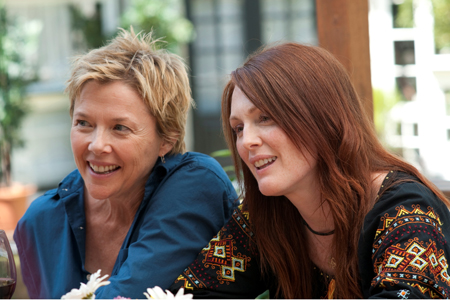
*The Kids Are All Right In many ways, The Kids Are All Right is a straightforward family dramedy: it’s about parents trying to do what’s best for their children and struggling to keep their relationship together. But it’s also a film in which Jules (Julianne Moore) goes down on Nic (Annette Bening) while they’re watching gay porn. Director Lisa Cholodenko (1998’s High Art) co-wrote the script (with Stuart Blumberg), and the film’s blend between mainstream and queer is part of what makes Kids such an important — not to mention enjoyable — film. Despite presenting issues that might be contentious to large portions of the country, the movie maintains an approachability that’s often lacking in queer cinema. Of course, being in the gay mecca of the Bay Area skews things significantly — most locals wouldn’t bat an eye at Kids, which has Nic and Jules’ children inviting their biological father ("the sperm donor," played by Mark Ruffalo) into their lives. But for those outside the liberal bubble, the idea of a nontraditional family might be more eye-opening. It’s not a message movie, but Kids may still change minds. And even if it doesn’t, the film is a success that works chiefly because it isn’t heavy-handed. It refuses to take itself too seriously. At its best, Kids is laugh-out-loud funny, handling the heaviest of issues with grace and humor. (1:47) Bridge, SF Center. (Peitzman)

*Knight and Day A Bourne-again Vanilla Sky (2001)? Considerably better than that embarrassingly silly stateside remake, though not quite as fulfilling as director James Mangold’s 3:10 to Yuma (2007) rework, this action caper played for yuks still isn’t the most original article in the cineplex. But coasting on the dazzling Cheshire grins of its stars, Tom Cruise and Cameron Diaz, reunited for the first time since Sky, you can just make out the birth of a beautiful new franchise. Everygirl June Havens (Diaz) is on her way to her sister’s wedding when she collides-cute at the airport with Roy Miller (Cruise). After killing the passengers and pilots on their plane, he literally sweeps her off her feet — thanks to some potent drugs. Picture a would-be Bond girl dragged against a spy-vs.-spy thriller semi-against-her-will — grappling with the subtextual anxiety rushing beneath all brief romantic encounters as well as some very justifiable survival fears. Can June overcome her trust issues? Is Roy the man of her dreams — or nightmares? Mangold and company miss a few opportunities to have more fun with those barely teased out ideas, and the polished, adult-yet-far-from-knowing charisma of the leads doesn’t quite live up to sophisticated interplay of Cary Grant and Grace Kelly, or even the down-home fun of Burt Reynolds and Sally Field, but it’s substantial enough for Knight and Day to coast on, for about 90 minutes tops. (2:10) 1000 Van Ness. (Chun)

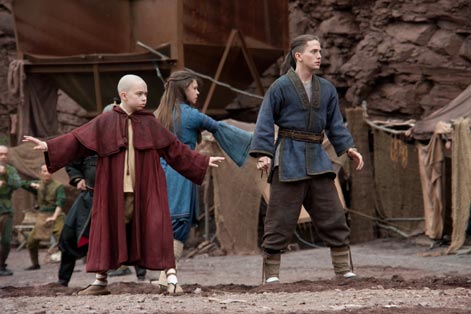
The Last Airbender There must be some M. Night Shyamalan fans out there. How else does one explain the fact that he keeps making movies? And yet, most of his post-Sixth Sense (1999) work has ranged from forgettable to downright reviled. His latest disaster is sure to fall into the latter category: in The Last Airbender, he takes a much-loved Nickelodeon cartoon and transforms it into an awkwardly paced, poorly acted mess. Woefully miscast Noah Ringer stars as Aang, the avatar with the power to end the Fire Nation’s dominion. Along with his friends, siblings Sokka (Jackson Rathbone) and Katara (Nicola Peltz), Aang must — oh, just watch the damn show. For newcomers, the film is as confusing as Shyamalan’s equally self-indulgent Lady in the Water (2006). For fans of the TV show, The Last Airbender is nearly unbearable, condensing the entire first season into one film by removing the humor, the heart, and the complexity of the characters. There’s no twist here — we expect Shyamalan to disappoint, and he does. (1:34) 1000 Van Ness, SF Center, Sundance Kabuki. (Peitzman)

Micmacs An urge to baby-talk at the screen underlines what is wrong with Jean-Pierre Jeunet’s new film: it is like a precocious child all too aware how to work a room, reprising adorable past behaviors with pushy determination and no remaining spontaneity whatsoever. There will be cooing. There will be clucking. But there will also a few viewers rolling their eyes, thinking "This kid rides my last nerve." It’s easy to understand why Jeunet’s movies (including 2001’s Amélie) are so beloved, doubtless by many previously allergic to subtitles. (Of course, few filmmakers need dialogue less.) They are eye-candy, and brain-candy too: fantastical, hyper, exotic, appealing to the child within but with dark streaks, byzantine of plot yet requiring no close narrative attention at all. The artistry and craftsmanship are unmissable, no ingenious design or whimsical detail left unemphasized. In Micmacs, hero Bazil (Dany Boon) is a lovable misfit who lost his father to an Algerian landmine, then loses his own job and home when he’s brain-injured by a stray bullet. He falls in with a crazy coterie of lovable misfits who live underground, make wacky contraptions from junk, and each have their own special, not-quite-super "power." They help him wreak elaborate, fanciful revenge on the greedy arms manufacturers (André Dussollier, Nicolas Marié) behind his misfortunes, as well as various human rights-y global ones. So there’s a message here, couched in fun. But the effect is rather like a birthday clown begging funds for Darfur — or Robert Benigni’s dreaded Life is Beautiful (1997), good intentions coming off a bit hubristic, even distasteful. (1:44) Opera Plaza. (Harvey)

Predators Anyone who claims to be disappointed by Predators has clearly never seen parts one and two in the series; all three are straight B-movie affairs (though 1990’s Predator 2 takes everything oh-so-slightly over the top. Gary Busey’ll do that). And if you’ve seen either of the recent Predator-versus-Alien flicks, Predators should feel like a masterpiece. Nimród Antal directs under the banner of Robert Rodriguez’s production company, which explains the presence of Danny "Machete" Trejo in the cast. Adrien Brody stashes his Oscar in a safe place to star as Royce, a well-armed mercenary who awakes to find himself in free fall, plummeting into a strange jungle along with other elite-forces types (including Brazilian Alice Braga, playing an Israeli soldier). It doesn’t take long before Royce realizes that "this is a game preserve, and we’re the game." I wish Predators had allowed itself to have a little more fun with its uniquely skilled characters (the yakuza guy does have a nice, if culturally-stereotyped, swordplay scene); there’s also an underdeveloped "plot twist" involving the presence of the decidedly un-badass Topher Grace among the human prey. But all is forgiven when Laurence Fishburne turns up as Crazy Old Dude Who’s Been Hiding Out With Predators a Little Too Long. Fishburne’s presence also adds to the heart-of-darkness vibe the movie seems vaguely interested in conveying. (1:51) 1000 Van Ness. (Eddy)

*Restrepo Starting mid-’07, journalists-filmmakers Tim Hetherington and Sebastian Junger spent some 15 months off and on embedded with a U.S. Army platoon in Afghanistan’s Korengal Valley, a Taliban stronghold with steep, mountainous terrain that could hardly be more advantageous for snipers. Particularly once a second, even more isolated outpost is built, the soldiers’ days are fraught with tension, whether they’re ordered out into the open on a mission or staying put under frequent fire. Strictly vérité, with no political commentary overt or otherwise, the documentary could be (and has been) faulted for not having enough of a "narrative arc" — as if life often does, particularly under such extreme circumstances. But it’s harrowingly immediate (the filmmakers themselves often have to dive for cover) and revelatory as a glimpse not just of active warfare, but of the near-impossible challenges particular to foreign armed forces trying to make any kind of "progress" in Afghanistan. (1:33) Clay. (Harvey)

The Secret in Their Eyes (2:07) Opera Plaza, Red Vic.

*Stonewall Uprising On the night of June 28, 1969, police embarked on what they thought would be a routine raid on a gay bar in New York’s Greenwich Village, the sleazy, Mafia-run Stonewall Inn. The ensuing three days of rioting — during which mostly young men and drag queens accustomed to being marginalized and hauled off to jail stood their ground and fought back — became what historian Lillian Faderman has called "the shot heard round the world" for LGBT activism: a spontaneous expression of street-level outrage that fueled the birth of a movement. Kate Davis and David Heilbroner’s solid documentary Stonewall Uprising takes a "just the facts, ma’am" approach to this historic flashpoint that makes for an information-packed, if at times dry, 80 minutes. Working around the paucity of photographic documentation of the actual riots (itself a testament to the marginalization of homosexuality in the late 1960s), Davis and Heilbroner make extensive use of period news footage and photography, reenactments, and most important, the first-person testimonies of who those who witnessed and participated in what one interviewee terms "our Rosa Parks moment." The filmmakers’ contextual groundwork is as impressive for its archival research as it is repetitive in its message: pre-Stonewall life was hell. The documentary becomes more nuanced as it zeros in on reconstructing the first night of rioting via eyewitness accounts. (1:22) Lumiere. (Sussman)

Touching Home Hometown boys (Logan and Noah Miller) make good in this based-on-a-true-story tale of identical twins who must divide their time at home between training for major league baseball and looking after their alcoholic father. The brothers, who also wrote and directed the film, aim for David Gordon Green by way of Marin, but fall short of mastering that director’s knack for natural dialogue. Ed Harris is, unsurprisingly, compelling as the alcoholic father, but the actors in the film who are not named Ed Harris tend to contribute to the script’s distracting histrionics. Touching Home has some amazing NorCal cinematography, and I could see how family audiences might enjoy its "feel bad, then feel good" style of melodrama. But while it’s awkward to say that someone’s real-life experiences come off as trite, there are moments here that feel as clichéd as a Lifetime movie. (1:48) Smith Rafael. (Galvin)

*Toy Story 3 You’ve got a friend in Pixar. We all do. The animation studio just can’t seem to make a bad movie — even at its relative worst, a Pixar film is still worlds better than most of what Hollywood churns out. Luckily, Toy Story 3 is far from the worst: it’s actually one of Pixar’s most enjoyable and poignant films yet. Waiting 11 years after the release of Toy Story 2 was, in fact, a stroke of genius, in that it amplifies the nostalgia that runs through so many of the studio’s releases. The kids who were raised on Toy Story and its first sequel have now grown up, gone to college, and, presumably, abandoned their toys. For these twentysomethings, myself included, Toy Story 3 is a uniquely satisfying and heartbreaking experience. While the film itself may not be the instant classic that WALL-E (2008) was, it’s near flawless regardless of a viewer’s age. Warm, funny, and emotionally devastating—it’s Pixar as it should be. (1:49) Empire, Marina, 1000 Van Ness, Sundance Kabuki. (Peitzman)

The Twilight Saga: Eclipse The only person more bored by the Twilight franchise than I am is Kristen Stewart. In Eclipse, the third installment of the film series, she mopes her way through further adventures with creepily obsessive vampire Edward (Robert Pattinson). Look, you’re either sold on this star-crossed love story or you’re not, and it’s clear which camp I fall into. Besides, Eclipse is at least better than New Moon, the dreadful Twilight film that preceded it last year. But the story is still ponderous and predictable — Eclipse sets up a conflict and then quickly resolves it, just so it can spend more time on the Bella-Edward-Jacob love triangle. (As if we don’t know how that ends.) Then there’s the unfortunate anti-sex subtext: carnal relations are cast as dirty, wrong, and soul-destroying. I’m not saying we should be encouraging all teenagers to have sex, but that doesn’t mean we should make them feel ashamed of their desires. And what parent would approve of Eclipse‘s conclusion? Marrying your first boyfriend at 18 — not always the best move. (2:04) Empire, 1000 Van Ness, Sundance Kabuki. (Peitzman)

*Wild Grass The premise of Wild Grass, Alain Resnais’ loopy new film, could have come straight from Nancy Meyers: an older married man finds a single, middle-aged woman’s wallet. He returns it but can’t stop thinking about her. She, in turn, is intrigued by his attentions. Both are surprised by the connection they feel growing between them, one which they nevertheless have difficulty articulating. When they finally meet, sparks fly. That purloined wallet, along with the romcom set-up, aren’t the only MacGuffins in Resnais’ Wild ride, which uses Christian Gailly’s novel L’ Incindent as a rough guide for its careening tour of the irrational courses that desire can lead us down. The man and woman in question are Georges, an embittered writer with a possibly dark past, and flame-haired Marguerite, a dentist and part-time aviatrix, both played to neurotic perfection by longtime Resnais regulars André Dussollier and Sabine Azéma. Resnais’ attempt to translate what he has called the "musicality" of Gailly’s prose has resulted in a frenetic everything-but-the-kitchen-sink approach that tries to visually approximate Georges and Marguerites’ every internal monologue, fantasy, and increasingly risky instance of impulsive behavior, throwing in some knowing winks to classic Hollywood cinema for good measure. It’s a mess, to be sure (there are even two endings!). But like Mr. Magoo, the 87-year-old Resnais, as if by some unseen hand, steers clear of complete disaster. There hasn’t been a Gallic car crash this delightful to watch since Godard’s famous pile-up in 1967’s Week End. (1:44) Opera Plaza, Shattuck. (Sussman)

*Winter’s Bone Winter’s Bone has already won awards at the Berlin International Film Festival and the Sundance Film Festival, but it’s the kind of downbeat, low-key, quiet film that may elude larger audiences (and, as these things go, Oscar voters). Like Andrea Arnold’s recent Fish Tank, it tells the story of a teenage girl who draws on unlikely reserves of toughness to navigate an unstable family life amid less-than-ideal economic circumstances. And it’s also directed by a woman: Debra Granik, whose previous feature, 2004’s Down to the Bone, starred Vera Farmiga (2009’s Up in the Air) as a checkout clerk trying to balance two kids and a secret coke habit.

Drugs also figure into the plot of the harrowing Winter’s Bone, though its protagonist, Ree Dolly (Jennifer Lawrence), is faced with a different set of circumstances: her meth head father has jumped bail, leaving the family’s humble mountain home as collateral; the two kids at stake are her younger siblings. With no resources other than her own tenacity, Ree strikes out into her rural Missouri community, seeking information from relatives who clearly know where her father is — but ain’t sayin’ a word. It’s a journey fraught with menace, shot with an eye for near-documentary realism and an appreciation for slow-burn suspense; Lawrence anchors a solid cast with her own powerful performance. Who says American independent film is dead? (1:40) Embarcadero. (Eddy)

REP PICKS

*Beyond the Doors and Bigfoot This double bill in the middle of the Vortex Room’s conspiracy-focused schedule of Thursday screenings offers musings on some favorite 1970s subjects for paranoid speculation. "Our assignment: neutralize the three Pied Pipers of rock n’ roll music," recalls a government operative near the beginning of Larry Buchanan’s Beyond the Doors. Upset at Vietnam protests and drug culture, President Nixon hits on the logical solution: Jimi, Janis and Jim (Morrison) must die. Made in 1984, this late effort by Southern cheesebagger Buchanan followed three decades of such titles as Naughty Dallas (1964), Zontar: The Thing from Venus (1966), Mars Needs Women (1967), and The Loch Ness Horror (1981). Having achieved modest box-office success with his tabloid-tenored 1976 take on Marilyn Monroe, Goodbye Norma Jean, Buchanan applied the same delicate brushstrokes to this dramatized imagining of what really happened to acid rock’s martyred holy trinity. Actor "discoveries" Gregory Allen Chatman (Hendrix), Riba Meryl (Joplin), and Bryan Wolf (Morrison) were, not entirely surprisingly heard from again, though the various approximations of those musicians’ sounds could be worse. In the second half of the Vortex Room bill, John Carradine helps helps various bikers, rednecks, and cops investigate the abduction of underdressed white-meat babes which Bigfoot (or rather, several Bigfoots … or is that Bigfeet?) kidnaps to chain up in a cave so that they might squirm and scream in their bikini briefs. (The original ad line was "Breeds with anything.") Leading victim is 1950s starlet Joi Lansing, a Mormon-raised Monroe wannabe whose prior career highlights were a brief run on The Beverly Hillbillies, bits in studio features and leads in Z-grade films like the glorified ’67 country-music concert compendium Hillbillies in a Haunted House. This being a 1970 drive-in feature (by Robert F. Slatzer, who’d made the rather stupendously bad 1967 Hellcats), naturally a biker club rides to the eventual rescue, pitting one group of hairy primitives against another. Add Faster, Pussycat! Kill! Kill! (1965) star Haji, Elvis bodyguard Del "Sonny" West, some hoary Hollywood veterans, and lesser Mitchum family members, and you’ve got one weird time capsule. Thurs/15, 8 p.m., $5, Vortex Room, 1082 Howard, SF; www.myspace.com/thevortexroom. (Harvey)

Get rid of the water bond, now

0

OPINION A Field Poll released last week showed decent support among progressives for Proposition 18, the $11 billion water bond on the November ballot. We shouldn’t let the bond’s cheery name fool us. Prop. 18 is a con job.

Sold as the Safe, Clean, and Reliable Drinking Water Act, Prop. 18 has been getting a lot of press recently for the “pork” that was added to it to gain votes when it went before the Legislature last November. But for progressives, the real concern isn’t the pork; it’s the other meat in the bond. Prop. 18 would maintain a status quo that’s bad for our budget and water supply.

With polls showing lagging support for the bond, Gov. Schwarzenegger asked the Legislature to delay the measure until 2012. Bay Area residents have nothing to gain from the measure — this year or in two years. We need our legislators to fight for the bond’s termination, now.

Prop. 18 provides a $2 billion downpayment for a peripheral canal to send more water from the Sacramento Delta to deep-pocketed interests to the south. In 1982, Northern Californians overwhelmingly rejected the peripheral canal; we should do the same with the bond. The Westlands Water District, Beverly Hills billionaire-owned Paramount Farms and other megafarms stand to gain immensely from any additional water these projects might bring. The Bay Area does not.

Worse, some of these landholders skip farming altogether in order to resell the water we’ve subsidized at a huge profit to real estate developers. They pay about $25 to $50 per acre-foot of water, but can easily resell the water for over $200 per acre-foot. Corporate giant Cargill is looking to buy water from landowners in Kern County to supply its proposed 12,000-unit housing development on bay salt marshes in Redwood City.

The meat of Prop. 18 is $3 billion for the construction of more dams, an expensive and inefficient way to manage water. California’s rivers already have hundreds of dams. The water that evaporates from them each year is enough to supply 4 million people.

With interest, Prop. 18 would add $24 billion in debt to the state’s General Fund — roughly $16 million a week for 30 years. Already facing a $19 billion deficit, California has made drastic cuts to vital public services like education, housing, and healthcare — and this bond will make things worse.

Although there is some money in the bond for projects that could actually benefit us, it’s too little, too late. And the state still has $7 billion available from past water bonds that has not been spent. When the Legislature passed a bill in 2009 to invest that money in regional water projects, the governor vetoed the bill. The same will likely be true here. And even if we do see that money someday, will the trade-offs be worth it?

There is no question that California needs to invest billions in rebuilding and upgrading our vital water infrastructure. Here in the Bay Area, we are already spending billions on rebuilding our sewer and drinking water systems. Unfortunately, the bond provides only a trickle of money for such important investments or to boost conservation and efficiency in the urban and agricultural sectors. It’s no wonder that the Sierra Club, Food & Water Watch, San Francisco Baykeeper, Clean Water Action, the California Teachers Association, and United Farm Workers all oppose the bond.

Fortunately, state Sens. Mark Leno, Leland Yee, and Ellen Corbett and Assembly Members Tom Ammiano, Loni Hancock, and Nancy Skinner all voted against placing this bond on the ballot. We now need them to step up and urge their colleagues not just to delay but to repeal this bond, now. *

Elanor Starmer is the western region director for the consumer advocacy nonprofit Food and Water Watch (www.foodandwaterwatch.org).

Board votes on Candlestick-Shipyard project EIR appeal today

3

All images by Luke Thomas

The Chronicle’s suggestion that the city’s massive Candlestick-shipyard project may be facing smoother sailing seems like wishful thinking to those who attended a July 12 noontime rally that was organized by POWER (People Organized to Win Employment Rights) and featured two Louisiana-based advocates who protested the project’s EIR and shared many of the longstanding concerns about project cleanup, infrastructure and financing.

The Chronicle was of course referring to five amendments to the city’s massive redevelopment proposal that Board President David Chiu introduced during yesterday’s July 12 meeting of the Board’s Land Use committee. The Chron interpreted these amendments as a sign that Chiu plans to approve the project’s environmental impact report, which comes before the Board today, after several groups appealed the final EIR that the Planning Commission approved last month.

But while city officials fear the developer will walk, if the Board does not approve the final EIR, some environmental advocates hope a better plan could be reached.

At POWER’s July 12 rally, nationally acclaimed environmental scientist Wilma Subra called on the District Attorney’s environmental justice department to “step up.” Subra claimed that the project’s final EIR “failed to evaluate and assess the cumulative impacts of exposure to children, adults and the environment as a result of exposure to all of the chemicals at the site.”

Monique Harden, co-director and attorney for Advocates for Environmental Health Rights (AEHR) of New Orleans, Louisiana, pointed to “deep flaws in the environmental regulation system,” as a reason why low-income communities of color should be concerned about the proposed plan.
“Why in the middle of an environmental crisis caused by BP in the Gulf am I coming to San Francisco?” Harden asked. “Because San Francisco is providing unequal environmental protection to its residents. As a resident of New Orleans, I’m concerned that San Francisco is careening towards making a decision that can crush the future of Bayview Hunters Point,”

But as local Bayview resident Jose Luis Pavon began talking about seeing gentrification occur in his lifetime within San Francisco, he and others got shouted down by a group of yellow and green-shirted project supporters, who were led by a guy calling himself Bradley Bradley and Alice Griffith public housing resident Stormy Henry.
“This is the devil’s trick in the last hour,” Henry said of the POWER rally.

Henry shared her heartfelt belief that if the Board approves the project’s final EIR, she and other Alice Griffith residents will get desperately needed new housing units. even if it takes some years to build them. Others in her group were unable to answer media questions: they had difficulty speaking in English, but were clutching neatly written statements in support of the project that they later read aloud at the Board’s Land Use Committee hearing.

As these project supporters prepared to move inside to attend the Land Use Committee meeting and lobby supervisors for their suppor, D. 10 candidate Tony Kelly shared his concerns that the Navy has a demonstrated history of finding nasty things at the shipyard years after they say everything’s clean, and that this pattern could jeopardize the plan.

“This happened at Parcel A,” Kelly said, referring to the first and only parcel of land that the Navy transferred to the city for development in 2004. “Since then, Parcel A has gotten smaller and as they found stuff on sites they then renamed as new parcels, like UC-3, which has radiological contamination in a sewer line that goes into the Bayview. So, that means the contamination is now in the Bayview.”

Kelly is concerned that the city is trying push through EIR certification before the Navy completes an environmental impact statement (EIS) related to shipyard cleanup activities. “The EIS is supposed to go before the EIR, as far as I know,” Kelly said

At the Land Use Committee meeting, Sup. Sophie Maxwell, whose district includes Candlestick and the Shipyard,said, the project was about “revitalization and opportunity.”

She noted that the certification of the project’s final EIR has been appealed to full Board’s July 13 meeting. She further noted that she intends to introduce legislation next week to address concerns that Ohlone groups have expressed.

The next two hours were full of testimony from a bevy of city officials, beginning with Michael Cohen, Mayor Gavin Newsom’s top economic advisor in the Office of Workforce and Economic Development.

“Every single element [of this project] has been discussed and debated at countless meetings,” Cohen claimed, as he sought to quell fears that the community had not been properly consulted with over the plan. “As we get closer to a vote, all of a sudden pieces of paper start circulating, criticizing project and suggesting that community involvement just began,” he continued. ” That’s factually untrue.”

He also sought to reassure the supervisors that the Board will have a say-so as to whether the city accepts early transfer of shipyard parcels from the Navy.
“Neither the city nor the developer have any specific authority over the cleanup,” Cohen said, noting that the cleanup is governed by specific rules set out in CERCLA [Comprehensice Environmental Response, Compensation and Liability Act, aka Superfund].

“Regardless of what we do, CERCLA will continue to be the regulatory tool,” Cohen said. ” I urge you not to be confused by CEQA and CERCLA.”

So, how can the city implement Prop. P, which voters overwhelmingly supported in 2000, urging the Navy to clean up the shipyard to highest attainable standards.
“Prior to any transfer, US EPA and DTSR have to concur in writing that the shipyard is safe,” Cohen explained, noting that, thanks to Speaker of the House Nancy Pelosi, the Navy has already spent over $700 million on shipyard cleanup efforts.

“We have 250 artists at the shipyard….but not a shred of scientific evidence to say that the shipyard is not safe,” Cohen claimed. “It’s safe to develop the shipyard in precisely the manner we are proposing.”

When Sup. Eric Mar raised the question of radiological contamination on Parcel UC-3, Cohen downplayed Mar’s concerns.
“The exposure levels are lower than watching TV,” Cohen claimed. “The primary source is very low level radiation from glow-in-the-dark dials.”
Indicating a map that showed a network of old sewers (in blue) and old fuel lines (in red) under the entire development area, Cohen said, “The radiological contamination that has and will be addressed at the shipyard is quite low level. You have radiation, you get nervous. We asked EPA to come out and do a scan to deal with the issue.”

IBI Group’s David Thom, the lead architect and planner for the project said the plan is designed “to connect new development back into the Bayview.”
“And this plan connects the Bayview through to the water.”

Tiffany Bohee, Cohen’s deputy in the Mayor’s Office of Economic and Workforce Development, insisted that project’s proposed bridge is better than Arc Ecology’s proposed alternative route, which would not involve constructing a bridge over an environmentally sensitive slough.
“The non-bridge route increases the number of intersections,” Bohee said, seeking to turn an environmental question (the impact of bridge on wildlife and nature experience) into a public safety issue.”
She claimed the BRT route over bridge was 5-10 minutes faster than Arc’s proposed alternative, “because there are fewer turns, it can go at higher speeds.” But Arc’s studies suggest the BRT route over the bridge is only a minute faster, and would cost over $100 million.

Bohee noted that $50 million from the sale of 23 acres of parkland for condos at the Candlestick Point State Recreation Area (CPSRA) will be “set aside for the state, and won’t be able to be raided by the city,” with $40 million going to improvements, and $10 million to ongoing operation and maintenance costs.

She also cited additional benefits that the project would bring to the community, including thousands of construction job opportunities.

“We are working with City Build to make sure they are for local residents,” Bohee said.“And there is absolutely no displacement for the rebuild,” Bohee continued referring to proposal to place current Alice Griffith public housing iresidents n new units, on a 1-1 basis

Eric Mar said he was impressed by many elements of the plan, but continued to express reservations.
“I’m still concerned that is seems to serve newcomers as proposed to existing residents,” he said. “And I’m still not convinced that the bridge is the best for existing residents.”

Rhonda Simmons, who works in Cohen’s Office of Economic and Workforce Development,  tried to flesh out details of the project’s job creation promises.
“The most immediate workforce is related to the construction site, and as you know, this project goes over a 15-20 year span,” Simmons said, pointing to green tech and retail as job opportunities that will exist once the project is built.

Mar expressed concern that the jobs may not be at the level of D.10 residents
“How is this gonna bring their skill level up?” he asked.
“The idea is that training gives first level entry at a variety of building trades,” Simmons said, pointing to the project’s large solar component.

“What about women?” Sup. Maxwell asked
Simmons pointed to retail opportunities,
“The idea of the training is to give folks job readiness skills, like getting there and showing up on time,” she said

Mar wanted to know who would have oversight of monitoring and compliance.
“In the city we have a tapestry of folks who do contract compliance,” she said. “The oversight will come from a variety of places.”

After Kurt Fuchs of the Controller’s Office listed the estimated economic benefits of the project, Board President David Chiu observed that the city is “at a crossroads.”

“I do not plan to prejudge,” Chiu continued, as he introduced his five amendments to regulate the Parcel E-2 cleanup, the size of a proposed bridge over the Yosemite Slough, expand healthcare access in the Bayview, create a workforce development fund and lay the groundwork for bringing public power to the project.

During public comment, Bayview resident Fred Naranjo pleaded for project support.  

“Please don’t let the train leave the station,” Naranjo said. “If Lennar leaves, the Bayview will never be developed.”

And Tim Paulson, executive director of the San Francisco Labor Council expressed hope that an agreement was getting closer.
“There really is a path to getting this done,” Paulson said. “This really is a model project in many ways for the rest of the United States.”
But D. 10 resident Linda Shaffer with the Yerba Buena chapter of the California Native Plant society indicated the huge pressure exerted on folks to support the project
“I do not want to be classified as an opponent, but we have concerns,” Shaffer said, noting that her group has filed an appeal of the project’s final EIR.

And while the Sierra Club’s Arthur Feinstein thanked Chiu for proposing to reduce the size of the bridge, he pointed out that Chiu’s amendment wasn’t really a compromise.
“That’s because it’s still a bridge,” Feinstein said, as he explained how noisy the area surrounding the slough will become as traffic whizzes by.

Connie Ford of the Labor Council accused some project critics of being “disrespectful.”
Ford took particular issue with claims that the project will gentrify the area
“The neighborhood is changing,” she said. “Since 1990, African American families have been leaving the Bayview in huge numbers. I encourage you to see this project as a good plan.”

Gabe Metcalfe of SPUR expressed his unconditional support for the plan,
“This plan is being asked to fix a huge number of problems,” he said.
Noting that the bridge continues to be a sticking point, Metcalfe said he sees opposition to every transportation project these days.
“We seem to be in a moment when you can’t build anything without it being opposed.”

But other speakers from the Sierra Club reiterated their stance that there are better and viable options to the bridge, noting that it is too costly, and that the surrounding community and wildlife would be better off without it.”

All these competing viewpoints suggest that whatever decision the Board makes today, it will take some time and create plenty of uproar. So, here’s hoping the Board votes in a way that will truly benefit the D. 10 community, not career politicians, city officials and out-of-state developers. It’s about time.

Buyer beware of Candlestick-Shipyard project

0

Board President David Chiu has introduced five amendments to the city’s Candlestick Point-Hunters Point Shipyard redevelopment proposal. All five are a good start, but longtime observers question if they are too little, too late, in the face of intense lobbying by a city and a developer intent on getting project approvals before a new Board and possibly a new mayor occupy City Hall in January 2011.

Chiu’s amendments address key concerns with the city’s proposed redevelopment plan, and they come as the Board prepares for its July 13 hearing into three separate appeals of the project’s final EIR certification, as well as amendments to the Bayview Hunters Point and Shipyard redevelopment plans.

Two of Chiu’s amendments seek to address concerns about the clean-up of radiologically impacted waste at Parcel E-2 on the shipyard, and environmental impacts of a proposed bridge over Yosemite Slough.

Chiu’s other three amendments seek to finance the expansion of the Southeast Health Center, create a workforce development fund and analyze the feasibility of providing public power, including natural gas at the site.

But while all five amendments are welcome, some observers worry they do not fully address concerns about the project’s sustainability, financing and infrastructure.  But before we get to those concerns, let’s review Chiu’s five amendments in greater detail:

1. The Parcel E-2 amendment.
This amendment declares that the Board’s adoption of CEQA findings for the project “shall not in any way imply support of a cap for Parcel E-2.” 

As such, this amendment is a critical step towards insisting that the parcel get completely cleaned up, not just capped, as the Navy is currently proposing. On the other hand, it’s not a watertight demand to excavate and haul away all contamination from this parcel, which is the cleanup alternative that many in the community would prefer..

Instead, Chiu’s Parcel E-2 amendment declares that the U.S. EPA, California EPA and the Navy, “should pursue the highest practicable level of cleanup for Parcel E-2.”
And that the San Francisco Redevelopment Agency “should not accept the property unless and until that cleanup is satisfied.”

It also establishes that the Board shall conduct a hearing regarding final cleanup strategies for Parcel E-2 before a final remedy is selected, urges the U.S. EPA, California EPA and the Navy to participate in such a hearing, and further establishes that the Board shall conduct a separate hearing prior to any transfer of Parcel E-2 to Redevelopment.”

(There was some question as to why the Board was saying “should” in some parts of this amendment, and “shall” in others. The reason I heard was, you can’t force the Navy to do anything, but you can urge them, and you certainly can refuse to accept the property, if it is not cleaned up a city’s requirements.But this needs to be clarified.)

2. The Yosemite Slough Bridge amendment
Chiu notes that the city’s EIR for the project analyzed a non-49ers-stadium alternative that “includes an approximately 41 ft. wide bridge spanning the Yosemite Slough which is limited to bike, pedestrian and transit use.”
“However, in the event the San Francisco 49ers elect to build a new stadium on the shipyard site, the project will include a bridge spanning Yosemite Slough that is wider than 41 ft. across to accommodate game-day traffic,” Chiu’s amendment states.
(So, Chiu’s amendment doesn’t throw the bridge entirely out with the 49ers’ stadium, and that leaves environmental groups uneasy, afraid that the anticipated 25,000 new residents in the proposed development will subsequently push for legislation to allow for a wider, car-accessible bridge.)

3. The Southeast Health Center amendment
Chiu’s Southeast Health Center amendment demands that the developer contribute $250,000 to the Redevelopment Agency for a needs assessment study regarding the need to expand the center and the ongoing health needs of local residents, and, to the extent such expansion is needed, to help pay for predevelopment expenses associated with this expansion.
The capital costs for expanding the center would be funded through a combination of  tax increment dollars, a $2 million Wellness Contribution paid by the developer, and the City’s ability to finance savings that would accrue to the Department of Public Health by moving from leased space into owned space at the expanded center.

4. The Workforce Development Fund amendment
Chiu’s amendment would modify language in the current community benefits agreement to require the developer to contribute $8,925,000 to a workforce development fund to be used for programs “designed to create a gateway to career development, fiirst for residents of District 10 and secondly for “at-risk job applicants.”
(A member of the public suggested that veterans be specified as “at-risk job applicants,” an idea D. 10 Sup. Sophie Maxwell seemed to support during yesterday’s July 12 Land Use Committee hearing, which was where Chiu introduced his five proposed amendments.)

 5. The Public Power amendment 
Chiu’s public power amendment notes that the SFPUC confirmed the feasibility of providing electric service to the shipyard sire, but requires the agency to update this study and include the Candlestick site and include “an analysis of the feasibility of providing natural gas to the project site.”

But will these steps be enough to ensure that the development actually delivers on its promises of thousands of jobs, and hundreds of affordable housing units,? And is a bridge really necessary across Yosemite Slough, if the 49ers go to Santa Clara as planned?

Long-term observers of the project point to the first phase of the project, which began on the shipyard’s Parcel A, as a warning of where things might end up.

“We approved the fast-tracking of Parcel A based on a bevy of assurances and enthusiastic endorsements from the best and brightest this administration has to offer,” said a source who wishes to remain anonymous. “But what has happened since then, and what are we to learn from this experimental test case?”

This source noted that recent maps of the shipyard show that Parcel A, which the Navy conveyed to the city in 2004, has since been carved up into several new pieces.

“How did Parcel A get divided into two areas that don’t even border one another?” my source asked.

The answer appears to be that sections of the shipyard, including Parcel A,  have since been renamed as new and separate parcels, after it was discovered that shipyard sewers on those parcels contained radiologically contaminated material.

One of these sewer lines, as indicated on recent project maps, leads from a site now known as Parcel UC-3, into the Bayview. In other words, it appears to lead off the shipyard site and into the surrounding community. If so, this raises concerns that shipyard contamination is no longer limited to the shipyard in the Bayview, and could be impacting residents and businesses that are not covered by the Navy’s clean-up commitments.

Either way, it seems that the Board could use an update on what happened on Parcel A, since it was conveyed, what’s the deal with UC-3, and other recently renamed parcels, before they consider an early transfer of the rest of the shipyard.

“How can we start Phase 2 of the project, when we haven’t completed Phase 1?” my source asked.

And since the Navy is still tasked with cleaning up the rest of the shipyard parcels, it would be helpful if the Navy updated the Board on what the Navy is proposing in its Records of Decisions for each of these parcels, including UC-3, before the Board votes on Phase 2 of the project.

My source also noted that since the project plans to use 100 percent recycled water at the site, it would be helpful to have an update as to how issues with sewer contamination and groundwater concerns might impact the project’s sustainability plans.

“These issues touch on half of the documents that make up the EIR, but are now obsolete, because of the issue of radioactive contamination on UC-3,” my source claimed.

And then there’s the question of fproject financing and who the developer for the project actually is, these days.

“The city’s exclusive negotiating agreement (ENA) was with Lennar, so who is CP Development and why do we have an ENA with them?” my source asked.”What happened to Lennar? And why would we be obligated to negotiate solely with this CP Development group?”

Now, hopefully the Board has greatly reassuring answers to all these questions, so that the community can rest assured that the supervisors really do understand the ramifications of a project that they are being asked to approve in what appears to be an awful hurry.

Yes, there are plenty of project supporters who keep on urging “no delays.” I understand their concerns. They want jobs, housing, parks and other promised community benefits. And I don’t blame them.

But it’s up to the Board to ensure that it doesn’t get rushed into approving a project that perhaps doesn’t guarantee any or all of these things. So, let’s keep asking questions so the Board of Supervisors doesn’t end up with buyer’s remorse, but instead can truly claim to having secured a deal that really helps all the folks who currently live and work in the city’s southeast sector. Stay tuned.


T


Lisa Cholodenko on “The Kids Are All Right”

0

Writer-director Lisa Cholodenko earned attention with critically acclaimed features like High Art (1998) and Laurel Canyon (2002). Her latest movie, The Kids Are All Right, is a “personal film” about a lesbian couple raising teenagers. I spoke to Cholodenko about queer politics, explicit content, and keeping things lighthearted.

San Francisco Bay Guardian: Recently, there was a lot of controversy surrounding a Newsweek article, in which the author wrote about the difficulty of queer actors playing straight roles. I was wondering about your take on that, and on the opposite — straight actors playing queer roles. Is that something you even considered when casting?
 
Lisa Cholodenko: I’ll be honest, I was just told about this article and I didn’t read it. You know, I think it’s kind of weird thing to even discuss in a way, to me. Chiefly because I think actors’ personal lives — I just think people should have a private life, not that they should be in the closet, but that there should be a separation between professional life and personal life. And if a director feels like so-and-so, whether they’re gay or straight, would be good for a role, give them the role. What does it matter? As it turns out, I think gay people have more of an affect, whether they’re lesbians or gay men, that’s harder to camouflage in straight roles. Why that is, I mean, you could talk about that. I think it’s easier to go the other way. That’s just what it is. I say that without a value judgment. It is what it is.

SFBG: The Kids Are All Right has a same-sex relationship, of course, but it also has a fair amount of graphic sex and even a snippet of hardcore gay porn. Do you think it will shock a mainstream audience? Are they ready for it, and does that matter?

LC: I think it’s shocking in a sense that it’s portrayed in such a real way, that it’s not super arch, or it’s not like The L Word. This stuff has been on TV and in films. In a way, I’m not inventing the wheel at all. But I think the package that it’s coming in is going to be disarming to people. I think we tried and I think we were somewhat successful in making it so that you don’t realize exactly what you’re watching, the subversiveness of what you’re seeing. You can settle into watching it without that kind of discomfort of being super aware of, “This is something I’m not. I’m other and this is not my thing.” I think we figured out a way for people to enter it, and that was really important for us.

SFBG: I ask because I do feel like this shouldn’t be a big deal, that people should be able to handle it. And yet, the night before I saw your movie, I saw Sex and the City 2, in which there was a gay wedding. And as soon as the two men kissed, the camera cut away. There’s a lot of intimacy between Nic and Jules in the movie, so I was wondering particularly about that. Are people outside of San Francisco going to be apprehensive?

LC: Yeah. You know, I think we didn’t really know. I think we tried to write it and I tried to direct it in a way that the humor would be disarming enough, and the images themselves, if you really deconstruct it, would be tame enough. So it was more the suggestion of it. That would be the kind of twist. The people in the know would get it more than the people that were not in the know, maybe. I think we hoped that it would have a mainstream appeal to it, and that we could get beyond the people who would be apprehensive. There were questions about the gay porn and about how much sexuality we were showing, but we felt like, this is the fun of the film. It’s not going to be Spider-man 12 or something. It’s not going to be a multiplex film. But we hope it’s not going to be super rarefied art house film. So in terms of the Sex and the City thing, I think that they’re looking to go as wide as humanly possible, to every grandmother to every neck of whatever, so you can only take it so far.

SFBG: I want to touch on the humor that you mentioned, because I think it’s one of the movie’s real strong points. It’s so funny. What was your approach when you were co-writing to keeping the drama of the story but still making it fun?

LC: It was like a process, it was a real evolution. We had sort of a plot, a conceit for how the plot comes together, which was this thing about the kind of doofus friend wanting to watch the DVDs, and finding the porn, and blah, blah, blah, blah. So that all was funny, and then the kind of awkward conversation about trying to tiptoe around trying to figure out if their kid was gay, and that they would even care that the kid is gay, and how ironic that two gay moms are going to care that there kid is gay. And all that stuff. So it made us laugh, but there was a lot of other stuff in there that we took a lot more seriously and played a lot more seriously. I think as we went deeper into the drafts and moved along in the evolution of getting the film done, I really, really, really pushed for us to take whatever was potentially funny in there and just kick it up a notch. Stuart [Blumberg, who co-wrote the film] is a really funny guy — we have a similar sensibility. The same kind of stuff makes us laugh. So we knew if we were sitting there writing it and laughing, it was good. We had kind of gotten there.

SFBG: I think a lot of the humor comes from the fact that the film is so real and grounded. You have Laser, a 15-year-old boy, who talks like a 15-year-old boy, and that’s something we don’t always see in movies. And so it’s not stereotypical or preachy—it feels more organic than that.

LC: Yeah, we were really passionate about making it not politically correct and not sanctimonious and not super earnest and just hoping that there would be heart in it, simply because these were sympathetic and three-dimensional characters in a difficult situation.

SFBG: I wanted to ask about the character of Nic [played by Annette Bening], who could have been played very typically butch, because she has a masculine name and short hair and these traditionally “male” qualities. In terms of the writing and the directing, how did you make sure there was more complexity there?

LC: You know, I think that wasn’t super overdetermined. It’s really just kind of my worldview. I don’t live in a world where people are super stratified. I don’t feel like my partner and I are super — I kind of see the butch and femme in every lesbian I know. I know that there are lesbians who really kind of identify with that, and that’s there thing in the world, and that’s good. But it’s a personal film, so it’s written from my worldview. So there’s that, and then there’s also, you get Annette Bening and you get Julianne Moore, and they come with their own essence and personality. Julianne Moore has some butch in her and Annette Bening has some femme in her. They are who they are.

SFBG: There’s a great conversation early on in the film about the spectrum of sexuality and how it’s not so easily defined, which ties into Jules sleeping with a man. Were you concerned about an audience’s reaction to a lesbian having sex with a straight guy?

LC: I mean, it was a concern for me, but I felt like, you know what, oh well. I might be nailing the coffin. It might just be a bad choice. But in essence, the whole plot of the film revolves around that, so it was either, ditch the film or run with it and try to make it feel earned and interesting and viable and what not. In the early drafts I would show people — and when I started getting feedback in the early drafts, and “This is good,” I stopped being so uptight about that and just let myself kind of take it to the next place.

SFBG: It wasn’t an issue for me, but I think for a lot of people, they expect more rigid definitions. We don’t see a lot of queer characters on screen, and so when we do, many want them to be perfect: the queer voice, the lesbian, the gay man. And when they step outside those boundaries, suddenly it becomes an issue, politically.

LC: The calculated thing was that, I thought, a) I identify with this. This is something that I feel like, that makes sense to me. That makes sense to people I know. That makes sense to whatever. So it didn’t feel like some weird kind of conceit that I came up with that was like, that never happens. All lesbians are rigidly this and don’t go over that boundary. Because we know that’s not true. So there was that, and then I thought, I like this set-up and I like this plot, and also I feel like, it’s kind of an interesting intermingling of straight and gay. I felt like, if I really want this to be a mainstream film, that’s good. This is really inclusive of gay and straight, and I like that. I like that personally and I like that for this film. I was much more interested in reaching out to the male population than I was concerned about alienating a sector of the lesbian population.

SFBG: I wanted to talk about the title, The Kids Are All Right, and that focus on the children. How did the title come about? How do you feel about the role the kids play, and why is that central to the film?

LC: The film is about, you know, these women and their experience making a family. The family. The man who comes in and wants to be part of the family. Really when you’re talking about the family, it’s about the life of the kids. So it’s sort of an ironic title, in the sense that the kids are kind of doing better than the moms, in a way. And it’s also a kind of a wink to the notion that gay people can’t raise healthy, psychologically healthy children. Like, the kids are fine. Don’t worry about them. They’re just right.

SFBG: You talked a bit about what Annette Bening and Julianne Moore brought to the film, but I was wondering if you could elaborate on casting.

LC: Julianne was someone I had probably 10 years ago, just at some function somewhere. We had spoken about wanting to work together at some point. She was a fan of the first film that I made, High Art, and I was always a fan of hers, particularly in Boogie Nights (1997). So when Stuart and I wrote this, we asked ourselves several times, could Julianne play this part or that part? We were sort of on the fence. We thought she could play either part. So I sent it to her and I said, “Which part would you like to play?” And she picked Jules. Which, we weren’t surprised. We knew she’d want to play that part, but I thought I’d offer her the other one if she wanted it. And that was great.

Then finding her counterpart, the Nic character, was more difficult. It was kind of vexing. I just didn’t know what actor in that age group who had great acting chops, who was funny and dramatic and sexy, could be a good match for her. But when I stumbled on the idea of Annette Bening, I kind of got rabid about it. OK, this is it, this is the only person who can do it. So come hell or high water, she’s gonna do it.

SFBG: And then in terms of the younger actors — you don’t always see teenagers who actually look like teenagers.

LC: Well, they’re pretty close to the ages they’re supposed to play. Mia [Wasikowska] was like 19 at the time, and Josh [Hutcherson] was maybe 16, going on 17. So they were pretty close. Mia was someone that I had seen on an HBO series called In Treatment and thought she was interesting. I liked that she was Australian, not a typical American young actor, from LA or New York and wouldn’t have that baggage or affect that you might find in a lot of young actors from here. And he — I didn’t know his work, but I knew that he had done a lot of work. I was told he was an up-and-coming actor, so I was open to meeting him as well as other people, but when he came in and did the scene, it was just one of those things where you go like, “Oh, yeah.” I thought maybe Laser would be more of a Paul Dano-type kid, a little bit more twee, but when I saw him, I thought, oh, that’s good. He should be more boyish and more kind of robust, and just like a dude. I like that.

SFBG: There’s a lot of subtlety in The Kids Are All Right. I liked Nic’s drinking, which was fairly underplayed but came up several times. What was the thought process behind that? Does she have a drinking problem, or is that just the manifestation of the turmoil going on in her family?

LC: I think we felt like, oh, you know what? She’s kind of borderline. She’s a little bit of a lush. She’s kind of leaning on the wine too much, and this has become a thing and the other partner is now noticing. She’s drinking too much and she’s a stress case and she’s not dealing with it very well. She doesn’t have a good off valve. I think we tried to design it in a way that it felt like, this is something that’s coming to a head in their relationship. One partner’s seeing a behavior that’s making her concerned and the other one doesn’t want to deal with it yet, and she’s boozing it up.

SFBG: It’s also interesting because it’s easy to label Nic the control freak. But here’s Nic, who can’t control her drinking, and Jules, the free spirit, trying to get her to keep it in line.

LC: Right, right, right. Well, I felt like everybody has their ironies and contradictions and stuff. It’s endemic, I think, in all long-term relationships.

SFBG: There was another relationship that interested me, which was the relationship between Paul [Mark Ruffalo] and Tanya [Yaya DaCosta]. I was wondering if it was significant that it was an interracial relationship. In the sense that, 40 years ago, audiences might have been shocked by an interracial relationship, but now it plays naturally — and hopefully, the same will be true of same-sex relationships. Was that intentional, or am I reading into things too much?

LC: You know, I think it wasn’t totally consciously mediated, but at a certain point when I was thinking about casting, I had Erykah Badu in my mind for that role. I felt like, who’s the kind of person who Paul would be with? It seems like he’s the kind of guy who would be running after the most exotic person. That character to me was sort of gorgeous and exotic and whatever. And then, to go from that to Jules, who is totally exotic in her own way, because she’s who she is and she’s older and she’s beautiful and she’s a lesbian. It was this kind of motif of like, what’s exotic? The Tanya character, the black character, is clearly in love with him and would be devoted to him in a heartbeat. And the white character, who’s a lesbian and completely inaccessible, is not available at all.

I guess the second part to that question is, at a certain point when we were putting this together was, it’s not only that, in terms of the psychology of the character, but I think this is good to mix it up. You know, he’s screwing this black woman, and OK, compare that to the lesbians watching gay male porn. This is what people do in life. It’s not just white people and straight people. It’s mixed up.

The Kids Are All Right opens Fri/9 in San Francisco.

The Inkwell

0

Rating: C

Located next to Samuel P. Taylor State Park, which was recently saved from closure, the Inkwell is The Bay Area’s only creekside skinny-dipping hole, although it gets far more nonnude users than nudists. A local favorite among teens and hikers, bicyclists sometimes use the Lagunitas site as a stop-off point too. A few “dippers” are seen from time to time at the Inkwell, which takes its name from two water-filled, stone “wells” that are used for swimming by local residents.

Legal status:

Private property next to Samuel P. Taylor State Park.  Threatened in 2011 with closure due to lack of funding, the park’s demise was prevented when the National Park Service agreed to take over SPT’s security and operations.

How to find it: 

Take Sir Francis Drake Boulevard west through San Anselmo, Fairfax, and San Geronimo to Lagunitas.  After passing Lagunitas you will soon (1.5 miles later) come to the green Shafer Bridge.  Park on the other (west) side of the bridge as soon as it is safe to do so and where parking is allowed.  Walk back to the bridge.  Take the trail that starts 15 feet east of the bridge.  Access is also available from Taylor from various trails.

The beach: 

The site’s stone tubs really do resemble inkwells.  From the bridge, the first one you come to is a six foot deep pool that measures about 15 by 20 feet.  Some 10 feet away from it and to the left is a smaller pool that’s maybe 20 feet deep.  The water’s pretty cool.

The crowd: 

The Inkwell is often deserted. In the past, when in use, there were usually a few visitors to 25, with 8-12 being typical. One reader counted 14 visitors, split evenly between the sexes on a warm weekday. Percentage of nude use varies, but is usually tiny.  

Problems: 

No parking and no trespassing signs posted; cold water; rocks obscured by water; difficult parking; jumping off rocks into water not advised.

Ariel, part 2: Think Pink!

0

MUSIC Ladies and gentlemen, meet the real Ariel Pink.

The Los Angeles musician’s first few 2004-06 releases on Animal Collective’s Paw Tracks label were the stuff of indie water cooler infamy, but they also collected recordings (2002’s House Arrest and Lover Boy; 2003’s Worn Copy) that Pink had made years before. It wasn’t until early 2009 that the world had the chance to hear any new output from the notoriously mysterious musician.

Until then, the talk about Pink largely focused on how serious he was — or wasn’t. Built from lengthy experimentation and goofy gimmicks, such as drum noises made with his armpits, his lo-fi music wasn’t just a byproduct of bedroom recording, it was a reimagining of 1970s and ’80s radio jingles and easy listening sounds. Jingles are disposable by definition, yet anyone familiar with some from the ’70s has to admit they are designed to remain in your brain. They were touchstones for the young Pink, and through a love for them, he picked up a knack for great hooks and memorable choruses.

Catchy though they may be, the repetitive nature of Pink’s early songs nonetheless made some listeners wonder whether he was just monkeying about and marketing lo-fi weirdness to those with nostalgic impulses. A sweeping ballad that might mark a poignant moment in a Sunday night made-for-TV tearjerker, “For Kate I Wait” is one of the best songs from his 2004 debut The Doldrums (Paw Tracks). But the damn thing does not need to be over four minutes long, considering it consists of a single idea: sentences that rhyme with the title.

On Pink’s new album Before Today (4AD), he takes the leap to a larger label, drops a lot of the lo-fi scuzz and delivers smoothly succinct pop songs. The lo-fi isn’t gone completely, but it is refined. And while his vocals remain muddy and hidden behind other sounds, half the fun is guessing just what he’s going on about. You can’t take the weird out of a man, and Pink has spent too many years purposely being strange for Before Today to suddenly strip him of all idiosyncrasy. Keen-eared listeners will pick out stream-of-consciousness mutterings like “Make me maternal, fertile woman/Make me menstrual, menopause man/Rape me, castrate me, make me gay/Lady, I’m a lady from today” on “Menopause Man,” and while the tongue-in-cheek imagery conveys to listeners that Pink is still in on his own joke, the album really shines when he manages to play it straight.

The cover art for Before Today’s chief single “Round and Round” may sport a lovingly drawn image of a man french-kissing a dog, but the track itself is so masterfully clean and structured that it transcends homage, becoming one of the year’s best songs. The gifted flair for a sound and a hook that made Pink’s early works so catchy is still there, but he switches up tempo and groove so many times that the composition never outstays its welcome despite its five-minute length. Likewise, “Can’t Hear My Eyes” is easy-listening heaven, with echoed vocals and sharp piano flourishes that recall the Alan Parsons Project’s more radio-friendly fare, like “I Wouldn’t Wanna Be Like You.” These particular songs stand out for their devotion to time and place, but all of Before Today is a sprawling run through the dollar bin at Amoeba Music, and Pink makes it his own by picking apart the best bits and reimagining 2010 as it might have been if Fleetwood Mac and Cherry Coke still ran the radio.

Pink is often casually tossed in the freak-folk category of knowing eccentrics, alongside the likes of Devendra Banhart and Joanna Newsom. Both Banhart and Newsom have recently taken a more classic approach to their respective crafts — to great success — while remaining true to their unique personalities. It’s likely that the freak-folk tag’s death and in turn these artist’s survival resides in the realization that weirdness doesn’t have to define you as an artist. Mark down 2010 as the year Pink decided to take his turn at bat, cutting the shit and showing the world Ariel Pink cooks with fire.

Naked fun in the sun!

9

Entertainer Wavy Gravy and Pentagon Papers leaker Daniel Ellsberg like Red Rock Beach; Marin Superior Court Commissioner Roy Chernus favors Bass Lake, and Marin County Sup. Steve Kinsey says he’s been naked at Red Rock, Bolinas, Hagmier Pond, and Mount Vision Pond.

“I’ve probably hit every nude beach in Marin,” says Kinsey, who has described his visits as “exhilarating and normal.” “My last dip was at Bass Lake last fall. It has beautiful, fresh water, and the swimming environment is wonderful. I look forward to the next opportunity.”

But on their next trips to the nude section of beautiful Muir Beach, visitors may notice something new: a warning sign is being erected by the county this summer to urge users to be “respectful” of each other and to notify authorities if there’s trouble.

The sign is the result of a compromise worked out by nudists, law enforcers, county officials, and local homeowners, some of whom wanted nudity stopped. Under the agreement, cops are making a few more visits than before. But through July 1, 2010, only four complaints about nudity and one citation for improper sexual conduct have occurred since January 1, 2009, and none since August 13, 2009, according to marin county sheriff’s office crime analyst Susan Medina. “We keep responding to complaints, but I can’t recall any recent citations,” says Lt. Cheryl Fisher, commander of the Marin County Sheriff’s Office’s West Marin Station. Fisher says the subjects are usually suited up by the time deputies arrive. “A deputy showed up on a very hot Sunday,” says regular visitor Michael Velkoff of Scotts Valley. “As soon as he left, everybody was naked again.”

“Of course, guys in spiked penis rings not parading themselves around also have helped,” says Sup. Kinsey, who, for now, has spiked his previous threat to fight back by starting an effort to make Muir and other beaches clothing-optional under a 1975 law giving Marin County the power to exempt areas from its anti-nudity provisions. “Sometimes the best thing we can do in government is to stay out of the way.”

Homeowners remain wary. One, who wants to remain anonymous, tells the Guardian: “We are optimistic” about being able to “coexist” with the naturists, “but we also remain very clear about what is legal and what will and won’t be tolerated.” And a former advocate of the ban told me that instead of not going to Muir Beach “a person wanting to use the beach nude might do it in a manner that doesn’t draw a lot of attention.”

As if the Marin mashup wasn’t enough, nervous naturists also got ready to do battle with state authorities, who they feared would eventually ban nudity at Devil’s Slide in San Mateo County and at Bonny Doon Beach near Santa Cruz, both of which are state beaches.

The jitters came in the wake of an October 2009 California high court ruling allowing a crackdown on nude sunbathing on state beaches, even in areas traditionally used for such activity. “All it takes now is an individual ranger with the desire to issue a citation,” warns R. Allen Baylis, a Huntington Beach attorney representing the Naturist Action Committee, the country’s biggest nudist lobbying group. “It could have a chilling effect [on nudity] on any state beach.”

“Our thin line of security has been overturned,” says Rich Pasco, head of the Bay Area Naturists, based in San Jose. “So let’s hope that in today’s economy, the thin level of state park staff has better things to do with their time than dealing with naturists.”

At press time, the NAC, along with BAN and 14 other nudist groups, were preparing, for the first time, to officially petition California to “designate clothing-optional areas” on one or more state beaches. Other efforts have, says Baylis, been “less formal.” “Do they really expect us to pack up and leave?” Baylis asks. “We’re going to fight back. This is our freedom they’re messing with!”

What’s the good news? Just like at Muir Beach, it doesn’t look like naturists have anything to worry about for now in Northern California. “In the short term, things at Bonny Doon are destined to continue the way they are,” says Kirk Lingenfelter, sector superintendent for Bonny Doon. He wants a better trail, stairs, and parking, but says the cash-starved state doesn’t have the budget to make even a preliminary plan or increase ranger visits. He said his staff have not issued any citations or warnings at the nude cove, which he calls one of the spots that “really give you the feeling of rugged, untouched majesty. It’s a very important feeling. Going to places like Bonny Doon helps you get recharged.”

And the Devil’s Slide police source, who wants to remain anonymous, told us: “Rangers aren’t going to be pursuing enforcement against nudity per se. Nothing’s changed.” Rangers will continue responding to complaints, he explained, but it usually means they arrive too late to do anything about them because cell phones don’t work on the beach. “We hear about it after the fact,” says another Devil’s Slide enforcer, Supervising State Park Ranger Michael Grant.

Want to contribute to the glad tidings? There’s still time for plenty of fun in the sun. You can donate your body to the record books, at least temporarily, by showing up Saturday, July 10 at the Sequoians Clothes Free Club (www.sequoians.com) in Castro Valley, when its annual attempt at setting a world skinny-dipping record, with 138 other nude locations, will be held. And if you’ve ever been dying to do a little light cleaning in the nude (no window-washing needed), here’s your chance: Your butt can be bare if you stop by Bonny Doon Sept. 18 to help fans pick up cigarette butts and other litter on the beach.

Speaking of good things, would you like to help improve our report? Please send brainstorms, your new beach “finds,” improved directions (especially road milepost numbers), and trip reports to garhan@aol.com or by snail mail to Gary Hanauer, c/o San Francisco Guardian, 135 Mississippi St., San Francisco CA 94107. Please include your phone number so we can verify that you’re not just another mirage in the nude beach sand.

>>BELOW ARE CAPSULE GUIDES TO POPULAR NUDE BEACHES. CLICK HERE FOR OUR COMPLETE GUIDE, INCLUDING MANY MORE

NORTH BAKER BEACH, SAN FRANCISCO

Things are really cooking at San Francisco’s long, narrow North Baker, which is in good shape this year, with plenty of sand and an influx of young people and more women than five years ago, even though the beach is still heavily male. “If you want to see naked chicks and guys, it’s the place to go,” says aficionado Paul Jung. Although beach regulars like himself welcome all the new nude volleyball players, “some of them seem to make up rules as they go along,” he laughs. Fun activities: Look for dolphins that occasionally surface in the water off shore. And in low tide only, walk around the big rocks at the north end of the beach to check out Baker’s “secret” tide pools.

Directions: Take the 29 Sunset bus or go north on 25th Avenue to Lincoln Boulevard. Turn right and take the second left onto Bowley Street. Follow Bowley to Gibson Road, turn right, and follow Gibson to the east parking lot. Head right on the beach to the nude area, which starts at the brown and yellow “Hazardous surf, undertow, swim at your own risk” sign. Some motorcycles in the lot have been vandalized, possibly by car owners angered by bikers parking in car spaces; to avoid trouble, motorcyclists should park in the motorcycle area near the cyclone fence.


LAND’S END BEACH, SAN FRANCISCO

Land’s End is just the beginning: it’s not just the ground that seems to “disappear” into the sunset at this little slice of paradise off Geary Boulevard. So do your clothes, if you want to be magically transported to another dimension, away from the cares of everyday constraints. Shorts, swimsuit, even work clothes during a quick lunch break — they all can be removed at this delightful cove, which features a mix of sand and rocks plus some of San Francisco’s best views. Better still, only a handful of people are usually present. Bring a windbreak for protection in case the weather changes.

Directions: Follow Geary Boulevard to the end, then park in the dirt lot up the road from the Cliff House. Take the trail at the far end of the lot. About 100 yards past a bench and some trash cans, the path narrows and bends, then rises and falls, eventually becoming the width of a road. Don’t take the road to the right, which leads to a golf course. Just past another bench, as the trail turns right, go left toward a group of dead trees where you will see a stairway and a “Dogs must be leashed” sign. Descend and head left to another stairway, which leads to a 100-foot walk to the cove. Or, instead, take the service road below the El Camino del Mar parking lot 1/4 mile until you reach a bench, then follow the trail there.

GOLDEN GATE BRIDGE BEACH, SAN FRANCISCO

Don’t come to Golden Gate Bridge Beach, also called Nasty Boy Beach, if you want privacy: dozens to hundreds of visitors show up on the hottest days at the site that some have likened to a “gay meat market.” Along with the guys, a smattering of women, straight couples, children and fishermen are spread out on the three adjoining rocky coves that make up the beach, whose stunning views of the Bridge will make you feel like you’re the star of your own postcard. “It’s really nice to walk in the water,” says a woman. “In low tide, you can sometimes go out 150 feet.”

Directions: Directions: from the toll booth area of Highway 101/1, take Lincoln Boulevard west about a half mile to Langdon Court. Turn right (west) on Langdon and look for space in the parking lots, across Lincoln from Fort Winfield Scott. Park and then take the new, improved beach trail, starting just west of the end of Langdon, down its more than 200 steps to Golden Gate Bridge Beach, also known as Marshall’s Beach.


FORT FUNSTON BEACH, SAN FRANCISCO

If you try to be naked here on weekends, you’ll be barking up the wrong tree. The main creatures who go nude at Fort Funston, south of Ocean Beach, are dogs, but that hasn’t stopped a small band of stark naked sunbathers from hiding away in some sand dunes when rangers aren’t in the area. Authorities usually issue several citations a year here. But if you don’t make a fuss and visit on a weekday, you probably won’t be busted. If anyone complains, put on your beach gear right away. Two more fun activities at “Fort Fun”: watching hang-gliders take off from the cliffs and checking out a seemingly endless passing parade of people and their pets.

Directions: From San Francisco, head west to Ocean Beach, then go south on the Great Highway. After Sloat Boulevard, the road goes uphill. From there, curve right onto Skyline Boulevard, go past one stoplight, and look for signs for Funston on the right. Turn into the public lot and find a space near the west side. At the southwest end, take the sandy steps to the beach, turn right, and walk to the dunes. Find a spot as far as possible from the parking lot. Do not go nude here on the weekends. And if you don’t like dogs, go elsewhere.


LAS TRAMPAS REGIONAL WILDERNESS, CASTRO VALLEY

Nudity’s banned in the East Bay Regional Park District, but if you tell that to the nude hikers who will be once again walking across park land July 23 and Aug. 22 — at night — they may moon you en masse. On America’s only naked “Full Moon Hikes,” participants leave the grounds of the Sequoians Naturist Club in Castro Valley fully clothed at dusk and walk through meadows and up hills until the moon rises, before heading back down the slopes with their clothes folded neatly into their backpacks. Says Dave Smith, of San Leandro: “It’s truly wonderful. Except for deer, we’re usually the only ones on the path.” Agrees James, of Fremont: “It’s one of the best experiences I’ve ever had. You’re walking in this silvery light. The moonlight is flooding everything. You feel like you’re in the middle of a beautiful dream.”

Directions: Contact the Sequoians Naturist Club (www.sequoians.com) or the Bay Area Naturists (www.bayareanaturists.org) for details on how to join a walk. Participants usually meet at and return to the Sequoians Club. To get there, take Highway 580 east to the Crow Canyon Road exit. Or follow 580 west to the first Castro Valley off-ramp. Take Crow Canyon Road toward San Ramon 0.75 mile to Cull Canyon Road. Then follow Cull Canyon Road around 6.5 miles to the end of the paved road. Take the dirt road on the right until the “Y” in the road and keep left. Shortly after, you’ll see the Sequoians sign. Proceed ahead for about another 0.75 mile to the Sequoians front gate.


DEVIL’S SLIDE, MONTARA

Will they be having a devil of a time in paradise? For the first time, rangers say they’ll begin enforcing state anti-nudity regulations if offended beachgoers complain about the nudists who visit Gray Whale Cove, which is commonly called Devil’s Slide. The good news: It’s a nonissue because cell phones (used to summon rangers) don’t work on the beach, so by the time cops arrive, the offenders have long since suited up or left. And the beach’s top enforcer told us he won’t be telling rangers to bust nudists they see. Most visitors love the long sandy shore, where nudies, about 20 percent of visitors, hang out on the north end.

Directions: Driving from San Francisco, take Highway 1 south through Pacifica. Three miles south of the Denny’s restaurant in Linda Mar, turn left (inland or east) on an unmarked road, which takes you to the beach’s parking lot and to a 146-step staircase leads to the sand. “The steps are in good shape,” Ron says. Coming from the south on Highway 1, look for a road on the right (east), 1.2 miles north of the Chart House restaurant in Montara.


SAN GREGORIO NUDE BEACH, SAN GREGORIO

America’s oldest nude beach, near Half Moon Bay, offers two miles of soft sand and tide pools to explore, as well as a lagoon, lava tube, and, if you look closely enough on the cliffs, the remains of an old railroad line. Pets are allowed on weekdays. Up to 200 visitors may be present, but they’re usually so spread out, you may not even notice them. Gay men tend to hang out on the north side and in “sex condos” made of driftwood by visitors — a major annoyance to those who are easily offended. On the south end of the beach, there are sometimes dozens of straight couples and families, naked and clothed. For weather information, call (415) 765-7697.

Directions: Head south on Highway 1 past Half Moon Bay. Between mileposts 18 and 19, look on the right side of the road for telephone call box number SM 001 0195, at the intersection of Highway 1 and Stage Road and near an iron gate with trees on either side. From there, expect a drive of 1.1 miles to the entrance. At the Junction 84 highway sign, the beach’s driveway is just 0.1 mile away. Turn into a gravel driveway, passing through the iron gate mentioned above, which says 119429 on the gatepost. Drive past a grassy field to the parking lot, where you’ll be asked to pay an entrance fee. Take the long path from the lot to the sand; everything north of the trail’s end is clothing-optional.


BONNY DOON NUDE BEACH, BONNY DOON

Bonny Doon isn’t doomed. To the contrary, because the state has no plans to develop it or send rangers out to make anti-nudity patrols, it looks like it will remain Santa Cruz County’s prettiest nude beach, which should please the nudists who were on the edge of their towels wondering what would happen. Says Kirk Lingenfelter, sector superintendent for Bonny Doon and nearby state beaches: “Going to places like Bonny Doon helps you get recharged.” Naturists usually use the cove on the north end of the beach, which attracts more women and couples than most clothing-optional enclaves.

Directions: Head south on Highway 1 to the Bonny Doon parking lot at milepost 27.6 on the west side of the road, 2.4 miles north of Red, White, and Blue Beach, and some 11 miles north of Santa Cruz. From Santa Cruz, head north on Highway 1 until you see Bonny Doon Road, which veers sharply to the right just south of Davenport. The beach is right off the intersection. Park in the paved lot to the west of Highway 1; don’t park on Bonny Doon Road or the shoulder of Highway 1. If the lot is full, drive north on Highway 1, park at the next beach lot and walk back to the first lot. To get to the beach, climb the berm next to the railroad tracks adjacent to the Bonny Doon lot, cross the tracks, descend, and take the trail to the sand. Walk north past most of the beach to the cove on the north end.


2222, SANTA CRUZ

Size matters at 2222, which is the smallest nude beach in the U.S. — and probably smaller than your backyard. Not many people can fit into it and not many have heard about it, so not many are there, which is just fine with its mostly young crowd of local college students. Located across from 2222 West Cliff Drive, it’s a great place to sunbathe, read, relax, or even watch Neal the Juggler practice tossing balls, pins, and beanbags on the sand. But don’t attempt the very steep climb up and down the cliff unless you’re in good shape.

Directions: The beach is a few blocks west of Natural Bridges State Beach and about 2.5 miles north of the Santa Cruz Boardwalk. From either north or south of Santa Cruz, take Highway 1 to Swift Street. Drive 0.8 miles to the sea, then turn right on West Cliff Drive. 2222 is five blocks away. Past Auburn Avenue, look for 2222 West Cliff on the inland side of the street. Park in the nine-car lot next to the cliff. If it’s full, continue straight and park along Chico Avenue. Bay Area Naturists leader Rich Pasco suggests visitors use care and then follow the path on the side of the beach closest to downtown Santa Cruz and the Municipal Wharf.


PRIVATES BEACH, SANTA CRUZ

Privates Beach, at 4524 Opal Cliff Drive, north of the Capitola Pier, is so private that it has a locked gate, security guards, and, unless you’re too cheap to pay and want to try another option, a $100 per year fee (cash only). The two coves are exceptionally clean and you’re likely to see families, kids, and dogs on the shore.

Directions: 1) Some visitors walk north from Capitola Pier in low tide (not a good idea since at least four people have needed to be rescued after being trapped by rising water). 2) Others reach it in low tide via the stairs at the end of 41st Avenue, which lead to a surf spot called the Hook at the south end of a rocky shoreline known as Pleasure Point. 3) Surfers paddle on boards for a few minutes to Privates from Capitola or the Hook. 4) Most visitors buy a key to the beach gate at Freeline Design Surfboards (821 41st Ave., Santa Cruz, 831-476-2950) 1.5 blocks west of the beach. Others go with someone with a key or wait outside the gate until someone with a key goes in. “Most people will gladly hold the gate open for someone behind them whose hands are full,” says Bay Area Naturists leader Rich Pasco. The nude area is to the left of the bottom of the stairs.


MUIR NUDE BEACH, MUIR BEACH

The mellowness of marvelous Muir Beach was marred last year when some homeowners verbally clashed with nudists over use of the sand. After a few meetings, it was decided that while bare buns on the beach wouldn’t be banned, a warning sign stressing “respect” for everyone and listing a phone number for complaints will be erected, most likely in July, near the border of the nude and clothed sections of the shore. The nude spot is pretty and curved and usually has excellent swimming conditions and access. Instead of a trail, you just walk along the water from the public beach and go around and over some easy-to-cross rocks.

Directions: From San Francisco, take Highway 1 north to Muir Beach, to milepost 5.7. Turn left on Pacific Way and park in the Muir lot (to avoid tickets, don’t park on Pacific). Or park on the long street off Highway 1 across from Pacific and about 100 yards north. From the Muir lot, follow a path and boardwalk to the sand, and then walk north to a pile of rocks between the cliffs and the sea. You’ll need good hiking or walking shoes to cross; in very low tide, try to cross closer to the water. The nude area starts north of it.


RED ROCK BEACH, STINSON BEACH

Bay Area fan favorite Red Rock is still rocking with an improved trail, more sand than last summer, Ultimate Frisbee games that last as long as three hours, a shower where you can cool down on a hot day, and up to 75 people a day. “More rock climbers than ever are coming to the beach,” says the Rock’s “ambassador,” Fred Jaggi. “You can get more privacy there.” Three nude women who were perched on a terrace overlooking the cove in June were recently anointed as the Cheerleaders by members of the fun, highly social crowd below.

Directions: The easiest way to find the beach is to go north on Highway 1 from Mill Valley, following the signs to Stinson Beach. At the long line of mailboxes next to the Muir Beach cutoff point, start checking your odometer. Look for a dirt lot full of cars to the left (west) of the highway exactly 5.6 miles north of Muir and a smaller one on the right (east) side of the road. The lots are at milepost 11.3, one mile south of Stinson Beach. Limited parking is also available 150 yards to the south on the west side of Highway 1. Take the path to the beach that starts near the Dumpster next to the main parking lot. The trail’s doable but moderately long, steep, and slippery, so don’t wear flip-flops.


BASS LAKE, BOLINAS

If you’re sleepless in San Anselmo, a cure might be to bare your bottom at Bass in Bolinas. “If you want to visit an enchanted lake, Bass is it,” says Ryan, of the East Bay. “Tree branches reach over the water, forming a magical canopy, and huge bunches of calla lilies bloom on the shore.” Even walking to Bass, 45-60 minutes from the lot over 2.8 relatively easy miles, can be an adventure like none other. You may see people with backpacks but no pants on the trail. Rangers once stopped and cited a clad man who had an unleashed dog but let the nudists continue. Says Dave Smith, of San Leandro, who unusually walks naked: “I came around a corner and there was a mountain lion sitting like Egypt’s Great Sphinx of Giza 50 yards down the path.” Bring a heavy towel or tarp for sitting on a somewhat prickly meadow near the water.

Directions: From Stinson Beach, go north on Highway 1. Just north of Bolinas Lagoon, turn left on the often-unmarked exit to Bolinas. Follow the road as it curves along the lagoon and eventually ends at Olema-Bolinas Road; continue along Olema-Bolinas Road to the stop sign at Mesa Road. Turn right on Mesa and drive four miles until it becomes a dirt road and ends at a parking lot. On hot days the lot fills quickly. A sign at the trailhead next to the lot will guide you down scenic Palomarin Trail to the lake.


RCA BEACH, BOLINAS

Couples love RCA Beach near Bolinas, and so do singles who long for a ruggedly isolated shoreline that doesn’t take long to reach. This summer, there’s even more to enjoy: the beach is reported to be about four to six feet wider than last year. But it has more gravel this season. “A downside is that it’s very exposed to the wind,” says regular visitor Michael Velkoff. “There’s so much driftwood on the sand that many people build windbreaks or even whole forts. The last time I went, somebody built a 30-foot-tall dragon.” The breathtakingly beautiful beach seems even bigger than its one mile length because, Velkoff says, “you might only see eight people spread out on the sand. Everybody’s like 100 feet apart. It’s great.”

Directions: From Stinson Beach, take Highway 1 (Shoreline Highway) north toward Calle Del Mar for 4.5 miles. Turn left onto Olema Bolinas Road and follow it 1.8 miles to Mesa Road in Bolinas. Turn right and stay on Mesa until you see cars parked past some old transmission towers. Park and walk a 0.25 to the end of the pavement. Go left through the gap in the fence. The trail leads to a gravel road. Follow it until you see a path on your right, leading through a gate. Take it along the cliff top until it veers down to the beach. Or continue along Mesa until you come to a grove of eucalyptus trees. Enter through the gate here, then hike a 0.5 mile through a cow pasture on a path that will also bring you through thick brush. The second route is slippery and eroding, but less steep.


LIMANTOUR BEACH, OLEMA

You can tour long, lovely Limantour in Point Reyes National Seashore while wearing only your smile and some suntan lotion. Few visitors realize the narrow spit of sand is clothing-optional. But unless there are complaints or if you beach your bare body too close to a parking lot or the main entrance, you shouldn’t be hassled. The site is so big — about 2.5 miles long — you can wander for hours, checking out ducks and other waterfowl, shorebirds such as endangered snowy plovers, gray whales in the spring, and playful harbor seals (offshore and on the north side). Dogs are allowed on six-foot leashes on the south end. Directions: Follow Highway 101 north to the Sir Francis Drake Boulevard exit, then follow Sir Francis through San Anselmo and Lagunitas to Olema. At the intersection with Highway 1, turn right onto the highway. Just north of Olema, go left on Bear Valley Road. A mile after the turnoff for the Bear Valley Visitor Center, turn left (at the Limantour Beach sign) on Limantour Road and follow it 11 miles to the parking lot at the end. Walk north a 0.5 mile until you see some dunes about 50 yards east of the shore. Nudists usually prefer the valleys between the dunes for sunbathing. “One Sunday we had 200 yards to ourselves,” says a nudist. But lately, the dunes have been more crowded.

Music listings

0

Music listings are compiled by Paula Connelly and Cheryl Eddy. Since club life is unpredictable, it’s a good idea to call ahead to confirm bookings and hours. Prices are listed when provided to us. Submit items at listings@sfbg.com.

WEDNESDAY 7

ROCK/BLUES/HIP-HOP

AB and the Sea, What Laura Says, DJ Ted Café du Nord. 9:30pm, $5.

Beehive Spirit, Satellite Crush, Happy Talk Elbo Room. 9pm, $6.

Fol Chen, Jhameel Bottom of the Hill. 9pm. $12.

Kajillion, Amanda’s X, Real Rickshaw Stop. 8pm, $10.

Maine, This Century Slim’s. 7pm, $18.

MofoParty Band Biscuits and Blues. 8 and 10pm, $16.

Project Pitchfork, Ayria, Break Up DNA Lounge. 8pm, $20.

*Shannon and the Clams, Outdoorsmen, Tropical Sleep Knockout. 9:30pm, $5.

DANCE CLUBS

Booty Call Q-Bar, 456 Castro, SF; www.bootycallwednesdays.com. 9pm. Juanita Moore hosts this dance party, featuring DJ Robot Hustle.

Hands Down! Bar on Church. 9pm, free. With DJs Claksaarb, Mykill, and guests spinning indie, electro, house, and bangers.

Jam Fresh Wednesdays Vessel, 85 Campton, SF; (415) 433-8585. 9:30pm, free. With DJs Slick D, Chris Clouse, Rich Era, Don Lynch, and more spinning top40, mashups, hip hop, and remixes.]

Mary-Go-Round Lookout, 3600 16th St, SF; (415) 431-0306. 10pm, $5. A weekly drag show with hosts Cookie Dough, Pollo Del Mar, and Suppositori Spelling.

RedWine Social Dalva. 9pm-2am, free. DJ TophOne and guests spin outernational funk and get drunk.

Respect Wednesdays End Up. 10pm, $5. Rotating DJs Daddy Rolo, Young Fyah, Irie Dole, I-Vier, Sake One, Serg, and more spinning reggae, dancehall, roots, lovers rock, and mash ups.

Synchronize Il Pirata, 2007 16th St, SF; (415) 626-2626. 10pm, free. Psychedelic dance music with DJs Helios, Gatto Matto, Psy Lotus, Intergalactoid, and guests.

THURSDAY 8

ROCK/BLUES/HIP-HOP

B Stars, Beautiful Train Wrecks, Maurice Tani Band Hotel Utah. 9pm, $8.

Beth Custer Ensemble, Dina Maccabee Band, Allison Lovejoy’s Cabaret Nouveau Café du Nord. 8pm, $12.

Big Billy Daddy Cade Biscuits and Blues. 8 and 10pm, $16. BB King tribute.

“The Bowls Project: Secrets of the Apocalyptic Intimate” Yerba Buena Center for the Arts Sculpture Court, 701 Mission, SF; (415) 987-2787, www.ybca.org. 6pm, free with gallery admission ($5-7). Charming Hostess with special musical guests.

Deerhoof, Donkeys, Southeast Engine Bottom of the Hill. 9pm, $15.

Downer Party Hemlock Tavern. 9pm, $5. With DJs Mother Barry, Mattfiesta, Scissorwolf, and DJ Swords.

Mob Figaz featuring the Jacka and Husalah, Strong Arm Steady Slim’s. 9pm, $21.

Unter Noll, Cyanotic, Cynical Mass DNA Lounge. 9pm, $11.

Wisecracker, Jokes for Feelings, Spawn Atomic Kimo’s. 9pm.

FOLK/WORLD/COUNTRY

Gold Diggers Café Royale, 800 Post, SF; (415) 641-6033. 8pm, free.

Kentucky Twisters Atlas Café. 8pm, free.

DANCE CLUBS

Afrolicious Elbo Room. 9:30pm, $5-7. DJs Pleasuremaker and Señor Oz spin Afro-tropical, samba, and funk.

BASE Vessel. 9:30pm, $10. With DJs Chris Liebing and Alland Byallo spinning tech house.

CakeMIX SF Wish, 1539 Folsom, SF; www.wishsf.com. 10pm, free. DJ Carey Kopp spinning funk, soul, and hip hop.

Caribbean Connection Little Baobab, 3388 19th St, SF; (415) 643-3558. 10pm, $3. DJ Stevie B and guests spin reggae, soca, zouk, reggaetón, and more.

Drop the Pressure Underground SF. 6-10pm, free. Electro, house, and datafunk highlight this weekly happy hour.

Good Foot Som., 2925 16th St, SF; (415) 558-8521. 10pm, free. With DJs spinning R&B, Hip hop, classics, and soul.

Gymnasium Matador, 10 Sixth St, SF; (415) 863-4629. 9pm, free. With DJ Violent Vickie and guests spinning electro, hip hop, and disco.

Jivin’ Dirty Disco Butter, 354 11th St., SF; (415) 863-5964. 8pm, free. With DJs spinning disco, funk, and classics.

Kissing Booth Make-Out Room. 9pm, free. DJs Jory, Commodore 69, and more spinning indie dance, disco, 80’s, and electro.

Koko Puffs Koko Cocktails, 1060 Geary, SF; (415) 885-4788. 10pm, free. Dubby roots reggae and Jamaican funk from rotating DJs.

Mestiza Bollywood Café, 3376 19th St, SF; (415) 970-0362. 10pm, free. Showcasing progressive Latin and global beats with DJ Juan Data.

Motion Sickness Vertigo, 1160 Polk, SF; (415) 674-1278. 10pm, free. Genre-bending dance party with DJs Sneaky P, Public Frenemy, and D_Ro Cyclist.

Nacht Musik Knockout. 10:30pm, $5. Dark, minimal, and electronic with DJs Omar, Josh, and Justin.

Peaches Skylark, 10pm, free. With an all female DJ line up featuring Deeandroid, Lady Fingaz, That Girl, and Umami spinning hip hop.

Popscene 330 Rich. 10pm, $10. Rotating DJs spinning indie, Britpop, electro, new wave, and post-punk.

Solid Thursdays Club Six. 9pm, free. With DJs Daddy Rolo and Tesfa spinning roots, reggae, dancehall, soca, and mashups.

FRIDAY 9

ROCK/BLUES/HIP-HOP

Angels of Vice, Stereo Freakout, Farallon, Ratchet Great American Music Hall. 7:30pm, $15.

Seth Augustus Revolution Café, 3248 22nd St., SF; (415) 642-0474. 8:45pm, free.

Guy Davis and the High Flying Rockets Biscuits and Blues. 8 and 10pm, $22.

*Dwarves, Tater Famine, Thee Merry Widows Thee Parkside. 9pm, $10. Acoustic performances.

Erasure-Esque, Sing Blue Silver Café du Nord. 9:30pm, $12.

Ettrick, Sean, Peji/Kunin, Pink Canoes Hemlock Tavern. 9:30pm, $7.

Flexx Bronco, Neon Nights, Bite, Karma Bomb Kimo’s. 9pm, $7.

El Guincho, Still Flyin’, Ghosts on Tape Rickshaw Stop. 8:30pm, $15.

Hi-Rhythm Hustlers Verdi Club, 2424 Mariposa, SF; www.thehirhythmhustlers.com. 9:30pm, $15.

Jrod Indigo with Kat 010 Coda. 10pm, $10.

*Magic Bullets, Dreamdate, Wax Idols Knockout. 9pm, $7.

Music for Animals, Foreign Resort, Hundred Days Bottom of the Hill. 9:30pm, $12.

Skinlab, Attitude Adjustment, A Thousand Kingdoms, Un-ID Slim’s. 8pm, $15.

Water and Bodies, Beta State, Knife Prty, Citabria Hotel Utah. 9pm, $8.

DANCE CLUBS

Bang the Box 222 Hyde. 9pm. With DJ Joakim spinning electronic.

Exhale, Fridays Project One Gallery, 251 Rhode Island, SF; (415) 465-2129. 5pm, $5. Happy hour with art, fine food, and music with Vin Sol, King Most, DJ Centipede, and Shane King.

Fat Stack Fridays Koko Cocktails, 1060 Geary, SF; (415) 885-4788. 10pm, free. With rotating DJs Romanowski, B-Love, Tomas, Toph One, and Vinnie Esparza.

Fo’ Sho! Fridays Madrone Art Bar. 10pm, $5. DJs Kung Fu Chris and Makossa spin rare grooves, soul, funk, and hip-hop classics.

Fubar Fridays Butter, 354 11th St., SF; (415) 863-5964. 6pm, $5. With DJs spinning retro mashup remixes.

Club Dragon Club Eight, 1151 Folsom, SF; www.eightsf.com. 9pm, $8. A gay Asian paradise. Featuring two dance floors playing dance and hip hop, smoking patio, and 2 for 1 drinks before 10pm.

Good Life Fridays Apartment 24, 440 Broadway, SF; (415) 989-3434. 10pm, $10. With DJ Brian spinning hip hop, mashups, and top 40.

Heartical Roots Bollywood Café. 9pm, $5. Recession friendly reggae.

Hot Chocolate Milk. 9pm, $5. With DJs Big Fat Frog, Chardmo, DuseRock, and more spinning old and new school funk.

Know Your History Som. 9pm, $15. With DJs 45 King, Shortkut, Marky, and A-Ron spinning hip hop.

Lucky Road DNA Lounge. 9pm, $10. Gypsy punk dance party with Sister Kate, Rose Harden, MWE Band, and more.

Makeout Sessions Club Six. 9pm, $10. With DJs Juan Basshead, La Cuchina Som Sistema, Blackheart, Ultraviolet, and Rob Cannon spinning dubstep.

Pantheon 103 Harriet, 103 Harriet, SF; (415) 431-1200. 9pm, $25. A night of Gods and Goddesses featuring DJs Elite Force, Soul of Man, Slyde, Myagi, and more spinning divine wonders to raise money for the Burning Man Temple 2010.

Rockabilly Fridays Jay N Bee Club, 2736 20th St, SF; (415) 824-4190. 9pm, free. With DJs Rockin’ Raul, Oakie Oran, Sergio Iglesias, and Tanoa “Samoa Boy” spinning 50s and 60s Doo Wop, Rockabilly, Bop, Jive, and more.

Some Thing The Stud. 10pm, $7. VivvyAnne Forevermore, Glamamore, and DJ Down-E give you fierce drag shows and afterhours dancing.

Strictly Video 111 Minna. 9pm, $10. With VDJs Shortkut, Swift Rock, GoldenChyld, and Satva spinning rap, 80s, R&B, and Dancehall.

Treat Em Right Elbo Room. 10pm, $5. Hip-hop and funk with DJ Vinnie Esparza and guests.

Tsunami Supperclub. With the Coda tag team and DJs fLOORCRAFt, Johnnie Schiffer, FurSure, and more spinning electronic and progressive dance.

SATURDAY 10

ROCK/BLUES/HIP-HOP

Ariel Pink’s Haunted Graffiti, Magic Kids, Pearl Harbor Bimbo’s 365 Club. 9pm, $15.

Au Revoir Simone, Social Studies, Alexa Wilding Great American Music Hall. 9pm, $16.

Black Nite Crash, Sky Parade, These Hills of Gold, Silent Pictures Hemlock Tavern. 9:30pm, $8.

Carbon Leaf Café du Nord. 9:30pm, $16.

Dm Stith, Inlets, Silje Nas Hemlock Tavern. 5pm, $7.

Goldenhearts, Soft White Sixties, Happy Idiot Thee Parkside. 9pm, $8.

James Harman Band Biscuits and Blues. 8 and 10pm, $20.

Paul McCartney AT&T Park, 24 Willie Mayes Pk, SF; www.ticketmaster.com. 7:30pm, $49.50-250.

Jordin Sparks, Ashlyne Huff, Days of Difference Regency Ballroom. 8pm, $28.

Triple Cobra, Butlers, Hewhocannotbenamed, DJ Omar Bottom of the Hill. 9:30pm, $12.

21st Century, Adam Farone, Picture Me Broken, Endings for Anastasia, Guns Fall Silent Slim’s. 7:30pm, $15.

Victim Nation Thee Parkside. 3pm, free.

JAZZ/NEW MUSIC

Audium 9 1616 Bush, SF; (415) 771-1616. 8:30pm, $15.

Eric Kurtzrock Trio Ana Mandara, Ghirardelli Square, 891 Beach, SF; (415) 771-6800. 8pm, free.

“Meridian Music: Composers in Performance” Meridian Gallery, 535 Powell, SF; (415) 398-7229, www.meridiangallery.org. 7:30pm, $5-10. With Frank Gratkowski’s Artikulationen (articulations).

“Re-Sonic in the Illuminated Forest” Lab, 2948 16th St, SF; (415) 320-6685. 8pm, $10-15. Performances and talks by Alyce Santoro, Joshua Churchill, and Thomas Carnacki.

FOLK/WORLD/COUNTRY

Julio Bravo y Orquesta Salsabor The Ramp, 855 Terry Francois, SF; (415) 621-2378. 5pm, free.

Sandy Cressman and Homenagem Brasileira Coda. 7pm, $10.

Kara Lara Mission Cultural Center for Latino Arts Theater, 2868 Mission, SF; (415) 821-1155. 7pm; free, donations encouraged. A benefit for Artists in Resistencia.

“Portraits” City Art Gallery, 828 Valencia, SF; (415) 970-9900. 7pm, free. A release party for Off the Air Production’s new album featuring 32 songwriters.

Elio Reve y Su Charangon Yoshi’s San Francisco. 8 and 10pm, $30.

SF Hootenanny Night Café International, 508 Haight, SF; (415) 552-7390. 7pm, free. With the Courtney Janes, Bhi Bhiman, Rick DiDia, and Aireene Espiritu.

Naima Shalhoub Revolution Café, 3248 22nd St., SF; (415) 642-0474. 8:45pm, free.

“Song-Along: A Songwriters Showcase” Bazaar Café, 5927 Californa, SF; (415) 831-5620. 7pm, free. With Pi Jacobs, Thea Hopkins, and Karyna Cruz.

Allen Thompson Plough and Stars. 8pm, $5.

DANCE CLUBS

BADNB Club Six. 9pm, $10. With DJs 2 Cents, Truth, Alphonic, Canadub, and Audio Angel spinning drum and bass.

Bar on Church 9pm. Rotating DJs Foxxee, Joseph Lee, Zhaldee, Mark Andrus, and Nuxx.

Bootie DNA Lounge. 9pm, $6-12. Mash-ups.

Cockblock Rickshaw Stop. 10pm, $7. Queer dance party for homos and friends with DJ Nuxx and Zax.

Dead After Dark Knockout. 6pm, free. With DJ Touchy Feely.

Electricity Knockout. 10pm, $4. A decade of 80s with DJs Omar, Deadbeat, and Yule Be Sorry.

Frolic Stud. 9pm, $3-7. DJs Dragn’Fly, NeonBunny, and Ikkuma spin at this celebration of anthropomorphic costume and dance. Animal outfits encouraged.

HYP Club Eight, 1151 Folsom, SF; www.eightsf.com. 10pm, free. Gay and lesbian hip hop party, featuring DJs spinning the newest in the top 40s hip hop and hyphy.

Rock City Butter, 354 11th St., SF; (415) 863-5964. 6pm, $5 after 10pm. With DJs spinning party rock.

Same Sex Salsa and Swing Magnet, 4122 18th St, SF; (415) 305-8242. 7pm, free.

Scotty Boy Vessel. 9:30pm, $20. Spinning mash ups.

Spirit Fingers Sessions 330 Ritch. 9pm, free. With DJ Morse Code and live guest performances.

Spotlight Siberia, 314 11th St, SF; (415) 552-2100. 10pm. With DJs Slowpoke, Double Impact, and Moe1.

Tormenta Tropical Elbo Room. 10pn, $5-10. Electro-cumbia DJs.

SUNDAY 11

ROCK/BLUES/HIP-HOP

“Battle of the Bands” DNA Lounge. 5:30pm, $12. With My Addiction, Lucabrazzi, Kavarzee, and more.

Birds and Batteries, Grand Hallway, That Moanin’ Dove Biscuits and Blues. 8pm, $12.

Colossal Yes, Lazarus, Donovan Quinn and Zachary Cale Hemlock Tavern. 9pm, $6.

Ferocious Few, Fake Your Own Death, Murder of Lilies, Death Valley High Bottom of the Hill. 8pm, $10.

Austin Lucas, Cory Branan Thee Parkside. 8pm, $8.

Nickle Slots Thee Parkside. 4pm, free.

Sea Dramas, Guy Sebastian Hotel Utah. 8pm, $8.

Streetlight Manifesto, Supervillains, Wonder Years, Dan Potthast Slim’s. 7:30pm, $16.

FOLK/WORLD/COUNTY

Gente do Samba The Ramp, 855 Terry Francois, SF; (415) 621-2378. 5pm, free.

Gipsy Kings Fillmore. 8pm, $85.

Jewish Music Festival Party Yerba Buena Gardens, 750 Howard, SF; (415) 820-3550. Noon, free.

Devon McClive Amnesia. 6:30pm, free.

Elio Reve y Su Charangon Yoshi’s San Francisco. 5 and 7pm, $5-30.

DANCE CLUBS

DiscoFunk Mashups Cat Club. 10pm, free. House and 70’s music.

Dub Mission Elbo Room. 9pm, $6. Dub, dubstep, roots, and dancehall with DJ Sep, J Boogie, and Vinnie Esparza.

Gloss Sundays Trigger, 2344 Market, SF; (415) 551-CLUB. 7pm. With DJ Hawthorne spinning house, funk, soul, retro, and disco.

Honey Soundsystem Paradise Lounge. 8pm-2am. “Dance floor for dancers – sound system for lovers.” Got that?

Jock! Lookout, 3600 16th St, SF; (415) 431-0306. 3pm, $2. This high-energy party raises money for LGBT sports teams.

Kick It Bar on Church. 9pm. Hip-hop with DJ Zax.

Lowbrow Sunday Delirium. 1pm, free. DJ Roost Uno and guests spinning club hip hop, indie, and top 40s.

Religion Bar on Church. 3pm. With DJ Nikita.

Stag AsiaSF. 6pm, $5. Gay bachelor parties are the target demo of this weekly erotic tea dance.

MONDAY 12

ROCK/BLUES/HIP-HOP

Farmer Dave Scher, Seventeen Evergreen Rickshaw Stop. 8pm, $10.

*Li’l Kim Rrazz Room, Hotel Nikko, 222 Mason, SF; (415) 394-1189, www.therrazzroom.com. 8pm, $47.50-75.

Miggs, Silver Griffin Café du Nord. 8pm, $12.

Moka Only and Factor, Ceschi, Open Mike Eagle, Kirby Dominant, Toast Elbo Room. 9pm, $8.

Tool Bill Graham Civic Auditorium, 99 Grove, SF; www.ticketmaster.com. 8pm, $59.50.

DANCE CLUBS

Black Gold Koko Cocktails, 1060 Geary, SF; (415) 885-4788. 10pm-2am, free. Senator Soul spins Detroit soul, Motown, New Orleans R&B, and more — all on 45!

Death Guild DNA Lounge. 9:30pm, $3-5. Gothic, industrial, and synthpop with Decay, Joe Radio, and Melting Girl.

Krazy Mondays Beauty Bar. 10pm, free. With DJs Ant-1, $ir-Tipp, Ruby Red I, Lo, and Gelo spinning hip hop.

M.O.M. Madrone Art Bar. 6pm, free. With DJ Gordo Cabeza and guests playing all Motown every Monday.

Manic Mondays Bar on Church. 9pm. Drink 80-cent cosmos with Djs Mark Andrus and Dangerous Dan.

Musik for Your Teeth Revolution Café, 3248 22nd St., SF; (415) 642-0474. 5pm, free. Soul cookin’ happy hour tunes with DJ Antonino Musco.

Network Mondays Azul Lounge, One Tillman Pl, SF; www.inhousetalent.com. 9pm, $5. Hip-hop, R&B, and spoken word open mic, plus featured performers.

Skylarking Skylark. 10pm, free. With resident DJs I & I Vibration, Beatnok, and Mr. Lucky and weekly guest DJs.

TUESDAY 13

ROCK/BLUES/HIP-HOP

Andrew Belle, Ernie Halter, Tony Lucca Hotel Utah. 8pm, $12.

Fat Tuesday Band Biscuits and Blues. 8 and 10pm, $15.

Halsted, Dave Smallen Café du Nord. 9:30pm, $10.

Hanalei, James Leste, Rob Carter and Ruben Diaz Bottom of the Hill. 9pm, $8.

Mynabirds, Honeycomb Rickshaw Stop. 6pm, $10.

Maren Parusel, Fight or Flight Thee Parkside. 8pm, $8.

Prize Hog, Black Skies, Flood Hemlock Tavern. 9pm, $6.

DANCE CLUBS

Alcoholocaust Presents Argus Lounge. 9pm, free. With DJ Big Dwayne and DJ What’s His Fuck.

Eclectic Company Skylark, 9pm, free. DJs Tones and Jaybee spin old school hip hop, bass, dub, glitch, and electro.

Fromagique Elbo Room. 9pm, $10. Live music and tawdry burlesque with Bombshell Betty.

Rock Out Karaoke! Amnesia. 7:30pm. With Glenny Kravitz.

Share the Love Trigger, 2344 Market, SF; (415) 551-CLUB. 5pm, free. With DJ Pam Hubbuck spinning house.

Womanizer Bar on Church. 9pm. With DJ Nuxx.

Film listings

0

Film listings are edited by Cheryl Eddy. Reviewers are Kimberly Chun, Michelle Devereaux, Max Goldberg, Dennis Harvey, Johnny Ray Huston, Erik Morse, Louis Peitzman, Lynn Rapoport, Ben Richardson, and Matt Sussman. For rep house showtimes, see Rep Clock. For first-run showtimes, see Movie Guide. Due to the July 4 holiday, theater information was incomplete at presstime.

ANOTHER HOLE IN THE HEAD

The seventh Another Hole in the Head Film Festival runs July 8-29 at the Roxie, 3117 16th St, SF; and Viz Cinema, New People, 1746 Post, SF. For tickets (most shows $11), visit www.sfindie.com. For commentary, see Trash and http://www.sfbg.com/pixel_vision

THURS/8

Roxie Death Kappa 5. Mutant Girls Squad 7. A Serbian Film 9.

FRI/9

Roxie Samurai Princess 5. Symbol 7. RoboGeisha 9. Tucker and Dale vs. Evil 11.

SAT/10

Roxie Satan Hates You 5. A Serbian Film 7. Vampire Girl vs. Frankenstein Girl 9. The Exterminator 11.

SUN/11

Roxie Nightmares in Red, White, and Blue 5. The Violent Kind 7. Yatterman 9.

MON/12

Roxie Sexy Time Trip Ninjas 5. Samurai Princess 7. Nightmares in Red, White, and Blue 9.

TUES/13

Roxie Satan Hates You 5. Silent Night, Zombie Night 7. Yatterman 9.

OPENING

Beetle Queen Conquers Tokyo Opening with the humid buzz of crickets and the probings of bug aficionados in the thick of a forest, first-time documentarian Jessica Oreck puts Japan’s fascination with insects under the microscope. Preferring to let the images and interview subjects speak for themselves, she turns a lens to young children who clamor to buy sleek, shiny, obsidian beetles, as well as the giant big city gatherings of insect collectors — events that likely are less than familiar to western audiences. Oreck’s intent is to get at the ineffable attraction behind such astonishing sales as that of a single beetle for $90,000 not so long ago, and to that end, she weaves in looks at insect literature and art, visits to Buddhist temples, and historical factoids about, for instance, the first cricket-selling business in the early 1800s. (1:30) Elmwood, Sundance Kabuki. (Chun)

*Daddy Longlegs Purportedly based on their own growing-up experiences, Ben and Joshua Safdie’s feature does for the terminally immature Manhattan reluctant father what Roger Dodger (2002) did for the terminally predatory heterosexual Manhattan bachelor: provide gruesome shaky-cam dissection of a dad dreadful by any common moral standard, yet who is more pathetic and oddly ingratiating than loathsome. The two weeks Lenny (Ronald Bronstein) is charged with caring for his two unruly young sons (Sage Ranaldo, Frey Ranaldo) by a pointedly estranged, vacationing ex-spouse provide enough evidence for a hundred angry divorce proceedings. While a friend is behaving inappropriately with the kids, Lenny goes into the bathroom to smoke a doob; when he’s got a babysitting work conflict, he sedates them into a near-coma. Yet at the same time he’s also a really fun, loving dad — just one lacking all conventional instincts for appropriate behavior. On the one hand this is a parental horror film, on the other a touching and delicate portrait of someone who would very much like to be a good dad but is congenitally doomed as fuckup. Both hands say: this is rather wonderful, ultimately very poignant movie. (1:40) Roxie. (Harvey)

Despicable Me The ad campaign for this film is completely impenetrable, is it not? Apparently it’s a 3-D animated comedy about a guy plotting to steal the moon, with some sentimental stuff thrown as a bonus. (1:35)

*The Girl Who Played With Fire Lisbeth Salander is cooler than you are. The heroine of Stieg Larsson’s bestselling book series is fierce, mysterious, and utterly captivating: in the movie adaptations, she’s perfectly realized by Noomi Rapace, who has the power to transform Lisbeth from literary hero to film icon. Rapace first impressed audiences in The Girl With the Dragon Tattoo (2009), a faithful adaptation of Larsson’s premiere novel, and she returns as Lisbeth in The Girl Who Played With Fire. The sequel, as is often the case, isn’t quite on par with the original, but it’s still a page-to-screen success. And while the first film spent equal time on journalist Mikael Blomkvist (Michael Nyqvist), The Girl Who Played With Fire is almost entirely Lisbeth’s story. Sure, there’s more to the movie than the hacker-turned-sleuth — and the actor who plays her — but she carries the film. Rapace is Lisbeth; Lisbeth is Rapace. I’d watch both in anything. (2:09) Smith Rafael. (Peitzman)

Grease Sing-A-Long Snore. Where’s the sing-a-long love for Grease 2 (1982)? “Cool Rider” forever! (1:50)

John Rabe John Rabe (Ulrich Tukur) was the Oskar Schindler of Nanking: A man who, under discreetly opportunist pretenses, attempted to keep the Chinese in a safety zone from the Japanese in the late 30s. Steve Buscemi plays Robert Wilson, a surly American doctor. He’s to Tukur as Ben Kingsley was to Liam Neeson in 1993’s Schindler’s List, but without the nuance or iconic chemistry. Tukur is understated, bordering on uninteresting, and Buscemi is just over-the-top. Unlike Spielberg’s film, John Rabe grants us little access to the stories of civilians. The film is so preoccupied with people of power and those like Rabe, couched in a world of privilege, that the film lacks an emotional, human center. It’s impossible to feel much of anything because we’re never asked to feel, nor are we ever asked to endure any especially difficult scenes. Even the occasional rain of hellfire isn’t as wallop-packing as it ought to be. (2:14) Elmwood, Presidio. (Ryan Lattanzio)

*The Kids Are All Right See “We Are Family.” (1:47) SF Center.

Predators The hunt-happy creatures take a break from fighting the Aliens to terrorize a surprisingly highbrow cast, including Adrien Brody and Laurence Fishburne (but not, alas, Chris Hansen). (runtime not available)

*Stonewall Uprising See “Riot Awakening.” (1:22)

*Wild Grass The premise of Wild Grass, Alain Resnais’ loopy new film, could have come straight from Nancy Meyers: an older married man finds a single, middle-aged woman’s wallet. He returns it but can’t stop thinking about her. She, in turn, is intrigued by his attentions. Both are surprised by the connection they feel growing between them, one which they nevertheless have difficulty articulating. When they finally meet, sparks fly. That purloined wallet, along with the romcom set-up, aren’t the only MacGuffins in Resnais’ Wild ride, which uses Christian Gailly’s novel L’ Incindent as a rough guide for its careening tour of the irrational courses that desire can lead us down. The man and woman in question are Georges, an embittered writer with a possibly dark past, and flame-haired Marguerite, a dentist and part-time aviatrix, both played to neurotic perfection by longtime Resnais regulars André Dussollier and Sabine Azéma. Resnais’ attempt to translate what he has called the “musicality” of Gailly’s prose has resulted in a frenetic everything-but-the-kitchen-sink approach that tries to visually approximate Georges and Marguerites’ every internal monologue, fantasy, and increasingly risky instance of impulsive behavior, throwing in some knowing winks to classic Hollywood cinema for good measure. It’s a mess, to be sure (there are even two endings!). But like Mr. Magoo, the 87-year-old Resnais, as if by some unseen hand, steers clear of complete disaster. There hasn’t been a Gallic car crash this delightful to watch since Godard’s famous pile-up in 1967’s Week End. (1:44) Clay, Shattuck. (Sussman)

ONGOING

The A-Team Why was the original A-Team the most popular band of mercenaries on TV? The estimable chemistry and comedic skills of Mr. T; legit Breakfast at Tiffany‘s star George Peppard; conservative commentator Dwight Schultz; and Dirk Benedict, fresh from his role as the original Starbuck on Battlestar Galactica, played a major part, as did the quasi-anti-authoritarian, boyish, blow-’em-up-real-good tone, making it more of a cartoonishly violent kin to MASH than First Blood (1982). The cheeky humor and snappy writing were the real key to The A-Team‘s popularity — the reason impressionable protein units like yours truly tuned in. Director Joe Carnahan (2006’s Smokin’ Aces) and cast seem to have sussed out a bit of that magic, especially when the sun-roasted Bradley Cooper as Faceman and Sharlto Copley as Murdock roll with the what-the-hell non-sequiturs (less sure is the star of last year’s District 9‘s grip on exactly what accent he’s been charged with). But the cinematic version won’t be rehabbing the public’s view of guns-for-hire like Blackwater anytime soon. Liam Neeson lacks the cigar-chomping paternal bravado of Peppard, Quinton “Rampage” Jackson is tasked with the unenviable job of following T time, and the script, complete with the ludicrously elaborate plans and a spark-challenged romance between Cooper and Jessica Biel, is just a rough excuse to watch boys and their toys. (1:57) (Chun)

*Babies Thomas Balmes’ camera records the first year in the lives of four infants in vastly different circumstances. They’re respectively born to hip young couple in Tokyo’s high-tech clutter; familiar moderately alterna-types (the father is director Frazer Bradshaw of last year’s excellent indie drama Everything Strange and New) in SF’s Mission District; a yurt-dwelling family isolated in the vast Mongolian tundra; and a Namibian village so maternally focused that adult menfolk seem to have been banished. Yes, on one level this is the cutest li’l documentary you ever saw. But if you were planning to avoid thinking that is all (or most) of what Babies would be like, you will miss out big time. Void of explanatory titles, voice-over narration, or subtitle translations, this is a purely observatory piece that reveals just how fascinating the business of being a baby is. There’s very little predictable pooping, wailing, or coddling. Instead, Balmes’ wonderful eye captures absorbing moments of sussing things out, decision-making, and skill learning. While the First World tykes firstborns both — are hauled off to (way) pre-school classes, the much less day planned Third Worlders have more complex, unmediated dealings with community. Those range from fending off devilish older siblings to Mongol Bayarjargal’s startlingly casual consorting with large furry livestock. (Imagine the horror of parents you know were their baby found surrounded by massive cows — a situation that here causes no concern whatsoever for adults, children, or bovines.) So accustomed to the camera that it doesn’t influence their behavior, the subjects here are viewed with an intimacy that continually surprises. Babies is getting a wider-than-usual release for a documentary, one cannily timed to coincide with Mother’s Day. But don’t be fooled: this movie is actually very cool. (1:19) Smith Rafael. (Harvey)

*Coco Chanel and Igor Stravinsky Revered for the innovative fashion house that set the bar for style and was always knocked off but never cut prices for the real deal (and still sniffs at online clothing sales), Gabrielle “Coco” Chanel gets her second biopic, as an artist on par with composer Igor Stravinsky in this rhapsodically sensuous love letter to an unlikely romance. It opens with the designer and future branding legend (depicted with burning eyes and pantherine mystery by Anna Mouglalis) attending the controversial, riot-starting 1913 premiere of Stravinsky’s The Rite of Spring in Paris. Recognizing Stravinsky (a viral avant-garde stud-muffin in the hands of Mads Mikkelsen, last in deadlocks and warrior face in Clash of the Titans) as a simpatico radical spirit, Chanel lends her house to the composer. He comes with considerable baggage: a slew of children and a consumptive wife, Katarina (Elena Morozova). Morozova’s performance as the angel-faced earth mother scorned, so blatantly disrespected by the rad lovers madly getting down on the music-room carpet, almost steals the show, but then the house-porn fabulosity of the recreated Chanel villa in Garches — a symbol of their hermetic attraction and shot like a seductive, claustrophobic, black-and-white deco womb — takes over, and we’re back in the thick of CoGor’s somewhat inexplicable affair once again. (1:55) (Chun)

Cyrus It’s tempting to label Mark and Jay Duplass’ Cyrus as “mumblecore goes mainstream.” Yes, the mumblecore elements are all there: plentiful moments of awkward humiliation, characters fumbling verbally and sometimes physically in desperate attempts to establish emotional connections, and a meandering, character-driven plot, in the sense that the characters themselves possess precious little drive. The addition of bona fide indie movie stars John C. Reilly, Catherine Keener, and Marisa Tomei — not to mention Hollywood’s chubby-funny guy du jour, Jonah Hill — could lead some to believe that the DIY-loving Duplass brothers (2005’s The Puffy Chair, 2008’s Baghead) have gone from slacker disciples of John Cassavetes (informally known as “Slackavetes”) to worshippers at the slickly profane (with a heart) altar of Judd Apatow. But despite the presence of Apatow protégé Hill (2007’s Superbad) in the title role, Cyrus steers clear of crowd-pleasing bombast, instead favoring small, relatively naturalistic moments. That is to say, not much actually happens. Mumblecore? More or less. Mainstream? Not exactly. Despite playing a character with some serious psychological issues, Hill comes off as likeable. Unfortunately the movie is neither as broadly comic nor as emotionally poignant as it needs to be — the two opposing forces seem to cancel each other out like acids and bases. (1:32) (Devereaux)

8: The Mormon Proposition (1:30)

*Everyone Else Maren Ade’s Everyone Else is a distinctly modernist romantic comedy — one without air. Gitti (Birgit Minichmayr) and Chris (Lars Eidinger) are on vacation, and failing miserably at basic communication. Everyone Else figures holiday as a stage, in which the principles grasp for their roles in relationship to the other. They are a young, bourgeoisie German couple staying at his parents’ villa in Sardinia. He is a disappointed architect, she a music publicist. Already, though, this capsule betrays the film’s methodical mode of exposition, whereby facts like “his parents’ villa” and “in Sardinia” are realized in conversation, later than we expect. Before then, we’re privy to inner jokes, private nonsense, and gestural rapport. Rather than using such minutiae to ingratiate us into Chris and Gitti’s quirks, Ade is embedding us in the relationship’s interior. We realize how deeply during the course of two dinners with an architect acquaintance and his wife, the first at the new couple’s house and the second at the villa. The other pair stands in for the “everybody else” of the title, and, in their outsized performance as a couple, acts as a convenient cipher for Chris and Gitti’s bottomless insecurities. Chris and Gitti are not cold fish — their passion is intense, if swollen by doubt — but the fact that their relationship’s obstacles are self-imposed leads to a certain captive mentality, in which staying together means being marooned from the outside world. (1:59) (Goldberg)

*Exit Through the Gift Shop Exit Through the Gift Shop is not a film about the elusive graffiti-cum-conceptual artist and merry prankster known as Banksy, even though he takes up a good chunk of this sly and by-no-means impartial documentary and is listed as its director. Rather, as he informs us — voice electronically altered, face hidden in shadow — in the film’s opening minutes, the film’s real subject is one Thierry Guetta, a French expat living in LA whose hangdog eyes, squat stature, and propensity for mutton chops and polyester could pass him off as Ron Jeremy’s long lost twin. Unlike Jeremy, Guetta is not blessed with any prodigious natural talent to propel him to stardom, save for a compulsion to videotape every waking minute of his life (roughly 80 percent of the footage in Exit is Guetta’s) and a knack for being in the right place at the right time. When Guetta is introduced by his tagger cousin to a pre-Obamatized Shepard Fairey in 2007, he realizes his true calling: to make a documentary about the street art scene that was then only starting to get mainstream attention. Enter Banksy, who, at first, is Guetta’s ultimate quarry. Eventually, the two become chummy, with Guetta acting as lookout and documenter for the artist just as the art market starts clambering for its piece of, “the Scarlet Pimpernel of street art,” as one headline dubs him. When, at about three quarters of the way in, Guetta, following Banksy’s casual suggestion, drops his camcorder and tries his hand at making street art, Exit becomes a very different beast. Guetta’s flashy debut as Mr. Brainwash is as obscenely successful as his “art” is terribly unimaginative — much to the chagrin of his former documentary subjects. But Guetta is no Eve Harrington and Banksy, who has the last laugh here, gives him plenty of rope with which to truss himself. Is Mr. Brainwash really the ridiculous and inevitable terminus of street art’s runaway mainstream success (which, it must be said, Banksy has handsomely profited from)? That question begs another: with friends like Banksy, who needs enemies? (1:27) (Sussman)

Get Him to the Greek At this point movie execs can throw producer Judd Apatow’s name on the marquee of a film and it’s a guaranteed blockbuster. It’s hard to say whether this Forgetting Sarah Marshall (2008) spin-off benefits from the Apatow sign of approval or if it would be better off standing on its own, but it definitely doesn’t benefit from comparisons to its predecessor. Russell Brand returns as the British rock star Aldous Snow, and Jonah Hill, playing a different character this time, is given the task of chaperoning the uncooperative Snow from London to LA in 48 hours. Despite a great cast, including a surprisingly animated P. Diddy, the story is pretty bland and can’t match the blend of drama and comedy that Marshall achieved. Of course, none of that matters because the movie execs are right: if you like Apatow’s brand of humor, you’re going to have a good time anyway. (1:49) (Peter Galvin)

*The Girl With the Dragon Tattoo By the time the first of Stieg Larsson’s so-called “Millennium” books had been published anywhere, the series already had an unhappy ending: he died (in 2004). The following year, The Girl With the Dragon Tattoo became a Swedish, then eventually international sensation, its sequels following suit. The books are addicting, to say the least; despite their essential crime-mystery-thriller nature, they don’t require putting your ear for writing of some literary value on sleep mode. Now the first of three adaptive features shot back-to-back has reached U.S. screens. (Sorry to say, yes, a Hollywood remake is already in the works — but let’s hope that’s years away.) Even at two-and-a-half hours, this Girl With the Dragon Tattoo by necessity must do some major truncating to pack in the essentials of a very long, very plotty novel. Still, all but the nitpickingest fans will be fairly satisfied, while virgins will have the benefit of not knowing what’s going to happen and getting scared accordingly. Soon facing jail after losing a libel suit brought against him by a shady corporate tycoon, leftie journalist Mikael Blomkvist (Michael Nyqvist) gets a curious private offer to probe the disappearance 40 years earlier of a teenage girl. This entangles him with an eccentric wealthy family and their many closet skeletons (including Nazi sympathies) — as well as dragon-tattooed Lisbeth Salander (Noomi Rapace), androgynous loner, 24-year-old court ward, investigative researcher, and skillful hacker. Director Niels Arden Oplev and his scenarists do a workmanlike job — one more organizational than interpretive, a faithful transcription without much style or personality all its own. Nonetheless, Larsson’s narrative engine kicks in early and hauls you right along to the depot. (2:32) Smith Rafael. (Harvey)

Grown Ups In order of star power, Grown Ups casts Adam Sandler, Kevin James, Chris Rock, Rob Schneider, and David Spade as five fortysomething friends who reunite to attend the funeral of their high school basketball coach, and play catch-up over a long weekend together at a cabin by the lake. If you’re expecting five of America’s biggest comedy stars to form like Voltron and make the most hilarious movie of the year, you’ve got a sad day coming. Grown Ups is never the sum of its parts, it’s about on par with Sandler’s other producing/starring affairs, and probably features a lot of the same jokes. People fall in poop and little kids say cute things designed to make audiences awww, but history has shown that’s exactly what a popcorn viewer is looking for. By these standards, Grown Ups is a perfectly summer-y movie. (1:42) (Galvin)

*I Am Love I Am Love opens in a chilly, Christmastime Milan and deliberately warms in tandem with its characters. Members of the blue-blood Recchi family are content hosting lavish parties and gossiping about one another, none more than the matriarch Emma (Tilda Swinton). But when prodigal son Edoardo befriends a local chef, Emma finds herself taken by both the chef’s food and his everyman personality, and is reminded of her poor Soviet upbringing. The courtship that follows is familiar on paper, but director Luca Guadagnino lenses with a strong style and small scenes acquire a distinct energy through careful editing and John Adams’ unpredictable score. Swinton portrays Emma’s unraveling with the same gritty gusto she brought to Julia (2008), and her commitment to the role recognizes few boundaries. You’ve probably seen this story before, but it has rarely been this powerful. (2:00) (Galvin)

*Iron Man 2 Tony Stark (Robert Downey Jr.) returns, just as rich and self-involved as before, though his ego his inflated to unimaginable heights due to his superheroic fame. Pretty much, he’s put the whole “with great power comes great responsibility” thing on the back burner, exasperating everyone from Girl Friday Pepper Potts (Gwyneth Paltrow); to BFF military man Rhodey (Don Cheadle, replacing the first installment’s Terrence Howard); to certain mysterious Marvels played by Samuel L. Jackson and Scarlett Johansson; to a doofus-y rival defense contractor (Sam Rockwell); to a sanctimonius Senator (Garry Shandling). Frankly, the fact that a vengeful Russian scientist (Mickey Rourke) is plotting Tony’s imminent death is a secondary threat here — for much of the film, Tony’s biggest enemy is himself. Fortunately, this is conveyed with enjoyable action (props to director Jon Favreau, who also has a small role), a witty script (actor Justin Theroux — who knew? He also co-wrote 2008’s Tropic Thunder, by the way), and gusto-going performances by everyone, from Downey on down. Stay for the whole credits or miss out on the geek-gasm. (2:05) (Eddy)

Jonah Hex Based on DC’s dark western comics, Jonah Hex is a jumbled mess of mishandled superhero tropes and obligatory attempts at badass-ery. The title character, a grizzled gunfighter with a distinctive facial scar, could be an engaging outsider antihero, but as portrayed by Josh Brolin, he feels neither as cool nor as tortured as we’re clearly expected to believe. The film has a decidedly ’90s feel to it — think overbudgeted, underthought masterpieces like Wild Wild West (1999) — with its farcically fantastical take on post-Civil War supervillainy. Its ridiculous cast of character actors is almost completely squandered, including archvillain John Malkovich, Aidan Quinn as Ulysses S. Grant, and Will Arnett in an inexplicably serious role. Megan Fox is trying the hardest out of the whole cast, but in a rather sleazy move, her character always seems to appear in soft focus. Oh, and there are a few explosions. (1:81) (Sam Stander)

The Karate Kid The most baffling thing about The Karate Kid is its title: little Dre Parker (Jaden Smith) never actually learns karate. He practices kung-fu, an entirely different form of martial arts — you know, from a different country. There’s something obnoxious and absurd about the misnomer: the film seems to suggest that if you’ve seen one Asian culture, you’ve seen them all. That aside, it’s not a bad movie. Smith is mostly pretty likeable, and there’s a definite satisfaction to seeing him grow from bullied weakling to kung-fu star. And Jackie Chan gets to exercise his dramatic chops — he even gets a crying scene! But Karate Kid is a “reboot,” the preferred term for the endless stream of unnecessary remakes Hollywood keeps churning out. You can’t help but think about the superior 1984 version. Jaden Smith is no Ralph Macchio, Jackie Chan is no Pat Morita, and kung-fu is no karate. Don’t even get me started on the “jacket on, jacket off” crap. Which, if you say it quickly, sounds a little adult for a PG movie. (2:20) (Peitzman)

*The Killer Inside Me This January a Sundance controversy broke. The movie in question was eclectic English director Michael Winterbottom’s The Killer Inside Me, the latest screen version of a beloved and spectacularly nasty noir tale by literary pulp hero Jim Thompson. The protest was that the onscreen violence against women was viciously excessive. The accusation is true: in Winterbottom’s film, violence is horribly immediate, sadistic yet matter-of-fact, almost unendurable — everything movie violence almost never is. There’s nothing remotely comfortable about the highly personal, unnecessary cruelty our antihero wreaks. Sheriff Lou Ford (Casey Affleck), a good ol’ boy in his dusty, back-slappy west Texas hometown of the late 1950s, is a world-class sociopath who depends on lazy small-town gullibility and rote suspicion toward outsiders to literally get away with murder. Lou is shagging local Amy (Kate Hudson) — but gets distracted by Joyce (Jessica Alba), a probable prostitute he’s asked to bum rush outta town. Leading ladies Alba and Hudson are widely perceived as spoiled hotties of little talent — hence perfect battering-rams for pulp-machismo movie violence. What’s cool about Winterbottom’s Killer is that it refuses to let you enjoy the abuse they endure, which is viscerally unpleasant as a fist to the gut. It’s abrupt, grueling, and horrific. At once folksy-nostalgic and vicious, The Killer Inside Me is unabashedly about men who hate women. It successfully translates Thompson’s gambit of insinuating us into the seemingly pleasant, reasonable viewpoint of a protagonist we are then surprised to discover is psychotic and without a conscience. Offended Sundance attendees should’ve gotten a clue: deliberately misleading in its pulp-nostalgia trappings, this is one movie that upsets not gratuitously, but exactly as it should. (1:48) (Harvey)

Killers (1:40)

*Knight and Day A Bourne-again Vanilla Sky (2001)? Considerably better than that embarrassingly silly stateside remake, though not quite as fulfilling as director James Mangold’s 3:10 to Yuma (2007) rework, this action caper played for yuks still isn’t the most original article in the cineplex. But coasting on the dazzling Cheshire grins of its stars, Tom Cruise and Cameron Diaz, reunited for the first time since Sky, you can just make out the birth of a beautiful new franchise. Everygirl June Havens (Diaz) is on her way to her sister’s wedding when she collides-cute at the airport with Roy Miller (Cruise). After killing the passengers and pilots on their plane, he literally sweeps her off her feet — thanks to some potent drugs. Picture a would-be Bond girl dragged against a spy-vs.-spy thriller semi-against-her-will — grappling with the subtextual anxiety rushing beneath all brief romantic encounters as well as some very justifiable survival fears. Can June overcome her trust issues? Is Roy the man of her dreams — or nightmares? Mangold and company miss a few opportunities to have more fun with those barely teased out ideas, and the polished, adult-yet-far-from-knowing charisma of the leads doesn’t quite live up to sophisticated interplay of Cary Grant and Grace Kelly, or even the down-home fun of Burt Reynolds and Sally Field, but it’s substantial enough for Knight and Day to coast on, for about 90 minutes tops. (2:10) (Chun)

The Last Airbender There must be some M. Night Shyamalan fans out there. How else does one explain the fact that he keeps making movies? And yet, most of his post-Sixth Sense (1999) work has ranged from forgettable to downright reviled. His latest disaster is sure to fall into the latter category: in The Last Airbender, he takes a much-loved Nickelodeon cartoon and transforms it into an awkwardly paced, poorly acted mess. Woefully miscast Noah Ringer stars as Aang, the avatar with the power to end the Fire Nation’s dominion. Along with his friends, siblings Sokka (Jackson Rathbone) and Katara (Nicola Peltz), Aang must — oh, just watch the damn show. For newcomers, the film is as confusing as Shyamalan’s equally self-indulgent Lady in the Water (2006). For fans of the TV show, The Last Airbender is nearly unbearable, condensing the entire first season into one film by removing the humor, the heart, and the complexity of the characters. There’s no twist here — we expect Shyamalan to disappoint, and he does. (1:34) (Peitzman)

Love Ranch “Who do you think you are, the queen of fucking England?” That’s Joe Pesci to Helen Mirren in Love Ranch, a film that takes Mirren about as far as possible from her titular role in 2006’s The Queen. She stars as Grace Botempo, co-owner of Nevada’s first legal brothel alongside her husband, Pesci’s Charlie. The fact that the regal British dame is entirely convincing as an American madam speaks to her impressive versatility. While the movie as a whole is engaging — insofar as it’s a 1970s period piece about legalized prostitution — the plot is mostly predictable. Grace finds herself drawn to the Argentinean prize fighter her husband forces her to manage. In Bruza (Sergio Peris-Mencheta), she gets the attention and appreciation Charlie can no longer offer. In Grace, Bruza gets a woman who looks damn good at 64. Above all else, it’s enjoyable watching Mirren in this context; she gets ravaged by a much younger man, breaks up girl-on-girl fights, and says things like “I’ve got 25 psychotic whores to manage. That’s a full dance card.” Though it has its charmingly trashy moments, it’s doubtful Love Ranch would be worthwhile without her performance. (1:57) (Peitzman)

Micmacs An urge to baby-talk at the screen underlines what is wrong with Jean-Pierre Jeunet’s new film: it is like a precocious child all too aware how to work a room, reprising adorable past behaviors with pushy determination and no remaining spontaneity whatsoever. There will be cooing. There will be clucking. But there will also a few viewers rolling their eyes, thinking “This kid rides my last nerve.” It’s easy to understand why Jeunet’s movies (including 2001’s Amélie) are so beloved, doubtless by many previously allergic to subtitles. (Of course, few filmmakers need dialogue less.) They are eye-candy, and brain-candy too: fantastical, hyper, exotic, appealing to the child within but with dark streaks, byzantine of plot yet requiring no close narrative attention at all. The artistry and craftsmanship are unmissable, no ingenious design or whimsical detail left unemphasized. In Micmacs, hero Bazil (Dany Boon) is a lovable misfit who lost his father to an Algerian landmine, then loses his own job and home when he’s brain-injured by a stray bullet. He falls in with a crazy coterie of lovable misfits who live underground, make wacky contraptions from junk, and each have their own special, not-quite-super “power.” They help him wreak elaborate, fanciful revenge on the greedy arms manufacturers (André Dussollier, Nicolas Marié) behind his misfortunes, as well as various human rights-y global ones. So there’s a message here, couched in fun. But the effect is rather like a birthday clown begging funds for Darfur — or Robert Benigni’s dreaded Life is Beautiful (1997), good intentions coming off a bit hubristic, even distasteful. (1:44) Smith Rafael. (Harvey)

*Ondine You want to believe in mermaids, leprechauns, tooth fairies, and Father Christmas — and director Neil Jordan plays with those hopes, and fears, in this unabashedly romantic fable set in a Irish fishing village. Mullet-ed fisherman Syracuse (Colin Farrell), dubbed “Circus,” thanks to his days as a drinking fool, is the butt of everyone’s jokes till he happens to catch a mysterious girl (Alicja Bachleda) in his net. She calls herself Ondine, shies away from people, and sings in an unknown tongue to the sea, drawing salmon, lobster, and fortune to the fisherman otherwise down on his luck. His precocious daughter, Annie (Alison Barry), is in need of a kidney transplant — and a measure of hope — and she grows convinced that her father’s hidden-away water baby is a selkie, a mythical Celtic sea creature that can shed its seal skin, bond with humans, and make wishes come true. Unfortunately believing in magic doesn’t always make it so, though Ondine gracefully limns that space between belief and reality, squeezing small moments of pleasure and humor from its rough, albeit attractive, characters and absolutely stunning landscapes in scenes beautifully lensed by onetime Wong Kar Wai cinematographer Christopher Doyle. (1:43) (Chun)

*Please Give Manhattan couple Kate (Catherine Keener) and Alex (Oliver Platt) are the proprietors of an up-market vintage furniture store — they troll the apartments of the recently deceased, redistributing the contents at an astonishing markup — and they’ve purchased the entire apartment of their elderly next-door neighbor (Ann Guilbert). As they wait for her to expire so they can knock down a wall, they try not to loom in anticipation in front of her granddaughters, the softly melancholic Rebecca (Rebecca Hall) and the brittle pragmatist Mary (Amanda Peet). Filmmaker Nicole Holofcener has entered this territory before, examining the interpersonal pressures that a sizable income gap can exert in 2006’s Friends with Money. Here she turns to the pangs and blunderings of the liberal existence burdened with the discomforts of being comfortable and the desire to do some good in the world. The film capably explores the unexamined impulses of liberal guilt, though the conclusion it reaches is unsatisfying. Like Holofcener’s other work, Please Give is constructed from the episodic material of mundane, intimate encounters between characters whose complexity forces us to take them seriously, whether or not we like them. Here, though, it offers these private connections as the best one can hope for, a sort of domestic grace accrued by doing right, authentically, instinctively, by the people in your immediate orbit, leaving the larger world to muddle along on its axis as best it can. (1:30) (Rapoport)

*Restrepo Starting mid-’07, journalists-filmmakers Tim Hetherington and Sebastian Junger spent some 15 months off and on embedded with a U.S. Army platoon in Afghanistan’s Korengal Valley, a Taliban stronghold with steep, mountainous terrain that could hardly be more advantageous for snipers. Particularly once a second, even more isolated outpost is built, the soldiers’ days are fraught with tension, whether they’re ordered out into the open on a mission or staying put under frequent fire. Strictly vérité, with no political commentary overt or otherwise, the documentary could be (and has been) faulted for not having enough of a “narrative arc” — as if life often does, particularly under such extreme circumstances. But it’s harrowingly immediate (the filmmakers themselves often have to dive for cover) and revelatory as a glimpse not just of active warfare, but of the near-impossible challenges particular to foreign armed forces trying to make any kind of “progress” in Afghanistan. (1:33) (Harvey)

The Secret in Their Eyes (2:07)

Sex and the City 2 Sex and the City 2 couldn’t be anymore brazenly shameless, dizzyingly shallow, or patently offensive if it tried. This is aspiration porn, pure and simple, kitted out in the Orientalist trappings of a Vogue spread and with all the emotional intelligence of a 12 year-old brat. As the first SATC film nearly made short work of any shred of nuance or humanity that Carrie, Samantha, Charlotte, and Miranda carried over from their televised selves, SATC 2 fully embraces the bad pun-spewing, couture-clad clichés the girls have hardened into. Sure they have kids, husbands, career changes, and menopause to deal with, but who cares about those tired signposts of middle age when there is more shit to buy, more champagne to swill, private airlines to fly on, $22,000-a-night luxury suites to inhabit, Helen Reddy songs to butcher, and whole other peoples — specifically, the people of Abu Dhabi, who speak funny, dress funnier, and have craaazy notions about what it means to be “one of the girls” — to alternately boss around, offend, and pity? (Fun SATC2 fact: did you know that in the “new Middle East” women secretly wear designer duds underneath their abayas?) Oh, that one tiny pang of sympathy you feel during the tipsy confessional between Charlotte and Miranda in which they bond over how being a mother and giving up one’s life ambition is difficult? A mirage. Because really, the greater concern is flying back to JFK first class or bust. And let’s not even get into the few bones the film tosses to the homos, such as the opening set piece: a gay wedding only a straight man could’ve thought up, replete with a shopworn Liza Minnelli having her Gene Kelly-in-Xanadu moment. But seriously, Michael Patrick King, don’t get it twisted: Stanford may call it such, but it’s not “cheating” if you’re already in an open relationship. Then again, if being a foil for your straight BFF’s insecurities about the luxe confines of monogamy gets you a gift registry at Bergdorf’s, why not? The laughs are cheaper this time around, but SATC 2‘s fuckery is strictly price-upon-request. (2:24) (Sussman)

Solitary Man Consider this another chapter in a larger recession-era cinematic narrative: a kind of corollary to Up in the Air and another dispatch from the flip side of the American dream — namely, American failure. Wheeling, dealing, disgusting, and charming in turns, Michael Douglas manages the dubious achievement of making a hungry and lecherous BMW dealership honcho compelling, even as we roll our eyeballs in disgust. His Ben Kalmen was once at the top of the world, a fairy-tale self-made star whose luxury auto commercials were all over TV, a sharp-tongued wife (Susan Sarandon) and tenderly tolerant daughter (Jenna Fischer) by his side. After his career lands in the crapper, Ben begins a long climb up, trading favors with his girlfriend Jordan (Mary-Louise Parker) and taking her daughter Allyson (Imogen Poots) to his alma mater for her college interview. During this trip down memory lane he renews his ties with old pal Jimmy (Danny DeVito) and befriends budding schlub Daniel (Jesse Eisenberg), all while making some very bad, reflexively womanizing choices. If you can stomach its morally bereft, perpetually backsliding yet endearingly honest protagonist, you’ll be rewarded with on-point dialogue and a clear-eyed yet empathetic character study concerning the free fall of a self-sabotaging, old-enough-to-know-better prick, individualistic to the core and even more. Is Ben as worthy of a bailout, or a second chance, as the American auto industry? The answer remains up in the air. (1:30) (Chun)

*Splice “If we don’t use human DNA now, someone else will,” declares Elsa (Sarah Polley), the brash young genetic scientist bent on defying the orders of her benign corporate benefactors in Vincenzo Natali’s pseudo-cautionary hybrid love child, Splice. From that moment on, it’s pretty clear that any ethical conundrums the movie raises aren’t really worthy of debate: what Elsa wants to do in the name of scientific progress — splice human DNA into gooey muscle masses to provide said corporation with proteins for gene therapy — is, you know, deranged. Elsa bucks both corporate policy and sound moral judgment and does it anyway, much to the horror of her husband and fellow hotshot research scientist, Clive (Adrien Brody). Her genetic tinkering soon results in the dramatic birth of something akin to a homicidal fetal chick crossed with a skinned bunny. It grows at an alarming rate, and when human characteristics become apparent, Elsa clings to it with the instinctual vigor of a tigress protecting her cub. When Elsa and Clive are forced to hide their creation at Elsa’s abandoned family farmhouse to escape detection from prying corporate eyes, Splice evolves into another kind of hybrid: a genetically engineered Scenes from a Marriage (1973) crossed with the DNA of The Omen (1976) and grafted onto the most very special My So-Called Life episode ever. Not that there’s anything wrong with that. Splice may be a ludicrous, cut-rate exercise in Brood-era David Cronenberg — but it’s a damned entertaining one. (1:45) (Devereaux)

Touching Home Hometown boys (Logan and Noah Miller) make good in this based-on-a-true-story tale of identical twins who must divide their time at home between training for major league baseball and looking after their alcoholic father. The brothers, who also wrote and directed the film, aim for David Gordon Green by way of Marin, but fall short of mastering that director’s knack for natural dialogue. Ed Harris is, unsurprisingly, compelling as the alcoholic father, but the actors in the film who are not named Ed Harris tend to contribute to the script’s distracting histrionics. Touching Home has some amazing NorCal cinematography, and I could see how family audiences might enjoy its “feel bad, then feel good” style of melodrama. But while it’s awkward to say that someone’s real-life experiences come off as trite, there are moments here that feel as clichéd as a Lifetime movie. (1:48) Smith Rafael. (Galvin)

*Toy Story 3 You’ve got a friend in Pixar. We all do. The animation studio just can’t seem to make a bad movie — even at its relative worst, a Pixar film is still worlds better than most of what Hollywood churns out. Luckily, Toy Story 3 is far from the worst: it’s actually one of Pixar’s most enjoyable and poignant films yet. Waiting 11 years after the release of Toy Story 2 was, in fact, a stroke of genius, in that it amplifies the nostalgia that runs through so many of the studio’s releases. The kids who were raised on Toy Story and its first sequel have now grown up, gone to college, and, presumably, abandoned their toys. For these twentysomethings, myself included, Toy Story 3 is a uniquely satisfying and heartbreaking experience. While the film itself may not be the instant classic that WALL-E (2008) was, it’s near flawless regardless of a viewer’s age. Warm, funny, and emotionally devastating—it’s Pixar as it should be. (1:49) (Peitzman)

The Twilight Saga: Eclipse The only person more bored by the Twilight franchise than I am is Kristen Stewart. In Eclipse, the third installment of the film series, she mopes her way through further adventures with creepily obsessive vampire Edward (Robert Pattinson). Look, you’re either sold on this star-crossed love story or you’re not, and it’s clear which camp I fall into. Besides, Eclipse is at least better than New Moon, the dreadful Twilight film that preceded it last year. But the story is still ponderous and predictable — Eclipse sets up a conflict and then quickly resolves it, just so it can spend more time on the Bella-Edward-Jacob love triangle. (As if we don’t know how that ends.) Then there’s the unfortunate anti-sex subtext: carnal relations are cast as dirty, wrong, and soul-destroying. I’m not saying we should be encouraging all teenagers to have sex, but that doesn’t mean we should make them feel ashamed of their desires. And what parent would approve of Eclipse‘s conclusion? Marrying your first boyfriend at 18—not always the best move. (2:04) (Peitzman)

*Winter’s Bone Winter’s Bone has already won awards at the Berlin International Film Festival and the Sundance Film Festival, but it’s the kind of downbeat, low-key, quiet film that may elude larger audiences (and, as these things go, Oscar voters). Like Andrea Arnold’s recent Fish Tank, it tells the story of a teenage girl who draws on unlikely reserves of toughness to navigate an unstable family life amid less-than-ideal economic circumstances. And it’s also directed by a woman: Debra Granik, whose previous feature, 2004’s Down to the Bone, starred Vera Farmiga (2009’s Up in the Air) as a checkout clerk trying to balance two kids and a secret coke habit.

Drugs also figure into the plot of the harrowing Winter’s Bone, though its protagonist, Ree Dolly (Jennifer Lawrence), is faced with a different set of circumstances: her meth head father has jumped bail, leaving the family’s humble mountain home as collateral; the two kids at stake are her younger siblings. With no resources other than her own tenacity, Ree strikes out into her rural Missouri community, seeking information from relatives who clearly know where her father is — but ain’t sayin’ a word. It’s a journey fraught with menace, shot with an eye for near-documentary realism and an appreciation for slow-burn suspense; Lawrence anchors a solid cast with her own powerful performance. Who says American independent film is dead? (1:40) (Eddy)


Alerts

0

alert@sfbg.com

WEDNESDAY, JULY 7

Think Outside the Bomb


Learn about Think Outside the Bomb, a volunteer, youth-organized, grassroots network working for nuclear abolition. Also learn about its 2010 Disarmament Summer campaign at this presentation on nuclear weapons, the energy industry, and the human and environmental costs of nuclear weapons. Entertainment, special guests, and more.

7 p.m., free

The Long Haul

3124 Shattuck, Berk.

www.totbtour.wordpress.com

THURSDAY, JULY 8

"Sustainable Home Landscape"


Attend this panel discussion on how to harvest rainwater and reuse greywater in the urban landscape moderated by Cleo Woelfle-Erskine, one of the founders of Greywater Action. Learning how to conserve water at home is becoming increasingly important for Californians as we face drought and collapsing ecosystems.

6 p.m., free

San Francisco Public Library

Latino Hispanic Community Meeting Room

100 Larkin, SF

(415) 557-4484

SUNDAY, JULY 11

Pastors for Peace


Support the 21st Friendshipment Caravan to Cuba as it passes through San Francisco on its way to deliver humanitarian aid to Cuba and challenge the U.S. blockade. The caravan is visiting 130 U.S. and Canadian cities to educate people about the blockade while collecting construction, medical, and education supplies before traveling to Cuba without asking for a U.S. government license. Featuring a presentations and video.

2 p.m., free

Temple United Methodist Church

65 Beverly, SF

www.cuba726.org

More Drought Solutions


Learn how to save water in your house and yard with greywater systems, rainwater catchments, earthworks, and landscaping choices at this presentation and workshop with instructor Babak Tondre. The greywater system at EcoHouse was the first permitted residential greywater system in California. Return home with ideas and plans of your own.

10 a.m., $15

Ecology Center, Suite H

2530 San Pablo, Berk.

(510) 548-2220

MONDAY, JULY 12

The good tariffs

Attend this one-day conference titled "Feed-in Tariffs: A Time for Real Action on Renewable Energy in California" to discuss feed-in tariffs as way to stimulate investment in renewable energy, increase energy security, and promote economic development in California.

9 a.m.– 5 p.m., $30

City Club

11th Floor

155 Sansome, SF

www.pacificenvironment.org/FITconference

TUESDAY, JULY 13

Adoption options


Attend this informational workshop to find out about the possibilities of providing a permanent home to one of the 80,000 foster children in California. Adopt A Special Kid (AASK) is located in Oakland and provides social work services necessary for adoption as well as a monthly stipend until children reach the age of 18. All families welcome, including LGBT families, singles, partnered people, older people, disabled people, homeowners, and renters.

7 p.m., free

AASK Office, Suite 103

8201 Edgewater, Oakl.

(510) 553-1748 ext. 12

Mail items for Alerts to the Guardian Building, 135 Mississippi St., SF, CA 94107; fax to (415) 437-3658; or e-mail alert@sfbg.com. Please include a contact telephone number. Items must be received at least one week prior to the publication date.

To barflys

1

le.chicken.farmer@gmail.com

CHEAP EATS I went into the liquor store and bought a bottle of Extra Strength Excedrin, that was all.

“Bag?” the guy behind the counter said. Like the rest of the store, he was aflicker with fluorescence.

I was afraid to shake my head. “No thank you,” I said, very very softly.

He gave me a bag. I decided to look at it like this: I had a bag! I could fold it up and keep it in my purse, I could recycle it, write a poem on it, make a funny hand-puppet for the kids, pack a lunch … a small brown paper bag has many uses. I remembered my mother leaning forward in a soft chair in a darkened room, her eyes rimmed in red, breathing into just such a bag.

The rest of the family had found better things to do — playing outside, getting married — but I sat cross-legged on the living room carpet, a discreet distance away, watching my broken-down mother breathe into a paper bag, and learning loneliness.

Outside the fluorescent liquor store 30 years later was a bright, lovely day, and I knew I had to get out of it. I unhitched my bike, then rehitched it, walked five or six parking meters down the street, and ducked into a dark bar with two old guys and a bartender.

I sat between the two old guys. One was reading a newspaper, the other was just blinking.

“What can I get you, young lady?” the bartender asked, though my guess is I’m older than him.

“A Coke and a glass of water.” I smiled at the old man who wasn’t reading the newspaper, and he blinked. Maybe he was trying to focus. If so, we had that in common.

I opened my new bottle of pills, popped two, drank some water, drank half my Coke, and the bartender said, and I quote, “Headache?”

I nodded. I love bars. I wish I loved to drink, too. I would spend more time in bars, and then my life would be different. I met Crawdad de la Cooter in a bar, and a lot of great people in bars. People I didn’t meet in bars include: the German asshole, an Argentinean asshole, that Canadian one, and a whole lot of home-grown crap.

“I have a date for dinner,” I said, after we had discussed print media vs. electronics, children, the neighborhood, Proposition 8, and sports. I’m talking about me and the bartender. The newspaperman was only interested in his newspaper, and the man who blinked had left, his mood no doubt ruined by young women and Cokes and such.

“Oh yeah, where are you going?” the bartender said.

So then we got to talk about neighborhood restaurants. The neighborhood was Rockridge, but where we ended up eating was in Temescal, at the tapas place across the street from Pizzaiolo, which was closed.

And, no offense to the tapas, but I wish I had cancelled that date instead of curing my headache with a Coke and Excedrin beforehand. My mom, for example, doesn’t believe in Western medicine, not even aspirin. She thinks your body can take care of itself, and now I have to wonder if sometimes my headaches are trying to tell me something: “Stay in this bar, with these friendly and harmless people, and with at least 15 TVs to look at,” my headache was saying. “Eventually it will be tomorrow morning and soccer will come on.” Or: “Go home and go to sleep.”

Also, I remember now what I love about sports — fandom, I mean, in this case. It brings people together. In sports bars and stadiums and living rooms, where there are things to eat and drink.

At the Phoenix, where I managed to watch a lot of the soccer that I watched during this World Cup, I sometimes ran into people I knew, and sometimes sat and twitched or stood and cheered with people I didn’t. It was crowded in there, always. And people stood on the sidewalk on Valencia Street, looking in.

More important, bangers and mash: two big smoke-tinged sausages that were soft like butter inside, baked beans, smasheds, and a great Guinness gravy drenching everything. New favorite bar:

THE PHOENIX

Mon.–Fri. 11 a.m.–2 a.m.; Sat.–Sun. 10 a.m.–2 a.m.

811 Valencia, SF

(415) 695-1811

D/MC/V

Full bar


Ride the Iron Horse

0

There’s a mysterious paradox present in the fact the Golden Gate Bridge was essentially born in the pit of the Great Depression. On the one hand, this marvel of architecture and beauty stands for potential and optimism as made manifest in the dreamiest haven of California. On the other, the Golden Gate is like a metallic siren, known as a place where those who have lost contact with American life go to disappear.

In Golden Gate: The Life and Times of America’s Greatest Bridge (Bloomsbury Press, 224 pages, $23) the esteemed historian and state librarian emeritus Kevin Starr focuses on the positive side of the landmark, even if he notes tragedies such as the deaths of ten workers near the final days of the bridge’s construction. Starr isn’t seduced by the romantic or melancholic image of the fog-shrouded structure so much as committed to celebrate — with great acumen and an oft-oratorial voice that unites broad yet vital references in a turn of phrase — its greatness. His book is as well-ordered and constructed as its subject, with cleanly presented chapters outlining the bridge’s relationship to subjects such as politics, money, and design, saving the more ambiguous — yet also perhaps richest? — areas of suicide and art for last.

As such, Golden Gate is complimentary to Donald MacDonald and Ira Nadel’s more illustrative, text-based 2008 tome Golden Gate Bridge: History and Design of an Icon (Chronicle Books, 144 pages, $16.95), a well-designed hardcover with a cover that pays homage to the International Orange color of the bridge itself. Another recent book that pairs off and contrasts well with Scharff’s is Gary Snyder and Tom Killion’s Tamalpais Walking: Poetry, History and Prints (Heyday Books, 160 pages, $50), in the sense that Starr, ever mindful of context, is keenly attuned to the bridge’s role in connecting nature and urbanity in Northern California. In the latter stretch of the book, he takes time to explore the contested role of BART in relation to the bridge.

In the “Art” chapter of Golden Gate, Starr makes cursory mention of the scene in Alfred Hitchcock’s 1958 Vertigo in which Kim Novak hurls herself into the water at the foot of the Golden Gate Bridge. Anyone who visits this cinematic landmark, whether alone or on a group tour, will discover that after Sept. 11, 2001, it has been fenced off. So, while safeguarding against real-life suicides has not (at least yet) resulted in overt changes to the look and structure of the bridge, the possibility of terrorist attack has led to some tiny degree of visual blight near it. It’s curious, and contradictory, and the type of detail — complete with the added twist that a hole ripped into the metal fence allows for good photography — that Starr might enjoy. He isn’t interested in singing the praises of the bridge’s famous creators, such as Joseph B. Strauss, as he is in demonstrating the meaning of their accomplishments. Trains and boats if not airplanes brought us the Golden Gate Bridge, and Scharff shows why its Art Deco subtle majesty — those paradoxes again — is here to stay.

KEVIN STARR: GOLDEN GATE

July 8, 6 p.m., $7–$12

Commonwealth Club

595 Market, SF

(415) 597-6700

www.commonwealth.org

July 13, 7 p.m., free

Bookshop West Portal

80 West Portal, SF

(415) 564-8080

www.bookshopwestportal.com

July 14, 7 p.m., free

Books Inc.

2251 Chestnut, SF

(415) 931-3633

www.booksinc.net

July 15, 6 p.m.

California Historical Society

678 Mission, SF

(415) 357-1848

www.californiahistoricalsociety.org

Cake throws down to bring solar to Telegraph Hill

0

The high-water mark in the unsuccessful 2008 campaign to pass Proposition H, the Clean Energy Act – a partial public power measure that Pacific Gas & Electric buried with a deceptive, $10 million propaganda blitz – was arguably when the hit band Cake played a benefit concert for the measure at The Independent.

Tonight (July 1), the ever eco-conscious Cake returns to that venue with a similar mission, this time dubbed Climatepalooza 2010, with the goal of building a solar roof at the Telegraph Hill Community Center, honoring a request by Telegraph Hill political powerhouse and San Francisco Democratic Party chair Aaron Peskin and Prop. H campaign manager Julian Davis, who has a personal relationship with some band members.

“Climatepalooza 2010 promises to be a wonderful event. It give folks a chance to hear some great music and do the right thing for the environment, and it also supports Tel-Hi, a vitally important neighborhood institution,” Peskin said in a statement released by the nonprofit group One Atmosphere, which has also been involved in organizing the event.

That group, which has worked Al Gore, Nancy Pelosi, and other party bigwigs also got a quote from Mayor Gavin Newsom (who opposed Prop. H): “It’s great to see San Francisco putting together events like Climatepalooza. It combines the best of San Francisco – caring for your neighbors, doing something positive for the environment, and having a great time. Everyone needs to help in the fight against global warming. This is a terrific way for people to get involved.”

Apparently Cake and the power of the sun can create unlikely bedfellows.

Sibling rivalry with the stars of “The Last Airbender”

0

While Twihards know Jackson Rathbone from his portrayal of Jasper Hale in the first three Twilights films, Nicola Peltz is a relative newcomer. But both are sure to get a burst of fame with their starring roles in M. Night Shyamalan’s The Last Airbender, an epic live-action adaptation (out Fri/2) of the animated Nickelodeon series. Rathbone and Peltz play siblings Sokka and Katara, refugees of the water tribe who join forces with Aang (that’d be the last airbender) to save the world. In talking to the actors about their filming experiences, it’s clear they’ve got the sibling rivalry thing down pat: their snarky back-and-forth dominated the conversation.

San Francisco Bay Guardian: I’ve got to start by asking you guys the obvious question, which is if you were familiar with the series Avatar: The Last Airbender before you signed on to the movie.

Nicola Peltz: Yes, I was. I actually have six brothers and a sister, and two of my younger brothers that are seven, we watch the cartoon all the time together. And when I got the role, they literally didn’t believe me. They were like, “You’re lying!” “No, I’m really not!” They’re really excited for me.

Jackson Rathbone: I knew of it, too. I hadn’t seen the entire series, but a lot of my really good friends had, so I told them I was going out for the role, and they were extremely impressed. It was nice to have my friends behind me on this one.


SFBG: How would you say the movie is different from the series, and do you think it’ll still appeal to those fans?

JR: I think it definitely will still appeal to all the hardcore fans, because the filmmakers were fans of the series themselves. [M.] Night [Shyamalan] really wanted to make the film for his daughters, who loved the series.

NP: Yeah, it was actually his daughter’s idea to make the film, because she fell in love with the series so much, and she loved the characters. And I think this movie’s so interesting because it is for all ages. It’s not like just a kids’ movie. A lot of grown-ups were into the cartoon as well.

SFBG: How are Last Airbender fans different from, say, Twilight fans?

NP: Jackson?

JR: [laughs] I think with Twilight fans, there’s definitely a larger female fanbase, just based off the first two films. I think Eclipse is going to probably bring a lot more guys in. But for The Last Airbender, I find that it’s across the board. I mean, like Nikki’s just said, it’s kind of an all ages thing.

NP: It’s a family movie. You know, like some Friday nights, people go to them. It’s like the perfect movie, because everyone’s gonna love it. It’s not like the parents are going to be bored watching a kids’ movie.

JR: Yeah, it’s like the first Shrek. It’s a family film, except this is an action film so it’s going to be a lot more entertaining for everyone, because it’s really exciting. There’s all this martial arts, there’s all this special bending. It’s gorgeous.

SFBG: As a fan of the series myself, my main concern was if Appa [a “sky bison”] and Momo [a “winged lemur”] were involved in the movie. [Both appear in CG form.]

NP: Yes! Of course. It wouldn’t be a movie without Appa and Momo.

JR: You’ve gotta have those characters. They’re so much fun. My only regret is that I didn’t get to work with Momo as much.

NP: Yeah, same here. Actually, one of those scenes, I got to feed him a little peach. That was the only thing, but it was really cute.

SFBG: You’ve talked about how it’s a pretty intense action movie. How much stuntwork was involved?

NP: Yeah, there was a lot. I learned kung-fu and tai chi. I started in October last year, and then we went through the end of the movie, but we all went in February, moved to Philly and we did boot camp. We did hours and hours and hours a day, and it was so much fun. We got to do — did you do wire work? You did, right?

JR: I didn’t do wire work, because I don’t have special bending abilities. No, I just did mainly kung-fu, like hand-to-hand kind of kung-fu, and then they taught me wrestling and grappling moves. Because they wanted Sokka to be more like a young warrior, who doesn’t necessarily have the technical ability but he definitely has the heart. And a boomerang. And a really sharp wit.

NP: Oh, do you want to tell him what happened when you first tried to use your boomerang?

JR: …No.

SFBG: Well, now I have to hear.

JR: OK, well, the boomerang’s a little bit different than the boomerang that you think of from Australia or whatever. But the shape is actually of a common, real boomerang. And so when I went to go throw it—

NP: He hit the only rock in Greenland! The only big stone in Greenland.

JR: Greenland is all rocks and ice! It’s everywhere. But I was throwing it up in an incline, it went straight up, and—

NP: It never came back.

JR: It went straight. It broke.

SFBG: But I assume your skills improved?

JR: Yeah, definitely, definitely. However, I did break like four boomerangs and three spears.

NP: Yeah, he had like six boomerangs throughout the movie.

JR: Well, that’s because I was learning to do tricks with them. I would like flip it behind my back and catch it and try to just make it as cool as possible.

NP: He would attempt, but…

SFBG: You guys definitely have this rapport down — you do seem like siblings. How did you develop that on set?

JR: Well, basically, the first day of filming, I picked Nicola up and I dunked her in a snowbank, to really get the brother and sister thing going. That’s the only reason.

NP: Oh, yeah, he was getting into character, as he tells everybody. But at the Kids’ Choice Awards, I got to slime him.

JR: Yeah, that’s called payback.

SFBG: That’s awesome. Although getting slimed is kind of a good thing. I would love to get slimed.

NP: Actually, it was fun. I tasted it.

SFBG: How was that?

NP: It was slimy.

JR: I had no choice but to taste it. So thank you.

SFBG: With all this back-and-forth, I feel like a fight is inevitable. If Sokka and Katara threw down, who would win?

JR: Katara.

NP: Come on!

JR: There’s no way Sokka would ever raise a fist to his little sister.

NP: OK, well, even if he did, I would win. Obviously. I’m a water bender! Please. He has a boomerang.

SFBG: Can you talk about what it was like working with M. Night Shyamalan?

JR: It was incredible. Being young actors, it’s one of those things, you get to work with somebody that you’ve respected and admired. He’s just an incredible artist and a really awesome, down-to-earth family guy.

NP: Yeah, he’s a really great guy. When I saw The Sixth Sense, I was like — it’s one of my favorite movies ever. And now I get to work with him, which is so much fun. Family and morals and values are really important to him, and it definitely shines in the movie. You can definitely tell. But he was so much fun to work with.

SFBG: He’s known for having a very particular mark. Does that carry over to The Last Airbender? Because this does seem very different from his past projects.

NP: Yeah, it is different. He did a lot of scary movies and this is a movie for all ages.

JR: It’s a family film. He did thrillers. With The Happening, he did his first R-rated film. And here with The Last Airbender, he’s doing his first family film. It’s an action, epic, fantasy adventure — there’s a lot of CGI. ILM did the CGI.

NP: We also went to Greenland, though. So a lot of it was real, which was really cool.

SFBG: Now you’ve probably been asked this before, but if you had to pick one bending power, what would you choose?

NP: Water! And I’m not just saying that because I’m a water bender in the movie. But water’s so interesting because it can harm you but it can also save you. It does heal people, but at the same time, there are tsunamis, which harm things. I think it’s the most interesting element.

JR: Oh, yeah, definitely. I’ve always been a big fan of Bruce Lee, and in his book, Artist of Life, he talks about how to be like water and what that means. You kind of go with the flow. Water can become strong and become like ice, and in it’s flowing form even, in hundreds of years, it’ll carve the Grand Canyon. Water’s a very powerful element.

The Last Airbender opens Fri/2 in Bay Area theaters.

An online defense of print—and a plug for the Public Press’ first print edition

2

I spent my lunch hour yesterday indulging in what media critics say could soon be a lost experience: reading the first print issue of a newspaper.

As I turned the pages of a pilot print edition of the San Francisco Public Press, which has been in existence online since March 2009, I was surrounded by folks who were tapping out messages on plastic coated cell phones or sitting scrunched at table trying to read stuff on laptops.

And I began to wonder, will there be a print renaissance in my life time as upcoming generations begin to feel the impacts of too much screen and keyboard time? And begin to realize the benefits of having a print presence in this increasingly digital world? Or is print really going to go the way of the dinosaurs?

Maybe it’s because I’m old school, but I actually believe there’s a future for print journalism, though it may be a limited one. To my mind you can’t beat the sensation that comes from leafing through a newspaper, while sipping morning coffee, or the welcome relief of reading the news in hard copy, after staring at computer screens all day. And then there’s the fact that I’m never going to get mugged, or have my car broken into, because someone wants to steal a newspaper–something that can’t be said if you leave your Kindle or Blackberry or fancy laptop around.

Yeah, I never have to worry about sand at the beach, or water in the bath, when I read a print newspaper. And I can rest assured that when I am done with my paper, and leave it in a coffee shop, someone else can read it, or recycle it in their blue bin or reuse it as the proverbial bird cage liner or fish wrap.

Now, what’s especially interesting about the San Francisco Public Press—and distinguishes it from most other print newspapers currently available—is that it’s free of advertisements. Or, as the folks at the Public Press like to say, it’s “ad-free news in the public interest.”

    “Why no ads?” the Public Press asks. “As the newspaper advertising market has drained to Internet competitors, we need to search for other sources of income to support quality journalism. Advertising has also warped the content of the newsroom, both explicitly and subtly, encouraging newspapers to shift their coverage to topics of interest to businesses and wealthy readers—the target of ads. Noncommercial news, while often less lucrative, has the luxury of independence.”

The Public Press also devotes some wordage to explaining why they have turned to ink:
    “Newspapers help bridge the digital divide,” they state, noting that San Francisco’s 2009 City Survey showed that more than 34 percent of households with income under $50,000 cannot access the Internet at home via personal computers.
    “Newspapers serve as communal touchstones,” they continue, observing how isolating digital widgets can be, compared to reading a print newspaper in public.
    “We want to pay our hardworking staff for the work they do,” they add, reminding us that folks buy 50 million newspapers everyday in the US, but are still averse to paying for news online.
    “People use paper and electronic devices differently,” they conclude. “There are times and places when even the most tech-savvy Bay Area digerati enjoy some screen relief.”

I got my hands on a copy of the San Francisco Public Press’ first print edition, because Lila Lahood, SFPP’s director of operations, and SFPP contributor Christopher D. Cook, who wrote a timely piece about Lennar using federal taxpayer funds to balance its books, stopped by the Guardian with a stack of papers.

And while they were in newspaper delivery mode, Lahood and Cook also shared their thoughts on “Lessons Learned” from their first foray into print.

“We missed our deadline,” Lahood admitted, observing how, in future, the Public Press plans to focus less on breaking news and more on timely features to avoid deadline stress. The plan going forward, Lahood said, is to publish a print edition on a quarterly basis, with the hope of becoming a monthly print publication at some point next year.

“Some of us we stayed up the whole night, filings our full package at 6 in the morning,” Lahood added, tipping her hat to the “strong and committed core” of Public Press workers that made this first print edition possible.

‘Though most of us are journalists, we worked for publications that were already in existence before we arrived,” Lahood continued, acknowledging that the team had much to learn about putting out a print edition from start to finish this first time around.

‘But we showed it could be done,” Cook added.  “There is a solid professional publication now in the public sphere, making a dent in the San Francisco community.”

Available in 35 bookstores and newsstands in the Bay Area, the Public Press’ print edition is also available on the street for $2 a pop—an exercise in sales that isn’t as easy as the guys who peddle the Street Sheet (a monthly tabloid written primarily by homeless and formerly homeless people) make it look.

“It’s hard to sell newspapers on the street,” Cook acknowledged. “We knew it was going to be challenging. When you are out there, standing on the corner in the urban crunch, no one has an interest, but the minute you connect to folks, on an individual level, it changes.”

On June 22, the Public Press’s first pilot newspaper hit the streets. At 28 pages long, it includes two sections, three investigative reports, a full-page graphic novel and 50 articles from staff members and a broad spectrum of public media and civic groups, including KALW, KQED, Commonwealth Club, World Affairs Council, California Watch and Consumers Union.

I found the Public Press’ special section on Treasure Island intriguing and informative—the kind of in-depth investigation that’s hard for one journalist to pull off, but is crucial if the city of San Francisco and all its many residents are going to make informed planning and development decisions.

I appreciated the wide-range of articles in the Public Press’ main section, including items on the ongoing battle over the future of the open-air sewage digesters that have been stinking up the Bayview for decades now.

I loved the “Sit, Lie, Get Deported” comic strip that merges photos with hand-drawn illustrations and uses the actual words of politicians, city officials, activists and gadflies to help illustrate its point.

And I’m still trying to finish the crossword. In fact,  I plan to read the SFPP’s first printedition from front to back over the July 4 holiday weekend, when I’ll have the time to really absorb and enjoy it.

“Ideally, news will appear in print first, then online, so there’s interest in seeking out the print edition,” Lahood told me, noting that the Public Press’ first edition amounts to about 70,000 words. “So, it a novel, in length,” Lahood laughed. “People are, if not starving, at least very hungry for news analysis and investigative reporting. There are a lot of online sites that aggregate other publications content, and then there’s the corporate model of the Chronicle, but while there is some good reporting in town, there are fewer reporters.”

No kidding. All the more reason for this reporter to write an online defense of print, in the hope that you rush out to secure your copy of the Public Press’s first print edition and evaluate this new model of journalism. I think you’ll be glad you did.

Stage listings

0

Stage listings are compiled by Guardian staff. Performance times may change; call venues to confirm. Reviewers are Robert Avila, Rita Felciano, and Nicole Gluckstern. Submit items for the listings at listings@sfbg.com.

THEATER

OPENING

Beijing, California Thick House Theater, 1695 18th St; www.asianamericantheater.org. $15-25. Opens Thurs/2, 8pm. Plays Thurs-Sat, 8pm; Sun, 5pm. Through July 17. Asian American Theater Company presents a new play by Paul heller set in the year 2050, when China invades America.

Posibilidad, or Death of the Worker Dolores Park and other sites; 285-1717, www.sfmt.org. Free. Previews Sat/3, 2pm. Opens Sun/4, 2pm. Runs Sat-Sun, Sept 6, 2pm; Sept 17, 8pm. The San Francisco Mime Troupe opens its 51st season with a modern song and tango about politics in the workplace.

BAY AREA

Left of Oz Ashby Stage, 1901 Ashby, Berk; (800) 838-3006, www.brownpapertickets.com. $25-50. Opens Fri/2 8pm. Runs Fri-Sat, 8pm, Sun, 7pm. Through July 18. Stephanie’s Playhouse presents a lez-queer musical comedy following the out west adventures of Dorothy.


ONGOING

Abigail: The Salem Witch Trials Temple SF, 540 Howard; www.templesf.com. $10. July 8, 29, Aug 5, 12, 19, 26, 9pm. Through Aug 26. Buzz Productions, with Skycastle Music and Lunar Eclipse Records, presents an original rock opera based on the Salem witch trials.

*Blackbird: Honoring a Century of Pansy Divas Mama Calizo’s Voice Factory, 1519 Mission; 786-9325, www.evezen.org. Thurs-Sat, 8pm. Through July 10. The intimate Blackbird Funeral Parlour Speakeasy is somber-toned and deceptively hushed, complete with period furnishings, a see-through dressing room, softly flickering altar, and obligatory piano. Only a few moments into Seth Eisen’s exceptional one-man cabaret, however, and the place is alive and kicking: doleful aspects of the décor making ample room for a sly, vigorous, soulful performer and a completely unexpected journey through some vibrant underground queer history (backed by fellow Circo Zero alum Sean Feit’s sharp musical direction and breezy accompaniment, and Alanna Simone’s gently humorous and haunting video pieces). Your guide is 100-year-old Jean Marlin, author of the notorious 1930s Pansy Craze, 75 years dead and looking fabulous in tails, bold green cravat, dapper purple hankie and a topping of regal black plumage (costumer Jack Davis demonstrates a genius throughout for turning a shoestring budget into a G-string–supported extravaganza). A multifaceted performer with quick tongue, nimble steps, and hearty voice (giving life to an assortment of extraordinary songs), Eisen uses drag, dance, puppetry, and performance art techniques to give flight to worthy exotic blackbirds known and forgotten—drag queen Zen priest Tommy Issan Dorsey; sexually ambiguous Danny Kaye; Brazil’s inimitable Ney Matogrosso; the definitely outré Klaus Nomi; and disco treasure Sylvester, whose live rendition of the Beatles’ "Blackbird" at SF’s War Memorial Opera House is one of several standout moments in this rollicking and poignant act of resurrection, insurrection, and homage. (Avila)

Die Walküre War Memorial Opera House, 301 Van Ness, SF; www.sfopera.com. $15-360. Wed/30, 7pm. Through Wed/30. San Francisco Opera presents the second installment of Wagner’s Ring cycle, directed by Francesca Zambello.

"Durang Me!" Next Stage, 1620 Gough; 1-800-838-3006, www.custommade.org. $10-28. Thurs-Sat, 8pm. Through July 10. Christopher Durang’s The Actor’s Nightmare could just as easily be called The Accountant’s Nightmare, as befuddled Everyman and presumed non-actor George Spelvin (Eric O’ Kelly) attempts to navigate his way out of a confused rendition of Noel Coward’s "Private Lives" dressed as Prince Hamlet and menaced by a trashcan-bearing Beckett-arian (AJ Davenport). This traditional companion piece to Durang’s Catholic School send-up Sister Mary Ignatius Explains It All for You references a Catholic boyhood several times, but it is the anxiety of the present moment that prevails, as the stage clears, and Spelvin is chased into a corner by an unforgiving spotlight to deliver his frantic last-ditch attempt at a soliloquy: his ABC’s. The titular Sister Mary Ignatius (AJ Davenport), by turns arctic and expansive, attempts to explain all, while periodically trotting out her star pupil Thomas (Cole Cloud) to recite catechism and spell eck-u-men-ickle for cookies. Davenport plays the pedantic side of Sister Mary with humorous vigor, but when a group of her former students drop by "to embarrass her" she doesn’t quite pull off embodying the ogress of their now-adult nightmares. Of her former students, it is probably Aloysius Benheim (Eric O’Kelly) who comes across as the most damaged by her tyranny, and not coincidentally, suffers the piece’s greatest humiliation. (Nicole Gluckstern)

La Fanciulla Del West War Memorial Opera House, 301 Van Ness; www.sfopera.com. $15-360. Fri/2, 8pm. Through Fri/2. San Francisco Opera presents Puccini’s opera, with Deborah Voigt as Minnie.

How the Other Half Loves Phoenix Theatre, 414 Mason; (800) 838-3006, www.offbroadwaywest.org. $35, Thurs-Sat, 8pm. Through July 31. Off Broadway West Theatre Company presents an early play by Alan Ayckbourn.

Krapp’s Last Tape Exit on Taylor, 277 Taylor; 1-800-838-3006, www.cuttingball.com. $15-30. Thurs-Sat, 8pm. Through Sat/3. Cutting Ball Theater remounts its strong recent production of Samuel Beckett’s hour-long solo play, featuring a full-fledged and satisfying turn by a hearty, slyly comic Paul Gerrior as the titular Krapp, reflecting on the fleeting sense of self recorded on reel-to-reel tapes over the course of a long life. Artistic director Rob Melrose approaches the material with supreme assurance and passionate but never stifling fidelity. David Sinaiko provides the recorded voice of the younger Krapp, expertly balancing a passion and unselfconscious pomposity that has Gerrior’s Krapp alternately bemused, euphoric, and wincing through one of Beckett’s most autobiographical and surprisingly affirming pieces. Melrose’s choice use of scenic elements, meanwhile, including the palpably solid 1950s-era tape machine, places Gerrior (suitably odd and natty in costumer Maggie Whitaker’s dapper vest, high-water trousers and white shoes) in a kind of communion with the reel and the real—an affecting and quietly unsettling relationship, pitched against an infinite blackness all around, that has Krapp at one point resting his head gently on the machine as he and the insubstantial voice of his younger self relive a moment of intimacy with a long-gone lover. (Avila)

The New Century New Conservatory Theatre Center, 25 Van Ness, SF; 861-8972, www.nctcsf.org. $22-40. Wed-Sat, 8pm; July 11, 2pm. Through July 11. New Conservatory Theatre Center performs Paul Rudnick’s bill of short comedies.

Peter Pan Threesixty Theater, Ferry Park (on Embarcadero across from the Ferry Bldg); www.peterpantheshow.com. $30-125. Tues and Thurs, 7pm; Fri-Sat, 7:30pm (also Sat, 2pm); Wed, 2pm; Sun, 1 and 5pm. Through August 29. JM Barrie’s tale is performed in a specially-built 360-degree CGI theater.

Reading My Dad’s Porn and French Kissing the Dog The Marsh Studio Theater, 1074 Valencia; (800) 838-3006, www.themarsh.org. Thurs-Sat, 8pm. Through July 17. The title of San Francisco writer-performer Cherry Zonkowski’s confessional solo show gives only a little away—a passing detail from the Nordic diversions of a spirited army brat and daughter of an alcoholic father—but the rest of the narrative leaves even less to the imagination. An account of Zonkowski’s initiation into the sex party and BDSM scene, Reading My Dad’s Porn bounces gleefully between comically graphic depictions of sweaty, writhing Bay Area meet-and-greets and a childhood and young adulthood buried in family dysfunction, a loveless marriage, and the grueling teaching load of a recent English PhD. Ultimately, it’s the story of a woman finding her own identity and community, and if the outlines sound familiar they also feel that way. The straightforward plot—peppered with humorous details and asides (as well as the odd song, accompanied by accordionist Salane Schultz, alternating nights with Aaron Seeman)—lacks both urgency and characters of much complexity. The story’s patina of outré sex, meanwhile, is far from revelatory and too superficial and jokey to offer much dramatic heft. Nevertheless, the show, developed with director David Ford, draws a limited appeal from the force of Zonkowski’s extroverted personality, whose orientation sexual and otherwise skews toward fun—although her more aggressive attempts to corral the audience into participating (mainly vocally) in the show’s narrative high jinx may put some off even more than the fisting by the snack table. (Avila)

What Mama Said About Down There Our Little Theater, 287 Ellis; 820-3250, www.theatrebayarea.org. $15-25. Thurs-Sun, 8pm. Through August 28. Writer-performer-activist Sia Amma presents this largely political, a bit clinical, inherently sexual, and utterly unforgettable performance piece.

BAY AREA

The Drawer Boy Marion E. Greene Black Box Theatre, 531 19th St, Oakl. www.brownpapertickets.com. $10. Thurs-Sat, 8pm; Sun, 2pm. Through Sun/4. TheatreFIRST presents Michael Healey’s comedy about two aging farmers with a family secret.

*East 14th: True Tales of a Reluctant Player Marsh Berkeley, 2120 Allston, Berk; www.themarsh.org. $20-50. Sat/3, July 24, 31, 8pm; July 18, 25, Aug 1, 7pm; Fri/ 2, July 9, 16, 9pm. Through August 1. Don Reed’s solo play, making its Oakland debut after an acclaimed New York run, is truly a welcome homecoming twice over. (Avila)

"Fireworks Festival" Berkeley Repertory Theatre, Thrust Stage, 2025 Addison, Berk; (510) 647-2949, www.berkeleyrep.org. $25-35. Through Sat/3, showtimes vary. This performance festival includes work by John Leguizamo, David Sedaris (whose show is already sold out), Dan Hoyle, and Wes "Scoop" Nisker.

Les Liasons Dangereuses Redwood Ampitheatre, 30 Sir Francis Drake, Ross; (415) 251-1027, www.porchlight.net. $15-30. Thurs-Sun, 7:30pm; also July 7, 7:30pm. Through July 10. Porchlight Theatre Company presents a production of Christopher Hampton’s adaptation of the 1782 novel.

Loveland The Marsh Berkeley, 2120 Allston, Berk; (800) 838-3006, www.themarsh.org. $25-50. Fri/ 2, 9, 7pm; Sat/3, 5pm; July 11, 2pm. Through July 11. Ann Randolph’s comic solo show about an irreverent woman’s trip back to her childhood home in Ohio.

Shaker Chair Pear Avenue Theatre, 1220 Pear Avenue, Mtn View; (800) 838-3006, www.brownpapertickets.com. $15-30. Thurs-Sat, 8pm; Sun, 2pm (also July 10, 2pm; no performance Sun/4). Through July 11. Pear Avenue Theatre presents Adam Bock’s play about a middle-aged widow who applies Shaker philosophy to her lifestyle.

Speech & Debate Aurora Theatre, 2081 Addison, Berk; www.auroratheatre.org. $34-55. Wed-Sat, 8pm; Sun, 2pm, 7pm; Tues, 7pm. Through July 18. Aurora Theatre closes its 18th season with Stephen Karam’s comedy about three teen misfits connected to a small town sex scandal.


PERFORMANCE/DANCE

BATS Improv Theatre Bayfront Theater, Fort Mason Center, B350 Fort Mason; 474-6776, www.improv.org. Fri-Sat, 8pm. Through July 31. Bay Area Theatresports presents an evening of theater and comedy.

The Bowls Project: Secrets of the Apocalyptic Intimate Yerba Buena Center for the Arts, Sculpture Court, 701 Mission; 978-2787, www.ybca.org. Tues/6, 6-8pm, free. Through August 22. Charming Hostess presents a series of performances in conjunction with an interactive sound sculpture.

Hannibal Buress Rickshaw Stop, 155 Fell; 861-2011, www.rickshawstop.com. Wed/30, 8pm. $12. The Saturday Night Live writer performs along with W. Kamau Bell and Jen Slusser.

Curtain Up! The Life and Times of Ethel Merman Martuni’s, 4 Valencia; 241-0205, www.dragatmartunis.com. Wed/30, 7pm. Tom Shaw Trip presents an evening devoted to the famous indomitable diva.

Kinsey Sicks: Each Hit & I Rrazz Room, 222 Mason; (866) 468-3399, www.theRRazzroom.com. Tues/6, 7pm. $35-40. An all new musical revue with parodies of Katy perry and others.

Liz Grant Variety Pack Comedy Show Purple Onion, 140 Columbus; 200-8781, www.brownpapertickets.com. Fri, 4:30pm. Through Sept 3. $10. A changing lineup of stand up comedy.

Qcomedy Showcase Martuni’s, 4 Valencia; 241-0205, www.Qcomedy.com. Mon, 5pm. A weekly show of queer comedy.

The Romane Event Make Out Room, 3225 22nd St; 647-2888, www.pacoromane.com. Wed/30, 7:30pm. $7. A comedy event led by SF comedian Paco Romane.

BAY AREA
Backroom Comedy 5332 College, Oakl; (510) 655-3929, www.candychurilla.com. Wed/30, 8pm. Free, A stand up comedy show hosted by Candy Churilla.

Film listings

0

Film listings are edited by Cheryl Eddy. Reviewers are Kimberly Chun, Michelle Devereaux, Max Goldberg, Dennis Harvey, Johnny Ray Huston, Erik Morse, Louis Peitzman, Lynn Rapoport, Ben Richardson, and Matt Sussman. For rep house showtimes, see Rep Clock. For first-run showtimes, see Movie Guide.

OPENING

*Everyone Else See "Nobody But You." (1:59) Lumiere, Shattuck.

The Last Airbender Millions of people out of work, and M. Night Shyamalan is still making movies. (1:34) Presidio.

Love Ranch See "Madam Majesty." (1:57) Embarcadero.

*Restrepo Starting mid-’07, journalists-filmmakers Tim Hetherington and Sebastian Junger spent some 15 months off and on embedded with a U.S. Army platoon in Afghanistan’s Korengal Valley, a Taliban stronghold with steep, mountainous terrain that could hardly be more advantageous for snipers. Particularly once a second, even more isolated outpost is built, the soldiers’ days are fraught with tension, whether they’re ordered out into the open on a mission or staying put under frequent fire. Strictly vérité, with no political commentary overt or otherwise, the documentary could be (and has been) faulted for not having enough of a "narrative arc" — as if life often does, particularly under such extreme circumstances. But it’s harrowingly immediate (the filmmakers themselves often have to dive for cover) and revelatory as a glimpse not just of active warfare, but of the near-impossible challenges particular to foreign armed forces trying to make any kind of "progress" in Afghanistan. (1:33) Bridge. (Harvey)

The Twilight Saga: Eclipse Another one already? Jeez. (2:04) California, Shattuck, Sundance Kabuki.

ONGOING

The A-Team Why was the original A-Team the most popular band of mercenaries on TV? The estimable chemistry and comedic skills of Mr. T; legit Breakfast at Tiffany‘s star George Peppard; conservative commentator Dwight Schultz; and Dirk Benedict, fresh from his role as the original Starbuck on Battlestar Galactica, played a major part, as did the quasi-anti-authoritarian, boyish, blow-’em-up-real-good tone, making it more of a cartoonishly violent kin to MASH than First Blood (1982). The cheeky humor and snappy writing were the real key to The A-Team‘s popularity — the reason impressionable protein units like yours truly tuned in. Director Joe Carnahan (2006’s Smokin’ Aces) and cast seem to have sussed out a bit of that magic, especially when the sun-roasted Bradley Cooper as Faceman and Sharlto Copley as Murdock roll with the what-the-hell non-sequiturs (less sure is the star of last year’s District 9‘s grip on exactly what accent he’s been charged with). But the cinematic version won’t be rehabbing the public’s view of guns-for-hire like Blackwater anytime soon. Liam Neeson lacks the cigar-chomping paternal bravado of Peppard, Quinton "Rampage" Jackson is tasked with the unenviable job of following T time, and the script, complete with the ludicrously elaborate plans and a spark-challenged romance between Cooper and Jessica Biel, is just a rough excuse to watch boys and their toys. (1:57) 1000 Van Ness, SF Center. (Chun)

*Babies Thomas Balmes’ camera records the first year in the lives of four infants in vastly different circumstances. They’re respectively born to hip young couple in Tokyo’s high-tech clutter; familiar moderately alterna-types (the father is director Frazer Bradshaw of last year’s excellent indie drama Everything Strange and New) in SF’s Mission District; a yurt-dwelling family isolated in the vast Mongolian tundra; and a Namibian village so maternally focused that adult menfolk seem to have been banished. Yes, on one level this is the cutest li’l documentary you ever saw. But if you were planning to avoid thinking that is all (or most) of what Babies would be like, you will miss out big time. Void of explanatory titles, voice-over narration, or subtitle translations, this is a purely observatory piece that reveals just how fascinating the business of being a baby is. There’s very little predictable pooping, wailing, or coddling. Instead, Balmes’ wonderful eye captures absorbing moments of sussing things out, decision-making, and skill learning. While the First World tykes firstborns both — are hauled off to (way) pre-school classes, the much less day planned Third Worlders have more complex, unmediated dealings with community. Those range from fending off devilish older siblings to Mongol Bayarjargal’s startlingly casual consorting with large furry livestock. (Imagine the horror of parents you know were their baby found surrounded by massive cows — a situation that here causes no concern whatsoever for adults, children, or bovines.) So accustomed to the camera that it doesn’t influence their behavior, the subjects here are viewed with an intimacy that continually surprises. Babies is getting a wider-than-usual release for a documentary, one cannily timed to coincide with Mother’s Day. But don’t be fooled: this movie is actually very cool. (1:19) Shattuck, Smith Rafael. (Harvey)

*Coco Chanel and Igor Stravinsky Revered for the innovative fashion house that set the bar for style and was always knocked off but never cut prices for the real deal (and still sniffs at online clothing sales), Gabrielle "Coco" Chanel gets her second biopic, as an artist on par with composer Igor Stravinsky in this rhapsodically sensuous love letter to an unlikely romance. It opens with the designer and future branding legend (depicted with burning eyes and pantherine mystery by Anna Mouglalis) attending the controversial, riot-starting 1913 premiere of Stravinsky’s The Rite of Spring in Paris. Recognizing Stravinsky (a viral avant-garde stud-muffin in the hands of Mads Mikkelsen, last in deadlocks and warrior face in Clash of the Titans) as a simpatico radical spirit, Chanel lends her house to the composer. He comes with considerable baggage: a slew of children and a consumptive wife, Katarina (Elena Morozova). Morozova’s performance as the angel-faced earth mother scorned, so blatantly disrespected by the rad lovers madly getting down on the music-room carpet, almost steals the show, but then the house-porn fabulosity of the recreated Chanel villa in Garches — a symbol of their hermetic attraction and shot like a seductive, claustrophobic, black-and-white deco womb — takes over, and we’re back in the thick of CoGor’s somewhat inexplicable affair once again. (1:55) Shattuck, Sundance Kabuki. (Chun)

Cyrus It’s tempting to label Mark and Jay Duplass’ Cyrus as "mumblecore goes mainstream." Yes, the mumblecore elements are all there: plentiful moments of awkward humiliation, characters fumbling verbally and sometimes physically in desperate attempts to establish emotional connections, and a meandering, character-driven plot, in the sense that the characters themselves possess precious little drive. The addition of bona fide indie movie stars John C. Reilly, Catherine Keener, and Marisa Tomei — not to mention Hollywood’s chubby-funny guy du jour, Jonah Hill — could lead some to believe that the DIY-loving Duplass brothers (2005’s The Puffy Chair, 2008’s Baghead) have gone from slacker disciples of John Cassavetes (informally known as "Slackavetes") to worshippers at the slickly profane (with a heart) altar of Judd Apatow. But despite the presence of Apatow protégé Hill (2007’s Superbad) in the title role, Cyrus steers clear of crowd-pleasing bombast, instead favoring small, relatively naturalistic moments. That is to say, not much actually happens. Mumblecore? More or less. Mainstream? Not exactly. Despite playing a character with some serious psychological issues, Hill comes off as likeable. Unfortunately the movie is neither as broadly comic nor as emotionally poignant as it needs to be — the two opposing forces seem to cancel each other out like acids and bases. (1:32) California, Metreon. (Devereaux)

8: The Mormon Proposition (1:30) Elmwood, Sundance Kabuki.

*Exit Through the Gift Shop Exit Through the Gift Shop is not a film about the elusive graffiti-cum-conceptual artist and merry prankster known as Banksy, even though he takes up a good chunk of this sly and by-no-means impartial documentary and is listed as its director. Rather, as he informs us — voice electronically altered, face hidden in shadow — in the film’s opening minutes, the film’s real subject is one Thierry Guetta, a French expat living in LA whose hangdog eyes, squat stature, and propensity for mutton chops and polyester could pass him off as Ron Jeremy’s long lost twin. Unlike Jeremy, Guetta is not blessed with any prodigious natural talent to propel him to stardom, save for a compulsion to videotape every waking minute of his life (roughly 80 percent of the footage in Exit is Guetta’s) and a knack for being in the right place at the right time. When Guetta is introduced by his tagger cousin to a pre-Obamatized Shepard Fairey in 2007, he realizes his true calling: to make a documentary about the street art scene that was then only starting to get mainstream attention. Enter Banksy, who, at first, is Guetta’s ultimate quarry. Eventually, the two become chummy, with Guetta acting as lookout and documenter for the artist just as the art market starts clambering for its piece of, "the Scarlet Pimpernel of street art," as one headline dubs him. When, at about three quarters of the way in, Guetta, following Banksy’s casual suggestion, drops his camcorder and tries his hand at making street art, Exit becomes a very different beast. Guetta’s flashy debut as Mr. Brainwash is as obscenely successful as his "art" is terribly unimaginative — much to the chagrin of his former documentary subjects. But Guetta is no Eve Harrington and Banksy, who has the last laugh here, gives him plenty of rope with which to truss himself. Is Mr. Brainwash really the ridiculous and inevitable terminus of street art’s runaway mainstream success (which, it must be said, Banksy has handsomely profited from)? That question begs another: with friends like Banksy, who needs enemies? (1:27) Lumiere. (Sussman)

Get Him to the Greek At this point movie execs can throw producer Judd Apatow’s name on the marquee of a film and it’s a guaranteed blockbuster. It’s hard to say whether this Forgetting Sarah Marshall (2008) spin-off benefits from the Apatow sign of approval or if it would be better off standing on its own, but it definitely doesn’t benefit from comparisons to its predecessor. Russell Brand returns as the British rock star Aldous Snow, and Jonah Hill, playing a different character this time, is given the task of chaperoning the uncooperative Snow from London to LA in 48 hours. Despite a great cast, including a surprisingly animated P. Diddy, the story is pretty bland and can’t match the blend of drama and comedy that Marshall achieved. Of course, none of that matters because the movie execs are right: if you like Apatow’s brand of humor, you’re going to have a good time anyway. (1:49) Empire, Four Star, 1000 Van Ness, Presidio, SF Center, Shattuck, Sundance Kabuki. (Peter Galvin)

*The Girl With the Dragon Tattoo By the time the first of Stieg Larsson’s so-called "Millennium" books had been published anywhere, the series already had an unhappy ending: he died (in 2004). The following year, The Girl With the Dragon Tattoo became a Swedish, then eventually international sensation, its sequels following suit. The books are addicting, to say the least; despite their essential crime-mystery-thriller nature, they don’t require putting your ear for writing of some literary value on sleep mode. Now the first of three adaptive features shot back-to-back has reached U.S. screens. (Sorry to say, yes, a Hollywood remake is already in the works — but let’s hope that’s years away.) Even at two-and-a-half hours, this Girl With the Dragon Tattoo by necessity must do some major truncating to pack in the essentials of a very long, very plotty novel. Still, all but the nitpickingest fans will be fairly satisfied, while virgins will have the benefit of not knowing what’s going to happen and getting scared accordingly. Soon facing jail after losing a libel suit brought against him by a shady corporate tycoon, leftie journalist Mikael Blomkvist (Michael Nyqvist) gets a curious private offer to probe the disappearance 40 years earlier of a teenage girl. This entangles him with an eccentric wealthy family and their many closet skeletons (including Nazi sympathies) — as well as dragon-tattooed Lisbeth Salander (Noomi Rapace), androgynous loner, 24-year-old court ward, investigative researcher, and skillful hacker. Director Niels Arden Oplev and his scenarists do a workmanlike job — one more organizational than interpretive, a faithful transcription without much style or personality all its own. Nonetheless, Larsson’s narrative engine kicks in early and hauls you right along to the depot. (2:32) Clay, Four Star, Piedmont, Shattuck, Smith Rafael. (Harvey)

Grown Ups In order of star power, Grown Ups casts Adam Sandler, Kevin James, Chris Rock, Rob Schneider, and David Spade as five fortysomething friends who reunite to attend the funeral of their high school basketball coach, and play catch-up over a long weekend together at a cabin by the lake. If you’re expecting five of America’s biggest comedy stars to form like Voltron and make the most hilarious movie of the year, you’ve got a sad day coming. Grown Ups is never the sum of its parts, it’s about on par with Sandler’s other producing/starring affairs, and probably features a lot of the same jokes. People fall in poop and little kids say cute things designed to make audiences awww, but history has shown that’s exactly what a popcorn viewer is looking for. By these standards, Grown Ups is a perfectly summer-y movie. (1:42) Empire, Marina, 1000 Van Ness, Shattuck. (Peter Galvin)

Have You Heard from Johannesburg? The best word to describe Connie Field’s Have You Heard From Johannesburg? is "impressive." At eight-and-a-half hours, the seven-part documentary series spans nearly five decades of the South African anti-apartheid movement. The individual films are well-researched and thought-provoking. The stories are compelling — that is, until you put them all together. The complete series is just too long for those without a strong, vested interest in South African history. It’s simply not approachable for the mainstream, and the approximately three-hour chunks it’s meant to be consumed in are daunting. These films are better suited to a televised series, where viewers could appreciate hearing about anti-apartheid pioneers like Oliver Tambo and Desmond Tutu in smaller, digestible bites. As it stands, Field’s documentary is not likely to find a wide audience — a real pity, given the 10 years of effort she put into it, and the importance of sharing the South African struggle for equality with the rest of the world. (8:30) Roxie, Smith Rafael. (Peitzman)

*I Am Love I Am Love opens in a chilly, Christmastime Milan and deliberately warms in tandem with its characters. Members of the blue-blood Recchi family are content hosting lavish parties and gossiping about one another, none more than the matriarch Emma (Tilda Swinton). But when prodigal son Edoardo befriends a local chef, Emma finds herself taken by both the chef’s food and his everyman personality, and is reminded of her poor Soviet upbringing. The courtship that follows is familiar on paper, but director Luca Guadagnino lenses with a strong style and small scenes acquire a distinct energy through careful editing and John Adams’ unpredictable score. Swinton portrays Emma’s unraveling with the same gritty gusto she brought to Julia (2008), and her commitment to the role recognizes few boundaries. You’ve probably seen this story before, but it has rarely been this powerful. (2:00) Albany, Embarcadero, Sundance Kabuki. (Galvin)

*Iron Man 2 Tony Stark (Robert Downey Jr.) returns, just as rich and self-involved as before, though his ego his inflated to unimaginable heights due to his superheroic fame. Pretty much, he’s put the whole "with great power comes great responsibility" thing on the back burner, exasperating everyone from Girl Friday Pepper Potts (Gwyneth Paltrow); to BFF military man Rhodey (Don Cheadle, replacing the first installment’s Terrence Howard); to certain mysterious Marvels played by Samuel L. Jackson and Scarlett Johansson; to a doofus-y rival defense contractor (Sam Rockwell); to a sanctimonius Senator (Garry Shandling). Frankly, the fact that a vengeful Russian scientist (Mickey Rourke) is plotting Tony’s imminent death is a secondary threat here — for much of the film, Tony’s biggest enemy is himself. Fortunately, this is conveyed with enjoyable action (props to director Jon Favreau, who also has a small role), a witty script (actor Justin Theroux — who knew? He also co-wrote 2008’s Tropic Thunder, by the way), and gusto-going performances by everyone, from Downey on down. Stay for the whole credits or miss out on the geek-gasm. (2:05) 1000 Van Ness. (Eddy)

*Joan Rivers: A Piece of Work Whether you’re a fan of its subject or not, Ricki Stern and Annie Sundberg’s documentary is an absorbing look at the business of entertainment, a demanding treadmill that fame doesn’t really make any easier. At 75, comedian Rivers has four decades in the spotlight behind her. Yet despite a high Q rating she finds it difficult to get the top-ranked gigs, no matter that as a workaholic who’ll take anything she could scarcely be more available. Funny onstage (and a lot ruder than on TV), she’s very, very focused off-, dismissive of being called a "trailblazer" when she’s still actively competing with those whose women comics trail she blazed for today’s hot TV guest spot or whatever. Anyone seeking a thorough career overview will have to look elsewhere; this vérité year-in-the-life portrait is, like the lady herself, entertainingly and quite fiercely focused on the here-and-now. (1:24) Embarcadero, Piedmont, Shattuck, Smith Rafael. (Harvey)

Jonah Hex Based on DC’s dark western comics, Jonah Hex is a jumbled mess of mishandled superhero tropes and obligatory attempts at badass-ery. The title character, a grizzled gunfighter with a distinctive facial scar, could be an engaging outsider antihero, but as portrayed by Josh Brolin, he feels neither as cool nor as tortured as we’re clearly expected to believe. The film has a decidedly ’90s feel to it — think overbudgeted, underthought masterpieces like Wild Wild West (1999) — with its farcically fantastical take on post-Civil War supervillainy. Its ridiculous cast of character actors is almost completely squandered, including archvillain John Malkovich, Aidan Quinn as Ulysses S. Grant, and Will Arnett in an inexplicably serious role. Megan Fox is trying the hardest out of the whole cast, but in a rather sleazy move, her character always seems to appear in soft focus. Oh, and there are a few explosions. (1:81) 1000 Van Ness. (Sam Stander)

The Karate Kid The most baffling thing about The Karate Kid is its title: little Dre Parker (Jaden Smith) never actually learns karate. He practices kung-fu, an entirely different form of martial arts — you know, from a different country. There’s something obnoxious and absurd about the misnomer: the film seems to suggest that if you’ve seen one Asian culture, you’ve seen them all. That aside, it’s not a bad movie. Smith is mostly pretty likeable, and there’s a definite satisfaction to seeing him grow from bullied weakling to kung-fu star. And Jackie Chan gets to exercise his dramatic chops — he even gets a crying scene! But Karate Kid is a "reboot," the preferred term for the endless stream of unnecessary remakes Hollywood keeps churning out. You can’t help but think about the superior 1984 version. Jaden Smith is no Ralph Macchio, Jackie Chan is no Pat Morita, and kung-fu is no karate. Don’t even get me started on the "jacket on, jacket off" crap. Which, if you say it quickly, sounds a little adult for a PG movie. (2:20) 1000 Van Ness, SF Center. (Peitzman)

*The Killer Inside Me This January a Sundance controversy broke. The movie in question was eclectic English director Michael Winterbottom’s The Killer Inside Me, the latest screen version of a beloved and spectacularly nasty noir tale by literary pulp hero Jim Thompson. The protest was that the onscreen violence against women was viciously excessive. The accusation is true: in Winterbottom’s film, violence is horribly immediate, sadistic yet matter-of-fact, almost unendurable — everything movie violence almost never is. There’s nothing remotely comfortable about the highly personal, unnecessary cruelty our antihero wreaks. Sheriff Lou Ford (Casey Affleck), a good ol’ boy in his dusty, back-slappy west Texas hometown of the late 1950s, is a world-class sociopath who depends on lazy small-town gullibility and rote suspicion toward outsiders to literally get away with murder. Lou is shagging local Amy (Kate Hudson) — but gets distracted by Joyce (Jessica Alba), a probable prostitute he’s asked to bum rush outta town. Leading ladies Alba and Hudson are widely perceived as spoiled hotties of little talent — hence perfect battering-rams for pulp-machismo movie violence. What’s cool about Winterbottom’s Killer is that it refuses to let you enjoy the abuse they endure, which is viscerally unpleasant as a fist to the gut. It’s abrupt, grueling, and horrific. At once folksy-nostalgic and vicious, The Killer Inside Me is unabashedly about men who hate women. It successfully translates Thompson’s gambit of insinuating us into the seemingly pleasant, reasonable viewpoint of a protagonist we are then surprised to discover is psychotic and without a conscience. Offended Sundance attendees should’ve gotten a clue: deliberately misleading in its pulp-nostalgia trappings, this is one movie that upsets not gratuitously, but exactly as it should. (1:48) Shattuck, Sundance Kabuki. (Harvey)

Killers (1:40) 1000 Van Ness.

*Knight and Day A Bourne-again Vanilla Sky (2001)? Considerably better than that embarrassingly silly stateside remake, though not quite as fulfilling as director James Mangold’s 3:10 to Yuma (2007) rework, this action caper played for yuks still isn’t the most original article in the cineplex. But coasting on the dazzling Cheshire grins of its stars, Tom Cruise and Cameron Diaz, reunited for the first time since Sky, you can just make out the birth of a beautiful new franchise. Everygirl June Havens (Diaz) is on her way to her sister’s wedding when she collides-cute at the airport with Roy Miller (Cruise). After killing the passengers and pilots on their plane, he literally sweeps her off her feet — thanks to some potent drugs. Picture a would-be Bond girl dragged against a spy-vs.-spy thriller semi-against-her-will — grappling with the subtextual anxiety rushing beneath all brief romantic encounters as well as some very justifiable survival fears. Can June overcome her trust issues? Is Roy the man of her dreams — or nightmares? Mangold and company miss a few opportunities to have more fun with those barely teased out ideas, and the polished, adult-yet-far-from-knowing charisma of the leads doesn’t quite live up to sophisticated interplay of Cary Grant and Grace Kelly, or even the down-home fun of Burt Reynolds and Sally Field, but it’s substantial enough for Knight and Day to coast on, for about 90 minutes tops. (2:10) Four Star, 1000 Van Ness, Presidio. (Chun)

Lovers of Hate Living out of his car after being dumped by Diana (Heather Kafka), perpetually dour Rudy (Chris Doubek) can hardly find a place to take a shower. In stark contrast to his desperate situation, Rudy’s brother Paul (Alex Karpovsky) is a successful children’s fantasy writer, holed up in a borrowed mansion in Utah to work on his next book. Rudy decides to pay his bro an unwelcome surprise visit, but he arrives just behind Diana, who has come to have a serious chat (and also some sex) with Paul. Still in love with Diana, Rudy skulks unnoticed through the tremendous house, playing vengeful voyeur to the new couple’s already rather weird relationship. Lovers of Hate‘s central trinity are not especially nice people, but neither are any of them evil; writer-director Bryan Poyser balances pity and disgust at their painfully human actions, without necessarily making a case for why we care. (1:33) Roxie. (Stander)

Micmacs An urge to baby-talk at the screen underlines what is wrong with Jean-Pierre Jeunet’s new film: it is like a precocious child all too aware how to work a room, reprising adorable past behaviors with pushy determination and no remaining spontaneity whatsoever. There will be cooing. There will be clucking. But there will also a few viewers rolling their eyes, thinking "This kid rides my last nerve." It’s easy to understand why Jeunet’s movies (including 2001’s Amélie) are so beloved, doubtless by many previously allergic to subtitles. (Of course, few filmmakers need dialogue less.) They are eye-candy, and brain-candy too: fantastical, hyper, exotic, appealing to the child within but with dark streaks, byzantine of plot yet requiring no close narrative attention at all. The artistry and craftsmanship are unmissable, no ingenious design or whimsical detail left unemphasized. In Micmacs, hero Bazil (Dany Boon) is a lovable misfit who lost his father to an Algerian landmine, then loses his own job and home when he’s brain-injured by a stray bullet. He falls in with a crazy coterie of lovable misfits who live underground, make wacky contraptions from junk, and each have their own special, not-quite-super "power." They help him wreak elaborate, fanciful revenge on the greedy arms manufacturers (André Dussollier, Nicolas Marié) behind his misfortunes, as well as various human rights-y global ones. So there’s a message here, couched in fun. But the effect is rather like a birthday clown begging funds for Darfur — or Robert Benigni’s dreaded Life is Beautiful (1997), good intentions coming off a bit hubristic, even distasteful. (1:44) Embarcadero, Shattuck, Smith Rafael. (Harvey)

La Mission A veteran S.F. vato turned responsible — if still muy macho — widower, father, and Muni driver, fortysomething Che (Benjamin Bratt) isn’t the type for mushy displays of sentiment. But it’s clear his pride and joy is son Jess (Jeremy Ray Valdez), a straight-A high school grad bound for UCLA. That filial bond, however, sustains some serious damage when Che discovers Jes has a secret life — with a boyfriend, in the Castro, just a few blocks away from their Mission walkup but might as well be light-years away as far as old-school dad is concerned. This Bratt family project (Benjamin’s brother Peter writes-directs, his wife Talisa Soto Bratt has a supporting role) has a bit of a predictable TV-movie feel, but its warm heart is very much in the right place. (1:57) Opera Plaza, Roxie. (Harvey)

*Ondine You want to believe in mermaids, leprechauns, tooth fairies, and Father Christmas — and director Neil Jordan plays with those hopes, and fears, in this unabashedly romantic fable set in a Irish fishing village. Mullet-ed fisherman Syracuse (Colin Farrell), dubbed "Circus," thanks to his days as a drinking fool, is the butt of everyone’s jokes till he happens to catch a mysterious girl (Alicja Bachleda) in his net. She calls herself Ondine, shies away from people, and sings in an unknown tongue to the sea, drawing salmon, lobster, and fortune to the fisherman otherwise down on his luck. His precocious daughter, Annie (Alison Barry), is in need of a kidney transplant — and a measure of hope — and she grows convinced that her father’s hidden-away water baby is a selkie, a mythical Celtic sea creature that can shed its seal skin, bond with humans, and make wishes come true. Unfortunately believing in magic doesn’t always make it so, though Ondine gracefully limns that space between belief and reality, squeezing small moments of pleasure and humor from its rough, albeit attractive, characters and absolutely stunning landscapes in scenes beautifully lensed by onetime Wong Kar Wai cinematographer Christopher Doyle. (1:43) Opera Plaza. (Chun)

*Please Give Manhattan couple Kate (Catherine Keener) and Alex (Oliver Platt) are the proprietors of an up-market vintage furniture store — they troll the apartments of the recently deceased, redistributing the contents at an astonishing markup — and they’ve purchased the entire apartment of their elderly next-door neighbor (Ann Guilbert). As they wait for her to expire so they can knock down a wall, they try not to loom in anticipation in front of her granddaughters, the softly melancholic Rebecca (Rebecca Hall) and the brittle pragmatist Mary (Amanda Peet). Filmmaker Nicole Holofcener has entered this territory before, examining the interpersonal pressures that a sizable income gap can exert in 2006’s Friends with Money. Here she turns to the pangs and blunderings of the liberal existence burdened with the discomforts of being comfortable and the desire to do some good in the world. The film capably explores the unexamined impulses of liberal guilt, though the conclusion it reaches is unsatisfying. Like Holofcener’s other work, Please Give is constructed from the episodic material of mundane, intimate encounters between characters whose complexity forces us to take them seriously, whether or not we like them. Here, though, it offers these private connections as the best one can hope for, a sort of domestic grace accrued by doing right, authentically, instinctively, by the people in your immediate orbit, leaving the larger world to muddle along on its axis as best it can. (1:30) Elmwood. (Rapoport)

The Secret in Their Eyes (2:07) Albany, Lumiere.

Sex and the City 2 Sex and the City 2 couldn’t be anymore brazenly shameless, dizzyingly shallow, or patently offensive if it tried. This is aspiration porn, pure and simple, kitted out in the Orientalist trappings of a Vogue spread and with all the emotional intelligence of a 12 year-old brat. As the first SATC film nearly made short work of any shred of nuance or humanity that Carrie, Samantha, Charlotte, and Miranda carried over from their televised selves, SATC 2 fully embraces the bad pun-spewing, couture-clad clichés the girls have hardened into. Sure they have kids, husbands, career changes, and menopause to deal with, but who cares about those tired signposts of middle age when there is more shit to buy, more champagne to swill, private airlines to fly on, $22,000-a-night luxury suites to inhabit, Helen Reddy songs to butcher, and whole other peoples — specifically, the people of Abu Dhabi, who speak funny, dress funnier, and have craaazy notions about what it means to be "one of the girls" — to alternately boss around, offend, and pity? (Fun SATC2 fact: did you know that in the "new Middle East" women secretly wear designer duds underneath their abayas?) Oh, that one tiny pang of sympathy you feel during the tipsy confessional between Charlotte and Miranda in which they bond over how being a mother and giving up one’s life ambition is difficult? A mirage. Because really, the greater concern is flying back to JFK first class or bust. And let’s not even get into the few bones the film tosses to the homos, such as the opening set piece: a gay wedding only a straight man could’ve thought up, replete with a shopworn Liza Minnelli having her Gene Kelly-in-Xanadu moment. But seriously, Michael Patrick King, don’t get it twisted: Stanford may call it such, but it’s not "cheating" if you’re already in an open relationship. Then again, if being a foil for your straight BFF’s insecurities about the luxe confines of monogamy gets you a gift registry at Bergdorf’s, why not? The laughs are cheaper this time around, but SATC 2‘s fuckery is strictly price-upon-request. (2:24) 1000 Van Ness, Presidio, SF Center. (Sussman)

Solitary Man Consider this another chapter in a larger recession-era cinematic narrative: a kind of corollary to Up in the Air and another dispatch from the flip side of the American dream — namely, American failure. Wheeling, dealing, disgusting, and charming in turns, Michael Douglas manages the dubious achievement of making a hungry and lecherous BMW dealership honcho compelling, even as we roll our eyeballs in disgust. His Ben Kalmen was once at the top of the world, a fairy-tale self-made star whose luxury auto commercials were all over TV, a sharp-tongued wife (Susan Sarandon) and tenderly tolerant daughter (Jenna Fischer) by his side. After his career lands in the crapper, Ben begins a long climb up, trading favors with his girlfriend Jordan (Mary-Louise Parker) and taking her daughter Allyson (Imogen Poots) to his alma mater for her college interview. During this trip down memory lane he renews his ties with old pal Jimmy (Danny DeVito) and befriends budding schlub Daniel (Jesse Eisenberg), all while making some very bad, reflexively womanizing choices. If you can stomach its morally bereft, perpetually backsliding yet endearingly honest protagonist, you’ll be rewarded with on-point dialogue and a clear-eyed yet empathetic character study concerning the free fall of a self-sabotaging, old-enough-to-know-better prick, individualistic to the core and even more. Is Ben as worthy of a bailout, or a second chance, as the American auto industry? The answer remains up in the air. (1:30) Elmwood, Opera Plaza, Piedmont. (Chun)

*Splice "If we don’t use human DNA now, someone else will," declares Elsa (Sarah Polley), the brash young genetic scientist bent on defying the orders of her benign corporate benefactors in Vincenzo Natali’s pseudo-cautionary hybrid love child, Splice. From that moment on, it’s pretty clear that any ethical conundrums the movie raises aren’t really worthy of debate: what Elsa wants to do in the name of scientific progress — splice human DNA into gooey muscle masses to provide said corporation with proteins for gene therapy — is, you know, deranged. Elsa bucks both corporate policy and sound moral judgment and does it anyway, much to the horror of her husband and fellow hotshot research scientist, Clive (Adrien Brody). Her genetic tinkering soon results in the dramatic birth of something akin to a homicidal fetal chick crossed with a skinned bunny. It grows at an alarming rate, and when human characteristics become apparent, Elsa clings to it with the instinctual vigor of a tigress protecting her cub. When Elsa and Clive are forced to hide their creation at Elsa’s abandoned family farmhouse to escape detection from prying corporate eyes, Splice evolves into another kind of hybrid: a genetically engineered Scenes from a Marriage (1973) crossed with the DNA of The Omen (1976) and grafted onto the most very special My So-Called Life episode ever. Not that there’s anything wrong with that. Splice may be a ludicrous, cut-rate exercise in Brood-era David Cronenberg — but it’s a damned entertaining one. (1:45) SF Center. (Devereaux)

Touching Home Hometown boys (Logan and Noah Miller) make good in this based-on-a-true-story tale of identical twins who must divide their time at home between training for major league baseball and looking after their alcoholic father. The brothers, who also wrote and directed the film, aim for David Gordon Green by way of Marin, but fall short of mastering that director’s knack for natural dialogue. Ed Harris is, unsurprisingly, compelling as the alcoholic father, but the actors in the film who are not named Ed Harris tend to contribute to the script’s distracting histrionics. Touching Home has some amazing NorCal cinematography, and I could see how family audiences might enjoy its "feel bad, then feel good" style of melodrama. But while it’s awkward to say that someone’s real-life experiences come off as trite, there are moments here that feel as clichéd as a Lifetime movie. (1:48) Smith Rafael. (Galvin)

*Toy Story 3 You’ve got a friend in Pixar. We all do. The animation studio just can’t seem to make a bad movie — even at its relative worst, a Pixar film is still worlds better than most of what Hollywood churns out. Luckily, Toy Story 3 is far from the worst: it’s actually one of Pixar’s most enjoyable and poignant films yet. Waiting 11 years after the release of Toy Story 2 was, in fact, a stroke of genius, in that it amplifies the nostalgia that runs through so many of the studio’s releases. The kids who were raised on Toy Story and its first sequel have now grown up, gone to college, and, presumably, abandoned their toys. For these twentysomethings, myself included, Toy Story 3 is a uniquely satisfying and heartbreaking experience. While the film itself may not be the instant classic that WALL-E (2008) was, it’s near flawless regardless of a viewer’s age. Warm, funny, and emotionally devastating—it’s Pixar as it should be. (1:49) Empire, Marina, 1000 Van Ness, Sundance Kabuki. (Peitzman)

*Winter’s Bone Winter’s Bone has already won awards at the Berlin International Film Festival and the Sundance Film Festival, but it’s the kind of downbeat, low-key, quiet film that may elude larger audiences (and, as these things go, Oscar voters). Like Andrea Arnold’s recent Fish Tank, it tells the story of a teenage girl who draws on unlikely reserves of toughness to navigate an unstable family life amid less-than-ideal economic circumstances. And it’s also directed by a woman: Debra Granik, whose previous feature, 2004’s Down to the Bone, starred Vera Farmiga (2009’s Up in the Air) as a checkout clerk trying to balance two kids and a secret coke habit.

Drugs also figure into the plot of the harrowing Winter’s Bone, though its protagonist, Ree Dolly (Jennifer Lawrence), is faced with a different set of circumstances: her meth head father has jumped bail, leaving the family’s humble mountain home as collateral; the two kids at stake are her younger siblings. With no resources other than her own tenacity, Ree strikes out into her rural Missouri community, seeking information from relatives who clearly know where her father is — but ain’t sayin’ a word. It’s a journey fraught with menace, shot with an eye for near-documentary realism and an appreciation for slow-burn suspense; Lawrence anchors a solid cast with her own powerful performance. Who says American independent film is dead? (1:40) Embarcadero, Shattuck. (Eddy)

On the Cheap listings

0

On the Cheap listings are compiled by Paula Connelly. Submit items for the listings at listings@sfbg.com.

THURSDAY 1

Laborfest At venues throughout the Bay Area. Through July 31, visit www.laborfest.net for more information. Attend one of the many exciting events at this annual labor cultural, film and arts festival featuring talk, movies, walking tours, bike tours, book readings, discussions, and more. Most events are free or donation based.

FRIDAY 2

BAY AREA

Fuck the Fourth Sale AK Press Warehouse, 674-A 23rd St., Oakl.; (510) 208-1700. 4-10pm, free. Head down to the Anarchist Press warehouse and browse discounted shirts, DVDs, CDs, books, and more in dishonor of the 4th of July. AK Press collective members will be there offering companionship and complimentary refreshments.

SATURDAY 3

Fillmore Jazz Festival Fillmore between Jackson and Eddy, SF; www.sresproductions.com. Sat.-Sun. 10am-6pm, free. Groove to the sounds of live music, browse arts and crafts, enjoy food from the street vendors, and witness all sorts of new and classic talent from Bay Area performers at this weekend long street festival.

POSIBILIDAD, or Death of the Worker Dolores Park, 18th St. at Dolores, SF; (415) 285-1717. Sat.- Mon. 2pm, free. The San Francisco Mime Troupe is back with a new production about a small U.S. factory about to shut down and how the workers accidentally occupy the factory.

SUNDAY 4

FOURTH OF JULY CELEBRATIONS:

All American Concert Music Concourse, Golden Gate Park, 55 Hagiwara Tea Garden Drive, SF; (415) 831-5500. 1pm, free. The Golden Gate Park Band will perform music of all styles and eras from by American composers.

San Francisco Waterfront Celebration and Fireworks Aquatic Park, Jefferson at Hyde, SF; www.pier39.com. 3pm-9:30pm, free. Featuring live music on Pier 39 and fireworks launching from the foot of the Municipal Pier and barges in the bay starting at 9:30pm. To get there by public transit take the Cable Car, F, 9x, 10, 30, 45, 47, or 49.

BAY AREA

Anti- 4th of July Picnic Carmen Flores Park, 1637 Fruitvale, Oakl.; (510) 848-1196. 1-6pm, $5-$25 suggested donation. Attend this anti-4th of July BBQ and picnic where you can meet other revolutionaries and discuss strategies for putting a national campaign for revolution on the map. Bring a dish to share.

Berkeley Marina Celebration and Fireworks Berkeley Marina, 201 University, Berk; (510) 548-5335. Noon-10pm, free. Enjoy live music, performances, arts and crafts, massages, sail boat rides, and more culminating in a fireworks display off the end of the Berkeley Pier at 9:30pm.

East Bay Symphony and Fireworks Craneway Pavilion, Ford Point Building, Richmond; www.craneway.com. 5pm, free. Enjoy food vendors on the dock, and local jazz and gospel music, followed by a patriotic performance by the Oakland East Bay Symphony at 8pm, culminating in a grand finale fireworks display over the water at 9:15pm.

Frederick Douglass Day Humanist Hall, 390 27th St., Oakl.; (510) 835-5348. 7pm, $15. Attend this alternative 4th of July celebration featuring excerpts from Frederick Douglass’ speech, selections from John Brown’s Truth, a musically improvised opera, the Frederick Douglass Youth Ensemble, Vukani Mawethu, and more.

Oakland Family 4th Jack London Square, Franklin at Water, Oakl.; www.jacklondonsquare.com. Noon-4pm, free. Featuring food, live music, wine bar, DJs, magician and jugglers, Kinetic Art’s Youth Circus Troupe, petting zoom, farmers’ market, bicycle rentals, and more.

Orinda Parade and Celebration Orinda Community Park, Orinda; www.orindaassociation.org. 7:30am-2:30pm, free. Featuring pancake breakfast, family activities, book sale, parade at 11am, and more.

Patriotic Picnic and Stereopticon Ice Cream Social Pardee Home Museum, 672 11 St., Oakl.; (510) 444-2187. Noon-4pm, $10. Pay homage to your grandmother at this costumed patriotic picnic and ice cream social featuring live rag time, croquet, lawn tennis, and more. Period dress (1890-1919) strongly encouraged.

San Jose Fireworks Celebration San Jose Municipal Stadium, 10 St. at Alma, San Jose; www.sjgiants.com. 7pm, $9.75. Enjoy 95.3 KRTY’s All American Country Music Jam followed by a fireworks display starting at 9:30 p.m. Watch for free from the San Jose State campus and neighboring parks.

San Ramon’s Picnic and Fireworks Central Park, 12501 Alcosta, San Ramon; www.sanramon.org. 1pm-10pm, free. Bring family and friends for an early evening picnic and stake out a spot for the fireworks display, which will be synchronized to music, at 9:30 p.m. Accompanying music can also be heard on 101.7 KKIQ radio.

Sausalito Parade and Fireworks Parade begins at 2nd and Main and ends at Dunphy Park, 10am, free; Dunphy Park picnic, Caledonia Street, 10am-5pm, free; Fireworks at Gabrielson Park, Sausalito, 6:30pm, free. Enjoy live music, food, dancing and family activities all day at Dunphy Park followed by fireworks off Spinnaker Point that will be visible from Gabrielson Park.

Summer Festival and Chili Cook-off Mitchell Park, 600 East Meadow Dr., Palo Alto; www.cityofpaloalto.org/recreation. Noon-5pm, free. With live Music, chili tastings, kids area, food and drink vendors, and more.

USS Hornet USS Hornet, 707 W. Hornet, Pier 3, Alameda; (510) 521-8448 ext. 282. 11am-10pm, $25. Celebrate Independence Day on board the USS Hornet and enjoy great views of all the Bay Area fireworks, live music from the ship deck, food, beer, and wine. Tours of the historic ship will be available throughout the day.

Appetite: More intriguing June openings

0

It’s been an exhausting, thrilling whirl of new openings this month (check out last week’s Appetite). As usual, I hit most new SF openings right away, then continue to revisit as they settle in (if they are worth revisiting, which is often the case). Here’s an initial take on more recent openings. For further details, check out my upcoming July 1st issue of The Perfect Spot)

SKOOL – On a sunny, Potrero Hill afternoon during Skool’s (soft) opening week, June 21, I wandered over to this new fish haven run by husband and wife duos, Toshihoro and Hiroko Nagano (of my beloved Bushi Tei) and Andy and Olia Mirabell (of Blowfish Sushi to Die For). The Zen-peace of the patio, enclosed in gorgeous Japanese foliage, is brightened by orange Aperol umbrellas. Inside it’s sleek, Japanese minimalism in the form of warm, brown woods and gentle lighting. I’m already plotting another visit this week and anticipating their addition of dinner once they get their liquor license (lunch only at the moment). They make good sans alcohol with fine teas, Illy coffee and virgin drinks like Teacher’s Pet ($4): apple juice, honey water, topped with ginger foam and a basil leaf. I almost don’t miss a cocktail.There’s hefty “lunch box” sandwiches, like Dungeness crab ($13) tossed in a light mayo with yuzu whole grain mustard, topped with avocado, butter lettuce, tomato, and a poached free range egg; or a Washugyu Sandwich ($15) with coffee-marinated washu-beef, mozzarella and Parmesan cheese, caramelized onion, pepper cress and wasabi aioli. Dessert offers a seductively jiggly Lavender Panna Cotta ($6), surprisingly light, delicately drizzled with a honey vanilla bean sauce. I definitely see a Bushi Tei freshness and creativity at work here. And how can you not fall in love with that patio?

1725 Alameda, SF
(415) 255-8800
www.skoolsf.com


SPICE KIT — Just opened June 28, this airy, high-ceilinged take-out spot with a few tables inside and out on a patio in the shadow of SoMa high-rises, Spice Kit keeps its menu simple. Choose a ssam (stuffed Korean rice paper wrap), Vietnamese banh mi or salad with five-spice chicken, beef shortrib, roasted pork or seared/braised organic tofu. Sides are simple (crispy lotus chips, grilled pork belly buns), as are drinks (Calamansi Limeade, Vietnamese iced coffee), and prices happily under $8. Spice Kit may not exactly be Momofuku West, but it does have hints of that ethos, opened by two self-proclaimed French-trained Asian guys who cooked at restaurants you may have heard of: The French Laundry and Per Se? I wouldn’t say travel across town for it, but if you work nearby, it’ll most likely be added to your lunch rotation.

405 Howard, SF.
(415) 882-4581
www.spicekit.com


ROAM ARTISAN BURGERS — I’ve tasted through all four burgers at Cow Hollow’s new burger joint, which opened on June 21: grass-fed beef, bison (lean, meaty), turkey, and veggie. All come with various topping choices, whether fried egg or Southwestern veggies, but the veggie burger especially impressed. Veggie burgers never taste like (or replace) meat burgers for me, but this is a unique, veggie sandwich with patties made primarily of quinoa and beets, loaded with avocado. Straus Creamery (http://www.strausfamilycreamery.com) shakes are lush in flavors like Salted Caramel and Matcha Green Tea. Kombucha on tap is refreshingly smooth. But Sweet Potato Fries cooked in maple syrup may have been my favorite item at this casually chic burger lounge.
 

1785 Union Street
(415) 440-7626
www.roamburgers.com