Video

Flirty gay Saudi fake cop goes viral, may be killed

3

It may be a death wish, but you can’t stop the queen. Via Towleroad, this video of a 27-year-old guy having a bit of fun blew up in Saudi Arabia, and the participants have been arrested and charged with “homosexuality,” “general security,” and impersonating a cop. Homosexuality is still considered a capital offense in Saudi Arabia. But, you know, we really need the oil. Great hair flip at 1:45.

Informing the public

1

news@sfbg.com

Information is power. But too often, those with political power guard public documents and information from the journalists, activists, lawyers, and others who seek it on the people’s behalf. So every year, we at the Guardian honor those who fight for a freer and more open society by highlighting the annual winners of the James Madison Freedom of Information Awards, which are given by the Northern California chapter of the Society of Professional Journalists.

This year’s winners are:

Beverly Kees Educator Award

Rachele Kanigel

Rachele Kanigel, an associate professor of journalism and advisor to Golden Gate Xpress publications at San Francisco State University, has been highly involved in student press rights work on a national level. She wrote The Student Newspaper Survival Guide (Blackwell Publishing, 2006), a book designed to empower budding campus reporters. A champion of the free speech rights of her students, Kanigel has gone to bat on several occasions on behalf of student journalists whose work was challenged by interests that didn’t believe students should be afforded the same protections as professional reporters. Kanigel sees part of her job as educating the world about the importance of student journalists and standing up for their rights. “A lot of people won’t talk to student journalists, but they’re doing some really important work,” she said. “A lot of what we have to do is to assure the student journalists and tell the world outside that these are journalists.” The educator award is named in honor of Beverly Kees, who was the SPJ NorCal chapter president at the time of her death in 2004.

Norwin S. Yoffie Career Achievement Award

Mark Fricker

Mary Fricker is the kind of investigative reporter many of us would like to be.

She started out in the 1980s investigating complaints of irregularities at her local savings and loan when she was reporting for the old Russian River News community paper. Her dogged research and hard-hitting stories produced the first major investigation into the toxic problems of financial deregulation in S&Ls. Her work won numerous awards, including the Gerald Loeb Award given out by UCLA and the prestigious George Polk Award, and ultimately led to the book, Inside Job: The Looting of America’s Savings and Loan. The book won Best Book of the Year award from the Investigative Reporters and Editors association.

Fricker did business reporting and major investigative work for 20 years with the Santa Rosa Press Democrat. She retired and joined the Chauncey Bailey Project as a volunteer investigative reporter, researcher, Web site maestro, and general good spirit. Her work included several key investigations that determined that the Oakland Police Department was virtually alone in not taping interviews with suspects in investigations. Her stories changed that practice. She is a most worthy recipient of the Norwin S.<0x2009>Yoffie award, which honors the memory of the former publisher of the Marin Independent Journal, a founder of the SPJ/FOI committee, and a splendid warrior in the cause of Freedom of Information.

Professional Journalist

G.W. Schulz

G.W. Schulz was busy when we got him on the phone. “I’m sending out about eight or nine new freedom of information requests a day,” he said. “I fired off a few to the governor of Texas this morning.”

The relentless reporter is working on the Center for Investigative Reporting’s program exposing homeland security spending. It hasn’t been easy. Since the federal government began making big grants to local agencies for supposed antiterrorism and civil emergency equipment and programs, following the money has required unusual persistence. Homeland Security officials don’t even know where their grants are going, so Schulz has been forced to dig deeper.

“I think this is the biggest open government campaign I’ll ever do in my career,” he said. “We’re juggling dozens of requests, state by state. And it’s breathtaking what some people will ignore in their own public records laws.”

He’s found widespread abuse. “These agencies are getting all this expensive equipment and they don’t even maintain it or train their staff how to use it,” he said. CIR is not only doing its own stories, it’s working with local papers that don’t have the resources to do this kind of work. “Lots of great stories in the pipeline,” he said before signing off to get back to the battle. “I’m really excited.”

Legal Counsel

Ann Brick/ACLU

On the heels of a now-infamous Supreme Court ruling on so-called First Amendment rights for corporate political speech, SPJ is honoring an individual who has made a career devoted to protecting real, individual free speech rights for almost 20 years. Ann Brick, staff attorney for the Northern California chapter of the American Civil Liberties Union, has litigated in defense of privacy rights, free speech, government accountability, and student rights in cases ranging from book burning to Internet speech to illegal government wiretapping. “I can’t tell you how much of an honor it is to have worked with the ACLU,” she says, adding, “I can’t think of another award I’d rather get than this one — an award from journalists.” But the public’s gratitude goes to Brick, whose years of service are a shining example of speaking truth to power.

Computer Assisted Reporting

Phillip Reese

Phillip Reese of The Sacramento Bee is being honored for his unrelenting pursuit of public records and for producing interactive databases. Reese was the architect of the Bee‘s data center, providing readers readily accessible information about legislative voting records, neighborhood election results, state employee salaries, and other important information. At one point, the city of Sacramento demanded several thousand dollars in exchange for employee salary data. Reese gathered the city’s IT workers and a city attorney for a meeting, where he argued that organizing records in an analyzable format would insure the system wasn’t being abused, so they chose to provide the records for free. The online databases provide public access to records that are often disorganized and cryptic. “Sometimes these databases go well with a story, and sometimes they can stand on the Internet alone. People can view them in a way that is important to themselves,” Reese said.

Public Official

Leland Yee

State Sen. Leland Yee (D-San Francisco) has been an open government advocate since his days on the San Francisco Board of Supervisors, and one of his favorite targets is the administration of the University of California. He has fought to protect UC students from administrators who want to curtail their free-speech right and to get documents from university officials.

In 2008, he authored and passed SB 1696, which blocked the university from hiding audit information behind a private contractor. UCSF was refusing to release the information in an audit the school paid a private contractor to conduct. “I read about this in the newspaper and I was just scratching my head. How can public officials do this stuff?” Yee said. He had to overcome resistance from university officials and public agencies arguing that the state shouldn’t be sticking its nose into their business. “But it’s public money, and they’re public entities, and the people have a right to know where that money is going.”

Computer Assisted Reporting

Thomas Peele and Daniel Willis

This duo with the Bay Area News Group, which includes 15 daily and 14 community newspapers around the Bay Area, performed monumental multitasking when they decided to crunch the salaries of more than 194,000 public employees from 97 government agencies into a database. Honored with the Computer Assisted Reporting Award, the duo provided the public with a database that translated a gargantuan amount of records into understandable information. They had to submit dozens of California Public Records Act requests to access the records of salaries that account for more than $1.8 billion in taxpayer money. “It is important that the public know how its money is spent. This data base, built rather painstakingly one public records act request at a time by Danny Willis and myself as a public service, goes a long way in helping people follow the money,” Peele said.

Nonprofit

Californians Aware: The Center for Public Forum Rights

California’s sunshine laws, including the Brown Act open meeting law and California Public Records Act, aren’t bad. Unfortunately, they are routinely flouted by public officials, often making it necessary to go to court to enforce them. That’s why we need groups like CalAware, and individuals like its president, Rick McKee, and its counsel, longtime media attorney Terry Francke. Last year, while defending an Orange County school board member’s free speech rights and trying to restore a censored public meeting transcript, CalAware not only found itself losing the case on an anti-SLAPP (strategic lawsuit against public participation) motion, but being ordered to pay more than $80,000 in school district legal fees. “It’s never been easy, but that was going to be the end of private enforcement of the Brown Act,” Francke said. Luckily, Sen. Leland Yee intervened with legislation that prevents awarding attorney fees in such sunshine cases, leaving CalAware bruised but unbowed. “We’ve become active in court like never before.”

News Media

SF Public Press/McSweeney’s

Last year, when author Dave Eggers and his McSweeney’s magazine staff decided to put out a single newspaper issue (because “it’s a form we love,” Eggers told us), they filled San Francisco Panorama with the unusual mix of writers, topics, and graphics one might expect from a literary enterprise. But they wanted a hard-hitting investigation on the cover, so they turned to the nonprofit SF Public Press and reporters Robert Porterfield and Patricia Decker. Together, they worked full-time for four months to gather information on cost overruns on the Bay Bridge rebuild, fighting for public records and information from obscure agencies and an intransigent CalTrans. “We’re still dealing with this. I’ve been trying to secure documents for a follow-up and I keep getting the runaround,” said Decker, a new journalist with a master’s degree in engineering, a nice complement to Porterfield, an award-winning old pro. “He’s a great mentor, just such a fount of knowledge.”

Professional Journalist

Sean Webby

San Jose Mercury News reporter Sean Webby won for a series spotlighting the San Jose Police Department’s use of force and how difficult it is for the public or the press to track.

The department and the San Jose City Council refused to release use-of-force reports, so Webby obtained them through public court files. He zeroed in on incidents that involved “resisting arrest” charges, and even uncovered a cell phone video in which officers Tasered and battered suspects who did not appear to be resisting.

Webby has won numerous awards in the past, but says he is particularly proud of this one. “Freedom of information is basically our mission statement, our bible, our motto,” he said. “We feel like the less resistance the average person has to getting information, the better the system works.”

Webby said that despite causing some tension between his paper and the San Jose Police Department, the project was well worth it. “We are never going to back off the hard questions. It’s our job as a watchdog organization.”

Public Service

Rita Williams

KTVU’s Rita Williams is being honored for her tireless efforts to establish a media room in the San Francisco Federal Building that provides broadcasters the same access to interviews as print reporters.

Television and radio equipment was banned from the federal pressroom following 9/11, but Williams solicited support from television stations, security agencies, the courts, and the National Bar Association. After a six-year push, they were able to restore access.

Williams and her supporters converted a storage unit in the federal building into a full-blown media center, which was well-used during the Proposition 8 trial. “I only did two days of the trials, but every time I walked into the room, I would just be swarmed with camera folks saying thank you, thank you, thank you,” she said. “I’m getting close to retirement and I was in the first wave of women in broadcasting, and I’m proud that almost 40 years later, I can leave this legacy.”

Citizen

Melissa Nix

With her Betty Page looks, dogged sense of justice, and journalistic training, Melissa Nix became a charismatic and relentless force in the quest to find out how her ex-boyfriend Hugues de la Plaza really died in 2007. Nix began her efforts after the San Francisco medical examiner declared it was unable to determine how de la Plaza died and the San Francisco Police Department seemed to be leaning toward categorizing the case as a suicide. Using personal knowledge of de la Plaza and experience as a reporter with The Sacramento Bee, Nix got the French police involved, who ruled the death a homicide, and unearthed the existence of an independent medical examiner report that concluded that de la Plaza was murdered.

Editorial/Commentary

Daniel Borenstein

Contra Costa Times reporter Daniel Borenstein wasn’t out to deprive public worker retirees of yachting, country club golf, and rum-y cocktails at tropical resorts. The columnist was only trying to figure out how, for example, the chief of the Moraga-Orinda Fire District turned a $185,000 salary into a $241,000 annual pension. Borenstein’s effort to unearth and make public, in easily readable spreadsheets, the records of all Contra Costa County public employee pensioners led the Contra Costa Times to a court victory stipulating just that: all records would be released promptly on request without allowing retirees time to go to court to block access. The effects have been noticeable: “I get scores of e-mails most weeks in reaction to the columns I’m writing on pensions, [and] public officials are much more sensitive to the issue,” Borenstein says. It is a precedent that has carried into the Modesto Bee‘s similar pension-disclosure efforts in Stanislaus County.

Student Name Withheld After a photojournalism student at San Francisco State University snapped photographs at the scene of a fatal shooting in Bayview-Hunters Point, police skipped the usual process of using a subpoena to seek evidence, and went straight into his home with a search warrant to seize this student’s work. But with the help of his attorney, the student quashed the warrant, arguing California’s shield law prevents law enforcement from compelling journalists to disclose unpublished information. He won, and the case served to demonstrate that the shield law should apply to nontraditional journalists.

The student is being recognized because he resisted the warrant rather than caving into the demands of law enforcement. Invoking the shield law in such cases prevents reporters from being perceived as extensions of law enforcement by the communities they report on, enabling a free exchange of information. The student remained anonymous in the aftermath of the shooting because he feared for his life. Based on his ongoing concerns, NorCal SPJ and the Guardian have agreed to honor his wish to have his name withheld.

Stage listings

0

Stage listings are compiled by Molly Freedenberg. Performance times may change; call venues to confirm. Reviewers are Robert Avila, Rita Felciano, and Nicole Gluckstern. Submit items for the listings at listings@sfbg.com. For further information on how to submit items for the listings, see Picks. For the complete listings, go to www.sfbg.com.

THEATER

OPENING

Death Play EXIT Theatre, 156 Eddy; 673-3847, www.theexit.org. $15-$20. Opens Thurs/11. Runs Thurs-Sat, 8pm. Through March 27. Thunderbird Theatre Company presents the third installment in the comedy series by Sang S. Kim.

…And Jesus Moonwalks the Mississippi Cutting Ball Theater, 277 Taylor; (800) 838-3006, cuttingball.com. $15-$30. Previews Fri/12-March 18. Opens March 19. Runs Thurs-Sat, 8pm; Sun, 5pm. Through April 11. Cutting Ball presents this deeply personal fantasy play inspired by the myth of Demeter and Persephone and directed by Amy Mueller.

KML Preaches to the Choir Jewish Theater, 470 Florida; www.killingmyblobster.com. $15-$20. Opens Thurs/11. Runs Thurs-Fri, 8pm; Sat, 7 and 10pm; Sun, 7pm. Through March 28. The award-winning sketch comedy group takes aim at the higher powers in this piece directed by Paco Romane.


ONGOING

Beauty of the Father Phoenix Theatre, 414 Mason; (800) 838-3006, www.offbroadwaywest.org. $30. Thurs/11-Sat/13, 8pm. Off-Broadway West’s season opener offers the Bay Area a first look at the somewhat messy but ultimately rewarding 2006 drama by Cuban American Pulitzer Prize–winner Nilo Cruz ("Anna in the Tropics"). (Avila)

Caddyshack: Live! Dark Room, 2263 Mission; 401-7987, www.brownpapertickets.com/event/99361. $20. Fri-Sat, 8pm. Through March 27. The Dark Room presents Jim Fourniadis’ live adaptation of the iconic movie.

*The Caucasian Chalk Circle A.C.T., 415 Geary; www.act-sf.org. $10-$82. Tues-Sat, 8pm; Wed/10, Sat/13, and Sun/14, 2pm. After bringing his acclaimed pared-down "Sweeney Todd" to ACT in 2007, director John Doyle returns with Bertolt Brecht’s inspired take on the biblical Judgment of Solomon, a story whose faith in the essential decency of people—especially those not completely corrupted by power over, and under, others—is here counterpart to a damning and rousing dissection of war, politics and the justice system/racket. (Avila)

Death Play EXIT Theatre, 156 Eddy; 289-6766, www.thunderbirdtheatre.com. $15-$20. Thurs-Sat, 8pm. Through March 27. Thunderbird Theatre Company presents the third installment in the critically acclaimed sketch comedy series "Serve By Expiration" by Sang S. Kim.

Desperate Affection Royce Gallery, 2901 Mariposa; www.expressinproductions.com. $28. Thurs-Sat, 8pm. Through April 10. Expression Productions presents a dark comedy by Bruce Graham.

Eat, Pray, Laugh! Off-Market Theaters, 965 Mission; www.brownpapertickets.com. $20. Wed, 8pm. Through March 31. Off-Market Theaters presents stand up comic and solo artist Alicia Dattner in her award-winning solo show.

*Loveland The Marsh, 1074 Valencia; 826-5750, www.themarsh.org. $15-$50. Sat, 8:30pm; Sun, 7pm. Through April 11. Los Angeles–based writer-performer Ann Randolph returns to the Marsh with a new solo play partly developed during last year’s Marsh run of her memorable Squeeze Box. Randolph plays loner Frannie Potts, a rambunctious, cranky and libidinous individual of decidedly odd mien, who is flying back home to Ohio after the death of her beloved mother. The flight is occasion for Frannie’s own flights of memory, exotic behavior in the aisle, and unabashed advances toward the flight deck brought on by the seductively confident strains of the captain’s commentary. The singular personality and mother-daughter relationship that unfurls along the way is riotously demented and brilliantly humane. (Avila)

*Mirrors In Every Corner Intersection for the Arts, 446 Valencia; 626-2787, www.theintersection.org. Thurs-Sun, 8pm. Through March 21. Try to ask someone who’s ever felt marked by the color (any color) of their skin if they believe in a post-racial society, and see what kind of a response you elicit. That there is no tidy answer to this potentially messy question is a conundrum well-illustrated by playwrite Chinaka Hodge’s hypothetical fable of a white-skinned baby born into an African-American family. Each member of the family has a different reaction to and relationship with the mysterious blonde-haired changeling Miranda, dubbed "Random". Her father, who dies when she is young, is reported to have hated her. Her oldest brother Watts (Daveed Diggs) claims to understand her best, but in trying to get her to unravel what it means to be "black" vs. "white", reveals himself to be as confused as anyone by the lack of a single definition. Her mother Willie—played tough and no-nonsense by Margo Hall (who also plays the teenaged Miranda)—loves her unconditionally, yet ultimately sacrifices her for the well-being of the greater family unit. Hodge’s first full-length play, Mirrors succeeds in strong performance, warm humor, and crackling, poetic dialogue, but fails to adequately resolve how it is that the otherwise uncompromising Willie lets the low card of an unfortunate accident trump her otherwise strong hand of "colorblind" maternal loyalty. With Dwight Huntsman and Traci Tolmaire. (Gluckstern)

Now and at the Hour EXIT Stage Left, 156 Eddy; 673-3847, www.theexit.org. $15-$25. Fri-Sat, 8pm. Through March 27. EXIT presents the subtly unnerving show by theatrical magician Christian Cagigal.

Oedipus el Rey Magic Theatre, Building D, Fort Mason Center; 441-8822, www.magictheatre.org. $20-$55. Days and times vary. Through Sun/14. Luis Alfaro transforms Sophocles’ ancient tale into an electrifying myth, directed by Loretta Greco.

Pearls Over Shanghai Hypnodrome, 575 Tenth St.; 1-800-838-3006, www.thrillpeddlers.com. $30-69. Sat, 8pm; Sun, 7pm. Through April 24. Thrillpeddlers presents this revival of the legendary Cockettes’ 1970 musical extravaganza.

The Real Americans The Marsh, 1062 Valencia; 826-5750, www.themarsh.org. $15-$50. Thurs-Fri, 8pm; Sat, 5pm. Through April 18. The Marsh presents the world premiere of Dan Hoyle’s new solo show.

Shopping! The Musical Shelton Theater, 533 Sutter; (800) 838-3006, www.brownpapertickets.com. $27-$29. Fri-Sat, 8pm. SF’s longest running original musical begins its fifth year at Shelton.

Something You Might Want Stagewerx Theatre, 533 Sutter; catchynametheatre.org. $16. Fri-Sat, 8pm; Sun, 3pm. Through March 28. CatchyNameTheatre presents this dark comedy written and directed by Jim Strope.

Suddenly Last Summer Actors Theatre, 855 Bush; 345-1287, www.actorstheatresf.org. $15-$35. Thurs-Sat, 8pm. Through March 27. Actors Theatre presents one of Tennessee Williams’ finest and most famous plays.

The Sugar Witch New Conservatory Theatre Center, 25 Van Ness; 861-4914, www.nctcsf.org.

Various days and times through April 4. NCTC presents the premiere of Nathan Sanders’ crime story.

What Just Happened? The Marsh, 1062 Valencia; (800) 838-3006, www.themarsh.org. $20-$50. Fri/12-Sat/13, 8pm. The Marsh presents Nina Wise’s improvisation-based sow about personal and political events which have transpired over the previous 24 hours.

What Mama Said About ‘Down There Our Little Theater, 287 Ellis; 820-3250, www.theatrebayarea.org. $15-$25. Thurs-Sun, 8pm. Through July 30. Writer/performer/activist Sia Amma presents this largely political, a bit clinical, inherently sexual, and utterly unforgettable performance piece.


BAY AREA

Beebo Brinker Chronicles Brava Theater Center, 2781 24th St; 641-2822, www.brava.org. $20-$30. Thurs/11-Sat/13, 8pm. The regional premiere of Kate Moira Ryan and Linda S. Chapman’s play adapted from a series of pulp novels.

Concerning Strange Devices from the Distant West Roda Theatre, 2015 Addison, Berk; (510) 647-2949, berkeleyrep.org. $13.50-$27. Days and times vary. Through April 11. Berkeley Rep presents a sexy and intriguing new show from Naomi Iizuka.

*East 14th Laney College Theatre, 900 Fallon St, Oakl. www.east14thoak.eventbrite.com. $10-$50. Fri-Sat, 8:30pm. Through March 28. Also at the the Marsh Berkeley in March. Don Reed’s solo play, making its Oakland debut after an acclaimed New York run, is truly a welcome homecoming twice over. (Avila)

Handless Central Stage, 5221 Central, Richmond; (800) 838-3006, www.raggedwing.org.$15-$30. Thurs-Sat, 8pm. Through March 27. Ragged Wing Ensemble presents Amy Sass’ re-invention of the folk-tale The Handless Maiden.

*Learn to be Latina La Val’s Subterranean, 1834 Euclid, Berk. impacttheatre.com. $10-$20. Thurs-Sat, 8pm. Through March 27. Impact Theatre continues its 14th season with the world premiere of Enrique Urueta’s play.

Singin’ in the Rain Julia Morgan Center for the Arts, 2640 College, Berk; (510) 665-5565, www.berkeleyplayhouse.org. Check Web for days, times, and prices. Through March 21. Berkeley Playhouse presents this classic musical.


PERFORMANCE

"All Star Magic & More" SF Playhouse, Stage 2, 533 Sutter; 646-0776, www.comedyonthesquare.com. Sun, 7pm. Ongoing. Magician RJ Owens hosts the longest running magic show in San Francisco.

30th Anniversary Celebration of New Works African American Art and Culture complex, 762 Fulton; 292-1850, www.culturalodyssey.org/tickets. Thurs-Sat, 8pm; Sun, 3pm. $20. In celebration of Black History Month and National Women’s Month, Cultural Odyssey presents a festival featuring The Love Project, The Breach, and Dancing with the Clown of Love.

BATS Improv Theatre Bayfront Theater, Fort Mason Center, B350 Fort Mason; 474-6776, www.improv.org. Fri-Sat, 8pm. $17-$20. The Theatresports show format treats audiences to an entertaining and engaging night of theater and comedy presented as a competition.

"Cabaret Showcase Showdown" Martuni’s, 4 Valencia; www.dragatmartunis.com. Sun, 7pm. Katya Ludmilla Smirnoff-Skyy and Mrs. Trauma Flintstone are proud to continue the individual contests.

The Capitol Steps Kanbar Hall, JCCSF, 3200 California; 292-1233, www.jccsf.org/arts. Sun, 4 and 7pm. $46-$50. The musical political satire troupe made up of former Congressional staffers, return with a new administration to poke fun at.

"Death as a Salesman" Jellyfish Gallery, 1286 Folsom; deathasasalesman.org. Fri-Sat, 8pm. Teahouse of Danger Productions present Douglass Truth’s one-woman musical.

"Performance Art in Front of an Audience Ought to be Entertaining" The Garage, 975 Howard; 975howard.com. Fri-Sat, 8pm. Resident Art Workshop presents Sean Fletcher and Isabel Reichert in a sordid art-world drama.

PianoFight Studio 250 at Off-Market, 965 Mission; www.pianofight.com. Mon, 8pm. Through March 29. $20. The female-driven variety show Monday Night ForePlays returns with brand new sketches, dance numbers, and musical performances.

"Rocky Horror Picture Show" Roxie, 3117 16th St; www.barelylegal.rhps.org. Sat, 11:30pm. Barely Legal presents the cult classic.

"Sex and the Bible: The Opera (Part I)" Community Music Center, 544 Capp; (707) 474-7273, www.goathall.org. Fri-Sat, 8pm; Sun, 7pm. $10-$15. San Francisco Cabaret Opera presents the world premiere of Mark Alburger’s 8-=minute work-in-progress.

"Slaughter City" Zellerbach Playhouse, UC Berkeley Campus, Berk; (510) 642-8827, tdps.berkeley.edu. Fri-Sat, 8pm; Sun, 2pm. $10-$15. Naomi Wallace’s labor play plays, ingeniously, on the great tropes of history and labor struggle but it also labors, a little too hard, in accomplishing it all. Its poetical realism provocatively mingles the gritty, visceral, blood-and-cartilage realities of labor, laboring bodies and labor history (in all its racial and gendered complexity) with a supernatural time-tripping duo—something like the dialectic personified—to sometimes powerful, and sometimes muddled effect. Nevertheless, the 1996 work—about a group of meatpacking workers organizing, fighting, and flirting among themselves, and the odd outsider who joins them—has never seemed more timely, and the production offered by UC Berkeley’s theater department, directed by Catherine Ming T’ien Duffly, sports expansive and powerful aural and visual landscapes (courtesy of composer–sound designer Chris Huston, scenic designer Eric E. Sinkonnen, lighting designer David K.H. Elliott and video designer Kwame Braun) and competent, sometimes truly compelling acting from its student cast. (Avila)

"Unscripted: unscripted" Off-Market Theater, Studio 205, 965 Mission; 869-5384, www.un-scripted.com. Thurs-Sat, 8pm. The Un-Scripted Theater Company kicks off its eighth season with an improvised improv show.

Virgin Play Series Locations vary. Mon, 6pm. Through March 29. Magic Theatre presents Martha Heasley Cox’s series of staged readings of works currently in development.


BAY AREA
"Eemax and Zurno’s Amazing Circus Humans" Kinetic Arts Center, 785 7th St, Oakl; (510) 444-4800, www.kineticartscenter.com. Sat, 7pm; Sun, 2pm. $10-$15. Circus Spire presents a circus show featuring theatre, puppets, contortionists, acrobatics, circus aerials, and clowns.
"Flamefuze" Art House Gallery and Cultural Center, 2905 Shattuck, Berk; (510) 472-3170. Sun, 3pm. $10. Take a neo-gypsy trip through time and space with traditional flamenco and fusion with Dani Torres and Amigos.

Music listings

0

Music listings are compiled by Paula Connelly and Cheryl Eddy. Since club life is unpredictable, it’s a good idea to call ahead to confirm bookings and hours. Prices are listed when provided to us. Submit items at listings@sfbg.com. For further information on how to submit items for the listings, see Picks.

WEDNESDAY 10

ROCK/BLUES/HIP-HOP

Chris "Kid" Anderson Biscuits and Blues. 8pm, $15.

Big Pink, A Place to Bury Strangers, IO Echo Great American Music Hall. 8pm, $17.

Black Rebel Motorcycle Club, Whigs, Cellar Doors Slim’s. 8pm, $30.

Basia Bulat, Shants, Christina Antipa Hotel Utah. 9pm, $12.

"Experience Hendrix Tribute Tour" Warfield. 8pm, $61.50-81.75. With Billy Cox, Joe Satriani, Sacred Steel with Robert Randolph, Jonny Lang, Eric Johnson, and more.

"Jimi Lives! A Record Release Party and Live Hendrix Tribute" Boom Boom Room. 9:30pm, $7. With Shelley Doty, Ronkat Spearman, James Nash, Jimmy Leslie, and more.

Musical Mutiny, Paulie Rhyme and Deedot, Do DAT, Rey Resurreccion, Craft, DJ Mad Hatter Elbo Room.

Pack AD, Complaints, Choke Thee Parkside. 8pm, $7.

Quasi, Explode Into Colors Independent. 8pm, $14.

Slow Club, Pleasure Kills, Saucy Jacks Rickshaw Stop. 8pm, $12.

So Cow, Bare Wires, Dreamdate Hemlock Tavern. 9pm, $7.

Laura Veirs and Hall of Flames, Old Believers, Cataldo Café du Nord. 9pm, $15.

Becky White and the Secret Mission, Damn Handsome and the Birthday Suits Bottom of the Hill. 9pm, $8.

DANCE CLUBS

Booty Call Q-Bar, 456 Castro; www.bootycallwednesdays.com. 9pm. Juanita Moore hosts this dance party, featuring DJ Robot Hustle.

Hands Down! Bar on Church. 9pm, free. With DJs Claksaarb, Mykill, and guests spinning indie, electro, house, and bangers.

Jam Wednesday Infusion Lounge. 10pm, free. DJ Slick Dee.

Mary-Go-Round Lookout, 3600 16th St., SF; (415) 431-0306. 10pm, $5. A weekly drag show with hosts Cookie Dough, Pollo Del Mar, and Suppositori Spelling.

RedWine Social Dalva. 9pm-2am, free. DJ TophOne and guests spin outernational funk and get drunk.

Respect Wednesdays End Up. 10pm, $5. Rotating DJs Daddy Rolo, Young Fyah, Irie Dole, I-Vier, Sake One, Serg, and more spinning reggae, dancehall, roots, lovers rock, and mash ups.

Synchronize Il Pirata, 2007 16th St.; (415) 626-2626. 10pm, free. Psychedelic dance music with DJs Helios, Gatto Matto, Psy Lotus, Intergalactoid, and guests.

Tenebrae Knockout. 10:30pm, $5. Dark, minimal, and electronic with DJs Omar, Josh, and Justin.

Yoruba Dance Sessions Bacano! Som., 2925 16th St., SF; (415) 558-8521. 9pm, free. With resident DJ Carlos Mena and guests spinning afro-deep-global-soulful-broken-techhouse.

THURSDAY 11

ROCK/BLUES/HIP-HOP

B and Not B, Mist and Mast, Thingers Café du Nord. 9pm, $10.

Blood and Sunshine, Gunslingers, Superfinos VTO Thee Parkside. 9pm, $6.

Brass Menazeri, Japonize Elephants Bottom of the Hill. 9:30pm, $12.

"Experience Hendrix Tribute Tour" Warfield. 8pm, $61.50-81.75. With Billy Cox, Joe Satriani, Sacred Steel with Robert Randolph, Jonny Lang, Eric Johnson, and more.

Grass Widow, Broken Water, Makeing Tents Knockout. 9:30pm, $7.

Mark Growden Porto Franco Art Parlor, 953 Valencia, SF; www.portofrancorecords.com. 8:30pm, $15-100.

Nathan James Biscuits and Blues. 8pm, $15.

Lovelikefire, Geographer, Altars Rickshaw Stop. 8pm, $12.

Manchester Orchestra, Features, Biffy Clyro, O’Brother Great American Music Hall. 7:30pm, $19.

Michael Monroe Paradise Lounge. 8pm, $15.

Elissa P, Beehive Spirit, Dot Punto Hotel Utah. 9pm, $6.

A Sunny Day in Glasgow, Gold Medalists, Apopka Darkroom Hemlock Tavern. 9pm, $8.

JAZZ/NEW MUSIC

Mo Rockin’ Coda. 9pm, $10.

South China, Myrmyr, EFFT Bluesix Acoustic Room, 3043 Fourth St, SF; www.myspace.com/bluesixcenter. 9pm.

FOLK/WORLD/COUNTRY

Ladysmith Black Mambazo Sherith Israel, 2266 California, SF; www.sfjazz.org. 7:30pm, $30-65.

DANCE CLUBS

A_Rival, Glomag, ComputeHer, x|k, Starpause, Crashfaster DNA Lounge. 9pm, $13.

Afrolicious Elbo Room. 9:30pm, $5-7. DJs Pleasuremaker and Señor Oz spin Afrobeat, Tropicália, electro, samba, and funk.

CakeMIX SF Wish, 1539 Folsom, SF. 10pm, free. DJ Carey Kopp spinning funk, soul, and hip hop.

Caribbean Connection Little Baobab, 3388 19th St; 643-3558. 10pm, $3. DJ Stevie B and guests spin reggae, soca, zouk, reggaetón, and more.

Drop the Pressure Underground SF. 6-10pm, free. Electro, house, and datafunk highlight this weekly happy hour.

Funky Rewind Skylark. 9pm, free. DJ Kung Fu Chris, MAKossa, and rotating guest DJs spin heavy funk breaks, early hip-hop, boogie, and classic Jamaican riddims.

Good Foot Yoruba Dance Sessions Bacano! Som., 2925 16th St., SF; (415) 558-8521. 9pm, free. A James Brown tribute with resident DJs Haylow, A-Ron, and Prince Aries spinning R&B, Hip hop, funk, and soul.

Gymnasium Matador, 10 6th St., SF; (415) 863-4629. 9pm, free. With DJ Violent Vickie and guests spinning electro, hip hop, and disco.

Heat Icon Ultra Lounge. 10pm, free. Hip-hop, R&B, reggae, and soul.

Kick It Bar on Church. 9pm. Hip-hop with DJ Jorge Terez.

Kissing Booth Make Out Room. 9pm, free. DJs Jory, Commodore 69, and more spinning indie dance, disco, 80’s, and electro.

Koko Puffs Koko Cocktails, 1060 Geary; 885-4788. 10pm, free. Dubby roots reggae and Jamaican funk from rotating DJs.

Motion Sickness Vertigo, 1160 Polk; (415) 674-1278. 10pm, free. Genre-bending dance party with DJs Sneaky P, Public Frenemy, and D_Ro Cyclist.

Peaches Skylark, 10pm, free. With an all female DJ line up featuring Deeandroid, Lady Fingaz, That Girl, and Umami spinning hip hop.

Represent Icon Lounge. 10pm, $5. With Resident DJ Ren the Vinyl Archaeologist and guest.

Solid Club Six. 9pm, $5. With resident DJ Daddy Rolo and rotating DJs Mpenzi, Shortkut, Polo Mo’qz and Fuze spinning roots, reggae, and dancehall.

FRIDAY 12

ROCK/BLUES/HIP-HOP

Alvon Biscuits and Blues. 8 and 10pm, $20.

Joe Bonamassa Palace of Fine Arts, 3301 Lyon, SF; www.cityboxoffice.com. 8pm, $39-69.

Vinicio Capossela Bimbo’s 365 Club. 9pm, $25.

Bart Davenport, Blue Skies for Blackhearts, Jessica Pratt, Nathan Moomaw Knockout. 9pm, 7.

Embers, Nux Vomica, Order of the Vulture, Vastrum Thee Parkside. 9:30pm, $7.

Matthew Good, Automatic Lovelatter Great American Music Hall. 9pm, $23.

Mark Growden Porto Franco Art Parlor, 953 Valencia, SF; www.portofrancorecords.com. 8:30pm, $15-100.

Gunslingers, Liquorball, Nothing People, Beaches Hemlock Tavern. 9:30pm, $7.

"Heavy Rotation" El Rio. 9pm, $5. Benefit for Lyon Martin Clinic with Terran Traumantics, Cor Leonis, Sybil Brand, and DJs Durt and Amber.

Malcontent, Attack Plan, Kid with Katana, John Enghauser, Distorted Harmony, Lunate Sigma, Audiophiles Slim’s. 7:30pm, $15.

Or the Whale, Stone Foxes, Maldives Independent. 9pm, $12.

"Phil’s 70th Birthday Bash featuring Further and Friends" Bill Graham Civic Auditorium, 99 Grove, SF; www.ticketmaster.com. 7:30pm, $41-125.

Skerdio featuring Skerik and Radioactive Coda. 10pm, $10.

Temper Trap, West Indian Girl Fillmore. 9pm, $22.50.

*Trainwreck Riders, Brothers Comatose, Kemo Sabe, Dead Westerns Café du Nord. 9pm, $12.

TV Mike and the Scarecrowes, Odawas, Donovan Quinn and the 13th Month, Dameon Lee Hotel Utah. 9pm, $8.

You Say Party! We Say Die!, Fake Your Own Death, Nylon Heart Attack Bottom of the Hill. 10pm, $10.

JAZZ/NEW MUSIC

Audium 9 1616 Bush, SF; (415) 771-1616. 8:30pm, $15.

Black Market Jazz Orchestra Top of the Mark. 9pm, $10.

Eric Kurtzrock Trio Ana Mandara, Ghirardelli Square, 891 Beach, SF; (415) 771-6800. 8pm, free.

NEA Jazz Masters All-Stars Yoshi’s San Francisco. 8 and 10pm, $20-30.

Dianne Reeves Herbst Theatre, 401 Van Ness, SF; www.sfjazz.org. 8pm, $35-80.

Reich/Fabricant/Kierbel Revolution Café, 3248 22nd St, SF; (415) 642-0474. 8:45pm, free.

FOLK/WORLD/COUNTRY

Conjunto Picante Cigar Bar and Grill, 850 Montgomery, SF; www.cigarbarandgrill.com. 9pm, $7.

Encuentamiento Red Poppy Art House. 8pm, $8-12.

DANCE CLUBS

Activate! Lookout, 3600 16th St; (415) 431-0306. 9pm, $3. Face your demigods and demons at this Red Bull-fueled party.

Bar on Church 9pm. Rotating DJs Zax, Zhaldee, and Nuxx.

Blow Up Rickshaw Stop. 10pm, $10. With rotating DJs.

Exhale, Fridays Project One Gallery, 251 Rhode Island; (415) 465-2129. 5pm, $5. Happy hour with art, fine food, and music with Vin Sol, King Most, DJ Centipede, and Shane King.

Fake Blood and Boy 8-Bit Mezzanine. 9pm, $15.

Fat Stack Fridays Koko Cocktails, 1060 Geary, SF; (415) 885-4788. 10pm, free. With rotating DJs Romanowski, B-Love, Tomas, Toph One, and Vinnie Esparza.

Fo’ Sho! Fridays Madrone. 10pm, $5. DJs Kung Fu Chris, Makossa, and Quickie Mart spin rare grooves, soul, funk, and hip-hop classics.

Gay Asian Paradise Club Eight, 1151 Folsom, SF; www.eightsf.com. 9pm, $8. Featuring two dance floors playing dance and hip hop, smoking patio, and 2 for 1 drinks before 10pm.

Good Life Fridays Apartment 24, 440 Broadway, SF; (415) 989-3434. 10pm, $10. With DJ Brian spinning hip hop, mashups, and top 40.

Gymnasium Stud. 10pm, $5. With DJs Violent Vickie and guests spinning electro, disco, rap, and 90s dance and featuring performers, gymnastics, jump rope, drink specials, and more.

Hot Chocolate Milk. 9pm, $5. With DJs Big Fat Frog, Chardmo, DuseRock, and more spinning old and new school funk.

Look Out Weekend Bambuddha Lounge. 4pm, free. Drink specials, food menu and resident DJs White Girl Lust, Swayzee, Philie Ocean, and more.

M4M Fridays Underground SF. 10pm-2am. Joshua J and Frankie Sharp host this man-tastic party.

Rockabilly Fridays Jay N Bee Club, 2736 20th St., SF; (415) 824-4190. 9pm, free. With DJs Rockin’ Raul, Oakie Oran, Sergio Iglesias, and Tanoa "Samoa Boy" spinning 50s and 60s Doo Wop, Rockabilly, Bop, Jive, and more.

Strictly Video 111 Minna. 9pm, $10. With VDJs Shortkut, Swift Rock, GoldenChyld, and Satva spinning rap, 80s, R&B, and Dancehall.

Treat Em Right Elbo Room. 10pm, $5. With DJs Vinnie Esparza, B. Cause, and guest Similak Chyld.

Von Gutenberg Fetish Ball DNA Lounge. 9pm, $35. Burlesque performance and DJ dance party.

SATURDAY 13

ROCK/BLUES/HIP-HOP

*Adolescents, Youth Brigade, Departed Slim’s. 9pm, $18.

Audrye Sessions, Dave Smallen, Poor Bailey Bottom of the Hill. 10pm, $12.

*Cromags, H2O, Alpha and Omega, Never Healed Thee Parkside. 9pm, $15.

Aram Danesh and the Superhuman Crew and Skerdio Coda. 10pm, $10.

Devil Said Maybe, Goldenhearts, Kelly McFarling Hotel Utah. 9pm, $10.

Future Blondes, Bangs of Hunger, Didimao Hemlock Tavern. 9:30pm, $6.

Mark Growden Porto Franco Art Parlor, 953 Valencia, SF; www.portofrancorecords.com. 8:30pm, $15-100.

New Found Glory, Saves the Day, hellogoodbye, Fireworks Regency Ballroom. 8pm, $24.

New Mastersounds, Trombone Shorty and Orleans Ave, Salvador Santana Band Fillmore. 9pm, $25.

Smokey Robinson Warfield. 9pm, $64-87.

EC Scott Biscuits and Blues. 8 and 10pm, $20.

*Titan Ups, Sonny and the Sunsets, Beaches, Kelley Stoltz Amnesia. 9pm, $8.

Triple Cobra, Free Moral Agents, Lilofee Café du Nord. 9:30pm, $12.

Verbal Abuse, Acephalix, Poison Control Thee Parkside. 3pm, free.

JAZZ/NEW MUSIC

Audium 9 1616 Bush, SF; (415) 771-1616. 8:30pm, $15.

Eric Kurtzrock Trio Ana Mandara, Ghirardelli Square, 891 Beach, SF; (415) 771-6800. 8pm, free.

Josh Jones Cigar Bar and Grill, 850 Montgomery, SF; www.cigarbarandgrill.com. 9pm, $7.

NEA Jazz Masters All-Stars Yoshi’s San Francisco. 8 and 10pm, $30.

Rudresh Mahanthappa’s Indo-Pak Coalition Swedish American Hall (upstairs from Café du Nord). 8pm, $25.

Ricardo Scales Top of the Mark. 9pm, $15.

Curt Yagi and the People Standing Behind Me Enrico’s, 504 Broadway, SF; http://enricossf.com/. 8pm, free.

FOLK/WORLD/COUNTRY

Juan Cuba Red Poppy Art House. 8pm, $12-15.

Culann’s Hounds, Colm O’Riain, Gas Men Great American Music Hall. 9pm, $25.

Sambada, La Colectiva, DJ Papa Chango Independent. 9pm, $15.

DANCE CLUBS

Bar on Church 9pm. Rotating DJs Foxxee, Joseph Lee, Zhaldee, Mark Andrus, and Niuxx.

Jahdan Blakkamore, Kush Arora, Lud Dub, DJ Theory Rock-It Room. 10pm, $5-10.

Bootie DNA Lounge. 9pm, $6-12. Mash-ups with Morgoth, Adrian and Mysterious D, Dada, and more.

Club 1994 111 Minna. 9pm, $10. Jeffrey Paradise, Richie Panic, and guest DJs Mei Lwun and Eli Glad celebrate the 1990s.

Cockblock Rickshaw Stop. 10pm, $7. The queer dance party celebrates its fourth anniversary with DJ Nuxx, singer Dev, and DJ Havoc.

*Dan the Automator presents Audio Alchemy Yoshi’s San Francisco. 10:30pm, $20. Featuring Emily Wells, Daniel Wu, Terence Yin, and Lateef the Truthspeaker.

Frolic Stud. 9pm, $3-7. DJs Dragn’Fly, NeonBunny, and Ikkuma spin at this celebration of anthropomorphic costume and dance. Animal outfits encouraged.

HYP Club Eight, 1151 Folsom, SF; www.eightsf.com. 10pm, free. Gay and lesbian hip-hop party.

Reggae Gold SF Endup. 10pm, $5. With DJs Daddy Rolo, Polo Mo’Quuz, and more spinning reggae, dancehall, and remixes all night.

Same Sex Salsa and Swing Magnet, 4122 18th St., SF; (415) 305-8242. 7pm, free.

Social Club LookOut, 3600 16th St., SF; (415) 431-0306. 9pm. Shake your money maker with DJs Lee Decker and Luke Fry.

Spirit Fingers Sessions 330 Ritch. 9pm, free. With DJ Morse Code and live guest performances.

Spotlight Siberia, 314 11th St., SF. 10pm. With DJs Slowpoke, Double Impact, and Moe1.

Tormenta Tropical Elbo Room. 10pm, $5-10. With Matias Aguayo, Disco Shawn, and Oro 11.

SUNDAY 14

ROCK/BLUES/HIP-HOP

*Cromags, H2O, Alpha and Omega, Wolves and Thieves Thee Parkside. 8pm, $15.

Del McCoury Band Great American Music Hall. 8pm, $26.

Litany for the Whale, Makai Hemlock Tavern. 9pm, $6.

Mark Growden Porto Franco Art Parlor, 953 Valencia, SF; www.portofrancorecords.com. 2 and 8:30pm, $15-100.

"Scarlett Fever" DNA Lounge. 1-9pm, $15. Benefit and awareness-raising for Rett Syndrome with Three Bad Jacks, Big Sandy and His Fly-Right Boys, Stigma 13, Factory Minds, and more.

Scrabbel, Surf City, Art Museum Rickshaw Stop. 8pm, $10.

JAZZ/NEW MUSIC

Terry Disley Washington Square Bar and Grill, 1707 Powell, SF; (415) 433-1188. 6pm, free.

Kay Kostopoulos All Gal Band Bliss Bar, 4026 24th St, SF; (415) 826-6200. 4:30pm, $10.

NEA Jazz Masters All-Stars Yoshi’s San Francisco. 5 and 7pm, $5-30.

Maceo Parker Palace of Fine Arts, 3301 Lyon, SF; www.sfjazz.org. 7pm, $25-65.

FOLK/WORLD/COUNTRY

"Salsa Sundays" El Rio. 4:15pm, $5.

Vandalla, Mission 3 Thee Parkside. 4pm, free.

Robin Yukiko Bazaar Café, 5927 California, SF; www.robinyukiko.com. 6pm, free.

DANCE CLUBS

DiscoFunk Mashups Cat Club. 10pm, free. House and 70’s music.

Dub Mission Elbo Room. 9pm, $6. Dub, roots, and classic dancehall with DJ Sep, J Boogie, and guest DJ Crazy Baldhead.

Fresh Ruby Skye. 6:30pm, $20-25. With DJ Kimberly S.

Gloss Sundays Trigger, 2344 Market, SF; (415) 551-CLUB. 7pm. With DJ Hawthorne spinning house, funk, soul, retro, and disco.

Honey Soundsystem Paradise Lounge. 8pm-2am. "Dance floor for dancers – sound system for lovers." Got that?

Kick It Bar on Church. 9pm. Hip-hop with DJ Zax.

Religion Bar on Church. 3pm. With DJ Nikita.

Stag AsiaSF. 6pm, $5. Gay bachelor parties are the target demo of this weekly erotic tea dance.

MONDAY 15

ROCK/BLUES/HIP-HOP

Balkan Beat Box Fillmore. 8pm, $22.50.

Efterklang, Tartufi, VIR Bottom of the Hill. 9:30pm, $12.

Get Hustle, Past Lives, Clipd Beaks, Bronze Elbo Room. 9pm, $8-10.

*Suidakra, Cormorant, Ashkira, DJ Rob Metal Thee Parkside. 8:30pm, $10.

DANCE CLUBS

Bacano! Som., 2925 16th St., SF; (415) 558-8521. 9pm, free. With resident DJs El Kool Kyle and Santero spinning Latin music.

Black Gold Koko Cocktails, 1060 Geary; 885-4788. 10pm-2am, free. Senator Soul spins Detroit soul, Motown, New Orleans R&B, and more — all on 45!

Death Guild DNA Lounge. 9pm, $5-10. Goth and industrial with Decay, Joe Radio, and Melting Girl.

M.O.M. Madrone Art Bar. 6pm, free. With DJ Gordo Cabeza and guests playing all Motown every Monday.

Manic Mondays Bar on Church. 9pm. Drink 80-cent cosmos with Djs Mark Andrus and Dangerous Dan.

Monster Show Underground SF. 10pm, $5. Cookie Dough and DJ MC2 make Mondays worth dancing about, with a killer drag show at 11pm.

Network Mondays Azul Lounge, One Tillman Pl; www.inhousetalent.com. 9pm, $5. Hip-hop, R&B, and spoken word open mic, plus featured performers.

TUESDAY 16

ROCK/BLUES/HIP-HOP

A Decent Animal, Glass Train, DJ Tascho Café du Nord. 8:30pm, $10.

Late Nite Drive, Full On Flyhead, The Release Bottom of the Hill. 9pm, $8.

Moonlight Orchestra featuring Micropixie, Star FK Radium Hotel Utah. 8pm, $6.

Mujahedin Bernstein Affair, Diminished Men Hemlock Tavern. 9pm, $6.

Silverhands, Wyatt Sweet El Rio. 8pm, free.

DANCE CLUBS

Alcoholocaust Presents Argus Lounge. 9pm, free. With DJ What’s His Fuck and DJ Tron.

Eclectic Company Skylark, 9pm, free. DJs Tones and Jaybee spin old school hip hop, bass, dub, glitch, and electro.

La Escuelita Pisco Lounge, 1817 Market, SF; (415) 874-9951. 7pm, free. DJ Juan Data spinning gay-friendly, Latino sing-alongs but no salsa or reggaeton.

Share the Love Trigger, 2344 Market, SF; (415) 551-CLUB. 5pm, free. With DJ Pam Hubbuck spinning house.

VNV Nation DNA Lounge. 9pm, $25. Part of Death Guild’s 17th anniversary celebration.

Womanizer Bar on Church. 9pm. With DJ Nuxx.

Guardian reporter’s inside story on arrested protesters

17

Story and photos by Jobert Poblete

I thought I was keeping a safe distance, observing Day of Action protesters as they went onto Interstate 880 to block traffic rather than participating, until a line of riot cops came barreling towards where I stood by the side of a freeway offramp. But my flight instinct took over, and I found myself running along northbound 880 with my notebook and pen still in my hands. What had been an impressive but otherwise peaceful protest was taking a surreal turn. But maybe I should start from the beginning.

As a recent UC Berkeley grad, I had been on campus many times in the last few months, invited by friends to support the occupations and protests that were fueling an extraordinary movement to defend public education. So I was excited to go out on March 4th to cover the Day of Action in the East Bay. This was a new experience for me. Like any good Berkeley grad, I’ve participated in my share of protests, but now I was a Bay Guardian news intern and this was the first time I was going out as a reporter.

There was a lot to be impressed with that day. In Berkeley, activists had succeeded in creating a broad coalition made up of graduate and undergraduate students, faculty, union members, lecturers, and campus workers and staff. These constituencies were well-represented Thursday morning.

Berkeley organizers were also working to expand their movement beyond the university. Callie Maidhof, a graduate student in anthropology, told me that March 4th is the “first attempt to organize beyond a single system, to organize across California, across the public education systems, and across the nation.”

On the four and a half mile march from Berkeley to downtown Oakland, there was plenty of evidence that they were succeeding. As the Berkeley contingent marched down Telegraph Ave., it was joined by middle school and high school students who brought their own concerns about teacher layoffs and program cuts.

At the rally in Oakland, I spoke to high school students who had walked out of their schools to participate. Sophomore Sienee Dakina from Oakland’s Envision Academy told me that her school lost three teachers because of budget cuts. “We feel like it’s not right,” Dakina said. “We’re losing our teachers.” Ninth graders Victoria Romero and Andrea Barba from Life Academy told me that they were protesting so that the school district would “not take our dreams away.”

When the rally ended, some people were headed to San Francisco to take part in the big rally at Civic Center. I knew that there would already be Guardian reporters there, so I decided to stay in Oakland for what was being billed as an after-protest dance party and “snake march.”

The dance party started around 4:30 with a couple hundred people taking Broadway accompanied by a mobile sound system, black flags, and large banners that declared “We Have Decided Not to Die” and “Occupy Everything.” For the first time that day, I saw riot cops in full force. I read these as signs that something dramatic was probably in store. The dance party wound its way through downtown Oakland, stopping in front of the UC Office of the President before heading towards West Oakland.

I was at the back of the march, talking to an Oakland teacher who was telling me about layoffs at his school, when the police started warning the crowd that they could face arrest. I fell behind and was playing catch-up as a group of around 150 people took to the freeway. I decided to stick by the offramp and watched as a bicyclist, who appeared to be riding on the freeway away from the march, got violently tackled by a fast-moving line of cops.

It was at this point that another line of cops started up the offramp and I fled up the freeway. An officer on a motorcycle yelled at me to continue and join the protesters or face arrest. I ran to catch up with the crowd, which was in chaos as the police approached. (I later learned that, in the chaos, a local high school student fell off the elevated highway and was taken to Highland Hospital with serious injuries.) I saw two kids – perhaps as young as 12 or 13 – trying to get away on skateboards. I was with a cluster of journalists as a line of cops and a blur of batons fell upon a group on the far side of the southbound lanes. We retreated to the dividing wall, me still clutching my pen and notebook, holding my hands in the air.

We were ordered to lay on the ground. My pen was still out so I continued taking notes. An officer noticed me and ordered me up. I explained that I was a reporter and offered to show him proof of my affiliation with the Guardian. “But you’re on a freeway,” he said. “You’re under arrest.” He did help me secure my notes and camera.

I was handcuffed and ordered to kneel on the side of the highway with the protesters, next to a friend from Berkeley, a graduate student at the journalism school. We knelt for hours waiting for the buses that would take us to Glenn Dyer jail in Oakland and Santa Rita jail in Dublin. A handful of stranded motorists cheered, presumably for the protesters, and in one of the lofts next to the freeway, a resident had posted a sign that said “FUCK U Protesters.”

I was sent to Santa Rita with around 100 of those arrested on the freeway. We were informed that we would be charged with misdemeanors and released, but it was clear that our numbers had overwhelmed the jail’s systems. Deputies told us that we would be in there for 10 hours. Ten hours turned into 20, most of that time spent in a cold concrete cell, seven feet long and seven feet wide, with 14 other inmates. There wasn’t room for all of us to lie down at the same time. The fluorescent lights were kept on all night, and I was disoriented, groggy.

The sheriff’s deputies joked about IEDs and half-heartedly threatened us with prison clichés. An agent with U.S. Immigration and Customs Enforcement visited my cell and questioned me and another person of color, asking us for our names and where we were born. My cell mates, worried about the possibility that an undocumented student had been arrested, discussed whether we should refuse to answer their questions. An inmate in a nearby cell hurled obscenities at the “protesters.” But most of the other inmates were merely curious. A few held up their fists in solidarity as they were led past our cell.

I shared cells with a diverse group of people, some I had known for years: a teacher’s aid, a Berkeley freshman computer science major, a veteran, an older man who called himself a communist, and a handful of community college students from Modesto. There were a number of other journalists: two stringers working for Democracy Now!, a reporter from the Daily Californian, and a friend who was covering the protest for Indybay.org. I had seen other journalists with big video rigs on the freeway, but one of the other arrestees told me that they had been allowed to leave.

We passed the time as best we could. The Berkeley computer science major taught us how to fold origami cranes. One of the other reporters gave an impromptu teach-in about some Bay Area residents imprisoned in Iran. We took advantage of the concrete cell’s unique acoustic properties by humming harmonies. A few cells over, the women agitated for food and we got bologna sandwiches and a strange powdered juice that tasted like the color yellow. Mostly, we tried to sleep, in fetal positions, sitting up, or curled around the toilet using our arms, shoes, and rolls of TP for pillows.

There were also discussions about the movement: how to make it broader, how best to organize and make decisions, and what should come next. It was clear to me that many of the people I was with did not know that they would end up on a freeway, but if there were any regrets, no one in my cell let that on. One man commented that the movement was getting bigger – earlier protests had resulted in dozens of arrests, but this one had 150 people taking a freeway. Another said that only the movement “intellectuals” were taking militant action. A community college student objected to that point. Earlier, he had joked about the $6 increase in his fees, but now he spoke bitterly and passionately about how he considered himself working class and not an intellectual. The budget cuts had made him feel that a quality education at a UC was getting further from his grasp.

I was not released until around 4 p.m. on Friday, charged with two misdemeanors – unlawful assembly and obstructing a public place – and ordered to appear in court April 5. Outside the jail, a small crowd of supporters had been gathered all day and it did not take long to find a familiar face and a ride back home.

A friend who had worked through the night to rally support and secure attorneys told me that a lot of students were upset about what had happened. They were critical about what they called a lack of planning and angry that protesters had been led into an action they did not fully understand and did not fully prepare for.

But the freeway action also showed how far the movement has come. Resistance to the budget cuts has spilled out of the universities and gotten bigger, broader, and, yes, perhaps more foolhardy. From my vantage point on that elevated highway, the movement has definitely upped the ante and more and more people are calling the bet.

Live Shots: El Perro Del Mar and Taken By Trees, Café du Nord, 3/2/10

0

Back in the early ’90s, when MTV played video after video and I was still a kid, I remember seeing tall, hot chicks like Sarah Assbring, the sole member of El Perro Del Mar, flash across the screen, dancing to Axl Rose and Aerosmith. Taking the stage, Assbring immediately struck me as a rock video model, her bright blonde hair chopped off with a stiff asymmetrical edge, lips dark with black-red lipstick, and lids full of smoky shadow. I was immediately envious of her black silky jumper, stitched with an oversupply of fabric under the sleeves that made for the perfect raven wings whenever she lifted her arms.

The sounds of El Perro Del Mar are always sweet and shy, much like the musician herself. She said very little and smiled even less, and yet had me wrapped around her every breath. When she sang, her eyes focused intently on an unknown object in the back of the room, with her eyebrows at a constant downward angle. Often she would raise her hands into the air or send them straight out in front of the mic, nearly reaching the fans in front. She was intense.

Highlights were “A Change of Heart,” which was as delightful live as it is on Love is Not Pop, and “Gotta Get Smart.” After singing the lyrics to the breakup anthem,, Assbring posed a question to the crowd: “Have you ever had your heart broken?”

“Two times,” a man in the front row answered.
“Will you ever be able to love again?” she asked him directly.
“I already have…thanks to you.”

The crowd giggled and awed; Assbring blushed and started “A Better Love” almost immediately. Near the end of the set she covered The XX’s “Shelter,” giving the song a smoky, jazzy twist that continued to build and build until its rushing end. When the set finished, the crowd cheered and yelped, hoping that the double-headliner show would still allow for an encore. Assbring and the band returned,  thanking the crowd for requesting their return with an ABBA-esque number, setting the perfect mood for Taken By Trees.

A multitude of drums and mallets filled the space with African beats, inviting Victoria Bergsman, the solo singer who takes on the name Taken By Trees onto the dark stage. After the first song finished and the crowd cheered, Bergsman’s wild eyes searched the room. A naughty smirk swept across her lips.

“I heard a wolf in the crowd and now I know where you are.”

In terms of energy, Bergsman’s songs were a stark contrast to El Perro Del Mar. Reminding of Lion King, with feel-good micro melodies galloping left and right, I wanted to dance and leap.

Bergsman dedicated a song to a dear friend, encouraged the crowd to clap, and consistently closed her eyes while she sang, often folding her hands in front of her. She was still and mischievous, always looking like she was planning her next cat attack.

Telling the crowd of her tour of San Francisco earlier that day, she explained that she was falling in love with the area.

“I’m thinking about moving here. Should I move here?” she playfully asked the crowd. Without a delay, the place burst into a mess of encouragement.

“Cruising” — Hunx and His Punx

0

It’s hard to keep up with Justin Kelly‘s video endeavors — he’s got new clips for Harlem (“Gay Human Bones”), Alexis Penney (the sublime “Lonely Sea”), and a few from Hunx on the way. Here’s another one of his Hunx collabos, for the handclap-fantastic “Cruising,” with its unmatched climactic bridge realization that “I’ve blown all the straight boys in L.A.” Three hundred and sixty degrees of neon, cutoffs, and best of all Brande, coming your way.

Hot sex events this week: March 3-9
1

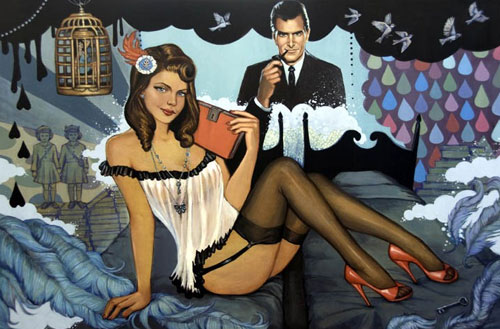
This week, whore it up, burlesque it down, see some art, and tie…no, strap…one on.

————-

Red Hots Burlesque

Celebrate Dottie Lux’s birthday and the release of Tim Burton’s new Disney vehicle with a Wonderland-themed night of burlesque, comedy, and music.

Fri/5, 7:30pm

$5-$10

El Rio

3158 Mission, SF

www.redhotsburlesque.com

————-

Buckle-Up Beavers! Strap-Ons for Women workshop

Once considered taboo in the queer scene, strap-on play is now de rigeur for many. But not all of us know the ropes, whether pitching or catching. Join sapphic savant and veteran pegster Allie Moon for this fun, informative, sexy introduction to the world of harnesses, dildos, lubes, and moves. Proceeds benefit Camp Beaverton for Wayward Girls.


Sat/6, 7-9pm
$10
Fruitopia Event Space
1080 23rd Ave, Ste 100, Oakl

————-

How to Whore

Marcus Markus talks about escorting, covering issues such as health, the law, screening clients, specific arts, handling clients, having a hot session, profitability, and money management. Good for men and women thinking of getting into the business, those already in it, people who hire escorts, and anyone just intrigued with the profession, this course will be a setting to converse freely and exchange ideas.

Sat/6, 3-5pm

$10-$25

Culture for Sex and Culture

1519 Mission, SF

sexandculture.org


————-

Jessica Whiteside: Innocence Perceived
Gallery Three presents new works by artist and burlesque performer Jessica “Tink” Whiteside, featuring mixed media paintings, sculptures, and a video installation piece investigating the culture clash surrounding American sexual identity.

Sat/6, 7pm

Gallery Three

(415) 931-1500

www.jessicawhiteside.com

————-

Hubba Hubba @ Uptown

Kingfish and Eddie welcome Isabella Minx, Bitter Waitress, Lady X, Dixie DeLish, Siren Sapphire, Mother Joseph, Gibson Pearl, Princess Cream Pie, Chi Chis del Fuego, Victoria Victrola, Cupcake, and Zip the What-Is-It? in this installment of the weekly burlesque review.

Mon/8, 9pm

$5

Uptown Club

1928 Telegraph, Oakl

www.hubbahubbarevue.com

Stage listings

0

Stage listings are compiled by Molly Freedenberg. Performance times may change; call venues to confirm. Reviewers are Robert Avila, Rita Felciano, and Nicole Gluckstern. Submit items for the listings at listings@sfbg.com.

THEATER

OPENING

Caddyshack: Live! Dark Room, 2263 Mission; 401-7987, brownpapertickets.com. $5-$20. Opens Fri/5. Runs Fri-Sat, 8pm. Through March 27. The Dark Room presents Jim Fourniadis’ live adaptation of the iconic movie.

Death Play EXIT Theatre, 156 Eddy; 289-6766, www.thunderbirdtheatre.com. $15-$20. Opens Sun/7. Runs Thurs-Sat, 8pm. Through March 27. Thunderbird Theatre Company presents the third installment in the critically acclaimed sketch comedy series "Serve By Expiration" by Sang S. Kim.

Men Who Have Fallen In and Out of Love with Me Off-Market Theatre, 965 Mission; www.fallenmadlyinlove.com. Opens Fri/5. Runs Fri-Sat, 8pm. Through March 20. Award-winning SF playwright and journalist Beth Soloway teams up with her daughter for the world premiere of this comedy about romance.

Now and at the Hour EXIT Stage Left, 156 Eddy; 673-3847, www.theexit.org. $15-$25. Opens Fri/5. Runs Fri-Sat, 8pm. Through March 27. EXIT presents the subtly unnerving show by theatrical magician Christian Cagigal.

Something You Might Want Stagewerx Theatre, 533 Sutter; catchynametheatre.org. $16. Opens Fri/5. Runs Fri-Sat, 8pm; Sun, 3pm. Through March 28. CatchyNameTheatre presents this dark comedy written and directed by Jim Strope.

The Sugar Witch New Conservatory Theatre Center, 25 Van Ness; 861-4914, www.nctcsf.org.

Opens Sat/6. Runs various days and times through April 4. NCTC presents the premiere of Nathan Sanders’ crime story.

BAY AREA

Singin’ in the Rain Julia Morgan Center for the Arts, 2640 College Ave, Berk; www.berkeleyplayhouse.org. Opens Sun/7. Runs Fri-Sun, times vary. Through March 21. Berkeley Playhouse presents an exciting stage adaptation of the ’20s classic.


ONGOING

Bay One Acts Festival Boxcar Theatre, 505 Natoma; 776-7427, www.threewisemonkeys.org. $12-$24. Dates and times vary. Through March 13. Three Wise Monkeys presents eleven short plays by Bay Area playwrights, including Cris Barth, Stuart Bousel, and Lauren Yee.

Beauty of the Father Phoenix Theatre, 414 Mason; (800) 838-3006, www.offbroadwaywest.org. $30. Thurs-Sat, 8pm. Through March 13. Off-Broadway West’s season opener offers the Bay Area a first look at the somewhat messy but ultimately rewarding 2006 drama by Cuban American Pulitzer Prize–winner Nilo Cruz ("Anna in the Tropics"). Set in contemporary Andalusia, in the south of Spain, it’s the story of an aging painter named Emiliano (Durand Garcia) whose best friend and near-constant companion is the ghost of Federico García Lorca (Michael Carlisi), poet and playwright long ago murdered by the fascists during the Spanish Civil War. Emiliano also lives with his mostly platonic sweetheart (Jeanette Sarmiento), whom he plans to marry after she divorces his other housemate, a young Moroccan immigrant named Karim (Chris Holland) who is tied to her for the green card but is also Emiliano’s sometime lover. When his long-estranged ex-wife back in the U.S. dies, he invites his grown daughter (Natasha Chacon) to come live with him, feeling the urge "to father her" again. She arrives for an indefinite stay instead, shedding the gloom of her mother’s death in the embrace of life under the Andalucian sun—and a smitten Karim in particular. There’s some piquancy to the unraveling of this romantic ménage, and real poetry in the language and perspective afforded through the magical realistic presence of Lorca, but despite Cruz’s muscular writing and ambitious thematic canvas, the drama flags at points and sometimes seems unsure of where it would take us or even the proper tone or color to employ. Nevertheless, artistic director Richard Harder helms a strong cast, which helps make the going worthwhile. (Avila)

*The Caucasian Chalk Circle A.C.T., 415 Geary; www.act-sf.org. $10-$82. Tues-Sat, 8pm; Wed, Sat, and Sun, 2pm. Through March 14. After bringing his acclaimed pared-down "Sweeney Todd" to ACT in 2007, director John Doyle returns with Bertolt Brecht’s inspired take on the biblical Judgment of Solomon, a story whose faith in the essential decency of people—especially those not completely corrupted by power over, and under, others—is here counterpart to a damning and rousing dissection of war, politics and the justice system/racket. Newly translated in fresh and piquant tones by Domenique Lozano, the text rings with contemporary significance, including a chiding reference to "change we can believe in" that neatly updates Brecht’s radical insistence on popular action over hopeful acquiescence to powerful leaders. The set is a junk-strewn yard, with various bits of theater rigging doubling as stage properties (like a descending bank of stage lights during a battle sequence). The ensemble cast, meanwhile, sings profusely—a cappella or to its own spare accompaniment—and renders characters in a hodgepodge of accents not entirely arbitrary (rulers talking like New York mobsters, for example, or upper-class war refugees speaking like Southern belles). The comedy can veer distractingly toward the hammy, and there’s probably a bit too much stylized abstraction at the outset (hard to imagine anyone unfamiliar with the story understanding exactly what’s going on from the chorus), but despite faults this is a welcome, timely production, engagingly realized in Doyle’s winkingly "makeshift" staging and the bold, eclectic performances he garners from ACT’s core company members, conservatory students and associates. (Avila)

Eccentrics of San Francisco’s Barbary Coast: A Magical Escapade San Francisco Magic Parlor, Chancellor Hotel Union Square, 433 Powell; 1-800-838-3006. $30. Fri-Sat, 8pm. Ongoing. This show celebrates real-life characters from San Francisco’s colorful and notorious past.

The Gilded Thick House, 1695 18th St. www.thegilded.com. $18-$30. Thurs/4, 7pm; Fri/5-Sat/6, 8pm; Sun/7, 2pm. The Curiouser Group presents a new musical by Reynaldi Lolong.

The Greatest Bubble Show on Earth Marsh, 1062 Valencia. (800) 838-3006, www.themarsh.org. $7-$50. Sun, 11am. Through April 3. The Amazing Bubble Man returns with his extraordinary family-friendly show.

Hearts on Fire Teatro ZinZanni, Pier 29; 438-2668, www.zinzanni.org. $117-$145. Wed-Sat, 6pm; Sun, 5pm. Through May 16. Teatro ZinZanni celebrates its 10th anniversary with this special presentation featuring Thelma Houston, El Vez, and Christine Deaver.

*Loveland The Marsh, 1074 Valencia; 826-5750, www.themarsh.org. $15-$50. Sat, 8:30pm; Sun, 7pm. Through April 11. Los Angeles–based writer-performer Ann Randolph returns to the Marsh with a new solo play partly developed during last year’s Marsh run of her memorable Squeeze Box. Randolph plays loner Frannie Potts, a rambunctious, cranky and libidinous individual of decidedly odd mien, who is flying back home to Ohio after the death of her beloved mother. The flight is occasion for Frannie’s own flights of memory, exotic behavior in the aisle, and unabashed advances toward the flight deck brought on by the seductively confident strains of the captain’s commentary. The singular personality and mother-daughter relationship that unfurls along the way is riotously demented and brilliantly humane. Not to be missed, Randolph is a rare caliber of solo performer whose gifts are brought generously front and center under Matt Roth’s reliable direction, while her writing is also something special—fully capable of combining the twisted and macabre, the hilariously absurd, and the genuinely heartbreaking in the exact same moment. Frannie Potts’s hysteria at 30,000 feet, as intimate as a middle seat in coach (and with all the interpersonal terror that implies), is a first-class ride. (Avila)

Mirrors In Every Corner Intersection for the Arts, 446 Valencia; 626-2787, www.theintersection.org. Thurs-Sun, 8pm. Through March 21. Intersection for the Arts, Campo Santo, and the Living Word Project present the world premiere of Chinaka Hodge’s provocative show exploring race and identity from new perspectives.

Oedipus el Rey Magic Theatre, Building D, Fort Mason Center; 441-8822, www.magictheatre.org. $20-$55. Days and times vary. Through March 14. Luis Alfaro transforms Sophocles’ ancient tale into an electrifying myth, directed by Loretta Greco.

Pearls Over Shanghai Hypnodrome, 575 Tenth St.; 1-800-838-3006, www.thrillpeddlers.com. $30-69. Sat, 8pm; Sun, 7pm. Through April 24. Thrillpeddlers presents this revival of the legendary Cockettes’ 1970 musical extravaganza.

The Real Americans The Marsh, 1062 Valencia; 826-5750, www.themarsh.org. $15-$50. Thurs-Fri, 8pm; Sat, 5pm. Through April 18. The Marsh presents the world premiere of Dan Hoyle’s new solo show.

Suddenly Last Summer Actors Theatre, 855 Bush; 345-1287, www.actorstheatresf.org. $15-$35. Thurs-Sat, 8pm. Through March 27. Actors Theatre presents one of Tennessee Williams’ finest and most famous plays.

What Just Happened? The Marsh, 1062 Valencia; (800) 838-3006, www.themarsh.org. $20-$50. Fri-Sat, 8pm. Through March 13. The Marsh presents Nina Wise’s improvisation-based sow about personal and political events which have transpired over the previous 24 hours.

What Mama Said About ‘Down There Our Little Theater, 287 Ellis; 820-3250, www.theatrebayarea.org. $15-$25. Thurs-Sun, 8pm. Through July 30. Writer/performer/activist Sia Amma presents this largely political, a bit clinical, inherently sexual, and utterly unforgettable performance piece.

Wicked Orpheum Theatre, 1182 Market; 512-7770, www.shnsf.com. $30-$99. Tues, 8pm; Wed, 2pm; Thurs-Fri, 8pm; Sat, 2 and 8pm; Sun, 2pm. Ongoing. Assuming you don’t mind the music, which is too TV-theme–sounding in general for me, or the rather gaudy décor, spectacle rules the stage as ever, supported by sharp performances from a winning cast. (Avila)


BAY AREA

An Anonymous Story by Anton Chekhov Berkeley City Club, 2315 Durant, Berk; (510) 558-1381, centralworks.org. $14-$25. Thurs-Sat, 8pm; Sun, 5pm. Through March 28. Central Works presents a new play adapted from the Checkhov novella.

Beebo Brinker Chronicles Brava Theater Center, 2781 24th St; 641-2822, www.brava.org. $20-$30. Thurs-Sun, 8pm. Through March 13. The regional premiere of Kate Moira Ryan and Linda S. Chapman’s play adapted from a series of pulp novels.

Concerning Strange Devices from the Distant West Roda Theatre, 2015 Addison, Berk; (510) 647-2949, berkeleyrep.org. $13.50-$27. Days and times vary. Through April 11. Berkeley Rep presents a sexy and intriguing new show from Naomi Iizuka.

*East 14th Laney College Theatre, 900 Fallon St, Oakl. www.east14thoak.eventbrite.com. $10-$50. Fri-Sat, 8:30pm. Through March 28. Also at the the Marsh Berkeley in March. Don Reed’s solo play, making its Oakland debut after an acclaimed New York run, is truly a welcome homecoming twice over. It returns the Bay Area native to the place of his vibrant, physically dynamic, consistently hilarious coming-of-age story, set in 1970s Oakland between two poles of East 14th Street’s African American neighborhood: one defined by his mother’s strict ass-whooping home, dominated by his uptight Jehovah’s Witness stepfather; the other by his biological father’s madcap but utterly non-judgmental party house. The latter—shared by two stepbrothers, one a player and the other flamboyantly gay, under a pimped-out, bighearted patriarch whose only rule is "be yourself"—becomes the teenage Reed’s refuge from a boyhood bereft of Christmas and filled with weekend door-to-door proselytizing. Still, much about the facts of life in the ghetto initially eludes the hormonal and naïve young Reed, including his own flamboyant, ever-flush father’s occupation: "I just thought he was really into hats." But dad—along with each of the characters Reed deftly incarnates in this very engaging, loving but never hokey tribute—has something to teach the talented kid whose excellence in speech and writing at school marked him out, correctly, as a future "somebody." (Avila)

*Learn to be Latina La Val’s Subterranean, 1834 Euclid, Berk. impacttheatre.com. $10-$20. Thurs-Sat, 8pm. Through March 27. Impact Theatre continues its 14th season with the world premiere of Enrique Urueta’s play.


PERFORMANCE

AIRspace Queer Performance Showcase The Garage, 975 Howard; 885-4006, 975howard.com. Wed-Thurs, 8pm. $10-$20. Kirk Read, Philip Huang, Baruch Porras-Hernandez, Dominika Bednarska, Jorge De Hoyos, and Awilda Rodriguez Lora perform.

"All Star Magic & More" SF Playhouse, Stage 2, 533 Sutter; 646-0776, www.comedyonthesquare.com. Sun, 7pm. Ongoing. Magician RJ Owens hosts the longest running magic show in San Francisco.

30th Anniversary Celebration of New Works African American Art and Culture complex, 762 Fulton; 292-1850, www.culturalodyssey.org/tickets. Thurs-Sat, 8pm; Sun, 3pm. Through March 14. $20. In celebration of Black History Month and National Women’s Month, Cultural Odyssey presents a festival featuring The Love Project, The Breach, and Dancing with the Clown of Love.

BATS Improv Theatre Bayfront Theater, Fort Mason Center, B350 Fort Mason; 474-6776, www.improv.org. Fri-Sat, 8pm. $17-$20. The Theatresports show format treats audiences to an entertaining and engaging night of theater and comedy presented as a competition.

"Celestial Science" EXIT Theatre, 156 Eddy; 440-8825, www.stallionmagic.com. Wed-Sat, 8pm. $15-$25. Stallion presents an interstellar voyage designed to empower, enlighten, erich, and encourage.

Don Carbone Dark Room, 2263 Mission; 401-7987, darkroomsf.com. Sat, 10pm. $8. The absurdist writer and performer presents an evening of two award-winning solo performances.

"In the Loop" Space Gallery, 1141 Polk; audreyheller.com. Sat, 8pm. Space Gallery presents a multi-media event featuring looped photography, video, installations, dance, and music.

"A Musical Seance" Hypnodrome, 575 10th St; www.brownpapertickets.com. Sun-Mon, 7:30pm. $20. Jill Tracy and Paul Mercer present their latest collaboration.

PianoFight Studio 250 at Off-Market, 965 Mission; www.pianofight.com. Mon, 8pm. Through March 29. $20. The female-driven variety show Monday Night ForePlays returns with brand new sketches, dance numbers, and musical performances.

"Reply/catalog for circles and unfinished cities" The Garage, 975 Howard; 885-4006, 975howard.com. Fri-Sat, 8pm; Sun, 4pm. $10-$20. RAW presents this performance work by Tableau Stations/Floor of Sky.

"Sex and the Bible: The Opera (Part I)" Community Music Center, 544 Capp; (707) 474-7273, www.goathall.org. Fri-Sat, 8pm; Sun, 7pm. Through March 14. $10-$15. San Francisco Cabaret Opera presents the world premiere of Mark Alburger’s 8-=minute work-in-progress.

"Slaughter City" Ezellerbach Playhouse, UC Berkeley Campus, Berk; (510) 642-8827, tdps.berkeley.edu. Fri-Sat, 8pm; Sun, 2pm. Through March 14. $10-$15. UC Berkeley’s Department of Theater, Dance, and Performance Studies presents a play by Naomi Wallace.

"Unscripted: unscripted" Off-Market Theater, Studio 205, 965 Mission; 869-5384, www.un-scripted.com. Thurs-Sat, 8pm. Through March 13. The Un-Scripted Theater Company kicks off its eighth season with an improvised improv show.

Virgin Play Series Locations vary. Mon, 6pm. Through March 29. Magic Theatre presents Martha Heasley Cox’s series of staged readings of works currently in development.

Zambaleta Carnaval Zambaleta, 2929 19th St; www.zambaleta.org. Sat, 11am-11pm. Free. San Francisco’s new school for world music and dance will transform its campus into an eclectic all-day jam session celebrating the spirit of Carnaval.


BAY AREA

"Hamlet: Blood in the Brain" Oakland Tech Auditorium, 4351 Broadway, Oakl; (510) 548-9666, www.calshakes.org. Mon, 6:30pm. California Shakespeare Theater and Oakland Tech High School host an evening of select scenes from the Advanced Drama Department’s award-winning production moderated by Jonathan Moscone.
"Something to be Proud of" PMCCA, 1428 Alice, Oakl; www.ticketweb.com. Sat, 7pm. $10-$20. Malonga Casquelourd Center for the Arts Dimensions Extensions Performance Ensemble presents this youth performance.
Upright Citizens Brigade Pan Theater, 2135 Broadway, Oakl; www.pantheater.com. Fri, 8 and 9:10pm. Ongoing. $14-$18. Upright Citizens Brigade Touring Co. brings the NYC funny to Oakland with this improve comedy show with guest performing troupes.

Film listings

0

Film listings are edited by Cheryl Eddy. Reviewers are Kimberly Chun, Michelle Devereaux, Max Goldberg, Dennis Harvey, Johnny Ray Huston, Erik Morse, Louis Peitzman, Lynn Rapoport, Ben Richardson, and Matt Sussman. The film intern is Peter Galvin. For rep house showtimes, see Rep Clock. For first-run showtimes, see Movie Guide.

OPENING

Alice in Wonderland Tim Burton and Johnny Depp go down the 3D rabbit hole. (1:48)

Brooklyn’s Finest "Really? I mean, really?" asked the moviegoer beside me as the final freeze-frame of Brooklyn’s Finest slapped our eyeballs. Yes, that’s the sound of letdown, despite the fact that Brooklyn’s Finest initially resembled a promisingly gritty juggling act in the mode of The Wire and Cop Land (1997), Taxi Driver (1976) and Training Day (2001). Bitter irony flows from the title — and from the lives, loves, bad habits, pressure-cooker stress, and unavoidable moral dilemmas of three would-be everyday cops, all occupying several different rungs on a food chain where right and wrong have an unpleasant way of switching sides. Eddie (Richard Gere) is the veteran officer just biding his time till he gets his pension, all while comforting himself with the meager sensuous attentions of hooker Chantel (Shannon Kane). Sal (Ethan Hawke) is the bad detective, stealing from the dealers to fund a dream home for his growing family with Angela (Lili Taylor). Tango (Don Cheadle) is the undercover detective who has cultivated friendships with dealers like Caz (Wesley Snipes) and sacrificed his marriage for a long-promised promotion from his lieutenant (Will Patton) and his superior (Ellen Barkin, in likely the most misogynist portrayal of a lady with a badge to date). You spend most of Brooklyn’s Finest waiting for these cops to collide in the most unfortunate, messiest way possible, but instead the denouement leaves will leave one wondering about unresolved threads and feeling vaguely unsatisfied. In any case, director Antoine Fuqua and company seem to pride themselves on their tough-minded if at times cartoonish take on law enforcement, with Hawke in particular turning in a memorably OTT and anguished performance. (2:13) Shattuck. (Chun)

*Prodigal Sons See "My Son, My Son." (1:26) Lumiere, Shattuck.

*A Prophet See "Education of a Felon." (2:29) Embarcadero, Shattuck.

The Yellow Handkerchief The Yellow Handkerchief is one of those quiet, character-driven dramas that get mistaken for subtle classics. It’s not bad, just bland. In fact, there’s something pleasant about the way the film’s three unlikely friends forge a lasting bond, but the movie as a whole is never quite that cohesive. William Hurt stars as Brett Hanson, an ex-con with a dark past. (The Yellow Handkerchief tries to make this mysterious by way of vague flashbacks, but the audience gets there faster than the film does.) His inadvertent sidekicks are the troubled Martine (Kristen Stewart) and the awkward Gordy (Eddie Redmayne). The talented cast, rounded out by Maria Bello as the wife Brett left behind, does solid work with the material, but no one really stands out enough to elevate The Yellow Handkerchief to greatness. Redmayne is perhaps the most impressive, ditching his British accent to play a character so quirky, he’s almost Rain Man. But after taking a step back, the big picture is muddled. People are fascinating, but what does it all mean? (1:36) Albany. (Peitzman)

ONGOING

*"Academy Award-Nominated Short Films: Animated" Just because it’s animation doesn’t mean it’s just for kids. Like the live-action Oscar-nominated shorts, this year’s animated selections have got range, from the traditionally child-friendly to downright vulgar. Skewing heavily towards CG fare, the shorts vary from a Looney Tunes-style chase for an elderly woman’s soul (The Lady and the Reaper) to the Wallace and Gromit BBC special, A Matter of Loaf and Death. Most entertaining by far is Logorama, an action-packed tale set in a world populated by familiar trademarked logos. Any film that casts the Michelin man as a garbage-mouthed cop on the case of a renegade Ronald McDonald deserves to win all the awards in the universe. (1:35) Opera Plaza, Shattuck. (Galvin)

*"Academy Award-Nominated Short Films: Live Action" Aren’t you tired of wondering what all the fuss is about when the Academy awards their Oscar for Best Short? In an effort to give audiences a chance to play along, Shorts International is screening these less-seen works together. Though one or two of the five nominated films threaten to adhere to the Academy’s penchant for either heartbreaking or heartwarming, the majority are surprisingly oddball picks. Perhaps most odd of all is Denmark/U.S. submission The New Tenants. Feeling a tad forced but no less funny for it, Tenants draws on celebrities like Vincent D’Onofrio and comedian Kevin Corrigan to bring life to this surreal adaptation by Anders Thomas Jensen (2006’s After the Wedding). My pick would be Sweden’s gloriously goofy Instead of Abracadabra, which stars a stay-at-home slacker as he puts on a magic show for his father’s birthday. Obviously, some selections are going to be better than others, but hey, they’re shorts. If you don’t like one, just wait 10 minutes and you’ll find yourself somewhere completely different. (1:35) Opera Plaza, Shattuck. (Galvin)

Avatar James Cameron’s Avatar takes place on planet Pandora, where human capitalists are prospecting for precious unobtainium, hampered only by the toxic atmosphere and a profusion of unfriendly wildlife, including the Na’vi, a nine-foot tall race of poorly disguised cliches. When Jake Sully (Sam Worthington), a paraplegic ex-marine, arrives on the planet, he is recruited into the "Avatar" program, which enables him to cybernetically link with a part-human, part-Na’vi body and go traipsing through Pandora’s psychedelic underbrush. Initially designed for botanical research, these avatars become the only means of diplomatic contact with the bright-blue natives, who live smack on top of all the bling. The special effects are revolutionary, but the story that ensues blends hollow "noble savage" dreck with events borrowed from Dances With Wolves (1990) and FernGully: The Last Rainforest (1992). When Sully falls in love with a Na’vi princess and undergoes a spirit journey so he can be inducted into the tribe and fight the evil miners, all I could think of was Kevin Bacon getting his belly sliced in The Air Up There (1994). (2:42) 1000 Van Ness, Sundance Kabuki. (Richardson)

The Blind Side When the New York Times Magazine published Michael Lewis’ article "The Ballad of Big Mike" — which he expanded into the 2006 book The Blind Side: Evolution of a Game — nobody could have predicated the cultural windfall it would spawn. Lewis told the incredible story of Michael Oher — a 6’4, 350-pound 16-year-old, who grew up functionally parentless, splitting time between friends’ couches and the streets of one of Memphis’ poorest neighborhoods. As a sophomore with a 0.4 GPA, Oher serendipitously hitched a ride with a friend’s father to a ritzy private school across town and embarked on an unbelievable journey that led him into a upper-class, white family; the Dean’s List at Ole Miss; and, finally, the NFL. The film itself effectively focuses on Oher’s indomitable spirit and big heart, and the fearless devotion of Leigh Anne Tuohy, the matriarch of the family who adopted him (masterfully played by Sandra Bullock). While the movie will delight and touch moviegoers, its greatest success is that it will likely spur its viewers on to read Lewis’ brilliant book. (2:06) Oaks. (Daniel Alvarez)

Broken Embraces Pedro Almodóvar has always dabbled in the Hitchcockian tropes of uxoricide, betrayal, and double-identity, but with Broken Embraces he has attained a polyglot, if slightly mimicking, fluency with the language of Hollywood noir. A story within a story and a movie within a movie, Embraces begins in the present day with middle-aged Catalan Harry Caine (Lluís Homar), a blind screenwriter who takes time between his successful writing career to seduce and bed young women sympathetic to his disability. "Everything’s already happened to me," he explains to his manager, Judit (Blanca Portillo). "All that’s left is to enjoy life." But this life of empty pleasures is brought to a sudden halt when local business magnate Ernesto Martel (José Luis Gómez) has died; soon after, Ernesto Jr. (Rubén Ochandiano), who has renamed himself Ray X, visits Caine with an unusual request. The action retreats 14 years when Caine was a young (and visually abled) director named Mateo Blanco; he encounters a breathtaking femme fatale, Lena (Penelope Cruz) — an actress-turned-prostitute named Severine, turned secretary-turned-trophy wife of Ernesto Martel — when she appears to audition for his latest movie. If all of the narrative intricacies and multiplicitous identities in Broken Embraces appear a bit intimidating at first glance, it is because this is the cinema of Almodóvar taken to a kind of generic extreme. As with all of the director’s post-’00 films, which are often referred to as Almodóvar’s "mature" pictures, there is a microscopic attention to narrative development combined with a frenzied sub-plotting of nearly soap-operatic proportions. But, in Embraces, formalism attains such prominence that one might speculate the director is simply going through the motions. The effect is a purposely loquacious and overly-dramatized performance that pleasures itself as much by setting up the plot as unraveling it. (2:08) Opera Plaza, Smith Rafael. (Morse)

Cop Out I think there was a plot to Cop Out — something involving a stolen baseball card and a drug ring and Jimmy (Bruce Willis) trying to pay for his daughter’s wedding. Frankly, it’s irrelevant. Kevin Smith’s take on the buddy cop genre, which partners Willis with Tracy Morgan, is more a string of dick jokes and toilet humor than anything else. Not that there’s anything wrong with that. Sometimes it’s nice to sit back and turn off your brain, as Morgan’s Paul describes his bowel movements or when hapless thief Dave (Seann William Scott) begins imitating everything our heroes say. At the same time, Cop Out is easily forgettable: Smith directed the film, but writing duties went to the Cullen Brothers of TV’s Las Vegas. All judgments about that series aside, the script lacks Smith’s trademark blend of heart and vulgarity. Even Mallrats (1995) had a beginning, a middle, and a satisfying end. Without Smith as auteur, Cop Out is worth a few laughs but destined for the bargain bin. (1:50) Oaks, 1000 Van Ness. (Peitzman)

The Crazies Disease and anti-government paranoia dovetail in this competent yet overwhelmingly non-essential remake of one of George A. Romero’s second-tier spook shows. In a small Iowa hamlet overseen by a benevolent sheriff (Timothy Olyphant) and his pregnant wife (Radha Mitchell), who’s also the town doctor, a few odd incidents snowball into all-out chaos when a mysterious, unmarked plane crashes into the local water supply. Before long, the few residents who aren’t acting like homicidal maniacs are rounded up by an uber-aggressive military invasion. Though our heroes convey frantic panic as they try to figure out what the hell is going on, The Crazies never achieves full terror mode. It’s certainly watchable, and even enjoyable at times. But memorable? Not in the slightest. (1:41) 1000 Van Ness. (Eddy)

Crazy Heart "Oh, I love Jeff Bridges!" is the usual response when his name comes up every few years for Best Actor consideration, usually via some underdog movie no one saw, and the realization occurs that he’s never won an Oscar. The oversight is painful because it could be argued that no leading American actor has been more versatile, consistently good, and true to that elusive concept "artistic integrity" than Bridges over the last 40 years. It’s rumored Crazy Heart was slotted for cable or DVD premiere, then thrust into late-year theater release in hopes of attracting Best Actor momentum within a crowded field. Lucky for us, this performance shouldn’t be overlooked. Bridges plays "Bad" Blake, a veteran country star reduced to playing bars with local pickup bands. His slide from grace hasn’t been helped by lingering tastes for smoke and drink, let alone five defunct marriages. He meets Jean (Maggie Gyllenhaal), freelance journalist, fan, and single mother. They spark; though burnt by prior relationships, she’s reluctant to take seriously a famous drunk twice her age. Can Bad handle even this much responsibility? Meanwhile, he gets his "comeback" break in the semi-humiliating form of opening for Tommy Sweet (Colin Farrell) — a contemporary country superstar who was once Bad’s backup boy. Tommy offers a belated shot at commercial redemption; Jean offers redemption of the strictly personal kind. There’s nothing too surprising about the ways in which Crazy Heart both follows and finesses formula. You’ve seen this preordained road from wreckage to redemption before. But actor turned first-time director Scott Cooper’s screenplay honors the flies in the windshield inherited from Thomas Cobb’s novel — as does Bridges, needless to say. (1:51) California, Embarcadero, Empire, Piedmont, Presidio, 1000 Van Ness, Sundance Kabuki. (Harvey)

Dear John As long as you know what you’re getting yourself into, Dear John is a solid effort. Not extraordinary by any means, it’s your standard Nicholas Sparks book-turned-film: boy meets girl — drama, angst, and untimely death ensue. Here, Channing Tatum stars at the titular John, a soldier on leave who falls in love with the seemingly perfect Savannah (Amanda Seyfried). Both actors are likable enough that their romance is charming, if not always believable. And Dear John‘s plot turns, while not quite surprising, are at least dynamic enough to keep the audience engaged. But at the end of the day, this is still a Nicholas Sparks movie — even with the accomplished Lasse Hallström taking over directorial responsibilities. There are still plenty of eye-roll moments and, more often than not, Dear John employs the most predictable tearjerking techniques. By the time you realize why the film is set in 2001, it’s September 11. Sad? Surely. Cheap? You betcha. (1:48) 1000 Van Ness, SF Center. (Peitzman)

Edge of Darkness (1:57) SF Center.

*An Education The pursuit of knowledge — both carnal and cultural — are at the tender core of this end-of-innocence valentine by Danish filmmaker Lone Scherfig (who first made her well-tempered voice heard with her 2000 Dogme entry, Italian for Beginners), based on journalist Lynn Barber’s memoir. Screenwriter Nick Hornby breaks further with his Peter Pan protagonists with this adaptation: no man-boy mopers or misfits here. Rather, 16-year-old schoolgirl Jenny (Carey Mulligan) is a good girl and ace student. It’s 1961, and England is only starting to stir from its somber, all-too-sober post-war slumber. The carefully cloistered Jenny is on track for Oxford, though swinging London and its high-style freedoms beckon just around the corner. Ushering in those freedoms — a new, more class-free world disorder — is the charming David (Peter Sarsgaard), stopping to give Jenny and her cello a ride in the rain and soon proffering concerts and late-night suppers in the city. He’s a sweet-faced, feline outsider: cultured, Jewish, and given to playing fast and loose in the margins of society. David can see Jenny for the gem she is and appreciate her innocence with the knowing pleasure of a decadent playing all the angles. The stakes are believably high, thanks to An Education‘s careful attention to time and place and its gently glamored performances. Scherfig revels in the smart, easy-on-eye curb appeal of David and his friends while giving a nod to the college-educated empowerment Jenny risks by skipping class to jet to Paris. And Mulligan lends it all credence by letting all those seduced, abandoned, conflicted, rebellious feelings flicker unbridled across her face. (1:35) Opera Plaza, Presidio, SF Center, Shattuck, Smith Rafael. (Chun)

*Fish Tank There’s been a string of movies lately pondering what Britney once called the not-a-girl, not-yet-a-woman syndrome, including 2009’s An Education and Precious: Based on the Novel Push By Sapphire. Enter Fish Tank, the gritty new drama from British filmmaker Andrea Arnold. Her films (including 2006’s Red Road) are heartbreaking, but in an unforced way that never feels manipulative; her characters, often portrayed by nonactors, feel completely organic. Fish Tank‘s 15-year-old heroine, Mia (played by first-time actor Katie Jarvis), lives with her party-gal single mom and tweenage sister in a public-housing high-rise; all three enjoy drinking, swearing, and shouting. But Mia has a secret passion: hip-hop dancing, which she practices with track-suited determination. When mom’s foxy new boyfriend, Connor (Michael Fassbender, from 2008’s Hunger) encourages her talent, it’s initially unclear what Connor’s intentions are. Is he trying to be a cool father figure, or something far more inappropriate? Without giving away too much, it’s hard to fear too much for a girl who headbutts a teenage rival within the film’s first few minutes — though it soon becomes apparent Mia’s hard façade masks a vulnerable core. Her desire to make human connections causes her to drop her guard when she needs it the most. In a movie about coming of age, a young girl’s bumpy emotional journey is expected turf. But Fish Tank earns its poignant moments honestly — most coming courtesy of Jarvis, who has soulfullness to spare. Whether she’s acting out in tough-girl mode or revealing a glimpse of her fragile inner life, Arnold’s camera relays it all, with unglossy matter-of-factness. (2:02) Smith Rafael. (Eddy)

Formosa Betrayed The turbulent modern history of Taiwan is certainly deserving of increased international attention, but writer-producer Will Tao’s strategy of structuring Formosa Betrayed as a political thriller is too often at odds with imparting facts and information. Set in the early 80s, the film thrusts viewers into an unraveling government conspiracy that has FBI agent Jake Kelly (James Van Der Beek) trailing the suspected murderers of a Chicago professor to Taipei. Initially, selling Dawson’s Creek alum Van Der Beek as an FBI agent seems a strange choice, but undoubtedly his name will fill seats, and Formosa Betrayed is shooting for maximum awareness. There are some scenes of real tension, but just when you are beginning to get wrapped up in the inherent drama of conspiracy and murder, the suspense is interrupted by a long-winded bout of soapboxing. Formosa Betrayed might enlighten some audiences about Taiwan’s controversial history, but it too often does so at the expense of its own watchability. You start to wonder why Tao didn’t just make a documentary. (1:43) SF Center, Shattuck. (Galvin)

From Paris with Love Every so often, I walk out of a film feeling like I’ve been repeatedly buffeted by blows to the face. Transformers 2: Revenge of the Fallen (2009) had this effect, and it is now joined by From Paris With Love, a movie so aggressively stupid that the mistaken assumption that it was adapted from a video game could be construed as an insult to video games. John Travolta shows up chrome-domed as Charlie Wax, a loose-cannon CIA operative with a lot of transparently screenwritten machismo and an endless appetite for violence. He is joined by Jonathan Rhys Meyers, sporting a risible American accent, and the two embark on a frantic journey across the French capital that is almost as racist as it is misogynistic. I could fill an entire issue of this newspaper eviscerating this movie —suffice to say, don’t see it. (1:35) SF Center. (Richardson)

*The Ghost Writer Roman Polanski’s never-ending legal woes have inspired endless debates on the interwebs and elsewhere; they also can’t help but add subtext to the 76-year-old’s new film, which is chock full o’ anti-American vibes anyway. It’s also a pretty nifty political thriller about a disgraced former British Prime Minister (Pierce Brosnan) who’s hanging out in his Martha’s Vineyard mansion with his whip-smart, bitter wife (Olivia Williams) and Joan Holloway-as-ice-queen assistant (Kim Cattrall), plus an eager young biographer (Ewan McGregor) recently hired to ghost-write his memoirs. But as the writer quickly discovers, the politician’s past contains the kinds of secrets that cause strange cars with tinted windows to appear in one’s rearview mirror when driving along deserted country roads. Polanski’s long been an expert when it comes to escalating tension onscreen; he’s also so good at adding offbeat moments that only seem tossed-off (as when the PM’s groundskeeper attempts to rake leaves amid relentless sea breezes) and making the utmost of his top-notch actors (Tom Wilkinson and Eli Wallach have small, memorable roles). Though I found The Ghost Writer‘s ZOMG! third-act revelation to be a bit corny, I still didn’t think it detracted from the finely crafted film that led up to it. (1:49) California, Embarcadero, Sundance Kabuki. (Eddy)

The Hurt Locker When the leader of a close-knit U.S. Army Explosive Ordnance Disposal squad is killed in action, his subordinates have barely recovered from the shock when they’re introduced to his replacement. In contrast to his predecessor, Sgt. James (Jeremy Renner) is no standard-procedure-following team player, but a cocky adrenaline junkie who puts himself and others at risk making gonzo gut-instinct decisions in the face of live bombs and insurgent gunfire. This is particularly galling to next-in-command Sanborn (Anthony Mackie). An apolitical war-in-Iraq movie that’s won considerable praise for accuracy so far from vets (scenarist Mark Boal was "embedded" with an EOD unit there for several 2004 weeks), Kathryn Bigelow’s film is arguably you-are-there purist to a fault. While we eventually get to know in the principals, The Hurt Locker is so dominated by its seven lengthy squad-mission setpieces that there’s almost no time or attention left for building character development or a narrative arc. The result is often viscerally intense, yet less impactful than it would have been if we were more emotionally invested. Assured as her technique remains, don’t expect familiar stylistic dazzle from action cult figure Bigelow (1987’s Near Dark, 1989’s Blue Steel, 1991’s Point Break) — this vidcam-era war movie very much hews to the favored current genre approach of pseudo-documentary grainy handheld shaky-cam imagery. (2:11) Opera Plaza, Shattuck. (Harvey)

Invictus Elected President of South Africa in 1995 — just five years after his release from nearly three decades’ imprisonment — Nelson Mandela (Morgan Freeman) perceives a chance to forward his message of reconciliation and forgiveness by throwing support behind the low-ranked national rugby team. Trouble is, the Springboks are currently low-ranked, with the World Cup a very faint hope just one year away. Not to mention the fact that despite having one black member, they represent the all-too-recent Apartheid past for the country’s non-white majority. Based on John Carlin’s nonfiction tome, this latest Oscar bait by the indefatigable Clint Eastwood sports his usual plusses and minuses: An impressive scale, solid performances (Matt Damon co-stars as the team’s Afrikaaner captain), deft handling of subplots, and solid craftsmanship on the one hand. A certain dull literal-minded earnestness, lack of style and excitement on the other. Anthony Peckham’s screenplay hits the requisite inspirational notes (sometimes pretty bluntly), but even in the attenuated finals match, Eastwood’s direction is steady as she goes — no peaks, no valleys, no faults but not much inspiration, either. It doesn’t help that Kyle Eastwood and Michael Stevens contribute a score that’s as rousing as a warm milk bath. This is an entertaining history lesson, but it should have been an exhilarating one. (2:14) Oaks. (Harvey)

*The Last Station Most of the buzz around The Last Station has focused on Helen Mirren, who takes the lead as the Countess Sofya, wife of Leo Tolstoy (Christopher Plummer). Mirren is indeed impressive — when is she not? — but there’s more to the film than Sofya’s Oscar-worthy outbursts. The Last Station follows Valentin Bulgakov (James McAvoy), hired as Tolstoy’s personal secretary at the end of the writer’s life. Valentin struggles to reconcile his faith in the anarchist Christian Tolstoyan movement with his sympathy for Sofya and his budding feelings for fellow Tolstoyan Masha (Kerry Condon). For the first hour, The Last Station is charming and very funny. Once Tolstoy and Sofya’s relationship reaches its most volatile, however, the tone shifts toward the serious — a trend that continues as Tolstoy falls ill. After all the lighthearted levity, it’s a bit jarring, but the solid script and accomplished cast pull The Last Station together. Paul Giamatti is especially good as Vladimir Chertkov, who battles against Sofya for control of Tolstoy’s will. You’ll never feel guiltier for putting off War and Peace. (1:52) Albany, Embarcadero, Empire, Piedmont, Sundance Kabuki. (Peitzman)

*Leonard Cohen: Live at the Isle of Wight 1970 The dawn of the Me Decade saw the largest-ever music festival to that date —albeit one that was such a logistical, fiscal and hygenic disaster that it basically killed the development of similar events for years. This was the height of "music should be free" sentiments in the counterculture, with the result that many among the estimated six to eight hundred thousand attendees who overwhelmed this small U.K. island showed up without tickets, refused to pay, and protested in ways that included tearing down barrier walls and setting fires. It was a bummer, man. But after five days of starry acts often jeered by an antsy crowd — including everyone from Joni, Hendrix, Dylan, Sly Stone, the Who and the Doors to such odd bedfellows as Miles Davis, Tiny Tim, Voices of East Harlem, Supertramp, and Gilberto Gil — Canadian troubador Cohen appeared at 4 a.m. on a Monday to offer balm. Like director Murray Lerner’s 1995 Message to Love, about the festival as a whole, this footage has been shelved for decades, but it bounces right back from the dead — albeit soothingly. Cohen seems blissed out, pupils like black marbles, his between-song musings are as poetical as those fascinating lyrics, and his voice is suppler than the rasp it would soon become. Kris Kristofferson, Judy Collins, Joan Baez, and bandmate Bob Johnson offer reflections 40 years later. But the main attraction is obviously Cohen, who is magnetic even if an hour of (almost) nothing but ballads reveals how stylistically monotone his songwriting could be. (1:04) Roxie. (Harvey)

*The Most Dangerous Man in America: Daniel Ellsberg and the Pentagon Papers For many, Daniel Ellsberg is a hero — a savior of American First Amendment rights and one of the most outspoken opponents of the Vietnam war. But as this documentary (recently nominated for an Academy Award) shows, it’s never an an easy decision to take on the U.S. government. Ellsberg himself narrates the film and details his sleepless nights leading up to the leak of the Pentagon Papers — the top secret government study on the Vietnam war — to the public. Though there are few new developments in understanding the particulars of the war or the impact the release of the Papers had on ending the conflict, the film allows audiences to experience the famous case from Ellsberg’s point of view, adding a fresh and poignantly human element to the events; it’s a political documentary that plays more like a character drama. Whether you were there when it happened or new to the story, there is something to be appreciated from this tale of a man who fell out of love with his country and decided to do something about it. (1:34) Bridge, Shattuck. (Galvin)

*North Face You’ll never think of outerwear the same way again — and in fact you might be reaching for your fleece and shivering through the more harrowing climbing scenes of this riveting historical adventure based on a true tale. Even those who consider themselves less than avid fans of outdoor survival drama will find their eyes frozen, if you will, on the screen when it comes to this retelling/re-envisioning of this story, legendary among mountaineers, of climbers, urged on by Nazi propaganda, to tackle the last "Alpine problem." At issue: the unclimbed north face of Switzerland’s Eiger, a highly dangerous and unpredictable zone aptly nicknamed "Murder Wall." Two working-class friends, Toni Kurz (Benno Fürmann of 2008’s Jerichow) and Andi Hinterstoisser (Florian Lukas) — here portrayed as climbing fiends driven to reach summits rather than fight for the Nazis — take the challenge. There to document their achievement, or certain death, is childhood friend and Kurz’s onetime sweetheart Luise (Johanna Wokalek, memorable in 2008’s The Baader Meinhof Complex), eager to make her name as a photojournalist while fending off the advances of an editor (Ulrich Tukur) seeking to craft a narrative that positions the contestants as model Aryans. But the climb — and the Eiger, looming like a mythical ogre — is the main attraction here. Filmmaker Philipp Stölzl brings home the sheer heart-pumping exhilaration and terror associated with the sport — and this specific, legendarily tragic climb — by shooting in the mountains with his actors and crew, and the result goes a way in redeeming an adventure long-tainted by its fascist associations. (2:01) Lumiere, Shattuck, Smith Rafael. (Chun)

*Percy Jackson and the Olympians: The Lightning Thief It would be easy to dismiss Percy Jackson and the Olympians: The Lightning Thief as an unabashed Harry Potter knock-off. Trio of kids with magic powers goes on a quest to save the world in a Chris Columbus adaptation of a popular young adult series — sound familiar? But The Lightning Thief is sharp, witty, and a far cry from Columbus’ joyless adaptation of Harry Potter and the Sorcerer’s Stone (2001). Logan Lerman stars as Percy Jackson, the illegitimate son of Poseidon and Catherine Keener. Once he learns his true identity at Camp Half-Blood, he sets off on a quest with his protector, a satyr named Grover, and potential love interest Annabeth, daughter of Athena. Along the way, they bump into gods and monsters from Greek mythology — with a twist. Think Percy using his iPhone to fight Medusa (Uma Thurman), or a land of the Lotus-Eaters disguised as a Lady Gaga-blasting casino. A worthy successor to Harry Potter? Too soon to say, but The Lightning Thief is at least a well-made diversion. (1:59) 1000 Van Ness. (Peitzman)

*Precious: Based on the Novel Push By Sapphire This gut-wrenching, little-engine-that-could of a film shows the struggles of Precious, an overweight, illiterate 16-year-old girl from Harlem. Newcomer Gabourey Sidibe is so believably vigilant that her performance alone could bring together the art-house viewers as well as take the Oscars by storm. But people need to actually go and experience this film. While Precious did win Sundance’s Grand Jury and Audience Award awards this year, there is a sad possibility that filmgoers will follow the current trend of "discussing" films that they’ve actually never seen. The daring casting choices of comedian Mo’Nique (as Precious’ all-too-realistically abusive mother) and Mariah Carey (brilliantly understated as an undaunted and dedicated social counselor) are attempts to attract a wider audience, but cynics can hurdle just about anything these days. What’s most significant about this Dancer in the Dark-esque chronicle is how Damien Paul’s screenplay and director Lee Daniels have taken their time to confront the most difficult moments in Precious’ story –- and if that sounds heavy-handed, so be it. Stop blahging for a moment and let this movie move you. (1:49) Presidio, Roxie, Shattuck. (Jesse Hawthorne Ficks)

*"Red Riding Trilogy" There’s a "wolf" of sorts and several unfortunate little girls, but no fairy tale whimsy whatsoever in this trilogy of features originally made for U.K. broadcast. Based on David Pearce’s literary mystery quartet (the second volume goes unadapted here), it’s a complicated dive into conspiracy, cover-up, and murder in England’s North Country. Directed by Julian Jarrold (2008’s Brideshead Revisited), first installment Red Riding: 1974 centers on ambitious young journalist Eddie (Andrew Garfield), who at first sees a string of abducted, then grotesquely mutilated children as a career-making opportunity. The deeper in he gets, though, the more troubling are the case’s murky connections to police and private-sector corruption. 1980, directed by James Marsh (2008’s Man on Wire), finds a new protagonist in Hunter (Paddy Considine). Now local fears are focused on the "Yorkshire Ripper" a savage (real-life) killer of at least 13 women between 1975 and 1981 whose so-far hapless police investigation Hunter has been assigned to audit. Finally, 1983 (directed by Anand Tucker of 2005’s Shopgirl) divides its attention between Yorkshire chief detective Jobson (David Morrissey) and low-rent lawyer Piggot (Mark Addy). After the first copycat child slaying in years occurs, both become convinced a mentally challenged man (Daniel Mays) was framed for the original murders. The nearly six hours this serpentine tale takes can’t help but impress as a weighty experience (at least on your posterior), and it’s duly won some sky-high critical acclaim ("better than the Godfather trilogy", etc.) Certainly Red Riding is rich in period detail, fine characterizations, and bleak atmospherics. But the cumulative satisfaction expected of a true epic is broken up by the sole ongoing characters being supporting ones — heroes who eventually "know too much" don’t survive long. In each segment (Marsh’s Super-16-shot one being most stylistically distinctive), women deployed as romantic interests seem largely superfluous. The whole fussy, cipherous narrative points toward a heart of jet-black darkness its climactic revelations are at once too banal and implausible to deliver. So, worthwhile? Yes, if you’ve got the time to spare. A hype-justifying masterpiece? No. (1974, 1:45; 1980, 1:36; 1983, 1:44) Lumiere. (Harvey)

Shutter Island Director Martin Scorsese and muse du jour Leonardo DiCaprio draw from oft-filmed novelist Dennis Lehane (2003’s Mystic River, 2007’s Gone Baby Gone) for this B-movie thriller that, sadly, offers few thrills. DiCaprio’s a 1950s U.S. marshal summoned to a misty island that houses a hospital for the criminally insane, overseen by a doctor (Ben Kingsley) who believes in humane, if experimental, therapy techniques. From the get-go we suspect something’s not right with the G-man’s own mind; as he investigates the case of a missing patient, he experiences frequent flashbacks to his World War II service (during which he helped liberate a concentration camp), and has recurring visions of his spooky dead wife (Michelle Williams). Whether or not you fall for Shutter Island‘s twisty game depends on the gullibility of your own mind. Despite high-quality performances and an effective, if overwrought, tone of certain doom, Shutter Island stumbles into a third act that exposes its inherently flawed and frustrating storytelling structure. If only David Lynch had directed Shutter Island — it could’ve been a classic of mindfuckery run amok. Instead, Scorsese’s psychological drama is sapped of any mystery whatsoever by its stubbornly literal conclusion. (2:18) California, Four Star, 1000 Van Ness, Presidio. (Eddy)

A Single Man In this adaptation of Christopher Isherwood’s 1964 novel, Colin Firth plays George, a middle-aged gay expat Brit and college professor in 1962 Los Angeles. Months after the accidental death of Jim (Matthew Goode), his lover for 16 years, George still feels worse than bereft; simply waking each morning is agony. So on this particular day he has decided to end it all, first going through a series of meticulous preparations and discreet leave-takings that include teaching one last class and having supper with the onetime paramour (Julianne Moore) turned best friend who’s still stuck on him. The main problem with fashion designer turned film director Tom Ford’s first feature is that he directs it like a fashion designer, fussing over surface style and irrelevant detail in a story whose tight focus on one hard, real-world thing — grief — cries for simplicity. Not pretentious overpackaging, which encompasses the way his camera slavers over the excessively pretty likes of Nicholas Hoult as a student and Jon Kortajarena as a hustler, as if they were models selling product rather than characters, or even actors. (In fact Kortajarena is a male supermodel; the shocker is that Hoult is not, though Hugh Grant’s erstwhile About a Boy co-star is so preening here you’d never guess.) Eventually Ford stops showing off so much, and A Single Man is effective to the precise degree it lets good work by Goode, Moore and especially the reliably excellent Firth unfold without too much of his terribly artistic interference. (1:39) Embarcadero, 1000 Van Ness, Piedmont, Shattuck. (Harvey)

*Terribly Happy The Coen Brothers’ Blood Simple (1984) is the obvious corollary for this coolly humorous Danish import, though director/co-writer Henrik Ruben Genz’s firmly dampened-down thriller of sorts is also touched by David Lynch’s parochial surrealism and Aki Kaurismäki’s backwater puckishness. Happy isn’t quite the word for handsome, seemingly upstanding cop Jakob (Robert Hansen), reassigned from the big city of Copenhagen to a tiny village in South Jutland. There he slowly learns that the insular and self-sufficient locals are accustomed to fixing problems on their own and that cows, trucks, and other troubles have a way of conveniently disappearing into the bog. When buxom blonde Ingerlise (Lene Maria Christensen) whispers to him that her husband Jørgen (Kim Bodnia) beats her, Jakob begins to find his moral ground slipping away from him — while his own dark secrets turn out to be not so secret after all. More of a winkingly paranoid, black-hearted comedy about the quicksand nature of provincial community and small-town complicity than a genuine murder mystery, Terribly Happy wears its inspirations on its sleeve, but that doesn’t stop this attractively-shot production from amusing from start to finish, never tarrying too long to make a point that it gets mired in the bog that swallows all else. (1:42) Opera Plaza. (Chun)

Up in the Air After all the soldiers’ stories and the cannibalism canards of late, Up in the Air‘s focus on a corporate ax-man — an everyday everyman sniper in full-throttle downsizing mode — is more than timely; it’s downright eerie. But George Clooney does his best to inject likeable, if not quite soulful, humanity into Ryan Bingham, an all-pro mileage collector who prides himself in laying off employees en masse with as few tears, tantrums, and murder-suicide rages as possible. This terminator’s smooth ride from airport terminal to terminal is interrupted not only by a possible soul mate, fellow smoothie and corporate traveler Alex (Vera Farmiga), but a young tech-savvy upstart, Natalie (Anna Kendrick), who threatens to take the process to new reductionist lows (layoff via Web cam) and downsize Ryan along the way. With Up in the Air, director Jason Reitman, who oversaw Thank You for Smoking (2005) as well as Juno (2007), is threatening to become the bard of office parks, Casual Fridays, khaki-clad happy hours, and fly-over zones. But Up in the Air is no Death of a Salesman, and despite some memorable moments that capture the pain of downsizing and the flatness of real life, instances of snappily screwball dialogue, and some more than solid performances by all (and in particular, Kendrick), he never manages to quite sell us on the existence of Ryan’s soul. (1:49) 1000 Van Ness, Piedmont, SF Center, Shattuck, Sundance Kabuki. (Chun)

Valentine’s Day Genre moviemaking loves it a gimmick — and nothing gets more greeting-card gimmicky or sell-by-date corny than the technique of linking holidays and those mandatory date nights out. You’re shocked that nobody thought of this chick flick notion sooner. Valentine’s Day is no My Bloody Valentine (1981, 2009) — it aspires to an older, more yupscale lady’s choice-crowd than the screaming teens that are ordinarily sought out by horror flicks. And its A-list-studded cast — including Oscar winners Julia Roberts, Jamie Foxx, and Kathy Bates as well as seemingly half of That ’70s Show‘s players — is a cut above TV tween starlets’ coming-out slasher slumber parties. It partly succeeds: bringing Valentine’s haters into the game as well as lovers is a smart ploy (although who believes that the chic-cheekbones-and-fulsome-lips crew of Jessica Biel and Jennifer Garner would be dateless on V-Day?), and the first half is obviously structured around the punchlines that punctuate each scene — a winning if contrived device. Juggling multiple storylines with such a whopping cast lends an It’s a Mad Mad Mad Mad World (1963) quality to the Jessica- and Taylor-heavy shenanigans. And some tales get a wee bit more weight than others (the charisma-laden scenes with Bradley Cooper and Roberts cry out for added screentime), creating a strangely lopsided effect that adds unwanted tedium to an affair that should be as here-today-gone-tomorrow as a Whitman’s Sampler. (1:57) Empire, 1000 Van Ness, Shattuck, Sundance Kabuki. (Chun)

*The White Ribbon In Michael Haneke’s The White Ribbon, his first German-language film in ten years, violence descends on a small northern German village mired in an atmosphere of feudalism and protestant repression. When, over the course of a year, a spate of unaccountable tragedies strikes almost every prominent figure as well as a powerless family of tenant farmers, the village becomes a crucible for aspersion and unease. Meanwhile, a gang of preternaturally calm village children, led by the eerily intense daughter of the authoritarian pastor, keep appearing coincidentally near the sites of the mysterious crimes, lending this Teutonic morality play an unsettling Children of the Corn undertone. Only the schoolteacher, perhaps by virtue of his outsider status, seems capable of discerning the truth, but his low rank on the social pecking order prevent his suspicions from being made public. A protracted examination on the nature of evil — and the troubling moral absolutism from which it stems. (2:24) Clay, Shattuck. (Nicole Gluckstern)

The Wolfman Remember 2000’s Hollow Man, an update of 1933’s The Invisible Man so over-the-top that it could only have been brought to you by a post-Starship Troopers (1997) Paul Verhoeven? Fear not, Lon Chaney, Jr. fanclub members — The Wolfman sticks fairly true to its 1941 predecessor, setting its tale of a reluctant lycanthrope in Victorian England, where there are plenty of gypsies, foggy moors, silver bullets, angry villagers, and the like. Benicia Del Toro plays Lawrence Talbot, who’s given an American childhood backstory to explain his out-of-place stateside accent (and a Mediterranean-looking mother to make up for the fact that he’s supposed to be the son of Anthony Hopkins). Soon after returning to his estranged father’s crumbling manor, Lawrence is chomped by a you-know-what. Next full moon, Lawrence realizes what he’s become; murderous rampages and much angst ensue. (He’s kind of like the Incredible Hulk, except much hairier). Director Joe Johnston (a tech whiz who worked on the original Star Wars movies, and helmed 2001’s Jurassic Park III), doesn’t offer much innovation on the werewolf legend (or any scares, for that matter). But the effects, including transformation scenes and claw-tastic gore, are predictably top-notch. (2:05) 1000 Van Ness, SF Center, Sundance Kabuki. (Eddy)

REP PICKS

*The Hellcats The problem with most old biker movies is that there’s waaaaay too much aimless hog riding occasionally interrupted by repetitious fist and/or chain-fighting. This obscure 1967 entry, however, gets its priorities right: the characters are pretty seldom on the road, for that would leach precious time away from the hilarious quasi-hipster dialogue, fascinating personalities (with names like "Six Pack," "Heinie" and "Zombie"), and complex intrigue. Ross Hagen and Dee Duffy play the military-officer brother and fianceé, respectively, of a freshly assassinated police detective. To investigate they go undercover as the new biker couple in town, infiltrating the Hellcats’ clubhouse where booze, acid ("You ran into a bad cube, man!"), drug-running, and chick-swapping are the usual entertainment. These are hippie bikers, though they talk like Hollywood "beatniks" circa 1959 — which is to say, like no one who ever actually lived. They call each other Mamma, Daddy, and Baby a lot, and it’s presumably this familial spirit that leads both motorcycle gang and undercover pigs to finally join forces in defeating the real bad guys, some big-league mobster types. You know this movie is going to rock from the start, as blobular psychedelic paintings background opening credits to the sound of the lamest Farfisa organ-driven theme song ever. This was the first narrative feature by director Robert F. Slatzer, who for years claimed he was married to Marilyn Monroe for three days in 1952 (and subsequently milked two books out of that tall tale). His second (and last) was the even more ludicrous 1970 Bigfoot, in which bikers rescue pretty girls kidnapped and kept chained in a cave by horny sasquatches. A past Mystery Science Theater fave that requires no snarky commentary to entertain, Hellcats is presented as a double-feature with a better-known wanton-youth nugget, 1964’s Kitten With a Whip, starring a very naughty Ann-Margret. Thurs/4, 9 p.m., $5, Vortex Room, 1082 Howard, SF; www.myspace.com/thevortexroom. (Harvey)

“Belong” — Washed Out

0

As a friend wrote the other day, if you can’t exorcise your demons, exercise them. To motivate my sullen self to run and swim, I’m skipping right past Nagi Noda‘s justifiably famous poodle freeweight extravaganza Ex-Fat Girl and heading straight to the Fonda-riffic video for “Belong” by Washed Out. 1-2-3-4, star wipe!

Noise Pop 2010: Yoko Ono and Deerhoof at the Fox

0

Noise Pop — the quality sounds and sonic surprises always amaze, no matter how few or many shows you catch.

I didn’t get to gawk at as much as I’d like, considering I was suffering from a bad case of the sniffles. Still, Yoko Ono, live with the Plastic Ono Band on Feb. 23 at Fox Theater, was nothing to sniff at.

Deerhoof opened with a softer, more subdued set than usual. The Bay Area faves seemed a mite overwhelmed by the big room and opulent surroundings: drummer-founder Greg Saunier said as much as he pondered how “pretty” the venue is. Nevertheless the combo quickly gained steam and confidence, as Satomi Matsuzaki twirled, danced, and gestured on the side of the stage and the entire group switched instruments and uncharacteristically tackled a few covers (the Ramones’ “Pinhead” and Canned Heat’s “Going Up the Country,” the latter dovetailing perfectly with Saunier’s ethereal falsetto). I like my Deerhoof louder, in a more intimate venue, but the band was the perfect choice to prep the audience for Ono.
The lady herself contextualized her place in pop and conceptual art: a video montage unfurled a lengthy, select overview of her career. When she finally arrived onstage, yes, she screeched, yowled, chattered, and generated more noise than melody. Those vocables are some of her major contributions to the rock canon — and her ooh’s, aaach’s, and howls sounded just as challenging today, if more familiar to ears trained to the ‘00s underground.

There were quiet elegiac moments, in the form of, for instance, the beautiful new “Higa Noboru,” as Ono slipped easily into chanteuse mode and son Sean Lennon accompanying her on piano. The ace Plastic Ono Band tackled a good share of Ono’s latest album, **Between My Head and the Sky** — tracks like “Healing, “Waiting for the D Train,” and “The Sun Is Down” — throwing in a fabulously playful cartoon video and a turn by virtual reality pioneer, writer, and composer Jaron Lanier on Laotian flute, sitar, and shakuhachi.

Lennon said he met Lanier as a 10-year-old and marveled then at how many instruments Lanier knew how to play. “Jaron said the key to learning so many instruments is to believe time doesn’t exist,” quipped Lennon.

And Plastic Ono Band’s rendition of “Death of Samantha” and “Mind Train” made time stand still in the best way possible. The former, a bittersweet rocker that ended with Ono standing stock-still at center stage, was played for the second time live (the first was at the Plastic Ono Band performance in NYC earlier in February), and the latter was likely the highlight of the evening, mesmerizing with its free-floating, unfurling **Bitches Brew**-style funk.

The finale or second encore began with an Onochord flash-along: tiny disposable flashlights marked with the date and venue were left on at our seats at the start of the show, ready to flicker “I love you” in code toward the stage. But the “Give Peace a Chance” sing-along with Petra Haden and Deerhoof soon eclipsed even that. Sloppy, ragged, moving — it was the icing on the cake. We piled onto the BART, storm or no storm, feeling struck by lightning and energized by what we had just witnessed.

High on Fire’s latest is divine

0

Wielding his custom-made nine-string axe, churning out tone so thick it could flaunt hot pants in a rap video, and crafting an ever-expanding arsenal of neck-snapping riffage, High on Fire guitarist Matt Pike has done it again.

His playing on the Oakland trio’s new album, Snakes for the Divine (Koch Records), surmounts a new, fiery height. That the things he already did well (effortless, legato hammer-ons, heavy-handed, scything chords) are done better is hardly surprising – it’s the expanding versatility of the snaggle-toothed shredder’s songwriting and technique that impresses, along with his ever-improving vocals. Though Pike’s work in Sleep will inevitably serve as a preamble, it is likely that the virtuosity and creativity of his High on Fire output will reverberate longer, and heavier, in posterity.

The album’s production, courtesy of Slayer knobsman Greg Fidelman, strikes an agreeable balance between Steve Albini’s uncompromising, abrasive work on 2005’s Blessed Black Wings (Relapse Records) and the enveloping warmth of Jack Endino’s Death Is This Communion (Relapse, 2007). Fidelman’s task is made easier by the fact that High on Fire are a power trio that sounds like a power octet. Nevertheless, he replicates the commendable work he did on Slayer’s World Painted Blood (American/Sony, 2009), wringing vast, organic-sounding potency out of the drums and amplifiers without sacrificing instrument separation.

Bassist Jeff Matz deserves plaudits for his reverberant, foundation-shaking appearance in a supporting role, anchoring crucial chord progressions and driving thunderous grooves as Pike ascends into the sativa stratosphere. One-guitar bands often lose momentum during leads and solos, and the fact that High on Fire never does is a testament to Matz’s quality, along with that of drummer Des Kensel. One of the hardest hitters in the business, Kensel’s truncheon-like approach is complimented by the exorbitant circumferences of his cymbals and toms. He and Pike have long enjoyed a striking musical understanding, exemplified by the lockstep concordance of the former’s riffs and the latter’s barbells-in-the-dryer tom runs, and the connection has rarely born riper fruit than the meter-bending wallops of album’s title track, along with the drummer’s effortless shifts into double-bass driven double-time later in the song.

Following immediately after the eponymous opening salvo, lead single “Frost Hammer” kicks off with cascading drums before settling into a propulsive, downbeat-heavy groove, delivering an arena-ready shout of “frost ham-mer!” at a number of key junctures. “Bastard Samurai” starts as a doomy, meditative plod before erupting into strident, lost-face anguish during the choruses, and is soon followed by reckless, frantic thrash of “Ghost Neck.”

Closing track “Holy Flames of the Firespitter” begins with a riff that hearkens back to the band’s previous albums, reminding old-school fans that even as High on Fire evolves, they remain relentlessly true to their hard-scrabble roots. Don’t expect them to be changed by a new label, a big-name producer, or last year’s arena tour — they’re a band that eats Motorhead, drinks Sabbath, and bleeds Slayer, and Snakes for the Divine proves that they are at the absolute pinnacle of their game.

Who cares about San Francisco’s (black and brown) prisoners?

0

I knew Sup. Chris Daly was going to get slammed for his Feb. 23 vote against placing a $412 million earthquake-safety bond measure on the June ballot. I knew it when I heard him say the following: ”I care more about the people at the jail, the people who are there involuntarily, if we have a seismic incident, then I do about the rest of the people at 850 Bryant.”

Daly noted that he would have supported the bond package if it included money for new lockups, as was originally proposed.

‘What about the people in the jails?” Daly asked. “These are San Franciscans, my constituents, folks who are disproportionately people of color, folks who are disproportionately low-income and have been caught up in the criminal justice system.”

What I later discovered  was that several key figures in the local prison reform movement, including Dorsey Nunn of Legal Services for Prisoners with Children and Rhodessa Jones of the Medea Project, a visionary theater model for incarcerated women, were sitting in the Chambers, awaiting commendations as part of the city’s ongoing Black History Month celebrations.

Later that same afternoon, Sup Ross Mirkarimi honored Jones (left) and Idris Ackamoor (right) for their work with Cultural Oddysey. And afterwards, I caught up with Jones by phone to see what she thought of the plan not to rebuild the jails on Bryant Street , a decision apparently made to reduce the price of the city’s proposed seismic safety charter amendment by $250 million.

Jones, who conducted a residency at San Francisco county jail that resulted in the Medea Project, told me that these kind of inequitable decisions illustrate why she got motivated to do work inside jail, in the first place.

“When we walk into the jail, we try to educated the prisoners that they have no rights and no safety,” Jones said. “We are trying to find ways to infuse their lives with the political reality and end recidivism.”

She also noted that she has not been able to take the Medea Project inside the local jail because it’s gotten so crowded.

But last time she was there, the women were primarily black and brown and, according to Jones, “they are the fastest growing number inside.”

Jones, who is currently working on the issue of reparations and “how the prison-industrial complex looks so much like slavery,”  told me that in the 20 years since she began the Medea project, she’s learned that figuring out the questions around any issue is central to understanding it.

“So, are these folks not human beings as well? How do we transform the humanity? And what would Christ do? A lot of people don’t have any connection with an issue until it’s sitting at their dinner table,” Jones said.

Meanwhile, the Board also honored a dozen other local African American leaders,

These honorees included Brian Gadsden (at the podium) and Herve Ernes

Sup. Carmen Chu recognized Kenyatta Scott of Abraham Lincoln High School (in red at the podium.


Sup. Ross Mirkarimi recognized Don Lacey (KPOO FM) and Marcus Books.

Sup. Daly recognized Bobby Bogan (at the podium below) of Seniors Organizing Seniors.

Sup. Sean Elsbernd recognized Courtney Johnson Clenendin, and Sup. Bevan Dufty recognized John Weber (see below); emperor of the Imperial Court

Sup. David Campos recognized Karen Huggins (at the podium) for her work with residents of San Francisco Housing Authority properties, describing her as a “force of nature.”

Sup. Sophie Maxwell, whose district is the subject of our cover story recognized Emily Wade-Thompson (at podium below), George Wahington Elementary School principal.

Supervisor Avalos recognized Joseph Lambert and Elba Clemente-Lambert, (both at podium below) who run the Creative Music Emporium.

“We are the last remaining African American owned store in San Francisco, and the only independent music store south of Cesar Chavez,” the Lamberts said.

On the way out of the press box, I couldn’t help photographing  this cutting in a file compiled by local African American videographer and blogger Ace Washington, who is passionately concerned about the ongoing exodus of San Francisco’s already dwindling black population. 

Anyone want to hazard a guess what the 2010 census is going to reveal? (Here’s a clue: it’s doubtless less than it was ten years ago).

Meanwhile, I’ll leave you with this video clip of Bobby Bogan talking about how he used to be in a gang and recruit for the gang, but is now working for and with seniors, one of other most vulnerable populations in town besides blacks, children, folks with disabilities and, you guessed it, prisoners of color. 


“Gonna Find Boyfriends Today” — Myles Cooper USA

0

What’s as inspiring as Myles Cooper‘s 2010 anthem “Gonna Find Boyfriends Today”? The video for “Gonna Find Boyfriends Today,” directed by another San Francisco talent, Skye Thorstenson. It’s true. SF is home to singing strawberries, dancing cupcakes, Mr. Peanuts, cherubic choirs, floating hearts and flaming hearts. Find yourself a cutie and watch it.

Our weekly picks

0

WEDNESDAY (24th)

MUSIC

Noise Pop: The Ghost of a Saber Toothed Tiger

Noise Pop is in full effect, and Sean Lennon manages to pull double duty with the most important ladies in his life, performing with Plastic Ono Band as well as a group that includes his girlfriend Charlotte Kemp Muhr. The latter project, dubbed Ghost of a Saber Toothed Tiger, presents lavish folk songs not too far-flung from Lennon’s solo output, including a few spaced-out covers of that material. But Muhl’s harmonies lend a new depth and tone to the sublime psych gems. Performing under the pseudonyms Amatla and Zargifon, the duo is joined at this performance by members of Cornelius’s band (Keigo Oyamada, Shimmy Hirotaka Shimizu, Yuko Araki), adding to the full sound. (Peter Galvin)

With If By Yes (Petra Hayden and Yuka Honda)

8 p.m., $20

The Independent

628 Divisadero, SF

(415) 771-1421

www.theindependentsf.com

MUSIC

Noise Pop: Harlem, Young Prisms

Best party of Noise Pop probably has to be the Harlem show. The Bay Area isn’t trifling when it comes to garage rock, but the Texan trio can hang with the best of them (and in fact, they have some ties to them). They’ve got the best rock ‘n’ roll invocation of Caspar the Friendly Ghost since fellow Austin boy Daniel Johnston, and a handsome guitar sound. And yeah, they have a song called “Psychedelic Tits” that Jayne Mansfield would be proud to dance to regardless of whether Frank Tashlin was watching. They can write about unhappily blasting ABBA in the rain in the South of France and make it sound like the best time. Opening for them are Mexican Summer signees Young Prisms, one of the best new bands in San Francisco. (Johnny Ray Huston)

With Best Coast, the Sandwitches

8 p.m., $12

Cafe Du Nord

2170 Market, SF

(415) 861-5016

www.cafedunord.com

MUSIC

Jimmy Scott and the Jazz Expressions

There is nothing quite like Jimmy Scott singing “Sometimes I Feel Like a Motherless Child.” I’ve seen Scott testify when singing this song — even at 85 years old, he grabs hold of it with ferocity. That’s how it is when a song tells the story of your life, and Scott, well he’s the kind of singer who turns a song into a story. Back in the ’60s, Scott brought fearless singing on songs such as “Day By Day.” In recent years, his takes on standards like “All of Me” have had an increased sense of mischievous humor. If you haven’t seen Jimmy Scott live, you should, because there is no one quite like him, and no document of a concert in Tokyo, no matter how enjoyable, can match the experience. (Huston)

8 p.m., $18

Yoshi’s San Francisco

1330 Fillmore, SF

(415) 655-5600

www.yoshis.com

THURSDAY (25th)

FOOD/SPOKEN WORD

“In the Defense of Food”

Food. It’s one thing that can bring people together, create tears of joy, make mouths water, and conjure dreams. Although many of us try to fight the temptation to indulge in delectable bites, we are, in fact a society obsessed with savory morsels that bring us to our knees, and keep us begging for more. So let’s talk about it. Poetri, the star of the original Def Poetry Jam on Broadway, will unleash his inner love for food, and top spoken word artists from the Bay Area will also spend the evening praising unforgettable treats. And yes, food sampling and wine tasting are on the menu. (Elise-Marie Brown)

6 p.m., $20 (RSVP required)

Museum of the African Diaspora

685 Mission, SF

(415) 358-7200

www.moadsf.org

DANCE

Robert Moses’ Kin: The Cinderella Principle

When Robert Moses formed his dance company 15 years ago, he called it Robert Moses’ Kin. Moses knows that families today no longer just run along bloodlines. Nontraditional, blended, interracial, same-sex, single parent, no-kids families have become common. Hence The Cinderella Principle: Try These On to See If They Fit, an hour-long, full company work for which he collaborated with playwright Anne Galfour. The choreographic impetus came from interviews with people who are engaged in redefining kinship. Since dance companies often refer to themselves as family, Cinderella seems a particularly appropriate subject for a choreographer to undertake. The live music by Todd Reynolds includes beat boxer Kid Beyond. Cinderella will be joined by two works from 2008, Toward September and Hush. (Rita Felciano)

8 p.m (also Fri/26-Sat/27), $20-35.

Yerba. Buena Center for the Arts

701 Mission, SF

(415) 978-2787

www.ybca.org

VISUAL ART

Jill Storthz: Woodcuts

San Francisco has a lot of artists, but how many artists have San Francisco in heart and mind? Jill Storthz does — she’s written about the city’s influence on her work’s “splintered ramshackle quality entwined with colored light, earth, and space. Points for use of the word ramshackle, no doubt, but Storthz’s woodcuts have a lightness and grace to them, and the piece on the postcard for her latest show is rich with color in a manner that doesn’t listlessly parrot Mission School motifs. Storthz doesn’t draw within the lines of color theory — in other words, her art is distinct, not derivative. (Huston)

5:30–7 p.m. (through March), free

The Grotto

490 2nd St, SF

www.jillstorthz.com

www.sfgrotto.org

FRIDAY (26th)

ART/PHOTOGRAPHY

Third Annual International Juried Plastic Camera Show

What happened to the days when a basic point-and-shoot camera with film could make life exciting? We didn’t have the option of viewing photos instantly — instead, we had to march over to the one-hour photo and wait as our roll of film was developed. Whether the pictures came out in focus or not, the whole point was to document a moment in time when something worthy of a photo took place. At the Juried Plastic Camera Show, renowned photographers will showcase their work with the use of low-grade cameras — sans all the fancy equipment — and unveil beautiful pieces at that. (Brown)

6 p.m., free

RayKo Photo Center

428 Third St., SF

(415) 495-3773

www.raykophoto.com

MUSIC

Noise Pop: Atlas Sound

Buffalo Springfield died so that we might have Neil Young, and Peter Gabriel gave up the ghost with Genesis so his angelic 1980s pipes could blast from the boombox of an adolescent John Cusack. Sometimes branching off is a good idea. So it is with the music of Atlas Sound, the more-than-side project of Deerhunter’s Bradford Cox. The group’s recent album Logos (Kranky/4AD, 2009) is a hodgepodge of druggy, reverbed, and blissed-out beauty recorded whenever, wherever, and with whatever from 2007 to 2009. (Brady Welch)

With Geographer, Magic Wands, Nice Nice

8 p.m., $16-18

Great American Music Hall

859 O’Farrell, SF

(415) 885-0750

www.noisepop.com

FILM

Downstream

As recent entries The Book of Eli, The Road (2009), and I Am Legend (2007) have demonstrated, it’s easy to nuke a fascinating sci-fi genre into ponderous, sentimental meh-ness. (Not every postapocalyptic film can be as cool as 1979’s Mad Max.) Self-distributed Downstream avoids the heart-tugging route, for the most part: after his scientist father is killed, a boy grows up to be a straggly-haired drifter in a ravaged world where there’s no gas and very few women (thanks to cancers caused by genetically altered food). His one hope is of finding a rumored city kept civilized by clean energy. Its over-reliance on split-screen can be distracting, but Downstream deserves props for approaching dystopia from an intriguingly green perspective. (Cheryl Eddy)

Fri/26-Sat/27, 8 p.m.; Sun/28, 7 p.m.; $12

Victoria Theatre

2961 16th St., SF

(415) 863-7576

www.downstreamthemovie.com

MUSIC

Brian McKnight, Lalah Hathaway

Tonight, two respected R&B singers come together in one of the most soulful towns. Brian McKnight has made an imprint with his singing and songwriting on such hits as “Back at One” and “Anytime.” He also plays nine instruments. His timeless voice is an inspiration to several of today’s R&B singers. Opening for McKnight is Lalah Hathaway, daughter of the legendary Donny Hathaway. Her buttery alto tone is reminiscent of her father’s voice, but she injects her own timbre and control into every note. (Lilan Kane)

8pm, $50–$75

Fox Theater

1807 Telegraph, Oakl.

(510) 302-2277

www.thefoxoakland.com

SATURDAY (27th)

EVENT

Monster Jam

A stampede of horsepower comes thundering into the Bay Area today as the Monster Jam series of monster truck races and events hits Oakland, featuring ground-shaking custom creations such as “Iron Man,” “Donkey Kong,” “Maximum Destruction,” and the long-running fan favorite “Grave Digger.” Spectators will be treated to both races and full-on “freestyle” events — where the 10,000 pound muscle machines fly through the air at distances up to 130 feet and reach heights up to 35 feet in the air — not to mention crushing cars aplenty. Get in touch with your inner gear-head and speed on over to the Coliseum early, where a pit party precedes the night’s main events, allowing fans to get up close and personal with the burly beasts. (Sean McCourt)

3 p.m. pit party, 7 p.m. main event; $7.50–$30 ($125 for an all access pass)

Oakland Coliseum

7000 Coliseum Way, Oakl.

(800) 745-3000

www.monsterjam.com

MUSIC

California Honeydrops

It’s cold season, so if you are experiencing a sore throat, grab some California Honeydrops. Their music makes you feel good. Originating in the Oakland subway stations in 2007, California Honeydrops has played worldwide. Led by vocalist and trumpeter Lech Wierzynski, the band embraces roots, blues, and New Orleans-style horn lines to create a modern sound with a traditional influences. The playful rhythm section includes Chris Burns on the keys, drummer Ben Malament, and bassist Seth Ford-Young, with spicy shouts from saxophonist Johnny Bones. Bring your dancing shoes. (Kane)

$10–$15, 7:30 and 9 p.m.

Red Poppy Art House

2698 Folsom, SF

(415) 826-2402

www.redpoppyarthouse.org

ART/FILM

Cartune Xprez: 2010 Future Television

Combine images of old Sunday morning cartoons, live video theater, and psychedelic colors and shapes into a cosmic video and you’ve got Cartune Xprez: an out-of-body dream sequence come to life. Many of the directors will be on hand to explain the concepts for their work, so don’t be scared if you misinterpret their tour de force. Artists who have presented at Cartune Xprez in the past include Shana Moulton, Day-Glo maniacs Paper Rad, and collage visionary Martha Colburn. (Brown)

8 p.m., $5

LoBot Gallery

1800 Campbell, Oakl.

www.lobotgallery.com

SUNDAY (28th)

EVENT/LIT

“Meet Ann Bannon: Queen of Lesbian Pulp Fiction”

Pulp fiction isn’t just Tarantino kitsch. For pre-Stonewall gay and lesbian writers, the creation of pulp titles with something more — a way to forge community, share desires, and spark imagination. For some, if not all, this meant pulp was a political act. It would be difficult to find a better representative of lesbian pulp fiction than Ann Bannon, whose five-volume Beebo Brinker Chronicles has seen numerous reprints and recently inspired a stage play. In conjunction with the West Coast premiere of the stage version of Beebo Brinker, Bannon is coming to town for a tea party. Heat it up and add honey. (Huston)

1 p.m., $20–$40

Brava Theater Center

2789 24th St., SF

(415) 641-7657

www.brava.org The Guardian listings deadline is two weeks prior to our Wednesday publication date. To submit an item for consideration, please include the title of the event, a brief description of the event, date and time, venue name, street address (listing cross streets only isn’t sufficient), city, telephone number readers can call for more information, telephone number for media, and admission costs. Send information to Listings, the Guardian Building, 135 Mississippi St., SF, CA 94107; fax to (415) 487-2506; or e-mail (paste press release into e-mail body — no text attachments, please) to listings@sfbg.com. We cannot guarantee the return of photos, but enclosing an SASE helps. Digital photos may be submitted in jpeg format; the image must be at least 240 dpi and four inches by six inches in size. We regret we cannot accept listings over the phone.

Trapped in the museum
0

VISUAL ART Have you heard? SFMOMA turned 75. There is a lot to take in across the museum’s related exhibits, from the “Anniversary Show” centerpiece to the small retrospectives devoted to specific artists that SFMOMA has fostered relationships with over the years. While everything is certainly worth a gander, below are some pieces worth more than your while.


SINGLES GOING STEADY

Next to Bruce Conner’s Ray Charles-and-found-footage shotgun wedding Three Screen Ray (2006), in the other media gallery, you’ll see a series of music-related or somehow “musical” single channel video works (cannily titled “The Singles Collection”). Media arts curator Rudolf Frieling has played DJ with the archive, going from Steina’s 1970-78 violin-powered video-drone to Cory Arcangel’s hilarious crotch-centric re-edit of footage of Simon and Garfunkel’s 1984 Central Park reunion concert.

The chart-topper, however, is undoubtedly Michael Bell-Smith’s dizzying 2005 piece, Chapters 1-12 of R. Kelly’s Trapped in the Closet Synced and Played Simultaneously. As explained by its title, the piece exploits the identical backing track used throughout Kelly’s magnum opus, introducing a new audio and video layer with each successive repeat of the bass hook until all 12 chapters are going at once. Bell-Smith’s condensation of Kelly’s soap opera reduces the series’ increasingly labyrinthine narrative to pure affect, in a sense exposing R&B’s McLuhanian truth that the medium is the message. As the visual field moves from palimpsest to whiteout, so too does the audiotrack transform, kecak-like, from discernable speech into a buzzing monsoon of indecipherable chatter, melisma runs, and huge swells of nonverbal emotionality. The idea and execution are so simple and brilliant as to come off as almost self-evident (alternately, I wonder if Kelly just didn’t plan it that way). Here’s hoping Bell-Smith will make a sequel with the other 10 chapters.


BAD BOYS AND BEESWAX

Recently, art critic Roberta Smith humorously posited the three career stages of artistic bad boys: “beginner (there’s still time to turn back), over the top, and over the hill.” I wonder where she would slot Matthew Barney. SFMOMA has had a long relationship with the SF-born artist: the museum put on Barney’s first non-gallery retrospective in 1991, followed by the co-acquisition with the Walker Center of the Arts of Cremaster 2 in 2000, and most recently, the massive Drawing Restraint retrospective in 2006. Certainly, there is something of the “beginner” in the 1991 installation Transexualis — part of a “Focus on Artists” exhibition that include sections on Diane Arbus, Gerhard Richter, Richard Serra, and others — with its petroleum jelly-cast decline bench set in a walk-in cooler. Like a teen bodybuilder, its aesthetic perfection is visually arresting, yet there is something about such over-development that is off-putting and faintly obnoxious. Such is the vanity of youth, perhaps?

Robert Gober’s beeswax torso in the adjacent gallery, made a year before Barney’s Crisco home gym, takes the opposite tack. Slumped on the floor like a throw pillow, Gober’s untitled Eva Hesse-like form simultaneously welcomes you with the upright repose of a postcoital lover (that happy trail that leads the eye up and down from a small cloud of chest hair is made of human follicles), only to then take on the cast of something long past its prime to be taken out with the trash. It is a body many of us have seen, or had, or have. It is a wingless Pyrrhic victory that still manages to fly miles above Barney’s Super Bowl half-time show deconstruction of masculinity. Who’s bad?

THE ANNIVERSARY SHOW

FOCUS ON ARTISTS

LONG PLAY: BRUCE CONNER AND THE SINGLES COLLECTION

Through May 23 (“Anniversary Show” through Jan. 16, 2011)

San Francisco Museum of Modern Art

151 Third St., SF

(415) 357-4000

www.sfmoma.org

Brick by brick

0

TOY-NAMATION Denmark has given us so much. In the past few decades alone it has gifted the world with live-sex club acts, Brigitte Nielsen, breakfast pastries, and Lars “Antichrist” von Trier. In 1969 it became the first country to legalize pornography, and two decades later did likewise for same-sex marriage. It is also currently designated the least corrupt nation on earth, with the greatest income equality.

But predating all these wonders was that cultural juggernaut we call Lego. Toymaker Ole Kirk Christiansen named his company that in 1934; 15 years later, he began producing interlocking plastic bricks, though it was not until 1958 that the perfected current design debuted. (Thus, 52-year-old blocks remain compatible with ones you could buy today.) In 1988, Lego Group’s last patent on its fortune’s literal building block expired, resulting in a rash of cheap imitations, most manufactured in (surprise) China. But a Lego is a Lego is a Lego. Like Kleenex, it is a brand name more familiar than the object’s literal description. What five-year-old wants his “interlocking plastic brick”?

This week sees the (direct-to-DVD) release of the first feature-length Lego movie. The first thing you notice about Lego: The Adventures of Clutch Powers is that there’s been some heinous error: how can this not be stop-motion animation, but CGI?! What’s the point if we’re not seeing actual crazy Legos-constructed figures moving around an all Lego-landscape?

That said, it does sport a certain blocky design theme, and the early-1980s Cars-type songs with handclaps and synths seem just right. Clutch is an all-American, thrill-seeking, planet-saving blowhard who learns the value of teamwork by being forced to cooperate with a girl (plucky!), musclehead (jerky!), and egghead (German!) on an intergalactic voyage to defeat an evil wizard and his army of skeleton warriors. There’s a little Indiana Jones here, a little Shrek there, a lotta Lord of the Rings hither and yon.

But these 82 innocuous minutes are just a blip in the ever-widening Lego cosmos, which includes umpteen subsidiary toy franchises, clothes, video games, books, theme parks, “Lego Serious Play” (for business consensus-building!), and independent uses that run from elaborate Lego reconstructions of live action movies to epic online biblical illustration The Brick Testament.

Legos are timeless and cool. The company is laudable, not just for inviting action and imagination from kids, but for being a good global citizen. Lego’s corporate responsibility bylaws regarding environmental impact, charitable contributions, and treatment of workers are the sort of “socialist” stuff that would be lobbied out of existence here in five seconds. Oh, those Scandinavians — when will they realize all their prosperity, public benefits, and high overall happiness index is really a living hell in sheep’s clothing? Surely they need an angry Tea Party movement to protest a society that actually takes care of its own. 

www.legoclutchpowers.com

Rep Clock

0

Schedules are for Wed/24–Tues/2 except where noted. Director and year are given when available. Double features are marked with a •. All times are p.m. unless otherwise specified.

AUTOBODY FINE ART GALLERY 1517 Park, Alameda; www.autobodyfineart.com. $5. "Hunger," short zombie films by Bay Area filmmakers, Sat, 8.

ARTISTS’ TELEVISION ACCESS 992 Valencia, SF; www.atasite.org. $6-10. Zeitgeist Addendum: The Resource-Based Economy, Thurs, 7. "Noise Pop Film Festival:" Blood Into Wine (Page and Pomerenke), Fri, 7; Downtown Calling (Nicholson), Fri, 9; •Lou Barlow: Goodnight Unknown (Harding) and The Mountain Goats: Life of the World to Come (Johnson), Sat, 2; Woodstock: Now and Then (Kopple), Sat, 4; The Secret to a Happy Ending (Weissman), Sun, 2; All My Friends Are Funeral Singers (Rutili), Sun, 4:15. For info on these screenings, visit www.noisepop.com.

CAFÉ OF THE DEAD 3208 Grand, Oakl; (510) 931-7945. Free. "Independent Filmmakers Screening Nite," Wed, 6:30.

CASTRO 429 Castro, SF; (415) 621-6120, www.castrotheatre.com. $7.50-10. My Son, My Son, What Have Ye Done (Herzog, 2009), Wed-Thurs, 7, 9:15 (also Wed, 2:30, 4:45). •Fight Club (Fincher, 1999), Fri, 7, and Donnie Darko (Kelly, 2001), Fri, 9:40. Up (Docter, 2009), Sat, 2, 4:30, 7, 9:15. "German Gems:" Tender Parasites (Becker and Schwabe, 2009), Sun, noon; Miss Stinnes (von Moeller, 2009), Sun, 2; Being Mr. Kotschie (Baumgarten, 2009), Sun, 4:15; Vision (von Trotta, 2009), Sun, 7; The Bone Man (Murnberger, 2009), Sun, 9:15. Call for Mon-Tues program information.

CHRISTOPHER B. SMITH RAFAEL FILM CENTER 1118 Fourth St, San Rafael; (415) 454-1222, www.cafilm.org. $6.50-10. Broken Embraces (Almodóvar, 2009), call for dates and times. An Education (Scherfig, 2009), call for dates and times. Fish Tank (Arnold, 2009), call for dates and times. North Face (Stölzl, 2008), call for dates and times. "2010 Oscar Nominated Short Films," Wed-Thurs, call for times. "The Cinema of Jan Troell:" Everlasting Moments (2008), Sat, 7:15; The Emigrants (1971), Sat, 2 and March 6, 2; The New Land (1972), Sun, 2 and March 6, 7; "Dancing," "Reflexion 2001," and "Their Frozen Dream," Sun, 7; As White as Snow (2001), Mon and March 4, 7; Il Capitano (1991), Tues, 7.

HERBST THEATRE 401 Van Ness, SF; (415) 392-4400. $20. Examined Life (Taylor, 2008), Thurs, 7:30.

HUMANIST HALL 390 27th St, Oakl; www.humanisthall.org. $5. •Shellmound and In the Light of Reverence, Wed, 7:30.

MECHANICS’ INSTITUTE 57 Post, SF; (415) 393-0100, rsvp@milibrary.org. $10. "CinemaLit Film Series: Reel Criminals — The Heist:" A Fish Called Wanda (Crichton, 1988), Fri, 6.

MEZZANINE 444 Jessie, SF; www.sffs.org. $15. "SF360 Film + Club," sneak preview of a film about Stephin Merritt of the Magnetic Fields, Sun, 8.

PACIFIC FILM ARCHIVE 2575 Bancroft, Berk; (510) 642-5249, www.bampfa.berkeley.edu. $5.50-9.50. "Film 50: History of Cinema:" Pursued (Walsh, 1947), Wed, 3. "African Film Festival:" In My Genes (Nyong’o, 2009), Wed, 7. "Before ‘Capraesque:’ Early Frank Capra:" The Younger Generation (1929), Thurs, 7; So This Is Love (1928), Fri, 7; The Bitter Tea of General Yen (1933), Fri, 8:30; It Happened One Night (1934), Sat, 6:30. "The Kids Are Alright: Post-Fifties Musicals and the Rise of Youth Culture:" Pink Floyd the Wall (Parker, 1982), Thurs, 8:35; True Stories (Byrne, 1986), Sat, 8:35; Fruit Fly (Mendoza, 2008), Sun, 5:30. "L@te: Friday Nights at BAM/PFA:" "Paul Clipson and Gregg Kowalsky; Keith Evans," Fri, 7:30. This event at the Berkeley Art Museum, 2626 Bancroft, Berk. "Celebrating Amateur Film:" "Sid’s Cinema: A Tribute to Amateur Filmmaker Sid Laverents (1963-85)," Sun, 3.

RED VIC 1727 Haight, SF; (415) 668-3994. $6-10. The Yes Men Fix the World (Ollman, Price, and Smith, 2009), Wed, 2, 7:15, 9:15. The Bad Lieutenant: Port of Call New Orleans (Herzog, 2009), Thurs-Sat, 7, 9:35 (also Sat, 2, 4:30. Small Change (Truffaut, 1976), Sun-Mon, 7:15, 9:30 (also Sun, 2, 4). The Beaches of Agnès (Varda, 2008), March 2-3, 7, 9:20 (also March 3, 2).

ROXIE 3117 and 3125 16th St, SF; (415) 863-1087, www.roxie.com. $5-9.75. "Noise Pop Film Festival:" Austin, TX: Live Music Capital of the World? (Christ), Wed, 7; P-Star Rising (Noble), Wed, 9:15. For info on these screenings, visit www.noisepop.com. Leonard Cohen: Live at the Isle of Wight 1970 (Lerner), Wed-Thurs, 6:40, 8, 9:30. Precious: Based on the Novel Push by Sapphire (Daniels, 2009), Thurs, 6:45. The Cove (Psihoyos, 2009), Thurs, 8:50. Call for Fri-Tues program information.

SAN FRANCISCO CINEMATHEQUE Yerba Buena Center for the Arts, 701 Mission, SF; www.sfcinema.org. $10. "Darkest Americana and Elsewhere: Films, Video, and Words of James Benning:" "James Benning: American Dreams," Fri, 7; "James Benning: Landscape Suicide," Fri, 8:15. "Australian Avant-Garde: A Historical Overview," Tues, 7:30. Presentation Theater, University of San Francisco, 2350 Turk, SF. Same price and contact info. "James Benning:" Ruhr (2009) with "Fire and Rain" (2009), Sat, 7:30. McBean Theater, Exploratorium, 3601 Lyon, SF. Same price and contact info. "James Benning: Milwaukee to Lincoln, Montana Lecture," Sun, 3.

SAN FRANCISCO PUBLIC LIBRARY Koret Auditorium, 100 Larkin, SF; www.sfpl.org. Free. "The Story of India:" Freedom (2007), Thurs, noon. Large-screen video presentation.

VICTORIA 2961 16th St, SF; www.downstreamthemovie.com. $12. Downstream (Bartesaghi, 2009), Fri-Sat, 8; Sun, 7.

VIZ CINEMA New People, 1746 Post, SF; www.newpeopleworld.com/films. $10-25. La Maison De Himiko (2005), through March 4, call for times. "Noise Pop Film Festival:" Blood Into Wine (Page and Pomerenke), Thurs, 7:30; The Heart is a Drum Machine (Pomerenke), Thurs, 9:30. For info on these screenings, visit www.noisepop.com.

YERBA BUENA CENTER FOR THE ARTS 701 Mission, SF; (415) 978-2787, www.ybca.org. $6-8. "Freaks, Punks, Skanks, and Cranks:" To My Great Chagrin: The Unbelievable Story of Brother Theodore (Sumerel, 2008), Thurs, 7:30; Gold (Levis, 1968), Sat, 7:30.

Film listings

0

Film listings are edited by Cheryl Eddy. Reviewers are Kimberly Chun, Michelle Devereaux, Max Goldberg, Dennis Harvey, Johnny Ray Huston, Erik Morse, Louis Peitzman, Lynn Rapoport, Ben Richardson, and Matt Sussman. The film intern is Peter Galvin. For rep house showtimes, see Rep Clock. For first-run showtimes, see Movie Guide.

OPENING

Cop Out Kevin Smith directs Tracy Morgan and Bruce Willis in this buddy-cop comedy. (1:50) Oaks.

The Crazies Remake alert! This time, it’s a revisiting of George A. Romero’s 1973 cult flick about a town whose residents suddenly start going insane. (1:41)

Formosa Betrayed The turbulent modern history of Taiwan is certainly deserving of increased international attention, but writer-producer Will Tao’s strategy of structuring Formosa Betrayed as a political thriller is too often at odds with imparting facts and information. Set in the early 80s, the film thrusts viewers into an unraveling government conspiracy that has FBI agent Jake Kelly (James Van Der Beek) trailing the suspected murderers of a Chicago professor to Taipei. Initially, selling Dawson’s Creek alum Van Der Beek as an FBI agent seems a strange choice, but undoubtedly his name will fill seats, and Formosa Betrayed is shooting for maximum awareness. There are some scenes of real tension, but just when you are beginning to get wrapped up in the inherent drama of conspiracy and murder, the suspense is interrupted by a long-winded bout of soapboxing. Formosa Betrayed might enlighten some audiences about Taiwan’s controversial history, but it too often does so at the expense of its own watchability. You start to wonder why Tao didn’t just make a documentary. (1:43) Shattuck. (Galvin)

*"German Gems" Berlin and Beyond film festival founder Ingrid Eggers programmed this slate of 2009 German-language releases, which range in content and tone from a quirky documentary of a female-helmed, around-the-world adventure by automobile in 1927, Miss Stimmes, to the not-quite-dark-nor-funny enough "noir comedy" about extortion, cannibalism, and revenge, The Bone Man. But it’s the two featured dramas that will likely garner the most attention: Being Mr. Kotschie, by Norbert Baumgarten, and Vision, by Margarethe von Trotta. As Jürgen Kotschie wearily anticipates his fiftieth birthday, his rather bland, suburban life begins to fracture almost imperceptibly; imperceptibly, at least, to others. But from Kotschie’s point of view, the tenuous line between reality and dreams begins to blur, and he becomes increasingly alienated from his uneventful existence. A fevered, hallucinogenic road-trip to an equally uneventful village in search of an old flame ensues, and, somewhat remarkably for a modern German film, he learns to gratefully accept the simple pleasure of being alive. Being Mr. Kotschie offers a dose of existential-crisis-lite, neurotically embodied by a thoroughly likeable lead (Stefan Kurt), whose minor resemblance to Basil Fawlty adds a sense of physical playfulness to the role. In Vision, the remarkable life of Hildegard von Bingen is given the biopic treatment by von Trotta with mixed results. On the one hand, the subject matter of a multi-talented, visionary "renaissance woman" who lived 300 years before the Renaissance even began, is truly compelling. But von Trotta can’t help but throw a little Sapphic mystery into the mix, and the powerful bond between Hildegard (Barbara Sukowa) and the spirited Richardis (Hannah Herzsprung) plays out like a not entirely convincing hot-for-teacher melodrama. Fortunately, Sukowa plays the headstrong Hildegard with just the right amount of compassion and self-importance, and Heino Ferch is rock-solid as her confidante, scribe, and confessor, Brother Volmar. Castro. (Nicole Gluckstern)

The Ghost Writer Embattled filmmaker Roman Polanski’s latest is a thriller starring Ewan McGregor, Pierce Brosnan, and Olivia Williams. (1:49) Embarcadero.

*"Red Riding Trilogy" There’s a "wolf" of sorts and several unfortunate little girls, but no fairy tale whimsy whatsoever in this trilogy of features originally made for U.K. broadcast. Based on David Pearce’s literary mystery quartet (the second volume goes unadapted here), it’s a complicated dive into conspiracy, cover-up, and murder in England’s North Country. Directed by Julian Jarrold (2008’s Brideshead Revisited), first installment Red Riding: 1974 centers on ambitious young journalist Eddie (Andrew Garfield), who at first sees a string of abducted, then grotesquely mutilated children as a career-making opportunity. The deeper in he gets, though, the more troubling are the case’s murky connections to police and private-sector corruption. 1980, directed by James Marsh (2008’s Man on Wire), finds a new protagonist in Hunter (Paddy Considine). Now local fears are focused on the "Yorkshire Ripper" a savage (real-life) killer of at least 13 women between 1975 and 1981 whose so-far hapless police investigation Hunter has been assigned to audit. Finally, 1983 (directed by Anand Tucker of 2005’s Shopgirl) divides its attention between Yorkshire chief detective Jobson (David Morrissey) and low-rent lawyer Piggot (Mark Addy). After the first copycat child slaying in years occurs, both become convinced a mentally challenged man (Daniel Mays) was framed for the original murders. The nearly six hours this serpentine tale takes can’t help but impress as a weighty experience (at least on your posterior), and it’s duly won some sky-high critical acclaim ("better than the Godfather trilogy", etc.) Certainly Red Riding is rich in period detail, fine characterizations, and bleak atmospherics. But the cumulative satisfaction expected of a true epic is broken up by the sole ongoing characters being supporting ones — heroes who eventually "know too much" don’t survive long. In each segment (Marsh’s Super-16-shot one being most stylistically distinctive), women deployed as romantic interests seem largely superfluous. The whole fussy, cipherous narrative points toward a heart of jet-black darkness its climactic revelations are at once too banal and implausible to deliver. So, worthwhile? Yes, if you’ve got the time to spare. A hype-justifying masterpiece? No. (1974, 1:45; 1980, 1:36; 1983, 1:44) Lumiere, Shattuck. (Harvey)

ONGOING

*"Academy Award-Nominated Short Films: Animated" Just because it’s animation doesn’t mean it’s just for kids. Like the live-action Oscar-nominated shorts, this year’s animated selections have got range, from the traditionally child-friendly to downright vulgar. Skewing heavily towards CG fare, the shorts vary from a Looney Tunes-style chase for an elderly woman’s soul (The Lady and the Reaper) to the Wallace and Gromit BBC special, A Matter of Loaf and Death. Most entertaining by far is Logorama, an action-packed tale set in a world populated by familiar trademarked logos. Any film that casts the Michelin man as a garbage-mouthed cop on the case of a renegade Ronald McDonald deserves to win all the awards in the universe. (1:35) Lumiere, Opera Plaza, Shattuck. (Galvin)

*"Academy Award-Nominated Short Films: Live Action" Aren’t you tired of wondering what all the fuss is about when the Academy awards their Oscar for Best Short? In an effort to give audiences a chance to play along, Shorts International is screening these less-seen works together. Though one or two of the five nominated films threaten to adhere to the Academy’s penchant for either heartbreaking or heartwarming, the majority are surprisingly oddball picks. Perhaps most odd of all is Denmark/U.S. submission The New Tenants. Feeling a tad forced but no less funny for it, Tenants draws on celebrities like Vincent D’Onofrio and comedian Kevin Corrigan to bring life to this surreal adaptation by Anders Thomas Jensen (2006’s After the Wedding). My pick would be Sweden’s gloriously goofy Instead of Abracadabra, which stars a stay-at-home slacker as he puts on a magic show for his father’s birthday. Obviously, some selections are going to be better than others, but hey, they’re shorts. If you don’t like one, just wait 10 minutes and you’ll find yourself somewhere completely different. (1:35) Lumiere, Opera Plaza, Shattuck. (Galvin)

Avatar James Cameron’s Avatar takes place on planet Pandora, where human capitalists are prospecting for precious unobtainium, hampered only by the toxic atmosphere and a profusion of unfriendly wildlife, including the Na’vi, a nine-foot tall race of poorly disguised cliches. When Jake Sully (Sam Worthington), a paraplegic ex-marine, arrives on the planet, he is recruited into the "Avatar" program, which enables him to cybernetically link with a part-human, part-Na’vi body and go traipsing through Pandora’s psychedelic underbrush. Initially designed for botanical research, these avatars become the only means of diplomatic contact with the bright-blue natives, who live smack on top of all the bling. The special effects are revolutionary, but the story that ensues blends hollow "noble savage" dreck with events borrowed from Dances With Wolves (1990) and FernGully: The Last Rainforest (1992). When Sully falls in love with a Na’vi princess and undergoes a spirit journey so he can be inducted into the tribe and fight the evil miners, all I could think of was Kevin Bacon getting his belly sliced in The Air Up There (1994). (2:42) 1000 Van Ness, Sundance Kabuki. (Richardson)

The Blind Side When the New York Times Magazine published Michael Lewis’ article "The Ballad of Big Mike" — which he expanded into the 2006 book The Blind Side: Evolution of a Game — nobody could have predicated the cultural windfall it would spawn. Lewis told the incredible story of Michael Oher — a 6’4, 350-pound 16-year-old, who grew up functionally parentless, splitting time between friends’ couches and the streets of one of Memphis’ poorest neighborhoods. As a sophomore with a 0.4 GPA, Oher serendipitously hitched a ride with a friend’s father to a ritzy private school across town and embarked on an unbelievable journey that led him into a upper-class, white family; the Dean’s List at Ole Miss; and, finally, the NFL. The film itself effectively focuses on Oher’s indomitable spirit and big heart, and the fearless devotion of Leigh Anne Tuohy, the matriarch of the family who adopted him (masterfully played by Sandra Bullock). While the movie will delight and touch moviegoers, its greatest success is that it will likely spur its viewers on to read Lewis’ brilliant book. (2:06) Marina, Oaks. (Daniel Alvarez)

The Book of Eli The Book of Eli isn’t likely to win many prizes, but it could eventually be up for a lifetime achievement award in the "most sentimental movie to ever feature multiple decapitations by machete" category. Denzel Washington plays the titular hero, displaying scant charisma as a post-apocalyptic drifter with a beatific personality and talent for dismemberment. Eli squares off against an evil but urbane kleptocrat named Carnegie (Gary Oldman phoning in a familiar "loathsome reptile" performance). Convinced that possession of Eli’s book will place humanity’s few survivors in his thrall, Carnegie will do anything to get it, even pimping out the daughter (Mila Kunis, utterly unconvincing) of his blind girlfriend (Jennifer Beals, who should stick to playing people who can see). The two slumming lead actors chase each other down the highway, pausing for some spiritual hogwash and an exchange of gunfire before limping towards an execrable twist ending. At least there’s a Tom Waits cameo. (1:58) 1000 Van Ness. (Richardson)

Broken Embraces Pedro Almodóvar has always dabbled in the Hitchcockian tropes of uxoricide, betrayal, and double-identity, but with Broken Embraces he has attained a polyglot, if slightly mimicking, fluency with the language of Hollywood noir. A story within a story and a movie within a movie, Embraces begins in the present day with middle-aged Catalan Harry Caine (Lluís Homar), a blind screenwriter who takes time between his successful writing career to seduce and bed young women sympathetic to his disability. "Everything’s already happened to me," he explains to his manager, Judit (Blanca Portillo). "All that’s left is to enjoy life." But this life of empty pleasures is brought to a sudden halt when local business magnate Ernesto Martel (José Luis Gómez) has died; soon after, Ernesto Jr. (Rubén Ochandiano), who has renamed himself Ray X, visits Caine with an unusual request. The action retreats 14 years when Caine was a young (and visually abled) director named Mateo Blanco; he encounters a breathtaking femme fatale, Lena (Penelope Cruz) — an actress-turned-prostitute named Severine, turned secretary-turned-trophy wife of Ernesto Martel — when she appears to audition for his latest movie. If all of the narrative intricacies and multiplicitous identities in Broken Embraces appear a bit intimidating at first glance, it is because this is the cinema of Almodóvar taken to a kind of generic extreme. As with all of the director’s post-’00 films, which are often referred to as Almodóvar’s "mature" pictures, there is a microscopic attention to narrative development combined with a frenzied sub-plotting of nearly soap-operatic proportions. But, in Embraces, formalism attains such prominence that one might speculate the director is simply going through the motions. The effect is a purposely loquacious and overly-dramatized performance that pleasures itself as much by setting up the plot as unraveling it. (2:08) Shattuck, Smith Rafael. (Morse)

Crazy Heart "Oh, I love Jeff Bridges!" is the usual response when his name comes up every few years for Best Actor consideration, usually via some underdog movie no one saw, and the realization occurs that he’s never won an Oscar. The oversight is painful because it could be argued that no leading American actor has been more versatile, consistently good, and true to that elusive concept "artistic integrity" than Bridges over the last 40 years. It’s rumored Crazy Heart was slotted for cable or DVD premiere, then thrust into late-year theater release in hopes of attracting Best Actor momentum within a crowded field. Lucky for us, this performance shouldn’t be overlooked. Bridges plays "Bad" Blake, a veteran country star reduced to playing bars with local pickup bands. His slide from grace hasn’t been helped by lingering tastes for smoke and drink, let alone five defunct marriages. He meets Jean (Maggie Gyllenhaal), freelance journalist, fan, and single mother. They spark; though burnt by prior relationships, she’s reluctant to take seriously a famous drunk twice her age. Can Bad handle even this much responsibility? Meanwhile, he gets his "comeback" break in the semi-humiliating form of opening for Tommy Sweet (Colin Farrell) — a contemporary country superstar who was once Bad’s backup boy. Tommy offers a belated shot at commercial redemption; Jean offers redemption of the strictly personal kind. There’s nothing too surprising about the ways in which Crazy Heart both follows and finesses formula. You’ve seen this preordained road from wreckage to redemption before. But actor turned first-time director Scott Cooper’s screenplay honors the flies in the windshield inherited from Thomas Cobb’s novel — as does Bridges, needless to say. (1:51) California, Embarcadero, Empire, Piedmont, Presidio, 1000 Van Ness, Sundance Kabuki. (Harvey)

Dear John As long as you know what you’re getting yourself into, Dear John is a solid effort. Not extraordinary by any means, it’s your standard Nicholas Sparks book-turned-film: boy meets girl — drama, angst, and untimely death ensue. Here, Channing Tatum stars at the titular John, a soldier on leave who falls in love with the seemingly perfect Savannah (Amanda Seyfried). Both actors are likable enough that their romance is charming, if not always believable. And Dear John‘s plot turns, while not quite surprising, are at least dynamic enough to keep the audience engaged. But at the end of the day, this is still a Nicholas Sparks movie — even with the accomplished Lasse Hallström taking over directorial responsibilities. There are still plenty of eye-roll moments and, more often than not, Dear John employs the most predictable tearjerking techniques. By the time you realize why the film is set in 2001, it’s September 11. Sad? Surely. Cheap? You betcha. (1:48) 1000 Van Ness, SF Center. (Peitzman)

Edge of Darkness (1:57) 1000 Van Ness, SF Center.

*An Education The pursuit of knowledge — both carnal and cultural — are at the tender core of this end-of-innocence valentine by Danish filmmaker Lone Scherfig (who first made her well-tempered voice heard with her 2000 Dogme entry, Italian for Beginners), based on journalist Lynn Barber’s memoir. Screenwriter Nick Hornby breaks further with his Peter Pan protagonists with this adaptation: no man-boy mopers or misfits here. Rather, 16-year-old schoolgirl Jenny (Carey Mulligan) is a good girl and ace student. It’s 1961, and England is only starting to stir from its somber, all-too-sober post-war slumber. The carefully cloistered Jenny is on track for Oxford, though swinging London and its high-style freedoms beckon just around the corner. Ushering in those freedoms — a new, more class-free world disorder — is the charming David (Peter Sarsgaard), stopping to give Jenny and her cello a ride in the rain and soon proffering concerts and late-night suppers in the city. He’s a sweet-faced, feline outsider: cultured, Jewish, and given to playing fast and loose in the margins of society. David can see Jenny for the gem she is and appreciate her innocence with the knowing pleasure of a decadent playing all the angles. The stakes are believably high, thanks to An Education‘s careful attention to time and place and its gently glamored performances. Scherfig revels in the smart, easy-on-eye curb appeal of David and his friends while giving a nod to the college-educated empowerment Jenny risks by skipping class to jet to Paris. And Mulligan lends it all credence by letting all those seduced, abandoned, conflicted, rebellious feelings flicker unbridled across her face. (1:35) Opera Plaza, Presidio, Shattuck, Smith Rafael. (Chun)

*Fish Tank There’s been a string of movies lately pondering what Britney once called the not-a-girl, not-yet-a-woman syndrome, including 2009’s An Education and Precious: Based on the Novel Push By Sapphire. Enter Fish Tank, the gritty new drama from British filmmaker Andrea Arnold. Her films (including 2006’s Red Road) are heartbreaking, but in an unforced way that never feels manipulative; her characters, often portrayed by nonactors, feel completely organic. Fish Tank‘s 15-year-old heroine, Mia (played by first-time actor Katie Jarvis), lives with her party-gal single mom and tweenage sister in a public-housing high-rise; all three enjoy drinking, swearing, and shouting. But Mia has a secret passion: hip-hop dancing, which she practices with track-suited determination. When mom’s foxy new boyfriend, Connor (Michael Fassbender, from 2008’s Hunger) encourages her talent, it’s initially unclear what Connor’s intentions are. Is he trying to be a cool father figure, or something far more inappropriate? Without giving away too much, it’s hard to fear too much for a girl who headbutts a teenage rival within the film’s first few minutes — though it soon becomes apparent Mia’s hard façade masks a vulnerable core. Her desire to make human connections causes her to drop her guard when she needs it the most. In a movie about coming of age, a young girl’s bumpy emotional journey is expected turf. But Fish Tank earns its poignant moments honestly — most coming courtesy of Jarvis, who has soulfullness to spare. Whether she’s acting out in tough-girl mode or revealing a glimpse of her fragile inner life, Arnold’s camera relays it all, with unglossy matter-of-factness. (2:02) Smith Rafael. (Eddy)

From Paris with Love Every so often, I walk out of a film feeling like I’ve been repeatedly buffeted by blows to the face. Transformers 2: Revenge of the Fallen (2009) had this effect, and it is now joined by From Paris With Love, a movie so aggressively stupid that the mistaken assumption that it was adapted from a video game could be construed as an insult to video games. John Travolta shows up chrome-domed as Charlie Wax, a loose-cannon CIA operative with a lot of transparently screenwritten machismo and an endless appetite for violence. He is joined by Jonathan Rhys Meyers, sporting a risible American accent, and the two embark on a frantic journey across the French capital that is almost as racist as it is misogynistic. I could fill an entire issue of this newspaper eviscerating this movie —suffice to say, don’t see it. (1:35) 1000 Van Ness, SF Center. (Richardson)

The Hurt Locker When the leader of a close-knit U.S. Army Explosive Ordnance Disposal squad is killed in action, his subordinates have barely recovered from the shock when they’re introduced to his replacement. In contrast to his predecessor, Sgt. James (Jeremy Renner) is no standard-procedure-following team player, but a cocky adrenaline junkie who puts himself and others at risk making gonzo gut-instinct decisions in the face of live bombs and insurgent gunfire. This is particularly galling to next-in-command Sanborn (Anthony Mackie). An apolitical war-in-Iraq movie that’s won considerable praise for accuracy so far from vets (scenarist Mark Boal was "embedded" with an EOD unit there for several 2004 weeks), Kathryn Bigelow’s film is arguably you-are-there purist to a fault. While we eventually get to know in the principals, The Hurt Locker is so dominated by its seven lengthy squad-mission setpieces that there’s almost no time or attention left for building character development or a narrative arc. The result is often viscerally intense, yet less impactful than it would have been if we were more emotionally invested. Assured as her technique remains, don’t expect familiar stylistic dazzle from action cult figure Bigelow (1987’s Near Dark, 1989’s Blue Steel, 1991’s Point Break) — this vidcam-era war movie very much hews to the favored current genre approach of pseudo-documentary grainy handheld shaky-cam imagery. (2:11) Opera Plaza, Shattuck. (Harvey)

*The Imaginarium of Doctor Parnassus From the title to the plot to the execution, The Imaginarium of Doctor Parnassus is the kind of movie you’re told not to see sober. This is a film in which Tom Waits plays the Devil, in which characters’ faces change repeatedly, in which Austin Powers‘ Verne Troyer makes his triumphant big-screen return. The story is your basic battle between good and evil, with Doctor Parnassus (Christopher Plummer) struggling to save souls from Mr. Nick (Waits) in order to protect his daughter Valentina (Lily Cole). Meanwhile, Valentina is wooed by the mysterious Tony, played by Heath Ledger in his final film role — along with Johnny Depp, Jude Law, and Colin Farrell. There are plenty of big important themes to be analyzed here, but it’s honestly more fun to simply get lost in Doctor Parnassus’ Imaginarium. Director and co-writer Terry Gilliam has created a world and a mythology that probably takes more than one viewing to fully comprehend. Might as well let yourself get distracted by all the shiny colors instead. (2:02) Shattuck. (Peitzman)

Invictus Elected President of South Africa in 1995 — just five years after his release from nearly three decades’ imprisonment — Nelson Mandela (Morgan Freeman) perceives a chance to forward his message of reconciliation and forgiveness by throwing support behind the low-ranked national rugby team. Trouble is, the Springboks are currently low-ranked, with the World Cup a very faint hope just one year away. Not to mention the fact that despite having one black member, they represent the all-too-recent Apartheid past for the country’s non-white majority. Based on John Carlin’s nonfiction tome, this latest Oscar bait by the indefatigable Clint Eastwood sports his usual plusses and minuses: An impressive scale, solid performances (Matt Damon co-stars as the team’s Afrikaaner captain), deft handling of subplots, and solid craftsmanship on the one hand. A certain dull literal-minded earnestness, lack of style and excitement on the other. Anthony Peckham’s screenplay hits the requisite inspirational notes (sometimes pretty bluntly), but even in the attenuated finals match, Eastwood’s direction is steady as she goes — no peaks, no valleys, no faults but not much inspiration, either. It doesn’t help that Kyle Eastwood and Michael Stevens contribute a score that’s as rousing as a warm milk bath. This is an entertaining history lesson, but it should have been an exhilarating one. (2:14) Oaks. (Harvey)

*The Last Station Most of the buzz around The Last Station has focused on Helen Mirren, who takes the lead as the Countess Sofya, wife of Leo Tolstoy (Christopher Plummer). Mirren is indeed impressive — when is she not? — but there’s more to the film than Sofya’s Oscar-worthy outbursts. The Last Station follows Valentin Bulgakov (James McAvoy), hired as Tolstoy’s personal secretary at the end of the writer’s life. Valentin struggles to reconcile his faith in the anarchist Christian Tolstoyan movement with his sympathy for Sofya and his budding feelings for fellow Tolstoyan Masha (Kerry Condon). For the first hour, The Last Station is charming and very funny. Once Tolstoy and Sofya’s relationship reaches its most volatile, however, the tone shifts toward the serious — a trend that continues as Tolstoy falls ill. After all the lighthearted levity, it’s a bit jarring, but the solid script and accomplished cast pull The Last Station together. Paul Giamatti is especially good as Vladimir Chertkov, who battles against Sofya for control of Tolstoy’s will. You’ll never feel guiltier for putting off War and Peace. (1:52) Albany, Embarcadero, Piedmont, Sundance Kabuki. (Peitzman)

*Leonard Cohen: Live at the Isle of Wight 1970 The dawn of the Me Decade saw the largest-ever music festival to that date —albeit one that was such a logistical, fiscal and hygenic disaster that it basically killed the development of similar events for years. This was the height of "music should be free" sentiments in the counterculture, with the result that many among the estimated six to eight hundred thousand attendees who overwhelmed this small U.K. island showed up without tickets, refused to pay, and protested in ways that included tearing down barrier walls and setting fires. It was a bummer, man. But after five days of starry acts often jeered by an antsy crowd — including everyone from Joni, Hendrix, Dylan, Sly Stone, the Who and the Doors to such odd bedfellows as Miles Davis, Tiny Tim, Voices of East Harlem, Supertramp, and Gilberto Gil — Canadian troubador Cohen appeared at 4 a.m. on a Monday to offer balm. Like director Murray Lerner’s 1995 Message to Love, about the festival as a whole, this footage has been shelved for decades, but it bounces right back from the dead — albeit soothingly. Cohen seems blissed out, pupils like black marbles, his between-song musings are as poetical as those fascinating lyrics, and his voice is suppler than the rasp it would soon become. Kris Kristofferson, Judy Collins, Joan Baez, and bandmate Bob Johnson offer reflections 40 years later. But the main attraction is obviously Cohen, who is magnetic even if an hour of (almost) nothing but ballads reveals how stylistically monotone his songwriting could be. (1:04) Roxie. (Harvey)

*The Most Dangerous Man in America: Daniel Ellsberg and the Pentagon Papers For many, Daniel Ellsberg is a hero — a savior of American First Amendment rights and one of the most outspoken opponents of the Vietnam war. But as this documentary (recently nominated for an Academy Award) shows, it’s never an an easy decision to take on the U.S. government. Ellsberg himself narrates the film and details his sleepless nights leading up to the leak of the Pentagon Papers — the top secret government study on the Vietnam war — to the public. Though there are few new developments in understanding the particulars of the war or the impact the release of the Papers had on ending the conflict, the film allows audiences to experience the famous case from Ellsberg’s point of view, adding a fresh and poignantly human element to the events; it’s a political documentary that plays more like a character drama. Whether you were there when it happened or new to the story, there is something to be appreciated from this tale of a man who fell out of love with his country and decided to do something about it. (1:34) Embarcadero, Shattuck. (Galvin)

My Son, My Son, What Have Ye Done "David Lynch presents a Werner Herzog film" — there’s a phrase guaranteed to titillate a certain percentage of the filmgoing public. Anyone still reeling from last year’s The Bad Lieutenant: Port of Call New Orleans may not be ready for My Son, My Son, What Have Ye Done, a less accessible tale imprinted with trademark quirks from both its producer and director. Loosely based on a true case of matricide in San Diego, My Son begins as Brad McCullum (Michael Shannon of 2008’s Revolutionary Road) has just used a sword to slay his mother (Grace Zabriskie). As police, led by Detective Hank Havenhurt (Willem Dafoe), gather ’round Mark’s pink, flamingo-festooned home — where he’s barricaded himself, apparently with hostages — the tale of a son’s bizarre downfall is pieced together via flashbacks courtesy of his fiancée, Ingrid (Chloë Sevigny), and ascot-wearing theater director Lee (Udo Kier). The whole thing, as Brad might say, is a "cosmic melodrama" imbued with just enough surreal and off-putting stylistic choices to alienate general audiences. Ernst Reijseger’s score is haunting, often to the point of distraction. A tuxedo-wearing little person appears, maybe as a shout-out to Lynch fans. A dinner scene involving Jell-O is capped by a frozen tableau, actors motionless even as the dessert jiggles. Ostriches, only slightly more integrated into the plot than Bad Lieutenant‘s iguanas, stalk across the screen. Herzog, ever the outsider auteur, may win no new fans with My Son. One senses he’s just fine with that. (1:31) Castro. (Eddy)

*North Face You’ll never think of outerwear the same way again — and in fact you might be reaching for your fleece and shivering through the more harrowing climbing scenes of this riveting historical adventure based on a true tale. Even those who consider themselves less than avid fans of outdoor survival drama will find their eyes frozen, if you will, on the screen when it comes to this retelling/re-envisioning of this story, legendary among mountaineers, of climbers, urged on by Nazi propaganda, to tackle the last "Alpine problem." At issue: the unclimbed north face of Switzerland’s Eiger, a highly dangerous and unpredictable zone aptly nicknamed "Murder Wall." Two working-class friends, Toni Kurz (Benno Fürmann of 2008’s Jerichow) and Andi Hinterstoisser (Florian Lukas) — here portrayed as climbing fiends driven to reach summits rather than fight for the Nazis — take the challenge. There to document their achievement, or certain death, is childhood friend and Kurz’s onetime sweetheart Luise (Johanna Wokalek, memorable in 2008’s The Baader Meinhof Complex), eager to make her name as a photojournalist while fending off the advances of an editor (Ulrich Tukur) seeking to craft a narrative that positions the contestants as model Aryans. But the climb — and the Eiger, looming like a mythical ogre — is the main attraction here. Filmmaker Philipp Stölzl brings home the sheer heart-pumping exhilaration and terror associated with the sport — and this specific, legendarily tragic climb — by shooting in the mountains with his actors and crew, and the result goes a way in redeeming an adventure long-tainted by its fascist associations. (2:01) Bridge, Shattuck, Smith Rafael. (Chun)

*Percy Jackson and the Olympians: The Lightning Thief It would be easy to dismiss Percy Jackson and the Olympians: The Lightning Thief as an unabashed Harry Potter knock-off. Trio of kids with magic powers goes on a quest to save the world in a Chris Columbus adaptation of a popular young adult series — sound familiar? But The Lightning Thief is sharp, witty, and a far cry from Columbus’ joyless adaptation of Harry Potter and the Sorcerer’s Stone (2001). Logan Lerman stars as Percy Jackson, the illegitimate son of Poseidon and Catherine Keener. Once he learns his true identity at Camp Half-Blood, he sets off on a quest with his protector, a satyr named Grover, and potential love interest Annabeth, daughter of Athena. Along the way, they bump into gods and monsters from Greek mythology — with a twist. Think Percy using his iPhone to fight Medusa (Uma Thurman), or a land of the Lotus-Eaters disguised as a Lady Gaga-blasting casino. A worthy successor to Harry Potter? Too soon to say, but The Lightning Thief is at least a well-made diversion. (1:59) 1000 Van Ness. (Peitzman)

*Precious: Based on the Novel Push By Sapphire This gut-wrenching, little-engine-that-could of a film shows the struggles of Precious, an overweight, illiterate 16-year-old girl from Harlem. Newcomer Gabourey Sidibe is so believably vigilant that her performance alone could bring together the art-house viewers as well as take the Oscars by storm. But people need to actually go and experience this film. While Precious did win Sundance’s Grand Jury and Audience Award awards this year, there is a sad possibility that filmgoers will follow the current trend of "discussing" films that they’ve actually never seen. The daring casting choices of comedian Mo’Nique (as Precious’ all-too-realistically abusive mother) and Mariah Carey (brilliantly understated as an undaunted and dedicated social counselor) are attempts to attract a wider audience, but cynics can hurdle just about anything these days. What’s most significant about this Dancer in the Dark-esque chronicle is how Damien Paul’s screenplay and director Lee Daniels have taken their time to confront the most difficult moments in Precious’ story –- and if that sounds heavy-handed, so be it. Stop blahging for a moment and let this movie move you. (1:49) Presidio, Roxie, Shattuck. (Jesse Hawthorne Ficks)

*Sherlock Holmes There is some perfunctory ass-kicking in director Guy Ritchie’s big-ticket adaptation of the venerable franchise, but old-school Holmes fans will be pleased to learn that the fisticuffs soon give way to a more traditional detective adventure. For all his foibles, Ritchie is well-versed in the art of free-wheeling, entertaining, London-based crime capers. And though Sir Arthur Conan Doyle’s legendary characters have been freshened up for a contemporary audience, the film has a comfortingly traditional feel to it. The director is lucky to have an actor as talented as Robert Downey Jr. in the title role, and the pair make good use of the American’s talents to create a Holmes resplendent in diffident, pipe-smoking, idiosyncratic glory. Though the film takes liberal creative license with the literary character’s offhand reference to martial prowess, it’s all very English, very Victorian (flying bowler hats, walking sticks, and bare-knuckle boxing), and more or less grounded in the century or so of lore that has sprung up around the world’s greatest detective. Jude Law’s John Watson is a more charismatic character this time around, defying the franchise’s tradition, and the byzantine dynamics of the pair’s close friendship are perfectly calibrated. The script, by Michael Robert Johnson, Anthony Peckham, and Simon Kinberg, suffers a little by borrowing from other Victorian crime fictions better left untouched, but they get the title character’s inimitable "science of deduction" down pat, and the plot is rife with twists, turns, and inscrutable skullduggery. (2:20) SF Center. (Richardson)

Shutter Island Director Martin Scorsese and muse du jour Leonardo DiCaprio draw from oft-filmed novelist Dennis Lehane (2003’s Mystic River, 2007’s Gone Baby Gone) for this B-movie thriller that, sadly, offers few thrills. DiCaprio’s a 1950s U.S. marshal summoned to a misty island that houses a hospital for the criminally insane, overseen by a doctor (Ben Kingsley) who believes in humane, if experimental, therapy techniques. From the get-go we suspect something’s not right with the G-man’s own mind; as he investigates the case of a missing patient, he experiences frequent flashbacks to his World War II service (during which he helped liberate a concentration camp), and has recurring visions of his spooky dead wife (Michelle Williams). Whether or not you fall for Shutter Island‘s twisty game depends on the gullibility of your own mind. Despite high-quality performances and an effective, if overwrought, tone of certain doom, Shutter Island stumbles into a third act that exposes its inherently flawed and frustrating storytelling structure. If only David Lynch had directed Shutter Island — it could’ve been a classic of mindfuckery run amok. Instead, Scorsese’s psychological drama is sapped of any mystery whatsoever by its stubbornly literal conclusion. (2:18) California, Four Star, 1000 Van Ness, Presidio, Sundance Kabuki. (Eddy)

A Single Man In this adaptation of Christopher Isherwood’s 1964 novel, Colin Firth plays George, a middle-aged gay expat Brit and college professor in 1962 Los Angeles. Months after the accidental death of Jim (Matthew Goode), his lover for 16 years, George still feels worse than bereft; simply waking each morning is agony. So on this particular day he has decided to end it all, first going through a series of meticulous preparations and discreet leave-takings that include teaching one last class and having supper with the onetime paramour (Julianne Moore) turned best friend who’s still stuck on him. The main problem with fashion designer turned film director Tom Ford’s first feature is that he directs it like a fashion designer, fussing over surface style and irrelevant detail in a story whose tight focus on one hard, real-world thing — grief — cries for simplicity. Not pretentious overpackaging, which encompasses the way his camera slavers over the excessively pretty likes of Nicholas Hoult as a student and Jon Kortajarena as a hustler, as if they were models selling product rather than characters, or even actors. (In fact Kortajarena is a male supermodel; the shocker is that Hoult is not, though Hugh Grant’s erstwhile About a Boy co-star is so preening here you’d never guess.) Eventually Ford stops showing off so much, and A Single Man is effective to the precise degree it lets good work by Goode, Moore and especially the reliably excellent Firth unfold without too much of his terribly artistic interference. (1:39) Embarcadero, 1000 Van Ness, Piedmont, Shattuck. (Harvey)

*Terribly Happy The Coen Brothers’ Blood Simple (1984) is the obvious corollary for this coolly humorous Danish import, though director/co-writer Henrik Ruben Genz’s firmly dampened-down thriller of sorts is also touched by David Lynch’s parochial surrealism and Aki Kaurismäki’s backwater puckishness. Happy isn’t quite the word for handsome, seemingly upstanding cop Jakob (Robert Hansen), reassigned from the big city of Copenhagen to a tiny village in South Jutland. There he slowly learns that the insular and self-sufficient locals are accustomed to fixing problems on their own and that cows, trucks, and other troubles have a way of conveniently disappearing into the bog. When buxom blonde Ingerlise (Lene Maria Christensen) whispers to him that her husband Jørgen (Kim Bodnia) beats her, Jakob begins to find his moral ground slipping away from him — while his own dark secrets turn out to be not so secret after all. More of a winkingly paranoid, black-hearted comedy about the quicksand nature of provincial community and small-town complicity than a genuine murder mystery, Terribly Happy wears its inspirations on its sleeve, but that doesn’t stop this attractively-shot production from amusing from start to finish, never tarrying too long to make a point that it gets mired in the bog that swallows all else. (1:42) Opera Plaza. (Chun)

Up in the Air After all the soldiers’ stories and the cannibalism canards of late, Up in the Air‘s focus on a corporate ax-man — an everyday everyman sniper in full-throttle downsizing mode — is more than timely; it’s downright eerie. But George Clooney does his best to inject likeable, if not quite soulful, humanity into Ryan Bingham, an all-pro mileage collector who prides himself in laying off employees en masse with as few tears, tantrums, and murder-suicide rages as possible. This terminator’s smooth ride from airport terminal to terminal is interrupted not only by a possible soul mate, fellow smoothie and corporate traveler Alex (Vera Farmiga), but a young tech-savvy upstart, Natalie (Anna Kendrick), who threatens to take the process to new reductionist lows (layoff via Web cam) and downsize Ryan along the way. With Up in the Air, director Jason Reitman, who oversaw Thank You for Smoking (2005) as well as Juno (2007), is threatening to become the bard of office parks, Casual Fridays, khaki-clad happy hours, and fly-over zones. But Up in the Air is no Death of a Salesman, and despite some memorable moments that capture the pain of downsizing and the flatness of real life, instances of snappily screwball dialogue, and some more than solid performances by all (and in particular, Kendrick), he never manages to quite sell us on the existence of Ryan’s soul. (1:49) Marina, 1000 Van Ness, Piedmont, SF Center, Shattuck, Sundance Kabuki. (Chun)

Valentine’s Day Genre moviemaking loves it a gimmick — and nothing gets more greeting-card gimmicky or sell-by-date corny than the technique of linking holidays and those mandatory date nights out. You’re shocked that nobody thought of this chick flick notion sooner. Valentine’s Day is no My Bloody Valentine (1981, 2009) — it aspires to an older, more yupscale lady’s choice-crowd than the screaming teens that are ordinarily sought out by horror flicks. And its A-list-studded cast — including Oscar winners Julia Roberts, Jamie Foxx, and Kathy Bates as well as seemingly half of That ’70s Show‘s players — is a cut above TV tween starlets’ coming-out slasher slumber parties. It partly succeeds: bringing Valentine’s haters into the game as well as lovers is a smart ploy (although who believes that the chic-cheekbones-and-fulsome-lips crew of Jessica Biel and Jennifer Garner would be dateless on V-Day?), and the first half is obviously structured around the punchlines that punctuate each scene — a winning if contrived device. Juggling multiple storylines with such a whopping cast lends an It’s a Mad Mad Mad Mad World (1963) quality to the Jessica- and Taylor-heavy shenanigans. And some tales get a wee bit more weight than others (the charisma-laden scenes with Bradley Cooper and Roberts cry out for added screentime), creating a strangely lopsided effect that adds unwanted tedium to an affair that should be as here-today-gone-tomorrow as a Whitman’s Sampler. (1:57) Empire, Marina, 1000 Van Ness, SF Center, Shattuck. (Chun)

*The White Ribbon In Michael Haneke’s The White Ribbon, his first German-language film in ten years, violence descends on a small northern German village mired in an atmosphere of feudalism and protestant repression. When, over the course of a year, a spate of unaccountable tragedies strikes almost every prominent figure as well as a powerless family of tenant farmers, the village becomes a crucible for aspersion and unease. Meanwhile, a gang of preternaturally calm village children, led by the eerily intense daughter of the authoritarian pastor, keep appearing coincidentally near the sites of the mysterious crimes, lending this Teutonic morality play an unsettling Children of the Corn undertone. Only the schoolteacher, perhaps by virtue of his outsider status, seems capable of discerning the truth, but his low rank on the social pecking order prevent his suspicions from being made public. A protracted examination on the nature of evil — and the troubling moral absolutism from which it stems. (2:24) Albany, Clay. (Nicole Gluckstern)

The Wolfman Remember 2000’s Hollow Man, an update of 1933’s The Invisible Man so over-the-top that it could only have been brought to you by a post-Starship Troopers (1997) Paul Verhoeven? Fear not, Lon Chaney, Jr. fanclub members — The Wolfman sticks fairly true to its 1941 predecessor, setting its tale of a reluctant lycanthrope in Victorian England, where there are plenty of gypsies, foggy moors, silver bullets, angry villagers, and the like. Benicia Del Toro plays Lawrence Talbot, who’s given an American childhood backstory to explain his out-of-place stateside accent (and a Mediterranean-looking mother to make up for the fact that he’s supposed to be the son of Anthony Hopkins). Soon after returning to his estranged father’s crumbling manor, Lawrence is chomped by a you-know-what. Next full moon, Lawrence realizes what he’s become; murderous rampages and much angst ensue. (He’s kind of like the Incredible Hulk, except much hairier). Director Joe Johnston (a tech whiz who worked on the original Star Wars movies, and helmed 2001’s Jurassic Park III), doesn’t offer much innovation on the werewolf legend (or any scares, for that matter). But the effects, including transformation scenes and claw-tastic gore, are predictably top-notch. (2:05) Empire, 1000 Van Ness, SF Center, Sundance Kabuki. (Eddy)

REP PICKS

*"Darkest Americana and Elsewhere: Films, Video, and Words of James Benning" See "Siteseeing." McBean Theater, Presentation Theater, Yerba Buena Center for the Arts.

*To My Great Chagrin: The Unbelievable Story of Brother Theodore See "tk feature." (1:10) Yerba Buena Center for the Arts.

A look back at the 2010 Sundance Film Festival (part two)
0

For part one of Jesse’s Sundance report, click here.

Rounding out the mumblecore minions was Cyrus from the genre-defining Duplass Brothers. Even while having name actors (John C. Reilly, Marisa Tomei, Catherine Keener, and Jonah Hill) as well as a seven million dollar budget to play around with (by comparison, their first film, 2005’s The Puffy Chair, cost $15,000), the siblings have not lost one iota of their charm or sincere humor. And most importantly, these characters and situations (no matter how complicated things get) are explored with depth and honesty. Jonah Hill is still the Jonah Hill from Judd Apatow films, but here he’s finally been allowed to explore his creepy-sad side, enabling a viewer to truly relate to his character, a son who’s a little too overprotective of his single mom. During what was one of Sundance’s greatest 9 a.m. Q&As, the hung-over directors and cast laughed about how they have no clue how to market this film. My suggestion: don’t miss Cyrus, sure to be one of the funniest, and most unexpectedly poignant, films of 2010. Derek Cianfrance’s Blue Valentine features a John Cassavetes-esque relationship that places a couple in the defining moments of their six-year marriage, including flashbacks to their initial meeting. The near-bipolar fluctuations that occur during fights are perfectly captured in this entirely improvised accomplishment. In a New York Times article about the film, star Ryan Gosling said, “It was really important to [Cianfrance] that we build an archive of home video of actual memories, and that we not really discuss or rehearse the scenes. We had fighting days where we just fought all day, and then we’d have to go have family fun day, and just pretend like we hadn’t been fighting all day, trying to have a good time.” Brooklyn folk-rockers Grizzly Bear provide a pitch-perfect soundtrack to the film. Make all efforts to experience Gosling and co-star Michelle Williams at the top of their games, allowed the freedom to dig down deep. Just be prepared for the experience to pull some serious hurt from your heart.

Debra Granik’s Winter Bone is a jaw-dropping study of backwoods meth-makers in the Ozark Mountains (between Southern Missouri and Northern Arkansas). The film has the feel of the Dardenne Brothers (2005’s L’enfant): a young girl attempts to locate her missing father, while her (literally) extended family seem to be hiding something much darker than their meth labs. Genuinely gripping, Winter Bone offered more suspense than I’ve felt in years. I didn’t want this film to end. No wonder it won the Grand Jury Prize and screenwriting award (with co-writer Anne Rosellini), furthering the trend of female filmmakers being recognized for their work (see also: Kathryn Bigelow). The film is an astounding way to kick off a new decade of American independant cinema.

Nothing can prepare you for the ADD insanity of Daddy Longlegs, directed by another team of brothers, fraternal twins Benny and Josh Safdie. This hyper clusterfuck contains an array of randoms, from Abel Ferrara to the children of Sonic Youth guitarist Lee Ranaldo. The film follows a NYC father who’s taking care of his kids for two weeks. Ronnie Bronstein (who directed the equally obsessive and uncomfortable 2007 triumph Frownland) encapsulates everything that our contemporary psychotic and distracted nervous systems are experiencing these days. I can’t think of a more disturbing film that also made me laugh so hard. 

When I heard Juan Carlos Valdivia’s Southern District being compared to the work of Argentinian master Lucretia Martel (2008’s The Headless Woman), I rearranged my entire schedule to see it — most thankfully, as it turned out to be the best film of Sundance 2010. This quiet study of an upper-class Bolivian family and their day-to-day interactions with their butler is captured gorgeously by a hypnotic rotating camera. While making some audience members dizzy (indeed, the film is not for everyone; walkouts ensued), Valdivia and cameraman Paul de Lumen’s brilliance allows the viewer to feel as if they are actually living in the house, feeling the minutes and hours slip by. How they were able to construct such complex camerawork, working within a house filled with so many reflective surfaces, combined with all of the actors improvising, is beyond comprehension. Winner of Sundance’s awards for excellence in world cinema for dramatic directing and screenwriting, Southern District may well be this year’s minimalist cinematic treasure..

And, for good measure, some honorable mentions (and misses):

Spencer Susser’s Hesher was one of the festival’s most-anticipated films. Joseph Gordon-Levitt delivers a performance so memorable that it may kick start a whole new generation of headbangers. His surprisingly crass dialogue sent many older audiences heading for the snowy outdoors, while that only made things all the more intriguing for those who stayed. The film does have some awkward shifts in tone from one scene to the next; at times, Hesher feels like it’s caught in between a pissed-off teenager and the baffled parent who’s trying to teach him a lesson.

Diane Bell’s Obselidia won not only Sundance’s award for best cinematography (for lensman Zak Mulligan), but also the Alfred P. Sloan award, which goes to films that focus on themes of science or technology. Previous awards have gone to Werner Herzog’s Grizzly Man (2005) and Shane Carruth’s Primer (2004). The film explores our ever-changing realtionship with “stuff.” As we throw out perfectly good items for whatever the newest model or invention is, what will happen to these old things that not only are still working but may even be better in quality and usefulness, like LPs, rotary phones, VHS videos, pens and paper? Ironically the film is shot using a Red Camera system which brings a level of High Definition so striking that you may have already thrown away your Canon GL-2 miniDV cameras and Sony HDCAMs to get one. This quirk-fest poses wonderful questions on the turn of a new decade, but unfortunately, the film slips into that dreaded, curmudgeony-elitist blabber (“Kids today just don’t understand Robert Bresson!”) that often comes from older generations who cling to ye olden times — as if their “walking uphill both ways” methods are somehow better than anything new.   

Adam Green’s low-budget Frozen hypnotized midnight audiences. The horror film strands three snowboarders on a ski lift and forces the audience to watch them die slowly. The truly screamworthy surprises balance out the awkward mistakes of discontinuity, including some irregular frozen-face ice (and the the lack of seeing the characters’ breath throughout the film). In any case, Green has proven he can freak an audience out. Can’t wait to see what comes next from him.
And lastly, Danny Perez’s hourlong music video for psych-folksters Animal Collective, Oddsac, felt like an amalgamation of images that play behind the band while they play live. As it happens, Perez is the tour manager for Black Dice and has gone on tour as the image designer for Animal Collective’s tours.

Stay tuned for Jesse Hawthorne Ficks’ take on Sundance 2010’s documentaries, coming soon!

Notes from the Sierra Club’s gala dinner

0

While I focused on Jerry Brown’s disappointing speech to the Sierra Club San Francisco Bay Chapter’s gala dinner on Wednesday night, there are a few more notable nuggets in my notebook worth posting here, starting with what appears to be the collapse of plans for a California Constitutional Convention.

The Guardian recently reported on the difficulties that the campaign was having, but consultant Clint Reilly told me that the effort is basically over, with fundraising shortfalls being the final nail in the coffin. That’s one more reason why “hope” seems to be in such short supply on the political landscape.

The event was held in the Merchant Exchange, a building owned by Reilly, who helped underwrite the gathering. So it was no surprise that the evening was MCed by his wife, Janet Reilly, who is running a strong campaign to replace Michela Alioto-Pier on the Board of Supervisors.

There were lots of political luminaries at the event (list to follow), but there was one particularly notable attendee and particularly notable absence. Los Angeles City Council member Janice Hahn was one of the few politicos from down south, making the rounds in support of her run for lieutenant governor. But Mayor Gavin Newsom, who is considering challenging her, didn’t show up.

Also a no-show was U.S. Sen. Barbara Boxer, who appeared by video to address the gathering and express appreciation for being the recipient of the Sierra Club’s first Phillip Burton Badge of Courage Award for environmental stewardship. Accepting the award on her behalf was California Democratic Party chair John Burton, who was his usual salty self, taking a dig at the San Francisco Chronicle by referring to someone who wrote “for the Chronicle back when that was a newspaper,” and describing the award’s namesake thusly: “My brother was an outstanding environmentalist who didn’t like the outdoors much.”

He also made this funny, self-effacing crack at the start of his speech: “I think a third of the people in this room would like to see the accelerator stuck on the rug of my Prius.” I was not among that third.

There was a strong turnout of local political leaders, but tellingly, only from the left side of the political spectrum. The members of the Board of Supervisors who turned out were David Chiu, Chris Daly, Ross Mirkarimi, Eric Mar, and John Avalos. Other political luminaries on hand included City Attorney Dennis Herrera, Sen. Leland Yee (Yee and Herrera are each running for mayor) City College trustee John Rizzo (who introduced Brown), Senator-turned-Oakland mayoral candidate Don Perata, District Attorney Kamala Harris, Rep. Jerry McNerney, and Sen. Loni Hancock.

Transamerica condos: the mystery continues
5


I’m not going to actually suggest that anyone watch all four hours-plus of the Planning Commission hearing last week on the highrise condo tower at 555 Washington. But if you’ve got the time, it’s a fascinating video.


And here’s what’s most interesting: A lot of the discussion revolved around what Commissioner Michael Antonini said was a need to continue the item to a later date. That’s because three of the commissioners — the ones appointed by the Board of Supervisors — were dubious about the project’s environmental impact report, so it would take all four of the mayoral appointees to let the project go forward. But Commissioner Gwyneth Borden couldn’t make the meeting. Antonini went ballistic at one point, and stormed out of the room, saying that it was disrespectful to Borden not to grant a continuance.
 
That struck Commission Vice-President Christina Olague as kind of odd. “I was taken aback by the accusations that we were somehow being insensitive,” she told me. “To my knowledge, Commissioner Borden never made any request for a continuance. There was nothing in writing and she never communicated it to me.”


But then the strangeness started to happen. Commissioner Hisashi Sugaya moved not to certify the environmental impact report on the project. That motion was defeated, 3-2, with Antonini off in a huff somewhere and Borden absent.


Now, normally, in these situations, the president looks for a substitute motion. In this case, a motion to approve the DEIR could have been made, and that, too, would have been defeated. Once the motion to approve went down, the DEIR would be scuttled and the developer would have to start again.


But instead, the commission secretary simply announced that the matter would be continued to March 18. And a week later, I’m still trying to figure out how that was possible.


After all, the commission had decided — openly, in public — NOT to accept a continuance. Then all of a sudden, without a vote of the body, Antonini got his way. The DEIR will be heard again, presumably with the mayor’s fourth vote present.


This is a major project, and I’m not going to argue that it’s fate should hang on an issue of procedure. But nobody has been able to explain to me how a matter gets continued without a vote to continue. The best I can figure is that without any motion on the floor, and no action pending, the secretary had no choice but to continue the matter.


“It all happened so fast,” Olague said. “I want to go back and review everything to see exactly what ocurred.”


Attorney Sue Hestor, who opposes the project, told me that after the lengthy list of serious flaws with the DEIR, which were presented in great detail at the hearing, it will be hard for the commissioners to certify the document. But the pressure from the Mayor’s Office is intense — Michael Yarne, the mayor’s Economic and Workforce Development advisor, was at the meeting, cornering commissioners outside. And four of the members serve at the mayor’s pleasure.


Film Listings

0

Film listings are edited by Cheryl Eddy. Reviewers are Kimberly Chun, Michelle Devereaux, Max Goldberg, Dennis Harvey, Johnny Ray Huston, Erik Morse, Louis Peitzman, Lynn Rapoport, Ben Richardson, and Matt Sussman. The film intern is Peter Galvin. For rep house showtimes, see Rep Clock. For first-run showtimes, see Movie Guide. Due to the Presidents’ Day holiday, theater information was incomplete at presstime.

SF INDIEFEST

The 12th San Francisco Independent Film Festival runs through Thurs/18 at the Roxie, 3117 16th St, SF. For tickets (most shows $11), visit www.sfindie.com. All times pm.

WED/17

Down Terrace 7:15. No One Knows About Persian Cats 7:15. Godspeed 9:30. At the Foot of a Tree 9:30.

THURS/18

Art of the Steal 7:15. TBA 7:15. Harmony and Me 9:30. TBA 9:30.

OPENING

*”Academy Award-Nominated Short Films: Animated” Just because it’s animation doesn’t mean it’s just for kids. Like the live-action Oscar-nominated shorts, this year’s animated selections have got range, from the traditionally child-friendly to downright vulgar. Skewing heavily towards CG fare, the shorts vary from a Looney Tunes-style chase for an elderly woman’s soul (The Lady and the Reaper) to the Wallace and Gromit BBC special, A Matter of Loaf and Death. Most entertaining by far is Logorama, an action-packed tale set in a world populated by familiar trademarked logos. Any film that casts the Michelin man as a garbage-mouthed cop on the case of a renegade Ronald McDonald deserves to win all the awards in the universe. (1:35) (Galvin)

*”Academy Award-Nominated Short Films: Live Action” Aren’t you tired of wondering what all the fuss is about when the Academy awards their Oscar for Best Short? In an effort to give audiences a chance to play along, Shorts International is screening these less-seen works together. Though one or two of the five nominated films threaten to adhere to the Academy’s penchant for either heartbreaking or heartwarming, the majority are surprisingly oddball picks. Perhaps most odd of all is Denmark/U.S. submission The New Tenants. Feeling a tad forced but no less funny for it, Tenants draws on celebrities like Vincent D’Onofrio and comedian Kevin Corrigan to bring life to this surreal adaptation by Anders Thomas Jensen (2006’s After the Wedding). My pick would be Sweden’s gloriously goofy Instead of Abracadabra, which stars a stay-at-home slacker as he puts on a magic show for his father’s birthday. Obviously, some selections are going to be better than others, but hey, they’re shorts. If you don’t like one, just wait 10 minutes and you’ll find yourself somewhere completely different. (1:35) (Galvin)

Happy Tears Director Mitchell Litchenstein’s second film attempts to take on the family drama in the similarly warped fashion that his 2007 debut Teeth skewed the horror genre. Unfortunately, his thoroughly offbeat humor continues to be as much of a liability as a asset, and in this case the genre isn’t nearly as forgiving of clumsiness. Parker Posey and Demi Moore star as dissimilar sisters tasked with caring for their father (Rip Torn), who copes with dementia. Posey turns in an animated performance that will gain her as many fans as it alienates, and Moore is surprisingly pleasant as a level-headed hippie. As the sisters interrogate a flighty nurse (Ellen Barkin) who may or may not be a crackhead, clean up after their incontinent father, and dig for treasure in the backyard, the restless plot creates a murky mix of flat humor, heavy drama and conventional whimsy. A subplot involving Posey’s fiance dealing with the legacy of his famous father’s art feels tangential, but may provide the most autobiographical moments in the film. The title Happy Tears is borrowed from the record-selling 1964 painting and Lichtenstein is indeed the son of legendary pop-art painter Roy Lichtenstein. Perhaps these moments function as catharsis for the director, but until he learns to better manage his impulses, his films will continue to be more awkward than funny. (1:36) (Galvin)

*Leonard Cohen: Live at the Isle of Wight 1970 The dawn of the Me Decade saw the largest-ever music festival to that date —albeit one that was such a logistical, fiscal and hygenic disaster that it basically killed the development of similar events for years. This was the height of “music should be free” sentiments in the counterculture, with the result that many among the estimated six to eight hundred thousand attendees who overwhelmed this small U.K. island showed up without tickets, refused to pay, and protested in ways that included tearing down barrier walls and setting fires. It was a bummer, man. But after five days of starry acts often jeered by an antsy crowd — including everyone from Joni, Hendrix, Dylan, Sly Stone, the Who and the Doors to such odd bedfellows as Miles Davis, Tiny Tim, Voices of East Harlem, Supertramp, and Gilberto Gil — Canadian troubador Cohen appeared at 4 a.m. on a Monday to offer balm. Like director Murray Lerner’s 1995 Message to Love, about the festival as a whole, this footage has been shelved for decades, but it bounces right back from the dead — albeit soothingly. Cohen seems blissed out, pupils like black marbles, his between-song musings are as poetical as those fascinating lyrics, and his voice is suppler than the rasp it would soon become. Kris Kristofferson, Judy Collins, Joan Baez, and bandmate Bob Johnson offer reflections 40 years later. But the main attraction is obviously Cohen, who is magnetic even if an hour of (almost) nothing but ballads reveals how stylistically monotone his songwriting could be. (1:04) Roxie. (Harvey)

*The Most Dangerous Man in America: Daniel Ellsberg and the Pentagon

Papers For many, Daniel Ellsberg is a hero — a savior of American First Amendment rights and one of the most outspoken opponents of the Vietnam war. But as this documentary (recently nominated for an Academy Award) shows, it’s never an an easy decision to take on the U.S. government. Ellsberg himself narrates the film and details his sleepless nights leading up to the leak of the Pentagon Papers — the top secret government study on the Vietnam war — to the public. Though there are few new developments in understanding the particulars of the war or the impact the release of the Papers had on ending the conflict, the film allows audiences to experience the famous case from Ellsberg’s point of view, adding a fresh and poignantly human element to the events; it’s a political documentary that plays more like a character drama. Whether you were there when it happened or new to the story, there is something to be appreciated from this tale of a man who fell out of love with his country and decided to do something about it. (1:34) (Galvin)

My Son, My Son, What Have Ye Done See “Ain’t No Iguana.” (1:31) Castro.

*North Face You’ll never think of outerwear the same way again — and in fact you might be reaching for your fleece and shivering through the more harrowing climbing scenes of this riveting historical adventure based on a true tale. Even those who consider themselves less than avid fans of outdoor survival drama will find their eyes frozen, if you will, on the screen when it comes to this retelling/re-envisioning of this story, legendary among mountaineers, of climbers, urged on by Nazi propaganda, to tackle the last “Alpine problem.” At issue: the unclimbed north face of Switzerland’s Eiger, a highly dangerous and unpredictable zone aptly nicknamed “Murder Wall.” Two working-class friends, Toni Kurz (Benno Fürmann of 2008’s Jerichow) and Andi Hinterstoisser (Florian Lukas) — here portrayed as climbing fiends driven to reach summits rather than fight for the Nazis — take the challenge. There to document their achievement, or certain death, is childhood friend and Kurz’s onetime sweetheart Luise (Johanna Wokalek, memorable in 2008’s The Baader Meinhof Complex), eager to make her name as a photojournalist while fending off the advances of an editor (Ulrich Tukur) seeking to craft a narrative that positions the contestants as model Aryans. But the climb — and the Eiger, looming like a mythical ogre — is the main attraction here. Filmmaker Philipp Stölzl brings home the sheer heart-pumping exhilaration and terror associated with the sport — and this specific, legendarily tragic climb — by shooting in the mountains with his actors and crew, and the result goes a way in redeeming an adventure long-tainted by its fascist associations. (2:01) Smith Rafael. (Chun)

Shutter Island Martin Scorsese directs Leonardo DiCaprio in this adaptation of the Dennis Lehane novel, a mystery set at an isolated 1950s insane asylum. (2:18)

ONGOING

Avatar James Cameron’s Avatar takes place on planet Pandora, where human capitalists are prospecting for precious unobtainium, hampered only by the toxic atmosphere and a profusion of unfriendly wildlife, including the Na’vi, a nine-foot tall race of poorly disguised cliches. When Jake Sully (Sam Worthington), a paraplegic ex-marine, arrives on the planet, he is recruited into the “Avatar” program, which enables him to cybernetically link with a part-human, part-Na’vi body and go traipsing through Pandora’s psychedelic underbrush. Initially designed for botanical research, these avatars become the only means of diplomatic contact with the bright-blue natives, who live smack on top of all the bling. The special effects are revolutionary, but the story that ensues blends hollow “noble savage” dreck with events borrowed from Dances With Wolves (1990) and FernGully: The Last Rainforest (1992). When Sully falls in love with a Na’vi princess and undergoes a spirit journey so he can be inducted into the tribe and fight the evil miners, all I could think of was Kevin Bacon getting his belly sliced in The Air Up There (1994). (2:42) (Richardson)

The Blind Side When the New York Times Magazine published Michael Lewis’ article “The Ballad of Big Mike” — which he expanded into the 2006 book The Blind Side: Evolution of a Game — nobody could have predicated the cultural windfall it would spawn. Lewis told the incredible story of Michael Oher — a 6’4, 350-pound 16-year-old, who grew up functionally parentless, splitting time between friends’ couches and the streets of one of Memphis’ poorest neighborhoods. As a sophomore with a 0.4 GPA, Oher serendipitously hitched a ride with a friend’s father to a ritzy private school across town and embarked on an unbelievable journey that led him into a upper-class, white family; the Dean’s List at Ole Miss; and, finally, the NFL. The film itself effectively focuses on Oher’s indomitable spirit and big heart, and the fearless devotion of Leigh Anne Tuohy, the matriarch of the family who adopted him (masterfully played by Sandra Bullock). While the movie will delight and touch moviegoers, its greatest success is that it will likely spur its viewers on to read Lewis’ brilliant book. (2:06) (Daniel Alvarez)

The Book of Eli The Book of Eli isn’t likely to win many prizes, but it could eventually be up for a lifetime achievement award in the “most sentimental movie to ever feature multiple decapitations by machete” category. Denzel Washington plays the titular hero, displaying scant charisma as a post-apocalyptic drifter with a beatific personality and talent for dismemberment. Eli squares off against an evil but urbane kleptocrat named Carnegie (Gary Oldman phoning in a familiar “loathsome reptile” performance). Convinced that possession of Eli’s book will place humanity’s few survivors in his thrall, Carnegie will do anything to get it, even pimping out the daughter (Mila Kunis, utterly unconvincing) of his blind girlfriend (Jennifer Beals, who should stick to playing people who can see). The two slumming lead actors chase each other down the highway, pausing for some spiritual hogwash and an exchange of gunfire before limping towards an execrable twist ending. At least there’s a Tom Waits cameo. (1:58) (Richardson)

Broken Embraces Pedro Almodóvar has always dabbled in the Hitchcockian tropes of uxoricide, betrayal, and double-identity, but with Broken Embraces he has attained a polyglot, if slightly mimicking, fluency with the language of Hollywood noir. A story within a story and a movie within a movie, Embraces begins in the present day with middle-aged Catalan Harry Caine (Lluís Homar), a blind screenwriter who takes time between his successful writing career to seduce and bed young women sympathetic to his disability. “Everything’s already happened to me,” he explains to his manager, Judit (Blanca Portillo). “All that’s left is to enjoy life.” But this life of empty pleasures is brought to a sudden halt when local business magnate Ernesto Martel (José Luis Gómez) has died; soon after, Ernesto Jr. (Rubén Ochandiano), who has renamed himself Ray X, visits Caine with an unusual request. The action retreats 14 years when Caine was a young (and visually abled) director named Mateo Blanco; he encounters a breathtaking femme fatale, Lena (Penelope Cruz) — an actress-turned-prostitute named Severine, turned secretary-turned-trophy wife of Ernesto Martel — when she appears to audition for his latest movie. If all of the narrative intricacies and multiplicitous identities in Broken Embraces appear a bit intimidating at first glance, it is because this is the cinema of Almodóvar taken to a kind of generic extreme. As with all of the director’s post-’00 films, which are often referred to as Almodóvar’s “mature” pictures, there is a microscopic attention to narrative development combined with a frenzied sub-plotting of nearly soap-operatic proportions. But, in Embraces, formalism attains such prominence that one might speculate the director is simply going through the motions. The effect is a purposely loquacious and overly-dramatized performance that pleasures itself as much by setting up the plot as unraveling it. (2:08) Smith Rafael. (Morse)

Crazy Heart “Oh, I love Jeff Bridges!” is the usual response when his name comes up every few years for Best Actor consideration, usually via some underdog movie no one saw, and the realization occurs that he’s never won an Oscar. The oversight is painful because it could be argued that no leading American actor has been more versatile, consistently good, and true to that elusive concept “artistic integrity” than Bridges over the last 40 years. It’s rumored Crazy Heart was slotted for cable or DVD premiere, then thrust into late-year theater release in hopes of attracting Best Actor momentum within a crowded field. Lucky for us, this performance shouldn’t be overlooked. Bridges plays “Bad” Blake, a veteran country star reduced to playing bars with local pickup bands. His slide from grace hasn’t been helped by lingering tastes for smoke and drink, let alone five defunct marriages. He meets Jean (Maggie Gyllenhaal), freelance journalist, fan, and single mother. They spark; though burnt by prior relationships, she’s reluctant to take seriously a famous drunk twice her age. Can Bad handle even this much responsibility? Meanwhile, he gets his “comeback” break in the semi-humiliating form of opening for Tommy Sweet (Colin Farrell) — a contemporary country superstar who was once Bad’s backup boy. Tommy offers a belated shot at commercial redemption; Jean offers redemption of the strictly personal kind. There’s nothing too surprising about the ways in which Crazy Heart both follows and finesses formula. You’ve seen this preordained road from wreckage to redemption before. But actor turned first-time director Scott Cooper’s screenplay honors the flies in the windshield inherited from Thomas Cobb’s novel — as does Bridges, needless to say. (1:51) (Harvey)

Creation Critically drubbed in its high-profile slot as the 2009 Toronto International Film Festival’s opening-night film, this handsome costume drama isn’t all that bad — but neither is it very good. Offscreen married couple Paul Bettany and Jennifer Connelly play Mr. and Mrs. Darwin in the mid-1850s, just as he’s about to incite a still-active public firestorm with The Origin of the Species. Charles is hardly in any shape to face such controversy, as the death of favorite daughter Annie (Martha West) has had a grave impact on both his psychological and physical health. That event has only strengthened wife Emma’s Christian faith, while destroying his own. Also arguing against the evolutionary tract’s publication is their close friend Reverend Innes (Jeremy Northam); contrarily urging Darwin to go ahead and “kill God” are fellow scientitific enthusiasts played by Toby Jones and Benedict Cumberbatch. Director Jon Amiel lends considerable visual panache, but Creation ultimately misses the rare chance to meaningfully scrutinize rationalism vs. religious belief perhaps the industrial era’s most importantly divisive issue — in favor of conventional dramatic dwelling on grief over a child’s loss. The appealing Bettany is somewhat straitjacketed by a character that verges on being a sickly bore, while Connolly is, as usual, a humorless one. (1:58) (Harvey)

Dear John As long as you know what you’re getting yourself into, Dear John is a solid effort. Not extraordinary by any means, it’s your standard Nicholas Sparks book-turned-film: boy meets girl — drama, angst, and untimely death ensue. Here, Channing Tatum stars at the titular John, a soldier on leave who falls in love with the seemingly perfect Savannah (Amanda Seyfried). Both actors are likable enough that their romance is charming, if not always believable. And Dear John‘s plot turns, while not quite surprising, are at least dynamic enough to keep the audience engaged. But at the end of the day, this is still a Nicholas Sparks movie — even with the accomplished Lasse Hallström taking over directorial responsibilities. There are still plenty of eye-roll moments and, more often than not, Dear John employs the most predictable tearjerking techniques. By the time you realize why the film is set in 2001, it’s September 11. Sad? Surely. Cheap? You betcha. (1:48) (Peitzman)

District 13: Ultimatum Often cited by the uninformed as a wellspring of all that is artsy and pretentious about film, France is also home to some quality action movies. District 13: Ultimatum is the second in a series of breezy, adrenalized crime capers about a Parisian housing project and the politicians that secretly crave its destruction, and it succeeds as a satisfying reprise of the original’s inventive stunt-work and good-natured self-mockery. Cyril Raffaeli (a sort of Frenchified Bruce Willis) returns as Captain Damien Tomasso, a principled super-cop whose friendship with hunky petty criminal Leito (David Belle) carries over from the first film. Belle is widely acknowledged as the inventor of parkour, the French martial art of death-defying urban gymnastics, and an avalanche of clever fight choreography ensues as the pair karate kick their way toward the bottom of the conspiracy and a showdown with the forces of evil: an American conglomerate called “Harriburton.” (1:41) (Richardson)

Edge of Darkness (1:57)

*An Education The pursuit of knowledge — both carnal and cultural — are at the tender core of this end-of-innocence valentine by Danish filmmaker Lone Scherfig (who first made her well-tempered voice heard with her 2000 Dogme entry, Italian for Beginners), based on journalist Lynn Barber’s memoir. Screenwriter Nick Hornby breaks further with his Peter Pan protagonists with this adaptation: no man-boy mopers or misfits here. Rather, 16-year-old schoolgirl Jenny (Carey Mulligan) is a good girl and ace student. It’s 1961, and England is only starting to stir from its somber, all-too-sober post-war slumber. The carefully cloistered Jenny is on track for Oxford, though swinging London and its high-style freedoms beckon just around the corner. Ushering in those freedoms — a new, more class-free world disorder — is the charming David (Peter Sarsgaard), stopping to give Jenny and her cello a ride in the rain and soon proffering concerts and late-night suppers in the city. He’s a sweet-faced, feline outsider: cultured, Jewish, and given to playing fast and loose in the margins of society. David can see Jenny for the gem she is and appreciate her innocence with the knowing pleasure of a decadent playing all the angles. The stakes are believably high, thanks to An Education‘s careful attention to time and place and its gently glamored performances. Scherfig revels in the smart, easy-on-eye curb appeal of David and his friends while giving a nod to the college-educated empowerment Jenny risks by skipping class to jet to Paris. And Mulligan lends it all credence by letting all those seduced, abandoned, conflicted, rebellious feelings flicker unbridled across her face. (1:35) Smith Rafael. (Chun)

*Fantastic Mr. Fox A lot of people have been busting filmmaker Wes Anderson’s proverbial chops lately, lambasting him for recent cinematic self-indulgences hewing dangerously close to self-parody (and in the case of 2007’s Darjeeling Limited, I’m one of them). Maybe he’s been listening. Either way, his new animated film, Fantastic Mr. Fox, should keep the naysayer wolves at bay for a while — it’s nothing short of a rollicking, deadpan-hilarious case study in artistic renewal. A kind of man-imal inversion of Anderson’s other heist movie, his debut feature Bottle Rocket (1996), his latest revels in ramshackle spontaneity and childlike charm without sacrificing his adult preoccupations. Based on Roald Dahl’s beloved 1970 book, Mr. Fox captures the essence of the source material but is still full of Anderson trademarks: meticulously staged mise en scène, bisected dollhouse-like sets, eccentric dysfunctional families coming to grips with their talent and success (or lack thereof).(1:27) (Devereaux)

*Fish Tank There’s been a string of movies lately pondering what Britney once called the not-a-girl, not-yet-a-woman syndrome, including 2009’s An Education and Precious: Based on the Novel Push By Sapphire. Enter Fish Tank, the gritty new drama from British filmmaker Andrea Arnold. Her films (including 2006’s Red Road) are heartbreaking, but in an unforced way that never feels manipulative; her characters, often portrayed by nonactors, feel completely organic. Fish Tank‘s 15-year-old heroine, Mia (played by first-time actor Katie Jarvis), lives with her party-gal single mom and tweenage sister in a public-housing high-rise; all three enjoy drinking, swearing, and shouting. But Mia has a secret passion: hip-hop dancing, which she practices with track-suited determination. When mom’s foxy new boyfriend, Connor (Michael Fassbender, from 2008’s Hunger) encourages her talent, it’s initially unclear what Connor’s intentions are. Is he trying to be a cool father figure, or something far more inappropriate? Without giving away too much, it’s hard to fear too much for a girl who headbutts a teenage rival within the film’s first few minutes — though it soon becomes apparent Mia’s hard façade masks a vulnerable core. Her desire to make human connections causes her to drop her guard when she needs it the most. In a movie about coming of age, a young girl’s bumpy emotional journey is expected turf. But Fish Tank earns its poignant moments honestly — most coming courtesy of Jarvis, who has soulfullness to spare. Whether she’s acting out in tough-girl mode or revealing a glimpse of her fragile inner life, Arnold’s camera relays it all, with unglossy matter-of-factness. (2:02) Smith Rafael. (Eddy)

44 Inch Chest You couldn’t ask for a much better cast than the one 44 Inch Chest offers. The film’s a veritable who’s who of veteran British actors: Tom Wilkinson, Ray Winstone, John Hurt, Ian McShane. The story’s a bit less exceptional, though kudos to director Malcolm Venville and co-writers Louis Mellis and David Scinto for subverting expectations. While the movie’s poster suggests a gritty crime thriller, 44 Inch Chest is actually a somewhat subtle character drama. Winstone stars as Colin, a man devastated after his wife Liz (Joanna Whalley) leaves him for a younger man. His mobster friends encourage him to kidnap her new squeeze, nicknamed Loverboy (Melvil Poupaud), as revenge. But don’t expect any Tarantino-esque torture scenes: 44 Inch Chest spends most of its time revealing what’s going on in Colin’s head while he struggles to make sense of his friends’ conflicting philosophies. Hurt’s Old Man Peanut is the obvious standout, but McShane should also be commended for playing a character who is suave and confident, despite being a gay man named Meredith. (1:34) (Peitzman)

From Paris with Love Every so often, I walk out of a film feeling like I’ve been repeatedly buffeted by blows to the face. Transformers 2: Revenge of the Fallen (2009) had this effect, and it is now joined by From Paris With Love, a movie so aggressively stupid that the mistaken assumption that it was adapted from a video game could be construed as an insult to video games. John Travolta shows up chrome-domed as Charlie Wax, a loose-cannon CIA operative with a lot of transparently screenwritten machismo and an endless appetite for violence. He is joined by Jonathan Rhys Meyers, sporting a risible American accent, and the two embark on a frantic journey across the French capital that is almost as racist as it is misogynistic. I could fill an entire issue of this newspaper eviscerating this movie —suffice to say, don’t see it. (1:35) (Richardson)

The Hurt Locker When the leader of a close-knit U.S. Army Explosive Ordnance Disposal squad is killed in action, his subordinates have barely recovered from the shock when they’re introduced to his replacement. In contrast to his predecessor, Sgt. James (Jeremy Renner) is no standard-procedure-following team player, but a cocky adrenaline junkie who puts himself and others at risk making gonzo gut-instinct decisions in the face of live bombs and insurgent gunfire. This is particularly galling to next-in-command Sanborn (Anthony Mackie). An apolitical war-in-Iraq movie that’s won considerable praise for accuracy so far from vets (scenarist Mark Boal was “embedded” with an EOD unit there for several 2004 weeks), Kathryn Bigelow’s film is arguably you-are-there purist to a fault. While we eventually get to know in the principals, The Hurt Locker is so dominated by its seven lengthy squad-mission setpieces that there’s almost no time or attention left for building character development or a narrative arc. The result is often viscerally intense, yet less impactful than it would have been if we were more emotionally invested. Assured as her technique remains, don’t expect familiar stylistic dazzle from action cult figure Bigelow (1987’s Near Dark, 1989’s Blue Steel, 1991’s Point Break) — this vidcam-era war movie very much hews to the favored current genre approach of pseudo-documentary grainy handheld shaky-cam imagery. (2:11) (Harvey)

*The Imaginarium of Doctor Parnassus From the title to the plot to the execution, The Imaginarium of Doctor Parnassus is the kind of movie you’re told not to see sober. This is a film in which Tom Waits plays the Devil, in which characters’ faces change repeatedly, in which Austin Powers‘ Verne Troyer makes his triumphant big-screen return. The story is your basic battle between good and evil, with Doctor Parnassus (Christopher Plummer) struggling to save souls from Mr. Nick (Waits) in order to protect his daughter Valentina (Lily Cole). Meanwhile, Valentina is wooed by the mysterious Tony, played by Heath Ledger in his final film role — along with Johnny Depp, Jude Law, and Colin Farrell. There are plenty of big important themes to be analyzed here, but it’s honestly more fun to simply get lost in Doctor Parnassus’ Imaginarium. Director and co-writer Terry Gilliam has created a world and a mythology that probably takes more than one viewing to fully comprehend. Might as well let yourself get distracted by all the shiny colors instead. (2:02) (Peitzman)

Invictus Elected President of South Africa in 1995 — just five years after his release from nearly three decades’ imprisonment — Nelson Mandela (Morgan Freeman) perceives a chance to forward his message of reconciliation and forgiveness by throwing support behind the low-ranked national rugby team. Trouble is, the Springboks are currently low-ranked, with the World Cup a very faint hope just one year away. Not to mention the fact that despite having one black member, they represent the all-too-recent Apartheid past for the country’s non-white majority. Based on John Carlin’s nonfiction tome, this latest Oscar bait by the indefatigable Clint Eastwood sports his usual plusses and minuses: An impressive scale, solid performances (Matt Damon co-stars as the team’s Afrikaaner captain), deft handling of subplots, and solid craftsmanship on the one hand. A certain dull literal-minded earnestness, lack of style and excitement on the other. Anthony Peckham’s screenplay hits the requisite inspirational notes (sometimes pretty bluntly), but even in the attenuated finals match, Eastwood’s direction is steady as she goes — no peaks, no valleys, no faults but not much inspiration, either. It doesn’t help that Kyle Eastwood and Michael Stevens contribute a score that’s as rousing as a warm milk bath. This is an entertaining history lesson, but it should have been an exhilarating one. (2:14) (Harvey)

It’s Complicated Allow me to spoil one line in It’s Complicated, because I believe it sums up — better than I ever could — everything right and wrong with this movie: “I prefer a lot of semen.” Bet you never thought you’d hear Meryl Streep say that. The thrill of movies like It’s Complicated (see also: Nancy Meyer’s 2003 senior romance Something’s Gotta Give) is in seeing actors of a certain age get down and dirty. There is something fascinating (and for audiences of that same age, encouraging) about watching Alec Baldwin inadvertently flash a webcam or Streep and Steve Martin making croissants while stoned. Once the novelty wears off, however, It’s Complicated is a fairly run-of-the-mill romcom. Sure, the story’s a bit more unusual: 10 years after their divorce, Jane (Streep) and Jake (Baldwin) begin having an affair. But the execution is full of the same clichés you’ve come to expect from the genre, including plenty of slapstick, miscommunication, and raunchy humor. It’s delightful to see such talented actors in a film together. Less delightful when they’re shotgunning weed and saying “oh em gee.” (2:00) (Peitzman)

*The Last Station Most of the buzz around The Last Station has focused on Helen Mirren, who takes the lead as the Countess Sofya, wife of Leo Tolstoy (Christopher Plummer). Mirren is indeed impressive — when is she not? — but there’s more to the film than Sofya’s Oscar-worthy outbursts. The Last Station follows Valentin Bulgakov (James McAvoy), hired as Tolstoy’s personal secretary at the end of the writer’s life. Valentin struggles to reconcile his faith in the anarchist Christian Tolstoyan movement with his sympathy for Sofya and his budding feelings for fellow Tolstoyan Masha (Kerry Condon). For the first hour, The Last Station is charming and very funny. Once Tolstoy and Sofya’s relationship reaches its most volatile, however, the tone shifts toward the serious — a trend that continues as Tolstoy falls ill. After all the lighthearted levity, it’s a bit jarring, but the solid script and accomplished cast pull The Last Station together. Paul Giamatti is especially good as Vladimir Chertkov, who battles against Sofya for control of Tolstoy’s will. You’ll never feel guiltier for putting off War and Peace. (1:52) (Peitzman)

Legion (1:40)

The Lovely Bones There comes a point when the boy with every toy should have some taken away, in order to improve focusing skills. Ergo, it seemed like a good idea when Peter Jackson became attached to The Lovely Bones. A (relatively) “small” story mixing real-world emotions with the otherworldly à la 1994’s Heavenly Creatures? Perfect. His taste for the grotesque would surely toughen up the hugely popular novel’s more gelatinous aspects. But no: these Bones heighten every mush-headed weakness in the book, sprinkling CGI sugar on top. Alice Sebold’s tale of a 1970s suburban teenager murdered by a neighbor is one of those occasional books that becomes a sensation by wrapping real-world horror (i.e. the brutal, unsolved loss of a child) in the warm gingerbread odor of spiritual comfort food. Susie Salmon (Saoirse Ronan of 2007’s Atonement) narrates from a soft-focus wish-fulfillment afterlife in which she can watch (and occasionally be seen by) those left behind. Bones is sentimentally exploitative in an ingenious way: it uses the protagonist’s violent victimization to stir a vague New Age narcissism in the reader. Susie is, yes, an “ordinary” girl, but she (and we) are of course so loved and special that all heavenly rules must be suspended just for her. Ultimately, divine justice is wrought upon her killer (Stanley Tucci, whose appropriately creepy scenes are the film’s best) — but why didn’t it intervene in time to save his prior victims? Guess they weren’t special enough. This is specious material — powerful in outline, woozy in specifics — that needed a grounding touch. But Jackson directs as if his inspirations were the worst of coproducer Steven Spielberg (i.e., those mawkish last reels) and Baz Luhrmann (in empty kitsch pictorialism). Seriously, after a while I was surprised no unicorns jumped o’er rainbows. (2:15) (Harvey)

Me and Orson Welles It’s 1937, and New York City, like the rest of the nation, presumably remains in the grip of the Great Depression. That trifling historical detail, however, is upstaged in Richard Linklater’s Me and Orson Welles (adapted from the novel by Robert Kaplow) by the doings at the newly founded Mercury Theatre. There, in the equally tight grip of actor, director, and company cofounder Orson Welles — who makes more pointed use of the historical present, of Italian fascism — a groundbreaking production of Shakespeare’s Julius Caesar hovers on the brink of premiere and possible disaster. Luckily for swaggering young aspirant Richard (High School Musical series star Zac Efron), Welles (Christian McKay), already infamously tyrannical at 22, is not a man to shrink from firing an actor a week before opening night and replacing him with a 17-year-old kid from New Jersey. Finding himself working in perilous proximity to the master, his unharnessed ego, and his winsome, dishearteningly pragmatic assistant, Sonja (Claire Danes), our callow hero is destined, predictably, to be handed some valuable life experience. McKay makes a credible, enjoyable Welles, presented as the kind of engaging sociopath who handles people like props and hails ambulances like taxicabs. Efron projects a shallow interior life, an instinct for survival, and the charm of someone who has had charming lines written for him. Still, he and Welles and the rest are all in service to the play, and so is the film, which offers an absorbing account of the company’s final days of rehearsal. (1:54) (Rapoport)

Nine Though it has a terrific concept — translating Fellini’s 1963 autobiographical fantasia 8 1/2 into musical terms — this Broadway entity owed its success to celebrity, not artistry. The 1982 edition starred Raul Julia and a host of stage-famed glamazons; the 2003 revival featured Antonio Banderas and ditto. Why did Rob Marshall choose it to follow up his celebrated-if-overrated film of 2002’s Chicago (overlooking his underwhelming 2005 Memoirs of a Geisha)? Perhaps because it provided even greater opportunity for lingerie-clad post-Fosse gyrations, starry casting, and production numbers framed as mind’s-eye fantasies just like his Chicago. (Today’s audiences purportedly don’t like characters simply bursting into song — though doesn’t the High School Musical series disprove that?) Daniel Day-Lewis plays Guido, an internationally famed, scandalous Italian film director who in 1965 is commencing production on his latest fantastical epic. But with crew and financiers breathing down his neck, he’s creatively blocked — haunted by prior successes, recent flops, and a gallery of past and present muses. They include Marion Cotillard (long-suffering wife), Penélope Cruz (mercurial mistress), Nicole Kidman (his usual star), Judi Dench (costume designer-mother figure), Sophia Loren (his actual mamma), Fergie (his first putana), and Kate Hudson (a Vogue reporter). All can sing, pretty much, though Nine‘s trouble has always been Maury Weston’s generic songs. This is splashy entertainment, intelligently conceived (not least by Michael Tolkin and the late Anthony Minghella’s screenplay, which heightens the structural complexity of Arthur Kopit’s original book) and staged. But despite taking place almost entirely in its protagonist’s head, psychological depth is strictly two-dimensional. One longs for the suggestive intellectual nuance Marcello Mastroianni originally brought to Fellini’s non-singing Guido — something Nine doesn’t permit the estimable Day-Lewis. (2:00) (Harvey)

*Percy Jackson and the Olympians: The Lightning Thief It would be easy to dismiss Percy Jackson and the Olympians: The Lightning Thief as an unabashed Harry Potter knock-off. Trio of kids with magic powers goes on a quest to save the world in a Chris Columbus adaptation of a popular young adult series — sound familiar? But The Lightning Thief is sharp, witty, and a far cry from Columbus’ joyless adaptation of Harry Potter and the Sorcerer’s Stone (2001). Logan Lerman stars as Percy Jackson, the illegitimate son of Poseidon and Catherine Keener. Once he learns his true identity at Camp Half-Blood, he sets off on a quest with his protector, a satyr named Grover, and potential love interest Annabeth, daughter of Athena. Along the way, they bump into gods and monsters from Greek mythology — with a twist. Think Percy using his iPhone to fight Medusa (Uma Thurman), or a land of the Lotus-Eaters disguised as a Lady Gaga-blasting casino. A worthy successor to Harry Potter? Too soon to say, but The Lightning Thief is at least a well-made diversion. (1:59) (Peitzman)

*Precious: Based on the Novel Push By Sapphire This gut-wrenching, little-engine-that-could of a film shows the struggles of Precious, an overweight, illiterate 16-year-old girl from Harlem. Newcomer Gabourey Sidibe is so believably vigilant that her performance alone could bring together the art-house viewers as well as take the Oscars by storm. But people need to actually go and experience this film. While Precious did win Sundance’s Grand Jury and Audience Award awards this year, there is a sad possibility that filmgoers will follow the current trend of “discussing” films that they’ve actually never seen. The daring casting choices of comedian Mo’Nique (as Precious’ all-too-realistically abusive mother) and Mariah Carey (brilliantly understated as an undaunted and dedicated social counselor) are attempts to attract a wider audience, but cynics can hurdle just about anything these days. What’s most significant about this Dancer in the Dark-esque chronicle is how Damien Paul’s screenplay and director Lee Daniels have taken their time to confront the most difficult moments in Precious’ story –- and if that sounds heavy-handed, so be it. Stop blahging for a moment and let this movie move you. (1:49) (Jesse Hawthorne Ficks)

*Saint John of Las Vegas Saint John of Las Vegas gives Steve Buscemi-philes a good long, yummy drink of our nerd overlord. His goofy Mr. Pink anti-cool has weathered nicely into a finely wrinkled facsimile of those nicotine-stained, pompadoured and comb-overed casino codgers you can find dug in on Vegas’ Fremont Street. Here, his John’s a gambler fed up with the long odds and late nights, running from a vaguely sketchy past, so he has decided to consciously choose the straight path. Read: a solid cubicle job at an auto insurance company. After summoning the courage to make a play for a raise (and sexy coworker Jill, played by Sarah Silverman), John is enlisted by his tough little man of a boss (Peter Dinklage) to become a fraud inspector. He’s placed under the tutelage of Virgil (Romany Malco of Weeds) — this is, after all, very, very loosely based a certain Divine Comedy. Off our would-be pals go on John’s tryout case, Virgil aloof and knowing and John empathizing with the many quirky characters they encounter. When their journey ends, you can’t help but be disappointed because you really don’t want this sweet-natured first film by director-writer and onetime Silicon Valley hotshot Hue Rhodes to end. It’s such a treat to watch Buscemi work, pulling the spooky-tooth tics and rattled nerves out of his bag of mannerisms. And it’s fitting that he has arrived here, because from its star to its bit players, Saint John offers a gentle Hail Mary to the usually less-than-visible guys and gals in the cameos. (1:25) (Chun)

*A Serious Man You don’t have to be Jewish to like A Serious Man — or to identify with beleaguered physics professor Larry Gopnik (the grandly aggrieved Michael Stuhlbarg), the well-meaning nebbishly center unable to hold onto a world quickly falling apart and looking for spiritual answers. It’s a coming of age for father and son, spurred by the small loss of a radio and a 20-dollar bill. Larry’s about-to-be-bar-mitzvahed son is listening to Jefferson Airplane instead of his Hebrew school teachers and beginning to chafe against authority. His daughter has commandeered the family bathroom for epic hair-washing sessions. His wife is leaving him for a silkily presumptuous family friend and has exiled Larry to the Jolly Roger Motel. His failure-to-launch brother is a closeted mathematical genius and has set up housekeeping on his couch. Larry’s chances of tenure could be spoiled by either an anonymous poison-pen writer or a disgruntled student intent on bribing him into a passing grade. One gun-toting neighbor vaguely menaces the borders of his property; the other sultry nude sunbather tempts with “new freedoms” and high times. What’s a mild-mannered prof to do, except envy Schrodinger’s Cat and approach three rungs of rabbis in his quest for answers to life’s most befuddling proofs? Reaching for a heightened, touched-by-advertising style that recalls Mad Men in look and Barton Fink (1991) in narrative — and stooping for the subtle jokes as well as the ones branded “wide load” — the Coen Brothers seem to be turning over, examining, and flirting with personally meaningful, serious narrative, though their Looney Tunes sense of humor can’t help but throw a surrealistic wrench into the works. (1:45) (Chun)

*Sherlock Holmes There is some perfunctory ass-kicking in director Guy Ritchie’s big-ticket adaptation of the venerable franchise, but old-school Holmes fans will be pleased to learn that the fisticuffs soon give way to a more traditional detective adventure. For all his foibles, Ritchie is well-versed in the art of free-wheeling, entertaining, London-based crime capers. And though Sir Arthur Conan Doyle’s legendary characters have been freshened up for a contemporary audience, the film has a comfortingly traditional feel to it. The director is lucky to have an actor as talented as Robert Downey Jr. in the title role, and the pair make good use of the American’s talents to create a Holmes resplendent in diffident, pipe-smoking, idiosyncratic glory. Though the film takes liberal creative license with the literary character’s offhand reference to martial prowess, it’s all very English, very Victorian (flying bowler hats, walking sticks, and bare-knuckle boxing), and more or less grounded in the century or so of lore that has sprung up around the world’s greatest detective. Jude Law’s John Watson is a more charismatic character this time around, defying the franchise’s tradition, and the byzantine dynamics of the pair’s close friendship are perfectly calibrated. The script, by Michael Robert Johnson, Anthony Peckham, and Simon Kinberg, suffers a little by borrowing from other Victorian crime fictions better left untouched, but they get the title character’s inimitable “science of deduction” down pat, and the plot is rife with twists, turns, and inscrutable skullduggery. (2:20) (Richardson)

A Single Man In this adaptation of Christopher Isherwood’s 1964 novel, Colin Firth plays George, a middle-aged gay expat Brit and college professor in 1962 Los Angeles. Months after the accidental death of Jim (Matthew Goode), his lover for 16 years, George still feels worse than bereft; simply waking each morning is agony. So on this particular day he has decided to end it all, first going through a series of meticulous preparations and discreet leave-takings that include teaching one last class and having supper with the onetime paramour (Julianne Moore) turned best friend who’s still stuck on him. The main problem with fashion designer turned film director Tom Ford’s first feature is that he directs it like a fashion designer, fussing over surface style and irrelevant detail in a story whose tight focus on one hard, real-world thing–grief–cries for simplicity. Not pretentious overpackaging, which encompasses the way his camera slavers over the excessively pretty likes of Nicholas Hoult as a student and Jon Kortajarena as a hustler, as if they were models selling product rather than characters, or even actors. (In fact Kortajarena is a male supermodel; the shocker is that Hoult is not, though Hugh Grant’s erstwhile About a Boy co-star is so preening here you’d never guess.) Eventually Ford stops showing off so much, and A Single Man is effective to the precise degree it lets good work by Goode, Moore and especially the reliably excellent Firth unfold without too much of his terribly artistic interference. (1:39) (Harvey)

*Terribly Happy The Coen Brothers’ Blood Simple (1984) is the obvious corollary for this coolly humorous Danish import, though director/co-writer Henrik Ruben Genz’s firmly dampened-down thriller of sorts is also touched by David Lynch’s parochial surrealism and Aki Kaurismäki’s backwater puckishness. Happy isn’t quite the word for handsome, seemingly upstanding cop Jakob (Robert Hansen), reassigned from the big city of Copenhagen to a tiny village in South Jutland. There he slowly learns that the insular and self-sufficient locals are accustomed to fixing problems on their own and that cows, trucks, and other troubles have a way of conveniently disappearing into the bog. When buxom blonde Ingerlise (Lene Maria Christensen) whispers to him that her husband Jørgen (Kim Bodnia) beats her, Jakob begins to find his moral ground slipping away from him — while his own dark secrets turn out to be not so secret after all. More of a winkingly paranoid, black-hearted comedy about the quicksand nature of provincial community and small-town complicity than a genuine murder mystery, Terribly Happy wears its inspirations on its sleeve, but that doesn’t stop this attractively-shot production from amusing from start to finish, never tarrying too long to make a point that it gets mired in the bog that swallows all else. (1:42) (Chun)

Up in the Air After all the soldiers’ stories and the cannibalism canards of late, Up in the Air‘s focus on a corporate ax-man — an everyday everyman sniper in full-throttle downsizing mode — is more than timely; it’s downright eerie. But George Clooney does his best to inject likeable, if not quite soulful, humanity into Ryan Bingham, an all-pro mileage collector who prides himself in laying off employees en masse with as few tears, tantrums, and murder-suicide rages as possible. This terminator’s smooth ride from airport terminal to terminal is interrupted not only by a possible soul mate, fellow smoothie and corporate traveler Alex (Vera Farmiga), but a young tech-savvy upstart, Natalie (Anna Kendrick), who threatens to take the process to new reductionist lows (layoff via Web cam) and downsize Ryan along the way. With Up in the Air, director Jason Reitman, who oversaw Thank You for Smoking (2005) as well as Juno (2007), is threatening to become the bard of office parks, Casual Fridays, khaki-clad happy hours, and fly-over zones. But Up in the Air is no Death of a Salesman, and despite some memorable moments that capture the pain of downsizing and the flatness of real life, instances of snappily screwball dialogue, and some more than solid performances by all (and in particular, Kendrick), he never manages to quite sell us on the existence of Ryan’s soul. (1:49) (Chun)

Valentine’s Day Genre moviemaking loves it a gimmick — and nothing gets more greeting-card gimmicky or sell-by-date corny than the technique of linking holidays and those mandatory date nights out. You’re shocked that nobody thought of this chick flick notion sooner. Valentine’s Day is no My Bloody Valentine (1981, 2009) — it aspires to an older, more yupscale lady’s choice-crowd than the screaming teens that are ordinarily sought out by horror flicks. And its A-list-studded cast — including Oscar winners Julia Roberts, Jamie Foxx, and Kathy Bates as well as seemingly half of That ’70s Show‘s players — is a cut above TV tween starlets’ coming-out slasher slumber parties. It partly succeeds: bringing Valentine’s haters into the game as well as lovers is a smart ploy (although who believes that the chic-cheekbones-and-fulsome-lips crew of Jessica Biel and Jennifer Garner would be dateless on V-Day?), and the first half is obviously structured around the punchlines that punctuate each scene — a winning if contrived device. Juggling multiple storylines with such a whopping cast lends an It’s a Mad Mad Mad Mad World (1963) quality to the Jessica- and Taylor-heavy shenanigans. And some tales get a wee bit more weight than others (the charisma-laden scenes with Bradley Cooper and Roberts cry out for added screentime), creating a strangely lopsided effect that adds unwanted tedium to an affair that should be as here-today-gone-tomorrow as a Whitman’s Sampler. (1:57) (Chun)

When in Rome From the esteemed director of Ghost Rider (2007) and Daredevil (2003) comes a romantic comedy about a New York workaholic (Kristen Bell) who drunkenly takes magic coins from a fountain of love while on a trip to Rome. She soon finds herself pursued by a gaggle of goons keen on winning her affection, incited by the ancient Roman magic. With a supporting cast that includes Danny DeVito, Will Arnett, and That Guy From Napoleon Dynamite, there’s way too much going on for anyone to get a decent amount of screen time to strut their stuff. The budding relationship between Bell and charming sports reporter Nick (Josh Duhamel) is largely predictable fluff but pleasant enough for those of you who like that sort of thing. However, if you’re looking for a romantic pre-Valentine’s Day date movie, be warned that When in Rome is generally more interested in slapstick than sweetness. (1:31) (Galvin)

*The White Ribbon In Michael Haneke’s The White Ribbon, his first German-language film in ten years, violence descends on a small northern German village mired in an atmosphere of feudalism and protestant repression. When, over the course of a year, a spate of unaccountable tragedies strikes almost every prominent figure as well as a powerless family of tenant farmers, the village becomes a crucible for aspersion and unease. Meanwhile, a gang of preternaturally calm village children, led by the eerily intense daughter of the authoritarian pastor, keep appearing coincidentally near the sites of the mysterious crimes, lending this Teutonic morality play an unsettling Children of the Corn undertone. Only the schoolteacher, perhaps by virtue of his outsider status, seems capable of discerning the truth, but his low rank on the social pecking order prevent his suspicions from being made public. A protracted examination on the nature of evil — and the troubling moral absolutism from which it stems. (2:24) (Nicole Gluckstern)

The Wolfman Remember 2000’s Hollow Man, an update of 1933’s The Invisible Man so over-the-top that it could only have been brought to you by a post-Starship Troopers (1997) Paul Verhoeven? Fear not, Lon Chaney, Jr. fanclub members — The Wolfman sticks fairly true to its 1941 predecessor, setting its tale of a reluctant lycanthrope in Victorian England, where there are plenty of gypsies, foggy moors, silver bullets, angry villagers, and the like. Benicia Del Toro plays Lawrence Talbot, who’s given an American childhood backstory to explain his out-of-place stateside accent (and a Mediterranean-looking mother to make up for the fact that he’s supposed to be the son of Anthony Hopkins). Soon after returning to his estranged father’s crumbling manor, Lawrence is chomped by a you-know-what. Next full moon, Lawrence realizes what he’s become; murderous rampages and much angst ensue. (He’s kind of like the Incredible Hulk, except much hairier). Director Joe Johnston (a tech whiz who worked on the original Star Wars movies, and helmed 2001’s Jurassic Park III), doesn’t offer much innovation on the werewolf legend (or any scares, for that matter). But the effects, including transformation scenes and claw-tastic gore, are predictably top-notch. (2:05) (Eddy)

The Young Victoria Those who envision the Victorian Age as one of restraint and repression will likely be surprised by The Young Victoria, which places a vibrant Emily Blunt in the title role. Her Queen Victoria is headstrong and romantic — driven not only by her desire to stand tall against the men who would control her, but also by her love for the dashing Prince Albert (Rupert Friend). To be honest, the story itself is nothing spectacular, even for those who have imagined a different portrait of the queen. But The Young Victoria is still a spectacle to behold: the opulent palaces, the stunning gowns, and the flawless Blunt going regal. Her performance is rich and nuanced — and her chemistry with Prince Albert makes the film. No, it doesn’t leave quite the impression that 1998’s Elizabeth did, but it’s a memorable costume drama and romance, worthy of at least a moderate reign in theaters. (1:40) (Peitzman)

Youth in Revolt At first glance, Youth in Revolt‘s tragically misunderstood teenage protagonist Nick Twisp is typical of actor Michael Cera’s repertoire of lovesick, dryly funny, impossibly sensitive and meek characters, although his particularly miserable family life does ratchet up the pathos. The Sinatra-worshipping Nick spends his time being shuttled between his bitter, oversexed divorced parents (Jean Smart and Steve Buscemi), who generally view him as an afterthought. When Nick meets Sheeni Saunders (newcomer Portia Doubleday), a Francophile femme fatale in training, she instructs him to “be bad.” Desperately in lust, he readily complies, developing a malevolent, supremely confident alter ego, François Dillinger. With his bad teenage moustache, crisp white yachting ensemble, and slow-burn swagger, François conjures notions of a pubescent Patricia Highsmith villain crossed with a dose of James Spader circa Pretty in Pink. While the film itself is tonally wobbly (whimsical Juno-esque animated sequences don’t really mesh with a guy surreptitiously drugging his girlfriend), Cera’s startlingly self-assured, deadpan-funny performance saves it from devolving into smarmy camp. In an added bonus, his split-personality character plays like an ironic commentary on Cera’s career so far — imagine Arrested Development‘s George-Michael Bluth setting fire to a large swath of downtown Berkeley instead of the family banana stand. (1:30) (Devereaux)

REP PICKS

*”For the Love of It: Seventh Annual Festival of Amateur Filmmaking” See “Playtime.” Pacific Film Archive.

La Maison de Himiko The second of two Isshin Inudou films screening at Viz Cinema, this 2005 entry is more assured and professional than previous offering Josee, the Tiger, and the Fish (2003). It carries similar trademarks — being prone to wandering and dilly-dallying — but at least it’s willing to make bold statements. A struggling receptionist follows the promise of money to a part-time position in a gay nursing home, forcing a confrontation with her estranged father who founded it. The characters that inhabit the home are exceedingly colorful, each with his own air of mystery, and none more than the head caretaker, played skillfully by Jô Odagiri. At once affecting and obvious, celebratory and critical, La Maison de Himiko plays a hard game and hits more than it misses. Moments of quirky comedy are reminiscent of the work or Katsuhito Ishii (2004’s The Taste of Tea) and Inudou’s past experience as a director of Japanese commercials has a pleasant effect on the crisp cinematography. (2:11) Viz Cinema. (Galvin)