

In honor of the upcoming installment of the Bay’s wondrous Literary Death Match — Fri/12, 6:30, $10 at Elbo Room, 647 Valencia, SF. — here are some pics from last month’s raucous Valentine’s Day edition. It was a fight for love … to the death!
Upcoming
Hop on the St. Patty’s wagon

culture@sfbg.com
EVENTS Diarmuid Philpott, chairman of this year’s St. Patrick’s Day parade and president of the Irish United Societies, knows a thing or two about SF’s glorious Irish heritage, the holiday’s significant religious and cultural roots, and of course, where the party is for the upcoming week. “First of all, it’s a celebration of being Irish,” Philpott explains. “Everyone wants to be Irish on St. Patrick’s Day. And they are welcome to be Irish on St. Patrick’s Day!” So don that emerald green, and buckle down for a hooley of a time.
“GETTING THE JOB DONE: IRISH CITIZENS AND A LIFETIME OF CIVIL SERVICE”
What have the Irish ever done for you? Learn about their contributions to our city at this panel discussion, featuring local paddies from the public and private sectors and moderated by Tony Bucher of the Irish Herald. The event is part of the Irish Crossroads Festival, which celebrates the intersection of roots and modernity in Irish culture today.
Thur/11, 7 p.m., free
United Irish Cultural Center
2700 45th Ave. , SF
(415) 810-3774
www.irishamericancrossroads.org
159TH ANNUAL ST. PATRICK’S DAY PARADE AND FESTIVAL
The largest celebration of Emerald Isle culture west of the Mississippi is taking over downtown this weekend — and you want in on the dancin’, pipin’ action. Afterward, head to the Civic Center street festival, featuring vendors, activities, a beer garden and Irish gypsy jazz group, the Doug Martin Avatar Ensemble.
Parade: Sat/13, 11:30 a.m. , free
Starts at 2nd St. and Harrison, SF
Festival: Sat/13 and Sun/14, 11 a m.-5 p.m., free
Civic Center Plaza, SF
ST. PATRICK’S DAY BLOCK PARTY
For a family-oriented celebration, jet down to the United Irish Cultural Center, which will be co-hosting this al fresco event with Java Beach. There’ll be food, drink, games for the kids, jumpy castles — and a zoo across the street if you really want to make a wee one’s day.
Sun/14, 11 a .m.- 4 p.m., free
45th Ave. (between Sloat and Wawona), SF
(415) 661-2700
HARRINGTON’S BLOCK PARTY
Sure, we’re a city that doesn’t lack for a superlative Irish pub in which to celebrate St. Patty’s — Durty Nelly’s, the Plough and Stars, and the Chieftain come to mind — but Harrington’s joins with neighborhood businesses for a celebration right in the FiDi of it all, closing down the block for performances by Ben Hunter and Celtic Scandal, the Kennelly Irish dancers and big, steaming plates of corn beef and cabbage.
Wed/17, 11 a m-1 a m., free
245 Front, SF
(415) 392-7595
BOG SAVAGES
Get a load of the reggae-laced tones of these Irish rebel rockers, who’ve got the street cred to back it up. Frontman Kevin Barry escaped from Belfast’s Long Kesh prison in the IRA’s 1983 “Great Escape.” They rock.
Wed/17, 8:30 p.m., free
Maggie McGarry’s
1353 Grant, SF
(415) 399-9020
FATHER YORKE DAY
A salute to a real hero. Father Yorke was a 19th century Irish revolutionary and labor activist. His service takes place each year here at All Saint’s — a sober end to a holiday season that can be anything but.
Sun/28, 10:30 p.m., free
All Saints’ Chapel Holy Cross Cemetery
1500 Mission, Colma
And though the Guinness be full of vitamin D and goodness, take ‘er easy — the real Irish celebrate responsibly. Berg Injury Lawyers are sponsoring the same free cab rides home on St. Patty’s that they do on New Year’s. Call Luxor Cabs at (415) 282-4141 for a lift in the city, or Veterans Cab at (415) 282-4141 for Oakland, Alameda, or Berkeley .
Laura Veirs gets excited for summer

Classic finger-picking and Laura Veirs’ girly vocals characterize the feather-light songs she’s written about sweet summer days on her seventh album, July Flame. The songs explore desire and happiness in stripped-down folk form, caressing questionable emotions with scents of firewood smoke, extended sunshine, and humid mid-summer evenings – all named after a variety of peach Veirs spied at her local farmer’s market. After 10 years in the music business, touring is nothing new to the Portland artist, but the trip supporting this album is different for two reasons: first, this album is being called her best; and second, Veirs is eight months pregnant. I caught Veirs on the phone on a Sunday afternoon, when she was taking a break at her parents’ place in Colorado, to chat about the album and the experience of touring while expecting.
“I’ve been really tired,” she says, noting she’s made lots of time for rest and good food. “And I can’t lift the amps.” Also, her huge baby bump pushes her guitar out at an awkward angle. Otherwise, though, the mom-to-be says touring prego hasn’t been much trouble. As for the album, she offered a few thoughts, compiled below in list form:
- Veirs listened to The Beatles, The Shins, and lots of country-blues while writing July Flame.
- Veirs isn’t a fan of writing expeditions, but she does like to “go out into the world and be awake.”
- Her favorite place to visit: The Gorge for seagazing and Forest Park for an inner-city woodsy retreat
- She and the band are currently covering Fleetwood Mac’s “Never Goin’ Back Again.”
- July Flame is being called her best work and she agrees. “It’s taken me a long time to feel comfortable singing,” she says, “but I think there’s finally an underlying relaxed quality to my voice.”
- The album often references smoke and flame, and nighttime creatures like bats and moths that fly around in the night pollinating.
- Although summer is the overarching theme, the album’s mood isn’t all smiles. “It can be melancholy any time of year,” she says. “This album features a variety of emotions, not all just happy.”
- Veirs wrote songs for July Flame on a variety of instruments, including a baritone guitar, banjo, and piano. She says, “It’s like changing colors or mediums as an artist, or switching to watercolors instead of oil paints.”

Laura Veirs w/Halls of Flames
Wed/10, 9pm
$15
Café du Nord
2174 Market, SF
Chelsea Handler bang bangs
Witness, if you will, the cast of the Jersey Shore‘s interview with Chelsea Handler. “I was excited to see what your body looked like in person, and I must admit I’m pleased,” Handler greeted Snookie, MTV’s bowling-ball-shaped Guidette. The host immediately progressed to feeling the neo Italian clan’s gel heavy coifs and commenting on Snookie’s famous roundhouse to the face made famous by the show.
It was an inspired conversation. The Jersey Shore cabal is blessed with a singular sense of humor about the deprecating whirlwind of fame that surrounds them these days, and Handler has built a career on being frank with her party girl lifestyle. After all, one of her three books was titled Are you there Vodka? It’s me, Chelsea. As the only female in the late night television game, lady’s got to be tough. And her show Chelsea Lately, a cross between the standard interview format and entertainment news hash-out, has carved a niche for itself based largely on Handler’s biting wit, self awareness and willingness to take it there. It continues to soar in ratings and ad revenue, even from its non traditional nest on the E! network. She’s bringing the noise to Davies Symphony Hall this weekend (Fri/12), so raise your glass to the lady of sass.
San Francisco Bay Guardian: It’s already been quite the year. Which celebrity news story of 2010 have you had the best time covering on “Chelsea Lately”?
Chelsea Handler: I guess Tiger Woods. That story officially started in 2009, but it’s carried over into this year. He made my job easy for weeks. I didn’t need to think, I just needed to go on line and there would be a new VIP hostess telling yet another humiliating story about him giving her an extra big tip.
SFBG: Your upcoming stand up show sold out real fast in SF- so fast you scheduled a second. The gays just love them some Chelsea, don’t they?
CH: I think they all assume deep down I’m a lesbian. Which I’m not…unless you count college, which I didn’t even go to.
SFBG: Is this what you wanted to be when you grew up?
CH: I just knew I wanted to leave New Jersey. I couldn’t handle my father humiliating me anymore. I figured I’d either do something in the entertainment industry or take over for Julie McCoy on the Love Boat. I just always wanted to sit on the Captain at the Captain’s table. Once that dream died, I went for plan B…not the morning after pill; my actual plan B.
SFBG: I just got done reading “Memoirs of a Beatnik” by Diane di Prima and the author was sharing her sex life in explicit detail even back then in the 1960s. Will the kind of sexually up front, unapologetic humor that you do ever NOT be considered shocking, coming from a woman?
CH: I don’t think so. For some people, sure…but there will always be a large percentage of people who think a woman shouldn’t talk so openly about those things. I just disagree. Once I figured out what I could pull off in a room by myself, I knew finding a boy to do it with could only make my discovery that much better. Why wouldn’t I want to talk about it? If talking about sex saves at least one virgin in her late twenties from carrying out that whole “not before marriage” thing, then my work is done.
SFBG: I read an online review of “My Horizontal Life” that suggested the book might “inspire bad girls to more bad behavior”- but what is a ‘bad girl,’ nowadays?
CH: The only “Bad Girls” I know are the one from that Oxygen show, and they seem really annoying.
SFBG: Your show devotes a large amount of time to celebrity news, or rather, to mocking our obsession with celebrity news. Has there ever been a time when you’ve felt the brunt of paparazzi or had a ridiculous story about you hit the news?
CH: Perez Hilton once reported that I had vaginal rejuvenation surgery. So, there’s that.
SFBG: How do you get the celebrity guests on your show to get off the talking points they walked in with?
CH: The person that prepares the interview usually lets the guest know that I like to talk about things that wouldn’t normally be talked about on other late night shows. I think they’re usually prepared for my sense of humor. I don’t necessarily want to know about somebody’s new role in a movie, but I would like to know how they got their body or who they porked on set. So I just ask.
SFBG: You’re not exactly tip-toeing around a lot of your guests’ egos on the show- has anyone ever had an adverse reaction to your brand of humor?
CH: Probably, but that’s why I don’t read my e-mails.
Chelsea Chelsea Bang Bang Tour
Fri/12 10:30 p.m., $49.50- 75.50
Davies Symphony Hall
201 Van Ness, SF
(415) 864-6000
SF leaders condemn SEIU tactics
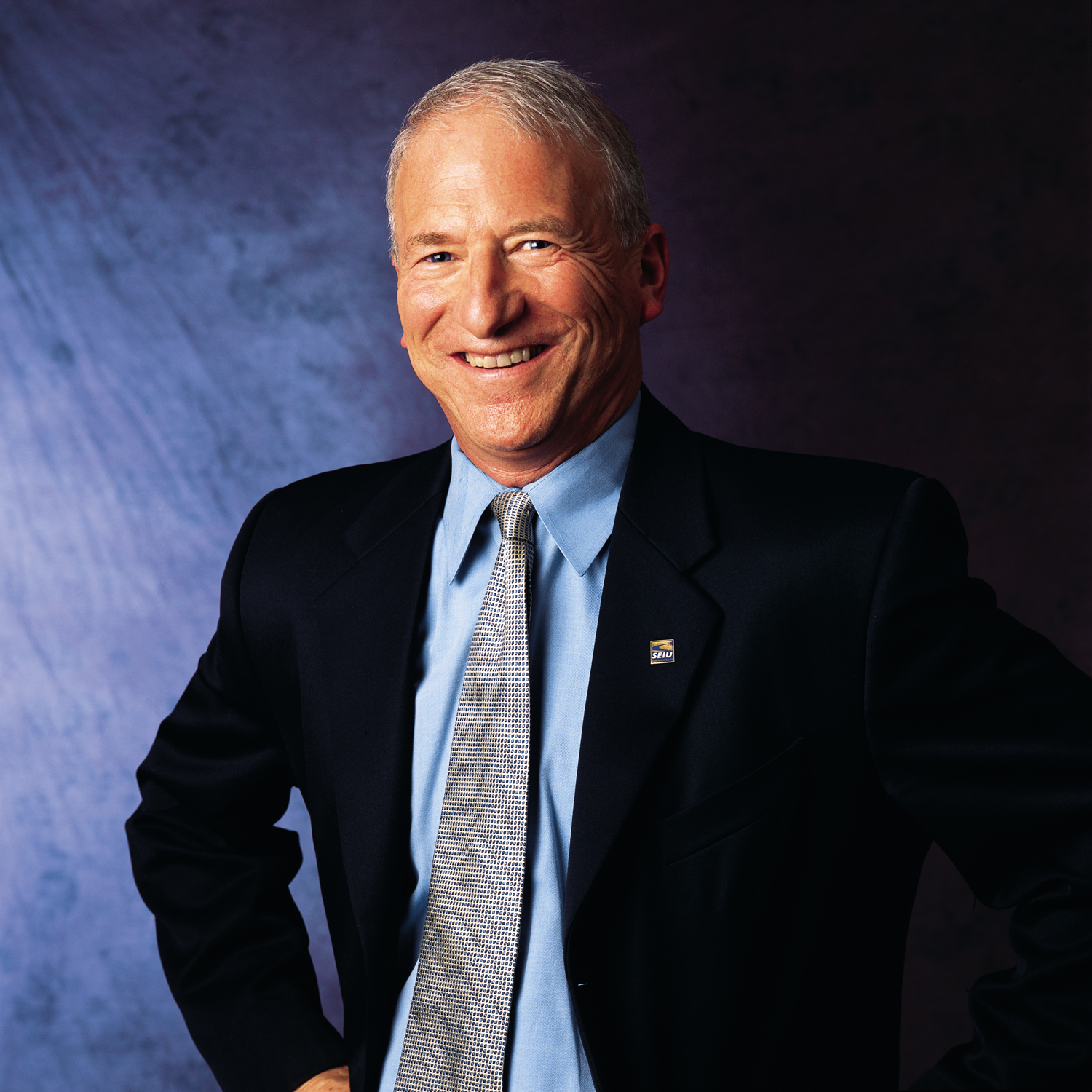
San Franciscans seem to be turning against Service Employee International Union and its national President Andy Stern this week, first with the vote by SEIU Local 1021 members to oust Stern’s leadership team, and now with a letter signed by a broad array of top political officials condemning SEIU tactics against the National Union of Healthcare Workers.
As the Guardian reported last year, NUHW President Sal Rosselli and his management team broke away from SEIU’s United Healthcare Workers after a protracted conflict that culminated in a hostile SEIU takeover of the local, placing it under a Stern-controlled trusteeship. NUHW had criticized Stern’s autocratic leadership style and undemocratic methods while SEIU accused Rosselli of using union funds to undermine Stern’s decisions.
Since then, a majority of SEIU-UHW workers statewide has filed petitions asking to decertify with SEIU-UHW and affiliate with NUHW, which has won seven of the nine elections that have been held so far. So SEIU filed various complaints with the National Labor Relations Board to try to block those elections, while NUHW has complained of worker harassment and ballot meddling by SEIU.
Earlier today, SEIU-UHW sent out a press release touting an NLRB ruling that clears the way for elections at 51 facilities around the state covering 6,845 voters, blaming NUHW for “violating members’ democratic rights” in opposing those elections.
But NUHW leaders say SEIU-UHW has been “cherry-picking” selected sites where they think their chances of winning are good and keeping their NLRB complaints in place to block other sites, often dividing up bargaining units in the process to raise fears in workers that they might lose bargaining clout if they switch unions. NUHW is a relatively small organization compared to the massive SEIU.
NUHW leaders say they want a fair, up-or-down vote among all of the SEIU-UHW members statewide who have asked for elections, and they’ve asked SEIU to sign a Fair Election Agreement to prevent harassment and intimidation, something that SEIU often asks employers to sign.
Supporting that request is an open letter signed by 116 San Francisco political leaders from across the spectrum, including every member of the Board of Supervisors except Sup. Carmen Chu, Assembly members Tom Ammiano and Fiona Ma, Sen. Mark Leno, Democrat Party chair Aaron Peskin and nine other members of the DCCC, all four major candidates for the Dist. 8 Board of Supervisors seat, United Educators of San Francisco President Dennis Kelly, and representatives from a board array of unions and grassroots organizations, including UNITE-HERE, POWER, Young Workers United, Chinese Progressive Association, Coleman Advocates, and many others.
Interestingly, in addition to his critics on the left within the labor movement, Stern is also being criticized by conservatives right now after President Barack Obama appointed him to his National Commission on Fiscal Responsibility and Reform.
The Guardian has forwarded the letter and allegations to SEIU-UHW officials and is awaiting a response, which I’ll post in the comments section when I hear back.
The letter reads:
WE, THE UNDERSIGNED community leaders of San Francisco, are deeply troubled by allegations that the Service Employees International Union (SEIU) committed multiple, serious violations of state labor law during the union representation election between SEIU United Healthcare Workers – West (SEIU-UHW) and the National Union of Healthcare Workers (NUHW) for 10,000 Fresno County homecare workers this June.
These allegations, made in sworn testimony before the California Public Employment Relations Board, include that SEIU officials directed staff to open, mark, and alter workers’ ballots; threaten the deportation of immigrants; and tell workers they would suffer the loss of wages, benefits and hours to scare them into voting for SEIU. The complaint alleges further that SEIU organizers physically removed ballots from workers’ mailboxes and homes.
Caregivers in San Francisco have complained of similar intimidation and harassment at the hands of SEIU officials trying to block union representation elections requested by them and tens of thousands of other California healthcare workers who have petitioned to join NUHW.
Over the next year, as thousands of San Francisco homecare workers, private sector nursing home workers, and private sector hospital workers make their choice for union representation between SEIUUHW and NUHW, we are committed to see that these workers can make their decision democratically, without intimidation, harassment, threats or coercion of any kind, from any party.
NUHW officials have communicated to us their willingness to enter into Fair Election Agreements, which are common in California’s healthcare industry, and which SEIU officials have long championed throughout the nation, to govern their campaign conduct and protect caregivers’ freedom of choice in their upcoming union representation elections.
Therefore, we are asking that you and San Francisco’s healthcare employers join NUHW in negotiating Fair Election Agreements to establish ground rules for these elections and guarantee that workers can choose their representatives for themselves. Please know that regardless of your decision, we will stand united to ensure that San Francisco’s healthcare workers have the fair elections they deserve.
No regular play
superego@sfbg.com
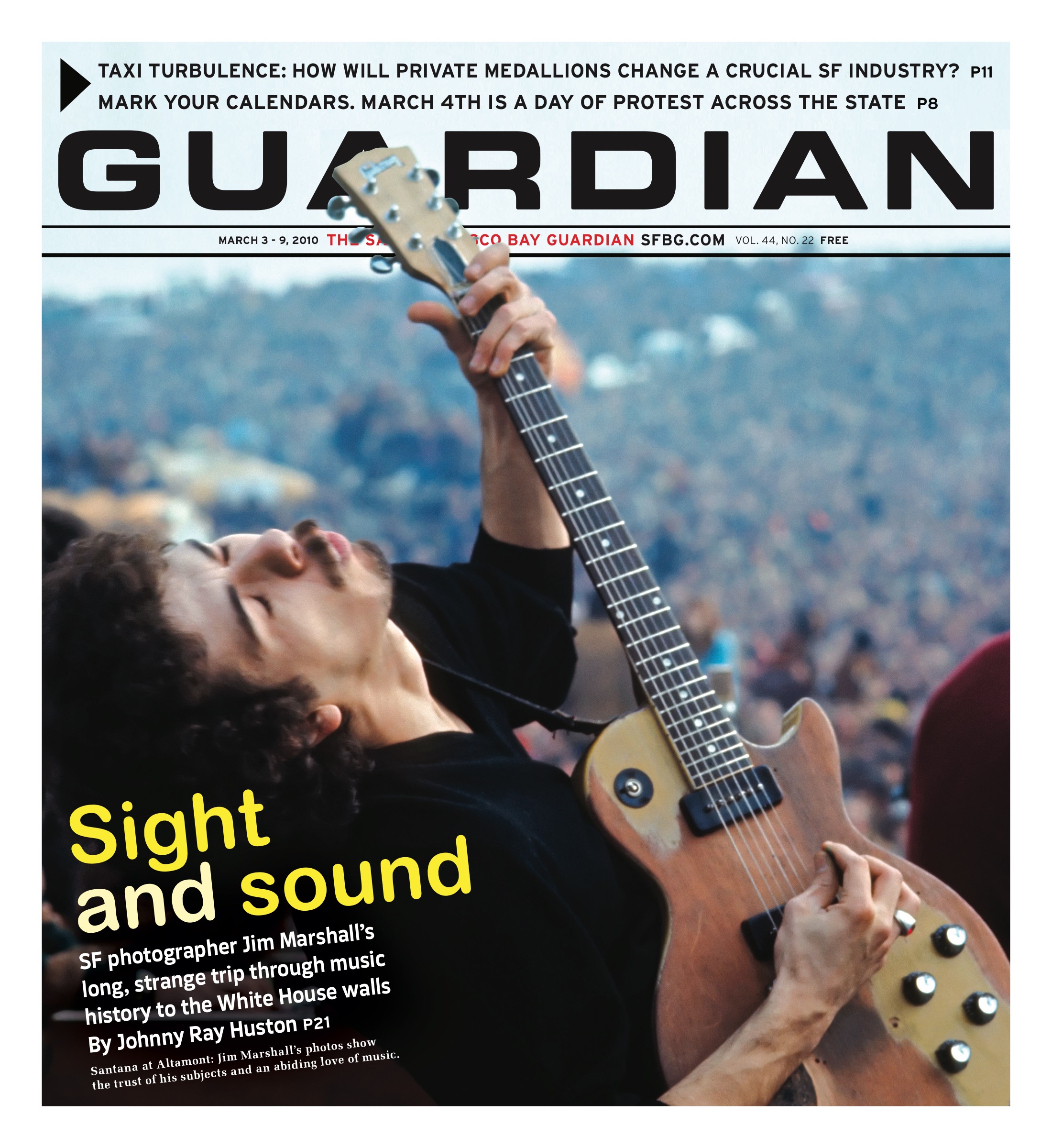
SUPER EGO One of the best things about the San Francisco scene is we don’t have “hits.” You can always escape that tired Kid Cudi dirge or hypothetical Ke$ha-Cannibal Corpse mashup (not a bad idea, as long as it involves rusty chainsaws) by jetting to another spot. Below is a brief survey of four of the city’s most intriguing regular parties, and the music they’ll most likely ravish you with.
YORUBA DANCE SESSIONS
I’ve got to admit I kind of lost it in a good way on the Som floor at this new weekly the last time I attended. (If I huffed down the back of your neck, I apologize.) It’s one of the most diverse-crowded joints in the city, flipping to deep global soul rhythms, and yes there was a dance circle. “There is a negative stigma attached to house music,” DJ and founder Carlos Mena told me. “It is not the stereotype-laden skits that appear on Saturday Night Live. It is soul-filled music, which encompasses rhythms from Africa and beyond. I want to provide a space for dancers to express themselves.” Upcoming guests include Greece’s Osunlade and Ezel from the Dominican Republic.
Sounds like:
DJ Spinna featuring Erro, “Butterfly Girl (Casamena Remix)” Babatunde Olatunji, “Saré Tete Wa” Ezel featuring Tamara Wellons, “”In My Lifetime (Deetron Remix)” Fela Kuti, “Ako” Afefe Iku, “Baiao”
Wednesdays, 10 p.m., $5. Som, 2925 16th St., SF. www.som-bar.com
LIFE/STYLE
You’ll want to don a fly fedora or pop a fresh gardenia in your hair for this youthful and stylish — but actually not pretentious — free weekly at the revamped Beauty Bar, which just celebrated its first anniversary. Decades of familiar retro (is that redundant?) are definitely on the carefully curated playlist, but mixed into some newer party jams by DJs Roll and Ts with the help of some stellar backup from the likes of the excellent Sweaterfunk crew. Indie, Northern Soul, boogie, glam, Brit, Mod … the night can go in any direction. “It’s always a headful of rad times!” says Roll.
Sounds like:
The Juan Maclean, “Happy House” New Order, “Blue Monday” The Ronnettes, “By My Baby” Holy Ghost!, “Hold On” David Bowie, “Queen Bitch” Wham!, “Club Tropicana”
Thursdays, 10 p.m., free. Beauty Bar, 2299 Mission, SF. www.beautybar.com/sf
LOOSE JOINTS
Tom Thump, Centipede, and Damon Bell — the “highly unlikely yet perfectly unusual” DJ trio behind this two-year-old weekly throwdown at the Make-Out Room are pure quality, mainstays on the SF scene who each light up in individual ways. Loose Joints is a gonzo sonic outlet for their funkier sides, incorporating Italo, Latin, space disco, globaltronics, and even future bass beats into a cutting-edge stew. Says Thump, “We’re like an all-vinyl house party (as in your home) where everyone is so trashed they’re tearing their clothes off. We’re boundary pushing and blurry — but never cheesy.”
Sounds like: The Bamboos featuring Lyrics Born, “Turn It Up!”
Tropical Discoteque 2, “La Rosa (Simbad and F. Francis Edit)”
Stevie Wonder, “Superstition (Todd Terje Edit)” Situation, “Goblin in the Bikini Shack” Gonja Sufi, “Holidays/Candylane”
Fridays, 10 p.m., $5. Make-Out Room, 3225 22nd St., SF. www.makeoutroom.com
OLDIES NIGHT
“We’ve had people that dress really nice, like from a certain era — and we’ve had people in their underwear, ha ha,” says one of my favorite club people, Primo Pitino, of the attendees at the fantastic, eight-year-old, twice-monthly, doo-woppy Oldies Night, which he puts on with DJs Ivar and Daniel. “But our party isn’t a throwback party for turning back the clock, it’s for playing music we used to dance around the house naked to, like ‘Please Mr. Postman.’ And our cute crowd has a fairly low asshole ratio.” It’s all true, and not a hard sell by half.
Sounds like:
Little Eva, “The Loco-Motion” Gino Washington, “Out Of This World” The Montereys, “Without A Girl” Bo Diddley, “Bo Diddley” The Metros, “Since I Found My Baby”
First and third Fridays, 10 p.m., $3. The Knockout, 3223 Mission, SF. www.theknockoutsf.com
Bombers kick off derby days with home opener
Perhaps the snarling theatrics of Whip It have rubbed off on yours truly, but I think it’s no stretch to say that the upcoming bout between the Bay Bombers and the Brooklyn Red Devils (Sat/6, Kezar Stadium) will not only be a showdown between east and west, but also a fight between good and evil. This is co-ed roller derby at its most epic. Why? Your ignorance is regrettable, but forgiven. Let me brief you on the history that has lead up to this momentous event.
Jim Fitzpatrick, an ex firefighter, current general manager of our American Roller Skating Derby home team and a Bomber himself from 1977 to 1987, was injured on his day job years ago. After a long struggle with physical therapy and attempts to regain his athleticism, he was offered his old team’s GM position in 2007. He’s never looked back, winning the league championship and GM of the year award every season since. “Roller derby might seem like a strange outlet,” Fitzpatrick humbly says, “but if I can inspire someone go forward and not give up- no matter how difficult life can be at times- then I’ll feel I’ve accomplished something special.” Fitzpatrick’s daughter’s Alta Loma middle school band will be playing the national anthem before the Bombers’ bout on Saturday. Let’s say it all together; awwwwww.

Bay Bombers bust out their league champion blocking skills
And who is his team defending these hard-won accolades against? In the other corner! The Red Devils are managed by the “Demonic Dame of Derby,” Georgia Hase, who started skating professionally in 1964 but rose to fame as a supervillan on the ‘90s TV show Rollergames, where she screamed at her own players when they fell, broke up sister-sister teams and made families everywhere screw up their faces at the boob tube and say “I don’t like her at all!” And she’s started taunting our Bombers already, people! The Red Devils’ website says “our skaters are taught to skate hard and dirty the way we want them to- not the way the pansy San Francisco Bay Bombers or those San Diego Firebirds are taught to skate.” Oooooo! Talk bad about California, will you?! It’s on!
This year marks the return of Bombers stars Roman Lacson and Brian Perry, plus the newly signed speed skating champ/derby legend Patsy Delgado. The SF team, who have been in the bay since 1954, longer even than the Giants, will also feature seven rookies who made it on the team fresh off of this winter’s banked track boot camp. The team is offering wannabe bruisers like yourself the chance to skate their track before this weekend’s game- the perfect chance to see for yourself what it feels like to bomb.
San Francisco Bay Bombers vs. Brooklyn Red Devils
Sat/6 8 p.m., $10-20
Kezar Stadium
755 Stanyan, SF
Let’s all read Sand Paper

Charmingly disheveled Adobe Books, strung as it is on the alcoholic’s crucifix known as the cross-section of 16th and Valencia, has become a beloved sanctuary for readers, drunkards, and occasionally homeless individuals alike. I always look forward to Adobe Books’ events because you can never predict who among the circus just outside will enter and join the fun. Not many bookstores on this dry earth permit customers to imbibe openly from brown bags of Colt 45 during poetry readings. Adobe Books’ Dickensian squalor places it fondly in my heart even as its floorboards sink beneath the weight of dusty overladen bookshelves — and when the smell of stale beer and, somehow, cats, forces me to breathe through my mouth while I peruse.
On Monday, March 1, Adobe Books will host the San Francisco launch party of three new books from Sand Paper Press. It’ll be worth holding my nose to dive in.
Known for featuring and promoting the works of writers associated with Key West Florida, Sand Paper is not as provincial as it may seem. Key West is like Iowa City in that both localities are marked by a disproportionately high writers-to-population ratio. Elizabeth Bishop, Wallace Stevens, Tennessee Williams, and Earnest Hemingway have all served as pro tem Floridians. This upcoming Monday, books by Stuart Krimko, Shawn Vendor, and Arlo Haskell will be presented and read at Adobe.

Stuart Krimko, currently based in Los Angeles, is the author of The Sweetness of Herbert, a collection of poems loosely inspired by the works of Welsh poet George Herbert (1593-1633). Herbert was remembered for his fancifully monastic poems about the existence of God, and his influence is most evident in lines by Krimko like “(As God in the form of a nauseous wave cast Jonah out.)/ That’s what aggressive living is about.” Readers should note that the collection’s title is intentionally misleading; Herbert’s allusion is tangentially related to a work that is richly imbued with Krimko’s own personality.
Key West poet Arlo Haskell’s collection Joker is lovely. John Ashbery once commented that Haskell’s poems “conjure an ambiance as temperate and welcoming as ocean air.” Ashbery was correct in the sense that Haskell’s poems have a flowing and pellucid quality to them, best seen in phrases like “Imagination is our hard respite/ and the birds in the trees are one of a kind: loneliness./ Our law, like love and lust, is liquid”. However, Haskell’s work is not always temperate nor welcoming; they are frequently political and incisive. Despite Haskell’s aptitude for a pretty turn of phrase, he is not afraid to stir the water. Nor is he apprehensive in revealing what lies beneath.
Along with Haskell and Krimko, young writer Shawn Vandor will also be at Adobe, reading from his collection of stories Fire at the End of the Rainbow.
Sand Paper Press launch party
Mon/1, 7pm, free
Adobe Books
3166 16th Street, SF.
www.myspace.com/adobebooks
A look back at the 2010 Sundance Film Festival (part one)
Over the years, the Sundance Film Festival has become known for its superior documentary selections, exciting experimental programs, mumblecore masterpieces, a few foreign delights, and buzz-worthy indie flicks that eventually become the year’s most under or overrated. The 2010 festival was no exception. Make sure to mark down any of these movies that sound interesting for the upcoming year — for some reason, post-Sundance film releases seem to be shorter, smaller, and becoming even non-existent. (Johan Renck’s decade-defining Downloading Nancy, which screened at Sundance in 2008, was finally released straight to DVD this past month.) Read on for the first in a series of posts detailing my top picks at this year’s fest.
Drake Doremus’ aptly titled Douchebag achieved the festival’s greatest achievement: I heard the word “douchebag” being used in every Utah restaurant, shop and theatre. Luckily the film also does a bang up job as it follows a beardo older brother (on the verge of his wedding) who takes a wild road-trip to find his younger brother’s fifth grade girlfriend. Not only will it cause you to mutter the word douchebag multiple times, the film perfectly captures the dominating and destructive characteristics of certain family members. Even the couple sitting next to me who said they “hated mumblecore films” loved Douchebag. David Dickler’s debut performance as the titular d-bag older brother should have been recognized when awards night came around.
Dickler also edited the film, a fact which brought attention to his quiet career in the medium. He edited Me and You and Everyone We Know (2005), Borat (2006), and Anvil! The Story of Anvil (2008). And at a compressed running time of 81 minutes, Douchebag is the most fun you’ll have hating a character this year.
One of Sundance’s hottest ticket was for Lisa Cholodenko’s The Kids Are Alright. Cholodenko won Sundance’s screenwriting award for her first film, High Art (1998); her latest is a pitch-perfect family drama for the Y2teens. Two kids who were raised by two different type of mothers (Annette Bening and Julianne Moore) track down their surrogate father (Mark Ruffalo) and find him to be a progressive, free-wheeling lone wolf. The film’s progression is presented with such confidence and sensitivity that the film transcends its sign of the times vibe, giving the viewer the feeling that it’s predicting the future.
Coincidentally, John Waters’ new film, Fruitcake, starring Johnny Knoxville and Parker Posey, also follows a boy (who runs away from home after his parents are busted for stealing meat at the grocery store) who meets up a with a girl who was raised by lesbian parents and who is looking for her surrogate father.
Pipiloti Rist’s Pepperminta is an inspired, unofficial remake of Czech New Wave director Vera Chytilova’s Daisies (1966). Its psychadelic set and color design felt like an episode of Pee Wee’s Playhouse wrapped up in feature-length Skittles commercial. Many audience members were overwhelmed by the film’s aesthetic, but those who finished it were rewarded with a killer quest through anarchy, feminism, and fearlessness. For anyone who’s been inspired by the music of Kate Bush and Björk, or the children’s books starring Madeline and Pippi Longstocking (after whom the director was nicknamed), this is the movie for you. Rist brings an excitement and inventiveness not only to the screen (and her wardrobe, showcased during the movie’s Q&A), but also to the multimedia exhibit that she also created to compliment the film. Don’t miss seeing Pepperminta in a theater.
Following his previous features I Stand Alone (1998) and Irreversible (2002), enfant terrible Gaspar Noe has now taken the digital revolution to a psychedelic hell with Enter the Void. The warning signs to epileptics upon entering the theater that a strobe effect was used throughout the film kicked things into overdrive right off the bat. Utilizing first person digicam, Noe takes the audience into strobing sexual scenes, deafening drug benders, and all-around supernatural swirly stuff … for two hours and 41 minutes! The film will eventually be released in two versions: a director’s cut and a commercial cut, which will run one reel shorter (by 20 minutes). Pondering if this epic journey was made to watch while you are on drugs or instead of doing drugs is almost as debatable as the final moment of the voyage (it truly is worth it to make it all the way through to the end!)
Zeina Durra’s The Imperialists Are Still Alive explores a group of Manhattan socialites who by day, talk and make self-righteous Post-Modern art, but by night, wander the city looking for late night parties and showing off their audacious new dresses. Asya (played with a perfect balance of ignorance and irony by Elodie Bouchez) is not only participating in this scene, she’s also worrying herself sick about a kidnapped friend in Lebanon (the film takes place during the 2006 Israel-Hezbollah conflict). While Variety pointed out that the film’s title is taken from Jean-Luc Godard’s La Chinoise (1967), it’s the consistent ironic undertone that feels truly Godardian; no doubt it’ll put off many audiences (more than half of the audience in the press screening left early.) The director was slammed after her introduction for being too pretentious and proud of her work. But that is exactly what rings so true to me about this mini-masterpiece, that reflection of our current contradiction that many of us living in big cities find ourselves in: We know and “care” so much about world events, yet seconds later we’re arguing about the Academy Award nominations. Irony is alive and well.
Coming tomorrow: Jesse Hawthorne Ficks’ top five picks and honorable mentions from the 2010 Sundance Film Festival.
Someone wonderful
Written with Cedar Sigo
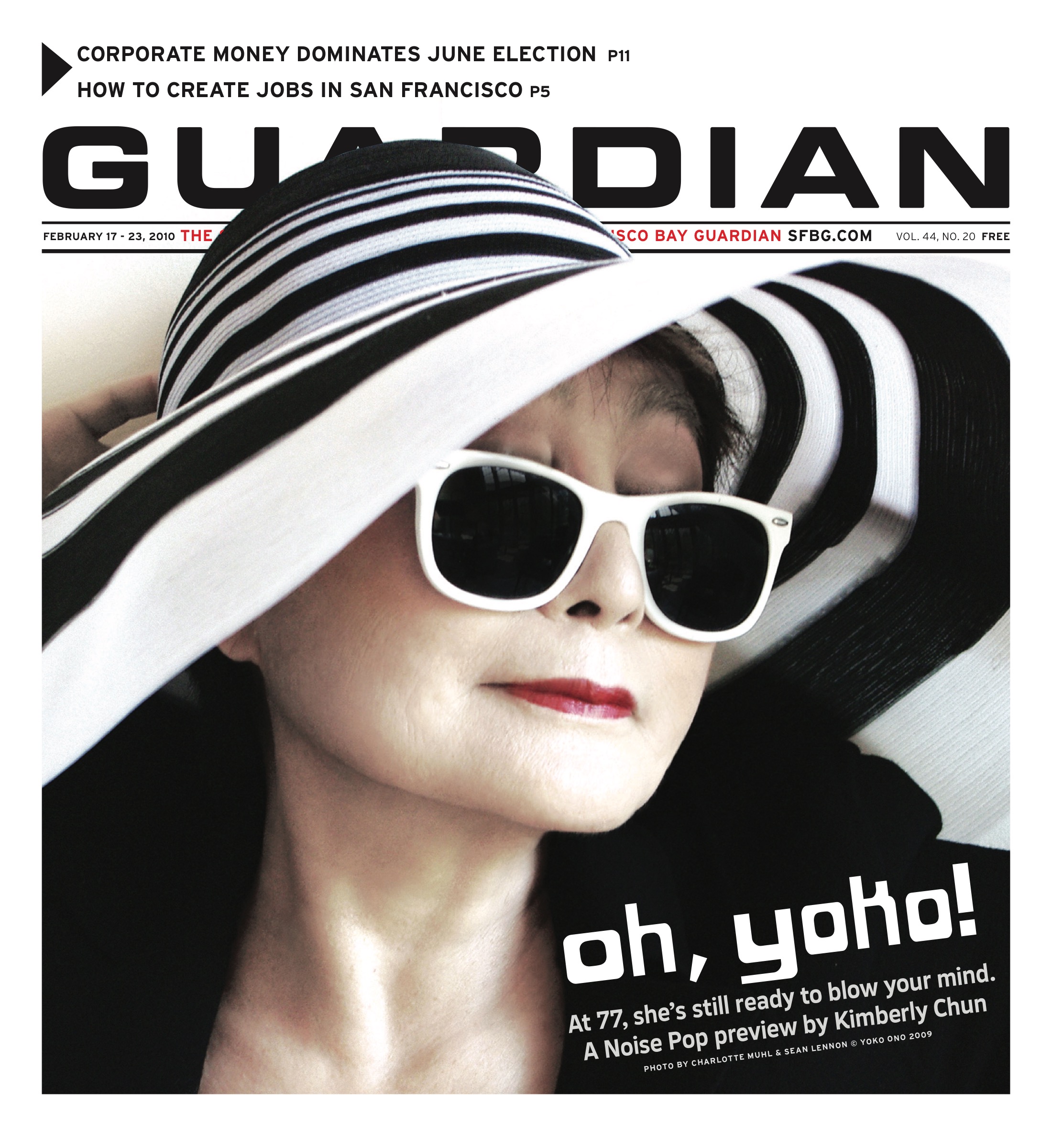
Nancy Wilson has been quoted as saying that she doesn’t play clubs, she plays Yoshi’s. That’s the truth this weekend, especially on Feb. 20, when Miss Wilson will be celebrating her 73rd birthday on stage with a pair of shows. There is only one Nancy Wilson, only one singer who can bring a fusion of longing and attractiveness to a recording such as “He’s My Guy.” On the occasion of her birthday and upcoming Bay Area visit, I asked someone near and dear to me, the poet Cedar Sigo, if he’d like to interview Miss Wilson. He did.
SFBG It’s always a pleasure to hear you live. I have so many of your recordings, from the Capitol and Columbia albums to the more recent ones, and some of the live tracks really stand out to me.
NANCY WILSON I love [The Nancy Wilson Show] Live at the Coconut Grove (1965, Capitol).
SFBG Listening to “Don’t Take Your Love From Me” [off The Nancy Wilson Show], it’s a recording, nothing visual, but I can see you under the spotlight.
NW I understand what you’re saying.
SFBG Over the years, have you gotten a lot of crazy fan mail?
NW No, it’s been calm. I haven’t had a lot of crazies in my career.
SFBG Have fans painted portraits of you?
NW I’ve gotten some portraits [laughs]. Some of which were quite good. One was not at all good.
SFBG I’ve always been fascinated by your image, particularly during your albums with Columbia. Did you work with one particular stylist?
NW I never had a stylist.
SFBG The cover of Something Wonderful (Capitol, 1960) is terrific.
NW Oh yeah. My hands on my knees, right?
SFBG That’s the kind of music I put on when I’m trying to look totally hot and go out for the night. More recently, I like R.S.V.P. (MCG, 2004).
NW It’s hard to find songs, in fact I was just talking to MCG the other day and saying, ‘Just go through Gershwin and Cole Porter and Billy Strayhorn — is there anything I haven’t done?’ Finding something I have not recorded, that’s the hardest thing. I’ve done so many of the really great things already, and finding things of the same caliber is difficult.
SFBG When you were recording for Capitol, would you do many albums in a year?
NW At Capitol, we’d record every six months. Myself, Nat Cole, Peggy Lee, Tennessee Ernie Ford.
SFBG Are you still a quick study with a song? The impression I get is that you can instinctively or innately put your stamp on a song.
NW I just sing. I am what I am. It’s painless, it’s not a painful process.
SFBG When I listen to “Blame It on My Youth” [on R.S.V.P.], I think that your voice is not that different from when you first recorded. How do you account for that?
NW I don’t!
SFBG The same applies regarding your face, your body, your spirit.
NW Hey, listen, it is what it is!
SFBG I’ve heard you acknowledge Dinah Washington and Jimmy Scott as vocal influences.
NW Dinah — more the humor. Jimmy Scott, the sound and the phrasing. I guess my dad had recordings of when Jimmy was with Lionel Hampton. I was about 10, I guess. When he came out with his own album, my dad bought that, and I loved it. It just so happens that we phrase similarly, not so much that we sound alike. We phrase alike.
SFBG Yes, the long notes. Are there others besides Dinah Washington and Jimmy Scott you’d name?
NW Lena Horne.
SFBG What about instrumentalists?
NW I don’t know that any instrumentalists have influenced my vocal style. I don’t know that anyone has influenced my vocal style. I don’t recall wanting to be like or sound like anybody. It’s just been there.
SFBG That is completely true of you. It’s common for people to talk about a singer sounding like an instrument, but you’ve always brought a sense of drama.
NW I’m a lyric person. I’m not interested in vocalizing. I want to get the story across.
SFBG It seems now that the art of being an entertainer as well as a great singer is being lost. You bring that.
NW Yes. Hopefully it will come back, and there will be places for people to learn and hone their craft. It’s out there, you just have to hunt for it, whereas what I sing today was the pop music back in the day.
SFBG Lena Horne, whom you mentioned earlier, is an example of someone who could sing but also entertain.
NW Exactly.
SFBG One of my favorite of your albums is I Know I Love Him (Capitol, 1973). That one has “Don’t Misunderstand,” by Gordon Parks.
NW I’m the godmother to one of his children. I love Gordon.
SFBG Did he write a lot of music?
NW No. I don’t know where that one came from. But it’s a goodie.
SFBG Do you enjoy playing in the Bay Area?
NW I love Yoshi’s. I love that club.
SFBG It’s a nice size.
NW It’s the perfect size. If you’re going to choose a place to hang out and have some fun with a guy, that’s the place to do it.
SFBG I’m looking forward to seeing and hearing you there again.
NW There are certain songs I’ll have to sing — “I Can’t Make You Love Me” and “Guess Who [I Saw Today]?” Certain songs, you’ve just got to do them.
SFBG I don’t think people would let you off stage until you’ve done “Guess Who [I Saw Today]?” [Laughs] Songs like that one and “Face It Girl, It’s Over” have a gay appeal. Have you always had a strong gay following?
NW I would assume so. [Laughs]
SFBG Going to see you, one of the best things is the audience — they’re usually a great group of people who seem happy to be together.
NW I’ve been blessed, I’ve been fortunate.
SFBG Thank you. It’s an honor to talk with you after appreciating your music for so long.
NW I’m glad you called. It was enjoyable just to talk with someone who knows the body of work and appreciates it.
NANCY WILSON
Thurs/18–Sat/20, 8 and 10 p.m., $50
Yoshi’s Oakland
510 Embarcadero West, Oakl.
(510) 238-9200
Alerts
alerts@sfbg.com
WEDNESDAY, FEB. 17
Same Sex Marriage Forum
Attend this forum about which entity — the state or the federal government — should define marriage. The forum is led by a panel of experts from human rights organizations and SF Chief Deputy City Attorney Therese Stewart, attorney for the plaintiffs in the current court case challenging Proposition 8.
6:30 p.m., $20
Commonwealth Club
595 Market, 2nd floor, SF
(415) 597-6700
THURSDAY, FEB. 18
Human rights in Chiapas
Hear Victor Hugo López of Fray Bartolomé de las Casas Human Rights Center (Frayba) in San Cristóbal de las Casas, Chiapas, Mexico. López will discuss human rights and the prospects for political change in the region in 2010. Frayba produces human rights reports, defends cases in court, and supports indigenous communities under attack.
7:30 p.m., $5–$10 sliding scale
La Peña Cultural Center
3105 Shattuck, Berk.
(510 654-9587
Wreaking HavoQ
Attend this organizing meeting for Pride at Work, a queer advocacy group fighting for economic and social justice. The meeting will cover upcoming projects such as fighting the gentrification of queer neighborhoods, resisting attacks on immigrants, and advocating for queer workers’ rights.
6 p.m., free
UNITE HERE Local 2
209 Golden Gate, SF
sfprideatwork.org
SUNDAY, FEB. 21
Day of Remembrance
Commemorate the anniversary of Executive Order 9066, which led to the incarceration of 120,000 people of Japanese descent in 1942 during World War II. The event features a speech by California Assembly Member Warren Furutani (D-Long Beach), a performance by Purple Moon Dance Project, a candle- lighting ceremony, and more. Reception to follow at the Japanese Cultural and Community Center at 1840 Sutter.
2 p.m., free
Kabuki Sundance Cinema
1881 Post, SF
(415) 921-5007
Peacemas
Celebrate the anniversary of the peace symbol with an evening of entertainment that includes inspirational clown Wavy Gravy, Selma Vincent as Mrs. T. Bill Banks of the National Association of Rich People, jazz violinist India Cooke, and more.
7 p.m., free
Redwood Gardens
2950 Derby, Berk.
(510) 845-5481
Yeasayers for Prop. 15
Hear Sen. Mark Leno (D-SF), Assembly Member Tom Ammiano (D-SF), and other luminaries speak in support of the California Fair Elections Act, or Proposition 15, on the upcoming June ballot. The act would pilot a voluntary system of public financing for secretary of state campaigns, which means elected officials can spend less time fund-raising and more time solving California’s problems.
1 p.m., free
San Francisco Main Library
100 Larkin, SF
(415) 648-6740
TUESDAY, FEB. 23
A chicken in every yard
Learn the logistics of raising chickens in a urban environment at this workshop with Alexis Koefoed. The Soul Food Farm maven will answer questions about the legality of raising chickens in your area, what it costs to raise chickens, where to buy chicks, and more. There are two sessions.
6 p.m. and 7:30 p.m., $20
18 Reasons
593 Guerrero, SF email info@18reasons.org 2 Mail items for Alerts to the Guardian Building, 135 Mississippi St., SF, CA 94107; fax to (415) 255-8762; or e-mail alert@sfbg.com. Please include a contact telephone number. Items must be received at least one week prior to the publication date.
Bang Bang! Latin legend Joe Cuba lives again with Chico Mann at Afrolicious
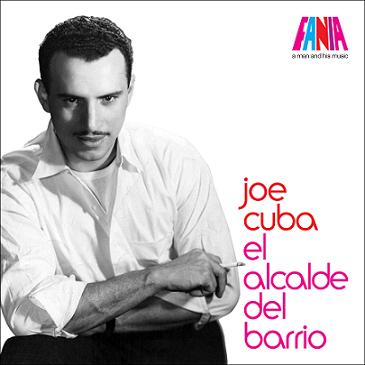
The syncopated sounds of the congo, hand claps and guitars — combined with Joe Cuba’s suave vocals — melt hips and hypnotize feet with irresistible dance beats. Known as “sabrosura,” it’s the urge to shimmy and shake your luscious body parts when music with this much flavor hit your senses. The late Latin legend was known as the “father of boogaloo” and a man who melded together genres into one of his own.
Fania Records will release Joe Cuba’s El Alcalde Del Barrio on Thu/11, one year after the iconic musician’s passing, and celebrate with a live performance by Chico Mann at the Elbo Room’s global-funky Afrolicious party. The 34-track box set features digitally remastered recordings never before compiled in album form and include a diverse array of his totally hot hits, from “Bang Bang” to “El Pito (I’ll Never Go Back to Georgia).” El Alcalde Del Barrio or “the mayor of the barrio” refers to Joe Cuba’s pioneering role in the world of modern Latin music and his dedication to keeping it fresh.
Boogaloo was a product of the New York barrios during mid-late 60s when Puerto Rican, Cuban and African American residents began swapping and combining musical stylings with their one another. Boogaloo became the soul behind R&B braided into the saucy rhythms of mambo and Cuban son montuno. Perfectly placed maracas, sweetly clanging bells, saxophone, easy keys and most importantly, a whole host of drums, fuel this genre with unwavering energy.
Joe Cuba, born to his Puerto Rican parents as Gilberto Navarro on April 22, 1931, grew up in Spanish Harlem and became fascinated by the Sabu Martinez’s conga playing. Gilbert learned to play, jamming in the streets with friends until he was asked to step in for his idol, Martinez, for a show in 1950. The name “Joe Cuba” was coined by his publicist and stuck with him throughout his career.
Swooning the Jewish and Italian markets in New York and eventually worldwide, his 1966 hit “Bang Bang” achieved unprecedented success for Latin music in the US, selling over one million copies. In recent years, acts like Chico Mann of New Jersey, the Boogaloo Assassins in LA and DJs Guillermo and Beto in San Francisco have begun playing reinventions of boogaloo sounds, churning out a sort-of renaissance in the genre.
Chico Mann is the brain-child of New Yorker Marquitos Garcia, known for pumping out vintage afro-latino beats that make any dance floor a sexy, sweat fest. Chico Mann will be playing live versions of Joe Cuba songs throughout the CD Release show. The Guardian chatted up the East Coast musician as his plane touched down in SF about his love for old fashion funk and why Joe Cuba would think his music is rad.
On how Chico Mann became identified with the “afro-latino vintage-funk” genre…
I guess I don’t really see it as me playing any particular genre and instead, I’m developing a genre that didn’t exist before, one that’s comprised of multiple musical elements and vocabularies.
On growing up around so many styles of music…
My dad owned a record label in Hell’s Kitchen and so I was constantly around Latin music and living in New York meant I was around freestyle. I was an 80s kid and therefore I love electro and old school hip-hop. All of that informs what I do. So when was I introduced to this music: in the womb.
When did he hear Joe Cuba for the first time?
I don’t even remember. It was just always around.
Why play at the Joe Cuba CD Release?
Wax Poetics pitched the idea and I said yeah—if we can recontextualize his music and pretty much flip it in a whole new way. The Urban Latin roots of what I do are pretty closely connected to Joe Cuba and this was a way to flesh out that tradition. We’re not a boogaloo band, but five different generations of Latin music cooked up into a new music soup.
On how he plans to reinvent Joe Cuba’s songs…
What can I say? We’re sampling Joe Cuba and adapting to its melodic lyrical content. My only worry is that people won’t be able to differentiate between Chico Mann and Joe Cuba— that they wont get the references. Well, I guess that’s not a worry, I just want people to know how much love we’ve put into this. I’m really excited.
What should newbies expect?
One hell of a dance party and I know San Francisco gets down. Whether or not you know Joe Cuba, the energy of the music is so strong. The Latino, afro beat and what I do, it’ll make your ass move. Physiologically your body can’t help but move and react. That’s the sheer beauty of it.
If Joe Cuba would hear Chico Mann…
I’m thinking he would totally appreciate it, considering how he was forging a new sound based on the Cuban musical roots. He blazed that trail. He’s one the earliest pioneers of creating an urban, new york, latin sound. We are very much coming at it at the same level. And he would probably want to take a few solos— we’d make room for a few Joe Cuba congo solos.
And FYI: Bring a voice along with those dancing shoes…
So much of afro-Cuban music is based on call and response. When I sing the call, the group and the audience should both come back with the response. I’ve been trying to stress this on my Facebook and Twitter. When you hear the coro, you gotta come back with the coro. We can all get on the same page— and even if you don’t speak Spanish, phonetically, we can all come together and fully appreciate and understand Joe Cuba’s music and Chico Mann’s music. That would draw the thread.
Afrolicous + Wax Poetics + Fania Records Presents Joe Cuba CD Release Party
Thu/11, 9:30pm, $6/ $8
Elbo Room
647 Valencia Street, San Francisco
www.elbo.com
’80s babies

arts@sfbg.com
I’m from the city of gangstas and broken dreams / where we hopin’ the Lord hear our silent screams / but this dope money helpin’ my self-esteem — J Stalin, “Self-Destruction”
MUSIC I’ve known J Stalin for five years, during which I’ve watched the pint-sized, eternally baby-faced rapper develop from cocky adolescent to full-blown boss, head of a label and an ever-expanding crew of talent both known as Livewire. When we met, he’d already made a prestigious debut as an 18-year-old on Richie Rich’s Nixon Pryor Roundtree (Ten-Six, 2002), but he still had a long grind to get where he is now.
The title of “hottest rapper in Oakland” changes hands rapidly, but at the moment, it’s Stalin’s, coinciding with the recent release of his sophomore album, The Prenuptial Agreement (Livewire/SMC). “Sophomore” is misleading; J’s released countless projects since his first album, On Behalf of the Streets (Livewire/Zoo Ent, 2006) — not simply mixtapes, but full albums under one pretext or another, like a duo disc with Livewire-member Mayback, The Real World, Vol 2 (Livewire/DJ Fresh, 2008), or his entry in SMC’s Town Thizzness series, Gas Nation (2008). But these days, rappers reserve the right to designate “official solo albums” among their endless stream of releases, and J has patiently assembled Prenup over roughly three years.
“On Behalf of the Streets was to prove myself to Oakland,” he says. “When I made Prenup, I was trying to make music for the world. My fanbase is bigger than Oakland now, so I gotta make my music bigger.”
Prenup definitely succeeds in this ambition. The Mekanix — who produced all of Streets — return in force, alongside numerous newer producers like teenage Alameda resident Swerve. Tracks like Swerve’s “Neighborhood Stars” (blessed by Oakland’s godfather, Too Short, as well as Mistah FAB) or the Mekanix’s “HNIC” (featuring Messy Marv) are spacious, state-of-the-art numbers that hold up against anything on national radio.
Yet the core of Stalin’s sound is very Oakland — unsurprising, given his role in shaping the Town’s current obsession: the 1980s. Musically, the signatures of this trend are classic 808 beats, layered with old skool keyboards from a time when synths barely resembled the instruments they allegedly imitated. Aside from the 808s, the resulting tracks sound little like ’80s hip-hop (or even funk), evoking more the sonic palette of that decade’s R&B and even new wave.
DJ Fresh, producer of J’s first “pre-album” The Real World (Livewire/DJ Fresh, 2006) and other Livewire projects, acknowledges that these sounds have had a role in digital hip-hop. “That sound was there, but we mastered it,” he said. “Nobody was really touchin’ that sound before. It helped me find my sound, and it sounds natural with the way Stalin raps.”
“I just got it in me, those ’80s beats,” the often melodic Stalin concurs. “It probably got beat into my head as a child. I got a smooth style of rappin’, my harmonizing and all that. I’m on that ’80s melody vibe.”
ROCK OF AGES
Given the size and influence of Livewire, and its association with Beeda Weeda’s PTB crew, the ’80s vibe has gone viral in Oakland over the past couple of years. But unlike other miners of ’80s terrain — say, the Casio rock trend of last decade — the new sound of the Town has an organic lyrical connection through tales of crack and the devastation the drug has wreaked in the ghetto. “Slangin’ rocks” is hardly a novel topic in rap, yet there’s been a shift in presentation. This, I think, is a directly connected to age: unlike their elders, these new rappers are the first generation born during the crack epidemic. Born in West Oakland’s Cypress Village in 1983, Stalin himself is literally a crack baby.
“My mama been clean for two-and-a-half years,” Stalin says. “She did drugs all my life. We wasn’t always broke, because she sold drugs too. But as she got older, she started using more and selling less.”
This was a harsh environment for the young Jovan Smith. When J was only five, his 18-year-old brother, Lamar Jackson, died from swallowing his rocks while escaping from the police. Stalin’s dad, a con man, was in jail for most of Stalin’s childhood.
Stevie Joe — a Livewire rapper whose upcoming disc ‘80s Baby also refers to his East Oakland hood, the Shady 80s — succinctly articulates the effects of such an upbringing.
“A lot of kids grew up alone,” he says. “You gotta go outside because your parents tell you, ‘I’m getting high, get outta here.’ When you outside and they inside getting high, they don’t know what you doing out there. That’s how people get involved with selling drugs, doing drugs, all that.”
Immersed in this environment, Stalin became a d-boy — a teen crack dealer — standing on the corner, taking turns with his friends selling as customers came through. Stevie himself sold drugs more casually until age 19, when his daughter was born. “I never wanted to hit the block, but I needed a stable place where I could make money. It might sound bad on paper, but it helped me raise her.”
Others, like Livewire’s Philthy Rich, whose Town Thizzness disc Funk or Die (SMC) dropped in late ’09, began even earlier. Hailing from East Oakland’s Seminary neighborhood, Philthy caught his first case at age 11 for stealing a bike, before graduating to the dope game.
“I got in the streets when I was young because I had a rough parenthood,” he said. “A single mother. Five different kids from five different fathers. For attention I was rebelling. And it’s not hard to start selling drugs when you already been around that life. Most of the crackheads is people’s family from the neighborhood. So it’s nothing new.
“It was just me out there, trying to find myself,” he continued. “I used to wonder why I was even born.”
D-BOY BLUES
In lyrical terms, the ’80s baby generation primarily identifies with classic Bay Area mob music, bypassing more recent hyphy. But there seems to be a difference in presentation. The ’90s mob rapper tended to rap from an adult perspective, portraying himself in hyperbolic exploits as a kind of Scarface-inspired action figure. To be sure, the ’80s babies haven’t abandoned such tales of million-dollar deals, speedboats, and private planes. But alongside this, the story of the d-boy has emerged, reflecting the trauma of the generation’s upbringing. In contrast to the mobster’s comic-book glory, d-boy stories are frequently anti-glamour in tone, from the mundane, heartbreaking experiences of neglect — wearing the same clothes for a week or more being a common detail — to the painful tragedies of losing parents and siblings to drugs or murder. These stories generally unfold against a middle-school or high-school backdrop and are narrated from a present-tense, first-person perspective. The popularity of Stalin and ’80s-baby peers partly stems from the bond these narratives create between a rapper and his young ghetto fanbase. They can appreciate and admire Stalin as the grownup mobster who measures dope by the kilo, but they can identify with J as the d-boy with a bundle of rocks and “dope fiend” mother.
“They relate to us because we talking about what they going through too,” Stalin says. “I was 17 once upon a time. I can still relate; you just got to remember. I remember when I was 12. I can relate to a 12-year-old.”
Despite his chaotic childhood, Stalin wound up one of the lucky ones. Busted at 17, with a weekday curfew and weekends in juvenile hall, he had time on his hands and, like Mac Dre and many others, he used this isolation to begin writing raps. As it turned out, his late brother’s best friend grew up to be DJ Daryl, who produced 2pac’s 1993 smash “Keep Ya Head Up.” Daryl took Stalin under his wing, eventually introducing J to Richie Rich, who was impressed enough to feature Stalin on several tracks on Nixon. For Philthy Rich — subject of a segment in the recent, somewhat histrionic Discovery TV documentary Gang Wars: Oakland (2009) — as well as Stevie Joe, getting off the block took a lot longer.
“After I had my second son,” says Philthy, “I needed to do something else than what I was doing, in and out of jail. The cycle was just going to repeat. I feel like I can get further doing this.”
A chance encounter with Keak da Sneak manager Dame Fame, who was impressed with the rapper’s talents, helped get Stevie off the block and into the recording studio.
“I backslid one time, after a couple of months,” he admits. “But that didn’t last long because I couldn’t do it no more. So every day since I been rappin’.”
While J, Stevie, and Philthy have left the d-boy life behind, they haven’t forgotten the struggles they went through. The pain of this music offers solace to today’s disaffected youth, who, given the cumulative social effects of crack, are wilder than ever.
“These motherfuckers are crazy, because they never been raised,” Stevie says, citing the passing of pre-crack generations in the hood. These are the kids the new brand of “conscious thug” reaches out to. Alongside glorified tales of killing and dealing, the rappers send out more cautionary messages. Stalin voices the paradox on the intro to Prenup: “I told them I sold rocks on MTV / I’m a hustla, I could sell a million mp3s / and still send the message ‘don’t sell drugs’ to teens.” “As black people, we adapted to the ghetto to where we feel like there’s nothing wrong with us,” Stalin says. “It’s like nobody sees the big picture. It seem like nobody have big dreams of getting out the ghetto. They content; fuck being content — strive for more. Like OK, I sold drugs, but when I die, my obituary’s not going to say ‘drug seller.’ My obituary’s something whole different.”
DJ Similak Chyld dances to an unfamiliar beat
DJ Similak Chyld doesn’t mess with inspiration. When asked how she came up with the idea for Afro Chico Electro, her dance party that hits the floor at Triple Crown on Wed/10, she’s narrowed the concept down to a single visual. It’s a purple pencil drawing by graffitist Mode 2 that shows a swath of party people intertwined, their arms thrown in the air, eyes closed, smiles open. There’s a bald girl, a blonde girl, some b-boys, a cool guy in a hat- but they’re all dancing to the same beat. Quote the pint sized Similak, “the idea is basically merging all the genres that I love, to bridge the gap between different crews, djs, artists, etcetera. I figure it makes sense to me- why not throw a party that represents who I am at the core?”
This kind of inclusiveness drove Similak’s musical programming for an evening that breaks down a lot of the genre boundaries that can run the SF dance scene. The DJ lineup includes Chico Mann, who assembles afrobeat/afro Cuban sounds on the drum machine, synthesizer and guitar for sets that have been described as “instant vintage”- early 80s Fela Kuti meets the music melding of today’s technology.
He’ll be joined by the sexy, dub heavy sounds of local hip hop mixer J Boogie, DJ Sake 1 (whose group Local 1200 has snagged our Goldie Award in the past for best Bay DJ crew), DJ Apollo, Similak herself, and a whole passel of afrobeat, hip hop and latin dance crews. “There’s no reason why we can’t dance to a beat because it’s not familiar. An afro dance troupe can appreciate disco or hip hop breaks, just like b-boys can up-rock to an afro or latin breakdown,” says Similak, who was raised between California and Taiwan, and whose own sets have been known to include old school soul, roots music, pop tracks.
Her concept of musical universality is being put to the test at Afro Chico Electro- she’s partnering the dance crews with music they might not typically get down to and encouraging the djs to branch out with their beats as well.
Will it come off? Will it be crazy? Smart money is on yes and yes. Even the wallflowers will have something to look at- neighborhood gallery Lower Hater is curating the whole damn thing with their arsenal of works from smart local artists. All told, an evening that just may encapsulate a lady with layers. “People used to- and still do- get really confused about what I play,” says Similak. “I’ve stopped trying to argue, defend or explain myself and I think folks are slowly starting to get that you can’t really put me in a box.” Unless it’s got nice headphones and is somehow hooked up to some speakers, the woman just might be right about that one.
Afro Chico Electro Wed/10 10 p.m., $5 (before 11 p.m., $10 after)
Triple Crown
1760 Market, SF
(415) 863-3516
Join the Orchid and Hound fan club
I hate to be objectifying, but journalistic integrity be damned- Orchid and Hound are damn good looking. The queer pop duo, comprised of satyr-esque John Constantine and the coyly shaggy Lawrence Alarcon, were also charming and beautifully turned out when I met them for drinks the other night- and, of course, they are brilliant onstage. Their upcoming show at The Blue Macaw (Thur/11) promises to look a lot like what would happen if High School Musical came out of the closet, hired a better stylist and started partying. So you’re going to have to excuse me if the following article starts to sound like Tiger Beat at times. I’m a little smitten, so shoot me.
This is what you will see at an Orchid and Hound show. Lawrence Alarcon will bang out lovely up and down tunes on his piano, while John Constantine provides jazzy vocals that ease over here to a sound reminiscent of Broadway, then smooth down there to recall a smoky lounge somewhere in Vegas. They’ve dubbed it “queer pop”- a highly listenable, intimate little cabaret. “We like to think of ‘queer’ as ‘different,’ like melodrama,” says Constantine of their sound.
But you’re not going to hear the typical “where ya from” one liners and “waitress, get me another drink” admonitions at O & H shows- you know, the typical lounge standards. “I suck at banter,” says Constantine. “He rambles,” offers Alarcon. Perhaps it’s for the best- the pared down nature of Orchid and Hound makes it a little easier to focus on, you know, the music. “It’s just a show where you shut up and listen,” Constantine says (“ideally,” adds Alcarcon).
The sound the two put out is lighthearted, the piano rhythms and Constantine’s voice bouncy, even. But their lyrics are expressions of a life as a pretty 23 year old in the Castro- a life can prove more complicated upon closer inspection. “I find inspiration in the dialogues I have with the people around me,” says Alarcon, who penned one song for O & H born of a conversation he had with his boyfriend about nothing less than the end of the world. “We were talking about the Mayan prophecies for 2012, but my boyfriend’s a scientist. He was more concerned about 2013, when the oil crisis is set to hit.” Alarcon turns to Constantine, pondering the difference between their songwriting styles, finally hitting on the pith of the issue. “John’s more angsty, more metaphorical.” Ooo… angsty!
“I like to sing about the human condition,” says Constantine, picking up Alaron’s musings. One of John’s songs, ‘Sabotage,’ is a catchy dirge that hinges on a theme familiar to most dashing rock stars; self destruction. “[‘Sabotage’] is about that daily battle you have with the destructive side of yourself, that you live with but must control,” says Constantine, toying earnestly with the stem of his cocktail. To date, their audience favorite is “The Drinking Song”, a depraved little interactive ditty whose success amuses Alarcon. “Who knew our most disturbing song would turn out to be our most popular?”

“Who knew our most disturbing song would turn out to be our most popular?” Photo by Erik Anderson
So back to our bar date (because that’s what I’m calling it, so there!) The two have a knack for finishing each other’s sentences, and where Lawrence can be artistically reticent, John is more than happy to tell me about the origin of O&H. Herein lies the duo’s sychronicity; they’ve known each other “since forever,” growing up best friends at an arts high school in Los Angeles. John and Lawrence even dated each other for three years, during which they moved up to SF into a shared apartment- where they live to this day, despite having subsequently broken up, moved on… and formed a band. When asked how this is earthly possible, they smile sweetly at each other as though nothing could have been easier. “It was rough, but we’re much more productive now- minus the sex,” says Constantine. “We would have killed each other if we’d kept dating.”
Though the two first collaborated on musical compositions for an installation artist in LA, John and Lawrence only just formed their current act last year. They can still tell you how many live shows they’ve had; a sprightly “twelve!”- blurted out in unison, of course. “We don’t fuck up that much though,” says Constantine with a winning smile. “The one time we noticeably fucked up, someone told me ‘it was cute when you fucked up,’ so I guess that’s good.”
So what does 2010 hold for these darlings, who are still unsigned to a label as of press time? Well, besides the trail of broken hearts and rehearsal hours they’re working on a studio album and recently announced their gig at this year’s South by Southwest festival. And then? Says Constantine “We’ve planted a lot of seeds, we just have to water them all.” Somebody hand these boys a hose- the world hearts Orchid and Hound.
Orchid and Hound w/ Audrey Ryan & Il Gato
Thur/11 8 p.m., $5
The Blue Macaw
2565 Mission, SF
(415) 920-0577
Roll over, Beethoven: Real Vocal String Quartet takes the classics for a ride
“The classical composers we know so well, Beethoven and Bach and Vivaldi, they were improvisers. So really, we’re carrying on that legacy,” says Real Vocal String Quartet founder Irene Sazer. I’d love to know what the old masters would think of a RVSQ gig- would they throw down their powdered wig and get down when the women launch their cellos into “Fontana Abandonada-Passatempo,” their Afro-Brazilian jam? Get their britches in a twist over “Kothbiro,” a nyatiti song by Kenyan artist Ayub Ogada?
I reckon they’d have dug the tunes. After all, RVSQ, performing this Thursday at Freight and Salvage, attributes their freedom to perform such divergent genres to their traditional classical training. The band members- Dina Maccabee and Sazer on the violin, Alisa Rose on the violin and fiddle and cellist Jessica Ivry- were all band kids, many raised in families of classical musicians and most recipients of college degrees in their respective axes.
Some started careers in orchestras and the like. But there was always something beyond the Bach that beckoned.
“For me growing up, I had two musical lives,” says the enthusiastic Sazer, who is given to excited exclamations and breathless descriptions of the energy she gleans from her RVSQ bandmembers. “One as a ‘serious’ violin player… but on the other side, my mom was into folk music from all over the world- she sang in Yiddish. I heard world music from an early age and always loved it. I heard the Beatles, Carol King, Joni Mitchell- the really great pop music informed my life as well.”
“Because of the pedagogy of being a classical musician,” she continues “it seemed so separate- but I never liked that. What I hoped for when I became a young adult was to explore lots of different styles of music- I hoped for my own individual musical language. I’m even luckier than that because I’ve found a group of people on similar musical paths.”
But RSVQ takes the path that’s not taken as much.
Their alternate path has led to a loosening for RVSQ. The group’s repertoire includes “Now,” an improvisational song they play at every show. It’s a chance to create a different sound for each new audience, a little klezmer here, maybe a smattering of bluegrass or trance rock of northern Mali origin, there.

Gotta love a classical quartet that chills barefoot in the dirt
Though Sazer says she was “really afraid” of improvisation in the early days of her classical training, “it’s such a pleasure when you have people who are accomplished on their instruments and love to jump in and take the risk. It’s a thrill that we have such a vehicle for exploration. And if you’re skilled you can do it mo’ better.”
Mo’ better indeed- the women are seeing their vision resonate with a growing audience, the demographic of whom Sazer confesses is a bit of a enigma. “We have to take polls! The finding of our people is kind of a mystery.” Difficult to pigeonhole themselves, RVSQ is now working on making their name in the world music arena, even landing a gig at 2010’s South by Southwest.
Locally, you can catch them at their album release party at Berkeley’s Freight & Salvage next week- but try to maintain your composure at the show. “People are going to want to come and be somewhat quiet and listen,” says Sazer, laughing somewhat at her exhortation. “There’s a lot of intimacy in our ensemble and musical product.” So keep a lid on it, Handel.
Real Vocal String Quartet
Thur/11 8 p.m., $18.50-19.50
Freight & Salvage Coffeehouse
2020 Addison, Berkeley
www.thefreight.org
Full of love
By Robyn Johnson
Despite what you might hear from Dean Martin, it’s not an empirical fact that everyone loves somebody sometime. It has, however, been proven that everyone needs to eat.
For the people that fit both categories, here’s a list of dining opportunities and options for the upcoming grand romantic holiday — organized from expensive (or $$$$, in Yelpspeak) to recession-conscious.
JARDINIÈRE
A go-to place for the symphony and opera set, Jardinière talks the talk and walks the walk, serving some of the most highly regarded French-American food in the Bay. The Valentine’s menu offers up tasty bits like duck breast with lentils and candied kumquats, frozen lemon soufflé with rose petals and milk chocolate sauce, and a whole host of delectables that guarantee to assuage any doubts about parting company with a few Benjamins.
300 Grove, SF. (415) 861-5555, www.jardiniere.com. $125 prix fixe
SUPPERCLUB
In my mind, dining at Supperclub must be like Eyes Wide Shut meets that Eurotrash club I drunkenly walked into while hostelling in Prague meets François Mitterrand’s last meal. In other words, an absolutely decadent place. The Valentine’s menu and entertainment is a surprise, but management promises an experience not for the “light of heart,” as illustrated by the photo on the Web site of two dudes in collars making kissies with a sternly sexy-faced woman.
657 Harrison, SF. (415) 348-0900, www.supperclub.com. $100 prix fixe
FIRST CRUSH
Cozy ambience and an expansive California wine selection has made First Crush a date-spot favorite. On the five-course Valentine’s menu, you’ll find pistachio-crusted wild Hawaiian walu accompanied by goat cheese fondue and globe artichokes braised in barigoule. (In case you’re wondering, walu is a fish similar to white tuna, known for its buttery flavor. Barigoule? According to Larousse Gastronomique, it’s a fancy method of cooking stuffed and braised artichokes, usually involving pork.) Yum.
101 Cyril Magnin, SF. (415) 982-7874, www.firstcrush.com. $89 prix fixe
BELLA TRATTORIA
According to the Bella Trattoria calendar blog, the Valentine’s meal will be a family-style affair during which the “waitstaff will be insistent that you feed each other.” Luckily, you can look forward to airplaning with their much-loved and infallible gnocchi, to speak nothing of other highlights such as grilled hanger steak fillet with Sangiovese bone-marrow glaze and mango. When planning your dinner here, keep in mind that the pricing’s a bit tricky: From 5 to 6 p.m., the prix fixe menu consists of three courses and costs $45; from 6:30 to 9:30 p.m., it’s up to five courses and $70; and from 10 to 11 p.m., it’s back down to three courses and $50.
3854 Geary, SF. (415) 221-0305, www.bellatrattoriasf.com. $45-$70 prix fixe
L’ARDOISE BISTRO
Why do we love this tiny Duboce Triangle restaurant so? Might be the red walls, the simple and classic French cuisine, or the neighborhood quaintness. Or that dining here feels like being at a dinner party in Amelie’s living room. Perhaps it’s simply the rich and savory coq au vin or the tiger prawn raviole, both the height of patron adoration, along with the chocolate banana bread pudding. Or maybe it’s that no single dish is more than $20. Parisian romance on a recession budget? Awesome.
151 Noe, SF. (415) 437-2600, www.lardoisesf.com. $15–<\d>$30
FLORA
At Flora, you could choose your meal by throwing darts at a menu pinned to the wall and still have one of the best dining experiences of your life. This Oakland hotspot, which serves up fancified American cuisine and art deco elegance, changes its menu frequently. The orgasmic caramel pudding topped with sea salt, however, seems to stick around and would make a fantastic choice to top a sexy Valentine’s meal. An added bonus: if you get tired of looking at your date, check out the charming old-timey decor and adorably suspendered waitstaff and bartenders.
1900 Telegraph, Oakl. (510) 286-0100, www.floraoakland.com. $15–<\d>$30
HIBISCUS
Serving up innovative Caribbean fare, newcomer Hibiscus is already creating a buzz in foodieland with its casual yet chic atmosphere, friendly service, accessible prices, and on-point cuisine. Expect to be blown away by the crispy plantains with garlic oil, refreshing cocktails with homemade syrups, pepperpot stew, fried chicken, and pretty much everything else on the menu.
1745 San Pablo, Oakl. (510) 444-2626, www.hibiscusoakland.com. $15–<\d>$25
PAGOLAC
With its shabby pink awning and Tenderloin location, Pagolac ostensibly maintains a total lack of affectation. But much like Dr. Parnassus’ Imaginarium, once you step through the threshold, you enter a radically different world. Well, sort of. The interior is still modest, but the sparseness creates an elegant minimalism that highlights the authentic homey Vietnamese food. The signature dish is the seven-course beef, but cheaper options, like the make-it-yourself wraps, are just as fun.
655 Larkin, SF. (415) 776-3234, $10–<\d>$20
VENUS
I’ve never eaten here for lunch or dinner because the brunch is just that good — among the best of the East Bay. Mainstays are the light and nutmeggy challah bread French toast, the lemon ricotta hotcakes, and the banana Nantucket flapjacks, but you really can’t go wrong with any of the menu choices. The coffee drinks are also phenomenal, especially the mocha with Chantilly whipped cream.
2327 Shattuck, Berk. (510) 540-5950, www.venusrestaurant.net. $10–<\d>$15
STREET FOOD CARTS
If you’re looking to get more bang for your buck (and yes, I just made a tasteless semi-ironic pun), then take your sweetie out on the town for a street food adventure. From crème brûlée to adobo to empanadas, it’s out there waiting for you like some big edible treasure hunt. You can follow the vendors by their Twitter accounts.
www.sfcartproject.com/sfstreetfood. $5–<\d>$10
BITTERSWEET CHOCOLATE CAFÉ
For a simpler Valentine’s Day excursion, skip straight to dessert and have a hot chocolate at Bittersweet. Personally, I’m convinced that the Spicy!, with its pepperiness and delicate note of rose, is direct evidence that there is a God and that s/he is kind and benevolent.
2123 Fillmore, SF. (415) 346-8715; 5427 College, Oakl. (510) 654-7159; 730 Camino Ramon, Suite 120, Danville. (925) 837-9900, www.bittersweetcafe.com. $5
TARTINE BAKERY
Another option for the truly cash-strapped: grab a morning bun or croissant and enjoy the living theater of Dolores Park.
600 Guerrero, SF. (415) 487-2600, www.tartinebakery.com. $5
FLOOR PICNIC
On what is a blatantly consumerist holiday, dining options can seem pretty bleak for the frugal and broke among us. Chances are if you’re far on the margins, you probably don’t give much of a crap anyway. But for those who remain sentimental, have an indoor picnic. All you need is some candles, Yann Tiersen, bread, cheese, and Two-Buck Chuck. Also, on certain days Rainbow Grocery, bakeries, Safeway, and Trader Joe’s have bountiful leftovers for freegan perusal.
Your living room, sf.wikispot.org/dumpster_diving. $0+
Evelyn Evelyn: conjoined-twin singer bluff?
By Chloe Roth
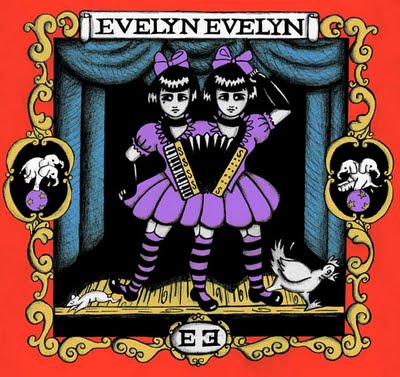
We just received a press release announcing the debut album of Evelyn Evelyn, “the world’s only conjoined-twin singer-songwriter duo.” The twins are apparently the discovery, or, if our doubts are correct, the brainchild, of Amanda Palmer (of the Dresden Dolls) and Jason Webley (accordionist extraordinaire). The press release contains a suspect biography of the purported 25-year-old twins, Lyn and Eva, born in Kansas, orphaned at birth, and eventually rescued from toiling in the circus by Palmer and Webley. Totally plausible.
There is a Wikipedia page about “them.” “Their” MySpace page has music. The domain name evelynevelyn.com belongs to “them.” But do they themselves really exist?
The most relevant signs point to a resounding “no.” The songs on their Myspace page, though charming with their cabaret style and old-timey harmonies, are being sung by male and female vocalists (we’d venture a guess at Palmer and Webley), and seem to be about the twins rather than by them. What’s more, the lyrics reveal these songs not to be Evelyn Sisters creations at all, but rather ditties written and recorded to hype their upcoming debut. In the song “A Campaign of Shock and Awe,” the two voices sing: “Ladies and Gentlemen/ Critics and hipsters/ Have you heard the new disc/ By the Evelyn Sisters…As featured in Rolling Stone, Spin, the New Yorker, and Pitchfork.” Not the most poetic, perhaps, but it gets a point across. The MySpace pictures are either vintage black and white portraits of long-dead twins or artistic renderings of the so-called Evelyns. And then there is the obvious doubt that any sane mother would bestow upon her twins, albeit conjoined, two half-names (Eva and Lyn), like they were some sort of puzzle to be put together (or more appropriately, pulled apart, ack!). Plus their mom supposedly died in labor, which would mean it’s really the orphanage that masterminded the whole thing.
If the Evelyn sisters do indeed exist, and we sincerely hope that they do, then this “campaign of shock and awe” will prove to have been an impressive stroke of marketing genius. But however appropriately vaudevillian it would be of Amanda Palmer to orchestrate a hoax of this magnitude, if the sisters turn out to be the imaginary figments of marketing alone, the audience might prove more disappointed than impressed. So, do they exist or not? I suppose we just have to wait to find out. But how anti-climactic it will be if they don’t exist, and how politically incorrect this article will seem in retrospect if they do.
Redford honors Bay Area leaders for the art of their activism
In our highly messaged world, it follows that activism is followed closely by art. Sometimes the two are indistinguishable from each other. Film and music celebrities perform to raise funds for an earthquake-ravaged Haiti, a farm workers’ union organizes through political theater. Robert Redford is no stranger to this connection. Building on his history of work within the environmental movement, the actor has created the Robert Redford Center– an organization which holds its first event this Thursday, entitled “Art and Activism.” It will feature a public conversation with Redford himself on the title theme and present awards to two honorees, both of whom have elevated their responsibility to help others to veritable art forms.
Victor Diaz, one of the two leaders that will be recognized this week, might have benefited from a program like the one he runs today back when he was a teenager. Berkeley Technology Academy is a step away from traditional continuation schools, one that acknowledges the complexity of life as an underprivileged teenager. “Nine times out of ten,” Diaz says “a kid will tell us ‘I’m selling weed because I can’t get a job.’ We’ll work with them on resume building, help them with their job search- it’s not unusual for us to even buy them clothes that they can go to an interview in.”
This kind of holistic approach for students for whom the traditional educational system has failed is something that Diaz has worked hard to promote in his five years as principal at BTA. The academy strives to keep kids enrolled through their completion of high school, dodging the pitfalls that can occur with conventional “rehabilitation” schools. Typically, students are sent back to their original high schools after a few months at alternative schools- where the same factors that caused them to fail in the first place continue unabated. “[Our approach] holds us accountable to provide all the things they need to graduate,” says Diaz.
The principal has a pretty good idea of what these things are- he was one of these at-risk youth at one point. Bounced around from foster home to foster home- not to mention six different high schools- in his teens, Diaz managed to make it to community college, where his work with young people ignited a passion to make life better for them. He went back to school, and a master’s, law degree and PhD later has worked in county schools, SF Unified and juvenile hall. “This was the population I felt most connected to, that I felt like I had more to contribute to,” he says.
Under his watch BTA- whose attendance is 100 percent racial minority- has become a place where students and their families can receive more than just algebra and PE classes. In the past, young women were directed to off campus women’s advocacy groups when dealing with issues of abuse, but BTA now holds a class on women’s issues and has a health center for private, confidential care. They hold men’s classes as well for their guys that are going through tough personal issues and host health fairs that offer information to parents on Medi-Cal and vision screenings. “We try to do things in house and do them more efficaciously,” says Diaz.
The principal has changed up the staff on site too, to be more involved with students as human beings. “We’re not there just to teach math, we know that sometimes [ensuring kids’ success] requires a home visit. Many of our kids are in foster care, living with a non-custodial, biological parent. 30 to 40 percent don’t have someone to advocate for them. Another 30 to 40 percent, their parents are working overtime to pay their bills.”

Avery Hale’s only 16- but she donates shoes to developing countries and is getting a Redford award of her own
When asked about his upcoming honor, the principal becomes uncharacteristically shy, deflecting praise towards his peers. “Sometimes I’m a little embarrassed, overwhelmed by [the award]. I know a lot of people that are doing way more important work.” But he underscored the importance of the fact that the Redford Center is giving an activism award to an educator. “Sometimes a teacher who is preventing five kids from dropping out of high school- it’s not as ‘sexy’ [as foreign aid work], but it’s really important.” He says he’ll be encouraging the board to continue highlighting the achievements of “everyday” teachers and school administrators.
But are the kids at BTA impressed their principal will be getting an award from the star of “The Untouchables” and “A River Runs Through It”? Diaz applauds the “amazing” achievements by Redford in his career on screen and off- but was unconvinced his student body would be asking him for autographs. “They don’t know who he is! We live in a small world here.”
The Redford Center will also be honoring Avery Hale, a 15 year old who started an organization that sends footwear to shoeless kids in developing countries three years ago. Hale created her charity drive after seeing photos from her parents’ trip to Peru of little ones with infected feet, and has now shipped or delivered countless pairs to kids on three continents.
“The Art of Activism”
Thur/4 7-9 p.m., $20
Sundance Kabuki Cinemas
1881 Post, SF
www.redfordcenter.org
www.brownpapertickets.org
Doom and decay

MUSIC The Bay Area has a strange relation with its musical past — accounts of Phil Lesh’s recent somnambulation among the living attest to this, but the same can be said about much of the past 10 years. For better or worse, as the early ’00s crawled back into the woods to die, many of us were left with the impression that the past 10 years were composed of a series of disorganized, vaguely parasitic gestures, a theme party where every group of new guests seems to ape a different decade. Was this an era where mainstream pop music spun its wheels, the occasional ingenious act breaking free from its orbit and gaining some degree of forward drive?
This was also a decade that saw heavy metal — as a music, aesthetic sensibility, and subculture — grow in labyrinthine complexity. Perhaps the hallmark of this growth was an awareness of its immediate history, redirecting its typical drive toward progress, increasing its speed and techniques with mechanized precession, into an exploration of the forgotten pathways and alcoves of its byzantine evolution.
It’s no coincidence that the emergence of a group of historically-aware metal titans ran parallel with the publication of several fantastic metal histories (Ian Christe’s 2003 Sound of the Beast being probably the most well known), a string of successful reunions and new releases from reenergized legends (Maiden, Priest, Dio Sabb … er, Heaven and Hell), and — what I would argue is most interesting — an influx of creative energy directed toward the supremely retrograde doom metal subgenre. Reemerging from the movement is Saint Vitus, a band that in many ways is the spiritual ancestor to this much-welcome ongoing metal mutation.
Though Saint Vitus’ slow, stoned sound had been marinating in fuzzy ’70s goodness, the band’s Scott “Wino” Weinrich-fronted classic lineup came into its own on SST Records, a label dedicated to pushing the boundaries of rock. In many ways, the members of Saint Vitus were the shitty longhairs at the party. The same year the group released its monolithic Born Too Late (SST, 1987), not to mention three years after the release of fragmentary, futuristic milestones like Hüsker Dü’s Zen Arcade and the Minutemen’s Double Nickels on the Dime, SST was busy signing Dinosaur Jr. and Sonic Youth.
On the metal side of the spectrum, Vitus was inevitably entrenched in the thick of the famed “growing arms race” of efficient, mechanized speed and aggression that defined progress in terms of BPMs. The emerging stoner doom set, which Vitus was in the process of engendering, erected towering, sustained riffs in the classical (metal) mode, watching them deteriorate after the initial attack, fading back into the mix’s opaque bass drone. In many ways, doom metal’s current obsession with the sound of decay can be traced to Saint Vitus’ still-audible feedback.
“Born Too Late,” the title track off of the group’s 1987 SST release (and the first Vitus record featuring Wino on vocals), expresses the genre’s sense of temporal exile. The verse deals with this disjoint on a surface level — the hypothetical peanut gallery hassles Wino over his long hair and clothes — but behind the sartorial concerns, there’s something gripping about the band’s conception of its place in time. The main chord progression is the kind of tough, three-power-chord stomp we’ve heard hundreds of times before in heavy rock, yet Dave Chandler allows each of the foreboding chords to linger, reverberating against the persistent low-end and metronome drumming, treating his SG like a monstrous 500-year-old pipe organ in the process. The riff is played with a cumulative power, repeatedly driving the chord progression into the song’s landscape; as one chord dissociates, another materializes to take its place. Wino howls that he was born too late, that he’ll never be like you; the last syllable devolves into an abstract growl, and Chandler annihilates the history of the song with an atonal, dive bomb solo.
While “Born Too Late” may have become the unofficial anthem of both Saint Vitus and perhaps the whole doom metal sensibility, “Living Backwards,” the opening track on its less famous but still awesome V (Hellhound, 1989), further articulates this nebulous relationship with time. Is the band moving backward through looking ahead, creating the forward momentum through facing backwards? Or, like the paradoxical title, does the band’s obsessive cycling back to metal’s origin point roll the group forward into the avant garde terrain of ’80s underground rock? Not incidentally, “Living Backwards” is probably Saint Vitus’ most driving song.
Of the three acts opening for Saint Vitus on its upcoming date at the DNA Lounge, Saviours’ music articulates this strange relationship to past and future in some of the most exciting ways. (Also on the bill are subtle, unsettling funeral doom masters Laudanum and Dusted Angel, a stony five-piece featuring members of Vitus’ SST Records contemporaries Bl’ast!.) Though by no means entrenched in the tradition of glacial, cavernous riffing, Saviours’ historically savvy songwriting approach picks up from the backward-facing cycles that wheeled Saint Vitus into new creative terrain.
Saviours’ most recent release, Accelerated Living (Kemado, 2009) is damn close to being the perfect heavy metal record, an overgrown wilderness of exceedingly heavy riffs that traverse the genre’s 40-plus years in existence. The metal-attuned ear can discern everything from Thin Lizzy to Slayer in the mix (as the band is from the Bay Area, I’d like to imagine I can even hear shades of Blue Cheer’s late, great Dickie Petersen in Austin Barber’s vocals). But, like any of the group’s guitar solos, the real explosive chemistry of this combination of patterns is unpredictable — the result is as heavy as it is timeless, a vision of heavy metal not segregated through arbitrary demarcations, but rather metal as a continuum, a nebulous, interwoven chain radiating from a dim, misremembered past. Accelerated living backwards?
SAINT VITUS
With Saviours, Laudanum, Dusted Angel
Fri/29, 8 p.m. (doors 7:30 p.m.), $15–$20
DNA Lounge
375 11th St., SF
Restoring majority rule

Gov. Arnold Schwarzenegger’s lame duck response to California’s projected $20 billion state deficit has given supporters of more than 30 budget and revenue-related state initiatives now in circulation a renewed sense of urgency as they scramble to gather signatures and qualify proposed solutions to the state’s ongoing financial emergency for the November ballot.
But while this plethora of initiatives reflects widespread frustration over the state’s broken system of governance, disagreement rages over how to fix it and how best to restore majority rule to California.
“These are the hardest decisions a government must make, yet there is simply no conceivable way to avoid more cuts and more pain,” the governor told reporters Jan. 8 as he released a new budget proposal calling for $8.5 billion in cuts to state workers’ wages, health and human services, and prisons; a legally questionable $4.5 billion shift in other funds; and $6.9 billion in federal reimbursements that have yet to be approved.
Even steeper social services cuts are in the works, Schwarzenegger warned, if the feds don’t comply with this request for a bailout. But he refused to target corporations and millionaires as revenue sources, clinging instead to the standard Republican pledge not to raise taxes.
“We didn’t hear him say, ‘We are going to pinch the wealthy and the corporate,'<0x2009>” State Sen. Mark Leno observed. “He is definitely setting his sights on the social safety net.”
Recent revolts within the public university system, including the November takeover of UC Berkeley’s Wheeler Hall, suggest that tuition hikes, layoffs, and reduced study options have brought students to the tipping point.
But UC Berkeley linguistics professor George Lakoff fears that without restoring majority rule to the state’s budget and revenue-related measures, such revolts only address symptoms, not causes, of the impasse.
So Lakoff decided to author the California Democracy Act, an initiative that would replace the state’s two-thirds requirement on budget and revenue bills with a simple majority vote, after Sen. Loni Hancock invited him to meet with a group of Democratic state senators last spring.
“She said the Democrats were having problems getting anything done, and I went away saying, ‘this is ridiculous,'<0x2009>” Lakoff said. “It occurred to me that since the problem came by way of the initiative process, then it was possible to rectify it that way.”
Proposition 13, approved by voters in 1978, limited property tax increases and required a two-thirds supermajority in the Legislature to approve most new tax increase, measures that contributed mightily to the state’s bleak financial situation.
California also requires a two-thirds vote for the Legislature to approve the annual budget, along with only Arkansas and Delaware. On Jan. 5, Sonoma State philosophy professor Teed Rockwell told the Potrero Hill Democratic Club to endorse Lakoff’s initiative, noting that California is the only state to require two-thirds vote on budget and revenue bills.
“I have learned that essentially everything that is uniquely wrong with California results from this one fact,” Rockwell said.
California has the largest number of millionaires in the U.S., but as Rockwell observed, thanks to the fiscal stranglehold of the Republican minority, “We do not have enough money to keep our parks open or maintain affordable tuition at our public colleges. And the extremists in Sacramento want to solve this problem by decreasing taxes on millionaires and increasing taxes on the middle class.”
Rockwell noted that of the 22 states that produce oil in the U.S., all have oil severance taxes, including Sarah Palin’s Alaska and George W. Bush’s Texas — except California.
But while the California Democracy Act simply resolves that “all legislative actions on revenue and budget must be determined by a majority vote,” neither the state Democratic Party nor the major unions are willing to support Lakoff’s measure, citing its bad results in the polls.
Instead, veteran legislator and California Democratic Party Chair John Burton is backing a Hancock proposal that seeks to reduce to a simple majority the Legislature’s voting requirement on budget bills.
Lakoff warns that budget bills merely determine how to slice the pie, while revenue bills determine the size of the pie. This means that if Democrats succeed in only reforming the state’s budget voting requirements, they’ll still be stuck with having to make painful cuts.
But Hancock, who has been living with the results of this fiscal gridlock since she was elected to the state Assembly six years ago and helped sponsor the failed oil severance tax initiative in 2006, believes decisions to cut prison or education spending are not trivial.
“Last year Democrats gave $2 billion in tax breaks just to get one desperately needed Republican vote on the budget,” Hancock told the Guardian. “And now the Republicans are asking for takeaways on environmental and labor protections that they otherwise wouldn’t have any power to negotiate.”
“I am a realistic idealist,” Hancock continued. “I believe we are better off to get the majority vote to pass the budget. That way, the minority might begin to negotiate and have a more rational conversation. I’m very pleased that throughout the state, folks are recognizing that state governance is broken.”
California Tax Reform Association executive director Lenny Goldberg told us it’s hard to choose between the Lakoff and Hancock initiatives.
“It’s a question of what’s achievable, of how to focus energy,” Goldberg said. “Lowering the vote requirement for the budget would eliminate some of the hostage-taking and help reverse the corporate loopholes that the Democrats were forced to accept to get a budget passed. So at least it would make the budget process better.”
But he agrees that budget reform only makes the Democrats solely responsible for the budget, while preventing them from raising revenue.
“So there is some disagreement whether it’s better to do one, if you can’t do tax reform,” he said. “In the end, it’s a strategic, not substantive, question. Is it better to do budget alone, or not at all? Personally, I think we’re better off doing budget reform than nothing — but it’s a close call.”
Hancock and Lakoff both believe that a competing initiative, endorsed by Schwarzenegger and funded by the group California Forward, is the poison pill in the upcoming fiscal equation.
“Unfortunately, it’ll make it harder to raise fees,” Hancock said.
“It should be renamed California Backward,” Lakoff quipped, noting that while the California Forward initiative supports a simple majority on budget bills, it seeks to raise to two-thirds the voting threshold on new fees.
California Forward executive director Jim Mayer said his organization supported Prop. 11, the redistricting measure that passed in November 2008, “as a start to melt the political gridlock.
“And our two initiatives will help legislators do a better job of spending the pie,” Mayer added, noting that his group is talking to Democrats and Republicans as well as counties, cities, and branches of the Chamber of Commerce.
One of California Forward’s initiatives seeks to change the budget vote requirement to a simple majority and create a two-year budget cycle. It also forces the Legislature to use one-time revenues for one-time expenditures — and requires a two-thirds vote on fee increases, raising Democrat hackles.
“When the Legislature attempts to replace what’s currently a tax on utilities with a fee, currently they can do that with a simple majority. But people on the right tend to worry that if you eliminate a tax and call it a fee, it’s illegal,” California Forward spokesperson Ryan Rauzon explained.
The other initiative would allow county governments to identify priorities and raise revenue with a simple majority vote, Mayer said, a plan he claims is about “empowering local governments.”
Clouds and mirrors
Carl Fisher turned a mosquito-plagued, malarial sandbar into Miami Beach, “The Sun and Fun Capital of The World,” in less than a decade — dredging up sea bottom to build the island paradise, an all-American Las Vegas-by-the- Sea, where Frank Sinatra and Jackie Gleason partied and Richard Nixon received two Republican nominations for president. Art Deco hotels lined the beach, bold as Cadillacs, defiant in the path of hurricanes, their confident Modern lines projecting postwar American power. Morris Lapidus, the architect of the Fontainebleau Hotel, understood that the skin-deep city Fisher conjured out of neon and sunshine was a stage for the leisure fantasies of the ruling class. When his iconic Collins Avenue hotel opened in 1954, Lapidus said he wanted to design a place “where when (people) walk in, they do feel ‘This is what I’ve dreamed of, this is what we saw in the movies.'”
For many years in Miami, that movie was Scarface, as Colombian drug lords shot it out in mall parking lots. A shiny new downtown skyline of banks and condos emerged during a recession economy from the laundered proceeds of drug smuggling. Today the cocaine cowboys have all died, or done their time and moved on. Their descendents are selling art.
Art Basel came to Miami Beach in 2002, and the rise of Miami as an international art world capital neatly coincided with the glory days of the housing bubble. According to Peter Zalewski of Condovulture.com, around 23,000 new condo units were built in and around downtown Miami during the Art Basel era — twice the amount built in the 40 previous years. The success of the international art exhibition has inspired a fever dream among city leaders, in which Miami’s skyline and neighborhoods are radically transformed by art world-related real estate development.
Cesar Pelli’s $461 million, 570,000-square-foot Carnival Center for the Performing Arts opened in 2006 in a moribund section of downtown known for its proximity to the faded 1970s-era mall, the Omni. That same year, the Miami Art Museum (MAM) hired as its new director Terence Riley, the former curator for architecture and design at the New York Museum of Modern Art. Heralded in his new city as “the Robert Moses of the new Miami millennium,” Riley initiated the development of Museum Park. This 29-acre complex would be home to new buildings for the Miami Art Museum and the Miami Museum of Science and Planetarium. It was to be built on the site of Miami’s last public waterfront park, Bicentennial Park, long a sort-of autonomous zone for Miami’s homeless residents. While the new MAM is not scheduled for completion until 2013, by 2007, a 50-floor, 200-unit luxury condo development, 10 Museum Park, had already been finished across the street.
Art Basel Miami Beach brings an estimated 40,000 people to Miami each year to look at art, party, and more important, look at celebrities as they look at art and party. The art fair, once dubbed “the planet’s highest concentration of wealth and talent,” generates an estimated $500 million in art sales each year. Yet while Miami leaders seek to present to the world Basel’s image of wealth and glamour, the iconic image of South Florida today has abruptly become the newly built and entirely empty condo development. Zalewski estimates that 40% of the condo units built since 2003 remain unsold. Florida’s foreclosure rate is the second-highest in the nation, and for the first time since World War II, people are leaving Florida faster than they are arriving. Just months before this year’s Art Basel Miami Beach, a New York Times cover story told of the lone occupant in a towering Broward County condo that had gone entirely into foreclosure. As the fair approached, I wondered: can art really save a city like Miami? Or is its reliance on art world money part of the city’s collapse?
ATLANTIS CITY
At this year’s Art Basel, the glitz was, of course, played down, what with the global economic collapse and Art Basel’s main corporate sponsor, top Swiss bank UBS, now the subject of an FBI probe on charges of helping billionaire clients evade taxes. In the weeks before the opening of the fair, it was announced that the legendary UBS free caviar tent would not be open this year. One could not help but notice that the ice sculptures on the beach itself, hallmarks of the recent boom, were gone, already as fabled as the lost city of Atlantis.
Still, the epic “Arts and Power” issue of Miami magazine hit the stands on time, luxurious full-color spreads on oversize glossy pages. Press from all over the world wrote a month’s worth of previews leading up to the event, and on the day of the VIP vernissage, TV news reporters from all continents were there to dutifully record the arrivals of billionaires, celebrities, and fashion models at the Miami Beach Convention Center. As Art Basel Miami Beach 2009 opened, the floor of the convention center was eerily quiet, with hardly a sound except a hushed, determined whisper a bit like paper money being rubbed together. It seemed to me like everyone was doing her or his part, as if the whole art fair was a sort of performance art piece demonstrating the vigor of the free market in dark times.
This murmur ceased completely, and the air filled with the muted clicking of camera shutters, as Sylvester Stallone passed me on the convention floor. Stallone, too, was stoic, his expression hidden by dark sunglasses at mid-day. He stopped next to me and began to talk to TV news cameras about his own paintings on display, presented by the gallery Gmurzynska. Close-up and in person, clumps of the actor’s face, now just inches from mine, seemed to lay inert and dead like the unfortunate globs of oil paint he had arranged on his own canvasses. Pieces of puffy cheek hung limp and jowly under taut eyebrow skin, Botox and facelifts fighting age for control. For a paparazzi flashbulb moment, I thought I saw in Rambo’s sagging face a metaphor for the doomed efforts to prop up a whole failing way of life.
The Miami Beach Convention Center’s 500,000 square feet had been blocked out into booths and concourses that comprised a pseudo-city of art. As a city, it most resembled some parts of the new Manhattan — crowded yet curiously hollowed out and lifeless, under relentless surveillance, full of nostalgia for its former, more vital self. Groundbreaking art that once had the power to shock, move, or startle — Rauschenberg’s collages, Richard Prince’s Marlboro men, Barbara Krueger’s text block barrages — were presented here as high-priced real estate. In the city of art, time stood still; Matisse, de Kooning, and Duchamp had all retired to the same street. A sailor portrayed in a 2009 life-size portrait by David Hockney seemed to gaze wistfully across the hall toward a 1981 silk-screened print of a dollar sign by Andy Warhol. The life-size portraits by Kehinde Wiley felt just like the city in summer, how the radio of every passing car seems to be blasting the same song. A print of a photo of Warhol and Basquiat together in SoHo stood catty-corner to a 1985 Warhol paining of the text, “Someone Wants To Buy Your Apartment Building.”
I wondered if this city of art offered clues as to the kind of city that developers imagined Miami might become.
ART MAUL
Across Biscayne Bay, away from Miami Beach in the city of Miami, the fever dream of art was turning a down-and-out neighborhood in the poorest city in America into an outdoor art mall. Fifteen satellite art fairs and 60 galleries staged simultaneous exhibitions in Miami during the week of Art Basel Miami Beach. Virtually all this art was crammed into about 80 square blocks north of downtown Miami, bisected by North Miami Avenue. The area included Miami’s African American ghetto, Overtown, the warehouse district of the low rent Puerto Rican neighborhood, Wynwood, and the resurgent Miami Design District up to its shifting borders with Little Haiti.
Walking up North Miami Avenue and Northwest Second Avenue the night before the exhibitions began, I could see the usually moribund main drags transforming before my eyes. Warehouses vacant the other 50 weeks of the year were hastily being turned into galleries or party spaces. Solely for Art Basel week, the Lower East Side hipster bar Max Fish had built an exact replica of its Ludlow Street digs in an Overtown storefront. In Wynwood, the paint still appeared wet on a fresh layer of murals and graffiti running up and down the streets.
The modern-day Carl Fisher most perhaps most responsible for dredging this new art world Miami up from the bottom of the sea is Craig Robins. “I transformed the image of my city from Scarface into Art Deco,” is how Robins put it when I talked to him in the Design District offices of his development firm, Dacra. Widely considered to be the person who brought Art Basel to Miami Beach, Robins is, at a youthful 46, the man who perhaps more than anyone embodies the values and tastes of a new Miami where art and real estate have become as inseparable as fun and sun. Robins takes art seriously — he is a major collector of artists like John Baldessari, Elizabeth Peyton, Rirkrit Tiravanija, and Richard Tuttle — and he made his name and fortune by restoring the derelict Art Deco motels on his native Miami Beach during the early 1990s into the international high-end tourist destination now known as South Beach. Today Robins is one of the principal owners of the warehouses in the Miami Design District and Wynwood.
With his casual dress, shaved head, and stylish Euro glasses, Robins could easily fit in as one of the German tourists who flock to the discos on the South Beach that he developed. His offices offer a rotating display of the works of art in his collection. Around the time of Art Basel, his staff had installed many works by the SoCal conceptual artist John Baldessari, in honor of Baldessari’s upcoming career retrospective at the Tate Gallery in London. Robins was friendly and projected a relaxed cool; when I’d met him on the convention center floor and asked for an interview, he gave me an affectionate shoulder squeeze and said, “Call my assistant and we’ll hang, OK?” A few days later, he grinned somewhat impishly when I sat down said, “I notice you sat in the Martin Bas chair,” as if it was a Rorschach test. Honestly, it was the only piece of furniture in the design collector’s office that looked dependably functional.
Not surprisingly, Robins was adept at explaining the art theory behind his development projects, and the ways Dacra is bringing art, design, and real estate together “to make Miami a brand name.” He said he learned from the successful preservation of historic buildings in his South Beach projects that consumers were starting to reject the cookie-cutter commodities of the mall and “starting to value unique experiences” made from “a combination of permanent and temporary things.” On the streets of the Design District and Wynwood, Robins sought to bring together restaurants, fashion showrooms, and high-end retail stores, surrounded by parties, international art shows, and public art. “This gives a richness to the experience of Miami,” Robins said. “That is the content that Miami is evolving toward right now.” I thought of Lapidus, the Godfather of Art Deco, and his quote about the Fontainebleau: In Wynwood, Robins wanted to turn not just a hotel lobby but an entire neighborhood into a place where visitors feel they have entered a movie.
Robins grew more excited as he discussed his vision. “With my work at Dacra, I build communities,” he told me. “When we brought Art Basel here, Miami immediately became recognized as a world-class city.”
Others are skeptical. “Miami will always be an attractive place for people to visit in December, but you can’t graft culture onto a city,” says Alan Farago of the widely read blog Eye On Miami. “It’s a mistaken belief that art can be a totem or a symbol of a great city without there being any substance. Miami will continue to be a pretender because there is no investment in local culture beyond building massive edifices like the Performing Arts Center.”
Indeed, the center — now renamed the Adrienne Arsht Performing Arts Center, in honor of a wealthy benefactor — has become perhaps another in a long line of tragicomic failed improvements for the area. Bunker-like, it has been likened by some architecture critics to an upside-down Jacuzzi. Though 20 years in the making and long heralded by boosters as a building that would instantly make Miami a “world-class city,” the center has operated at a deficit and suffered from poor attendance since its opening. The future of Museum Park suddenly turned cloudy a month before the opening of this year’s Art Basel, when Miami Art Museum director Terrence Riley unexpectedly resigned days after unveiling the architects Herzog and de Meuron’s final model for the new buildings. Riley sited a desire to return to private practice as an architect, but online speculation had it that he already knew cash-strapped Miami would ultimately be unable to raise the money to build the museum.
Farago wonders what would change if the city did have the money. “In Miami on one hand, we have public school teachers using their own salaries to buy art supplies for their students,” he says. “Then we have these one-off art events and a performing arts center that brings us road shows of Rent, Annie, and 101 Dalmatians.”
When I asked Robins what lasting benefits Art Basel provided to the community, he cited a roster of new restaurants opened by star chefs and fashion showrooms. “It encourages people to come down here year-round,” he said. It was clear that Robins was discussing amenities designed for tourists, or for a speculative community of future residents who might be enticed to come to Miami.
I suggested that there were actually two different communities in Wynwood with potentially opposing interests. I told Robins I’d attended a community meeting held by the activist groups Power University and the Miami Workers Center. There, Wynwood residents discussed how their rents had doubled, how the city continued to neglect the facilities at Roberto Clemente Park, and how the increased presence of police escorting the art patrons to the new galleries had made them feel like they didn’t belong in their own neighborhood.
Robins, who had been very loose and calm during the first 45 minutes of our talk, became visibly upset. He launched into a sustained rant. “Well, look, active communities are a good thing,” he said, shaking his head. “But just because a community is active doesn’t mean it is rational. You go and sit in these meetings and half the people are nuts. Half are just there because they are miserable people and they have some soapbox to go and rant about all these things that they think they have some entitlement to attack government about when they never do anything themselves for anyone. I find that 20 percent of these people are totally irrational, mean-spirited people who would never agree with anyone about anything good.”
“What kind of people do you mean?” I asked.
“People who feel disenfranchised! They’re very angry. They have psychological problems and they want a forum to vent. I’m not implying we should stifle democracy — I’m a big believer in it! I’m saying these people should not be taken seriously by enlightened people!”
Robins rose to look at a clock on his desk. Not surprisingly, our time was up. I politely excused myself to the restroom. When I returned it was like no tantrum had ever happened. Robins’ impish grin even returned as I asked him to pose for a photo in front of one of his Baldessari prints. I had him stand in front of Cigar Smoke to Match Clouds That are Different (By Sight/ First Version), a 1972-3 triptych of photos. As the artist looks into a mirror at clouds over his shoulder in the sky, he blows out a mouthful of twisting cigar smoke, trying to match their elusive shape in the air.
GIMME DANGER
Out on the streets of Wynwood, it was still mostly quiet, expectant, but the scene at David Lynch’s art opening gave one a sense of what the coming weekend would be like. Lynch was presenting photos from a book of staged stills he is releasing with a CD of music by Danger Mouse. Hundreds of hipsters, mostly locals, guzzled free booze and gawked when new Miami resident Iggy Pop showed up, shirtless as usual, in a Miami Vice-style blue blazer. As I watched the Godfather of Punk pose for pictures with his arm around Danger Mouse, I thought of the city of art, the Jackson Pollacks and Donald Judds together at last, on the convention center floor. I had the eerie feeling that the Internet had come to life.
I left the opening and walked at random through the streets of Wynwood at 2:00 a.m. While looking at murals and thinking about the changes Art Basel had wrought, I unexpectedly came upon a small street party of people I knew. The side street intersection was lit up like a stage with an enormous floodlight. Street artist SWOON stood high on a scissor lift, painting a mural on a warehouse wall, while below a couple of kids dressed like old tramps wrestled with a big, brown stuffed bear.
The bear split open, and thousands of tiny white particles of stuffing poured out into a warm Miami breeze, swirling high into the air and reflecting the glow from the floodlight. I ran to join the kids, who were now playing and laughing in the sudden snowstorm. A guy I recognized from Brooklyn rode by on a tall bike. Bay Area artist Monica Canilao went careening by on a scooter with no helmet. A cop drove by and smiled and waved. Guys from Overtown with cornrows and gold teeth were laying out a spread of huge chicken legs on a flaming grill. Some punk kids from Brooklyn sat on the curb, drinking beer. A girl in the group laid her head on a boy’s shoulder as they all watched SWOON work.
For a second, I flashed back to the Stallone scene earlier in the day, back on the convention floor. Here, in this intersection, I had found something living and breathing. This could be the real city of art. But I also knew the SWOON mural was commissioned by Jeffrey Deitch. I stood and watched the painting and the dancing and laughing and eating in the fake December snowstorm and contemplated what the city would be like if we all had the free time, resources, and permission to take to the streets and transform the city any way we pleased. Was this a window to a different world where anything might be possible?
Or was it just art?
The second half of this essay will run in the Jan. 27 Guardian. *
Let the gut-busting begin: Sketchfest 2010 hits the stage
By Caitlin Donohue

Michael Ian Black and his oddly piercing gaze take the stage Friday at SF Sketchfest
It’s coming for you. That weird pain in your side after you’ve laughed so long all the air in your lungs has emptied and your stomach muscles have gotten really tired. Oh yeah, it’s on its way, cause today’s the day Sketchfest hits San Fran. The comedy festival was started by a group of local comedians, who wanted to re-establish SF as a premier spot for stand up performances and sketch work. Now in its eighth year, Sketchfest is made up of live shows by famous-and-not-so-much individuals and troupes, as well as the odd onstage interview and movie showing. The sheer girth of Sketchfest can be a bit… daunting to navigate, so we’re getting you started with a few of our fave upcoming shows. Enjoy. And remember to breathe, that’ll help with the laughter-cramps. Also: weed, which actually has utility on a variety of levels here. Sketchfest goes through Feb. 2nd and you can find info on schedules and ticketing at www.sfsketchfest.com.
Comedy Death Ray
You should not do Sketchfest without seeing some standup. Now, originally Michael Cera was scheduled to be on Death Ray, but he had some “scheduling conflicts” that left us with the more-than-capable Michael Ian Black to helm the ship. Black’s work in such shows as Comedy Central’s “Stella” and “The State” has left a large, hysterical footprint in this world of ours, and once you add in Dana Gould, Scott Aukerman and musical guest Aimee Mann, “Death Ray” looks to be a killer show.
Fri/15 8 p.m, 10:30 p.m., $30
Cobb’s Comedy Club
915 Columbus, SF