Upcoming

Board accepts EIR, but vows to amend Candlestick-Shipyard plan

14

Text by Sarah Phelan, images by Luke Thomas


At the end of a ten-hour hearing to appeal the final environmental impact report  for the city and Lennar’s massive Candlestick-Shipyard redevelopment project, the Board voted 8-3 to accept the FEIR, with only Sups. John Avalos, Chris Daly and Eric Mar voting to reverse certification of what they said was a flawed document.


But the vote does not mean the Board has voted to accept the city and the developer’s final redevelopment plan. That plan will come before the Board on July 27, and the supervisors are expected to introduce a slew of amendments, in addition to  five amendments that Board President David Chiu introduced earlier this week.


These amendments are intended to address longstanding concerns about toxins at the shipyard, limited liability on the part of the developer, the questionable need for a bridge over Yosemite Slough, the reality that Bayview residents may be cut out of any upcoming jobs, and the desire to nail down efforts to use public power at the site


“We can’t do the amendments here, we are frozen out, all we can do is an up and down vote on the EIR for now,” Sup. Ross Mirkarimi told the Guardian last night. 
Mirkarimi anticipates that the Board will seek additional mitigations, such as requiring liquidated damages to shore up a community benefits agreement that Labor entered into with Lennar in May 2008.


Mirkarimi said the Board would also seek to increase workforce development benefits.
“Thirty percent of the target workforce population are ex-offenders, so while they might get training, currently they won’t get jobs other than construction,” Mirkarimi observed.


Mirkarimi was proud of the Public Power amendment that Chiu has already lintroduced, pointing to an ordinance that he and then Sup. Gerardo Sandoval introduced and Mayor Gavin Newsom signed into law, in March 2006. This public power ordinance established that “where feasible, the City shall be the electricity provider for new City developments, including military bases and development projects.”


“PG& E was ripped when we pushed that through,” Mirkarimi said.


During yesterday’s marathon hearing, the supervisors grilled city staff on issues that have proved to be key sticking points, as the city seeks to win final project approvals, even though they cannot address these issues with amendments until the July 27 meeting.


The Board questioned the wisdom of moving forward with development on the Shipyard, as the Navy continues to clean up radiological contamination and other toxins at the site, including Parcel E-2, which contains some of the nastiest pollution at the yard.


“Why not just wait until the CERCLA process is completed?” Sup. Campos asked, referring to the fact that the Navy is responsible for shipyard clean up, under CERCLA, which is also known as the Superfund Act.


Campos question came after acclaimed environmental scientist Wilma Subra and national environmental human rights lawyer Monique Harden, challenged the sanity of having the Navy digging out toxins while a developer simultaneously installs infrastructure at the same site.


Subra, who works in Superfund sites throughout the U.S, warned the Board that it’s very common to find contamination at these sites after they have been declared clean.


“So, the number of samples isn’t the magic answer,” Subra said, referring to the city’s constant refrain that the Navy has taken thousands of samples at the site. Subra also warned that it is not uncommon for a contractor to dig into an area that has been capped, thereby potentially exposing workers and the community to contamination and resulting in legal stand-offs, as various parties argue as to who has responsibility to fix the resulting mess.


Harden, who is based in New Orleans but also has an office in D.C., expressed concern over the plan to begin construction on some shipyard parcels, even as the Navy continues to remove radiologically contaminated sewers and other deep infrastructure at the site.
“That’s like a person jumping up and down on a bed that another person is trying to make up,” Harden said


But Michael Cohen, Mayor Gavin Newsom’s chief economic advisor countered that there was no scientific evidence to support Subra or Harden’s concerns.


“It’s a very common situation, especially on brownfields,” Cohen said, (though the Shipyard is a Superfund site that’s been contaminated with radiological waste that was sandblasted off ships returning from a Bikini Atoll atomic testing experiment gone awry.)


“It’s the basis for shipyard artists and the police being on the site for many years,” Cohen continued. “It’s safe based on an extraordinary amount of data.”


But Cohen did agree that language in Chiu’s Parcel E-2 amendment should be changed from “should” to “shall” to indicate that city oversight is a requirement, not a request, when it comes to final decisions over the transfer of this particular parcel.


Mark Ripperda of U.S. EPA assured the Board that his agency is not going to permit transfer of parcels for development until cleanup is completed.
“We are not going to allow any transfer until we are convinced it’s safe,” Ripperda said.


Sup. Eric Mar chastised the EIR for its apparent failure to adequately discuss the impacts of the proposed development on schools in the surrounding area.


“There is less discussion of the impacts on schools than there is of the A-Bomb, which was held at the Shipyard for 1 to 2 days,” Mar said. “The analysis seems very weak.”


And Daly expressed frustration that the Board was being asked to take a decision when it lacked sufficient information about and understanding of the project.


“How do we know it’s safe? ” Daly asked, noting that, “Money talks, bullshit walks.”
(His point resonated as City staff scrambled to find key information within the 7,000 pages of comments and responses in the massive FEIR documents, and Amy Brownell of the city’s Public Health Department rattled off a series of measurements and schedules that few on the Board seemed to understand.)


“The risks are acceptable,” Brownell said. “And the only people allowed on the property [during the development] will be the ones doing the work.”


The Board also challenged the need for a bridge over the environmentally sensitive Yosemite Slough, especially in the wake of the June 2010 election in which Santa Clara voters approved building a new stadium for the 49ers near Great America.


“One reason I’ve been given for [the need for the bridge] is the financial viability of this project,” Campos said.


Cohen replied that if the city does not to build the bridge, “it elevates the financial risk.”


“Parcel C [on the shipyard] has been zoned for green tech, and for major employers, having that direct connectedness to BART and the T-Third is very important.”


Cohen also indicated that, thanks to the project’s huge reliance on tax increment financing, the loss of the bridge would translate into lost property tax revenues.


“Some of the repayment comes from generation of tax increment financing, so the failure to have a bridge here, degrades the potential of property tax revenues, and so you get much less tax increment,” Cohen stated.


The Board also expressed concerned that under the current terms of the deal they are now set to consider July 27, the developer has limited liability—an arrangement that has got supervisors worried that the city, and Bayview residents whose increased property taxes will help pay for the development, could end up on the wrong end of the financial hook.


Campos pointed to the disposition and development agreement (DDA) that the city drew up with Lennar.
“I’m specifically worried about a provision that on the face of it limits the developer’s liability,” Campos said, pointing to language that seems to say that “monetary damages are inappropriate”—conditions that Campos deemed, “Very unusual.


Cohen responded that the deal reflects the reality that, “the Navy, not Lennar is responsible for the cleanup.”
He added that the city retains the legal ability to sue, various remedies and, ultimately, “the right of reverter” (which folks call the “nuclear option” since it involves kicking out the developer, but losing everything in the process.)


“This is an incredibly frontloaded project,  in which we have the ability to terminate the developer at the cost of millions of dollars,” Cohen said.


But while the city and the developer ultimately affirm EIR certification, the decision left the Bayview community deeply divided, with many concerned that the FEIR failed to address their concerns, while others rejoiced, believing that they will benefit from jobs that will be created during the development’s 10-15 year build out and beyond. Only time will tell how it all plays out, but stay tuned as the Board prepares to try and make the plan the best it can in face of all these competing concerns.

 

Snap Sounds: Kisses

0

KISSES
“People Can Do the Most Amazing Things”
(This Is Music)

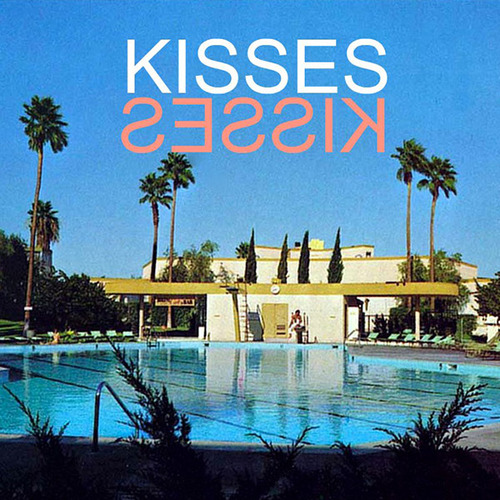
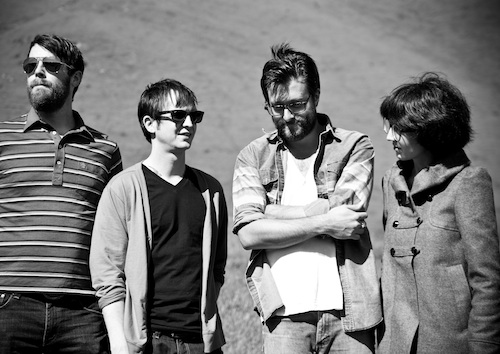
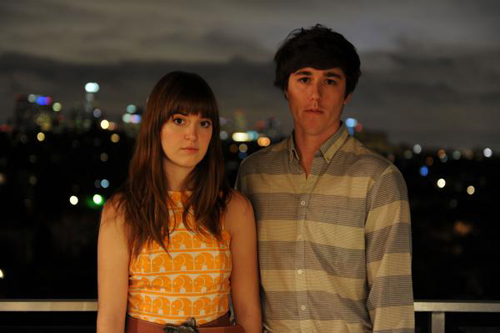
Kisses has become a Snap Sounds stalwart before even releasing a debut album, because the upcoming album’s songcraft is terrific.This follow-up single to “Bermuda” starts like a startling homage to Arthur Russell’s “The Platform On the Ocean” and improves from there. Jesse Kivel’s voice is in fine form and the guitar sound is superb. Lots of groups pay homage to ’80s pop romanticism, but to my ears, only Kisses manage to match or trump it.

Our Weekly Picks: July 7-13, 2010

0

WEDNESDAY 7

EVENT

The Butterfly Mosque reading

Journalist and author G. Willow Wilson is familiar to comics fans for her Vertigo-published modern fantasy series Air and graphic novel Cairo, both with artist M.K. Perker, as well as her work on various superhero properties. A woman in mainstream comics is unusual enough, but Wilson is also a Muslim. Her new prose memoir, The Butterfly Mosque: A Young American Woman’s Journey to Love and Islam, treats the experiences that led her from her home in Denver through Boston University to time spent teaching in Cairo. Much of her comics work deals with the collision of the West with the Middle East, often in fictionalized political contexts, and this reading and Q & A should include plenty of her uniquely positioned insights on this cultural dynamic. (Sam Stander)

7:30 p.m., free

Booksmith

1644 Haight, SF

(415) 863-8688

www.booksmith.com


DANCE

The Foundry

When words fail, a turn of a cheek or small shift in stance can signify a world of meaning. Choreographer, dancer, and director of the Foundry Alex Ketley is hyperconscious of the subtle secrets our bodies both hide and reveal. This consciousness allows him to deconstruct and reconstruct movement in such a way as to capture the emotional unknown that lies beyond words. Enlisting a cast of captivating dancers and former Ballet Frankfurt media artist Les Stuck, Ketley’s newest project, Please Love Me, explores how we relate to others and investigates the contradictory nature of love and relationships. (Katie Gaydos)

8 p.m., $20

Z Space at Theater Artaud

450 Florida, SF

www.conservatoryofdance.org


THURSDAY 8

FILM

Mulholland Dr.

Lucid dreams, fever dreams, wet dreams — what’s the difference in Mulholland Dr., David Lynch’s 2001 apocalyptic vision of Hollywood? Above all else, the film is a love story doomed from the very start as Rita (Laura Herring) stumbles out of a car wreck and into the arms of Betty (Naomi Watts, in a performance somewhere between Pollyanna and Patty Hearst). What follows is a Pandora’s box — and Rita’s got the key to a blue one of those you definitely shouldn’t open — of Bergmanesque female trouble, and some surrealist hell to boot: the jitterbug, Roy Orbison, and bite-size geriatrics, to name a few. In every dread-drenched scene, Lynch has our undivided attention even when we have no idea what the hell is going on. (Ryan Lattanzio)

2 and 7 p.m., $7.50–$10

Castro Theatre

429 Castro, SF

(415) 621-6120

www.castrotheatre.com


COMEDY

David Alan Grier

Although he got his start in acting by tackling serious roles and earning a master’s at the Yale School of Drama, David Alan Grier got his first taste of mainstream exposure and success as a cast member on the classic 1990s TV show In Living Color, where he brought to life hilarious characters such as Antoine from “Men on Film” and the crazy blues singer Calhoun Tubbs. In the years since, Grier has lent his considerable talents to several other projects, more recently Comedy Central’s show Chocolate News and his 2009 book Barack Like Me: The Chocolate Covered Truth. Here’s your chance to check out Grier live, uncensored, raw, and on stage. (Sean McCourt)

Through Sun/11

8 p.m. (also Fri/9-Sat/10, 10:15 p.m.)

$22.50–$23.50

Cobb’s Comedy Club

915 Columbus, SF

(415) 928-4320

www.cobbscomedyclub.com


EVENT

Cybernet Expo

It would seem like a no-brainer, filling a webmaster job at an adult Internet company. Geeks love porn, right? True as that may be, they still need a conference to link them up to the pervy, techie job of their dreams. Never fear, Cybernet Expo is here! The trade show has been linking sticky palms since 1997, and offers seminars, panel discussions, networking opportunities — and a convention-closing get down among the chains and whips of the SF Armory. “Oh yeah, it’s gonna be a fun party,” says Terry Mundell, business development manager of Kink.com, who will be organizing Saturday night’s after hours good times. Even better than a night on his website? (Caitlin Donohue)

Through Sat/10, $199

Golden Gateway Hotel (most events)

1500 Van Ness, SF

www.cybernetexpo.com


FRIDAY 9

DANCE

“Symbiosis: A Celebration of Dance and Music”

Kara Davis seems to be able to do it all. A trained ballet dancer, she has danced for the last 14 years with who’s who of modern dance in San Francisco. No matter the style and the challenge, she eats it up. Now she is also developing a strong, independent voice as a choreographer for her project agora company. This program, presented as part of Dance Mission Theater’s “Down and Dirty Series,” is half dance and half music. It reprises Davis’ two substantial ensemble pieces, A Softened Law and one Tuesday afternoon, first seen at ODC in December, and the gorgeous 2006 duet, Exit Wound, choreographed for herself and Nol Simonse. Exit‘s music was written by Sarah Jo Zaharako, whose Gojogo quartet, in the evening’s second half, will play more of Zaharako’s compositions. The lineup culminates in a premiere, Symbiosis, which features — no surprise here — Davis as a solo dancer. (Rita Felciano)

Through Sun/11

8 p.m., $20

Dance Mission Theater

3316 24th St., SF

www.dancemission.com


EVENT

Pantheon

The Temple is Burning Man’s sacred space. And this year, the Temple of Flux is really something special, among other reasons for its massive collaboration of various Bay Area tribes to build the biggest and most unusual and ambitious temple in the event’s long history (something I know from embedding myself with the project for an upcoming Guardian cover story). But to pull this off, the Temple crew has embarked on an equally aggressive and unprecedented fundraising campaign, the centerpiece of which is Pantheon, featuring Elite Force, Soul of Man, 21 of SF’s best DJs, transformative décor, and a slew of sexy gods and goddesses roaming the temple grounds. So don a toga or other Greek or Roman attire and join this bacchanalian celebration. (Steven T. Jones)

9 p.m.–5 a.m., $20–$25

103 Harriett, SF

www.pantheonsf.eventbrite.com

www.temple2010.org


SATURDAY 10

VISUAL ART

“Alien/ation”

A showcase of illustrators whose work has appeared in Hyphen magazine, “Alien/ation: An Illustration Show” will open at SPACE Gallery in SF with DJ sets by B-Haul and Gordon Gartrell and live painting from participating artists, in what is billed as “an art riot extravaganza.” Currently on its 20th issue, Hyphen is a San Francisco-based publication focusing on Asian American culture, and the crossover of its featured art into a gallery setting is a welcome development. Magazine illustration is generally frequented by talented cartoonists and fine artists, and the artists featured here are excellent and stylistically diverse enough to keep things interesting. Particularly exciting is the inclusion of oddball cartoonist Rob Sato, lush illustrator Kim Herbst, and distinctive portraitist Jon Stich. (Stander)

7 p.m. (artists’ reception, 5:30 p.m.), $5

SPACE Gallery

1141 Polk, SF

(415) 377-3325

www.spacegallerysf.com


SUNDAY 11

MUSIC

“Simcha! The Jewish Music Festival’s 25th Anniversary Party”

Rabbi Nachman, a 14th century Chassidic scholar, counted in his teachings the importance of displaying simcha (Hebrew for joy), like, all day every day so that you could effectively carry out God’s commandments. The translation for all you pagan sinners remains salient: you gotta be loose to enjoy the flow. Take simcha as your mantra when you head to the Jewish Music Festival’s 25th anniversary party, where tunes from Glenn Hartman and the Klezmer Playboys, the Red Hot Chacklas, Eprhyme, and oh so much more will trip happily through the Yerba Buena Gardens. Duck next door to the Yerba Buena Center for the Arts Sculpture Court (Third Street at Mission) to check out Jewlia Eisenberg and Charming Hostess’ “The Bowls Project: Secrets of the Apocalyptic Intimate,” an odd blending of sustainable architecture, the domestic sacred, and haunting evocations of secrets held and shared. (Donohue)

Noon–5 p.m., free

Yerba Buena Gardens

Mission at Fourth St., SF

(510) 848-0237, ext. 119

www.jewishmusicfestival.org


MUSIC

Gipsy Kings

It might seem ridiculous to argue that the Gipsy Kings are underrated, but bear with me. Sure, they’ve sold millions and millions of albums worldwide, and sure, they contributed a key cut to the iconic Big Lebowski (1998) soundtrack (their music is also featured in Toy Story 3). Despite this, or perhaps because of it, they still don’t seem to get much respect. The Gipsy Kings aren’t anyone’s favorite band. People rarely argue about the extent of their cultural influence or whether they’re “important.” This is a shame, really, because their covers reveal an unexpectedly sly, parodic impulse, while their standard flamenco tracks are actually relatively innovative in their merging of traditional Spanish dance with more modern pop influences. (Zach Ritter)

8 p.m., $85

Fillmore

1805 Geary, SF

(415) 346-3000

www.thefillmore.com


MUSIC

Weed Diamond

Though Weed Diamond hails from Denver, its conspicuous name alone suggests a sentiment we San Franciscans can relate to. Despite an insistently lo-fi, reverb-soaked gamut — like putting a beautiful indie rock seashell to the ears — these guys aren’t afraid of an infectious chorus. They also aren’t afraid of paying due respect to their influences, especially in the trippy shoegaze and heavy-on-the-feedback noise pop elements. Now on tour with Dash Jacket and Tan Dollar, Weed Diamond evolved from the solo project of Tim Perry to a full five-piece band and has since played SXSW and up and down the West. It’s like a psychoactive bonbon: delicious yet intoxicating. (Lattanzio)

With Tan Dollar and Dash Jacket

4 p.m., free

Milk Bar

1840 Haight, SF

www.milksf.com


MONDAY 12


PERFORMANCE

“What’s Cookin’ With Josh Kornbluth”

Monday special at the Contemporary Jewish Museum café: Josh Kornbluth on wry. Popular monologist Kornbluth, fresh from his latest solo flight, Andy Warhol: Good For the Jews?, is once again hanging out on the border of fine art and cultural critique, only this time there’s matzo ball soup and a Cobb salad option. It’s also more interactive. From noon to 2 p.m. (each Monday over the next five weeks) Kornbluth will be offering conversation to museum patrons bold or clueless enough to enter his well-appointed lair. It’s as simple as that. But then, if you know Kornbluth, nothing is ever that simple. (Robert Avila)

Through Aug. 9

Mondays, noon-2 p.m., free (museum admission not included)

Contemporary Jewish Museum

736 Mission, SF

(415) 655-7800

www.thecjm.org 

The Guardian listings deadline is two weeks prior to our Wednesday publication date. To submit an item for consideration, please include the title of the event, a brief description of the event, date and time, venue name, street address (listing cross streets only isn’t sufficient), city, telephone number readers can call for more information, telephone number for media, and admission costs. Send information to Listings, the Guardian Building, 135 Mississippi St., SF, CA 94107; fax to (415) 487-2506; or e-mail (paste press release into e-mail body — no text attachments, please) to listings@sfbg.com. We cannot guarantee the return of photos, but enclosing an SASE helps. Digital photos may be submitted in jpeg format; the image must be at least 240 dpi and four inches by six inches in size. We regret we cannot accept listings over the phone.

Summer Wavelengths: White Girl Lust + Shane King

0

There’s a lot of lovely local summer mixes being tossed into my inbox lately, so I thought I’d share a few through regular Summer Wavelengths postings.

Let’s kick things off with something energetically breezy, a post-electro yet still gonzo poppy mix from Shane King and local duo White Girl Lust of the Solid Bump label. (There’s even a little bit of can-can kiki house near the end during WGL’s addictive “Oui.”) This one’s to promote their upcoming party, Fri/2 at Mezzanine, with Carte Blanche, a superstar DJ duo composed of Mehdi from France and the UK’s Riton. All the tracks are either composed or remixed by the aforementioned gentlemen.

As for the party itself, Shane tells me: “It’s going into some 909 Chicago house-influenced craziness (and we just got some professional back up dancers to do a Chicago house routine).” If they can pull that off it’ll be a doozy. And I bet they can.

Listen after the jump.

Mehdi+Riton @ Mezzinine SF – July 2nd by White Girl Lust

An online defense of print—and a plug for the Public Press’ first print edition

2

I spent my lunch hour yesterday indulging in what media critics say could soon be a lost experience: reading the first print issue of a newspaper.

As I turned the pages of a pilot print edition of the San Francisco Public Press, which has been in existence online since March 2009, I was surrounded by folks who were tapping out messages on plastic coated cell phones or sitting scrunched at table trying to read stuff on laptops.

And I began to wonder, will there be a print renaissance in my life time as upcoming generations begin to feel the impacts of too much screen and keyboard time? And begin to realize the benefits of having a print presence in this increasingly digital world? Or is print really going to go the way of the dinosaurs?

Maybe it’s because I’m old school, but I actually believe there’s a future for print journalism, though it may be a limited one. To my mind you can’t beat the sensation that comes from leafing through a newspaper, while sipping morning coffee, or the welcome relief of reading the news in hard copy, after staring at computer screens all day. And then there’s the fact that I’m never going to get mugged, or have my car broken into, because someone wants to steal a newspaper–something that can’t be said if you leave your Kindle or Blackberry or fancy laptop around.

Yeah, I never have to worry about sand at the beach, or water in the bath, when I read a print newspaper. And I can rest assured that when I am done with my paper, and leave it in a coffee shop, someone else can read it, or recycle it in their blue bin or reuse it as the proverbial bird cage liner or fish wrap.

Now, what’s especially interesting about the San Francisco Public Press—and distinguishes it from most other print newspapers currently available—is that it’s free of advertisements. Or, as the folks at the Public Press like to say, it’s “ad-free news in the public interest.”

    “Why no ads?” the Public Press asks. “As the newspaper advertising market has drained to Internet competitors, we need to search for other sources of income to support quality journalism. Advertising has also warped the content of the newsroom, both explicitly and subtly, encouraging newspapers to shift their coverage to topics of interest to businesses and wealthy readers—the target of ads. Noncommercial news, while often less lucrative, has the luxury of independence.”

The Public Press also devotes some wordage to explaining why they have turned to ink:
    “Newspapers help bridge the digital divide,” they state, noting that San Francisco’s 2009 City Survey showed that more than 34 percent of households with income under $50,000 cannot access the Internet at home via personal computers.
    “Newspapers serve as communal touchstones,” they continue, observing how isolating digital widgets can be, compared to reading a print newspaper in public.
    “We want to pay our hardworking staff for the work they do,” they add, reminding us that folks buy 50 million newspapers everyday in the US, but are still averse to paying for news online.
    “People use paper and electronic devices differently,” they conclude. “There are times and places when even the most tech-savvy Bay Area digerati enjoy some screen relief.”

I got my hands on a copy of the San Francisco Public Press’ first print edition, because Lila Lahood, SFPP’s director of operations, and SFPP contributor Christopher D. Cook, who wrote a timely piece about Lennar using federal taxpayer funds to balance its books, stopped by the Guardian with a stack of papers.

And while they were in newspaper delivery mode, Lahood and Cook also shared their thoughts on “Lessons Learned” from their first foray into print.

“We missed our deadline,” Lahood admitted, observing how, in future, the Public Press plans to focus less on breaking news and more on timely features to avoid deadline stress. The plan going forward, Lahood said, is to publish a print edition on a quarterly basis, with the hope of becoming a monthly print publication at some point next year.

“Some of us we stayed up the whole night, filings our full package at 6 in the morning,” Lahood added, tipping her hat to the “strong and committed core” of Public Press workers that made this first print edition possible.

‘Though most of us are journalists, we worked for publications that were already in existence before we arrived,” Lahood continued, acknowledging that the team had much to learn about putting out a print edition from start to finish this first time around.

‘But we showed it could be done,” Cook added.  “There is a solid professional publication now in the public sphere, making a dent in the San Francisco community.”

Available in 35 bookstores and newsstands in the Bay Area, the Public Press’ print edition is also available on the street for $2 a pop—an exercise in sales that isn’t as easy as the guys who peddle the Street Sheet (a monthly tabloid written primarily by homeless and formerly homeless people) make it look.

“It’s hard to sell newspapers on the street,” Cook acknowledged. “We knew it was going to be challenging. When you are out there, standing on the corner in the urban crunch, no one has an interest, but the minute you connect to folks, on an individual level, it changes.”

On June 22, the Public Press’s first pilot newspaper hit the streets. At 28 pages long, it includes two sections, three investigative reports, a full-page graphic novel and 50 articles from staff members and a broad spectrum of public media and civic groups, including KALW, KQED, Commonwealth Club, World Affairs Council, California Watch and Consumers Union.

I found the Public Press’ special section on Treasure Island intriguing and informative—the kind of in-depth investigation that’s hard for one journalist to pull off, but is crucial if the city of San Francisco and all its many residents are going to make informed planning and development decisions.

I appreciated the wide-range of articles in the Public Press’ main section, including items on the ongoing battle over the future of the open-air sewage digesters that have been stinking up the Bayview for decades now.

I loved the “Sit, Lie, Get Deported” comic strip that merges photos with hand-drawn illustrations and uses the actual words of politicians, city officials, activists and gadflies to help illustrate its point.

And I’m still trying to finish the crossword. In fact,  I plan to read the SFPP’s first printedition from front to back over the July 4 holiday weekend, when I’ll have the time to really absorb and enjoy it.

“Ideally, news will appear in print first, then online, so there’s interest in seeking out the print edition,” Lahood told me, noting that the Public Press’ first edition amounts to about 70,000 words. “So, it a novel, in length,” Lahood laughed. “People are, if not starving, at least very hungry for news analysis and investigative reporting. There are a lot of online sites that aggregate other publications content, and then there’s the corporate model of the Chronicle, but while there is some good reporting in town, there are fewer reporters.”

No kidding. All the more reason for this reporter to write an online defense of print, in the hope that you rush out to secure your copy of the Public Press’s first print edition and evaluate this new model of journalism. I think you’ll be glad you did.

Appetite: More intriguing June openings

0

It’s been an exhausting, thrilling whirl of new openings this month (check out last week’s Appetite). As usual, I hit most new SF openings right away, then continue to revisit as they settle in (if they are worth revisiting, which is often the case). Here’s an initial take on more recent openings. For further details, check out my upcoming July 1st issue of The Perfect Spot)

SKOOL – On a sunny, Potrero Hill afternoon during Skool’s (soft) opening week, June 21, I wandered over to this new fish haven run by husband and wife duos, Toshihoro and Hiroko Nagano (of my beloved Bushi Tei) and Andy and Olia Mirabell (of Blowfish Sushi to Die For). The Zen-peace of the patio, enclosed in gorgeous Japanese foliage, is brightened by orange Aperol umbrellas. Inside it’s sleek, Japanese minimalism in the form of warm, brown woods and gentle lighting. I’m already plotting another visit this week and anticipating their addition of dinner once they get their liquor license (lunch only at the moment). They make good sans alcohol with fine teas, Illy coffee and virgin drinks like Teacher’s Pet ($4): apple juice, honey water, topped with ginger foam and a basil leaf. I almost don’t miss a cocktail.There’s hefty “lunch box” sandwiches, like Dungeness crab ($13) tossed in a light mayo with yuzu whole grain mustard, topped with avocado, butter lettuce, tomato, and a poached free range egg; or a Washugyu Sandwich ($15) with coffee-marinated washu-beef, mozzarella and Parmesan cheese, caramelized onion, pepper cress and wasabi aioli. Dessert offers a seductively jiggly Lavender Panna Cotta ($6), surprisingly light, delicately drizzled with a honey vanilla bean sauce. I definitely see a Bushi Tei freshness and creativity at work here. And how can you not fall in love with that patio?

1725 Alameda, SF
(415) 255-8800
www.skoolsf.com


SPICE KIT — Just opened June 28, this airy, high-ceilinged take-out spot with a few tables inside and out on a patio in the shadow of SoMa high-rises, Spice Kit keeps its menu simple. Choose a ssam (stuffed Korean rice paper wrap), Vietnamese banh mi or salad with five-spice chicken, beef shortrib, roasted pork or seared/braised organic tofu. Sides are simple (crispy lotus chips, grilled pork belly buns), as are drinks (Calamansi Limeade, Vietnamese iced coffee), and prices happily under $8. Spice Kit may not exactly be Momofuku West, but it does have hints of that ethos, opened by two self-proclaimed French-trained Asian guys who cooked at restaurants you may have heard of: The French Laundry and Per Se? I wouldn’t say travel across town for it, but if you work nearby, it’ll most likely be added to your lunch rotation.

405 Howard, SF.
(415) 882-4581
www.spicekit.com


ROAM ARTISAN BURGERS — I’ve tasted through all four burgers at Cow Hollow’s new burger joint, which opened on June 21: grass-fed beef, bison (lean, meaty), turkey, and veggie. All come with various topping choices, whether fried egg or Southwestern veggies, but the veggie burger especially impressed. Veggie burgers never taste like (or replace) meat burgers for me, but this is a unique, veggie sandwich with patties made primarily of quinoa and beets, loaded with avocado. Straus Creamery (http://www.strausfamilycreamery.com) shakes are lush in flavors like Salted Caramel and Matcha Green Tea. Kombucha on tap is refreshingly smooth. But Sweet Potato Fries cooked in maple syrup may have been my favorite item at this casually chic burger lounge.
 

1785 Union Street
(415) 440-7626
www.roamburgers.com

SFBG Radio: Johnny and Tim on big government v. big business

1

Today, Johnny and Tim talk about the upcoming Guardian cover story on the changing political narrative in America and ask: Who do the angry voters hate more, big government or big business?

sfbgradio6252010 by bgedit

Appetite: Intriguing June openings

0

It’s been an exhausting, thrilling whirl of new openings in SF this month. And it’s not quite over yet… as usual, I hit most new SF openings right away, then continue to revisit as they settle in (if they are worth revisiting, which is often the case). Here’s a quick, initial take on openings of the past week or two, with more to come next week (for more details, check out my upcoming July 1st issue of The Perfect Spot):

SAISON — Walk through the side gate of Stable Cafe, with unique 1800’s carriage house setting, and enter Saison’s newly remodeled garden, evocative of an Italian or Mediterranean villa patio: white lights strung across the courtyard, lemon tree emitting a soft citrus scent, rocking chair and vintage ashtray stand inviting you to linger with a glass of wine, and wood-burning hearth (which will also be a bread baking oven with mention of whole animal cooking to come)? Entirely transporting.

Chef and owner Joshua Skenes has taken his acclaimed weekly “pop-up” and launched a full, Tuesday through Saturday restaurant, opened June 22.  Cooking on the only Molteni stove in the Bay Area, the 30-seat interior is minimalist, but warm and glowing, with open flow between dining room and kitchen. Prices are hefty for this unusual dining experience, from a one nightly seating, $98 per person/8-course tasting menu, to a four-seat chef’s counter at $200 per person, or a two-seat chef’s table with 20 customized courses at $200 to $500 per person (!) They were very smart to add the casual, enchanting patio to the mix with a la carte options for those not partaking in multi-courses. Something for everyone.

.

Saison’s garden entrance

At a pre-opening dinner, I sampled possible menu offerings, while Sommelier Mark Bright kept us satiated with wine pairings like affordable 2005 Chateau de Montpezat Coteaux du Languedoc and 2004 Neal Ellis Shiraz. Dishes were delicate, tiny, artistic, and, of course, farm fresh, from hand-picked, local ingredients. Highlights include crispy sweetbreads roasted with caramelized honey and intriguing slant of berbere spicing, as well as a perfect rendition of one of my favorites: rhubarb as a sorbet on milk granite with tart strips of rhubarb decorating the sorbet.
2124 Folsom, SF.
(415)828-7990
www.saisonsf.com


PROSPECT — Nancy Oakes, Kathy King and Pamela Mazzola of Boulevard opened the long-anticipated Prospect restaurant with a stellar crew: Ravi Kapur as chef, Brooke Arthur (long a favorite for her cocktail menu at Range), and Amy Currens as Wine Director (formerly of Luce). You couldn’t ask for a better line-up, with all the elegance of Boulevard but more of an experimental, hip approach.

The space is huge, almost corporate-looking, but warmed by brown tones and centered bar. Granted, I haven’t dined fully here yet but at the pre-opening party, I sampled a wide range of the food (at least ten dishes), pretty much all of it stellar, as well as three fine cocktails. The kitchen is impressive, allowing a finely tuned team to crank out Dayboat scallops ($16) with summer truffles and shaved squash, better-than-Thanksgiving turkey sandwiches, and whole wheat crepes ($19) stuffed with ricotta, nettles and roasted mushrooms. I love black cod ($14) in red curry with snap peas, shiitakes, and lightly-fried shiso shrimp fritters. Desserts were equally intriguing from a blissfully dark, creamy chocolate mousse/cake topped with berries, to the truly unique presentation and taste of cherries atop a thyme pavlova ($8) with vanilla, black pepper and frozen yogurt.

Cocktails ($10-11) were all high quality from a tart, bracing Mr. White (Pueblo Viejo blanco tequila, St. Germain elderflower, strawberry mint shrub, lime) to a balanced Prospector (Wild Turkey Rye 101, Zirbenz Stone Pine Liqueur, Drambuie, pineapple gum, lemon). I suspect Prospect is going to become a key SF dining and drinking destination.
300 Spear, SF.
(415) 247-7770
www.prospectsf.com


HOOKER’S SWEET TREATS — The name continually prompts the obvious jokes, but all that aside, Hooker’s Sea Salt Dark Chocolate-covered Caramels are as addictive and bitchin’ as everyone says.

Hooker’s caramel and a capuccino

Visiting opening day, I found it’s not merely a storefront for the caramels (expensive at $2 each, $7 for 3, or $20 for 10), but also for wonderful coffee and capuccinos from Sightglass, serving the first of their own roasted beans here (returning the favor since Sightglass first sold Hooker’s caramels). They bake bread pudding daily (always wins points with me), a nod to the owner’s Louisiana roots (another point!) The space is cozy, with one communal table that gazes lazily out a window framed by a leafy tree, and turn-of-the-century country kitchen decor of dark blue and wood. Along with microscopic Farm:Table, there’s two linger-worthy, coffee mecca cafes in this neck of the ‘Loin.

442 Hyde, SF.
www.hookerssweettreats.com

Love Art Lab’s sexy shade of green

0

“She’s more high brow, and I’m more…” Golden girl of classic porn, and ex-prostitute, Annie Sprinkle and I are eating lunch in her Bernal Heights kitchen. She’s searching for the words to compare her partner Beth Stephens’ and her own artistic repertoires. The two women are in the midst of what they call the Love Art Lab, a far reaching, seven year project that’s seen them married eight times all over the globe in lavishly creative ceremonies that invoke Sprinkle’s and Stephens’ commitment to “ecosexuality.”

It’s a concept they’ve coined to connote sensual relationship with nature, and the two very much believe that it’s a message that should be heard. They’ll be exhibiting photos of their work and other pieces of art at the Good Vibrations gallery later this month (Thurs/24). Sprinkle has just invited me to their upcoming nuptials- this year she and Beth will be having two ceremonies, one in honor of the moon in LA, and one to the mountains, in Akron, Ohio.

“Low brow,” Sprinkle concludes. “No, let’s say more funky.” A tour of the two womens’ home offices confirm that the couple has somewhat different approaches to life. Stephens’ is the more orderly of the two. An art teacher at UC Santa Cruz who is taking classes towards a PhD in performance studies at UC Davis, her room is stacked with books in an appropriately scholarly manner. The two met when Beth contacted Sprinkle with an invitation to appear in her photography project at Rutgers University. A print from that shoot hangs on the office wall; Stephens, a dyke in a white tee shirt and crew cut, leans back against her motorcycle, Annie’s pendulous tits framing her face. They both look very happy to be there.

Sprinkle is a different kind of academic – she also has her PhD, awarded by the Institute for the Advanced Study of Human Sexuality in 2003, which may have made her the first adult film star-sex worker to earn their doctorate. Sprinkle rose to skin flick fame with projects like Deep Inside Annie Sprinkle (1982), which also starred Ron Jeremy and which Sprinkle wrote and directed. A staunch feminist, she’s played a big role in popularizing “alternative” porn – in her own words, “edu porn, doco porn, cancer erotica [Sprinkle and Stephens dealt with the pain of Sprinkle’s breast cancer diagnosis by shaving their heads and fucking while a photographer friend documented], eco sexuality, and feminist porn.” Padding around in her furry red slippers, square glasses, and an animal print camisole stretched over the famous knockers, Sprinkle shows me her “office.” It resembles the boudoir of a spiritual, sex positive Miss Piggy. It’s painted in Sprinkles beloved pinks and purples, and crammed with boas, trinkets, and statuettes of many armed deities arranged into shrines.

“We think of each other as exotic,” Stephens tells me when, at Annie’s insistence, we catch her on her cell phone midway through registering their new RV in Santa Cruz, which they plan to drive across the country. “Because we’re very different, we get a kick out of each other.” 

Que tetones!: Love Art Lab’s yellow wedding in Canada was the first to legally proclaim Stephens and Sprinkle married. Photo courtesy of Love Art Lab

The couple is on a mission to eroticize every aspect of life. Their ecosexualism seems to be the ultimate New Age belief system, a reimagining of the environmental movement – or is it nature worship?- to make the whole thing, well, sexier. Sprinkle explains that ecosexuality is the feeling that you get when the sun hits your skin a certain way, or when you see a sunset that blows your mind. “Everything is sex in a way,” Sprinkle muses. “It’s just that we have an expanded view of what sex is.” 

Sprinkle is no stranger to sex as activism. “I haven’t been so excited about something since the feminist porn wars,” she tells me, sweetly. Ecosexuality is her and Stephens’ way of bringing the environmental issue to the fore amongst their academic, artistic, and sex worker friends. “We’re trying to seduce people that aren’t normally into the environmental movement,” Sprinkle says of the attendees of her weddings. “They’re not Birkenstock people.”

It’s a sexual identity that clearly resonates deeply with the two. “We really think of ourselves as more ecosexuals than queer these days,” Sprinkle says. I mention her comment to Stephens, who replies “I can’t think of anything more queer than [ecosexuality] – I think it’s more of an evolution than a change for us.” Their upcoming mountain wedding was spurred by the mountain top removal going on in the Appalachians, where Beth spent her childhood. There, Stephens tells me, coal mining operations will literally blast off hundreds of feet from the summits to get to hidden loads. “The Appalachian area has been stereotypically made fun of and dehumanized,” she says. “This activity can go on and on and no one seems to care.”

But Annie and Beth do. And after seeing their lavishly attired ceremonies (the mono hued weddings feature fantastic costumes and, Annie tells me, can get rather risque), their friends will too. “We’re using sexuality as a potential tool to make people more environmentally conscious,” Sprinkle tells me as we sit at her kitchen table, eating the ecosexual friendly salad she’s prepared. “This whole thing is at the crest of something really big, I can feel it.” Insert naughty comment here – dirty talk need not be divorced from social change in the world of Love Art Lab. 

Annie Sprinkle and Beth Stephens in “Sybaritic Cougars with Ecosexual Tendencies”

Thurs/24 6-8 p.m., free

Good Vibrations

1620 Polk, SF

(415) 345-0400

www.loveartlab.org


Bread and Circuses: Mexico and the World Cup

0

MEXICO CITY (June 11th) — The Caliente Sports Book down the street is buzzing with betters studying dog and horse races, Major League Baseball, even golf, on the multiple screens. Of particular interest are those channels running wrap-ups of the afternoon match between Mexico and 2006 World Cup champion Italy, from which the national team emerged victorious in a final prelim before this year’s edition of the Copa del Mundo gets underway later this week.


Italy, it may be remembered, won the much-coveted cup four years ago on penalty kicks after France was reduced to playing with ten men on the field when super-star Zenedine Zidane was disqualified for ferociously head-butting a rival who purportedly called his mother and sister “whores.” Beating Italy was a decided plus for Mexico’s downtrodden spirits as the Mundiales approach.


One group of aficionados was not much interested in Mexico’s fortunes in the upcoming fandango in South Africa. Instead, they gathered around a big screen in one corner of the betting parlor cheering on the Los Angeles Lakers in a National Basketball Association Finals match-up with the Boston Celtics. “Forget about football,” sneered “El Guerro” Gonzalez, a regular, “this is where the real money gets made.” Because pro basketball games routinely rack up hundred-point scores, betters have multiple opportunities to wager on winners and losers, over and under point spreads, total points in a quarter, and whether Kobe Bryant will hit the next three-pointer.


But the basketball euphoria will dissipate post haste as the World Cup takes center stage. Although the NBA’s despotic commissioner David Stern promotes his product as the world game, basketball hardly holds a candle to what the U.S. provincially terms “soccer” and the rest of the Planet Earth calls football.


Indeed, the “Copa del Mundo” (“Cup of the World”) will soon sweep every other sporting event from the screens — let alone political scandal, of which there is plenty in this distant neighbor nation, including the upcoming Super Sunday gubernatorial elections July 4th, and even droughts, floods, and other natural disasters. The interminable drug war that has taken 23,000 lives in the past three years will move to the backburner. Ditto an economy that is tailspinning out of control — a million workers lost their jobs in the first three months of this year alone despite President Felipe Calderon’s rosy claims of “recovery.”


Speculation about the disappearance of one of the nation’s most powerful politicians will fade from the primetime news, and the first year anniversary of the incineration of 49 babies in a government-run day care center owned in part by the first lady’s cousin will not even be noticed. The military takeover of the great Cananea copper mine and the dissolution of the miners union, is not news. New revolutions — this is, after all, the hundredth year anniversary of our landmark revolution — could rock the land, but for the next month, Mexico will live and die on what happens to the national team in South Africa.
“In football, we find our revenge against the adversaries of our lives,” philosophizes sociologist Jose Maria Candia in a recent Contralinea magazine interview, “if it goes badly at work, in the economy, politics, the project of the nation, when 11 boys put on the green jersey and do well in an international tournament, we feel vindicated by life.”
With 32 national teams from all five continents in the competition for the World Cup, the fate of the “seleccion” will have palpable impact on domestic tranquility. The political outfall of the Mundiales is unpredictable. Pumped up on toxic nationalism and xenophobia, football is a blood sport in southern climes. Honduras and El Salvador once fought a full-fledged war over soccer.


If the national team wins or acquits itself well, success will strengthen the government in charge no matter how poorly it has served the country. Likewise, a shoddy performance can topple rulers. In Mexico, increasingly unpopular president Felipe Calderon, who won high office in fraud-marred elections three years ago, is banking on the national selection’s triumphs in the opening round to invigorate his deteriorating image. Calderon’s bet is hardly a sure thing.


Mexico, Number 17 on the Federation of World Football Federation’s rankings (now the Coca Cola FIFA rankings), plays host South Africa in the inaugural match of the tournament, and “His Excellency” Felipe Calderon (dixit South African president Jacob Zuma) will be a guest of honor. The “Bafana Bafana” (“Boys Boys”) as the locals are worshipped, have won their last four prelim matches and in the 2009 Confederation Cup took Spain, which some football gurus fix as the best team in the world, into overtime. Their fanatics’ incessantly droning “vuvazelas” or plastic trumpets are said to drive opponents mad.


On the other hand, should Mexico beat sentimental favorite South Africa, it will make Calderon few friends on the African continent — five other African teams are in the draw, with war-torn Cote d’Ivoire the cream of the crop.


Aside from the Bafana Bafana, France and Uruguay are the real class of Mexico’s four-team group — while the French have appeared lackadaisical of late, whipping the South Americans is improbable. Anything less than reaching the quarterfinals will not rehabilitate Calderon’s popularity.


Mexico has a young team that fluctuates between indifference and playing out of control. It is anchored by seven Mexican players from the European and Turkish leagues, and the wily but slow-footed veteran Cuauhtemoc Blanco. Burned repeatedly by the national team’s poor performances in the Mundiales, many fans such as Manuel Garcia, a waiter at the old quarter Mexico City eatery Café La Blanca, consider that only divine intervention can save Mexico — and Calderon — from ignominious elimination.


When and if Mexico wins its matches though, wild celebrations are guaranteed to erupt around the gilded Angel of Independence on the bustling Paseo de Reforma — drunkenness, fisticuffs, and hooliganism are de rigor. Flag-draped caravans of honking cars will jam the boulevards of this conflictive megalopolis. On game days, half the population of Mexico, led by its president, will don green jerseys and play hooky from work and school. Saloons will fill to the brim with fans spilling out into the streets, jostling for a peek at the plasma screens. Masses to insure that God is on Mexico’s side will be pronounced from the altars and saints dressed up in the national colors.


Although football is tantamount to religion in this country where 70% of the population lives in and around the poverty line, only the super rich will have the wherewithal to jet off to Africa. Instead, the underclass will monitor the Mundiales at the “FIFA Fan Fest” on giant screens erected in the great Zocalo plaza from which nearly a hundred hunger-striking members of the Mexican Electricity Workers Union (SME), near death after a month of voluntary starvation, will no doubt be evicted so as not to dampen the fiesta.


Televisa and TV Azteca, Mexico’s two-headed television monopoly, which will transmit the games (the premium package includes 3-D) will have the nation eating out of its hands (and guzzling Corona beer.)  The TV monoliths have leased rights to broadcast the Mundiales from the Swiss-based FIFA, the absolute dictator of the sport for the past 106 years that counts 204 out of 208 football federations worldwide on its roster. FIFA TV revenues are expected to top $167,000,000 for the 2010 World Cup.


This year’s Copa del Mundo is awash with drama. Will the Argentine selection, a perennial favorite, graced by the world’s best player, Leonel “the Flea” Messi, blow up under their sometimes psychotic coach Diego Maradona, himself a Mundiales’ immortal? Will the first round match between England and the U.S. (14th on the FIFA listings with a world-class star, Landon Donovan, to prove it) invoke the star-crossed Yanqui upset of the Brits 60 years ago in 1950 in Brazil, the only time these two teams have ever met in the World Cup?


If the U.S. gets by England, a match between Mexico and its hated gringo rival would up the drama quotient here considerably. A face-off between South Korea and North Korea, both of which are in the draw albeit in separate groups, could lead to nuclear confrontation.


How will tiny, bruised Honduras, which played through a coup d’etat to qualify, fare against the big guns? What kind of karmic reward is in store for France, which slimed its way into the World Cup with mega-star Thierry Henry’s illegal hand-slap goal against the Irish? Will Germany be dispirited by the suicide of its troubled veteran goalie (is this a Wim Wenders’ film)? Will five-time champ Brazil, which is hosting both the 2014 World Cup and the 2016 Olympics, be so overloaded with hubris that the selection will forget to play football?


But unquestionably the drama of dramas is focused on host South Africa, the land of blood and gold, Nelson Mandela, Steve Biko, Joe Slovo, and the last great struggle for liberation from colonialism.


South Africa, an unlikely site for the World Cup, was promised the games by Swiss football impresario Joseph Batter during his 1998 campaign to become the czar of the FIFA. Blatter, who was said to have been backed by Middle East oil money, needed African votes to put him over the top. Although Nigeria and Morocco were also proposed to host the 2010 Cup, South Africa, the continent’s fastest-growing economy, was chosen both as a tribute to African football and to Nelson Mandela. Blatter even flew the frail, aging apostle of African liberation, to London to ballyhoo the designation.
Whether the beloved Mandiba will be well enough to attend the inauguration is the drama within the drama.


In his youth, Nelson Mandela was a keen amateur boxer and enthusiasm for sports has colored his life. Football is indeed the national sport of black South Africans, 75% of the population. During Mandela’s 28 years of imprisonment on Robbin Island for the crime of defying apartheid, his fellow prisoners and comrades in the African National Congress (ANC), played football incessantly, taping up rags into balls, and booting them up and down the narrow prison corridors. But Madiba was held in isolation and could never participate.


Nelson Mandela’s vision for the new South Africa encompassed sports as a path to racial reconciliation. If football was a black sport in South Africa, rugby is an Afrikaner obsession — the Springboks were the maximum icon of the apartheid regime. As president, Mandela brought the 1995 World Rugby Cup to Johannesburg, a story fictionalized in the film “Invictus,” and won the hearts and minds of his former persecutors. Now the World Cup 2010 is slated to project South Africa before the world as a dynamic, multi-racial powerhouse.


The truth is always more diffuse. Jacob Zuma, the country’s very corruptible third president, and his predecessors have sunk between $3.7 and $6 billion USD in infrastructure to burnish their images in a nation where 43% of South Africa’s 45.000.000 peoples live on $2 or less a day. The gleaming $300,000,000 Soccer City Stadium where the July 11th finals will be staged, abuts Soweto, the festering high-crime enclave of 3,000,000 mostly threadbare citizens, 30% of whom suffer from AIDS, according to the World Health Organization. Gangs of orphaned children rule the street.


Similarly, the stadium at Port Elizabeth on Nelson Mandela Bay, which came in at $287,000,000, was built over a slum from which hundreds were evicted. A school complex was demolished to make way for the Neusprot venue (only $140,000,000) — 13 such stadiums have risen from the dust amidst a storm of charges of kickbacks, bribery, and favoritism.
If recent history is any hint, the new stadiums will quickly become certifiable white elephants. Even Beijing’s much-praised “Birds’ Nest” coliseum designed for the 2008 Olympics is reportedly tenantless, and the Greek economy just collapsed in part thanks to  the burden of debt incurred for infrastructure for its Olympic Games. 


With a population scuffling just to feed itself, filling all this dazzling stadia with paying customers is problematic. Even the $18 cheap seats — a week’s wages in the cities and a month’s income in some rural areas — are mostly out of reach in a country where 50% of the work force is out of work. To deflect a grave social crisis in the making, the FIFA is offering 120,000 free admissions, about 2,200 seats for each of the World Cup’s 62 contests. Riots have already occurred at “friendly” preliminary games.


Ever since the bad old days of ancient Rome, bread and circuses have been a powerful formula for social control. In South Africa, as in Mexico, the World Cup is designed to make the discontented forget their discontent. For the next month, the violence, corruption, and class and race hatreds that dominate daily life in Mexico, South Africa, and the rest of what used to be called the third world will disappear beneath the social surface.


Although conflict is my bread and butter, I’m not going to miss the 2010 Mundiales for the world. 


John Ross is at home in the maw of the Monstruo watching the World Cup. You can complain to him at johnross@igc.org


Bongtastic!

0

Science: it brought us non-stick saute pans, the Internet, timed traffic lights — and now, once again, it is making our lives better through the advancement of empirical knowledge. Of course, I’m referring to the findings enclosed in the new publication from Berkeley’s Ten Speed Press, Bongology.

Author Chris Stone is hardly one to rest on his laurels. Indeed, he has made significant contributions to the world of science, art, and culinary wisdom. The fruits of his endeavors can easily be referenced by his three publications; Spliffgami, Bongology, and the upcoming Baked: Marijuana Munchies to Make and Bake. A true renaissance man, a man for our time.

In honor of his achievements, I’ve assembled here a top ten list of his most illustrious designs for the scientifically correct consumption of herbals. You too, can be a scientist. By making bongs, people, lots of bongs. (*Insert golf claps)

  1. “Mini Liquor Bottle Vaporizer”: Airplane people, you tell me I can’t bring my pipe on the plane. So, whatever, that’s cool. I’m just gonna smoke out of your in flight service refreshments. Thanks, Dr. Stone! Ba-bam!

  2. “The Party Hookah”: What to do when the entire party wants to get high at once? Emily Post, to my knowledge, has never codified etiquette for the situation. The smart hostess will have at least one of these homemade beauties on hand, which can accommodate five super buddies at once.

  3. “Office Bong”: Again, big ups Doc Stone, this time for helping me understand the world around me. I finally grok the “caffeine addiction” of my Guardian editors. (No one in particular, mind you. Cough Marke B. cough.) This little gem of creativity needs only your standard to-go coffee cup, some everyday office supplies, and a healthy regard for creativity in the workplace.

  4. “Jam Jar Hookah”: God I love precious things. This has immense potential to be, scientifically speaking, the cutest fucking thing ever.

  5. “Earth Pipe”: Dude, I love the Earth. Wanna smoke out of it? No lie people, Dr. Stone (his real name, fancy!) has pioneered a way to use the very dirt beneath your feet to get lifted.

  6. “The Lung”: Actually, the illustration of the finished product of this particular model makes my stomach turn a little. But a large plastic bag inflating and collapsing into a liter bottle is just… so… sciencey — it makes the top ten!

  7. “Teapot Bong”: Granny will love it! I hear this is how they smoke in England.

  8. “Backyard Bong”: Finally, put those watering cans to use! I hear this is how they smoke in Berkeley.

  9. “Recorder Pipe”: Everyone was required to learn “Three Blind Mice” on their recorder in fifth grade. Didn’t they know that music is a gateway drug?    

  10. “The Bathroom Bong”: Don’t get squeamish on me now, people! We’re just delving deep into the realms of science. The first step to deployment of this specimen requires making your toilet cistern air tight. And that’s all I’m authorized to release.  

aaaand my least favorite: “The Mask”: No, no, no! I refuse to put a gas mask on my face and fill it with weed. I don’t care what cutting commentary it is on the futility of war, it’s just freaky and vaguely unsafe.

SFBG Radio: Tim and Johnny on the election

15

Today, Johnny and Tim talk about California Republican gubernatorial cadidates Meg Whitman and Steve Poizner and the upcoming voter initiative to legalize marijuana in the November election. You can listen after the jump.


SFBG.com Radio 6/1/10 by SFBG

Our Weekly Picks: June 2-8, 2010

0

WEDNESDAY 2

MUSIC

WHY?

Listening to Yoni Wolf’s lyrics can sometimes feel kind of icky — not so much because he explicitly recalls masturbating at an art exhibit or watching two men copulate on a basketball court in Berlin (though if that turns you off you can call it quits now). WHY? creates discomfort because Wolf uses his songs as an aural journal. His frank words are morbidly fascinating and brave, giving the impression that he has a personal stake in these songs beyond creating catchy jams that you can bump in your car. An amalgam of hip-hop and indie, WHY? thankfully keeps its distance from backpack rap acts, its collage-like formations rightfully earning the band’s place on Oakland’s avant-garde Anticon label. (Peter Galvin)

With Donkeys, Josiah Wolf

8 p.m., $16

New Parish

579 18th St., Oakl.

(510) 444-7474

www.thenewparish.com

THURSDAY 3

MUSIC

Ikonika

“I sing in synths,” U.K. dubstep sensation Ikonika told Pitchfork in March. If so, her voice is blippier than Twiki, wobblier than Jah, and as seductive as a dripping-wet siren. A Hyperdub labelmate of legends Kode9 and Burial, she gets a lot of creative mileage out of simple things: melting melodies, clanging percussion, and a few well-placed tempo changes. Latest album, Contact, Want, Love, Have belongs to a handful of releases that have helped change the dubstep game by focusing more on synth sounds (absorbing the lessons of the latest synth wave revival) while backing slightly off from the endless, deafening boom. That’s a great thing when it leads to slices like “The Idiot,” which sounds like a traditional English morris dance gone cosmically batty. “To me, that’s the whole point: Making these machines express their emotions, just like WALL-E ,” she continued. Beam us down, sister. (Marke B.)

10 p.m., $5–$7

Paradise Lounge

1501 Folsom, SF

www.paradisesf.com

EVENT

“Matcha: The Shanghai Dress Fashion Show”

Some people consider fashion to be the vile heart of a multibillion dollar industry fueled by the single goal of growing consumerism. And you know what? They might be right. But fashion, at its core, is about expressing a certain artistic individuality with the clothing you wear. Shanghai mega-designer Jane Zhu has spent most of her career mastering the art of the qipao pattern-making, an endeavor that has landed her in Vogue, Newsweek, Elle China, and more. Tonight Zhu shares her work and discusses the historical craftsmanship that inspired her pieces. (Elise-Marie Brown)

5 p.m., $10

Asian Art Museum

200 Larkin, SF

(415) 581-3500

www.asianart.org

STAGE

Golden Girls

Truly, one hasn’t lived until one has experienced a drag episode of Golden Girls — live and in person. Heklina and her gang of merry players (Cookie Dough, Pollo Del Mar, and Matthew Martin) have returned just in time for Pride month to regale us with their geriatric-themed barbs and snipes. The tight set-up onstage at Mama Calizio’s is perfect for the fixed-view sitcom look, and recordings of ads from the era play during the breaks for costume changes. One gets the sense that for this cast of kooky queens, the Girls deserve all the acting prowess worthy of say, Pinter, or Tennessee Williams. Their love for the form is contagious. Get your tickets before they go. (Caitlin Donohue)

Through June 25

Thurs.–Sat., 7 and 9 p.m., $20

Mama Calizo’s Voice Factory

1519 Mission, SF

(415) 504-2432

www.helkina.com

VISUAL ART

“Hipster Apocalypse”

Hipsters are an interesting and continuously morphing breed. The goal is simple: discover the newest forms of fashion, listen to as many talentless bands as possible, and remain ironic while doing so. Although many hipsters feel they are unique — with their tastes for Pabst Blue Ribbon, mustaches, and flannel — in the end, they all look the same. In the 1950s, we had the beatniks with their poetry and theories on society. Today we have Web-obsessed, fixed-gear bike-riding foodies prolonging the path to their inevitable corporate jobs and suburban tract homes. This group art installation, pointedly titled “Hipster Apocalypse,” chronicles the rise of hipsterdom and the beast it has become. (Brown)

Through June 27

8 p.m. (reception), free

Cafe Royale

800 Post, SF

(415) 441-4099

www.caferoyale-sf.com

FRIDAY 4

VISUAL ART

“If Only”

“If Only,” a solo installation by Norway-born artist Rune Olsen, is tragicomedy at its simplest and finest. Involving tethered sculptures of zombie children connected criss-cross throughout the gallery space, “If Only” begs a few important — if ridiculous — questions. Are children actually pets? Can they be trusted? And, should we train them like we do dogs and horses? Also of particular import to San Francisco (where pets outnumber children), a reverse phenomenon occurs where pets are treated like children: doggies get designer haircuts and custom Air Jordans, and cats get fine food and strollers. If only our pets could graduate college and help us retire. (Spencer Young)

Through July 17

5–8 p.m. (reception), free

Johansson Projects

2300 Telegraph, Oakl.

(510) 444-9140

www.johanssonprojects.net

SATURDAY 5

STAGE

San Francisco Ethnic Dance Festival

One wonders what would happen were we to kick out Obama, Cameron, Jintao, and Ahmadinejad tomorrow and install in their places the most accomplished dancer in each country. Would their swirls, toe points, and hip thrusts communicate with more eloquence than current G20 summits and United Nation convergences do today? One can only dream. At this festival, though, we can see the cultures of the world uniting for a month-long celebration of that physical language spoken by most cultures from the onset of culture itself. Featured this year (the fest’s 32nd) are Bay Area groups presenting dances from Uzbekistan to the Congo and back again. Shake a leg to the performances for some truly stunning art as well as some cross-cultural contrasts and compliments. (Caitlin Donohue)

Through June 27

Sat.–Sun., 2 p.m. (also Sat, 8 p.m.), $22–$44

Palace of Fine Arts

3301 Lyon, SF

(415) 474-3914

www.worldartswest.org

MUSIC

Matt and Kim

A guy on keys and a girl on drums, singing catchy pop songs, Matt and Kim are poster-children for keepin’ it simple. Famously putting on shows that resemble chummy block parties more than performances, the Brooklyn duo of Matt Johnson and Kim Schifino may have slowed down their aggressively DIY pop-punk a notch for their second LP, Grand, but the change in tempo hasn’t slowed the band’s knack for irresistible sing-alongs. Why brave the Sunday crowds at Shoreline Amphitheater (see Hole pick, below) when you can get that intimate experience from Live 105’s BFD pre-party right here in the city? Also acceptable: going to both. (Galvin)

With Golden Filer, Soft Pack

9 p.m., $20

Mezzanine

444 Jessie, SF

(415) 625-8880

www.mezzaninesf.com

EVENT

The Glorious World Cup party

Forget the fuckin’ Super Bowl — the only sporting event involving football and a true world champion is the World Cup. The 2010 installment gets underway June 11 in host country South Africa; Team USA plays its first match (vs. Team England — it’s gonna be revolutionary!) the following day. Get yourself even more pumped for a solid month of footy fiending (and those 4:30 a.m. games, thanks to the time difference between Calif. and S.A.) at the extremely timely book launch for Alan Black and David Henry Sterry’s The Glorious World Cup, subtitled A Fanatic’s Guide. Events include a contest to see who can scream “GOOOOOAAAALLLL!” with the most roof-rattling excitement. Consider it a warm-up for many exciting GOOOOOAAAALLLLs to come. (Cheryl Eddy)

8 p.m., free

Edinburgh Castle Pub

950 Geary, SF

(415) 885-4074

www.castlenews.com

SUNDAY 6

MUSIC

Hole

For nearly 20 years, Courtney Love has been a polarizing figure in alternative rock, first with her band Hole, then through her well-documented relationship with Kurt Cobain, on through to her various transgressions in the media. Tabloid headlines aside, Love is someone you can’t take your eyes off of. Whether you compare her voyages to watching a train wreck or consider her a talented yet troubled performer, she remains a fascinating study. But the 45-year-old seems to have put her notorious habits to bed, at least for now, as evidenced in her calm and collected visits on several talk shows lately, even putting in an appearance on The View, where she recounted living in San Francisco in the 1980s. But don’t assume the coherent and sober Love has abandoned all of her ferocity. With the freshly resurrected Hole and a new album Nobody’s Daughter, her searing vocals can cut through distorted guitars as sharply as they did circa 1994. (Sean McCourt)

Live 105’s BFD

Noon, $32.50

Shoreline Amphitheater

One Amphitheatre Pkwy, Mtn. View

www.live105.radio.com

MUSIC

Jaguar Love

I guess it was silly to think that the break-up of hardcore band the Blood Brothers in 2007 would mean the end of Johnny Whitney. While his less-screamy former partner, Jordan Blilie, was last seen singing within the lines as Past Lives, Whitney has consistently taken a more bombastic approach, first infusing his side-project Neon Blonde with electro-clash and now packing his full-time band Jaguar Love with dance cues. Jaguar Love continues to spotlight Whitney’s infamous vocals but follows more traditional song structures that make the hooks a co-headliner. The actual co-headliner of the “Coin-Toss Tour” is Japanther, and the two bands will share gear and flip a coin before each show to see who plays first. (Galvin)

With Japanther

9:00 p.m., $14

Great American Music Hall

859 O’Farrell, SF

(415) 885-0750

www.gamh.com

MONDAY 7

MUSIC

Bone Thugs-n-Harmony

It’s been a long time since “Tha Crossroads” hit the airwaves back in the ’90’s. Only a group as smooth and poetic as Bone Thugs-n-Harmony could write a rap song about the afterlife and make it a No. 1 hit. The Grammy-winning hip-hop group from Glenville, Ohio, has worked with the (now-deceased) likes of Eazy-E, Notorious B.I.G., and Tupac Shakur, and has still managed to stay in the game. Come out and raise a glass, or a 40, as they introduce some songs from their upcoming album, Uni-5: The World’s Enemy. (Brown)

7:30 p.m., $30

Independent

628 Divisadero, SF

(415) 771-1421

www.independentsf.com

TUESDAY 8

EVENT

Henry Rollins

Having made a name for himself in the early hardcore punk scene with his muscular delivery as singer for Black Flag from 1981-86, and later with his own eponymous band, Henry Rollins has again turned his attention to spoken word performances. He approaches the medium as intensely as he does a musical performance, energetically sharing his political and social viewpoints, stories from his life, and tales from his experiences on the road. On this stop of his “Frequent Flyer” tour, expect a barrage of entertaining and enlightening anecdotes presented as only Rollins can do. It will be three hours of nonstop talking, but it will be over before you know it, with the feeling that you just experienced a concert, comedy show, current affairs lecture, and cathartic confessional all rolled into one exhilarating time. (McCourt)

8 p.m., $25

Herbst Theatre

401 Van Ness, SF

www.apeconcerts.com

* The Guardian listings deadline is two weeks prior to our Wednesday publication date. To submit an item for consideration, please include the title of the event, a brief description of the event, date and time, venue name, street address (listing cross streets only isn’t sufficient), city, telephone number readers can call for more information, telephone number for media, and admission costs. Send information to Listings, the Guardian Building, 135 Mississippi St., SF, CA 94107; fax to (415) 487-2506; or e-mail (paste press release into e-mail body — no text attachments, please) to listings@sfbg.com. We cannot guarantee the return of photos, but enclosing an SASE helps. Digital photos may be submitted in jpeg format; the image must be at least 240 dpi and four inches by six inches in size. We regret we cannot accept listings over the phone.

Snap Sounds: Kisses

0

To name a song “Midnight Lover” is ambitious, and perhaps dangerous. A song with a title so classically charged with sex and romance had better deliver. Luckily, this track from Kisses’ upcoming album Heart of the Nightlife (Surround Sound) possesses enough swoon-worthiness to compensate for its relative lack of lust. This duo is romantic, and has the disco credentials – love of Cerrone and Gino Soccio; tutelage under Alec R. Constandinos – to deliver the sleek seduction.
http://www.youtube.com/watch?v=ZKRagSW56Os

Vegans and vegetarians might not like a chorus come-on that hinges on the appeal of an invitation to a “nice steak dinner,” but Jesse Kivel’s Jens Lekmanesque croon makes the sentiment hard to resist. (It’s also timely, what with Tracey Thorn calling out Lekman by name on the first track of her new album and singing a duet with him later.) Of course, Lekman covered a song by the true tremulous source of the waves of indie-tinged electronic pop and electronic-tinged indie pop in recent years: namely, Arthur Russell. No one to date has matched Russell’s emotional purity, but Kisses might be my favorite of his children-in-waiting because of the way Kivel manages to at least approximate the simple tenderness of Russell’s lyricism. He zeroes in on the feeling of happiness that occurs when one realizes old friends aren’t lost, or that an affair is on the horizon. In this case, perhaps a vacation resort sunset horizon rather than a hazy one on Russell’s urban pier haunting and cruising grounds..

Kisses’ first release “Bermuda” is a strong contender for my favorite song of spring-into-summer, and with this one, the twosome has got another in the running. Inspired in part by Kivel’s past gig as a travel writer, the loneliness of a luxury vagabond life seems to be a theme of Kivel’s and Zinzi Edmundson’s album. I’m ready to dive into Heart of the Nightlife.


“Beach, fun, drinks, girls, and a good time”: Chico Trujillo is your Memorial hangover cure

0

Thank you holiday weekend, you have memorialized whatever brain cells and desire to integrate into the everyday world of not being drunk by 2 p.m. I still had left. I suppose it was a fair trade for all the lovely memories that I of course won’t remember. Shall we turn then, to something fun that’s happening this upcoming weekend (Fri/4 La Peña Cultural Center) to keep us going? A lovely South American cumbia party that goes by the name of Chico Trujillo? Hurry, before sobriety catches you, cue the mp3 and hold on for the interview! 

Click here, then proceed.

Now that the tunes are swirling through those alcohol and sunshine wasted synapses — a note of historical significance. For those who have never ratcheted their hips to a sensual beat on a cobblestone colonial street, cumbia originated in the wilds of Colombia. It was originally played for courtship rituals by the area’s enslaved African population. Throughout the years, cumbia’s rolling stone gathered snippets of the culture around it, rhythms from the indigenous Colombians, the use of European instruments, etc, etc. Let’s just say it was adept at bringing people together to party.

Chico Trujillo (who are good old chicos from Chile), inherited this mish-mash legacy, and saw it the addition of ska — a fact which imparts an evident swagger to their most recent release, Chico de Oro. Although on the whole, Chilean cumbia’s been ceding its popularity to the ear drum exploding beats of reggaeton, Chico Trujillo’s gigs still get crazy and light roofs on fire, I guess symbolically speaking. 

Heartened by how cool it’s proven itself to be in the homeland, Chico’s now taking its show to Gringolandia — they’ll be rocking the stage at La Peña Cultural Center as part of that East Bay progressive organization’s 35th anniversary party. I chatted with the band recently via email, and their responses, I guarantee, will make that first day back on your grind a little smoother to jibe with.


San Francisco Bay Guardian: I’ve heard that most of your shows in Chile sell out. They sound like amazing parties. What makes a good party, in your opinion? 

Chico Trujillo: In Chile, a good party means the best loud music, best drinks, nicest women (and men, I guess), and everybody dancing and singing. But I think that is a good party anywhere. And yes, all of our shows sell out.


SFBG: Oh my. What makes cumbia so awesome?

CT: Its simplicity, and its hypnotizing effect on the people. Once we start, the people just can’t stop, and neither can we.


SFBG: Tell us about the social issues you touch on in your music. Do you consider yourselves activists?

CT: As human beings, we consider ourselves activists, and are very concerned with social issues happening in Chile. Although we may not always agree with the “left” all the time (and almost never with the “right”), we do actively participate in events that we feel are important. [There’s] a lot of things concerning the environment in Chile, the native people’s rights there, etc. We just arrived in the US, and have seen non-stop on the TV things about the oil spill.  We would love to do something, anything to help that out. But as for our lyrics, and the music of Chico Trujillo, well, they speak more to the utopian ideals that we have of beach, fun, drinks, girls, and a good time, a break from the real world – [which is] the only things people should think about when we hit the stage. If everyone lived by the lyrics of Chico Trujillo, the world would be a better place…

Chico Trujillo feat. Tokezon

8-10 p.m., $15-18

La Peña Cultural Center

3105 Shattuck, Berkl. 

(510) 849-2568

www.lapena.org

Birds & Batteries move out of the fog and into the bright light

0

Part haunted house, half honky-tonk and a lot of freak funk, the sounds emitted via San Francisco band Birds & Batteriesplaying Fri/28 at Rickshaw Stop— is a mixed bag of awesome that seems to come from a questionable place. Drug trade, mental instability and disturbing sadness inhabited the streets below band member Mike Sempert’s former apartment in the Tenderloin and crept into his songwriting with dark undertones. Now that he’s officially transplanted to greener grass in Oakland, the only thing creepin’ into the band’s new tunes is a little sunshine. 

Sempert and his band of three, Jill Heinke, Christoper Walsh and Brian Michelson, have been playing as Birds and Batteries since 2005, but last year’s killer EP, Up To No Good (Eightmaps, 2009) was especially stocked with magic and spook. Electronic elements churn beneath salty guitars and rusty keys, and even the song titles, “The Villain” and “Out of the Woods” give hints of shadows in the night and goosebumps. A group of hipsters with a dark side?

“A lot of things were happening at the same time…The financial upheaval. World events. And living in the Tenderloin with my girlfriend– I was confronted on a daily basis with scary, sad things. It definitely influenced the sound a bit,” Sempert says, explaining the band’s minor feel. 

Touring, writing more songs, keeping spirits high and transporting life to a less depressing neighborhood, Sempert reports Birds and Batteries new album, to be released this summer, is more on the “dancey-quirky side.” 

“It’s a more open sound with more major keys. More folk-Americana,” he says to my disbelief, and I’m worried he’s been getting too many rays in Oakland. “It will be more uplifting.”

Like a moody teenager, Birds and Batteries feels emotions in waves– currently it’s a tidal wave of happy…with a nice bronze glow. 

“The sunshine…ahh, ya. It’s much better than the fog…and heroin addiction.”


Birds & Batteries

Fri/28, 10pm, $12

Rickshaw Stop

155 Fell, SF

www.rickshawstop.com

Gay outta Hunters Point

0

Maybe now that Apichatpong “Joe” Weerasethakul has won the Palme d’Or at Cannes, the art film world can be forgiven, but many of my favorite movies of the past few years have been made for Vimeo or YouTube more than for DVD rental, let alone the big screen. I’m thinking of Damon Packard’s SpaceDisco One, and most of all, I’m talking about music videos shot right here in San Francisco: Skye Thorstenson’s fantasia for Myles Cooper’s “Gonna Find Boyfriends Today,” and Justin Kelly’s numerous videos for Hunx and His Punx. Where else are you going to find a world of arcane rituals, giant boomboxes, bigger phones, and mustard-and-syrup food orgies, populated by a cast of personalities that might make John Waters pine for his youth and Andy Warhol rise from the grave?

On a sunny Saturday, Kelly picks me up in his 1980 Mercedes and — amid talk of rabid crowds stripping Hunx naked at show in Paris — drives me to his shared warehouse at the very point of Hunters Point. His look is a less corn fed All the Right Moves-era Tom Cruise. When we reach the place where the magic happens, there’s a basketball net in the main room, along with an assortment of six-foot fluorescent pointy plastic plant life. Kelly’s friend and longtime collaborator Brande Baugh mixes up some Campari and orange juice, enthusing about Campari ads in Europe featuring “slutty full-on animals with big tits wearing bikinis.” It’s time to talk movies.

Kelly and Baugh have been friends since they were 14. They could have walked right off the pages off Francesca Lia Block’s great SoCal young adult novel Weetzie Bat. “We were geniuses in our own mind,” says Baugh. “I’d dress like a drag queen every day at school. I had no eyebrows — I’d draw them on. Our history started because we both had these crazy urges. We’d go to the mall and take pictures of each other being dead on the floor.”

“Brande would go to punk shows,” says Kelly, “and I was just looking for any event where I could dress up and be expressive, from Rocky Horror to raves. She took me to my first gay pride [parade].” Moving away from home at 18, Kelly checked out the fringes of movieland, playing a nerd with acne in Ghost World (2001) and working as a set PA on Almost Famous (2000). He lived on Hollywood Boulevard, then he and Baugh each got their own studios at a place called Sunshine City Apartments. “On Hollywood Boulevard, we’d have these weird Elvis impersonators around us,” Baugh remembers. “It was fun to poke fun of that and rehearse our camp.”

But San Francisco is where Kelly and Baugh have made their creative home. Back in 2005, when I profiled Kelly’s early music video efforts, he’d made less than a handful of clips, but already had a very precisely honed vision, formed from close scrutiny of — and enthusiasm for — ’80s-era MTV in particular. In the past few years, this vision, combined with the music of talented friends such as Alexis Penney and Seth Bogart of Hunx and His Punx, has flowered into something uniquely energetic, hot, and vividly colorful. Kelly’s videos are stylish yet lively. The clip for Hunx and His Punx’ “Cruising,” for example, is an almost DePalma- or Hitchcock- or Ophuls-type feat of tracking shot trickery, a faux-one shot 360-degree dance through a variety of horny and sweaty tableaux that revives William Friedkin’s Cruising (1980) in a celebratory rather than bloodthirsty way.

Lensed by frequent director of photography David Kavanaugh, Kelly’s recent video for Harlem’s “Gay Human Bones” is another step forward, with a superb central performance by Baugh, who stares down the camera with silent movie star hypnotism, and a memorable bespectacled cameo by Scout Festa, one of the stars of Cary Cronenwett’s sailor epic Maggots and Men (2009). (“We call her ‘One Take Festa,'” Baugh says.) Here, the attention to detail that Kelly brings to movement and editing (an area where Baugh often chimes in) takes on a ritualistic aura. Both “Gay Human Bones” and “Cruising” possess choreographic grace.

This doesn’t mean Kelly is veering away from direct imagery. His clip for Nick Weiss’s RIP NRG remix of Hunx and His Punx’ “Dontcha Want Me Back” discovers new vivid hues while reveling in the tastiness and grodiness of food. An upcoming clip for Alexis’ home run of a debut single “Lonely Sea” (produced by Weiss) captures the formidable Penney in full-on Janet Jackson or Madonna-level diva mode, storming into the ocean. Except in this case the setting was a freezing Ocean Beach, where Penney had to yell to himself that he was “Alexis, Queen of Sex!” in between freezing-cold and even hail-ridden shots. “He was shaking so hard,” Kelly says. “I freaked out and thought, ‘Oh my god, he’s going to die and I’m going to jail!'”

While music video is where Kelly has been thriving, the feature film world is where he’s been learning, from his early Hollywood and Indiewood experiences on through to a gig as editorial assistant on Gus Van Sant’s Milk (2008). This summer, he’s traveling to Oregon to work on a feature by director M. Blash that stars Chloë Sevigny and Jena Malone. He’s also continuing to work on his feature film debut as director, after shorts such as Front (2007), a cryptic slice of queer youth which starred Daeg Faerch before Rob Zombie cast him as the young Michael Meyers in his 2007 remake of Halloween. As for that project, mum’s the word right now, but know one thing: a lot of people in this town will be talking about it.

www.denofhearts.com

The Daily Blurgh: No monkey business from Hollywood

0

Curiosities, quirks, oddites, and items from around the Bay and beyond

Boooo! SF-set Planet Of The Apes prequel probably won’t be shot in SF.

*****
Sea lion thinks it’s people!

*****


See San Francisco in glorious color, thanks to the wonderful online archive of Charles W. Cushman’s Kodachrome slides of the city, shot between 1938 and 1969 (Caliber SF via Eye on Blogs).

*****
The origins of Mission Carnaval.

*****
Things women in the news have done recently: impersonated an FBI supervisor, smuggled meth inside a bible, and hid in a coffin to escape custody.

*****
Richmondsf
takes a tour of the architectural marvel that is the Neptune Society’s Columbarium.

*****

In honor of the upcoming Harvey Milk Day, here’s a clip of Harvey schooling local, former News Talk host Juana on religious hypocrisy and the Briggs Initiative with plenty of passion and charm:

Beards! Championship-bound, Bay Area beards!

0

Facial hair isn’t something that Xavier Marvel grows for the glory. This is his life. “I didn’t decide to go to the championships and then grow my musketeer,” says the dashing Marvel, who will represent the Bay Area at the upcoming 2010 National Beard and Mustache Championships in Bend, Oregon (June 5). I spoke to him recently on the phone, painfully divorced from seeing his follical glory in person. “I already had it. The competition is not the reason for my facial hair, it’s just sort of a bonus.”

Marvel sports a musketeer, a goatee-mustache combination popularized by the Dumas swashbucklers. Does the musketeer spirit, er, grow on him? “Sure, I try to practice chivalry as much as possible. Being a gentleman, that’s kind of my way. Plus, I’m half French, so I do feel that it’s in my blood to some degree. Do I go out challenging people to duels? Not really.”

The beard makes the man. Marvel’s been sporting facial hair since letting his peach fuzz fly at the tender age of 16, and he’s already competed in last year’s World Championships in Anchorage (in the “Partial Beard” category, subcategory Musketeer). He didn’t place in the top three, losing to long time veterans of the competitive bearding world. But, he says, “I’m not the most serious competitor — I shaved three months ago. I’m not anywhere near Jack Passion’s level of devotion. Are you familiar with Jack Passion?”

This is Jack Passion. Photo by Alessandro Sicco

Well shoots Xavier, I wasn’t. But I fixed that real quick, and I’m glad I did – Jack Passion is the man. A 26 year old from Walnut Creek, Passion has won the World Championships two years in a row in the big daddy of beard categories, Full Beard Natural (or “Natty,” as Passion has nicknamed it). “I’m the Muhhamad Ali of beards,” he told me — with no lack of follicular braggadacio — over the phone today. Passion’s now got his own (sick) line of faux beard tees, and penned The Facial Hair Handbook, which he respectfully suggests for all those interested in getting their beards up to speed for the upcoming national championships.

“Big Red,” as his luscious belly length locks have been dubbed, is so spectacular in fact, Jack’s sitting Bend out this year as a competitor. After seven years of growing his beard and five years of professionally slaying all competition with it, he cites a desire to pace his beard career as reason for the break. Which is all good — he’ll still be in Bend as an MC and judge. But don’t expect the relief for his competitors to last past the Oregon showdown. “This competition may incite a fire in my soul. If that’s the case, I’m to have to crush all these guys and their hopes for bearded glory,” Passion revealed.

Fellow Bay area representative Marvel is stoked for the chance to have another swat at hairy ascension. “I have a good laugh with it, now I can go bond with my bearded brothers, travel a bit, see a new place — and then I get a chance to claim a title for my beard.” God speed, Javier. At the risk of journalistic objectivity, we here at SFBG are pulling for you and the musketeer.


Stay tuned! Turn to sfbg.com for Jack Passion’s post National Championship rundown!  The costumes, the carnage! The Muhammad Ali of beards tells us how it all went down!


2010 National Beard and Mustache Championships

June 4-6, $10

Les Schwab Amphitheater

344 Shevlin Hixon, Bend, OR

www.beardteam.org

Nneka hits the concrete jungle

0

It’s a long journey from Nigeria to Nas and Damian Marley’s side onstage at the Fox Theater (Tues/25). But 28 year old singer Nneka makes the road seem eminently walkable. Born to a father from the Nigerian Igbo tribe, and a German mother, her Erykah Badu like vocalizations didn’t really take off until she moved to Hamburg at 18. Since then, she’s risen to European fame on the verve of lyrics that reposition Africa as it’s own narrator, and are set to driving R&B and hip hop beats. And now the States are taking note of her song. Nneka is opening for Lenny Kravitz, Badu, and Mos Def, garnering comparisons with The Miseducation of Lauryn Hill for her recent US release, Concrete Jungle (an amalgamation of songs previously released on her European albums), and generally heralding a new era of socially driven, worldwide hip hop.

Plus, she showed up to her Manhattan CD release party in pig tails and a hoody. When asked to describe her sound in a single word, she comes up with “bush.” It’s clear that this woman has bigger things on her mind than album sales and accolades. We Skyped her just before she hit the stage for a show in France to ask; what’s good, Nneka?

San Francisco Bay Guardian: I’ve seen you at a lot of your appearances wearing an “Africa is the Future” sweatshirt. What does that phrase mean to you?
Nneka: Just a T-shirt (laughs) of course the saying is something we’ve been saying. Africa is the futre, it is the present the past and the future, this is part of the trinity that I believe in but its not just what I believe in, it’s a fact.

SFBG: You play the guitar in addition to singing. When did you learn how to play?
N: I picked up the guitar three years ago. But I’m still not doing it as you should.

SFBG: Why the guitar when you are already such a great singer?
N: As somebody who has been traveling around for awhile, I noticed that a musician is not just somebody who sings. Other people had the opportunity to grow up playing an instrument. [I didn’t bu I]I decided to use the guitar because it is a process to my heart. It fits best to my style.

SFBG: You just recently started performing in the United States. Were you surprised about Americans’ perception of our country’s place in the world?
N: I wouldn’t be able to make any solid statement about American people, since I have not lived in America enough for me to conclude on that. I had a certain way of seeing Americans — I had heard they were very plastic, artificial, not natural. But I came to see for myself, and I found you meet some people, and you can never generalize them. I’ve met people in the States who are way deeper than I imagined. When it comes to my audience, I noticed the Americans listen deeply compared to a lot of people out here in Europe. When I’m talking about political or religious issues, sometimes [European] people can’t understand. Compared to that, the Americans are like, ‘I understand where she’s at.’ It’s a good thing to have people that understand, that trigger you to understand more.

SFBG: You’ve toured with some of the most incredible performers in hip hop and R&B today. Who, of the people you’ve opened for, has taught you the most?
N: Lenny Kravitz, big time. I was on tour with him, and I was thinking, this man has been working in music for a long time. After doing this, I feel you might go on stage haphazardly, push aside your passion, you just function more or less. To my surprise, I saw that Lenny Kravitz is still passionate about his music. He lives his music. In addition, he’s a very humble personality. That is something I look up to, people who are still human despite fame.

SFBG: As a female performer, have you ever felt pressure from the industry to conform to a certain image?
N: If you know where you’re coming from, if you have your identity before you go to your record company than it’s much easier. Most of the acts in the States, they don’t have their own identity, they have their identity imposed on them. It has a lot to do with whether you are courageous about your artistry and creativity. It’s just like writing a book. If you’re sure about your subject, committed to yourself, than it will be much easier to see.

SFBG: What kind of role does music and the musician play in social change?
N: It’s the easiest way to me to express myself and make change possible. In order for me for me to evoke change, the only way I’m able to do that is through my music. This is something that I know won’t hurt anybody. I believe that music can make change when you believe what you say, and you’re part of what you preach. That change manifests eventually in the physical.

SFBG: Do you think the amount of traveling and touring you’ve done has given you a fuller perspective on the global community?
N: There’s a stage you reach when you’re like everything is everything. Whether in Europe, China, the USA, people are people. Everything is everything. And then you’re like, where do I go from here, when everything has been said before. We can’t lose hope now. Somebody has to say something.

Distant Relatives tour:

Nas and Damian Marley feat. Nneka

Tues/25 8 p.m., $39.50

Fox Theater

1807 Telegraph, Oakland

(510) 302-2277

www.foxoakland.com

Darryl gets live: Craig Robinson hits SF stand up

0

Perhaps you’ve heard of Craig Robinson. You’ve certainly seen him — between The Office, turns in Knocked Up, Pineapple Express, Hot Tub Time Machin\e — plus guest appearances on pretty much every single successful sitcom of the past decade or so — he’s totally “that guy” these days. You know, “that funny guy,” “that bouncer guy,” even “that black guy” (groan, racial identifiers). But when we chatted over the phone a few weeks ago in anticipation of his upcoming stand up show at Cobb’s Comedy Club (starts Thurs/27), the turbo calm Robinson let me know that “hey man, where do I know you from?” is only the second most popular line he’s approached with these days.

“They ask me, ‘can we make love?’ ” he deadpans. Right. Wasn’t expecting that. And then laughs as I scrabble together a follow up question. “No, the number one is ‘hey you’re that guy!’ ”

Robinson’s been playing the comic foil for some time now. He got his start in stand up at Chicago’s Second City, perfecting an dry act that featured the big man sitting down at a piano for little forays into melodic riffing. Despite his triumph on the big and little screens, he’s not trying to reinvent the wheel with it.  “My act is unchanged. I’m not looking for new stuff. My fans are going to love that I’m still doing it, and the people who are, like oh I’ve seen it, well hopefully they won’t come.”

His characters have typically been back up players — the overly honest bouncer in Knocked Up, Darryl the warehouse manager of The Office — but they’re far from overshadowed by his more famous co stars. Robinson’s roles tear holes in standard power structures, makes us an observer of the scene through his eyes. Maybe that’s why Darryl’s getting called up to the main character echelon of The Office. Maybe people just dig the way Robinson does things.

Or maybe not. When I ask him about his newfound centrality in the show’s episodes, I can hear the shrug in the short silence that follows. “I don’t know,” he tells me. “I wish I could say, yeah, the people demanded more Darryl. But I don’t know how it happened. One day my manager says, they’re talking about moving you up.”

Robinson seems to enjoy his tenure on network TV’s send up of corporate culture. He’s a big Steve Carrell fan (“You knew right away Steve was the man. He threw the ball from one side of the court to the other side,”) and certainly the show’s made his face a no-brainer for more high profile comic roles.

But not everyone wants him for his looks. He recently lent his other talents to the team behind Shrek 4. “The director Mike Mitchell and I played with the character until we came up with an she-ogre named Cookie. Let the games begin,” he says with a chuckle.

Craig Robinson
Thurs/27-Sun/30 8 p.m. (also 10:15 p.m., Fri and Sat), $23.50-25.50
Cobb’s Comedy Club
915 Columbus, SF
(415) 928-4320
www.cobbscomedyclub.com