TV

Music listings

0

Music listings are compiled by Paula Connelly and Cheryl Eddy. Since club life is unpredictable, it’s a good idea to call ahead to confirm bookings and hours. Prices are listed when provided to us. Submit items at listings@sfbg.com.

WEDNESDAY 12

ROCK/BLUES/HIP-HOP

Barrel Riders, Fusebox, Tentacle Hemlock Tavern. 9pm, $5.

Beehive Spirit, Common Loon, Alright Elbo Room. 9pm, $6.

Tia Carroll and Hard Work Bimbo’s 365 Club. 8 and 10pm, $15.

Jakob Dylan and Three Legs featuring Neko Case and Helly Hogan, Felice Brothers, Honeyhoney Regency Ballroom. 8pm, $28.

Fuck Buttons Great American Music Hall. 9pm, $16.

Lime Colony, Passenger and Pilot, Blood and Sunshine Bottom of the Hill. 9pm, $8.

Man/Miracle, Yellow Dress, Quite Polite Rickshaw Stop. 8pm, $10.

*MDC, Restarts, La Plebe, Dopecharge Thee Parkside. 8:30pm, $10.

Tender Few, Spidermeow, Rabbles Hotel Utah. 8:30pm, $6.

FOLK/WORLD/COUNTRY

Sang Matiz Red Devil Lounge. 8:30pm, $8.

Somerville and Keehan Plough and Stars. 9pm.

DANCE CLUBS

Booty Call Q-Bar, 456 Castro, SF; www.bootycallwednesdays.com. 9pm. Juanita Moore hosts this dance party, featuring DJ Robot Hustle.

Hands Down! Bar on Church. 9pm, free. With DJs Claksaarb, Mykill, and guests spinning indie, electro, house, and bangers.

Machine Sloane, 1525 Mission, SF; (415) 621-7007. 10pm, free. Warm beats for happy feet with DJs Sergio, Conor, and André Lucero.

Mary-Go-Round Lookout, 3600 16th St, SF; (415) 431-0306. 10pm, $5. A weekly drag show with hosts Cookie Dough, Pollo Del Mar, and Suppositori Spelling.

Open Mic Night 330 Ritch. 9pm, $7.

RedWine Social Dalva. 9pm-2am, free. DJ TophOne and guests spin outernational funk and get drunk.

Respect Wednesdays End Up. 10pm, $5. Rotating DJs Daddy Rolo, Young Fyah, Irie Dole, I-Vier, Sake One, Serg, and more spinning reggae, dancehall, roots, lovers rock, and mash ups.

Synchronize Il Pirata, 2007 16th St, SF; (415) 626-2626. 10pm, free. Psychedelic dance music with DJs Helios, Gatto Matto, Psy Lotus, Intergalactoid, and guests.

Yoruba Dance Sessions Bacano! Som., 2925 16th St, SF; (415) 558-8521. 9pm, free. With resident DJ Carlos Mena and guests spinning afro-deep-global-soulful-broken-techhouse.

THURSDAY 13

ROCK/BLUES/HIP-HOP

Acorn Project, Sourgrass Boom Boom Room. 9:30pm, $7.

Altars Knockout. 9:30pm, $4. With guest DJs Primo, Kat, Bertie, and Melanie Ann Berlin.

Roger Clyne and PH Naffah, Jason Boots Great American Music Hall. 8pm, $16.

Meklit Hadero, Quinn Deveaux and the Blue Beat Review Bimbo’s 365 Club. 8pm, $18.

Hydrophonic, Gas Mask Colony, Murkins Bottom of the Hill. 9pm, $8.

Jugtown Pirates, Tell-Tale Heartbreakers, Project Pimento, Franco Nero, Swamees Paradise Lounge. 9pm, $7. Proceeds benefit the Haight-Ashbury Street Fair.

Bill Ortiz Biscuits and Blues. 8 and 10pm, $15.

Roy G. Biv, Billy Schafer, Chi McClean, Alex Karweit Hotel Utah. 8:30pm, $10.

Whitechapel, Son of Aurelius, I Declare War, Fallujah Thee Parkside. 9:30pm, $15.

Zoo, Entropy Density, Didimao Hemlock Tavern. 9pm, $6.

FOLK/WORLD/COUNTRY

Big Possum Atlas Café. 8pm, free.

John Calloway, Loco Bloco with Claudinho Smile Roccapulco Supper Club, 3140 Mission, SF; www.locobloco.org. 8pm, $15.

Shannon Céilí Band Plough and Stars. 9pm.

DANCE CLUBS

Afrolicious Elbo Room. 9:30pm, $8-10. DJs Pleasuremaker and Señor Oz spin Afro-tropical, samba, and funk.

CakeMIX SF Wish, 1539 Folsom, SF; www.wishsf.com. 10pm, free. DJ Carey Kopp spinning funk, soul, and hip hop.

Caribbean Connection Little Baobab, 3388 19th St, SF; (415) 643-3558. 10pm, $3. DJ Stevie B and guests spin reggae, soca, zouk, reggaetón, and more.

Drop the Pressure Underground SF. 6-10pm, free. Electro, house, and datafunk highlight this weekly happy hour.

Good Foot Yoruba Dance Sessions Bacano! Som., 2925 16th St, SF; (415) 558-8521. 9pm, free. A James Brown tribute with resident DJs Haylow, A-Ron, and Prince Aries spinning R&B, Hip hop, funk, and soul.

Gymnasium Matador, 10 Sixth St, SF; (415) 863-4629. 9pm, free. With DJ Violent Vickie and guests spinning electro, hip hop, and disco.

Kissing Booth Make-Out Room. 9pm, free. DJs Jory, Commodore 69, and more spinning indie dance, disco, 80’s, and electro.

Koko Puffs Koko Cocktails, 1060 Geary, SF; (415) 885-4788. 10pm, free. Dubby roots reggae and Jamaican funk from rotating DJs.

Mestiza Bollywood Café, 3376 19th St, SF; (415) 970-0362. 10pm, free. Showcasing progressive Latin and global beats with DJ Juan Data.

Motion Sickness Vertigo, 1160 Polk, SF; (415) 674-1278. 10pm, free. Genre-bending dance party with DJs Sneaky P, Public Frenemy, and D_Ro Cyclist.

Peaches Skylark, 10pm, free. With an all female DJ line up featuring Deeandroid, Lady Fingaz, That Girl, and Umami spinning hip hop.

Popscene 330 Rich. 10pm, $10. Rotating DJs spinning indie, Britpop, electro, new wave, and post-punk.

Solid Thursdays Club Six. 9pm, free. With DJs Daddy Rolo and Tesfa spinning roots, reggae, dancehall, soca, and mashups.

FRIDAY 14

ROCK/BLUES/HIP-HOP

Annuals, Most Serene Republic, What Laura Says Bottom of the Hill. 10pm, $12.

Apache, Wrong Words, Midnight Snaxx, Off Campus Knockout. 9pm, $7.

Café R&B Biscuits and Blues. 8 and 10pm, $22.

Disastroid, Famous, Gentlemen Hemlock Tavern. 9:30pm, $7.

Front Street featuring Stu Allen, Jugtown Pirates Independent. 9pm, $15.

Fun., Audrye Sessions, Heartsounds Slim’s. 8:30pm, $16.

Johan Johannsson Great American Music Hall. 9pm, $21.

Michael McIntosh Rite Spot, 2099 Folsom, SF; www.myspace.com/ritespot. 9pm, free.

Freedy Johnston Café du Nord. 7:30pm, $15.

Starfucker, Butterfly Bones, Silver Swans, Fake Drugs Rickshaw Stop. 8pm, $12.

*Trombone Shorty and Orleans Avenue with Zigaboo Modeliste and Ivan Neville Bimbo’s 365 Club. 8pm, $75-150. Proceeds benefit Blue Bear’s youth music education programs.

Michael Zapruder, Grand Lake Dark Room, 2263 Mission, SF; http://snobtheater.tumblr.com. 10pm, $10. With comedians Bill Coladonato, Kelly McCarron, Kevin Munroe, and Brandon Lynch.

JAZZ/NEW MUSIC

Audium 9 1616 Bush, SF; (415) 771-1616. 8:30pm, $15.

Black Market Jazz Orchestra Top of the Mark. 9pm, $10.

Bruno P.B. Socha Café, 3235 Mission, SF; (415) 643-6848. 8:30pm, free.

Eric Kurtzrock Trio Ana Mandara, Ghirardelli Square, 891 Beach, SF; (415) 771-6800. 8pm, free.

Revolution All-Stars Revolution Café, 3248 22nd St, SF; (415) 642-0474. 8:45pm, free.

Scott Amendola Band Red Poppy Art House. 8 and 9pm, $12-20.

Stanley Clarke Band with Hiromi Yoshi’s San Francisco. 8 and 10pm, $26-32.

Terry Disley Experience Trio Vin Club, 515 Broadway, SF; (415) 277-7228. 7:30pm, free.

FOLK/WORLD/COUNTRY

Brother Lekas Plough and Stars. 9pm.

Lucha Vavoom Fillmore. 9pm, $32.50.

"That Night in Rio: A Samba Party" Café du Nord. 9pm, $15. With Grupo Samba Rio and DJ Fausto Sousa.

Wunmi Coda. 10pm, $15.

DANCE CLUBS

Activate! Lookout, 3600 16th St, SF; (415) 431-0306. 9pm, $3. Face your demigods and demons at this Red Bull-fueled party.

Beat Market Mighty. 7pm, $10. With DJs Gravity, Jonathan W, Spirit Catcher, eug, and Al Veilla.

Blow Up Rickshaw Stop. 10pm, $10. With rotating DJs.

Exhale, Fridays Project One Gallery, 251 Rhode Island, SF; (415) 465-2129. 5pm, $5. Happy hour with art, fine food, and music with Vin Sol, King Most, DJ Centipede, and Shane King.

Fat Stack Fridays Koko Cocktails, 1060 Geary, SF; (415) 885-4788. 10pm, free. With rotating DJs Romanowski, B-Love, Tomas, Toph One, and Vinnie Esparza.

Fo’ Sho! Fridays Madrone Art Bar. 10pm, $5. DJs Kung Fu Chris, Makossa, and Quickie Mart spin rare grooves, soul, funk, and hip-hop classics.

Fort Knox Five, Breakestra Mezzanine. 9pm, $15.

Gay Asian Paradise Club Eight, 1151 Folsom, SF; www.eightsf.com. 9pm, $8. Featuring two dance floors playing dance and hip hop, smoking patio, and 2 for 1 drinks before 10pm.

Good Life Fridays Apartment 24, 440 Broadway, SF; (415) 989-3434. 10pm, $10. With DJ Brian spinning hip hop, mashups, and top 40.

Gymnasium Stud. 10pm, $5. With DJs Violent Vickie and guests spinning electro, disco, rap, and 90s dance and featuring performers, gymnastics, jump rope, drink specials, and more.

Hot Chocolate Milk. 9pm, $5. With DJs Big Fat Frog, Chardmo, DuseRock, and more spinning old and new school funk.

Lawnchair Generals DNA Lounge. 9pm, $10. House, downtempo, and dub.

Look Out Weekend Bambuddha Lounge. 4pm, free. Drink specials, food menu and resident DJs White Girl Lust, Swayzee, Philie Ocean, and more.

M4M Fridays Underground SF. 10pm-2am. Joshua J and Frankie Sharp host this man-tastic party.

Rockabilly Fridays Jay N Bee Club, 2736 20th St, SF; (415) 824-4190. 9pm, free. With DJs Rockin’ Raul, Oakie Oran, Sergio Iglesias, and Tanoa "Samoa Boy" spinning 50s and 60s Doo Wop, Rockabilly, Bop, Jive, and more.

Strictly Video 111 Minna. 9pm, $10. With VDJs Shortkut, Swift Rock, GoldenChyld, and Satva spinning rap, 80s, R&B, and Dancehall.

Treat Em Right Elbo Room. 10pm, $5. Hip-hop, fun, Latin, and more with DJs Vinnie Esparza, B. Cause, and guest DJs Mr. E and Relly Rels.

SATURDAY 15

ROCK/BLUES/HIP-HOP

*Converge, Coalesce, Lewd Acts, Black Breath Slim’s. 8pm, $18.

Gil Mantera’s Party Dream, Triple Cobra, Go-Going-Gone Girls Bottom of the Hill. 9pm, $12.

Kali$$ian Coda. 10pm, $10.

Billy McLaughlin Marriott, Fisherman’s Wharf, 1250 Columbus, SF; www.billymacmusic.com. 7:30pm, $20.

1995 Forever, Aerosols, Ryan Pettigrew and the Ladyboys Hemlock Tavern. 9:30pm, $7. Also with comedians Brent Weinbach and Louis Katz.

Octomutt Rite Spot, 2099 Folsom, SF; www.myspace.com/ritespot. 9pm, free.

Pins of Light, Moses, Boar Hunter El Rio. 10pm, $7.

Portal, Morbosidad, Sanguis Imperem, Dispirit Thee Parkside. 9:30pm, $12.

Reaction Thee Parkside. 3pm, free.

Ruse, Honor By August, Johnny Hi-Fi Hotel Utah. 9pm, $8.

Lavay Smith and Her Red Hot Skillet Lickers Biscuits and Blues. 8 and 10pm, $20.

Vienna Teng and Alex Wong Yoshi’s San Francisco. 8 and 10pm, $28.

JAZZ/NEW MUSIC

Audium 9 1616 Bush, SF; (415) 771-1616. 8:30pm, $15.

Eric Kurtzrock Trio Ana Mandara, Ghirardelli Square, 891 Beach, SF; (415) 771-6800. 8pm, free.

Kathy Sanborn Borders Westfield Center, 845 Market, SF; (415) 243-4108. 2-4pm.

Sexmob with DJ Olive Yerba Buena Center for the Arts, 701 Mission, SF; www.sfjazz.org. 8pm, $25.

Tin Cup Serenade Revolution Café, 3248 22nd St, SF; (415) 642-0474. 8:45pm, free.

FOLK/WORLD/COUNTRY

Courtney Andrews and friends Socha Café, 3235 Mission, SF; (415) 643-6848. 8:30pm, free.

Bernal Hill Players Red Poppy Art House. 8pm, $10-$15.

Gas Men Plough and Stars. 9pm.

Sierra Leone’s Refugee All Stars, Black Nature, DJ Jeremiah Independent. 9pm, $20.

DANCE CLUBS

Bar on Church 9pm. Rotating DJs Foxxee, Joseph Lee, Zhaldee, Mark Andrus, and Niuxx.

Bassnectar, Jef and Odd Nosdam Mezzanine. 9pm, $30.

Bootie DNA Lounge. 9pm, $6-12. Mash-ups plus the Hubba Hubba Revue.

Booty Bassment Knockout. 10pm, $5. Hip-hop with DJs Ryan Poulsen and Dimitri Dickenson.

Club 1994 Paradise Lounge. 10pm, $10. With DJs Jeffrey Paradise and Richie Panic spinning like it’s 1994.

Cock Fight Underground SF. 9pm, $7. Locker room antics galore with electro-spinning DJs Earworm and Matt Hite.

Dead After Dark Knockout. 6-9pm, free. With DJ Touchy Feely.

Fire Corner Koko Cocktails, 1060 Geary, SF; (415) 885-4788. 9:30pm, free. Rare and outrageous ska, rocksteady, and reggae vinyl with Revival Sound System and guests.

Fringe Madrone Art Bar. 9pm, $5. With DJs Blondie K and subOctave spinning indie music videos.

Full House Gravity, 3505 Scott, SF; (415) 776-1928. 9pm, $10. With DJs Roost Uno and Pony P spinning dirty hip hop.

HYP Club Eight, 1151 Folsom, SF; www.eightsf.com. 10pm, free. Gay and lesbian hip hop party, featuring DJs spinning the newest in the top 40s hip hop and hyphy.

Non Stop Bhangra Rickshaw Stop. 9pm, $20. With Dholrythms and DJ Jimmy Love.

Prince vs. Michael Madrone Art Bar. 8pm, $5. With DJs Dave Paul and Jeff Harris battling it out on the turntables with album cuts, remixes, rare tracks, and classics.

Puma’s World House Music Tour Vessel, 85 Campton, SF; (415) 433-8585. 9:30pm, $10. With DJs Sultan and Jasonn.

Saturday Night Soul Party Elbo Room. 10pm, $10. Sixties soul with DJs Lucky, Phengren Oswald, and Paul Paul.

Social Club Lookout, 3600 16th St, SF; (415) 431-0306. 9pm. Shake your money maker with DJs Lee Decker and Luke Fry.

Spirit Fingers Sessions 330 Ritch. 9pm, free. With DJ Morse Code and live guest performances.

Xeno and Oaklander, Epee Du Bois, Soft Moon Milk. 10pm. With DJs Omar, Justin, and Josh.

SUNDAY 16

ROCK/BLUES/HIP-HOP

Bullet for My Valentine, Chiodos, Airborne, Arcanium Regency Ballroom. 6:30pm, $27.

Clipd Beaks, Vampire Hands, Shattered by the Sun Hemlock Tavern. 9pm, $6.

Crash Kings Independent. 8pm, $12.

Faun Fables, Charming Hostess, Siamese Sirens Café du Nord. 8pm, $12.

Ben Folds and a Piano, Kate Miller-Heidke Warfield. 8pm, $38.

*Hypocrisy, Scar Symmetry, Hate, Blackguard, Swashbuckle DNA Lounge. 6pm, $18.

Set Your Goals, Comeback Kid, Title Fight, Story So Far Slim’s. 7pm, $16.

*Shattered Faith, Harrington Saints, Stagger and Fall, Psychology of Genocide Thee Parkside. 8pm, $8.

Sippy Cups Yoshi’s San Francisco. 2pm, $5-16.

Vienna Teng and Alex Wong Yoshi’s San Francisco. 5 and 7pm, $5-28.

JAZZ/NEW MUSIC

Sheila Jordan with Steve Kuhn Yerba Buena Center for the Arts, 701 Mission, SF; www.sfjazz.org. 7pm, $25-40.

SF Jazz High School All-Stars Yerba Buena Center for the Arts, 701 Mission, SF; www.sfjazz.org. 2pm, $5-15.

Wayne Wallace Latin Jazz Quintet Coda. 8pm, $10.

FOLK/WORLD/COUNTRY

El Deora, Rich McCully Thee Parkside. 4pm, free.

Marla Fibish, Erin Shrader, Richard Mandel and friends Plough and Stars. 9pm.

DANCE CLUBS

Bay to Breakers Breather Madrone Art Bar. 2pm, free. With DJs Kap10 Harris and Shane King spinning electro, bootybass, crunk, hyphy, rap, and more.

Call In Sick Skylark. 9pm, free. DJs Animal and I Will spin danceable hip-hop.

DiscoFunk Mashups Cat Club. 10pm, free. House and 70’s music.

Dub Mission Elbo Room. 9pm, $6. Dub, roots, and classic dancehall with J Boogie and Vinnie Esparza.

Gloss Sundays Trigger, 2344 Market, SF; (415) 551-CLUB. 7pm. With DJ Hawthorne spinning house, funk, soul, retro, and disco.

Honey Soundsystem Paradise Lounge. 8pm-2am. "Dance floor for dancers – sound system for lovers." Got that?

Jock! Lookout, 3600 16th St, SF; (415) 431-0306. 3pm, $2. This high-energy party raises money for LGBT sports teams.

Kick It Bar on Church. 9pm. Hip-hop with DJ Zax.

Lowbrow Sunday Delirium. 1pm, free. DJ Roost Uno and guests spinning club hip hop, indie, and top 40s.

Religion Bar on Church. 3pm. With DJ Nikita.

Stag AsiaSF. 6pm, $5. Gay bachelor parties are the target demo of this weekly erotic tea dance.

MONDAY 17

ROCK/BLUES/HIP-HOP

Michael Burns Rite Spot, 2099 Folsom, SF; www.myspace.com/ritespot. 9pm, free.

Meta, Stirling Says, Burnt Thumbs Bottom of the Hill. 9pm, $8.

*Nashville Pussy, Dave Rude Band, Butlers Independent. 8pm, $15.

Unnatural Helpers, E-Zee Tiger Hemlock Tavern. 7pm, $5.

DANCE CLUBS

Bacano! Som., 2925 16th St, SF; (415) 558-8521. 9pm, free. With resident DJs El Kool Kyle and Santero spinning Latin music.

Black Gold Koko Cocktails, 1060 Geary, SF; (415) 885-4788. 10pm-2am, free. Senator Soul spins Detroit soul, Motown, New Orleans R&B, and more — all on 45!

Death Guild DNA Lounge. 9:30pm, $3-5. Gothic, industrial, and synthpop with Decay, Joe Radio, and Melting Girl.

Krazy Mondays Beauty Bar. 10pm, free. With DJs Ant-1, $ir-Tipp, Ruby Red I, Lo, and Gelo spinning hip hop.

M.O.M. Madrone Art Bar. 6pm, free. With DJ Gordo Cabeza and guests playing all Motown every Monday.

Manic Mondays Bar on Church. 9pm. Drink 80-cent cosmos with Djs Mark Andrus and Dangerous Dan.

Monster Show Underground SF. 10pm, $5. Cookie Dough and DJ MC2 make Mondays worth dancing about, with a killer drag show at 11pm.

Network Mondays Azul Lounge, One Tillman Pl, SF; www.inhousetalent.com. 9pm, $5. Hip-hop, R&B, and spoken word open mic, plus featured performers.

Skylarking Skylark. 10pm, free. With resident DJs I & I Vibration, Beatnok, and Mr. Lucky and weekly guest DJs.

Spliff Sessions Tunnel Top. 10pm, free. DJs MAKossa, Kung Fu Chris, and C. Moore spin funk, soul, reggae, hip-hop, and psychedelia on vinyl.

TUESDAY 18

ROCK/BLUES/HIP-HOP

Flood, Razorhoof, Asada Messiah Bottom of the Hill. 9pm, $8.

Groundation, Orgone, DJ Jeremiah Independent. 9pm, $27.

Inca Ore, Norman Conquest, Cartoon Justice, Strippers Amnesia. 9pm, $5.

Jackstraw, TV Mike and the Scarecrows, Forest Fire Café du Nord. 8:30pm, $14.

Shout Out Louds, Freelance Whales, Franks Great American Music Hall. 8pm, $17.

Terry Malts, Dirty Cupcakes, Sydney Ducks Hemlock Tavern. 9pm, $6.

*Toots and the Maytals, Rey Fresco Regency Ballroom. 8pm, $32.
FOLK/WORLD/COUNTRY
Brazilian Wax, DJs Carioca and Fausto Sousa Elbo Room. 9pm, $7.
Seisiún Plough and Stars. 9pm.
DANCE CLUBS
Alcoholocaust Presents Argus Lounge. 9pm, free. With DJ What’s His Fuck and DJ Chrome Dome.
Ceremony Presents "ICB" Knockout. 9pm, $5. Tribute to Ian Curtis and Factory Records with DJs Deadbeat, Yule Be Sorry, and Melanie Ann Berlin, with a live performance by Jealousy.
Eclectic Company Skylark, 9pm, free. DJs Tones and Jaybee spin old school hip hop, bass, dub, glitch, and electro.
La Escuelita Pisco Lounge, 1817 Market, SF; (415) 874-9951. 7pm, free. DJ Juan Data spinning gay-friendly, Latino sing-alongs but no salsa or reggaeton.
Rock Out Karaoke! Amnesia. 7:30pm. With Glenny Kravitz.
Share the Love Trigger, 2344 Market, SF; (415) 551-CLUB. 5pm, free. With DJ Pam Hubbuck spinning house.
Womanizer Bar on Church. 9pm. With DJ Nuxx.
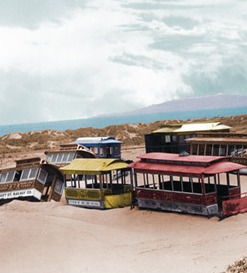
Carville: like Black Rock City, but more history-like

0

Repurposed streetcars perch haphazardly in dunes not yet cowed by asphalt and the Java Beach coffeeshops. They’re homes to a community of urban escapists and artists. Some of them have front porches, some of them house bicycle clubs. It’s like a Dali painting, it’s like the boxcar children — but it’s also an accurate picture of the first non-indigenous inhabitants of the Sunset, on whom local historian Woody LaBounty has written an awesome book, Carville-by-the-Sea.

The book’s images of 19th century Carville are chicken soup for the boho soul. I want one. My room mate wants one. LaBounty himself says he’d live in one — were the lone streetcars still surviving in the western neighborhoods’ not firmly in the grips of their current owners. There’s even one still-standing house built in 1908 that’s made of three cars; a two street car living room, and a bedroom from one that was horse drawn.

One of Carville-by-the-Sea‘s trippy colorized historical photographs

There used to be hundreds of these things. People moved out to Ocean Beach despite the subpar public transit service that places without sidewalks are often subject to — when the community was first started in 1895 was a steam car that ran out Lincoln Way down to the Cliff House, a service intended mainly for the weekend day trippers. They went to escape the city, to improve their health. There were bars and restaurants in street cars, shoe repair stores, artist studios.

So how did I not know about these things before? LaBounty says he grew up in the Richmond in the ‘60s and 70’s, a few blocks from one of the surviving streetcars, which latched a steampunk-sized hold in his childhood psyche.

More pages from Carville-by-the-Sea. Where’s a Delorean when you need one?

“I loved planes, trains, and automobiles, so living in a street car — it just seemed like the coolest thing in the world,” says LaBounty, who is one of the founders of the Western Neighborhoods Project, proprietor of what is reportedly the most popular SF history website/propagator of history walks, plays, and films by teenagers who interview older residents in their neighborhoods. “I used to watch Wild, Wild West, the ‘60s TV show, and they were living in a train, which I thought was great.”

To research, he began interviewing historians he knew, and motor vehicle enthusiastists, and learning all he could about the old community on the beach. Though he’s privy to all kinds of juicy info on the town’s colorful past, LaBounty found interest in his stories of the bohos and families living on the cars really captured listeners. “We all thought, there needs to be a book on this,” he says. “And then I realized that I should probably write it.”

So here it is, colorized like the postcards of yore for that extra oomph of fantasy creation. Newspaper articles from the 19th century on the streetcars, biographies of the community’s founding members, lots of lovely photos from the dunes.

La Bounty’s doing a series of live talks on his Carville expertise which are open to the public. Just be forewarned: he’s not versed in how to get you a steetcar of your own. Still fun to hear, though.

Carville-by-the-Sea presentation
Wed/19 7 p.m., free
History Guild of Daly City/Colma
Doelger Senior Center
Westlake Park
101 Lake Merced, Daly City
www.carville-book.com

Newsom’s puppet show

0

Mayor Gavin Newsom, who has been doing exactly what Pacific Gas and Electric Co. wants at City Hall, is complaining that some of the supervisors are Bay Guardian puppets.


Welcome to Elm Street: Part Seven

0

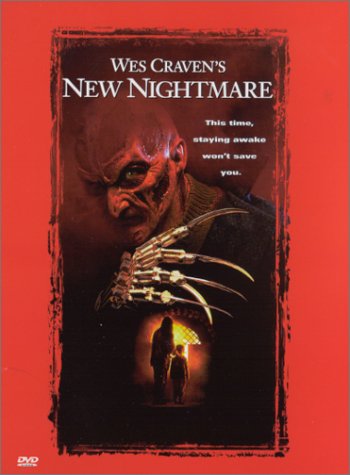
Before Wes Craven got meta with Scream (1996), he tried his self-referential hand at the Nightmare on Elm Street series. The result was New Nightmare (1994), which reunited Heather Langenkamp and Robert Englund as … Heather Langenkamp and Robert Englund. Also playing themselves: actor John Saxon, writer-director Wes Craven, producer Robert Shaye, and Freddy Krueger. Yep, that’s how he’s credited.

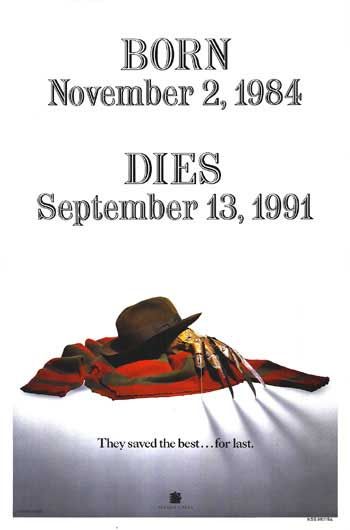
Where was there to go after the dreadful Freddy’s Dead (1991)? Not because of the title’s finality — see also: the so-called Final Chapter (1984) of Friday the 13th — but rather its inescapable shittyness. Part six offered more comedy than horror, with lazy deaths, bad acting, and weak puns — even by Freddy standards. But New Nightmare was a reinvention in the truest sense. It’s a film that, while far from perfect, was well ahead of its time. In fact, Craven pitched it as the plot for part three, but the studio decided against it.

That’s probably for the best. New Nightmare works well when it’s referencing its predecessors: that’s kind of the whole point. Part three would have been too soon — that film could have been clever, but it wouldn’t be full of the Easter eggs that make New Nightmare such a treat for longtime fans. And, yes, I’ve been rewatching these movies for the past week and am, in general, above-average geeky: this film works for me in a way it might not work for others. But I think that’s OK. Scream is broader (and better) because it appeals to fans of all ‘80s horror — New Nightmare is just for Freddy Krueger devotees.


Here are 20 references that I picked up on. Some were certainly intentional. Others are the product of my overactive imagination.

1.    The first few shots show the creation of Freddy’s new animatronic glove. A Nightmare on Elm Street (1984) begins with Freddy fashioning his glove.
2.    At the talk show where Robert Englund surprises Heather in full Freddy regalia, he taunts the audience with, “You are all my children now,” a line from Freddy’s Revenge (1985).
3.    Heather’s son Dylan (Miko Hughes) repeats “Never sleep again” and other lines from the rhyme first heard in part one and chanted in all Nightmare films.
4.    Robert Shaye jokes, “I guess evil never dies, right?” One of the taglines to part four, The Dream Master (1988), was “Pure evil never really dies.”
5.    Heather’s husband Chase (David Newsom) crashes his car when he falls asleep and gets attacked by Freddy. Dan (Danny Hassel) died similarly in part five, The Dream Child (1989).
6.    Just as Freddy made Dan’s corpse speak to Alice (Lisa Wilcox), he has Chase talk to Heather when she falls into his coffin.
7.    Heather and Dylan’s conversation about God recalls Tina (Amanda Wyss) pleading for God in part one. Freddy’s response? “This is God.”
8.    Dylan invites Heather to join him in his dreams. Bringing people into dreams was the power Kristen (Patricia Arquette/Tuesday Knight) displayed in Dream Warriors and Dream Master.
9.    When Heather calls Robert, he’s painting freaky Freddy art. Kristen couldn’t stop drawing Nancy’s house (and Freddy) in part three.
10.    To replicate Freddy’s glove, Dylan tapes knives to his fingers. In the first Nightmare, the glove is referred to as his “fingerknives.”
11.    The phone receiver turns into Freddy’s mouth and tongue, as it did in part one.
12.    Freddy needs to cross over into our world by getting past Heather, the gatekeeper. There was plenty of talk about gates and gatekeepers in Dream Master, but to be honest, I wasn’t paying much attention to the plot by that point.
13.    Heather wakes from a nightmare with a grey streak in her hair, just like Nancy in part one.
14.    A nurse tells Heather she’ll need a pass to get into the hospital’s restricted area, to which Heather replies, “Screw your pass.” This is another line from part one.
15.    Heather reminds Dylan, “Whatever you do, don’t fall asleep.” She said the same thing to Glen (Johnny Depp) as Nancy in the first Nightmare.
16.    An invisible Freddy lifts Julie (Tracy Middendorf) into the air, then drags her up the wall and onto the ceiling. This is almost exactly how Tina died in part one.
17.    Dylan’s a sleepwalker, which is bad news in these movies. In Dream Warriors, Phillip (Bradley Gregg) suffered from the same problem.
18.    Heather tells John Saxon that Fred Krueger killed Chase. By part two, Krueger was known as “Freddy,” so this is likely an allusion to part one. Of course, that’s underscored by the TV playing a similar scene from the first movie.
19.    The references get even more overt when Heather and John take on their original roles as Nancy and Lt. Thompson, down to wearing the same clothes they had on at the end of the first Nightmare.
20.    While trying to rescue Dylan from Freddy, Heather gets caught climbing the stairs, which turn into goop. This also happened in part one.

Be still, my nerdy heart. I have to admit that New Nightmare isn’t quite as good as it could have been. Freddy’s new makeup, which is supposed to be scarier, pales in comparison to his earlier incarnations. In fact, all of the scenes involving Freddy are somewhat lacking: this is really Heather Langenkamp’s movie. Still, without this film, there would be no Scream. And without Scream — well, I don’t even want to think about that.

The invaluable legacy of Willard Wirtz

2

Dick Meister, formerly labor editor of the SF Chronicle and KQED-TV Newsroom, has covered labor and politics for a half –century.

Never has there been a greater champion of U.S. workers than former Secretary of Labor Willard Wirtz, who died on April 24 at 98. Certainly in more than a half-century of covering labor, I’ve never met anyone more dedicated – or more effective – in winning and preserving vital protections for working people.

That was the lifelong task of Wirtz, who served as secretary under presidents Kennedy and Johnson from 1962 to 1969, a brilliant, charming Harvard Law School graduate who spent his life helping ordinary Americans, especially the poor.

Much can be said of Wirtz’ long and distinguished career in government and academia, and his work in government and private practice as a mediator and arbitrator who helped prevent or settle many strikes and resolve many other serious labor-management disputes.

Wirtz expanded the Labor Department’s job-training and education programs that were developed especially for the underemployed and undereducated and at-risk youth, increased unemployment assistance for those who lost jobs to foreign trade, created literacy programs for workers and sharply and publicly chastised construction unions for their bias against African-American workers.

Wirtz was also a leader in the passage of laws that prohibit discrimination against women and older workers in pay and otherwise. And he was one of the first to call for laws protecting workers with disabilities from discrimination.

Wirtz clearly was what current Labor Secretary Hilda Solis calls “President Johnson’s general in the war on poverty.”

Wirtz himself said of his time as secretary that “If there was a central unifying theme . . . It was in the insistence that wage earners – and those seeking that status – are people, human beings for whom ‘work,’ but not just ‘labor’ . . . constitutes one of the potential ultimate satisfactions.”

I particularly remember a trip Wirtz made to California in 1965 in response to grower requests for creation of an “emergency program” that would in effect restore the highly exploitative Bracero Program that for more than two decades had enabled growers to hire underpaid, overworked and generally mistreated poverty-stricken Mexicans.

The Braceros had to silently accept the rotten conditions or be sent back to Mexico to be replaced by other poverty-stricken Braceros. And domestic workers had to uncomplainingly accept the conditions or be replaced by Braceros – if they were even hired, Growers much preferred the necessarily compliant Mexicans.

Wirtz did his utmost to enlighten the general public about the abysmal conditions of those who harvest most of our fruits and vegetables. He took a whirlwind tour of California’s lush farmlands with a planeload of reporters in a battered DC3, popping up unannounced at farms to ask embarrassing questions and point to conditions that most newspaper readers and television viewers associated only with the dim past recorded by John Steinbeck in “The Grapes of Wrath.” Growers tried to limit his agenda to farms where they had hastily and improved conditions for a token number of workers. But Wirtz would not be denied.

By closely examining the true conditions of Mexican and domestic workers alike, Wirtz was hoping to show the rest of the country the need for major reforms that would promise decent pay and working conditions and deny growers their request for Mexican workers under an “emergency program.”

On the ground, he sped with a busload of reporters over dusty roads from one huge square patch of green and brown to another. We had a hard time keeping up with Wirtz, Neither his good humor nor his seemingly inexhaustible energy lessened as he put probing questions to men and women working in the fields.

At one stop in Southern California, for instance, he strode briskly down one long dirt row after another, a pipe gripped tightly in his teeth, shoes covered with dust, to greet workers as they stooped painfully, grasping the short-handled hoes used to weed and otherwise prepare the strawberry, sugar beet and lettuce crops for harvest.

“Wirtz is my name, good to see you” was a typical icebreaker – first voiced at 5:30 a.m. – only five hours after Wirtz had gone to bed.

At another stop, he walked away shuddering from the communal lavatory in the center of a circle of a ramshackle two- and three- room buildings overrun with barefoot children.

He greeted me, his face twisted in disgust.

“Did you see it?” he asked. “God!”

At yet another stop, Wirtz stood in the center of a field, surrounded by workers, looking out over tall rows of asparagus that covered the land in all directions.

“Where,” he asked the grower, “are the toilets?” The grower, genuinely incredulous that the question would even be asked, explained that “there are none.”

Elsewhere, Wirtz paid a surprise visit to a farm labor camp at breakfast time, finding conditions that “make me ashamed anything of this kind exists in this country. Looking at the food, I wonder how anyone can eat it!”

Wirtz returned from California determined to greatly limit, if not halt, the flow of Mexican workers that growers hired in lieu of improving conditions to attract domestic workers.

As Wirtz and others predicted, curtailing grower use of Mexican workers forced growers to improve conditions in order to attract more domestic workers. The improvements were generally short-lived, however, as growers turned to the masses of undocumented Mexicans for workers.

Yet thanks in large part to Willard Wirtz, the country had seen clearly the great need to improve the conditions of some of our most necessary but most exploited workers. That helped lay the groundwork for Cesar Chavez and the United Farm Workers and others who are continuing the struggle today for decent farm labor conditions.

That’s but a small part of the invaluable legacy of Willard Wirtz, who helped guarantee decent conditions to millions of working people in a wide variety of fields.

What’s not generally known is Wirtz’ role in desegregating the Labor Department staff.  As former Labor Department Director of Information John Leslie notes, at the time that Wirtz became Labor Secretary in 1962, the only African Americans on the staff were messengers and drivers. Leslie recalls that “Bill decided to send a message by starting in the deep South . . .We went to Atlanta and called all the regional directors together . . . and immediately drew agitated opposition.

“Every excuse not to hire blacks in professional positions was given – history, local custom, no qualified Blacks, employee relations ” and more, including an assertion that “our female staff won’t go to the bathroom with Blacks “… Bill quietly answered, ‘Then they will be mighty uncomfortable by the end of the day.'”

Despite the objections of his regional directors, Wirtz prevailed. The Labor Department staffs were integrated, in the South and elsewhere.

We shouldn’t forget, either, Wirtz’ courageous stand against the Vietnam War, including the bombing of North Vietnam ordered by his boss, President Lyndon Johnson. That drew a demand from Johnson in 1968 that Wirtz resign. But two days later, Johnson relented, fearing that Wirtz’ resignation would embarrass him and hurt Hubert Humphrey, the Democratic presidential nominee. Wirtz stayed on, but didn’t mute his opposition to the war.

EVERY CRANNY AND CROOK

Among his other considerable talents, former Secretary of Labor Willard Wirtz was one of the country’s foremost collectors of malaprops. His collection, naturally, was studded with gems from Washington, that font of bureaucratese and other language butchery.

Wirtz, for instance, told of a Labor Department official who insisted that “it’s just a matter of whose ox is being goosed.” And there was:

A newspaperman who ‘d “been keeping my ear to the grindstone.”

A bureaucrat who was certain that “we’ve got to do something to get a toe hold in the public eye.”

A politician who demanded that “we hitch up our trousers and throw down the gauntlets.”

A corporate official who wanted to know “if you’ve got any plans underfoot.”

 Another official who warned that “if this keeps up, we’ll all go down the drain in a steamroller,” One official was concerned that “we’re being sold down the drain.”

But not to worry, said an optimistic official, “We can get this country out of the eight ball.”

“It may not work,” said a high union official, “but let’s take a flying gambit at it.” An Agriculture Department official insisted that “we have to deal with the whole gambit of this affair.”

And that wasn’t the half of it. Consider these gems, also uttered by labor and management leaders and, of course, bureaucrats:

“That kind of business gets my dandruff up.”

“When I smell a rat, I nip it in the bud.”

“That idea doesn’t have a Chinaman’s chance in hell.”

“Let’s don’t go off the deep end of the reservation.”

“If we try this we’re likely to have a bear by the horns.”

“Somebody’s going to think there’s dirty work behind the crossroads.”

“Let’s grasp this nettle by the horns.”

“Somebody’s likely to rear up on his back.”

Wirtz himself was no slouch at malaprops. For example, there was his, “We’ve got to be careful about getting too many cooks in the soup.”

But few men, the secretary included, are likely to top the explanation of an unsuccessful candidate for the Maryland Legislature that Wirtz recalled.

“I think I deserved to win,” he told a gathering of his supporters after his defeat. “I went to every cranny and crook in this district.”

Dick Meister, formerly labor editor of the SF Chronicle and KQED-TV Newsroom, has covered labor and politics for a half-century. Contact him through his website, www.dickmeister.com, which includes more than 250 of his recent columns.

Welcome to Elm Street: Part Six

0

In honor(?) of the new A Nightmare on Elm Street, we’re recapping all of the Elms so far. Find more on the Pixel Vision blog.

By 1991, when the optimistically-titled Freddy’s Dead: The Final Nightmare rolled around, the Elm Street series was still making money, but delivering few scares. Not like the series’ beloved hero cared, really — Freddy Krueger was as popular as ever. Just look at the opening credits of Freddy’s Dead, which equate Krueger and Nietzsche as quotable icons (“Welcome to prime time, bitch!” remains a phrase of note among philosophers, I’m sure.)

The only Nightmare film directed by a woman (Rachel Talalay, who made her directing debut; she later made 1995’s Tank Girl and has since helmed a shit-ton of TV shows), and the only to utilize 3-D (more on that later), Freddy’s Dead is set ten years in the future (so, 2001?) Freddy has slaughtered every kid in Springwood; the adults who remain are bonkers. The sole survivor is a height-phobic teen (Shon Greenblatt) we only ever know as John Doe; the film’s opening sequence pays homage to both The Twilight Zone and The Wizard of Oz (1939) as John ejects from a freaky airplane ride into a house spinning through a wind storm. Do I really have to tell you Freddy sails by on a broom stick? “I’ll get you, my pretty — and your little soul, too!”

John lives, but barely — battered and with no memory, he’s picked up by cops in Depressed Americatown, USA, and taken to a run-down shelter for troubled teens staffed by Maggie (Lisa Zane — yes, Billy’s sister!) and Doc (the Yaphet Kotto). In short order, we’re introduced to a ragtag crew of Dream Warriors 2.0: dope-smoking video game addict Spencer (future movie and TV semi-star Breckin Meyer); tough bitch Tracy (Lezlie Deane); and hearing aid-wearing Carlos (Ricky Dean Logan). In keeping with a series theme that’s especially pronounced here, all three have abusive parents.

The fact that John Doe has violent, vivid nightmares is intriguing to both Doc — who specializes in “dream therapy” — and Maggie, who suffers her own disturbing dreams. When it becomes apparent that Maggie and John are having variations on the same dream (though Maggie’s play out more like flashbacks, or sinister home movies), she hustles him into the youth center’s comically beat-up van for a visit to Springwood. Hey, maybe it’ll jog his memory — or hers.

OF COURSE, the three reckless youths with obviously identifiable weaknesses happen to stow along for the ride. Bad move. Springwood proves to be empty, save for a few insane adults (including Roseanne and Tom Arnold, at the height of their tabloid fame). While Maggie and John search for clues to their dark pasts, Spencer, Tracy, and Carlos explore an abandoned house — on Elm Street. Freddy appears and immediately begins fucking with all involved: for example, the deaf kid gets a Freddy-style hearing aid that makes everything painfully loud, and is then subjected to the sound of Freddy gleefully scratching his claws along a chalkboard. Needless to say, Carlos’ head explodes; needless to add, Freddy’s kiss-off is “Nice hearin’ from ya!”

Spencer’s death is far more humorous, and is probably the best example of how un-terrifying Freddy has become by now. As the stoner dozes, a busted TV comes to life. Johnny Depp does a rememberin’-my-roots cameo in a fake TV commercial, which is interrupted by Freddy. “Hey Spence — let’s trip out!” Droopy-eyed Spence grins as Iron Butterfly plays and psychedelic waves suck him into the set. Suddenly, he’s a character in a video game, being pounded first by his domineering father (“Be like me!”) and then Freddy himself, who’s also manning the joystick in some alternate reality to this alternate reality. As Maggie and Tracy watch in horror (and, presumably, the audience howls in delight), Spence sleepwalks all over the house, punching walls and bouncing into the ceiling. “Great graphics,” gamer Freddy murmurs in approval.

Anyway. Spence dies, and a sleeping John Doe can’t be roused to prevent his own untimely end (it involves a parachute and a bed of nails). Earlier, he and Maggie had learned from Springwood’s orphanage that Freddy Krueger’d had a kid, current whereabouts unknown. John had thought he was Krueger Jr., safe from Freddy’s wrath. But no! His last words, to Maggie: “It’s not a boy!”

So, Maggie the nightmare-having doctor realizes what we’ve known all along: Freddy Krueger is her father! ZOMG! Freddy’s Dead takes the opportunity to sketch in a backstory for our favorite child killer: he’s seen pulverizing a hamster as his eight-year-old classmates chant “Son of a hundred maniacs!”; he’s seen enjoying a beating from his stepfather (the Alice Cooper); he’s seen, through Maggie’s eyes, murdering his wife after she discovers a secret room in their Springwood house (contents: gloves, weird things in jars, cookies). Young Maggie, or Katherine, or whatever her birth name was, was sent to the orphanage soon after, giving Freddy further motivation to kill every kid in town. Or something. Apparently he was a devoted father.

Meanwhile, back at the shelter, Doc immediately understands the situation, unlike every other authority figure in the series EVER: “He’s fucking with the line between dreams and reality!” Seems Freddy is also trying to get Maggie to bring him more victims, allowing for this crowd-pleasing exchange:  “But this isn’t Springwood!” “Every town [dramatic pause] has an Elm Street!”

It is soon decided that Maggie, being Freddy’s spawn, is the only one who can enter his thoughts, get ahold of him in dreamville, and bring him into the real world, where he can be killed the fuck dead. “You’ll use these,” Doc says, pulling out a pair of 3-D glasses. While it might’ve been easier for the filmmakers to just insert a title card reading “PUT ON THE GLASSES NOW Y’ALL,” I suppose this was a somewhat more subtle way to issue the same orders.

Anyway, there’s an extended tussle in shoddy 3-D. Freddy finally dies (Maggie spears him with his own glove, for maximum irony). The end credits, which offer a memorializing highlight reel of Freddy’s greatest kills, unspool over what has to be Iggy Pop’s least-popular song of all time, “Why Was I Born? (Freddy’s Dead).” And horror fans finally know the answer to the question that’d gripped their dreams for nearly a decade: how do you kill Freddy Krueger? You could believe the movie’s harebrained plot. Or you could believe the evidence presented by the movie itself: kill the monster by transforming him into a campy, cackling, comedian.

Don’t worry — there are two more Freddy movies, plus the new flick, to go on our series. Grab a cup of coffee, kids!

http://www.youtube.com/watch?v=YmdityGT-R8&feature=related

Benefits: April 28-May 4

0

Ways to have fun while giving back this week


Wednesday, April 28

Save the Waves
Attend this benefit for Chile, where donations will go to directly aid small coastal areas that were hit hardest by the Feb. 27th earthquake and following tsunamis, featuring free food, surf flicks, raffles, and DJs Paul McNitt and Paul Hobi spinning soul, funk, house, breaks, and reggae.
8 p.m., free
Riptide
3639 Taraval, SF
www.savethewaves.org

Thursday, April 29

Hospitality House Art Auction
Help support Hospitality House’s Community Arts Program (CAP), a free fine arts studio and gallery space that provides professional instruction, materials, and sales and exhibition support for poor and homeless Tenderloin artists. This 25th anniversary auction will feature more than 150 unique pieces of art from a diverse collection of regional artists.
6 p.m., $30
Andrea Schwartz Gallery
525 2nd St., SF
www.hospitalityhouse.org

Toe to Toe
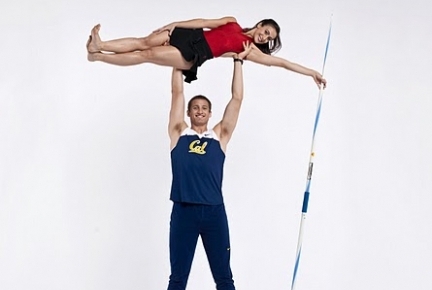
Attend this benefit for ODC Dance Commons and Cal Athletics featuring a live competition between ODC/Dance’s contemporary dance company and top student athletes from UC Berkeley to see who’s the better athlete: dancers or sports stars. Judges to include San Francisco 49ers Ronnie Lott, Harris Barton, Nate Clements, MC Hammer, and more. Hosted by Warren Hellman.
6:30 p.m., $125
Herbst Pavilion
Fort Mason Center, SF
www.slimstickets.com

Friday, April 30

Blue Ribbon Luncheon
Help support the San Francisco Child Abuse Prevention Center, an organization dedicated to the prevention of child abuse and neglect, at this luncheon featuring three-time Super Bowl champion and former 49er Riki Ellison, and Emmy-award winning co-anchor of ABC 7/KGO TV Cheryl Jennings as master of ceremonies.
Noon, $250
Westin St. Francis Hotel
335 Powell, SF
www.sfcapc.org

Hold the Light for Haiti and Chile
Join Bay Area poets as they gather in support of efforts to assist the men, women, and children in Haiti and Chile who have been devastated by the recent earthquakes. Poets to include Diane di Prima, Al Young, Devorah Major, Mary Rudge, Deborah Grossman, and many more. Proceeds will be donated to Doctors Without Borders.
6 p.m., $5-10 suggested donation
Islamic Cultural Center
1433 Madison, Oak.
www.penoakland.org

Noe Valley Uncorked
Learn about and sample Argentinean wine at this wine event featuring on-hand experts and hors d’ oeuvres. Door proceeds benefit the Noe Valley Ministry.
6 p.m., $35
Noe Valley Ministry
1021 Sanchez, SF
www.noevalleyministry.org

Saturday, May 1

Bay Area Brain Tumor Walk
Attend this inspirational, all-ages fundraising walk to support the fight against brain tumors, featuring food, music, prizes, and more.
9 a.m.; raise a minimum amount of $350 or donate what you can
Speedway Meadow
Golden Gate Park
299 Tansverse, SF
www.bayareawalk.org

Sunday, May 2

Bliss 2010
Help support Maitri, the only AIDS-specific residential care facility left in the Bay Area, at this gala and auction featuring stand-up comedian Sandra Bernhard and designer Carmen Marc Valvo and food from top SF restaurants, drinks, live music, and more.
6 p.m., $150
Golden Gate Club
Presidio, Fisher Loop, SF
www.maitrisf.org

Mother’s Day Diaper Drive
Bring your kids to this fundraiser family day to benefit Help a Mother Out (HAMO), a grassroots advocacy campaign dedicated to improving the lives of mothers, children, and families, featuring games, crafts, pizza, cupcakes, and complimentary kiddie photo sessions. Proceeds will be used to purchase diapers for HAMO’s Bay Area partners. 
3 p.m., $40 per family
Peekadoodle Kidsclub
900 North Point, suite F100, SF
www.helpamotherout.org

Wanderlust at the Fillmore
In the spirit of the Wanderlust festival in North Lake Tahoe, this yoga and music festival will offer yoga classes during the day courtesy of Yoga Tree and live music performances featuring Rupa and the April Fishes at night. A portion of the proceeds benefit
Off the Mat, Into the World.
4 p.m. yoga, 7 p.m. concert; $25-$55
Fillmore
1805 Geary, SF
www.yogatreesf.com

Monday, May 3

“Aurora Borealis”
Wine and dine for a cause at this fundraiser for the Aurora Theater Company’s live performances, education program, and the Global Age Project, featuring specialty wines, silent auction, three-course meal, live entertainment, and more.
6 p.m., $200
Hotel Shattuck Plaza
Crystal Ballroom
2086 Allston, Berk.
(510) 843-4042, ext. 312

ENDORSEMENTS: State ballot measures

8

PROPOSITION 13

LIMITS ON PROPERTY TAX ASSESSMENT FOR SEISMIC RETROFITS

YES

The primary sponsor of Prop. 13 is Republican Sen. Roy Ashburn, who dominated the news for several days after he was arrested for drunk driving on his way home from a Sacramento gay bar. Needless to say, Ashburn’s dramatic coming out has whipped up far more attention than his noncontroversial ballot initiative.

We’re generally opposed to anything that gives tax cuts or tax deferrals to property owners; thanks to a 1978 measure also called Prop. 13, much of the commercial and residential property in California is badly under assessed. And Prop. 13, 2010 style, is indeed a tax break. But it’s probably justified.

Buildings in this state are typically reassessed for property taxes after they’ve been modified with new construction, except in cases where the modifications are made to comply with earthquake-safety standards. While most buildings that undergo seismic retrofitting are exempt from reassessment until the property is transferred to a new owner, the exemption for unreinforced masonry buildings is limited to 15 years. Prop 13 would remove that 15-year cap.

The fiscal impact on cities is likely to be pretty minor, and the measure might encourage both commercial and residential landlords to bring their buildings up to standard. Vote yes.


PROPOSITION 14

OPEN PRIMARIES

NO

At the height of a royal mess last year when the state budget was long overdue and the two-thirds majority needed to pass it was still out of reach by one vote, Republican Sen. Abel Maldonado struck a deal with Democrats. He said he’d support the budget — if the majority party would meet a few of his demands. One thing he insisted on was Prop. 14 — a ballot measure that would effectively remove political parties from the primary elections process, allowing all voters to cast ballots for any candidate regardless of party affiliation.

Under Maldonado’s plan, all candidates would run on a single primary ballot, and the top two vote-getters would face off in the general election. Heavily funded by the California Chamber of Commerce and marketed by the same spin doctors and corporate lawyers who are rolling in Yes on 16 campaign money, Prop. 14’s backers say it will result in more centrist elected officials.

There are plenty of pitfalls here, the most worrisome being that it would drive up the cost of elections and give more moneyed (and corporate-allied) candidates a sharper competitive edge while elbowing out progressives. It would allow Republicans to play a role in what would normally be Democratic primaries (and vice versa.) The measure would also make it nearly impossible for smaller parties — the Green Party, for example — to offer candidates in the November elections.

Bad idea, bad process, Vote no.


PROPOSITION 15

FAIR ELECTIONS ACT

YES

California desperately needs electoral reform. Corporate campaign spending and lobbyists have poisoned the decision-making process and muzzled the voice of the people. Something radical needs to be done — and while this measure is only a small, measured step in the right direction, it’s an important and promising experiment.

Prop. 15 would create a pilot public financing program for the 2014 and 2018 races for California Secretary of State — and the program would be funded by a tax on lobbyists. Right now lobbyists pay only $12.50 per year to register with the state. This measure would increase that fee to $350 annually and use the money to create a fund of about $6 million that candidates for the crucial office overseeing elections in the state could tap after demonstrating their popular support by gathering a number of small contributions. All candidates who qualify would be given the same amount of money and left to compete on the issues. Ideally this public financing program would prove successful and eventually be expanded to other offices. Public financing of election campaigns, which is currently working well in Arizona and Maine, is certainly worth a try in California. Vote yes.


PROPOSITION 16

MONOPOLY PROTECTION FOR PG&E

NO! NO! NO!

The deceptively titled “Taxpayer’s Right to Vote Act” was dreamed up and funded entirely by Pacific Gas and Electric Co., the monopolistic utility that is worried it could face actual competition here in San Francisco (and elsewhere) from municipal electricity programs that would offer customers a greener energy mix and more accountability than PG&E executives will ever demonstrate.

Rather than accept some healthy competition, this sleazy corporation has opted to spend some $35 million to exterminate all possibilities of municipal electricity programs cropping up anywhere in the state in a bid to preserve its octopus-like grip on the energy market in Northern California. Prop. 16 would require a two-thirds majority vote at the ballot before any community choice aggregation (CCA) program — or any attempt at creating or expanding a public-power system — could move forward. That’s an extreme hurdle — -and PG&E knows it.

In effect, PG&E is trying to buy public policy here, trying to pass a law that will protect its own monopoly interests.

In San Francisco, the CCA being proposed would offer customers 51 percent renewable power by 2017, which means it would blow PG&E out of the water in the green arena and mark S.F. as taking greater strides toward combating climate change than any other major U.S. city. This example could set a precedent for others, which, in turn, could create favorable market conditions for green energy startups that want to harness wind, solar, biomass, geothermal, tidal, and energy efficiency alternatives.

The very existence of Prop. 16 is already threatening the San Francisco CCA; the city’s Public Utilities Commission is trying to delay a final contract until after the June 8 vote on the measure (see editorial, page 5)

Vote no on Prop 16. Not just because it’s an example of a big business single-handedly trying to alter the state constitution for its own economic benefit by pouring millions of dollars into a deceptive advertising campaign. Not just because a two-thirds majority vote requirement is anti-democratic. Not just because there were reports that the signature gatherers who got people to sign on in support of placing Prop. 16 on the ballot were telling people that its purpose was to limit PG&E expansion or encourage solar power. Not just because Senate Pro Tem Darrell Steinberg and a half dozen members of the Legislature sent a letter rebuking PG&E CEO Peter Darbee for disrespecting the democratic process by going straight to the ballot to undermine legislation it initially supported that enabled the creation of CCA programs. Not just because PG&E is using $35 million of ratepayer dollars (that’s the check you wrote them for your electricity bill!) to put out slick TV ads for this campaign when it should have been repairing the pipelines under those manholes that keep exploding and messing up your morning commute. Not even just because with CCA, you already have the right to vote whether or not you want to be part of it, a choice PG&E will never give you. And not just because PG&E keeps trying to raise rates, which is much more difficult for municipal energy agencies to do.

If for no other reason, vote no because Prop. 16 flies in the face of everything environmentalists stand for. It’s a measure that will thwart progress on fighting climate change, brought to you by the company that practically invented green-washing. PG&E is a huge nuclear power player; it purchases coal from mountaintop-removal coal mines in West Virginia that are completely devastating biodiverse landscapes in Southern Appalachia and screwing over poor people by tainting their drinking water; and it’s in the process of building fossil fuel-fired power plants in poor communities of color in California. The CCA programs at least represent a glimmer of hope for an alternative model; Prop. 16 kills off that possibility with one fell swoop motivated by pure greed. For the love of justice, democracy, and the planet, vote no on Prop 16.


PROPOSITION 17

CAR INSURANCE SCHEME

NO, NO, NO!

Mercury Insurance sponsored this measure and is campaigning for it with tens of millions of dollars, betting it can fool voters and make hundreds of millions of dollars in profits by doing so. And if the company is right, insurance rates will skyrocket for new drivers and those who haven’t had continuous insurance coverage, which experts say will increase the number of uninsured drivers on the roadways and end up increasing insurance rates for everyone.

Mercury and its founder George Joseph have been truly malevolent players in California, exploiting their customers to make billions of dollars in profits, attacking California’s landmark insurance reform measure Prop. 103 with lawsuits and corrupting campaign contributions over more than 20 years, and flouting insurance regulators in such brazen fashion that even Insurance Commissioner Steve Poizner, a conservative Republican, recently chastised the company for its “lengthy history of serious misconduct” (see “Buying power,” March 17).

Now, however, the company is hoping its promise to cut the insurance premiums of drivers who have maintained continuous coverage by “as much as $250 per year” will buy their votes and that they’ll overlook the myriad negative impacts of increasing everyone else’s premiums by $1,000 per year or more, based on Mercury’s own estimates.

Think about that. If you’re a driver who missed an insurance payment by even one day, or a soldier returning from boot camp, or someone with a low-income getting insurance for the first time or after ditching your car for a while, what are you going to do when you discover already-expensive car insurance comes with a $1,000 annual surcharge?

Many Californians, those who share our roads, will choose to drive without insurance. Then they’ll be more likely to leave the scene of accidents or declare bankruptcy rather than paying out-of-pocket for their accidents, both of which increase the cost of insurance for everyone else.

That’s how insurance works. If someone pays less, someone else pays more; and the only entity guaranteed to really make money over the long term is the insurance company. Don’t fall for this scam. Vote no on 17.

St. Elvis?

0

TV BIOPIC The John Carpenter-directed biopic Elvis hit network TV airwaves in 1979, ironically enough in the same time slot as that slice of Deep South Americana Gone With the Wind (1939). The Big E had expired just two years previously, and Elvis worship was in full flower. The TV movie thus squeezed out the Gable-Leigh epic to take top spot in the nation’s hearts, for that night anyway.

Released in March on DVD in its full three-hour glory, Elvis was put together by Dick Clark’s production company, which apparently wanted a fairly by-the-numbers hagiography. Kurt Russell does a credible job of capturing the curled lip and intonation of the humble country boy who wore flashy clothes and mixed white country, black blues, and various pop influences until he hit the big time.

Screenwriter Anthony Lawrence worked on several of Elvis’ less than groundbreaking Hollywood vehicles, including Roustabout (1964) and Paradise, Hawaiian Style (1966). Lawrence also penned scripts for both The Outer Limits and Medical Center, which might be even better qualifications for writing about someone who had as many problems with impulse control as Presley.

But, alas, the life we see is oddly squeaky clean. We see nary a caffeine tablet eaten. Lawrence depicts Elvis remaining fairly chaste while waiting to find his true love Priscilla (Season Hubley), not to mention during the additional time spent waiting for her to mature to legal marrying age. (For those jaded souls who need something a bit more salacious, e.g. the skinny on the King’s thing with Tura Satana, check out Alanna Nash’s recent Baby, Let’s Play House: Elvis Presley and the Women Who Loved Him.)

We see Elvis the seeker reading a passage from Khalil Gibran’s The Prophet aloud to Priscilla, but nowhere is there a shot of his other favorite bedside reading, The Physicians’ Desk Reference. According to Elvis biographer Bobbie Ann Mason, he used said volume “like a shopping catalog.”

We do get Shelley Winters as Elvis’ beloved mother Gladys, surely one of the oddest casting choices in the Carpenter ouevre. The black wig Winters sports made me think of Divine, which in turn reminded me of how much more fun I had watching the 1950s rock ‘n’ roll cutting up in John Waters’ Cry-Baby (1990).

Carpenter’s thumping synthesizer soundtrack tunes, so key to the addictive pleasures of his horror pictures — including They Live (1988) and Halloween (1978) — are sadly absent. There are decent versions of early Sun numbers with some guy named Ronnie McDowell doing credible vocals. Maybe the creepy synth would be more appropriate for a follow-up biopic on the final years (this one ends in 1969; Presley’s ended in 1977), including a recreation of Elvis’ legendary 1970 White House meeting with Richard Nixon.

Murder, he filmed

0

arts@sfbg.com

Get your shit peeled/ Check the murder rate, the shit’s real. —Eddi Projex, "Straight from Oakland"

MUSIC/FILM I first met Pretty Black, a member of Yukmouth’s Regime crew, in 2005 at the Mekanix’ studio in Oakland. He arrived with Husalah of the Mob Figaz to record. Goofing off, Hus urged me to get on the song, so I recorded an intro in mangled French, dubbing the pair "les hommes mobs." Black loved the pronunciation (moeb) and thus began one of my least likely rap-world friendships.

For even by rap standards, Black was a live wire. The 25-year-old always had a pistol on him, was always ready to fight, and, with his Range Rover and Lamborghini, clearly made his money off the street, though I didn’t inquire how. He was an angry young man, not someone to piss off. Yet according to Husalah, he had another side.

"Outside the circle, he seemed like the coldest dude on earth," Hus says. "But inside, you knew he was real compassionate. He provided for his niggas. And if you needed something, he was very resourceful."

"Plus," he adds, "if someone tried to fuck with you, he already knocked ’em out before you could even react."

Born in Chicago, Black was christened Ayoola Matthew Odumuyiwa by his Nigerian immigrant parents. When he first came to the Bay, he was known as Verstyle, but soon adopted the more in your face Pretty Black, a pun on the pimp sense of "pretty" (a "gorgeous" man) and his very dark skin. Like albino Jamaican rapper Yellowman, Black transformed a perceived negative — his color placing him on the lowest rung of our country’s caste system — into a defiant positive.

In 2008, on my birthday, May 25 (not, as sometimes reported, on May 30), Black was shot to death at an apartment complex where his relatives lived, a planned assassination. In other words, not random violence or robbery. Except for the killers, no one knows why. I was shocked because, while I could imagine someone wanting to kill him, I’d never known a murder victim. It’s like a candle flame being blown out: one second, fully here; the next, gone. I recalled, too, the last time I’d seen him, at a show featuring the Jacka. As we were catching up, he said, apropos of nothing, "Remember when we met and recorded that song? That was cool. Le moeb!" While ordinary at the time, this circling back to the night we met took on a retrospective uncanniness, as did one of his last songs, also recorded with the Mekanix, on which Black, playing both parts of a phone call, tells himself, "Don’t go outside, nigga. They’re trying to kill you."

BACK TO BLACK


I’ve been thinking about Black lately, in large part due to Land of the Homicide: The Murders in Oakland, CA (HookerBoyFilmz/HBO), a documentary DVD by Oakland filmmaker Dame Hooker. Brought into the game by veteran director Kevin Epps and multimedia journalist JR, Hooker has manned the cameras since 2001, releasing his first DVD, an overview of the local rap scene called The Bay Got Game (HookerBoy), in 2006. He’s also notched artist-oriented flicks like Mistah FAB’s Prince of the Bay (HookerBoy/InYoFace, 2007), among numerous other projects. Camera on shoulder, he’s a ubiquitous presence at any significant function, constantly accumulating footage of anything from a performance to a sideshow to an ass-whupping in high definition.

"I had a camera, but I was just shooting around the hood," Hooker recalls. "I didn’t know how to edit or anything. But FAB, Stalin, Shady Nate — I watched those dudes grow up. I started going to all their shows and they wanted the footage, so I learned how to edit just by watching TV or watching somebody else. Current TV on HBO showed me a lot about how to put it in a format."

Indeed, he nailed the format so well that Current TV licensed some of his footage and hired him and Epps to make content for the program’s Web site, which proved to be the genesis of the Land of the Homicide project.

"We did a pod, a little five-minute segment for Current TV," Hooker says. "It was called Popped in Oakland. I went around to my friends and was like, tell me how you got shot, and they was showing their wounds. HBO wanted me to extend it, and I was doing that already."

Some of the wounds are pretty grisly. One man pulls up a sleeve to display an arm that got sprayed with an AK. The arm is functional but it looks like a tree root, all twisted and gnarled, a permanent symbol of the gun problem in Oakland — which frequently leads the nation in homicides — not to say the entire country. Hooker himself hasn’t been immune to the violence. He shows me some of his own wounds.

"You got to know how to maneuver around here," he says grimly. "You can get shot just by looking at someone wrong. I got shot five times. Somebody thought I looked at them funny. I didn’t have no money on me or nothing."

RANDOM TARGETS


As Hooker’s own story suggests, Oakland’s gun violence often has a random quality to it. People get shot, sometimes killed, by mistake, in addition to intended victims like Pretty Black. One of the more notorious accidental murders was Jesse "Plan Bee" Hall, founder of the classic 1990s crew Hobo Junction, who was shot in 1992 while sitting next to the intended target. Among the interviewees are Plan Bee’s parents, his sister, and his younger brother, Bobby "Blu-Nose" Hall, as Hooker provides an unflinching look at the family’s devastation and grief. Before the end of the film, however, he winds up returning to the Hall residence as Blu-Nose himself is murdered, seemingly, like his brother, a random target.

"I got a large family. None of my family members have passed away like that," Hooker says. "Except my first cousin — we was real close — and my uncle, [and] two uncles, on my mother’s side. All the rest have been friends, but my friends be like my family."

Ordinarily, Blu-Nose’s death would raise a question like what are the odds of someone speaking on camera about gun violence being killed by gun violence shortly afterward? But this being Oakland, the question is: what are the odds of this occurring three times in quick succession? Because this is exactly what happens with Land of the Homicide, separating it from similarly-themed hood documentaries. Another of the main interviewees, a rapper from the East Oakland’s 70s named Hennessey who had many previous wounds to display, is also murdered. Though I hadn’t heard his music, I’d already begun to hear Hennessey’s name here and there; he’d just signed to Thizz for his first major project shortly before his death, and the contrast between his on-camera gregariousness and the extremely dapper corpse we see at his funeral makes a more emphatic argument against the legality of guns than any commentary could.

Pretty Black is the third victim. Although he didn’t have prior wounds himself, Black bumped into Hooker during the filming and agreed to lend his perspective as someone who knew the street life all too well.

"I was going around getting their opinion about the stuff," Hooker recalls. "Most of them was trying to help people, trying to get their hood right. I don’t know if it was a curse doing the DVD or what, but they all died back to back. It was supposed to be about the lives taken in Oakland, but it turned out to be the people that was interviewed."

I don’t think there’s a word for Hooker’s experience here. Obviously the tragic series of murders gives his DVD an authority and authenticity most documentaries couldn’t buy. But the price is not something he would have willingly paid.

"Land of the Homicide, that’s based on really good friends," he said. "DVDs, those don’t matter when it’s someone you know."

Regime genie

0

arts@sfbg.com

FILM While his unauthorized appearance in Team America: World Police (2004) was surely disillusioning, Kim Jong-il is known to be a foreign film fanatic as well as someone with a keen interest in his own country’s popular media. Popular meaning propagandic, and vice versa — distinctions being useless in North Korea’s case. Inappropriate TV and radio signals are jammed; Internet access is scant; lively arts expressions are strictly “official.” Worldwide, only Eritrea rates lower for freedom of the press.

But why complain when a government-supervised communications realm allows the flourishing of such refined entertainment as Let’s Trim Our Hair In Accordance With the Socialist Lifestyle? Thanks to which broadcast series we know that shorter hair is not only more stylish, patriotic, and hygienic, but improves intelligence — because long locks drain the brain of needed nutrients. (Thus explaining the intellectual reputations of hippies and metalheads.)

The “Dear Leader” has also overseen numerous big-screen productions with alluring titles like A Faithful Servant, A Single Mind, Brigade’s Political Commissar and Let’s Go to Mt. Kumgang. In a 50-page pamphlet titled “Great Man and Cinema: Anecdotes,” he spills all about this fabulous showbiz sideline. Well, perhaps not all: one doubts, for instance, that he comes clean about the 1978 kidnapping of leading South Korean director Shin Sang-ok, who after an attitude-improving prison stint was compelled to make 1985’s nationalistic Godzilla-slash-Golem monster saga Pulgasari.

Other Cinema’s “Mayday Parade(e)” program offers a full dose of propagandic kitsch from the Democratic People’s Republic and beyond. Its centerpiece is The Juche Idea, an hour-long exploration of today’s united-front wonderland. There are excerpts from colossal choreographed Pyongyang patriotic displays, lugubrious dramas, poems (“O bureaucratic capitalism!/ Wet slug to be suffocated in eggshells and beer”) and other materials illustrating the regime’s titular essential ideology. Offering outside perspective is the lengthy interview with a South Korean film student who’s expatriated to an artists’ agricultural collective here after unimpressed stopovers in the U.S. and Japan.

You can stop dialing that local Tea Party hotline right now. The Juche Idea is not quite what it appears to be — though so nearly so it’s ingenious. The final section in an ultra deadpan mockumentary trilogy by plain old American Jim Finn, it mixes actual archival and faked footage to satirize revolutionary snowblindness so subtly you might well be fooled. Following his prior efforts’ send-ups of Peruvian Shining Path militants and a nonexistent East German space program, he again shoots and scores.

The most hilariously ersatz segments are those providing lessons in English as both a Socialist and Capitalist language. Speaking their dialogue with genius stiltedness is Oleg Mavromatti as a Russian visitor no doubt impressed to learn that as far as agricultural and other advancements are concerned, “The manure we’re spreading is just the beginning.”

Moving farther eastward, the ATA program offers fun from another People’s Republic. Great Advancement of Chairman Mao Tse-tung’s Thought (1966), better known hereabouts as Mao’s Little Red Video, is a half-hour newsreel/pep rally focusing mostly on China’s first atomic and nuclear bomb tests. These are triumphant, natch; but more important is the fact that the people themselves are “a spiritual atomic bomb” who will inevitably blow decadent capitalist aggressors to smithereens by their sheer purity of rhetoric.

Early arrivals will be greeted by the turntablings of DJ Onanism and partial screening of Situationist prankster René Viénet’s 1977 Peking Duck Soup, or One More Effort, Chinamen, If You Want to Be Revolutionaries! This cheeky collage uses official imagery in service of an illustrated lecture enumerating all the lies, backstabbings, and massacres throughout Mao’s “visionary” rule. Any regime without humor is bound to generate a lot of the unintentional kind, but Viénet can’t help adding his own particular brand of aesthetic snark. Particularly felicitous are the uses of Serge Gainsbourg’s “Je t’aime … moi non plus” and the Singing Dogs’ “Jingle Bells.”

OTHER CINEMA

Sat/1, 8:30 p.m., $6

Artists’ Television Access

992 Valencia, SF

www.othercinema.com

Music listings

0

Music listings are compiled by Paula Connelly and Cheryl Eddy. Since club life is unpredictable, it’s a good idea to call ahead to confirm bookings and hours. Prices are listed when provided to us. Submit items at listings@sfbg.com.

WEDNESDAY 28

ROCK/BLUES/HIP-HOP

*Aesop, Venture Capitalists, New Humans Bottom of the Hill. 9pm, $10.

Fix My Head, This Runs on Blood, Useless Children, Gain to Lose Sub-Mission, 2183 Mission, SF; www.sf-submission.com. 9pm, $6.

*"Full Pink Moon Party" Rickshaw Stop. 8pm, $10. With Sonya Cotton, Honeycomb, Jascha vs. Jascha, and Kris Gruen.

Japanther, Reaction, Dirty Marquee, Street Eaters Hemlock Tavern. 9pm, $8.

Pomegranate, Fall Risk, Control-R Hotel Utah. 8:30pm, $6.

Chad Price, Michael Dean Damron, Micah Schabnel, Piss Pissdofferson Thee Parkside. 8:30pm, $5.

Stymie and the Pimp Jones Luv Orchestra, Funk Revival Orchestra Café du Nord. 9pm, $10.

Volker Strifler Band Biscuits and Blues. 8pm, $15.

FOLK/WORLD/COUNTRY

Anoushka Shankar Palace of Fine Arts Theater, 3301 Lyon, SF; (415) 563-6504. 8pm, $25-$65.

DANCE CLUBS

Booty Call Q-Bar, 456 Castro, SF; www.bootycallwednesdays.com. 9pm. Juanita Moore hosts this dance party, featuring DJ Robot Hustle.

Club Shutter Elbo Room. 10pm, $5. Goth with DJs Omar, Nako, and Justin.

Hands Down! Bar on Church. 9pm, free. With DJs Claksaarb, Mykill, and guests spinning indie, electro, house, and bangers.

Machine Sloane, 1525 Mission, SF; (415) 621-7007. 10pm, free. Warm beats for happy feet with DJs Sergio, Conor, and André Lucero.

Mary-Go-Round Lookout, 3600 16th St, SF; (415) 431-0306. 10pm, $5. A weekly drag show with hosts Cookie Dough, Pollo Del Mar, and Suppositori Spelling.

RedWine Social Dalva. 9pm-2am, free. DJ TophOne and guests spin outernational funk and get drunk.

Respect Wednesdays End Up. 10pm, $5. Rotating DJs Daddy Rolo, Young Fyah, Irie Dole, I-Vier, Sake One, Serg, and more spinning reggae, dancehall, roots, lovers rock, and mash ups.

Synchronize Il Pirata, 2007 16th St, SF; (415) 626-2626. 10pm, free. Psychedelic dance music with DJs Helios, Gatto Matto, Psy Lotus, Intergalactoid, and guests.

Telephoned Harlot, 46 Minna, SF; www.harlotsf.com. 7pm. Mash-ups with DJ Sammy Bananas and singer Maggie Horn.

Yoruba Dance Sessions Bacano! Som., 2925 16th St, SF; (415) 558-8521. 9pm, free. With resident DJ Carlos Mena and guests spinning afro-deep-global-soulful-broken-techhouse.

THURSDAY 29

ROCK/BLUES/HIP-HOP

Aquaserge, Casper and the Cookies, Grand Lake Rickshaw Stop. 8pm, $10.

Arcadio, Guns for San Sebastian, Charles Gonzalez Café du Nord. 9pm, $10.

C-Mon and Kypski, Frequency, Sweet Snacks, DJ Mancub Independent. 9pm, $12.

A Day to Remember, August Burns Red, Silverstein, Enter Shikari, Go Radio Regency Ballroom. 6:45pm, $23.

Dunes El Rio. 8pm, $5.

Shane Dwight Biscuits and Blues. 8pm, $20.

Flood, Hashishian, Days of High Adventure Knockout. 10pm, $6.

49 Special, Big Nasty, TV Mike and the Scarecrowes Hotel Utah. 9pm, $7.

Emily McLean, Quinn DeVeaux, Street Sirens Red Devil Lounge. 8pm, $8.

Murs, Sick Jacken Fillmore. 8pm, $20.

Photo Atlas, Moog, Smile Radio Thee Parkside. 9pm, $8.

Spill Canvas, Tyler Hilton, AM Taxi, New Politics Slim’s. 7:30pm, $16.

Sugar and Gold, Nite Jewel, Baron Von Luxxury, DJ Loose Shus Bottom of the Hill. 9pm, $10.

Sugar Butt Tiger, Bare Wires, Girl Band, MC Meathook and the Vital Organs, SF Rockstar Paradise Lounge. 9pm, $7. Proceeds benefit the Haight-Ashbury Street Fair.

Emily Jane White, Helene Renault, Chloe Makes Music Hemlock Tavern. 9pm, $7.

FOLK/WORLD/COUNTRY

Bluegrass and old-time jam Atlas Café. 8pm, free.

Jordan Carp Bollyhood Café. 8pm, free.

Jon Rubin with Cal Keaoola Bliss Bar, 4026 24th St., SF; (415) 826-6200. 8pm, free.

DANCE CLUBS

Afrolicious Elbo Room. 9:30pm, $8-10. DJs Pleasuremaker and Señor Oz mark their night’s third anniversary with a live performance by Aphrodesia.

Caribbean Connection Little Baobab, 3388 19th St, SF; (415) 643-3558. 10pm, $3. DJ Stevie B and guests spin reggae, soca, zouk, reggaetón, and more.

Drop the Pressure Underground SF. 6-10pm, free. Electro, house, and datafunk highlight this weekly happy hour.

Good Foot Yoruba Dance Sessions Bacano! Som., 2925 16th St, SF; (415) 558-8521. 9pm, free. A James Brown tribute with resident DJs Haylow, A-Ron, and Prince Aries spinning R&B, Hip hop, funk, and soul.

Koko Puffs Koko Cocktails, 1060 Geary, SF; (415) 885-4788. 10pm, free. Dubby roots reggae and Jamaican funk from rotating DJs.

Mestiza Bollywood Café, 3376 19th St, SF; (415) 970-0362. 10pm, free. Showcasing progressive Latin and global beats with DJ Juan Data.

Peaches Skylark, 10pm, free. With an all female DJ line up featuring Deeandroid, Lady Fingaz, That Girl, and Umami spinning hip hop.

Popscene 330 Rich. 10pm, $10. Rotating DJs spinning indie, Britpop, electro, new wave, and post-punk.

FRIDAY 30

ROCK/BLUES/HIP-HOP

Aunt Kizzy’z Boyz Biscuits and Blues. 8 and 10pm, $20.

David Baron, Dan Vickrey, Blackstone Heist, American Studies Hotel Utah. 9pm, $10.

Clipd Beaks, Sightings, Bill Orcutt Hemlock Tavern. 9pm, $7.

Flexx Bronco, My Revolver, Bourbon Saints, Electric Sister Thee Parkside. 9pm, $6.

JFP, Cnote, Mack Misstress El Rio. 10pm, $5.

Kapakahi, Dogman Joe, Stranger Café du Nord. 9:30pm, $12.

Lemonade, Solid Gold, Active Child, DJ Aaron Axelsen Rickshaw Stop. 9pm, $10.

Lord T. and Eloise, Tenderloins, Hottub DJ Set Independent. 9pm, $14.

Ponys, Disappears, Spencey Dude and the Doodles Bottom of the Hill. 10pm, $12.

Rogue Wave, Man/Miracle Fillmore. 9pm, $19.50.

Joe Rut Great American Music Hall. 9pm, $14. With comedian Will Franken.

Shpongle, ADHK, Hallucinogen LIVE Regency Ballroom. 9pm, $30.

Shayna Steele Coda. 10pm, $10.

JAZZ/NEW MUSIC

Audium 9 1616 Bush, SF; (415) 771-1616. 8:30pm, $15.

Black Market Jazz Orchestra Top of the Mark. 9pm, $10.

Chano Dominguez Flamenco Jazz Quartet featuring Tomasito Palace of Fine Arts Theare, 3301 Lyon, SF; www.sfjazz.org. 8pm, $25-60.

Dan Zemelmen Quartet with Kenny Washington Red Poppy Art House. 8pm, $12-15.

Eric Kurtzrock Trio Ana Mandara, Ghirardelli Square, 891 Beach, SF; (415) 771-6800. 8pm, free.

Fred Frith and Theresa Wong Meridian Gallery, 535 Powell, SF; www.meridiangallery.org. 8pm, $10.

Kenny Lattimore Yoshi’s San Francisco. 8 and 10pm, $38.

"A Night at Birdland" Deco Lounge, 510 Larkin, SF; (415) 346-2025. 9pm. With the MegaFlame Blue Band.

FOLK/WORLD/COUNTRY

Eek-a-mouse Rock-it Room. 10pm, $22. With the Holdup and DJ Mr. E.

Lava, Mestizo, Carmen Milagro Slim’s. 8pm, $16.

Melees Socha Café, 3235 Mission, SF; (415) 643-6848. 8:30pm, free.

Stairwell Sisters Revolution Café, 3248 22nd St, SF; (415) 642-0474. 8:45pm, free.

DANCE CLUBS

Activate! Lookout, 3600 16th St, SF; (415) 431-0306. 9pm, $3. Face your demigods and demons at this Red Bull-fueled party.

Afrolicious Elbo Room. 9:30pm, $8-10. DJs Pleasuremaker and Señor Oz mark their night’s third anniversary with Chico Mann and guest DJ Similak Chyld.

Area Codes Element Lounge. 10pm, $10. With DJs Platurn, Doc Fu, and White Mike spinning Bay Area hip hop.

Blow Up Rickshaw Stop. 10pm, $10. With rotating DJs.

Exhale, Fridays Project One Gallery, 251 Rhode Island, SF; (415) 465-2129. 5pm, $5. Happy hour with art, fine food, and music with Vin Sol, King Most, DJ Centipede, and Shane King.

Fat Stack Fridays Koko Cocktails, 1060 Geary, SF; (415) 885-4788. 10pm, free. With rotating DJs Romanowski, B-Love, Tomas, Toph One, and Vinnie Esparza.

Gay Asian Paradise Club Eight, 1151 Folsom, SF; www.eightsf.com. 9pm, $8. Featuring two dance floors playing dance and hip hop, smoking patio, and 2 for 1 drinks before 10pm.

Good Life Fridays Apartment 24, 440 Broadway, SF; (415) 989-3434. 10pm, $10. With DJ Brian spinning hip hop, mashups, and top 40.

Hot Chocolate Milk. 9pm, $5. With DJs Big Fat Frog, Chardmo, DuseRock, and more spinning old and new school funk.

Look Out Weekend Bambuddha Lounge. 4pm, free. Drink specials, food menu and resident DJs White Girl Lust, Swayzee, Philie Ocean, and more.

M4M Fridays Underground SF. 10pm-2am. Joshua J and Frankie Sharp host this man-tastic party.

Meat Vs. Death Guild DNA Lounge. 8:30pm, $4-8. Industrial, gothic, EBM, and more with Decay, BaconMonkey, Joe Radio, and Melting Girl.

Quantic Mighty. 10pm, $12. With Disco Shawn and DJ Sake 1.

Rockabilly Fridays Jay N Bee Club, 2736 20th St, SF; (415) 824-4190. 9pm, free. With DJs Rockin’ Raul, Oakie Oran, Sergio Iglesias, and Tanoa "Samoa Boy" spinning 50s and 60s Doo Wop, Rockabilly, Bop, Jive, and more.

Suite Jesus 111 Minna. 9pm, $20. Beats, dancehall, reggae and local art.

Teenage Dance Craze Party Knockout. 10pm, $3. With DJ Sergio Iglesias, Russell Quann, and dX the Funky Gran Paw.

SATURDAY 1

ROCK/BLUES/HIP-HOP

*AC/Dshe, Total B.S., Honeydust Slim’s. 9pm, $14.

Antlers, Phantogram Independent. 9pm, $14.

Mike Beck and the Bohemian Saints Riptide. 9pm, free.

Broken Social Scene Fillmore. 9pm, $25.

Grand National, Bonafide, General Jones Hotel Utah. 9pm, $8.

JC Smith Band Biscuits and Blues. 8 and 10pm, $16.

*Laudanum, Worm Ouroboros, Dispirit Hemlock Tavern. 9:30pm, $7.

Maus Haus, Rafter, White Cloud Bottom of the Hill. 10pm, $10.

Outernational Thee Parkside. 9pm, $10.

Plushgun, Music for Animals, Fake Your Own Death, Marissa Guzman Rickshaw Stop. 8pm, $15.

Warren Teagarden, Collisionville, Charmless Kimo’s. 9pm, $7.

JAZZ/NEW MUSIC

Audium 9 1616 Bush, SF; (415) 771-1616. 8:30pm, $15.

Eric Kurtzrock Trio Ana Mandara, Ghirardelli Square, 891 Beach, SF; (415) 771-6800. 8pm, free.

Hypnotic Brass Ensemble Palace of Fine Arts Theatre, 3301 Lyon, SF; www.sfjazz.org. 3 and 8pm, $5-25.

Kenny Lattimore Yoshi’s San Francisco. 8 and 10pm, $38.

Marlena Teich Quintet Savanna Jazz. 8pm.

Sanctuary Trio featuring Peter Apfelbaum and guests Coda. 10pm, $10.

Ricardo Scales Top of the Mark. 9pm, $15.

FOLK/WORLD/COUNTRY

Boyd and Wain Socha Café, 3235 Mission, SF; (415) 643-6848. 8:30pm, free.

Evangenitals El Rio. 11:30pm, $7.

Gold Live Rockit Room. 9pm, $15. With Ce’Cile, Daddy Rolo, Empress I-Lexis, Danneekah.

Sour Mash Hug Band, Four Inch Pony, Janay Rose Mercury Café, 201 Octavia, SF; (415) 252-7855. 7pm, $5.

Red Hot Chachkas Red Poppy Art House. 8pm, $15.

Brazil Vox Revolution Café, 3248 22nd St, SF; (415) 642-0474. 8:45pm, free.

DANCE CLUBS

Bar on Church 9pm. Rotating DJs Foxxee, Joseph Lee, Zhaldee, Mark Andrus, and Niuxx.

Dead After Dark Knockout. 6-9pm, free. With DJ Touchy Feely.

Debaser Knockout. 9pm, $5. Alt-rock hits from the 90s with DJ Jamie Jams and Emdee of Club Neon.

Everlasting Bass 330 Ritch. 10pm, $5-10. Bay Area Sistah Sound presents this party, with DJs Zita and Pam the Funkstress spinning hip-hop, soul, funk, reggae, dancehall, and club classics.

Fire Corner Koko Cocktails, 1060 Geary, SF; (415) 885-4788. 9:30pm, free. Rare and outrageous ska, rocksteady, and reggae vinyl with Revival Sound System and guests.

Foundation Som., 2925 16th St., SF; (415) 558-8521. 10pm.

Gemini Disco Underground SF. 10pm, $5. Disco with DJ Derrick Love and Nicky B. spinning deep disco.

HYP Club Eight, 1151 Folsom, SF; www.eightsf.com. 10pm, free. Gay and lesbian hip hop party, featuring DJs spinning the newest in the top 40s hip hop and hyphy.

Kontrol Endup. 10pm, $20. With resident DJs Alland Byallo, Craig Kuna, Sammy D, and Nikola Baytala spinning minimal techno and avant house.

Leisure Paradise Lounge. 10pm, $7. DJs Omar, Aaron, and Jet Set James spinning classic britpop, mod, 60s soul, and 90s indie.

New Wave City DNA Lounge. 9pm, $7-12. Erasure tribute with Skip and Shindog and Andy T.

Rebel Girl Rickshaw Stop. 10pm, $5. "Electroindierockhiphop" and 80s dance party for dykes, bois, femmes, and queers with DJ China G and guests.

Saturday Night Soul Party Elbo Room. 10pm, $10. Sixties soul with DJs Lucky, Phengren Oswald, and Paul Paul.

So Special Club Six. 9pm, $5. DJ Dans One and guests spinning dancehall, reggae, classics, and remixes.

Social Club Lookout, 3600 16th St, SF; (415) 431-0306. 9pm. Shake your money maker with DJs Lee Decker and Luke Fry.

Soundscape Vortex Room, 1082 Howard, SF; www.myspace.com/thevortexroom. With DJs C3PLOS, Brighton Russ, and Nick Waterhouse spinning Soul jazz, boogaloo, hammond grooves, and more.

Spirit Fingers Sessions 330 Ritch. 9pm, free. With DJ Morse Code and live guest performances.

SUNDAY 2

ROCK/BLUES/HIP-HOP

Eluvium, Benoit Pioulard Café du Nord. 8pm, $12.

Nymph, Three Leafs, Woom Hemlock Tavern. 9pm, $6.

Shootin’ Lucy, Neutralboy, Steel Tigers of Death, Gunner Kimo’s. 5:30pm, $6.

JAZZ/NEW MUSIC

Kenny Lattimore Yoshi’s San Francisco. 5pm, $5-38.

Raul Midon Palace of Fine Arts Theatre, 3301 Lyon, SF; www.sfjazz.org. 7pm, $25-55.

Ray Obiedo and the Urban Latin Jazz Project Coda. 8pm, $10.

*Kronos Quartet Herbst Theatre, 401 Van Ness, SF; www.performances.org. 11am, $8-15.

Rent Romus and the Emergency String Ensemble, Noertker’s Moxie Chamber Ensemble Musicians Union Hall, 116 Ninth, SF; www.noertker.com. 7:30pm, $10.

FOLK/WORLD/COUNTRY

Damon and the Heathens, Graves Brothers Deluxe, Doc Holler Amnesia. 8:30pm, $7.

"Wanderlust at the Fillmore" Fillmore. 8pm, $25. With Rupa and the April Fishes, MC Yogi, and DJ Dragonfly.

DANCE CLUBS

Afterglow Nickies, 466 Haight, SF; (415) 255-0300. An evening of mellow electronics with resident DJs Matt Wilder, Mike Perry, Greg Bird, and guests.

Call In Sick Skylark. 9pm, free. DJs Animal and I Will spin danceable hip-hop.

DiscoFunk Mashups Cat Club. 10pm, free. House and 70’s music.

Dub Mission Elbo Room. 9pm, $6. Dub, roots, and classic dancehall with Vinnie Esparza and guest Spliff Skankin’.

FlashDance SF Glas Kat, 520 4th St., SF; www.flashdancesf.com. 6pm, $25.

Gloss Sundays Trigger, 2344 Market, SF; (415) 551-CLUB. 7pm. With DJ Hawthorne spinning house, funk, soul, retro, and disco.

Honey Soundsystem Paradise Lounge. 8pm-2am. "Dance floor for dancers – sound system for lovers." Got that?

Jock! Lookout, 3600 16th St, SF; (415) 431-0306. 3pm, $2. This high-energy party raises money for LGBT sports teams.

Kick It Bar on Church. 9pm. Hip-hop with DJ Zax.

Lowbrow Sunday Delirium. 1pm, free. DJ Roost Uno and guests spinning club hip hop, indie, and top 40s.

Religion Bar on Church. 3pm. With DJ Nikita.

Stag AsiaSF. 6pm, $5. Gay bachelor parties are the target demo of this weekly erotic tea dance.

MONDAY 3

ROCK/BLUES/HIP-HOP

"Felonious Presents Live City Revue" Coda. 9pm, $7.

Futurecop, Keith Masters Elbo Room. 9pm, $7.

Green River Ordinance, Matt Hires, Angel Taylor Café du Nord. 8pm, $12.

Garrison Starr, Joey Ryan, Cate Le Bon Bottom of the Hill. 9pm, $10.

FOLK/WORLD/COUNTRY

AaronandJane Rockit Room. 8pm, free.

DANCE CLUBS

Bacano! Som., 2925 16th St, SF; (415) 558-8521. 9pm, free. With resident DJs El Kool Kyle and Santero spinning Latin music.

Black Gold Koko Cocktails, 1060 Geary, SF; (415) 885-4788. 10pm-2am, free. Senator Soul spins Detroit soul, Motown, New Orleans R&B, and more — all on 45!

Death Guild DNA Lounge. 9:30pm, $3-5. Gothic, industrial, and synthpop with Decay, Joe Radio, and Melting Girl.

M.O.M. Madrone Art Bar. 6pm, free. With DJ Gordo Cabeza and guests playing all Motown every Monday.

Manic Mondays Bar on Church. 9pm. Drink 80-cent cosmos with Djs Mark Andrus and Dangerous Dan.

Monster Show Underground SF. 10pm, $5. Cookie Dough and DJ MC2 make Mondays worth dancing about, with a killer drag show at 11pm.

Network Mondays Azul Lounge, One Tillman Pl, SF; www.inhousetalent.com. 9pm, $5. Hip-hop, R&B, and spoken word open mic, plus featured performers.

Skylarking Skylark. 10pm, free. With resident DJs I & I Vibration, Beatnok, and Mr. Lucky and weekly guest Djs.

TUESDAY 4

ROCK/BLUES/HIP-HOP

Heartless Bastards, Hacienda, Amy Cook Independent. 8pm, $18.

*Lupe Fiasco, B.o.B. Warfield. 8pm, $40.

MC Frontalot, Brandon Patton, Edible Norris Café du Nord. 8pm, $12.

Mantles, Dimmer, Weekend Rickshaw Stop. 8pm, $10.

Mudface, Great American Beast, Motogruv Elbo Room. 9pm, $6.

Needtobreathe, Stephen Kellogg and the Sixers, Seabird Great American Music Hall. 8pm, $19.
Rangers, Jon Porras, Radiant Husk, Centipede Eest Hemlock Tavern. 9pm, $6.
Title Tracks, New Trust, Bye Bye Blackbirds Bottom of the Hill. 9pm, $10.
Zweng, Frisky Disco, Parachute Musical, Winter Sounds Thee Parkside. 8pm, $6.
DANCE CLUBS
Alcoholocaust Presents Argus Lounge. 9pm, free. With DJs What’s His Fuck, Taypoleon, and Mackiveli.
Eclectic Company Skylark, 9pm, free. DJs Tones and Jaybee spin old school hip hop, bass, dub, glitch, and electro.
La Escuelita Pisco Lounge, 1817 Market, SF; (415) 874-9951. 7pm, free. DJ Juan Data spinning gay-friendly, Latino sing-alongs but no salsa or reggaeton.
Mixology Aunt Charlie’s Lounge, 133 Turk, SF; (415) 441-2922. 10pm, $2. DJ Frantik mixes with the science and art of music all night.
Rock Out Karaoke! Amnesia. 7:30pm. With Glenny Kravitz.
Share the Love Trigger, 2344 Market, SF; (415) 551-CLUB. 5pm, free. With DJ Pam Hubbuck spinning house.
Womanizer Bar on Church. 9pm. With DJ Nuxx.

A fitting memorial to labor’s dead and injured

0

Dick Meister, formerly labor editor of the SF Chronicle and KQED-TV Newsroom, has covered labor and politics for a half-century.

We’re coming up on another Workers Memorial Day April 28 – a day when organized labor and its allies honor the millions of men and women who’ve needlessly suffered and died because of workplace hazards and to demand that the government act to lessen the hazards.

It’s certain that unless federal authorities do act to expand and adequately enforce the neglected job safety laws, the number of victims will remain at a terrible and unnecessarily high level.

Every year, more than 6,000 Americans are killed on the job. More than 6 million are injured, at least half of them seriously. Another 60,000 die from their injuries or from cancer, lung and heart ailments and other occupational diseases caused by exposure to toxic substances.

 Think of that: An average of at least 16 workers killed and nearly 5,500 badly hurt on each and every day, plus 135 or more dying daily from job-related illness. The financial toll also is high: More than $3 billion in health care expenses and other costs to employers and workers, such as lost wages and production.

Trying to reduce workplace dangers, always a difficult task, became even more difficult when the Bush administration took office in 2000 and began eight years of what the United Auto Workers accurately cited as  “a harsh, vindictive attack on health and safety standards.”

Under President Bush, important new health and safety regulations proposed by experts were brushed aside by the Labor Department. Job-site inspections were all but abandoned and employers were asked merely to certify that they had voluntarily complied with the existing regulations.  Fines for violations were rare, in any case, as were criminal charges against employers whose willful violations led to injury, illness or death.

There was, in short, very little enforcement of the job safety laws, and absolutely no progress in reducing workplace dangers or the ever-mounting number of work-related injuries and fatalities.

But under President Obama, there’s genuine hope for change. As Obama’s Secretary of Labor, Hilda Solis, made clear at her swearing-in: “There’s a new sheriff in town.”

Solis has shifted from reliance on voluntary compliance to stricter enforcement, hiring hundreds of new investigators and enforcers for the Labor Department’s Occupational Safety and Health and Mine Safety Administrations. Most of them are longtime advocates for working people, some of them from organized labor. They’re holding jobs held during the Bush years by employer advocates whose main concern was shielding employers from the costs of making work safer.

Solis’ team has moved to enforce new rules to better protect some of the most endangered workers, including mine workers and crane operators. She’s also stressing the need to help the millions who suffer chronic pain in the neck, back, shoulders, arms or wrists and other suffering resulting from the endlessly repetitive movements and often heavy lifting required in many jobs today.

Those so-called ergonomic injuries are the most common  – and most neglected – of the  serious injuries suffered by U.S. workers.

Solis has put a task force to work designing a much tougher enforcement program for serious or repeat offenders, who will face mandatory job-site inspections. What’s more, she and Obama have named one of the country’s most distinguished safety experts, David Michaels of Georgetown University, to head the Occupational Safety and Health Administration (OSHA).

Michaels’ main goal is to get employers and workers and their unions to jointly develop programs that would include safety training for workers as part of an effort to meet what Michaels and other safety experts see as a great need to change  OSHA’s  direction and philosophy.

Michaels and Solis have gotten important help from congressional Democrats who introduced legislation to strengthen the safety laws, in part by increasing  penalties imposed on violators. Penalties now are so minimal that many employers simply ignore the law and consider the fines, if any, a routine cost of doing business.

The measures also call for more strongly protecting workers who report safety violations by their employers, extending the laws’ coverage to farmworkers, local and state government employees and other groups not currently covered, and otherwise strengthening workers’ job safety rights.

It’s certain, at any rate, that labor, Obama, Solis and their supporters will indeed wage the major battle for true job safety that they’ve promised and have, in fact,  already started. There could be no more fitting a memorial to the millions who’ve been needlessly maimed or killed while working to sustain themselves and their families.

Dick Meister, formerly labor editor of the SF Chronicle and KQED-TV Newsroom, has covered labor and politics for a half-century. Contact him through his website, www.dickmeister.com, which includes more than 350 of his  recent columns.

Conan O’Brien is employed so the rest of us don’t have to be

6

Yuppies love jokes about homeless people.

Consider that a telling, if ancillary, lesson I learned at last night’s Conan O’Brien “Legally Prohibited From Being Funny on Television” tour, which continues tonight, Fri/23.

In the wake of O’Brien’s sacking from his late night gig at NBC earlier this year, the show marked a return to relevancy for the comedian. His comeback seemed to resonate with the younger, upper middle crowd at the Nob Hill Masonic Center, many of whom are no doubt fighting to maintain their own $79.50 comedy show lifestyle in the face of economic shittiness and uncertain employment.

Before we could see the man himself, we the audience were treated to a video showing an obese, bearded Conan from “a month ago” lolling about in sweatpants and pizza boxes as he waited for the phone to ring that would grant him a chance to spread his snark to the masses once more. No job = letting the dog lick peanut butter off your toes and sweatsuits. I looked around, and the buttoned down, well coiffed crowd around me was chuckling uncomfortably to themselves. Unemployed — and that beard! What a loser Conan was!

But the call comes, and we watch the birth of the 72 city “Legally Prohibited” tour. Barred from TV, radio, and the Internet until the fall (when his new TBS series begins, surely a come down for a man used to the bright lights of network television) by the terms of his contract with NBC, live performances are one of the only options open right now to O’Brien, whose career’s been light on the stand up without the sound stage up to this point.

+ beard + certain degree of world weary grizzle = Conan from last night’s show

His lack of live experience didn’t matter to the folks last night, though. They whooped it up as the man made his entrance onstage, re-energized in a sharp suit, his band behind him once more. The gut was gone, but the beard stayed, a rugged look that seemed to scream ‘this man has been through some shit!’

“We played San Francisco in 2007 in the Tenderloin, at the Orpheum,” O’Brien explains to us. “I had to get to the theater by canoeing through hobo urine!”

Haaaa! “That’s the show it’s going to be,” he tells us, as the crowd cheers his cheekiness. He tells us he can see “some guy in a top hat in the balcony” telling his wife, Mildred “it’s time to go.” Frumpy old people aside “your asses are mine tonight! You can’t change the channel,” he tells us. But no one’s leaving. The bland jokes, humorous musical numbers, and even an appearance from Chris Isaak (omg! He’s like, so cute!) keep the endorphins up and the bright, shiny crowd enthralled.

In crazy times, your late night show will always be there for you. Even if that interview didn’t go so hot, or you’re forced to give up the private parking space, you know your favorite TV host awaits to round out the day with some reassuringly belittling comments on pretty much every single person in popular culture. All the better if he’s cracking wise about the unemployment office and the steps of grieving that happen when you lose your job.

These days, that’s what we call relevant humor. Go get ‘em, Coco.

Conan O’Brien’s “Legally Prohibited From Being Funny on Television” tour

Fri/23  8 p.m., $39.50-79.50

Nob Hill Masonic Center

1111 California, SF

(415) 630-8496

www.teamcoco.com

Top pic picks

0

The White Meadows (Mohammad Rasoulof, Iran, 2009) This latest by the recently jailed Iranian director of Iron Island (2005) is a stark, visually striking allegory whose natural settings (the salt formations of Lake Urmia) could hardly be more surreal. Aging Rahmat (Hasan Pourshirazi) rows his little boat from one tiny island community to another, collecting tears from variably aggrieved locals so they can be absolved of their sins — just how, neither they or we know. During his latest travels he gains a teenaged stowaway, then a blind-struck painter as passengers; witnesses a couple of village rituals that prove fatal for their main participants; and experiences other curious events that scarcely prompt a raised eyebrow from him. As with so much modern Iranian cinema, Mohammad Rasoulof’s film carefully renders its political symbolism so abstract you can dig endlessly for hidden meanings, or simply lose yourself in the hypnotic black-and-white-in-color imagery of black-clad people on bleached landscapes. Fri/23, 6:30 p.m., Kabuki; Sat/24, 9:30 p.m., Kabuki; Sun/25, 8 p.m., PFA. (Dennis Harvey)

Nymph (Pen-ek Ratanaruang, Thailand, 2009) Boy meets girl. Boy and girl fall in love. Girl cheats on boy with boss. Boy falls in love with tree. So are the broad strokes of Thai director Pen-ek Ratanaruang’s jungle-horror, Nymph, a city-to-country romance that deftly weaves strands of urban anomie, sexual dysfunction, and rural mythos into a dreamy, arboreal fantasia. One might be tempted to reference Lars von Trier’s Antichrist (2009) and fellow Thai helmer Apichatpong Weerasethakul’s 2004 breakout, Tropical Malady, as obvious points of reference, but that would derogate the potency and intensity of Ratanaruang’s singular, artistic design. The director of Last Life in the Universe (2003) and Ploy (2007) creates a tropical mise-en-scène that is less cinematic than immersive, developed largely by his use of tight, suspenseful close-ups, fluid camera work (including a 10-minute opening sequence that is practically gymnastic), and a transfixing ambient score. But unlike Tropical Malady, which leveraged much of its second-half’s novelty from overwrought, homoerotic tropes and a condescending nativism, Nymph‘s descent into the jungle is only the beginning of this powerful love story. Fri/23, 9 p.m., Kabuki; Sat/24, 4:30 p.m., Kabuki; April 28, 4:45 p.m., Kabuki. (Erik Morse)

Around a Small Mountain (Jacques Rivette, France/Italy, 2009) Around a Small Mountain (or 36 vues du Pic Saint Loup) is New Wave doyen Jacques Rivette’s return to the whimsy of 1984’s Love on the Ground, another exploration of theater staring eternal demoiselle Jane Birkin. In Mountain, Birkin plays Kate, a prodigal daughter who has returned to her deceased father’s circus after an unspecified trauma forced her into a 15 year absence. En route she encounters Vittorio (Sergio Castellitto), a peripatetic who instantly discovers in Kate a fellow improviser for his acrobatic feats of conversation. In hopes of learning her secret past, Vittorio follows Kate and her shabby troupe from performance to performance through the tiny towns of the Cevennes. Along the way, Rivette treats his audience to a mish-mash of sideshow sketches, enchanting dialogues and haunting soliloquies, all beneath the magical totem of the big top. The film is spellbinding ode to the theatre of everyday life and the actors who prance in and out of its cirque. Fri/23, 9:30 p.m., Kabuki; Sat/24, 4:15 p.m., Kabuki; April 28, 6:30 p.m., PFA. (Morse)

Way of Nature (Nina Hedenius, Sweden, 2008) Save for when Werner Herzog is doing the talking, documentaries about the natural world often benefit from a lack of voiceover narration. Nature’s seasons, cycles, and rhythms provide their own narrative structure, and simply, silently observing what happens can make for fascinating viewing. Nina Hedenius understands this. Her engrossing year-in-the-life portrait of Lisselbäcka Farm in northern Sweden is cut around creatures great and small — horses, cows, goats, chickens, dogs — and their routines. Although humans are part of the bucolic scene Hedenius so meticulously orchestrates (the sound editing is such that the film would be no less immersive if you watched it blindfolded), they are merely supporting actors. After watching, for the fourth time, another gangly offspring leap to its feet, minutes after being born, you start to realize the ways in which our species is quite helpless. If their keepers suddenly passed away, the animals of Lisselbäcka — domesticated though they may be — would probably manage to carry on. The way of nature is instinct, not mastery. Sat/24, 2 p.m., PFA; Sun/25, 3:45 p.m., Kabuki; Mon/26, 1 p.m., Kabuki; April 28, 6:30 p.m., Kabuki. (Matt Sussman)

Between Two Worlds (Vimukthi Jayasundara, Sri Lanka, 2009) Part vision quest, part historical allegory, Vimukthi Jayasundara’s lush and beguiling head-scratcher unfolds like the mutable folktale told between two fishermen in one of the film’s asides. A synopsis would go something like this: an unnamed South Asian man falls from the sky into an unspecified South Asian country (although the Sinhala the actors speak places us in Sri Lanka) under siege by revolutionaries intent on destroying all means of communication and killing any remaining young men. Fleeing a riot-ravaged city he winds up in the countryside where he reconnects with his sister-in-law, and undergoes several mysterious and mystical experiences at a nearby lake. “It’s possible that one can see today what has happened in the past,” cautions an old man to our protagonist, and Jayasundara — with an eye for arresting mise-en-scene, gorgeously photographed by Channa Deshapriya — attempts to offer a way to re-see the traumas of the civil war that ravaged Sri Lanka for over three decades. Like a freshly remembered dream, Between Two Worlds is as stubbornly oblique as it is hard to shake. Sat/24, 6:15 p.m., Kabuki; Sun/25, 9 p.m., Kabuki; Mon/26, 9:15, Kabuki. (Sussman)

Transcending Lynch (Marcos Andrade, Brazil, 2010) Picture it: everyone’s favorite psycho-thriller filmmaker and coffee retailer waxing beatific about peace, love, and “infinite bliss,” his American Spirit–stained teeth frozen in a perma-grin as he extols the virtues of the “unified field” of consciousness. At certain moments in Transcending Lynch, an exploration of infamous auteur David Lynch and his 35-year devotion to transcendental meditation, the director comes across as flakier than the celebrated piecrust at Twin Peaks‘ Double R diner. (At one point he even utters the phrase “Holy jumping George!”) For the irony-soaked, all the TM talk may be a little TMI, but for Lynch the practice is nothing short of the very source of his creative wellspring. Marcos Andrade’s documentary, which follows Lynch on a 2008 Brazilian book tour, won’t offer the mad-genius Eagle Scout’s more rabid followers much new insight. While the movie strives to be meditative, it’s more of an amalgam of trippy travelogue and pitch meeting. Even more frustrating, we get only teasing glimpses of how TM has directly informed and impacted the artist’s work. Lynch may be on the path to universal enlightenment, but when it comes to the man himself, the rest of us ignoramuses are still mostly in the dark. Sat/24, 6:30pm, Kabuki; Mon/26, 9pm, Kabuki; Tues/27, 12:30pm, Kabuki. (Michelle Devereaux)

14-18: The Noise and the Fury (Jean-Françoise Delassus, France/Belgium, 2009) Made for French TV, Jean-Françoise Delassus’ unclassifiable film would be arresting simply for cobbling together seldom-seen archival footage reflecting all aspects of the First World War, from its leaders to its trenches. But he and co-scenarist Isabelle Rabineau have shaped that footage into a narrative driven by the writings of a (fictional) French everyman soldier who somehow manages to survive and serve in most of its major conflicts. The result melds exquisite color tinting, first-person narration, clips from commercial films about the war (by D.W. Griffith and Chaplin as well as European directors), and ambient sound to create a brilliant kind of living history lesson that makes the events of nearly a century ago seem as immediate as yesterday’s. Mon/26, 4:30 p.m., Kabuki; May 1, 2 p.m., Kabuki; May 3, 9 p.m., Kabuki. (Harvey)

The Peddler (Eduardo de la Serna, Lucas Marcheggiano, and Adriana Yurkovich, Argentina, 2009) Daniel Burmeister is a traveling filmmaker. He drives his infirm jalopy from one small Argentine town to the next, hoping to set up camp for a month and make a movie with the locals. He’ll need food, a place to stay, and a camera. Whatever camera they can find. Usually the mayors are easy to convince, because Burmeister is essentially a regional attraction, a one-man circus they know about from the neighboring towns. It’s this strange repurposing of the filmmaking experience that makes the documentary so distinctive and special. And just watching the old man hustle from shot to shot with his bashful actors, working efficiently from one of the handful of scripts he’s been cycling through for years, is an absolute pleasure. Directors Eduardo de la Serna, Lucas Marcheggiano, and Adriana Yurcovich capture the jury-rigged process with unobtrusive admiration and an absence of condescension. As I watched it I kept thinking it was like the soul that was missing from Michel Gondry’s 2008 warmed-over DIY manifesto Be Kind Rewind. Mon/26, 6:30 p.m., PFA; May 1, 12:30 p.m., Kabuki; May 4, 6:30 p.m., Kabuki. (Jason Shamai)

Russian Lessons (Olga Konskaya and Andrei Nekrasov, Russia/Norway/Georgia, 2010) I remember watching the news two summers ago and feeling confused by the details of the Russia-Georgia War, the culmination of a dispute over the territory of South Ossetia. There seemed to be a haziness about who started what. Russian Lessons offers Olga Konskaya and Andrei Nekrasov’s version of what happened that summer and indicts Russian and mainstream international news organizations for exactly that failure to present a satisfactory chronology. Konskaya, a theater director and documentary producer, filmed events as they unfolded on the Northern end of the conflict while Nekrasov, a veteran documentarian, filmed in the South. The result is a collection of interviews with residents of recently bombed Georgian towns, confrontations with Russian soldiers, and investigations of still-smoldering battle sites. The filmmakers spend an equal amount of time scrutinizing source footage from the war and its antecedents, exposing how it was used to mislead the international community. It’s a disturbing and persuasive rebuttal to the Putin administration’s official side of the story. April 28, 3:15 p.m., Kabuki; April 29, 12:30 p.m., Kabuki; May 1, 6:15 p.m., Kabuki. (Shamai)

Restrepo (Tim Hetherington and Sabastian Junger, USA, 2010) Starting mid-’07, journalists-filmmakers Tim Hetherington and Sebastian Junger spent some 15 months off and on embedded with a U.S. Army platoon in Afghanistan’s Korengal Valley, a Taliban stronghold with steep, mountainous terrain that could hardly be more advantageous for snipers. Particularly once a second, even more isolated outpost is built, the soldiers’ days are fraught with tension, whether they’re ordered out into the open on a mission or staying put under frequent fire. Strictly vérité, with no political commentary overt or otherwise, the documentary could be (and has been) faulted for not having enough of a “narrative arc” — as if life often does, particularly under such extreme circumstances. But it’s harrowingly immediate (the filmmakers themselves often have to dive for cover) and revelatory as a glimpse not just of active warfare, but of the near-impossible challenges particular to foreign armed forces trying to make any kind of “progress” in Afghanistan. April 30, 3:45 p.m., Kabuki; May 2, 4:15 p.m., PFA; May 4, 9:30 p.m., Kabuki. (Harvey)

Animal Heart (Séverine Cornamusaz, France/Switzerland, 2009) This first feature by Séverine Cornamusaz has a story that would have fit just as well into the cinema of 1920 — or the literature of Thomas Hardy or George Eliot 50 years earlier. Paul (Olivier Rabourdin) is the gruff owner of family lands in the Swiss Alps, raising livestock whom he treats better than wife Rosine (Camille Japy). When he’s forced to hire a seasonal hired hand in the form of Eusebio (Antonio Bull), the easygoing Spaniard’s concern for ailing Rosine incites not Paul’s compassion but his brute jealousy. This elemental triangle set amid the severe elements of its spectacularly shot setting has a suitably blunt (but not crude) power; it leads not where you might expect but to a hard-won fadeout of audacious intimacy. April 30, 4 p.m., Clay; May 2, 9:15 p.m., Clay; May 3, 6 p.m., Kabuki. (Harvey)

Henri-Georges Clouzot’s Inferno (Serge Bromberg and Ruxandra Medrea, France, 2009) A painstaking craftsman who left nothing to chance, French suspense master Clouzot (1955’s Diabolique, 1953’s The Wages of Fear) decided to push his own envelope a little in 1964. He cast Serge Reggiani as a resort innkeeper who becomes pathologically, paranoically possessive of his gorgeous wife (Romy Schneider). Convincing himself she’s having an affair, he gradually snaps tether — and the film itself would reflect that downward spiral by increasingly illustrating his mental stage in distortive image and sound. Unfortunately, the project also drove Clouzot mad in a way, as his grapplings at a new filmic language ran counter to the kind of creative discipline that normally storyboarded everything within an inch of its life. Shooting endless footage, spending endless money, he finally admitted defeat and abandoned ship. Never completed, the film’s surviving pieces were restored for this absorbing unmaking-of documentary — even if the original clips, daring then but now looking like psychedelic kitsch, suggest Inferno would likely have been no masterpiece but a fascinating, instantly-dated failure. May 2, 1:45 p.m., Kabuki; May 5, 6:15 p.m., Kabuki. (Harvey)

Presumed Guilty (Roberto Hernández and Geoffrey Smith, Mexico, 2009) A fan of true crime TV programming, I all but take for granted that little coda at the end of each episode reminding viewers that the suspects shown are innocent until proven guilty. I sometimes forget that such rights are not the case in all countries, such as in Mexico where the criminal justice system employs a reverse practice requiring the accused to prove themselves innocent. In Presumed Guilty, filmmakers, lawyers, and UC Berkeley students Roberto Hernández and Layda Negrete use rarely-seen, up-close footage of the Mexican trial process in their effort to exonerate a young Mexico City street vendor who is falsely accused of murder in 2005. The proceedings, which require the defendant to stand for hours on end and are performed sans jury, is riveting stuff for fans of those A&E true crime shows and is sure to ruffle the feathers of a few sympathetic humanitarians. May 2, 3:30 p.m., Kabuki; May 3, 6:30 p.m., PFA; May 6, 3:15 p.m., Kabuki. (Peter Galvin)

Lebanon (Samuel Maoz, Israel, 2009) “Das Boot in a tank” has been the thumbnail summary of writer-director Samuel Maoz’s film in its festival travels to date, during which it’s picked up various prizes including a Venice Golden Lion. On the first day of Israel’s 1982 invasion (which Maoz fought in), an Israeli army tank with a crew of three fairly green 20-somethings — soon joined by a fourth with even less battle experience — crosses the border, enters a city already halfway reduced to rubble, and promptly gets its inhabitants in the worst possible fix, stranded without backup. Highly visceral and, needless to say, claustrophobic (there are almost no exterior shots), Lebanon may for some echo The Hurt Locker (2009) in its intense focus on physical peril. It also echoes that film’s lack of equally gripping character development. But taken on its own willfully narrow terms, this is a potent exercise in squirmy combat you-are-thereness. May 2, 9 p.m., Kabuki; May 5, 9:30 p.m., Kabuki. (Harvey)

The Day God Walked Away (Philippe van Leeuw, France/Belgium, 2009) Director Philippe Van Leeuw states in the press materials that he made The Day God Walked Away in an attempt to understand how the assassins of the 1994 Rwandan genocide could do what they did and how others could stand by and watch. I walked away from Day with a better understanding of what might draw a person to choose defeatism over an unlikely survival. The film opens as a Tutsi housekeeper (Ruth Nirere) finds herself trapped in her Belgian employers’ house, fearing for her children and surrounded by gun-toting murderers. Light on scripted dialogue and featuring local actors, van Leeuw’s nonintrusive filming lends the film an authentic atmosphere that can be slow but is never boring. In lensing the film’s horrific scenes in a simple and matter-of-fact fashion, he eerily replicates the emotional separation that survivors of the massacre were forced to adopt in order to live. May 3, 6:45 p.m., Clay; May 4, 4 p.m., Kabuki; May 5, 4:15 p.m., Kabuki. (Galvin)

The Practice of the Wild (John J. Healey, USA, 2009) “The way I want to use ‘nature’ is to refer to the whole of the physical universe,” explains the poet Gary Snyder in John J. Healy’s succinct but penetrating documentary on the octogenarian poet, essayist, and environmental activist. Snyder’s expansive definition conjoins the two areas to which he has devoted his life and creative practice to better being at peace with: the terrestrial and the existential. Healey provides the back story — covering Snyder’s farmstead childhood, his discovery of his love for the outdoors, his association with the Beats and later immersion in Zen Buddhism, and his two marriages — told in part through the obligatory scan-and-pan photography and contextual talking heads. The film’s highpoints, however, are the many lively conversations Snyder engages in with his friend and fellow writer Jim Harrison, whose grizzled countenance and chirpy demeanor make him a character in his own right. May 3, 6:45 p.m., Kabuki; May 5, 1:30 p.m., Kabuki. (Sussman)

Joan Rivers: A Piece of Work (Ricki Stern and Annie Sundberg, USA, 2010) Whether you’re a fan of its subject or not, Ricki Stern and Annie Sundberg’s documentary is an absorbing look at the business of entertainment, a demanding treadmill that fame doesn’t really make any easier. At 75, comedian Rivers has four decades in the spotlight behind her. Yet despite a high Q rating she finds it difficult to get the top-ranked gigs, no matter that as a workaholic who’ll take anything she could scarcely be more available. Funny onstage (and a lot ruder than on TV), she’s very, very focused off-, dismissive of being called a “trailblazer” when she’s still actively competing with those whose women comics trail she blazed for today’s hot TV guest spot or whatever. Anyone seeking a thorough career overview will have to look elsewhere; this vérité year-in-the-life portrait is, like the lady herself, entertainingly and quite fiercely focused on the here-and-now. May 6, 7 p.m., Castro. (Harvey)

THE 53RD SAN FRANCISCO INTERNATIONAL FILM FESTIVAL runs April 22–May 6 at Sundance Kabuki Cinemas, 1881 Post, SF; Clay Theatre, 2261 Fillmore, SF; Castro Theatre, 429 Castro, SF; and the Pacific Film Archive, 2575 Bancroft, SF. Tickets (most shows $12.50) are available by calling (925) 866-9559 or by visiting www.sffs.org>.


Our Weekly Picks

0

WEDNESDAY 21

EVENT/LIT

Yann Martel: Beatrice and Virgil

Yann Martel brought us The Life of Pi, an award-winning story about an Indian boy trapped on a life raft with a Bengal tiger in the middle of the Pacific Ocean. At www.whatisstephenharperreading.ca, Martel chronicles his vow to send a book every two weeks to Canadian Prime Minister Stephen Harper to promote government arts funding. And now, Martel is back with Beatrice and Virgil, another folkloric tale. It’s about a writer working on a novel about the Holocaust, and it’s also the story of a donkey named Beatrice and a howler monkey named Virgil whose epic journey begins only after fate places them in a taxidermy shop run by an intriguing man. (Paula Connelly)

In conversation with Laura Fraser

7:30 p.m., $15 (21 and over)

Sundance Kabuki Theater

1181 Post, SF

www.booksmith.com

THURSDAY 22

MUSIC

Blank Dogs

It’s impossible to keep up with what Blank Dogs frontman Mike Sniper is up to at any given moment. In addition to being a tad shy — as evidenced by his wearing a mask or blanket to performances and publicity photo shoots — the Brooklyn native is also so prolific that he probably has another limited distribution EP or 7-inch scheduled for release by the end of this sentence. His brand of lo-fi new-wave is noisy and discordant, but ever familiar, like New Order or OMD heard through a tunnel with a blender running in the background. Sniper is emerging from his East Coast bedroom for a show at Eagle Tavern, and though his persona might not be the mystery it once was, his unique perversion of post-punk is always promisingly puzzling. (Peter Galvin)

With Bare Wires, Fresh and Onlys, Cosmetics

9 p.m., call for price

Eagle Tavern

398 12th St. , SF

(415) 626-0880

www.sfeagle.com

DINE

Wine Enthusiast’s Talk of the Town 2010

More than 500 varieties of wine and spirits — along with food from 30 great Bay Area restaurants — are on the menu for sampling at Wine Enthusiast’s Toast of the Town 2010, a classy affair taking place in the historic environs of the beautiful War Memorial Opera House. Live jazz provides the soundtrack for the evening’s indulgences, which benefit the San Francisco Food Bank, the venerable organization that needs a little help of its own right now to help people in our community. Raise a glass (or several) and know that this night of fun will also help to make someone’s day tomorrow when they sit down for a much-needed meal. (Sean McCourt)

7 p.m., $89 ($169 for 5 p.m. VIP tasting)

War Memorial Opera House

301 Van Ness, SF.

www.wineenthusiast.com

1-800-847-5949

MUSIC

Jrod Indigo

Jrod Indigo inspires comparisons to Michael Jackson, Robin Thicke, and Prince. Born in Chicago, raised in Atlanta, having spent some time in Seattle and now in the Bay Area, Jrod possesses musical versatility. He’s a polished songwriter who prefers to play with a live band. Layered harmonies, vintage synths, funky guitar riffs, and deeply-rooted soul incorporate different elements from the music of the cities where he has lived. He’s performed with Amel Larrieux, Martin Luther, Crown City Rockers, and others. Tonight he’s the headliner. (Lilan Kane)

With the Whooligan, Femi

9:30pm, $7

Coda Lounge

1710 Mission, SF

(415) 551-2632

www.codalive.com

MUSIC

Chicha Libre

Drink enough mugs of chicha, and you’ll get lifted like the ancients. The fermented corn drink has been imbibed since before the conquistadors launched their grand tour of bummer, and still plays a central role in the lives of indigenous Peruvians. Gets you all drunk and stuff. This age-old psychedelia inspires the chaps of Chicha Libre, a South American surf band that adds classic pop sounds from 1970s AM radio, sun-drenched Beach Boys guitar melodies, and a little cumbia shake to the Amazonian rhythms of their ancestors. Raise a glass. (Caitlin Donohue)

With the Cuban Cowboys, DJ Juan Data

8 p.m., $9.99

Rickshaw Stop

155 Fell, SF

(425) 861-2011

www.rickshawstop.com

FRIDAY 23

SPORTS

Harlem Globetrotters

They’re the only professional basketball team to play an entire game on ice skates (and ice, in Central Park) or go for an 8,000-game win streak: If you haven’t seen the Harlem Globetrotters do their thing, you’re missing out on the greatest American sports kitsch. From the get they’ve been showboaters — they actually got their start as a traveling team in Chicago, but dubbed themselves Harlem because it sounded more exotic. We forgive them because they can make half-court shots, have the most kick ass of theme songs, dribble like the devil, and clown on David Duchovny when he sits courtside. (Donohue)

7 p.m., $21–$109

Cow Palace

2600 Geneva, Daly City

(415) 404-4111

www.harlemglobetrotters.com

MUSIC

Around Amoeba in 180 Minutes with DJ Bearzbub

Amoeba is a colossal beast of a record store. With rows upon rows of vinyl, CDs, posters, and listening stations, it’s hard not to look for a specific record and leave with 10 other things. The infinite sound in the place can suck you in for hours. Today, however, DJ Bearzbub is your guide. He’ll show you what the store has to offer within a three-hour timespan. (Elise-Marie Brown)

6 p.m., free

Amoeba Music

1855 Haight, SF

(415) 831-1200

www.amoeba.com

DANCE

National Dance Week

National Dance Week is a kind of spring madness of lessons, mini-performances, workshop showings and rehearsal watching in SF, the North, South and East Bay. All of it is free. You won’t be able to take in all of the four hundred-plus offerings, but you can enjoy it today. Noon is kick-off time at Union Square with over a dozen showcases and — new this year — the first annual “One Dance” flash-mob event. Look out for solo dancer Fawole and musicians popping up throughout the city, and mini shows from a new generation of dancers at the Richmond District YMCA in the late afternoon. You can see Robert Moses at work. Or, in the evening, you can take a class in Afro-Cuban, Hula Hoop, Tango, Go Go Style, World Fusion or West Coast Swing. For details, go online or pick up a brochure at dance studios and selected coffee shops. (Felciano)


Noon (through May 2), free

Union Square, SF

(415)920-9181

www.bayareandw.org

MUSIC

J Rocc

In 1992, Stones Throw mainstay DH J Rocc founded the World Famous Beat Junkies with Melo-D and Rhettmatic. Since then, he’s been a dominating force in turntablism, releasing several mixtapes and producing different Stones Throw releases. He’s been a reliable force within Madlib’s live shows, and worked with Madlib again on Beat Konducta Vol. 5-6: A Tribute to J Dilla. He’s currently putting together a solo album, and this show should offer a taste. (Kane)

With DJ Apollo

10 p.m., $8–$10

Mighty

119 Utah

(415) 626-7001

www.mighty119.com

MUSIC

Bonobo

Since the success of his third album, 2006’s Days to Come, Bonoboa.k.a. Simon Green — has refined his impressive sound. The evidence is on his latest effort, Black Sands. The combination of live instrumental arrangements and complex digital sounds in his work can be extraordinary. (A tip: if you want a taste of Bonobo’s live set but don’t have the $22 to get into Mezzanine, trek to the Haight and catch an earful at Amoeba Music at 5 p.m.) (Brown)

With Yppah and Mofnono

Mezzanine

444 Jessie, SF

(415) 625-8880

www.mezzaninesf.com

SATURDAY 24

THEATER

Tartuffe

Seems like lately, everything old is new again on the Bay Area theater scene. Current or recent local productions have updated The Diary of Anne Frank, Lysistrata, and The Seagull. San Francisco’s up-and-coming Generation Theatre isn’t aiming to alter to content of Molière’s classic comedy Tartuffe, as other productions have before (there’ve been versions that cast the main character as a televangelist, reset the action in India or during the Harlem Renaissance, and paid homage to the TV show Dallas.) Instead, Generation’s new translation by director Roland David Valayre arranges the play’s lines in alexandrine verse — which is to say, the 12-syllable format in which it was originally written. “Twelve-foot long laughter” is promised. (Cheryl Eddy)

8 p.m. (through May 16), $20–$25

Studio 205 at Off-Market Theater

965 Mission, SF

(415) 377-5882

www.generationtheatre.com

SUNDAY 25

COMEDY

Aqua Teen Hunger Force Live

Two of the more bizarrely brilliant and hilarious shows that appear on Cartoon Network’s Adult Swim, Aqua Teen Hunger Force and Squidbillies, come to life tonight. As part of a national tour, ATHF cocreator Dave Willis (voice actor for characters including Meatwad and Carl) is joined by Dana Snyder, who voices Master Shake and Granny Cuyler. Expect zany script readings, screenings of clips, music, and more at an event that should be more exciting than drinking pine cone liquor and selling a house that oozes blood to Glenn Danzig. (McCourt)

8 p.m., $25

Regency Ballroom

1290 Sutter, SF

(800) 745-3000

www.theregencyballroom.com

www.aquateenlive.com

MONDAY 26

MUSIC

Audra MacDonald with the SF Symphony

After you win four Tony awards, you can pretty much do what you want when it comes to musical theater. Audra McDonald neatly illustrates the point. One of only three actresses to accomplish the triple Tony feat, the soprano has graduated from roles in Broadway productions like A Raisin in the Sun, Carousel, and Ragtime to solo performances backed by some of the greatest musical ensembles in the country. In this SF Symphony performance, McDonald takes on her favorite show tunes, as well as a few ditties written especially for her. When you’re this good — did we mention she has two Grammies stashed away? — people will compose music in the hopes you’ll sing it. (Donohue)

8 p.m., $15–$105

Davies Symphony Hall

201 Van Ness, SF

(415) 864-6000

www.sfsymphony.org

TUESDAY 27

EVENT

A Fresh Look: Observations on Artistic and Social Practices in Urban Farming

Mmmmm. If there’s any benefit of living in San Francisco, it’s the array of delicious food sold at the multiple farmers’markets throughout the city. But selling pesticide-free produce isn’t the only way to encourage sustainable farming. The San Francisco Art Institute is working to address the proper social practices of urban farming by launching a new underground market. Along with live music and a panel discussion, delicious treats will be sold: think homemade cookies, raw chocolate, quiche, marmalades and kombucha. (Brown)

4 p.m., free

San Francisco Art Institute

800 Chestnut, SF

(415) 771-7020

www.sfai.com

MUSIC

Liars

Liars has spent the better part of a decade refining a terrifyingly bestial art-metal, and its fifth album Sisterworld is the culmination of years spent concocting an unusual formula of chant-like vocals, ambient noise and sudden outbursts of sound. Whether anyone’s listening or not, the group is immensely proud of its weirdness — they reinforce high-concept songs about murder and witchcraft with just the right amount of traditional songwriting to draw in the unsuspecting. After all, if there wasn’t a good deal of brilliance behind that eerie atmosphere and brutal bluster, it’d just be another Tuesday night goth show. (Galvin)

With Fol Chen

8:30 p.m., $15

Slim’s

333 11th St., SF

(415) 255 0333

www.slims-sf.com


The Guardian listings deadline is two weeks prior to our Wednesday publication date. To submit an item for consideration, please include the title of the event, a brief description of the event, date and time, venue name, street address (listing cross streets only isn’t sufficient), city, telephone number readers can call for more information, telephone number for media, and admission costs. Send information to Listings, the Guardian Building, 135 Mississippi St., SF, CA 94107; fax to (415) 487-2506; or e-mail (paste press release into e-mail body — no text attachments, please) to listings@sfbg.com. We cannot guarantee the return of photos, but enclosing an SASE helps. Digital photos may be submitted in jpeg format; the image must be at least 240 dpi and four inches by six inches in size. We regret we cannot accept listings over the phone.

Crime Bomb

1

Editors note: This story was originally published May 31,  2001.


They found Virginia Lowery lying in the garage of her Excelsior home, an electrical cord around her throat, an ice pick jammed through her skull — in one ear and out the other. For the next 11 years San Francisco homicide detectives made no progress on the case. Promising leads turned into dead ends. Theories collapsed. The cops assigned to the case retired. It looked like Lowery’s 1987 slaying would never be solved.


Then in April 1998, by pure chance, police found Robert C. Nawi. Or rather, they found his fingertips.


When Nawi, a 57-year-old carpenter, got in a shouting match in a North Beach watering hole, he was picked up by the cops on misdemeanor charges and shuttled to county jail, where he was fingerprinted and booked. The computer spat out some interesting news: Nawi’s digits, according to the database, resembled a fingerprint found at the scene of Lowery’s slaying.


Soon thereafter, police evidence analyst Wendy Chong made a positive print match, and the new suspect found himself facing murder charges and life in a cage.


Nawi’s fate, to be decided at trial next year, rests largely on police readings of his fingerprints, as well as some DNA gathered by the coroner. Which raises some questions: How, exactly, did the cops and their computers analyze the evidence? Did they get it right? Is anybody checking their work?


Making a match between the distinguishing ridges and whorls, often microscopic, of two fresh fingerprints is a relatively simple task for a print expert. However, cases like Nawi’s aren’t so clear-cut: the print collected in Lowery’s garage is faint, smudged, and missing in patches.


Michael Burt, the resident forensicscience guru at the San Francisco Public Defender’s Office, shows me an 8-by-10-inch enlargement of the print discovered at the murder scene; it’s blurry, grainy, and only about 60 percent complete. To my layperson’s eye, it bears little resemblance to the clear, fresh mark left by Nawi at his booking. “The one print is so washed out you can’t see anything,” says Burt, who is representing Nawi. “This is not science at all; it’s subjective and shouldn’t be allowed.”


Burt, a 22-year veteran defense lawyer known around the Hall of Justice for his trademark cart full of documents, has plenty of cause to doubt the cops’ evidence. Despite what you may have seen on Law and Order, fingerprint examiners can — and often do — get it wrong. Last year 141 of America’s top forensic labs were tested to see if they could accurately match two fingerprints: 39 percent failed; 11 labs made false IDs. San Francisco analysts are rarely, if ever, graded for accuracy.


Jim Norris, head of the San Francisco Police Department’s forensics division, argues that new computer imaging tools are making it possible to match even sketchy, partial prints. “When somebody shows a print that was originally collected at the crime scene, and it looks very difficult to deal with, what they’re not looking at is the image that has been [digitally] enhanced,” Norris explains. “It’s a lot easier to deal with.” Norris admits that the department has seldom tested its print examiners for accuracy, but he says their work is constantly checked by superiors.


According to Burt, in this particular instance analysts didn’t turn to computers but simply enlarged the prints before making the call. The district attorney’s DNA evidence against Nawi is equally flawed, he says. When coroner Boyd Stephens autopsied the corpse, he — per routine — snipped the woman’s fingernails with a household nail clipper and stuck them in an envelope. Unrefrigerated, the clippings slowly rotted for more than a decade, until, in the wake of Nawi’s arrest, prosecutor John Farrell had them tested for DNA.


When the crime lab got the evidence, in 1998, DNA analyst Alan Keel scraped all 10 nails with a single cotton swab, combined the scrapings into one tiny pile, and dropped them into a genetic-typing device. According to standard forensic procedure, each nail should’ve been swabbed and tested separately.


Now, Burt contends, the sample has deteriorated because of a lack of refrigeration and has been contaminated with the DNA of more than one person. “[Keel] says there are three, possibly four different individuals underneath her fingernails,” the lawyer says. “He’s trying to grab my client out of that mixture. There’s no scientific way to do that.”


Norris disagrees: “There are ways to deal with [DNA] mixtures; it’s not a common problem luckily, but it’s something that comes up — for example, in rape cases where there are multiple assailants. There are ways to deal with it.”


I run down the scenario for Dr. Simon Ford, a Ph.D. biochemist and DNA expert who heads up San Francisco–based Lexigen Science and Law Consultants. “That’s not good,” Ford tells me. “You should deal with each hand separately, at least, and probably each nail separately. I don’t think combining all the nails together is a good idea.”


The dispassionate examination of crime scene evidence — narcotics, fingerprints, hair and fibers, genetic material, firearms, and everything else — is a cornerstone of the American justice system. The work, which can mean the difference between life and death for a suspect, is carried out by more than 500 labs nationwide, most of them run by law enforcement agencies.


In the public imagination — as shaped by endless cops-and-lawyers TV shows — forensic science is a perfectly impartial arbiter of justice. Eyewitnesses get confused. Police may be corrupt. Lawyers can corkscrew facts. Juries, not always composed of the brightest lights, can be swayed by mob dynamics. But science doesn’t lie. If the analyst says the bullet came from the suspect’s gun, then it must have.


It’s a comforting thought.


There’s just one problem: All forensic science is performed by humans, and all people make blunders. They mislabel samples. They use malfunctioning equipment. They inadvertently drop a flake of skin in a vial of blood, thus adding their own DNA to the sample.


Subjectivity, too, plays a starring role in forensic science, much of which depends on human-made comparisons. In one case heard last year by San Francisco Superior Court Judge Robert Dondero, two DNA experts couldn’t agree on the meaning of a genetic sample.


In addition to honest mistakes born of incompetence and overwork, there are continuously uncovered examples of fraud: the lab analyst, believing that the verdict justifies the means, willing to lie on the stand or fake test results. While the scientific question of DNA accuracy has been hashed out extensively in court rooms and the media, the issue of police crime lab accuracy has gone ignored, both by press and government regulators.


Each year California cops make 1.5 million arrests. Each of the state’s 19 local crime labs — run by sheriffs, prosecutors, and cops — performs thousands of analyses annually. Each of those tests, if faulty, could put an innocent person behind bars, or set a guilty soul free.


And in the wild world of forensics there are precious few safeguards against human bias and error: Crime labs are almost entirely unregulated. There are virtually no federal laws governing their operation; no law that says, “Bullet comparisons must be done using the best, most accurate techniques”; no law that says, “DNA examiners must meet these basic educational criteria”; no requirement that crime labs be audited and inspected. In California only DUI-<\h>testing procedures are regulated by state law.


“There’s more regulation in whether some clinical lab can give a test for strep throat than there is on whether you can use a test to put somebody in the gas chamber,” public defender Burt says. “That to me seems backwards. The stakes are the highest in the criminal justice system. These people are deciding who lives or dies.”


The ramifications spread beyond individual cases. While billions of dollars have been poured into police departments and prisons over the past two decades, pols and badge wearers have shown little interest in adequately funding or regulating crime labs. California’s facilities need hundreds of millions of dollars in repairs and equipment upgrades. The idea of public oversight is off the radar entirely.


The nonprofit American Society of Crime Laboratory Directors (ASCLD) is the closest thing forensics has to a regulatory agency. Created in the early 1970s to “improve the quality of laboratory services provided to the criminal justice system,” the group runs a voluntary accreditation program for forensic facilities. To get the society’s stamp of approval, a facility must pass a 149-point inspection. (Sample question: “Are the procedures used generally accepted in the field or supported by data gathered in a scientific manner?”) To maintain the certification, a lab must be tested annually and be reinspected every five years.


Of the approximately 500 labs in the United States, a mere 187 are accredited by the ASCLD. Only 11 of California’s 19 local crime labs have the group’s seal of approval. The San Francisco police facility isn’t one of them. Neither is the Contra Costa sheriff’s lab. Nor the San Mateo sheriff’s forensic unit.


“Got dope?” asks the white-coated woman who opens the locked door to the SFPD crime lab. She’s expecting cops bearing drug-filled baggies, to be weighed and tested and filed away until the courtroom beckons. Crime lab chief Martha “Marty” Blake steps out of her windowless office to greet me.


A few months back, Blake and her 18-person team traded overstuffed quarters in the city’s central cop shop at Eighth Street and Bryant for expansive new $1.5 million digs out in the asphalt wastes of the Hunters Point shipyard. “I’m getting ready to apply for accreditation, hopefully by next spring,” she says, pointing to a file cabinet emblazoned with the ASCLD seal. “We couldn’t get accredited in that facility when we were downtown at the Hall of Justice. It was too cramped. There was no way we could guarantee there would never be any chance for any contamination of the evidence when we had four people crammed into a little room trying to look at clothing, for example.”


Blake’s operation has taken its lumps over the years. In 1994 analyst Allison Lancaster was canned after she was videotaped faking drug tests. Last year Superior Court Judge Dondero slammed the lab’s lead DNA expert for “engaging in shortcuts,” “performing missteps,” and harboring a questionable “degree of bias” against defendants. Defense lawyers like Burt continue to hammer the lab for its lack of credentials.


With her eyeglasses and graying hair Blake looks more like a schoolteacher than a cop. She pulls a xeroxed sheet of paper out of a drawer and eagerly places it in front of me. “We just switched to a new case review process. This is the sort of thing we have to implement for accreditation. Every case we produce has to go through a review by a supervisor,” she explains. “This wasn’t happening before; a review happened before, but you’d just glance over [the work] and say, ‘Hmm, looks good to me,’ and initial it. It was sort of lightweight.” Bolstered by an increased budget and a growing staff, the lab’s procedures are improving across the board, according to Blake.


Why should forensic labs, which can land someone on death row, go without government oversight? “I’d like to think we can do this ourselves,” Blake replies, noting that the state’s management of the DUI testing program has been less than stellar. “I’m a little nervous about other agencies getting involved in regulation,” she says, because they don’t “really know the science.”


Nationally, the accountability vacuum is producing a steady stream of scandals, raising unsettling questions about the way we administer justice in this locked-down nation. A small sampling:
• Let’s start with the trial of the century, wherein O.J.’s defense team put the forensic bunglings of the Los Angeles Police Department on display for “unacceptable sloppiness,” pointing out a dozen major instances of possible evidence contamination. After losing the Simpson trial, the lab promptly began a thorough overhaul.
• In 1993 the West Virginia Supreme Court found a police blood expert guilty of fabricating or misrepresenting evidence in a staggering 134 cases. The man, one Fred Zain — employed by the state cops during the 1980s — was put on trial for perjury, while the state freed several unjustly imprisoned death row inmates and paid out millions to people who had been wrongfully convicted. Bexar County, Texas, where Zain worked in the early ’90s, also prosecuted him for perjury.
• A few years later, in 1997, the reputation of the Federal Bureau of Investigation crime lab — at the time widely regarded as the pinnacle of forensic science — was shredded by the allegations of a whistle-blowing scientist. The bureau’s lab practiced shoddy science and regularly presented inaccurate, pro-prosecution testimony, charged Dr. Frederic Whitehurst, one of the agency’s top explosives experts. The FBI denied the allegations and tried to discredit Whitehurst, but a scathing 517-page report by the Justice Department’s inspector general corroborated many of the scientist’s major claims and recommended disciplinary action against five agents.


• An April 1997 front-page story in the Wall Street Journal brought more unflattering publicity to the FBI lab, scrutinizing the track record of agent Michael Malone, a hair and fiber analyst. The paper quoted three well-known forensic scientists who challenged Malone’s analyses (one labeled him a “fraud”), illustrated numerous cases where the agent seemed to be fudging the evidence — and noted that courts were busy overturning convictions obtained with his testimony. “The guy’s a total liar,” one defense lawyer told the Wall Street Journal.
• In 1998 San Diego jurors convicted a top county police DNA expert of embezzling $8,100 in cash seized as evidence in murder cases. That same year the San Diego Police Department embarked on a 10-month internal investigation into charges of sloppy work and missing evidence at its crime lab, and it admitted that it had lost crucial evidence in an unsolved homicide case.
• Last year a crime lab chemist in Prince George’s County, Md., claimed that the police department was using improperly calibrated drug analysis equipment. Defense lawyers promptly challenged some 100 pending drug cases.


California is one of the few states that has actually scoped the inner workings of its local crime labs. The results of that onetime review, performed in 1998 by the state auditor’s office, are disturbing. Quality control was lacking at most of the facilities. Many of the labs were using “outdated and improperly working equipment.” As in San Francisco, many didn’t make their scientists undergo regular proficiency testing.


Without quality assurance measures — minimal at 13 of the 19 labs — the potential for error shoots through the roof. California auditor Elaine Howel says the study raised serious questions. “There are several issues,” she says. “Is the evidence being handled appropriately so there’s no potential for contamination?” Labs, according to Howel, should “make sure they are consistently applying the methodology so one forensic examiner isn’t using one technique and someone is using a different technique to conduct the same type of testing. That ties back to the credibility of the results.”


Ten of the outfits were relying on “outmoded” technology that needed replacement. At the Huntington Beach Police Department lab, staffers worked up a Rube Goldberg–<\d>esque scheme to revive a broken arson analysis gadget. Sort of. “Because the laboratory does not have the funds to replace this equipment, staff found a creative way to cool the [machine] using hoses rigged to a faucet,” auditors found. But, they noted, “this method could negatively affect the analysis of the evidence processed by this instrument.”


Then there was the question of whether the analysts themselves were up to par. “We think forensic examiners need to be tested every year to make sure they’re maintaining competence in their ability to perform the forensic examinations they’re doing,” Howel tells me. Eight of the labs had no proficiency testing for their staffers.


“It helped us put our operation in perspective to the rest of the state,” says S.F. lab chief Blake, who thinks the audit was fair. “We did look like we were swamped. It helped us get our additional staff.”


Whitehurst, the former top explosives expert at the FBI, doesn’t like the term ‘whistle-blower.’ “We’re simply scientists, and we disagree with the type of science that’s being practiced — because it’s not science,” he told me. “Our forensic labs are dictating truth; they’re not discovering it.” Whitehurst says he constantly hears from irate crime lab scientists claiming their operations are riddled with improprieties.


The Ph.D. chemist spent eight years at the bureau combing the rubble of bomb blasts for clues. And complaining. During his tenure with the bureau, he made 237 written complaints concerning what he saw as a pattern of bunk science and bogus testimony on the part of his colleagues. The charges spurred an 18-month probe by the Justice Department, the phone-book-size results of which were made public in 1997, undoubtedly marking one of the FBI’s worst public embarrassments.


The special-inspection team, an international panel of renowned forensic scientists, had few kind words for the lab, finding “significant instances of testimonial errors, substandard analytical work, and deficient practices” in numerous investigations, including the Unabomber, Oklahoma City, and World Trade Center bombings. Among the skeletons in the bureau’s closet: “scientifically flawed reports”; examiners devoid of the “requisite scientific qualifications”; and five agents who couldn’t be trusted.


Whitehurst’s experiences have led him to believe that crime labs should be overseen by federal or state authorities, rather than by ASCLD and its voluntary certification program. “It’s a foregone conclusion; there’s no question in my mind in five years forensic labs will be regulated, and they will be audited,” said Whitehurst, who now lives in Bethel, N.C., and acts as an expert witness in criminal trials. “There’s too much discovery happening.”


Lab directors argue that their work is constantly reviewed by the courts — juries don’t have to believe a forensic expert; judges can overturn verdicts based on forensic evidence — making their profession among the most scrutinized.
Whitehurst disagrees, saying juries, defense lawyers, and judges are often baffled by the science presented to them. “Listen to this phrase: pyrolisis-gas chromatography/mass spectrometry,” he says. “Do you know what that is? Let’s try this one: fourier transform infrared spectrometry. I’ve got a doctorate in chemistry and a jurisdoctorate also. What I’m saying to you are completely foreign concepts. When I try to explain how a ultraviolet spectraphatometer works, or how a micro spectraphatometer works, just saying the words begins the glass-over of the eyes.”


The Alameda County Sheriff’s crime lab is housed in a two-story building in the foothills just off 150th Avenue in San Leandro. On the second floor, in a series of linoleum-tiled rooms connected by a cluttered hallway, the lab’s technicians scope the physical remnants of crime, putting bullets beneath microscopes, lifting latent fingerprints from knife handles, culling DNA strands from splattered blood.


Each year the operation, which analyzes evidence for most of the county’s police forces, handles some 200 “major” investigations, most of them murders and rapes. But drug cases (1,800 to 2,000) and DUIs (more than 4,700) make up the bulk of the work. There are only eight lab technicians to handle the massive load.


“Every analytical report has to be right on the mark,” said lab director Tony Sprague, who has worked at the facility for 30 years. “We have a huge responsibility to make sure all the results are accurate.”


Sprague guides me through the building, showing me a single lead particle, as magnified 10,000 times by a monstrous, $270,000 scanning electron microscope. Next door a white-<\h>coated technician sits glued to a conventional microscope, studying a handgun cartridge. Across the hall are the analysts’ personal workstations: on one of the wide-topped tables sit the innards of an auto; on another lie sheets of paper covered with boot prints.


Sprague is an amiable gearhead and explains in detail how each of the machines works. The gas chromatograph/mass spectrometer, an ovenlike slab of a machine, can detect the presence of gasoline or kerosene in air samples collected at the scene of a suspected arson fire. Another device uses infrared light to determine the chemical composition of a given substance — a bag of white powder for instance.


The lab’s ASCLD accreditation in June 1999 was a huge undertaking, according to Sprague. “It took us about two years [to get certified],” he says. “It was costly from the standpoint that you have to take dedicated staff time away from analytical work to get the paperwork done for the accreditation process. In our case we really didn’t change our ways of doing forensic science to meet accreditation standards. There was really no issue about doing things differently — the thing we had to do, we had to document all the policies, the procedures, all of our quality assurance records had to be brought up to a little bit higher level.”


Voluntary reviews by the nonprofit ASCLD are enough regulation for Sprague, who views government oversight as a losing proposition. “Some mandated federal program? I don’t know that that’s really the answer,” he says. “That would involve a huge bureaucracy. It would be a very difficult situation.”


Ralph Keaton, executive director of ASCLD’s accrediting board, agrees. “I think crime laboratories should have some kind of program to review the quality of the work being produced by the laboratory — and that’s the reason we came into existence,” he tells me via telephone from the organization’s headquarters in Garner, N.C. “It’s my opinion that no one can evaluate the type of work being done better than the actual practitioners of that discipline. Just like the oversight of the medical profession is best done by the doctors themselves.”


Speaking to me in his office library, Sprague tells me he is proud of the work his team does, proud to be acknowledged by his peers. But he admits to a certain frustration, saying that his lab is seriously short-staffed: “We’re about one-third the strength we should be at for what we’re doing.”

Crime Bomb

0

Editors note: This story was originally published in 2001.


They found Virginia Lowery lying in the garage of her Excelsior home, an electrical cord around her throat, an ice pick jammed through her skull — in one ear and out the other. For the next 11 years San Francisco homicide detectives made no progress on the case. Promising leads turned into dead ends. Theories collapsed. The cops assigned to the case retired. It looked like Lowery’s 1987 slaying would never be solved.
Then in April 1998, by pure chance, police found Robert C. Nawi. Or rather, they found his fingertips.
When Nawi, a 57-year-old carpenter, got in a shouting match in a North Beach watering hole, he was picked up by the cops on misdemeanor charges and shuttled to county jail, where he was fingerprinted and booked. The computer spat out some interesting news: Nawi’s digits, according to the database, resembled a fingerprint found at the scene of Lowery’s slaying.
Soon thereafter, police evidence analyst Wendy Chong made a positive print match, and the new suspect found himself facing murder charges and life in a cage.
Nawi’s fate, to be decided at trial next year, rests largely on police readings of his fingerprints, as well as some DNA gathered by the coroner. Which raises some questions: How, exactly, did the cops and their computers analyze the evidence? Did they get it right? Is anybody checking their work?


Making a match between the distinguishing ridges and whorls, often microscopic, of two fresh fingerprints is a relatively simple task for a print expert. However, cases like Nawi’s aren’t so clear-cut: the print collected in Lowery’s garage is faint, smudged, and missing in patches.
Michael Burt, the resident forensic-<\h>science guru at the San Francisco Public Defender’s Office, shows me an 8-by-10-inch enlargement of the print discovered at the murder scene; it’s blurry, grainy, and only about 60 percent complete. To my layperson’s eye, it bears little resemblance to the clear, fresh mark left by Nawi at his booking. “The one print is so washed out you can’t see anything,” says Burt, who is representing Nawi. “This is not science at all; it’s subjective and shouldn’t be allowed.”
Burt, a 22-year veteran defense lawyer known around the Hall of Justice for his trademark cart full of documents, has plenty of cause to doubt the cops’ evidence. Despite what you may have seen on Law and Order, fingerprint examiners can — and often do — get it wrong. Last year 141 of America’s top forensic labs were tested to see if they could accurately match two fingerprints: 39 percent failed; 11 labs made false IDs. San Francisco analysts are rarely, if ever, graded for accuracy.
Jim Norris, head of the San Francisco Police Department’s forensics division, argues that new computer imaging tools are making it possible to match even sketchy, partial prints. “When somebody shows a print that was originally collected at the crime scene, and it looks very difficult to deal with, what they’re not looking at is the image that has been [digitally] enhanced,” Norris explains. “It’s a lot easier to deal with.” Norris admits that the department has seldom tested its print examiners for accuracy, but he says their work is constantly checked by superiors.
According to Burt, in this particular instance analysts didn’t turn to computers but simply enlarged the prints before making the call. The district attorney’s DNA evidence against Nawi is equally flawed, he says. When coroner Boyd Stephens autopsied the corpse, he — per routine — snipped the woman’s fingernails with a household nail clipper and stuck them in an envelope. Unrefrigerated, the clippings slowly rotted for more than a decade, until, in the wake of Nawi’s arrest, prosecutor John Farrell had them tested for DNA.
When the crime lab got the evidence, in 1998, DNA analyst Alan Keel scraped all 10 nails with a single cotton swab, combined the scrapings into one tiny pile, and dropped them into a genetic-<\h>typing device. According to standard forensic procedure, each nail should’ve been swabbed and tested separately.
Now, Burt contends, the sample has deteriorated because of a lack of refrigeration and has been contaminated with the DNA of more than one person. “[Keel] says there are three, possibly four different individuals underneath her fingernails,” the lawyer says. “He’s trying to grab my client out of that mixture. There’s no scientific way to do that.”
Norris disagrees: “There are ways to deal with [DNA] mixtures; it’s not a common problem luckily, but it’s something that comes up — for example, in rape cases where there are multiple assailants. There are ways to deal with it.”
I run down the scenario for Dr. Simon Ford, a Ph.D. biochemist and DNA expert who heads up San Francisco–<\d>based Lexigen Science and Law Consultants. “That’s not good,” Ford tells me. “You should deal with each hand separately, at least, and probably each nail separately. I don’t think combining all the nails together is a good idea.”
Blinding them with science
The dispassionate examination of crime scene evidence — narcotics, fingerprints, hair and fibers, genetic material, firearms, and everything else — is a cornerstone of the American justice system. The work, which can mean the difference between life and death for a suspect, is carried out by more than 500 labs nationwide, most of them run by law enforcement agencies.
In the public imagination — as shaped by endless cops-and-<\h>lawyers TV shows — forensic science is a perfectly impartial arbiter of justice. Eyewitnesses get confused. Police may be corrupt. Lawyers can corkscrew facts. Juries, not always composed of the brightest lights, can be swayed by mob dynamics. But science doesn’t lie. If the analyst says the bullet came from the suspect’s gun, then it must have.
It’s a comforting thought.
There’s just one problem: All forensic science is performed by humans, and all people make blunders. They mislabel samples. They use malfunctioning equipment. They inadvertently drop a flake of skin in a vial of blood, thus adding their own DNA to the sample.
Subjectivity, too, plays a starring role in forensic science, much of which depends on human-<\h>made comparisons. In one case heard last year by San Francisco Superior Court Judge Robert Dondero, two DNA experts couldn’t agree on the meaning of a genetic sample.
In addition to honest mistakes born of incompetence and overwork, there are continuously uncovered examples of fraud: the lab analyst, believing that the verdict justifies the means, willing to lie on the stand or fake test results.
While the scientific question of DNA accuracy has been hashed out extensively in court rooms and the media, the issue of police crime lab accuracy has gone ignored, both by press and government regulators.
Each year California cops make 1.5 million arrests. Each of the state’s 19 local crime labs — run by sheriffs, prosecutors, and cops — performs thousands of analyses annually. Each of those tests, if faulty, could put an innocent person behind bars, or set a guilty soul free.
And in the wild world of forensics there are precious few safeguards against human bias and error: Crime labs are almost entirely unregulated. There are virtually no federal laws governing their operation; no law that says, “Bullet comparisons must be done using the best, most accurate techniques”; no law that says, “DNA examiners must meet these basic educational criteria”; no requirement that crime labs be audited and inspected. In California only DUI-<\h>testing procedures are regulated by state law.
“There’s more regulation in whether some clinical lab can give a test for strep throat than there is on whether you can use a test to put somebody in the gas chamber,” public defender Burt says. “That to me seems backwards. The stakes are the highest in the criminal justice system. These people are deciding who lives or dies.”
The ramifications spread beyond individual cases. While billions of dollars have been poured into police departments and prisons over the past two decades, pols and badge wearers have shown little interest in adequately funding or regulating crime labs. California’s facilities need hundreds of millions of dollars in repairs and equipment upgrades. The idea of public oversight is off the radar entirely.
The nonprofit American Society of Crime Laboratory Directors (ASCLD) is the closest thing forensics has to a regulatory agency. Created in the early 1970s to “improve the quality of laboratory services provided to the criminal justice system,” the group runs a voluntary accreditation program for forensic facilities. To get the society’s stamp of approval, a facility must pass a 149-point inspection. (Sample question: “Are the procedures used generally accepted in the field or supported by data gathered in a scientific manner?”) To maintain the certification, a lab must be tested annually and be reinspected every five years.
Of the approximately 500 labs in the United States, a mere 187 are accredited by the ASCLD. Only 11 of California’s 19 local crime labs have the group’s seal of approval. The San Francisco police facility isn’t one of them. Neither is the Contra Costa sheriff’s lab. Nor the San Mateo sheriff’s forensic unit.
Renewing the review process
“Got dope?” asks the white-<\h>coated woman who opens the locked door to the SFPD crime lab. She’s expecting cops bearing drug-filled baggies, to be weighed and tested and filed away until the courtroom beckons. Crime lab chief Martha “Marty” Blake steps out of her windowless office to greet me.
A few months back, Blake and her 18-person team traded overstuffed quarters in the city’s central cop shop at Eighth Street and Bryant for expansive new $1.5 million digs out in the asphalt wastes of the Hunters Point shipyard. “I’m getting ready to apply for accreditation, hopefully by next spring,” she says, pointing to a file cabinet emblazoned with the ASCLD seal. “We couldn’t get accredited in that facility when we were downtown at the Hall of Justice. It was too cramped. There was no way we could guarantee there would never be any chance for any contamination of the evidence when we had four people crammed into a little room trying to look at clothing, for example.”
Blake’s operation has taken its lumps over the years. In 1994 analyst Allison Lancaster was canned after she was videotaped faking drug tests. Last year Superior Court Judge Dondero slammed the lab’s lead DNA expert for “engaging in shortcuts,” “performing missteps,” and harboring a questionable “degree of bias” against defendants. Defense lawyers like Burt continue to hammer the lab for its lack of credentials.
With her eyeglasses and graying hair Blake looks more like a schoolteacher than a cop. She pulls a xeroxed sheet of paper out of a drawer and eagerly places it in front of me. “We just switched to a new case review process. This is the sort of thing we have to implement for accreditation. Every case we produce has to go through a review by a supervisor,” she explains. “This wasn’t happening before; a review happened before, but you’d just glance over [the work] and say, ‘Hmm, looks good to me,’ and initial it. It was sort of lightweight.” Bolstered by an increased budget and a growing staff, the lab’s procedures are improving across the board, according to Blake.
Why should forensic labs, which can land someone on death row, go without government oversight? “I’d like to think we can do this ourselves,” Blake replies, noting that the state’s management of the DUI testing program has been less than stellar. “I’m a little nervous about other agencies getting involved in regulation,” she says, because they don’t “really know the science.”
Beyond O.J.
Nationally, the accountability vacuum is producing a steady stream of scandals, raising unsettling questions about the way we administer justice in this locked-down nation. A small sampling:
• Let’s start with the trial of the century, wherein O.J.’s defense team put the forensic bunglings of the Los Angeles Police Department on display for “unacceptable sloppiness,” pointing out a dozen major instances of possible evidence contamination. After losing the Simpson trial, the lab promptly began a thorough overhaul.
• In 1993 the West Virginia Supreme Court found a police blood expert guilty of fabricating or misrepresenting evidence in a staggering 134 cases. The man, one Fred Zain — employed by the state cops during the 1980s — was put on trial for perjury, while the state freed several unjustly imprisoned death row inmates and paid out millions to people who had been wrongfully convicted. Bexar County, Texas, where Zain worked in the early ’90s, also prosecuted him for perjury.
• A few years later, in 1997, the reputation of the Federal Bureau of Investigation crime lab — at the time widely regarded as the pinnacle of forensic science — was shredded by the allegations of a whistle-<\h>blowing scientist. The bureau’s lab practiced shoddy science and regularly presented inaccurate, pro-<\h>prosecution testimony, charged Dr. Frederic Whitehurst, one of the agency’s top explosives experts. The FBI denied the allegations and tried to discredit Whitehurst, but a scathing 517-page report by the Justice Department’s inspector general corroborated many of the scientist’s major claims and recommended disciplinary action against five agents.
• An April 1997 front-page story in the Wall Street Journal brought more unflattering publicity to the FBI lab, scrutinizing the track record of agent Michael Malone, a hair and fiber analyst. The paper quoted three well-known forensic scientists who challenged Malone’s analyses (one labeled him a “fraud”), illustrated numerous cases where the agent seemed to be fudging the evidence — and noted that courts were busy overturning convictions obtained with his testimony. “The guy’s a total liar,” one defense lawyer told the Wall Street Journal.
• In 1998 San Diego jurors convicted a top county police DNA expert of embezzling $8,100 in cash seized as evidence in murder cases. That same year the San Diego Police Department embarked on a 10-month internal investigation into charges of sloppy work and missing evidence at its crime lab, and it admitted that it had lost crucial evidence in an unsolved homicide case.
• Last year a crime lab chemist in Prince George’s County, Md., claimed that the police department was using improperly calibrated drug analysis equipment. Defense lawyers promptly challenged some 100 pending drug cases.
Under the microscope
California is one of the few states that has actually scoped the inner workings of its local crime labs. The results of that onetime review, performed in 1998 by the state auditor’s office, are disturbing. Quality control was lacking at most of the facilities. Many of the labs were using “outdated and improperly working equipment.” As in San Francisco, many didn’t make their scientists undergo regular proficiency testing.
Without quality assurance measures — minimal at 13 of the 19 labs — the potential for error shoots through the roof. California auditor Elaine Howel says the study raised serious questions. “There are several issues,” she says. “Is the evidence being handled appropriately so there’s no potential for contamination?” Labs, according to Howel, should “make sure they are consistently applying the methodology so one forensic examiner isn’t using one technique and someone is using a different technique to conduct the same type of testing. That ties back to the credibility of the results.”
Ten of the outfits were relying on “outmoded” technology that needed replacement. At the Huntington Beach Police Department lab, staffers worked up a Rube Goldberg–<\d>esque scheme to revive a broken arson analysis gadget. Sort of. “Because the laboratory does not have the funds to replace this equipment, staff found a creative way to cool the [machine] using hoses rigged to a faucet,” auditors found. But, they noted, “this method could negatively affect the analysis of the evidence processed by this instrument.”
Then there was the question of whether the analysts themselves were up to par. “We think forensic examiners need to be tested every year to make sure they’re maintaining competence in their ability to perform the forensic examinations they’re doing,” Howel tells me. Eight of the labs had no proficiency testing for their staffers.
“It helped us put our operation in perspective to the rest of the state,” says S.F. lab chief Blake, who thinks the audit was fair. “We did look like we were swamped. It helped us get our additional staff.”
Busting the FBI
Whitehurst, the former top explosives expert at the FBI, doesn’t like the term ‘whistle-blower.’ “We’re simply scientists, and we disagree with the type of science that’s being practiced — because it’s not science,” he told me. “Our forensic labs are dictating truth; they’re not discovering it.” Whitehurst says he constantly hears from irate crime lab scientists claiming their operations are riddled with improprieties.
The Ph.D. chemist spent eight years at the bureau combing the rubble of bomb blasts for clues. And complaining. During his tenure with the bureau, he made 237 written complaints concerning what he saw as a pattern of bunk science and bogus testimony on the part of his colleagues. The charges spurred an 18-month probe by the Justice Department, the phone-book-<\h>size results of which were made public in 1997, undoubtedly marking one of the FBI’s worst public embarrassments.
The special-inspection team, an international panel of renowned forensic scientists, had few kind words for the lab, finding “significant instances of testimonial errors, substandard analytical work, and deficient practices” in numerous investigations, including the Unabomber, Oklahoma City, and World Trade Center bombings. Among the skeletons in the bureau’s closet: “scientifically flawed reports”; examiners devoid of the “requisite scientific qualifications”; and five agents who couldn’t be trusted.
Whitehurst’s experiences have led him to believe that crime labs should be overseen by federal or state authorities, rather than by ASCLD and its voluntary certification program. “It’s a foregone conclusion; there’s no question in my mind in five years forensic labs will be regulated, and they will be audited,” said Whitehurst, who now lives in Bethel, N.C., and acts as an expert witness in criminal trials. “There’s too much discovery happening.”
Lab directors argue that their work is constantly reviewed by the courts — juries don’t have to believe a forensic expert; judges can overturn verdicts based on forensic evidence — making their profession among the most scrutinized.
Whitehurst disagrees, saying juries, defense lawyers, and judges are often baffled by the science presented to them. “Listen to this phrase: pyrolisis-gas chromatography/mass spectrometry,” he says. “Do you know what that is? Let’s try this one: fourier transform infrared spectrometry. I’ve got a doctorate in chemistry and a jurisdoctorate also. What I’m saying to you are completely foreign concepts. When I try to explain how a ultraviolet spectraphatometer works, or how a micro spectraphatometer works, just saying the words begins the glass-over of the eyes.”
Understaffed in Alameda
The Alameda County Sheriff’s crime lab is housed in a two-<\h>story building in the foothills just off 150th Avenue in San Leandro. On the second floor, in a series of linoleum-<\h>tiled rooms connected by a cluttered hallway, the lab’s technicians scope the physical remnants of crime, putting bullets beneath microscopes, lifting latent fingerprints from knife handles, culling DNA strands from splattered blood.
Each year the operation, which analyzes evidence for most of the county’s police forces, handles some 200 “major” investigations, most of them murders and rapes. But drug cases (1,800 to 2,000) and DUIs (more than 4,700) make up the bulk of the work. There are only eight lab technicians to handle the massive load.
“Every analytical report has to be right on the mark,” said lab director Tony Sprague, who has worked at the facility for 30 years. “We have a huge responsibility to make sure all the results are accurate.”
Sprague guides me through the building, showing me a single lead particle, as magnified 10,000 times by a monstrous, $270,000 scanning electron microscope. Next door a white-<\h>coated technician sits glued to a conventional microscope, studying a handgun cartridge. Across the hall are the analysts’ personal workstations: on one of the wide-<\h>topped tables sit the innards of an auto; on another lie sheets of paper covered with boot prints.
Sprague is an amiable gearhead and explains in detail how each of the machines works. The gas chromatograph/mass spectrometer, an ovenlike slab of a machine, can detect the presence of gasoline or kerosene in air samples collected at the scene of a suspected arson fire. Another device uses infrared light to determine the chemical composition of a given substance — a bag of white powder for instance.
The lab’s ASCLD accreditation in June 1999 was a huge undertaking, according to Sprague. “It took us about two years [to get certified],” he says. “It was costly from the standpoint that you have to take dedicated staff time away from analytical work to get the paperwork done for the accreditation process. In our case we really didn’t change our ways of doing forensic science to meet accreditation standards. There was really no issue about doing things differently — the thing we had to do, we had to document all the policies, the procedures, all of our quality assurance records had to be brought up to a little bit higher level.”
Voluntary reviews by the nonprofit ASCLD are enough regulation for Sprague, who views government oversight as a losing proposition. “Some mandated federal program? I don’t know that that’s really the answer,” he says. “That would involve a huge bureaucracy. It would be a very difficult situation.”
Ralph Keaton, executive director of ASCLD’s accrediting board, agrees. “I think crime laboratories should have some kind of program to review the quality of the work being produced by the laboratory — and that’s the reason we came into existence,” he tells me via telephone from the organization’s headquarters in Garner, N.C. “It’s my opinion that no one can evaluate the type of work being done better than the actual practitioners of that discipline. Just like the oversight of the medical profession is best done by the doctors themselves.”
Speaking to me in his office library, Sprague tells me he is proud of the work his team does, proud to be acknowledged by his peers. But he admits to a certain frustration, saying that his lab is seriously short-staffed: “We’re about one-third the strength we should be at for what we’re doing.”<\!s>v

Events listings

0

Event Listings are compiled by Paula Connelly. Submit items for the listings at listings@sfbg.com.

WEDNESDAY 21

"Out in Israel" Various locations, visit www.outinisraelsf.org for more details. It’s not too late to catch some of the events taking place across the Bay Area in celebration of queer Israeli culture. On Wed/20 folk singer Yael Deckelbaum will be performing at Muse Gallery (614 Alabama, SF; (415) 279-6281) at 8:30pm, free. On Thurs/21 Israeli chef and TV personality Gil Hovav will takeover Regalito’s Restaurant (3481 18th St., SF; (415) 503-0650) for a 6pm and 8pm seating wherehe will entertain guests while making traditional Israeli cuisine with a Mexican influence available at two pre fix price points of $25 or $40. For more free events, talks, and performances, visit www.outinisraelsf.org.

"Water Dilemma – Bottled or Tap?" San Francisco Main Library, Latino Hispanic Room, 100 Larkin, SF; (415) 557-4400. 6pm, free. Consumers are provided with yearly test results on contaminant levels in tap water, but the bottled water industry is not required to disclose any testing results. Hear the Director of the California Office of the Environmental Working Group (EWG) Renee Sharp discuss this disparity and the EWG’s recent discovery of array of chemical contaminants found in every bottled water brand.

THURSDAY 22

Book Arts and Environmental Awareness San Francisco Center for the Book, 300 DeHaro, SF; (415) 565-0545. 1pm, free. Celebrate Earth Day by taking part in free activities like free printmaking, green typography, making "Save – Don’t Pave – the Bay" postcards that can be mailed to elected representatives, and more.

FRIDAY 23

Academy of Sciences Neighborhood Days California Academy of Sciences, 55 Music Concourse, Golden Gate Park, SF; www.calacademy.org. Through June 13. Look up which weekend your zip code gets you a free pass into the Academy of Science, grab your housemates and photo ID with proof of residency, and get your science on. The Parkside and Sunset (94116, 94122) neighborhoods are up first.

Earth Day at City College City College of San Francisco, 50 Phelan, SF; (415) 239-3580. 11am, free. Attend this environmental fair featuring live music, instructions on how to compost including information about the new city ordinance, how to fix your bike, how to recycle, and more.

Free Dance Classes ODC Dance Commons, 351 Shotwell, SF; (415) 863-6606. Various times through May 2, free. In honor of National Dance Week, ODC is offering free dance classes in many different styles, like Afro-Cuban modern, tango, hip hop, ballet, contemporary, flamenco, belly dancing, and more.

SATURDAY 24

Swan Day Hanuman Center, 4450 18th St., SF; www.womenarts.org. 10am; $35 all day pass, individual event passes available for less. Show your support for women in the arts at this all day festival featuring a multicultural blessing, a Haitian dance workshop, an open mic, screenings of short films, and more.

Twin Peaks Bioregion Meet in Golden Gate Park, SF; call (415) 564-4107 or email iris@natureinthecity.org to RSVP and for exact meeting location. 4pm, $10-20 donation to support nature in the city. Explore the wilderness of the live oak woodlands of Golden Gate Park, Mt. Sutro, Twin Peaks, and Glen Canyon and learn about species and habitats, issues and controversies.

BAY AREA

Salute to the Women of Congo Fotovision, 5515 Doyle, Emeryville; (415) 725-1636. 1pm, $1-35 suggested donation. Make creative cards to show your support and recognition of the courageous women in the Democratic Republic of Congo. Postcards will be distributed to women on the Congo as an act of solidarity and compassion. Materials are provided, but you are welcome to bring your own photographs.

SUNDAY 25

Hot.Fat.Femmes Good Vibrations, 603 Valencia, SF; (415) 522-5460. 7pm, free. Enjoy a fiercely intellectual panel of voluptuous vixens, fattiesexuals, and fat activists at this evening of body positive, sex positive and size affirming fat girl love hosted by Virgie Tovar. Tovar will read from her most recent work and there will be a photo exhibit featuring hot fatties.

People’s Earth Day Women’s Building, 3543 18th St., SF; www.greenaction.org. 2pm, $10-$50 suggested donation. Join Greenaction and youth and women community leaders from Kettleman City and Bayview Hunters Point for an afternoon of live theater, local foods, and solidarity with these polluted communities that are fighting for health and justice.

Poem for Mother Earth Galeria de la Raza, 2857 24th St., SF; (415) 826-8009. 4pm, $5. Take part in this indigenous healing day for Earth Day featuring poets, artists, musicians, and story-tellers of all ages presenting an afternoon of Bi-lingual performance and action. In conjunction with POOR magazine, a poor and indigenous people led, non-profit grassroots arts organization.

BAY AREA

People’s Park Anniversary Concert People’s Park, Telegraph at Dwight, Berk.; www.peoplespark.org. Noon, free. Enjoy music from Antioquia, Funky Nixons, Phoenix, Wingnut Breakfast, and many more as well as activities, a circus workshop, drum circle and more to celebrate the 41st anniversary of People’s Park.

MONDAY 26

"Leaders at the Lab" Margaret Jenkins Dance Lab, suite 200, 301 8th St., SF; (415) 861-3940. 7pm, free. Choreographers, dancers, dance-makers, and enthusiasts are invited to attend this talk with choreographer Alonzo King, who will discuss the career choices he made in order to succeed in the ever-changing climate of dance-making art.

TUESDAY 27

Underground Market San Francisco Art Institute, 800 Chestnut Street, SF; foragesf.com. 4pm, free. Taste and purchase food that is being produced in backyards and home kitchens in the Bay Area at this underground market presented by Forage SF. The market will feature live music, homemade baked goods, raw chocolate, raw honey, jams, jellies, pickles, kombucha, and more.

The danger of Props. 16 and 17

2

The problem here is not just two awful laws – it’s the idea that a single company, with loads of cash, can utterly subvert the basic premise of Democracy

EDITORIAL The California Democratic Party voted at its statewide convention April 17 to oppose Propositions 16 and 17. The San Francisco Chronicle — no friend of public power and consumer rights — endorsed strongly against both measures April 18. In fact, most major newspapers and civic groups have come out against what amounts to the most blatant attempt in California history by a pair of big corporations to buy favorable legislation at the ballot box.


And for Pacific Gas and Electric Co. and Mercury Insurance, none of that matters much.

This campaign is all about money — big gobs of money — and PG&E and Mercury have it and their opponents, so far, don’t. And if that doesn’t change in the next few weeks — if Democratic Party leaders, starting with Speaker of the House Nancy Pelosi and Sens. Dianne Feinstein and Barbara Boxer — don’t immediately start making the defeat of these two measures a priority, California will send a signal to every big corporate interest in the world that its laws and policies are for sale.

Prop. 16 is being sold — in slick TV ads and mailers so deceptive they can only be called intentional lies — as giving the voters the right to have a say before local government gets into the business of selling electricity. The proposition, one PG&E flyer notes, “is our best protection against government spending your money to get into a business they [sic] know nothing about.”

Actually, government knows a lot about the electricity business. All over California, public power agencies offer better service and lower rates than the private utilities. Nationwide, residents of more than 2,000 communities have public power — and few want to give it up and return to buying electricity from private utilities.

But that’s not the point. Prop. 16 exists entirely because PG&E wanted to stop competition. The company is spending at least $35 million of its money to pass a law that would require a two-thirds vote (a nearly insurmountable obstacle) before any local agency can offer or expand local electricity service. The Chronicle, which has always opposed public power in San Francisco, argues that “Californians should be skeptical of any local government’s claim that it can deliver cheaper and cleaner power than an established utility. But they should be at least as wary when that monopoly utility wants to deprive them of that choice.”

Prop. 17 is another blatant single-interest measure, sponsored and underwritten entirely by one giant insurance company, to change the way car insurance is regulated in California. It would, among other things, allow insurers to raise rates for people who don’t already have coverage. Give up your car for a year (because you lost your job and couldn’t afford it, or decided that you could commute just as well by bicycle, or for any other reason) and the next time you buy insurance, your rates could soar — even if your driving record was clean.

The problem here is not just two awful laws — it’s the idea that a single company, with loads of cash, can utterly subvert not only the intent of California’s initiative law but the basic premise of Democracy. PG&E and Mercury were unable to get the state Legislature to do what they wanted, so they hired campaign consultants, paid millions for people to gather signatures on petitions, put the self-serving measures on the ballot, and are now flooding airwaves and mailboxes with well-crafted, effective lies. If they succeed, what’s going to stop every other sleazy big-money interest from doing the same?

Well, right now, nothing.

It’s absolutely critical, both for the issues of public power and consumer rights and for the fundamental notion that you can’t simply buy a new law, that Props. 16 and 17 are defeated. But we’re not seeing a lot of evidence that any of the most influential people in California are taking this seriously.

State Sen. Mark Leno has done tremendous work in getting the state party to oppose Prop. 16. Assembly Member Tom Ammiano has been working nonstop in Sacramento to try to get some money into the No on 16 coffers. San Francisco Sup. Ross Mirkarimi has led the statewide organizing efforts. And San Francisco City Attorney Dennis Herrera joined a lawsuit to invalidate the law.

But in all the speeches and public statements that Pelosi, Boxer, Attorney General Jerry Brown, Lt. Gov. candidates Janice Hahn and Gavin Newsom, party chair John Burton, and others delivered at the state party convention, there was nary a mention of the fundamental importance of voting no on 16 and 17. None of the people who are capable of raising millions of dollars, the sort of money needed to defeat these measures, is making much of an effort to do it.

Props. 16 and 17 can be defeated. All it takes is a massive campaign to educate voters in a low turnout election about what these two measures actually are. But if the state’s political leaders allow these two measures to pass, California in 2010 will go down in history as the most corrupt and ungovernable state in America. And it’s very close to happening.


The danger of Props. 16 and 17

0

EDITORIAL The California Democratic Party voted at its statewide convention April 17 to oppose Propositions 16 and 17. The San Francisco Chronicle — no friend of public power and consumer rights — endorsed strongly against both measures April 18. In fact, most major newspapers and civic groups have come out against what amounts to the most blatant attempt in California history by a pair of big corporations to buy favorable legislation at the ballot box.

And for Pacific Gas and Electric Co. and Mercury Insurance, none of that matters much.

This campaign is all about money — big gobs of money — and PG&E and Mercury have it and their opponents, so far, don’t. And if that doesn’t change in the next few weeks — if Democratic Party leaders, starting with Speaker of the House Nancy Pelosi and Sens. Dianne Feinstein and Barbara Boxer — don’t immediately start making the defeat of these two measures a priority, California will send a signal to every big corporate interest in the world that its laws and policies are for sale.

Prop. 16 is being sold — in slick TV ads and mailers so deceptive they can only be called intentional lies — as giving the voters the right to have a say before local government gets into the business of selling electricity. The proposition, one PG&E flyer notes, "is our best protection against government spending your money to get into a business they [sic] know nothing about."

Actually, government knows a lot about the electricity business. All over California, public power agencies offer better service and lower rates than the private utilities. Nationwide, residents of more than 2,000 communities have public power — and few want to give it up and return to buying electricity from private utilities.

But that’s not the point. Prop. 16 exists entirely because PG&E wanted to stop competition. The company is spending at least $35 million of its money to pass a law that would require a two-thirds vote (a nearly insurmountable obstacle) before any local agency can offer or expand local electricity service. The Chronicle, which has always opposed public power in San Francisco, argues that "Californians should be skeptical of any local government’s claim that it can deliver cheaper and cleaner power than an established utility. But they should be at least as wary when that monopoly utility wants to deprive them of that choice."

Prop. 17 is another blatant single-interest measure, sponsored and underwritten entirely by one giant insurance company, to change the way car insurance is regulated in California. It would, among other things, allow insurers to raise rates for people who don’t already have coverage. Give up your car for a year (because you lost your job and couldn’t afford it, or decided that you could commute just as well by bicycle, or for any other reason) and the next time you buy insurance, your rates could soar — even if your driving record was clean.

The problem here is not just two awful laws — it’s the idea that a single company, with loads of cash, can utterly subvert not only the intent of California’s initiative law but the basic premise of Democracy. PG&E and Mercury were unable to get the state Legislature to do what they wanted, so they hired campaign consultants, paid millions for people to gather signatures on petitions, put the self-serving measures on the ballot, and are now flooding airwaves and mailboxes with well-crafted, effective lies. If they succeed, what’s going to stop every other sleazy big-money interest from doing the same?

Well, right now, nothing.

It’s absolutely critical, both for the issues of public power and consumer rights and for the fundamental notion that you can’t simply buy a new law, that Props. 16 and 17 are defeated. But we’re not seeing a lot of evidence that any of the most influential people in California are taking this seriously.

State Sen. Mark Leno has done tremendous work in getting the state party to oppose Prop. 16. Assembly Member Tom Ammiano has been working nonstop in Sacramento to try to get some money into the No on 16 coffers. San Francisco Sup. Ross Mirkarimi has led the statewide organizing efforts. And San Francisco City Attorney Dennis Herrera joined a lawsuit to invalidate the law.

But in all the speeches and public statements that Pelosi, Boxer, Attorney General Jerry Brown, Lt. Gov. candidates Janice Hahn and Gavin Newsom, party chair John Burton, and others delivered at the state party convention, there was nary a mention of the fundamental importance of voting no on 16 and 17. None of the people who are capable of raising millions of dollars, the sort of money needed to defeat these measures, is making much of an effort to do it.

Props. 16 and 17 can be defeated. All it takes is a massive campaign to educate voters in a low turnout election about what these two measures actually are. But if the state’s political leaders allow these two measures to pass, California in 2010 will go down in history as the most corrupt and ungovernable state in America. And it’s very close to happening.