Travel

Super stories

0

arts@sfbg.com

FILM It’s film festival season, which means one thing: stories. Lots of them. And not just the ones that happen on film, but all the ones that happen before, during, and after the tapes get mastered and the crowds go home. While this is certainly true of all films, it’s especially true for the Queer Women of Color Film Festival, held annually at Brava Theater Center in the Mission.

Each year the festival premieres 25 short films made by and for women of color, who travel from across the Bay Area, and sometimes the state, to a small workshop in the Sunset District and learn the ins and outs of video production. The end results are nuanced, gripping, and often hilarious stories of how amazing, awkward, and complex love can be. So even though the festival’s yearly themes may be heavy — last year’s focused on immigration, this year’s celebrates queer indigenous communities — crowds pack the theatre, enjoy free food, and see that there’s more than enough to smile about.

This year’s festival brought a variety of movies. In Ferment Me My Heart, one Korean Canadian woman used animation to explore her love-hate relationship with kimchi and what it tastes like to be an outsider. Home is Where My Mother Is showed that all ain’t pretty in the world of queer families, as one woman confronted her lesbian mother over a traumatic interracial relationship. Bulldagger Women and Sissy Men paid homage to the Harlem Renaissance’s queer characters. A mother and daughter bonded over basketball in Hoops, and Passing Through Like Water followed three generations of Iranian women as they navigated how to deal with change and one another.

The festival also included a sacred ceremony for indigenous queer communities, and related films that unearthed the lessons of Cherokee elders and explored what Proposition 8 means to native women. If you missed out, you still have a chance to see some highlights when “F**king Traditional Values: Queer Women of Color Shorts” screens at Frameline.

F**KING TRADITIONAL VALUES: QUEER WOMEN OF COLOR SHORTS

Sun/20, 4:15 p.m., $8

Victoria Theatre

2961 16th St.

(415) 863-7576

www.frameline.org

www.qwocmap.org 


On the Cheap listings

0

On the Cheap listings are compiled by Paula Connelly. Submit items for the listings at listings@sfbg.com.

THURSDAY 17

Another Science Fiction Get Lost Travel Books, 1885 Market, SF; (415) 437-0529. 7pm, free. San Francisco author and archivist Megan Prelinger will discuss and show images from her new book, Another Science Fiction: Advertising the space race 1957-1962, where she presents 100s of advertisement images from a time that marked the beginning of space research as well as the golden age of science fiction writing.

FRIDAY 18

FINKTOONS Element Lounge, 1028 Geary, SF; (415) 440-0111. 10pm, free if you say "FINKTOONS" at the door. What do you get when you cross sketch comedy, horror movies, cartoons, and bizarre short films? FINKTOONS, of course. Enjoy a night of never before seen sketches and cartoons, including a live performance by the project’s co-creators Brandon Fink and Tyler Moazed.

Giants County Fair McCovey Cove, Giants Lot A, behind AT&T Park, SF; www.sfgiants.com/fair. Fri./11-Sun/20, free. This old-fashioned county fair with a San Francisco spin features games, fair food, music, a CUESA urban farming tent dedicated to cooking and gardening, and over 20 carnival rides, including a Ferris wheel, bumper cars, super-swings, and more. $5 per ride or $20 for unlimited rides. The fair will overlap with six Giants games, including the Bay Bridge Series against the A’s.

SATURDAY 19

Breaking Ground San Francisco County Fair Building, 9th Ave. at Lincoln, Golden Gate Park, SF; (415) 750-5110. 9am-1pm, free. This urban gardening youth conference is open to all Bay Area high school students featuring youth led, hands on workshops, information about jobs and paid internship opportunities, food and entertainment, tours of some of San Francisco’s coolest gardens, and more.

Mission Community Market 22nd St. between Mission and Bartlett, SF; http://missioncommunitymarket.blogspot.com. 4pm-8pm, free. Attend the kick off to this weekly summer outdoor market that celebrates the Mission by promoting healthy eating, locally owned businesses, community programs, public space, and live music in the street. Proceeds from all food bought at Lolo’s, Café Revolution, and Escape from New York Pizza will be donated to the MCM Fund. All market profits will be reinvested into public space improvements. Featuring live music by Seth Augustus, Diana Gameros, Santos Perdidos, and King City and live performances from Abada Capoeira, Danza Azteca, and Sirron Norris.

"Obviously You’re Not a Golfer" Kokoro Studio, 682 Geary, SF; (415) 400-4110. 7pm, free.

The Flat Earth Collective presents this literary event featuring readings by Tom Andes, David Holler, Erica Lewis, and Sara Mumolo and dramatic performances of new work by Sarah Ciston and Tavia Stewart-Streit.

StreetSmARTS African American Art and Culture Complex, 762 Fulton, SF; www.sfartscommission.org/streetsmarts. 6pm, free. Celebrate StreetSmARTS pilot-program murals, a program that connects established muralists with San Francisco private property owners to create vibrant art based on visual concepts reflecting the fabric of the neighborhood and make property less likely to be vandalized. Festivities to feature live muraling, film screenings, speakers, DJs, and a break-dance contest. A StreetSmARTS art exhibition will be unveiled at midnight.

Tetris Tournament II The Lab, 2948 16th St., SF; (415) 864-8855. 8pm, $5-$15 sliding scale. Test your skills with the world’s most popular puzzle game at this karaoke-style arcade competition. Musician, media artist, and performer Bryan Von Reuter rigged it so the highest scoring players will reap all the glory on a jumbo-tron projected screen and score board with DJ Middle D spinning records all night.

SUNDAY 20

Cardboard Tube Fighting League Hayes Valley Farm, 450 Laguna, SF; www.tubeduel.com. 3pm, free. Come in your best cardboard armor attire, bring food to participate in the picnic potluck, and vie for a chance to win a legendary cardboard sword. Prizes also awarded for best cardboard costume. If you need a costume go to the free Cardboard Amor Building Workshop Sat/19 3pm at Hayes Valley Farm. Bring scissors, glue, twine, and anything you think you might need to build righteous armor.

Rock the Bike Valencia and 24th St., SF; www.projectsoundwave.com. The ongoing green sound festival, Project Soundwave, teamed up with Rock the Bike to bring you this unique free environmental music event at the Mission District Sunday Streets program featuring the acoustic punk sounds of Kemo Sabe brought to you by pedal powered mics, amps, and instruments.

MONDAY 21

BAY AREA

Summer Solstice Celebration Muir Beach, Golden Gate National Recreation Area, Route 1, Marin; (415) 388-2596. 6pm, free. Celebrate the longest day of the year at this bonfire solstice party featuring storytelling and songs. Dress warmly and bring a mug for hot drinks. No reservations required.

Ubiquity Anniversary Exhibit Guerilla Art Café, 1620 Shattuck, Berk.; (510) 845-CAFÉ. 6pm, free. Attend the opening of this art exhibit celebrating the 20th anniversary of Bay Area funk and soul from Ubiquity Records with paints of, and inspired by, Darondo, Eugene Blacknell, Sugarpie Desanto, and Twilight. The opening will feature Guerilla Café art collective and Ubiquity artists live painting and creating a video montage. Throughout the show, Guerilla will host guest appearances by the musicians and DJ sets playing their music.

For Lit, Talks, and Benefits listings, visit the Pixel Vision blog at

Alerts

0

alert@sfbg.com

WEDNESDAY, JUNE 16

Generations HIV


The HIV Story Project kicks off SF Pride with the world premiere of a hands-on, video-based storytelling booth that will record stories from all ages, genders, and ethnic backgrounds about the impacts and affects of HIV/AIDS on people around the world. Once complied, stories will be shared on the Web. Complimentary food and drink — and 15 percent discount on all merchandise. Proceeds benefit Bay Area service organizations.

6 p.m., free

Under One Roof

518A Castro, SF

www.thehivstoryproject.org

Liberty for Our Friends


Attend this benefit for the families of Sarah Shourd, Josh Fattal, and Shane Bauer, the Bay Area travelers imprisoned in Iran and accused of spying. Proceeds go toward helping their mothers travel to Iran to appeal for their release. Featuring live music with the Beauty Operators, Steve Meckfessel, Annah Anti-Palindrome, and Nomy Lamm and the Whole World.

6:30 p.m.; $20 suggested (includes book)

KoKo Cocktails

1060 Geary, SF

(415) 255-6304

www.freethehikers.org

THURSDAY, JUNE 17

Equal rights advocates luncheon


Join more than 800 equal rights supporters, including attorneys, business leaders, and women’s rights advocates, at this awards luncheon featuring keynote speaker Arianna Huffington, cofounder and editor-in-chief of the Huffington Post.

11:30 p.m., $150

San Francisco Marriott Marquis

55 Fourth St., SF

www.equalrights.org

Out of Our Film Festival


Protest the Israeli consulate’s sponsorship of the San Francisco LGBT Film Festival on opening night and support divestment and sanctions against Israel until it ends the occupation of Palestine, ceases discrimination against Palestinian citizens of Israel, and permits displaced Palestinian refugees to return to their homes.

6 p.m., free

Castro Theater

429 Castro, SF

www.quitpalestine.org

FRIDAY, JUNE 18

Oakland mayoral debate


Hear the major candidates for mayor of Oakland weigh in at this debate with City Council members Rebecca Kaplan and Jean Quan and former state Sen. Don Perata. The debate is being hosted by the Alameda County Democratic Lawyers Club.

Everett and Jones Restaurant

126 Broadway, Oakl.

(510) 836-7563

www.demlawyers.org

Say No to War


Rally for peace and protest the ongoing war in the Middle East. Demand we bring our troops home now.

2 p.m., free

Corner of Action and University, Berk.

www.berkeleygraypanthers.mysite.com

SATURDAY, JUNE 19

Sea blite habitat restoration


Join Michael Chassé of the National Park Service to help restore Crissy Field marsh and create a habitat suitable for reintroducing the endangered California sea blite. The GGNP system contains more endangered species than any other national park on the North American continent. The 2010 GGNP Endangered Species Big Year helps volunteers get to know these species while helping them recover.

9 a.m., free

Meet at Presidio Transit Center

215 Lincoln, SF

(415) 561-2857 to RSVP

www.wildequity.org

Mail items for Alerts to the Guardian Building, 135 Mississippi St., SF, CA 94107; fax to (415) 437-3658; or e-mail alert@sfbg.com. Please include a contact telephone number. Items must be received at least one week prior to the publication date.

Appetite: 3 recent opening worth checking out

0

Out of all the new additions to our food and drink scene last month — and there were quite a few — these spots launch with the promise of becoming SF classics. As always, read more about restaurants, bars, travel, food and drink in my newsletter, The Perfect Spot.

*****

BURRITT ROOM If I could imagine a dream “speakeasy,” it would be one tucked away from the masses (maybe in the second floor of a hotel), rich with atmosphere (brick walls, chandeliers, a piano, black and red accents on velvet stools, couches, pillows), a reasonably-sized menu (say, 18 rotating cocktails?) of classics and inventive new drinks, classic jazz floating softly from the speakers, and a complete lack of pretension or “sceney” obnoxiousness. Enter Burritt Room, which quietly opened upstairs in the Crescent Hotel in the shadow of the Stockton Tunnel.

The master bartender behind Burritt is Kevin Diedrich, whose experience ranges from East (PDT and Clover Club) to West (Clock Bar and Bourbon & Branch). He sets the welcoming tone, devoid of snobbery, appealing to cocktail aficionados and those who want a classy, mellow place to sip a beer alike. There’s other fine bartenders on board here, like Kelli Bratvold (Bourbon & Branch, Rickhouse). You might want to ask for Bratvold and Diedrich’s off-menu creation, Black Rose, an unusual mix of Bols Genever and Junipero Gin with Creme de Yvette, rose water, blackberry simple syrup, splash of Maraschino liqueur and a rose/pepper tincture.

Pull up to the bar or get cozy on a red couch with a layered Evening Shade: cognac, Grand Marnier, lemon, orgeat, peach bitters. I’m impressed with the seemingly light (but it sneaks up on you), refreshing Hitachino Sour: bourbon, orange marmalade, lemon, sugar, orange bitters, topped with Hitachino White beer. A Champagne Julep comes beautifully frosty in a proper julep cup, bourbon intriguingly switched out for sparkling wine and cognac. I will always prefer a traditional julep, but this is a pleasing change of pace.

A spirituous, boozy Kentucky Stinger has a hefty hunk of Kold Draft ice allowing the punch of rye and cognac to stay strong, the drink accented with Amaro, dashes of Angostura and chocolate bitters, and a creme de menthe rinse apparent on the minty finish. End an evening here with the awesome Smoked Peach (scotch, sherry, lemon, muddled peaches) and just try not to fall in love with this place.

Second Floor of Crescent Hotel
417 Stockton, SF. (at Sutter)
(415) 400-0500
www.crescentsf.com

******

MR. & MRS. MISCELLANEOUS Dogpatch’s new ice cream shop believes in doing it (all) yourself. Everything here, from candies to brittle, baked goods to the main draw, ice cream, are all made in-house. Pastry chefs, Annabelle Topacio and Ian Flores, invite you into an airy, fresh space with Maldon Sea Salt Caramels (75 cents each) I’m pretty much already addicted to. On the ice cream front, there’s minty-fresh White Grasshopper ice cream, and the soon-to-be signature Ballpark Anchor Steam beer ice cream with chocolate pretzels and peanuts ($4 for 1/2 pint; $8 a pint). Dogpatch has its ultimate sweet tooth stop.

699 22nd Street, SF. (at Third Street)
(415) 970-0750

******

COMSTOCK SALOON Comstock Saloon is truly a beautiful space in a 1907 building on the Barbary Coast trail restored to the glories of its past with antique mahogany bar, Victorian furniture, wood-burning stove (faux, though it may be), upright piano and the bar’s original spittoon. Jeff Hollinger (author of The Art of the Bar) and Jonny Raglin both came from Absinthe, bringing a mastery of cocktail classics to their own bar. Here you’ll find straight-up classics, the kind found in pages of The Savoy Cocktail Book or Charles H. Baker’s Gentleman’s Companion, the latter displayed (first edition) in glassed-in shelves lining the wall, along with other historical cocktail memorabilia… a mini-Museum of the American Cocktail, if you will.

Beside making perfected Sazeracs and South Side cocktails, they’ve honed other lesser-known classics, like a Hop Toad, with Jamaican rum, apricot brandy, lime and bitters. Though Comstock, like Burritt, is an ideal place for lingering on plush Victorian couches, or in wood booths, it is also much more than bar. It’s a restaurant with full menu, offering lunch and dinner, from Chef Carlo Espinas, formerly of Piccino Cafe. At first glance, a Beef Shank with Bone Marrow Pot Pie may look like a store-bought pot pie, but just sink your fork into flaky crust with a meaty, heartwarming interior and you’ll taste the love. I also adore tender Potted Pork with a side of country ham, mustard, veggies and warm bread to spread it on.

Johnny Raglin behind the bar at Comstock. Photo by Virginia Miller

A welcome addition to North Beach, this comfortable saloon is also a loving tribute to turn-of-the-century SF history and cocktails popular back in our wild Barbary Coast days.

155 Columbus, SF. (between Jackson & Kearny)
(415) 617-0071
www.comstocksaloon.com

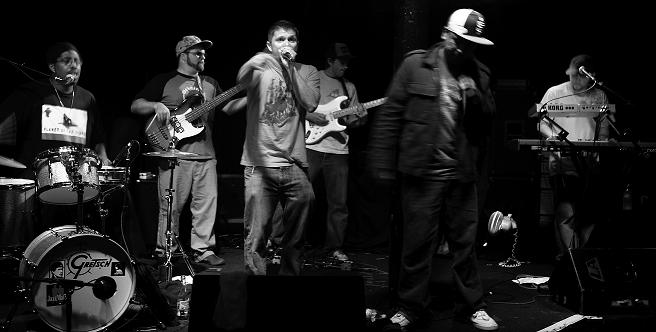
Felonious gets back into it (and lays it all out) with the smashing “Live City”

0

By Lilan Kane

A capella, beatbox, theater, vaudeville, live band, and everything in between — that’s Felonious (playing tonite, Thu/10, at the Independent). Originally an a cappella hip-hop duo, Felonious has morphed into a hip-hop theater production receiving rave reviews in The Source magazine, Chronicle and Examiner, and have produced sold-out shows in SF, New York, Germany and Oakland. They have shared the stage with The Roots, De La Soul, Big Daddy Kane, DJ Premier, Black Eyed Peas, Zion I, Living Legends, Radioactive, and Crown City Rockers. Their shows capture different elements of entertainment creating something old school in principal but very innovative and contemporary.

Sharing the stage with notable SF musicians from the Jazz Mafia, Felonious has established themselves not only in the theater arts industry but also as respected musicians in the live circuit. They talked to us a bit about the whats and wherefores as they prepared to celebrate Live City‘s release.

Thu/10, 8:30pm, $15
The Independent
628 Divisadero, SF
415.771.1421
www.theindependentsf.com
www.feloniouslive.com

SFBG: What’s the story behind the title of your new album Live City?

MC/Beatboxer Carlos Aguirre aka Infinite: I think the name Live City represents the history of the city and how we are the next generation of artists to try and replicate that kind of energy that has made San Francisco a staple in live music for several decades..Plus we know all kinds of dope artists in the city and the bay in general that we got a real Live thing happening over here and if we try to consider ourselves more of a musical family then everyone would reap the benefits..we’re pushin for that vision…it’s not just a name…we believe in our city and the talent here is world class so we’re trying to push a movement…

MC Dan Wolf aka d.wolf: On the surface, we’re talking about San Francisco, the Bay Area, a geographic place that has a history of shaping underground culture (hip hop, rock music, street visual arts, culinary arts, circus arts, etc).  On another level I look at it as very idealized place where live performance is cherished, where the city is a living breathing representation of all the creative energy pouring from the artists and culture makers who live there and shape the landscape.  We are a live hip hop band who come from theater, you cant get any more live than that.  We wanna take you to a place where taking risks is normal.  

MC/Beatboxer/Drummer Tommy Shepherd aka Soulati: Well, the album was originally called Str8 No P@per, which is a word play of Thelonious Monks album Straight, No Chaser and the truth, we’re broke like everybody else.  However not many of the songs supported that theme.  This album is recorded all live so there’s part of the title right there.  Felonious, at the beginning of the year, hosted and co-presented a weekly at Coda lounge in SF Called “Live City Revue” which was a night of showcase/cabaret talent.  Basically, any Bay Area act that was working on anything and wanted to test it out with a crowd, or you just want to come through and build on a piece of text or music.  We discussed the name of the show and how it was a statement that the Bay Area is STILL alive and always has been.  So, if the event was the revue, this album is the soundtrack.

MC/Keyboardist Keith Pinto aka KP: We were gonna call it $tr8.n0.p@per after the thelonious monk album straight no chaser… and also living in an ever increasing digital world. plus having limited funds to produce a project. but then we started doing Live City Revue @coda lounge and it just seemed like a natural fit for the title of the new record. Live City is way more optimistic.

http://vimeo.com/12166935

SFBG: What was the recording process for the new album?

Bassist Dylan Mills aka Illin Ills: To record the band in the best rooms possible (Coast, Record Plant, Different Fur…), getting the drums sounding huge.  We worked with producer Ben Yonas to capture the highest quality recordings possible and mixer Hernan Santiago to make the tracks shine.   The group was adamant about making sure everything on the record really belonged there before letting it go out.

Infinite: Amazing…We haven’t truly represented what we do live in shows on an album since The List which was a few albums back so to be able to work in some of the premiere studios in the bay area that carry a lot of history and with an amazing mix team to round out the process, it was a dream come true.

d.wolf: Musically this was the best process we have been a part of.  Recording live hip-hop is very challenging to do well. You have to retain the voice and power of the instruments while creating a sonic world that has booming drums and melodies that feel chopped and sampled yet fully fleshed out.  We never have been able to capture the raw energy of Felonious on record until this one.  Lyrically it allowed us to focus on our own personal styles and continue to try to mesh them together in the studio.  Our last album (2007’s Up To Something) was totally lyrically driven.  We recorded it in Hamburg, Germany over some of the hottest beats produced by Hamburg’s dopest producers.  We lived together in the studio for three weeks and recorded 18 tracks in 22 days.  The process for Live City was spread out over a few years with no real idea what the songs would become.  First we built the beats and freestyled over them as we recorded the tracks and then spent the time writing and crafting the songs.  It taught us how to craft songs based on the strongest verses in the best order.

Guitarist Jon Monahan: Live City was recorded over a span of about a year and a half at 5 Bay Area studios, including The Plant in Sausalito and Coast in SF.  It would have been finished much sooner but so much else was going on in our lives- three members of the band became fathers, our producer got married, one of the people we were working with very closely developed some serious health problems.  It forced us to take our time and allowed us to truly experiment with sounds and ideas that weren’t there when we started.

Soulati: The recording process was a lot of work, one, because it wasn’t recorded in four different studios, and two, because of budget.  The treasure of the experience was we got record in the same room as many music legends such as Stevie wonder and Metallica.  All in all it was a great experience and a very long process but when you’re birthing perfection, you take your time.

http://vimeo.com/12160357

SFBG: Tell me about your new play “Stateless.”

d.wolf: Stateless is a hip hop vaudeville that takes what Felonious is doing in the present and mashes it with what my ancestors were doing 100 years ago in Hamburg Germany.  The Wolf Brothers, my great grand father and his brother, were vaudevillians and singers who took popular melodies and changed the lyrics to reflect social and political issues of their time but in a very comical way.  They wrote over 600 songs that were so popular that in 1938 the Nazis said the songs were ‘too German for Jews to sing”.  Stateless is remixed folk songs written by the Brothers Wolf, re-imagined by Felonious and Brooklyn’s One Ring Zero and placed in a loose narrative that touches on brotherhood, performance and performers, history and lineage.  It’s also an excuse for us to just get on stage and act stupid.  Since they were known as the Hamburg Marx Brothers it gives us permission to be the Bay Area Marx Bros.

KP: On a basic level it’s a mash up of genres… hip hop and vaudeville. seemingly different… but the similarities are actually quite strong. most hip hop albums have a patched together mix tape quality to them… just like a variety show… which is vaudeville. hip hop artists often have funny (sometimes random) little skits on their albums… this is also like the comedic skits of vaudeville. plus visually hip hop/r’n’b videos are known to have b-boys/girls and line dances… which is just like the acrobats and dancers (usually tap) that you would have found at a vaudeville performance. not to mention the evolution of hip hop dance itself. as it incorporates many styles, including remnants of tap and swing dancing. look at the “kid n play” also known as the “funky charleston” (yes, the kid n play may be old but 90’s dances are coming back). as the choreographer of Stateless… those similarities give me more to work with than i could ever fit into one show.

Soulati: Stateless is live music, dance, beatbox, singin’, rappin’ with a twist of vaudeville.  It takes you through a journey of past present and future, leaving you with a mind to want to go out and search your own history, if you’re not aware of it already.  Super energetic and moving to boot, Stateless is the play to be looking out for cause it’s coming to you!!!

SFBG: How do you feel Felonious as a group, and the album Live City represent San Francisco?

Illin Ills: We’ve been making this music in the bay for over a decade now and we’ve seen the upturns an downturns and we put our experiences into our songs.  The album Live City is fitting because throughout all that time there has always been a vibrant music and art scene in the city.  Venues move and change, styles come and go, but people always appreciate live music so we try to keep putting on better shows and building up the scene here.

d.wolf: We’ve been working in San Francisco since 1998 so at this point we’re pretty much the OG’s on the scene.  Everything has changed so much since we started.  I am blown away when I think that during our 2000 – 2003 weekly New Roots to Hip Hop series at the Last Day Saloon we created this whole scene before MySpace was even around.  Now there are so many tools to utilize and build a community.  San Francisco needs to reclaim its place among the great cities of the world.  I mean we have so much great food and great arts here but we’re there is such a lack of industry that even the artists have a hard time thinking strategically about how to have a sustainable career.  Live City is our call to action to reclaim the power that was here in the 60s, 70s and 80s.  We think that with all our angles – music, theater and arts ed – Felonious is ready to lead the charge.  

Jon Monahan: “The album itself features Bay Area luminaries like Jazz Mafia horn players and DJs, and singers like Kimiko Joy and Cait La Dee,  They’ve been a part of the SF scene as long as we have, a decade or more.  And our band feels right at home in the counterculture tradition of San Francisco bands- from Sly to Dead Kennedys to Mike Patton… We’re not necessarily heirs to that throne, but if you came out to Live City Revue, the weekly we ran from Jan – April 2010, you saw some guests and collaborations that could only take place in San Francisco… live hip-hop with West African kora and balafon players, a 20 piece men’s choir singing the Leonard Cohen songbook, book readings from local MCs, some seriously bizarre shit.”

Soulati: Felonious as a group came to the Bay at a pinnacle moment of the music scene.  Of course there were your track acts but live Jazz/Hip Hop was thriving.  Alphabet soup was runnin thangs along with Brown Fellinis and other crews that were holding it down.Us, Crown City, Psycho Kinnetics, Most chill Slack mob among others were new to the scene and fit right into the mix.  All these mentioned groups are still hittin to this day and representing SF like ganbusters.  We keep pushing the scene to feel it push back.  The album naturally speaks directly of the San Francisco scene.  It IZZ live.

KP: Felonious has been a part of the SF music scene for over 10 years… sf has a rich history of musicians and hip hop artists working together from the acid jazz days to now. Felonious is a continuation of that. we are multicultural and multidisciplinary.   in this time of ipod dj’s (and i mean… instead of a dj… just an ipod) we feel it’s important to keep the city’s music scene all the way live! 

SFBG: What would you consider the group’s most notable accomplishments have been since Felonious started?

Infinite: Winning best of the bay two years in a row was super dope and opening for The Roots two nights in a row at The Justice League (now The Independent) and working with all the amazing artists we’ve been bless to collaborate with over the years.

Illin Ills: Playing the Fillmore, Maritime Hall, Berlin, Hamburg.  Opening for the Roots, De La, LL, BEP.  Taking Beatbox: A Raparetta to NYC.

Soulati: Since Felonious started we have become a household name in San Francisco/Bay Area.  Among winning Bammy’s and Wammy’s and critics choice shwoompties, we are also published playwrights and educators.  Staying relevant is, I think, our most notable accomplishment.

d.wolf: Survival is our most notable accomplishment.  Along the way we’ve been blessed to travel together, play with some the hottest hip hop acts, produce and publish plays, and build some real deep, lasting personal and professional relationships.

SFBG: How important is it for you personally to put on a captivating live show?

Infinite: It’s absolutely fundamental to both the group and the art form of hip hop..and musical performance in general..i mean there are no rules really but there’s a code and decor and history behind being an emcee and you gotta respect that legacy by paying homage to the meaning behind the emcee..to be master of ceremonies..to control the crowd…to lead the crowd and to ultimately pass on an experience…that’s what playing live is all about for me…”so you remember the name, when you walk out the door.

d.wolf: Coming from the world of theater the live show is actually more important to me than the studio.  That being said we’ve been killing live shows for years and have had a real hard time capturing that energy on our albums.  Hip-hop is a studio art form but you have to kill on stage especially if there isn’t a capacity crowd chanting every word.   You gotta give people a reason to remember you in this oversaturated world.

Soulati: Personally, Why come out to see someone stand there and sing songs? That, you can do at home.  A live show should be just that, LIVE.  And because more than half of Felonious are trained actors, theatrics is our tactic and we better come with a theatrical extravaganza you know?  Cats gotta be their “super human” selves on the stage.  Them times 10.  That’s what makes me as an audience member want to pay 13 in advance or 15 at the door, right?

SFBG: What can people expect to see at your CD Release show at the Independent June 10th?

Infinite: Felonious playing banging beats with live string and horn orchestration ,courtesy of The Jazz Mafia, through out the set…we’re gonna play a whole range of material but alot off the new album ..most of the new album in fact..plus special guest singers Caitladee and Kamiko Joy..and really expect to see ONE OF THE BEST LIVE SHOWS OF 2010… guaranteed!

Illin Ills: The whole shebang.  There will be horns, strings, singers, and more rocking with the Felonious Crew, playing songs from the new record, beatboxing, and generally carrying on.  Shotgun Wedding is another great group from the bay who will be rocking the middle spot.  The amazing Rondo Brothers will be there celebrating the release of their latest record.

Jon Monahan: We’ll premiere at least one brand new song, and play most of the new album reworked and fleshed out with a string section and horn section.  Some top-shelf beatboxing as always.  We’re putting together an all-star freestyle session as part of the set, plus I hear talk of some comedy/ dance routine by some friends of ours that sounds epic and possibly really creepy.  AND sets by Shotgun Wedding Quintet and the Rondo Brothers!

Soulati: A full live band, a string trio, a horn duo, beatboxing, freestyling and some special guests coming to spit vocals.  You’ll get a night of great music and fresh collaboration.  There will be B-boyz and B-girlz, hot ladies if you be boyz and kept gentlemen if you be girlz.  The night, from top to bottom, is gonna smash!!!!

From freeway to favas

0

Perhaps you’ve noticed a fresh mountain of fava beans arising along Octavia Boulevard as you travel toward Market Street, in the spot where a freeway used to touch down. Don Wiepert certainly has. He’s a senior citizen who lives across the street from the rows of green sprouts, and even helped to raise the crop in his own living room.

Wiepert is one of 1,500 neighborhood volunteers who have taken part in the birth of Hayes Valley Farm, an exciting experiment in participatory urban agriculture. Started in January by three young permaculture activists, the project has converted into farmland a city block whose previous harvests were auto exhaust from the freeway on-ramp, and most recently, crime and vagrancy.

Farm organizer Jay Rosenberg explains the process as we tour the fields he helped to envision. Back in 1964, neighborhood activists from Hayes Valley Neighborhood Association and other groups organized to stop the progress of the Central Freeway that would connect Highway 101 to the Golden Gate Bridge. The show of community force was impressive, but it stranded the planned highway on- and off-ramps on a block of land between Octavia and Laguna streets. “They left them here standing like ruins,” Rosenberg said. “This was a 2.2-acre forgotten space.”

“It was a place for homeless living,” Wiepert said on a recent trip to the farm’s biweekly work party, while volunteers and a handful of paid staff buzzed about replanting seedlings and erecting a homemade greenhouse. “It was fenced off, ugly, inaccessible.” He looks around. Not to resort to a cliché, but there’s a discernible twinkle in his eyes as he says, “Now it’s wonderful.”

Although the block was in a desirable central location, its soil had been damaged from years of exposure to car emissions, which can leave behind lead and other heavy metals. But the team behind Hayes Valley Farm has a plan. The ivy that threatened to strangle the farm’s trees has been stripped, piled into heaps that are covered with cardboard and horse manure to begin a turbo-fertilization process that mimics what happens on forest floors. Once this new soil has been created, it is spread and implanted with fava seedlings, which were selected for their nitrogen-producing capabilities.

Rosenberg halts his tour of the process to pluck a bean plant from the ground and finger the white nitrogen nodule its roots have produced. “Look how well they’re doing,” he says over the nascent crop, proud as a papa. Once these plants are mature, half will be harvested as food, and half chopped at the root to speed the release of their nitrogen into the rest of the soil. Already young lettuces peek beneath the rows of beans, signs that the farm is ready to experiment with other foods.

San Francisco is a weather system unto itself, rendering the city’s ideal crops the subject of much conjecture. “This is a cool, Mediterranean-like, foggy desert,” Rosenberg says. “We’re doing lots of research on species that do well here, which will be knowledge the public can use.” The farm, like the Alameda County Master Gardeners (www.mastergardeners.org) who run a similar program, is serving as a test arena to see what urban gardeners can reasonably expect to thrive here.

The farm is now home to 1,500 plants, including 150 fruit trees, most sitting in pots on the old freeway on-ramp in what Rosenberg calls “the biggest patio garden in San Francisco.” So far, all the crops have gone into the bellies of the volunteers who raised them, putting in more than 4,000 person-hours during the four months the farm has been open.

But it’s not just the free groceries that keep neighbors returning to Hayes Valley Farm. In addition to the work parties, the site has been home to popular screenings of environmentally-themed films and a locus of outdoor learning. One group of students from the Crissy Field Center painted a mural for the farm that will soon occupy one wall of its planned on-site classroom. A weekly yoga class is planned, as are daily tours for farm newbies interested in learning more about the planting going on down the street.

In a time of uncertainty about what we’re supposed to eat, people are finding something to be sure about here. “I appreciate the opportunity to hang out with the younger people and their energy,” Wiepert says, moments before flinging a stick for one of the farm’s part-time dogs to chase after. “I think this place facilitates a feeling for a lot of people that they’re doing something meaningful.” *

HAYES VALLEY FARM

450 Laguna, SF

(415) 763-7645

www.hayesvalleyfarm.com

Why Comcast sucks

73

Ever wonder why Comcast routinely ranks among the worst companies in America for customer service? Let me tell you a story.


So my cable box stopped working, which meant I couldn’t get the Giants games and my daughter couldn’t watch Hannah Montana, which was something of a crisis in the Redmond household. So I called Comcast, and the nice woman on the phone tried a remote diagnosis, and told me the box was fried. “But don’t worry,” she said. “Just drop it by our office and we’ll give you a new one right away.”


Just drop it by our office. Here’s that that means: You arrive at the cramped, airless spot on Potrero and 16th and wait. And wait. And wait. When I got there, the line was 21 people long, and four customer service clerks were trying their best to sort out a wide range of problems — bill problems, service problems, people wanting more channels problems … by the time I got to the front, 41 minutes had passed, and the line stood at 28 people. There wasn’t any more room in the office; the 29th person was going to have to stand out on the street.


“It’s always like this,” an older woman in the line complained. And she’s right — at least, every time I’ve ever been there, the lines been long, the wait’s been long and every single person in the room was unhappy.


Here’s what’s going on: In the old days, when your cable service didn’t work, they sent a repair person to your house, and that person either fixed the problem or installed new equipment. Now it’s up to me to unscrew the box (easy enough for me, though maybe not for everyone), take my time to go wait in line for a new one, and reinstall it (again, easy for me, maybe not for everyone.) So I’m already saving Comcast the money it used to spend sending a trained technician to my house.  Now I’m paying, with my own time, to wait while an inadequate number of service people try to handle far too many problems.


Brian Roberts is the CEO of Comcast. I’ve sent him a note that says the following:


1. You need to hire more people for customer service. If you don’t want to pay to send techs out to my house, then properly staff your offices. Most people have jobs, and can’t afford to spend an hour or more (with travel time) to exchange a piece of your equipment every time it breaks.


2. Set up some orderly lines. One line for simple exchanges of gear, one for billing problems, one for people who want to spend 30 minutes deciding on a service upgrade. Even the DMV gets that; it shouldn’t be so hard.


3. But more reliable gear.


4. Or: Cut your prices. I’m paying way, way too much money to put up with this shit.

Snap Sounds: Kisses

0

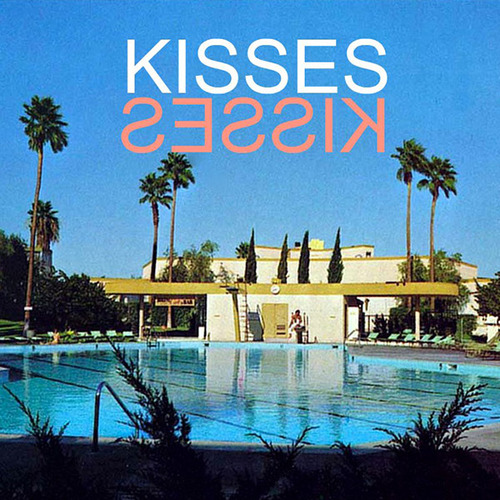
To name a song “Midnight Lover” is ambitious, and perhaps dangerous. A song with a title so classically charged with sex and romance had better deliver. Luckily, this track from Kisses’ upcoming album Heart of the Nightlife (Surround Sound) possesses enough swoon-worthiness to compensate for its relative lack of lust. This duo is romantic, and has the disco credentials – love of Cerrone and Gino Soccio; tutelage under Alec R. Constandinos – to deliver the sleek seduction.
http://www.youtube.com/watch?v=ZKRagSW56Os

Vegans and vegetarians might not like a chorus come-on that hinges on the appeal of an invitation to a “nice steak dinner,” but Jesse Kivel’s Jens Lekmanesque croon makes the sentiment hard to resist. (It’s also timely, what with Tracey Thorn calling out Lekman by name on the first track of her new album and singing a duet with him later.) Of course, Lekman covered a song by the true tremulous source of the waves of indie-tinged electronic pop and electronic-tinged indie pop in recent years: namely, Arthur Russell. No one to date has matched Russell’s emotional purity, but Kisses might be my favorite of his children-in-waiting because of the way Kivel manages to at least approximate the simple tenderness of Russell’s lyricism. He zeroes in on the feeling of happiness that occurs when one realizes old friends aren’t lost, or that an affair is on the horizon. In this case, perhaps a vacation resort sunset horizon rather than a hazy one on Russell’s urban pier haunting and cruising grounds..

Kisses’ first release “Bermuda” is a strong contender for my favorite song of spring-into-summer, and with this one, the twosome has got another in the running. Inspired in part by Kivel’s past gig as a travel writer, the loneliness of a luxury vagabond life seems to be a theme of Kivel’s and Zinzi Edmundson’s album. I’m ready to dive into Heart of the Nightlife.


Lovely fade: Elisa Randazzo teams with local musicmakers for ‘Bruises and Butterflies’

1

Love and loss and an unfaltering creative spirit appear to inform Elisa Randazzo’s new album, Bruises and Butterflies (Drag City). Her marriage to ex- Josh Schwartz, once of Beachwood Sparks and her partner in Fairechild, may be over, but Randazzo has found plenty of other talents to commune with.

The fashion designer and onetime violinist and vocalist for Red Krayola befriended British folk cult icon Bridget St. John three years ago, and their friendship has led to such haunting songwriting collaborations as the fluttering, autumnal “He Faded.” Randazzo — the daughter of ‘60s songwriters Teddy Randazzo (“It’s Gonna Take a Miracle,” “Hurt So Bad”) and Victoria Pike — found her ideal accompanists among like-minded Bay Area musicians such as Wymond Miles, John Hofer, Shayde Sartin, and Joe Goldmark.

Swept away with pedal steel, dobro, and cello and urged along by Hammond organ, Fender Rhodes, and a legion of acoustic guitars, Randazzo sounds as if she’s shooting for the kind of pop transcendence that her father could understand on such songs as “Colors,” as she intones, “I could ask every friend in sight / Jump a plane, so I could travel light / But who would know the color of my love? / Remind me of the things I’m givin’ up.” But from the lightly levitating sound of Bruises and Butterflies and its cover image of a serene idol licked by flames, I have the feeling she’s aiming even higher. 

Beards! Championship-bound, Bay Area beards!

0

Facial hair isn’t something that Xavier Marvel grows for the glory. This is his life. “I didn’t decide to go to the championships and then grow my musketeer,” says the dashing Marvel, who will represent the Bay Area at the upcoming 2010 National Beard and Mustache Championships in Bend, Oregon (June 5). I spoke to him recently on the phone, painfully divorced from seeing his follical glory in person. “I already had it. The competition is not the reason for my facial hair, it’s just sort of a bonus.”

Marvel sports a musketeer, a goatee-mustache combination popularized by the Dumas swashbucklers. Does the musketeer spirit, er, grow on him? “Sure, I try to practice chivalry as much as possible. Being a gentleman, that’s kind of my way. Plus, I’m half French, so I do feel that it’s in my blood to some degree. Do I go out challenging people to duels? Not really.”

The beard makes the man. Marvel’s been sporting facial hair since letting his peach fuzz fly at the tender age of 16, and he’s already competed in last year’s World Championships in Anchorage (in the “Partial Beard” category, subcategory Musketeer). He didn’t place in the top three, losing to long time veterans of the competitive bearding world. But, he says, “I’m not the most serious competitor — I shaved three months ago. I’m not anywhere near Jack Passion’s level of devotion. Are you familiar with Jack Passion?”

This is Jack Passion. Photo by Alessandro Sicco

Well shoots Xavier, I wasn’t. But I fixed that real quick, and I’m glad I did – Jack Passion is the man. A 26 year old from Walnut Creek, Passion has won the World Championships two years in a row in the big daddy of beard categories, Full Beard Natural (or “Natty,” as Passion has nicknamed it). “I’m the Muhhamad Ali of beards,” he told me — with no lack of follicular braggadacio — over the phone today. Passion’s now got his own (sick) line of faux beard tees, and penned The Facial Hair Handbook, which he respectfully suggests for all those interested in getting their beards up to speed for the upcoming national championships.

“Big Red,” as his luscious belly length locks have been dubbed, is so spectacular in fact, Jack’s sitting Bend out this year as a competitor. After seven years of growing his beard and five years of professionally slaying all competition with it, he cites a desire to pace his beard career as reason for the break. Which is all good — he’ll still be in Bend as an MC and judge. But don’t expect the relief for his competitors to last past the Oregon showdown. “This competition may incite a fire in my soul. If that’s the case, I’m to have to crush all these guys and their hopes for bearded glory,” Passion revealed.

Fellow Bay area representative Marvel is stoked for the chance to have another swat at hairy ascension. “I have a good laugh with it, now I can go bond with my bearded brothers, travel a bit, see a new place — and then I get a chance to claim a title for my beard.” God speed, Javier. At the risk of journalistic objectivity, we here at SFBG are pulling for you and the musketeer.


Stay tuned! Turn to sfbg.com for Jack Passion’s post National Championship rundown!  The costumes, the carnage! The Muhammad Ali of beards tells us how it all went down!


2010 National Beard and Mustache Championships

June 4-6, $10

Les Schwab Amphitheater

344 Shevlin Hixon, Bend, OR

www.beardteam.org

Benefits: May 19-May 25

0

Ways to have fun while giving back this week

Friday, May 21


Threatened, Endangered, Extinct

Celebrate 2010 Endangered Species Day at this lively discussion with experts currently creating strategies to protect biodiversity and convert consumers worldwide featuring cocktails, hors d’oeuvres, a silent auction including travel, restaurants, jewelry, limited edition signed wildlife prints, and more.
6 p.m., free
The University Club
800 Powell, SF
RSVP to sullivan@wildaid.org

Three-Minute Picture Show
Shake your booty to the music of Ron Silva and the Monarchs and enter to win raffle prizes from 3 Fish Studios, Books Inc., Gregory Cowley Photography, Interior Design Fair, Madrone Art Bar, and more at this benefit soiree featuring a screening of past Three-Minute Picture Show audience favorites.
7:30 p.m., $7
Make-Out Room
3225 22nd St., SF
www.threeminutepictureshow.com

Saturday, May 22

Bachelor Firefighter Auction
Bid on a smokin’ hot bachelor and enjoy raffle prizes, music, and other suprises at this fundraiser for the Alisa Ann Ruch Burn Foundation, a nonprofit dedicated to enhancing the lives of burn survivors and promoting burn prevention education.
8 p.m., $35
Sir Francis Drake Hotel
450 Powell, SF
http://buyfiremen.eventbrite.com

Harvey Milk Diversity Brunch
Celebrate the birthday and life of Harvey Milk, the first openly gay elected official. Enjoy well-known speakers from the LGBT community, food from Hott Box Catering, and more at this fundraiser for La Cocina, a small business support resource.
10:30 a.m., $65
The Arc of San Francisco
1500 Howard, SF
www.milkday.org

Public Glass Auction
Attend this benefit auction featuring the work of more than 60 renowned glass artists, wine, and hors d’ oeuvres. Proceeds will go towards Public Glass’ education program that reaches 300 students a year.
4:30 p.m., $50
First Unitarian Universalist Church and Center
1187 Franklin, SF
www.publicglass.org

Reliquarium
Attend this auction of reliquary-like objects representing the artistic DNA of writers and artists, housed in an attractive container. Participating artists include Justin Timberlake, Lemony Snicket, Jonathan Lethem, Anne Waldman, and more. Proceeds to benefit Small Press Traffic, an organization that brings together independent readers, writers, and presses.
5:30 p.m., $20 includes refreshments
California College of the Arts
Graduate Writing Studio
195 De Haro, SF
www.sptraffic.org

Sunday, May 23

Backyard BBQ for Chile
Join the Art House Gallery at this backyard potluck BBQ to benefit the Chile Earthquake Relief Effort featuring live music by Rafael Manriquez, Esteban Bello, Clara Bellino, and more. Look for the balloons.
Noon, $5-$50
Edith between Cedar and Lincoln, Berk.
(510) 472-3170

Castro County Fair
Join AIDS Emergency Fund on Harvey Milk weekend for a one of a kind county fair and fundraiser, featuring a dog-owner look alike contest, carnival games, country western dancing, a pie baking contest, an orchid show, field day events, and more.
10 a.m., $25
The Armory
14th at Mission, SF
www.castrocountyfair.org


Chance for Change

Enjoy a night of food, music, an auction, and a tribute to the struggles of homeless women and children at this fundraiser for Berkeley Women’s Daytime Drop-In Center, a daytime program for homeless women and their children.
3 p.m., $50
St. Alban’s Episcopal Church
1501 Washington, Albany
(510) 548-2884
www.womensdropin.org

Hidden Gems Garden Tour
Take a look at ten inspiring private gardens and public spaces with gardeners on hand to answer questions at this fundraiser for the new Potrero Hill Library.
10 a.m.; $25, $40 for two
Christopher’s Books
1400 18th St., SF
(415) 255-8802
All States Best Foods
1607 20th St., SF
(415) 642-3230

Time travel

0

arts@sfbg.com

LIT Sometimes when I’m bored walking around Union Square, I wonder how many of the well-heeled white guys heading toward the Financial District are really criminal types who should be followed. Say, maybe some higher-up at Wells Fargo or Citigroup who helped rip off thousands through subprime loans before getting a nice slice of that sweet Wall Street bailout money.

When I’m feeling that way, I’m under the influence of a seminal 20th century writer who spent his most productive years in San Francisco. Here’s a passage that sends me there:

She walked on down Post Street to Kearny, stopping, stopping every now and then to look — or to pretend to look — in store windows; while I ambled along sometimes beside her, sometimes, almost by her side, and sometimes in front.

She was trying to check the people around her, trying to determine whether she was being followed or not. But here, in the busy part of town, that gave me no cause for worry. On a less crowded street it might have been different, though not necessarily so.

There are four rules for shadowing: Keep behind your subject as much as possible; never try to hide from him; act in a natural manner no matter what happens; and never meet his eye. Obey them, and, except in unusual circumstances, shadowing is the easiest thing that a sleuth has to do.

The narrator so hep to the ways of the tail is Dashiell Hammett’s “Continental Op,” an operative for the fictional Continental Detective Agency, whose adventures in print include some of Hammett’s finest San Francisco tales.

Don Herron’s walking tour of landmarks associated with Hammett’s time in San Francisco is well worth making for anyone curious about the history of the author of The Maltese Falcon and The Thin Man, who helped create hardboiled crime fiction and was one its greatest practitioners. At three to four hours of often hilly trekking, it’s a bit of a commitment, but at $10, it’s an affordable way to engage in the next best thing to time travel.

Herron, author of books about pulp actioneer Robert Howard and noir craftsman Charles Willeford, has been informally conducting the tour for three decades. It started in 1977 as part of a “free college” known as Communiversity. The Dashiell Hammett Tour: Thirtieth Anniversary Guidebook (2009), which updates earlier versions, is a nifty package that belongs on the shelf of any self-respecting San Francisco denizen with a passion for our city’s often twisted past. It’s a lively combination of biographical material about Hammett, assorted related trivia that never seems trivial, and Herron’s memories from 30 years of accompanying a broad spectrum of writers, fans, and eccentrics through the former stomping grounds of Hammett and his fictional creations.

The tour starts near the former site of the San Francisco Library Main Branch, now the Asian Art Museum. In an era of economic collapse papered over with massive subsidies to the same financial entities that brought us to collapse in the first place, lessons from earlier belt-tightening eras are useful. Hence it’s only appropriate to tip our fedoras to the memory of an autodidact left-winger who never finished high school but, by devoting years to reading in public libraries, got a better education than most who did. Though Hammett was making good money from writing crime fiction by the late 1920s, when he lived at 620 Eddy St. in the early 1920s, he couldn’t afford books and the library was a lifeline. The 1923 photo on page 66 of the guidebook, of what Heron calls “Hammett’s Reading Room” in the old main library branch at 200 Larkin St., is a beaut.

When Hammett and his family lived at 620 Eddy, their landlady was a bootlegger. Hammett’s wife later recalled cops rousting people in front of their window to the street. As Herron notes, today’s prohibition on hard drugs is about as effective at deterring users as the earlier one on alcohol, and equally effective at creating endless business opportunities for motivated entrepreneurs. If you’re not legally blind and are paying any attention at all, it’s likely you may see one or two such enterprising businesspeople on the streets of the Hammett tour. It’s also a safe bet they might bear a resemblance to the Continental Op’s self-description: “My face doesn’t scare children, but it’s a more or less truthful witness to a life that hasn’t been overburdened with refinement and gentility.”

The 1920s in San Francisco were wild, wide-open years full of fast living and dodgy characters. The late venerable columnist Herb Caen wrote of the period: “The Hall of Justice was dirty and reeked of evil. The City Hall, the D.A., and the cops ran the town as though they owned it, and they did … You could play roulette in the Marina, shoot craps on O’Farrell, play poker on Mason, and get rolled at 4 a.m. in a bar on Eddy.”

Hammett toiled on his used Underwood typewriter late into the night, creating characters and stories based on what he’d seen in that milieu. During World War I, he contracted both Spanish influenza and tuberculosis. When his TB got so bad that it was hazardous to the health of his wife and baby to maintain a family abode, he moved out and lived in a succession of apartments, including one up the hill from Eddy Street at 891 Post St., at the corner of Hyde. In a corner apartment on the fourth floor of that building, Hammett pounded out his first three novels. If you’re lucky, on Herron’s tour you’ll be buzzed in and get to see where Hammett typed, ate, drank, and smoked furiously — and sometimes pulled down the Murphy bed to sleep. The apartment of The Maltese Falcon‘s tough detective Sam Spade was based on the snug little dwelling.

The current occupant is Bill Arney, an architect and Hammett fan. When he showed the tour I was on around the small one-bedroom unit, I noticed a great compilation of “crime jazz,” soundtrack music from black and white crime movies and TV shows, on top of a pile of CDs. Appropriate, since Arney serves as announcer for the Noir City film festival local mover and shaker Eddie Muller puts on at the Castro Theatre every January.

Hammett left a permanent mark on San Francisco. Specifically, on the block-long street that used to be called Monroe, which runs south off Pine in the block between Powell and Stockton. From what is now called Dashiell Hammett Street, walk east on Bush and on the right, at Burritt Street, just before the Stockton tunnel overpass, ponder the plaque that reads: ON APPROXIMATELY THIS SPOT/MILES ARCHER,/PARTNER OF SAM SPADE,/WAS DONE IN BY/BRIGID O’SHAUGHNESSY.

We are lucky to be in a city that commemorates one of its most accomplished past local residents with a plaque honoring a killing that was a product of that writer’s imagination. *

MORE ON SFBG.COM: Johnny Ray Huston’s illustrated look at the Vertigo tour


MLBPA opposes Arizona immigration bill

2

The Major League Baseball Players Association Executive Director Michael Weiner sent out a letter this afternoon stating that the MLBPA opposes the immigration law recently passed by the state of Arizona.

In his letter, which was sent to City Attorney Dennis Herrera following Herrera’s call to find an alternative to Phoenix for the 2011 All-Star game, Weiner acknowledges that law’s passage “could have a negative impact on hundreds of Major League players who are citizens of countries other than the United States.”

“These international players are very much a part of our national pastime and are important members of our Association,” Weiner states.”Their contributions to our sport have been invaluable, and their exploits have been witnessed, enjoyed and applauded by millions of Americans. All of them, as well as the Clubs for whom they play, have gone to great lengths to ensure full compliance with federal immigration law.”

“The impact of the bill signed into law in Arizona last Friday is not limited to the players on one team,” Weiner continues.”The international players on the Diamondbacks work and, with their families, reside in Arizona from April through September or October. In addition, during the season, hundreds of international players on opposing Major League teams travel to Arizona to play the Diamondbacks. And, the spring training homes of half of the 30 Major League teams are now in Arizona. All of these players, as well as their families, could be adversely affected, even though their presence in the United States is legal. Each of
them must be ready to prove, at any time, his identity and the legality of his being in Arizona to any state or local official with suspicion of his immigration status. This law also may affect players who are U.S. citizens but are suspected by law enforcement of being of foreign descent.

“The Major League Baseball Players Association opposes this law as written,” Weiner concludes. “We hope that the law is repealed or modified promptly. If the current law goes into effect, the MLBPA will consider additional steps necessary to protect the rights and interests of our members. My statement reflects the institutional position of the Union. It was arrived at after consultation with our members and after consideration of their various views on this controversial subject.”

Sweet Georgia Beyonce

0

Caitlin@sfbg.com

SPORTS You’d be hard-pressed not to like Handles Franklin. The spunky Harlem Globetrotter and I stood in a basement hallway of UC Berkeley’s Haas Pavilion on April 24, shortly before his team took on the Washington Generals. (The Globetrotters beat them handily, just like they’ve beaten almost every other team they’ve gone up against since 1926.)

“This is what I want to do in life. Everything prior to this was working my way to the Globetrotters,” said Franklin, holding his head up like the noble star of an action film. “When I was a kid I saw the Globetrotters on Scooby-Doo, and I knew I either wanted to solve mysteries or play basketball,” he told me, smiling. This is how the Globetrotters enter many of our lives, a fond childhood memory of red, white, blue, and orange blurs.

Jewish B-ball enthusiast Abe Saperstein created the team in Chicago more than 80 years ago. He chose the Harlem moniker to invoke the epicenter of African American culture, and for the Globetrotters to appear worldly. The all-black Globetrotters adopted a more dynamic style of play than acceptable in the NBA, which was gripped by Jim Crow segregation at the time. The team played exhibition games all over the country, often scheduled in double- headers with NBA teams to give the professional league’s ticket sales a boost. In 1948 and ’49, the all-black Trotters defeated the all-white Minneapolis Lakers, commonly assumed to be the best basketball team in the world. Two years later, the first black players were drafted into the NBA. Nat “Sweetwater” Clifton, a two-year Globetrotter alum, was one. Although continuing, unofficial racial quotas in the league meant that some players still Globetrotted while waiting to be called up (Wilt Chamberlin among them) the gradual dissolution of the color line led to the exodus of many of “Harlem’s” stars.

Which, in a way, freed the Globetrooters to do their thing. To date, they’ve played more than 20,000 games in more than 120 countries. “We’ve been able to cross generations using the international language of basketball, in regard to race, nationality, everything,” Handles said. “It’s important that we travel the globe spreading smiles.”

Off-court, community service is a big deal for the Trotters. Despite playing roughly 269 games a year, the players regularly carve out time for hospital visits and other charitable forays. During this last Bay appearance, the team dribbled across the Golden Gate Bridge, and Moo Moo Evans handed out free game passes to Earth Day volunteers in the Presidio. “It’s hectic,” Handles told me. “But there’s nothing like doing something you love. You sticking around for the game?”

Who misses the Globetrotters? Only suckers, I decided, watching the pregame show in which Globie, “the world’s most famous mascot,” slapped giant stunna shades onto his Earth-shaped head for a musical turn as Kanye, then donned a blonde wig to become Taylor Swift, and finally ripped off his Trotter uniform to reveal a black dress that left little of his blue-limbed body to the imagination. Globie had become Beyonce! The crowd goes wild for “Single Ladies.”

Then came the “magic circle,” the team’s traditional spinning and passing ritual done to the whistling strains of “Sweet Georgia Brown.” It soon became clear that it is Handles who will be running things tonight. As the Globetrotter showman, he was miked throughout the game, wandering off court to heckle late arrivals, sit in the laps of men’s wives, and jokingly steal purses — to the absolute delight of all those selected for harassment.

On the court, playfulness and showmanship were in ever-revolving focus. Most of the Globetrotters have competed in the upper echelons of the game. Current team member Hi Lite Bruton, before he started making appearances in ball-handling contests against trained sea lions, played for the Chicago Bulls. And through the clowning, they still ran plays that thrill, even in their occasional predictability. Dunks abound, as do no-look passes and — a Globetrotter specialty — a braided passing play in which the hapless Generals were forced to run behind the Globetrotters as they exchanged the ball in an endless figure eight.

Around me, children’s eyes lit up. “How many laughs do you have in your belly?” one tow-headed tyke squeezed out to his dad between chuckles. Handles is in the thick of it all, living his dream. He busts out a Fonz-like thumbs-up and hip waggle to punctuate his jibes and baskets. Sure, there wasn’t any doubt about the outcome. But forget tension, forget winning, it’s all about reliving that fuzzy, fleet-footed feeling.

Mexico warns citizens: use extreme caution in Arizona

7

It’s no surprise to anyone who has watched Newsom stubbornly refuse to take responsibility for the consequences of his flawed juvenile immigrant policy that the mayor is playing coy when it comes to the Board of Supervisors’ and the City Attorney’s attempts to institute a boycott of Arizona.


The real surprise in the fallout around Arizona SB 1070 is that the legislation doesn’t include a clause whereby all “aliens” must find a picture of the Arizona state flag, cut out the star in it, and wear it as a “badge,” much like the Nazis required of the Jews.


But Mexico does gets the threat this hateful legislation poses to its citizens. In a new twist on travel advisories, the Ministry of Foreign Affairs of Mexico has warned its citizens in Arizona to exercise extreme caution, whether they are demonstrating against Arizona SB 1070, going about their everyday affairs, attending classes or contemplating accepting work offered from a car on a highway.


“It is important to act with prudence and respect local laws,” the Mexican consulate states. It notes that the new law won’t take effect until 90 days after the end of the current session of the Arizona state legislature, but warns, “however, as was clear during the legislative process, there is a negative political environment for migrant communities and for all Mexican visitors.”


The consulate recommends that Mexican nationals carry available documentation, even before the new law takes place so as to “help avoid needless confrontations.”


“As long as no clear criteria defined for when, where and who the authorities will inspect, it must be assumed that every Mexican citizen may be harassed and questioned without further cause at any time,” the consulate states.


“The new law will also make it illegal to hire or be hired from a motor vehicle stopped on a roadway or highway, regardless of the immigration status of those involved. While these rules are also not yet in force, extreme caution should be used.”


The consulate concludes by reminding folks that “Mexican nationals who are in the United States, regardless of their immigration status, have inalienable human rights and can resort to protection mechanisms under international law, U.S. federal law, and Arizona state law. The functions of the five Mexican consulates in Arizona (Phoenix, Tuscon, Yuma, Nogales and Douglas) include providing legal advice to all Mexicans who consider that they have been subjected to any abuse by the authorities.”


It recommends that Mexicans requiring consular assitance in Arizona use the following toll-free number, available 24 hours a day, seven days a week:1.877.6326.6785 (1.877.63CONSUL).


Appetite: 3 food memoirs with heart

0

While reading Kim Severson’s new gem of a food memoir that came out last week, I started reminiscing about other food memoirs in recent years that travel well beyond food… the kind of books that leave one simultaneously comforted, satiated and challenged to live a more authentic life.

Spoon Fed: How Eight Cooks Saved My Life by Kim Severson
Kim Severson, a New York Times food journalist, just debuted Spoon Fed, sharing about eight cooks who taught her important life precepts. I read a lot of food memoirs but when this one hit my desk a few weeks ago, I couldn’t put it down. It contains stories (each accompanied by a recipe) of food trailblazers, from Alice Waters to Marion Cunningham. I related not only to Severson’s stories of life on both coasts (and in the Midwest) or as a food writer, but was touched by her tender honesty, blanketed in warm frankness. Severson’s life lessons are never heavy-handed and, in fact, are so vulnerable, I came away renewed to face my own hang-ups, while understanding others’. I particularly loved “Popular Girls,” a chapter on Ruth Reichl and self-acceptance, or lessons on faith and tenacity in New Orleans from the wonderful Leah Chase, even embracing authenticity and ambition from Rachael Ray. Severson’s own stories carry impact due to the heartfelt candor with which she shares her insecurities and fears, and what she has achieved in facing them.

A Homemade Life: Stories and Recipes from my Kitchen Table by Molly Wizenberg
Molly Wizenberg is an author who grew up in Oklahoma (where I was born), exhibiting a youthful yet mature-beyond-her-years hominess in her writing and comforting recipes. A Homemade Life pulsates with accessible heart but not naivete. This was a favorite memoir in recent years, laden with bittersweet sadness from her father’s cancer, the rejuvenating joy of re-discovering herself and her love for food upon returning to Paris after his death, the surprise of starting a blog, Orangette, that gained her an international following… and even more suprising, meeting the love her life through the blog. Her recipes are delicious, whether cider-glazed salmon or a ginger chocolate banana bread that’s become a staple in my own kitchen.

Tender at the Bone and Comfort Me With Apples by Ruth Reichl
One of Kim Severson’s aforementioned inspirations, Ruth Reichl has also long been a favorite of mine. Her memoirs are enjoyable reads, including delightful stories of life and disguises as a NY Times food critic in “Garlic and Sapphires”, or understanding her mother in “Not Becoming My Mother”. Reading Severson brought to mind Ruth’s first two memoirs, Tender at the Bone (1998) and Comfort Me with Apples (2002). Whether bluntly proclaiming she wasn’t “pretty or funny or sexy” but could attract people with food, or, in “Comfort Me…” (I recommend this one if you haven’t read her books), where she reveals, via colorful food and travel stories, the heartbreak of the dissolution of her first marriage or the agony of nearly adopting a child. Ruth’s bright candor, adventurous palate and lack of self pity make these food memoirs worth returning to.

Visit Virginia Miller’s food itinerary and review site, www.theperfectspotsf.com

Quick Lit: April 21-April 27

0

Literary readings, book tours, and talks this weekincluding NYT Dot Earth blogger Andrew Revkin, local activist Peter Berg, McSweeny’s Issue 34, poetry readings in honor of National Poetry month, and more.


Wednesday, April 21

Cosmic Conversation
Join KQED for a conversation with Dr. Neil deGrasse Tyson, host of NOVA scienceNOW, and Paula Apsell, senior executive producer of NOVA and NOVA scienceNOW, for a behind-the-scenes look at the science series and a discussion about the show’s “Pluto files.”
8 p.m., $15
Palace of Fine Arts
3301 Lyon, SF
(415) 392-4400
www.cityboxoffice.com

 
Greenpeace’s New Rainbow Warrior
Hear from Kumi Naiboo, the new Executive Director of Greenpeace International, discuss how to lead a grassroots group at a crucial point in the international environmental movement.
6:30 p.m., $20
Commonwealth Club
595 Market, 2nd floor, SF
(415) 597-6700

Daniele Mastrogiacomo
Hear Italian journalist Daniele Mastrogiacomo discuss his new book, Days of Fear, about how the Taliban kidnapped him, his driver, and his translator, about his subsequent travel throughout a system of Taliban underground hide-outs, the televised brutal murder of his driver, and his eventual release.
6:30 p.m., free
Italian Cultural Institute
425 Washington, Suite 200, SF
(415) 788-7142


Wherever There’s a Fight

Hear authors Elaine Elinson and Stan Yogi read from and sign their new book at this installment of Betty’s List Literary Salon.
6 p.m., free
Duboce Park Café
2 Sanchez, SF
www.wherevertheresafight.com


Thursday, April 22

Reza Aslan
Hear Reza Aslan, author of How to Win a Cosmic War: Confronting religious fundamentalism, discuss her theory that in a post 9/11 world, the U.S.’s “war on terror” adopts the same religiously polarizing rhetoric and cosmic worldview as the jihadists, and is therefore fighting a war that can’t be won.
8 p.m., $10-18
Jewish Community Center of San Francisco
Kanbar Hall
3200 California, SF
(415) 292-1233

Envisioning Sustainability
Hear author and environmental activist Peter Berg discuss his new collection of essays that helped to define the bioregional movement and shape the sustainability revolution.
7 p.m., free
Modern Times Bookstore
888 Valencia, SF
www.mtbs.com

How to Cool the Planet
Hear author Jeff Goodell discuss his new book that talks about the Earth’s possibilities for geoengineering, the idea that we can use technology to reduce global warming on Earth, which was recently made more popular by the eruption of Iceland’s Eyjafjallajokull volcano.
7 p.m.,free
Books Inc.
1760 4th St., Berk.
(510) 525-7777

“Medicean Music and Francesca Caccini”
Hear a presentation from Kip Cranna, from the SF Opera, about music from the Medicean world and hear Richard Savino, from CSU Sacramento, discuss Francesca Caccini, composer of the first published opera by a woman.
6 p.m., $15
Mechanics’ Institute
57 Post, SF
(415) 393-0100

“The Natural and Unnatural History of Yerba Buena Island and What Might be Next”
Hear a panel of experts present an illustrated overview of Yerba Buena Island’s history, ecological treasures, threats, and possible plans for the future.
7:30 p.m., free
Randall Museum
199 Museum Way, SF
www.natureinthecity.org

Poetry at Pegasus
Celebrate National Poetry Month at this reading with poets Kathleen Weaver, Gretchen Stengel, Susan Elliot Jardin, Cynthia Carmichael, and Jane Downs.
7:30 p.m., free
Pegasus Books Downtown
2349 Shattuck, Berk.
www.pegasusbookstore.com

RuPaul
Attend this book signing with the world’s most famous drag queen RuPaul, celebrating her recent book, Workin’ It! RuPaul’s Guide to Life, Liberty, and the Pursuit of Style.
7:30 p.m., free
Books Inc.
2275 Market, SF
(415) 864-6777

“Truth Emergency Interantional: Censorship, propaganda, and empire”
Attend this talk and booksigning with Peter Philips and Mickey Huff, co-editors of Project Censored 2010: The top 25 stories of 2010.
7 p.m., $5-20 sliding scale
Berkeley Unitarian Universalists
1924 Cedar, Berk.
http://www.bfuu.org

Friday, April 23

“The Contradictory Legacy of Haiti’s Revolution”
Attend this talk with Robert Fatton, Jr., author, scholar, and Professor of Government and Foreign Affairs at the University of Virginia, titled, “The Contradictory Legacy of Haiti’s Revolution: History and the earthquake crisis.”
6:30 p.m., free
California Institute of Integral Studies
Social and Cultural Anthropology Department
1453 Mission, Room 308, 3rd floor, SF
(415) 575-6249

Mark Kurlansky
Hear about Mark Kurlansky’s new book, The Eastern Stars: How baseball changed the Dominican town of San Pedro de Marcoris, about one small impoverished area in the Dominican Republic that has produced a suprising number of Major League Baseball talent.
7:30 p.m., free
Booksmith
1644 Haight, SF
(415) 863-8688

WritersCorps Reading Series
Attend this “Claim the Block” reading series featuring readings by young writers.
7:30 p.m., free
Yerba Buena Center for the Arts
701 Mission, SF
(415) 252-4655 to RSVP

Saturday, April 24

“America’s Muslim Roots”
Hear Bay Area Muslim journalists Hamza van Boom and Yahsmin Binti Bobo in conversation with Jonathan Curiel about his new book, Al’ America: Travels through America’s Arab and Islamic roots, which details the historic influence of Arab and Muslim culture on America from Columbus to the modern age.
6 p.m., $7
Islamic Cultural Center of Northern California
1433 Madison, Oak.
(510) 219-2431

“Outspoken: Vietnamese Poets of the Diaspora II”
Attend this event that celebrates the thriving Vietnamese community in the Bay Area with readings by poets Anh Vu Buchanan, Andrew Lam, Kim-An Lieberman, Trinh T. Minh-Ha, Dao Strom, and Lan Tran.
7 p.m., free
Fort Mason Center
Laguna at Marina, Fleet Room, SF
www.friendssfpl.org


Sunday, April 25


I Love You and I’m Leaving You Anyway
Mad Men writer Tracy McMillan tells the story about her relationship with her father, who was a convicted pimp, drug dealer, and felon, and what it has meant for her relationships with men.
3 p.m., free
Books Inc.
2251 Chestnut, SF
(415) 931-3633

Monday, April 26

The Immortal Life of Henrietta Lacks
As part of the Ask a Scientist lecture series, scientist and author Rebecca Skloot will discuss her new book about the life of a poor tobacco farmer who died of cervical cancer in 1951 but whose cells are still alive today and used for scientific research. Skloot will discuss bioethics, race issues, history, and family.
7 p.m., free
Horatius
350 Kansas, SF
(415) 252-3500

A Thousand Sisters
Hear author Lisa Shannon discuss her book which cronicles her journey to the Congo to meet the women there and share their stories.
7:30 p.m., free
Books Inc.
2251 Chestnut, SF
(415) 931-3633

Will Grayson, Will Grayson
Not Your Mother’s Book Club (NYMBC) presents John Green and David Levithan,
the authors of Will Grayson, Will Grayson, about two teens with the same name who cross paths in Chicago.
7 p.m., free
Books Inc.
601 Van Ness, SF
(415) 776-1111

Tuesday, April 27

Andrew Revkin
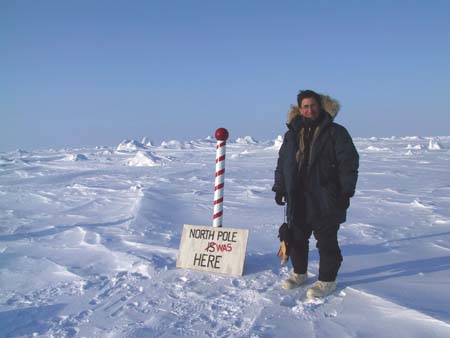
Hear award winning environmental journalist and author Andrew Revkin discuss his work on the New York Times’ Dot Earth blog, 25 years covering environmental and social subjects, and his previously published books, like The North Pole Was Here.
8 p.m., $20
Herbst Theater
401 Van Ness, SF
www.cityboxoffice.com

Hunting Eichmann
Hear author Neal Bascomb discuss his new book about a Nazi who escapes American POW camps and hides in the mountains in Buenos Aires before he is eventually caught and brought to trial.
7 p.m., free
Books Inc.
1760 4th St., Berk.
(510) 525-7777

McSweeny’s Issue 34
Attend this release of the highly anticipated Issue 34 of McSweeny’s presented by Nick McDonell, Tom Barbach, and Daniel Handler.
7:30 p.m., free
Books Inc.
2251 Chestnut, SF
(415) 931-3633

Noir Literary Night
Attend the 5th annual Nior Literary Night featuring Cara Black, author of Murder in the Palais Royal, David Corbett, author of Do They Know I’m Running?, and Joe Gores, author of Spade & Archer: The prequel to Dashiell Hammett’s the Maltese Falcon.
6 p.m., $12
Mechanic’s Institute
57 Post, SF
(415) 393-0100
www.milibrary.org

Karin Sanders
Attend a reading and discussion of Karin Sanders’ new book, Bodies in the Bog and the Archaeological Imagination, in conversation with Mark Sandberg.
5:30 p.m., free
University Press Books
2430 Bancroft, Berk.
(510) 548-0585

Beach House holds the keys to comfort

0

Children often favor a stuffed animal or blankie as a source of comfort, but as an adult, security is found in much less predictable places. Maybe it’s your favorite cup of tea, your lover’s dirty t-shirt, a night-time drive or an album that never fails to help you regain balance. For me, it’s Beach House — playing tonight at Bimbo’s 365 — and for the band’s members, their comfort comes by a collection of keys. 

Not the kind that open doors or link to a chain, Beach House’s keys are the kind you press and pound, caress and strike; the kind you learn to love with an unwavering appreciation for the sound they produce. The Baltimore duo, comprised of Victoria Legrand and Alex Scally, own over a dozen different dusty keyboards and organs, each with a unique, grandiose quality that moans and speaks with a slow, Southern drawl.  

“They’re not very expensive, vintage organs,” Legrand says from her sunny Baltimore home. “They’re ones we’ve inherited or found in junk shops.” Some are broken, while others ring pure; all random, unplanned finds, thanks to a keen eye and a bit of good luck. “You can’t really expect to find them– they kind of find you. Like this keyboard I found in Brighton that I really didn’t expect. I guess it’s a kind of luck. Like finding someone to hook up with that ends of being really good.”

Legrand and Scally have always had an affliction for the rows of black and white and both took piano lessons when they were kids. “I’ve been playing since I was seven. Keyboard is definitely my instrument– something I was always drawn to and that’s something Alex and I share.”

Beach House was born in 2004, their brand of delicately woven dream-pop/indie rock soothing and cooing fans with their self-titled debut [Carpark, 2006], followed byDevotion [Carpark, 2008] and their latest, Teen Dream [Sup Pop, 2010]. New songs like, “Norway” and “Zebra” are fantastically whimsical. Legrand’s deep vocals consoling as they are creepy, soaring over her band mate’s naked guitar strums; the light, hissing percussion gently pushing and pulling the album’s tide.

The organs and synth sounds give way to a more balanced, full sound on Teen Dream, but their importance is never denied. 

“Monetarily, our keyboard collection may have not be of much value, but each set may have just one or two sounds that are so inspiring for us, so we’ll buy it or hold onto it,” she says. “We don’t just write esthetically- it’s not just about the sound. It’s about song crafting. A very, from-the-inside-out process. Not just pieces that are cut and pasted together. It’s something more real than that.”

Big, bulky, electronic and strange, their collection of music making machines take up a lot of space and time, meaning not everyone gets to travel along during the tour. This time around, Beach House has packed up four organs, and while they may not have pet names, Legrand says they have their quirks. 

“They each have their little problems, just like humans do. Some are extra finicky, some you have to bang on. Some won’t turn off.”

And she definitely has her favorites. 

“My primary keyboard- the white Yamaha,” she recalls with a soft voice. “I can’t believe I still use it– not in a bad way. It’s just that I bought it for $50 seven years ago. It’s really been so loyal. Its value to me is in millions. It’s crazy how much an object means so much in your life and how much of Beach House is tied into that keyboard.”

While tonight’s show is sold out, it’s quite possible to get a dreamy Beach House experience right in your own room. Just close your eyes, press play on Teen Dreamand let your fingers do the dancing on an imaginary white Yamaha of your own. 


Beach House

Wed/14, 7pm, $18

Bimbo’s 365 Club

1025 Columbus, SF

www.Bimbos365club.com


The art of play

0

arts@sfbg.com

FILM Through the rear window of a nondescript vehicle, three lines of dotted lights stream by in the darkness. The perspective shifts, and you realize you are at the seat of a car, driving through a tortuous tunnel, about to emerge into a skylit, open highway. You’re unsure of your location, or even your destination, but slowly, like a detective story, clues help you piece together some semblance of meaning and purpose. You peer into the rear-view mirror, dive into the road flickering behind you, and let your mind wander beyond that concrete past.

From there, animated filmmaker and multimedia artist Al Jarnow guides you on a hypnotic trip through the interconnected pathways of nature, art, and machinery in Autosong (1976). The dark tunnel returns anew, and the car disappears, unhinging your viewpoint in a disembodied drift. Oceanic tides wash away the whirling road and grids of cubes emerge, twisting in harmony as Jarnow deconstructs the geometrical notions that give form to subjectivity, motion, and space. “In my experimental films I leaned more toward music than a traditional narrative structure,” Jarnow says, calling from his home and studio in Long Island. “Themes build up and then repeat, come back slightly changed and repeat again… like a jazz variation on a theme.”

Brooklyn-born Jarnow found a supportive and inspired community for animated films in New York during the 1970s and ’80s. Trained originally as a painter, he fell into the medium by chance, coaxed by a friend into animating humorist Edward Lear’s offshoot love story The Owl and the Pussycat (1968) with his wife Jill Jarnow’s vibrant paintings. “As we were in the process of making that film, I started doing experiments. And the thrill of seeing something move, and come alive, just woke up a whole new world for me,” Jarnow says. Fascinated with “sculpting in time” more than conventional cartoon plots, Jarnow populated his mesmerizing worlds with an atypical cast of characters and ideas.

Jarnow’s experimental shorts — handcrafted from cell-animation, stop-motion, painting, drawing, and photography — revel in the unending process of exploration and discovery. In left field films like Cubits (1978), Jarnow wields an unlikely power, bringing abstract concepts and formal procedures to life. Ink-drawn geometric shapes dance in rhythm on flashcards like robotic pop-lockers, revealing both operations of motion and a methodical creative process. Yet the logical rigor underpinning Jarnow’s stories feels human and impassioned, saturated with a visceral aura of wonder that is far removed from a scientist’s sterile research lab. Call Jarnow the Carl Sagan of animators (well, a bit more fun than that). “I think art is a form of play,” he says. “It’s a tactile experience of experimenting with the world around you, pushing it this way or that way, and seeing what happens. It’s as much for children as grownups.”

So it’s fitting that Jarnow also brought that playful spirit to bear on educational shorts for PBS’s Sesame Street and 3-2-1 Contact. In his first commercial piece, Yak (1970), the talking beast drops knowledge about the letter y, before running headfirst into the screen and terrifying many an imaginative youngin’ under the sheets (just check the YouTube comments). In Facial Recognition (1978), humans reproduce the computational functions of a dot-matrix printer, thanks to stop-motion magic. And billions of years are reduced to two minutes in the time-lapse of Cosmic Clock (1979), where the lifetime of a boy, a city, and nature all pass through their respective cycles (the last civilization even blasts off into space in a moment’s flash).

Even though Jarnow’s multilayered vision made a lasting impression on a whole generation in heyday of the Children’s Television Workshop, no one knew the author behind the box — and very few had the opportunity to penetrate NYC’s avant-garde animators scene. But earlier this year Jarnow finally got his due. Chicago’s archival imprint Numero Group digitally transferred 45 of Jarnow’s 16mm shorts and compiled them in a handsomely packaged DVD. Celestial Navigations: The Short Films of Al Jarnow includes a 30-minute documentary and 60 pages of liner notes. The title piece, Jarnow’s most explicit scientific voyage, traces the window-light defining his studio walls from equinox to equinox, montaged with heliocentric frames of Stonehenge. It’s stunning — and difficult — but with some patience, you can travel the cosmos with the druids and back again.

The retrospective is hardly exhaustive. “Making art is a way of learning about the world,” Jarnow says. “It’s a way of processing the information coming in through you.” Jarnow hasn’t stopped experimenting with new artistic forays, ceaselessly searching for engaging mediums to provoke and compel. From installing exhibits at San Francisco’s Exploratorium (which set the framework for cofounding the Long Island Children’s Museum) and developing interactive computer software to making ephemeral sculpture on the beach, Jarnow continues to make a playful game, and invoke an animated wonder, of the world.

AL JARNOW: CELESTIAL NAVIGATIONS

Screening and Q&A with Al Jarnow

April 22, 7:15 and 9:30 p.m., $6–$9

Red Vic Movie House

1727 Haight, SF

(415) 668-3994

www.redvicmoviehouse.com

www.protozone.net/AJ/Jarnow 


Drowned out

0

rebeccab@sfbg.com

GREEN ISSUE The tiny, rigid-hull inflatable boats that researchers at Scripps Institution of Oceanography use for whale tagging are a mere fraction of the size of the blue whales they are deployed to search for. But Scripps PhD candidate Megan McKenna says there’s no reason to worry about the mammoth creatures — which can weigh as many tons as 27 elephants put together — bumping up against the boat when she reaches overboard with a pole to tag them.

“They’re just pretty mellow, I guess,” McKenna says. “There’s no flailing or anything. Some barely even notice that we’re there.” For two summers, she’s ventured out in pursuit of the endangered whales, popping short-term monitoring tags on them to learn how they behave when massive cargo shipping vessels motor past.

It’s an important question for a couple of reasons. Government funding was provided for the Scripps study after two blue whales were struck and killed by commercial shipping vessels in 2007, tragedies magnified by the fact that the marine mammals are still struggling for survival. If even two die in such collisions every few years, the entire species could be imperiled, McKenna says.

At the same time, a less-understood phenomenon has marine scientists worried that the deep-blue giants’ survival is being undermined by a subtler problem, that Jackie Dragon of San Francisco-based Pacific Environment likens to “death by a thousand cuts.” Noise generated by whirring ship propellers registers at the same frequency as the low tones whales use to communicate and forage for food, and researchers are concerned that the constant interruption is affecting their ability to engage in basic survival behavior.

Put together with an array of concerns including chemical pollution, marine debris, over-fishing, and ocean acidification, noise pollution is just coming onto the sonar of local marine sanctuary councils and federal environmental agencies, and proposed solutions are only in the fledgling stages.

Pacific Environment is one of several environmental organizations advocating for shipping vessels to travel at slower speeds, a quieter practice that also reduces the chances of hitting a whale. Despite growing evidence that noise pollution and ship strikes pose big problems for the planet’s largest mammals, it’s likely to be an uphill battle in an growing global industry where time is money, and on-time delivery is paramount.

Endangered whales favor the Gulf of the Farallones and Cordell Bank sanctuaries, not far from San Francisco, so Pacific Environment has chartered a catamaran to take ecologically-minded whale watchers out to what Dragon dubs the “Yosemites of the sea.” Using hydrophones, they capture the deep, rumbling whale calls. They also pick up noise generated by commercial ships, whose designated lanes cut directly through the protected areas.

Under just the right ocean conditions, the low, eerie mating call of a male blue whale off the coast of California can be heard by a female off the coast of Hawaii. “That just has to do with the physics of sound in the ocean,” McKenna explains. “They’re vocal animals. You can think of sound in the ocean as our vision. Sound travels so much better in water than light does, so it’s really an acoustic environment that they’re living in.”

McKenna is working with whale researchers John Calambokidis of the Cascadia Research Collective and John Hildebrand of Scripps Institution. While they’ve observed that some whales linger at the surface longer than usual after a ship has passed, leaving them vulnerable to a strike, there are no conclusive results as of yet.

To explain the noise impacts, Dragon uses an analogy of trying to communicate in a crowded bar where it’s difficult to hear. “In the ocean, sound is king,” she says. “This chronic, noisy, foggy environment … has a masking effect. It might mean whales will not be able to navigate correctly, or may not be able to communicate with mates or offspring.”

The Gulf of the Farallones National Marine Sanctuary supports a rare concentration of blue whales, partly because the water is rich in nutrients, biodiversity, and tiny, shrimp-like creatures called krill. Blue whales and endangered humpbacks forage there from April through November, the colossal blues consuming an astounding 4 tons of krill each day.

At an April 8 joint meeting between the Gulf of the Farallones and Cordell Bank marine sanctuary advisory councils, the groups discussed creating a working group — bringing together stakeholders from the U.S. Coast Guard, shipping industries, and others — to establish a set of recommendations for how to regulate noise pollution in the sanctuaries.

“The purpose is to better understand the issue from the standpoint of the sanctuary,” explains Lance Morgan, who chairs the Cordell Bank council. “Ideally, we’d produce a report that says, here’s what we think the issues are.”

Yet Morgan acknowledges that it won’t be easy to get the federal government to impose new sanctuary regulations since there are still so many outstanding questions. “We’re learning a lot about the acoustic environment,” he says. One concern is whether whales are actually able to perceive the sound of the giant shipping vessels, he notes, since the environment has become so noisy. If they can’t hear the ships, they’re at a much higher risk of collision. “We certainly know we can drown out whale calls in certain situations,” he says, “but what does that mean in the long term?”

There are around 14,000 blue whales left across the entire watery globe, according to the most optimistic estimates, just a sliver of the estimated 300,000 that lived before they were nearly harpooned to extinction during a ruthless whaling era. Scientists are encouraged that their numbers have climbed since the mid-1960s when they were listed as endangered.

Yet even with this mild success story as a backdrop, there is growing concern about potential long-term effects of underwater industrial noise. Navy sonar, military air guns, and blasts from seismic surveys all contribute to the problem at varying frequencies. The collective din of ocean noise has doubled every decade since the 1950s, and the shipping business is only expected to grow.

Maersk, the world’s largest shipping company, runs weekly container ships from Hong Kong to ports in Oakland and Long Beach, a journey lasting more than two weeks. Getting the goods there on time is “the most important thing to our customers,” says Lee Kindberg, the company’s environment director.

The container ships arrive crammed full of everything from electronics — which require special climate-controlled containers — to clothing, bath products, household items, and pharmaceuticals. Perishable items are transported in refrigerators, consuming a third more energy and powered by auxiliary engines. Up to 8,000 containers can be packed onto a single ship, and the average vessel size has expanded around 20 percent in the past five years. More than 90 percent of the world’s traded goods are transported by water, with shipments on container vessels increasingly rapidly.

If ever there was an icon for globalization, and all that the buy-local and sustainability movements rail against, it would be a diesel-powered container ship transporting heavily packaged stuff halfway across the globe.

“Clearly it’s not a good thing if we hit a whale,” Kindberg says. Undersea noise pollution “is certainly an issue that we’ve been made aware of. But there doesn’t seem to be any real clarity as to what the impacts are,” she notes. Maersk would support certain speed reductions to protect the whales, Kindberg says, but “if you slow down in one place, you need to speed up someplace else, and that can take more fuel.”

Regulations in certain waters off the eastern seaboard already require ships to move at slower speeds to minimize harm, and Kindberg says Maersk has voluntarily opted to operate at slower speeds to reduce greenhouse gas emissions (it saves on fuel costs too). But when going along at 10 knots (around 11 m.p.h.), the speed environmental organizations say is safest for marine mammals, it’s harder to maneuver the ship, Kindberg says. Sailing around the marine sanctuaries is not an option in California, she adds, since ships have to pass through them to get to the ports.

Other efforts to solve the shipping-noise problem focus on ship design. “We’re building larger and larger ships, and they’re getting noisier and noisier,” says marine ecologist Leila Hatch of the National Oceanic and Atmospheric Administration (NOAA), who studies the effects of underwater sound on marine mammals.

The International Maritime Organization accepted a plan in 2008 to form a working group and to pin down guidelines for making commercial ships quieter, according to Hatch. Although the guidelines aren’t enforceable and are unlikely to be implemented any time soon, she sees it as an opportunity for a win-win scenario. If new ships featured a design with more efficient propulsion, they could be quieter, cheaper to operate, and more energy-efficient — which would also improve the air-quality problems associated with giant commercial ships.

The California Air Resources Board, meanwhile, initiated an effort last year for a program to get commercial vessels to slow down near the coastline, a bid to reduce emissions of smog-causing chemicals and the greenhouse gas carbon dioxide. Not much is happening on that front to date, but such a program could have the positive side effect of quieting underwater noise.

Hatch has been trying to quantify the decline in hearing ranges for marine mammals as the seas grow increasingly crowded with larger, noisier ships. “Much of the space they used to have is taken up by shipping noise. What is that likely to mean in terms of their ability to communicate effectively and find food?” she asks.

To find answers, she’s engaged in a research project at the Stellwagen Bank National Marine Sanctuary off the coast of Massachusetts that blends GPS ship-tracking data with profiles from sound-monitoring devices planted on the sea floor. Results suggest that whales’ communication ranges have diminished by 80 percent in some places.

There are few easy answers, however, since scientists are still trying to piece it all together. One certainty is that “we’re changing the environment they’re trying to live in,” notes McKenna, who says she now finds herself wondering if she’ll end up purchasing something that’s packed onto a massive containership when she spies one out on the horizon. “To what degree is it impacting them?”

She can’t say exactly, and that’s part of the problem, because the global shipping industry wants to see some concrete facts before the battleship can be turned. In the meantime, Kindberg says the captains helming Maersk line are just trying to avoid hitting the whales.

Officials accused of destroying public documents on Palin visit

2

The lesson of political scandals from Watergate through Monicagate is that the cover-up is often worse than the original crime, and that could once again prove true with the simmering conflict over large speaking fees that CSU-Stanislaus has agreed to pay Sarah Palin, particularly given new revelations that university officials might have destroyed public documents that had been requested by Sen. Leland Yee.

At a press conference convened by Yee this morning, two university students told the story of being informed by fellow students that administrators were shredding and disposing of documents in an administration building on Friday, which was particularly strange because the campus was shut down for a state-mandated furlough day.

So a group of five students started digging into a dumpster adjacent to the building that was being used that day and gathered all the documents in there, some shredded, some intact. And among those documents, they say, were pages four through nine of a contract with the Washington Speakers Bureau, which represents Palin. And although they don’t mention her by name, they reference “air travel for two between Anchorage, Alaska and event city.” (Read the document here) Palin — the former Alaska governor and vice presidential candidate who has become a darling of the Tea Baggers and other right-wing populists — is scheduled to speak at a $500 per plate fundraising on June 25.

That was precisely the kind of document that Yee and attorney Terry Francke of Californians Aware had recently requested of the university through a California Public Records Act request, although their response from the university last week was that it had no documents responsive to their request.

So Yee asked the Attorney General’s Office to look into the matter, which could be what triggered the document destruction session, with officials fearing they might get caught in a lie. The CPRA allows for civil penalties for refusing to disclose public documents, while the Penal Code indicates willful destruction of public records may be considered a criminal act.

“This is an issue of accountability and transparency that is fundamental to our democracy,” Yee told reporters, calling the actions “unconscionable” and “reprehensible.”

Yee has been a strong critic of secrecy in the CSU and UC systems, and has unsuccessfully tried to pass laws requiring college foundations to be bound by open government and public records laws. That’s an issue in this case considering it’s the CSU-Stanislaus foundation that is hosting Palin’s visit, although Yee has pointed out that the university president and other top officials control the foundation, which uses campus facilities and resources.

“What we’re finding is with more and more of these foundations, there’s unethical and illegal stuff going on and nobody knows what’s going on,” Yee said, citing as an example the indictment of former City College of San Francisco chancellor Phillip Day for illegally laundering public funds for private use through the foundation.

But if the students’ story holds up, it now appears that the university itself was in possession of the documents that Yee requested, the first evidence that it wasn’t just the foundation that was involved with the Palin visit. 

Francke told reporters that he plans to file a lawsuit over the matter this week, depending on what the AG’s Office does. “Our purpose is to get a court decision that regards these documents as university documents and not just foundation documents,” he said.

Calls to the CSU-Stanislaus and the AG’s Office have not yet been returned, so check back for more details later.  

White Walls gives street art a place to hang its hat

0

Since writing my article in this week’s Guardian on the state of street art in San Francisco, the definition of the term has been… not rankling me, but sitting in my head like things that can’t be resolved tend to do. But a recent conversation I had with the owner of White Walls and Shooting galleries, Justin Giarla gave me a good look at why street artists go indoors. He took me through his current exhibition of works by the legendary stencilist Blek Le Rat, Hush, and Above — “street” artists all, who are finding brave new worlds through work on canvas.

“Once these guys get older, they don’t want to be going to jail anymore,” the proprietor of the Tenderloin gallery told me. Giarla has long been interested in the artwork of graffiti artists, and has been putting shows on like this one since White Walls opened in 2005. “Plus, you need to make money to do bigger and better things.”

…and this one outside the gallery? 

We’re standing beneath a forest of arrows suspended in mid air. They’re the work of Above, who at 27 years old has been placing them in improbable urban junctures for the past eight years. “He’d put them in places where you’d think, ‘how the hell did he do that?’” Giarla tells me. “Over the intersection of Market and Geary, places like that.” Before us is a canvas rendering of one of Above’s life size stencils, a young girl blowing expanding heart bubbles to a boy who rises with them into the air. The original of “First Love,” as the work is titled, was an unauthorized piece on the wall of an elementary school in So Cal. Above threw it up in the middle of the night to escape notice from the authorities. This one is retailing for more money than I’ve spent on art, like, ever.  That’s a big change in the art’s intent, isn’t it?

“Once you take it out of the street, it’s no longer “street” art, it’s fine art,” Giarla says. “That’s not to say what’s in the street isn’t fine art — it’s more like the difference between free art and fine art.” Street artists find a whole different set of artistic challenges, he tells me, when they start showing in galleries. Giarla notes that for artists like Above, whose White Walls exhibition is his first gallery show, “it changes the art visually. All of a sudden, all these limitations get put on it. Sometimes street art doesn‘t translate visually when it‘s altered to fit gallery format.”

“First Love” by Above — the indoor one. 

And Giarla is the first to admit that the audience of the art is altered by the change. “What art is, is dictated by the people who see it. The neighborhood you put it up in determines who sees it.”

Giarla was drawn to this kind of interaction with the world of public art because of a respect for the form. He says he finds street art “the most free expression of art, meant for everyone, not elitist,” and in a way, he’s furthering the capabilities of artists like Above and Hush (whose geisha murals and paintings decorate the room next to Above’s arrows) to do more, travel more, and create more public works by providing them a forum to sell to big money art collectors. Which is cool.

And I guess it answers some of my questions about why street art wants to hang with the denizens of fine art. It helps though, when they keep their original audience of public passers-by in mind. 

An eloquent nod to this kind of access splashes across the back entrance of White Walls. Giarla had Hush paint one of his shy geishas on the gallery’s doorway in the slightly seedy TL alley. Nearly identical copies of her hang on the walls inside, but this geisha can still enjoy an audience not overly given to wine and cheese receptions. 

Blek Le Rat “Faces in the Mirror,” Hush “Passing Through,” and Above “Transitions”

Through June 5

White Walls/Shooting Gallery

839 Larkin, SF

(415) 577-1275

www.shootinggallerysf.com