Top Stories

The drug war soldiers on

0

› gwschulz@sfbg.com

It’s been five months since the Board of Supervisors passed Sup. Tom Ammiano’s ordinance directing the San Francisco Police Department to make cannabis busts its lowest possible priority.

But is it safe to say San Franciscans can openly smoke, grow, or distribute cannabis without being harassed by law enforcement, as the nighttime talk show hosts and news pundits are fond of pronouncing?

Eric Luce, who’s worked as a public defender in Jeff Adachi’s office for the past four years, doesn’t think so. He’s seen a spike in recent cannabis busts and has eight open cases right now involving small-time marijuana sales.

"They’re being charged every day," Luce said. "This is a fairly new phenomenon, and I think it’s linked 100 percent to getting felony conviction rates up."

One of Luce’s clients, a Salvadoran émigré, already faced a stacked deck without trouble from the police. She’s an HIV-positive, transgender woman with a history of clinical depression. During a string of undercover operations conducted by SFPD narcs throughout March and April, an officer approached the woman (Luce requested that the Guardian not publish her name), asking if she had crack.

No, she said, but she did have a little pot, what turned out to be half a gram, hardly enough for a joint. The officer offered $5 for it, but she declined and turned to leave, declaring that she’d rather just smoke it herself. So he raised his offer to $10. She said yes and was arrested.

More than a month later, she remains in jail, and although she was granted amnesty in the late ’80s and has spent the past 25 years in the United States, Luce said, the arrest threatens her immigration status.

In another recent case, three men were arrested at Golden Gate Park in early March for allegedly selling an eighth of an ounce to an undercover narcotics officer. All told, police claim the trio possessed a half ounce between them. One defendant spent a month in jail for it, and Luce’s client, a homeless man named Matthew Duboise, was only released after Luce persuaded a judge that the officers had searched him illegally.

If Luce’s clients otherwise accept guilty pleas simply to get out of jail, District Attorney Kamala Harris gets to characterize these pleas as felony convictions of drug dealers — a significant distinction during an election year — even as she claims publicly to back the concept of low priority. Like so much about the drug war, Ammiano’s ordinance, joined by a handful of other piecemeal legislative attempts in California to soften prohibition, creates as many questions as it does answers.

How would police officers officially make cannabis a low priority? Could they look the other way without sanction? Does the SFPD even care what city hall decides if federal agents continue to insist through their actions and words that possessing or using cannabis in any form is still against the law?

In recent weeks we contacted the defendants in three additional local cannabis busts, ranging from large to small quantities, but none of them would speak to us even off the record about their cases, fearing a backlash at pending court hearings. So we visited the very unsophisticated criminal records division at the Hall of Justice on Bryant Street for a crude statistical analysis of recent marijuana charges filed in the city.

Using the hall’s record index, we conservatively estimated there were well more than three dozen cases filed by the District Attorney’s Office since the beginning of 2007 involving violations of California’s Health and Safety Code, section 11359, felony possession of marijuana for sale. The tally is just for simple drug charges, and that doesn’t even count cases with accompanying charges, like weapons possession or violent assault.

So where are all these cases coming from?

Sharon Woo, head of the DA’s narcotics unit, points out that Ammiano’s legislation specifically exempts "hand-to-hand sales" in public places and was amended — notably at the 11th hour before its passage — to include such sales "within view of any person on public property." She said most of the cases we identified, like the two mentioned above, involved an SFPD response to grumbling from residents about drug sales in certain neighborhoods. The resulting undercover sweeps net 20 to 50 suspects each time.

"The [Police] Department is really answering a community request for assistance, and we’re prosecuting based on the information they give us," Woo told the Guardian. "When it’s in an open place, a public place, we treat hand-to-hand sales of marijuana as seriously as any other type of crime."

Those are only the cases for which there’s a paper trail. Gary Delagnes, president of the San Francisco Police Officers Association (SFPOA) and a former narcotics officer, told us police in the city are more than likely to simply book confiscated marijuana without filing charges against the suspect to avoid paperwork and the perceived inevitability by the SFPD rank and file that Harris won’t prosecute small-time users or growers, at least not with the zeal they’d prefer.

That means the index we scanned wouldn’t reflect instances in which police simply confiscated someone’s pot — possessed legally or illegally — or cases in which a suspect was never arraigned in court but still endured being ground through the criminal-court system. And it’s worth mentioning that at least under city rules, a qualified medical marijuana patient can possess up to eight ounces of dried cannabis, a considerable amount.

Delagnes says marijuana should be fully decriminalized. "But if somebody calls us and says, ‘Hey, look, there’s a place next door to me, and it stinks like marijuana to high heaven, and I just saw a guy in the backyard with 50 marijuana plants,’ what are we supposed to tell the guy on the phone? ‘Tough shit’?"

What’s remarkable is that San Francisco has been through all this before — 30 years ago. Local voters passed Proposition W overwhelmingly in 1978, demanding that law enforcement officials stop arresting people "who cultivate, transfer or possess marijuana."

Dale Gieringer, director of California’s National Organization for the Reform of Marijuana Laws, said San Francisco all but forgot Prop. W. So how do you prevent the same thing from happening to Ammiano’s ordinance? "You don’t. Law enforcement is unmanageable," Gieringer said. "You have to get state law changed. The only way I know to get state law changed is you … try to build up local support before you finally go statewide, which is exactly what we did with medical marijuana."

Gieringer, who helped Ammiano’s office pen the most recent law, said it was modeled after a similar Oakland version, which explicitly made an exception for street sales. "We were protecting private adult cannabis offenses with the understanding that we didn’t want marijuana sold in the streets, which has been a real problem in Oakland and other places," Gieringer said. "You get all of these neighborhood complaints."

But in another case we reviewed from court records, a suspect named Christopher Fong was pulled over in January near Harold Street and Ocean Avenue and arrested for allegedly possessing five bags of marijuana.

He had a doctor’s recommendation but no state-issued medical cannabis card, according to court records. Under Proposition 215, passed by voters more than 10 years ago, you still don’t need a license to prove to officers you’re a cannabis patient, a fact Woo from the DA’s Office didn’t seem fully aware of during our interview. San Francisco state assemblymember Mark Leno simply created the license system in 2003 to encourage law enforcement to stay off your back with the right paperwork.

So despite each of California’s awkward lurches toward decriminalization, without a complete, aboveground regulatory scheme, users still exist in a form of criminal purgatory, and demand for cannabis still spills onto the street. The most anyone can pray for is being confronted by a cop who happens to be in a good mood that day.

"It still comes down to the discretion of the cop," Ammiano told us.

His law nonetheless quietly represents something that few other decriminalization efforts have in the past: its premise does not hinge on the notion that cannabis possesses medicinal qualities. It simply says taxpayers are weary of spending $150 million statewide each year enforcing marijuana laws and clogging courts, jails, and the probation system with offenders.

The ordinance also includes the formation of a community oversight committee composed of civil liberties and medical cannabis advocates. They’ll be responsible for compiling arrest rates and obtaining complaints from civilians in the city who believe they’ve been unfairly accosted by officers.

"I think [the department] would be more likely to take it seriously if they received a lot of complaints about what they’re doing," said Mira Ingram, a cannabis patient and committee appointee. "So I’m hoping with this committee, we’ll be able to bring all of this stuff out and be a sounding board for people who have problems with [police]."

Ammiano’s office told us the ordinance simply codifies what was already the prevailing attitude in the SFPD’s narcotics unit. But it remains doubtful as to how far the cannabis committee could go in forcing fundamental changes in department culture, especially considering the committee couldn’t punish officers for vioutf8g the lowest-priority law or even for refusing to provide detailed information about individual cases.

"Until we can change that culture, it’s not going to go away," admits Michael Goldstein, another committee appointee. "It would be my hope that … eventually we would have some empowerment to forestall and limit what they do in that regard. But you understand what it takes to completely transform an organization like that. It ain’t gonna happen. I’ve been around [San Francisco] for 30 years."

While Delagnes told us that he’s not altogether opposed to the idea of repealing prohibition, the SFPOA has attacked local officials who publicly support cannabis users, a signal that even after an entrenched, decades-long war against narcotics, the Police Department may be a long way from making marijuana a truly low priority.

Police commissioner David Campos, an aspirant to the District 9 supervisor seat now held by Ammiano, drew fire from the SFPOA when he recently criticized a regular antagonist of the city’s medical marijuana dispensaries, an SFPD sergeant and particularly aggressive drug cop named Marty Halloran.

"Commissioner Campos said Marty Halloran has no business being a police officer," Delagnes angrily told the commission in April. "Oh really? Well, for someone who has obviously dealt with this situation with a complete lack of integrity and has failed to act in a fair, impartial, and objective manner, I believe the opposite is true of Mr. Campos, and perhaps you should not be sitting on this commission."

Does that sound like an end to prohibition looms?

For Luce, the most alarming recent trend is officers finding a homeless street addict as a hook to direct them toward a more prominent dealer. When the arrest occurs, both are charged with felony possession of narcotics for sale.

"That’s not the point of these undercover narcotics operations," he said. "The point of them is to go after hardcore sellers. And what they’re doing is targeting the most vulnerable people out there, these addicts. It’s a way for the police to say, ‘We’re arresting dealers.’" *

Sam Devine contributed to this story.

Web Site of the Week

0

www.pdamerica.org


While the Democrats in Congress seem to have lost their will to fight President George W. Bush over the Iraq War and other imperial excesses, the Progressive Democrats of America are pushing impeachment and other radical remedies for what ails the country.

Fury over sound

0

› steve@sfbg.com

Club Six is a popular nightclub that has invigorated the seedy Sixth Street corridor, attracted new businesses nearby, and generally made it safer to walk that area at night. Yet along the way, the expanding club has become a magnet for noise complaints from adjacent residents of single-room-occupancy hotels who are pushing the city to yank the club’s permits and perhaps put it out of business.

The San Francisco Entertainment Commission will hear the case June 5 and decide how to balance a campaign started by a few irritated neighbors and then organized by the Tenderloin Housing Clinic (THC) against concerns that the city is fast becoming less tolerant of nightlife and a vibrant urban culture (see "Death of Fun, the Sequel," 4/25/07).

"The concept of mixed use is going to be put to the ultimate test," Robert Davis, executive director of the commission, told the Guardian. "With the influx of housing in every neighborhood, it takes a careful hand to balance those uses, and that’s what the commission is trying to do."

Club Six is located in an old brick building underneath the Lawrence Hotel, where some residents complain that music rumbles their rooms and keeps them up at night. They blame club owner Angel Cruz. "His music kept getting louder and louder until it was vibrating the rooms up here," said Jim Ayers, the Lawrence Hotel resident who has filed the most noise complaints. "He ignores the law and doesn’t care about this area whatsoever."

Yet Cruz said he’s put more than $1 million into the club since he bought it in 2001, back when the neighborhood was mostly vacant storefronts and junkies ruled the streets. Those improvements include more than $229,000 in sound-accentuation work, mostly focused on the Lawrence Hotel.

"I thought it was a great space that could be developed into something special, which it has become. And this was a turnaround neighborhood," Cruz told us, noting that the space has been a bar since the 1930s and that several new clubs followed him into the neighborhood. "I think we’ve been a good neighbor. Do we make noise? Every club in town makes noise. And if you’re going to shut us down, you should shut down every club in town."

Cruz said the problems began two years ago when Ayers complained about noise from the club and sued him in small claims court, asking for $7,500. Before the case went to trial, Ayers offered to settle the case and stop complaining (Ayers told us he wanted $3,500; Cruz said it was $5,000), but Cruz refused, and the judge eventually awarded Ayers $500.

"He was trying to extort money from me so he wouldn’t keep complaining," Cruz said of Ayers. "He was upset that he only got $500 and told me he would make my life a living hell, which he has."

Ayers maintains that it’s about noise and not money, but he admits that the unsatisfying end to the case prompted him to keep complaining and seek regulatory relief. "He said to me that I can’t do a damn thing to him," Ayers told us. "Well, I say, ‘Mr. Cruz, look what I’ve done now.’"

Since January of last year, Ayers and a few other persistent complainers have triggered regular police visits to the club, organizational and political help from the THC (publisher of www.beyondchron.org, which has written critically of Club Six), and intervention by an Entertainment Commission sound engineer and the City Attorney’s Office.

"We’re concerned that the owner of Club Six is not being a good neighbor," the THC’s Paul Hogarth told us. "We have encouraged tenants to call the police when things are too loud." As a result, Club Six had to do more soundproofing and keep the music set at 88 decibels in the club, a level it has violated a few times, each by less than 10 decibels. Cruz said he’s made a good-faith effort to follow the rules and has worked with various speaker configurations and other experiments.

The complaint by the City Attorney’s Office seeks a 30-day suspension of the club’s entertainment and after-hours permits and charges that "the operation of Club Six has caused harm, and continues to harm, the public health, safety and welfare and has been a strain on police services. Angel Cruz has demonstrated that mere verbal warnings by enforcement officers are insufficient to stop the nuisance caused by the nightclub and has forced the Entertainment Commission to intervene."

But Davis said it will be a difficult decision for the appointed body, which he noted is increasingly being called on to mediate disputes like this all over town.

"One of the mandates of the commission is we want to promote entertainment. Angel is an asset to the community, and we don’t want to drive him out, but we have to act [on the complaints]," Davis said. "It’s based primarily on noise complaints, not whether Angel is popular. He is, and he’s tried to work with the community." *

The public may attend and testify at the Entertainment Commission hearing June 5 at 4 p.m. in room 406 of San Francisco City Hall, 1 Dr. Carlton B. Goodlett Place.

Sic Alps, cool art at Le Meridian Hotel

0

@@http://www.sfbg.com/blogs/music/2007/05/sic_alps_cool_art.html@@

The Guardian Iraq War casualty report (5/21/07)

0

The Guardian Iraq War casualty report (5/21/07): 7 Iraqi civilians killed. 15 U.S. soldiers killed this weekend.

Compiled by Paula Connelly

Casualties in Iraq

Iraqi civilians:

7 people killed today when gunmen attacked a minibus headed for Baghdad, according to the Associated Press.

98,000: Killed since 3/03

Source: www.thelancet.com

63,929 – 70,023: Killed since 1/03

For a week by week assessment of significant incidents and trends in Iraqi civilian casualties, go to A Week in Iraq by Lily Hamourtziadou. She is a member of the Iraq Body Count project, which maintains and updates the world’s only independent and comprehensive public database of media-reported civilian deaths in Iraq.

Source: http://www.iraqbodycount.net

A Week in Iraq: Week ending 20 May 2007.

For first hand accounts of the grave situation in Iraq, visit some of these blogs:
www.ejectiraqikkk.blogspot.com
www.healingiraq.blogspot.com
www.afamilyinbaghdad.blogspot.com

U.S. military:

At least 15 U.S. soldiers were killed this weekend in Iraq, according to the Associated Press.


3,666
: Killed since the U.S. invasion of Iraq 3/20/03

Source: http://www.icasualties.org/

At least 3,398 members of the U.S. military have died since the beginning of the Iraq war in March 2003, according to an Associated Press count.

107 : Died of self-inflicted wounds, according to http://www.icasualties.org/.

For the Department of Defense statistics go to: http://www.defenselink.mil/

For a more detailed list of U.S. Military killed in the War in Iraq go to: www.cnn.com

Iraq Military:

30,000: Killed since 2003

Source: http://www.infoshout.com

Journalists:

Journalist abducted in Baghdad found dead, according to Reporters without borders.
177 journalists have been killed in Iraq since the start of the war four years ago, making Iraq the world’s most dangerous country for the press, according to Reporters without borders.

156
: Killed since 3/03

Source: http://www.infoshout.com/

Refugees:

The Bush administration plans to increase quota of Iraqi refugees allowed into the U.S. from 500 to 7,000 next year in response to the growing refugee crisis, according to the Guardian Unlimited.

Border policies are tightening because one million Iraqi refugees have already fled to Jordan and another one million to Syria. Iraqi refugees who manage to make it out of Iraq still can’t work, have difficulty attending school and are not eligible for health care. Many still need to return to Iraq to escape poverty, according to BBC news.

1.6 million
: Iraqis displaced internally

1.8 million: Iraqis displaced to neighboring states

Many refugees were displaced prior to 2003, but an increasing number are fleeing now, according to United Nations High Commissioner for Refugees’ estimates.

U.S. Military Wounded:

50,502: Wounded since 3/19/03 to 1/6/07

Source: http://www.icasualties.org/

The Guardian cost of Iraq war report (5/21/07): So far, $427 billion for the U.S., $54 billion for California and $1 billion for San Francisco.

Compiled by Paula Connelly

Here is a running total of the cost of the Iraq War to the U.S. taxpayer, provided by the National Priorities Project located in Northampton, Massachusetts. The number is based on Congressional appropriations. Niko Matsakis of Boston, MA and Elias Vlanton of Takoma Park, MD originally created the count in 2003 on costofwar.com. After maintaining it on their own for the first year, they gave it to the National Priorities Project to contribute to their ongoing educational efforts.

To bring the cost of the war home, please note that California has already lost $46 billion and San Francisco has lost $1 billion to the Bush war and his mistakes. In San Francisco alone, the funds used for the war in Iraq could have hired 21,264 additional public school teachers for one year, we could have built 11,048 additional housing units or we could have provided 59,482 students four-year scholarships at public universities. For a further breakdown of the cost of the war to your community, see the NPP website aptly titled “turning data into action.”

Typical Hummer owner

0

@@http://www.sfbg.com/blogs/politics@@

The Guardian Iraq War casualty report (5/16/07)

0

The Guardian Iraq War casualty report (5/16/07): 32 Iraqi civilians were killed today.

Compiled by Paula Connelly

Casualties in Iraq

Iraqi civilians:

32 Iraqi civilians were killed today when a car bomb was detonated in a busy market just outside of Baghdad, according to the Associated Press.

98,000
: Killed since 3/03

Source: www.thelancet.com

63,796 – 69,850: Killed since 1/03

For a week by week assessment of significant incidents and trends in Iraqi civilian casualties, go to A Week in Iraq by Lily Hamourtziadou. She is a member of the Iraq Body Count project, which maintains and updates the world’s only independent and comprehensive public database of media-reported civilian deaths in Iraq.

Source: http://www.iraqbodycount.net

A Week in Iraq: Week ending 13 May 2007:
http://www.iraqbodycount.org/editorial/weekiniraq/44/

For first hand accounts of the grave situation in Iraq, visit some of these blogs:
www.ejectiraqikkk.blogspot.com
www.healingiraq.blogspot.com
www.afamilyinbaghdad.blogspot.com

U.S. military:

3,642: Killed since the U.S. invasion of Iraq 3/20/03

Source: http://www.icasualties.org/

At least 3,398 members of the U.S. military have died since the beginning of the Iraq war in March 2003, according to an Associated Press count.

107 : Died of self-inflicted wounds, according to http://www.icasualties.org/.

For the Department of Defense statistics go to: http://www.defenselink.mil/

For a more detailed list of U.S. Military killed in the War in Iraq go to: www.cnn.com

Iraq Military:

30,000: Killed since 2003

Source: http://www.infoshout.com

Journalists:

153 journalists have been killed in Iraq since the start of the war four years ago, making Iraq the world’s most dangerous country for the press, according to Reporters without borders.

156: Killed since 3/03

Source: http://www.infoshout.com/

Refugees:

The Bush administration plans to increase quota of Iraqi refugees allowed into the U.S. from 500 to 7,000 next year in response to the growing refugee crisis, according to the Guardian Unlimited.

Border policies are tightening because one million Iraqi refugees have already fled to Jordan and another one million to Syria. Iraqi refugees who manage to make it out of Iraq still can’t work, have difficulty attending school and are not eligible for health care. Many still need to return to Iraq to escape poverty, according to BBC news.

1.6 million: Iraqis displaced internally

1.8 million: Iraqis displaced to neighboring states

Many refugees were displaced prior to 2003, but an increasing number are fleeing now, according to United Nations High Commissioner for Refugees’ estimates.

U.S. Military Wounded:

50,502: Wounded since 3/19/03 to 1/6/07

Source: http://www.icasualties.org/

The Guardian cost of Iraq war report (5/16/07): So far, $426 billion for the U.S., $54 billion for California and $1 billion for San Francisco.
Compiled by Paula Connelly

Here is a running total of the cost of the Iraq War to the U.S. taxpayer, provided by the National Priorities Project located in Northampton, Massachusetts. The number is based on Congressional appropriations. Niko Matsakis of Boston, MA and Elias Vlanton of Takoma Park, MD originally created the count in 2003 on costofwar.com. After maintaining it on their own for the first year, they gave it to the National Priorities Project to contribute to their ongoing educational efforts.

To bring the cost of the war home, please note that California has already lost $46 billion and San Francisco has lost $1 billion to the Bush war and his mistakes. In San Francisco alone, the funds used for the war in Iraq could have hired 21,264 additional public school teachers for one year, we could have built 11,048 additional housing units or we could have provided 59,482 students four-year scholarships at public universities. For a further breakdown of the cost of the war to your community, see the NPP website aptly titled “turning data into action.”

An American Sahara

0

MEXICO CITY (May 15th) – Mexico’s arid north – 54% of the nation’s land surface – is drying out and blowing away in the wind at an alarming rate as desertification transforms this always-hardscrabble terrain into an American Sahara.

According to the National Commission on Arid and Semi-arid Lands, semi-arid land is being converted to arid wasteland at the rate of 2% a year. Fragile aquifers are sucked dry and erosion turn once-tillable land into sand dunes. Subsistence farmers abandon their plots and jump into the migration stream. Even the native peoples who have lived on this difficult land for millenniums are deserting the desert.

NASA satellite overflights of the northern states of Zacatecas, San Luis Potosi, Nuevo Leon, Durango, Coahuila, Chihuahua, Sonora and the Baja California peninsula now show spreading swatches of bone-white, waterless desert, inhospitable bad lands that can no longer support human communities.

But the North is not the only region of Mexico that is drying up. National Water Commission (CONAGUA) studies indicate that 38 Mexican cities, including the luxury resorts of Acapulco and Cancun, are running out of water and could be dry in a decade. Carlos Gay, director of the National Autonomous University Climate Study Center, anticipates a 20% decrease in rainfall by 2080 in Mexico’s two wettest states, Chiapas and Quintana Roo, on the southern border.

At the other end of the nation in the desiccated north, it hardly ever rains anymore. The Laguna region, 10 municipalities in Coahuila state and five in Durango, receives the least rainfall in the Mexico – 244 millimeters annually – and has the highest rate of evaporation. Rescued from the desert by the collectivization of the land and construction of vast hydraulic projects under depression-era president Lazaro Cardenas, the Laguna was once Mexico’ leading cotton growing region. Now, devastated by dried-up wells and soils that have been contaminated by agri-chemicals, the desert is reclaiming La Laguna.

One key reason for this tragic desertification: the re-privatization of land and water resources and their over-exploitation by Mexican and transnational Agribusiness. Perhaps the most notorious offender is the dairy giant Lala – owner Eduardo Tricio Haro’s herds of 200,000 cows exhaust the carrying capacity of this fragile land. Industry insiders calculate that it takes a thousand liters of water to concoct one liter of milk. Lala – which sells more than half its production to Liconsa, the national milk distribution agency – is the source of one out of every two glasses of milk gulped down in this thirsty nation.

For the past six years, as director of CONAGUA, Clemente Jaime Jarquez, an old crony of ex-president Vicente Fox since their days at Coca Cola (Fox was the director of Mexican operations) presided over the systematic draining of the Laguna’s aquifers to benefit Tricio Haro and Lala. Now the National Water Commission is turning its attention to the neighboring Cuatrocienegas international biosphere where Lala has been granted permits to drill 250 wells – 80 of which are already in operation. Clemente Jaime Jarquez was, of course, the former CEO of the Lala Corporation.

Cuatrocienegas water is precious. The biosphere was once under the sea and its secrets date back to the Jurassic age. Indeed, microorganisms native to the region’s land and water are so unique that the biosphere has been dubbed Mexico’s Galapagos by scientists. Last July, UNAM biologist Valeria Sauza discovered that since the water agency authorized the drilling of Lala’s wells, 70% of the aquifers in some valleys have vanished and the geology of the region, which for 35,000 years remained unaltered, is turning into desert.

Lala is certainly not the only corporate entity that is draining Mexico dry. In Sonora, a border state whose badlands blend into the brutal Arizona desert, Governor Eduardo Bours, Mexico’s chicken king, has permits that allow his Bachocho corporation (the major supplier for Pepsico’s KFC) to exploit 600 million liters annually in a largely waterless state. Fox’s old stomping ground, the Coca Cola Corporation of Atlanta Georgia, sucks up ground water that could otherwise provide two liters a day for 14.5 million Mexicans, to formulate its noxious brew. In San Cristobal de las Casas Chiapas, “La Coca” sucks up five liters every second from the Huitepec aquifer where the rebel Zapatista Army of National Liberation has installed an encampment to protest the selling off of precious water.

Big timber has so denuded northern Zacatecas with clear-cuts that the region is losing 150,000 hectares to encroaching desertification every year and another 300,000 hectares are so critically eroded that springtime “tolaveras” or whirlwinds fill the air with choking red-brown dirt. University of Zacatecas agronomists calculate that 20 tons of earth is being moved every spring and dunes now rise where once farmers eked out a living growing corn and beans.

The poor of the region have paid the price for clear-cuts and the corporate evisceration of aquifers. Marginalized desert communities wage wars over what little liquid is left in the ground – 59 out of Mexico’s poorest municipalities are located in desert zones. Emaciated kids are strung along the federal highway outside Matahualpa San Luis Potosi selling desert iguanas and begging coins from passing motorists. Farmers abandon their dying fields and flee into the cities and across the northern border, leaving behind abandoned ghost towns.

Even the first peoples to inhabit these inhospitable lands – 15 desert Indian cultures – are having a harder time surviving in an environment that is seriously out of balance. Chakoko Aniko, a 76 year-old Kikapoo Indian shaman from El Nascimiento Coahuila, rues the disappearance of his peoples’ sacred deer without which Kikapoo culture cannot continue. “When the deer dies, the Kikapoos will die too” he laments to La Jornada reporter Laura Poy.

As their habitat dries out and sacred species disappear – cactus rustling puts a big hurt on native cultures – the young men and women abandon the old ways and native speakers among the Indians of Mexico’s northern desert now number in the dozens.

Mexico’s North is just one corner of the global desert. At least 41% of the planet’s surface is now in danger of going dry – 20% is already desert – directly impacting 250,000.000 people and threatening 1.5 billion more, according to numbers presented by Doctor Zafar Abdeel at the 2005 United Nations conference on the degradation of arid lands. Some 60 million sub-Saharans will be forced off ancestral lands in the next 20 years and migrate in search of work and water as the desert takes over. Wherever they go, the desert will not be far behind.

“We have lived on these lands since history began” the Kikapoo shaman Chakoko Anika recalls plaintively, “where else can we go?”

John Ross is back in Mexico after months on the road in America del Norte. You can contact him at johnross@igc.org for further information on his comings and goings.

Web Site of the Week

0

www.cahighspeedrail.ca.gov


As regular Guardian readers know, it’s make-or-break time for building a high-speed rail system in California, which the state needs but which Gov. Arnold Schwarzenegger has been hindering. Get the facts and check out the latest developments on this site.

Out of downtown

0

› steve@sfbg.com

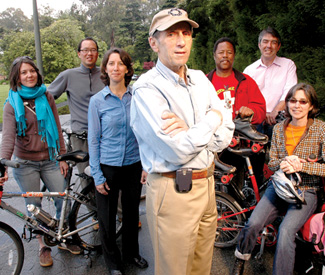
It wasn’t going well for Ted Strawser, predictably. The alternative transportation activist faced an uphill battle March 14 trying to convince a San Francisco Chamber of Commerce committee to endorse Healthy Saturdays, a plan to ban cars from part of Golden Gate Park.

Representatives of the park’s museums and Richmond District homeowners had just argued their case against the measure. “Visitors want access to our front door, and we want to give it to them,” Pat Kilduff, communications director for the Fine Arts Museums of San Francisco, indignantly told the group of two dozen business leaders gathered around a large conference table.

Strawser gave it his best shot: he talked about following the lead of other great cities to create car-free spaces; he said, “Golden Gate Park is one of the best parks in the nation, if not the world”; and he made a detailed case for closure. But around the table there were scowls, eye rolls, and other obvious signs that Strawser was being tolerated, not welcomed. Some — including chamber vice president Jim Lazarus — even started to interrupt and argue with him.

Then the man sitting next to Strawser spoke up. “I don’t think this is fair,” he said. And suddenly, everyone in the room shaped up. Strawser’s ally — his only supporter in the room — was somebody no chamber member could or would dismiss. Warren Hellman doesn’t shout or bang the table — but when he speaks, downtown pays attention.

Hellman, a prominent investment banker, told the committee members that he expected them to show the same respect for Strawser that they had for the previous two speakers. The nonsense ended, immediately.

And by the time Strawser turned the floor over to Hellman, the mood had changed. The group listened raptly, smiled, and nodded as Hellman spoke in his usual folksy, familiar, disarming style.

“It’s not a lot of fun when friends fall out,” he began, “because the previous speakers and many of you all agreed on the necessity of the garage [that was built in Golden Gate Park], and we worked together.”

He pointed out that many in the group had promised during the fall 2000 election to support Healthy Saturdays once the garage was built, although Hellman was now the only member of the coalition honoring that commitment. But he didn’t chide or shame his colleagues. That isn’t Hellman’s style.

Instead, he spoke their language. The garage has never been full and needs the money it can charge for parking to repay the bonds. This isn’t a fight that’s going away, since “part of the conflict is because this park is everybody’s park.” But there are “about 100 compromises not acceptable to either side that would move this forward.” And if a solution can’t be found, there will probably be an expensive ballot fight that nobody wants.

“My conclusion is we should attempt this test,” Hellman told the group. Ultimately, when the vote was later taken in secret, the chamber didn’t agree, although it did vote to back a trial closure after the California Academy of Sciences reopens next year.

At the meeting, Hellman openly called for Mayor Gavin Newsom to get involved in seeking a compromise, something Hellman said he had also just requested of the mayor at a one-on-one breakfast meeting. A couple of weeks later Newsom — who had already indicated his intention of vetoing the measure — did broker a compromise that was then approved by the Board of Supervisors.

As usual, Hellman didn’t take credit, content to quietly play a role in making San Francisco a better place.

Healthy Saturdays isn’t the most important issue in local history — but the significance of Hellman’s involvement can’t be underestimated. His alliance with the environmentalists and park advocates might even signal a sea change in San Francisco politics.

Warren Hellman represents San Francisco’s political and economic past. And maybe — as his intriguing actions of recent years suggest — its future.

This guy is a rich (in all senses of the word) and compelling figure who stands alone in this town. And even though his leadership role in downtown political circles has often placed him at odds with the Guardian, Hellman consented to a series of in-depth interviews over the past six months.

“Our family has been here since early in the 19th century, so we had real roots here,” Hellman told us. His great-grandfather founded Wells Fargo and survived an assassination attempt on California Street by a man who yelled, “Mr. Hellman, you’ve ruined my life,” before shooting a pistol and barely missing.

The Hellman family has been solidly ruling class ever since, rich and Republican, producing a long line of investment bankers like Warren.

Yet the 72-year-old comes off as more iconoclast than patrician, at least partly because of the influence of his irreverent parents, particularly his mother, Ruth, who died in 1971 in a scuba-diving accident in Cozumel, Mexico, at the age of 59. “She was entirely nuts,” Hellman said, going on to describe her World War II stint as a military flier in the Women’s Auxiliary Service Pilots and other colorful pursuits. “She just loved people, a little like I do. She collected people.”

Hellman grew up wealthy and cultured, but he also attended public schools, including Grant Grammar School and Lowell High School. In between, the young troublemaker did a stint at San Rafael Military Academy — “reform school for the rich,” as he called it — for stunts such as riding his horse to Sacramento on a whim.

After doing his undergraduate work at UC Berkeley, Hellman got his MBA from Harvard and went on to become, at the age of 26, the youngest partner ever at the prestigious Manhattan investment firm Lehman Bros. He developed into an übercapitalist in his own right and eventually returned home from New York and founded Hellman and Friedman LLC in San Francisco in 1984, establishing himself as the go-to financier for troubled corporations.

“He is really one of the pioneers of private equity,” said Mark Mosher, a longtime downtown political consultant and the executive director of Gov. Arnold Schwarzenegger’s California Commission on Jobs and Economic Growth, on which Hellman sits.

Hellman became what Business Week called “the Warren Buffett of the West Coast,” a man of extraordinary wealth and power. Among other accomplishments, Hellman took Levi Strauss private, recently made billions of dollars in profits selling DoubleClick to Google, and manages the assets of the California public employee retirement funds (CalPERS and CalSTRS), which are among the largest in the world.

Like many financial titans, Hellman has always been a generous philanthropist, giving to the arts, supporting schools in myriad ways, and funding the San Francisco Foundation and the San Francisco Free Clinic (which his children run). He vigorously competes in marathons and endurance equestrian events, often winning in his age bracket. And he has his humanizing passions, such as playing the five-string banjo and creating the popular Hardly Strictly Bluegrass festival.

But he’s also been a prime facilitator of downtown’s political power, which regularly flexes its muscle against progressive causes and still holds sway in the Mayor’s Office and other city hall power centers.

Hellman founded, funds, and is a board member of the Committee on Jobs, which is perhaps the city’s most influential downtown advocacy organization. Hellman and his friends Don Fisher, the founder of the Gap, and Sen. Dianne Feinstein also started SFSOS, which now wages the most vicious attacks on left-of-center candidates and causes.

When the de Young Museum and other cultural institutions were threatening to leave Golden Gate Park, Hellman almost single-handedly had an underground parking garage built for them, in the process destroying 100-year-old pedestrian tunnels and drawing scorn from the left. The Guardian called it “Hellman’s Hole.”

“We at the Bike Coalition very much started out on the opposite side of Warren Hellman,” San Francisco Bicycle Coalition executive director Leah Shahum told us. “We couldn’t have been more like oil and water on the garage issue.”

But over the past two years or so, Hellman’s profile has started to change. He went on to become an essential ally of the SFBC and other environmentalists and alternative transportation advocates who want to kick cars off JFK Drive in Golden Gate Park on weekends, crossing the downtown crowd in the process. He has shared his wealth with progressive groups such as Livable City, which often fights downtown, and has stuck up for edgy fun seekers over more conservative NIMBY types. He has also publicly repudiated the attacks of SFSOS and its spokesperson, Wade Randlett, and withdrawn his support from the group.

Hellman is still a Republican, but a thoughtful and liberal-minded one who opposed the Iraq War and wrote an article for Salon.com in February titled “If the United States Were a Company, Would George Bush Be Our CEO?” (His answer: hell no.) And to top it all off, Hellman sports a few tattoos and even attended 2006’s Burning Man Festival and plans to return this year.

Unguarded and reflective, Hellman’s comments to the Guardian foreshadow the possible future of capitalism and influence in San Francisco and point to potential political pathways that are just now beginning to emerge.

Our first conversation took place at the Guardian office two weeks before the November 2006 election, when it was starting to look like Nancy Pelosi had a good shot at becoming speaker of the House of Representatives.

“I think this election in two weeks is going to be really interesting,” Hellman told us.

This Republican was cheering for the Democrats to win. “They aren’t my kind of Republicans,” he said of the people in power. Hellman didn’t support the war or approve of how the Bush administration sold it, and he wanted Pelosi and the Democrats to hold someone accountable.

“What I’d like her to do is admit that we can’t get out [of Iraq immediately], but start to talk about what the fallout has been. Discuss the enormous cost in human life as well as money, and how it’s possible the war united the Middle East against us,” Hellman said.

The one thing he can’t abide is disingenuousness. Hellman speaks plainly and honestly, and he asked us to keep particularly caustic comments off the record only a few times during almost six hours’ worth of interviews. He was self-effacing about his political knowledge and seemed most interested in working through the problems of the day with people of goodwill.

Asked what he values most in the people he deals with, Hellman said, “It’s authenticity. Do they believe things because they believe in them, or do they believe in things because they’re cynical or they’re just trying to gain something?”

Locally, Hellman has reached out to people with varying worldviews and come to count many friends among those who regularly battle against downtown.

“I love to know people,” he said. “That’s probably the single thing that motivates me. When someone says to me, ‘How can you be friends with [then–head of SEIU Local 790] Josie Mooney?’ I say, ‘Look, I want to know Josie Mooney. And if she’s awful, then we won’t be friends.’ I’m just fascinated by getting to know people. And virtually always, they’re a little like Wagner operas: they’re better than they sound.”

Hellman was the chair of the Committee on Jobs when he got to know Mooney, who chaired the San Francisco Labor Council and was a natural political adversary for the pro-business group, particularly when Hellman was leading the fight to do away with the city’s gross receipts tax, which has proved to be costly for the city and a boon for downtown.

But after that victory, Hellman turned around and cochaired a campaign with Mooney to retool and reinstate the gross receipts tax in a way that he believed was more fair and helped restore the lost revenue to the city.

“We lost, but he put $100,000 of his own money into that campaign,” Mooney told us, noting that the proposed tax would have cost Hellman and Friedman around $70,000 a year. “I think he just thought the city needed the money. It was a substantive point of view, not a political point of view.”

Mooney considers Hellman both a friend and “an extraordinary human being…. He has made a huge contribution to San Franciscans that doesn’t relate to ideological issues. A tremendous thing about Warren is he’s not ideological, even in his political point of view…. On politics, I’d say he is becoming more progressive as he understands the issues that confront ordinary people.”

Mooney is one of the people who have helped bring him that awareness. When they first met, Mooney said, Hellman told her, “You’re the first union boss I ever met.” That might have been an epithet coming from some CEOs, but Hellman had a genuine interest in understanding her perspective and working with her.

“In a sense, I think that was a very good era in terms of cooperation between the Committee on Jobs and other elements of the city,” Hellman said. “Josie and I had already met, and we’d established this kind of logic where 80 percent of what we both want for the city we agree on, and 20 percent [of the time, we agree to disagree].”

Committee on Jobs executive director Nathan Nayman — who called Hellman “one of my favorite people in the world” — told us that Hellman feels more free than many executives to be his own person.

“He’s not with a publicly held company, and he doesn’t have to answer to shareholders,” Nayman said. “He takes a position and lives by his word. You don’t see many people like him in his income bracket.”

Hellman has become a trusted hub for San Franciscans of all political persuasions, Nayman said, “because he’s very genuine. He’s fully transparent in a city that likes to praise itself for transparency. What you see is what you get.”

Hellman expects the same from others, which is why he walked away from SFSOS (and convinced Feinstein to bolt as well) in disgust over Randlett’s scorched-earth style. Among other efforts, SFSOS was responsible for below-the-belt attacks on Sups. Chris Daly, Jake McGoldrick, and Gerardo Sandoval (whom a mailer inaccurately accused of anti-Semitism).

“If all things were equal, I’d just as soon that SFSOS went away,” Hellman said. “SFSOS started doing the opposite of what I thought they would be doing, so it was fairly easy for me to part company with them. What I thought we were doing is trying to figure out ways to make the city better, not just being an antagonistic, nay-saying attack organization. I’m not a huge fan of Gerardo Sandoval, but I thought the attacks on him were beyond anything I could imagine ever being in favor of myself. And it was a series of things like that, and I said I don’t want anything more to do with this.”

Downtown, they’re not always quite sure what to make of Hellman.

“Every once in a while, he does things that irritate people who are ideologically conservative,” Mosher said. “He took an immense amount of heat for supporting the Reiner initiative [which would have taxed the rich to fund universal preschool].”

He’s given countless hours and untold riches to public schools, doing everything from endowing programs to knocking on doors in support of bond measures and often pushing his colleagues to do the same.

“My connection to him has been through the school district, and he’s really been a prince,” Sup. Tom Ammiano said. “He has even stopped calling me antibusiness. He put a lot of his energy into improving public education, and so he shows it can be done.”

Progressives don’t always agree with Hellman, but they feel like they can trust him and even sometimes win him over. “If you get a relationship with him and you’re always honest about the facts and your own interests, he will listen, and that’s pretty remarkable,” Mooney said. “He shows a remarkable openness to people who have good ideas.”

His appreciation for people of all stripes often causes him to reject the conventional wisdom of his downtown allies, who viciously attacked the Green Party members of the Board of Education a few years ago.

“Everybody said, ‘Oh my god, Sarah Lipson, you know, she’s a Green Party member, she’s the furthest left-wing person on the board,’ blah, blah, blah,” he said. “And I phoned her up one day and said, ‘I’d really like to meet you.’ And she’s — leave aside the fact that I think she’s a very good person as a human being, but she’s a very thoughtful, analytic person. Listening to her opinions about things that are happening in the school district, I really respect that. I mean, what do I know about what’s going on in the school district? I know more now than I did then. But just getting to know people, and maybe get them to understand my point of view, which isn’t that penetrating.”

Many of his efforts have received little publicity, as when he saved the Great American Music Hall from closure by investing with Slim’s owner Boz Scaggs and helping him buy the troubled musical venue. “There are things that you and I don’t even have a clue that he has done,” Nayman said.

“He’s an interesting guy,” Mosher said. “He’s one of a dying breed, a liberal Republican. He has a social conscience and wants to use his money to do good.”

Actually, calling Hellman liberal might be going too far. In the end, he’s still very much a fiscal conservative. He doesn’t support rent control, district elections for the Board of Supervisors, taxing businesses to address social problems such as the lack of affordable health care, or limits on condo conversions.

He also opposes the requirement that employers provide health care coverage, which downtown entities are now suing the city to overturn, telling us, “In general, I don’t think it’s a good idea, because I’m still, even in my aging years, a believer that the marketplace works better than other things…. Universal health care I do believe in, but what I worry is that it’s going to be another damned bureaucracy and that it’s not going to work.”

Yet he doesn’t believe wealth is an indicator of worth, saying of his fortune, “It is luck. Most of what you do you aren’t better at than everyone.”

He doesn’t believe in the law of the jungle, in which the poor and weak must be sacrificed in the name of progress. In fact, he feels a strong obligation to the masses.

As he told us, “My mantra for capitalism — and I didn’t invent this, but I think it’s pretty good — is that capitalism won, and now we need to save the world from capitalism.”

Hellman looms large over downtown San Francisco. His Financial District office offers a panoramic view of the Bay Bridge, Treasure Island, the Ferry Building, and the rest of the city’s waterfront. He likes to be personally involved with his city and the companies in which Hellman and Friedman invests.

“Usually I’m directly involved,” he told us in an interview earlier this year. “I’ve always said that I don’t like to go to the racetrack to just look at the horses. The fun of being a principal is that you’re standing at the track and not saying, ‘Gee, that’s a beautiful gray horse.’ You’re saying, ‘Come on, he’s got to win!’ So I’m almost always invariably invested in the companies that we work with, either individually or through the firm.”

Unlike many Wall Street barons who strive to control a company and bring in new executives, flip it for a quick profit, or liquidate it, Hellman said his firm tries to identify solid companies and help facilitate what they do. “We don’t usually take over companies. I always think that we provide a service to help the businesses,” he said. “Our job is kind of the opposite of owning a factory. Our job is to be sure the people who run the business feel like it’s their business.”

Similarly, he thinks capitalists need to feel a sense of ownership over society’s problems, something he thinks is taking root in San Francisco and other economic centers, particularly among the younger generations. “It’s about understanding how much suffering there is on the other side and trying to figure out how that suffering can be alleviated,” he said. “I think it’s partly good economics that as you bring people up, they’re able to do more for society. If nothing else, they’re able to buy more and shop at a Wal-Mart or something — probably someplace you would wildly disapprove of — and buy goods and services. But I don’t think it’s that narrow.”

Rather, he believes that everyone has a little progressive in them, a little desire to cooperatively solve our collective problems rather than pass them off to future generations. He sees a marked change from his days at Lehman Bros.

“Everybody was into making it,” he said, noting that many capitalists then did charity work as a means of attaining social status but focused mostly on the accumulation of wealth. But, he said, the new generation of capitalists seems genuinely interested in improving the world.

“The feeling for giving back in the next generation, in the now 25- to 35-year-olds, it’s just an order-of-magnitude difference than it was for people who are now in their 40s and early 50s,” Hellman said. “I’m very encouraged.”

Yet the flip side is that, in Hellman’s view, downtown doesn’t wield as much power as it once did. Low political contribution limits have made politicians less dependent on downtown money, creating fewer shot callers, while democratizing tools such as the Internet have broadened the political dialogue.

“For the last 30 years we have become an increasingly tolerant city, and that’s great,” he said. “In the old days, [the Guardian] complained about downtown, and yeah, no shit, downtown really did control the city. The benefit was as that slipped away, the city became fairer and more open to argument. So now downtown hardly has any power at all anymore. In a sense, that’s a good thing. Tolerance grew tremendously when the city wasn’t dictated to.”

That tolerance caused street fairs to pop up all over town and festivals such as Hellman’s Hardly Strictly Bluegrass to blossom in Golden Gate Park. Bike lanes have taken space from cars, events such as Halloween in the Castro have gotten crazier, street protests have gotten bigger and more frequent, and people have felt more free to fly their freak flags. And all that freedom eventually triggered a backlash from groups of isolated NIMBYs who complain and often find sympathetic ears at city hall.

“Sometimes you get the feeling in this city that in the land of the tolerant, the intolerant are king,” said Hellman, whose festival has endured noise complaints even though the music is shut off by 7 p.m. “There is a continuing pressure to do away with fun, because fun is objectionable to someone, [but] we need to think about not creating a new dictatorship of a tiny group of people whose views are not in line with the opinion of most of the people of San Francisco…. You should try to balance the good of a lot of people versus the temporary annoyance of a few people.”

Preserving fun and a lively urban culture is a personal issue for Hellman, who plays the five-string banjo and calls his festival “the most enjoyable two days of the year for me.” He helps draw the biggest names in bluegrass music and acts like a kid in a candy shop during the event.

“I feel very strongly that an important part of our culture is built on the type of music and type of performance that goes on at Hardly Strictly Bluegrass,” Hellman said. From parables set to music to songs of struggle and the old union standards, “that kind of music is the conscience of our country.”

He considers bluegrass a vital and historically important form of political communication, more so than many of the upscale art forms that the rich tend to sponsor. “I’m glad that we have first-rate opera, but it’s equally important that we foster the kind of music, lyrics, etc., that support all this,” he said. “Somebody once said that most of the great Western philosophy is buried in the words of country songs. And that’s closer to the truth than most people think. A big passion of mine is to try to help — and people have defined it too narrowly — the kinds of music that I think have a hell of a lot to do with the good parts of our society.”

Perhaps surprisingly for a Republican venture capitalist from the older generation, Hellman also considers the countercultural freaks of San Francisco to be some of the “good parts of our society.” That’s why he attended Burning Man for the first time last year and why, he said, he loved it, as much for the culture and community as for the art.

“I went to Burning Man because as much as possible I want to experience everything,” he said. “I want to just see directly what it’s like. I knew I’d enjoy it. I never doubted that. But what really overwhelmed me is it was 40,000 people getting along with each other. I mean, it’s pretty intense. There were dust storms and the world’s most repulsive sight: nude men over 70 just dangling along. But I never saw an argument. It was 40,000 people just enjoying each other.”

It was most striking to Hellman because of the contrast with the rest of society. As he said, “I’ve never seen this country so divided.”

While Hellman supports Schwarzenegger — calling him “a good advertisement to California” — he has nothing good to say about his fellow Republican in the Oval Office. He calls Bush’s tenure “an absolute four-star disaster.” The invasion of Iraq is the most obvious problem, he said. “Our war policy has slowly veered from being ‘Don’t tread on me’ to we’re going to jump on your neck.”

But his antipathy to certain aspects of the Republican Party began even earlier, when the religious right began to take over.

“I thought we were not that polarized during the Clinton administration. I was somewhat encouraged,” Hellman said. “Maybe there was an undercurrent of strident religious behavior or strident conservatism, but not the conservatism that I think the Republican Party used to stand for, which was fiscal conservatism instead of social conservatism. Somehow, there was this angst in this country on the part of religious people who I guess felt this country was being taken away from them, and they were the kind of stalwart or underpinnings of society. And they took it back.”

But in the wake of that disaster, Hellman thinks, there is an opportunity for reasonable people of goodwill to set the future political course. As Nayman said of Hellman, “He does believe there is a middle way pretty much all the time.”

Politically, that’s why Hellman gravitates toward the moderates of both major parties, such as Schwarzenegger and Newsom. He looks for people who will marry his economic conservatism with a regard for things such as environmentalism and social justice.

“It’s very tough to be a big-city mayor,” Hellman said. “[Newsom is] probably the best mayor we’re entitled to. He’s got this fantastic balancing act.”

Hellman said downtown hasn’t been terribly happy with Newsom for supporting striking hotel workers, getting behind Ammiano’s health insurance mandate, supporting tax measures, and generally letting the Board of Supervisors set the city’s agenda for the past two years.

“Their measure is he has 80-percent-plus popularity, and he ought to spend some of it. Well, they might not agree with what he would spend it on. And he’s been unwilling to spend very much of it. In some parts of the business community there is disappointment with him, but I don’t think that’s right. He didn’t hide what he would be like.”

What Newsom said he would be — a big reason for his popularity — is a mayor for the new San Francisco, a place where the city’s traditional economic conservatism has been tempered by a greater democratization of power and an ascendant progressive movement that expects its issues to be addressed.

“I don’t like people who are intolerant,” Hellman said. “I don’t like people that are telling you something to get some outcome that, if you understood it, you probably wouldn’t want. I like people that are passionate.”

Asked, then, about Sup. Chris Daly, the nemesis of downtown and most definitely a man of strong political passions, he said, “I admire Chris Daly. I disagree with Chris on a lot of things he believes, but there are also probably a lot of things I would agree with Chris on. And I respect him.”

Hellman is the rare downtown power broker who wants to bridge the gap between Newsom — whom he calls a “moderate to conservative establishment person” — and progressives such as Daly, Mooney, and the Bicycle Coalition. The middle ground, he said, is often a very attractive place, as it was with Healthy Saturdays.

“I’m sure you spend time in the park on Sunday, and it’s a hell of a lot nicer in there on Sundays than Saturdays,” Hellman said. But even more important to him, this is about integrity and being true to what Golden Gate Park garage supporters promised back in 2000.

“They were proposing Saturday closing at that time, which I’ve always thought was a good idea,” he said. “And we made a commitment to them, or I thought we made a commitment to them, that let’s not have Saturday closure now, but as soon as the garage was done, we’d experiment with Saturday closure.”

We brought up what Fine Arts Museums board president Dede Wilsey has said of that pledge, that it was under different circumstances and that she never actually promised to support Saturday closure after the garage was completed.

“There’s a letter. She put it in writing,” he said of Wilsey. “She signed a letter on behalf of the museums saying that when the de Young is done, we should experiment with Saturday closings.”

The Bike Coalition’s Shahum said that even when Hellman was an enemy, he was a reasonable guy. But it’s in the past couple of years that she’s really come to appreciate the unique role he plays in San Francisco.

“He showed decency and respect toward us,” she said. “We never saw him as a villain, even though we disagreed completely. Later he really stepped up and has been a leader on Healthy Saturdays. And what I was most impressed with is that he was true to his word.”

Supervisor McGoldrick, who sponsored the measure, echoed the sentiment: “Hellman was certainly a man of his word who acted in a highly principled way.”

So why does Hellman now stand apart from the downtown crowd? Has he parted ways with the economic and cultural power brokers who were once his allies?

No, he said, “I think they parted ways with me.” *


Stationary biking

0

› steve@sfbg.com

This year’s Bike to Work Day, set for May 17, comes as San Francisco’s cycling network lies dormant in a court-imposed coma. The city isn’t allowed to make any physical improvements to promote safe bicycling until late next year at the earliest, more than two years after the injunction began. Yet that setback could be followed by the most rapid expansion of bike lanes in the city’s history.

At issue is the San Francisco Bicycle Plan and its stated goal of making "bicycling an integral part of daily life in San Francisco." City resident Rob Anderson and attorney Mary Miles don’t share that goal — particularly when it translates to taking lanes and parking spaces from cars — and they challenged the plan in court last year after it won unanimous approval from the Board of Supervisors and Mayor Gavin Newsom.

Ironically, this environmentally benign mode of transportation was attacked under the state’s landmark California Environmental Quality Act (CEQA), which requires detailed studies of projects that might have impacts on the environment and measures that can be taken to offset those impacts.

City officials and bike advocates were shocked last June when Judge James Warren — in his final ruling before his retirement — issued a sweeping injunction against bike projects in the city, which was upheld and reinforced when Judge Peter Busch heard the case in September.

The judges found that city officials had taken an impermissible shortcut around CEQA by claiming the bike plan was exempt from its strictures. As the plan was being developed, some bike advocates and city officials had called for more resources to be put into doing the detailed studies CEQA calls for, and that’s what now appears to be happening.

"The good thing about the lawsuit is it is forcing the city to do the traffic analysis that it should have done with the bike plan and it reveals the absurdity of our interpretation of environmental laws," Dave Snyder, the former executive director of the San Francisco Bicycle Coalition (SFBC), who is now a planner with the San Francisco Planning and Urban Research Association, told the Guardian.

Now city planners and consultants are preparing environmental impact reports (EIRs) on up to 60 proposed bike projects in the city, which will be queued up and ready to begin once the bike plan is approved. "The projects can be approved all at once," Snyder said.

At least, that’s what could happen if the city’s political leaders don’t lose their will to create a more bicycle-friendly city.

Oddly enough, it was the vague, feel-good nature of the plan that created all the problems.

Cities are required to have a bike plan, updated every five years, to qualify for certain state funding. San Francisco did its first plan in 1997, and in 2001 transportation officials and bike advocates set out to develop an updated version.

From the beginning, there were divisions between those who wanted to focus on completing the bike network with ready-to-go projects and those who wanted a more comprehensive and innovative plan laying out policies for education, enforcement, safety, new traffic models, integration with public transit, and everything else associated with cycling.

Responsibility for developing the plan was shared by the Metropolitan Transportation Authority (MTA), the San Francisco Planning Department, and the San Francisco Department of Parking and Traffic, with significant input from the city’s Bicycle Advisory Committee, the SFBC, and other groups. For reasons of expediency, the decision was made to focus on a relatively vague plan, one that made all sorts of high-minded statements and offered lofty goals.

The plan was presented as an effort to radically transform the roadways to make bicycling a more attractive option, but it didn’t include the detailed transportation analysis needed to support that effort — nor did it draw any conclusions about which car spaces to give over to bikes.

"The plan makes no decisions…. The plan has no measurable objectives anywhere in it," Snyder said, noting that the vague nature of the final product was the reason it was so uncontroversial. "Anytime anything passes unanimously, you know you didn’t ask for enough."

Andy Thornley was chair of the Bicycle Advisory Committee when work on the plan got under way and now serves as program director for the SFBC, which was heavily involved on outreach for the plan. SFBC officials were shocked by the injunction but said the city should have devoted more resources to the project.

"It was a logical outcome to the city’s undercommitment to the bike plan," Thornley said of the lawsuit. "There wasn’t the commitment from the mayor on down to doing this right."

"We had discussions about what it means that the plan doesn’t have any benchmarks," said Leah Shahum, executive director of the SFBC and a member of the MTA board. Sure, it had the goal of having 10 percent of all vehicle trips be by bicycle by the year 2010. "Only later did we realize that the 100 pages behind it didn’t support that goal."

MTA public affairs managers wouldn’t allow the Guardian to speak directly to Oliver Gajda, the main staffer on the bike plan then and now. They required questions in writing and answered the one about lack of city support for the initial plan by writing that "the court’s decision was not based on resource issues."

Newsom’s press secretary, Nathan Ballard, also resisted admitting that the city did anything wrong, responding in writing to a written question by saying, "Actually, the City moved forward drafting and implementing this bike plan quite ambitiously, even though there was a risk it would be challenged in court."

Yet it was clear to all involved that doing the traffic analysis and other work would have headed off the injunction.

"Dave Snyder was always an advocate that the bike plan should be a bike plan and lay out what we’ll see for bicyclists," Tom Radulovich, executive director of Livable City, told the Guardian. "But the decision was made to do a bike plan in the abstract, not laying out specific routes."

Nonetheless, bike advocates say they’re happy with the commitment that city officials are now showing. "Now we’re clearly and unequivocally doing a bike plan," Radulovich said. "To some degree, the city has had to commit itself."

Bevan Dufty, chair of the Transportation Authority’s Plans and Programs Committee, has been demanding that bureaucrats report to him regularly to show progress on the plan.

"I think the fact that we’re seeing them regularly trotted out before the committee is a good thing, because it makes them hit their benchmarks," he told us.

Dufty also overcame the MTA’s restrictive approach to public relations and facilitated our interview with Peter Albert, who took on the job of deputy director of planning for the MTA 10 months ago.

"Right now we’re just looking to do the environmental review to clear the bike plan," Albert told us.

He said that staff and consultants are now going through 60 proposed projects to determine what their environmental studies will entail. Later this month that work will be presented during a scoping meeting, at which planners and advocates will decide whether some of the more complex projects will be eliminated from the plan.

"Our goal is to make sure this is as solid an environmental review as possible. We don’t want to deal with any more legal issues," Albert said. "I feel right now there is a huge will to have this done correctly."

Yet advocates have a slightly different view of that political will, particularly given the projection of completed EIRs by July 2008, followed by the approval process, and maybe more court fights.

"We’re not crazy about the timing, but the scope is good. We’ve moved to projects that we’re planning to do," Thornley said. "So, in a backwards way, the commitment has come to the plan from the gun of the injunction."

"But we have real concerns about the timeline and scope getting shrunk," Shahum said. "Our fear is that we’ll go from 60 projects down to 16."

That’s because the plan will now look at the physical changes to roadways that are bound to get controversial once neighborhood groups grapple with the idea of losing traffic lanes or parking spaces.

"You’ve got a lot of people who are afraid of NIMBY opposition, and that goes from the mayor and the supervisors to the bureaucrats working on the plan," Shahum said. She added that the political leadership of San Francisco is more supportive of bicycling than it’s ever been, "but you still have to work really hard for them to do the right thing in the end."

"Why did it take four years to get the Valencia Street bike lanes?" she asked, noting that the project has proved to be an unqualified success.

"They changed Valencia Street, and nothing [bad] happened, so that opened them up a little," Radulovich said of city officials. But only a little. "There is still a certain ad hoc quality to what they’re doing, rather than being standards-based in how streets are designed."

City policy regarding bike projects — which the Planning Commission will revisit this summer when it considers changes to how it interprets traffic level-of-service (LOS) impacts under CEQA — is that anything that slows car traffic is considered a significant environmental impact that requires extensive study and mitigation.

"It’s imperative for them to fix the way they do CEQA," Radulovich said. "LOS reform would help us in future projects."

Radulovich said that most California cities were built with a focus on automobiles before CEQA was even approved. Yet the law now requires expensive and time-consuming studies before those spaces can be converted to use by public transit, bicycles, or pedestrians.

"That’s why, in some ways, CEQA has become an impediment to making us environmentally sustainable," Radulovich said. "It’s turned into a tool that slows down the taking of spaces back from cars."

While the detailed EIR work is being done, Albert and others say the city is still committed to doing bicycling planning work, applying for grants, and making sure San Francisco can move forward quickly once the injunction is lifted. "We’ve been set back, but we’re not stopped," he told us.

"The current injunction is frustrating because we want to be moving forward with bike improvements each month. While we cannot make physical changes such as bike lanes and bike racks, planning and design are continuing," Ballard said, also noting that the Mayor’s Office is doing regular conference calls to ensure the bike plan moves forward quickly.

"I and the bike advocates are pushing to use this time to do the planning work so we’re ready to go once we have an approved plan," said Sup. Chris Daly, the only regular cyclist on the Board of Supervisors. Once the injunction is lifted, he said, "You will have the most rapid striping of bike lanes in the history of the city." *

The Guardian Iraq War casualty report (5/14/07)

0

The Guardian Iraq War casualty report (5/14/07): 145 Iraqi civilians were killed yesterday. 5 U.S. soldiers were killed today.

Compiled by Paula Connelly

Casualties in Iraq

Iraqi civilians:

145 Iraqi civilians were killed yesterday, according to Anti war.com.


98,000
: Killed since 3/03

Source: www.thelancet.com

63,610 – 69,658: Killed since 1/03

Source: http://www.iraqbodycount.net

For a week by week assessment of significant incidents and trends in Iraqi civilian casualties, go to A Week in Iraq by Lily Hamourtziadou. She is a member of the Iraq Body Count project, which maintains and updates the world’s only independent and comprehensive public database of media-reported civilian deaths in Iraq.

A Week in Iraq: Week ending 13 May 2007:
http://www.iraqbodycount.org/editorial/weekiniraq/44/

For first hand accounts of the grave situation in Iraq, visit some of these blogs:
www.ejectiraqikkk.blogspot.com
www.healingiraq.blogspot.com
www.afamilyinbaghdad.blogspot.com

U.S. military:

Five U.S. Soldiers were killed today according to the Associated Press.

Three U.S. Soldiers were abducted Saturday and an al-Qaida front group claims it has captured them and has warned the United States to stop searching for them, according to the Associated Press.

3,643: Killed since the U.S. invasion of Iraq 3/20/03

Source: http://www.icasualties.org/

At least 3,398 members of the U.S. military have died since the beginning of the Iraq war in March 2003, according to an Associated Press count.

For the Department of Defense statistics go to: http://www.defenselink.mil/

For a more detailed list of U.S. Military killed in the War in Iraq go to:
http://www.cnn.com/SPECIALS/2003/iraq/forces/casualties/2007.04.html
Iraq Military:

30,000: Killed since 2003

Source: http://www.infoshout.com

Journalists:

153 journalists have been killed in Iraq since the start of the war four years ago, making Iraq the world’s most dangerous country for the press, according to Reporters without borders.

156: Killed since 3/03

Source: http://www.infoshout.com/

Refugees:

The Bush administration plans to increase quota of Iraqi refugees allowed into the U.S. from 500 to 7,000 next year in response to the growing refugee crisis, according to the Guardian Unlimited.

Border policies are tightening because one million Iraqi refugees have already fled to Jordan and another one million to Syria. Iraqi refugees who manage to make it out of Iraq still can’t work, have difficulty attending school and are not eligible for health care. Many still need to return to Iraq to escape poverty, according to BBC news.

1.6 million: Iraqis displaced internally

1.8 million
: Iraqis displaced to neighboring states

Many refugees were displaced prior to 2003, but an increasing number are fleeing now, according to United Nations High Commissioner for Refugees’ estimates.

U.S. Military Wounded:

50,502: Wounded since 3/19/03 to 1/6/07

Source: http://www.icasualties.org/

The Guardian cost of Iraq war report (5/14/07): So far, $425 billion for the U.S., $53 billion for California and $1 billion for San Francisco.
Compiled by Paula Connelly

Here is a running total of the cost of the Iraq War to the U.S. taxpayer, provided by the National Priorities Project located in Northampton, Massachusetts. The number is based on Congressional appropriations. Niko Matsakis of Boston, MA and Elias Vlanton of Takoma Park, MD originally created the count in 2003 on costofwar.com. After maintaining it on their own for the first year, they gave it to the National Priorities Project to contribute to their ongoing educational efforts.

To bring the cost of the war home, please note that California has already lost $46 billion and San Francisco has lost $1 billion to the Bush war and his mistakes. In San Francisco alone, the funds used for the war in Iraq could have hired 21,264 additional public school teachers for one year, we could have built 11,048 additional housing units or we could have provided 59,482 students four-year scholarships at public universities. For a further breakdown of the cost of the war to your community, see the NPP website aptly titled “turning data into action.”

Nude beaches

0

› culture@sfbg.com

In 1967, Northern California gave birth to America’s first nude beach, at San Gregorio, near Santa Cruz. Now, 40 years later, there’s great news coming from the sand: in the biggest surge in more than a decade, clothing-optional beaches and other skinny-dipping sites are booming once again. Check out our miniguide below. And in the near future, visit an expanded version on the web that includes our unveiling of a pristine cove near Capitola and directions to a place where you can take a naked full-moon hike.

The one bummer? The popular Red White and Blue Beach, in Santa Cruz County, is closing in the wake of the retirement of owner Ralph Edwards.

San Francisco County

LAND’S END BEACH


Tucked away among craggy cliffs, patches of sand, and some of the Bay Area’s best scenery, a nude beach is the last thing you’d expect to find within a short walk of the end of Geary Boulevard. But on warm days, Land’s End usually draws dozens of visitors.

HOW TO FIND IT Go to the end of Geary, and park in the dirt lot up the road from the Cliff House. Take the trail at the far end of the lot. A hundred yards past a bench and some trash cans, the path narrows and bends, rises and falls, and eventually becomes the width of a road. Don’t take the road on the right, which leads to a golf course. Instead, keep going past another bench, and as the trail turns right, take a left toward a group of dead trees. Where there’s a stairway with a Dogs Must Be Leashed sign, descend and head left to another stairway, which leads to a 100-foot walk to the cove. Alternately, follow the service road below the El Camino del Mar parking lot a quarter mile until you reach a bench, then take the trail there. It’s rough in spots, and at the end you’ll scramble over rocks.

THE BEACH Rocks and little watery grottoes. Look for some good sandy areas away from the beach’s entrance. For the best sunbathing spots, walk west (left). Some visitors build little rock windbreaks, which provide protection from blowing sand.

THE CROWD The quarter-mile-long cove gets up to 30 visitors on the warmest days, with up to 80 percent gay male usage being fairly standard. One visitor counted six or so nudes, all men, during a May visit.

PROBLEMS Long walk, random "sex patrols" by rangers, reports of drug use, public sex on trails and nearby. Fog and wind. Quite rocky. Swimming not allowed. Trails other than the main one are unsafe and may be closed and have poison oak.

GOLDEN GATE BRIDGE BEACH


Overrun by fans undeterred by its slippery and often dangerous trails, the Golden Gate Bridge Beach usually turns into a mob scene on summer weekends. The waves don’t break as hard here as at Baker Beach, so on the nicest days in low tide, you can go out up to 50 yards. A favorite activity: watching the sunset while staring toward the site’s namesake, the Golden Gate Bridge. But don’t visit if you’re looking for privacy and solitude. "I had to stop going there because it’s such a pickup scene," frequent visitor Joseph Friday says.

Also known as Nasty Boy Beach and Marshall’s Beach, the shoreline here features a trio of adjacent coves. In the spring, check for beautiful flowers on the bluffs. Drawbacks include some poison oak on the path (often trimmed back by volunteers), which is otherwise unmaintained and becomes a muddy bluish goo after rainstorms. Golden Gate National Recreational Area rangers strongly recommend that visitors stay away from the trails and avoid swimming.

HOW TO FIND IT Go to North Baker Beach, park in the main lot, and walk north along Lincoln Boulevard, passing the sand ladder that leads to North Baker. Just north of the ladder trail, look for a dirt road with a gate leading to Battery Crosby. Follow it, then hike up the trail immediately on the south (left) side of the old fort to the top of the bluff. Rangers recently added some rails that make the path a little easier to follow. Take the trail straight west as it goes downhill toward the ocean (wear long sleeves and pants to protect against poison oak). At a small crumbling concrete bulkhead, the trail heads north along the bluffs and eventually down a shorter, steep section with small steps cut into the gully. The main path ends at the south end of Golden Gate Bridge Beach.

THE BEACH Three small rocky beaches located below Fort Winfield Scott. The main beach trail tends to be slippery, heavily eroded, and dangerous.

THE CROWD During the week, Golden Gate Bridge Beach attracts dozens of users. On weekends, (mostly nude) usage soars to between 100 and 300 visitors on the hottest days.

PROBLEMS Slippery, crumbling, sometimes muddy, and poison oak–edged trails. Trash, rocks, wind, fog, unsafe swimming conditions, sex on the beach, too many people often jammed into too little space.

San Mateo County

DEVIL’S SLIDE


Now that its main access road, landslide-prone Highway 1, is finally reopened, visitors are flocking back to one of California’s only state beaches that officially permit nudity. Called Gray Whale Cove State Beach, the site known to many users as Devil’s Slide draws maybe 200 people on warm days — about 25 percent of them nude.

Nude use is especially popular on the north end of the long sandy shore. If you like Frisbee, it’s easy to find somebody to play with at the cove. Signs, though, warn about dangerous surf. There’s no lifeguard on duty. Dogs are prohibited. The beach is open all year and is one of the only California state parks that doesn’t accept an Annual Day Use Pass.

HOW TO FIND IT From San Francisco take Highway 1 south through Pacifica. Three miles south of the Denny’s Restaurant in Linda Mar, turn east (inland, or left) on an unmarked road, which will take you to the beach’s parking lot, from which a 146-step staircase leads to the sand. Coming from the south on Highway 1, look for a road on the east (right) 1.2 miles north of the Chart House restaurant in Montara.

THE BEACH A 300-foot-long site surrounded by orangish sandstone cliffs on one side and the beautiful Pacific Ocean on the other. Devil’s Slide is a great place to read, tan, jog, play Frisbee, and watch (true to its state beach name) gray whales, pelicans, and surfers.

THE CROWD Tourists, families, surfers, and naturists all use the beach.

PROBLEMS Influx of suited visitors, cold water, fog, wind, long walk to the beach. Landslides sometimes close Highway 1, three great white sharks seen in the ’80s. Parking fee. Some sexual activity reported in north cove area in recent past. Rangers have made a few arrests.

SAN GREGORIO


A visit to San Gregorio combines history with recreation. Approaching its 40th anniversary, clothing-optional, privately run San Gregorio is America’s oldest nude beach, founded right next door to San Gregorio State Beach, where nudity is not allowed. The huge property attracts some nude and suited straight couples, singles, and families. First-timers are sometimes a bit put off by the driftwood structures on the sandy slope leading down to the beach, which are used by some visitors as sex condos. Others relish San Gregorio’s scenery. There are two miles of soft sand and tide pools to explore, as well as a lagoon, a lava tube, and, if you look close enough on the cliffs, the remains of an old railroad.

HOW TO FIND IT From Tunitas Creek Way, south of Half Moon Bay, the beach is about a mile up Highway 1. Around 100 yards north of Highway 84 on 1, take the dirt road past the big white gate with the Toll Road sign. Go a few hundred feet, and just after the 55 mph sign on your right, turn left on the dirt road (look for the address 19429 above the fence) and head past a grassy field to the parking lot, where you’ll be asked to pay an entrance fee. Take the long path from the lot to the sand; everything north of the trail’s end is clothing optional. The beach is also accessible from the San Gregorio State Beach parking area to the south; from there hike about a half mile north. Take the dirt road past the big white gate with the Toll Road sign to the parking lot.

THE BEACH You’ll find caves, cliffs, driftwood structures, and a beach full of clean, rolling sand. Pets are OK (though dogs are not allowed on weekends or holidays); fires, cameras, and overnight camping are banned. Swimming is not recommended. There are toilets in the parking lot.

THE CROWD On the warmest days, 50 to 200 visitors may be spread along the sprawling beach, which is so large that it never feels crowded. Straight couples and families tend to hang out on the south end of the beach, gay men on the north side.

PROBLEMS Fee, wind, riptides, cold water, summer fog, sex on the beach or in driftwood condos, not much of a social atmosphere. *

For more nude beaches, please check out our official guide, which is in the process of being updated.

Summer lovin’

0

Summer 2007 fairs and festivals guide

Guide to local nude beaches

Bay Area public pools

Upcoming summer blockbusters

Quick local summer escapes

40th anniversary Summer of Love events

The Summer of Love™. That’s what we’ve been talking about round here. 1967. Timothy Leary. Flower children. Forty years ago this summer, it all happened here. The one summer that was officially about Love with a capital L.

But I’ve been thinking. Aren’t they all summers of love? Mine are. Starting in fourth grade, with red Otter Pops, my condominium complex swimming pool, a pink and white bathing suit with the middle cut out, and my crush on Neil Malesich — who was short, yes, but could do a mean backflip into the deep end — I learned that summertime and romance are inextricably connected.

And not just in the literal sense of vacation romances and mini-golf dates (yes, I saw the Karate Kid). It’s that feeling of infatuation and discovery and newness and nostalgia-for-the-moment about all kinds of things: your front porch or backyard, a slightly charred chicken breast, new flip-flops, new friends, mango juice on your fingers, blockbuster movies, mojitos, kiddie pools. Not just the first time either, but over and over, every year, as you start craving summer the way you’d anticipate the visit of a long-distance lover. Summer arrives, and it’s all new again — the chlorine and the sunburns and the hot pavement.

And so here it is May, and I can already feel it coming: warm winds, bare skin against bare skin, kisses that taste like beer and barbecue sauce, music turned up and windows rolled down, sandy hands tugging at short hems, fruity rum drinks, block parties, fireworks glittering above rooftops. Late nights, foreign locales, hotties made even hotter by circumstance and sunshine. It’s summer — and I’m falling in love. (Molly Freedenberg)

40th anniversary Summer of Love event

0

SEPTEMBER 2

Summer of Love 40th Anniversary Speedway Meadow, Golden Gate Park, JFK at 25th Ave, SF; www.2b1records.com/summeroflove40th. THIS SUNDAY starting at 10am, FREE! This event features world-class musical acts and entertainment that represent the spirit and energy of the 1967 Summer of Love. The lineup includes such legendary, rabble-rousing musicians, poets and speakers as: Country Joe McDonald, Canned Heat, Michael McClure, Taj Mahal, New Riders of the Purple Sage, Wavy Gravy, “Hair Reunion” original cast, Ray Manzarek, ruth weiss, Scoop Nisker, and many, many more. Tune in, turn on, and drop by to join thousands in commemorating this historic event.

A complete lineup of the artists appearing is available here.

You can find out more about the Summer of Love 40th Anniversary event, including local accomodations, transportation, and auxiliary events here.

Deleting accountability

0

› amanda@sfbg.com

Public records are coming in pretty handy these days. Congress is using them to investigate the relationship between the Republican National Committee and the firing of eight attorneys general, and as with many investigations that use documents to uncover malfeasance, some key documents are missing — in this case Karl Rove e-mails.

It seems Mayor Gavin Newsom’s office also has a penchant for the delete key, according to findings of the city’s Sunshine Ordinance Task Force. Two complaints brought by citizens have been heard by the task force regarding how the mayor’s daily calendar is kept — or isn’t kept — and what happened to e-mails that disappeared after they were requested by a member of the public.

"We found there was willful and ongoing violations and destruction of records," task force chair Doug Comstock told the Guardian.

Staff in the Mayor’s Office say they didn’t do anything wrong and no willful destruction of public records has occurred. According to Joe Arellano of the Mayor’s Office of Communications, the e-mails — invitations sent out for the mayor’s Jan. 13 District 1 community policy forum — were purged because they were temporary.

"We have such a huge e-mail system, we have to delete e-mails that are transitory. These, to us, were the same kind of e-mails," Arellano said.

The case is on hold awaiting further information regarding the city’s capability to retrieve purged electronic documents and will be heard again by the task force. But the larger issue is whether Newsom is intentionally keeping his calendar a secret, in violation of city law.

The Mayor’s Office only makes public Newsom’s so-called Prop. G calendar, named for a 1999 ballot measure expanding the Sunshine Ordinance and explicitly making the mayor’s schedule a public record. It’s a stripped-down version of his list of appointments, often with only a couple events per day.

The Mayor’s Office has argued that Newsom’s complete calendar can’t be made public, citing security and privacy concerns. The task force disagrees and contends it’s a document that should be public, with redactions of security and privacy information as needed.

The Mayor’s Office disagrees. "The sunshine task force is wrong, and we are right," Newsom press secretary Nathan Ballard said. "The calendar we give to the public and press exceeds Prop. G."

Arellano, in a letter to the task force, described the other document as a "working calendar that is extremely detailed and accounts for his time from departure from home until his return in the evening. The working calendar contains not only the Mayor’s meeting schedule, but also confidential information such as the officers assigned to protect him, security contact numbers, the Mayor’s private schedule, details of his travel," and everything else that he’s doing.

"What they refuse to realize is they’re both public documents," Comstock said about the dual calendars.

Peter Scheer, executive director of the California First Amendment Coalition (CFAC), agrees that both calendars are public if they contain information about what the mayor’s doing with his city time.

"If they have security concerns, they can withhold particular items that would jeopardize the mayor’s security. There are certain things we can all agree on that can be withheld, certain driving routes and evasive strategies for emergency planning. But when the vehicle stops and he gets out for a meeting at an office, home, or place of business, that item has to be revealed," Scheer said. "If we’re talking about a calendar, there may be thousands of items, and only a handful may be subject to redaction. They can’t use the few to justify nondisclosure of the many."

But that’s precisely what the Mayor’s Office is doing.

The mayor, city attorney, and all department heads are required by Prop. G to reveal "the time and place of each meeting or event attended." The only exclusions may be "of purely personal or social events at which no city business is discussed and that do not take place at City Offices or at the offices or residences of people who do substantial business with or are otherwise substantially financially affected by actions of the city."

Therefore, a Prop. G calendar should contain everything a city official does every day in the course of working for the public. When asked if all the blank spaces on the Prop. G calendar represent personal time, Ballard said, "It could be personal. It could be other. It’s not anything we’re required to divulge under Prop. G."

But just because it should be there doesn’t mean it is. For example, the mayor’s calendar for the afternoon of April 19 shows him attending a library luncheon at 12:30 p.m., a phone interview at 2:30 p.m., and a 4 p.m. meeting with his chief of staff, followed by a Port Commission swearing in.

But we ran into Newsom coming out of a 2 p.m. Recreation and Park Commission meeting, where he spoke in support of more public art in the city. This event is not listed on his calendar. Ballard said the Prop. G calendar is sometimes amended to reflect changes. "I don’t have an android following him at all times. We’re just human beings working here."

"If he indeed was there, I will try to remedy that," Ballard added.

This scenario suggests other public business is also not being adequately tracked and Newsom’s real calendar could fill in the gaps, but the mayor’s computer software is set to automatically delete the working calendar after five days, destroying a record of what the mayor actually did.

Aside from any prurient interest in what the mayor is up to, an accurate record of events is a part of public accountability. Newsom’s calendar for the week of April 16 lists 31 meetings and events amounting to 25 1/2 hours at work. The city attorney’s Prop. G calendar is even more paltry. Between April 23 and 27, Dennis Herrera apparently attended 13 meetings and spent 11 1/2 hours working for the city.

Calendars are important public documents, Scheer says. "Most importantly, they give an insight into who has access to that public official." But, he says, "it’s only as revealing as it is complete."

Scheer and the CFAC are currently involved in a court case with San Bernardino County. The San Bernardino Sun sued the county for access to supervisors’ e-mails, memos, and calendars for a period of time last summer during a large fire that destroyed houses. Bill Postmus, the chair of the board of supervisors, appeared to be AWOL during the emergency, and reporters at the Sun sought relevant documents that might support Postmus’s claim that he was in contact with his staff at the time.

A judge ordered the records released, with redactions, and most officials have complied, except Postmus, who has convinced the county to hire outside counsel and appeal.

Back in San Francisco, the Mayor’s Office doesn’t seem to be sweating much about the next legal action regarding its records management. The task force does not have the power to levy fines or punishment, so the calendar case has been referred to the Ethics Commission, the district attorney, and the attorney general.

"We will be vindicated by the Ethics Commission," Ballard said. "The Ethics Commission will side with us." *

Now with reel cheese!

0

› cheryl@sfbg.com

By the time you read this, Spider-Man 3 will have already raked in approximately a kajillion dollars. But in a summer packed with superheroes, pirates, robots, and teen wizards, only one selection is destined to be the Best. Movie. Ever. (Hint: it’s animated, smells like a steak, and seats 35!) Still, what are you gonna do at the multiplex — or the rep house — on every other day that isn’t July 27? Arrange your vacations, hot dates, and Sno-Caps binges according to my highly biased, by no means complete guide to this season’s cinematic selections. All release dates are subject to change.

May 11 28 Days Later didn’t exactly have a happy ending — I’d call it ambiguous at best — and 28 Weeks Later explores what happens more than six months after the initial outbreak of “the rage.” Who’s the real villain in this one, zombies or the US Army? This sequel features a new director (Spain’s Juan Carlos Fresnadillo) and apparently an all-new cast, including Robert Carlyle, Rose Byrne, and The Wire‘s Idris Elba.

May 18 Who’ll be the next ruler of Far, Far Away? Shrek the Third investigates. New voices include Justin Timberlake (as a prince) and Ian McShane (as Captain Hook). And yes, your beloved Puss in Boots (Antonio Banderas) returns.

May 19 Prefer your movies under the stars? Film Night in the Park (www.filmnight.org) kicks off with The Graduate in Washington Square Park. Screenings continue through October at various locations in San Francisco and Marin County, with something for everyone — from kids (Happy Feet) to thirtysomething nostalgics (Sixteen Candles) to campaholics (The Bad Seed) — on the schedule.

May 25 You think your job sucks? Check out Severance, which is surely the raddest office horror–comedy–satire–gorefest ever. Also today: Pirates of the Caribbean: At World’s End attempts to outgross 2006’s Dead Man’s Chest, which scored the biggest opening weekend of all time en route to a $423 million total haul. That’s a lotta eye patches.

June 1 From Russia — with vampires — came 2004’s Night Watch; the sequel, Day Watch, looks to be the same kind of darkly cool supernatural noir. (Coming soon: director Timor Bekmambetov’s English-language debut, Dusk Watch, the third in the series.) I also wanna see Knocked Up, the latest sex-centric comedy from The 40 Year-Old Virgin‘s Judd Apatow.

June 8 If Eli Roth’s faux trailer for Thanksgiving in Grindhouse wasn’t enough to get you excited about Hostel: Part II, well, there’s no hope for you — except to see this tourists-in-trouble follow-up and add a little more sleaze to your diet. Ocean’s Thirteen, a.k.a. George Clooney Would Like You to Please Pretend Ocean’s Twelve Never Existed, also opens today.

June 15 Experimental filmmakers, stop hiding your masterworks (and masterworks in progress) and share ’em with a supportive crowd at the San Francisco Cinematheque’s No Frame Cinema: Open Screening Event (www.sfcinematheque.org). Films and videos of 10 minutes or less will be compiled into a two-hour program on a first-come, first-served basis. Also today: did anyone really like Fantastic Four enough to necessitate Fantastic Four: Rise of the Silver Surfer?

June 22 Dear Steve Carell, You are already a god to me, so I am all over Evan Almighty. Your pal, Cheryl.

June 27 McClane rules! Stop acting like you don’t want to see Live Free or Die Hard and like you don’t love the shit out of that ridiculous title.

June 29 John Dahl (Red Rock West) directs Ben Kingsley as a redemption-seeking hired gun in You Kill Me. Supposedly, there’s a Guardian cameo in this one. We’re famous, bitch!

July 13–14 Ain’t really summer till Peaches Christ (www.peacheschrist.com) says it is. Her Midnight Mass kicks off this weekend with screenings of Desperate Living (with Mink Stole in person!) and Female Trouble (with John Waters in person!); the series continues through Sept. 1 with more special guests, live performances, and after-dark cult film madness.

July 4 Scoff if you will, but Transformers appeals to the tiny parts of me that have seen Independence Day and Starship Troopers approximately 567 times (each). You can be certain director Michael Bay ain’t gonna give us a quiet, subtle, thought-provoking film about war in the time of Decepticons. You can be certain there will be many, many explosions.

July 13 I haven’t read a single Harry Potter book. I have, however, seen and enjoyed all the films. Which means I’ll eagerly line up for Harry Potter and the Order of the Phoenix, but while you’re camping out at Border’s to buy the final book in the series, I’ll be watching Werner Herzog’s Rescue Dawn, in which POW Christian Bale grabs a snake off the jungle floor and eats it raw, without the benefit of any magic powers whatsoever.

July 20 I’m on bridesmaid detail in Lake Tahoe this weekend, so I have an ironclad excuse to skip Hairspray (apologies to John Waters — but none to John Travolta) and I Now Pronounce You Chuck and Larry. Whew.

July 27 All of summer is a vortex, whirling around the only spool of celluloid that truly matters. It’s The Simpsons Movie. If you care to argue otherwise, I will choo-choo-choose to ignore you.

Aug. 3 Gadgets? Jason Bourne don’t need no stinkin’ gadgets. He’ll kill you with a rolled-up magazine, motherfucker. The new, improved James Bond was cool, but the secret agent movie I most want to see is The Bourne Ultimatum.

Aug. 10 Apparently, Rush Hour 3 is due today. I suggest mashing up Friday and Drunken Master II and getting your Chris Tucker–Jackie Chan fix thataway instead.

Aug. 16 The King is dead — long live the King! Swingin’ cat Will the Thrill hosts Thrillville’s 30th Anniversary Elvis D-Day Party, at the Cerrito Speakeasy (www.cerritospeakeasy.com; www.thrillville.net), featuring a screening of 1964’s Viva Las Vegas (one of Presley’s best films — with probably his best-ever costar, Ann-Margret), PB and banana sammies, and a live performance by Cari Lee and the Saddle-ites.

Aug. 31 Yeah, Michael Myers is back — again — but this Halloween is directed by Rob Zombie. Zombie’s previous films (The Devil’s Rejects, House of 1000 Corpses), proved fondness for horror themes in everything from music to home decor, and the mere fact that he changed his name to Zombie bode well for his reverence for the series. John Carpenter’s 1978 original is scary-movie perfection, but I’m ghoulishly curious to see what Zombie’s gonna do with ol’ Shatner-face. Werewolf Women of the SS forever! *

Summertime … and the swimmin’ is easy

0

By Sam Devine


› culture@sfbg.com

It just doesn’t feel like summer without a trip to the pool. Marco Polo, chips and soda, suntan lotion on your face, pushing your brother in the deep end — it’s all a part of your balanced, nutritious summertime experience. But don’t fret if you don’t happen to have a lap pool on the roof of your railroad apartment. If you’re looking to splash it up, get the kids some swim lessons, or just do a few laps, there are plenty of great, inexpensive opportunities at one of your municipal aquatic chill spots — made by the people, for the people. Here are some of our favorites.

San Francisco

The San Francisco Recreation and Park Department’s Aquatic/Swimming Programs (www.sfgov.org) have a life’s worth of swimming activities just waiting for you. The city’s nine pools offer pregnant and senior swim programs, lessons for infants, competitive workouts, and even synchronized swimming lessons with the SF Merionettes. And SF community pools are cheap: $1 for children 17 and under, $4 for adults, and $20 for a 10-swim scrip ticket for seniors and those in economic need.

BALBOA POOL


If you’re using public transit, Balboa Pool is the most easily accessible. It’s walking distance from Balboa BART, the J line, and the 26 Valencia, 9 San Bruno, and 43 bus lines.

51 Havelock, SF. (415) 337-4701

GARFIELD POOL


Families going for the first time may be tempted to stop by the hugely popular (and busiest) Rossi or Sava pools. But we like Garfield best — it’s not as crowded as those two, and parking is easy.

1271 Treat, SF. (415) 695-5001

MISSION POOL


Little known to most folks, Mission Pool is the last outdoor community pool in San Francisco. This is the place to get that stereotypical pool day: swim in the open air, grill BBQ in the park, and soak up the Mission District sun. The pool is only open during the summer, but last year Supervisor Bevan Dufty was able to get a grant that extended operations through October.

19th St. and Linda, SF. (415) 695-5002

NORTH BEACH POOL


North Beach Pool, near the Joe DiMaggio Playground, actually has two pools: one cold (for lap swim only) and one heated to 85 degrees for recreational swimming.

651 Lombard, SF. (415) 391-0407

Bay Area

KING POOL


Berkeley’s Aquatics Program (www.ci.berkeley.ca.us/recreation) runs four community swim centers, with rates similar to those of San Francisco’s pools (except kids cost $2). Of them, King Pool is recommended for public transit riders. It’s just a short AC Transit No. 7 or No. 9 ride from Downtown Berkeley BART. Wondering why a city slicker would want to cross the bay for a pool? King offers one thing SF pools don’t: a five-day junior lifeguard program, which teaches kids first aid, CPR, and life-saving rescue techniques for $68.

1700 Hopkins, Berk. (510) 644-8518

RINCONADA POOL


If you’ve got young tots, though, and can drive to Palo Alto, the misty water play area at Rinconada is what you want. There’s a waterslide, squirting toys, fountains, and several kiddie pools, plus a blissfully ho-hum adult pool for when you need to escape the color and excitement.

777 Embarcadero, Palo Alto. (650) 463-4914

More pools

BERKELEY

www.ci.Berkeley.ca.us
BHS Warm Pool 2246 Milvia, Berk; (510) 644-6843
King Swim Center 1700 Hopkins, Berk; (510) 644-8518
West Campus Swim Center 2100 Browning, Berk; (510) 644-8520. Closed until April 30. Outdoors.
Willard Swim Center 2701 Telegraph, Berk; (510) 644-8519. $3-5. Closed until April 30. Outdoors.

OAKLAND
www.oaklandnet.com/parks

Castlemont Pool 8601 MacArthur Blvd, Oakl; (510) 879-3642. Outdoors.
deFremery Pool 1269 18th St, Oakl; (510) 238-2205
Fremont Pool 4550 Foothill Blvd, Oakl; (510) 535-5614
Lions Pool 3860 Hanly Rd, Oakl; (510) 482-7852. Outdoors.
Live Oak Pool 1055 MacArthur Blvd, Oakl; (510) 238-2292
McClymonds Pool2607 Myrtle St, Oakl; (510) 879-8050. Outdoors.
Temescal Pool 371 45th St, Oakl; (510) 597-5013. $3-5.

OTHER BAY AREA POOLS

Brisbane Community Swimming Pool 2 Solano Street, Brisbane; (415) 657-4321, www.ci.brisbane.ca.us . $4-6. Outdoors.
Emeryville Community Pool 1100 47th St, Emeryville; (510) 596-4395, www.ci.emeryville.ca.us . $5 passes ($1/rec swim, $3/lap swim). Details may change – call for updates.
Mill Valley Communitty Center 180 Camino Alto, Mill Valley; (415) 383-1370, www.millvalleycenter.org . $3-8.
Terra Linda Community Pool 670 Del Ganado Rd, San Rafael; (415) 485-3346. $4-9.
Kennedy High School 4300 Cutting Blvd, Richmond; (510) 235-2291. Richmond’s natatorium, the Plunge, just received $2 million grant from the California Cultural and Historical Endowment and is therefore being refurbished.Swims and classes have been moved to Kennedy High School. For more info, call the Richmond Swim Center at 510-620-6654 or the Richmond Recreation Division office at 510-620-6793.

Summer trippin’

0

› marke@sfbg.com

After circling the same late-night block in the Tenderloin for any number of years, I recently donned my fabulous ’50s air hostess uniform with matching kicky white pumps, splashed on a dash of Wind Song, and decided to experience the magic of travel. Why, there’s a whole world knocking at my back door — and no length I won’t go for a taste of adventure. Local Web sites such as 71miles.com, which explores nearby Northern California, and the fantastically rough-and-ready newsletter from WeekendSherpa.com are chock-full of neato getaway ideas, but I also did some wide-ranging research of my own, as evidenced below. Remember, travel can be harsh on the environment, so plan your trips well, pack light, and try to hoof it as much as possible (sans stilettos, of course) — that way you won’t miss a thing.

MARVELOUS MENDOCINO


Five or so hours up the coast and through the gorgeous wine country of Anderson Valley lies Mendocino, an achingly quaint city on a peninsular cliff, full of retired ex-hippies, impromptu music festivals, hilarious whale art, and delectable bursts of natural wonder. Stay at the incredible Inn at Schoolhouse Creek (www.schoolhousecreek.com), a collection of renovated century-old cottages run by the very friendly Steve Musser and Maureen Gilbert, complete with hot tubs, hearty breakfasts, ocean views, and a pair of cute-as-heck Sicilian pygmy donkeys (really!). Chow down with elegance at gourmet vegetarian legend the Ravens’ Restaurant at Stanford Inn (www.stanfordinn.com), and spend a day or two drifting lazily down the Big River, past harbor seals and exotic ducks, in a flotation device from nearby hunkily staffed Catch a Canoe (www.catchacanoe.com).

WET ‘N’ WILD SONOMA


Turtles, ospreys, three kinds of heron, deer, eagles, and maybe even a winery or two — such are the Russian River delights that await if you hit up River’s Edge Kayak and Canoe Trips (www.riversedgekayakandcanoe.com), in the ever-so-sunny boutique town of Healdsburg in Sonoma County. Whether you’re an experienced water rat or a casual paddler (watch that French manicure!), there are several nature-filled routes and levels of difficulty to choose from. Especially scenic is the 11-mile course via Rio Lindo, snaking around mountain bases through heavily wooded areas, with plenty of picnic spots and — I love this phrase — secluded swimming holes.

DOIN’ THE DELTA


About three hours northeast of San Francisco, right before you hit Sacramento, lies the fertile, humid, natural wonder of the Sacramento Delta (www.sacdelta.com). Consisting of numerous islands and inlets along the Sacramento River and its tributaries, the Delta is an environmental marvel, full of roadside levees, quirky small towns, and abundant agricultural land reclaimed from meandering waters. Islands are traversed by constantly running car ferries, mostly piloted by sweet, sun-seasoned lesbians (dykes and levees — how can you miss?), and visitors often come away with bushels of farm-fresh asparagus, cherries, strawberries, pomelos, and other juicy produce. The eerie jewel of the Delta, however, is Locke (www.locketown.com) — a full-on Chinatown in the middle of a grassy nowhere, founded in 1915 by Chinese farmworkers after a fire in nearby Walnut Grove destroyed their homes. Locke’s Dai Loy Museum is an authentic ghostly gambling house replete with Asian gaming tables, displays of early 20th-century pictures and artifacts of the town, and oodles of fascinating historical tidbits. (Example: in the 1920s the white police force used to raid the town dressed as "Hindus.")

KINETIC EUREKA


If you’re reading this in time, you may want to take a jaunt up to the city of Eureka, near the Oregon border — not just because the downtown area has been retooled into a quaint historical shopping district, but also because of Memorial Day Weekend’s famed and amazingly wacky Kinetic Sculpture Race (www.kineticsculpturerace.org). It’s kind of a miniature Burning Man on wheels — folks of all stripes build unique human-powered contraptions and engage in a wild three-day race over land and water, in a scramble around the city and nearby countryside. A couple years back, I rooted for the tandem bicycle contraption with a disco ball on top that shot out actual flames, but it got held up by a herd of cows blocking the road and lost. *

Summer 2007 fairs and festivals guide

0

ONGOING

ArtSFest Various venues; www.artsfestsf.org. For its fourth year, ArtSFest presents a showcase of theater, dance, visual art, film, music, spoken word, and more. Through May 28.

Night Market Ferry Bldg Marketplace, along the Embarcadero at the foot of Market; 693-0996, www.ferrybuildingmarketplace.com. Thurs, 4-8pm, through Oct 26. Marketplace merchants and farmers offer their freshest artisan foods and produce at this weekly sunset event.

United States of Asian America Arts Festival Various venues; 864-4120, www.apiculturalcenter.org. Through June 30. This festival, presented by the Asian Pacific Islander Cultural Center, showcases Asian Pacific Islander dance, music, visual art, theater, and multidisciplinary performance ensembles at many San Francisco venues.

Yerba Buena Gardens Festival Yerba Buena Gardens, Third St at Mission; 543-1718, www.ybgf.org. Through Oct, free. Nearly 100 artistic and cultural events for all ages takes place at the gardens this summer including Moroccan percussionists, Hawaiian ukulele players, Yiddish klezmer violinists, Balinese dancers, Shakespearean actors, Cuban musicians, and Japanese shakuhachi players.

BAY AREA

Silicon Valley Open Studios www.svos.org. Sat-Sun, 11am-5pm, through May 20. Check out Silicon Valley artists’ works and the spaces they use to create them at this community art program.

MAY 8–20

The Hip-Hop Theater Festival: Bay Area 2007 Various venues; www.youthspeaks.org. Youth Speaks, La Peña Cultural Center, the Hip-Hop Theater Festival, and San Francisco International Arts Festival present this showcase of new theater works that feature break dancing, MCing, graffiti, spoken word, and DJ sampling.

MAY 10-20

Mission Creek Music and Arts Festival Various venues; www.mcmf.org. The Mission Creek Music and Arts Festival features the best and brightest independent musicians and artists, including music by Vincent Gallo, Acid Mothers Temple, Edith Frost, and Gary Higgins. Literary and film events are also planned.

MAY 12

KFOG KaBoom! Piers 30-32; 817-KFOG, www.kfog.com. 4-10pm, free. Kick off the summer with this popular event featuring music, a spectacular fireworks show, food and drinks, and activities for kids. Kenny Wayne Shepherd, Guster, and Ozomatli perform.

BAY AREA

Arlen Ness Motorcycles Anniversary Party Arlen Ness, 6050 Dublin, Dublin; (925) 479-6300, www.arlenness.com. 10am-4:30pm, free. Celebrate the company’s fourth year in Dublin and 37th year in business with a display of the largest selection of Ness, Victory, American Iron Horse, and Big Dog Motorcycles in California, a walk through the museum, and a live music from Journey tribute band Evolution.

Beltane Pagan Festival Civic Center Park, 2151 MLK Jr. Way, Berk; www.thepaganalliance.org.10am-5:30pm, free. This year’s festival focuses on children and young adults and features a procession, performances, vendors, storytelling, an authors’ circle, and information booths.

Peralta in Bloom Spring Festival Carter Middle School, 4521 Webster, Oakl; (510) 655-1502, www.peraltaschool.org. Due to a fire, Peralta’s spring festival will be held at a temporary home this year. Expect the same great live entertainment, carnival games, old-fashioned high-steppin’ cakewalk, free arts and crafts, and delicious barbecue as always.

MAY 13

Hood Games VI "Tender Love" Turk between Mason and Taylor; 11am-4pm. This celebration of youth culture features live skating and music, art, a fashion show, contests, and a raffle. Bonus: every mom who shows up for this Mother’s Day event gets a free skateboard.

BAY AREA

Russian-American Fair Terman Middle School, 655 Arastradero, Palo Alto; (650) 852-3509, paloaltojcc.org. 10am-5pm, $3-5. The Palo Alto Jewish Community Center puts on this huge, colorful cultural extravaganza featuring ethnic food, entertainment, crafts and gift items, art exhibits, carnival games, and vodka tasting.

MAY 16–27

San Francisco International Arts Festival Various venues; (415) 439-2456, www.sfiaf.org. The theme for this year’s multidisciplinary festival is the Truth in Knowing/Now, a Conversation across the African Diaspora.

MAY 17–20

Carmel Art Festival Devendorf Park, Carmel; (831) 642-2503, www.carmelartfestival.org. Call for times, free. Enjoy viewing works by more than 60 visual artists at this four-day festival. In addition to the Plein Air and Sculpture-in-the-Park events, the CAF is host to the Carmel Youth Art Show, Quick Draw, and Kids Art Day.

MAY 18–20

Festival of Greece 4700 Lincoln, Oakl; (510) 531-3400, www.oaklandgreekfestival.com. Fri-Sat, 10am-11pm; Sun, 11am-9pm, $6. Free on Fri 10-4 and Sun 6-9. Let’s hear an "opa!" for Greek music, dance, food, and a stunning view at the Greek Orthodox Cathedral of the Ascension’s three-day festival.

MAY 19

A La Carte and Art Castro St, Mountain View; (650) 964-3395, www.miramarevents.com. 10am-6pm, free. A moveable feast of people and colorful tents offering two days of attractions, music, art, a farmers’ market, and a special appearance by TV star Delta Burke.

Asian Heritage Street Celebration Howard between Fifth and Seventh streets; 321-5865, www.asianfairsf.com. 11am-6pm, free. More than 200 organizations participate in this festival, which features Asian cooking demonstrations, beer and sake, arts and crafts, a variety of food, and live entertainment.

Family Fun Festival and Silent Auction 165 Grattan; 759-2815. 11am-5pm, free. Enjoy this second annual family event in Cole Valley, featuring a kids’ carnival with prizes, street theater, live music, refreshments, and a silent auction.

Oyster and Beer Fest Great Meadows, Fort Mason, Laguna at Bay; www.oreillysoysterfestival.com. 12-7pm, $15-19 ($50 reserved seating). O’Reilly’s Productions presents the 8th annual festival celebrating oysters and beer, featuring cooking demos, competitions, and live performance from Flogging Molly, Shantytown, The Hooks, and more.

Saints Kiril and Metody Bulgarian Cultural Festival Croatian American Cultural Center, 60 Onondaga; (510) 649-0941, www.slavonicweb.org. 3pm-midnight, $15. Enjoy live music, dance, and traditional food and wine in celebration of Bulgarian culture. A concert features Nestinari, Zaedno, Brass Punks, and many more.

Taiwanese American Cultural Festival Union Square; (408) 268-5637, www.tafnc.org. 10am-7pm, free. Explore Taiwan by tasting delicious Taiwanese delicacies, viewing a puppet show and other performances, and browsing arts and crafts exhibits.

Uncorked! Public Wine Festival Ghirardelli Square, 900 N Point; 775-5500, www.ghirardellisq.com. 1-6pm, event free, wine tasting $40-100. This second annual wine festival features wine tasting, five-star chef demonstrations, wine seminars, and a chocolate and wine pairing event.

BAY AREA

Cupertino Special Festival in the Park Cupertino Civic Center, 10300 Torre, Cupertino; (408) 996-0850, www.osfamilies.org. 10am-6pm, free. The Organization of Special Needs Families hosts its third annual festival for people of all walks or wheels of life. Featuring live music, food and beer, bouncy houses, arts and crafts, and other activities.

Pixie Park Spring Fair Marin Art and Garden Center, Sir Francis Drake Blvd at Lagunitas, Ross; www.pixiepark.org. 9am-4pm, free. This fair for preschoolers and kindergarteners features bathtub races, pony rides, a petting zoo, a puppet show, and much more.

MAY 19-20

Bay Area Storytelling Festival Kennedy Grove Regional Recreation Area, San Pablo Dam Road near Castro Ranch, El Sobrante; (510) 644-2593, www.bayareastorytelling.org.

Sat, 9:30am-8pm; Sun, 9:30am-5:15pm, $8-65. Gather around and listen to stories told by storytellers from around the world at this outdoor festival. Sheila Kay Adams, Charlotte Blake Alston, Bill Harley and others are featured.

Castroville Artichoke Festival 10100 Merritt, Castroville; (831) 633-2465, www.artichoke-festival.org. Sat, 10am-6pm; Sun, 10am-5pm, $3-6. Have a heart — eat an artichoke. This festival cooks up the vegetable in every way imaginable and features tons of fun activities for kids, music, a parade, a farmers’ market, and much more.

Day of Decadence Women’s Expo Sedusa Studios, 1300 Dell, Campbell; (408) 826-9087, www.sedusastudios.com. 1-4pm, $5. Twenty-five women-owned businesses exhibit their products and pamper their customers at this decadent event. Includes free services, champagne, refreshments, and a chocolate fountain.

French Flea Market Chateau Sonoma, 153 West Napa, Sonoma; (707) 935-8553, www.chateausonoma.com. 10:30am-5:30pm, call for price. Attention, Francophiles: this flea market is for you! Shop for antiques, garden furniture, and accessories from French importers.

Himalayan Fair Live Oak Park, 1300 Shattuck, Berk; (510) 869-3995, www.himalayanfair.net. Sat, 10am-7pm; Sun, 10am-5:30pm, call for price. This benefit for humanitarian grassroots projects in the Himalayas features award-winning dancers and musicians representing Nepal, Tibet, Bhutan, India, Afghanistan, Pakistan and Mongolia. Check out the art and taste the delicious food.

Maker Faire San Mateo Fairgrounds, San Mateo; (415) 318-9067, www.makerfaire.com. Sat, 10am-6pm; Sun, 10am-5pm, $5-15. A two-day, family-friendly event established by the creators of Make and Create magazines that celebrates arts, crafts, engineering, science projects, and the do-it-yourself mindset.

Muscle Car, Hot Rods, and Art Fair Bollinger Canyon Rd and Camino Ramon, San Ramon; (925) 855-1950, www.hatsoffamerica.us. 10am-5pm, free. Hats Off America presents this family event featuring muscle cars, classics and hot rods, art exhibits, children’s activities, live entertainment, and beer and wine.

Passport to Sonoma Valley Various venues; (707) 935-0803, www.sonomavalleywine.com. 11am-4pm, $55 (weekend, $65). This first of its kind, valleywide event will provide visitors rare access to the many hidden gems of California’s oldest wine region. More than 40 Sonoma wineries are participating, and the cost includes unlimited tasting.

Sunset Celebration Weekend Sunset headquarters, 80 Willow Road, Menlo Park; 1-800-786-7375, www.sunset.com. 10am-5pm, $10-12, kids free. Sunset magazine presents a two-day outdoor festival featuring beer, wine, and food tasting; test-kitchen tours, celebrity chef demonstrations, live music, seminars, and more.

Spring Fling Open House Rosenblum Cellars, 2900 Main, Alameda; (510) 995-4100, www.rosenblumcellars.com. Noon-5pm, $30. Try new and current releases at Rosenblum’s Alameda winery while enjoying wine-friendly hors d’oeuvres and music from local musicians.

MAY 20

ING Bay to Breakers Begins at Howard and Spear, ends at the Great Highway along Ocean Beach, SF; www.baytobreakers.com. 8am, $33-40. See a gang of Elvis impersonators in running shorts and a gigantic balloon shaped like a tube of Crest floating above a crowd of scantily clad, and unclad, joggers at this annual race from the Embarcadero to the Pacific Ocean.

BAY AREA

Jazz on Fourth Street Festival Fourth St, between Hearst and Virginia, Berk; (510) 526-6294, www.4thstreetshop.com. 11am-5pm, free. Local merchants present this annual outdoor music festival featuring Marcus Shelby Quartet, Sugar Pie DeSanto, Wayne Wallace Latin Jazz Group, two Berkeley High combos, and the award-winning Berkeley High Jazz ensemble.

Niles Wildflower Art and Garden Show Niles Blvd at Main, Fremont; www.niles.org. 10am-3pm, event free, garden tour $12-15. Take a self-guided tour of beautiful home gardens and enjoy the creative works of local artists.

MAY 24–27

Sonoma Jazz Plus Festival Field of Dreams, 179 First St W, Sonoma; 1-866-527-8499, www.sonomajazz.org. $45-95. Thurs-Sat, 6:30 and 9pm; Sun, 8:30pm, $45-110. Head on up to California’s wine country for Memorial Day weekend and soak in the sounds of LeAnn Rimes, Tony Bennett, Smokey Robinson, and Harry Connick Jr.

MAY 25–28

Memorial Day Folk Music Camp Out Waterman Creek Camp, Santa Cruz County; (510) 523-6533. www.sffmc.org. $7/night. Preregistration required. Camp and sing along with the San Francisco Folk Music Club. Everybody’s goin’!

MAY 26

Soul Jazz Festival Crown Canyon Park, 8000 Crow Canyon, Castro Valley; www.souljazzfestival.com. 12-8pm, $45-49. A one-day music event celebrating the worlds of jazz, funk, and soul. This year pays tribute to Ella Fitzgerald and features Johnny Holiday, Ladybug Mecca of Digable Planets, and Ella Fitzgerald’s son, Ray Brown Jr.

MAY 26–27

Carnaval San Francisco Harrison between 16th and 24th streets; (415) 920-0122, www.carnavalsf.com. 10am-6pm, free. The vibrant Mission District plays host to the best of Latin and Caribbean cultures and traditions with an array of food, music, dance, and art. The theme for this year’s carnaval is Love Happens, and it features speed dating at the Love Nest, a performance by Los Lonely Boys, and a parade on Sunday.

North American Cycle Courier Championship Speakeasy Brewery, 1195 Evans; 748-2941. Sat, 9am-2pm; Sun, 10am-1pm, free. This weekend-long celebration of bike culture features a race on a closed course that tests all areas of bike messenger skill.

BAY AREA

Santa Cruz Blues Festival 100 Aptos Creek, Aptos; (831) 479-9814, www.santacruzbluesfestival.com. 10am-7pm, $20-100. Rhythm and blues buffs beware. This annual festival, in its 15th year, showcases some of the most renowned acts of new and vintage R&B, soul, and blues rock, including Los Lonely Boys, Etta James and the Roots Band, and Little Feat. International food booths, juice bars, and beer make this event add to the appeal.

MAY 26–28

The San Francisco Cup International Youth Soccer Tournament and Festival Golden Gate Park’s Polo Field, SF; (415) 337-6630, www.sfcup.com. 8:30am. This 20th annual premier event brings together 128 national and international teams of both genders for great soccer excitement.

MAY 26–JUNE 30

Bay Area Summer Poetry Marathon Lab, 2948 16th St, SF; (415) 864-8855, www.thelab.org. 7-10pm,. $3-15 sliding scale. Various Bay Area and national poets read their work at this event held throughout the summer.

MAY 27

Antique Street Faire Main St, Pleasanton; (760) 724-9400, www.pleasantondowntown.net. 8am-4pm, free. This semiannual event sponsored by the Pleasanton Downtown Association provides more than a mile of antiques and collectibles displayed by about 300 professional dealers.

Art in the Vineyard Wente Vineyards Estate Winery, 5565 Tesla, Livermore; (925) 456-2305, www.livermoreartassociation.com. 11am-5pm, admission free, wine tasting $15. Mark your calendars for the 35th anniversary of this popular event, featuring 40 talented multimedia artists in addition to music by Vested Interest.

Asian Pacific Heritage Festival Bay Area Discovery Museum, 557 McReynolds, Sausalito; (415) 339-3900, www.baykidsmuseum.org.10am-5pm, free. Experience taiko drumming, the Marin Chinese Cultural Association’s Lion Dance Team, and other Polynesian and Pacific Islander arts groups, as well as traditional Chinese, Vietnamese, and Filipino cuisine in honor of Asian Pacific Islander Month.

Caledonia Street Fair Caledonia St, Sausalito; (415) 289-4152, www.ci.sausalito.ca.us.10:30am-6pm, free. This fest boasts multicultural food, dance, music, and more than 120 arts and crafts vendors. Don’t miss out on the Taste of Sausalito luncheon and wine-tasting event featuring food and wine prepared by select Napa and Sonoma wineries and restaurants.

MAY 28

Stone Soul Picnic Cal State East Bay’s Pioneer Amphitheatre, 25800 Carlos Bee, Hayward; 1-800-225-2277, www.kblx.com. Doors at 10am, show at noon, $56-81.50 includes parking. KBLX Radio 102.9 FM presents its 10th annual R&B and soul music event, featuring performances by Isaac Hayes, the Whispers, the Dells, and Tower of Power.

MAY 29–30

BALLE Film Fest Wheeler Auditorium, UC Berkeley, Berk; (415) 255-1108, ext 112, livingeconomies.org. 6 and 8:30pm, $10 for screening, $15 for night. Business Alliance for Local Living Economies presents a two-night film festival reutf8g to BALLE principles, including Everything’s Cool, a film about global warming, and Manufactured Landscapes, a documentary about China’s industrial revolution.

MAY 31–JUNE 3

Contra Costa County Fair Contra Costa County Fairgrounds,10th and L streets, Antioch; (925) 757-4400, www.ccfair.org. Thurs-Fri, noon-11pm.; Sat-Sun, 11am-11pm, $4-7, parking $3. Now 70 years old, this county fair has a little of everything. Daily sea lion shows, a man dressed as a giant tree, and, of course, clown acts, are just some of the events presented to fairgoers this year.

JUNE 1–10

East Bay Open Studios Various venues; (510) 763-4361, www.proartsgallery.org. Open studios: June 2-3, 9-10, 11am-6pm; formal artists’ reception May 31, 6-10pm, free. For more than 25 years, the East Bay Open Studios have drawn more than 50,000 visitors to Pro Arts Gallery and various artist workspaces to support the work of local artists. The public can view exhibits, purchase artwork, attend workshops, and go on an art bus tour.

Healdsburg Jazz Festival Check Web site for ticket prices and venues in and around Healdsburg; (707) 433-4644, www.healdsburgjazzfestival.com. This ninth annual week-and-a-half-long jazz festival will feature a range of artists, from the George Cables Project and Roy Hargrove Quintet to the funky Louisiana-style Rebirth Brass Band and first-rate vocalist Rhiannon.

JUNE 2

Berkeley Farmers Market’s Strawberry Family Fun Festival Civic Center Park, Center at MLK Jr, Berk; (510) 548-3333, www.ecologycenter.org. 10am-3pm, free. Living up to its name, this festival is a guaranteed good time for the whole family. Highlights include environmental information booths, hands-on activities, delectable strawberry shortcake, and live performances by Nigerian Brothers, EarthCapades Environmental Vaudeville, Big Tadoo Puppet Crew, and Young Fiddlers.

Heartland Festival Riverdance Farms, Livingston; (831) 763-2111, www.eco-farm.org. 10am-7pm, $10 advance, $12 at gate. Celebrate a summer weekend by picking berries, taking farm and garden workshops, buying fresh produce from a farmers’ market, and enjoying live music at this family event.

Sonoma Valley Vintage Race Car Festival Sonoma Plaza, Sonoma; (707) 996-1090, www.sonomavalleyvisitors.com. 5pm, free entrance. Wine and food $30 in advance, $35 at the door. A gigantic taste explosion filled with more than 30 vintage dragsters, gourmet food, and wine samples.

Springfest 2007 Osher Marin Jewish Community Center, 200 North San Pedro, San Rafael; (415) 499-8891, www.mdt.org. 1 and 5pm, $14-22. Marin Dance Theatre presents this spring program featuring various performances directed by Margaret Swarthout.

JUNE 2–3

Art Deco and Modernism Sale Concourse Exhibition Center, 635 Eighth St; (650) 599-DECO, www.artdecosale.com. Sat, 10am-6pm; Sun, 11am-5pm, $7-9. An extravagant art sale featuring pottery, books, art, vintage clothing, glass, furniture, and other accessories dating from 1900 to 1980.

Art in the Avenues Hall of Flowers, Golden Gate Park, Ninth Ave and Lincoln; www.sunsetartists.com. 10am-5pm. This annual exhibition and sale presented by the Sunset Artists Society brings together artists and art lovers from all over the Bay Area.

Great San Francisco Crystal Fair Fort Mason Center, Marina at Laguna; 383-7837, www.crystalfair.com. Sat, 10am-6pm; Sun, 10am-4pm, $5. This year’s fair is sure to please anyone interested in mystical and healing arts. Check out the more than 40 vendors catering to all of your crystal, mineral, bead, and jewelry needs.

Union Street Festival Union between Gough and Steiner; 1-800-310-6563, www.unionstreetfestival.com. 10am-6pm, free. This year marks the 31st anniversary of one of San Francisco’s largest free art festivals. In addition to more than 200 artists and 20 gourmet food booths, the event features activities that represent the history of the Union Street Festival, including a special photographic exhibit that shows Union Street as it was 100 years ago.

BAY AREA

Marin Home Show and Benefit Jazz Fest Marin Center Exhibit Hall and Fairgrounds, San Rafael; (415) 499-6900, www.marinhomeshow.com. Sat, 10am-7pm; Sun, 10am-6pm, $8 (Sat tix include free return on Sun). Not only will there be hundreds of experts in everything from renovation to landscaping on hand to answer all of your home and garden questions, but there will also be live jazz acts to entertain you throughout the weekend. Proceeds benefit Marin County public schools.

JUNE 3

Santa Cruz LGBT Pride March and Rally Starts at Pacific, ends at Lorenzo Park, Santa Cruz; (831) 427-4009, www.santacruzpride.org. 11am-5pm, free. Join the largest gathering of queers and allies in Santa Cruz County. Stage lineup includes Frootie Flavors, Nedra Johnson, Twilight Vixen Revue, Horizontes, and Assemblymember John Laird. Valet bike parking provided.

JUNE 6

Strollin’ on Main Street Party Main between St John and Old Bernal, Pleasanton; (925) 484-2199, ext 4, www.pleasantondowntown.net. 6-9pm, free. Stroll down Main Street and visit vendor booths, a beer and wine garden, and a stage where featured band Drive will play.

JUNE 6–AUG 29

Summer Sounds Oakland City Center, adjacent to 12th St/City Center BART Station, Oakl; www.oaklandcitycenter.com. Wed, noon-1pm, free. The Oakland City Center presents a weekly spotlight on an array of diverse musical artists.

JUNE 7–17

San Francisco Black Film Festival Various venues; (415) 771-9271, www.sfbff.org. The festival celebrates African American cinema and the African cultural diaspora by showcasing films by black filmmakers and emphasizing the power of film to foster cultural understanding and initiate progressive social change.

JUNE 8–10

Harmony Festival Sonoma County Fairgrounds,1350 Bennett Valley, Santa Rosa; www.harmonyfestival.com. Fri, 12pm-9pm; Sat, 10am-10pm; Sun, 10am-9pm, $20-149. This year’s theme is "promoting global cooling" boasts an ecovillage offering tips for living and consuming, a well-being pavilion featuring natural remedies, and a culinary showcase of dishes using natural ingredients. Festival-goers can camp onsite and musical highlights include Brian Wilson, Erykah Badu, the Roots, moe., and Rickie Lee Jones.

JUNE 9

Dia de Portugal Festival Kelley Park, San Jose; www.diadeportugal.com. 10am, free. The Portuguese Heritage Society of California presents this annual festival featuring a parade, live music, food and wine, a book and art sale, and more.

Temescal Street Fair Telegraph between 48th and 51st streets, Oakl; (510) 654-6346, ext 2, www.temescalmerchants.com. Noon-5pm, free. This fair will feature live music, crafts, martial arts demonstrations and food samplings from local restaurants, including an Italian beer and wine garden, a tribute to days when the district once flourished with beer gardens and canteens.

JUNE 9–10

Italian Street Painting Festival Fifth Ave at A St, San Rafael; (415) 457-4878, ext 15, www.youthinarts.org. 9am-7pm, free. Street painters paint beautiful and awe-inspiring chalk artwork on the streets of San Rafael.

Live Oak Park Fair Live Oak Park, 1301 Shattuck, Berk; (510) 898-3282, www.liveoakparkfair.com.10am-6pm, free. Is there a better way to revel in the summertime than to enjoy original arts and crafts, delicious fresh food, and live jazz by Berkeley’s Jazzschool all weekend long in beautiful Live Oak Park? Didn’t think so.

San Jose Gay Pride Festival Discovery Meadow, Guadalupe River Park, San Jose; (408) 278-5563, www.sjgaypride.org. Sat, 10am-6pm, free; Sun, 10:30am, $15. This year’s San Jose pride celebration is two days’ worth of events, speakers, and music, including performances by the Cheeseballs, Average Dyke Band, and Smash-Up Derby. After the parade on Sunday, cruise vendor booths peddling their LGBT-friendly goods and services.

JUNE 9–24

San Francisco Ethnic Dance Festival Palace of Fine Arts, 3301 Lyon, SF; (415) 392-4400, www.worldartswest.org. Sat, 2 and 8pm; Sun, 2pm, $22-36. Performers from around the world converge at the Palace of Fine Arts to bring San Francisco a diverse selection of the world’s most talented dancers, including North Indian Kathak, Cantonese style Chinese lion dance, flamenco, and Middle Eastern belly dance.

JUNE 14–16

Transgender and Queer Performance Festival ODC Theater, 3153 17th St, SF; (415) 863-9834, www.freshmeatproductions.org. Thurs-Fri, 8pm; Sat, 7 and 10pm, $15. Fresh Meat Productions celebrates its sixth annual festival. This year’s artists perform traditional forms and path-blazing ones: hula, taiko, traditional Colombian dance, aerial dance, spoken word, rock ‘n’ roll, theater, hip-hop, and modern dance.

JUNE 14–17

CBA 32nd Annual Father’s Day Bluegrass Festival Nevada County Fairgrounds, McCourtney, Grass Valley; www.cbaontheweb.org. Ticket prices vary. Rhonda Vincent and the Rage, Cherryholmes, the Del McCoury Band, Dan Paisley and the Southern Grass, Country Current, the US Navy Band, the Dale Ann Bradley Band, and John Reischman and the Jay Birds perform at this California Bluegrass Association bluegrass jamboree.

JUNE 14–24

Frameline31: San Francisco International LGBT Film Festival Various venues; (415) 703-8650. www.frameline.org. The 31st annual film festival by and about the LGBT community continues with a whole new program of innovative queer cinema.

JUNE 15–17

International Robogames Fort Mason Festival Pavilion, SF; www.RoboGames.net. Noon-10pm, $15-20. Engineers from around the world return for the fourth annual event listed in the Guinness Book of World Records as the world’s largest robot competition. Featuring 83 different competitions, including 18 just for walking humanoids.

JUNE 16–17

North Beach Festival Washington Square Park, 1200-1500 blocks of Grant and adjacent streets; 989-2220, www.sfnorthbeach.org. 10am-6pm, free. Touted as the country’s original outdoor arts and crafts festival, the North Beach Festival celebrates its 53rd anniversary with juried arts and crafts exhibitions and sales, a celebrity pizza toss, live entertainment stages, a cooking stage with celebrity chefs, Assisi animal blessings (Vallejo/Columbus), Arte di Gesso (Italian street chalk art competition, 1500 block Stockton), indoor classical concerts (4 pm, at National Shrine of St Francis), a poetry stage, and more.

San Francisco Free Folk Festival San Francisco City College, North Gym, 50 Phelan, SF; www.sffreefolkfest.org. Noon-10pm, free. Folkies unite for the 31st anniversary of this festival that features local and national artists, dances, open mics, family events, and workshops.

San Francisco Juneteenth Celebration Art of the Fillmore Jazz Presentation District, Fillmore from Geary Blvd to Fulton; 931-2729, www.sfjuneteenth.org. 10am-7pm, free. This Bay Area-wide celebration celebrates African American freedom while encouraging self-development and respect for all cultures. Promoted through a community festival that celebrates and shares African American history and culture through music, the performing arts, living history, and other cultural activities. Seven full blocks of food, arts and crafts, and community and corporate information booths. Three stages of entertainment, educational speakers, and health and job fairs. All neighborhoods welcomed.

BAY AREA

Marin Art Festival Lagoon Park, Marin Center, Ave of the Flags at Civic Center, San Rafael; (415) 388-0151, www.marinartfestival.com. 10am-6pm, $8. More than 250 fine artists join in at the Frank Lloyd Wright designed Marin Center. Look out for the stilt walkers!

Russian River Blues Festival Johnson’s Beach, Guerneville; (952) 866-9599, www.russianriverbluesfest.com. 10am-6pm, $45-180. Head on down to the river for this annual affair featuring Buddy Guy, Little Richard, Koko Taylor, Roy Rogers and the Delta Kings, Lowrider Band, Elvin Bishop, and many others. Festival organizers also invite attendees to indulge in wine tasting for a nominal fee.

JUNE 17

Native Contemporary Arts Festival Esplanade at Yerba Buena Gardens, Fourth St and Mission, SF; (415) 543-1718, www.ybgf.org. 12pm-3pm, free. This fest features amazing performances, plus kids can make their own dream catchers, baskets, and bracelets.

JUNE 17–AUG 19

Stern Grove Music Festival Stern Grove, 19th Ave and Sloat, SF; www.sterngrove.org. Sun 2pm, free. This beloved San Francisco festival celebrating community, nature, and the arts is in its 70th season.

JUNE 20–24

Sonoma-Marin Fair Petaluma Fairgrounds, Petaluma; www.sonoma-marinfair.org. $8-14. This fair promotes and showcases agriculture, while displaying the diverse talents, interests, and accomplishments of the citizens of California, especially the youth of Sonoma and Marin counties. Catch acts such as Cheap Trick, SHe DAISY, and Bowling for Soup on the main stage.

JUNE 22–24

Sierra Nevada World Music Festival Mendocino County Fairgrounds, 14480 Hwy 128, Boonville; www.snwmf.com. Three-day pass, $125; camping, $50-100. Camp for three days and listen to the international sounds of Bunny Wailer, Toots and the Maytals, Luciano, Ojos de Brujo, Les Nubian, Sierra Leone’s Refugee All-Stars, Junior Kelly, Sugar Minot, and many others.

JUNE 22–JULY 8

Alameda County Fair Alameda County Fairgrounds, 4501 Pleasanton, Pleasanton; (925) 426-7559, www.alamedacountyfair.com. $4-9. Enjoy opening night fireworks, carnival attractions, a wine competition, a karaoke contest, an interactive sports and fitness expo, concerts, and oh so much more.

JUNE 23

Dyke March Dolores Park between 18th and 20th streets, SF; (415) 241-8882, www.dykemarch.org. Rally at 3pm; march at 7pm, free. Head on out to march with the San Francisco chapter of this now internationally coordinated rally. A Dolores Park celebration and rally precedes the march.

JUNE 23–24

San Francisco Pride 2006 Civic Center, Larkin between Grove and McAllister; 864-FREE, www.sfpride.org. Celebration Sat-Sun, noon-6pm; parade Sun, 10:30am, free. A month of queer-empowering events culminates in this weekend celebration, a massive party with two days of music, food, dancing that continues to boost San Francisco’s rep as a gay mecca. Do not under any circumstances miss the parade!

BAY AREA

Danville Fine Arts Fair Hartz Ave, Danville; (831) 438-4751, www.danvillecachamber.com. 10am-6pm, free. The quintessential arts and crafts fair descends upon Danville each year, bringing with it fine food and drink, Italian-style street painting, and more.

JUNE 23–25

King of the Bay Third Ave, Foster City; www.kingofthebay.com. 1pm, free. See the world’s top kiteboarders and windsurfers compete at this event.

JUNE 23–30

Jazz Camp West 2006 (510) 287-8880, www.jazzcampwest.com. This eight-day jazz program for adults and older teens features more than 100 classes taught by more than 45 nationally and internationally known artists.

JUNE 23–AUG 4

Stanford Jazz Festival Various venues. (650) 736-0324, www.stanfordjazz.org. This acclaimed festival has been injecting Northern California with a healthy dose of both classic and modern jazz for more than three decades.

JUNE 23–SEPT 8

Concert in the Hills Series Cal State East Bay, Concord Campus, 4700 Ygnacio Valley Rd, Concord; (925) 602-8654, www.concord.csueastbay.edu/concertinthehills.htm. Free. This series celebrates its eighth season with performances by acts such as Dr. Loco and His Rockin’ Jalapeño Band, Aja Vu, Joni Morris, and Native Elements.

JUNE 29–JULY 1

Kate Wolf Memorial Music Festival Black Oak Ranch, Laytonville; (707) 829-7067, www.katewolf.com/festival. Fri, 1pm-midnight; Sat, 10am-11:30pm; Sun, 11am-10pm, $55-160. This annual tribute to Northern California singer-songwriter Kate Wolf, who is credited with repopularizing folk music in the 1970s, features performances by Utah Phillips, Joe Craven and Sam Bevan, the Bills, and many others. Don’t miss the "Hobo Jungle Campfire," a nightly campfire on the creek shore with story swappin’ and song jammin’ aplenty.

JUNE 30–JULY 1

23rd Annual Fillmore Jazz Festival Fillmore between Jackson and Eddy, 1-800-310-6563, www.sresproductions.com. 10am-6pm, free. Three stages of nonstop entertainment featuring top and emerging artists. Ten blocks of art booths and gourmet food.

JUNE 30–JULY 4

Marin County Fair Marin Center, Ave of the Flags at Civic Center, San Rafael; (415) 499-6400, www.marinfair.org. 11am-11pm, $11-13. This county fair stands above the rest with its promise of nightly fireworks, There will be many fun, new competitions to enter this year, including the Dancing Stars Competition, in which contestants may perform any style of dance — from tap to ballroom, salsa to boogie. Also not to be missed is the 18th annual "Creatures and Models" exhibit and the 37th annual "National Short Film and Video Festival," plus food and rides and other fun fair stuff.

JULY 1

Vans Warped Tour 2006 Shoreline Amphitheatre, 1 Amphitheatre Pkwy, Mountain View; (650) 967-3000. www.warpedtour.com. 11am, $29.99. As Cities Burn, Bad Religion, Boys Like Girls, Coheed and Cambria, Escape the Fate, Pennywise, the Used, Funeral for a Friend, Revolution Mother, the Matches, and others perform at this annual punk music and culture event.

JULY 3–4

WorldOne Festival Cerrito Vista Park, El Cerrito; www.worldoneradio.org. Mon 5pm, Tue 10:30am, free. Worldoneradio hosts a world music and culture stage in the park. The eighth annual event is produced as a public service and fundraiser for area nonprofits.

JULY 4

City of San Francisco Fourth of July Waterfront Celebration Pier 39, Embarcadero at Beach, SF; (415) 705-5500, www.pier39.com. 1-9:30pm, free. SF’s waterfront Independence Day celebration features live music, kids’ activities, and an exciting fireworks show.

JULY 5–8

International Working Class Film and Video Festival New College Roxie Media Center, 3117 16th St; www.laborfest.net. Held annually to commemorate the San Francisco general strike of 1934 brings together filmmakers and labor artists from around the United States and internationally.

BAY AREA

High Sierra Music Festival Plumas Fairgrounds, 204 Fairground Rd, Quincy; (510) 595-1115, www.highsierramusic.org. 11am-11pm, $35-156. Enjoy your favorite jam bands on five different stages and at five different late-night venues, a kid zone, arts and crafts, food and drinks, beer, yoga, dancing, camping, and more. The lineup features performances by Xavier Rudd, the Disco Biscuits, Yonder Mountain String Band, Martin Sexton, and Les Claypool.

JULY 6–SEPT 29

Marin Shakespeare Company Festival Forest Meadows Amphitheatre, Dominican University of California, Grand Ave, San Rafael; (415) 499-4488, www.marinshakespeare.org. Fri-Sun, varying times, $7-30. The Marin Shakespeare Company presents its outdoor festival featuring performances of The Complete Works of William Shakespeare (Abridged), Henry IV, Part 1, and Henry IV, Part 2.

JULY 10–21

Mendocino Music Festival Various venues; (707) 937-2044, www.mendocinomusic.com. $15-45. David Lindley, Mollie O’Brien, the Chris Cain Quartet, and others celebrate the 21st anniversary of this classical and contemporary music festival.

JULY 12–15

World California Fest Nevada County Fairgrounds, Grass Valley; (530) 891-4098. www.worldfest.net. $30-140. The 11th annual festival features eight stages and four days of music, with performances by everyone from Ani DiFranco to the Venezuelan Music Project. Camping is encouraged.

JULY 13–15

San Francisco Silent Film Festival Castro Theatre, 429 Castro, SF; (415) 777-4908, www.silentfilm.org. Call for times and prices. The Golden Age of the silver screen comes to life, complete with a swelling Wurlitzer.

JULY 14-15

San Francisco International Chocolate Salon Fort Mason Conference Center; www.SFChocolateSalon.com. Sat, 11am-6pm; Sun, 10am-4pm, $20. The first major chocolate show on the West Coast in two decades takes place this summer with the theme Chocolat, in honor of Bastille Day. Experience the finest in artisan, gourmet, and premium chocolate with tastings, demonstrations, chef and author talks, and wine pairings.

BAY AREA

Los Altos Arts and Wine Festival Main and State, Los Altos; (650) 917-9799. www.losaltos-downtown.org. Sat, 10am-6pm; Sun, 10am-6pm, free. Enjoy original art and free entertainment while indulging in gourmet food and fine wine.

San Anselmo Art and Design Festival San Anselmo between Tamalpais and Bolinas, San Anselmo; 1-800-310-6563, www.artanddesignfestival.com. 10am-6pm, free. The San Anselmo Chamber of Commerce brings this buffet of cooking, home, and landscape design to the masses.

JULY 19–29

Midsummer Mozart Festival Various venues; (415) 627-9141, www.midsummermozart.org. $30-60. The Mozart-only music concert series features pianist Janina Fialkowska, the Haffner Serenades, and the Coronation Mass.

JULY 19–AUG 6

San Francisco Jewish Film Festival Various venues; (415) 621-0556, www.sfjff.org. The world’s first and largest Jewish film festival has toured the Bay Area for 27 years.

JULY 21–22

Connoisseur’s Marketplace Santa Cruz Ave, Menlo Park; (650) 325-2818, www.miramarevents.com. 10am-6pm, free. This annual midsummer festival hosts live jazz, R&B, and rock ‘n’ roll as well as arts and crafts, chef demonstrations, international cuisine, and lots of fun for the kids.

JULY 27–29

Gilroy Garlic Festival Christmas Hill Park, Hwy 101, Gilroy; (408) 842-1625, www.gilroygarlicfestival.com. 10am-7pm, $6-12. If 17,000 pounds of garlic bread isn’t enough of a reason to go, then all the other manifestations of this flavorful food are. Gourmet food and cook-offs, as well as free music and children’s activities, entertain you as you munch.

JULY 29

San Francisco Marathon Begins and ends at the Ferry Bldg, Embarcadero, SF; www.runsfm.com. $110 to compete. Tighten your laces for 26.2 miles around the Bay. The less enthusiastic can run a half marathon, 5K, or "progressive marathon," instead.

Up Your Alley Dore Alley between Folsom and Howard, Folsom between Ninth and 10th streets, SF; www.folsomstreetfair.com. 11am-6pm. Hundreds of naughty and nice leather lovers sport their stuff in SoMa at this precursor to the Folsom Street Fair.

AUG 3–5

Reggae on the River Dimmick Ranch, French’s Camp, Hwy 101, Piercy, Humboldt County; (707) 923-4583, www.reggaeontheriver.com. $165-225. Further details pending. This year’s riverside roots and reggae fest features the Roots, Shaggy, Angelique Kidjo, Lee "Scratch" Perry, Mad Professor, the Itals, Eek-A-Mouse, Sierre Leone’s Refugee Allstars, and many others.

Reggae Rising Dimmick Ranch, French’s Camp, Hwy 101, Piercy, Humboldt County; www.reggaerising.com. $175 for a 3 day pass. Further details pending. This new summer festival will benefit various nonprofit groups in this southern Humboldt community and features Damian Marley, Sly and Robbie, Tanya Stephens, Fantan Mojah, and more.

AUG 4–5

Aloha Festival San Francisco Presidio Parade Grounds, near Lincoln at Graham, SF; www.pica-org.org/AlohaFest/index.html. 10am-5pm, free. The Pacific Islanders’ Cultural Association presents its annual Polynesian cultural festival featuring music, dance, arts, crafts, island cuisine, exhibits, and more.

AUG 9–12

Redwood Empire Fair Redwood Empire Fairgrounds, 1055 N State, Ukiah; (707) 462-3884, www.redwoodempirefair.com. Noon-11pm, $3-6. Bring the family to this old-timey fair, complete with rides, food, and fun.

AUG 10–12

Comcast San Jose Jazz Festival Various venues; (408) 288-7557, www.sanjosejazz.org. $5. This three-day music festival hosts dozens of acclaimed musicians playing all flavors of jazz.

AUG 11

SEEN Festival 2006 People’s Park, Telegraph and Dwight, Berk; (510) 938-2463, www.maxpages.com/seen2000. 11:30am-5pm, $5 suggested donation. This year marks the 12th anniversary of this world music, reggae, and soul festival.

AUG 11–12

Nihonmachi Street Fair Japantown Center, Post and Webster, SF; (415) 771-9861, www.nihonmachistreetfair.org. 11am-6pm, free. Japantown’s 34th annual celebration of the Bay Area’s Asian and Pacific Islander communities continues this year with educational booths and programs, local musicians and entertainers, exhibits, and artisans.

Pistahan Yerba Buena Gardens, 700 Howard, SF; www.ybgf.org. 11am-5pm, free. The Bay Area Filipino festival of culture and cuisine features arts and crafts, live entertainment, food, and more.

Vintage Paper Fair Hall of Flowers, Golden Gate Park, Ninth Ave at Lincoln, SF; (323) 883-1702, www.vintagepaperfair.com. Sat, 10am-6pm; Sun, 10am-4pm, free. Craft lovers will enjoy this fair, which presents works made from all kinds of paper — from photographs, postcards, and memorabilia to brochures and trade cards.

AUG 18–19

Solfest Solar Living Institute,13771 S Hwy 101, Hopland; (707)744-2017, www.solfest.org. "The greenest show on earth" is back for another year featuring exhibits about renewable energy, green building, ecodesign tools, organic agriculture, and much more.

SEPT 1–2

Millbrae Art and Wine Festival Broadway between Victoria and Meadow Glen, Millbrae; (650) 697-7324, www.miramarevents.com. 10am-5pm, free. More than 100,000 visitors will gather for this festive Mardi Gras-style celebration featuring R&B, rock ‘n’ roll, jazz, and soul music, as well as arts and crafts, food and beverages, live performance, and activities for kids.


SEPT 8–9

Mountain View Art and Wine Festival Castro between El Camino Real and Evelyn Ave, Mountain View; (650) 968-8378, www.miramarevents.com. 10am-6pm, free. Known as one of America’s finest art festivals, this vibrant celebration featuring art, music, and a kids’ park draws more than 200,000 arts lovers to Silicon Valley’s epicenter.

SEPT 9

Solano Stroll Solano Ave, Berk and Albany; (510) 527-5358, www.SolanoStroll.org. 10am-6pm, free. The vibes are always mellow and the air filled with rhythm at the Solano Ave Stroll. In its 33rd year, the milelong block party will feature a pancake breakfast, booths, entertainers, a parade, and more, this year with the Going Green — It’s Easy! theme.

SEPT 15

Expo for the Artist and Musician SomArts, 934 Brannan, SF; (415) 861-5302; artsandmedia.net. 11am-6pm. This eighth annual event, sponsored by Independent Arts and Media, is the Bay Area’s only grassroots connection fair for independent arts, music, and culture, featuring workshops, performances, and networking.

SEPT 22

California Poets Festival History Park San Jose, 1650 Center, San Jose; californiapoetsfestival.org. 10am-4:30pm, free. Celebrate California’s distinctive heritage of poets, poetry, and presses at this all-day outdoor festival. *

Compiled by Nathan Baker, Angela Bass, Sam Devine, Molly Freedenberg, and Chris Jasmin

Web Site of the Week

0

www.home.ourfuture.org

The Campaign for America’s Future has launched a project called the Big Con, which argues that conservatism — not just the Bush administration’s corruption and incompetence — is causing this country’s most serious problems.

The waiting wife

0

While Chief Warrant Officer 2 Shurd Rice pilots a helicopter over bloodbaths in Iraq, his wife, Jane, peers at crustaceans through a microscope in a Tiburon laboratory 7,500 miles away and tries not to think about what’s happening to her husband.

"I worry more about Shurd’s sanity than his safety," said Rice, a research technician, who recently learned her husband won’t be home from Iraq until Halloween, thanks to a three-month extension of his tour of duty that he found out about on CNN.

"Just like that, they pull the finishing line away," Rice told the Guardian. "It’s soul destroying. I can’t watch the news anymore, waiting for a withdrawal time line that just turns into dust."

Rice, who was born in Zimbabwe and raised in South Africa, says she’s "used to crazy leaders…. So Bush made an error, but to do it over and over again? And his refusal to discuss getting out of Iraq leaves me speechless."

Losing herself in the world of science doesn’t protect Rice from learning about day-to-day horrors in Iraq, since the details spill into her husband’s frequent calls and e-mails.

In a recent e-mail, he wrote about atrocities that happened in an Iraqi village after an improvised explosive device blew up one of the commanders in the Iraqi Army.

"Somehow [the Iraqi Army] knew [whoever detonated the IED] was from a nearby Iraqi village," Shurd wrote, "so they rolled in there to ‘interrogate’ the village and find the trigger man." The interrogation consisted of "beating the women and children of the village, until they finally gave up the fella," he wrote. "But the original call for medivac came in for the trigger man himself, and the injuries were as follows: multiple gun shot wounds to the feet and hands, and rectal bleeding. That’s business Iraqi style."

For Rice, living in the Bay Area, where Shurd grew up and used to be a musician, means she faces painful judgments of her husband’s decision to enlist.

"This attitude that because you signed up, you must deserve it, you have it coming — that’s hard to field, but people like Shurd are the only ones standing between the self-righteous people and the draft," she says. "And Shurd turns all judgments on their heads. He’s the most nonjudgmental person I know. He’s always giving me a hard time for judging, so when people say, ‘Where’s your husband?’ and I say, ‘Iraq,’ and I see that look in their eyes, I think, oh my god! They’re judging him."

Rice met Shurd in South Africa when she was 18 and two weeks out of high school.

"I was working at a restaurant where I had to wear a big old 16th-century dress, and Shurd was painting a mural on the wall. He was so impressive, this world-traveling artist guy."

As a South African, Rice said, she didn’t have any preconceived notions about the military when Shurd joined the US Army two years after they met.

"It sounds naive now, but at the time it seemed like an adventure," says Rice, who, along with her husband, never imagined that Sept. 11, 2001, was lurking around the corner.

As Shurd wrote in a recent e-mail, "Guess I wasn’t paying attention enough to politics to see that coming. But I knew a vehicle for blind patriotism when I saw it and was sure someone was gonna pay, and a lot of people were gonna get paid because of it, and not only was I gonna be along for the ride, like it or not, I was sure to have a front row to see us do something foolish."

The promise of high-speed rail

0

EDITORIAL Imagine — there’s a project on the drawing board in Sacramento that would:

Get two million cars off California’s roads.

Eliminate any need for expensive and environmentally damaging new runways at the San Francisco International Airport.

Create tens of thousands of high-paying jobs for economically depressed Central Valley communities.

Generate untold billions of dollars in long-term economic development in the state.

Make the ugly trip from San Francisco to Los Angeles a simple and affordable pleasure.

Represent the single most important contribution California could make to cutting global warming.

Pay for itself in 10 years.

Why isn’t everyone in the state demanding that it go forward immediately?

That’s the strange question about high-speed rail. It makes perfect sense on every level. It’s the sort of project that ought to satisfy every interest group in the state. The environmentalists love it; so does the San Francisco Chamber of Commerce.

Yet Governor Arnold Schwarzenegger is prepared to effectively defund the agency that is planning the project, the California High-Speed Rail Authority, and is moving to ensure that the first installment of the money the project needs won’t be in the next set of infrastructure bonds, on the 2008 ballot.

The governor’s position is baffling, and the only explanations his staffers have offered are so factually inaccurate that they’re laughable. The Democratic Party supports it — but this project needs more than just a few statements of support. It needs to become such a priority for the state that the legislature can force the governor to move forward on it.

A high-speed rail line would carry people from downtown San Francisco to downtown LA in a little more than two hours. At current estimates, the trip would cost about $40. The technology is proven; high-speed rail works all over the world. In terms of energy use, it’s about the most efficient and environmentally sound way of moving people around that exists. The demand is clearly there. The total price tag — about $40 billion for a full build-out from Sacramento to San Diego — isn’t cheap, but every estimate shows that the project will pay for itself a decade after the first trains start running. That’s a great deal, even a spectacular deal, for any public works project.

But time is of the essence. Every year of delay hikes the price of the project by $2 billion. The high-speed rail agency ought to be racing at full throttle to get a plan on the next possible ballot — but instead, the governor’s budget is giving the authority less than a tenth of what it needs to keep going.

The nonpartisan legislative analyst says in a recent report that if the governor won’t fund the high-speed rail authority this year, the legislature might as well shut it down.

This is utter insanity. High-speed rail is crucial to the state’s future and needs a lot more champions. Don Perata, the senate president, and Fabian Núñez, the assembly speaker, need to tell the governor in no uncertain terms that the high-speed rail agency must be funded, and the first installment of bonds must be on the November 2008 ballot.

The Guardian Iraq War casualty report (5/7/07)

0

The Guardian Iraq War casualty report (5/7/07): 8 U.S. soldiers killed yesterday. 42 Iraqi civilians killed yesterday.

Compiled by Paula Connelly

Casualties in Iraq

U.S. military:

8 U.S. soldiers were killed in a roadside bomb attack in Iraq yesterday, according to the Washington Post.

3,618: Killed since the U.S. invasion of Iraq 3/20/03

Source: http://www.icasualties.org/

For the Department of Defense statistics go to: http://www.defenselink.mil/

For a more detailed list of U.S. Military killed in the War in Iraq go to:
http://www.cnn.com/SPECIALS/2003/iraq/forces/casualties/2007.04.html

Iraqi civilians:

At least 42 Iraqi civilians were killed yesterday when a car bomb exploded in a busy market in Bayaa, according to the Washington Post.

98,000
: Killed since 3/03

Source: www.thelancet.com

62,841 – 68,868: Killed since 1/03

For a week by week assessment of significant incidents and trends in Iraqi civilian casualties, go to A Week in Iraq by Lily Hamourtziadou. She is a member of the Iraq Body Count project, which maintains and updates the world’s only independent and comprehensive public database of media-reported civilian deaths in Iraq.

Source: http://www.iraqbodycount.net

A Week in Iraq: Week ending 6 May 2007:
http://www.iraqbodycount.org/editorial/weekiniraq/43/

For first hand accounts of the grave situation in Iraq, visit some of these blogs:
www.ejectiraqikkk.blogspot.com
www.healingiraq.blogspot.com
www.afamilyinbaghdad.blogspot.com

Iraq Military:

30,000: Killed since 2003

Source: http://www.infoshout.com

Journalists:

153 journalists have been killed in Iraq since the start of the war four years ago, making Iraq the world’s most dangerous country for the press, according to Reporters without borders.

156: Killed since 3/03

Source: http://www.infoshout.com/

Refugees:

The Bush administration plans to increase quota of Iraqi refugees allowed into the U.S. from 500 to 7,000 next year in response to the growing refugee crisis, according to the Guardian Unlimited.

Border policies are tightening because one million Iraqi refugees have already fled to Jordan and another one million to Syria. Iraqi refugees who manage to make it out of Iraq still can’t work, have difficulty attending school and are not eligible for health care. Many still need to return to Iraq to escape poverty, according to BBC news.


1.6 million:
Iraqis displaced internally

1.8 million: Iraqis displaced to neighboring states

Many refugees were displaced prior to 2003, but an increasing number are fleeing now, according to United Nations High Commissioner for Refugees’ estimates.

U.S. Military Wounded:

50,502: Wounded since 3/19/03 to 1/6/07

Source: http://www.icasualties.org/

The Guardian cost of Iraq war report (5/7/07): So far, $423 billion for the U.S., $53 billion for California and $1 billion for San Francisco.

Compiled by Paula Connelly

Here is a running total of the cost of the Iraq War to the U.S. taxpayer, provided by the National Priorities Project located in Northampton, Massachusetts. The number is based on Congressional appropriations. Niko Matsakis of Boston, MA and Elias Vlanton of Takoma Park, MD originally created the count in 2003 on costofwar.com. After maintaining it on their own for the first year, they gave it to the National Priorities Project to contribute to their ongoing educational efforts.

To bring the cost of the war home, please note that California has already lost $46 billion and San Francisco has lost $1 billion to the Bush war and his mistakes. In San Francisco alone, the funds used for the war in Iraq could have hired 21,264 additional public school teachers for one year, we could have built 11,048 additional housing units or we could have provided 59,482 students four-year scholarships at public universities. For a further breakdown of the cost of the war to your community, see the NPP website aptly titled “turning data into action.”