Tenants

Editor’s Notes

6

tredmond@sfbg.com

I have friends — progressives, activists, good people — who support Ed Lee for mayor. They tell me that Lee is accessible, that he listens to labor and grassroots community groups, that he’s going to be good on a lot of issues and that, compared to the mayors we’ve had in the past 30 years or so, he won’t be all that bad.

I respect that. I understand. But I try to remind them, and anyone else who’s listening, that the years when Willie Brown ran this town were really, really bad.

At the height of the Brown era, during the dot-com boom, hundreds of evictions were filed every single month. Thousands and thousands of low-income and working-class tenants were displaced, tossed out of San Francisco forever. Blue-collar jobs were destroyed as high-tech offices took over industrial space. Every single developer who waved money at the mayor got a permit, no matter how ridiculous, dangerous or crazy the project was.

In 1999, Paulina Borsook wrote a famous piece for Salon called “How the Internet ruined San Francisco.” But the Internet was just technology; what damaged this city so badly was a mayor who didn’t care what happened to the most vulnerable populations. At one point, Brown even said that poor people shouldn’t live in this city. We called his policies “the economic cleansing of San Francisco.”

He controlled local politics — brutally. If you didn’t kiss the mayor’s ring, you were crushed. He announced one day that the supervisors (then elected citywide) were nothing but “mistresses who have to be serviced” — and since most of them were utterly subservient to Brown, they didn’t even complain. Only one person on the board — Tom Ammiano — regularly defied the mayor; occasionally, Leland Yee and Sue Bierman joined him. But that was it.

The corruption was rampant. People who paid to play got in the door; nobody else came close. You did a favor for Brown and you got a commission appointment or a high-paid job, even if you weren’t remotely qualified.

The ones who suffered most were the poorest residents, particularly tenants, particularly on the east side of town. Brown didn’t seem to care that his appointments, deals and policies were causing terrible pain on the ground; it was as if politics was just a fun game, as if he were some sort of royal potentate, partying in the executive suites and ignoring what was happening on the streets.

There are people who believe that Ed Lee can be independent of Brown, and I hope they’re right. But Lee and Brown are close, and Brown helped put him in office — and the thought of even a small part of that rotten era of sleaze coming back makes me very, very nervous.

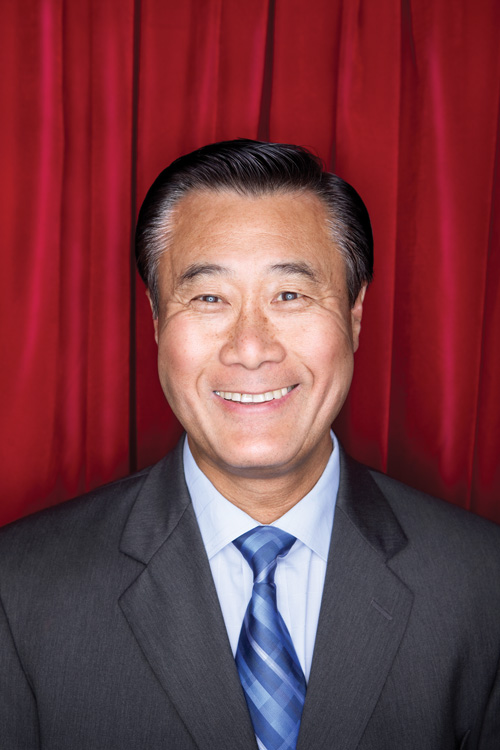
The real Leland Yee

53

tredmond@sfbg.com

It’s early January 2011, and the Four Seas restaurant at Grant and Clay is packed. Everyone who is anyone in Chinatown is there — and for good reason. In a few days, the Board of Supervisors is expected to appoint the city’s first Asian mayor.

The rally is billed as a statement of support for Ed Lee, the mild-mannered bureaucrat and reluctant mayoral hopeful. But that’s not the entire — or even, perhaps, the central — agenda.

Rose Pak, who describes herself as a consultant to the Chinese Chamber of Commerce but who is more widely known as a Chinatown powerbroker, is the host of the event. She stands in front of the room, takes the microphone, and, in Cantonese, delivers a remarkable political speech.

According to people in the audience, she says, in essence, that the community has come out to celebrate and support Ed Lee — but that’s just the start. She also urges them not just to promote their candidate — but to do everything possible to prevent Leland Yee from becoming mayor.

She continues on for several minutes, lambasting Yee, the state Senator who lived in Chinatown as a child, accusing him of about every possible political sin — and turning the Lee rally into an anti-Yee crusade. And nobody in the crowd seems terribly surprised.

Across Chinatown, from the liberal nonprofits to the conservative Chamber of Commerce, there’s a palpable fear and distrust of the man who for years has been among San Francisco’s most prominent Asian politicians — and who, had Lee not changed his mind and decided to run for a full term this fall, was the odds-on favorite to become the city’s first elected Chinese mayor.

The reasons for that fear are complex and say a lot about the changing politics of Asian San Francisco, the power structure of a city where an old political machine is making a bold bid to recover its lucrative clout — and about the career of Yee himself.

Senator Leland Yee is a political puzzle. He’s a Chinese immigrant who has built a political base almost entirely outside of the traditional Chinatown community. He’s a politician who once represented a deeply conservative district, opposed tenant protections, voted against transgender health benefits and sided with Pacific Gas and Electric Co. on key environmental issues — and now has the support of some of the most progressive organizations in the city. He’s taken large sums of campaign money from some of the worst polluters in California, but gets high marks from the Sierra Club.

His roots are as a fiscal conservative — yet he’s been the only Democrat in Sacramento to reject budget compromises on the grounds that they required too many spending cuts.

He’s grown, changed, and developed his positions over time. Or he’s become an expert at political pandering, telling every group exactly what it wants to hear. He’s the best chance progressives have of keeping the corrupt old political machine out of City Hall — or he’s a chameleon who will be a nightmare for progressive San Francisco.

Or maybe he’s a little bit of all of that.


Leland Yin Yee was born in Taishan, a city in China’s Guangdong province on the South China Sea. The year was 1948; Mao Zedong’s Communist Party of China had taken control of much of the countryside and was moving rapidly to take the major cities. The nationalist army of General Chiang Kai-Shek was falling apart, and Yee’s father, who owned a store, decided it was time for the family to leave.

The Yees made it to Hong Kong, and since Mee G. Yee had previously lived in the United States and served in the U.S. Army during World War II, he was ultimately able to move the family to San Francisco. In 1951, the three-year-old Leland Yee arrived in Chinatown.

For four years, Yee lived with his sister and mother in a one-room apartment with a shared bathroom while his father worked as a sailor in the merchant marine. It was, Yee recalled in a recent interview, a tight, closed, and largely self-sufficient community.

“The movie theater, the shoe store, the barber shop, food — everything you needed you could get in Chinatown,” Yee said. “You never had to leave.”

Of course, after a while, Yee and his mom started to venture out, down Stockton Street to Market, where they’d shop at the Emporium, the venerable department store. “It was like walking into a different country,” he said. “If you didn’t know English, they didn’t have time for you.”

Yee, like a lot of young Chinese immigrants of his era, put much of his time into his studies — in the San Francisco public schools and in a local Chinese school. “My mom spoke a village dialect, and we had to learn Cantonese,” he said. “Every little kid had to go to Chinese school. We hated it.”

When Yee was eight, his parents managed to buy a four-unit building on Dolores Street, and the family moved to the Mission, where he would spend not only the rest of his childhood but much of his early adult life. He graduated from Mission High School, enrolled in City College, studied psychology and after two years won admission to UC Berkeley.

Berkeley in 1968 was a very different world from Chinatown and even the relatively controlled environment he’d experienced at home in the Mission. “You didn’t protest in school. You’d have been sent home, and your mother would kill you,” he said.

At Berekely, all hell was breaking loose, with the antiwar protests, the People’s Park demonstrations, the campaign to create a Third World College (which led to the first Ethnic Studies Department), and a general attitude of mistrust for authority. “I developed a sense of activism,” Yee said. “I realized I could speak out.”

That spirit quickly vanished when Yee lost faith in some of his fellow activists. “People would work with us, then get into positions of power and use that against you,” he recalled. “A lot of my friends said ‘forget it.’ I left the scene.”

Yee once again devoted his energy to school, earning a masters at San Francisco State University and a Ph.D in child psychology from the University of Hawaii. Along the way, he met his wife, Maxine.

With his new degree, the Yees moved back to San Francisco — and back in with his parents at the Dolores property, where he, Maxine and a family that would grow to four kids would live for more than a decade.


Yee worked as a child psychologist for the San Francisco Department of Public Health, starting the city’s first high school mental-health clinic. He went on to become a child psychologist at the Oakland Unified School District, then joined a nonprofit mental health program in San Jose.

In 1986, Yee decided to get active in politics for the first time since college, and ran for the San Francisco School Board. He lost — and that would be the only election he would ever lose. In 1988, he won a seat, and established himself as an advocate for students of color, fighting school closures in minority neighborhoods. He also tried to get the district to modify its harsh disciplinary rules, arguing against mandatory expulsions.

On fiscal issues, though, Yee was a conservative. For his first term, despite the brutal cutbacks of the recession of the late 1980s and early 1990s, he insisted that the district make do with the money it had. His solution to the red ink: Cut waste. Only in 1992, when he was up for re-election, did he acknowledge that the district needed more cash; at that point, he supported a statewide initiative to tax the rich to bring money to the schools.

The sense of fiscal conservatism — of holding the line on taxes, but mandating open and fair contracting procedures and tight financial controls — was a hallmark of much of his political career. When the Guardian endorsed him for re-election to the board in 1992, we wrote that “there’s real value in his continuing vigilance against administrative fat and favoritism in contracts.”

Over the next four years, Yee worked with then-Superintendent Waldemar “Bill” Rojas, a deeply polarizing figure who pushed his own personal theory of “reconstitution” — firing all the staff at low-performing schools — and later was enmeshed in a scandal that led to prison time for a contractor he’d hired. Yee told me he was the only board member to vote against hiring Rojas, but people who were watching the board closely back then say he didn’t always stand up to the superintendent.

He also became what some say was a bit too close with Tim Tronson, a consultant hired by the district as a $1,000-a-day facilities consultant. Tronson wound up getting indicted on 22 counts of grand theft, embezzlement, and conspiracy in a scheme to steal $850,000 from the schools, and was sentenced to four years in state prison.

In 1998, when some school board members wanted to build housing for teachers on property that the district owned in the Sunset, Yee led the opposition — with Tronson’s help. At one meeting at Sunset Elementary School, Yee went so far as to say, according to people present, that “Tim Tronson is my man, and I rely on him for advice.”

Yee acknowledged that he worked closely with Tronson to defeat that housing project. “He was the facilities manager,” Yee explained, “and I said that I trusted his judgment.”


Yee has either a great sense of political timing or exceptional luck. He ran for the Board of Supervisors in 1996, facing one of the weakest fields in modern San Francisco history. He was the only Chinese candidate and one of just two Asians (the other, appointed incumbent Michael Yaki, barely squeaked to re-election). In an at at-large election with the top five winning seats, Yee came in third, with 103,000 votes.

He was never a progressive supervisor. In 2000, the Guardian ranked the good votes of what we referred to as Willie Brown’s Board, and Yee scored only 43 percent. He was against campaign finance reform. He supported the brutal gentrification and community displacement represented by the Bryant Square development. He voted to kill a public-power feasibility study and opposed the Municipal Utility District initiative. He opposed a moratorium on uncontrolled live-work development.

In 2002, Yee was one of only three supervisors to oppose Proposition D, a crucial public-power measure that would have broken up PG&E’s monopoly in the city. He stood with PG&E (and then-Sups. Tony Hall and Gavin Newsom) in opposition to the measure, then signed a pro-PG&E ballot argument packed with PG&E lies.

When I asked him about that stand, Yee at first didn’t recall opposing Prop. D, but then said he “stood with labor” on the issue. In fact, the progressive unions didn’t oppose Prop. D at all; the opposition was led by PG&E’s house union, IBEW Local 1245.

Yee was particularly bad on tenant issues. He not only voted to deny city funding for the Eviction Defense Collaborative, which helped low-income tenants fight evictions; he actually tried to get the city to put up money for a free legal fund to help landlords evict their tenants. He opposed a ballot measure limiting condo conversions. He opposed a measure to limit the ability of landlords to pass improvement costs on to their tenants.

In 2001, Yee voted to uphold a Willie Brown veto of legislation to limit tenancies in common, a backdoor way to get around the city’s condo conversion ordinance. Only Hall and Newsom, then the most conservative supervisors on the board, joined Yee. At one point, he started asking whether the city should consider repealing rent control.

He opposed an affordable housing bond in 2002, joining the big landlord groups in arguing that it would raise property taxes. Every tenant group in town supported the measure, Proposition B; every landlord group opposed it.

I asked Yee about his tenant record, and he told me that he now supports rent control. But he said that he was always on the side of homeowners and small landlords, and that property ownership was central to Chinese culture. “I was responding to the Chinese community and the West Side,” he said.

He wasn’t much of an environmentalist, either — at least not in today’s terms. He was one of the only city officials to support a “Critical Car” rally in 1999, aimed at promoting the rights of vehicle drivers (and by implication, criticizing Critical Mass and the bicycle movement).

His record on LGBT issues was mixed. While he supported a counseling program for queer youth when he was on the school board, he also supported JROTC, angering queer leaders who didn’t want a program in the public schools run by, and used as a recruiting tool for, the military, which at that point open discriminated against gay and lesbian people.


Yee was also one of only two supervisors who voted in 2001 against extending city health benefits to transgender employees.

That was a dramatic moment in local politics. Nine votes were needed to pass the measure, and while eight of the supervisors were in favor, Yee and Hall balked. At one point, Board President Tom Ammiano had to direct the Sheriff’s Office to go roust Sup. Gerardo Sandoval, who was ducking the issue in his office, to provide the crucial ninth vote.

Yee didn’t just vote against the bill. According to one reliable source who was there at the time, Yee spoke to a community meeting out on Ulloa Street in the Sunset and berated his colleagues, quipping that the city should have better things to do than “spend taxpayer money on sex-change operations.”

It was a bit shocking to trans people — Yee had, over the years, befriended some of the most marginalized members of what was already a marginalized community. “There was one person at the rail crying, saying ‘Leland, how could you do this to us,'” Ammiano recalled.

The LGBT community was furious with Yee. “I didn’t speak to him for at least a year,” Gabriel Haaland, one of the city’s most prominent transgender activists, told me.

Yee now says the vote was a mistake — but at the time, he told me, he was under immense pressure. When he voted for the queer youth program, he said, “the elders of the Chinese community ripped me apart. They called my mother’s friends back in the village [where he was born] and said her son was embarrassing the Chinese community.”

That must have been difficult — and he said that “if I had known the pain I had caused, I wouldn’t have voted that way.” But it was hard to miss that pain his vote caused.

On the other hand, people learn from their experiences, attitudes evolve, we all grow up and get smarter, and the way Yee describes it, that’s what happened to him.

In 2006, when he was running for state Senate, Yee met with a group of trans leaders and formally — many now say sincerely — apologized. It was an important gesture that made a lot of his critics feel better about him.

“He didn’t have to do that,” Haaland said. “People change, and he paid for his crime, and that’s genuine enough for me.”

As a former school board member, Yee kept an interest in the schools — but not always a healthy one. At one point, he actually proposed splitting SFUSD into two districts, one on the (poorer) east side of town and one on the (richer) west. “We strongly opposed that,” recalled Margaret Brodkin, who at the time ran Coleman Advocates for Children and Youth. “Eventually he dropped the idea.”

For all the problems, in his time on the Board of Supervisors, Yee developed a reputation for independence from the Brown Machine, which utterly dominated much of city politics in the late 1990s. His weak 43 percent rating on the Guardian scorecard was actually third-best among the supervisors, after Ammiano and the late Sue Bierman.

In 1998, he was one of the leaders in a battle to prevent the owners of Sutro Tower from defying the city’s zoning administrator and placing hundreds of new antennas on Sutro Tower. He, Bierman, and Ammiano were the only supervisors opposing Brown’s crackdown on homeless people in Union Square.

When he ran in the first district elections, in 2000, against two opponents who had Brown’s support and big downtown money, the Guardian endorsed him, noting that while he “can’t be counted on to support worthy legislation … He’s one of only two board members who regularly buck the mayor on the big issues.”

(He never liked district elections, and used to take any opportunity to denounce the system, at times forcing Ammiano to use his position as president to tell Yee to quit dissing the electoral process and get to the point of his speech.)


In 2002, the westside state Assembly district seat opened up, and both Yee and his former school board colleague Dan Kelly ran in the Democratic primary. Yee won, and went on to win the general election with only token opposition.

His legislative record in the Assembly wasn’t terribly distinguished. Yee never chaired a policy committee — although he did win a leadership post as speaker pro tem. And he cast some surprisingly bad votes.

In 2003, for example, then-Assemblymember Mark Leno introduced a bill that would have exempted single-room occupancy hotels from the Ellis Act, which allows landlords to evict tenants for no reason. Yee refused to vote for the bill. Leno was furious — he was one vote short of a majority and Yee’s position would have doomed the bill. At the last minute, a conservative Republican who had grown up in an SRO hotel voted in favor.

When he ran for re-election in 2004, we noted: “What’s Leland Yee doing up in Sacramento? We can’t figure it out — and neither, as far as we can tell, can his colleagues or constituents. He’s introduced almost no significant bills — compared, for example, to Assemblymember Mark Leno’s record, Yee’s is an embarrassment. The only high-profile thing he’s done in the past several years is introduce a bill to urge state and local governments to allow feng shui principles in building codes.”

In 2006, Yee decided to move up to the state Senate, and he won handily, beating a weak opponent (San Mateo County Supervisor and former San Francisco cop Mike Nevin) by almost 2-1. His productivity increased significantly in the upper chamber — and in some ways, he moved to the left. He’s begun to support taxes — particularly, an oil severance tax — and when I’ve questioned him, he somewhat grudgingly admits that Prop. 13 deserves review.

He’s done some awful stuff, like trying to sell off the Cow Palace land to private developers. But he has consistently been one of the best voices in the Legislature on open government, and that’s brought him some national attention.

Yee has been a harsh critic of spending practices and secrecy at the University of California, and when UC Stanislaus refused in 2010 to release the documents that would show how much the school was paying Sarah Palin to speak at a fundraiser, Leland flew into action. He not only blasted the university and introduced legislation to force university foundations to abide by sunshine laws; he worked with two Stanislaus students who had found the contract in a dumpster and made headlines all over the country.

He’s fought for student free speech rights and this year pushed a bill mandating that corporations that get tax breaks for job creation prove that they’ve actually created jobs — or pay the tax money back. He’s also won immense plaudits from youth advocates and criminal justice reformers for his bill that would end life-without-parole sentences for offenders under 18.

Along the way, he compiled a 100 percent voting record from the major labor unions, including the California Nurses Association and SEIU, and with the Sierra Club. All three organizations have endorsed him for mayor.

Yee told me that he thinks he’s become more progressive over the years. “My philosophy has shifted,” he said.

Yet when you talk to his colleagues in Sacramento, including Democrats, they aren’t always happy with him. Yee has a tendency to be a bit of a loner — he’s never chaired a policy committee and in some of the most bitter budget fights, he’s refused to go along with the Democratic majority. Yee insists that he’s taken principled stands, declining to vote for budget bills that include deep service cuts. But the reality in Sacramento is that budget bills have until this year required a two-thirds vote, meaning two or three Republicans have had to accept the deal — and losing a Democratic vote has its cost.

“You have to give up all sorts of things, make terrible compromises, to get even two Republicans,” one legislative insider told me. “When a Democrat goes south, you have to find another Republican, and give up even more.”

In other words: It’s easy to take a principled stand, and make a lot of liberal constituencies happy, when you aren’t really trying to make the state budget work.


I met Rose Pak on a July afternoon at the Chinatown Hilton. She brought along her own loose tea, in a paper package; the waitress, who clearly knew the drill, took it back to the kitchen to brew. Pak and I have not been on the greatest of terms; she’s called the Guardian all kinds of names, and I’ve had my share of critical things to say about her. But on this day, she was polite and even at times charming.

After we got the niceties out of the way (she told me I was unfair to her, and I told her I didn’t like the way she and Willie Brown played politics), we started talking about Yee. And Pak (unlike some people I interviewed for this story) was happy to speak on the record.

She told me Yee had “no moral character.” She told me she couldn’t trust him. She told me a lot of stories and made a lot of allegations that we both knew neither she nor I could ever prove.

Then we got to talking about the politics of Chinatown and Asians in San Francisco, and a lot of the animosity toward Yee became more clear.

For decades, Chinatown and the institutions and people who live and work there have been the political center of the Chinese community. Nonprofits like the Chinatown Community Development Center have trained several generations of community organizers and leaders. The Chinese Chamber of Commerce, the Six Companies, and other business groups have represented the interests of Chinese merchants. And while the various players don’t always get along, there’s a sense of shared political culture.

“In Chinatown,” Gordon Chin, CCDC’s director, likes to say, “it’s all about personal connections.”

There’s a lively infrastructure of community-service programs, some of which get city money. There’s also a sense that any mayor or supervisor who wants to work with the Chinese community needs to at least touch base with the Chinatown establishment.

Yee doesn’t do that. “He doesn’t give a shit about them,” David Looman, a political consultant who has worked with many Chinese candidates over the years, told me.

Yee’s Asian political base is outside of Chinatown; he told me he sees himself representing more of the Chinese population of the Sunset and Richmond and the growing Asian community in Visitacion Valley and Bayview.

Pak is connected closely to Brown, who Yee often clashed with. For Pak, Brown, and their allies, strong connections to City Hall mean lucrative lobbying deals and public attention to the needs of Chinatown businesses. Then there’s the nonprofit sector.

CCDC and other nonprofits do important, sometimes crucial work, building and maintaining affordable housing, taking care of seniors, fighting for workers rights, and protecting the community safety net. Yee, Pak said, “has never shown any interest in our local nonprofits. We all work together here, and he doesn’t seem to care what we do.” Yee told me he has no desire to see funding cut for any critical social services in any part of town. But he has also made no secret of the fact that he questions the current model of delivering city services through a large network of nonprofits, some of which get millions of taxpayer dollars. And the way Pak sees it, all of that — the nonprofits, the business benefits, the contracts — are all at risk. “If Leland Yee is elected mayor,” she told me, “we are all dead.”

I ran into an old San Francisco political figure the other day, a man who has been around since the 1970s, inside and outside of City Hall, who remains an astute observer of the players and the power relationships in the local scene. At the time we talked, he wasn’t supporting any of the mayoral candidates, but he had a thought for me. “This town,” he said, “is being taken over by a syndicate. Willie Brown is the CEO, and Rose Pak is the COO, and it’s all about money and influence.”

That’s not a pleasant thought — I’ve lived through the era of political machine dominance in this town, and it was awful. In the days when Brown ran San Francisco, politics was a tightly controlled operation; only a small number of people managed to get elected to office without the support of the machine. Developers made land-use policy; gentrification and displacement were rampant; corruption at City Hall turned a lot of San Franciscans off, not only to the political process but to the whole notion that government could be a positive force in society.

A few years ago, I thought those days were over — and to a certain extent, district elections will always make machine politics more difficult. But when I see signs of the syndicate popping up — and I see a candidate like Ed Lee, who’s close friends with Brown, leading the Mayor’s Race — it makes me nervous. And for all his obvious flaws, at least Leland Yee isn’t part of that particular operation. If there’s a better reason to vote for him, I don’t know what it is.

YEE HOME PURCHASE RAISES SUSPICIONS

Rose Pak has a question about Leland Yee. “How,” she asked me, “did the guy manage to buy a million-dollar house on a $30,000 City Hall salary?”

Pak isn’t the only one asking — numerous media reports over the years have examined how Yee raised a family of four and bought a house in the Sunset on very little visible income. And while I’m not usually that interested in the personal finances of political candidates, I decided that it was worth a look.

Here’s what I found: Public records show that in July 1999, Yee and his wife, Maxine, purchased a house on 24th Avenue for $875,000 (it’s now assessed at slightly more than $1 million). At the time, Yee was a San Francisco supervisor, earning a little more than $30,000 a year. (The salary of the supervisors was raised dramatically shortly after Yee left the board and went to the state Assembly.) His wife wasn’t working. And his economic interest statements for that period show no other outside earnings. So the disposable, after-tax income of the entire Yee family couldn’t have been much more than $25,000.

That, by any normal standard, shouldn’t have been enough to float a mortgage that, records show, totaled $516,000. In fact, the interest payments alone on that mortgage alone would total $3,600 a month — more than Yee’s gross income.

Documents in the Assessor’s Office show another paper trail, too. In 1989, Jung H. Lee, Yee’s mother, transferred the deed on a four-unit Dolores St. building where the family had been living to Maxine and Leland Yee — for no money. And a few months before the Yees bought the Sunset house, they took out a $320,000 home-equity loan on that property. That was the down payment on the Sunset property.

Still: At that point, the Yees would have been paying off two mortgages, with a total nut of about $5,000 a month — and supporting four kids, in San Francisco. In 2002, Yee’s economic interest statement’s show some modest income from teaching at Lincoln University — but nowhere near enough to pay that level of expenses.

What happened? Yee explains it this way: “For more than 10 years, we were living rent-free in my parents’ property,” he told me I an interview. “We were a close Chinese family, and my parents provided the food and helped pay for the children’s clothing. So we had almost no expenses and we lived very frugally.”

During that period, Yee was working for the San Francisco Department of Public Health, the Oakland Unified School District, and a San Jose nonprofit, earning, he said, between $50,000 and $90,000 a year. If he saved almost all of that money, he would have had more than a half-million dollars in the bank when he bought the Sunset house.

There’s nothing on any of his economic disclosure forms showing any ownership of stocks or other reportable financial interests during that period, so he wasn’t investing the money. In fact, he says, it was, and is, all in simple savings accounts. A bit unusual for that large a sum of money.

How did he get a mortgage? “Back then,” he said, “banks were willing to lend a lot more freely than they do today.”

Starting in 2003, Yee was in the state Assembly, making a higher salary — but still not much in excess of $100,000 a year. After taxes, he was probably taking home about $75,000 — and $60,000 was going to the two mortgages.

How did he do it? “We have been supplementing our income with our savings,” he said. “We don’t take vacations, we are very careful with our money.” And they clearly aren’t desperate for cash — Yee’s daughter occupies two of the four units in the Dolores St. building they own, but the other two units are vacant.

It’s possible. It’s plausible. But I don’t blame people for wondering how he managed to pull it off. (Tim Redmond, with research assistance by Oona Robertson) 


BIG CORPORATIONS HAVE BACKED YEE

Yee became a prodigious fundraiser in Sacramento — and a lot of the money came from big corporations that had business in the Legislature. And while he has perfect scores from the Sierra Club and the big labor unions, he’s taken tens of thousands of dollars from some of the biggest corporations, agribusiness interests, and polluters in the state. And at times, he’s voted their way.

Since 1993, for example, campaign finance records show Yee has taken more than $20,000 from Chevron, ExxonMobil, Valero, Conoco Phillips, and BP. He’s received another $22,450 from the chemical industry (and industry employees). Most of it came from Clorox, Dow Chemical, and Dupont.

And while the Sierra Club may not have considered it a priority, Sen. Mark Leno has worked hard to pass a bill limiting chemical fire retardants in furniture. In 2008, Yee voted against Leno’s AB 706.

That year he also refused to support a bill that would prohibit the use of the chemical diacetyl in workplaces. The industries that opposed AB 514 (including Bayer, Abbott Laboratories, Pfizer, and Johnson & Johnson) have given Yee a total of more than $60,000.

In 2003, Yee voted against a crucial tenant bill, one that would have prevented the owners of single room occupancy hotels from using the Ellis Act to evict tenants. He received a campaign check for $2,500 from the San Francisco Apartment Association the next day. Landlords in general have given Yee close to $40,000.

Then there’s agribusiness. Yee gets a lot of money from the farming industry, despite the fact that there obviously aren’t many farms in his district. Why, for example, would the California Poultry Association, the California Cattlemen’s Association, and the California Farm Bureau give him money? The Poultry Association’s Bill Mattos told us that Yee “has taken a keen interest in California’s poultry industry.”

Yee also took immense flak from the San Francisco Chronicle and other papers over a 2003 vote against a bill to limit emissions from farm vehicles. In an editorial, the paper wrote that he was “doing dirty work for the lobbyists.” In the end, under immense public pressure, he switched positions and voted for the bill. I asked Yee about all that money from all those bad operators, and he told me — as most politicians will — that campaign cash has never influenced any of his votes.

So why do all these groups give him money? “It’s about whether you will sit down and listen,” Yee said. “I will talk to all sides and at least consider the arguments as a thoughtful human being. Then I vote my conscience.” (Tim Redmond, with research by Oona Robertson) 

Tonight: the last of five Guardian forums on the issues for the next mayor

0

Join us tonight for the fifth and final installment of the Guardian Forum: a series of panel discussions and participatory debates framing the progressive issues for the mayor’s race and beyond:
 
Forum Five: Environment, Energy and Climate Change
Tonight, August 25 at 5:30PM
Koret Auditorium, San Francisco Main Library, 100 Larkin St., SF
(Civic Center BART and MUNI 5, 19, 47, 49, or F Train)

Featuring:
Tim Redmond, San Francisco Bay Guardian
Antonio Diaz, People Organizing to Demand Environmental and Economic Rights
Alicia Garza, People Organized to Win Employment Rights
Aaron Peskin, former San Francisco supervisor
Saul Bloom, Arc Ecology
 
Cosponsors: Harvey Milk LGBT Democratic Club, San Francisco Tenants Union, SEIU Local 1021, San Francisco Rising, San Francisco Human Services Network, Council of Community Housing Organizations, Community Congress 2010, Center for Political Education, Jobs with Justice
 
All events are free. Sessions will include substantial time for audience participation and discussion. Please join us!
 
Save the Date
On September 21st, we’ll present our platform to the mayoral candidates and see which ones are willing to sign on.

Alerts

0

alerts@sfbg.com


THURSDAY 25

The Guardian Forum

This summer, the Bay Guardian — along with cosponsors that include SEIU 1021, the San Francisco Tenants Union, and the Harvey Milk LGBT Democratic Club — has held a series of public forums framing progressive issues for the mayor’s race and beyond. This fifth and final forum focuses on the Environment, Energy, and Climate Change and the panel is Guardian Executive Editor Tim Redmond, Antonio Diaz with People Organizing to Demand Environmental and Economic Rights, Alicia Garza with People Organized to Win Employment Right, former Supervisor Aaron Peskin, and Arc Ecology’s Saul Bloom.

5:30 p.m., free

Koret Auditorium, SF Main Library

100 Larkin, SF


FRIDAY 26

Torture and Yoo

The California Young Republican Federation hosts John Yoo as welcoming speaker for its first state convention. Yoo has had international complaints filed against him for his complicity in torture and other crimes against humanity at Abu Ghraib and Guantánamo Bay after writing legal memos justifying harsh interrogation techniques for the Bush White House. Yoo is a professor at UC Berkeley’s Boalt Hall School of Law. Anti-war protestors will gather at the doors to “welcome” convention attendees and protest Yoo.

6:30-8:00 p.m., free

Marine Memorial Club & Hotel

609 Sutter Street, SF

www.cyrf2011.com/


SATURDAY 27

Green Tea Party

The Tea Party Express national bus tour is kicking off in Napa, of all places. To counter the event, the Napa County Green Party is throwing a Green Tea Party with prominent progressive speakers, vegetarian cuisine, fun info booths, and iced green tea. The event will end with a march to the Napa Valley Expo Fairgrounds, where presidential candidates are expected to be speaking to Tea Party supporters. Participants are encouraged to wear green.

10:30 a.m., free

Veterans Memorial Park

Corner of Main and Third, Napa

napa@cagreens.org

(707) 257-7435


SUNDAY 28

Preserving the Harvest

The Ecology Center of San Francisco (ECOSF) is hosting a community workshop entitled “Preserving the Harvest: Canning and Drying,” along with a potluck and solar oven pizza making. Spend time with neighbors and friends while learning how to can fruits and tomatoes in the most energy efficient way. ECOSF’s mission is to promote cooperation, community, and respect for the environment, so bring a dish made from your garden to share.

11:00 a.m. – 5:00 p.m.

Near School of Arts athletic field

555 Portola, SF

www.eco-sf.org


Mail items for Alerts to the Guardian Building, 135 Mississippi St., SF, CA 94107; fax to (415) 437-3658; or e-mail alert@sfbg.com. Please include a contact telephone number. Items must be received at least one week prior to the publication date.

Fall ballot gets stripped of progressive measures

25

The San Francisco Tenants Union suffered a pair of disappointing setbacks in the last week – first when a referendum on the Parkmerced project narrowly failed to qualify for the fall ballot, then when progressive supervisors withdrew a proposed ballot measure to prevent demolition of existing rental housing – leaving the fall ballot without any progressive measures (unless one counts the sales tax measure that was unanimously approved this week by the Board of Supervisors).

Also dropped from the ballot this week was another progressive measure that would have prevented the Recreation and Park Department from entering into new commercial leases of parks and recreation centers, a measure written by the citizens group Take Back Our Parks to reverse RPD’s recent push to monetize more of its assets.

Yet unlike last week’s removal of a third measure placed on the ballot by at least four progressive supervisors – the Fair Shelter Initiative, written by the Coalition on Homelessness, which was unhappy that Sup. Jane Kim dropped her support under pressure from the Mayor’s Office – it was the sponsoring groups that asked the supervisors to remove the two measures this week.

Sponsors of the parks measure say it had some legal problems that would have complicated the campaign, particularly after an analysis by the City Attorney’s Office concluded that it could affect things like private party reservations and leases associated with the America’s Cup.

Ted Gullicksen of the San Francisco Tenants Union said his group concluded there were legal problems with the anti-demolition measure as well and that it wouldn’t affect the demolition of 1,500 housing units associated with the Board of Supervisors’ 6-5 vote to approve the massive Parkmerced project, which was the catalyst for the measure.

SFTU sponsored the signature-gathering campaign to do a referendum on that vote, but the Elections Department concluded on July 29 that of the 18,487 signatures that were turned in, just 12,917 were valid, falling short of the 14,336 they needed. Gullicksen said delays in qualifying the 56-page petition gave them just three weeks to gather signatures, and a freak mid-June rainstorm hurt that effort as well.

“We knew from the get-go that it was going to be a challenge,” he said. “It was very disappointing that we fell just short.”

But he said there was a silver lining: “It sent a message to the supervisors. David Chiu [the swing vote on the Parkmerced approval] called me the next day to say he’d make sure demolitions don’t become an epidemic.”

Sup. David Campos – who helped sponsor all three measures and even kept his name on the shelter measure after Sups. Eric Mar and Kim had removed theirs – told us, “I think it’s disappointing that there isn’t a measure on the ballot to excite the progressive base, but at the end of the day, we do have an exciting mayor’s race and races for sheriff and district attorney.”

Campos has endorsed John Avalos of mayor and Ross Mirkarimi for sheriff, but has not yet made an endorsement for DA.

Civil Grand Jury: Parkmerced tenant protections ‘just talk’

The Board of Supervisor’s Government Audit & Oversight Committee heard from members of the San Francisco Civil Grand Jury this morning about a report it issued on the Parkmerced redevelopment.

“When you read this report, nowhere in this report does it say, ‘do not develop,'” said Michael Golrick, a juror with the civil grand jury. Yet he noted that the primary concern highlighted in the document was a perceived lack of tenant protections for residents living in rent-controlled units.

The assurances in the development agreement — that tenants will be moved into new units after their  existing units are demolished, with the same rent-control protections they had before — can’t be guaranteed due to unresolved legal questions, he said. “It is aspirational and inconclusive. Tenants will live under a cloud of uncertainty, possibly for years.” He added, “Until a court decides, it’s all just talk.”

Jennifer Matz of the Office of Economic and Workforce Development and John Rahaim, director of the San Francisco Planning Commission, both noted that the Civil Grand Jury report was hitting on a legal issue, so the city’s formal responses will be prepared in concert with City Attorney Dennis Herrera’s office.

Matz also noted that the draft of the Development Agreement which the Civil Grand Jury had based its assessment on had changed since the Civil Grand Jury report was issued, with new provisions to shore up tenant protections. She also charged that the report “fails to understand certain aspects of the Development Agreement.”

Meanwhile, residents organized under the Parkmerced Action Coalition are still hoping they may have a chance to reverse the Board’s decision to approve the Parkmerced overhaul by placing a referendum on the Nov. 8 ballot to ask voters whether the zoning for the project should be approved. The group of tenants, organized under the “Committee to Stop Mass Demolition of Housing,” submitted 18,487 signatures on July 8. The Department of Elections is still verifying them and so far, the referendum has not yet qualified for the ballot.

What will the judges do?

1

Presiding judge Katherine Feinstein is being forced to cut radically the Superior Court staff in the wake of more state budget cuts. It’s a serious problem — among other things, the cuts will allow landlords to evict tenants on a fast track, but won’t allow tenants to sue landlords on the same timeline. But the whole thing raises another interesting question: What are they going to do with all the judges?


San Francisco has 51 Superior Court judges — and if half the courtrooms are going to be essentially shut down, what will all those people do all day? You can’t run a courtroom without staff; at the very least, for any real judicial work to go forward, there has to be a court reporter to create a legal record. So a lot of the wheels of justice will simply grind to a halt.


You can’t lay off judges, of course — they’re elected officials. So they have to go to work every day and get paid. For what?


Well, I asked Ann Donlan, a spokesperson for Judge Feinstein (who, by the way, sounds just like her mother — it’s uncanny), she agreed it was an issue. “It will be Judge Feinstein’s job to keep them busy,” she said.


And no, they won’t be sitting around watching videos to learn about judicial demeanor.


For starters, 11 court commissioners who are getting laid off will have to be replaced — and that means full-on Superior Court judges will be handling drug court, the community justice center, even — yes — traffic court. This is typically stuff that’s considered below the pay grade of the men and women in black robes, but hey: Someone’s got to do it. “We may have to double up some judges in courtrooms,” Donlan said (and I wonder how that will work out).


Feinstein is hoping that the judges can spend a lot of time in chambers, trying to meet with litigants and settle cases. And I suspect some people (particularly plaintiffs) are going to be much more ready to settle, since it may be five or more years before a case can go to trial. Defendants, on the other hand, may be happy to wait it out; they get to keep their money for five years or more. So I don’t know how much settling is really going to go on.


I dunno; I bet someone’s going to making money selling golf shoes over at 400 McAllister.

Deep court cuts favor landlords over tenants

37

When I read about the latest manifestation of California’s voluntary descent toward Third World status – in this case, the defunding of San Francisco’s civil court system thanks to the deep state budget cuts caused by Republicans – in this morning’s SF Chronicle, I tried to fight through my despair and search for a silver lining.

“With a few exceptions, only criminal cases will go to trial,” the article said, listing those exceptions as mostly family law cases, such as child abuse and neglect and domestic violence.

Hmmm, I thought, is there a way for the average San Franciscan to somehow benefit from this virtual shutdown of our justice system? Then, we at the Guardian had an idea: in a city where two-thirds of residents are renters, perhaps a civil court system that will now take years to get a hearing would be a boon to those contesting eviction proceedings.

Yay, we thought, free rent! And given that it’s mostly the property-owning class that has caused this decimation of basic government services, people who have benefited mightily by having Prop. 13 keep their property taxes artificially low but still block other efforts to increase tax revenues, there seemed to be a certain poetic justice in the possibility that the courts would stop helping them evict their tenants.

So I called San Francisco Tenants Union Director Ted Gullicksen to run our idea past him and find out if we were onto something, but he doused the idea with a bucket of ice-cold reality. It turns out that evictions will continue to move rapidly through the otherwise gutted civil court system (as I would have learned from the Bay Citizen article on the issue).

“Unfortunately, tenants and criminals are being fast tracked,” he told us. And it gets even worse than that because while landlords will still be able to demand action on their evictions within five days, tenants will find years-long delays when they seek justice from landlords acting illegally or unfairly. “While they will move quickly on evictions, they will move slowly on wrongful eviction lawsuits,” Gullicksen said.

Ann Donlan, spokesperson for the San Francisco Superior Court, told us that eviction proceedings will still move quickly because “it’s a statutory requirement.” But, I asked her, as a matter of fairness and equity, why the courts will still delay wrongful eviction suits for years, even though they often deal with the same set of facts as the eviction cases? Doesn’t that bias the courts toward landlords? She told me to please submit my question in writing and she’ll try to get me an answer.

But there really aren’t any good answers to the gross inequities that these deep cuts will cause in the court system, with a 40 percent overall cut being disproportionately focused on the civil side of the equation.

“This is pretty heavy duty,” attorney Stephen Sommers, who handles wrongful termination, civil rights, and other cases on behalf of the little guy. He said many businesses in San Francisco already wantonly disregard their employees’ rights. “They feel like they can get away with murder and now they’ll be highly incentivized to continue that.”

Attorneys facing five-year waits for a trial will be less likely to handle cases on contingent for poor plaintiffs, he said, and people in positions of power of all kind will be more likely to abuse their authority in myriad ways, knowing that their victims will have far less recourse in the courts.

“It’s going to be the wild west out there,” he said. “I wonder, if people can’t turn to the courts, whether they’ll take matters into their own hands and the crime rate will go up.”

But if there is any silver lining for the powerless at all, Gullicksen said the powerful will also find less recourse in an overwhelmed court system. So he suggested, “It might be a good time for a citywide rent strike because they don’t have many resources in the court system anymore.”

Guardian forum: Tenants, housing and land use

18

Should be a great forum July 14. We’ve got a panel on tenants, housing and land-use issues, some of the key stuff for the future of the city. Great group of speakers — and, as always, we’ll be looking for ideas and input from the audience. This isn’t a mayoral debate (that comes later); it’s a chance for progressives to talk about the issues that the next mayor needs to address and come up with a platform.

Speakers:

FEATURING:
Sara Shortt, Housing Rights Committee
Ted Gullickson, SF Tenants Union
Nick Pagoulatos, Dolores St Community Services
Sue Hestor, Land Use Attorney

We may have some more suprise guests, too.

Lots of time for discussion afterward.

It’s at 6 pm (until 8 pm) at the City College Mission Campus, 1125 Valencia. More details here. See you there.


One Hundred Days of Spring: As Mid-Market talks, two organizers do

1

All photos by Stephen Heraldo

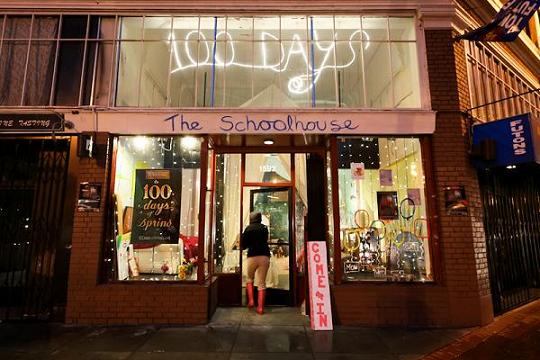
Just beyond the scope of the perpetual debate of revitalizing Mid-Market — defined as the stretch from Fifth Street to Van Ness Avenue — an extraordinary project is quietly closing its doors on an oblique, no-man’s-land corner of Market near Franklin. There, for one hundred days and nights, an empty glass storefront opened up to spill a swath of light and music onto the cigarette-studded sidewalk — without funding, a business model, or (as founders Will Greene and Sam Haynor are the first to say) much of anything else.

“Ask us our mission statement,” One Hundred Days of Spring organizer Haynor challenges.

“We don’t have one,” Greene, his creative partner, cuts in.

“Well, yes we do,” says Haynor.

“Yeah, that not doing it seemed like a cop-out,” the pair concludes.

“It” was creating more than three months of free and donation-based events, classes, and recorded stories representing a variegated slice of the local population: hipster kids in art collectives, professionals on their Market Street commutes, and low income neighborhood residents, including many who bed down each night on the block.

As part of Central Market Partnership’s ongoing efforts to inject arts and culture into revitalization plans for mid-Market, the San Francisco Office of Economic and Workforce Development is joining with the Arts Commission to hold a series of focus groups exploring ways to engage artists, small businesses and cultural organizations in the making of a thriving creative district.

Five focus groups have already met, according to OEWD’s Jordan Klein, and over the coming weeks, more gatherings — of community residents, transportation advocates, historical preservation advocates, and nonprofit leaders — will provide insight for the Central Market Economic Strategy, to be released in the late summer or early fall.

One Hundred Days of Spring wasn’t on the agenda of any of these meetings. A former boutique clothing store sandwiched between SROs and auto body shops on a strip shadowed by the sheer, block-long face of a Honda dealership, the space’s previous tenants didn’t last long. But transformed into a gypsy-tent-circus-wagon-theater-gallery-cum-classroom, the storefront, reborn as the Schoolhouse, rooted itself in the neighborhood in just a few months.

The hundred days are now over. But if the packed closing ceremony was any indication, Haynor and Greene’s model is one that the community is keen to reproduce. Mark Singer, a research librarian and freelance writer who found the project in what the two founders call the “analog way” — by stumbling across the threshold — told supporters, “I challenge everyone in this room to replicate what we’ve seen here, seen in the last hundred days.”

“The ultimate goal,” Haynor said, “is not only to share and to educate, but at the end of one hundred days, to have created one hundred new ideas for people to carry out into the world.”


Nothing to it

One Hundred Days of Spring was an experiment in community-supported programming. Rather than relying on or waiting for grant money, Haynor and Greene hoped to show that a community space can be self-sustaining — for the benefit of those who can contribute more and those who must contribute less.

“San Francisco is grant rich,” Haynor explains, “but it’s also full of people waiting for grants. They have a bunch of awesome ideas, but by the time the grant cycle comes around, the initial spark is gone. For us, going after a grant would just eat up time, and we wouldn’t end up doing what we wanted.”

Instead, the two 25-year-olds pooled their savings and paid $2,000 a month for rent from March to June, $200 for utilities, plus a few hundred extra for renovations and insurance. Within three weeks of the initial idea, they had moved into the space and populated a calendar of events through friends, friends of friends, and tools like SF Chalkboard. They were running full tilt by day six. 

In just over three months, the team offered more than 250 classes, shows, and tutorials — sometimes five in a day — covering everything from truffle-making and fermentation to bike repairs, aerial silks, and open mics. By collecting donations on a pay-what-you-can basis, Haynor and Greene were able to recover a large portion of their initial output, and also garner an extra $4,000 to reinvest into the project.

Greene on the value of 100 days of events: “If you try to put a value on what we have now, that we didn’t have then, you couldn’t buy it for $4,000.”

Though the Schoolhouse founders ended up $4,000 short, Greene says they “could have broken even” if they had focused more on the project’s revenue-generating components, like filming videos for musicians who performed in the space.

Even so, for Greene the worth of One Hundred Days of Spring was indisputable. “If you try to put a value on what we have now, that we didn’t have then, you couldn’t buy it for $4,000,” he says.

When Judy Nemzoff, community arts and education program director for the Arts Commission, stopped by the Schoolhouse and asked how Haynor and Greene did what they did, the two replied, “Well, we just signed a lease.”


It takes two

Inside the Schoolhouse, the laid-back attitude seemed to likewise shrug “nothing to it but to do it.” But the warm, easy atmosphere belied the late nights and hard work it took to get ‘er done.

Understanding how One Hundred Days of Spring came to be — and why it worked so well — means understanding a bit about its creators

Greene and Haynor, hanging at the Schoolhouse

Haynor and Greene have the kind of friendship people make movies about. Besides the sort-of charming things like finishing each other’s sentences and bragging about accomplishments each knows the other would never mention for himself, there’s the sense that somehow, these two unassuming fellows are going to change the world.

“We’re a good balance,” Greene says. With the air of someone showing how two-plus-two equals four, he explains, “Sam’s a bit spastic, and I can plunge a toilet.”

“We have different skill sets, but we share goals,” he continues. “We keep each other in check. We’re both very often wrong, but we’re rarely both wrong at the same time.”

Coco Spencer, who joined One Hundred Days of Spring as an intern partway through and become an indispensible team member, says she was willing to dedicate so many hours to the Schoolhouse because, “Basically, Sam and Will are the most inspiring people I’ve ever met.”

Haynor and Greene were campers and later counselors together at the Bar 717 Ranch in Trinity County. There, they found each other, and also a passion for teaching — or, as they put it, “helping people to be good versions of themselves.”

Though each has traveled and embarked on sundry individual projects — Greene as a musician and videographer, Haynor as a chess champion and conflict-area journalist — they continue to connect over their drive to educate in unique new ways.


Bathroom, beats, and big ideas

At the Schoolhouse, that meant engaging community members through a service-based approach. “Our main goal is to provide resources to people who need resources,” Greene says. “We’re not interested in providing resources to people who have resources.”

Given the diversity of The Schoolhouse’s participants, “resources” could mean different things.

Haynor explains, “For some people, we’re a bathroom. For some we’re a place to stop in and say ‘hi.’ For some, we’re a place to do events.”

“We’re successful because we’re always doing something fun, and everyone feels invited,” Greene says. “It’s the loose nature of our project. There’s no doorman, no guy with a cash box.”

There were challenges (“Sam’s been trying to put together homeless poetry readings, but he’s scheduled them for the first of the month. That’s when everyone gets their checks, so everyone gets drunk,” Greene says at one point), but there were also many moments — like when a woman from the block walked up and started giving Haynor a massage, or when Greene calmly negotiated with a rowdy, intoxicated visitor, encouraging her to pipe down and eventually leave — that pointed to a deft interface with the surrounding community.

“They respect our storefront more than they do the others,” Greene says. Some locals worked shifts at the Schoolhouse in return for resources. Others stopped in for music, for food and nutrition classes, or to look at the art. Some simply came by to talk about living in the area.

During an “Un-Talent Show”, a performer named SofT humorously described a street-dweller’s perpetual problem: carrying belongings. He showed an in-stitches audience how to bundle objects in an old sweater — a wholly relatable rap on wrapping. Another visit came from Benny, one of SF’s famous itinerant tamale sellers, who lives in an SRO across the street and makes what partakers described as “possibly the world’s best tamales” across town in his girlfriend’s kitchen.

Haynor describes a woman who walked into a sewing workshop — run by SF Social Fabric, a volunteer-staffed bike maintenance and sewing skills collective — with “some trepidation.”

“She was in a room with a bunch of people who were nothing like her,” he says, “but we got to know each other over the fact that we all wear clothes. And they all fall apart.”

Neighborhood connections at the Schoolhouse

“There’s a duality to this corner,” Haynor says. “From doctors to the people who live on the block to all the people in the middle who travel Market Street. Before us, some wouldn’t even cross the street.”

“At our best,” he continues, “we’re a place people from another demographic can discover the old-fashioned way — with their eyes and their feet. They cross the threshold, ask what we’re doing, decide to stay, and learn something. Now, I can’t go five minutes without seeing someone I know, or someone who I recognize, or someone who just popped in.”

Singer, a perfect example of the phenomenon, started stopping by between two and five times a week after his initial discovery. He framed the project’s importance in simpler terms: “This is where we need these things to happen. Where it smells like urine on a hot day.”


Let’s put on a show!

Singer believes that projects like the Schoolhouse can “transform parts of San Francisco” by providing services that are more than “just artists and gallery-talk.” The Schoolhouse, he says, “was something visceral.”

“One Hundred Days of Spring created an infinite possibility for community that can’t be replicated on a screen or keyboard. We’re not talking Internet cafés with white earbuds, but humans breathing in the same space — collaborating, communicating in one room, and that room changing every darn day.”

Indeed, the walls of the Schoolhouse were repainted so many times over the course of the hundred days — with layers of murals, street art, installations, white space for projecting films — that Spencer, who took charge of many of the events’ logistics, joked she was hoping to reduce the interior square footage, and thus, the rent.

The zealous energy required to transform the space again and again was reminiscent — Singer pointed out — of Babes-in-Arms-era Mickey Rooney and Judy Garland exclaiming Hey, kids! Let’s put on a show in this old barn! That down-home, DIY energy may be just what efforts like the Mid-Market revitalization require.

Greene, who attended one of the Central Market Partnership’s focus groups, says the consensus was that knowledge about and access to space were the biggest obstacles to creating and executing programs of any kind.

“People are looking for answers,” he says, “looking for some larger entity to hand them space, or looking tax breaks. There’s the feeling that you can’t just do what you want to do.”

“Rather than saying ‘if you give us space, we’ll fill it with beautiful things,’ you can say ‘I’m just going to do it.’ If you’re willing to make it happen, if you work really hard, if you work with the people you’re trying to reach, then you don’t have to worry about anything else.”

Despite the waiting, wanting, hoping attitudes Greene says he encountered, he points out that plenty of others are “just doing it.” The Schoolhouse helped along a few such visionaries by sponsoring two “Grant Prix Dinners.” During the informal roundtables, entrepreneurs presented project ideas between courses. Participants paid a fee for dinner and a ballot on which to elect their favorite projects – to whom the entry frees were turned over as seed money at the end of the night. 


Bringing together the neighborhood

At times, especially in San Francisco and other urban areas where real estate is costly, amping up a neighborhood’s arts and cultural amenities has acted as a roundabout measure to invite the type of gentrification that sweeps streets clean. That kind of programming is not intended to serve current residents so much as to usher in new ones. 

By contrast, the Schoolhouse made a conscious decision to serve the neighborhood’s existing population — with safer-feeling streets resulting, and much more quickly, at that. 

One Hundred Days of Spring was a bold, direct move to engage the local community. As such, it was highly effective not only at providing needed resources, but at tempering the less-desirable qualities of the neighborhood by creating a sense of community and responsibility among residents and passers-through.

“Coming out of Muni, walking home on Market Street,” Singer had said, “can frankly be pretty scary. There’s substance abuse, drug deals, and people who may or may not be harmless.” The Schoolhouse, he said, helped diffuse that lack of ownership and feeling of “anything goes.” For Singer – and Schoolhouse denizens of all backgrounds — the space managed to help tie a few new knots. 

“The Schoolhouse brought me closer to a world that’s very marginal,” Singer said. “the homeless world.”

Whether or not Mid-Market planners will look to the Schoolhouse for a lesson in effective community building, the project’s two masterminds have undoubtedly developed a model they can draw on in the future.

Haynor and Greene plan to continue working together on community education projects. With One Hundred Days of Spring under their belts, they will be able to approach supporters “not just with an idea, but with a proven concept.”

“We are both in this together to see what we’re both capable of,” Haynor said. “To see if we’re any good at this thing.”

In the style of banter so typical of the pair, Greene added, “So we can figure out the rest of what we’re going to do with our whole darn lives.”


Heroes and hoedowns

0

arts@sfbg.com

FRAMELINE This year’s Bay Area-centric Frameline features run a thematic and identification gamut appropriate to the festival’s ever-inclusive programming. Several are celebrations of local LGBT heroines and heroines, some recently deceased and some still-with-us.

Scott Gracheff’s With You commemorates the life and legacy of late local resident Mark Bingham, who famously died on United Airlines Flight 93 and is strongly suspected of being among the passengers who stormed the cockpit and prevented that hijacked Newark-to-SFO flight from reaching its presumed governmental target in Washington, D.C., on 9/11.

As his activist mother Alice Hoagland and everyone else here says, it’s the sort of thing he would do — Bingham was, among other things, an avid rugby player, metalhead, daredevil, UC Berkeley frat president, world-class partier, several-time arrestee (for reckless hijinks rather than criminal menace), bear chaser, global traveler, dot-com-wave surfer, and “human labrador retriever” (as a long-term boyfriend calls him). He lived a very full life and doubtlessly would have continued living it to the limit if this encounter with terrorism hadn’t cut his time short at 31.

A life that remained eventful for nearly three times that length was that of Del Martin, who along with surviving partner Phyllis Lyon founded SF’s Daughters of Bilitis — the nation’s first lesbian political and social organization — in the highly conservative climate of 1955. They remained highly active in feminist, gay, senior, and other progressive causes over the decades. Martin’s death in 2008 at age 87 occasioned a tribute in the City Hall rotunda that is captured by veteran local filmmaker Debra Chasnoff’s Celebrating the Life of Del Martin. This hour-long document demonstrates the breadth of Martin’s influence as prominent politicians, musicians, authors, progressive and religious leaders, et al. pay homage.

How exactly to honor our dead is the question at the heart of Andy Abrahams Wilson’s very polished The Grove, which charts the creation of the National AIDS Memorial Grove — an idea brought to fruition by the surviving partner of local landscape gardener Stephen Marcus — as well as some struggles over its visibility (even most visitors to Golden Gate Park don’t seem to know it’s there) and purpose.

When a recent contest was held for an installation to be added to the site, two women designers won with a striking sculptural concept intended to make a potent statement à la D.C.’s Vietnam Veterans Memorial about the disease’s devastation. But the grove’s current board shot it down, preferring to maintain the space’s leafy, meditative feel — even if that might also maintain its relative public invisibility. Should the memorial comfort those who directly suffered loss, or metaphorically convey that loss in vivid terms for future generations?

Very much living with HIV — emphasis on the living part — is the subject of Dain Percifield’s Running in Heels: The Glendon “Anna Conda” Hyde Story. Glendon Hyde a.k.a. Anna Conda fled a horrific Bible Belt background to become one of SF’s premier drag personalities, running the Cinch’s popular Friday night Charlie Horse revue for five years until a new condo’s complaining tenants shut that down. Enraged by the city’s “war on fun,” hostility toward the homeless, and other issues to boot, he joined 13 other candidates running for District 6 (Tenderloin) supervisor last year. He didn’t win, but this doc will make you hope he tries again.

Last but far from least is this year’s sole Bay Area narrative feature, shot largely in Fruitvale even if it is set in Texas. A big leap from writer director David Lewis’ prior features, Longhorns is a delightful romantic comedy about several 1982 Lone Star state frat boys dealing with sexual impulses and related emotions that might — oh lawd no — mean they’s quar, not just “messing around.” With some soundtracked songs by H.P. Mendoza (2006’s Colma: The Musical), this total charmer is (as one character puts it) “hotter’n a billy goat in a pepper patch.”

FRAMELINE 35: SAN FRANCISCO INTERNATIONAL LGBT FILM FESTIVAL

June 16–26, most films $9–$15

Various venues

www.frameline.org

Alerts

0

ALERTS

By Jackie Andrews


WEDNESDAY, JUNE 15

Golden Wheel Awards

Join the SF Bike Coalition to celebrate and congratulate the movers and shakers who realize the potential for connectedness and comfortable biking in San Francisco. Award recipients include the SFMTA for the safer green bike lanes installed along Market Street, which have attracted new commuter cyclists to the Financial District. Also hear from Leah Shahum about the Bike Coalition’s bold vision of cross-town bikeways.

6–9 p.m.,

$75 individual, group packages available

War Memorial Building

401 Van Ness, SF

www.sfbike.org


THURSDAY, JUNE 16

The Castro and LGBTQ history

Attend this panel discussion called “No Equality Without Economic Equality: The Struggle Against Gentrification and Displacement in the Castro in the Late 1990s” and learn about the tumultuous period of dot-com boom and doom in San Francisco’s Castro District — a time when rents soared, long-term tenants were displaced (many living with HIV and AIDS), and queer youth ended up on the street. But there was a silver lining. Out of the gentrification grew a strong community of activists and much- needed social services, as well as historical milestones like the Tom Ammiano write-in mayoral campaign of 1999 and the progressive takeover of the Board of Supervisors the following year. Speakers include Tommi Avicolli Mecca, Jim Mitulski and Gabriel Haaland, and Paola Bacchetta.

7–9 p.m., $5

GLBT Historical Museum

4127 18th St., SF

www.glbthistorymuseum.org


TUESDAY, JUNE 21

Guardian forum: Budget, Healthcare, and Social Services

This is the second forum in a five-part series that examine local issues that are expected to have a major impact in the upcoming mayoral race. Representatives from labor groups and local nonprofits will be on hand, as will budget experts, to discuss the city budget, access to healthcare for San Franciscans, and other useful and threatened social services. This is sure to be a lively discussion and a unique opportunity to get involved in local politics. Be there.

6–8 p.m., free

Local 2 Hall

309 Golden Gate, SF

www.sfbg.com

Media access here and now

Weigh in on the issue of media access in San Francisco and the controversy around the accessibility of media passes for journalists while out on assignment. Panelists at this conversation with the Society of Professional Journalists will include SFPD’s Lt. Troy Dangerfield, attorney David Greene with the First Amendment Project, interim City Administrator Amy Brown, and a local journalist who has experience going through the process of trying to obtain a press pass.

5:30 p.m., free

SF Public Library

Latino Community Room

100 Larkin, SF

www.spj.com 


Mail items for Alerts to the Guardian Building, 135 Mississippi St., SF, CA 94107; fax to (415) 437-3658; or e-mail alert@sfbg.com. Please include a contact telephone number. Items must be received at least one week prior to the publication date.

The Guardian Forum: Issues for the next mayor

0

A series of panel discussions and participatory debates framing the progressive issues for the mayor’s race and beyond

Forum Two: Budget, Healthcare and Social Services
• Gabriel Haaland, SEIU 1021
• Brenda Barros, Health Care Worker, SF General Hospital
• Debbi Lerman, Human Services Network
• Jenny Friedenbach, Budget Justice Coalition
And others to be confirmed!

June 21 • 6 pm – 8 pm
UNITE HERE Local 2, 209 Golden Gate

Outline of Programs:
June 9: Economy, Jobs and the Progressive Agenda
June 21: Budget, Healthcare and Social Services
July 14: Tenants, Housing and Land Use
July 28: Immigration, Education and Youth
Aug. 25: Environment, Energy and Climate Change

Cosponsors:
• Harvey Milk LGBT Democratic Club
• San Francisco Tenants Union
• SEIU Local 1021
• San Francisco Rising
• San Francisco Human Services Network
• Council of community housing organizations
• Community congress 2010
• Center for Political Education

All events are free. Sessions will include substantial time for audience participation and discussion.
Please join us!

Lee should veto Parkmerced

0

EDITORIAL Mayor Ed Lee got his start as a lawyer working on tenant issues. He understands the city’s rent laws and the shortage of affordable housing. He also knows — or ought to know — that when the city’s tenant groups are unanimously opposed to a project, elected officials who care about tenant rights should pay attention.

The Parkmerced project will be a clear test: Does he follow his activist roots, stick with the people he started with and show his independence — or side with the big out-of-town developer and allow the project to move forward?

The supervisors approved the project by the narrowest of margins, 6-5. All of the progressives voted to reject the development agreement and rezoning — and for good reason. The deal would lead to the demolition of 1,500 units of rent-controlled housing. And while the developer says it will abide by the rent laws for the newly built replacement units, that’s a shaky legal guarantee. The larger point, tenant advocates say, is that demolishing existing affordable housing is always a bad idea.

In the end, 1,500 people will have to leave the homes they’ve lived in for years — in some cases, many years. They will be offered replacement units in a high-rise — very different from the garden apartments (with, yes, gardens) that they’ve occupied. And if the developer decides that there’s more money to be made by jacking up the rents on those units, it’s a safe bet that an army of lawyers will arrive attempting to undermine the questionable guarantees now in the deal.

There’s also the problem of transportation and traffic. The project will include a new parking space for every new unit, meaning 6,000 new cars in an area already overwhelmingly congested. Since the vast majority of the units will be market-rate (the developer will provide 15 percent affordable units, under city law, which means 85 will be sold or rented to rich people) the development will transform what is now still something of a working-class neighborhood into another enclave for the wealthy.

When we talked to Mayor Lee, he was noncommittal on the deal. At the same time, he noted that the garden apartments are old and will have to be replaced at some point. We don’t dispute that there are ways to add more density at Parkmerced. But wholesale demolition of affordable housing isn’t the answer.

This deal is bad for tenants and bad for the city. Mayor Lee ought to recognize that then tenant groups opposing this have analyzed it carefully and come to an entirely reasonable conclusion.

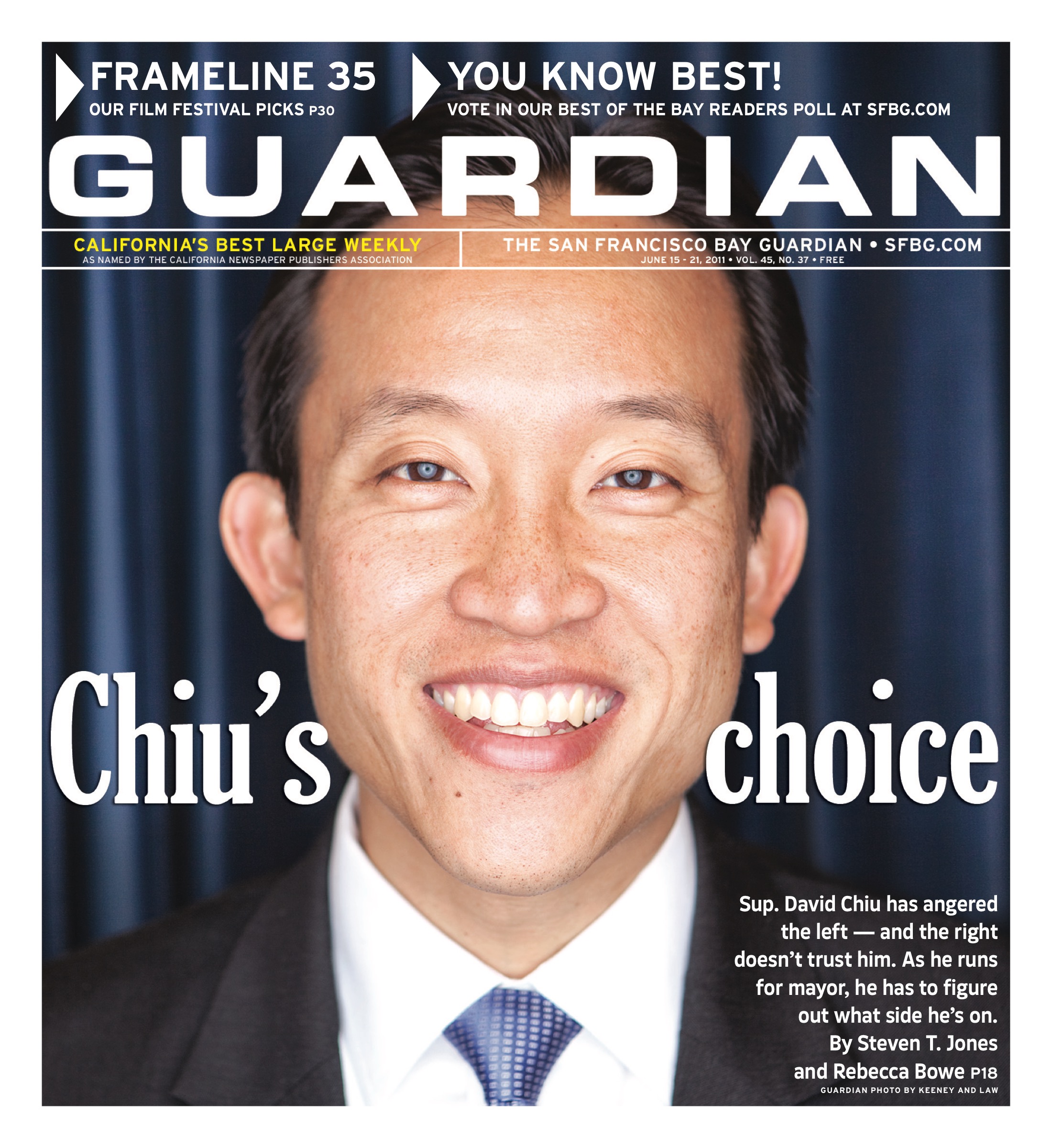
Sup. David Chiu, the swing vote in favor of the project, did serious damage to his reputation as a progressive and lost thousands of tenant votes by siding with the developer. Lee, who insists he isn’t running in November, ought to demonstrate that he hasn’t forgotten his roots, that he listens to activists, and doesn’t simply go along with poorly conceived development projects. He should veto the development agreement and zoning changes and send this thing back to the drawing board.

Return to Barbary Lane

1

arts@sfbg.com

THEATER The mainstream apotheosis of once-outré subculture is always a complex matter. Even the good-natured, good-time stories in Armistead Maupin’s original “Tales of the City” San Francisco Chronicle serial had a subversively political edge to them in 1976 (which made their publication in the paper beginning that year both remarkable and fraught with behind-the-scenes battles between writer and editorial). So it is a little weird, if also apt, to see a full-fledged musical adaptation of Maupin’s classic Tales of the City — the first and eponymous title in what became an eight-book series — getting its Broadway-bound debut at American Conservatory Theater.

Although inevitably speaking less to today’s San Francisco than to an idealized conception of a glorious recent past, this Tales is still recognizably homegrown (despite all the out-of-town talent), affirming, lightly risqué, and overall slickly accomplished. Minor weak points aside, there’s plenty of vitality throughout a generally shrewd production, whose creative team includes playwright Jeff Whitty (Avenue Q) and music group Scissor Sisters’ Jake Shears and John Garden (providing the eclectic music and occasionally awkward but mostly inspired lyrics for Whitty’s admirably clear, compact book).

The results are nostalgic but never blinkered. Even the shopworn feel of Haight Ashbury and disco kitsch proves less than annoying thanks to Maupin’s set of palpable and sympathetic characters (animated by a strong cast), his nicely entangling storyline, and the show’s engaging, even rousing period-savvy score. Whether it will play in Peoria — or New York City for that matter — who knows. But for the audience at last week’s opening in San Francisco, it solidly earned the love fest it probably would have gotten either way.

Cleveland-reared but Bay-curious Mary Ann Singleton (a formidable Betsy Wolfe) arrives in 1976 San Francisco, a city celebrating its own version of the “bi-sexi-centennial” year with a burgeoning alternative culture mixing remnants of Summer of Love hippiedom with mirror-ball dance floors and gay bathhouses. Fleeing her oppressive hometown and shedding gradually her straight-laced upbringing, Mary Ann makes her new home at 28 Barbary Lane, a Russian Hill apartment complex (a skyward Victorian framework flanked by great locks of greenery in Douglas W. Schmidt’s choice scenic design) overseen by the benignly extravagant matron and marijuana maven Anna Madrigal (played with serene assurance by Broadway’s golden-throated Judy Kaye). She soon joins the other tenants in a loose alternative “family” (with all attendant subplots) centered on the mysterious Anna, who we learn started out even more remotely from her present self than did Mary Ann.

The numerous other characters come equally well realized. As Mary Ann’s out gay neighbor Michael “Mouse” Tolliver, for instance, Wesley Taylor is as believably down-to-earth as he is charming (Michael’s loving coming-out letter to his Anita Bryant–loving parents is just one of the show’s dramatic highlights). Broadway veteran Richard Poe, meanwhile, delivers Edgar Halcyon — the stuffy businessman grasping for a last chance at life under Anna’s amorous tutelage — with commanding aplomb and a nicely understated vulnerability. Many other fine turns abound in the large cast, amid some fine musical numbers — although an otherwise effective power ballad from secret Anna daughter Mona (the excellent Mary Birdsong) is somewhat marred by the unintentionally comic title “Seeds and Stems.” And the final “No Apologies” number, while good, is stretched thin with the duty of wrapping up various subplots.

If nostalgia reigns here, the story till has real roots that make themselves gently felt throughout. In 1976, Maupin was a young transplant from North Carolina, via the Navy, and newly, enthusiastically out as a gay man and budding author. Capturing the gig with the Chronicle, he serialized what would become his first novel in a rush of five installments per week under the column title “Tales of the City.” He wrote close to the ground (and the Chronicle society desk), delivering what was at times almost as much reportage as fiction, peppering his hastily composed plotlines and characters with anecdotes from the city he was coming to know intimately. Of course, the ground he worked was then heaving in a cultural and political earthquake that set San Francisco ever further apart from the rest of the country. Tales of the City, in its various incarnations, is still a no-apologies love letter home. 

TALES OF THE CITY

Through July 10

Check website for dates and times, $35–$98

American Conservatory Theater

405 Geary, SF

(415) 749-2228

www.act-sf.org

Editorial: Mayor Ed Lee should veto the Parkmerced development agreement

20

 Mayor Ed Lee got his start as a lawyer working on tenant issues. He understands the city’s rent laws and the shortage of affordable housing. He also knows — or ought to know — that when the city’s tenant groups are unanimously opposed to a project, elected officials who care about tenant rights should pay attention.

The Parkmerced project will be a clear test: Does he follow his activist roots, stick with the people he started with and show his independence — or side with the big out-of-town developer and allow the project to move forward?

The supervisors approved the project by the narrowest of margins, 6-5. All of the progressives voted to reject the development agreement and rezoning — and for good reason. The deal would lead to the demolition of 1,500 units of rent-controlled housing. And while the developer says it will abide by the rent laws for the newly built replacement units, that’s a shaky legal guarantee. The larger point, tenant advocates say, is that demolishing existing affordable housing is always a bad idea.

In the end, 1,500 people will have to leave the homes they’ve lived in for years — in some cases, many years. They will be offered replacement units in a high-rise — very different from the garden apartments (with, yes, gardens) that they’ve occupied. And if the developer decides that there’s more money to be made by jacking up the rents on those units, it’s a safe bet that an army of lawyers will arrive attempting to undermine the questionable guarantees now in the deal.

There’s also the problem of transportation and traffic. The project will include a new parking space for every new unit, meaning 6,000 new cars in an area already overwhelmingly congested. Since the vast majority of the units will be market-rate (the developer will provide 15 percent affordable units, under city law, which means 85 will be sold or rented to rich people) the development will transform what is now still something of a working-class neighborhood into another enclave for the wealthy.

When we talked to Mayor Lee, he was noncommittal on the deal. At the same time, he noted that the garden apartments are old and will have to be replaced at some point. We don’t dispute that there are ways to add more density at Parkmerced. But wholesale demolition of affordable housing isn’t the answer.

This deal is bad for tenants and bad for the city. Mayor Lee ought to recognize that the tenant groups opposing this have analyzed it carefully and come to an entirely reasonable conclusion.

Sup. David Chiu, the swing vote in favor of the project, did serious damage to his reputation as a progressive and lost thousands of tenant votes by siding with the developer. Lee, who insists he isn’t running in November, ought to demonstrate that he hasn’t forgotten his roots, that he listens to activists, and doesn’t simply go along with poorly conceived development projects. He should veto the development agreement and zoning changes and send this thing back to the drawing board.


Sacramento deadline: Some key bills

0

A bunch of key bills come up in the state Legislature this week — and some of them are going to be very close. Assemblymember Tom Ammiano is pushing hard to get AB 1017, which would eliminate mandatory felony charges for pot cultivation, throught the Assembly floor (in fact, when I called his press secretary, Quintin Mecke, today (June 1) at about 11 a.m., Ammiano was on the floor making his 1017 pitch.) Ammiano also has a key tenant bill, AB 265, which would allow tenants who are a few days late with the rent to avoid eviction.


Dean Preston, executive director of Tenants Together, has a great rundown on the major tenant bills here. Sen. Mark Leno’s bill, SB 184, which is critical to protecting the rights of cities to demand affordable housing as part of a development deal, is going to be very close. So is Assemblymember Mike Feuer’s AB 934 — a nobrainer that simply clarifies tenant protections that have been threatened by recent court cases. (Preston told me that San Francisco Assemblymember Fiona Ma is not among the bill’s supporters at this point; you can call her office at  557-2312 and let her know you want her to vote for it.)


Sen. Leland Yee has gotten two bills through, one that would allow pharmacies to sell sterile syringes without a prescription and one that mandates more sunshine in the courts. His bill forcing the University of California to open up its foundation records will almost certainly clear the Senate now that UC had dropped its opposition. Tougher going, I expect, for SB 9, which would end life without parole sentences for juveniles.


Leno’s bill legalizing infusion drinks at bars cleared the Senate. He’s also pushing a Community Choice Aggregation bill, SB 790, and  the long-awaited, much-fought-over cell phone, SB 932, which would require modest disclosure of cell-phone radiation.


The difference between this session and the last one is that a lot of these bills might actually get the governor’s signature.

Editor’s Notes

7

tredmond@sfbg.com

Three weeks before the June 25-26 Pride Weekend — which is the unofficial opening of the official fall mayoral race — there are two front-runners: state Sen. Leland Yee and Sup. John Avalos.

I’m not saying either is going to win. Things change quickly in this town. We don’t even know for sure if the incumbent, Ed Lee, is going to be in the final scrum.

But here’s what we do know: Yee and Avalos — right now, today — are doing the things they need to do to emerge from a crowded pack. And the others are either hanging back or flailing around.

Avalos had more than 400 people at his kickoff. State Assemblymember Tom Ammiano was there to endorse him. He’s got window signs all over the east side of town. He’s showing momentum, energy; he’s on track to solidify the progressive base and start moving west. He has agreed to cosponsor the mayor’s pension reform plan (but only if SEIU Local 1021 gets the amendments the union wants).

Yee has figured out a very smart strategy: He realizes that he’s already got name recognition and a west-side base, that he’s never going to get the support of the Chinatown establishment (powerbroker Rose Pak hates him), and that he’s one of at least five candidates fighting over the center. So he’s trying to grab a share of the left.

Yee’s people were thrilled that he and Avalos got the Sierra Club. The more groups that endorse the two together (in any order), the more Yee becomes associated with the progressive standard-bearer. And the more second-place votes he gets on the left. (Don’t kid yourself; this race may well come down to who gets second-place votes on the left.)

And Sup. David Chiu just gave Yee a great big gift. Chiu defied every single tenant group in town and became the swing vote in favor of the Parkmerced project. Now the tenants are pissed — and you know Yee is going to try to take advantage of it.

The frustrating part of that scenario is that Yee was never a good tenant vote when he was a supervisor. That’s his Achilles’ heel on the left — but it’s old history, and the anger at Chiu is here today.

Would Chiu be a better mayor for tenants than Yee? Quite possibly. Is any tenant group thinking that right now? No.

Chiu’s in a tricky spot. He’s trying to be the centrist progressive — and that’s a hard thing to sell to either the center (where he’s one of five candidates) or the left (where Yee is edging him out in cozying up to Avalos).

City Attorney Dennis Herrera hasn’t recovered from the political consultant lobbying mess (not a new story, he’s hardly the only, or even remotely, the worst offender, but damn, it makes him look bad). Former Sup. Bevan Dufty’s doing great at the candidate forums but doesn’t have a breakout move. Assessor Phil Ting is awfully quiet.

It’s only June. But it won’t be “only” anything much longer.

Vote your vote away

The article has been changed from the print version to correct an error.

In a surprising move that is causing a strong backlash from progressives and other groups that have won important reforms at the ballot box, Sup. Scott Wiener is pushing a charter amendment that would allow the Board of Supervisors to change or repeal voter-approved ballot measures years after they become law.

If voters approve Wiener’s charter amendment, among the most vulnerable reforms may be tenant protections such as limitations on rent increases, relocation assistance for no-fault tenant removal, and owner move-in eviction limits, to name a few.

The Rules Committee heard concerned testimony about the proposal May 19 and opted to hold off on voting to send it to the full board for approval until the next meeting on June 2 to allow for more public comment.

If approved, the amendment will be on the November ballot, although the public may be confused about why such an amendment would be on the ballot in the first place. The measure covers ordinances and resolutions that were placed on the ballot by supervisors, and Wiener has said he plans to amend the measure to exempt those placed on the ballot by voter petition. Changes to taxes or bonds are not a part of the amendment because those are required by state law to go to the ballot box.

Paradoxically, Wiener’s reasoning for the proposal is that he believes voters are bogged down with too many ballot measures with complex issues that need changes, measures he claims the board could deal with more efficiently. But critics say it makes progressive reforms vulnerable to attack by a board that is heavily influenced by big-money interests.

At the committee meeting, about a dozen people spoke in opposition to the amendment, saying it seemed broad in scope and would be a more appropriate change at the state level.

Matthias Mormino, a legislative aide to Sup. Jane Kim, who chairs the Rules Committee, said that his boss is still on the fence. “She has concerns and hasn’t made up her mind yet.”

Currently California is one of the last states where a voter-approved initiative cannot be subject to veto, amendment, or repeal, except by the voters.

“It’s not a radical thing,” Wiener told the Guardian about the proposed amendment. “My thinking is that we should do our jobs. We elect public officials to make decisions every week. I wanted to strike a balance where the voters still have a strong say.”

But how strong of a say will the voting public have in cases where voter-approved initiatives are changed by the decisions of a board of politicians with their own influences and bias?

Wiener stated that he had no specific initiatives in mind when he decided to propose the amendment nor was he targeting any kind of legislation, except ones that are “outdated.” Wiener cited an example of updating campaign consultant reporting from quarterly to monthly as a change that needed to happen but could seemingly be a nuisance at the ballot box.

He is proposing a tiered system in which, for the first three years, an initiative is untouchable. In four years, a two-thirds majority vote by the board could make changes to initiatives; after seven years, a simple majority could do so. That means a raft of tenant measures approved in the 1990s could come under immediate attack.

“Does he not like our sick-leave policy?” Sup. John Avalos told us. “It’s so vague and unclear on what he is trying to do. I’m afraid that he is trying to change laws that are popular with the voters. It’s not a democratic way to resolve policy issues.”

Calvin Welch, a longtime progressive and housing activist, has his own theory on Wiener’s proposal. “Voters don’t have a big problem discerning which ones they agree with and which ones they don’t,” he said about voter-approved initiatives.

He did the number-crunching and concluded that of the 983 policy ordinances on the books, 207 (21 percent) were policy initiatives. Of those, 102 (about 10 percent) were approved by the voters.

“Not quite overwhelming the ballot,” Welch said. “The argument that what is promoting this — the inundation of the initiatives — is not borne of the facts.”

Welch believes Wiener is targeting certain landlord and tenant issues that date back to 1978, when San Francisco voters first started adopting rent control measures. “That is what the agenda is all about — roughly 30 measures that deal with rent control and growth control,” he said.

Wiener denies this is an attack on tenants, and claims he doesn’t have a specific agenda in mind. “This is long-term reform, not immediate gratification reform. To take the big, big step, we would have to change state law. This is just a modest first step.”

Welch also took issue with the idea of “election proportionality,” calling the measure an undemocratic power grab since many initiatives in San Francisco’s history were approved with more than 200,000 votes.

“Mayors don’t get 200,000 votes — these measures do,” Welch said. “That a body can overrule thousands of voters undermines the election process of San Francisco. Why not limit government actors instead of the people? It’s about what Sup. Wiener wants to change.”

Budget set-asides have long been a target for legislators, explained Chelsea Boilard, a budget analyst with Coleman Advocates for Children and Youth. Historically in San Francisco, moderate politicians have mostly honed in on social service programs, not those with a lot of clout and political backing, like police and fire budgets. Although the Children’s Fund, which was set up by a charter amendment, would be exempt, other social program priorities set by voters could be eroded.

“The reality is that the police and fire departments don’t have to go to City Hall every year to defend their budgets, but health and human services do,” Boilard said.

While many on the left would love for the California Legislature to have the authority to make changes in the property-tax-limiting Proposition 13 — like by removing commercial property from being taxed at artificially low levels — activists see real danger in Wiener’s measure.

“I think this is bad policy. I know folks are frustrated with Prop. 13, for example, and wish it was easier to amend or repeal. But the way he’s going about this is odd to me,” political activist Karen Babbitt told us. “For one thing, it appears to apply to retroactively to existing ordinances and policy declarations.”

Babbitt also cites legal research indicating that Wiener’s proposal might contradict state law and be subject to legal challenge if it passes. Plus, that challenge could come from any direction since it would allow liberal and conservative reforms to be challenged by the board.

One proposition that would fall under Wiener’s amendment is Proposition L, the sit-lie ordinance approved last year that prohibits sitting or lying on public sidewalks between 7 am and 11 p.m. After a divisive campaign against the measure, police began enforcing it in April. In three years and with enough votes by the board, the board could repeal a law that Wiener supports.

“It’s really interesting,” said Bob-Offer Westort, a civil rights organizer with the San Francisco Coalition of Homelessness. “I have a lot of questions. I guess it cuts both ways. We’d like to see the aggressive panhandling law changed. We’d like to see the sit-lie repealed. There are definitely things, with the right composition of the board, we would benefit from. And there are things that we would not want to see changed.”

Either way, the measure could result in some divisive fights at the board. “One person presenting this as a way to get it done is not the answer,” Avalos said. “I worry that he will use the amendment to dismantle certain voter-approved laws.”

David Chiu helps Leland Yee

118

It’s nice, sometimes, to be in Sacramento. You can run for local office without having to vote on local issues. Witness State Sen. Leland Yee, who didn’t have to take a formal position on the Park Merced project — and now can bask in the wonder of seeing David Chiu hand him thousands of tenant votes.


Here’s the deal: Chiu and Yee are both fighting for progressive voters in the mayor’s race. Most progressive groups will endorse John Avalos, but Yee and Chiu want those second-place votes, badly. Yee’s already got his West-side base, and getting a number two nod from, say, the Milk Club or SEIU 1021 won’t hurt him a bit with those voters. But he’s not strong with Chinatown leaders (Rose Pak despises him) and he’s in a race with three (so far) Asian candidates. He’s also contending with a bunch of other center-moderate types (Dennis Herrera, Bevan Dufty) in a very crowded race.


His strategy — and it’s smart — is to court the left, get those second- and third-place nods on the East side of town and emerge from the pack when all the votes are counted. Problem is, that’s Chiu’s natural constituency (or should be) — he talks about “our shared progressive values,” was elected as a progressive and, frankly, can’t win this race just by sticking to the center. It’s just too crowded there with too many people who have won citywide races.


And Chiu just gave up a huge chunk of the city’s left by alienating every tenant group in town.


As Dean Preston of Tenants Together put it in BeyondChron (which is generally quite friendly to Chiu):


 Chiu reached a backroom deal with the developer and provided the crucial sixth vote to approve the largest demolition of rent-controlled housing in San Francisco since the redevelopment of the Fillmore. Despite a good record on tenant rights issues before his work on Parkmerced, Chiu has now earned the distrust of tenants across the city.


The tenants aren’t always a solid bloc. Mitchell Omerberg of the Affordable Housing Alliance and Ted Gullicksen at the Tenants Union don’t always agree on candidates or issues. But there was no division or dissent on this one. Omerberg, who has been known to slide to the center, was adamant that Chiu’s vote — the swing vote to move the project forward — was “deeply disappointing.” He told us: “In general it’s an unwise, immoral plan to demolish a neighborhood. When you demolish people’s homes, you always regret it later.”


So now Yee can go to progressives and say — as he did at the Democratic County Central Committee — that he has all kinds of concerns about Park Merced and make it sound as if he opposes it, and use that leverage to peel some endorsements and votes away from Chiu. It’s ironic: When he was on the Board of Supervisors, Yee was hardly known as a pro-tenant vote. His record on tenant issues, while ancient history in political terms, was going to haunt him with some progressives (and still may). But now he’s gotten a boost — if only because he and Chiu are the ones most agressively working to get endorsements from progressive groups, and Chiu just shot himself in both feet.


Civil Grand Jury report rips Parkmerced plan

One week before the massive Parkmerced redevelopment project is slated to go before the Board of Supervisors for a second shot at approval, the San Francisco Civil Grand Jury has issued a scathing critique of the plan in a report titled “The Parkmerced Vision: Government-by-Developer.” The assessment charges that the project’s development agreement fails to guarantee adequate rent-control protections for current tenants whose homes will be razed and replaced with new units as part of the ambitious, 20-to-30 year overhaul.

The Civil Grand Jury report charges that the development agreement “is fundamentally unable to deliver such assurances because of overarching state laws that are changeable and subject to court interpretation. Through its call for demolition of existing units, the agreement eliminates existing statutory rights of tenants, replaces them with a contractual agreement from the owner/developer, and bypasses due process in the face of eviction.”

The report appears to reject the claim that the tenant protections are “ironclad,” an assurance that was repeated often in public hearings by representatives of the developer and the city’s Office of Economic and Workforce Development. “As it is stated, the agreement claims it can cause newly constructed units to be protected under the same rent stabilization ordinance previously applied to the demolished dwellings,” the report notes. “In reality, current laws appear to contravene this claim.”

When a discussion about Parkmerced was continued several weeks ago at a Board of Supervisors meeting, several members of the board voiced concerns that they did not have enough clarity on the question of whether renter protections could be guaranteed for tenants who reside in the complex’s 3,221 rent-controlled units, some of whom have lived there for decades.

“Never before has a redevelopment project of this size and length been undertaken in San Francisco in an existing community where more than 9,000 people live,” the report notes. It acknowledges the enormous tax revenues that the city stands to gain from the development, but cautions that “this windfall, no matter how promising, should not come at the expense of citizens’ legal rights.”

To remedy the flawed agreement, the Civil Grand Jury recommends that the city “enact legislation prior to signing the Development Agreement that adequately assures the statutory rights of existing tenants to remain at Parkmerced and enjoy undisturbed continued tenancy,” and goes onto suggest language providing that “If a landlord demolishes residential property currently protected under the City’s Rent Stabilization and Arbitration Ordinance, and builds new residential rental units on the same property within five (5) years, the newly constructed units are subject to the San Francisco Rent Stabilization Ordinance.”

Meanwhile, Parkmerced spokesperson P.J. Johnston has already issued a response the hot-off-the-presses report, sending out a press release calling it “flawed,” and charging that the Civil Grand Jury is “calling for a solution to a problem San Francisco has already solved.”

Johnston contends that San Francisco already has a provision in the local municipal code that would do exactly what the Civil Grand Jury is asking city government to enact as a remedy for the shortcomings of the development agreement. Is Johnston’s interpretation of the local ordinance an accurate assessment? Not being lawyers ourselves, the Guardian phoned the office of the City Attorney to find out. We’ll post a response as soon as we receive one.

Johnston criticized the Civil Grand Jury report as “a highly political stink bomb,” saying, “I believe we’ve been able to address those concerns over the past several weeks, and I hope our leaders are able to see past this kind of last-minute distraction.” Johnston, who previously served as former Mayor Willie Brown’s press secretary, added, “This reeks of the nasty side of San Francisco politics.”

**UPDATE** The Guardian just received a call from an official from the City Attorney’s office, who said they did not want to be quoted because Parkmerced is a highly politicized issue. This person confirmed that the existing code Johnston pointed to does in fact do just what the Civil Grand Jury was asking for, and added that the local law had been referenced in a Parkmerced board file from last week. Seems the Civil Grand Jury didn’t have that information when it issued the report.