Technology

Endless hookup

0

arts@sfbg.com

MUSIC Where are the turntablist masters of yore? They’ve gone missing, replaced by the likes of the Hood Internet.

It’s true. The art of the hip-hop mix, once protected by the Skratch Piklz and the X-Men (a.k.a. X-ecutioners) and the Beat Junkies and Triple Threat, has returned to the province of the sound editors, just like in the early 1980s. The problem was the turntable itself. A painful lesson of the ugly aughts was to never trust technology. Hardware emerges, changes, and is destroyed according to consumerist tastes. The alchemical idea may be subject to manipulation by the likes of Steve Jobs, Rupert Murdoch, and Eric Schmidt, but it is eternal in its adaptability to any mechanical form.

So while scratch DJs take to message boards and cry over Panasonic allegedly discontinuing its Technics 1200 line (which turned out be a false rumor), rockists and electronic heads open their laptops, launch Serato and Reason software, and get to mixing. It’s not like those turntable masters aren’t missed, though. While they spun and cut soul, funk, and hip-hop with finely nuanced techniques, like 16th century woodblock cutters, the new editors and mashup artists skip stones across genres, leaving small ripples of pop delight that quickly dissipate.

It’s a different aesthetic, that’s for sure. The Hood Internet consists of Chicago-based musicians Aaron Brink and Steve Reidell. Both moved there after finishing college — Brink at the University of Michigan and Reidell at University of Wisconsin, Madison. Initially they formed May or May Not, a “noisy pop band,” as Reidell called it, and made beats on the side for rappers “you would have never have heard of” until producers like Girl Talk and Them Jeans inspired them to create the Hood Internet Web site in 2007. Using Acid Pro and Ableton Live, they flooded the Web with smart, imaginative mashups of the Shins vs. Crime Mob, and Jim Jones vs. Daft Punk. It was a hobby: Reidell was an art director for Smart Bar, and the site’s array of cheeky collages is testament to his superior design skills. Brink is a clinical psychologist. They’ve performed around town and occasionally landed spot gigs on the weekend, but this spring marks their first extended national tour.

“I left my job earlier this year to be able to focus on the Hood Internet,” Reidell says. He’s calling from a video set in Chicago, and the resulting clip will be for “Chicago 3016,” a new single the Hood Internet produced with local MC Kid Static. It’s a reference to Chicago’s failed bid for the 2016 Summer Olympics. “There’s a great hip-hop scene here right now, from Kid Static to the Cool Kids and Kidz in the Hall. Freddie Gibbs, he’s from Gary, Indiana, but he’s basically Chicago since we’re such close neighbors.”

Unless they’re showing some hometown love — they recently mashed together buzzing Chi-town newcomers Bin Laden Blowin’ Up’s “Chi Don’t Dance” with Broken Bells’ “Citizen” — the Hood Internet tends to use radio hits, flipping recognizable raps over rock and dance tracks. Hence, The Hood Internet Mixtape Vol. 4 includes “Bring the Tabloid Sores,” where Chuck D.’s stentorian boom from “Bring the Noise” rides over Nosaj Thing’s eerie electronic remix of Health’s “Tabloid Sores.” Less brilliantly, it also includes “Swaggin’ Out,” which pairs Soulja Boy’s muttering boast from “Turn My Swag On” with Joe Jackson’s smooth jazz-pop “Steppin’ Out.” “There’s a handful of irony in what we do. The mashup itself is an ironic form of music,” Reidell says. “We live in an age where anyone can do it if you’ve got Garageband and download some a cappellas.”

The Hood Internet operates in a pop context. It isn’t simply plundering black music for source material and reshaping it for white hipsters. Collected into the ongoing Hood Internet Mixtape series, these sounds represent how much of the audience, black and white, consumes music today. To the duo’s credit, their approach is more innovative than the hordes of mixtape DJs that artlessly smack Lil Wayne “exclusives” together with little care for flow or context, or even the old-school jocks who scratch and blend like it was still the ’90s. But these tracks also demonstrate how hip-hop has been reduced by much of its audience into a series of sugary sensations — again, the skipping stones analogy. It’s music for partying, getting laid, and working out at the gym, not for intellectual exploration. You can’t blame the Hood Internet’s clever and innovative response for the current pop miasma, though.

“In recent months I’ve digested the new Freeway & Jake One album, Pill’s 4180 mixtape and Freddie Gibbs’ mixtapes as intensely as the CFCF and Caribou album,” Reidell answers when asked if he takes hip-hop seriously. “That said, a lot of pop music — and a lot of hip-hop falls into that being that it’s popular — is disposable. It’s not because it’s hip-hop, it’s because a lot of pop music is disposable. The Hood Internet mixes a lot of that stuff. But while we might mix Gucci Mane one day, we’ll mix a really thoughtful Anti-Pop Consortium track the next day.

“I think there’s some value to it because it’s introducing people to things they might not otherwise have heard,” he continues. “It’s time-stamped to a certain degree, and it’s for partying. But there’s value to that, too. People like to have a good time.”

THE HOOD INTERNET

With Tobacco (of Black Moth Super Rainbow) and the New Slave

Sat/27, 10 p.m., $12

Bottom of the Hill

1233 17th St., SF

(415) 621-4455

www.bottomofthehill.com

A chillwave primer

0

arts@sfbg.com

MUSIC Chillwave is atmospheric and can fill the background, washing over you and allowing you to float through the world, or it can work as foreground with drastic beats that make you dance. Chillwave relaxes and excites. You feel it all around yourself. It’s multifunctional: the perfect backdrop for walks through SF on blue-sky days, for dipping your toes in the sun-speckled sand, for stealing kisses with your lover, for dance parties. It’s faded and fuzzy synth-pop of blissed-out beauty.

The group of artists who’ve been dubbed “chillwave” or “hypnagogic pop” or “glo-fi” or whatever disparate adjectives you want to throw at them includes Georgia’s Washed Out, South Carolina’s Toro Y Moi, Denver’s Pictureplane, Brooklyn’s Small Black, New Jersey’s Memory Tapes, Texas’ Neon Indian and Los Angeles’ Nite Jewel (the latter two perform at Mezzanine Fri/26). Most of these acts emerged in the summer of 2009.

It’s difficult to categorize or unify a bunch of disparate artists. Unlike musical movements of the past, chillwave doesn’t spring out of a locale, like grunge did via Seattle. Instead, these bands share aesthetic similarities that were discovered via the Internet, rather than through a physical community in the old fashioned sense.

The “alt” blog Hipster Runoff recently wrote that the Wall Street Journal announced that it (HR) is the christener and thus, in some sense — but which sense? — the creator of chillwave. This meta-moment examines how hype and musical genres start and what, if anything, make them real.

Carles of HR pointed to overlapping aesthetic qualities and to the fact that these acts tend to be single musicians working mostly with a laptop. These artists blend guitar, synth, and vocals into a hazy amalgam coated in the effects and echoes of their lo-fi approach. Looping and sampling are common features, which makes chillwave highly referential, and casts a déjà vu sense of familiarity, like dusk’s repetitious shadow, over the music.

Chillwave sounds sun-bleached, like it was once bright but is now faded, and it plays on nostalgia and sentimentality, perhaps recalling an idealized youth. When you can hear the lyrics despite the layer of dust they’re covered in, you make out simple repetitions of phrases such as “don’t look back” (to quote Toro Y Moi’s “Blessa”).

Washed Out, a.k.a. Ernest Greene, lived by a peach orchard with his parents after he graduated from the University of Georgia because he couldn’t land a job. With much free time and open space, he spent late nights writing and recording music himself. This approach is common — chillwave is largely composed of one-person bands, individual musicians.

Which leads to another key point: chillwave’s DIY recordings and distribution. Seattle’s the Stranger proposes that chillwave is a reflection of our ailing economy, which has left college graduates with no job prospects or money, because this music can be made easily and cheaply. These broke musicians look back to a brighter, more sequined past, particularly to the 1980s, both for its sound — New Wave samples are common, as are shoegaze-style sound-walls and Eno-esque ambient moments — and perhaps because it is the era when most of these musicians were young. It’s a perfect combination of old-meets-new, of vintage and technology.

Washed Out originally expressed no interest in touring, partially a result of Greene’s ambivalence about how to perform his music in an interesting way. Eventually he decided to recruit a backup band, a decision Neon Indian also made. He got his friends/touring mates Josh Kolenik and Ryan Heyner of Small Black to join him at South by Southwest and now comes to SF for the tail end of his North America tour with them. Next he’ll be opening for Beach House, whose dream-pop is a clear predecessor to chillwave’s aesthetic.

Greene says that while living at home in Georgia. he made his tracks to help him feel good and to allow him to escape. Through WO’s pastel pop, we can enter clairvoyant-style into an enchanted world of pulsating beats, precise hooks, and hazy mantras. *

WASHED OUT

With Small Black, Pictureplane, and Young Prisms

Sun/28, 7 p.m., sold out (limited tickets at door)

Rickshaw Stop

155 Fell, SF

(415) 861-2011

www.rickshawstop.com

Editor’s Notes

6

Tredmond@sfbg.com

In 2003, after the United States invaded Iraq, a San Francisco Chronicle technology columnist named Henry Norr got fired for participating in an antiwar demonstration. Marching against the war, the Chron’s managers decided, was a conflict of interest. Although Norr didn’t write about politics, or international affairs, or anything other than computers, he was sent packing.

A year later, Chronicle reporter Rachel Gordon was barred from covering the biggest story in town — Mayor Gavin Newsom’s decision to allow same-sex marriages — because she’d married her same-sex partner. Again the paper’s editors went up on their big high horses and pronounced her conflicted.

So how come it’s fine for columnist and former mayor Willie Brown — who writes about politics all the time — to work as a flak for Pacific Gas and Electric Co.?

Brown was on hand to represent PG&E March 17 at a California Public Utilities Commission hearing on Proposition 16, a statewide ballot measure aimed at blocking public power. He sat with the PG&E executives and said in public that he was there on PG&E’s behalf. PG&E has been a client of his private law firm, and he acknowledged that the company "sought my counsel" over the past few years.

Sounds like a lot more obvious conflict than anything Norr or Gordon did.

But guess what? The Chron has a different standard for celebrity former mayors who carry water for corrupt utilities. When we asked Chronicle editor Ward Bushee about Brown’s obvious conflict, here’s what he said: "Willie Brown writes a popular weekly column for the Chronicle, and readers frequently tell us that they look forward to reading his informed insights and entertaining opinions on issues ranging from politics to movies.

"Our readers like his column to a large degree because he’s the Willie Brown with a long and colorful political history and many connections," he continued. "Willie is not an employee or a member of the Chronicle staff but his columns go through standard editing procedures. He understands conflict of interest as well as anyone. I’m confident that he would not use his column to promote or benefit outside interests or clients. But if you feel differently, why don’t you contact him and ask him these questions directly."

Um, actually, Mr. Bushee, you need a history lesson. Brown was notorious for using his position as speaker of the state Assembly to promote the interests of his private law clients — something that could have gotten him disbarred in 47 states (but not this one). So he has a long history of "promoting … outside interests or clients."

And I did try to contact him. The first time I called, he answered his phone but said he was too busy to talk. I’ve left messages since then, and he hasn’t called back.

For the record, I enjoy Brown’s column too. And for the record, I have no problem with a journalist taking stands on issues. I speak about issues all the time — on panels, on the radio, at community events … anytime anyone’s willing to listen, I’ll tell you what I think. Which is pretty much what you read right here.

But I never get paid for advocating for anyone, certainly not PG&E. And I don’t like double standards.

Frankly, Bushee is wrong here. If Willie Brown can show up as PG&E’s spokesperson at a public hearing on a major political issue and still cover San Francisco and California politics as a columnist (without, by the way, ever disclosing in his column that a major player in the political world is a private client of his), then the Chron should give Henry Norr his job back. And Rachel Gordon should be able to write about the politics of same-sex marriage. Because this looks really, really bad.

Closer edits: An interview with classic DJ dynamo Greg Wilson

0

In this week’s issue of the Guardian, I finally got the total fanboy pleasure of writing about, and talking to, one of my true DJ inspirations, electro-funk originator and dance edit king Greg Wilson. (He’ll be performing at Triple Crown on Fri/19). Kicking his career off in 1975, the man has the kind of stamina and skills most spinners can only dream about. (And I didn’t even get into the fact that he was the first professional DJ hired for a regular gig at the hugely influential Hacienda club in Manchester.) In the late ’70s and early ’80s, Wilson provided a crucial link between the often segregated black soul and white dance scenes — he was known as a “black music specialist,” eek — and his panoramic edits were the fruitful results of his colorblind cross-pollination. Here’s our email chat in full, his replies coming after a “brilliant night in Melbourne,” Australia.

http://www.youtube.com/watch?v=zY-EgzcN6_k

SFBG: It’s such perfect timing to have you come to SF for the tour. We’re finally getting an edit fan scene going here, as well as our usual host of groove revivalists and analogue equipment fetishists. As to the US edit scene in general, I’m wondering if you’ve heard and what you think of some of the newer acts and labels like Wolf + Lamb, Soul Clap, Tensnake, and SF’s own King & Hound. I’m also curious as to your thoughts on more established soul re-editors like Moodymann. Are there any other Americans you particularly admire? I’d like to try to tease out some of the influence you’ve had here in the past 20 years.
Greg Wilson: I suppose it’s been more the other way around, with me editing or mixing tracks by US artists. On [recently released compilation] Credit To The Edit Vol 2, a third of the album is made up of US tracks — “Don’t Turn it Off” by 40 Thieves, “Starlight” By Escort, “Oh Snap!” by Nick Chacona & Anthony Mansfield and ‘One Life Time To Live’ by Gary Davis. I’ve obviously picked up on some of the US edits, via Prince Language, Rong, Rvng Of The Nrds etc, but there’s probably loads of good stuff I’m missing out on.

http://www.youtube.com/watch?v=AWiKEBuFiNY

SFBG: Can you tell me the story of your relationship with [musician, DJ, and Green Gorilla crewmember] Anthony Mansfield? You talk about it a bit in the liner notes for Credit to the Edit Vol 2. I’m hoping you can expand upon that a bit, since he’s such an integral part of the scene here.
GW: Anthony introduced me to a lot of the people on the San Francisco scene when I was last over. The remix I did of ‘Oh Snap!’ was a big tune for me, and we’ve become friends as a result. When I came over in 2008 he took me to Haight-Ashbury, which, being a ’60s obsessive, was the first place on my to go to list. He also took me across the Golden Gate bridge and right up to where you look out over the Pacific. The fog was rolling in and it felt like we were at the edge of the world, which I suppose we were in a sense. It really was one of the most incredible sights I’ve ever seen.

Greg in one of his 1984 electro promos

SFBG: Obviously and strangely for the US, it was the excellent BBC Essential Mix that reintroduced you to many of the heads here, even though you’d been active again for years before that. Of course, the only way we heard that mix was over the Internet, which brings me to my question. One of the differences from when you were DJing before your retirement period has got to be the ways in which DJs and  music-makers distribute music and promote themselves. I know you’re open to using the latest technology to make tracks. How do you feel about the current digital distribution era, and can you talk a bit about what it was like in the past? It seems a far cry from the record pool and radio days.
GW: Yes, two very different times — back in the 70s and early 80s, I received promo copies from all the UK companies, and bought US imports from a shop called Spin Inn in Manchester, which was the only place in the North to shop if you wanted to be taken seriously as a black music specialist. It was these two sources that kept me ahead of the game back then. During the Electro era I also began receiving promos from a few New York labels, which gave me exclusives on a few tracks like ‘E.T Boogie’ by the Extra T’s and Indeep’s ‘Last Night A DJ Saved My Life’.

Nowadays most of the stuff I pick up on is sent directly to me online. I still buy stuff from places like Juno and Piccadilly, and have records and CDs posted to me, but the majority of newer tracks I play come to me via online contacts. The Internet is key to everything I do, without it I could never have returned to deejaying in the way I have, and certainly not toured around the world.

I think it’s an exciting time. Some people pine for the old days, but, as great as they were, I don’t like to dwell on the past too much in a nostalgic way, but use it to inform the future. I like the way younger people, who didn’t have direct experience of the original disco era are drawing influence from it and re-shaping from their own perspective here and now. For me, music, not matter how old it might be, is always alive and evolving, so I’m all for bringing it into a new context.

My Essential Mix illustrated this, balancing the past with the present. This is what I always strive for — connecting back, but moving on. I was shocked at the overwhelming positivity response to the Essential Mix. I’d expected it to appeal to some, but not to others, but it was almost totally positive. I also hadn’t taken into account that within days of it being broadcast in England, it would be uploaded onto blogs worldwide. I had no idea that it would have global impact.

Greg in 1976

SFBG: One of the reasons I think the edit scene is so hot in the US right now is not just because editing technology is so readily available, but because edits are a slight technological tweak to classics that serve to introduce these songs to a new generation in a relatable way. They’re not the exhaustive distortions of techno dance remixes, but neither are they the technophobic “rare grooves” Holy Grails of the purists. The sound seems to be a perfect balance of creative manipulation and relaxed classicism, which seems right for the times. Am I just pissing on myself theoretically?     
GW: For me, it’s as simple as putting together a version of a track to play out yourself. This may be a straightforward edit, or a little bit more involved, bringing in outside elements. It might be a simple extension, or it could be a track you love everything about, but for one part, which you can now cut out. It gives older music a contemporary twist, which I’m all for if it’s done with love and respect for the original.

http://www.youtube.com/watch?v=PMhnX0En9eQ

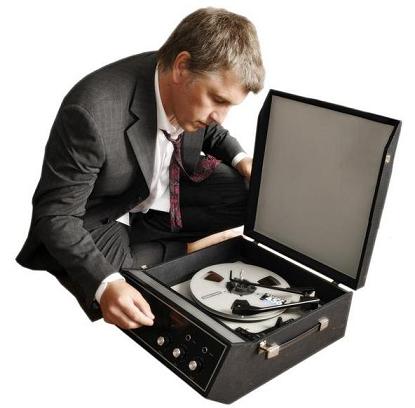
SFBG: About that wonderful Revox B77 of yours. Can you get a bit wonky  about it — what’s the model, how do you store it and transport it, and how do you keep it up? Fanboys are dying to know!
GW: I have my own B77s (flight-cased) for UK gigs and we hire them in when I play overseas (Revox R99’s also work for me). I used to take my own on the flights around Europe, but it could be steep on the XS. It can give the promoters a bit of a headache tracking them down, but everyone has managed to find a unit somewhere. People would be disappointed if I turned up without one, as it’s an essential part of what I do – spinning sounds, samples, and textures over the tracks I play, and creating dub fx. It’s become my trademark and on the rare occasions when I do DJ without it I feel really weird. I don’t know where to put my hands!

Pool loops

0

superego@sfbg.com

SUPER EGO “Don’t you think that scratching records might annoy the people who spent a long time in the studio making them?”

I’m snickering at a jaw-droppingly antiquated — yet actually quite relevant — video from 1983 titled “1st UK DJ to Mix Live on TV.” It features famous, fresh-faced turntablist Greg Wilson, gracefully fending off tin-eared questions from Tube program host Jools Holland while demonstrating to an antsy, angular-haired audience what this whole “mixing records” thing is about.

The scratching bit’s a hoot because Wilson — who recently emerged from an 18-year retirement and will be performing at Triple Crown on Friday — isn’t scratching at all. He’s merely cueing up the record, a simple act that draws gasps. “Well, that’s it, that’s the danger,” Wilson replies to Holland, poker-faced, his soft brown Afro unshaken. “But when a record’s been played in the club for a long time, people get a bit fed up hearing it, and it’s nice to hear it in a different way. And that’s why I kind of … play about with them a bit.”

Wilson goes on to blow post-punk minds by phasing on two — two — tables at once. Then he takes it to a whole other level by revving up his trademark, Steampunk-prophesying Revox B77 reel-to-reel effects machine, real-time sampling David Joseph’s Jheri curl-slick classic “You Can’t Hide (Your Love From Me),” filling out the back-end with sly loops and layering on psychedelic dub echoes. It’s a wondrous bit of analog theater that I imagine, in this “digital age” I keep hearing about, would cause the same kind of pop-culture rupture if played out on American Idol today.

Or maybe not so much. Two of the big nightlife media hooks of the past few years have been the disco revival and the vinyl resurgence — twinned digital-reactionary movements that recall the late-1990s hip-hop and soul crate-digging of hometown heroes like DJ Shadow and Ren the Vinyl Archeologist, a fruitful response to the CD reissue mania of that time. Every technology carves out an implicit niche for its own backlashes. Now, it swallows them too. Despite all the retro nostalgia, DJs need the Internet to get their mixes out and research rare tunes. Plastic and silicon moving in tandem — it’s a real mishmash.

Wilson, who spent his decks hiatus pursuing his production career, may still keep one hand on the vintage — that Revox B77 still travels with him — but he’s made no secret of his enthusiasm for new fad gadgets, and felt that with the simultaneous rise of disco re-fever and software hijinks, a comeback was due.

“I think it’s an exciting time,” he e-mailed me from Australia, in the midst of a bonkers world tour to support his latest compilation of rejiggers, Credit to the Edit, Vol. 2 (Tirk). “Some people pine for the old days. But great as they were, I don’t like to dwell on the past too much in a nostalgic way, but use it to inform the future. I like the way younger people, who didn’t directly experience the original disco era, are drawing influence from it, reshaping it from their own perspective here and now. For me, music — no matter how old it might be — is always alive and evolving, so I’m all for bringing it into a new context.”

Wilson made his name in the ’70s and ’80s by birthing the electro-funk movement in the U.K. (www.electrofunkroots.co.uk), which pipelined many hard-to-find American dance releases to British crowds, and he came of age in a world of DJ record pools — strategic vinyl-sharing cabals that hooked cash-strapped DJs up with record companies eager to get their releases heard. Record pool culture opened the doors for innumerable disco and funk edits: DJs wanted to sound unique, so they mixed (or had someone else mix) their own versions of hits, stamping them with an individual sonic imprint. Thus the hugely influential edit scene was born, paving the way for a spectrum of club remixes from genius and egregious.

No one handled edits quite like Wilson, whose pitch-perfect additions, stretches, and overlaps and live technique proved to be a bulletproof blueprint. The disco edit scene, a subsection of disco revivalism that also digs up more contemporary “lost” tracks, keeps looping back into view, the most recent fanatic attack including acts like Wolf + Lamb, Soul Clap, Les Edits Du Golem, and Tensnake, and labels like Rong, Wurst, and Ugly.

Our very own rulers of the local edit scene are King & Hound (www.myspace.com/garthgrayhound), a collaborative effort between two SF DJ legends, Garth and James Glass, on the Golden Goose label. The two met in the early ’90s at the notorious Record Rack music store and have lately released tasty versions of David Ian Xtravaganza’s kiki 1989 “Elements of Vogue” and Can’s space-groovy “A Spectacle.”

“I have quite a few of Greg’s records,” Garth told me over e-mail. “I recently rediscovered one of his early hip-hop records called ‘We Don’t Care’ by Ruthless Rap Assassins, which I bought in 1987!” Glass joined in, “I grew up in London listening to Greg’s mixes and I’d hear him out and about.” Both of them shake off suggestions of Wilsonian influence, however. “But we’re all doing the same thing — taking out the cheese and respecting the quality,” Glass said.

Wilson’s brilliant 2009 Essential Mix mix for the U.K.’s BBC1 radio found Massive Attack and Talking Heads sharing space with Geraldine Hunt and Chic, and reintroduced him to American ears (“I think that mix illustrates what I always strive for: connecting back but moving on,” he told me. “I was shocked at the overwhelmingly positive response.”) But to Bay players he was always in the loop, working with the invaluable Anthony Mansfield of the Green Gorilla crew and Qzen and even visiting Haight Street a few years back to feed his ’60s obsession.

I recently had the opportunity to explore a bit of the Bay Area’s record pool and disco edit past with DJ Jim Hopkins of the ubiquitous Twitch Recordings, and who currently spins eclectic sets at venues like 440 Castro and Trax. He’s no stranger to the edit scene, becoming one of the youngest edit contributors in the early ’80s to San Francisco disco and Hi-NRG record pool Hot Tracks and later, after Hot Tracks owner Steve Algozino passed away from AIDS, Rhythm Stick, helmed by Algozino’s protégée Jenny Spiers. (He also namechecks the Bay’s Disconet and New Wave-friendly Razor Maid.) Hopkins got his edit start as a teen in the ’70s, using the pause button on his dad’s tape deck to make his own edits, and soon grabbed professional attention. “Record companies wanted several versions of their records available for DJs, and record pools wanted to put out compilation issues for subscribers that featured unique takes on tracks, so I happily provided,” he told me. “It’s funny that those things are worth a fortune today.”

Hopkins just started an online organization called the San Francisco Disco Preservation Society (find it at www.twitchrecordings.com) to collect and celebrate Bay-centric edits and reel-to-reel mixes. “As for the edit scene now, there seem to be two kinds being produced. There are easy-sounding ones that just extend the good parts. Then there are more serious ones that take the original and make it into something new and more moody. I think that’s good for the future — because sometimes I have to laugh. Disco kids these days are pulling anything out of vinyl resale bins from 20 years ago and calling it ‘classic’ when most of it is crap. It was crap back then, too. Making it into anything different is doing it a favor, really.”

Read Marke B.’s full interview with Greg Wilson here.

GREG WILSON: CREDIT TO THE EDIT TOUR

Fri/19, 10 p.m.–4 a.m., $15/$20

Triple Crown

1772 Market, SF

www.triplecrownsf.com

HONEY SUNDAYS PRESENTS JIM HOPKINS

Sun/21, 10 p.m., $3

Paradise Lounge

1501 Folsom, SF

www.paradisesf.com


Ecuador natives push Chevron for settlement

4

By Nima Maghame

The Rainforest Action Network, a non-profit organization that protests the pollution and destruction of natural habitats around the world, recently gathered on a bio-diesel bus named Priscilla with Ecuadorian tribal representative Emergildo Criollo and drove to new Chevron CEO John Watson’s home in Lafayette to deliver a petition demanding the company pay for the clean up of Chevron-owned Texaco’s contamination of the Ecuadorian Amazon rain forest.

“Because of contamination in the river, I have lost two sons and my wife is very ill. I have been in this battle for over 10 years,” said Criollo, who has come to the Bay Area on behalf of the Cohan and Siona people of Amazonian Ecuador as well as the organizations Secoya Indigenous Nations and Frente de Defensa de la Amazonia. They are among the local groups battling Chevron in an Ecuador court, seeking compensation and cleanup money.  

The petition, which has been signed by more than 350,000 people from all over the world, never reached the hands of Watson. The CEO was not home when the activists arrived. The Ecuadorian did have a scheduled closed meeting with Chevron executives at the company’s headquarters in San Ramon later that day. He was accompanied by a demonstration outside the corporation’s office, where a dozen RAN members listed off names of petition signers.

“We here at Chevron, believe that this is a great first step towards an ongoing dialogue between Chevron and Ecuador,” said Gary Fisher, Chevron’s Manager of Public Policy, to RAN activists after the closed meeting with Criollo. 

Criollo lived his entire life in a remote village in Ecuador where he saw Texaco – which was later purchased by Chevron — come and go, leaving oil pollution everywhere. Consumer activists reports show that an estimated 30,000 people have suffered from contamination in Ecuador, just one country out of many who have reported illnesses and mutations caused by the reported 18 billion gallons of toxic waste dumped in the region.

“[Chevron/Texaco] chose to use pumping technology that was not as advanced as the drilling technology they use in the states, which pumps excess crude back into the ground, to save two to three dollars a barrel…There is free standing oil in this pristine rainforest. It’s hot and it just boils in the sun. You can touch it, you can smell it,” said Anderson.

Chevron executives claim that the pollution is the fault of the oil company in charge of extraction now, nationally owned PetroEcuador. They also state they have funded up to $40 million in clean up efforts, a claim that RAN believes to be false. The petition calls for the oil company to fund clean up operations in the region and is estimated to cost them more than $16 billion.

“We believe we are very far away from any resolve from this company,” said Criollo.


Steampunk convention tinkers mightily

0

Steampunk has been described as a “step sideways in time.” It’s certainly not a regressive subculture- one peek at the kinds of clockwork corsetry and hydraulics operated moving machines that steampunk tinkerers fashion will convince you of that- but rather, a rethinking of where technology could have led us. It’s a topic that’s figuring prominently in the minds of many these days, which means this year’s New Albion Steampunk Exhibition (begins Fri/12) promises to be more whiz-bang than ever.

Picture, if you will, a mass of punks and nonconventional individuals in Victorian garb and laboriously created wings, monocles, wrist weaponry and whatnot, all milling about to waltz music in a very conventional hotel convention space. Surely, unsuspecting squares of Emeryville will be freaked.

Three tracks will guide tinkerers through the exhibition; one for DIY-ers, one for those with an ear for scholarly discussions of steampunk and another that focuses on the give-and-take of expert panel discussions on the culture. Participants can also pick and choose among the bounty- after all, who could miss discussions on steampunk philosophy featuring the movement’s great literati, James Blaylock? Or a rundown of the history of man powered submarines, classes on leather working, the regal history of steampunk, a panel who will dissect and illuminate “steampunk garb for life on a budget,” a look at the observatory as “science temple”, a museum of curiousities? Impossible, you must go to all.

After the learning, ballrooms galas and drink and meets will keep participants busy, just like at any other convention. Well, except for the fact that this gala will include prizes for the “most workable wearable invention” and meet and greets will center around self propelled three story Victorian houses and feature drinks served by robots.

Just a simple step sideways, really. 

Now Albion Steampunk Exhibition

Fri/12 (through Sun/14), $20-50

Hilton Garden Inn

1800 Powell, Emeryville

www.steampunkexhibition.com

Stiglitz: The Dangers of Deficit Reduction

0

By Joseph E. Stiglitz

Here is our monthly installment of Joseph E. Stiglitz’s Unconventional Economic Wisdom column from the Project Syndicate news series. Stiglitz is University Professor at Columbia University and the winner of the 2001 Nobel Prize in economics. His forthcoming book Freefall will be published this winter.

NEW YORK – A wave of fiscal austerity is rushing over Europe and America. The magnitude of budget deficits – like the magnitude of the downturn – has taken many by surprise. But despite protests by the yesterday’s proponents of deregulation, who would like the government to remain passive, most economists believe that government spending has made a difference, helping to avert another Great Depression.

Most economists also agree that it is a mistake to look at only one side of a balance sheet (whether for the public or private sector). One has to look not only at what a country or firm owes, but also at its assets. This should help answer those financial sector hawks who are raising alarms about government spending. After all, even deficit hawks acknowledge that we should be focusing not on today’s deficit, but on the long-term national debt. Spending, especially on investments in education, technology, and infrastructure, can actually lead to lower long-term deficits. Banks’ short-sightedness helped create the crisis; we cannot let government short-sightedness – prodded by the financial sector – prolong it.

Faster growth and returns on public investment yield higher tax revenues, and a 5 to 6% return is more than enough to offset temporary increases in the national debt. A social cost-benefit analysis (taking into account impacts other than on the budget) makes such expenditures, even when debt-financed, even more attractive.

Finally, most economists agree that, apart from these considerations, the appropriate size of a deficit depends in part on the state of the economy. A weaker economy calls for a larger deficit, and the appropriate size of the deficit in the face of a recession depends on the precise circumstances.

It is here that economists disagree. Forecasting is always difficult, but especially so in troubled times. What has happened is (fortunately) not an everyday occurrence; it would be foolish to look at past recoveries to predict this one.

In America, for instance, bad debt and foreclosures are at levels not seen for three-quarters of a century; the decline in credit in 2009 was the largest since 1942. Comparisons to the Great Depression are also deceptive, because the economy today is so different in so many ways. And nearly all so-called experts have proven highly fallible – witness the United States Federal Reserve’s dismal forecasting record before the crisis.

Yet, even with large deficits, economic growth in the US and Europe is anemic, and forecasts of private-sector growth suggest that in the absence of continued government support, there is risk of continued stagnation – of growth too weak to return unemployment to normal levels anytime soon.

The risks are asymmetric: if these forecasts are wrong, and there is a more robust recovery, then, of course, expenditures can be cut back and/or taxes increased. But if these forecasts are right, then a premature “exit” from deficit spending risks pushing the economy back into recession. This is one of the lessons we should have learned from America’s experience in the Great Depression; it is also one of the lessons to emerge from Japan’s experience in the late 1990’s.

These points are particularly germane for the hardest-hit economies. The United Kingdom, for example, has had a harder time than other countries for an obvious reason: it had a real-estate bubble (though of less consequence than in Spain), and finance, which was at the epicenter of the crisis, played a more important role in its economy than it does in other countries.

The UK’s weaker performance is not the result of worse policies; indeed, compared to the US, its bank bailouts and labor-market policies were, in many ways, far better. It avoided the massive waste of human resources associated with high unemployment in America, where almost one out of five people who would like a full-time job cannot find one.

As the global economy returns to growth, governments should, of course, have plans on the drawing board to raise taxes and cut expenditures. The right balance will inevitably be a subject of dispute. Principles like “it is better to tax bad things than good things” might suggest imposing environmental taxes.

The financial sector has imposed huge externalities on the rest of society. America’s financial industry polluted the world with toxic mortgages, and, in line with the well established “polluter pays” principle, taxes should be imposed on it. Besides, well-designed taxes on the financial sector might help alleviate problems caused by excessive leverage and banks that are too big to fail. Taxes on speculative activity might encourage banks to focus greater attention on performing their key societal role of providing credit.

Over the longer term, most economists agree that governments, especially in advanced industrial countries with aging populations, should be concerned about the sustainability of their policies. But we must be wary of deficit fetishism. Deficits to finance wars or give-aways to the financial sector (as happened on a massive scale in the US) lead to liabilities without corresponding assets, imposing a burden on future generations. But high-return public investments that more than pay for themselves can actually improve the well-being of future generations, and it would be doubly foolish to burden them with debts from unproductive spending and then cut back on productive investments.

These are questions for a later day – at least in many countries, prospects of a robust recovery are, at best, a year or two away. For now, the economics is clear: reducing government spending is a risk not worth taking. 

Joseph E. Stiglitz is University Professor at Columbia University and recipient of the 2001 Nobel Prize in Economics. His most recent book Freefall: Free Markets and the Sinking of the Global Economy is available in French (Le Triomphe De La Cupidité, Liens Qui Liberent) and will be available shortly in Japanese, Spanish, German, and Italian.

Copyright: Project Syndicate, 2010.
www.project-syndicate.org

Gamer: “Heavy Rain” review

0

By Peter Galvin

Heavy Rain
(Quantic Dream)
PS3

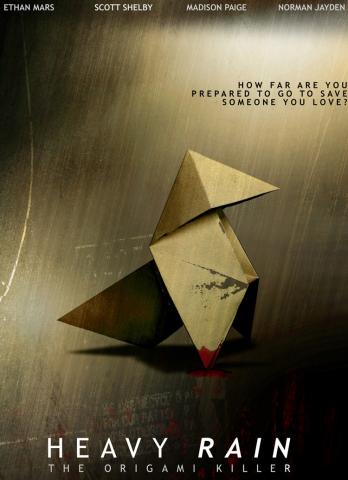
A new game where you wiggle and waggle your controller in time with on-screen prompts? No, it’s not a new Wii game. Heavy Rain for the PS3 is a dark thriller from the people who brought you the sleeper hit Indigo Prophecy. With the technology developers have at their disposal these days, it’s become feasible in many ways for games to truly resemble the cinematic experience of a feature film. Heavy Rain takes that idea one step further by playing out much like an interactive movie.

Players switch among four main characters as they unravel the identity of the “Origami Killer,” a psychopath who has been kidnapping children and drowning them in rainwater. Playing as multiple characters is essential not only in covering the amount of ground the game wants you to experience, but in making the game as choice-based as possible. Developer Quantic Dream boasts that the decisions you make as you play have heavy consequences affecting the game’s outcome. At particular moments, main characters can even die and the game will continue on without them. The killer is almost a MacGuffin for these choices, giving characters a reason to go from place to place and perform tasks.

All that sounds well and good, but whether or not it works is another matter. Despite trumpeting a new-found level of choice and consequence in the gaming world, Heavy Rain is actually not as singular an experience as you are led to believe. Time-based button prompts are the backbone of the gameplay, yet often a missed button prompt will have no real consequence. When I’m speeding down the wrong side of the freeway, dodging cars, and the game tells me to press right to not hit a road worker, I fully expect that messing that up will result in that person’s loss of life. Instead nothing happens. The game continues, as I expect it does for anyone, to the pre-determined conclusion.

How much this loss of choice affects your playing depends on how you approach the title. If you ignore the widely-publicized levels of choice and personalization that the game touts and choose instead to play the game as an interactive movie with Simon Says-style prompts to ramp up the intensity of the action, the game succeeds admirably. The story is intriguing and the many action-oriented scenes are tense and exciting. The on-screen prompts, no matter how simple or arbitrary, do personalize the player’s actions, increasing the unfolding drama — especially when those movements are 1:1. But as a groundbreaking experience about choice and consequence, Heavy Rain is all smoke and mirrors.

A look back at the 2010 Sundance Film Festival (part two)

0

For part one of Jesse’s Sundance report, click here.

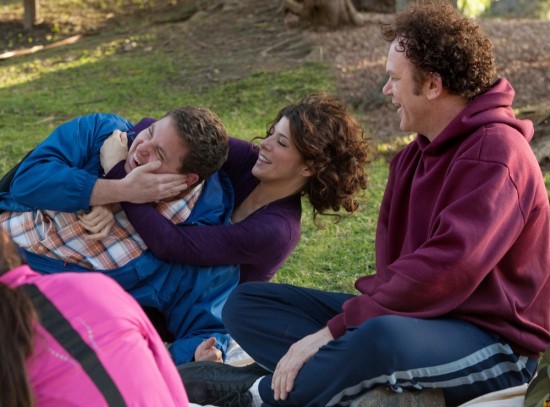
Rounding out the mumblecore minions was Cyrus from the genre-defining Duplass Brothers. Even while having name actors (John C. Reilly, Marisa Tomei, Catherine Keener, and Jonah Hill) as well as a seven million dollar budget to play around with (by comparison, their first film, 2005’s The Puffy Chair, cost $15,000), the siblings have not lost one iota of their charm or sincere humor. And most importantly, these characters and situations (no matter how complicated things get) are explored with depth and honesty. Jonah Hill is still the Jonah Hill from Judd Apatow films, but here he’s finally been allowed to explore his creepy-sad side, enabling a viewer to truly relate to his character, a son who’s a little too overprotective of his single mom. During what was one of Sundance’s greatest 9 a.m. Q&As, the hung-over directors and cast laughed about how they have no clue how to market this film. My suggestion: don’t miss Cyrus, sure to be one of the funniest, and most unexpectedly poignant, films of 2010. Derek Cianfrance’s Blue Valentine features a John Cassavetes-esque relationship that places a couple in the defining moments of their six-year marriage, including flashbacks to their initial meeting. The near-bipolar fluctuations that occur during fights are perfectly captured in this entirely improvised accomplishment. In a New York Times article about the film, star Ryan Gosling said, “It was really important to [Cianfrance] that we build an archive of home video of actual memories, and that we not really discuss or rehearse the scenes. We had fighting days where we just fought all day, and then we’d have to go have family fun day, and just pretend like we hadn’t been fighting all day, trying to have a good time.” Brooklyn folk-rockers Grizzly Bear provide a pitch-perfect soundtrack to the film. Make all efforts to experience Gosling and co-star Michelle Williams at the top of their games, allowed the freedom to dig down deep. Just be prepared for the experience to pull some serious hurt from your heart.

Debra Granik’s Winter Bone is a jaw-dropping study of backwoods meth-makers in the Ozark Mountains (between Southern Missouri and Northern Arkansas). The film has the feel of the Dardenne Brothers (2005’s L’enfant): a young girl attempts to locate her missing father, while her (literally) extended family seem to be hiding something much darker than their meth labs. Genuinely gripping, Winter Bone offered more suspense than I’ve felt in years. I didn’t want this film to end. No wonder it won the Grand Jury Prize and screenwriting award (with co-writer Anne Rosellini), furthering the trend of female filmmakers being recognized for their work (see also: Kathryn Bigelow). The film is an astounding way to kick off a new decade of American independant cinema.

Nothing can prepare you for the ADD insanity of Daddy Longlegs, directed by another team of brothers, fraternal twins Benny and Josh Safdie. This hyper clusterfuck contains an array of randoms, from Abel Ferrara to the children of Sonic Youth guitarist Lee Ranaldo. The film follows a NYC father who’s taking care of his kids for two weeks. Ronnie Bronstein (who directed the equally obsessive and uncomfortable 2007 triumph Frownland) encapsulates everything that our contemporary psychotic and distracted nervous systems are experiencing these days. I can’t think of a more disturbing film that also made me laugh so hard. 

When I heard Juan Carlos Valdivia’s Southern District being compared to the work of Argentinian master Lucretia Martel (2008’s The Headless Woman), I rearranged my entire schedule to see it — most thankfully, as it turned out to be the best film of Sundance 2010. This quiet study of an upper-class Bolivian family and their day-to-day interactions with their butler is captured gorgeously by a hypnotic rotating camera. While making some audience members dizzy (indeed, the film is not for everyone; walkouts ensued), Valdivia and cameraman Paul de Lumen’s brilliance allows the viewer to feel as if they are actually living in the house, feeling the minutes and hours slip by. How they were able to construct such complex camerawork, working within a house filled with so many reflective surfaces, combined with all of the actors improvising, is beyond comprehension. Winner of Sundance’s awards for excellence in world cinema for dramatic directing and screenwriting, Southern District may well be this year’s minimalist cinematic treasure..

And, for good measure, some honorable mentions (and misses):

Spencer Susser’s Hesher was one of the festival’s most-anticipated films. Joseph Gordon-Levitt delivers a performance so memorable that it may kick start a whole new generation of headbangers. His surprisingly crass dialogue sent many older audiences heading for the snowy outdoors, while that only made things all the more intriguing for those who stayed. The film does have some awkward shifts in tone from one scene to the next; at times, Hesher feels like it’s caught in between a pissed-off teenager and the baffled parent who’s trying to teach him a lesson.

Diane Bell’s Obselidia won not only Sundance’s award for best cinematography (for lensman Zak Mulligan), but also the Alfred P. Sloan award, which goes to films that focus on themes of science or technology. Previous awards have gone to Werner Herzog’s Grizzly Man (2005) and Shane Carruth’s Primer (2004). The film explores our ever-changing realtionship with “stuff.” As we throw out perfectly good items for whatever the newest model or invention is, what will happen to these old things that not only are still working but may even be better in quality and usefulness, like LPs, rotary phones, VHS videos, pens and paper? Ironically the film is shot using a Red Camera system which brings a level of High Definition so striking that you may have already thrown away your Canon GL-2 miniDV cameras and Sony HDCAMs to get one. This quirk-fest poses wonderful questions on the turn of a new decade, but unfortunately, the film slips into that dreaded, curmudgeony-elitist blabber (“Kids today just don’t understand Robert Bresson!”) that often comes from older generations who cling to ye olden times — as if their “walking uphill both ways” methods are somehow better than anything new.   

Adam Green’s low-budget Frozen hypnotized midnight audiences. The horror film strands three snowboarders on a ski lift and forces the audience to watch them die slowly. The truly screamworthy surprises balance out the awkward mistakes of discontinuity, including some irregular frozen-face ice (and the the lack of seeing the characters’ breath throughout the film). In any case, Green has proven he can freak an audience out. Can’t wait to see what comes next from him.
And lastly, Danny Perez’s hourlong music video for psych-folksters Animal Collective, Oddsac, felt like an amalgamation of images that play behind the band while they play live. As it happens, Perez is the tour manager for Black Dice and has gone on tour as the image designer for Animal Collective’s tours.

Stay tuned for Jesse Hawthorne Ficks’ take on Sundance 2010’s documentaries, coming soon!

Playtime

0

“It’s like he was waiting for someone to find him. It was overwhelming at first because I was just this little person trying to write a dissertation, and here was someone I thought needed to be recognized by history.”

Filmmaker and University of San Francisco professor Melinda Stone is telling me about Sid Laverents, the backyard auteur whose Multiple SIDosis (1970) is unlike any other work enshrined by the National Registry. Laverents died last May, at 100, but not before receiving the Library of Congress honor in 2000 — the result of years of faithful barnstorming by Stone and other enthusiasts (notably filmmaker and preservationist Ross Lipman). The 35mm UCLA restoration of SIDosis screening at a Pacific Film Archive tribute fits with Lipman’s ongoing historiographic missive to refurbish exemplars of Southern California’s “minor cinemas.” Charles Burnett, Kent Mackenzie, John Cassavetes, and Kenneth Anger are heady company, but then Laverents may yet be seen as San Diego’s own Georges Méliès.

So then, what is Multiple SIDosis? Film archivist David Francis’ description of the nine-minute short as a “technical comedy” is apt. The film opens in Laverents’ conservative San Diego spread. It’s Christmas morning, and his wife has given him a reel-to-reel machine. He records a little banjo jaunt and listens to the playback, grabbing a few more instruments. Partly due to Laverents’ straight appearance, we begin to think we’re watching an ordinary demonstration. We’re not. Following a slightly psychedelic title card, Laverents’ trusty metronome is telescoped into a masked, locket-shaped image in the top-left of the frame. His banjo, ukulele, and whistling parts are split into three other miniatures, Brady Bunch style. Then, an amazing geometric panoply of six Sids, nine Sids, 16 Sids; chimes over here, harp over there, Sid, Sid, everywhere.

Laverents created these pre-digital effects with a syncing system of his own devising (he honed his one-man band chops touring the Southern vaudeville circuit in the 1920s and ’30s). Multiple SIDosis is not merely inventive; it is, in some real way, an invention. “It’s so perfectly that confluence of aeronautical engineer and vaudeville performer,” Stone gushes. Local film buffs still drunk on a month’s worth of Jacques Tati screenings at various venues may well note a family resemblance in the way Laverents bends modern technology to his own idiosyncratic vision.

Multiple SIDosis is not your typical home movie, but Laverents didn’t work in a vacuum — he was a proud member of the San Diego Amateur Moviemakers Club (motto: “If it moves, we’ll shoot it”), a once-thriving community group that, like many such organizations, provided encouragement, tech support, and elevated expectations. In proper club fashion, Stone graciously brings out tea and cookies when we meet.

“I really came to believe in the cinema clubs and what they might tell us about the longevity of civic engagement,” she muses. But the number of clubs is dwindling. Even before YouTube presented a virtual forum (but definitely no tea and cookies), film schools attracted the young, would-be filmmakers who might have replenished the clubs’ stocks. Without wanting to disparage university programs, their emphasis on specialization comes at a cost — not to mention that the clubs offered a lifetime membership rather than a two- to four-year shot at community.

The Pacific Film Archive’s “For the Love of It” program features a few recent selections from clubs in Cupertino, San Jose, and Los Angeles, along with one minor masterpiece from the now-defunct, SF-based Westwood Movie Club. Moods of a City (1972) may be the closest San Francisco ever gets to its Berlin: Symphony of a Great City (1927). To make the film, the club split into different teams covering fog, architecture, the sea, public gatherings, and typical San Franciscans.

It’s a patchwork, but one with surprisingly perceptive seams: a perfect graphic match between a gleaming spider’s web and the Golden Gate Bridge’s cables, for instance, or the hard cut between a flock of suits rolling the Financial District and scattered hobos down and out in the urban wilderness. The postcard views all come at a local slant, and the architecture segment, with its minute focus on variations in windows and doorframes, reminds us that the etymological root of amateur is lover. The fog slides off, and we’re treated to a North Beach round of bocce. Better yet are the gestures (spitting, cigarettes held on the lower lip) that have disappeared — like so many buildings, but not so easily memorialized by a plaque.

Moods of a City is a collective work, made during a period when avant-garde circles grappled with questions of authorship and community. Though Stone admits being somewhat resigned about bridging these worlds, she hasn’t stopped trying. When San Jose Movie Club rep Bernard Wood gave her a few rolls of discontinued Kodachrome stock — coincidentally, Nathaniel Dorsky’s last Kodachrome film, Compline (2009), premiers Feb. 23 at PFA — Stone distributed the film to a quartet of top Bay Area experimentalists. Their three-minute rolls will run with the club films at PFA. Refreshments to follow.

“FOR THE LOVE OF IT: SEVENTH ANNUAL FESTIVAL OF AMATEUR FILMMAKING”

Sun/21, 3 p.m.

“SID’S CINEMA: A TRIBUTE TO AMATEUR FILMMAKER SID LAVERENTS”

Feb. 28, 3 p.m.

Both events $5.50–$9.50

Pacific Film Archive

2575 Bancroft, Berk.

(510) 642-5249

www.bampfa.berkeley.edu


Sunshine and shadows

2

tredmond@sfbg.com

It was, the San Francisco Chronicle proclaimed, the end of the world for development in the city, or at least something close to that. A ballot measure, sponsored by Sup. David Chiu, restricting new buildings from casting shadows on city parks “could imperil major development projects,” a Jan. 28 article by John Cote said. “Everything from a new wing at the San Francisco Museum of Modern Art to the expansion of the Moscone Center and creation of a new downtown core around a rebuilt Transbay Terminal could be affected.”

A lot of that is wildly exaggerated. The Chiu ordinance, which has since been pulled from the ballot pending a city study of the issue, would hardly have halted all development — or even all high-rises — in San Francisco. It wouldn’t have gutted the Transbay Terminal plan (although it might have forced planners to reduce the height of a tower that would soar 400 feet above the tallest building in San Francisco). In fact, the real story is how Chiu has managed — for now — to stop a backroom attempt by developers to undermine a 25-year-old environmental law. We found some fascinating evidence of how Mayor Gavin Newsom has been working with the San Francisco Chamber of Commerce to undermine Chui’s efforts — using broad threats to try to get his way.

Chiu’s legislation sought to clear up a couple of loopholes in a landmark 1984 law, which passed on the ballot as Proposition K. The measure, authored by then-Sup. Bill Maher, essentially barred any new construction that would cast a significant shadow on a city park.

In 1989, the final implementation guidelines were approved, and they’ve stopped literally hundreds of proposed projects from casting dark shadows on public open space.

But in the past year, city planners have been meeting with lawyers for big developers and looking for a way to change the rules. Citing new technology that better measures the curve of the earth and complex algorithms that calculate sunlight, the Planning Department has since proposed revising the Prop. K guidelines — in a way that would allow taller buildings and more shadows without getting the approval of voters or supervisors.

Chiu told us he’s been trying for months to find out exactly what the proposed guidelines would do — how many new buildings, at what heights, would be able to shadow which parks. “I was unable to get any answers,” he said.

The measure he drafted would have barred any new guidelines that allowed more shadows — and would have required the Board of Supervisors to sign off any changes. It would still allow the city to make case-by-case exemptions for projects that cast minor shadows but are otherwise deserving of approval — affordable housing developments, for example.

But downtown went nuts — and Newsom joined the fray.

The crux of the opposition came from the Chamber — and is outlined in an e-mail from Chamber Vice President Rob Black to members of the Chamber board.

“The mayor was very direct and clear about the need to defeat the measure,” the e-mail, which we obtained, states. “The mayor was also very clear that he was in no mood for deal-making on the issue and that he would look very unfavorably on any developer or anyone else who tries to cut a deal with David Chiu on the issue. He literally said, you will be on your own for the next two years if you go there.”

Black confirmed that the e-mail was in fact his — but said the version we’d obtained “has been edited. Some words were changed and other omitted.” He refused to say what the changes were, saying that the e-mail was meant to be a confidential communication to his board. However, he confirmed that the basic message and descriptions of a meeting with Newsom were accurate.

Tony Winnicker, Newsom’s press secretary, confirmed that Newsom had been directly involved in trying to scuttle the ordinance — and didn’t deny the mayor had made those threats.

“The mayor made clear the importance of asking the supervisor to withdraw the measure,” Winnicker wrote in an e-mail to us. “The mayor was clear that backroom deal-making should not be tolerated on the issue.”

Chiu was somewhat aghast at the mayor’s statements. “The context for all this is that the developers and their lawyers were trying to change the rules,” he said.

Aaron Peskin, the former supervisor and longtime North Beach neighborhood activist, told us that the “hysteria around this is factually untrue. This isn’t about stopping development — it’s about making sure development doesn’t have an adverse impact on the city’s common space.”

So now Chiu has agreed to hold off — but only if the key stakeholders (not just developers) have some input into how planning devises new shadow rules. And he’s ready to go back to the ballot in November if the developers try to play games again.

That makes sense, Gabriel Metcalf, executive director of the San Francisco Planning and Urban Research Association, told us. “There should be a heavy burden of proof on the people who want new rules,” he said. “And there should be a heavy burden of proof for anyone who wants a ballot measure.”

In other words, Prop. K — as it is, as it’s stood all these years — is working pretty well. And if the developers hadn’t tried to sneak in some big changes, none of this would have happened in the first place.

Our weekly picks

0

WEDNESDAY (10th)

EVENT

Electronic Frontier Foundation: 20 Years

With technology becoming ever more an integral part of our daily lives, important issues surrounding digital rights continue to arise in new forms, be they regarding net neutrality, government wiretapping, or downloading music. The Electronic Frontier Foundation, a nonprofit civil liberties organization, was founded in 1990 to defend people’s rights in the areas of free speech, innovation, privacy and more. EFF celebrates its 20th anniversary tonight with a party and fundraiser hosted by Mythbusters’ Adam Savage, featuring music, entertainment, and tech luminaries such as Apple cofounder Steve Wozniak and Lotus 1-2-3 program designer Mitch Kapor. (Sean McCourt)

8 p.m., $30

DNA Lounge

375 11th St., SF.

(415) 626-1409

www.dnalounge.com, www.eff.org

THURSDAY (11th)

VISUAL ART

ARTEMIO: “Gersamkunstwerk”; Frankie Martin: “Through the Vortex”

Nothing sounds more disparate than “guns, grenades, bombs, and machetes” assembled into a mandala; and video of a “1,000 mile, California coastal bicycle” voyage. But who knows, juxtapositions create funny things like frisson. What distinguishes Mexico City conceptual artist ARTEMIO from New York “nomadic inter-media artist” Frankie Martin could potentially create a third work where the paradoxical polarities and politics of drug wars infiltrate the narratives of mobile subjectivity this side of the leisure-born border. I’m thinking something like Road Rash, the 1991 Sega Genesis video game where motorcyclists beat each other with chains and baseball bats in a race to the champagne and bikini line. You might see something a bit more sophisticated. (Spencer Young)

7–11 p.m. (through March 13), free

Queen’s Nails Projects

3191 Mission, SF

(415) 314-6785

www.queensnailsprojects.com

FRIDAY (12th)

FILM

“A Valentine’s Tribute Weekend to John Hughes”

When the Oscars’ people-who-died montage rolls around in March, more than one child of the ’80s will raise a fist for John Hughes, the writer-director-producer of many of the era’s most beloved teen films. Midnites for Maniacs programmer and host Jesse Hawthorne Ficks feels your pain — he’s assembled seven of Hughes’ enduring classics for a two-day feast of class- and clique-disrupting romances, multiple Ringwalds, touchy-feely grandmas, homemade prom dresses, Ferraris, the best fucking movie about travel ever (you can bet your John Candy it ain’t Up in the Air), and Bueller … Bueller … Bueller. The marathon begins tonight with Some Kind of Wonderful . Angst ahead! (Cheryl Eddy)

7:30 p.m. (Some Kind of Wonderful), 9:30 p.m. (Ferris Bueller’s Day Off) and 11:45 p.m. (National Lampoon’s Vacation); through Sat/13, $10 per day

Castro Theater

429 Castro, SF

(415) 621-6120

www.ticketweb.com

MUSIC

San Francisco Bluegrass and Old-Time Festival

Old-timey — it’s not just for lemonade, hoop skirts, handlebar mustaches, and dial-ups. It’s also for the retro-coolly acronymed SFBOT, raising its analog arms and taking over dozens of the Bay’s venues with that sweet, sweet sound of everyone’s favorite time period: yore. Loudon Wainwright III, Stairwell Sisters, Water Tower Bucket Boys, Asylum Street Spankers, and a strummin’ army of fiddlers, yelpers, crooners, stompers, hoofers, and juggers blow wildly through the roots of this 11th annual harmonic convergence. Oh yes, there shall be banjos. (Marke B.)

Various times, venues, and prices (through Feb. 24)

Tonight: Red Molly, Stairwell Sisters

8 p.m., $19.50

Freight and Salvage

2020 Addison, Berk.

www.sfbluegrass.org

MUSIC

Mahogany Soul Series: Chico DeBarge, Martin Luther

It’s Friday night — time to mellow out to some old school soul sounds. Chico DeBarge is a charismatic and skilled songwriter and producer long known for making the ladies swoon with his sensual singing style. He’s joined by fellow R&B man Martin Luther. Also in the mix is DJ Sake-1. Part of Ineffable Music Group’s Mahogany Soul Series, this event is a trifecta for R&B lovers. (Lilan Kane)

9 p.m. $16–$20

Shattuck Down Low

2284 Shattuck, Berk.

(650) 291-1732

ineffablerecords.inticketing.com

MUSIC

Badfish: A Tribute to Sublime

Badfish, named after a song on Sublime’s 40 Oz. to Freedom (Gasoline Alley/MCA, 1992), has helped keep the Sublime spirit alive. The group formed in 2001 when they met at the University of Rhode Island, where they were computer science majors. They’ve quickly garnered a fanbase in the college music scene and have played to sold out crowds since 2006. The members are also in their own non-tribute band, Scotty Don’t, which usually serves as the opening act for Badfish shows. (Kane)

9 p.m., $65–$84

Regency Ballroom

1290 Sutter, SF

(415) 673-5716

www.theregencyballroom.com

SATURDAY (13th)

EVENT

Alameda Zombie Crawl

Movies (and music videos) have taught us that zombies can run, swim, operate amusement park machinery, and perform synchronized dances. It turns out the undead even enjoy exotic cocktails — ergo, the first annual Alameda Zombie Crawl, which kicks off with drink specials (including, duh, Zombies) at the Forbidden Island Tiki Lounge. The brain-chomping masses will then head to Scobies Sports Bar and Grill and Lost Weekend Lounge, before breaking off into smaller groups to terrorize shopping malls and farmhouses in rural Pennsylvania. Come dressed to kill — er, like you’ve already been killed; there’ll be makeup assistance ashore the Island for anyone who doesn’t have Tom Savini-style gore-and-latex skills. (Eddy)

7 p.m. (makeup starting at 5 p.m., $5–$50), free

Forbidden Island Tiki Lounge

1304 Lincoln, Alameda

alamedazombie@live.com

EVENT/DANCE

Black Choreographers Festival

The Black Choreographers Festival kicks off its three-weekend run in Oakland with workshops, public discussions, $10 master classes, and seminars. New this is year is a free film series presented in partnership with see.think.dance. Starting this Saturday in Oakland, it includes documentaries, feature films, and shorts from Africa and the diaspora. Also this weekend is a Sunday morning youth meet, after which the young dancers invite the public to an afternoon concert. Despite videos and all manner of documentation, dance still gets passed on directly from one body to the next. This is an opportunity to see the next generation. Participating groups include Dimensions Extensions Dance Ensemble, Destiny Arts, Oakland School of the Arts, San Francisco School of the Arts, and On Demand. (Rita Felciano)

1–6 p.m. (also Sun/14, 4 p.m.; festival through Feb 28), free–$10

Malonga Casquelourd Center for the Arts

1428 Alice, Oakl.

(888) 819-9106

www.bcfhereandnow.com

EVENT

Workshop: “DIY Valentine — Sexy Bedroom”

Extravagant gifts and pricey candlelit dinners for the big V day have, more or less, become a thing of the past. In this economy, many are having to craft new ways of celebrating the day dedicated to all things love. Fortunately Kelly Malone is giving a sultry tutorial on how the ladies, and even gents, can spice up their bedrooms for the big night. At Workshop, you’ll learn how perfect a seductive cocktail, tease your hair like Brigitte Bardot, create alluring smoky eyes, and transform your unadorned room into a lair fit for a sex kitten. (Elise-Marie Brown)

5:30 p.m., $40 (sign-up required)

Workshop

1798 McAllister, SF

(415) 874-9186

www.workshopsf.org

DANCE

Company C Contemporary Ballet

At nine, Company C Contemporary Ballet has found its groove. Two things stood out at last month’s Walnut Creek performances that will be repeated on this side of the Bay this weekend. These are beautifully alert dancers who can shine in a wide range of repertoire. Being in a small company, they switch gears rapidly and admirably. Also, founding Artistic Director Charles Anderson has a gift for programming. He commissioned Amy Seiwert in a hot nightclub number, brought Lar Lubovitch’s flowing Cavalcade to a tough Steve Reich score, introduced Charles Moulton’s ingenious Nine Person Ball Passing to a new generation, and choreographed his own Akimbo. He knows what’s he’s doing. (Felciano)

8 p.m. (also Sun/14, 2 p.m.), $18–$40

Yerba Buena Center for the Arts

Novellus Theater

701 Mission, SF

415 978-ARTS

www.ybca.org

SUNDAY (14th)

EVENT/FILM/MUSIC

Marc Huestis Presents “Justin Bond: Close to You” and Whatever Happened to Susan Jane?

“Did he beat you, girl? You got burned if he didn’t beat you, girl.” I can’t think of any better romantic advice than that, gleaned from a scene in Marc Huestis’ San Francisco new wave comedy from 1982, Whatever Happened to Susan Jane? Besides drag queen wisdom, the flick dispenses some great back-in-vogue music, including tunes from Tuxedo Moon and Indoor Life. A DVD release screening of it is just the prelude to a night with SF girl-gone-good Justin Bond, who’ll be singing Carpenters hits with a 10-piece orchestra, and hosting special guests the Thrillpeddlers. Trash the Ipecac and be my bloody, melancholy valentine. (Johnny Ray Huston)

Susan Jane: noon, $8

Justin Bond: 8:15 p.m., $25–$75

Castro Theatre

419 Castro, SF

(415) 621-6120

www.ticketweb.com

MUSIC

Girls, Smith Westerns

Girls were last year’s critical darlings, but their tour mates the Smith Westerns have perhaps a more interesting rise to fame. Hailing from Chicago, the four members range from 17 to 19 years old. They play the sort of Nuggets rock that went out of style 20 years before they were born. With songs like “Girl in Love” and “Be My Girl,” these guys wear their hearts on their sleeves — and really, isn’t that what Valentine’s Day is all about? (Peter Galvin)

With Magic Kinds, Hunx and the Punkettes

7 30 p.m., $16, sold out

Great American Music Hall

859 O’Farrell, SF

(415) 885-0750

www.gamh.com

MUSIC

The Damned

Planting its stake in music history as the first U.K. punk band to release a single and tour the U.S., the Damned turned heads with “New Rose” and “Neat Neat Neat.” But since today is Valentine’s Day, perhaps its tune “Love Song” is most appropriate to sing along to: “I’ll be the ticket if you’re my collector/ I’ve got the fare if you’re my inspector/ I’ll be the luggage, if you’ll be the porter/ I’ll be the parcel, if you’ll be my sorter.” Join founding members Dave Vanian and Captain Sensible for a chaotic romp through the old days and slam dance with your sweetheart. (McCourt)

With Hewhocannotbenamed and the Generators

8 p.m. (7 p.m. doors), $30 ($54.95 with dinner)

Slim’s

333 11th St., SF

(415) 255-0333

www.slims-sf.com

MUSIC

Leela James

Leela James’s debut album A Change Is Gonna Come (Warner Bros., 2005) received rave reviews from critics and comparisons to Aretha Franklin and Chaka Khan. After four years and a break from a major label, she’s returned with her self-produced sophomore record, Let’s Do It Again (Shanachie Records). The album was recorded using live takes, much like the original soul recordings created at Stax and Muscle Shoals. James pays homage to her musical influences with covers by Betty Wright, Bobby Womack, and the Staples Singers, to name a few. Attention soul lovers: let loose some raw emotion on V-Day. (Kane)

7 p.m. $30

Yoshi’s SF

1330 Fillmore, SF.

(415) 655-5600

www.yoshis.com

TUESDAY (16th)

MUSIC

Fat Tuesday Mardi Gras Party!: Dirty Dozen Brass Band, Zigaboo Modeliste & the New Aahkesstra, DJ Harry D

Oh Mardi Gras, the time of year where beads almost help people avert indecent exposure and jazz bands blare throughout the streets. It’s one of those rare moments that I find myself wanting to be in a city other than San Francisco. But since some of us can’t fly down to New Orleans for the week, the next best thing to the Southern goodness that is Louisiana is the Fat Tuesday party going down at the Independent. Listen to the sounds of the Dirty Dozen Brass Band while downing a glass of bourbon, and be transported to the place of deep, dark bayous and ambrosial gumbo. (Brown)

7:30 p.m., $22

Independent

628 Divisadero, SF

(415) 771-1421

theindependentsf.com

EVENT

“Ask a Scientist: Quantum Mechanics”

Although most of us are glad to be done with school and liberated from 10-page papers and final exams, every now and then it’s nice to learn something new. With the “Ask A Scientist” series anyone can unfold the scientific mysteries that make up the world we inhabit, at least on a level that can be taught in two hours. Discover how energy and matter make up quantum mechanics, how an object can be in two places at once, and other science stuff. (Brown)

7:00 p.m., free (excluding food or drinks)

Horatius

350 Kansas, SF

www.askascientistsf.com

The Guardian listings deadline is two weeks prior to our Wednesday publication date. To submit an item for consideration, please include the title of the event, a brief description of the event, date and time, venue name, street address (listing cross streets only isn’t sufficient), city, telephone number readers can call for more information, telephone number for media, and admission costs. Send information to Listings, the Guardian Building, 135 Mississippi St., SF, CA 94107; fax to (415) 487-2506; or e-mail (paste press release into e-mail body — no text attachments, please) to listings@sfbg.com. We cannot guarantee the return of photos, but enclosing an SASE helps. Digital photos may be submitted in jpeg format; the image must be at least 240 dpi and four inches by six inches in size. We regret we cannot accept listings over the phone.


Stage Listings

0

Stage listings are compiled by Molly Freedenberg. Performance times may change; call venues to confirm. Reviewers are Robert Avila, Rita Felciano, and Nicole Gluckstern. Submit items for the listings at listings@sfbg.com.

THEATER

OPENING

The Greatest Bubble Show on Earth Marsh, 1062 Valencia. (800) 838-3006, www.themarsh.org. $7-$50. Opens Sun/14. Runs Sun, 11am. Through April 3. The Amazing Bubble Man returns with his extraordinary family-friendly show.

Ramona Quimby Zeum: San Francisco Children’s Museum, 221 Fourth St; (510) 296-4433, aciveartstheatre.org. $14-$18. Opens Sat/13. Runs Sat-Sun, 2 and 4:30pm. Through Feb 21. Active Arts Theatre for Young Audiences presents a theatrical production based on the novels of Beverly Cleary.

Tick, Tick&ldots;Boom! Eureka Theatre, 215 Jackson. (800) 838-3006, www.therhino.org. $15-$30. Previews Wed/10-Fri/1Opens Wed/10. Runs Wed-Sat, 8pm; Sun, 3pm. Through Feb 28.Theatre Rhinoceros presents Jonathan Larson’s rock musical.


ONGOING

Animals Out of Paper SF Playhouse, 533 Sutter; 677-9596, www.sfplayhouse.org. $30-$40. Tues, 7pm; Wed-Fri, 8pm; Sat, 3 and 8pm. Through Feb 27. SF Playhouse presents Rajiv Joseph’s quirky comedy.

Beauty of the Father Phoenix Theatre, 414 Mason; (800) 838-3006, www.offbroadwaywest.org. $30. Thurs-Sat, 8pm. Through March 13. Off Broadway West Theatre Company presents Nilo Cruz’s Pulitzer Prize-winner.

Bright River Brava Theater Center, 2781 24th St; (800) 838-3006, thebrightriver.com. Thurs-Sat, 8pm; Sun, 7pm. Through Feb 20. From the imagination of Tim Barsky comes a journey through a dystopian uderworld.

Eat, Pray, Laugh! Off-Market Theaters, 965 Mission; www.brownpapertickets.com. $20. Wed, 8pm. Through Feb 24. Off-Market Theaters presents stand up comic and solo artist Alicia Dattner in her award-winning solo show.

Eccentrics of San Francisco’s Barbary Coast: A Magical Escapade San Francisco Magic Parlor, Chancellor Hotel Union Square, 433 Powell; 1-800-838-3006. $30. Fri-Sat, 8pm. Ongoing. This show celebrates real-life characters from San Francisco’s colorful and notorious past.

Fabrik: The Legend of M. Rabinowitz Jewish Theatre, 470 Florida; 292-1233, www.tjt-sf.org. $20-$45. Thurs-Sat, 8pm; Sun, 2 and 7pm. Through Feb 28. The Jewish Theatre San Francisco presents a Wakka Wakka Productions presentation of this story of a Polish Jew who immigrated to Norway, told with hand-and-rod puppets, masks, and original music.

Fiddler on the Roof Golden Gate Theatre, 1 Taylor; 512-7770, www.shnsf.com. $30-$99. Tues-Sat, 8pm; Wed, Sat, and Sun, 2pm. Through Feb 21. Harvey Fierstein, who played Tevye in the recent critically acclaimed Broadway production, reprises the role as part of the Best of Broadway series.

Fiorello! Eureka Theatre, 215 Jackson; 392-4400, www.cityboxoffice.com. $10-$30. Sat-Sun, 2pm. Through Feb 20. The San Francisco Arts Education Project celebrates the ninth year of its musical theater company with three weekend performances of Broadway’s Pulitzer Prize winning play.

Frankie and Johnny in the Clair de Lune Royce Gallery, 2901 Mariposa; (866) 811-4111, www.frankieandjohnnysf.com. $28. Thurs/11-Sat/13, 8pm. Royce Gallery presents Terrence McNally’s award-winning play.

Hearts on Fire Teatro ZinZanni, Pier 29; 438-2668, www.zinzanni.org. $117-$145. Wed-Sat, 6pm; Sun, 5pm. Through May 16. Teatro ZinZanni celebrates its 10th anniversary with this special presentation featuring Thelma Houston, El Vez, and Christine Deaver.

Oedipus el Rey Magic Theatre, Building D, Fort Mason Center; 441-8822, www.magictheatre.org. $20-$55. Days and times vary. Through Feb 28. Luis Alfaro transforms Sophocles’ ancient tale into an electrifying myth, directed by Loretta Greco.

Pearls Over Shanghai Hypnodrome, 575 Tenth St.; 1-800-838-3006, www.thrillpeddlers.com. $30-69. Sat, 8pm; Sun, 7pm. Through April 24. Thrillpeddlers presents this revival of the legendary Cockettes’ 1970 musical extravaganza.

The Real Americans The Marsh, 1062 Valencia; 826-5750, www.themarsh.org. $15-$50. Thurs-Fri, 8pm; Sat, 5pm. Through March 6. The Marsh presents the world premiere of Dan Hoyle’s new solo show.

Red Light Winter Next Stage, 1620 Gough; (800) 838-3006, custommade.org. $18-$28. Thurs-Sat, 8pm. Through Feb 20. There’s a moment in the second act of Red Light Winter that eerily recalls the plotline of Fugard’s Coming Home, currently playing the Berkeley Rep, but unlike Fugard, playwright Adam Rapp can’t help but to ratchet up the despair without tempering it with a shred of hope, and the resultant script comes off more like misery porn than an authentic exploration of the human spirit. You can’t fault the fearless cast of Custom Made Theatre’s production of it for the script’s overall flaws though; they inhabit their characters wholly, firing off volleys of "dude-speak" "nerd-speak" and "unrequited love-lament" without a hitch, imbuing each scene with subtle quirk and nervous tension. Steve Budd, as Davis, channels the restless energies of a hedonistic jackass (whose brash exterior sadly does not hide a heart of gold), and the neurotic, OCD sorrows of the hopelessly heartbroken Matt are brought to acutely uncomfortable life by Daveed Diggs. But it is the shape-shifting, name-changing, unreliable Christina (powerfully rendered by Britanny K. McGregor) who remains the play’s greatest enigma and bears the brunt of Rapp’s punishing pen, like the weary subject of a Tom Waits ballad, minus the comfort of a redemptive moment, or even just a bottle of whiskey. (Gluckstern)

Rent Southside Theatre, Fort Mason Center; www.jericaproductions.com. $25-$35. Fri, 8pm; Sat-Sun, 2 and 8pm. Through Feb 21. The Royal Underground presents A Jerica Productions Company rendition of Jonathan Larson’s Tony Award and Pulitzer Prize-winning rock opera.

*The Wave The Marsh, 1062 Valencia; 826-5750, www.themarsh.org. $7-$50. Sat/13-Sun/14, 2pm. The Marsh Youth Theater’s teen troupe propels a wholly worthwhile, surprisingly sophisticated world premiere musical, directed with loving attention by Cliff Mayotte, and written by Marsh stage veteran Ron Jones ("Say Ray"), after his own infamous experience as a young history teacher at Palo Alto’s Cubberley High School in 1967. In a year marked by the Summer of Love, an annihilating war in Vietnam, and a Civil Rights Movement that saw, among much else, Cubberley’s first "integrated" student body, Jones (played by Mark Kenward) crafted a lesson plan on the Holocaust that called for the creation of his own authoritarian movement, dubbed the Third Wave. Students—and teacher—soon found their susceptibility to a sense of belonging and the acquisition of power altogether intoxicating, enough to forgo some basic human decencies, and the experiment went infamously out of control, ending Jones’s career as a history teacher where it began. But the lesson—that fascism is a modern social danger present to all and not confined to some aberrant past—has never subsided. Indeed, the real wave proved to be the story’s powerful resonance worldwide for over four decades—inspiring multilingual treatments in articles, literature, teleplays, and films, including a 2008 German drama and a forthcoming English-language doc. There’s palpable heart and a knowing freshness to the staging of this adept musical, however, which features a rewarding score (from David Denny, Kathy Peck and MYT creative director Emily Klion, under the sharp direction of Frederick Harris), bright choreography (by Patricia Lam), and memorably spirited performances by a diverse, versatile cast. It won’t be surprising to see a version of "The Wave" reach Broadway in the near future, but it’s real power lies in the kind of community project beautifully realized right here at the Marsh. (Avila)

What Mama Said About ‘Down There Our Little Theater, 287 Ellis; 820-3250, www.theatrebayarea.org. $15-$25. Thurs-Sun, 8pm. Through July 30. Writer/performer/activist Sia Amma presents this largely political, a bit clinical, inherently sexual, and utterly unforgettable performance piece.

Wicked Orpheum Theatre, 1182 Market; 512-7770, www.shnsf.com. $30-$99. Tues, 8pm; Wed, 2pm; Thurs-Fri, 8pm; Sat, 2 and 8pm; Sun, 2pm. Ongoing. Assuming you don’t mind the music, which is too TV-theme–sounding in general for me, or the rather gaudy décor, spectacle rules the stage as ever, supported by sharp performances from a winning cast. (Avila)


BAY AREA

Antigone Live Oak Theatre, 1301 Shattuck, Berk; (510) 649-5999, www.aeofberkeley.org. $12-$15. Fri-Sat, 8pm. Through Feb 20. Actors Ensemble of Berkeley presents Jean Anouilh’s adaptation of the ancient Greek tragedy.

Coming Home Thrust Stage, Berkeley Repertory Theatre, 2025 Addison; (510) 647-2917, www.berkeleyrep.org. Tues, 8pm; Wed, 7pm; Thurs-Sat, 8pm; Sun, 2 and 7pm. Through Feb 28. $33-$71. The rags to riches fantasy of the small town girl who hits the big time after abandoning her hometown for the brighter lights of a big city is one of the most well-worn yet perennially beloved plotlines. Less popular are the tales of the girls who return to their hometowns years later still in rags, their big city dreams crumbled and spent. Such a tale is Athol Fugard’s Coming Home, a cautious sequel to Valley Song, which follows Veronica Jonkers (a versatile Roslyn Ruff) to her childhood home in the Karoo, her own small child in tow and little else. The tragedy of her ignominious return is further compounded by her secret knowledge that she is HIV-positive, and her young son’s future therefore precarious. The slow-moving yet tenacious script stretches over a period of four years, following both the progression of Veronica’s dread decline in health, and the flowering intellectual development of her son, Mannetjie (played by Kohle T. Bolton and Jaden Malik Wiggins), who keeps his "big words" in his deceased Oupa’s pumpkin seed tin. Almost superfluous appearances by the ghost of Oupa (Lou Ferguson) are made enjoyable by Ferguson’s quiet mastery of the role, and Thomas Silcott parlays great empathy and range in his performance as Veronica’s irrepressible childhood companion and circumstantial caretaker Alfred Witbooi. (Gluckstern)

The First Grade Aurora Theatre, 2081 Addison, Berk; (510) 843-4822, auroratheatre.org. $15-$55. Tues, 7pm; Wed-Sat, 8pm; Sun, 2 and 7pm. Through Feb 28. Aurora Theatre Company presents the world premiere of Joel Drake Johnson’s new play.

Rosencrantz and Guildenstern Are Dead Marion E. Green Black Box Theatre, 531 19th St, Oakl; www.theatrefirst.com. $10-$30. Thurs/11-Sat/13, 7:30pm; Sun/14, 2pm. Tom Stoppard’s sensational first play will probably never have the impact it had in 1966—partly because it proved so influential—but TheatreFIRST’s generally sturdy production wades in enthusiastically and the results remain ultimately, if more quietly, contagious. In a cheeky, knowing meld of Beckett and Shakespeare, Stoppard crafts a heady as well as deeply silly existential comedy, told from the perspective of two hapless minor characters in Hamlet—the somewhat interchangeable and finally expendable Rosencrantz (Kalli Jonsson) and Guildenstern (Michael Storm)—whose sealed fate is signaled by a changeless sky (manifest in Rick Ortenblad’s scenic design), coins that only come up heads, and their inexplicable inability to leave the stage. Nevertheless, our bemused protagonists—preoccupied with nameless anxiety, word games, and endless summarizing—are the last ones to figure it all out. Leave it to a roving thespian (the excellent Andrew Hurteau) and his amusing caravan of out-of-work players, strutting and fretting along, to gradually drop some knowledge on our heroes. If the first act runs slow and rough, Mary Cavanaugh’s firm direction, graceful choreography, and shrewd use of live and recorded music contribute to a general warming by acts two and three. Meanwhile, the play’s bandying of philosophical ideas and fertile metaphors ensures the monkey business does not escape some poignancy by the end. (Avila)

DANCE

"The Butterfly Lovers" Palace of Fine Arts Theatre; 392-4400, www.cityboxoffice.com. Tues-Wed, 7:30pm. $35-$70. Chinus Cultural Productions and China Arts and Entertainment Group present the U.S. premiere of China’s Romeo and Juliet, performed by the Beijing

"It Never Gets Old" The Garage, 975 Howard; (510) 684-4294, dancetheatershannon.org. Fri-Sun, 8pm. $15-$20. Dance/Theater Shannon presents an evening length performance exploring how different relationships provide context to intentions of touch.

"Love Everywhere" Various locations; www.dancersgroup.org. Fri, 12pm; Sun, 9 and 11am. Erika Chong Shuch Performance Project presents this new, large-scale work as part of Dancers’ Group’s ONSITE series.


BAY AREA

"Ecstatic Dance" Sweets Historic Ballroom, 1933 Broadway, Oakl; 505-1112, info.ecstaticdance@gmail.com. Sun, 9:30am; Wed, 7pm. Ongoing. Move however you feel inspired with this freeform journey of movement.


PERFORMANCE

"All Star Magic & More" SF Playhouse, Stage 2, 533 Sutter; 646-0776, www.comedyonthesquare.com. Sun, 7pm. Ongoing. Magician RJ Owens hosts the longest running magic show in San Francisco.

30th Anniversary Celebration of New Works African American Art and Culture complex, 762 Fulton; 292-1850, www.culturalodyssey.org/tickets. Thurs-Sat, 8pm; Sun, 3pm. Through March 14. $20. In celebration of Black History Month and National Women’s Month, Cultural Odyssey presents a festival featuring The Love Project, The Breach, and Dancing with the Clown of Love.

"Assuming the Ecosexual Position" The Lab, 2948 16th St. 864-8855, www.thelab.org. Sat, 8pm. $7-$10 Acclaimed performance artist and sex educator Annie Sprinkle and her partner Elizabeth Stephens explore, generate, and celebrate love through art during this special event that includes an erotic cake contest. Bring your own!

BATS Improv Theatre Bayfront Theater, Fort Mason Center, B350 Fort Mason; 474-6776, www.improv.org. Fri-Sat, 8pm. $17-$20. The Theatresports show format treats audiences to an entertaining and engaging night of theater and comedy presented as a competition.

Bijou Martuni’s, 4 Valencia; 241-0205, www.dragatmartunis.com. Sun, 7pm. $5. The eclectic live cabaret showcase features a night of love songs in honor of Valentine’s Day.

"Bee’s Knees" Bollyhood Café, 3372 19th St. Thurs, 7pm. $3. This night of poetry, storytelling, and music celebrates performers who are post-democratic, humanist, sensual, and dedicated artists in the tradition of Walt Whitman.

"Best Feeding" EXIT Theatre, 156 Eddy; 673-3847, StageWerx Theatre, 533 Sutter. www.brownpapertickets.com. Fri, 8pm. $15. W. Kamau Bell presents this comedy written and performed by Martha Rynberg.

"Cora’s Recipe for Love" EXIT Theatre, 156 Eddy; 673-3847, www.theexit.org. Fri-Sat, 8pm, through Feb 20. $15-$25. Sean Owens’ wacky alter ego returns to address love and longing through the eyes of Gas and Gulp regulars.

"Emergency Cabaret Relief: Haiti" Community Music Center, 544 Capp. Sfcmc.org. Mon, 7pm. $15-$20. Accidentally Double Booked Presents Jessica Coker, Soila Hughes, and Leanne Borghesi in a benefit for Partners in Health.

"How We First Met" Herbst Theatre, 401 Van Ness; 392-4400, www.howwefirstmet.com. Sat-Sun, 8pm. $25-$40. Real audience stories are spun into a comedy masterpiece in this one-of-a-kind show, now in its 10th year.

"I Heart Hamas: And Other Things I’m Afraid to Tell You" Off Market Theaters, 965 Mission; www.ihearthamas.com. Thurs-Sat, 8pm. $20. An American woman of Palestinian descent, San Francisco actor Jennifer Jajeh grew up with a kind of double consciousness familiar to many minorities. But hers—conflated and charged with the history and politics of the Middle East—arguably carried a particular burden. Addressing her largely non–Middle Eastern audience in a good-natured tone of knowing tolerance, the first half of her autobiographical comedy-drama, set in the U.S., evokes an American teen badgered by unwelcome difference but canny about coping with it. The second, set in her ancestral home of Ramallah, is a journey of self-discovery and a political awakening at once. The fairly familiar dramatic arc comes peppered with some unexpected asides—and director W. Kamau Bell nicely exploits the show’s potential for enlightening irreverence (one of the cleverer conceits involves a "telepathic Q&A" with the audience, premised on the predictable questions lobbed at anyone identifying with "the other"). The play is decidedly not a history lesson on the colonial project known as "the Israeli-Palestinian conflict" or, for that matter, Hamas. But as the laudably mischievous title suggests, Jajeh is out to upset some staid opinions, stereotypes and confusions that carry increasingly significant moral and political consequences for us all. (Avila)

"Justin Bond: Close to You" Castro Theatre, 429 Castro; 863-0611, www.thecastrotheatre.com. Sun, 8:15pm. $35-75. Accompanied by a lush 10-piece orchestra, the Tony nominee recreates sweet sounds from your favorite Carpenters hits. The evening also features the Thrillpeddlers as special guests.

"The Lieutenant Governor from the State of Confusion" Rrazz Room, Hotel Nikko, 222 Mason; 781-0306, www.therrazzroom.com. Mon, 8pm. Through Feb 22. $25. Will Durst is back with his quiver chock full of fresh topical barbs.

"Life Unfolding" NOHspace, 2840 Mariposa; www.brownpapertickets.com/event/95864. Fri-Sat, 8pm. $20-$100. This benefit performance for the Tamalpa Institute features the works of Dohee Lee, G Hoffman Soto, Iu-Hui Chua, and special guest artists.

"Love Bites: All That Jazz" Women’s Building, 3543 18th St; womensbuilding.org. Fri-Sat, 8pm. Through Sat. $15-$30. The Lesbian/Gay Chorus of San Francisco presents its seventh annual Anti-Valentine’s Day cabaret and musical extravaganza.

"Marga’s Laugh Party" Café Du Nord, 2170 Market; 861-5016, www.cafedunord.com. Wed, 8pm. $10. DJ Chelsea Starr spins and host Marga Gomez presents some of the hottest acts in comedy.

"MediaARTS 2010: Algo-rhythms of heart/break/beats" Ninth Street Independent Film Center, 145 Ninth St; www.mediaarts2010.com. Fri, 7pm. $10-$20. Ninth Street Independent Film Center presents an exhibition of the intersection of emerging technology, performance, and the moving image attempting to compute what it means to love and lose.

"Mortified: Doomed Valentine’s Show" Make-Out Room, 3225 22nd St.; www.makeoutroom.com. Thurs-Fri, 8pm. $12-$15. Share the pain, awkwardness, and bad poetry associated with love as performers read from their teen angst artifacts.

"On the Periphery of Love: A Solo Performance Festival with Valentine’s Day Implications" StageWerx Theatre, 533 Sutter. www.stagewerx.com. Fri-Sat, 8pm; Sun, 7pm, $15-$30. StageWerx presents five new visions of romance, featuring work by Martha Rynberg, Thao P. Nguyen, Zahra Noorbaksh, Bruce Pachtman, and Paolo Sambrano.

PianoFight Studio 250 at Off-Market, 965 Mission; www.painofight.com. Mon, 8pm. Through March 29. $20. The female-driven variety show Monday Night ForePlays returns with brand new sketches, dance numbers, and musical performances.

"Salute to the World Soccer Cup" Cocomo Café Club, 650 Indiana. 334-0106, www.friendsofbrazil.org. Sat, 9pm. $30. The Bay Area Brazilian Club cast their mystic and joyous spell for the 43rd Carnaval Ball.

"Strange Love" Actors Theatre, 855 Bush; 345-1287, www.natashamuse.com. Sun, 6:30pm. $10. The Valentine’s Day edition of "A Funny Night for Comedy" features Will Franken, Wegent and Page, and host Natasha Muse.

"Things We Made" Off-Market Theater, 965 Mission; www.thingswemade.com. Sat, 10:30pm. Ongoing. $20. The longest-running alternative comedy show premieres an all-new weekly show in its new home.

"Wegent and Page Draw the Line" The Dark Room, 2263 Mission; 401-7987, www.darkroomsf.com. Fri-Sat, 8pm, $10. Sammy Wegent and Allison Page present new comedic material about breaking up, breaking down, and breaking barriers.

Gas and Gulp regulars.


BAY AREA

Upright Citizens Brigade Pan Theater, 2135 Broadway, Oakl; www.pantheater.com. Fri, 8 and 9:10pm. Ongoing. $14-$18. Upright Citizens Brigade Touring Co. brings the NYC funny to Oakland with this improve comedy show with guest performing troupes.

"The Vagina Monologues" La Pena Cultural Center, 3105 Shattuck Ave, Berk; (510) 849-2568, www.lapena.org. Thurs, 8pm. Also Sun at The Warehouse. V-Day East Bay presents a two-night benefit reading of Eve Enselr’s award-winning play.

"Whipped" La Pena Cultural Center, 3105 Shattuck Ave, Berk; (510) 849-2568, www.lapena.org. Fri. $8-$12. Mango w/ Chile presents true life stories of love through music, spoken word, theater, dance, burlesque, drag, and video.


COMEDY

Annie’s Social Club 917 Folsom, SF; www.sfstandup.com. Tues, 6:30pm, ongoing. Free. Comedy Speakeasy is a weekly stand-up comedy show with Jeff Cleary and Chad Lehrman.

"All Star Comedy and More with Tony Sparks" SF Playhouse, 533 Sutter; 646-0776, www.comedyonthesquare.com. Sun, 8:30pm. Ongoing. SF’s favorite comedy host brings a showcase of the Bay’s best stand-up comedy and variety.

"Big City Improv" Shelton Theater, 533 Sutter; (510) 595-5597, www.bigcityimprov.com. Fri, 10pm, ongoing. $15-$20. Big City Improv performs comedy in the style of "Whose Line Is It Anyway?"

Brainwash 1122 Folsom; 861-3663. Thurs, 7pm, ongoing. Free. Tony Sparks hosts San Francisco’s longest running comedy open mike.

Club Deluxe 1511 Haight; 552-6949, www.clubdeluxesf.com. Mon, 9pm, ongoing. Free. Various local favorites perform at this weekly show.

Clubhouse 414 Mason; www.clubhousecomedy.com. Prices vary. Scantily Clad Comedy Fri, 9pm. Stand-up Project’s Pro Workout Sat, 7pm. Naked Comedy Sat, 9pm. Frisco Improv Show and Jam Sun, 7pm. Ongoing. Valentine’s Day special features Reggie Steele and JJ Johnson.

Cobbs 915 Columbus; 928-4320. Thurs, 8pm; Fri, 8 and 10:15pm. $20. Featuring "Arabs Gone Wild," including Dean Obeidallah, Aron Kader, and Maysoon Zayid. Also Robert Schimmel with Mark Pitta on Sat and Sun.

"Comedy Master Series" Blue Macaw, 2565 Mission; www.comedymasterseries.com. Mon, 6pm. Ongoing. $20. The new improv comedy workshop includes training by Debi Durst, Michael Bossier, and John Elk.

"Danny Dechi and Friends" Rockit Room, 406 Clement; 387-6343. Tues, 8pm. Free. Danny Dechi hosts this weekly comedy showcase through October.

"Frisco Fred’s Comedy Hour" Chancellor Hotel in the Luques Restaurant, 433 Powell; 646-0776, www.comedyonthesquare.com. Sat, 7 and 8:30pm. Through March 27. $25. Frisco Fred presents this fun-filled hour of comedy, magic, crazy stunts and special guests.

"Improv Society" Shelton Theater, 533 Sutter; www.improvsociety.com. Sat, 10pm, ongoing, $15. Improv Society presents comic and musical theater.

"Legwork!" Mama Calizo’s Voice Factory, 1519 Mission; www.brownpapertickets.com/event/96616. Fri, 8pm. New comedic work from Beth Lisick and Tara Jepsen, Kirk Read, and Erin Markey.

Punch Line San Francisco 444 Battery; www.punchlinecomedyclub.com. Featuring Grant Lyon on Wed and Dana Gould Fri-Sat.

Purple Onion 140 Columbus; (800) 838-3006, www.purpleonionlive.com.

Rrazz Room Hotel Nikko, 222 Mason; 781-0306, www.therrazzroom.com.

"Raw Stand-up Project SFCC, 414 Mason, Fifth Flr; www.sfcomedycollege.com. Sat, 7pm, ongoing. $12-15. SFCC presents its premier stand-up comedy troupe in a series of weekly showcases.

BAY AREA

"Comedy Off Broadway Oakland" Ms. Pearl’s Jam House, 1 Broadway, Oakl; (510) 452-1776, www.comedyoffbroadwayoakland.com. Thurs-Fri, 9pm. Ongoing. $8-$10. Comedians featured on Comedy Central, HBO, BET, and more perform every week.

"Identity Crisis Tour" Oracle Arena, 7000 Coliseum Way, Oakl; (510) 569-2121, www.coliseum.com. Sun, 5pm. $45.50. Celebrate Valentine’s Day with Jeff Dunham.

SPOKEN WORD
"Grateful Tuesday" Ireland’s 32, 3920 Geary; 386-6173, www.myspace.com/thegrasshoppersongs. Tues, 8pm. Ongoing. Grasshopper hosts this weekly open mic featuring folk, world, and country music.
"Literary Death Match" Elbo Room, 647 Valencia. Fri, 6:30pm. $5-$10. A lineup of all-star judges pit writers against each other.
"Writers with Drinks" Make-Oput Room, 3225 22nd St; www.writerswithdrinks.com. Sat, 7:30pm. $5-$10. Charlie Jane Anders hosts this spoken word variety show, this time featuring Vikram Chandra, Cherie Priest, James Rollins, Andrew Porter, and Derek Powazek.


DJ Similak Chyld dances to an unfamiliar beat

1

DJ Similak Chyld doesn’t mess with inspiration. When asked how she came up with the idea for Afro Chico Electro, her dance party that hits the floor at Triple Crown on Wed/10, she’s narrowed the concept down to a single visual. It’s a purple pencil drawing by graffitist Mode 2 that shows a swath of party people intertwined, their arms thrown in the air, eyes closed, smiles open. There’s a bald girl, a blonde girl, some b-boys, a cool guy in a hat- but they’re all dancing to the same beat. Quote the pint sized Similak, “the idea is basically merging all the genres that I love, to bridge the gap between different crews, djs, artists, etcetera. I figure it makes sense to me- why not throw a party that represents who I am at the core?”

This kind of inclusiveness drove Similak’s musical programming for an evening that breaks down a lot of the genre boundaries that can run the SF dance scene. The DJ lineup includes Chico Mann, who assembles afrobeat/afro Cuban sounds on the drum machine, synthesizer and guitar for sets that have been described as “instant vintage”- early 80s Fela Kuti meets the music melding of today’s technology.

He’ll be joined by the sexy, dub heavy sounds of local hip hop mixer J Boogie, DJ Sake 1 (whose group Local 1200 has snagged our Goldie Award in the past for best Bay DJ crew), DJ Apollo, Similak herself, and a whole passel of afrobeat, hip hop and latin dance crews. “There’s no reason why we can’t dance to a beat because it’s not familiar. An afro dance troupe can appreciate disco or hip hop breaks, just like b-boys can up-rock to an afro or latin breakdown,” says Similak, who was raised between California and Taiwan, and whose own sets have been known to include old school soul, roots music, pop tracks.

Her concept of musical universality is being put to the test at Afro Chico Electro- she’s partnering the dance crews with music they might not typically get down to and encouraging the djs to branch out with their beats as well.

Will it come off? Will it be crazy? Smart money is on yes and yes. Even the wallflowers will have something to look at- neighborhood gallery Lower Hater is curating the whole damn thing with their arsenal of works from smart local artists. All told, an evening that just may encapsulate a lady with layers. “People used to- and still do- get really confused about what I play,” says Similak. “I’ve stopped trying to argue, defend or explain myself and I think folks are slowly starting to get that you can’t really put me in a box.” Unless it’s got nice headphones and is somehow hooked up to some speakers, the woman just might be right about that one.


Afro Chico Electro Wed/10 10 p.m., $5 (before 11 p.m., $10 after)

Triple Crown

1760 Market, SF

(415) 863-3516

www.triplecrownsf.com

www.similakchyld.com

Film Listings

0

Film listings are edited by Cheryl Eddy. Reviewers are Kimberly Chun, Michelle Devereaux, Max Goldberg, Dennis Harvey, Johnny Ray Huston, Erik Morse, Louis Peitzman, Lynn Rapoport, Ben Richardson, and Matt Sussman. The film intern is Peter Galvin. For rep house showtimes, see Rep Clock. For first-run showtimes, see Movie Guide.

SF INDIEFEST

The 12th San Francisco Independent Film Festival runs Feb. 4-18 at the Roxie, 3117 16th St, SF. For tickets (most shows $11), visit www.sfindie.com. For commentary, see “Hollywouldn’t” and “Double Vision.” All times pm.

THURS/4

Wah Do Dem 7:15, 9:30.

FRI/5

Limbo Lounge 7:15. Less Adolescent 7:15. Rosencrantz and Guildenstern Are Undead 9:30. Beyond the Pole 9:30.

SAT/6

“Games of Telephone” (shorts program) 2:45. Less Adolescent 2:45. West of Pluto 5. “The End is Not the End” (shorts program) 5. City Island 7:15. A + D 7:15. My Movie Girl 9:30. Lilli and Secure Space 9:30.

SUN/7

“Life NorCal-Style” (shorts program) 2:45. Beyond the Pole 2:45. “None of the Above” (shorts program) 5. Bonecrusher 5. Oh My God! It’s Harrod Blank! 7:15. “You’re Not the Only, Lonely” (shorts program) 7:15. The Blood of Rebirth 9:30. Point Traverse 9:30.

MON/8

“You’re Not the Only, Lonely” (shorts program) 7:15. Bonecrusher 7:15. Point Traverse 9:30. “Life NorCal-Style” (shorts program) 9:30.

TUES/9

Rosencrantz and Guildenstern Are Undead 7:15. Lilli and Secure Space 7:15. A + D 9:30. “The End is Not the End” (shorts program) 9:30.

OPENING

Dear John As long as you know what you’re getting yourself into, Dear John is a solid effort. Not extraordinary by any means, it’s your standard Nicholas Sparks book-turned-film: boy meets girl — drama, angst, and untimely death ensue. Here, Channing Tatum stars at the titular John, a soldier on leave who falls in love with the seemingly perfect Savannah (Amanda Seyfried). Both actors are likable enough that their romance is charming, if not always believable. And Dear John‘s plot turns, while not quite surprising, are at least dynamic enough to keep the audience engaged. But at the end of the day, this is still a Nicholas Sparks movie — even with the accomplished Lasse Hallström taking over directorial responsibilities. There are still plenty of eye-roll moments and, more often than not, Dear John employs the most predictable tearjerking techniques. By the time you realize why the film is set in 2001, it’s September 11. Sad? Surely. Cheap? You betcha. (1:48) Presidio, Shattuck. (Peitzman)

District 13: Ultimatum The sequel to 2004’s French action hit District 13 promises even more insane fights and high-flying stunts. (1:41) Lumiere, Shattuck.

44 Inch Chest You couldn’t ask for a much better cast than the one 44 Inch Chest offers. The film’s a veritable who’s who of veteran British actors: Tom Wilkinson, Ray Winstone, John Hurt, Ian McShane. The story’s a bit less exceptional, though kudos to director Malcolm Venville and co-writers Louis Mellis and David Scinto for subverting expectations. While the movie’s poster suggests a gritty crime thriller, 44 Inch Chest is actually a somewhat subtle character drama. Winstone stars as Colin, a man devastated after his wife Liz (Joanna Whalley) leaves him for a younger man. His mobster friends encourage him to kidnap her new squeeze, nicknamed Loverboy (Melvil Poupaud), as revenge. But don’t expect any Tarantino-esque torture scenes: 44 Inch Chest spends most of its time revealing what’s going on in Colin’s head while he struggles to make sense of his friends’ conflicting philosophies. Hurt’s Old Man Peanut is the obvious standout, but McShane should also be commended for playing a character who is suave and confident, despite being a gay man named Meredith. (1:34) Lumiere, Shattuck. (Peitzman)

From Paris with Love John Travolta and Jonathan Rhys-Meyers star as secret agents in this Luc Besson-produced thriller. (1:35)

*The Last Station Most of the buzz around The Last Station has focused on Helen Mirren, who takes the lead as the Countess Sofya, wife of Leo Tolstoy (Christopher Plummer). Mirren is indeed impressive — when is she not? — but there’s more to the film than Sofya’s Oscar-worthy outbursts. The Last Station follows Valentin Bulgakov (James McAvoy), hired as Tolstoy’s personal secretary at the end of the writer’s life. Valentin struggles to reconcile his faith in the anarchist Christian Tolstoyan movement with his sympathy for Sofya and his budding feelings for fellow Tolstoyan Masha (Kerry Condon). For the first hour, The Last Station is charming and very funny. Once Tolstoy and Sofya’s relationship reaches its most volatile, however, the tone shifts toward the serious — a trend that continues as Tolstoy falls ill. After all the lighthearted levity, it’s a bit jarring, but the solid script and accomplished cast pull The Last Station together. Paul Giamatti is especially good as Vladimir Chertkov, who battles against Sofya for control of Tolstoy’s will. You’ll never feel guiltier for putting off War and Peace. (1:52) Albany, Embarcadero. (Peitzman)

ONGOING

Avatar James Cameron’s Avatar takes place on planet Pandora, where human capitalists are prospecting for precious unobtainium, hampered only by the toxic atmosphere and a profusion of unfriendly wildlife, including the Na’vi, a nine-foot tall race of poorly disguised cliches. When Jake Sully (Sam Worthington), a paraplegic ex-marine, arrives on the planet, he is recruited into the “Avatar” program, which enables him to cybernetically link with a part-human, part-Na’vi body and go traipsing through Pandora’s psychedelic underbrush. Initially designed for botanical research, these avatars become the only means of diplomatic contact with the bright-blue natives, who live smack on top of all the bling. The special effects are revolutionary, but the story that ensues blends hollow “noble savage” dreck with events borrowed from Dances With Wolves (1990) and FernGully: The Last Rainforest (1992). When Sully falls in love with a Na’vi princess and undergoes a spirit journey so he can be inducted into the tribe and fight the evil miners, all I could think of was Kevin Bacon getting his belly sliced in The Air Up There (1994). (2:42) 1000 Van Ness, Sundance Kabuki. (Richardson)

The Blind Side When the New York Times Magazine published Michael Lewis’ article “The Ballad of Big Mike” — which he expanded into the 2006 book The Blind Side: Evolution of a Game —nobody could have predicated the cultural windfall it would spawn. Lewis told the incredible story of Michael Oher — a 6’4, 350-pound 16-year-old, who grew up functionally parentless, splitting time between friends’ couches and the streets of one of Memphis’ poorest neighborhoods. As a sophomore with a 0.4 GPA, Oher serendipitously hitched a ride with a friend’s father to a ritzy private school across town and embarked on an unbelievable journey that led him into a upper-class, white family; the Dean’s List at Ole Miss; and, finally, the NFL. The film itself effectively focuses on Oher’s indomitable spirit and big heart, and the fearless devotion of Leigh Anne Tuohy, the matriarch of the family who adopted him (masterfully played by Sandra Bullock). While the movie will delight and touch moviegoers, its greatest success is that it will likely spur its viewers on to read Lewis’ brilliant book. (2:06) Four Star, Marina, Oaks. (Daniel Alvarez)

The Book of Eli The Book of Eli isn’t likely to win many prizes, but it could eventually be up for a lifetime achievement award in the “most sentimental movie to ever feature multiple decapitations by machete” category. Denzel Washington plays the titular hero, displaying scant charisma as a post-apocalyptic drifter with a beatific personality and talent for dismemberment. Eli squares off against an evil but urbane kleptocrat named Carnegie (Gary Oldman phoning in a familiar “loathsome reptile” performance). Convinced that possession of Eli’s book will place humanity’s few survivors in his thrall, Carnegie will do anything to get it, even pimping out the daughter (Mila Kunis, utterly unconvincing) of his blind girlfriend (Jennifer Beals, who should stick to playing people who can see). The two slumming lead actors chase each other down the highway, pausing for some spiritual hogwash and an exchange of gunfire before limping towards an execrable twist ending. At least there’s a Tom Waits cameo. (1:58) Empire, 1000 Van Ness, Sundance Kabuki. (Richardson)

Broken Embraces Pedro Almodóvar has always dabbled in the Hitchcockian tropes of uxoricide, betrayal, and double-identity, but with Broken Embraces he has attained a polyglot, if slightly mimicking, fluency with the language of Hollywood noir. A story within a story and a movie within a movie, Embraces begins in the present day with middle-aged Catalan Harry Caine (Lluís Homar), a blind screenwriter who takes time between his successful writing career to seduce and bed young women sympathetic to his disability. “Everything’s already happened to me,” he explains to his manager, Judit (Blanca Portillo). “All that’s left is to enjoy life.” But this life of empty pleasures is brought to a sudden halt when local business magnate Ernesto Martel (José Luis Gómez) has died; soon after, Ernesto Jr. (Rubén Ochandiano), who has renamed himself Ray X, visits Caine with an unusual request. The action retreats 14 years when Caine was a young (and visually abled) director named Mateo Blanco; he encounters a breathtaking femme fatale, Lena (Penelope Cruz) — an actress-turned-prostitute named Severine, turned secretary-turned-trophy wife of Ernesto Martel — when she appears to audition for his latest movie. If all of the narrative intricacies and multiplicitous identities in Broken Embraces appear a bit intimidating at first glance, it is because this is the cinema of Almodóvar taken to a kind of generic extreme. As with all of the director’s post-’00 films, which are often referred to as Almodóvar’s “mature” pictures, there is a microscopic attention to narrative development combined with a frenzied sub-plotting of nearly soap-operatic proportions. But, in Embraces, formalism attains such prominence that one might speculate the director is simply going through the motions. The effect is a purposely loquacious and overly-dramatized performance that pleasures itself as much by setting up the plot as unraveling it. (2:08) Clay, Shattuck, Smith Rafael. (Morse)

Crazy Heart “Oh, I love Jeff Bridges!” is the usual response when his name comes up every few years for Best Actor consideration, usually via some underdog movie no one saw, and the realization occurs that he’s never won an Oscar. The oversight is painful because it could be argued that no leading American actor has been more versatile, consistently good, and true to that elusive concept “artistic integrity” than Bridges over the last 40 years. It’s rumored Crazy Heart was slotted for cable or DVD premiere, then thrust into late-year theater release in hopes of attracting Best Actor momentum within a crowded field. Lucky for us, this performance shouldn’t be overlooked. Bridges plays “Bad” Blake, a veteran country star reduced to playing bars with local pickup bands. His slide from grace hasn’t been helped by lingering tastes for smoke and drink, let alone five defunct marriages. He meets Jean (Maggie Gyllenhaal), freelance journalist, fan, and single mother. They spark; though burnt by prior relationships, she’s reluctant to take seriously a famous drunk twice her age. Can Bad handle even this much responsibility? Meanwhile, he gets his “comeback” break in the semi-humiliating form of opening for Tommy Sweet (Colin Farrell) — a contemporary country superstar who was once Bad’s backup boy. Tommy offers a belated shot at commercial redemption; Jean offers redemption of the strictly personal kind. There’s nothing too surprising about the ways in which Crazy Heart both follows and finesses formula. You’ve seen this preordained road from wreckage to redemption before. But actor turned first-time director Scott Cooper’s screenplay honors the flies in the windshield inherited from Thomas Cobb’s novel — as does Bridges, needless to say. (1:51) California, Embarcadero, Piedmont, Sundance Kabuki. (Harvey)

Creation Critically drubbed in its high-profile slot as the 2009 Toronto International Film Festival’s opening-night film, this handsome costume drama isn’t all that bad — but neither is it very good. Offscreen married couple Paul Bettany and Jennifer Connelly play Mr. and Mrs. Darwin in the mid-1850s, just as he’s about to incite a still-active public firestorm with The Origin of the Species. Charles is hardly in any shape to face such controversy, as the death of favorite daughter Annie (Martha West) has had a grave impact on both his psychological and physical health. That event has only strengthened wife Emma’s Christian faith, while destroying his own. Also arguing against the evolutionary tract’s publication is their close friend Reverend Innes (Jeremy Northam); contrarily urging Darwin to go ahead and “kill God” are fellow scientitific enthusiasts played by Toby Jones and Benedict Cumberbatch. Director Jon Amiel lends considerable visual panache, but Creation ultimately misses the rare chance to meaningfully scrutinize rationalism vs. religious belief perhaps the industrial era’s most importantly divisive issue — in favor of conventional dramatic dwelling on grief over a child’s loss. The appealing Bettany is somewhat straitjacketed by a character that verges on being a sickly bore, while Connolly is, as usual, a humorless one. (1:58) Embarcadero, Shattuck. (Harvey)

Edge of Darkness (1:57) California, Empire, Marina, 1000 Van Ness, SF Center.

*An Education The pursuit of knowledge — both carnal and cultural — are at the tender core of this end-of-innocence valentine by Danish filmmaker Lone Scherfig (who first made her well-tempered voice heard with her 2000 Dogme entry, Italian for Beginners), based on journalist Lynn Barber’s memoir. Screenwriter Nick Hornby breaks further with his Peter Pan protagonists with this adaptation: no man-boy mopers or misfits here. Rather, 16-year-old schoolgirl Jenny (Carey Mulligan) is a good girl and ace student. It’s 1961, and England is only starting to stir from its somber, all-too-sober post-war slumber. The carefully cloistered Jenny is on track for Oxford, though swinging London and its high-style freedoms beckon just around the corner. Ushering in those freedoms — a new, more class-free world disorder — is the charming David (Peter Sarsgaard), stopping to give Jenny and her cello a ride in the rain and soon proffering concerts and late-night suppers in the city. He’s a sweet-faced, feline outsider: cultured, Jewish, and given to playing fast and loose in the margins of society. David can see Jenny for the gem she is and appreciate her innocence with the knowing pleasure of a decadent playing all the angles. The stakes are believably high, thanks to An Education‘s careful attention to time and place and its gently glamored performances. Scherfig revels in the smart, easy-on-eye curb appeal of David and his friends while giving a nod to the college-educated empowerment Jenny risks by skipping class to jet to Paris. And Mulligan lends it all credence by letting all those seduced, abandoned, conflicted, rebellious feelings flicker unbridled across her face. (1:35) Bridge, Shattuck, Smith Rafael. (Chun)

Extraordinary Measures It’s probably to early to name the worst movie of 2010, but Extraordinary Measures is surely the first serious contender. This would-be inspirational semi-true story focuses on John Crowley (a puffy Brendan Fraser), who employs Dr. Robert Stonehill (Harrison Ford) to find a cure for his ailing children. The script is flat from start to finish, reducing this potentially powerful tearjerker to Lifetime Movie of the Week. The acting is just as misguided, which given the talent of the performers likely speaks to Tom Vaughan’s directorial choices. While Fraser blubbers endlessly, Ford spends the entire film yelling. The only difference between Extraordinary Measures and Ford’s other missteps is that here he’s shouting on behalf of someone else’s kids. It’s hard to say how this film got made: it doesn’t even look all that appealing on paper. There may have been potential at some point, but the finished product is downright unendurable — even with its heart in the right place. (1:52) 1000 Van Ness, SF Center. (Peitzman)

*Fantastic Mr. Fox A lot of people have been busting filmmaker Wes Anderson’s proverbial chops lately, lambasting him for recent cinematic self-indulgences hewing dangerously close to self-parody (and in the case of 2007’s Darjeeling Limited, I’m one of them). Maybe he’s been listening. Either way, his new animated film, Fantastic Mr. Fox, should keep the naysayer wolves at bay for a while — it’s nothing short of a rollicking, deadpan-hilarious case study in artistic renewal. A kind of man-imal inversion of Anderson’s other heist movie, his debut feature Bottle Rocket (1996), his latest revels in ramshackle spontaneity and childlike charm without sacrificing his adult preoccupations. Based on Roald Dahl’s beloved 1970 book, Mr. Fox captures the essence of the source material but is still full of Anderson trademarks: meticulously staged mise en scène, bisected dollhouse-like sets, eccentric dysfunctional families coming to grips with their talent and success (or lack thereof).(1:27) SF Center. (Devereaux)

*Fish Tank There’s been a string of movies lately pondering what Britney once called the not-a-girl, not-yet-a-woman syndrome, including 2009’s An Education and Precious: Based on the Novel Push By Sapphire. Enter Fish Tank, the gritty new drama from British filmmaker Andrea Arnold. Her films (including 2006’s Red Road) are heartbreaking, but in an unforced way that never feels manipulative; her characters, often portrayed by nonactors, feel completely organic. Fish Tank‘s 15-year-old heroine, Mia (played by first-time actor Katie Jarvis), lives with her party-gal single mom and tweenage sister in a public-housing high-rise; all three enjoy drinking, swearing, and shouting. But Mia has a secret passion: hip-hop dancing, which she practices with track-suited determination. When mom’s foxy new boyfriend, Connor (Michael Fassbender, from 2008’s Hunger) encourages her talent, it’s initially unclear what Connor’s intentions are. Is he trying to be a cool father figure, or something far more inappropriate? Without giving away too much, it’s hard to fear too much for a girl who headbutts a teenage rival within the film’s first few minutes — though it soon becomes apparent Mia’s hard façade masks a vulnerable core. Her desire to make human connections causes her to drop her guard when she needs it the most. In a movie about coming of age, a young girl’s bumpy emotional journey is expected turf. But Fish Tank earns its poignant moments honestly — most coming courtesy of Jarvis, who has soulfullness to spare. Whether she’s acting out in tough-girl mode or revealing a glimpse of her fragile inner life, Arnold’s camera relays it all, with unglossy matter-of-factness. (2:02) Lumiere, Shattuck, Smith Rafael. (Eddy)

The Hurt Locker When the leader of a close-knit U.S. Army Explosive Ordnance Disposal squad is killed in action, his subordinates have barely recovered from the shock when they’re introduced to his replacement. In contrast to his predecessor, Sgt. James (Jeremy Renner) is no standard-procedure-following team player, but a cocky adrenaline junkie who puts himself and others at risk making gonzo gut-instinct decisions in the face of live bombs and insurgent gunfire. This is particularly galling to next-in-command Sanborn (Anthony Mackie). An apolitical war-in-Iraq movie that’s won considerable praise for accuracy so far from vets (scenarist Mark Boal was “embedded” with an EOD unit there for several 2004 weeks), Kathryn Bigelow’s film is arguably you-are-there purist to a fault. While we eventually get to know in the principals, The Hurt Locker is so dominated by its seven lengthy squad-mission setpieces that there’s almost no time or attention left for building character development or a narrative arc. The result is often viscerally intense, yet less impactful than it would have been if we were more emotionally invested. Assured as her technique remains, don’t expect familiar stylistic dazzle from action cult figure Bigelow (1987’s Near Dark, 1989’s Blue Steel, 1991’s Point Break) — this vidcam-era war movie very much hews to the favored current genre approach of pseudo-documentary grainy handheld shaky-cam imagery. (2:11) Shattuck.. (Harvey)

*The Imaginarium of Doctor Parnassus From the title to the plot to the execution, The Imaginarium of Doctor Parnassus is the kind of movie you’re told not to see sober. This is a film in which Tom Waits plays the Devil, in which characters’ faces change repeatedly, in which Austin Powers‘ Verne Troyer makes his triumphant big-screen return. The story is your basic battle between good and evil, with Doctor Parnassus (Christopher Plummer) struggling to save souls from Mr. Nick (Waits) in order to protect his daughter Valentina (Lily Cole). Meanwhile, Valentina is wooed by the mysterious Tony, played by Heath Ledger in his final film role — along with Johnny Depp, Jude Law, and Colin Farrell. There are plenty of big important themes to be analyzed here, but it’s honestly more fun to simply get lost in Doctor Parnassus’ Imaginarium. Director and co-writer Terry Gilliam has created a world and a mythology that probably takes more than one viewing to fully comprehend. Might as well let yourself get distracted by all the shiny colors instead. (2:02) Shattuck, Sundance Kabuki. (Peitzman)

Inglourious Basterds With Inglourious Basterds Quentin Tarantino pulls off something that seemed not only impossible, but undesirable, and surely unnecessary: making yet another of his in-jokey movies about other movies, albeit one that also happens to be kinda about the Holocaust — or at least Jews getting their own back on the Nazis during World War II — and (the kicker) is not inherently repulsive. As Rube Goldbergian achievements go, this is up there. Nonetheless, Basterds is more fun, with less guilt, than it has any right to be. The “basterds” are Tennessee moonshiner Pvt. Brad Pitt’s unit of Jewish soldiers committed to infuriating Der Fuhrer by literally scalping all the uniformed Nazis they can bag. Meanwhile a survivor (Mélanie Laurent) of one of insidious SS “Jew Hunter” Christoph Waltz’s raids, now passing as racially “pure” and operating a Paris cinema (imagine the cineaste name-dropping possibilities!) finds her venue hosting a Third Reich hoedown that provides an opportunity to nuke Hitler, Himmler, Goebbels, and Goering in one swoop. Tactically, Tarantino’s movies have always been about the ventriloquizing of that yadadada-yadadada whose self-consciousness is bearable because the cleverness is actual; brief eruptions of lasciviously enjoyed violence aside, Basterds too almost entirely consists of lengthy dialogues or near-monologues in which characters pitch and receive tasty palaver amid lethal danger. Still, even if he’s practically writing theatre now, Tarantino does understand the language of cinema. There isn’t a pin-sharp edit, actor’s raised eyebrow, artful design excess, or musical incongruity here that isn’t just the business. (2:30) Oaks. (Harvey)

Invictus Elected President of South Africa in 1995 — just five years after his release from nearly three decades’ imprisonment — Nelson Mandela (Morgan Freeman) perceives a chance to forward his message of reconciliation and forgiveness by throwing support behind the low-ranked national rugby team. Trouble is, the Springboks are currently low-ranked, with the World Cup a very faint hope just one year away. Not to mention the fact that despite having one black member, they represent the all-too-recent Apartheid past for the country’s non-white majority. Based on John Carlin’s nonfiction tome, this latest Oscar bait by the indefatigable Clint Eastwood sports his usual plusses and minuses: An impressive scale, solid performances (Matt Damon co-stars as the team’s Afrikaaner captain), deft handling of subplots, and solid craftsmanship on the one hand. A certain dull literal-minded earnestness, lack of style and excitement on the other. Anthony Peckham’s screenplay hits the requisite inspirational notes (sometimes pretty bluntly), but even in the attenuated finals match, Eastwood’s direction is steady as she goes — no peaks, no valleys, no faults but not much inspiration, either. It doesn’t help that Kyle Eastwood and Michael Stevens contribute a score that’s as rousing as a warm milk bath. This is an entertaining history lesson, but it should have been an exhilarating one. (2:14) Oaks, SF Center. (Harvey)

It’s Complicated Allow me to spoil one line in It’s Complicated, because I believe it sums up — better than I ever could — everything right and wrong with this movie: “I prefer a lot of semen.” Bet you never thought you’d hear Meryl Streep say that. The thrill of movies like It’s Complicated (see also: Nancy Meyer’s 2003 senior romance Something’s Gotta Give) is in seeing actors of a certain age get down and dirty. There is something fascinating (and for audiences of that same age, encouraging) about watching Alec Baldwin inadvertently flash a webcam or Streep and Steve Martin making croissants while stoned. Once the novelty wears off, however, It’s Complicated is a fairly run-of-the-mill romcom. Sure, the story’s a bit more unusual: 10 years after their divorce, Jane (Streep) and Jake (Baldwin) begin having an affair. But the execution is full of the same clichés you’ve come to expect from the genre, including plenty of slapstick, miscommunication, and raunchy humor. It’s delightful to see such talented actors in a film together. Less delightful when they’re shotgunning weed and saying “oh em gee.” (2:00) Castro, Empire, Four Star, Presidio, Sundance Kabuki. (Peitzman)

Legion (1:40) 1000 Van Ness.

The Lovely Bones There comes a point when the boy with every toy should have some taken away, in order to improve focusing skills. Ergo, it seemed like a good idea when Peter Jackson became attached to The Lovely Bones. A (relatively) “small” story mixing real-world emotions with the otherworldly à la 1994’s Heavenly Creatures? Perfect. His taste for the grotesque would surely toughen up the hugely popular novel’s more gelatinous aspects. But no: these Bones heighten every mush-headed weakness in the book, sprinkling CGI sugar on top. Alice Sebold’s tale of a 1970s suburban teenager murdered by a neighbor is one of those occasional books that becomes a sensation by wrapping real-world horror (i.e. the brutal, unsolved loss of a child) in the warm gingerbread odor of spiritual comfort food. Susie Salmon (Saoirse Ronan of 2007’s Atonement) narrates from a soft-focus wish-fulfillment afterlife in which she can watch (and occasionally be seen by) those left behind. Bones is sentimentally exploitative in an ingenious way: it uses the protagonist’s violent victimization to stir a vague New Age narcissism in the reader. Susie is, yes, an “ordinary” girl, but she (and we) are of course so loved and special that all heavenly rules must be suspended just for her. Ultimately, divine justice is wrought upon her killer (Stanley Tucci, whose appropriately creepy scenes are the film’s best) — but why didn’t it intervene in time to save his prior victims? Guess they weren’t special enough. This is specious material — powerful in outline, woozy in specifics — that needed a grounding touch. But Jackson directs as if his inspirations were the worst of coproducer Steven Spielberg (i.e., those mawkish last reels) and Baz Luhrmann (in empty kitsch pictorialism). Seriously, after a while I was surprised no unicorns jumped o’er rainbows. (2:15) 1000 Van Ness, Sundance Kabuki. (Harvey)

Misconceptions This indie comedy starts out shrilly, relying overmuch on easy stereotyping of both born-agains and guppies. Small-town Georgia evangelicals Miranda (A.J. Cook) and Parker (David Sutcliffe) maintain a facade of nuclear-family-values perfection. But she’s desperate for a child and he seems strangely evasive of the act which usually leads to one. She experiences an epiphany watching a TV program in which Boston gay couple Terry (Orlando Jones) and Sandy (David Moscow) express their own so-far-frustrated desire to raise a child. She abruptly decides it’s God’s will for her to play surrogate to the sperm-donating duo, even though their status as “godless atheistic Sodomites” would seem to contract her beliefs in a pretty big way. Annoyingly broad at first, the film’s decent performances, good heart, and a few effective plot developments eventually make a pleasing impression. (1:35) Roxie. (Harvey)

Nine Though it has a terrific concept — translating Fellini’s 1963 autobiographical fantasia 8 1/2 into musical terms — this Broadway entity owed its success to celebrity, not artistry. The 1982 edition starred Raul Julia and a host of stage-famed glamazons; the 2003 revival featured Antonio Banderas and ditto. Why did Rob Marshall choose it to follow up his celebrated-if-overrated film of 2002’s Chicago (overlooking his underwhelming 2005 Memoirs of a Geisha)? Perhaps because it provided even greater opportunity for lingerie-clad post-Fosse gyrations, starry casting, and production numbers framed as mind’s-eye fantasies just like his Chicago. (Today’s audiences purportedly don’t like characters simply bursting

into song — though doesn’t the High School Musical series disprove that?) Daniel Day-Lewis plays Guido, an internationally famed, scandalous Italian film director who in 1965 is commencing production on his latest fantastical epic. But with crew and financiers breathing down his neck, he’s creatively blocked — haunted by prior successes, recent flops, and a gallery of past and present muses. They include Marion Cotillard (long-suffering wife), Penélope Cruz (mercurial mistress), Nicole Kidman (his usual star), Judi Dench (costume designer-mother figure), Sophia Loren (his actual mamma), Fergie (his first putana), and Kate Hudson (a Vogue reporter). All can sing, pretty much, though Nine‘s trouble has always been Maury

Weston’s generic songs. This is splashy entertainment, intelligently conceived (not least by Michael Tolkin and the late Anthony Minghella’s screenplay, which heightens the structural complexity of Arthur Kopit’s original book) and staged. But despite taking place almost entirely in its protagonist’s head, psychological depth is strictly two-dimensional. One longs for the suggestive intellectual nuance Marcello Mastroianni originally brought to Fellini’s non-singing Guido — something Nine doesn’t permit the estimable Day-Lewis. (2:00) Oaks. (Harvey)

*Precious: Based on the Novel Push By Sapphire This gut-wrenching, little-engine-that-could of a film shows the struggles of Precious, an overweight, illiterate 16-year-old girl from Harlem. Newcomer Gabourey Sidibe is so believably vigilant that her performance alone could bring together the art-house viewers as well as take the Oscars by storm. But people need to actually go and experience this film. While Precious did win Sundance’s Grand Jury and Audience Award awards this year, there is a sad possibility that filmgoers will follow the current trend of “discussing” films that they’ve actually never seen. The daring casting choices of comedian Mo’Nique (as Precious’ all-too-realistically abusive mother) and Mariah Carey (brilliantly understated as an undaunted and dedicated social counselor) are attempts to attract a wider audience, but cynics can hurdle just about anything these days. What’s most significant about this Dancer in the Dark-esque chronicle is how Damien Paul’s screenplay and director Lee Daniels have taken their time to confront the most difficult moments in Precious’ story –- and if that sounds heavy-handed, so be it. Stop blahging for a moment and let this movie move you. (1:49) Four Star, Shattuck. (Jesse Hawthorne Ficks)

*Sherlock Holmes There is some perfunctory ass-kicking in director Guy Ritchie’s big-ticket adaptation of the venerable franchise, but old-school Holmes fans will be pleased to learn that the fisticuffs soon give way to a more traditional detective adventure. For all his foibles, Ritchie is well-versed in the art of free-wheeling, entertaining, London-based crime capers. And though Sir Arthur Conan Doyle’s legendary characters have been freshened up for a contemporary audience, the film has a comfortingly traditional feel to it. The director is lucky to have an actor as talented as Robert Downey Jr. in the title role, and the pair make good use of the American’s talents to create a Holmes resplendent in diffident, pipe-smoking, idiosyncratic glory. Though the film takes liberal creative license with the literary character’s offhand reference to martial prowess, it’s all very English, very Victorian (flying bowler hats, walking sticks, and bare-knuckle boxing), and more or less grounded in the century or so of lore that has sprung up around the world’s greatest detective. Jude Law’s John Watson is a more charismatic character this time around, defying the franchise’s tradition, and the byzantine dynamics of the pair’s close friendship are perfectly calibrated. The script, by Michael Robert Johnson, Anthony Peckham, and Simon Kinberg, suffers a little by borrowing from other Victorian crime fictions better left untouched, but they get the title character’s inimitable “science of deduction” down pat, and the plot is rife with twists, turns, and inscrutable skullduggery. (2:20) 1000 Van Ness, SF Center, Shattuck, Sundance Kabuki. (Richardson)

A Single Man In this adaptation of Christopher Isherwood’s 1964 novel, Colin Firth plays George, a middle-aged gay expat Brit and college professor in 1962 Los Angeles. Months after the accidental death of Jim (Matthew Goode), his lover for 16 years, George still feels worse than bereft; simply waking each morning is agony. So on this particular day he has decided to end it all, first going through a series of meticulous preparations and discreet leave-takings that include teaching one last class and having supper with the onetime paramour (Julianne Moore) turned best friend who’s still stuck on him. The main problem with fashion designer turned film director Tom Ford’s first feature is that he directs it like a fashion designer, fussing over surface style and irrelevant detail in a story whose tight focus on one hard, real-world thing–grief–cries for simplicity. Not pretentious overpackaging, which encompasses the way his camera slavers over the excessively pretty likes of Nicholas Hoult as a student and Jon Kortajarena as a hustler, as if they were models selling product rather than characters, or even actors. (In fact Kortajarena is a male supermodel; the shocker is that Hoult is not, though Hugh Grant’s erstwhile About a Boy co-star is so preening here you’d never guess.) Eventually Ford stops showing off so much, and A Single Man is effective to the precise degree it lets good work by Goode, Moore and especially the reliably excellent Firth unfold without too much of his terribly artistic interference. (1:39) Embarcadero, 1000 Van Ness, Piedmont, Presidio, Shattuck. (Harvey)

The Spy Next Door (1:32) 1000 Van Ness.

Tooth Fairy (1:41) 1000 Van Ness, SF Center.

*Trimpin: The Sound of Invention The titular German-raised composer/inventor, who goes by just his last name, is a Seattle-based innovator whose mixings of avant-garde art and hands-on technology re-awaken a sense of the marvelous in both pricey concert and family museum-goers. He emigrated because he “couldn’t believe what high junk you had here.” Since then (1979) he’s made rusty old machine parts and other detritus into original instruments and spectacular sculptural installations (which also play music in a combination of digital/acoustic design). The through-line to Peter Esmonde’s documentary is Trimpin’s collaboration with the Kronos Quartet on a multimedia performance that stretches even those veteran avant-gardists’ ability to roll with idiosyncratic minds. Like the treasured Rivers and Tides (2001) about equally unclassifiable artist Andy Goldsworthy, this lovely documentary manages to capture the intoxicating excitement and originality of an artist whose work by any rights should/could be best appreciated live. (1:19) Smith Rafael. (Harvey)

*A Town Called Panic A Town Called Panic is that rare movie for everybody — or at least those old enough to read subtitles and not too wrong-headedly “grown-up” to snub a cartoon. It’s a feature expansion of a Belgian “puppetoon” series originating in a film-school project in 1991; a decade later, fellow graduates Stéphane Aubier and Vincent Patar decided to turn it into a series of five-minute shorts that wound up on TV networks worldwide. The titular town is an idyllic patch of cartoon countryside whose primary stop-motion residents are a couple of households on adjacent hills. On one abides tantrum-prone Farmer Stephen, his wife Jeanine, and their livestock. The other houses our real protagonists, Cheval (a.k.a. Horse), Indian, and Cowboy. All look like the kinds of not-so-high-action figures kids possessed in the first half of the 20th century, before TV commercials made the toy market explode. Of course they’re animate, albeit in the most endearingly klutzy fashion imaginable — though A Town Called Panic the movie is, like 1999’s South Park: Bigger, Longer and Uncut, a significant visual upgrade from the broadcast version that nonetheless retains the air of cheerful crudity on which the concept’s charm largely rests. (1:15) Smith Rafael. (Harvey)

Up in the Air After all the soldiers’ stories and the cannibalism canards of late, Up in the Air‘s focus on a corporate ax-man — an everyday everyman sniper in full-throttle downsizing mode — is more than timely; it’s downright eerie. But George Clooney does his best to inject likeable, if not quite soulful, humanity into Ryan Bingham, an all-pro mileage collector who prides himself in laying off employees en masse with as few tears, tantrums, and murder-suicide rages as possible. This terminator’s smooth ride from airport terminal to terminal is interrupted not only by a possible soul mate, fellow smoothie and corporate traveler Alex (Vera Farmiga), but a young tech-savvy upstart, Natalie (Anna Kendrick), who threatens to take the process to new reductionist lows (layoff via Web cam) and downsize Ryan along the way. With Up in the Air, director Jason Reitman, who oversaw Thank You for Smoking (2005) as well as Juno (2007), is threatening to become the bard of office parks, Casual Fridays, khaki-clad happy hours, and fly-over zones. But Up in the Air is no Death of a Salesman, and despite some memorable moments that capture the pain of downsizing and the flatness of real life, instances of snappily screwball dialogue, and some more than solid performances by all (and in particular, Kendrick), he never manages to quite sell us on the existence of Ryan’s soul. (1:49) California, Four Star, 1000 Van Ness, Piedmont, Presidio, SF Center, Sundance Kabuki. (Chun)

Watercolors Picked-on, arty gayboy Danny (Tye Olson), who comes complete with fag-hag friend, finds his domestic horizons suddenly changed when mom’s AA-met new boyfriend introduces her own teen son. Rebellious, broody Carter (Kyle Clare) proves willing to indulge Danny’s ill-hidden desires to a surprising degree, but not be his friend at school, as he’s a champion swimmer already at odds with his homophobic teammates. The sensitive lad’s formative crush on dreamboat jock is pretty hoary gay-cinema stuff, and writer-director David Oliveras’ feature recycles all the expected clichés without any originality, irony, or lightness of touch. Despite Greg Louganis and Karen Black in support roles, plus a few unintentional laughs, Watercolors is too ponderous even to be so-bad-it’s-good. (1:54) Roxie. (Harvey)

When in Rome From the esteemed director of Ghost Rider (2007) and Daredevil (2003) comes a romantic comedy about a New York workaholic (Kristen Bell) who drunkenly takes magic coins from a fountain of love while on a trip to Rome. She soon finds herself pursued by a gaggle of goons keen on winning her affection, incited by the ancient Roman magic. With a supporting cast that includes Danny DeVito, Will Arnett, and That Guy From Napoleon Dynamite, there’s way too much going on for anyone to get a decent amount of screen time to strut their stuff. The budding relationship between Bell and charming sports reporter Nick (Josh Duhamel) is largely predictable fluff but pleasant enough for those of you who like that sort of thing. However, if you’re looking for a romantic pre-Valentine’s Day date movie, be warned that When in Rome is generally more interested in slapstick than sweetness. (1:31) 1000 Van Ness, Shattuck. (Galvin)

*The White Ribbon In Michael Haneke’s The White Ribbon, his first German-language film in ten years, violence descends on a small northern German village mired in an atmosphere of feudalism and protestant repression. When, over the course of a year, a spate of unaccountable tragedies strikes almost every prominent figure as well as a powerless family of tenant farmers, the village becomes a crucible for aspersion and unease. Meanwhile, a gang of preternaturally calm village children, led by the eerily intense daughter of the authoritarian pastor, keep appearing coincidentally near the sites of the mysterious crimes, lending this Teutonic morality play an unsettling Children of the Corn undertone. Only the schoolteacher, perhaps by virtue of his outsider status, seems capable of discerning the truth, but his low rank on the social pecking order prevent his suspicions from being made public. A protracted examination on the nature of evil — and the troubling moral absolutism from which it stems. (2:24) Albany, Embarcadero. (Nicole Gluckstern)

The Young Victoria Those who envision the Victorian Age as one of restraint and repression will likely be surprised by The Young Victoria, which places a vibrant Emily Blunt in the title role. Her Queen Victoria is headstrong and romantic — driven not only by her desire to stand tall against the men who would control her, but also by her love for the dashing Prince Albert (Rupert Friend). To be honest, the story itself is nothing spectacular, even for those who have imagined a different portrait of the queen. But The Young Victoria is still a spectacle to behold: the opulent palaces, the stunning gowns, and the flawless Blunt going regal. Her performance is rich and nuanced — and her chemistry with Prince Albert makes the film. No, it doesn’t leave quite the impression that 1998’s Elizabeth did, but it’s a memorable costume drama and romance, worthy of at least a moderate reign in theaters. (1:40) Shattuck. (Peitzman)

Youth in Revolt At first glance, Youth in Revolt‘s tragically misunderstood teenage protagonist Nick Twisp is typical of actor Michael Cera’s repertoire of lovesick, dryly funny, impossibly sensitive and meek characters, although his particularly miserable family life does ratchet up the pathos. The Sinatra-worshipping Nick spends his time being shuttled between his bitter, oversexed divorced parents (Jean Smart and Steve Buscemi), who generally view him as an afterthought. When Nick meets Sheeni Saunders (newcomer Portia Doubleday), a Francophile femme fatale in training, she instructs him to “be bad.” Desperately in lust, he readily complies, developing a malevolent, supremely confident alter ego, François Dillinger. With his bad teenage moustache, crisp white yachting ensemble, and slow-burn swagger, François conjures notions of a pubescent Patricia Highsmith villain crossed with a dose of James Spader circa Pretty in Pink. While the film itself is tonally wobbly (whimsical Juno-esque animated sequences don’t really mesh with a guy surreptitiously drugging his girlfriend), Cera’s startlingly self-assured, deadpan-funny performance saves it from devolving into smarmy camp. In an added bonus, his split-personality character plays like an ironic commentary on Cera’s career so far — imagine Arrested Development‘s George-Michael Bluth setting fire to a large swath of downtown Berkeley instead of the family banana stand. (1:30) 1000 Van Ness, SF Center. (Devereaux)

Valentine’s Day events

0

PARTIES, EVENTS, AND BENEFITS

“Eat Your Heart Out” Supperclub, 657 Harrison; www.supperclub.com. Sun/14, 11am–3pm, $25–$150. All ages are welcome at this Valentine’s Day brunch benefiting the Black Rock Arts Foundation and featuring art, music, and performances.

“Hearts After Dark” Union Square; 206-4478, www.sfghf.net. Thurs/11, 7–10pm, $75–$125. San Francisco General Hospital Foundation hosts an evening of cocktails, hors d’oeuvres, and live entertainment with DJ Solomon and ’80s cover band Tainted Love.

“Hugs ‘n’ Hearts” Club 8, 1151 Folsom; www.heklina.com. Sun/14, 9pm, $10–$25. Heklina hosts this Big Top party with special guests Amanda LePore and Cazwell.

“Love on Wheels Dating Game” Rickshaw Stop, 155 Fell; www.sfbike.org/love. Fri/12, 6pm, $5–$10. The San Francisco Bike Coalition plays Cupid during another round of this dating game that pairs single cyclists with each other, with the same hilarious structure as the 1970s game show.

“My Sucky Valentine” Center for Sex and Culture, 1519 Mission; www.sexandculture.org. Sun/14, 7pm, $15–$25. Listen to good writers talk about bad sex and tainted love, including Stephen Elliott, Daphne Gottlieb, Carol Queen, and Simon Sheppard.

“Nightlife: Romance and Reproduction” California Academy of Sciences, 55 Music Concourse Dr; 379-5128, www.calacademy.org. Thurs/11, 6pm, $10–$12. Learn about the animal kingdom’s most amorous creatures and unique sexual behaviors while DJ Jeff Stallings plays Balearic, African, Bedouin, and Latin beats.

“Sex and Science Wine and Dine Tour” California Academy of Sciences, 55 Music Concourse Dr; 379-5128, www.calacademy.org. Sun/14, 6 and 7pm, $199. Take your cues from the planet’s lustiest creatures with a pre-dinner tour and champagne reception and a romantic four-course dinner with wine.

“Sweet Valentine’s Cruise” Pier 43½; 673-2900, www.redandwhite.com. Sun/14, 2pm, $36–$52. Join the Red and White Fleet for a romantic, fun, two-hour cruise of the San Francisco Bay, including a lavish appetizer buffet by Boudin and a complimentary beverage.

“Woo at the Zoo” San Francisco Zoo; Sloat Blvd at 47th St; 753-7236, www.sfzoo.org. Sat/13, 6pm, and Sun/14, 11am and 6pm, $70–$75. This multimedia event explores sexual and mating behaviors of animals, conducted by Jane Tollini of the former Sex Tours, all while you enjoy champagne and either a brunch bar or a decadent dinner of beef tenderloin on herbed couscous.

FILM, MUSIC, AND PERFORMANCE

“Assuming the Ecosexual Position” The Lab, 2948 16th St; 864-8855, www.thelab.org. Sat/13, 8pm, $7–$10. Acclaimed performance artist and sex educator Annie Sprinkle and her partner Elizabeth Stephens explore, generate, and celebrate love through art during this special event that includes an erotic cake contest. Bring your own!

“Cora’s Recipe for Love” EXIT Theatre, 156 Eddy; 673-3847, www.theexit.org. Fri-Sat, 8pm, through Feb 20. Sean Owens’ wacky alter ego returns to address love and longing through the eyes of Gas and Gulp regulars.

“Hearts on Fire!” Teatro Zinzanni, Pier 29; 438-2668, www.zinzanni.org. Sun/14, 12 and 5:30pm, $91–$145. Teatro Zinzanni presents two special performances of this joyful love affair featuring disco diva Thelma Houson and Christine Deaver. Show also runs through May 16.

“How We First Met” Herbst Theatre, 401 Van Ness; 392-4400, www.howwefirstmet.com. Sat/13 and Sun/14, 8pm, $25–$40. Real audience stories are spun into a comedy masterpiece in this one-of-a-kind hit show, now in its 10th year.

“Justin Bond: Close to You” Castro Theatre, 429 Castro; 863-0611, www.thecastrotheatre.com. Sun/14, 8:15pm, $35–$75. Accompanied by a lush 10-piece orchestra, the Tony nominee recreates sweet sounds from your favorite Carpenters hits. The evening also features the Thrillpeddlers as special guests.

“Love Everywhere” San Francisco City Hall Rotunda and Glide Memorial Church, www.erikachongshuch.org. Fri/12 (City Hall), 12pm; Sun/14 (Glide), 9 and 11am, free. The Erika Chong Shuch Performance Project debuts a new, large-scale work presented free as part of Dancers’ Group’s ONSITE series.

“MediaARTS 2010: Algo-rhythms of heart/break/beats” Ninth Street Independent Film Center, 145 Ninth St; www.mediaarts2010.com. Fri/12, 7pm, $10–$20. Ninth Street Independent Film Center presents an exhibition of the intersection of emerging technology, performance, and the moving image attempting to compute what it means to love and lose.

“Mortified: Doomed Valentine’s Show” Make-Out Room, 3225 22nd St.; www.makeoutroom.com. Thurs/11 and Fri/12, 8pm, $12–$15. Share the pain, awkwardness, and bad poetry associated with love as performers read from their teen angst artifacts.

“On the Periphery of Love: A Solo Performance Festival with Valentine’s Day Implications” StageWerx Theatre, 533 Sutter. Fri/12 and Sat/13, 8pm; Sun/14, 7pm, $15–$30. StageWerx presents five new visions of romance, featuring work by Martha Rynberg, Thao P. Nguyen, Zahra Noorbaksh, Bruce Pachtman, and Paolo Sambrano.

“Rock & Roll Theatresports: Be My Valentine” Bayfront Theater, Fort Mason Center; 474-6776, www.improv.org. Fri/12 and Sat/13, 8pm, $17. BATS presents two days of shows featuring scenes and songs dedicated to love and relationships, during which six rock-themed teams will compete for points and audience accolades.

“Strange Love” Actors Theatre, 855 Bush; 345-1287, www.natashamuse.com. Sun/14, 6:30pm, $10. The Valentine’s Day edition of “A Funny Night for Comedy” features Will Franken, Wegent and Page, and host Natasha Muse.

CLASSES AND WORKSHOPS

“Love Dub” Yoga Tree Castro, 97 Collingwood; 701-YOGA, www.yogatreesf.com. Sat/13, 8:30pm-12:30am, $45. Yoga Tree and Upmost High Records present a hatha flow yoga class and live reggae concert, with a portion of proceeds to benefit Save the Redwood Tree Foundation, Surfriders, and Power to the Peaceful.

Redford honors Bay Area leaders for the art of their activism

0

In our highly messaged world, it follows that activism is followed closely by art. Sometimes the two are indistinguishable from each other. Film and music celebrities perform to raise funds for an earthquake-ravaged Haiti, a farm workers’ union organizes through political theater. Robert Redford is no stranger to this connection. Building on his history of work within the environmental movement, the actor has created the Robert Redford Center– an organization which holds its first event this Thursday, entitled “Art and Activism.” It will feature a public conversation with Redford himself on the title theme and present awards to two honorees, both of whom have elevated their responsibility to help others to veritable art forms.

Victor Diaz, one of the two leaders that will be recognized this week, might have benefited from a program like the one he runs today back when he was a teenager. Berkeley Technology Academy is a step away from traditional continuation schools, one that acknowledges the complexity of life as an underprivileged teenager. “Nine times out of ten,” Diaz says “a kid will tell us ‘I’m selling weed because I can’t get a job.’ We’ll work with them on resume building, help them with their job search- it’s not unusual for us to even buy them clothes that they can go to an interview in.”

This kind of holistic approach for students for whom the traditional educational system has failed is something that Diaz has worked hard to promote in his five years as principal at BTA. The academy strives to keep kids enrolled through their completion of high school, dodging the pitfalls that can occur with conventional “rehabilitation” schools. Typically, students are sent back to their original high schools after a few months at alternative schools- where the same factors that caused them to fail in the first place continue unabated. “[Our approach] holds us accountable to provide all the things they need to graduate,” says Diaz.

The principal has a pretty good idea of what these things are- he was one of these at-risk youth at one point. Bounced around from foster home to foster home- not to mention six different high schools- in his teens, Diaz managed to make it to community college, where his work with young people ignited a passion to make life better for them. He went back to school, and a master’s, law degree and PhD later has worked in county schools, SF Unified and juvenile hall. “This was the population I felt most connected to, that I felt like I had more to contribute to,” he says.

Under his watch BTA- whose attendance is 100 percent racial minority- has become a place where students and their families can receive more than just algebra and PE classes. In the past, young women were directed to off campus women’s advocacy groups when dealing with issues of abuse, but BTA now holds a class on women’s issues and has a health center for private, confidential care. They hold men’s classes as well for their guys that are going through tough personal issues and host health fairs that offer information to parents on Medi-Cal and vision screenings. “We try to do things in house and do them more efficaciously,” says Diaz.

The principal has changed up the staff on site too, to be more involved with students as human beings. “We’re not there just to teach math, we know that sometimes [ensuring kids’ success] requires a home visit. Many of our kids are in foster care, living with a non-custodial, biological parent. 30 to 40 percent don’t have someone to advocate for them. Another 30 to 40 percent, their parents are working overtime to pay their bills.”

redford 1 0110.jpg
Avery Hale’s only 16- but she donates shoes to developing countries and is getting a Redford award of her own

When asked about his upcoming honor, the principal becomes uncharacteristically shy, deflecting praise towards his peers. “Sometimes I’m a little embarrassed, overwhelmed by [the award]. I know a lot of people that are doing way more important work.” But he underscored the importance of the fact that the Redford Center is giving an activism award to an educator. “Sometimes a teacher who is preventing five kids from dropping out of high school- it’s not as ‘sexy’ [as foreign aid work], but it’s really important.” He says he’ll be encouraging the board to continue highlighting the achievements of “everyday” teachers and school administrators.

But are the kids at BTA impressed their principal will be getting an award from the star of “The Untouchables” and “A River Runs Through It”? Diaz applauds the “amazing” achievements by Redford in his career on screen and off- but was unconvinced his student body would be asking him for autographs. “They don’t know who he is! We live in a small world here.”

The Redford Center will also be honoring Avery Hale, a 15 year old who started an organization that sends footwear to shoeless kids in developing countries three years ago. Hale created her charity drive after seeing photos from her parents’ trip to Peru of little ones with infected feet, and has now shipped or delivered countless pairs to kids on three continents.

“The Art of Activism”
Thur/4 7-9 p.m., $20
Sundance Kabuki Cinemas
1881 Post, SF
www.redfordcenter.org
www.brownpapertickets.org


Gonna mixtape you up in my love

0


mixtape 1 0110.jpg
Damn straight. Photo via tapedeck.org

Mixtapes were the bomb, right? They represented dedication; time spent crouching by your boombox, starting and stopping and racing for the ‘record’ button when that song came on the radio (early piracy?). The order of songs, the meaning of songs… remember when you’d even record sweet nothings in between tracks for that special someone?

The last mixtape in my possession was made for me by one of my best friends (shout out to you, A cup!) when we were 15 years old, to bring on my exchange student summer in Mexico. It contained the following classics:

1. “The Bad Touch” (the ‘Discovery Channel’ song) by the Bloodhound Gang
2. “I Get Around” by Tupac Shakur
3. “Thug Passion” by Tupac Shakur
4. “Ojos Asi” by Shakira
5. “Bye Bye Bye” by N*SYNC

Equal parts gangster, pervert, Latinphile and vapid teenybopper; I must have listened to it hundreds of times. It was perversely enjoyable trying to translate Bloodhound Gang lyrics to my host mom the day she let me play the tape in her minivan. That mix was me, analog.

And it so it is with a certain fondness I look forward to the San Francisco Mixtape Society’s second quarterly tape exchange. Come with a tape full of memories, leave with someone else’s, down a few, partake in raffles with prizes from Matador Records and, of course, enjoy the sweet, sweet melodies of cut and pasted audio pleasure. Fyi, the theme of the afternoon is “Cities vs. Towns.” It’s enough to make you toss your Ipod and realize- with an unpleasant start- that your car no longer has a tape deck. Oh, fickle technology!

SF Mixtape Society get-together
Sun/31 4-6 p.m., free
The Make-Out Room
3225 22nd St., SF
(415) 647-2888
www.sfmixtapesociety.com

tlhIngan maH!

0

EVENT Encompassing an entire universe of exotic worlds, cutting-edge technology, and larger-than-life characters, the realm of Star Trek has inspired fans and captivated their imaginations since the first episode of the original television series was broadcast back in 1966.

Created by Gene Roddenberry, who wove many of the pressing social issues of the 1960s into the fabric of the Star Trek ethos, the franchise has continued to live on through several spin-off television series, feature films, books, video games, and more.

San Francisco — which also happens to be home to the fictional headquarters of “Starfleet Command” — will be filled with sci fi fans this weekend for an official Star Trek convention featuring luminaries from the series such as the legendary William Shatner, the newly knighted Sir Patrick Stewart, and several other notable actors.

Two fan favorites who will be in attendance on Saturday are J.G. Hertzler and Robert O’Reilly, best known in the Star Trek pantheon for their roles as the Klingons Martok and Gowron. Both will be making a rare appearance in full costume and makeup, and will be doing some light-hearted improv in character, including what they call “Kling Bling” — a bit of Klingon hip-hop.

Hertzler, who spent several years at American Conservatory Theater in San Francisco before beginning his television career, enjoys stepping back into the character, which not only allows him to entertain fans but to interject political and social commentary into the proceedings.

“The thing about being a Klingon is that it allows you to rant. It’s on the edge of acceptable human behavior, but it’s all acceptable if you’re a Klingon,” Hertzler laughs.

The fervor with which fans embrace Star Trek is admired by O’Reilly, who also notes that many Trekkers have gone on to make valuable scientific contributions to society after being inspired by the series.

“People really feel deeply about Star Trek. If you see who the fans are, they’re scientists, astronomers — they’re very bright people,” O’Reilly says. “I’ve talked to astronauts who have said, ‘I wanted to be an astronaut because I watched Star Trek and I wanted to get up there.'”

Both actors, who have also done a great deal of work on the stage during their careers, are proud and appreciative of the connections they and others in the series have made with fans over the years, which they say can transcend differences even in culture or location.

“It’s truly amazing, I correspond with fans who live everywhere,” Hertzler says. “Because of Star Trek, I have friends all over the world.”

OFFICIAL STAR TREK CONVENTION 2010

Sat/23, 11 a.m.–9:45 p.m.;

Sun/24, 11 a.m.–6 p.m.; $20–$65

Westin St. Francis

335 Powell, SF

(818) 409-0960

www.creationent.com

Stiglitz: Overcoming the Copenhagen Failure

0

Here is our monthly installment of Joseph E. Stiglitz’s Unconventional Economic Wisdom column from the Project Syndicate news series. Stiglitz is University Professor at Columbia University and the winner of the 2001 Nobel Prize in economics. His forthcoming book Freefall will be published this winter.

Overcoming the Copenhagen Failure

By Joseph E. Stiglitz

NEW YORK – Pretty speeches can take you only so far. A month after the Copenhagen climate conference, it is clear that the world’s leaders were unable to translate rhetoric about global warming into action.

It was, of course, nice that world leaders could agree that it would be bad to risk the devastation that could be wrought by an increase in global temperatures of more than two degrees Celsius. At least they paid some attention to the mounting scientific evidence. And certain principles set out in the 1992 Rio Framework Convention, including “common but differentiated responsibilities and respective capabilities,” were affirmed. So, too, was the developed countries’ agreement to “provide adequate, predictable and sustainable financial resources, technology, and capacity-building….” to developing countries.