Technology

The Crisis Down Under

3

Joseph E. Stiglitz is University Professor at Columbia University and a Nobel laureate in Economics.

CANBERRA – The Great Recession of 2008 reached the farthest corners of the earth. Here in Australia, they refer to it as the GFC – the global financial crisis.

Kevin Rudd, who was prime minister when the crisis struck, put in place one of the best-designed Keynesian stimulus packages of any country in the world. He realized that it was important to act early, with money that would be spent quickly, but that there was a risk that the crisis would not be over soon. So the first part of the stimulus was cash grants, followed by investments, which would take longer to put into place.

Rudd’s stimulus worked: Australia had the shortest and shallowest of recessions of the advanced industrial countries. But, ironically, attention has focused on the fact that some of the investment money was not spent as well as it might have been, and on the fiscal deficit that the downturn and the government’s response created.

Of course, we should strive to ensure that money is spent as productively as possible, but humans, and human institutions, are fallible, and there are costs to ensuring that money is well spent. To put it in economics jargon, efficiency requires equating the marginal cost associated with allocation (both in acquiring information about the relative benefits of different projects and in monitoring investments) with the marginal benefits. In a nutshell: it is wasteful to spend too much money preventing waste. 

While the focus for the moment is on public-sector waste, that waste pales in comparison to the waste of resources resulting from a malfunctioning private financial sector, which in America already amounts to trillions of dollars. Likewise, the waste from not fully utilizing society’s resources – the inevitable consequence of not having had such a quick and strong stimulus – exceeds that of the public sector by an order of magnitude.

For an American, there is a certain amusement in Australian worries about the deficit and debt: their deficit as a percentage of GDP is less than half that of the US; their gross national debt is less than a third.

Deficit fetishism never makes sense – the national debt is only one side of a country’s balance sheet. Cutting back on high-return investments (like education, infrastructure, and technology) just to reduce the deficit is truly foolish, but especially so in the case of a country like Australia, whose debt is so low. Indeed, if one is concerned with a country’s long-run debt, as one should be, such deficit fetishism is particularly silly, since the higher growth resulting from these public investments will generate more tax revenues.

There is another irony: some of the same Australians who have criticized the deficits have also criticized proposals to increase taxes on mines. Australia is lucky to have a rich endowment of natural resources, including iron ore. These resources are part of the country’s patrimony. They belong to all the people. Yet in all countries, mining companies try to get these resources for free – or for as little as possible.

Of course, mining companies need to get a fair return on their investments. But the iron-ore companies have gotten a windfall gain as iron-ore prices have soared (nearly doubling since 2007). The increased profits are not a result of their mining prowess, but of China’s huge demand for steel.

There is no reason that mining companies should reap this reward for themselves. They should share the bonanza of higher prices with Australia’s citizens, and an appropriately designed mining tax is one way of ensuring that outcome.

This money should be set aside in a special fund, to be used for investment. The country will inevitably become poorer as it depletes its natural resources, unless the value of its human and physical capital increases.

Another issue playing out down under is global warming. If not a climate-change denier, the previous Australian government led by John Howard joined President George W. Bush in being a climate-change free rider: others would have to take responsibility for ensuring the planet’s survival.

This was especially strange, given that Australia has been one of the big beneficiaries of the Montreal convention, which banned ozone-destroying gases. Holes in the ozone layer exposed Australians to cancer-causing radiation. The international community banded together, banned the substances, and the holes are now closing. Nevertheless, the Howard government, like the Bush administration, was willing to expose the entire planet to the risks of global warming, which threaten the very existence of many island states.

Rudd campaigned on a promise to reverse that stance, but the failure of the climate-change talks in Copenhagen last December, when President Barack Obama refused to make the kind of commitment on behalf of the United States that was required, left Rudd’s government in an awkward position. The failure of US leadership has global consequences.

Citizens should consider the legacy they leave to their children, part of which is the financial debts they will pass down. But another part of our legacy is environmental. It is two-faced to claim to care about the future and then fail to ensure that the country is adequately compensated for the depletion of its resources, or ignore the degradation of the environment. It is even worse to leave our children without adequate infrastructure and the other public investments needed to be competitive in the twenty-first century.

Every country faces these issues. Sometimes, one can see them with greater clarity by observing how others are confronting them. How Australians vote in their coming election may be a harbinger of things to come. Let’s hope – for their sake and for the world’s – that they see through the rhetorical flourishes and personal foibles to the larger issues at stake.

Joseph E. Stiglitz is University Professor at Columbia University and a Nobel laureate in Economics. His latest book, Freefall: Free Markets and the Sinking of the Global Economy, is now available in French, German, Japanese, and Spanish.

Copyright: Project Syndicate, 2010.
www.project-syndicate.org

A good day for germaphobes

0

Good god, y’all! If you parents out there (yeah, I know this is San Francisco, but I’m house-sitting up in Bernal for the week, I know the childrens still exist) have successfully protected your family from the dangers of I dosing, you now have a new challenge on your hands: making sure your loved ones are harboring enough bacteria.

Such is the message of a one Larry Weiss, who has been contracted under the illustrious moniker of “chief technology officer” by a one manufacturer of naturalish hygiene products known in certain circles as Cleanwell, to make you even more aware of the microscopic dangers that lurk in every damp sponge. And the microscopic wonders in every bite of Dannon’s! There’s good bacteria as well, which his product helpfully allows to survive another day in your epidermis and eventually, gut. He’ll be presenting the findings of his doctoral search for the truth today, Thurs/5, at an organic children’s store in the Marina named Sprout. Sounds like it’ll make a bangin’ pre-funk for our Best of the Bay Rock Party tonight.

Some sneak preview tips gleaned from the Cleanwell site:

-Eating yogurt or probiotic products help you to get that belly bacteria back in balance after a round of the antibiotics. Listen up you chronic infection people!

-76% of all liquid soaps include Triclosan, a devil juice that disrupts endochrins and makes teenage girls get their periods disturbingly early. Guess what soap has no Triclosan!

-Viral YouTube videos do not actually cause a single virus, or more than one virus! On a related note, did you know there is some debate as to whether the word ‘virus’ has a correct pluralization?!

Cleanwell appears to have caught wind of the SFBG staff’s penchant for rolling around in pungent “Free” boxes we find on the sidewalk curb, because they generously sent us no less than five spray bottles of their original flavor all-natural hand sanitizer. A question that perhaps Cleanwell can answer: why aren’t we calling the first ingredient on your list “aloe” instead of the slightly more processed sounding “aloe barbadensis?” To me, this suggests you’re not throwing plants in a pot and stirring, which is how we hippie typically prefer our toiletries to be made. One of my counterparts suggested your formal language was due to the fact that Cleanwell ingredients are so natural, one must use their Latin names to describe them. 

Anyways, I got everybody to spritz their hands at the office, thereby putting off yet another pink eye epidemic. Thanks, Cleanwell!


Healthy Hygiene Tips from Dr. Larry Weiss

Thurs/5 6:30 p.m., free

Sprout

1828 Union, SF

(415) 359-9205

www.cleanwelltoday.com

www.sproutsanfrancisco.com


The deal is done

1

Mayor Gavin Newsom was quick to frame the Board of Supervisors’ 10-1 vote for Lennar Corp.’s massive redevelopment proposal for Candlestick Point-Hunters Point Shipyard on July 27 as a sign that plans to revitalize the Bayview are about to begin.

“Now we can truly begin the work of transforming an environmental blight into a new center of thousands of permanent and construction jobs, green technology investment, affordable housing, and parks for our city,” Newsom claimed in a prepared statement after the board (with Sup. Chris Daly as the lone dissenter) approved Lennar’s 700-acre project.

The proposal calls for 10,500 residential units; 320 acres of parks, retail and entertainment facilities, green-tech office space; and a San Francisco 49ers stadium if the team decides not to move to Santa Clara.

But Kofi Bonner, who worked for Mayor Willie Brown before becoming Lennar’s top Bay Area executive in 2006, said the vote means he can start shopping the plan around. “Now we have to find some money to move forward with the project,” Bonner told the San Francisco Chronicle.

Given the stubbornness of the recession, Bonner’s revelation that Lennar has yet to find all the necessary investors means local workers and public housing residents could be waiting a long time for jobs and housing in Bayview. If and when the project finally breaks ground, it will involve building condos in the Bayview’s only major park.

These realities undermine the claims of Lennar, which used the mantra of “jobs, housing, and parks” in 2008 to sell Proposition G but made no mention of a bridge over environmentally sensitive Yosemite Slough or selling state parkland for condos.

Also disturbing, says Sierra Club local representative Arthur Feinstein, is the lack of any economic analysis to support Lennar’s claims that the bridge is needed.

Indeed, the only thing clear to longtime observers of the plan is that the much vaunted jobs won’t happen soon, most of the housing will be unaffordable to current Bayview residents, and Candlestick Point State Recreation Area, the only major open space in the Bayview, will be carved up so Lennar can build luxury condos on waterfront land.

These concerns have led the Sierra Club to threaten a lawsuit over issues on which Board President David Chiu was the swing vote in favor of the Lennar and Redevelopment Agency plan. Yet Chiu told the Guardian that the process got him thinking that it might be time to reform the redevelopment process.

“Now might be a good time to address concerns about the potential for inconsistency between Redevelopment and the city when it comes to land use and planning visions,” Chiu said. “And I have concerns about the tax increment financing process.” Tax increment financing allows the Redevelopment Agency to keep all property tax increases from the project, up to $4 billion, to use in redevelopment projects rather than into city coffers.

Chiu says the amendment he offered July 12, which narrows Lennar’s proposed bridge over Yosemite Slough by half, was based “on the belief that having a connection between jobs and housing is important. And I had understood that it would cost the developer an additional $100 million if the bridge was removed.”

But Feinstein counters that it’s hard to imagine that building a bridge over an environmentally sensitive slough will attract investors that support green technology. He is concerned that the development is expected to attract 24,465 new residents but that the Lennar plan fails to mitigate for transit-related impacts on air quality. “The Bayview already has the highest rates of asthma and cancer in the city,” Feinstein said.

Chiu says the supervisors can introduce separate legislation to address this concern. “It’s my understanding that an air quality analysis could be implemented by the board,” he said.

Although the board’s July 27 vote was a relief for termed-out Sup. Sophie Maxwell, its failure to support the no-bridge alternative, increased affordability standards, and an air quality analysis could result in expensive and time-consuming litigation, Feinstein warns.

And although Sups. Chris Daly, Ross Mirkarimi, David Campos, John Avalos, and Eric Mar supported all three of these amendments, they were ultimately thwarted by a redevelopment law that limits the city’s control of such projects.

During the meeting, Daly acknowledged that it would be impossible for Lennar to meet his 50 percent affordability amendment. But he noted that if the project becomes too expensive “there’s going to be a pretty new neighborhood with lots of white folks living in the Bayview.”

But after Michael Cohen, Newsom’s top economic advisor, said the project would not be financially viable with 50 percent affordability, Sups. Chiu, Maxwell, Bevan Dufty, Michela Alioto-Pier, Carmen Chu, and Sean Elsbernd voted against Daly’s amendment.

These same six supervisors voted against Mirkarimi’s proposal to eliminate plans for a bridge across Yosemite Slough, even though Cohen was unable to point to any economic analysis to support Lennar’s claims that the bridge is necessary.

Arc Ecology owner Saul Bloom, whose nonprofit did studies indicating that an alternative route wrapping around the slough is feasible, says Lennar’s plan illustrates the problem that San Francisco has with development. “Elected officials couldn’t do anything,” he said, except give the nod to a plan he describes as “developed by a mayoral administration and approved by that mayor’s political appointees [on the Redevelopment Agency board],” Bloom said.

“The message that the environmental community takes away from all this is that it doesn’t pay to play well,” Bloom continued. “No matter how much you spend to try and ensure that litigation is not the only way to obtain the desired outcome, ultimately the message that comes back from the city and the developer is ‘sue us!’ That brings out the worst political conduct, not the most appropriate.”

Feinstein wouldn’t confirm that a Sierra Club lawsuit is imminent, but predicted that if the coalition — which includes Golden Gate Audubon, the California Native Plant Society, and SF Tomorrow — goes to court, it’s likely to win. “If we do litigate, we’ll probably do it on a wide range of issues,” Feinstein said. “They approved a fatally flawed document, and they could provide no documented evidence of the need for a bridge — and admitted that publicly.”

Feinstein contends that Lennar’s plan has been a runaway project from the get-go. “The idea was to march it through before the mayor is gone with little regard for process. And despite all the much vaunted public meetings, little in the plan has changed,” he said.

Feinstein added that he was disappointed in Chiu’s stance on the bridge. “There were five supervisors in the Newsom camp, but as board President, Chiu had a responsibility to be more vigilant,” he said. “We told him what’s wrong with the bridge plan, but he didn’t share our view.”

“This is a rare opportunity,” Maxwell said before the board’s final vote. “It focuses public and private investment into an area that has lacked it in the past. It’s unmatched by any development project in San Francisco. This project is large and complicated, no doubt. But let us not be fearful of this project because of its scale, because how else can we transform a neglected landscape?”

But project opponents say everyone should fear a deal that required the board to ask Lennar’s approval to amend a plan that was pitched by the Newsom administration and approved by a bunch of mayoral appointees on the Redevelopment Commission with little chance for elected officials to make changes.

Mirkarimi said the problem with a process in which redevelopment law trumps municipal law is that it creates a shadow government in those few municipalities in California where the Board of Supervisors or City Council is not the same entity as the Redevelopment Commission.

“This is not the first time Redevelopment’s plans have trumped the concerns of local residents,” Mirkarimi said, referring to the agency’s botched handling of the Fillmore District in the 1960s, which led to massive displacement of African and Japanese Americans.

“I’ve been told, ‘Don’t worry, Ross, this is not going to happen, we’re not going to use eminent domain.’ Well, jeez, that’s a consolation, because even when we’ve exercised our legislative influence and given our blessing, [Redevelopment] unilaterally changed the plan after it left the board,” Mirkarimi said, referring to Lennar’s decision to replace rental units with for-sale condos when it first began work on the shipyard in 2006. “That suggests a condescending role in which the developer is able to go to the Redevelopment Commission and make a unilateral change.”

Mirkarimi’s concerns seemed justified after Cohen, Bonner, and Redevelopment Director Fred Blackwell huddled in a corner of City Hall during the board’s July 27 meeting to decide which of the supervisors’ slew of amendments they would accept. When Cohen returned with the amendments organized into three categories (acceptable as written, to be modified, and completely unacceptable), Mirkarimi’s no-bridge amendment had been sorted into the “unacceptable” pile.

“With regard to your insistence on the economic reasons [for the bridge], please point to which document says that,” Mirkarimi said, leafing in vain through the project materials.

Cohen mentioned “a lessening of attractiveness,” “a lower-density product,” and a reduction of revenue available through tax increment financing to pay for the bridge.

“Yes, but I’m still trying to look for the information and all I’m hearing is this pitch,” Mirkarimi said. “The economic study is absent. There are no supporting documents here. This is why I feel it’s justified for us to have a review of this.”

Cohen rambled on about “rigorous public discussion over a number of years” and claimed that a “huge amount of studies had been done.”

“But there is no economic study,” Mirkarimi repeated.

The board then voted 6-5 against Mirkarimi’s amendment after deputy City Attorney Charles Sullivan said that the only way to remove the bridge — since the project’s environmental impact report had rejected that option — would be to reject the entire plan. “I wish we had been able to eliminate the bridge,” Campos told the Guardian after the vote. “Part of the challenge we have is to reexamine how Redevelopment works and explore the potential for taking it over.”

Daly believes the bridge has nothing to do with connecting the neighborhood to the city. “The idea is to allow white people to get the fuck out of the neighborhood,” he said. “And it connects a different class of people to a new job without having to go through a low-income community of color. That’s why the bridge is needed.”

Mirkarimi said he was satisfied that he had dissected the arguments against the no-bridge alternative but fears that institutional memory is lacking on the current board. “A lot of my colleagues have not been involved in the debacle,” he said, referring to decades of problems with redevelopment in San Francisco. But Maxwell was all smiles. “I did my homework a long time ago — that’s why they couldn’t touch the core of the project,” she said. “They just added to and augmented it.”

Eye fidelity

0

This year, the Guardian’s photo issue brings you something new, takes you out for a wild night on the town, and gets sexy in bed — not necessarily in that order.

The six photographers showcased in our annual collection of Bay Area visions include a trio of young artists with new visions of portraiture. Cover artist Dean Dempsey mixes realism and artifice to reimagine a personal history involving lost limbs. The photos of Amanda Lopez and Parker Tilghman are supercharged by a love of California and of queer life, respectively. The issue’s other three artists — Seza Bali, Sean Desmond, and Katherine Westerhout — reveal otherwise unseen (and in at least one case, tricky) beauty within the local landscape.


Seza Bali


Highway 1 Overlook (from “New Landscapes”), 2010, archival pigment print, 16″ x 54″

ABOUT THE PHOTO With this body of work, I combine traditional photography and digital technology to create images that speak of fabrication, illusion, and truth in photography. Questioning photography’s nature of representation, the images explore the ideas of real versus imaginary, scenic beauty, and the sublime. Oceans get stretched; land masses change orientation, disturbing the landscape’s passive quality. By expanding and collapsing space and changing the perception of the real, I create a new experience of a place. I am interested in this construction of impossible lands to speak of fantasy and to challenge the viewer’s beliefs about the existence of these places. By creating these idyllic and unconventional scenes, I search for the true meaning of landscape: a place mysterious and unknown to me.

CURRENT/UPCOMING SHOWS “Counterpoint 2010: Approximating Truth,” through Aug. 21. Togonon Gallery, 77 Geary, second floor, SF. Reception: Thurs/5, 5–7 p.m. (415) 398-5572, www.togonongallery.com. “Root Division’s Ninth Annual Art Auction,” Oct. 21. Root Division, 3175 17th St, SF. (415) 863-7668, www.rootdivision.org.

www.sezabali.com


Dean Dempsey


The Director (“Artifice” series)

Hand/gun (“Fragmentations” series), both 2010, transparency in light box, 36″ x 24″

ABOUT THE PHOTOS I’m showing from two bodies of work that share parallels in biographical history to examine personhood, normality, and social agency. In “Artifice,” I create an alienated, othered person as a way of discussing hybridity and gender in the context of the viewer’s gaze, exposing paraphernalia of process and production while simultaneously staging unreal and slightly grotesque figures. In “Fragmentations,” I anatomically deconstruct the body as discourse of origin and paternalism to retrace sights of trauma. Both series are ongoing, and I’m expanding on them in unison to construct a wider and interrelated narrative.

CURRENT SHOW “Counterpoint 2010: Approximating Truth,” through Aug. 21. Togonon Gallery, 77 Geary, 2nd floor, SF. Reception: Thurs/5, 5–7 p.m. Artists’ talk: Sat/7, 4 p.m. (415) 398-5572, www.togonongallery.com.

www.deandempsey.com


Parker Tilghman


Untitled (Red), 2009, c-print on glossy paper, 16″ x 20″

ART AND LIFE I believe in Gilbert and George. They refuse to distance their art from their daily lives and insist that everything they do is art. While I don’t quite take it to such an extravagant level, I do think it’s important to incorporate my work into everything I do. Otherwise, all is for naught. I utilize traditional, analog processes the wrong way to produce unexpected results. I am rather interested in exploiting and manipulating the dying aspects of the photographic medium in order to achieve surreal and dreamlike images. I spend hours in the darkroom experimenting with and fine-tuning processes that I stumble upon in my explorations. I often take inspiration from those around me. We are so fortunate in San Francisco to be surrounded by beautiful, creative people with a lot of energy to give. With their help, I want to build a new queer history.

SHOW “Spectrum Art Auction for Access Institute,” Oct. 17. Mezzanine, 444 Jessie, SF. (415) 861-5449, www.accessinst.org.

www.icaughtaglimpse.com


Amanda Lopez


Chandra, 2009, c-print on Fuji Crystal Archive, 20″ x 30″

ABOUT THE PHOTO This photo is part of a series I’m working on called “Cali LOVE.” The series is inspired by Dia de los Muertos, and is a collaborative project with makeup artist Jenni Tay and hairstylist Justina Downs. Chandra is a friend and agreed to let me take her picture as part of the project. Thus far, I have photographed 18 people. All of my subjects are friends or family members.  

UPCOMING SHOWS “El Tecolote: Imagining the Mission — Pasado, Present, Futuro,” Sat/7 through Aug. 29. Mission Cultural Center, 2868 Mission, SF. (415) 643-5001, www.missionculturalcenter.org.

www.amandalopezphoto.com, www.amandalopezphoto.blogspot.com


Katherine Westerhout


Wards VII, 2001-07, pigment on rag paper, 20.5″ x 25.5″ and 30″ x 40″

ART AND LIFE Closely related to the language of dreams, photography reveals reflections that inform my life. Within abandoned buildings, an echo punctuates human absence; carried on the light is a harbinger … These buildings are full of mystery and promise, and the longer one lingers the more embraced one feels by a presence, beyond the prosaic, in a sweeping realm, conjoined and familiar. I want others to feel a part of these places, to feel connected to the light within. True to the initial exposure, the photograph speaks directly. This photo is of Montgomery Ward’s former Western Distribution Center in East Oakland. It was taken during the site’s demolition in 2001.

CURRENT SHOWS “Wondrous Strange: A Cabinet of Twenty-first Century Curiosities,” through August 28th. San Francisco Museum of Modern Art Artists’ Gallery, Fort Mason Center, Bldg A, SF. (415) 441-4777, www.smoma.org; “Degrees of Separation: Contemporary Photography from the Permanent Collection,” through March 14, 2011. San Jose Museum of Art, 110 South Market, San Jose. (408) 271-6840, www.sjmusart.org.

www.katwest.com


Sean Desmond


Untitled (from “The Tenderloin Project”), 2009, 35mm Giclée print, 40″ x 60″

ABOUT THE PHOTO This image is from an ongoing artistic endeavor I’ve been working on in the Tenderloin since November 2008. Through photography, I’ve had the chance to interact with the community and its residents, seeking to capture a compelling and honest portrait focused on the art of living. A common thread I’ve heard from people living on the street is that, hardships aside, they enjoy the freedom that the streets afford them. Like birds, they have no roof or limiting boundaries. For me, the photo evokes this freedom and also the capabilities that we as humans all possess. The pigeons, like the human subject in the frame, are ascending and going forth. They embark into an unknown future, where perhaps optimism will conquer adversity. It’s all in tune with my project’s aim, displaying a sense of benevolence and hope through art in one of San Francisco’s most marginalized communities.

UPCOMING SHOW “The Tenderloin Project,” Aug. 14–Sept. 7. Butter Gallery, 2303 NW Second Ave., Miami. www.buttergallery.com, www.thetenderloinproject.com

Schoolyard bully

6

news@sfbg.com

The San Francisco Unified District is facing scrutiny over its decision to move a charter high school into Horace Mann Middle School for the 2010-11 school year. Parents and teachers at Horace Mann and even members of the Board of Education were not informed of this decision until it was finalized last month, sparking questions about how this decision could have been made without communicating to all the parties involved.

This is the third time in recent years that the district has moved charter schools into public school facilities without notifying employees and parents before a decision is reached. In 2008, the district decided to relocate Excelsior Middle School to International Studies Academy High School, notifying parents of the move just months before the school year started. The charter school City Arts and Technology took over Excelsior’s site and was notified of the move a month before Excelsior parents.

In another case from 2008, district officials made a decision to co-locate Denman Middle School with Leadership High Charter School, again without informing the community of its decision until it was finalized. Now the charter school Metro Arts and Technology High School is moving from Burton High School in the Bayview District to Horace Mann in the Mission.

San Francisco Board of Education member Jill Wynns didn’t know about Metro’s move until parents brought up the issue at the June meeting. She said it’s hard to let the community know about impending decisions because balancing community involvement and trying to avoid “public hysteria” is a difficult task. “Our commitment is to involve the community, but they are not allowed to make the decisions,” Wynns told the Guardian. “We want them to know, but the decision is not up to them.”

Still, Horace Mann teachers said that the district’s habit of not notifying the community of its decisions isn’t fair, especially since Metro parents knew about the move months before they did. “The process is really disrespectful to the parents and it’s happening consistently to the disempowered,” a Horace Mann teacher who asked not to be named for fear of retribution, told us. “This is happening to schools with high amounts of people of color and low socioeconomic statuses.”

Envision Schools, the Oakland-based organization managing two charter schools in San Francisco, including Metro, wrote a letter to Superintendent Carlos Garcia on Oct. 15 requesting to move Metro to another facility, citing lack of natural light in its classrooms, lack of offices and spaces for administration, inadequate science labs, and lack of an identifiable school front entrance. Metro is protected under Proposition 39, a law voters approved in 2000 mandating that school districts must accommodate charter schools with facilities comparable to those used by other students.

Wynns said part of the problem is that Prop. 39 gives charter schools too much power. “The regulations are all biased in favor of the charter schools, and the charter schools rights are paramount,” Wynns told us. “We had Metro in a facility that, in my opinion, was more Prop. 39 compliant than the facility they will be going to now. And now we are going to crowd them in a middle school.”

Board members who criticize the deal say that the district didn’t follow district policy in this case. Wynns said that while some members of the board were under the impression that Metro was staying at Burton or that Horace Mann was only a consideration, district officials had already made the decision that Metro was moving to Horace Mann without notifying the board — a violation of board policy.

In an April 1 memo, the district finalized the offer for Horace Mann and then took the offer back and offered the Burton site in an April 30 memo. Metro lawyer Paul Minney responded in a May 11 memo, demanding co-location at Horace Mann and threatening legal action. The district responded by reinstating its initial offer of Horace Mann in a May 28 memo.

“Districts have a legal obligation to provide all charter schools with appropriate space to run a quality educational program. Consideration has to be given to determine if a designated school site is able to share facilities without having a significant impact on either school’s day to day operations,” district spokesperson Gentle Blythe told the Guardian. “In the case of Mann and Metro, the decision to co-locate was a matter of pending litigation and the ideal process was usurped by legal constraints.”

Board member Rachel Norton said that much of the miscommunication was the result of informal conversations between Envision Schools CEO Bob Lenz, Superintendent Garcia, and Horace Mann Principal Mark Sanchez about the impending move. In an e-mail dated March 11, Lenz contacted Garcia about their upcoming March 17 meeting and stated that Sanchez thought a partnership between Metro and Horace Mann would be “revolutionary.” According to board policy, negotiations are made between Director of Charter Schools Mary Richards and the head of the affected charter school. Although these informal conversations aren’t a violation of board policy, Norton said that these conversations created miscommunication.

Lenz wouldn’t comment on Norton’s remarks, but said, “It’s most important to look at how the district and Envision Schools could be good partners together. Rather than look back, we look forward to participating in a transparent process with the district going forward with the Prop. 39 process.”

According to Horace Mann teachers, Garcia and Sanchez claimed they were not aware that they had agreed to a final, binding offer, although correspondences suggested otherwise. E-mails dated March 30 included final offer copies of facilities for Metro to Garcia and Sanchez, who did not return our calls seeking comment by press time.

“I’m not quite sure who knew what, when,” Norton said. “I think it’s pretty clear that people were notified about the final offer that went out. Whether or not they saw that notification is another question. I’m certainly not accusing anyone of lying, but I think that there were just two levels of understanding because it wasn’t a clear process.”

“Its hard to believe that as previous president of the school board, Mark [Sanchez] did not know that this was a final offer,” a Horace Mann teacher said. “This has put a huge strain on the relationship with the staff and the principal.”

Despite tensions within Horace Mann staff, newly appointed Metro Principal Nick Kappelhof said he’s looking forward to the next school year. “I view this as an opportunity to partner in ways that’s not common in other co-locations,” Kappelhof told us. “Our philosophies are aligned and we’re excited to learn from them. I see it as a rich opportunity between staff and a great community.”

Metro has a one-year lease with Horace Mann and will occupy eight classrooms in the sixth-grade annex building and five rooms in the main building. Although many parents have fears about these middle school and high school students interacting, staff members at Horace Mann and Metro plan on organizing different bell schedules and designating separate areas for the two groups.

As the school year draws nearer, Horace Mann staff hopes for ways to get past this messy situation. “I hope Envision doesn’t feel the need to retaliate against the public school system, and that they think twice before they threaten a lawsuit because it’s easy and it’s the first thing they go to,” a Horace Mann teacher told us. “I hope there are lessons learned on both sides about how to do this successfully in the future. I think it can be a positive experience — co-location doesn’t have to be hard.”

But Wynns and Norton fear Metro will pressure the district to let the charter school remain at the site, whether or not students and parents there now think it’s a good fit. “I will be very surprised if their Prop. 39 request [for facilities following this school year] will not say Horace Mann — and I believe [it] will,” Wynns said of Metro.

“I want us to do everything in our power to protect ourselves against that happening [Metro extending its stay at Horace Mann],” Norton said. “I don’t know precisely what that would be, but I think we have to take steps to make it clear that the site is unavailable for them next year.”

With an uncertain future, Horace Mann will open its doors to Metro this month, becoming either another example of a growing partnership or another public facility fallen prey to charter school takeover, depending on one’s perspective.

Congestion pricing plan headed to board this fall

10

San Francisco is now one step closer to becoming the first American city to implement a congestion pricing plan as the San Francisco County Transportation Authority staff prepares to present their final study findings to the Board of Supervisors this fall.

Dubbed the San Francisco Mobility and Access Pricing Study, the investigation considered the costs and benefits of charging drivers a fee to enter or leave the most traffic-burdened areas of the city. The million-dollar study was funded through the Federal Highway Administration’s Value Pricing Pilot program.

“We’ve been looking at how we improve transportation options and conditions today and also how our city can grow in a sustainable and competitive way in the future,” SFCTA deputy director for planning Tilly Chang said Tuesday in the first in a series of public meetings.

According to the Transportation Authority, congestion pricing generally tends to “pick off people on the margin,” prompting drivers who don’t really need a car to ride the bus, walk or bike instead. If the system runs according to plan, commuters would see a 21 percent reduction in time spent on roadways and cause a 5 percent reduction in local greenhouse gas emissions.

“We also want to solve very real and current congestion problems, particularly for our surface transportation,” Chang said. “Our buses are operating on our city streets at rather low speeds.”

What’s more, the system is projected to bolster city revenue by more than $60 million annually. Zabe Bent, SFCTA principal transportation planner, said that extra revenue would be a necessity considering the enormous boom predicted for the city.

“Over the next 20 years, the region expects to add 150,000 residents and 230,000 more jobs,” Bent said. “This is essentially the population of Santa Rosa and all the jobs in Oakland today. So that’s pretty significant growth by 2030.”

Congestion pricing, Bent said, is an option that will both remedy the population increase and lighten the load of an underfunded public transportation system.

“We need to have solutions that are both managing demand and also generating revenue so that we can fund much needed improvement projects,” Bent said. “Some of that, we want to spend on capital improvements that could be provided up front or over the course of the program as well as Muni operating improvements on an annual basis.”

The toll zone has yet to be determined and the exact amount to charge drivers remains subject to change. Bent said that the model evaluated fees between 50 cents and $5. “A $3 fee in peak periods seems like the most viable option,” she said. “We’ve found that cost to be the most balanced. It encourages a substantial number of people to reduce congestion but yet doesn’t overwhelm the system.”

The most likely candidate for paid use is the area east of Laguna and Guerrero streets and north of 18th Street, a section the group is calling the Northeast cordon. A similar program was implemented in London more than five years ago, with drivers subject to fees upon entering central parts of the city. Stockholm, Singapore, and Rome also have congestion charges in place. Most recently, the city of New York supported charging drivers $8 upon entering the highly congested streets of Manhattan. However, the fledgling plan died after reaching the State Assembly last year.

Although the program was modeled after pricing plans in other countries, transportation officials said that the plan intends to account for the uniqueness of San Francisco, perhaps even using current electronic collection technology such as FasTrak.

“We want to preserve the urban design of the city,” Bent said. “We’ve heard ideas of mounting camera-based detectors on our existing mast arms or, potentially, new signs on the streets. Essentially, it would look very much like a red light running camera.”

The Transportation Authority held two informational meetings this week and has plans for two lunchtime webinars in August. Transportation officials said that the meetings were arranged with public feedback in mind, with each session containing an electronic polling segment and ample time for dissenters to ask questions.

To ease the minds of skeptics, Chang was careful to note that the congestion pricing plan would not be approved or finalized immediately.

“By no means would we be looking at doing anything tomorrow,” Chang said. “We understand that now is not any time to be adding to existing burdens and costs, but what we are trying to do is anticipate the city’s growth and development needs.”

Despite the lengthy timeline, the plan has come under attack by business owners and regional commuters. Hut Landon, executive director of San Francisco Locally Owned Merchants Alliance, worried that a $3 fee might deter customers from visiting shops within the cordon, thereby slashing profit.

“Any policy that will have a negative affect on businesses is misguided,” he said. “Local businesses are revenue and job generators and doing something that gives people less incentive to shop in certain areas is, I would argue, bad for San Francisco.”

Board had to ask for Lennar’s approval…

0

Images by Luke Thomas

The Board of Supervisors found itself in the humiliating position July 27 of having to ask for the approval of Lennar and the city’s Redevelopment Agency before it could amend Lennar’s massive redevelopment plan for Candlestick Point-Hunters Point Shipyard.

If that’s not an argument for reforming how this city approaches redevelopment, I don’t know what is. Especially since the Board’s meeting illustrated only too well how thoroughly Lennar’s local executives, who used to work for the city under Mayor Willie Brown,  understand this game and how to outfoxed any resistance to their ongoing effort to eat San Francisco whole.

“This is a rare opportunity,” Sup. Sophie Maxwell said ahead of the Board’s 10-1 vote (Sup. Chris Daly was the lone dissenting voice) to approve Lennar’s entire plan. “It focuses public and private investment into an area that has lacked it in the past,”continued Maxwell, who represents the district that encompasses the shipyard and Candlestick Point. ” It’s unmatched by any development project in San Francisco. This project is large and complicated, no doubt. But let us not be fearful of this project because of its scale, because how else can we transform a neglected landscape?”

But who wouldn’t be afraid of a deal that found Maxwell, Board President Chiu and Sups. Michela Alioto-Pier, Carmen Chu, Bevan Dufty and Sean Elsbernd joining forces to vote against Sup. Ross Mirkarimi’s proposal that Lennar be required to include a non-bridge alternative?

And who wouldn’t be doubly afraid, given that these six supervisors took that vote after Michael Cohen, Mayor Gavin Newsom’s top economic advisor, was unable to point to a single document to support his claims that Lennar’s $100 million bridge over an environmentally sensitive slough is actually needed?

Talk about scary.

To his credit, Mirkarimi did a good job of illustrating what’s wrong with a process that allows a private developer like Lennar to pitch plans and get mayoral appointees to approve them, but doesn’t allow San Francisco’s elected officials to make any amendments unless the developer and Redevelopment agree.

At the root of this travesty is the fact that redevelopment law trumps municipal law, a power imbalance that creates a shadow government in those few municipalities in California where the city council or board of supervisors is not the same entity as the Redevelopment Commission.

San Francisco is one such municipality, and, as Mirkarimi explained, this is not the first time that Redevelopment’s plans have trumped the concerns of local residents.

“I’m the supervisor for the Fillmore, the first urban renewal laboratory took place in my district, and I vowed to never let it happen again, ”Mirkarimi said, referring to the massive displacement of African Americans and Japanese Americans that took place when Redevelopment decided to makeover the Fillmore in the 1960s.

“I’ve been told, “Don’t worry, Ross, this is not going to happen. We’re not going to use eminent domain,’” Mirkarimi continued. “Well, Jeez, that’s a consolation! Because even when we’ve exercised our legislative influence and given our blessing, [Redevelopment] unilaterally changed the plan after it left the Board. That suggests a condescending role in which the developer is able to go to the Redevelopment Commission and have a unilateral change.”

Mirkarimi was referring to how proposed rental units on Parcel A, the first parcel of shipyard land released for redevelopment, became for-sale condos at Lennar’s request, without the Board having any recourse, even though the area surrounding the redevelopment is ground zero for the city’s last remaining African American community and home to other low-income communities of color.

Deputy City Attorney Charles Sullivan explained that the s supervisors would require the approval of the developer and Redevelopment to amend Lennar’s latest plan, under Redevelopment law. Failing that, their only recourse would be to reject Lennar’s plan in its entirety–a nuclear option that only Daly seemed prepared to carry through.

Sup. David Campos noted that the city’s legal advice had been “somewhat of a moving target.” His comment suggested the Board had  been misled in the critical weeks before this final vote, including ahead of the Board’s July 14 vote to accept certification of the project’s final environmental impact report.

“When a number of us raised questions about the EIR, we were told we couldn’t, but that we would probably be able to make changes to the substantive plan,” Campos recalled. “But now we are getting a more complicated answer.”

Deputy City Attorney Sullivan said the situation was complicated, because some of the proposed amendments “don’t involve a simple stroke of the pen.”

But Campos pointed to the fact that Board President Chiu had introduced an amendment that only allows for a 41 ft. bridge across Yosemite Slough, thereby halving the width of the 82 ft. bridge that Lennar is proposing to build.

That amendment, which Chiu introduced July 12,  leaves the door open for the 82 ft. version of the bridge, if the 49ers indicate interest in a new stadium on Hunters Point Shipyard, a possibility the city claims is still alive, even though Santa Clara voters approved a new stadium for the 49ers this June.

“So, why can you amend the plan to include a scaled-down version of the bridge but not eliminate it altogether?” Campos asked.

“You can make that motion by voting not to approve the project,” Sullivan said.

“So, the change has to point to something already embedded in the project?” Campos asked.

“Or not be a rejection of everything that’s already been brought forward,” Sullivan replied.

After Mirkarimi proposed his no-bridge alternative, along with a slew of other amendments that Daly, Campos, and Sups. Eric Mar and John Avalos had been working on to strengthen the proposed development, Cohen, Mayor Gavin Newsom’s top economic advisor, huddled somewhere in City Hall along with Kofi Bonner,  Lennar’s top local executive and Fred Blackwell, the head of SF’s Redevelopment Agency to decide which of the Board’s amendments they would accept.

Cohen returned with the amendments organized into three categories: acceptable as written, modified, and completely unacceptable.

And predictably enough (to anyone  tracking Lennar’s insistence on a bridge) Mirkarimi’s no-bridge amendment had been tossed into the “unacceptable” pile.

“With regards to your insistence on the economic reasons for the bridge, please point to which document says that,” Mirkarimi said, leafing through the project materials that were piled on his desk.

Cohen mentioned a number of factors, including an alleged “lessening of attractiveness,” “a lower density product” and a reduction of property tax revenue that would be available through tax increment financing to pay for Lennar’s proposed bridge.

“Yes, but I’m still trying to look for the information, and all I’m hearing is this pitch,” Mirkarimi replied. “The economic study is absent. There are no supporting documents here. This is why I feel it’s justified for use to have a review of this.”

Cohen talked some more about “rigorous public discussion over a number of years.”

“But there is no economic study,” Mirkarimi repeated. At which point a deafening silence pervaded the Board’s venerable chambers, much as if the emperor had shown up without his proverbial clothes.

Deputy City Attorney Sullivan broke the silence by indicating that the only way for the Board to move a no-bridge alternative forward would be to stop all project approvals and send the plan back to Redevelopment.

And Mirkarimi reminded the supervisors that at the Board’s July 13 hearing, Cohen had said that there was no conclusive evidence around the need for the bridge.

But then the Board voted 6-5 against Mirkarimi’s proposal, a move insiders said was more about not pissing off Labor, which hopes to create jobs for iron workers, and not pissing off Lennar, whose control runs deep and wide, and less about being convinced of the actual need to build over the last unbridged waterway in the city’s southeast sector.

And a couple of amendments later, the Board gave its blessing and it was all kisses and hugs and applause in the Board Chambers, even though the folks from Dwayne Jones Communities of Opportunities (COO) program, who usually show up to support the plan, strangely weren’t in attendance, rumoredly because their program has been cut off at the knees in the last few weeks, following Jones resignation as COO’s director.

“I wish we had been able to eliminate the bridge,” Campos told me after the Board’s final vote. “I think part of the challenge we have is to reexamine how Redevelopment works and explore the potential for taking it over.”

Mirkarimi was satisfied that he had dissected the arguments against the no-bridge alternative, but feared that institutional memory is lacking on the Board, and that without fundamental Redevelopment reform, the city is in danger of seeing this kind of travesty repeated, over and over.

“A lot of my colleagues have not been involved in the debacle,” Mirkarimo said, referring to how Redevelopment’s infamous role dates back five decades, and how Lennar has been working the local political scene for longer than most of the Board’s current members.

But Maxwell was all smiles.
“I did my homework a long time ago, that’s why they couldn’t touch the core of the project,” she said. “They just added to and augmented it.”

With Maxwell’s days on the Board drawing to a close, I asked what she’s contemplating doing next.

“Sophie is looking into water policies and conservation,” Maxwell said. “Without blue there is no green.

It was about then that Mayor Gavin Newsom released a press statement that blabbed on in vaguely frothing terms about what would happen next.

“Now we can truly begin the work of transforming an environmental blight into a new center of thousands of permanent and construction jobs, green technology investment, affordable housing and parks for our City,” Newsom said

His words came shortly before Bonner said that Lennar would now start looking for investors, and shortly after Cohen admitted that it could be years before anything in Lennar’s plan actually gets built. But none of them mentioned that the Sierra Club and other environmental groups are planning to sue the City over the bridge, an outcome that could have been averted, Sierra Club officials warned, if the No-bridge alternative had been  included in the final redevelopment plan.

Stay tuned….


Big Brother? Body cams, face-recognition apps, and liquid body armor

The San Francisco Chronicle reported yesterday that several police departments in California are equipping officers with tiny cameras to wear while on duty. San Jose and Oakland police departments are reportedly testing out similar technology, and the so-called body cams are under consideration in Seattle too.
To be sure, this could be a welcome development for police-watchdog organizations who’ve found that it is difficult to hold an officer accountable for misconduct when you have little to go on besides an officer’s word versus that of the person alleging abuse.

According to a Popular Mechanics article about the Axon, a body cam worn behind the ear manufactured by Taser International, the technology was conceived of to fend off abuse allegations against police officers. It’s an ironic twist, considering that for 20 years activists affiliated with volunteer-run Copwatch groups have shadowed cops with their own cameras to capture police misconduct on film. Taser International also makes a miniature camera that clips onto a Taser and starts recording when the weapon is deployed.

Steve Tuttle of Taser International is quoted in the article explaining how body cams could benefit police:

“At first blush, it sounds like Big Brother. But if we’re not doing it, it’s the kid next door recording it with his cellphone. And what if he didn’t flip it open in time, and he doesn’t catch his buddy making verbal threats or attacking the officers first? What happens then?”

The presence of a camera lens could possibly deescalate situations by inducing violent offenders to think twice about their actions, or dissuading officers from using excessive force. But it gives rise to plenty of questions. What if people are recorded without probable cause? What if an officer decides to stop recording just before delivering a baton blow to someone’s head? Will the technology further erode community trust in law enforcement? Will police officers experience more anxiety because their every move could be subject to scrutiny?

Kellie Evans, associate director of the American Civil Liberties Union of Northern California, said the body cams have the potential to benefit police and police watchdogs, but warned that success would depend on regulations pinned down during implementation.

“Departments need to have very clear rules about when the camera will be turned on,” Evans said. It’s essential that departments clearly spell out how the recordings will be used and how the integrity of the footage will be preserved, she added. “We all know that police misconduct is taken more seriously when a video tape is involved,” she said.

We put in a call to the San Francisco Police Department to find out if anything is in the works to test out police body cams in the city, but haven’t received a response yet. Media Relations Officer Samson Chan did, however, chuckle ruefully and offer that he doubted if the department’s budget would permit such a thing. Axon cameras cost $1,700 each, according to the Chronicle story.

Meanwhile, there are other noteworthy developments on the high-tech police gear front. A new iPhone app that can instantly identify suspects is being tested out by a Massachusetts police department, PC World reports. Using facial recognition software, the app — called MORIS (Mobile Offender Recognition and Identification System) — allows officers to point their mobile phones at a person to call up identifying information. If a biometric match is found, information associated with that person is immediately sent back to the iPhone.

Asked what she thought about the app, Evans — who hadn’t heard anything about it before we forwarded her the article  — told us, “This technology isn’t a substitute for traditional police work.”

Facial recognition technology is fraught with problems, she said, and agencies have abandoned it before because it tends to churn out a high degree of false positives and false negatives. “Too many mistakes can be made,” she cautioned.

“This does raise a lot of red flags for us,” Evans added. “It would be critical that police not be using it in some roving fashion.”

The third new product to land on our radar is perhaps the most sci-fi of all. Fast Company reports that team of U.K. scientists has unveiled liquid body armor that hardens on impact to become bulletproof, using something called “non-Newtonian fluid mechanics” that we do not pretend to understand.

We didn’t bother asking if police departments in Oakland or San Francisco have any plans to outfit their officers with liquid body armor just yet. Apparently, it’s anyone’s guess when it would be put to use in the field, and even then it will likely be shielding U.S. soldiers.

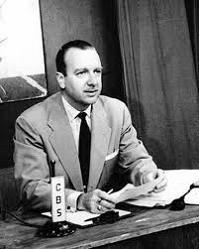
Van Jones misses Walter Cronkite

2

The world has become a very strange place when someone like Van Jones — a certified left-liberal, a member of the progressive political movement that has spent decades denoucning the biases and unfair coverage of the mainstream media — says he misses the old days when a few editors controlled what the public saw. From an oped he wrote in the NYTimes July 26:


Anyone with a laptop and a flip camera can engineer a fake info-virus and inject it into the body politic. Those with cable TV shows and axes to grind can concoct their own realities. The high standards and wise judgments of people like Walter Cronkite once acted as our national immune system, zapping scandal-mongers and quashing wild rumors. As a step toward further democratizing America, we shrunk those old gatekeepers — and ended up weakening democracy’s defenses.


Jones also wrote — and I agree — that the era of rampant character assassination by fraudulent bloggers will eventually end:


The worst of the partisans will get their comeuppance and become cautionary tales for others. Public leaders will learn to be more transparent. We will teach our children not to rush to judgment. Technology will evolve to better expose fakers.


But wow, when we start to miss the old CBS/ABC/NBC monopolies, things have gotten pretty bad. Or else we’ve finally started to realize that, in an era when anyone can be a mass-media publisher, credibility, standards and principles still matter.


Taming finance in an age of austerity

1

By Joseph E. Stiglitz

NEW YORK – It was not long ago that we could say, “We are all Keynesians now.” The financial sector and its free-market ideology had brought the world to the brink of ruin. Markets clearly were not self-correcting. Deregulation had proven to be a dismal failure.

The “innovations” unleashed by modern finance did not lead to higher long-term efficiency, faster growth, or more prosperity for all. Instead, they were designed to circumvent accounting standards and to evade and avoid taxes that are required to finance the public investments in infrastructure and technology – like the Internet – that underlie real growth, not the phantom growth promoted by the financial sector.

The financial sector pontificated not only about how to create a dynamic economy, but also about what to do in the event of a recession (which, according to their ideology, could be caused only by a failure of government, not of markets). Whenever an economy enters recession, revenues fall, and expenditures – say, for unemployment benefits – increase. So deficits grow.

Financial-sector deficit hawks said that governments should focus on eliminating deficits, preferably by cutting back on expenditures. The reduced deficits would restore confidence, which would restore investment – and thus growth. But, as plausible as this line of reasoning may sound, the historical evidence repeatedly refutes it.

When US President Herbert Hoover tried that recipe, it helped transform the 1929 stock-market crash into the Great Depression. When the International Monetary Fund tried the same formula in East Asia in 1997, downturns became recessions, and recessions became depressions.

The reasoning behind such episodes is based on a flawed analogy. A household that owes more money than it can easily repay needs to cut back on spending. But when a government does that, output and incomes decline, unemployment increases, and the ability to repay may actually decrease. What is true for a family is not true for a country.

More sophisticated advocates warn that government spending will drive up interest rates, thus “crowding out” private investment. When the economy is at full employment, this is a legitimate concern. But not now: given extraordinarily low long-term interest rates, no serious economist raises the “crowding out” issue nowadays.

In Europe, especially Germany, and in some quarters in the US, as government deficits and debt grow, so, too, do calls for increased austerity. If heeded, as appears to be the case in many countries, the results will be disastrous, especially given the fragility of the recovery. Growth will slow, with Europe and/or America possibly even slipping back into recession.

Stimulus spending, the deficit hawks’ favorite bogeyman, did not cause most of the increased deficits and debt, which are the result of “automatic stabilizers” – the tax cuts and spending increases that automatically accompany economic fluctuations. So, as austerity undermines growth, debt reduction will be marginal at best.

Keynesian economics worked: if not for stimulus measures and automatic stabilizers, the recession would have been far deeper and longer, and unemployment much higher. This does not mean that we should ignore the level of debt. But what matters is long-term debt.

There is a simple Keynesian recipe: First, shift spending away from unproductive uses – such as wars in Afghanistan and Iraq, or unconditional bank bailouts that do not revive lending – toward high-return investments. Second, encourage spending and promote equity and efficiency by raising taxes on corporations that don’t reinvest, for example, and lowering them on those that do, or by raising taxes on speculative capital gains (say, in real estate) and on carbon- and pollution-intensive energy, while cutting taxes for lower-income payers.

There are other measures that might help. For example, governments should help banks that lend to small- and medium-size enterprises, which are the main source of job creation – or establish new financial institutions that would do so – rather than supporting big banks that make their money from derivatives and abusive credit card practices.

Financial markets have worked hard to create a system that enforces their views: with free and open capital markets, a small country can be flooded with funds one moment, only to be charged high interest rates – or cut off completely – soon thereafter. In such circumstances, small countries seemingly have no choice: financial markets’ diktat on austerity, lest they be punished by withdrawal of financing.

But financial markets are a harsh and fickle taskmaster. The day after Spain announced its austerity package, its bonds were downgraded. The problem was not a lack of confidence that the Spanish government would fulfill its promises, but too much confidence that it would, and that this would reduce growth and increase unemployment from its already intolerable level of 20%. In short, having gotten the world into its current economic mess, financial markets are now saying to countries like Greece and Spain: damned if you don’t cut back on spending, but damned if you do as well.

Finance is a means to an end, not an end in itself. It is supposed to serve the interests of the rest of society, not the other way around. Taming financial markets will not be easy, but it can and must be done, through a combination of taxation and regulation – and, if necessary, government stepping in to fill some of the breaches (as it already does in the case of lending to small- and medium-size enterprises.)

Unsurprisingly, financial markets do not want to be tamed. They like the way things have been working, and why shouldn’t they? In countries with corrupt and imperfect democracies, they have the wherewithal to resist change. Fortunately, citizens in Europe and America have lost patience. The process of tempering and taming has begun. But there is far more yet to do.

Joseph E. Stiglitz is University Professor at Columbia University and a Nobel laureate in Economics. His latest book, Freefall: Free Markets and the Sinking of the Global Economy, is now available in French, German, Japanese, and Spanish.

Copyright: Project Syndicate, 2010.
www.project-syndicate.org
For a podcast of this commentary in English, please use this link:
http://media.blubrry.com/ps/media.libsyn.com/media/ps/stiglitz127.mp3

Out of work techies, let’s get sexy!

1

The message came into City Editor Steve Jones’ voicemail box, but we all figured I should probably follow up on it. Sex conference! Well, kind of. We’re looking for webmasters for sex sites! said the excited publicist on the phone. I thought you might be interested in this exciting event! he said (please note; no quote marks. I do not take good notes on publicists’ voicemails). Well hell yes publicist, I said. Get it girl. I trusted in this so-called Cybernet Expo – which, incidentally, starts Thurs/8 – to yield visions of nerds chasing tail, gettin’ cray-zay, gettin’ jobs. You know, happy, hearty pastimes.

Tell me, oh iconoclastic publicist (tech convention publicists rarely contact us for help for promotion, go fig), who can best illustrate this fabulous phenomenon of randy code writers? Well Caitlin, he says, he says to me, let me track you down someone! A colorful interview, publicist friend of mine? Clearly, he says to me. Have you heard, Caitlin, about Saturday night’s convention-capping Armory party? My god, I had not! Well there’s that, says he the publicist. And you are invited. Well let’s get crazy! I thought contentedly, to myself.

Which is how we come to the part where I made the telephonic acquaintance of a one Terry Mundell, business development manager. Of Kink.com! Gotta be an oversexed, whip-cracking dervish of a man, right? How do you usually find webmasters, Mundell – set up a laptop in the dungeon, see who bites?

“We use Craig’s List, newspaper listings, referrals, conferences,” sayeth the man, who may or may not have been wondering about why he was talking to me about this. Are your techies… sexy techies? Sorry, sorry — sex positive techies? “Typically yes. For the people in production,” Bundell allows me. Well yeah, I’d guess that, because porn directors and cameramen tend to like watching sex. But “for web people, we do stuff in Java. We’ve always just been a dot com, because we’re a technology company,” Bundell sums up. 

Not sure how to caption this one from Cybernet Expo 2009 — hey look like they’re having a successful networking event? Fill in blank, shanks. Photo by J.Kedvessy

Wait, so – but things get wacky at Cybernet Expo, riiight? “There may be some models around, but I don’t think it will be a sexual atmosphere.” K. But the Armory party! You’re having a party at the Armory for the convention! Don’t tell me – “I’m organizing the party. Oh yeah, its going to be a fun. Drinks, appetizers, DJs, local area webmasters will be there, representatives from Hustler and Playboy.” 

So here’s the thing. Well, two things. First, I am an ignorant sensationalist. Second, Cybernet Expo is a job fair more or less like any other. There will be speed networking events, many seminars for learnin’ stuff entitled with things like “Wordpress: Not Just for Blogs” and the (probably?) deceptively titled “Adult Traffic: Where to Get It.”

No, no wait! “Representatives from Hustler and Playboy,” he said; what the hell is that? Money’s on a bunch of naked chicks who will do naughty things if you can code the html on their Myspace pages. Oh, and their keynote speaker is the semi-sleazy – I mean facilitator of the sex positivity of 18-year old women — Steve Lightspeed. Party on, computer guys and gals!


Cybernet Expo

Thurs/8-Sat/10, $149-$199

Golden Gateway Hotel

1500 Van Ness, SF

www.cybernetexpo.com 


CompStat vs. community policing

0

By Alex Emslie


news@sfbg.com


Two competing visions for the San Francisco Police Department are central to a looming debate involving the mayor and his police chief, who favor the high-tech yet impersonal CompStat model, and progressive members of the Board of Supervisors who are pushing for a community-based, cops-walking-beats blueprint for SFPD.


District 5 Sup. Ross Mirkarimi introduced a proposed ballot measure on June 7 that would require the police chief to institute foot patrols in all districts and ask the Police Commission to establish a written community policing policy. SFPD Chief George Gascón opposes the initiative, instead favoring a reliance on the new CompStat system to determine how best to use police resources.


The terms “CompStat” and “community policing” have become trendy buzz words, UC Berkeley law professor Franklin Zimring told the Guardian, so they mean different things to the police departments that employ them, muddying the waters of the current debate.


“When labels get popular, they get pasted into lots of different things,” said Zimring, who wrote The Great American Crime Decline (Oxford University Press, 2006) and is working on a second book about the crime rate drop in the 1990s in New York City, where CompStat orginated. Yet the two models point to differing law enforcement philosophies.


At its most basic, CompStat uses computerized crime mapping software to drive police deployment decisions. It emphasizes lowering a city’s crime rate by centralizing authority, spotting statistical trends, and targeting crime hot spots. Community policing, a model embraced by many U.S. police departments in the 1980s and ’90s before CompStat swept the nation, grounds police officers in the neighborhoods they serve, decentralizing authority. The model seeks to prevent crime with regular patrols that develop relationships on their beats and lets the community help set law enforcement priorities.


“There is not community policing in San Francisco,” Mirkarimi — the only member of the board to go through the police academy — told the Guardian. “I don’t care what anybody says. If they say there is, then it is isolated. It’s unique to that particular experience or location.”


Proponents of CompStat insist the new model is really just a part of community policing. Gascón wrote a letter to the Board of Supervisors in February saying the proposed legislation “oversteps the jurisdiction of the legislative branch,” “attempts to give district station captains authority and discretion that rightfully belong to the chief of police,” and “will deprive the department of the flexibility it needs to address public safety throughout the city.”


Mirkarimi doesn’t oppose CompStat and said he sees merit in the program’s statistical collection, which has long been a shortcoming in the SFPD. “But I caution against any over-reliance on CompStat as a method that dictates how policing and public safety should be applied,” Mirkarimi told us. “Because the casualty of this over-reliance will be a compromising of any hopes of having true community policing.”


The SFPD website portrays CompStat as starting with data collection and then, similar to community policing, encouraging officers to find creative solutions to ongoing problems, anything from singular incidents of burglary to repeated graffiti or even a spike in murders. The crime triangle, a lasting symbol of community policing, illustrates that victims, suspects, and locations are all necessary for crime to thrive, and successfully policing even one of those factors can prevent crime. But CompStat programs often lack sustained commitment to building relationships with neighborhoods.


“Compstat seemed to engender a pattern of organizational response to crime spikes in hot spots that was analogous to the Whack-a-Mole game found at fairs and carnivals,” argued a 2003 study commissioned by the national Police Foundation titled “CompStat in Practice: An in-depth Analysis of Three Cities.”


The study found immediate contradictions in Lowell, Mass.; Minneapolis, and Newark, N.J. between beat officers’ new responsibility to “simply follow their superiors’ orders” and the community policing model that cast them as individual, authoritative protectors of their neighborhoods. CompStat centralizes authority with the higher echelons of SFPD. It includes bimonthly meetings in which station captains are grilled by SFPD brass and are expected to answer for the statistics in their district.


“Given the gap between the two models of policing, CompStat naturally tends to encounter the greatest resistance in departments that are most committed to community policing,” the study found.


Understaffed and poorly trained crime analysis units tasked with deciphering data patterns into useful correlations (for example, between drug crimes and murder) was another barrier to the success of CompStat outlined in the study. SFPD’s crime analysis unit consists of three civilians housed at the Hall of Justice, SFPD spokesperson Lt. Lyn Tomioka told us. They are not deployed to district stations and are supervised by a lieutenant who also has other responsibilities.


“There are a lot of rough edges. There’s a lot of non-fit there,” Zimring told the Guardian. “Who sets the priorities? CompStat priorities are always crime prevention, and they are set, and tactics are provided, by the chief of police. He is, in the immortal words of George W. Bush, ‘the decider.’ Community policing is supposed to be more cooperative and organic.”


Gascón initiated CompStat in San Francisco in October 2009, although Mayor Gavin Newsom has been touting the CompStat model since he first ran for mayor in 2003, when a campaign policy brief gushed about its “accurate and timely intelligence, rapid deployment, effective tactics, and relentless follow-up and assessment.” Initially, however, SFPD only took baby steps, using a confusing plot system to map crimes. That changed when Gascón took over as police chief last August, bringing experience in the program with him from the Los Angeles Police Department.


SFPD officials say vendor contract costs to start the system’s electronic crime mapping were less than $1 million, and an additional $1 million has been proposed for next year’s budget for technology upgrades in the CompStat unit. But the numbers so far haven’t backed up the boldest claims. SFPD reports 24 homicides this year as of June 12, up 20 percent from last year’s rate for early June. Homicide arrests are down from 12 last year to eight this year. Occurrences of rape are also up by 12 percent, but overall violent crime is down 2 percent compared to this time last year.


Gascón wrote that foot patrols are a valuable tool for community policing in San Francisco, but he doesn’t want to be forced to maintain them with limited staffing. Newsom’s proposed budget maintains current SFPD staffing, 2,317 sworn officers, while many other city departments received deep staffing cuts. Progressive supervisors have pledged to closely scrutinize SFPD’S budget.


Community policing was law enforcement’s response to civil unrest in the 1960s and ’70s, when police were seen as the enforcers of institutional power. Previous beat patrol methods largely ended when the 911 system came along, and the emphasis was placed on calls for service, statistics, and response times, leaving officers with little time to patrol and prevent crime.


The change to community policing emphasized neighborhood input and officers becoming an organic part of the community they served. Citizen contributions, generally through community meetings, began to drive decision-making. Foot patrols were revived and officers were once again expected to have a physical presence and a connection to the community they served.


That change was seen as particularly important in poor neighborhoods and communities of color, where police can sometimes be seen as an occupying army and residents were reluctant to cooperate with investigations. Officials hoped to prevent crimes by showing a presence in neighborhoods rather than simply reacting to them when someone called.


Mirkarimi says a CompStat-driven police force would be a return to that reactive model, potentially sacrificing the long-term commitment required to build trust between a neighborhood and its police department, which is central to community policing. “[CompStat] undermines the principles and practices of community policing because true community policing requires a discipline and a protocol that is sustained,” he said.


While either approach can theoretically result in the same practices, such as a foot beat patrol in a given neighborhood, Zimring said the reasoning behind it depends on the model. “CompStat to begin with is completely crime-driven,” Zimring said. “The reason you have it is to reduce crimes. It involves computerized mapping of crimes. It involves allocating resources to so-called hot spots, and it involves the police department imposing its own priorities as opposed to implementing community priorities.”


The Board of Supervisors will consider Mirkarimi’s measure and SFPD budget in July, airing a debate that could continue on to the November ballot, when voters would decide whether to maintain their faith in CompStat and the SFPD or ask for more community policing and foot patrols.

25 ideas for our queer future

1

What does the future hold in store for us? In an age of mainstream assimilation and aspiration, is there even such a thing as the queer future? We asked 25 queer leaders, artists, and activists to offer visions in their areas of expertise. The results — philosophical, poetic, practical, and priceless — are inspiring. One thing’s for sure, we’ll never lose our creative spark. Nor will we lose our motivational zeal. Fate is for the lazy: take action now. (Marke B.)

>>Click here for ideas from our amazing 2010 Hot Pink List

>>Click here for our Pride listings, and get out there!

THE FUTURE OF QUEER ACTIVISM We need to take back the power and stop being led by what the other side is doing. We need to empower ourselves enough so that we are no longer reacting but acting. We must use online social networks the way we used the streets and bullhorns to show our strength, speak out against wrongdoing, change minds, and win back our rights. We also must unite with our allies in other communities that are underrepresented and maligned in much of the same ways we are. When we stand with one another, we have that much stronger a voice.

Kelly Rivera Hart is the founder of Poz Activists Network (pansf.blogspot.com).

THE FUTURE OF QUEER COMMUNITY The difference between straight and gay cultures seems to be breaking down more and more, which is one of our goals, but we still need to support our own businesses, nonprofits, and leaders. We need to continue interacting with each other in the real world and not lose sight of who we are and what we share. Despite how the rest of the world sees us, there is still a lot of loneliness and isolation in the queer community. I think many of us have forgotten even simple things, like how to make actual friends, not just online. And it’s so easy! Renewing that spirit of interaction, freeing ourselves from fear of judgment, and moving outside our “safe zone” can lead to the greatest rewards.

Mark Rhoades is a charitable event planner and fundraiser who throws the annual Cupid’s Back and City Hall Pride parties.

THE FUTURE OF QUEER FASHION The past decade has witnessed an obsession with bulky, voluminous silhouettes disguised as “futuristic avant-garde” and inspired by GaGa and the ’80s. Let’s move on. Through clean lines, elegance, and wearable pieces, the future of queer fashion will shine light on socially relevant issues like bottom shame, positive-negative status reinforcement, and elite subcultures by using gay textiles and forgotten, non-era-specific imagery.

Allán Herrera is the design head of fashion house Homo Atelier (www.homoatelier.com) and a founder of HomoChic (www.homochic.com).

THE FUTURE OF QUEER FILM Future queer film will depend on the gays being at the forefront of distribution technology in the same way we pioneered social networking 15 years ago, spreading provocative and sexually honest/explicit films beyond the film festival circuit and toward a global audience. Special attention must be paid to the creeping homophobia of cultural and technological juggernauts like Apple. Our stories will need to bust through the pigeonhole, weaving our traditional themes (AIDS, coming-of-age) into larger storylines that are relevant to multicultural and transcontinental viewers.

Leo Herrera is a video artist, filmmaker, and a founder of HomoChic (www.homochic.com).

THE FUTURE OF QUEER YOUTH To be a true leader, one must envision the future. The future is a diverse society where LGBTQQ youth are embraced for who they are and encouraged to be who they want to be. In my pursuit for LGBTQQ youth rights, leadership has been about fostering the awareness in LGBTQQ young people about their own power as individuals and as a group, supporting them to access, develop, and master the skills and knowledge they need to transform their power into action, and building bridges to opportunities where their action can create just communities.

Jodi Schwartz is the executive director of LYRIC Lavender Youth Recreation and Information Center (www.lyric.org).

THE FUTURE OF QUEER LABOR Storm of protest drives Congress to pass trans-inclusive ENDA! Support by labor unions critical to passage of this landmark legislation. Screaming, “We’re too queer for this bullshit!” workers hold drag-runway picket lines at transphobic companies across the country. Activists redefine the crisis of trans poverty and unemployment as the most critical queer civil rights issue of our time.

Bad hotel boycott forces Hyatt to sign a fair contract and treat their employees with respect. LGBTQ organizations rally with labor unions for immigration reform, hold signs reading “No borders on my cunt, no border on our countries!

Jane Martin is a queer labor activist and community organizer with SF Pride at Work (www.sfprideatwork.org).

THE FUTURE OF QUEER DRAG (PART ONE) My vision for the future of queer drag requires you to take a moment, stop, look, and listen to our past. We have such a rich history of fierce and amazing queens to learn from. The key is to get involved with a queer family that supports and loves you and what you do. Next, figure out your niche — whether it’s high drag or low camp, just be sure to always do it like you don’t need the money! Then pull it together and serve it up with lots of love and generosity. And, of course, top it all off with a fabulous wig!

Juanita More! (www.juanitamore.com) is the queen. Attend her boisterous Pride party on Sun/27 (see Pride listings), benefiting Bay Area Young Positives (www.baypositives.org).

THE FUTURE OF QUEER DRAG (PART TWO) Meg Whitman will become president of the United States and hire Lady Bunny as one of her speech writers. Oprah and Gayle will finally come out, and gender illusionist shows will dominate the OWN Network — every other channel will follow. In 2050, Heklina will clone herself, twice, and perform the hospital-convalescent home circuit as the Del Rubio Triplets. Apple will come out with a product called the iDrag, that transforms anyone into anything.

Fudgie Frottage is the king. He puts on the annual, wonderful SF Drag King Contest (www.sfdragkingcontest.com).

THE FUTURE OF QUEER DANCE FLOORS Lets start with a nice, clean piece of paper. Black paper. A clean slate. Say, for example, a deliriously rich and tasteful daddy were to buy the Stud. Step one: a deep, five-stage gay cleaning. Step two: gut the interior, maybe keep the bar and choo-choo train intact, they are cute. Otherwise keep it simple. Step three: install an exact copy of the sound system used by Dave Mancuso at the Loft parties in New York City. The tasteful daddy would have a matte gray private jet at our disposal to bring guests of our choosing. For the launch party we would have an all Kenny line-up: Kenny Dixon Jr., Kenny Hawkes, Kenny Carpenter, and Ken Collier (back from the dead) would DJ. Live PA by Kenny Bobien. Oh, and Kenny Kenny on the door. At the end, everyone would get together and cry like they do on those exploitative renovation reality shows. Daddy would miss the ribbon-cutting, but that’s OK — he sent flowers and bought an $80 Diptyque candle for the new bathroom. That would be a good start.

Honey Soundsystem is a future-past DJ collective. Catch the old-school house Honey Pride party on Sun/27 (see Pride listings).

THE FUTURE OF QUEER COMEDY The future is here. And now that gay marriage is mandatory for everyone, queer and straight, the same goes for comedy. All comedians, regardless of sexual orientation, are now required to do at least 75 percent queer comedy in their acts unless they obtain Permit No. 758219B through the Comedy Board, allowing for the special provision to do only 50 percent queer material. That’s right: comedy is now regulated by law. No jokes are allowed to have homophobic content, especially if you’re performing for tourists. Remember, you are ambassadors now. If you’re straight and have no queer material, just ask your aunt or your second cousin or your bachelor uncle whose best friend of 40 years, Bruce, comes to all the family functions.

Lisa Geduldig (www.koshercomedy.com) is a comic and MC who puts on such shows as Kung Pao Kosher Comedy, Funny Girlz, and Comedy Returns to El Rio!

THE FUTURE OF QUEER HOUSING It is beyond time for us queers to focus our fabulous and substantial God-given talents toward a vision of the future of queer housing. We are the trailblazers, the social entrepreneurs, the avant-garde. Imagining and creating the future is what we do best. Let’s put those substantial talents to work to realize our very own “No Place Like Home” dream of a home for our LGBT elders, our homeless LGBT youth, our people with HIV/AIDS, our artists, our activists, and everything in between. I’ll show you mine: the largest affordable housing for people with HIV/AIDS in the nation next to the Castro Theater and an LGBT homeless shelter at Geary and Polk. Now you show me yours.

Brian Basinger is the director of AIDS Housing Alliance/SF (www.ahasf.org).

THE FUTURE OF QUEER COMICS The future of LGBT comics will be about creators moving out of the traditional queer media ghetto and into new digital undergrounds, indie markets, and even the publishing mainstream. Web comics, graphic novels, minicomics, and zines … Queer comics will have to continue to diversify their formats to survive. At the core, though, remains the need to tell good stories! Look for more poignant narratives about the intersection of queer identities and the human condition. Also, robo-dykes, super-powered trannies, bisexual Lotharios, and zombie fags!

Justin Hall, a queer and erotic comics artist, runs All Thumbs Press (www.allthumbspress.com).

THE FUTURE OF QUEER LAW We would like to see the law catch up with the reality of transgender lives. Your gender identity is an innate and deeply felt sense of who you are. Whether you feel male, female, both, or neither, we envision a future where your legal gender will be exclusively determined by you and not by doctors or lawyers. By respecting your autonomy and your ability to know yourselves better than anyone else, the law will finally reflect society at large. The law is not far from fully recognizing that fact of life, but there is still work to be done. So break out your queer legal briefs and join in the fight for transgender civil rights!

Executive Director Masen Davis and the staff of the Transgender Law Center (www.transgenderlawcenter.org)

THE FUTURE OF QUEER SPIRIT As I look toward the future, I want to see the consciousness shift that Harry Hay and other gay pioneers were pushing for manifest itself more fully in both the gay culture and the larger hetero culture. As queer liberationists, we’ve already taught the world that we are a people. I want to see us recognized as always having been a people. I want to see us given the opportunity to cocreate a new, more beautiful world. To paraphrase: what if there were no “faggots,” only master healers, teachers, shamans? I hope to see the end of shame.

Zac Benfield is the president of the radical faerie Church of Nomenus. Attend his “Woo 101 for Hipster Faggots” workshop, part of the Faetopia Festival (See “Ongoing” in our Pride listings)

THE FUTURE OF QUEER SCIENCE

The alien scientist pipettes liquid
Into a flask to be shaken vigorously.
The origins of gay life.

On Earth, planets align, exposing
Realities once thought to be utterly impossible:
Gays are outta this world!

Queer scientists make the future
Always brighter, cleaner, sexier, and more fabulous
Stopping only for a cocktail.

Quietly, the gay scientist works,
Inching closer to the final answer that
Will change the world forever.

In the future of science
We see the world with different eyes,
All judged by ability alone.

Chris Waddling is a PhD scientist at UCSF.

THE FUTURE OF THE QUEER PAST The future of the queer past has always been fragile — and despite some positive developments in the past 25 years, it remains fragile today. The legacy of LGBT people is still largely invisible in the settings where our society formalizes its history. Our stories are rarely told in high school classrooms, in the galleries of museums, on the plaques of public monuments. Supporting the efforts and the growth of such organizations as the GLBT Historical Society and other pioneering queer history institutions will be key to ensuring that the memory of LGBT lives, struggles, setbacks, and triumphs can inform and inspire future generations.

Writer, editor, and antiquarian book dealer Gerard Koskovich is a founding member of the GLBT Historical Society and a member of the board of directors of the Mémorial de la Déportation Homosexuelle, a French national group that commemorates the homosexual victims of the Nazis.

THE FUTURE OF THE QUEER FUTURE My future selves are always popping back from the year 2023 or 2034 for the weekend, mostly because they know I’ll be their sex slave. They remember what 2010-me was like. (And apparently in the mid-2020s, time-traveling self-flagellation becomes a big fetish.) They’re not supposed to tell me anything about The Future, but they let slip wee details here and there — the 20-teens are a troubling time, but then we discover queer telepathy, and everybody starts secreting empathy endorphins and building communal gardens in the upper atmosphere. Hang in there until we get the first queer president, they always say. Once she comes out during her second term, that’s when the government really starts building something.

Charlie Anders is the managing editor of science fiction-forward site io9.com

Zion I’s Amp Live steps into the solo album spotlight

1

It’s hard to think of a Bay hip hop DJ with a more diverse footprint than Amp Live. Rising to prominence as the mixing half of duo Zion I, he’s since spread his futuristic tinkerings through tracks featuring Goapele, Too Short, Charlie 2na, and Del the Funky Homosapien. More recently, he funked up Radiohead’s In Rainbows – dubbing his new vision Rainydayz Remixes, and releasing it to the public before, well, really clearing it with the music’s progenitors. In exchange for his hip hop creativity, he received a cease and desist order from the band. Luckily, their camps found a way to talk it out, and Radiohead eventually gave Amp Live the go ahead to offer up the project, which you can still find on his Myspace page as a free download (he also issued a creative, yet heartfelt apology for his role in the conflict).

We caught up with Amp Live via email on his Mexico vacation – where he’s no doubt “amping” (ha!) up for his CD release party this weekend (Shattuck Down Low, Sat/19). You might recognize some of the other cats that will be onstage; Amp Live’s graciously sharing the playbill with Kev Choice, Deuce Eclipse, Trackademicks — and Zion I will take over as the headliner. 

Murder at the Discotech‘s first single, “Gary Is a Robot” featuring Tracademicks and Mr. Micro is one play from being your 2010 summer anthem


San Francisco Bay Guardian: You’ve said in the past that you’ve been looking at adding more “live music” performance on stage to your DJ sets. Can you explain what you are looking at with that?

Amp Live: I think live [music] is very important in creating a good show. During my production set, I create music on the spot using live video and visuals, and will also feature other musicians. 


SFBG: What kind of unique resources did you find coming up as a musician in the Bay? Besides your music, is there any one artist today that you think speaks most eloquently about what it’s like to live out here?

AL: There is definitely a large amount of accomplished and talented musicians in the Bay Area. So many tight drummers, keyboardist, horn players, singer, etc. That makes it easy in collaborations and studio work. I like what comes from the DJ Shadow camp. I think he captures the vibe out here pretty well. Also, like what Traxamillion is doing. 


SFBG: Your DJing, and general work as an artist, make it clear that you’ve got very deep skills when it comes to technology. Where do you think you would have wound up if it hadn’t been for music? 

AL: Well, I graduated from college with a bachelor’s in science. I was going to go to medical school basically, and be a cardiologist. 


SFBG: What ways will the Amp Live solo shows differ from the performances you’ve done as part of Zion I?

AL: The main difference is that it is mostly me on stage, so it’s all eyes on what I am doing. I have to keep the crowd engaged. 


Sat/19 9 p.m., $15-20

Shattuck Down Low

2284 Shattuck, Berkeley

(510) 548-1159

www.amplivesworld.com 

www.shattuckdownlow.com

Tale of two landfills

2

Sarah@sfbg.com

Everyone should make a pilgrimage to the landfill where their city’s garbage is buried. For San Francisco residents to really understand the current trash situation — and its related issues of transportation, environmental justice, greenhouse gas reduction, corporate contracting, and pursuing a zero waste goal — that means taking two trips.

The first is a relatively short trek to Waste Management’s Altamont landfill in the arid hills near Livermore, which is where San Francisco’s trash has been taken for three decades. The next is a far longer journey to the Ostrom Road landfill near Wheatland in Yuba County, a facility owned by Recology (formerly NorCal Waste Systems, San Francisco’s longtime trash collector) on the fertile eastern edge of the Sacramento Valley, where officials want to dispose of the city’s trash starting in 2015.

Both these facilities looked well managed, despite their different geographical settings, proving that engineers can place a landfill just about anywhere. But landfills are sobering reminders of the unintended consequences of our discarded stuff. Plastic bags are carried off by the wind before anyone can catch them. Gulls and crows circle above the massive piles of trash, searching for food scraps. And the air reeks of methane, a potent greenhouse gas that is second only to carbon dioxide as a manmade cause of global warming.

It’s also a reminder of a fact most San Franciscans don’t think much about: The city exports mountains of garage into somebody else’s backyard. While residents have gone a long way to reduce the waste stream as city officials pursue an ambitious strategy of zero waste by 2020, we’re still trucking 1,800 tons of garbage out of San Francisco every day. And now we’re preparing to triple the distance that trash travels, a prospect some Yuba County residents find troubling.

“The mayor of San Francisco is encouraging us to be a green city by growing veggies, raising wonderful urban gardens, composting green waste and food and restaurant scraps,” Irene Creps, a San Franciscan who owns a ranch in Wheatland, told us. “So why is he trying to dump San Francisco’s trash in a beautiful rural area?”

Behind that question is a complicated battle with two of the country’s largest private waste management companies bidding for a lucrative contract to pile San Francisco’s trash into big mountains of landfill far from where it was created. This is big and dirty business, one San Francisco has long chosen to contract out entirely, unlike most cities that at least collect their own trash.

So the impending fight over who gets to profit from San Francisco’s waste, a conflict that is already starting to get messy, could illuminate the darker side of our throwaway culture and how it is still falling short of our most wishful rhetoric.


TALKING TRASH

The recent recommendation by a city committee to leave the Altamont landfill and turn almost all the city’s waste functions — collection, sorting, recycling, and disposal — over to Recology (see “Trash talk,” 3/30) angered Waste Management as well as some environmentalists and Yuba County residents.

WM claimed the contract selection process had been marred by fraud and favoritism, and members of YUGAG( Yuba Group Against Garbage) charged that sending our trash on a train through seven counties will affect regional air quality and greenhouse gas emissions and target a poor rural community. Observers also want details such as whether San Francisco taxpayers will have to pay for a new rail spur and a processing facility for organic matter.

Mark Westlund of the Department of Environment told the Guardian that negotiations between the city and Recology are continuing and the contract bids remain under seal. “Hopefully they’ll be concluded in the near future,” Westlund said. “I can’t pinpoint an exact date because the deal is still being fleshed out, but some time this summer.”

Under the tentative plan, Recology’s trucks would haul San Francisco’s trash across the Bay Bridge to Oakland, where the garbage would be loaded onto trains three times a week and hauled to Wheatland. Recology claims its proposal is better for the environment and the economy because it takes trucks off the road and removes organic matter from the waste before it reaches the landfill and turns into methane gas.

But WM officials reject the claim, noting that both facilities will convert methane to electricity, energy now used to fuel the trucks going to Altamont. The landfill produces 8.5 MW of electricity annually, some of which is converted into 4.7 million gallons of liquid natural gas used by 300 trucks. The Ostrom Road facility would produce far less methane, using it to create 1.5 MW of electricity annually.

Recology officials say removing organic matter to produce less methane is an environmental plus because much of the methane from Altamont escapes into the atmosphere and adds to global warming, although WM claims to capture 90 percent of it. Yet David Assman, deputy director of the San Francisco Department of the Environment, doesn’t believe WM figures, telling us that they are “not realistic or feasible.”

State and federal environmental officials say about a quarter of the methane gas produced in landfills ends up in the atmosphere. “But they acknowledge that this is an average. Some landfills can be worse, others much better if they have a good design. And there is no company that has done as much work on this as Waste Management,” company spokesperson Chuck White told us, citing WM-sponsored studies indicating a methane capture rate as high as 92 percent. “The idea of 90 percent capture of methane is very credible if you are running a good operation.”

Ken Lewis, director of WM’s landfills, said the facility’s use of methane to cleanly power its trucks has been glossed over in the debate over this contract. “We’re just tapping into the natural carbon cycle,” Lewis told us.

But Recology spokesperson Adam Alberti (who works for Singer & Associates, San Francisco’s premier crisis communications firm) counters that it’s better to avoid producing methane in the first place because some of it escapes and adds to global warming, which Recology claims it will do by sorting the waste, in the process creating green jobs in the organics recycling and reducing the danger of the gases leaking or even exploding.

“But what has Recology done to show us that the capture rate at their Ostrom landfill is on the high side?” Lewis asks. “Folks in San Francisco say it’s not possible, but we’ve got published reports.”

Assman admits that San Francisco won’t be able to ensure that other municipalities that use Ostrom Road will be focusing on organics recycling. While questions remain about how that facility will ultimately handle a massive influx of garbage, Altamont has been housing the Bay Area’s trash for decades. And even though San Francisco’s current contract will expire by 2015, this sprawling facility nestled in remote hillsides can still handle more trash for decades to come.


ZERO SUM

Perhaps the most striking aspect of the Altamont landfill is the 30-foot-tall fence that sits on a ridge on the perimeter of the facility. It’s covered with plastic bags that have escaped the landfill and rolled like demonic tumbleweeds along what looks like a desolate moonscape.

Wind keeps the blades turning on the giant Florida Power-owned windmills that line the Altamont hills, but it also puffs plastic bags up like little balloons that take off before the bulldozers can compress them into the fill. Lewis said he bought a special machine to suck up the bags, and employs a team of workers to collect them from the buffer zone surroundinge site.

Although difficult to control or destroy, plastic bags are not a huge part of the waste volume. San Francisco has already banned most stores from using them, and the California Legislature is contemplating expanding the ban statewide in a effort to limit a waste product now adding to a giant trash heap in the middle of the Pacific Ocean.

“Plastic bags are a visual shocker,” said Marc Roberts, community development director for the city of Livermore. “In that sense, they are similar to Styrofoam. It’s pretty nasty stuff, can get loose, and doesn’t break down. But they’re not a major part of the volume.”

Yet Roberts said that these emotional triggers give us a peek into the massive operations that process the neverending stream of waste that humans produce and don’t really think about that often.

“Our world is so mechanized,” Roberts observed. “Stuff disappears in middle of night, and we don’t see where it goes.”

San Francisco officials confirm that the trend of disappearing stuff in the night will continue, no matter which landfill waste disposal option the city selects.

“No matter what option, it’s going to involve some transportation to wherever,” Assman said. Currently, Recology and WM share control over San Francisco’s waste stream. But that could change if the waste disposal contract goes to Recology.

A privately-held San Francisco firm, Recology has the monopoly over San Francisco’s waste stream from curbside collection to the point when it heads to the landfill. Waste Management, a publicly-traded company that is the nation’s largest waste management operation, owns 159 of the biggest landfills in the nation, including Altamont, the seventh-largest capacity landfill in the nation.

San Francisco started sending its trash to Altamont in 1987, when it entered into a contract with Waste Management for 65 years or 15 million tons of capacity, a level expected to be hit by 2015, triggering the current debate over whether it would be better to send San Francisco’s waste on a northbound train.


TRAIN TO WHEATLAND

Creps, 76, a retired school teacher, warns folks to watch out for rattlesnakes as she shows them around this flood-prone agricultural community.

“This is an ancient sea terrace, and now it’s fertile grazing ground between creeks,” Creps said as we walked around the ranchland that Creps’ grandfather settled when he came to California in 1850. Today he lies buried here in a pioneer cemetery, along with Creps’ adopted daughter, Sophie, who was killed at age 27 after she witnessed a friend’s murder in Oakland in 2006.

Creps’ cousin, Bill Middleton, who grows walnuts on a ranch adjacent to hers, worries about the landfill’s potential impact on the groundwater. “The water table is really high here, so you’ve go a whole pond of water sitting under this thing,” Middleton said.

Wheatland’s retired postmaster, Jim Rice, recalled that when the landfill opened on Ostrom Road in the 1980s, individual cities had veto power over any expansion plans. “But Chris Chandler, who was then the Assembly member for Sutter County and is now a judge, carried a bill in legislature to do away with veto power,” Rice said.

“So we lost out and ended up with a dump,” Middleton said.

Creps believes the landfill should be for the use of local residents only. “There’s a lot of development going on around here and the population is going to grow,” she said. “But at this rate, this landfill will be used up before Yuba and the surrounding counties can use it. And that’s not fair. They think they can get a foothold in places off the beaten path.”

Yet not everyone in Yuba County hates San Francisco’s Ostrom Road plan. On June 7, the Yuba-Sutter Economic Development Corporation backed Recology’s plan to build a rail spur to cover the 100 yards from the Union Pacific line to the landfill site.

EDC’s Brynda Stranix said the garbage deal is still subject to approval by San Francisco officials, but will bring needed money to the county. “The landfill is already permitted to take up to 3,000 tons of garbage a day and it’s taking in about 800 tons a day now,” Stranix said.

If the deal goes through, it would triple the current volume at the landfill, entitling Yuba County to $22 million in host fees over 10 years.

Recology’s Phil Graham clarified that Ostrom Road is considered a regional landfill, one that has already grown to 100 feet above sea level and is permitted to rise another 165 feet into the air. “So even with the waste stream from San Francisco,” he said, “we’ll still be operating well under the tonnage limits.”

“The world has changed. Federal regulations come in, and landfill operations change,” Recology’s Alberti said as we toured the site. “And there really are no longer any local landfills. This one is already operating, accepting regional waste.”

He claimed that Livermore residents had similar concerns to those now expressed in Yuba County when San Francisco’s waste started going to Altamont. Livermore and Sierra Club brought a lawsuit around plans to expand the dump, a suit that forced WM to create an $10 million open space fund.

Alberti said he understands that people like Creps are concerned. “But we are not seeking an expansion. The only thing we are asking for is a rail track.

“From our point of view it’s simple,” he continued. “We have the facility; Ostrom Road is close to rail; and it’s not open to the public. So it’s a tightly contained working area.”

Graham, the facility’s manager, also dismissed concerns that the landfill might harm the groundwater or the health of the local environment. “A lot of people don’t know how highly regulated we are,” he said. “That’s why we are having public meetings. Our compass is out in the community. These are people we work and live with.”

Alberti said YUGAG and other opponents of the landfill aren’t numerous. “If we draw the circle wider to the two-county area, how many people even know a landfill is operating here?”

Graham takes that as a testament to how well the facility is operated. “I consider that a compliment. Obviously, we weren’t causing any problems.”


TRASH MONOPOLY

Those who run both landfills say they recognize that their industry’s heyday is over, and that the future will bring a more complicated system that sends steadily less trash to the landfills.

“Eventually we will be all out of business,” Alberti predicted. “One reason we changed our name was knowing that landfills are not sustainable. And that’s a significant difference. Waste Management is the largest landfill owner in the world. Recology is a recycling company that owns a few landfills and, for that reason, does innovative things like the food scraps program.”

But the company with the new green name has traditionally been a powerhouse in San Francisco’s trash industry, becoming a well-entrenched monopoly after buying out two local competitors — Sunset Scavenger and Golden Gate Disposal and Recycling — a triad that has long held exclusive rights over the city’s waste.

The 1932 Refuse Collection and Disposal Ordinance gave the company now calling itself Recology a rare and enviably monopoly on curbside collection, one that had no expiration date and would be difficult to change. “So legally, it’s not an option,” Assman said.

Retired Judge Quentin Kopp, a former member of the Board of Supervisors and California Legislature, got involved in an unsuccessful effort to break Recology’s curbside monopoly in the 1990s when the company then known as NorCal Waste asked for another rate increase. But he found the contractual structure to be almost impossible to break.

“The DPW director examines all the allowable elements and makes recommendations to the Rate Board,” Kopp said. “And the Rate Board consists of three people: the chief administrative officer, the controller, and the general manager of the San Francisco Public Utilities Commission.”

SFPUC General Manager Ed Harrington says Recology’s curbside monopoly is unusual compared to other places, but it also makes the company a strong contender to the landfill contract. “It comes down to economies of scale. If you don’t have a contract with a facility that does recycling or waste disposal, you can collect the garbage, but where are you going to take it?”

Harrington said the situation was better before Recology purchased Sunset Scavenger, which mostly handled residential garbage, and Golden Gate, which mostly handled commercial garbage. Today, he said, the city has little control over commercial garbage rates or Recology’s overall finances. “That made it more difficult, and we only set the rate of residential garbage collection,” Harrington observed. “They have never come before the rate appeal board over commercial rates. I have asked who subsidizes whom, the commercial or the residential, and they say they think the commercial. But we have no ability to govern or manage those rates.”

WM’s Skolnick said a positive outcome of the current contract negotiations would be to break Recology’s monopoly on curbside collection. “We have to work to keep our business. That’s the competitive process. But we have a competitor that can encroach into our area even though we can’t encroach on San Francisco. And they claim to have one of the most competitive rates in the country — but try getting those numbers,” he said.

WM’s David Tucker added: “We’d like if San Francisco jumped into the 21st century and had a competitive bid process.”


DIRTY BUSINESS

The battle between WM’s local landfill option and Recology’s plan for a longer haul but with more diversion of organic materials is complicated, so much so that the local Sierra Club chapter has yet to take a position.

Glen Kirby of the Sierra Club’s Alameda County chapter told the Guardian that the Sierra Club’s East Bay, San Francisco, and Yuba chapters are taking a “wait and see what becomes public next” stance for now. But insiders say the club’s national position is against landfill gas conversion projects like that at Altamont, possibly favoring Recology’s bid.

Recology proponents claim the Sierra Club didn’t initially oppose landfill gas conversions because its members in the East Bay benefit from an open space fund that WM pays into as mitigation for a 1980 expansion at the Altamont. And Alberti claimed that WM’s analysis of greenhouse gas emissions from the competing waste transportation plans was flawed.

“Their calculation is a shell game. And it relies on Recology using diesel when we are using green biodiesel trains. This is not your grandfather’s train any more. One train equals 200 trucks,” Alberti said.

But WM’s Lewis defends the company’s analysis, which showed Recology’s bid to be worse for greenhouse gas emissions than WM’s.

“Landfill gas is a byproduct of an existing system,” Lewis said, noting that 43 percent of the trash buried at Altamont comes from San Francisco. The implication is that a large part of the methane in the landfill comes from — and benefits — San Francisco.

“We are delivering waste products that contain organics,” he said. “We realized that we could flare methane [to burn it up] or produce electricity. California has very aggressive landfill gas requirements, and the collection rates are relatively good at most sites. But once you’ve collected it, what to do? Historically, they flared the gas. Twenty years ago, there was not a lot of technology to allow anything else.”

Lewis says WM began producing electricity from the gas in 1987. “What we do in the future is decoupled from what was giving us the methane in the past,” he said. “Today we are managing what was brought here 15-20 years ago. It’s your hamburger, cardboard, and paper that has been sitting up there since 1998. We’re doing something good with something that we used to flare.”

“If Altamont was closed today, the gas yield coming off it would be enough to produce 10,000 gallons a day for the next 25 years,” WM’s Bay Area president Barry Skolnick interjected.

And Lewis observed that if you take organics out of the waste stream, as Recology proposes, that matter has value, whether in a digester to produce energy or a composting operation. That complicates the comparison of the two bids.

“We agree that if you can get that waste out in a clean form, that’s a good thing,” Lewis said. “But composting is a very highly polluting approach. In the process of degrading, it gives off a lot of volatiles and carbon dioxide. So air districts have not traditionally been very positive on sitting aerobic composting facilities.”


WHAT’S NEXT?

The contract that San Francisco has tentatively awarded to Recology is for 5 million tons or 10 years, whichever comes sooner. As such, it’s a much smaller contract than the city’s 1987 contract with WM, mostly because the future is uncertain.

But trucks will remain a part of the equation. Recology is proposing to continue driving 92 truckloads of garbage over the Bay Bridge per day, possibly to keep the Teamsters happy, frustrating transportation advocates who believe direct rail haul or barges across the bay would be greener options.

In December 2009, Mayor Gavin Newsom and Bob Morales, director of the Teamsters Union Waste Division, cowrote an op-ed in the Sunday Sacramento Bee, in which they argued the case for increased recycling and composting as a “zero waste” strategy for California and as a way to generate green jobs and reduce global warming.

“Equally important for the future of our green economy is that recycling and composting mean jobs,” Newsom and Morales wrote. “The Institute for Local Self-Reliance reports that every additional 10,000 tons recycled translates into 10 new frontline jobs and 25 new jobs in recycling-based manufacturing.”

Newsom and Morales clarified that they do not support waste-to-energy or landfilling as part of their zero waste vision.

“It makes no sense to burn materials or put them in a hole in the ground when these same materials can be turned into the products and jobs of the future,” they stated.

Yet WM’s Skolnick sees a certain hypocrisy in San Francisco turning its back on the methane gas that its garbage helped create at Altamont over the past three decades. “Here’s a very progressive city, and we want to take their waste from the last 30 years and use gas from it to fuel their trucks,” he said. “But they want to haul waste three times as far to Wheatland. What does that say about San Francisco’s mission to become the greenest city?”

David Pilpel, a political activist who has followed the contract, agreed that San Francisco officials can’t simply walk away from Altamont and call it a green move, but he would like to see the city use rail rather than trucks. “Instead of putting stuff on long-haul trucks, put it on a rail gondola and haul it around the peninsula to Livermore,” he said. “The Altamont expansion was for San Francisco’s purposes. So to say now, ‘We’ll go elsewhere,’ is lame.”

Sally Brown, a research associate professor at the University of Washington, acknowledges that landfills have done a great job of giving us places to dump our stuff and can be skillfully engineered to release less methane and capture more productive biogases.

“However, we are entering a new era where resources are limited and carbon is king,” Brown wrote in the May 2010 edition of Biocycle magazine. “In this new era, dumping stuff may cease to be an option because that stuff has value. and that value can be efficiently extracted for costs that are comparable to or lower than the costs — both environmental and monetary — associated with dumping.”

The San Francisco Board of Supervisors will vote on the contract later this year, deciding whether to validate the Department of the Environment’s choice of Recology or go with WM. Either way, lawsuits are likely to follow.

Hot sexy events June 9-15

0

Ohhhh baby yeah, stroke that compound tubuloalveolar exocrine gland! That’s right, transmit my sperm from the ductus deferens into my urethra! Yeah, yeah… I love it when you understand my anatomy. Science = so hot right now. Well, especially when scientifical edumacation can school you on how to make you partner come harder, better, faster. With that in mind, I give you Good Vibrations’ Ask Our Doc series, a weekly meet and great with a legitimate, PhD holding medical professional that knows dirty, dirty things about what you’ve got going on down there. This week’s smarty pants; Dr. Charles Glickman, who can tell you all about the prostate gland, that underutilized hot spot. Oh, doctor…

——————————————-

Prostate Play and Pleasure

You would think that something the size of a chesnut nestled at the base of your penis would little need an instruction manual, but you know what? The human body is a complex and multi-layered entity. Sometimes you need a doctor to tell you how to get off. Charles Glickman is happy to oblige – the doc will be advising on how to facilitate that happy little gland, and the toys and tricks that can take your prostate productions up a notch.

Wed/9 6-7 p.m., free

Good Vibrations

603 Valencia, SF

(415) 522-5460

www.goodvibes.com

——————————————-

Effective Flogging Playshop

Does your wrist flick not get quite the whip crack you’re looking for? Are your lashings lacking luster? Not a worry, my sweet, sweet dominatrix. Come on down to the Citadel for Edukink’s monthly Paideia munch/class/play time, which focuses on 12 basic skill flogging techniques for the month of June.

Thurs/10 7:30-10:30 p.m., $15-25

SF Citadel

1277 Mission, SF

(415) 626-1746

www.edukink.org

——————————————-

thread | bare

Hot models strutting down the runway in flash local indie fashion. Hot, yes – but is it sexy? It is when the clothes on their backs are available for you to grab in your sweaty little hands — like, right now. The show is a benefit for the Lab, and those involved are fairly star studded. Comedian Philip Huang, and vocalist Lily Taylor are among the soon to be naked, and hair will be done by 2010 SFBG Small Business Award winner, Glam-A-Rama.

Fri/11 7-10 p.m., $10-20

The Lab

2948 16th St., SF

(415) 864-8855

www.thelab.org

——————————————-

Hot Tears of Shame

Those Japanese, they’re naughty, aren’t they? They’ve pretty much cornered the market when it comes to absolutely unique ways to make filth (tentacle porn, anyone?). Tonight, film experts from the Land of the Rising Sun talk trash, showing films from the schools of “Roman Porno,” and “Pinky Violence,” as well as those ever popular short skirted schoolgirls.

Fri/11 7 p.m., $10

Viz Cinema at New People

1746 Post, SF

(415) 525-8631

www.newpeopleworld.com

——————————————-

Robert Philipson

Ah, the gay Internet personal ad. The married man who wants to “keep it simple,” the single guy who self describes as “public property,” that ever elusive “VGL” – if it means “very good looking” then where, oh where darling, is that photo? Poet Philipson has read them all, and channeled the Interweb romantical rondelay into a new book of verse, Very Good Looking Seeks Same: Gay Profiles in Search of Love, which he’ll be reading today at A Different Light.

Sat/12 4 p.m., free

A Different Light bookstore

489 Castro, SF

(415) 431-0891

www.adlbooks.com

——————————————-

Beginning Pole 101

I just went into detail about how awesome stripping is for the ego, but apparently it’s good for the love handles, as well. This particular class pitches itself as poleside workout. And with only four to nine budding exotic dancers per class, you’re getting lots of hands-on attention from the instructor.

Sat/12 and Sun/13 2-4 p.m., $126

Center for Sex and Culture

1519 Mission, SF

(415) 552-7399

www.sexandculture.org

——————————————-

Tease

Kick off Pride with one of its official parties; Trigger’s post brunch, dance off that eggs benedict, moveathon. Djs Calalo and Motive keep you dancing right into Saturday club night with hip hop, electro… and if their website sets any precedent, Ke$ha. Oh, Ke$sha.

Sat/12 5-10 p.m., $5-8

Trigger

2344 Market, SF

(415)

www.movementinthebay.com

——————————————-

Show Me Mine, Show Me Yours: Modern Porn and Pinup Photography

Local queer porn icon Courtney Trouble tells you how to take a pretty picture. She’ll demo porn/pinup photography with a special surprise guest, then set you on your own personal road to pixelated glory. Pose yourself up with props, costumes, partners, and special lighting – all of which will be available, even though you’re more than welcome to bring ’em if you’ve got ’em.

Sun/13 5 p.m., $25

Femina Potens

2199 Market, SF

(415) 864-1558

www.feminapotens.org

——————————————-

Our Lady of Burning Dreams

Penny Slinger first emerged in the London art scene of the 1960s, but her career didn’t hit its screaming, sheet clawing climax until her emergence as a force in erotic art in the early ’80s. Nowadays, she makes florid digital kalidescopes of sensual human form and goddess imagery. Good Vibes is teaming her up with Carol Queen and Bobby Morgan, two more who use the wonders of technology to express physical ecstasy.

Closing reception Tues/15 5:30-7:30 p.m., free

Good Vibrations

1620 Polk, SF

(415) 345-0400

www.goodvibes.com

In Mexico, turtles and oil privatization

0

MEXICO CITY (June 3rd) — The turtles of Caribbean Mexico are an ancient race. Their ancestors paddled with dinosaurs and prehistoric fish. Kemp’s Ridley turtles were burying their eggs in Gulf Coast sanctuaries countless millennia before the Olmecs, Mexico’s matrix civilization, installed their mysterious giant heads on the Veracruz plain. The presence of turtles in indigenous iconography is evidenced by artifacts displayed in anthropological museums in Mexico City and Jalapa Veracruz. The 20th Century naturalists recorded “arribos” (“arrivals”) of tens of thousands of Kemp’s Ridley females at Rancho Nuevo beach Tamaulipas; with few exceptions, Kemp’s Ridleys (named for an amateur turtle-ologist and the smallest and rarest of all sea turtles) nest only at Rancho Nuevo and Padre Island, Texas.


But for Gulf waters, turtles are like canaries in the coalmines. The 1979 blowout of Ixtoc 1, a Mexican National Petroleum Company (PEMEX) platform off the southern state of Tabasco, gushed uncontrollably for nine months. Some 3,000,000 barrels spewed into the Gulf of Mexico, fouling beaches and nesting grounds. The Rancho Nuevo arribos shrank below 4,000. Although Mexican Kemp’s Ridleys have staged a modest comeback (the population is now calculated at 8,000), the April 20th explosion of a British Petroleum deep-sea drilling rig on the Macondo Prospect (with apologies to Gabriel Garcia Marquez) 130 miles southeast of New Orleans could spell doomsday for these primordial creatures.


Across the Gulf, Mexican authorities are watching this travesty unfold with furrowed brows. The blow-out of the Deepwater Horizon platform that killed 11 and wounded 17 workers is now the largest oil spill in U.S. history, almost doubling the size of the Exxon Valdez fiasco in Alaskan waters (10,000,000 gallons) and threatening biblical devastation of Caribbean wildlife from Mexico to Cuba. Already, Gulf Coast fishing grounds have been shut down, shrimp and oyster beds contaminated, colonies of marine mammals such as dolphins and manatees are menaced, and bird life, particularly brown pelicans, is at extreme risk. In just the first 20 days of the catastrophe, 156 dead Kemp’s Ridley sea turtles were counted.


The good news — at least for Mexico — is that deep-water oil plumes have been caught up in loop currents that threaten environmental mayhem as far east as the Florida Keys and Communist Cuba, but will not touch home. The bad news is that, come August, when the hurricane season blows in (2010 is being touted as a record year for tropical hurricanes with 15 giant storms headed for the Caribbean and the Gulf of Mexico), those currents will shift dramatically south towards Mexico. Even now, deep water “cyclones” are sweeping gobs of oil towards Veracruz and Tamaulipas turtle breeding grounds, and Mexico’s environmental secretary, Rafael Elvira, is preparing to file suit against BP, whose $325 billion earnings in 2009 is larger than Mexico’s total annual budget.


BP efforts to plug the leak with everything from old tires to tons of mud, robot submarines and never-before-tested “domes” have met with serial failure. A slant drill to relieve pressure on the undersea gusher will not be in place until August, when the currents turn towards Mexico. Kemp’s Ridleys nest from April through August.


President Felipe Calderon’s brow is further corrugated by the prospect that the mammoth BP spill will torpedo his pledge to privatize (he calls it “modernize”) both Mexico’s oil industry and PEMEX, the national petroleum consortium. The explosion of the Deepwater Horizon, a joint venture between BP, Halliburton, and TransOcean (controlled by a Swiss holding company), has certainly slowed, if not slain, Calderon’s plans to contract similar transnationals for deep sea drilling in Mexico’s slice of the Gulf.


According to U.S. Department of Energy evaluations, Mexico has only nine years of proven reserves left before it becomes a net oil importer. Major offshore wells like Cantarell in the Sound of Campeche are played out, and no new land-based deposits have been located. Rummaging through the remains of the old Chicontepec field in Veracruz (Halliburton is an important subcontractor) has yielded meager results.


One joke making the rounds has Calderon delighted by the BP spill, because it will bring more oil to Mexican waters.


In the vision of Big Oil, Mexico’s only hope for economic survival lies in its “aguas profundas,” or deep waters, five miles down in the Gulf. Of course, only Big Oil has the technology to get at these riches. According to the transnationals, PEMEX must be reformed and partner up with them (“an association of capitals”) for a percentage of the take. So-called risk contracts are currently barred by the Mexican Constitution. 


Following orders from his backers (Halliburton, the number one PEMEX subcontractor, was a generous contributor to Calderon’s fraud-tarred 2006 election victory), the Mexican president submitted “energy reform” legislation to Congress in 2008 that laid out a “strategic alliance” with Big Oil and “flexibilization” of PEMEX opening the state company to private investment and risk contracts. The Calderon media machine cranked up an infomercial campaign depicting an azure Caribbean under which Mexico’s true wealth lay buried. “The Treasure of Mexico” was repeatedly shown at prime time on this distant neighbor nation’s two-headed television monopoly, Televisa and TV Azteca.


Mexico is fast running out of oil, the president warned to make his point. Deep sea drilling is the only option. “Energy reform” was put on congressional fast track.


By seeking to privatize Mexico’s petroleum industry, Felipe Calderon is swimming against global currents. World-class producers like Russia and Saudi Arabia are consolidating their state-run oil companies, Glasprom and Aramco, rather than selling them off to the private sector.


Petroleum is a volatile liquid in the Mexican mix. Oil and sovereignty have been joined at the hip ever since depression-era president Lazaro Cardenas expropriated and nationalized the industry in 1938 from Anglo and American owners — the so-called Seven Sisters — when they defied the Mexican Supreme Court during an oil workers’ strike. Those opposed to Calderon’s scheme went into hullabaloo mode to push back his privatization legislation.


Ex-left presidential candidate Andres Manuel Lopez Obrador, from whom many Mexicans believe Calderon stole the 2006 election, organized his social base and the “Adelitas,” women partisans dressed up as “soldaderas” or female fighters in the Mexican revolution, donned sombreros and long skirts, toy carbines and bandaleros of fake bullets crisscrossed across their breasts, and encircled the Mexican Senate. Inside both houses of congress, Lopez Obrador’s colleagues seized the podiums and paralyzed all legislative activity for ten days.


The stand-off resulted in a series of nationally televised debates over the next four months during which energy experts, academics, Big Oil reps, PEMEX honchos, lawyers, leftists, senators, deputies, impresarios, and even a poet or two argued about the privatization proposal. The debates were carried live on a big screen in the great Zocalo plaza, where hundreds of outraged citizens gathered every afternoon to cuss out the privatizers.


By autumn 2008, a compromise was struck between Calderon’s PAN party and the former ruling PRI, which still holds a majority in both houses. Anti-Lopez Obrador elements within the left-center PRD also signed off on the deal, which delineated hundreds of exploration tracts in Mexican deep sea waters, but put a hold on transnational participation and risk contracts. The compromise did not please the transnationals, but Calderon okayed it reluctantly and was preparing fresh legislation to assuage their concerns when the Deepwater Horizon blew out at the bottom of the Gulf, putting the kibosh on Big Oil’s pipedreams.


The struggle to stop the privatization of PEMEX is symbolic and illusory. Thirty one out of the company’s 41 divisions are, in effect, subcontracted out to the likes of BP and Halliburton;  most contracts are concentrated in the PEP or exploration and perforation sector. Ironically, players like BP, the biggest producer in the Gulf of Mexico today, and Shell are reincarnations of British interests that dominated petroleum production in Veracruz before expropriation — Royal Dutch Shell evolved from Lord Cowdry’s (Weetman Pierson) Aguila Oil. Moreover, Exxon is reported to be dickering for BP (which now incorporates Amoco and Atlantic-Richfield), a merger that would restore John D. Rockefeller’s Standard Oil taken down by trustbusters in 1911. Standard Oil’s James Doheny and Pierson ruled Mexican oilfields before 1938, and once threatened to secede and form their own “Republic of The Gulf of Mexico.” 


The U.S. and Mexico dispute a pair of potentially abundant fields in the deep waters of the Gulf. Designated “Donas,” the eastern polygon is triangulated between the Yucatan, New Orleans, and Cuba. The much-larger (16,000 square kilometers) western polygon sits between Tamaulipas and Texas. Mexico’s share of the western “Dona” (62%) purportedly holds up to 34,000,000,000 barrels, twice current reserves.


Preliminary delineation of the Donas was agreed upon by Washington and Mexico City in 2000, and deep-sea drilling is set to begin as early as next year. Chevron and Shell have reportedly already won contracts to work the U.S. sites. But Mexico does not have the technology to get at its “treasure” and Houston oil guru George Baker confirms that it will be another decade before PEMEX comes into possession of the tools to drill baby drill at such depths.


Advocates for continued state control of Mexico’s oil like Professor Fabio Barbosa of the National Autonomous University (UNAM) rebut the claim that PEMEX cannot drill deep, citing development of the Nab platform in mile-deep waters off Yucatan  (the Dona reserves are thought to be three to five miles down in the Gulf.)


In a recent El Universal op-ed, Barbosa recalled then-BP vice president Cris Sladen’s warning to a 2006 oil conference in Veracruz that Mexico would go belly-up if it didn’t dissolve PEMEX and let the latest version of the Seven Sisters handle the deep sea exploration and drilling.


Closer to the bottom of the food chain, the voices of the turtles are not heard in this debate between privatizers and nationalists. Deep sea drilling presages unprecedented carnage for their already exhausted species. BP itself has an unblemished record of species genocide — its Arctic projects threaten protected bowhead whales in the Beaufort Sea and a 900,000 gallon spill in Prudhoe Bay in 2000 plus its plans to trash the Alaska National Wildlife Refuge put dozens of species, from Polar bears and caribou to the Arctic tern, the longest-flying migratory bird on Planet Earth, on the brink of extinction.


In an exhibition of unbridled cynicism, BP greenwashes its tarnished image with full-page New York Times professions of its concern for the environment and by handing out conservation awards and grants. So far as is known, no Kemp’s Ridley sea turtle has ever won one.


The indigenous peoples of the Pacific Northwest liken the American continent to the back of a turtle — humans are allowed to live on it but must do so in harmony with the planet. “Turtle Island” is the translation of the name of the place where we live in several Indian languages, a designation that once lent its name to Gary Snyder’s Pulitzer Prize-winning poems imploring environmental respect and salvation.


But the poet’s metaphors do not carry much weight in the boardroom. BP and its cronies in corporate crime and capitalist greed have put Turtle Island at the top of their hit list.          


John Ross is back in “El Monstruo,” the title of his latest cult classic (“pulsating and gritty” the NY Post) and can be reached at johnross@igc.org

Newsom and his commissioners just love Candlestick/Shipyard report

4

 Text by Sarah Phelan, photos by Luke Thomas

Today, I’m dedicating Michael Franti’s  “Say hey, (I love you)” to the entire Redevelopment Commission and the four Planning Commissioners who approved the City’s final Environmental Impact Report plan for Lennar’s Candlestick/ shipyard development. I’m doing so, not because I love these commissioners, who are  all mayoral appointees, but because they all seem to love everything about the final report, despite ongoing concerns about building a bridge over an environmentally sensitive slough, taking park land for luxury condos and unresolved questions about the Navy’s cleanup of the shipyard.(Yes, the EIR doesn’t address the toxic cleanup, but does it make sense to approve it before the Navy has completed its cleanup assessment plan?)

I’m also dedicating Franti’s bubbly soul-lifting song to Planning Commissioners Christina Olague. Kathrin Moore and Hisashi Sugaya for refusing to rubberstamp the final EIR or the related CEQA findings. Thanks guys for having some moral backbone!

Mayor Gavin Newsom, presumably tweeting while leaving town again on the Lt. Governor campaign trail, hailed yesterday’s rubberstamping process as a critical milestone.
“This is a major milestone for our efforts to transform the shipyard from an environmental blight to a showcase of jobs, affordable housing, parks and green-technology investment for the Bayview and our entire City,” Newsom said in a press release. “The approvals of the EIR and Redevelopment Plan reflect the years of hard work, rigorous study and extensive community involvement invested in revitalizing our City’s Southeastern Waterfront…our progress today is a testament to their leadership and commitment to thoroughly cleaning up the Shipyard so we can forge ahead towards a new vision for Hunters Point.”

One of the key points to emerge from last night’s hearing is the bifurcated nature of the process, which yesterday let the city push the EIR certification through, before the Navy completes a related EIS (environmental impact statement) about the cleanup on the shipyard—including areas of land where Lennar hopes to develop homes if the 49ers leave.

Fog City Journal’s Luke Thomas told me today that during public comment, the Nation of Islam’s Minister Christopher Muhammad called the commissioners “paid prostitutes” and “political whores” and said there would be a “political earthquake” if the commissioners go forward with EIR. 

“However, I don’t think he understood that the EIR and the EIS (which deals with the toxic cleanup) are two separate documents,” Thomas said, accurately noting that the joint commission was only voting on the EIR yesterday.

(According to Thomas, the Minister also promised that coalition of activists that would dog Newsom up and down the State during his campaign for Lt. Governor to expose Newsom’s record, so expect more fireworks along the campaign trial this summer.)

Another key fact to emerge from yesterday’s hearing was the lack of public comment on the part of almost all the candidates running to replace D. 10 Sup. Sophie Maxwell, whose district includes this massive development. Only Kristine Enea, Tony Kelly and Espanola Jackson spoke on the record—with Enea in favor of the plan with amendments, and Kelly and Jackson opposed as things currently stand.

Now, you’d think that everyone running in this race would be eager to show D. 10 constituents (and beyond) that they were at the meeting, not only silently tracking, but also publicly expressing their opinions. And while it’s true that Marlene Tran and DeWitt Lacy filled in speaker cards, Chris Jackson showed up during the proceedings, and Lynette Sweet got ushered into the press box by Sup. Bevan Dufty, none of these D. 10 candidates got their thoughts in the public record. Now, no doubt Cedric Akbar, Bill Barnes, Isaac Bowers, James Calloway, Malia Cohen, Ed Donaldson, Marie Franklin, Rodney Hampton Jr., La Vaughan Moore, Geoffrea Morris, Steve Moss, Jacqueline Norman, Nina Pickerrell, Dwayne Robinson, Diane Wesley Smith, Eric Smith, (and the many others rumored to be running) had their reasons for not being there, and I’d be happy to hear all about it from all of them between now and the November election.

But it doesn’t instill confidence in candidates when they won’t say in public what they are only too willing to say off the record. So, kudos to Enea, Kelly and Jackson for taking that leap and refusing to act like politicians before they have even been elected.

“So much of it was shocking but not surprising,” Tony Kelly told me today, after he recovered from last night’s meeting which lasted until 2 a.m. ‘Everyone knew there would be a snappy 4-3 decision by the Planning Commission on the stuff that mattered. And in a way, I can see why the mayoral appointees on the Commission would decide that they would leave it to the elected officials on the Board to stop this plan. But there was zero excuse for the lameness of the Redevelopment Commission [who are all mayoral appointees]. Still, it showed what the Planning Commission [which today consists of four mayoral appointees, and three Board appointees] must have been like  before it was reformed [and still consisted solely of mayoral appointees].”

“It was heartbreaking to see the endless parade of Bayview Hunters Point residents saying, ‘I need a job,’ or ‘ I need to live in a new house,’ as they argued in favor of certifying the project’s final EIR, despite all the flaws,” Kelly acknowledged.

Still, as Kelly points out, the city could have pushed to acquire foreclosed housing in D. 10 so residents in substandard public housing could be relocated into decent units now, instead of having to stay at least another five years, or longer, in rat, cockroach and sewage inundated units, under Lennar’s plan.

Kelly also notes that the city could have used the Redevelopment Agency’s “massive power” to do stuff up and down Third St, where unemployment is especially visible.

“Having done planning elsewhere, this plan [for Candlestick and the shipyard] is like planning on Mars,” Kelly said. ‘This is a bigger badder version of 555 Washington.”

Last but not least, Kelly voiced concern that a couple of peaker plants will be built within Lennar’s project area.
.“There are going to be two combustion turbines generating steam heat, but not electricity within the project boundaries,” Kelly clarified. “That means they don’t have to register as a power plant, but they will be generating greenhouse gases. The only difference is they won’t be generating electricity.”

So, now the charade of approvals heads to the Port Commission, which has got some folks asking whether Port Commissioner Stephanie Shakofsky, another Newsom appointee should recuse herself , given that her non-profit is clearly such a fan of the project.


Political juggernaut

3

sarah@sfbg.com

City officials are scrambling to secure final approvals to allow Lennar Corp. to move forward with its 770-acre Candlestick/Hunters Point Shipyard redevelopment of San Francisco’s impoverished and polluted southeast sector. But the community remains divided on the project, raising concerns that wary residents will end up being steamrolled by this politically powerful juggernaut.

Some groups say the project needs major amendments, but fear it will be rushed to the finish for political reasons. Others say they are hungry to work and desperate to move into better housing units, so they don’t want all the myriad project details to slow that progress. And Mayor Gavin Newsom’s administration is arguing that approving the project’s final environmental impact report by June 3 is crucial if San Francisco wants to keep the San Francisco 49ers in town.

But many observers fear Lennar wants its entitlements now before its project can be subjected to greater scrutiny that could come with the November elections. Newsom, who made Lennar’s project the centerpiece of his housing policy, will be replaced as mayor if he wins the lieutenant governor’s race. And a crowded field of candidates, many of them progressives concerned about the project’s impacts on the poor and the environment, are vying to replace termed-out Sup. Sophie Maxwell, whose district includes Lennar’s massive territory.

“It’s 180 percent about the 49ers,” land use attorney Sue Hestor told the Guardian, referring to the city’s proposed rush job, as evidenced by a rapid entitlement schedule that the Newsom’s administration wants city commissions and the board to follow.

Under that schedule, which Hestor procured from the Mayor’s Office, Planning and Redevelopment commissioners are expected to certify the project’s final 6,000-page EIR, adopt California Environmental Quality Act findings, approve amendments to the project’s original disposition and development agreement, and authorize land trust and open space reconfigurations — all during a June 3 meeting where public comment will likely last for many hours.

Saul Bloom, executive director of Arc Ecology, a community-based nonprofit that tracks the development, says this schedule stretches the credulity that this is a deliberative process. “There’s no way anyone could make a functional reasoned assessment,” Bloom told us. “How do you have any meaningful public conversation under those circumstances?”

Michael Cohen, Newsom’s chief economic advisor, asserted in an April 29 article in The New York Times that Lennar’s plan is a “really, really good project,” echoing the glowing praise he’s heaped on the project since its conception.

“But there’s nothing new in their proposal,” Bloom told us. “That’s because they haven’t been listening to the public’s concerns. [Cohen] says, ‘Haven’t we talked enough? The community’s been waiting all these years!’ But waiting to get what done?”

Lennar’s project — which had early backing from Newsom, U.S. Sen. Dianne Feinstein, and other political power brokers — was sold as creating “jobs, housing, and parks” and “revitalizing the abandoned shipyard” when voters approved the Lennar-financed Proposition G in 2008.

“Proposition G is from the community and for the community,” Lennar’s campaign promised. “You can turn the abandoned Hunters Point Shipyard into a clean, healthy, sustainable, livable neighborhood — a place where people can raise their children.”

The shipyard once employed thousands of workers, including African Americans who were recruited from the South in the 1940s and ’50s. But the district’s economic engine fell into disrepair when the military left in 1974. Today the neighboring Hunters Point and Bayview neighborhoods have the highest unemployment and crime rates and the largest concentration of African American families in the city.

But the city’s final EIR for the project, which the Planning Department released mid-May, shows that 68 percent of the developer’s proposed 10,500 new housing units will be sold at market rates unaffordable to area residents, and that many of these units will be built on state park land at Candlestick Point.

Lennar is also proposing to build a bridge across the environmentally sensitive Yosemite Slough, significantly changing the southeast waterfront. Lennar says it plans to develop the project’s remaining 3,000 units at below market prices, including one-for-one replacement of rundown Alice Griffith public housing units. Its proposal includes a dozen high-rise towers, 2.7 million square feet of commercial space, 1 million square feet of retail space, a performing arts theater, and an artists colony.

Lennar claims its proposal will create 1,500 construction jobs annually during the project’s 20-year build-out, along with 10,000 permanent jobs, thanks to a United Nations Global Compact Sustainability Center and a vaguely defined green technology office park.

The project and its impacts are already an issue in this year’s District 10 supervisor’s race (see “The battle for the forgotten district,” Feb. 23). Candidate Chris Jackson says Lennar’s proposal is weak when it comes to creating well-paying, low-skilled green collar jobs. He supports Arc’s proposal to including green maritime industrial use at the shipyard.

Arc recommends that the city’s final EIR allow recycling and repairing of ships, including the Suisun Bay Ghost fleet — decommissioned U.S. Navy, cruise, and ferry ships — arguing that “ship recycling and repair are resurgent strategic industrial activities yielding employment opportunities for our existing pool of skilled and unskilled workers.”

Jackson, who was elected to the Community College Board in 2008 and recently jumped into the District 10 race, wants the city to assert that the project is not a regional housing plan.

“It’s a local housing plan for local residents,” Jackson asserts. “It’s not here to provide housing for Silicon Valley. It’s for Bayview-Hunters Point and District 10 residents.”

Jackson understands why some local residents want no delays on final EIR approval: “I can never blame folks in Alice Griffith public housing for coming out and saying ‘no delays.’ They really want something real, housing that is not rat and cockroach infested.”

As a policy analyst (a position he’s quitting to focus on the District 10 race) for the San Francisco Labor Council — which gave key backing to the project in the 2008 election — Jackson knows labor is frustrated by all the project meetings. “I try to tell them it’s better to get this project right than rush it through and find out later that it goes against the interests of labor,” Jackson said.

In May 2008, the Labor Council signed a community benefits agreement (CBA) with Lennar. Since then labor leaders have urged no delays on the project’s draft EIR review. But Jackson believes the city must demand that financial consequences, such as liquidated damages, be a project approval condition if the developer reneges on the CBA.

“Right now the only push-back the city has is to threaten to kill the whole project if Lennar doesn’t meet its timeline,” Jackson said. “But people are really invested in this project, and I don’t believe anyone would pull the trigger and end the entire development. We don’t need to throw everything out; we just need to change them.”

Jackson wants to see the inclusion of a special-use district that would create a cooperative land trust to ensure affordability and home ownership opportunities for local residents. “I love open space and sustainability, but I also want affordable housing and real light-industrial opportunities that can employ people living in the district now.”

Special-use districts, Jackson argues, give city commissioners a way to amend this project to make it more acceptable.

Jackson wants to see strong tenant protections for public housing residents. “The vast majority of those residents are African American. At the end of the day, I want to see economic and environmental justice, so we can say we brought the right change to our community.”

Jackson also would like to see a more independent Mayor’s Office. “Don’t you feel like its 2002/2003, and that if you speak out against the project, it’s like you are speaking out against the Iraq war, and all of a sudden you are not patriotic?”

Fellow District 10 candidate Eric Smith concurred. “The powers that be are definitely moving this thing forward,” he said. “And this is a monster train, a juggernaut that is gathering steam. But how it shakes out down the road remains to be seen. My whole mantra is that there needs to be greater transparency down the line. If I become the sheriff, I’ll be shining a light on all this stuff.”

Smith warned that the community needs to work together or it won’t win a better deal. “It’s clear that folks in the city are hoping against all odds that Lennar can pull this stuff off so they can prove all the naysayers wrong and these community benefits can be realized, and that scrutiny of the projects can go on while all this happens,” he said.

But Arthur Feinstein, the Sierra Club’s political chair, worries that the city’s rush job is resulting in seriously flawed documents and decision-making. “It’s difficult for folks to digest 6,000 pages of comments and responses on the draft EIR in the three weeks since planning posted them online,” Feinstein said. “And nothing has changed despite all the comments, which is why it continues to be a nonsense process.”

Feinstein says the Sierra Club’s top concerns are the Parcel E-2 cleanup on the shipyard, a deal to transfer 23 acres at Candlestick Park for development, and the bridge over Yosemite Slough.

“You can cover most of the site,” he said. “But when it comes to Parcel E-2, where the dump burned for six months in 2002, that’s only 20 acres, it could and should be removed. This is the environmental justice issue that has the community up in arms.”

Feinstein worries about the precedent that selling a state park for condos sets. “This is our park, and they are shrinking it.” He is also concerned that the developer wants to bridge Yosemite Slough for cars.

How many of these concerns will be addressed at the June 3 hearing, which is just days before Santa Clara County voters decide whether to try to lure away the 49ers with a new publicly financed stadium? We’ll see.

Film listings

0

Film listings are edited by Cheryl Eddy. Reviewers are Kimberly Chun, Michelle Devereaux, Max Goldberg, Dennis Harvey, Johnny Ray Huston, Erik Morse, Louis Peitzman, Lynn Rapoport, Ben Richardson, and Matt Sussman. For rep house showtimes, see Rep Clock. For first-run showtimes, see Movie Guide. Due to the Memorial Day holiday, theater information was incomplete at presstime.

OPENING

*Best Worst Movie See "Green is Good." (1:33)

Get Him to the Greek At this point movie execs can throw producer Judd Apatow’s name on the marquee of a film and it’s a guaranteed blockbuster. It’s hard to say whether this Forgetting Sarah Marshall (2008) spin-off benefits from the Apatow sign of approval or if it would be better off standing on its own, but it definitely doesn’t benefit from comparisons to its predecessor. Russell Brand returns as the British rock star Aldous Snow, and Jonah Hill, playing a different character this time, is given the task of chaperoning the uncooperative Snow from London to LA in 48 hours. Despite a great cast, including a surprisingly animated P. Diddy, the story is pretty bland and can’t match the blend of drama and comedy that Marshall achieved. Of course, none of that matters because the movie execs are right: if you like Apatow’s brand of humor, you’re going to have a good time anyway. (1:49) (Galvin)

Killers Katherine Heigl and Ashton Kutcher star in this comedy about marriage and hired assassins. (1:40)

Living in Emergency Filmmakers follow four volunteers of Médecins Sans Frontiéres (MSF) in Liberia and the Congo, from the initial shock of a first-timer to the overwhelming exhaustion of a veteran. Morally ambiguous decisions have left many of them arrogant and bitter and it’s apparent that these people are not the inflated heroes that we might wish, but normal people who were drawn to test themselves in circumstances of little hope. Some fail. Living in Emergency is an interesting glimpse into a provocative world, and the morally icky stuff is sometimes worse than the blood and death on screen. But a glimpse is all it is. The filmmakers clearly have an agenda that doesn’t include time for exploring the lives of any of the doctors, patients or procedures, and they leave the audience wondering whether there might be more lurking beneath the surface. (1:33) (Galvin)

Marmaduke Big. Talking. Dog. (1:27)

Micmacs See "Cute Is What He Aims For." (1:44) Smith Rafael.

*Ran Akira Kurosawa’s 1985 historical epic Ran brings the old adage that absolute power corrupts absolutely to life with such veracity and ambition, such magnificence and devastation, that its like has never been equaled since. Storyboarded by Kurosawa in paintings a decade prior to filming and equipped with the largest budget for a Japanese film up until that time, Ran is gorgeous to behold (in no small part to Emi Wada’s Oscar-winning costumes and thousands of extras) and harrowing to experience. Kurosawa fuses the premise of Shakespeare’s King Lear with historical accounts of Warring States-era general Mori Motonari to tell the tragedy of Lord Hidetora (Tatsuya Nakadai), the senile patriarch of the once powerful Ichimonji clan who erroneously decides to divide his kingdom among his three sons. Like his Shakespearean counterpart, Hidetora is certainly a fool, but unlike Lear, he’s also a merciless despot who learns firsthand, as his empire crumbles around him and he sinks further into dementia, that bloodshed can only be repaid with further bloodshed. Nakadai, his face made up to resemble the furrowed intensity of a Noh mask, turns out a performance as resplendent as it is terrifying, equaled only by Mieko Harada’s turn as the Lady MacBeth-like Lady Kaede, who welcomes Hidetora’s downfall with vengeful relish.Catch this 35mm restored print while you can, since no home entertainment system, no matter how pimped out, can truly do Kurosawa’s late masterpiece justice. (2:42) (Sussman)

Solitary Man Michael Douglas has a (post?) midlife crisis. (1:30)

*Splice See "In the Cut." (1:45)

*Trash Humpers What is Trash Humpers? Is it filmmaker Harmony Korine’s rage against his experiences making 2007’s Mister Lonely? Despite being characteristically bizarre, with tales of celebrity impersonators and flying nuns, Mister Lonely was Korine’s most technically polished (i.e., expensive-looking) film to date. By contrast, Trash Humpers, shot on the quick and mega-cheap, literally looks like "an old VHS tape that was in some attick [sic] or buried in some ditch," per the film’s charmingly lo-fi press kit. There’s also Trash Humpers’ rather, uh, subversive content. Basically, it’s 78 minutes of shenanigans, starring a trio of ne’er-do-wells who are either wearing elderly-burn-victim masks or are actually supposed to be elderly burn victims. The creepy crew and their pals cavort through an unidentified Nashville, smashing TVs, slipping razor blades into apples, guzzling booze, spanking hookers, setting off firecrackers, cracking racist and/or homophobic jokes, eating pancakes doused in dish soap, and humping trash cans. Lots of trash cans. Primitive video technology (the film was edited on two VCRs) makes everything look even worse, if that’s even possible. Now, if you or I submitted Trash Humpers, the programmers at the Toronto International Film Festival would chuckle condescendingly and fling it into the nearest (humpable) trash bin. But you have to consider the source: Salon recently dubbed Korine "the most hated man in art-house cinema," which if true is probably the director’s most cherished triumph. (1:18) Yerba Buena Center for the Arts. (Eddy)

Women Without Men Potent imagery has always been at the forefront of photographer and installation artist Shirin Neshat’s explorations of gender in Islamic society, and her debut feature Women Without Men certainly has its share. Loosely based on Shahrnush Parsipur’s novel of the same name, the film follows four Iranian women (down from the novel’s original five) — Fakhri, an upper-class military wife who longs to reconnect with an old lover; Zarin, a traumatized prostitute who escapes captivity; Munis, a housebound young woman reborn as a political dissident; and her friend, Faezeh, who longs to marry Munis’ domineering brother — in the days leading up to the 1953 coup d’etat that overturned democracy and restored the Shah to power. From the suicidal leap — filmed so as to suggest flight as much as falling — which opens the film, to the mist-shrouded groves of a rural orchard that becomes a refuge for the women, each shot is as striking for its beauty as it is uneven in conveying the allegorical significance behind all the lushness. The casts’ largely stilted performances don’t help much in this regard either. "All that we wanted to was to find a new form, a new way," says Munis in voiceover. As a creative act of mourning for Iran’s short-lived experiment in democracy — a moment, Neshat acknowledges in the film’s postscript, that clearly resonated with last year’s Green revolution — Women Without Men ambitiously attempts, albeit with mixed success, to envision just that. (1:35) (Sussman)

ONGOING

Alice in Wonderland Tim Burton’s take on the classic children’s tale met my mediocre expectations exactly, given its months of pre-release hype (in the film world, fashion magazines, and even Sephora, for the love of brightly-colored eye shadows). Most folks over a certain age will already know the story, and much of the dialogue, before the lights go down and the 3-D glasses go on; it’s up to Burton and his all-star cast (including numerous big-name actors providing voices for animated characters) to make the tale seem newly enthralling. The visuals are nearly as striking as the CG, with Helena Bonham Carter’s big-headed Red Queen a particularly marvelous human-computer creation. But Wonderland suffers from the style-over-substance dilemma that’s plagued Burton before; all that spooky-pretty whimsy can’t disguise the film’s fairly tepid script. Teenage Alice (Mia Wasikowska) displaying girl-power tendencies is a nice, if not surprising, touch, but Johnny Depp’s grating take on the Mad Hatter will please only those who were able to stomach his interpretation of Willy Wonka. (1:48) (Eddy)

*Babies Thomas Balmes’ camera records the first year in the lives of four infants in vastly different circumstances. They’re respectively born to hip young couple in Tokyo’s high-tech clutter; familiar moderately alterna-types (the father is director Frazer Bradshaw of last year’s excellent indie drama Everything Strange and New) in SF’s Mission District; a yurt-dwelling family isolated in the vast Mongolian tundra; and a Namibian village so maternally focused that adult menfolk seem to have been banished. Yes, on one level this is the cutest li’l documentary you ever saw. But if you were planning to avoid thinking that is all (or most) of what Babies would be like, you will miss out big time. Void of explanatory titles, voice-over narration, or subtitle translations, this is a purely observatory piece that reveals just how fascinating the business of being a baby is. There’s very little predictable pooping, wailing, or coddling. Instead, Balmes’ wonderful eye captures absorbing moments of sussing things out, decision-making, and skill learning. While the First World tykes firstborns both — are hauled off to (way) pre-school classes, the much less day planned Third Worlders have more complex, unmediated dealings with community. Those range from fending off devilish older siblings to Mongol Bayarjargal’s startlingly casual consorting with large furry livestock. (Imagine the horror of parents you know were their baby found surrounded by massive cows — a situation that here causes no concern whatsoever for adults, children, or bovines.) So accustomed to the camera that it doesn’t influence their behavior, the subjects here are viewed with an intimacy that continually surprises. Babies is getting a wider-than-usual release for a documentary, one cannily timed to coincide with Mother’s Day. But don’t be fooled: this movie is actually very cool. (1:19) Smith Rafael. (Harvey)

*Big River Man Some people are just larger than life. Martin Strel is 53-year-old overweight, alcoholic, endurance swimmer from Slovenia who has made it his calling to swim the world’s longest rivers. Borut Strel, his son and primary publicist, might say his father does it to increase awareness about pollution or, in the Amazon’s case, deforestation, but we quickly see that there is a deeper compulsion that goes into Martin’s swims. Big River Man chronicles Martin’s descent down the Amazon river, from Peru to Brazil, as he scoffs at piranhas and alligators, all while drinking two bottles of wine a day. Martin is definitely a funny guy and he helps make Big River Man a funny film, but most impressive is the subtle shift from quirky human interest documentary to Heart of Darkness-style thriller when too many days in the sun cause Martin to lose his grip on reality. (1:34) Roxie. (Peter Galvin)

*City Island The Rizzo family of City Island, N.Y. — a tiny atoll associated historically with fishing and jurisdictionally with the Bronx — have reached a state where their primary interactions consist of sniping, yelling, and storming out of rooms. These storm clouds operate as cover for the secrets they’re all busy keeping from one another. Correctional officer Vince (Andy Garcia) pretends he’s got frequent poker nights so he can skulk off to his true shameful indulgence: a Manhattan acting class. Perpetually fuming spouse Joyce (Julianna Margulies) assumes he’s having an affair. Daughter Vivian (Dominik García-Lorido) has dropped out of school to work at a strip joint, while the world class-sarcasms of teenager Vinnie (Ezra Miller) deflect attention from his own hidden life as an aspiring chubby chaser. All this (plus everyone’s sneaky cigarette habit) is nothing, however, compared to Vince’s really big secret: he conceived and abandoned a "love child" before marrying, and said guilty issue has just turned up as a 24-year-old car thief on his cell block. Writer-director Raymond De Felitta made a couple other features in the last 15 years, none widely seen; if this latest is typical, we need more of him, more often. Perfectly cast, City Island is farcical without being cartoonish, howl-inducing without lowering your brain-cell count. It’s arguably a better, less self-conscious slice of dysfunctional family absurdism than Little Miss Sunshine (2006) — complete with an Alan Arkin more inspired in his one big scene here than in all of that film’s Oscar-winning performance. (1:40) (Harvey)

The City of Your Final Destination In James Ivory’s latest literary adaptation, Omar (Omar Metwally), an Iranian American graduate student of Latin American literature, precipitously descends on a rural estate in Paraguay, hoping to petition the relatives of deceased writer Jules Gund for authorization to write his biography. Numbering among the somewhat complicated ménage are Gund’s widow, Caroline (Laura Linney), his mistress, Arden (Charlotte Gainsbourg), their child, Portia (Ambar Mallman), the author’s brother, Adam (Anthony Hopkins), and Adam’s lover, Pete (Hiroyuki Sanada), a household that the film depicts as caught in a sedative isolation obstructing any progress or flourishing or change. But where Gund’s violent suicide has failed to produce a cataclysmic shift, the somewhat hapless Omar manages to interrupt their idle routines and mobilize them, stirring up sentiment and ambition. The notion of redirected fate is telegraphed by the title, but what the film does best is show the calm before the storm (really more of a heavy downpour) — and showcase the fineness of Hopkins’s and Linney’s dramatic abilities. In the final act, we see the characters being moved about rather than moved, and the sound of screeching brakes applied as the film reaches its conclusion undoes much of the subtlety invested in their performances. (1:58) (Rapoport)

Clash of the Titans The minds behind Clash of the Titans decided their movie should be 3D at the last possible moment before release. Consequently, the 3D is pretty janky. I don’t know what the rest of the film’s excuse is. Clash of the Titans retreads the 1981 cult classic with reasonable faithfulness, though Ray Harryhausen’s stop-motion effects have been (of course) replaced with CG renderings of all the expected monsters, magic, gods, etc. Liam Neeson and Ralph Fiennes — as other reviews have pointed out: Schindler’s List (1993) reunion! — glow and glower as Zeus and Hades, while Sam Worthington (2009’s Avatar) once again fills the role of bland hero, this time as a snooze-worthy Perseus. You might have fun in the moment with Clash of the Titans, but it’s hardly memorable, and certainly nowhere near epic. (1:58) (Eddy)

*Exit Through the Gift Shop Exit Through the Gift Shop is not a film about the elusive graffiti-cum-conceptual artist and merry prankster known as Banksy, even though he takes up a good chunk of this sly and by-no-means impartial documentary and is listed as its director. Rather, as he informs us — voice electronically altered, face hidden in shadow — in the film’s opening minutes, the film’s real subject is one Thierry Guetta, a French expat living in LA whose hangdog eyes, squat stature, and propensity for mutton chops and polyester could pass him off as Ron Jeremy’s long lost twin. Unlike Jeremy, Guetta is not blessed with any prodigious natural talent to propel him to stardom, save for a compulsion to videotape every waking minute of his life (roughly 80 percent of the footage in Exit is Guetta’s) and a knack for being in the right place at the right time. When Guetta is introduced by his tagger cousin to a pre-Obamatized Shepard Fairey in 2007, he realizes his true calling: to make a documentary about the street art scene that was then only starting to get mainstream attention. Enter Banksy, who, at first, is Guetta’s ultimate quarry. Eventually, the two become chummy, with Guetta acting as lookout and documenter for the artist just as the art market starts clambering for its piece of, "the Scarlet Pimpernel of street art," as one headline dubs him. When, at about three quarters of the way in, Guetta, following Banksy’s casual suggestion, drops his camcorder and tries his hand at making street art, Exit becomes a very different beast. Guetta’s flashy debut as Mr. Brainwash is as obscenely successful as his "art" is terribly unimaginative — much to the chagrin of his former documentary subjects. But Guetta is no Eve Harrington and Banksy, who has the last laugh here, gives him plenty of rope with which to truss himself. Is Mr. Brainwash really the ridiculous and inevitable terminus of street art’s runaway mainstream success (which, it must be said, Banksy has handsomely profited from)? That question begs another: with friends like Banksy, who needs enemies? (1:27) (Sussman)

*The Father of My Children Grégoire Canvel (Louis-Do de Lencquesaing) is a perpetual motion machine: a Paris-based veteran film producer of complicated multinational whose every waking moment is spent pleading, finessing, reassuring, and generally putting out fires of the artistic, logistic, or financial kind. But lately the strain has begun to surpass even his Herculean coping abilities. Debtors are closing in; funding might collapse for a brilliant but uncommercial director’s already half-finished latest. After surviving any number of prior crises, Gregoire’s whole production company might finally dissolve into a puddle of red ink and lawsuits. He barely has time to enjoy his perfect family, with Italian wife Sylvia (Chiara Caselli) and three young daughters happily ensconced in a charming country house. Something’s got to give — and when it does, writer-director Mia Hansen-Love’s drama (very loosely based on the life of a late European film producer) drastically shifts its focus midway. Her film’s first half is so arresting — with its whirlwind glimpse at a job so few of us know much about, yet which couldn’t be more important in keeping cinema afloat — that the second half inevitably seems less interesting by comparison. Still, for about 55 minutes The Father of My Children offers something you haven’t quite seen before, an experience well worthwhile even if the subsequent 55 are less memorable. (1:50) (Harvey)

*The Ghost Writer Roman Polanski’s never-ending legal woes have inspired endless debates on the interwebs and elsewhere; they also can’t help but add subtext to the 76-year-old’s new film, which is chock full o’ anti-American vibes anyway. It’s also a pretty nifty political thriller about a disgraced former British Prime Minister (Pierce Brosnan) who’s hanging out in his Martha’s Vineyard mansion with his whip-smart, bitter wife (Olivia Williams) and Joan Holloway-as-ice-queen assistant (Kim Cattrall), plus an eager young biographer (Ewan McGregor) recently hired to ghost-write his memoirs. But as the writer quickly discovers, the politician’s past contains the kinds of secrets that cause strange cars with tinted windows to appear in one’s rearview mirror when driving along deserted country roads. Polanski’s long been an expert when it comes to escalating tension onscreen; he’s also so good at adding offbeat moments that only seem tossed-off (as when the PM’s groundskeeper attempts to rake leaves amid relentless sea breezes) and making the utmost of his top-notch actors (Tom Wilkinson and Eli Wallach have small, memorable roles). Though I found The Ghost Writer‘s ZOMG! third-act revelation to be a bit corny, I still didn’t think it detracted from the finely crafted film that led up to it. (1:49) (Eddy)

*The Girl With the Dragon Tattoo By the time the first of Stieg Larsson’s so-called "Millennium" books had been published anywhere, the series already had an unhappy ending: he died (in 2004). The following year, The Girl With the Dragon Tattoo became a Swedish, then eventually international sensation, its sequels following suit. The books are addicting, to say the least; despite their essential crime-mystery-thriller nature, they don’t require putting your ear for writing of some literary value on sleep mode. Now the first of three adaptive features shot back-to-back has reached U.S. screens. (Sorry to say, yes, a Hollywood remake is already in the works — but let’s hope that’s years away.) Even at two-and-a-half hours, this Girl With the Dragon Tattoo by necessity must do some major truncating to pack in the essentials of a very long, very plotty novel. Still, all but the nitpickingest fans will be fairly satisfied, while virgins will have the benefit of not knowing what’s going to happen and getting scared accordingly. Soon facing jail after losing a libel suit brought against him by a shady corporate tycoon, leftie journalist Mikael Blomkvist (Michael Nyqvist) gets a curious private offer to probe the disappearance 40 years earlier of a teenage girl. This entangles him with an eccentric wealthy family and their many closet skeletons (including Nazi sympathies) — as well as dragon-tattooed Lisbeth Salander (Noomi Rapace), androgynous loner, 24-year-old court ward, investigative researcher, and skillful hacker. Director Niels Arden Oplev and his scenarists do a workmanlike job — one more organizational than interpretive, a faithful transcription without much style or personality all its own. Nonetheless, Larsson’s narrative engine kicks in early and hauls you right along to the depot. (2:32) Smith Rafael. (Harvey)

Harry Brown Shades of Dirty Harry (1971) for the tea cozy and tweed set: elegantly rendered and very nicely played, Harry Brown might be the dark, late-in-the-day elder brother to 1971’s Get Carter, in the hands of eponymous lead Michael Caine. He’s a pensioner mourning the passing of his beloved wife, his mysterious life as a Marine stationed in Northern Ireland firmly behind him. Then his chess-playing pal Leonard (David Bradley) is terrorized and killed by the unsavory gang of heroin dealing hoodlums who lurk near their projects in a tunnel walkway like gun-toting, foul-mouthed, sociopathic trolls. Harry Brown is, er, forced to forsake a vow of peace and go commando on the culprits’ asses, triggering some moments of ultraviolence that are unsettling in their whole-hearted embrace of vigilante justice. Like predecessors similarly fixated on vengeance in their respective urban hells, a la Hardcore (1979) and Taxi Driver (1976) (Harry Brown echoes key moments in the latter, in particular — see, for instance, its keenly tense, eerily humorous gun shopping scene), Harry Brown is essentially an arch-conservative film, if good looking and even likable with Caine meting out the punishment. The overall denouement just might make some seniors feel very, very good about the coiled potential for hurt embedded in their aging frames. (1:42) (Chun)

How to Train Your Dragon (1:38)

The Human Centipede (First Sequence) Director Tom Six had a vision, a glorious dream of surgically connecting three human beings via their gastro-intestinal systems, or as Kevin Smith would say — "ass to mouth." When two girlfriends on a road trip across Europe get a flat tire, they stumble upon the home of a mad doctor (Dieter Laser) with a similar dream, who drugs them and ties them up in his basement laboratory. The Human Centipede is an entry into the torture porn arena, but it feels especially icky because you just know that the girls have zero chance of escaping the "100 percent medically accurate!" surgery. Once hooked up, there’s nowhere for the film to go and two out of three actors can’t talk because they are sewn to someone else’s anus. Still, as one-note as The Human Centipede is, I think we’d do well to encourage more films to be as batshit insane as this one. (1:30) (Galvin)

*Iron Man 2 Tony Stark (Robert Downey Jr.) returns, just as rich and self-involved as before, though his ego his inflated to unimaginable heights due to his superheroic fame. Pretty much, he’s put the whole "with great power comes great responsibility" thing on the back burner, exasperating everyone from Girl Friday Pepper Potts (Gwyneth Paltrow); to BFF military man Rhodey (Don Cheadle, replacing the first installment’s Terrence Howard); to certain mysterious Marvels played by Samuel L. Jackson and Scarlett Johansson; to a doofus-y rival defense contractor (Sam Rockwell); to a sanctimonius Senator (Garry Shandling). Frankly, the fact that a vengeful Russian scientist (Mickey Rourke) is plotting Tony’s imminent death is a secondary threat here — for much of the film, Tony’s biggest enemy is himself. Fortunately, this is conveyed with enjoyable action (props to director Jon Favreau, who also has a small role), a witty script (actor Justin Theroux — who knew? He also co-wrote 2008’s Tropic Thunder, by the way), and gusto-going performances by everyone, from Downey on down. Stay for the whole credits or miss out on the geek-gasm. (2:05) (Eddy)

Just Wright (1:51)

*Kick-Ass Based on a comic book series by Mark Millar, whose work was also the model for 2008’s Wanted, Kick Ass is a similarly over-the-top action flick that plays up its absurdity to even greater comedic effect. High school nerd Dave (Aaron Johnson) decides to become the world’s first real superhero. Donning a green wetsuit he bought on the internet and mustering some unlikely courage, he takes to the streets to avenge wrongdoing. Unsurprisingly, Dave is immediately beaten almost to death because he’s just a kid who has no idea what he’s doing, but Kick-Ass‘ greatest achievement is knowing exactly how to subvert audience expectations. Scenes that marry the film’s innocent story with enormously exaggerated violence enhance the otherwise Superbad-lite high-school comedy unfolding around them, and a parallel plot-line involving Nicolas Cage instructing his 12-year-old daughter to commit grievous murders will probably end up being the most gratifying aspect of the film. Though too much set-up and spinning gears mars the middle act, it’s hard to fault the film for competently setting up one of the most crowd-pleasing endings in recent memory. (1:58) (Galvin)

Kites As randomly exuberant, shamelessly cheesy, and as garishly OTT as an amalgam of Bollywood song-and-dance flash and ’80s Hollywood blockbuster can get, Kites is a lovable mutt through and through — ready for its stateside close-up with by way of a forthcoming Brett Ratner English-language "remix" treatment. But first the two-hour original: J (Hrithik Roshan) is a poor but studly, V-chested dance teacher who hits the jackpot in Vegas with Gina (Kangna), his besotted student and the daughter of a powerful and deadly casino owner. Their dance competition number — jumpily cut like a hybrid of Dancing With the Stars, Saturday Night Fever (1977), and Fame (1980) — lands J in the bosom of Gina’s family, where he meets her sadistic bro, Tony (Nick Brown), and his fiancée, Natasha (Barbara Mori), an illegal immigrant from Mexico. But J and Natasha have met briefly before, when she hired him to marry her for a green card. How can a connected, killer family possibly get in the way of true love — between two leads who resemble a youthful, performance-enhanced, manically happily Nicolas Cage and Megan Fox? Smoothly integrating the dance numbers into the predictable narrative, Kites has polished off any possible edge from its high-energy Bollywood riff on the movies of Michael Bay and Ridley Scott, but that doesn’t mean you can tear your eyes from the screen, or stop the music. (1:30) (Chun)

Letters to Juliet If you can stomach the inevitable Barbara Cartland/Harlequin-romance-style clichés — and believe that Amanda Seyfried as a New Yorker fact-checker — then Letters to Juliet might be the ideal Tuscan-sunlit valentine for you. Seyfried’s Sophie is on a pre-honeymoon trip to Verona with her preoccupied chef-restaurateur intended, Victor (Gael Garcia Bernal), who’s more interested in sampling cheese and purchasing vino than taking in the romantic attractions of Verona with his fiancée. Luckily she finds the perfect diversion for a wannabe scribe: a small clutch of diehard romantics enlisted by the city of Verona to answer the letters to Juliet posted by lovelorn ladies. They’re Juliet’s secretaries — never mind that Juliet never managed to maintain a successful or long-term relationship herself. When Sophie finds a lost, unanswered letter from the ’50s, she sets off sequence of unlikely events, as the letter’s English writer, Claire (Vanessa Redgrave), returns to Verona with her grandson Charlie (Christopher Egan), in search of her missed-connection, Lorenzo. Alas, Lorenzo’s long gone, and the fact-checker decides to help the warm-hearted, hopeful Claire find her lost lover. Unfortunately Sophie’s chemistry with both her matches isn’t as powerful as Redgrave’s with real-life husband Franco Nero — after all he was Lancelot to her Guenevere in 1967’s Camelot and the father of her son. Still, Redgrave’s power as an actress — and her relationship with Nero — adds a resonance that takes this otherwise by-the-numbers romance to another level. (1:46) (Chun)

*Looking for Eric Eric Bishop (Steve Everts) is a single dad, frustrated at his inability to bond with his teenage sons and heartbroken over his failed marriage to Lily (Stephanie Bishop), the woman he walked out on 20 years ago but never managed to get over. Just when things are looking dire, Eric is delivered in surprising, magical fashion by hallucinatory visitations from Eric Cantona, his favorite soccer player, a philosophical Frenchman who was as renowned for his inscrutable press conferences as he was for his scintillating goals. Cantona plays himself, and passes pensive joints with Bishop as they slowly piece his shattered life back together. American viewers might be have trouble deciphering the intricacies of soccer culture or the molasses-thick Mancunian accents, but at its heart the movie (by Brit director Ken Loach) is an amusing, tautly crafted fable of middle-aged alienation giving way to hope and gumption. (1:57) Smith Rafael. (Richardson)

MacGruber Mudflaps, moptops, box-office flippity-flops, such is the sad transition Saturday Night Live skits make to the big screen. Handicapped as such MacGruber also has a very specific demographic in mind: the Gen-Xers who popularized the use of MacGyver as a verb and harbor a picture-tube-deep ironic affection for the lousy ’80s TV action shows of their youth. Does anyone younger — or older — than that population get MacGruber‘s interest in Howard Stern-style transgressive humor, its "Cunth"/dick/poop/butt jokes, and its shameful identification with badly dated hair styles? That said, MacGruber isn’t half bad if one keeps expectations nice ‘n’ low, much like its hero’s brow, and one enjoys a comic antihero who uses his buds as human shields and can’t MacGyver a weapon out of a tennis ball and rubber-band to save his life. Laughs can be had — as long as your bad Gen-X self is still in touch with your inner 13-year-old. MacGruber won’t make the Bay Area-born-and-bred Will Forte a superstar, but at least it gives Kristen Wiig fans another, if somewhat inexplicable, chance to glimpse their heroine in action, with little to do — someone get this smart, likable actress into a Nicole Holofcener comedy ASAP. (1:39) (Chun)

*Mid-August Lunch Gianni Di Gregorio’s loose, engaging comedy is about an aging bachelor still living with his ancient mum in their Rome flat. When his landlord offers to forgive some debts in return for briefly taking in his own elderly ma, Gianni (played by the director himself) soon finds himself in cat-herding charge of no less than five old ladies who delight in one another’s company while running him ragged. Gomorrah (2008) screenwriter Di Gregorio used nonprofessionals to play those parts in this semi improvised miniature, which is as light and flavorful as a first course of prosciutto and mozzarella. It’s a solid addition to the canon of palate-pleasing culinary flicks such as Big Night (1996) and Babette’s Feast (1987), as opposed to the repulsive ones like Super Size Me (2004) or Monty Python’s The Meaning of Life (1983). (1:15) (Harvey)

La Mission A veteran S.F. vato turned responsible — if still muy macho — widower, father, and Muni driver, fortysomething Che (Benjamin Bratt) isn’t the type for mushy displays of sentiment. But it’s clear his pride and joy is son Jess (Jeremy Ray Valdez), a straight-A high school grad bound for UCLA. That filial bond, however, sustains some serious damage when Che discovers Jes has a secret life — with a boyfriend, in the Castro, just a few blocks away from their Mission walkup but might as well be light-years away as far as old-school dad is concerned. This Bratt family project (Benjamin’s brother Peter writes-directs, his wife Talisa Soto Bratt has a supporting role) has a bit of a predictable TV-movie feel, but its warm heart is very much in the right place. (1:57) Roxie. (Harvey)

Mother and Child Adoption advocates who railed against Orphan (2009) should turn their sights on Mother and Child, a ridiculous melodrama with a thoroughly vile message. I’d wager writer-director Rodrigo García didn’t set out to make an anti-adoption film: this is a movie about the relationship between mothers and daughters. But the undertones are impossible to miss. Annette Bening plays Karen, a miserable woman consumed by regret for putting her daughter up for adoption 37 years ago. That biological daughter is Elizabeth (Naomi Watts), who — despite having been adopted at birth — speaks dismissively of her "adoptive" parents as though they were never really hers. She’s cold and manipulative, sleeping with her boss and married neighbor because she can. Mother and Child offers no real explanation for why these women are so unpleasant, so we’re forced to conclude it’s the four decades-old adoption. Despite a stellar cast, which also includes Kerry Washington, Samuel L. Jackson, and S. Epatha Merkerson, the film’s misguided politics are too distracting to ignore. (2:06) (Peitzman)

*OSS 117: Lost in Rio The Cold War heated up a public appetite for spy adventures well before James Bond became a pop phenomenon. In fact, Ian Fleming hadn’t yet created 007 in 1949, when Jean Bruce commenced writing novels about Hubert Bonisseur de La Bath, a.k.a. Agent OSS 117. This French superspy was ready-made to join the ranks of umpteen 007 wannabes, appearing in somewhere between six and 11 films (it’s unclear whether all involved de La Bath, or were just Bruce-based) through 1970, played by at least four actors. The series remained well-known enough to get a new life in 2006 when director Michel Hazanavicius and top French comedy star Jean Dujardin sought to spoof 1960s espionage flicks a la Austin Powers: International Man of Mystery (1997). That was a big hit, so now we’ve got a sequel. OSS 117: Lost in Rio isn’t as fresh or funny as the preceding Cairo, Nest of Spies. But it’s still a whole lot fresher and funnier than Austin Powers Nos. two (1999) and three (2002). Dujardin’s de La Bath is the very model of jet-set masculinity, twisting the night away at a ski chalet with umpteen soon-to-be-machine gunned "Oriental" lovelies in the opening sequence. Of course such pleasure pursuits take place strictly between car chases, shootouts, and karate fights. Agreeably silly, Lost in Rio doesn’t go for Hollywood-style slapstick and gross out yuks. Instead, its biggest laughs are usually droll throwaways, as when 117 explains a shocking sudden costume change with the unlikely declaration "I sew," or during an LSD-dosed hippie orgy proves quite willing to go with the flow — even when that involves another guy’s groovy finger breaching security up the pride of French intelligence’s derriere. (1:37) (Harvey)

*Please Give Manhattan couple Kate (Catherine Keener) and Alex (Oliver Platt) are the proprietors of an up-market vintage furniture store — they troll the apartments of the recently deceased, redistributing the contents at an astonishing markup — and they’ve purchased the entire apartment of their elderly next-door neighbor (Ann Guilbert). As they wait for her to expire so they can knock down a wall, they try not to loom in anticipation in front of her granddaughters, the softly melancholic Rebecca (Rebecca Hall) and the brittle pragmatist Mary (Amanda Peet). Filmmaker Nicole Holofcener has entered this territory before, examining the interpersonal pressures that a sizable income gap can exert in 2006’s Friends with Money. Here she turns to the pangs and blunderings of the liberal existence burdened with the discomforts of being comfortable and the desire to do some good in the world. The film capably explores the unexamined impulses of liberal guilt, though the conclusion it reaches is unsatisfying. Like Holofcener’s other work, Please Give is constructed from the episodic material of mundane, intimate encounters between characters whose complexity forces us to take them seriously, whether or not we like them. Here, though, it offers these private connections as the best one can hope for, a sort of domestic grace accrued by doing right, authentically, instinctively, by the people in your immediate orbit, leaving the larger world to muddle along on its axis as best it can. (1:30) (Rapoport)

Prince of Persia: The Sands of Time It takes serious effort to make a movie with a story dumber than the video game it’s based on. Director Mike Newell somehow accomplishes this feat with Prince of Persia: The Sands of Time, a Disneyfied flop that flails clumsily in the PG-13 demilitarized zone, delivering sanitized violence, chaste romance, and dreary drama. Jake Gyllenhaal plays Dastan, an urchin boy — one jump, ahead of the bread line — adopted by the king and raised to be the wise-cracking black sheep in a family of feuding princes. He’s got Middle East ninja skills — one swing, ahead of the sword — and his infiltration of a sacred city nets him the magical Dagger of Time, a gilded rewind button coveted by his evil uncle Nizam (Ben Kingsley), who wants to use it for, well, evil, and Princess Tamina (Gemma Arterton), who’s sworn to protect it. Pressing a button on the dagger’s hilt allows its wielder to undo past events. If you have the misfortune of seeing this movie, you’ll want one for yourself. (2:10) (Richardson)

Princess Kaiulani Well-meaning and controversial (the independent’s first title, Barbarian Princess, and the tragic events it depicts has distressed some native Hawaiians) in its own inoffensive way, Princess Kaiulani is unfortunately overshadowed by star Q’orianka Kilcher’s first film, 2005’s The New World, in which she portrayed Pocahontas. The Hawaii-raised Kilcher appears to be getting typecast as a tragic, romanticized native royal. Still, if you can get past director Marc Forby’s weak attempts to match New World director Terrence Malick’s searingly poetic montages and the clunky History Channel-by-the-numbers screenplay, you might give a little credit to the makers for bringing to the screen the tale of Hawaii’s last intelligent, beautiful, and accomplished princess — a young woman determined to fight an overthrow of the Hawaiian monarchy and battle its annexation against the white land owners and descendents of missionaries who tried to block the voting rights of native Hawaiians. Kilcher possesses some of the noble charisma claimed by the real Kaiulani, but the obligatory romance superimposed on the narrative and the neglect of some of genuinely promising threads, such as Kaiulani’s friendship with Robert Louis Stevenson, make Princess Kaiulani feel as faux as those who pretended to Hawaii’s rule. (2:10) (Chun)

Robin Hood Like it or not, we live in the age of the origin story. Ridley Scott’s Robin Hood introduces us to the outlaw while he’s still in France, wending his way back to Albion in the service of King Richard III. The Lionheart soon takes an arrow in the neck in order to demonstrate the film’s historical bona fides, and yeoman archer Robin Longstride (Russell Crowe) — surrounded by a nascent band of merry men — accidentally embroils himself in a conspiracy to wrest control of England. The complications of this intrigue hie Robin to Nottingham, where he is thrown together with Maid Marion (Cate Blanchett), a plucky rural aristocrat who likes getting her hands dirty almost as much as she likes a bit of smoldering Crowe seduction. A lot of hollow medieval verisimilitude ensues, along with a good bit of slow-mo swordplay, but the cumulative effect is tepid and rote. (2:20) (Richardson)

The Secret in Their Eyes (2:07)

Sex and the City 2 Sex and the City 2 couldn’t be anymore brazenly shameless, dizzyingly shallow, or patently offensive if it tried. This is aspiration porn, pure and simple, kitted out in the Orientalist trappings of a Vogue spread and with all the emotional intelligence of a 12 year-old brat. As the first SATC film nearly made short work of any shred of nuance or humanity that Carrie, Samantha, Charlotte, and Miranda carried over from their televised selves, SATC 2 fully embraces the bad pun-spewing, couture-clad clichés the girls have hardened into. Sure they have kids, husbands, career changes, and menopause to deal with, but who cares about those tired signposts of middle age when there is more shit to buy, more champagne to swill, private airlines to fly on, $22,000-a-night luxury suites to inhabit, Helen Reddy songs to butcher, and whole other peoples — specifically, the people of Abu Dhabi, who speak funny, dress funnier, and have craaazy notions about what it means to be "one of the girls" — to alternately boss around, offend, and pity? (Fun SATC2 fact: did you know that in the "new Middle East" women secretly wear designer duds underneath their abayas?) Oh, that one tiny pang of sympathy you feel during the tipsy confessional between Charlotte and Miranda in which they bond over how being a mother and giving up one’s life ambition is difficult? A mirage. Because really, the greater concern is flying back to JFK first class or bust. And let’s not even get into the few bones the film tosses to the homos, such as the opening set piece: a gay wedding only a straight man could’ve thought up, replete with a shopworn Liza Minnelli having her Gene Kelly-in-Xanadu moment. But seriously, Michael Patrick King, don’t get it twisted: Stanford may call it such, but it’s not "cheating" if you’re already in an open relationship. Then again, if being a foil for your straight BFF’s insecurities about the luxe confines of monogamy gets you a gift registry at Bergdorf’s, why not? The laughs are cheaper this time around, but SATC 2‘s fuckery is strictly price-upon-request. (2:24) Castro. (Sussman)

Shrek Forever After 3D It’s easy to give Dreamworks a hard time for pumping out a fourth sequel to a film that never really needed a sequel in the first place. But Shrek Forever After isn’t all that bad — it’s mostly just irrelevant. The film does begin on an interesting note, with Shrek discovering the consequences of settling down with a wife and kids: serious ennui. It’s refreshing to see a fairy tale in which "happily ever after" is revealed to be rather mundane. But soon there are wacky magical hijinks that spawn an alternate universe, a cheap way to inject new life into tired old characters. (You like Puss in Boots? Well, he’s fat now.) Luckily, the voice actors are still game and the animation remains top-notch. The 3D effects are well used for once, fleshing out Shrek’s world rather than providing an unnecessary distraction. The end result is a mildly entertaining addition to the franchise, but like the alternate universe in which Shrek finds himself stranded, there’s no real reason it should exist. (1:33) (Peitzman)

Survival of the Dead George A. Romero’s 2007 Diary of the Dead was a surprise hit, and with an eye toward delivering similar results, Survival of the Dead spins off one of its predecessor’s minor characters. Amid a zombie attack that already seems like old news by movie’s start, a disaffected soldier (Alan Van Sprang) goes AWOL with a few comrades and a teenage drifter they meet along the way. A possible refuge from the undead presents itself in the form of Plum Island, which despite being in the United States is populated by two extremely Irish families with a long-standing hillbilly-style feud that simply won’t be mended, zombies be damned. Props to Romero for finding a way to make movies on his own terms; the horror legend is back to working with a small budget and enjoying the kind of creative control that shaped his earliest films. But Survival of the Dead is tonally uneven, and its Western-inspired story veers into the ridiculous (surprise twins?!) End result: there’s more human drama than zombie fun. (1:30) (Eddy)

Touching Home Hometown boys (Logan and Noah Miller) make good in this based-on-a-true-story tale of identical twins who must divide their time at home between training for major league baseball and looking after their alcoholic father. The brothers, who also wrote and directed the film, aim for David Gordon Green by way of Marin, but fall short of mastering that director’s knack for natural dialogue. Ed Harris is, unsurprisingly, compelling as the alcoholic father, but the actors in the film who are not named Ed Harris tend to contribute to the script’s distracting histrionics. Touching Home has some amazing NorCal cinematography, and I could see how family audiences might enjoy its "feel bad, then feel good" style of melodrama. But while it’s awkward to say that someone’s real-life experiences come off as trite, there are moments here that feel as clichéd as a Lifetime movie. (1:48) Smith Rafael. (Galvin)


Tasty bytes at the Guerilla Dining Collective

3

“You’re experiencing a dish crawl in a single room,” chirped the beguiling CEO of Battledish, Tracy Lee. Lee’s Interweb gig entails cataloguing SF dish-by-dish for the pleasure of adventurous food obsessed individuals, a Sisyphean task she says has her organizing the city’s restaurants’ specialties down to taste. To highlight this spirit of culinary safari, Battledish was taking part in and helping to organizing a dinner assembled by graffEats of some of the finest underground food purveyors in the Bay last night to create eight courses of delicately prepared plates, each paired with glasses of Phelps Creek, Oregon wines hitherto unreleased on the Californian market.

In attendance was Canvas Underground, Radio Africa Kitchen, guys and gals into the “anti-restaurant,” community noshes with friends you never met yet. Most of the chefs are used to preparing meals for 25 meant to be consumed sitting on the ground of a stranger’s living room. But tonight the whole, safari embarking lot of us are sitting at three long tables in the middle of a drafty Dogpatch warehouse.

A kitchen space smaller than what I have in my apartment (that’s small!) somehow accommodates the marinating and tossing of the three culinary enterprises, who are pumping out more food than you woulda thunk possible, really. I guess they’re used to less than ideal cooking facilities; Canvas Underground has even been known to whip up spreads for their doting fans in a grassy field.

Lee addresses what is clearly a source of consternation in her office. “You know, salty, sweet, crunchy, bitter. There’s really not that many bitter dishes out there.” I am not surprised by this. I nod energetically to keep her talking through her vast knowledge of restaurants, both known and new. Besides her sits a smart phone, an equally intelligent looking video camera, and an SLR, which she rotates through in a steady bid to capture the moment for tomorrow’s web surfers.

Flips are brandished right and left to catch the crowd’s reaction to the lavender cumin roasted duck, and Tracy’s occasional flash bulb generates a gentle frisson of technology that belies the gluttony we are gracefully acquiesing to.

Ever since Paper magazine came out with its social networking issue, I’ve been feeling vastly, isolatingly, computer illiterate. (And don’t trip, I realize the irony of writing this on the blog I regularly contribute to.) But really, last night amidst the foodies, techies, and foodie-techies, I needed the reassurance that at the advanced age of 25 I could still be integrated into this brave new world of point-click, point-click, eat.

Should I be tweeting this? What taste category does the green melon gazpacho poured over ceviche of prawn, fennel, and vanilla fall into? Can I perhaps slip mention of the saffron almond cake with the roasted loquat and cinnamon crème fraiche into a html coded round up of the city’s best pop-up pastries?

There’s also a resplendent honey and cheese plate, and an Alaskan halibut kitfo – a word they must have used on the menu because it is more elegant than the one I’d have opted for; halibut poke loaf. We need more loafs these days.

But as the folksy tunes of The Shants swept through the high celinged warehouse-cum-drunk tank (four glasses of good wine go far, even when you’re eating your wieght to accompany it), I relaxed and let go of my Luddite, anti-tech mental ramblings. Sites like Battledish are just making more ways to connect for people that want it like that.

Amiably gripping their wine glasses in the pleasant fog between dessert courses, Tracy and my free spirited dinner companion debate the merits of Internet dating versus leaving love to that ever elusive “fate” thing. “It’s all about maximizing serendipity,” Tracy sagely intones before once again she is gone in a whirl of gastronomic experimentation. A fine philosophy for the information age, indeed.