taxes

Editor’s notes

16

tredmond@sfbg.com

I’m not prone to agreeing with right-wing nuts from Riverside County, but there’s a county supervisor down there named Jeff Stone who has a dandy idea. He wants to secede.

According to the Los Angeles Times, Stone is proposing that 13 counties in the southland and inland empire split off and become their own state, which would be called South California. We’re talking everything south of Madera, with the coastal counties (and Los Angeles) left behind. A real conservative haven of low taxes and limited regulation.

And I say: Go for it, pal. I’m completely with you.

Imagine what would happen if Supervisor Stone got his way. There would be no more budget paralysis in the California Legislature. Democrats would control two-thirds of both houses and could pass a budget that included higher taxes on the rich and big corporations. Candidates for governor wouldn’t have to worry about getting votes from the conservative parts of the state, so they could talk more honestly about the major issues. Same-sex marriage would pass the first week. Pot would be legal. The death penalty would be gone in a year or two.

It might take a while longer to amend Prop. 13, but with the ability to raise revenue instead of just cutting, California could begin to fund the schools adequately, rebuild the state university system, and move forward with projects like high-speed rail.

And let’s remember: those counties that want to leave? They elect representatives who won’t vote for taxes — but they are the biggest beneficiaries of state revenues. The northern and coastal counties, the more liberal ones, pay more in taxes than we get in services. Our taxpayers are subsidizing their tax haters.

So go on — leave. We’ll keep our money here.

Now, just to our south and east would be a train wreck of a state with few public services — but South California would still be part of America, so people could move north without worrying about immigration papers. I’d propose that we set up a state fund to resettle refugees from Republicanland.

And maybe, after a while, the people who have to live with crappy schools and crumbling roads will look across the border and say, Why do they have it so good? And maybe they’ll start to think differently about the role of government.

Will Amazon be the next PG&E?

0

The giant retailer is pulling a Prop. 16, seeking to get the voters to overturn a measure forcing online retailers to collect sales tax. Of course, the law simply levels the playing field for smaller businesses and brick-and-mortar stores — but Amazon’s got plenty of cash, and anyone with enough cash can put anything on the California ballot.


Brian at Calitics points out that Amazon can campaign by asking people to vote against taxes — always a good strategy in this strange state where a majority of the populace seems to believe it can have it all for free:


Beating back such a referendum will be a very tough fight on some uphill terrain.  That isn’t to say that there won’t be those who will try.  Some of the biggest backers of the Amazon legislation in the first place have some pretty big pockets, like, um, Walmart, Barnes & Noble, and Best Buy.  And it is true that the legislation benefits big box stores, but it also benefits the few remaining small retailers. And while the big box stores are (very, very) far (extremely far) from perfect, at least they do provide jobs to local communities.


So we may have a campaign that puts some big, awful corporations on the side of every small business in California — all of them supporting a tax increase. I wonder where the California Chamber of Commerce will go on this one.


At any rate, it’s going to be a huge, expensive, bloody battle, one that will get national attention. And that may not be the best thing for Amazon. PG&E got hammered when it tried to do a blatant self-interested campaign. Amazon could get hammered, too. And there will be plenty of legislators in other cash-hungry states watching the result very carefully.

The taxi strike

4

It’s notoriously hard to organize cab drivers to do anything. They’re all independent sorts, and they’re split among 34 different companies. Some are permit holders, which makes them the landed gentry of the business; some are serfs who have to pay high fees to lease permits. All of them get paid only for days that they work; there is no vacation time or sick pay in the industry. So the idea that there will actually be a citywide tax strike Aug. 2 seems a bit farfetched.


On the other hand, if enough of the drivers got together, and if even 3 or 4 out of every 10 cabs sat idle, it would make a huge statement. For better or for worse, taxis are a key part of the city’s transportation infrastructure. It’s not Manhattan, which would come to a grinding halt without cabs, but San Francisco — particularly the tourist trade — still depends fairly heavily on a functioning taxi system.


And the drivers are absolutely right to be angry. The “gate” fees — the amount the drivers pay to lease a cab for a shift — go up faster than the fares they collect. Drivers pay for their own gas — and when prices go up, they don’t get to raise the rates. Over the past couple of years, the drivers have been getting squeezed tighter and tighter; it’s no wonder some of them drive at 80 miles an hour to and from the airport. It’s the only way to get enough fares in a shift to make a living.


Now the cabs are required to accept credit cards — and the companies get to charge the drivers a five percent fee on every transaction.


And is anyone surprised that they drivers don’t like having an electronic tracking system follow them around?


Part of what’s going on — let’s be honest — is that the industry is shifting away from cash. When drivers earn only cash, and there’s no way to track how much they’ve driven or how many fares they’ve collected, it’s easier for them to be a little more, shall we say, creative about what they report to the IRS. (The IRS, of course, likes to crack down on cab drivers, waiters and freelance writers, who generally make very little money, while allowing General Electric to pay no taxes at all.)


But if you take away the cash, charge credit-card fees and don’t account for the price of gas, you’re going to get an industry with fewer experienced drivers (nobody can do it for very long), more reckless driving and more scams.


Sometimes I wonder if anyone who works for the MTA has ever driven a cab. Might be an enlightening experience. 


SoCal secede? Why is this bad?

48

I’ve been talking for years now about how Californians would be better off if we split up the state. Why should those of us who want to live in a civilized society be held hostage to a small cadre of right-wing nuts who have paralyzed the Legislature and are interested only in destroying the public sector?


And now, one of those wingnuts seems to agree with me. A Riverside County supervisor named Jeff Stone wants to take 13 conservative counties from the south and the inland empire and create a new state of South California. I say: Why not?


Those counties vote for Republicans who vow to cut taxes and spending — and, of course, those counties also get more in state money than they contribute in taxes. That is, San Franciscans and people in Los Angeles are subsidizing with our tax dollars counties that elect people who don’t want taxes.


Fine. Leave us. Without those counties, California would have a two-thirds Democratic majority in both houses, easy. The state would be able to raise taxes to balance the budget. California’s credit rating would improve and the cost of bonds would drop. A Democrat could run for governor without pandering to the conservatives. Maybe we could even get rid of the death penalty.


South California would be an economic basket case — but it would still be part of America, so the Democrats and sane people who are stuck living there would be able to move north without worrying about ICE. I’d even propose setting aside a state fund (maybe equal to some percentage of what California now spends subsidizing the tax haters) to help pay relocation expenses for low-income liberal refugees.


Seriously: They want to leave, we don’t want them here … why not make everybody happy and let South California go?  

Mayor Lee’s budget deal

0

The way the daily newspapers are presenting it, the budget that Mayor Ed Lee and the Board of Supervisors Budget and Finance Committee negotiated represents a new era of civility and cooperation at City Hall. The committee, after marathon negotiations, approved the $6.8 billion deal unanimously. Both sides called it a good process and a good result.

And indeed, by any standard, the way Lee worked with community groups was a huge breakthrough. After 16 years of essentially being cut out of the process under mayors Willie Brown and Gavin Newsom, the stakeholders — the people who provide the essential city services — were actually at the table. And the final blueprint isn’t as bad as it could be.

But it’s still a budget that does nothing to restore the roughly $1 billion of General Fund cuts over the past five years, that seeks no new taxes from big business or the wealthy, and that includes spending on a new Police Academy class that even the mayor doesn’t think the city needs.

And from the start, the mayor and his staff were absolutely determined to privatize security at the city’s two big public hospitals — even when it makes no political or fiscal sense.

The privatization plan was the centerpiece of what became a 13-hour shuttle diplomacy session, as staffers and supervisors sought to reach a deal they could all accept. The Mayor’s Office — particularly Steve Kawa, the chief of staff — put immense pressure on the committee members to accept a plan to replace deputy sheriffs with private security guards at San Francisco General and Laguna Honda hospitals. In the grand scheme of things, the $3 million in projected savings wasn’t a huge deal — but the politics was unnecessarily bloody. It’s as if Lee and Kawa were determined to privatize something, whatever the cost.

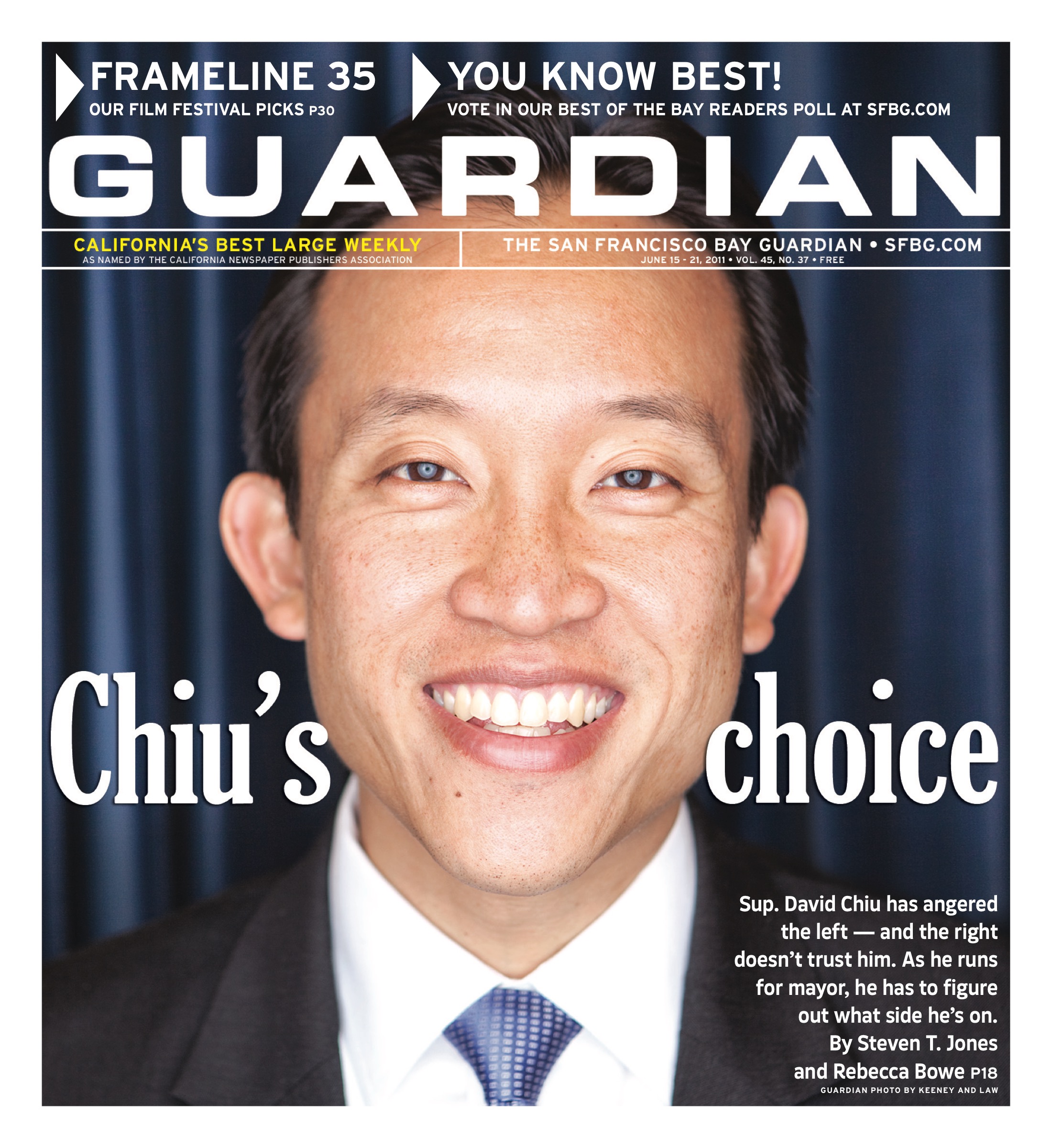
In the end, Sup. Jane Kim deserves considerable credit for holding firm and refusing to accept the proposal — and since Sup. David Chiu went along with her, they joined Sup. Ross Mirkarimi as a three-vote majority on the five-member panel and shot it down.

Police Chief Greg Suhr pushed for funding for a new police academy class to train 35 officers at a cost of $3.5 million (that’s $100,000 a cop). “I don’t think the department has looked hard enough at how we deploy the existing officers,” Sup. John Avalos told us.

And some key issues are still up in the air — for example, whether the mayor will adequately fund public financing of the November campaigns. With at least eight serious candidates running for mayor (not counting Lee), and most of them looking for the public financing that will help level the playing field, the city’s going to have to come up with at least several million dollars. That’s critical to the fairness of the election.

The bottom line remains: This city has been deeply damaged by years of cuts. And the next budget needs to start with a plan to repair that.

Editor’s Notes

tredmond@sfbg.com

I had, as they say, a spirited and frank discussion last week with Enrique Pearce, the political consultant working on the Run Ed Run campaign. I chided Pearce, whose firm is called Left Coast Communications, for leading an effort that, at the very least, involves some touchy legal and ethical issues. (After all, the group is raising money for a campaign for a candidate who hasn’t filed as a candidate. There are reasons why federal, state, and local laws mandate that people who are running for office declare that they want the office before they start raising money.)

Pearce insisted he was doing nothing illegal. (Okay, if he says so.) He also argued that his firm is the most progressive consulting operation in the city. (Whatever.) But the real focus of our discussion — and the reason it’s worth talking about — was the question of whether corruption really matters.

I think sleaze — and the appearance of sleaze — is a defining progressive issue. If Pearce agrees, he’s got some ‘splainin’ to do.

Let’s back up here. When Willie Brown was speaker of the state Assembly, he passed some good legislation, and allowed some very bad legislation to become law. But his greatest legacy is term limits — and the terrible public perception of what was once one of the best state legislatures in the nation.

Brown was the epitome of corruption, a guy who actively flouted the notion of honest, open government. Among other things, he had a private law practice on the side — and clients would pay him big money because of his influence on state legislation. Of course, we never knew who the clients were; he wouldn’t release the list.

When he was mayor, his sleazy ways continued — and left even progressive San Franciscans believing that you can’t trust City Hall with your money. Which means, of course, that it’s harder to convince anyone to pay more taxes.

There’s no question that Brown and Chinatown powerbroker Rose Pak (don’t get me started) were key players in putting Mayor Ed Lee in office, and that they’re playing a big role in this new effort. Which means, as far as I’m concerned, that it’s utterly untrustworthy — and that progressives should be miles and miles away.

I’m not arguing that Ed Lee is a bad mayor (he’s way better than the last guy). He might even turn into a good mayor if he runs for a full term. Pearce thinks he’d be better for progressives than state Sen. Leland Yee. We can argue that later.

But as long as his campaign is directly linked to people whose standard practices undermine the heart of the progressive agenda (which depends on a belief that government can be trusted to take on social problems), then you can count me out.

Film Listings

0

Film listings are edited by Cheryl Eddy. Reviewers are Kimberly Chun, Michelle Devereaux, Peter Galvin, Max Goldberg, Dennis Harvey, Johnny Ray Huston, Louis Peitzman, Lynn Rapoport, Ben Richardson, and Matt Sussman. For rep house showtimes, see Rep Clock. For first-run showtimes, see Movie Guide. Due to the Fourth of July holiday, theater information was incomplete at presstime.

OPENING

A Better Life Demian Bichir (Weeds) stars in this drama about an immigrant family struggling to realize the American dream. (1:38)

Horrible Bosses Jason Bateman and Jennifer Aniston star in this workplace comedy. (1:33)

How to Live Forever After his mother died, documentarian Mark S. Wexler began to seriously contemplate aging and, inevitably, his own death. A certain amount of baby boomer naval-gazing is the inevitable result, but Wexler is curious enough to expand his quest into realms beyond his own graying hair and expanding midsection. The film’s (mostly) tongue-in-cheek title comes into play as he visits scientists, inventors, new age types, cryonics-facility workers, and doctors with various anti-aging philosophies and agendas. But probably the most compelling long-life widsom comes from the elderly folks he visits for practical advice. While the Guinness record-holding 114-year-olds aren’t much for coherent communication, quite a few of the 80-, 90- and 100-somethings Wexler talks to suggest that simply being a spitfire is a key to longevity. Highlights include the late fitness guru Jack LaLanne, enviably energetic in his mid-90s; a 104-year-old Brit who’s a smoker, drinker, and aspiring marathoner; and an 80-year-old tap dancer who decides to compete in a beauty pageant for senior citizens. “I’m older than he is,” she giggles of her boyfriend. “But he can drive at night!” (1:34) (Eddy)

Vincent Wants to Sea An anorexic, an obsessive-compulsive, and someone with Tourette syndrome go on a roadtrip: it’s not the setup to a bad joke, it’s the gist of Vincent Wants to Sea, a mostly fun, sometimes touching, but often improbable film. When Vincent’s mother dies, his father (Heino Ferch) decides it’s time for Vincent (Florian David Fitz — who also wrote the screenplay) to once and for all eradicate his tics and spasms and sequesters him at a summer camp-esque institution in the German countryside. The subsequent escape and journey to the Italian coast (where Vincent hopes to scatter his mother’s ashes) with two fellow patients, the anorexic Marie (Karoline Herfuth) and the Bach-loving compulsive Alex (Johannes Allmayer), is rife with self-discovery and uplifting music, so much so that it sometimes resembles a Levi’s ad more than a feature film. There’s real heart and humor beneath the cheese, but there’s a lot of cheese. (1:36) (Cooper Berkmoyer)

Zookeeper Kevin James graduates from policing mall rats to hanging with talking zoo animals. (1:42)

ONGOING

The Art of Getting By The Art of Getting By is all about those confusing, mixed-up and apparently sexually frustrating months before high school graduation. George (Freddie Highmore) is a trench coat-wearing misanthrope — an old soul, as they say — whose parents and teachers are always trying to put him inside a box and tell him how to think. He finds a kindred sprit in Sally (Emma Roberts) who smokes and watches Louis Malle films. Hot. Heavily scored by the now-ancient songs of early ’00s blog bands, it may all sound like indie bullshit but this one has charm and wit despite its post-trend package. Like a sad little crayon, Highmore is a competent Michael Cera surrogate du jour. Writer-director Gavin Wiesen embraces hell of clichés, but he suitably sums up a generational angst along the way. The film may not always feel real, but it does have real feeling. Look out for great performances from Blair Underwood and Alicia Silverstone. (1:24) (Ryan Lattanzio)

Bad Teacher Jake Kasdan, the once-talented director of a few Freaks and Geeks episodes and 2002’s underrated Orange County, seems hell-bent on humiliating everyone in the cast of Bad Teacher. Cameron Diaz is Elizabeth, the title’s criminally bad pedagogue who prefers the Jack Daniels method to the Socratic. Her impetus for pounding Harper Lee into her middle school students’ bug-eyed little heads is to cash in on a bonus check to fund her breast-y ambitions and woo Justin Timberlake and his baby voice. The only likable onscreen presence is Jason Segal as a sad sack gym teacher in love with Elizabeth. But he could do so much better. There’s no shortage of racist jokes and potty humor in this R-rated comedy pandering to those 17 and below. When asked if she wants to go out with her coworkers, Elizabeth ripostes, “I’d rather get shot in the face!” That scenario is likely a better alternative than suffering this steaming pile of cash cow carcass. (1:29) (Lattanzio)

*Beginners There is nothing conventional about Beginners, a film that starts off with the funeral arrangements for one of its central characters. That man is Hal (Christopher Plummer), who came out to his son Oliver (Ewan McGregor) at the ripe age of 75. Through flashbacks, we see the relationship play out — Oliver’s inability to commit tempered by his father’s tremendous late-stage passion for life. Hal himself is a rare character: an elderly gay man, secure in his sexuality and, by his own admission, horny. He even has a much younger boyfriend, played by the handsome Goran Visnjic. While the father-son bond is the heart of Beginners, we also see the charming development of a relationship between Oliver and French actor Anna (Mélanie Laurent). It all comes together beautifully in a film that is bittersweet but ultimately satisfying. Beginners deserves praise not only for telling a story too often left untold, but for doing so with grace and a refreshing sense of whimsy. (1:44) (Peitzman)

*Bill Cunningham New York To say that Bill Cunningham, the 82-year old New York Times photographer, has made documenting how New Yorkers dress his life’s work would be an understatement. To be sure, Cunningham’s two decades-old Sunday Times columns — “On the Street,” which tracks street-fashion, and “Evening Hours,” which covers the charity gala circuit — are about the clothes. And, my, what clothes they are. But Cunningham is a sartorial anthropologist, and his pictures always tell the bigger story behind the changing hemlines, which socialite wore what designer, or the latest trend in footwear. Whether tracking the near-infinite variations of a particular hue, a sudden bumper-crop of cropped blazers, or the fanciful leaps of well-heeled pedestrians dodging February slush puddles, Cunningham’s talent lies in his ability to recognize fleeting moments of beauty, creativity, humor, and joy. That last quality courses through Bill Cunningham New York, Richard Press’ captivating and moving portrait of a man whose reticence and personal asceticism are proportional to his total devotion to documenting what Harold Koda, chief curator at the Costume Institute at the Metropolitan Museum of Art, describes in the film as “ordinary people going about their lives, dressed in fascinating ways.” (1:24) (Sussman)

Bride Flight Who doesn’t love a sweeping Dutch period piece? Ben Sombogaart’s Bride Flight is pure melodrama soup, enough to give even the most devout arthouse-goer the bloats. Emigrating from post-World War II Holland to New Zealand with two gal pals, the sweetly staid Ada (Karina Smulders) falls for smarm-ball Frank (Waldemar Torenstra, the Dutchman’s James Franco) and kind of joins the mile high club to the behest of her conscience. The women arrive with emotional baggage and carry-ons of the uterine kind. As the harem adjusts to the country mores of the Highlands, Frank tries a poke at all of them in a series of sex scenes more moldy than smoldery. This Flight, set to a plodding score and stuffy mise-en-scene, never quite leaves the runway. Not to mention the whole picture, pale as a corpse, resembles one of those old-timey photographs of your great grandma’s wedding. These kinds of pastoral romances ought to be put out to, well, pasture. (2:10) (Lattanzio)

*Bridesmaids For anyone burned out on bad romantic comedies, Bridesmaids can teach you how to love again. This film is an answer to those who have lamented the lack of strong female roles in comedy, of good vehicles for Saturday Night Live cast members, of an appropriate showcase for Melissa McCarthy. The hilarious but grounded Kristen Wiig stars as Annie, whose best friend Lillian (Maya Rudolph) is getting hitched. Financially and romantically unstable, Annie tries to throw herself into her maid of honor duties — all while competing with the far more refined Helen (Rose Byrne). Bridesmaids is one of the best comedies in recent memory, treating its relatable female characters with sympathy. It’s also damn funny from start to finish, which is more than can be said for most of the comedies Hollywood continues to churn out. Here’s your choice: let Bridesmaids work its charm on you, or never allow yourself to complain about an Adam Sandler flick again. (2:04) (Peitzman)

Buck This documentary paints a portrait of horse trainer Buck Brannaman as a sort of modern-day sage, a sentimental cowboy who helps “horses with people problems.” Brannaman has transcended a background of hardship and abuse to become a happy family man who makes a difference for horses and their owners all over the country with his unconventional, humane colt-starting clinics. Though he doesn’t actually whisper to horses, he served as an advisor and inspiration for Robert Redford’s The Horse Whisperer (1998). Director Cindy Meehl focuses generously on her saintly subject’s bits of wisdom in and out of a horse-training setting — e.g. “Everything you do with a horse is a dance” — as well as heartfelt commentary from friends and colleagues. In the harrowing final act of the film, Brannaman deals with a particularly unruly horse and his troubled owner, highlighting the dire and disturbing consequences of improper horse rearing. (1:28) Smith Rafael. (Sam Stander)

Cars 2 You pretty much can’t say a bad thing about a Pixar film. Cars 2 is by no means Ratatouille (2007) or Wall-E (2008), but the sequel to the 2006 hit Cars offers plenty of sleek visuals and one-note gags under its hollow hood. If nothing else, Pixar seems to have overcome the dingy, dark glaze that plagues 3-D films. Directors John Lasseter and Joe Ranft return to beloved autos Lightning McQueen (Owen Wilson) and the “extremely American” Mater (Larry the Cable Guy). This time around, secret agents Finn McMissile (Michael Caine) and Holley Shiftwell (Emily Mortimer) come along for the ride while working to expose sabotage in the alternative fuel industry. Compelling chase sequences, explosions and more than a few jabs at cultural stereotypes follow suit. This is the lightest, silliest Pixar film to date, but you probably don’t have any business seeing it unless you’ve got a kid in tow. (1:52) Balboa. (Lattanzio)

*Cave of Forgotten Dreams The latest documentary from Werner Herzog once again goes where no filmmaker — or many human beings, for that matter — has gone before: the Chauvet-Pont-d’Arc Cave, a heavily-guarded cavern in Southern France containing the oldest prehistoric artwork on record. Access is highly restricted, but Herzog’s 3D study is surely the next best thing to an in-person visit. The eerie beauty of the works leads to a typically Herzog-ian quest to learn more about the primitive culture that produced the paintings; as usual, Herzog’s experts have their own quirks (like a circus performer-turned-scientist), and the director’s own wry narration is peppered with random pop culture references and existential ponderings. It’s all interwoven with footage of crude yet beautiful renderings of horses and rhinos, calcified cave-bear skulls, and other time-capsule peeks at life tens of thousands of years ago. The end result is awe-inspiring. (1:35) (Eddy)

Conan O’Brien Can’t Stop Conan O’Brien Can’t Stop seems less of a movie title and more like a hushed comment shared between one of the many hangers-on during the filming of the “Legally Prohibited From Being Funny On Television Tour.” Throughout 23 cities’ worth of footage, O’Brien seethes, paces, sweats, yells and beats dead jokes so hard that they spring back to life, as he is wont to do. At this point, the Leno/Coco drama is a bit stale — at least in internet time — but the documentary is a fascinating comedian character study nonetheless. It may be hard to sympathize with a man nursing a bruised ego as he cashes a $45 million dollar check, but it’s easy to see that he’s one of the best late night hosts (temporarily off) the air. Split primarily between clips of O’Brien performing songs on stage with a myriad of celebrity guests and bemoaning how exhausted and frustrated he is, Can’t Stop derives most of its hilarity from the off-the-cuff comments that pepper Conan’s everyday conversations. (1:29) (David Getman)

*The Double Hour Slovenian hotel maid Sonia (Ksenia Rappoport) and security guard Guido (Filippo Timi) are two lonely people in the Italian city of Turin. They find one another (via a speed-dating service) and things are seriously looking up for the fledgling couple when calamity strikes. This first feature by music video director Giuseppe Capotondi takes a spare, somber approach to a screenplay (by Alessandro Fabbri, Ludovica Rampoldi, and Stefano Sardo) that strikingly keeps raising, then resisting genre categorization. Suffice it to say their story goes from lonely-hearts romance to violent thriller, ghost story, criminal intrigue, and yet more. It doesn’t all work seamlessly, but such narrative unpredictability is so rare at the movies these days that The Double Hour is worth seeing simply for the satisfying feeling of never being sure where it’s headed. (1:35) (Harvey)

Empire of Silver Love, not money, is at the core of Empire of Silver — that’s the M.O. of a Shanxi banking family’s libertine third son, or “Third Master” (Aaron Kwok) in this epic tug-of-war between Confucian duty and free will. The Third Master pines for his true love, his stepmother (Hao Lei), yet change is going off all around the star-crossed couple in China at the end of the 19th century and the start of the 20th, and the youthful scion ends up pouring his passion into the family business, attempting to tread his own path, apart from his Machiavellian father (Tielin Zhang). Much like her protagonist, however, director (and Stanford alum) Christina Yao seems more besotted with romance than finance, bathing those scenes with the love light and sensual hues reminiscent of Zhang Yimou’s early movies. Though Yao handles the widescreen crowd scenes with aplomb, her chosen focus on money, rather than honey, leaches the action of its emotional charge. It doesn’t help that, on the heels of the Great Recession, it’s unlikely that anyone buys the idea of a financial industry with ironclad integrity — or gives a flying yuan about the lives of bankers. (1:52) (Chun)

Green Lantern This latest DC Comics-to-film adaptation fails to recognize the line between awesome fantasy-action and cheeseball absurdity, often resembling the worst excesses of the Christopher Reeve Superman movies. A surprisingly palatable Ryan Reynolds stars as Hal Jordan, the cocky test pilot who is chosen to wield a power ring as a member of an intergalactic police force called the Green Lantern Corps. He must face down Parallax, an alien embodiment of fear, who appears here as a chuckle-inducing floating head surrounded by tentacles. Peter Sarsgaard is effectively nauseating as Hector Hammond, who becomes Parallax’s crony after he is transformed by a transfusion of fear energy. The acting is all over the map, with Blake Lively’s blank-faced love interest caricature as the weakest link, and the effects are hit-or-miss, but scenes featuring alien Green Lanterns should please fans, and you could probably do worse if you’re looking for an entertaining popcorn flick. (1:45) (Stander)

The Hangover Part II What do you do with a problematic mess like Hangover Part II? I was a fan of The Hangover (2009), as well as director-cowriter Todd Phillips’ 1994 GG Allin doc, Hated, so I was rooting for II, this time set in the East’s Sin City of Bangkok, while simultaneously dreading the inevitable Asian/”ching-chang-chong” jokes. Would this would-be hit sequel be funnier if they packed in more of those? Doubtful. The problem is that most of II‘s so-called humor, Asian or no, falls completely flat — and any gross-out yuks regarding wicked, wicked Bangkok are fairly old hat at this point, long after Shocking Asia (1976) and innumerable episodes of No Reservations and other extreme travel offerings. This Hangover around, mild-ish dentist Stu (Ed Helms) is heading to the altar with Lauren (The Real World: San Diego‘s Jamie Chung), with buds Phil (Bradley Cooper) and Doug (Justin Bartha) in tow. Alan (Zach Galifianakis) has completely broken with reality — he’s the pity invite who somehow ropes in the gangster wild-card Mr. Chow (Ken Jeong). Blackouts, natch, and not-very-funny high jinks ensue, with Jeong, surprisingly, pulling small sections of II out of the crapper. Phillips obviously specializes in men-behaving-badly, but II‘s most recent character tweaks, turning Phil into an arrogant, delusional creep and Alan into an arrogant, delusional kook, seem beside the point. Because almost none of the jokes work, and that includes the tired jabs at tranny strippers because we all know how supposedly straight white guys get hella grossed out by brown chicks with dicks. Lame. (1:42) (Chun)

Happy Happy, a documentary by Roko Belic (1999’s Genghis Blues), traces the contented lifestyles of men and women around the globe. Manoj Singh is a Kolkata rickshaw driver sustained by his son’s smile. Anne Bechsgaard’s life is enriched by her co-housing community in Denmark. These soothingly sentimental profiles are intercut with commentary from leading neuroscientists and psychologists. They provide a cursory guide to the rare balancing act that is happiness in the 21st century. A brisk 75 minutes, the film is saturated with thought-provoking tidbits (the Bhutan government aims for gross national happiness instead of GDP) and an ambient backing track that’s heavy on the chimes. However, sometimes there’s the sense that these mechanics of happiness aren’t cinematically compelling enough, and that rifling through a couple Wikipedia pages might offer just as much insight. At its best, Happy sparks a reflection on how many of the unofficial criteria for joy one has fulfilled, and suggests ideas for simple happiness boosters. (1:15) Roxie. (Getman)

Kung Fu Panda 2 The affable affirmations of 2008’s Kung Fu Panda take a back seat to relentlessly elaborate, gag-filled action sequences in this DreamWorks Animation sequel, which ought to satisfy kids but not entertain their parents as much as its predecessor. Po (voiced by Jack Black), the overeating panda and ordained Dragon Warrior of the title, joins forces with a cavalcade of other sparring wildlife to battle Lord Shen (Gary Oldman), a petulant peacock whose arsenal of cannons threatens to overwhelm kung fu. But Shen is also part of Po’s hazy past, so the panda’s quest to save China is also a quest for self-fulfillment and “inner peace.” There’s less character development in this installment, though the growing friendship between Po and the “hardcore” Tigress (Angelina Jolie) is occasionally touching. The 3-D visuals are rarely more than a gimmick, save for a series of eye-catching flashbacks in the style of cel-shaded animation. (1:30) (Stander)

Larry Crowne While Transformers: Dark of the Moon may be getting all the attention for being the most terrible summer movie, I’d like to propose Larry Crowne as the bigger offender. No, it doesn’t have the abrasive effects of a Michael Bay blockbuster, but it’s surely just as incompetent. And coming from an actor as talented as Tom Hanks — who co-wrote, directed, produced, and stars in the film —Larry Crowne is insulting. The plot, insofar as there is one, centers around the titular Larry (Hanks), a man who goes to community college, joins a scooter gang led by Wilmer Valderrama, and ends up falling for his cranky, alcoholic teacher Mercedes (Julia Roberts). The scenes are thrown together hapharzadly, with no real sense of character development or continuity. Larry Crowne doesn’t even feel like a romantic comedy until a drunk Mercedes begins kissing and dry humping her student. But hey, who can resist a shot of Larry’s middle-aged bottom as he tries to wriggle into jeans that are just too small? (1:39) (Peitzman)

Midnight in Paris Owen Wilson plays Gil, a self-confessed “Hollywood hack” visiting the City of Light with his conservative future in-laws and crassly materialistic fiancée Inez (Rachel McAdams). A romantic obviously at odds with their selfish pragmatism (somehow he hasn’t realized that yet), he’s in love with Paris and particularly its fabled artistic past. Walking back to his hotel alone one night, he’s beckoned into an antique vehicle and finds himself transported to the 1920s, at every turn meeting the Fitzgeralds, Gertrude Stein (Kathy Bates), Dali (Adrien Brody), etc. He also meets Adriana (Marion Cotillard), a woman alluring enough to be fought over by Hemingway (Corey Stoll) and Picasso (Marcial di Fonzo Bo) — though she fancies aspiring literary novelist Gil. Woody Allen’s latest is a pleasant trifle, no more, no less. Its toying with a form of magical escapism from the dreary present recalls The Purple Rose of Cairo (1985), albeit without that film’s greater structural ingeniousness and considerable heart. None of the actors are at their best, though Cotillard is indeed beguiling and Wilson dithers charmingly as usual. Still — it’s pleasant. (1:34) Balboa. (Harvey)

Monte Carlo (1:48)

Mr. Nice By the second hour of Mr. Nice, star Rhys Ifans and company have exhausted every possible pot smoking flourish. There’s the seductive French inhale by the pool, the suggestive mouth to mouth, the euphoric dragon release in the deserts of Pakistan: all rendered in extreme close-up with improbably thick plumes of white smoke. Mr. Nice is mostly sexy drug use tutorial, though it’s also part biography of real-life drug smuggler Howard Marks. His claim to fame — at least according to the movie’s tagline — is the sheer number of aliases, phone lines, and children he had (43, 89, and 4, respectively). Unexpectedly, it’s the period costuming, cinematography, and the enchanting listlessness of Chloe Sevigny that redeem the film. Mr. Nice is captivatingly interlaced with vintage news and scenery clips from the period and it’s shot in a way that is both hyper-stylized and erratic. Those twists and turns of Marks’s life turn out to be not nearly as suspenseful onscreen as they should be, making the movie less of a traditional drug thriller and more of a mildly interesting reflection on the culture of the period. (2:01) (Getman)

Mr. Popper’s Penguins (1:35)

*My Perestroika Robin Hessman’s very engaging documentary takes one very relatable look at how changes since glasnost have affected some average Russians. The subjects here are five thirtysomethings who, growing up in Moscow in the 70s and 80s, were the last generation to experience full-on Communist Party indoctrination. But just as they reached adulthood, the whole system dissolved, confusing long-held beliefs and variably impacting their futures. Andrei has ridden the capitalist choo-choo to considerable enrichment as the proprietor of luxury Western menswear shops. But single mother Olga, unlucky in love, just scrapes by, while married schoolteachers Lyuba and Boris are lucky to have inherited an apartment (cramped as it is) they could otherwise ill afford. Meanwhile Ruslan, once member of a famous punk band (which he abandoned on principal because it was getting “too commercial”), both disdains and resents the new order just as he did the old one. Home movies and old footage of pageantry celebrating Soviet socialist glory make a whole ‘nother era come to life in this intimate, unexpectedly charming portrait of its long-term aftermath. (1:27) Balboa. (Harvey)

*Page One: Inside the New York Times When Andrew Rossi’s documentary premiered at Sundance this January, word of mouth on it was respectable but qualified, with nearly everyone opining that it was good … just not what they’d been led to expect. What they expected was (in line with the original subtitle A Year Inside the New York Times) a top-to-bottom overview of how the nation’s most respected — and in some circles resented — arbiter of news, “style,” and culture is created on a day-to-day as well as longer term basis. That’s something that would doubtless fascinate anyone still interested in print media, or even that realm of web media not catering to the ADD nation. But that big picture and the wealth of minute cogs within isn’t Page One‘s subject. Instead, Rossi focuses on the Gray Lady’s wrestling with admittedly fast-changing times in which newspapers and any other information source on paper seem to constitute an endangered species. This particular Times, however, is such a special case that that crisis might better have been explored by training a camera on a less fabled publication, perhaps one of the many that have succumbed to a once unthinkable, market-shrunk mortality in recent years. The film finds its colorful protagonist in David Carr, an ex-crack addict turned media columnist who retains his cranky, nonconformist edge even as he defends the Times itself from the same out-with-the-old cheerleaders who 15 years ago were inflating the dot-com boom till it burst. Facing one particularly smug champion of the blogosphere at a forum, Carr notes that without a few remaining outlets — like the Times — doing the hard work of serious research and reportage, the web would have nothing to purloin or offer but its own unending trivia and gossip. Page One does what it does entertainingly well, but if you’re looking for insight toward this not-dead-yet U.S. institution as a whole, you’d be better off simply picking up this week’s Sunday edition and reading every last word. (1:28) Smith Rafael. (Harvey)

*Super 8 The latest from J.J. Abrams is very conspicuously produced by Steven Spielberg; it evokes 1982’s E.T.: The Extra-Terrestrial as well as 1985’s The Goonies and 1982’s Poltergeist (so Spielbergian in nature you’d be forgiven for assuming he directed, rather than simply produced, the pair). But having Grandpa Stevie blessing your flick is surely a good thing, especially when you’re already as capable as Abrams. Super 8 is set in 1979, high time for its titular medium, used by a group of horror movie-loving kids to film their backyard zombie epic; later in the film, old-school celluloid reveals the mystery behind exactly what escaped following a spectacular train wreck on the edge of their small Ohio town. The PG-13 Super 8 aims to frighten, albeit gently; there’s a lot of nostalgia afoot, and things do veer into sappiness at the end (that, plus the band of kids at its center, evoke the trademarks of another Grandpa Stevie: Stephen King). But the kid actors (especially the much-vaunted Elle Fanning) are great, and there’s palpable imagination and atmosphere afoot, rare qualities in blockbusters today. Super 8 tries, and mostly succeeds, in progressing the fears and themes addressed by E.T. (divorce, loneliness, growing up) into century 21, making the unknowns darker and the consequences more dire. (1:52) (Eddy)

*13 Assassins 13 Assassins is clearly destined to be prolific director Takashi Miike’s greatest success outside Japan yet. It’s another departure for the multi-genre-conquering Miike, doubtless one of the most conventional movies he’s made in theme and execution. That’s key to its appeal — rigorously traditional, taking its sweet time getting to samurai action that is pointedly not heightened by wire work or CGI, it arrives at the kind of slam-dunk prolonged battle climax that only a measured buildup can let you properly appreciate. In the 1840s, samurai are in decline but feudalism is still hale. It’s a time of peace, though not for the unfortunates who live under regional tyrant Lord Naritsugu (Goro Inagaki), a li’l Nippon Caligula who taxes and oppresses his people to the point of starvation. Alas, the current Shogun is his sibling, and plans to make little bro his chief adviser — so a concerned Shogun official secretly hires veteran samurai Shinzaemon (Koji Yakusho) to assassinate the Lord. Fully an hour is spent on our hero doing “assembling the team” stuff, recruiting other unemployed, retired, or wannabe samurai. When the protagonists finally commence their mission, their target is already aware he’s being pursued, and he’s surrounded by some 200 soldiers by the time Miike arrives at the film’s sustained, spectacular climax: a small village which Shinzaemon and co. have turned into a giant boobytrap so that 13 men can divide and destroy an ogre-guarding army. A major reason why mainstream Hollywood fantasy and straight action movies have gotten so depressingly interchangeable is that digital FX and stunt work can (and does) visualize any stupid idea — heroes who get thrown 200 feet into walls by monsters then getting up to fight some more, etc. 13 Assassins is thrilling because its action, while sporting against-the-odds ingeniousness and sheer luck by our heroes as in any trad genre film, is still vividly, bloodily, credibly physical. (2:06) (Harvey)

Transformers: Dark of the Moon I’ll never understand the wisdom behind epic-length children’s movies. What child — or adult, for that matter — wants to sit through 154 minutes of assaultive popcorn entertainment? It’s an especially confounding decision for this third installment in the Transformers franchise because there’s a fantastic 90-minute movie in there, undone at every turn by some of the worst jokes, most pointless characters, and most hateful cultural politics you’re likely to see this summer. But when I say a fantastic movie, I mean a fantastic movie. It took two very expensive earlier attempts before director Michael Bay figured out that big things require a big canvas. Every shot of Dark of the Moon‘s predecessors seemed designed to hide their effects by crowding the screen. Finally we get the full view — the scale is now rightly calibrated to operatic and ridiculous. The marquee set pieces are inspired and terrifying, eliciting a sense of vertigo that’s earned for once, not imposed by the editing. The human hijinks are less consistent but ingratiatingly batshit, and without resorting to preening self-awareness and elaborately contrived mea culpas. But unfortunately Bay is too unapologetic even to walk back the ethnic buffoonery that not only upsets hippies like me but also seems defiantly disharmonious with the movie he’s trying to make. Bay is like that guy at the party who thinks amping up the racism will prove he’s not a racist. It’s that kind of garbage (plus, I guess, some universal primal hatred of Shia LaBeouf that I don’t really get) that makes people dismiss these movies wholesale. This time it’s just not deserved. I wouldn’t want to meet the asshole who made this thing, but credit where credit is due. It’s a visual marvel with perfectly integrated, utterly tactile, brilliantly choreographed CG robotics — a point that’ll no doubt be conceded in passing as if it’s not the very reason the movie exists. As if it’s not a feat of mastery to make a megaton changeling truck look graceful. (2:34) (Jason Shamai)

The Tree of Life Mainstream American films are so rarely adventuresome that overreactive gratitude frequently greets those rare, self-conscious, usually Oscar-baiting stabs at profundity. Terrence Malick has made those gestures so sparingly over four decades that his scarcity is widely taken for genius. Now there’s The Tree of Life, at once astonishingly ambitious — insofar as general addressing the origin/meaning of life goes — and a small domestic narrative artificially inflated to a maximally pretentious pressure-point. The thesis here is a conflict between “nature” (the way of striving, dissatisfied, angry humanity) and “grace” (the way of love, femininity, and God). After a while Tree settles into a fairly conventional narrative groove, dissecting — albeit in meandering fashion — the travails of a middle-class Texas household whose patriarch (a solid Brad Pitt) is sternly demanding of his three young sons. As a modern-day survivor of that household, Malick’s career-reviving ally Sean Penn has little to do but look angst-ridden while wandering about various alien landscapes. Set in Waco but also shot in Rome, at Versailles, and in Saturn’s orbit (trust me), The Tree of Life is so astonishingly self-important while so undernourished on some basic levels that it would be easy to dismiss as lofty bullshit. Its Cannes premiere audience booed and cheered — both factions right, to an extent. (2:18) (Harvey)

*The Trip Eclectic British director Michael Winterbottom rebounds from sexually humiliating Jessica Alba in last year’s flop The Killer Inside Me to humiliating Steve Coogan in all number of ways (this time to positive effect) in this largely improvised comic romp through England’s Lake District. Well, romp might be the wrong descriptive — dubbed a “foodie Sideways” but more plaintive and less formulaic than that sun-dappled California affair, this TV-to-film adaptation displays a characteristic English glumness to surprisingly keen emotional effect. Playing himself, Coogan displays all the carefree joie de vivre of a colonoscopy patient with hemorrhoids as he sloshes through the gray northern landscape trying to get cell reception when not dining on haute cuisine or being wracked with self-doubt over his stalled movie career and love life. Throw in a happily married, happy-go-lucky frenemy (comic actor Rob Brydon) and Coogan (TV’s I’m Alan Partridge), can’t help but seem like a pathetic middle-aged prick in a puffy coat. Somehow, though, his confused narcissism is a perverse panacea. Come for the dueling Michael Caine impressions and snot martinis, stay for the scallops and Brydon’s “small man in a box” routine. (1:52) Smith Rafael. (Devereaux)

*Trollhunter Yes, The Troll Hunter riffs off The Blair Witch Project (1999) with both whimsy and, um, rabidity. Yes, you may gawk at its humongoid, anatomically correct, three-headed trolls, never to be mistaken for grotesquely cute rubber dolls, Orcs, or garden gnomes again. Yes, you may not believe, but you will find this lampoon of reality TV-style journalism, and an affectionate jab at Norway’s favorite mythical creature, very entertaining. Told that a series of strange attacks could be chalked up to marauding bears, three college students (Glenn Erland Tosterud, Tomas Alf Larsen, and Johanna Morck) strap on their gumshoes and choose instead to pursue a mysterious poacher Hans (Otto Jespersen) who repeatedly rebuffs their interview attempts. Little did the young folk realize that their late-night excursions following the hunter into the woods would lead at least one of them to rue his or her christening day. Ornamenting his yarn with beauty shots of majestic mountains, fjords, and waterfalls, Norwegian director-writer André Ovredal takes the viewer beyond horror-fantasy — handheld camera at the ready — and into a semi-goofy wilderness of dark comedy, populated by rock-eating, fart-blowing trolls and overshadowed by a Scandinavian government cover-up sorta-worthy of The Girl with the Dragon Tattoo (2009). (1:30) (Chun)

*X-Men: First Class Cynics might see this prequel as pandering to a more tweeny demographic, and certainly there are so many ways it could have gone terribly wrong, in an infantile, way-too-cute X-Babies kinda way. But despite some overly choppy edits that shortchange brief moments of narrative clarity, X-Men: First Class gets high marks for its fairly first-class, compelling acting — specifically from Michael Fassbender as the enraged, angst-ridden Magneto and James McAvoy as the idealistic, humanist Charles Xavier. Of course, the celebrated X-Men tale itself plays a major part: the origin story of Magneto, a.k.a. Erik Lehnsherr, a Holocaust survivor, is given added heft with a few tweaks: here, in an echo of Fassbender’s turn in Inglourious Basterds (2009), his master of metal draws on his bottomless rage to ruthlessly destroy the Nazis who used him as a lab rat in experiments to build a master race. The last on his list is the energy-wrangling Sebastian Shaw (Kevin Bacon), who’s set up a sweet Bond-like scenario, protected by super-serious bikini-vixen Emma Frost (January Jones). The complications are that Erik doesn’t ultimately differ from his Frankensteins — he pushes mutant power to the detriment of those puny, bigoted humans — and his unexpected collaborator and friend is Xavier, the privileged, highly psychic scion who hopes to broker an understanding between mutants and human and use mutant talent to peaceful ends. Together, they can move mountains—or at least satellite dishes and submarines. Jennifer Lawrence as Raven/Mystique and Nicholas Hoult as Hank McCoy/Beast fill out the cast, voicing those eternal X-Men dualities — preserving difference vs. conformity, intoxicating power vs. reasoned discipline. All core superhero concerns, as well as teen identity issues — given a fresh charge. (2:20) (Chun)

A cheap shot at Tom Ammiano

34

Elizabeth Lesly Stevens has done some good work on the insanity of Prop. 13. Check out this, and this, and this — all of which say, more or less, that rich people are getting a great deal under the tax law, and aren’t paying their share.


Correct. Well said. Good points.


So why did she decide to take a cheap shot at the one local politician who’s actually trying to do something about it?


A column that ran in the New York Times July 3 talks about Assemblymember Tom Ammiano, who is leading an effort to reform the worst parts of Prop. 13 — the loopholes that allow commercial property to avoid reassessment, costing the state and local government tens of millions of dollars or more a year.


And what does Stevens, who based on her past writing clearly agrees this is a problem, have to say? Well, she says Ammiano is courageous for taking on the issue — then tweaks him for having a low, Prop. 13-protected assessment on his own house in Bernal Heights:


Yet the feisty Mr. Ammiano is quiet as a church mouse about altering the residential protections of Proposition 13 — of which he is a signal beneficiary.


Mr. Ammiano, who is also a comedian, pays just $530 a year in taxes on the Bernal Heights home he has owned since 1974. As far as the city and Proposition 13 are concerned, his house is worth $45,600. Zillow estimates its current worth at $645,000. At that value, the tax would be about $7,500.


That’s all perfectly true. It’s also true that Ammiano is (a) not rich and (b) has spoken for years of the need to reform all of Prop. 13, not just the commercial loophole he’s going after right now. I’ve known Ammiano a long time — and I can tell you that, since the days he was on the San Francisco School Board in the 1990s, he has consistently favored amending Prop. 13, including the residential benefits that he now enjoys.


So he hasn’t been “quiet as a church mouse.” He’s been pretty loud, for a pretty long time.


He also knows, as does Stevens, that repealing Prop. 13 entirely is a political nonstarter. Not going to happen. Too bad, but even talking about it is a waste of time right now. So Ammiano’s going after the only reform he has a chance of winning — and, by the way, attacking the most outrageous loophole.


I don’t think Stevens meant this to be a hit piece or anything; she, and her editors, are just fascinated by this strange law we Californians call Prop. 13. But when I read her piece, what I got out of it was: Here’s a guy who wants to make other people pay more taxes — but he’s not going to do anything about his own tax breaks. I just don’t think that’s terribly true, or terribly fair.


(By the way, Stevens is on vacation with her family, and, as is her usual practice, didn’t want to comment. She just said people can make their points in the comments section of her piece.)

Editorial: Mayor Lee’s budget deal

1

The way the daily newspapers are presenting it, the budget that Mayor Ed Lee and the Board of Supervisors Budget and Finance Committee negotiated represents a new era of civility and cooperation at City Hall. The committee, after marathon negotiations, approved the $6.8 billion deal unanimously. Both sides called it a good process and a good result.

And indeed, by any standard, the way Lee worked with community groups was a huge breakthrough. After 16 years of essentially being cut out of the process under mayors Willie Brown and Gavin Newsom, the stakeholders — the people who provide the essential city services — were actually at the table. And the final blueprint isn’t as bad as it could be.

But it’s still a budget that does nothing to restore the roughly $1 billion of General Fund cuts over the past five years, that seeks no new taxes from big business or the wealthy, and that includes spending on a new Police Academy class that even the mayor doesn’t think the city needs.

And from the start, the mayor and his staff were absolutely determined to privatize security at the city’s two big public hospitals — even when it makes no political or fiscal sense.

The privatization plan was the centerpiece of what became a 13-hour shuttle diplomacy session, as staffers and supervisors sought to reach a deal they could all accept. The Mayor’s Office — particularly Steve Kawa, the chief of staff — put immense pressure on the committee members to accept a plan to replace deputy sheriffs with private security guards at San Francisco General and Laguna Honda hospitals. In the grand scheme of things, the $3 million in projected savings wasn’t a huge deal — but the politics was unnecessarily bloody. It’s as if Lee and Kawa were determined to privatize something, whatever the cost.

In the end, Sup. Jane Kim deserves considerable credit for holding firm and refusing to accept the proposal — and since Sup. David Chiu went along with her, they joined Sup. Ross Mirkarimi as a three-vote majority on the five-member panel and shot it down.

Police Chief Greg Suhr pushed for funding for a new police academy class to train 35 officers at a cost of $3.5 million (that’s $100,000 a cop). “I don’t think the department has looked hard enough at how we deploy the existing officers,” Sup. John Avalos told us.

And some key issues are still up in the air — for example, whether the mayor will adequately fund public financing of the November campaigns. With at least eight serious candidates running for mayor (not counting Lee), and most of them looking for the public financing that will help level the playing field, the city’s going to have to come up with at least several million dollars. That’s critical to the fairness of the election.

The bottom line remains: This city has been deeply damaged by years of cuts. And the next budget needs to start with a plan to repair that.


Here’s tax reform, Jerry

14

Everyone knows I’m a fan of taxing the rich and that I think most of the economic problems in our country have their roots in the growing inequality of the past few decades, so it should come as no surprise that I enjoyed the Cruickshank piece on Calitics. He’s got exactly the right idea: Tax reform that benefits the wealthy (or, in fact, tax reform that doesn’t force the wealthy to pay more) isn’t tax reform at all.


I was on a houseboat at Lake Shasta over the 4th of July, arguing with some very smart people about why the economy is so fucked up (yeah, for relaxation I go someplace beautiful — then sit around and talk about economic policy), and we covered a lot of ground. My friend the investment banker and corporate executive said that out-of-control CEO pay — and bonus payments for failure, and lack of corporate accountability — were a bit part of the problem. “If corporations succeed, then everyone — all the people who work there, at every level — ought to benefit,” he pointed out. True: In the early post-War era, labor union clout in major industries (automotive, for example) forced corporations to pay a decent middle-class wage — that is, to share the fruits of success with the workers. That’s all gone now. “Corporations don’t pay enough taxes,” my friend the corporate salesman said — and he’s right, too.


And all of us agreed that higher taxes won’t drive corporations out of the country or out of states or even out of cities; the actual numbers of businesses that pick and and move because of taxes (as opposed to labor-force issues, rents, land availablity, access to transportation etc.) is so minor it’s not even worth talking about.


But those are just pieces of the puzzle. Here’s what I always come back to: Over the past couple of decades, the size of the U.S. economy has doubled — and real wages have been essentially flat. All that new money has gone to the very, very top. Robert Reich explain this brilliantly in exactly two minutes — and I don’t care how busy you are, you have two minutes to watch this video.


That, really, is the root of everything, the reason we’re still in a recession, that people are losing their homes, that government debt is soaring … it’s all because this country, as a matter of public policy, has allowed the very, very rich to take almost all of our wealth. We have become a banana republic, a corporate kleptocracy, a place so badly managed that it we weren’t the United States, the news media would be reporting on our utter lack of economic democracy. And they’d be saying that the system is so unsustainable that one way or the other, it’s going to collapse.


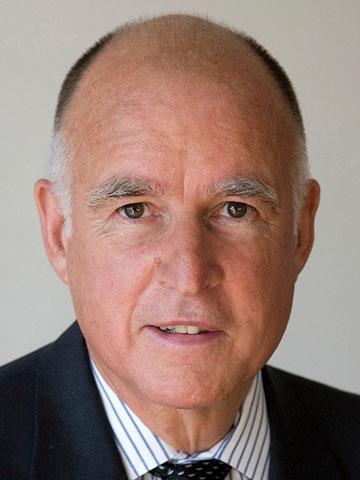
Jerry Brown must know this. He’s not going to run for another term. There’s no excuse at all for not at least proposing a modest tax increase on the highest earners and the most profitable big businesses. Come on, guv: What are you waiting for?


Rock on with you

0

arts@sfbg.com

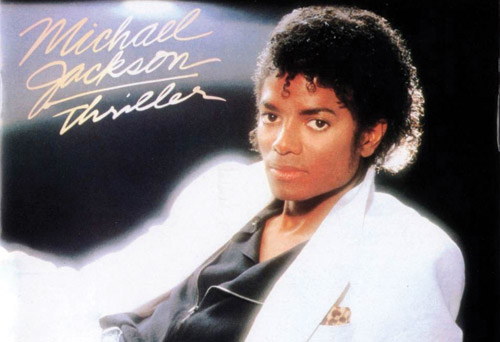
MUSIC Oh, Michael. So much has happened in these two years since you’ve been gone. I left my man and got my heart broken by another, chipped my front tooth, had to pay all my taxes up front, and manually upgraded my ass into the kind of shape that gives a woman like me a certain pride. Things have been rough; things have been good. And 90 percent of the good shit, including the fruits of all that ass-pumping, I achieved together with you. Keep on with the force, don’t stop. No, I’ll never stop getting enough of you.

Speaking of you, my darling, well, for you things have stayed exactly the same. Crazy-ass La Toya is still on TV, running her mouth about murder conspiracies, and the headlines are still a sordid “Jacko the Mysterious Nutter” mess. Every book written about you is still rude, invasive, and tabloidy, and the family, friends, and fans who claim to have cared for you the most still refuse to lovingly embrace you for who you were: an incomparable genius, the world’s greatest superstar, who, BTW, was totally gay.

Fuck everybody else and their delusional ways. After all this time, I’ve come to see: I am the only one who ever got you.

Memories of you, especially the ones honored on the anniversary eve of your death, should be as celebratory and joyous as the world’s greatest dance party — complete with fog machines, chemical inhalants, and unicorns. But all everyone wants to talk about is the drama. Little boys this, plastic surgery that. They actually think you did your face-up weird because you wanted to be a white Diana Ross with a superbutch Marlboro Man chin. That you hated yourself so severely you had to become someone you were not. But I know the truth: you built that distracting construction zone around your sacred temple to claim your private space. Only behind a strap-on nose and reptilian fake white skin could the real you stretch out and relax, connect with your spirit, make some art, do all your drugs. Who could blame you — and who’s to judge you? — for needing a tangible shield between yourself and all the stupid bitches who could not deal?

But as you receded further into this private space, your shield got thicker and you started to piss everybody off. Because it was awfully, horribly amorally sissy of you to want to look like a woman. A real man takes the face he is born with. In other words: you lied to us, motherfucker. You sang about loving women, rubbed your silky load on their thighs, even married all those hags. You grabbed your cock onstage and put on like vagina was cool.

Why was everyone so dumb and gay-blind in the first place? Because at the height of your Thriller fame in the 80s, no one was gay, not even those old warhorses George Michael and Boy George. But when it turned out that they, too, had lied to us — leading us on with all that maddening, un-Christian ambiguity — the real men had to take them out back and have a little talk. George and Boy — where are they today? Ruined.

No one forgives a liar. But maybe you were trying to tell us the truth, just no one was paying attention:

If they say, why, why?

Tell ’em that it’s human nature

Why, why, does he do me that way?

I like livin’ this way

I like lovin’ this way …

I listened to you, dear friend. I heard what you said about Billie Jean, that wacked-out club trash who said that you, rare orchid of the disco, would be “the one, who will dance, on the floor, in the round” — whether you were feeling it or not. She didn’t say anything about fucking! Not only that, you told us over and over — 10 times in less than five minutes, in fact — that, “Billie Jean is not [your] lover.” And I believed you. Everybody else was being a fool.

And so they had to tear you down, proving that total, brutal, violent annihilation of character is even more delicious when the victim is rich and black.

I always tell people the same high-minded thing: don’t read a single book; watch the movie instead. By that I mean 2009’s This Is It, of course, with its amazing rehearsal footage shot right before your death. If anyone has any questions or misgiving about who you were, this movie will correct it. All the drama and the Jacko the Freak-o bullshit fades away for once, revealing a musician of astonishing skill and professionalism. Not only do you hit every note on your own with your pure, naked voice, you also dance like a 20-year-old at the height of his game. To all those who scoff at my insistence that you were a genius: fuck you in the heart and prance on to hell.

But it wasn’t just your artistry that made me cry in This Is It — it was your extreme, almost over-the-top graciousness as well. I was stunned by the level of gentleness and respect you showed every single member of your crew — from the dancers to the musicians, the lighting guys to the PAs. You surely didn’t have to be so kind. Equally revealing was how your crew responded — unable to contain their awe and ecstatic delight, they were just plain thrilled to work with a compassionate legend like you. To them, you were the embodiment of love, humility, and respect. And if the people who worked so intimately with you before your death knew this, why can’t everybody else?

Jerry’s bad budget

19

The Democrats in the Legislature did what they had to do, and passed the only budget that the governor would agree to. But Jerry’s Budget — and this will always be Jerry’s budget, since he’s the one who insisted on the terms — is pretty bad news.


I could have told the governor six months ago that he’d never, ever get Republican support for tax extensions. I could have told him that things are very different from the 1970s, when he was last governor. Back then, Republicans were actually interested in governing and would work with Democrats. Now they’re only interested in obstructing — and in sticking to a “no taxes” pledge that has severely damaged the state.


But no: Jerry had to be Jerry, and veto the budget the Democrats passed the first time, because he still thought he’d get his way.


Now he has a budget that (a) won’t work unless the economy continues to pick up and (b) protects prisons at the expense of education.


Imagine: The Democratic governor of California saying that he is willing to cut a week out of the school year — but isn’t willing to make comparable cuts in the state prison system.


Oh, and guess what? It gives Republicans the ability to crow about how California didn’t need those tax extensions in the first place.


Way to go, Guv.

Film Listings

0

Film listings are edited by Cheryl Eddy. Reviewers are Kimberly Chun, Michelle Devereaux, Peter Galvin, Max Goldberg, Dennis Harvey, Johnny Ray Huston, Louis Peitzman, Lynn Rapoport, Ben Richardson, and Matt Sussman. For rep house showtimes, see Rep Clock. For first-run showtimes, see Movie Guide.

OPENING

Happy Happy, a documentary by Roko Belic (1999’s Genghis Blues), traces the contented lifestyles of men and women around the globe. Manoj Singh is a Kolkata rickshaw driver sustained by his son’s smile. Anne Bechsgaard’s life is enriched by her co-housing community in Denmark. These soothingly sentimental profiles are intercut with commentary from leading neuroscientists and psychologists. They provide a cursory guide to the rare balancing act that is happiness in the 21st century. A brisk 75 minutes, the film is saturated with thought-provoking tidbits (the Bhutan government aims for gross national happiness instead of GDP) and an ambient backing track that’s heavy on the chimes. However, sometimes there’s the sense that these mechanics of happiness aren’t cinematically compelling enough, and that rifling through a couple Wikipedia pages might offer just as much insight. At its best, Happy sparks a reflection on how many of the unofficial criteria for joy one has fulfilled, and suggests ideas for simple happiness boosters. (1:15) Roxie. (David Getman)

Larry Crowne A recently unemployed man (Tom Hanks, who also co-wrote and directs the film) starts attending college, where he promptly becomes hot for teacher (Julia Roberts). (1:39) Four Star, Piedmont, Presidio, Shattuck.

Monte Carlo Selena Gomez, Leighton Meester, and Katie Cassidy play friends who fake their way to an awesome European vacation. (1:48)

Mr. Nice By the second hour of Mr. Nice, star Rhys Ifans and company have exhausted every possible pot smoking flourish. There’s the seductive French inhale by the pool, the suggestive mouth to mouth, the euphoric dragon release in the deserts of Pakistan: all rendered in extreme close-up with improbably thick plumes of white smoke. Mr. Nice is mostly sexy drug use tutorial, though it’s also part biography of real-life drug smuggler Howard Marks. His claim to fame — at least according to the movie’s tagline — is the sheer number of aliases, phone lines, and children he had (43, 89, and 4, respectively). Unexpectedly, it’s the period costuming, cinematography, and the enchanting listlessness of Chloe Sevigny that redeem the film. Mr. Nice is captivatingly interlaced with vintage news and scenery clips from the period and it’s shot in a way that is both hyper-stylized and erratic. Those twists and turns of Marks’s life turn out to be not nearly as suspenseful onscreen as they should be, making the movie less of a traditional drug thriller and more of a mildly interesting reflection on the culture of the period. (2:01) Lumiere, Shattuck. (Getman)

*Page One: Inside the New York Times When Andrew Rossi’s documentary premiered at Sundance this January, word of mouth on it was respectable but qualified, with nearly everyone opining that it was good … just not what they’d been led to expect. What they expected was (in line with the original subtitle A Year Inside the New York Times) a top-to-bottom overview of how the nation’s most respected — and in some circles resented — arbiter of news, “style,” and culture is created on a day-to-day as well as longer term basis. That’s something that would doubtless fascinate anyone still interested in print media, or even that realm of web media not catering to the ADD nation. But that big picture and the wealth of minute cogs within isn’t Page One‘s subject. Instead, Rossi focuses on the Gray Lady’s wrestling with admittedly fast-changing times in which newspapers and any other information source on paper seem to constitute an endangered species. This particular Times, however, is such a special case that that crisis might better have been explored by training a camera on a less fabled publication, perhaps one of the many that have succumbed to a once unthinkable, market-shrunk mortality in recent years. The film finds its colorful protagonist in David Carr, an ex-crack addict turned media columnist who retains his cranky, nonconformist edge even as he defends the Times itself from the same out-with-the-old cheerleaders who 15 years ago were inflating the dot-com boom till it burst. Facing one particularly smug champion of the blogosphere at a forum, Carr notes that without a few remaining outlets — like the Times — doing the hard work of serious research and reportage, the web would have nothing to purloin or offer but its own unending trivia and gossip. Page One does what it does entertainingly well, but if you’re looking for insight toward this not-dead-yet U.S. institution as a whole, you’d be better off simply picking up this week’s Sunday edition and reading every last word. (1:28) Bridge, Shattuck, Smith Rafael. (Harvey)

Transformers: Dark of the Moon Just wondering how Michael Bay could possibly improve on the previous film’s robot balls. (2:34) Presidio.


ONGOING

The Art of Getting By The Art of Getting By is all about those confusing, mixed-up and apparently sexually frustrating months before high school graduation. George (Freddie Highmore) is a trench coat-wearing misanthrope — an old soul, as they say — whose parents and teachers are always trying to put him inside a box and tell him how to think. He finds a kindred sprit in Sally (Emma Roberts) who smokes and watches Louis Malle films. Hot. Heavily scored by the now-ancient songs of early ’00s blog bands, it may all sound like indie bullshit but this one has charm and wit despite its post-trend package. Like a sad little crayon, Highmore is a competent Michael Cera surrogate du jour. Writer-director Gavin Wiesen embraces hell of clichés, but he suitably sums up a generational angst along the way. The film may not always feel real, but it does have real feeling. Look out for great performances from Blair Underwood and Alicia Silverstone. (1:24) Sundance Kabuki. (Ryan Lattanzio)

Bad Teacher Jake Kasdan, the once-talented director of a few Freaks and Geeks episodes and 2002’s underrated Orange County, seems hell-bent on humiliating everyone in the cast of Bad Teacher. Cameron Diaz is Elizabeth, the title’s criminally bad pedagogue who prefers the Jack Daniels method to the Socratic. Her impetus for pounding Harper Lee into her middle school students’ bug-eyed little heads is to cash in on a bonus check to fund her breast-y ambitions and woo Justin Timberlake and his baby voice. The only likable onscreen presence is Jason Segal as a sad sack gym teacher in love with Elizabeth. But he could do so much better. There’s no shortage of racist jokes and potty humor in this R-rated comedy pandering to those 17 and below. When asked if she wants to go out with her coworkers, Elizabeth ripostes, “I’d rather get shot in the face!” That scenario is likely a better alternative than suffering this steaming pile of cash cow carcass. (1:29) Marina, 1000 Van Ness, Shattuck, SF Center. (Lattanzio)

*Beginners There is nothing conventional about Beginners, a film that starts off with the funeral arrangements for one of its central characters. That man is Hal (Christopher Plummer), who came out to his son Oliver (Ewan McGregor) at the ripe age of 75. Through flashbacks, we see the relationship play out — Oliver’s inability to commit tempered by his father’s tremendous late-stage passion for life. Hal himself is a rare character: an elderly gay man, secure in his sexuality and, by his own admission, horny. He even has a much younger boyfriend, played by the handsome Goran Visnjic. While the father-son bond is the heart of Beginners, we also see the charming development of a relationship between Oliver and French actor Anna (Mélanie Laurent). It all comes together beautifully in a film that is bittersweet but ultimately satisfying. Beginners deserves praise not only for telling a story too often left untold, but for doing so with grace and a refreshing sense of whimsy. (1:44) Embarcadero, Piedmont, Sundance Kabuki. (Peitzman)

*Bill Cunningham New York To say that Bill Cunningham, the 82-year old New York Times photographer, has made documenting how New Yorkers dress his life’s work would be an understatement. To be sure, Cunningham’s two decades-old Sunday Times columns — “On the Street,” which tracks street-fashion, and “Evening Hours,” which covers the charity gala circuit — are about the clothes. And, my, what clothes they are. But Cunningham is a sartorial anthropologist, and his pictures always tell the bigger story behind the changing hemlines, which socialite wore what designer, or the latest trend in footwear. Whether tracking the near-infinite variations of a particular hue, a sudden bumper-crop of cropped blazers, or the fanciful leaps of well-heeled pedestrians dodging February slush puddles, Cunningham’s talent lies in his ability to recognize fleeting moments of beauty, creativity, humor, and joy. That last quality courses through Bill Cunningham New York, Richard Press’ captivating and moving portrait of a man whose reticence and personal asceticism are proportional to his total devotion to documenting what Harold Koda, chief curator at the Costume Institute at the Metropolitan Museum of Art, describes in the film as “ordinary people going about their lives, dressed in fascinating ways.” (1:24) Opera Plaza. (Sussman)

Bride Flight Who doesn’t love a sweeping Dutch period piece? Ben Sombogaart’s Bride Flight is pure melodrama soup, enough to give even the most devout arthouse-goer the bloats. Emigrating from post-World War II Holland to New Zealand with two gal pals, the sweetly staid Ada (Karina Smulders) falls for smarm-ball Frank (Waldemar Torenstra, the Dutchman’s James Franco) and kind of joins the mile high club to the behest of her conscience. The women arrive with emotional baggage and carry-ons of the uterine kind. As the harem adjusts to the country mores of the Highlands, Frank tries a poke at all of them in a series of sex scenes more moldy than smoldery. This Flight, set to a plodding score and stuffy mise-en-scene, never quite leaves the runway. Not to mention the whole picture, pale as a corpse, resembles one of those old-timey photographs of your great grandma’s wedding. These kinds of pastoral romances ought to be put out to, well, pasture. (2:10) Opera Plaza. (Lattanzio)

*Bridesmaids For anyone burned out on bad romantic comedies, Bridesmaids can teach you how to love again. This film is an answer to those who have lamented the lack of strong female roles in comedy, of good vehicles for Saturday Night Live cast members, of an appropriate showcase for Melissa McCarthy. The hilarious but grounded Kristen Wiig stars as Annie, whose best friend Lillian (Maya Rudolph) is getting hitched. Financially and romantically unstable, Annie tries to throw herself into her maid of honor duties — all while competing with the far more refined Helen (Rose Byrne). Bridesmaids is one of the best comedies in recent memory, treating its relatable female characters with sympathy. It’s also damn funny from start to finish, which is more than can be said for most of the comedies Hollywood continues to churn out. Here’s your choice: let Bridesmaids work its charm on you, or never allow yourself to complain about an Adam Sandler flick again. (2:04) Marina, 1000 Van Ness, Shattuck, Sundance Kabuki. (Peitzman)

Buck This documentary paints a portrait of horse trainer Buck Brannaman as a sort of modern-day sage, a sentimental cowboy who helps “horses with people problems.” Brannaman has transcended a background of hardship and abuse to become a happy family man who makes a difference for horses and their owners all over the country with his unconventional, humane colt-starting clinics. Though he doesn’t actually whisper to horses, he served as an advisor and inspiration for Robert Redford’s The Horse Whisperer (1998). Director Cindy Meehl focuses generously on her saintly subject’s bits of wisdom in and out of a horse-training setting — e.g. “Everything you do with a horse is a dance” — as well as heartfelt commentary from friends and colleagues. In the harrowing final act of the film, Brannaman deals with a particularly unruly horse and his troubled owner, highlighting the dire and disturbing consequences of improper horse rearing. (1:28) Embarcadero, Shattuck, Smith Rafael, Sundance Kabuki. (Sam Stander)

Cars 2 You pretty much can’t say a bad thing about a Pixar film. Cars 2 is by no means Ratatouille (2007) or Wall-E (2008), but the sequel to the 2006 hit Cars offers plenty of sleek visuals and one-note gags under its hollow hood. If nothing else, Pixar seems to have overcome the dingy, dark glaze that plagues 3-D films. Directors John Lasseter and Joe Ranft return to beloved autos Lightning McQueen (Owen Wilson) and the “extremely American” Mater (Larry the Cable Guy). This time around, secret agents Finn McMissile (Michael Caine) and Holley Shiftwell (Emily Mortimer) come along for the ride while working to expose sabotage in the alternative fuel industry. Compelling chase sequences, explosions and more than a few jabs at cultural stereotypes follow suit. This is the lightest, silliest Pixar film to date, but you probably don’t have any business seeing it unless you’ve got a kid in tow. (1:52) Balboa, Empire, 1000 Van Ness, Presidio, SF Center, Shattuck, Sundance Kabuki. (Lattanzio)

*Cave of Forgotten Dreams The latest documentary from Werner Herzog once again goes where no filmmaker — or many human beings, for that matter — has gone before: the Chauvet-Pont-d’Arc Cave, a heavily-guarded cavern in Southern France containing the oldest prehistoric artwork on record. Access is highly restricted, but Herzog’s 3D study is surely the next best thing to an in-person visit. The eerie beauty of the works leads to a typically Herzog-ian quest to learn more about the primitive culture that produced the paintings; as usual, Herzog’s experts have their own quirks (like a circus performer-turned-scientist), and the director’s own wry narration is peppered with random pop culture references and existential ponderings. It’s all interwoven with footage of crude yet beautiful renderings of horses and rhinos, calcified cave-bear skulls, and other time-capsule peeks at life tens of thousands of years ago. The end result is awe-inspiring. (1:35) SF Center, Shattuck. (Eddy)

Conan O’Brien Can’t Stop Conan O’Brien Can’t Stop seems less of a movie title and more like a hushed comment shared between one of the many hangers-on during the filming of the “Legally Prohibited From Being Funny On Television Tour.” Throughout 23 cities’ worth of footage, O’Brien seethes, paces, sweats, yells and beats dead jokes so hard that they spring back to life, as he is wont to do. At this point, the Leno/Coco drama is a bit stale — at least in internet time — but the documentary is a fascinating comedian character study nonetheless. It may be hard to sympathize with a man nursing a bruised ego as he cashes a $45 million dollar check, but it’s easy to see that he’s one of the best late night hosts (temporarily off) the air. Split primarily between clips of O’Brien performing songs on stage with a myriad of celebrity guests and bemoaning how exhausted and frustrated he is, Can’t Stop derives most of its hilarity from the off-the-cuff comments that pepper Conan’s everyday conversations. (1:29) Lumiere, Shattuck. (Getman)

*The Double Hour Slovenian hotel maid Sonia (Ksenia Rappoport) and security guard Guido (Filippo Timi) are two lonely people in the Italian city of Turin. They find one another (via a speed-dating service) and things are seriously looking up for the fledgling couple when calamity strikes. This first feature by music video director Giuseppe Capotondi takes a spare, somber approach to a screenplay (by Alessandro Fabbri, Ludovica Rampoldi, and Stefano Sardo) that strikingly keeps raising, then resisting genre categorization. Suffice it to say their story goes from lonely-hearts romance to violent thriller, ghost story, criminal intrigue, and yet more. It doesn’t all work seamlessly, but such narrative unpredictability is so rare at the movies these days that The Double Hour is worth seeing simply for the satisfying feeling of never being sure where it’s headed. (1:35) Opera Plaza. (Harvey)

Empire of Silver Love, not money, is at the core of Empire of Silver — that’s the M.O. of a Shanxi banking family’s libertine third son, or “Third Master” (Aaron Kwok) in this epic tug-of-war between Confucian duty and free will. The Third Master pines for his true love, his stepmother (Hao Lei), yet change is going off all around the star-crossed couple in China at the end of the 19th century and the start of the 20th, and the youthful scion ends up pouring his passion into the family business, attempting to tread his own path, apart from his Machiavellian father (Tielin Zhang). Much like her protagonist, however, director (and Stanford alum) Christina Yao seems more besotted with romance than finance, bathing those scenes with the love light and sensual hues reminiscent of Zhang Yimou’s early movies. Though Yao handles the widescreen crowd scenes with aplomb, her chosen focus on money, rather than honey, leaches the action of its emotional charge. It doesn’t help that, on the heels of the Great Recession, it’s unlikely that anyone buys the idea of a financial industry with ironclad integrity — or gives a flying yuan about the lives of bankers. (1:52) Four Star. (Chun)

Green Lantern This latest DC Comics-to-film adaptation fails to recognize the line between awesome fantasy-action and cheeseball absurdity, often resembling the worst excesses of the Christopher Reeve Superman movies. A surprisingly palatable Ryan Reynolds stars as Hal Jordan, the cocky test pilot who is chosen to wield a power ring as a member of an intergalactic police force called the Green Lantern Corps. He must face down Parallax, an alien embodiment of fear, who appears here as a chuckle-inducing floating head surrounded by tentacles. Peter Sarsgaard is effectively nauseating as Hector Hammond, who becomes Parallax’s crony after he is transformed by a transfusion of fear energy. The acting is all over the map, with Blake Lively’s blank-faced love interest caricature as the weakest link, and the effects are hit-or-miss, but scenes featuring alien Green Lanterns should please fans, and you could probably do worse if you’re looking for an entertaining popcorn flick. (1:45) 1000 Van Ness, Sundance Kabuki. (Stander)

The Hangover Part II What do you do with a problematic mess like Hangover Part II? I was a fan of The Hangover (2009), as well as director-cowriter Todd Phillips’ 1994 GG Allin doc, Hated, so I was rooting for II, this time set in the East’s Sin City of Bangkok, while simultaneously dreading the inevitable Asian/”ching-chang-chong” jokes. Would this would-be hit sequel be funnier if they packed in more of those? Doubtful. The problem is that most of II‘s so-called humor, Asian or no, falls completely flat — and any gross-out yuks regarding wicked, wicked Bangkok are fairly old hat at this point, long after Shocking Asia (1976) and innumerable episodes of No Reservations and other extreme travel offerings. This Hangover around, mild-ish dentist Stu (Ed Helms) is heading to the altar with Lauren (The Real World: San Diego‘s Jamie Chung), with buds Phil (Bradley Cooper) and Doug (Justin Bartha) in tow. Alan (Zach Galifianakis) has completely broken with reality — he’s the pity invite who somehow ropes in the gangster wild-card Mr. Chow (Ken Jeong). Blackouts, natch, and not-very-funny high jinks ensue, with Jeong, surprisingly, pulling small sections of II out of the crapper. Phillips obviously specializes in men-behaving-badly, but II‘s most recent character tweaks, turning Phil into an arrogant, delusional creep and Alan into an arrogant, delusional kook, seem beside the point. Because almost none of the jokes work, and that includes the tired jabs at tranny strippers because we all know how supposedly straight white guys get hella grossed out by brown chicks with dicks. Lame. (1:42) 1000 Van Ness, SF Center. (Chun)

Kung Fu Panda 2 The affable affirmations of 2008’s Kung Fu Panda take a back seat to relentlessly elaborate, gag-filled action sequences in this DreamWorks Animation sequel, which ought to satisfy kids but not entertain their parents as much as its predecessor. Po (voiced by Jack Black), the overeating panda and ordained Dragon Warrior of the title, joins forces with a cavalcade of other sparring wildlife to battle Lord Shen (Gary Oldman), a petulant peacock whose arsenal of cannons threatens to overwhelm kung fu. But Shen is also part of Po’s hazy past, so the panda’s quest to save China is also a quest for self-fulfillment and “inner peace.” There’s less character development in this installment, though the growing friendship between Po and the “hardcore” Tigress (Angelina Jolie) is occasionally touching. The 3-D visuals are rarely more than a gimmick, save for a series of eye-catching flashbacks in the style of cel-shaded animation. (1:30) 1000 Van Ness, SF Center. (Stander)

*Making the Boys In 1968 The Boys in the Band revolutionized Broadway and opened a lot of minds by being a hit play (and film) about NYC homosexuals. Yet on the cusp of “Gay Liberation” and for many years thereafter, much of the actual gay community hugely objected to author Mart Crowley’s fictive portrait of its ‘mos as insular, shallow, classist, bitchy, and guilt-ridden. It was (as interviewee Edward Albee notes here) a picture ideally suited to straight Broadway audiences who lined up to see queers rendered pitiful if still identifiably human. Crayton Robey’s absorbing documentary chronicles the bumpy road of Boys and its creators — Crowley never had another hit, floundering until he moved into TV series scripting. The cast of the 1970 movie version, directed by William Friedkin (one year before The French Connection, followed by The Exorcist), saw their big break turn into a virtual industry blacklisting. Exceptions were unimpeachably heterosexual thespians Laurence Luckinbill and Cliff Gorman, who only “played” gay. This engrossing document recalls a work that trailblazed, was rejected as politically correct, then re embraced as an important touchstone in gay visibility and self-empowerment. (1:33) Roxie. (Harvey)

Midnight in Paris Owen Wilson plays Gil, a self-confessed “Hollywood hack” visiting the City of Light with his conservative future in-laws and crassly materialistic fiancée Inez (Rachel McAdams). A romantic obviously at odds with their selfish pragmatism (somehow he hasn’t realized that yet), he’s in love with Paris and particularly its fabled artistic past. Walking back to his hotel alone one night, he’s beckoned into an antique vehicle and finds himself transported to the 1920s, at every turn meeting the Fitzgeralds, Gertrude Stein (Kathy Bates), Dali (Adrien Brody), etc. He also meets Adriana (Marion Cotillard), a woman alluring enough to be fought over by Hemingway (Corey Stoll) and Picasso (Marcial di Fonzo Bo) — though she fancies aspiring literary novelist Gil. Woody Allen’s latest is a pleasant trifle, no more, no less. Its toying with a form of magical escapism from the dreary present recalls The Purple Rose of Cairo (1985), albeit without that film’s greater structural ingeniousness and considerable heart. None of the actors are at their best, though Cotillard is indeed beguiling and Wilson dithers charmingly as usual. Still — it’s pleasant. (1:34) Albany, Balboa, Embarcadero, 1000 Van Ness, Piedmont, Sundance Kabuki. (Harvey)

Mr. Popper’s Penguins (1:35) 1000 Van Ness.

*My Perestroika Robin Hessman’s very engaging documentary takes one very relatable look at how changes since glasnost have affected some average Russians. The subjects here are five thirtysomethings who, growing up in Moscow in the 70s and 80s, were the last generation to experience full-on Communist Party indoctrination. But just as they reached adulthood, the whole system dissolved, confusing long-held beliefs and variably impacting their futures. Andrei has ridden the capitalist choo-choo to considerable enrichment as the proprietor of luxury Western menswear shops. But single mother Olga, unlucky in love, just scrapes by, while married schoolteachers Lyuba and Boris are lucky to have inherited an apartment (cramped as it is) they could otherwise ill afford. Meanwhile Ruslan, once member of a famous punk band (which he abandoned on principal because it was getting “too commercial”), both disdains and resents the new order just as he did the old one. Home movies and old footage of pageantry celebrating Soviet socialist glory make a whole ‘nother era come to life in this intimate, unexpectedly charming portrait of its long-term aftermath. (1:27) Balboa. (Harvey)

Submarine (1:37) Opera Plaza.

*Super 8 The latest from J.J. Abrams is very conspicuously produced by Steven Spielberg; it evokes 1982’s E.T.: The Extra-Terrestrial as well as 1985’s The Goonies and 1982’s Poltergeist (so Spielbergian in nature you’d be forgiven for assuming he directed, rather than simply produced, the pair). But having Grandpa Stevie blessing your flick is surely a good thing, especially when you’re already as capable as Abrams. Super 8 is set in 1979, high time for its titular medium, used by a group of horror movie-loving kids to film their backyard zombie epic; later in the film, old-school celluloid reveals the mystery behind exactly what escaped following a spectacular train wreck on the edge of their small Ohio town. The PG-13 Super 8 aims to frighten, albeit gently; there’s a lot of nostalgia afoot, and things do veer into sappiness at the end (that, plus the band of kids at its center, evoke the trademarks of another Grandpa Stevie: Stephen King). But the kid actors (especially the much-vaunted Elle Fanning) are great, and there’s palpable imagination and atmosphere afoot, rare qualities in blockbusters today. Super 8 tries, and mostly succeeds, in progressing the fears and themes addressed by E.T. (divorce, loneliness, growing up) into century 21, making the unknowns darker and the consequences more dire. (1:52) California, Empire, 1000 Van Ness, Presidio. (Eddy)

*13 Assassins 13 Assassins is clearly destined to be prolific director Takashi Miike’s greatest success outside Japan yet. It’s another departure for the multi-genre-conquering Miike, doubtless one of the most conventional movies he’s made in theme and execution. That’s key to its appeal — rigorously traditional, taking its sweet time getting to samurai action that is pointedly not heightened by wire work or CGI, it arrives at the kind of slam-dunk prolonged battle climax that only a measured buildup can let you properly appreciate. In the 1840s, samurai are in decline but feudalism is still hale. It’s a time of peace, though not for the unfortunates who live under regional tyrant Lord Naritsugu (Goro Inagaki), a li’l Nippon Caligula who taxes and oppresses his people to the point of starvation. Alas, the current Shogun is his sibling, and plans to make little bro his chief adviser — so a concerned Shogun official secretly hires veteran samurai Shinzaemon (Koji Yakusho) to assassinate the Lord. Fully an hour is spent on our hero doing “assembling the team” stuff, recruiting other unemployed, retired, or wannabe samurai. When the protagonists finally commence their mission, their target is already aware he’s being pursued, and he’s surrounded by some 200 soldiers by the time Miike arrives at the film’s sustained, spectacular climax: a small village which Shinzaemon and co. have turned into a giant boobytrap so that 13 men can divide and destroy an ogre-guarding army. A major reason why mainstream Hollywood fantasy and straight action movies have gotten so depressingly interchangeable is that digital FX and stunt work can (and does) visualize any stupid idea — heroes who get thrown 200 feet into walls by monsters then getting up to fight some more, etc. 13 Assassins is thrilling because its action, while sporting against-the-odds ingeniousness and sheer luck by our heroes as in any trad genre film, is still vividly, bloodily, credibly physical. (2:06) Four Star, Opera Plaza, Shattuck. (Harvey)

The Tree of Life Mainstream American films are so rarely adventuresome that overreactive gratitude frequently greets those rare, self-conscious, usually Oscar-baiting stabs at profundity. Terrence Malick has made those gestures so sparingly over four decades that his scarcity is widely taken for genius. Now there’s The Tree of Life, at once astonishingly ambitious — insofar as general addressing the origin/meaning of life goes — and a small domestic narrative artificially inflated to a maximally pretentious pressure-point. The thesis here is a conflict between “nature” (the way of striving, dissatisfied, angry humanity) and “grace” (the way of love, femininity, and God). After a while Tree settles into a fairly conventional narrative groove, dissecting — albeit in meandering fashion — the travails of a middle-class Texas household whose patriarch (a solid Brad Pitt) is sternly demanding of his three young sons. As a modern-day survivor of that household, Malick’s career-reviving ally Sean Penn has little to do but look angst-ridden while wandering about various alien landscapes. Set in Waco but also shot in Rome, at Versailles, and in Saturn’s orbit (trust me), The Tree of Life is so astonishingly self-important while so undernourished on some basic levels that it would be easy to dismiss as lofty bullshit. Its Cannes premiere audience booed and cheered — both factions right, to an extent. (2:18) California, Embarcadero, Empire, Smith Rafael, Sundance Kabuki. (Harvey)

*The Trip Eclectic British director Michael Winterbottom rebounds from sexually humiliating Jessica Alba in last year’s flop The Killer Inside Me to humiliating Steve Coogan in all number of ways (this time to positive effect) in this largely improvised comic romp through England’s Lake District. Well, romp might be the wrong descriptive — dubbed a “foodie Sideways” but more plaintive and less formulaic than that sun-dappled California affair, this TV-to-film adaptation displays a characteristic English glumness to surprisingly keen emotional effect. Playing himself, Coogan displays all the carefree joie de vivre of a colonoscopy patient with hemorrhoids as he sloshes through the gray northern landscape trying to get cell reception when not dining on haute cuisine or being wracked with self-doubt over his stalled movie career and love life. Throw in a happily married, happy-go-lucky frenemy (comic actor Rob Brydon) and Coogan (TV’s I’m Alan Partridge), can’t help but seem like a pathetic middle-aged prick in a puffy coat. Somehow, though, his confused narcissism is a perverse panacea. Come for the dueling Michael Caine impressions and snot martinis, stay for the scallops and Brydon’s “small man in a box” routine. (1:52) Albany, Clay, Smith Rafael. (Devereaux)

*Trollhunter Yes, The Troll Hunter riffs off The Blair Witch Project (1999) with both whimsy and, um, rabidity. Yes, you may gawk at its humongoid, anatomically correct, three-headed trolls, never to be mistaken for grotesquely cute rubber dolls, Orcs, or garden gnomes again. Yes, you may not believe, but you will find this lampoon of reality TV-style journalism, and an affectionate jab at Norway’s favorite mythical creature, very entertaining. Told that a series of strange attacks could be chalked up to marauding bears, three college students (Glenn Erland Tosterud, Tomas Alf Larsen, and Johanna Morck) strap on their gumshoes and choose instead to pursue a mysterious poacher Hans (Otto Jespersen) who repeatedly rebuffs their interview attempts. Little did the young folk realize that their late-night excursions following the hunter into the woods would lead at least one of them to rue his or her christening day. Ornamenting his yarn with beauty shots of majestic mountains, fjords, and waterfalls, Norwegian director-writer André Ovredal takes the viewer beyond horror-fantasy — handheld camera at the ready — and into a semi-goofy wilderness of dark comedy, populated by rock-eating, fart-blowing trolls and overshadowed by a Scandinavian government cover-up sorta-worthy of The Girl with the Dragon Tattoo (2009). (1:30) Lumiere. (Chun)

*X-Men: First Class Cynics might see this prequel as pandering to a more tweeny demographic, and certainly there are so many ways it could have gone terribly wrong, in an infantile, way-too-cute X-Babies kinda way. But despite some overly choppy edits that shortchange brief moments of narrative clarity, X-Men: First Class gets high marks for its fairly first-class, compelling acting — specifically from Michael Fassbender as the enraged, angst-ridden Magneto and James McAvoy as the idealistic, humanist Charles Xavier. Of course, the celebrated X-Men tale itself plays a major part: the origin story of Magneto, a.k.a. Erik Lehnsherr, a Holocaust survivor, is given added heft with a few tweaks: here, in an echo of Fassbender’s turn in Inglourious Basterds (2009), his master of metal draws on his bottomless rage to ruthlessly destroy the Nazis who used him as a lab rat in experiments to build a master race. The last on his list is the energy-wrangling Sebastian Shaw (Kevin Bacon), who’s set up a sweet Bond-like scenario, protected by super-serious bikini-vixen Emma Frost (January Jones). The complications are that Erik doesn’t ultimately differ from his Frankensteins — he pushes mutant power to the detriment of those puny, bigoted humans — and his unexpected collaborator and friend is Xavier, the privileged, highly psychic scion who hopes to broker an understanding between mutants and human and use mutant talent to peaceful ends. Together, they can move mountains—or at least satellite dishes and submarines. Jennifer Lawrence as Raven/Mystique and Nicholas Hoult as Hank McCoy/Beast fill out the cast, voicing those eternal X-Men dualities — preserving difference vs. conformity, intoxicating power vs. reasoned discipline. All core superhero concerns, as well as teen identity issues — given a fresh charge. (2:20) 1000 Van Ness, Sundance Kabuki. (Chun)


Film Listings

0

Film listings are edited by Cheryl Eddy. Reviewers are Kimberly Chun, Michelle Devereaux, Peter Galvin, Max Goldberg, Dennis Harvey, Johnny Ray Huston, Louis Peitzman, Lynn Rapoport, Ben Richardson, and Matt Sussman. For rep house showtimes, see Rep Clock. For first-run showtimes, see Movie Guide.

FRAMELINE

The 35th San Francisco International LGBT Film Festival runs through Sun/26 at the Castro, 429 Castro, SF; Rialto Cinemas Elmwood, 2966 College, Berk; Roxie, 3117 16th St., SF; and Victoria, 2961 16th St., SF. For tickets (most films $9-$15) and complete schedule, visit www.frameline.org.

OPENING

Bad Teacher Cameron Diaz don’t need no education. (1:29) Shattuck.

Buck This documentary paints a portrait of horse trainer Buck Brannaman as a sort of modern-day sage, a sentimental cowboy who helps “horses with people problems.” Brannaman has transcended a background of hardship and abuse to become a happy family man who makes a difference for horses and their owners all over the country with his unconventional, humane colt-starting clinics. Though he doesn’t actually whisper to horses, he served as an advisor and inspiration for Robert Redford’s The Horse Whisperer (1998). Director Cindy Meehl focuses generously on her saintly subject’s bits of wisdom in and out of a horse-training setting — e.g. “Everything you do with a horse is a dance” — as well as heartfelt commentary from friends and colleagues. In the harrowing final act of the film, Brannaman deals with a particularly unruly horse and his troubled owner, highlighting the dire and disturbing consequences of improper horse rearing. (1:28) Embarcadero, Shattuck, Smith Rafael. (Sam Stander)

Cars 2 Owen Wilson, Larry the Cable Guy, Michael Caine, and others give voice to the autos in this spy-themed Pixar sequel. (1:52) Balboa, Shattuck.

Conan O’Brien Can’t Stop Conan O’Brien Can’t Stop seems less of a movie title and more like a hushed comment shared between one of the many hangers-on during the filming of the “Legally Prohibited From Being Funny On Television Tour.” Throughout 23 cities’ worth of footage, O’Brien seethes, paces, sweats, yells and beats dead jokes so hard that they spring back to life, as he is wont to do.

At this point, the Leno/Coco drama is a bit stale — at least in internet time — but the documentary is a fascinating comedian character study nonetheless. It may be hard to sympathize with a man nursing a bruised ego as he cashes a $45 million dollar check, but it’s easy to see that he’s one of the best late night hosts (temporarily off) the air. Split primarily between clips of O’Brien performing songs on stage with a myriad of celebrity guests and bemoaning how exhausted and frustrated he is, Can’t Stop derives most of its hilarity from the off-the-cuff comments that pepper Conan’s everyday conversations. (1:29) Lumiere, Shattuck. (David Getman)

Oki’s Movie See review at www.sfbg.com. (1:20) Yerba Buena Center for the Arts.

*Viva Riva! Gritty, riveting, and even heartbreaking, Viva Riva!, the first Congolese feature film to get distribution in the states, is much like its small-time crook of an anti-hero, Riva (Patsha Bay Mukuna) — in love with life and prepared to laugh in the face of death when it comes knocking. Director Djo Tunda Wa Munga’s African Movie Academy Award winner tumbles with the grimy details of its Kinshasa, Congo, backdrop, and rarely stumbles. A mere foot soldier in a sprawling crime world, Riva has seized his chance at breaking into the big time, with a score of stolen gasoline, and has returned home. His eyes are on an unlikely prize, Nora (Marie Malone), the well-guarded moll of a Kinshasa gangster. As Riva stalks his lithe prey, he’s tailed by the ruthless Angolan crime boss he’s crossed (Hoji Fortuna) and a local military commander under the thug’s thumb (Marlene Longage). As sexy and violent as a contemporary noir, and as familiar as a folk tale unraveled round a campfire, Viva Riva! holds your attention with all the bruised bravado of its Stagger Lee-like protagonist, catching you in with the way the gorgeous Nora undulates at an outdoor gathering at one moment, then squats in the dirt to take a piss at the next. (1:36) Lumiere, Shattuck. (Chun)

ONGOING

*L’Amour Fou Pierre Thoretton’s documentary L’amour fou opens with two clips of men bidding farewell. The first, from 2002, is of the French-Algerian couturier Yves Saint Laurent announcing his retirement in a moving and emotional speech worthy of his favorite writer Marcel Proust. The second is of Pierre Bergé, Saint Laurent’s longtime business partner and former lover, eulogizing his departed friend at the designer’s memorial service six years later. Thoretton’s film is suffused with goodbyes, many tender and candid, some portentous and rehearsed. To be sure, L’amour fou is a touching portrait of the powerful and tempestuous bond between Saint Laurent and Bergé, a bond that lasted close to five decades and resulted in one of the great empires of 20th century fashion. But it is also, alongside David Teboud’s two 2002 YSL documentaries, another entry in the hagiography of Saint Laurent, one cannily steered by Bergé as much as by Thoretton. Well-spoken and charming, Bergé still comes off as the punchy entrepreneurial foil to Saint Laurent’s dazzling but fragile genius. He can be both hyperbolic (praising Saint Laurent’s gifts) but also forthcoming (discussing the designer’s demons). Former muses Loulou de la Falaise and Betty Catroux are also interviewed, but this is clearly Bergé’s show. (1:43) Opera Plaza. (Sussman)

The Art of Getting By The Art of Getting By is all about those confusing, mixed-up and apparently sexually frustrating months before high school graduation. George (Freddie Highmore) is a trench coat-wearing misanthrope — an old soul, as they say — whose parents and teachers are always trying to put him inside a box and tell him how to think. He finds a kindred sprit in Sally (Emma Roberts) who smokes and watches Louis Malle films. Hot. Heavily scored by the now-ancient songs of early ’00s blog bands, it may all sound like indie bullshit but this one has charm and wit despite its post-trend package. Like a sad little crayon, Highmore is a competent Michael Cera surrogate du jour. Writer-director Gavin Wiesen embraces hell of clichés, but he suitably sums up a generational angst along the way. The film may not always feel real, but it does have real feeling. Look out for great performances from Blair Underwood and Alicia Silverstone. (1:24) 1000 Van Ness, Sundance Kabuki. (Ryan Lattanzio)

*Beautiful Boy Save the children, but pity the parents. Director-cowriter Shawn Ku’s Beautiful Boy is one of two recent films concerning parents of kids who go on school killing sprees, and it’ll get potentially shortchanged due to the forthcoming We Need to Talk About Kevin‘s head-turning cast and its Hitchcockian literary source material. Still, Beautiful Boy shines in its own humble way, by dint of its quiet sense of integrity and refusal to pander. The bone-deep unhappiness suffusing the family concerned was present long before 18-year-old college student Sammy (Kyle Gallner) picked up a gun, killed more than a dozen people, then took his own life. Surviving parents Kate (Maria Bello) and Bill (Michael Sheen) already kept separate bedrooms under the same roof and led separate lives, with Bill pasting an unsettling grin on for work and Maria relentlessly pushing to make everything all right, neither noticing the barely perceptible warning signs that their only son was succumbing to despair. Belying its title, Beautiful Boy is less focused on the desperate youngster than on the adults attempting to cope with the horror he’s wrought — not necessarily cleaning up after him or picking up the pieces, but somehow finding their way through their own explosive responses. Bolstered by fine performances by Bello and Sheen, it’s yet another installment in the post-9/11 cinema of trauma — this time, attempting to imagine the unimaginable and to comprehend a kind of healing. (1:40) SF Center. (Chun)

*Beginners There is nothing conventional about Beginners, a film that starts off with the funeral arrangements for one of its central characters. That man is Hal (Christopher Plummer), who came out to his son Oliver (Ewan McGregor) at the ripe age of 75. Through flashbacks, we see the relationship play out — Oliver’s inability to commit tempered by his father’s tremendous late-stage passion for life. Hal himself is a rare character: an elderly gay man, secure in his sexuality and, by his own admission, horny. He even has a much younger boyfriend, played by the handsome Goran Visnjic. While the father-son bond is the heart of Beginners, we also see the charming development of a relationship between Oliver and French actor Anna (Mélanie Laurent). It all comes together beautifully in a film that is bittersweet but ultimately satisfying. Beginners deserves praise not only for telling a story too often left untold, but for doing so with grace and a refreshing sense of whimsy. (1:44) Embarcadero, Piedmont, Sundance Kabuki. (Peitzman)

*Bill Cunningham New York To say that Bill Cunningham, the 82-year old New York Times photographer, has made documenting how New Yorkers dress his life’s work would be an understatement. To be sure, Cunningham’s two decades-old Sunday Times columns — “On the Street,” which tracks street-fashion, and “Evening Hours,” which covers the charity gala circuit — are about the clothes. And, my, what clothes they are. But Cunningham is a sartorial anthropologist, and his pictures always tell the bigger story behind the changing hemlines, which socialite wore what designer, or the latest trend in footwear. Whether tracking the near-infinite variations of a particular hue, a sudden bumper-crop of cropped blazers, or the fanciful leaps of well-heeled pedestrians dodging February slush puddles, Cunningham’s talent lies in his ability to recognize fleeting moments of beauty, creativity, humor, and joy. That last quality courses through Bill Cunningham New York, Richard Press’ captivating and moving portrait of a man whose reticence and personal asceticism are proportional to his total devotion to documenting what Harold Koda, chief curator at the Costume Institute at the Metropolitan Museum of Art, describes in the film as “ordinary people going about their lives, dressed in fascinating ways.” (1:24) Opera Plaza. (Sussman)

Bride Flight Who doesn’t love a sweeping Dutch period piece? Ben Sombogaart’s Bride Flight is pure melodrama soup, enough to give even the most devout arthouse-goer the bloats. Emigrating from post-World War II Holland to New Zealand with two gal pals, the sweetly staid Ada (Karina Smulders) falls for smarm-ball Frank (Waldemar Torenstra, the Dutchman’s James Franco) and kind of joins the mile high club to the behest of her conscience. The women arrive with emotional baggage and carry-ons of the uterine kind. As the harem adjusts to the country mores of the Highlands, Frank tries a poke at all of them in a series of sex scenes more moldy than smoldery. This Flight, set to a plodding score and stuffy mise-en-scene, never quite leaves the runway. Not to mention the whole picture, pale as a corpse, resembles one of those old-timey photographs of your great grandma’s wedding. These kinds of pastoral romances ought to be put out to, well, pasture. (2:10) Opera Plaza. (Lattanzio)

*Bridesmaids For anyone burned out on bad romantic comedies, Bridesmaids can teach you how to love again. This film is an answer to those who have lamented the lack of strong female roles in comedy, of good vehicles for Saturday Night Live cast members, of an appropriate showcase for Melissa McCarthy. The hilarious but grounded Kristen Wiig stars as Annie, whose best friend Lillian (Maya Rudolph) is getting hitched. Financially and romantically unstable, Annie tries to throw herself into her maid of honor duties — all while competing with the far more refined Helen (Rose Byrne). Bridesmaids is one of the best comedies in recent memory, treating its relatable female characters with sympathy. It’s also damn funny from start to finish, which is more than can be said for most of the comedies Hollywood continues to churn out. Here’s your choice: let Bridesmaids work its charm on you, or never allow yourself to complain about an Adam Sandler flick again. (2:04) Empire, 1000 Van Ness, Shattuck, Sundance Kabuki. (Peitzman)

*Cave of Forgotten Dreams The latest documentary from Werner Herzog once again goes where no filmmaker — or many human beings, for that matter — has gone before: the Chauvet-Pont-d’Arc Cave, a heavily-guarded cavern in Southern France containing the oldest prehistoric artwork on record. Access is highly restricted, but Herzog’s 3D study is surely the next best thing to an in-person visit. The eerie beauty of the works leads to a typically Herzog-ian quest to learn more about the primitive culture that produced the paintings; as usual, Herzog’s experts have their own quirks (like a circus performer-turned-scientist), and the director’s own wry narration is peppered with random pop culture references and existential ponderings. It’s all interwoven with footage of crude yet beautiful renderings of horses and rhinos, calcified cave-bear skulls, and other time-capsule peeks at life tens of thousands of years ago. The end result is awe-inspiring. (1:35) SF Center, Shattuck. (Eddy)

*The Double Hour Slovenian hotel maid Sonia (Ksenia Rappoport) and security guard Guido (Filippo Timi) are two lonely people in the Italian city of Turin. They find one another (via a speed-dating service) and things are seriously looking up for the fledgling couple when calamity strikes. This first feature by music video director Giuseppe Capotondi takes a spare, somber approach to a screenplay (by Alessandro Fabbri, Ludovica Rampoldi, and Stefano Sardo) that strikingly keeps raising, then resisting genre categorization. Suffice it to say their story goes from lonely-hearts romance to violent thriller, ghost story, criminal intrigue, and yet more. It doesn’t all work seamlessly, but such narrative unpredictability is so rare at the movies these days that The Double Hour is worth seeing simply for the satisfying feeling of never being sure where it’s headed. (1:35) Opera Plaza. (Harvey)

Green Lantern This latest DC Comics-to-film adaptation fails to recognize the line between awesome fantasy-action and cheeseball absurdity, often resembling the worst excesses of the Christopher Reeve Superman movies. A surprisingly palatable Ryan Reynolds stars as Hal Jordan, the cocky test pilot who is chosen to wield a power ring as a member of an intergalactic police force called the Green Lantern Corps. He must face down Parallax, an alien embodiment of fear, who appears here as a chuckle-inducing floating head surrounded by tentacles. Peter Sarsgaard is effectively nauseating as Hector Hammond, who becomes Parallax’s crony after he is transformed by a transfusion of fear energy. The acting is all over the map, with Blake Lively’s blank-faced love interest caricature as the weakest link, and the effects are hit-or-miss, but scenes featuring alien Green Lanterns should please fans, and you could probably do worse if you’re looking for an entertaining popcorn flick. (1:45) 1000 Van Ness, Sundance Kabuki. (Stander)

The Hangover Part II What do you do with a problematic mess like Hangover Part II? I was a fan of The Hangover (2009), as well as director-cowriter Todd Phillips’ 1994 GG Allin doc, Hated, so I was rooting for II, this time set in the East’s Sin City of Bangkok, while simultaneously dreading the inevitable Asian/”ching-chang-chong” jokes. Would this would-be hit sequel be funnier if they packed in more of those? Doubtful. The problem is that most of II‘s so-called humor, Asian or no, falls completely flat — and any gross-out yuks regarding wicked, wicked Bangkok are fairly old hat at this point, long after Shocking Asia (1976) and innumerable episodes of No Reservations and other extreme travel offerings. This Hangover around, mild-ish dentist Stu (Ed Helms) is heading to the altar with Lauren (The Real World: San Diego‘s Jamie Chung), with buds Phil (Bradley Cooper) and Doug (Justin Bartha) in tow. Alan (Zach Galifianakis) has completely broken with reality — he’s the pity invite who somehow ropes in the gangster wild-card Mr. Chow (Ken Jeong). Blackouts, natch, and not-very-funny high jinks ensue, with Jeong, surprisingly, pulling small sections of II out of the crapper. Phillips obviously specializes in men-behaving-badly, but II‘s most recent character tweaks, turning Phil into an arrogant, delusional creep and Alan into an arrogant, delusional kook, seem beside the point. Because almost none of the jokes work, and that includes the tired jabs at tranny strippers because we all know how supposedly straight white guys get hella grossed out by brown chicks with dicks. Lame. (1:42) 1000 Van Ness, SF Center, Shattuck, Sundance Kabuki. (Chun)

Judy Moody and the Not Bummer Summer Try not trying so hard, Judy Moody. The tween paperback fave gets an OTT makeover for the cineplex, as director John Schultz and company throw as many bells, whistles, silly new slang, kooky gruesome colors, CGI twinkles, sing-along subtitles, and zany hijinks into the mix as possible, in vain hope of keeping kiddie eyeballs from drifting. Bright-eyed redhead Judy Moody (Jordana Beatty) — think Pippi Longstocking, only way more annoying — is stuck at home for the season, sans most of her pals and parentals, scuttling her plans for a Not Bummer Summer filled with weirdly competitive thrill points (her very own invention) and pointless faux adventures (ditto). Her cute, arty, wack-eee Aunt Opal (Heather Graham) offers some diverting solace, but the summer seems to find its groove only after Judy slimily co-opts younger bro Stink’s (Parris Mosteller) obsession with Bigfoot. Lovers of visceral kid stuff will appreciate Judy and mob’s affection for pee and puke references — too bad the entire enterprise just reeks of very bummer desperation. (1:31) 1000 Van Ness. (Chun)

Kung Fu Panda 2 The affable affirmations of 2008’s Kung Fu Panda take a back seat to relentlessly elaborate, gag-filled action sequences in this DreamWorks Animation sequel, which ought to satisfy kids but not entertain their parents as much as its predecessor. Po (voiced by Jack Black), the overeating panda and ordained Dragon Warrior of the title, joins forces with a cavalcade of other sparring wildlife to battle Lord Shen (Gary Oldman), a petulant peacock whose arsenal of cannons threatens to overwhelm kung fu. But Shen is also part of Po’s hazy past, so the panda’s quest to save China is also a quest for self-fulfillment and “inner peace.” There’s less character development in this installment, though the growing friendship between Po and the “hardcore” Tigress (Angelina Jolie) is occasionally touching. The 3-D visuals are rarely more than a gimmick, save for a series of eye-catching flashbacks in the style of cel-shaded animation. (1:30) 1000 Van Ness, SF Center. (Stander)

*Making the Boys In 1968 The Boys in the Band revolutionized Broadway and opened a lot of minds by being a hit play (and film) about NYC homosexuals. Yet on the cusp of “Gay Liberation” and for many years thereafter, much of the actual gay community hugely objected to author Mart Crowley’s fictive portrait of its ‘mos as insular, shallow, classist, bitchy, and guilt-ridden. It was (as interviewee Edward Albee notes here) a picture ideally suited to straight Broadway audiences who lined up to see queers rendered pitiful if still identifiably human. Crayton Robey’s absorbing documentary chronicles the bumpy road of Boys and its creators — Crowley never had another hit, floundering until he moved into TV series scripting. The cast of the 1970 movie version, directed by William Friedkin (one year before The French Connection, followed by The Exorcist), saw their big break turn into a virtual industry blacklisting. Exceptions were unimpeachably heterosexual thespians Laurence Luckinbill and Cliff Gorman, who only “played” gay. This engrossing document recalls a work that trailblazed, was rejected as politically correct, then re embraced as an important touchstone in gay visibility and self-empowerment. (1:33) Roxie. (Harvey)

Midnight in Paris Owen Wilson plays Gil, a self-confessed “Hollywood hack” visiting the City of Light with his conservative future in-laws and crassly materialistic fiancée Inez (Rachel McAdams). A romantic obviously at odds with their selfish pragmatism (somehow he hasn’t realized that yet), he’s in love with Paris and particularly its fabled artistic past. Walking back to his hotel alone one night, he’s beckoned into an antique vehicle and finds himself transported to the 1920s, at every turn meeting the Fitzgeralds, Gertrude Stein (Kathy Bates), Dali (Adrien Brody), etc. He also meets Adriana (Marion Cotillard), a woman alluring enough to be fought over by Hemingway (Corey Stoll) and Picasso (Marcial di Fonzo Bo) — though she fancies aspiring literary novelist Gil. Woody Allen’s latest is a pleasant trifle, no more, no less. Its toying with a form of magical escapism from the dreary present recalls The Purple Rose of Cairo (1985), albeit without that film’s greater structural ingeniousness and considerable heart. None of the actors are at their best, though Cotillard is indeed beguiling and Wilson dithers charmingly as usual. Still — it’s pleasant. (1:34) Albany, Balboa, Embarcadero, 1000 Van Ness, Piedmont, Sundance Kabuki. (Harvey)

Mr. Popper’s Penguins (1:35) 1000 Van Ness.

*My Perestroika Robin Hessman’s very engaging documentary takes one very relatable look at how changes since glasnost have affected some average Russians. The subjects here are five thirtysomethings who, growing up in Moscow in the 70s and 80s, were the last generation to experience full-on Communist Party indoctrination. But just as they reached adulthood, the whole system dissolved, confusing long-held beliefs and variably impacting their futures. Andrei has ridden the capitalist choo-choo to considerable enrichment as the proprietor of luxury Western menswear shops. But single mother Olga, unlucky in love, just scrapes by, while married schoolteachers Lyuba and Boris are lucky to have inherited an apartment (cramped as it is) they could otherwise ill afford. Meanwhile Ruslan, once member of a famous punk band (which he abandoned on principal because it was getting “too commercial”), both disdains and resents the new order just as he did the old one. Home movies and old footage of pageantry celebrating Soviet socialist glory make a whole ‘nother era come to life in this intimate, unexpectedly charming portrait of its long-term aftermath. (1:27) Balboa. (Harvey)

Submarine (1:37) Opera Plaza, SF Center.

*Super 8 The latest from J.J. Abrams is very conspicuously produced by Steven Spielberg; it evokes 1982’s E.T.: The Extra-Terrestrial as well as 1985’s The Goonies and 1982’s Poltergeist (so Spielbergian in nature you’d be forgiven for assuming he directed, rather than simply produced, the pair). But having Grandpa Stevie blessing your flick is surely a good thing, especially when you’re already as capable as Abrams. Super 8 is set in 1979, high time for its titular medium, used by a group of horror movie-loving kids to film their backyard zombie epic; later in the film, old-school celluloid reveals the mystery behind exactly what escaped following a spectacular train wreck on the edge of their small Ohio town. The PG-13 Super 8 aims to frighten, albeit gently; there’s a lot of nostalgia afoot, and things do veer into sappiness at the end (that, plus the band of kids at its center, evoke the trademarks of another Grandpa Stevie: Stephen King). But the kid actors (especially the much-vaunted Elle Fanning) are great, and there’s palpable imagination and atmosphere afoot, rare qualities in blockbusters today. Super 8 tries, and mostly succeeds, in progressing the fears and themes addressed by E.T. (divorce, loneliness, growing up) into century 21, making the unknowns darker and the consequences more dire. (1:52) California, Empire, 1000 Van Ness. (Eddy)

*13 Assassins 13 Assassins is clearly destined to be prolific director Takashi Miike’s greatest success outside Japan yet. It’s another departure for the multi-genre-conquering Miike, doubtless one of the most conventional movies he’s made in theme and execution. That’s key to its appeal — rigorously traditional, taking its sweet time getting to samurai action that is pointedly not heightened by wire work or CGI, it arrives at the kind of slam-dunk prolonged battle climax that only a measured buildup can let you properly appreciate. In the 1840s, samurai are in decline but feudalism is still hale. It’s a time of peace, though not for the unfortunates who live under regional tyrant Lord Naritsugu (Goro Inagaki), a li’l Nippon Caligula who taxes and oppresses his people to the point of starvation. Alas, the current Shogun is his sibling, and plans to make little bro his chief adviser — so a concerned Shogun official secretly hires veteran samurai Shinzaemon (Koji Yakusho) to assassinate the Lord. Fully an hour is spent on our hero doing “assembling the team” stuff, recruiting other unemployed, retired, or wannabe samurai. When the protagonists finally commence their mission, their target is already aware he’s being pursued, and he’s surrounded by some 200 soldiers by the time Miike arrives at the film’s sustained, spectacular climax: a small village which Shinzaemon and co. have turned into a giant boobytrap so that 13 men can divide and destroy an ogre-guarding army. A major reason why mainstream Hollywood fantasy and straight action movies have gotten so depressingly interchangeable is that digital FX and stunt work can (and does) visualize any stupid idea — heroes who get thrown 200 feet into walls by monsters then getting up to fight some more, etc. 13 Assassins is thrilling because its action, while sporting against-the-odds ingeniousness and sheer luck by our heroes as in any trad genre film, is still vividly, bloodily, credibly physical. (2:06) Bridge, Shattuck. (Harvey)

The Tree of Life Mainstream American films are so rarely adventuresome that overreactive gratitude frequently greets those rare, self-conscious, usually Oscar-baiting stabs at profundity. Terrence Malick has made those gestures so sparingly over four decades that his scarcity is widely taken for genius. Now there’s The Tree of Life, at once astonishingly ambitious — insofar as general addressing the origin/meaning of life goes — and a small domestic narrative artificially inflated to a maximally pretentious pressure-point. The thesis here is a conflict between “nature” (the way of striving, dissatisfied, angry humanity) and “grace” (the way of love, femininity, and God). After a while Tree settles into a fairly conventional narrative groove, dissecting — albeit in meandering fashion — the travails of a middle-class Texas household whose patriarch (a solid Brad Pitt) is sternly demanding of his three young sons. As a modern-day survivor of that household, Malick’s career-reviving ally Sean Penn has little to do but look angst-ridden while wandering about various alien landscapes. Set in Waco but also shot in Rome, at Versailles, and in Saturn’s orbit (trust me), The Tree of Life is so astonishingly self-important while so undernourished on some basic levels that it would be easy to dismiss as lofty bullshit. Its Cannes premiere audience booed and cheered — both factions right, to an extent. (2:18) California, Embarcadero, Smith Rafael, Sundance Kabuki. (Harvey)

*The Trip Eclectic British director Michael Winterbottom rebounds from sexually humiliating Jessica Alba in last year’s flop The Killer Inside Me to humiliating Steve Coogan in all number of ways (this time to positive effect) in this largely improvised comic romp through England’s Lake District. Well, romp might be the wrong descriptive — dubbed a “foodie Sideways” but more plaintive and less formulaic than that sun-dappled California affair, this TV-to-film adaptation displays a characteristic English glumness to surprisingly keen emotional effect. Playing himself, Coogan displays all the carefree joie de vivre of a colonoscopy patient with hemorrhoids as he sloshes through the gray northern landscape trying to get cell reception when not dining on haute cuisine or being wracked with self-doubt over his stalled movie career and love life. Throw in a happily married, happy-go-lucky frenemy (comic actor Rob Brydon) and Coogan (TV’s I’m Alan Partridge), can’t help but seem like a pathetic middle-aged prick in a puffy coat. Somehow, though, his confused narcissism is a perverse panacea. Come for the dueling Michael Caine impressions and snot martinis, stay for the scallops and Brydon’s “small man in a box” routine. (1:52) Albany, Clay, Smith Rafael. (Devereaux)

*Trollhunter Yes, The Troll Hunter riffs off The Blair Witch Project (1999) with both whimsy and, um, rabidity. Yes, you may gawk at its humongoid, anatomically correct, three-headed trolls, never to be mistaken for grotesquely cute rubber dolls, Orcs, or garden gnomes again. Yes, you may not believe, but you will find this lampoon of reality TV-style journalism, and an affectionate jab at Norway’s favorite mythical creature, very entertaining. Told that a series of strange attacks could be chalked up to marauding bears, three college students (Glenn Erland Tosterud, Tomas Alf Larsen, and Johanna Morck) strap on their gumshoes and choose instead to pursue a mysterious poacher Hans (Otto Jespersen) who repeatedly rebuffs their interview attempts. Little did the young folk realize that their late-night excursions following the hunter into the woods would lead at least one of them to rue his or her christening day. Ornamenting his yarn with beauty shots of majestic mountains, fjords, and waterfalls, Norwegian director-writer André Ovredal takes the viewer beyond horror-fantasy — handheld camera at the ready — and into a semi-goofy wilderness of dark comedy, populated by rock-eating, fart-blowing trolls and overshadowed by a Scandinavian government cover-up sorta-worthy of The Girl with the Dragon Tattoo (2009). (1:30) Lumiere. (Chun)

*X-Men: First Class Cynics might see this prequel as pandering to a more tweeny demographic, and certainly there are so many ways it could have gone terribly wrong, in an infantile, way-too-cute X-Babies kinda way. But despite some overly choppy edits that shortchange brief moments of narrative clarity, X-Men: First Class gets high marks for its fairly first-class, compelling acting — specifically from Michael Fassbender as the enraged, angst-ridden Magneto and James McAvoy as the idealistic, humanist Charles Xavier. Of course, the celebrated X-Men tale itself plays a major part: the origin story of Magneto, a.k.a. Erik Lehnsherr, a Holocaust survivor, is given added heft with a few tweaks: here, in an echo of Fassbender’s turn in Inglourious Basterds (2009), his master of metal draws on his bottomless rage to ruthlessly destroy the Nazis who used him as a lab rat in experiments to build a master race. The last on his list is the energy-wrangling Sebastian Shaw (Kevin Bacon), who’s set up a sweet Bond-like scenario, protected by super-serious bikini-vixen Emma Frost (January Jones). The complications are that Erik doesn’t ultimately differ from his Frankensteins — he pushes mutant power to the detriment of those puny, bigoted humans — and his unexpected collaborator and friend is Xavier, the privileged, highly psychic scion who hopes to broker an understanding between mutants and human and use mutant talent to peaceful ends. Together, they can move mountains—or at least satellite dishes and submarines. Jennifer Lawrence as Raven/Mystique and Nicholas Hoult as Hank McCoy/Beast fill out the cast, voicing those eternal X-Men dualities — preserving difference vs. conformity, intoxicating power vs. reasoned discipline. All core superhero concerns, as well as teen identity issues — given a fresh charge. (2:20) Empire, 1000 Van Ness, Sundance Kabuki. (Chun)


The guv’s veto — WTF Jerry?

17

Nobody — least of of the Democrats in the state Legislature — quite knows why Gov. Jerry Brown vetoed the state budget. In fact, he didn’t even tell Legislative leaders what he was about to do. “There was no heads up, and that’s the most annoying part of it,” Assemblymember Tom Ammiano told me.


Brown knew exactly what the Democrats were doing. He also knew (or ought to know) that getting any Republicans ever to vote for his tax extensions was, and is, a pipe dream. If he didn’t like the Dems proposal, he could have asked for changes. But no: Jerry is Jerry, and he did his own thing. (Just like Arnold, he complained about the “can being kicked down the road.”) His veto message talks about how “strong medicine must be taken” to solve the deep fiscal crisis; without taxes (which the GOP won’t allow) I guess he’s talking about more cuts. I guess he’s talking about Californians really feeling the deep pain of another $10 billion cuts to services, so maybe they’ll wake up and demand more revenue and oust the Republicans.


But in the meantime, the governor won’t miss any meals.


Brian at Calitics looks at the bright side — at least that sale/leaseback idea is gone. And yes, the budget that the Democrats put forward was ugly and far from perfect. But I don’t see where we go from here. The Democrats in the Legislature aren’t going to vote for another $10 billion in cuts; no way. And the Republicans aren’t going to vote for tax extensions. And the existing taxes expire at the end of the month.


If there’s a good alternative out there, I don’t see it.


Film Listings

0

Film listings are edited by Cheryl Eddy. Reviewers are Kimberly Chun, Michelle Devereaux, Peter Galvin, Max Goldberg, Dennis Harvey, Johnny Ray Huston, Louis Peitzman, Lynn Rapoport, Ben Richardson, and Matt Sussman. For rep house showtimes, see Rep Clock. For first-run showtimes, see Movie Guide.

FRAMELINE

The 35th San Francisco International LGBT Film Festival runs June 16-26 at the Castro, 429 Castro, SF; Rialto Cinemas Elmwood, 2966 College, Berk; Roxie, 3117 16th St., SF; and Victoria, 2961 16th St., SF. For tickets (most films $9-$15) and complete schedule, visit www.frameline.org.

OPENING

The Art of Getting By The Art of Getting By is all about those confusing, mixed-up and apparently sexually frustrating months before high school graduation. George (Freddie Highmore) is a trench coat-wearing misanthrope — an old soul, as they say — whose parents and teachers are always trying to put him inside a box and tell him how to think. He finds a kindred sprit in Sally (Emma Roberts) who smokes and watches Louis Malle films. Hot. Heavily scored by the now-ancient songs of early ’00s blog bands, it may all sound like indie bullshit but this one has charm and wit despite its post-trend package. Like a sad little crayon, Highmore is a competent Michael Cera surrogate du jour. Writer-director Gavin Wiesen embraces hell of clichés, but he suitably sums up a generational angst along the way. The film may not always feel real, but it does have real feeling. Look out for great performances from Blair Underwood and Alicia Silverstone. (1:24) Shattuck, Sundance Kabuki. (Ryan Lattanzio)

*Beautiful Boy Save the children, but pity the parents. Director-cowriter Shawn Ku’s Beautiful Boy is one of two recent films concerning parents of kids who go on school killing sprees, and it’ll get potentially shortchanged due to the forthcoming We Need to Talk About Kevin‘s head-turning cast and its Hitchcockian literary source material. Still, Beautiful Boy shines in its own humble way, by dint of its quiet sense of integrity and refusal to pander. The bone-deep unhappiness suffusing the family concerned was present long before 18-year-old college student Sammy (Kyle Gallner) picked up a gun, killed more than a dozen people, then took his own life. Surviving parents Kate (Maria Bello) and Bill (Michael Sheen) already kept separate bedrooms under the same roof and led separate lives, with Bill pasting an unsettling grin on for work and Maria relentlessly pushing to make everything all right, neither noticing the barely perceptible warning signs that their only son was succumbing to despair. Belying its title, Beautiful Boy is less focused on the desperate youngster than on the adults attempting to cope with the horror he’s wrought — not necessarily cleaning up after him or picking up the pieces, but somehow finding their way through their own explosive responses. Bolstered by fine performances by Bello and Sheen, it’s yet another installment in the post-9/11 cinema of trauma — this time, attempting to imagine the unimaginable and to comprehend a kind of healing. (1:40) SF Center. (Chun)

Green Lantern Ryan Reynolds stars as the green-suited hero. (1:45) Four Star, Presidio, Sundance Kabuki.

Just Like Us You want to like Just Like Us, Egyptian American director-comedian Ahmed Ahmed’s documentary charting his tour of the Middle East. The comic gets credit for touching on potentially thought-provoking material while fishing for laughs amid a potential minefield of religious and cultural taboos and pushing audience boundaries in countries where national borders are hard-fought and loaded with controversy. Journeying from Dubai to Beirut to Ahmed’s ancestral homeland, the friendly band of merrymakers, including female comic Whitney Cummings, deals with self-censorship, sight-sees, and learns what kind of jokes fly with an audience unaccustomed to the conventions of standup comedy. Unfortunately the doc feels self-interested and suffers from the fact we hear so little from the ordinary people in the cheap seats. The hope is that Ahmed and his crew would break it all down and crack it open, but just as its title and its comedians’ jokes go, Just Like Us prefers to play it safe, underlining a good-natured message of inclusion and unity, never quite hitting the smart, sharp commentary that the best comedy aspires to. (1:12) Lumiere. (Chun)

*Last Mountain Appalachia remains a gorgeous natural refuge — at least those parts not razored by coal-mining corporations who dynamite the tops off hills in order to access mineral deposits. Flooding, deforestation, chemical contamination, and human ailments including brain tumors are among the significant accusations levied against greedy privatizations by Bill Haney’s documentary. On the other hand, a huge amount of the nation’s electricity hies from the region’s coal. Gorgeously photographed, Last Mountain is a stark portrait of political corruption rolling back all environmental regulation. Who’s the major reactionary villain here? Duh: W. At times the movie seems overmuch a promotion for Robert F. Kennedy, Jr., a croak-voiced environmental activist who objects to the spoilage of his privileged childhood vacation playground. But he’s right — at least ideologically. (To his credit, he calls out corporations as the dominating players in “our campaign finance system, which is just a system of legalized bribery.”) For locals who’ve both profited and suffered from strip-mining (the area’s cancer rate is sky-high, sometimes-fatal workplace violations ditto), as well as imported civil disobedience protestors, the reality is much harsher. (1:35) Embarcadero, Shattuck. (Harvey)

*Making the Boys In 1968 The Boys in the Band revolutionized Broadway and opened a lot of minds by being a hit play (and film) about NYC homosexuals. Yet on the cusp of “Gay Liberation” and for many years thereafter, much of the actual gay community hugely objected to author Mart Crowley’s fictive portrait of its ‘mos as insular, shallow, classist, bitchy, and guilt-ridden. It was (as interviewee Edward Albee notes here) a picture ideally suited to straight Broadway audiences who lined up to see queers rendered pitiful if still identifiably human. Crayton Robey’s absorbing documentary chronicles the bumpy road of Boys and its creators — Crowley never had another hit, floundering until he moved into TV series scripting. The cast of the 1970 movie version, directed by William Friedkin (one year before The French Connection, followed by The Exorcist), saw their big break turn into a virtual industry blacklisting. Exceptions were unimpeachably heterosexual thespians Laurence Luckinbill and Cliff Gorman, who only “played” gay. This engrossing document recalls a work that trailblazed, was rejected as politically correct, then re embraced as an important touchstone in gay visibility and self-empowerment. (1:33) Roxie. (Harvey)

Mr. Popper’s Penguins Jim Carrey plays a New Yorker who suddenly finds himself taking care of six penguins. Wackiness ensues. (1:35) Presidio.

*The Trip See “In Spite of Himself.” (1:52) Clay, Smith Rafael.

*Trollhunter Yes, The Troll Hunter riffs off The Blair Witch Project (1999) with both whimsy and, um, rabidity. Yes, you may gawk at its humongoid, anatomically correct, three-headed trolls, never to be mistaken for grotesquely cute rubber dolls, Orcs, or garden gnomes again. Yes, you may not believe, but you will find this lampoon of reality TV-style journalism, and an affectionate jab at Norway’s favorite mythical creature, very entertaining. Told that a series of strange attacks could be chalked up to marauding bears, three college students (Glenn Erland Tosterud, Tomas Alf Larsen, and Johanna Morck) strap on their gumshoes and choose instead to pursue a mysterious poacher Hans (Otto Jespersen) who repeatedly rebuffs their interview attempts. Little did the young folk realize that their late-night excursions following the hunter into the woods would lead at least one of them to rue his or her christening day. Ornamenting his yarn with beauty shots of majestic mountains, fjords, and waterfalls, Norwegian director-writer André Ovredal takes the viewer beyond horror-fantasy — handheld camera at the ready — and into a semi-goofy wilderness of dark comedy, populated by rock-eating, fart-blowing trolls and overshadowed by a Scandinavian government cover-up sorta-worthy of The Girl with the Dragon Tattoo (2009). (1:30) Lumiere, Shattuck. (Chun)

ONGOING

*L’Amour Fou Pierre Thoretton’s documentary L’amour fou opens with two clips of men bidding farewell. The first, from 2002, is of the French-Algerian couturier Yves Saint Laurent announcing his retirement in a moving and emotional speech worthy of his favorite writer Marcel Proust. The second is of Pierre Bergé, Saint Laurent’s longtime business partner and former lover, eulogizing his departed friend at the designer’s memorial service six years later. Thoretton’s film is suffused with goodbyes, many tender and candid, some portentous and rehearsed. To be sure, L’amour fou is a touching portrait of the powerful and tempestuous bond between Saint Laurent and Bergé, a bond that lasted close to five decades and resulted in one of the great empires of 20th century fashion. But it is also, alongside David Teboud’s two 2002 YSL documentaries, another entry in the hagiography of Saint Laurent, one cannily steered by Bergé as much as by Thoretton. Well-spoken and charming, Bergé still comes off as the punchy entrepreneurial foil to Saint Laurent’s dazzling but fragile genius. He can be both hyperbolic (praising Saint Laurent’s gifts) but also forthcoming (discussing the designer’s demons). Former muses Loulou de la Falaise and Betty Catroux are also interviewed, but this is clearly Bergé’s show. (1:43) Opera Plaza. (Sussman)

*Beginners There is nothing conventional about Beginners, a film that starts off with the funeral arrangements for one of its central characters. That man is Hal (Christopher Plummer), who came out to his son Oliver (Ewan McGregor) at the ripe age of 75. Through flashbacks, we see the relationship play out — Oliver’s inability to commit tempered by his father’s tremendous late-stage passion for life. Hal himself is a rare character: an elderly gay man, secure in his sexuality and, by his own admission, horny. He even has a much younger boyfriend, played by the handsome Goran Visnjic. While the father-son bond is the heart of Beginners, we also see the charming development of a relationship between Oliver and French actor Anna (Mélanie Laurent). It all comes together beautifully in a film that is bittersweet but ultimately satisfying. Beginners deserves praise not only for telling a story too often left untold, but for doing so with grace and a refreshing sense of whimsy. (1:44) Embarcadero, Piedmont, Sundance Kabuki. (Peitzman)

*Bill Cunningham New York To say that Bill Cunningham, the 82-year old New York Times photographer, has made documenting how New Yorkers dress his life’s work would be an understatement. To be sure, Cunningham’s two decades-old Sunday Times columns — “On the Street,” which tracks street-fashion, and “Evening Hours,” which covers the charity gala circuit — are about the clothes. And, my, what clothes they are. But Cunningham is a sartorial anthropologist, and his pictures always tell the bigger story behind the changing hemlines, which socialite wore what designer, or the latest trend in footwear. Whether tracking the near-infinite variations of a particular hue, a sudden bumper-crop of cropped blazers, or the fanciful leaps of well-heeled pedestrians dodging February slush puddles, Cunningham’s talent lies in his ability to recognize fleeting moments of beauty, creativity, humor, and joy. That last quality courses through Bill Cunningham New York, Richard Press’ captivating and moving portrait of a man whose reticence and personal asceticism are proportional to his total devotion to documenting what Harold Koda, chief curator at the Costume Institute at the Metropolitan Museum of Art, describes in the film as “ordinary people going about their lives, dressed in fascinating ways.” (1:24) Balboa, Opera Plaza. (Sussman)

Bride Flight Who doesn’t love a sweeping Dutch period piece? Ben Sombogaart’s Bride Flight is pure melodrama soup, enough to give even the most devout arthouse-goer the bloats. Emigrating from post-World War II Holland to New Zealand with two gal pals, the sweetly staid Ada (Karina Smulders) falls for smarm-ball Frank (Waldemar Torenstra, the Dutchman’s James Franco) and kind of joins the mile high club to the behest of her conscience. The women arrive with emotional baggage and carry-ons of the uterine kind. As the harem adjusts to the country mores of the Highlands, Frank tries a poke at all of them in a series of sex scenes more moldy than smoldery. This Flight, set to a plodding score and stuffy mise-en-scene, never quite leaves the runway. Not to mention the whole picture, pale as a corpse, resembles one of those old-timey photographs of your great grandma’s wedding. These kinds of pastoral romances ought to be put out to, well, pasture. (2:10) Opera Plaza, Shattuck. (Lattanzio)

*Bridesmaids For anyone burned out on bad romantic comedies, Bridesmaids can teach you how to love again. This film is an answer to those who have lamented the lack of strong female roles in comedy, of good vehicles for Saturday Night Live cast members, of an appropriate showcase for Melissa McCarthy. The hilarious but grounded Kristen Wiig stars as Annie, whose best friend Lillian (Maya Rudolph) is getting hitched. Financially and romantically unstable, Annie tries to throw herself into her maid of honor duties — all while competing with the far more refined Helen (Rose Byrne). Bridesmaids is one of the best comedies in recent memory, treating its relatable female characters with sympathy. It’s also damn funny from start to finish, which is more than can be said for most of the comedies Hollywood continues to churn out. Here’s your choice: let Bridesmaids work its charm on you, or never allow yourself to complain about an Adam Sandler flick again. (2:04) Empire, Marina, 1000 Van Ness, Shattuck, Sundance Kabuki. (Peitzman)

*Cave of Forgotten Dreams The latest documentary from Werner Herzog once again goes where no filmmaker — or many human beings, for that matter — has gone before: the Chauvet-Pont-d’Arc Cave, a heavily-guarded cavern in Southern France containing the oldest prehistoric artwork on record. Access is highly restricted, but Herzog’s 3D study is surely the next best thing to an in-person visit. The eerie beauty of the works leads to a typically Herzog-ian quest to learn more about the primitive culture that produced the paintings; as usual, Herzog’s experts have their own quirks (like a circus performer-turned-scientist), and the director’s own wry narration is peppered with random pop culture references and existential ponderings. It’s all interwoven with footage of crude yet beautiful renderings of horses and rhinos, calcified cave-bear skulls, and other time-capsule peeks at life tens of thousands of years ago. The end result is awe-inspiring. (1:35) Balboa, SF Center, Shattuck. (Eddy)

*The Double Hour Slovenian hotel maid Sonia (Ksenia Rappoport) and security guard Guido (Filippo Timi) are two lonely people in the Italian city of Turin. They find one another (via a speed-dating service) and things are seriously looking up for the fledgling couple when calamity strikes. This first feature by music video director Giuseppe Capotondi takes a spare, somber approach to a screenplay (by Alessandro Fabbri, Ludovica Rampoldi, and Stefano Sardo) that strikingly keeps raising, then resisting genre categorization. Suffice it to say their story goes from lonely-hearts romance to violent thriller, ghost story, criminal intrigue, and yet more. It doesn’t all work seamlessly, but such narrative unpredictability is so rare at the movies these days that The Double Hour is worth seeing simply for the satisfying feeling of never being sure where it’s headed. (1:35) Opera Plaza. (Harvey)

*Everything Must Go Just skirting the edge of sentimentality and banality, Everything Must Go aims to do justice by its source material: Raymond Carver’s rueful, characteristically spare short story, “Why Don’t You Dance?,” from the 1988 collection Where I’m Calling From. And it mostly succeeds with some restraint from its director-writer Dan Rush, who mainly helmed commercials in the past. Everything Must Go gropes toward a cinematic search for meaning for the Willy Lomans on both sides of the camera — it’s been a while since Will Ferrell attempted to stretch beyond selling a joke, albeit often extended ones about masculinity, and go further as an actor than 2006’s Stranger Than Fiction. The focus here turns to the despairing, voyeuristic whiskey drinker of Carver’s highly-charged short story, fills in the blanks that the writer always carefully threaded into his work, and essentially pushes him down a crevasse into the worst day of his life: Ferrell’s Nick has been fired and his wife has left him, changing the locks, putting a hold on all his bank accounts, and depositing his worldly possessions on the lawn of their house. Nick’s car has been reclaimed, his neighbors are miffed that he’s sleeping on his lawn, the cops are doing drive-bys, and he’s fallen off the wagon. His only reprieve, says his sponsor Frank (Michael Pena), is to pretend to hold a yard sale; his only help, a neighborhood boy Kenny who’s searching for a father figure (Christopher Jordan Wallace, who played his dad Notorious B.I.G. as a child in 2009’s Notorious) and the new neighbor across the street (Rebecca Hall). Though Rush expands the characters way beyond the narrow, brilliant scope of Carver’s original narrative, the urge to stay with those fallible people — as well as the details of their life and the way suburban detritus defines them, even as those possessions are forcibly stripped away — remains. It makes for an interesting animal of a dramedy, though in Everything Must Go‘s search for bright spots and moments of hope, it’s nowhere near as raw, uncompromising, and tautly loaded as Carver’s work can be. (1:36) SF Center. (Chun)

The Hangover Part II What do you do with a problematic mess like Hangover Part II? I was a fan of The Hangover (2009), as well as director-cowriter Todd Phillips’ 1994 GG Allin doc, Hated, so I was rooting for II, this time set in the East’s Sin City of Bangkok, while simultaneously dreading the inevitable Asian/”ching-chang-chong” jokes. Would this would-be hit sequel be funnier if they packed in more of those? Doubtful. The problem is that most of II‘s so-called humor, Asian or no, falls completely flat — and any gross-out yuks regarding wicked, wicked Bangkok are fairly old hat at this point, long after Shocking Asia (1976) and innumerable episodes of No Reservations and other extreme travel offerings. This Hangover around, mild-ish dentist Stu (Ed Helms) is heading to the altar with Lauren (The Real World: San Diego‘s Jamie Chung), with buds Phil (Bradley Cooper) and Doug (Justin Bartha) in tow. Alan (Zach Galifianakis) has completely broken with reality — he’s the pity invite who somehow ropes in the gangster wild-card Mr. Chow (Ken Jeong). Blackouts, natch, and not-very-funny high jinks ensue, with Jeong, surprisingly, pulling small sections of II out of the crapper. Phillips obviously specializes in men-behaving-badly, but II‘s most recent character tweaks, turning Phil into an arrogant, delusional creep and Alan into an arrogant, delusional kook, seem beside the point. Because almost none of the jokes work, and that includes the tired jabs at tranny strippers because we all know how supposedly straight white guys get hella grossed out by brown chicks with dicks. Lame. (1:42) Marina, 1000 Van Ness, SF Center, Shattuck, Sundance Kabuki. (Chun)

*Incendies When tightly wound émigré Nawal (Luba Azabal) dies, she leaves behind adult twins Jeanne (Mélissa Désormeaux-Poulin) and Simon (Maxim Gaudette) — and leaves them documents that only compound their feelings of grief and anger, suggesting that what little they thought they knew about their background might have been a lie. While resentful Simon at first stays home in Montreal, Jeanne travels to fictive “Fuad” (a stand-in for source-material playwright Wajdi Mouawad’s native Lebanon), playing detective to piece together decades later the truth of why their mother fled her homeland at the height of its long, brutal civil war. Alternating between present-day and flashback sequences, this latest by Canadian director Denis Villeneuve (2000’s Maelstrom) achieves an urgent sweep punctuated by moments of shocking violence. Resembling The Kite Runner in some respects as a portrait of the civilian victimization excused by war, it also resembles that work in arguably piling on more traumatic incidences and revelations than one story can bear — though so much here has great impact that a sense of over-contrivance toward the very end only slightly mars the whole. (2:10) Shattuck. (Harvey)

Judy Moody and the Not Bummer Summer Try not trying so hard, Judy Moody. The tween paperback fave gets an OTT makeover for the cineplex, as director John Schultz and company throw as many bells, whistles, silly new slang, kooky gruesome colors, CGI twinkles, sing-along subtitles, and zany hijinks into the mix as possible, in vain hope of keeping kiddie eyeballs from drifting. Bright-eyed redhead Judy Moody (Jordana Beatty) — think Pippi Longstocking, only way more annoying — is stuck at home for the season, sans most of her pals and parentals, scuttling her plans for a Not Bummer Summer filled with weirdly competitive thrill points (her very own invention) and pointless faux adventures (ditto). Her cute, arty, wack-eee Aunt Opal (Heather Graham) offers some diverting solace, but the summer seems to find its groove only after Judy slimily co-opts younger bro Stink’s (Parris Mosteller) obsession with Bigfoot. Lovers of visceral kid stuff will appreciate Judy and mob’s affection for pee and puke references — too bad the entire enterprise just reeks of very bummer desperation. (1:31) 1000 Van Ness, Shattuck. (Chun)

Kung Fu Panda 2 The affable affirmations of 2008’s Kung Fu Panda take a back seat to relentlessly elaborate, gag-filled action sequences in this DreamWorks Animation sequel, which ought to satisfy kids but not entertain their parents as much as its predecessor. Po (voiced by Jack Black), the overeating panda and ordained Dragon Warrior of the title, joins forces with a cavalcade of other sparring wildlife to battle Lord Shen (Gary Oldman), a petulant peacock whose arsenal of cannons threatens to overwhelm kung fu. But Shen is also part of Po’s hazy past, so the panda’s quest to save China is also a quest for self-fulfillment and “inner peace.” There’s less character development in this installment, though the growing friendship between Po and the “hardcore” Tigress (Angelina Jolie) is occasionally touching. The 3-D visuals are rarely more than a gimmick, save for a series of eye-catching flashbacks in the style of cel-shaded animation. (1:30) 1000 Van Ness, SF Center. (Sam Stander)

Midnight in Paris Owen Wilson plays Gil, a self-confessed “Hollywood hack” visiting the City of Light with his conservative future in-laws and crassly materialistic fiancée Inez (Rachel McAdams). A romantic obviously at odds with their selfish pragmatism (somehow he hasn’t realized that yet), he’s in love with Paris and particularly its fabled artistic past. Walking back to his hotel alone one night, he’s beckoned into an antique vehicle and finds himself transported to the 1920s, at every turn meeting the Fitzgeralds, Gertrude Stein (Kathy Bates), Dali (Adrien Brody), etc. He also meets Adriana (Marion Cotillard), a woman alluring enough to be fought over by Hemingway (Corey Stoll) and Picasso (Marcial di Fonzo Bo) — though she fancies aspiring literary novelist Gil. Woody Allen’s latest is a pleasant trifle, no more, no less. Its toying with a form of magical escapism from the dreary present recalls The Purple Rose of Cairo (1985), albeit without that film’s greater structural ingeniousness and considerable heart. None of the actors are at their best, though Cotillard is indeed beguiling and Wilson dithers charmingly as usual. Still — it’s pleasant. (1:34) Albany, Balboa, Embarcadero, 1000 Van Ness, Piedmont, Sundance Kabuki. (Harvey)

*My Perestroika Robin Hessman’s very engaging documentary takes one very relatable look at how changes since glasnost have affected some average Russians. The subjects here are five thirtysomethings who, growing up in Moscow in the 70s and 80s, were the last generation to experience full-on Communist Party indoctrination. But just as they reached adulthood, the whole system dissolved, confusing long-held beliefs and variably impacting their futures. Andrei has ridden the capitalist choo-choo to considerable enrichment as the proprietor of luxury Western menswear shops. But single mother Olga, unlucky in love, just scrapes by, while married schoolteachers Lyuba and Boris are lucky to have inherited an apartment (cramped as it is) they could otherwise ill afford. Meanwhile Ruslan, once member of a famous punk band (which he abandoned on principal because it was getting “too commercial”), both disdains and resents the new order just as he did the old one. Home movies and old footage of pageantry celebrating Soviet socialist glory make a whole ‘nother era come to life in this intimate, unexpectedly charming portrait of its long-term aftermath. (1:27) Balboa. (Harvey)

Pirates of the Caribbean: On Stranger Tides The last time we saw rascally Captain Jack Sparrow (Johnny Depp), he was fighting his most formidable enemy yet: the potentially franchise-ending Pirates of the Caribbean: At World’s End (2007). The first Pirates movie (2003) was a surprise critical success, earning Depp his first-ever Oscar nomination; subsequent entries, though no less moneymaking, suffered from a detectable case of sequel-itis. Overseeing this reboot of sorts is director Rob Marshall (2002’s Chicago), who keeps the World’s End notion of sending Jack to find the Fountain of Youth, but adds in a raft of new faces, including Deadwood‘s Ian McShane (as Blackbeard) and lady pirate Penélope Cruz. The story is predictably over-the-top, with the expected supernatural elements mingling with sparring both sword-driven and verbal — as well as an underlying theme about faith that’s nowhere near as fun as the film’s lesser motifs (revenge, for one). It’s basically a big swirl of silly swashbuckling, nothing more or less. And speaking of Depp, the fact that the oft-ridiculous Sparrow is still an amusing character can only be chalked up to the actor’s own brand of untouchable cool. If it was anyone else, Sparrow’d be in Austin Powers territory by now. (2:05) 1000 Van Ness. (Eddy)

*Le Quattro Volte There are “documentaries” that use staged or fictive elements to fib, and others toward some greater truth. Michelangelo Frammartino’s Le Quattro Volte is of the second type. You might well question just how much of this “docu-essay” simply occurred on camera, or occurred when/how it did for the camera. But that really doesn’t matter, because the results have their own enigmatic, lyrical truth, one that might not have been arrived at by pure observation. In some ways, this is a better movie about life, existence, and the possibility of God than The Tree of Life. At the very least, it’s shorter. It might help to know — though the film itself won’t tell you — that Frammartino drew inspiration from the purported theories of ancient Greek philosopher, mathematician, and mystic Pythagoras. (Purported because his sect was highly secretive and no writings survive.) He believed in transmigration of the soul, a.k.a. metempsychosis — souls reincarnating from human to animal to various elements, endlessly replenishing nature. There, now you have some CliffsNotes on a movie that itself chooses to wash over the viewer almost as neutrally as the stationary landscape studies of James Benning. Void of recorded music and nearly all speech (the few overheard bits go untranslated), Frammartino’s film — shot in and around the medieval Calabrian village of Serra San Bruno — is part neorealist nod and part metaphysical rapture. It is gorgeous, and occasionally goofy, just like the deity one might pick to be Up There. (1:28) Lumiere, Shattuck. (Harvey)

Submarine (1:37) SF Center.

*Super 8 The latest from J.J. Abrams is very conspicuously produced by Steven Spielberg; it evokes 1982’s E.T.: The Extra-Terrestrial as well as 1985’s The Goonies and 1982’s Poltergeist (so Spielbergian in nature you’d be forgiven for assuming he directed, rather than simply produced, the pair). But having Grandpa Stevie blessing your flick is surely a good thing, especially when you’re already as capable as Abrams. Super 8 is set in 1979, high time for its titular medium, used by a group of horror movie-loving kids to film their backyard zombie epic; later in the film, old-school celluloid reveals the mystery behind exactly what escaped following a spectacular train wreck on the edge of their small Ohio town. The PG-13 Super 8 aims to frighten, albeit gently; there’s a lot of nostalgia afoot, and things do veer into sappiness at the end (that, plus the band of kids at its center, evoke the trademarks of another Grandpa Stevie: Stephen King). But the kid actors (especially the much-vaunted Elle Fanning) are great, and there’s palpable imagination and atmosphere afoot, rare qualities in blockbusters today. Super 8 tries, and mostly succeeds, in progressing the fears and themes addressed by E.T. (divorce, loneliness, growing up) into century 21, making the unknowns darker and the consequences more dire. (1:52) California, Empire, Four Star, 1000 Van Ness, Presidio. (Eddy)

*13 Assassins 13 Assassins is clearly destined to be prolific director Takashi Miike’s greatest success outside Japan yet. It’s another departure for the multi-genre-conquering Miike, doubtless one of the most conventional movies he’s made in theme and execution. That’s key to its appeal — rigorously traditional, taking its sweet time getting to samurai action that is pointedly not heightened by wire work or CGI, it arrives at the kind of slam-dunk prolonged battle climax that only a measured buildup can let you properly appreciate. In the 1840s, samurai are in decline but feudalism is still hale. It’s a time of peace, though not for the unfortunates who live under regional tyrant Lord Naritsugu (Goro Inagaki), a li’l Nippon Caligula who taxes and oppresses his people to the point of starvation. Alas, the current Shogun is his sibling, and plans to make little bro his chief adviser — so a concerned Shogun official secretly hires veteran samurai Shinzaemon (Koji Yakusho) to assassinate the Lord. Fully an hour is spent on our hero doing “assembling the team” stuff, recruiting other unemployed, retired, or wannabe samurai. When the protagonists finally commence their mission, their target is already aware he’s being pursued, and he’s surrounded by some 200 soldiers by the time Miike arrives at the film’s sustained, spectacular climax: a small village which Shinzaemon and co. have turned into a giant boobytrap so that 13 men can divide and destroy an ogre-guarding army. A major reason why mainstream Hollywood fantasy and straight action movies have gotten so depressingly interchangeable is that digital FX and stunt work can (and does) visualize any stupid idea — heroes who get thrown 200 feet into walls by monsters then getting up to fight some more, etc. 13 Assassins is thrilling because its action, while sporting against-the-odds ingeniousness and sheer luck by our heroes as in any trad genre film, is still vividly, bloodily, credibly physical. (2:06) Bridge, Shattuck. (Harvey)

The Topp Twins: Untouchable Girls It’s hard to name an American equivalent of New Zealand’s Topp Twins — a folk-singing, comedy-slinging, cross-dressing duo who’re the biggest Kiwi stars you’ve never heard of (but may be just as beloved as, say, Peter Jackson in their homeland). Recent inductees in the New Zealand Music Hall of Fame, the fiftysomething Jools and Lynda, both lesbians, sing country-tinged tunes that slide easily from broad and goofy (with an array of costumed personas) to extremely political, sounding off on LGBT and Maori rights, among other topics. Even if you’re not a fan of their musical style, it’s undeniable that their identical voices make for some stirring harmonies, and their optimism, even when a serious illness strikes, is inspiring. This doc — which combines interviews, home movies, and performance footage — will surely earn them scores of new stateside fans. (1:24) Roxie. (Eddy)

The Tree of Life Mainstream American films are so rarely adventuresome that overreactive gratitude frequently greets those rare, self-conscious, usually Oscar-baiting stabs at profundity. Terrence Malick has made those gestures so sparingly over four decades that his scarcity is widely taken for genius. Now there’s The Tree of Life, at once astonishingly ambitious — insofar as general addressing the origin/meaning of life goes — and a small domestic narrative artificially inflated to a maximally pretentious pressure-point. The thesis here is a conflict between “nature” (the way of striving, dissatisfied, angry humanity) and “grace” (the way of love, femininity, and God). After a while Tree settles into a fairly conventional narrative groove, dissecting — albeit in meandering fashion — the travails of a middle-class Texas household whose patriarch (a solid Brad Pitt) is sternly demanding of his three young sons. As a modern-day survivor of that household, Malick’s career-reviving ally Sean Penn has little to do but look angst-ridden while wandering about various alien landscapes. Set in Waco but also shot in Rome, at Versailles, and in Saturn’s orbit (trust me), The Tree of Life is so astonishingly self-important while so undernourished on some basic levels that it would be easy to dismiss as lofty bullshit. Its Cannes premiere audience booed and cheered — both factions right, to an extent. (2:18) California, Embarcadero, Smith Rafael, Sundance Kabuki. (Harvey)

*X-Men: First Class Cynics might see this prequel as pandering to a more tweeny demographic, and certainly there are so many ways it could have gone terribly wrong, in an infantile, way-too-cute X-Babies kinda way. But despite some overly choppy edits that shortchange brief moments of narrative clarity, X-Men: First Class gets high marks for its fairly first-class, compelling acting — specifically from Michael Fassbender as the enraged, angst-ridden Magneto and James McAvoy as the idealistic, humanist Charles Xavier. Of course, the celebrated X-Men tale itself plays a major part: the origin story of Magneto, a.k.a. Erik Lehnsherr, a Holocaust survivor, is given added heft with a few tweaks: here, in an echo of Fassbender’s turn in Inglourious Basterds (2009), his master of metal draws on his bottomless rage to ruthlessly destroy the Nazis who used him as a lab rat in experiments to build a master race. The last on his list is the energy-wrangling Sebastian Shaw (Kevin Bacon), who’s set up a sweet Bond-like scenario, protected by super-serious bikini-vixen Emma Frost (January Jones). The complications are that Erik doesn’t ultimately differ from his Frankensteins — he pushes mutant power to the detriment of those puny, bigoted humans — and his unexpected collaborator and friend is Xavier, the privileged, highly psychic scion who hopes to broker an understanding between mutants and human and use mutant talent to peaceful ends. Together, they can move mountains—or at least satellite dishes and submarines. Jennifer Lawrence as Raven/Mystique and Nicholas Hoult as Hank McCoy/Beast fill out the cast, voicing those eternal X-Men dualities — preserving difference vs. conformity, intoxicating power vs. reasoned discipline. All core superhero concerns, as well as teen identity issues — given a fresh charge. (2:20) Empire, 1000 Van Ness, Presidio, Sundance Kabuki. (Chun)


Ten good bills for 2011

2

The news in Sacramento is mostly bad — Jerry Brown still can’t find the Republicans he needs to pass a budget, although maybe the redistricting process will help him. But it’s not all bad. Some important bills passed their houses of origin in the past week, and with Democrats controlling both the Senate and the Assembly and a Democratic governor, there’s actually a chance they could become law.


At the top of my list is the measure by Darrel Steinberg that could allow counties and school districts to raise a wide range of taxes. It is, as Sen. Mark Leno notes, a “game changer.” And it only requires a simple majority of both houses. (I wonder: Could the San Francisco supervisors put a tax measure on the ballot in November on the assumption that the Steinberg bill will be in effect by then?) If the GOP won’t budge on the budget, the Dems need to at least give local government the chance to find the resources to keep essential services running.


Assemblymember Tom Ammiano got AB 9, also known as Seth’s Law, approved on the Assembly floor. The measure, named in memory of Seth Walsh, a 13-year-old gay student from Tehachipi who suffered years of harassment and abuse, gives school districts the tools (and the mandate) to address bullying.


The Assembly also approved Ammiano’s AB 889, the Domestic Workers Bill of Rights, which gives domestic workers the same basic labor-law protections as other California workers, and AB 1081, the TRUST Act, which would allow California counties to opt out of S-Comm, the awful federal law that seeks to force local cops to become ICE agents.


Over at the state Senate, Mark Leno won approval for 11 bills, including SB 914, which would mandate that police get a warrant before searching the data on a person’s cell phone. It’s crazy that SB 914 is even necessary, but the state Supreme Court has ruled that, while you need a warrant to search a personal computer, you don’t need one to search a cell phone. SB 790 makes it easier for local agencies to form Community Choice Aggregation systems. SB 819 would give the state more authority to take firearms away from people who have committed felonies or have been institutionalized for mental illness. (The NRA’s going to hate this bill — felons have the right to guns, too …) SB 233 — another one I really like — gives local government the right to impose vehicle license fees.


Sen. Leland Yee won overwhelming support for SB 8, which mandates that foundations affiliated with the University of California, Cal State or community college campuses abide by the same public records laws as the schools themselves. (The Sarah Palin speaking fees bill.) SB 364, which requires corporations that get tax breaks for job creation to prove they’ve actually created jobs. SB 9 — another one that ought to be a no-brainer — ends the practice of giving juvenile offenders sentences of life without parole.


Seems likely all of these will emerge from the remaining house — and then we’ll see whether Brown is willing to sign progressive legislation.


The Sacramento nightmare

2

The best-case scenario, Brian at Calitics says, is still very dicey:


Somehow, Jerry manages to find the few votes that he needs for the so-called “tax bridge” and then we head to the ballot in September.  Yes, September.  What is certain to be a pretty low turnout election, we somehow have to make people understand just how important this revenue really is. And that isn’t going to be easy.


The good news is that the Democrats in the state Senate and Assembly are much more in agreement on blocking some of the worst cuts. The bad news, my sources tell me, is that Brown will not back down from his insistence that any new taxes go to a vote of the people.


It’s going to be tricky to get a single GOP vote for even short-term tax extensions (or even for putting tax extensions on the ballot). But if he manages to do that, somehow, the Gov still has to figure out where he’s going to get the millions of dollars it will take to win a low-turnout September election that will favor the conservative side. Who’s going to pay for this?


Not looking good, Jerry.


Behind the all-smiles budget

2

news@sfbg.com

When Mayor Ed Lee released his 2011-12 budget proposal June 1, all was sweetness and light at City Hall.

The mayor delivered the document in person, to the supervisors, in the board chambers. Sup. Carmen Chu, chair of the Budget Committee, was standing to the mayor’s right. Board President David Chiu was to his left. There was none of the imperious attitude we’d come to expect in the Gavin Newsom era — and little of the typical hostility from the board.

As Sup. David Campos, who was elected in November 2008, remarked afterward: “It’s the first time since I’ve been elected that the mayor has taken the time to come to chambers. It’s reflective of how this has been a lot more of an inclusionary process.”

Lee went even further. “This is a pretty happy time,” he said. “There are no layoffs, and instead of closing libraries we’ll be opening them.” That earned him an ovation from assembled city leaders, including mayoral candidates City Attorney Dennis Herrera and Assessor-Recorder Phil Ting along with District Attorney George Gascón. “I think this budget represents a lot of hope.”

It’s true that this year’s cuts won’t be as bad as the cuts over the past five years. It’s also true that the pain is spread a bit more — the police and fire departments, which Newsom, always the ambitious politician, wouldn’t touch, are taking their share of cuts.

But before everybody stands up and holds hands and sings “Kumbaya,” there’s some important perspective that’s missing here.

Over the past half-decade, San Francisco has cut roughly $1 billion out of General Fund spending. The Department of Public Health has eliminated three- quarters of the acute mental health beds. Six homeless resource centers have closed. The waiting list for a homeless family seeking shelter is between six and nine months. Muni service has been reduced and fares have been raised. Recreation centers have been closed. Library hours have been reduced.

In other words, services for the poor and middle class have been slashed below acceptable levels, year after year — and Mayor Lee’s budget doesn’t even begin to restore any of those cuts.

“We’re not ready yet to restore old cuts,” Lee told the Guardian in a June 2 interview. “It was enough for us to accomplish a pretty steady course and keep as much. Particularly with the critical nonprofits that provide services to seniors and youth and homeless shelters, we kept them as close as we could to what last year’s funding was.”

But the current level of funding is woefully inadequate. As Debbi Lerman, administrator of the Human Services Network, noted, the people who work in the nonprofits Lee was talking about haven’t had a pay raise in four years — even though the cost of living continues to rise. “Our costs have gone up with cost of inflation,” she noted.

She said the cuts over the past few years have deeply eroded services for children, homeless people, substance abuse programs, and others. “There have been significant cuts to every area of health and human services.”

And in a city with 14 billionaires and thousands more very wealthy people, Lee’s budget is distinctly lacking in significant new ways to find revenue.


THE GOOD NEWS

Just about everyone agrees that the budget process this year has been far better than anything anyone experienced under Newsom. “He [Mayor Lee] listened to everybody,” Lerman said. “That doesn’t mean they fixed everything. Mayor Lee fixed as much as he could.”

At his press conference announcing the release of the budget, Lee thanked Police Chief Greg Suhr for having already made significant cuts through management restructuring and for considering an additional proposed cut of $20 million.

“We want to thank you for that great sacrifice,” Lee said, addressing Suhr, who sat in front row of public benches, dressed in uniform. Lee next acknowledged that adequate funding for social services also helps public safety. “Without those services, officers on the street would have a harder job,” he said.

Lee also praised the departments of Public Health and Human Services for helping to identify $39 million in federal dollars and $16 million in state dollars, to help keep services open and the city safer.

Lee noted that San Francisco no longer has a one-year budget process and has just released its first five-year financial plan as part of its decision to go in five-year planning cycles.

“To address this, I’ve asked for shared sacrifice, ” Lee continued, adding that he recently released his long-awaited pension reform charter amendment, emphasizing that it was built through a consensus and collaborative-based approach.

Lee also said he would consider asking voters to approve what he called “a recovery sales tax” in November if Gov. Jerry Brown is unable to extend the state’s sales tax. That would bring in $60 million — but it is only on the table as a way to backfill further state budget cuts.

Lee observed that San Francisco is growing, the economy is looking brighter, and unemployment is down from more than 10 percent last January to 8.5 percent today. He plugged the America’s Cup, the city’s local hire legislation, the Department of Public Works’ apprenticeship programs, and tourism, both in terms of earmarking funding in the budget for these programs and their potential to boost city revenues.

He said his budget proposed $308 million in infrastructure investments that include enhanced disability access, rebuilding jails, and energy efficiency, and is proposing a $248 million General Obligation bond for the November ballot to reduce the street repair backlog.

“We will get these streets repaired,” he promised.

“This submission of a budget is not an end at all, it’s the beginning of the process,” he continued, going on to recognize Chu for her work getting the process rolling and thanking Budget Analyst Harvey Rose in advance. “I do know his cooperation is critical.”

And he concluded by thanking each of the supervisors. “I will continue enjoying working with you — we need to keep the city family tight and together.”

The sentiment was welcomed by supervisors. “As he said, this is the beginning of the process, and it’s an important and symbolic step” Campos said. “The budget shows that a lot of good programs have been saved. But there is still work to do.

“There are still gaps in the safety network,” he added, singling out cuts to violence-prevention programs. “It’s my hope they will be restored.”


THE BAD NEWS

But even if the cuts for this year are restored, the city budget is nowhere near where it ought to be. “We still had to make cuts,” Lee acknowledged.

“We did consider very seriously a whole host of revenue ideas that we had,” he said. “They were not off the agenda at all.” At the same time, he noted that state law requires a two-thirds vote for new taxes (although that threshold drops to 50 percent in presidential election years). “We decided that it’s not that they were bad ideas, but that we wouldn’t be able to sell them at this time.”

Lee praised some of the revenue ideas that have been suggested in the past year, including the alcoholic beverage fee proposal by Sup. John Avalos, which Lee called “a pretty good idea.” He said that “a year or two from now” an additional sales tax and a parcel tax (for the police or for schools and open space) might be on the agenda.

The city now has a multiyear budget process and projections are supposed to go beyond a single year. But what’s missing — and what nobody is talking about — is a long-term plan to restore critical city services to a sustainable level. That means talking — now — about tax proposals for 2012 and beyond and including those revenue streams in long-term budget planning.

Because the city parks, the public health system, the libraries, the schools, affordable housing programs, and the social safety net are in terrible condition today, the result of year after year of all-cuts budgets. And while the supervisors and the mayor wrangle over the final details, and advocates try to win back a few dollars here and a few dollars there, it’s important to recognize that this budget does nothing to fix the damage.

“We’re about $10 million short of what we need right now to keep service providers at current levels,” noted Jennifer Freidenbach, who runs the Coalition on Homelessness. “But we also need to restore the health and human services system that was slaughtered under Gavin Newsom.”

Film Listings

0

Film listings are edited by Cheryl Eddy. Reviewers are Kimberly Chun, Michelle Devereaux, Peter Galvin, Max Goldberg, Dennis Harvey, Johnny Ray Huston, Louis Peitzman, Lynn Rapoport, Ben Richardson, and Matt Sussman. For rep house showtimes, see Rep Clock. For first-run showtimes, see Movie Guide.

ANOTHER HOLE IN THE HEAD

The eighth Another Hole in the Head Film Festival runs through June 17 at the Roxie Theater, 3117 16th St., SF. For tickets ($11) and complete schedule, visit www.sfindie.com.

OPENING

*Beginners See “Father’s Day.” (1:44) Embarcadero.

Bride Flight Who doesn’t love a sweeping Dutch period piece? Ben Sombogaart’s Bride Flight is pure melodrama soup, enough to give even the most devout arthouse-goer the bloats. Emigrating from post-World War II Holland to New Zealand with two gal pals, the sweetly staid Ada (Karina Smulders) falls for smarm-ball Frank (Waldemar Torenstra, the Dutchman’s James Franco) and kind of joins the mile high club to the behest of her conscience. The women arrive with emotional baggage and carry-ons of the uterine kind. As the harem adjusts to the country mores of the Highlands, Frank tries a poke at all of them in a series of sex scenes more moldy than smoldery. This Flight, set to a plodding score and stuffy mise-en-scene, never quite leaves the runway. Not to mention the whole picture, pale as a corpse, resembles one of those old-timey photographs of your great grandma’s wedding. These kinds of pastoral romances ought to be put out to, well, pasture. (2:10) Clay, Shattuck. (Ryan Lattanzio)

Judy Moody and the Not Bummer Summer A girl has an adventurous summer in this live-action family film adapted from the best-selling book. (1:31) Shattuck.

My Heart is an Idiot Although My Heart is an Idiot is billed as a documentary about love, it fails to wade in at any depth. Instead, it focuses on the routine personal issues its subject, Davy Rothbart (editor-publisher of Found magazine), has with his own past and present romances. The only person mystified by his troubled relationships, though, is Davy. You want to palm your forehead and mumble “duh” throughout much of the film, but therein lies, perhaps, its one saving grace; Davy is almost miraculously endearing as a tragic romantic cast by himself as the protagonist of his own epic love story. Is this self-indulgent? Yes. Is he naive? Yes. Does he look kinda pathetic? Absolutely. Though it’s hard not to empathize with and even quietly champion someone who thoroughly wants to believe in true love (even if he doesn’t seem to know what that means), it’s also ultimately hard to really care. (1:34) Roxie. (Cooper Berkmoyer)

*Le Quattro Volte See “Wheel in the Sky Keeps on Turnin’.” (1:28) Lumiere, Shattuck.

Submarine Coming-of-age tale about a 15-year-old who becomes a little too interested in the sex life of his parents. (1:37)

Super 8 They’re heeeere. (1:52) California, Four Star, Presidio.

ONGOING

*L’Amour Fou Pierre Thoretton’s documentary L’amour fou opens with two clips of men bidding farewell. The first, from 2002, is of the French-Algerian couturier Yves Saint Laurent announcing his retirement in a moving and emotional speech worthy of his favorite writer Marcel Proust. The second is of Pierre Bergé, Saint Laurent’s longtime business partner and former lover, eulogizing his departed friend at the designer’s memorial service six years later. Thoretton’s film is suffused with goodbyes, many tender and candid, some portentous and rehearsed. To be sure, L’amour fou is a touching portrait of the powerful and tempestuous bond between Saint Laurent and Bergé, a bond that lasted close to five decades and resulted in one of the great empires of 20th century fashion. But it is also, alongside David Teboud’s two 2002 YSL documentaries, another entry in the hagiography of Saint Laurent, one cannily steered by Bergé as much as by Thoretton. Well-spoken and charming, Bergé still comes off as the punchy entrepreneurial foil to Saint Laurent’s dazzling but fragile genius. He can be both hyperbolic (praising Saint Laurent’s gifts) but also forthcoming (discussing the designer’s demons). Former muses Loulou de la Falaise and Betty Catroux are also interviewed, but this is clearly Bergé’s show. (1:43) Opera Plaza. (Sussman)

*Bill Cunningham New York To say that Bill Cunningham, the 82-year old New York Times photographer, has made documenting how New Yorkers dress his life’s work would be an understatement. To be sure, Cunningham’s two decades-old Sunday Times columns — “On the Street,” which tracks street-fashion, and “Evening Hours,” which covers the charity gala circuit — are about the clothes. And, my, what clothes they are. But Cunningham is a sartorial anthropologist, and his pictures always tell the bigger story behind the changing hemlines, which socialite wore what designer, or the latest trend in footwear. Whether tracking the near-infinite variations of a particular hue, a sudden bumper-crop of cropped blazers, or the fanciful leaps of well-heeled pedestrians dodging February slush puddles, Cunningham’s talent lies in his ability to recognize fleeting moments of beauty, creativity, humor, and joy. That last quality courses through Bill Cunningham New York, Richard Press’ captivating and moving portrait of a man whose reticence and personal asceticism are proportional to his total devotion to documenting what Harold Koda, chief curator at the Costume Institute at the Metropolitan Museum of Art, describes in the film as “ordinary people going about their lives, dressed in fascinating ways.” (1:24) Opera Plaza. (Sussman)

*Blank City “No one was doing what they were trained to do” — key to the explosion in Super-8 movie-making in late ’70s and mid-’80s New York City, according to John Lurie, star of 1984’s Stranger Than Paradise. Filling in the blanks of a burnt-out city-turned-artistic playground, musicians like Lurie and Jim Jarmusch made films, and artists such as Jean-Michel Basquiat and Richard Kern plopped themselves in front of the camera or behind it. Those grainy artifacts were populated by performers oozing with character and charisma, à la Steve Buscemi and Debbie Harry, while combos that ran the generational gamut, from Patti Smith to the Contortions to Sonic Youth, provided the soundtracks as well as the vivid onstage visuals. French filmmaker Celine Danhier does the noble work of trying to encapsulate and couple the disparate No Wave and Transgressive cinemas under the umbrella of shared geography — the squatter-friendly, pre-Times Square-cleanup New York — though organizationally and conceptually Blank City has a tough time surmounting flaws like choppy chronology and uneven allotments of screen time. The No Wave years get short shrift — you’re yearning to see more of the actual films. Should these two movements be paired in the first place — and where does the wildly successful 1983 hip-hop document Wild Style fall (and why isn’t the same year’s Style Wars included)? Danhier fails to make convincing connections, though the snippets of interviews with provocateurs like Amos Poe and Lydia Lunch almost make up for it (who knew, say, that late Dreamlander Cookie Mueller was Rainer Werner Fassbinder’s dealer, as John Waters gossips?), and snippets of movies such as the vibrant Downtown 81 (1981) transmit the scene’s energy — loud, clear, and cacophonous. (1:35) Shattuck. (Chun)

*Bridesmaids For anyone burned out on bad romantic comedies, Bridesmaids can teach you how to love again. This film is an answer to those who have lamented the lack of strong female roles in comedy, of good vehicles for Saturday Night Live cast members, of an appropriate showcase for Melissa McCarthy. The hilarious but grounded Kristen Wiig stars as Annie, whose best friend Lillian (Maya Rudolph) is getting hitched. Financially and romantically unstable, Annie tries to throw herself into her maid of honor duties — all while competing with the far more refined Helen (Rose Byrne). Bridesmaids is one of the best comedies in recent memory, treating its relatable female characters with sympathy. It’s also damn funny from start to finish, which is more than can be said for most of the comedies Hollywood continues to churn out. Here’s your choice: let Bridesmaids work its charm on you, or never allow yourself to complain about an Adam Sandler flick again. (2:04) Empire, Marina, 1000 Van Ness, Shattuck, Sundance Kabuki. (Peitzman)

*Cave of Forgotten Dreams The latest documentary from Werner Herzog once again goes where no filmmaker — or many human beings, for that matter — has gone before: the Chauvet-Pont-d’Arc Cave, a heavily-guarded cavern in Southern France containing the oldest prehistoric artwork on record. Access is highly restricted, but Herzog’s 3D study is surely the next best thing to an in-person visit. The eerie beauty of the works leads to a typically Herzog-ian quest to learn more about the primitive culture that produced the paintings; as usual, Herzog’s experts have their own quirks (like a circus performer-turned-scientist), and the director’s own wry narration is peppered with random pop culture references and existential ponderings. It’s all interwoven with footage of crude yet beautiful renderings of horses and rhinos, calcified cave-bear skulls, and other time-capsule peeks at life tens of thousands of years ago. The end result is awe-inspiring. (1:35) SF Center, Shattuck. (Eddy)

*The Double Hour Slovenian hotel maid Sonia (Ksenia Rappoport) and security guard Guido (Filippo Timi) are two lonely people in the Italian city of Turin. They find one another (via a speed-dating service) and things are seriously looking up for the fledgling couple when calamity strikes. This first feature by music video director Giuseppe Capotondi takes a spare, somber approach to a screenplay (by Alessandro Fabbri, Ludovica Rampoldi, and Stefano Sardo) that strikingly keeps raising, then resisting genre categorization. Suffice it to say their story goes from lonely-hearts romance to violent thriller, ghost story, criminal intrigue, and yet more. It doesn’t all work seamlessly, but such narrative unpredictability is so rare at the movies these days that The Double Hour is worth seeing simply for the satisfying feeling of never being sure where it’s headed. (1:35) Piedmont, Shattuck, Smith Rafael. (Harvey)

*Everything Must Go Just skirting the edge of sentimentality and banality, Everything Must Go aims to do justice by its source material: Raymond Carver’s rueful, characteristically spare short story, “Why Don’t You Dance?,” from the 1988 collection Where I’m Calling From. And it mostly succeeds with some restraint from its director-writer Dan Rush, who mainly helmed commercials in the past. Everything Must Go gropes toward a cinematic search for meaning for the Willy Lomans on both sides of the camera — it’s been a while since Will Ferrell attempted to stretch beyond selling a joke, albeit often extended ones about masculinity, and go further as an actor than 2006’s Stranger Than Fiction. The focus here turns to the despairing, voyeuristic whiskey drinker of Carver’s highly-charged short story, fills in the blanks that the writer always carefully threaded into his work, and essentially pushes him down a crevasse into the worst day of his life: Ferrell’s Nick has been fired and his wife has left him, changing the locks, putting a hold on all his bank accounts, and depositing his worldly possessions on the lawn of their house. Nick’s car has been reclaimed, his neighbors are miffed that he’s sleeping on his lawn, the cops are doing drive-bys, and he’s fallen off the wagon. His only reprieve, says his sponsor Frank (Michael Pena), is to pretend to hold a yard sale; his only help, a neighborhood boy Kenny who’s searching for a father figure (Christopher Jordan Wallace, who played his dad Notorious B.I.G. as a child in 2009’s Notorious) and the new neighbor across the street (Rebecca Hall). Though Rush expands the characters way beyond the narrow, brilliant scope of Carver’s original narrative, the urge to stay with those fallible people — as well as the details of their life and the way suburban detritus defines them, even as those possessions are forcibly stripped away — remains. It makes for an interesting animal of a dramedy, though in Everything Must Go‘s search for bright spots and moments of hope, it’s nowhere near as raw, uncompromising, and tautly loaded as Carver’s work can be. (1:36) Piedmont, SF Center. (Chun)

Fast Five There are plenty of laugh-out-loud moments in Fast Five, in addition to a much demolition derby-style crunch — instances that stretch credulity and simultaneously trigger a chuckle at the OTT fantasy of the entire enterprise. Two unarmed men chained to the ceiling kick their way out of a torture cell, jump favela rooftops to freedom with nary a bullet wound in sight, and, in the movie’s smash-’em-up tour de force, use a bank vault as a hulking pair of not-so-fuzzy dice to pulverize an unsuspecting Rio de Janeiro. Not for nothing is rapper Ludacris attached to this franchise — his name says it all (why not go further than his simple closing track, director Justin Lin, now designated the keeper of Fast flame, and have him providing the rap-eratic score/running commentary throughout?) In this installment, shady hero Dominic (Vin Diesel) needs busting out of jail — check, thanks to undercover-cop-turned-pal Brian (Paul Walker) and Dominic’s sis Mia (Jordana Brewster). Time to go on the lam in Brazil and to bring bossa nova culture down to level of thieving L.A. gearheads, as the gearhead threesome assemble their dream team of thieves to undertake a last big heist that will set ’em up for life. Still, despite the predictable pseudo-twists — can’t we all see the bromance-bonding between testosteroni boys Diesel and Dwayne Johnson coming from miles of blacktop away? — there’s enough genre fun, stunt driving marvels, and action choreography here (Lin, who made his name in ambitious indies like 2002’s Better Luck Tomorrow, has developed a knack for harnessing/shooting the seeming chaos) — to please fans looking for a bigger, louder kick. (1:41) 1000 Van Ness. (Chun)

The First Grader After a government announcement offering free elementary school educations to all Kenyans, an elderly man, Maruge (Oliver Litondo), shuffles to the nearest rural classroom in search of reading lessons. Though school officials (and parents, miffed that the man would take a child’s place in the already overcrowded system) protest, open-minded head teacher Jane (Naomie Harris) allows him to stay and study. Maruge’s freedom-fighter past, which cost him his family at the brutal hands of the British, is an important part of this true story, which otherwise would’ve felt a bit too heavy on the heartwarming tip. (His classmates, actual students at the school used for filming, are pretty unavoidably adorable.) As directed by Justin Chadwick (2008’s The Other Boleyn Girl ), Harris and Litondo turn in passionate performances, but the film unfolds like a heavy-handed TV movie. The facts of this story are inspiring enough — the film shouldn’t have to try so hard. (1:43) Shattuck, Smith Rafael. (Eddy)

Forks Over Knives Lee Fulkerson steps up as the latest filmmaker-turned-guinea-pig to appear in his own documentary about nutrition. As he makes progress on his 12-week plan to adopt a “whole foods, plant-based diet” (and curb his Red Bull addiction), he meets with other former junk food junkies, as well as health professionals who’ve made it their mission to prevent or even reverse diseases strictly through dietary changes. Along the way, Forks Over Knives dishes out scientific factoids both enlightening and alarming about the way people (mostly us fatty Americans, though the film investigates a groundbreaking cancer study in China) have steadily gotten unhealthier as a direct result of what they are (or in some cases, are not) eating. Fulkerson isn’t as entertaining as Morgan Spurlock (and it’s unlikely his movie will have the mainstream appeal of 2004’s Super Size Me), but the staunchly pro-vegan Forks Over Knives certainly offers some interesting, ahem, food for thought. (1:36) Opera Plaza. (Eddy)

The Hangover Part II What do you do with a problematic mess like Hangover Part II? I was a fan of The Hangover (2009), as well as director-cowriter Todd Phillips’ 1994 GG Allin doc, Hated, so I was rooting for II, this time set in the East’s Sin City of Bangkok, while simultaneously dreading the inevitable Asian/”ching-chang-chong” jokes. Would this would-be hit sequel be funnier if they packed in more of those? Doubtful. The problem is that most of II‘s so-called humor, Asian or no, falls completely flat — and any gross-out yuks regarding wicked, wicked Bangkok are fairly old hat at this point, long after Shocking Asia (1976) and innumerable episodes of No Reservations and other extreme travel offerings. This Hangover around, mild-ish dentist Stu (Ed Helms) is heading to the altar with Lauren (The Real World: San Diego‘s Jamie Chung), with buds Phil (Bradley Cooper) and Doug (Justin Bartha) in tow. Alan (Zach Galifianakis) has completely broken with reality — he’s the pity invite who somehow ropes in the gangster wild-card Mr. Chow (Ken Jeong). Blackouts, natch, and not-very-funny high jinks ensue, with Jeong, surprisingly, pulling small sections of II out of the crapper. Phillips obviously specializes in men-behaving-badly, but II‘s most recent character tweaks, turning Phil into an arrogant, delusional creep and Alan into an arrogant, delusional kook, seem beside the point. Because almost none of the jokes work, and that includes the tired jabs at tranny strippers because we all know how supposedly straight white guys get hella grossed out by brown chicks with dicks. Lame. (1:42) Empire, Four Star, Marina, 1000 Van Ness, Presidio, SF Center, Shattuck, Sundance Kabuki. (Chun)

*Incendies When tightly wound émigré Nawal (Luba Azabal) dies, she leaves behind adult twins Jeanne (Mélissa Désormeaux-Poulin) and Simon (Maxim Gaudette) — and leaves them documents that only compound their feelings of grief and anger, suggesting that what little they thought they knew about their background might have been a lie. While resentful Simon at first stays home in Montreal, Jeanne travels to fictive “Fuad” (a stand-in for source-material playwright Wajdi Mouawad’s native Lebanon), playing detective to piece together decades later the truth of why their mother fled her homeland at the height of its long, brutal civil war. Alternating between present-day and flashback sequences, this latest by Canadian director Denis Villeneuve (2000’s Maelstrom) achieves an urgent sweep punctuated by moments of shocking violence. Resembling The Kite Runner in some respects as a portrait of the civilian victimization excused by war, it also resembles that work in arguably piling on more traumatic incidences and revelations than one story can bear — though so much here has great impact that a sense of over-contrivance toward the very end only slightly mars the whole. (2:10) Shattuck. (Harvey)

Kung Fu Panda 2 The affable affirmations of 2008’s Kung Fu Panda take a back seat to relentlessly elaborate, gag-filled action sequences in this DreamWorks Animation sequel, which ought to satisfy kids but not entertain their parents as much as its predecessor. Po (voiced by Jack Black), the overeating panda and ordained Dragon Warrior of the title, joins forces with a cavalcade of other sparring wildlife to battle Lord Shen (Gary Oldman), a petulant peacock whose arsenal of cannons threatens to overwhelm kung fu. But Shen is also part of Po’s hazy past, so the panda’s quest to save China is also a quest for self-fulfillment and “inner peace.” There’s less character development in this installment, though the growing friendship between Po and the “hardcore” Tigress (Angelina Jolie) is occasionally touching. The 3-D visuals are rarely more than a gimmick, save for a series of eye-catching flashbacks in the style of cel-shaded animation. (1:30) 1000 Van Ness, Presidio, SF Center, Sundance Kabuki. (Sam Stander)

Midnight in Paris Owen Wilson plays Gil, a self-confessed “Hollywood hack” visiting the City of Light with his conservative future in-laws and crassly materialistic fiancée Inez (Rachel McAdams). A romantic obviously at odds with their selfish pragmatism (somehow he hasn’t realized that yet), he’s in love with Paris and particularly its fabled artistic past. Walking back to his hotel alone one night, he’s beckoned into an antique vehicle and finds himself transported to the 1920s, at every turn meeting the Fitzgeralds, Gertrude Stein (Kathy Bates), Dali (Adrien Brody), etc. He also meets Adriana (Marion Cotillard), a woman alluring enough to be fought over by Hemingway (Corey Stoll) and Picasso (Marcial di Fonzo Bo) — though she fancies aspiring literary novelist Gil. Woody Allen’s latest is a pleasant trifle, no more, no less. Its toying with a form of magical escapism from the dreary present recalls The Purple Rose of Cairo (1985), albeit without that film’s greater structural ingeniousness and considerable heart. None of the actors are at their best, though Cotillard is indeed beguiling and Wilson dithers charmingly as usual. Still — it’s pleasant. (1:34) Albany, Piedmont, Shattuck, Sundance Kabuki. (Harvey)

*Nostalgia for the Light Chile’s Atacama Desert, the setting for Patricio Guzmán’s lyrically haunting and meditative documentary, is supposedly the driest place on earth. As a result, it’s also the most ideal place to study the stars. Here, in this most Mars-like of earthly landscapes, astronomers look to the heavens in an attempt to decode the origins of the universe. Guzmán superimposes images from the world’s most powerful telescopes — effluent, gaseous nebulas, clusters of constellations rendered in 3-D brilliance — over the night sky of Atacama for an even more otherworldly effect, but it’s the film’s terrestrial preoccupations that resonate most. For decades, a small, ever dwindling group of women have scoured the cracked clay of Atacama searching for loved ones who disappeared early in Augusto Pinochet’s regime. They take their tiny, toy-like spades and sift through the dirt, finding a partial jawbone here, an entire mummified corpse there. Guzmán’s attempt through voice-over to make these “architects of memory,” both astronomers and excavators alike, a metaphor for Chile’s reluctance to deal with its past atrocities is only marginally successful. Here, it’s the images that do all the talking — if “memory has a gravitational force,” their emotional weight is as inescapable as a black hole. (1:30) Opera Plaza. (Devereaux)

Pirates of the Caribbean: On Stranger Tides The last time we saw rascally Captain Jack Sparrow (Johnny Depp), he was fighting his most formidable enemy yet: the potentially franchise-ending Pirates of the Caribbean: At World’s End (2007). The first Pirates movie (2003) was a surprise critical success, earning Depp his first-ever Oscar nomination; subsequent entries, though no less moneymaking, suffered from a detectable case of sequel-itis. Overseeing this reboot of sorts is director Rob Marshall (2002’s Chicago), who keeps the World’s End notion of sending Jack to find the Fountain of Youth, but adds in a raft of new faces, including Deadwood‘s Ian McShane (as Blackbeard) and lady pirate Penélope Cruz. The story is predictably over-the-top, with the expected supernatural elements mingling with sparring both sword-driven and verbal — as well as an underlying theme about faith that’s nowhere near as fun as the film’s lesser motifs (revenge, for one). It’s basically a big swirl of silly swashbuckling, nothing more or less. And speaking of Depp, the fact that the oft-ridiculous Sparrow is still an amusing character can only be chalked up to the actor’s own brand of untouchable cool. If it was anyone else, Sparrow’d be in Austin Powers territory by now. (2:05) 1000 Van Ness, Sundance Kabuki. (Eddy)

Queen to Play From first-time feature director Caroline Bottaro comes this drama about … chess. Wait! Before your eyes glaze over, here are a few more fast facts: it’s set in idyllic Corsica and features, as an American expat, Kevin Kline in his first French-speaking role. (Side note: is there a Kline comeback afoot? First No Strings Attached, then The Conspirator, and now Queen to Play. All within a few short months.) Lovely French superstar Sandrine Bonnaire plays Héléne, a hotel maid who has more or less accepted her unremarkable life — until she happens to catch a couple (one half of which is played by Jennifer Beals, cast because Bottaro is a longtime fan of 1983’s Flashdance!) playing chess. An unlikely obsession soon follows, and she asks Kline’s character, a reclusive doctor who’s on her freelance house-cleaning route, to help her up her game. None too pleased with this new friendship are Héléne’s husband and nosy neighbors, who are both suspicious of the doctor and unsure of how to treat the formerly complacent Héléne’s newfound, chess-inspired confidence. Queen to Play can get a little corny (we’re reminded over and over that the queen is “the most powerful piece”), and chess is by nature not very cinematic (slightly more fascinating than watching someone type, say). But Bonnaire’s quietly powerful performance is worth sticking around for, even when the novelty of whiskery, cardigan-wearing, French-spouting Kline wears off. (1:36) Smith Rafael. (Eddy)

*13 Assassins 13 Assassins is clearly destined to be prolific director Takashi Miike’s greatest success outside Japan yet. It’s another departure for the multi-genre-conquering Miike, doubtless one of the most conventional movies he’s made in theme and execution. That’s key to its appeal — rigorously traditional, taking its sweet time getting to samurai action that is pointedly not heightened by wire work or CGI, it arrives at the kind of slam-dunk prolonged battle climax that only a measured buildup can let you properly appreciate. In the 1840s, samurai are in decline but feudalism is still hale. It’s a time of peace, though not for the unfortunates who live under regional tyrant Lord Naritsugu (Goro Inagaki), a li’l Nippon Caligula who taxes and oppresses his people to the point of starvation. Alas, the current Shogun is his sibling, and plans to make little bro his chief adviser — so a concerned Shogun official secretly hires veteran samurai Shinzaemon (Koji Yakusho) to assassinate the Lord. Fully an hour is spent on our hero doing “assembling the team” stuff, recruiting other unemployed, retired, or wannabe samurai. When the protagonists finally commence their mission, their target is already aware he’s being pursued, and he’s surrounded by some 200 soldiers by the time Miike arrives at the film’s sustained, spectacular climax: a small village which Shinzaemon and co. have turned into a giant boobytrap so that 13 men can divide and destroy an ogre-guarding army. A major reason why mainstream Hollywood fantasy and straight action movies have gotten so depressingly interchangeable is that digital FX and stunt work can (and does) visualize any stupid idea — heroes who get thrown 200 feet into walls by monsters then getting up to fight some more, etc. 13 Assassins is thrilling because its action, while sporting against-the-odds ingeniousness and sheer luck by our heroes as in any trad genre film, is still vividly, bloodily, credibly physical. (2:06) Bridge, Shattuck, Smith Rafael. (Harvey)

*Thor When it comes to superhero movies, I’m not easily impressed. Couple that with my complete disinterest in the character of Thor, and I didn’t go into his big-screen debut with any level of excitement. Turns out Kenneth Branagh’s Thor is a genre standout — the best I’ve seen since 2008’s Iron Man. For those who don’t know the mythology, the film follows Thor (Chris Hemsworth) as he’s exiled from the realm of Asgard to Earth. Once there, he must reclaim his mighty hammer — along with his powers — in order to save the world and win the heart of astrophysicist Jane Foster (Natalie Portman). Hemsworth is perfectly cast as the titular hero: he’s adept at bringing charm to a larger-than-life god. The script is a huge help, striking the ideal balance between action, drama, and humor. That’s right, Thor is seriously funny. On top of that, the effects are sensational. Sure, the 3D is once again unnecessary, but it’s admittedly kind of fun when you’re zooming through space. (2:03) 1000 Van Ness. (Peitzman)

The Tree of Life Mainstream American films are so rarely adventuresome that overreactive gratitude frequently greets those rare, self-conscious, usually Oscar-baiting stabs at profundity. Terrence Malick has made those gestures so sparingly over four decades that his scarcity is widely taken for genius. Now there’s The Tree of Life, at once astonishingly ambitious — insofar as general addressing the origin/meaning of life goes — and a small domestic narrative artificially inflated to a maximally pretentious pressure-point. The thesis here is a conflict between “nature” (the way of striving, dissatisfied, angry humanity) and “grace” (the way of love, femininity, and God). After a while Tree settles into a fairly conventional narrative groove, dissecting — albeit in meandering fashion — the travails of a middle-class Texas household whose patriarch (a solid Brad Pitt) is sternly demanding of his three young sons. As a modern-day survivor of that household, Malick’s career-reviving ally Sean Penn has little to do but look angst-ridden while wandering about various alien landscapes. Set in Waco but also shot in Rome, at Versailles, and in Saturn’s orbit (trust me), The Tree of Life is so astonishingly self-important while so undernourished on some basic levels that it would be easy to dismiss as lofty bullshit. Its Cannes premiere audience booed and cheered — both factions right, to an extent. (2:18) California, Embarcadero. (Harvey)

*Win Win Is Tom McCarthy the most versatile guy in Hollywood? He’s a successful character actor (in big-budget movies like 2009’s 2012; smaller-scale pictures like 2005’s Good Night, and Good Luck; and the final season of The Wire). He’s an Oscar-nominated screenwriter (2009’s Up). And he’s the writer-director of two highly acclaimed indie dramas, The Station Agent (2003) and The Visitor (2007). Clearly, McCarthy must not sleep much. His latest, Win Win, is a comedy set in his hometown of New Providence, N.J. Paul Giamatti stars as Mike Flaherty, a lawyer who’s feeling the economic pinch. Betraying his own basic good-guy-ness, he takes advantage of a senile client, Leo (Burt Young), when he spots the opportunity to pull in some badly-needed extra cash. Matters complicate with the appearance of Leo’s grandson, Kyle (newcomer Alex Shaffer), a runaway from Ohio. Though Mike’s wife, Jackie (Amy Ryan), is suspicious of the taciturn teen, she allows Kyle to crash with the Flaherty family. As luck would have it, Kyle is a superstar wrestler — and Mike happens to coach the local high school team. Things are going well until Kyle’s greedy mother (Melanie Lynskey) turns up and starts sniffing around her father’s finances. Lessons are learned, sure, and there are no big plot twists beyond typical indie-comedy turf. But the script delivers more genuine laughs than you’d expect from a movie that’s essentially about the recession. (1:46) Shattuck. (Eddy)

*X-Men: First Class Cynics might see this prequel as pandering to a more tweeny demographic, and certainly there are so many ways it could have gone terribly wrong, in an infantile, way-too-cute X-Babies kinda way. But despite some overly choppy edits that shortchange brief moments of narrative clarity, X-Men: First Class gets high marks for its fairly first-class, compelling acting — specifically from Michael Fassbender as the enraged, angst-ridden Magneto and James McAvoy as the idealistic, humanist Charles Xavier. Of course, the celebrated X-Men tale itself plays a major part: the origin story of Magneto, a.k.a. Erik Lehnsherr, a Holocaust survivor, is given added heft with a few tweaks: here, in an echo of Fassbender’s turn in Inglourious Basterds (2009), his master of metal draws on his bottomless rage to ruthlessly destroy the Nazis who used him as a lab rat in experiments to build a master race. The last on his list is the energy-wrangling Sebastian Shaw (Kevin Bacon), who’s set up a sweet Bond-like scenario, protected by super-serious bikini-vixen Emma Frost (January Jones). The complications are that Erik doesn’t ultimately differ from his Frankensteins — he pushes mutant power to the detriment of those puny, bigoted humans — and his unexpected collaborator and friend is Xavier, the privileged, highly psychic scion who hopes to broker an understanding between mutants and human and use mutant talent to peaceful ends. Together, they can move mountains—or at least satellite dishes and submarines. Jennifer Lawrence as Raven/Mystique and Nicholas Hoult as Hank McCoy/Beast fill out the cast, voicing those eternal X-Men dualities — preserving difference vs. conformity, intoxicating power vs. reasoned discipline. All core superhero concerns, as well as teen identity issues — given a fresh charge. (2:20) Empire, 1000 Van Ness, Presidio, Sundance Kabuki. (Chun)


Creative protesters attend Apple’s World Wide Developer’s Conference

A long line formed outside Moscone West on the morning of June 6 as attendees of Apple’s World Wide Developer’s Conference prepared to be wowed by an unveiling of the company’s latest technology. A giant Apple logo was projected on the building above the scene as the crowd inched toward the entrance of the convention center, many clutching coffee cups and gazing at iPhones or iPads as they waited.

Suddenly, the conference-goers had something more entertaining to look at than the latest Tweet or email message. Five slender performance artists clad in head-to-toe spandex bodysuits wove through the techie crowd and waltzed right into the convention center, where they lined up and began a series of movements.

“Power rangers,” a bemused bystander quipped. Camera phones came out, and people laughed as they looked on, mildly surprised by the spectacle.

A couple nervous-looking security guards appeared several feet away from the spandex-clad team when they lined up inside the main foyer, but the two didn’t clash, since the performers turned and slow-walked in robotic movements back toward the door once they were asked to take it out to the sidewalk.

Video by Rebecca Bowe

Turns out, it was a form of creative protest. The colorful crew was there to bring in a message in the form of QR codes clipped to their outfits. They encouraged the iPhone-wielding passersby to scan them.

Scanning the QR code brought one to this link, a YouTube video titled, “Apple: Tax Cheating Doesn’t Sync With My Values.”

The five protesters were there with US Uncut, a grassroots organization founded several months ago for the purpose of “pressuring corporate tax cheats to pay their fair share,” according to a press release. Joanne Gifford, a spokesperson, told the Guardian that the protesters were there to bring the message that Apple was not being a good corporate citizen. “It’s very disturbing that they are doing everything they can not to give back to the system,” Gifford said.

As the Guardian previously reported, Apple is lobbying Congress for a tax holiday along with a host of other major companies and business groups under the “Win America Campaign.” According to a recent article in the Washington Post, “The idea is to encourage U.S.-based corporations to bring back, or ‘repatriate,’ up to $1 trillion now stashed in overseas tax havens by sharply reducing standard corporate income tax rates on that money from 35 percent to perhaps 5 percent.”

Yet critics argue that such a dramatic reduction in the corporate income tax would amount to a giveaway to some of the nation’s wealthiest companies — and reward tax-dodgers besides — at a time of devastating budget cuts and high unemployment. “US Uncut is demanding that Apple stop supporting the ‘Win America Campaign,’ … If Congress gives the corporations in the WAC tax coalition this loophole, it would cost American taxpayers over $80 billion,” US Uncut’s press release noted.

“Hey, Apple, if you’re going to lead the tax dodger’s lobby, then expect us to show up on your corporate storefront,” said US Uncut spokesperson Carol Gibson, “We all pay our fair share of taxes, and Apple should too.”

Protesters target Apple as a tax cheat

32

By Oona Robertson

Tomorrow (Sat/4), the economic justice organization US Uncut is protesting Apple Computers for trying to avoid paying $4 billion in federal taxes and for joining a corporate tax cheat lobbying group. Ironically, it is Apple’s good corporate reputation that has made it a target, as protesters hope the attention might shame the company into doing the right thing.

Apple has kept billions of dollars in profits in offshore tax havens and low-tax countries such as Ireland and the Netherlands. Through an organization called WIN America that Apple belongs to along with Google, Microsoft, and other large corporations, it is lobbying Congress for a tax holiday to bring $1.2 trillion in profits back to the U.S. to supposedly invest in the economy. Apple’s share of this tax break, $4 billion, would equal salaries for 90,000 teachers.

US Uncut is aware that the technology giant is an unlikely target for protest, due to its popularity and positive public image. Protesters are hoping that because Apple seems to care about its image in the eyes of consumers, it is more likely to respond to a protest.

“Most of the other companies aren’t really gonna give a damn if we go after them. They’re not concerned for their reputation. [With Apple] there’s a little more leverage,” US Uncut spokesperson Joanne Gifford told us. Apple did not return requests for comment.

Protesters hope to creatively drive their message home using flash mobs to get people’s attention. They are demanding Apple, “Leave the Tax Cheat Lobbying Group and Stop Lobbing Congress for More Tax Loopholes,” according to its website.

This Saturday’s action coincides with similar protests in 15 other U.S. cities, all organized by US Uncut as part of what it calls a national day of action. In San Francisco, protesters are meeting at Union Square to “discuss action ideas,” before heading over to the Apple flagship store on Market Street. Chanting, handing out leaflets and holding signs will be recommended, boasting slogans such as “Love the iPhone, hate the tax cheat,” and, “It only takes one bad apple.”

US Uncut’s website lists creative action ideas for protesters to employ, such as impersonating Apple employees by wearing turquoise blue shirts and nametags, or approaching the Genius Bar to ask questions such as, “Why can’t I sync my iPhone with my values?”

Teachers are being told to bring their pink slips and ask the “geniuses” how to save their jobs. The protesters’ last major flash mob, a music and dance number targeting Bank of America, made headlines and the hope is to replicate that level of publicity this Saturday.

A different Mayor’s Office

10

A group of Guardian reporters and editors met with Mayor Ed Lee June 2, and while the mayor and I don’t agree on everything, I have to say: It was refreshing.


Refreshing because the mayor has a sense of humor and doesn’t act like an infallible monarch. Refreshing because his office looks like, well, a working office. Refreshing because he smiled, was polite and never said “I dispute the premise of your question.”


What a difference.


Under Willie Brown, the mayor’s office was an imperial sanctum. If His Royal Williness deigned to favor one of his servants or subjects with the boon of a royal visit, you were expected to crawl on your hands and knees and kiss the floor. 


When Gavin Newsom was the occupant, the place was a cross between a museum and an Architectural Digest showplace — not a scrap of paper on the desk, every hair perfectly in place, the Robert Kennedy pictures and books lined up perfectly for the visitor to admire.


Both mayors treated the press with hostility. Both expected to be treated as potentates. The mayor was better than you and I — and you needed to understand that right away, or risk disdain and dimissal.


Ed Lee isn’t doing what I want with the budget. He’s not talking about raising taxes on the rich. He’s probably going to go along with ParkMerced and maybe even Treasure Island. He signed the Twitter tax break. I worry (a lot) about his ties to past corrupt regimes.


But he’s happy to have reporters in his office. He’s got stacks of reports on his desk and a notepad that suggests he’s actually reading them. He showed us his private “man cave” in the back, and offered us walnuts. He’s not always right on policy, and I don’t think he should run in the fall … but he’s not a jerk. And given the recent history of San Francisco mayors, that’s pretty radical.