Sundance Film Festival 2012

Sundance Diary, volume eight: the final countdown

0

In a series of posts, Midnites for Maniacs curator-host and Academy of Art film-history teacher Jesse Hawthorne Ficks reports on the 2012 Sundance Film Festival. Check out his first, second, third, fourth, fifth, sixth, and seventh entries.
 
No film at this year’s festival encountered as much controversy as Craig Zobel’s Compliance. At the first public screening, an all-out shouting match erupted, with an audience member yelling “Sundance can do better!” You can’t buy that kind of publicity. Every screening (public and press) that followed was jam-packed with people hoping to experience the most shocking film at Sundance, and the film does not disappoint. (Beware: every review I have happened upon has unnecessarily spoiled major plots in the film, which is based on true events.)

What is so impressive about Zobel’s film is how it builds up a sense of ever-impending terror. In fact, I would go as far as to say that the film steps into Psycho (1960) terrain, specifically in the final act of the film. Compliance aims to confront a society filled with people who are trained to follow rules without questioning them. Magnolia Pictures, which previously collaborated with Zobel on his debut film Great World of Sound (which premiered at Sundance in 2007), picked up the film for theatrical release; if you dare to check it out, prepare to be traumatized. You’ll be screaming about one of the most audacious movies of 2012 — and that’s exactly why the film is so brilliant.

Before moving on, the short film that screened before Compliance needs a special mention for being one of the best films at Sundance 2012. Nash Edgerton’s follow up to last year’s brilliantly dark short Spider is an 11-minute short entitled Bear. Not only did it catch me completely off guard every step of the way, it’s the kind of slick, quick fix that had me panting at the idea of him creating a feature-length film.

Back to horror now. Rodney Ascher’s first feature, Room 237, explores the dozens of theories that fans all over the world have regarding Stanley Kubrick’s The Shining (1980). Ascher, who debuted at Sundance with his masterful short The S from Hell (2010) — about how the 1964 Screen Gems logo gave people nightmares for years … no, really! — has brought the same sort of enthusiasm towards this cinephilia fantasy.

Investigating theories about Kubrick’s methods vs. his madness, Ascher’s film uncovers just as many details that will give you goosebumps all the way home as it reveals some of the most outlandish speculations you could ever eavesdrop on. Which is why the film is so damn addictive! Just by putting this much time and energy into deconstructing a film that many 1980 audiences felt was inessential art, you realize how important critical thought truly is. Not only should this film be taught in cinema studies classes in hopes to crack Kubrick’s specific codes in The Shining, it’s the concept behind Room 237 (don’t look in the bath tub!) that deserves to be celebrated.

Jesse Hawthorne Ficks’ Sundance 2012 Top Ten
1. Rick Alverson’s The Comedy (USA)
2. Craig Zobel’s Compliance (USA)
3. Katie Aselton’s Black Rock (USA)
4. Matthew Akers’s Marina Abramović: The Artist is Present (USA)
5. Benh Zeitlin’s Beasts of the Southern Wild (USA)
6. Gareth Evans’s The Raid (Indonesia)
7. Spike Lee’s Red Hook Summer (USA)
8. Rodney Ascher’s Room 237 (USA)
9. Nash Edgerton’s Bear (Austrailia)
10. Ben Lewin’s The Surrogate (USA)

Sundance Diary, volume seven: up all night!

0

In a series of posts, Midnites for Maniacs curator-host and Academy of Art film-history teacher Jesse Hawthorne Ficks reports on the 2012 Sundance Film Festival. Check out his first, second, third, fourth, fifth, and sixth entries.

Park City at Midnight is what excites me most about each Sundance Film Festival. Yet, many other films screen at midnight that aren’t technically part of the actual category, which brings up the dilemma of what type of film warrants the designation of “Midnight Movie.” Late-night audiences range from the inebriated to the intellectual (and often both combined). This year’s crop of midnight films, in and out of the Park City at Midnight category, was genuinely one of the most eclectic and enjoyable group of films presented in years.

Quentin Dupieux’s Wrong — his follow-up to 2010’s unstoppable cult hit Rubber — is an absurdist journey where everything and nothing can happen, as long as it’s what you’d least expect from a narrative. The reactionary rules of this wandering wonder (don’t read any spoilers about it!) seem to have expanded David Lynch’s quietest, most awkward moments into a web of surrealist silliness that I immediately wanted to watch again as soon as it was over. As audiences were exiting at two in the morning, half of them were bleary-eyed from laughing hysterically, while the other half were in groggy, drunken stupors. For me, this confirms that Dupieux has achieved exactly what he wanted (to make the obvious joke, something so Wrong it’s right).

First-time filmmaker Richard Bates Jr.’s Excision snuck up on the audience, earning mad respect from the sold-out crowd as his film transformed from bloody fun to gory darkness, concluding with one hell of a jaw-dropping finale. While 90210 star AnnaLynne McCord truly went Method to exquisitely explore a disturbed high-schooler, Traci Lords’ passionate and complex performance as her perplexed mother should also be noted — she truly reached shades of Piper Laurie in Carrie (1976).

Jon Wright’s Grabbers had the buzz of being Bong Joon-ho’s The Host (2006) by way of Edgar Wright. The very enjoyable Irish film (which sports a hilarious drunken performance by newcomer Ruth Bradley) quite nicely fills a void for fans of tongue-in-cheek monster movies, and would best be experienced in a theater filled with boisterous bellows from fellow Anglophiles.

http://www.youtube.com/watch?v=uWlmhMSnVdM

In previous Sundance Diary installments, I discussed Tim and Eric’s Billion Dollar Movie and Katie Aselton’s triumphant Black Rock. Now, it’s time talk about Gareth Huw Evans’s unruly, uncompromising, and unbelievable Indonesian action film The Raid. Not since Sundance 1992 (John Woo’s Hard Boiled and Tsui Hark’s Dragon Inn) have I experienced the type of nonstop excitement as The Raid. This movie contains inventive fight sequences and hypnotic violence so insane and intense that you have to scream at the top of your lungs while simultaneously assuming a few of the stunt people had to have died during the film! (Jot down the name Iko Uwais, for this man will be taking over the world shortly, especially if he can shine in his U.S. debut, a remake of Mortal Combat coming in 2013). The Raid offers proof positive that a martial arts extravaganza can be as profoundly affecting as any essential art film.

Up next: Jesse Hawthorne Ficks’ eighth and final Sundance Diary, with his top ten from the festival!

Sundance Diary, volume six: dramarama

0

In a series of posts, Midnites for Maniacs curator-host and Academy of Art film-history teacher Jesse Hawthorne Ficks reports on the 2012 Sundance Film Festival. Check out his first, second, third, fourth, and fifth entries.

So Yong Kim’s character study For Ellen is only 93 minutes long, but the experience of watching it felt like it took an eternity. But — even though the film did not win awards at this year’s festival — it resonated; it was filled with many memorable, quiet moments. Paul Dano (never before so vulnerable) takes the reigns as a struggling musician who, while taking a break from touring to sign the papers for his long-overdue divorce, is forced to confront his own selfish tendencies when his custody rights start slipping through his fingers.

Writer-director Kim (2008’s Treeless Mountain) uses long, handheld takes that often prevent the viewer from seeing the actual feelings of our anti-hero. This subtle slice-of-life portrait never wavers from its sullen tone, which might explain why many critics seemed underwhelmed after its screening. For Ellen doesn’t give its flawed protagonist an easy way out, in a way that’s reminiscent of Darren Aranofsky’s The Wrestler (2008). 

Ira Sachs (2005’s Forty Shades of Blue) delivered his most personal film to date with Keep the Lights On; oddly enough, it might be a little too personal for its own good. Chronicling an extremely passionate and self-destructive relationship from the late 90s to the present, Sachs transparently exposes the very modern Chelsea neighborhood life of daily phone sex, random hook-ups, and casual usage of hard drugs — all wrapped up in a self-absorbed universe that I am sure more people in this generation can relate to than would actually like to admit. The indie auteur’s latest beautifully-shot effort goes overboard with its honesty (especially toward the end) and I was left in an emotional limbo, wanting to care but feeling like I had read too much of someone’s personal diary.

Barely recognized as mumblecore’s first female director, Ry Russo-Young seems to have graduated to full-fledged indie director with Nobody Walks, which won a Special Jury Prize for Excellence in Independent Film Producing. Most audience members were at the screening thanks to star John Krasinski (The Office), who delivers his usual charm. But truly stealing the show was Olivia Thirlby, whose irresponsible yet utterly motivated 23-year-old artist is so wonderfully performed that you forget about some of the major cues the film has taken from Lisa Cholodenko’s Laurel Canyon (2002) and Tom Kapinos’s Californication. Lena Dunham, who made 2011’s monumental Tiny Furniture, co-wrote the film, and her unromanticized take on strong female voices shines quite brightly here.      

But nothing in this year’s Dramatic Competition could compare to Ben Lewin’s The Surrogate, which won both the U.S. Dramatic Audience Award and a Special Jury Prize for Ensemble Acting. Truly delivering hands-down next year’s best actor performance, John Hawkes (2010’s Winter’s Bone) portrays Berkeley, Calif. journalist Mark O’Brien, whose poetry, autobiographical writings, and physical limitations gave writer/director Ben Lewin more than you could ever ask for. O’Brien’s real-life story was already told in Jessica Yu’s 1995 Academy Award-winning documentary Breathing Lessons: The Life and Work of Mark O’Brien, which hauntingly showcased O’Brien’s inspired and difficult life. For his narrative take, Lewin has pinpointed a very specific part of the story, creating a timeless romance and life-altering drama that ranks alongside Dalton Trumbo’s Johnny Got His Gun (1938) and David Lynch’s The Elephant Man (1980).

http://www.youtube.com/watch?v=SnUuVxL0UJ4

But it’s the acting that makes this film so unforgettable. Hawkes conveys complicated emotions and captures O’Brien’s soft-spoken syntax without ever slipping into pretension. William H. Macy throws in some very needed humor as an understanding, catch-22’d priest, and Helen Hunt gives the film that certain extra sense of surprise and understanding. It’s a cliché to say so, but it’s true: the film left nary a dry eye in the house. The Surrogate will be “the little film that could” for 2012 and for years after.

Up next: night owl Jesse Hawthorne Ficks tackles more Park City at Midnight movies.

Sundance Diary, volume four: more docs!

0

In a series of posts, Midnites for Maniacs curator-host and Academy of Art film-history teacher Jesse Hawthorne Ficks reports on the 2012 Sundance Film Festival. Check out his first, second, and third entries.

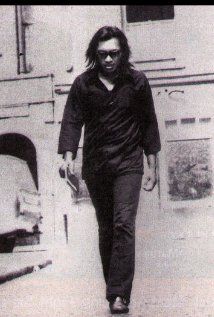
Winner of both the World Documentary Audience Award and the Special Jury Prize for its celebration of the artistic spirit is every musicologist’s dream film: Malik Bendjelloul’s Searching for Sugar Man. This larger-than-life tale is about obscure Detroit singer-songwriter Rodriguez, who created two brilliant albums, Cold Fact (1969) and Coming from Reality (1971), which some have compared to Bob Dylan’s greatest works. Yet virtually no one bought either of the records … except South Africans. The film reveals a fan base of millions, comprised of multiple generations who have viewed Rodriguez’s songs as political anthems for 40 years. And that’s just the first 15 minutes of the film!

Rodriguez’s lyrics and lifestyle celebrated a working-class hero mentality that seems to be as precious as the songs themselves, and Benjelloul’s film about his impact on a seemingly far-removed audience is a standout. But here’s a warning: be careful while reading any reviews of this film before you see it! Every single critic I’ve read has spoiled major dramatic points in the film, so try your best to catch it before you come into contact with any spoilers.

A few more for your doc queue:

The makers of 2006’s Jesus Camp, Heidi Ewing and Rachel Grady, picked up the U.S. Documentary Editing Award for their latest, Detropia. It poetically unearths a hopeless, dying city using beautifully dramatic storytelling, though the film itself feels a bit unfinished towards the final act. Kristi Jacobson and Lori Silverbush’s Finding North takes on hunger in America; many left the film wondering how they could take action to help ease the epidemic. David France’s superb How to Survive a Plague, about AIDS activists in the late 80s, left me and quite a few other critics totally devastated. France’s film is truly an emotional equivalent to last year’s U.S. Documentary Grand Jury Award winner about assisted suicide, How to Die in Oregon. This year’s World Cinema Documentary Editing Award went to Lisanne Pajot and James Swirsky’s Indie Game: The Movie, which follows a group of independent video game designers pouring a psychotic amount of hard work into their creation, Super Meat Boy.

But the most memorable among this year’s crop of socially-aware docs was Lauren Greenfield’s Queen of Versailles, which won the U.S. Directing Award for Best Documentary. The film follows an uber-rich U.S. family whose lavish lifestyle is slowly being toppled by the current recession. The inverted journey invites audiences to begin by scapegoating the couple (as it happens, the paterfamilias, David Siegel, is suing Sundance and the filmmakers for defamation). But as things onscreen turn sour, director Greenfield masterfully brings things back around, holding up a culture-of-entitlement mirror to the audience. This film stuck with me for days after the screening.  

Coming up next: Jesse Hawthorne Ficks on Sundance’s midnight movies (duh), and more!

Sundance Diary, volume three: docs!

0

In a series of posts, Midnites for Maniacs curator-host and Academy of Art film-history teacher Jesse Hawthorne Ficks reports on the 2012 Sundance Film Festival. Check out his first and second entries.

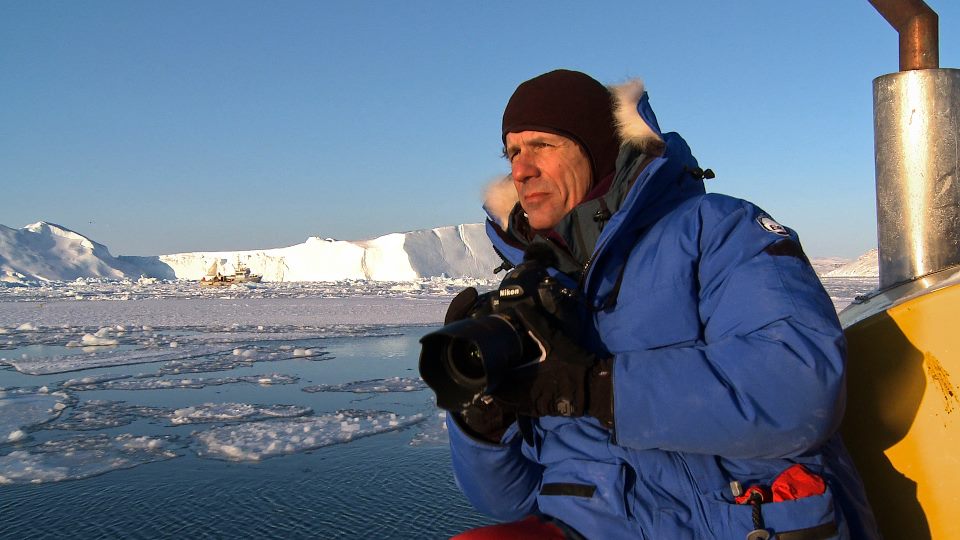
Jeff Orlowski’s Chasing Ice, which won this year’s Excellence in Cinematography Award for a U.S. Documentary, manages to sidestep the frivolous argument between liberals and conservatives as to whether or not the polar ice caps are melting. In fact, this beautiful documentary is so jaw-droppingly visual, you end up interacting with and understanding the planet’s ice structures as if they were your own grandparents. Trekking out to the furthest spots in the Northern Hemisphere, National Geographic photographer James Balog, his hard working-crew, and director Jeff Orlowski have created a document that will force the world to actually see what is happening as opposed to arguing assumptions. What I found even more unnerving is how beautiful I found crumbling ice caps to be. Am I part of the problem?
 
Doc fans will recognize the name Kirby Dick; his previous works include This Film is Not Yet Rated (2006), which exposed the MPAA (the highly-secretive, surprisingly small group which has been censoring cinema since 1968), and his controversial 2009 film Outrage, which aggressively outed closeted gay politicians who have and continue to vote against gay rights.

http://www.youtube.com/watch?v=1ifc_ongQFQ

At this year’s fest, Dick picked up the U.S. Documentary Audience Award for his latest disturbing documentary, The Invisible War. The film launches a massive exploration into the epidemic of rape in the US military, and the unbelievable actions taken within the system’s hierarchy to cover it up. It is utterly awful to realize that there are thousands of women and men who have been violated, humiliated, and robbed of justice, all while serving their country. You will leave this film a changed person.

Movies about artists always have the possibility of turning into an extended commercial — which isn’t necessarily a bad thing; it’s just important to not lose sight of that. Two documentaries from last year’s festival, Richard Press’s Bill Cunningham New York and Ricki Stern and Anne Sundberg’s Joan Rivers: A Piece of Work, highlighted not just the artist but managed to achieve something much deeper and more profound. This year, Matthew Akers’s Marina Abramović: The Artist is Present was similarly able to uncover something extremely haunting and even beguiling about its subject.

Abramović, one of the godmothers of performance art, is brilliantly shown to be audacious, committed, and finally successful, yet totally alone. This beautifully-constructed piece knows that what we are really dealing with is a person who wants to connect with every single other person on the planet. Abramović’s art is her life, and Akers’ film practices what its subject preaches by exporting her message to moviegoers, enabling her to touch even the people that she doesn’t come into direct contact with. Easily the best documentary of the Sundance Film Festival, it’s also an early contender for best doc of 2012. 

Up next: Jesse Hawthorne Ficks reports on even more docs!

Sundance Diary, volume two: ‘Beasts’ and ‘Daughters’

0

In a series of posts, Midnites for Maniacs curator-host and Academy of Art film-history teacher Jesse Hawthorne Ficks reports on the 2012 Sundance Film Festival. Check out his first entry here.

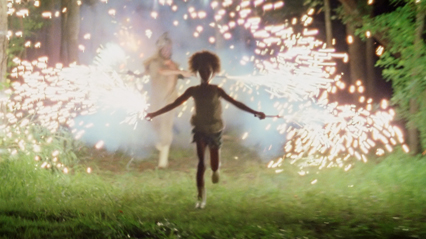
The surprise hit at this year’s Sundance Film Festival was Benh Zeitlin’s Beasts of the Southern Wild, which not only has the power to hypnotize but to also enlighten with its striking cinematography, fantastical special effects (wonderfully designed by San Francisco’s own Academy of Art University), and a truly guttural performance by newcomer Quvenzhané Wallis. She plays Hushpuppy, a precocious six-year-old searching to understand a world post-Katrina, post-race, and more importantly post-childhood.

Combining David Gordon Green’s George Washington (2001), Spike Jonze’s Where the Wild Things Are (2008), and most appropriately Julie Dash’s Daughters of the Dust (1991), Zeitlin has created a genuinely haunting enigma for modern audiences that deserves multiple viewings for maximum understanding. But even though it won both the U.S. Dramatic Grand Jury Prize and the U.S. Dramatic Excellence in Cinematography Award at this year’s festival, will Beasts ultimately be able to find an audience outside of the festival?

As it happens, Daughters of the Dust was restored for this year’s festival (and correctly color timed for the first time ever!) This visual poem exploring South Carolina’s coastal Gullah culture is as modern, historical, profound, and universal as Jane Campion’s The Piano (1993) and Terrence Malick’s Tree of Life. Yet for some reason, the film did not find a very large audience. With Sundance holding a 30-plus minute Q&A with Dash herself following the screening, many historical and symbolic details were explored — but more importantly, you were able to just sit with the film.

http://www.youtube.com/watch?v=c4PEcVK6gbM

When I was in college, Daughters was truly was one of the most difficult movies for me to keep up with (I fell asleep multiple times, couldn’t understand the character’s accents, etc.) Seeing it again for its 20th anniversary, the film feels more than ever like a revelatory example of visual narrative cinema: images and sounds sweep the viewer into a place where they can slow down and absorb the kind of filmmaking that can resonate in your soul.

Up next: Jesse Hawthorne Ficks goes doc-wild in his third Sundance Diary.

Sundance Diary, volume one: the hipster chronicles

0

In a series of posts, Midnites for Maniacs curator-host and Academy of Art film-history teacher Jesse Hawthorne Ficks reports on the 2012 Sundance Film Festival.

This was my 22nd consecutive Sundance Film Festival (which is well over half of my life), and I found myself more excited than ever to pack in as many films as humanly possible in seven days. Thirty-seven programs were achieved, and mind you: the trick is not to fall asleep, which so often happens at press screenings, resulting in many critics hypocritically denouncing whatever film they slept through.

Oddly enough, two of the biggest world premieres of the festival, Lee Toland Krieger’s Celeste and Jesse Forever and Josh Radnor’s Liberal Arts both explore the lives of thirtysomething men named Jesse who “have a lot of potential” but for some reason just aren’t making the most of their lives.

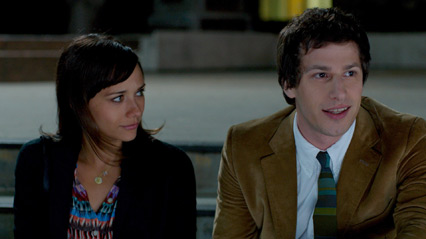
Krieger’s film is about a couple who have decided to get a divorce, yet find themselves spending even more time together than when they were married. Rashida Jones (from Parks and Recreation) and Andy Samberg (can we just talk about how underrated his 2007 film Hot Rod was?) star in an amazing dramatic comedy that allows a difficult subject (“How to break up with a loved one?”) to sneak up on you by the gripping third act. Allusions to Marc Webb’s decade-defining 500 Days of Summer (2009) are well-deserved; I found this film to be an instant classic.

Liberal Arts is Radnor’s follow-up to last year’s Dramatic Audience Award winner, Happythankyoumoreplease; it tells the (terrifyingly) relatable story of a thirtysomething intellectual (Radnor as Jesse) who falls for a plucky young student who is wise beyond her years; she’s played by Elizabeth Olsen, fresh off her astounding performance in last year’s Sundance hit Martha Marcy May Marlene. But this ode to Woody Allen’s Manhattan (1979) has more going for it than just an age-gap relationship dilemma. Not only does Zac Efron pop up as Jesse’s spiritual guru (which garnered major gasps from many audience members), but Richard Jenkins delivers a haunting performance as Jesse’s “second favorite professor” who has finally decided to retire from his tenured position. Radnor achieves a surprising amount of poignancy by way of light-hearted comedy. Woody Allen would no doubt approve.

With two films at the festival, cult actor-directors Tim Heidecker and Eric Wareheim (Tim and Eric Awesome Show, Great Job!) proved that they could tackle both heaven and hell. The comedy duo’s directorial debut, Tim and Eric’s Billion Dollar Movie, brought their purposefully clunky and abstract comedy to the big screen with some very mixed results. Following in the footsteps of such surreal “nonsense” masterpieces as H.C. Potter’s Hellzapoppin’ (1941), Bob Rafelson’s Head (1970), and Tom Green’s Freddy Got Fingered (2001), fans of the show will be treated to many truly disgusting and hilarious sequences along with a ton of cameos, leaving the uninitiated understandably dumbfounded.

However, the 90-minute film did seem to have some trouble translating the chaotic immediacy of Awesome Show‘s 11-minute episodes, leaving many in the midnight premiere wanting desperately to laugh a whole lot more. (Not sure I agree with the film’s “Better than The Lorax” ad campaign, but they get points for inventive advertising.)

But not to fear, Rick Alverson‘s ironically titled The Comedy was the jewel of the festival, or the anti-jewel — it was the most polarizing film of Sundance 2012. It follows a 35-year-old Williamsberg hipster named Swanson (stunningly played by Heidecker) as he antics through his daily quest: attempting to get any reaction from any sort of person. This leads him to say and do some of the most confusing and borderline offensive stuff imaginable.

While this sent many towards the exit doors (and left a fair amount baffled in their seats, whispering “This has got to be the worst film ever made!”), audience members who dared remain were treated to a perceptive, modern-day study of hipster culture that reveals a despicable and terrible truth. You may find yourself relating to Alverson’s perceptive anti-hero in ways comparable to Robert DeNiro in Taxi Driver (1976), Peter Falk in Husbands (1970), and Jack Nicholson in Five Easy Pieces (1970). And since The Comedy was made not necessarily to be enjoyed, it will probably, sadly, take 20 years for people to recognize that there is no finer film to define this generation.

This isn’t to say that there aren’t going to be more films presenting what it is to be modern day man-child — after all, mumblecore movies and hipster cinema emerged as early as 1991 with Richard Linklater’s Slacker. I noticed that many people at Sundance were immediately averting themselves from Destin Daniel Cretton’s I Am Not a Hipster, just because of its title. It’s a curious dilemma that plagues this era (and it relates directly to Alvie Singer’s life philosophy: “I would never want to belong to any club that would have someone like me for a member.” This quote from Woody Allen’s 1977 Annie Hall, itself a Groucho Marx reference, seems to be one of the most difficult hurdles for super-self-aware hipster culture to overcome.)

Cretton’s film focuses on Brook (played by Dominic Bogart), a skinny-jeaned indie rocker who finds himself trapped in a cycle of contempt and cynicism. Suddenly his three sisters arrive (Greek chorus, anyone?), thus beginning a surprisingly genuine exploration of the kind of grumpy guy that most of us thirtysomethings have either been or encountered this past decade. Some very true emotions are earned by the end of this 90 minutes; hopefully audiences will confront their individual issues and start taking that next step towards embracing their own hipster tendencies. Or not.


Up next: Jesse Hawthorne Ficks’ second Sundance Diary, covering even more dramatic competition films, midnight movies, and more. He saw 37 films, people. His diary is epic!