Style

No Bra makes topless creepy

0

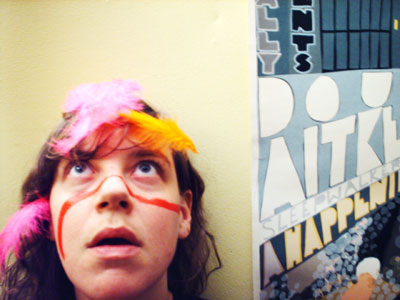
Exposed breasts usually make my heart beat a little faster in a good, sexy sort of way. But when Susanne Oberbeck, front-woman of post- No Wave- techno band, No Bra, takes off her top, letting her frizzy red hair dangle past her puss and slightly cover her chest, my heart beats faster in a nervous sort of way.

It’s not that the lady is bad looking, it’s the music that inspires and therefore accompanies her shirt removal– industrial, tortured, plunky notes that sulk behind a low, groaning voice. No Bra’s music takes you straight out of your warm desk chair and places you in a dark alley… at 3 a.m…in East Oakland.

No Bra started up in 2003, after Oberbeck moved from her hometown in Germany, to London and then to New York. Her vocals come delivered in a deadpan spoken-word style over cracked-out, murky percussion, electric guitar strums and other combinations of mildew-covered sounds. The old-style German folk slowly churns below Oberbeck, playing the soundtrack to what could be a really rad horror movie from the ’30s. The lyrics about syphilis and anal-sex come off like secrets whispered by elderly, possibly senile men. Oberbeck has called her tracks “romantic.” 

Oberbeck’s intentions for singing minus brasserie seem aimed at disbanding gender norms and besides taking things off, she also puts on a fake mustache every once and awhile. (I’m guessing all of this reflects on her childhood in Germany, where Oberbeck has said she was mistaken for a boy until she was into her late teens). 

Even though No Bra totally creeps me out, I do think there’s something really wonderful and provoking about the music– Oberbeck’s physical nakedness pairs well with the exposed and disturbing musical content. I find its aloofness oddly compelling. 

The latest No Bra single, “Minger/New Hero“, came out in February, with remixes by TV Baby and These New Puritans. Unfortunately, her and her eerie tit show are not touring to San Francisco any time soon…


Start your “Vinyl Addiction”

1

“Here’s my Jaguar Warrior.” Jesse Hernandez pulls out his toy, and sets it on our café table with a broad smile. Two women at the next table over are immediately intrigued. “Oh, that’s beautiful! What is that?” they coo. Hernandez seems flattered by the compliments, and patiently explains that it’s a vinyl toy and that he designed the elaborate yellow cat figurine with the sweeping blue plumes and fierce, fanged skull peering out of its face. And yes, it’s pretty cool.

One gets the impression that, as host of MYX TV’s new show “Vinyl Addiction,” (who celebrates its launch party and the release of an exclusive Hernandez toy Sat/3 at New People) Hernandez is used to explaining to people just what these cute/creepy little dolls are. He certainly got me to understand their appeal.

“There’s a multi-faceted quality to [vinyl toys],” Hernandez explains. The toys, which are often designed by well known artists, are manufactured in runs ranging from the mass release to the limited edition, to the one-off “custom,” hand painted by the artist themselves. Springing initially from the heavy character culture in Japan and Hong Kong in the late nineties, their designs can range from precious to unsettling, from manga to menacing. “They’re usually both,” says Hernandez “they’re cute, but really messed up. Or it’s dangerous and cute.” 

It’s easy to see why the seniors at the next table were intrigued by Hernandez’s design. The “jaguar” design is painted onto a bunny doll, the cat ears superimposed on the floppy rabbit ones. Though simplified from many of his custom runs, the artwork on the doll is at once, fierce, tribal and modern. It’s only slightly adorable when taken in with its globular cartoon rabbit form.

Hernandez has dubbed his style “urban Aztec,” and he deploys it in a dizzying array of mediums. He creates beautiful drawings (“everything I do is based on drawing,” he says) and fine art paintings of Aztec warriors and mythological figures, reflecting his Yaqui/Chicano heritage. “You have to push the limits,” he says. “I wanna make something timeless.”

He shows a slightly more city-oriented side in his animated sequences, painting a picture of life in the Bay Area, where he grew up, with “The Nutshack,” his original MYX series that he art directs and co-created. Hernandez says many artists come to vinyl toys as an offshoot of their production of other kinds of art. “Vinyl toys can be a stepping stone, a rite of passage for an artist to have something [mass produced].”

With all these projects, it baffles the mind that Hernandez could take on another job. But it’s clear that “Vinyl Addiction” sprang from his respect for the vinyl toy movement- and a desire that an artist be the one to tell their story. 

Most episode shoots, it’s just him and the cameraman. Though he now holds the titles of the show’s host/producer/creater/director/editor/animator, Hernandez was loathe, at first, to become the oncamera host of “Vinyl Addiction.” But now that two years after shooting the pilot with co-field producer Roland Posadas, he sees his involvement as key to part of the show’s effectiveness. “I think it brings out that level of authenticity,” he says. “This is my culture. Everyone knows I’m a part of it, and I want everyone to be shown in the best light possible.” 

His expertise of the topic is evident in the preview reels of the program, which will air nationwide through On Demand and in MYX’s three urban markets of the Bay, Orange County and Northern Virginia. Hernandez goes to his colleagues’ gallery and custom shows, profiling artists and companies involved in making the toys. 

“The hardest challenge,” he says, was to figure out a way to cover the topic in a way that made sense to people who didn’t know much about vinyl toys, to educate them on the art form. He resoved the issue with “Vinyl Vocab” segments, which take a moment to teach viewers the definition of one of the scene’s specialty terms. Hernandez’s voiceovers during the lessons are done in a faux British accent, which seems to poke fun at the concept of codifying a scene that, up to now, has been pretty esoteric.

But Hernandez is sure that the popularity of vinyl toy art is on the rise in America. He says mainstream companies are picking up on the toys’ aesthetic to appeal to consumers. “So many people are into the look [of vinyl toys], even if they don’t understand it. It’s an unknown art form.” Two years ago, he told MYX that they had to produce “Vinyl Addiction” to be in on the first wave of the toys’ growing US popularity.

I’m going to have to agree with him that it’s hard not to love the vinyl doll. Even I, with whom the verb “collect” and the concept of the “collectible” sit poorly due to my inveterate nomadism, couldn’t help but paw at some of the more striking pieces. Hernandez met me at Kidrobot, a store on Haight street that’s been selling it’s own line of vinyl toy figurines and T-shirts since 2002. He tells me he always used to love coming here to see the new releases. 

Inside, the stark white walls are lined with glass cases full of nicely displayed vinyl friends. Here, a couple of blasé kids sumple, only their shaggy heads and limbs protruding from cans labeled “Boring Juice,” there, an adorable rhino brandishing a revolver. Not to mention all the spikey, snarling things that are just… so cute. 

Suddenly, I can understand the motivation of all the friends I have with vast toy collections. They’re witty. They’re creative. They’re art. I like them. And, judging from the drive of Hernandez and “Vinyl Addiction,” I don’t think I’ll be the only one.


“Vinyl Addiction” launch party

Sat/3 7-10 p.m., free

New People

1740 Post, SF

www.vinyladdiction.tv


Zion I is home and grown

1

Marriage, jobs, cars— ten years can be a stretch for a lot of things in our world, but the hip-hop created by Zion I is still fresh after a decade, the signs of wear and tear only showing on the albums themselves. Producer AmpLive and emcee Zumbi make up the Bay Area duo—playing Thurs/1 at the Rickshaw Stop and Fri/2 at the Independent— who have just returned from a 35-city tour around the country. Zumbi says they’re officially “ready to vibe with the hometown crowd.”

“The tour was great, but I need to get my life and routine back together,” Zumbi said over the phone while prepping for his regular show on Oakland’s Youth Radio. Sharing the bill with Cali-raggae stars Rebelution and Soja, the laid-back hippy crowd proved to be quite different than the fans Zion I usually sees when they share the stage with other hip-hop artists. 


“A lot less ego and a lot more energy,” he said, noting that the tour consistently had an average of one to three thousand people in the audience. “Usually on a tour, it fluctuates. Some nights are big and others just have 50 people. The consistency brought out a lot of energy. Every night was so exciting— never a drag.”


His favorite stop on the tour was definitely New Orleans. The massive amounts of reconstruction throughout the city reminded him a lot of where he calls home— West Oakland. 


“The old Victorian houses, next to the new condos and all the construction. New Orleans was like my neighborhood three times over. It was nuts.”


Zion I


Back on his home turf, Zion I is the same cat you met back in the late ‘90s: prominently loaded with thick, luscious beats from AmpLive’s unpredictable bag of tricks and smooth, conscious lyrics from the mouth of Zumbi. Funk, soul, D&B, and space vibes remain as they have throughout Zion I’s career, but their sixth and most recent release, The Takeover (Gold Dust Media, 2009), really hits home by honing in on these qualities. Sharp hooks, anchored melodies and beats that bump make this album congruent with Kanye-style hits. 


“We switched up our process and did lots of revisions on this album. We’d change up one song like two, three or four times. I’d write three or four raps for each beat,” he said, which is quite a contrast to the previously process: Amp would make the beat, Zumbi would write the rhyme and they’d record. 


Such a drastic change in work ethic doesn’t just come out of nowhere. 


“Well, we’ve been in this for ten years…” he starts out. “And Amp just got married and had baby. And we both just bought houses.” The truth comes out: they’ve grown up. And so has their music. “We’re ready to take on more responsibilities. This is where we are. We are grown men with something to say.”


Zumbi considers each song like a journal entry, a story in each song that reflects where these two men have been, what they’ve seen and the thoughts the journey has inspired. 


And he wraps it up in one perfect statement: “One of the most beautiful things in life is to watch an artist evolve.”


Zion I


Thurs/April 1

Rickshaw Stop 

155 Fell St, SF

9pm, $18/20

www.rickshawstop.com


Fri/April 2

Independent

628 Divisadero Street, SF

9pm, $18/20

www.theindependentsf.com


Hump Day headliner: The White Mice

0

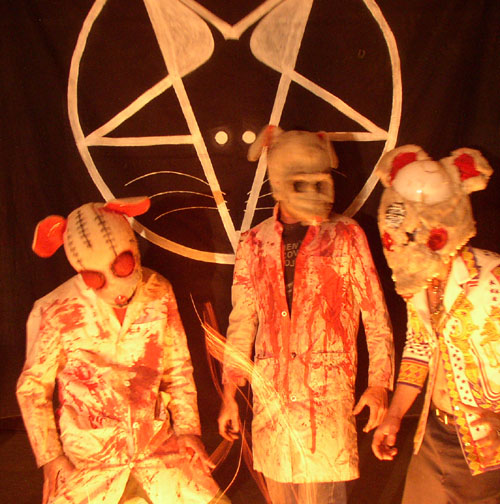
The screaming, banging, clanging, and screeching I can handle for a couple minutes, but the big, bloody, rodent costumes? No way. Pretty sure I’m a masklophobe, meaning I’m already totally creeped out by people dressed up in oversized, animal and mascot costumes, even if they’re smiling and semi-cute. The grindcore metal-heads, The White Mice—playing Wed/31 at 21 Grand— take it to an all-new low with their chosen stage attire, beyond the crypt and into a the most terrifying science lab possible. 

Three guys in three red-stained lab coats, the Rhode Island Mice hide their faces behind papier-mâché mouse masks on stage, experimenting with their abrasive, totally rude, nasty metal sounds. 

Categorize them as you will, their brand of metal is industrial and distorted, a batch of chemically treated sounds concocted by the hand of a mad scientist. The guitars rip and rage with machismo. The vocals growl. The pounding bass and steadfast drums claw your organs from the inside out— sound appealing?


whtmice0310


The strangest part about The Mice is their “cheesy” sense of humor. Their song titles are often mice-related, like “Gouda and Evil” and “Cheesus Saves.” Funny and scary— these guys would be hot on the dating market. 


The show is being put on by Club Sandwich, an East Bay collective who organizes events for local, and touring, under-the-radar musicians. The show is all-ages, meaning you could tote along your whiney little brother and really scare the shit out of him, Donnie Darko style. 


The White Mice w/Lesbian and Nuclear Death Wish

Wed/31, 8pm, $6

21 Grand 

416 25th St., Oakland

www.21grand.org


The Pets Issue

14

Hooch with the pooch: Local bars that cater to the canine crowd


Bark if you like needles: Acupuncture and holistic medicine is a fast-growing trend in animal treatment — and the veterinary establishment is slowly catching on


Finding the right dog walker: Some tips from the pros


Is BARFing good for your pet? The raw food diet has devoted supporters — and harsh critics


PET STORES WE LOVE: ANIMAL CONNECTION

Animal Connection isn’t peddling short-lived hamsters or toilet-bound goldfish. The Sunset District store aims to provide customers with scaly roommates and feathered friendships that last. “We want to connect animals and people, and have them live happily and responsibly in a successful relationship,” says store manager Jennifer Grafelman.

Originally specializing in general pet supplies and birds, the store has since gone exotic, carrying everything from blood-fin tetras to cockatoos to fire-bellied salamanders to chinchillas.

The place has that pet store smell, a mix between grocery store bulk grain aisle and greenhouse aviary. Behind the register desk, assistant manager Joe Taylor has a chirping, green-feathered handful. “Tatter,” a rainbow lorikeet named for his fondness for sweet potatoes, is belly up in Taylor’s palm enjoying a stomach rub. Although he’s for sale, not just anybody can take the bird home; the staff discourages capricious purchases. “He’s super-playful, but that bird is not for everybody,” Taylor said. “He’s messy, has a real specific diet, and is loud.”

The employees at Animal Connection are specialists — something that sets the local business apart from chain stores. If your bearded dragon refuses to snap up crickets or your parakeet is losing plumage, they can provide advice or inform you a vet trip is necessary. 2550 Judah, (415) 564-6482 (Skyler Swezy)


PET STORES WE LOVE: AQUA FOREST

George Lo is trimming a field of grass that carpets a gently rising hill until it meets a vertical rock face; he’s using a pair of scissors. The picturesque landscape is submerged in an aquarium two feet long. A half dozen red-bee shrimp are scattered across the hill grazing on plankton in the grass. They resemble countryside cattle. Three cardinal tetras circle the rock like birds in flight.

At Aqua Forest Aquarium in lower Pacific Heights, Lo, 31, creates underwater gardens with imported aquatic plants. His was the first store in the United States to specialize in the “nature aquarium” style, which was invented by Japanese native Takashi Amano.

Aqua Forest sells souped up, hot-rod freshwater aquariums. A filtration system injects carbon dioxide into the water and specially designed fluorescent lights emit blue-spectrum light waves. The combination creates super-photosynthesis and a vivacious ecosystem.

Lo’s business is the result of a hobby turned profession. While a student earning his cell and molecular biology degree, he discovered a book of Japanese nature style aquariums. He decided to make his own, but struggled to find aquatic plants and suitable equipment. “I didn’t have the right kind of light required, so I had to build my own. I also built my own CO2 system using yeast and sugar,” Lo says.

The wall behind Aqua Forest’s cash register resembles a giant tray of surgical instruments. Stainless steel scissors and tweezers of various shapes and lengths hang in rows. A large-scale system can cost up to $20,000, but Lo can set you up with a basic starter tank for $200. He’s also got a kickass Web site. 1718 Fillmore, (415) 929-8883, www.adana-usa.com (Skyler Swezy)


PET STORES WE LOVE: PAWTRERO HILL BATHHOUSE & FEED

The last time my dog got sick, she really got sick — all sorts of fluids coming out of every orifice, dribbling all over her fur and her bed. Even after I wiped her down with wet towels, she still stunk. Like nasty, I-can’t-be-in-the-room-with-you stunk. The bed and the towels go in the washing machine, but the dog … well, the dog needed a bath — badly. And like most dogs, she wasn’t going to sit still in my bathtub, and I wasn’t looking forward to fighting a smelly wet dog in a shower/tub with glass sides.

No problem.: At the foot of Potrero Hill, there’s a great little pet store with a back room entirely set up for washing your stinky mutt. It’s so perfect it makes a damp and ugly chore fun.

Pawtrero specializes in raw food for your pet, and owner Susie Yannes has become something of an expert on canine and feline dietary needs. But her store is also popular for its self-service doggie bathhouse. The room has two large, stainless steel elevated tubs. You extend a ramp for the dog to walk up, slide the ramp back, lock the side door and slip a short leash attached to the back of the tub around your dog’s neck. Now poochie’s not going anywhere. You put on a large rubber smock, grab the spray hose, and start soaking.

Yannes provides a wide selection of organic, skin-sensitive doggie shampoos, treats to get reluctant pups up the ramp, fresh dry towels, blow-driers, brushes, combs, and even nail clippers. You can leave the towels behind, and take your clean, dry pal home with you.

And while you’re waiting, you get to watch all the other dogs get wet, get soapy, shake all over everything and look pathetic while their owners scrub away, chat, and laugh. And it’s just $15 199 Mississippi St., (415) 863-7279, www.pawtrero.com (Tim Redmond)

Hooch with the pooch

2

By Robyn Johnson

You have to take the dog for a walk anyway, right? Why not stop in at your friendly neighborhood dog bar along the way? A few local bars make a point of catering to the canine crowd; here are some places where your (well-behaved) pet is welcome.


STRAY BAR

With its motto of “Sit. Stay. Drink.” and Smurf-esque French bulldog logo, Stray Bar flaunts its fur-buddy friendliness, and the bartenders always make sure to keep the dog-treat and water bowls filled. People amenities include a darts room, a TV (usually tuned to a sports game), a jukebox with a healthy cross section, and a few ample leather couches. The crowd tends toward the unpretentious and neighborly, so if you happen to see a grizzled fellow totter on by, greet him with a raised glass and a pat on the head — that’s Camden “the drunken sailor,” the owner’s beloved pooch, just making his usual rounds. Some rules to keep in mind: keep your pup on a leash and off the couches, no doggie roughhousing, and, of course, if you don’t clean up any mess your furry friend should make, you will be summarily ejected and banned. Also, for crowd and animal safety, don’t bring your four-legged pal on Fridays and Saturdays or during special events.

309 Cortland, SF. (415) 821-9263, www.straybarsf.com. Happy hour: $2–$3 beers, daily, 4–7 p.m.


LUCKY 13

If you and your dog are of a more dive-bar-patronizing persuasion, trot on over to Lucky 13. The consistently top-rated jukebox is loaded with classic punk, metal, and rockabilly tunes, and the two of you can rock out over complimentary doggie treats and cheap beers from the extensive microbrewery selection. (People treats usually range from free popcorn to cheese Goldfish.) Other fun bits include a pool table, a photo booth, and, best of all, an outdoor patio to give your dog a stretch and a breather — as long as you don’t mind sharing the air with smokers. Although pups can wander off their leashes, the basic tenets of responsible pet ownership still apply. Don’t let your dog act in any way that would, if you were to do the same, get you tossed out or arrested.

2140 Market, SF. (415) 487-1313. Happy hour: $1 off well drinks, 50¢ off beer, daily, 4–8 p.m.


FIRESIDE BAR

If, on the other hand, you are both creatures of finer tastes, seeking a more elegant excursion, take a walk to the Fireside Bar. At this modern-minded and cozy lounge, the purple walls and dark leather furniture strive for a chic ambience, and sofas are set up around — you might have guessed — a fireplace. It’s a lot like drinking in someone’s classy living room — someone who doesn’t mind your bringing over the dog. The bartenders also seem to be phenomenally friendly, and the eclectic jukebox plays everything from Flogging Molly to jazz. Dogs must always be on a leash, and water bowls are set out in case it gets a little too toasty.

603 Irving, SF. (415) 731-6433. Happy hour: $4 well drinks, 50¢ off beer and wine, daily, 1–7 p.m.


ALBATROSS PUB

It’s games galore at the Albatross Pub, the cheerful and spacious bar that describe its atmosphere as the “guts of an old wooden pirate ship.” Besides a pool table and a darts shooting gallery, Berkeley’s oldest pub boasts 17 types of board games to tickle patrons’ competitive spirit. Be wary, though: Connect Four always gets nabbed first. Yarr. If gaming doesn’t set your heart aflame, you can occupy yourself listening to the live music sets and sorting, or drinking your way, through the decent selection of Scotches, bourbons, whiskeys, and Belgian-style beers. One buck gets you an unlimited pass to the popcorn machine. Dogs must be on leashes and at the tables, so don’t sidle up to the bar with your furry companion in tow. And here’s one of the most important rules: dogs must be out by 8 p.m. Consider the Albatross the perfect place to stop by for a sip or two on your pup’s evening constitutional.

1822 San Pablo, Berkeley. (510) 843-2473, www.albatrosspub.com. Happy hour: 50¢ off pints, $2 off pitchers, free popcorn, and discounted pool, Wed.–Sat., 6–8 p.m.


HOMESTEAD

Homestead’s a lot like other Mission joints — cheap strong drinks, $2 Tecates, and a hipsterish crowd peppered with some normal folks (although according to Yelpers, an unusual number of attractive people seem to congregate here, so use that tip for whatever you will). The bevy of topless pinups hung on the walls sets the bar apart, as does the gorgeous Victorian decor, holdovers from and nods to the establishment of the first bar on the site in 1905. You can also look forward to free peanuts. The rules for dog patrons are on par with the ones at Lucky 13. Dogs can wander around without a leash, but don’t be an irresponsible a-hole pet owner. Treats and water bowls are available.

2301 Folsom, SF. (415) 282-4663, www.myspace.com/thehomesteadsf. Happy hour: $1 off drinks, Mon.–Wed. and Fri., 3–6 p.m.

Art/S Global Tapas

1

paulr@sfbg.com

DINE You walk into a restaurant that offers “global tapas,” and you see a sushi chef standing behind a sushi bar, like an extra player who’s been thrown into some mammoth baseball trade to sweeten the deal, a utility infielder or the fabled “player to be named later.” Apart from this apparent anomaly, the restaurant is good-looking, with a long screen of dark wooden louvers to separate the bar from the dining room, halogen lamps like dangling stars, and plenty of green paint. The place is called Art/S, and the worst criticism that can be made of the physical layout is that the large front windows are filled with Lombard Street traffic.

A few years ago, an excellent restaurant called Sangha, in the Glen Park Village, offered a menu that mingled nuevo Latino and Japanese elements with surprising success (although it didn’t save it from closing late last spring). Still, the Sangha run suggested that Japanese cuisine was not necessarily insular and could sometimes be mixed and matched with other cuisines.

At Art/S, the riff is match, not mix. There is no overt cross-cultural pollination; the two-sided menu card offers a California hodgepodge, with Iberian and Mexican touches, on its front face, while the Japanese items are to be found on the other side. The twain do not meet. Over the head of the sushi chef is a long chalkboard — a kind of scoreboard for the food-involved — listing delicacies such as paella negra (made with squid-ink rice), but he can’t see it.

Paella is one of the few full-sized plates. Most of the dishes are smaller, though large enough to be shareable, and they range in tone from classic bar food to exercises in sophistication that would play well in the temples of haute cuisine downtown. We were especially impressed, in the latter vein, by the yellowtail crudo ($9), which arranged flaps of fish in the shallow wells of a long, narrow porcelain tray, thatched them with shredded radish and slices of jalapeño pepper, and gently doused them with a tart truffle ponzu sauce.

The bar-food angle is well-served by such shamelessly fatty crowd-pleasers as cheese croquette ($9), a blend of white cheddar and mozzarella cheeses like molten lava in a crust of fried breading and served with a ramekin of balsamic vinaigrette, as dark and viscous as used motor oil and quite tasty, though superfluous. Another small plate with similar visceral appeal is the Cali chili-fried potato ($5), spears of Yukon Gold sprinkled with chili flakes and presented with an addictive caesar aioli.

The Iberian-tinged dishes, interestingly, caused some division of opinion. The pintxos chorizo ($7) sounded Spanish, even Basque (“pintxos” is the Basque equivalent of “tapas”), but the chorizo lengths in question were Mexican, made from fresh pork, with plenty of garlic and chile. (Spanish chorizo is air-cured, like prosciutto, and typically seasoned with smoked paprika.) Atop each sausage cylinder, a tab of sweet potato had been fastened with a toothpick, and I wasn’t sure why. The tabs were as pale as Monterey Jack cheese and didn’t add much flavor or texture — not that Mexican chorizo needs help in the flavor department.

The Galicia octopus ($9), an earthenware crock filled with octopus and potato chunks in a spicy dark tomato-based sauce, also left a hung jury. The sauce had the faintly bitter bite of smoked paprika, which perhaps is an acquired taste, and I long ago acquired it; I thought it made a handsome contrast with the faint sweetness of the octopus. Others disagreed. Further objections were raised (rather spuriously, I thought) against the potatoes. They weren’t exactly necessary, but they did add some ballast to the dish. On the other hand, everyone like the spiced chicken tacos ($6 for two), which were made with proper corn tortillas and enlivened with blue cheese.

Fish: several varieties are offered as “sizzling” plates, among them an excellent mahi-mahi filet ($10), dense, meaty, and juicy atop a jumble of bean sprouts, green peas, yellow zucchini, goji berries, and Meyer lemon in a garlic sauce. For unsizzling, flip the menu card and find an extensive list of nigiri, sashimi, and rolls, including spicy tuna — the “ultimate” ($7.50) — and Cancun ($9), with smoked albacore, roasted jalapeño peppers, avocado, and spicy radish. The Cancun struck me as a Californication (a quite nice one, though), while the former strongly appealed to a member of our party who’d never eaten a sushi-style dish before: an already small world growing a little smaller.

ART/S GLOBAL TAPAS

Dinner: Sun.–Wed., 5:30-10 p.m.; Thurs.–Sat., 5:30–11 p.m.

2353 Lombard, SF

(415) 931-7900

www.artsglobaltapas.com

Full bar

AE/DS/MC/V

Moderately noisy

Wheelchair accessible

Oh my gay!

0

CLUB/MUSIC Gay wads. Sissies. Fatties. Fags. Butches. Twinks. Offended? Don’t be — that’s the guest list for Stay Gold, the sickest queer dance party in the Mission. This month the party celebrates its four-year anniversary, inviting you to self-declare along with the rest of the high femmes, boys, bois, nerd alerts, nellies, and an entire pack of sexy dance-dance revolutionaries.

The all-inclusive party throws down its jams the last Wednesday of each month at the Make-Out Room and has grown from a dedicated crowd of 50 at its start to a full-on 450-person freak-fest in 2010. Stay Gold’s founders/promoters/resident DJs Leah Perloff (DJ Rapid Fire) and Danielle Jackson (DJ Pink Lightning) blame the party’s popularity on its welcoming attitude.

“Stay Gold is a queer party, not a lesbian party,” says Perloff over coffee and banana bread. “We’ve never put imagery on flyers because we didn’t want to rule anyone out.”

“It started out as mainly women, but it’s turned into everybody, which is a hard thing to do — get all queers at one event,” Jackson says.

All queer and all hot, Stay Gold draws in a ridiculously cool crowd. Super rad vintage threads bump and grind with killer style choices of all breeds. The haircuts, the personalities, the dance moves— this crowd is bangin’. “Ya. It’s a super hot queer mix,” Jackson agrees with a smirk, noting the event’s tagline: “White hot cruising and solid gold dancing.”

Stay Gold started as a tribute to a friend of Jackson and Perloff, Sarah Tucker, who was killed on her bicycle by a hit-and-run in 2006. Jackson and “Tucker,” as they called her, had put together PYT, a gay dance party named after a certain Michael Jackson song. After Tucker passed away, Jackson and Perloff decided to keep the party going in her honor, switching the name to reflect their lost friend’s recent golden birthday. “Tucker would totally approve of Stay Gold — minus the fact that we play a little hip-hop. That was always her rule: no hip-hop at PYT,” Jackson says.

To balance it out, Tucker’s favorite song, “Last Night a DJ Saved My Life” by Indeep is the party’s anthem. Other Stay Gold staples include “Finally” by CeCe Peniston, “Walking on Broken Glass” by Annie Lennox, and “Pussy (Real Good)” by Jacki-O. “People want to hear the jams,” Perloff says with a very serious face.

Along with the usual DJ mix, the anniversary party includes a special live set from Double Dutchess, who Perloff describes as an “epic booty bass, babelicious, dance jam duo.” Already packed tit-to-tit during its regular event, this one’s gonna be bananas.

Whether it’s suggestion or a rule, take it from Perloff: “No parking on the dance floor.” 

STAYGOLD FOUR-YEAR ANNIVERSARY

Wed/31, 10:30pm, $3

Make-Out Room

3225 22nd St., SF

www.makeoutroom.com

Appetite: It’s Passover — so come on over

0

As Passover begins tonight through next Monday, here’s a few places where you know you can eat quite well and stay quite kosher:

4/5 – SLOW FOOD Seder at Mission Beach Cafe
Heeb magazine teams up with one of my favorite neighborhood restaurants, Mission Beach Café for a Slow Food Seder. Yes, that’s slow food principles, modern cooking sensibilities, traditional Jewish dishes. In fact, with each course, you have the choice of traditional or California-style dishes, each made with local ingredients. Will it be smoked black cod with potato kugel or matzo flatbread with haroset, balsamic reduction, basil scallion pesto and messo seco cheese?

Braised Prather Ranch lamb shank with butter beans, oyster mushrooms, baby carrots and red pearl onions or roasted duck with Israeli couscous, Jerusalem artichokes, pea shoots and orange sabayon? Thankfully, Mission Beach’s wonderful pastry chef, Alan Carter, has dessert in hand.
$55 for four courses, excluding tax and tip
Monday, April 5
5:30-10:30pm
Mission Beach Café
198 Guerrero Street
415-861-0198
www.missionbeachcafesf.com


Firefly’s Eight Days of Passover menu
Right by my former home in Noe Valley, beloved Firefly does an “Eight Days of Passover” menu all week long, a bevy of Jewish greats made with Firefly’s usual homey, gourmet flair: chopped chicken livers, Grandma Rose’s matzo ball soup, owner, Brad’s housemade gefilte fish, vegetable matzo kugel, grilled lamb sirloin and beef brisket (or vegan brisket, if you so desire).
March 29–April 5
a la carte menu during regular hours
4288 24th Street, SF.
415-821-7652
www.fireflyrestaurant.com


TAKE-OUT at Sweet Jo’s
Jo and her best-there-is biscuits  are always available at Sweet Jo’s in the Jewish Community Center, but she also knows Passover foods and has plenty for you to take home to suppliment or be your complete Passover meal. Maybe braised Kobe beef brisket, felfite fish, potato kugel, mashed potatoes, rosemary broccoli, and a side of horseradish cream?
Available for pick-up a la carte or to eat in the cafe through Passover
Sweet Jo’s, inside the Jewish Community Center
3200 California, SF.
415-345-0090
www.sweetjoscafe.com

Bay Area Sistah Sound celebrate two years of femme beats

0

The ladies of Bay Area Sistah Sound know their place — and it’s in the beat kitchen. The all female DJ crew (which includes DJ Zita, the legendary Pam the Funkstress and newest addition to the cast, DJ Similak Chyld) is celebrating its second anniversary at 111 Minna on Fri/2. It seemed like a good time to reflect with the women on their past two years.

A lot has changed around these parts since DJ Zita moved back to the Bay area after living for a spell in Hawaii. Upon her return to San Francisco, she found the famously inclusive city lacking on the female pride front. “I noticed the fact that the [hip hop DJ] scene was male dominated. There were a lot of women, but they were all doing their own thing. There was no solidarity.” Zita, a founding member of Sisters in Sound, the first all woman group of DJs on the islands, decided to change all that.

It’s still true that when you go into a lot of the larger hip hop/R & B clubs in town these days, you’ll still encounter a dude heavy clientele. But the number of women-run groups and women-featured nights — and no, we’re not talking about the Lusty Lady — is on the rise. You’ve got Coo-yah Wednesdays at Paradise Lounge, with resident reggae spinners Daneekah and Green B, RRS Feed, Peaches at Skylark on Thursday nights, a funky — a funky, souly, hip hop affair orchestrated by promoter Masaye Waugh, who formerly slung drinks at Everlasting B.A.S.S. when the party was at club 330 Ritch.

“I really love the B.A.S.S. party,” says Waugh. “That was right around when I was learning about what it means to be a female DJ in the business.” Later, Masaye texts me “I was so excited and inspired by [Everlasting B.A.S.S.] and it made me understand/appreciate more what I had gotten into. Have you seen Pam scratch with her boob? That’s a party!”

Waugh understands why more and more women are choosing to work together, B.A.S.S. style. “It’s that communal feeling of working with other women,” she says. That sentiment of solidarity was what led DJ Zita to round up Pam the Funkstress and DJ Neta, who has since left to pursue family life and a PhD, to form a mainland female DJ crew. “Pam [of activist hip hop duo The Coup] and Neta were veterans,” Zita tells me. “They’d been holding down for a minute.”

Zita started inviting female singers and B-girls to perform with them each month, and found they were able to spin their own kind of nightlife. “There’s more of a vibe of respect for women at our parties,” says Zita, whose B.A.S.S. crowds tend to be majority female.

The DJ is excited to see B.A.S.S.’s contribution to women run nightlife in the city. “We’re inspiring other female DJs to come out,” says Zita, who had to upgrade from last year’s anniversary space to two room 111 Minna in order to accommodate B.A.S.S.’s growing fan base and lineup (eighteen woman DJs will be featured on Friday).

So what does year three hold for the ladies of B.A.S.S.? The addition of DJ Similak Chyld, for one. Similak, whose also scratched with Future Primitive Sound, had never been in an all female project before, and initially had some hesitations. But after having done some shows with the crew, she’s noticed some upsides to a gender specific crowd. “There’s no dudes that are there just to gawk,” the diminutive DJ says. “If there’s so many women, they tend to just shut the fuck up.” Plus, it’s a chance to spin with some women she’s looked up to for awhile. “Zita called me [to ask me to be a part of B.A.S.S.]- who calls people anymore? I remember being humbled and blown away. I mean, I saw Pam’s shows over ten years ago!”

Zita says future plans include the continued expansion of B.A.S.S.’s lineup, as well as global takeover. “We’d like to start touring beyond the Bay- down to Southern California, across the country, or… world tour! It’s going to be exciting to see what 2010 brings.”

Everlasting B.A.S.S. Two Year Anniversary

Fri/2 9 p.m., $5-20

111 Minna

111 Minna, SF

www.bassladydjs.com

Could he be — the worst pope ever?

15

In The Decline and Fall of the Roman Empire, Gibbons reports on the trial of Pope John XXIII in 1415, during which “the most scandalous charges were suppressed: The Vicar of Christ was accused only of piracy, murder, rape, sodomy and incest.”

And he wasn’t even the worst of them. Jesus, there have been some bad popes over the years. Even in modern times, we’ve had a few serious losers; Pius XII, by many accounts, was way too friendly with Adolf Hitler.

So it’s pretty hard to call the current occupant of the Throne of St. Peter the worst pope ever; there’s plenty of competition.

But folks, the former Cardinal Ratzinger is turning out to be so awful that he’s going to go down in history as one of the all time horrible leaders of a crumbling Catholic Church. This guy was actively involved in covering up child abuse scandals. He knew what was going on, and he not only ignored it — he ordered the bishops to report the crimes only to Rome, and not to civil authorities. He’s guilty not only of protecting the worst kind of criminals — authority figures who prey on children — but of actively seeking to prevent them from facing the consequences of their crimes.

If Bill Clinton was charged with obstruction of justice for lying about a (consensual) blow job (involving two adults), then Pope Benedict XVI ought to be indicted in every country that has similar statutes, starting with the United States. All it takes is one district attorney, one grand jury. The evidence is pretty clear. Then Interpol can put out a warrant for his arrest.

Of course, all that would do is keep the guy holed up in his nice, big house in Rome; the Vatican is its own sovereign nation, with its own laws and rules — and I don’t think Canon Law provides for obstruction charges (or any charges) against the head of state.

See, that’s the thing: Nobody can touch the pope (bad metaphor). There’s no procedure for impeachment. He’s the least accountable head of state in the world; even military juntas and dictators can be overthrown by force, but I don’t see any revolutionary cadre of young Cardinals rising up and turning the Swiss guards on Il Papa. Too bad: A nice middle-ages-style coup in the Vatican might be just the thing to shake up that moribund institution and remind its leaders that the rest of the world will only take so much abuse. 

The cheeseman can

0

The subtitle of Rainbow Grocery cheesemonger Gordon “Zola” Edgar’s new memoir (supertitled Cheesemonger, appropriately enough) would be enough for me to count the book a success; “Life on the wedge.” Ha! See, right there, he had me ready to head out to his Omnivore Books reading (Sat/3) fangirl style, washed rind Taleggio in hand, hounding for an autograph. Luckily, the rest of his book is pretty good too. 

Where Cheesemonger triumphs is its accessibility. Edgar covers a lot of ground within its pages — Bay area agricultural/urban history, the ins and outs and importance of worker collectives, food justice, and of course, the art and science that is cheese. But it is all tied together with that rare liberal ethos that is both positive, and commonsensical. 

A word about those first three topics. Edgar’s tome ties how we eat to how we live to how our world works, coherently and colorfully enough that it stays interesting even to the casual reader. Cheesemakers, unlike produce farmers or vintners, have yet to really have their day in the sustainable food mania’s sun. Here in Cheesemonger, we get a clear picture of how factory produced cheese differs from that which is made from the milk of grass-fed cows and handcrafted by sustainable methodologies- and an explanation of why many dairy farmers have been forced to turn to mass production methods. Edgar utilizes his middle-man status at Rainbow’s worker collective in the book to neatly connect the latter with the stomachs and wallets of SF’s working Joes. Michael Pollan’s Omnivore’s Dillemma functions similarly — but Pollan’s got nothing on Edgar’s encyclopedic knowledge of the most delicious of all foods. 

Ah, cheese. On my journalist’s salary, most of the cheese I’m eating these days ranges between the gold standard “block” cheddar and whatever brie I can swipe off of art reception buffet tables, so this book’s vivid descriptions of handcrafted Telemes and Sainte-Maure de Touraines were awe inspiring. I now have a grocery list the length of one of my legs, full of fancy cheeses to try (thanks for that, Gordon).

I kid, because Edgar does a great job of acknowledging how fine cheese’s price tag can keep out of the mouths of most Americans. “When American foodies mock other Americans for not appreciating fine cheese, they should remember that the US equivalent to French Bried is a forty-pound block of commodity Cheddar,” he writes.

So milk thistle coagulated Serra de Estrela doesn’t often make it’s oozy, pungent way into your grocery basket- Cheesemonger still makes for great food porn. Edgar breaks down how cheeses are made, gives helpful information on basic categories, explains what makes a rind and why the hell cheese is aged in caves, and perhaps most importantly, what to look out for when you do decide to splurge on a wedge (tip: stay away from rBGH hormone). I learned things about how the dairy industry works that every milk-and-cheese consumer should know — particularly about our government’s regulations and how ridiculous allocations of subsidies affect the food that’s available on our shelves. As a self-identified “cheese punk,” Edgar convinces you that to try the raw milk, the stinky, the smaller portions of local, expensive stuff- when you can afford it, of course, is to fight the man’s influence over the standardization and control of our larders.

Now that is tasty radicalism. And now, pass the Roquefort.

Gordon Edgar

Sat/3 3 p.m., free

Omnivore Books

3885A Cesar Chavez, SF

(415) 282-4712

www.omnivorebooks.com


For Jim: Jim Marshall, 1936-2010

2

Legendary Bay-based rock photographer Jim Marshall, who was featured in a Guardian cover story on March 3, 2010, passed away in his sleep Tuesday night in New York at the age of 74. The people who worked with him on the cover story, Johnny Ray Huston and Mirissa Neff, remember him.

Johnny Ray Huston, writer: When someone dies it’s impossible not to think of the last time you saw them. With Jim Marshall, I wish that last time had been different. Jim had called me in the morning to see if I wanted to meet him at his favorite dinner spot. That night, I arrived about 15 minutes late, finding him alone at a table in the center of the place with a glass of wine. It was noisy, and I had to shout more than usual for Jim to hear what I said. I showed him some crummy digital shots I’d taken of a few Bay Area musicians I’d daydreamed about him really photographing, but he seemed distracted, quieter than usual. When we said goodbye later on the corner by his apartment, I assumed his mind was on the future. He was about to leave on a trip, first going to Texas for the monster that is South by Southwest, and then to New York, for a gallery show of his photography and the release of Match Prints, his latest book, a collaboration with Timothy White.

Jim was unfailingly generous. On the day the article I’d written about him was published, he called to say he wanted to give me a print, any print, from his body of work. This kind of offering was second nature for him, but overwhelming for me to contemplate considering the breadth of his vision. At a time when music photography is consumed and tamed by style, all one has to do is look to Jim’s photos for their untamed depth. When my boyfriend Cedar recently interviewed Nancy Wilson, he was amazed to hear her say she had always styled herself for album cover photos. Jim’s peak photos are of true musical artists who had been styling themselves for years. They stepped in front of Jim’s camera without some trite go-between in the way, and with a trust forged by their relationship to him and respect for what he did.

One night after some whiskey at my apartment, I coerced Jim to go to a birthday party for one of my friends, even though it was a Chinese restaurant and Jim hated Chinese food. Jim’s matter-of-fact profanity or vulgarity could be hilarious, as when crab rangoon was placed on the table in front of him and he suspiciously grabbed some, muttering under his breath, “This better not make me puke.” Jim took the tab, even though he had only met the birthday host an hour before. Jim always took the tab.

Jim loved Cadillacs. It was a pleasure to ride with him because of how well he knew his cars. In his newest model, it could also be funny — he didn’t wear a seat belt, so a drive with him meant listening to the incessant ringing of the seat belt alarm coupled with the instructive but useless voice of the GPS. He was blissfully oblivious to both, thanks to deafening encounters with the likes of Jimi Hendrix.

My best friend Corina works at the place where Jim most loved to eat, and while I’m forever grateful to Tim Redmond for encouraging me to meet Jim, I’d first heard about him from her. One Sunday Corina texted me that Jim was at the restaurant and wanted me to come over for drinks after dinner. Corina, Cedar, Corina’s boyfriend Nathan and I all wound up at Jim’s place, as well as a young woman visiting from another country who Jim was romancing when I first got to the restaurant. She had been eating at a different table, but he’d soon gotten her to sit with him. Back at Jim’s apartment, as we talked and drank, the woman put on a CD. It turned out she was a musician, and she wanted us to hear her band. They weren’t bad in an avant-folk 12-piece way, but Jim’s critique of their off-kilter noise was merciless and entertaining. (And it didn’t stop him from getting a kiss from her later.)

When Jim – “Jaguar Jim” back in the Beat era’s heyday – found out that Cedar was a poet with a book due from City Lights, he gave him some rare volumes, including one by David Meltzer. I remember standing on Jim’s front steps that night talking with Nathan about how great the young year was, and how glad I was to be getting to know Jim. At that moment, partly through Corina’s affection for him, I found myself alone with my boyfriend and two best friends in the city, something that wasn’t happening often enough.

Jim had lived in his apartment in the Castro for decades, and he liked to joke that they’d have to wheel him out of it, so it’s one of those deep ironies of life and death that he left this world in New York City. To have met Jim so late in his life is something I can’t fully understand right now. There are so many people I wanted Jim to meet and get to know. But he knew plenty, and many of the best, perhaps better than they could know him. Because of how well he saw them. I feel lucky to have met him, and am grateful he showed me the scrapbook he kept when he was first dreaming about owning a camera. More attention is going to be paid to Jim’s work in the coming months and years. He had a lot of famous admirers, but his day-to-day life in San Francisco was buoyed by people like his friend and assistant Amelia Davis, and Corina and the people at La Med. I can still hear Jim’s pirate-y laugh, and that craggy, lively voice that Corina and I loved to imitate. I can still see his photos.

Mirissa Neff, art director: I met Jim Marshall just a few weeks ago. Our senior arts editor Johnny Ray Huston was interviewing him for the cover story and thought I should meet Jim to go over images, saying “he’d love you.” We all met at his Castro apartment and then walked around the corner to his regular lunch spot, La Mediterranee. For a little guy of 74 Jim had an outsized personality, a gruff demeanor, and a nose that showed signs of his old coke addiction (he was happy to complain to anyone who’d listen that his doctor had made him quit a few years back).

Yet Jim remained completely endearing. As Johnny and I flipped through hundreds of Jim’s stellar portraits, attempting to choose a few images to run (which was no easy task), Jim centered the conversation around an art opening he wanted to attend that night. After describing the event he looked at me and said, “So I’ll pick you up in my Cadillac around 7?” It was less of a question than a directive. I couldn’t make it… which of course I now regret. But being in his presence for that afternoon was a gift.

Pentamiligrams: Pentagram deliver the wrong dosage of rock

3

Between the pre-salers and the at-the-door buyers, Pentagram fans shelled out around $20 each for the DNA Lounge show Wed/24. Though the complications of the band’s discography could fill the pages of a sizable book, suffice to say that they are not promoting a new album — the concert-goers in attendance were universally excited for a healthy portion of Pentagram classics (especially those diehards who saw July 2009’s command performance, also at the DNA).

The set that followed was a sham. It started auspiciously with “Forever My Queen” and “Review Your Choices” — two of the favorites that everyone expected. Then singer Bobby Liebling, 56-year-old butt poured into turquoise skinny jeans, reached for his harmonica.

What followed could hardly be called a “song,” and would be more appropriately and unfortunately be called a “jam.” It was the most ham-handed attempt at concert filler I’ve ever witnessed. Despite a half-hearted attempt to evoke ZZ Top’s “La Grange” somewhere around the middle of its bloated, 20-minute run time, it was largely an exercise in poorly-rehearsed, poorly-performed 12-bar-blues, packed start-to-finish with Liebling’s unsettling attempts at being “sexy” onstage (read: lots of cunnilingus-style tongue waggling and Robert Plant crotch diddling). After two more songs (the well-received “Sign of the Wolf” and “20 Buck Spin”), Pentagram bugged the fuck out, without playing an encore.

Turns out the band’s long-time lead guitarist, Russ Strahan, quit under mysterious circumstances right before the current tour was about to start. According to a statement posted on his MySpace page, Strahan felt he had to walk away “Due to communication breakdowns and inner band issues,” refusing to “compromise [his] values and love of playing music.” He cryptically concluded: “True fans of Pentagram … will understand the ongoing internal turmoil that has haunted this band from its inception & I refuse to air dirty laundry to the public.”

As tempting as it is to speculate, the exact nature of the stains on the band’s “dirty laundry” is likely to remain unknown. It is telling, nevertheless, that Liebling is the sole constant in a band that lists no fewer than 23 “former members” on Wikipedia. The singer is notoriously difficult to get along with, though, to his credit, he has recently kicked a long-running and devastating drug habit, thanks in large part to his relationship with 23-year-old wife Hallie, a fresh-faced, fashion-forward blonde who ironically blogs and twitters under the name “Halcoholic.”

In order to continue with their current tour, the band recruited axeman Johnny Wretched (formerly of under-appreciated Mid-Atlantic doomsters Unorthodox) to fill in for Strahan. Though a competent guitarist, he was apparently unable to learn a sufficient amount of Pentagram material in the short time frame available, leading to the debacle that transpired onstage at the DNA Lounge last night. It would certainly behoove the band to be more forthright (one pre-set apology aside) with their short-changed fans in the future. More importantly, those intending to attend one of the shows later in the tour should “Be Forewarned.”

For further reading, check out this fascinating interview with Liebling on metal blog The Obelisk.

Past, present, future

0

arts@sfbg.com

MUSIC Am I the only one who feels an overwhelming sensation of near implosion when listening to Flying Lotus? I’m not talking about Steven Ellison’s crackling, low-end production that leans on off-kilter percussion while swerving on warm synth melodies like the late great J Dilla tipping on trucks (although that liquidic soul is mad electrifying too). Ellison also summons this other lunatic style that seeps into my android brain right when I least expect. It’s a sort of smattering mercury-noise that builds to the point of maximum intensity and then falls away suddenly, disclosing a clearing of purplish-orange haze.

All that cyberkinetic production, however, works in tandem. Ellison’s gift is not so much that he can shock and awe with singular frenetic beats, but that he can craft a holistic mood that engages, holds, and in the thick of its hypnotic momentum, casts an entrancing spell. I’d make the case that the effect is a movement of dislocation and reembodiment, parallel to the transcendental objectives behind experimental forms of both spiritual and space jazz recorded in the late 1960s and ’70s. There’s no question that Ellison channels the celestial blood of Alice Coltrane (his great-aunt and perhaps greatest muse) in his testament. And just as those avant-garde jazz legends made headway finding musical freedom within intergalactic space-ways (the infinite within), Ellison charts something of a fractured spatio-temporal exploration himself.

I’m going to take a leap (if you will allow a journalist such an experiment) and tentatively pretend that the titles for Fly Lo’s records map the spiritual blueprint shaping his music. We’ll see if we can make some progress with this approach.

Ellison’s first full-length record, 1983 (Plug Research, 2006), marks the temporal origin of the 27-year-old and a return to a certain aesthetic sphere of possibilities. Ellison graces this effort with video game bleeps and zaps, that stark retro-futuristic sound of 1980s sci-fi film and monstrous joystick machines. But the drenched robotics nourishing “Massage Situation” and the warped sonic bits that weave through arresting drum programming in “Vegas Collie” don’t mine nostalgia. Instead, Ellison recontextualizes familiar sounds in magnetic ways, breathing life into vacuous drones from the past. History is revived to reimagine the future and overlay a richness of sensual value onto the present.

In 2008, Flying Lotus made ground with Los Angeles (Warp), a pioneering effort that won the ears of hip-hop heads, pitch-forking indie rockers, and electronic bass fiends/geeks alike. The record seems to have quickly become one of those pivotal works of art that serve as a reference point for nearly everything new school in electronic music. And Los Angeles, the city itself, the last stop on the New World’s burdened journey for Manifest Destiny, has also become such a symbolic environment for today’s musical wanderers. It’s a city of tense contradictions: endless opportunity and suffocation, cosmopolitan diversity and isolating segregation, an artificial neon-lit haven placed in a sun-choked desert by the sea. It’s not so different perhaps from that Old Word paradise mucked with broken dreams — Jerusalem. Such is the spatio-origin and milieu for Flying Lotus’ second full-length, as we hop on a sizzling “Camel” and “Melt!”; disintegrate into fuzz-drenched traffic on “Orbit 405”; and open our new metallic bodies in the whirlwind swamps around a “Parisian Goldfish.”

The third record on the horizon, Cosmogramma (Warp), set for release in the U.S. on May 4, breaks away from particular spatio-temporal signifiers to reach for the universal. Ellison baptized the record as a “cosmic drama,” and the title itself suggests nothing less than a grammar of infinitum. The single “Computer Face//Pure Being” is perhaps the best example yet of the antagonistic force that fuels Flying Lotus’ adventurous work. It incites a centrifugal experience — perilous and transformative — out of malfunctioning and utterly animate computer jazz. Yes, the age of machines with soul has dawned.

FLYING LOTUS

With Kode9

Sat/27, 9 p.m., $17.50

Mezzanine

444 Jessie, SF

(415) 625-8880

www.mezzaninesf.com

Nihon Whisky Lounge

0

paulr@sfbg.com

DINE Among the stand-tall, manly-man libations, none stands taller than whiskey, or (for Caledonophiles) whisky. Caledonia was the Roman name for Scotland, of course, and in Scotland the manly men drink whisky. And wear kilts. What is the implication of all this for us fey, pampered, urban Americans? At the edge of our very own Mission District, a five-year-old restaurant called Nihon styles itself a “whisky lounge” and serves the small plates known to the Japanese as izakaya. So: take Japanese food, present it in a gorgeous, moody setting, sprinkle far and wide with Scotch whisky (including 400 varieties of single malt) as if watering your Chia Pet, and and lo! you get hipsters. Hipsters don’t wear kilts — yet — but they do like to wear their tight-fitting shirts untucked. Why?

Nihon’s whisky installation is impressive: a soaring architecture of bottles behind the bar. The bottle battlement dominates the main floor (which you enter through a set of huge, frosted-glass doors trimmed with wrought iron) and rises nearly as high as the mezzanine, the place to go if you seek some coziness. On your way up, note the porthole and, at the rear of the second floor, a semi-private lounge set with comfy chairs and a sofa under exposed roof joists. The only fly in this rich design ointment is the view: the windows gaze onto the unromantic intersection of Folsom and 14th streets and the immense, neon-glare parking lot of Foods Co. No wonder the panes are hung with screens of fine steel mesh.

Izakaya-style food reminds us that Japanese cuisine includes cooked as well as uncooked items, although it’s probably a stretch to call Nihon’s cooking Japanese in any purist sense. Evidence of California whimsy is laced throughout the menu, perhaps nowhere so plainly as in the rolls, which bear clever names and, like the fancier sorts of burritos, emphasize variety and plenitude. The thunderbird roll ($16) is a cornucopia of tempura soft-shell crab, gobo, and daikon sprouts, topped by a roof of eel, avocado, tobiko, and a glaze of tsume — a sweetish sauce made from boiled eel. A bit too sweet, I thought, like over-honeyed barbecue sauce. Better was the quite spicy samurai roll ($13) with spicy tuna, rounds of pickled jalapeño pepper the color of black olives, daikon spicy sesame sauce, and habañero tobiko. The chili heat here was measured but intense and sustained. The kamikaze roll ($15) resembled the thunderbird more than the kamikaze, with the chief difference being salmon instead of tuna. Salads abound. A familiar wakame edition ($5) mixed the blackish threads of seaweed with baby greens for a nice textural contrast; the salad looked like a small wig someone had plugged into an electric socket. We did find the dressing too salty. The Nihon salad ($8), by contrast, a tangle of somen noodles and cucumber slices within a ring of thin-sliced, nori-wrapped rice coins, benefited from a white miso dressing that, like ponzu sauce, found a balance among salt, sweetness, and acid.

You can go spicy or not. On the mild end of the scale, we found that a plate of broccoli and cauliflower florets ($5) had been roasted just enough to give them a hint of give and char while (as with a proper stir-fry) leaving them with plenty of snap. Not much else was done to them beyond a splash or two of ginger-soy sauce; they were left to speak for themselves. At the far end: Dr. Octopus ($10), a row of broiled octopus flaps seated on cucumber coins and squirted with some sort of fiery red chili paste. Red chili paste can be a doomsday weapon, obliterating every flavor around it — and that was pretty much the case here, although (also as here) such obliteration can be exhilarating. Notable was the tenderness of the octopus, which can toughen so quickly when cooked. If it’s beautifully tender, who cares about some chili overload?

Green tea might offer many health benefits, but it’s problematic as a dessert player, with a tendency to be pale and bitter at the same time. Green tea ice cream? Wake me up when it’s over. So when our attentive, smiling server mentioned green tea cheesecake, I saw a set of lips across the table crinkle with distaste. But the cheesecake ($4 for a slender slice) turned out to be sublime, with the tea’s edge wrapped in creaminess and sweetness, like a chef’s knife in a handsome leather sheath. Across the way, those skeptical lips smacked with pleasure.

NIHON WHISKY LOUNGE

Dinner: Tues.–Sat., 5:30 p.m.–2 a.m.

1779 Folsom, SF

(415) 552-4400

www.nihon-sf.com

Full bar

AE/MC/V

Noisy

Wheelchair accessible


A chillwave primer

0

arts@sfbg.com

MUSIC Chillwave is atmospheric and can fill the background, washing over you and allowing you to float through the world, or it can work as foreground with drastic beats that make you dance. Chillwave relaxes and excites. You feel it all around yourself. It’s multifunctional: the perfect backdrop for walks through SF on blue-sky days, for dipping your toes in the sun-speckled sand, for stealing kisses with your lover, for dance parties. It’s faded and fuzzy synth-pop of blissed-out beauty.

The group of artists who’ve been dubbed “chillwave” or “hypnagogic pop” or “glo-fi” or whatever disparate adjectives you want to throw at them includes Georgia’s Washed Out, South Carolina’s Toro Y Moi, Denver’s Pictureplane, Brooklyn’s Small Black, New Jersey’s Memory Tapes, Texas’ Neon Indian and Los Angeles’ Nite Jewel (the latter two perform at Mezzanine Fri/26). Most of these acts emerged in the summer of 2009.

It’s difficult to categorize or unify a bunch of disparate artists. Unlike musical movements of the past, chillwave doesn’t spring out of a locale, like grunge did via Seattle. Instead, these bands share aesthetic similarities that were discovered via the Internet, rather than through a physical community in the old fashioned sense.

The “alt” blog Hipster Runoff recently wrote that the Wall Street Journal announced that it (HR) is the christener and thus, in some sense — but which sense? — the creator of chillwave. This meta-moment examines how hype and musical genres start and what, if anything, make them real.

Carles of HR pointed to overlapping aesthetic qualities and to the fact that these acts tend to be single musicians working mostly with a laptop. These artists blend guitar, synth, and vocals into a hazy amalgam coated in the effects and echoes of their lo-fi approach. Looping and sampling are common features, which makes chillwave highly referential, and casts a déjà vu sense of familiarity, like dusk’s repetitious shadow, over the music.

Chillwave sounds sun-bleached, like it was once bright but is now faded, and it plays on nostalgia and sentimentality, perhaps recalling an idealized youth. When you can hear the lyrics despite the layer of dust they’re covered in, you make out simple repetitions of phrases such as “don’t look back” (to quote Toro Y Moi’s “Blessa”).

Washed Out, a.k.a. Ernest Greene, lived by a peach orchard with his parents after he graduated from the University of Georgia because he couldn’t land a job. With much free time and open space, he spent late nights writing and recording music himself. This approach is common — chillwave is largely composed of one-person bands, individual musicians.

Which leads to another key point: chillwave’s DIY recordings and distribution. Seattle’s the Stranger proposes that chillwave is a reflection of our ailing economy, which has left college graduates with no job prospects or money, because this music can be made easily and cheaply. These broke musicians look back to a brighter, more sequined past, particularly to the 1980s, both for its sound — New Wave samples are common, as are shoegaze-style sound-walls and Eno-esque ambient moments — and perhaps because it is the era when most of these musicians were young. It’s a perfect combination of old-meets-new, of vintage and technology.

Washed Out originally expressed no interest in touring, partially a result of Greene’s ambivalence about how to perform his music in an interesting way. Eventually he decided to recruit a backup band, a decision Neon Indian also made. He got his friends/touring mates Josh Kolenik and Ryan Heyner of Small Black to join him at South by Southwest and now comes to SF for the tail end of his North America tour with them. Next he’ll be opening for Beach House, whose dream-pop is a clear predecessor to chillwave’s aesthetic.

Greene says that while living at home in Georgia. he made his tracks to help him feel good and to allow him to escape. Through WO’s pastel pop, we can enter clairvoyant-style into an enchanted world of pulsating beats, precise hooks, and hazy mantras. *

WASHED OUT

With Small Black, Pictureplane, and Young Prisms

Sun/28, 7 p.m., sold out (limited tickets at door)

Rickshaw Stop

155 Fell, SF

(415) 861-2011

www.rickshawstop.com

Film listings

0

Film listings are edited by Cheryl Eddy. Reviewers are Kimberly Chun, Michelle Devereaux, Max Goldberg, Dennis Harvey, Johnny Ray Huston, Erik Morse, Louis Peitzman, Lynn Rapoport, Ben Richardson, and Matt Sussman. The film intern is Peter Galvin. For rep house showtimes, see Rep Clock. For first-run showtimes, see Movie Guide.

OPENING

Chloe See "Moore and Less." (1:36) Elmwood, SF Center, Sundance Kabuki.

Greenberg Roger Greenberg (Ben Stiller) is 40, and you might think he’s going through a midlife crisis — if he hadn’t been in pretty much this same crisis for 15 years or more. Still very edgy and fragile after a nervous breakdown-sparked institutional stay, he’s holing up at the comfortable Hollywood home of a big-deal brother while the latter and family are on vacation in Vietnam. (The implication being that Roger is most welcome here when no one else actually has to endure his prickly, high maintenance company.) While in residence he reconnects with old friends including the ex-girlfriend (Jennifer Jason Leigh) he dumped yet never quite got over — though clearly she did — and the ex-bandmate (Rhys Ifans) he burned by wrecking their one shot at a major-label deal. He also gets involved, kinda-sorta, with big bro’s personal assistant Florence (mumblecore regular Greta Gerwig), whose passivity and low self-esteem make her the rare person who might consider a relationship with someone this impossible. Like all Noah Baumbach films, especially the slightly overrated Squid and the Whale (2005) and vastly underrated Margot at the Wedding (2007), his latest pivots around a pathologically self-absorbed and insensitive protagonist who exasperates anyone unlucky or blind enough to fall into his or her orbit. Working from a story co-conceived by spouse Leigh, Baumbach’s script sports his usual sharp dialogue, penetrating individual scenes, and narrative surprises. But it also gets stuck in dislikable Roger’s rut, finding conflict easily but stubbornly resisting even the smallest useful change. For all its amusing and uncomfortable moments, Greenberg emerges a dual character slice with no real point. Neither Roger or Beth reward long scrutiny (least of all as a hapless potential couple), while the few screen minutes Ifans and Leigh get make you wish their roles had hijacked the focus instead. (1:40) Piedmont, Shattuck. (Harvey)

Hot Tub Time Machine At last, Crispin Glover returns to his time-travel movie roots! (1:55) California.

How to Train Your Dragon Yet another 3D cartoon for the kiddies. At least this one is about Vikings. (1:38)

*The Sun It may have taken five years for Alexander Sokurov’s The Sun (2005) to reach local theaters, but then the Russian master’s contemplation of Emperor Hirohito’s last days as Godhead is decidedly out of time. Painterly and slow like all Sokurov’s work, the film specifically follows his estranged reconstructions of Hitler’s retreat with Eva Braun (1999’s Moloch) and Lenin’s demise (2000’s Taurus). In August 1945, Hirohito broke with tradition by making a direct appeal to the Japanese people to end military operations; soon thereafter he renounced his divine rights. The Sun‘s elliptical narration intuits the emperor’s paled existence, and Issey Ogata’s lead performance, centering on a fish-out-of-water puckering of the lips, amply conveys the shuttered hours of a man who, in experience if not in fact, is not quite human. The muted use of available light and a disquieting sound design (faraway air-raid sirens yield to the barest brush of a finger) eschew historiography’s harsh glare, instead returning primal scenes of power to a dreamlike state of unknowing. Sokurov’s most hallucinatory effects are reserved for ashen views of firebombed Tokyo which float free from perspective or clear boundary; a brief fantasy in which fish-like warplanes spew apocalyptic destruction suggests the emperor’s childlike imagination and set the stage for his historical date with General MacArthur, realized by Sokurov less as a diplomatic breakthrough than a leaden twilight. (1:50) Shattuck. (Goldberg)

Waking Sleeping Beauty Hollywood history is full of epic rivalries, juicy scandals, multi-million-dollar mistakes, and triumphant comebacks. Sometimes, all of the above and more can be contained within a single studio, or even a single studio division, or even a single studio division during a finite number of years, as illustrated by this insidery peek at Disney’s animation division. The doc gives a bit of background, but focuses its attentions on 1984-1994, a ten-year span that saw the floundering department struggle through post-Walt, identity-crisis blues before blossoming into a rejuvenated powerhouse. Waking Sleeping Beauty director Don Hahn was a producer on the Oscar-nominated Beauty and the Beast (1991), so he’s uniquely positioned to tell the story as it unfolded, using home movies and countless interviews. High points include a glimpse of late composer Howard Ashman introducing his demo for the iconic Little Mermaid (1989) tune "Under the Sea" (it was Ashman’s idea to give the crab character a Jamaican accent), and plenty of dish on the legendary Jeffrey Katzenberg-Michael Eisner feud. (1:26) Embarcadero. (Eddy)

ONGOING

Ajami You may recognize the title of Yaron Shoni and Scandar Copti’s debut collaboration as one of five films nominated for a 2010 Academy Award in the Foreign Category. Though it didn’t bring home the grand prize, Ajami remains a complex and affecting story about desperation and its consequences in a religiously-mixed town in Israel. As we follow the lives of four of Ajami’s residents the narrative shifts perspective almost maddeningly, switching characters seemingly at the height of each story’s action. But once all of the stories fully intersect, the final product has the distinction of feeling both meticulously calculated and completely natural. I was most impressed to learn that Shani and Copti prepared their actors with improvised role-playing rather than scripts. By withholding what was going to happen in a scene before shooting, we are treated to looks of surprise and emotion on actor’s faces that never feel unnatural. Attaining such a level of realism may be Ajami‘s crowning achievement; it can’t have been easy to make a foreign world feel so familiar. (2:00) Shattuck. (Galvin)

Alice in Wonderland Tim Burton’s take on the classic children’s tale met my mediocre expectations exactly, given its months of pre-release hype (in the film world, fashion magazines, and even Sephora, for the love of brightly-colored eyeshadows). Most folks over a certain age will already know the story, and much of the dialogue, before the lights go down and the 3-D glasses go on; it’s up to Burton and his all-star cast (including numerous big-name actors providing voices for animated characters) to make the tale seem newly enthralling. The visuals are nearly as striking as the CG, with Helena Bonham Carter’s big-headed Red Queen a particularly marvelous human-computer creation. But Wonderland suffers from the style-over-substance dilemma that’s plagued Burton before; all that spooky-pretty whimsy can’t disguise the film’s fairly tepid script. Teenage Alice (Mia Wasikowska) displaying girl-power tendencies is a nice, if not surprising, touch, but Johnny Depp’s grating take on the Mad Hatter will please only those who were able to stomach his interpretation of Willy Wonka. (1:48) Castro, Empire, 1000 Van Ness, SF Center, Sundance Kabuki. (Eddy)

*The Art of the Steal How do you put a price on something that’s literally priceless? The Art of the Steal takes an absorbing look at the Barnes Collection, a privately-amassed array of Post-Impressionist paintings (including 181 Renoirs) worth billions — and the many people and corporate interests who schemed to control it. Founder Albert C. Barnes was an singular character who took pride in his outsider status; he housed his art in a specially-constructed gallery far from downtown Philadelphia’s museum scene, and he emphasized education and art appreciation first and foremost. But he had no heirs, and after his death in 1951, opportunists began circling his massive collection; the slippery political and legal dealings that have unfolded since then are nearly as jaw-dropping as Barnes’ prize paintings. Philly documentarian Don Argott has a doozy of a subject here, and his skillful, even suspenseful film does it justice. (1:41) Smith Rafael. (Eddy)

The Blind Side When the New York Times Magazine published Michael Lewis’ article "The Ballad of Big Mike" — which he expanded into the 2006 book The Blind Side: Evolution of a Game — nobody could have predicated the cultural windfall it would spawn. Lewis told the incredible story of Michael Oher — a 6’4, 350-pound 16-year-old, who grew up functionally parentless, splitting time between friends’ couches and the streets of one of Memphis’ poorest neighborhoods. As a sophomore with a 0.4 GPA, Oher serendipitously hitched a ride with a friend’s father to a ritzy private school across town and embarked on an unbelievable journey that led him into a upper-class, white family; the Dean’s List at Ole Miss; and, finally, the NFL. The film itself effectively focuses on Oher’s indomitable spirit and big heart, and the fearless devotion of Leigh Anne Tuohy, the matriarch of the family who adopted him (masterfully played by Sandra Bullock). While the movie will delight and touch moviegoers, its greatest success is that it will likely spur its viewers on to read Lewis’ brilliant book. (2:06) Oaks. (Daniel Alvarez)

Brooklyn’s Finest "Really? I mean, really?" asked the moviegoer beside me as the final freeze-frame of Brooklyn’s Finest slapped our eyeballs. Yes, that’s the sound of letdown, despite the fact that Brooklyn’s Finest initially resembled a promisingly gritty juggling act in the mode of The Wire and Cop Land (1997), Taxi Driver (1976) and Training Day (2001). Bitter irony flows from the title — and from the lives, loves, bad habits, pressure-cooker stress, and unavoidable moral dilemmas of three would-be everyday cops, all occupying several different rungs on a food chain where right and wrong have an unpleasant way of switching sides. Eddie (Richard Gere) is the veteran officer just biding his time till he gets his pension, all while comforting himself with the meager sensuous attentions of hooker Chantel (Shannon Kane). Sal (Ethan Hawke) is the bad detective, stealing from the dealers to fund a dream home for his growing family with Angela (Lili Taylor). Tango (Don Cheadle) is the undercover detective who has cultivated friendships with dealers like Caz (Wesley Snipes) and sacrificed his marriage for a long-promised promotion from his lieutenant (Will Patton) and his superior (Ellen Barkin, in likely the most misogynist portrayal of a lady with a badge to date). You spend most of Brooklyn’s Finest waiting for these cops to collide in the most unfortunate, messiest way possible, but instead the denouement leaves will leave one wondering about unresolved threads and feeling vaguely unsatisfied. In any case, director Antoine Fuqua and company seem to pride themselves on their tough-minded if at times cartoonish take on law enforcement, with Hawke in particular turning in a memorably OTT and anguished performance. (2:13) 1000 Van Ness. (Chun)

The Bounty Hunter There’s a real feeling of impotence in reviewing a movie whose ad was pasted on the side of the bus you took to the screening. This thing is determined to be seen, and that’s a true shame. Those who heed the call of the ubiquitous marketing campaign will have to sit through a dull parade of contrivances concerning a bounty hunter (Gerard Butler) whose latest catch is his court-skipping ex-wife (Jennifer Aniston). She’s a hotshot city journalist who’s forced to continue her investigation of a police cover-up while handcuffed to a car door and bickering with her old flame. The trajectory of the plot is obvious enough, but there’s so little chemistry between the two actors that the inevitable reconciliation practically constitutes a twist ending. Aniston saw fit not to whine her way through this role, which is something, but nothing nearly as complimentary can be said about Butler. He emotes in lurches, with the presence of a guy who’s not sure acting is the right direction for his life but still really wants to give it a go. If "This. Is. Sparta!" weren’t burned into my brain I would swear the man had never been in front of a camera before. (1:50) 1000 Van Ness, SF Center, Sundance Kabuki. (Jason Shamai)

The Crazies Disease and anti-government paranoia dovetail in this competent yet overwhelmingly non-essential remake of one of George A. Romero’s second-tier spook shows. In a small Iowa hamlet overseen by a benevolent sheriff (Timothy Olyphant) and his pregnant wife (Radha Mitchell), who’s also the town doctor, a few odd incidents snowball into all-out chaos when a mysterious, unmarked plane crashes into the local water supply. Before long, the few residents who aren’t acting like homicidal maniacs are rounded up by an uber-aggressive military invasion. Though our heroes convey frantic panic as they try to figure out what the hell is going on, The Crazies never achieves full terror mode. It’s certainly watchable, and even enjoyable at times. But memorable? Not in the slightest. (1:41) 1000 Van Ness. (Eddy)

Crazy Heart "Oh, I love Jeff Bridges!" is the usual response when his name comes up every few years for Best Actor consideration, usually via some underdog movie no one saw, and the realization occurs that he’s never won an Oscar. The oversight is painful because it could be argued that no leading American actor has been more versatile, consistently good, and true to that elusive concept "artistic integrity" than Bridges over the last 40 years. It’s rumored Crazy Heart was slotted for cable or DVD premiere, then thrust into late-year theater release in hopes of attracting Best Actor momentum within a crowded field. Lucky for us, this performance shouldn’t be overlooked. Bridges plays "Bad" Blake, a veteran country star reduced to playing bars with local pickup bands. His slide from grace hasn’t been helped by lingering tastes for smoke and drink, let alone five defunct marriages. He meets Jean (Maggie Gyllenhaal), freelance journalist, fan, and single mother. They spark; though burnt by prior relationships, she’s reluctant to take seriously a famous drunk twice her age. Can Bad handle even this much responsibility? Meanwhile, he gets his "comeback" break in the semi-humiliating form of opening for Tommy Sweet (Colin Farrell) — a contemporary country superstar who was once Bad’s backup boy. Tommy offers a belated shot at commercial redemption; Jean offers redemption of the strictly personal kind. There’s nothing too surprising about the ways in which Crazy Heart both follows and finesses formula. You’ve seen this preordained road from wreckage to redemption before. But actor turned first-time director Scott Cooper’s screenplay honors the flies in the windshield inherited from Thomas Cobb’s novel — as does Bridges, needless to say. (1:51) Piedmont, 1000 Van Ness, Shattuck, Sundance Kabuki. (Harvey)

Diary of a Wimpy Kid Spoiler alert: nothing happens in Diary of a Wimpy Kid. That was OK when it was just a book—author Jeff Kinney’s illustrated novel works due in large part to his whimsical drawings and tongue-in-cheek humor. It’s a kids’ book, but it’s fun for adults, too. The same can’t be said for the film adaptation: Diary of a Wimpy Kid sticks close to its source material without the creativity necessary to make it work on the big screen. As in the book, Greg Heffley (Zachary Gordon) navigates the treacherous terrain of middle school, struggling to cope with an awkward best friend, a brutal older brother, and parents who just don’t understand. All the actors turn in solid performances — Gordon is a particularly good find. But there’s so little here to work with. The best that can be said about Diary of a Wimpy Kid is that it’s cute and mostly harmless: a pleasant diversion for young’uns, and a tolerable bore for the parents they drag along. (2:00) 1000 Van Ness. (Peitzman)

*An Education The pursuit of knowledge — both carnal and cultural — are at the tender core of this end-of-innocence valentine by Danish filmmaker Lone Scherfig (who first made her well-tempered voice heard with her 2000 Dogme entry, Italian for Beginners), based on journalist Lynn Barber’s memoir. Screenwriter Nick Hornby breaks further with his Peter Pan protagonists with this adaptation: no man-boy mopers or misfits here. Rather, 16-year-old schoolgirl Jenny (Carey Mulligan) is a good girl and ace student. It’s 1961, and England is only starting to stir from its somber, all-too-sober post-war slumber. The carefully cloistered Jenny is on track for Oxford, though swinging London and its high-style freedoms beckon just around the corner. Ushering in those freedoms — a new, more class-free world disorder — is the charming David (Peter Sarsgaard), stopping to give Jenny and her cello a ride in the rain and soon proffering concerts and late-night suppers in the city. He’s a sweet-faced, feline outsider: cultured, Jewish, and given to playing fast and loose in the margins of society. David can see Jenny for the gem she is and appreciate her innocence with the knowing pleasure of a decadent playing all the angles. The stakes are believably high, thanks to An Education‘s careful attention to time and place and its gently glamored performances. Scherfig revels in the smart, easy-on-eye curb appeal of David and his friends while giving a nod to the college-educated empowerment Jenny risks by skipping class to jet to Paris. And Mulligan lends it all credence by letting all those seduced, abandoned, conflicted, rebellious feelings flicker unbridled across her face. (1:35) Oaks, Smith Rafael. (Chun)

*The Ghost Writer Roman Polanski’s never-ending legal woes have inspired endless debates on the interwebs and elsewhere; they also can’t help but add subtext to the 76-year-old’s new film, which is chock full o’ anti-American vibes anyway. It’s also a pretty nifty political thriller about a disgraced former British Prime Minister (Pierce Brosnan) who’s hanging out in his Martha’s Vineyard mansion with his whip-smart, bitter wife (Olivia Williams) and Joan Holloway-as-ice-queen assistant (Kim Cattrall), plus an eager young biographer (Ewan McGregor) recently hired to ghost-write his memoirs. But as the writer quickly discovers, the politician’s past contains the kinds of secrets that cause strange cars with tinted windows to appear in one’s rearview mirror when driving along deserted country roads. Polanski’s long been an expert when it comes to escalating tension onscreen; he’s also so good at adding offbeat moments that only seem tossed-off (as when the PM’s groundskeeper attempts to rake leaves amid relentless sea breezes) and making the utmost of his top-notch actors (Tom Wilkinson and Eli Wallach have small, memorable roles). Though I found The Ghost Writer‘s ZOMG! third-act revelation to be a bit corny, I still didn’t think it detracted from the finely crafted film that led up to it. (1:49) California, Piedmont, Sundance Kabuki. (Eddy)

*The Girl With the Dragon Tattoo By the time the first of Stieg Larsson’s so-called "Millennium" books had been published anywhere, the series already had an unhappy ending: he died (in 2004). The following year, The Girl With the Dragon Tattoo became a Swedish, then eventually international sensation, its sequels following suit. The books are addicting, to say the least; despite their essential crime-mystery-thriller nature, they don’t require putting your ear for writing of some literary value on sleep mode. Now the first of three adaptive features shot back-to-back has reached U.S. screens. (Sorry to say, yes, a Hollywood remake is already in the works — but let’s hope that’s years away.) Even at two-and-a-half hours, this Girl With the Dragon Tattoo by necessity must do some major truncating to pack in the essentials of a very long, very plotty novel. Still, all but the nitpickingest fans will be fairly satisfied, while virgins will have the benefit of not knowing what’s going to happen and getting scared accordingly. Soon facing jail after losing a libel suit brought against him by a shady corporate tycoon, leftie journalist Mikael Blomkvist (Michael Nyqvist) gets a curious private offer to probe the disappearance 40 years earlier of a teenage girl. This entangles him with an eccentric wealthy family and their many closet skeletons (including Nazi sympathies) — as well as dragon-tattooed Lisbeth Salander (Noomi Rapace), androgynous loner, 24-year-old court ward, investigative researcher, and skillful hacker. Director Niels Arden Oplev and his scenarists do a workmanlike job — one more organizational than interpretive, a faithful transcription without much style or personality all its own. Nonetheless, Larsson’s narrative engine kicks in early and hauls you right along to the depot. (2:32) Albany. (Harvey)

Green Zone Titled for the heavily-guarded headquarters of international occupation in Baghdad, Green Zone reunites director Paul "Shaky-Cam" Greengrass with star Matt Damon, the two having previously collaborated on the last two Bourne films. Instead of a super-soldier, this time around Damon just plays a supremely insubordinate one as he attempts to uncover the reason why his military unit can’t find any of Saddam’s WMDs. With the aid of the CIA, a Wall Street Journal reporter and a friendly Iraqi, Damon goes rogue in order to suss out the source of the misinformation. The Iraq War action is decent if scarce, but an overindulgence in (you guessed it) shaky-cam and political jargon cannot hide the fact that Green Zone‘s plot is simplistic and probably light on actual facts. Damon makes a fine cowboy-cum-hero, but the effectiveness of the mix of patriotism and Pentagon paranoia will vary based on your penchant for such things. Still, Green Zone moves fast enough that it remains worth a matinee for conspiracy thriller aficionados. (1:55) Empire, 1000 Van Ness, Sundance Kabuki. (Galvin)

The Hurt Locker When the leader of a close-knit U.S. Army Explosive Ordnance Disposal squad is killed in action, his subordinates have barely recovered from the shock when they’re introduced to his replacement. In contrast to his predecessor, Sgt. James (Jeremy Renner) is no standard-procedure-following team player, but a cocky adrenaline junkie who puts himself and others at risk making gonzo gut-instinct decisions in the face of live bombs and insurgent gunfire. This is particularly galling to next-in-command Sanborn (Anthony Mackie). An apolitical war-in-Iraq movie that’s won considerable praise for accuracy so far from vets (scenarist Mark Boal was "embedded" with an EOD unit there for several 2004 weeks), Kathryn Bigelow’s film is arguably you-are-there purist to a fault. While we eventually get to know in the principals, The Hurt Locker is so dominated by its seven lengthy squad-mission setpieces that there’s almost no time or attention left for building character development or a narrative arc. The result is often viscerally intense, yet less impactful than it would have been if we were more emotionally invested. Assured as her technique remains, don’t expect familiar stylistic dazzle from action cult figure Bigelow (1987’s Near Dark, 1989’s Blue Steel, 1991’s Point Break) — this vidcam-era war movie very much hews to the favored current genre approach of pseudo-documentary grainy handheld shaky-cam imagery. (2:11) Shattuck. (Harvey)

*The Last Station Most of the buzz around The Last Station has focused on Helen Mirren, who takes the lead as the Countess Sofya, wife of Leo Tolstoy (Christopher Plummer). Mirren is indeed impressive — when is she not? — but there’s more to the film than Sofya’s Oscar-worthy outbursts. The Last Station follows Valentin Bulgakov (James McAvoy), hired as Tolstoy’s personal secretary at the end of the writer’s life. Valentin struggles to reconcile his faith in the anarchist Christian Tolstoyan movement with his sympathy for Sofya and his budding feelings for fellow Tolstoyan Masha (Kerry Condon). For the first hour, The Last Station is charming and very funny. Once Tolstoy and Sofya’s relationship reaches its most volatile, however, the tone shifts toward the serious — a trend that continues as Tolstoy falls ill. After all the lighthearted levity, it’s a bit jarring, but the solid script and accomplished cast pull The Last Station together. Paul Giamatti is especially good as Vladimir Chertkov, who battles against Sofya for control of Tolstoy’s will. You’ll never feel guiltier for putting off War and Peace. (1:52) Albany. (Peitzman)

*The Most Dangerous Man in America: Daniel Ellsberg and the Pentagon Papers For many, Daniel Ellsberg is a hero — a savior of American First Amendment rights and one of the most outspoken opponents of the Vietnam war. But as this documentary (recently nominated for an Academy Award) shows, it’s never an an easy decision to take on the U.S. government. Ellsberg himself narrates the film and details his sleepless nights leading up to the leak of the Pentagon Papers — the top secret government study on the Vietnam war — to the public. Though there are few new developments in understanding the particulars of the war or the impact the release of the Papers had on ending the conflict, the film allows audiences to experience the famous case from Ellsberg’s point of view, adding a fresh and poignantly human element to the events; it’s a political documentary that plays more like a character drama. Whether you were there when it happened or new to the story, there is something to be appreciated from this tale of a man who fell out of love with his country and decided to do something about it. (1:34) Shattuck, Smith Rafael. (Galvin)

*Mother You can guarantee that a movie titled Mother is not gonna be a love fest, ever. And through the lens of The Host (2006) director-writer Bong Joon-ho, motherly love becomes downright monstrous — though altogether human. Much credit goes to the wonderful lead actress Kim Hye-ja as the titular materfamilias, who’s frantically self-sacrificing, insanely tenacious, quaintly charming, wolfishly fearsome, and wildly guilt-ridden, by turns. On the surface, she’s a sweetly innocuous herbalist and closet acupuncturist — happily, and a wee bit too tightly, tethered to her beloved son Yoon Do-joon (Won Bin). He’s a slow-witted, forgetful, and easily confused mop-top who flies into deadly rages when taunted or called a "’tard." When Do-joon is quickly arrested and charged with the murder of schoolgirl Moon Ah-jung (Mun-hee Na), Mom snaps into action with a panic-stricken, primal ferocity and goes in search of the killer to free her boy. But there’s more to Do-joon, his studly pal Jin-tae (Ku Jin), and Moon Ah-jung than meets the eye, and Mother discovers just how much she’s defined, and twisted, herself in relation to her son. Bong gives this potentially flat and cliched noirish material genuine lyricism, embedding his anti-heroine in a rural South Korean landscape like a penitent wandering in an existential desert, gently echoing filmmakers such as Ingmar Bergman and Abbas Kiarostami and beautifully transcending genre. (2:09) Shattuck. (Chun)

Our Family Wedding America Ferrera and Lance Gross play a couple of lovebirds who must jump through some serious family hoops before they get married in the mostly serviceable Our Family Wedding. What begins as a dual Guess Who’s Coming to Dinner, with the differences in each family’s traditions forcing complications and compromises, soon loses sight of its matrimonial plot as the focus steers towards a childish rivalry between the fathers. While it’s being marketed as a goofy comedy, the final product seeks a relatively sentimental tone, which makes the few slapstick moments — like a goat trying to rape Academy Award-winning actor Forest Whitaker — seem pretty inappropriate. Still, for some audiences the well-tread plot will act as comfort food: they fight, they make up, and it all ends in a big wedding where we watch the characters dance for damn near ten minutes. (1:41) 1000 Van Ness. (Galvin)

*A Prophet Filmmaker Jacques Audiard has described his new film, A Prophet, as "the anti-Scarface." Yet much like Scarface (1983), A Prophet bottles the heady euphoria that chases the empowerment of the powerless and the rise of the long-shot loner on the margins. In its almost-Dickensian attention to detail, devotion to its own narrative complexity, and passion for cinematic poetry, A Prophet rises above the ordinary and, through the prism of genre, finds its own power. The supremely opportunistic, pragmatically Machiavellian intellectual and spiritual education of a felon is the chief concern of here. Played by Tahar Rahim with guileless, open-faced charisma, Malik is half-Arab and half-Corsican — and distrusted or despised by both camps in the pen. When he lands in jail for his six-year sentence, he’s 19, illiterate, friendless, and vulnerable. His deal with the devil — and means of survival — arrives with Reyeb (Hichem Yacoubi), temporarily locked up before his testifies against the mob. Corsican boss Cesar Luciani (Niels Arestrup) wants him dead, and Malik is tagged to penetrate Reyeb’s cell with a blade hidden in mouth. After Malik’s gory rebirth, it turns out that the teenager’s a seer in more ways than one. From his low-dog position, he can eyeball the connections linking the drugs entering the prison to those circulating outside, as well as the machinations intertwining the Arab and Corsican syndicates. It’s no shock that when Cesar finds his power eroding and arranges prison leaves for his multilingual crossover star that Malik serves not only his Corsican master, but also his own interests, and begins to build a drug empire rivaling his teacher’s. Throughout his pupil’s progress, Audiard demonstrates a way with Henri Cartier-Bresson’s decisive moment, and when Malik finally breaks with his Falstaffian patriarch, it makes your heart skip a beat in a move akin to the title of the director’s last film. This Eurozone/Obama-age prophet is all about the profit — but he’s imbued with grace, even while gaming for ill-gotten gain. (2:29) Shattuck, Smith Rafael. (Chun)

Remember Me Ominously set in New York City during the summer of 2001, Remember Me, starring Robert Pattinson (of the Twilight series) and Emilie de Ravin (of TV’s Lost), pretty much answers the question of whether it’s still too soon to make the events of September 11 the subject of a date movie. Or rather, not the subject so much as the specter waiting just off-camera for its walk-on while brooding 21-year-old Tyler Hawkins (Pattinson) quotes Gandhi, gets into brawls, gets drunk, writes letters to his dead brother, and otherwise channels despondency and rage into various salubrious outlets. One of these is romancing (under circumstances severely testing the viewer’s credulity) de Ravin’s Ally Craig, grappling somewhat more constructively with her own familial tragedy. Ally is the sort of self-possessed, strong-willed young woman whose instincts, shortly after she’s been backhanded by her drunk father (Chris Cooper), tell her to placate and have sex with her drunk boyfriend when he comes home enraged after battling his own father (Pierce Brosnan). She is there to teach Tyler, through quirky habits like eating dessert first, what director Allen Coulter (2006’s Hollywoodland) wishes to teach us: that time is short and one must fill one’s life with meaningful actions — like throwing a fire extinguisher through a window to convince a classroom of tweens to stop bullying one’s little sister. The film is seeded with allusions to an impending catastrophe that feels less integrated than exploited. And it’s uncomfortable seeing the fall of the towers used to make the ground shake under a sweet, fairly depthless depiction of love and grief. (2:08) Empire, 1000 Van Ness, Sundance Kabuki. (Rapoport)

Repo Men If you are considering going to see Repo Men you’ll need to go ahead and turn off your brain first — the guy who wrote it sure did. The script is jam-packed with contrivances and tonal inconsistencies, which is a shame because the plot had potential. In a near future when mechanical replacement organs are a reality, Jude Law plays Remy, an ex-soldier hired by the Union to find recipients that cannot afford their bills and repossess their artificial organs to return to the manufacturer. After a freak accident, Remy needs a replacement organ himself and when he can’t pay, the Union sends his childhood friend and ex-partner Jake (Forest Whitaker) to retrieve it. Repo Men is at its best when it embraces its cartoonishness, when the film is so stupid that it transcends the hodge-podge story and glows with goofy grotesque action. If you can, stick around ’til the climax that includes an Old Boy (2003) homage (rip-off) and one of the more laugh-out-loud ridiculous endings I’ve seen in a long time. But high-art, this ain’t. (1:53) 1000 Van Ness, Shattuck, Sundance Kabuki. (Galvin)

The Runaways In Floria Sigismondi’s tale of the rise and fall of a 1970s all-girl band, LA producer Kim Fowley (Michael Shannon) proclaims that the Runaways are going to save rock and roll. It’s hard to gauge the sincerity of this pronouncement, but you can certainly hear, in songs like "Cherry Bomb" and "Queens of Noise," how the band must have brightened a landscape overrun by kings of prog rock. Unfortunately, a handful of teenagers micromanaged by a sleazy, abusive nutcase proved not quite up to the task, though the band did launch the careers of metal guitarist Lita Ford (Scout Taylor-Compton) and, more famously, Joan Jett (Kristen Stewart). Sigismondi’s film entertainingly sketches the Runaways’ beginnings in glam rock fandom and gradual attainment of their own rabid fan base. We get Currie lip-synching Bowie to catcalls at the high school assembly, Jett composing "Cherry Bomb" with Fowley, glamtastic hair-and-wardrobe eye candy, pills-and-Stooges-fueled intra-band fooling around, and five teenage girls sent off sans chaperone on an international tour with substantial quantities of hard drugs in their carry-on luggage. What follows is less pretty: a capsule version of the band’s disintegration after the departure of bottoming-out 16-year-old lead singer Cherie Currie (Dakota Fanning). In a film darkened by Currie’s trajectory, Jett’s subsequent success is a feel-good coda, but it’s awkwardly attached and emblematizes one of The Runaways‘ main problems. When the band begins to fall apart, the film doesn’t know which way to turn and ends up telling no one’s story well. (1:42) 1000 Van Ness, SF Center. (Rapoport)

She’s Out of My League From the co-writers of the abysmal Sex Drive (2008), She’s Out of My League could be another 90-minute assemblage of gross-out humor, dick jokes, and unabashed homophobia. As it turns out, the latest offering from Sean Anders and John Morris is legitimately funny — far better than the trailer (and that half-assed title) would have you believe. The adorkable Jay Baruchel stars as Kirk, a hapless loser who finds himself dating bonafide hottie Molly (Alice Eve). Once you get past the film’s silly conceit — Kirk’s only "movie ugly," and personality goes a long way — you’re left with a surprisingly charming comedy. The characters are amusing and the wit is sharp. Not to mention the fact that She’s Out of My League offers a downright heartfelt message. There’s a sincerity here that feels genuine instead of just tacked-on: yeah, yeah, it’s about what’s inside that counts, but there’s more to it than that. Ignore the dreadful "jizz in my pants" scene, and the movie’s almost an old-fashioned romcom. (1:44) 1000 Van Ness, SF Center. (Peitzman)

Shutter Island Director Martin Scorsese and muse du jour Leonardo DiCaprio draw from oft-filmed novelist Dennis Lehane (2003’s Mystic River, 2007’s Gone Baby Gone) for this B-movie thriller that, sadly, offers few thrills. DiCaprio’s a 1950s U.S. marshal summoned to a misty island that houses a hospital for the criminally insane, overseen by a doctor (Ben Kingsley) who believes in humane, if experimental, therapy techniques. From the get-go we suspect something’s not right with the G-man’s own mind; as he investigates the case of a missing patient, he experiences frequent flashbacks to his World War II service (during which he helped liberate a concentration camp), and has recurring visions of his spooky dead wife (Michelle Williams). Whether or not you fall for Shutter Island‘s twisty game depends on the gullibility of your own mind. Despite high-quality performances and an effective, if overwrought, tone of certain doom, Shutter Island stumbles into a third act that exposes its inherently flawed and frustrating storytelling structure. If only David Lynch had directed Shutter Island — it could’ve been a classic of mindfuckery run amok. Instead, Scorsese’s psychological drama is sapped of any mystery whatsoever by its stubbornly literal conclusion. (2:18) California, 1000 Van Ness, Sundance Kabuki. (Eddy)

Appetite: The shots heard (and tasted) ’round the world

0

It’s fast approaching: the 11th Annual Whiskies of the World — happening on Sat/27 — is a must for all whisk(e)y lovers. Four full hours in the Hotel Nikko (dress respectably: no T-shirts or shorts, in keeping with the level of fine imbibements) are dedicated to sampling as much fine whisky or whiskey, scotch, and bourbon as you can. Check out the vendor list and strategize ahead of time or you might find yourself adrift in this whiskey wonderland.

It will be my first time at WOW, as it’s called, though the similar Whiskyfest is one of my favorite events all year. There are seminars on the brown stuff, small batch distillers (like Oregon’s excellent Bend Distillery) offering a break from and contrast to all that whisk(e)y with everything from grappa to eau di vie, plenty of buffet-style food to soak it up, chocolate and fudge pairings, mixologist booths if you want it in a cocktail, and live music from Bushmills Pipe and Drum Band, with raucous Irish bagpipes.

Line-up early for your seminar/s of choice, happening in three different rooms simultaneously, you might choose to engage in The Great Whisk(e)y Debate on the merits of bourbon vs. scotch vs. Canadian, or sit in with the wonderful Steve Beal, who’ll walk you through Classic Malts of Scotland (loved his class at Whiskyfest and he says this is essentially the same class). Moonshine Renaissance is a timely topic from the perspective of Joe Michalek, founder of Piedmont Distillers in NC, and the Craft Panel Discussion is fine lineup of four distillers, like Brian Ellison of Death’s Door to the great Fritz Maytag of Anchor Brewing, discussing craft distilling across the country.

There are parties (Occidental Cigar Bar and Bourbon & Branch) and dinners (Nihon Lounge) the two nights before, though note some are for WOW’s Dram Club members only, which anyone can sign up for. Sip, discover and enjoy, adhering to the old Irish proverb: “What whiskey will not cure, there is no cure for.”

Sat/27
VIP: 5:15pm, $120
General: 6-10pm, $110
Hotel Nikko, 222 Mason, SF
(408) 225-0446
www.hotelnikkosf.com
www.whiskiesoftheworld.com

Mom was a mess (and then she rubbed all up on me)

0

Going in to Thee Parkside on Fri/5, I didn’t know what to expect from the show’s openers. Considering Mom’s antics, it’s probably best that I didn’t do any pre-show research. In a nutshell, Mom was a mess.

Mom slithered and writhed around on- and offstage (mostly off). She wore a red dress that ended up beer-soaked, while she sort of sang into a microphone with heavily distorted cartoonish effects. It was like a demonic version of Minnie Mouse (she had the ears and everything). The whole experience was surreal. Maybe nightmarish is a better word. Mom’s trashed red dress would slide up over her waist, exposing all of her, since she wore no panties. Her one ruby red slipper slid around the floor while the other foot remained bare and got all gunked up from cement during some staggered dance moves.

If shock value was what Mom was going for…then mission accomplished. Just when I thought the spectacle was winding down, I went to the smoking patio to answer my brother’s phone call. I figured I’d chat him up about my parents’ upcoming visit from the Midwest. Immersed in conversation, I was suddenly interrupted by a sweaty, messy Mom, who accosted me and began to rub herself on me as I laughed and backed away while onlookers got an eyeful. Considering that the ‘Loin is now my home base, it didn’t phase me much. I continued talking on the phone, giving my brother the play-by-play. Mom quickly lost interest and stumbled away. I have a feeling real Mom wouldn’t approve.

After the onslaught, I hung out a bit longer on the patio. I was offered some sympathy by a certain unmasked someone who may or may not have been the show’s headliner. He asked if Mom had gotten any blood on me. I replied “No,” adding that I actually had gotten egged. Apparently she threw one at the ceiling and got some yolk and shell on me. Another audience member initially thought it was the sound of breaking glass.

Act two was traditional by comparison, considering it involved drum, bass and guitar. I didn’t think I had seen them before, based on their name, but once I went back inside to check them out I recognized the front man of the Outdoorsmen. They had improved. They did Misfits covers and it was sort of endearing how the lead singer/ guitarist would crack bad jokes into the mike. He mostly cracked himself up. The highlight of their set was a Standells-sounding number dedicated to “cock suckers of the middle of the night”. He was referring to cops.

The outstanding performance of the night came from Indiana’s TV Ghost. The Midwest was represented well here when they took to the stage. Their lanky lead man twitched about with great presence; his guitar in tow and a Dwyer-esque oral fixation with his microphone (inserts into mouth). I guess it sounded like Link Wray meets post-punk, or maybe the Cramps in surf style. In any event it was good to see them again. The first time I witnessed their live act was at the Hemlock, where they played to a nearly empty hall, but they had performed as if they the bar was at capacity or like it was for a televised performance. Such showmanship.

Last but not least, Nobunny seemed to have a stash of new material and it was stage antics and comical-shtick as usual when the costumed “boys and squirrels” played rock and roll that had the crowd eating it up with a spoon. All in all it was a good night — even if Mom took me by surprise.

Snap Sounds (and Q&A): Art Museums

0

THE ART MUSEUMS

Rough Frame

(Woodsist)

San Francisco’s Josh Alper and Glenn Donaldson lightly place these love songs within comic frameworks. The opening track describes a shy, lovelorn music fan too shy to twist and shout, peppering the scenario with observations such as, “He’s worn his pants like that / For a very long time.” It also mentions a Buggles record, but Television Personalities and Guided By Voices are better reference points to the Art Museums’ sound. In their world, a sculpture garden is a good place to discuss cinema. The Bay Area fey pop tradition carried on by Slumberland bands gets a wry twist here with couplets like “What’s this rain inside my eye / She’s always been a better man than me.” Want to know more? Donaldson was gracious enough to answer some questions about the Art Museums’ aesthetic.

SFBG What are some of your favorite museums? What do you like about them?
ART MUSEUMS Record stores. The records.

SF What sculpture gardens do you like? If you could design one, what would be in it?
AM I prefer arboretums.

SFBG You’re at a Paris cafe — what would you order, and what would you want to do there?
AM After cappuccino, I would take the train to Barcelona.

SFBG If you could bring only one book of poetry to the cafe, what would it be?
AM Anything by Johnny Rogan.

SFBG What are your favorite films about mods? Who do you enjoy discussing cinema with?
AM The Style Council — Far East and Far Out. Girls who wear glasses.

SFBG When the Art Museums hits the road, what do you pack in your suitcases?
AM Corduroy pants, vintage guitars, Roland electronic drums and Walgreens sunglasses.


Personal shopping at Collage Clothing

4

The perfect wardrobe is a collection of vintage beauties and trendy new things, but shopping in this form takes devotion. Thrashing through thrift stores may not be your style and consignment shops often have a tendency to overwhelm with rack after rack of fashion-flops. Alas, Collage Clothing and its queen bee Erica Skone-Rees are making your life easier. The closet-size shop in Potrero Hill hosts an ever-changing assortment of local designers, consignment and vintage pieces, meaning you can leave the hunting and gathering to someone else. 


Every inch in the adorable shop is carefully attended— manager and buyer Skone-Rees is a former merchandiser with a gift for making each item in the store look irresistible. Collage Clothing opened its French doors in November as the new neighbor to its mother store, Collage Gallery, an 18-year-old, Potrero Hill staple for vintage furniture and locally made jewelry. 


The front-window display alone is enough to get people inside and browsing— from mannequins to antiques, Skone-Rees rearranges the display every two days, paying mind to details and setting up featured items as if they were famed works of art. 


“Runners will go by in the morning and send me emails once they get home, telling me ‘the window looked great today’,” she says with a proud smile. “And guys from Blooms (Bar across the street) will stand outside, smoking their cigarettes and watch me change the display. People really get a kick out of this window.”


The store carries items for both men and women, and if you’re clueless about what to try on or just in need of some direction, Skone-Rees is one to ask. The first time I went into the shop, I came out with a sexy blue-suede dress straight out of the 90s. Skone-Rees and I chatted while I walked around the store in my new body-glove, chatting like we were old pals. As special as it was, Skone-Rees offers this kind of big-sister service to all of her customers. 


“This store is like my baby— I eat, sleep and breath Collage and I love it.”


Each month Collage Clothing and Collage Gallery host a double-trunk show, offering customers a chance to meet and greet local designers, buy up some goods and toast with champagne. This month’s event— Thurs/18 from 6-9pm— features the FLEECE-A-NISTA collection by Jeanne Feldkamp and Topi Hat Designs. 


Check out the gallery for current items hot on the rack this week.


Collage Clothing

1331 18th St

(between Texas St & Missouri St) 

San Francisco, CA 94107

(415) 755-8306

www.collage-gallery.com/


Thrifting for the the perfect song with tUnE-yArDs

0

The deep piles of used goods can be a bit daunting at some of the best thrift stores, but when you find that shimmering prize, the fuzzy feeling is relative to winning a race or seeing your worst enemy trip into a puddle. For the sole member of tUnE-yArDs, musician Merrill Garbus— playing Sat/20 at Bottom of the Hill— her ultimate find was a white purse with row after row of luscious beads.

“I was in high school, living in Connecticut and we’d take trips into New York City to shop at thrift stores,” she recalls, talking to me over the phone while walking in her Oakland neighborhood. “I used to collect purses, even though I never used them.”
Recently she bought up a desk and an entire wardrobe of tour clothes, all without spending more than 20 bucks. Garbus says she uses thrift stores as a way to try on different personalities and I’m guessing she finds a little inspiration in there, too.

Plainly stated, Garbus’ music is lo-fi, indie-folk, but beneath the glorious yodeling and ukulele strumming are lyrical melodies, strong heart beats and interesting percussion made from banging and clanking on found objects. Her latest album, BiRd-BrAiNs (Marriage, 2009) was recorded through a hand-held voice recorder and mixed on her laptop— total DIY style.

http://www.youtube.com/watch?v=AwDEQWaSiEU

Dig through her multitude of songs and you’ll find outside sounds, children talking about fruit and all sorts of one-of-a-kind clips that wear just like your favorite Goodwill-adopted sweatshirt. She’s a one-woman version of Yeasayer and you can hear Garbus’ love of African music, more specifically notes borrowed from her visit to Swahili.

As I talked to her, Garbus was getting ready for the launch of the tour— the car needed an oil change and she needed to get rid of a nasty cold.

“I’m struggling with being human right now— sick, tired and overworked,” she said with a cough. “But I think I’ll be fine and remarkably, my singing voice comes from a different place.”

Still thinking about thrifting and the old white purse, I wondered if Garbus had ever thought about who was the bag’s previous owner. I like to imagine who bought the item new and I always hope to channel some sort of energy through the garment– to see if I can stake out any secrets from its past life. I asked Garbus if she puts subliminal messages into her music for a similar effect.

“I don’t think so,” she laughs. “But maybe a really cheesy message of love? These songs take time and sort of fold and unfold, exposing miniature worlds inside each of them. They’re a labor of love and I guess that’s the message. Yes, love…. Sorry to cheese out.”

tUne-yArDs w/Xiu Xiu
Sat/20, 8:30pm, $12
Bottom of the Hill
1233 17th Street, SF
www.bottomofthehill.com