SoMa

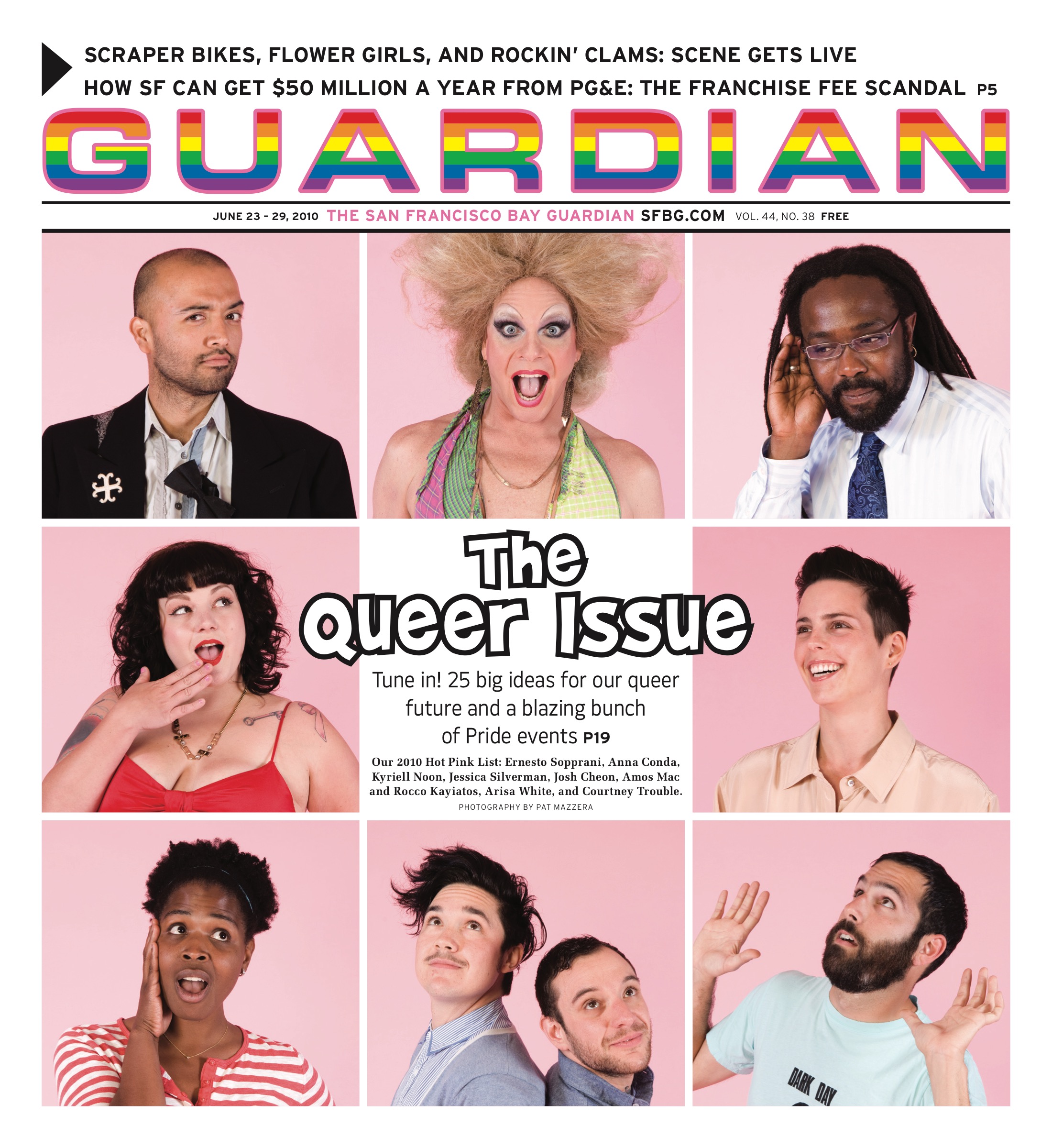
Your big queer week

0

ONGOING

Boys in their Bedrooms Lexington Club, 3464 19th St., SF; (415) 863-2052, www.lexingtonclub.com. Mon-Thu 5 p.m.–2 a.m., Sat–Sun 2 p.m.–2 a.m. Through June 30. Photographer Amos Mac of Original Plumbing zine gets up close and personal, chronicling the trans male lifestyle.

Chronotopia SOMArts, 934 Brannan, SF; (415) 552-1770, www.somarts.org. Explore “the past, present, and future of queer histories” with this eye-popping photography exhibit that celebrates the spectrum of queer images.

Faetopia Festival Old Tower Records space at Market and Noe streets, SF; Various times and prices. Through June 26. www.playajoy.org/faetopia. The lovely, radical faeries of Comfort and Joy take over this huge space for a “remix of the past and present for future utopias,” including eco-homo installations, “cuddle cinema” events, and a gossamer wing-load of ideas and performances.

Frameline Film Festival Various locations; see website for dates and times, www.frameline.org. The humongous citywide queer flick fest is still going strong, with dozens of screen gems.

Golden Girls Mama Calizo’s Voice Factory, 1519 Mission, SF; (415) 690-9410, www.voicefactorysf.org. Thu/24 and Fri/25, 7p.m. and 9 p.m.. $20–$25. Heklina, Cookie Dough, Matthew Martin, and Pollo Del Mar are joined by Mike Finn and Laurie Busman for live-action versions of two all-new episodes of the beloved TV show.

National Queer Arts Festival Various locations; see website for details, www.queerculturalcenter.org. Experience scandalously good spoken word, cabaret, art installations, and so much more as this powerhouse monthlong celebration of queer revelations continues.


WEDNESDAY 23

Allstars 4 The Garage, 975 Howard, SF; (415) 518-1517, www.975howard.com. 8 p.m., $10-$20. An array of one-person shows and monologues that focus on the diversity and struggle of queer daily life.

Booty Call Q Bar, 456 Castro, SF; (415) 626-7220, www.qbarsf.com. 9p.m., $3. Juanita More, Joshua J, and photographers whip up dirty tunes and photobooth eye-candy, with DJ W, Jeremy of House of Stank.

HomoEvolution El Rio, 3158 Mission, SF; (415) 282-3325, www.elriosf.com. 8p.m., free. LGBT hip-hop showcase in full effect, with Foxxjazell, Bry’Nt, Benni E, Drew Mason, and Sgt. Sass.

Mary Go Round LookOut, 3600 16th St, SF; (415) 431-3111, www.lookoutsf.com. 10 p.m., $5. House of Glitterati invades the weekly drag show, anchored by Suppositori Spelling, Cookie Dough, and Pollo Del Mar.

OH! Powerhouse, 1347 Folsom, SF; (415) 552-8689, www.powerhouse-sf.com. The Bright Young Gentlemen’s Adventuring Society cordially invites you to get it on. With DJs Taco Tuesday and PDX hottie Stormy.

Pullin’ Pork for Pride Pilsner Inn, 225 Church, SF; (415) 621-7058. 6 p.m.–9 p.m. free. Hot pork in hot buns (free sandwiches from the Funk N Chunk crew, we mean). It’s the Guardian’s annual free-for-all shindig with DJ Stanley Frank of Vienetta Discotheque, games, surprises, more.

Radar: Old School 3 San Francisco Public Library, Koret Auditorium, 100 Larkin, SF; (415) 557-4400, www.radarproductions.org. SF’s top writers reimagine the lives and legacies of queers gone by. With Justin Chin, Len Plass, Cyd Nova, and more.


THURSDAY 24

A Spot of Tea African American Arts and Culture Complex, 762 Fulton, SF; www.queerculturalcenter.org. 8 p.m., $12–$20. Original Plumbing brings on an all-transmale cabaret extravaganza with Chris Vargas, Berlin Reed, Ketch Wehr, Glenn Marla, and more.

Bad Reputation Lexington Club, 3464 19th St., SF; (415) 863-2052, www.lexingtonclub.com. 9 p.m., free. The sexy Lex’s infamous Pride kick-off, with DJs Jenna Riot and Dee Dee Crocodile, go-gos, drink specials. Oh, and smokin’ hot grrrls.

Bedtime Stories A Different Light, 498 Castro, SF; (415) 431-0891, www.adlbooks.com. 7:30 p.m., free. Fabio, oh, Fabio? Erotic gay romance author G.A. Hauser steams up the windows of A Different Light.

Carletta Sue Kay, Brent James, Pepperspray The Eagle, 398 12th St., SF. (415) 626-0880, www.sfeagle.com. 10 p.m., $5. Faggotty rock time. A screwed-up Appalachian-ish crooner, a naughty country high-flyer, and four heavy metal drag queens take over the Eagle. What’s not to love?

Gold Queers in the Night 111 Minna, SF; (415) 974-1719, www.111minnagallery.com. 9 p.m., $7. The Stay Gold and Hella Gay crews team up with Blood, Sweat, and Queers for an epic night of youthful, sweaty jams in the indie dance vein.

Gretchen Phillips and Phranc El Rio, 3158 Mission, SF; (415) 282-3325, www.elriosf.com. 8 p.m., $8–$15. Texan Phillips and “all–American, Jewish, lesbian folksinger” Phranc bring the Sapphic sounds.

Marga Gomez is Proud and Bothered New Conservatory Theater, 25 Van Ness, SF; (415) 861-4914, www.nctcsf.org. 8 p.m., $28 advance. Also Sat/26. The hilarious lesbian Latina queen of comedy takes a sharp-shootin’ walk of shame through her not-so-Prideful past.

Nightlife California Academy of Sciences, 55 Music Concourse, SF; (415) 379-5128, www.calacademy.org. 6 p.m.-10 p.m., $8–$10. Get thee to the awesome museum for tunes by Juanita More!, LadyHouse, and Stanley Frank, plus Sex Talk with Jane Tollini, and, of course, live penguins.

Queer Radicals New Valencia Hall, 625 Larkin, SF; (415) 864-1278. 7p.m., free (summer buffet for $7.50). A panel of queer and transgender activists discusses how to build a militant movement for LGBT liberation.

The Sound of Fabulous Mission High School, 3750 18th St., SF: www.sfprideconcert.org. 8 p.m., $15–$40. Also Fri/25. The Lesbian/Gay Chorus of San Francisco celebrates 30 years of, yes, fabulous, joining forces with the Gay Men’s Chorus, and the Freedom Marching Band for some “out loud and proud.”

Sybaritic Cougars with Ecosexual Tendencies Good Vibrations Polk, 1620 Polk, SF; (415) 345-0400, www.goodvibes.com. 6 p.m.–8 p.m., free. Sex-positive activists Annie Sprinkle and partner Beth Stephens host a retrospective of their Love Art Lab series.

The Tubesteak Connection Aunt Charlie’s, 133 Turk, SF; (415) 441-2922, www.auntcharlieslounge.com. 10 p.m., $4. A sticky, finger-lickin’, Hi-NRG hijinks tribute to bathhouse disco and funk rarities, swarthy clones, and outfits Grace Jones would die for. With DJ Bus Station John.


FRIDAY 25

Art Attack Pride Supperclub, 657 Harrison, SF; (415) 348-0900, www.supperclub.com. 9 p.m., $20. Video artist III paints the club fuchsia for DJ Lady Kier of Deee-Lite, the return of drag-rock amazers Pepperspray, and LA mesh-wonder Fade-Dra.

Bearracuda Pride DNA Lounge, 375 11th St., SF; (415) 626-2532, www.dnalounge.com. 9 p.m.-late. $20. Two floors of beard rubs, belly bumps, fur fun, and hairy hijinks as the city’s wild bear club goes big. DJ Ted Eiel heads up.

Bibi Gay Middle Eastern Mega Pride Party Paradise, 1501 Folsom, SF; (415) 252-5018, www.paradisesf.com. 9 p.m., $15. One of the most-anticipated parties of the season, with DJs Nile, Nadar, and Cheon delving into global sounds for a hip-shaking, ululating crowd of all stripes. Hookahs! Hotties! Bellydancers!

Folsom Friday Various SoMa venues, www.folsomfriday.com. 10 p.m.–2 a.m., free. Shuttles run down Folsom Street all night for a sleazy-fun bar crawl in SF’s other mecca for queer venues, including Truck, Chaps, Powerhouse, Blow Buddies, Lone Star, Mr. S, and Off Ramp Leathers.

MR. Mighty, 119 Utah, SF; (415) 626-7001, www.mighty119.com. 8 p.m.–4 a.m. $15. Break out your giant fake mustaches: NYC’s Larry Tee and our own house hero David Harness rock all night at this annual campy hoot. Yes, there’ll be a hot ‘stache (and ‘stache-riding?) contest.

San Francisco Trans March Dolores Park, Dolores and 18th St.; (415) 447-2774, www.transmarch.org. 3 p.m. stage, 7 p.m. march; free. Join the transgender community of San Francisco and beyond for a day of live performances, speeches, and not-so-military marching.

Some Thing Biggest Bestest Gayest Funnest Drag Show Sensation! Ever The Stud, 399 Ninth St., SF; (415) 863-6623, www.studsf.com. 9 p.m.–4 a.m., $10. Er, the name kind of says it all? The packed weekly club goes nuclear. VivvyAnne ForeverMore, Glamamore, Juanita More, Down-E, Diamond Daggers, Anna Conda &ldots; who’ll walk away with the mushroom cloud?

Original Plumbing presents Unofficial! Elbo Room, 647 Valencia, SF; (415) 552-7788, www.elbo.com. 9 p.m., $10. A party in honor of trans pride and visibility — plus, it’ll be a blast. Rocco Katastrophe and Jenna Riot host, DJs Chelsea Starr and 100 spokes spin, furry photo booth, trans slideshow, performances by Glenn Marla and Ice Cream Socialites.

Trans March 2010 Dolores Park, 17 Street and Dolores, SF. Rally at 3:30, march at 7 p.m.. www.transmarch.org. “United by Pride, United by Power” is the theme of this year’s inspiring event, with performances by the Transcendence Gospel Choir, Nori Herras, and a ton more.

.

SATURDAY 26

Big Top vs. Trannyshack Club Eight, 1151 Folsom, SF; (415) 431-1151, www.eightsf.com. 9 p.m., $10 adv. Surely, it will be a circus when these two balls-out parties collide. Big Top brings the half-naked cockring-masters, Trannyshack brings the barkers. With DJ W. Jeremy. Midnight dragocalypse with Heklina, Ambrosia Salad, Miss Rahni, and more.

Bootie: Lady Gaga vs. Madonna DNA Lounge, 375 11th St., SF; (415) 626-2532, www.dnalounge.com. Could it get any stereotypically gayer? Don’t worry, punkers, the Bootie mashup crew are here to subvert it into happy chaos. Huge drag show at midnight.

Chaser: The Imminent Return EndUp, 401 Sixth St., SF; (415) 896-1075, www.theendup.com. 5 p.m.–10 p.m., $10. Monistat lives! Her ass-whoopin’, drink-spillin’ drag club resurrects itself, with a full-on show of every insanely entertaining alternaqueen in the phonebook, apparently. Plus DJ Guy Ruben.

Cockblock Mega-Pride Rickshaw Stop, 155 Fell, SF; (415) 861-2011, www.rickshawstop.com. 9 p.m., $20-$25. Wild, wet, and more wild at this ecstatic, high-hoofin’ joint for lezzies, queers, and lovers. With DJs Nuxx and Motive and hot chicks galore.

Excuses for Skipping and Lauren DeRose Lexington Club, 3464 19th St., SF; (415) 863-2052, www.lexingtonclub.com. 3 p.m., free. Warm up for the Dyke March with these two live rockin’ acts.

Go Bang! Pride Edition Deco Lounge, 510 Larkin, SF; (415) 346-2025, www.decosf.com. 9 p.m.-after hours, $5. One of our cutest disco and house parties goes pink with DJs Jason Kendig, Marcelino Andrade, Sergio, and more. Expect to be turned out, put upside-down, and spun around.

Lights Down Low Pride Edition Triple Crown, 1760 Market, SF; (415) 863-3516, www.triplecrownsf.com. 8 p.m.–4 a.m., $15. The gonzo electro party delivers a worthy Pride blackout with DJs Larry Tee, Kim Ann Foxman, Saratonin from Brownies for my Bitches, Sleazemore, Derek Bobus, and more. Hosted by the Miss Honey kids and Davi.

LGBT Pride Celebration Civic Center, Carlton B. Goodlett Place and McAllister, SF; (415) 864-3733, www.sfpride.org. Noon–6 p.m., free. Celebrate LGBT pride at this free outdoor event featuring DJs, speakers, and live music. This is the first half of the weekend-long celebration sponsored by SF Pride, featuring hip-hop, a battle of the bands, and more.

LGBTQ History Bike Tour Meet at Cupid’s Arrow on the Embarcadero near the Ferry Building, SF; 2 p.m.–5 p.m., $5 donation. Get smart (and fit) for Pride on this eight-mile tour of queer history hotspots, ending up at the Dyke March.

Love and Happiness SOM, 2925 16th St., SF; (415) 558-8521, www.som-bar.com. 10 p.m.–4 a.m., $15. It’s a glorious old-school house reunion for the rainbow children, with David Harness and Ruben Mancias on decks, Robnoxious at the door, and Joseph Solis hosting.

Kiss Me Deadly Lexington Club, 3464 19th St., SF; (415) 863-2052, www.lexingtonclub.com. 9 p.m., free. After the Dyke March, cool off (most likely get hotter) with DJ Bunnystyle of Blood, Sweat, and Queers.

Mango After Dyke March Party El Rio, 3158 Mission, SF; (415) 282-3325, www.elriosf.com. 8 p.m., $10/$15. Food, drink, dancing, and girls, girls, girls at this juicy ladies night.

Pink Pleasure Party Good Vibrations Valencia, 603 Valencia, SF; (415) 522-5460, www.goodvibes.com. 8–10p.m., free. Drop in, dyke out, gear up for a sensual Pride at this Good Vibes mix n’ mingle.

Pink Saturday Castro District, SF; www.thesisters.org. 6p.m.–midnight, donation requested, all ages. The Sisters of Perpetual Indulgence host their cuckoo annual outdoor event, featuring entertainment, beer, cocktails, food, and, duh, cruising galore.

Pink Triangle Installation Twin Peaks Vista, Twin Peaks Blvd parking area, SF; (415) 247-1100, ext 142, www.thepinktriangle.com. 7:30–10:30 a.m., free. Bring a hammer and your hunky work boots and help install the humongous pink triangle atop Twin Peaks for everyone to see. Volunteers needed! Do it!

San Francisco Dyke March Dolores Park, Dolores and 18th St., SF; www.dykemarch.org. Rally at 3 p.m.. March at 7 p.m.. Free. The one “do not miss” event of Pride, with tons of entertainment and speakers, impossibly sexy crowd, and a “Dyke Planet, Green Planet” theme.

Sundance Saloon Pride Dance Hotel Whitcomb, 1231 Market, SF; (415) 626-8000, www.sundancesaloon.org. 8 p.m., $10. Also Sun/27. Shine up your spurs for a country line-dance party that’ll put you in a hootin’ mood.


SUNDAY 27

Body Rock Temple Bar, 600 Polk, SF; (415) 931-5196. 11 a.m.–6 p.m., 18+ free. Delightfully tawdry Miss Monistat queens it over this all-day dragstravaganza, featuring the Sisters of Perpetual Indulgence, Mutha Chucka, Cher-A-Little, and others. With crazy beats from Electronic Music Bears, High Fantasy, and more.

Gay Shame Goth Cry-In Outside LGBT Center, 1800 Market, SF; www.gayshamesf.org. 2 p.m.–3:30 p.m., free. Protest and grieve the commercialization of Pride and the community – throw on your blackest black and let the tears roll.

Juanita MORE!’s Pride Party 2010 Kelly’s Mission Rock, 817 Terry Francois Blvd, SF; (415) 626-5355, www.juanitamore.com. 2 p.m.–2 a.m., $35. Pretty much the charitable Pride party of the year, flooded with cool kids, admirers, and the sounds of the mind-blowing Cougar Cadet Corps Drumline. DJs James Glass, Chelsea Starr, Kim Ann Foxman, and many more. Benefiting Bay Positives. Shuttles available from the Pride Celebration.

Les Beaux SOM, 2925 16th St., SF; (415) 558-8521, www.som-bar.com. 3 p.m.–9 p.m., $10. Don’t catch your breath after Pride, girls. Get beautiful with Cockblock’s DJ Nuxx and decks guests Sarah Delush and Rapid Fire.

LGBT Pride Celebration Civic Center, Carlton B. Goodlett Place and McCallister, SF; (415) 864-3733, www.sfpride.org. Noon–7 p.m., free. The celebration hits full stride, with a buttload of musical and dance performances and, truly, something for everyone. Don’t forget your sunscreen or little umbrella.

LGBT Pride Parade Market at Davis to Market and Eighth Sts, SF; (415) 864-3733, www.sfpride.org. 10:30 a.m.–noon, free. This 40th annual parade, with an expected draw of 500,000, is the highlight of the Pride Weekend in the city that defines queer culture.

Honey Pride Paradise, 1501 Folsom, SF; (415) 252-5018, www.paradisesf.com. 6 p.m.–2:30 a.m., $3. Legendary (actually) disco DJ Steve Fabus goes classic house on us, joining the regular Honey Soundsystem discaires for stylish specialness all around. $8 beer bust 6 p.m.-9 p.m..  

Queerly Beloved Pink Sunday Party El Rio, 3158 Mission, SF; (415) 282-3325, www.elriosf.com. 3 p.m.–8 p.m., $5. Courtney Trouble and Tina Horn host this benefit for queerporn.tv. DJs Campbell and Venus in Furs, performers Alotta Boutte and Dexter James, kissing and kink booths, and dirty, sexy queers.

Too Fast for Love Lexington Club, 3464 19th St., SF; (415) 863-2052, www.lexingtonclub.com. 9 p.m., free. “Shake it, fake it, take it” as DJ Campbell spins the dirty at this Pride after-affair.
Your big queer week

0

ONGOING

Boys in their Bedrooms Lexington Club, 3464 19th St., SF; (415) 863-2052, www.lexingtonclub.com. Mon-Thu 5 p.m.–2 a.m., Sat–Sun 2 p.m.–2 a.m. Through June 30. Photographer Amos Mac of Original Plumbing zine gets up close and personal, chronicling the trans male lifestyle on the sexy Lex’s walls.

Chronotopia SOMArts, 934 Brannan, SF; (415) 552-1770, www.somarts.org. Explore “the past, present, and future of queer histories” with this eye-popping photography exhibit that celebrates the spectrum of queer images.

Faetopia Festival Old Tower Records space at Market and Noe streets, SF; Various times and prices. Through June 26. www.playajoy.org/faetopia. The lovely, radical faeries of Comfort and Joy take over this huge space for a “remix of the past and present for future utopias,” including eco-homo installations, “cuddle cinema” events, and a gossamer wing-load of ideas and performances.

Frameline Film Festival Various locations; see website for dates and times, www.frameline.org. The humongous citywide queer flick fest is still going strong, with dozens of screen gems.

Golden Girls Mama Calizo’s Voice Factory, 1519 Mission, SF; (415) 690-9410, www.voicefactorysf.org. Thu/24 and Fri/25, 7p.m. and 9 p.m.. $20–$25. Heklina, Cookie Dough, Matthew Martin, and Pollo Del Mar are joined by Mike Finn and Laurie Busman for live-action versions of two all-new episodes of the beloved TV show.

National Queer Arts Festival Various locations; see website for details, www.queerculturalcenter.org. Experience scandalously good spoken word, cabaret, art installations, and so much more as this powerhouse monthlong celebration of queer revelations continues.


WEDNESDAY 23

Allstars 4 The Garage, 975 Howard, SF; (415) 518-1517, www.975howard.com. 8 p.m., $10-$20. An array of one-person shows and monologues that focus on the diversity and struggle of queer daily life.

Booty Call Q Bar, 456 Castro, SF; (415) 626-7220, www.qbarsf.com. 9p.m., $3. Juanita More, Joshua J, and photographers whip up dirty tunes and photobooth eye-candy, with DJ W, Jeremy of House of Stank.

HomoEvolution El Rio, 3158 Mission, SF; (415) 282-3325, www.elriosf.com. 8p.m., free. LGBT hip-hop showcase in full effect, with Foxxjazell, Bry’Nt, Benni E, Drew Mason, and Sgt. Sass.

Mary Go Round LookOut, 3600 16th St, SF; (415) 431-3111, www.lookoutsf.com. 10 p.m., $5. House of Glitterati invades the weekly drag show, anchored by Suppositori Spelling, Cookie Dough, and Pollo Del Mar.

OH! Powerhouse, 1347 Folsom, SF; (415) 552-8689, www.powerhouse-sf.com. The Bright Young Gentlemen’s Adventuring Society cordially invites you to get it on. With DJs Taco Tuesday and PDX hottie Stormy.

Pullin’ Pork for Pride Pilsner Inn, 225 Church, SF; (415) 621-7058. 6 p.m.–9 p.m. free. Hot pork in hot buns (free sandwiches from the Funk N Chunk crew, we mean). It’s the Guardian’s annual free-for-all shindig with DJ Stanley Frank of Vienetta Discotheque, games, surprises, more.

Radar: Old School 3 San Francisco Public Library, Koret Auditorium, 100 Larkin, SF; (415) 557-4400, www.radarproductions.org. SF’s top writers reimagine the lives and legacies of queers gone by. With Justin Chin, Len Plass, Cyd Nova, and more.


THURSDAY 24

A Spot of T African American Arts and Culture Complex, 762 Fulton, SF; www.queerculturalcenter.org. 8 p.m., $12–$20. Original Plumbing brings on an all-transmale cabaret extravaganza with Chris Vargas, Berlin Reed, Ketch Wehr, Glenn Marla, and more.

Bad Reputation Lexington Club, 3464 19th St., SF; (415) 863-2052, www.lexingtonclub.com. 9 p.m., free. The sexy Lex’s infamous Pride kick-off, with DJs Jenna Riot and Dee Dee Crocodile, go-gos, drink specials. Oh, and smokin’ hot grrrls.

Bedtime Stories A Different Light, 498 Castro, SF; (415) 431-0891, www.adlbooks.com. 7:30 p.m., free. Fabio, oh, Fabio? Erotic gay romance author G.A. Hauser steams up the windows of A Different Light.

Carletta Sue Kay, Brent James, Pepperspray The Eagle, 398 12th St., SF. (415) 626-0880, www.sfeagle.com. 10 p.m., $5. Faggotty rock time. A screwed-up Appalachian-ish crooner, a naughty country high-flyer, and four heavy metal drag queens take over the Eagle. What’s not to love?

Gold Queers in the Night 111 Minna, SF; (415) 974-1719, www.111minnagallery.com. 9 p.m., $7. The Stay Gold and Hella Gay crews team up with Blood, Sweat, and Queers for an epic night of youthful, sweaty jams in the indie dance vein.

Gretchen Phillips and Phranc El Rio, 3158 Mission, SF; (415) 282-3325, www.elriosf.com. 8 p.m., $8–$15. Texan Phillips and “all–American, Jewish, lesbian folksinger” Phranc bring the Sapphic sounds.

Marga Gomez is Proud and Bothered New Conservatory Theater, 25 Van Ness, SF; (415) 861-4914, www.nctcsf.org. 8 p.m., $28 advance. Also Sat/26. The hilarious lesbian Latina queen of comedy takes a sharp-shootin’ walk of shame through her not-so-Prideful past.

Nightlife California Academy of Sciences, 55 Music Concourse, SF; (415) 379-5128, www.calacademy.org. 6 p.m.-10 p.m., $8–$10. Get thee to the awesome museum for tunes by Juanita More!, LadyHouse, and Stanley Frank, plus Sex Talk with Jane Tollini, and, of course, live penguins.

Queer Radicals New Valencia Hall, 625 Larkin, SF; (415) 864-1278. 7p.m., free (summer buffet for $7.50). A panel of queer and transgender activists discusses how to build a militant movement for LGBT liberation.

The Sound of Fabulous Mission High School, 3750 18th St., SF: www.sfprideconcert.org. 8 p.m., $15–$40. Also Fri/25. The Lesbian/Gay Chorus of San Francisco celebrates 30 years of, yes, fabulous, joining forces with the Gay Men’s Chorus, and the Freedom Marching Band for some “out loud and proud.”

Sybaritic Cougars with Ecosexual Tendencies Good Vibrations Polk, 1620 Polk, SF; (415) 345-0400, www.goodvibes.com. 6 p.m.–8 p.m., free. Sex-positive activists Annie Sprinkle and partner Beth Stephens host a retrospective of their Love Art Lab series.

The Tubesteak Connection Aunt Charlie’s, 133 Turk, SF; (415) 441-2922, www.auntcharlieslounge.com. 10 p.m., $4. A sticky, finger-lickin’, Hi-NRG hijinks tribute to bathhouse disco and funk rarities, swarthy clones, and outfits Grace Jones would die for. With DJ Bus Station John.


FRIDAY 25

Art Attack Pride Supperclub, 657 Harrison, SF; (415) 348-0900, www.supperclub.com. 9 p.m., $20. Video artist III paints the club fuchsia for DJ Lady Kier of Deee-Lite, the return of drag-rock amazers Pepperspray, and LA mesh-wonder Fade-Dra.

Bearracuda Pride DNA Lounge, 375 11th St., SF; (415) 626-2532, www.dnalounge.com. 9 p.m.-late. $20. Two floors of beard rubs, belly bumps, fur fun, and hairy hijinks as the city’s wild bear club goes big. DJ Ted Eiel heads up.

Bibi Gay Middle Eastern Mega Pride Party Paradise, 1501 Folsom, SF; (415) 252-5018, www.paradisesf.com. 9 p.m., $15. One of the most-anticipated parties of the season, with DJs Nile, Nadar, and Cheon delving into global sounds for a hip-shaking, ululating crowd of all stripes. Hookahs! Hotties! Bellydancers!

Folsom Friday Various SoMa venues, www.folsomfriday.com. 10 p.m.–2 a.m., free. Shuttles run down Folsom Street all night for a sleazy-fun bar crawl in SF’s other mecca for queer venues, including Truck, Chaps, Powerhouse, Blow Buddies, Lone Star, Mr. S, and Off Ramp Leathers.

MR. Mighty, 119 Utah, SF; (415) 626-7001, www.mighty119.com. 8 p.m.–4 a.m. $15. Break out your giant fake mustaches: NYC’s Larry Tee and our own house hero David Harness rock all night at this annual campy hoot. Yes, there’ll be a hot ‘stache (and ‘stache-riding?) contest.

San Francisco Trans March Dolores Park, Dolores and 18th St.; (415) 447-2774, www.transmarch.org. 3 p.m. stage, 7 p.m. march; free. Join the transgender community of San Francisco and beyond for a day of live performances, speeches, and not-so-military marching.

Some Thing Biggest Bestest Gayest Funnest Drag Show Sensation! Ever The Stud, 399 Ninth St., SF; (415) 863-6623, www.studsf.com. 9 p.m.–4 a.m., $10. Er, the name kind of says it all? The packed weekly club goes nuclear. VivvyAnne ForeverMore, Glamamore, Juanita More, Down-E, Diamond Daggers, Anna Conda &ldots; who’ll walk away with the mushroom cloud?

Original Plumbing presents Unofficial! Elbo Room, 647 Valencia, SF; (415) 552-7788, www.elbo.com. 9 p.m., $10. A party in honor of trans pride and visibility — plus, it’ll be a blast. Rocco Katastrophe and Jenna Riot host, DJs Chelsea Starr and 100 spokes spin, furry photo booth, trans slideshow, performances by Glenn Marla and Ice Cream Socialites.

Trans March 2010 Dolores Park, 17 Street and Dolores, SF. Rally at 3:30, march at 7 p.m.. www.transmarch.org. “United by Pride, United by Power” is the theme of this year’s inspiring event, with performances by the Transcendence Gospel Choir, Nori Herras, and a ton more..


SATURDAY 26

Big Top vs. Trannyshack Club Eight, 1151 Folsom, SF; (415) 431-1151, www.eightsf.com. 9 p.m., $10 adv. Surely, it will be a circus when these two balls-out parties collide. Big Top brings the half-naked cockring-masters, Trannyshack brings the barkers. With DJ W. Jeremy. Midnight dragocalypse with Heklina, Ambrosia Salad, Miss Rahni, and more.

Blow Off Slim’s 333 11th St., SF. (415) 255-0333, www.slims-sf.com. 10pm, $15-$20. DJs Bob Mould (of Sugar) and Rich Morel spin the rock remixes for a packed crowd of large hairies, scruffy fairies, and their admirers. Get into it. 

Bootie: Lady Gaga vs. Madonna DNA Lounge, 375 11th St., SF; (415) 626-2532, www.dnalounge.com. Could it get any stereotypically gayer? Don’t worry, punkers, the Bootie mashup crew are here to subvert it into happy chaos. Huge drag show at midnight.

Chaser: The Imminent Return EndUp, 401 Sixth St., SF; (415) 896-1075, www.theendup.com. 5 p.m.–10 p.m., $10. Monistat lives! Her ass-whoopin’, drink-spillin’ drag club resurrects itself, with a full-on show of every insanely entertaining alternaqueen in the phonebook, apparently. Plus DJ Guy Ruben.

Cockblock Mega-Pride Rickshaw Stop, 155 Fell, SF; (415) 861-2011, www.rickshawstop.com. 9 p.m., $20-$25. Wild, wet, and more wild at this ecstatic, high-hoofin’ joint for lezzies, queers, and lovers. With DJs Nuxx and Motive and hot chicks galore.

Excuses for Skipping and Lauren DeRose Lexington Club, 3464 19th St., SF; (415) 863-2052, www.lexingtonclub.com. 3 p.m., free. Warm up for the Dyke March with these two live rockin’ acts.

Go Bang! Pride Edition Deco Lounge, 510 Larkin, SF; (415) 346-2025, www.decosf.com. 9 p.m.-after hours, $5. One of our cutest disco and house parties goes pink with DJs Jason Kendig, Marcelino Andrade, Sergio, and more. Expect to be turned out, put upside-down, and spun around.

Lights Down Low Pride Edition Triple Crown, 1760 Market, SF; (415) 863-3516, www.triplecrownsf.com. 8 p.m.–4 a.m., $15. The gonzo electro party delivers a worthy Pride blackout with DJs Larry Tee, Kim Ann Foxman, Saratonin from Brownies for my Bitches, Sleazemore, Derek Bobus, and more. Hosted by the Miss Honey kids and Davi.

LGBT Pride Celebration Civic Center, Carlton B. Goodlett Place and McAllister, SF; (415) 864-3733, www.sfpride.org. Noon–6 p.m., free. Celebrate LGBT pride at this free outdoor event featuring DJs, speakers, and live music. This is the first half of the weekend-long celebration sponsored by SF Pride, featuring hip-hop, a battle of the bands, and more.

LGBTQ History Bike Tour Meet at Cupid’s Arrow on the Embarcadero near the Ferry Building, SF; 2 p.m.–5 p.m., $5 donation. Get smart (and fit) for Pride on this eight-mile tour of queer history hotspots, ending up at the Dyke March.

Love and Happiness SOM, 2925 16th St., SF; (415) 558-8521, www.som-bar.com. 10 p.m.–4 a.m., $15. It’s a glorious old-school house reunion for the rainbow children, with David Harness and Ruben Mancias on decks, Robnoxious at the door, and Joseph Solis hosting.

Kiss Me Deadly Lexington Club, 3464 19th St., SF; (415) 863-2052, www.lexingtonclub.com. 9 p.m., free. After the Dyke March, cool off (most likely get hotter) with DJ Bunnystyle of Blood, Sweat, and Queers.

Mango After Dyke March Party El Rio, 3158 Mission, SF; (415) 282-3325, www.elriosf.com. 8 p.m., $10/$15. Food, drink, dancing, and girls, girls, girls at this juicy ladies night.

Pink Pleasure Party Good Vibrations Valencia, 603 Valencia, SF; (415) 522-5460, www.goodvibes.com. 8–10p.m., free. Drop in, dyke out, gear up for a sensual Pride at this Good Vibes mix n’ mingle.

Pink Saturday Castro District, SF; www.thesisters.org. 6p.m.–midnight, donation requested, all ages. The Sisters of Perpetual Indulgence host their cuckoo annual outdoor event, featuring entertainment, beer, cocktails, food, and, duh, cruising galore.

Pink Triangle Installation Twin Peaks Vista, Twin Peaks Blvd parking area, SF; (415) 247-1100, ext 142, www.thepinktriangle.com. 7:30–10:30 a.m., free. Bring a hammer and your hunky work boots and help install the humongous pink triangle atop Twin Peaks for everyone to see. Volunteers needed! Do it!

San Francisco Dyke March Dolores Park, Dolores and 18th St., SF; www.dykemarch.org. Rally at 3 p.m.. March at 7 p.m.. Free. The one “do not miss” event of Pride, with tons of entertainment and speakers, impossibly sexy crowd, and a “Dyke Planet, Green Planet” theme.

Sundance Saloon Pride Dance Hotel Whitcomb, 1231 Market, SF; (415) 626-8000, www.sundancesaloon.org. 8 p.m., $10. Also Sun/27. Shine up your spurs for a country line-dance party that’ll put you in a hootin’ mood.


SUNDAY 27

Body Rock Temple Bar, 600 Polk, SF; (415) 931-5196. 11 a.m.–6 p.m., 18+ free. Delightfully tawdry Miss Monistat queens it over this all-day dragstravaganza, featuring the Sisters of Perpetual Indulgence, Mutha Chucka, Cher-A-Little, and others. With crazy beats from Electronic Music Bears, High Fantasy, and more.

Gay Shame Goth Cry-In Outside LGBT Center, 1800 Market, SF; www.gayshamesf.org. 2 p.m.–3:30 p.m., free. Protest and grieve the commercialization of Pride and the community – throw on your blackest black and let the tears roll.

Juanita MORE!’s Pride Party 2010 Kelly’s Mission Rock, 817 Terry Francois Blvd, SF; (415) 626-5355, www.juanitamore.com. 2 p.m.–2 a.m., $35. Pretty much the charitable Pride party of the year, flooded with cool kids, admirers, and the sounds of the mind-blowing Cougar Cadet Corps Drumline. DJs James Glass, Chelsea Starr, Kim Ann Foxman, and many more. Benefiting Bay Positives. Shuttles available from the Pride Celebration.

Les Beaux SOM, 2925 16th St., SF; (415) 558-8521, www.som-bar.com. 3 p.m.–9 p.m., $10. Don’t catch your breath after Pride, girls. Get beautiful with Cockblock’s DJ Nuxx and decks guests Sarah Delush and Rapid Fire.

LGBT Pride Celebration Civic Center, Carlton B. Goodlett Place and McCallister, SF; (415) 864-3733, www.sfpride.org. Noon–7 p.m., free. The celebration hits full stride, with a buttload of musical and dance performances and, truly, something for everyone. Don’t forget your sunscreen or little umbrella.

LGBT Pride Parade Market at Davis to Market and Eighth Sts, SF; (415) 864-3733, www.sfpride.org. 10:30 a.m.–noon, free. This 40th annual parade, with an expected draw of 500,000, is the highlight of the Pride Weekend in the city that defines queer culture.

Honey Pride Paradise, 1501 Folsom, SF; (415) 252-5018, www.paradisesf.com. 6 p.m.–2:30 a.m., $3. Legendary (actually) disco DJ Steve Fabus goes classic house on us, joining the regular Honey Soundsystem discaires for stylish specialness all around. $8 beer bust 6 p.m.-9 p.m..  

Queerly Beloved Pink Sunday Party El Rio, 3158 Mission, SF; (415) 282-3325, www.elriosf.com. 3 p.m.–8 p.m., $5. Courtney Trouble and Tina Horn host this benefit for queerporn.tv. DJs Campbell and Venus in Furs, performers Alotta Boutte and Dexter James, kissing and kink booths, and dirty, sexy queers.  

Too Fast for Love Lexington Club, 3464 19th St., SF; (415) 863-2052, www.lexingtonclub.com. 9 p.m., free. “Shake it, fake it, take it” as DJ Campbell spins the dirty at this Pride after-affair.

Get your kicks

1

culture@sfbg.com

SPORTS The Olympics may get the most props for bringing sports fans of all nationalities together in (mostly) friendly competition. But as futbol fans know, a simple “gooooaaaallll!” translates thrillingly into any language. Like millions of World Cup soccer enthusiasts around the globe, I’ll be parking my particulars in front of the biggest screens in town for this year’s spectacle (June 11-July 11). And fortunately, no matter where you are in the city, you should be able to do the same. Here’s a short list of some of the best places to go and check out a match or 10. Too numerous to list are the many sports bars and Irish/English pubs that will undoubtedly be open (Bus Stop, Kezar Pub, the Phoenix, Mad Dog in the Fog, Balompie Café — here’s looking at you!), but you’ll find them easily enough on your own. Just follow the sounds of “ole, ole, ole, ole” wafting in the breeze, grab a stripy scarf, and plunge into the fray.

Civic Center: If you can’t force your soccer-loving employees to come to work during the big matches, at least you can cut down on their commute by installing a giant 13-by-18-foot screen in front of City Hall and inviting the neighbors ’round. Jens-Peter Jungclaussen, the “teacher-with-the-bus” who almost single-handedly wrangled 10,000 people to a screening of the 2006 final at Dolores Park, is helping spearhead the city’s ambitious 2010 operation, with 10 days of screenings including all quarterfinal, semifinal, and final matches, and a corresponding youth soccer tournament organized by America SCORES.

1 Dr. Carlton B. Goodlett Place, SF. www.worldcupsf.com, www.teacherbus.com

AT&T Park: “Take me out to the ballgame” gets a brand new meaning at AT&T Park where they’ll be screening the big USA-England match on June 12 for free. Open from 10 a.m. to 3 p.m., the ballpark expects 5,000 fans to show up. If you ever wanted to give soccer hooliganism a try, this might well be the place. Just try not to get all Bill Buford about it.

24 Willie Mays Plaza, SF. (415) 972-2000

Goethe Institute: Even though the games aren’t being played in the vaterland this year, native German-speakers and we amis who love them will be gathering at the institute to watch the Germany-Australia game on June 13, and the Germany-Ghana match on June 23. Kickoff time for both games is 11:30 a.m., more screenings will be announced presuming Germany progresses to the next levels.

530 Bush, SF. (415) 263-8760, www.goethe.de/sanfrancisco

Mercury Lounge: Who would have thought that a relatively innocuous den of SoMa-style iniquity would decide to open its doors to the rough-and-tumble world of footie fandom? If you can get through the somewhat self-indulgent event webpage, you’ll come away pretty excited about the prospect of seeing matches every day from 6 a.m., with drink specials, breakfast menu, and (ick) bar-staff “eye candy”. Don’t get me started on that, but do expect to see me put in an appearance or two for half-volleys and hash browns.

1582 Folsom, SF. (415) 551-1582, www.sfworldcup2010.com

Horatius: The proprietor of this Potrero Hill café, Horacio Gomes, has thrown down the “best place to watch the World Cup” gauntlet by promising to be open for every single match — including those that start at 4:30 a.m. — and screening simultaneous games when they occur. Plus, the venue boasts a 15-by-15-foot projection screen that you won’t find at your run-of-the-mill sports bar and a capacity for up to 300 people. Free coffee will be served during the early morning matches, and light breakfast at 6 a.m.

350 Kansas, SF. (415) 252-3500, www.horatius.com

Steps of Rome Caffe: This North Beach stronghold is also planning to be open for every game — including those 4:30 matches that only the most diehard fans would consider attending (New Zealand vs. Slovakia anyone?). If you’re not yet a diehard fan, this might be the place that turns you into one, what with all that Italian coffee, pizza, and overseas-bred enthusiasm for the world’s greatest game flowing like a robust house red.

348 Columbus, SF. (415) 397-0435, www.stepsofromecaffe.com

Ruchi

1

paulr@sfbg.com

DINE The boomlet in south Indian cuisine that began a few years ago with the opening of Dosa has now given us Ruchi — and meanwhile Dosa itself is on the march, having toted its dosas from the Mission uphill to Pacific Heights. Ruchi, like Dosa, offers dosas — pan-fried disks made from rice and lentils — but the two restaurants’ dosa styles are quite dissimilar, about which more presently.

Ruchi opened about six months ago on a stretch of Third Street in SoMa that, like so many stretches of so many streets in SoMa, is flooded with speeding traffic. The automotive torrent is certainly a hazard and almost certainly a disadvantage; (the original) Dosa, by contrast, occupies the old Val 21 space at Valencia and 21st Streets, with tons of pedestrians and a big public parking garage around the corner.

But Ruchi’s location does have its advantages. What was once an industrial neighborhood, largely empty at night, is increasingly residential, with new housing developments popping up right and left. There is even — almost — a quaint village feel to Ruchi’s block of Third. Across the way is a nice Italian restaurant, La Briciola, and if you were to wave at its patrons, it might be a little like waving at your fellow villagers across a placid creek, once a mere trickle through your settlement, that abruptly somehow became a whitewater. Still, they could see you and they might wave back.

Inside, Ruchi is a tasteful, muted modern, in earth tones. Just past the door is a length of slatted fence that looks like something to keep Spot the dog penned up in the kitchen instead of letting him run around peeing on every rug in the house. On the one hand the design is a little generic, but on the other it stands patiently in the background while the food steps up to be noticed. Our server one evening described south Indian cooking to us as “aromatic,” which for me helped explain the wonderful, pungent presence of fresh ginger in so many of the dishes.

Ginger, when combined with garlic and scallions, is strongly redolent of the wok cuisines, and whether or not Ruchi’s greens pullakoora ($8), a spicy spinach dish, was cooked in a wok, it had the sharp freshness of stir-fried vegetables you might find in a Chinese or Vietnamese restaurant.

The utappam dosa ($8), a house favorite according to the menu, surely hadn’t been cooked in a wok, but it did carry a strong charge of ginger, along with scallion and green chili. If you are used to Dosa’s dosas — thin, crisp, and folded in half — then you might find Ruchi’s version, which resembles a slightly spongy pizza scattered with toppings, unexpected. We were told to cut it up like a pizza, and we did, satisfyingly.

South Indian cooking might indeed be aromatic rather than spicy, but Ruchi’s menu doesn’t lack for spicy items. The mirchi bajji ($5), in particular — serrano peppers coated in chickpea batter and fried to look like little corn dogs — is as blazing a dish as I’ve ever had. Although I like spicy food, I could only eat two before the heat, building slowly but inexorably, forced me to pull off the road with steam billowing from under the hood.

Chili overheating, like influenza, is an affliction that just has to play itself out, and there isn’t much you can do except be patient. Sips of water and beer offered moments of respite, but I had higher hopes for the yogurt sauce surrounding the lentil patties in a dish called dahi vada ($6), until we recognized that there was chili heat lurking in the apparently cool, creamy, wintry yogurt. When the water gushing from your fire hose turns out to be gasoline, you experience a setback.

Kebabs of chicken tikka ($9) — boneless cubes of a rather orange hue, like tandoori chicken — were expertly seasoned and wonderfully plump and tender. But a kachoomar salad ($5), though a colorful jumble of diced onions, cucumber, tomatoes, and cilantro, was a little too salty despite the advertised (and presumably acidic) lemon vinaigrette. The saltiness came from what seemed to me like fish sauce — another hint of southeast Asia.

And, for the second week in a row, a winning dessert makes an improbable appearance. I’ve had plenty of kulfi (a kind of ice cream) before and never been particularly wowed. But Ruchi’s pistachio version ($5), though possibly the least colorful item on the menu (it looked like a bit of ice floe), gave intense pleasure both as flavor and texture, the latter a fudgy denseness with the faintest hint of granularity. Housemade, too; accept no substitute.

RUCHI

Lunch: Mon.–Sat., 11:30 a.m.–2:30 p.m.

Dinner: Mon.–Sat., 5–9 p.m.

474 Third St., SF

(415) 392-8353

www.ruchisf.com

Beer and wine

AE/MC/V

Not noisy

Wheelchair accessible


The Mitchell sister

3

sarah@sfbg.com

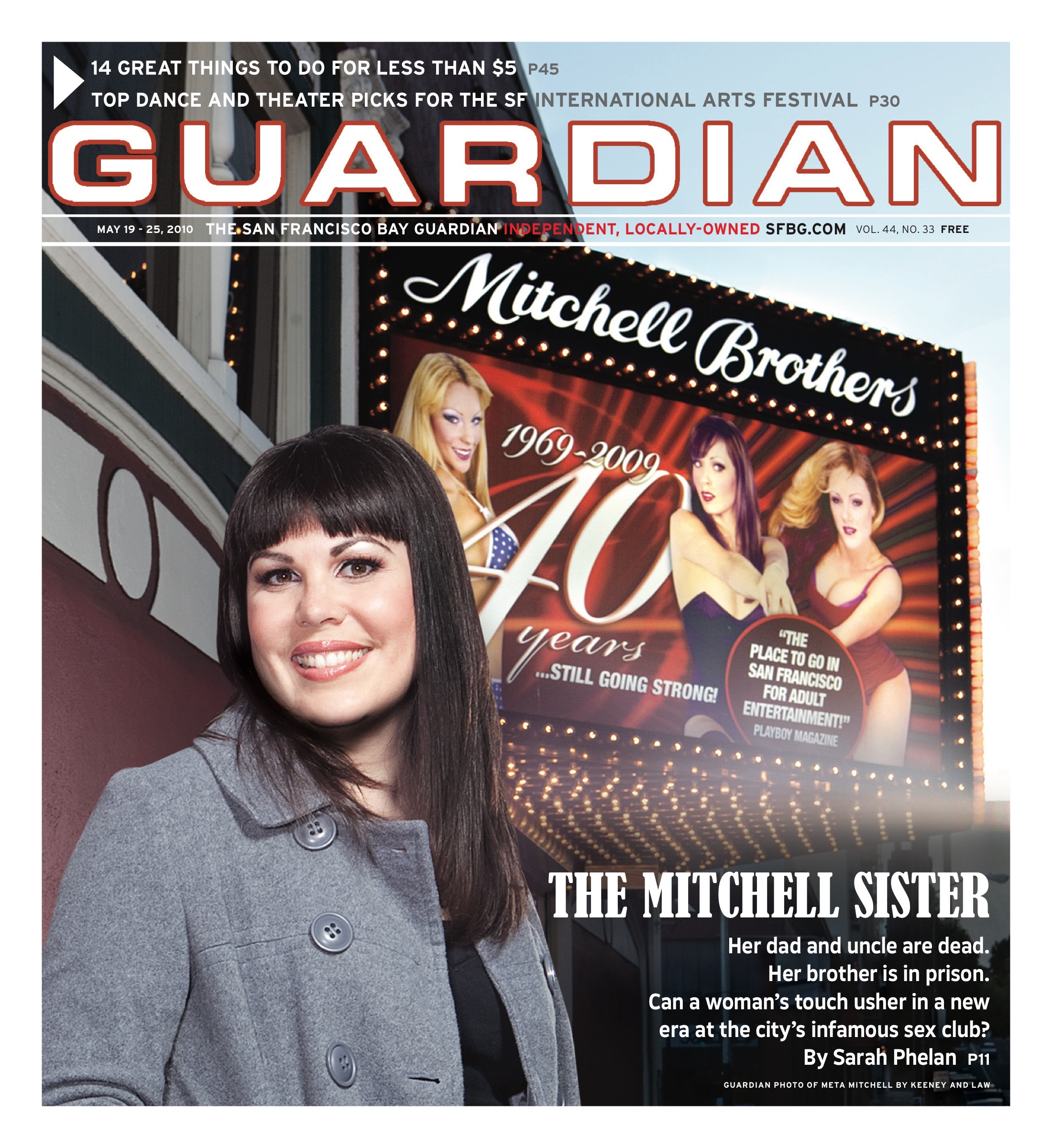
Porn heiress Meta Jane Mitchell Johnson is running a little late when I arrive at the Mitchell Brothers O’Farrell Theater, the adult entertainment establishment her father Jim Mitchell and uncle Artie Mitchell founded on the edge of the Tenderloin, just blocks from City Hall, July 4, 1969.

Johnson, 32, recently became co-owner of the theater and invited me over to discuss her vision for this notoriously hardcore strip club and the challenges she faces in an industry dominated by the Déjà Vu corporate strip club chain, in a town whose political leaders are still trying to figure out how best to regulate the clubs to ensure that their predominantly female workforce is properly compensated and protected from harassment in safe, sanitary conditions.

A young guy on the front register ushers me into a side room. The walls are decorated with photographs that recall the people and players who have made this club such a storied San Francisco institution and a landmark in the history of the sex industry.

There’s an image of a topless Marilyn Chambers, the star of Behind the Green Door, the porn film the Mitchell brothers shot and screened at the theater in 1972 and was a major hit after it became known that Chambers was also the wholesome face on Ivory Snow soap flakes box.

There is a photo of Artie with a young raven perched over his shoulder. It was taken in 1990 during a trip to Aspen, Colo., to support gonzo journalist Hunter S. Thompson, who worked at the club in the 1980s and was facing serious charges, including sexual assault and possession of drugs and explosives, that eventually got dropped.

Another shows both the Mitchell brothers, photographed when they were still young and rakish and battling the vice squad, even as they entertained the local political elite.

Today the brothers are dead, Artie from bullet wounds inflicted when Jim shot him with a rifle in February 1991; Jim from a heart attack in July 2007. And now Jim’s oldest son, James Mitchell, 28, is in jail awaiting trial for allegedly beating his ex-girlfriend Danielle Keller to death with a baseball bat in July 2009 and abducting their baby daughter, Samantha.

Unlike his father, who continued to run the Mitchell porn empire after serving less than three years for voluntary manslaughter, James is facing life behind bars.

“He is charged with six serious felonies and is facing life imprisonment with no possibility of parole,” Marin County Deputy Chief District Attorney Barry Borden said recently. Johnson told me that her brother no longer owns stock in Cinema 7, the corporation the Mitchell brothers founded to oversee their burgeoning sex business.

This latest family tragedy occurred in the wake of a $3.74 million class action suit that was settled in 2008. Brought by three MBOT dancers, the suit led to valid claims by 370 dancers who complained about Cinema 7’s “piece-rate” wage system. Under that system, the club compensated dancers solely for the number of private dances performed, waived meal and rest periods, and failed to reimburse dancers for costumes, props, and makeup.

Since then the club ended the piece-rate system, but introduced chips customers must buy to procure lap dances and encounters in small, curtained private rooms. On a recent night, the girls at the O’Farrell Theater remained smiling and bright-eyed as they succeeded in getting some customers to purchase chips for lap dances and private encounters. But the rest of the crowd remained largely silent and mostly tight-fisted as customers watched the club’s exotic dancers perform on its disco-balled stage.

All of which left me wondering if Johnson can succeed in overcoming her family history and reputation to make a difference for her workers and community while facing a nationwide recession in an industry dominated by an out-of-state chain.


THE UNLIKELY SAVIOR

Johnson greets me dressed in Ugg boots and jeans, apologizes for being tardy, and leads the way upstairs to the theater’s office so we can talk.

I first met Johnson in 2007 (“Behind the Mitchell’s Door,” 07/22/09) when she arrived at the theater in knee-high boots, clutching a massive lime handbag and a tiny dog named Baby. During that first encounter, three months after her father died, Johnson confided that when she took over the office, it was full of dildos dancers had given the Mitchell brothers. Placing her dog on the pool table that dominated the office, she said she planned to massage all this male energy toward femininity.

Today it looks as if she has started to deliver on that promise. The pool table is gone. The sofa where Hunter S. Thompson used to sit remains in the room. But now a clothesline runs between the office walls, draped with a stripper’s glove, stilettos, and a G-string emblazoned with the word “Gonzo,” presumably in honor of Thompson.

“It was a little thing we made to give away,” Johnson laughs.

She introduces her youngest brother and club co-owner, Justin. “Me and Justin are close. We are the owners and we are making some changes,” Johnson explains. “We are making the prices more reasonable so customers don’t have to spend an arm and a leg just to get a lap dance. And we’re going to hold events like poetry slams. We are trying to make the club fun again. We definitely see a hit due to the economy, but we’ve also been hit by the decision from the class action lawsuit.”

Johnson insists she and her brother aren’t “your typical strip club owners.”

Were in a symbiotic relationship with our dancers, she says. That sets us apart from other clubs. The dancers are our employees. We pay them minimum wage and workers comp. We cover their Healthy San Francisco costs. We incur a lot of expenses legally employing our dancers. But instead of crying about our handicap,’ she said, referring to treating dancers as employees, my goal is to show we can manage the club without a pimp mentality, without a How much can you shake them down for? approach.

“A lot of our employees have been here a long time and have had to deal with all the painful violent stuff too,” she continued. “And folks are still here, even though their hours got cut and they are not making as much money.

In 2007, Johnson told me that she resented the family business when she was growing up. “The boys could go inside, and I couldn’t,” she recalled. It wasn’t until 2004, when she was working as a mortgage consultant in a cubical farm in San Ramon that Johnson began to take pride in the business “as something that had taken care of us through the years.”

Johnson, who became the club’s scheduling manager in 2005, recalls the shock of losing her dad in 2007. “It was like being dumped in icy water,” she says. “At first we didn’t know how to handle it. But we learned. Five years ago, I was much more liable to listen to advice. But I need to be able to fall asleep feeling good. That involves treating people a certain way. I don’t think any other strip club in the country is being run the way this one is.”

Johnson got married and went on maternity leave in 2008. ” When my son was six months old, I came back for the club’s 40th anniversary party and I realized, they need me both of us [she and her brother]— as owners, steering the proverbial ship. No one else wants to be held accountable. We never discussed selling. Our father built this place. It’s completely shaped our lives. Good or bad, it’s ours.”


TOUGH INDUSTRY

As a nude strip club, Mitchell Brothers’ O’Farrell Theatre stands in direct competition with Crazy Horse on Market Street and the Déjà Vu-owned clubs including the Market Street Theaters, Gold Clubs and other spots in SoMa, and most of the clubs in North Beach. The exception is Lusty Lady, the only unionized, worker-owned peepshow in the country.

If you walk into the Gold Club in San Francisco, well, there are 50 other Gold Clubs in the country, so, its generic, Johnson says. But theyve got their business model. Were not trying to copy Déjà Vu or Crazy Horse. Were the Mitchell Brothers. Its been part of us and our whole history.

Dancers agree that the Lusty Lady isn’t in competition with Déjà Vu.

“They’re Walmart, and we’re the mom and pop store on the corner,” Lorelei*, a dancer at Lusty Lady, said. “At the Lusty, we pride ourselves on being alternative and having tattoos and piercings.”

Some dancers, who we’ve indicated with an asterisk after their altered names, voiced fear of being identified as critics of Déjà Vu’s business model.

“If Deja Vu found out I was shit-talking them I would probably get fired and be blacklisted from all their clubs,” Sugar* said. “If I were to get blacklisted, I’d be totally screwed because there are no other clubs in San Francisco,” where she doesn’t feel pressure to do more than dance, “which is not my thing.”

“Or the Lusty Lady, which doesn’t pay enough to cover my bills,” she continued. “But Deja Vu is notorious for being a terrible company to work for, mainly because of their outrageously high stage fees.”

Other dancers say they had to pay stage fees at the Déjà Vu-owned Hungry I, and sometimes went home empty-handed after eight-hour shifts when uninvited touching was common.

“The number one thing that would improve our work experience is if someone actually forced Deja Vu to stop charging us stage fees,” Amber* said. “Almost no one outside the industry knows that dancers pay money to go to work. A lot of customers think the clubs pay us, like, thousands of dollars. In San Francisco we pay between $100–$200 per shift, sometimes more.”

By law, dancers have the right to choose employee status, versus being considered independent contractors. “But that’s a joke,” Amber added. “If we choose employee status, we’re required to do a minimum of 10 lap dances per shift. The club keeps all that money, and we would get paid $12–$15 an hour.”

But Edi Thomas, counsel for Déjà Vus Centerfolds club, flatly denies that the dancers who perform at Centerfolds (the only nightclub in San Francisco authorized to operate as a Deja Vu Showgirls club) pay stage fees.

Rather, entertainers who perform at Centerfolds (and/or at Hungry I, the Condor, and Market Street) are paid a substantial percentage of the patron revenues generated from individual dance sales, Thomas stated.

The entertainers are issued Forms 1099 at year-end, reflecting the amounts they were paid by the nightclub, she said, which means the dancers are independent contractors, not employees. These nightclubs operate within the law and make every effort to assure that entertainers are well compensated and perform in safe and lawful environments.

There are, as in any industry, former and disgruntled workers carrying a desire to harm a nightclub or the industry for their own personal reasons, Thomas added. “But those workers do not represent the voice of the majority.


CENTER OF THE STORM

When the Mitchell Brothers founded their empire, it was against a backdrop of organized crime trying to exercise a monopoly on the porn industry. According to a 1977 U.S. Department of Justice report, members of La Cosa Nostra tried to request exclusive distribution of Mitchell Brothers’ porn films.

The Mitchells resisted for years, but DOJ claims they eventually entered into a contract with LCN’s Michael Zaffarano to distribute “Autobiography of a Flea.” the Mitchells also fought City Hall.

During the 1980s, Mayor Dianne Feinstein’s vice squad tried to close the Mitchell Brothers’ operations. But under Mayor Willie Brown, the former attorney for late Déjà Vu strip club owner Sam Conti, SFPD enforcement reportedly eased.

Then in 1997, Déjà Vu started to take control of the city’s sex clubs, introducing stage fees and private rooms. In 2002, three former MBOT dancers filed their suit against Cinema 7. The next year, three other dancers brought suits against Market Street Cinema and Century Theater. And in 2005, Deja Vu settled a class action labor suit with its dancers. Attorney Greg Walston, representing the dancers, said at the time that minimum pay rate would protect dancers from being forced into prostitution to make money.

Deja Vu threatened a counter-suit based on the allegations of prostitution at their clubs, but Walston told reporters: “The record speaks for itself.” Walston used police reports with prostitution allegations to bolster his case and said he was doing the job the District Attorney’s Office should have done.

In July 2008, when MBOT reached its $3.74 million class action settlement, Cinema 7 president Jeffrey Armstrong said that the corporation was “not able to pay the entire amount up front.” Instead, Mitchell matriarch Georgia Mitchell and her business partner John P. Morgan, then cotrustees of the Jim Mitchell 1990 Family Trust, which holds two-thirds of Cinema 7’s shares, pledged stock certificates as security interest.

But the debate about how to treat sex work in San Francisco continues. In November 2008, District Attorney Kamala Harris and Mayor Gavin Newsom opposed Proposition K, a local measure that tried to decriminalize prostitution by forbidding local authorities from investigating, arresting or prosecuting sex workers. They argued that the measure would increase prostitution on the streets, give pimps cover, and hamper efforts to stop sex trafficking. The measure failed.

At the time, Prop. K advocate Carol Leigh and cofounder of the Bay Area Sex Workers Advocacy Network said, “We feel that repressive policies don’t help trafficking victims, and that human rights-based approaches, including decriminalization, are actually more effective.”

Today, erotic dancers must identify which of a tangle of regulatory entities is the appropriate venue to lodge complaints. District Attorney spokesperson Erica Derryck said Harris is dedicated to prosecuting violent crimes committed against all San Franciscans, regardless of whether they happen in a club or an alley.

“If there are two drug dealers and one attacks the other, we’d prosecute. But that’s not to say there won’t also be consequences for underlying criminal behavior too,” she said. “But anyone who has been victimized should be confident of going to the police and reporting any incident.”

Derryck said public health and safety complaints can be lodged at entities that provide permits and licenses, including the Planning Department and Entertainment Commission.

“There might not be any criminal activity involved, but this route hits clubs in the pocket and is worth considering if dancers want to represent their grievances,” she said.

Meanwhile dancers say there is still pressure to do more than just dance in some clubs. “For some dancers, the clubs feel fine,” Lorelei says. “It’s a safe space where no ads are needed. They see it as a fair exchange. But if you just want to dance — when one girl is doing this, and another that, how are you supposed to make money?”

Other dancers wish managers wouldn’t abuse their power. “Sometimes they back you up,” Amber said. “Other nights, someone insults you and they won’t help.” And many wish management would try to make the clubs fun again.

“It used to be a party, but now it’s about the cheapest dirtiest fuck you can get,” Lorelei said. “Taking stage fees created a dark environment that carries over to the customers. It’s like we’re goats in a petting zoo begging, saying give me money, give me coke.”


FAMILY BUSINESS

Attorney Jim Quadra, who represented the dancers in the MBOT class action suit, said that for all the talk about treating dancers right, the Mitchells’ interest was money.

“At the time, a group of people thought the agenda was to get dancers to do more than dancing because that’s what brings in the revenue,” Quadra said. “But Meta comes off much better than the rest of her family.”

During the trial, Jim was asked if there were meetings where Cinema 7 personnel defined what they meant by a “lap dance” in the piece rate system.

“You need a lap for a lap dance,” Mitchell replied. “You are getting down to like, you know, lap dance, erotic theater, America. And your question is like just a waste of the public’s slender resources, like drop[ping] a basketball in the ghetto and asking, ‘Did you define what that is for them?'<0x2009>”

Johnson, who voluntarily took the witness stand, was asked if there was any reason dancers would be afraid of her father. “He can be a little gruff and he can be cranky, a grouchy old man,” she replied.

Today Johnson is moving ahead with a vision she began to outline in 2007, then put on hold until December 2009, when a law suit about the family trust fund was settled.

“We settled everything out of court in December with my grandmother, which was a nice Christmas present,” she says, confirming that she and her siblings succeeded in removing their 83-year grandmother, Georgia Mae Mitchell, as trustee of the Jim Mitchell family fund. They replaced her with their mother, Jim Mitchell’s ex-wife, Mary Jane Whitty-Grimm, who also has custody of James’s baby daughter, Samantha.

“Danielle’s mother has some personal problems … that made the court reluctant to give her custody of the baby. so they gave Samantha to Mary, who is a nice woman, who is married with a family,” former San Francisco D.A. Terence Hallinan told me, after James Mitchell replaced him with another private criminal defense attorney, Douglas Horngrad, in March.

In court filings related to the family trust fund, Mitchell matriarch Georgia Mae claimed her grandchildren’s lawsuit was intended to deny her jailed grandson James his share of the trust to defend against his serious felony charges.

“Justin asked me to take money out of the trust account of his brother James, and send it to his mother instead of paying his criminal defense attorney, Terence Hallinan,” the Mitchell matriarch claimed.

I asked Hallinan if the trust fund was the reason James Mitchell changed attorneys. “Yes and no,” Hallinan said. “It definitely had to do with money and who was going to run the club. The poor grandma, she is such a nice person. She was trying to play fair and be nice to all the kids. It’s not a really healthy family. ‘Rafe’ [James] is where he is. In my opinion, he is still not clear what happened or why.”

Johnson, for her part, says her brother James has mental health issues. “I don’t accept what he did,” she said. “I’m not making any excuses for it. He’s either insane or he’s a monster. But the family has an obligation to make sure he has legal defense. He was always a beneficiary of the trust. But he fired his lawyer, which is the worst thing he could have done.”

A restraining order Keller secured five days before she was murdered claims Mitchell abused her for years, had mood swings, used cocaine, and was addicted to methamphetamines.

“Danny should have left,” Johnson said.

It’s been painful to read the comments people leave,” she continued, referring to online reaction to her brother’s arrest that suggest the Mitchells are bad seed and should be wiped out. It’s not because James is a Mitchell, or because there’s some bad gene.”

Rather, she said he had serious unaddressed problems, “a time bomb that was going to explode and then it did in just about the most horrific way imaginable.”

“When I was 13, my father shot my uncle Artie. And when I was 31, James killed Danny,” she adds. “So I hope I don’t live to be 103.”


WOMEN’S WORK

In 1985, the O’Farrell Theater’s marquee famously read, “For show times call … ” followed by Mayor Feinstein’s phone number. But that was another era.

“I don’t know Dianne Feinstein,” Johnson says, as she shows me a cartoon R. Crumb drew in 1985 of then-Mayor Feinstein as Little Bo Peep, with a bunch of men, including political and law enforcement leaders, peeking out from under her skirts. “I know my father was never very fond of her. And I’m sure her reasons for wanting to shut the club down were based on the idea that women are being exploited and that we need to save them.”

Johnson says some of their dancers are single moms; some are young girls who can’t get enough work at retail jobs to pay their bills; and others are college students and graduates.

“There are as many stories as there are dancers. But the stereotype is that dancers are being exploited and have to be protected because they can’t protect themselves and no one really wants to dance. But when I came through the club door, I realized that many women want to do this and get upset if people try to save them. Some people feel that working in a strip club is bad, wrong, dirty. No. But it can be if you are pushed into it and don’t want to do it.”

Dancers the Guardian spoke to confirmed that they dislike being framed as victims. When we are painted as victims, we look stupid, Lorelei said. All we want is to make sure that folks are following the labor code and providing the same basic, decent working conditions youd get if you were working at a coffee shop.

But dancers know that some people are titillated by the idea of women being taken advantage of. “They don’t want that fantasy to go away, that she’s really a good girl and doesn’t want to do it,” Lorelei said. “If it turns out we are not traumatized, horrified, or disenfranchised, it ruins the whole fantasy.”

She fears that political leaders know bad things are happening but don’t want to talk about them for fear it implies they are permitting them. “The attitude is these women aren’t real, they are sex workers, so if they get raped or go missing, who cares?” Lorelei claimed. “We can’t admit they are the babysitter, the girl who sits next to you at the office.”

When Johnson began working at MBOT, she was shocked that the dancers were naked. “But no one is forcing anyone to be here,” she says. “Sure, some women dance out of necessity. But there are women who are really into it … What’s bad is the exploitation.”

It’s hard to tell from the outside whether the MBOT dancers are feeling better about their working conditions these days or whether having a woman in charge makes a big difference.

On a recent Saturday night, we were charged $40 to enter the club. The ticket gave us access to the theater’s main stage, where a succession of ethnically diverse and athletically built girls pranced, pole danced, and eventually took it all off — in tasteful fashion — as the customers threw tips on stage.

A friendly girl asked if we’d like some company but backed off gracefully when we declined to do more than chat. No one else tried to hustle us for the next hour, and we didn’t get the sense that these women were desperate to make more money. The private rooms remained empty during our visit. But there are VIP rooms that we didn’t have access to, and it’s possible more hardcore stuff was going on elsewhere in the club.

As we left, a tour bus pulled up outside, full of tourists who pressed their noses against the bus windows to eyeball the famed Mitchell Brothers establishment, drawn just to gawk at this titillating and complicated San Francisco institution.

Johnson and Mitchell believe their club gives women a path to financial independence and that having a female in charge makes a difference. They don’t need a man,” Johnson says. “In most strip clubs, the pay is all under the table, and the girls keep cash in shoe box under the bed.”

“Dodging the IRS,” Mitchell adds.

But they recognize that some dancers may be coming from abusive situations. Johnson said she realized one dancer was in trouble when she asked to be booked for every shift. “I looked at the situation and saw 16-hour days in stilettos and an exhausting schedule. It took a woman’s insight to work out what was going on.”

“It goes back to a woman’s touch, ” Mitchell says.

Johnson blames this nation’s puritanical roots for the abiding disapproval toward the sex industry and those who work in it.

“But it’s come a long way,” Mitchell interjects.” When this place first started, it got raided non-stop. Now it’s much more acceptable than 20 years ago. In the next 20 years, I’m optimistic that prostitution will be decriminalized, at least in our city, if not in our state.”

So is prostitution happening as much as some dancers say it is? “You can’t penalize people for surviving,” Johnson says. “What dancers do outside clubs is their business. We don’t have control over them. All we can do is worry about them. We don’t condone illegal activity inside the club. We don’t encourage or support it. That’s our official take.”

Johnson acknowledges the O’Farrell Theater may have the reputation for being perhaps the most hardcore club in the city. “But everything that happens here, happens elsewhere,” she says. “It’s the same exact deal except they don’t care at all, and we’re a family-run business.”

Mitchell observes that the O’Farrell Theater is huge part of the city’s tourism industry. “When conventions come through, we’re one of the prime tourist spots, along with Fisherman’s Wharf and the Golden Gate Bridge,” he said.

“San Francisco is known for its freewheeling sexuality, like the Folsom Street Fair,” Johnson adds. “People say San Francisco is Oakland’s slutty sister. And people come here because this club is an institution, a landmark in San Francisco.”

So can Johnson make a difference against this convoluted backdrop?

“It’s a benefit to have a female in management,” Johnson claims. “When we come up with an idea, I think: How will the dancers feel? We’re on the same team. I treat them like teammates. We’re not in a battle over who gets the most money. I can see through things. Women manipulate men, and dancers are in the business of manipulating men. It’s a sale. It’s a hustle. They have that mindset. But I say, no, you don’t need to make up situations. You just tell us what’s up. But that’s not the normal attitude. In most clubs, it’s ‘Shut up, do what we say, and pay your fees.'”

Johnson says she was recently at the AT&T store, and the girl asked where she worked. “I said, at a strip club. People find that incredibly interesting. This girl was 23 and she was not comfortable with the idea of dancing, but at the same time she was fascinated by it. And it’s not going away, women dancing and stripping, You can hate it; you can love it — it doesn’t matter.”

After so many years on the San Francisco scene, MBOT is striving to be a legitimate part of its neighborhood and the city’s business community. And to Johnson, some of that involves unfinished business.

Lou Silva was the artist who did the original mural of whales on the clubs wall. Thats what I remember as a child. My dad and uncle were connected to that community and the underground comic movement in the late 1970s. They made money, they wanted to spread the love around, so they did a giant art project on the side wall. And a couple of years before my uncle died, they started to redo it. But the project stopped when my uncle was shot. We are going to bring the whales back. Were working on it with an Academy of Art class. It will be far more peaceful and calm than a crazy jungle scene on the wall. We want to redo whales to demonstrate that we are interested in more than just sex and exploitation. We want to be connected to our community again.

Noting that the new mural is part of the beautification of Polk Street, Johnson concludes: The mural on the wall is unfinished because of Arties death. Now its time to finish it, not to have unfinished art on the wall because of some horrible, violent incident. Its an investment to show we are not the Mitchells everyone thinks we are.

Secrecy and criminality in the SFPD

15

Today’s Chronicle unveils more problems at the scandal-plagued San Francisco Police Department, as well as the District Attorney’s Office, raising new questions about their commitment to public accountability and protecting civil liberties at a time when the SFPD is seeking more authority and asking for the public’s trust.

At issue are police officers with criminal histories and disciplinary records serious enough to warrant disclosure to the criminal defendants that they testify against in court, which the story indicates is more than 80 officers. Such disclosures have been a standard requirement for almost 40 years, but neither police nor prosecutors in San Francisco have been making them, a revelation that could overturn hundreds of felony convictions because of this official misconduct, the Chron reports.

That bombshell comes in the wake the SFPD’s crime lab scandal, in which lab technician Deborah Madden – herself a court witness with a criminal history that should have been disclosed to defense attorneys – is suspected of regularly stealing from the seized narcotics that she tested.

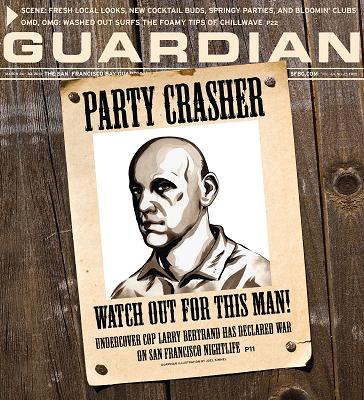
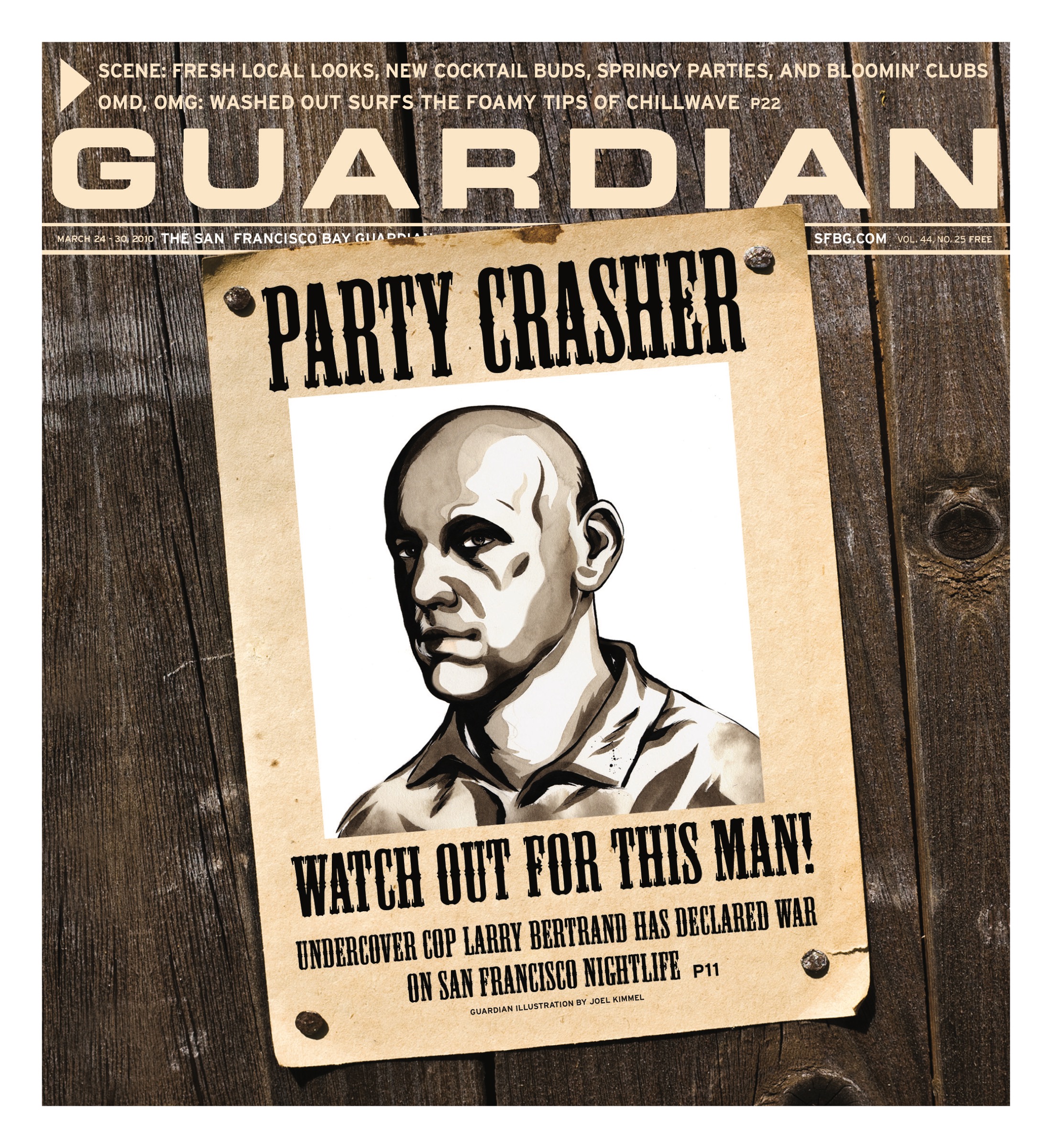
The SFPD and its undercover party-busting cop Larry Bertrand are also accused of harassing nightclub owners and patrons, busting private parties using excessive force and warrantless raids, and illegally seizing computers and other personal items – all while publicly seeking to discredit the Entertainment Commission and seize its power to shut down nightlife in the city, as well as seeking greater authority to roust and threaten vagrants by proposing a law to ban sitting or lying on city sidewalks.

SFPD officials have repeatedly claimed the agency can be trusted not to abuse these new authorities, but the latest revelations about criminal cops highlights how difficult it is for the public or the press to keep tabs on the agency.

The Guardian today sent the SFPD a Sunshine Ordinance request for the names and violations of the officers in question, but if the past is a predicator, it’s likely to be denied with the claim that such records are exempt under the Peace Officers Bill of Rights, a state law with strict privacy protections for cops.

Even defense attorneys who have well-established rights to examine an arresting officer’s criminal and disciplinary histories through what’s known at Pitchess motions are routinely stonewalled by the SFPD, say defense attorneys. For example, attorneys for Arash Ghandan, an alleged victim of Bertrand’s brutality and retaliation, are now having a hard time getting information on the officer’s history. “We are in a battle for Bertrand’s personnel file,” Ghanadan’s attorney, Steve Sommers, told the Guardian. “The city of San Francisco just does not hand over documents without a fight.”

In 2006, former SDPD attorney Reno Rapagnani and his wife, former SFPD Sgt. Leanna Dawydiak, raised the issue of SFPD secrecy, its pattern of routinely shielding problem officers from discipline and public scrutiny, and retaliating against whistleblowers – and were then subjected to a witch hunt that forced them out of the department.

More recently, SFPD and its powerful Police Officers Association succeeded in watering down an early warning system for violence-prone officers, removing a number of triggers – such as resisting arrest and assault on a police officer charges that often accompany cases of abusive police conduct – that had been recommended by a police practices expert and which are currently used in San Jose and other cities. 

Meanwhile, District Attorney Kamala Harris, a candidate for California Attorney General, is also being criticized for the latest scandal. Under the Penal Code, she bears the responsibility for ensuring that her prosecutors are doing background checks on all witnesses and sharing that information with defense attorneys.

“Ultimately, the district attorney has to answer for this. It is the prosecution’s duty to check the criminal backgrounds of officers called to testify. That never happened, and as a result, people have been denied fair trials,” Public Defender Jeff Adachi said in a press conference on the issue this morning.

The tough-on-crime era of the 1990s — when politicians, police, and prosecutors did all they could to create new laws and enforcement powers – is over, and we have a severely overcrowded prison system to show for its short-sightedness. But that mentality continues to guide the SFPD.

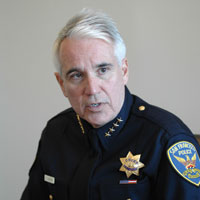
Since the arrival of Police Chief George Gascon from Arizona last August, SFPD has undertaken a series of crackdowns, including hundreds of drug arrests in the Tenderloin, raids on marijuana-growing operations in the Sunset and parties in SoMa, citing Dolores Park-goers for drinking, and, on Friday, giving at least two Critical Mass bicyclists tickets for amplified music. He’s also said he wants more power to discipline problem officers, but he has yet to show that’s anything more than just talk.

Perhaps now it’s time for the pendulum to swing back in favor of restoring damaged civil rights and raising our expectations of the agencies that have such power over our daily lives and freedom. The SFPD should adequately police itself before it looks for new ways to police the rest of us.   

Our 2010 Small Business Awards

culture@sfbg.com

The mallification of America continues apace, with faceless conglomerates training new generations of shoppers to look for the cheapest deals at bland big box outlets, regardless of what “cheap” might actually mean in terms of pollution, transportation, labor, and the local economy. (For starters, out of every $100 dollars spent at a big box, only $43 remains in the local economy, compared to $68 if you buy local.) But in San Francisco at least, the little guys keep on swinging, maintaining unique shops and service companies with a vibrant local feel and contributing to the patchwork of optimism, individuality, and community effort that make the city great. Each year, we honor several of them for sticking to their guns and pursuing their visions.


WOMEN IN BUSINESS AWARD

DEENA DAVENPORT, GLAMA-RAMA SALON

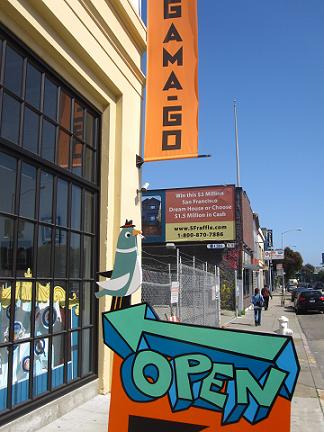
“The higher the hair, the closer to God,” a wise Southern drag queen once said. Here in San Francisco, one of our own heavenly salons, Glama-Rama, is about to get a whole lot more divine, expanding from its homey kitsch digs in SoMa to a new 2500 square foot space on Valencia Corridor, creating 16 new jobs. The driving force behind that expansion is owner Deena Davenport, who combined her hairdressing talent, natural business acumen, and deep connection to the local arts scene into a formula for sheer success when she opened Glama-Rama 11 years ago.

“My dream was not to have a business, but a community space,” Davenport told me. “I wanted a place for all my gifted friends to express themselves. Not just our excellent stylists, but artists, designers, musicians, event producers — we all came together to make this happen. I think that’s the key to our success. We work with all kinds of styles and we don’t price ourselves out of the nonprofit sector. That allows a great mix of clientele, and an element of comfort for everyone.”

Davenport, a creative blur, plans to kickstart a Valencia Corridor merchants association once she gets settled in, and dreams of a future in politics. (She currently hosts a show on Pirate Cat Radio and appears onstage in local productions.) “I’m fortunate to have always had great friends and great landlords — and to be in a business the Internet can’t compete with,” she says.

“By the way, the new space will be two shades of cream with gold accents,” Davenport adds, ever the stylish professional. “We’re taking off our Doc Martens and putting on some heels.” (Marke B.)

GLAMA-RAMA

304 Valencia, SF

415-861-4526

www.glamarama.com


GOLDEN SURVIVOR AWARD

CAFÉ DU NORD

It’s no secret that nightlife in San Francisco has taken a big hit lately. A combination of economic woes and persistent crackdowns by the Department of Alcoholic Beverage Control and local police, a.k.a. the War on Fun, has taken its toll — even on 100-year-old live-venue mainstays like Café Du Nord.

“It’s been tough for us and for everyone out there,” says Guy Carson, who took over the space with Kerry LaBelle in 2003. “They don’t call it ‘hard times’ for nothing. But we love what we do, and we know how to run a quality business. I’ve been promoting live shows since I was nine years old, so you know it’s what I love. You have to be willing to weather the storms.”

The intimate basement space retains its speakeasy vibe and velvet-curtained, cabaret-like setting, while playing host to mighty big names and burgeoning local upstarts. As a “venue with a menu” that serves food and puts on all ages and 18+ shows, Café Du Nord has been specifically targeted by the city and ABC for what Carson calls “differing interpretations of the law.” He looks forward to the upcoming launch of the new California Music and Culture Association, which will bring together several local venues and nightlife activists to fight the tide of local nightlife repression. “When we all work together, we can return the city’s nightlife to its former glory,” Carson says. (Marke B.)

CAFÉ DU NORD

3174 Market, SF

(415) 861-5016

www.cafedunord.com


GOOD NEIGHBOR AWARD

OPPORTUNITY FUND

Eric Weaver put his first nonprofit loan package together in 1995. His small startup, called Opportunity Fund, helped brothers who wanted to expand their pet shop borrow $17,000 for aquariums and fish. The deal worked out well; the pet store prospered, the money got repaid, and Opportunity Fund was on its way to becoming one of the most successful microlending outfits in California.

Weaver, a Stanford MBA and the fund’s CEO, now oversees a staff of 35 that makes loans to small businesses, most of them minority owned, that might have trouble getting financing from a traditional bank. And the nonprofit continues to grow by helping entrepreneurs in the Bay Area get the financing they need to create jobs and build community businesses. “We just made our 1,000th loan,” he told me. “We’re on target to make 200 loans this year, more than ever.”

Unlike most banks, Opportunity Fund sees its clients almost as partners. The staff takes time to help borrowers work up a successful business plan and learn how to manage their finances. “We do one-on-one business counseling with almost all of our clients,” Weaver said.

The group also helps finance affordable housing developments and offers individual development accounts (IDAs)— special savings accounts that come with financial training and grants — for everything from education to home purchases to putting aside the cash it now takes to become a U.S. citizen.

A recent study showed that Opportunity Fund has created or retained 1,200 in the Bay Area. “With a median loan size of $7,000, and a focus on making loans to people who have historically been underserved by banks, Opportunity Fund has been a particularly valuable resource for women, minority, and low-income entrepreneurs,” Weaver noted. He added that 73 percent of Opportunity Fund borrowers are members of an ethnic minority, and 90 percent of borrowers have incomes at or below 80 percent of area median income.

Imagine a traditional bank making a statement like that. (Tim Redmond)

OPPORTUNITY FUND

785 Market Street, Suite 1700, SF

408-297-0204

opportuityfund.org


CHAIN ALTERNATIVE AWARD

NORTHERN CALIFORNIA INDEPENDENT BOOKSELLERS ASSOCIATION

Independent booksellers are a wonder. Up against giant chains like Wal-Mart, facing technological changes like Kindle and online behemoths like Amazon.com (which doesn’t even have to pay state sales taxes), it’s hard to believe they can even survive. Yet they do — in fact, the Northern California Independent Booksellers Association keeps growing.

“The mainstream press wants to write about bookstores closing,” Calvin Crosby, NCIBA’s vice president, told me. “But actually, stores are opening. We have two new members this year.”

The booksellers group keeps the small, community-based stores in the public eye, with promotions, events like the annual NCIBA awards (see page 28) and political lobbying (NCIBA is a big supporter of a bill by Assembly Member Nancy Skinner, D-Berkeley, that would force Amazon to pay sales tax).

One of the group’s biggest tasks is education — reminding the public that local bookstores serve a critical function. “I was at a book-signing recently with a major author, and a bunch of people showed up with books they bought on Amazon and they wanted to trade them for signed copies,” Crosby, who is community relations director at Books Inc., recalled. “I had to explain to all of them that Amazon doesn’t pay taxes and hurts the locals.”

And with 300 bookseller members, NCIBA is helping preserve the notion that buying a book from someone who actually cares about books is an idea whose time will never pass. (Redmond)

NCIBA

1007 General Kennedy, SF.

415-561-7686

www.nciba.com


SMALL BUSINESS ADVOCATE AWARD

KEITH GOLDSTEIN

“Money spent in a small business — far, far more of it stays here in the neighborhood than with a chain store,” says Keith Goldstein, president of the Potrero Hill Association of Merchants and Businesses. A Potrero Hill resident since 1974, and owner of Everest Waterproofing and Restoration, Inc., Goldstein has spent the last six years with the merchant’s association promoting a sense of community in the inclined blocks of Potrero.

He’s overseen the growth of the Potrero Hill Festival from what he calls “a small affair” to a yearly event that’s “great for residents and businesses,” and also serves on the Eastern Neighborhood Advisory Committee, where he works on issues, like new transit plans, that affect local businesses.

Somehow he has found the time to start SEEDS (www.nepalseeds.org), a group that provides infrastructure and health support to underserved Tibetan villages, and is involved in Food Runners (www.foodrunners.org), an organization that links homeless shelters to food sources.

The superlative community member incorporates the ‘buy local’ mentality into every aspect of his life, even placing the administration of the health care plan for his 50 employees into the hands of a fellow Potrero Hill Merchant’s Association member. “It’s all richly rewarding,” Goldstein says of his hands-on role in his neighborhood’s economic viability. “I like to walk around the hill and be able to chat with my neighbors about quality of life issues.” (Caitlin Donohue)

KEITH GOLDSTEIN

Potrero Hill Association of Merchants and Businesses

1459 18th St., SF.

(415) 341-8949

www.potrerohill.biz


EMPLOYEE-OWNED BUSINESS AWARD

RED VIC MOVIE HOUSE

“Once it got going, it was like a perpetual-motion machine. And I have to say, I think it was the collective nature of the thing that’s kept the Red Vic going this long,” says Jack Rix, long time worker and cofounder of the Red Vic Movie House, which celebrates its 30th anniversary this year.

The Red Vic’s employees put a lot into the neighborhood theater’s showings of unique and classic flicks. Each worker-owner does a little of everything, from sweeping the lobby floor to washing dishes. “We’re all utility players here, this is very much a labor of love,” Rix says. Launched in 1980 by community organizers, the theater’s focus has not only been on providing great movies but doing it sustainably, installing solar paneling on the roof and eschewing paper products. “Back then I don’t think the phrase ‘green’ existed,” Rix recalls. “We were trying to be ‘green’ and we didn’t even know it!”

The Red Vic’s workers aren’t the only ones with a certain affection for the theater’s bench seating, environmentally friendly ceramic coffee mugs, and wooden popcorn bowls. Rix says some Upper Haight residents will wait for blockbusters to make their way out of “corporate” movie cinemas to the Red Vic’s second-run screen. “We’re very much a community theater,” he says proudly. (Donohue)

RED VIC MOVIE HOUSE

1727 Haight, SF

(415) 668-3994

www.redvicmoviehouse.com


CHAIN ALTERNATIVE AWARD

OTHER AVENUES

Nestled in a part of the city best known for its tiny pastel homes and bracing sea breezes, Ocean Beach’s Other Avenues is everything you could desire in a neighborhood grocery store: Warm atmosphere, vast swaths of bulk food bins, and a well-edited health food selection, including vitamins, medicines, and cheery shelves of produce. Plus health insurance for all its knowledgeable employees.

Trader who? No need for big box stores near Other Avenues, which has earned a loyal clientele in the 36 years since it first opened its doors. “Since we’re a co-op, I like to think of us as a giant organism,” says Other Avenues worker Ryan Bieber. “Occasionally we lose parts and regrow them. A lot of customers have been coming here for 10, 20 years.” Their loyalty might be in response to Other Avenues’ commitment to keeping its beachside clientele healthy and well. “The aim is to make sure that people have access to things like this,” says Bieber.

Asked what he thinks would happen if one of the chain grocery behemoths encroaches on the shop’s territory, Bieber is unconcerned. “I think people will come here regardless. [We] have been doing this forever and we take pretty good care of ourselves. I think our customers really respond to that. We wouldn’t want a world where there was only Whole Foods — that’d be too boring!” (Donohue)

OTHER AVENUES

3930 Judah, SF

(415) 661-7475

www.otheravenues.coop


ARTHUR JACKSON DIVERSITY IN SMALL BUSINESS AWARD

RAYMOND OW-YANG

Raymond Ow-Yang tends to downplay the impact he’s had on the North Beach-Chinatown artistic landscape. The owner of New Sun Hong Kong restaurant, Ow-Yang put up the funds to have the iconic Jazz Mural painted on the Columbus and Broadway walls of his Chinese restaurant. The artist Bill Weber approached him in 1988 — securing an approximately $70,000 aesthetic gift to the community that Ow-Yang has never sought public recognition for.

“Back then you’re young, you have no brain. I thought, this is nice — it’s something you do because you feel like it,” Ow-Yang recalls dismissively.

“Nice”is an understatement. The mural, which depicts famous San Francisco figures and scenes, has become one of the neighborhood’s visual joys, stopping tourists in their photo-snapping tracks. The gift reflects Ow-Yang’s commitment to the streets he grew up on

He immigrated to Chinatown from Canton in 1962, at age 13. A lifelong entrepreneur, Ow-Yang owned a photo studio, a floral shop, and a restaurant in Oakland’s Chinatown (the original Sun Hong Kong) before opening at 606 Broadway in 1989. The restaurant is open until 3 a.m. every day — a timetable residents can appreciate for more reasons than just Ow-Yang’s post-bar won ton soup. “Before, people were afraid to walk through this area,” says the businessman. “Now there’s a lot more foot traffic — the city even put up traffic lights. With the bright lights [from New Sun Hong Kong], it’s a lot safer in this area.” (Donohue)

RAYMOND OW-YANG

New Sun Hong Kong

606 Broadway, SF

(415) 956-3338


Monster rock: Gama-Go explodes into its second year

1

Greg Long stands behind his guitar-shaped spatula. “We want to make things people have joy and humor in, but aren’t embarrassed to have lying around the house,” says the co-founder of Gama-Go, a homegrown clothing and houseware store which, judging by its one year victory lap/anniversary party going down Sat/8, seems to have struck a cord with those looking for a little hip whimsy in their potholders and change purses.

To walk into the SOMA storefront where Gama-Go hawks their wares (the company also has a buzzing online presence, and sells in over 150 stores nationwide) is to enter an adult’s toy shop. It’s a cartoon aesthetic, dominated by big eyes and a bright palette. Gama-Go’s well known characters, Yeti, Deathbot and Tigerlily — a kid in a snug tiger suit known to wield firearms and electric guitars — run wild over solid backgrounds. Inspired designs — a pigeon perched atop a mountain of piled bicycles, an outsized DeathBot playing croquet with the St. Louis arch — are emblazoned on apparel, and tables full of witty things for house and office sit on white tables. One toy we’d heard about before coming; the “potholder”, a marijuana leaf-shaped trivet.

You know you want a Gama-Go Keytar in your world. Photo by Caitlin Donohue

Perhaps it’s no coincidence, then, that Long and co-founder Chris Edmundson were employed at a toy company when the idea for their own t-shirt enterprise came a-knocking in 2001. “I was turning 30, and thought it was time to do something different,” recalls Long. “We gathered together ideas and quit our jobs. Originally, we had thought about making purses, but we did some trade shows, and realized purses weren’t a great idea — but the illustrations we’d done for the purses were pretty great. We started silk screening T-shirts in the basement of my house.”

The pair contacted Tim Biskup, who was the first in a long line of designers they’ve had on staff since — currently they work with four that flesh out the general concepts that Edmundson and Long create.

The punchy scenes they came up with were a hit in t-shirt crazy SF, and soon the line was selling out of boutique stores like Therapy and Wishbone. Long cites Disney concept artist Mary Blair as one influence, in addition to punk concert flyers and LA pop surrealism. Gama-Go has since expanded into kid’s clothes, and the pun-inflected line of kitchenware and lifestyle accessories.

“We’ve never tried to go for an unattainable product,” says Long. “We wanted it to be affordable to normal people. For $10 you can buy something you’re really excited about — it’s not something you have to think a whole lot about and save money for.” Long was stoked about Gama-Go’s upcoming anniversary party, which celebrates a year in a neighborhood that is rapidly changing, restaurants and cafes sprouting up around their 8th Street location with all the alacrity of a pack of ninja kitties on one of their women’s tees.

One gets the sense that Long and company want to show off what they’ve accomplished. Their party Saturday will pack snacks and entertainment into the small storefront, with the first 50 heads that spend over $40 in the store receiving a limited edition print of Yeti entering battle on the back of a dragon.

Mythological beings come together in anniversary bloodshed. Truly celebratory!

Gama-Go One Year Anniversary Party
Sat/8 12-5 p.m., free
Gama-Go flagship store
335 8th St., SF
(415) 626-0213
www.gama-go.com


Reupholstering “Defenestration”

0

 all photos by Erik Anderson

“Can you wait about fifteen minutes?” Brian Goggin asks as he climbs into the harness that will lift him up to the fourth floor of the abandoned building on Sixth and Howard. Out of respect for this remarkable artist (and rapt awe his elevation has on the observer), we wait, standing to the side on the pavement below. Goggin’s restoration of his iconic piece of public art, “Defenestration,” bears witnessing.
Since its installation in 1997, the piece has become a Fellini-esque addition to its rough SOMA street corner. Its canvas is large, rundown building, its doors and windows boarded up since the owner’s renovations stalled in the ‘80s from permit violations. Pieces of furniture — chairs, lamps, coffee tables with their telephones still clinging to them — fling themselves from the roof and windows, causing passer-bys to gaze upward, wary of falling sofas. It’s like a free for all from a sinking ship.

But the wooden legs are beginning to rot, the upholstery fraying and tearing from 13 years of exposure to the elements. The area’s been targeted in a beautification campaign, and the city recently seized the property, citing eminent domain. There are vague plans to tear it down to make way for more low income housing, along the lines of the flashy edifice that stands kitty corner to “Defenestration.” Goggin is determined to give the piece a last hurrah. “If the wrecking ball does come, at least it will be dressed up for the occasion,” he says, looking up at his masterpiece.

It’s a labor of love. Goggin had done other public art before, and since “Defenestration” (the flying books on Columbus and Broadway, “The Language of the Birds,” is another one of his works), but few pieces have captured the city’s imagination like the building on Sixth and Howard. He estimated it would take $75,000 to fully restore the work.

“I had done similar pieces before “Defenestration.” my piece “Herd Mentality” in the Yerba Buena Gardens is a bunch of Queen Anne tables climbing up a wall, jumping over, and running across the lawn — like a herd of wild buffalo roaming through the plains,” says Goggin of the providence of the leaping living room sets at Sixth and Howard. “This one I wanted to do in a neighborhood where people were finding creative ways to uplift their life.”

He originally envisioned the work on an occupied building, explaining to property owners in the area “all I wanted to do was drill big holes in their walls and stick furniture to them. None of them were interested.” Eventually, walking down Sixth Street he saw a sign with a number to call regarding interest in an abandoned building there. He called. The owner was away on a trip to Gujurat, but his daughter was intrigued by Goggin’s preliminary sketches of the project. “She told me I could install the piece if I could do it by the time her dad got back,” the artist remembers.

Eight months later, with the help of somewhere between 30 to 70 volunteers, “Defenestration” was up, making an impression on Sixth Street residents in the process.

One neighbor put a sign in their window that said “get out of the neighborhood art fags,” but for the most part, people were curious about Goggin’s leaping tables. “Everyone seemed to understand [“Defenestration”] without question,” says the artist. “They even started bringing me furniture. I appreciated their eccentricities, and they appreciated mine.”

We chat on the sidewalk while Goggin and his assistant, Valerie Levy, mix epoxy with rubber gloved hands. We are interrupted sporadically by people walking by with questions about all the pulleys and caution tape surrounding us.

“What, you’re tearing this down?” one man asks us in disbelief. “It’s been here for 35 years! It’s a landmark!” “102 years! We‘re putting up condos!” Goggin calls after him with a grin. It must be rewarding to see one’s work become such an accpeted feature in it’s environment.

Though he was working on the site nearly every day when he started in December, Levy and Goggin have cut back to two days a week after a beautiful exhibit of photos taken of the site that was held across the street at 1AM Gallery failed to raise sufficient funds. He’s collected $20,000 now, with an adjusted goal of $10,000 more. “The dream is to rent a boom lift,” Levy confides as she shows us around the interior of the building.

Entering into the gloom inside the metal door, the magic of the site is easy to absorb. Save for the original hotel lobby on the ground floor, it’s an absolute mess. Orange spray paint marks the rotten spots in the floorboards, walls have been knocked down, debris is everywhere. But the filth creates a certain, raw magic.

Large porcelain tubs remain from the SRO’s original residents. A natural camera obscura from holes in a boarded up window projects an image of the sky and buildings across the street, upside-down, on the wall. Pigeons have laid claim to entire floors, particularly the room with the dining room set one of Goggin’s friends arranged for a formal dinner party as a surprise birthday present for his girlfriend. The vast, “over engineered,” steel frames that secure the hanging furniture seem to be the only solid parts of the structure (“they had to do that,” explains Levy. “otherwise, you can’t really have sofas hanging over peoples’ heads”). The squatters that occupied the building before Goggin returned for restoration have cleared out, ingratiating his project to the managers of the property.

The whole thing has an air of the absurd.

Goggin has nurtured, and embraced the oddness of it all. Sideshow freak panels from the “Urban Circus” he threw in 1997 for the piece’s debut still cling to the walls outside and sit in stacks within the workshop.

“The question of restoration was one I pondered for a number of years,” he tells us, a bit tired from another trip up the wall to fix a coffee table. “I liked the idea of revisiting it, of going back to the community to see whether this was something they wanted, if it was important to them.”

But it’s clear, from the smile on his face, and they way he lights up to discuss the job, that “Defenestration” is important to Goggin, as well — a feeling that is contagious to those around him. “I’m interested in perpetuating the joy, fun, and absurdity of it all,” he concludes, and we leave him to his work.

To donate to the “Defenestration” restoration project, go here.

Hot sexy events: April 28 – May 4

0

It’s time to take control, cats and kittens. And no, I don’t mean you’ve gotta throw away all those naughty thoughts of ropes and handcuffs — rather, it’s time to lay claim to your own sex life. This week’s sexy events give you ample room to play with this concept, be it Cleo Dubois (2008 leather Marshall of the Pride parade)’s weekend long intensive on mastering the whip for female dominants, or Julian Wolf’s class at Good Vibes on reaffirming the divine in your S&M. For a different take, head to Wicked Grounds’ Festish Munch, where you can calmly meet and greet potential playmates with as much discretion as you have over your extra foamy latte… or was that a mocha with whip? Regardless, get out there and make it how you want to.

S&M: Spirit & Meaning
Julian Wolf shows the way to BDSM scenes that inspire spiritual awakening, making it possible to be a sexy person, and a spiritual person, all in the same moment.
Wed/28 8-10 p.m., $25-30
Good Vibrations
603 Valencia, SF
(415) 552-5460
www.goodvibes.com

Fetish Munch
Do you like fetish play, dress up, BDSM fun, and “dark and sexy” music — but find it hard to really get to know your partners in the thick of the party? Take time to come discuss your passions over a cup of coffee at SF’s sexiest cafe, Wicked Grounds.
Wed/28 8-9:30 p.m., free
Wicked Grounds
289 8th St., SF
(415) 503-0405
www.wickedgrounds.org

Amazing Grace

The first movie to touch on AIDS issues in Israel, Amazing Grace witnesses the relationship between upstairs and downstairs neighbors. The film screens as part of the SF Jewish Film Festival and the “Out in Israel” LBGT Culture Festival.
Thur/29 9 p.m., free
Roxie Cinema
3125 16th St., SF
(415) 863-1087
www.sfjff.org

Cleo Dubois’ Women’s Erotic Dominance Weekend
A full weekend of women learning how to maximize their power in the dungeon. Feedback from previous attendees: “the course gave me more than I had anticipated or hoped for and I had hoped for quite a lot.” Time to get some more confidence in your life, starting with your sexual dynamics.
Starts Fri/30 7 p.m. @ private SOMA residence
Day long courses Sat/1 & Sun/2 @ SF Citadel
1277 Mission, SF
(650) 326-3269
cleodubois@sm-arts.com

Burlesque ‘N Brass
Blue Bone Express provides the jazz melodies to which lovely ladies will shake their spangles. Raise a glass (I hear they have good grapefruit juice cocktails, just a thought), and watch out for dangerous curves.
Sat/1 8:30 p.m.-12:30 a.m., $10
Café Van Kleef
1621 Telegraph, Oakland
(510) 763-7711
www.cafevankleef.com

SF Citadel Play Party
Romp amongst the slings and arrows, outrageous fortune pretty much guaranteed at this frisky get together for the leather community! The event is only open to members, but unaffiliated pervs, you’re in luck — you can buy in for a full year at the Citadel for just $10. They’re also open to work/play exchanges, if you’d like to volunteer for a shift.
Sat/1 8 p.m.-1 a.m., $25 for members
SF Citadel
1277 Mission, SF
(415) 626-1746
www.sfcitadel.org

Thrillpeddlers Present: “Hot Greeks”
The Thrillpeddlars follow up the wild success of “Pearls Over Shanghai” with this sassy little stage number, which tells the story of the Tri Thigh sorority girls’ quest to find the Oracle of Delphi (otherwise known as the Hot Twat of Tangier). The pricey tickets are a partner price for the special “shock box” seating. Oooo…
Sun/2 7 p.m., $30-69
Hypnodrome Theater
575 10th St., SF
(415) 377-4402
www.thrillpeddlers.com

Mommy’s Playdate
Madres only at this mingle fest for those with little ones. Leave the kiddies at home, and instead pick up “mommy-tini,” and get a one on one consultation from the Good Vibes staff sexologist. And a makeover… of what you’ll have to attend to find out.
Tues/4 7-9 p.m., free
Good Vibrations
1620 Polk, SF
(415) 345-0400
www.goodvibes.com

Rolling forward

7

By Adrian Castañeda

news@sfbg.com

San Francisco’s Potrero del Sol Skatepark is often packed with skaterboarders, a testament to the sport’s popularity and to the dearth of places in the city where it’s legal to skate. But that will soon change with the city’s commitment to build two new skateparks: one in SoMa and the other in the Haight.

Both have been tentatively approved by the Board of Supervisors. But before any concrete is poured, the skaters will have to overcome budget crises, angry homeowners, and their own bad reputations, particularly in the Haight, where the proposed park has gotten caught up in the furor over vagrants and the proposed sit-lie ordinance.

San Francisco has long been a skateboarding hub, yet there’s always been friction with police, businesses, and everyday city life. Even though it’s legal, there just aren’t that many places to do it anymore, partially because the city and property owners routinely attach barriers to any surfaces that might be appealing to skaters.

Skateboarders, long accustomed to being ignored and disenfranchised, have responded in their usual DIY fashion, such as building a few obstacles in an empty parking lot under a freeway overpass. The city took notice of the demand and after three years of planning and meetings, the newest of San Francisco’s skate parks has finally been allotted the necessary funds to begin construction around the end of summer.

The Central Freeway Skate Park will be located in what is now a parking lot at the intersection of Duboce and Stevenson streets in the north Mission District area. With $2 million collected through the Central Freeway Corridor Housing and Transportation Improvement Act of 1999, which provides for the sale and lease of parcels of city land that were under the now-demolished freeway, officials plan to develop the park to eventually include basketball courts and a dog run.

Rich Hillis of the Mayor’s Office of Economic Development said the city is considering a variety of improvements, but confirmed that “we think the skate park is the priority.” He attributes the park’s relatively unopposed approval to the demands of the city’s skaters and to the community as a whole. “They embraced the idea of a skatepark early on,” Hillis said of the forward-thinking residents of the area. He jokingly adds that the park should be named “Hornbeck Park” after Bryan Hornbeck, director of the San Francisco Skateboard Association. Hornbeck and his associates started the SFSA to push the city to build new parks designed with skaters in mind.

“San Francisco has to have a world-class skatepark,” Hornbeck said at one of the many skate events his group organizes. Hornbeck said the city has been receptive, working with skaters on the design of the park, but left SFSA to organize skaters and raise the funds. “It’s bake sale; it’s lemonade stand; it’s the best we can do,” Hornbeck said. “We’re not trying to take anything, we’re trying to make our own thing.”

Plans for the park, drawn up by notable skatepark design firm New Line Skateparks, are currently under review by civil engineers. After the plans are finalized, the project will be bid out to find a contractor. Tentative 3-D renderings have been online for months, sparking heated debate on skateboarding Web sites.

When the acclaimed Potrero del Sol Skatepark opened in 2008, many skaters felt that while it was well-designed and enjoyable, it didn’t have enough terrain that mimicked street riding. New Line has designed a number of skating plazas, most recently in Los Angeles. Its involvement gives many skaters hope that the new park will incorporate obstacles that represent the city’s rich street skating history.

But things are not moving as swiftly for the city’s other planned skate park, just beyond where Waller dead-ends at Stanyan in the Haight, which doesn’t have the same guaranteed funding stream. While bids for a design have been submitted, the Recreation and Park Department needs to get approval for $1 million–$2 million in construction funds before moving forward. The city proposed the 120,000-square-foot cul-de-sac at the end of Waller and next to SFPD’s Park Station after the original site near the Golden Gate Park horseshoe pits was found to be too small and lacking the necessary sight-lines for safety. But according to some residents groups, the parking lot is less safe for youths.

Citing police incident reports, Lena Emmery, president of the Cole Valley Improvement Association, told us the Waller park would be in an area with a high number of reported assaults and drug arrests and would add to noise pollution. “This location puts a skateboard park too close to a dense residential area, as well as some businesses that would be negatively impacted by the noise from the skaters,” she wrote via e-mail.

While the lot is occasionally used for bicycle safety classes and overflow parking at Kezar Stadium, it sits empty most of the year, although a farmers market will hold its grand opening there April 28. Will Keating, a Waller Street resident and skateboarder who works on Haight Street, is excited about the proposed park. He disagrees with claims that the park would be a negative impact on his neighborhood. “I hear homeless mutants going crazy outside my window every night, I would much prefer skateboards,” Keating said of the current noise pollution.

The Haight Ashbury Improvement Association, which is leading the charge for a sit-lie ordinance, conducted a survey on its Web site and found that many of its visitors feel the skatepark would increase noise and safety problems in the Haight. Visitors to the site also said the lot would be better used as a farmers market. Yet city officials say the two are not mutually exclusive, and early designs for the project are said to include a large public plaza adjacent to the park intended for community events.

“We realize this is going to be a multiuse space,” said Nick Kinsey, property manager for the Recreation and Park Department. “Throughout San Francisco there are thousands and thousands of skateboarders but only two places where it is legal to skate.” Kinsey called the park is “a done deal,” citing a 2007 ordinance introduced by Sup. Ross Mirkarimi that mandates the department build a skatepark on the cul-de-sac.

Kent Uyehara, merchant chair for the HAIA and owner of FTC skateshop on Haight, said the community’s fears about pedestrian safety are understandable, but that fears of increased violence and drug use are irrational. “If you can’t have a skate park next to a police station, then basically you are saying you can’t have it.”

If the city enacts the sit-lie ordinance, which Uyehara supports, it would be easy to imagine that a skate park would be a magnet for homeless and others looking to escape police harassment. But Uyehara is adamant that the park would not become a haven for Haight Street refugees. “Skateboarders self-police their own areas,” he said. “We’re not trying to kick the homeless out,” he added. “We’re trying to make the neighborhood attractive for everyone, whether they’re buying something or not.”

Uyehara is no stranger to opposition. When his shop first moved to the Haight in 1994, he had to deal with threats from residents and a neighborhood organization, similar to the one he is now a part of, because of what skateboarding represented to them. Since then skateboarding and his business have prospered, and FTC now has four locations worldwide. “For a city that hosted the X-Games, it’s pathetic how skateboarding has been treated.”

Uyehara says the Waller park, along with the Central Freeway and Potrero del Sol parks, are part of a plan developed by the San Francisco Skate Task Force, created in 2002 by then-Sup. Gavin Newsom to address the growing friction between the city and its skateboard population. The task force envisioned “a series of five parks located in a star pattern, and one in the middle of the city, [that] would make it possible for users to easily get to a park within at least two miles of their home.”

All the meetings and fundraising will be in vain if the park is poorly designed and built, said Jake Phelps, editor-in-chief of Thrasher Magazine. He says locals should design the park “so we have no one to blame but ourselves,” and avoid another flawed park like Crocker Amazon in Sunnydale where, he says, “the fence costs more than the skatepark.” Unimpressed with preliminary designs for the park on Duboce, the notoriously blunt Phelps says, “They’re going to come to our town, drop a turd, and leave.”

The veteran skater is wary of “landscape designers” with grandiose ideas. “There are people who get too involved. They don’t skate. Who are they to tell anybody what it is?” Newer skateparks are too crowded with obstacles trying to please all different kinds of skaters, he said. Instead, he urges a simple design similar to the streets of downtown. “The whole idea of skating is being utilitarian with your environment.” Regardless of the design, he believes it won’t have a dramatic effect on the Haight community: “Homeless people are gonna sleep there,” he said. “People are gonna tag on it and think it’s theirs.”

“The whole city’s a park, but people need somewhere to go when they get kicked out of everywhere,” says pro skater Tony Trujillo, who is able to skate to the Potrero park from his house and thinks others should have the same proximity to hassle-free skating. Julien Stranger, another local pro, feels a park in the Haight would benefit youth in the area by giving them a healthy, creative outlet, something the Haight symbolizes to many. “I don’t think that the neighborhood should be complaining about the energy a skate park will bring,” he said. “Skate parks are pretty positive.”

Earlier this month, an informational meeting hosted by the Haight Ashbury Neighborhood Council, Kinsey, Hornbeck, and other residents raised concerns that noise pollution and property damage would increase because of the skate park. “There’s been no public outreach,” said Martha Hoffman, who lives across from where the park is slated to be built. “If we’d known about it sooner, we would have opposed earlier.”

Thuy Nguyen of the SF Skate Club, an after-school program that promotes skateboarding as a safe and positive activity, urged residents to look beyond their property values and consider the benefits for the city’s youth. “It’s important for kids who feel that traditional sports aren’t for them.” Her partner, Shawn Connolly, added that skateboarding has grown in popularity with children. “It’s right after baseball,” he said.

“If the city doesn’t have a skatepark, the city is the skatepark,” Hornbeck said of the Waller Street lot where he often hosts skate events with donated ramps to ease the community into the idea of skateboarders using the area. But until the city budget can provide for skateboarders, the debate over the park will rage — and the underused parking lot at the end of Waller will remain just that.

Just out of prison, Addis returns to SF with a message

60

Paul Addis is a playwright and performance artist best known for prematurely igniting Burning Man‘s eponymous central effigy during a Monday night lunar eclipse at the event in 2007, a crime for which he served two years in a Nevada prison. He was recently released and returned to San Francisco, where his new one-man show debuts at The Dark Room on April 30.

Last week, Addis sat down for an extended interview with the Guardian to discuss that momentous night – when he grabbed the Holy Grail of burner malcontents, lighting the Man early, and paid a heavy price for it – and its aftermath, including developing his play, “Dystopian Veneer,” while in a prison work camp near Las Vegas.

“It’s a brand new life and I’ve got all this potential and I want to make the most out of it,” said Addis, an intense guy who exhibited a wide range of emotions during the three-hour interview, from easy laughter to frustrations with what he sees as the lack of risk-taking in San Francisco to excitement over his future to flashes of real menace when discussing those who have done him wrong.

Addis is a lightning rod whose torching of the Man still elicits strong reactions from those who attend Burning Man. Some angrily condemn an act they see as destructive and dangerous, while others appreciate the ultimate symbolic assault on an event that they think had become too orderly and calcified.  
Paul Addis's mug shot after burning The Man.

Addis’s post-burn mug shot.

“Everybody knew it needed to be done for lots of reasons,” Addis said of an action that was his sole purpose in attending Burning Man that year. “I felt like Burning Man as an event was starting to coddle people way too much.”

But the event’s leaders certainly didn’t coddle Addis, instead testifying at his 2008 sentencing hearing about the high cost of replacing the Man (high enough to bump the destruction of property charge up to a felony) and the early burn’s negative impact on the event. “They didn’t have to do this,” Addis said of Burning Man board member Will Roger’s testimony at the hearing. “Instead, they decided to deliberately take action they knew would send me to prison.”

Marian Goodell, the director of business and communications for Burning Man, declined to discuss the accusation, or Addis’ complaint that she and others have publicly misrepresented the role of Burning Man brass in sending him to prison, including statements in the film “Dust & Illusions” that the sentencing was beyond their control. “It doesn’t do us or him any good to open that wound again,” Goodell told the Guardian. “We’re not going to discuss it.”

Starting the fire wasn’t Addis’s only crime of that era. Within weeks of returning to Burning Man, he was arrested in Washington for carrying guns in public (he says they were props for the one-man play about Hunter S. Thompson he was doing at the time) and for possession of fireworks and an air gun near Grace Cathedral (which police said at the time was a plot to burn down the stone church, a notion that Addis calls preposterous). Addis has innocent narratives for each incident, blaming others for overreacting.

Yet Addis now says that he’s let go of his old grudges, describing a moment of clarity and peace that came over him while driving his motorcycle through the Nevada desert on his way back to San Francisco. He said that he feels most happy and alive when he’s on stage, a passion that he said sustained him while in prison, “so it’s imperative for me to get back to what I love doing.”

Addis posted a promotional video for his new show on Laughing Squid (whose owner, Scott Beale, Addis has known for many years). It opens with Addis looking up at the camera, his mouth covered in duct tape that he slowly rips off and begins speaking. “In a society whose foundation is free expression under the First Amendment and liberty under the Constitution, this is probably the most desperate, despicable and disgusting thing that can be done to an outspoken and risk-taking performance artist,” he says, indicating the tape in his fingers, before tossing it aside and saying, “Well, that’s over now.”

He goes on to criticize how sanitized San Francisco has become, singling out the police crackdown on SoMa parties and nightclubs that we’ve been covering in the Guardian and calling for people to join him in pushing the edge. But just how San Franciscans will greet this controversial figure is still an open question. 

I’ll have more from my interview with Addis, along with reactions from other figures in the Burning Man world, in the Guardian in coming weeks; and even more in my upcoming book, “The Tribes of Burning Man: How an Experimental City in the Desert is Shaping the New American Counterculture,” due out later this year from CCC Publishing.  

Holy smokes, could it be… the biggest SF mural ever?

4

The answer is yes, yes it will be. And how did the madness begin? “I was in the neighborhood and I saw this wall. And me being me, I got really excited and wanted to paint it.” And so it started, Brian Barneclo’s latest SOMA mural project, whose launch will be celebrated alongside “Systematics,” his solo (indoor art) show at fabric8 on Sat/10.

See a wall, paint it; It’s a common enough story in SF — until you look at one small variable; Barneclo’s wall is 600 feet long and 40 feet tall. And he intends to cover the whole thing. That’s 24,000 square feet, making Barneclo’s “Systems” the largest mural yet in a town filled with them. “That was recently pointed out to me,” he told me in a recent interview. “It’s an interesting thing because, yeah, its going to be helpful [for fundraising], people like to hear that stuff, ‘it’s the loudest, it’s the biggest.’ But it really has no… [the size] is such a byproduct.”

Barneclo’s known for his ambitious projects. The artist — in whose aesthetic fabric8 gallery owner and long time associate, Olivia Ongpin, detects traces of both the Mission school and the Bay area figurative movement from the ’50s and ’60s — has installed large scale pieces all over town, from Nopa, to the inner Mission, even on the side of our humble Guardian building. His most well known works are urban cultural/architectural jumbles, representational maps of the iconic streetlamps, restaurants, and skylines that we call our city. “Systems” will be a reflection of Barneclo’s recent meditations on interconnectivity; in our society, our city, and in our own bodies.

A mock up of “Systems,” slated to be completed by June

It’s easy to see why this particular wall caught the muralist’s eye. The 7th St. and Townsend building, owned by Crescent Cove Apartments, plays a visible role in the neighborhood. Barncelo’s wall can be seen from both I-80 commuters and Caltrain passengers, the train tracks passing at the wall’s base. Barneclo thinks it’s high time such a prominent canvass was utilized for art. “I think when we’re done, people will be like, ‘I can’t imagine that without a mural.”

But the mural’s not done yet. There’s the matter of funding, though Barneclo has already secured a $10,000 grant from Adobe and thinks “people are inclined to get behind the project once they see some action happening.” Barneclo has already put in nearly two years of permission getting and permit securing into the project, along with partner Christi Azevedo. And of course, there’s still a whole lot of wall to be painted. 

But that will be the easy part. Barneclo completed “Food Chain,” his 200 by 25 foot mural on Shotwell between 14th and 15th Street in ten days, with only one helper. His goal is to maintain that same pace for “Systems,” completing the mega mural in one month with a team of three helpers. Barneclo doesn’t sound too stressed about the task ahead. “I’ll sleep when I’m dead. If I have a chance to take a month and paint one big mural, what more can I ask for? I mean, my girlfriend probably won’t like it, it’s probably going to be all I’m talking about and thinking about.”

Will he make it? Ongpin thinks so. “This might seem like a daunting prospect,” she said. “But if you look at the scope, and amount of murals he’s done around the city for the past six or seven years, I’m sure he can do it and do it well.”

So get ready, San Francisco, because “Systems” is set to be one of the first things some commuters see when they hit SOMA. “It’s almost a welcome to SF to people who are riding the train,” Barneclo imagines. “Or a farewell. Its like a port. Treat it like a “Boom! Welcome to San Francisco.”


Brian Barneclo‘s “Systems” Mural launch party/ “Systemics” exhibition

Sat/10 5-9 p.m., free

Fabric8 Gallery

3318 22nd St., SF

(415) 647-5888

www.fabric8.blogspot.com

SFPD’s Capt. McDonough defends rogue cops

15

The San Francisco Police Department has steadfastly tried to ignore back-to-back cover stories in the Bay Guardian and SF Weekly that detailed the campaign of harassment and brutality against nightclubs and parties in SoMa by a pair of undercover cops.

The fact that those two cops – SFPC Officer Larry Bertrand and state agent Michelle Ott – have reportedly been absent from the scene in recent weeks might indicate that the department has heeded the outcry and put a leash on them. But now, in the “Captain’s Comments” in today’s Southern Station Newsletter, Capt. Daniel McDonough – who, along with Commander James Dudley, is believed by nightlife advocates to be behind the crackdown – has issued a full-throated defense of the pair’s actions.

Despite the fact that those actions (including repeated and selective harassment of certain clubs, illegal property seizures, threats and retaliation against complainants, and unnecessary force) have resulted in multiple legal actions against the city, McDonough claims they have somehow prevented unspecified “problems” and “violence and disorder.”

That negative claim is impossible to prove or disprove, but it’s certainly true that it was the arrival of aggressive cops at a January party that we wrote about that precipitated the “violence and disorder” that night.

McDonough writes, in full: 

There has been a recent deluge of articles about Nightlife in the Southern District.  The articles particularly focused on two fine individuals, Officer Bertrand of Southern Station and Agent Ott of the Alcoholic Beverage Commission. (ABC) 

One thing the articles didn’t have to focus on was the amount of violence occurring in the District at the late night venues.  This I believe has been directly related to the good work of these dedicated Officers.  In conjunction with the members of Southern Station, Officer Bertrand and Agent Ott would regularly inspect nightclubs and bars to ensure compliance with laws and codes that have been enacted to have an orderly establishment and to also stop the rampant amount of unpermitted parties that would arguably cause problems.  Because of their diligence and professionalism the amount of violence and disorder has been reduced.  Establishments that routinely would have numerous calls for services started to take responsibility to handle the influx of people and establish security procedures.  The benefits reaped by the citizens of San Francisco by the actions of Officer Bertrand and Agent Ott are measured in the lack of homicides shootings and knifings that haven’t occurred because of their good work.  They are to be commended.  I would also like to thank all of those establishment owners who communicate to me their positive relationships with those two officers.

Community Meeting 

Wednesday April 21 2010 6pm

Community Room

South Beach Harbor Pier 40

Wear your heart on your boob

0

Do your tassels swing low? Do they shimmy to and fro? Spring is here and as anyone taking a casual stroll in the Castro knows, clothing is optional. The guys have been walking around without shirts since forever, so why not put out and paste up, ladies– your rack was born to shine with red sparkles and dangling ribbons.

Walking in the Haight yesterday, a glimmering set of blue hearts poked me in the face and lured me straight into an adorable lingerie shop for closer inspection. Dollhouse Bettie sports a few different pairs from the Oregon designer, Gothfox Designs, but these bridal satin, royal beauties are classically stunning. These pasties even come with a fancy name, “J’amie l’ocean”, alluding to their oceanic inspiration.

Gothfox Designs

Skip the swimsuit and sport a nifty set of pasties for zero tan lines– the matching trim and tassels are guaranteed to pull in a wave of looks and approvals. 

With tit stickers on the brain, I checked into the featured set at Madame S and was more than pleased with these “Heartbreaker Pasties.” This San Francisco store makes these flattering hearts in their very own latex production lab, located just behind the storefront in the SOMA neighborhood. The tight, naughty black latex will hug your nipples and the blood red trim definitely has the power to make hearts (and organs) pound with desire.

Heartbreaker Pasties

The cup-less bra is a perfect accessory for any pair of pasties– keeps things perky. 

Scared to sport ’em under a blazer like Rihanna? Wear them at home for your lover, test ’em out while vacuuming or put on a one-woman show in the mirror while you practice twirling. And if you really want to throw timid over the bridge, take the breast art for a test cruise during the SF World Naked Bike Ride. I bet you’ll have a hard time taking them off…and not because of the glue. 

Sit, lie, stand and fight

14

A version of the following op-ed by Ben Rosenfeld ran in this week’s Guardian, edited for space reasons, and it’s generating quite a lively discussion here. He has asked us to post this extended dance mix of his piece, which offers more political context and gets into some of the issues raised in this weeks’ cover story, which is also generating heated debate. So here it is:

            This is a call out to creative, fun-loving San Franciscans: The mayor, the police chief, and their downtown cronies have declared war on our grassroots arts culture, and they are coming for your actual and conceptual space next. All that stands between the town you love and their vision of San Francisco as one big mercantile zone is a single vote progressive majority on the Board of Supervisors. But come November, they see the chance to take that away. The future they promise is already manifest in their many recent attacks on public and private gatherings, and their efforts to wrest the commons from the commoners.

            On Halloween 2009, the San Francisco Police, under their new chief, Los Angeles transplant George Gascón, shut down the Take Back Halloween Flashdance in front of the Ferry Building before DJ Amandeep “Deep” Jawa even arrived. Then they shut down several smaller street parties. (SFBG, 11/2/09) Their official reason—that organizers lacked permits—is what Bill Clinton famously termed an explanation, but not an excuse. The SFPD has a long history not only of tolerating unpermitted gatherings, but of re-routing traffic around and even escorting them. They are fully empowered to grant the equivalent of on-the-fly permits, a concept recognized in federal parks regulations. Applying for an actual permit is cumbersome, costly, anti-spontaneous, and reinforces the government’s view of itself as censor.

            Since Halloween, Chief Gascón’s force has been striking a mighty blow against crime by writing scores of open container citations to revelers in Dolores Park; fining or forcing the closure of SOMA clubs and bars for failing to conform to every fickle letter of the law; and sending undercover officers into warehouse and studio parties to bust them from within, sometimes violently, and without warrants. Their alpha party-crasher is a twitchy undercover cop named Larry Bertrand. He reportedly makes a habit of gratuitously attacking partygoers and vandalizing property, especially DJ equipment. One DJ wrote on a confidential email list: “I have been telling every DJ I know to run with their gear when your party gets busted [by Bertrand].” Not only has the chief failed to rein in Bertrand, but he wants to put a Taser in his hand, and in the hands of a rotten core of approximately 100 other officers whom the Chron found in 2006 are responsible for most citizen complaints, but whom the Department and this chief have systematically failed to discipline.

            Perhaps the most un-San Franciscan of all of Gascón’s initiatives is his demand for an anti-sit/lie ordinance, which would literally criminalize the very act of sitting or lying on certain public sidewalks at certain times. Never mind the fact that most violent crime is committed by people standing up and in striking range. Gascón appears to share the mayor’s philosophy that homelessness is just an aesthetic problem the rest of us should hose off our sidewalks. Not only is the idea just plain mean, it is anathema to San Francisco’s culture of compassion and broadmindedness, and its affirmative celebration of vibrant street culture. The danger is not that the police will arrest everyone who dares to take a load off or sit and sip a Snapple against the side of a building, but that they will enforce the law selectively according to their own purity tests, while robbing the rest of us of a diverse street scene that makes us all richer.

            To be sure, essential San Francisco has reasserted itself in the teeth of earlier culture wars, if in ever wealthier iterations. When Willie Brown stood in front of Critical Mass in 1997 and declared it illegal, riders blew by him like he was a grand prix flagman, and ridership surged from one or two thousand to five to seven thousand. What’s different this time are the demographics. San Francisco is richer than ever before, even at the height of the dot.com boom. Rents are through the roof. Everywhere, industrial warehouses and studios are drying up and concept industrial restaurants and bars are sprouting up. A new wave of young, hip residents has arrived seeking Dionysus, but they want no part of the political machinations under his robe. They are liberal, but they are not active. At least not yet. The mayor, the chief, and the norm core they serve are counting on our collective non-engagement. If we don’t band together—hipsters, activists, artists, and fun-loving folk all—we will watch the San Francisco we cherish slip away.

            On March 27, reclaim public space. Sit and lie on the public sidewalk. March and sing in the public street. Picnic on the pavement. Pop open a beer in Dolores Park. Do it without a permit. The Constitution is your permit. San Francisco’s heritage of artistic experimentation is your permit. Hell, the people telling you to get a permit flocked here because people like you marched around them in the first place and made this City a model of art and innovation for the world. Do it for them too. This is a defining moment. They are playing for keeps and so must we. Let’s bask in San Francisco’s ongoing heyday, not in quaint stories of the good times that used to be.

Inspirationstitute

0

I don’t do regrets, but I do wish that I’d arrived in San Francisco early enough to catch more than the hot tail end of the Popstitute years. (A show of Popstitute-related archival objets d’art is on display at Goteblud starting Sat27.) In another way, though, the Popstitute era continues, perhaps more forcefully, now. Whether or not the participants have ever encountered or read about Popstitute, the spirit of the postmodern — savor the late ’80s-early ’90s-ness of that term — music-art-and-protest group is reborn in various forms within the most fab current Bay Area happenings, from the Thrillpeddlers to Hunx and His Punx to High Fantasy.

The past year or so has seen Marc Huestis’ 1982 new wave movie Whatever Happened to Susan Jane get a digital facelift, and Patrick Cowley’s 1976-79 recording project Catholic introduced to different generations thanks to Honey Soundsystem. For the thirstiest seekers left in SF and its stronger wings, the time is right for a fresh taste of Popstitute, and “Boredom=Death: The Popstitutes 86-95” is set to deliver the DayGlo dyed-hair mania to old friends and lovers and new eyes. On display at the zine treasure trove Goteblüd, it promises a barrage of ready-to-rule-today paper mementos, as well as banners, photographs, and Mylar photo ornaments. Opening night deserves to be a scene. A happening. An event that inspires wild ideas that bloom into wilder actions.

It’s overly simple to call Popstitute a punk and new wave next-generation answer to the Cockettes, even if there are corollaries between Hibiscus’ role as the Cockettes’ chief fount of inspiration and the late Diet Popstitute’s (a.k.a. Michael Collins) galvanizing role in Popstitute the band, club(stitute), and overall entity. The Goteblüd show is accompanied by a terrific fluorescent zine that gathers flyers (featuring Alvin Popstitute, now a writer), newspaper articles (by Don Baird and others), and zine excerpts, which all hint at Popstitute’s untamed variety.

The “Boredom=Death” zine includes some fantastic pages from Tantrum, a zine put together by Tyler (a.k.a. Tyler-Bob, or Tylenol) Popstitute. Behold Tyler’s drawing of Truthstar the Unicorn — Tyler was way ahead of the unicorn trend curve — bungee-jumping with Yoda and current 73-year-old-of-the -moment Yoko Ono. Clip out his mortifying Madame mask and wear it to a party. A few years back Butt magazine included a photo of one of my favorite art acts ever in SF, Tyler’s amazing H.R. Giger-like gay male circuit queen gym body, which was plaster cast and made from a latex-like material. I remember running into Tyler one night at a SoMa club when he was wearing it. It was pure Popstitute art: irreverent, brilliant, pop-influenced in a completely inventive and unpredictable way, both fun and scathing at the same time. Like Popstitute, it wasn’t sterile art for art’s sake. It was art brought to life.


BOREDOM=DEATH

Sat/27, 6-8pm (continuesw through May 29)

Goteblud

766 Valencia, SF.

www.goteblud.com

The new War on Fun

46

news@sfbg.com

For several years, the Guardian has been running regular stories chronicling what we’ve dubbed the Death of Fun, a trend of official crackdowns and shakedowns on people who throw parties and festivals in San Francisco. In the last year, that trend has started to morph into an often brutal War on Fun, with a growing list of atrocities and casualties associated with this overzealous new approach to killing the city’s entertainment industry.

Why this is happening is baffling to those most affected: nightclub owners and workers, party promoters, DJs and VJs, fundraising activists, and people just out to have a good time without being harassed by a cop. But in recent months, we’ve learned much more about what’s happening and who the main perpetrators are.

Two undercover enforcers have been at the center of just about every recent case of nightclubs or private parties being raided without warrants and aggressively shut down, their patrons roughed up (see “Fun under siege,” 4/21/09) and their money, booze, and equipment punitively seized “as evidence” (see “Police seize DJs laptops,” 11/24/09) even though few of these raids result in charges being filed in court.

Officer Larry Bertrand of the San Francisco Police Department’s Southern Station and Michelle Ott, an agent with the California Department of Alcoholic Beverage Control, are plainclothes partners who spend their weekends undercover, crashing parties, harassing disfavored nightclubs, brutalizing party-goers, and trying to send the unmistakable message that they’re in charge of San Francisco nightlife. Neither responded to our interview requests.

Isolated incidents of intolerant cops and NIMBY citizens who repeatedly complain about certain clubs or festivals has been a problem for years (see “Death of fun,” 5/24/06 and “Death of fun, the sequel,” 4/24/07). Top city officials have opted to cancel events such as Halloween in the Castro District rather than try to manage them better, and the nightlife community has tried to organize in defense of its interests (see “Fighting for the right to party,” 7/1/08) with mixed results.

But the personal War of Fun by Bertrand and Ott seems to have galvanized and united the nightlife and festival community like never before, leading to the creation of a new California Music and Culture Association and prompting threats of a federal lawsuit alleging the ABC-SFPD collaboration is a racketeering scheme designed to harass, disrupt, and extort people engaged in otherwise lawful activity.

The myriad horror stories associated with Bertrand and Ott have also finally begun to draw attention from the Mayor’s Office, which has quietly pushed the SFPD to rein in Bertrand and change its policies on raiding parties and seizing property. State Sen. Mark Leno also has gotten involved, brokering a March 12 meeting between club owners and Steve Hardy, director of ABC (which, in addition to cracking down on nightclubs — see “Busting bars,” 6/23/09 — has recently announced a campaign against fruit-infused liquor).

“They were going to see how they could unwind this a bit,” Leno told us, adding that he was “infuriated” by stories of abusive treatment of the public. “The fear that it spreads through the community is unacceptable.”

The question now is what Hardy, Mayor Gavin Newsom, and Police Chief George Gascón — who has ordered some crackdowns and wants greater authority to discipline problem officers — is going to do about it.


CHAOS AT A STUDENT PARTY

It was after midnight on Jan. 31 when Krystal Peak, a journalist with San Francisco State University’s Golden Gate Xpress, received a call from her managing editor. There was a commotion and a swarm of police cars outside a student party at Seventh and Minna streets near her home, and she was asked to investigate.

She came upon the aftermath of a melee between police and partygoers that had taken place after a fundraising event at a SoMa warehouse art space was upended. The benefit was organized to raise legal funds for students who staged a building occupation at the University of California at Berkeley, in defiance of budget cuts.

The event was clearly chaotic, and it’s hard to sort out exactly what happened and when. City officials say the partiers were throwing bottles and firecrackers at the police; people at the event say the cops started it all.

But the tales partygoers tell about the behavior of Bertrand and Ott, the undercover enforcers, are similar to a series of other stories involving the pair, stories published in the Guardian and elsewhere.

There had been multiple arrests by the time Peak arrived on the scene. Numerous witnesses asserted that things were going along without incident until a fire marshal arrived in response to a complaint, and in short order, two officers who’d been there in plainclothes for hours — Bertrand and Ott — began shouting, tackling people, and kicking in doors.

Police Chief George Gascón acknowledged that the department has been targeting underground parties. “We get a lot of resident complaints about it,” he said in a recent Guardian interview. “We’re talking about a lot of the underground parties, or the parties where the promoters are exceeding their authorities to a number of people.”

Several hundred attended this particular party. Of the 11 people arrested, eight were either detained or cited and released. None faced underage drinking or drug charges. At least five were charged with resisting arrest. One individual was charged with vandalism, two were charged with battery on an officer, and two detained for being drunk in public.

Peak began photographing the scene: busted-up chairs, uniformed officers guarding the entrance, police cars everywhere. She zoomed her lens to capture the wreckage inside. None of the uniformed officers seemed to have a problem with her — but when she spotted the undercover officers with exposed badges, that changed.

The cops broke through the door, yelling. “They said, ‘This is an investigation, you’re not allowed to be here.'<0x2009> she said. “We told them we were with the press.” They threatened to arrest her.

Shortly after, the plainclothes officers crossed in front of her to an unmarked car. She took another picture. Bertrand, a tall guy with a shaved head, allegedly turned and grabbed her arm, and both officers shouted at her. “[Ott] said to me, ‘Your flash has impeded my investigation,'” Peak recounted. She was cuffed and arrested on the spot, and her camera was confiscated.

She was cited for obstruction of justice, but the charges were dropped. And she got her camera back — but says the SD memory card, where all the photos were stored — was missing.

“I flipped [the camera] open … and found the SD card was missing,” she said. She asked Bertrand where it was. “He said, ‘I don’t know what you’re talking about,'” Peak recalled. Bertrand, she recalled, then looked around at a group of officers watching the exchange, and announced, “This woman is refusing to leave. I’m going to have to re-arrest her.” Ott appeared, according to Peak, and insisted that there was no evidence the memory card had been in the camera in the first place.

“My camera will not ignite a flash unless there’s a memory card in there,” Peak explained. In the end, she left empty-handed — without photos of the undercover officers.


BUSTING DOORS

Earlier, when the party was in full swing, a 24-year-old California State University, Fullerton student visiting from Los Angeles says when the fire marshal entered, Bertrand flashed his badge, yelling at everybody to get out. “It was really aggressive from the get-go,” said the Fullerton student, who spoke on condition of anonymity because he had a pending legal case. “It’s very hard for me to describe the intensity to which this guy was busting down doors.”

Later, the young man from L.A. said, he was following people who left in a rush, and ran to catch up. “Shortly after, I felt a blow to the back right of my head,” he said. “My glasses flew off, and I was tackled to the ground. My forehead was being pushed straight into the ground and they were holding my hair. I kept repeating … please, I can’t see — I’m legally blind. I thought three or four officers were on top of me, and they were saying, ‘Fuck you, you little anarchist punk.'<0x2009>”

That’s when he said he felt a sensation like “a bunch of really intense bee stings on my left side, just above my hipbone.” He thought he was Tasered — and photos he showed us depict a skin burn. SFPD officers are not authorized to carry Tasers.

“It sounds like a stun gun, not a Taser gun,” Ken Cooper, a firearms and Taser instructor based in New York, noted when the incident was described to him.

When we shared the photos with SFPD’s media relations department, Lt. Lyn Tomioka noted, “I can tell you that we do not have any tool that would produce the type of wounds shown in the picture that you attached, or produce a stinging sensation.”

The L.A. visitor said he was delivered this explanation from an officer while in the holding cell: “One of your anarchist buddies must’ve had a Taser, ran over to you trying to get one of our officers, got you instead, and ran away.”

Cooper Brislain, a Web developer from Santa Cruz, told us his iMac was destroyed that night. A friend of the owners of the art space, he was there doing video mixing for the party, he explained. After the trouble started, he began carrying his computer and mixing equipment toward the door. “The uniformed officers were going to let me go. I told them, ‘I just came here to perform.’ They seemed OK,” he said. Then he encountered Bertrand.

He … grabbed me by the collar, led me over toward the wall, and sat me down,” Brislain told us. He says Bertrand and Ott seized his computer. Brislain says no charges were filed against him.

The morning after, he found that his computer had been smashed up. His friends found it in pieces at the bottom of the stairs. To this day, he says he has not been able to retrieve his ID, which was seized that night. “I tried calling [Bertrand] on his extension to leave a message and never heard back,” he says. “They told me he probably wouldn’t return voicemails.” The District Attorney’s Office has a different perspective. D.A. spokesperson Brian Buckelew said the partygoers were drunk and “going nuts on police.” People were throwing firecrackers, he said. “It obviously got out of hand, and people were throwing bottles at police,” he said.

The student from L.A. allegedly shoved a female officer, Buckelew said. According to the report, he said, police officers were taking someone into custody, and he tried to pull them free.

Nevertheless, even Chief Gascón agrees that it’s not okay to destroy someone’s personal property. “If in fact the allegations were proven to be the case that an officer took somebody’s laptop and threw it down the stairs,” Gascón told us, “that would be inappropriate, and that officer would be sanctioned accordingly.” He noted that he met with an attorney from the Electronic Frontier Foundation about a recurring trend of officers — Bertrand in particular — seizing DJ laptops at underground parties. “We’ve met with them and we’ve agreed to actually tighten up the protocols in how this would be handled,” Gascón noted.


A RICO SUIT

The list of local nightclub clubs that have been recently targeted by Bertrand and Ott or subjected to ABC sanctions is long. It includes Great American Music Hall, Slim’s, DNA Lounge, Mist, Whisper, the Room, Vessel, Azul, Butter, and Club Caliente (which closed down after its mostly Latino customers were scared away by repeated raids).

“Using the now familiar pattern and ruse of ABC authority, these raids have been without warrant and without probable cause, under the pretext of finding liquor violations,” attorney Mark Webb wrote in a claim against the city, describing the harassment of Caliente owner Maurice Salinas and later adding, “Despite numerous raids, the invading officers [Bertrand and Ott] managed to ‘uncover’ a single infraction: one customer used his brother’s ID card, claiming he was over 21 to gain entry. For this reason, Mr. Salinas was cited and fined, bullied, intimidated, and yelled at on the spot.”

Webb said such behavior isn’t legitimate police work, but unlawful harassment. In fact, this experienced litigator said it’s far closer to the shakedowns and extortion rackets familiar to him from the start of his legal career in the late 1970s prosecuting organized crime cases in New York City.

That’s why he’s threatening to bring a novel lawsuit against the city and ABC under federal Racketeer Influenced and Corrupt Organization (RICO) Act, a law designed go after the mob, but which has since been adapted to target entities ranging from the tobacco industry to the Los Angeles Police Department.

Webb told us that interference with legitimate business operations, such as running a nightclub, is the essence of RICO suits. As part of the case, Webb plans to submit a surveillance video that shows Bertrand kneeling on the neck of bartender Javier Magallon from The Room and twisting his arm. Webb gave us a copy of the video.

Another element of making a RICO case is the use of intimidation and retaliation against those who complain — which was central to a March 17 SF Weekly story about promoter Arash Ghanadan being inappropriately singled out for arrest by Bertrand as retaliation for filing a complaint against the officer with the Office of Citizen Complaints.

Webb says he has a strong case that he intends to file soon, but that most of his clients just want the SFPD to rein in Bertrand and stop facilitating ABC actions. “I want to have a sit-down with Gavin Newsom,” Webb said. “I am calling on Mayor Newsom to come in and mediate what would be an expensive, divisive fight that will generate national interest … I think this thing can go way quickly without litigation.”

Newsom press secretary Tony Winnicker, who said Newsom has brought concerns about Bertrand to the chief’s attention, didn’t immediately embrace Webb’s offer. “The mayor would rather leave it to the chief,” Winnicker said.

So the question for Gascón is whether he’s willing to take on the cowboy cops within the SFPD’s ranks. After all, Bertrand is also on the San Francisco Police Officers Association Board of Directors.

The nightlife community is organized like never before and plotting its next move in fighting a war it didn’t initiate and barely understands. Whether that war continues now seems to be a question for the party crashers and their supervisors.

End the nightlife crackdown

0

Harassing parties and clubs shouldn’t be a priority for a cash-strapped city’s police department

EDITORIAL Police Chief George Gascón has asked for more authority to crack down on rogue cops, and has vowed to clean up the small handful of bad actors who are giving the department an ugly reputation for violence and abuse. But before San Franciscans are going to trust the chief, he’s got to show some evidence that he’s serious — and cleaning up the mess that is Southern Station’s crackdown on nightlife would be a great place to start.

As Rebecca Bowe and Steven T. Jones report in this issue, the SFPD seems to be waging war on parties, clubs, and events, particularly in the SoMa area. And it’s not pretty. Undercover cops sneak into events then call in the troops, who make multiple dubious arrests and, according to widespread accounts, seize or destroy laptops and other DJ equipment and beat up and abuse participants.

It’s a pointless waste of law enforcement resources. In a city where a significant number of murders remain unsolved, where merchants complain about street-level crimes that could easily be addressed by foot patrols, and where the chief complains that he lacks the funds to address all the problems he’s facing, we can’t fathom why stopping nightlife is a top police priority. At the very worst, some participants and promoters might be guilty of holding an event without the proper permits — but nobody’s getting robbed, assaulted, or killed.

And the tactics used by the officers are needlessly violent, sometimes brutal. According to lawsuits and eyewitness accounts, SFPD officers have smashed laptops, kicked and beaten partygoers, and arrested people with little cause. A San Francisco lawyer is preparing to file a RICO Act lawsuit against the city, charging that the police are conspiring with state liquor-control officials to harass people engaged in lawful activity.

The policy directives behind this appear to come from Cdr. James Dudley, the former captain of Southern Station, and the officer most directly responsible for the crackdown is Larry Bertrand. Paired with an officer from the state Department of Alcoholic Beverage Control, Bertrand attends parties in plain clothes, sometimes dressed as a raver.

Complaints about Bertrand and the crackdowns are piling up. We’ve been writing about it for months. SF Weekly picked up the story last week. There are complaints filed with the city’s Office of Citizen Complaints and lawsuits pending. The chief may not have known about the problems at the crime lab, but he has to be aware of what Bertrand is up to.

Gascón should direct Dudley and Bertrand to back off — to halt the undercover work, end the seizure of personal property such as laptops and DJ gear (it’s not a crime to own a computer or speaker system), and work with the clubs and the nightlife community to devise reasonable systems for dealing with permit issues. And he needs to do it publicly, to let San Franciscans know that he’s addressing the issue.

Mayor Gavin Newsom needs to get involved too, and make a clear public statement that harassing parties and clubs isn’t the top priority for a cash-strapped city’s police department.

The commons and commoners

48

By Ben Rosenfeld


OPINION This is a call out to creative, fun-loving San Franciscans: the mayor, the police chief, and their downtown cronies have declared war on our grassroots arts culture, and they are coming for your actual and conceptual space next. The future they promise is manifest in their many recent attacks on public and private gatherings, and their efforts to wrest the commons from the commoners.

On Halloween 2009, the San Francisco Police, under their new chief, Los Angeles transplant George Gascón, shut down the Take Back Halloween Flashdance in front of the Ferry Building before DJ Amandeep "Deep" Jawa even arrived. Then they shut down several smaller street parties. Their official reason — that organizers lacked permits — is what Bill Clinton famously termed an explanation, but not an excuse.

The SFPD has a long history of not only tolerating unpermitted gatherings, but of rerouting traffic around and even escorting them. The cops are fully empowered to grant the equivalent of on-the-fly permits. Applying for an actual permit is cumbersome, costly, anti-spontaneous — and reinforces the SFPD’s view of itself as censor.

Since Halloween, Chief Gascón’s force has been striking a mighty blow against crime by writing scores of open container citations to revelers in Dolores Park; fining or forcing the closure of SoMa clubs and bars for failing to conform to every fickle letter of the law; and sending undercover officers into warehouse and studio parties to bust them from within, sometimes violently, and without warrants.

Perhaps the most un-San Franciscan of all Gascón’s initiatives is his demand for an ordinance that would literally criminalize the very act of sitting or lying on certain public sidewalks at certain times. Never mind the fact that most violent crime is committed by people standing up and in striking range.

Not only is the idea just plain mean, it is anathema to San Francisco’s culture of compassion and broadmindedness, and its affirmative celebration of vibrant street culture. The danger is not that the police will arrest everyone who dares to take a load off or sit and sip a Snapple against the side of a building, but that they will enforce the law selectively according to their own purity tests, while robbing the rest of us of the diversity and ferment which make us richer.

On March 27, reclaim space for art and innovation. Sit and lie on the public sidewalk! March and sing in the public street! Picnic on the pavement. Pop open a beer in Dolores Park. Do it without a permit. The Constitution is your permit. San Francisco’s heritage of artistic experimentation is your permit. Hell, the people telling you to get a permit flocked here because people like you marched around them in the first place and made this city inspiring. Do it for them too. This is a defining moment. They are playing for keeps, and so must we. Let’s bask in San Francisco’s ongoing heyday, not in quaint stories of what used to be.

Ben Rosenfeld is a lawyer in San Francisco.

End the nightlife crackdown

5

EDITORIAL Police Chief George Gascón has asked for more authority to crack down on rogue cops, and has vowed to clean up the small handful of bad actors who are giving the department an ugly reputation for violence and abuse. But before San Franciscans are going to trust the chief, he’s got to show some evidence that he’s serious — and cleaning up the mess that is Southern Station’s crackdown on nightlife would be a great place to start.

As Rebecca Bowe and Steven T. Jones report in this issue, the SFPD seems to be waging war on parties, clubs, and events, particularly in the SoMa area. And it’s not pretty. Undercover cops sneak into events then call in the troops, who make multiple dubious arrests and, according to widespread accounts, seize or destroy laptops and other DJ equipment and beat up and abuse participants.

It’s a pointless waste of law enforcement resources. In a city where a significant number of murders remain unsolved, where merchants complain about street-level crimes that could easily be addressed by foot patrols, and where the chief complains that he lacks the funds to address all the problems he’s facing, we can’t fathom why stopping nightlife is a top police priority. At the very worst, some participants and promoters might be guilty of holding an event without the proper permits — but nobody’s getting robbed, assaulted, or killed.

And the tactics used by the officers are needlessly violent, sometimes brutal. According to lawsuits and eyewitness accounts, SFPD officers have smashed laptops, kicked and beaten partygoers, and arrested people with little cause. A San Francisco lawyer is preparing to file a RICO Act lawsuit against the city, charging that the police are conspiring with state liquor-control officials to harass people engaged in lawful activity.

The policy directives behind this appear to come from Cdr. James Dudley, the former captain of Southern Station, and the officer most directly responsible for the crackdown is Larry Bertrand. Paired with an officer from the state Department of Alcoholic Beverage Control, Bertrand attends parties in plain clothes, sometimes dressed as a raver.

Complaints about Bertrand and the crackdowns are piling up. We’ve been writing about it for months. SF Weekly picked up the story last week. There are complaints filed with the city’s Office of Citizen Complaints and lawsuits pending. The chief may not have known about the problems at the crime lab, but he has to be aware of what Bertrand is up to.

Gascón should direct Dudley and Bertrand to back off — to halt the undercover work, end the seizure of personal property such as laptops and DJ gear (it’s not a crime to own a computer or speaker system), and work with the clubs and the nightlife community to devise reasonable systems for dealing with permit issues. And he needs to do it publicly, to let San Franciscans know that he’s addressing the issue.

Mayor Gavin Newsom needs to get involved too, and make a clear public statement that harassing parties and clubs isn’t the top priority for a cash-strapped city’s police department.


Taxi turbulence

13

By Skyler Swezy

news@sfbg.com

It’s 10:20 p.m. on a recent Saturday night. Cab driver Dorian Lavender picks up a middle-aged couple outside the Gold Club, a strip joint in SoMa.

The couple is sharply dressed for a night out. After requesting the Mitchell Brothers’ O’Farrell Theatre as their destination, the man brags to Lavender about having had sex with a stripper in one of the club’s private rooms. His female companion smiles and says nothing.

“This is before I met her,” the man explains. “We’re swingers.”

Minutes later, beneath the theater’s flashing marquee, the man hands the driver a $20 bill for the $10 fare. “Keep the change,” he says.

A few blocks away, a young couple flags the cab from the corner of Bush and Polk streets. They are talkative and entertained as Lavender tells them about the swingers. Ten minutes later, the meter reads $9.86. Apologizing, the young man hands him $11.

Lavender folds the bills into the cash-wad kept in his pocket.

“That’s how it goes with cab driving,” he says. “The nice couple tips 10 percent, the weird swingers tip 100 percent — and they were more interesting to talk to.”

At 25, Lavender considers cab driving a great gig and survives working only three shifts a week. He enjoys the cash, freedom, and unpredictable encounters. He’s even landed a few dates. A lot of career cabbies start driving for the same reasons. But after the excitement wears off, it turns out to be a tough job.

A typical cab driver in San Francisco makes less than $30,000 a year. Before drivers even start a shift, gate fees (covering the rental on the cab and the use of its permit, known here as a medallion), gas, and graft have already set them back close to $100. Bribes are commonplace in the industry, used to ensure weekend shifts, airport fares, and newer cars.

The industry offers no retirement plan or health coverage. In fact, the primary reason some people stay behind the wheel long after the thrill is gone is the promise that at some point, after maybe 15 years, an active driver becomes eligible for his or her own medallion. It costs almost nothing, and offers a tremendous benefit: drivers with medallions no longer pay high gate fees, get better shifts — and can lease out the permit when they’re not working. The lease revenue alone can nearly double a driver’s income.

Since 1978, medallions have been issued only to working drivers, and entirely on the basis of a waiting list that now numbers 3,200 names. New medallions become available when permit-holders retire, die, or are forced by disability to stop driving.

That system — and the entire cab industry — is about to change, profoundly. On Feb. 26, the San Francisco Municipal Transportation Agency agreed to allow some permits to be sold on the open market to help close its huge budget deficit. When the dust settles and the implications of that decision become clear, life for cab drivers and passengers will be very different.

Some say the industry will be better; some say it will be much worse — but the truth is, nobody really knows.


PRIVATIZING PERMITS

Mayor Gavin Newsom’s adminstration has talked about allowing the sale of permits for several years, but only in the past few months has Christine Hayashi, SFMTA’s deputy director of taxi services, come up with a detailed plan.

It’s aimed at addressing what some drivers call an unfair and flawed system. Permit-holders by law must drive a minimum number of shifts, and it they get hurt or just get too old to drive, they have to surrender their medallions, leaving them with no source of income.

It will also help SFMTA’s budget — the city could sell unclaimed permits for big money and would get a cut of every other sale.

But critics, including Judge Quentin Kopp, the former San Francisco supervisor who wrote the 1978 law that created the old system, say the medallion holders just want to cash in on something that has always been city property.

The pilot project approved by the SFMTA board allows the city to sell up to 60 medallions directly to drivers and allow about 300 drivers over the age of 70 to sell their medallions to any qualified driver who can come up with the cash. The program aims to set a fixed selling price, but has yet to do so, instead setting a $400,000 limit. It is estimated that medallions will sell for no less than $200,000.

That, of course, will be a huge windfall to the sellers, who paid nothing for their permits.

The pilot program was essentially a done deal even before the Feb. 26 vote. In an e-mail to the Guardian, agency spokesperson Judson True confirmed that $11 million in taxi revenue had been added into the MTA budget before the vote took place.


THE GREED FACTOR

Kopp sat behind the desk in his West Portal neighborhood office a week before the MTA vote, bitterly condemning the medallion sales program. “It’s based on greed. It’s based on City Hall greed,” he said. The stentorian 82-year-old occasionally thumped the desk with his fist for emphasis as he launched into the history of Proposition K. Then-Sup. Kopp authored that landmark legislation prohibiting private companies from owning driving permits, instead granting control to drivers.

“This will reverse a system that gave a genuine cab driver the opportunity to obtain a permit and replace it with a system that restores the ability of people with lots of money to buy a permit,” he said.

But Kopp’s bill had some unforeseen consequences. The list has become so long that medallions are being issued to people in their 60s and 70s — and some of those people are driving passengers around town despite failing reflexes, eyesight, and motor skills.

Carl Macmurdo, president of the Medallion Holders Association (MHA), believes that selling medallions will provide an exit plan for geriatric drivers while giving younger cabbies an entry opportunity. At 59, Macmurdo is still a full-time driver and has been in the industry 27 years.

It makes sense that MHA members are generally in favor of the pilot program — they could potentially make a mountain of money. Although only those over the age of 70 are now eligible to sell them, the age limit could be lowered in the future.


INDENTURED SERVANTS

The United Taxi Workers (UTW) headquarters consists of a few cramped offices on the fourth floor of an old office building in the Mission District. All the interior trim is painted taxi-yellow. In late January, UTW spokespersons Mark Gruberg and Rua Graffis sat at a large table, fearing the worst.

They predict the sale of medallions will provide large cab companies with the equivalent of indentured servants. They say drivers will need upwards of a $200,000 loan to purchase a medallion, requiring a hefty downpayment.

Few drivers will be able to pay for a permit with savings, so the system will only work if someone is willing to finance those purchases. And drivers who are recent immigrants or have bad credit may not be able to get traditional loans. So they could wind up borrowing from their employers, the cab companies, UTW activists say — and by owning the debt the companies will essentially own the medallion.

“Supposedly there’s going to be a provision that says a cab company can’t lend money to a driver toward purchasing a medallion. But it would be so easy to get around that by hooking up with an outside lender,” Gruberg said.

Another fear is that the pilot program will favor young drivers and punish veterans. “Suppose a 27 year-old is on the list and I’m 63. Which one of us is the bank more likely to lend money to?” Graffis asked.

Under the pilot program, drivers will have the option to purchase according to seniority on the list. But without a lender, that’s little help.


WHO’S GETTING SCREWED

At 1 p.m. the day of the SFMTA vote, Bill Mounsey and David Barlow were sitting on a bench outside the hearing room. Both are members of UTW and planned to speak in protest of the pilot program.

Mounsey is 63. He’s been on the list for 13 years and is No. 200. He is part of the group most vulnerable in the medallion reform process — drivers who have already waited more than a decade but still have years to go.

If at any point the board decides to eradicate the list before he receives a medallion, Mounsey’s years of waiting will be wasted. “I would never buy one. I’m 63 years-old, no one would ever give me a loan,” he said.

For now, the wait list survives. Under the pilot program, one medallion will be given away for every one sold until the list is exhausted. However, with only half as many medallions being given out, Mounsey fears the list will move half as fast.

Around 50 people attended the meeting, a small fraction of the city’s cab drivers. At 3:56 p.m. the board passed the pilot program and Prop. K moved a little closer toward death.

Hayashi spent more than 175 hours trying to create a pilot program that provides the city with revenue and benefits the taxi drivers. She has made an effort to engage the taxi community and worked with a group of drivers to draft the proposal. She even plans on getting a taxi license.

After the City Hall meeting, Hayashi explained the challenges facing the pilot program over coffee in a downtown cafe. Before March 30, when the proposal is set for a final SFMTA vote, Hayashi must lock down lenders, create lending programs feasible for drivers, and set a fixed selling price for the medallions.

The blaring problem with the pilot program is a lack of committed lenders ready to finance cab drivers’ loans. Bank of the West has expressed interest, as well as two New York credit unions experienced in medallion loans and two San Francisco credit unions.

But how will those loans be structured? Who will qualify? How much of a downpayment will drivers need? And how, in the end, will this change the experience and qualifications of the drivers — and the quality of cab service in the city?

Hayashi sounds confident. “Good service depends on happy drivers. Our goal is to restore professional pride for the drivers, allow them to feel that taxi driving is a career and a respected profession,” she said.

But a lot — a whole lot — can go wrong with this major change in a complex industry that provides essential service to residents and tourists alike. And once the city moves down the path to private medallions, it’s going to be hard to go back.

A brief meditation on erotic comics (slightly NSFW)

0

The Kinky Comic Carnival was held at S&M cafe Wicked Grounds a couple Saturdays ago. Comic book fanatics, stimulated by both caffeine and visual erotica, swarmed in unexpected numbers to meet local creative talents that included Ted Naifeh (Courtney Crumren), Justin Hall (Glamzonia, the Uncanny Super Tranny), Serena Valentino (Gloom Cookie), Greta Christina (Best Erotic Comics), Tristan Crane (How Loathesome), and Storm (Princess Witch Boy). The crowd was a mix of committed comicphiles, local kink enthusiasts, passerbys intrigued by the fuss, and confused SOMA-ites who just wanted their coffee.

The eroticism of a comic book is a rather ambivalent one. First, to eroticize a comic book character requires a leap of imagination that most people cannot take; I blame it on the lack of a third dimension. Second, at face value, comics just don’t seem that sexual in the age of gonzo porn. The Victorians liked their quaint pornographic drawings, but then came the moving picture and the drawings became antiquated collector’s items, ancient history. Finally, we are warned that those who read comics after a certain age invariably morph into basement-dwelling creeps. The belief persists that comics block production of potent growth hormones and can prolong an adolescence like nothing else. (They should market that.)

Fans of the genre couldn’t disagree more. For them, the syncretism of X-rated adult content with G-rated comic form represents an appealing erotic alternative to the constraints of real life. Comic book fans like comic books because they represent an escape from mundane 3-D reality. Because their fantasies exist outside the literal world, comic book porn — the exaggerated drawings, crazy sound effects (in a Justin Hall comic, fellatio is accompanied the onomatopoetic “BAM!”), and benevolent deux ex machina who always gets the good guy/gal laid — could not be further from everyday sex. Unharnessing the Id? You don’t have to be a comic book collector to acknowledge the tantalizing possibilities.