Shopping

A different lit: Another kind of Castro sex store

0

“It’s really one of the only places in the Castro that isn’t focused on drinking or shopping,” says events coordinator Oscar Raymundo of his book nook on the neighborhood’s main drag, A Different Light. Ambling down Castro Street, one really doesn’t see too much geared towards the intellectual pursuit – punnily-named beauty salons, cheap bars, and spendy restaurants are far more evocative of the enclave’s milieu. Raymundo would be the first to admit, however, that the bookstore where he works deals in a theme that plays a central role in Castro life: sexuality, and the varying ways in which the LGBT community lives the theme.

Inside the Light, you see the true meaning of this last sentence. A bin of DVDs cheerfully promising vivid anal sex scenes at quite reasonable prices. Evocative postcards, prints on the wall – and for the more literary minded among us, the books themselves. Raymundo says that A Different Light attempts to find “the stories that aren’t told as often. A lot of books fall into this Chelsea, West Hollywood kind of scene – we want to find the stories that are more off the beaten track.”

So for those that are looking for a less mainstream version of gay sex, there is a chapter here for you. Tales of love in the urban rural south, the vagaries of a more-or-less polygamous marriage. There is lesbian lit as well, how-tos for a healthy, sex-positive life like The Ethical Slut and The Bottoming Book. Hell, should everything in A Different Light be considered fodder for lust and liaison, the store has tales for even the most esoteric of arousals: a volume of Harry Potter, captured on audio for to make possible the most effusive sort of literary enjoyment. 

Raymundo says that the store wants to be considered a sort of “community hub,” a sentiment that is fostered by a steady stream of authors that make their way to the small store for readings and signings of books by grateful fans. America’s favorite drag queen appeared here earlier in the year to promote Workin’ It: RuPaul’s Guide to Life, Liberty, and the Pursuit of Style (sans “face,” to the consternation of fans who had lined up around the block to bask in her bleached blonde light), and recent appearances have included Axel Ironrod, creator of Tarquin and Paul, the studly protagonists of Ironrod’s series Leather Masters and Slaves, as well as David Jedeikin, who talked about his book Wander the Rainbow, a self published account of the author’s foray through the sex tourism capitals of the world (sort of like Eat, Pray, Love without the womenfolk or aestheticism.)

A favorite event of the event coordinator himself? Raymundo harkens back to the day when Aiden Shaw, “the most highly paid male porn star of the ’90s,” lent his spark to A Different Light upon the release of the actor’s fourth memoir. “He was surprising, really eloquent,” Raymundo says. 

Johnnie Waters ups the freaky celeb factor at his A Different Light author signing

Of course, reality TV hosts and porn stars do not a “community hub” make. To this end, A Different Light is partnering with the Magnet, the SF AIDS Foundation gallery-lounge around the corner from the bookstore whose lobby offers free Internet access and a chance for neighborhood gay men to connect on matters besides $2 well drinks and $200 designer denim. The two organizations have created a bi-monthly book club (second and fourth Tuesdays of the month 7:30 p.m. at the Magnet) to dish on the stories that come to life within the walls of A Different Light. Again, still sexy. Most of the selections to date have been from authors making stops in the bookstore: John Waters, dashing through with his odd little ode to those that made him how he be, Role Models, made a stop through, and next week the gang’ll be discussing Insignificant Others, a novel of the unraveling of a polygamous Boston couple (those exist?) by Stephen McCauley.


Upcoming author appearance:

Del Shores and the cast of TV’s Sordid Lives

Fri/13 7 p.m., free

A Different Light

489 Castro, SF

(415) 431-0891

www.adol-books.blogspot.com


The deal is done

1

Mayor Gavin Newsom was quick to frame the Board of Supervisors’ 10-1 vote for Lennar Corp.’s massive redevelopment proposal for Candlestick Point-Hunters Point Shipyard on July 27 as a sign that plans to revitalize the Bayview are about to begin.

“Now we can truly begin the work of transforming an environmental blight into a new center of thousands of permanent and construction jobs, green technology investment, affordable housing, and parks for our city,” Newsom claimed in a prepared statement after the board (with Sup. Chris Daly as the lone dissenter) approved Lennar’s 700-acre project.

The proposal calls for 10,500 residential units; 320 acres of parks, retail and entertainment facilities, green-tech office space; and a San Francisco 49ers stadium if the team decides not to move to Santa Clara.

But Kofi Bonner, who worked for Mayor Willie Brown before becoming Lennar’s top Bay Area executive in 2006, said the vote means he can start shopping the plan around. “Now we have to find some money to move forward with the project,” Bonner told the San Francisco Chronicle.

Given the stubbornness of the recession, Bonner’s revelation that Lennar has yet to find all the necessary investors means local workers and public housing residents could be waiting a long time for jobs and housing in Bayview. If and when the project finally breaks ground, it will involve building condos in the Bayview’s only major park.

These realities undermine the claims of Lennar, which used the mantra of “jobs, housing, and parks” in 2008 to sell Proposition G but made no mention of a bridge over environmentally sensitive Yosemite Slough or selling state parkland for condos.

Also disturbing, says Sierra Club local representative Arthur Feinstein, is the lack of any economic analysis to support Lennar’s claims that the bridge is needed.

Indeed, the only thing clear to longtime observers of the plan is that the much vaunted jobs won’t happen soon, most of the housing will be unaffordable to current Bayview residents, and Candlestick Point State Recreation Area, the only major open space in the Bayview, will be carved up so Lennar can build luxury condos on waterfront land.

These concerns have led the Sierra Club to threaten a lawsuit over issues on which Board President David Chiu was the swing vote in favor of the Lennar and Redevelopment Agency plan. Yet Chiu told the Guardian that the process got him thinking that it might be time to reform the redevelopment process.

“Now might be a good time to address concerns about the potential for inconsistency between Redevelopment and the city when it comes to land use and planning visions,” Chiu said. “And I have concerns about the tax increment financing process.” Tax increment financing allows the Redevelopment Agency to keep all property tax increases from the project, up to $4 billion, to use in redevelopment projects rather than into city coffers.

Chiu says the amendment he offered July 12, which narrows Lennar’s proposed bridge over Yosemite Slough by half, was based “on the belief that having a connection between jobs and housing is important. And I had understood that it would cost the developer an additional $100 million if the bridge was removed.”

But Feinstein counters that it’s hard to imagine that building a bridge over an environmentally sensitive slough will attract investors that support green technology. He is concerned that the development is expected to attract 24,465 new residents but that the Lennar plan fails to mitigate for transit-related impacts on air quality. “The Bayview already has the highest rates of asthma and cancer in the city,” Feinstein said.

Chiu says the supervisors can introduce separate legislation to address this concern. “It’s my understanding that an air quality analysis could be implemented by the board,” he said.

Although the board’s July 27 vote was a relief for termed-out Sup. Sophie Maxwell, its failure to support the no-bridge alternative, increased affordability standards, and an air quality analysis could result in expensive and time-consuming litigation, Feinstein warns.

And although Sups. Chris Daly, Ross Mirkarimi, David Campos, John Avalos, and Eric Mar supported all three of these amendments, they were ultimately thwarted by a redevelopment law that limits the city’s control of such projects.

During the meeting, Daly acknowledged that it would be impossible for Lennar to meet his 50 percent affordability amendment. But he noted that if the project becomes too expensive “there’s going to be a pretty new neighborhood with lots of white folks living in the Bayview.”

But after Michael Cohen, Newsom’s top economic advisor, said the project would not be financially viable with 50 percent affordability, Sups. Chiu, Maxwell, Bevan Dufty, Michela Alioto-Pier, Carmen Chu, and Sean Elsbernd voted against Daly’s amendment.

These same six supervisors voted against Mirkarimi’s proposal to eliminate plans for a bridge across Yosemite Slough, even though Cohen was unable to point to any economic analysis to support Lennar’s claims that the bridge is necessary.

Arc Ecology owner Saul Bloom, whose nonprofit did studies indicating that an alternative route wrapping around the slough is feasible, says Lennar’s plan illustrates the problem that San Francisco has with development. “Elected officials couldn’t do anything,” he said, except give the nod to a plan he describes as “developed by a mayoral administration and approved by that mayor’s political appointees [on the Redevelopment Agency board],” Bloom said.

“The message that the environmental community takes away from all this is that it doesn’t pay to play well,” Bloom continued. “No matter how much you spend to try and ensure that litigation is not the only way to obtain the desired outcome, ultimately the message that comes back from the city and the developer is ‘sue us!’ That brings out the worst political conduct, not the most appropriate.”

Feinstein wouldn’t confirm that a Sierra Club lawsuit is imminent, but predicted that if the coalition — which includes Golden Gate Audubon, the California Native Plant Society, and SF Tomorrow — goes to court, it’s likely to win. “If we do litigate, we’ll probably do it on a wide range of issues,” Feinstein said. “They approved a fatally flawed document, and they could provide no documented evidence of the need for a bridge — and admitted that publicly.”

Feinstein contends that Lennar’s plan has been a runaway project from the get-go. “The idea was to march it through before the mayor is gone with little regard for process. And despite all the much vaunted public meetings, little in the plan has changed,” he said.

Feinstein added that he was disappointed in Chiu’s stance on the bridge. “There were five supervisors in the Newsom camp, but as board President, Chiu had a responsibility to be more vigilant,” he said. “We told him what’s wrong with the bridge plan, but he didn’t share our view.”

“This is a rare opportunity,” Maxwell said before the board’s final vote. “It focuses public and private investment into an area that has lacked it in the past. It’s unmatched by any development project in San Francisco. This project is large and complicated, no doubt. But let us not be fearful of this project because of its scale, because how else can we transform a neglected landscape?”

But project opponents say everyone should fear a deal that required the board to ask Lennar’s approval to amend a plan that was pitched by the Newsom administration and approved by a bunch of mayoral appointees on the Redevelopment Commission with little chance for elected officials to make changes.

Mirkarimi said the problem with a process in which redevelopment law trumps municipal law is that it creates a shadow government in those few municipalities in California where the Board of Supervisors or City Council is not the same entity as the Redevelopment Commission.

“This is not the first time Redevelopment’s plans have trumped the concerns of local residents,” Mirkarimi said, referring to the agency’s botched handling of the Fillmore District in the 1960s, which led to massive displacement of African and Japanese Americans.

“I’ve been told, ‘Don’t worry, Ross, this is not going to happen, we’re not going to use eminent domain.’ Well, jeez, that’s a consolation, because even when we’ve exercised our legislative influence and given our blessing, [Redevelopment] unilaterally changed the plan after it left the board,” Mirkarimi said, referring to Lennar’s decision to replace rental units with for-sale condos when it first began work on the shipyard in 2006. “That suggests a condescending role in which the developer is able to go to the Redevelopment Commission and make a unilateral change.”

Mirkarimi’s concerns seemed justified after Cohen, Bonner, and Redevelopment Director Fred Blackwell huddled in a corner of City Hall during the board’s July 27 meeting to decide which of the supervisors’ slew of amendments they would accept. When Cohen returned with the amendments organized into three categories (acceptable as written, to be modified, and completely unacceptable), Mirkarimi’s no-bridge amendment had been sorted into the “unacceptable” pile.

“With regard to your insistence on the economic reasons [for the bridge], please point to which document says that,” Mirkarimi said, leafing in vain through the project materials.

Cohen mentioned “a lessening of attractiveness,” “a lower-density product,” and a reduction of revenue available through tax increment financing to pay for the bridge.

“Yes, but I’m still trying to look for the information and all I’m hearing is this pitch,” Mirkarimi said. “The economic study is absent. There are no supporting documents here. This is why I feel it’s justified for us to have a review of this.”

Cohen rambled on about “rigorous public discussion over a number of years” and claimed that a “huge amount of studies had been done.”

“But there is no economic study,” Mirkarimi repeated.

The board then voted 6-5 against Mirkarimi’s amendment after deputy City Attorney Charles Sullivan said that the only way to remove the bridge — since the project’s environmental impact report had rejected that option — would be to reject the entire plan. “I wish we had been able to eliminate the bridge,” Campos told the Guardian after the vote. “Part of the challenge we have is to reexamine how Redevelopment works and explore the potential for taking it over.”

Daly believes the bridge has nothing to do with connecting the neighborhood to the city. “The idea is to allow white people to get the fuck out of the neighborhood,” he said. “And it connects a different class of people to a new job without having to go through a low-income community of color. That’s why the bridge is needed.”

Mirkarimi said he was satisfied that he had dissected the arguments against the no-bridge alternative but fears that institutional memory is lacking on the current board. “A lot of my colleagues have not been involved in the debacle,” he said, referring to decades of problems with redevelopment in San Francisco. But Maxwell was all smiles. “I did my homework a long time ago — that’s why they couldn’t touch the core of the project,” she said. “They just added to and augmented it.”

Best of the Bay 2010 Readers Poll: Shopping

0

2010 READERS POLL WINNERS:

SHOPPING


BEST INDEPENDENT BOOKSTORE

Green Apple

506 Clement, SF. (415) 387-2272, www.greenapplebooks.com


BEST USED BOOKSTORE

Green Apple

506 Clement, SF. (415) 387-2272, www.greenapplebooks.com


BEST SPECIALTY BOOKSTORE

Green Arcade

1680 Market, SF. (415) 431-6800, www.thegreenarcade.com


BEST COMIC BOOK STORE

Isotope

326 Fell, SF. (415) 621-6543, www.isotopecomics.com


BEST MAGAZINE SELECTION

Fog City News

455 Market, SF. (415) 543-7400, www.fogcitynews.com


BEST PLACE TO BUY VINYL

Amoeba

1855 Haight, SF. (415) 831-1200; 2455 Telegraph, Berk. (510) 549-1125, www.amoeba.com


BEST PLACE TO BUY CDS

Amoeba

1855 Haight, SF. (415) 831-1200; 2455 Telegraph, Berk. (510) 549-1125, www.amoeba.com


BEST PLACE TO RENT MOVIES

Lost Weekend

1034 Valencia, SF. (415) 643-3373, www.lostweekendvideo.com


BEST GROCERY STORE

Rainbow

1745 Folsom, SF. (415) 863-0620, www.rainbowgrocery.org


BEST CLOTHING STORE (WOMEN)

Ambiance

Various locations, SF. www.ambiancesf.com


BEST CLOTHING STORE (MEN)

Sui Generis

2265 Market, SF. (415) 437-2265, www.suigenerisconsignment.com


BEST CLOTHING STORE (KIDS)

Chloe’s Closet

451 Cortland, SF. (415) 642-3300, www.chloescloset.com


BEST LOCAL DESIGNER

Colleen Mauer

(415) 637-7762, www.colleenmauerdesigns.com


BEST VINTAGE CLOTHING STORE

Crossroads

Various Bay Area locations. www.crossroadstrading.com


BEST THRIFT STORE

Thrift Town

2101 Mission, SF. (415) 861-1132, www.thrifttown.com


BEST SHOE STORE

Shoe Biz

Various locations, SF. www.shoebizsf.com


BEST FURNITURE STORE

Therapy

Various Bay Area locations. www.shopattherapy.com


BEST FLEA MARKET

Alameda Point Antiques and Collectibles Fair

Main and Navy, Alameda. (510) 522-7500, www.antiquesbybay.com


BEST HARDWARE STORE

Cole Hardware

Various locations, SF. www.colehardware.com


BEST TOY STORE

The Ark

Various Bay Area locations. www.thearktoys.com


BEST SHOP FOR PARENTS-TO-BE

Peek-A-Bootique

1306 Castro, SF. (415) 641-6192, www.peekabootiquesf.com


BEST BIKE SHOP

Valencia Cyclery

1065 and 1077 Valencia, SF. (415) 550-6601, www.valenciacyclery.com


BEST PET SHOP

Cheengoo

2250 Union No. 1A, SF. (415) 337-8481, www.cheengoo.com


BEST PLACE TO BUY EYEWEAR

Eye Gotcha Optometric

586 Castro, SF. (415) 431-2988, www.eyegotchasf.com


BEST CANNABIS CLUB

Harborside

1840 Embarcadero, Oakl. (510) 533-0146, www.harborsidehealthcenter.com


BEST STORE STAFF

Community Thrift

623 Valencia, SF. (415) 861-4910, www.communitythriftsf.org


BEST QUIRKY SPECIALTY STORE

Paxton Gate

824 Valencia, SF. (415) 824-1872, www.paxtongate.com


BEST ECO-FRIENDLY RETAILER

Green Arcade

1680 Market, SF. (415) 431-6800, www.thegreenarcade.com


BEST SPORTING GOODS STORE

Sports Basement

Various Bay Area locations. www.sportsbasement.com


BEST PLACE TO BUY CAMPING GEAR

REI

Various Bay Area locations. www.rei.com


BEST FLOWER SHOP

Church Street Flowers

212 Church, SF. (415) 553-7762, www.churchstreetflowers.com


BEST PLACE TO BUY LINGERIE

Agent Provocateur

54 Geary, SF. (415) 421-0229, www.agentprovocateur.com


BEST PLACE TO BUY SEX TOYS

Good Vibrations

Various Bay Area locations. www.goodvibes.com


BEST PLACE TO BUY FETISH GEAR

Madame S

385 Eighth St., SF. (415) 863-9447, www.madame-s.com


BEST ADULT VIDEO STORE

Folsom Gulch

947 Folsom, SF. (415) 495-6402


Best of the Bay 2010 Editors Picks: Shopping

0


Best of the Bay 2010 Editors Picks: Shopping


BEST SUBJUGATION TO A QUEEN

Well before colony collapse disorder became a phrase of terror, Bay Area bee geeks were eyeing their neglected backyard anise and eucalyptus plants as potential ambrosial fill-up stations for honeybees. In 2008, Her Majesty’s Secret Beekeeper entered the scene, giving the city’s swelling ranks of colonial wannabees the ultimate sweet spot: a one-stop source for everything Apoidea. The clean, light-filled store — which has the distinction of being the only urban beekeeping store in the country — stocks backyard starter kits and supplies, those fabulous white hazmat-style suits (and really, haven’t you always wanted one for demonstrations or Halloween?) beeswax candles, books, bee DIY products (i.e., honey and honeycombs), and, yes, bees. Let’s face it, you haven’t really tasted SF or embraced its hive mentality until you’ve drizzled some Gold Fine Crystal over your locally baked artisanal bread.

3520 20th St., SF. (415) 744-1465. www.hmsbeekeeper.com


BEST STEAMY SHOPPING

Shopping at P-Kok can be exhausting. You have to the cross the street, sometimes several times, just to take in all the cute clothes, bags, jewelry, scarves, etc. (and all at affordable prices) at P-Kok’s two Haight Street locations. It’s enough to make you want to find a tranquil garden, flop down on a chaise lounge with a beverage, and soothe your weary self with a sauna. At the P-Kok on the even side of the street (the one at 776 Haight), you can. Formerly the site of a day spa, P-Kok has preserved and replanted the inherited backyard garden sauna — renamed Eden — and rents it for $15 an hour. The best part: it accommodates up to 10. Packed like sardines or solo, it’s the perfect antidote to bustling Haight Street— and the perfect refreshment before going back out into P-Kok(s) and loading up on more cute stuff.

776 Haight, SF. (415) 503-1280, www.pkoksf.com


BEST PLACE TO PLAY FOOTSIE

Distraction is the enemy of sock shopping — you came for ultrathin running socks, but omigod, the store has lilac suede Fluevogs with four-inch heels! Before you know it, you’re out $250 and you still have no socks. That cannot happen at SockShop Haight Street. The small, newish, locally-owned store has nothing but socks and sock-related habiliment, including high socks, low socks, toe socks, boot socks, jock socks, kids socks, dad socks, tights, slipper-socks, and sock monkeys. And within those categories, SockShop goes way deep with wool socks, striped socks, plain socks, dot socks, cotton socks, argyle socks, cashmere socks, skull socks, floral socks, flag socks, food socks, animal socks, music socks, holiday socks, fox socks, blocks socks, and rocks socks … Really, need we say more?

1780 Haight, SF. (415) 396-5400, www.sockshoponhaight.com


BEST MAJOLICA RUSH

OK, not all of us can afford to buy some ancient heap of stones fixer-upper villa in Siena where, caressed by sun and Italian hunks, we blossom into writers (bite us, Under the Tuscan Sun and Bella Tuscany). No, we must make do in our fog-shrouded garrets, scrounging for dropped change for a $2 cappuccino. But at some point, we can all afford to splurge on at least one small piece of authentic Italian splendor to add luster to our hardscrabble lives. That’s when we head to Biordi Art Imports in North Beach, a floor-to-ceiling treasure trove of hand-painted Majolica ceramics. And once you start sipping your coffee from a gorgeous De Simone mug or spooning your gruel from a colorful Eurgenio Ricciarelli bowl, the virtual sunlight comes rushing in. You won’t miss that stinkin’ villa at all. Maybe the hunks.

412 Columbus, SF. (415) 392-8096, www.biordi.com


BEST CACHE OF GRACE NOTES

Be it ever so humble or token, city dwellers always seem to crave some connection to the natural world: the single bathroom orchid, the three desktop seashells, the rock and glass arrangement lining the windowsill. When it comes to finding these small grace notes (outside of illicitly pocketing them from Glass Beach or Muir Woods), our vote goes to Xapno. The small one-woman shop in the Lower Haight offers a beautiful and fragrant cornucopia of the best that nature and humanity create: fresh and dried flowers, plants, vases, candles, jewelry, cards, shells, branches, cacti, books, paper, paintings, and sometimes clothes and shoes. Furthermore, about half the artists are local, including a ceramics student at City College who has been baking baskets-full of delicate ceramic roses in varying shades of ivory, peach, and pink.

678 Haight, SF. (415) 863-8199, www.xapno.com


BEST GIRLY GIFTERIA

Ombre feather earrings, Hollywood Regency lamps, and two-headed chicks by way of the taxidermist — that’s what BellJar is made of. Less evocative of Sylvia Plath’s total collapse than a delicate glass chamber filled with oodles of fascinating objects, the Mission boutique has made a name for itself as the discriminating gothette or vintage girl’s go-to for unique tchotchkes and gifts for loved ones — or, better yet, one’s own bad, sweet self. Here, and on the store’s recently revamped website, you’ll find delightfully retro-esque and oh-so-womanly clothing, witty trinkets that draw inspiration from nature’s bounty, exquisite earrings and necklaces, and founder Sasha Darling’s dark-femme ‘n’ fabulous eye for the Francophile, the girly, and the gorgeously Grimm.

3187 16th St., SF. (415) 626-1749, www.shopbelljarsf.com


BEST HANDCRAFTED NIP-HUGGERS

Seductively snug latex over a perfectly pert nipple — yes, please! Skip the tassels, beads and sequins, and go for a super-sexy set of pasties that show off your breasts and hint at the budding shape beneath. The Heartbreaker pasties by Madame S are individually fashioned by hand in the SoMa fetish wear and sex shop’s very own latex production lab by Madame’s devilishly talented crafters. Hidden in the back behind kinky-costumed mannequins and closed doors, your breast’s friend is taking on a cute, heart-shaped form right now and you should be anticipating ways to fit them into your daily wardrobe. Traditional black- and red-rimmed, these pasties are coquettish, classy, and come-hither all at once. Guaranteed to make jaws drop and temperatures rise with appreciation.

385 Eighth St., SF. (415) 863-9447, www.madame-s.com


BEST GOLD-GILDED GUIGNOL

Nothing celebrates life more than death — or at least, nothing is more invigoratingly creepy than opening a beautifully wrapped gift to find a life-size crown of thorns made with an assortment of deceased birds’ legs. Haight boutique Loved to Death is stocked with goose-bump inflicting fancies, many of which are gold-encrusted and way more thought-provoking than a living bouquet. Say “I love you” with a 24-karat badger-claw brooch, surprise him with a scorpion in a vial, or show her you care by putting an antique baby doll head under her pillow. Taxidermy (no animals were killed in the making — they were dead already), resurrected art, antiques, and goth-hip jewelry are way more fun when they test your lover’s limits. And if your delicate beloved can’t handle your purchase, you’ll get to keep the muskrat mandible gold-gilded earrings yourself.

1681 Haight, SF. (415) 551-0136, www.lovedtodeath.net


BEST HOMEGROWN DISNEY ALTERNATIVE

“We want to make things that have joy and humor, but that people aren’t embarrassed to have lying around their house,” says Gama-Go cofounder Greg Long. When Long and Chris Edmundson quit their day jobs at an East Bay toy company 10 years ago, they were following a dream to make well-designed, cartoon-inspired clothing and products that played off the enormously popular, collectible-crazy pop surrealism movement happening in L.A. at the time. It was a vision that launched a thousand T-shirts. Today, some of Gama’s cute-with-bite stock characters like Tigerlily, DeathBot, and that cuddly ice-bluish fave, Yeti, are common sights on city streets, clubbers’ chests, and shopaholics’ totes. And now there’s Go for your pad too. Guitar-shaped spatulas and “pot” holders that resemble big old Mary Jane leaves make perfect gifts for that urban class clown.

335 Eighth St., SF. (415) 626-1213, www.gama-go.com


BEST SMELL OF AEROSOL IN THE MORNING

Photo by Ben Hopfer

Screw a monument and urban planning: we live in City Beautiful. Walk down nearly any street in SF and there on the pavement and buildings you will find the stencils, murals, super burners, tags, and — how do you say? — art that makes this town rich in color, rich in mind. So where does the discerning street artist go for the tools and gear she needs to make these blocks pop? It’s gotta be 1:AM gallery, where prices on paint pens and aerosol spray trump the art supply and hardware stores every time. (1:AM as in “First Amendment” — and a tagger’s preferred rise and shine.) Not to mention the whole gallery side of the space, which hosts some of the most original sometimes-street artists around — who often tag the outside of the store’s Sixth Street walls in kaleidoscopic temporary letterings and designs.

1000 Howard, SF. (415) 861-5089, www.1amsf.com


BEST MAKEUP AS DRAMATIC AS YOU ARE

Word to the aspiring pageant queens: (apparently) it’s not all about the Vaseline on the teeth and duct-taped boobs. You want that crown, you need a face full of grade-A goos and glosses — and we know just the place to get them, girl. Kryolan Professional Makeup has been in the primp game since 1942, plumping and perking a passel of pretties, including the 2010 Miss USA contestants. But maybe you’re a DIY kind of queen? All good — Kryolan’s got a kaleidoscopic showroom full of the glitz and glamour for them bright lights, including glitter in animal, vegetable, and mineral form (the company produces more than 16,000 products in 750 colors — over the top, just like you!). If you need help slopping it on in style, or just some tips on how to blend with a little subtlety, then strut, mamma, strut to application classes in the same building.

132 Ninth St., SF. (415) 863-9684, www.kryolan.com


BEST RUN TO FREEDOM

Better circulation, cardiovascular health, time to reflect: running makes you free. (Especially if it’s away from an out-of-shape cop.) But pounding these city streets can be tough on the joints and bones. You’d like a little freedom from aching discomfort as well. So jog over to On the Run, an Inner Sunset shoe store that specializes in helping peeps in pain — seriously, half the store’s first-time customers arrive with a doctor’s referral. Its trained staff will send you for a walk on an electronic pad that measures foot pressure, plus pronation and supination (both refer to the angle at which your foot hits the block). They use a fancy device to measure your feet accurately, then hook you up with some sweet kicks that have you feeling fit, fast, and fab. You pay a bit more for all this podiatric prognostication, but hey, all runners know there’s gotta be some pain in the gain.

1310 Ninth Ave., SF. (415) 665-5311, www.ontherunshoes.com


BEST SUCCOR FOR SUCCULENTS

The fog makes a great excuse for those with black thumbs. Usually we can blame our houseplants’ premature striptease of this mortal coil on the clouded vagaries of our mini-ecosystem. However, even fact-based finger-pointing fails when it comes to the death of a beloved succulent. One simply should not be able to kill a cactus. And yet one does. Sigh. Should your astrophytum be stymied or your once-verdant aloe shade into an unbecoming red, Succulence is there. This secret garden store is hidden away on a Bernal Heights video store’s back patio, packed with many a bulbous, spiny, or just plain prickly new friend for you to take home in an inventive recycled planter. But don’t ditch that sickly chum languishing in your window box! Succulence also mixes a special soil blend that can resuscitate even the saddest looking ball o’ spikes.

402 Cortland, SF. (415) 282-2212


BEST TEMPLE OF LIFE

In some lovely, distant universe, all we buy are magnificent orchids, and all the money goes to AIDS prevention and relief organizations. This impractically gorgeous fantasy becomes reality at nonprofit Orchid Mania’s beautifully named Orchid Temple, based in an unassuming house in the Excelsior District that contains a three-climate greenhouse. OM has packed its temple with orchids that resemble dancing ladies, some smelling of blood (all the better to woo their insect pollinators), that will stop your housemates in their tracks with their glory on your kitchen table. Call ahead to alert the temple guards — or show up during the all-volunteer operation’s open orchard hours, 11 a.m.-2 p.m. Sundays — and take your time browsing for a worthy cause. The temple also functions as a bulb foster home to keep rare species from extinction. Let’s just say they’re into the preservation of beautiful lives all around.

717 Geneva, SF. (415) 841-1678, www.orchids.org


BEST ONE-STOP SKULL SHOP

You can’t walk by Martin’s 16th Street Emporium without ogling the ghoulish delights displayed in the windows. Casual strollers might be forgiven for thinking the place is called “The Skull Store” — an apt description, anyway, considering that the store is stuffed floor-to-ceiling with skulls galore. Though it’s not open very often (try Thurs.-Sat. afternoons — look for the pirate flag out front), it’s well worth a special visit to pick up a gift for your favorite skull collector. Sterling silver jewelry is the main attraction, with everything from dangerous-looking knuckle-duster rings (scary skull!) to delicate pendants and earrings (fashion skull!). It also carries skull figurines and other knickknacks, not all of them skull-related, but many of them vintage. Imagine stumbling upon an uber-cool, slightly spooky estate sale. If the estate was owned by Cap’n Blood, that is.

3248 16th St., SF. (415) 552-4631, www.skullsinsf.com


BEST STASH OF CULTURED BOOTIE

Do you need a dashiki-looking starter jacket, a grafted Italian fresco, an antique colored glass chandelier — like, yesterday? Friend, welcome to the power of collection. And welcome to Cottage Industry, the domain of a one Claudio Barone. The Italian-born Barone has spent the last 22 years traipsing about the globe, purchasing goods from indigenous craftspeople (at prices reasonable to all parties involved), and then retreating to Fillmore, treasure secured and ready to be squeezed into his darling shop — waiting for the day when you must, absolutely, positively, have that carved ebony figurine from the Congo, right away! Even if your mission lacks a hysterical level of urgency, do drop by. The piled shelves of goods ranging in price from 10 cents to $30,000 will either heighten or assuage the most pressing case of wanderlust.

2326 Fillmore, SF. (415) 885-0326


BEST FOLDING FANATICS

A gorilla sits in Japantown’s classic origami store. She’s squat and a little wrinkly, but say what you want about her lumps and rolls, she’s fantastically multidimensional — and even carries a little baby on her back. You can expect that kind of artistic wonder from Paper Tree, opened by the Mihara family in 1978 and run to this day by sisters Vicky and Linda, who constructed the primate in question. Not only can their shop meet your most fantastical origami needs (and those for quirky Japanese “office supplies” like sushi-shaped erasers and beribboned money envelopes), but the Miharas are serious about taking a role in their neighborhood community. Their lively origami classes and art, a staple for the last 43 years at the Cherry Blossom Festival, are testament to their desire to share the love of a good fold.

1743 Buchanan, SF. (415) 921-7100, www.paper-tree.com


BEST BEACHY DREAMS

There are those who blow and bluster about the lack of true beach weather in our city of rolling fog. And then there are those that smile and manifest sunbeams. Of the latter faction is Meggie White, whose Marina boutique, .meggie., imparts the same hope for rays as its fetching blonde owner. A breezy interior of hardwood and weathered white fixtures plays snazzy backdrop to .meggie.’s wonderland: fly floral sundresses share racks with the thinnest of sherbet-colored tees and cardigans. So stock up — what if that freak summer sunburst pokes through, and you without your pastels! .meggie. stocks several local designers, and White herself makes a supremely sand-worthy line of hand-forged silver, stone, and shell jewelry. So much more fun than that panicked schlep to J.Crew.

2277 Union, SF. (415) 525-3586, www.meggiejewelry.com


BEST SOLUTION TO THE OMNIVORE’S DILEMMA

Stymied on the menu for tonight’s dinner? Try this: start with a solid base of local, independent business, add two cups of foodie focus, stir in equal parts retro chic and current craze, bake with a product no one can get enough of, and never allow to cool (serve each slice with a celebrity sighting.) Problem solved! Such is the taste of your new culinary North Star, Omnivore Books, which happens to be the hawtest cookbook-only lit shop in Noe Valley. Owner Celia Sack has stocked her shelves with yummy tomes both new and old, and the small space packs in hungry audiences for its stellar author events. Recent speakers have included New York Times food writer Frank Bruni and local cheesemonger Gordon Edgar. It’s enough food inspiration to sate the least decisive dining divas among us.

3885 Cesar Chavez, SF. (415) 282-4712, www.omnivorebooks.com


BEST TL ROUGHNECKS

So you’re headed to psych class at City College one day when, on a dime, you say forget it — I’m going to follow my love and start a mini-skateboard empire in the Tenderloin instead. Welcome to the life of Johnny Roughneck. The boarder opened tee shirt treasure trove Dwntwn Skate Supply to hawk his Roughneck line of skate hardware and give a hand to new designers, like those of TL-repping clothing line The Loin, all while establishing a let’s-have-fun attitude in a neighborhood that often has its odds stacked against it. Occasional barbeques out on the Hyde Street pavement have given the shop some presence on the block, and Dwntwn has even played jump-off to some wildly legit skating events. Check out the video of the Roughneck crew’s 2010 Caltrain tour for Bay skating inspiration.

644 Hyde, SF. (415) 913-7422, www.dwntwnsf.com


BEST PRINTER WITH A PURPOSE

Raising your fist is all well and good, but if your arm gets tired, you’ll want that rebel yell printed on your T-shirt for good measure. After helping to found the Mission’s community screen-printing shop, Mission Gráfica, radical artist Jos Sanches opened Alliance Graphics in 1988. He needed a place where he could continue to churn out his poster print protests against the world’s various sources of evil (capitalism, neoimperialism, commercialism, and a busted justice system, to name some of his faves) — and still be a resource for the progressive causes that to this day need a voice on the street. Does your war cry scream out to be monogrammed on a bumper sticker, backpack, or umbrella? Alliance can get the job done right, with union labor and made in the USA products to boot.

1101 Eighth St., Berk. (510) 845-8835, www.unionbug.com


BEST FAST TRACK TO THRIFT BLISS

Lord, these used clothing stores. The racks of oversized leggings, the bins of kitty-appliquéd sweatshirts, the puff paint visors. (Wait, are those hip now?) Who has the time for such excavations? There are times when you just want to throw your hands in the air like you just don’t care and head to the local Anthropologie. But back down off that ledge! Delisa Sage’s Collage on Potrero Hill can be your one-stop cool kid shop when you haven’t the time to rifle through Grandma’s old church dresses. Skone-Rees has stocked her boutique with well-edited used clothing at prices not too far above Goodwill price gouges. (Her nifty store of scavenged home décor is next door.) And you’ll never find her array of locally-made jewelry and well-preserved boots and slippers at any Salvation Army. But be forewarned: Collage’s collection of late 1990s failed tech startup mascot hats is a bit lacking.

1345 18th St., SF. (415) 282-4401, www.collage-gallery.com


BEST BOUTIQUE STARR

Is there anything that Bianca Starr owner Bianca Kaplan can’t do? After moving on from her and hubby’s bangin’ DJ spot, 222 Hyde, Kaplan turned her eyes from beats to threads — secondhand designer label threads, which her Mission boutique sells to all the fly ladies looking for a clubby, classy, strappy looks (with just a hint of “Dynasty” decadence and chola sass) in which to creature up the night. Dresses, separates, handbags, belts, jewelry, and footwear: no detail is overlooked. Always collaborative, Kaplan picks chic up-and-coming designers to feature at her packed monthly stylist boutique events, and hands them the reigns to her racks for the night. And if you happen to stroll past Bianca Starr (so-called for her childhood friend’s coolest name ever) on a sunny day, you might just catch Kaplan and her girlfriends lounging streetside with a bottle of champagne. Wearing the cutest frocks you’ve ever seen, natch.

3552 20th St., SF. (415) 341-1020, www.biancastarr.com


BEST FANTASY FABRICATORS

Photo by Ben Hopfer

The mother-in-law’s birthday approaches, and all we know is that she likes to knit socks. Maybe we can help out with her frosty feet at the ImagiKnit store we always pass in the Castro? Probably great for some yarn — maybe a little bit fusty, too, though, and maybe somewhat intimidating to those who’ve never pearled. Imagine our surprise as we enter a rainbow wonderland busting with spectacular spun materials — spiky mohair, luminous silk, titillating cashmere, speckled cotton — and staffed by immediately accommodating people who don’t want to stick needles in our naïve newbie eyes. More shock: we run into several of our hippest friends leafing through vintage pattern books and holding court at the DIY wool winders. ImagiKnit’s community vibe and vibrant stock draw us in for hours. In the end we make the momentous decision to knit those socks ourselves. Sorry about the six toes, Mom.

3897 18th Street, SF. (415) 621-6642, www.imagiknit.com


BEST NIBSTER

Fountain pen lovers are a strange bunch. We spend hundreds of dollars on something that’s part status symbol, part jewelry, part objet d’art and, oh, yes, part writing instrument. Sometimes these works of exquisite craftsmanship write beautifully; sometimes they leak, skip, spurt ink all over the paper (and our hands), and don’t write at all. That’s why Stephanie Boyette, the fountain pen expert at Flax, is our favorite nibster. She can help you pick the right pen and ink, tell you how to use acrylic flow enhancers, give you tips on maintenance, and often tell you with a quick glance why your precious pen is malfunctioning. In fact, she’s so devoted that she’s been chosen to work as an apprentice to John Mottishaw, the Los Angeles nib-repair expert who is widely regarded as the best fountain pen surgeon in America.

1699 Market, SF. (415) 552-2355, www.flaxart.com


BEST PLACE TO FLIP YOUR WIG

What’s that on your head? If it ain’t a wig, get thee to the Wig Factory, pronto, because every man, woman, boy, girl, dog, cat, bird, and goldfish needs at least one follicular embellishment to send their look into another, more fabulous dimension. The Wig Factory’s capital selection includes everything from utter realness to costume frivolity — it’s got you covered like Andre Agassi’s cranium after half a can of Ron Popeil’s spray-on hair. Devotees know that Wig Factory is subject to some controversy because of its rules limiting the number of hairpieces you can try on in a single visit, which some people complain about. Such folks conflate whining with Yelping — ignore them. Do you want to try on a wig that’s already been tested by a hundred finicky entitled shoppers who think their scalps don’t stink? We don’t think so. Queens and princesses, beauty is here, on a mannequin head. Kings and princes, you can look like Adam Lambert or a Brylcreemed silver fox in a single fitting.

3020 Mission, SF. (415) 282-4939


BEST MINTY FRESH FASHIONS

It’s easy to show your California love when it’s directed at Mint Mall, a SF-based online clothing shop that mixes fine originals with vintage finds. An appreciation for natural fabrics, an eye for vibrant eras of well-known and obscure labels, and the type of tough dedication required to make the best thrifting finds are three of the special ingredients that make up Mint Mall. But the two main factors are co-owners Corina Biliandzija and Genevieve Dodge, who teamed up over half-a-decade ago and have refined their own designs and vintage visions with each passing day. Mint Mall items are fun to wear and born from the pair’s love and enthusiasm for fashion and everyday style. Native fringe, Aztec or cartoon prints, bell-sleeved tunic tops, Grecian gold thread minis, Bergdorf Goodman floral maxis, Diane von Furstenberg silk wraps, Givenchy platforms, original hoodies — the dynamic duo behind Mint Mall work hard for your closet, so you better treat them right.

www.stores.ebay.com/the-mint-mall


BEST SWEET SHOP TO MAKE A SUPERSTAR PROUD

Even before it opened, Candy Darling had a reputation, thanks to its fabulous name and kicky red plastic sign. Passersby were left to wonder — would it be a candy shop, or a drag queen fashion emporium? Those with a sweet tooth were the ones who received the happy answer, though, to be honest, there’s something wonderfully Grey Gardens about the store’s vintage 1960s or ’70s feel. Candy Darling the Warhol superstar was utterly unique, the essence of feminine glamour, and as soft and lovely as a lilac-scented breeze. Candy Darling the corner shop is a little paradise of sea-salt caramels, milk chocolate turtles, rocky road clusters, English toffee bars, and dark chocolate-dipped candied ginger. It does its namesake proud, which is no small feat. Visit Candy Darling just once and you might never see Mrs. See again.

798 Sutter, SF. (415) 346-1500


BEST BOOK HAVEN FOR ART LOVERS

A great bookstore is almost like an inspiring place of worship, except more fun and more grounded in palpable truth. Some of San Francisco’s best bookstores are nestled into nooks, like the esoteric Bolerium, or ready to move, like 871 Fine Arts. The numbers in this tome emporium and gallery’s name are enigmatic: for years, it brought some historical heart and heft to the art biz maze that is 49 Geary, and now it’s at 20 Hawthorne, another half-hidden location. (So the name’s obviously not address-oriented; perhaps it refers to the year Viking king Bagsecg died?) Owner Adrienne Fish has developed a selection of art books that is simply second to none in SF — 871 mixes old and new titles, is well-organized, and brings a sense of depth and breadth to any movement or era. The layout and lighting are attractive and efficient, and browsers and buyers can also enjoy an art show during a visit, since Fish’s curatorial acumen regarding California art is extra-sharp.

20 Hawthorne, SF. (415) 543-5155


BEST KANDI WHEN YOU’RE RANDY

Great reasons to use a glass dildo: they last longer, they’re less likely to harbor harmful bacteria, they retain temperature well — and on first glance, they more resemble works of fine art than hump handles. It was this urge toward aesthetic excellence that compelled Samantha Liu to open Glass Kandi, the display shop for her online catalog Glass Dildo Me. Liu provides expert guidance to the adventurous singles and curious couples who grace her door, smoothly introducing them to the exact masterpiece of whorled glass and embedded metals that will rev their engines. And don’t worry if you have a lady who likes to accessorize — Glass Kandi’s arsenal of whips, wigs, jewelry, and more is tinglingly top notch.

569 Geary, SF. (415) 931-2256, www.glasskandi.com


BEST SQUEAKY-SHARP WHEELS

It’s a bad cliché. The snooty bike repair dude, sniffing down his (lensless) thick-frame glasses at your beloved, if somewhat mind-boggling, bicycle. Will he overquote you? Will he really fix the problem with due diligence? Will you regret asking him the question in the first place? Blow by those stereotypical scaries and enter the world of Roaring Mouse Cycles. Racks and racks of high-quality road, track, and mountain bikes await to be sized expertly to your frame. (Should your size not be in stock, they’ll order it for you with a perfect-fit guarantee). Plus, the racing enthusiast staff is pro enough to know exactly what your two-wheeled buddy needs to get rolling again. They pride themselves on a steel frame code of service, and definitely won’t hurt your bike — or your ego. You’ll never feel velo-vapid again!

1352 Irving, SF. (415) 753-6272, www.roaringmousecycles.com


BEST REFINED RUGGEDNESS

Photo by Ben Hopfer

Way out west, where Midwestern dreams take form, there’s a Victorian that predates the great 1906 quake. There, you’ll find men’s workwear goods refined to something like an art form. They’re well-arranged in a shop known to sport an American flag or two, not in any jingoistic way, but as a reflection of its “finest quality dry goods”: jeans, shirts, bags, boots, and other masculine items, all selected by Todd Barket, whose design eye has influenced some of the more popular mass-market clothing brands on Market Street. The attire in Unionmade is considerably pricier for the most part, but with a sharpness, durability, and practical ingenuity (they’ve carried Chester Wallace canvas bags built to fit two six-packs) you won’t find for a lower tag. While a different nearby store has Japanese denim for those whose wallets can indulge in jean dreams, Barket stocks Levi’s from the ’40s, ’50s, and ’60s, a tack that taps into the brand’s SF past and relates to it newer brands such as Woolrich and Gitman Tanner. Look for the Unionmade label, or rather, for the stamp on your bag when you’ve made a purchase.

493 Sanchez, SF. (415) 861-3373, www.unionmadegoods.com


BEST FRILLS OF A LIFETIME

If you can’t find something to geek out on in Japantown’s five-story New People Tokyo fashion mall, you’re not doing it right. But not many of the pop culture palace’s multitudinous corners have spawned their very own local subcultures — which brings us to Baby, the Stars Shine Bright, a Harajuku ministore mecca, and one of the original brands responsible for the “Sweet Lolita” dress up movement in Japan. Lady-like Lolita adherents flounce around in intensely festooned outfits otherwise seen only on the most precious of collectible baby dolls. And since this is the BSSB brand’s only U.S. retail source, pretty-pretty princesses come from far and wide to partake in the store’s frillfest of matching dresses, bonnets, Mary Janes, and parasols. For extra credit, the Lolitas can play at BSSB-organized tea parties, held at pinkies-up swank spots all over the city.

1746 Post, SF. (415) 525-8630, www.newpeopleworld.com


Lennar’s plan illustrates San Francisco’s redevelopment problem

9

Today, the Board of Supervisors confirmed that though they are elected officials, they have been told that they can’t do anything except second a massive redevelopment plan for the Bayview that was developed, first by Mayor Willie Brown and then by Mayor Gavin Newsom’s administrations. in cohoots with Lennar, an out-of-state private developer, and approved by a bunch of Brown and Newsom’s political appointees.


“At this point, a deal has been done and the Board has been neutralized,” Arc Ecology’s Saul Bloom said today. “It says a great deal about the process.”


Bloom spent today visiting the supervisors to explain the problems with the current Lennar plan, including a bridge that is proposed to be built across the environmentally sensitive Yosemite Slough.


“Sup. Ross Mirkarimi said the bridge plan reminds him of the exact same through way that was argued for during the Fillmore plan,” Bloom said.”That would never happen now, at least not overtly,


Bloom added that shopping the no-bridge alternative around to the Board today wasn’t exactly uplifting.
“The sense we got was that we were dragging a dead body around.”


So far, Board President David Chiu has taken major heat by deciding to suggest a narrower bridge rather than no bridge.


But at least he took a stand. That is more than can be said for those colleagues of his on the Board that sat silently through the July 13/14 proceedings, presumably making sure they can be reelected with the help of deep-pocketed developers.


Here’s hoping that this latest redevelopment charade convinces the progressives on the Board to reform the Redevelopment Agency, so that private developers and political appointees can no longer trump the legitimate concerns of the residents of San Francisco and their duly elected supervisors


And no matter what people in the Bayview have been led to believe, the sad truth if that the promised jobs and housing aren’t likely to happen any time soon.


“The developer is not going to be running hog wild out there,” Bloom observed. “Part of the sad trick is that the only rush was for them to have control over the property.”


Bloom predicts that the plan will ultimately be headed to court.
“They will have lawsuits and elections to contend with,” he said. “The message that the environmental community takes away from all this is that it doesn’t pay to play well. No matter how much you spend to try and ensure that litigation is not the only way to obtain the desired outcome, ultimately the message that comes back from the city and the developer is, ‘Sue us!’ That brings out the worst political conduct not the most appropriate.”


The good news? Lennar’s Treasure Island’s EIR is on the street, and environmental justice advocates should be fully versed in reading such hefty tomes and figuring out where the body is buried. The bad news? Redevelopment and the Mayor’s Office still control the process.

Flair for the music in your head

0

It’s happy hunting, this urban jungle. But leave the sounds of the flora and fauna to chance and you may be caught in the screeches and tweets of a tacky bird of paradise: who hasn’t had their morning quarry foiled by an ill-timed burst from a passing safari-mobile bumping last year’s Usher or – egads! – a morning DJ’s rehash of the latest hijinx on The Hills? Best to keep that trek through the underbrush sleek and soundtracked with some of the fierce headphones on offer at local J-pop mecca New People. After all, it don’t get much more wild than Tokyo fashion.

Exhibit A: headphones as jewelery. You want fly but functional, right? Ladeez… you got your choice of many little gems at New People, but my faves have gotta be the Elecom Rose Ear Drops ($44.95) , little red rose buds that fit in your canal just. So. Sweet. They’re cute, but not hit you over the head with it. You can peep Zumreed’s jewelery ‘phones in shiny blue bead style, too, if you’re more of a buy-my-bling-at-Sanrio kinda girl.

Exhibit B

Exhibit B: retro charm. Some of the style here wouldn’t look untoward attached to your Walkman, yeah I said it, Walkman. Zumreed comes strong in this category as well, with square phones, and a red and black color palette ($34.95). Back to the ’80s witcha, only with presumably better sound quality and debatably more commercial hip-hop in the zeitgeist. Or you can go Lucille Ball retro with dome candy colored or stripey ‘phones, again from Zumreed (above, $44.95-54.95). I see these being used to listen to a lot of The Shins. Early Beatles, maybe. 

FYI, the store also stocks a whole bunch of mini-speakers, perfect for when you and the rest of the food chain are chilling with nary a stereo to pump that jungle love.

ALL HAIL THE BURGER SPEAKER ($30)

Back to ‘phones… many of the models are be-tricked with noise canceling super powers – both for you to block out any possible ambient D-list punditry and so that the rest of your ecosystem doesn’t have to hear the bass beats of your carnivorous soul. After all, it just doesn’t do to let your prey know you’re coming for them, rawr.


New People

1746 Post, SF

(415) 525-8630

www.newpeopleworld.com


“Mission’s first farmers market” checks off its grocery list

0

I watch as Theresa Alvarez painstakingly turns four year old Rolando Steinway-Raybon into a tiger with the palette of face-paints sitting in front of the Mission Beacon neighborhood organizer. Next to them, speakers bumped a hip hop song. Down the block of Bartlett Street where they sat, community members were buying and selling bags of salad greens and edible flowers, white peaches, homemade soaps, and pupusas that came with salad and salsa for the princely sum of $2. A lot going on at the first Mission Community Market, which Alvarez takes as a good sign.

“We’re not only giving out produce, but services people might need,” she told me between happily decorated children. Alvarez’s face-painting operation had set up shop behind a table full of literature about Mission Beacon, the local organization she works for whose mission is to empower youth by exposing them to new places and skills – a bike club and a gardening class are two of the programs that the group offers out of Everett Middle School.  

The presence of neighborhood nonprofits – Dolores Community Youth Alliance and volunteers from the Mission YMCA had joined Alvarez in organizing the kids play space and were also distributing information about their programs in the hopes of attracting new volunteers – was one sign that this is a market that’s trying hard to address the needs of local residents. 

Rolando Steinway-Raybon and sister Naijella show off their new facial flair, courtesy of the kid’s space at the first Mission Community Market

The concept was first dreamed up in November of 2009 at public planning meetings for the Mission Streetscape Plan, which is re-envisioning street usage in the neighborhood. One of the market’s head organizers, Jeremy Shaw, told me its implementation followed a three point plan; “one, the farmers market, which promotes healthy eating. Number two, supporting emerging businesses, people that don’t have the capital for a storefront. Number three, community programs. We’re saying, we’re going to provide this public space and you can do what you want with it. We can use this street for more than just cars.”

True that said the crowd yesterday evening; we can use it for veggies! And for playing four square! And the strumming tunes of a mini-orchestral group! As I strolled through in the early evening hours, the block was slowly filling up with shoppers and those who had paused on their way home to see what all the commotion was about. At 5:30 p.m., volunteers at both entrances told me that they’d already counted around 330 attendees, and expected the numbers to rise as more people got off work. The market raised money for this week’s opening at a fundraiser on Bartlett Street in June, and aims to close the block between 21st and 22nd Street every week at the same time, Thursdays from 4-8 p.m.

Entrepreneurs from the Women’s Initiative hawked wares alongside the produce farmers, including Rubber Ducky Soap Co. owner Kelly Smith. Smith, who stood cheerfully behind her table stacked with naturally made bath products in a green skirt and retro cateye glasses, joined the Women’s Initiative in 2000 to gather the “networking, support groups, and knowledge” she needed to make her enterprise profitable. She recently used her business acumen to help create a new farmers market herself, in a largely abandoned strip mall parking lot in her town of Marinwood. So how were Sharp, the Streetscape Plan, and the Mission District doing on their first market day? “I have to congratulate them,” Smith told me, smiling. “They’re already so tapped into the community, that’s the basic. Its a nice honor to be a part of opening day.”

That connection gives Alvarez hope that the Mission Community Market will meet the needs of its neighborhood beyond just its shopping lists. “It’s hard when people do this without community organizations and families. In the last several years, the neighborhood’s been transforming. I think us being a partner [in the market] will help preserve what’s special about this area.”

Update: 1500 attendees came to the market’s first week!

Mission Community Market

every Thursday, 4-8 p.m., free

22nd St. and Bartlett, SF

www.missioncommunitymarket.org


Levi Strauss imprints on Valencia

15

It would appear they got in under the radar. After all, the Mission Mission blog post on the Levi’s pop-up store on Valencia didn’t hit until today, stirring up an American Apparel-sized storm of anti-capitalist harrumphs and hurrahs. There was even a press embargo on mentioning details about the space until yesterday.

But here it was, and here I was getting a tour of the store with various superlatively attractive employees, who were quick to remind me that the space is “not just a multi-national corporation opening up a store in a community.”

This according to Josh Katz, whose official title at Levi’s is Head of Collaborations, Partnerships, and Creative Concepts. I prefer to refer to him more succinctly as “hot man with shockingly blue eyes in striped cardigan and tie made of interesting material who had the controversial idea of opening up a corporate entity in the thick of indie-rama Valencia land.”

But where the devil were the clothes? Katz chuckles, adorably. “It’s a good question – we make clothes, don’t we?” Yes. But apparently that’s not all that sets Levi’s heart aflame. “Whether it’s providing products or not, it’s important to create physical manifestations of the brand,” says Katz. 

The company is pushing its association with American hard work – its 1900s Valencia Street denim factory, after all, was one of the first sites of workclothes manufacturing. Riffing on this image of industrial creativity, its stocked the 17th and Valencia storefront with all manners of vintage letterpresses and printers. Although there’s a rack of work clothes up for sale, the space is not meant so much as a point of purchase as much as a branded community art “hub.” Every Sunday, budding local artists can screenprint on free cardstock, churn out a zine on the cheerfully supplied Xerox machine, even cobble together a rack of words that a friendly staffer (some of them straight from their day gigs at the Center for the Book) will stick through the ancient letterpress on hand. As part of  a tie-in with its Go Forth ad campaign, the company’s planning another photography based pop up space in New York, due to open Sept 18.

You’d be hard pressed (ha!) to find a more attractive print shop staff

“This allows us to sustain an engagement with the community. We’ve maintained strong relationships with every aspect of San Francisco,” Katz tells me. Knee jerk reaction: scoff scoff scoff. But it gets “tricky,” as Mission Mission’s Ariel Dovas puts it, when you consider that the “printshop” is providing the Mission use of some pretty serious art equipment and space free of charge, and that those are both hot commodities in this neck of the woods. Plus, Katz and the company have scheduled workshops and other partnerships with a shockingly legitimate lineup of Bay area creative types, from Aaron Rose (who as far as I can tell is not really a Bay Area creative type, but I suppose that’s getting hung up on semantics) and Alice Waters to Craig Newmark, the most famous list maker in the world, and a slew of nonprofits who you wouldn’t think would throw in their lot with an evil company set to commodify and pablumize the Mission.

Right? I called Courtney Fink, who is the executive director of Southern Exposure, and whose community art-funding organization is one of the three to benefit from the proceeds generated at 580 Valencia (the other two are Plaza Adelante and the Women’s Building). I asked her if she was surprised that Levi’s sought out such locally rooted groups as partners for this venture. “I guess I’m not surprised,” she told me. “I feel like it’s a strategy that a lot of big companies are taking, forming these creative partnerships to support what they’re doing.” Fink said that Levi’s was backing Southern Exposure’s new postcard guide to the 45 art venues in the neighborhood, which they had been unsure where to find funding for. “As long as we can maintain our integrity, we’ll do what we can,” she said, pragmatically. Fink also noted that Levi’s had refurbished a building that otherwise might have sat empty, though she could see how there’d be numerous different opinions on their presence in the neighborhood. 

Of course, not everyone’s stoked. I got an email from one Elle Ko, who is launching a guerrilla assault on this corporate infiltration. Quoth she: “that evening i decided to graffiti the storefront. i wrote ‘SCAM’, ‘BUY USED’, and other similar wording on the storefront. the graffiti was promptly removed the next morning.  the following evening i wrote ‘UNEMPLOYED? KEEP SHOPPING’ on the pavement in front of the entrance of the building, also ‘LOCAL FARTISTS’ [author’s note: double ha!], ‘PLAGUE’ and a large red X across the door. i then dumped a pile of old clothes and rags in front of the entrance.” She says her actions led to the installation of a round-the-clock security guard at the site.

“Levi’s has been on Valencia for over 100 years,” Katz told me as we moseyed about his new to-do, bustling with a whole team of fresh-faced creative-type staffers. The company maintained a presence at Valencia and Brosnan (now the site of the SF Friends School) up until 2002. But to its assertion that they’ve maintained relationships with the area, I offer a hearty, resounding, whatever. Levi Strauss moved those jobs to countries with cheaper labor forces awhile ago. They haven’t had a single factory in the US, in fact, since 2003. But their corporate offices are still in the city…

Let’s go printin’ now, everyone is learnin’ how

I’m hollering at you though, Elle — all that talk about “American workmanship” and “community values” is a little problematic coming from a company that moved all their production not only out of the neighborhood and metro area, but our entire country, seven years ago. But hell, who am I to harsh on a good time? Not to mention a powerful benefactor for organizations that kick ass in our neighborhoods. So if you’re down, go and try out the toys, check out the admittedly cool workshops they’ve got coming. You might as well get some enjoyment out of it. It’s like digging the aesthetics of a cool-looking national ad campaign. Oh wait, that’s what it is.


Levi’s Workshop

public events and Sunday studio hours through Aug 28, free

580 Valencia, SF

www.workshops.levi.com


“You’ve come from so much diversity — and you’ve overcome it”

0

Liza: is there nothing she can’t do? The ever-amazing Rich at FourFour watched all two hours of Liza Minelli’s Home Shopping Network extravaganza. And of course he made a highlight reel. Give that man a Z!

Hot Issues and vegan treats

0

By Sam Stander

Down a little side street branching off the Piedmont Ave. shopping area in northern Oakland, two locals have combined the fine art of the well-stocked newsstand with the high-class vibe of an artsy boutique. Just past its third birthday, Issues offers and expansive selection of magazines and periodicals, as well as an array of t-shirts, buttons, books, and music, all couched in a warm, welcoming atmosphere. Events held at the store often incorporate other local businesses, and on Sat/26 they’ll play host to the East Bay Vegan Bakesale, with sure to be yummy goods on offer from various local purveryors, to benefit Walk Oakland Bike Oakland and the recently fire-ravaged Berkeley East Bay Humane Society. Details after the jump.

EAST BAY VEGAN BAKESALE

Sat/26, 11 a.m.-3 p.m.

Issues

20 Glen, Oakl

(510) 652-5700

www.issuesshop.com


The San Francisco Bay Guardian Presents: The Best of the Bay Rock Party!

0

Celebrating San Francisco values and the local heroes that represent them!

August 5th, 2010
Doors at 9PM – No Cover

Mezzanine
444 Jessie Street, San Francisco

Chuck Prophet – Headliner

Chuck Prophet shapes his restless career with inimitable subtle flair: a vivid parade of razor-edged one-liners camouflaged in a slack-jawed drawl, songs about heartbreak and everyman heroism, drenched in twisted lines of rude Telecaster.

Stephanie Finch and The Company Men
Stephanie Finch has recently released her new cd ‘Cry Tomorrow,’ a casually stunning love letter to classic song. An album whose sound recalls ‘Loaded’ era Velvet Underground tunes alongside The Modern Lovers and Brill Building pop. But ultimately all revolves around Stephanie Finch’s relaxed, cool, confident presence.  Produced by Chuck Prophet and backed by The Company Men: Prophet, Kelley Stoltz, and Rusty Miller. ‘Cry Tomorrow’ is an instant classic.

Stephanie’s already sung her roots out with Chuck Prophet.  And she has whispered softly with Red House Painters, on ‘Songs for a Blue Guitar’ with Mark Kozelek.  She also popped up as a cameo on the odd tribute for Joe South, and on the soundtrack to Sign Of God with Jonathon Richman. (If your cable’s paid up, you may have seen her playing Judy Collins in HBO’s Chicago 7 biopic).


The Bitter Honeys – Opening

The Bitter Honeys will be opening the show; performing their own original songs, inspired by the vocal harmony groups of the early and mid sixties.

MCing – The Freeze

The Freeze is a stage show like no other.  Six performers will take the crowd on a non-stop, hip-hop improv ride, spinning cues from the audience into instantaneous lyrics and fully realized musical numbers. An MC, a vocalist, and a live band make for an evening of live, kick-ass theater.  Founded by Freestyle Love Supreme’s Anthony Veneziale and the talents of Daveed Diggs (The Getback), Andrew Bancroft (aka Jelly Donut of Killing My Lobster), and Olive Mitra on bass, Mike “Agent” Smith on guitar, and Brian Rodvien on drums.  In simple terms, it’s the Wu Tang Clan meets Who’s Line is it Anyway in a live improvised rap concert. 

DJ set by DJ Ome

August marks the release of KFOG‘s Local Scene 7 CD, a collection of songs from talented musicians living and working in the San Francisco Bay Area that need to be heard.  (Best of the Bay Party headliner, Chuck Prophet, has been prominently featured on past discs, contributing tracks to volumes 1 and 2.)  Proceeds from CD sales benefit Music in Schools Today, a local non-profit that supports, develops and promotes music education for youth in schools and in the community.  Buy your CD for just $5 at the Best of the Bay Rock Party!

Photography by Liza Gershman.  Photobooth by Polite in Public.

In 1974 the Guardian blazed a trail by being the first paper to present “best of” awards. Every year since then we’ve given Best of the Bay recognition to the people, places, and things that make the Bay Area great.

Our 2010 Best of the Bay winners will be revealed in the Guardian’s July 28th issue and will include our annual Readers Poll which categories include: Food and Drink, Arts and Nightlife, Shopping, City Living, and a special reader’s own “Best of the Best.”

Film listings

0

Film listings are edited by Cheryl Eddy. Reviewers are Kimberly Chun, Michelle Devereaux, Max Goldberg, Dennis Harvey, Johnny Ray Huston, Erik Morse, Louis Peitzman, Lynn Rapoport, Ben Richardson, and Matt Sussman. For rep house showtimes, see Rep Clock. For first-run showtimes, see Movie Guide.

FRAMELINE34

The 34th San Francisco International LGBT Film Festival runs June 17-27 at the Castro, 429 Castro, SF; Roxie, 3117 16th St, SF; Victoria, 2961 16th St, SF; and Rialto Cinemas Elmwood, 2966 College, Berk. Tickets (most shows $8-15) can be purchased at www.frameline.org. All times pm unless otherwise noted.

THURS/17

Castro The Secret Diaries of Miss Anne Lister 7. Off World 10.

FRI/18

Castro The Real Anne Lister noon. "Curious Thing" (shorts program) 1:45. Sasha 4:30. The Owls 7. Grown Up Movie Star 9:30.

Roxie "Hustlers and Exhibitionists: Andy Warhol Retrospective" 7. "Bi Request" (shorts program) 9:30.

Victoria 8: The Mormon Proposition 7. Open 9:30.

SAT/19

Castro "Fun in Boys’ Shorts" (shorts program) 11am. "Fun in Girls’ Shorts" (shorts program) 1:30. Elvis and Madona 4. I Killed My Mother 6:45. A Marine Story 9:30.

Roxie Mississippi Queen 11am. On These Shoulders We Stand 1:30. Postcard to Daddy 4. Hooters 6:30. "Sex, Leather Jackets, and Hustlers: Andy Warhol Retrospective" 9:30.

Victoria "Trans Francisco" (shorts program) 11am. The Adonis Factor 2. "Gay Aesthetics and Iconography in the Films of Andy Warhol" (illustrated talk) 4:15. Arias With a Twist 6:30. The Man Who Loved Yngve 9:30.

SUN/20

Castro "Dottie’s Magic Pockets Live!" 11am. We Were Here: Voices From the AIDS Years in San Francisco 1. The Topp Twins: Untouchable Girls 3:45. The Four Faced Liar 6:30. The Consul of Sodom 9:30.

Roxie Mountains That Take Wing 11am. "Skinnyfat" (shorts program) 1:45. "Generations: Youth and Elders Making Movies" (shorts program) 4:15. Bear Nation 6:45. Out of the Blue 9:30.

Victoria Beyond Gay: The Politics of Pride 11am. Paulista 1:30. "F**king Traditional Values: Queer Women of Color Shorts" (shorts program) 4:15. William S. Burroughs: The Man Within 7. The Queer X Show 9:30.

MON/21

Castro Dzi Croquettes 11am. Swimming with Lesbians 2. Off World 4. The Last Summer of La Boyita 7. Brotherhood 9:30.

Roxie New York Memories 7. "Are You Krazy?" (shorts program) 9:30.

Victoria Riot Acts: Flaunting Gender Deviance in Music Performance 7. My Normal 9:30.

Elmwood The Sea Purple 7. Plan B 9:30.

TUES/22

Castro The Motionless 11am. Sex in an Epidemic 1:15. Is It Just Me? 3:45. Undertow 7. Baby Jane? 9:45.

Roxie Gayby 7. One Night 9:30.

Victoria The Sisters 7. Eyes Wide Open 9:30.

Elmwood William S. Burroughs: The Man Within 7. The Fish Child 9:30.

OPENING

Bluebeard Writer-director Catherine Breillat returns to her 2001 Fat Girl‘s motifs of troubled sisterhood and the adolescent female imagination in this stealthy adaptation of Charles Perrault’s pathological fairy tale. Bluebeard‘s parable of murder coiled around marriage resonates rather obviously with Breillat’s own signature themes, but she avoids obviousness by serving the punishing logic of Perrault’s story chilled. That Breillat is concerned with how the fairy tale is experienced, and specifically the adolescent desires it awakens, is clear from the frame narrative in which two sisters (named autobiographically) ritualistically read "Bluebeard," both of them knowing it (and each other’s reactions) by heart. Their dualities mirror those of the sisters trapped inside the story, the younger of whom, prone to romantic fantasies of castles and marooned by her father’s death, joins Bluebeard in unholy matrimony. Marie-Catherine (Lola Créton) may be a sprite next to the titular ogre (Dominique Thomas), but never underestimate the appetite of a younger sibling. Breillat’s visual style is unassuming in its tableaus, but her mastery of point-of-view and restricted narration brings great insight to the mechanisms of the fairy tale. Créton conjures the younger girl’s familiar mix of confidence and innocence with something like joy, while Thomas plays Bluebeard as a tender foil. He appears nearly forlorn when he uncovers his young wife’s fateful act of disobedience and realizes he will now and forever carry out the terrible deed we expect of him. A sharp turn provides a different moral than we might expect, and while it’s not so self-consciously shocking an ending as Fat Girl‘s, it inscribes the birth of a storyteller named Catherine with far greater piquancy.(1:20) Yerba Buena Center for the Arts. (Goldberg)

*Coco Chanel and Igor Stravinsky Revered for the innovative fashion house that set the bar for style and was always knocked off but never cut prices for the real deal (and still sniffs at online clothing sales), Gabrielle "Coco" Chanel gets her second biopic, as an artist on par with composer Igor Stravinsky in this rhapsodically sensuous love letter to an unlikely romance. It opens with the designer and future branding legend (depicted with burning eyes and pantherine mystery by Anna Mouglalis) attending the controversial, riot-starting 1913 premiere of Stravinsky’s The Rite of Spring in Paris. Recognizing Stravinsky (a viral avant-garde stud-muffin in the hands of Mads Mikkelsen, last in deadlocks and warrior face in Clash of the Titans) as a simpatico radical spirit, Chanel lends her house to the composer. He comes with considerable baggage: a slew of children and a consumptive wife, Katarina (Elena Morozova). Morozova’s performance as the angel-faced earth mother scorned, so blatantly disrespected by the rad lovers madly getting down on the music-room carpet, almost steals the show, but then the house-porn fabulosity of the recreated Chanel villa in Garches — a symbol of their hermetic attraction and shot like a seductive, claustrophobic, black-and-white deco womb — takes over, and we’re back in the thick of CoGor’s somewhat inexplicable affair once again. (1:55) Shattuck. (Chun)

Gravity Was Everywhere Back Then Before it was torn down by a new landowner, multimedia artist Brent Green went to visit the house built by late Kentucky hardware store clerk Leonard Wood — a poor man’s Winchester Mystery House, endlessly elaborated with newly knocked-down walls and weird handmade detailing. This obsessive one-man construction effort was commenced as a hopeful "healing machine" for its other resident, his beloved wife Mary, and continued after her death from cancer. Green built his own backyard replica of the house for this experimental first feature, a sort of live-action stop motion movie whose characters like move like puppets in stuttering frame jumps, with animation, dubbed occasional dialogue, crude intertitles, and some gently fantastical imagery adding to its dreamlike aura. Mary (played by Donna K.) makes a curious living breeding and selling wild bird eggs; Leonard (Michael McGinley), among his other callings, composes and records droning minimalist "church music." They met, purportedly, in a car crash. Green’s strangle-voiced blank verse narration and filmic folk-art affectations can sometimes make Gravity just sit there — certainly it feels longer than its 75 minutes. But it also has an off-center lyricism that in the end serves honorably this story of profound love between two very odd people. The director (who currently has an installation across the street at the Berkeley Art Museum) will appear at this one-night Pacific Film Archive screening. (1:20) Pacific Film Archive. (Harvey)

Jonah Hex Josh Brolin and Megan Fox star in this Wild West-set graphic novel adaptation. (1:81) Elmwood.

Lovers of Hate Living out of his car after being dumped by Diana (Heather Kafka), perpetually dour Rudy (Chris Doubek) can hardly find a place to take a shower. In stark contrast to his desperate situation, Rudy’s brother Paul (Alex Karpovsky) is a successful children’s fantasy writer, holed up in a borrowed mansion in Utah to work on his next book. Rudy decides to pay his bro an unwelcome surprise visit, but he arrives just behind Diana, who has come to have a serious chat (and also some sex) with Paul. Still in love with Diana, Rudy skulks unnoticed through the tremendous house, playing vengeful voyeur to the new couple’s already rather weird relationship. Lovers of Hate‘s central trinity are not especially nice people, but neither are any of them evil; writer-director Bryan Poyser balances pity and disgust at their painfully human actions, without necessarily making a case for why we care. (1:33) Roxie. (Sam Stander)

*The Oath Laura Poitras’ disturbing documentary is a portrait of two men closely bound to al Qaeda, though only one is interviewed. That would be Abu Jandal, a husband, father, current Yemen taxi driver, erstwhile jihadist operating from Bosnia to Afghanistan, and former chief bodyguard to Osama bin Laden. The off-camera one is his brother-in-law Salim Hamdan, a Guantanamo Bay prisoner from late 2001 whom he’d recruited as bin Laden’s driver-mechanic. Was Salim merely a for-hire worker with no knowledge of the 9/11 conspiracy or other terrorist actions? Was his lengthy imprisonment an example of the War on Terror’s flaunting of legal conventions? (After Hamdan won a Supreme Court victory, Congress invented a whole new kind of charge — "material support to terrorism" — to keep him in custody.) These are questions more pondered than answered here. We do, however, get a big close-up dose of Jandal, who laments the harm he might have done his bro-in-law while still counseling young Muslim Yemenites and his own barely-past-toddler son in jihadist righteousness, not excluding justification of killing Western civilians. He comes off as dangerous and charming, a hustler and braggart. Offering further insight into what makes up (or sculpts) a terrorist mindset is a pre-9/11 clip of an elegant, prissy bin Laden — a salt pillar of airless judgment
sure he’s channeling the intentions of Allah. (1:36) Lumiere, Shattuck. (Harvey)

The Sun Behind the Clouds In this doc, the Dalai Lama comments on the 2008 Tibetan demonstrations against Chinese rule. (1:19) Opera Plaza, Shattuck.

Toy Story 3 Somehow, it’s terrifying that in this installment, the toy-owning kid is heading off to college. (1:49) Cerrito, Marina.

*Winter’s Bone See "True Grit." (1:40) California, Embarcadero.

ONGOING

The A-Team Why was the original A-Team the most popular band of mercenaries on TV? The estimable chemistry and comedic skills of Mr. T; legit Breakfast at Tiffany‘s star George Peppard; conservative commentator Dwight Schultz; and Dirk Benedict, fresh from his role as the original Starbuck on Battlestar Galactica, played a major part, as did the quasi-anti-authoritarian, boyish, blow-’em-up-real-good tone, making it more of a cartoonishly violent kin to MASH than First Blood (1982). The cheeky humor and snappy writing were the real key to The A-Team‘s popularity — the reason impressionable protein units like yours truly tuned in. Director Joe Carnahan (2006’s Smokin’ Aces) and cast seem to have sussed out a bit of that magic, especially when the sun-roasted Bradley Cooper as Faceman and Sharlto Copley as Murdock roll with the what-the-hell non-sequiturs (less sure is the star of last year’s District 9‘s grip on exactly what accent he’s been charged with). But the cinematic version won’t be rehabbing the public’s view of guns-for-hire like Blackwater anytime soon. Liam Neeson lacks the cigar-chomping paternal bravado of Peppard, Quinton "Rampage" Jackson is tasked with the unenviable job of following T time, and the script, complete with the ludicrously elaborate plans and a spark-challenged romance between Cooper and Jessica Biel, is just a rough excuse to watch boys and their toys. (1:57) Cerrito, 1000 Van Ness, Presidio, SF Center. (Chun)

*Babies Thomas Balmes’ camera records the first year in the lives of four infants in vastly different circumstances. They’re respectively born to hip young couple in Tokyo’s high-tech clutter; familiar moderately alterna-types (the father is director Frazer Bradshaw of last year’s excellent indie drama Everything Strange and New) in SF’s Mission District; a yurt-dwelling family isolated in the vast Mongolian tundra; and a Namibian village so maternally focused that adult menfolk seem to have been banished. Yes, on one level this is the cutest li’l documentary you ever saw. But if you were planning to avoid thinking that is all (or most) of what Babies would be like, you will miss out big time. Void of explanatory titles, voice-over narration, or subtitle translations, this is a purely observatory piece that reveals just how fascinating the business of being a baby is. There’s very little predictable pooping, wailing, or coddling. Instead, Balmes’ wonderful eye captures absorbing moments of sussing things out, decision-making, and skill learning. While the First World tykes firstborns both — are hauled off to (way) pre-school classes, the much less day planned Third Worlders have more complex, unmediated dealings with community. Those range from fending off devilish older siblings to Mongol Bayarjargal’s startlingly casual consorting with large furry livestock. (Imagine the horror of parents you know were their baby found surrounded by massive cows — a situation that here causes no concern whatsoever for adults, children, or bovines.) So accustomed to the camera that it doesn’t influence their behavior, the subjects here are viewed with an intimacy that continually surprises. Babies is getting a wider-than-usual release for a documentary, one cannily timed to coincide with Mother’s Day. But don’t be fooled: this movie is actually very cool. (1:19) Presidio, Shattuck, Smith Rafael, Sundance Kabuki. (Harvey)

*City Island The Rizzo family of City Island, N.Y. — a tiny atoll associated historically with fishing and jurisdictionally with the Bronx — have reached a state where their primary interactions consist of sniping, yelling, and storming out of rooms. These storm clouds operate as cover for the secrets they’re all busy keeping from one another. Correctional officer Vince (Andy Garcia) pretends he’s got frequent poker nights so he can skulk off to his true shameful indulgence: a Manhattan acting class. Perpetually fuming spouse Joyce (Julianna Margulies) assumes he’s having an affair. Daughter Vivian (Dominik García-Lorido) has dropped out of school to work at a strip joint, while the world class-sarcasms of teenager Vinnie (Ezra Miller) deflect attention from his own hidden life as an aspiring chubby chaser. All this (plus everyone’s sneaky cigarette habit) is nothing, however, compared to Vince’s really big secret: he conceived and abandoned a "love child" before marrying, and said guilty issue has just turned up as a 24-year-old car thief on his cell block. Writer-director Raymond De Felitta made a couple other features in the last 15 years, none widely seen; if this latest is typical, we need more of him, more often. Perfectly cast, City Island is farcical without being cartoonish, howl-inducing without lowering your brain-cell count. It’s arguably a better, less self-conscious slice of dysfunctional family absurdism than Little Miss Sunshine (2006) — complete with an Alan Arkin more inspired in his one big scene here than in all of that film’s Oscar-winning performance. (1:40) Shattuck. (Harvey)

*Exit Through the Gift Shop Exit Through the Gift Shop is not a film about the elusive graffiti-cum-conceptual artist and merry prankster known as Banksy, even though he takes up a good chunk of this sly and by-no-means impartial documentary and is listed as its director. Rather, as he informs us — voice electronically altered, face hidden in shadow — in the film’s opening minutes, the film’s real subject is one Thierry Guetta, a French expat living in LA whose hangdog eyes, squat stature, and propensity for mutton chops and polyester could pass him off as Ron Jeremy’s long lost twin. Unlike Jeremy, Guetta is not blessed with any prodigious natural talent to propel him to stardom, save for a compulsion to videotape every waking minute of his life (roughly 80 percent of the footage in Exit is Guetta’s) and a knack for being in the right place at the right time. When Guetta is introduced by his tagger cousin to a pre-Obamatized Shepard Fairey in 2007, he realizes his true calling: to make a documentary about the street art scene that was then only starting to get mainstream attention. Enter Banksy, who, at first, is Guetta’s ultimate quarry. Eventually, the two become chummy, with Guetta acting as lookout and documenter for the artist just as the art market starts clambering for its piece of, "the Scarlet Pimpernel of street art," as one headline dubs him. When, at about three quarters of the way in, Guetta, following Banksy’s casual suggestion, drops his camcorder and tries his hand at making street art, Exit becomes a very different beast. Guetta’s flashy debut as Mr. Brainwash is as obscenely successful as his "art" is terribly unimaginative — much to the chagrin of his former documentary subjects. But Guetta is no Eve Harrington and Banksy, who has the last laugh here, gives him plenty of rope with which to truss himself. Is Mr. Brainwash really the ridiculous and inevitable terminus of street art’s runaway mainstream success (which, it must be said, Banksy has handsomely profited from)? That question begs another: with friends like Banksy, who needs enemies? (1:27) Lumiere, Shattuck, Sundance Kabuki. (Sussman)

*The Father of My Children Grégoire Canvel (Louis-Do de Lencquesaing) is a perpetual motion machine: a Paris-based veteran film producer of complicated multinational whose every waking moment is spent pleading, finessing, reassuring, and generally putting out fires of the artistic, logistic, or financial kind. But lately the strain has begun to surpass even his Herculean coping abilities. Debtors are closing in; funding might collapse for a brilliant but uncommercial director’s already half-finished latest. After surviving any number of prior crises, Gregoire’s whole production company might finally dissolve into a puddle of red ink and lawsuits. He barely has time to enjoy his perfect family, with Italian wife Sylvia (Chiara Caselli) and three young daughters happily ensconced in a charming country house. Something’s got to give — and when it does, writer-director Mia Hansen-Love’s drama (very loosely based on the life of a late European film producer) drastically shifts its focus midway. Her film’s first half is so arresting — with its whirlwind glimpse at a job so few of us know much about, yet which couldn’t be more important in keeping cinema afloat — that the second half inevitably seems less interesting by comparison. Still, for about 55 minutes The Father of My Children offers something you haven’t quite seen before, an experience well worthwhile even if the subsequent 55 are less memorable. (1:50) Opera Plaza. (Harvey)

*The Full Picture The unusually high proportion of non-native San Franciscans not only underlines our living in a "destination" city, but also suggests that many of us were eager to leave something behind. Certainly it’s no accident The Full Picture’s fraternal protagonists both chose to live here. Yes, it’s a lovely place. It also happens to be 3,000 insulating miles from where they were raised, and where the dragon still dwells. Unfortunately, she can fly: sensible heels clacking militaristically across airport tarmac first clue us to the personality of monster-mother Gretchen Foster (Bettina Devin), who sweetly announces she’s off to visit "my boys" in SF, then breathes fire when that charm fails to secure a first class upgrade. Clearly it’s going to be a bumpy ride. Jon Bowden’s first feature is based on his original play, and this screen incarnation doesn’t entirely leave the whiff of stagecraft behind. It’s smart, fluid, funny, and biting, as well as a nice addition to the roster of movies that really do convey something about living here. (1:20) Roxie. (Harvey)

Get Him to the Greek At this point movie execs can throw producer Judd Apatow’s name on the marquee of a film and it’s a guaranteed blockbuster. It’s hard to say whether this Forgetting Sarah Marshall (2008) spin-off benefits from the Apatow sign of approval or if it would be better off standing on its own, but it definitely doesn’t benefit from comparisons to its predecessor. Russell Brand returns as the British rock star Aldous Snow, and Jonah Hill, playing a different character this time, is given the task of chaperoning the uncooperative Snow from London to LA in 48 hours. Despite a great cast, including a surprisingly animated P. Diddy, the story is pretty bland and can’t match the blend of drama and comedy that Marshall achieved. Of course, none of that matters because the movie execs are right: if you like Apatow’s brand of humor, you’re going to have a good time anyway. (1:49) Empire, Four Star, 1000 Van Ness, Presidio, SF Center, Shattuck, Sundance Kabuki. (Peter Galvin)

*The Girl With the Dragon Tattoo By the time the first of Stieg Larsson’s so-called "Millennium" books had been published anywhere, the series already had an unhappy ending: he died (in 2004). The following year, The Girl With the Dragon Tattoo became a Swedish, then eventually international sensation, its sequels following suit. The books are addicting, to say the least; despite their essential crime-mystery-thriller nature, they don’t require putting your ear for writing of some literary value on sleep mode. Now the first of three adaptive features shot back-to-back has reached U.S. screens. (Sorry to say, yes, a Hollywood remake is already in the works — but let’s hope that’s years away.) Even at two-and-a-half hours, this Girl With the Dragon Tattoo by necessity must do some major truncating to pack in the essentials of a very long, very plotty novel. Still, all but the nitpickingest fans will be fairly satisfied, while virgins will have the benefit of not knowing what’s going to happen and getting scared accordingly. Soon facing jail after losing a libel suit brought against him by a shady corporate tycoon, leftie journalist Mikael Blomkvist (Michael Nyqvist) gets a curious private offer to probe the disappearance 40 years earlier of a teenage girl. This entangles him with an eccentric wealthy family and their many closet skeletons (including Nazi sympathies) — as well as dragon-tattooed Lisbeth Salander (Noomi Rapace), androgynous loner, 24-year-old court ward, investigative researcher, and skillful hacker. Director Niels Arden Oplev and his scenarists do a workmanlike job — one more organizational than interpretive, a faithful transcription without much style or personality all its own. Nonetheless, Larsson’s narrative engine kicks in early and hauls you right along to the depot. (2:32) Clay, Piedmont, Shattuck, Smith Rafael. (Harvey)

Harry Brown Shades of Dirty Harry (1971) for the tea cozy and tweed set: elegantly rendered and very nicely played, Harry Brown might be the dark, late-in-the-day elder brother to 1971’s Get Carter, in the hands of eponymous lead Michael Caine. He’s a pensioner mourning the passing of his beloved wife, his mysterious life as a Marine stationed in Northern Ireland firmly behind him. Then his chess-playing pal Leonard (David Bradley) is terrorized and killed by the unsavory gang of heroin dealing hoodlums who lurk near their projects in a tunnel walkway like gun-toting, foul-mouthed, sociopathic trolls. Harry Brown is, er, forced to forsake a vow of peace and go commando on the culprits’ asses, triggering some moments of ultraviolence that are unsettling in their whole-hearted embrace of vigilante justice. Like predecessors similarly fixated on vengeance in their respective urban hells, a la Hardcore (1979) and Taxi Driver (1976) (Harry Brown echoes key moments in the latter, in particular — see, for instance, its keenly tense, eerily humorous gun shopping scene), Harry Brown is essentially an arch-conservative film, if good looking and even likable with Caine meting out the punishment. The overall denouement just might make some seniors feel very, very good about the coiled potential for hurt embedded in their aging frames. (1:42) Four Star. (Chun)

Holy Rollers Holy Rollers isn’t a movie — it’s a headline stretched out to 90 minutes. Yes, the set-up is worthy of adaptation: Hassidic Jewish kid begins importing ecstasy from Amsterdam. And it’s based on a true story! But the film is far too matter-of-fact, never delving into the important questions that might elevate it past a glorified reenactment. That’s not to say the performances aren’t good. Jesse Eisenberg continues to prove he can do well in leading roles, while supporting actors Justin Bartha and Ari Graynor are both charming, in their own ways. The problem is the material. What is Holy Rollers saying about the war on drugs, or organized religion, or the desire to live above one’s means? Nothing, really. The tone is equally problematic, as it repeatedly fails to find the right blend of comedy and drama. The movie’s major selling point is that it will make you want to visit Amsterdam — you know, if you didn’t already. (1:29) Lumiere, Shattuck. (Peitzman)

*Iron Man 2 Tony Stark (Robert Downey Jr.) returns, just as rich and self-involved as before, though his ego his inflated to unimaginable heights due to his superheroic fame. Pretty much, he’s put the whole "with great power comes great responsibility" thing on the back burner, exasperating everyone from Girl Friday Pepper Potts (Gwyneth Paltrow); to BFF military man Rhodey (Don Cheadle, replacing the first installment’s Terrence Howard); to certain mysterious Marvels played by Samuel L. Jackson and Scarlett Johansson; to a doofus-y rival defense contractor (Sam Rockwell); to a sanctimonius Senator (Garry Shandling). Frankly, the fact that a vengeful Russian scientist (Mickey Rourke) is plotting Tony’s imminent death is a secondary threat here — for much of the film, Tony’s biggest enemy is himself. Fortunately, this is conveyed with enjoyable action (props to director Jon Favreau, who also has a small role), a witty script (actor Justin Theroux — who knew? He also co-wrote 2008’s Tropic Thunder, by the way), and gusto-going performances by everyone, from Downey on down. Stay for the whole credits or miss out on the geek-gasm. (2:05) California, 1000 Van Ness, Sundance Kabuki. (Eddy)

*Joan Rivers: A Piece of Work Whether you’re a fan of its subject or not, Ricki Stern and Annie Sundberg’s documentary is an absorbing look at the business of entertainment, a demanding treadmill that fame doesn’t really make any easier. At 75, comedian Rivers has four decades in the spotlight behind her. Yet despite a high Q rating she finds it difficult to get the top-ranked gigs, no matter that as a workaholic who’ll take anything she could scarcely be more available. Funny onstage (and a lot ruder than on TV), she’s very, very focused off-, dismissive of being called a "trailblazer" when she’s still actively competing with those whose women comics trail she blazed for today’s hot TV guest spot or whatever. Anyone seeking a thorough career overview will have to look elsewhere; this vérité year-in-the-life portrait is, like the lady herself, entertainingly and quite fiercely focused on the here-and-now. (1:24) Bridge, Embarcadero. (Harvey)

The Karate Kid The most baffling thing about The Karate Kid is its title: little Dre Parker (Jaden Smith) never actually learns karate. He practices kung-fu, an entirely different form of martial arts — you know, from a different country. There’s something obnoxious and absurd about the misnomer: the film seems to suggest that if you’ve seen one Asian culture, you’ve seen them all. That aside, it’s not a bad movie. Smith is mostly pretty likeable, and there’s a definite satisfaction to seeing him grow from bullied weakling to kung-fu star. And Jackie Chan gets to exercise his dramatic chops — he even gets a crying scene! But Karate Kid is a "reboot," the preferred term for the endless stream of unnecessary remakes Hollywood keeps churning out. You can’t help but think about the superior 1984 version. Jaden Smith is no Ralph Macchio, Jackie Chan is no Pat Morita, and kung-fu is no karate. Don’t even get me started on the "jacket on, jacket off" crap. Which, if you say it quickly, sounds a little adult for a PG movie. (2:20) SF Center, Sundance Kabuki. (Peitzman)

Killers (1:40) 1000 Van Ness.

Letters to Juliet If you can stomach the inevitable Barbara Cartland/Harlequin-romance-style clichés — and believe that Amanda Seyfried as a New Yorker fact-checker — then Letters to Juliet might be the ideal Tuscan-sunlit valentine for you. Seyfried’s Sophie is on a pre-honeymoon trip to Verona with her preoccupied chef-restaurateur intended, Victor (Gael Garcia Bernal), who’s more interested in sampling cheese and purchasing vino than taking in the romantic attractions of Verona with his fiancée. Luckily she finds the perfect diversion for a wannabe scribe: a small clutch of diehard romantics enlisted by the city of Verona to answer the letters to Juliet posted by lovelorn ladies. They’re Juliet’s secretaries — never mind that Juliet never managed to maintain a successful or long-term relationship herself. When Sophie finds a lost, unanswered letter from the ’50s, she sets off sequence of unlikely events, as the letter’s English writer, Claire (Vanessa Redgrave), returns to Verona with her grandson Charlie (Christopher Egan), in search of her missed-connection, Lorenzo. Alas, Lorenzo’s long gone, and the fact-checker decides to help the warm-hearted, hopeful Claire find her lost lover. Unfortunately Sophie’s chemistry with both her matches isn’t as powerful as Redgrave’s with real-life husband Franco Nero — after all he was Lancelot to her Guenevere in 1967’s Camelot and the father of her son. Still, Redgrave’s power as an actress — and her relationship with Nero — adds a resonance that takes this otherwise by-the-numbers romance to another level. (1:46) SF Center. (Chun)

*Looking for Eric Eric Bishop (Steve Everts) is a single dad, frustrated at his inability to bond with his teenage sons and heartbroken over his failed marriage to Lily (Stephanie Bishop), the woman he walked out on 20 years ago but never managed to get over. Just when things are looking dire, Eric is delivered in surprising, magical fashion by hallucinatory visitations from Eric Cantona, his favorite soccer player, a philosophical Frenchman who was as renowned for his inscrutable press conferences as he was for his scintillating goals. Cantona plays himself, and passes pensive joints with Bishop as they slowly piece his shattered life back together. American viewers might be have trouble deciphering the intricacies of soccer culture or the molasses-thick Mancunian accents, but at its heart the movie (by Brit director Ken Loach) is an amusing, tautly crafted fable of middle-aged alienation giving way to hope and gumption. (1:57) Smith Rafael. (Richardson)

Marmaduke (1:27) 1000 Van Ness.

Micmacs An urge to baby-talk at the screen underlines what is wrong with Jean-Pierre Jeunet’s new film: it is like a precocious child all too aware how to work a room, reprising adorable past behaviors with pushy determination and no remaining spontaneity whatsoever. There will be cooing. There will be clucking. But there will also a few viewers rolling their eyes, thinking "This kid rides my last nerve." It’s easy to understand why Jeunet’s movies (including 2001’s Amélie) are so beloved, doubtless by many previously allergic to subtitles. (Of course, few filmmakers need dialogue less.) They are eye-candy, and brain-candy too: fantastical, hyper, exotic, appealing to the child within but with dark streaks, byzantine of plot yet requiring no close narrative attention at all. The artistry and craftsmanship are unmissable, no ingenious design or whimsical detail left unemphasized. In Micmacs, hero Bazil (Dany Boon) is a lovable misfit who lost his father to an Algerian landmine, then loses his own job and home when he’s brain-injured by a stray bullet. He falls in with a crazy coterie of lovable misfits who live underground, make wacky contraptions from junk, and each have their own special, not-quite-super "power." They help him wreak elaborate, fanciful revenge on the greedy arms manufacturers (André Dussollier, Nicolas Marié) behind his misfortunes, as well as various human rights-y global ones. So there’s a message here, couched in fun. But the effect is rather like a birthday clown begging funds for Darfur — or Robert Benigni’s dreaded Life is Beautiful (1997), good intentions coming off a bit hubristic, even distasteful. (1:44) Embarcadero, Shattuck, Smith Rafael. (Harvey)

La Mission A veteran S.F. vato turned responsible — if still muy macho — widower, father, and Muni driver, fortysomething Che (Benjamin Bratt) isn’t the type for mushy displays of sentiment. But it’s clear his pride and joy is son Jess (Jeremy Ray Valdez), a straight-A high school grad bound for UCLA. That filial bond, however, sustains some serious damage when Che discovers Jes has a secret life — with a boyfriend, in the Castro, just a few blocks away from their Mission walkup but might as well be light-years away as far as old-school dad is concerned. This Bratt family project (Benjamin’s brother Peter writes-directs, his wife Talisa Soto Bratt has a supporting role) has a bit of a predictable TV-movie feel, but its warm heart is very much in the right place. (1:57) Four Star, Opera Plaza. (Harvey)

*Ondine You want to believe in mermaids, leprechauns, tooth fairies, and Father Christmas — and director Neil Jordan plays with those hopes, and fears, in this unabashedly romantic fable set in a Irish fishing village. Mullet-ed fisherman Syracuse (Colin Farrell), dubbed "Circus," thanks to his days as a drinking fool, is the butt of everyone’s jokes till he happens to catch a mysterious girl (Alicja Bachleda) in his net. She calls herself Ondine, shies away from people, and sings in an unknown tongue to the sea, drawing salmon, lobster, and fortune to the fisherman otherwise down on his luck. His precocious daughter, Annie (Alison Barry), is in need of a kidney transplant — and a measure of hope — and she grows convinced that her father’s hidden-away water baby is a selkie, a mythical Celtic sea creature that can shed its seal skin, bond with humans, and make wishes come true. Unfortunately believing in magic doesn’t always make it so, though Ondine gracefully limns that space between belief and reality, squeezing small moments of pleasure and humor from its rough, albeit attractive, characters and absolutely stunning landscapes in scenes beautifully lensed by onetime Wong Kar Wai cinematographer Christopher Doyle. (1:43) Albany, Piedmont, Opera Plaza. (Chun)

*Please Give Manhattan couple Kate (Catherine Keener) and Alex (Oliver Platt) are the proprietors of an up-market vintage furniture store — they troll the apartments of the recently deceased, redistributing the contents at an astonishing markup — and they’ve purchased the entire apartment of their elderly next-door neighbor (Ann Guilbert). As they wait for her to expire so they can knock down a wall, they try not to loom in anticipation in front of her granddaughters, the softly melancholic Rebecca (Rebecca Hall) and the brittle pragmatist Mary (Amanda Peet). Filmmaker Nicole Holofcener has entered this territory before, examining the interpersonal pressures that a sizable income gap can exert in 2006’s Friends with Money. Here she turns to the pangs and blunderings of the liberal existence burdened with the discomforts of being comfortable and the desire to do some good in the world. The film capably explores the unexamined impulses of liberal guilt, though the conclusion it reaches is unsatisfying. Like Holofcener’s other work, Please Give is constructed from the episodic material of mundane, intimate encounters between characters whose complexity forces us to take them seriously, whether or not we like them. Here, though, it offers these private connections as the best one can hope for, a sort of domestic grace accrued by doing right, authentically, instinctively, by the people in your immediate orbit, leaving the larger world to muddle along on its axis as best it can. (1:30) Elmwood, Lumiere, Piedmont. (Rapoport)

Prince of Persia: The Sands of Time It takes serious effort to make a movie with a story dumber than the video game it’s based on. Director Mike Newell somehow accomplishes this feat with Prince of Persia: The Sands of Time, a Disneyfied flop that flails clumsily in the PG-13 demilitarized zone, delivering sanitized violence, chaste romance, and dreary drama. Jake Gyllenhaal plays Dastan, an urchin boy — one jump, ahead of the bread line — adopted by the king and raised to be the wise-cracking black sheep in a family of feuding princes. He’s got Middle East ninja skills — one swing, ahead of the sword — and his infiltration of a sacred city nets him the magical Dagger of Time, a gilded rewind button coveted by his evil uncle Nizam (Ben Kingsley), who wants to use it for, well, evil, and Princess Tamina (Gemma Arterton), who’s sworn to protect it. Pressing a button on the dagger’s hilt allows its wielder to undo past events. If you have the misfortune of seeing this movie, you’ll want one for yourself. (2:10) California, 1000 Van Ness, Sundance Kabuki. (Richardson)

Robin Hood Like it or not, we live in the age of the origin story. Ridley Scott’s Robin Hood introduces us to the outlaw while he’s still in France, wending his way back to Albion in the service of King Richard III. The Lionheart soon takes an arrow in the neck in order to demonstrate the film’s historical bona fides, and yeoman archer Robin Longstride (Russell Crowe) — surrounded by a nascent band of merry men — accidentally embroils himself in a conspiracy to wrest control of England. The complications of this intrigue hie Robin to Nottingham, where he is thrown together with Maid Marion (Cate Blanchett), a plucky rural aristocrat who likes getting her hands dirty almost as much as she likes a bit of smoldering Crowe seduction. A lot of hollow medieval verisimilitude ensues, along with a good bit of slow-mo swordplay, but the cumulative effect is tepid and rote. (2:20) 1000 Van Ness. (Richardson)

The Secret in Their Eyes (2:07) Albany, Embarcadero.

Sex and the City 2 Sex and the City 2 couldn’t be anymore brazenly shameless, dizzyingly shallow, or patently offensive if it tried. This is aspiration porn, pure and simple, kitted out in the Orientalist trappings of a Vogue spread and with all the emotional intelligence of a 12 year-old brat. As the first SATC film nearly made short work of any shred of nuance or humanity that Carrie, Samantha, Charlotte, and Miranda carried over from their televised selves, SATC 2 fully embraces the bad pun-spewing, couture-clad clichés the girls have hardened into. Sure they have kids, husbands, career changes, and menopause to deal with, but who cares about those tired signposts of middle age when there is more shit to buy, more champagne to swill, private airlines to fly on, $22,000-a-night luxury suites to inhabit, Helen Reddy songs to butcher, and whole other peoples — specifically, the people of Abu Dhabi, who speak funny, dress funnier, and have craaazy notions about what it means to be "one of the girls" — to alternately boss around, offend, and pity? (Fun SATC2 fact: did you know that in the "new Middle East" women secretly wear designer duds underneath their abayas?) Oh, that one tiny pang of sympathy you feel during the tipsy confessional between Charlotte and Miranda in which they bond over how being a mother and giving up one’s life ambition is difficult? A mirage. Because really, the greater concern is flying back to JFK first class or bust. And let’s not even get into the few bones the film tosses to the homos, such as the opening set piece: a gay wedding only a straight man could’ve thought up, replete with a shopworn Liza Minnelli having her Gene Kelly-in-Xanadu moment. But seriously, Michael Patrick King, don’t get it twisted: Stanford may call it such, but it’s not "cheating" if you’re already in an open relationship. Then again, if being a foil for your straight BFF’s insecurities about the luxe confines of monogamy gets you a gift registry at Bergdorf’s, why not? The laughs are cheaper this time around, but SATC 2‘s fuckery is strictly price-upon-request. (2:24) Castro, Empire, Marina, 1000 Van Ness, Presidio, SF Center, Shattuck, Sundance Kabuki. (Sussman)

Shrek Forever After 3D It’s easy to give Dreamworks a hard time for pumping out a fourth sequel to a film that never really needed a sequel in the first place. But Shrek Forever After isn’t all that bad — it’s mostly just irrelevant. The film does begin on an interesting note, with Shrek discovering the consequences of settling down with a wife and kids: serious ennui. It’s refreshing to see a fairy tale in which "happily ever after" is revealed to be rather mundane. But soon there are wacky magical hijinks that spawn an alternate universe, a cheap way to inject new life into tired old characters. (You like Puss in Boots? Well, he’s fat now.) Luckily, the voice actors are still game and the animation remains top-notch. The 3D effects are well used for once, fleshing out Shrek’s world rather than providing an unnecessary distraction. The end result is a mildly entertaining addition to the franchise, but like the alternate universe in which Shrek finds himself stranded, there’s no real reason it should exist. (1:33) 1000 Van Ness. (Peitzman)

Solitary Man Consider this another chapter in a larger recession-era cinematic narrative: a kind of corollary to Up in the Air and another dispatch from the flip side of the American dream — namely, American failure. Wheeling, dealing, disgusting, and charming in turns, Michael Douglas manages the dubious achievement of making a hungry and lecherous BMW dealership honcho compelling, even as we roll our eyeballs in disgust. His Ben Kalmen was once at the top of the world, a fairy-tale self-made star whose luxury auto commercials were all over TV, a sharp-tongued wife (Susan Sarandon) and tenderly tolerant daughter (Jenna Fischer) by his side. After his career lands in the crapper, Ben begins a long climb up, trading favors with his girlfriend Jordan (Mary-Louise Parker) and taking her daughter Allyson (Imogen Poots) to his alma mater for her college interview. During this trip down memory lane he renews his ties with old pal Jimmy (Danny DeVito) and befriends budding schlub Daniel (Jesse Eisenberg), all while making some very bad, reflexively womanizing choices. If you can stomach its morally bereft, perpetually backsliding yet endearingly honest protagonist, you’ll be rewarded with on-point dialogue and a clear-eyed yet empathetic character study concerning the free fall of a self-sabotaging, old-enough-to-know-better prick, individualistic to the core and even more. Is Ben as worthy of a bailout, or a second chance, as the American auto industry? The answer remains up in the air. (1:30) Empire, Piedmont, Shattuck, Sundance Kabuki. (Chun)

*Splice "If we don’t use human DNA now, someone else will," declares Elsa (Sarah Polley), the brash young genetic scientist bent on defying the orders of her benign corporate benefactors in Vincenzo Natali’s pseudo-cautionary hybrid love child, Splice. From that moment on, it’s pretty clear that any ethical conundrums the movie raises aren’t really worthy of debate: what Elsa wants to do in the name of scientific progress — splice human DNA into gooey muscle masses to provide said corporation with proteins for gene therapy — is, you know, deranged. Elsa bucks both corporate policy and sound moral judgment and does it anyway, much to the horror of her husband and fellow hotshot research scientist, Clive (Adrien Brody). Her genetic tinkering soon results in the dramatic birth of something akin to a homicidal fetal chick crossed with a skinned bunny. It grows at an alarming rate, and when human characteristics become apparent, Elsa clings to it with the instinctual vigor of a tigress protecting her cub. When Elsa and Clive are forced to hide their creation at Elsa’s abandoned family farmhouse to escape detection from prying corporate eyes, Splice evolves into another kind of hybrid: a genetically engineered Scenes from a Marriage (1973) crossed with the DNA of The Omen (1976) and grafted onto the most very special My So-Called Life episode ever. Not that there’s anything wrong with that. Splice may be a ludicrous, cut-rate exercise in Brood-era David Cronenberg — but it’s a damned entertaining one. (1:45) 1000 Van Ness, Sundance Kabuki. (Devereaux)

Touching Home Hometown boys (Logan and Noah Miller) make good in this based-on-a-true-story tale of identical twins who must divide their time at home between training for major league baseball and looking after their alcoholic father. The brothers, who also wrote and directed the film, aim for David Gordon Green by way of Marin, but fall short of mastering that director’s knack for natural dialogue. Ed Harris is, unsurprisingly, compelling as the alcoholic father, but the actors in the film who are not named Ed Harris tend to contribute to the script’s distracting histrionics. Touching Home has some amazing NorCal cinematography, and I could see how family audiences might enjoy its "feel bad, then feel good" style of melodrama. But while it’s awkward to say that someone’s real-life experiences come off as trite, there are moments here that feel as clichéd as a Lifetime movie. (1:48) Smith Rafael. (Galvin)

Women Without Men Potent imagery has always been at the forefront of photographer and installation artist Shirin Neshat’s explorations of gender in Islamic society, and her debut feature Women Without Men certainly has its share. Loosely based on Shahrnush Parsipur’s novel of the same name, the film follows four Iranian women (down from the novel’s original five) — Fakhri, an upper-class military wife who longs to reconnect with an old lover; Zarin, a traumatized prostitute who escapes captivity; Munis, a housebound young woman reborn as a political dissident; and her friend, Faezeh, who longs to marry Munis’ domineering brother — in the days leading up to the 1953 coup d’etat that overturned democracy and restored the Shah to power. From the suicidal leap — filmed so as to suggest flight as much as falling — which opens the film, to the mist-shrouded groves of a rural orchard that becomes a refuge for the women, each shot is as striking for its beauty as it is uneven in conveying the allegorical significance behind all the lushness. The casts’ largely stilted performances don’t help much in this regard either. "All that we wanted to was to find a new form, a new way," says Munis in voiceover. As a creative act of mourning for Iran’s short-lived experiment in democracy — a moment, Neshat acknowledges in the film’s postscript, that clearly resonated with last year’s Green revolution — Women Without Men ambitiously attempts, albeit with mixed success, to envision just that. (1:35) Elmwood. (Sussman)


Film listings

0

Film listings are edited by Cheryl Eddy. Reviewers are Kimberly Chun, Michelle Devereaux, Max Goldberg, Dennis Harvey, Johnny Ray Huston, Erik Morse, Louis Peitzman, Lynn Rapoport, Ben Richardson, and Matt Sussman. For rep house showtimes, see Rep Clock. For first-run showtimes, see Movie Guide.

OPENING

The A-Team Is nothing sacred? (1:57) Presidio.

The Full Picture See "Mama Drama." (1:20) Roxie.

Holy Rollers Holy Rollers isn’t a movie — it’s a headline stretched out to 90 minutes. Yes, the set-up is worthy of adaptation: Hassidic Jewish kid begins importing ecstasy from Amsterdam. And it’s based on a true story! But the film is far too matter-of-fact, never delving into the important questions that might elevate it past a glorified reenactment. That’s not to say the performances aren’t good. Jesse Eisenberg continues to prove he can do well in leading roles, while supporting actors Justin Bartha and Ari Graynor are both charming, in their own ways. The problem is the material. What is Holy Rollers saying about the war on drugs, or organized religion, or the desire to live above one’s means? Nothing, really. The tone is equally problematic, as it repeatedly fails to find the right blend of comedy and drama. The movie’s major selling point is that it will make you want to visit Amsterdam — you know, if you didn’t already. (1:29) Contemporary Jewish Museum, Lumiere, Shattuck. (Peitzman)

*Joan Rivers: A Piece of Work Whether you’re a fan of its subject or not, Ricki Stern and Annie Sundberg’s documentary is an absorbing look at the business of entertainment, a demanding treadmill that fame doesn’t really make any easier. At 75, comedian Rivers has four decades in the spotlight behind her. Yet despite a high Q rating she finds it difficult to get the top-ranked gigs, no matter that as a workaholic who’ll take anything she could scarcely be more available. Funny onstage (and a lot ruder than on TV), she’s very, very focused off-, dismissive of being called a "trailblazer" when she’s still actively competing with those whose women comics trail she blazed for today’s hot TV guest spot or whatever. Anyone seeking a thorough career overview will have to look elsewhere; this vérité year-in-the-life portrait is, like the lady herself, entertainingly and quite fiercely focused on the here-and-now. (1:24) Embarcadero. (Harvey)

The Karate Kid Is nothing sacred? (2:20)

Kinatay See Trash. (1:45) Yerba Buena Center for the Arts.

9500 Liberty 9500 Liberty spins off co-directors Eric Byler and Annabel Park’s YouTube series of "interactive documentary" footage surrounding a recent immigration policy struggle in Prince William County, Virginia. The Board of County Supervisors passed a resolution in 2007 mandating that police perform an immigration status check on any individual they had "probable cause" to believe was an illegal alien. The filmmakers emphasize the significance of new media in this local battle, as both sides mobilize through aggressive blogging. And you heard the part about how this movie is based on YouTube videos, right? The filmmakers’ sympathies are clear, as they reveal the hateful rhetoric of the anti-illegal immigration forces, but their emotional appeal hardly seems irresponsible — it serves to highlight the humanity often obscured by reductive xenophobia. The film apparently predates the recent Arizona immigration strife, but as the story unfolds, the parallels are both eerie and hopeful. (1:21) Lumiere. (Sam Stander)

*Ondine You want to believe in mermaids, leprechauns, tooth fairies, and Father Christmas — and director Neil Jordan plays with those hopes, and fears, in this unabashedly romantic fable set in a Irish fishing village. Mullet-ed fisherman Syracuse (Colin Farrell), dubbed "Circus," thanks to his days as a drinking fool, is the butt of everyone’s jokes till he happens to catch a mysterious girl (Alicja Bachleda) in his net. She calls herself Ondine, shies away from people, and sings in an unknown tongue to the sea, drawing salmon, lobster, and fortune to the fisherman otherwise down on his luck. His precocious daughter, Annie (Alison Barry), is in need of a kidney transplant — and a measure of hope — and she grows convinced that her father’s hidden-away water baby is a selkie, a mythical Celtic sea creature that can shed its seal skin, bond with humans, and make wishes come true. Unfortunately believing in magic doesn’t always make it so, though Ondine gracefully limns that space between belief and reality, squeezing small moments of pleasure and humor from its rough, albeit attractive, characters and absolutely stunning landscapes in scenes beautifully lensed by onetime Wong Kar Wai cinematographer Christopher Doyle. (1:43) Albany, Clay, Piedmont. (Chun)

*Perrier’s Bounty Not about sparkling water, director Ian Fitzgibbon and writer Mark O’Rowe’s giddy Irish crime tale is this year’s In Bruges (2008): a crass, self-consciously clever, amusingly characterful, and twisty take on Brit gangster tropes, with double-plus good actors and very scenic widescreen photography. Cillian Murphy — convincingly scruffy now that he’s aging out of excessive prettiness — plays a Dublin reprobate whose debt to some shady types is overdue. His attempts to neutralize that situation rapidly envelope the best-friend neighbor he’s secretly sweet on (Jodie Whittaker, Peter O’Toole’s protégée in 2006’s Venus) and the coke addict father (Jim Broadbent) he’s generally estranged from. Perrier’s Bounty
remains crafty and jaunty even as foretold "brutal and tragic events" unfold. Of course it’s contrived — but well contrived, with performances (including Brendan Gleeson as the titular crime boss) and piled-up incidents alike quite enjoyable. (1:28) Opera Plaza. (Harvey)

ONGOING

*Babies Thomas Balmes’ camera records the first year in the lives of four infants in vastly different circumstances. They’re respectively born to hip young couple in Tokyo’s high-tech clutter; familiar moderately alterna-types (the father is director Frazer Bradshaw of last year’s excellent indie drama Everything Strange and New) in SF’s Mission District; a yurt-dwelling family isolated in the vast Mongolian tundra; and a Namibian village so maternally focused that adult menfolk seem to have been banished. Yes, on one level this is the cutest li’l documentary you ever saw. But if you were planning to avoid thinking that is all (or most) of what Babies would be like, you will miss out big time. Void of explanatory titles, voice-over narration, or subtitle translations, this is a purely observatory piece that reveals just how fascinating the business of being a baby is. There’s very little predictable pooping, wailing, or coddling. Instead, Balmes’ wonderful eye captures absorbing moments of sussing things out, decision-making, and skill learning. While the First World tykes firstborns both — are hauled off to (way) pre-school classes, the much less day planned Third Worlders have more complex, unmediated dealings with community. Those range from fending off devilish older siblings to Mongol Bayarjargal’s startlingly casual consorting with large furry livestock. (Imagine the horror of parents you know were their baby found surrounded by massive cows — a situation that here causes no concern whatsoever for adults, children, or bovines.) So accustomed to the camera that it doesn’t influence their behavior, the subjects here are viewed with an intimacy that continually surprises. Babies is getting a wider-than-usual release for a documentary, one cannily timed to coincide with Mother’s Day. But don’t be fooled: this movie is actually very cool. (1:19) Piedmont, Presidio, Shattuck, Smith Rafael, Sundance Kabuki. (Harvey)

*City Island The Rizzo family of City Island, N.Y. — a tiny atoll associated historically with fishing and jurisdictionally with the Bronx — have reached a state where their primary interactions consist of sniping, yelling, and storming out of rooms. These storm clouds operate as cover for the secrets they’re all busy keeping from one another. Correctional officer Vince (Andy Garcia) pretends he’s got frequent poker nights so he can skulk off to his true shameful indulgence: a Manhattan acting class. Perpetually fuming spouse Joyce (Julianna Margulies) assumes he’s having an affair. Daughter Vivian (Dominik García-Lorido) has dropped out of school to work at a strip joint, while the world class-sarcasms of teenager Vinnie (Ezra Miller) deflect attention from his own hidden life as an aspiring chubby chaser. All this (plus everyone’s sneaky cigarette habit) is nothing, however, compared to Vince’s really big secret: he conceived and abandoned a "love child" before marrying, and said guilty issue has just turned up as a 24-year-old car thief on his cell block. Writer-director Raymond De Felitta made a couple other features in the last 15 years, none widely seen; if this latest is typical, we need more of him, more often. Perfectly cast, City Island is farcical without being cartoonish, howl-inducing without lowering your brain-cell count. It’s arguably a better, less self-conscious slice of dysfunctional family absurdism than Little Miss Sunshine (2006) — complete with an Alan Arkin more inspired in his one big scene here than in all of that film’s Oscar-winning performance. (1:40) Opera Plaza, Shattuck. (Harvey)

*Exit Through the Gift Shop Exit Through the Gift Shop is not a film about the elusive graffiti-cum-conceptual artist and merry prankster known as Banksy, even though he takes up a good chunk of this sly and by-no-means impartial documentary and is listed as its director. Rather, as he informs us — voice electronically altered, face hidden in shadow — in the film’s opening minutes, the film’s real subject is one Thierry Guetta, a French expat living in LA whose hangdog eyes, squat stature, and propensity for mutton chops and polyester could pass him off as Ron Jeremy’s long lost twin. Unlike Jeremy, Guetta is not blessed with any prodigious natural talent to propel him to stardom, save for a compulsion to videotape every waking minute of his life (roughly 80 percent of the footage in Exit is Guetta’s) and a knack for being in the right place at the right time. When Guetta is introduced by his tagger cousin to a pre-Obamatized Shepard Fairey in 2007, he realizes his true calling: to make a documentary about the street art scene that was then only starting to get mainstream attention. Enter Banksy, who, at first, is Guetta’s ultimate quarry. Eventually, the two become chummy, with Guetta acting as lookout and documenter for the artist just as the art market starts clambering for its piece of, "the Scarlet Pimpernel of street art," as one headline dubs him. When, at about three quarters of the way in, Guetta, following Banksy’s casual suggestion, drops his camcorder and tries his hand at making street art, Exit becomes a very different beast. Guetta’s flashy debut as Mr. Brainwash is as obscenely successful as his "art" is terribly unimaginative — much to the chagrin of his former documentary subjects. But Guetta is no Eve Harrington and Banksy, who has the last laugh here, gives him plenty of rope with which to truss himself. Is Mr. Brainwash really the ridiculous and inevitable terminus of street art’s runaway mainstream success (which, it must be said, Banksy has handsomely profited from)? That question begs another: with friends like Banksy, who needs enemies? (1:27) Embarcadero, Sundance Kabuki. (Sussman)

*The Father of My Children Grégoire Canvel (Louis-Do de Lencquesaing) is a perpetual motion machine: a Paris-based veteran film producer of complicated multinational whose every waking moment is spent pleading, finessing, reassuring, and generally putting out fires of the artistic, logistic, or financial kind. But lately the strain has begun to surpass even his Herculean coping abilities. Debtors are closing in; funding might collapse for a brilliant but uncommercial director’s already half-finished latest. After surviving any number of prior crises, Gregoire’s whole production company might finally dissolve into a puddle of red ink and lawsuits. He barely has time to enjoy his perfect family, with Italian wife Sylvia (Chiara Caselli) and three young daughters happily ensconced in a charming country house. Something’s got to give — and when it does, writer-director Mia Hansen-Love’s drama (very loosely based on the life of a late European film producer) drastically shifts its focus midway. Her film’s first half is so arresting — with its whirlwind glimpse at a job so few of us know much about, yet which couldn’t be more important in keeping cinema afloat — that the second half inevitably seems less interesting by comparison. Still, for about 55 minutes The Father of My Children offers something you haven’t quite seen before, an experience well worthwhile even if the subsequent 55 are less memorable. (1:50) Embarcadero. (Harvey)

Get Him to the Greek At this point movie execs can throw producer Judd Apatow’s name on the marquee of a film and it’s a guaranteed blockbuster. It’s hard to say whether this Forgetting Sarah Marshall (2008) spin-off benefits from the Apatow sign of approval or if it would be better off standing on its own, but it definitely doesn’t benefit from comparisons to its predecessor. Russell Brand returns as the British rock star Aldous Snow, and Jonah Hill, playing a different character this time, is given the task of chaperoning the uncooperative Snow from London to LA in 48 hours. Despite a great cast, including a surprisingly animated P. Diddy, the story is pretty bland and can’t match the blend of drama and comedy that Marshall achieved. Of course, none of that matters because the movie execs are right: if you like Apatow’s brand of humor, you’re going to have a good time anyway. (1:49) Empire, Four Star, 1000 Van Ness, Presidio, SF Center, Shattuck. (Peter Galvin)

*The Girl With the Dragon Tattoo By the time the first of Stieg Larsson’s so-called "Millennium" books had been published anywhere, the series already had an unhappy ending: he died (in 2004). The following year, The Girl With the Dragon Tattoo became a Swedish, then eventually international sensation, its sequels following suit. The books are addicting, to say the least; despite their essential crime-mystery-thriller nature, they don’t require putting your ear for writing of some literary value on sleep mode. Now the first of three adaptive features shot back-to-back has reached U.S. screens. (Sorry to say, yes, a Hollywood remake is already in the works — but let’s hope that’s years away.) Even at two-and-a-half hours, this Girl With the Dragon Tattoo by necessity must do some major truncating to pack in the essentials of a very long, very plotty novel. Still, all but the nitpickingest fans will be fairly satisfied, while virgins will have the benefit of not knowing what’s going to happen and getting scared accordingly. Soon facing jail after losing a libel suit brought against him by a shady corporate tycoon, leftie journalist Mikael Blomkvist (Michael Nyqvist) gets a curious private offer to probe the disappearance 40 years earlier of a teenage girl. This entangles him with an eccentric wealthy family and their many closet skeletons (including Nazi sympathies) — as well as dragon-tattooed Lisbeth Salander (Noomi Rapace), androgynous loner, 24-year-old court ward, investigative researcher, and skillful hacker. Director Niels Arden Oplev and his scenarists do a workmanlike job — one more organizational than interpretive, a faithful transcription without much style or personality all its own. Nonetheless, Larsson’s narrative engine kicks in early and hauls you right along to the depot. (2:32) Bridge, Piedmont, Shattuck, Smith Rafael. (Harvey)

Harry Brown Shades of Dirty Harry (1971) for the tea cozy and tweed set: elegantly rendered and very nicely played, Harry Brown might be the dark, late-in-the-day elder brother to 1971’s Get Carter, in the hands of eponymous lead Michael Caine. He’s a pensioner mourning the passing of his beloved wife, his mysterious life as a Marine stationed in Northern Ireland firmly behind him. Then his chess-playing pal Leonard (David Bradley) is terrorized and killed by the unsavory gang of heroin dealing hoodlums who lurk near their projects in a tunnel walkway like gun-toting, foul-mouthed, sociopathic trolls. Harry Brown is, er, forced to forsake a vow of peace and go commando on the culprits’ asses, triggering some moments of ultraviolence that are unsettling in their whole-hearted embrace of vigilante justice. Like predecessors similarly fixated on vengeance in their respective urban hells, a la Hardcore (1979) and Taxi Driver (1976) (Harry Brown echoes key moments in the latter, in particular — see, for instance, its keenly tense, eerily humorous gun shopping scene), Harry Brown is essentially an arch-conservative film, if good looking and even likable with Caine meting out the punishment. The overall denouement just might make some seniors feel very, very good about the coiled potential for hurt embedded in their aging frames. (1:42) Four Star. (Chun)

*Iron Man 2 Tony Stark (Robert Downey Jr.) returns, just as rich and self-involved as before, though his ego his inflated to unimaginable heights due to his superheroic fame. Pretty much, he’s put the whole "with great power comes great responsibility" thing on the back burner, exasperating everyone from Girl Friday Pepper Potts (Gwyneth Paltrow); to BFF military man Rhodey (Don Cheadle, replacing the first installment’s Terrence Howard); to certain mysterious Marvels played by Samuel L. Jackson and Scarlett Johansson; to a doofus-y rival defense contractor (Sam Rockwell); to a sanctimonius Senator (Garry Shandling). Frankly, the fact that a vengeful Russian scientist (Mickey Rourke) is plotting Tony’s imminent death is a secondary threat here — for much of the film, Tony’s biggest enemy is himself. Fortunately, this is conveyed with enjoyable action (props to director Jon Favreau, who also has a small role), a witty script (actor Justin Theroux — who knew? He also co-wrote 2008’s Tropic Thunder, by the way), and gusto-going performances by everyone, from Downey on down. Stay for the whole credits or miss out on the geek-gasm. (2:05) California, 1000 Van Ness, Sundance Kabuki. (Eddy)

Killers (1:40) Empire, Marina, 1000 Van Ness.

Letters to Juliet If you can stomach the inevitable Barbara Cartland/Harlequin-romance-style clichés — and believe that Amanda Seyfried as a New Yorker fact-checker — then Letters to Juliet might be the ideal Tuscan-sunlit valentine for you. Seyfried’s Sophie is on a pre-honeymoon trip to Verona with her preoccupied chef-restaurateur intended, Victor (Gael Garcia Bernal), who’s more interested in sampling cheese and purchasing vino than taking in the romantic attractions of Verona with his fiancée. Luckily she finds the perfect diversion for a wannabe scribe: a small clutch of diehard romantics enlisted by the city of Verona to answer the letters to Juliet posted by lovelorn ladies. They’re Juliet’s secretaries — never mind that Juliet never managed to maintain a successful or long-term relationship herself. When Sophie finds a lost, unanswered letter from the ’50s, she sets off sequence of unlikely events, as the letter’s English writer, Claire (Vanessa Redgrave), returns to Verona with her grandson Charlie (Christopher Egan), in search of her missed-connection, Lorenzo. Alas, Lorenzo’s long gone, and the fact-checker decides to help the warm-hearted, hopeful Claire find her lost lover. Unfortunately Sophie’s chemistry with both her matches isn’t as powerful as Redgrave’s with real-life husband Franco Nero — after all he was Lancelot to her Guenevere in 1967’s Camelot and the father of her son. Still, Redgrave’s power as an actress — and her relationship with Nero — adds a resonance that takes this otherwise by-the-numbers romance to another level. (1:46) SF Center. (Chun)

Living in Emergency Filmmakers follow four volunteers of Médecins Sans Frontiéres (MSF) in Liberia and the Congo, from the initial shock of a first-timer to the overwhelming exhaustion of a veteran. Morally ambiguous decisions have left many of them arrogant and bitter and it’s apparent that these people are not the inflated heroes that we might wish, but normal people who were drawn to test themselves in circumstances of little hope. Some fail. Living in Emergency is an interesting glimpse into a provocative world, and the morally icky stuff is sometimes worse than the blood and death on screen. But a glimpse is all it is. The filmmakers clearly have an agenda that doesn’t include time for exploring the lives of any of the doctors, patients or procedures, and they leave the audience wondering whether there might be more lurking beneath the surface. (1:33) Opera Plaza. (Galvin)

*Looking for Eric Eric Bishop (Steve Everts) is a single dad, frustrated at his inability to bond with his teenage sons and heartbroken over his failed marriage to Lily (Stephanie Bishop), the woman he walked out on 20 years ago but never managed to get over. Just when things are looking dire, Eric is delivered in surprising, magical fashion by hallucinatory visitations from Eric Cantona, his favorite soccer player, a philosophical Frenchman who was as renowned for his inscrutable press conferences as he was for his scintillating goals. Cantona plays himself, and passes pensive joints with Bishop as they slowly piece his shattered life back together. American viewers might be have trouble deciphering the intricacies of soccer culture or the molasses-thick Mancunian accents, but at its heart the movie (by Brit director Ken Loach) is an amusing, tautly crafted fable of middle-aged alienation giving way to hope and gumption. (1:57) Smith Rafael. (Richardson)

Marmaduke (1:27) 1000 Van Ness.

Micmacs An urge to baby-talk at the screen underlines what is wrong with Jean-Pierre Jeunet’s new film: it is like a precocious child all too aware how to work a room, reprising adorable past behaviors with pushy determination and no remaining spontaneity whatsoever. There will be cooing. There will be clucking. But there will also a few viewers rolling their eyes, thinking "This kid rides my last nerve." It’s easy to understand why Jeunet’s movies (including 2001’s Amélie) are so beloved, doubtless by many previously allergic to subtitles. (Of course, few filmmakers need dialogue less.) They are eye-candy, and brain-candy too: fantastical, hyper, exotic, appealing to the child within but with dark streaks, byzantine of plot yet requiring no close narrative attention at all. The artistry and craftsmanship are unmissable, no ingenious design or whimsical detail left unemphasized. In Micmacs, hero Bazil (Dany Boon) is a lovable misfit who lost his father to an Algerian landmine, then loses his own job and home when he’s brain-injured by a stray bullet. He falls in with a crazy coterie of lovable misfits who live underground, make wacky contraptions from junk, and each have their own special, not-quite-super "power." They help him wreak elaborate, fanciful revenge on the greedy arms manufacturers (André Dussollier, Nicolas Marié) behind his misfortunes, as well as various human rights-y global ones. So there’s a message here, couched in fun. But the effect is rather like a birthday clown begging funds for Darfur — or Robert Benigni’s dreaded Life is Beautiful (1997), good intentions coming off a bit hubristic, even distasteful. (1:44) Embarcadero, Shattuck, Smith Rafael. (Harvey)

La Mission A veteran S.F. vato turned responsible — if still muy macho — widower, father, and Muni driver, fortysomething Che (Benjamin Bratt) isn’t the type for mushy displays of sentiment. But it’s clear his pride and joy is son Jess (Jeremy Ray Valdez), a straight-A high school grad bound for UCLA. That filial bond, however, sustains some serious damage when Che discovers Jes has a secret life — with a boyfriend, in the Castro, just a few blocks away from their Mission walkup but might as well be light-years away as far as old-school dad is concerned. This Bratt family project (Benjamin’s brother Peter writes-directs, his wife Talisa Soto Bratt has a supporting role) has a bit of a predictable TV-movie feel, but its warm heart is very much in the right place. (1:57) Shattuck. (Harvey)

*Please Give Manhattan couple Kate (Catherine Keener) and Alex (Oliver Platt) are the proprietors of an up-market vintage furniture store — they troll the apartments of the recently deceased, redistributing the contents at an astonishing markup — and they’ve purchased the entire apartment of their elderly next-door neighbor (Ann Guilbert). As they wait for her to expire so they can knock down a wall, they try not to loom in anticipation in front of her granddaughters, the softly melancholic Rebecca (Rebecca Hall) and the brittle pragmatist Mary (Amanda Peet). Filmmaker Nicole Holofcener has entered this territory before, examining the interpersonal pressures that a sizable income gap can exert in 2006’s Friends with Money. Here she turns to the pangs and blunderings of the liberal existence burdened with the discomforts of being comfortable and the desire to do some good in the world. The film capably explores the unexamined impulses of liberal guilt, though the conclusion it reaches is unsatisfying. Like Holofcener’s other work, Please Give is constructed from the episodic material of mundane, intimate encounters between characters whose complexity forces us to take them seriously, whether or not we like them. Here, though, it offers these private connections as the best one can hope for, a sort of domestic grace accrued by doing right, authentically, instinctively, by the people in your immediate orbit, leaving the larger world to muddle along on its axis as best it can. (1:30) Lumiere, Piedmont, Shattuck. (Rapoport)

Prince of Persia: The Sands of Time It takes serious effort to make a movie with a story dumber than the video game it’s based on. Director Mike Newell somehow accomplishes this feat with Prince of Persia: The Sands of Time, a Disneyfied flop that flails clumsily in the PG-13 demilitarized zone, delivering sanitized violence, chaste romance, and dreary drama. Jake Gyllenhaal plays Dastan, an urchin boy — one jump, ahead of the bread line — adopted by the king and raised to be the wise-cracking black sheep in a family of feuding princes. He’s got Middle East ninja skills — one swing, ahead of the sword — and his infiltration of a sacred city nets him the magical Dagger of Time, a gilded rewind button coveted by his evil uncle Nizam (Ben Kingsley), who wants to use it for, well, evil, and Princess Tamina (Gemma Arterton), who’s sworn to protect it. Pressing a button on the dagger’s hilt allows its wielder to undo past events. If you have the misfortune of seeing this movie, you’ll want one for yourself. (2:10) California, 1000 Van Ness, Sundance Kabuki. (Richardson)

Robin Hood Like it or not, we live in the age of the origin story. Ridley Scott’s Robin Hood introduces us to the outlaw while he’s still in France, wending his way back to Albion in the service of King Richard III. The Lionheart soon takes an arrow in the neck in order to demonstrate the film’s historical bona fides, and yeoman archer Robin Longstride (Russell Crowe) — surrounded by a nascent band of merry men — accidentally embroils himself in a conspiracy to wrest control of England. The complications of this intrigue hie Robin to Nottingham, where he is thrown together with Maid Marion (Cate Blanchett), a plucky rural aristocrat who likes getting her hands dirty almost as much as she likes a bit of smoldering Crowe seduction. A lot of hollow medieval verisimilitude ensues, along with a good bit of slow-mo swordplay, but the cumulative effect is tepid and rote. (2:20) 1000 Van Ness. (Richardson)

The Secret in Their Eyes (2:07) Albany, Embarcadero.

Sex and the City 2 Sex and the City 2 couldn’t be anymore brazenly shameless, dizzyingly shallow, or patently offensive if it tried. This is aspiration porn, pure and simple, kitted out in the Orientalist trappings of a Vogue spread and with all the emotional intelligence of a 12 year-old brat. As the first SATC film nearly made short work of any shred of nuance or humanity that Carrie, Samantha, Charlotte, and Miranda carried over from their televised selves, SATC 2 fully embraces the bad pun-spewing, couture-clad clichés the girls have hardened into. Sure they have kids, husbands, career changes, and menopause to deal with, but who cares about those tired signposts of middle age when there is more shit to buy, more champagne to swill, private airlines to fly on, $22,000-a-night luxury suites to inhabit, Helen Reddy songs to butcher, and whole other peoples — specifically, the people of Abu Dhabi, who speak funny, dress funnier, and have craaazy notions about what it means to be "one of the girls" — to alternately boss around, offend, and pity? (Fun SATC2 fact: did you know that in the "new Middle East" women secretly wear designer duds underneath their abayas?) Oh, that one tiny pang of sympathy you feel during the tipsy confessional between Charlotte and Miranda in which they bond over how being a mother and giving up one’s life ambition is difficult? A mirage. Because really, the greater concern is flying back to JFK first class or bust. And let’s not even get into the few bones the film tosses to the homos, such as the opening set piece: a gay wedding only a straight man could’ve thought up, replete with a shopworn Liza Minnelli having her Gene Kelly-in-Xanadu moment. But seriously, Michael Patrick King, don’t get it twisted: Stanford may call it such, but it’s not "cheating" if you’re already in an open relationship. Then again, if being a foil for your straight BFF’s insecurities about the luxe confines of monogamy gets you a gift registry at Bergdorf’s, why not? The laughs are cheaper this time around, but SATC 2‘s fuckery is strictly price-upon-request. (2:24) Castro, Empire, Marina, 1000 Van Ness, Presidio, SF Center, Shattuck, Sundance Kabuki. (Sussman)

Shrek Forever After 3D It’s easy to give Dreamworks a hard time for pumping out a fourth sequel to a film that never really needed a sequel in the first place. But Shrek Forever After isn’t all that bad — it’s mostly just irrelevant. The film does begin on an interesting note, with Shrek discovering the consequences of settling down with a wife and kids: serious ennui. It’s refreshing to see a fairy tale in which "happily ever after" is revealed to be rather mundane. But soon there are wacky magical hijinks that spawn an alternate universe, a cheap way to inject new life into tired old characters. (You like Puss in Boots? Well, he’s fat now.) Luckily, the voice actors are still game and the animation remains top-notch. The 3D effects are well used for once, fleshing out Shrek’s world rather than providing an unnecessary distraction. The end result is a mildly entertaining addition to the franchise, but like the alternate universe in which Shrek finds himself stranded, there’s no real reason it should exist. (1:33) 1000 Van Ness, Sundance Kabuki. (Peitzman)

Solitary Man Consider this another chapter in a larger recession-era cinematic narrative: a kind of corollary to Up in the Air and another dispatch from the flip side of the American dream — namely, American failure. Wheeling, dealing, disgusting, and charming in turns, Michael Douglas manages the dubious achievement of making a hungry and lecherous BMW dealership honcho compelling, even as we roll our eyeballs in disgust. His Ben Kalmen was once at the top of the world, a fairy-tale self-made star whose luxury auto commercials were all over TV, a sharp-tongued wife (Susan Sarandon) and tenderly tolerant daughter (Jenna Fischer) by his side. After his career lands in the crapper, Ben begins a long climb up, trading favors with his girlfriend Jordan (Mary-Louise Parker) and taking her daughter Allyson (Imogen Poots) to his alma mater for her college interview. During this trip down memory lane he renews his ties with old pal Jimmy (Danny DeVito) and befriends budding schlub Daniel (Jesse Eisenberg), all while making some very bad, reflexively womanizing choices. If you can stomach its morally bereft, perpetually backsliding yet endearingly honest protagonist, you’ll be rewarded with on-point dialogue and a clear-eyed yet empathetic character study concerning the free fall of a self-sabotaging, old-enough-to-know-better prick, individualistic to the core and even more. Is Ben as worthy of a bailout, or a second chance, as the American auto industry? The answer remains up in the air. (1:30) Shattuck, Sundance Kabuki. (Chun)

*Splice "If we don’t use human DNA now, someone else will," declares Elsa (Sarah Polley), the brash young genetic scientist bent on defying the orders of her benign corporate benefactors in Vincenzo Natali’s pseudo-cautionary hybrid love child, Splice. From that moment on, it’s pretty clear that any ethical conundrums the movie raises aren’t really worthy of debate: what Elsa wants to do in the name of scientific progress — splice human DNA into gooey muscle masses to provide said corporation with proteins for gene therapy — is, you know, deranged. Elsa bucks both corporate policy and sound moral judgment and does it anyway, much to the horror of her husband and fellow hotshot research scientist, Clive (Adrien Brody). Her genetic tinkering soon results in the dramatic birth of something akin to a homicidal fetal chick crossed with a skinned bunny. It grows at an alarming rate, and when human characteristics become apparent, Elsa clings to it with the instinctual vigor of a tigress protecting her cub. When Elsa and Clive are forced to hide their creation at Elsa’s abandoned family farmhouse to escape detection from prying corporate eyes, Splice evolves into another kind of hybrid: a genetically engineered Scenes from a Marriage (1973) crossed with the DNA of The Omen (1976) and grafted onto the most very special My So-Called Life episode ever. Not that there’s anything wrong with that. Splice may be a ludicrous, cut-rate exercise in Brood-era David Cronenberg — but it’s a damned entertaining one. (1:45) California, 1000 Van Ness, Sundance Kabuki. (Devereaux)

Touching Home Hometown boys (Logan and Noah Miller) make good in this based-on-a-true-story tale of identical twins who must divide their time at home between training for major league baseball and looking after their alcoholic father. The brothers, who also wrote and directed the film, aim for David Gordon Green by way of Marin, but fall short of mastering that director’s knack for natural dialogue. Ed Harris is, unsurprisingly, compelling as the alcoholic father, but the actors in the film who are not named Ed Harris tend to contribute to the script’s distracting histrionics. Touching Home has some amazing NorCal cinematography, and I could see how family audiences might enjoy its "feel bad, then feel good" style of melodrama. But while it’s awkward to say that someone’s real-life experiences come off as trite, there are moments here that feel as clichéd as a Lifetime movie. (1:48) Smith Rafael. (Galvin)

Women Without Men Potent imagery has always been at the forefront of photographer and installation artist Shirin Neshat’s explorations of gender in Islamic society, and her debut feature Women Without Men certainly has its share. Loosely based on Shahrnush Parsipur’s novel of the same name, the film follows four Iranian women (down from the novel’s original five) — Fakhri, an upper-class military wife who longs to reconnect with an old lover; Zarin, a traumatized prostitute who escapes captivity; Munis, a housebound young woman reborn as a political dissident; and her friend, Faezeh, who longs to marry Munis’ domineering brother — in the days leading up to the 1953 coup d’etat that overturned democracy and restored the Shah to power. From the suicidal leap — filmed so as to suggest flight as much as falling — which opens the film, to the mist-shrouded groves of a rural orchard that becomes a refuge for the women, each shot is as striking for its beauty as it is uneven in conveying the allegorical significance behind all the lushness. The casts’ largely stilted performances don’t help much in this regard either. "All that we wanted to was to find a new form, a new way," says Munis in voiceover. As a creative act of mourning for Iran’s short-lived experiment in democracy — a moment, Neshat acknowledges in the film’s postscript, that clearly resonated with last year’s Green revolution — Women Without Men ambitiously attempts, albeit with mixed success, to envision just that. (1:35) Opera Plaza. (Sussman)<\!s>

Lock and load

0

le.chicken.farmer@gmail.com

CHEAP EATS Speaking of pickup trucks, I borrowed the Pod’s for the weekend because Hollywood was coming to San Francisco. It was my turn to drive. As you may know, 20-year-old Toyota pickup trucks aren’t sports cars, but I figured this was a step in the right direction, especially since it’s lesbian-owned.

My brother’s 25-year-old Toyota van, which I babysit, was bought off of lesbians. Still, it’s got very little mystique at this point: just a badly cracked windshield, a badly battered body, one working low-beam, and no brights whatsoever. I feel lucky not to be pulled over by the police every time I move it for street cleaning.

My brother hauls boards and tools and garbage in this van. To pick up a date in it, I feel, would be the end of the date. Once I drove it to a probably-already-doomed-anyway first meeting at a Peet’s in a North Bay shopping center, thinking: shopping center … I could park anonymously! But the damn dude was waiting outside, watching for me, and saw.

So that date was over before it started. I’m not sure what it says about this one that Hollywood wound up taking a cab to the airport. I don’t know, is it a wild weekend, or a wonky one, when by Monday morning you have entirely lost the keys to your friend’s Toyota?

While Hollywood was taking an airplane to L.A., and even for a couple hours afterward, I was still running around like a chicken with its head still on, turning my purses inside out, emptying laundry baskets, unmaking and remaking the bed. I even looked in the refrigerator. I called or went to everywhere we’d been the night before.

After a tow-trucker let me in, I turned Pod’s pickup inside out.

The Club was locked onto the steering wheel, and no, no one had a spare key. There wasn’t one. I’d called her. In Oregon.

Finally I started going into places we hadn’t been the night before, and one of them, a restaurant that was closed (I’d thought) when we’d parked in front of it, had me my keys, praise the lard. And praise the person who picked them up and put them there, whoever you are. I love you.

Loving you, loving life, living lunch, I unlocked the door, unlocked the Club, turned the key in the ignition, and drove to West Oakland to feed Pod’s cats and swap out her truck for my brother’s van. In the act of which — no lie — I lost her house key.

Chickens and waffles is not brain food. It’s soul food. This week they happened at the Hard Knox Café in Dogpatch, and were particularly hard to order because the restaurant was crowded with people eating smothered pork chops, jambalaya, po’boys, mac and cheese, and other good-lookingly soulful woowoo that made me wonder why I only ever eat chicken and waffles.

It’s the perfect time for such wonderings, since I am officially out of ideas, chicken and wafflewise, as well as brain cells in general. If anyone else here does the duo … you tell me.

Hard Knox’s fried chickens were not as good as expected. The drumstick was perfectish, but both thighs were a little overdone and undermeaty. The waffle was great. Nevertheless, if I ever again crave chickens with them (and I might not for a pretty long time), you will find me up the road at Auntie April’s, or down it at Little Skillet.

Oh, but Hard Knox rocks, in many ways, one of which is collard greens with a few squirts of Crystal hot sauce, and then a few more. And then a few more. The Maze made some real nice noises when he bit into his fried catfish po’boy. Which in fact I tasted, and yeah, it was damn good.

And the sweet tea, too. And, like I said, all the smothered stuff sure looked good and smothered. Plus I just love the place! With its corrugated tin walls and old funky signs, you really do feel like you’re somewhere else. Like, say, the South. I love being transported by meals and atmosphere. In fact — trucks and trains be damned — food might be my new favorite method of transportation. *

HARD KNOX CAFE

Mon.–Sat. 11 a.m.–9 p.m.; Sun. 11 a.m.–5 p.m.

2526Third St., S.F.

(415) 648-3770

MC/V

Beer and wine

Mandela Food Cooperative gets the Redford nod

0

The following is a sentence you wouldn’t be reading a year ago. Yesterday, I went grocery shopping in West Oakland. But, thanks to James Berk, and his fellow worker-owners at the Mandela Foods Cooperative, I did – and way more importantly, residents in an area that went without a source of produce and other healthy foods for years now have a place to buy the food they’ll need to make dinner. Berk’s being honored for his work by the Robert Redford Center’s “The Art of Activism” award (Wed/9), another fist pump from Bob for the Bay’s finest community leaders.

“Having been a resident of West Oakland,” the 19 year old Berk told me in a phone interview “I didn’t have a car. [If you’re] not going to go to Pack N Save, your options were Hungry Man dinners and Hot Pockets.” Berk was sick of it. He took his first steps towards addressing the problems that face Oakland’s low income neighborhoods in 2007, when the executive director of Mandela Marketplace (the food co-op’s umbrella organization), Dana Harvey, came to his high school looking for help with a survey that would address the area’s issues and needs.

Berk jumped on the project, and the survey confirmed what was already obvious to those that responded; corner stores weren’t cutting it when it came to the nutritional needs of families. Thus began a lengthy process to do something about it, a process that Berk was an integral part of. Two years later, on June 6th, 2009, Mandela Food Cooperative opened the doors to its 2,500 square foot storefront in the Mandela Marketplace complex, a colorful stand of buildings across the street from the West Oakland BART stop.

On my trip to see what the Cooperative was all about (and yes, buy groceries), I realized that the store’s aim was to improve more than just the contents of West Oakland’s refrigerators. Small placards near the stacks of fresh (a mix between organic and conventionally grown) veggies and fruits signal one of the place’s least heralded aspects; its purchasing practices don’t just support low income consumers, but producers as well.

Carrots where there once was none in West Oakland

Each card has a photo of one of the co-op’s produce suppliers, and a short note on how they run their farm. “Mandela Marketplace buys direct from small minority farmers, who in a lot of cases wouldn’t be able to provide enough of a harvest to sell to the bigger supermarkets,” Berk tells me. Black and Latino faces beam out from the pictures on the walls, proof that the co-op is working on the larger issue of an inequitable food system that provides no easy breaks for the little guys on the production end, either.

“There’s been a lot of positive feedback,” Berk says. “We have customers we see on a day to day basis, but we can still do more.” With zero storage space, there was initially problems keeping food on the shelves – demand can be difficult to predict, which has been part of the learning process for the store’s worker-owners.

But logistical issues haven’t slowed down the staff of Mandela Food Cooperative, which also runs pop-up markets at senior centers, where limited mobility would otherwise curtail residents’ ability to do their own shopping. Every Saturday in the store, a nutritionist holds an open health and disease prevention class, occasionally cooking with ingredients like quinoa to highlight their role in a healthy diet. The families that come through while I’m in the store can choose among two aisles of bulk foods, locally produced cheeses, soy products, and items from the butcher counter. Berk sees the neighborhood’s enthusiastic reaction to the market as proof it has the power to improve the way people eat.

Nowadays, Berk works a couple days a week at the co-op, does youth empowerment work with WYSE (West Oakland Youth Standing Empowered), and works on Mandela Marketplace’s program that focuses on getting nutritious food and positive businesses practices into convenience stores, the Healthy Neighborhood Stores Alliance. He’s a community leader who tends to minimize his own role in the change he’s helped to create and focus on what it means that his groups have found success.

Berk will share the stage at the Redford Center awards ceremony with co-honorees, actress Rosario Dawson (who in addition to being smokin’ hot, co-founded Vote Latino, and is active in a variety of social causes), and Martha Ryan, whose San Francisco Homeless Prenatal Program has provides medical care and support services to over 3,000 unhoused families a year. Berk’s hopeful that the recognition he and his program are receiving spreads the taste for change to others who are in the same place he was back in 2007.

“Residents who have no prior business experience were able to make this happen,” Berk says. “If we can do it, than others can too. In areas like West Oakland throughout the country, people don’t always have the power to get a loan from the bank. But they have the power to make something like this happen.”

“The Art of Activism”

Wed/9 7-9 p.m., $20

Sundance Kabuki Cinemas

1881 Post, SF

(510) 809-0790

www.redfordcenter.org

Film listings

0

Film listings are edited by Cheryl Eddy. Reviewers are Kimberly Chun, Michelle Devereaux, Max Goldberg, Dennis Harvey, Johnny Ray Huston, Erik Morse, Louis Peitzman, Lynn Rapoport, Ben Richardson, and Matt Sussman. For rep house showtimes, see Rep Clock. For first-run showtimes, see Movie Guide. Due to the Memorial Day holiday, theater information was incomplete at presstime.

OPENING

*Best Worst Movie See "Green is Good." (1:33)

Get Him to the Greek At this point movie execs can throw producer Judd Apatow’s name on the marquee of a film and it’s a guaranteed blockbuster. It’s hard to say whether this Forgetting Sarah Marshall (2008) spin-off benefits from the Apatow sign of approval or if it would be better off standing on its own, but it definitely doesn’t benefit from comparisons to its predecessor. Russell Brand returns as the British rock star Aldous Snow, and Jonah Hill, playing a different character this time, is given the task of chaperoning the uncooperative Snow from London to LA in 48 hours. Despite a great cast, including a surprisingly animated P. Diddy, the story is pretty bland and can’t match the blend of drama and comedy that Marshall achieved. Of course, none of that matters because the movie execs are right: if you like Apatow’s brand of humor, you’re going to have a good time anyway. (1:49) (Galvin)

Killers Katherine Heigl and Ashton Kutcher star in this comedy about marriage and hired assassins. (1:40)

Living in Emergency Filmmakers follow four volunteers of Médecins Sans Frontiéres (MSF) in Liberia and the Congo, from the initial shock of a first-timer to the overwhelming exhaustion of a veteran. Morally ambiguous decisions have left many of them arrogant and bitter and it’s apparent that these people are not the inflated heroes that we might wish, but normal people who were drawn to test themselves in circumstances of little hope. Some fail. Living in Emergency is an interesting glimpse into a provocative world, and the morally icky stuff is sometimes worse than the blood and death on screen. But a glimpse is all it is. The filmmakers clearly have an agenda that doesn’t include time for exploring the lives of any of the doctors, patients or procedures, and they leave the audience wondering whether there might be more lurking beneath the surface. (1:33) (Galvin)

Marmaduke Big. Talking. Dog. (1:27)

Micmacs See "Cute Is What He Aims For." (1:44) Smith Rafael.

*Ran Akira Kurosawa’s 1985 historical epic Ran brings the old adage that absolute power corrupts absolutely to life with such veracity and ambition, such magnificence and devastation, that its like has never been equaled since. Storyboarded by Kurosawa in paintings a decade prior to filming and equipped with the largest budget for a Japanese film up until that time, Ran is gorgeous to behold (in no small part to Emi Wada’s Oscar-winning costumes and thousands of extras) and harrowing to experience. Kurosawa fuses the premise of Shakespeare’s King Lear with historical accounts of Warring States-era general Mori Motonari to tell the tragedy of Lord Hidetora (Tatsuya Nakadai), the senile patriarch of the once powerful Ichimonji clan who erroneously decides to divide his kingdom among his three sons. Like his Shakespearean counterpart, Hidetora is certainly a fool, but unlike Lear, he’s also a merciless despot who learns firsthand, as his empire crumbles around him and he sinks further into dementia, that bloodshed can only be repaid with further bloodshed. Nakadai, his face made up to resemble the furrowed intensity of a Noh mask, turns out a performance as resplendent as it is terrifying, equaled only by Mieko Harada’s turn as the Lady MacBeth-like Lady Kaede, who welcomes Hidetora’s downfall with vengeful relish.Catch this 35mm restored print while you can, since no home entertainment system, no matter how pimped out, can truly do Kurosawa’s late masterpiece justice. (2:42) (Sussman)
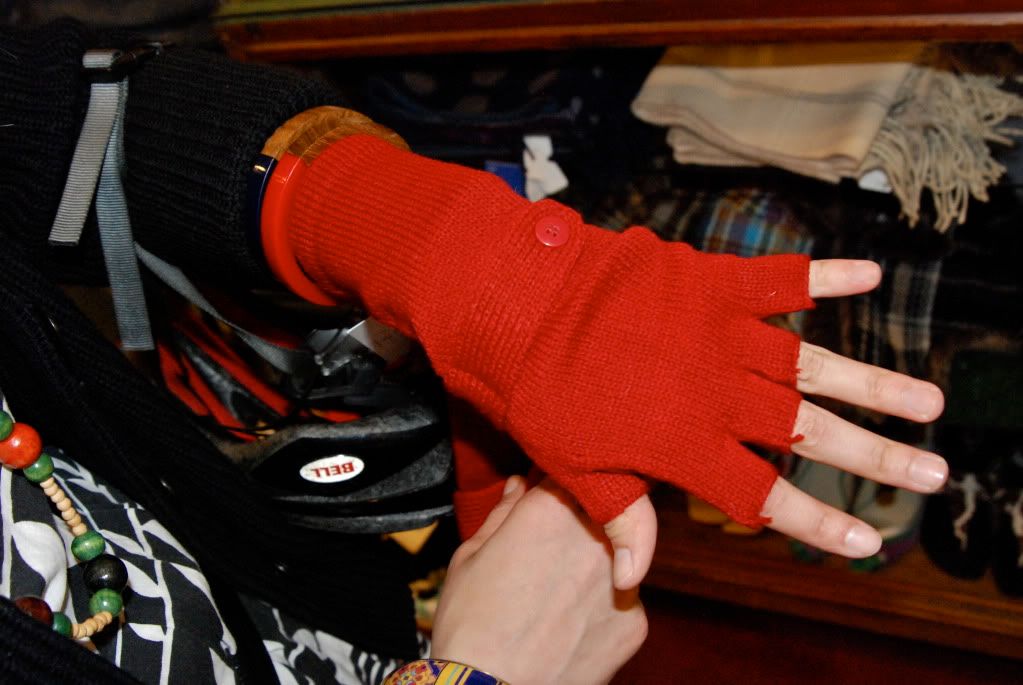
Solitary Man Michael Douglas has a (post?) midlife crisis. (1:30)

*Splice See "In the Cut." (1:45)

*Trash Humpers What is Trash Humpers? Is it filmmaker Harmony Korine’s rage against his experiences making 2007’s Mister Lonely? Despite being characteristically bizarre, with tales of celebrity impersonators and flying nuns, Mister Lonely was Korine’s most technically polished (i.e., expensive-looking) film to date. By contrast, Trash Humpers, shot on the quick and mega-cheap, literally looks like "an old VHS tape that was in some attick [sic] or buried in some ditch," per the film’s charmingly lo-fi press kit. There’s also Trash Humpers’ rather, uh, subversive content. Basically, it’s 78 minutes of shenanigans, starring a trio of ne’er-do-wells who are either wearing elderly-burn-victim masks or are actually supposed to be elderly burn victims. The creepy crew and their pals cavort through an unidentified Nashville, smashing TVs, slipping razor blades into apples, guzzling booze, spanking hookers, setting off firecrackers, cracking racist and/or homophobic jokes, eating pancakes doused in dish soap, and humping trash cans. Lots of trash cans. Primitive video technology (the film was edited on two VCRs) makes everything look even worse, if that’s even possible. Now, if you or I submitted Trash Humpers, the programmers at the Toronto International Film Festival would chuckle condescendingly and fling it into the nearest (humpable) trash bin. But you have to consider the source: Salon recently dubbed Korine "the most hated man in art-house cinema," which if true is probably the director’s most cherished triumph. (1:18) Yerba Buena Center for the Arts. (Eddy)

Women Without Men Potent imagery has always been at the forefront of photographer and installation artist Shirin Neshat’s explorations of gender in Islamic society, and her debut feature Women Without Men certainly has its share. Loosely based on Shahrnush Parsipur’s novel of the same name, the film follows four Iranian women (down from the novel’s original five) — Fakhri, an upper-class military wife who longs to reconnect with an old lover; Zarin, a traumatized prostitute who escapes captivity; Munis, a housebound young woman reborn as a political dissident; and her friend, Faezeh, who longs to marry Munis’ domineering brother — in the days leading up to the 1953 coup d’etat that overturned democracy and restored the Shah to power. From the suicidal leap — filmed so as to suggest flight as much as falling — which opens the film, to the mist-shrouded groves of a rural orchard that becomes a refuge for the women, each shot is as striking for its beauty as it is uneven in conveying the allegorical significance behind all the lushness. The casts’ largely stilted performances don’t help much in this regard either. "All that we wanted to was to find a new form, a new way," says Munis in voiceover. As a creative act of mourning for Iran’s short-lived experiment in democracy — a moment, Neshat acknowledges in the film’s postscript, that clearly resonated with last year’s Green revolution — Women Without Men ambitiously attempts, albeit with mixed success, to envision just that. (1:35) (Sussman)

ONGOING

Alice in Wonderland Tim Burton’s take on the classic children’s tale met my mediocre expectations exactly, given its months of pre-release hype (in the film world, fashion magazines, and even Sephora, for the love of brightly-colored eye shadows). Most folks over a certain age will already know the story, and much of the dialogue, before the lights go down and the 3-D glasses go on; it’s up to Burton and his all-star cast (including numerous big-name actors providing voices for animated characters) to make the tale seem newly enthralling. The visuals are nearly as striking as the CG, with Helena Bonham Carter’s big-headed Red Queen a particularly marvelous human-computer creation. But Wonderland suffers from the style-over-substance dilemma that’s plagued Burton before; all that spooky-pretty whimsy can’t disguise the film’s fairly tepid script. Teenage Alice (Mia Wasikowska) displaying girl-power tendencies is a nice, if not surprising, touch, but Johnny Depp’s grating take on the Mad Hatter will please only those who were able to stomach his interpretation of Willy Wonka. (1:48) (Eddy)

*Babies Thomas Balmes’ camera records the first year in the lives of four infants in vastly different circumstances. They’re respectively born to hip young couple in Tokyo’s high-tech clutter; familiar moderately alterna-types (the father is director Frazer Bradshaw of last year’s excellent indie drama Everything Strange and New) in SF’s Mission District; a yurt-dwelling family isolated in the vast Mongolian tundra; and a Namibian village so maternally focused that adult menfolk seem to have been banished. Yes, on one level this is the cutest li’l documentary you ever saw. But if you were planning to avoid thinking that is all (or most) of what Babies would be like, you will miss out big time. Void of explanatory titles, voice-over narration, or subtitle translations, this is a purely observatory piece that reveals just how fascinating the business of being a baby is. There’s very little predictable pooping, wailing, or coddling. Instead, Balmes’ wonderful eye captures absorbing moments of sussing things out, decision-making, and skill learning. While the First World tykes firstborns both — are hauled off to (way) pre-school classes, the much less day planned Third Worlders have more complex, unmediated dealings with community. Those range from fending off devilish older siblings to Mongol Bayarjargal’s startlingly casual consorting with large furry livestock. (Imagine the horror of parents you know were their baby found surrounded by massive cows — a situation that here causes no concern whatsoever for adults, children, or bovines.) So accustomed to the camera that it doesn’t influence their behavior, the subjects here are viewed with an intimacy that continually surprises. Babies is getting a wider-than-usual release for a documentary, one cannily timed to coincide with Mother’s Day. But don’t be fooled: this movie is actually very cool. (1:19) Smith Rafael. (Harvey)

*Big River Man Some people are just larger than life. Martin Strel is 53-year-old overweight, alcoholic, endurance swimmer from Slovenia who has made it his calling to swim the world’s longest rivers. Borut Strel, his son and primary publicist, might say his father does it to increase awareness about pollution or, in the Amazon’s case, deforestation, but we quickly see that there is a deeper compulsion that goes into Martin’s swims. Big River Man chronicles Martin’s descent down the Amazon river, from Peru to Brazil, as he scoffs at piranhas and alligators, all while drinking two bottles of wine a day. Martin is definitely a funny guy and he helps make Big River Man a funny film, but most impressive is the subtle shift from quirky human interest documentary to Heart of Darkness-style thriller when too many days in the sun cause Martin to lose his grip on reality. (1:34) Roxie. (Peter Galvin)

*City Island The Rizzo family of City Island, N.Y. — a tiny atoll associated historically with fishing and jurisdictionally with the Bronx — have reached a state where their primary interactions consist of sniping, yelling, and storming out of rooms. These storm clouds operate as cover for the secrets they’re all busy keeping from one another. Correctional officer Vince (Andy Garcia) pretends he’s got frequent poker nights so he can skulk off to his true shameful indulgence: a Manhattan acting class. Perpetually fuming spouse Joyce (Julianna Margulies) assumes he’s having an affair. Daughter Vivian (Dominik García-Lorido) has dropped out of school to work at a strip joint, while the world class-sarcasms of teenager Vinnie (Ezra Miller) deflect attention from his own hidden life as an aspiring chubby chaser. All this (plus everyone’s sneaky cigarette habit) is nothing, however, compared to Vince’s really big secret: he conceived and abandoned a "love child" before marrying, and said guilty issue has just turned up as a 24-year-old car thief on his cell block. Writer-director Raymond De Felitta made a couple other features in the last 15 years, none widely seen; if this latest is typical, we need more of him, more often. Perfectly cast, City Island is farcical without being cartoonish, howl-inducing without lowering your brain-cell count. It’s arguably a better, less self-conscious slice of dysfunctional family absurdism than Little Miss Sunshine (2006) — complete with an Alan Arkin more inspired in his one big scene here than in all of that film’s Oscar-winning performance. (1:40) (Harvey)

The City of Your Final Destination In James Ivory’s latest literary adaptation, Omar (Omar Metwally), an Iranian American graduate student of Latin American literature, precipitously descends on a rural estate in Paraguay, hoping to petition the relatives of deceased writer Jules Gund for authorization to write his biography. Numbering among the somewhat complicated ménage are Gund’s widow, Caroline (Laura Linney), his mistress, Arden (Charlotte Gainsbourg), their child, Portia (Ambar Mallman), the author’s brother, Adam (Anthony Hopkins), and Adam’s lover, Pete (Hiroyuki Sanada), a household that the film depicts as caught in a sedative isolation obstructing any progress or flourishing or change. But where Gund’s violent suicide has failed to produce a cataclysmic shift, the somewhat hapless Omar manages to interrupt their idle routines and mobilize them, stirring up sentiment and ambition. The notion of redirected fate is telegraphed by the title, but what the film does best is show the calm before the storm (really more of a heavy downpour) — and showcase the fineness of Hopkins’s and Linney’s dramatic abilities. In the final act, we see the characters being moved about rather than moved, and the sound of screeching brakes applied as the film reaches its conclusion undoes much of the subtlety invested in their performances. (1:58) (Rapoport)

Clash of the Titans The minds behind Clash of the Titans decided their movie should be 3D at the last possible moment before release. Consequently, the 3D is pretty janky. I don’t know what the rest of the film’s excuse is. Clash of the Titans retreads the 1981 cult classic with reasonable faithfulness, though Ray Harryhausen’s stop-motion effects have been (of course) replaced with CG renderings of all the expected monsters, magic, gods, etc. Liam Neeson and Ralph Fiennes — as other reviews have pointed out: Schindler’s List (1993) reunion! — glow and glower as Zeus and Hades, while Sam Worthington (2009’s Avatar) once again fills the role of bland hero, this time as a snooze-worthy Perseus. You might have fun in the moment with Clash of the Titans, but it’s hardly memorable, and certainly nowhere near epic. (1:58) (Eddy)

*Exit Through the Gift Shop Exit Through the Gift Shop is not a film about the elusive graffiti-cum-conceptual artist and merry prankster known as Banksy, even though he takes up a good chunk of this sly and by-no-means impartial documentary and is listed as its director. Rather, as he informs us — voice electronically altered, face hidden in shadow — in the film’s opening minutes, the film’s real subject is one Thierry Guetta, a French expat living in LA whose hangdog eyes, squat stature, and propensity for mutton chops and polyester could pass him off as Ron Jeremy’s long lost twin. Unlike Jeremy, Guetta is not blessed with any prodigious natural talent to propel him to stardom, save for a compulsion to videotape every waking minute of his life (roughly 80 percent of the footage in Exit is Guetta’s) and a knack for being in the right place at the right time. When Guetta is introduced by his tagger cousin to a pre-Obamatized Shepard Fairey in 2007, he realizes his true calling: to make a documentary about the street art scene that was then only starting to get mainstream attention. Enter Banksy, who, at first, is Guetta’s ultimate quarry. Eventually, the two become chummy, with Guetta acting as lookout and documenter for the artist just as the art market starts clambering for its piece of, "the Scarlet Pimpernel of street art," as one headline dubs him. When, at about three quarters of the way in, Guetta, following Banksy’s casual suggestion, drops his camcorder and tries his hand at making street art, Exit becomes a very different beast. Guetta’s flashy debut as Mr. Brainwash is as obscenely successful as his "art" is terribly unimaginative — much to the chagrin of his former documentary subjects. But Guetta is no Eve Harrington and Banksy, who has the last laugh here, gives him plenty of rope with which to truss himself. Is Mr. Brainwash really the ridiculous and inevitable terminus of street art’s runaway mainstream success (which, it must be said, Banksy has handsomely profited from)? That question begs another: with friends like Banksy, who needs enemies? (1:27) (Sussman)

*The Father of My Children Grégoire Canvel (Louis-Do de Lencquesaing) is a perpetual motion machine: a Paris-based veteran film producer of complicated multinational whose every waking moment is spent pleading, finessing, reassuring, and generally putting out fires of the artistic, logistic, or financial kind. But lately the strain has begun to surpass even his Herculean coping abilities. Debtors are closing in; funding might collapse for a brilliant but uncommercial director’s already half-finished latest. After surviving any number of prior crises, Gregoire’s whole production company might finally dissolve into a puddle of red ink and lawsuits. He barely has time to enjoy his perfect family, with Italian wife Sylvia (Chiara Caselli) and three young daughters happily ensconced in a charming country house. Something’s got to give — and when it does, writer-director Mia Hansen-Love’s drama (very loosely based on the life of a late European film producer) drastically shifts its focus midway. Her film’s first half is so arresting — with its whirlwind glimpse at a job so few of us know much about, yet which couldn’t be more important in keeping cinema afloat — that the second half inevitably seems less interesting by comparison. Still, for about 55 minutes The Father of My Children offers something you haven’t quite seen before, an experience well worthwhile even if the subsequent 55 are less memorable. (1:50) (Harvey)

*The Ghost Writer Roman Polanski’s never-ending legal woes have inspired endless debates on the interwebs and elsewhere; they also can’t help but add subtext to the 76-year-old’s new film, which is chock full o’ anti-American vibes anyway. It’s also a pretty nifty political thriller about a disgraced former British Prime Minister (Pierce Brosnan) who’s hanging out in his Martha’s Vineyard mansion with his whip-smart, bitter wife (Olivia Williams) and Joan Holloway-as-ice-queen assistant (Kim Cattrall), plus an eager young biographer (Ewan McGregor) recently hired to ghost-write his memoirs. But as the writer quickly discovers, the politician’s past contains the kinds of secrets that cause strange cars with tinted windows to appear in one’s rearview mirror when driving along deserted country roads. Polanski’s long been an expert when it comes to escalating tension onscreen; he’s also so good at adding offbeat moments that only seem tossed-off (as when the PM’s groundskeeper attempts to rake leaves amid relentless sea breezes) and making the utmost of his top-notch actors (Tom Wilkinson and Eli Wallach have small, memorable roles). Though I found The Ghost Writer‘s ZOMG! third-act revelation to be a bit corny, I still didn’t think it detracted from the finely crafted film that led up to it. (1:49) (Eddy)

*The Girl With the Dragon Tattoo By the time the first of Stieg Larsson’s so-called "Millennium" books had been published anywhere, the series already had an unhappy ending: he died (in 2004). The following year, The Girl With the Dragon Tattoo became a Swedish, then eventually international sensation, its sequels following suit. The books are addicting, to say the least; despite their essential crime-mystery-thriller nature, they don’t require putting your ear for writing of some literary value on sleep mode. Now the first of three adaptive features shot back-to-back has reached U.S. screens. (Sorry to say, yes, a Hollywood remake is already in the works — but let’s hope that’s years away.) Even at two-and-a-half hours, this Girl With the Dragon Tattoo by necessity must do some major truncating to pack in the essentials of a very long, very plotty novel. Still, all but the nitpickingest fans will be fairly satisfied, while virgins will have the benefit of not knowing what’s going to happen and getting scared accordingly. Soon facing jail after losing a libel suit brought against him by a shady corporate tycoon, leftie journalist Mikael Blomkvist (Michael Nyqvist) gets a curious private offer to probe the disappearance 40 years earlier of a teenage girl. This entangles him with an eccentric wealthy family and their many closet skeletons (including Nazi sympathies) — as well as dragon-tattooed Lisbeth Salander (Noomi Rapace), androgynous loner, 24-year-old court ward, investigative researcher, and skillful hacker. Director Niels Arden Oplev and his scenarists do a workmanlike job — one more organizational than interpretive, a faithful transcription without much style or personality all its own. Nonetheless, Larsson’s narrative engine kicks in early and hauls you right along to the depot. (2:32) Smith Rafael. (Harvey)

Harry Brown Shades of Dirty Harry (1971) for the tea cozy and tweed set: elegantly rendered and very nicely played, Harry Brown might be the dark, late-in-the-day elder brother to 1971’s Get Carter, in the hands of eponymous lead Michael Caine. He’s a pensioner mourning the passing of his beloved wife, his mysterious life as a Marine stationed in Northern Ireland firmly behind him. Then his chess-playing pal Leonard (David Bradley) is terrorized and killed by the unsavory gang of heroin dealing hoodlums who lurk near their projects in a tunnel walkway like gun-toting, foul-mouthed, sociopathic trolls. Harry Brown is, er, forced to forsake a vow of peace and go commando on the culprits’ asses, triggering some moments of ultraviolence that are unsettling in their whole-hearted embrace of vigilante justice. Like predecessors similarly fixated on vengeance in their respective urban hells, a la Hardcore (1979) and Taxi Driver (1976) (Harry Brown echoes key moments in the latter, in particular — see, for instance, its keenly tense, eerily humorous gun shopping scene), Harry Brown is essentially an arch-conservative film, if good looking and even likable with Caine meting out the punishment. The overall denouement just might make some seniors feel very, very good about the coiled potential for hurt embedded in their aging frames. (1:42) (Chun)

How to Train Your Dragon (1:38)

The Human Centipede (First Sequence) Director Tom Six had a vision, a glorious dream of surgically connecting three human beings via their gastro-intestinal systems, or as Kevin Smith would say — "ass to mouth." When two girlfriends on a road trip across Europe get a flat tire, they stumble upon the home of a mad doctor (Dieter Laser) with a similar dream, who drugs them and ties them up in his basement laboratory. The Human Centipede is an entry into the torture porn arena, but it feels especially icky because you just know that the girls have zero chance of escaping the "100 percent medically accurate!" surgery. Once hooked up, there’s nowhere for the film to go and two out of three actors can’t talk because they are sewn to someone else’s anus. Still, as one-note as The Human Centipede is, I think we’d do well to encourage more films to be as batshit insane as this one. (1:30) (Galvin)

*Iron Man 2 Tony Stark (Robert Downey Jr.) returns, just as rich and self-involved as before, though his ego his inflated to unimaginable heights due to his superheroic fame. Pretty much, he’s put the whole "with great power comes great responsibility" thing on the back burner, exasperating everyone from Girl Friday Pepper Potts (Gwyneth Paltrow); to BFF military man Rhodey (Don Cheadle, replacing the first installment’s Terrence Howard); to certain mysterious Marvels played by Samuel L. Jackson and Scarlett Johansson; to a doofus-y rival defense contractor (Sam Rockwell); to a sanctimonius Senator (Garry Shandling). Frankly, the fact that a vengeful Russian scientist (Mickey Rourke) is plotting Tony’s imminent death is a secondary threat here — for much of the film, Tony’s biggest enemy is himself. Fortunately, this is conveyed with enjoyable action (props to director Jon Favreau, who also has a small role), a witty script (actor Justin Theroux — who knew? He also co-wrote 2008’s Tropic Thunder, by the way), and gusto-going performances by everyone, from Downey on down. Stay for the whole credits or miss out on the geek-gasm. (2:05) (Eddy)

Just Wright (1:51)

*Kick-Ass Based on a comic book series by Mark Millar, whose work was also the model for 2008’s Wanted, Kick Ass is a similarly over-the-top action flick that plays up its absurdity to even greater comedic effect. High school nerd Dave (Aaron Johnson) decides to become the world’s first real superhero. Donning a green wetsuit he bought on the internet and mustering some unlikely courage, he takes to the streets to avenge wrongdoing. Unsurprisingly, Dave is immediately beaten almost to death because he’s just a kid who has no idea what he’s doing, but Kick-Ass‘ greatest achievement is knowing exactly how to subvert audience expectations. Scenes that marry the film’s innocent story with enormously exaggerated violence enhance the otherwise Superbad-lite high-school comedy unfolding around them, and a parallel plot-line involving Nicolas Cage instructing his 12-year-old daughter to commit grievous murders will probably end up being the most gratifying aspect of the film. Though too much set-up and spinning gears mars the middle act, it’s hard to fault the film for competently setting up one of the most crowd-pleasing endings in recent memory. (1:58) (Galvin)

Kites As randomly exuberant, shamelessly cheesy, and as garishly OTT as an amalgam of Bollywood song-and-dance flash and ’80s Hollywood blockbuster can get, Kites is a lovable mutt through and through — ready for its stateside close-up with by way of a forthcoming Brett Ratner English-language "remix" treatment. But first the two-hour original: J (Hrithik Roshan) is a poor but studly, V-chested dance teacher who hits the jackpot in Vegas with Gina (Kangna), his besotted student and the daughter of a powerful and deadly casino owner. Their dance competition number — jumpily cut like a hybrid of Dancing With the Stars, Saturday Night Fever (1977), and Fame (1980) — lands J in the bosom of Gina’s family, where he meets her sadistic bro, Tony (Nick Brown), and his fiancée, Natasha (Barbara Mori), an illegal immigrant from Mexico. But J and Natasha have met briefly before, when she hired him to marry her for a green card. How can a connected, killer family possibly get in the way of true love — between two leads who resemble a youthful, performance-enhanced, manically happily Nicolas Cage and Megan Fox? Smoothly integrating the dance numbers into the predictable narrative, Kites has polished off any possible edge from its high-energy Bollywood riff on the movies of Michael Bay and Ridley Scott, but that doesn’t mean you can tear your eyes from the screen, or stop the music. (1:30) (Chun)

Letters to Juliet If you can stomach the inevitable Barbara Cartland/Harlequin-romance-style clichés — and believe that Amanda Seyfried as a New Yorker fact-checker — then Letters to Juliet might be the ideal Tuscan-sunlit valentine for you. Seyfried’s Sophie is on a pre-honeymoon trip to Verona with her preoccupied chef-restaurateur intended, Victor (Gael Garcia Bernal), who’s more interested in sampling cheese and purchasing vino than taking in the romantic attractions of Verona with his fiancée. Luckily she finds the perfect diversion for a wannabe scribe: a small clutch of diehard romantics enlisted by the city of Verona to answer the letters to Juliet posted by lovelorn ladies. They’re Juliet’s secretaries — never mind that Juliet never managed to maintain a successful or long-term relationship herself. When Sophie finds a lost, unanswered letter from the ’50s, she sets off sequence of unlikely events, as the letter’s English writer, Claire (Vanessa Redgrave), returns to Verona with her grandson Charlie (Christopher Egan), in search of her missed-connection, Lorenzo. Alas, Lorenzo’s long gone, and the fact-checker decides to help the warm-hearted, hopeful Claire find her lost lover. Unfortunately Sophie’s chemistry with both her matches isn’t as powerful as Redgrave’s with real-life husband Franco Nero — after all he was Lancelot to her Guenevere in 1967’s Camelot and the father of her son. Still, Redgrave’s power as an actress — and her relationship with Nero — adds a resonance that takes this otherwise by-the-numbers romance to another level. (1:46) (Chun)

*Looking for Eric Eric Bishop (Steve Everts) is a single dad, frustrated at his inability to bond with his teenage sons and heartbroken over his failed marriage to Lily (Stephanie Bishop), the woman he walked out on 20 years ago but never managed to get over. Just when things are looking dire, Eric is delivered in surprising, magical fashion by hallucinatory visitations from Eric Cantona, his favorite soccer player, a philosophical Frenchman who was as renowned for his inscrutable press conferences as he was for his scintillating goals. Cantona plays himself, and passes pensive joints with Bishop as they slowly piece his shattered life back together. American viewers might be have trouble deciphering the intricacies of soccer culture or the molasses-thick Mancunian accents, but at its heart the movie (by Brit director Ken Loach) is an amusing, tautly crafted fable of middle-aged alienation giving way to hope and gumption. (1:57) Smith Rafael. (Richardson)

MacGruber Mudflaps, moptops, box-office flippity-flops, such is the sad transition Saturday Night Live skits make to the big screen. Handicapped as such MacGruber also has a very specific demographic in mind: the Gen-Xers who popularized the use of MacGyver as a verb and harbor a picture-tube-deep ironic affection for the lousy ’80s TV action shows of their youth. Does anyone younger — or older — than that population get MacGruber‘s interest in Howard Stern-style transgressive humor, its "Cunth"/dick/poop/butt jokes, and its shameful identification with badly dated hair styles? That said, MacGruber isn’t half bad if one keeps expectations nice ‘n’ low, much like its hero’s brow, and one enjoys a comic antihero who uses his buds as human shields and can’t MacGyver a weapon out of a tennis ball and rubber-band to save his life. Laughs can be had — as long as your bad Gen-X self is still in touch with your inner 13-year-old. MacGruber won’t make the Bay Area-born-and-bred Will Forte a superstar, but at least it gives Kristen Wiig fans another, if somewhat inexplicable, chance to glimpse their heroine in action, with little to do — someone get this smart, likable actress into a Nicole Holofcener comedy ASAP. (1:39) (Chun)

*Mid-August Lunch Gianni Di Gregorio’s loose, engaging comedy is about an aging bachelor still living with his ancient mum in their Rome flat. When his landlord offers to forgive some debts in return for briefly taking in his own elderly ma, Gianni (played by the director himself) soon finds himself in cat-herding charge of no less than five old ladies who delight in one another’s company while running him ragged. Gomorrah (2008) screenwriter Di Gregorio used nonprofessionals to play those parts in this semi improvised miniature, which is as light and flavorful as a first course of prosciutto and mozzarella. It’s a solid addition to the canon of palate-pleasing culinary flicks such as Big Night (1996) and Babette’s Feast (1987), as opposed to the repulsive ones like Super Size Me (2004) or Monty Python’s The Meaning of Life (1983). (1:15) (Harvey)

La Mission A veteran S.F. vato turned responsible — if still muy macho — widower, father, and Muni driver, fortysomething Che (Benjamin Bratt) isn’t the type for mushy displays of sentiment. But it’s clear his pride and joy is son Jess (Jeremy Ray Valdez), a straight-A high school grad bound for UCLA. That filial bond, however, sustains some serious damage when Che discovers Jes has a secret life — with a boyfriend, in the Castro, just a few blocks away from their Mission walkup but might as well be light-years away as far as old-school dad is concerned. This Bratt family project (Benjamin’s brother Peter writes-directs, his wife Talisa Soto Bratt has a supporting role) has a bit of a predictable TV-movie feel, but its warm heart is very much in the right place. (1:57) Roxie. (Harvey)

Mother and Child Adoption advocates who railed against Orphan (2009) should turn their sights on Mother and Child, a ridiculous melodrama with a thoroughly vile message. I’d wager writer-director Rodrigo García didn’t set out to make an anti-adoption film: this is a movie about the relationship between mothers and daughters. But the undertones are impossible to miss. Annette Bening plays Karen, a miserable woman consumed by regret for putting her daughter up for adoption 37 years ago. That biological daughter is Elizabeth (Naomi Watts), who — despite having been adopted at birth — speaks dismissively of her "adoptive" parents as though they were never really hers. She’s cold and manipulative, sleeping with her boss and married neighbor because she can. Mother and Child offers no real explanation for why these women are so unpleasant, so we’re forced to conclude it’s the four decades-old adoption. Despite a stellar cast, which also includes Kerry Washington, Samuel L. Jackson, and S. Epatha Merkerson, the film’s misguided politics are too distracting to ignore. (2:06) (Peitzman)

*OSS 117: Lost in Rio The Cold War heated up a public appetite for spy adventures well before James Bond became a pop phenomenon. In fact, Ian Fleming hadn’t yet created 007 in 1949, when Jean Bruce commenced writing novels about Hubert Bonisseur de La Bath, a.k.a. Agent OSS 117. This French superspy was ready-made to join the ranks of umpteen 007 wannabes, appearing in somewhere between six and 11 films (it’s unclear whether all involved de La Bath, or were just Bruce-based) through 1970, played by at least four actors. The series remained well-known enough to get a new life in 2006 when director Michel Hazanavicius and top French comedy star Jean Dujardin sought to spoof 1960s espionage flicks a la Austin Powers: International Man of Mystery (1997). That was a big hit, so now we’ve got a sequel. OSS 117: Lost in Rio isn’t as fresh or funny as the preceding Cairo, Nest of Spies. But it’s still a whole lot fresher and funnier than Austin Powers Nos. two (1999) and three (2002). Dujardin’s de La Bath is the very model of jet-set masculinity, twisting the night away at a ski chalet with umpteen soon-to-be-machine gunned "Oriental" lovelies in the opening sequence. Of course such pleasure pursuits take place strictly between car chases, shootouts, and karate fights. Agreeably silly, Lost in Rio doesn’t go for Hollywood-style slapstick and gross out yuks. Instead, its biggest laughs are usually droll throwaways, as when 117 explains a shocking sudden costume change with the unlikely declaration "I sew," or during an LSD-dosed hippie orgy proves quite willing to go with the flow — even when that involves another guy’s groovy finger breaching security up the pride of French intelligence’s derriere. (1:37) (Harvey)

*Please Give Manhattan couple Kate (Catherine Keener) and Alex (Oliver Platt) are the proprietors of an up-market vintage furniture store — they troll the apartments of the recently deceased, redistributing the contents at an astonishing markup — and they’ve purchased the entire apartment of their elderly next-door neighbor (Ann Guilbert). As they wait for her to expire so they can knock down a wall, they try not to loom in anticipation in front of her granddaughters, the softly melancholic Rebecca (Rebecca Hall) and the brittle pragmatist Mary (Amanda Peet). Filmmaker Nicole Holofcener has entered this territory before, examining the interpersonal pressures that a sizable income gap can exert in 2006’s Friends with Money. Here she turns to the pangs and blunderings of the liberal existence burdened with the discomforts of being comfortable and the desire to do some good in the world. The film capably explores the unexamined impulses of liberal guilt, though the conclusion it reaches is unsatisfying. Like Holofcener’s other work, Please Give is constructed from the episodic material of mundane, intimate encounters between characters whose complexity forces us to take them seriously, whether or not we like them. Here, though, it offers these private connections as the best one can hope for, a sort of domestic grace accrued by doing right, authentically, instinctively, by the people in your immediate orbit, leaving the larger world to muddle along on its axis as best it can. (1:30) (Rapoport)

Prince of Persia: The Sands of Time It takes serious effort to make a movie with a story dumber than the video game it’s based on. Director Mike Newell somehow accomplishes this feat with Prince of Persia: The Sands of Time, a Disneyfied flop that flails clumsily in the PG-13 demilitarized zone, delivering sanitized violence, chaste romance, and dreary drama. Jake Gyllenhaal plays Dastan, an urchin boy — one jump, ahead of the bread line — adopted by the king and raised to be the wise-cracking black sheep in a family of feuding princes. He’s got Middle East ninja skills — one swing, ahead of the sword — and his infiltration of a sacred city nets him the magical Dagger of Time, a gilded rewind button coveted by his evil uncle Nizam (Ben Kingsley), who wants to use it for, well, evil, and Princess Tamina (Gemma Arterton), who’s sworn to protect it. Pressing a button on the dagger’s hilt allows its wielder to undo past events. If you have the misfortune of seeing this movie, you’ll want one for yourself. (2:10) (Richardson)

Princess Kaiulani Well-meaning and controversial (the independent’s first title, Barbarian Princess, and the tragic events it depicts has distressed some native Hawaiians) in its own inoffensive way, Princess Kaiulani is unfortunately overshadowed by star Q’orianka Kilcher’s first film, 2005’s The New World, in which she portrayed Pocahontas. The Hawaii-raised Kilcher appears to be getting typecast as a tragic, romanticized native royal. Still, if you can get past director Marc Forby’s weak attempts to match New World director Terrence Malick’s searingly poetic montages and the clunky History Channel-by-the-numbers screenplay, you might give a little credit to the makers for bringing to the screen the tale of Hawaii’s last intelligent, beautiful, and accomplished princess — a young woman determined to fight an overthrow of the Hawaiian monarchy and battle its annexation against the white land owners and descendents of missionaries who tried to block the voting rights of native Hawaiians. Kilcher possesses some of the noble charisma claimed by the real Kaiulani, but the obligatory romance superimposed on the narrative and the neglect of some of genuinely promising threads, such as Kaiulani’s friendship with Robert Louis Stevenson, make Princess Kaiulani feel as faux as those who pretended to Hawaii’s rule. (2:10) (Chun)

Robin Hood Like it or not, we live in the age of the origin story. Ridley Scott’s Robin Hood introduces us to the outlaw while he’s still in France, wending his way back to Albion in the service of King Richard III. The Lionheart soon takes an arrow in the neck in order to demonstrate the film’s historical bona fides, and yeoman archer Robin Longstride (Russell Crowe) — surrounded by a nascent band of merry men — accidentally embroils himself in a conspiracy to wrest control of England. The complications of this intrigue hie Robin to Nottingham, where he is thrown together with Maid Marion (Cate Blanchett), a plucky rural aristocrat who likes getting her hands dirty almost as much as she likes a bit of smoldering Crowe seduction. A lot of hollow medieval verisimilitude ensues, along with a good bit of slow-mo swordplay, but the cumulative effect is tepid and rote. (2:20) (Richardson)

The Secret in Their Eyes (2:07)

Sex and the City 2 Sex and the City 2 couldn’t be anymore brazenly shameless, dizzyingly shallow, or patently offensive if it tried. This is aspiration porn, pure and simple, kitted out in the Orientalist trappings of a Vogue spread and with all the emotional intelligence of a 12 year-old brat. As the first SATC film nearly made short work of any shred of nuance or humanity that Carrie, Samantha, Charlotte, and Miranda carried over from their televised selves, SATC 2 fully embraces the bad pun-spewing, couture-clad clichés the girls have hardened into. Sure they have kids, husbands, career changes, and menopause to deal with, but who cares about those tired signposts of middle age when there is more shit to buy, more champagne to swill, private airlines to fly on, $22,000-a-night luxury suites to inhabit, Helen Reddy songs to butcher, and whole other peoples — specifically, the people of Abu Dhabi, who speak funny, dress funnier, and have craaazy notions about what it means to be "one of the girls" — to alternately boss around, offend, and pity? (Fun SATC2 fact: did you know that in the "new Middle East" women secretly wear designer duds underneath their abayas?) Oh, that one tiny pang of sympathy you feel during the tipsy confessional between Charlotte and Miranda in which they bond over how being a mother and giving up one’s life ambition is difficult? A mirage. Because really, the greater concern is flying back to JFK first class or bust. And let’s not even get into the few bones the film tosses to the homos, such as the opening set piece: a gay wedding only a straight man could’ve thought up, replete with a shopworn Liza Minnelli having her Gene Kelly-in-Xanadu moment. But seriously, Michael Patrick King, don’t get it twisted: Stanford may call it such, but it’s not "cheating" if you’re already in an open relationship. Then again, if being a foil for your straight BFF’s insecurities about the luxe confines of monogamy gets you a gift registry at Bergdorf’s, why not? The laughs are cheaper this time around, but SATC 2‘s fuckery is strictly price-upon-request. (2:24) Castro. (Sussman)

Shrek Forever After 3D It’s easy to give Dreamworks a hard time for pumping out a fourth sequel to a film that never really needed a sequel in the first place. But Shrek Forever After isn’t all that bad — it’s mostly just irrelevant. The film does begin on an interesting note, with Shrek discovering the consequences of settling down with a wife and kids: serious ennui. It’s refreshing to see a fairy tale in which "happily ever after" is revealed to be rather mundane. But soon there are wacky magical hijinks that spawn an alternate universe, a cheap way to inject new life into tired old characters. (You like Puss in Boots? Well, he’s fat now.) Luckily, the voice actors are still game and the animation remains top-notch. The 3D effects are well used for once, fleshing out Shrek’s world rather than providing an unnecessary distraction. The end result is a mildly entertaining addition to the franchise, but like the alternate universe in which Shrek finds himself stranded, there’s no real reason it should exist. (1:33) (Peitzman)

Survival of the Dead George A. Romero’s 2007 Diary of the Dead was a surprise hit, and with an eye toward delivering similar results, Survival of the Dead spins off one of its predecessor’s minor characters. Amid a zombie attack that already seems like old news by movie’s start, a disaffected soldier (Alan Van Sprang) goes AWOL with a few comrades and a teenage drifter they meet along the way. A possible refuge from the undead presents itself in the form of Plum Island, which despite being in the United States is populated by two extremely Irish families with a long-standing hillbilly-style feud that simply won’t be mended, zombies be damned. Props to Romero for finding a way to make movies on his own terms; the horror legend is back to working with a small budget and enjoying the kind of creative control that shaped his earliest films. But Survival of the Dead is tonally uneven, and its Western-inspired story veers into the ridiculous (surprise twins?!) End result: there’s more human drama than zombie fun. (1:30) (Eddy)

Touching Home Hometown boys (Logan and Noah Miller) make good in this based-on-a-true-story tale of identical twins who must divide their time at home between training for major league baseball and looking after their alcoholic father. The brothers, who also wrote and directed the film, aim for David Gordon Green by way of Marin, but fall short of mastering that director’s knack for natural dialogue. Ed Harris is, unsurprisingly, compelling as the alcoholic father, but the actors in the film who are not named Ed Harris tend to contribute to the script’s distracting histrionics. Touching Home has some amazing NorCal cinematography, and I could see how family audiences might enjoy its "feel bad, then feel good" style of melodrama. But while it’s awkward to say that someone’s real-life experiences come off as trite, there are moments here that feel as clichéd as a Lifetime movie. (1:48) Smith Rafael. (Galvin)

More digital glam!

0

For this week’s Video Issue, I wrote about the YouTube beauty guru phenomenon. Read the article here. Complete interviews with the featured gurus follow!

YouTuber: Michele1218 (www.youtube.com/user/michele1218)
What you’ll find on her channel: wearable neutral looks demonstrated in easy-to-follow tutorials.

What inspired you to start making videos? How do you stay inspired?

I have always had a passion for makeup and beauty products and for as many friends as I have, none of them ever shared in my passion. When I stumbled across the beauty community on YouTube, one video in and I was hooked! I watched videos for about 3 months, learned so many amazing techniques, learned so much more about makeup and found new products that I never knew existed. Once I started to feel comfortable with myself and felt confident, I thought “Hey, this might be fun!” I knew how inspired I felt just watching some of these girls, and I thought it would be great if I can help inspire other girls as well! The rest was history! It’s not hard to stay inspired, I absolutely LOVE making videos and have had the time of my life meeting people and making friends. I have such a great relationship with my viewers and subscribers, and their comments and messages are what continue to inspire me everyday and make me want to continue making them!

http://www.youtube.com/watch?v=6b77oZaKJSI&playnext_from=TL&videos=2Dy8kgw6Xhc

What’s your favorite kind of video to make? Least favorite?

My favorite kind of videos to make are haul videos. They are my guilty pleasure! I get so crazy excited over makeup and when I shop and buy products I can’t wait to share my thoughts and opinions with the world! I don’t really have a least favorite type of video that I make, however I will say that reviews are becoming harder and harder to make. With so many companies finding out about all the YT Beauty gurus it seems like more and more review videos are becoming paid TV advertisements. Therefore viewers and subscribers are becoming more and more skeptical of the products people are reviewing. When I make a review video it seems as though I always have to defend it by saying my own money was spent and I was not sent free products or been paid to review. It’s unfortunate because there are a lot of girls including myself that never accept paid reviews and because the “bigger” gurus do it is assumed that we all do.

How much time per week do you spend on YouTube?

YouTube has seriously become like a 2nd full time job, but I wouldn’t change a minute of it! I work 9-5 and most days come home and spend about 2-3 hours at night responding to comments and answering questions. I spend a lot of my weekends on YT as well. I also enjoy watching YouTube videos from my friends and girls I am subscribed to! I would much rather watch videos than TV sometimes!!

What do you think of “haul” videos?

As I said, haul videos are my absolute favorite! When I first started watching them I would just buy and buy and spend and spend just to have things that so and so loves or so and so swears by! Now I have learned to really try and “control” my wants to go buy everything I see in haul videos, and just go for the things I know I will get use out of! It’s so addicting! I learn about so many amazing products and form a “mental” list that I take shopping with me each time! Some of my most favorite product finds were because of watching a haul video!

Who do you think your audience is? What do you hope they gain from watching your videos?

I believe my audience age ranges anywhere from 10-50 years old! I have had both age groups message me about my videos, and that is just amazing to me! If they can take anything away from my videos I hope that they learn something from my videos that will help themselves feel more confident. Whether it’s to learn less is more. or that a certain eye shadow color will really bring out their eyes! As much as we all love makeup and people always have the impression that makeup videos are superficial because people should feel beautiful without it. That is SO true, but at least for me the whole community is more than just makeup. It’s a community of girls that all share a passion and love for the same thing. We are all there for one another on such a personal level that stretches WAY beyond blush and lipstick. It’s crazy, but I have friends through YouTube that I know better and have been better friends to me than some friends in real life that I have personally known for years! It’s just a great feeling to know that if any of us needs anything, we are all there, regardless if its about makeup or not!

What has been your most rewarding YouTube-related experience?

I receive messages every day from girls all over the world of all ages thanking me for being their inspiration. Whether they had a bad day at school, broke up with their boyfriend, or were stuck in a hospital for weeks. When they write to me to tell me that watching my videos cheered them up or put a smile on their faces … THAT is the MOST rewarding experience I could ever ask for. It’s heartwarming and its something I NEVER get tired of hearing. I know how certain girls’ videos that I watch make me feel about myself and those girls whose videos I look forward to and count on to cheer me up, so the fact that I can do that to ONE person is all I need to know to keep me in front of my video camera!

If you were just starting YouTube today, would there be anything you’d do differently?

Yes! I would have chosen a different screen name! Haha! I just made up a name when I first started watching so that I could leave comments and send messages to my favorite girls. Had I known I would have made videos I would have made my username a little bit more interesting!

And a bonus question…
What’s your favorite make-up brand or beauty product?

My favorite makeup brand is MAC and my favorite product is mascara. I don’t care what brand but I can never leave the house without it on!!

YouTuber: Vintage or Tacky (www.youtube.com/user/vintageortacky)

What you’ll find on her channel: vibrant, colorful eye shadow looks.

What inspired you to start making videos? How do you stay inspired?

I just started doing this for fun, just to show other beauty lovers my tricks and my favorite stuff. I stay inspired because the atmosphere has changed, now there is a teaching element, and community element. People have written me telling me how my videos have helped them. That touches your heart and makes you want to continue helping people and sharing the fun!

http://www.youtube.com/watch?v=jZ16ePZJR_I&playnext_from=TL&videos=JL7MTgXXyCA

What’s your favorite kind of video to make? Least favorite?

Fave videos? Definitely tutorials. I love the artistic element. Least fave? Probably the ones where I need to be informative, like skincare videos. Don’t get me wrong, I love those videos too, but I’m always worried I’ll be under prepared and forget something. I’m a Virgo so I can be a bit of a perfectionist.

How much time per week do you spend on YouTube?

Probably more than I should, I average 35-plus hours give or take. I do this more than I do my day job.

What do you think of “haul” videos?

That’s an interesting question. Haul videos that are just braggy, or that are done all the time are totally ridiculous, I don’t like those. If all you do is haul videos, then your channel isn’t for me. If you find new cool beauty products and you give a mini review of each item, they can be a really great way to find something new. Rather than have 10 review videos, put it all into one. I prefer the term “Show and Tell” for my “haul” type videos.

Who do you think your audience is? What do you hope they gain from watching your videos?

Less than half my viewership is under 18, however teens have more time on their hands, so they are probably my most avid video watchers. I hope that my audience gains some perspective from watching my videos. Yes, I have a beauty channel, but I don’t always go on camera looking picture perfect. I showed my hair when I had a botched dye job, I’ve gone on camera without makeup. I try new hairstyles, hair colors, and makeup. It’s not always pretty, but it’s honest, it’s fun and creative. I hope they learn to have fun with their looks, but not to be ruled by them. I’m not a skinny, pretty, perfect girl, but I put it all out there, and I hope I inspire others to just be themselves, and be the best they can be. My motto is “Be Vintage Or Tacky, Just be Yourself!” That and to wear sunscreen.

What has been your most rewarding YouTube-related experience?

When people send me messages telling me how much my videos have helped them, with makeup, or skincare, or self worth and self esteem. Knowing that some people just like me and value my opinion and my videos has made me a more confident person, and has helped me though some tough patches in the last few years.

If you were just starting YouTube today, would there be anything you’d do differently?

I would probably have a different user name, and I wouldn’t have shared so much personal information, like my wedding blogs.

And a bonus question…
What’s your favorite make-up brand or beauty product?

Ah, the Million Dollar Question! My fave makeup brand is MAC, because of their quality and price (compared to other high-end companies, MAC is cheap), their palette system, the diversity of items, their pro line, and their recycling program. And, they don’t test on animals. My fave beauty product? Sunscreen. It’s the best anti-aging product ever.

YouTuber: Pursebuzz (www.youtube.com/user/pursebuzz)
What you’ll find on her channel: upbeat videos offering hair, makeup, and nail advice. Also, her “How to Fake Abs” makeup tutorial has over 13 million views. Respect.

http://www.youtube.com/watch?v=Rf3lcpHtbtg&playnext_from=TL&videos=cBGXiVBYNHk

What inspired you to start making videos? How do you stay inspired?

I started in 2006 on a separate channel to show my friend some makeup tips. After that I received some comments and that grabbed my interest. I was shocked that someone else wanted to know what I had to say. At the time I only saw professional makeup artists applying makeup on models but there weren’t any videos with makeup artists applying makeup on themselves or on everyday people. Sure, we would all love to have someone do our makeup and hair, but that’s not the case. I knew I had to start somewhere and I have always read in magazines on how to get (insert celebrity) look. So I broke down Carmen Electra’s look in her Max Factor ad showed it step by step, and I have loved it ever since. I am inspired each day by my readers and the things around me. I’ll watch a video about a movie, music video, or video game and I’ll just take something from there and make it my own. My viewers and readers inspire me because I do this for them. They will give me some fun requests and I am always up for the challenge.

What’s your favorite kind of video to make? Least favorite?

Favorite Video: I like videos where I can be creative and can express myself in characters. These videos are a great way to express yourself and have fun.
Least Favorite: I don’t have a least favorite, just depends on my mood. But I hate when I have deadlines and I have to stay up editing. I love my sleep.

How much time per week do you spend on YouTube?

Oh, I shouldn’t answer this. This will make me sound like a crazy person. I spend at least 3-5 hours each night answering questions, uploading, editing and catching up on videos. So I’d say at least 30 hours a week minimum.

What do you think of “haul” videos?

I love watching them. I feel like the beauty community is such a close group it is like watching a friend get things for Christmas.

Who do you think your audience is? What do you hope they gain from watching your videos?

My audiences are both genders looking expand their knowledge on cosmetic application, product reviews, and learn the latest hair styles. And some just like to watch so they can keep this information in their back pocket for that special occasion.

What has been your most rewarding YouTube-related experience?

Being able to help others. I am huge on understanding that your internal beauty is most important and makeup is just an accessory to your look. So it is rewarding to know that I have reached out to so many people and showed then how to be the best version of themselves. Like that phase “Give a man a fish and he’ll eat for a day. Teach a man to fish, and he will eat every day”.

If you were just starting YouTube today, would there be anything you’d do differently?

I wouldn’t use a digital camera on Kleenex boxes, that is for sure. I wouldn’t change anything that I have done.

And a bonus question…
What’s your favorite make-up brand or beauty product?

I love all brands. Every single brand has something unique and special. But my love of and obsession with makeup began with my MAC Parfait Amour eye shadow.

YouTuber: Lisa Freemont Street (www.youtube.com/user/LisaFreemontStreet)
What you’ll find on her channel: classy vintage hair and makeup techniques inspired by Old Hollywood and pin-up girls.

http://www.youtube.com/watch?v=9gTHiqL3i6M&playnext_from=TL&videos=dNDEliC_wAI

What inspired you to start making videos? How do you stay inspired?

Askmemakup, another YouTube guru, had a slew of really entertaining videos to offer. They were mainly retro styled makeup looks and I realized there weren’t many vintage hairstyles on the site to go with them. So I created my own tutorial for a Rita Hayworth style, using era specific music and a succinct style that would hopefully make it easier to watch. It did, I guess, because I got a lot of requests based on that one video and my channel has grown from there. These continued requests and the feedback of my viewing audience keeps me motivated.

What’s your favorite kind of video to make? Least favorite?

My series called “Diamonds and Dames” consists of requested looks by my viewers, based on their favorite hairstyles of classic film. These are the most fun for me because they require the most research. I have to figure out what setting was used to create the style or how to tailor the look to my own hair texture or length. I also include music from the year the film was released, to lend some extra credibility to the video, and I tend to really get into character by the end of filming. My least favorite videos to film are makeup application videos. I am not as comfortable with this medium and usually have difficulty getting good lighting or fitting the tutorial into the time allotted.
 
How much time per week do you spend on YouTube?

I watch videos while I work every day. I have a list of gurus that I follow faithfully and I like to keep up with their videos. On my own videos, I would say I spend about four hours a week, including actual styling time.
 
What do you think of “haul” videos?

It’s no secret that I don’t enjoy haul videos unless they also include a review of the product in question. Very quickly, a haul video can become a simple means of bragging to a large audience. However, if you are showing me something with the intention of sharing your opinion about the quality and whether it is worth my money … bravo!

Who do you think your audience is? What do you hope they gain from watching your videos?

I have come to realize that my viewers range in age from preteen to octogenarian. I love that! I get all kinds of comments from all over the world, from both men and women (the former say they watch my videos for the music … haha). The one thing I hope they take away is that if you enjoy and appreciate a vintage style, you should not let the world’s trends sway you.  Stay true to yourself and feel pretty all the time, even if you get a few odd looks along the way.

What has been your most rewarding YouTube-related experience?

I recently received an email from a teenage girl that felt overweight and unattractive amongst her peers, to the point that she felt invisible. After trying a few of the hairstyles featured on my channel, she began to develop confidence and to hold her head higher. She started to take pride in her appearance and participate in school activities. By the end of the year, her class gave her and award for “best hair” as well as a key part in the school play. Hearing that someone’s life changed by putting into practice a few simple beauty techniques that you taught them … that’s heartwarming.
 
If you were just starting YouTube today, would there be anything you’d do differently?

I think if I had known in advance how bad my lighting and camera quality was at first, I would definitely have invested in better equipment from the beginning. As it is, I will continue to try and improve my set-up so that the videos become even easier to watch and more helpful.

And a bonus question…
What’s your favorite make-up brand or beauty product?

My favorite beauty product is a plain white concealer stick. It can be used to provide a pale base for eye shadow or as a highlight for brows and cheeks.

Digital glam

2

Read our full interviews with the beauty gurus here!

cheryl@sfbg.com

VIDEO Back in April 2001, I wrote a Guardian article about home shopping networks. These days, I have a new fascination, no doubt originating in the same part of my brain that latched onto QVC: YouTube’s beauty gurus. I never did pick up any samurai swords from Shop at Home’s knife guy, but I can now do winged eyeliner like never before.

Filming themselves at their kitchen tables and bedroom vanities, the gurus (YT-speak for “expert”) upload opinions on everything from high-end mascara to dollar-store lip gloss. There are “Tag” videos, which get passed around from guru to guru (“Top 10 MAC Eye Shadows”), popular perennials (giveaway videos score high), and “haul” videos, which detail shopping-trip spoils.

Haul videos have earned mainstream media attention, with a recent New York Times story detailing how some women are making mad cash thanks to YouTube’s revenue-sharing partner program. The ultimate success story? Probably Lauren Luke, a.k.a. panacea81, a bubbly Brit who parlayed her YouTube fame into her own makeup line.

While not all gurus make money off YouTube, many have received free products from companies eager to tap into each channel’s unique audience. Late last year, the Federal Trade Commission ruled that “bloggers or other ‘word-of-mouth’ marketers” must disclose their material connections with a company when endorsing its products. You’ll notice many YouTube beauty vids now have FTC disclaimers (“I got this for free …”) accompanied by guru disclaimers (“… but this is my HONEST opinion!”) tucked into the video description box.

But them’s semantics. Most gurus, paid and otherwise, also provide tutorials of hair and makeup looks using favorite products. If you’re stressed about appearing professional at a job interview, or sexy on a date, YT gurus have got you covered. And they review everything: if you’ve been waffling over whether to drop $23 on a Nars eye shadow, fear not. Someone on YouTube has already bought it, tested it, and deemed it worthy (or not). The best gurus have the kind of charisma that can transfix thousands of viewers — even when the subject at hand is a 15-minute discussion of nail polish.

YouTuber: Lisa Freemont Street (www.youtube.com/user/LisaFreemontStreet)

What you’ll find on her channel: classy vintage hair and makeup techniques inspired by Old Hollywood and pin-up girls.

Her favorite kind of video to make: “My series called ‘Diamonds and Dames’ consists of requested looks by my viewers, based on their favorite hairstyles [from] classic films. These are the most fun for me because they require the most research. I have to figure out what setting was used to create the style or how to tailor the look to my own hair texture or length. I also include music from the year the film was released, to lend some extra credibility to the video, and I tend to really get into character by the end of filming.”

Her audience: “I have come to realize that my viewers range in age from preteen to octogenarian. I love that! The one thing I hope they take away is that if you enjoy and appreciate a vintage style, you should not let the world’s trends sway you. Stay true to yourself and feel pretty all the time, even if you get a few odd looks along the way.”

Her favorite beauty product: “A plain white concealer stick. It can be used to provide a pale base for eye shadow or as a highlight for brows and cheeks.”

YouTuber: Pursebuzz (www.youtube.com/user/pursebuzz)

What you’ll find on her channel: upbeat videos offering hair, makeup, and nail advice. Also, her “How to Fake Abs” makeup tutorial has over 13 million views. Respect.

Why she started making videos: “I started in 2006 on a separate channel to show my friend some makeup tips. After that I received some comments and that grabbed my interest. I was shocked that someone else wanted to know what I had to say. At the time I only saw professional makeup artists applying makeup on models, but there weren’t any videos with makeup artists applying makeup on themselves or on everyday people. I knew I had to start somewhere and I have always read in magazines on how to get (insert celebrity) look. So I broke down Carmen Electra’s look in her Max Factor ad, [showing] it step by step. I have loved it ever since.”

Her most rewarding YouTube experience: “I am huge on understanding that your internal beauty is most important and makeup is just an accessory to your look. So it is rewarding to know that I have reached out to so many people and showed them how to be the best version of themselves.”

Her favorite beauty product: “My love of/obsession with makeup began with my MAC Parfait Amour eye shadow.”

YouTuber: Vintage or Tacky (www.youtube.com/user/vintageortacky)

What you’ll find on her channel: vibrant, colorful eye shadow looks.

Her audience: “I hope that my audience gains some perspective from watching my videos. Yes, I have a beauty channel, but I don’t always go on camera looking picture perfect. I showed my hair when I had a botched dye job, I’ve gone on camera without makeup. I try new hairstyles, hair colors, and makeup. It’s not always pretty, but it’s honest, it’s fun and creative. I hope they learn to have fun with their looks, but not to be ruled by them. My motto is ‘Be vintage or tacky, just be yourself!’ That and to wear sunscreen.”

Her most rewarding YouTube experience: “When people send me messages telling me how much my videos have helped them, with makeup or skincare or self-worth and self-esteem. Knowing that some people just like me and value my opinion and my videos has made me a more confident person.”

Her favorite makeup brand: “MAC, because of their quality and price, their palette system, their diversity of items, their pro line, and their recycling program. And, they don’t test on animals.”

YouTuber: Michele1218 (www.youtube.com/user/michele1218)

What you’ll find on her channel: wearable neutral looks demonstrated in easy-to-follow tutorials.

What inspired her to start making videos: “I have always had a passion for makeup and beauty products and for as many friends as I have, none of them ever shared in my passion. When I stumbled across the beauty community on YouTube, I was hooked! I watched videos for about three months, learned so many amazing techniques, learned so much more about makeup, and found new products that I never knew existed. Once I started to feel comfortable with myself and felt confident, I thought ‘Hey, this might be fun!’. I knew how inspired I felt just watching some of these girls, and I thought it would be great if I can help inspire other girls as well! The rest was history!”

How YouTube has changed: “With so many companies finding out about all the YT beauty gurus it seems like more and more review videos are becoming paid advertisements. Therefore viewers and subscribers are becoming more and more skeptical of the products people are reviewing. When I make a review video, it seems as though I always have to defend it by saying my own money was spent and I was not sent free products or been paid to review. It’s unfortunate because there are a lot of girls including myself that never accept paid reviews and because the ‘bigger’ gurus do it is assumed that we all do.”

Her favorite makeup brand and beauty product? “My favorite makeup brand is MAC and my favorite product is mascara. I don’t care what brand but I can never leave the house without it on!”

Read complete interviews with the beauty gurus.


King Z

2

FILMMAKER INTERVIEW In the event of an actual zombie outbreak, legendary horror director George A. Romero would no doubt survive. For one thing, he stands an imposing six-feet, five inches, and happens to maintain an anti-zombie stronghold — er, getaway — in Cabo San Lucas, Mexico, where he’d just been vacationing before the press tour for the sixth film in his "Dead" series, Survival of the Dead. Plus, Night of the Living Dead came out in 1968, meaning Romero has more than 40 years of experience wrangling the undead. I asked him about that, and more, on his recent visit to San Francisco.

SFBG Did you ever think in 1968 that you’d still be making zombie movies in 2010?

George A. Romero Never. And I never thought of it as a series — it was a film. I didn’t want to make another one, especially after [Night] got "discovered." I said, I really can’t do another one unless I have a strong idea. Ten years later, I knew the people who were developing the first indoor shopping mall that any of us had ever seen, near Pittsburgh. I went out to visit it before it was even open, and the trucks were bringing in all this stuff, and I said, "Jesus Christ, it’s like this Taj Mahal to consumerism" — and then I said, "Ok, this might serve."

Completely serendipitously, I got a call from [Italian horror filmmaker] Dario Argento, and he said, "George, please, you must make another." He flew me over to Rome, stuck me in a little apartment, and told me to write the script [for 1978’s Dawn of the Dead]. That’s when I first started to think, "Boy, I could have fun with this." I could express myself, express my politics a little bit, poke a finger at society, and bring the zombies out every once in a while. The first four [Dead movies] were more than 10 years or more apart from each other. And I liked the idea that they were snapshots of different decades, stylistically and everything else.

After Land of the Dead (2005) — which was the first sort of big one, and I’m not sure I should have studio’d it up, if you know what I mean — I wanted to do something about emerging media and citizen journalism, so I had this idea to go back to Night [for 2007’s Diary of the Dead], go back to the roots, do it real guerrilla-style. Just like with Night, I thought it would be a one-shot deal: "I’m gonna take this little sidebar now, and try to have fun while I’m at it." [The company that financed the film] gave me final cut, creative control — first time since the very early films that I made — and [since] I stayed within a certain budget range, even though it had a limited distribution, it wound up making a lot of money. That’s why [Survival of the Dead] is here.

SFBG Survival of the Dead spins off a minor character from Diary of the Dead. Did you have that story line in mind while you were making Diary?

GAM When [the financers] said, "Well, we made so much money, we gotta do it again," I said, "OK, what if we do it again, and it makes a lot of money? You’re gonna want to do it again. So why don’t we go in thinking of a plan? I could take these characters from Diary, I had ’em all picked out — we could make three films, and I know exactly where they’re gonna go. And I will interweave the stories and introduce plot elements that recur, and characters that meet each other again." Which is something I always wanted to do, but I couldn’t with the first four films because they’re all owned by different people. So I said, we’ll take a broader topic like war, enmities that don’t die, and do this sort of structured set piece. Small budget but bigger scope. Then I thought, well, let’s play around with style too. So I got the idea for doing it like a Western, which came from an old William Wyler film called The Big Country (1958) — it’s the same two old farts shooting at each other. The next one, if we do it, I’d love to do it noir.

SFBG The zombie attack is already underway when Survival begins. The human survivors are almost jaded by their presence — the undead take a back seat to the human conflict more often than not.

GAM Yes, in this film, more than any of the other ones that I’ve done. In a way, if you think of it, my stories are all about the humans, because the zombies could be almost any disaster — it’s just that zombies are more fun for me and for horror fans. But in this one, they’re almost just an annoyance, like mosquitoes. Also, except for Night and Diary, they’ve always started with the thing well underway. I think there’s also a horror tradition there, too — from the second Godzilla movie on, it’s, "Oh, it’s just Godzilla."

SFBG Zombies seem to be enjoying a particularly high pop culture profile these days. What do you think is the reason behind their neverending popularity?

GAM I think video games really popularized them. There’s only been one real blockbuster zombie film, Zombieland (2009), and that’s very recent. It started with Resident Evil, House of the Dead. Now there’s this huge thing, Left 4 Dead. Zombies are perfect targets for a first-person shooter — they’re like the coyotes of monsterland. It’s fun to see them eat a stick of dynamite. But zombie walks — I’ve had my voice piped into Budapest for a zombie walk. What? Thousands of people coming out and doing this. It’s sort of a happening — go out and get drunk. It’s cheap costuming — smear up your clothes, slap some goop on your face, and go stumbling out. Even if you’re drunk, you can still stumble.

SFBG Do you watch the new zombie movies, like Zombieland?

GAM I don’t like them very much. As I said, I think it all started with video games — they have to move fast in video games to make the game fun. So filmmakers like Zack [Snyder], when he did the remake of Dawn of the Dead (2004), made the zombies run. I thought that was crazy. That whole evolution seems to have just warped it. To me, zombies should be like my guys, kind of stupidly stumbling along, and only have power in numbers or when people make mistakes.

SFBG Final question. Do you ever get tired of talking about zombies?

GAM [Laughs] Yeah! *

SURVIVAL OF THE DEAD opens Fri/28 in Bay Area theaters.

Film Listings

0

Film listings are edited by Cheryl Eddy. Reviewers are Kimberly Chun, Michelle Devereaux, Max Goldberg, Dennis Harvey, Johnny Ray Huston, Erik Morse, Louis Peitzman, Lynn Rapoport, Ben Richardson, and Matt Sussman. For rep house showtimes, see Rep Clock. For first-run showtimes, see Movie Guide.

OPENING

*Big River Man Some people are just larger than life. Martin Strel is 53-year-old overweight, alcoholic, endurance swimmer from Slovenia who has made it his calling to swim the world’s longest rivers. Borut Strel, his son and primary publicist, might say his father does it to increase awareness about pollution or, in the Amazon’s case, deforestation, but we quickly see that there is a deeper compulsion that goes into Martin’s swims. Big River Man chronicles Martin’s descent down the Amazon river, from Peru to Brazil, as he scoffs at piranhas and alligators, all while drinking two bottles of wine a day. Martin is definitely a funny guy and he helps make Big River Man a funny film, but most impressive is the subtle shift from quirky human interest documentary to Heart of Darkness-style thriller when too many days in the sun cause Martin to lose his grip on reality. (1:34) Roxie. (Peter Galvin)

*The Father of My Children Grégoire Canvel (Louis-Do de Lencquesaing) is a perpetual motion machine: a Paris-based veteran film producer of complicated multinational whose every waking moment is spent pleading, finessing, reassuring, and generally putting out fires of the artistic, logistic, or financial kind. But lately the strain has begun to surpass even his Herculean coping abilities. Debtors are closing in; funding might collapse for a brilliant but uncommercial director’s already half-finished latest. After surviving any number of prior crises, Gregoire’s whole production company might finally dissolve into a puddle of red ink and lawsuits. He barely has time to enjoy his perfect family, with Italian wife Sylvia (Chiara Caselli) and three young daughters happily ensconced in a charming country house. Something’s got to give — and when it does, writer-director Mia Hansen-Love’s drama (very loosely based on the life of a late European film producer) drastically shifts its focus midway. Her film’s first half is so arresting — with its whirlwind glimpse at a job so few of us know much about, yet which couldn’t be more important in keeping cinema afloat — that the second half inevitably seems less interesting by comparison. Still, for about 55 minutes The Father of My Children offers something you haven’t quite seen before, an experience well worthwhile even if the subsequent 55 are less memorable. (1:50) Embarcadero. (Harvey)

*Looking for Eric Eric Bishop (Steve Everts) is a single dad, frustrated at his inability to bond with his teenage sons and heartbroken over his failed marriage to Lily (Stephanie Bishop), the woman he walked out on 20 years ago but never managed to get over. Just when things are looking dire, Eric is delivered in surprising, magical fashion by hallucinatory visitations from Eric Cantona, his favorite soccer player, a philosophical Frenchman who was as renowned for his inscrutable press conferences as he was for his scintillating goals. Cantona plays himself, and passes pensive joints with Bishop as they slowly piece his shattered life back together. American viewers might be have trouble deciphering the intricacies of soccer culture or the molasses-thick Mancunian accents, but at its heart the movie (by Brit director Ken Loach) is an amusing, tautly crafted fable of middle-aged alienation giving way to hope and gumption. (1:57) Opera Plaza, Smith Rafael. (Richardson)

Prince of Persia: The Sands of Time Jake Gyllenhaal stars as the titular hero this video game adaptation. (2:10) California, Presidio.

Sex and the City 2 Oh my god, (more) shoes. (2:24) Castro, Cerrito, Marina, Presidio, Shattuck.

Survival of the Dead See Trash. (1:30) Lumiere, Shattuck.

ONGOING

Alice in Wonderland Tim Burton’s take on the classic children’s tale met my mediocre expectations exactly, given its months of pre-release hype (in the film world, fashion magazines, and even Sephora, for the love of brightly-colored eye shadows). Most folks over a certain age will already know the story, and much of the dialogue, before the lights go down and the 3-D glasses go on; it’s up to Burton and his all-star cast (including numerous big-name actors providing voices for animated characters) to make the tale seem newly enthralling. The visuals are nearly as striking as the CG, with Helena Bonham Carter’s big-headed Red Queen a particularly marvelous human-computer creation. But Wonderland suffers from the style-over-substance dilemma that’s plagued Burton before; all that spooky-pretty whimsy can’t disguise the film’s fairly tepid script. Teenage Alice (Mia Wasikowska) displaying girl-power tendencies is a nice, if not surprising, touch, but Johnny Depp’s grating take on the Mad Hatter will please only those who were able to stomach his interpretation of Willy Wonka. (1:48) SF Center. (Eddy)

*Babies Thomas Balmes’ camera records the first year in the lives of four infants in vastly different circumstances. They’re respectively born to hip young couple in Tokyo’s high-tech clutter; familiar moderately alterna-types (the father is director Frazer Bradshaw of last year’s excellent indie drama Everything Strange and New) in SF’s Mission District; a yurt-dwelling family isolated in the vast Mongolian tundra; and a Namibian village so maternally focused that adult menfolk seem to have been banished. Yes, on one level this is the cutest li’l documentary you ever saw. But if you were planning to avoid thinking that is all (or most) of what Babies would be like, you will miss out big time. Void of explanatory titles, voice-over narration, or subtitle translations, this is a purely observatory piece that reveals just how fascinating the business of being a baby is. There’s very little predictable pooping, wailing, or coddling. Instead, Balmes’ wonderful eye captures absorbing moments of sussing things out, decision-making, and skill learning. While the First World tykes firstborns both — are hauled off to (way) pre-school classes, the much less day planned Third Worlders have more complex, unmediated dealings with community. Those range from fending off devilish older siblings to Mongol Bayarjargal’s startlingly casual consorting with large furry livestock. (Imagine the horror of parents you know were their baby found surrounded by massive cows — a situation that here causes no concern whatsoever for adults, children, or bovines.) So accustomed to the camera that it doesn’t influence their behavior, the subjects here are viewed with an intimacy that continually surprises. Babies is getting a wider-than-usual release for a documentary, one cannily timed to coincide with Mother’s Day. But don’t be fooled: this movie is actually very cool. (1:19) Albany, Empire, 1000 Van Ness, Piedmont, Smith Rafael, Sundance Kabuki. (Harvey)

*City Island The Rizzo family of City Island, N.Y. — a tiny atoll associated historically with fishing and jurisdictionally with the Bronx — have reached a state where their primary interactions consist of sniping, yelling, and storming out of rooms. These storm clouds operate as cover for the secrets they’re all busy keeping from one another. Correctional officer Vince (Andy Garcia) pretends he’s got frequent poker nights so he can skulk off to his true shameful indulgence: a Manhattan acting class. Perpetually fuming spouse Joyce (Julianna Margulies) assumes he’s having an affair. Daughter Vivian (Dominik García-Lorido) has dropped out of school to work at a strip joint, while the world class-sarcasms of teenager Vinnie (Ezra Miller) deflect attention from his own hidden life as an aspiring chubby chaser. All this (plus everyone’s sneaky cigarette habit) is nothing, however, compared to Vince’s really big secret: he conceived and abandoned a “love child” before marrying, and said guilty issue has just turned up as a 24-year-old car thief on his cell block. Writer-director Raymond De Felitta made a couple other features in the last 15 years, none widely seen; if this latest is typical, we need more of him, more often. Perfectly cast, City Island is farcical without being cartoonish, howl-inducing without lowering your brain-cell count. It’s arguably a better, less self-conscious slice of dysfunctional family absurdism than Little Miss Sunshine (2006) — complete with an Alan Arkin more inspired in his one big scene here than in all of that film’s Oscar-winning performance. (1:40) Lumiere, Shattuck. (Harvey)

The City of Your Final Destination In James Ivory’s latest literary adaptation, Omar (Omar Metwally), an Iranian American graduate student of Latin American literature, precipitously descends on a rural estate in Paraguay, hoping to petition the relatives of deceased writer Jules Gund for authorization to write his biography. Numbering among the somewhat complicated ménage are Gund’s widow, Caroline (Laura Linney), his mistress, Arden (Charlotte Gainsbourg), their child, Portia (Ambar Mallman), the author’s brother, Adam (Anthony Hopkins), and Adam’s lover, Pete (Hiroyuki Sanada), a household that the film depicts as caught in a sedative isolation obstructing any progress or flourishing or change. But where Gund’s violent suicide has failed to produce a cataclysmic shift, the somewhat hapless Omar manages to interrupt their idle routines and mobilize them, stirring up sentiment and ambition. The notion of redirected fate is telegraphed by the title, but what the film does best is show the calm before the storm (really more of a heavy downpour) — and showcase the fineness of Hopkins’s and Linney’s dramatic abilities. In the final act, we see the characters being moved about rather than moved, and the sound of screeching brakes applied as the film reaches its conclusion undoes much of the subtlety invested in their performances. (1:58) Embarcadero, Shattuck. (Rapoport)

Clash of the Titans The minds behind Clash of the Titans decided their movie should be 3D at the last possible moment before release. Consequently, the 3D is pretty janky. I don’t know what the rest of the film’s excuse is. Clash of the Titans retreads the 1981 cult classic with reasonable faithfulness, though Ray Harryhausen’s stop-motion effects have been (of course) replaced with CG renderings of all the expected monsters, magic, gods, etc. Liam Neeson and Ralph Fiennes — as other reviews have pointed out: Schindler’s List (1993) reunion! — glow and glower as Zeus and Hades, while Sam Worthington (2009’s Avatar) once again fills the role of bland hero, this time as a snooze-worthy Perseus. You might have fun in the moment with Clash of the Titans, but it’s hardly memorable, and certainly nowhere near epic. (1:58) SF Center. (Eddy)

*Dirty Hands The 1990s-ish iconoclastic, workaholic breed of Asian hipster is obsessively worked by David Choe in Dirty Hands. Exhaustively documenting the Los Angeles-born artist for eight years as he matures before our eyes, director Harry Kim charts the growth spurts: from mischievous tot to shoplifter and graf artist to porn illustrator to street-art superstar to spiritual penitent after a stint in a Tokyo jail. The filmmaker doesn’t seem to know quite when to stop, but then neither does his subject: an obviously intelligent, playful talent who specializes in compulsively analyzing himself and pushing himself to the limits of the law, his work, and his own (r)evolution as a human being. So driven in his pursuit of edge-skating experiences that he comes off as less hipster than haunted, Choe and his Bukowskian tendencies, Vice aesthetics, and “deep” thoughts rivet long after the bodily fluids and sensory overload murals congeal. (1:33) Roxie. (Chun)

*Exit Through the Gift Shop Exit Through the Gift Shop is not a film about the elusive graffiti-cum-conceptual artist and merry prankster known as Banksy, even though he takes up a good chunk of this sly and by-no-means impartial documentary and is listed as its director. Rather, as he informs us — voice electronically altered, face hidden in shadow — in the film’s opening minutes, the film’s real subject is one Thierry Guetta, a French expat living in LA whose hangdog eyes, squat stature, and propensity for mutton chops and polyester could pass him off as Ron Jeremy’s long lost twin. Unlike Jeremy, Guetta is not blessed with any prodigious natural talent to propel him to stardom, save for a compulsion to videotape every waking minute of his life (roughly 80 percent of the footage in Exit is Guetta’s) and a knack for being in the right place at the right time. When Guetta is introduced by his tagger cousin to a pre-Obamatized Shepard Fairey in 2007, he realizes his true calling: to make a documentary about the street art scene that was then only starting to get mainstream attention. Enter Banksy, who, at first, is Guetta’s ultimate quarry. Eventually, the two become chummy, with Guetta acting as lookout and documenter for the artist just as the art market starts clambering for its piece of, “the Scarlet Pimpernel of street art,” as one headline dubs him. When, at about three quarters of the way in, Guetta, following Banksy’s casual suggestion, drops his camcorder and tries his hand at making street art, Exit becomes a very different beast. Guetta’s flashy debut as Mr. Brainwash is as obscenely successful as his “art” is terribly unimaginative — much to the chagrin of his former documentary subjects. But Guetta is no Eve Harrington and Banksy, who has the last laugh here, gives him plenty of rope with which to truss himself. Is Mr. Brainwash really the ridiculous and inevitable terminus of street art’s runaway mainstream success (which, it must be said, Banksy has handsomely profited from)? That question begs another: with friends like Banksy, who needs enemies? (1:27) Embarcadero, Shattuck, Sundance Kabuki. (Sussman)

*The Ghost Writer Roman Polanski’s never-ending legal woes have inspired endless debates on the interwebs and elsewhere; they also can’t help but add subtext to the 76-year-old’s new film, which is chock full o’ anti-American vibes anyway. It’s also a pretty nifty political thriller about a disgraced former British Prime Minister (Pierce Brosnan) who’s hanging out in his Martha’s Vineyard mansion with his whip-smart, bitter wife (Olivia Williams) and Joan Holloway-as-ice-queen assistant (Kim Cattrall), plus an eager young biographer (Ewan McGregor) recently hired to ghost-write his memoirs. But as the writer quickly discovers, the politician’s past contains the kinds of secrets that cause strange cars with tinted windows to appear in one’s rearview mirror when driving along deserted country roads. Polanski’s long been an expert when it comes to escalating tension onscreen; he’s also so good at adding offbeat moments that only seem tossed-off (as when the PM’s groundskeeper attempts to rake leaves amid relentless sea breezes) and making the utmost of his top-notch actors (Tom Wilkinson and Eli Wallach have small, memorable roles). Though I found The Ghost Writer‘s ZOMG! third-act revelation to be a bit corny, I still didn’t think it detracted from the finely crafted film that led up to it. (1:49) Elmwood, Opera Plaza. (Eddy)

*The Girl With the Dragon Tattoo By the time the first of Stieg Larsson’s so-called “Millennium” books had been published anywhere, the series already had an unhappy ending: he died (in 2004). The following year, The Girl With the Dragon Tattoo became a Swedish, then eventually international sensation, its sequels following suit. The books are addicting, to say the least; despite their essential crime-mystery-thriller nature, they don’t require putting your ear for writing of some literary value on sleep mode. Now the first of three adaptive features shot back-to-back has reached U.S. screens. (Sorry to say, yes, a Hollywood remake is already in the works — but let’s hope that’s years away.) Even at two-and-a-half hours, this Girl With the Dragon Tattoo by necessity must do some major truncating to pack in the essentials of a very long, very plotty novel. Still, all but the nitpickingest fans will be fairly satisfied, while virgins will have the benefit of not knowing what’s going to happen and getting scared accordingly. Soon facing jail after losing a libel suit brought against him by a shady corporate tycoon, leftie journalist Mikael Blomkvist (Michael Nyqvist) gets a curious private offer to probe the disappearance 40 years earlier of a teenage girl. This entangles him with an eccentric wealthy family and their many closet skeletons (including Nazi sympathies) — as well as dragon-tattooed Lisbeth Salander (Noomi Rapace), androgynous loner, 24-year-old court ward, investigative researcher, and skillful hacker. Director Niels Arden Oplev and his scenarists do a workmanlike job — one more organizational than interpretive, a faithful transcription without much style or personality all its own. Nonetheless, Larsson’s narrative engine kicks in early and hauls you right along to the depot. (2:32) Bridge, Piedmont, Shattuck, Smith Rafael. (Harvey)

Harry Brown Shades of Dirty Harry (1971) for the tea cozy and tweed set: elegantly rendered and very nicely played, Harry Brown might be the dark, late-in-the-day elder brother to 1971’s Get Carter, in the hands of eponymous lead Michael Caine. He’s a pensioner mourning the passing of his beloved wife, his mysterious life as a Marine stationed in Northern Ireland firmly behind him. Then his chess-playing pal Leonard (David Bradley) is terrorized and killed by the unsavory gang of heroin dealing hoodlums who lurk near their projects in a tunnel walkway like gun-toting, foul-mouthed, sociopathic trolls. Harry Brown is, er, forced to forsake a vow of peace and go commando on the culprits’ asses, triggering some moments of ultraviolence that are unsettling in their whole-hearted embrace of vigilante justice. Like predecessors similarly fixated on vengeance in their respective urban hells, a la Hardcore (1979) and Taxi Driver (1976) (Harry Brown echoes key moments in the latter, in particular — see, for instance, its keenly tense, eerily humorous gun shopping scene), Harry Brown is essentially an arch-conservative film, if good looking and even likable with Caine meting out the punishment. The overall denouement just might make some seniors feel very, very good about the coiled potential for hurt embedded in their aging frames. (1:42) Embarcadero, Sundance Kabuki. (Chun)

How to Train Your Dragon (1:38) 1000 Van Ness.

The Human Centipede (First Sequence) Director Tom Six had a vision, a glorious dream of surgically connecting three human beings via their gastro-intestinal systems, or as Kevin Smith would say — “ass to mouth.” When two girlfriends on a road trip across Europe get a flat tire, they stumble upon the home of a mad doctor (Dieter Laser) with a similar dream, who drugs them and ties them up in his basement laboratory. The Human Centipede is an entry into the torture porn arena, but it feels especially icky because you just know that the girls have zero chance of escaping the “100 percent medically accurate!” surgery. Once hooked up, there’s nowhere for the film to go and two out of three actors can’t talk because they are sewn to someone else’s anus. Still, as one-note as The Human Centipede is, I think we’d do well to encourage more films to be as batshit insane as this one. (1:30) Lumiere. (Galvin)

*Iron Man 2 Tony Stark (Robert Downey Jr.) returns, just as rich and self-involved as before, though his ego his inflated to unimaginable heights due to his superheroic fame. Pretty much, he’s put the whole “with great power comes great responsibility” thing on the back burner, exasperating everyone from Girl Friday Pepper Potts (Gwyneth Paltrow); to BFF military man Rhodey (Don Cheadle, replacing the first installment’s Terrence Howard); to certain mysterious Marvels played by Samuel L. Jackson and Scarlett Johansson; to a doofus-y rival defense contractor (Sam Rockwell); to a sanctimonius Senator (Garry Shandling). Frankly, the fact that a vengeful Russian scientist (Mickey Rourke) is plotting Tony’s imminent death is a secondary threat here — for much of the film, Tony’s biggest enemy is himself. Fortunately, this is conveyed with enjoyable action (props to director Jon Favreau, who also has a small role), a witty script (actor Justin Theroux — who knew? He also co-wrote 2008’s Tropic Thunder, by the way), and gusto-going performances by everyone, from Downey on down. Stay for the whole credits or miss out on the geek-gasm. (2:05) California, Castro, Empire, Four Star, Marina, 1000 Van Ness, Presidio, Sundance Kabuki. (Eddy)

Just Wright (1:51) 1000 Van Ness.

*Kick-Ass Based on a comic book series by Mark Millar, whose work was also the model for 2008’s Wanted, Kick Ass is a similarly over-the-top action flick that plays up its absurdity to even greater comedic effect. High school nerd Dave (Aaron Johnson) decides to become the world’s first real superhero. Donning a green wetsuit he bought on the internet and mustering some unlikely courage, he takes to the streets to avenge wrongdoing. Unsurprisingly, Dave is immediately beaten almost to death because he’s just a kid who has no idea what he’s doing, but Kick-Ass‘ greatest achievement is knowing exactly how to subvert audience expectations. Scenes that marry the film’s innocent story with enormously exaggerated violence enhance the otherwise Superbad-lite high-school comedy unfolding around them, and a parallel plot-line involving Nicolas Cage instructing his 12-year-old daughter to commit grievous murders will probably end up being the most gratifying aspect of the film. Though too much set-up and spinning gears mars the middle act, it’s hard to fault the film for competently setting up one of the most crowd-pleasing endings in recent memory. (1:58) 1000 Van Ness. (Galvin)

Kites As randomly exuberant, shamelessly cheesy, and as garishly OTT as an amalgam of Bollywood song-and-dance flash and ’80s Hollywood blockbuster can get, Kites is a lovable mutt through and through — ready for its stateside close-up with by way of a forthcoming Brett Ratner English-language “remix” treatment. But first the two-hour original: J (Hrithik Roshan) is a poor but studly, V-chested dance teacher who hits the jackpot in Vegas with Gina (Kangna), his besotted student and the daughter of a powerful and deadly casino owner. Their dance competition number — jumpily cut like a hybrid of Dancing With the Stars, Saturday Night Fever (1977), and Fame (1980) — lands J in the bosom of Gina’s family, where he meets her sadistic bro, Tony (Nick Brown), and his fiancée, Natasha (Barbara Mori), an illegal immigrant from Mexico. But J and Natasha have met briefly before, when she hired him to marry her for a green card. How can a connected, killer family possibly get in the way of true love — between two leads who resemble a youthful, performance-enhanced, manically happily Nicolas Cage and Megan Fox? Smoothly integrating the dance numbers into the predictable narrative, Kites has polished off any possible edge from its high-energy Bollywood riff on the movies of Michael Bay and Ridley Scott, but that doesn’t mean you can tear your eyes from the screen, or stop the music. (1:30) SF Center. (Chun)

Letters to Juliet If you can stomach the inevitable Barbara Cartland/Harlequin-romance-style clichés — and believe that Amanda Seyfried as a New Yorker fact-checker — then Letters to Juliet might be the ideal Tuscan-sunlit valentine for you. Seyfried’s Sophie is on a pre-honeymoon trip to Verona with her preoccupied chef-restaurateur intended, Victor (Gael Garcia Bernal), who’s more interested in sampling cheese and purchasing vino than taking in the romantic attractions of Verona with his fiancée. Luckily she finds the perfect diversion for a wannabe scribe: a small clutch of diehard romantics enlisted by the city of Verona to answer the letters to Juliet posted by lovelorn ladies. They’re Juliet’s secretaries — never mind that Juliet never managed to maintain a successful or long-term relationship herself. When Sophie finds a lost, unanswered letter from the ’50s, she sets off sequence of unlikely events, as the letter’s English writer, Claire (Vanessa Redgrave), returns to Verona with her grandson Charlie (Christopher Egan), in search of her missed-connection, Lorenzo. Alas, Lorenzo’s long gone, and the fact-checker decides to help the warm-hearted, hopeful Claire find her lost lover. Unfortunately Sophie’s chemistry with both her matches isn’t as powerful as Redgrave’s with real-life husband Franco Nero — after all he was Lancelot to her Guenevere in 1967’s Camelot and the father of her son. Still, Redgrave’s power as an actress — and her relationship with Nero — adds a resonance that takes this otherwise by-the-numbers romance to another level. (1:46) Elmwood, 1000 Van Ness, Piedmont, SF Center, Sundance Kabuki. (Chun)

MacGruber Mudflaps, moptops, box-office flippity-flops, such is the sad transition Saturday Night Live skits make to the big screen. Handicapped as such MacGruber also has a very specific demographic in mind: the Gen-Xers who popularized the use of MacGyver as a verb and harbor a picture-tube-deep ironic affection for the lousy ’80s TV action shows of their youth. Does anyone younger — or older — than that population get MacGruber‘s interest in Howard Stern-style transgressive humor, its “Cunth”/dick/poop/butt jokes, and its shameful identification with badly dated hair styles? That said, MacGruber isn’t half bad if one keeps expectations nice ‘n’ low, much like its hero’s brow, and one enjoys a comic antihero who uses his buds as human shields and can’t MacGyver a weapon out of a tennis ball and rubber-band to save his life. Laughs can be had — as long as your bad Gen-X self is still in touch with your inner 13-year-old. MacGruber won’t make the Bay Area-born-and-bred Will Forte a superstar, but at least it gives Kristen Wiig fans another, if somewhat inexplicable, chance to glimpse their heroine in action, with little to do — someone get this smart, likable actress into a Nicole Holofcener comedy ASAP. (1:39) 1000 Van Ness, SF Center. (Chun)

*Mid-August Lunch Gianni Di Gregorio’s loose, engaging comedy is about an aging bachelor still living with his ancient mum in their Rome flat. When his landlord offers to forgive some debts in return for briefly taking in his own elderly ma, Gianni (played by the director himself) soon finds himself in cat-herding charge of no less than five old ladies who delight in one another’s company while running him ragged. Gomorrah (2008) screenwriter Di Gregorio used nonprofessionals to play those parts in this semi improvised miniature, which is as light and flavorful as a first course of prosciutto and mozzarella. It’s a solid addition to the canon of palate-pleasing culinary flicks such as Big Night (1996) and Babette’s Feast (1987), as opposed to the repulsive ones like Super Size Me (2004) or Monty Python’s The Meaning of Life (1983). (1:15) Opera Plaza. (Harvey)

La Mission A veteran S.F. vato turned responsible — if still muy macho — widower, father, and Muni driver, fortysomething Che (Benjamin Bratt) isn’t the type for mushy displays of sentiment. But it’s clear his pride and joy is son Jess (Jeremy Ray Valdez), a straight-A high school grad bound for UCLA. That filial bond, however, sustains some serious damage when Che discovers Jes has a secret life — with a boyfriend, in the Castro, just a few blocks away from their Mission walkup but might as well be light-years away as far as old-school dad is concerned. This Bratt family project (Benjamin’s brother Peter writes-directs, his wife Talisa Soto Bratt has a supporting role) has a bit of a predictable TV-movie feel, but its warm heart is very much in the right place. (1:57) Opera Plaza, Shattuck. (Harvey)

Mother and Child Adoption advocates who railed against Orphan (2009) should turn their sights on Mother and Child, a ridiculous melodrama with a thoroughly vile message. I’d wager writer-director Rodrigo García didn’t set out to make an anti-adoption film: this is a movie about the relationship between mothers and daughters. But the undertones are impossible to miss. Annette Bening plays Karen, a miserable woman consumed by regret for putting her daughter up for adoption 37 years ago. That biological daughter is Elizabeth (Naomi Watts), who — despite having been adopted at birth — speaks dismissively of her “adoptive” parents as though they were never really hers. She’s cold and manipulative, sleeping with her boss and married neighbor because she can. Mother and Child offers no real explanation for why these women are so unpleasant, so we’re forced to conclude it’s the four decades-old adoption. Despite a stellar cast, which also includes Kerry Washington, Samuel L. Jackson, and S. Epatha Merkerson, the film’s misguided politics are too distracting to ignore. (2:06) Sundance Kabuki. (Peitzman)

*OSS 117: Lost in Rio The Cold War heated up a public appetite for spy adventures well before James Bond became a pop phenomenon. In fact, Ian Fleming hadn’t yet created 007 in 1949, when Jean Bruce commenced writing novels about Hubert Bonisseur de La Bath, a.k.a. Agent OSS 117. This French superspy was ready-made to join the ranks of umpteen 007 wannabes, appearing in somewhere between six and 11 films (it’s unclear whether all involved de La Bath, or were just Bruce-based) through 1970, played by at least four actors. The series remained well-known enough to get a new life in 2006 when director Michel Hazanavicius and top French comedy star Jean Dujardin sought to spoof 1960s espionage flicks a la Austin Powers: International Man of Mystery (1997). That was a big hit, so now we’ve got a sequel. OSS 117: Lost in Rio isn’t as fresh or funny as the preceding Cairo, Nest of Spies. But it’s still a whole lot fresher and funnier than Austin Powers Nos. two (1999) and three (2002). Dujardin’s de La Bath is the very model of jet-set masculinity, twisting the night away at a ski chalet with umpteen soon-to-be-machine gunned “Oriental” lovelies in the opening sequence. Of course such pleasure pursuits take place strictly between car chases, shootouts, and karate fights. Agreeably silly, Lost in Rio doesn’t go for Hollywood-style slapstick and gross out yuks. Instead, its biggest laughs are usually droll throwaways, as when 117 explains a shocking sudden costume change with the unlikely declaration “I sew,” or during an LSD-dosed hippie orgy proves quite willing to go with the flow — even when that involves another guy’s groovy finger breaching security up the pride of French intelligence’s derriere. (1:37) Lumiere, Smith Rafael. (Harvey)

*Please Give Manhattan couple Kate (Catherine Keener) and Alex (Oliver Platt) are the proprietors of an up-market vintage furniture store — they troll the apartments of the recently deceased, redistributing the contents at an astonishing markup — and they’ve purchased the entire apartment of their elderly next-door neighbor (Ann Guilbert). As they wait for her to expire so they can knock down a wall, they try not to loom in anticipation in front of her granddaughters, the softly melancholic Rebecca (Rebecca Hall) and the brittle pragmatist Mary (Amanda Peet). Filmmaker Nicole Holofcener has entered this territory before, examining the interpersonal pressures that a sizable income gap can exert in 2006’s Friends with Money. Here she turns to the pangs and blunderings of the liberal existence burdened with the discomforts of being comfortable and the desire to do some good in the world. The film capably explores the unexamined impulses of liberal guilt, though the conclusion it reaches is unsatisfying. Like Holofcener’s other work, Please Give is constructed from the episodic material of mundane, intimate encounters between characters whose complexity forces us to take them seriously, whether or not we like them. Here, though, it offers these private connections as the best one can hope for, a sort of domestic grace accrued by doing right, authentically, instinctively, by the people in your immediate orbit, leaving the larger world to muddle along on its axis as best it can. (1:30) Clay, SF Center, Shattuck. (Rapoport)

Princess Kaiulani Well-meaning and controversial (the independent’s first title, Barbarian Princess, and the tragic events it depicts has distressed some native Hawaiians) in its own inoffensive way, Princess Kaiulani is unfortunately overshadowed by star Q’orianka Kilcher’s first film, 2005’s The New World, in which she portrayed Pocahontas. The Hawaii-raised Kilcher appears to be getting typecast as a tragic, romanticized native royal. Still, if you can get past director Marc Forby’s weak attempts to match New World director Terrence Malick’s searingly poetic montages and the clunky History Channel-by-the-numbers screenplay, you might give a little credit to the makers for bringing to the screen the tale of Hawaii’s last intelligent, beautiful, and accomplished princess — a young woman determined to fight an overthrow of the Hawaiian monarchy and battle its annexation against the white land owners and descendents of missionaries who tried to block the voting rights of native Hawaiians. Kilcher possesses some of the noble charisma claimed by the real Kaiulani, but the obligatory romance superimposed on the narrative and the neglect of some of genuinely promising threads, such as Kaiulani’s friendship with Robert Louis Stevenson, make Princess Kaiulani feel as faux as those who pretended to Hawaii’s rule. (2:10) Elmwood, Embarcadero. (Chun)

Robin Hood Like it or not, we live in the age of the origin story. Ridley Scott’s Robin Hood introduces us to the outlaw while he’s still in France, wending his way back to Albion in the service of King Richard III. The Lionheart soon takes an arrow in the neck in order to demonstrate the film’s historical bona fides, and yeoman archer Robin Longstride (Russell Crowe) — surrounded by a nascent band of merry men — accidentally embroils himself in a conspiracy to wrest control of England. The complications of this intrigue hie Robin to Nottingham, where he is thrown together with Maid Marion (Cate Blanchett), a plucky rural aristocrat who likes getting her hands dirty almost as much as she likes a bit of smoldering Crowe seduction. A lot of hollow medieval verisimilitude ensues, along with a good bit of slow-mo swordplay, but the cumulative effect is tepid and rote. (2:20) Cerrito, Empire, 1000 Van Ness, Sundance Kabuki. (Richardson)

The Secret in Their Eyes (2:07) Albany, Embarcadero.

Shrek Forever After 3D It’s easy to give Dreamworks a hard time for pumping out a fourth sequel to a film that never really needed a sequel in the first place. But Shrek Forever After isn’t all that bad — it’s mostly just irrelevant. The film does begin on an interesting note, with Shrek discovering the consequences of settling down with a wife and kids: serious ennui. It’s refreshing to see a fairy tale in which “happily ever after” is revealed to be rather mundane. But soon there are wacky magical hijinks that spawn an alternate universe, a cheap way to inject new life into tired old characters. (You like Puss in Boots? Well, he’s fat now.) Luckily, the voice actors are still game and the animation remains top-notch. The 3D effects are well used for once, fleshing out Shrek’s world rather than providing an unnecessary distraction. The end result is a mildly entertaining addition to the franchise, but like the alternate universe in which Shrek finds himself stranded, there’s no real reason it should exist. (1:33) Four Star, 1000 Van Ness, Presidio, Sundance Kabuki. (Peitzman)

Touching Home Hometown boys (Logan and Noah Miller) make good in this based-on-a-true-story tale of identical twins who must divide their time at home between training for major league baseball and looking after their alcoholic father. The brothers, who also wrote and directed the film, aim for David Gordon Green by way of Marin, but fall short of mastering that director’s knack for natural dialogue. Ed Harris is, unsurprisingly, compelling as the alcoholic father, but the actors in the film who are not named Ed Harris tend to contribute to the script’s distracting histrionics. Touching Home has some amazing NorCal cinematography, and I could see how family audiences might enjoy its “feel bad, then feel good” style of melodrama. But while it’s awkward to say that someone’s real-life experiences come off as trite, there are moments here that feel as clichéd as a Lifetime movie. (1:48) Smith Rafael. (Galvin)

Film listings

0

Film listings are edited by Cheryl Eddy. Reviewers are Kimberly Chun, Michelle Devereaux, Max Goldberg, Dennis Harvey, Johnny Ray Huston, Erik Morse, Louis Peitzman, Lynn Rapoport, Ben Richardson, and Matt Sussman. The film intern is Peter Galvin. For rep house showtimes, see Rep Clock. For first-run showtimes, see Movie Guide.

OPENING

The City of Your Final Destination In James Ivory’s latest literary adaptation, Omar (Omar Metwally), an Iranian American graduate student of Latin American literature, precipitously descends on a rural estate in Paraguay, hoping to petition the relatives of deceased writer Jules Gund for authorization to write his biography. Numbering among the somewhat complicated ménage are Gund’s widow, Caroline (Laura Linney), his mistress, Arden (Charlotte Gainsbourg), their child, Portia (Ambar Mallman), the author’s brother, Adam (Anthony Hopkins), and Adam’s lover, Pete (Hiroyuki Sanada), a household that the film depicts as caught in a sedative isolation obstructing any progress or flourishing or change. But where Gund’s violent suicide has failed to produce a cataclysmic shift, the somewhat hapless Omar manages to interrupt their idle routines and mobilize them, stirring up sentiment and ambition. The notion of redirected fate is telegraphed by the title, but what the film does best is show the calm before the storm (really more of a heavy downpour) — and showcase the fineness of Hopkins’s and Linney’s dramatic abilities. In the final act, we see the characters being moved about rather than moved, and the sound of screeching brakes applied as the film reaches its conclusion undoes much of the subtlety invested in their performances. (1:58) Embarcadero, Shattuck. (Rapoport)

*Dirty Hands The 1990s-ish iconoclastic, workaholic breed of Asian hipster is obsessively worked by David Choe in Dirty Hands. Exhaustively documenting the Los Angeles-born artist for eight years as he matures before our eyes, director Harry Kim charts the growth spurts: from mischievous tot to shoplifter and graf artist to porn illustrator to street-art superstar to spiritual penitent after a stint in a Tokyo jail. The filmmaker doesn’t seem to know quite when to stop, but then neither does his subject: an obviously intelligent, playful talent who specializes in compulsively analyzing himself and pushing himself to the limits of the law, his work, and his own (r)evolution as a human being. So driven in his pursuit of edge-skating experiences that he comes off as less hipster than haunted, Choe and his Bukowskian tendencies, Vice aesthetics, and "deep" thoughts rivet long after the bodily fluids and sensory overload murals congeal. (1:33) Roxie. (Chun)

Kites This Bollywood action-romance is "presented by" Brett Ratner (apparently, he helped re-edit this English version). (1:30)

MacGruber Will Forte’s bemulleted, MacGyver-biting Saturday Night Live character gets his own movie. (1:39)

Paper Man Though certainly offbeat enough to fall into the quirky indie category, Paper Man reminds us that weird is not always good. There’s very little original about the main conceit: plagued by writer’s block, Richard Dunn (Jeff Daniels) rents a house in Montauk where he befriends outcast Abby (Emma Stone), a teenage girl with a tragic past. The film’s unique addition is Richard’s imaginary friend Captain Excellent, played by Ryan Reynolds in full-on superhero attire. But Captain Excellent is so absurdly campy that he’s almost too much to take — which wouldn’t be such a problem if Paper Man weren’t asking us to take it seriously. The wacky superhero scenes are mostly out-of-place, and all the heavy drama moments fall flat. But even without the muddled tone, Paper Man is riddled with clichés. We’ve seen enough of the zany manchild learning valuable life lessons, and the troubled teen forming an unlikely bond. At this point, there’s nothing super about it. (1:50) Lumiere. (Peitzman)

Shrek Forever After 3D Mike Myers has sure gotten a lot of longevity out of his Scottish accent. (1:33) Four Star, Presidio.

ONGOING

Alice in Wonderland Tim Burton’s take on the classic children’s tale met my mediocre expectations exactly, given its months of pre-release hype (in the film world, fashion magazines, and even Sephora, for the love of brightly-colored eyeshadows). Most folks over a certain age will already know the story, and much of the dialogue, before the lights go down and the 3-D glasses go on; it’s up to Burton and his all-star cast (including numerous big-name actors providing voices for animated characters) to make the tale seem newly enthralling. The visuals are nearly as striking as the CG, with Helena Bonham Carter’s big-headed Red Queen a particularly marvelous human-computer creation. But Wonderland suffers from the style-over-substance dilemma that’s plagued Burton before; all that spooky-pretty whimsy can’t disguise the film’s fairly tepid script. Teenage Alice (Mia Wasikowska) displaying girl-power tendencies is a nice, if not surprising, touch, but Johnny Depp’s grating take on the Mad Hatter will please only those who were able to stomach his interpretation of Willy Wonka. (1:48) SF Center. (Eddy)

*Babies Thomas Balmes’ camera records the first year in the lives of four infants in vastly different circumstances. They’re respectively born to hip young couple in Tokyo’s high-tech clutter; familiar moderately alterna-types (the father is director Frazer Bradshaw of last year’s excellent indie drama Everything Strange and New) in S.F.’s Mission District; a yurt-dwelling family isolated in the vast Mongolian tundra; and a Namibian village so maternally focused that adult menfolk seem to have been banished. Yes, on one level this is the cutest li’l documentary you ever saw. But if you were planning to avoid thinking that is all (or most) of what Babies would be like, you will miss out bigtime. Void of explanatory titles, voice-over narration, or subtitle translations, this is a purely observatory piece that reveals just how fascinating the business of being a baby is. There’s very little predictable pooping, wailing, or coddling. Instead, Balmes’ wonderful eye captures absorbing moments of sussing things out, decision-making, and skill learning. While the First World tykes firstborns both — are hauled off to (way) pre-school classes, the much less day planned Third Worlders have more complex, unmediated dealings with community. Those range from fending off devilish older siblings to Mongol Bayarjargal’s startlingly casual consorting with large furry livestock. (Imagine the horror of parents you know were their baby found surrounded by massive cows — a situation that here causes no concern whatsoever for adults, children, or bovines.) So accustomed to the camera that it doesn’t influence their behavior, the subjects here are viewed with an intimacy that continually surprises. Babies is getting a wider-than-usual release for a documentary, one cannily timed to coincide with Mother’s Day. But don’t be fooled: this movie is actually very cool. (1:19) Albany, Empire, 1000 Van Ness, Piedmont, Smith Rafael, Sundance Kabuki. (Harvey)

The Back-Up Plan (1:40) SF Center.

*Casino Jack and the United States of Money Casino Jack is big-budget documentary filmmaking, glossy and prone to expensive music cues, but I suppose you get a license to be flashy when you’ve proven to be as good at it as Alex Gibney. The director of Enron: The Smartest Guys in the Room (2005) and Academy Award winner Taxi to the Dark Side (2007), Gibney sets his sights on Washington lobbyist Jack Abramoff with an abundantly in-depth exploration of government greed and fraud. Investigating Abramoff’s indiscretions, from his introduction as chairman of the College Republicans, to his illegal selling of House votes for sweatshops in the Mariana Islands and over-billing of numerous Indian casinos, Gibney solidly serves Abramoff his just desserts. The director is equally interested in questioning the kind of government America has fostered that turns a blind eye to this sort of behavior. (2:02) Opera Plaza, Shattuck. (Galvin)

*City Island The Rizzo family of City Island, N.Y. — a tiny atoll associated historically with fishing and jurisdictionally with the Bronx — have reached a state where their primary interactions consist of sniping, yelling, and storming out of rooms. These storm clouds operate as cover for the secrets they’re all busy keeping from one another. Correctional officer Vince (Andy Garcia) pretends he’s got frequent poker nights so he can skulk off to his true shameful indulgence: a Manhattan acting class. Perpetually fuming spouse Joyce (Julianna Margulies) assumes he’s having an affair. Daughter Vivian (Dominik García-Lorido) has dropped out of school to work at a strip joint, while the world class-sarcasms of teenager Vinnie (Ezra Miller) deflect attention from his own hidden life as an aspiring chubby chaser. All this (plus everyone’s sneaky cigarette habit) is nothing, however, compared to Vince’s really big secret: he conceived and abandoned a "love child" before marrying, and said guilty issue has just turned up as a 24-year-old car thief on his cell block. Writer-director Raymond De Felitta made a couple other features in the last 15 years, none widely seen; if this latest is typical, we need more of him, more often. Perfectly cast, City Island is farcical without being cartoonish, howl-inducing without lowering your brain-cell count. It’s arguably a better, less self-conscious slice of dysfunctional family absurdism than Little Miss Sunshine (2006) — complete with an Alan Arkin more inspired in his one big scene here than in all of that film’s Oscar-winning performance. (1:40) Lumiere, Shattuck. (Harvey)

Clash of the Titans The minds behind Clash of the Titans decided their movie should be 3D at the last possible moment before release. Consequently, the 3D is pretty janky. I don’t know what the rest of the film’s excuse is. Clash of the Titans retreads the 1981 cult classic with reasonable faithfulness, though Ray Harryhausen’s stop-motion effects have been (of course) replaced with CG renderings of all the expected monsters, magic, gods, etc. Liam Neeson and Ralph Fiennes — as other reviews have pointed out: Schindler’s List (1993) reunion! — glow and glower as Zeus and Hades, while Sam Worthington (2009’s Avatar) once again fills the role of bland hero, this time as a snooze-worthy Perseus. You might have fun in the moment with Clash of the Titans, but it’s hardly memorable, and certainly nowhere near epic. (1:58) SF Center. (Eddy)

Date Night By today’s comedy standards, Date Night is positively old-fashioned: a case of mistaken identity causes a struggling married couple (Steve Carell and Tina Fey) to be tangled in a ransom plot for a stolen flash drive that belongs to a local mob boss. Unfussy plots are par for the course for films belonging to the all-but-lost "madcap all-nighter" genre, and in this case the simplicity of the set-up becomes Date Night‘s greatest asset, allowing Carell and Fey free reign to joke and ad lib lines. Like it or loathe it, the pair’s trademark senses of humor are the movie, and they arrange some pretty gleefully entertaining bits on the fly. Toss in a bunch of cameos from the likes of Ray Liotta and Mark Wahlberg and you’ve got yourself a bona fide movie-film, but it’s difficult not to see what Date Night might have been with just a smidge more effort. (1:27) 1000 Van Ness, SF Center. (Galvin)

*Exit Through the Gift Shop Exit Through the Gift Shop is not a film about the elusive graffiti-cum-conceptual artist and merry prankster known as Banksy, even though he takes up a good chunk of this sly and by-no-means impartial documentary and is listed as its director. Rather, as he informs us — voice electronically altered, face hidden in shadow — in the film’s opening minutes, the film’s real subject is one Thierry Guetta, a French expat living in LA whose hangdog eyes, squat stature, and propensity for mutton chops and polyester could pass him off as Ron Jeremy’s long lost twin. Unlike Jeremy, Guetta is not blessed with any prodigious natural talent to propel him to stardom, save for a compulsion to videotape every waking minute of his life (roughly 80 percent of the footage in Exit is Guetta’s) and a knack for being in the right place at the right time. When Guetta is introduced by his tagger cousin to a pre-Obamatized Shepard Fairey in 2007, he realizes his true calling: to make a documentary about the street art scene that was then only starting to get mainstream attention. Enter Banksy, who, at first, is Guetta’s ultimate quarry. Eventually, the two become chummy, with Guetta acting as lookout and documenter for the artist just as the art market starts clambering for its piece of, "the Scarlet Pimpernel of street art," as one headline dubs him. When, at about three quarters of the way in, Guetta, following Banksy’s casual suggestion, drops his camcorder and tries his hand at making street art, Exit becomes a very different beast. Guetta’s flashy debut as Mr. Brainwash is as obscenely successful as his "art" is terribly unimaginative — much to the chagrin of his former documentary subjects. But Guetta is no Eve Harrington and Banksy, who has the last laugh here, gives him plenty of rope with which to truss himself. Is Mr. Brainwash really the ridiculous and inevitable terminus of street art’s runaway mainstream success (which, it must be said, Banksy has handsomely profited from)? That question begs another: with friends like Banksy, who needs enemies? (1:27) Embarcadero, Shattuck, Smith Rafael, Sundance Kabuki. (Sussman)

Furry Vengeance (1:32) SF Center.

*The Ghost Writer Roman Polanski’s never-ending legal woes have inspired endless debates on the interwebs and elsewhere; they also can’t help but add subtext to the 76-year-old’s new film, which is chock full o’ anti-American vibes anyway. It’s also a pretty nifty political thriller about a disgraced former British Prime Minister (Pierce Brosnan) who’s hanging out in his Martha’s Vineyard mansion with his whip-smart, bitter wife (Olivia Williams) and Joan Holloway-as-ice-queen assistant (Kim Cattrall), plus an eager young biographer (Ewan McGregor) recently hired to ghost-write his memoirs. But as the writer quickly discovers, the politician’s past contains the kinds of secrets that cause strange cars with tinted windows to appear in one’s rearview mirror when driving along deserted country roads. Polanski’s long been an expert when it comes to escalating tension onscreen; he’s also so good at adding offbeat moments that only seem tossed-off (as when the PM’s groundskeeper attempts to rake leaves amid relentless sea breezes) and making the utmost of his top-notch actors (Tom Wilkinson and Eli Wallach have small, memorable roles). Though I found The Ghost Writer‘s ZOMG! third-act revelation to be a bit corny, I still didn’t think it detracted from the finely crafted film that led up to it. (1:49) Opera Plaza, Presidio. (Eddy)

*The Girl With the Dragon Tattoo By the time the first of Stieg Larsson’s so-called "Millennium" books had been published anywhere, the series already had an unhappy ending: he died (in 2004). The following year, The Girl With the Dragon Tattoo became a Swedish, then eventually international sensation, its sequels following suit. The books are addicting, to say the least; despite their essential crime-mystery-thriller nature, they don’t require putting your ear for writing of some literary value on sleep mode. Now the first of three adaptive features shot back-to-back has reached U.S. screens. (Sorry to say, yes, a Hollywood remake is already in the works — but let’s hope that’s years away.) Even at two-and-a-half hours, this Girl With the Dragon Tattoo by necessity must do some major truncating to pack in the essentials of a very long, very plotty novel. Still, all but the nitpickingest fans will be fairly satisfied, while virgins will have the benefit of not knowing what’s going to happen and getting scared accordingly. Soon facing jail after losing a libel suit brought against him by a shady corporate tycoon, leftie journalist Mikael Blomkvist (Michael Nyqvist) gets a curious private offer to probe the disappearance 40 years earlier of a teenage girl. This entangles him with an eccentric wealthy family and their many closet skeletons (including Nazi sympathies) — as well as dragon-tattooed Lisbeth Salander (Noomi Rapace), androgynous loner, 24-year-old court ward, investigative researcher, and skillful hacker. Director Niels Arden Oplev and his scenarists do a workmanlike job — one more organizational than interpretive, a faithful transcription without much style or personality all its own. Nonetheless, Larsson’s narrative engine kicks in early and hauls you right along to the depot. (2:32) Bridge, Piedmont, Shattuck. (Harvey)

The Greatest Lofty title aside, there’s nothing particularly extraordinary about The Greatest. In many ways, it’s your standard grief porn, in that it focuses on a group of characters mourning a dead teenager for an hour and a half. On the other hand, the cast is tremendous — Susan Sarandon and Pierce Brosnan are solid as the parents of the broken Brewer family, but the young actors give the most memorable performances. Fresh off her Oscar nomination for An Education (2009), Carey Mulligan continues to mingle precociousness and naiveté. The Greatest also showcases the very talented Johnny Simmons, whose past films — Hotel for Dogs (2009) and Jennifer’s Body (2009) — haven’t exactly earned him exposure. For its genre, then, The Greatest is actually quite good. It has plenty of charm mixed with moments of genuine emotion, often marked by much welcome restraint. But even with a slight twist on the convention (Mulligan’s Rose is pregnant with the dead kid’s baby), it’s still just a well-made tearjerker. (1:36) Smith Rafael. (Peitzman)

Harry Brown Shades of Dirty Harry (1971) for the tea cozy and tweed set: elegantly rendered and very nicely played, Harry Brown might be the dark, late-in-the-day elder brother to 1971’s Get Carter, in the hands of eponymous lead Michael Caine. He’s a pensioner mourning the passing of his beloved wife, his mysterious life as a Marine stationed in Northern Ireland firmly behind him. Then his chess-playing pal Leonard (David Bradley) is terrorized and killed by the unsavory gang of heroin dealing hoodlums who lurk near their projects in a tunnel walkway like gun-toting, foul-mouthed, sociopathic trolls. Harry Brown is, er, forced to forsake a vow of peace and go commando on the culprits’ asses, triggering some moments of ultraviolence that are unsettling in their whole-hearted embrace of vigilante justice. Like predecessors similarly fixated on vengeance in their respective urban hells, a la Hardcore (1979) and Taxi Driver (1976) (Harry Brown echoes key moments in the latter, in particular — see, for instance, its keenly tense, eerily humorous gun shopping scene), Harry Brown is essentially an arch-conservative film, if good looking and even likable with Caine meting out the punishment. The overall denouement just might make some seniors feel very, very good about the coiled potential for hurt embedded in their aging frames. (1:42) Embarcadero, Shattuck, Sundance Kabuki. (Chun)

How to Train Your Dragon (1:38) 1000 Van Ness.

The Human Centipede (First Sequence) Director Tom Six had a vision, a glorious dream of surgically connecting three human beings via their gastro-intestinal systems, or as Kevin Smith would say — "ass to mouth." When two girlfriends on a road trip across Europe get a flat tire, they stumble upon the home of a mad doctor (Dieter Laser) with a similar dream, who drugs them and ties them up in his basement laboratory. The Human Centipede is an entry into the torture porn arena, but it feels especially icky because you just know that the girls have zero chance of escaping the "100 percent medically accurate!" surgery. Once hooked up, there’s nowhere for the film to go and two out of three actors can’t talk because they are sewn to someone else’s anus. Still, as one-note as The Human Centipede is, I think we’d do well to encourage more films to be as batshit insane as this one. (1:30) Bridge. (Galvin)

*Iron Man 2 Tony Stark (Robert Downey Jr.) returns, just as rich and self-involved as before, though his ego his inflated to unimaginable heights due to his superheroic fame. Pretty much, he’s put the whole "with great power comes great responsibility" thing on the back burner, exasperating everyone from Girl Friday Pepper Potts (Gwyneth Paltrow); to BFF military man Rhodey (Don Cheadle, replacing the first installment’s Terrence Howard); to certain mysterious Marvels played by Samuel L. Jackson and Scarlett Johansson; to a doofus-y rival defense contractor (Sam Rockwell); to a sanctimonius Senator (Garry Shandling). Frankly, the fact that a vengeful Russian scientist (Mickey Rourke) is plotting Tony’s imminent death is a secondary threat here — for much of the film, Tony’s biggest enemy is himself. Fortunately, this is conveyed with enjoyable action (props to director Jon Favreau, who also has a small role), a witty script (actor Justin Theroux — who knew? He also co-wrote 2008’s Tropic Thunder, by the way), and gusto-going performances by everyone, from Downey on down. Stay for the whole credits or miss out on the geek-gasm. (2:05) California, Castro, Empire, Four Star, Marina, 1000 Van Ness, Presidio, Sundance Kabuki. (Eddy)

Just Wright (1:51) 1000 Van Ness.

*Kick-Ass Based on a comic book series by Mark Millar, whose work was also the model for 2008’s Wanted, Kick Ass is a similarly over-the-top action flick that plays up its absurdity to even greater comedic effect. High school nerd Dave (Aaron Johnson) decides to become the world’s first real superhero. Donning a green wetsuit he bought on the internet and mustering some unlikely courage, he takes to the streets to avenge wrongdoing. Unsurprisingly, Dave is immediately beaten almost to death because he’s just a kid who has no idea what he’s doing, but Kick-Ass‘ greatest achievement is knowing exactly how to subvert audience expectations. Scenes that marry the film’s innocent story with enormously exaggerated violence enhance the otherwise Superbad-lite high-school comedy unfolding around them, and a parallel plot-line involving Nicolas Cage instructing his 12-year-old daughter to commit grievous murders will probably end up being the most gratifying aspect of the film. Though too much set-up and spinning gears mars the middle act, it’s hard to fault the film for competently setting up one of the most crowd-pleasing endings in recent memory. (1:58) 1000 Van Ness, SF Center. (Galvin)

Letters to Juliet If you can stomach the inevitable Barbara Cartland/Harlequin-romance-style clichés — and believe that Amanda Seyfried as a New Yorker fact-checker — then Letters to Juliet might be the ideal Tuscan-sunlit valentine for you. Seyfried’s Sophie is on a pre-honeymoon trip to Verona with her preoccupied chef-restaurateur intended, Victor (Gael Garcia Bernal), who’s more interested in sampling cheese and purchasing vino than taking in the romantic attractions of Verona with his fiancée. Luckily she finds the perfect diversion for a wannabe scribe: a small clutch of diehard romantics enlisted by the city of Verona to answer the letters to Juliet posted by lovelorn ladies. They’re Juliet’s secretaries — never mind that Juliet never managed to maintain a successful or long-term relationship herself. When Sophie finds a lost, unanswered letter from the ’50s, she sets off sequence of unlikely events, as the letter’s English writer, Claire (Vanessa Redgrave), returns to Verona with her grandson Charlie (Christopher Egan), in search of her missed-connection, Lorenzo. Alas, Lorenzo’s long gone, and the fact-checker decides to help the warm-hearted, hopeful Claire find her lost lover. Unfortunately Sophie’s chemistry with both her matches isn’t as powerful as Redgrave’s with real-life husband Franco Nero — after all he was Lancelot to her Guenevere in 1967’s Camelot and the father of her son. Still, Redgrave’s power as an actress — and her relationship with Nero — adds a resonance that takes this otherwise by-the-numbers romance to another level. (1:46) Marina, 1000 Van Ness, Piedmont, SF Center, Sundance Kabuki. (Chun)

The Little Traitor Lynn Roth’s film is set in 1947 Palestine, shortly before Israel became a state. Young Proffi Liebowitz (Ido Port) wasn’t yet born when his parents fled the Holocaust in Poland, but he’s politically tuned-in enough to form a mini-resistance group with his neighborhood pals, who plot against the occupying British forces (sample act of rebellion: "British Go Home" graffiti). Caught one night scampering home after the citywide curfew, Proffi meets Sergeant Dunlop (Alfred Molina), whose kindness makes the boy realize his black-and-white view of the enemy might have some room for color after all. Of course, Proffi’s friendship with the Brit, who teaches him to play snooker and pronounce complicated English words like "flatulence," is not received well by his community (see: film’s title). Despite its political undertones, this is a pretty standard coming-of-age tale (including the de rigueur "peeping on the sexy neighbor" subplot). Too bad the director decided to film so much of it in English — kid actor Port is far less cloying when he’s speaking his native Hebrew. (1:29) Opera Plaza. (Eddy)

*Mid-August Lunch Gianni Di Gregorio’s loose, engaging comedy is about an aging bachelor still living with his ancient mum in their Rome flat. When his landlord offers to forgive some debts in return for briefly taking in his own elderly ma, Gianni (played by the director himself) soon finds himself in cat-herding charge of no less than five old ladies who delight in one another’s company while running him ragged. Gomorrah (2008) screenwriter Di Gregorio used nonprofessionals to play those parts in this semi improvised miniature, which is as light and flavorful as a first course of prosciutto and mozzarella. It’s a solid addition to the canon of palate-pleasing culinary flicks such as Big Night (1996) and Babette’s Feast (1987), as opposed to the repulsive ones like Super Size Me (2004) or Monty Python’s The Meaning of Life (1983). (1:15) Opera Plaza, Shattuck. (Harvey)

La Mission A veteran S.F. vato turned responsible — if still muy macho — widower, father, and Muni driver, fortysomething Che (Benjamin Bratt) isn’t the type for mushy displays of sentiment. But it’s clear his pride and joy is son Jess (Jeremy Ray Valdez), a straight-A high school grad bound for UCLA. That filial bond, however, sustains some serious damage when Che discovers Jes has a secret life — with a boyfriend, in the Castro, just a few blocks away from their Mission walkup but might as well be light-years away as far as old-school dad is concerned. This Bratt family project (Benjamin’s brother Peter writes-directs, his wife Talisa Soto Bratt has a supporting role) has a bit of a predictable TV-movie feel, but its warm heart is very much in the right place. (1:57) Opera Plaza, Shattuck, SF Center. (Harvey)

Mother and Child Adoption advocates who railed against Orphan (2009) should turn their sights on Mother and Child, a ridiculous melodrama with a thoroughly vile message. I’d wager writer-director Rodrigo García didn’t set out to make an anti-adoption film: this is a movie about the relationship between mothers and daughters. But the undertones are impossible to miss. Annette Bening plays Karen, a miserable woman consumed by regret for putting her daughter up for adoption 37 years ago. That biological daughter is Elizabeth (Naomi Watts), who — despite having been adopted at birth — speaks dismissively of her "adoptive" parents as though they were never really hers. She’s cold and manipulative, sleeping with her boss and married neighbor because she can. Mother and Child offers no real explanation for why these women are so unpleasant, so we’re forced to conclude it’s the four decades-old adoption. Despite a stellar cast, which also includes Kerry Washington, Samuel L. Jackson, and S. Epatha Merkerson, the film’s misguided politics are too distracting to ignore. (2:06) Shattuck, Sundance Kabuki. (Peitzman)

A Nightmare on Elm Street I’ll say this about the remake of A Nightmare on Elm Street: it could have been worse. Yes, it’s pointless and unimaginative and producer Michael Bay should still be ashamed, but I didn’t hate every minute of it. Don’t get me wrong, the movie is not good. It’s not terrible, if only because it has a few decent scares — all of which are, of course, shamelessly lifted from the original. Mostly, however, A Nightmare on Elm Street is a waste of time, updating Freddy Krueger with an icky twist (which I won’t spoil here) and culling together more jump scares than should ever be shoved into one film. The cast is passable, with relative newbie Rooney Mara taking on Nancy — she’s fine but forgettable. Jackie Earle Haley does a solid job with Freddy, but he was doomed from the start, just by virtue of not being Robert Englund. This Freddy is more brutal, to be sure, but he’s also far less fun. One pun in the entire movie? He might as well be Jason Voorhees. (1:42) 1000 Van Ness. (Peitzman)

*October Country In taking on the subject of family in the documentary October Country, co-directors Michael Palmieri and Donal Mosher face some imposing specters, and I’m not just talking about the varied stories of the Mosher family. If there’s any micro-genre within documentary that has become embattled over the past decade, it’s the family portrait, thanks to controversial or contentious works such as Andrew Jarecki’s Capturing the Friedmans and Jonathan Caouette’s Tarnation (both from 2003), son-of-Grey Gardens freakouts which incited claims of exploitation and sensationalism on their paths to a larger public profile. Palmieri’s and Mosher’s movie is a quieter work, yet it isn’t folksy in a complacent Sundance manner, either. The list of the maladies plaguing the Mosher clan — physical abuse, drug abuse, war trauma, custody battles, and abortion, to name a handful — would provoke an ambulance-chasing impulse in some filmmakers, blood ties be damned. But Palmieri (who edited and did cinematography) and Mosher (a former San Francisco resident whose photo essays on his family were shown at Artists’ Television Access) realize these are common American problems, and their treatment of them is at once deeper and more ephemeral. They use the passage of a year from one Halloween to the next to reveal the changes wrought — or evident — on a person’s face, and when they can, a person’s life. (1:20) Roxie. (Huston)

*OSS 117: Lost in Rio The Cold War heated up a public appetite for spy adventures well before James Bond became a pop phenomenon. In fact, Ian Fleming hadn’t yet created 007 in 1949, when Jean Bruce commenced writing novels about Hubert Bonisseur de La Bath, a.k.a. Agent OSS 117. This French superspy was ready-made to join the ranks of umpteen 007 wannabes, appearing in somewhere between six and 11 films (it’s unclear whether all involved de La Bath, or were just Bruce-based) through 1970, played by at least four actors. The series remained well-known enough to get a new life in 2006 when director Michel Hazanavicius and top French comedy star Jean Dujardin sought to spoof 1960s espionage flicks a la Austin Powers: International Man of Mystery (1997). That was a big hit, so now we’ve got a sequel. OSS 117: Lost in Rio isn’t as fresh or funny as the preceding Cairo, Nest of Spies. But it’s still a whole lot fresher and funnier than Austin Powers Nos. two (1999) and three (2002). Dujardin’s de La Bath is the very model of jet-set masculinity, twisting the night away at a ski chalet with umpteen soon-to-be-machine gunned "Oriental" lovelies in the opening sequence. Of course such pleasure pursuits take place strictly between car chases, shootouts, and karate fights. Agreeably silly, Lost in Rio doesn’t go for Hollywood-style slapstick and grossout yuks. Instead, its biggest laughs are usually droll throwaways, as when 117 explains a shocking sudden costume change with the unlikely declaration "I sew," or during an LSD-dosed hippie orgy proves quite willing to go with the flow — even when that involves another guy’s groovy finger breaching security up the pride of French intelligence’s derriere. (1:37) Lumiere, Shattuck, Smith Rafael. (Harvey)

*Please Give Manhattan couple Kate (Catherine Keener) and Alex (Oliver Platt) are the proprietors of an up-market vintage furniture store — they troll the apartments of the recently deceased, redistributing the contents at an astonishing markup — and they’ve purchased the entire apartment of their elderly next-door neighbor (Ann Guilbert). As they wait for her to expire so they can knock down a wall, they try not to loom in anticipation in front of her granddaughters, the softly melancholic Rebecca (Rebecca Hall) and the brittle pragmatist Mary (Amanda Peet). Filmmaker Nicole Holofcener has entered this territory before, examining the interpersonal pressures that a sizable income gap can exert in 2006’s Friends with Money. Here she turns to the pangs and blunderings of the liberal existence burdened with the discomforts of being comfortable and the desire to do some good in the world. The film capably explores the unexamined impulses of liberal guilt, though the conclusion it reaches is unsatisfying. Like Holofcener’s other work, Please Give is constructed from the episodic material of mundane, intimate encounters between characters whose complexity forces us to take them seriously, whether or not we like them. Here, though, it offers these private connections as the best one can hope for, a sort of domestic grace accrued by doing right, authentically, instinctively, by the people in your immediate orbit, leaving the larger world to muddle along on its axis as best it can. (1:30) Clay, SF Center, Shattuck. (Rapoport)

Princess Kaiulani Well-meaning and controversial (the independent’s first title, Barbarian Princess, and the tragic events it depicts has distressed some native Hawaiians) in its own inoffensive way, Princess Kaiulani is unfortunately overshadowed by star Q’orianka Kilcher’s first film, 2005’s The New World, in which she portrayed Pocahontas. The Hawaii-raised Kilcher appears to be getting typecast as a tragic, romanticized native royal. Still, if you can get past director Marc Forby’s weak attempts to match New World director Terrence Malick’s searingly poetic montages and the clunky History Channel-by-the-numbers screenplay, you might give a little credit to the makers for bringing to the screen the tale of Hawaii’s last intelligent, beautiful, and accomplished princess — a young woman determined to fight an overthrow of the Hawaiian monarchy and battle its annexation against the white land owners and descendents of missionaries who tried to block the voting rights of native Hawaiians. Kilcher possesses some of the noble charisma claimed by the real Kaiulani, but the obligatory romance superimposed on the narrative and the neglect of some of genuinely promising threads, such as Kaiulani’s friendship with Robert Louis Stevenson, make Princess Kaiulani feel as faux as those who pretended to Hawaii’s rule. (2:10) Embarcadero. (Chun)

Robin Hood Like it or not, we live in the age of the origin story. Ridley Scott’s Robin Hood introduces us to the outlaw while he’s still in France, wending his way back to Albion in the service of King Richard III. The Lionheart soon takes an arrow in the neck in order to demonstrate the film’s historical bona fides, and yeoman archer Robin Longstride (Russell Crowe) — surrounded by a nascent band of merry men — accidentally embroils himself in a conspiracy to wrest control of England. The complications of this intrigue hie Robin to Nottingham, where he is thrown together with Maid Marion (Cate Blanchett), a plucky rural aristocrat who likes getting her hands dirty almost as much as she likes a bit of smoldering Crowe seduction. A lot of hollow medieval verisimilitude ensues, along with a good bit of slow-mo swordplay, but the cumulative effect is tepid and rote. (2:20) Empire, 1000 Van Ness, Presidio, Sundance Kabuki. (Richardson)

The Secret in Their Eyes (2:07) Albany, Embarcadero.

Touching Home Hometown boys (Logan and Noah Miller) make good in this based-on-a-true-story tale of identical twins who must divide their time at home between training for major league baseball and looking after their alcoholic father. The brothers, who also wrote and directed the film, aim for David Gordon Green by way of Marin, but fall short of mastering that director’s knack for natural dialogue. Ed Harris is, unsurprisingly, compelling as the alcoholic father, but the actors in the film who are not named Ed Harris tend to contribute to the script’s distracting histrionics. Touching Home has some amazing NorCal cinematography, and I could see how family audiences might enjoy its "feel bad, then feel good" style of melodrama. But while it’s awkward to say that someone’s real-life experiences come off as trite, there are moments here that feel as clichéd as a Lifetime movie. (1:48) Smith Rafael. (Galvin)

Vincere Given the talent involved, Vincere should be a better film that it is. Director Marco Bellocchio has a lengthy track record of successes, and star Giovanna Mezzogiorno is one of the biggest names in contemporary Italian cinema. The based-on-a-true-story plot is certainly worthy of being filmed: Mezzogiorno plays Ida Dalser, secret wife of Mussolini and mother of the dictator’s first-born son. When Ida begins to make trouble for Il Duce by publicly proclaiming their marriage, she is locked away in a mental hospital. But while Vincere‘s subject is compelling, the film as a whole falls flat. Moments of greatness are few and far between, and the rest of the movie gets by on mediocrity. It’s likely the fault lies with the script, which is too scattered and unfocused to maintain an audience’s focus. Why after almost two hours of watching Ida’s struggle are we suddenly left with her son’s descent into madness? How depressing that a film about a woman forgotten by history is, itself, mostly forgettable. (2:02) Smith Rafael. (Peitzman)

Lookin’ hot in the bike lane: Two-wheel tips from Meli of ‘Bikes And The City’

2

Meli Burgueno is the woman pedaling hard behind the killer San Francisco blog, Bikes And The City and after catching a glimpse of her always adorable road-friendly attire, it was time to get behind the chains and cranks to get a few style fashion-dos from the bicycle lover herself. Poking in and out of her favorite stores on Polk Street, Meli shows ladies the rules for hot cruisin’…of which she says there are none.

She rolls up on her companion of choice, “Frenchie” and parks her next to the coffee shop. Meli is sporting her usual cute; a flirty spring dress, black cardigan, gray tights and low black heels; the epitome of fearless femininity on wheels. As a biker myself, Meli and I agreed that looking lady-like in the bike lane often attracts glances from the other riders and drivers alike– there seems to be an assumption that biking requires spandex, jeans or some other bike ‘intended’ fabric. This is not true. 

“The key to bike fashion is finding stylishly comfortable pieces, which is basically anything,” says Meli with a shrug. “If you can walk comfortably in that shirt, dress or pants, you can bike comfortably in it, too.”

Meli30510

We step into Tedda Hughes and Meli’s grin goes ear to ear. “I’m a terrible shopper, but I love this store,” she says while flipping through the racks. Meli has been biking since 2003, making cycling her main mode of transportation and a huge part of her life. She encourages other women to hop on wheels and quit fussing over the details. 

“You have to get over your questions and just try it. Sometimes my shoes get dirty, but they can always be washed. And yes, sometimes I get sweaty– but isn’t that what bodies are for?” 

She picks out a frilly black skirt, made by store owner Tedda Hughes herself. Meli never wears jeans. “I have a pair, yes, but I haven’t worn them for about four years. I can’t believe people bike in jeans…but then again, I don’t think they’re comfortable to walk in.”

Meli40510

We spot this lovely Gentle Fawn jumper, which is perfect for riding around town on a summer day– comfy, sweet and ideal for modest girls won’t have to worry about flashing their panties. 

Meli60510

Meli loves bright colors, which not only look stellar, but they’re great for visibility reasons; get attention from sexy bike lane buddies and angry taxi drivers alike. This red, polka dot baby doll adaptation is another Tedda Hughes creation and Meli was drawn to the light, breathable fabric. 

“I also really like wool. It’s a great fabric for absorbing sweat and it dries fast.”

meli70510

These marine blue, suede pumps by Charlotte Ronson may look a bit freaky compared to the average bike sneaks, but Meli assures that heels are totally cool for cycling, as long as you can stand on them at the stoplight. The heel hooks around the pedal and acts like a clip, making them surprisingly ok for riding. The heels on Meli’s toes have rubber soles, which are also complimentary for her pedal style and help with grip. 

meli80510

meli90510

We walk down the block and browse through another of Meli’s must-visit shops, Picnic, which is filled with fun wares, gifts and chunky accessories. Meli is all about layers and being prepared for the various micro-climates in the city. These Tullette finger-less mitts are an ideal friend for evening rides. And then she spots the basket of tights. 

“I’m a tights whore,” she says digging through the pack and making comments about each gem she finds.

meli100510

A fine day of shopping and it’s time to hit the road. Unlocking her bike, Meli has one final bit of advice to tote before jetting off into the sunset.

“Basically I think you should just wear it– no hesitations, no questions. If you like pants or whatever you feel good in, you should wear it and just ride.”


Catch more of Meli @www.BikesAndTheCity.blogspot.com