SFPD

Endangered Eagle may still have hope

4

news@sfbg.com

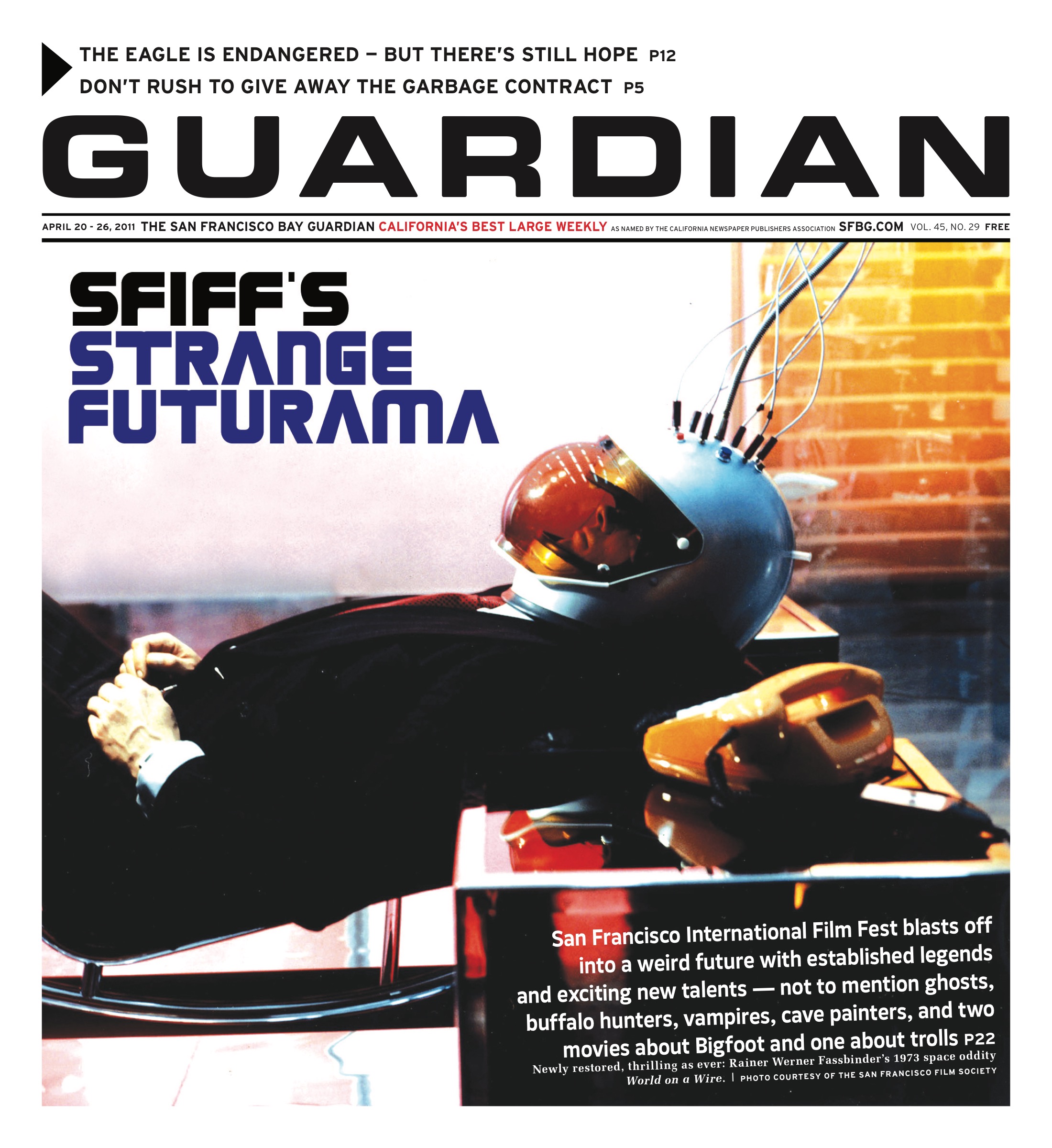
An important community institution never truly dies. It remains in the hearts and minds of everyone it has touched — a fact that that patrons who have lived and loved (sometimes literally) in the Eagle Tavern understand. But that doesn’t mean they’re ready to loosen their talons and let go.

With the help of San Francisco’s supervisors, some seriously committed community energy — and maybe even a Dallas cowboy who likes his leather — they may not have to.

For the past week, patrons of one of San Francisco’s oldest and boldest gay leather bars have been rallying to save their stomping ground from uncertain fate. It started when they found that rumors swirling since early in the year were true: the Eagle was slated to close at the end of April and faced a May 1 eviction.

Since then, defenders of the 12th Street space have scraped together emergency meetings and impromptu marches, a surprise leather night at the Skylark Bar (owned by a believed-to-be buyer), and a demonstration on the steps of City Hall. Letters were sent to the Board of Supervisors, petitions signed, and pink tent campouts planned as vigils.

Through it all, the message carrying most clearly was that the Eagle Tavern is far more than a swingin’ hot spot. “It’s our history and it’s our culture,” said organizer Kyle DeVries at a rally on the steps of City Hall last Tuesday. “And we’re proud of what we’ve given to this city.”

That “what” includes more than $1 million raised through the years at popular Sunday beer busts supporting everything from breast cancer research to AIDS awareness. But it also includes providing a safe haven and sense of belonging for San Francisco’s queer community for more than three decades.

And now, patrons have learned they will eek out another month. Thanks to the huge outpouring of support from Eagle denizens, and political pressure from three San Francisco supervisors, the end-of-April plan to fly the coop has been delayed at least until the end of May, Eagle manager Ron Hennis said.

But since the issue first exploded April 11, efforts to save the sacred space haven’t slowed down. At press time, supporters were planning an April 19 “Tuesday roost” at the Eagle in hopes of pumping energy and cash back into the tavern on a night known to be quiet.

Sup. Scott Wiener, along with Sups. David Campos and Jane Kim, sent a letter to the San Francisco Police Department that reviews liquor license sales in connection with the California Department of Alcohol Beverage Control. The letter reviewed the Eagle’s importance in SF’s queer community and stated that its authors are “adamantly opposed to any sale that would result in the Eagle’s destruction.”

The supervisors urged the SFPD to “closely scrutinize, consistent with applicable legal standards, any requested liquor license transfer relating to the Eagle to ensure that any such transfer will not harm the LGBT community by putting an end to the Eagle.”

So far, these efforts have been promising for Eagle patrons. In a phone interview, Wiener told us that Skylark owner Steve Englebrecht has pulled out of negotiations to buy the place. But the situation remains complex.

Eagle manager Ron Hennis explained that current owners John Gardiner and Joe Banks decided to sell the Eagle a year ago to focus on their other SoMa leather bar, Hole in the Wall Saloon, which has been plagued with high-cost property battles of its own.

Gardiner and Banks didn’t respond to our e-mails. But Hennis said they intended to sell the business — which includes the Eagle name, equipment, and liquor license — to people they felt would maintain the existing spirit of the bar: Hennis, Eagle entertainment coordinator Doug Hilsinger, and Lila Thirkield, owner of the Lexington Club.

Hennis and Hilsinger told us a contract was signed and the deal had progressed through an initial set of inspections and into escrow when the property’s owner, John Nikitopoulos, refused to negotiate a new lease with the prospective owners.

Despite successful conversations up to that point, Gardiner and Banks “turned off and didn’t say why,” Hennis said.

Further complicating the matter, Gardiner and Banks’ lease ran out and Nikitopoulos hasn’t renewed it. He’s been renting the property month-to-month and is reportedly raising the monthly price tag, which has remained the same for the past 10 years.

Hennis said the owners were still paying rent when they were threatened with eviction — which would mean a death sentence for the Eagle unless they could sell the business to a party Nikitopoulos would be willing to negotiate a lease with.

In the midst of the stalemate, Nikitopoulos offered to buy the business (and most important, the liquor license) from Gardiner and Banks, who refused saying they’d already agreed to sell to Hennis and his partners. Nikitopoulos then approached Hennis, suggesting Hennis purchase the business as planned and then sell him the liquor license. When Hennis also turned down the landlord’s offer — without the liquor license, Hennis wouldn’t actually own the bar — he disappeared from the conversations.

At the April 12 demonstration, mayoral candidate Bevan Dufty called for the stakeholders involved to recognize that in a city that “values history — indeed, is defined by history,” the lease on the Eagle is “more than just a business transaction.

“The owner of this building needs to come to the table and talk about this,” he urged.

But Nikitopoulos, a resident of Santa Rosa who inherited the property from his father, hasn’t responded to Hennis, reporters, or even to calls from Sup. Wiener. He was, however, reportedly in communication with Englebrecht when the Skylark owner swept in to purchase the space and liquor license — but not the name or the leather culture.

Though Englebrecht withdrew, supporters worry Nikitopoulos could potentially negotiate a lease with a different tenant — leaving the bar a casualty of SoMa’s continued gentrification.

Longtime Eagle patron Mike Talley, who has lived in SoMa for more than two decades, fears the Eagle would fit perfectly into a familiar story of luxury lofts, astronomical rent increases, and — inevitably — mass evictions. He explained that what the Chronicle’s late columnist Herb Caen called the Miracle Mile — a strip of SoMa gay and leather bars that once numbered in the dozens — now consists of just a few properties “hanging in there.”

Mark Kliem, a.k.a Sister Zsa Zsa Glamour of the Sisters of Perpetual Indulgence, echoed Talley’s concern, saying, “The rest of the entire world is family-friendly. Why can’t we have this one little half-mile area to call queer space?”

It’s worth noting that the Eagle is by no means exclusively gay. It is famous for its Thursday-night rock shows where, according to an Eagle DJ, “a melting pot of hipsters, stoners, and rockers mixed with the leather crowd.”

“Everyone was cool,” he said. “Everyone was welcome.”

Still, the bar has become an icon of San Francisco’s queer community.

Kim, who represents the district, presented the Eagle with a letter of commendation recognizing its 30 outstanding years as a “venue, cultural institution, safe haven, and home for the LGBT community” at the April 12 meeting.

“You can’t threaten something as important as this institution,” Campos added.

Wiener, Kim, and California Sen. Mark Leno also praised the Eagle at Sunday’s regularly scheduled beer bust. Leno lauded the efforts of local drag queen/community organizer Anna Conda, and referred to the week’s events as “Stonewall West.”

If anything, the week of demonstrations has drawn San Francisco’s queer community closer. And there is hope that the crowd can stay together in the spot they claimed for themselves. One white-horse possibility is Mark Frazier, owner of a Dallas bar also named the Eagle — and also home to a leather crowd.

Seth Munter of Herth Realty in San Francisco said Frazier has been eyeing the SF Eagle for more than a year, and that he is “interested and able to participate in continuing the Eagle as it has been, either with partners or on his own.”

Reached by phone in Dallas, Frazier told us he’s dreamt of the business since before his own Eagle took flight in 1995. “I think the San Francisco Eagle has a lot of history and a core base of support,” he said. “Any time you go into a business with so much support, it’s going to be successful.”

Frazier stressed that like the SF original, his Eagle has raised substantial sums for charity. Though he acknowledged that the bottom line of all businesses is to make money, “the successful ones continue to give back to the community — and not only monetarily.”

So far, Frazier said he has “exchanged e-mails with the powers that be” and that he is confident the Eagle’s troubles stem from a “communication gap” he could help fix.

Hennis expressed hope about the possibility of working with Frazier in addition to pursuing other options like historical preservation.

Demonstrators have penned more than 100 hand-written letters to the Historic Preservation Commission urging it to assign the Eagle landmark status. Commissioner Alan Martinez said such a process could cost thousands of dollars and would not “grant the right to dictate businesses or tenants.”

Still, he announced publicly that giving the building historic status is not “about turning the city into a museum — it’s about our history.”

Though landmark status protects the physical property, it would also provide legitimacy, an instantaneous way to tell the building’s story and bind the community together. And no matter what happens with the sale of the Eagle, that’s one possibility that flies.


Proposed SFPD crackdown on clubs gets a hearing

9

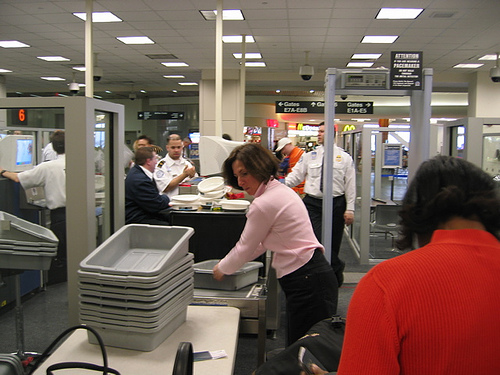
A draconian proposal by the San Francisco Police Department to require all visitors to nightclubs in the city to scan their identity cards into a database and go through metal detectors while being filmed by security cameras will be held tomorrow night (Tues/12) by the Entertainment Commission, but an expanding coalition of opponents are rallying against it.

As we reported in December, club owners and nightlife defenders (including the California Music and Culture Association) overwhelmingly oppose the plan, which the American Civil Liberties Union says raises constitutional invasion of privacy issues. In addition, a new coalition of young people called Save the Rave – which turned out hundreds of people for a recent commission hearing on a proposed crackdown on dance parties – is also organizing against the new restrictions.

Police representatives have told us that the proposal stems from concerns about violence in and around nightclubs, that the provisions would allow police to more easily identify suspects when crimes occur, and that police should be trusted not to exploit the data that they’re collecting.

But critics of the legislation call it a gross overreaction to a handful of incidents that have happened around nightclubs and they say the SFPD has shown unreasonable bias against one of the city’s biggest industries. Sup. Scott Wiener recently asked city staff to prepare a study of the economic impact of nightlife in order to defend clubs against crackdowns like this.

The proposal would also require clubs to have one security guard for every 50 patrons, which club owners say would be an economic hardship for an industry opening on thin margins of profitability. The hearing begins at 6:30 pm in City Hall Room 400.

Editorial: Gascón’s conflict

1

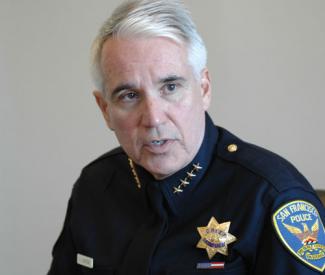
There’s a good reason that not too many police chiefs become district attorneys. Obviously, not a lot of cops have law degrees, but it goes beyond that. The district attorney is supposed to monitor the police, to investigate criminal behavior by cops, to make sure the people out on the streets aren’t doing anything that will screw up cases in court.

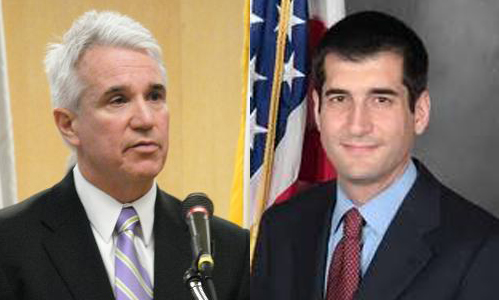
But that didn’t bother former Mayor Gavin Newsom (who apparently doesn’t think that conflict-of-interest statutes apply to him). Newsom appointed Gascón to the D.A.’s job despite some serious concerns about the operations of the Police Department — and problems at the SFPD have blown up yet again. Four times in the past two weeks, Public Defender Jeff Adachi has released videotapes showing undercover cops entering residential hotel rooms without a warrant. The videos appear to contradict the information that the officers presented in their written reports, and the pattern of conduct has caused interim Chief Jeff Godown to suspend the entire undercover narcotics unit at Southern Station.

It’s also caused the District Attorney’s Office to undertake an investigation. And no matter what comes out of that inquiry, it will be fatally tainted by the fact that Gascón is, in effect, investigating his own operation.

Gascón hired Godown, who came from Los Angeles. He was, until just three months ago, in charge of the department that’s apparently running amok. The problems that have surfaced didn’t just emerge the day Gascón left; for all practical purposes, they are his problems, coming from his department, growing and festering under his watch.

A serious investigation would not only look at the actions of this one handful of officers, but at the command structure and climate that allowed this sort of behavior to become routine. It would look at the chain of command all the way to the top — that is, to the chief. To Gascón.

The D.A.’s office can’t possibly get this right. If Gascón finds wrongdoing on the part of these particular officers, the officers will no doubt seek to have the investigation and any prosecution set aside on the grounds that the former chief was a conflict. If he finds no wrongdoing, it will look like a cover-up.

This is only the first of what could be a long series of conflict problems with Gascón’s office. Put simply: the former chief can’t effectively monitor the police department, particularly if there are allegations of misconduct that come from the era when he was in charge.

There’s no easy way around this. Gascón could (and probably should) recuse himself and his office, and ask the attorney general to conduct the investigation. But the A.G.’s office doesn’t have a great track record on taking over local cases like these. His only real alternative is to hire an independent outsider — the equivalent of a special prosecutor — to handle all cases involving the police department. That would be expensive, but it’s the result of the unfortunate, highly unusual situation that Newsom and Gascón created.<0x00A0><cs:5>2<cs

Gascon’s conflict

2

EDITORIAL There’s a good reason that not too many police chiefs become district attorneys. Obviously, not a lot of cops have law degrees, but it goes beyond that. The district attorney is supposed to monitor the police, to investigate criminal behavior by cops, to make sure the people out on the streets aren’t doing anything that will screw up cases in court.

But that didn’t bother former Mayor Gavin Newsom (who apparently doesn’t think that conflict-of-interest statutes apply to him). Newsom appointed Gascón to the D.A.’s job despite some serious concerns about the operations of the Police Department — and problems at the SFPD have blown up yet again. Four times in the past two weeks, Public Defender Jeff Adachi has released videotapes showing undercover cops entering residential hotel rooms without a warrant. The videos appear to contradict the information that the officers presented in their written reports, and the pattern of conduct has caused interim Chief Jeff Godown to suspend the entire undercover narcotics unit at Southern Station.

It’s also caused the District Attorney’s Office to undertake an investigation. And no matter what comes out of that inquiry, it will be fatally tainted by the fact that Gascón is, in effect, investigating his own operation.

Gascón hired Godown, who came from Los Angeles. He was, until just three months ago, in charge of the department that’s apparently running amok. The problems that have surfaced didn’t just emerge the day Gascón left; for all practical purposes, they are his problems, coming from his department, growing and festering under his watch.

A serious investigation would not only look at the actions of this one handful of officers, but at the command structure and climate that allowed this sort of behavior to become routine. It would look at the chain of command all the way to the top — that is, to the chief. To Gascón.

The D.A.’s office can’t possibly get this right. If Gascón finds wrongdoing on the part of these particular officers, the officers will no doubt seek to have the investigation and any prosecution set aside on the grounds that the former chief was a conflict. If he finds no wrongdoing, it will look like a cover-up.

This is only the first of what could be a long series of conflict problems with Gascón’s office. Put simply: the former chief can’t effectively monitor the police department, particularly if there are allegations of misconduct that come from the era when he was in charge.

There’s no easy way around this. Gascón could (and probably should) recuse himself and his office, and ask the attorney general to conduct the investigation. But the A.G.’s office doesn’t have a great track record on taking over local cases like these. His only real alternative is to hire an independent outsider — the equivalent of a special prosecutor — to handle all cases involving the police department. That would be expensive, but it’s the result of the unfortunate, highly unusual situation that Newsom and Gascón created.

SFBG Radio: From Rodney King to Tasers

1

Today we remember the 20th anniversary of the Rodney King beating — and talk about police accountability, videos and why the SFPD should not have Tasers. Listen after the jump.

sfbgradio372011 by endorsements2010

Accusations against SFPD officers impact D.A.’s race

2

The decision by San Francisco prosecutors to drop a drug case that involved four of six plainclothes officers currently under investigation for illegally raiding residential hotel rooms and then lying about the busts in police reports, came one day after the Public Defender’s Office released videos that contradicted police reports in two separate cases. And it’s thrown another curve ball into the D.A.’s race, which veered into weird and uncharted territory the minute former Mayor Gavin Newsom appointed the city’s top cop George Gascón as SF’s next D.A.

The D.A.’s Office and the San Francisco Police Department have both announced that they have launched internal investigations into the SFPD officers after video footage from busts at the Henry Hotel in December and January was released. And D.A. spokesperson Erica Derryck sought to clarify that the D.A.’s office dropped the case because of ongoing investigations into the alleged misconduct, and that the D.A.’s investigation is independent of SFPD.

“As the District Attorney’s Office of this County, we are conducting our own, independent investigation into this matter,” Derryck said. “If there is criminal wrong-doing found it will be handled accordingly. Our Justice Integrity Unit will conduct an independent investigation to determine if any criminal conduct has occurred. This is separate from any SFPD investigation. Our Trial Integrity Unit will examine on a case-by-case basis, what, if any, cases may be affected by this investigation and the alleged conduct of these officers.”
 
But former Police Commissioner David Onek, who is running against Gascon in the D.A.’s race this fall, called for a completely independent investigation, citing the conflict of interest created by Gascón’s investigation of alleged officer misconduct that occurred during his tenure as San Francisco’s top cop,
“There is a clear conflict of interest when our current District Attorney investigates potential criminal activity that took place at the SFPD under his watch,” Onek said. “The foundation of a safe city is earning and keeping the public’s trust. And that requires calling in outside agencies when this trust will be undermined by a conflict of interest, such as the one presented by these facts.”

“Whatever decision Gascón now makes, he will highlight to the public his conflict of interest as the former police chief,” added Onek, who is the founding executive director of the Berkeley Center for Criminal Justice. “If he decides not to charge the officers, the public will question if he did so to protect his former officers or his former administration. If he decides to press charges, the officers themselves will ask if he is doing so because he is a candidate for office and feels the need to show a tough attitude towards his former department. In the interest of justice, former chief Gascón should recuse himself and his agency from investigating the SFPD  in cases that occurred when he was chief. If you are conducting a fair investigation, you not only review the conduct of individual officers, you also explore if this alleged conduct was the result of issues with training and supervision. No fair investigation of these facts can be conducted by the individual responsible at the time for that training and supervision.”

Tasers vs. talk

1

rebeccab@sfbg.com

At a Feb. 23 Police Commission hearing, San Francisco interim Police Chief Jeff Godown told the civilian oversight board he wanted to investigate Tasers as a less-lethal weapon for San Francisco Police Department (SFPD) officers. Speaking to a room crammed full of community advocates who had turned out to rail against the idea, Godown seemed to try to preemptively address a concern that opponents were sure to raise during public comment.

“This is not about mental illness,” the chief said. Along with police commissioners who favored the Taser proposal, Godown drove that point home several more times throughout the evening, stressing that Tasers were not being sought as a law enforcement tool for dealing with violent, mentally ill individuals. Nevertheless, he said situations could potentially arise in which the stun guns would be used against the mentally ill, if officers were authorized to carry the devices.

At the end of a marathon meeting, SFPD won approval to spend 90 days investigating Tasers and other less-lethal weapons as possible additions to the police arsenal, which now includes pepper spray and batons as well as firearms. Advocates raised concerns ranging from misuse of the devices to accidental deaths caused by Tasers to documented overuse of the weapons in communities of color. The SFPD, meanwhile, emphasized that it saw Tasers as a way to improve officer safety while limiting the use of lethal force.


SHOOTING THE MENTALLY ILL

Throughout the discussion, concern about the use of Tasers as a tool against the mentally ill persisted despite the chief’s assurances. “Like it or not, these issues are intertwined,” said American Civil Liberties Union (ACLU) Police Practices Director Allen Hopper. He referenced comments made by former Police Chief George Gascón, who now serves as district attorney.

On Jan. 4, SFPD officers fired twice at Randal Dunklin, a wheelchair-bound, mentally ill man who was brandishing a knife outside the city’s Department of Public Health building. Dunklin allegedly stabbed an officer and suffered a nonfatal gunshot wound to the groin after he had tossed the knife. In press comments delivered in the aftermath, Gascón said the situation illustrated why the SFPD ought to carry Tasers.

“Not only was that not an appropriate circumstance for the use of a Taser, there were so many things wrong with the way police handled that situation,” Hopper said, referencing a YouTube video of the shooting that served to highlight key differences between the official police account and the events caught on tape.

Dunklin was the third person in recent months to be shot in an altercation with officers. Vinh Bui, who was 46, was fatally shot in Visitacion Valley in late December 2010. Michael Lee, who was 43, was fatally shot in a residential hotel in the Tenderloin a few months earlier. Both had a history of mental illness.

Police Commissioner Angela Chan told the Guardian that in light of these tragedies, she became concerned that the first commission meeting of the year initially featured a discussion about Tasers.

“I thought, this does not make any sense,” Chan said, because commissioners hadn’t yet looked at creating a specialized police unit for dealing with psychiatric crisis calls, a move she’d urged the department to consider. The commission schedule was rearranged to reflect her concern, and Chan rushed to book experts for a detailed presentation about crisis intervention training (CIT). In a unanimous vote at the Feb. 9 meeting, the police commission approved implementation of CIT.

The specialized policing technique is patterned after the so-called Memphis model, which originated in Tennessee in 1988 in the wake of a public outcry that arose when white officers gunned down an African American man with a history of mental illness.

Memphis model policing emphasizes de-escalation, which is quite different from the everyday command-and-control method cops are trained to use against suspects. Under this model, officers are taught to consider things such as the tone of voice they are using to communicate with the mentally ill person, the distance they are standing from them, and how the individual might respond to their behavior. Whenever it’s safe to do so, officers are encouraged to allow the mentally ill person the time they need to calm down.

Samara Marion, an attorney and policy analyst with the Office of Citizen Complaints, traveled to Memphis to witness CIT officers on duty. “I was absolutely impressed,” Marion said. “It is community policing at its best.”

CIT has been credited with a dramatic reduction in officer-involved shootings against the mentally ill in Memphis. Randolph Dupont, a clinical psychologist and professor at the Memphis-based School of Urban Affairs and Public Policy, told the Guardian that studies had shown mentally ill people who dealt with CIT officers were more likely to be in treatment three months later than those arrested by non-CIT officers. “Mental health is a community issue,” he said. “You don’t want it to be a police issue to resolve.”

In San Francisco, the program envisions training about 20 percent of the police force to create an elite unit of CIT officers, selecting those who are more experienced and have better track records in dealing with the public. Once in place, 911 dispatchers would alert CIT when SFPD receives calls involving psychiatric crises. On arriving to the scene, a CIT officer would be responsible for taking charge of the situation and directing other officers.

This is the second time an attempt was made to move forward with crisis intervention in San Francisco. In 2001, the department implemented generalized crisis training to all officers instead of intensive training for a specialized unit. However, that low-level effort was canceled last year due to budget cuts.

While CIT won resounding support from the community, the Feb. 23 discussion about Tasers drew tremendous opposition, with around 50 advocates speaking out against the plan. Hopper’s criticism, echoed by several mental-health providers, was that SFPD’s campaign for Tasers sent a mixed message and threatened to overshadow the CIT effort by seeking a quick fix based on a tool instead of a tactic. And rather than moving toward the goal of de-escalation set by CIT, Hopper said, the use of Tasers could exacerbate a situation instead, making it more dangerous for everyone involved.

“The Police Department — we think to its credit — has recognized that [addressing] mental health issues is a departmental priority,” Hopper said. “We think it’s putting the cart before the horse to give police Tasers before they put that plan into effect.”

A mental-health advocate who said she is “living the Kafkaesque world of a family dealing with mental illness” urged the commission to hold off on talking about Tasers until after CIT had been implemented, saying the two were closely connected.

“If you vote to purchase Tasers, you’re undercutting the message that they need to learn de-escalation,” another mental-health advocate noted.

Yet Marion said she thought adequate time was being allotted to study less-lethal weapons, and did not think this would undercut the CIT effort. “As long as the department continues to be motivated and engaged, I don’t see it being a problem,” she said.

Chan told the Guardian that the day after the Feb. 23 commission hearing, Godown phoned her to say he remained committed to CIT. Although she voted to allow police to move forward with investigating Tasers, Chan said her final support would depend on the success of CIT.

“If CIT is not doing well … I am going to be strongly opposed to any adoption of any pilot program,” Chan said. “I do prioritize one above the other.”


DEATH BY TASER?

A Taser is an electroshock weapon that can administer 50,000 volts through two small probes, disrupting the central nervous system and bringing on neuromuscular incapacitation.

While Taser proponent Chuck Wexler, a researcher who spoke at the hearing, emphasized that Tasers “are for saving lives,” studies have shown that the risk of death or serious injury increases under certain circumstances. Someone who is Tasered while fleeing police can suffer serious injuries if they can’t break their fall. There are dangerous implications for people whose heart rate is accelerated due to cocaine or methamphetamine, and as the Memphis Police Department learned many years ago, Tasers don’t mix with flammable substances, like an alcohol-based pepper spray that has since been discontinued.

“Lots of times it’s not about the product itself, it’s about … risk factors,” said Maj. Sam Cochran, who worked with Dupont in Memphis to create CIT. “Under some circumstances, things can happen very fast.”

Safety concerns are heightened when it comes to the mentally ill. It’s common for people experiencing psychiatric episodes to behave violently, speak incoherently, and ignore commands, creating the kind of scenario where law enforcement would likely opt to deploy a Taser. According to an extensive research inquiry on Tasers published by the Braidwood Commission on Conducted Energy Weapon Use, Tasers can be especially dangerous when used against people who are delirious.

“First responders should be aware of the medical risks associated with physically restraining a delirious subject or deploying a conducted energy weapon against them,” according to Dr. Shaohua Lu, who is quoted in the study. “They likely have profound exhaustion and electrolyte changes before delirium kicks in. At that stage, any additional insult (e.g., struggling or fighting) can lead to the body just giving out, resulting in cardiac arrest and death.”

Since 2004, when the city of San Jose first equipped officers with Tasers, seven people have died following police Taser deployments. At least one was mentally ill.

MaryKate Connor, a mental-health provider who founded the now-defunct Caduceus Outreach Services, told the Guardian she didn’t think the police officers could separate the issues of less-lethal weapons and tactics for handling the mentally ill. “The promise of the CIT program, whether the police want to acknowledge it or not, is that this is a huge cultural shift,” she said. “It’s not about finding a new weapon. It’s about finding a less lethal way to respond, period.”

Joyce Hicks, director of the Office of Citizen Complaints, sounded a similar note during the hearing. “No weapon can substitute for sound tactics,” Hicks said.

Back to the streets

2

Coronel knew an old man in Granada who said

(who often said):

“I wish I were a foreigner, so that I

Could go home

— Zero Hour, Ernesto Cardenal

I first came into contact with the work of poet Roberto Vargas a couple of years ago, when I saw his face, projected several stories tall, on a wall just off Valencia Street.

I was riding my bike to the Day of the Dead procession when I came across filmmaker Veronica Majano screening historical footage of the old Mission District on the wall of Dog Eared Books. The footage of Vargas was from a movie called Back to the Streets, and it showed a Latino hippie fest in Precita Park circa-1970. Long-haired Chicanos smoked weed and danced and played bongos on the grass while Vargas read from a stage. On today’s Valencia Street, Vargas was a ghost returned from a long-lost Mission, now standing twenty feet tall on the bookstore’s wall, reading a powerful poem that angrily denounced the SFPD for the mysterious death of a Mission Latino youth in police custody.

The film of Vargas was a beautiful snapshot of Latino youth culture in the neighborhood before gang violence and gentrification, like a Mission High School yearbook scene from an exhilarating era of Latino self-determination. In 1970, the Free Los Siete movement was feeding the community at a free breakfast program out of St. Peter’s Church on Alabama Street and had started free clinics and legal aid programs in the Mission. In the years to follow, the neighborhood would see the founding of the Mission Cultural Center and Galeria de la Raza and the inception of many of the neighborhood’s now world-famous mural projects.

Looking at the groovy scene in the park, it was hard to imagine that just a few short years later, Vargas and other kids from the Mission would be fighting alongside the Sandinistas in the jungles and mountains of Nicaragua. Yet the utopian promise of the era’s poetry, art, and youth culture in many ways culminated in the guerrilla war in which Vargas and other poets from San Francisco would fight and ultimately — in 1979 — help defeat the forces of Nicaraguan dictator Anastasio Somoza.

On Feb. 24, the day of his 70th birthday, Roberto Vargas makes a rare return to San Francisco to perform in a poetry event at the Mission Cultural Center in honor of that Nicaraguan solidarity movement of the 1970s. A video will be shown of footage from that struggle — classic scenes of Vargas and others taking over the Nicaraguan consulate in San Francisco; of the famed nightly candlelight vigils at 24th and Mission BART Plaza in support of the Sandinistas — and Vargas will be reunited on stage to read with old poet friends like Lawrence Ferlinghetti, Diane di Prima, Alejandro Murguía, and Vargas’ old compañero from San Francisco State University’s Third World Liberation Front, actor Danny Glover. The event is not open to the public. Invitations have been given out and the small MCC theater’s 150 seats have already been filled. Yet the event provides an opportunity to publicly honor Roberto Vargas’ contributions to the Mission, and to reflect on the hopes and dreams of Mission past.


POETRY AND REVOLUTIONARY VISION

Poetry was a part of Vargas’ world from the beginning. Vargas was born in Nicaragua, but came to the United States when he was a small child. In his 1980 collection of poems Nicaragua Te Canto Besos, Balas, y Sueños, he writes of “living in an offbeat alley called Natoma Street (where I always imagined a lost Mayan city existed beneath the factories).” By the late 1950s, Vargas may have been the first Mission District Latino Beat poet. “I graduated from Mission High School in 1958 and used to hang out in North Beach, going around to see all the poets,” he says. “I met Allen Ginsberg when I was just a 19-year-old kid running around in North Beach. Diane di Prima, Bob Kaufman, Ted Berrigan — all the major poets knew me when I was in my teens.”

After a stint in the U.S. Marine Corps and an attempt at a boxing career that ended with a detached retina (an injury that also helped him avoid the Vietnam-era draft), Vargas went to SF State, where he was heavily active in the student strike of 1968-69. Students walked out of campus and battled riot police while standing on picket lines for five months to demand an ethnic studies program at the university.

In the spirit of the times, Vargas and other poets — including a young Mission Chicano named Alejandro Murguía — joined the Pocho-Che Collective to publish poetry by local Latino poets. The poets went to cut sugar cane in the Venceremos Brigade in Cuba. They put out small poetry chapbooks in the Mission, full of poems that linked Che Guevara’s call for Third World revolution with the experience of the Chicano barrios of the United States in a new vision tropical. In the era after the SF State strike, the city started funding community arts projects in the ghettos. Like all classic zines, the first copies of Pocho-Che were scammed, in this case late at night at Vargas’ new job in the Mission’s Neighborhood Arts Program. In the years to come, the group would eventually publish hardbound books by Vargas, Nina Serrano, and others.

Today, Murguía is a professor in the ethnic studies program at SF State that the strikers fought to originate. He is the author of the American Book Award-winning short story collection This War Called Love (2002) and the memoir The Medicine of Memory (2002). He remembers, “The poetry scene was incipient, very young, and the readings weren’t always very formal. Sometimes they were at community events or protest rallies. But we had contact with Latin America. We knew people who had been in Chile, like Dr. Fernando Alegría.”

Alegría was a poet who had been the cultural attaché to the U.S. under Allende in Washington. Vargas recalls, “Alegría had myself and some other young poets come to Chile and spend a month or two studying with [Pablo] Neruda. But, of course, our plans were canceled by the coup in Chile.”

Murguia remembers the September 1973 coup in Chile that overthrew the popularly elected Socialist democracy of Salvador Allende caused the young poets to organize rare formal readings at Glide Memorial Church in protest. “We had several big ones there,” he says. “There was a broad range of poets — Michael McClure, Fernando Alegría, Jack Hirschman, Bob Kaufman, Janice Mirikitami all read. There was a line going down the block to get in.”

In addition to their mentor, Alegría, Vargas, and Murguía also knew one of their heroes, the Nicaraguan Marxist poet and priest, Ernesto Cardenal. Cardenal lived under the Somoza dictatorship in a sort-of internal exile in a religious artist commune called Solentiname. Vargas wanted to bring Cardenal to read in the United States, but Somoza would not allow the poet, who was critical of the Nicaraguan dictator, to travel outside the country. Vargas went to his old pal Ginsberg for help.

“Because Allen knew me when I was a kid, he helped me with my organizing for Nicaragua,” says Vargas. “Allen was part of PEN, and in 1973 or ’74 he went to the State Department with other writers to put pressure on [Anastasio] Somoza. Eventually Somoza relented and we brought Cardenal to New York for a reading.”

The poetry of Cardenal was a north star to the young Mission poets. Cardenal’s epic 1957-60 masterwork Zero Hour is perhaps the literary foundation of revolution in Nicaragua. Influenced formally by Ezra Pound, Zero Hour weaves a sprawling history of Somozan oppression and U.S. intervention in Nicaragua together with lyrical imagery of Nicaragua’s natural beauty and wildlife. The poem creates a poignant sense that Nicaraguans, unable to enjoy and own these natural riches, had under Somoza become exiles within their own country.

Of particular interest to the young Mission poets, though, was Cardenal’s Homage to the American Indians (1969), a book-length meditation on the glory of Mayan and North American native civilizations. “For us, the work of Cardenal was very important,” says Murguía. “Homage to the American Indians is a continental vision of Native Americans — everything from the San Blas Indians of Panama to the Indians of Omaha to the Indians of Mexico City and Peru.”

In Homage, Cardenal evokes a lost Indian Utopia “so democratic that archaeologists know nothing about their rulers,” where “their pyramids were built with no forced labor, the peak of their civilization did not lead to an empire, and the word wall does not exist in their language.” He writes:

But how to write anew the hieroglyph,

How to paint the jaguar anew,

How to overthrow the tyrants?

How to build our tropical acropolis anew

Cardenal’s poems of this lost glorious past were to Vargas more pointedly a vision of a Latin American utopia that can also be regained in the future. In Cardenal’s work, says Vargas, “There is a longing for the simplicity of that civilization — the creativity, the innocence, the tribalism. Can we get it back after all the dictatorships, after all that capitalism has done? Cardenal showed us what we were, what we had, what we lost.”

Under Cardenal’s influence, the Mission poets turned seeing lost Mayan cities beneath the city’s factories into a literary movement. By 1975, members of Pocho-Che had started a magazine called El Tin Tan with Murguia as editor and Vargas as contributor. El Tin Tan presented a sweeping utopian vision of a borderless invisible Latino republic united culturally and politically under the sign of the palm tree. The poets situated the capital of this world right here in the Mission District.

“To tropicalize the Mission — to see it as a tropical pueblo — was a political act of defiance and self-determination,” says Murguía. “We were saying that we put this particular neighborhood — our pueblo, in a way — not in a context of North American history but in the context of Latin American history. The history of the eastern U.S. doesn’t affect California until 1848 when the first illegal immigrants came to California — not from the South, but from the East.

El Tin Tan,” Murguía continues, “was probably the first magazine that was intercontinental in scope, a combination of politics and literature and art and different trends from the Mission to Mexico City to Argentina and everywhere in between.” He proudly recalls that it ran the first North American essays on Salvadoran poetry, and translated and printed a short story by Nelson Marra, a writer imprisoned by the Uruguayan dictatorship.

Yet for all its international perspective, El Tin Tan remained firmly rooted in the Mission. Columns by Nuyorican poet Victor Hernández Cruz and news of the assassination of Salvadoran guerrilla poet Roque Dalton ran side by side with the first comics by future Galeria de la Raza founder Rene Yáñez, all folded between wildly colorful cover art by neighborhood favorites like the famed Chicano artist Rupert Garcia and the muralist Mike Rios.

“The magazines were colorful — tropical — on the outside, but very political on the inside,” says Murguía. “That was a metaphor for our own work.”

By this time, Vargas had become an Associate Director at the SF Arts Commission. From within City Hall, he started to pump city arts money into the Mission, helping to fund projects like Mike Rios’ mural of the people holding BART on their backs at 24th and Mission BART Plaza and the Balmy Alley Mural Project — art that can still be seen in public today.

Once, Vargas commissioned a Chuy Campesano mural for the Bank of America building at 22nd and Mission. “I read a poem called “Boa” and had the crowd dancing and chanting, Es la Boa, Es la Boa,” says Vargas. “We were trying to say, ‘You made your millions off our farmers, but now you are on our turf in the Mission here in occupied Mexico. So we’ll put hieroglyphics on the walls of your bank like we used to do!’ Someone from the bank tried to take the mic from me and cops came and escorted us out.”

Vargas’s story of the mural’s dedication ceremony captures the bravado of the era. “It was a beautiful time, all of us young and thinking we were going to change the world. We wanted to change the world through culture.”

The poets organized the community to demand a neighborhood’s arts center, too. In 1977, the dream was realized when the City, with pressure from Vargas from within City Hall in the Arts Commission, purchased an old, five-floor furniture store at 24th and Mission to be made into the Mission Cultural Center. Murguia became the center’s first director.

The Mission utopia was becoming a reality for Vargas. In Nicaragua Te Canto, he wrote:

We used to drive

Our lowered down Plymouths and Chevys

On top of the breast of a mountain to

Make love and drink wine… Never

Knowing what was going to happen after

Mission High School

The Mission is now an expression of real culture, a many-faceted being … both plus and minus with the soul of a human rainbow…My people watching slides of Sandino and Nica history … White children wearing guarachas and afros trippin’ down the streets to party. Young Salvadoran poets discussing the assassination of Roque Dalton … The Mission is now an implosion/explosion of human color, of walls being painted by muralistas. There is a collective feeling of compassion for each other Nicas Blacks Chicanos Chilenos Oppressed Indios. The sense of collective survival, histories full of Somozas, Wounded Knees written on the walls.

In Zero Hour, Cardenal wrote of Nicaragua’s trees and birds and lakes, and their call to revolution, as seen from its mountains:

What’s that light way off there? Is it a star?

Its Sandino’s light shining in the black mountain


Vargas, the excited Mission kid, echoed in his work:


Tonight I am sitting on a mountain called Bernal Hill

Tonight I see the flames of America Latina spreading from here …


STRUGGLE AND VICTORY — AND STRUGGLE

Perhaps inevitably, the Latin American Utopia Vargas and company created in poetry would seem so tantalizingly close to actualization that they would be forced to pick up the gun and fight for its existence.

When the enormous earthquake of 1972 left Nicaragua’s capital, Managua, in ruins, Nicaraguan refugees flocked to SF’s Mission District. Soon, San Francisco was home to more Nicaraguans than any place on Earth outside of Nicaragua. The family of Anastasio Somoza had controlled Nicaragua with brutal repression for generations. Somoza’s embezzling of relief funds for earthquake victims led to increased revolutionary activity against his rule. Taking their name from Augusto Sandino, a Nicaraguan revolutionary who led resistance against U.S. occupation of Nicaragua in the 1930s, La Frente Sandinista de Liberacion Nacional (FSLN) — or the Sandinistas, as they were popularly known — began guerrilla activities in late 1974 by taking government officials and Somoza relatives hostage in a raid on the house of the minister of agriculture. They received a $2 million ransom and had their communiqué printed in the national newspaper. Thus was born the Sandinista revolution.

In the Mission, Vargas, Murguía, and others were in touch with La Frente, and began organizing Sandinista solidarity rallies to coordinate with La Frente’s actions in Nicaragua. Out of offices in the Mission Cultural Center, along with El Tin Tan, the poets published a newspaper called La Gaceta about the situation in Nicaragua. The paper had a circulation of 5000 copies and was available for free all over the district. The sight of pro-Sandinista rallies at 24th and BART Plaza became so common that the plaza was popularly nicknamed Plaza Sandino.

Vargas organized takeovers of the Nicaraguan consulate in San Francisco and traveled the US, speaking about Nicaragua. Yet, soon, this kind of support didn’t seem like enough. In Cardenal’s poetry, victory was inevitable. Cardenal had written that Indian time was circular, that “history became prophecy,” and that therefore the “empire will always fall.” He had also written, “The hero is reborn when he dies. And the green grass is reborn from the ashes.” In poetry, Vargas and Murguia found inspiration to go to war.

In 1976 and 1977, Mission District residents, in solidarity with the FSLN, began quietly leaving San Francisco to join up with La Frente and pick up the gun in the Sandinista Revolution. Among them were Roberto Vargas and Alejandro Murguía.

“It was very romantic,” says Murguía. “If you grew up in the time after Che’s death, when you had Che’s figure calling for “1,2,3, many Vietnams” and a lot of different armed struggles going on all over Latin America, then it would seem logical, I think, if you were kind of young and crazy, that you would want to participate in some of these situations besides just doing solidarity work or organizing rallies. Also, the coup in Chile crushed our generation’s hope for electoral change in Latin America.”

Today, Murguía tries to situate the poets’ embrace of armed struggle within the spirit of those long ago times, but one senses that Vargas would not hesitate to join a guerrilla war tomorrow morning. When I ask him how the young poets made the leap from verse to bullets, he is incredulous at the question.

“We had to fight! There was no other way!” Vargas says. “We had the historical perspective and as a people we were worthless if we let that situation stand. We had our own books out. But are we really revolutionary poets if we just sit back and collect our laurels?”

Murguía compares the Sandinista war with the Spanish Civil War, when there were many international brigades in which writers had been involved. He suggests the poets went to war because they were poets. “If you knew the situation intimately in Nicaragua and you were reading Cardenal’s poems,” he says, “it was easy to see the connection between poets and political necessity.”

Vargas began organizing small, tight-knit cadres for battle in Nicaragua, recruiting his Sandinista guerrillas right off of the streets of the Mission. “I was secretive and I found them one by one,” he explains. “We were very clandestine and very compartmentalized. We never had more than a dozen people in our committee at once.”

Men who were menial laborers in San Francisco would one day be among the most respected heroes of the Nicaraguan Revolution. “When I recruited Chombo [Walter Ferretti], he was a cook at the Hyatt Regency,” says Vargas. “Later, Chombo would become a head of national security in Nicaragua. Another recruit was a former pilot, so I went to talk to him where he pumped gas at 21st and South Van Ness. That was Commandante Raúl Venerio. After the triumph of 1979, he would become the Chief of the Nicaraguan Air Force.”

When in San Francisco, Venerio later served as the editor of La Gaceta. In Nicaragua, the former gas station attendant became a real hero. “They got an airplane and attacked the National Palace,” says Vargas, laughing. “They hit it and split, and got away — real Mission boys!”

Before heading off to join La Frente, Vargas’ recruits would undergo a regimen of training and political education, an informal boot camp largely hidden in plain sight in the Bay Area.

“It was primitive,” remembers Murguía. “We didn’t really have someone with a military background to train us. We got just guns at pawn shops on Mission Street and practiced shooting at the firing range in Sharp Park down in Pacifica. We worked out with a friend who was a black belt in karate.”

Murguía says the most difficult part of training was the daily pre-dawn run of five laps around Bernal Hill. “We would run up the hill counter-clockwise — because that way is more difficult,” he says, “and we would wear these combat boots we bought at Leed’s Shoes on Mission.”

Besides being a part of physical conditioning, the run was a litmus test of the recruits’ commitment. “Doing activity like that is almost impossible if you’re not really psychologically into it,” says Murguía. “Try running five times around Bernal Hill! You start wondering after your third lap, ‘Goddamn! Why am I doing this?‘ Especially when no one is forcing you to do it!”

When I ask if the daily jog of 10 or 12 Latino men in combat boots on the hill at sunrise did not attract any, uh, attention, Murguía shrugs. “There were less people on the hill in those days,” he says. He recalls that the Mission cadres trained in complete anonymity: “We got money to rent planes and we took turns learning to fly the planes around the Bay Area. Nobody suspected anything because nobody knew anything about Nicaragua then.”

When I try to imagine a phalanx of Sandinistas at dawn on today’s Bernal Hill, surrounded by a crowd of early morning dog walkers, I can’t help but laugh. But the cadre’s training was deadly serious, and Murguía says its value was far more than psychological. “What I discovered when I went to the Southern Front was that our San Francisco cadres were some of the most advanced in the war,” he explains. “We understood the political situation and the tactic of insurrection and we had a minimum of physical conditioning. But some of these other cats, man! They literally just walked in off the street!”

For a time, Murguía remained the director of the Mission Cultural Center, while making regular trips to fight in Nicaragua. In 1977, Vargas resigned from the Arts Commission and went to battle for six or seven months. He and Murguía would spend the next couple of years rotating back and forth from the war front in Nicaragua to their solidarity work in the Mission. Murguía describes his entry into Nicaragua, his stay in various guerrilla safe houses in Costa Rica, and his experiences in the war in his 1991 American Book Award-winning fictionalized memoir, Southern Front.

Though Murguía says the actual military war on the ground was largely a stalemate between the Sandinistas and the Somozas’ National Guard, the Sandinistas were at last able to triumph through international pressure, strategic military victories, and a general strike. Somoza fled in July of 1979, and the Sandinistas entered Managua victorious on July 19 of the same year. Cardenal’s poem “Lights” describes the city as seen from a plane that brought the elder poet into a Managua free from the Somoza family’s rule for the first time in 43 years. In Managua, street graffiti declared, El triunfo de la revolución el triunfo de la poesía.

Vargas and Murguía, however, did not enter Managua with the victorious army. The Southern Front did not go to Managua, and Vargas had recently been sent back to the U.S., to coordinate a simultaneous take over of the Nicaraguan consulates in major U.S. cities from coast to coast to coincide with the victory in Managua.

Vargas’ work for Nicaragua did not end with victory. The Mission High kid now found himself serving in the new revolutionary government as cultural attaché to the United States. “I was jailed in the takeover of the DC consulate,” Vargas says, laughing, “but then I came back several months later to serve there!”

The voluble poet grows uncharacteristically silent when I ask him what it felt like to actually win the war.

“To win?,” he asks, pronouncing the word as if he was hearing it for the very first time. “Well … it’s like taking off a huge load, man. Like taking mountains off your back.” He is silent for a bit and then adds, “But what do you win? You win the right to continue the struggle.”

“To win was to reach the objective of getting rid of the Somoza family once and for all,” Vargas says. “But it was not really a win/lose situation.” Indeed, the Sandinistas inherited a country in ruins and in debt, with an estimated 50,000 war dead, and 600,000 homeless. Nicaragua’s left-wing powers would become an obsession for the Reagan Administration, who for the next ten years offered heavy financial assistance and training to the Contras, a coalition of pro-Somoza and anti-Sandinista guerrillas who fought to overthrow the revolutionary government. The U.S. strangled Nicaragua’s economy with a trade embargo like it employed against Cuba. In reality, for the Sandinistas, the war literally never ended.

“Somoza bombed everything in Nicaragua before he left the country. Reagan was spending — what? — $100 million a year annually against us at that time?” says Vargas. “They spent so much for a decade to destroy our little country.”

Nonetheless, poetry remained in the forefront of the Nicaraguan revolution. Cardenal was named Ministry of Culture, and he instituted poetry workshops across Nicaragua as part of a highly successful literacy campaign that raised literacy from just 12 percent to over 50 percent in the first 6 months of the revolutionary government. Soon, poetry was being written and taught in the tiniest villages and in the fields.

“We tried,” Vargas says bluntly. “We were doing very important land reform, incredible stuff for the economy. But it was dangerous to be a good example. We had the potential, but we had to hold off this enormous power [of the U.S.] for decades. Ultimately, we had to step back so they would not destroy Nicaragua.”

In 1990, Nicaraguan voters, weary of war and economic misery, chose to elect FSLN President Daniel Ortega’s U.S.-backed opponent, Violetta Chamorro, in the presidential election. “We lost the elections,” says Vargas. “But we had to allow them to demonstrate that we were not like Cuba or other revolutions. We lost beautiful young men and women to get that liberty.”

I ask Vargas to consider the successes and failures of the Nicaraguan revolution. He pauses and then seemingly changes the subject, excitedly telling me of the time he brought Ginsberg to meet the Sandinista soldiers. “Ginsberg was fascinated by the Sandinistas,” says Vargas. “And he wanted to see what he had been supporting on my behalf all these years. So I took him to the fighting along the Honduras border in 1984, during the Contra war.”

When Ginsberg went to the war zone, he brought not a rifle but a concertina. “I took him to meet these young soldiers in a trench. They see Allen with the concertina and they were like, ‘Who the hell is this guy?’ I told them he was a very famous poet. At once, they all started taking bits of paper out of their pockets that they had written poems on and started reading them to Allen. So there we are, with these soldiers in the trench with their rifles reading poetry, and Allen just wailing away on this concertina!”

I think of the strange road from Cardenal’s vision of lost Mayan cities to Vargas’ dreams of a Bernal Hill utopia to Ginsberg listening to soldiers’ poetry in a Nicaraguan trench, and I see that Vargas has answered my question with his own, the question asked by revolutionary poetry.


LOST CITIES, AND NEW ONES

The lost moment with Ginsberg in the trenches is like a missing chapter out of Roberto Bolaño’s Savage Detectives. Indeed Vargas’ story in many ways embodies that of Bolaño’s exile poet generation, of which he wrote, “They dreamed of a Latin American paradise and died in a Latin American hell.” Except for one crucial difference: Vargas is very much alive and still fighting.

Today, Vargas still puts in a tireless 50-hour work week as a labor organizer for the American Federation of Teachers in San Antonio, TX. During our conversation, he excitedly tells me of an action he is organizing for next month, a march of teachers on the Texas capital to protest budget cuts to education. “I camp out in the teacher’s lounge and talk to them when they are on break,” he says. “I signed up 50 new members last week!”

As he nears 70, the poet shows no signs of slowing down. “I can’t afford to!” he says. “My youngest son is only 17. When I get finished putting him through college, then maybe I can take a break.”

But work seems like more than necessity to Vargas; political struggle is the central theme of his life’s work. “Work, work, work, Erick,” he tells me. “That is what we have to do. I could go back and forth about what went wrong in Nicaragua, but there is more work to do and I have to stay positive. It is all part of the process.”

When Vargas comes back to the Mission Cultural Center this week, he will literally return, full circle, to a building he helped build. “We had no money to hire laborers, so we’d be there with our kids every weekend, building the place,” he remembers.

One of those kids was Vargas’ son, Mission poet Ariel Vargas, who will read in public with his father for the first time this week. “Cardenal baptized him when Ernesto came to bless the new Mission Cultural Center in 1977,” Vargas says. “He had offered to baptize any children who also might be there. In the end, there was a line of families around the block on 24th Street who had brought their children for Ernesto Cardenal to baptize. Ariel had already been there every weekend on his hands and knees sanding those huge gymnasium-like floors with us. The Mission Cultural Center is still there and that is our monument.” As he discusses the Mission, Vargas forgets the problems of the Nicaraguan revolution and begins talking nonstop again at last. He comes back to the stories that started our conversation. “You know, I lived at 110 Mullen on Bernal Hill,” he says, his excitement gathering. “Mike Rios was my neighbor. Rene Yáñez lived on the block. So it was all happening right there! Carlos Santana lived down the block at around 180 Mullen or something. We used to hear him and his band jamming all the time. The Arts Commission had a stage truck and I’d take it out to Precita Park and put the stage down for Carlos to play on.” I think of Cardenal’s vision of the repeating cycle of time, the promise that the empire will always fall and the hero will always be reborn. Much in the Mission has changed. But Vargas, the old poet, still looks out from Bernal Hill today and sees lost cities beneath the surface.




Henderson drops out of D.A’s office and race, SFPD Chief turned D.A. Gascón appoints DeBerry as new chief of staff

4

I wondered what Willie Brown was talking about when he wrote that making sure that D.A. office insider Paul Henderson was “taken care of” was one of only two details to be worked out, following former Mayor Gavin Newsom’s shocking last-minute appointment of former police chief George Gascón as the next District Attorney  And now I think I found out: Henderson, who was former D.A. Kamala Harris’ chief of administration and her preferred pick, announced yesterday that he is dropping out of the D.A.’s race and will serve as Lee’s public safety czar.

Henderson starts his new job March 8, meaning 15 months has passed since former U.S. Attorney Kevin Ryan resigned from the Mayor’s Office of criminal justice—leaving everyone unsure what Henderson’s new post entails, and whether it comes with a staff and/or a budget.

Henderson says his new job includes involvement in the Taser debate, the next police chief selection, and assessing how budget cuts impact public safety. And he certainly didn’t publicly let on that he was anything but delighted about this latest twist in the ever evolving race to be the next elected district attorney.

“I’m excited about helping our Mayor shape this new position and about what we can accomplish under his leadership to enhance public safety in the City,” Henderson, who is  reportedly backing Gascón in the D.A.’s race, told the Guardian.

But Henderson’s move brings us back to the other detail Brown referred to in January, namely, “assessing the odds of Gascón winning the D.A.’s race in November.”

Currently, David Onek, a senior fellow at the UC Berkeley Center for Criminal Justice and served in the Mayor’s Office of Criminal Justice under Newsom and Alameda County Deputy District Attorney Sharmin Bock, are the only remaining contenders. And while little has been heard from Bock since she filed in January, Onek has been doing all he can to stay relevant, including holding house parties, raising money, calling for transparency in the D.A.’s Office around officer-involved shootings, and interviewing criminal justice experts as part of his Criminal Justice conversations podcast project in Berkeley.

Onek’s latest interview is with Michael Romano, co-founder of the Stanford Three Strikes Project, which represents folks serving life sentences under the Three Strikes law for minor, non-violent offenses – such as stealing a pair of socks. “Addressing the flaws in the Three Strikes law will protect Californians while also having a positive impact on our state budget.” Onek observed in a campaign email. “According to the California state auditor, non-violent third strikers will cost our state at least $4.8 billion over the next 25 years – almost $200 million per year.”
 
Onek also noted that the next few months are crucial for his D.A. campaign, “to build strong partnerships between law enforcement and the community.”
And the challenge for anyone who is not part of the Brown- Newsom machine to remain viable in the D.A.’s race were illustrated afresh yesterday when Gascón convened a 30-minute press conference at the Hall of Justice to announce he is reorganizing his staff to focus on cutting the backlog of homicides and other felony cases–and was replacing Henderson with Cristine DeBerry, who was deputy chief of staff under Mayor Gavin Newsom and Mayor Ed Lee.

Gascón said the reshuffle was a product of six weeks talking to prosecutors, court officials, defense lawyers and others in the criminal justice system. And so far it has led to David Pfeiffer being named as heads of special operations, Sharon Woo as head of operations, Eugene Clendinen as chief of administration, Braden Woods as chief of the criminal division, Lenore Anderson as chief of collaborative courts, Maria Bee as chief of victim services, June Cravett as head of the white collar division, Jim Crisolo as chief of investigations and Jerry Coleman as chief of the Brady, appellate and training division.

Gascón said he doesn’t foresee immediate layoffs in the department, which has a $39 million annual budget. But he warned that if he is required to cut his budget by 10 percent, as Mayor Lee has requested of all departments, he’ll have to lay off the equivalent of 18 prosecutors.
“Hopefully, we’ll be spared that,” he said. “As it is, we have so much unattended business.”

Gascón blamed the crushing deficit in the D.A.’s Office on budget constrictions over many years, as he used a Power Point slide show to illustrate how the department had less funding in 2008 than in 1986 (if numbers are adjusted for inflation).
“It’s why we had problems in the past and why we are doing this reorganization,” he said, claiming that a significant lack of training in the department has caused “a poor performance in court,” and that there is only one paralegal for every 9 attorneys, on average.

Gascón said it took 3-4 months to process most felony cases, and up to 3 1/2 years to bring a murder case to trial, under the office’s previous configuration.  “By that time, memories have faded, and people are not showing up,” he said.
(D.A. press spokesperson Seth Steward clarified today that Gascón’s claim that “only one out of every 26 misdemeanor cases” was in fact a misstatement, and that the D.A. is working to provide a more accurate analysis.)

Gascón also announced that he is rolling out a makeshift community court system in the next few months, in which alleged perpetrators, victims and three mediating members of the public would work to find a solution, which could be community service.
‘So you can roll the dice and be prosecuted or go to the community court,” he said. “We believe we can take 20 percent of our work load, which is about 1,000 cases, and run it through this system.”

He also claimed that instead of spending $1,200 to $1,300 in the court system, these cases would only cost $300, and that the Tenderloin Community Justice Center will stay in place, under the reshuffle.
 “My goal as Chief was the make San Francisco the safest and largest city in the United States, and that continues to be the goal,” Gascón concluded.


Taser proposal will move forward

Following a hearing at the San Francisco Police Commission that stretched late into the night, the seven-member panel voted 6 to 1 to authorize the San Francisco Police Department to develop a proposal for implementing Tasers or other less-lethal weapons.

Representatives from immigrant advocacy groups, communities of color, queer and transgender communities, mental-health professional organizations, and civil-rights watchdog groups turned out en masse to voice opposition to the plan. Out of around 50 speakers, just one spoke in favor of adopting Tasers.

As the discussion wore on, commissioners revised the resolution again and again. Interim Police Chief Jeff Godown had initially requested permission to draft a proposal in 30 days; it was extended to 90. Instead of researching the feasibility of Tasers alone, commissioners said the SFPD should look into other less-lethal weapons as possible alternatives. Another amendment prioritized outreach to marginalized communities.

Commissioner Petra DeJesus cast the lone vote of dissent, saying, “No matter how you dress it up, it’s a soft-pitch way to authorize Tasers.” DeJesus voiced concerns about how the departmental budget would be impacted. She also noted, “They’re being used more in the minority community, and that’s the community we’re trying to build trust with.”

Commissioner Angela Chan invited a series of guests to testify about concerns surrounding Tasers. Among them was Attorney John Burris, who has sued police departments over misuse of Tasers; a University of California Berkeley professor who gave a detailed presentation about Tasers and cardiac arrest; and Allen Hopper of the American Civil Liberties Union, who presented a video clip showing outrageous instances of Taser use. At the end of the night, however, Chan was persuaded to go along with the proposal.

Chan later told the Guardian that she supported the resolution because the timeline had been lengthened, which allowed for greater community outreach, and because the discussion had been broadened to include discussion about less-lethal weapons other than Tasers. Also, Chan noted that her suggestion for the force to review their use-of-force tactics as part of moving forward with the program was integrated into the resolution.

Several members of the San Francisco police force told horror stories about situations in which they said they could have used Tasers. A Mission Station officer suffered an attack by a Nortenos gang member in Garfield Park, and feared for his life until backup arrived. A Tenderloin Station officer was thrown into a store window after responding to a call about a trespasser. Just before it happened, “I was reaching for my firearm, and I was going to shoot him,” the officer said.

During the hearing, Chief Godown asked all SFPD officers to stand. He announced, “Everybody that’s in this room are my kids. I’m passionate about making sure they don’t get hurt.” Following a role-playing scenario in which a person waved a knife at an officer, Godown said that without a Taser, “That officer would have had no other option but to shoot that man.”

Equally disturbing, however, were stories about Taser deployments gone wrong. There was the petite African American woman who was at a drugstore buying candy when police attacked and Tasered her because they mistook her for a shoplifter. There was the Virginia couple that was hosting a backyard baptism celebration when police responded to a noise complaint and Tasered them both; the woman was pregnant, and could have suffered a miscarriage due to the electric charge. There was the 17-year-old grocery store clerk who suffered a heart attack and died after police Tasered him — the whole thing started with his employer’s complaint that he was eating a hot pocket he didn’t pay for. Then there was the man who was Tasered during a traffic stop by cops who thought he was drunk. In reality, he was in diabetic shock.

Mayor Ed Lee’s Deputy Chief of Staff, Cristine DeBerry, made an appearance to say Lee was in support of the department’s proposal to move forward with investigating the use of Tasers.

Sheriff Mike Hennessey also offered comments, saying Tasers have been an effective tool in San Francisco jails, yet are rarely used.

Community members, meanwhile, raised a slew of concerns. They highlighted pending budget cuts and asked how these new and expensive instruments could possibly be paid for. They questioned the erosion of trust between police and the public, particularly in communities of color, where Taser use tends to be disproportionately high. Many people, particularly from the mental health community, voiced concerns about accidental deaths due to Taser use.

“I’m a great-grandma with a heart murmur,” said Terrrie Frye, “and I wonder if the police will be able to recognize that when we’re all protesting the budget cuts that will result from these Tasers.”

*This post has been updated from an earlier version.

Police Commission braces for another Taser debate

The San Francisco Police Department, police commissioners, and community advocates are gearing up for another debate about whether or not SFPD officers should carry and use Tasers. The hearing will be held at tomorrow’s Feb. 23 police commission meeting.

Interim Police Chief Jeff Godown — carrying forward a plan that originated with his predecessor, former police chief George Gascon — called for a hearing on the Taser proposal, according to a Police Commission spokesperson. If it wins approval, the SFPD will begin conducting research to develop training and policy guidelines for the SFPD to implement Tasers. The issue has ignited fierce debate in the past, and resistance is likely to be revived on this go-round.

Last year, the commission rejected Gascon’s proposal to add Tasers to police officers’ use-of-force options. Now, Commissioner Angela Chan, who was appointed last year by the San Francisco Board of Supervisors after the proposal had been defeated, is emerging as a voice of dissent.

Chan submitted a handful of reports published by American Civil Liberties Union (ACLU), Amnesty International, and other sources critical of Tasers for commissioners to review prior to the meeting. She’s also preparing a 45-minute presentation highlighting concerns about the weapons.

The SFPD will give its own 45-minute presentation to try and convince commissioners that it should be allowed to move forward with the plan this time. “It’s another tool for officers to use when encountering violent persons,” noted Sgt. Mike Andraychak, a police spokesperson.

Andraychak said it was too soon to provide any details about whether the Taser proposal would take the form of a pilot program, or be implemented all at once. He did not have specific information about how training would be developed, how the department planned to solicit input from various communities, or how long the department expected to be working on a draft policy if the police commission granted approval. Chak did note that if the SFPD moves forward, it may host town hall meetings about Tasers.

The Feb. 23 police commission meeting is likely to bring vociferous community opposition. The Coalition on Homelessness (COH) and a number of other community-based organizations are encouraging people to attend the meeting and speak during public comment.

In a letter submitted to the police commission, Asian and Southeast Asian Societies, Causa Justa (Just Cause), The Harvey Milk LGBT Democratic Club, COH, and other community advocates point out that Tasers have been declared a form of torture by a UN torture panel, and cite a University of Calfornia San Francisco study finding that police shootings more than doubled in the first full year of Taser implementation.

The community organizations also pointed out that Tasers are manufactured in Scottsdale, Ariz. — and San Francisco is still boycotting Arizona for enacting SB 1070, a bill that has drawn widespread criticism for encouraging racial profiling. Meanwhile, in a lean budget year, the cost of implementing Tasers is estimated at around $2 million, according to the letter.

Despite being turned down last time, the department has revived its Taser proposal in the wake of two officer-involved shootings early this year, including one that struck a mentally ill, wheelchair-bound man who was brandishing a knife. That case came under scrutiny after it was caught on a phone camera and posted to YouTube.

Following that incident, Gascon suggested that the outcome may have been different if officers had the option of deploying Tasers.

Yet Allen Hopper, police practices director at the ACLU, questions the idea that deploying a Taser would have been the correct response in that circumstance — especially in light of a recent Police Commission vote to strengthen SFPD practices when encountering people with mental illness. The Commission recently directed the SFPD to establish a Crisis Intervention Team (CIT), based on a policing model that emphasizes deescalation. Yet Hopper says deploying a Taser would achieve just the opposite.

“We think it’s putting the cart before the horse to give the police Tasers before they put that plan into effect,” Hopper said. People with mental-health problems, he added, are more likely to be on strong medication, or prone to excited emotional states and rapid heart rates — all of which could place them at a higher risk for serious injury or even death if struck with a Taser.

Counted among a class of weapons called conducted energy devices, Tasers deliver a painful electric jolt when deployed, temporarily immobilizing a subject by disrupting the central nervous system and causing involuntary muscle contractions. While they tend to be hailed by law enforcement as non-lethal alternatives to firearms, human-rights organizations have criticized Tasers because accidental deaths have been linked to their use. According to a report by Amnesty International, more than 330 people were reported to have died in the last decade after being struck by police Tasers. While not all of those deaths were directly attributed to the Tasers in coroners’ reports, many of the people who died were found to be in “excited states of delirium” or under the influence of illegal drugs or prescription medications when they were Tasered.

Onek to SFPD Chief turned D.A. Gascon: release records of officers cleared in shootings

3

Calitics has a revealing letter from David Onek, a senior fellow at the Berkeley Center for Criminal Justice, a former member of the San Francisco Police Commission and a candidate in the 2011 District Attorney’s race, demanding greater transparency from the D.A.’s office when it comes to explaining why officers have been cleared in officer-related shootings.

“After spending my career working to identify and implement the most effective public safety strategies, I have seen one constant – the community is safest when the police and prosecutors earn and keep the public’s trust,” Onek writes in a letter that is guaranteed to turn up the ante in an already intriguing race. “That’s why I read with real concern that the San Francisco District Attorney’s office would not produce reports related to officer-involved shootings pursuant to a recent public records request from NPR-affiliate KALW.”

(The KALW report shows that the person in the D.A.’s office who penned the letter denying its request for records was Paul Henderson, D.A. Kamala Harris’ chief of staff and her preferred pick as replacement D.A. before Gavin Newsom appointed former SFPD Chief George Gascón as his last act as mayor, shocking just about everyone except Willie Brown, especially when it came out that Gascón used to be a Republican and is not philosophically opposed to the death penalty. And while Gascón, who was registered in recent years as decline-to-state, promptly turned around and registered as a Democrat, he also filed papers in the D.A.’s race that cite the phone number of notorious campaign attorney Jim Sutton.)

In his post on Calitics, Onek notes that as a former Police Commissioner, he was briefed in closed session on the details of officer-involved shootings, and he often heard complaints from community members about how little public information was released about officer-involved shootings.
“This lack of transparency breeds distrust,” Onek observes.

Onek acknowledges that in all officer-involved shootings, the DA’s office conducts an independent review to determine if there is criminal liability, and that if such liability is found, the DA presses charges, which are public. “But when the DA determines that there is no liability, it is equally important that the DA publicly explain the reasons for its decision,” Onek states.

In short, he believes the D.A.’ office should issue a very detailed report on every officer-involved shooting in which it does not file charges and should make the report publicly available on its website. “The report should detail the facts, the law and the reasons for the decision not to file charges,” Onek says, arguing that complete transparency would make the job of police and prosecutors much easier by building trust between law enforcement and the community, making it more likely that community members will work in partnership with police and prosecutors, and that victims and witnesses will come forward to testify.

“Publishing detailed reports that clear officers when they acted within the law can dispel public misconceptions about what actually happened,” Onek concludes. “Of course, officers’ privacy rights need to be respected and investigations cannot be compromised. But once an investigation is complete, and an officer has been cleared, it is imperative that the District Attorney’s office share its findings with the public. “

And as Onek points out, this standard is already in place in communities in California. “The District Attorney’s office in San Diego, hardly a bastion of liberalism, actually lists these cases on its website,” Onek states. “Many other counties – including Los Angeles, Orange and Fresno – also make them matters of public record and available on request. Building trust with the community is the key to enhancing public safety. Let’s not violate that trust by refusing to release documents that the public has the right to see.”

I’ve got a call into D.A. Gascón’s office to learn more about the rationale for denying KALW’s request, and I’ll be sure to post his reply here, so stay tuned.

John Ross dies at 72

21

When John Ross left Terminal Island, the federal prison in Los Angeles, after serving a couple of years for refusing the Vietnam draft, the warden shook his head and said: “Ross, you never learned how to be a prisoner.”


I’m not writing the epitaph for whatever gravestone he has or doesn’t have, wherever it might be in the world, but that’s what I’d put on it: “John Ross, 1938-2011. Never learned how to be a prisoner.”


John, who died over the weekend, was a poet, author, activist, agitator and uncontrollable shit disturber, utterly and sometimes insanely fearless, pure of heart and devoted to the cause of social justice so deeply that he could never let up, even for a minute. He was also my friend.


John was a tenant organizer in San Francisco in the 1960s. He ran for supervisor once on a platform of rent control and ending the war; he was kicked off the ballot on the basis that he was a convicted felon. He never got his filing fee back.


After a while, he headed north for Arcata, back to the land, so to speak, and became something of a farmer. He wrote poetry, self-published maybe half a dozen books, most of which I have, some of which are probably lost forever. He wrote freelance for the Guardian, but he had no phone; you’d call him at a bar in Arcata (he swore later that Thomas Pynchon was one of his barmates), leave a message and he’d check in when he got it.


Then in 1984, he showed up at our office in San Francisco, fleeing the Campaign Against Marijuana Planting, which had raided his plot, trashed his house, thrown his typewriter out the window and missed capturing him by a few minutes. He sold the last of the crop in the city, found a room and started writing for us regularly.


He was one of the single most talented writers I’ve ever met — and a reporter willing to go anywhere for a story. He was also an absolute pain in the ass to work with. Every John Ross story I ever edited was a nightmare. He hated editors, almost as a matter of religion; every single word was sacred, and anytime I tried to mess with what he’d created he’d threaten to quit. “Take my name off the masthead; I’m never working for you again” was almost a mantra with us. It got to the point where I had to say: No, John. You can’t quit. You’re part of this operation forever, like it or not. And he always came around.


But it’s not a surprise that he never held down a real job for long.


Sandy Close at Pacific News Service sent him to Mexico City after the big earthquake in 1985, and he wound up at the Hotel Isabel, where he lived for the next 25 years. He took on stories nobody else would do or could do; he’d go places nobody else would dare. “Tim,” he’d always tell me, “you have to go where the story is.”


When the Zapatistas began their rebellion, he hitched a ride south from Mexico City, then hiked into the hills in Chiapas with a bag of granola and a couple of bottles of water, found the rebels in a little hamlet, met Subcommander Marcos and got interviews and information that left the rest of the media in the dust. In the first story he sent me, he described seeing a couple of reporters from the San Francisco Chronicle zipping by in a fancy rented jeep, with about $1,000 worth of camera gear, totally befuddled. They were out of their league; John was right at home.


He called me once, late at night, to ask if I knew any doctors in town. Turns out he’d been beaten pretty badly by the Mexican authorities just before getting on a plane to SF. I asked him how it happened, and he told me that he’d decided, on his own, to stand in the Mexico City airport and make a speech denouncing the government. The cops didn’t respond kindly.


He went to Iraq before the war to serve as a human shield in Baghdad (his emails were all signed “John Ross, humanshield”), left after having some clashes (imagine that) with his Iraqi government minders, travelled all over the world writing and selling his books, sent me pieces from everywhere, lost his eye to an old injury from fighting with the SFPD (his email signature became “Juan Eye”), won and refused an award from the City of San Francisco, wrote a major investigative piece on the death of journalist Brad Will and kept writing until the very end. When he was diagnosed with terminal liver cancer, he started signing his emails “John Ross, not dead yet.”


The last message I got was on Nov. 4. After complaining some more about the cops, he wrote:


“it appears ive written my last articles for the bay guardian — the doctors have given me six months on the outside and then its goodbye this cruel world — we raised some hell when i was here.” It’s signed: “insolidarity johnross enroute.”


Yes, John: We raised some some hell when you were here. Good luck enroute. And I will miss you forever.


John Ross leaves a son, Dante A. Ross, a daughter, Carla Ross-Allen, and a granddaughter, Zoe Ross-Allen, as well as a stepdaughter, Dylan Melbourne and her daugther Honore, as well as a sister, Susan Gardner. Memorial info is pending; I’ll keep you posted.


You can read some of John’s recent articles here and here and a lot more here.

George Gascon, longtime Republican

51

One thing I didn’t know when I wrote about former police chief George Gascón’s shocking Jan. 9 appointment as San Francisco’s next district attorney is that he has Republican roots. But then I came across a January 10 Los Angeles Times article that revealed that in 2008, Gascón described himself to the L.A. Times “as a longtime Republican.”

Gascón is now registered as “decline-to-state” but his Republican leanings could become an issue in the D.A.’s race this November, depending on what happens between now and then, in terms of decisions Gascón makes, especially around cases the San Francisco Police Department refer to his new office.

Paul Henderson, who was D.A. Kamala Harris’ chief of staff before she won the Attorney General’s race, was rumored to be Harris’ preferred choice as her replacement. But he now finds himself in the awkward position of reporting to the man he will be running against this fall.

“I respect Gascón as a law enforcement officer and I appreciate that he called me personally to inform me of the mayor’s decision,” Henderson told me. “D.A. Gascón and I will be discussing next steps and I stand ready to help him address the pressing issues facing the office.”

Henderson said the atmosphere over at the D.A.’s office is “a little crazy these days.”

“Everyone is trying to figure out what is going to happen,” Henderson said.  “All of this happened out of the blue, out of left field.”

Or right field, if you consider Gascón’s former voter registration.

“I think a lot of people were expecting something and someone different,” Henderson observed. “That’s the reality and the truth. I know I have a lot of support, but I need a little time to weigh and evaluate things.”

Political consultant Jim Stearns told the Guardian that he believes Gascón and Newsom when they say Newsom’s offer of the post to Gascón was a spur-of-the-moment decision

“I know for a fact that [Board President] David Chiu was offered the D.A. position and that Chiu and Newsom were genuinely confused about whether Chiu was going to take it or not,” Stearns said. “Chiu had discussed it at length a long time ago and rejected the notion. But then, when the offer was actually made, he said ‘I don’t know’ for a few days. Then, when he turned it down, the Mayor’s Office was in a quandary. So, I think Newsom was trying to pull a rabbit out of the hat, but this is one of those appointments that you might not make, if you really thought about it.”

As Stearns notes, Gascón had only been SFPD Chief for 18 months, and before that he was chief in Mesa, Arizona, which as Stearns puts it, “is not what you’d call a big city.”

And while Gascón, who was former high-ranking official in the Los Angeles Police Department, has since scored high marks for reducing violent crime, there were a lot of issues between SFPD and the D.A.’s office during his tenure, leaving him at risk of being accused of conflict of interest in his new role.

Perhaps the biggest of these conflicts is the question of police misconduct, which became a political hot potato during the Attorney General’s race, when attention was brought to a law that’s been on the books since 1963, when the Supreme Court ruled in Brady vs. Maryland that the government has a duty to disclose material evidence to the defense which could tend to change the outcome of the trial.

In 1972, “Brady” was expanded to require District Attorneys to turn over any information that could impeach the credibility or veracity of a police officer’s testimony, or if an officer has a past record of falsifying reports or other conduct that could impact their truthfulness. But it turned out that San Francisco had never formalized a “Brady” policy. It’s true that Gascón as SFPD Chief requested that searches be done as far back as 1980 for any sustained discipline actions that could be interpreted as possible “Brady” issues, but his move to D.A. raises the issue afresh.

“What better way to keep a lid on it,” Stearns opined.

So far, the D.A.’s office has not released a statement on how Gascón intends to handle potential conflicts of interests, but I’ll update this post, if it does.

Stearns speculates that part of the decision to appoint Gascón was a result of the foot-dragging that went on as a result of Chiu’s indecision, allowing lots of competing camps to canvass for their preferred picks.

“The Gettys were pushing Bock,” Stearns said, referring to Alameda County Deputy District Attorney Sharmin Bock, an expert in human trafficking. “Others were pushing for [Assistant D.A.] Andy Clark, Paul Henderson, and [Deputy City Attorney] Sean Connelly [who represented the city in police excessive force cases].”

Other names floated were Chief Assistant District Attorney David Pfeifer, David Onek, senior fellow at the Berkeley Center for Criminal Justice; and San Francisco attorney John Keker.

“Newsom may have concluded that if he pushed for any of these folks, he’d be taking sides, and that if he went for Gascón, he wouldn’t be pissing anyone off,” Stearns said.

But now it seems the whole law enforcement world in San Francisco is in an uproar, as folks start to try and figure out how the appointment impacts the D.A.’s race in November.

‘The politics of a D.A.’s office is unique,” Stearns observed. “You can be thrown a curve ball at any moment. You never know what crime is going to be committed, and all of a sudden you have to make a decision that can impact the race.”

Stearns notes that Gascón has some positives going for him.
“He has fairly well-known name recognition, he had good grades, mostly, from the mainstream press for the work he has done as police chief, and it sounds like he is a pretty good manager and administrator.”

On the downside, there’s his statement that he’s “not philosophically opposed to the death penalty,” and the latest shocker that he’s been a longtime Republican.

And then there are the vagaries of running for elected office under San Francisco’s instant run-off voting (IRV) system.
“He could end up like Don Perata,” Stearns said, referring to Perata’s recent loss to Jean Quan in the race for Oakland mayor. “He could have the most money, the most endorsements and even the most votes, but no second and third place votes, and therefore he loses. But that depends on who else is going to run against him.”

Calls to David Onek, who filed in the D.A.’s race last summer and has already raised over $130,000 and collected a ton of endorsements, went unreturned, but if he gets back, I’ll be sure to post his comments here.

And as Henderson previously stated, he doesn’t plan to make any decisions until he has a substantive conversation with Gascón.

“Paul is pretty anti-death penalty, but like Gascón he came out in favor of sit-lie,” Stearns said, noting that Gascón may not feel he has to actively campaign to win in November.

“It’s a shock to the system what you have to go through to campaign in this city, especially if you believe in authority and hierarchy, and all of a sudden you have to go to every Democratic Club in town and listen to everyone’s questions and comments. But he sounds pretty serious about running, and I certainly believe that every election is competitive, so it remains to be seen what kind of candidate Gascón is and the deals he makes”.

Alerts

0

alert@sfbg.com

WEDNESDAY, JAN. 12


Bradley Manning rally

Take the streets to protest the Berkeley City Council for backing down on plans to demand the freedom of Bradley Manning, the U.S. Army soldier imprisoned for exposing U.S. war crimes in Iraq by allegedly leaking documents to WikiLeaks. Legendary whistleblower Daniel Ellsberg speaks.

11:30 a.m.–1:30 p.m., free

Berkeley Old City Hall

2134 MLK Jr. Way, Berk.

THURSDAY, JAN. 13


Free the Hikers benefit

Lia Rose, a former classmate of one of the hikers still held hostage in Iran, chose to make her album release show a benefit to help free Josh Fattal and Shane Bauer. Joining her on stage will be Tim Marcus and Andrew Macguire, among others.

9:30 p.m., $12 (proceeds benefit Free the Hikers)

Roxie

3117 16th St., SF

www.roxie.com


Fiery Feminists of Color

Join Radical Women and the editors of Shout out! Women of Color Respond to Violence, as they discuss and analyze the violence against Native American, South Asian, and Afghan women. A winter buffet with a vegetarian option will be served.

6:15 p.m., $7.50 suggested donation

New Valencia Hall

625 Larkin, Suite. 202, SF

www.radicalwomen.org


Protesters fundraiser

Help JR Valrey and Holly Works, the last two of the Oakland 100 (those arrested during the protests following the murder of Oscar Grant last year) raise legal defense funds for their upcoming trials.

7 p.m., $10–$1,000 suggested donation

Black Dot Café

1195 Pine, Oakl.

SUNDAY, JAN. 16


Arrested protestors hearing

Show support for the dozens of protesters arrested at the recent rallies demanding justice for Oscar Grant as they attend their hearings.

9 a.m, free

Wiley M. Manuel Courthouse, Dept. 112

661 Washington, Oakl.


Capitalism doc

Richard Wolff explains in his documentary, Capitalism Hits the Fan: The Global Economic Meltdown and What to Do About It, how deep economic structures contributed to the global financial crisis and several depressions and recessions over the last 75 years.

7:30 p.m., $12 advance ($15 at the door)

Berkeley Hillside Club

2286 Cedar St, Berk.

www.hillsideclub.org

MONDAY, JAN. 17


Protest SFPD actions

Protest the San Francisco Police Department’s treatment of the disabled and people with mental health issues. Meet outside the SF Behavioral Health Center — where SFPD recently shot and killed a mentally disabled man in a wheelchair — and march to City Hall where a rally with speakers will be held by the Polk Street entrance.

12–3 p.m., free

Meet at 10th and Howard streets, SF

djasik87.9@gmail.com

TUESDAY, JAN. 18


Reigniting the Climate Justice Movement

Join environmentally focused nonprofits from around the Bay Area as they discuss climate change and what to expect in terms of U.S. legislation after the recent international climate negotiations in Cancun.

7 p.m., free

David Brower Center, Tamalpais Room

2150 Allston Way, Berk.

(510) 486-0286 

Mail items for Alerts to the Guardian Building, 135 Mississippi St., SF, CA 94107; fax to (415) 437-3658; or e-mail alert@sfbg.com. Please include a contact telephone number. Items must be received at least one week prior to the publication date.

Libidinous literature with Naked Girls Reading

1

I had asked Lady Monster, over a pair of red wine glasses and the pleasant buzz of nearby patrons at Revolution Cafe, to tell me what story she’d read at the Halloween installation of her Naked Girls Reading literary series. We were chatting in anticipation of her International Day to End Violence Against Sex Workers edition of NGR (Fri/17) which will take place at the Center for Sex and Culture after the day’s City Hall vigil and march.

The curvaceous redhead is quite the story teller, even clothed. “I did the elevator scene from The Shining,” she told me, launching into a brief summary of the Torrance family’s elevator travails. By the end of it I had the crap scared out of me – and she was fully clothed! Imagine what this lady can get done in the buff – surely, a live literary luminary not to be trifled with.

Lady Monster first heard of the Naked Girls Reading series circa its Chicago inception by burlesque showgirl Michelle L’Amour in 2009. The series sits down sex-positive female role models (SF’s chapter features sexologist Carol Queen, sex activists, and burlesque beauty Dottie Lux among others) for a theme night of literary lustiness. The event struck a chord (books and boobies yay!), and not just among Chicago pervs – the series has been featured on the Carson Daly show and has spread to nine other cities. “Like wild blazes,” says Monster.

“Almost immediately Michelle had people wanting to franchise the series,” she continues. Naked girls getting brainy? Lady Monster had an inkling that her own San Francisco community would gag for a NGR chapter of their own. She scheduled NGR’s SF breakout in May of this year and the show’s played to packed houses every two months since – and will score a regular monthly gig at Viracocha come the new year. “It’s so much fun, so silly. It’s all about being comfortable in your own skin,” Monster asserts.

That’s something that she’s had little trouble with – even growing up on an Ohio farm, Monster started hosting her (initially PG-13 rated) play parties in fifth grade. “I’d have all my friends over and make sure everyone was coupled off. Then we’d go into my room and close the door. At first we’d all just make out, but as we got older it got more serious. I was my own sexually liberated role model!” With a little help from some open-minded parents, of course. “They didn’t bother us, they let us have our time together.”

From grade school groping, Monster graduated to more advanced expressions of sexuality. She worked the graveyard shift at a phone sex line and loved the intimacy and honesty she could find in horny men just getting home from last call. “I wanted to hear their secrets all the time,” she confesses. But she wanted it to happen face to face, so she tripped her way into a job doing “legal escort work.” Private peep show stuff, for which Monster would strip or faux-masturbate for a paying customer. 

Only it wasn’t legal, a fact that her employer neglected to tell her. And even though she was getting face to face time, the sexual intimacy she’d felt with men on the other end of the phone line was gone. “There was no talking! Yeah, the money was a lot better but I had to get out of there.” All the way to San Francisco, in fact – where Monster has put her open sexuality to work in service to SF Sex Information and pens sex stories and erotic poetry. She’s also a long time performer in the burlesque scene – she’s been known to create her own astronomically-inspired LED-lit costumes and accesorize with glitter-dipped viking axes. Oh, and she toured with Ministry.

Like NGR, The International Day to End Violence Against Sex Workers was created by an empowered sexual superstar and has grown into a far-reaching event, marked by vigils in cities around the globe and marches of men and women carrying red umbrellas (the adopted symbol of the movement). It was started by the Bay’s own feminist porn star Annie Sprinkle, an ex-sex worker who Monster counts amongst her role models: “she’s not really a mother figure, more like a respected aunt,” Monster says.

“Sex workers need protection,” she continues, noting that Sprinkle started the annual day of memorial after reading a serial killer’s confession that he killed over 40 prostitutes because he knew they were less likely to be reported missing or inspire dedicated police investigations.

Lady Monster’s convinced that sex worker safety is an issue that carries particular import this year for a variety of reasons. First: shitty profits. “Business is definitely being affected by the economy,” she says. “And on top of that the market’s flooded,” with all the men and women out of work in other industries. Lack of work can make it harder to avoid risky working situations that put sex workers at risk of withheld wages, assault, or rape. The shut-down of Craigslist’s casual encounters listings has made it more difficult to find clients in the first place, and in the midst of all of this, SFPD has adopted an evidenciary policy that discourages condom usage: if cops find a rubber on a suspected prostitute, they’ll use it as evidence of intent to have sex for money. 

That’s why Monster’s event Friday (which follows a vigil and march from City Hall that starts at 4 p.m.) will give voice to those that often go unheard in our society. Monster, her regular NGR cast, and Sprinkle will all read from literature penned by sex workers, including Jillian Lauren’s memoir of her time in the prince of Brunei’s harem and Scarlet Harlot’s account of becoming a radical prostitute, Unrepentant Whore.

“This is such a great opportunity for feminism and art,” Monster says. Undeniably, giving naked women a stage on which to talk about reclamation of body and sex issues is a unique approach. NGR, sex worker edition: sure to be a hot night, but also a reflection of the power of corpus woman when framing its own literary discourse. 


Naked Girls Reading: International Day to End Violence Against Sex Workers 

Fri/17 9 p.m., $15-20

Center for Sex and Culture

1519 Mission, SF

(415) 255-1155

www.nakedgirlsreading.com


Class of 2010: Scott Wiener

3

rebeccab@sfbg.com

Scott Wiener, who is 40, gay, soft-spoken, and remarkably tall, seems to have made an impression on voters with his successful campaign for District 8 (the Castro, Noe Valley) supervisor. On a recent Wednesday afternoon, several patrons of a Market Street café stopped to say hello and congratulate him. “I saw millions of signs about you!” one exclaimed.

A deputy city attorney, Wiener claimed one of the most decisive victories among contenders vying for seats on the San Francisco Board of Supervisors. He’s more fiscally conservative than Rafael Mandelman, who was his progressive opponent in the race, and is more in step politically with Mayor Gavin Newsom than San Francisco progressives. Yet Wiener stressed to the Guardian that he should ultimately be viewed as an independent thinker. “For me, it’s about having mutual respect for everyone,” he said. “Even if you disagree on some issues, and even if you disagree on a lot of issues, you can always find areas of agreement.”

Asked about his priorities in office, Wiener put public transit at the top of the list. Over the next few decades, the population of San Francisco and the Bay Area will dramatically increase, he said. “And at the same time, we’ve been underfunding public transportation, and particularly our roads. It could potentially be a catastrophe if we’re not able to not just keep the system as it is, but actually expand it. That is a really big priority.” To raise money for Muni, he doesn’t support extending parking meter hours, but does support a local vehicle license fee. There’s some question surrounding that prospect since California voters approved Proposition 26, which requires a two-thirds majority vote for fees. But Wiener said he wanted to be involved in efforts to implement a VLF in San Francisco.

Another priority is finding ways to stimulate job growth. He approves of the city’s move to use a tax credit for biotech industry businesses as a means of encouraging job creation, but said that mechanism should be used sparingly since it creates a revenue hole. Instead, Wiener said he was more in favor of looking at payroll-tax reform — but only if it doesn’t result in a tax increase.

Wiener also places importance on supporting the city’s Entertainment Commission and preserving San Francisco’s vibrant nightlife. “That’s an issue that I’ve always worked on and I’ll be speaking at [the California Music and Culture Association] next Friday, which I’m hoping will become a really effective voice for that community,” Wiener noted. “It needs a really unified and strong voice. and I want to make sure that we are really prioritizing having a vibrant nightlife and outdoor festival scene, and that we’re not blaming the entertainment community for societal ills like gun violence.” He also mentioned bolstering the Entertainment Commission’s budget.

But might that pro nightlife stance place him at odds with the San Francisco Police Department? “In some ways, I’m from a public-safety background,” he said in response. “I’ve been involved in a lot of safety issues on a neighborhood level. I’ve worked closely with SFPD and I am supportive of Chief [George] Gascon. In a way, I think that gives me some credibility.”

Speaking of working closely with people, whom does Wiener see himself forming alliances with on the new board? “I definitely have a great relationship with Sean Elsbernd and Carmen Chu, and I will be working closely with them. But I don’t agree with them on everything,” he said. Board President David Chiu and Sup. David Campos were both his classmates at Harvard, he noted, so he feels confident in his ability to work with them even if they don’t always see eye to eye. “One thing I see about this board that I’m optimistic about is that I think it’s going to be a more collegial board,” he added.

On the question on everyone’s mind — who will succeed Mayor Gavin Newsom to serve as the interim mayor? — Wiener said he thinks the best idea is to appoint a caretaker mayor. “Next year’s going to be really hard year,” he said and a caretaker mayor could “help make some really hard choices that need to be made. I may not like all of those choices, but they can do something that someone who’s a brand new mayor seeking reelection may be timid about doing.”

Who might he support if the new board selects the successor mayor? “There are some really solid names that have been bandied about, like [San Francisco Public Utilities Director] Ed Harrington or [Sherriff] Mike Hennessey,” he replied.

Wiener’s going to be mostly a fiscal conservative when it comes to the budget. Any new revenue, he said, “should be very policy-based,” for example transit-oriented instead of raising business taxes.

And he has plenty of cuts in mind, including “the way we contract for nonprofits,” looking at shared overhead, and consolidation. He also said that “we need to continue moving forward with pension and benefit reform [and] aggressively address overtime in all departments.” And what can voters expect from Sup. Scott Wiener that’s different from Sup. Bevan Dufty, a mayoral hopeful who currently represents D8? Wiener didn’t go too far out on a limb on that one. “There have been some tenant issues that Bevan voted against and I supported,” he said. “We’ve had times where he’s been to my left, or I’ve been to his left, but I can’t speculate as to the future. It’s going to be case by case.” *

Going to a club — or boarding an airplane?

12

news@sfbg.com

The War on Fun — a term coined by the Guardian in 2006 to describe the crackdowns on nightclubs, special events, and urban culture by police, NIMBY neighbors, and moderate politicians — continues to grind on in San Francisco.

The latest attack was launched by Mayor Gavin Newsom and the San Francisco Police Department, which has proposed a series of measures to monitor and regulate individuals who visit bars or entertainment venues, proposals that the embattled Entertainment Commission will consider at its Dec. 14 meeting.

Perhaps most controversial among the dozens of new conditions that the SFPD would require of nightclubs is an Orwellian proposal to require all clubs with an occupancy of 100 persons or more to electronically scan every patron’s identification card and retain that information for 15 days. Civil libertarians and many club owners call this a blatantly unconstitutional invasion of privacy.

Driving the latest calls for a crackdown is a stated concern over isolated incidents of violence outside a few nightclubs in recent years, something Newsom and police blame on the clubs and that they say warrants greater scrutiny by police and city regulators.

But the proposals also come in the wake of overzealous policing of nightclubs and parties — including improper personal property destruction and seizures, wrongful arrests and violence by police, harassment of disfavored club operators, and even dumping booze down the drain — mostly led by SFPD Officer Larry Bertrand and his former partner, Michelle Ott, an agent with the California Department of Alcoholic Beverage Control.

Those actions were documented in back-to-back cover stories by the Guardian (“The New War on Fun,” March 24) and SF Weekly (“Turning the Tables,” March 17), and they are the subject of multiple ongoing lawsuits by nightclub owners, patrons, and employees, including a racketeering lawsuit alleging that officials are criminally conspiring against lawful activities.

Yet rather than atoning for that enforcement overreach, Newsom and SFPD officials seem to be doubling down on their bets that San Franciscans will tolerate a more heavily policed nightlife scene in the hopes of eliminating the possibility of random violence.

A series of nighttime shootings this year has grabbed headlines and prompted calls to action by the Mayor’s Office and Board of Supervisors President David Chiu, whose District 3 includes North Beach. In February, there were shootings at Blue Macaw in the Mission and Club Suede at Fisherman’s Wharf, followed by a shooting at the Pink Saturday fair in June, one outside Jelly’s in SoMa in July, and the high-profile murder of a German tourist near Union Square in August.

Chiu responded with legislation to give the Entertainment Commission greater authority to close down problem nightclubs and, more recently, with legislation to require party promoters to register with the city so that officials can take actions against those who act irresponsibly.

In September, Newsom asked the SFPD for its recommendations and he received a laundry list of proposals now before the Entertainment Commission. That body held a closed session hearing Nov. 30 to discuss a confidential legal opinion by the City Attorney’s Office on whether the identification scan would pass constitutional muster, an opinion that has so far been denied to the Guardian and the public, although officials say it may be discussed in open session during the Dec. 14 hearing.

“Everything is being considered,” Jocelyn Kane, acting executive director of the Entertainment Commission, told the Guardian. Her office already has looked at the different types of scanners that clubs could use and has discussed the idea with several technology companies.

SFPD Inspector Dave Falzon, the department’s liaison to the nightclubs and ABC, told the Guardian that he believes the data gathered from nightclub patrons would allow police to more easily find witnesses and suspects to solve any crimes committed at or near the nightclubs.

“It’s not intended to be exploited,” Falzon said, stressing that the recommendations are a work in progress and part of an ongoing dialogue with the Entertainment Commission — an agency Newsom, SFPD officials, and some media voices have been highly critical of over the last two years.

Along with the proposal for the ID scanners, SFPD proposed many other measures such as increased security personnel (including requiring clubs to hire more so-called 10-B officers, or SFPD officials on overtime wages), metal detectors at club entrances, surveillance cameras at the entrances and exits, and extra lighting on the exterior of the night clubs.

Though this may sound to many like heading down the dystopian rabbit hole with Big Brother potentially watching your every move, Falzon thinks it’s the opposite. “It isn’t that police department is acting as a militant state,” Falzon said. “All we’re trying to do is to make these clubs safer so they can be more fun.”

Yet critics of the proposals don’t think they sound like much fun at all, and fear that employing such overzealous policing tools will hurt one of San Francisco’s most vital economic sectors while doing little to make anyone safer.

Jamie Zawinski is the owner of the DNA Lounge, which recently celebrated its 25th anniversary. He has been a leading voice in pushing back against the War of Fun, including running a blog that chronicles SFPD excesses. He said the proposed regulations go way too far.

“It’s gang violence happening on the street. The nightclubs are being scapegoated. You don’t solve the problem by increased security in the clubs,” Zawinski told us, adding that the lack of proper policing on the streets should be addressed before putting the financial strain on the entertainment industry.

“It’s ridiculously insulting. I will not do that to my customers. It’s not a way to solve any problems,” Zawinski said. “It sets the tone for the evening when you start demanding papers.”

It’s also a gross violation of people’s rights, says Nicole Ozer, the director of Technology and Civil Liberties Policy for the American Civil Liberties Union of Northern California. She said that recording people’s personal information when they enter a public venue raises troubling legal issues.

“There are some real implications of tracking and monitoring personal data. The details of what you visit reveal things about your sexuality and political views,” Ozer said, adding that the ACLU would also have issues with how that information is used and safeguarded.

In response to police crackdowns on nightlife, club owners and advocates earlier this year formed the California Music and Culture Association (CMAC) to advocate for nightlife and offer advice and legal assistance to members. CMAC officials say they are concerned about the latest proposals.

“The rise in violence has to be looked at from a societal point of view,” said Sean Manchester, president of CMAC and owner of the nightclub Mighty. He noted that most of the violence that has been associated with nightclubs took place in alleys and parking lots away from the bars and involved underage perpetrators. “In many instances [the increased security measures] wouldn’t have done anything to stop it,” he said.

While there are plenty of ideas to combat crime at nightclubs, nightlife advocates say the city is going to have to look beyond club venues to address what can be done to combat crime without infringing on any civil liberties or damaging the vibrant nightlife. Or officials can just listens to the cops, act on their fears, and make the experience of seeing live music in San Francisco more like boarding an airplane.

The Entertainment Commission meets Dec. 14 at 6:30 p.m., Room 400, City Hall.

Questions for the next mayor

4

EDITORIAL The progressives on the Board of Supervisors are a long way from united on a possible mayoral candidate, and if they can’t come together, the person who finishes Gavin Newsom’s term will be a compromise candidate, either a short-term caretaker (not the greatest option) or someone who’s more in the moderate camp but a candidate the left can work with — for 2011 and possibly four years after that.

We’re glad to see the proposal by Sup. John Avalos to begin the mayoral selection process early. Picking a mayor in a mad scramble on the day Newsom steps down is a recipe for chaos — and potentially a bad outcome. And as the process begins, the last thing the city needs is a mayor chosen through a backroom deal.

But it’s entirely appropriate for progressive board members to set some standards and to ask the people who are angling for the job to make clear exactly what their positions would be on key policy issues.

In other words, anyone who wants to be the interim mayor — and possibly mayor for the next five years or longer — should have to answer, directly and without hedging, question like these:

How much new revenue does San Francisco need to solve its budget problems, and where, specifically, should it come from? This is the central issue facing the city, now and for the indefinite future. San Francisco’s budget has a structural deficit of at least $250 million, and it simply can’t be closed by cuts alone. What taxes will you pledge to support — and put political capital and fundraising clout behind when they go on the ballot?

What specific programs ought to be cut? Everyone likes to talk about the city living within its means, but that ends up leading to a series of death-by-1,000-cuts decisions that year after year devastate services to the poor. Don’t tell us you need to look at budget figures and work it out later; the big-ticket items are no secret. What’s on the chopping block — and what isn’t?

Will you work to promote public power? How will you expedite community choice aggregation, and will you support a ballot measure to replace Pacific Gas and Electric Co. with a full-scale municipal electric utility?

What are your law enforcement priorities? If money’s tight, should the San Francisco police be hassling nightclubs, or should more resources go into the homicide division? How important are foot patrols, and which neighborhoods should get them? Will the SFPD and juvenile authorities continue to turn young people over to federal immigration authorities?

Who should pay to fix Muni? Should the burden of paying for the transit system fall primarily on the riders (through fare increases and reduced services) or should big downtown businesses and retailers (the major beneficiaries of the system) pay more? Should car owners pay higher fees (including parking fees and congestion management fees) to subsidize transit? Which specific fees would you be willing to push for?

Who should the city build housing for? Right now, much of the new housing stock is aimed at the very rich — and San Francisco is turning into a bedroom community for Silicon Valley. Would you set housing policy to conform with the city’s General Plan assertion that more than half of all new housing should be below market rate? How would you make that balance happen? Should the city spend a significant amount of money for affordable housing, and who should pay for it?

Do you agree that public sector jobs are as important as private sector jobs in San Francisco? Would you support the tax plan proposed by Sup. David Chiu?

Do you support giving the supervisors appointments to all major commissions?

Do you think the city should be doing more to stop TICs and condo conversions and to preserve existing rental housing?

That’s just the beginning of a long list of questions — but the progressives on the board should make sure they have answers before agreeing to support anyone, as a caretaker or interim mayor.

Questions for the next mayor

19

 The progressives on the Board of Supervisors are a long way from united on a possible mayoral candidate, and if they can’t come together, the person who finishes Gavin Newsom’s term will be a compromise candidate, either a short-term caretaker (not the greatest option) or someone who’s more in the moderate camp but a candidate the left can work with for 2011 and possibly four years after that.

We’re glad to see the proposal by Sup. John Avalos to begin the mayoral selection process early. Picking a mayor in a mad scramble on the day Newsom steps down is a recipe for chaos and potentially a bad outcome. And as the process begins, the last thing the city needs is a mayor chosen through a backroom deal.

But it’s entirely appropriate for progressive board members to set some standards and to ask the people who are angling for the job to make clear exactly what their positions would be on key policy issues.

In other words, anyone who wants to be the interim mayor and possibly mayor for the next five years or longer should have to answer, directly and without hedging, question like these:

How much new revenue does San Francisco need to solve its budget problems, and where, specifically, should it come from? This is the central issue facing the city, now and for the indefinite future. San Francisco’s budget has a structural deficit of at least $250 million, and it simply can’t be closed by cuts alone. What taxes will you pledge to support and put political capital and fundraising clout behind when they go on the ballot?

What specific programs ought to be cut? Everyone likes to talk about the city living within its means, but that ends up leading to a series of death-by-1,000-cuts decisions that year after year devastate services to the poor. Don’t tell us you need to look at budget figures and work it out later; the big-ticket items are no secret. What’s on the chopping block and what isn’t?

Will you work to promote public power? How will you expedite community choice aggregation, and will you support a ballot measure to replace Pacific Gas and Electric Co. with a full-scale municipal electric utility?

What are your law enforcement priorities? If money’s tight, should the San Francisco police be hassling nightclubs, or should more resources go into the homicide division? How important are foot patrols, and which neighborhoods should get them? Will the SFPD and juvenile authorities continue to turn young people over to federal immigration authorities?

Who should pay to fix Muni? Should the burden of paying for the transit system fall primarily on the riders (through fare increases and reduced services) or should big downtown businesses and retailers (the major beneficiaries of the system) pay more? Should car owners pay higher fees (including parking fees and congestion management fees) to subsidize transit? Which specific fees would you be willing to push for?

Who should the city build housing for? Right now, much of the new housing stock is aimed at the very rich and San Francisco is turning into a bedroom community for Silicon Valley. Would you set housing policy to conform with the city’s General Plan assertion that more than half of all new housing should be below market rate? How would you make that balance happen? Should the city spend a significant amount of money for affordable housing, and who should pay for it?

Do you agree that public sector jobs are as important as private sector jobs in San Francisco? Would you support the tax plan proposed by Sup. David Chiu?

Do you support giving the supervisors appointments to all major commissions?

Do you think the city should be doing more to stop TICs and condo conversions and to preserve existing rental housing?

That’s just the beginning of a long list of questions but the progressives and other supervisors  on the board should make sure they have answers before agreeing to support anyone, as a caretaker or interim mayor.


Pot competition survives SFPD crackdown

1

Prop. 19 may have been defeated last week, but marijuana is still the state’s top cash crop, and one where agricultural artisanship continues to flourish within the medical marijuana movement. The best of Northern California’s pot crop will be on display this weekend, Nov. 14, for the Fourth Annual Medical Marijuana Competition. The event features judging and awards in a variety of categories, from best bud to the best concentrates and edibles. The event, which will also feature information booths and entertainment, will be held at Terra Galley, 511 Harrison Street, SF. Tickets are $18.

But this was one party that almost wasn’t. Event organizers had to scramble for a new location after the San Francisco Police Department denied them a permit to hold event in the previous year’s location in Cafe Cocomo. According to David Goldman, a competition organizer and member of the Americans for Safe Access (ASA), the California department of Alcoholic Beverages Control even threatened to revoke Cafe Cocomo’s liquor license should they house the event. Café Cocomo has had recent problems, includng a shooting out front on Oct. 9, but club operators declined to comment on those incidents or the cops blocking their pot party.

Organizers say the ensuing scramble for a new location cost the event, which is a fundraiser for ASA, over $10,000. “It’s been a nightmare to throw this party,” Kevin Reed, co-chair of the event and president of the Green Cross, told us. But even with the cost of the move, Reed is hopeful about the new venue and the turnout. “Last year we had about 600 or 700 people and this year we anticipate 1,200 to 1,500.”

All of the proceeds of the upcoming competition will go to support ASA, a nonprofit group that holds weekly meetings at Bowzer’s Pizza that aim to educate patients on medical marijuana issues. “It’s amazing how pizza keeps it all together,” Reed said of the community that has formed up around these ASA meetings.

World Series bedlam!

In case you didn’t notice, San Francisco erupted into a street party last night, Nov. 1, after the Giants won the World Series. Wandering through a sea of orange-and-black that swelled into the streets of the Mission, I got showered with beer and champagne about half a dozen times, and my ears are still ringing from all the hooting and hollering, horn-honking, firecracker bursting and police siren wailing that filled the air.

One of the craziest scenes I witnessed the entire night was when some people set a mattress on fire in the middle of the intersection at 22nd and Mission. As the blaze got brighter and everyone yelled louder and laughed harder, a fire truck started blaring its horn and inching its way through the crowd. But after the burning mattress situation was under control, the firefighters had a new problem — a dance party was unfolding on the roof of the fire engine. The crowd swarmed around it, people climbed on up, and even swung open the doors and got into the fire truck, and suddenly the brightly flashing emergency lights seemed more like a strobe light. When the truck sounded its deafening horn, it almost sounded as if the drivers were participating in the madness.

The celebration went on. There were brass bands, fireworks, spontaneous high-fives and embraces, dancing in the streets, and people hanging out of their cars half-naked waving Giants flags and laughing wildly. That was just one San Francisco neighborhood — it seems that similar out-of-control scenes played out in the Castro, near the Civic Center, and around the ballpark.

The riot cops came eventually, of course, and I’ve put a call out to the SFPD to find out how many total arrests were made by the end of the night. On my way into work this morning, I saw people washing graffiti off of brick walls and windows, and the sidewalks were littered with shards of broken glass and debris. San Francisco awoke today for the first time ever as a World Series city, but with one giant hangover.

Beat patrols: A case study

14

If you want a case study that illustrates why San Francisco needs Proposition M, taken a look at Bernal Heights.

In 2008, two people were killed at the Alemany public housing project, topping off a disturbing increase in street crime. Neighborhood activists responded by working successfully with the captain of the Ingleside Station to a beat cop on Cortland Ave. Crime dropped.

But several weeks ago, Captain Louis Cassanego cut that foot patrol, citing the need to reallocate scarce SFPD manpower to more violent areas.

We couldn’t reach Cassanego, but at an Oct. 6th Police Commission meeting, Chief George Gascon said the beat patrol fell victim to budget problems. He explained that a beat cop on Cortland wasn’t needed anymore because the policy “was set there at a time when there was an increase in robberies… in this community that is no longer there today.”

But comminity activists say that’s precisely the point: “When we got the beat cops, crime went down,” Joseph Smooke, executive director of the Bernal Heights Neighborhood Center, told us. In fact, Smooke said, the foot patrol reduced overall crime in the surrounding neighborhoods as well.

And now, with the foot patrols gone, residents fear that crime will rise again.

Supervisor David Campos, a coauthor of Prop M, told us: “It doesn’t make sense: the community wants more policing, not less. They rightly feel that we’re moving backwards, that something they worked very hard for is being taken away.”

Prop M would hamper future foot patrol cuts by requiring the Chief of Police to prescribe a comprehensive “Foot Beat Patrol Program” for all SFPD stations.

Says community organizer Buck Bagot, who volunteers with the Bernal Height Neighborhood Center, “It’s hard not to think [Prop M] makes sense.”

Prop M could also address what Bagot and Smooke agree is the larger problem: community-police synergy. Besides mandating foot patrols, Prop M would require the Police Commission to “adopt a comprehensive written policy on community policing,” including “a plan for… open communication… among [SFPD] personnel and community members,” with a focus on “neighborhood-specific policing priorities and strategies.”

In recent years Bernal Heights community groups have fallen somewhat out of step with local police. Communication with Ingleside Station has at times been strained. The station’s former captain, David Lazar, started a program in August of 2009 that alloowed merchants and residents to call cell phones that beat cops carried on duty. Cassanego ended that program, too.

Cassanego cut the Cortland Ave beat, he compensated by extending two bike patrol beats into that area. Though Bagot is skeptical that this will be effective, losing personal access to the police irks him most. “At least if we could talk with [the cops], we could work with them…. But if they’re not going to patrol there anymore, and we can’t call them on the cell phones, then we’re kind of floating free.”