Scene

BREAKING: SFPD threatening to break up Occupy S.F. encampment

San Francisco city government is cracking down on the Occupy S.F. movement, with public officials waiting until around 11 p.m. on Oct. 5 to move in and try to clear out the camp.

Police appeared on the scene in front of the Federal Reserve at the foot of Market Street in downtown San Francisco where roughly 200 protesters were camped out as part of the Occupy SF movement, and threatened to make arrests if protesters did not clear out completely within 30 minutes. The protest was a peaceful affair and the encampment had been in place since Sept. 29. The protest was called to mirror the growing Occupy Wall Street movement to oppose corporate greed and highlight the role of financial institutions in an economic decline resulting in a rising wave of foreclosures, unemployment, and cuts to public services.

Yael Chanoff, who was at the encampment on behalf of the San Francisco Bay Guardian, phoned in to report that police officers had issued notices telling people that they had to clear out because they were in violation of local city ordinances such as public nuisance laws, rules requiring permits for temporary structures, and the newly adopted sit/lie ordinance. Officers were taking photographs of the camp, presumably for evidence. Trucks from the city’s Department of Public Works had lined up on the street, she said.

Roughly 50 police officers in standard uniform were there, carrying “stacks of zip ties,” she added. Alexandra List, a protester, said that a commanding officer on the scene had told her no one would be arrested if the structures were removed completely within 30 minutes. Chanoff estimated that there were about 20 structures.

Chanoff said protesters were meeting to try and find out how to proceed, but some had decided to begin taking down the tents.

UPDATE: The Guardian spoke with SFPD public information officer Albie Esparza, who told us, “the sidewalks are being cleared of debris,” and mentioned that protesters had been in violation of certain codes, such as a fire code prohibiting open flames that applied to outdoor cooking setups. “They have the right to protest as individuals, obviously,” he said. Asked why it was so urgent that these codes be enforced at 11 p.m. when the streets are virtually empty, Esparza said, “I don’t know what the reason was for the timing.”


Yael Chanoff contributed to this report.


Shakin’ spines

0

marke@sfbg.com

LIT Once again, the raucous, two-week Litquake festival is set to liquidate our shores with the mighty crack and crash of living language. Dazed authors and reeling poets will grace our lesser known alleyways; literary agents and bookstore owners will awaken satisfied on the curbs of our better sex clubs. Kindles will be hijacked, asses will be signed. Some actual writing may get done.

And yet, while the larger events justly command the spotlight (opening party “The Devil’s Lexicon” on Fri/7, New Directions 75th anniversary party on Tue/11, infamously drunken unofficial closing blowout Litcrawl on Sun/15), there are a host of smaller and satellites events that tap into the true flavor of contemporary literature. Below are some attractive-looking ones. (Unless noted, more info can be found on these functions at www.litquake.org.)


OFF THE RICHTER SCALE

This two-part event is the quavering blood and guts of Litquake: an unabashed free showcase of some of the most cutting-edge talent on offer. Rhyming or Not: Bay Area Poetry (Sat/8, 1 p.m., free) shores up the verse side of things, while Golden Gate and Beyond (Sun/9, noon, free) props up the prose. This year’s theme is, “to explore writing in extreme circumstances and from deep within the mind—defined in terms spiritual, physical, or cybernetic.” I’m bringing popcorn.

Sat/8 and Sun/9, Variety Room, 582 Market, SF.


CHRISTINE BEATTY

OK, this isn’t officially a part of Litquake — but the ‘quake also spawns a slew of satellite events, so let’s just shake things up. Christine Beatty is tearing up the transsexual literature circuit with her memoir, “Not Your Average American Girl,” which tells her fascinating story from growing up hippie, serving in the military, hooking in the Tenderloin, engineering software, and much more. It’s a great slice of Northern Californiana.

Sat/8, 8 p.m., free. Center for Sex and Culture, 1349 Mission, SF. www.sexandculture.org


THAT’S MY F*CKING STOOL! WRITERS AT THE BAR

I know next to nothing about this night except that it takes place at one of my favorite bars, Vesuvio, and involves some very interesting writer-personalities, like Jack Boulware, Beth Lisick, Missy Roback, and Frances Stroh. I hope it’s Jell-O wresting, but I’ll be happy with a good ol’ round of slams and shots.

Sun/9, 4 p.m., free. Vesuvio, 255 Columbus, SF.


THE SECRET LIFE OF METAPHOR

Am I terrified of an expert on metaphors who is also a juggler, and who illustrates his points by “juggling balls as well as words”? I am kind of terrified of this person! And yet, I find the promise of respected writer James Geary’s lecture almost too tantalizing to resist. Should I let my prejudices keep me away, or should I let the wild carnival of knowledge commence? Right now, it’s a toss-up.

Sun/9, 4 p.m., $5–$7. Z Space, 450 Florida, SF.


TEENQUAKE: NOT YOUR MOTHER’S BOOK CLUB

You either have come to accept that teenagers are rightfully taking over this world, or you need to look up this little thing called the Internet. Of course, teens have maliciously kept most of the best recent fiction writing to themselves, via “young adult” books. (If I’m addicted to Hunger Games does that mean I’m young forever?) Popular teen fiction writers Simone Elkeles, Becca Fitzpatrick, Michelle Hodkin, and Moira Young come together to dish their secrets.

Mon/19, 7 p.m., free. Books Inc. Opera Plaza, 601 Van Ness, SF.


ORIGINAL SHORTS: FAILURE TO COMMIT

Will the six authors — including Ladipo Manyiko and Shawna Yang Ryan — who were asked to “look deep into the heart of the flaky soul and emerge with original short stories on the theme of failing to commit” even show up? Now that would be some performative literature right there. If you’re stood-up, you’ll at least have the Lone Palm’s excellent cocktails for succor.

Mon/10, 7 p.m., free. Lone Palm, 3394 22nd St., SF.


BARBERSHOP READING: A LITTLE OFF THE TOP AND OVER THE TOP

The gays do love to fuss about their tops! This party-slash-gathering of LGBT writers in the fab Joe’s Barbershop has already become a Litquake fixture for lit queens and their chasers, and proof that our community’s writing talent hasn’t been sucked into Grindr chats and Dinah missed connections.

Tue/11, 9 p.m., free ($5–$10 suggested donation). Joe’s Barbershop, 2150 Market, SF.


FIGURE FOUR CAPS LOCK: PRO WRESTLING MEMOIRS FROM CLASSY FREDDIE BLASSIE TO THE FABULOUS MOOLAH

Boxing, schmoxing — the real money melon for sports book fans of the last two decades have been professional reminiscences of flamboyant flings in the ring. I mean, c’mon, Rowdy Roddy Piper, people: what more titillation do you need (besides a kick in the rear from the Iron Sheik’s pointy-toed shoes?) Writers Alia Volz, Rick Luxury, Alan Black and many more cactus clothesline this important body of work with tributes and testimonials.

Fri/14, 7 p.m., $10. Hemlock Tavern, 1131 Polk, SF.


INVISIBLE CITY AUDIO TOURS: EVERYWHERE MAN

“Alternative self-guided walking audio tour” purveyors Invisible City combine music, words, sonic landscapes, and historical information to create realtime experiences that map the ethereal onto SF streets. Latest work “Everywhere Man” is a mystery that whose clues are divulged while participants ride cable cars throughout the city. This sounds too, too cool, especially for first-time visitors.

Sat/15, 2 p.m., pre-order accompanying map and podcast at www.invisiblecityaudiotours.org for $15. Meet at the cable car turnaround, Market and Powell, SF.


WORDS ON WAVES

The North Bay literary scene gets some incredible shine at this event, which takes place on the houseboats of Sausalito. Move from one houseboat to the next and experience samplings of such topics as “Rum, Sodomy, and the Lash: Tall Tales from the Boat Dwellers” on Boat #134, SMITH Magazine’s “Water, Fire, Rocks: Life in Six Words” on Boat #42, and “Vanda Marlow, Poetry Faerie” on Boat #12 (actually a restored World War II landing craft.) Get saucy, Sausalito. Literally.

Sat/15, 1 p.m., $25 advance. Private houseboat pier (for exact location email wotw@litquake.org), Sausalito.

New DVDs, old sleaze

0

TRASH When it comes to home viewing, gratuitous violence is always a selling point for genre fans — the censorial gloves that handle most theatrical films are off, “unrated” becomes a plus rather than commercial suicide, “director’s cut” usually means more blood and maybe a little flesh previously removed at the MPAA’s behest. The flood of obscure old exploitation titles now being released to DVD and Blu-ray are duly advertised as high on mayhem, whether that’s actually the case or not. (One mid-70s Swedish sexploitation item just released is billed as a “violent cult classic,” though apart from a bit of fetish whipping there’s nary a violent moment in it.)

Sometimes one even wonders if the writers of back-cover copy even bothered to watch the film itself, a question that recalls the halcyon days of VHS when box descriptions of cheap back-catalog titles often seemed to be about other, perhaps imaginary films entirely.

Nonetheless, you don’t have to look too far to find retro schlock living up to its hype, reminding that in grindhouse days of yore big-screen movies could get away with considerably more crassness than they do now. One such cheerfully nasty oldie is Ruggero Deodato’s 1976 Italian Live Like a Cop, Die Like a Man, invitingly labeled as “ULTRA VIOLENCE from the director of Cannibal Holocaust.”

That 1980 milestone in the annals of yecch was still years away when Deodato and scenarist cop-flick specialist Fernando Di Leo delivered this crazy exercise in vigilante justice with a badge. Ray Lovelock and Marc Porel do the Starsky and Hutch thing as a Roman “special squad” police duo who always get their man — though to the exasperation of their superiors, said man always meets an bloody “accidental” death in the process of apprehension. In fact it’s acknowledged that the pair has criminal instincts. They’ve only chosen this side of the law to wreak as much violent havoc for kicks as possible and get away with it.

Swiss Porel and Italian Lovelock were two of the most beautiful men — we’re talking Alain Delon level here — in movies then. Deodato lets them act not just like a flippant thrill-crazed comedy team nonchalantly distributing harm everywhere they go, but like a couple close-knit in other ways. We see that they share the same bedroom (if not bed); the few times they express sexual interest, it’s to “take turns” with a woman in each other’s company. Such interludes clearly do no more than kill time for our prankster-hero psychopaths between the greater visceral rewards of reckless motorcycle chases (reportedly shot without permits in the heart of Rome) plus blowing and shooting stuff up. They’re adorably lethal.

Speaking of vigilantism, few U.S. films ripped off the Death Wish (1974) formula — aside from Death Wish sequels, of course — with more lurid tactlessness than 1980’s The Exterminator, now out in a DVD/Blu-ray pack. Writer-director James Glickenhaus’ magnum opus has Robert Ginty as a Vietnam vet whose avenging of a comrade’s assault by Class of 1984-style “punks” snowballs into a general NYC cleanup campaign utilizing a flame thrower, machine gun, soldering iron, giant meat grinder, electric carving knife, and jazz great Stan Getz — well, he’s featured in a rare non-violent, wholly incongruous scene at a nightclub.

Lest we object to this unlawful justice, the perps pulverized include hoodlums who gut-punch old ladies and pimps who “serve young boys to perverts.” Tea Party logic is affirmed in an ending where FBI operatives, having slain our antihero (or so they think) on government orders because successful vigilantism makes public officials look bad at election time, smirk “Washington will be pleased.” Yeah, they’re all out to fuck ya! NRA 4-ever!

The Exterminator offered a cheap-thrills alternative to the original slasher wave. Gleefully surfing the latter’s blood tide is Alex Pucci’s Frat House Massacre, a belated DVD release that reprises the excesses of that era and then some.

With nary a dull (or tasteful) moment in its 116-minute director’s cut, this 2008 campus flashback has it all: psycho fraternity president, deliberately fatal hazings, rampant cocaine abuse, nasty sex and nastier sexism, boobs, a surprising surplus of well-toned male nudity, ludicrously gory murders, a disco production number, brutal towel-snapping, music by one of the Goblin guys (of 1977’s Suspiria fame), zero narrative continuity, and lines like “Studying always gets me horny.” Frat House Massacre would be a guilty pleasure if it weren’t clearly in on its own joke. 

Trash Lit: Robert Ludlum is (really) dead

1

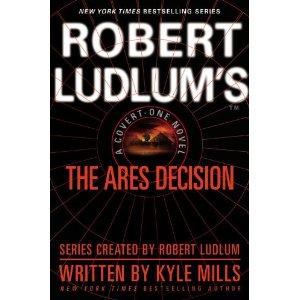
The Ares Decision
By Kyle Mills
Grand Central Publishing, 410 pp $27.99

The official title of this particular work of literary art, as it were, is “Robert Ludlum’s (TM) The Ares Decision.” That because the name Robert Ludlum sells — still, long after he left for the Great Bestseller List In The Sky. See, Ludlum — by many accounts the modern master of the international spy/thriller genre — died in 2001. But they made movies and they’ve made sequels and they’ve made more sequels and they’ve made movies out of stuff Ludlum never wrote. Jason Bourne is almost the new James Bond — a character who far outlives the guy who created him.

So they’ve found other writers to pretend they’re Ludlum and write stuff that maybe the Late Great might have done if he had lived forever (TM).

And as long as people keep making money on this shit, the producers are going to keep producing it.

In fact, there’s a whole lotta James Bond going on in this latest “Robert Ludlum’s (TM)” book. I can tell you this: It reads sometimes like a script for a Bond movie (which is embarassing). It reads sometimes like a Tom Clancy novel (which is not all bad). It hardly ever reads like something that Robert Ludlum would have written.

Here’s the deal:

There’s some nasty parasite that turns people into living zombies — they feel no pain, just anger, and fight and kill until their bodies are so hacked up that they can’t move any more. Of course, the little bug is very fatal; the living zombies only last a few hours before they die almost as horribly as the people they killed along the way.

Perfect bio-weapon, no?

Well, the Iranians (of course) think so, and they’re trying to force a young biologist who just wants to study ant parasites into turning this thing into a weapon. (The ant girl, Sarie Van Keuren, is the best character in the book, a gin-driniking scientist who is excellent with guns, a first-rate mechanic and a total space cadet. She has more depth than any of the rest of the sterotypes who people the sordid tale.)

Naturally, the CIA is involved, and naturally, it’s trouble: The director really wants the Iranians to use the zombie weapon so he’ll have an excuse to get the president to nuke the whole country back to the stone age. He doesn’t want too many people to die though; just a few million Americans, enough to create the political climate for mushroom clouds over the Middle East.

And he’s a bad guy, the CIA director, a nasty dude who puts secret paralysis death drugs in the General Tso’s Chicken.

There’s a looney Kurtz-style African strongman who has something of a cult. He is in the employ of Iran, and has an undergound fortress lab in Central Uganda, where the kidnapped Dr. Van Keuren is put to work. The only one who can save her is a super-secret operative who works directly for the president in an off-the-books op called Covert-One (how imaginative).

Along the way, there’s more living zombie attacks, crazed infected monkey attacks, machete attacks, a severed-head-in-the-back-of-a-pickup scene and a little bit of conventional warfare.

I read the whole thing. I liked Sarie enough to keep going. And it’s got an interesting plot, in a sick Clancy-ish way. But don’t name this stuff after Robert Ludlum; he had a lot more class.   

Jens Lekman, penguins, and choice words for Kirsten Dunst at the California Academy of Sciences

0

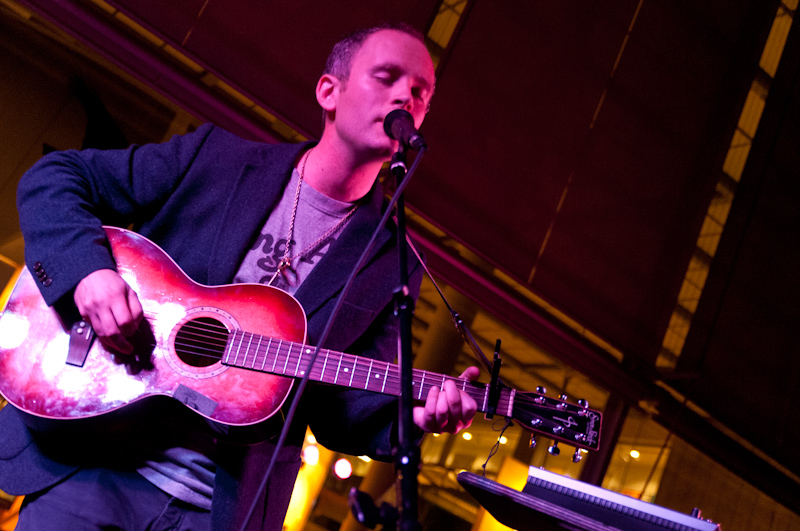
Last Thursday, two girls rushed to the front of the stage at the California Academy of Sciences, one visibly shaking with a mix of excitement and concern, her friend trying to calm her. They stood particularly near the stage in the thin crowd watching Geoffrey O’Connor, where otherwise only photographers dared to tread. After bouncing through a song, they turned to each other, then tentatively towards me. “This isn’t Jens Lekman yet, is it?” one asked. “No, not until 8:30,” I said, and she shook my shoulders as a sign of approval, before being pulled away by her friend, to skip off together back inside the Academy, presumably to have a few more cocktails and look at the penguins. (I can relate to the confusion, though, I’m a huge Kanye West fan, even though I have no idea what he looks or sounds like.)

O’Connor, of Australian band the Crayon Fields, in all likelihood took no notice. With his spindly body, pale skin, and (above all) accent, the confusion with fellow singer songwriter (and main attraction) Lekman probably happens all the time. But O’Connor seemed perfectly at home with an audience of polite people holding back. He switched from the mic to guitar over programmed beats, taking a moment here or there to lean against a speaker, striking a pose and looking directly into the cameras. During “Idle Lover” he left the stage, walking through the East Garden, to stand on a chair to finish his song, perched above a few party goers previously engaged in conversation. Above all he brought a certain nonplussed laconic humor. “This next song is my most apologetic,” he said. “It’s called ‘So Sorry.’” When he finished, the once reserved crowd reenacted the land grab scene from Far and Away (1992).

Lekman was unimposingly charming, able to make stage banter seem like choice b-sides and unfinished lyrics. Introducing “Waiting for Kirsten,” a new song off his great An Argument with Myself EP, the raconteur said, “The thing about Kirsten Dunst is, she said in an interview once that she liked my music…and I’ve been trying to not be too impressed by that.” The song details the actress’s failure to get into a club in Lekman’s homeland of Sweden. “In Gothenberg they don’t have VIP lines,” the chorus says, and Lekman went on to explain that “you won’t get in just because you have the right clothes, or a lot of money, or you made out with Spider-Man.” After a set of new material alongside older favorites, including a softer version of “Black Cab” and “The Opposite of Hallelujah” nicely mixed with a bit of The Chairmen of the Board’s “Give Me Just a Little More Time,” Lekman immediately went into two short encores, since he said the crowd was too thick to get offstage. When he finally did step down, a few excited fans made an arch with their arms for him to pass through. He went around.

Photo  by Stephen Ho.

Six arrested protesting bank foreclosures during Occupy SF

131

Six activists protesting bank foreclosures were arrested after occupying Chase bank on Market Street in downtown San Francisco this afternoon (Thurs/29) as part of a broader action organized to mirror the Occupy Wall Street protests in New York City.

Brenda Reed, Tanya Dennis, William Chorneau, Manny S. Tucker, Gabriel Haaland, and Claire Haas were all arrested inside Chase on Market and Second streets while hundreds rallied outside, according to Guardian City Editor Steven T. Jones, who is there at the scene. The occupation was staged following a march that originated at San Francisco’s Goldman Sachs offices at 555 California Street and then progressed to the offices of CitiBank, Charles Schwab, and Chase.

The arrests prompted protesters to chant, “Let those people go! Arrest the CEO!” They also chanted, “Go, Brenda, go!” and “Shame on Chase!”

When they first entered the downtown San Francisco bank, Reed, who has battled a Chase foreclosure for two years, demanded to speak to the CEO. “You have put me through hell, and devastated my health,” she told the bank manager.

“Just to let you know, we are compassionate to your cause,” the manager responded, but was greeted by shouts of “No, you’re not!” from the crowd.

When Reed and her small group of supporters were asked to leave, they refused. As of 5:20 p.m., there was still a crowd of hundreds protesting out front.

UPDATE: They’ve been released, and Reed made the following statement to the crowd: “Chase Bank is trying to steal my home of 38 years.”

She said, “It’s government-sanctioned, nationalized fraud,” and added, “there are thousands and thousands and thousands of people like me, all over California.”

Video by Steven T. Jones


Occupy Wall Street comes to SF: VIDEO

24

Guardian City Editor Steven T. Jones is out in the streets this afternoon (9/29) covering the Occupy Wall Street protests that were brought to San Francisco by a coalition of labor and economic justice advocates, and inspired by ongoing demonstrations in New York City. Mayoral candidate Sup. John Avalos was spotted mixing with demonstrators as they flew signs calling for taxes on the rich.

“People are understanding that we’ve had the wool pulled over our eyes,” Avalos said, “and they’re fighting back.”

Here’s footage from the scene shot outside 555 California, a San Francisco skyscraper that was the former Bank of America headquarters and now houses offices for Goldman Sachs and other major financial players.

Video by Steven T. Jones

Hardly Strictly’s fresh blood

0

Hardly Strictly Bluegrass is a badge of San Francisco life. You move here and inevitably in your citywide journeys you’re part of a conversation debating the lineup of this unbelievably free, always-entertaining fall fest that takes in Golden Gate Park the first weekend of October each year.

It’s become a staple of the fall calendar, because well, the bands are good and we like our events free in this town. Now in its 11th year, there are still many new-to-HSB acts, along with the yearly frequenters Steve Earle, Emmylou Harris, Robert Earl Keen, and Ralph Stanley. Festival publicist Tracey Buck says there are at least half a dozen new local bands in 2011, and roughly 50 new touring acts.

Acquaint yourselves with a few from this year’s HSB freshman class. (Though keep in mind: they may be fresh blood at Hardly Strictly, but most have been at this whole music thing for quite some time.) The big weekend is pretty much here: Fri/30-Sun/2.

Locals:
Nell Robinson & Jim Nunally: Honky tonk at its finest. Robinson’s voice quavers like a modern-day Patsy Cline, on par with her contemporary (and fellow HSB performer) Emmylou Harris. Robinson lends her voice more to vintage sounds, than bending to current trends. It’s old time twang and classic country. (Sat/1, 6:05 p.m., Porch Stage)

The Devil Makes Three: One of the new locals that can rep the “bluegrass” marker of Hardly Strictly, Devil Makes Three plays a swinging mix of blues, rockabilly, ragtime, and yes, bluegrass. It’s roots American music with a hint of sinister mischief, all tattooed and bearded, whiskey-ed up toe-tapping fun. It’s been described as “dark bluegrass.”  Expect to hear tracks off the trio’s newest output, live album Stomp and Smash, which comes out Oct. 25. (Sun/2, 1:10 p.m., Arrow Stage)

Bob Mould:
Can you believe it’s Bob Mould’s first Hardly Strictly appearance? With all his local appearances, prestige, and now current Bay Area address, we could have sworn we’d seem him there before. The former Husker Du and Sugar frontperson, and current globally-adored indie rock solo artist (and recent memoirist/Herbst Theater interviewee) even inspired a tribute concert – it goes down in Los Angeles in November with Ryan Adams and No Age among others. But first, the rocker will appear at HSB. Perhaps he’ll read a passage or two from his new book See A Little Light: The Trail of Rage and Melody. (Sun/2, 2 p.m., Towers of Gold Stage)

Nationals/Internationals:
Kurt Vile & the Violators: One of the festival’s always-welcome surprises. Who would have guessed that straggly Mr. Vile would be playing the same event as Merle Haggard ? But actually, it makes sense. He of jangly guitars and mumbly, hoarse vocals, Vile has said that he grew up inspired by vintage records and is vocally inspired by Townes Van Zandt and Gram Parsons The critically acclaimed rocker will likely be one of the event’s highlights this year. (Fri/1, 2:25 p.m., The Rooster Stage)

http://www.youtube.com/watch?v=Y4-vvlkWE4Q

Thurston Moore: Catching Moore is a pretty big coup for festival organizers and goers alike. And his slot at HSB is well-earned. After years of beating guitars to a bloody pulp with Sonic Youth, he debuted the elegant, nearly all acoustic solo album, Demolished Thoughts, this year, produced by fellow luminary, Beck. I mean, the man was named one of Rolling Stones “100 Greatest Guitarists of All Time” – he can play his instrument damn well. (Fri/30, 5 p.m., Arrow Stage)

Broken Social Scene: While it’s Broken Social Scene’s first time at HSB, it may also be its last, at least for the time being. Following the Canadian indie (super)group’s highly anticipated show at the Fillmore on Oct. 1 (i.e. a few hours after its Hardly Strictly appearance), the massive act will go on indefinite hiatus. Here’s your chance to catch it in the fog-hampered sunshine, free of cost. (Sat/1, 3:25 p.m., Towers of Gold)

The Performant: Weekend in Wonderland

4

ALICE and Folsom Street Fair fall down different holes

From North Beach to South of Market, clowning to carousing, the weekend offered up a veritable smorgasbord of sensory overload and playful edge. First off, a debut performance of a quirky bit of deconstruction in new kid venue on the North Beach block, The Emerald Tablet. Written and conceptualized by two spirited performers (Edna Miroslava Barrón and Karen Anne Light), “ALICE: Down the Rwong Wrabbit Whole” offered a welcome introduction to both the space and the still-fresh faces of the presenting duo.

Billed as a version of Alice in Wonderland in which the two performers play “all 359 characters” (they don’t quite make it) the performance quickly becomes more of an exploration of the creative life rather than a linear narrative based on that classic tome. In a schizophrenic, sometimes mimed, frenzy, Barrón and Light assume and discard a handful of roles in rapid-fire sequence—Alice, Dinah the cat, the White Rabbit, the Caterpillar—but the characters that wind up with the most stage time are themselves as they jostle each other for center stage. Light launching into a series of poker-faced monologues regarding the importance of art and professionalism in theatre; Barrón undermining her pedantic pomposity at every turn with unscheduled pee breaks and incandescent bursts of childish enthusiasm.

“We’re like a pear and an orange,” she confides, referring to her and Light’s working relationship. “Totally different…but we still taste good together.”

“Actually we’re more like a pineapple and a quasar,” retorts Light, re-entering the scene after a brief jaunt into Salvador Dali territory. Supported throughout the performance by Barrón’s idiosyncratic sound design (she moonlights as DJ Nobody of KUSF/KUSF-in-Exile), and punctuated by moments of brilliance (a water-logged Mad Hatter’s Tea Party scene, for example), “Rwong Wrabbit Whole” plays for the most part like a string of firecrackers. Plenty of bang, despite lacking a particular climactic epiphany.

Sunday dawned damp, but fortunately by the afternoon it was downright balmy, just perfect for the parade of fantasy and flesh that is the Folsom Street Fair. Though it’s safe to say no-one really heads down to the Fair for the music, every year there’s always at least one standout act, and this year that act was the sultry electro-soul chanteuse Billie Ray Martin. Although late in the day, the sweet pulse of the music infused the worn and torn crowd with blissed-out euphoria. Although perhaps best known by the club kids for her stint in 90’s house music ensemble Electribe 101, Martin’s husky, powerful vocals would not be out of place shimmering on the soundtrack for the next James Bond flick, or tucked into a Gladys Knight tribute album. And the buoyant electro-clash of songs such as “Sold Life,” “Undisco Me,” and Hard Ton duet “Fantasy Girl,” juxtaposed against her rough diamond voice and Kit Kat Klub cabaret style offer a compelling combination you wouldn’t want to miss no matter the occasion.

“ALICE: Down the Rwong Wrabbit Whole”
through October 15
The Emerald Tablet
80 Fresno, SF
(415) 500-2323
RwongWrabbitWhole.webs.com

Hot sexy events: September 28-October 4

0

In her soon-to-be-released look at the Bay Area BDSM scene, Techniques of Pleasure: BDSM and the Circuits of Sexuality (2012, Duke University) Margot Weiss raises some tough questions for those that would tout the pansexual “new guard” scene – the techie, mostly white, mostly hetero clique in the Bay’s BDSM panoply – as subverting societal norms. 

In its reliance on expensive classes and even more expensive gadgetry as condition for entry, she sees silent class division. When familiar societal situations are re-enacted on the kink stage, Weiss sees not a refutation of incest, slave auctions, and male dominance over females, but instead a neoliberal refusal by the practioners involved to accept their position in society.

Weiss would probably be down, then, with this week’s Arse Elektronika tech-sex syposium (Thu/29-Sun/2). The event raises tough issues like whether having the lifestyle that allows one to enjoy kink is a luxury, class struggle among perverts, and the fossil footprint of a technologically-assisted orgasm. There will be talks and workshops, inventions and performance – go to question the meanings of desire. 


The League

A hint of Barbary Coast class, please: this is Mission Control’s cigar club night. Regardless of the gender you walked in with, tonight’s an opportunity to go dapper dandy (ascots and pinstripes), or va-va-voom (backseams and lace straps). 

Thu/29 8 p.m.-midnight, $20 free membership required

Mission Control

www.missioncontrolsf.org


Arse Elektronika

This symposium on issues surrounding the politics and point of alt sex takes place from the Center of Sex and Culture to Chicken John Rinaldi’s Chez Poulet. Check here for a full schedule of events. 

Thu/29-Sun/2 $10-50

Various locations, SF

www.monochrom.at


“An Afternooon Delight with Reid Mihalko and Susie Bright”

What don’t you know about sex activist Susie Bright’s work? The woman’s done more than most for sex-positive feminism — even writing woman-friendly erotica reviews for Penthouse in the 1980s. Today, she sits down with sex educator Reid Mihalko (who, by the way, submitted a rambunctious threesome story to our call for Bawdy Storytelling’s greatest hits). 

Sun/2 1-3 p.m., $10-40 sliding scale

Center for Sex and Culture

1349 Mission, SF

www.sexandculture.org


Rites of Love and Math

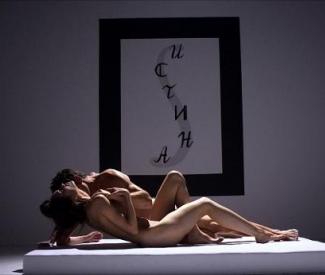
Last time we wrote about Berkeley math professor Edward Frenkel and the erotic movie he made and starred in, the film played to a packed house. “We had to turn away more than 100 people,” Frenkel wrote to us in an email announcing his next Berkeley screening, which is coming up on Sun/2. Inspired by Yukio Mishima’s samauri movie Yukoku, this skin-heavy film has scared up its fair share of controversy in radical-prude Berkeley.

Sun/2 7:05 p.m., $15

Landmark Shattuck Cinemas

2230 Shattuck, Berk.

(510) 843-3699

www.berkeleyvideofilmfest.org


Musical alchemy

0

MUSIC I’ve never defended the idea of a “best of” record. Some anonymous curator is typically given the task of sifting out a musician’s hits from the misses, of establishing an artist’s definitive compilation once and for all. A fairly daunting project for judging something as fickle and varied as musical taste. So I have to admit I was skeptical when I picked up The Best of Quantic album put out by the British imprint Tru Thoughts earlier this month.

Best of? Quantic, a.k.a. William Holland, is only 31-years-old. And the talented producer, arranger, and multi-instrumentalist is hardly through with making music. Quantic has completed eleven records on Tru Thoughts in the span of a decade, ever since the label flipped his demo into The 5th Exotic, a fluid recording of instrumental grooves crafted from the percussive roots of hip-hop and the beat experiments of Brighton’s downtempo electronic scene. A track culled from that record, “Time is the Enemy,” launches the new retrospective into a geography of sound that Quantic has persistently navigated in unexpected ways — between the contemplative and the effusion of the dance floor.

Few musicians are as prodigious as Quantic, as methodical, as ready to throw away conventional formulas and risk leaping into the wandering spirit of rhythm. A couple years after his solid debut, Quantic abandoned strict sampling techniques in favor of forming a break driven funk group: the Quantic Soul Orchestra. Powerhouse songs like “Pushin’ On” and “Don’t Joke with a Hungry Man,” respectively featuring vocalists Alice Russell and Spanky Wilson, stamps The Best Of with the frenetic pulse of deep-in-the-pocket soul.

With a crate digger’s fervor, Quantic traveled to Ethiopia and throughout the Caribbean, absorbing and researching and translating the diaspora of the polyrhthm. Four years ago, he relocated to Santiago de Cali, Colombia — a city built from second wave 1950s Art Deco and the more typical mass concrete structures of the ’60s — where the radio still broadcasts Richie Ray and Bobby Cruz, and the boogaloo of 1968 saturates the air.

“I see Cali as a crossroads, almost like a test tube, or a gateway from the Pacific Coast [of Colombia] to Bogota,” Quantic tells me from his home, trucks rumbling in the background. “It’s a very creative place, although fairly unbeknown to the outside world.”

Once settled in Cali, Quantic reforged his orchestra into his Combo Bárbaro. In 2009, Quantic and his group released perhaps his most exhilarating album yet, Tradition in Transition, a testament to the vitality of percussive heritage on the fringes and yet in the subterranean core of the Americas.

“I wanted to really explore the side of music from Barranquilla and Panama City where you have bands playing soul, funk, salsa, cumbia, boogaloo … not necessarily one genre,” Quantic says. “What I appreciate in this music is that there’s tremendous diversity — culturally, ethnically, racially — and so many different rhythm experimentations.”

For his Combo Bárbaro, Quantic tried to synthesize precisely this kind of musical alchemy. He paired British drummer Malcolm Catto with frenetic Colombian percussionist Freddie Colorado; Peruvian pianist Alfredo Linares weaved the melodies, and folklore singer, Nidia Góngora, from the Afro-Colombian region of the Pacific Coast, wrote and delivered the lyrics. What comes out of these creative tensions is a brilliant and resonating song like “The Dreaming Mind,” which also features lush string arrangements from the often overlooked Brazilian composer Arthur Verocai.

After a few rotations, the best of record won me over. It’s more of a stitched together mapping of Quantic’s rhythmic wanderings — musically and physically — than a set of highlights towards a destination. “The traveling of my own life as a musician is intertwined with the music I make,” he says. “It’s like looking at the rings on the tree; there’s a pattern to it, but it just develops naturally without so much of a plan.”

Quantic hopes to redraw a bit of that map during his performance this Friday at SOM. Without his bárbaros on tour, he’ll spin some 45s to chart out influences, and then bring the studio on stage, mixing recorded sessions live while adding dubbing and keys. 

Quantic

With Guillermo and Wonway

Fri. 9/30, 10 p.m., $10–$15

SOM

2925 16th, SF

www.som-bar.com

Channeling darkness

0

arts@sfbg.com

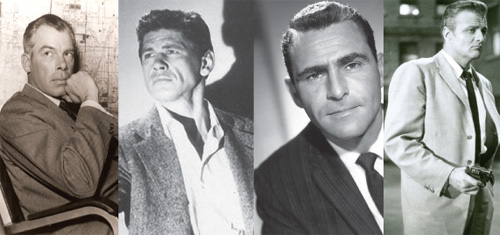
FILM One of the longest and most unsung stretches of film noir’s half life as an enduring aesthetic sensibility has played out on television. From such former Nick at Night staples as Dragnet and Alfred Hitchcock Presents, to The Twilight Zone, to the neo-noir of Twin Peaks, and more recently, AMC’s drama The Killing, TV has long been home to those lawbreakers, revenge-seekers, and poor souls tormented by unexplained phenomena and sinister plots who once populated the black and white cinematic pulp of the 1940s.

In fact, Hollywood’s fingerprints are all over “TV Noir,” a highly detailed survey of the various types of malfeasance and mystery one could find on television sets during the medium’s golden age. The series’ seven nights of double bills, which kick off at the Roxie Fri/30, are packed with small screen rarities that frequently feature big Hollywood names (or soon-to-be big names) behind or in front of the camera for episodes of now forgotten shows with catchy titles such as Suspense, Danger, Checkmate, and Tales of Tomorrow.

Series curator and Roxie resident noir expert Elliot Lavine has dug deep, unearthing such treasures as Blake Edwards’ unsold 1954 pilot for Mike Hammer, a series that was to be based on Mickey Spillane’s famous hard-boiled detective, which screens opening night. Things get more highbrow with Saturday night’s showcase of “Great Directors.” The aforementioned Hitch is present, directing and producing the tense Cornell Woolrich-inspired “Four O’Clock” from his program Suspicion, which stars E.G. Marshall as a clockmaker who becomes the unwilling victim of his plot to blow up the wife he thinks is cheating on him. I doubt you will squirm through a tenser five minutes than during the episode’s penultimate scene, which showcases Hitchcock’s uncanny ability to manipulate the viewer’s emotions through editing. Also of note is 1951 Danger episode “The System,” an early scorcher by a pre-Hollywood Sidney Lumet, who directs a terrific Eli Wallach.

Of course, a survey of the darker side of the small screen would be incomplete without Rod Serling. Serling, who had catapulted his TV career with Kraft Television Theater’s live 1955 live broadcast of his screenplay Patterns, was in high demand and turning out top quality work pre-Twilight Zone, as evinced by the John Frankenheimer-directed 1958 episode of Playhouse 90, “A Town Has Turned to Dust,” which confronts racial prejudice in a poor, drought-ridden town in a way that Mad Men really has yet to do.

Like “A Town,” the other two Serling-scripted episodes in “TV Noir,” “Nightmare at Ground Zero” (a live drama from 1953) and “The Arena” (1956, from Studio One), hold up a cracked mirror to their times, reflecting growing anxieties over nuclear annihilation and the gradual erosion of the established political order.

These themes are given a less refined treatment in some of Lavine’s campier sci-fi selections showcased on Tuesday and Wednesday nights, in which extraterrestrial is more often than not an anagram for communist. Although, the 1958 pilot for Now is Tomorrow offers a more psychologically taut portrayal of the men entrusted to push “the button,” which is paired with the odd Edward R. Murrow-hosted docu-drama “The Night America Trembled” (1957, from Studio One) — a recreation of the night of Orson Welles’ infamous radio broadcast of War of the Worlds with a cameo by Welles himself. Five years later America would face down the threat of annihilation via broadcast during the Cuban Missile Crisis.

“TV Noir” also packs in a few outliers that aren’t to be missed. In the 1954 episode “Bond of Hate,” from British series The Vise, a bitter married couple realize their only recourse is to kill each other. Pamela Abbott’s performance as the harpy-like wife stands next to the late Ann Savage’s turn as the powder keg hitcher in Detour (1945) as an example of how to completely own nearly every second of screen time. Another must-see is the bizarre quiz show, The Plot Thickens (1963); it features an older, but still randy Groucho Marx as part of an “expert” panel that attempts to solve a short whodunit penned by Robert Bloch of Psycho fame. It even had its own mascot: a black cat named Lucifer, which guests were instructed to pass around for good luck. Also of note: television’s early years were also the golden age of sponsorship, and many of episodes in “TV Noir” include each show’s original commercials — including a very young Mike Wallace shilling for Revlon lipstick.


“TV NOIR”

Sept. 30-Oct. 6

Roxie Theater

3117 16th St., SF

(415) 863-1087

www.roxie.com

Legends of the underground

5

emilysavage@sfbg.com

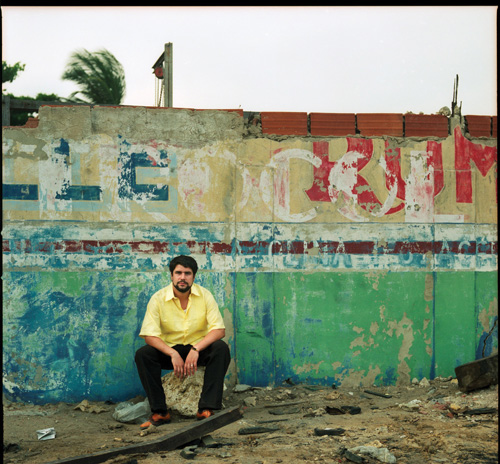
MUSIC “There are people like us who decide we no longer want to deal with what is fed to us through commercial forces,” says infamous hardcore singer Mike Apocalypse, “We strive to create new things — if I couldn’t create new music, I would fall apart in a month’s time.”

It’s wretchedly hot on a Sunday afternoon at Mission bar Laszlo when Apocalypse, 37, makes the above statement while ordering a shot and a Red Stripe. Over the course of two-and-a-half hours, he orders many more shots and beers, and excitedly bumps into a cadre of fellow music-maker friends.

With a broad grin, his sea-green eyes widen as he recalls the early 90s origins of Gehenna, his longstanding hardcore-black metal band. He folds his tattooed fingers (one reads “83%” in ode to Gehenna’s first song) over a beer with a mention of the upcoming chopped and screwed Gehenna mixtape.

In addition to his role as Gehenna’s singer, Apocalypse is also a respected local DJ. He beams while giving me the rundown on his daily routine: recording music at home in the Excelsior District every morning, DJing at Laszlo, Showdown, or Argus Lounge every late night; recently spinning disparate tracks by the likes of Infest, Stone Roses, and Nipsey Hussle.

This, his openness and agreeable demeanor, are in direct contrast with his fabled persona. Mind you, he’s only a legend in the underground, in small pockets of cities like San Diego, Orange, Calif., and Reno, but within certain crowds, the rumors are alive. If you’ve heard of him — and chances are, you haven’t — than you’ve heard the drama.

The rumor mill: Apocalypse stabbed a guy at a punk show. He punched someone in the face at a record store. He contributed to another musician losing his mind. And so becomes a legend. There have been outsized rumors and half-truths, tattooed cupped hands whispering circles around Apocalypse, also known as Mike Cheese or DJ Apocalypse, for decades.

“You know more of the rumors than I do, and you know more of the falsehoods than I do,” he says. Without addressing any specific incidents he lays it out: “The rumors also come from people who have attacked me physically and they thought they could fuck me up. Fact is, I don’t bullshit. If you think you’re going to fuck me up, unfortunately, I’m pretty good at handling my hands, I’ve got some good fist game because I grew up in Detroit.”

That last part is unquestionably true, he lived in Detroit until age 14, when he moved to San Diego alone. By age 17, he was straight-edge and on a cheeseburger diet (hence the name “Cheese”). He met fellow musicians through the hardcore scene and formed Gehenna. With its pummeling drum beats, black metal riffs, droning breakdowns, and Apocalypse’s tortured, growling vocals, it brought something new to the 1993 hardcore table.

“I brought in some of the more metal elements, Mickey [Rhodes Featherstone] brought in 70s proto-punk and DC [Grave] brought in the really fucking heavy stuff and the straight thrash — we were able to incorporate all the things we liked into one sound.”

Through 17 years, the band has self-released seven-inches, splits, and a few full length LPs — most recently, 2011’s re-issue of Land Of Sodom II/Upon The Gravehill — and moved from San Diego to Phoenix to Orange to Reno. Apocalypse, far from straight edge, settled into San Francisco in 2008, but since the other members are spread elsewhere, Gehenna only plays SF once a year. “San Francisco, is one of the greatest cities in the United States. This is the most open-minded city I’ve ever been in.”

He seems pleased with his current lot in life; it might be the alcohol or recreational drugs talking, but he’s truly inspirational in his takes on art, music, life. Truth to those whispered rumors or not, legend or not, Apocalypse is a man of convictions.

“[Gehenna] is not making money, we’re not going to ever sign with a major label, we’re never going to do anything that’s outside of our realm of control. It’s always been about control.”


GEHENNA

With Hoax, Neo Cons, and Neighborhood Brats

Wed/28, 8 p.m., $8

Sub-Mission

2183 Mission, SF www.sf-submission.com

Film Listings

0

OPENING

Dream House Newlyweds Daniel Craig and Rachel Weisz, plus third wheel Naomi Watts, star in this psychological thriller. (1:33)

50/50 This is nothing but a mainstream rom-com-dramedy wrapped in indie sheep’s clothes. When Adam (Joseph Gordon-Levitt) learns he has cancer, he undergoes the requisite denial, anger, bargaining, depression, and acceptance like a formality. Aided by his bird-brained but lovable best friend Kyle (Seth Rogan), lovable klutz of a counselor Katherine (Anna Kendrick), and panicky mother (Anjelica Huston), Adam gets a new lease on life. This comes in the form of one-night-stands, furious revelations in parked cars, and a prescribed dose of wacky tobaccy. If 50/50 all sounds like the setup for a pseudo-insightful, kooky feel-goodery, it is. The film doesn’t have the brains or spleen to get down to the bone of cancer. Instead, director Jonathan Levine (2008’s The Wackness) and screenwriter Will Reiser favor highfalutin’ monologues, wooden characters, and a Hollywood ending (with just the right amount of ambiguity). Still, Gordon-Levitt is the most gorgeous cancer patient you will ever see, bald head and all. (1:40) Presidio. (Ryan Lattanzio)

Machine Gun Preacher The title sounds like a sequel to Hobo with a Shotgun — but there’s nary a speck of tongue-in-cheek, kitschy-koo-koo irony in this passionate rendering of the life of Sam Childers. Childers (Gerard Butler) was a former dealing, thieving biker who found God, built a refuge for Sudanese orphans and former child soldiers, and became their fiercest fight-fire-with-fire defender. As Machine Gun Preacher opens, Childers has just emerged from the pen — he’s still the mean motherfucker he always was, shooting up within hours of release and hooking up with chum Donnie (Michael Shannon) to rob dealers. But a semi-mystical run-in forces him to face the worst and sends him to church, to join wife Lynn (Michelle Monaghan), a former stripper and addict. Childers’ fiery love of the Lord, and his spontaneous visions, lead him to construct his own church for sketched-out recovered sinners like himself and then on to war-torn Sudan, where he discovers even more to fix — and likely more than he ever can. To his credit, director Marc Forster (2001’s Monster’s Ball, 2008’s Quantum of Solace) doesn’t shy away from the visceral violence nor the enraged holy-rolling that’s a clear part of Childers’ life, although the most memorable part of Machine Gun Preacher must be Butler, who gets his righteous wrath on in his meatiest part since 2006’s 300. (2:03) (Chun)

The Mill and the Cross One of the clichés often told about art is that it is supposed to speak to us. Polish director Lech Majewski’s gorgeous experiment in bringing Flemish Renaissance painter Peter Bruegel’s sprawling 1564 canvas The Procession to Calvary to life attempts to do just that. Majeswki both re-stages Bruegel’s painting –which draws parallels between its depiction of Christ en route to his crucifixion and the persecution of Flemish citizens by the Spanish inquisition’s militia — in stunning tableaux vivant that combine bluescreen technology and stage backdrops, and gives back stories to a dozen or so of its 500 figures. Periodically, Bruegel himself (Rutger Hauer) addresses the camera mid-sketch to dolefully explain the allegorical nature of his work, but these pedantic asides speak less forcefully than Majeswki’s beautifully lit vignettes of the small joys and many hardships that comprised everyday life in the 16th century. Beguiling yet wholly absorbing. (1:37) Embarcadero, Shattuck. (Sussman) *Mysteries of Lisbon Though produced for Portuguese television, Raúl Ruiz’s Mysteries of Lisbon won awards and raves on the festival circuit. Suddenly, the aging Ruiz seemed more assured his rightful status as a master. Mysteries of Lisbon has arrived for a rather miraculous theatrical run — but Ruiz is gone. He died in August 2011, having directed many more films than his 70 years. His movies have typically been the province of hardcore cinephiles, but this splendid epic holds wider appeal. It’s difficult to think of another movie that so satisfyingly captures the intricacies and volatilities of the 19th century novel — anyone enthralled by the teeming creations of Balzac and Dickens will find that Mysteries of Lisbon‘s four-and-a-half hours stream by. Ruiz was no stranger to the 19th century — his recent films included Klimt (2006) and the Proustian Time Regained (1999) — but the ornately plotted trio of novellas by Portuguese author Camilo Castelo Branco which supply these mysteries seem specially tailored to the director’s affinity for involved narrations. The story sweeps across dozens of characters and several generations of doomed love, revenge plots, disguised identities, uncertain parentages, and religious vows. We even glimpse the Napoleonic Wars. Ruiz’s narrations are commonly likened to labyrinths, but for Mysteries of Lisbon‘s vigorous expansion I reach for the cosmos: one luminous sphere rotates another which in turn rotates a larger system, the whole of it spreading outwards in all directions at once. (4:26) Embarcadero, Shattuck. (Goldberg)

Passione John Turturro’s lush tribute to the music of Naples, Italy is beamed directly from a strange alternate universe completely devoid of snark — a place where grand emotions and sweeping melodrama are presented at face value. In other words, anyone who can’t stomach a heaping helping of cheese will miss the point of Passione. (If you can stomach a small helping of cheese, the film will suck you in after a few minutes.) Passione is more free-form than docs like Buena Vista Social Club (1999), but it’s in a similar vein: a celebration of the musical traditions and artists from a specific place, and an exploration of what it is about that specific place that inspires such creativity. In Naples, there are centuries-old folk ballads, comedic ditties about the mafia, histrionic romantic duets, slinky laments, opera, and more. Actor-turned-director Turturro — the Brooklyn-born son of Italian immigrant parents — doesn’t really provide a structure so much as simply let the performances, most of which are staged in organic settings, flow. Fans of Italian popular music might recognize some of the singers, but most will be unfamiliar to stateside viewers. The majority of the songs offer subtitles, but even the ones that don’t are so over-the-top that their meanings (usually having to do with anguish, love, or the anguish of love) are easy to decipher. Turturro is scheduled to appear in person at the film’s Mon/3 evening screenings; check www.sffs.org for updates. (1:31) SFFS New People Cinema. (Eddy)

*Tucker and Dale vs. Evil See “Twang On.” (1:28) California, Lumiere.

What’s Your Number? Unlucky-in-love Anna Faris checks back in with all her former conquests in this romantic comedy. (1:46) Presidio.

ONGOING

Abduction (1:46) 1000 Van Ness.

*The Black Power Mixtape 1967-1975 Cinematic crate-diggers have plenty to celebrate, checking the results of The Black Power Mixtape 1967-1975. Swedish documentarian Göran Hugo Olsson had heard whispers for years that Swedish television archives possessed more archival footage of the Black Panthers than anyone in the states — while poring through film for a doc on Philly soul, he discovered the rumors were dead-on. With this lyrical film, coproduced by the Bay Area’s Danny Glover, Olsson has assembled an elegant snapshot of black activists and urban life in America, relying on the vivid, startlingly crisp images of figures such as Stokely Carmichael and Huey P. Newton at their peak, while staying true to the wide-open, refreshingly nonjudgmental lens of the Swedish camera crews. Questlove of the Roots and Om’Mas Keith provide the haunting score for the film, beautifully historicized with shots of Oakland in the 1960s and Harlem in the ’70s. It’s made indelible thanks to footage of proto-Panther school kids singing songs about grabbing their guns, and an unforgettable interview with a fiery Angela Davis talking about the uses of violence, from behind bars and from the place of personally knowing the girls who died in the infamous Birmingham, Ala., church bombing of 1963. (1:36) Embarcadero, Piedmont, Shattuck. (Chun)

Circumstance Thirteen (2003) goes to Tehran? The world of sex, drugs, and underground nightclubs in Iran provides the backdrop for writer-director Maryam Keshavarz’s lusty, dreamy take on the passionate teenagers behind the hijabs. Risking jail and worse are the sassy, privileged Atafeh (Nikohl Boosheri) and the beautiful, orphaned Shireen (Sarah Kazemy), who, much like young women anywhere, just want to be free — to swim, sing, dance, test boundaries, lose, and then find themselves. The difference here is that they’re under constant, unnerving surveillance, in a country where more than 70 percent of the population is less than 30 years old. Nevertheless, within their mansion walls and without, beneath graffitied walls and undulating at intoxicating house parties, the two girls begin to fall in love with each other, as Atafeh’s handsome, albeit creepy older brother Mehran (Palo Alto-bred Reza Sixo Safai) gazes on. The onetime musical talent’s back from rehab, has returned to the mosque with all the zeal of the prodigal, and has hooked up with the Morality Police that enforces the nation’s cultural laws. Filmed underground in Beirut, with layers that permit both pleasure and protest (wait for the hilarious moment when 2008’s Milk is dubbed in Farsi), Circumstance viscerally transmits the realities and fantasies of Iranian young women on the verge. (1:45) Opera Plaza, Shattuck. (Chun)

City of Life and Death There have been a number of recent works about the “rape of Nanking,” but perhaps none tackles the brutal nature of Nanjing’s fall with as much beauty as City of Life and Death. Shot in striking black and white, the film depicts the invasion of China’s capital by Japanese forces from a number of points of view, including that of a Japanese soldier. It can be difficult at times to become emotionally attached to characters within such a restless narrative, but the structure goes a long way toward keeping the proceedings balanced. The stunningly elaborate sets and cinematography alone are worth the price of admission, and it’s amazing that such detail was achieved with a budget of less than $12 million. But it is the unflinching catalog of the some 300,000 murders and rapes that took place between 1937 and 1938 in Nanjing that will remain with you long after watching. (2:13) Four Star. (Peter Galvin)

*Contagion Tasked with such panic-inducing material, one has to appreciate director Steven Soderbergh’s cool head and hand with Contagion. Some might even dub this epic thriller (of sorts) cold, clinical, and completely lacking in bedside manner. Still, for those who’d rather be in the hands of a doctor who refuses to talk down to the patient, Contagion comes on like a refreshingly smart, somewhat melodrama-free clean room, a clear-eyed response to a messy, terrifying subject. A deadly virus is spreading swiftly — sans cure, vaccine, or sense — starting with a few unlikely suspects: globe-trotting corporate exec Beth (Gwyneth Paltrow), a waiter, a European tourist, and a Japanese businessman. The chase is on to track the disease’s genesis and find a way to combat it, from the halls of the San Francisco Chronicle and blog posts of citizen activist-journalist Alan (Jude Law), to the emergency hospital in the Midwest set up by intrepid Dr. Mears (Kate Winslet), to a tiny village in China with a World Health investigator (Marion Cotillard). Soderbergh’s brisk, businesslike storytelling approach nicely counterpoints the hysteria going off on the ground, as looting and anarchy breaks out around Beth’s immune widower Mitch (Matt Damon), and draws you in — though the tact of making this disease’s Typhoid Mary a sexually profligate woman is unsettling and borderline offensive, as is the predictable blame-it-on-the-Chinese origin coda. (1:42) California, 1000 Van Ness, Sundance Kabuki. (Chun)

Crazy, Stupid, Love Keep the poster’s allusion to 1967’s The Graduate to one side: there aren’t many revelations about midlife crises in this cleverly penned yet strangely flat ensemble rom-com, awkwardly pitched at almost every demographic at the cineplex. There’s the middle-aged romance that’s withered at the vine: nice but boring family man Cal (Steve Carell) finds himself at a hopeless loss when wife and onetime teenage sweetheart Emily (Julianne Moore) tells him she wants a divorce and she’s slept with a coworker (Kevin Bacon). He ends up waxing pathetic at a slick nightclub where he catches the eye of the well-dressed, spray-tanned smoothie Jacob (Ryan Gosling), who appears to have taken his ladies man stance from the Clooney playbook. It’s manly makeover time: GQ meets Pretty Woman (1990)! Cut to Cal and Emily’s babysitter Jessica (Analeigh Tipton), who is crushing out on Cal, while the separated couple’s tween Robbie (Jonah Bobo) hankers for Jessica. Somehow Josh Groban worms his way into the mix as the dullard suitor of Hannah (Emma Stone) in a hanging chad of a storyline that must somehow be resolved in this mad, mad, mad, mad — actually, the problem with Crazy, Stupid, Love is that it isn’t really that crazy. It tries far too hard to please everybody in the theater to its detriment, reminding the viewer of a tidy, episodic TV series (albeit a quality effort) like Modern Family more than an actual film. Likewise I yearned for a way to fast-forward through the too-cute Jessica-Robbie scenes in order to get back to the sleazy-smart, punchy complexity of Gosling, playing adeptly off both Carrell and Stone. (1:58) SF Center, Shattuck. (Chun)

The Debt On paper, The Debt has a lot going for it: captivating history-based plot, “it” actor Jessica Chastain, Helen Mirren vs. Nazis. And while the latest from John Madden (1998’s Shakespeare in Love) is fairly entertaining, the film is ultimately forgettable. Chastain plays Rachel, a member of an Israeli team tasked with capturing a Nazi war criminal and bringing him to justice. Mirren is the older Rachel, who is haunted by the long-withheld true story of the mission. Although The Debt traffics in spy secrets, it’s actually rather predictable: the big reveal is shrug-worthy, and the shocking conclusion is expected. So while the entire cast — which also includes Tom Wilkinson, Sam Worthington, and Ciaran Hinds — turn in admirable performances, the script is lacking what it needs to make The Debt an effective drama or thriller. Like 2008’s overrated The Reader, the film tries to hide its inadequacies under heavy themes and the dread with which we remember the Holocaust. (1:54) Four Star, 1000 Van Ness, Presidio, Sundance Kabuki. (Peitzman)

Detective Dee and the Mystery of the Phantom Flame (2:02) Embarcadero, Four Star, Shattuck, Sundance Kabuki.

Dolphin Tale (1:53) 1000 Van Ness, Presidio, SF Center.

*Drive Such a lovely way to Drive, drunk on the sensual depths of a lush, saturated jewel tone palette and a dreamlike, almost luxurious pacing that gives off the steamy hothouse pop romanticism of ’80s-era Michael Mann and David Lynch — with the bracing, impactful flecks of threat and ultraviolence that might accompany a car chase, a moody noir, or both, as filtered through a first-wave music video. Drive comes dressed in the klassic komforts — from the Steve McQueen-esque stances and perfectly cut jackets of Ryan Gosling as the Driver Who Shall Remain Nameless to the foreboding lingering in the shadows and the wittily static, statuesque strippers that decorate the background. Gosling’s Driver is in line with Mann’s other upstanding working men who hew to an old-school moral code and are excellent at what they do, regardless of what side of the law they’re working: he likes to keep it clear and simple — his services as a wheelman boil down to five minutes, in and out — but matters get messy when he falls for sweet-faced neighbor Irene (Carey Mulligan), who lives down the hall with her small son, and her ex-con husband (Oscar Isaac) is dragged back into the game. Populated by pungent side players like Albert Brooks, Bryan Cranston, Ron Perlman, and Christina Hendricks, and scattered with readily embeddable moments like a life-changing elevator kiss that goes bloodily wrong-right, Drive turns into a real coming-out affair for both Danish director Nicolas Winding Refn (2008’s Bronson), who rises above any crisis of influence or confluence of genre to pick up the po-mo baton that Lynch left behind, and 2011’s MVP Ryan Gosling, who gets to flex his leading-man muscles in a truly cinematic role, an anti-hero and under-the-hood psychopath looking for the real hero within. (1:40) Marina, 1000 Van Ness, SF Center, Sundance Kabuki. (Chun)

Farmageddon First-time director Kristin Canty embarked on this documentary after discovering the healing power of raw milk in helping her child’s allergies. And it shows. Farmaggedon really should have been titled A Raw Deal for Raw Milk, considering its primary focus on several small family-operated dairies and the souring treatment they have received from government bureaucrats, spurring Canty’s activist act of making this movie. Larry and Linda Failace of Three Shephard’s Cheese in Vermont (the latter wrote her own book, 2007’s Mad Sheep: The True Story Behind the USDA’s War on a Family Farm) seem to have suffered the most, driven out of business when the sheep they brought over legally, with all the required quarantines, were seized and destroyed by the government agents on the pretext that the animals might spread “mad cow” disease. The sight of Linda Failace breaking into tears reading her daughter’s words about how the sheep were like her brothers and sisters is heart-breaking. Undermining such powerful, outrageous material are Canty’s textbook missteps: the director has major problems organizing her seemingly scattershot, lopsided material into a coherent and, er, organic whole, and lets her many sources drone on without a strong narrative through-line. All of this makes Farmaggedon a bit of a struggle to watch, although the dirt Canty digs up is likely to justifiably raise the hackles of progressive foodies. (1:30) Roxie, Smith Rafael. (Chun)

*The Future Dreams and drawings, cats and fantasies, ambition and aimlessness, and the mild-mannered yet mortifying games people play, all wind their way into Miranda July’s The Future. The future’s a scary place, as many of us fully realize, even if you hide from it well into your 30s, losing yourself in the everyday. But you can’t duck July’s collection of moments, objects, and small gestures transformed into something strangely slanted and enchanted, both weird and terrifying, when viewed through July’s looking glass. Care and commitment — to oneself and others — are two vivid threads running through The Future. Cute couple Sophie (July) and Jason (Hamish Linklater) — unsettling look-alikes with their curly crops — appear at first to be sailing contently, aimlessly toward an undemanding unknown: Jason works from home as a customer-service operator, and Sophie attempts to herd kiddies as a children’s dance instructor. But enormous, frightening demands beckon — namely the oncoming adoption of a special-needs feline named Paw-Paw (voiced by July as if it’s a traumatized, innocent child). Lickety-splitsville, they must be all they can be before Paw-Paw’s arrival. The weirdness of the familiar, and the kindness of strangers, become ways into fantasy and escape when the couple bumps up against the limits of their imagination. This ultra-low-key horror movie of the banal is obviously remote territory for July (2005’s Me and You and Everyone We Know). The Future is her best film to date and finds her tumbling into a kind of magical realism or plastic fantastic, embodied by a talking cat that becomes the conscience of the movie. (1:31) Roxie. (Chun)

The Guard Irish police sergeant Gerry Boyle (Brendan Gleeson) is used to running his small town on his own terms — not in a completely Bad Lieutenant (1992) kind of way, though he’s not afraid to sample drugs and hang with hookers. More like, he’s been running the show for years, and would prefer that big-city cops stay the hell out of his village. Alas, a gang of drug smugglers is doing business in the area, so an officious group of investigators from Dublin (horrors!) and America (in the form of an FBI agent played by Don Cheadle) soon descend. His mother’s dying, his brand-new partner’s missing, and between all the interlopers on both sides of the law, Boyle’s having a hard time having a pint in peace. Good thing he’s not as simple-minded as all who surround him think he is. Writer-director John Michael McDonagh (brother of playwright Martin, who directed 2008’s In Bruges — also starring Gleeson) puts an affable Irish spin on what’s essentially a pretty typical indie comedy, with some pretty typical crime-drama elements layered atop. Boyle’s character is memorably clever, but the film that contains him never quite elevates to his level. (1:36) Lumiere, Shattuck, Sundance Kabuki. (Eddy)

*The Hedgehog You needn’t possess the rough, everyday refinement of the characters of The Hedgehog to appreciate this debut feature by director-screenwriter Mona Achache — just an appreciation for a delicate touch and a tender heart. Eleven-year-old Paloma (the wonderful Garance Le Guillermic) is too smart for her own good, bored, neglected by her parents, and left to fend for herself with only her considerable imagination and a camcorder. She drifts around her fishbowl of privilege, a deluxe art nouveau-style apartment building in Paris, leveling her all-too-wise gaze on its denizens and plotting certain suicide on her 12th birthday — that is until a new resident appears in her viewfinder: a kindly Japanese gentleman Kakuro Ozu (Togo Igawa). He has as much of a connoisseur’s eye as Paloma — the proof is in his unlikely focus of attention, the building’s concierge Renée Michel (Josiane Balasko, resembling a burly Gertrude Stein), who hides her cultured and bookish inclinations behind a gruff, drab exterior. They recognize in each other a reverence for an almost monkish life of the mind, the austere elegance of wabi-sabi, and the transient beauty of rough-hewn imperfection, even in the sleek, well-heeled heart of the City of Light. To the credit of Achache, working with Muriel Barbery’s novel, these unlikely fragile friendships between outsiders take hold in a way that sidesteps preciousness and stays with you long after its pages have turned. (1:40) Smith Rafael. (Chun)

The Help It’s tough to stitch ‘n’ bitch ‘n’ moan in the face of such heart-felt female bonding, even after you brush away the tears away and wonder why the so-called help’s stories needed to be cobbled with those of the creamy-skinned daughters of privilege that employed them. The Help purports to be the tale of the 1960s African American maids hired by a bourgie segment of Southern womanhood — resourceful hard-workers like Aibileen (Viola Davis) and Minny (Octavia Spencer) raise their employers’ daughters, filling them with pride and strength if they do their job well, while missing out on their own kids’ childhood. Then those daughters turn around and hurt their caretakers, often treating them little better than the slaves their families once owned. Hinging on a self-hatred that devalues the nurturing, housekeeping skills that were considered women’s birthright, this unending ugly, heartbreaking story of the everyday injustices spells separate-and-unequal bathrooms for the family and their help when it comes to certain sniping queen bees like Hilly (Bryce Dallas Howard). But the times they are a-changing, and the help get an assist from ugly duckling of a writer Skeeter (Emma Stone, playing against type, sort of, with fizzy hair), who risks social ostracism to get the housekeepers’ experiences down on paper, amid the Junior League gossip girls and the seismic shifts coming in the civil rights-era South. Based on the best-seller by Kathryn Stockett, The Help hitches the fortunes of two forces together — the African American women who are trying to survive and find respect, and the white women who have to define themselves as more than dependent breeders — under the banner of a feel-good weepie, though not without its guilty shadings, from the way the pale-faced ladies already have a jump, in so many ways, on their African American sisters to the Keane-eyed meekness of Davis’ Aibileen to The Help‘s most memorable performances, which are also tellingly throwback (Howard’s stinging hornet of a Southern belle and Jessica Chastain’s white-trash bimbo-with-a-heart-of-gold). (2:17) California, 1000 Van Ness, SF Center, Sundance Kabuki. (Chun)

I Don’t Know How She Does It I don’t know how a likable comedian like Sarah Jessica Parker does it — meaning, such mediocre material as this mom-com. Parker may have parlayed her Sex and the City fame into a fashion, fragrance, and spin-off franchises, but she still hasn’t quite found her stride away from Carrie Bradshaw, though her Lucille Ball-esque physical comedy here — pulling down her skirt in mid-mommy-frazzle in front of her high-powered client — can be cute. Kate (Parker) just might be the busiest mom in the world: she’s juggling two kids, a hubby whose own career is on the rise (Greg Kinnear), and a major fund idea, which she has to sell to an attractive banking bigwig (Pierce Brosnan). Poor, poor privileged mom — in the trenches of the still-unadorable field of banking, with her obviously sizable salary, enviable Boston duplex, flaky-nice nanny, and bubbly single-mom friend (Christina Hendricks)! The biggest assist comes from her careerist aide, played by Olivia Munn, who grabs the biggest laughs with her deadpan delivery. (1:35) 1000 Van Ness. (Chun)

*Killer Elite Jason Statham has a lot going on, in addition to devastatingly attractive male-pattern balding: along with fellow Brit Daniel Craig, he’s one of the most believable action heroes in the cineplex today. This continent-hopping, Bourne-ish exercise, kitted out with piercingly loud sound design, comes chock-full of promise in the form of Statham, Robert De Niro, and Clive Owen, wielding endless firearms and finding new deadly uses for bathroom tile — you don’t want to be caught solo in anger management class with these specialists in cinematic rageaholism. Mercenary assassin Danny (Statham) wants out of the game after a traumatic killing involving way too much eye contact with a small child. Killer coworker Hunter (De Niro) pulled him out of that tight spot, so when the aging gunman is held hostage, Danny must emerge from hiding in rural Australia and take on a seemingly impossible case: avenge the deaths of a dying sheik’s sons, who were gunned down by assorted highly trained British military hotshots, get them to confess, and make it all look like an accident. Oh, yes, and try to make sure his own loved ones aren’t killed in the process. Dancing backwards as fast as he can is those retired Brits’ guardian angel-of-sorts, Spike (Owen), another intense, dangerous fellow with too much time on his hands. Throw in my favorite Oz evil-doer Adewale Akinnuoye-Agbaje as Danny and Hunter’s boss, some welcome been-there twinkle from De Niro, as well as a host of riveting fight scenes (and that ’00s cliché: sudden death by bus/truck/semi), and you have diverting popcorn killer. (1:40) 1000 Van Ness, Presidio. (Chun)

The Lion King 3D (1:29) SF Center, Shattuck, Sundance Kabuki.

*Love Crime Early this year came the announcement that Brian De Palma was hot to do an English remake of Alain Corneau’s Love Crime. The results, should they come to fruition, may well prove a landmark in the annals of lurid guilty-pleasure trash. But with the original Love Crime finally making it to local theaters, it’s an opportune moment to be appalled in advance about what sleazy things could potentially be done to this neat, dry, fully clothed model of a modern Hitchcockian thriller. No doubt in France Love Crime looks pretty mainstream. But here its soon-to be-despoiled virtues of narrative intricacy and restraint are upscale pleasures. Ludivine Sagnier plays assistant to high-powered corporate executive Christine (Kristin Scott Thomas). The boss enjoys molding protégée Isabelle to her own image, making them a double team of carefully planned guile unafraid to use sex appeal as a business strategy. But Isabelle is expected to know her place — even when that place robs her of credit for her own ideas — and when she stages a small rebellion, Christine’s revenge is cruelly out of scale, a high-heeled boot brought down to squash an ant. Halfway through an act of vengeance occurs that is shocking and satisfying, even if it leaves the remainder of Corneau and Nathalie Carter’s clever screenplay deprived of the very thing that had made it such a sardonic delight so far. Though it’s no masterpiece, Love Crime closes the book on his Corneau’s career Corneau (he died at age 67 last August) not with a bang but with a crisp, satisfying snap. (1:46) Albany, Clay, Smith Rafael. (Harvey)

Mary Lou A musical fable for fans of Glee, Hedwig and the Angry Inch (2001), The Adventures of Priscilla, Queen of the Desert (1994), and Bollywood, the latest from Eytan Fox (2002’s Yossi and Jagger) is a drag-flavored dramedy (Israel’s first?) Originally a hit miniseries in its home country, Mary Lou screens at the Castro in one big chunk jammed with singing, dancing, and a dreamy cast. Pouty Ido Rosenberg stars as Meir, a gay boy obsessed with finding the mother who left him when he was 10. After a disastrous graduation party, Meir flees his homophobic high school for the worldly environs of Tel Aviv, where he soon becomes a drag star named Mary Lou, after his mother’s favorite song. Love, loss, friendship, tragedy, joy, coming-of-age, and quite a few elaborate musical numbers soon transpire — the plot is not without clichés, to be sure, but it’s hard to hate on anything possessed of such sparkly energy. Not familiar with Svika Pick, the Israeli legend whose music provides much of the soundtrack? It matters not, especially if you’re a fan of deliriously corny pop tunes. (2:30) Castro. (Eddy)

Midnight in Paris Owen Wilson plays Gil, a self-confessed “Hollywood hack” visiting the City of Light with his conservative future in-laws and crassly materialistic fiancée Inez (Rachel McAdams). A romantic obviously at odds with their selfish pragmatism (somehow he hasn’t realized that yet), he’s in love with Paris and particularly its fabled artistic past. Walking back to his hotel alone one night, he’s beckoned into an antique vehicle and finds himself transported to the 1920s, at every turn meeting the Fitzgeralds, Gertrude Stein (Kathy Bates), Dali (Adrien Brody), etc. He also meets Adriana (Marion Cotillard), a woman alluring enough to be fought over by Hemingway (Corey Stoll) and Picasso (Marcial di Fonzo Bo) — though she fancies aspiring literary novelist Gil. Woody Allen’s latest is a pleasant trifle, no more, no less. Its toying with a form of magical escapism from the dreary present recalls The Purple Rose of Cairo (1985), albeit without that film’s greater structural ingeniousness and considerable heart. None of the actors are at their best, though Cotillard is indeed beguiling and Wilson dithers charmingly as usual. Still — it’s pleasant. (1:34) Albany, Embarcadero, Four Star, Piedmont. (Harvey)

Moneyball As fun as it is to watch Brad Pitt listen to the radio, work out, hang out with his cute kid, and drive down I-80 over and over again, it doesn’t quite translate into compelling cinema for the casual baseball fan. A wholesale buy-in to the cult of personality — be it A’s manager Billy Beane or the actor who plays him — is at the center of Moneyball‘s issues. Beane (Pitt) is facing the sad, inevitable fate of having to replace his star players, Jason Giambi and Johnny Damon, once they command the cash from the more-moneyed teams. He’s gotta think outside of the corporate box, and he finds a few key answers in Peter Brand (a.k.a. Paul DePodesta, played by Jonah Hill), who’s working with the sabermetric ideas of Bill James: scout the undervalued players that get on base to work against better-funded big-hitters. Similarly, against popular thought, Moneyball works best when director Bennett Miller (2005’s Capote) strays from the slightly flattening sunniness of its lead actor and plunges into the number crunching — attempting to visualize the abstract and tapping into the David Fincher network, as it were (in a related note, Aaron Sorkin co-wrote Moneyball‘s screenplay) — though the funny anti-chemistry between Pitt and Hill is at times capable of pulling Moneyball out of its slump. (2:13) Marina, 1000 Van Ness. (Chun)

Mozart’s Sister Pity the talented sister of a world-shaking prodigy. Maria Anna “Nannerl” Mozart, who may have had just as much promise as a composer as her younger brother, according to Rene Féret’s Mozart’s Sister. A scant five years older, enlisted in the traveling family band led by father-teacher Leopold (Marc Barbe), yet forced to hide her music, being female and forbidden to play violin and compose, Nannerl (Marie Féret, the filmmaker’s daughter) tours the courts of Europe and is acclaimed as a keyboardist and vocalist but is expected to share little of her brother’s brilliant future. Following a chance carriage breakdown near a French monastery, Nannerl befriends one of its precious inhabitants, a daughter of Louis XV (Lisa Féret, another offspring), which leads her to Versailles, into a cross-dressing guise of a boy, and puts her into the sights of the Dauphin (Clovis Fouin, who could easily find a spot in the Cullen vampire clan). He’s seduced by her music and likewise charms Nannerl with his power and feline good looks — what’s a humble court minstrel to do? The conceit of casting one’s daughters in a narrative hinging on unjustly neglected female progeny — shades of Sofia Coppola in The Godfather: Part III (1990)! — almost capsizes this otherwise thoughtful re-imagination of Maria Anna’s thwarted life; despite the fact Féret has inserted his children in his films in the past, both girls offer little emotional depth to their roles. Nevertheless, as a feminist rediscovery pic akin to Camille Claudel (1988), Mozart’s Sister instructs on yet another tragically quashed woman artist and might inspire some righteous indignation. (2:00) Bridge, Shattuck, Smith Rafael. (Chun)

*My Afternoons with Margueritte There’s just one moment in this tender French dramedy that touches on star Gerard Depardieu’s real life: his quasi-literate salt-of-the-earth character, Germain, rushes to save his depressed friend from possible suicide only to have his pretentious pal pee on the ground in front of him. Perhaps Depardieu’s recent urinary run-in, on the floor of an airline cabin, was an inspired reference to this moment. In any case, My Afternoons With Margueritte offers a hope of the most humanist sort, for all those bumblers and sad cases that are usually shuttled to the side in the desperate ’00s, as Depardieu demonstrates that he’s fully capable of carrying a film with sheer life force, rotund gut and straw-mop ‘do and all. In fact he’s almost daring you to hate on his aging, bumptious current incarnation: Germain is the 50-something who never quite grew up or left home. The vegetable farmer is treated poorly by his doddering tramp of a mother and is widely considered the village idiot, the butt of all the jokes down at the cafe, though contrary to most assumptions, he manages to score a beautiful, bus-driving girlfriend (Sophie Guillemin). However the true love of his life might be the empathetic, intelligent older woman, Margueritte (Gisele Casadesus), that he meets in the park while counting pigeons. There’s a wee bit of Maude to Germain’s Harold, though Jean Becker’s chaste love story is content to remain within the wholesome confines of small-town life — not a bad thing when it comes to looking for grace in a rough world. (1:22) Embarcadero, Shattuck. (Chun)

*Point Blank Not for nothing did Hollywood remake French filmmaker Fred Cavaye’s last film, Anything for Her (2008) as The Next Three Days (2010) — Cavaye’s latest, tauter-than-taut thriller almost screams out for a similar rework, with its Bourne-like handheld camera work, high-impact immediacy, and noirish narrative economy. Point Blank — not to be confused with the 1967 Lee Marvin vehicle —kicks off with a literal slam: a mystery man (Roschdy Zem) crashing into a metal barrier, on the run from two menacing figures until he is cornered and then taken out of the action by fate. His mind mainly on the welfare of his very pregnant wife Nadia (Elena Anaya), nursing assistant Samuel (Gilles Lellouche) has the bad luck to stumble on a faux doctor attempting to make sure that the injured man never rises from his hospital bed. As police wrangle over whose case this exactly is — the murder of an industrialist seems to have expanded the powers of the stony-faced, monolithic Commandant Werner (Gerard Lanvin) — Samuel gets sucked into the mystery man’s lot, a conspiracy that allows them to trust no one, and seemingly impossibly odds against getting out of the mess alive. Cavaye never quite stops applying the pressure in this clever, unrelenting cat-and-mouse and mouse-and-his-spouse game, topping it with a nerve-jangling search through a messily chaotic police station. (1:24) Opera Plaza. (Chun)

*Rise of the Planet of the Apes “You gotta love a movie where the animals beat up on the humans,” declared my Rise of the Planet of the Apes companion. Indeed, ape must not kill ape, and this Planet of the Apes prequel-cum-remake of Conquest of the Planet of the Apes (1972) takes the long view, back to the days when ape-human relations were still high-minded enough to forbid smart apes from killing those well-armed, not-so-bright humanoids. I was a fan of the original series, but honestly, I approached Rise with trepidation: I dreaded the inevitable scenes of human cruelty meted out to exploited primates — the current wave of chimp-driven films seems focused on holding a scary, shaming mirror up to the two-legged mammalian violence toward their closest living genetic relatives. It’s a contrast to the original series, which provided prisms with which to peer at race relations and generational conflict. But I needn’t have feared this PG-13 “reboot.” There’s little CGI-driven gore, apart from the visceral opening and the showdown, though the heartbreak remains. Scientist Will (James Franco, brow perpetually furrowed with worry) is working to find a medicine designed to supercharge the brain in the wake of Alzheimer’s — a disease that has struck down his father (John Lithgow). When the experimental chimp that responds to his serum becomes violently aggressive, the project is shut down, although the primate leaves behind a surprise: a baby chimp that Will and his father name Caesar and raise like a beloved child in their idyllic Bay Area Victorian. Growing in intelligence as he matures, Caesar finds himself torn by an existential dilemma: is he a pet or a mammal with rights that must be respected? Rise becomes Caesar’s story, rendered in heart-wrenching, exhilarating ways — to director Rupert Wyatt and his team’s credit you don’t miss the performance finesse of Roddy McDowell and Kim Hunter in groundbreaking prosthetic ape face in the original movies — while resolving at least one question about why humans gave up the globe to the primates. One can only imagine the next edition will take care of the lingering question about how even the cleverest of apes will feed themselves in Muir Woods. (1:50) 1000 Van Ness, SF Center. (Chun)

Sarah’s Key (1:42) Opera Plaza.

*Senna When Ayrton Senna died in 1994 at the age of 34, he had already secured his legacy as one of the greatest and most beloved Formula One racers of all time. The three-time world champion was a hero in his native Brazil and a respected and feared opponent on the track. This eponymous documentary by director Asif Kapadia is nearly as dynamic as the man himself, with more than enough revving engines and last minute passes to satisfy your lust for speed and a decent helping Ayrton’s famous personality as well. Senna was a champion, driven to win even as the sometimes-backhanded politics of the racing world stood in his way. A tragic figure, maybe, but a legend nonetheless. You don’t have to be an F1 fan to appreciate this film, but you may wind up one by the time the credits roll. (1:44) Opera Plaza, Smith Rafael. (Cooper Berkmoyer)

*Shaolin There’s a lot to like about Shaolin, from Andy Lau, as a warlord turned passionate monk, to the return of Jackie Chan, as a stir-frying Shaolin, to its overall Buddhistic message (by way of heaps of chopsocky, blood-spitting violence), to its many action scenes, complete with mucho ax-throwing and horsing around with out-of-control carriages. We’re at the dawn of China’s republic, and the warlords are squabbling over the country’s spoils. General Hou Jie (Lau) appears to be the most ruthless of them all, following his second in command Cao Man (Nicholas Tse) into the Shaolin Temple to pursue an enemy with a golden secret and arrogantly leaving his mark on the sanctuary signage. But tragedy turns Hou around and sends him in the temple once more, where he finds real brotherhood with the good-hearted monks. Lau has reteamed here with director Benny Chan, and the results effectively recast the star, sometimes too easily pictured as a villain with his hawkish looks, as a hero once again, all while foregrounding Buddhism and giving it to the white devils at the end — an anti-imperialism message that has become rote in recent years, little wonder considering China’s growing might and the hardening of positions on the front lines of the global economy. (2:11) SFFS New People Cinema. (Chun)

Straw Dogs Never could I have predicted there would be a day when the violent finale of Straw Dogs would be met with raucous cheers. The original 1971 film was produced within a morally ambiguous social climate and remains one of director Sam Peckinpah’s most controversial efforts; contemporary audiences trained to applaud a payoff of blood and gore are likely in the wrong headspace for a film like this. The remake, which sends a good-natured screenwriter (James Marsden) on a retreat in his wife’s (Kate Bosworth) sweaty Southern hometown where they find themselves at odds with a group of good ol’ boys, remains powerful and just as uncomfortable and mean as Peckinpah’s version, but it’s in service of a moral outcome that’s more in line with its commercial placement: ultimately it takes the road of “man becomes protector” over “man becomes monster.” If you have no interest in the original, you will find a fair bit of talent in this remake, but without the cynical attitude it can be hard to separate Straw Dogs from any other horror-movie-of-the-week. (1:50) 1000 Van Ness, SF Center. (Galvin)

*3 The press literature for 3, Tom Tykwer’s latest, throws around references to classic Hollywood screwball comedies, but this romantic drama is far too self-conscious, serious, and almost pretentious to ever completely ape the mercury lightness of that genre. Apart from one slightly jarring fantasy sequence or two, this polyamorous love story is all about contemporary Berlin bohemia, from hero Hanna’s (Sophie Rois) immersion in the worlds of science and art, to her increasingly plastic relationship with partner Simon (Sebastian Schipper). On the edge of their 20th anniversary, the smart, stylish 40-ish bohos are still in love, though a younger, perpetually amused-looking doctor Adam (Devid Striesow) threatens to turn their two-decade itch into something much more involved. Tykwer kicks off his high-minded romp with a pas de trois, sprinkling split-screen interludes into the program as he goes, but such devices fall away — sucking the viewer into its heady, seductive undertow — beneath the sheer eroticism of these sexual empiricists’ couplings, particularly in the humid, Cat People-like scenes set in a Badeschiff pool, which comes to resemble a carnally charged hothouse as envisioned by Olafur Eliasson. (1:59) Sundance Kabuki. (Chun)

The Tree of Life Mainstream American films are so rarely adventuresome that overreactive gratitude frequently greets those rare, self-conscious, usually Oscar-baiting stabs at profundity. Terrence Malick has made those gestures so sparingly over four decades that his scarcity is widely taken for genius. Now there’s The Tree of Life, at once astonishingly ambitious — insofar as general addressing the origin/meaning of life goes — and a small domestic narrative artificially inflated to a maximally pretentious pressure-point. The thesis here is a conflict between “nature” (the way of striving, dissatisfied, angry humanity) and “grace” (the way of love, femininity, and God). After a while Tree settles into a fairly conventional narrative groove, dissecting — albeit in meandering fashion — the travails of a middle-class Texas household whose patriarch (a solid Brad Pitt) is sternly demanding of his three young sons. As a modern-day survivor of that household, Malick’s career-reviving ally Sean Penn has little to do but look angst-ridden while wandering about various alien landscapes. Set in Waco but also shot in Rome, at Versailles, and in Saturn’s orbit (trust me), The Tree of Life is so astonishingly self-important while so undernourished on some basic levels that it would be easy to dismiss as lofty bullshit. Its Cannes premiere audience booed and cheered — both factions right, to an extent. (2:18) Lumiere. (Harvey)

*Warrior Those wondering why the mixed martial arts scene has captured the imagination of so many can finally understand what the fuss is all about, now that it comes filtered through a melodramatic narrative akin to The Fighter (2010). Warrior‘s mis-en-scene is immediately recognizable: a prodigal returns, in the form of Tom Conlon (Tom Hardy). Once a talented teenage wrestler, the now-battered man is the damaged youngest son of alcoholic ex-boxer Paddy Conlon (Nick Nolte). Tom wants his father to train him for a major mixed martial arts tournament with a multimillion-dollar purse, though the two obviously still have a deadly hold on each other — the repentant Paddy is on the wagon and the emotionally bruised Tom harbors secrets he won’t reveal — and battle with cutting comments rather than fists. Tom isn’t the only prodigal in the house: Paddy has lost the trust of Tom’s bro, Brendan (Joel Edgerton), a former fighter and present-day physics high school teacher who’s struggling to make ends meet with an underwater mortgage. Though Warrior is no Raging Bull (1980), it almost outdukes The Fighter in terms of its brutal bouts, conveying the swift, no-holds-barred action of MMA in the ring, while giving actors plenty of drama to wrap their jowls ’round — particularly in Nolte’s case. His tore-up turn as an all-excuses patriarch is as heartbreaking as a solid kick to the jaw. (2:19) SF Center. (Chun)

*We Were Here Reagan isn’t mentioned in David Weissman’s important and moving new documentary about San Francisco’s early response to the AIDS epidemic, We Were Here — although his communications director Pat Buchanan and Moral Majority leader Jerry Falwell get split-second references. We Were Here isn’t a political polemic about the lack of governmental support that greeted the onset of the disease. Nor is it a kind of cinematic And the Band Played On that exhaustively lays out all the historical and medical minutiae of HIV’s dawn. (See PBS Frontline’s engrossing 2006 The Age of AIDS for that.) And you’ll find virtually nothing about the infected world outside the United States. A satisfying 90-minute documentary couldn’t possibly cover all the aspects of AIDS, of course, even the local ones. Instead, Weissman’s film, codirected with Bill Weber, concentrates mostly on AIDS in the 1980s and tells a more personal and, in its way, more controversial story. What happened in San Francisco when gay people started mysteriously wasting away? And how did the epidemic change the people who lived through it? The tales are well told and expertly woven together, as in Weissman’s earlier doc The Cockettes. But where We Were Here really hits home is in its foregrounding of many unspoken or buried truths about AIDS. The film will affect viewers on a deep level, perhaps allowing many to weep openly about what happened for the first time. But it’s a testimony as well to the absolute craziness of life, and the strange places it can take you — if you survive it. (1:30) Castro. (Marke B.)


Film listings are edited by Cheryl Eddy. Reviewers are Kimberly Chun, Michelle Devereaux, Max Goldberg, Dennis Harvey, Louis Peitzman, Lynn Rapoport, Ben Richardson, and Matt Sussman. For rep house showtimes, see Rep Clock. For complete film listings, see www.sfbg.com.

Localized Appreesh: Dreams

1

Localized Appreesh is our weekly thank-you column to the musicians that make the Bay. Each week a band/music-maker with a show, album release, or general good news is highlighted and spotlit. To be considered, contact emilysavage@sfbg.com.

The voice of Billie Holiday blended with a drop of folk and an electro-infused ka-pow of Afro-pop. It’s the stuff of dreams, isn’t it? Sort of. Dreams, besides being the mind’s subconscious porthole, is a new East Bay indie supergroup. Lead by Emily Ritz (of Honeycomb and Yesway) and keyboardist Rob Shelton (of the Moanin Dove) and backed by steel guitar, vibraphone, and a hand-held rhythm section (along with drums), the group skips through genres, time, and traditional percussion expectations.

It’s been a pretty big month for the seven-piece act. First, it was featured as one of the first bands on Porto Franco Records’ new video series (see vid below), then it released its first single, and this week, Dreams plays a magical musical single release extravaganza: Thursday at Beatbox. The show, which includes a free copy of the single for the first 30 attendees, will also have some fun non-musical elements. The band invited artists and projectionists to add visual elements. And the release warns, “Expect mimes.” Also, how weird is it that scientists may now be able to recreate scenes from our subconscious using imaging technology?

Year and location of origin: Rob: Emily and I started experimenting with sounds and writing songs together in 2009, but we didn’t really settle on the full band with all the members until we started recording earlier this year. We first started playing in the converted basement of a 1906-era emergency shelter in Oakland, Calif.
Band name origin: I had the idea to create this band while traveling in Ecuador and Peru in 2008, and was originally going to call it Los Suenos, but since none of really speak Spanish, I thought it would be better it in our native tongue. When I first presented it to the band, we weren’t really sure if we wanted to use it, so we’d show up to rehearsal and just sit there spitting out out band names for hours. Some of the losers: Goodie Bag, Boyfriend, Chimera, Blood Orange.
Band motto: Lush
Description of sound in 10 words or less: Electric Afro psych popscicle (faux pop).
Instrumentation: Rhodes and synth bass: Rob Shelton; Vocals and Jawbone: Emily Ritz; Drums: Jake Nochimow; Vibraphone, Percussion: Andrew Maguire; Percussion, Vibraphone: Geneva Harrison ; Bass, Lap Steel Guitar: Jesse Cafiero; Electric Guitar: Zac Rubin-Rattet
Most recent release: We’re doing our first release on September 29. An A & B side single entitled “With You,” which has Thao Nguyen guesting on back-up vocals. We’ve been recording at San Francisco’s Tiny Telephone studios on and off for the past four months, and it’s really exciting to finally be releasing something.
Best part about life as a Bay Area band: Being around such a vibrant and diverse music scene and being able to collaborate with all different types of artists.
Worst part about life as a Bay Area band: We’ve got it pretty good here, and almost the whole band is living in Oakland now, which makes it easy to rehearse. Probably the worst part is that BART doesn’t run super late, so when you’ve got fans coming from Oakland to SF, everyone’s catching that 12:20 train back under the bay, sometimes in the middle of your set.
First cassette record/cassette tape/or CD ever purchased: Embarrassing, Twenty Eight Teeth by Buck O’ Nine. I used to be in a ska band.
Most recent record/cassette tape/CD/or Mp3 purchased/stolen from the Web: Purchased –  Age of Adz by Sufjan Stevens. Stolen/Borrowed: Laughing Stock by Talk Talk
Favorite local eatery and dish: Shakin’ Jesse at Rudy’s Can’t Fail Cafe. Guinness, espresso, and ice cream – can’t go wrong with that.

UnderCover Presents: Dreams Single Release Party
With Tartufi, and Debbie Neigher
Thurs/29, 8:30 PM doors, $10 cover
BeatBox
314 11th St, SF
www.beatboxsf.com
Facebook: Event

Porto Franco Records captures Dreams:
http://www.youtube.com/watch?v=Ebe0gbOcc6Y: 

Foreplay: Two pre-Folsom scenes

0

As Folsom Street Fair (Sat/24) looms over us like a leather daddy with an itchy whip paw, the city readies itself for the roughest, naughiest, sweatiest weekend of the year. Yesterday, I ran all over the city checking in with the sex scene. I kept my clothes mostly on, but then it is only Thursday… 

Monarchy-Andrew Wedge fitting at Mr. S Leather

“This is Spartaaa!” I’m standing outside one of SoMa’s crucial leather one-stops with an old hand local kink photographer Rich Trove (check his site after the Fair for shots of your flings in the sunshine) and a fashion journalist from the Chronicle. Guess which one is trying to explain to the other what a traditional S&M harness looks like?

Our motley crew has been assembled by Folsom Street Fair’s executive director Demetri Moshoyannis to lurk around Mr. S‘s fitting room while British synthpoppers Monarchy was being fitted for their custommade Andrew Wedge harnesses. The band will be wearing them at their FSF performance on Sunday at 5:10 p.m. on the 12th Street stage. 

“We have no idea what we’re in for,” smiled a member of the band’s entourage. Of course, that wasn’t exactly true — keyboardist Andrew Armstrong attended the fair with a friend six years ago. 

“It kind of freaked me out in a good way,” said Armstrong, modeling the tight neoprene half-tank that Wedge (who vends high end fur and leather designs from places like the Castro’s Sui Generis) had fit over he and his bandmate’s white dress shirts and under the sharp black blazers they were sporting. 

“There’s something a bit religious about it,” he said of Wedge’s designs, which had been agreed upon after a series of emails between the two of them. “It’s futuristic, but masculine as well. Even though we’re basically wearing bra tops.”

“England is very prudish. Well, we take these things seriously, but we do it behind closed doors,” he continued. Again, I found it hard to take him at his word, seeing as the band supplied its own imposing, matching black latex masks for the occasion. They don’t go out in public without them, it turns out, a comment on the nature of celebrity. 

The crew and designer lined up for one last photo opportunity in front of Mr. S’s black leather and harness covered four post king-sized bed. “Not in front of the dildos!” cautioned Moshoyannis. “We want these to be pictures they can use.” Clearly he meant in the Chronicle. 

Side note: if you’re still checking for some sexy threads for this weekend, you could do worse than check out Mr. S’s new sports section. Complete with urinals on the walls and an impressive selection of wrestling singlets, I found myself especially turned on by the display of $12 Style Pig knee socks. I picked some up in red, or as the helpful sales assistant clarified, fisting.


Good Vibrations’ Indie Erotic Film Festival at the Castro Theatre

Best reason to finally buy an iPhone: the Ohmibod Freestyle G. I snagged the mp3 compatible vibrator (really, really feel the rhythmn on your favorite beats) at the IXFF’s pre-party upstairs at the Castro, where Jiz Lee, Carol Queen, Kitty Stryker, and other SF local lustfuls drank cocktails of St. George absinthe and rootbeer, slapped on costume mustaches and generally enjoyed the burlesque stylings of Twilight Vixen Revue. 

When the short erotic film competition began, it got surprisingly jocky. Lucia Aniello’s Dildo Sport, Kelly Robinson and Oscar Salisbury’s Fight, Flight, Or Fuck, and Rollo Wenlock’s computer-aged 30 Love all featured tennis, so I guess the New York Times article was onto something with that balls metaphor

“30 love” – short film. from Rollo Wenlock on Vimeo.


Not everything was heavy breathing-appropriate, either. SF’s own Levni Yilmaz entered one of his backlit Magic Marker-ed creations from his series “Tales of Mere Existence,” What Would Penis Do?, a look at his awkward childhood forays into sexual activity. There was the quirky bunnies and peanuts and women’s rooms in Always, Only, Ever — an entry from Barbara Benas of Brooklyn — not to mention an I-guess-hot tryst between a female American soldier and burkha-clad woman in a designer cave, Julien Rotterman’s Salam and Love

But some of it was. Erika Lust — who earlier this week had an IXFF evening dedicated to her erotic, high glamour European flicks — shared Love Hotel, a threesome flick that made a trip to Barcelona seem highly advisable. Sadly, as the evening’s hosts (Peaches Christ, Hugs Bunny, Lady Bear, and Dr. Carol Queen — when Carol Queen plays the evening’s straightman you know you’re in for it) pointed out, Lust edited out all signs of genitals. Sigh.

The evening’s winner, as determined by an overwhelming audience response at the end of the night, was La Putiza. Created by Mexican director Gerardo Delgado, the short flick combined erotic comic art, overblown superhero crusading, and joyful, copious amounts of gay sex. Sure, the aesthetic was refined and the lead actor was fuckable, but one suspects that the secret to Delgado’s success, entering into this most phallic of all SF weekends, went back to Peaches Christ’s gleeful promise at the start of the night’s program: 30-foot penises. For Good Vibes’ interview with the filmmaker, voyage here

Thanks Castro Theatre, hope we didn’t make too much of a mess. 

Moving the planet: San Francisco speaks

2

As far as the planet is concerned, it’s probably a good thing that Morgan Fitzgibbons is adept at guilt trips. Consider the Huffington Post editorial the SF neighborhood activist and founder of Western Addition’s Wigg Party wrote earlier this year. You know our descendents? “They will either remember you as someone who fought for life against the greatest odds, or someone who simply neglected your most fundamental responsibility — to pass the world on to the next generation,” wrote Fitzgibbons. 

In the same editorial he promised to “see you in the streets.” Well ready your street-walking shoes, because that day has come: Sat/24 is Moving Planet Day, which will see 2,000 events in more than 168 countries, promises to be one of the largest global manifestations for the environment to date. People across the Earth will be speaking out, massing up, and getting loud about the need to stop our fossil-fueled ways before it’s too late.

Morgan Fitzgibbons walks the walk at a tree planting in July. Photo via St. Cyprian’s Episcopal Church

And you should hear the voicemail we got from Fitzgibbons yesterday. Jesus, blistering. Invoking our duty as agents of change in the Bay Area, for chrissakes. So we decided to swing into action: today, tomorrow, and next week we’ll be profiling Moving Planet Day events across the planet. We’ll begin close to home with Fitzgibbons explaining what will be happening in our very own city. Tomorrow: an organizer from Buenos Aires tells us what’s in store down south. 

San Francisco Bay Guardian: What is your role in your city’s Moving Planet Day events?

Morgan Fitzgibbons: As a leader of a neighborhood based resilient community organization, I am of course a long time fan of 350.org and know from previous experience that their annual days of action are the biggest events in the whole world of climate change, sustainability, etc. So I’ve been doing general volunteering since May to help produce the event – anything from finding a scissor lift to media outreach to hopefully being able to say a few words on stage on Saturday.

SFBG: What inspired you to get involved?

MF: I’ve known and worked with the 350.org folks for a number of years now, and so I know there is no bigger event on the scene. They have done an excellent job of galvanizing the whole world to stand together, and that’s really key – this is a global problem that requires a global solution. 


SFBG: What does your city have planned for Saturday?

MF: Our event is going to bring together people from all over the Bay Area. People will meet in their regional cities and towns and then travel to San Francisco at 12 p.m. to march from Justin Herman Plaza down Market Street to Civic Center for a big rally featuring 350.org founder Bill McKibben and the Sierra Club’s executive director Mike Brune as well as a bunch of great music, including Ashel Seasunz!


SFBG: How many people are expected to attend?

MF: We won’t really know until Saturday, but we are anticipating somewhere in the 2,000-4,000 range.


SFBG: Why is this such a big deal?

MF: It’s a huge deal because climate change and the related planetary crises threaten the very foundations of our society. The world’s governments have obviously demonstrated that they are going to put short-term profits ahead of any long-term security and are effectively ignoring these issues. Saturday is the rare time when we can push the clueless governments out of the way and stand together as a concerned global population. Millions of people around the world are going to devote their day to standing up for this cause, because they know that the maintenance of a healthy planet is more important than anything else in the world. 


SFBG: What do you hope that this day achieves?

MF: You know rallies are notoriously tricky because everyone shows up, everyone’s excited, and then at the end of the day you’re not always sure what came out of it. I think obviously a big takeaway is going to be knowing that millions of people around the world feel the same urgency that you do, which is extremely empowering. But what I personally hope people take away from the day is that this isn’t a problem that’s solved with a rally or voting for or against some bill at the  ballot box. It’s something that is going to require us to get out in our neighborhoods every day to organize and build more resilient communities. That’s what I’ll be preaching if they hand me the mic.


SFBG: How will you transport yourself to the festivities?

MF: I’m going to be riding from Tour de Fat in the morning, so I’ll be taking my bicycle through the Wiggle. I wouldn’t have it any other way.


SFBG: Complete this sentence: We can reverse the causes of man-made climate change if we…

MF: …get out in our neighborhoods and organize. This must happen in every community big and small. There is no movement without this. We need no less than a cultural revolution. But as soon as people take this aspect of the work seriously… look out.


Moving Planet Day

Sat/24 10 a.m.-6 p.m., free

March starts at Justin Herman Plaza, SF

Afternoon activities at Civic Center, SF

www.moving-planet.org


Hot sexy events: September 21-27

1

Pretty much, today’s whole paper is a hog-tied, historical, self-confessional smutfest of San Franciscan proportions. It only makes sense, because I dare say this week of sex events will reach levels of debauchery that even the City by the Bay can be happily ashamed of. 

Yep, it’s the Folsom Street Fair sex events column! Including things that aren’t Folsom Street Fair also, like Mission Control’s genderqueer play party, a Good Vibes film fest, and an art exhibition that’ll leave you panting.

Indie Erotic Film Fest short film competition and party

The culmination of a week of alternative porno presentations, tonight’s docket includes short blue films from around the world – something for everyone in this wild and wooly world of voyeurs. But cum early – the pre-screening party in the top floor of the Castro is gonna be balls, or at least mustaches. There’s a mustachio-ed photobooth and even more titillating, burlesque dancing courtesy of Twilight Vixen Review. 

Thu/22 party 7 p.m., screenings 8 p.m., $10 each

Castro Theatre

429 Castro, SF

(415) 621-6120

www.gv-ixff.org


Steam does Folsom

Get squeaky-durty at this installment of Steam, the SoMa bathouse resurrection party. So many ways to play: enter into the wet towel contest ($100 prize for the best terrycloth tease), massages for $1 per minute, cheap drinks, cheaper go-gos, and hard crusing into the kinkiest weekend in the Bay. Tunes by Honey Soundsystem’s DJ Peeplay help you get some. 

Fri/23 9 p.m.-2 a.m., $8 cover to benefit the SF Bay Area Leukemia and Lymphoma Society

Powerhouse 

1347 Folsom, SF

Facebook: Steam Does Folsom


San Francisco erotic art exhibition

From the candy-coated gazes of Yancy Mendoza’s models to the unique sextaur sculpture stylings of Peter Keresztury, there will be enough images of penetration, playtime, and penis at this group art exhibition to merit a stopover in your weekend of hedonism rendered art. 

Fri/23, 4-9 p.m.; Sat/24, 1-9 p.m.; Sun/25, noon-5 p.m., free 

The Artists Alley

863 Mission, SF

www.eroticartevents.com


Velvet

Play in the SF girls of Leather “fungeon,” and have a genderqueer good time overall at Mission Control’s queer-trans-boi-butch-femme puppy pile. Scenes from the Crash Pad Series will be playing all night to ensure that you’ve got inspiration for all the naughty things you’re about to do to your alt sex cupcake. 

Fri/23 8 p.m.-2 a.m., $20 Mission Control members only

Mission Control

www.missioncontrolsf.org


Show Me Where it Hurts

Sardine-pack into a crowd of the hottest, kinkiest dykes on the scene at this free party at the Lex. But dress to impress: Elizabeth and Buck Wilder are performing, DJs Jenna Riot and Durt are spinning… you’ll wanna look whip-smart at the night’s fetish-uniform costume contest. 

Sat/24 9 p.m., free

Lexington Club

3464 19th St., SF

www.lexingtonclub.com


Folsom Street Fair

400,000 fetish fans packed into 13 sunny city blocks – the mother of all fetish fairs takes over SF this weekend. Check for hard-bodied, sweaty-fisted action all over the place, but also the annual erotic artist’s corner and two stages of live music all day. Oh and hey, for a rad look at women’s role at the fair over the years, check out Amber Schadewald’s cover story on the SF girls of Leather from early this summer. 

Sun/25 11 a.m.-6 p.m., $10 suggested donation

Folsom between Seventh and 12th sts., SF

www.folsomstreetfair.org


Deviants: Official Folsom Street Fair after-party

There’s gonna be so much bump and grind at this union of Honey Sound System, Some Thing, and Hard French DJ crews that your harness will go bald. It’s only right – a minutes-long stumble from the main event in SoMa today gets you to the Erie Street cul-de-sac that Public Works looms over. Today, it’ll be blocked off for a outdoors-indoors party that have you screaming for more. The party features the hostessing powers of Sex Issue star Princess Donna http://bit.ly/oQu9mn and a photo confession booth staffed by queer porn maven Courtney Trouble. 

Sun/25 3 p.m.-4 a.m., $20-30

Public Works 

161 Erie, SF

www.publicsf.com


Heart it or hate it

0

arts@sfbg.com

MUSIC The term “emo” has become synonymous with whiny, tight-jeans-wearing 13-year-olds with asymmetrical haircuts. (Thanks, Hot Topic.) But stereotypical B.S. aside, in the beginning, emo — short for “emotional punk rock” — was a compelling music movement in the early 1990s and 2000s typified by melodic guitar, motley rhythms, and expressive, pour-your-heart-out lyrics.

“It went from being this really powerful, emotional movement into, like, the annoying little brother of music,” says Kristopher Hannum who co-runs Diary, an emo, screamo, and pop punk music night held every third Saturday of the month at Pop’s Bar. “But I feel like it’s slowly coming back in a good way — not in a Hot Topic-y, YouTube bands they call emo [way]. There are good things happening and they are slowly bubbling up to the surface, like [San Francisco’s] Clarissa Explains It All.” He adds, “It’s a band I point out to people that is kind of taking that [emo] scene and doing good things with it.”

But ever since the term was coined in the mid-80s Washington, D.C. hardcore punk scene, initially to describe bands such as Rites Of Spring, emo has been considered a four-letter word.

“I have never met a band in what I would consider the emo genre that ever copped to calling themselves ’emo.’ It’s weird. Fans throw that around really easily but you’ll never hear, for the most part, a band describe themselves as emo,” explains Leslie Simon, co-author of Everybody Hurts: An Essential Guide To Emo Culture (Harpers, 2007) and former MTV.com editor.

Jim Adkins lead vocalist-guitarist of Jimmy Eat World, which is heralded as a seminal emo band, rejects the label. “I’m pretty much done trying to deflect or change that perception. I don’t really consider us to be [emo]. It’s a long conversation,” Adkins says, curtly. “For me, it’s just flattering that anyone pays attention to what we do. To explain what we do, [I say] guitar-based, melodic rock music.”

Adkins’ sentiment notwithstanding, Jimmy Eat World’s 1999 release Clarity (Capitol) is often lauded as one of the most significant emo albums of the late ’90s, heavily influencing the third wave of emo (2000 — present) which includes bands like My Chemical Romance, Fall Out Boy, and All-American Rejects.

In 2001, as emo broke into mainstream media, Jimmy Eat World released its platinum-selling album, Bleed American (Dreamworks/Geffen). In its introductory title track, Adkins wails “I’m not alone ’cause the TV’s on, yeah / I’m not crazy because I take the right pills everyday” — perfectly encapsulating the angst and disillusionment of Gen Y’ers. With its empowering lyrics (“Just do your best / do everything you can /And don’t you worry what the bitter hearts are gonna say”), the anthemic “The Middle,” another track off Bleed American, reached #1 on Billboard’s Modern Rock Tracks, galvanizing wallflowers everywhere to stay true to themselves. With its impeccably relatable themes, it is no wonder why the album was the band’s biggest commercial success.

To commemorate the 10th anniversary of its release, Jimmy Eat World will play Bleed American in its entirety at the Fillmore on Monday, Sept. 26 and Tuesday, Sept. 27.

“[Bleed American] is a special record for a lot of people. It’s just been kind of a fan request that we do it, so we’re doing it in areas where we’ve always had a good time playing,” Adkins explains.

Coincidentally, Saves The Day released its first studio album in four years, Daybreak, last week. And the once-disbanded-now-reunited Get Up Kids — also wildly popular in the early-2000s — released There Are Rules earlier this year, making a stop on its tour in San Francisco, playing a show with Dashboard Confessional, another iconic emoter, most famous for its single, “Screaming Infidelities.”

Heart it or hate it, in the past year second-wave emo bands seem to be making a comeback. So this begs the question: What is behind the resurgence of this style of music?

“Playing music is an awesome opportunity. Maybe all of these people that are coming back together kind of miss it. We were really lucky that we’ve been able to continually do it,” Adkins says. “The more interesting question is why did they stop?”

“I really like to think that it wasn’t about making money which, I’m sure, half of those bands are doing it just because there are ticket sales in it, you know?” Hannum says with a hint of disillusion in his voice. “[But] I like to think that they are in a position where they can still get back together and tour to give access to these kids that couldn’t access it back then.”

“It does come off sometimes like they’re doing it for the paycheck. But, at the end of the day, who cares?” Simon replies, laughing. “I still love hearing Chris Conley (of Saves The Day) sing “Firefly” and I get a kick out of watching the Get Up Kids play “Don’t Hate Me” because those were songs that meant something to me when I was younger. And I am 22 again. It is wonderful.” 


JIMMY EAT WORLD

With Kinch

Mon/26 and Tues/27, 8 p.m., $35

The Fillmore

1805 Geary, SF

www.thefillmore.com

Film Listings

0

OPENING

Abduction A teenager (Taylor Lautner) sets out to find his true identity (duh, dude, everyone knows you’re a werewolf) in John Singleton’s action thriller. (1:46)

*The Black Power Mixtape 1967-1975 Cinematic crate-diggers have plenty to celebrate, checking the results of The Black Power Mixtape 1967-1975. Swedish documentarian Göran Hugo Olsson had heard whispers for years that Swedish television archives possessed more archival footage of the Black Panthers than anyone in the states — while poring through film for a doc on Philly soul, he discovered the rumors were dead-on. With this lyrical film, coproduced by the Bay Area’s Danny Glover, Olsson has assembled an elegant snapshot of black activists and urban life in America, relying on the vivid, startlingly crisp images of figures such as Stokely Carmichael and Huey P. Newton at their peak, while staying true to the wide-open, refreshingly nonjudgmental lens of the Swedish camera crews. Questlove of the Roots and Om’Mas Keith provide the haunting score for the film, beautifully historicized with shots of Oakland in the 1960s and Harlem in the ’70s. It’s made indelible thanks to footage of proto-Panther school kids singing songs about grabbing their guns, and an unforgettable interview with a fiery Angela Davis talking about the uses of violence, from behind bars and from the place of personally knowing the girls who died in the infamous Birmingham, Ala., church bombing of 1963. (1:36) Embarcadero, Piedmont, Shattuck. (Chun)

City of Life and Death There have been a number of recent works about the “rape of Nanking,” but perhaps none tackles the brutal nature of Nanjing’s fall with as much beauty as City of Life and Death. Shot in striking black and white, the film depicts the invasion of China’s capital by Japanese forces from a number of points of view, including that of a Japanese soldier. It can be difficult at times to become emotionally attached to characters within such a restless narrative, but the structure goes a long way toward keeping the proceedings balanced. The stunningly elaborate sets and cinematography alone are worth the price of admission, and it’s amazing that such detail was achieved with a budge of less than $12 million. But it is the unflinching catalog of the some 300,000 murders and rapes that took place between 1937 and 1938 in Nanjing that will remain with you long after watching. (2:13) Opera Plaza. (Peter Galvin)

Dolphin Tale A wayward dolphin with an injured tail is rescued by marine biologists, befriends a little boy and his single mother (Ashley Judd), and somehow Kris Kristofferson and Morgan Freeman are involved. Admit it, you’re weeping already. (1:53) Presidio.

Farmageddon First-time director Kristin Canty embarked on this documentary after discovering the healing power of raw milk in helping her child’s allergies. And it shows. Farmaggedon really should have been titled A Raw Deal for Raw Milk, considering its primary focus on several small family-operated dairies and the souring treatment they have received from government bureaucrats, spurring Canty’s activist act of making this movie. Larry and Linda Failace of Three Shephard’s Cheese in Vermont (the latter wrote her own book, 2007’s Mad Sheep: The True Story Behind the USDA’s War on a Family Farm) seem to have suffered the most, driven out of business when the sheep they brought over legally, with all the required quarantines, were seized and destroyed by the government agents on the pretext that the animals might spread “mad cow” disease. The sight of Linda Failace breaking into tears reading her daughter’s words about how the sheep were like her brothers and sisters is heart-breaking. Undermining such powerful, outrageous material are Canty’s textbook missteps: the director has major problems organizing her seemingly scattershot, lopsided material into a coherent and, er, organic whole, and lets her many sources drone on without a strong narrative through-line. All of this makes Farmaggedon a bit of a struggle to watch, although the dirt Canty digs up is likely to justifiably raise the hackles of progressive foodies. (1:30) Roxie, Smith Rafael. (Chun)

*Killer Elite Jason Statham has a lot going on, in addition to devastatingly attractive male-pattern balding: along with fellow Brit Daniel Craig, he’s one of the most believable action heroes in the cineplex today. This continent-hopping, Bourne-ish exercise, kitted out with piercingly loud sound design, comes chock-full of promise in the form of Statham, Robert De Niro, and Clive Owen, wielding endless firearms and finding new deadly uses for bathroom tile — you don’t want to be caught solo in anger management class with these specialists in cinematic rageaholism. Mercenary assassin Danny (Statham) wants out of the game after a traumatic killing involving way too much eye contact with a small child. Killer coworker Hunter (De Niro) pulled him out of that tight spot, so when the aging gunman is held hostage, Danny must emerge from hiding in rural Australia and take on a seemingly impossible case: avenge the deaths of a dying sheik’s sons, who were gunned down by assorted highly trained British military hotshots, get them to confess, and make it all look like an accident. Oh, yes, and try to make sure his own loved ones aren’t killed in the process. Dancing backwards as fast as he can is those retired Brits’ guardian angel-of-sorts, Spike (Owen), another intense, dangerous fellow with too much time on his hands. Throw in my favorite Oz evil-doer Adewale Akinnuoye-Agbaje as Danny and Hunter’s boss, some welcome been-there twinkle from De Niro, as well as a host of riveting fight scenes (and that ’00s cliché: sudden death by bus/truck/semi), and you have diverting popcorn killer. (1:40) Presidio. (Chun)

Moneyball As fun as it is to watch Brad Pitt listen to the radio, work out, hang out with his cute kid, and drive down I-80 over and over again, it doesn’t quite translate into compelling cinema for the casual baseball fan. A wholesale buy-in to the cult of personality — be it A’s manager Billy Beane or the actor who plays him — is at the center of Moneyball‘s issues. Beane (Pitt) is facing the sad, inevitable fate of having to replace his star players, Jason Giambi and Johnny Damon, once they command the cash from the more-moneyed teams. He’s gotta think outside of the corporate box, and he finds a few key answers in Peter Brand (a.k.a. Paul DePodesta, played by Jonah Hill), who’s working with the sabermetric ideas of Bill James: scout the undervalued players that get on base to work against better-funded big-hitters. Similarly, against popular thought, Moneyball works best when director Bennett Miller (2005’s Capote) strays from the slightly flattening sunniness of its lead actor and plunges into the number crunching — attempting to visualize the abstract and tapping into the David Fincher network, as it were (in a related note, Aaron Sorkin co-wrote Moneyball‘s screenplay) — though the funny anti-chemistry between Pitt and Hill is at times capable of pulling Moneyball out of its slump. (2:13) Marina. (Chun)

*My Afternoons with Margueritte There’s just one moment in this tender French dramedy that touches on star Gerard Depardieu’s real life: his quasi-literate salt-of-the-earth character, Germain, rushes to save his depressed friend from possible suicide only to have his pretentious pal pee on the ground in front of him. Perhaps Depardieu’s recent urinary run-in, on the floor of an airline cabin, was an inspired reference to this moment. In any case, My Afternoons With Margueritte offers a hope of the most humanist sort, for all those bumblers and sad cases that are usually shuttled to the side in the desperate ’00s, as Depardieu demonstrates that he’s fully capable of carrying a film with sheer life force, rotund gut and straw-mop ‘do and all. In fact he’s almost daring you to hate on his aging, bumptious current incarnation: Germain is the 50-something who never quite grew up or left home. The vegetable farmer is treated poorly by his doddering tramp of a mother and is widely considered the village idiot, the butt of all the jokes down at the cafe, though contrary to most assumptions, he manages to score a beautiful, bus-driving girlfriend (Sophie Guillemin). However the true love of his life might be the empathetic, intelligent older woman, Margueritte (Gisele Casadesus), that he meets in the park while counting pigeons. There’s a wee bit of Maude to Germain’s Harold, though Jean Becker’s chaste love story is content to remain within the wholesome confines of small-town life — not a bad thing when it comes to looking for grace in a rough world. (1:22) Embarcadero, Shattuck. (Chun)

Restless See “Twee of Life.” (1:35) Lumiere, Shattuck.

*3 The press literature for 3, Tom Tykwer’s latest, throws around references to classic Hollywood screwball comedies, but this romantic drama is far too self-conscious, serious, and almost pretentious to ever completely ape the mercury lightness of that genre. Apart from one slightly jarring fantasy sequence or two, this polyamorous love story is all about contemporary Berlin bohemia, from hero Hanna’s (Sophie Rois) immersion in the worlds of science and art, to her increasingly plastic relationship with partner Simon (Sebastian Schipper). On the edge of their 20th anniversary, the smart, stylish 40-ish bohos are still in love, though a younger, perpetually amused-looking doctor Adam (Devid Striesow) threatens to turn their two-decade itch into something much more involved. Tykwer kicks off his high-minded romp with a pas de trois, sprinkling split-screen interludes into the program as he goes, but such devices fall away — sucking the viewer into its heady, seductive undertow — beneath the sheer eroticism of these sexual empiricists’ couplings, particularly in the humid, Cat People-like scenes set in a Badeschiff pool, which comes to resemble a carnally charged hothouse as envisioned by Olafur Eliasson. (1:59) Sundance Kabuki. (Chun)

ONGOING

Bucky Larson: Born to Be a Star (1:36) 1000 Van Ness.

Circumstance Thirteen (2003) goes to Tehran? The world of sex, drugs, and underground nightclubs in Iran provides the backdrop for writer-director Maryam Keshavarz’s lusty, dreamy take on the passionate teenagers behind the hijabs. Risking jail and worse are the sassy, privileged Atafeh (Nikohl Boosheri) and the beautiful, orphaned Shireen (Sarah Kazemy), who, much like young women anywhere, just want to be free — to swim, sing, dance, test boundaries, lose, and then find themselves. The difference here is that they’re under constant, unnerving surveillance, in a country where more than 70 percent of the population is less than 30 years old. Nevertheless, within their mansion walls and without, beneath graffitied walls and undulating at intoxicating house parties, the two girls begin to fall in love with each other, as Atafeh’s handsome, albeit creepy older brother Mehran (Palo Alto-bred Reza Sixo Safai) gazes on. The onetime musical talent’s back from rehab, has returned to the mosque with all the zeal of the prodigal, and has hooked up with the Morality Police that enforces the nation’s cultural laws. Filmed underground in Beirut, with layers that permit both pleasure and protest (wait for the hilarious moment when 2008’s Milk is dubbed in Farsi), Circumstance viscerally transmits the realities and fantasies of Iranian young women on the verge. (1:45) Embarcadero, Shattuck. (Chun)

*Cold Fish Did you love (or find yourself baffled by) Sion Sono’s Love Exposure during its Roxie run? Sono’s Cold Fish is similarly occupied with indoctrination, masochism, and extreme behavior. However, it’s also somewhat better able to sustain a tone of hysteria escalating toward dementia. An unhappy family (father Mitsuru Fukikoshi, daughter Hikari Kajiwara, stepmother Megumi Kagurazaka) is yanked into the orbit of a tropical-fish tycoon (Denden) who at first seems a boisterous benefactor providing shock therapy to their depressed lives out of simple altruism. But he and his bombshell wife (Asuka Kurosawa) soon reveal sides not just sinister but psychopathic, ensnaring all three in diabolical doings that encompass murder, rape, grisly corpse disposals, and more. Structured like Love Exposure as one long countdown to a transformative moment, Cold Fish pushes black comedy way beyond the bounds of taste with an oddly neutralizing good cheer. It’s a manic Grand Guignol set to the soothing kitsch strains of retro Hawaiian-flavored lounge music. (2:24) Roxie. (Harvey)

Colombiana (1:47) 1000 Van Ness.

*Connected: An Autoblogography About Love, Death, and Technology Local filmmaker Tiffany Shlain (founder of the Webby Awards) takes a look at 21st century connections, both technological and personal, in this documentary. And the film gets very personal at times; constructed mostly as a video collage (using animation, stock footage, etc.), its few original clips come from Shlain family movies, which become more poignant when it’s revealed that the filmmaker’s beloved father, an author and brain surgeon, is dying of brain cancer. Shlain’s film draws some of its themes from her father’s 1999 book The Alphabet Versus the Goddess, a study of literacy’s effect on male-female dynamics over history, and the film is dedicated to him. But though the Shlain family’s struggles with loss and life (the filmmaker was pregnant when her father died) form Connected‘s thru line, the film’s probing, lively exploration of links (on- and offline) is universally relatable, and ultimately quite thought-provoking. (1:20) Embarcadero, Shattuck. (Eddy)

*Contagion Tasked with such panic-inducing material, one has to appreciate director Steven Soderbergh’s cool head and hand with Contagion. Some might even dub this epic thriller (of sorts) cold, clinical, and completely lacking in bedside manner. Still, for those who’d rather be in the hands of a doctor who refuses to talk down to the patient, Contagion comes on like a refreshingly smart, somewhat melodrama-free clean room, a clear-eyed response to a messy, terrifying subject. A deadly virus is spreading swiftly — sans cure, vaccine, or sense — starting with a few unlikely suspects: globe-trotting corporate exec Beth (Gwyneth Paltrow), a waiter, a European tourist, and a Japanese businessman. The chase is on to track the disease’s genesis and find a way to combat it, from the halls of the San Francisco Chronicle and blog posts of citizen activist-journalist Alan (Jude Law), to the emergency hospital in the Midwest set up by intrepid Dr. Mears (Kate Winslet), to a tiny village in China with a World Health investigator (Marion Cotillard). Soderbergh’s brisk, businesslike storytelling approach nicely counterpoints the hysteria going off on the ground, as looting and anarchy breaks out around Beth’s immune widower Mitch (Matt Damon), and draws you in — though the tact of making this disease’s Typhoid Mary a sexually profligate woman is unsettling and borderline offensive, as is the predictable blame-it-on-the-Chinese origin coda. (1:42) California, Empire, Marina, 1000 Van Ness, Sundance Kabuki. (Chun)

Crazy, Stupid, Love Keep the poster’s allusion to 1967’s The Graduate to one side: there aren’t many revelations about midlife crises in this cleverly penned yet strangely flat ensemble rom-com, awkwardly pitched at almost every demographic at the cineplex. There’s the middle-aged romance that’s withered at the vine: nice but boring family man Cal (Steve Carell) finds himself at a hopeless loss when wife and onetime teenage sweetheart Emily (Julianne Moore) tells him she wants a divorce and she’s slept with a coworker (Kevin Bacon). He ends up waxing pathetic at a slick nightclub where he catches the eye of the well-dressed, spray-tanned smoothie Jacob (Ryan Gosling), who appears to have taken his ladies man stance from the Clooney playbook. It’s manly makeover time: GQ meets Pretty Woman (1990)! Cut to Cal and Emily’s babysitter Jessica (Analeigh Tipton), who is crushing out on Cal, while the separated couple’s tween Robbie (Jonah Bobo) hankers for Jessica. Somehow Josh Groban worms his way into the mix as the dullard suitor of Hannah (Emma Stone) in a hanging chad of a storyline that must somehow be resolved in this mad, mad, mad, mad — actually, the problem with Crazy, Stupid, Love is that it isn’t really that crazy. It tries far too hard to please everybody in the theater to its detriment, reminding the viewer of a tidy, episodic TV series (albeit a quality effort) like Modern Family more than an actual film. Likewise I yearned for a way to fast-forward through the too-cute Jessica-Robbie scenes in order to get back to the sleazy-smart, punchy complexity of Gosling, playing adeptly off both Carrell and Stone. (1:58) SF Center, Shattuck, Sundance Kabuki. (Chun)

The Debt On paper, The Debt has a lot going for it: captivating history-based plot, “it” actor Jessica Chastain, Helen Mirren vs. Nazis. And while the latest from John Madden (1998’s Shakespeare in Love) is fairly entertaining, the film is ultimately forgettable. Chastain plays Rachel, a member of an Israeli team tasked with capturing a Nazi war criminal and bringing him to justice. Mirren is the older Rachel, who is haunted by the long-withheld true story of the mission. Although The Debt traffics in spy secrets, it’s actually rather predictable: the big reveal is shrug-worthy, and the shocking conclusion is expected. So while the entire cast — which also includes Tom Wilkinson, Sam Worthington, and Ciaran Hinds — turn in admirable performances, the script is lacking what it needs to make The Debt an effective drama or thriller. Like 2008’s overrated The Reader, the film tries to hide its inadequacies under heavy themes and the dread with which we remember the Holocaust. (1:54) Four Star, 1000 Van Ness, Sundance Kabuki. (Peitzman)

Detective Dee and the Mystery of the Phantom Flame (2:02) Embarcadero, Shattuck, Sundance Kabuki.

*Drive Such a lovely way to Drive, drunk on the sensual depths of a lush, saturated jewel tone palette and a dreamlike, almost luxurious pacing that gives off the steamy hothouse pop romanticism of ’80s-era Michael Mann and David Lynch — with the bracing, impactful flecks of threat and ultraviolence that might accompany a car chase, a moody noir, or both, as filtered through a first-wave music video. Drive comes dressed in the klassic komforts — from the Steve McQueen-esque stances and perfectly cut jackets of Ryan Gosling as the Driver Who Shall Remain Nameless to the foreboding lingering in the shadows and the wittily static, statuesque strippers that decorate the background. Gosling’s Driver is in line with Mann’s other upstanding working men who hew to an old-school moral code and are excellent at what they do, regardless of what side of the law they’re working: he likes to keep it clear and simple — his services as a wheelman boil down to five minutes, in and out — but matters get messy when he falls for sweet-faced neighbor Irene (Carey Mulligan), who lives down the hall with her small son, and her ex-con husband (Oscar Isaac) is dragged back into the game. Populated by pungent side players like Albert Brooks, Bryan Cranston, Ron Perlman, and Christina Hendricks, and scattered with readily embeddable moments like a life-changing elevator kiss that goes bloodily wrong-right, Drive turns into a real coming-out affair for both Danish director Nicolas Winding Refn (2008’s Bronson), who rises above any crisis of influence or confluence of genre to pick up the po-mo baton that Lynch left behind, and 2011’s MVP Ryan Gosling, who gets to flex his leading-man muscles in a truly cinematic role, an anti-hero and under-the-hood psychopath looking for the real hero within. (1:40) Empire, 1000 Van Ness, Presidio, SF Center, Sundance Kabuki. (Chun)

*The Future Dreams and drawings, cats and fantasies, ambition and aimlessness, and the mild-mannered yet mortifying games people play, all wind their way into Miranda July’s The Future. The future’s a scary place, as many of us fully realize, even if you hide from it well into your 30s, losing yourself in the everyday. But you can’t duck July’s collection of moments, objects, and small gestures transformed into something strangely slanted and enchanted, both weird and terrifying, when viewed through July’s looking glass. Care and commitment — to oneself and others — are two vivid threads running through The Future. Cute couple Sophie (July) and Jason (Hamish Linklater) — unsettling look-alikes with their curly crops — appear at first to be sailing contently, aimlessly toward an undemanding unknown: Jason works from home as a customer-service operator, and Sophie attempts to herd kiddies as a children’s dance instructor. But enormous, frightening demands beckon — namely the oncoming adoption of a special-needs feline named Paw-Paw (voiced by July as if it’s a traumatized, innocent child). Lickety-splitsville, they must be all they can be before Paw-Paw’s arrival. The weirdness of the familiar, and the kindness of strangers, become ways into fantasy and escape when the couple bumps up against the limits of their imagination. This ultra-low-key horror movie of the banal is obviously remote territory for July (2005’s Me and You and Everyone We Know). The Future is her best film to date and finds her tumbling into a kind of magical realism or plastic fantastic, embodied by a talking cat that becomes the conscience of the movie. (1:31) Roxie. (Chun)

The Guard Irish police sergeant Gerry Boyle (Brendan Gleeson) is used to running his small town on his own terms — not in a completely Bad Lieutenant (1992) kind of way, though he’s not afraid to sample drugs and hang with hookers. More like, he’s been running the show for years, and would prefer that big-city cops stay the hell out of his village. Alas, a gang of drug smugglers is doing business in the area, so an officious group of investigators from Dublin (horrors!) and America (in the form of an FBI agent played by Don Cheadle) soon descend. His mother’s dying, his brand-new partner’s missing, and between all the interlopers on both sides of the law, Boyle’s having a hard time having a pint in peace. Good thing he’s not as simple-minded as all who surround him think he is. Writer-director John Michael McDonagh (brother of playwright Martin, who directed 2008’s In Bruges — also starring Gleeson) puts an affable Irish spin on what’s essentially a pretty typical indie comedy, with some pretty typical crime-drama elements layered atop. Boyle’s character is memorably clever, but the film that contains him never quite elevates to his level. (1:36) Lumiere, Shattuck, Sundance Kabuki. (Eddy)

*The Hedgehog You needn’t possess the rough, everyday refinement of the characters of The Hedgehog to appreciate this debut feature by director-screenwriter Mona Achache — just an appreciation for a delicate touch and a tender heart. Eleven-year-old Paloma (the wonderful Garance Le Guillermic) is too smart for her own good, bored, neglected by her parents, and left to fend for herself with only her considerable imagination and a camcorder. She drifts around her fishbowl of privilege, a deluxe art nouveau-style apartment building in Paris, leveling her all-too-wise gaze on its denizens and plotting certain suicide on her 12th birthday — that is until a new resident appears in her viewfinder: a kindly Japanese gentleman Kakuro Ozu (Togo Igawa). He has as much of a connoisseur’s eye as Paloma — the proof is in his unlikely focus of attention, the building’s concierge Renée Michel (Josiane Balasko, resembling a burly Gertrude Stein), who hides her cultured and bookish inclinations behind a gruff, drab exterior. They recognize in each other a reverence for an almost monkish life of the mind, the austere elegance of wabi-sabi, and the transient beauty of rough-hewn imperfection, even in the sleek, well-heeled heart of the City of Light. To the credit of Achache, working with Muriel Barbery’s novel, these unlikely fragile friendships between outsiders take hold in a way that sidesteps preciousness and stays with you long after its pages have turned. (1:40) Smith Rafael. (Chun)

The Help It’s tough to stitch ‘n’ bitch ‘n’ moan in the face of such heart-felt female bonding, even after you brush away the tears away and wonder why the so-called help’s stories needed to be cobbled with those of the creamy-skinned daughters of privilege that employed them. The Help purports to be the tale of the 1960s African American maids hired by a bourgie segment of Southern womanhood — resourceful hard-workers like Aibileen (Viola Davis) and Minny (Octavia Spencer) raise their employers’ daughters, filling them with pride and strength if they do their job well, while missing out on their own kids’ childhood. Then those daughters turn around and hurt their caretakers, often treating them little better than the slaves their families once owned. Hinging on a self-hatred that devalues the nurturing, housekeeping skills that were considered women’s birthright, this unending ugly, heartbreaking story of the everyday injustices spells separate-and-unequal bathrooms for the family and their help when it comes to certain sniping queen bees like Hilly (Bryce Dallas Howard). But the times they are a-changing, and the help get an assist from ugly duckling of a writer Skeeter (Emma Stone, playing against type, sort of, with fizzy hair), who risks social ostracism to get the housekeepers’ experiences down on paper, amid the Junior League gossip girls and the seismic shifts coming in the civil rights-era South. Based on the best-seller by Kathryn Stockett, The Help hitches the fortunes of two forces together — the African American women who are trying to survive and find respect, and the white women who have to define themselves as more than dependent breeders — under the banner of a feel-good weepie, though not without its guilty shadings, from the way the pale-faced ladies already have a jump, in so many ways, on their African American sisters to the Keane-eyed meekness of Davis’ Aibileen to The Help‘s most memorable performances, which are also tellingly throwback (Howard’s stinging hornet of a Southern belle and Jessica Chastain’s white-trash bimbo-with-a-heart-of-gold). (2:17) California, Empire, 1000 Van Ness, Presidio, SF Center, Sundance Kabuki. (Chun)

I Don’t Know How She Does It I don’t know how a likable comedian like Sarah Jessica Parker does it — meaning, such mediocre material as this mom-com. Parker may have parlayed her Sex and the City fame into a fashion, fragrance, and spin-off franchises, but she still hasn’t quite found her stride away from Carrie Bradshaw, though her Lucille Ball-esque physical comedy here — pulling down her skirt in mid-mommy-frazzle in front of her high-powered client — can be cute. Kate (Parker) just might be the busiest mom in the world: she’s juggling two kids, a hubby whose own career is on the rise (Greg Kinnear), and a major fund idea, which she has to sell to an attractive banking bigwig (Pierce Brosnan). Poor, poor privileged mom — in the trenches of the still-unadorable field of banking, with her obviously sizable salary, enviable Boston duplex, flaky-nice nanny, and bubbly single-mom friend (Christina Hendricks)! The biggest assist comes from her careerist aide, played by Olivia Munn, who grabs the biggest laughs with her deadpan delivery. (1:35) 1000 Van Ness. (Chun)

The Lion King 3D (1:29) 1000 Van Ness, SF Center, Shattuck, Sundance Kabuki.

*Love Crime Early this year came the announcement that Brian De Palma was hot to do an English remake of Alain Corneau’s Love Crime. The results, should they come to fruition, may well prove a landmark in the annals of lurid guilty-pleasure trash. But with the original Love Crime finally making it to local theaters, it’s an opportune moment to be appalled in advance about what sleazy things could potentially be done to this neat, dry, fully clothed model of a modern Hitchcockian thriller. No doubt in France Love Crime looks pretty mainstream. But here its soon-to be-despoiled virtues of narrative intricacy and restraint are upscale pleasures. Ludivine Sagnier plays assistant to high-powered corporate executive Christine (Kristin Scott Thomas). The boss enjoys molding protégée Isabelle to her own image, making them a double team of carefully planned guile unafraid to use sex appeal as a business strategy. But Isabelle is expected to know her place — even when that place robs her of credit for her own ideas — and when she stages a small rebellion, Christine’s revenge is cruelly out of scale, a high-heeled boot brought down to squash an ant. Halfway through an act of vengeance occurs that is shocking and satisfying, even if it leaves the remainder of Corneau and Nathalie Carter’s clever screenplay deprived of the very thing that had made it such a sardonic delight so far. Though it’s no masterpiece, Love Crime closes the book on his Corneau’s career Corneau (he died at age 67 last August) not with a bang but with a crisp, satisfying snap. (1:46) Albany, Clay, Smith Rafael. (Harvey)

Mary Lou A musical fable for fans of Glee, Hedwig and the Angry Inch (2001), The Adventures of Priscilla, Queen of the Desert (1994), and Bollywood, the latest from Eytan Fox (2002’s Yossi and Jagger) is a drag-flavored dramedy (Israel’s first?) Originally a hit miniseries in its home country, Mary Lou screens at the Castro in one big chunk jammed with singing, dancing, and a dreamy cast. Pouty Ido Rosenberg stars as Meir, a gay boy obsessed with finding the mother who left him when he was 10. After a disastrous graduation party, Meir flees his homophobic high school for the worldly environs of Tel Aviv, where he soon becomes a drag star named Mary Lou, after his mother’s favorite song. Love, loss, friendship, tragedy, joy, coming-of-age, and quite a few elaborate musical numbers soon transpire — the plot is not without clichés, to be sure, but it’s hard to hate on anything possessed of such sparkly energy. Not familiar with Svika Pick, the Israeli legend whose music provides much of the soundtrack? It matters not, especially if you’re a fan of deliriously corny pop tunes. (2:30) Castro. (Eddy)

Midnight in Paris Owen Wilson plays Gil, a self-confessed “Hollywood hack” visiting the City of Light with his conservative future in-laws and crassly materialistic fiancée Inez (Rachel McAdams). A romantic obviously at odds with their selfish pragmatism (somehow he hasn’t realized that yet), he’s in love with Paris and particularly its fabled artistic past. Walking back to his hotel alone one night, he’s beckoned into an antique vehicle and finds himself transported to the 1920s, at every turn meeting the Fitzgeralds, Gertrude Stein (Kathy Bates), Dali (Adrien Brody), etc. He also meets Adriana (Marion Cotillard), a woman alluring enough to be fought over by Hemingway (Corey Stoll) and Picasso (Marcial di Fonzo Bo) — though she fancies aspiring literary novelist Gil. Woody Allen’s latest is a pleasant trifle, no more, no less. Its toying with a form of magical escapism from the dreary present recalls The Purple Rose of Cairo (1985), albeit without that film’s greater structural ingeniousness and considerable heart. None of the actors are at their best, though Cotillard is indeed beguiling and Wilson dithers charmingly as usual. Still — it’s pleasant. (1:34) Albany, Embarcadero, Piedmont. (Harvey)

Mozart’s Sister Pity the talented sister of a world-shaking prodigy. Maria Anna “Nannerl” Mozart, who may have had just as much promise as a composer as her younger brother, according to Rene Féret’s Mozart’s Sister. A scant five years older, enlisted in the traveling family band led by father-teacher Leopold (Marc Barbe), yet forced to hide her music, being female and forbidden to play violin and compose, Nannerl (Marie Féret, the filmmaker’s daughter) tours the courts of Europe and is acclaimed as a keyboardist and vocalist but is expected to share little of her brother’s brilliant future. Following a chance carriage breakdown near a French monastery, Nannerl befriends one of its precious inhabitants, a daughter of Louis XV (Lisa Féret, another offspring), which leads her to Versailles, into a cross-dressing guise of a boy, and puts her into the sights of the Dauphin (Clovis Fouin, who could easily find a spot in the Cullen vampire clan). He’s seduced by her music and likewise charms Nannerl with his power and feline good looks — what’s a humble court minstrel to do? The conceit of casting one’s daughters in a narrative hinging on unjustly neglected female progeny — shades of Sofia Coppola in The Godfather: Part III (1990)! — almost capsizes this otherwise thoughtful re-imagination of Maria Anna’s thwarted life; despite the fact Féret has inserted his children in his films in the past, both girls offer little emotional depth to their roles. Nevertheless, as a feminist rediscovery pic akin to Camille Claudel (1988), Mozart’s Sister instructs on yet another tragically quashed woman artist and might inspire some righteous indignation. (2:00) Bridge, Shattuck, Smith Rafael. (Chun)

*One Day Why do romantic comedies get such a bad rap? Blame it on the lame set-up, the contrived hurdles artificially buttressed by the obligatory chorus of BFFs, the superficial something-for-every-demographic-with-ADD multinarrative, and the implausible resolutions topped by something as simple as a kiss or as conventional as marriage, but often no deeper, more crafted, or heartfelt than an application of lip gloss. Yet the lite-as-froyo pleasures of the genre don’t daunt Danish director Lone Scherfig, best known for her deft touch with a woman’s story that cuts closer to the bone, with 2009’s An Education. Her new film, One Day, based on the best-selling novel by David Nicholls, flirts with the rom-com form — from the kitsch associations with Same Time, Next Year (1978) to the trailer that hangs its love story on a crush — but musters emotional heft through its accumulation of period details, a latticework of flashbacks, and collection of encounters between its charming protagonists: upper-crusty TV presenter Dexter (Jim Sturgess) and working-class aspiring writer Emma (Anne Hathaway). Their quickie university friendship slowly unfolds, as they meet every St. Swithin’s Day, July 15, over a span of years, into the most important relationship of their lives. Despite the blue-collar female lead and UK backdrop that it shares with An Education, One Day feels like a departure for Scherfig, who first found international attention for her award-winning Dogme 95-affiliated Italian for Beginners (2000). (1:48) 1000 Van Ness, Piedmont. (Chun)

*Our Idiot Brother If you thought 1998’s The Big Lebowski had eked all the humor that it could from the Dude, well, screenwriter (and Vanity Fair contributor) Evgenia Peretz, her not-so-idiotic brother (director Jesse Peretz), and star Paul Rudd would differ. They correctly guessed that there are still laughs to be wrung from a shaggy stoner in floral jams, only this time with less fuuuck-s and more benevolent, idiot-savant good vibrations. Dazed and confused broheim 2.0 (Rudd) is glimpsed through the jaded, harried prism of his three dysfunctional, supposedly normal sisters: frumpadelic mom Liz (Emily Mortimer), queen-bitch Vanity Fair writer Miranda (Elizabeth Banks), and slatternly would-be comedian Natalie (Zooey Deschanel). A good-hearted naïf who’s easily entrapped by a uniformed police officer claiming to need some pity doobage, Ned has just emerged from the joint and is now couch-surfing among his sibs, exposing the hypocrisies of bourgie-hipster Brooklyn, as well as the infidelities and vanities of family, friends, and partners (Steve Coogan, Rashida Jones, Adam Scott, and Hugh Dancy) as he goes, in his own good-natured, aw-shucks way. As innocuous (and desexualized) as Andy Griffith beneath the hippie trappings, this dude-with-a-little-d knows where his real family is — with his dog, Willie Nelson, who loves him just as unconditionally. Beastie besties have never seemed so innocent as they are in this proudly feel-good comedy, and despite a cringe-y, saccharine soundtrack and lackadaisical pacing, Rudd’s charismatic sunny slacker and some pointed jabs at the follies of the cooler-than-thou save this indie-that-could. (1:36) 1000 Van Ness, Sundance Kabuki. (Chun)

*Point Blank Not for nothing did Hollywood remake French filmmaker Fred Cavaye’s last film, Anything for Her (2008) as The Next Three Days (2010) — Cavaye’s latest, tauter-than-taut thriller almost screams out for a similar rework, with its Bourne-like handheld camera work, high-impact immediacy, and noirish narrative economy. Point Blank — not to be confused with the 1967 Lee Marvin vehicle —kicks off with a literal slam: a mystery man (Roschdy Zem) crashing into a metal barrier, on the run from two menacing figures until he is cornered and then taken out of the action by fate. His mind mainly on the welfare of his very pregnant wife Nadia (Elena Anaya), nursing assistant Samuel (Gilles Lellouche) has the bad luck to stumble on a faux doctor attempting to make sure that the injured man never rises from his hospital bed. As police wrangle over whose case this exactly is — the murder of an industrialist seems to have expanded the powers of the stony-faced, monolithic Commandant Werner (Gerard Lanvin) — Samuel gets sucked into the mystery man’s lot, a conspiracy that allows them to trust no one, and seemingly impossibly odds against getting out of the mess alive. Cavaye never quite stops applying the pressure in this clever, unrelenting cat-and-mouse and mouse-and-his-spouse game, topping it with a nerve-jangling search through a messily chaotic police station. (1:24) Opera Plaza. (Chun)

*Rise of the Planet of the Apes “You gotta love a movie where the animals beat up on the humans,” declared my Rise of the Planet of the Apes companion. Indeed, ape must not kill ape, and this Planet of the Apes prequel-cum-remake of Conquest of the Planet of the Apes (1972) takes the long view, back to the days when ape-human relations were still high-minded enough to forbid smart apes from killing those well-armed, not-so-bright humanoids. I was a fan of the original series, but honestly, I approached Rise with trepidation: I dreaded the inevitable scenes of human cruelty meted out to exploited primates — the current wave of chimp-driven films seems focused on holding a scary, shaming mirror up to the two-legged mammalian violence toward their closest living genetic relatives. It’s a contrast to the original series, which provided prisms with which to peer at race relations and generational conflict. But I needn’t have feared this PG-13 “reboot.” There’s little CGI-driven gore, apart from the visceral opening and the showdown, though the heartbreak remains. Scientist Will (James Franco, brow perpetually furrowed with worry) is working to find a medicine designed to supercharge the brain in the wake of Alzheimer’s — a disease that has struck down his father (John Lithgow). When the experimental chimp that responds to his serum becomes violently aggressive, the project is shut down, although the primate leaves behind a surprise: a baby chimp that Will and his father name Caesar and raise like a beloved child in their idyllic Bay Area Victorian. Growing in intelligence as he matures, Caesar finds himself torn by an existential dilemma: is he a pet or a mammal with rights that must be respected? Rise becomes Caesar’s story, rendered in heart-wrenching, exhilarating ways — to director Rupert Wyatt and his team’s credit you don’t miss the performance finesse of Roddy McDowell and Kim Hunter in groundbreaking prosthetic ape face in the original movies — while resolving at least one question about why humans gave up the globe to the primates. One can only imagine the next edition will take care of the lingering question about how even the cleverest of apes will feed themselves in Muir Woods. (1:50) 1000 Van Ness, SF Center. (Chun)

Sarah’s Key (1:42) Four Star, Opera Plaza.

*Senna When Ayrton Senna died in 1994 at the age of 34, he had already secured his legacy as one of the greatest and most beloved Formula One racers of all time. The three-time world champion was a hero in his native Brazil and a respected and feared opponent on the track. This eponymous documentary by director Asif Kapadia is nearly as dynamic as the man himself, with more than enough revving engines and last minute passes to satisfy your lust for speed and a decent helping Ayrton’s famous personality as well. Senna was a champion, driven to win even as the sometimes-backhanded politics of the racing world stood in his way. A tragic figure, maybe, but a legend nonetheless. You don’t have to be an F1 fan to appreciate this film, but you may wind up one by the time the credits roll. (1:44) Opera Plaza, Smith Rafael. (Cooper Berkmoyer)

Straw Dogs Never could I have predicted there would be a day when the violent finale of Straw Dogs would be met with raucous cheers. The original 1971 film was produced within a morally ambiguous social climate and remains one of director Sam Peckinpah’s most controversial efforts; contemporary audiences trained to applaud a payoff of blood and gore are likely in the wrong headspace for a film like this. The remake, which sends a good-natured screenwriter (James Marsden) on a retreat in his wife’s (Kate Bosworth) sweaty Southern hometown where they find themselves at odds with a group of good ol’ boys, remains powerful and just as uncomfortable and mean as Peckinpah’s version, but it’s in service of a moral outcome that’s more in line with its commercial placement: ultimately it takes the road of “man becomes protector” over “man becomes monster.” If you have no interest in the original, you will find a fair bit of talent in this remake, but without the cynical attitude it can be hard to separate Straw Dogs from any other horror-movie-of-the-week. (1:50) 1000 Van Ness, SF Center, Shattuck. (Galvin)

The Tree of Life Mainstream American films are so rarely adventuresome that overreactive gratitude frequently greets those rare, self-conscious, usually Oscar-baiting stabs at profundity. Terrence Malick has made those gestures so sparingly over four decades that his scarcity is widely taken for genius. Now there’s The Tree of Life, at once astonishingly ambitious — insofar as general addressing the origin/meaning of life goes — and a small domestic narrative artificially inflated to a maximally pretentious pressure-point. The thesis here is a conflict between “nature” (the way of striving, dissatisfied, angry humanity) and “grace” (the way of love, femininity, and God). After a while Tree settles into a fairly conventional narrative groove, dissecting — albeit in meandering fashion — the travails of a middle-class Texas household whose patriarch (a solid Brad Pitt) is sternly demanding of his three young sons. As a modern-day survivor of that household, Malick’s career-reviving ally Sean Penn has little to do but look angst-ridden while wandering about various alien landscapes. Set in Waco but also shot in Rome, at Versailles, and in Saturn’s orbit (trust me), The Tree of Life is so astonishingly self-important while so undernourished on some basic levels that it would be easy to dismiss as lofty bullshit. Its Cannes premiere audience booed and cheered — both factions right, to an extent. (2:18) California, Lumiere. (Harvey)

*Warrior Those wondering why the mixed martial arts scene has captured the imagination of so many can finally understand what the fuss is all about, now that it comes filtered through a melodramatic narrative akin to The Fighter (2010). Warrior‘s mis-en-scene is immediately recognizable: a prodigal returns, in the form of Tom Conlon (Tom Hardy). Once a talented teenage wrestler, the now-battered man is the damaged youngest son of alcoholic ex-boxer Paddy Conlon (Nick Nolte). Tom wants his father to train him for a major mixed martial arts tournament with a multimillion-dollar purse, though the two obviously still have a deadly hold on each other — the repentant Paddy is on the wagon and the emotionally bruised Tom harbors secrets he won’t reveal — and battle with cutting comments rather than fists. Tom isn’t the only prodigal in the house: Paddy has lost the trust of Tom’s bro, Brendan (Joel Edgerton), a former fighter and present-day physics high school teacher who’s struggling to make ends meet with an underwater mortgage. Though Warrior is no Raging Bull (1980), it almost outdukes The Fighter in terms of its brutal bouts, conveying the swift, no-holds-barred action of MMA in the ring, while giving actors plenty of drama to wrap their jowls ’round — particularly in Nolte’s case. His tore-up turn as an all-excuses patriarch is as heartbreaking as a solid kick to the jaw. (2:19) California, 1000 Van Ness, SF Center. (Chun)


Film listings are edited by Cheryl Eddy. Reviewers are Kimberly Chun, Michelle Devereaux, Max Goldberg, Dennis Harvey, Louis Peitzman, Lynn Rapoport, Ben Richardson, and Matt Sussman. For rep house showtimes, see Rep Clock.