San Francisco

MTA works on deep Muni service cuts

0

By Nima Maghame

San Francisco Municipal Transportation Agency, which operates Muni, has pushed back a City Hall meeting (originally set for today) to make a decision on budget-related plans for cutting transit services by 10 percent across the city and raising prices on monthly passes, setting it for Friday 26th at 9 a.m. instead.

The proposal seeks “a savings of 313,000 annual service hours, which would result in $4.8 million in savings for the fiscal year 2010. The annual savings would be $28.5 million.”

At the Feb. 8 meeting, where the MTA formally announced its new plans, representatives from disability and senior citizen communities voiced their frustrations with the monthly pass price increase. Both groups not only rely on public transportation to get around the city, but many are members of organizations that subsidize passes for those in need. Many of these organizations can’t budget the new price hikes, which could mean that people who depend on these hand-outs may not get them.

“The people of San Francisco need transit. We were there to stop the MTA — 99 percent of the people at the meeting were there to say don’t cut services, don’t cut rates, there are other ways,” Forrest Schmidt, an organizer for the ANSWER Coalition, told us.

The 10 percent cut in service would hit the residents of Treasure Island hard because many rely on buses to get on and off the island. Several came to the meeting to voice their Muni needs and point out that the 108 bus is the only alternative to driving a car. They criticized MTA calculations that determine the appropriate amount of service that can be cut without causing too many problems for commuters.

“Alternative means don’t exist when you live on Treasure Island. They have to acknowledge that we have unique factors,” Treasure Island resident and art student Drew Williams said at the meeting.

The MTA board heard the plea, MTA spokesperson Judson True told us: “The board has decided to reevaluate their plans for the 108 line.” It was one of several factors that has caused the MTA board of delay its budget decisions.

Critics are infuriated at the MTA for not taking a proactive approach at dealing with its fiscal challenges. “It’s a damn shame it came to this. The severity was not predictable but the deficit was predictable,” said longtime transportation activist Dave Snyder, who recently formed a new transit riders union to advocate on behalf of Muni riders. “The revenue panel met a couple of years ago and the MTA declined all their recommendations.”


How to create jobs in SF

10

EDITORIAL If Mayor Gavin Newsom is serious about stimulating the San Francisco economy, he ought to start with a basic number that the city’s own economist, Ted Egan, passed along to us this week. The number is 2.11 — and Egan says that’s the multiplier effect of cuts in local public spending.

In other words, every dollar Newsom cuts from the city budget has a ripple effect of taking $2.11 out of the San Francisco economy. Which means that if the mayor decides to solve the city’s $520 million deficit with cuts alone, he’ll be taking more than $1 billion out of the local gross domestic product.

And that, in a nutshell, is the problem with the mayor’s economic stimulus package: it’s entirely aimed at the private sector, with no regard for how it will hit public spending.

A dose of reality here — public-sector jobs are also jobs. People who work in the public sector pay rent and mortgages and buy clothes and food for their kids and go shopping in local stores and go to local clubs and restaurants and pay taxes — and have the same economic impacts on the economy as private-sector workers. If you lay off nurses and recreation directors, those people stop spending money in town, and you continue the vicious cycle that has made this recession so deep and painful.

And if your entire economic stimulus program is aimed at cutting private sector taxes, it’s going to lead to public sector job losses. And those losses will undermine much of the impact of any gains you might get from private sector job growth.

Egan predicts that Newsom’s program of eliminating the payroll tax for new hires would create 4,330 new jobs in the city. We find that something of a stretch — it’s hard to imagine how any struggling small business would find eliminating a small tax enough reason to hire a new worker, and small businesses provide the vast majority of the private-sector jobs in San Francisco. But even if it’s accurate, it’s a fairly tiny gain. The city’s lost more than 35,000 jobs since 2007, and when the economy rebounds in the next two years, Egan predicts about 20,000 new jobs in the city even without the stimulus.

Egan also acknowledged to us last year that “the consensus among economists is that most of the time government spending stimulates the economy more” [than tax cuts].”

That’s particularly true in a city where the largest employers are all in the public sector (see opinion piece this page).

If the mayor and the supervisors actually want to create jobs in San Francisco, there are plenty of things they can do — starting with finding ways to close as much of the budget gap as possible without layoffs. Here are some possible approaches.

Put a major revenue measure on the November ballot that saves city jobs without costing private sector jobs. There are several ways to do this, but all of them start with the well-demonstrated concept that transferring wealth from the rich to the poor and middle-class — that is, giving money to people most likely to spend it — is good for job creation. One option: shift the payroll tax to a gross receipts tax and charge bigger companies a higher rate. Another: a commuter tax on income earned above $50,000 a year would charge wealthier people who use city services and don’t pay for them.

Issue infrastructure bonds. The notion that cities can’t borrow money the way the federal government does to fund economic stimulus programs is just wrong. San Francisco can sell bonds for a wide range of projects, from affordable housing to alternative energy projects to public works programs that are badly needed and could put San Franciscans directly to work. But it can’t be small-time projects; to make a difference, direct stimulus needs to be big, perhaps $1 billion. San Francisco’s property owners, who ultimately are on the hook for the bonds, are by and large (thanks to Prop. 13) entirely able to handle more payments.

Lend more money to small businesses. The biggest obstacle to small business hiring isn’t taxes but a lack of credit. The $73 million Newsom is going to spend on tax cuts would create far more jobs as part of a city-sponsored microloan fund. Newsom’s efforts on that front are still very small scale.

There’s so much more the city can do — but cutting taxes and losing city jobs is the wrong way to turn around the economy.


The Gavin and Leah Show

0

With rampant rumors that Mayor Gavin Newsom will announce his candidacy for lieutenant governor as soon as today – and with San Francisco Bicycle Coalition executive director Leah Shahum today announcing a leave of absence – it’s interesting to see the two paired up in Newsom’s latest You Tube video.

While Newsom has been a terrible mayor in many ways – from his frustrating fiscal conservatism to his petulant approach to politics and working with progressive supervisors – he’s actually not too bad on some of the greening initiatives he discusses in this video (which was the subject of our Nov. 18 cover story, “Seizing space”).

Newsom’s war on the public sector

2


By Calvin Welch

OPINION With the Feb. 10 release of the Controller’s Office economic analysis of Mayor Gavin Newsom’s proposed tax cuts to businesses, combined with its December 2009 analysis of the Newsom administration’s proposed fee cuts to market-rate condo developers, we now have a clear and objective measurement of this administration’s response to the biggest economic collapse in San Francisco since the Great Depression: the mayor hopes to create 4,400 jobs (of the 39,000 jobs lost in San Francisco since the start of the downturn) and 40 to 50 new market-rate condos over the next two years at the cost of $72 million in lost tax revenues.

The plan includes no affordable housing — zero, zip, nada — below-market rate housing for moderate-income San Franciscans. Instead, the developer fees that fund parks, transit, and other critical neighborhood infrastructure projects promised for the Market Street, Octavia Street, and eastern neighborhoods plan areas will be postponed indefinitely.

Those impacts don’t include the loss of public sector jobs and services. The report rather coyly notes that “the potential impacts of the city revenue decline on public services, and indirectly on the economy, is not considered because the city could adjust to that impact in many ways.” The analysis warns: “However, if the stimulus does not directly incentivize job creation, it may not overcome the loss of public sector employment that the subsidy’s revenue would pay for.”

That last point that needs some attention.

Newsom’s “stimulus” is targeted solely at the private sector, with no requirement that the companies slated to get tax breaks and fee reductions actually perform — either through job growth or housing development. It cuts public sector employment and public sector-led infrastructure development — affordable housing, transit lines, parks and playgrounds — when it’s clear that both public employment and infrastructure development would be a direct stimulus to the local economy.

Quick, name the biggest employer in San Francisco. How about the second biggest — or fourth, sixth, or seventh? Well, they’re all in the public sector: the City and County of San Francisco, the University of California, San Francisco, the State of California, the San Francisco Unified School District, and the U.S. Postal Service top the list. As of 2008, some 85,000 jobs in San Francisco — 15 percent of all jobs in the city — were in the public sector. More than half were in education, and the bulk of the rest were in health and human services.

The Newsom administration’s war, and it is a war, on the public sector is economic suicide. We should look at stimulus as saving as many public sector jobs — especially in education and health and human services — as we can and finance as much local infrastructure development as we can afford. That’s real economic stimulus. What Newsom is proposing is the same old, inside-the-box, tried and failed trickle-down that got us in this ditch in the first place.

Calvin Welch has spent the last four decades working for sane economic development policies in San Francisco.

Bike Coalition chief takes a leave

1

Leah Shahum, longtime director of the San Francisco Bicycle Coalition, will be taking an eight-month leave of absence to live with her partner, Ted Strawser, in Amsterdam, which is widely considered one of the world’s most bike-friendly cities.

“As committed to bicycle advocacy as I am, the idea of living in Amsterdam is like a dream come true, so there’s no way I couldn’t do it,” Shahum said of the opportunity created when Strawser, an accountant for Dolby Laboratories, was transferred to Amsterdam for a year.

Under Shahum, the Bike Coalition has grown to become San Francisco’s largest grassroots advocacy organization, boasting more than 11,000 members. Shahum leaves in May and will be temporarily replaced by Renee Rivera, who served for several years on the SFBC board.

Shahum said the current strength of SFBC should allow for a fairly seamless transition: “We have such a strong organization that they can afford to have me gone.”   

Snap Sounds: Scene of Action

0

SCENE OF ACTION

20 Minute Hourglass

(PopSmear)

San Francisco needs its own Stone Temple Pilots, no? One with a good dose of Killers sprightliness?

Scene of Action may satisfy. The second EP by the local group with a dullsville name shows off highly polished alt-rock replete with big guitars, boffo NIN-style beats, and loud orchestrations designed for major Evanescence-esque drama. The occasional tender harmony even surfaces on “What’s a Boy to Do.” Commercial, yes — with a dash of eccentricity that just might get them noticed beyond the 20-minute showcase set.

http://www.youtube.com/watch?v=WpPSnlsVDwc


Nerdcore rising: Mc Frontalot represents

5

By Nima Maghame

They say hip-hop is about who you represent. Gangster rap glorifies cheap women and expensive cars. But rapper MC Frontalot, who performs Mon/15 at Cafe du Nord, represents an entirely different group of people who are more into computer software and Internet jokes then cash and hoes.

Originally from San Francisco, the former software programmer has been carving his own niche of rap with a movement he dubs “nerdcore.” And he’s not alone when it comes to spitting rhymes about geek life. Over the past decade, nerdcore has been rising; MC Chris, MC Lars and Ytcracker (who will be performing on Feb 21st at Bottom of the Hill), Jesse Dangerously, Futuristic Sex Robots and a host of other nerd lyricists have posted mp3s of songs with topics ranging from Star Wars characters to role-playing games.

While the Internet has embraced the artists, mainstream audiences are finding it hard to relate. Swinging back and forth from depicting geek fantasies to humorous self-deprecation, rappers like MC Frontalot speak to a generation plugged-in. His corky flow bounces up and down to instrumentals that sample sounds from all over the musical map. The upbeat music moves naturally with the MC’s thesaurus-filled rhymes. Fans understand the meaning to words like Fap, MMPOG and Mud cards, but Frontalot has been persistent in getting nerdcore heard by new ears. He is releasing his fourth album, Zero Day, in April. The first single “Your Friend Wil” — about Star Trek star and Just a Geek author Wil Wheaton — is already available for download.

“I really felt like coming back to nerdcore-as-a-movement on this one, which I feel I’ve gone away from in past albums,” says Frontalot, who includes a slew of featured nerd rappers on Zero Day.

San Francisco is one stop on a countrywide tour for Frontalot, and he has a documentary out, Nerdcore Rising, which chronicles his first album release. Time will tell if that title stays true.


MC FRONT A LOT

8 p.m., $10

Cafe du Nord

2174 Market, SF

(415) 861-5016

www.cafedunord.com


MC LARS, YTCRACKER

With k. flay

Sun/21, 10 p.m., $10-12

Bottom of the Hill

1233 17th, SF

(415) 626-4455

www.bottomofthehill.com

Live Shots: Best Coast and Vivian Girls, Bottom of the Hill, 02/09/2010

0

The vintage starburst lights were tinted red and Bottom of the Hill was packed with hipsters toting hand-me-down apparel: ratty old sweaters, torn hats and grandma’s old prescription glasses. Best Coast’s Bethany Cosentino let out the first words to “When I’m With You,” and the crowd anxiously listened to each note echo through the mic, paired with her slow, distorted guitar strums.

I couldn’t help but wonder if anyone else in the room felt like we had just stepped into a time machine and shot straight back to a 1960’s dive bar on the beach. A little bit Beach Boys and part Ronnettes, the antique sounds were innocent and as gold as Cosentino’s sandy locks.
The L.A. duo was so calm, Cosentino strumming and singing with her pink lips parted as wide as a Charlie Brown caroler. “Love, of Love” she cried in perfect harmony, closing her eyes and showing her light brown eye shadow. Guitarist Bobby Bruno was a true shoegazer, his long black hair hanging over his strings and glowing with shades of pink from the stage lights above.

Playing through their EP Something in the Way (RCRD LBL), they made each song float over the crowd in waves, heads and bodies bobbing up and down like buoys in a tide. This show was Best Coast’s first in San Francisco and Cosentino said she was a little worried that people wouldn’t show up until after 10, thereby missing a part of their set.

“Did anybody watch Lost?,” she asked the crowd. “We were joking that people wouldn’t come in until after the show, but you guys are troopers — here, right at the beginning.”

Ali Koehler of Vivian Girls (who had earlier shared their iPod playlists with me) stepped in as the drummer for Best Coast’s set and the trio played two new songs, both of which were more upbeat, with lots of cymbal action and heavy bass drum solos. Cosentino promised we would find them on the new album soon.  At the end of the set, Bruno threw on a black sweatshirt, complete with cat ears affixed to the hood.

Vivian Girls took over at 10:45, hitting it hard and urging the crowd for a little more action. “You guys should dance more,” bassist Kickball Katy said with a grin, the same of which stayed glued to her face throughout the entirety of their show. The crowd happily responded with a small, male mosh pit in front of the stage.

Cassie Romone’s lips were bright red to match her red blouse, skirt and the carpet on the stage. Mid-show Koehler approached the mic and pointed out her and Romone’s nearly identical ruffly, red shirts. Apparently this happens a lot.

Costentino joined the trio of Brooklyn ladies for a song, creating a stage billowing with womanpower. Totally normal girls rockin’ hard, Vivian Girls put out some stellar garage songs for the packed house, but my absolute favorite was their A cappella rendition of “He’s Gone”, which they dedicated to the opening band, “The bananas.” Their voices quietly squeaked and peaked, totally exposed in a not-so-perfect harmony but all together delivered an incredible gem that only live shows like that can offer.

Newsom’s gonna run? That’s what we’re hearing

2

Gavin Newsom’s going to announce his campaign for Lt. Governor in a few days.

That’s what inside sources are telling us, anyway. (And the rumor’s been circulating for a bit.) The mayor has been making a lot of phone calls in the past few days, checking in with supporters and lining up allies. And he’s ready to make the leap.

(Other sources say just the opposite, but such is San Francisco politics.)

The move makes a lot of sense from Newsom’s point of view; he’ll be termed out of office in two years, with nothing much to do on the horizion. And for a politician with heavy ambitions, that’s a bad place to be.

In the Lite Gov’s spot, he can keep a high profile, push education issues (the Lt. Gv. is a member of the UC Regents), make a bunch of speeches — and have no responsibility at all for actual follow through, which was never his strong suit.

And he’ll be positioned to run for an office like U.S. Senate should Dianne Feinstein decide to retire.

The issue has always been the local impact: If Newsom wins — and he would enter the race as the odds-on favorite — then he’d have to resign his job as mayor with a year left, and the supervisors would pick an new mayor, who could then run for re-election as an incumbent. Newsom’s money guys have never been happy with the prospect of leaving the city in the hands of a mayor appointed by a progressive majority on a district-elected board, but Newsom’s over that, our sources say. He’s thinking of his own future, and it looks like Sacramento.

So no confirmation, this is still at the rumor stage, but I’m betting he goes for it.

A gate so golden

0

Van Dyke Parks — who’ll be perfoming Fri/12 at Swedish American Hall — boasts an outstanding resume as an arranger, producer, lyricist, and studio musician for the likes of the Byrds, the Everly Brothers, Randy Newman, Tim Buckley, Phil Ochs, Rufus Wainwright, Frank Black, the Doobie Brothers, Sonny and Cher, Joanna Newsom, Ringo Starr, Saint Etienne … the list goes on. Under the heading “additional experience,” Parks could include actor: he was a minor child star, appearing in the Grace Kelly vehicle The Swan 1956), and in 1990, he showed up on David Lynch’s Twin Peaks. He’s also written film scores.

Considering this array of accomplishments, it’s surprising that Parks is still primarily renowned as a musical whiz within niche circles. Perhaps this is a consequence of his intricate and somewhat inaccessible solo albums, commercial failures to roughly the same the degree that they are creative successes. Whatever the case, he has a keen awareness of his legacy. “I prefer not being celebrated because I think that it brings only dangerous results,” he says, when the topic is broached during a recent phone interview. “It brings a self-importance. The best thing I can say is that I’ve created some works that I think have a shelf-life that is longer than a jar of yogurt.”

Born in Mississippi, Parks gravitated toward music early in life. He was deemed a child prodigy, and his interests led him to Carnegie Tech (now Carnegie Mellon) in Pennsylvania. But California is his “adopted reality,” the place where he’s lived for more than 40 years. He began to fill up his now extensive resume as a studio musician, arranger and, songwriter in Los Angeles. In 1966, Brian Wilson commissioned him to write lyrics for the now-legendary SMiLE (Nonesuch). In 1968, at the age of 24, Parks released his first solo record, Song Cycle (Warner Bros.).

This year, Parks is finally adding “touring” to the “additional qualifications” section of his resume. For the first time, he’s going on the road with his material, from Song Cycle to Orange Crate Art (Warner Bros.), which was released in 1995.

When I called Parks to interview him, one of the first things we touched on was the similarity between our names. For me, multiple names make for a confusing mouthful. VDP explained that he was named for his paternal grandmother’s “beloved” cousin, who was killed over the English Channel by the Nazis the same week he was born. He also said he’s never sobered up — I think this was a joke — because he can’t take his name to AA meetings. Hearing this, I realized that the complications of having a two-part first name might be more inconvenient than a three-part last name. After VDP initiated questions about our names, he continued as an interviewer and asked me my musical tastes and my age, at which point we established that we have 43 years between us.

“My goal is just to try and create things that will stand the test of time, Parks said. “That’s always been my goal. I have a great work ethic, and I put my heart into everything I do hoping it’ll be my life-defining moment.” At the moment, Parks is finishing a new album that he hopes to put out at the end of the summer. It’s been more than 15 years since he has released any of his own material. “I believe my work is better than it’s ever been,” he asserts. “And in a town [L.A.] that celebrates and worships youth at the expense of any other consideration, I think I’m going to be able to prove that my best work is ahead of me — and that’s what gets me up every day.”

Parks’ manner of speaking has a similarity with the music he creates, nonchalantly integrating influences from far and wide. Explaining himself, he blends in metaphors and proverbs: “I’m a black ant on a watermelon.” “It’s like going from zero to hero.” “There may be snow on the roof, but a fire rages within.” When making music, he moves through and fuses musical genres from every direction, finding new points of entry and exit. In 32 minutes, Song Cycle spans almost every American musical genre, from bluegrass to jazz to show tunes. It’s an idiosyncratic soundtrack of America’s musical history.

Parks’ solo work has the feel of a soundtrack, or even a Disney score, with its oddball yet familiar style of joining orchestration and instrumentation (i.e. strings with banjo and harmonica, or French horn with mandolin). The literate and witty lyrics — “Palm Desert” turns L.A. into Never-Never Land; “San Francisco” is a lovers’ paradise “with a gate so golden” — conjure vivid imagery like a film projected onto the inside of one’s skull.

Perhaps VDP is a culture-sponge. As he says about his musical tastes, “I like it all. I eat everything that’s good.” But his gift is more complex than a talent for simply absorbing sounds and spitting them out again. He has a tendency to find connections in unlikely places and among unusual things. One man’s genius is another man’s idiot, or however it goes. But Parks doesn’t care what either of those guys think — he just wants to make songs.

“A song is the lightest piece of cultural goods,” he says. “You don’t need to pick it up in your hands. You can take it out in your head. It encourages you to do something, hopefully the right thing. It’s why we shall overcome. It’s what gives peace a chance. The song moves people to political or social action like nothing else because it has melody. And melody creates feelings, and the words, of course, address the thoughts. And no kidding, I want to keep writing and being surrounded with song forever. I want to bop till I drop.”

As the saying goes, genius is patience.

VAN DYKE PARKS

Feb. 12, 6:30 p.m., $22/25

With Clare and the Reasons and Josh Mease

Swedish American Hall

2174 Market, SF

www.swedishamericanhall.com

Showdown over a downtown highrise

19

The battle over 555 Washington — the too-big highrise that will house 248 luxury condos that San Francisco doesn’t need — is going on right now, and you can watch it on sfgtv. 

Supporters and opponents have been testifying for more than two hours. Sue Hestor mae one of the key points toward the end of the testimony: Does “new urbanism” say that we have to fight suburban sprawl by putting 400-foot buildings everywhere in San Francisco?

She also pointed out that the building has so much parking that the lines to get in and out of the underground garage will impact the only downtown fire station, a block away.

Already, Planning Commissioner Hisashi Sugaya is arguing that the EIR on the project is completely bogus and invalid (although he carefully avoiding saying he will vote against the project).

This is one of the major development battles of the year, and will demonstrate whether the Planning Commission and Recreation and Park Commission have the independence and integrity to reject a project the mayor and the Chamber of Commerce support.


UPDATE: The hearing ended in the strangest way. After more than two hours of testimony — most of which showed the inadequacy of the EIR, which has to be certified as complete before a final vote on the project itself — Sugaya moved NOT to certify the document. That motion failed, 3-2. At that point, the commission secretary said that the matter would be put off until March 18th.

The strange thing is that if the motion had been in reverse – a motion TO certify — that also would have failed (either way, four yes votes were needed, and two commissioners weren’t there). And then the matter would be over; the EIR would not be certified, and the developer and city planning dept. would have to go back and redo it. In this case, since a motion to reject failed, and there was no motion to accept, it’s not clear where the EIR is.

Aaron Peskin, a foe of the project, told me just now that he doesn’t see how the commission can legally continue the hearing. “There’s nothing to continue,” he said. “There’s no certified EIR.” That, in the end, will be up to the city attorney. I’ll keep you posted. 

Newsom’s $72 million corporate giveaway

1

City economist Ted Egan yesterday released his analysis of the payroll tax exemption for new hires that Mayor Gavin Newsom has proposed, one of several business tax cut proposals that we discuss in this week’s Guardian. Egan estimates that the net revenue loss (which takes into account taxes paid by the new hires) to the city would be $72 million over the next two years.

“The proposed policy will have a strong positive effect on local hiring, albeit at a steep costs the City’s General Fund,” Egan wrote, later adding, “The policy would also make the City’s serious current budget deficit worse, and likely lead to significant employment reductions in the City’s workforce.”

While the tax breaks amount to only about 1 percent of businesses’ payroll costs, Egan’s models predict they would spur the creation of 4,330 jobs, or about 5 percent of the jobs lost since 2007. Yet he also notes that the unemployment rate in San Francisco has been dropping in recent months and the economy is predicted to add about 20,000 jobs in the next two years even without this subsidy by taxpayers.

Both Newsom and Egan have tried to cast these tax breaks as similar to the approach being taken by President Obama. Egan writes, “The policy is a targeted tax cut that mirrors the President’s New Jobs Tax Credit, which is supported by a wide range of economists.”

But the big difference is that the federal government can deficit-spend and doesn’t have to reduce its own spending, which would have a negative impact on economy, as Egan’s report acknowledged a few pages later: “Because the City cannot run a fiscal deficit from one year to the next, the lost revenue would necessitate reductions in City staffing and services, like any revenue shortfall.”

The report specifically doesn’t analyze the impact of that reduced government spending on the local economy, with Egan writing that, “is not considered, because the City could adjust to that impact in many ways.” New taxes, for example, which Newsom has avoided proposing as a partial solution to the city’s gargantuan $520 million projected budget deficit.

In an interview with the Guardian this morning, Egan also affirmed what he has told us before, that the consensus among economists is that direct government spending stimulates the economy more than tax cuts, even though these tax cuts tied to new hiring are better than general tax cuts.

For example, Egan said that another current Newsom tax cut proposal – a $2,000 tax break for businesses that provide health care to employees – “would have a negative effect on the economy” because it doesn’t encourage hiring.

While the report is generally favorable to the notion of these targeted tax cuts, it doesn’t make a recommendation. And it does take away a key argument that Newsom and other believers in trickle down economics generally make, that the tax cuts will ultimately be paid for by increased economic activity. Instead, the report shows the cuts will cost $85 million of two years and the new hires will generate $12 million in increased sales, hotel, and other taxes. Even stretching that analysis out over 10 years, assuming the new hires remain employed after the tax exemption ends, the reports says the policy will still cost the city $42 million.

Sup. John Avalos, the chair of the Board of Supervisors Budget and Finance Committee who has been skeptical of Newsom’s tax cut proposals, has set a Feb. 24 hearing on the proposal.

Basically, this is a policy decision rooted in ideological beliefs: Should the city subsidize private companies at great cost to the public treasury, payroll, and services? Does the public sector exist solely to serve private corporations? Economic conservatives who are hostile to government generally think so, but progressives think it’s crazy to make deep cuts to government spending and services just to subsidize private sector economic growth, most of which is going to occur naturally anyway.

Live Shots: VV Brown and Ebony Bones, Popscene, 02/04/10

0

Outside, the night was horrid and pouring sheet after sheet of chilled rain. Inside, Popscene at 330 Ritch’s stage was blazing with bold UK women and their undeniable vocal prowess. The evening started with Brit babe VV Brown, a young singer/songwriter — on tour to promote her recent Travelling Like the Light (Universal, 2009) — who qualifies as the indie version of the Adele and Duffy types.

The set started shy, with VV Brown (born Vanessa Brown) hiding behind a glamorous Mardi Gras mask of shimmering silver, adorned with a fan of black feathers and peacock accents. Song one, “Game Over,” was spent with her vocals streaming into a small megaphone pointed towards the mic. The sound quality was a displaced and muddled, similar to an old record player. Her tiny frame was decorated in a shiny gold swimsuit top and red-plaid tapered pants, cinched tight at the waist.

When the mask came off, Brown’s face was painted with a red blindfold, her trademark bouffant standing tall and proud. She was full of energy, hopping around stage, singing with full facial expressions, banging on the drums and pounding the bongos.

Brown happily announced that the show was her first gig in San Francisco and only her 2nd show in the U.S. “And I wrote this song while sitting on the toilet,” she said as a preface to “Back in Time.” “It’s about Einstein, love, and betrayal.” Hitting the gong with four solid swings, her voice chimed in with an eerie echo and not three seconds later, cut short when her mic cord fell onto the floor.

“Isn’t that what we all love about live music? We just keep going,” she smiled with a confident grin. She played through a majority of the songs on her freshman album, “Traveling Like the Light”, including her most recognizable tracks, “Crying Blood” and “Shark in the Water.”

Brown’s cover of  “The Best I Ever Had” by Drake was quite impressive — the girl can rap! Totally sexy and 100 percent more badass than one would assume, Brown sang the lyrics “You’re the fuckin’ best” with her fist pumping and voice creamy smooth.

Afro-punk-electro-pop songstress Ebony Bones didn’t hit the stage until midnight, but took it over by storm with a full band decked out in color, makeup, wigs and beads. I managed to drool over the awesomeness of the first song and snap a few photos, but I regretfully had to pull myself away in order to catch my train. There’s no way it wasn’t amazing.

“Whatever happened to my sanctuary city amendment?”

0

Yesterday, Sup. David Campos called for a status report on steps taken by San Francisco’s Juvenile Probation Department to implement an ordinance that the Board passed last fall to protect the confidentiality of juveniles’ immigration status.

And it already sounds like JPD has done nothing to implement it—and isn’t planning to, either, any time soon.

Campos announced that he met with Juvenile Probation Department (JPD) Chief William Siffermann today, and Siffermann told him that he had no intention of complying with the ordinance, which the Board passed Nov. 10, 2009.


JPD has had three months to figure out how best to implement the ordinance, which Campos helped author last year, and which seeks to give kids their day in court before handing them over tofederal immigration authorities for possible deportation.

Campos said he called the hearing so all the folks who worked to pass the legislation, and those it impacts, “have a public forum to hear about the decision not to implement it.”

Campos also requested a report on the impacts of JPD’s current policy towards suspected undocumented juvenile felons—a policy that Newsom ordered without public review and that JPD implemented on August 2008.

The report, Campos said, will include but is not limited to, the following:

1.    Determinations of cases of undocumented immigrant youth—original changes and final determination by the courts.

This will involve exploring not only what these youth were originally charged with at booking, but also what the local juvenile courts ultimately determined in their cases. So, expect to see a pattern in which the courts throw out or reduce the charges that resulted in these juveniles being reported to the feds at the moment of booking. Only, by the time the courts reach this determination, these kids have already been nabbed by the feds and transferred to detention facilities outside the city and/or state—a practice that has already resulted in the needless ripping apart of immigrant families.

2.    Policies, procedures and training provided to staff regarding inquiry into the immigration status of youth and compliance with the 1989 City of Refuge ordinance.

This exploration will likely lead to some eye-opening revelations as to how juvenile probation officers are expected, under the policy that Newsom ordered in 2008,  to question youth suspected of being undocumented, and how that contrasts/compares with the city’s original sanctuary ordinance which the Board implemented in 1989.
3.    The numbers of undocumented immigrant youth that have been reported to US Immigration and Customs Enforcement (ICE) since Newsom ordered his change in sanctuary policy direction in 2008.

Up until now, it’s been almost impossible to discover exactly how many kids the city has handed over to ICE under Newsom’s new policy. Yes, even though the city is now spending local tax payer dollars to hand local immigrants’ kids over to the feds, the city has not told the public how many kids have been handed over or their current whereabouts. This information, coupled with information about the final determinations that local courts made in these kids’ cases, will likely be another mind blower.

4.    Changes in caseload and staffing as a result of implementing Newsom’s new sanctuary policy direction in 2008.
Again, expect to see some interesting patterns emerge. Has the city saved money by referring kids to ICE at the moment of booking? How about time? And just how well trained are juvenile probation officers in the intricacies of immigration law, anyway?

5.    Information about department financial and human resources dedicated to collaboration with ICE.

This is where the proverbial shit may truly start hitting the fan. Are we needlessly alienating the immigrant community?  Are we doing so in counter productive ways?

As chair of the Rules Committee, Campos promised to schedule this hearing as soon as possible, so watch the Board’s committee calendar and expect to see sparks fly.

We go after the Weekly’s ad revenue

0


The Bay Guardian will be in court Thursday morning, Feb. 11, to ask a San Francisco judge to force SF Weekly to hand over half its advertising revenue as partial payment on a $21 million judgment.


The paper also filed a motion Feb. 9th asking Judge Marla Miller to add two of the corporations that make up SF Weekly’s parent company to the judgment.


The judgment came as the result of a Guardian lawsuit charging SF Weekly and the national chain that owns it with predatory pricing — that is, selling ads below cost in an effort to harm the locally owned, independent competitor. A San Francisco jury awarded the Guardian $6.3 million, which Judge Marla Miller increased to $15.6 million. With attorneys fees and interest, the judgment is now worth more than $21 million.


But Village Voice Media, the SF Weekly’s owner, has refused to pay — hiding in part behind a complex corporate structure (pdf).


The motion that will be heard Feb. 11 before Judge Paul Slavit marks the latest effort by the Guardian to collect some of the money. The paper has already seized two SF Weekly vehicles and the rent the company gets from subtenant.


The other motion, which will be heard March 12 in Judge Miller’s court, seeks to amend the May, 2008 judgment to include Village Voice Media LLC and Village Voice Media Holdings LLC.


VVM is arguing that that the Weekly has no unencumbered assets and that New Times Media LLC, which owned the weekly at the time we filed the suit, is just an empty holding company.


The Guardian’s lawyers argue that VVM and New Times are essentially the same company, with the same directors and same owners, and that VVM is a successor to New Times because of a 2006 merger.


There’s a good report on the issue in the Stranger.


The motion for assignment of ad revenue will be heard at 10:30 a.m. in San Francisco Superior Court, Dept. 610.


Hot sex events this week: Feb 10-16

0

Valentine’s week is in full effect, but whether you’re single, double, triple, or just all-encompassing there’s a lot of fun (and smarts!) to be had out there in Big Sexyland.

————-

Swinging Chinatown: The Golden Age of Chinese Nightclubs Opening Gala
Bay Area author and personality Ben Fong-Torres will host this celebration of the rare exhibit, featuring the “Grant Avenue Follies,” a troupe of former nighclub dancers.

Thurs/11, 6pm
$85-$100
Old Mint
88 Fifth St, SF
www.sfhistory.org

————-

Bawdy Storytelling: Your Cheating Heart
Adulterers, polyamorists, and jilted lovers tell stories in honor of what the hosts have dubbed “Filthy February.”

Wed/10, 7pm
$10
Blue Macaw
2565 Mission
www.bawdystorytelling.com
thebluemacawsf.com

————-

Beerlesque
Beer and breasts: What goes together better? Hubba Hubba Revue and Shmaltz Brewing Company celebrate the return of Coney Island Human Blockhead with a full-on cabaret show featuring Sister Kate, Honey Lawless, Pin Key Lee, and Vagabondage.

Thurs/11, 8pm
$8
Paradise Lounge
1501 Folsom, SF
www.hubbahubbarevue.com

Underwear Party
Trade in your underwear for a free drink at this weekly party in honor of undressing. Featuring wet underwear contest and Room and Locker passes from Steamworks.

Thurs/11, 9pm
$5
Powerhouse
1347 Folsom, SF
(415) 552-8689
www.powerhouse-sf.com

————-

Little Minsky’s
Douglas Good, the Flying Fox, and a few shady characters present Kellita, Sugar la Vie, Lady Monster, and a bevy of beauties in this monthly burlesque show.

Thurs/11, 9pm
$5
Club Deluxe
1511 Haight, SF
www.myspace.com/little_minskys

————-

Luv Up the HeARTbeat RED PARTY
The folks behind the Hearbeat Amplifier Art Project host a Valentine’s themed Lingerie and Lace party, featuring DJ Knowa Knowone, Aradia Tribal Fushion Bellydance, and a linger and lace fashion show. Show up in your undies or pay the higher cover.

Thurs/11, 9pm
$10-$15
Supperclub
657 Harrison, SF
www.supperclub.com


————-

Red Hots Burlesque
Dottie Lux celebrates two years of weekly shows with host Jukie Sunshine and a performance roster that reads like a who’s who of the Bay Area burlesque scene.

Fri/12, 7:30pm
$5-$10
El Rio
3158 Mission, SF
www.elrioinsf.com

————-

Ladies and Couples Night at Galleri
The adult retail store in South San Francisco invites women and the paramours who love them to an intimate private party showcasing the shop’s merchandise. Guests will enjoy wine, Valentine’s gifts, special discounts, and a chance to sample the merchandise. Guests must RSVP.

Fri/12, 8pm
Free
Galleri
168 Beacon, South San Francisco
(650) 827-3946
www.thegalleri.com

————-

Lucha VaVOOM: From Lucha with Love
Everyone’s favorite combination of Mexican masked wrestling, burlesque, and comedy has come up with its most romantic Sexo y Violencia extravaganza yet.

Fri/12, 9pm
$32.50
Fillmore
1805 Geary, SF
www.luchavavoom.com

————-

Lick It
Party with naughty and nice gogo boys and compete for prizes and giveaways at this party hosted by Lance Holman, Mr May in the Bare Chest Calendar.

Fri/12, 10pm
$5
Powerhouse
1347 Folsom, SF
(415) 552-8689
www.powerhouse-sf.com


————-

Be Our Valentine: Customer Appreciation Night
Good Vibes celebrates Valentine’s Day with complimentary chocolates and wine as personal shoppers help you select the perfect gift for your sweetheart – or yourself.

Fri/12-Sun/14, 6pm-9pm
Free
Good Vibrations
www.goodvibes.com


————-

Whipped: ATPOC Recipes for Love, Sex, and Disaster
Mangos with Chile present the second annual show about the miracles, dreams, and cream our hearts make, featuring true life queer and trans stories of love through music, spoken word, theater, dance, burlesque, drag, and video.

Fri/12-Sat/13, 8pm
$10-$15
La Pena Cultural Center
3105 Shattuck, Berk
www.lapena.org


————-

Water Tantra for Couples
Fancy dinner’s overrated. If you really want to impress your sweetie, sign up together for this special workshop for couples who want to deepen their erotic connection. Topics will include water yab yum, water lap dance, partnered breathwork, and sensual mediation.

Sun/14, 4-8pm
$160/couple (including snacks and drinks)
Passion Temple
Hayward
www.passion/edu/e/ucpueaqqil

————-

Let’s push Jerry Brown on PG&E initiative

3

When the state Legislature approved the law allowing cities to create local public power co-ops, the bill specifically barred private utilities from interfering. So it’s easy to argue that Pacific Gas and Electric Co.’s ballot initiative to squash public power is, in fact, direct interference.

After all, the measure would create an almost insurmountable obstacle to creating community choice aggregation.

And the attorney general of California ought to be making that precise argument in court and trying to get this ballot initiative thrown out.

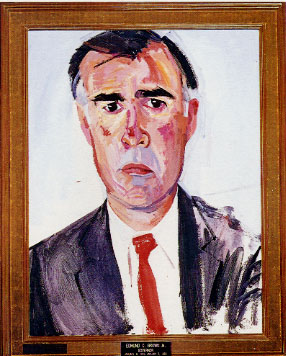
Sen. Mark Leno, a strong foe of the measure, told us he’s been in touch with Attorney General Jerry Brown’s staff, and is urging them to take action. He said he’s been assured the office is looking into the issue.

It will be interesting to see what Brown does. As governor, he was a strong opponent of PG&E’s Diablo Canyon nuclear power plant, and spoke at anti-nuclear rallies, but since then, he’s been awful wishy washy (and has, for example, never been an open supporter of public power.)

Now, however, he’s running for governor — and PG&E is one of the most hated institutions in the state. The old Jerry took on corporate power and positioned himself as a populist; this latest incarnation of Jerry could pick up a lot of progressive support (which he badly needs) and force Meg Whiman into a corner (what, is she going to support PG&E?).

So how about it, Jerry?

(And by the way, the San Francisco supervisors ought to pass a resolution calling on Brown to sue to get this evil measure off the ballot.)


Black History Month in SF kicks off with dancing, future visions

0

By the time I made it to the 2010 Black History Month kickoff ceremony at San Francisco City Hall, on Friday, Feb. 5, California Public Utilities Commissioner Tim Simon was talking about how the African American community can make sure it doesn’t get left on the sidelines in future.

Simon advised folks to know their resources, community and strategy to ensure that people of color are included in the burgeoning Green economy—a topic in keeping with the history-of-black-economic-empowerment theme.

“And I want to encourage all of us to celebrate the month of Black History and teach it to our children, because we could lose this generation,” Smith said, noting that just three blocks away from City Hall in the Western Addition/Filmore, “young men talk about and celebrate it when they reach 25 years old.”

California Public Utilities Commissioner Tim Simon advised folks how not to get left behind in the Green economy.

The community was encouraged to attend the Human Rights Commission’s Feb. 18 meeting in the Bayview and to get involved in the 2010 Census, which will provide temporary, part-time jobs with flexible hours.

Destined to Dance enlivens the corridors of power at San Francisco’s City Hall.

And then dancers with Destined to Dance wowed the audience by infusing the typically staid marble corridors of power with a “Swing low, sweet chariot” inspired blend of energy, grace and light-footed gaiety.

After the main program concluded, a who’s who of San Francisco’s black community lingered for a moment to chat.

Sup. Sophie Maxwell told me that she saw the failed attempt to recall her as “democracy at work.” She also repeated earlier statements that she is not yet ready to endorse any of the candidates vying to replace her when she is termed out in January 2011.

“It’s not just about Bayview Hunters Point,” Maxwell observed. “The common thread is the entire District 10 community.”


D. 10 candidates Eric Smith and Tony Kelly smile for the camera.

Kelly told me that to his mind the common thread is that residents of the district, which is home to the worst toxic hot spots in the city, can’t rely on corporations to solve their problems.

“District 10 can think for itself,” Kelly said. “They don’t have to look outside. But to my mind, up until now, the approach in city hall has been that there is no mess in D. 10 that can’t be fixed by a friendly corporation.”

Kelly observed that folks in the eastern neighborhoods came up with a better revitalization plan than what the city proposed, and that community activists managed to close the power plant, after the city said it was impossible.

“We have the worst schools, transportation and pollution,” Kelly said. “Candidates in the D. 10 race tend to fall into one of two groups: those that are responsive to Lennar and PG&E’s plans, and those who oppose them.”

D. 10 candidate Kristine Enea, who attended the Navy’s Feb. 2 “community involvement plan” meeting at the Bayview YMCA told me that at least the Navy showed some willingness to let the community speak at that meeting,

Chris Jackson San Francisco Community College Board Trustee chats with D. 10 candidates Tony Kelly and Kristine Enea.

“But they need to stop being so defensive,” Enea said, as she questioned why the Navy refuses to speak in public about why it dissolved the Shipyard Restoration Advisory Board.

D 10 candidate Lynette Sweet told me that she thought California PUC commissioner Tim Simon “hit it on the head with his comments,” at the Black History Month kickoff event.

D. 10 candidate Lynette Sweet poses for the camera.

“We’re not the sum of our parts, we’re not murderers and poverty pimps, there is some real leadership and quality people within our community,” Sweet observed.

Logging helps the planet?

2

By Jobert Poblete

news@sfbg.com

The Center for Biological Diversity (CBD), an environmental group with offices in San Francisco, filed a series of lawsuits last month challenging the state’s approval of 15 logging plans it says do not adequately address greenhouse gas emissions and climate impacts. But the loggers take the opposite stance, arguing that their trees capture carbon and lessen global warming.

The logging plans submitted by Sierra Pacific Industries (SPI) involve more than 5,000 acres of forests in the Sierra Nevada and Cascade regions. With 1.7 million acres in land holdings, SPI is the largest private landowner in the state and, CBD claims, the largest clear-cutting operation.

The lawsuits, which allege violations of the California Environmental Quality Act and the Forest Practice Act, represent a new line of attack against clear-cutting in California forests. They follow greenhouse gas challenges filed by CBD in August that resulted in SPI’s withdrawal and revision of three logging plans covering 1,600 acres. Previous challenges have focused on logging’s impact on endangered species, water quality, and other environmental measures.

The lawsuits come amid legislative and regulatory efforts to reduce the state’s greenhouse gas emissions. The California Global Warming Solutions Act (or AB 32), which required the state to develop regulations to reduce emissions. So companies like SPI have begun to incorporate greenhouse gas analyses into plans they submit for state approval.

California Department of Forestry spokesperson Daniel Bearlant defended the approval of the SPI plans, insisting its heeded relevant environmental laws. SPI Director of Corporate Affairs and Sustainability Mark Pawlicki called the lawsuits “groundless” and claimed that his company’s practices actually produce net carbon benefits.

“Our harvesting results in a net sequestration rate of carbon dioxide that far exceeds any emissions that might occur,” Pawlicki told us. “The people drafting the lawsuits don’t understand carbon sequestration as well as state experts who are supported by other experts. California has the most environmentally stringent laws anywhere in the world and the most environmentally knowledgeable technical experts.”

Pawlicki cited state data showing that the industry acts as a net carbon sink. “In California, forestry is the only sector that has a positive effect on air quality,” he said.

CBD disputed these claims. “There are [greenhouse gas] sources and emissions that they’re not including at all,” Brian Nowicki, CBD’s California climate policy director, told us. “And there are many accounting tricks that they are using to undercount their emissions.” Nowicki pointed specifically to SPI’s failure to account for carbon emissions from soil and from the decomposition of roots and understory vegetation.

Nowicki also accused SPI of relying on unproven assumptions and processes outside its control. For example, SPI’s logging plans assume that the carbon stored in harvested wood will continue to be stored in wood products, noting that carbon is released when wood burns or rots. SPI also discounts its emissions by the amount of carbon it expects to be stored in new growth on its managed forests.

“As a result of our forest management, we are increasing the amount of stored carbon exponentially over the amount that would be stored in trees under forestry practices that did not include the investments we make in our lands,” Pawlicki said.

But Nowicki criticized SPI’s statements as nothing but a public relations move, one that could produce financial windfalls for the company as carbon offset schemes take hold. “It’s not that they’re improving their management of the forest,” Nowicki said. “They’re only reframing and repackaging the business practices they’ve been using before.”

Mark Harmon, professor of forest science at Oregon State University, echoed CBD’s criticisms, calling SPI’s claims misleading and scientifically invalid. Harmon was quoted in CBD’s lawsuit saying: “Harvesting forests generally reduces carbon stores and results in a net release of carbon to the atmosphere.”

While the science remains unsettled, CBD claims progress. Three years ago, the organization convinced the state to conduct greenhouse gas analyses. “Now,” Nowicki said, “[we’ve] established that these analyses need to be there.”

The malevolence of Mercury Insurance

9

Yesterday’s San Francisco Chronicle reports on a long history of illegal practices by Mercury Insurance – including discrimination against soldiers, artists, bartenders, and other professions in auto insurance coverage and rates – and the long-overdue political and regulatory attention being paid to the company.

But that’s just the tip of the iceberg. The real story of Mercury’s dealings in California is even more insidious, and it has implications to the health care reform legislation being pushed by President Obama and congressional Democrats, which would require all Americans to buy health insurance, just as all California motorists are required to buy car insurance from Mercury and other companies.  

Documents from the California Department of Insurance (275 pages worth, which we also obtained and which you can download here) detail the Mercury’s deceptive practices, but it was hardly a secret how Mercury operated, brazenly and openly defying standards and regulations that voters created in 1988 by approving Prop. 103.

The author of that measure, respected activist Harvey Rosenfield of Consumer Watchdog, has been sounding the alarm about Prop. 17, a measure that Mercury has placed on the June ballot that would overturn key parts of Prop. 103, allowing insurance companies to jack up premiums for those who haven’t been loyal and continuous insurance customers that paid every bill on time.

Rosenfield recently stopped by the Guardian and offered a fascinating history of insurance regulation in California – and his battles with his number one nemesis, Mercury Insurance.

“Prior to the passage of Prop. 103, which the voters approved in 1988, insurance companies were not regulated in California. They could basically get away with anything and they did. In 1984, the state Legislature mandated that people buy auto insurance and guess what happened? After that, everyone in the marketplace is required to buy insurance and there’s no protection against how much insurance companies could charge you for it or even if they refused to sell it to you because of where you lived or the color of your skin, there were just no protections,” Rosenfield told us.

“One of the most pernicious practices after the Legislature said you have to buy insurance was that when you went to the insurance companies and said, ‘OK, I’m required by law to buy insurance, now sell it to me.’ They’d say, well you didn’t have it before, so we’re not going to sell it to you now. Or, you didn’t have it before so therefore we’re going to surcharge you and double the price of insurance. Talk about a Catch 22.”

So consumer groups sued and Rosenfield started writing Prop. 103. In 1987, the courts said this was a legislative issue, not a judicial one, so the groups turned to the California Legislature.

“Of course, the Legislature was too beholden to the insurance lobbyists to do any of the proposals that we were offering, so we went to the ballot box in 1988. Prop. 103 did many things: it called for a rollback, requires insurance companies to open up their books and justify premiums, it requires auto insurance companies to base your premium on your driving record, the number of miles you drive every year, and your driving experience. No longer would your ZIP code be the dominant determinant for how much you pay. And that battle, just to get that put it in place, we didn’t win that until 20 years after 103 began. We won in basically in 2006, 18 years later, after court challenges and going to the commissioner.”

While Prop. 103 allows the insurance commissioner to set additional reasonable factors in setting insurance premiums, Rosenfield said, “The one rating factor that Proposition 103 prohibits is the one that insurance companies used before. Prop. 103 says you cannot base insurance premiums or refusing to insure somebody on the absence of prior insurance.”

But as the new documents and other court findings showed, Mercury ignored that provision and used it as a factor anyway, setting a surcharge of about 45 percent of the premium price if you hadn’t had insurance before, for which they were again sued.

“Mercury realizes they’re going to lose the civil suit, goes to Sacramento, spreads a fortune in campaign contributions, and lo and behold, gets a bill passed overriding this provision of Prop. 103, legalizing its surcharges. [Gov. Gray] Davis vetoes it in 2002 on the grounds that it violates Prop. 103. Another year goes by, Mercury spreads even more money around, and this time Davis is up in a recall election and needs Mercury’s money. So he takes the money, it’s $100,000 or more, and Davis signs the bill. We have to go to court and challenge the bill as an unconstitutional amendment to Proposition 103, which we finally succeed in doing and it’s upheld by the Court of Appeals in 2005. All that time, Mercury is overcharging people. Ultimately, Mercury is told, the law you sponsored is invalid and you can’t do it anymore, so it stops in 2005 – 10 years of wanton, brazen violation of the law. And that brings us to the Mercury initiative.”

But because these surcharges are so lucrative – in some states, a Consumer Watchdog investigation found, doubling or tripling premiums – Mercury decided to spend millions of dollars to place Prop. 17 on the June ballot, and it will spend millions more to fool consumers into believing that its somehow good for them.  

“The Mercury initiative is even more pernicious than what it was doing before, and here’s why. Under Mercury’s initiative, if you’ve never had prior insurance, you can be surcharged for the first time. It overturns the Prop. 103 provision and legalizes these surcharges. Then they’ve thrown in some other tricks and traps, as you’d expect an insurance company to do on a ballot measure.”

What are those tricks and traps? How have they been able to get away with this for so long? Why did Attorney General Jerry Brown, a candidate for governor, give the measure such a favorable and misleading ballot title and summary? Why has the Democratic Party been so unwilling to challenge them? We’ll have much more on Mercury and its corrupting corporate influence in future issues of the Guardian.

Coby King, Mercury’s vice president and spokesperson, wouldn’t speak directly about the newly revealed documents or the concerns they’re causing among regulators and politicians, sending us the same prepared statement he send to Chronicle, which says consumer groups are trying to “mislead consumers and rehash old allegations.”

Yet I pressed him on why Mercury has for decades shown such contempt for the regulatory framework created by Prop. 103, which the company has now challenged through lawsuits, sponsored legislation, lavish political contributions, the new ballot measure, and even through blatant violations of the law. He tried to refer me to Kathy Fairbanks, who headed the Mercury-backed front group, Californians for Fair Auto Insurance Rates, which is pushing Prop. 17.

But when I noted that the group is supposedly independent of Mercury, and it is the company’s hostility to Prop. 103 that I was asking about, he finally said this: “Prop. 103 is the law of the land, but to the extent there are improvements that can be made that are pro-business and pro-consumer, Mercury has not been shy about acting in the public interest.”

Ah, so it’s the public interest that Mercury has been acting in. Got it.

 

Street Threads: Krystal and Wisdom

0

SFBG photographer Ariel Soto scoops San Francisco Street Fashion.

Today’s Look: Krystal and Wisdom, Cesar Chavez and Valencia

Tell us about your look: “Try to stay up to fashion and be color coordinated. Clothes represent who you are.”

The heart of art

0

arts@sfbg.com

DANCE In 1960, San Francisco City Hall’s glorious staircase became infamous when police turned fire hoses on protesters at a hearing of the House Un-American Activities Committee. Fifty years later, these same stairs will become the stage for a very different event: Erika Chong Shuch Performance Project’s Love Everywhere, a celebration of love and marriage equality.

Chong Shuch had never heard of the protest incident when Dancers’ Group commissioned her as part of its ONSITE initiative — free performances in public spaces that offer artists the opportunity to create something otherwise not possible (Joanna Haigood, Patrick Makuakane, and Anna Halprin are previous participants; Benjamin Levy is next). When Chong Shuch received the grant, she was asked to consider the Civic Center area as a possible site.

She first looked at the San Francisco Public Library, but upon walking into City Hall she was struck “by the beauty of the architecture of this public space that belongs to everybody living here.” She knew she wanted to make a work about “love and joy and the big things in my life as opposed to the difficulties.” Deciding on a Valentine’s Day piece, she was reminded that Feb. 12 is the sixth anniversary of when the city started issuing marriage licenses to same-sex couples. That sealed the deal.

“I remembered how incredibly joyous it was to be in that City Hall space at the time, and I was inspired to try to generate that kind of joy,” she recalls.

You certainly couldn’t miss the love and joy in the couple dances, spiraling chains, and whirling circles practiced at a recent rehearsal in the Margaret Jenkins Performance Lab. Fifty or so performers (“At this point, I am not sure myself of how many,” she says) answered Chong Shuch’s call for volunteers to join her octet of professional dancers. These folks — primarily young, but with a gray head or two — were having the time of their lives.

Two also had a surprise awaiting them. In addition to calling for volunteers, Chong Shuch sent out a request for marriage vows that people had written for each other. She received around 30, ranging from “African ceremonial” to “quirky and artsy” and “formal, God-ly.” These vows form the texts for Love. One became the basis for a call-and-response: “I promise to pay close attention; I promise to listen.” But one couple recognized lyrics from a Daveen DiGiacomo song composed for the piece — because they had selected them for their wedding. “It’s a lovely way for this couple to have their own vows reflected back to them,” Chong Shuch says.

Using amateur performers — “I don’t like to call them that, I prefer to simply call them people” Chong Shuch says — seems to be something of a trend among Bay Area choreographers. Joe Goode, Janice Garrett and Charles Moulton, and Chong Shuch in her 2008 After All have done it successfully. It’s a way to fill large spaces where the added numbers often serve as choruses, but it’s also a sign of what might be called an attempt to “democratize” dance.

For Chong Shuch, this means thinking differently about her own role as choreographer. Just as she increasingly seeks her professional dancers’ input, she also thinks that “regardless of their training or lack thereof, individual expressions are still of value and of worth” — and, therefore, have a place on stage.

LOVE EVERYWHERE

Fri/12, noon–1 p.m., free

San Francisco City Hall Rotunda

One Dr. Carlton B. Goodlett Place, SF

Sat/13, performances TBA (check Web site for updates)

Sun/14, 9 a.m. and 11 a.m., free

Glide Memorial Church

330 Ellis, SF

www.dancersgroup.com, www.erikachongshuch.org

Public employees feel blindsided by Newsom’s layoff scheme

39

Mayor Gavin Newsom’s proposal to lay off 10,000 city employees and rehire them at lower pay is being met with outrage by some public-sector workers. The plan, crafted as a way of saving money to balance the city budget, would amount to sweeping pay cuts across the board for a significant number of city workers.

Formal discussions about it are in the earliest stages, and Tony Winnicker, the mayor’s press secretary, described it as “just one alternative that we’re investigating.” Nonetheless, some members of Service Employees International Union Local 1021 are furious that the mayor unveiled this plan in the San Francisco Chronicle instead of at a meeting with the city’s labor leaders.

“As far as we can tell, an idea he has ended up on the front page of the Chronicle that’s had a devastating ripple affect among the people who work for the city and county,” SEIU Local 1021 President Damita Davis-Howard told the Guardian. “We feel like we got a sucker-punch. … We really wish he had talked to us before he governed by press conference.”


Davis-Howard said she’s been inundated with phone calls from angry union members who read the article. “This is the same proposal he floated last year,” Davis-Howard said. “Most of our members believed that they gave up their holiday pay in order to avoid this very thing.”

The proposal, which was briefly considered last year but never moved forward, serves to illustrate just how hard financial woes are hitting San Francisco. The city is staring down a $522 million deficit, and Newsom’s proposal would make up for a mere $50 million in savings.

Winnicker declined to comment on Davis-Howard’s concerns about being blindsided by news of the layoff plan, brushing it off by saying the mayor did discuss it with “some folks in labor.” Instead, he suggested that Newsom is getting serious about solving the budget crisis while the Guardian is just focusing on irrelevant gripes.

“It is an unprecedented budget shortfall, and it is real,” Winnicker said, stressing that the gaping budget gap will have to be bridged without the infusion of federal stimulus dollars that cushioned the blow last year. “The easy choices are behind us.” This layoff plan could prevent “hundreds, if not thousands, of layoffs,” but the mayor is open to other ideas that labor brings to the table, he said.

“That logic is just flawed,” Davis-Howard said when asked about the assertion that the plan could prevent layoffs. “That’s not the way you re-stimulate the economy, by taking more dollars out of the economy. We can’t continue to balance the budget on cuts, because pretty soon the actual fiber of the city and county of San Francisco will be reeling because of the number of cuts that we sustained.”

When asked how SEIU Local 1021 would respond, she said, “I do believe we need to be open-minded, imaginative, and creative in coming up with some revenue-generating measures here.”

No doubt the mayor will receive plenty of suggestions as negotiations continue in the coming weeks.