

San Francisco
Newsom didn’t win in Los Angeles
I usually go to the California state Democratic Conventions, but I missed this one, so I’ve had to rely on news coverage to find out what happened — and it’s been pretty slim pickins. To read the Chron’s politics blog, you’d think the whole thing was silliness and parties, although Carla Marinucci got a fun comment from party Chair John Burton, who thinks the only thing that will drive the youth vote in November is pot.
But the news for people following the fate Gavin Newsom is that our mayor didn’t get the party’s endorsement for lieutenant governor. Matier and Ross spin it as a sorta, kinda victory:
Mayor Gavin Newsom didn’t get the state Democratic Party endorsement in his race for lieutenant governor, but he got the next best thing: keeping rival L.A. City Councilwoman Janice Hahn from getting it.
And technically, that’s true — Hahn ran hard for the endorsement, and really needed a boost, since she’s far behind in name recognition and money. But it was hardly a resounding win for the front-runner.
Newsom got 52 percent of the vote, short of the 60 percent needed for an endorsement. His campaign says, correctly, that he whupped Hahn, who got 42 percent.
But what’s remarkable is that Newsom had the support of all the party bigwigs — Nancy Pelosi, Dianne Feinstein, Burton — the folks who can usually pull strings and make sure that their candidate gets the nod. The truth is, Hahn never had a chance here; there was absolutely no way the L.A. council member was going to get enough votes to win the endorsement. Her only real play was to block Newsom — and she pulled it off.
So I wouldn’t call this a win for Newsom; I’d say it’s a sign that the grassroots Democrats are not entirely sold on the San Francisco mayor.
Record Store Day spins right round this Saturday
Digital music files are the Snuggie of the music industry; so comfy, so easy, but it’s fleece is cheap and one dimensional. Vinyl is a thick quilt, a layered labor of love Grandma crafted just for you– a product that brings about a whole new quality of life when you’re wrapped beneath it. Strange analogy, but if you’re unfamiliar with the loveliness and depth of vinyl’s sound possibilities, Record Store Day– this Sat/17 at locations across the Bay– is your day to give ’em a spin.
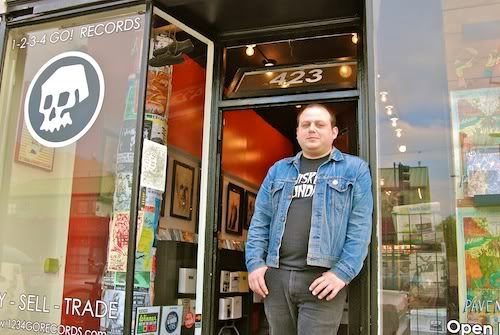
Steve Stevenson, owner of Oakland’s 1-2-3-4 Go! Records understands why people chuck and trade their physical albums for digital– to simplify their lives and clear out some clutter. He says he did the same thing two years ago when he opened the store.
“I ended up selling almost all of my records– it’s basically how the store started. And now I don’t have many…” he says, pauses, and looks around at the loaded shelves in his shop. “Or I guess I have more than I’ve ever had.” Exactly. Stevenson didn’t cut his collection– his passion for records blew up, the physical stacks of beats and sounds have become his livelihood.
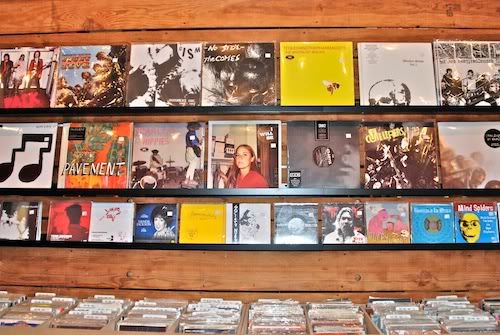
Maybe you’re not into building a gigantic vinyl collection over the weekend, but a short celebratory stack for the holiday can make for a healthy collection. And what’s great about visiting a small, boutique shop like Stevenson’s, is what it’s lacking– no over abundance of records to sift and flip for hours on end.
“My shop is small, but it’s packed with almost all exclusively good things,” he smiles. “We have good turnover on everything in here. And customers often tell me it’s nice to come in here for a half-hour and leave with something. It’s not a six-hour process of digging to get to one album you care about.”
So what are some things Stevenson is currently caring about? He would love to share.

The self-titled debut of Vermont’s grunge-pop trio Happy Birthday [Sub Pop, 2010] is by far this record shop’s pride and joy right now. Stevenson claims it’s the best collection of music he’s heard in the past two years and while he has yet to confirm totals with the label, he’s pretty he has sold more copies than any store around.
“It’s only been out a month and I’ve sold 35 copies. I tend to push it on people. It’s just so good.”


He’s also pretty proud of Seattle’s Cute Lepers‘ sophomore release, Smart Accessories, [1-2-3-4 GO! Records, 2009] put out on Stevenson’s very own label. Why he gleams and grins so big when it comes to this particular record? It glows in the dark! Trippy!
“Perfect for dark listening,” he says.

Besides music, 1-2-3-4 GO! also showcases the work of local artists each month. Currently it’s Danny Neece’s totally awesome paintings that pair oh so perfectly with the store’s colors. Get introduced to new music, new people and new art: everybody wins.
While these goodies and other rotating gems are available every day at local music shops, the grandiose appeal of Record Store Day is the limited edition, exclusive releases both labels, artists and shops put out each year in celebration of the under-appreciated music hubs. From in-store performances to mix tapes and snacks (maybe?), put down your iPod this Saturday and let a physical person give you an earful of inspiration.
Check out www.RecordStoreDay.com to see the major list of nationwide events.
Or browse this list of participating stores in the Bay Area:
San Francisco:
Amoeba Music
Aquarius Records
Creative Music Emporium
Force of Habit Records
Medium Rare Music
Streetlight Records
The Music Store
East Bay:
Amoeba Music (Berkeley)
Down Home Music Fourth Street (Berkeley)
Rasputin Music (Berkeley)
Down Home Music (El Cerrito)
Mod Lang (El Cerrito)
1-2-3-4 Go! Records (Oakland)
North Bay:
Back Door Disc (Cotati)
Watts Music (Novato)
Vinyl Planet (Petaluma)
Bedrock Music & Video (San Rafael)
Red Devil Records (San Rafael)
Last Record Store (Santa Rosa)
San Jose:
Examiner and PRI target Greenlining Institute

We chronicled the right-wing campaign to destroy ACORN – which promoted voting rights and economic justice for low-income Americans — as well as the crazy right-wing editorials in the San Francisco Examiner. And this week, we saw them join forces to go after another effective progressive organization: the Berkeley-based Greenlining Institute.
The Examiner newspapers here and in Washington D.C. today concluded a five-part series of industry-sponsored opinion pieces masquerading as journalism attacking Greenlining, ACORN, and the finally 1977 Community Reinvestment Act, claiming that their encouragement of banks to lend money in poor areas amounts to a criminal shakedown of corporations and one that caused the financial crisis.
The series was produced by a partnership that included San Francisco-based Pacific Research Institute (a right-wing think tank funded by big corporations and conservative foundations), its CalWatchdog propaganda project, and the Examiner, which is owned and operated by Denver-based billionaire businessman Philip Anschutz, whose foundation also helps fund PRI.
While it might be tempting to dismiss such a blatant effort by corporate-funded patsies to discredit an effective progressive foe, using the pages of marginalized newspaper that denies global warming. But considering what these same reactionary forces did to ACORN using evidence that was just as flimsy, it’s important that the people push back.
Greenlining Institute Executive Director Orson Aguilar raised that same concern when we contacted him: “This is pretty weak journalism, but the underlying issue is serious. They’re using us to attack the Community Reinvestment Act and the whole idea that huge Wall Street financial institutions have some responsibility to the communities they serve. We may be the scapegoat du jour, but the real aim is to blame low-income communities for a financial crisis that was caused by inadequate regulation and greed. We have no intention of backing down.”
I couldn’t have said it better myself.
SF’s Tax Day protests: Progressives 300, Teabaggers 4
For all the hype about Tax Day Tea Parties, include two in San Francisco this afternoon, it was progressive causes that put the most protesters on the streets today. In fact, at a 1 p.m. Tea Party outside City Hall, the teabaggers were way outnumbered by journalists and satirical “teabaggers” doing street theater.
For awhile, 70-year-old Al Anolik – clad in his American flag shirt and NRA hat – was the only teabagger present, although he was joined by 23-year-old Odell Howard (wearing his American flag on his hat) at about 1:20 p.m. Another pair arrived later, making it four in all.
“It is San Francisco,” Anolik offered by way of explaining the anemic gathering.
Contrast that with two other rallies going on at the same time: Service Employees International Union fielding about 200 protesters on Mission Street near the federal building demanding immigration reform and respect for immigrants, and about 100 people who turned out for the Mobilization for Climate Justice, protesting a conference on carbon offsets.
“Nobody should be given credit for creating greenhouse gas emissions,” Ana Orozco, an organizer for Communities for a Better Environment, Richmond, told the gathering.
CBE was one of several groups demonstrating on Fourth Street outside the Marriott, which was hosting New Direction for Climate Action, put on by Navigating the American Carbon World, a group that promotes a cap-and-trade market for pollution credits.
The protesters said that system would only legitimize pollution and delay the strong actions needed to avert the worst impacts of global warming. “Keep the cap, nix the trade,” the group chanted at one point.
I asked one conference attendee (who wouldn’t give his name) what he thought of the protesters and he called them, “watermelons – green on the outside and red on the inside.” Longtime progressive activist Chris Carlsson said accusing someone of being a communist has always been tactic capitalists use to shut down real debate on important issues.
Anolik and Howard were also quick to play the red card, accusing the Obama administration of plotting to take away people’s guns and instituting a government takeover of the health care system, and neither would listen to arguments that their claims were demonstrably false.
But the progressives on the street today were all about sparking debate, including two members of the Raging Grannies that were at the climate event and then headed over to the Tea Party, where they satirically advocated for a health care system run by wealthy corporations.
“Billionaires for Wealthcare,” was the sign one held, while the other’s read, “Blue Cross, Palin, 2012,” advocating that we cut out the middle man and elect Blue Cross as the next president, with Sarah Palin as its running mate.
And then they broke into the song “We shall overcome,” but with a modified chorus: “We shall overcharge.”
The Daily Blurgh: Sugar & Sassy & Death & Taxes (Donald Duck remix)

Curiosities, quirks, oddites, and items from around the Bay and beyond
The 53rd San Francisco International Film Festival takes place next week, but over in France preparations are being made to reset the international festival circuit clock when Cannes ’10 kicks off in May. The full-line up has been announced, and I am already curious about the new titles from Apichatpong Weerasethakul, Godard, Gregg Araki, Hong Sangsoo, Alejandro González Iñárritu, and many more. Here’s to some of these being snatched up for SFIFF 54. And yes, there were movies 54 years ago.
*******
Pot without THC: O’Douls for stoners or scientific breakthrough?
*******
Phil Bronstein pushes for journalist Fight Club: “But it’s much more lively to measure breath on the mirror of our business by its deathmatches, where our history is rich and passionate. In the 1800’s, San Francisco rivals in the newspaper world were shooting each other on the street. Charles de Young, a Chronicle founder, popped a cap in politician Isaac Kalloch. De Young’s brother, M.H., was shot by businessman Adolph Spreckels over an article in the paper. And James King, editor of the Daily Evening Bulletin, was killed right downtown on Montgomery.”
********
We completely surrender to Sugar & Sassy — and will beg them to join our electroclash-revival band. Or at least lend their names.
*********
Did you notice the Angry Americans today in Union Square (and I’m not talking about the moms who narrowly snatched that pair of Burberry mules at Lohman’s)?
*********
No one told us there would be a BLOOD CANNON!!!!!
*********
Happy tax day from Motorhead:
*********
And so, courtesy of Wonkette, does “A Walt Disney Donald Duck” — guns! guns! guns!
http://www.youtube.com/watch?v=vr9qpeOjmuQ
Sit/lie debate takes a strange new turn
Emails are rocketing around San Francisco political circles in anticipation of an April 21 meeting of the Democratic County Central Committee (DCCC), the policy-making body for the Democratic Party in San Francisco. Committee members are slated to discuss the city’s proposed sit/lie ordinance, a controversial measure backed by Mayor Gavin Newsom and Police Chief George Gascon meant to afford police more powers for dealing with hostile youth occupying sidewalk space.
Labor activist Gabriel Haaland, a DCCC committee member, touched off a small firestorm early this week when he submitted a resolution against the sit/lie ordinance. Haaland, who has lived in the Haight for around 15 years, said wayward youth have been flocking to that neighborhood and hurling occasional barbs at passersby (including himself) since he can remember, and recent interest in the issue does not make it a new problem. “What would actually solve the problem?” Haaland asked, and offered that sit/lie is not the answer. According to a post on Fog City Journal, his resolution for the Democratic Party to oppose sit/lie was co-sponsored by Assemblymember Tom Ammiano, Supervisor David Campos, Supervisor Chris Daly, Supervisor Eric Mar, Aaron Peskin, Hene Kelly, Rafael Mandelman, Michael Goldstein, Joe Julian, Jane Morrison, Jake McGoldrick, Michael Bornstein, and Debra Walker.
While some might look at a grungy street kid and see a menace to smooth business functioning or an unruly vagrant not being properly dealt with because the laws are too weak, Haaland said he perceives a kid from a broken home who already feels alienated from society. Incarceration for a nonviolent crime such as lying on the sidewalk would only further alienate these youths, he argued, possibly nudging them toward criminal behavior instead.
“This legislation will not solve longstanding, complex problems,” Haaland’s resolution reads. “City Hall has openly and repeatedly admitted in the press that the criminal justice system is failing to deal with similar issues in the Tenderloin, and has created an alternative known as the Community Justice Court (CJC) that is founded on principles of Restorative Justice.”
Restorative Justice is an alternative approach to dealing with crime that involves bringing together those who are directly affected to understand and address the harm that has been done, with emphasis on personal accountability and transformation. Some models also seek to change the conditions in which harmful actions occurred.
Haaland’s resolution urges the Board of Supervisors and the Mayor to oppose sit/lie, and to explore successful alternatives to incarceration.
The proposal sparked a second resolution, this one from committee member Scott Wiener, who is a candidate for the District 8 seat on the Board of Supervisors. Wiener submitted that the Democratic Party should officially get behind the CJC, and should acknowledge its error in opposing the court, a Newsom pet project, in 2008. “When I saw Gabriel’s resolution … I noticed it contained a positive reference to the [CJC],” Wiener told the Guardian. “I was pleasantly surprised.”
Furthermore, his resolution “encourages the Mayor and Board of Supervisors, budget permitting and based on careful analysis, to consider future expansion of the CJC’s geographic boundaries to include the Haight-Ashbury.”
Wiener is fully behind the sit/lie ordinance. “Right now, the police do not have enough enforcement tools to deal with some of the behavior on the streets,” he said. The measure has been an issue in the District 8 race, since progressive candidate Rafael Mandelman opposes the ordinance.
The resolution contest wasn’t over yet. In response to resolution No. 2, Haaland submitted yet another resolution — along with a personal note that appeared to extend an olive branch — revising Wiener’s proposal by urging support for “the restorative justice model as an alternative to incarceration.” (Haaland wrote an in-depth piece about restorative justice in a recent Guardian editorial.)
“I appreciated him doing that,” Wiener said when asked what he thought about resolution No. 3. “But I’m not convinced that that’s the way to go. That’s why I did not agree to it.”
Perhaps there won’t be any kum-ba-ya moments after all.
Along other email-blast circuits, Haaland’s initial proposal prompted David Villa-Lobos, a strong sit/lie advocate and District-6 contender, to sound his own alarm by urging SFPD officers to attend the April 21 meeting and defend the sit/lie ordinance.
The city Planning Commission recently voted 6-1 against the measure, and a grassroots group that brought opponents of the rule onto city sidewalks last month will hold another Stand Against Sit Lie citywide protest on April 24. The measure is expected to go before the Board of Supervisors near the end of the month.
The DCCC meeting will be held on Wednesday, April 21, at 6 p.m. in the basement auditorium of the California State Building, 455 Golden Gate Ave.
Andy Stern to quit SEIU
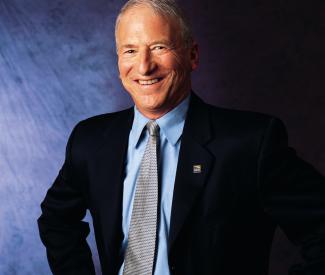
Just days after a San Francisco trial aired the ugly battle between Service Employees International Union President Andy Stern and some of his former top aides in the Bay Area, Stern has confirmed that he’s resigning after 38 years in the movement, 14 as head of SEIU.
Stern was once thought of as a rising figure in the progressive movement, but in recent years he has become a polarizing figure within the labor movement, prone to undemocratic power-building and starting fights with other unions. He was criticized as too close to corporations and the Democratic Party, but he doesn’t endear himself to either in an exit interview with the Huffington Post.
The fight between SEIU and the National Union of Healthcare Workers has created bad feelings on both sides, as indicated by the comments section every time we write about it, and I can’t help but think that Stern’s decision can only help the labor movement. But I suppose we’ll see.
BTW, there’s more on the SEIU-NUHW fight here at Spot.us, which we partnered with on this week’s story.
On Tax Day, are Americans getting our money’s worth?

Editor’s Note: While the teabaggers try to claim Tax Day as a national day of protest against government and taxes, San Francisco author and activist Steven Hill (the father of the city’s ranked choice voting system) offers a different perspective, noting that it isn’t taxes and government that we should be so angry about today, but how little we get for them, thanks largely to right-wing opposition to expanding public services
By Steven Hill
Most Americans seem to regard April 15 — the day income tax returns are due to the Internal Revenue Service — as a recurring tragedy akin to a Biblical plague. Particularly this year, with US government deficits soaring, everyone from the teabaggers to Fox News and Senate Republicans are sounding the alarm about a return to “big government.” Recently former New York mayor Rudy Giuliani even stated that President Obama was moving us towards — gasp — European socialism.
Europe frequently plays the punching bag role during these moments because there is a perception that the poor Europeans are overtaxed serfs. But a closer look reveals that this is a myth that prevents Americans from understanding the vast shortcomings of our own system.
A few years ago, an American acquaintance of mine who lives in Sweden told me that, quite by chance, he and his Swedish wife were in New York City and ended up sharing a limousine to the theater district with a southern U.S. Senator and his wife. This senator, a conservative, anti-tax Democrat, asked my acquaintance about Sweden and swaggeringly commented about “all
those taxes the Swedes pay.” To which this American replied, “The problem with Americans and their taxes is that we get nothing for them.” He then went on to tell the senator about the comprehensive level of services and benefits that Swedes receive.
“If Americans knew what Swedes receive for their taxes, we would probably riot,” he told the senator. The rest of the ride to the theater district was unsurprisingly quiet.
The fact is, in return for their taxes, Europeans are receiving a generous support system for families and individuals for which Americans must pay exorbitantly, out-of-pocket, if we are to receive it at all. That includes quality health care for every single person, the average cost of which is about half of what Americans pay, even as various studies show that Europeans achieve healthier results.
But that’s not all. In return for their taxes, Europeans also are receiving affordable childcare, a decent retirement pension, free or inexpensive university education, job retraining, paid sick leave, paid parental leave, ample vacations, affordable housing, senior care, efficient mass transportation and more. In order to receive the same level of benefits as Europeans, most Americans fork out a ton of money in out-of-pocket payments, in addition to our taxes.
For example, while 47 million Americans don’t have any health insurance at all, many who do are paying escalating premiums and deductibles. Indeed, Anthem Blue Cross announced that its premiums will increase by up to 40%. But all Europeans receive health care in return for a modest amount deducted from their paychecks.
Friends have told me they are saving nearly a hundred thousand dollars for their children’s college education, and most young Americans graduate with tens of thousands of dollars in debt. But European children attend for free or nearly so (depending on the country).
Childcare in the U.S. costs over $12,000 annually for a family with two children, but in Europe it cost about one-sixth that amount, and the quality is far superior. Millions of Americans are stuffing as much as possible into their IRAs and 401(k)s because Social Security provides only about half the retirement income needed. But the more generous European retirement system provides about 75-85 percent (depending on the country) of retirement income. Either way, you pay.
Americans’ private spending on old-age care is nearly three times higher per capita than in Europe because Americans must self-finance a significant share of their own senior care. Americans also tend to pay more in local and state taxes, as well as in property taxes. Americans also pay hidden taxes, such as $300 billion annually in federal tax breaks to businesses that provide health benefits to their employees.
When you sum up the total balance sheet, it turns out that Americans pay out just as much as Europeans — but we receive a lot less for our money.
Unfortunately these sorts of complexities are not calculated into simplistic analyses like Forbes’ annual Tax Misery Index, a “study” which shows European nations as the most miserable and the low-tax United States as happy as a clam — right next to Indonesia, Malaysia and the Philippines.
In this economically competitive age, increasingly these kinds of services are necessary to ensure healthy, happy and productive families and workers. Europeans have these supports, but most Americans do not unless you pay a ton out-of-pocket. Or unless you are a member of Congress, which of course provide European-level support for its members and their families.
That’s something to keep in mind on April 15. Happy Tax Day.
[Steven Hill is the author of the recently published “Europe’s Promise: Why the European Way is the Best Hope in an Insecure Age” (www.EuropesPromise.org) and director of the Political Reform Program for the New America Foundation].
The Daily Blurgh: It lies beneath
Curiosities, quirks, oddites, and items from around the Bay and beyond
What has risen may sink, and what has sunk may rise: “Years ago, when San Francisco was called Yerba Buena, a lake covered parts of the Mission. Washerwoman’s Lagoon flowed through the Marina. The Sans Souci Creek traced a path now known to bicyclists as The Wiggle.
Hayes River flowed beneath City Hall, delaying an election in the 1980s by flooding the Registrar’s Office. Arroyo de los Dolores ran down to 18th Street past Dolores Park. Mission Creek flowed to the bay, and is now only visible in brief glimpses such as a pool in the basement of the Armory.” Matt Baume guides us through SF’s buried creeks in part two of his three part series for Streetsblog SF.
******
“Any person in a leadership position today has to be a hopeless optimist.” Kenneth Baker interviews Jay Xu, director of the Asian Art Museum.
*******
Do we live inside a wormhole’s neck?
********
There is, indeed, a Dutch Cartman — and a bit of NSFW salad-tossing. Amster-DAMN!
*********
Perhaps the only reason to go to Coachella this weekend (pace, Specials fans) — unalloyed zef-ness.
*********
Take a deep breath. It’s only hump day. You won’t die.
Teabaggers: Angry, ignorant, and proud of it

As the teabaggers hit the streets again on April 15 to shout their denunciations of taxes and government, a new poll in the New York Times confirms what most of us knew: these people are angrier, more conservative, and less informed than the average American – a deadly combination.
The Grey Lady didn’t say it that way exactly, but that’s what the results show. They overwhelmingly hate Obama and think that he’s been pushing policies that disproportionately help the poor and African-Americans and that he has already increased taxes on most Americans, none of which is true, as untrue as the supposed “government takeover” of the health care system that ushered in the Tea Party in the first place.
The teabaggers are older and wealthier than most Americans, and they also describe themselves as far more angry than the average American or even most Republicans. And considering their affections for guns and Revolutionary War metaphors, that’s kinda scary.
Frankly, I was hoping that these people would eventually realize that Obama was as far from being a socialist and I am from being, well, a teabagger. But this strange circle jerk of proud ignorance seems to have some staying power. In San Francisco, there are not one but two Tax Day Tea Parties: an event from 4-7 pm at Union Square and another from 1-4 pm at Civic Center with the telling title, “Tell Pelosi to Shove It!”
Josh Wolf in the eye of the storm (again)
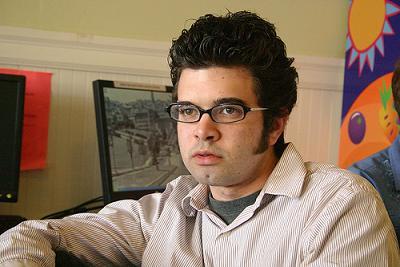
Josh Wolf has landed in hot water again — this time in connection with his reporting from inside the student occupation at Wheeler Hall on the University of California Berkeley campus to protest budget cuts.
The blogger and videographer was jailed in 2006 after resisting a subpoena to testify before a Federal grand jury because he had taken footage at a 2005 San Francisco protest against the G8 summit. His case was widely reported on, in part because he set a record for jail time served — 226 days — for refusing to give up newsgathering materials. Police believed Wolf possessed footage that could be used to press charges for vandalism of a police car and an assault on an officer. He didn’t.
Now the 27-year-old filmmaker, a student at the Graduate School of Journalism at UC Berkeley, faces a possible seven-month suspension in the wake of a student occupation of Wheeler Hall last November 20. Wolf was one of two reporters whose footage from inside Wheeler Hall was included in a Democracy Now! broadcast about the occupation — but he was the only UC Berkeley student who has said he was there documenting the event as a member of the press.
Wolf says he wore a police-issued press badge around his neck during the Wheeler Hall occupation. Press passes can serve to flag journalists as being in a separate category from civilians in situations involving law enforcement, but displaying one does not always provide a reporter immunity from arrest. The video he shot was integrated into a report produced with independent journalist Brandon Jourdan, who was also inside the building. Wolf and Jourdan were both arrested — but their footage was widely viewed on Democracy Now!, a national alternative news outlet.
In an “informal resolution” issued April 9, UC Berkeley’s Center for Student Conduct found that Wolf “participated in a disturbance of the peace,” charging him with multiple violations of the student conduct code. Wolf’s role as a journalist is not discussed in the list of charges, making it seem as if he’s being lumped in with the student protesters, despite being there as a reporter.
But the fact that he wears another hat as a journalist clearly hasn’t escaped the campus enforcers of the student conduct code. As part of the disciplinary measure, Wolf was also directed to write a 10-page essay reflecting on a list of questions, including: “How do you consider and reconcile the roles of being a student and being a journalist? At what points does either role become more important to you and why? What are your limits as a journalist? Where and how do you draw lines for yourself in terms of things you will or will not do to pursue professional goals?”
Wolf is being given the option of writing the paper and taking the seven-month suspension (a plea bargain of sorts), or moving on to a formal adjudication process that would entail going before a five-member hearing panel, like a court trial. His plan is to try and get an extension for the informal resolution process as a means of getting the charges dropped altogether.
Berkeley Associate Dean of Students Christina Gonzales, whose office oversees the Center of Student Conduct, was unable to discuss Wolf’s particular case because of a federal law prohibiting public disclosure on such matters. Nonetheless, she offered some general comments. “In the big picture, whenever you’re dealing with conduct, you do take into consideration circumstances,” Gonzales said. “If some one reported, ‘I have special credentials’ or whatever, then [the Center for Student Conduct] will go back as part of their research on any of the cases and try to find out as much information they can to determine if that was a known fact, whatever it is that the student’s telling us.” She stressed that the informal resolution was only a first step in the disciplinary process, and that no formal decision has been made at this point in time.
“There’s always information that comes from others that’s taken into consideration with the whole picture,” Gonzales added.
Wolf says that when he asked Laura Bennett, Assistant Director at the Center for Student Conduct, whether it would impact the outcome of his case if he submitted a letter from Jourdan confirming that he was there as a reporter, he didn’t get a straightforward response. “Her response was, well, that kind of a letter would simply lead me to have more questions, such as, ‘how did you get into the building, who did what, what happened inside the building,’ a whole bunch of stuff that I’m not inclined to help with for any number of reasons,” Wolf said. “Some of this was given on a privileged basis. … And admittedly it’s like, wait, I went down this rabbit hole before, with the grand jury, and I’m not about to deviate from that path.”
Jourdan, who has contributed to the Huffington Post, Reuters, and the New York Times, among other outlets, told the Guardian that he wrote a letter supporting Wolf in this case. “To the best of his ability, he was there to capture a moment in history,” Jourdan said. Wolf is holding off on submitting the letter for now.
“I think what’s happening in the UC system is there’s a sort of crackdown,” added Jourdan, who faces his own charges after reporting on a March 4 demonstration against budget cuts to education that broke onto a West Oakland freeway. “When journalists are charged with criminal offenses … it’s impeding the work. The information is not free flowing. It’s imperative that journalists be given access to cover something … that in time will be seen as an historic movement.”
Pick up next week’s issue or visit us online for a more detailed report.
Brown investigates destruction of Palin documents
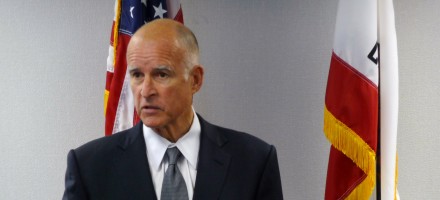
Attorney General Jerry Brown, who is also running for governor, announced that his office has launched “a broad investigation” of CSU Stanislaus and its foundation following yesterday’s revelations that officials may have destroyed documents related to an upcoming speech by Sarah Palin.
Both Brown and Sen. Leland Yee, whose inquiries into how much Palin is being paid triggered the investigation, emphasized that this isn’t about a controversial conservative speaking at the university, but about government transparency and how scarce public resources are being used.
In his announcement, Brown echoed Yee’s criticism of how foundations can be used improperly and to hide public scrutiny. Officials from CSU Stanislaus haven’t returned Guardian calls, but they denied wrongdoing to the Chronicle without specifically addressing how or why the documents were destroyed.
Here is Brown’s complete announcement:
Brown Expands Probe into CSU Stanislaus Foundation
SAN FRANCISCO – Attorney General Edmund G. Brown Jr. announced today that he has launched a broad investigation into the California State University Stanislaus Foundation to include an examination of its finances and the alleged dumping of documents into a university dumpster.
This action follows an inquiry Brown began last week into whether the CSU Stanislaus Foundation violated the California Public Records Act. On April 7, State Senator Leland Yee asked Brown to investigate the refusal of California State University Stanislaus to turn over records, under the Public Records Act, pertaining to the $500-a-plate June 25 speaking engagement of former vice presidential candidate Sarah Palin at the university’s 50th anniversary gala. Palin’s compensation for speaking at the CSU Stanislaus gala hasn’t been disclosed, but she earned $100,000 for speaking in February at a Tea Party convention in Nashville.
The expanded inquiry will seek to determine whether the foundation, which has assets of more than $20 million, is spending its money to benefit the campus, as it promises donors, the university and the public. The CSU Stanislaus Foundation spends more than $3 million each year on university endeavors. The Attorney General is asking university officials to preserve foundation documents.
“We are taking this action to make sure that the money raised goes toward the intended educational purposes and not a dollar is wasted or misspent,” Brown said, “Prudent financial stewardship is crucial at a time in which universities face vastly decreased funding and increased student fees.”
The Attorney General oversees charitable organizations to make sure that they comply with the law. Brown’s office has recently sought records of several foundations following allegations of improprieties including a no-bid contract to a foundation board member, a loan — with a large loss — to a former foundation board member, a $1.5 million-dollar loss because of bad debts, a questionable real estate deal and a $200,000 low-interest loan to a university president.
The university foundations provide crucial financial help to state universities, supplementing student fees and state support for scholarships, academic programs, buildings and operating expenses.
Brown said his office would also review documents obtained from Yee today, including part of Palin’s speech contract, which students say they plucked out of a dumpster near the CSU Stanislaus administration building. Investigators will first attempt to determine whether the documents are authentic and how they ended up in the dumpster.
“This is not about Sarah Palin,” Brown said. “She has every right to speak at a university event, and schools should strive to bring to campus a broad range of speakers. The issues are public disclosure and financial accountability in organizations embedded in state-run universities. We’re not saying any allegation is true, but we owe it to the taxpayers to thoroughly check out every serious allegation.”
The assets controlled by 95 auxiliary bodies and foundations associated with the entire CSU system amount to $1.34 billion, according to the CSU chancellor’s office. UC system foundations control another $4 billion in assets.
The Attorney General’s investigation is being conducted by its Charitable Trusts Section, which works with charities to make sure they comply with the law and their articles of incorporation. The Attorney General is also authorized to bring legal actions against charities if they misuse funds under their control.
For more information on the Attorney General’s Charitable Trusts Division, see http://ag.ca.gov/charities.php.
Hot sex events: April 14-21
It’s spring, people. With all the life and love in the air, it’s time to take your sex to another level. Perhaps that’s why the shamans are poking their heads out in San Francisco this week — Frank Moore takes the stage with his impossible erotic performance art, and a class is being offered to endow dominants with a sense of the sublime in their sexual dealings. Not sure what it all means? Comfort yourself with a cuddle party, or the Tubesteak Connection party at Aunt Charlie’s.
The top as shaman: setting the pathway for transformation
Dominants have an excellent chance not only to transform their partner’s life sexually, but sexually-spiritually as well. Attend this class to check ways to make your lovemaking transcendent for all involved.
Wed/14 8-10 p.m, $25-30
Good Vibrations
603 Valencia, SF
(415) 522-5460
Exiles Munch
Exiles, the all women BDSM educational group, holds it’s first munch. Grab a latte, a sandwich, or a submissive as you see fit.
Wed/14 6:30-8:30 p.m., free
Wicked Grounds
289 8th St., SF
(415) 503-0405
Kinky Knitters
“Geez! I just can’t get this drop stitch to set on my crotched sex swing!” “Aw honey, let me look at it.” Just another week for SF’s kinkiest coffeehouse crafters.
Wed/14 7 p.m., free
Wicked Grounds
289 8th St., SF
(415) 503-0405
Tubesteak Connection
I’m letting Aunt Charlie’s speak for themselves on this one: “Get liquored-up cheap ($2.50 well/beer all nite), and cruise your fellow cock gobblers, self-suckers, carpet grinders, and crotch-stuffers to the synthesized sounds of a forgotten era: late ‘70s/ early ‘80s gay bar and bathhouse hi-NRG, Eurodisco, NYC no-wave, disco rarities and more.” Sounds like a party…
Thur/15 free before 10 p.m., $4 after
Aunt Charlie’s
133 Turk, SF
(415) 441-2922
“Erotic Friction”
Frank Moore, controversial shaman/performance artist, takes the stage to shock and awe.
Sat/17 8 p.m., $5-10 sliding scale
Center for Sex and Culture
1519 Mission, SF
(415) 225-1155
Greener Orgasms!
You’ve thoroughly examined this week’s Green Guide for all the ways to make your life more sustainable — and a sustainable sex life, well doesn’t that just make good sense? Chat with Good Vibe’s qualified professionals on all your opportunities to lube up, vibrate out and party down in a way that makes our planet happy.
Sun/18 5-6 p.m., free
Good Vibrations
603 Valencia, SF
(415) 522-5460
Cuddle Party
Snuggle up to your neighbor (observing their cuddle boundaries, as always) at this exclusive hug and nuzzle get down.
Sun/18 7-10:30 p.m., $20-40 sliding scale
Registration required for location details
The bee’s knees
In honor of the upcoming Earth Day — and Sarah Phelan’s indepth look at little buzzers in this week’s issue of the Guardian — we pay a visit to the San Francisco Beekepers Association.
Our Weekly Picks
WEDNESDAY 14
MUSIC/CLUB
Nachtmusik
Pseudo Echo, Zwischenfall, Pluta Connexion, Gina X, Das Kabinette — you may not know who they are, but if you imagine them dressed in black sometime in the early ’80s, making cold, dark, catchy music with analog synthesizers and drum machines, then you get the gist. Nachtmusik is an intimate monthly club night for fans of forgotten dark wave, cold wave, and minimal synth styles and the artists who made them. (There’s a definite Liquid Sky rush from hearing these obscure retro tunes on a big soundsystem.) This month, DJs Omar, Justin, Goutroy, and Riegler dig up frigid gems and angular oddities. Dress in hot black, wet your lips, and the try out some electro-industrial moves on the floor. It’s pop for porcupines. (Marke B.)
10 p.m., $5
The Knockout
3223 Mission, SF
(415) 550-6994
MUSIC
The Whitest Boy Alive
If you don’t have the luxury of traveling down to Indio for Coachella this year, don’t fret. Many of the bands showcasing this year are heading up to the Bay Area, and the Whitest Boy Alive is no exception. After the release of 2009’s Rules, the Berlin-based band has been making waves with a new outgoing and upbeat record. The electro-dance quartet graces us with its presence as front man and Kings of Convenience crooner Erland Oye serenades the crowd with airy vocals over danceable tunes. (Peter Galvin)
With special guests
9 p.m., $16-18 (at the door)
Slim’s
333 11th Street, SF
415.255.0333
THURSDAY 15
DANCE
“Move(men)t”
The men are back. Joe Landini’s The Garage has picked up on a noble San Francisco tradition that had just about disappeared. Until the mid-nineties, the City regularly celebrated its male dancers in the Men Dancing festivals. Landini’s “Move(men)t,” now in its third year, gives voice to about as wide a variety of male choreographers as you will see on one program. Some have their own companies (Dance Theater/Shannon, David Herrera Performance Company, Labayen Dance/SF); others put ensembles together as needed: Kegan Marling, Jose Navarrete, Jorge De Hoyos and Folawo Oyinlola among them. The first two evenings show choreographed work; the last two are dedicated to improvisation. On Sat. from from 2 to 6 p.m., Cristine Cali will teach a free Men’s Improv Workshop, with the opportunity to perform that night. (Rita Felciano)
8 p.m. (through Sun/18), $10-20
The Garage
975 Howard St. San Francisco
(415) 885-4006
FRIDAY 16
MUSIC
Wolves in the Throne Room
Wolves in the Throne Room plays a distinctive brand of enveloping, distinctively-American black metal, and the Olympia, WA group has matured before our eyes into a blast-beaten export that the Western United States can be proud to call its own. Founded by brothers Nathan and Aaron Weaver in their Olympian “farm-stronghold” (named “Calliope,” according to the band’s bio), Wolves draws on natural parallels between black metal’s nature-worshiping roots and the Weaver brothers’ headbanging brand of environmentalism. They share the stage Friday with their fellow Northwest iconoclasts, Seattle drone legends Earth. (Ben Richardson)
With Earth, Lori Goldston
9 p.m, $16
Slim’s
333 11th St., SF
(415) 255-0333
DANCE
LINES Ballet
Over the last quarter of a century, Alonzo King has developed a unique — angular, stretched and spacey — vocabulary for his LINES Ballet company. What makes his work so exciting these days is that he is venturing ever more daringly into new musical terrains. His collaborations with musicians such as saxophonist Pharoah Sanders and tabla player Zakir Hussein may have whetted his appetite. Bringing in jazz musician Jason Moran last year certainly resulted in a hot show, musically and choreographically. Stepping into western opera and art song, however, opens a huge landscape even for somebody as congenitally open-minded as King. For the still-untitled premiere, King enlists the help of Adler Fellows Sara Gartland (soprano), Maya Layhani (mezzo-soprano), Ryan Belongie (counter-tenor) and Austin Kness (baritone). They have chosen songs and arias from George Frideric Handel and Richard Strauss. In addition to lending their voices, the singers will also move with the dancers, based on their own physical reflections of what the music tells them. (Felciano)
8 p.m. (through April 25), $15-65
Novellus Theater
Yerba Buena Center for the Arts
700 Howard, San Francisco
(415) 978-2787
MUSIC
Love is All
Sweden must be just the cutest place in the world, to have carelessly bestowed Love is All with a force like Josephine Olausson. You could not be chastised for thinking that Olausson sounds like an raucous schoolgirl as she yelps and sputters through Two Thousand and Ten Injuries, the band’s third release. But after a few listens, that casually adorable bombast and tympani begins to feel like it comes from a very personal place, a distinction that was once an anomaly for any self-righteous noise pop band. I suppose we all seek to divert attention from our insecurities; not all of us are lucky enough to do it with a catchy melody and a dreamy set of pipes. (Galvin)
With Princeton, the Butterfly Bones
8:30 p.m., $12
Rickshaw Stop
155 Fell, SF
(415) 861-2011
SATURDAY 17
EVENT/FOOD
First Annual Goat Festival
Early spring got you feeling “goatish”? Don’t get your fetlocks in a twist. Hie thee down to the first annual Goat Festival, “A Celebration of All Things Goat,” to commune with your fellow capraphiles while sampling tasty tidbits of goat cheeses, kefirs, yogurts, and ice creams, checking out the cooking demos, and pestering local author and cheese whiz Gordan Edgar about gjetost. Plus, there will be baby goats gamboling about. (In a confined area, I presume, but still). BABY GOATS, people! There is nothing cuter. The merriment is co-hosted by “The Goat Girls” — the respective heads of Cypress Grove Chevre, Redwood HillFarm and Creamery, and Laloo’s Goat Milk Ice Cream — and CUESA, the Center for Urban Education about Sustainable Agriculture. (Nicole Gluckstern)
10 a.m.-1 p.m. free
Ferry Building,
Embarcadero, SF
EVENT
First Annual Bed Races
With the annual Folsom Street Fair, LovEvolution and the How Weird Street Fair in San Francisco, it’s hard to think of anything in the city as obscure or strange. So what’s special about the First Annual
Bed Races, you ask? Well just imagine a bunch of drunk college kids, business men and (one hopes) bona fide freaks pushing decked-out bed cars (think soap box derby) in a mad race to the finish line. Trust me, this race will put the Red Bull Soapbox Race to shame. Oh yeah, and proceeds benefit charity, so take that, Red Bull. (Elise Marie Brown)
10:30 a.m., free
Marina Middle School
3500 Fillmore Street, SF
(408) 374-1600
VISUAL ART
Avatar 4D
I have no clue what the Facebook description of this show is saying. Something about “a night of logarithms and viral glancing.” Where the title is concerned, Cameron’s 3D Avatar is being trapped in “utopian metamorphosis” while JstChillin’s (this show’s curators, who just wanna chillax in “a flow of existence between web and physicality”) 4D vision incorporates “collective re-embodiment” as seen and experienced through the ever-changing, always-schizophrenic, net and self. Okay, I think I get it now: The Internet is our avatar and these 17 artists — excuse me, these “reality hackers” — just wanna have fun with their Deleuze-ian Body without Organs. Or something like that. Either way, the spectacle of 17 net artists simultanteously performing in the same space sounds cooler than Cameron’s weak vision any day. (Spencer Young)
7–10 p.m., free
Noma Gallery
80 Maiden Lane, 3rd Floor, SF
(415) 391 0200
MUSIC
Collie Buddz, Devin The Dude
Collie Buddz has become a staple in the rising reggae and dub scene. Born in New Orleans but raised in Bermuda, he grew up trading lyrics in schoolyard clashes. He credits Bounty Killer and Beenie Man as his primary influences. Collie Buddz and his brother built a studio where he “trained,” developing his signature style. This will be a joint performance (pun intended) with well-known underground Houston hip-hop artist Devin The Dude. Both are respected for their lyrical and musical abilities. Be prepared to get elevated and educated. Other guests include Phife Dawg of Tribe Called Quest, and the Skaflaws. (Lilan Kane)
9 p.m., $10
The Independent
628 Divisadero, SF
415.771.1421
MUSIC
Public Image Ltd.
After the Sex Pistols imploded onstage in San Francisco in 1978, John Lydon dropped his “Johnny Rotten” moniker and formed Public Image Ltd., an influential revolving band of musicians that centered around the often caustic and controversial yet always riveting front man. A showcase for Lydon’s trademark snarl that incorporated a host of styles, including dub bass, searing guitar rock, and electronic experimentation, PiL helped lay the foundation for a generation of post-punk bands to come. On its first American tour in 18 years, the group hits the city the day after performing an eagerly anticipated headlining slot at Coachella. (Sean McCourt)
9 p.m., $50–$53
Regency Ballroom
1290 Sutter St., SF
(800) 745-3000
SUNDAY 18
FILM
“So, You Wanna Fight!”
Before the days of Oscar De La Hoya and Manny Pacquiao, boxing was more about the physical sport than advertisers and HBO subscriptions. Film archivist and anecdotal master Dennis Nyback wants you to know that. Tonight, the cinema connoisseur presents classic boxing films of the 20th century, with a program that includes Joe Louis, Tex Avery and feisty fist-fighting 8-year-old Pam Sproul. After watching these films, you might even start pricing some boxing gloves and enroll in a class or two. (Brown)
2 p.m., $6-8
Yerba Buena Center for the Arts
701 Mission, SF
(415) 978-2787
MUSIC
Vader
Vader was created in 1983, born deep behind the Iron Curtain in Olsztyn, Poland. Though they struggled at first to even obtain proper musical equipment — the literal tools of their trade — the fall of Polish communism and the explosion of the death metal scene during the early 1990s gained them a dedicated cult following, both at home and abroad. Now approaching its third decade, the band is still adept at churning out thick, tremolo-picked riffs and grandiose arrangements, while simultaneously staying one step ahead of the legal eagles over at Lucasfilm, Ltd. (Ben Richardson)
With Overkill, God Dethroned, Warbringer, Evile, and Woe of Tyrants
6:30 p.m., $26.50
The Regency Ballroom
1300 Van Ness, SF
(415) 673-5716
TUESDAY 20
MUSIC
Gary Numan
After initial recognition as the singer and leader of Tubeway Army, especially with their single “Down In The Park,” Gary Numan exploded into succcess upon the release of his 1979 solo record The Pleasure Principal, which featured the hit single “Cars.” Inspiring untold new wave, industrial and goth bands with his sound and look over the ensuing years, Numan is enjoying a resurgence of late, finding himself on stage with groups such as Nine Inch Nails as a special guest. His appearance here performing The Pleasure Prinicipal in it’s entirety is another fine example of the joys of living in a major city close to the annual juggernaut that is Coachella; his only other U.S. gigs on the books this go round are the festival in Indio and another club show in L.A., so don’t miss out. (McCourt)
8 p.m., $27.50
The Fillmore
1805 Geary Blvd., SF
(415) 346-6000
******
The Guardian listings deadline is two weeks prior to our Wednesday publication date. To submit an item for consideration, please include the title of the event, a brief description of the event, date and time, venue name, street address (listing cross streets only isn’t sufficient), city, telephone number readers can call for more information, telephone number for media, and admission costs. Send information to Listings, the Guardian Building, 135 Mississippi St., SF, CA 94107; fax to (415) 487-2506; or e-mail (paste press release into e-mail body — no text attachments, please) to listings@sfbg.com. We cannot guarantee the return of photos, but enclosing an SASE helps. Digital photos may be submitted in jpeg format; the image must be at least 240 dpi and four inches by six inches in size. We regret we cannot accept listings over the phone.
Mission statement

By Elise-Marie Brown
arts@sfbg.com
FILM Che Rivera, a strong, middle-aged Latino man, approaches his son with festering anger and fury in his eyes. With outrage, he yells, “Why does this motherfucker have his tongue down your fucking throat?” as he points to a photo of his teenage son kissing another man. “Why do you think?” his son replies in a sharp tone. His rage surfacing, Che leans over, beats the boy, and forces him to leave their Mission District home.
Tackling issues of homophobia, masculinity, and violence, independent film La Mission uncovers the inner struggle of an obstinate father (Benjamin Bratt) learning to accept his son, Jesse (Jeremy Ray Valdez) for being gay. Throughout the film, Che is a dominating machismo presence. By day he works as a Muni driver who strives to keep his bus in line by fighting off difficult passengers. At night he customizes low rider cars and leads a group of friends and family through cruises in the city.
“Che is kind of the alpha male within Latino culture, as well as the alpha male in the dominant culture,” said director and writer Peter Bratt during a recent phone interview alongside younger brother Benjamin. “Something about the Latino community and having a gay son threatens the idea of being a powerful male.”
The role of Che was based on a real Mission resident, a fact that Bratt believes gives the movie more of an authentic feel. “The real Che is a larger-than-life persona. When he walks into the room, you feel his presence,” Peter said. “He’s a brown and proud Chicano who we thought represented the passion and vibrancy of the neighborhood.”
As the film unfolds, the audience starts to learn that Che is more than just a man of aggression. He also feels a strong love for his son and community, despite having a difficult time expressing that love.
“We found it intriguing to take a character like [Che] who appears to be one way and start to peel the layers back,” Benjamin explained. “A real tenderness exists. You don’t see it expressed in words or a physical action, But it comes in other forms.”
After looking back at films that portray men of color as one-dimensional, the actor decided his character would embody an array of emotions and struggles that previous stories had not explored. “When you look at a lot of representations of men of color, they’re often drawn as people to be feared,” Benjamin continued. “Che is a very familiar character that we’ve seen in cholo and urban films. We wanted to pull back the layers and actually show that there is a complex being underneath the swagger and stance.”
When it came to starting the production of the film and choosing a location, the Bratt brothers — who grew up in San Francisco — didn’t hesitate to base the story in the Mission.
“Benjamin and I had already dreamed of making a film in the Mission,” Peter said. “We know about Harlem, Brooklyn, and Queens from filmmakers like Woody Allen and Martin Scorsese. We feel like the Mission is up there with those neighborhoods. It’s just as vibrant, politically and culturally.”
In the four weeks it took to shoot the film, members of the community helped by working behind the cameras as well as in front of them. “We cast a lot of people right from the Mission, which we thought lent a certain level of authenticity,” Peter said.
Although the film takes place in a neighborhood with multiple cultures, traditions, and social issues, the Bratts believe the particular journey undertaken by their characters isn’t something everyone in the community goes through.
“There are a million and one stories going on in the Mission at any given time and this was not our attempt to create the definitive Mission story,” Benjamin said. “Our goal was to create something authentic and ultimately something that would entertain and enlighten you.” *
LA MISSION opens in Bay Area theaters Fri/16.
The art of play
arts@sfbg.com
FILM Through the rear window of a nondescript vehicle, three lines of dotted lights stream by in the darkness. The perspective shifts, and you realize you are at the seat of a car, driving through a tortuous tunnel, about to emerge into a skylit, open highway. You’re unsure of your location, or even your destination, but slowly, like a detective story, clues help you piece together some semblance of meaning and purpose. You peer into the rear-view mirror, dive into the road flickering behind you, and let your mind wander beyond that concrete past.
From there, animated filmmaker and multimedia artist Al Jarnow guides you on a hypnotic trip through the interconnected pathways of nature, art, and machinery in Autosong (1976). The dark tunnel returns anew, and the car disappears, unhinging your viewpoint in a disembodied drift. Oceanic tides wash away the whirling road and grids of cubes emerge, twisting in harmony as Jarnow deconstructs the geometrical notions that give form to subjectivity, motion, and space. “In my experimental films I leaned more toward music than a traditional narrative structure,” Jarnow says, calling from his home and studio in Long Island. “Themes build up and then repeat, come back slightly changed and repeat again… like a jazz variation on a theme.”
Brooklyn-born Jarnow found a supportive and inspired community for animated films in New York during the 1970s and ’80s. Trained originally as a painter, he fell into the medium by chance, coaxed by a friend into animating humorist Edward Lear’s offshoot love story The Owl and the Pussycat (1968) with his wife Jill Jarnow’s vibrant paintings. “As we were in the process of making that film, I started doing experiments. And the thrill of seeing something move, and come alive, just woke up a whole new world for me,” Jarnow says. Fascinated with “sculpting in time” more than conventional cartoon plots, Jarnow populated his mesmerizing worlds with an atypical cast of characters and ideas.
Jarnow’s experimental shorts — handcrafted from cell-animation, stop-motion, painting, drawing, and photography — revel in the unending process of exploration and discovery. In left field films like Cubits (1978), Jarnow wields an unlikely power, bringing abstract concepts and formal procedures to life. Ink-drawn geometric shapes dance in rhythm on flashcards like robotic pop-lockers, revealing both operations of motion and a methodical creative process. Yet the logical rigor underpinning Jarnow’s stories feels human and impassioned, saturated with a visceral aura of wonder that is far removed from a scientist’s sterile research lab. Call Jarnow the Carl Sagan of animators (well, a bit more fun than that). “I think art is a form of play,” he says. “It’s a tactile experience of experimenting with the world around you, pushing it this way or that way, and seeing what happens. It’s as much for children as grownups.”
So it’s fitting that Jarnow also brought that playful spirit to bear on educational shorts for PBS’s Sesame Street and 3-2-1 Contact. In his first commercial piece, Yak (1970), the talking beast drops knowledge about the letter y, before running headfirst into the screen and terrifying many an imaginative youngin’ under the sheets (just check the YouTube comments). In Facial Recognition (1978), humans reproduce the computational functions of a dot-matrix printer, thanks to stop-motion magic. And billions of years are reduced to two minutes in the time-lapse of Cosmic Clock (1979), where the lifetime of a boy, a city, and nature all pass through their respective cycles (the last civilization even blasts off into space in a moment’s flash).
Even though Jarnow’s multilayered vision made a lasting impression on a whole generation in heyday of the Children’s Television Workshop, no one knew the author behind the box — and very few had the opportunity to penetrate NYC’s avant-garde animators scene. But earlier this year Jarnow finally got his due. Chicago’s archival imprint Numero Group digitally transferred 45 of Jarnow’s 16mm shorts and compiled them in a handsomely packaged DVD. Celestial Navigations: The Short Films of Al Jarnow includes a 30-minute documentary and 60 pages of liner notes. The title piece, Jarnow’s most explicit scientific voyage, traces the window-light defining his studio walls from equinox to equinox, montaged with heliocentric frames of Stonehenge. It’s stunning — and difficult — but with some patience, you can travel the cosmos with the druids and back again.
The retrospective is hardly exhaustive. “Making art is a way of learning about the world,” Jarnow says. “It’s a way of processing the information coming in through you.” Jarnow hasn’t stopped experimenting with new artistic forays, ceaselessly searching for engaging mediums to provoke and compel. From installing exhibits at San Francisco’s Exploratorium (which set the framework for cofounding the Long Island Children’s Museum) and developing interactive computer software to making ephemeral sculpture on the beach, Jarnow continues to make a playful game, and invoke an animated wonder, of the world.
AL JARNOW: CELESTIAL NAVIGATIONS
Screening and Q&A with Al Jarnow
April 22, 7:15 and 9:30 p.m., $6–$9
Red Vic Movie House
1727 Haight, SF
(415) 668-3994
Ghost, writers
arts@sfbg.com
FILM Conor McPherson’s The Eclipse is not to be confused with that imminent third Twilight movie of (almost) the same name. But it, too, is a supernatural romance of sorts. Michael Farr (Ciarán Hinds) is a widower with two kids. From the wife’s post-chemo look in family photos scattered around the house, we glean she died of cancer. He once had writerly ambitions but is now a woodworking teacher. Since school’s out, he’s jobbing as a driver for the annual literary festival in their seaside town of Cobh, a County Cork location not far from where Irish revolutionary hero Michael Collins was born and killed.
It’s a driver’s task in such circumstances to take the bad with the good, as far as chauffeuring around celebrity authors goes. The good being London guest Lena Morelle (Iben Hjejle), a modest, attractive, and gracious scribe of purportedly nonfiction ghost stories. The bad being best-selling American novelist Nicholas Holden (Aidan Quinn), who hits the ground whining — his ride’s slight delay has forced him to endure the hotel-bar enthusiasms of actual fans, a prime target for his all-embracing condescension — and whose subsequent emotional displays run the unctuous to the apoplectic.
Excepting, that is, when he’s attempting to charm Lena, with whom he had a recent one-night-stand at a similar event. Cornered over lunch, Lena keeps a polite arm’s length from his renewed ardor, reminding him “I thought we were going to behave like nothing ever happened.” He is, after all, married. Nicholas rather too readily pipes that he doesn’t love his wife, and, anyway, even if they’re still officially together (he fibbed about that previously), he “never felt more separated” from her than when experiencing brief, torrid, probably drunken passion with Lena.
This is none of Michael’s business, and Lena wishes it wasn’t hers, but circumstances keep driver and guests colliding. Michael tours Lena around to all the terribly quaint and picturesque local sights, bonding over shared experiences (notably, both are under the strong impression that they’ve seen ghosts) and mutual frisson. Rubbing each the wrong way, meanwhile, is every ensuing encounter with Nicholas, who starts showing up plastered at Lena’s accommodations to howl at the moon and/or picks fight with Michael, whom he sneeringly calls “that stalker” — the others being too polite to point out his obvious hypocrisy.
So far, so good: The Eclipse‘s bulk mixes deft satire of literary ego and salesmanship with middle-aged romance in a travelogue setting (beautifully photographed by Ivan McCullough), plus enough domestic nuance to remind that no family life is perfect when a spouse and parent has recently died. But McPherson, better known here for his widely produced plays (The Weir, Shining City, The Seafarer), is not one to leave reality well enough alone. Instead he (helped by the abrupt crescendos of alarm in Fionnuala Ni Chiosain’s score) jars us with elements of the macabre. Michael is burdened with an angry, ailing father-in-law (Jim Norton) he’s turned over to a rest home. Perhaps as punishment, he suffers visions of a ghastly specter that look a whole lot like a zombiefied Jim Norton. These are, hopefully, just nightmares. But what do they mean?
It’s to McPherson’s credit (coadapting a short story by fellow Irish playwright Billy Roche) that his elegantly controlled movie gets away with not quite providing an answer while juggling a lot of mismatched elements with deceptive ease. In a less quirky film, Hinds, atypically cast as the nice guy (he played an arrogant literary prick himself in 2008’s Margot at the Wedding), would have swapped roles with Quinn. The gambit benefits them both, especially Quinn, who is terrific as the kind of tantrum-prone pretentious blowhard who’ll never be a grownup, but is just talented enough to get away with it — commercially if not socially. The Eclipse barely seems to have gotten going before it’s over, and no movie post-1970 should be ever allowed to end on a freeze-frame. Still, these 88 minutes are like some heavy (green of course) liqueur; just a thimbleful leaves you agreeably off-center, flushed, and a little spooked.
THE ECLIPSE opens Fri/16 in San Francisco.
RN74
paulr@sfbg.com
DINE As we wait for someone to open a restaurant called Highway 29 — the ultimate Napa Valley wine-country spot — we are comforted in the knowledge that we already have RN74. You are absolved for not knowing that RN74, the road, is the Highway 29 of Burgundy. It runs south from the provincial capital of Dijon to Beaune, in the heart of the Burgundian wine country.
I am not thrilled with the local trend toward naming restaurants after European highways — the names sound too much like car names — but there is no denying the force behind RN74. That force is Michael Mina, and if there is a more lustrous name in the recent annals of San Francisco restauranting, that name has escaped my notice. Mina was the man who, for a decade, guided the kitchen at Aqua (after an opening starburst of George Morrone); he then went on to open his (first) eponymous restaurant in the Westin St. Francis in the summer of 2004, with another following at the Bellagio in Las Vegas.
The themes here would seem to be luxe and empire, but in both of those senses, RN74 upsets expectations. It is beautiful and elegant inside but not overwrought, and it is (so far) one-of-a-kind. The main disappointment, for me, pertains to location; as at nearby Roy’s, the windows gaze out onto Mission Street and the romantic spell fades. Maybe that’s why such effort has been spent on the window treatments, with row after row of louvered screens lending a sense of warm summer evenings while subtly filtering out much of the actual view.
The other tremendous design element is the huge wine board hanging high above the east end of the dining room. It resembles the big boards you see in French railway stations, black with ever-changing white letters, like a huge mechanized chalkboard. In train stations, the board gives destinations and platforms; at RN74, the data involves last bottles of wine.
Given the immense scope of the wine list, the mechanized chalkboard must be close to indispensable. You could easily get lost in the printed version, which runs for many pages in small print and includes bottlings from France, Italy, Spain, California, and elsewhere, more than a few of them running into the hundreds of dollars. But the big board flashes deals — we snagged the last of an Italian gamay for $42 — while the prix-fixe option, three courses for $39, also includes a crack at the sommelier’s choice of red or white Burgundy for $30.
The food is exemplary: much less intricate and overbearing than at Michael Mina while losing little or nothing in inventiveness and polish. I was especially impressed by the smoked-sturgeon rillettes ($9), which incorporated a responsibly farmed fish into a classic French technique to produce a beguiling result — a kind of shmear to be spread on toast points. (The fish had been combined with crème fraïche for extra velvetiness.)
When your risotto wins the approval of someone who dislikes risotto, you must be making pretty good risotto. RN74’s leek version ($15) included plenty of Parmesan cheese, green peas, trumpet mushrooms, and watercress; it had the look and texture of corn snow, and the grains were perfectly cooked al dente, with just a hint of chalkiness. No mush. And when your grilled Monterey Bay sardines ($14) are gobbled up by someone who doesn’t like sardines … well, Q.E.D.
The main courses are marginally less compelling, mainly because they are star-driven and tend to rely on large masses of protein rather than artful interlacings of varied ingredients. Still, protein has its charms: halibut ($27) poached in olive oil to an almost confit-like denseness and plated with asparagus and snap peas; a pair of rounds of center-cut ribeye ($30), still gorgeously purple-pink in the middle and riding a coarse magic carpet woven from green garlic and trumpet mushrooms, while a ravioli filled with potato mousseline sat to one side like a cupcake; a filet of striped bass ($28), intoxicatingly scented with herbs and served with little pebbles of crisped chorizo.
Beignets seem to be well on their way to joining crème brûlée and molten chocolate cakes on just about every dessert menu around. At RN74, the beignets ($9) look like little throw pillows someone spilled sugar all over, and you dip them in a whiskey-caramel sauce with a little whipped cream. More interesting was a chocolate-praline bar ($9) — if your tailor made bespoke candy bars, they’d be something like this. You can get throw pillows anywhere.
RN74
Dinner: Sun.–Thurs., 5:30–10 p.m.; Fri.-Sat., 5:30-10:30 p.m.
Lunch: Mon.–Fri., 11:30 a.m.–2 p.m.
301 Mission, SF
(415) 543-7474
Full bar
AE/DS/MC/V
Bearable noise even when full
Wheelchair accessible
Tropic of dancer
arts@sfbg.com
DANCE Judging from the packed salsa classes he’s been teaching at Dance Mission Theater for 12 years, Ramón Ramos Alayo is correct: the Bay Area is a hotbed for Cuban-Caribbean culture. But even he underestimated its pull. When I spoke to him on a recent balmy spring evening, he was expecting that night’s attendance to drop. “It’s light and warm, so people like to spend their free time outside,” he explained before heading for class. Wrong. If more aficionados had shown up, they would have had to move the furniture.
In addition to being a highly sought-after instructor — he also teaches modern dance at ODC — Ramos Alayo is a dancer, musician, choreographer, and the director of the annual CubaCaribe Festival (this year’s installment takes place at Dance Mission Theater April 16-May 2). Multitasking may be in his blood, but it’s also something he was trained for.
At the Havana National School of Art, where Ramos Alayo enrolled at age 11, every student had to study ballet, folklórico, and modern dance. “If you didn’t pass the grade in each genre on every level, you were out,” he remembered. After getting his master’s, he had the choice of joining either a modern or traditional company: he went with two modern groups. But when he founded his own Alayo Dance Company in San Francisco in 2002, he made its mission inclusive, fusing Afro-Cuban, modern, traditional folkloric, and popular Cuban dance styles. Although for some fusion suggests loss of identity, to Ramos Alayo it indicates creating something new from what exists.
As a choreographer and performer, Ramos Alayo is as at home in dances based on the Yoruban Orisha myths performed at the Ethnic Dance Festival as he is in original works inspired by political history and personal experience. His 10 dancers have to be able to do it all. Blood + Sugar is a raw dancer theater work about slavery; La Madre takes an intimate look at family. One of his earliest pieces, Wrong Way, is an athletic yet poignant duet for two men. He doesn’t recall the details of the recent Grace Notes, a free-flowing improvisation with bass player Jeff Chambers, but he does remember how good it felt to be performing it. “We had never rehearsed. We just looked at the score, and I had some spatial cues.”
Ramos Alayo’s wide-open approach to what it means to be contemporary artist living in the diaspora also shapes his curating of CubaCaribe, now in its sixth year. Under the overall banner of “From Katrina to Port-au-Prince,” this year’s festival honors the survivors of recent catastrophes. The first weekend will present Haitian and Haitian-rooted ensembles. New York’s Adia Whitaker is a modern, Haitian trained dancer-choreograher; Afoutayi recently relocated from Haiti to San Francisco; and Kumbuka is a New Orleans-based Haitian-Carnival ensemble. Afoutayi and Kumbuka make their San Francisco debuts.
The second weekend traditionally showcases local artists. Liberation Dance Theater’s current work is based on modern dance and reggaeton — a mix of Caribbean-based music styles. Alfafia is a collectively-run Haitian group from San Francisco City College. In the past, Paco Gomes has elegantly fused Afro-Brazilian with modern dance.
On first glance, Los Lupenos de San Jose, a group known for its rendition of regional Mexican dances, is not a natural for CubaCaribe. What got them an invitation was Salón Mexico, Susan Cashion’s choreography of social dances like el danzón and the mambo. They originated in Cuba but started their worldwide journey by way of Mexico.
Ramos Alayo’s new hour-long Migrations was inspired by New York subway performers. Joining his own ten dancers for the third weekend will be a hip-hop artist, a tap dancer, and a steel-drum musician.
CUBACARIBE FESTIVAL OF DANCE AND MUSIC
Through May 2, Fri–Sat, 8 p.m.;
Sun, 7 p.m.; April 25, 3 p.m., $12–$22
Dance Mission Theater
3316 24th St., SF
Believe it!
arts@sfbg.com
VISUAL ART What would you do if you had been born with a treasure chest? This is a real-life Pippi Longstocking-tale: Jaina Bee is a quirky lady who sports a pink glam crewtop, was raised with minimal parental interference, and is undeniably devoted to her friends. Like Pippi, she was given a suitcase full of gold coins and owns a home.
Thirteen years ago, when Jaina Bee was in her late 20s, she purchased her Potrero Hill property with a vague vision of creating a collaborative-art utopia.
Each chamber of Granny’s Empire of Art has been given a fitting nickname. Sitting in the trophy room, named for its collection of taxidermy, it’s hard to imagine it as just another blank slate with off-white walls. “There’s a difference between decorating and transforming,” Jaina Bee says. Now: antique sofas, stripes of plaid and French country wallpaper, a haunting brick-based collage of cigarettes and electrical plugs, a hanging chandelier, and portraits of Jaina Bee with chickens — and of the benefactors of her inheritance, her step-grandfather Fred Davis and his father Edwin — fill the living room.
“Seriously, the deepest and most inescapable influence was my mother, who was a total prankster, trickster, nonconformist type,” she says. “As soon as I got out of high school and went into college, she lived out her trippy communal fantasy in Santa Cruz.”
As an experiment based around her deep curiosity about people, Jaina Bee’s mother threw open her doors. Those who came in were mostly freeloading Dead Heads of the 1980s. It was a madhouse.
“I took what I learned from observing that and inevitably turned this into my own semi-open house,” says Jaina Bee. “There are lots of people who make this place their home when they’re in town. They’re all creative, and they all contribute in some way to the household, whether it’s designing lights or creating rooms. And when I’m out of town for months at a time, people come and go just as freely as if I were here. So the house has a kind of life of its own. It’s bigger than all of us.”
“You can’t try to control it,” responds Jenny B, who did the lighting for the house and is staying over.
While her mother was watching her lawless social study, Jaina Bee was attending San Francisco Art Institute, where she befriended many artists who would later be involved with Granny’s.
Her professor Tony Labat challenged her to test, trial-and-error-style, without knowing the results. “That gave me the courage to experiment with collaborating with people not necessarily knowing where it was going to go,” she explains. She took this mentality seriously when she began working on her home. “The whole reason things have turned out the way they have here is that I didn’t try and control it too much — just enough to keep it from going into complete chaos.”
Of course, this is not the first art-home assembled by an eccentric heiress. Granny’s Empire of Art follows a tradition extending from Isabella Stewart Gardner and Sarah Winchester to Peggy Guggenheim and Doris Duke. But none of these comparisons quite fit because of Granny’s particular emphasis on collaboration and experimentation.
“It’s an unusual circumstance with Jaina, because she really wants people to do what they’re good at doing. She’s not sitting there saying she wants it this way. She has a lot of trust with her vision,” explains Christine Shields, who met Jaina at SFAI and has done work on the home since the initial painting sessions when she chose red for what would later be known as the opium den.
“When the whole house started, I thought it was so disparate. It seemed very hodgepodge and very crazy-quilt style. But the more time that goes by, the more it becomes this big vision and it has this cohesion that I couldn’t really see in the beginning,” Shields says. “But I know Jaina saw it.”
Granny’s two homes — an old farmhouse in the back and a Victorian in the front — contain a Ripley’s-Believe-It-or-Not!-worthy staircase covered with pencils that leads to a vintage Circus Circus carpet, a Gaudi-meets-the-Yellow-Submarine bathroom with glow-in-the-dark-slices hidden in the tiles, a fur meditation room, a haunted parlor with multicolored drywall, found photographs compiled into a pseudo family albums, and an old-timey phonograph. All this — and more — comes together to form a fairytale dollhouse that expands with the bite of a cookie, just like Alice’s wonderland.
“This is beyond my wildest dreams of the perfect environment. I’m always discovering things I didn’t notice before,” says Jaina Bee. “I think sometimes my friends have actually stuck things in here without telling me.”
Unlike the Peggy Guggenheim Collection or the Isabella Stewart Gardner Museum, there’s an energy that emanates from the life within the home. Jaina Bee says she’s thought about the future of Granny’s Empire of Art and the possibility that it might become a place for an artists residency program, but says she’s made no official plans. Granny’s is alive and growing.
There are even lovely sister cats, Crackle and Quilty, who share the home. “They wrecked a lot,” Jaina Bee says matter-of-factly. “I think in one year these kittens did $1000 in damage — to masterpieces. But that’s art as life. I don’t want it to be so precious I can’t be comfortable.”
Drowned out
rebeccab@sfbg.com
GREEN ISSUE The tiny, rigid-hull inflatable boats that researchers at Scripps Institution of Oceanography use for whale tagging are a mere fraction of the size of the blue whales they are deployed to search for. But Scripps PhD candidate Megan McKenna says there’s no reason to worry about the mammoth creatures — which can weigh as many tons as 27 elephants put together — bumping up against the boat when she reaches overboard with a pole to tag them.
“They’re just pretty mellow, I guess,” McKenna says. “There’s no flailing or anything. Some barely even notice that we’re there.” For two summers, she’s ventured out in pursuit of the endangered whales, popping short-term monitoring tags on them to learn how they behave when massive cargo shipping vessels motor past.
It’s an important question for a couple of reasons. Government funding was provided for the Scripps study after two blue whales were struck and killed by commercial shipping vessels in 2007, tragedies magnified by the fact that the marine mammals are still struggling for survival. If even two die in such collisions every few years, the entire species could be imperiled, McKenna says.
At the same time, a less-understood phenomenon has marine scientists worried that the deep-blue giants’ survival is being undermined by a subtler problem, that Jackie Dragon of San Francisco-based Pacific Environment likens to “death by a thousand cuts.” Noise generated by whirring ship propellers registers at the same frequency as the low tones whales use to communicate and forage for food, and researchers are concerned that the constant interruption is affecting their ability to engage in basic survival behavior.
Put together with an array of concerns including chemical pollution, marine debris, over-fishing, and ocean acidification, noise pollution is just coming onto the sonar of local marine sanctuary councils and federal environmental agencies, and proposed solutions are only in the fledgling stages.
Pacific Environment is one of several environmental organizations advocating for shipping vessels to travel at slower speeds, a quieter practice that also reduces the chances of hitting a whale. Despite growing evidence that noise pollution and ship strikes pose big problems for the planet’s largest mammals, it’s likely to be an uphill battle in an growing global industry where time is money, and on-time delivery is paramount.
Endangered whales favor the Gulf of the Farallones and Cordell Bank sanctuaries, not far from San Francisco, so Pacific Environment has chartered a catamaran to take ecologically-minded whale watchers out to what Dragon dubs the “Yosemites of the sea.” Using hydrophones, they capture the deep, rumbling whale calls. They also pick up noise generated by commercial ships, whose designated lanes cut directly through the protected areas.
Under just the right ocean conditions, the low, eerie mating call of a male blue whale off the coast of California can be heard by a female off the coast of Hawaii. “That just has to do with the physics of sound in the ocean,” McKenna explains. “They’re vocal animals. You can think of sound in the ocean as our vision. Sound travels so much better in water than light does, so it’s really an acoustic environment that they’re living in.”
McKenna is working with whale researchers John Calambokidis of the Cascadia Research Collective and John Hildebrand of Scripps Institution. While they’ve observed that some whales linger at the surface longer than usual after a ship has passed, leaving them vulnerable to a strike, there are no conclusive results as of yet.
To explain the noise impacts, Dragon uses an analogy of trying to communicate in a crowded bar where it’s difficult to hear. “In the ocean, sound is king,” she says. “This chronic, noisy, foggy environment … has a masking effect. It might mean whales will not be able to navigate correctly, or may not be able to communicate with mates or offspring.”
The Gulf of the Farallones National Marine Sanctuary supports a rare concentration of blue whales, partly because the water is rich in nutrients, biodiversity, and tiny, shrimp-like creatures called krill. Blue whales and endangered humpbacks forage there from April through November, the colossal blues consuming an astounding 4 tons of krill each day.
At an April 8 joint meeting between the Gulf of the Farallones and Cordell Bank marine sanctuary advisory councils, the groups discussed creating a working group — bringing together stakeholders from the U.S. Coast Guard, shipping industries, and others — to establish a set of recommendations for how to regulate noise pollution in the sanctuaries.
“The purpose is to better understand the issue from the standpoint of the sanctuary,” explains Lance Morgan, who chairs the Cordell Bank council. “Ideally, we’d produce a report that says, here’s what we think the issues are.”
Yet Morgan acknowledges that it won’t be easy to get the federal government to impose new sanctuary regulations since there are still so many outstanding questions. “We’re learning a lot about the acoustic environment,” he says. One concern is whether whales are actually able to perceive the sound of the giant shipping vessels, he notes, since the environment has become so noisy. If they can’t hear the ships, they’re at a much higher risk of collision. “We certainly know we can drown out whale calls in certain situations,” he says, “but what does that mean in the long term?”
There are around 14,000 blue whales left across the entire watery globe, according to the most optimistic estimates, just a sliver of the estimated 300,000 that lived before they were nearly harpooned to extinction during a ruthless whaling era. Scientists are encouraged that their numbers have climbed since the mid-1960s when they were listed as endangered.
Yet even with this mild success story as a backdrop, there is growing concern about potential long-term effects of underwater industrial noise. Navy sonar, military air guns, and blasts from seismic surveys all contribute to the problem at varying frequencies. The collective din of ocean noise has doubled every decade since the 1950s, and the shipping business is only expected to grow.
Maersk, the world’s largest shipping company, runs weekly container ships from Hong Kong to ports in Oakland and Long Beach, a journey lasting more than two weeks. Getting the goods there on time is “the most important thing to our customers,” says Lee Kindberg, the company’s environment director.
The container ships arrive crammed full of everything from electronics — which require special climate-controlled containers — to clothing, bath products, household items, and pharmaceuticals. Perishable items are transported in refrigerators, consuming a third more energy and powered by auxiliary engines. Up to 8,000 containers can be packed onto a single ship, and the average vessel size has expanded around 20 percent in the past five years. More than 90 percent of the world’s traded goods are transported by water, with shipments on container vessels increasingly rapidly.
If ever there was an icon for globalization, and all that the buy-local and sustainability movements rail against, it would be a diesel-powered container ship transporting heavily packaged stuff halfway across the globe.
“Clearly it’s not a good thing if we hit a whale,” Kindberg says. Undersea noise pollution “is certainly an issue that we’ve been made aware of. But there doesn’t seem to be any real clarity as to what the impacts are,” she notes. Maersk would support certain speed reductions to protect the whales, Kindberg says, but “if you slow down in one place, you need to speed up someplace else, and that can take more fuel.”
Regulations in certain waters off the eastern seaboard already require ships to move at slower speeds to minimize harm, and Kindberg says Maersk has voluntarily opted to operate at slower speeds to reduce greenhouse gas emissions (it saves on fuel costs too). But when going along at 10 knots (around 11 m.p.h.), the speed environmental organizations say is safest for marine mammals, it’s harder to maneuver the ship, Kindberg says. Sailing around the marine sanctuaries is not an option in California, she adds, since ships have to pass through them to get to the ports.
Other efforts to solve the shipping-noise problem focus on ship design. “We’re building larger and larger ships, and they’re getting noisier and noisier,” says marine ecologist Leila Hatch of the National Oceanic and Atmospheric Administration (NOAA), who studies the effects of underwater sound on marine mammals.
The International Maritime Organization accepted a plan in 2008 to form a working group and to pin down guidelines for making commercial ships quieter, according to Hatch. Although the guidelines aren’t enforceable and are unlikely to be implemented any time soon, she sees it as an opportunity for a win-win scenario. If new ships featured a design with more efficient propulsion, they could be quieter, cheaper to operate, and more energy-efficient — which would also improve the air-quality problems associated with giant commercial ships.
The California Air Resources Board, meanwhile, initiated an effort last year for a program to get commercial vessels to slow down near the coastline, a bid to reduce emissions of smog-causing chemicals and the greenhouse gas carbon dioxide. Not much is happening on that front to date, but such a program could have the positive side effect of quieting underwater noise.
Hatch has been trying to quantify the decline in hearing ranges for marine mammals as the seas grow increasingly crowded with larger, noisier ships. “Much of the space they used to have is taken up by shipping noise. What is that likely to mean in terms of their ability to communicate effectively and find food?” she asks.
To find answers, she’s engaged in a research project at the Stellwagen Bank National Marine Sanctuary off the coast of Massachusetts that blends GPS ship-tracking data with profiles from sound-monitoring devices planted on the sea floor. Results suggest that whales’ communication ranges have diminished by 80 percent in some places.
There are few easy answers, however, since scientists are still trying to piece it all together. One certainty is that “we’re changing the environment they’re trying to live in,” notes McKenna, who says she now finds herself wondering if she’ll end up purchasing something that’s packed onto a massive containership when she spies one out on the horizon. “To what degree is it impacting them?”
She can’t say exactly, and that’s part of the problem, because the global shipping industry wants to see some concrete facts before the battleship can be turned. In the meantime, Kindberg says the captains helming Maersk line are just trying to avoid hitting the whales.