San Francisco

The Daily Blurgh: Are brown people still legal on YouTube?

1

Curiosities, quirks, oddites, and items from around the Bay and beyond

Sarcasm fail at Canada’s National Post?

*****

When a Furry marries a Juggalo you get

******

It’s a bird! It’s a plane! It’s Banksy (Again. And this time, it’s apparently legit)

*****

Hey, Arizona Governor Jan Brewer: Fuck you very much.

******

One of this week’s Guardian cover stars, Peaches Christ, dishes (as her boy alter-ego, Joshua Grannell) about his new film, All About Evil, and why the Victoria Theater is San Francisco’s unsung movie palace.

*****

M.I.A ghost rides Suicide

*****

This is Spinal Tape!

*****

In honor of the Internet’s great black hole (aka YouTube) turning five, here is that compilation of the site’s 100 greatest hits crammed into just 4 minutes from last year (so, pardon the missing memes).

If you don’t feel like sitting through four minutes — or forever times infinity squared in Internet years — of wrap-up, here’s really what YouTube has meant in the past half-decade:

(It has been viewed 268,000 268,0001 times)

Conan O’Brien is employed so the rest of us don’t have to be

6

Yuppies love jokes about homeless people.

Consider that a telling, if ancillary, lesson I learned at last night’s Conan O’Brien “Legally Prohibited From Being Funny on Television” tour, which continues tonight, Fri/23.

In the wake of O’Brien’s sacking from his late night gig at NBC earlier this year, the show marked a return to relevancy for the comedian. His comeback seemed to resonate with the younger, upper middle crowd at the Nob Hill Masonic Center, many of whom are no doubt fighting to maintain their own $79.50 comedy show lifestyle in the face of economic shittiness and uncertain employment.

Before we could see the man himself, we the audience were treated to a video showing an obese, bearded Conan from “a month ago” lolling about in sweatpants and pizza boxes as he waited for the phone to ring that would grant him a chance to spread his snark to the masses once more. No job = letting the dog lick peanut butter off your toes and sweatsuits. I looked around, and the buttoned down, well coiffed crowd around me was chuckling uncomfortably to themselves. Unemployed — and that beard! What a loser Conan was!

But the call comes, and we watch the birth of the 72 city “Legally Prohibited” tour. Barred from TV, radio, and the Internet until the fall (when his new TBS series begins, surely a come down for a man used to the bright lights of network television) by the terms of his contract with NBC, live performances are one of the only options open right now to O’Brien, whose career’s been light on the stand up without the sound stage up to this point.

+ beard + certain degree of world weary grizzle = Conan from last night’s show

His lack of live experience didn’t matter to the folks last night, though. They whooped it up as the man made his entrance onstage, re-energized in a sharp suit, his band behind him once more. The gut was gone, but the beard stayed, a rugged look that seemed to scream ‘this man has been through some shit!’

“We played San Francisco in 2007 in the Tenderloin, at the Orpheum,” O’Brien explains to us. “I had to get to the theater by canoeing through hobo urine!”

Haaaa! “That’s the show it’s going to be,” he tells us, as the crowd cheers his cheekiness. He tells us he can see “some guy in a top hat in the balcony” telling his wife, Mildred “it’s time to go.” Frumpy old people aside “your asses are mine tonight! You can’t change the channel,” he tells us. But no one’s leaving. The bland jokes, humorous musical numbers, and even an appearance from Chris Isaak (omg! He’s like, so cute!) keep the endorphins up and the bright, shiny crowd enthralled.

In crazy times, your late night show will always be there for you. Even if that interview didn’t go so hot, or you’re forced to give up the private parking space, you know your favorite TV host awaits to round out the day with some reassuringly belittling comments on pretty much every single person in popular culture. All the better if he’s cracking wise about the unemployment office and the steps of grieving that happen when you lose your job.

These days, that’s what we call relevant humor. Go get ‘em, Coco.

Conan O’Brien’s “Legally Prohibited From Being Funny on Television” tour

Fri/23  8 p.m., $39.50-79.50

Nob Hill Masonic Center

1111 California, SF

(415) 630-8496

www.teamcoco.com

Godzilla versus Mothra: the LBAM sequel

2

It seems like only the other day that the Guardian broke the news that the California Department of Food and Agriculture was threatening to spray San Francisco with moth pheromones, based on controversial estimates of a tiny invasive moth’s economic and environmental impacts.

That program was stopped, but not before residents of Santa Cruz and Monterey were subjected to repeated spraying by low-flying crop dusters, and questions were raised about the economic and political motivations behind the push to spray.

And now, on the 4oth anniversary of Earth Day, City Attorney Dennis Herrera has announced that San Francisco is joining a coalition of cities and health, environmental and mothers’ groups in a lawsuit that challenges the state’s current light brown apple moth (LBAM) eradication program. 

Filed in Alameda County Superior Court today, the civil lawsuit charges that the final programmatic Environmental Impact Report for the program is not based on sound science, and is invalidated because the program’s objective was changed from eradicating to merely controlling the moth, after the EIR was finished.

“The California Department of Food and Agriculture (CDFA) has produced an environmental impact report that raises many more questions than it answers,” Herrera said in a press release. “After combing through this document, it is literally impossible to say with certainty what CDFA plans to do, or when and where it plans to do it. To confuse matters further, the eradication program under review was subsequently morphed into a ‘control, contain and suppress’ program-whatever that means.”

Copies of case documents are available at the City Attorney’s website.


The Daily Blurgh: Is that an Archie in your pants, Banksy?

0

Curiosities, quirks, oddites, and items from around the Bay and beyond

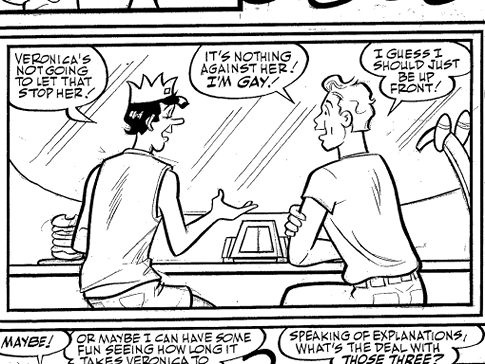
Gay! Archie gets a gay (as opposed to “Archie is a gay,” a fantasy you can live out through this NSFW-ish Choose-Your-Own Adventure wiki). Lesbian lawyers defend “not gay enough” softball players. Texas doesn’t want to let gays divorce. And Jet Blue goes pink.

******

He’s not here: Banksy tags SF.

*****

“People are terrified of drugs. Drugs are linked to inner cities and crime – not mystical states. But with diligent and serious science, we can learn about all the wonderful ways that these compounds can help a stressed and troubled species.” Dropping therapeutic acid in San Jose.

******

Have you parked your keester in one of the city’s “parklets” yet? It’s lovely outside right now. Go! Editor’s recommendation: Totally hot biker parklet action at Mojo.

*****

If that constant hacking cough wasn’t enough of a warning about air pollution, you can always rely on your phone to tell you.

*****

“It refers to the sex act conducted in front of the Eucharist involving myself, as the role of Adam, and a female follower, who plays the role of Eve by her own free will. The Lord does not wish for anybody else to engage in this ritual. I was inspired to perform this ritual because I believed that there was no other way to prove Mr. Little Pebble’s innocence and the wrongful convictions of sexual assault made against him. Just a few days ago, God sent me a message saying that the woman who sued Mr. Little Pebble will confess that it was all a lie.” And there’s a whole lot more WTF where that came from.

*******

SFFD disaster drill mannequins: now more “P.C.” thanks to pants.

*****

Heads up: Remembering Playland, the full length documentary that tells the history of San Francisco’s famous 10-acre seaside amusement park, Playland at the Beach, starts a week-long run at the Balboa Theater tomorrow night.

Day laborers link sit-lie to Arizona crackdown

13

After another overwhelming vote against it last night, the sit-lie ordinance (banning sitting or lying on SF sidewalks) proposed by Mayor Gavin Newsom and Police Chief George Gascon is probably toast. But just to make sure, the activists at Stand Against Sit Lie are holding another day of creative protests on sidewalks around the city this Saturday, 4/24.

Among the 13 events scheduled so far will be immigrant day laborers sitting along Cesar Chavez Street between Mission and San Van Ness streets to protest both sit-lie and another legislative attack on immigrants, the controversial Arizona measure that essentially bans undocumented immigrants and encourages police to arrest them using racial profiling techniques.

The SF Day Labor Program is organizing the protest and today sent out a statement linking the two measures, noting that the sit-lie ordinance criminalizing otherwise lawful behavior and targets marginalized populations. Last night at the DCCC meeting, Sup. David Campos also made the point that day laborers who stand on street corners all day seeking work sometimes need to rest.

“Day laborers in San Francisco have to sit down once in awhile when they’re out on street corners waiting for work,” Jose Ramirez, a day laborer and coordinator of the SF Day Labor Program, said in today’s statement.  “Taking us to jail for sitting down in San Francisco is the same as immigrants being targeted by police for simply being Latino.”

After the Planning Commission early this month voted 6-1 to recommend against the sit-lie ordinance – finding that it violated a number of city goals and policies – the measure is awaiting consideration by the Board of Supervisors Public Safety Committee, possibly on May 3. 

The Circus is back in SF

0

By Chhavi Nanda

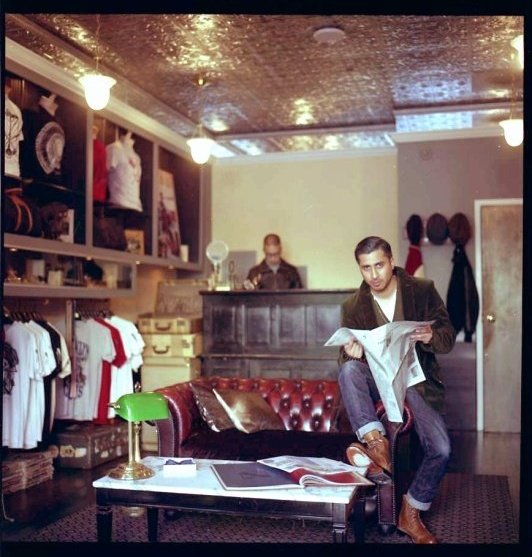
In the remains of what was left of Brooklyn Circus SF, I joined Gabe Garcia, BKC’s art director, for an intimate interview in the heart of San Francisco, the Fillmore.  Recently, the SF branch of the awesome men’s clothiers was forced to close for a few weeks due to a flood from the apartment building above. The damages caused the joint to pack up for a bit. The circus must go on, though, and Brooklyn Circus SF will be reopening this Fri/23, just like new. Thankfully Gabe, even in his frenzied panic to get the store back up and running,  talked to me about his career, the direction of fashion in San Francisco and New York City, and the industry in general. 


SFBG: Do you feel like your formal education at FIT in NYC helped prepare you for working in the industry?

Gabe Garcia: No, not at all.  FIT taught me the fundamentals of sewing, patternmaking, and things of that sort, but most of all what taught me the most was New York City itself. Living in NYC made me actually discipline myself. I didn’t even really know anyone in the city. I tried to get most out of school that I could, but NYC — being such a creative place — prepared me most for the industry.

SFBG: How do you compare fashion and the motivation behind designers in NYC in contrast to San Francisco? What would you like to see in fashion that is lacking in San Francisco, but prominent in NYC?

GG: San Francisco has a more laid-back attitude. Energy in the air is very infectious, so a majority of the people in San Francisco are very casual.  When people dress up to leave their house in the morning here, people are less motivated, which is cool, but peoples’ attitudes do transfer to their outfits. In NYC there is more pressure, desire and intrest. Life is about inspiration and how your surroundings inspire you. Each day I am in NYC I am inspired. Right now, what I am most inspired by is old cars. And all antiques in general, furniture, cars, etc.

SFBG: BKC is not only a fashion label, not it is also considered a lifestyle. Being a part of the BKC team means not only do you focus on the design aspect of the company, but also production, sales, finance, advertising, marketing, photography and blogging. Another than design, how else do you contribute to the BKC team?

GG: My position has evolved since I’ve been with the company. When we started I was standing right by Ouiji (the Brooklyn Circus owner) painting the walls of the store in Brooklyn. I started under Ouigi’s wing. Then I wanted to bring Brooklyn back to San Francisco. I found a way to do what I love while still living close to home. I built a bridge for my career and myself. The first thing we did was scout a perfect location. I am mostly involved with art direction, the creative concept and process, never avoiding the creative process.

SFBG: Can we anticipate any Brooklyn Circus collaborations anytime soon? What is your perspective on collaborations?
GG: Brand and image direction is really important to us right now. I have learned the things that you do wrong are just as impactful, if not more impactful, as the right decision. If you make a decision to go left instead of right, you could take the brand into the wrong direction. We want our brand to be here for the long run. We want to practice the fundaments of these big brands that have been here forever. If we do collaborate it just needs to make sense. It has to be a part of the big picture. Only if it a long term endeavor, we stay. The true importance is to stay with your brand vision. For example Porshe had approached Lacoste with a collaboration idea. Although Porshe is a huge company, Lacoste didn’t jump at that opportunity, because it just wasn’t in the DNA of the company. You see what I mean?  

SFBG: Would you ever consider starting your own label?
I have thought about it. Mostly small capsule collections though, like wallets, hats, neckwear, things like that. I really enjoy working in a team; I like people to bounce my creative ideas of. I like to think of myself as a visionary.

DCCC: Thumbs down on sit / lie

San Francisco’s Democratic County Central Committee voted last night in favor of a resolution opposing San Francisco’s proposed sit / lie ordinance, a law backed by Mayor Gavin Newsom and Police Chief George Gascon that would make it illegal to sit or lie down on city sidewalks. Gabriel Haaland introduced the resolution, and it passed with overwhelming support.

Here’s a YouTube clip of Haaland’s comments during the committee discussion, filmed by Linda Post.

The DCCC is the policy-making body for the Democratic Party in San Francisco, chaired by former Board of Supervisors President Aaron Peskin. The vote followed a lengthy public comment session in which a wide variety of people voiced their opposition to sit / lie, including homeless youth advocates, residents of the Haight, and surprise guest Malia Cohen — formerly an executive staff member for Mayor Gavin Newsom. Some comments provoked laughter (“Sit /lie is like the fungus that won’t go away!” one Tenderloin resident exclaimed), while others framed their arguments in moral terms (“It’s hard to think of it as anything less than criminalizing poverty,” attorney David Waggoner charged). Cohen, for her part, called the ordinance “mean-spirited.”

The central committee members held a meaty discussion too, in which several members shared deeply personal stories to explain their feelings about the ordinance. Haaland described how, after graduating from law school in the mid-1990s, he found it so difficult to find work as a transgendered person that he worried about becoming homeless himself.

Committee member Tom Hsieh, who said he’d lived in the Haight for 10 years, spoke about his young daughter and expressed his discomfort about the “anything goes attitude” he’d seen people on the streets exhibit in her presence. Hsieh was one of a handful of committee members who voted against Haaland’s resolution. The others were Scott Wiener, Meagan Levitan, Mary Jung, and the proxy for Sen. Dianne Feinstein, while Matt Tuchow and the proxy for Assemblymember Fiona Ma abstained.  

Sup. David Campos addressed Hsieh’s concerns directly, saying that he did not believe the proposed ordinance actually addressed the sort of behavior that he found upsetting. “Sit / lie is the wrong focus,” Campos said. “The focus should be, how do we make policing better in San Francisco?” Noting that he had formely served as a police commissioner, he called for more effective community policing.

When he met with the mayor’s office about sit / lie, Campos added, he got the impression that the law was not actually meant to stop people from sitting or lying down on the sidewalk, but to target hostile behavior occurring on the street. “When you pass a law, you have to mean what it says,” he noted. He also pointed out that day laborers who wait on sidewalks for work would essentially be criminalized by the ordinance, since it’s unreasonable to expect that they wouldn’t occasionally sit down while waiting for a job.

Meanwhile, Scott Wiener’s resolution to endorse the Community Justice Center and encourage its expansion into the Haight failed with 14 voting against it and 10 voting to support it, while two abstained. While many committee members voiced general support for the CJC, a few said they resisted the idea of dictating to the Haight that it should install a similar court.

The DCCC also endorsed Linda Colfax and Michael Nava as candidates for Judge.

Green cards in hand, Washingtons want Newsom to discuss immigrant youth policy. In person.

0

Tracey Washington and her 13-year old son heard today that their green card applications have been approved. This means that they will not be deported to Australia, and their personal immigration nightmare is over.
But even as the family rejoices, Tracey’s husband, Charles Washington, a Muni bus driver and long-term San Francisco resident, has written to Mayor Gavin Newsom, voicing disappointment over Newsom’s failure to reach out to his family during their time of need and over Newsom’s continuing refusal to implement the immigrant youth due process policy that a veto-proof majority of the Board approved, in November 2009.

“Our family’s luck n this case was unique, but Mr. Newsom, the pain we felt when our family was facing deportation as a result of your policy is not unique at all,” Washington wrote in his April 21 letter. “We share the pain felt by the many other families whose children were taken into ICE custody and ordered deported, as a result of your policy.” (The full text of the letter that Charles Washington sent to Newsom today is included at the end of this blog post.)
 
The Washingtons’ nightmare began in January, when their 13-year-old boy was reported by juvenile probation to ICE for a minor bullying incident, during which he took 46 cents from another youth, then gave it back and apologized. That’s when the family first discovered that, thanks to a new juvenile immigrant policy that Newsom implemented in July 2008, their teen was going to reported to ICE immediately after his arrest – and before his case was heard in juvenile court. 

And even though the family was eligible for green cards thanks to Tracey’s April 2009 marriage to U.S. citizen Charles Washington, ICE handed Tracey and her son their deportation orders on Feb. 5, 2010–the same day they picked the boy up from juvenile detention and used the boy as bait to get his mother to agree to wear an electronic monitoring anklet.

That anklet was finally taken off today, meaning that Tracey Washington was forced to wear this uncomfortable and humiliating device for two and a half months, even though she did not commit a crime–and even though her son was not found guilty as charged, when his case was finally adjudicated by a juvenile justice.

Following the bullying incident, local law enforcement officers charged the boy with three felony counts, triggering an immediate referral to ICE, under Newsom’s immigrant youth policy.  But a juvenile justice recently gave the boy informal probation, recognizing that the youth is a first-time offender who committed a low level offense and is a good candidate for rehabilitation.

But seven weeks ago (March 1), when Tracey and her son had exhausted their legal options and were facing imminent deportation, the five-member blended Washington family held a press conference as a last resort. Two days later, following a media firestorm, ICE granted the Washingtons a two-month reprive, so that U.S. Citizenship and Immigration Services could review and approve their green card applications.

“We really appreciate that U.S. Citizenship and Immigration Services was willing to look at our individual circumstances and approve our residency application, so that our family can stay together,” Tracey Washington said today. “ At the same time, my heart goes out to the many other families who were harmed by the Mayor’s policy.” 

Angela Chan, the staff attorney at the Asian Law Caucus, who handled the family’s case, noted that while the Washington’s nightmare ended happily, many other families continue to be broken up by harsh immigration laws, lack of access to affordable legal services, and Mayor Newsom’s local policy towards immigrant youth.

“Newsom’s policy exacerbates the impact of a broken federal immigration system on San Francisco families,” Chan said. “We need humane reform at the federal level, but in the meantime, Mayor Newsom needs to take a stand today for due process and family unity by ending San Francisco’s draconian policy. If the Washingtons’ son had not been reported to ICE, as required by Newsom’s policy, he would not have been sent to ICE, and he and his family would not have had to endure this nightmare.”
 
Letter to Mayor Newsom from Washington Family–
 
April        21, 2010
 
Mayor Gavin Newsom
City Hall, Room 200
1 Dr. Carlton B. Goodlett Place
San Francisco, CA 94102
 
RE: Unjust Policy Regarding Undocumented Youth in San Francisco

Dear Mayor Newsom,

My name is Charles Washington. I was born and raised in San Francisco, and am a long-time resident of this great city. I also am a city employee. I love the city of San Francisco and my family has developed strong roots here. Unfortunately, last month, we went through a horrible ordeal when my wife and step-son were ordered deported as a result of your policy, which requires reporting of youth to Immigration and Customs Enforcement (ICE) right after arrest, before the youth even has a chance to have a hearing in juvenile court regarding the charges.

As you may have read in the news, my 13-year-old son was arrested and reported to ICE for deportation over 46 cents in a minor, first-time bullying case. In accordance with your policy, San Francisco juvenile probation officers reported my son to ICE before the allegations could even be adjudicated by a juvenile court judge. To my shock, my wife also was ordered deported by ICE as a result of the reporting of my son by juvenile probation in keeping with your policy.

With the imminent deportation hanging over my wife and son’s heads, we were utterly terrified that our family would be torn apart. Since we had no other legal remedies when our request for a stay of deportation was denied, we desperately reached out to the media to seek help in a last ditch effort. Fortunately, a reporter contacted the White House, which then resulted in an extension of the deadline for the deportation. However, I must tell you that during this time, we were really disappointed that we did not receive a single call or any type of outreach from your office to offer my family support, especially when my son’s referral to ICE was a direct consequence of your policy.

I also would like to express my deep disappointment in the statements your office issued after my family was granted the reprieve through no help from your office. Your office made statements to the press suggesting that our situation proves your policy leads to just outcomes. I completely disagree with this assertion and firmly believe that our being granted the reprieve has proven even more so that your policy hurts families and tears children away from their parents for minor, first-time offenses. The White House seems to understand the importance of keeping families together in granting the reprieve. Unfortunately, your office appears to have missed this completely. It is extremely hurtful to our family that you would try to claim credit for the positive turn in events that my family and the community supporting us worked hard to obtain in order to combat the injustice brought upon us by the policy you implemented in the first place.

Let me also say that my family was lucky, but there are many other families who have not been as fortunate.There was no handbook to tell us what to do to obtain a reprieve when we were in this crisis. It just so happened that we were able to obtain legal assistance, but what if we had been unable to find legal services or if the press had not covered our story? My wife and son would have been torn from me and there is nothing I could have done to stop it from happening. Families in San Francisco should not have to struggle or rely on luck to stay together. In fact, there have been over a hundred families in this city who have not been as fortunate as my family since your harsh and inhumane policy was implemented in 2008.  Our family’s luck in this case was unique, but Mr. Newsom, the pain we felt when our family was facing deportation as a result of your policy is not unique at all.We share the pain felt by the many other families whose children were taken into ICE custody and ordered deported as a result of your policy.

Mr. Newsom, I know that you are a new father yourself and will teach your own daughter many lessons in her lifetime. I respectfully ask you to reexamine your policy from the eyes of a father, the way that I am looking at my son today. While I must say that I am greatly disappointed in the actions you have taken to support a flawed policy that has endangered the children of this city, I do hope that you will take this opportunity to do the right thing and support implementation of Supervisor Campos’ due process amendment, which is now city law.  Families like mine, who are hard-working and rooted in San Francisco, are depending on you to do what is right and to follow the law the community passed in November 2009.

I respectfully request a meeting with you, in which my lawyer, Angela Chan from the Asian Law Caucus, and my family can speak with you about this policy and how it has affected us and continues to impact families in San Francisco.
Sincerely,

Charles Washington

The Daily Blurgh: Leaf us alone

0

Curiosities, quirks, oddites, and items from around the Bay and beyond

If a tree falls in San Francisco will anyone hear it? Probably. But more importantly, concerned citizens will be able to track the felled arbor online thanks to the Urban Forest Map.

*****

Get out your Legos: Berkeley Art Museum/PFA is looking for new architectural proposals.

*****

“If I could give back those last five beers, I would do it in a heartbeat. I don’t know why I let that girl look at it. That was a total disregard of our phones before hos mantra.” McSweeney’s imagines Gray Powell’s mea culpa to his Apple coworkers.

******

Rent a Cable Car or an F-Market street car for your next drunken spectacle/flashmob. It’s cheaper than you think.

*****

First, the bad news: Gonorrhea, like Nickelback fandom, becoming more incurable, sayeth Science.

*****

Now, the good news: it’s hump day!

oh!

The message of 555 Washington

16

The San Francisco supervisors not only rejected the environmental impact report for the condo tower next to the Transamerica building; they did it unanimously. And although the developer could still go back and write a new EIR — one that takes into account all the many, many issues this one ignored — that seems unlikely:


The developer, Andrew Segal, said he does not plan to go forward. “If we have to recirculate the EIR, I think we’re done,” Segal said.


There are a couple of important lessons here.


For starters, I hope the folks at the Planning Department who allowed this steaming turd of a project to go forward, and the commissioners who voted to certify the EIR, got the message: Just because a developer wants to do something, and the mayor thinks it’s a dandy idea, doesn’t mean that it’s good planning policy. The 555 Washington project was more than twice the size that current zoning allows on the site, and internal emails from frontline planning staffers showed that the folks who did the actual analysis of the thing were pretty darn dubious. But Planning Director John Rahim pushed it for approval anyway.


I think the supervisors made clear that the days of developer-driven planning on this scale, with this magnitude of arrogance and absurdity, are over. Let’s hope Planning Dept. management is paying attention.


Then there’s the wonderful fact that, after insisting for years that this project would only work if the city allowed the developer to build a 430-foot tower in a slot with a 200-foot height limit, the project sponsor suddenly backed down at the last minute and said, hey, 200 feet would actually be fine. That’s something that city officials too often forget: Developers lie, and demand concessions and say that they can’t build anything unless we give them tax breaks, and waive fees, and allow spot zoning, and offer all sorts of other goodies. But when you tell them no, they often seem to have a sudden moment of clarity — and announce that, hey, we didn’t really need all that.


Back in the late 1980s, Southern Pacific Railroad’s land development subsidiary insisted that nothing could be built at Mission Bay unless the city allowed multiple 50-story office towers and mandated only limited affordable housing. Then-mayor Art Agnos told the voters that he’d cut the best deal the city could ever get, and the future of the southeast neighborhoods was at stake. Then the proposal lost at the ballot — and immediately, SP came back with a much better option.


How many times did the San Francisco Giants tell us they couldn’t build a ballpark without public money? Guess what — when the city said no, the team came back with a privately financed plan. 


As the lawyers say, so too here. If a 200-foot tower was a viable option, why didn’t the developer offer that from the start? Here’s why — you get richer if you build taller. But that’s not a particularly good reason for the city to make planning decisions.

Throwing down with the Tablehopper

0

The incredibly everywhere Marcia Gagliardi, a.k.a. the Tablehopper (www.tablehopper.com), has somehow canvassed, in-depth, every eatery, drinkery, and food-cartery in our fair city — while still maintaining her voracious appetite, sassy aplomb, and appealing figure. Her new book, The Tablehopper’s Guide to Dining and Drinking in San Francisco (Ten Speed Press) is one of those must-have recommendation books that truly opens your eyes and mouth to culinary nooks and crannies. Divided into a multitude of sections like “Shituations” (places for dumping someone), “Morning After Breakfasts,” “Picky Eaters,” “Dude Food,” and “Ethnic Group Dinners,” it’s a fantastic thing to have on hand for every occasion, real or imagined. Marcia took a minute to answer some of our more “Guardian” questions about Bay dining and drinking. (Marke B.)

SFBG I’m pansexual and bursting with spring fever. What bars or restaurants can I go to where the boys and girls and everything-in-between are hot and open to everything?

MARCIA GAGLIARDI I’ve always thought the Lush Lounge (1221 Polk, SF. 415-771-2022, www.lushloungesf.com) has a good mixed vibe, and it seems Blackbird (2124 Market, SF. 415-503-0630, www.blackbirdbar.com) draws a mixed crowd as well. Orbit Room (1900 Market, SF. 415-252-9525) too. Or just go to Beretta (1199 Valencia, SF. 415- 695-1199, www.berettasf.com) late at night, sprinkle some Ecstasy on everyone’s crispy thin-crust pizza, and see what happens.

SFBG I have $5 for dinner. Where should I go?

MG I’d go to Balompie Café (3349 18th St., SF. 415-648-9199) or El Zocalo (3230 Mission, SF. 415-282-2572) and get a couple of extremely filling pupusas, which come with chips and salsa. Yep, you can get some hot pupusa action for less than $5. Hott!

SFBG Oh dear, I’ve doublebooked on date night. But then I get to thinking — why not take ’em both on at once? They might get into each other as well, and three’s certainly company! What’s a good place to have them both meet me and, once the initial confusion subsides, gently introduce the idea of a potentially delicious ménage à trois?

MG Well, hello, Ms. Popular. This is the kind of night that calls for some sexy atmosphere, and whaddya know, booze. The cozy downstairs booths at Oola (860 Folsom, SF. 415-995-2061, www.oola-sf.com) might fit the bill, and you can take turns licking the sauce from the yummy, sticky, baby back ribs off each other’s fingers.

SFBG My parents are on their way to take me out to dinner, but I just got really stoned. Where will my goofy demeanor blend right in?

MG Florio (1915 Fillmore, SF. 415-775-4300, www.floriosf.com) would work because its dandy-yet-friendly atmosphere is parental-unit approved, the lights are dim, the hearty food will jive with your munchies, and there’s usually enough going on in there that your parents won’t be watching your every move. There’s also a little alley around the corner where you can spark up if you need another puff before dessert.

SFBG Best place to announce my impending gender reassignment surgery to someone close to me who may be surprised?

MG Absinthe (398 Hayes, SF. 415-551-1590, www.absinthe.com). You can request a quieter table so not everyone hears your answers to all of your friend’s burning questions, and the spirited cocktails — a coquettishly tangy Ginger Rogers or bourbon-spiked Scarlett O’Hara, perhaps? — will help them digest the good news.

SFBG Someone took me out on a date to a really expensive restaurant and insisted on paying. Now it’s my turn to take them out, but I’m like, down to my last $20. Where can I take them so they feel I’ve treated them to something classier than my budget suggests?

MG Ah yes, the old smoke and mirrors. I’d go to Great Eastern in Chinatown (649 Jackson, SF. 415-986-2500), which has some bountiful deals on set menus, and the room is spiffy. Or you could take them to dim sum at one of my favorite places, S&T Hong Kong Seafood (2578 Noriega, SF. 415-665-8338) in the Outer Susnset, and you will feast fo’ cheap.

SFBG What wine bars have the best pours? I mean top-of-the-glass for $6. I’m a-thirsty, girl!

MG Well, the folks working the bar at Castro’s 2223 (2223 Market, SF. 415-431-0692, www.2223restaurant.com) know their clientele well and do pretty big pours. Same with Laszlo (2526 Mission, SF. 415-401-0810, www.laszlobar.com). I also noted a fuller glass the last time I was at the Hidden Vine (620 Post, SF. 415-674-3567, www.thehiddenvine.com). And based on the number of loaded folks at the Wine Jar (1870 Fillmore, SF. 415-931-2924, www.winejar-sf.com), I’d say the generous pours are to blame.

SFBG What would you say are the most “interesting” things you’ve ever eaten in the city?

MG Some of the dishes at Spices! (294 Eighth Ave., SF. 415-752-8884) have definitely pushed the envelope for me. (Stinky tofu, intestine stew — and I don’t care to have either dish ever again). The tendon pho at Pho Tan Hoa (431 Jones, SF. 415-673-3163) definitely rates on the funky meter — and I’m talking big hunks of tendon.

Sexy events April 21-27

0

We’re all feeling a little smoothed out from yesterday’s 420 festivities — why not take that newfound ease, and apply it to some fun new sexy events? A little cowboy action with a glass of wine and a lasso tryout? Maybe you’d like to bend over to your desire to learn more about the art of spank? Whether you’re into choppers or fatties, this week has tons of chances to let it alllll hang out.

Bottoms Up! Spanking Workshop
If Tina Horn can’t teach you how to spank, or be spanked, than no one can. The kinky porn star rears back to show you how to take pride in your spanking fantasies, and how to lay one on with style.
Wed/21 8-10 p.m., $25-30
Good Vibrations
603 Valencia, SF
www.goodvibes.com

RuPaul
It’s a sign! Touting her book, RuPaul’s Guide to Life, Liberty, and the Pursuit of Style, the queen of queens greets her loving kingdom.
Thurs/22 7:30-8:30 p.m., free
Books Inc
2275 Market, SF
(415) 864-6777
www.booksinc.net

Stone Sex and Kink
Kink educator/writer/stone butch Corey Alexander teaches this class on stone identity, a term whose most commonly accepted meaning encapsulates butches and femmes who are not into sexual genital stimulation. Alexander touches on anti-stone prejudice and the pleasures of stone kink.
Fri/23 8-10 p.m., $4 members, $10 non members
Women’s Building
3543 18th St., SF
www.theexiles.org

The Popstitutes’ “Boredom = Death”
A mishmash collection of paper ephemera to commemorate the late ‘80s queer agit prop band. The Popstitutes got off on channeling the Reagan induced anger into festival like performances — which took the stage everywhere from acid orgies to Tupperware parties.
Sat/24 12 – 5 p.m., free
Goteblud
766 Valencia, SF
www.goteblud.com

Bears, the Bath, and Beyond
Come play with your fave furry friends when the Bears of San Francisco hold their bi-quarterly play party at Steamworks 24/7 Men’s Bath house in Berkeley.
Sat/24 1-6 p.m.,
Steamworks
2107 4th St., SF
(510) 845-8992
www.steamworksonline.com

A Taste of Rope: Erotic Rope and Wine Sampling
Upon entry to this event, you’ll receive a few choice items into your ready palms; a glass of wine, some rope to test and a single blindfold (one per couple). Sounds like a sensory experience bar none. Things to look for in the cord of your choice: taste, smell and whether when it binds it makes you moan — or scream!
Sat/24 8-11 p.m., couples tickets $50-75
Femina Potens gallery
2199 Market, SF
www.feminapotens.org

Hot.Fat.Femmes!
Virgie Tovar’s new tome, Fatties of the World Unite!, deserves a celebration. At this fattiesexual gathering, all girls large and luscious will be venerated and celebrated — featuring a reading by Virgie and a photo exhibition of fantastic folds of flesh.
Sun/25 7-8:30 p.m., free
Good Vibrations
603 Valencia, SF
www.goodvibes.com

Ride
Bring in your helmet, American Motorcycles Association card, or club colors for $3 off admission at this night for all those who were born, born to be wild. Rubber down and rubber on!
Mon/26 4 p.m. – midnight, $7-17
Eros
2051 Market, SF
(415) 255-4921
www.erossf.com

MTA board approves controversial budget

2

By Adam Lesser

City Hall needed an overflow room to accommodate all the disenchanted Muni riders who showed up to protest the two-year San Francisco Municipal Transportation Agency budget plan yesterday (4/20). The budget locks in a 10 percent service cut through July 1st, 2011, at which point the MTA board is hopeful that the service cut will be lowered to 5 percent. The controversial budget was adopted on a 4-3 vote, and now goes to the Board of Supervisors, where progressive supervisors have already signaled opposition to the service cuts.

“It still seems and feels as I look at it [the budget], that it’s very tenuously put together. In light of the fact that it’s going to impact the least, the lonely, and the lost of us, I had to say, let’s keep looking at it,” said Director James McCray, who was one of three dissenting votes.

McCray, along with Director Malcolm Heincke who voted for the budget, were the two directors to openly express concern about the pay of transit operators and overtime charges. In a $750 million budget, service cuts wound up providing $29 million in savings, a relatively small number compared to the $456 million that will be spent on salaries and benefits, as well as the $59 million in work orders to other agencies like the police department and the city attorney.

Small revenue measures like adding 1,000 metered spaces, eliminating free reserved parking around areas like City Hall, and window advertising wrap on buses are part of the budget.

Heincke questioned MTA Executive Director Nathaniel Ford about the budget which includes $10 million in labor concessions from MTA employees while locking in a $9 million raise in 2011 and a $9.5 million raise in 2012 for transit operators from Transit Workers Union (TWU) Local 250-A. Transit operators’ wages and raises are written into the city charter. 

“The bubble over my head says wow,” said Heincke. Ford’s attempts to negotiate with the union over work rules have been unsuccessful. Sup. Sean Elsbernd is pushing a charter amendment for the November ballot that would remove the TWU’s pay rates from the city charter.

Anger over Muni’s payment of work orders to other city agencies was a constant theme among community groups as diverse as the Chinese Progressive Association and the San Francisco Transit Riders Union. Those work orders have increased from $36 million in 2006 to $66 million in 2010.

“What really happened is the rest of the city had a budget crisis and the mayor went after Muni looking for funds,” said Dave Snyder, coordinator for the San Francisco Transit Riders Union. Newsom appoints the directors who sit on the MTA Board. “Muni is paying for service the public doesn’t want them to pay for at the expense of transit service.”

Members of the Latino and Chinese-American community were out in large numbers, not just to protest service cuts that they felt disproportionately impact the Mission and Chinatown, but to complain about harassment by the police. Enforcement of the Proof of Payment program has increased with Muni agents and police checking the amount of time left on riders’ transfer tickets, and issuing fines.

“You have police asking for ID and issuing $75 fines. There have been a few cases of deportation,” Beatriz Herrera, an organizer for People Organized to Win Employment Rights (POWER). Referring to riders whose transfers expire while riding a bus, Emily Lee of the Chinese Progressive Association said, “They expect folks to get off the bus. That’s an unreasonable expectation. It’s stressful for the community. The police are intimidating.”

The service changes are slated to take effect May 8th.

Researchers analyzing whale carcass found in San Francisco Bay

A whale carcass was discovered floating in the San Francisco Bay between Alcatraz and Fort Mason on April 20, and marine researchers are performing a necropsy today, April 21.

Shortly after the dead whale was reported, researchers at the Sausalito-based Marine Mammal Center received authorization from the National Marine Fisheries Service to investigate, communications director Jim Oswald told the Guardian. Three Marine Mammal Center researchers ventured out in a Coast Guard cutter and towed the whale to a location north of the Richmond Bridge, where they are examining the carcass today.  Dr. Frances Gulland, Director of Veterinary Science at The Marine Mammal Center, is one of the researchers, pictured in the photo above.

It was a juvenile gray whale, approximately 25 feet long and an estimated 1 to 2 years old, Oswald said. There has been no evidence so far of external trauma, usually the sign of a ship strike, but they are still determining whether internal trauma occurred. Researchers are also taking a close look at its stomach contents to see if it might have been impacted by swallowing junk floating around at sea. “Ingested marine debris is a hazard for these animals,” Oswald said, recalling the case of a whale found off the coast of Washington that died after ingesting 450 pounds of netting.

A full report on the examination will not be available for several months, Oswald noted, since samples must be sent out to labs for a toxicology analysis.

The Guardian has reported on several environmental issues impacting whales, including shipping noise traffic and marine debris.

The good, the bad, and the fence-sitters

1

news@sfbg.com

The Guardian has been periodically producing the Board of Supervisors’ Good Vote Guide for many years, tracking where our elected representatives come down on important issues. And unlike a similar poll recently put out by the San Francisco Chamber of Commerce, which chose 10 votes designed to promote deregulating and subsidizing big businesses, we chose items important to the broad public interest.

The 20 votes we selected this time reflect our concerns for protecting tenants, funding vital public services, safeguarding civil liberties, promoting small businesses and nonprofits, appointing qualified people to commissions, and valuing the environment more than “green” press releases and corporate profits.

To view our guide (PDF), please click here

Reggie Watts is awesome, and I totally don’t get him

0

I’ve been a Reggie Watts aficionado for some time now — maybe since January. His video for “Fuck Shit Stack” was the most hilarious send up of hip hop culture I’ve seen in awhile, and one of the more visually creative videos. And I heard he was Seattle based, which got me very excited to see Pacific Northwest steez represented at his upcoming appearance at Conan O’Brien’s “The Legally Prohibited from Being on Television” tour stop, Thur/22 at the Nob Hill Masonic Center.

So I was stoked to get the chance to talk to the singer/beat boxer/comedian. Especially on 4/20. Interview dates don’t get much cooler. We’d straight kick it on the phone, giggle, talk about life, man. He says he’s in Seattle as we speak. What’s good in Northwest hip hop, Reggie?

“I haven’t lived in Seattle for over six years, and I’m not really a big hip hop guy,” says Watts. There is a medium sized pause as I mentally recalibrate, and feel out my new role as “reporter who doesn‘t get it.” Damn.

You’ll excuse me for being confused. Watts considers himself more of a comedic performer, but the majority of his work available online revolves around his prodigious musical talents that can be most readily understood in the language of hip hop. He’s been using a Line 6 DL4 delay box since the late nineties to concoct audio lasagnas of sound. And though the beats and bleats that come out of these largely improvised, layer cakes can borrow from retro commercial jingles and R&B hooks, the overwhelming impression they lay down is that of a super dope, low tech hip hop production.

I really like it. But, clearly, I don’t understand. So. Crap. But these things happen. What else can we talk about. Williamsburg? Blue Bottle coffee?

San Francisco Bay Guardian:
How’s Brooklyn, Reggie?
Reggie Watts: Brooklyn’s cool. Really cool parties, great comedy scene. I live in Williamsburg, and there’s lots of photographers, visual artists, everything’s there.

SFBG: And really, you’re not into hip hop?
RW: I like the beats, but I don’t really follow it. It’s kind of like sports. Well no, because I don’t really like sports at all. I have friends that will play me stuff, but I don’t know a lot about it.

SFBG: (grasping, trying to salvage predetermined flow of interview) But… “Fuck Shit Stack”! Such incisive social commentary — you have such smart things to say about hip hop culture!
RW: I like real hip hop, that song to me is about that kind of stuff. There’s plenty of hip hop that’s more in the tradition of bohemian hip hop, poetic spoken style. I have a problem with the too cool, money money lifestyle. It’s been around for a long time.

SFBG: Can’t you say the same thing about all forms of music?
RW: I think more so now than any other time period. Communication and product placement, trying to sell things. The concept of money being given to people to perpetuate certain kinds of lifestyles. We see the direct effect in our hearts. When Nas came out with “Made you Look,” I was like oh shit, something’s going to happen, but it was kind of a one hit thing. I don’t mind materialism, as long as you use it creatively.

SFBG:
Allright. So what will you listen to, left to your own devices?
RW: Techno, glitch, dub step. But I’m also really into… I don’t know, I enjoy the Carpenters, Seegar, Marvin Gaye — I pretty much really like everything. StereoLab I could listen to 24/7, Phoenix, I really like electronic music, ambient music.

SFBG: What are we going to see onstage at the show this week?
RW: 95% of what I do on stage is improvise, it’s up to the night and what’s going on. It’s usually me doing some really stupid shit for awhile, then I’ll do a song with the looping machine using really stupid lyrics. I’ll do a keyboard song, some more stupid bullshit.

SFBG: Are you excited to come to SF?
RW: Oh yeah, always a good time, I’ve got a lot of friends. And I’m excited for Blue Bottle coffee. We just got one in Brooklyn, I’m excited to see what it’s like out in SF.

SFBG: Oh yeah, we’ve got that Blue Bottle. It’s everywhere.
RW: It’ll fuck you up, in a good way.

Conan O’Brien’s “Legally Prohibited From Being Funny on Television” Tour feat. Reggie Watts

Thurs/22 8 p.m., $39.50-79.50

Nob Hill Masonic Center

1111 California, SF

(415) 776-4702

www.masonicauditorium.com

www.teamcoco.com

“The Loved Ones:” the complete interview!

0

Pegged by some as “Misery meets Pretty in Pink,” Sean Byrne’s instant horror mini-classic is by turns poignant, funny, grotesque, alarming, and finally very, very satisfying. It’s sure to be a hit again in the San Francisco International Film Festival‘s Late Show section. Between festival travels, Byrne was back home in Melbourne when he answered my email queries.

San Francisco Bay Guardian:
The movie really throws you for a loop by spending the first stretch on serious psychological drama, then springing something entirely different.

Sean Byrne: Well, I needed [to establish] a hero who was uniquely qualified to survive hell. Someone who is conditioned to pain, who feels like they deserve to suffer. He’s a cutter or self-mutilator, someone who tries to block out emotional pain with physical pain. He’s a kid with a death wish who’s forced to endure a literal hell and in the process realizes he’s got everything to live for.

SFBG: Your central female character is more interesting than the usual horror movie villainness in that she’s so spoiled she thinks she’s a victim, which then excuses her behaving monstrously. Where did that come from?

SB: I was thinking about what could make a signature, iconic, highly marketable villain and I noticed how my five-year-old niece, along with almost every little girl, is obsessed with wearing pink. It’s part of the magic and fantasy stage of childhood, where they actually believe the Disney line “someday [my] prince will come.” So then I started thinking, well, what if our villain is a teenager with raging hormones but still somehow stuck in this spoiled, childish, pre-operational stage of development. I imagined “Princess” as a teenage version of that irritating kid in the supermarket who demands lollies and won’t stop screaming until she gets them!

SFBG: I like that her favorite song is self-pity anthem “Not Pretty Enough.” Has Kasey Chambers had any reaction to the film?

SB: I tried to stay within the horror genre but at the same time subvert the conventions, and having our troubled hero listen to heavy metal (the “devil’s music”) and our villain listen to a top-of-the-pops ballad like “Not Pretty Enough” was a way of doing that. As far as I know Kasey hasn’t seen the film. I’m dying to know how she’ll react.

SFBG: Did any particular films inspire you, in general or in making this film in particular?

SB: My filmic influences were a real mash up. Structurally the film is closest to Misery (1990) but tonally there are shades of Carrie (1976), Dazed and Confused (1993), Footloose (1984), The Terminator (1984), The Texas Chainsaw Massacre (1974 original), The Evil Dead (1981), Henry: Portrait of a Serial Killer (1986), [and the works of directors] David Lynch, Gaspar Noe, Michael Haneke, John Hughes, and even Walt Disney. The way Tarantino juxtaposes violence and comedy was a big influence. I’m also a huge David Fincher and P.T. Anderson fan. Audiences may recognize some of the influences but hopefully the film, as a whole, will be a fresh experience.

SFBG: A difference between this movie and those associated with “torture porn” is that here both victims and perps are pretty complicated characters.

SB: I hope so. I did my research and tried to get inside the heads of these characters before I started writing. Characters in horror movies are often one-dimensional cardboard cutouts. But really great ones like The Shining (1980), The Exorcist (1973), and Rosemary’s Baby (1968) delve into the psychology of the moment. They answer the question: how do ordinary people react to extraordinary situations honestly? They explore our base instincts with emotional authenticity.

I’ve made a horror movie, so I don’t want to sound hypocritical, but in my opinion movies that focus on the stalking bogeyman are actually kind of immoral because as an audience we’re almost forced to barrack for the killer. We know they won’t die (because there’s always a sequel) and we know nothing about the people being hunted and what makes them tick. So the main point of interest becomes, how much bare flesh am I going to see and how inventively gruesome is the next kill going to be? To me that’s not real horror. Real horror is having a relationship with the dark, extreme side of human nature and getting inside the cruelest of minds then genuinely caring about the people who are trapped in this terrifying web.

SFBG: The film really does dish out some horrifying abuse, though — did you ever pull back on how graphic it would be?

SB: No. Never. I’m not a fan of PG-13 horror. The middle ground is pretty boring — that’s why it’s called the middle ground. But we’re a balls-to-the wall pop-horror movie and as a fan growing up loving horror movies, I know what I like and I think I know what other true horror fans like, and we like to be pushed. Audiences go to horror movies to be scared. The brief is to freak them out so why hold back?

SFBG: Did anyone suggest you take out the whole comedy subplot involving the best friend’s dream date with the school’s goth chick? Although it works — both on its own and to provide some relief from the main action, which might be unbearable to watch without some interruption.

SB: The first draft of the screenplay was basically confined to the farmhouse, where most of the horror plays out, but it began to feel a bit suffocating. Like Misery, The Loved Ones is a kind of claustrophobic horror and also like Misery, which cuts to the sheriff and his wife for light relief, there are moments when the audience needs to take a breath, wipe their sweaty palms and maybe even have a nervous chuckle before preparing for the next white-knuckle onslaught.

SFBG: It’s a good thing your lead actress has already done some other, very different things, since otherwise she might be typecast forever as the horror-movie Girl from Hell.

SB: Yes, Robin McLeavy is an incredibly well-respected theater actress. She recently played Stella opposite Cate Blanchett’s Blanche in Liv Ullmann’s version of A Streetcar Named Desire, and won a Hayes Award for her performance, which is Washington’s answer to the Tonys.

SFBG: Upcoming projects? Have you gotten any overtures from major studios/producers?

SB: I’m writing a home invasion thriller with a unique twist, am attached to a medical thriller, which is a modern reworking of the Jekyll and Hyde story, and I’m in discussions with major studios and producers about a couple of other projects that I’d better keep quiet about for now.

The Loved Ones
San Francisco International Film Festival
May 2, 10:30 p.m., Castro, 429 Castro, SF
May 6, 3 p.m., Kabuki, 1881 Post, SF
www.sffs.org

Taking the Waters

0

arts@sfbg.com

SFIFF Jessica Rabbit was just drawn that way, Foster Brooks just happened to stumble on his “lovable lush” act, and likewise, actor-writer-producer Derek Waters — he of Drunk History fame — just sounds like he started poking around in the liquor cabinet earlier in the day. In the same way, we all happened to just look up from our many open browser screens and realize our attention spans have drastically shrunk — one of the many reasons Waters believes the histories have been so popular, leading to offers from HBO to produce a Drunk History sketch show and spinning off a host of homemade copycat videos on YouTube.

“Attention spans are way too small to watch whole movies,” says the 30-year-old Waters, speaking from Los Angeles. “I think if these came out in the ’70s, I don’t know how popular they would be.” And who can blame the pretenders, justly inspired by the shorts — and the sight of soused comedians relating their favorite great moments in history (while occasionally losing their lunch or lying down to get more comfy) while actors like Michael Cera, Jack Black, and Will Ferrell reenact out all the blurry details, down to Ben Franklin’s improbable “Holy shit … there’s a fucking lightning storm happening right now outside!”

The fact that creator Waters could get actors like Crispin Glover and John C. Reilly to play, for instance, the battling Thomas Edison and Nikola Tesla is yet another plus. “Edison was publicly electrocuting animals to prove his point,” Waters says. “And to see Crispin Glover doing that was a dream come true.”

No fear that Drunk History will swallow up cable — or traditional academic — programming, though Waters says his old teachers have e-mailed to tell him they’ve shown the films to their students. “I think Drunk History is funny for five minutes,” he says. “I don’t think you can ask too much of a drunk person.” The actor is doing a HBO series called Derek Waters Presents LOL instead (“I like to say it stands for ‘Lots of Losers.’ I guess you write what you know”), remaining committed to the short, funny form, as well as the dream of turning his 13th Grade short, set at a community college, into a full-fledged series.

All that makes Waters a primo candidate for a drunken evening at the theater with Wholphin DVD magazine editor Brent Hoff. He’ll be showing relevant shorts such as Bob Odenkirk’s gut-busting The Pity Card — part of Waters’ and The Big Bang Theory‘s Simon Helberg’s online short series Derek and Simon — and talking about that film, as well as, no doubt, the work he’ll contribute to Wholphin‘s next edition.

Incidentally, Wholphin‘s latest issue, its 11th, is a doozy: “It’s the most edible-looking yet,” quips Hoff in San Francisco. “All bubblegum-y colors.” It includes Ramin Bahrani’s Plastic Bag short with poignant hilarious voice-of-the-bag narration by Werner Herzog, in addition to an excerpt from Bitch Academy, a doc about Russian women taking a class on how to snag millionaires — a grim, scary variant of the cheese-cloaked Millionaire Matchmaker — which Hoff describes as “the most terrifying thing we’ve ever put out.”

More terrifying that listening to writer Eric Falconer lose his eight vodka cranberries and then get back up to talk American history? For some, it might be a draw. “There’s something fascinating,” Waters observes, “about someone so passionate about something but not moving forward at all.”

A DRUNKEN EVENING WITH DEREK WATERS AND WHOLPHIN

Mon/26, 9:30 p.m.

Sundance Kabuki

1881 Post, SF

www.sffs.org


Live on screen

0

johnny@sfbg.com

SFIFF All those with curious minds, step right up, we have live cinema waiting for you in this dark room. The idea of “live” or performance-generated movies has taken on a new vitality recently via the light-projecting likes of Bruce McClure, whose ear-splitting and eye-blasting appearances in San Francisco usually sell out. On a smaller local level, Konrad Steiner’s neo-benshi programs have united local writers and a wide variety of filmic subject matter in creative and sometimes entertaining ways. At the San Francisco Film Festival, live music by bands for silent works has become a reliable main attraction. But Sam Green’s and Dave Cerf’s new meta-documentary Utopia in Four Movements adds a new facet to the phenomenon: instead of utilizing an over-familiar voice-over, it unites live narration by Green with a musical performance overseen by Cerf, allowing for degrees of spontaneity and change.

Utopian, isn’t it? At the Mission bar the Phone Booth on an early Monday evening, Green can’t help but tease out his thoughts on the very word. “To me, utopia is almost a metaphor for hope, or hope in the imagination,” he says, shortly after we’ve been flirted with (and flashed) by one fierce female patron. “It’s about trying to be hopeful these days, which is hard. Utopia is almost a way to make up hope. In some ways it’s so preposterous. The word even has negative connotations these days — people are told not to be utopian.” Half an hour later, he returns for another analogy or two: “Utopia is a thing that never really exists. It’s like a flower — it always wilts. Even if there’s a moment of great utopian energy, it can’t last.”

Utopia may not exist in fully realized forms, but the quartet of mutations in Utopia in Four Movements (five if you count the movie) fascinate as real-life fables. The first segment explores Esperanto, which was invented in the late 19th century with the aim of its becoming a universal, international language. As Green puts it, Esperanto is “a wonderful idea that can’t be,” an idea that he illustrates with short direct portraits of contemporary Esperanto speakers that, uncannily, takes on a colors-of-Benneton feel.

Esperanto has also yielded some memorable black-and-white cinema, namely a 1965 Esperanto horror film shot in Big Sur by Conrad Hall, which stars a pre-Star Trek William Shatner. San Francisco movie maniacs may recognize Incubus through the efforts of Will The Thrill and Other Cinema’s Craig Baldwin. “William Shatner wrote a memoir in which he talks about it,” Green says, before adding some information that reflects Utopia‘s ever-changing nature –and utopia’s pitfalls. “I’m trying to do an interview with him because he’s practically the most famous person to have spoken Esperanto. But the world’s most famous Esperanto person is probably [financier] George Soros.”

The idea of utopia isn’t new to Green, whose best-known feature The Weather Underground (2002) digs deep into the multi-faceted realm of ’60s radicalism, riding out its actions and repercussions. The second part of Utopia, set in Cuba, adds a new chapter to Green’s explorations of thorny political contradiction. Like Assata Shakur, the segment’s subject lives in Cuba as a fugitive. In the present, she’s engaged with Cuban hip-hop, but she remains tied to her past as a radical in America. “It’s about the last embers of revolution,” says Green.

One of Utopia‘s movements examines the potential of forensice science in a manner quite different from pro-law enforcement US true crime television, showing how the smallest reinforcement can be regained from sites of mass tragedy. But the movie’s sojourn in China is in some ways its most vivid. There, Green takes an extended trip to the world’s largest shopping mall, in China. The subject matter is akin to dramas such as Jem Cohen’s Chain and Jia Zhangke’s The World (both from 2004), but this is a case of reality trumping fiction. “Almost every article I read about China and capitalism talked about how the world’s largest mall was there now,” says Green. “But nobody described it as a total failure. We were at the mall for ten days, and it was soul-killing. There’s something about a gigantic failed mall that is profoundly depressing.” Luckily, an encounter with a Teletubby who eventually removed its mask added some life to the experience.

The world’s largest shopping mall — at least for now: Green says it is slated to be bulldozed — may be grim, but it’s also richly symbolic when history is integrated to the picture. “Victor Gruen who essentially invented the [shopping] mall in the US in the 1950s was a socialist who came to America,” Green says, as “This Monkey’s Gone to Heaven” gives way to “I Feel Love” on the Phone Booth jukebox. “In turn the mall has gone to China, and the grounds of cultural revolution became the site of a government-funded bust of a mall. In a way, it’s the trajectory of the 20th century.

Today, we tiptoe into the 21st century, with a new president and old-new ways of seeing and making movies. “A year ago, when I was looking at [Utopia], people were saying ‘Aren’t you going to change everything because of Obama?’,” Green remarks. “It felt like cotton candy hope. When [U.S. presidents] are the limits of your possibility, it’s pretty lame.” Truth: Green may have used utopia in his title, but perhaps it’s time to come up with some fresh formulations of hope as well. *

UTOPIA IN FOUR MOVEMENTS

Sun/25, 9:30 p.m., Kabuki

Love, guts, and glory

0

arts@sfbg.com

SFIFF Though there were far starrier, more expensive films debuting in the Midnight Madness section of last year’s Toronto Film Festival, the category’s prize and foot-stomping audience favor was stolen by a low-budget Australian film that arrived with no fanfare, no name actors, and a writer-director who’d made no prior features.

Sean Byrne’s The Loved Ones focuses on small-town teenager Brent (Xavier Samuel), who’s severely depressed from a recent tragedy but rouses himself to attend the school prom — or would have, if he wasn’t hijacked instead for one of the most harrowing first dates in film history.

Pegged by some as "Misery meets Pretty in Pink," this instant horror mini-classic is by turns poignant, funny, grotesque, alarming, and finally very, very satisfying. It’s sure to be a hit again in the San Francisco International Film Festival’s Late Show section. Between festival travels, Byrne was back home in Melbourne when he answered my e-mail queries.

SFBG The movie really throws you for a loop by spending the first stretch on serious psychological drama, then springing something entirely different.

Sean Byrne Well, I needed [to establish] a hero who was uniquely qualified to survive hell. Someone who is conditioned to pain, who feels like they deserve to suffer. He’s a cutter or self-mutilator, someone who tries to block out emotional pain with physical pain. He’s a kid with a death wish who’s forced to endure a literal hell, and in the process realizes he’s got everything to live for.

SFBG Your central female character is more interesting than the usual horror movie villains in that she’s so spoiled she thinks she’s a victim, which then excuses her behaving monstrously. Where did that come from?

SB I was thinking about what could make a signature, iconic, highly marketable villain and I noticed how my five-year-old niece, along with almost every little girl, is obsessed with wearing pink. It’s part of the magic and fantasy stage of childhood, where they actually believe the Disney line "someday [my] prince will come." So then I started thinking, well, what if our villain is a teenager with raging hormones but still somehow stuck in this spoiled, childish, preoperational stage of development. I imagined "Princess" as a teenage version of that irritating kid in the supermarket who demands lollies and won’t stop screaming until she gets them.

SFBG I like that her favorite song is self-pity anthem "Not Pretty Enough." Has Kasey Chambers had any reaction to the film?

SB I tried to stay within the horror genre but at the same time subvert the conventions. And having our troubled hero listen to heavy metal (the "devil’s music") and our villain listen to a top-of-the-pops ballad like "Not Pretty Enough" was a way of doing that. As far as I know, Kasey hasn’t seen the film. I’m dying to know how she’ll react.

SFBG A difference between this movie and those associated with "torture porn" is that here both the victims and the perps are pretty complicated characters.

SB I hope so. I did my research and tried to get inside the heads of these characters before I started writing. Characters in horror movies are often one-dimensional cardboard cutouts. But really great ones like The Shining (1980), The Exorcist (1973), and Rosemary’s Baby (1968) delve into the psychology of the moment. They answer the question: how do ordinary people react to extraordinary situations honestly? They explore our base instincts with emotional authenticity.

SFBG The film really does dish out some horrifying abuse, though — did you ever pull back on how graphic it would be?

SB No. Never. I’m not a fan of PG-13 horror. The middle ground is pretty boring — that’s why it’s called the middle ground.

THE LOVED ONES

May 2, 10:30 p.m., Castro

May 6, 3 p.m., Sundance Kabuki


MORE ON SFBG.COM For an extended version of Dennis Harvey’s interview with Sean Byrne, visit www.sfbg.com/pixel_vision

Not fade away

0

arts@sfbg.com

SFIFF Returns are dangerous. The story of Lot’s wife tells us that looking back is enough to be compromised. In cinema, the figure of return can stretch the basic spatiotemporal properties like so much silly putty. Take the two San Francisco International Film Festival speculative nonfictions that allow archival footage to overflow its conventional containers: 14-18: The Noise and the Fury, an epic reexamination of World War I narrated by a fictional French soldier, and Henri-Georges Clouzot’s Inferno, Serge Bromberg’s dogged excavation of the eponymous French director’s famously unrealized film. Then there’s Claire Denis’ return to Africa (White Material), a Chinese documentary portrait of a family’s fraught journey home (Last Train Home), and American filmmaker Tanya Hamilton’s Night Catches Us, a double return (the story of a Black Panther’s homecoming to his troubled neighborhood and a reconstruction of 1970s Philadelphia).

The cliché that “you can never go home again” is made freshly acute in Kamal Aljafari’s Port of Memory, a melancholic study of the Palestinian community of Jaffa where Aljafari is from. The film reminds me of The Exiles (1961) in its urban-fragmentary scenario, well-portioned running time, and lovingly quotidian portrait of a marginalized group. Port of Memory doesn’t announce that the fretful middle-aged woman who goes through the motions of housekeeping and caretaking is Aljafari’s mother and the man who wanders Jaffa’s crumbling streets his uncle — we’re left to piece together these intimate views on our own. As a narrator, Aljafari is discreet but hardly complacent: he intercuts establishing shots of his uncle’s promenades with footage from old Israeli and American films (for example, the 1986 Chuck Norris vehicle, Delta Force) that use the same streets for dubious spectacles of violence and nationalism. Doubling back on these inadvertent documents of occupation, Port of Memory‘s thin line of fiction has the now off-screen Israelis acting as a gentrifying force.

Like Aljafari’s film, Pedro González-Rubio’s gorgeous Alamar (“to the sea”) is set between landscapes (land and sea) and ways of telling (fiction and documentary). The bare frame of a plot places a young boy with his father and grandfather, Mayan fishermen working the Mexican Caribbean. The sweetness of this idyll is tempered by its provisional bounds: the boy will return to his mother in Rome at the end of his compressed experience of a father’s love. Every shot is earned: there are several in which the camera bucks with the boat, physically linked to the actors’ experience. The child is at an age of discovery, and González-Rubio channels this openness by fixing on the details of the fisher’s elegant way of life and the environmental contingencies of their home at sea.

The same well of patrimony and nature has been poisoned in Vimukthi Jayasundara’s surreal fable of destruction, Between Two Worlds. In this mythopoetic work, Sri Lanka’s 30-year civil war ravages on in screaming city streets and darkened forest visions. We first see the film’s central figure — a nameless wanderer resembling many other “chosen ones” — in a death pose, splayed on the beach with crabs crawling over him. Two fishermen trade variations of the story of a prince destined to survive great bloodshed to kill his powerful uncles, and several forest dwellers seem to think our protagonist is the man. The slipperiness of Between Two Worlds‘ reality, in which visions are liable to be doubled or outright contradicted, evokes both the shifting ground of trauma and different rules of oral storytelling. In its best moments, the film put me in the mood of Jeff Wall and Raúl Ruiz; in its least, a slow-motion Lost. But Between Two Worlds amply demonstrates that returning is not always a matter of volition: such is fate and endless war.