San Francisco

The Daily Blurgh: Nasty surf, follicle fetishism

1

Curiosities, quirks, oddites, and items from around the Bay and beyond

Could it have been the public urination? ING pulls out as Bay to Breakers sponsor.
*****
Better wear a wetsuit (and then some). Santa Cruz’s Cowell Beach voted second worst California beach in terms of water quality.


*****
No more DJs at the Attic?
*****
“The Olive Centipede was created by Dr. Heiner, a disturbed German bartender formerly famous for his flair garnishing techniques. The evil Dr. Heiner decided to create a garnish centipede, made from sewing three olives together along the olives’ digestive tracts, pit-to-pimento.”
*****
A blogger dares to ask, “Why is Chinese food in San Francisco so disappointing?” (thanks Eye on Blogs)
*****
Maybe this creepy fetishist dude could donate his collection of tufts to the efforts to sop up the BP oil using matted hair. Or not.

*****

Comet dives into the Sun. Cue the Soundgarden:

http://www.youtube.com/watch?v=qiSkyEyBczU

More on the new cuddle porn: Jesse from “I Want Your Love”

1

A while back, I spoke to filmmaker Travis Mathews about his feature-length project, I Want Your Love. (While tha film is still in development, a demo clip is available for online viewing). In an effort to get another perspective on I Want Your Love, I spoke to Jesse, who appears in the film and in Travis’ other ongoing project, In Their Room. Jesse offered candid reflections and insight into pornography, sex in film, and staying hard throughout a shoot. Spoiler alert: “penis drugs.”

SF Bay Guardian: Before I Want Your Love, you worked with Travis on the intimate In Their Room project. How did you first get together?

Jesse: Travis asked me to do In Their Room, basically because we knew each other through a mutual friend. I remember he approached me and said he was looking for people who were just comfortable getting super expose about themselves in their own space. I’m a performance maker, anyway—it’s what I do. So I guess he just assumed that I would be comfortable with that.

SFBG: When he asked you to do I Want Your Love, were you at all apprehensive or was it something you wanted to do right away? It’s obviously a lot more explicit than In Their Room.

J: Well, it’s funny. It falls on two sides. On the one hand, I was not at all hesitant, because the project itself and the way it was pitched to me and the way Travis has been thinking about this project, is like a whole set of theories around the way sex operates in film that I’m super behind. Travis has this whole kind of sociosexual idea about their being a savvy and discerning audience that’s ready to see sex integrated naturally into the narratives that they see in film. You can see that more in European avant garde filmmaking, but not so much in the States for all sorts of systemic reasons. The reason why Travis set out to do this project was really interesting and fascinating to me, and I actually thought the story sounded really beautiful. The story of the feature is kind of this person who takes this big, intense, emotional inventory of his life in San Francisco because he’s forced to leave for any number of reasons. And that resonates with me. I’ve moved around a lot and I have a really sentimental connection to place. Place is a really big thing for me. So all that stuff was really great.

In terms of being hesitant about it being more explicit, the jury’s still out. I don’t think I really have a concept of what it means for me to be having sex on film. As a performing artist—I’m a choreographer in San Francisco, and my work is very curious about bodies and curious about bodily functions and responses and fatigue and posture and all these raw physical states. And so I work with nudity fairly frequently. So this to me is just one step further, in a sense. It’s just another exploration of the physical state. And I think I see it as that. But what I’m learning, especially with the release of the trailer for I Want Your Love, is that the way that I make something and that how it’s received by all these people who are seeing this are two very different things. And I think I might find reason to be worried in the future, but so far, I’m just kind of, deer in headlights. I don’t think I really have a concept of what it means for me to be doing this kind of work. I’ve never done it before.

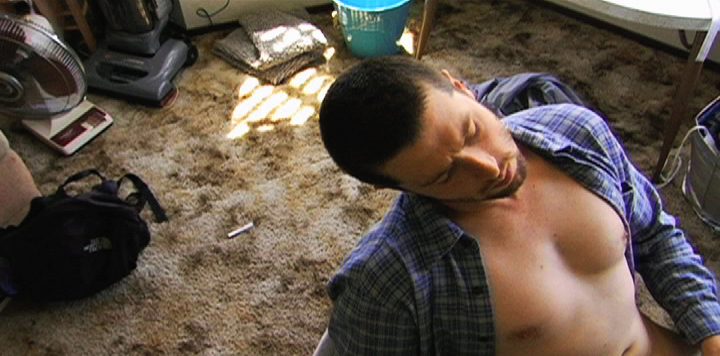
Jesse from I Want Your Love

SFBG: You touched on a few things I wanted to talk about. But before we go into sex in film, I wanted to just focus on porn. What’s your take on the current state of pornography?

J: I have a lot of respect for an industry that employs as many people as it does and that, in a lot of ways, is transgressive and sex-positive. I think, especially in San Francisco, there are a lot of porn companies who are doing things that are not just about getting off, that are actually reshaping the way people think about sex. I mean, Kink.com has incredible politics. There are a lot of companies that have really great politics. But at the same time, I say I have a lot of respect for them because truthfully I don’t know a whole lot about the infrastructure of porn companies.

In terms of what I see when I’m watching porn and how it relates to Travis’ work, I don’t know if there’s a need for Travis’ work as pornography. I don’t know whether people want to keep their porn dirty and their films deep. I’m not really sure what people’s response to that will be. Apparently there’s been a response from a lot of people that I Want Your Love is like a very different and more full-bodied turn-on for them, because there’s something familiar and humble and flawed about the whole thing. But as it relates to contemporary porn, I don’t know. I’ve always just kind of seen porn as what it is, and it’s kind of like a fantasy place. I’ve never really wanted porn to be more realistic than it is for me, as a voyeur of porn. I guess it is what it is. I feel like my sexual relationships and my sexual partners and the world I’ve created there is very satisfying for me, in terms of reality. So I don’t really seek out reality. But there is a weird thing where people are projecting a lot of reality onto I Want Your Love. A lot of the comments on Butt are like, “Oh, it’s just so real. It’s like I know them. I’m in love with them.” It’s funny because, stylistically I understand that this is a little bit of a trick to make it seem more real. But there’s nothing more real about I Want Your Love than any other porn that you see, although I don’t know if we’re calling it porn.

Jesse and Brenden in I Want Your Love

SFBG: You talked about being new to this kind of exposure. What kind of response have you gotten? Between I Want Your Love and In Their Room, are you getting recognized by any strangers?

J: I mean, this probably touches on a lot of my personally psychology and insecurity, but I’ve had a really weird shadowy presence on both of these projects, which is very interesting to me. I was fascinated because on In Their Room, I received less attention or shout-outs or comments than almost anyone else in the film. I wouldn’t go so far as to say that’s a reflection of me being, like, a not attractive or not desirable figure in the movie, but there were a couple things I was curious about. One is that I had a much more sexually explicit scene than anyone else in the film. And I wondered if it was this kind of archaic idea of giving it up too soon, that I was damaged goods or something. Because it’s really interesting. I did receive notably less press or attention than almost anyone else in the film, which is funny.

And then the same goes for I Want Your Love. I mean, my scene partner in I Want Your Love, I think is a very cute, very prototypically attractive guy. For both of these films, I’ve actually been able to kind of—I don’t know if it’s a curse or a blessing. I don’t know if I should feel ugly, or how I’m supposed to feel. [laughs] But I have not actually been approached, talked about, blogged about really individually all that much. It’s always the other guys. I seem to be very neutral or unexciting. I don’t know. I just go into the studio and do what Travis asks me to do. But according to the discerning public, it’s always the others that are more interesting. [laughs]

SFBG: Let’s talk about your co-star a bit. Where do you begin building that rapport and chemistry when you’re filming an unsimulated sex scene with someone?

J: With Brenden, Brenden was someone that I was already having sex with. There was a really great, excited, very honeymoon-y chemistry between us. It was very distinctively sexually. We weren’t dating or anything like this. … Every time we would sit down and talk about new guys, it would be like, “Yeah, but honestly, I could fuck Brenden’s brains out right now and be thrilled about it.” There’s very raw, obvious chemistry. We already wanted to fuck—really, really badly.

SFBG: Well, do you think that adds to the realism people are talking about? Could they be picking up on the history between you guys?

J: Yeah, I guess so. Which makes me think about real porn and how they walk into a studio having never met their partner, and they have to just have it ready. Which then, brings up the idea of the penis drugs. Because Brenden and I, we totally have boners for each other, but then we took the penis drugs, because for a shoot, you have to do extraordinary things with your penis that you’ve never had to do in your entire life. And so, I wonder if it had been someone else, maybe I just could’ve taken a penis drug and I would have been fine.

SFBG: I wanted to touch back on the point you were making about sex in film and how that’s something you see more in European productions. Do you think American audiences are ready for this? Is it going to take more independent movies like Travis’ to push them in that direction?

J: I would say it’s difficult to comment on a question like that in the incubator that is San Francisco. We’re so colored by what the reality of the pervasive national idea is. That said, I think that we are moving toward being more ready for it. I think people need to see specific social cues of independent filmmaking in order to feel comfortable with this. I think if you hold their hand and show them things that make them feel like they’re watching—I can’t even think of an example right now. But if you give them little social cues in this work that remind them that they’re watching something that they would see at the Embarcadero Center or at YBCA—you know, people like to feel like they’re watching art. They like to feel like they’re there and they’re experiencing this thing, and they were a witness to this piece of art. So if you provide little ways for them to feel this way, I think they’ll swallow the medicine a little easier. A spoonful of sugar kind of thing.

Immigration update: good news, bad news

7

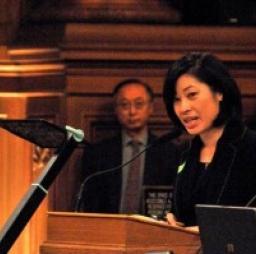
Yesterday, the Board of Supervisors unanimously appointed tireless immigrant rights advocate Angela Chan to the San Francisco Police Commission.
That’s the good news.
The bad news? Attorney General and gubernatorial candidate Jerry Brown declined San Francisco Sheriff Mike Hennessey request to allow San Francisco to opt out of Secure Communities, ICE’s latest federal-local law enforcement collaboration.
“I think this program serves both public safety and the interests of justice,” Brown said. “ICE’s program advances an important law enforcement function by identifying those individuals who are in the country illegally and who have a history of serious crimes or who have previously been deported.”
“ Before the inception of Secure Communities allowing fingerprint identification, if a county suspected an arrestee was in the country illegally, the county submitted the person’s name to ICE for a background check,” Brown stated.

What Brown’s letter didn’t say was that, up until now in San Francisco, the county only submitted folks’ names to ICE if they were charged with a felony. Nor did he address why the federal government is sneaking around, switching this program on, without openly and transparently announcing their intentions to the local community.

Eileen Hirst, spokesperson for the San Francisco Sheriff’s Office said that, as a result of Brown’s letter, “As far as we know, San Francisco will be a part of Secure Communities as of June 1.”
In a statement, Sheriff Hennessey said, “I am disappointed with the Attorney General’s position and continue to be concerned that U.S. citizens and minor offenders will be caught up in the broad net of Secure Communities, and I will be studying the issue further to see how this program can be applied as fairly as possible and in the spirit of the sanctuary ordinance.”

So far, ICE’s data reveals the number of folks caught up in the Secure Communities net, plus a brief breakdown of the deportees’ level of crime.

It would be helpful, as several immigrants rights groups have suggested, if ICE revealed the nationality of these deportees, clarified if these folks were convicted of crimes or simply charged with them, and had to make frequent reports to Congress in which they included this data along with evidence that the program actually deports convicted criminals rather than folks simply arrested. Otherwise, the program could potentially be abused by renegades who realize that all you have to do to get someone deported is arrest them on trumped up charges

Anyways, you can read the rest of AG Brown’s letter below. My favorite line from Brown’s letter is, “Many of the people booked in local jails end up in state prison or go on to commit crimes in other counties or states.”  

Hmm. Does that mean that folks charged with crimes in this state are presumed guilty then, until proven otherwise? Or is that just the presumption about immigrants?


AG Brown’s letter:
“Dear Sheriff Hennessey:

I am writing in response to your letter regarding the Secure Communities program developed by U.S. Immigration and Customs Enforcement (ICE). The program is scheduled to be rolled out in San Francisco next month. You requested that the California Department of Justice (DOJ) block ICE from running checks on the fingerprints collected in San Francisco. The Secure Communities program is up and running in 169 counties in 20 states, including 17 counties in California. Because I think this program serves both public safety and the interest of justice, I am declining your request.

The DOJ Bureau of Criminal Identification and Investigative Services is the entity designated by California law to maintain a database of fingerprints used in the state for law enforcement purposes. When someone is arrested, the county forwards the fingerprints to the DOJ to identify the person, determine his or her criminal history and to discover any outstanding warrants. As in every other state, the DOJ forwards those fingerprints to the FBI to check for a history of criminal activity outside of the state. Under the Secure Communities program, the FBI forwards fingerprints collected at arrest to ICE. If ICE finds a match to prints in its database, ICE notifies the county. ICE’s stated intent and practice is to place holds on those individuals who are in the country illegally and who have a history of serious crimes or who have been previously deported.

Prior to the Secure Communities program, the name, but not the fingerprint, provided by an individual on arrest was run through ICE’s database of people known by ICE to be in the country illegally. Often, individuals with a criminal history were released before their immigration status was discovered. Using fingerprints is faster, race neutral and results in accurate information and identification.

In these matters, statewide uniformity makes sense. This is not simply a local issue. Many of the people booked in local jails end up in state prison or go on to commit crimes in other counties or states.

I appreciate your concern. But I believe that working with the federal government in this matter advances important and legitimate law enforcement objectives.

Sincerely,

EDMUND G. BROWN JR.
Attorney General.”

The Bay Citizen makes a strong debut

2

The Bay Citizen, a well-funded newsroom that is the most anticipated of several new media experiments in San Francisco, officially launched today with some solid, interesting stories that include an investigation of toxic pesticides being illegally applied to local marijuana crops and a look at how Prop. 13 has obscenely benefited the wealthiest San Francisco residents.

The organization also announced today that it has raised an additional $3.5 million in donations to supplement the $5 million in seed money that local investment banker Warren Hellman provided to the start-up. Meanwhile, another new media start-up that we profiled this week, SF Streetsblog – one of The Bay Citizen’s many local partners — has issued a fundraising plea for $50,000 that it needs by July 1 to continue its award-winning coverage of local transportation issues.

But today is a day for The Bay Citizen to bask in its initial success, which it will do tonight starting at 7:30 with a launch party at the Great American Music Hall. And then tomorrow, once the hoopla is over and the stories that have been in development for weeks or months are replaced by fresh content, San Franciscans will begin to learn whether The Bay Citizen represents a new journalistic powerhouse or just a well-funded website with some powerful friends.

I’ve heard some detractors in the local media grumble that their presentation seems “banal” and unworthy of their big budget, but I don’t agree. Personally, I think The Bay Citizen strikes the right tone and balance, emphasizing solid journalism rather than flashy gimmicks, while also drawing on multimedia tools such as the video of yesterday’s protests against President Obama’s visit to SF.

San Francisco needs relevant, well-presented, serious journalism more than the snarky, juvenile stories we see in design-heavy local start-ups such as The Bold Italic, where The Bay Citizen’s culture writer came from, or the often out-of-touch, sneering, or self-important stories that we see in corporate-run papers like SF Weekly, San Francisco Chronicle, and San Francisco Examiner.

Instead, our first peek at The Bay Citizen seems to show that it might just be up to the important task of providing relevant content for the New York Times’ twice-weekly Bay Area section – which has also demonstrated a tin ear for San Francisco values since it launched last year – providing an important new forum for those who believe in speaking truth to power.

Receiver appointed to investigate assets of SF Weekly and parent chain

0

 The California Superior Court has appointed a receiver to investigate the finances of SF Weekly’s parent company and develop a plan to pay the Bay Guardian the $22 million that the chain owes as a result of our predatory pricing lawsuit. 


 On May 25, Commissioner Everett A. Hewlett, Jr., entered an order appointing professional receiver David Summers to investigate the assets of New Times Media LLC and its subsidiary, SF Weekly LP.


New Times Media LLC is the holding company for the nationwide Village Voice chain of alternative weekly newspapers.


Summers has been ordered to develop a plan for the disposition of the company’s assets so the Bay Guardian can get paid.


“This is a very significant step forward in our collection efforts,” said Bruce B. Brugmann, Bay Guardian editor and publisher.


After a six-week trial in 2008, a San Francisco jury found that the Weekly and New Times had intentionally sold ads below cost in an effort to damage the independently owned local competitor.


The jury awarded the Bay Guardian $6.39 million, and Judge Marla Miller trebled part of the damages and added on attorney’s fees. With interest accruing at 10 percent a year, the judgment is now more than $22 million.


New Times and SF Weekly Have appealed the judgment. The California Court of Appeal has set oral argument for 9 a.m. June 11.


Earlier this year, a lending syndicate lad by Bank of Montreal declared the Village Voice chain to be in default of their $77 million loan arrangements. Bank of Montreal claims to be daily sweeping the moneys earned by the Village Voice chain into a special account so as to protect the lenders’ interests.


The banks in the syndicate that are holding the VVM debt (as of March, 2009) are Bank of Montreal, U.S. Bank, Wells Fargo, WestLB AG, Rabobank, BNP Paribas, and Brown Brothers Harrimann.


The Bay Guardian has already seized two of SF Weekly’s vehicles and the rent that the paper’s subtenants pay. The California Superior Court has previously ordered half the SF Weekly’s advertising revenues diverted into an independent bank account, and placed a lien on New Times’ interests in its subsidiaries to protect the Bay Guardian’s interests.


Andy Van De Voorde, spokesperson for VVM, didn’t respond to an email requesting comment. 

Affordable housing group’s shady, “shameless” endorsements

0

Editors note: This article orginally ran in October, 2000.T


he Brown machine’s soft money operation is churning out some very
duplicitous propaganda. While we haven’t seen many mailers attacking
independent candidates yet (they’re usually deployed in the final days
of the campaign, when the targets don’t have a chance to respond), we’ve
come across flyers that aim to portray business-friendly machine
candidates as champions of progressive causes.


Perhaps the most egregious comes from an organization called the
Affordable Housing Alliance.


Once a legitimate tenant advocacy group, the AHA does little these days
except endorse candidates and send out mailers during election season.
Numerous well-known tenant activists say the AHA reflexively promotes
the candidates of the Willie Brown machine — no matter where they
stand on tenant issues.


And from what we’ve learned about the group’s endorsement process, AHA
director Mitchell Omerberg isn’t even trying to give the group the
appearance of legitimacy.


Omerberg, who works as a deputy city attorney for San Francisco, was
active in the 1979 fight for rent control. We called him several times
and left messages at the AHA, at his home, and at his city office. He
never called us back or faxed us a copy of the group’s endorsements.
The shenanigans began when Omerberg invited candidates to speak at the
AHA’s endorsement meeting. Chris Daly, the District Six hopeful who has
inspired more enthusiasm from tenant activists than any other candidate
in the city, wasn’t even invited. Daly told us his campaign called
Omerberg to ask when the meeting was scheduled, and Omerberg never
called back.


At the Sept. 28 meeting, the candidates whom Omerberg did invite made
their speeches. Then the group’s supposed members voted on the club’s
endorsements. But it’s not clear who most of those members are or where
they came from.


Progressive activist Richard Ow, who probably attends more political
meetings than anyone in San Francisco, told us he didn’t recognize a
single other tenant activist among the voting members. Ow sits on the
boards of the San Francisco Tenants Union, the Housing Rights Committee,
and the Senior Action Network and is active in dozens of other tenant
groups.


The most egregious maneuver came at the end of the meeting. According
to District One supervisorial candidate Jake McGoldrick (one of the few
people who stayed until the end) Omerberg refused to open the ballot box
and tally up the votes there and then.


Instead, he insisted on taking the ballot box home with him.
Apparently Omerberg prefers to count the ballots alone: one former AHA
member, who asked to remain anonymous, told us he did the same thing
after at least two endorsement meetings in years past.


Alex Wong, chair of the Democratic County Central Committee, helped
Omerberg run the meeting, introducing the candidates and watching the
clock as they spoke. Wong, a Brown ally, told us he didn’t know if Omerberg had taken the ballots home with him; he says he, too, had left the meeting by that point. Then he got off the phone, saying he’d call
us back. He never did.


With Omerberg and Wong keeping mum, we couldn’t track down a copy of
the group’s endorsement list. (McGoldrick campaign manager Jerry Threet
says he asked Omerberg for a copy and Omerberg flat out refused.) But an
AHA mailer sent to tenant voters in the Richmond provides a clue.
“Renters have two choices in the November election,” the flyer
proclaims. “Michael Yaki will preserve rent control. Rose Tsai wants to
repeal it.”


Of course, Richmond renters have more than two choices. There are five
candidates on the District One ballot, including McGoldrick. McGoldrick
has been active on tenant issues for decades, including a term as a San
Francisco Rent Board commissioner from 1988 to 1992 and another as
cochair of the now defunct Housing and Tenants Council, an umbrella
coalition for the movement.


“Jake has a long history of being pro-tenant, from his days on the Rent
Board to doing grassroots work on every tenant campaign and every piece
of tenant legislation,” said Ted Gullicksen of the Tenants Union. The
city’s preeminent renters’ advocacy group, the Tenants Union gave
McGoldrick its enthusiastic endorsement. If you believe the AHA’s
mailer, he’s not even in the race.


On the other hand, Gullicksen said, “Yaki initiated legislation to stop
owner move-in evictions — but then, under pressure from landlords,
killed it himself. Since then he has consistently been against tenants
and with the real estate industry.”


That’s the candidate of the Affordable Housing Alliance. Yaki has a
strong claim on AHA support: he is backed by Willie Brown, of whom he
has been a stalwart ally, and Omerberg worked on Yaki’s 1998 campaign
for the board.


“As a tenant who went through an owner-move-in eviction, I strongly
believe in protecting our rent-control laws and stringently enforcing
protections for seniors and the disabled,” Yaki told us through his
consultant Ellie Schafer. “I am proud to have supported all the measures
which passed the Board of Supervisors expanding OMI and Ellis Act
protections.” (Note Yaki’s careful phrasing: he supported the measures
that passed, and opposed the measures that failed. The same can be said
for most of Willie Brown’s other appointees; that’s why those measures
passed and the others failed.)


The AHA also endorsed Meagan Levitan in District Three, according to a
Levitan mailer. Her opponent Aaron Peskin, who spoke at the endorsement
meeting, has the support of the Tenants Union and just about every other
legitimate tenant activist. Yaki and Levitan are both endorsed by the
Small Property Owners Association and the San Francisco Apartment
Association, which lobby for landlords.


The AHA’s endorsements of Yaki and Levitan were no surprise to longtime
members of the tenant movement. “Historically, the Affordable Housing
Alliance hasn’t endorsed credible pro-tenant supervisors,” Robert
Haaland of the Housing Rights Committee told us. “It’s a group that’s
used to perpetuate machine candidates. It’s another shameless example of
how the machine stays in power.”

PG&E has no friends

2

The full-page ad on the back of the front section of today’s San Francisco Chronicle shows exactly how far PG&E has fallen in its political fortunes.


The Yes on 16 ad lists all endorsers of this godawful ballot measure — and other than the Chamber of Commerce, there’s not one San Francisco politician, community group, or organization on the list. Not one.


In fact, there’s not one statewide elected official. Nobody wants to carry PG&E’s water any more (unless you count the California Republican Party and the San Bernadino County Tea Party, two listed endorsers who will no doubt sway a lot of votes in the Bay Area).


That’s a big change. In past public-power campaigns in San Francisco, the giant utility was able to call in its chits and find a handful of politicians (who had been elected in part with PG&E campaign money) and community groups (who paid their bills in part with PG&E grants) willing to be PG&E shills. Now: Nobody.


Part of that is a reflection of just how bad Prop. 16 is — not one significant newspaper in the state has endorsed it, and most have blasted it. But it also shows how badly CEO Peter Darbee and his minions have alienated the California political world. “Nobody remembers them acting so outrageously,” State Senator Mark Leno told me. “They’ve just gone down a whole new path, and Peter Darbee is leading the charge.”


And if Prop. 16 goes down, PG&E’s fortunes will just fall further.


A public power landmark — and the battle to come

0

CCA allows communities to offer an alternative — to buy cleaner power in bulk and resell it at comparable or cheaper rates to residents and businesses

EDITORIAL It’s been 97 years since Congress passed a landmark law mandating public power in San Francisco, 67 years since the U.S. Supreme Court ruled that the city was violating the law by allowing Pacific Gas and Electric Co. to operate a private monopoly in town, and 42 years since the Guardian first broke the story of the Raker Act scandal and launched a campaign to bring public power to the city. And now, even operating under a tight PG&E-imposed deadline, the San Francisco is moving very close to establishing a modest type of public power.

Community choice aggregation (CCA) isn’t what John Edward Raker and his supporters had in mind in 1913 when they allowed San Francisco to build a dam in Yosemite National Park, breaking John Muir’s heart. The idea — which the city explicitly accepted in a formal written agreement — was to use the dam not just for water but for electricity, specifically to create a public power beachhead in Northern California that would prevent any private company, specifically PG&E, from getting control of the electricity grid.

CCA leaves PG&E’s private grid in place and allows the investor-owned utility to continue to sell power in the region. But it also allows communities to offer an alternative — to buy cleaner power in bulk and resell it at comparable or cheaper rates to residents and businesses.

Since 2002, when the state Legislature passed a bill authorizing CCAs, the concept has slowly started to take hold. Marin County launched its CCA this spring. San Francisco last week reached an agreement with PowerChoice LLC, a vendor that will oversee the procurement of electricity, to begin service here, and the contract is headed to the SF Public Utilities Commission and the Board of Supervisors for approval.

That’s a huge step forward for public power — but the city faces a tight deadline. PG&E has placed Proposition 16 on the June 8 ballot, which would require a two-thirds vote before any local agency could get into the electricity business. That’s an almost impossible threshold (see: the state Legislature). Prop. 16 may still go down to defeat, despite PG&E’s $45 million campaign to pass it.

But even if it passes, any existing agency — that is, any community that has its CCA in place before the election is certified — will be grandfathered in.

City Attorney Dennis Herrera argues, with good authority, that San Francisco is already protected from Prop. 16. The city already has taken enough steps to implement CCA (the implementation plan has been approved by the supervisors) that the inevitable lawsuit by PG&E will probably fail. But every step the city takes to bring the process closer to completion provides more protection, and the stakes could not be higher.

With CCA, the city will have control of its own energy future, be able to offer power that doesn’t contribute to global warming — and be able, at long last, to take a step toward complying with the Raker Act. (And remember: the law says, and the Supreme Court confirmed, that the federal government can move at any time to seize the Hetch Hetchy dam and uproot the city’s entire water system for failure to comply with the 1913 agreement.)

It seems almost certain that by June 8 the city will have a contract with a vendor and state certification that defines San Francisco as a CCA. Then, whatever the outcome of Prop. 16, the city needs to move forward with the program. And if PG&E sues to block it, then every official in San Francisco will have to be prepared to wage the legal and political battle of all time. PG&E can and probably will take the city to court — and the city can immediately start talking about breaking the 1930s-era franchise agreement that gives PG&E a low franchise fee in perpetuity, and enforcing the Raker Act, and taking the corrupt utility to task on every possible front.

A public power landmark — and the battle to come

1

EDITORIAL It’s been 97 years since Congress passed a landmark law mandating public power in San Francisco, 67 years since the U.S. Supreme Court ruled that the city was violating the law by allowing Pacific Gas and Electric Co. to operate a private monopoly in town, and 42 years since the Guardian first broke the story of the Raker Act scandal and launched a campaign to bring public power to the city. And now, even operating under a tight PG&E-imposed deadline, the San Francisco is moving very close to establishing a modest type of public power.

Community choice aggregation (CCA) isn’t what John Edward Raker and his supporters had in mind in 1913 when they allowed San Francisco to build a dam in Yosemite National Park, breaking John Muir’s heart. The idea — which the city explicitly accepted in a formal written agreement — was to use the dam not just for water but for electricity, specifically to create a public power beachhead in Northern California that would prevent any private company, specifically PG&E, from getting control of the electricity grid.

CCA leaves PG&E’s private grid in place and allows the investor-owned utility to continue to sell power in the region. But it also allows communities to offer an alternative — to buy cleaner power in bulk and resell it at comparable or cheaper rates to residents and businesses.

Since 2002, when the state Legislature passed a bill authorizing CCAs, the concept has slowly started to take hold. Marin County launched its CCA this spring. San Francisco last week reached an agreement with PowerChoice LLC, a vendor that will oversee the procurement of electricity, to begin service here, and the contract is headed to the SF Public Utilities Commission and the Board of Supervisors for approval.

That’s a huge step forward for public power — but the city faces a tight deadline. PG&E has placed Proposition 16 on the June 8 ballot, which would require a two-thirds vote before any local agency could get into the electricity business. That’s an almost impossible threshold (see: the state Legislature). Prop. 16 may still go down to defeat, despite PG&E’s $45 million campaign to pass it.

But even if it passes, any existing agency — that is, any community that has its CCA in place before the election is certified — will be grandfathered in.

City Attorney Dennis Herrera argues, with good authority, that San Francisco is already protected from Prop. 16. The city already has taken enough steps to implement CCA (the implementation plan has been approved by the supervisors) that the inevitable lawsuit by PG&E will probably fail. But every step the city takes to bring the process closer to completion provides more protection, and the stakes could not be higher.

With CCA, the city will have control of its own energy future, be able to offer power that doesn’t contribute to global warming — and be able, at long last, to take a step toward complying with the Raker Act. (And remember: the law says, and the Supreme Court confirmed, that the federal government can move at any time to seize the Hetch Hetchy dam and uproot the city’s entire water system for failure to comply with the 1913 agreement.)

It seems almost certain that by June 8 the city will have a contract with a vendor and state certification that defines San Francisco as a CCA. Then, whatever the outcome of Prop. 16, the city needs to move forward with the program. And if PG&E sues to block it, then every official in San Francisco will have to be prepared to wage the legal and political battle of all time. PG&E can and probably will take the city to court — and the city can immediately start talking about breaking the 1930s-era franchise agreement that gives PG&E a low franchise fee in perpetuity, and enforcing the Raker Act, and taking the corrupt utility to task on every possible front.

The eyes of Skye Thorstenson

0

arts@sfbg.com

VIDEO Birds chirp and branches part like curtains in the opening scene of the music video for Myles Cooper’s anthem “Gonna Find Boyfriends Today.” Suddenly the pristine wilderness scene is shattered and, along with pulsating beats, a big-lipped strawberry greets us with Mickey Mouse paws. A Cyclops-peanut runs across the screen and leads us to a stack of televisions; zooming into one we catch Cooper singing, “It doesn’t matter what you wear/It doesn’t matter if you have money/We’ll find guys to buy us drinks/And tell us that we’re young and funny.”

“I think Myles’ video tells it best, because it’s this kinda caffeinated euphoria,” explains Skye Thorstenson, the mastermind behind the wild imagery of the video. “It’s unrealistic and there’s a little melancholy imbued in it, because this is sooo not the way life really is. There are no cupcakes who are going to help you find boyfriends.”

WHAT? No, wait, hold up. But I thought … So the mountain topped with lollipops looking like Candyland isn’t real? Without realizing that he’s burst my bubble, Thorstenson continues, “But I like that. I like to hide the fact that life is boring. What the world needs is some more color.”

“I never imagined myself doing music videos. For Myles, it was all about the music,” Thorstenson explains. “I wanted to do some visual thing. I told him it won’t be a music video, but it might be like a short film.” In the course of the narrative, Cooper finds puppet lovers, a chorus of gassed angels, and becomes the man-in-the-moon. In the end, a vagina dentata resembling Aunt Charlie’s Lounge — a dive-bar at Turk and Taylor streets— literally eats itself. “I feel like an Aunt Charlie’s is always going to be there, and it’s always going to eat its predecessor,” Thorstenson says. “And there are always different nights there, and sometimes they survive and sometimes they don’t. But what Myles and Alexis [Penney, who cohosts the club night High Fantasy with Cooper] created will always be there, or some essence of it.”

Throughout Thorstenson’s repertoire, he constantly plays with the notion of a fragmented past and explores how essences persist into the present. He is currently filming an experimental documentary that he named after Roland Barthes’ S/Z. It’s an extension of his earlier film, called Gunk Land, which starts at Wisconsin’s Oneida Indian reservation where Thorstenson’s mother lives. “I wanted to do a documentary on my identity: who I am and where I come from,” he explains. Highlighting the ambiguous — possibly fake — moments of documentaries, as in Leni Riefenstahl’s Olympia, which glamorizes pre-World War II Germany, or The Thin Blue Line, which reenacts a murder scene, Thorstenson utilizes reenactments with different edits and different actors playing him to construct an ambiguous reality. “With S/Z, it’s going to be more how I imagined it and colored in some ideas based on what my mom told me about my past.”

As with “Gonna Find Boyfriends Today” and Gunk Land, S/Z finds Thorstenson working with a mess of “floating fragments” left over from a childhood spent watching PBS specials and Disney movies. Pieces of puppets, stereotypes or songs — “like the plastic floating in the middle of the ocean,” as he puts it — are smashed together. In the 1970 book S/Z, Barthes explores how narrative works and how we recollect memories. Instead of linearity, Thorstenson explains, memory offers “more of a pastiche of experiences and sensations that are pulled together to bring an experience.” This, he adds, is how authors often work: the reader fills in the gaps and links the situations together.

Thorstenson’s take on S/Z turns this idea into a visual experience. It will be released online in pieces that can be navigated like a Choose Your Own Adventure book, and a path through separating branches might reveal the same scene reenacted with different actors, or the same scene with alternative edits. In this way, varied connections and present-versions of Skye are constructed, based on how the past is perceived. “You’re meant to know it might’ve gone differently,” Thorstenson says, “and you can’t trust anything.”

Even the way Thorstenson speaks parallels this fragmented pattern, as he seamlessly jumps from one memory to another or from one project to the next. “The music inspired that video and we worked closely together for four months,” he explains about his work with Cooper. He also has done videos set to Xiu Xiu and Antony and the Johnsons’ songs, to local music-maker Adam Finken’s “Firebird,” and is about to undertake a movie-themed project for San Francisco electronic duo johnathan. In all of the music videos, there’s an interaction between the mood, beats, and lyrics of the music and the visual narrative. “With me, it’s more about improvisation, and something magical happens. I have no idea how it happens, but I don’t intend for people to react. I’m always surprised at how people react to something.”

In undergrad film school at the Academy of Art, Thorstenson was taught how to look at film from a business perspective — it has to look clean, polished, and intentional. Grad school at CCA, along with a filmmaking crew he befriended, dubbed Nightmare City, allowed Thorstenson to think more about process, forcing his aesthetic to evolve. “I decided I’ll show faux interpretations of my process because I was curious about what is actually real.” These are readily featured in his work and create meta-moments, which make the viewer aware. “So I’m playing with this fake façade, and the truth hidden behind all these bright colors,” he said. “It’s the same thing with Myles’ video. There’s something behind all that happiness.”

www.skyethorstenson.com

King Z

2

FILMMAKER INTERVIEW In the event of an actual zombie outbreak, legendary horror director George A. Romero would no doubt survive. For one thing, he stands an imposing six-feet, five inches, and happens to maintain an anti-zombie stronghold — er, getaway — in Cabo San Lucas, Mexico, where he’d just been vacationing before the press tour for the sixth film in his "Dead" series, Survival of the Dead. Plus, Night of the Living Dead came out in 1968, meaning Romero has more than 40 years of experience wrangling the undead. I asked him about that, and more, on his recent visit to San Francisco.

SFBG Did you ever think in 1968 that you’d still be making zombie movies in 2010?

George A. Romero Never. And I never thought of it as a series — it was a film. I didn’t want to make another one, especially after [Night] got "discovered." I said, I really can’t do another one unless I have a strong idea. Ten years later, I knew the people who were developing the first indoor shopping mall that any of us had ever seen, near Pittsburgh. I went out to visit it before it was even open, and the trucks were bringing in all this stuff, and I said, "Jesus Christ, it’s like this Taj Mahal to consumerism" — and then I said, "Ok, this might serve."

Completely serendipitously, I got a call from [Italian horror filmmaker] Dario Argento, and he said, "George, please, you must make another." He flew me over to Rome, stuck me in a little apartment, and told me to write the script [for 1978’s Dawn of the Dead]. That’s when I first started to think, "Boy, I could have fun with this." I could express myself, express my politics a little bit, poke a finger at society, and bring the zombies out every once in a while. The first four [Dead movies] were more than 10 years or more apart from each other. And I liked the idea that they were snapshots of different decades, stylistically and everything else.

After Land of the Dead (2005) — which was the first sort of big one, and I’m not sure I should have studio’d it up, if you know what I mean — I wanted to do something about emerging media and citizen journalism, so I had this idea to go back to Night [for 2007’s Diary of the Dead], go back to the roots, do it real guerrilla-style. Just like with Night, I thought it would be a one-shot deal: "I’m gonna take this little sidebar now, and try to have fun while I’m at it." [The company that financed the film] gave me final cut, creative control — first time since the very early films that I made — and [since] I stayed within a certain budget range, even though it had a limited distribution, it wound up making a lot of money. That’s why [Survival of the Dead] is here.

SFBG Survival of the Dead spins off a minor character from Diary of the Dead. Did you have that story line in mind while you were making Diary?

GAM When [the financers] said, "Well, we made so much money, we gotta do it again," I said, "OK, what if we do it again, and it makes a lot of money? You’re gonna want to do it again. So why don’t we go in thinking of a plan? I could take these characters from Diary, I had ’em all picked out — we could make three films, and I know exactly where they’re gonna go. And I will interweave the stories and introduce plot elements that recur, and characters that meet each other again." Which is something I always wanted to do, but I couldn’t with the first four films because they’re all owned by different people. So I said, we’ll take a broader topic like war, enmities that don’t die, and do this sort of structured set piece. Small budget but bigger scope. Then I thought, well, let’s play around with style too. So I got the idea for doing it like a Western, which came from an old William Wyler film called The Big Country (1958) — it’s the same two old farts shooting at each other. The next one, if we do it, I’d love to do it noir.

SFBG The zombie attack is already underway when Survival begins. The human survivors are almost jaded by their presence — the undead take a back seat to the human conflict more often than not.

GAM Yes, in this film, more than any of the other ones that I’ve done. In a way, if you think of it, my stories are all about the humans, because the zombies could be almost any disaster — it’s just that zombies are more fun for me and for horror fans. But in this one, they’re almost just an annoyance, like mosquitoes. Also, except for Night and Diary, they’ve always started with the thing well underway. I think there’s also a horror tradition there, too — from the second Godzilla movie on, it’s, "Oh, it’s just Godzilla."

SFBG Zombies seem to be enjoying a particularly high pop culture profile these days. What do you think is the reason behind their neverending popularity?

GAM I think video games really popularized them. There’s only been one real blockbuster zombie film, Zombieland (2009), and that’s very recent. It started with Resident Evil, House of the Dead. Now there’s this huge thing, Left 4 Dead. Zombies are perfect targets for a first-person shooter — they’re like the coyotes of monsterland. It’s fun to see them eat a stick of dynamite. But zombie walks — I’ve had my voice piped into Budapest for a zombie walk. What? Thousands of people coming out and doing this. It’s sort of a happening — go out and get drunk. It’s cheap costuming — smear up your clothes, slap some goop on your face, and go stumbling out. Even if you’re drunk, you can still stumble.

SFBG Do you watch the new zombie movies, like Zombieland?

GAM I don’t like them very much. As I said, I think it all started with video games — they have to move fast in video games to make the game fun. So filmmakers like Zack [Snyder], when he did the remake of Dawn of the Dead (2004), made the zombies run. I thought that was crazy. That whole evolution seems to have just warped it. To me, zombies should be like my guys, kind of stupidly stumbling along, and only have power in numbers or when people make mistakes.

SFBG Final question. Do you ever get tired of talking about zombies?

GAM [Laughs] Yeah! *

SURVIVAL OF THE DEAD opens Fri/28 in Bay Area theaters.

Our Weekly Picks

0

WEDNESDAY 26

MUSIC

Ramona Falls

They say taking time off can be good for the soul, but when Brent Knopf faced down-time from recording as one-third of Portland, Ore., band Menomena, he couldn’t unplug. Though it’s hard to call it a solo record when Intuit boasts more than 35 collaborators, Ramona Falls follows the tradition of Knopf’s day band, forming dense electronic atmospheres from piano and pairing them with energetic drum work. Here, Knopf’s vocals shine as the truest instrument. His voice sounds like a whisper even at its most expressive. It’s a life raft to cling to while more of the nebulous Intuit opens with each new listen. (Peter Galvin)

With The National

8:00 p.m. (also Thurs/27), $30

Fox Theatre

1807 Telegraph, Oakl.

1 (800) 745-3000

www.thefoxoakland.com


THURSDAY 27

COMEDY

Craig Robinson

Name a humorous TV show from the past five years, and chances are Craig Robinson made an appearance. Bit parts on Curb Your Enthusiasm, Friends, and The Bernie Mac Show led to his star-making role on The Office as Darryl, the warehouse manager who is constantly embattled by Steve Carell’s harangues and half-baked schemes. Something about Robinson’s dry wit and level gaze tempts us to throw in our lot with him in every comedic circumstance. And now? Big screen, baby — Knocked Up, Hot Tub Time Machine, Shrek 4. Come see him get down with his original gig — stand up. (Caitlin Donohue)

8 p.m. (through Sun/30; also Fri.–Sat., 10:15 p.m.), $23.50–$25.50

Cobb’s Comedy Club

915 Columbus, SF

(415) 928-4320

www.cobbscomedyclub.com

MUSIC

San Francisco Popfest 2010: Eux Autres

Popfest is back, and it’s time to celebrate with of SF’s best pop bands, Eux Autres, who are wise enough to worship Françoise Hardy. As they succinctly put it: “Most of [our] songs are about (a) military history (b) being ‘done wrong’ or (c) sports.” For this week’s video issue, in the Noise blog I talk with guitarist-vocalist Nicholas Larimer about five of his fave YouTube clips from the ’70s TV pop music motherlode Midnight Special. (Johnny Ray Huston)

With tUnE-yArDs, Social Studies, Knight School

8 p.m., $10–$12

Rickshaw Stop

155 Fell, SF

(415) 861-2011

www.rickshawstop.com

PERFORMANCE/VISUAL ART

“Making Visible”

At a dance recital, the audience can only see so much. Beholding the coiffed hair, makeup, and costumes, it’s hard to imagine what goes on behind the scenes. But inside a dance studio, the creative process comes alive. Within countless hours of rehearsals, despite the blisters and sore joints, something alluring gradually begins to form. The Marina Abramovic Institute West offers a unique chance to witness how a recital comes together. Their series of performances are live rehearsals in which dancers learn the choreography onstage. (Elise-Marie Brown)

4:30 p.m. (through June 13), free

Marina Abramovic Institute West

575 Sutter, SF

www.marinaabramovicinstitute.org

SATURDAY 29

CLUBS/MUSIC

Surya Dub Three-Year Anniversary

It’s been a while since they blew our woofers on the regular, but our ambassadors of dread bass have been busy spreading the gospel of global dubstep to farther shores. Lucky for our feet, the Surya Dub crew are roaring back to Club Six to celebrate their third year with excellent special guest urban-electro blaster from Montreal, Ghislain Poirier (now just “Poirier”). Maneesh the Twister, Kush Arora, Kid Kameleon, Ripley, DJ Amar, J.Rogers, and Jimmy Love gird the boom with subcontinental vibes, stirring bhangra, ragga, and other worldly sounds into the low, low, low. Expect eclecticism, receive rad riddims. (Marke B.)

10 p.m.–3 a.m., $10

Club Six

66 Sixth St., SF

www.suryadub.com

MUSIC

El Radio Fantastique, Shovelman

Let us tip our hats to the newest venue along the Valencia corridor, Viracocha. It’s a wood-paneled treasure trove of for-sale antiquity. At night, the place is transformed into an atmospheric community space, a venue for word, thought, and lovely live music — like that of El Radio Fantastique, whose peculiar blend of musical theater seems straight from someone’s front porch in the Louisiana bayou. Which, come to think of it, matches the vibe at Viracocha nicely. Shovelman, a.k.a. Isaac Frankle, takes over the upstairs stage for the night. Expect to hear folksy stomp music. (Donohue)

7:45 p.m.–11 p.m., donations accepted

Viracocha

998 Valencia, SF

(415) 374-7048

www.viracochasf.blogspot.com

MUSIC

Frog Eyes

He can’t get no respect! Though the epic compositions of Frog Eyes rival those of contemporary pals Spencer Krug and Dan Bejar, as reflected by the trio’s work together in Swan Lake, Carey Mercer’s full-time band is consistently shunted to the background. Mercer can howl and he has an antiquated cadence to his voice that makes Paul’s Tomb: A Triumph sound like it belongs in another century. He’s never been in a Wolf Parade or joined the New Pornographers, but those of you who turned up Sunset Rubdown might be surprised by how much you like Frog Eyes. (Galvin)

With Mt. St. Helens Vietnam Band and Dominique Leone

9:30 p.m., $10

Hemlock Tavern

1131 Polk, SF

(415) 923-0923

www.hemlocktavern.com

DANCE

Scott Wells & Dancers: Ballistic

Did you fall in love last year with Scott Wells’ two jugglers? Apparently Wells’ dancers did as well. For Ballistic, all seven engage in elegant athleticism. Not that athleticism is new in Wells’ repertoire. Wild chaos and meticulous order — with and without projectiles — always share the game. It all looks like child’s play, but isn’t, except for an uncanny ability to be totally present in the moment. Contact improvisation — the movement genre Wells has fundamentally influenced — is often more fun to do than to watch. Not with Wells. He is a consummate man of the theater. Jin-Wen Yu Dance shares the program on the first two weekends. (Rita Felciano)

8 p.m. (through June 19)

CounterPULSE

1310 Mission, SF

brownpapertickets.com

www.scottwellsdance.com

MUSIC

Simian Mobile Disco DJ Set

With school out and summer swinging into high gear, lazy days that consist of sleeping in and drinking in the park are here. If you have a day job like me and need to pay the bills, you can free your soul at night with an epic dance party. Simian Mobile Disco has heard my call. Dress to dance and get ready to sweat. (Brown)

With Tenderlions, Ryan Poulsen

9 p.m., $15

Mezzanine

444 Jessie, SF

(415) 625-8880

www.mezzaninesf.com

MUSIC

Ab Soto

Queer hip-hop — are we done with it yet? Nope, but this time we’re laying off the “Isn’t this groundbreaking?” tiredness and having fun. The recent crop of homo-hoppers like Cazwell and local hottie Kid Akimbo are doing it cute and naturally. Enter Hollywood’s Ab Soto, whose neon-bright hotness, scruffy hipster looks, and fierce-ruling SpongeBob muumuus are more about giving you banjee boy wet dreams than making political statements. He’ll be throwing down live at the circus-crazy Big Top party. Please keep him away from my boyfriend. (Marke B.)

9 p.m.–3 a.m., $10.

Club Eight

1551 Folsom, SF.

www.eightsf.com

SUNDAY 30

EVENT

San Francisco Carnaval: “Colors Of Sound, Splashes Of Culture”

Carnaval isn’t just a festival where people drink and eat to their heart’s content. In San Francisco, we focus on Latin American and Caribbean cultures through dance and music. Of course, food is on the menu. The all-day event includes salsa and samba lessons, games, breakdancing, ecofriendly exhibits, and even a health screening center. This time, Sunday is the right day for indulgence. (Brown)

9:30 a.m., free

Bryant and 24th St., SF

(415) 642-1748

www.sfcarnaval.com

MUSIC

Kurt Elling with the Count Basie Orchestra

Kurt Elling has won Down Beat and JazzTimes critics’ polls three years in a row for best male singer. Most recently, he won his first Grammy for best jazz vocal album. Tonight he’s backed by the Count Basie Orchestra, the most prominent big band of the past 60 years. The band has accompanied Ella Fitzgerald, Ray Charles, and Frank Sinatra, and continues to support the great jazz singers of our time. As part of the SF Jazz Spring Series, Elling and the Basie Orchestra perform some of the original Basie/Sinatra charts arranged by the legendary Quincy Jones. The Basie Orchestra opens the night with classic repertoire. (Lilan Kane)

7 p.m., $25

Davies Symphony Hall

201 Van Ness, SF

(415) 864-6000

www.sfjazz.org

MUSIC

KBLX Stone Soul Concert

Wrap up your Memorial Day weekend with some soul and sunshine. A longtime Bay Area source for the soul music, KBLX has booked a solid lineup of some of smooth voices. This year’s artists include Charlie Wilson; New Edition members Bobby Brown, Johnny Gill, and Ralph Tresvant; Minnesota’s Mint Condition, and none other than Mr. Biggs himself, Ronald Isley. This concert serves up favorite jams spanning from the 1970s to the present. (Kane)

Noon, $45

Sleep Train Pavilion

2000 Kirker Pass, Concord

(925) 676-8742

www.kblx.com

www.livenation.com

MONDAY 31

MUSIC

Dark Tranquillity

It’s easy to lump them in with the rest of the ’90s Gothenburg death metal scene, but that sort of careless taxonomy is unfair to a band like Dark Tranquillity. The Swedish sextet have carved out a niche of their own on the strength of their anthemic, atmospheric melodicism, having weathered the storms that afflicted fellow travelers In Flames and Soilwork with dignity and grace. Though the music features the kind of keyboard and electronic textures that tend to alienate bread-and-butter death metal fans, these flourishes fit seamlessly into the band’s dystopian, space-age aesthetic, reinforcing the punishing grooves and soaring melodies. (Ben Richardson)

With Threat Signal, Mutiny Within

8 p.m., $18

Slim’s

333 11th St., SF

(415) 255-0333

www.slims-sf.com

MUSIC

The Very Best

A collaboration between Malawian vocalist Esau Mwamwaya and London production duo Radioclit, the Very Best offers vocals in Chichewa over dance beats that translate to fun in any language. Fun is the chief goal of the duo, who rose to blog fame in 2008 with Malawian remixes of Vampire Weekend and M.I.A. If you need proof that smiles are contagious, singer Esau Mwamwaya has a grin that is promptly reflected on the frowniest of show-goers. Trust me, it’s undeniable. (Galvin)

With Disco Shawn

8:00 p.m., $18 (21 and over)

The Independent

628 Divisadero, SF

(415) 771-1421

www.theindependentsf.com

TUESDAY 1

COMEDY/PERFORMANCE

Cloris Leachman

At 84, actress Cloris Leachman shows no sign of slowing down. From her first major film role in the noir classic Kiss Me Deadly, to her portrayal of Ruth Popper in The Last Picture Show (which won her an Oscar for best supporting actress), to her hilarious turn as Frau Blucher in Young Frankenstein, Leachman has memorably seized the big screen. The nine-time Emmy Award winner made her mark on The Mary Tyler Moore Show and Phyllis and keeps on keeping on with recent stints on Malcolm In The Middle and Dancing With The Stars. This six-night run of her one-woman stage show takes audiences on a trip through moments from her extraordinary life. (McCourt)

8 p.m. (through June 6), $40–$45

Rrazz Room

222 Mason, SF

www.therrazzroom.com

MUSIC

Gates of Slumber

The Indianapolis warriors in Gates of Slumber play an arresting offshoot of doom metal, a NWOBHM-inflected rumble that sounds like Cirith Ungol fighting St. Vitus to the death. Singer Karl Simon is built like a barbarian but sings like a dying druid, all reverb and haunting, ethereal resonance, and his band is well-built to underscore his epic tales of war and bloodshed. If there were a way to resurrect Frank Frazetta with the power of down-tuned guitars and thunderous drumming, these guys would have figured it out by now. Unfortunately, all we can do is mourn and bang our heads. (Richardson)

With Black Cobra, Slough Feg, Salvador

8 p.m., $10

Thee Parkside

1600 17th St., SF

(415) 252-1330

www.theeparkside.com

The Guardian listings deadline is two weeks prior to our Wednesday publication date. To submit an item for consideration, please include the title of the event, a brief description of the event, date and time, venue name, street address (listing cross streets only isn’t sufficient), city, telephone number readers can call for more information, telephone number for media, and admission costs. Send information to Listings, the Guardian Building, 135 Mississippi St., SF, CA 94107; fax to (415) 487-2506; or e-mail (paste press release into e-mail body — no text attachments, please) to listings@sfbg.com. We cannot guarantee the return of photos, but enclosing an SASE helps. Digital photos may be submitted in jpeg format; the image must be at least 240 dpi and four inches by six inches in size. We regret we cannot accept listings over the phone.

On the Cheap Listings

0

On the Cheap listings are compiled by Paula Connelly. Submit items for the listings at listings@sfbg.com. For further information on how to submit items for the listings, see Picks.

WEDNESDAY 26

“Meet the Change” Yerba Buena Center for the Arts, 701 Mission, SF; (415) 978-ARTS. 6pm, $5-15 sliding scale. Meet David Evan Harris, founder of the Global Lives Project which is currently on exhibition at the YBCA. Hear some lessons from his work, insights about our globalized world, and go on a guided tour of the exhibit, featuring 24 hours in the lives of people from around the world.

“SEX sells” 111 Minna Gallery, 111 Minna, SF; (415) 974-1719. 5pm, free. Attend this opening and cocktail party for the new exhibit, “SEX sells,” featuring photographic work by Michelle Tholen, Timothy D. Williamson, Lindsay Garvey, and George Mead that portrays suggestively sexual imagery in advertising.

THURSDAY 27

Coalition on Homelessness Karaoke Party Mint Karaoke Lounge, 1942 Market, SF; (415) 346-3740. 5:30pm; $5-$20 suggested donation, no one turned away. Sing songs in solidarity with the Coalition on Homelessness at this karaoke party and fundraiser for the campaign to fight against the proposed sit/lie ordinance in San Francisco. Featuring a raffle to win a mystery prize at 7:30pm.

Full Moon Celebration McLaren Park, Visitation and Mansell, SF; www.phases.org. 8pm, free. Celebrate the passing of the moon phases with dancing, drumming, singing, the passing on of traditions, readings, performances, community, and friends. Participation from all ages is welcome.

Remaking Citizenship Modern Times Bookstore, 888 Valencia, SF; www.mtbs.com. 7pm, free. Attend this book launch party for Kathleen Coll’s new book, Remaking Citizenship: Latina Immigrants and New American Politics, which looks at the impact that anti-immigration legislation has had on the lives of Mexican and Central American women and the grassroots political organizing that followed. Ten percent of book sales will be donated to Mujeres Unidas y Activas, in celebration of their 20th anniversary.

FRIDAY 28

Blue Stars Blue Apples The Spare Room Project, 270 Anderson, SF; http://thespareroomproject.net. 7pm, free. Attend this one night only convergence of the arts curated by Vanessa Norton and featuring a poetry reading by Eliza Rotterman, fiction readings by Jeremy Simmons and Vanessa Norton, and an exhibition of prints by Neal Pitak.

“Making Visible” Marina Abramovic Institute West, 575 Sutter, SF; http://marinaabramovicinstitute.org. Fri. and Sat. 4:30pm-8:30pm, Sun.-Mon. 12:30pm-4:30pm; free. Be a part of this unique installation and performance, where SF Ballet dancers Damian Smith and Muriel Maffre, choreographer Folawole, and composer Paul Dooley will make their creative process visible to the public. Audiences will be invited to observe, make recordings ask questions, and contribute to the overall project.

SATURDAY 29

Burger Queen Social Modern Times Bookstore, 888 Valencia, SF; www.mtbs.com. 5:30pm, free. Connect with wildly queer, deviously radical queers at this fun social event, perfect for insighting political witchery and great discussion.

Carnaval Festival Harrison between 16th and 22nd St., SF; www.sfcarnaval.com. Sat.-Sun. 10am-6pm, free. Celebrate the spirit of Latin American and Caribbean culture at this two-day Carnaval festival featuring food, live music, dance performances, salsa dance lessons, art, crafts, activities, and much more, including a “Niñolandia” section for kids.

San Francisco Really Really Free Market Dolores Park, 18th St. at Dolores, SF; www.reallyreallyfree.org. Noon, free. Bring usable items, food, skills, and talents for the sake of giving and because if we share, there really is enough for everyone. No one should have to go without food, shelter, entertainment, and community.

Walk the Wiggle Meet at Oasis Café, 901 Divisadero, SF; RSVP to thinkwalks@earthlink.net or call (415) 505-8255. 1pm; free, donations encouraged. Before San Francisco was a hub for cyclists, “the Wiggle” was a foot trail used to avoid the same hills. Change the way you look at the landscape on this guided walking tour where you will learn about art, bike politics, floods, lakes, and native societies.

BAY AREA

Himalayan Fair Live Oak Park, 1301 Shattuck, Berk.; www.himalayanfair.net. Sat. 10am-7pm, Sun. 10am-5:30pm; free. Enjoy Himalayan cuisine, including special momo’s made every year specifically for this event by the Tibetan Association of Northern California and the Nepalese Association of Northern California, check out vendors selling art, jewelry, clothing, antiques and collectables from Nepal, India, Tibet, Pakistan and Afghanistan, enjoy Himalayan entertainment, and more. Free bicycle parking available.

SUNDAY 30

Carnaval Parade Begins at Bryant and 24th St. and proceeds down Mission to 17th St., SF; www.sfcarnaval.com. 9:30a.m., free. Enjoy this multi-cultural parade in the tradition of cultures from around the world, filled with spectacular floats, music, costumes, dance, other performances, and more.

TUESDAY 1

Out and Off the Margins SF Public Library Main Branch, Koret Auditorium, 100 Larkin, SF; (415) 557-4400. 6pm, free. Kick-off San Francisco Pride season at this panel discussion featuring Cleis Press authors Ann Bannon, Jon Ginoli, Rob Rosen, Rachel Pepper, Carol Queen, and Felice Newman weighing in on how LGBT writing has changed as the margins of sexual identity have widened and shifted.

Stage Listings

0

Stage listings are compiled by Guardian staff. Performance times may change; call venues to confirm. Reviewers are Robert Avila, Rita Felciano, and Nicole Gluckstern. Submit items for the listings at listings@sfbg.com. For further information on how to submit items for the listings, see Picks. For complete listings, see www.sfbg.com.

THEATER

OPENING

“Something C.O.O.L.: The Summer Cabaret Festival” Eureka Theatre, 215 Jackson; www.brownpapertickets.com. Free-$10. Opens Mon/31, 7:30pm. Runs Mon-Tues, 7:30pm; Wed, 8pm. Through June 27. Cabaret singer Carly Ozard presents six diverse showcases (Mon-Tues nights) and hosts open mics (Wed nights) with professional performers.

BAY AREA

“Fireworks Festival” Berkeley Repertory Theatre, Thrust Stage, 2025 Addison, Berk; (510) 647-2949, www.berkeleyrep.org. $25-35. June 1-July 3, showtimes vary. This performance festival includes work by John Leguizamo, David Sedaris (whose show is already sold out), Dan Hoyle, and Wes “Scoop” Nisker.

1001 Berkeley City Club, 2315 Durant, Berk; (510) 488-4116, www.justtheater.org. $15-30. Previews Fri/28-Sat/29, 8pm. Opens Mon/31, 8pm. Runs Thurs-Sat, 8pm; Sun, 5pm (no show June 6). Through June 20. Just Theater performs Jason Groete’s Arabian Nights-inspired tale of post-9/11 life.

Woody Guthrie’s American Song Marin Theatre Company, 397 Miller, Mill Valley; (415) 388-5208, www.marintheatre.org. $34-54. Previews Thurs/27-Sat/29, 8pm; Sun/30, 2 and 7pm. Opens June 1, 8pm. Runs Tues, Thurs-Sat, 8pm (also June 10, 1pm; June 5 and 20, 2pm); Wed, 7:30pm; Sun, 2 and 7pm. Marin Theatre Company presents Peter Glazer’s musical based on the life and times of the legendary songwriter.

ONGOING

Andy Warhol: Good For the Jews? Jewish Theatre, 470 Florida; 292-1233, www.tjt-sf.org. $15-45. Thurs-Sat, 8pm; Sun, 2 and 7pm. Through June 20. Renowned monologist Josh Kornbluth is ready to admit his niche is a narrow one: he talks about himself, and more than that, he talks about his relationship to his beloved late father, the larger-than-life old-guard communist of Kornbluth’s breakthrough Red Diaper Baby. So it will not be surprising that in his current (and still evolving) work, created with director David Dower, the performer-playwright’s attempt to “enter” Warhol’s controversial ten portraits of famous 20th-century Jews (neatly illuminated at the back of the stage) stirs up memories of his father, along with a close family friend — an erudite bachelor and closeted homosexual who impressed the boyhood Josh with bedtime stories culled from his dissertation. The scenes in which Kornbluth recreates these childhood memories are among the show’s most effective, although throughout the narrative Kornbluth, never more confident in his capacities, remains a knowing charmer. (Avila)

The Apotheosis of Pig Husbandry SF Playhouse, 533 Sutter; www.sfplayhouse.org. $20-30. Wed-Sat, 8pm. Through June 12. SF Playhouse presents the world premiere of William Bivins’ new play, set at the sleazy Lazy Eight Motel, as part of its stripped-down Sandbox Series.

Bone to Pick and Diadem Cutting Ball Theater, Exit on Taylor, 277 Taylor; 1-800-838-3006, www.cuttingball.com. $15-30. Opens Thurs/27, 8pm (gala opening Fri/28, 8pm). Runs Thurs-Sat, 8pm; Sun, 5pm. Through June 20. Cutting Ball Theater closes its tenth season with a pair of plays by Eugenie Chan.

Boys Will Be Boys New Conservatory Theatre Center, 25 Van Ness; 861-8972, www.nctcsf.org. $22-40. Wed-Sat, 8pm; June 6, 23, and 20, 2pm. Through June 26. What happens when you realize you have Gay Attention Deficit Disorder? This comedic musical aims to find out.

The Breath of Life NohSpace, 2840 Mariposa; www.brownpapertickets.com. $25. Thurs-Sat, 8pm; Sun, 5pm. Through June 6. Spare Stage Productions performs David Hare’s drama about a wife and mistress dumped by the same man.

Company Fat Exit Stage Left, 156 Eddy; www.brownpapertickets.com. $20-25. Thurs/27-Sat/29, 8pm. Exit Theatre and Pumpjam Productions perform Bill Levesque’s darkly comic play, set in the Depression-era South.

Eat, Pray, Laugh! Off-Market Theaters, 965 Mission; www.brownpapertickets.com. $20. Wed/26, 8pm. Off-Market Theaters presents stand up comic and solo artist Alicia Dattner in her award-winning solo show.

Echo’s Reach Brava Theater Center, 2781 24th St; 665-2275, www.citycircus.org. $14-35. Fri/28-Sat/29, 8pm (also Sat/29, 4pm); Sun/30, 4pm. City Circus premieres an urban fairytale by Tim Barsky.

*Fishing Shotwell Studios, 3252 19th St; www.fishingtheplay.com. $25. Fri/28-Sat/29, 8pm. David J. Duman’s piquant and entirely palatable satire of San Francisco foodie culture gets a knowing, deceptively casual staging from savvy newcomers OpenTab Productions in association with Footloose. The story, divided scene-wise into a series of short comic morsels, unfolds in a rising seafood restaurant with a recently branded three-star rating, run by an unusually talented but haplessly oafish chef (Matt Ingle) and his bright but bored manager (Laurie Burke) with her eye on getting the hell out of the restaurant world. (Good luck.) They soon begin a semi-torrid affair — much to the suspicion of their prurient young wait staff, comprised of a bright, gay know-it-all waiter (Ben Euphant) and a coarse, cutie bartender sans scruple (Carla Pauli). Other regular occupants include a fussy, sexually frustrated couple (Molly Gazay and Alex Plant) cocky-proud of their entirely sublimated, half-assed knowledge of food and wine. Director Mark Drumm keeps the pace swimming and the performances are uniformly crisp and captivating in this truth-filled night of “dinner” theater served up on a bed of filthy innuendo and rampant promiscuity. (Avila)

Giant Bones Exit Theatre, 156 Eddy; (650) 728-8098, www.brownpapertickets.com. $15-50. Thurs-Sat, 8pm. Through June 19. Fantasy author Peter S. Beagle (The Last Unicorn) penned the source material for Stuart Bousel’s world-premiere play.

*Hot Greeks Hypnodrome Theatre, 575 Tenth St; 1-800-838-3006, www.thrillpeddlers.com. $30-69. Thurs, 8pm; Sun, 7pm. Through June 27. On the principle that when you’ve got it you should really flaunt it, San Francisco’s Thrillpeddlers essay their second revival of a musical by the storied Cockettes. Hot Greeks, which premiered in midnight performances at the old Palace Theater in 1972, was the gleefully crazed cross-dressing troupe’s only other fully scripted musical besides, of course, Pearls Over Shanghai.

While not the Oresteia or anything, Hot Greeks is more than an excuse for a lot of louche, libidinous hilarity. Okay, not much more. But it is a knowing little romp — supported by some infectious songs courtesy of Martin Worman and Richard “Scrumbly” Koldewyn — wedding trashy high school romance with the trashy ancient Greece of Aristophanes and the Peloponnesian War. (Avila)

*How I Learned to Stop Worrying and Lost My Virginity SF Playhouse, 533 Sutter; www.sfplayhouse.org. $20. Sun, 7pm. Through June 27. A natural born charmer and a comedic actor with hard-won training behind her, Aileen Clark wins over an audience within about ten seconds. But her stories (co-scripted by John Caldon and ably directed by Claire Rice) turn out to be just as solid: all of them loving, irreverent, and unfailingly hilarious autobiographical accounts of coming of age across three cultures. Born to a Nicaraguan mother and a Scottish father and raised principally in Brazil, Managua and San Francisco, Clark’s perfectly pitched monologue comes liberally spiced with Spanish and Portuguese, sweetened by an affecting but never maudlin honesty, and stirred with a feisty humor clearly a lifetime in the making. As well paced and energetic as this Guerilla Rep and Ann Marie co-production is, it could probably be tightened further by shaving some 10 minutes off the 90-minute run time. Nonetheless, you are not likely to regret a minute of this frank and funny, wise and sassy visit to Aileen’s world. (Avila)

Marga Gomez is Proud and Bothered New Conservatory Theater Center, 25 Van Ness; 861-6988, www.nctcsf.org. $18-40. Thurs-Sat, 8pm (no show June 25); Sun, 2pm. Through June 26. Gomez performs her GLAAD Media award-winning comedy.

*Pearls Over Shanghai Hypnodrome, 575 Tenth St.; 1-800-838-3006, www.thrillpeddlers.com. $30-69. Fri-Sat, 8pm. Through June 26. Starting July 10, runs Sat, 8pm and Sun, 7pm. Through August 1. Thrillpeddlers presents this revival of the legendary Cockettes’ 1970 musical extravaganza.

Peter Pan Threesixty Theater, Ferry Park (on Embarcadero across from the Ferry Bldg); www.peterpantheshow.com. $30-125. Tues and Thurs, 7pm; Fri-Sat, 7:30pm (also Sat, 2pm); Wed, 2pm; Sun, 1 and 5pm. Through August 29. JM Barrie’s tale is performed in a specially-built 360-degree CGI theater.

The Real Americans The Marsh, 1062 Valencia; 826-5750, www.themarsh.org. $18-50. Wed/26-Fri/28, 8pm; Sat/29, 5pm; Sun/30, 3pm. Starting July 8, runs Thurs-Fri, 8pm; Sat, 5pm; Sun, 3pm, through Aug 8. The Marsh presents the world premiere of Dan Hoyle’s new solo show.

Rhino Boxcar Playhouse, 505 Natoma; 776-1747, www.boxcartheatre.org. $14-25. Wed/26-Sat/29, 8pm. A stark spotlight, a vibrant cellist, masked players, and a chairless theatre space greet audience members attending Boxcar Theatre’s Ionesco adaptation, Rhino. Though encouraged to move about freely, most audience members (the night I attended) settled for turning their otherwise static bodies to follow the action occurring in every corner of the small room. Though a courageous choice in staging, it didn’t quite provide the feeling of the familiar under siege that it could have with more overt interaction with the not-quite-captive-enough public. And while certain of the short snipped scenes were tense and evocative, less subtle imaginings such as the intermittent lockstep marches fell flat. (Gluckstern)

“San Francisco International Arts Festival” Various venues; 1-800-838-3006, www.sfiaf.org. Most shows $25. Through May 31. In its seventh incarnation, the fest hosts dance, theater, and other artists from ten countries.

Sandy Hackett’s Rat Pack Show Marines’ Memorial Theater, 609 Sutter; 771-6900. $30-89. Fri-Sat, 8pm (also Sat, 2pm); Sun, 2pm. Through June 27. From somewhere before the Beatles and after Broadway “Beatlemania” comes this big band cigarettes-and-high-ball nightclub act, recreating the storied Vegas stage shenanigans of iconic actor-crooners Frank Sinatra (David DeCosta), Dean Martin (Tony Basile), and Sammy Davis Jr. (Doug Starks), and sidekick comedian Joey Bishop (Sandy Hackett). The band is all-pro and the songs sound great — DeCosta’s singing as Sinatra is uncanny, but all do very presentable renditions of signature songs and standards. Meanwhile, a lot of mincing about the stage and the drink cart meets with more mixed success, and I don’t just mean scotch and soda. The Rat Pack is pre-PC, of course, but the off-color humor, while no doubt historically sound, can be dully moronic. (Avila)

Speed the Plow Royce Gallery, 2910 Mariposa; 1-866-811-4111, www.speedtheplowsf.com. $28. Thurs-Sat, 8pm. Through June 19. Expression Productions performs David Mamet’s black comedy.

What Mama Said About Down There Our Little Theater, 287 Ellis; 820-3250, www.theatrebayarea.org. $15-25. Thurs-Sun, 8pm. Through July 30. Writer-performer-activist Sia Amma presents this largely political, a bit clinical, inherently sexual, and utterly unforgettable performance piece.

BAY AREA

*East 14th: True Tales of a Reluctant Player Marsh Berkeley, 2120 Allston, Berk; www.themarsh.org. $20-50. Sun/30, June 6, 20, 7pm; June 4, 11, 18, 9pm; June 12, 8pm. Through June 20. Don Reed’s solo play, making its Oakland debut after an acclaimed New York run, is truly a welcome homecoming twice over. (Avila)

God’s Ear Ashby Stage, 1901 Ashby, Berk; www.shotgunplayers.org. $15-28. Wed, 7pm; Thurs-Sat, 8pm; and Sun, 5pm. Through June 20. Shotgun Players perform Jenny Schwartz’s drama about grief; Erica Chong Shuch directs.

*In the Wake Berkeley Repertory Theatre, Roda Theatre, 2015 Addison, Berk; (510) 647-2949, www.berkeleyrep.org. $13.50-71. Tues and Thurs-Sat, 8pm (also Thurs and Sat, 2pm; no matinees Sat/29, June 3, 12, or 17; no show June 25); Wed and Sun, 7pm (also Sun, 2pm). Through June 27.

Brilliantly weaving the political and the personal, New York playwright Lisa Kron takes on the myth and mayhem of American exceptionalism through the prism of a compelling lefty smarty-pants named Ellen (Heidi Schreck) and her “alternative” family circle, as it slowly unravels during the first decade of the 21st century. From her modest Manhattan perch — shared with adoring, wise-cracking longtime boyfriend Danny (Carson Elrod) — Ellen rails against the ineptitude of the Democrats in the face of the rising Right and its season of havoc. But she’s already told the audience she has a problem with “blind spots,” much like the country. Projections of headlines and sound bites, intermittently splayed across the fortified proscenium arch, locate the action at precise moments in the dreary political timeline of the last decade, beginning with the 2000 election coup that has put a damper on Thanksgiving festivities (despite inclusion of Pilgrim smocks). Her sister (Andrea Frankle) and sister’s wife (Danielle Skraastad) are there too, along with Ellen’s older friend Judy (Deidre O’Connell), a cranky, deceptively oblivious relief worker just back from a refugee camp in Africa. As time goes by, and Ellen turns to an open relationship with a woman filmmaker (Emily Donahoe), our protagonist’s bedrock assumptions about the natural order of things get sorely tested. Leigh Silverman directs a top-notch cast in a remarkably engaging mix of political dialogue and personal entanglements, written for the most part with stirring intelligence and incisive humor. If the play loses focus and momentum by the second act — despite a wonderfully charged scene between Ellen and Judy that is the play’s most memorable — its wit, real anger and constructive irreverence still make it too good to miss. (Avila)

Twelfth Night La Val’s Subterranean, 1834 Euclid, Berk; www.impacttheatre.com. $10-20. Thurs-Sat, 8pm. Through June 12. You’ve got to hand it to Impact Theatre: they make reimagining Shakespeare look so darned easy. To set a crass comedy about class, obsession, and mistaken identity at “Illyria Studios” in the heart of tawdry Tinseltown seems like such an obvious take, you wonder why it took someone so long to get around to doing it. True, the execution is not as vivacious as last year’s A Midsummer Night’s Dream, but overall, the enthusiastic cast and timeless humor win the night. (Gluckstern)

The World’s Funniest Bubble Show Marsh Berkeley, 2120 Allston, Berk; (415) 826-5750, www.themarsh.org. $10-50. Sun, 11am. Through June 27. The Amazing Bubble Man, a.k.a. Louis Pearl, performs his family-friendly show.

PERFORMANCE/DANCE

Dan Carbone Dark Room, 2263 Mission; 401-7987. Fri, 10pm, $10. The absurdist writer-performer presents an encore performance of his new works.

Circus Finelli Revue Stage Werx Theatre, 533 Sutter; www.brownpapertickets.com. Wed, 8pm. $10-15. This variety show features music, circus arts, and comedy.

Dionysian Festival Mary Sano School of Duncan Dancing, 245 Fifth St, Studio 314; 357-1817, www.duncandance.org. Sat, 8pm; Sun-Mon, 6pm. $18. The Mary Sano School of Duncan Dancing presents its annual celebration of Isadora Duncan’s birth.

“Formerly Known As: Male Sex Worker Performance” LGBT Center, 1800 Market; www.brownpapertickets.com. Tues, 7pm. $10-20. Kirk Read curates this evening of performance, with Suppositori Spelling, Inbred Hybrid Collective, Adela Vazquez, and more. Scott Wells and Dancers CounterPULSE, 1310 Mission; www.counterpulse.org. Fri-Sun, 8pm (June 19 show, 9:30pm). Through June 19. $22. The high-flying company performs BALL-IST-IC.

Music Listings

0

Music listings are compiled by Paula Connelly and Cheryl Eddy. Since club life is unpredictable, it’s a good idea to call ahead to confirm bookings and hours. Prices are listed when provided to us. Submit items at listings@sfbg.com. For further information on how to submit items for the listings, see Picks.

WEDNESDAY 26

ROCK/BLUES/HIP-HOP

Arcadio Great American Music Hall. 7:30pm, $50.

Blind Willies Bollyhood Café, 3372 19th St, SF; (415) 970-0362. 8:30pm, free.

Rozzi Crane, Luke Walton Band, Sarah Ames, Down to Funk Slim’s. 7:30pm, $15.

Hanzel und Gretyl, Everything Goes Cold, After the Apex DNA Lounge. 8pm, $15.

Insomniacs Biscuits and Blues. 8pm, $15.

Massive Attack, Martina Topley-Bird, MNDR Warfield. 8pm, $47.50-52.50.

Minus the Bear, Everest, Young the Giant Regency Ballroom. 8pm, $24.

OK Go, Early Greyhound, Grand Lake Fillmore. 8pm, $22.50.

*Vetiver, Mumlers Bottom of the Hill. 9pm, $15.

Patrick Watson Café du Nord. 8:30pm, $14.

White Barons, Space Vacation Hemlock Tavern. 9pm, $7.

DANCE CLUBS

Booty Call Q-Bar, 456 Castro, SF; www.bootycallwednesdays.com. 9pm. Juanita Moore hosts this dance party, featuring DJ Robot Hustle.

Club Shutter Elbo Room. 10pm, $5. Goth with DJs Nako, Omar, and Justin.

Hands Down! Bar on Church. 9pm, free. With DJs Claksaarb, Mykill, and guests spinning indie, electro, house, and bangers.

Machine Sloane, 1525 Mission, SF; (415) 621-7007. 10pm, free. Warm beats for happy feet with DJs Sergio, Conor, and André Lucero.

Mary-Go-Round Lookout, 3600 16th St, SF; (415) 431-0306. 10pm, $5. A weekly drag show with hosts Cookie Dough, Pollo Del Mar, and Suppositori Spelling.

Mod vs. Rockers Madrone Art Bar. 8pm, free. With DJs Jetset James and Major Sean spinning 60s R&B, ska, britpop, and more.

RedWine Social Dalva. 9pm-2am, free. DJ TophOne and guests spin outernational funk and get drunk.

Respect Wednesdays End Up. 10pm, $5. Rotating DJs Daddy Rolo, Young Fyah, Irie Dole, I-Vier, Sake One, Serg, and more spinning reggae, dancehall, roots, lovers rock, and mash ups.

60s-70s Night Knockout. 9pm, $7. With DJs Sergio Iglesias and Neil Martinson, plus a live performance by Xoel Lopez.

Synchronize Il Pirata, 2007 16th St, SF; (415) 626-2626. 10pm, free. Psychedelic dance music with DJs Helios, Gatto Matto, Psy Lotus, Intergalactoid, and guests.

Yoruba Dance Sessions Bacano! Som., 2925 16th St, SF; (415) 558-8521. 9pm, free. With resident DJ Carlos Mena and guests spinning afro-deep-global-soulful-broken-techhouse.

THURSDAY 27

ROCK/BLUES/HIP-HOP

“Chasing the Moon” Blue Macaw, 2565 Mission, SF; www.thebluemacawsf.com. 7pm. Music video podcast screening with live music by Indianna Hale, Dina Maccabee, Jesse Olsen, and Helene Renaut.

Dance Gavin Dance, A Night in Hollywood, The Story So Far Bottom of the Hill. 8pm, $12.

Enablers, Carlton Melton, Ruby Howl Hemlock Tavern. 9pm, $6.

Eric McFadden Trio and guests, JL Stiles, Jenny Kerr Café du Nord. 9pm, $12.

Nada Surf, Telekenisis Great American Music Hall. 9pm, $21.

Shane Dwight Band Biscuits and Blues. 8 and 10pm, $15.

*Edward Sharpe and the Magnetic Zeros Fillmore. 9pm, $25.

Tune-Yards, Eux Autres, Social Studies, Knight School Rickshaw Stop. 8pm, $12. Part of San Francisco Popfest 2010.

Tribal Seeds Rock-It Room. 8pm, $10.

Union Pulse, Gravy Trainwreck Grant and Green. 8pm, free.

Yacht, Bobby Birdman, Little Wings Independent. 9pm, $17.

FOLK/WORLD/COUNTRY

Bluegrass and Old Time Jam Atlas Café. 8pm, free.

Carmen Milagro Band Harry Denton Starlight Room, 450 Powell, SF; (415) 395-8595?. 9pm, $10.

Rose’s Pawn Shop Amnesia. 10:30pm, free.

SanFolk Disco Café Du Nord. 9pm, $12. With the Eric McFadden Trio, JL Stiles, Jenny Kerr, and more.

Silian Rail, By Sunlight, Ash Reiter, Devotionals Milk. 8pm, $5.

Tipsy House Plough and Stars. 9pm.

DANCE CLUBS

Afrolicious Elbo Room. 9:30pm, $5-7. DJs Pleasuremaker and Señor Oz spin Afro-tropical, samba, and funk.

Caribbean Connection Little Baobab, 3388 19th St, SF; (415) 643-3558. 10pm, $3. DJ Stevie B and guests spin reggae, soca, zouk, reggaetón, and more.

Dirty Dishes LookOut, 3600 16th St., SF; (415) 431-0306. 9pm, $2. DJs B-Haul, Gordon Gartrell, and guests.

Drop the Pressure Underground SF. 6-10pm, free. Electro, house, and datafunk highlight this weekly happy hour.

Get Physical Vessel, 85 Campton, SF; (415) 433-8585. 9:30pm. With DJ Philipp of M.A.N.D.Y.

Gigantic Beauty Bar. 8pm, free. With DJs White Mike and guests.

Good Foot Yoruba Dance Sessions Bacano! Som., 2925 16th St, SF; (415) 558-8521. 9pm, free. A James Brown tribute with resident DJs Haylow, A-Ron, and Prince Aries spinning R&B, Hip hop, funk, and soul.

Gymnasium Matador, 10 Sixth St, SF; (415) 863-4629. 9pm, free. With DJ Violent Vickie and guests spinning electro, hip hop, and disco.

Koko Puffs Koko Cocktails, 1060 Geary, SF; (415) 885-4788. 10pm, free. Dubby roots reggae and Jamaican funk from rotating DJs.

Meat DNA Lounge. 9:30pm, $2-5. Industrial with BaconMonkey and Netik.

Mestiza Bollywood Café, 3376 19th St, SF; (415) 970-0362. 10pm, free. Showcasing progressive Latin and global beats with DJ Juan Data.

Peaches Skylark, 10pm, free. With an all female DJ line up featuring Deeandroid, Lady Fingaz, That Girl, and Umami spinning hip hop.

Popscene 330 Rich. 10pm, $10. Rotating DJs spinning indie, Britpop, electro, new wave, and post-punk.

Solid Thursdays Club Six. 9pm, free. With DJs Daddy Rolo and Tesfa spinning roots, reggae, dancehall, soca, and mashups.

Sublife Triple Crown. 9:30pm, $7. With DJ Rene, Mal, Sharp, Lukelino, and more spinning drum and bass.

FRIDAY 28

ROCK/BLUES/HIP-HOP

Birds and Batteries, Judgement Day, Sister Crayon Rickshaw Stop. 10pm, $12.

Casiotone for the Painfully Alone, Nodzzz, Antarctica Takes It!, English Singles Bottom of the Hill. 9pm, $12. Part of San Francisco Popfest 2010.

Chris Cain Biscuits and Blues. 8 and 10pm, $20.

Cobra Starship, 3OH!3, Travis McCoy and the Lazarus Project, I Fight Dragons Warfield. 7pm, $27.

Complaints, Love Collector, Bad Tickers Great American Music Hall. 9:30pm, $6.

David Hidalgo and Louie Pérez Yoshi’s San Francisco. 8 and 10pm, $35.

Lee Vilenski Trio Rite Spot, 2099 Folsom, SF; www.myspace.com/ritespot. 6pm, free.

*Little Brother Independent. 9pm, $20.

Luce, Astra Kelly, Last of the Steam Powered Trains, Lael Neale Red Devil Lounge. 8pm, $7.

Malconent, Kid With Katana, 21st Century, OOH!, Distorted Harmony, Kristin Lagasse Great American Music Hall. 7:30pm, $15.

Mr. Otis Socha Café, 3235 Mission, SF; (415) 643-6848. 8:30pm, free.

Sonic Avenues, Myonics, Shari La Las, Poonteens Pissed-Off Pete’s, 4528 Mission, SF; (415) 584-5122, www.pissedoffpetes.com. 9pm.

Tainted Love, Love Fool Bimbo’s 365 Club. 8pm, $23.

Tigon, Hanalei, New Trust, Abominable Iron Sloth Thee Parkside. 9:45pm, $8.

Zepparella, Dolorata, Ol’ Cheeky Bastards Slim’s. 9pm, $15.

JAZZ/NEW MUSIC

Audium 9 1616 Bush, SF; (415) 771-1616. 8:30pm, $15.

Black Market Jazz Orchestra Top of the Mark. 9pm, $10.

Doug Martin Avatar Ensemble Red Poppy Art House. 8pm, $10-15.

Eric Kurtzrock Trio Ana Mandara, Ghirardelli Square, 891 Beach, SF; (415) 771-6800. 8pm, free.

Bryan Girard Cliff House, 1090 Point Lobos, SF; (415) 386-3330. 7pm, free.

Regina Carter Quintet, Mads Tolling Quartet Herbst Theatre, 401 Van Ness, SF; www.sfjazz.org. 8pm, $25-50.

SF State Afro Cuban Ensemble Coda. 10pm, $5.

FOLK/WORLD/COUNTRY

“The Carnaval Party” Elbo Room. 10pm. With Samba Da and friends.

Dunes El Rio. 8pm, $5.

Toshio Hirano Mercury Café, 201 Octavia, SF; (415) 252-7855. 7:30pm, free.

Mission Three Plough and Stars. 9pm.

Montana Slim String Band, Kate Gaffney Café du Nord. 9:30pm, $12.

Rob Reich and Craig Ventresco Amnesia. 7pm, free.

Sharon Hazel Township Dolores Park Café. 7pm; free, donations accepted.

DANCE CLUBS

Activate! Lookout, 3600 16th St, SF; (415) 431-0306. 9pm, $3. Face your demigods and demons at this Red Bull-fueled party.

BASSment Milk. 8pm, $7. With Feelosophy.

Blow Up Rickshaw Stop. 10pm, $10. With rotating DJs.

DJ What’s His Fuck Riptide Tavern. 9pm, free. Old-school punk rock and other gems.

Exhale, Fridays Project One Gallery, 251 Rhode Island, SF; (415) 465-2129. 5pm, $5. Happy hour with art, fine food, and music with Vin Sol, King Most, DJ Centipede, and Shane King.

Fat Stack Fridays Koko Cocktails, 1060 Geary, SF; (415) 885-4788. 10pm, free. With rotating DJs Romanowski, B-Love, Tomas, Toph One, and Vinnie Esparza.

Gay Asian Paradise Club Eight, 1151 Folsom, SF; www.eightsf.com. 9pm, $8. Featuring two dance floors playing dance and hip hop, smoking patio, and 2 for 1 drinks before 10pm.

Good Life Fridays Apartment 24, 440 Broadway, SF; (415) 989-3434. 10pm, $10. With DJ Brian spinning hip hop, mashups, and top 40.

Gymnasium Stud. 10pm, $5. With DJs Violent Vickie and guests spinning electro, disco, rap, and 90s dance and featuring performers, gymnastics, jump rope, drink specials, and more.

Hot Chocolate Milk. 9pm, $5. With DJs Big Fat Frog, Chardmo, DuseRock, and more spinning old and new school funk.

Laila Ruby Skye. 9pm, $20. With DJs Aykut, Nader, and Dr T.

Look Out Weekend Bambuddha Lounge. 4pm, free. Drink specials, food menu and resident DJs White Girl Lust, Swayzee, Philie Ocean, and more.

M4M Fridays Underground SF. 10pm-2am. Joshua J and Frankie Sharp host this man-tastic party.

Psychedelic Radio Club Six. 9pm, $7. With DJs Kromstar, Dread Foxx, Hellefire Machina, Sam Supa, Lukeino, and more spinning dubstep.

Rockabilly Fridays Jay N Bee Club, 2736 20th St, SF; (415) 824-4190. 9pm, free. With DJs Rockin’ Raul, Oakie Oran, Sergio Iglesias, and Tanoa “Samoa Boy” spinning 50s and 60s Doo Wop, Rockabilly, Bop, Jive, and more.

Strength in Flavor DNA Lounge. 9pm, $15. Hip-hop and soul with Naka B-Boy Edition, Flo-Ology, All the Way Live, and more.

Teenage Dance Craze Party Knockout. 10pm, $3. Teen beat and twisters with DJ Sergio Iglesias, Russell Quann, and dX the Funky Gran Paw.

SATURDAY 29

ROCK/BLUES/HIP-HOP

All Girl Summer Fun Band, Still Flyin’, Cars Can Be Blue, Art Museums, BOAT Rickshaw Stop. 8pm, $14. Part of San Francisco Popfest 2010.

Mose Allison Yoshi’s San Francisco. 8 and 10pm, $22.

Quinn Deveaux Revolution Café, 3248 22nd St, SF; (415) 642-0474. 8:45pm, free.

Far, Dead Country, Death Valley High Slim’s. 9pm, $16.

Frog Eyes, Mt. St. Helens Vietnam Band, Dominique Leone Hemlock Tavern. 9:30pm, $10.

Good Luck Thee Parkside. 9pm, $8.

Impalers, Boss 501, Franco Nero Knockout. 9:30pm, $6.

Jibbers, Vultures Await, Rebel Set Pissed-Off Pete’s, 4528 Mission, SF; (415) 584-5122, www.pissedoffpetes.com. 9pm.

Jubilee Players Socha Café, 3235 Mission, SF; (415) 643-6848. 8:30pm, free.

Orange Peels, Dream Diary, Leaving Mornington Crescent, Corner Laughers Hotel Utah. 2:30pm, $6. Part of San Francisco Popfest 2010.

Pack of Wolves, Actors, American Studies El Rio. 9pm, $7.

Pitbull Warfield. 8pm, $37.50-45.

Lavay Smith and Her Red Hot Skillet Lickers Café du Nord. 9pm, $15.

Tainted Love Bimbo’s 365 Club. 8pm, $23.

Earl Thomas and the Blues Ambassadors Biscuits and Blues. 8 and 10pm, $22.

Trainwreck, Mavalour, Struts, Blag Dahlia Bottom of the Hill. 10pm, $12.

Voxtrot, International Waters Great American Music Hall. 9pm, $18.

JAZZ/NEW MUSIC

Audium 9 1616 Bush, SF; (415) 771-1616. 8:30pm, $15.

Lou Donaldson Herbst Theatre, 401 Van Ness, SF; www.sfjazz.org. 8pm, $25-50.

Eric Kurtzrock Trio Ana Mandara, Ghirardelli Square, 891 Beach, SF; (415) 771-6800. 8pm, free.

“Jazz Mafia Presents Remix: Live” Coda. 10pm, $10.

FOLK/WORLD/COUNTRY

“The Carnaval Party” Elbo Room. 10pm. With Samba Da and friends.

Jordan Carp Java Beach Café, 2650 Sloat, SF; (415) 731-2965. 8pm, free.

Forró Brazuca Red Poppy Art House. 8pm, $16-$25.

Kamp Camille, Fat Opie, Sameer Tolani a.Muse Gallery, 614 Alabama, SF; (415) 279-6281. 7pm, $8-$10. Presented by the Songbird Festival.

Hanni El Khatib, Very Be Careful, Grisha Goryachev, Lonious Mink Amnesia. 9pm, $7.

Toshio Hirano Rite Spot, 2099 Folsom, SF; www.myspace.com/ritespot. 6pm, free.

Patrick Maley, Brian Huggins Plough and Stars. 9pm.

Rovar 17 Amnesia. 7pm, free.

DANCE CLUBS

Alter Ego Mighty. 10pm, $20.

Bar on Church 9pm. Rotating DJs Foxxee, Joseph Lee, Zhaldee, Mark Andrus, and Niuxx.

Ceremony DNA Lounge. 10pm, $25. House with Tony Moran and Jamie J. Sanchez.

Dead After Dark Knockout. 6-9pm, free. With DJ Touchy Feely.

HYP Club Eight, 1151 Folsom, SF; www.eightsf.com. 10pm, free. Gay and lesbian hip hop party, featuring DJs spinning the newest in the top 40s hip hop and hyphy.

King Brit Vessel, 85 Campton, SF; (415) 433-8585. 8pm, $10-$20.

POP 2010: The Dream Cow Palace, 2600 Geneva, SF; www.ticketmaster.com. 4pm, $85. With Infected Mushroom, Boys Noize, and more.

Social Club Lookout, 3600 16th St, SF; (415) 431-0306. 9pm. Shake your money maker with DJs Lee Decker and Luke Fry.

Spirit Fingers Sessions 330 Ritch. 9pm, free. With DJ Morse Code and live guest performances.

Surya Dub Club Six. 9pm, $15. With DJs Poirier, Maneesh the Twister, Kid Kameleon, Ripley, Kush Arora, and more spinning dubstep, ragga, dread bass, reggae, dancehall, and more.

We All We Got Club Six. 9pm, $10. With live hip hop performances by Napo Entertainment, Audio Assasins, New Aira, Selassie, and more.

SUNDAY 30

ROCK/BLUES/HIP-HOP

Mose Allison Yoshi’s San Francisco. 7 and 9pm, $22.

Joseph Arthur, Patrick Park Café du Nord. 8pm, $15.

Cats on Fire, Tyde, Math and Physics Club, My Teenage Stride, Devon Williams Rickshaw Stop. 8pm, $14. Part of San Francisco Popfest 2010.

Evacuee, Monarchs, Slow Trucks, Pentacles, Hobo Nephews of Uncle Frank, Thralls, Stirling Says, MC Aspect, DJ Z Murder Thee Parkside. 8pm, $7.

Math and Physics Club, Watercolor Paintings, Team AWESOME!, Hairs, Normandie Wilson, Girl Band Dolores Park, Dolores between 19th and 20th Sts, SF; http://sfpopfest.moonfruit.com. 2pm, free. Part of San Francisco Popfest 2010.

Mister Loveless, Magic Bullets, Transfer Bottom of the Hill. 9pm, $10.

Loudon Wainwright III, Lucy Wainwright Roche Great American Music Halll. 7:30pm, $25.

Mitch Woods Biscuits and Blues. 8 and 10pm, $20.

*Young Prisms, Weekend, Swanifant, Grave Babies Hemlock Tavern. 9pm, $8.

JAZZ/NEW MUSIC

Brian Andres and the Afro-Cuban Jazz Cartel Coda. 8pm, $10.

Donald Arquilla Martuni’s, Four Valencia, SF; (415) 241-0205. 7pm, $5.

Kurt Elling with the Count Basie Orchestra Davies Symphony Hall, 201 Van Ness, SF; www.sfjazz.org. 7pm, $25-80.

FOLK/WORLD/COUNTRY

Andy y Callao El Rio. 4pm, $8.

Driftwood Singers Amensia. 7pm, free.

Gayle Lynn and Her Hired Hands Thee Parkside. 4pm, free.

Jack Gilder, Kevin Bemhagen, Richard Mandel and friends Plough and Stars. 9pm.

Kally Price Band, George Cole Quintet Amnesia. 9pm, $7-$10.

Music from Around the World St. Mary’s Cathedral, 1111 Gough, SF; (510) 548-3326. 3:30pm, $10. An evening of harp music with the Triskela Celtic Harp Trio and the Bay Area Youth Harp Emsemble.

DANCE CLUBS

Club Gossip Cat Club, 1190 Folsom, SF; (415) 703-8965. 9:30pm, $8. With VJs SubOctave, Blondie K, and more spinning rock and 80’s.

DiscoFunk Mashups Cat Club. 10pm, free. House and 70’s music.

Dub Mission Elbo Room. 9pm, $8-11. Dub, roots, and classic dancehall with DJ Sep and guests Nickodemus and the Spy from Cairo.

45 Club Annual Memorial Day Sunday Big Bash Knockout. 10pm, $2. Funky soul with dX the Funky Gran Paw, Dirty Dishes, and English Steve.

Fresh Ruby Skye. 5pm, $20. With Candis Cayne and DJ Manny Lehman.

Gloss Sundays Trigger, 2344 Market, SF; (415) 551-CLUB. 7pm. With DJ Hawthorne spinning house, funk, soul, retro, and disco.

Honey Soundsystem Paradise Lounge. 8pm-2am. “Dance floor for dancers – sound system for lovers.” Got that?

Jock! Lookout, 3600 16th St, SF; (415) 431-0306. 3pm, $2. This high-energy party raises money for LGBT sports teams.

Kick It Bar on Church. 9pm. Hip-hop with DJ Zax.

Lowbrow Sunday Delirium. 1pm, free. DJ Roost Uno and guests spinning club hip hop, indie, and top 40s.

Religion Bar on Church. 3pm. With DJ Nikita.

Stag AsiaSF. 6pm, $5. Gay bachelor parties are the target demo of this weekly erotic tea dance.

Summer Love Beauty Bar. 8pm, free. With DJs Dials and White Mike.

Trannyshack DNA Lounge. 10pm, $12. Madonna tribute.

MONDAY 31

ROCK/BLUES/HIP-HOP

*Black Cobra, Slough Feg, Gates of Slumber, Salvador Thee Parkside. 8pm, $10.

“Blues Broads: Angela Strehli, Annie Sampson, Dorothy Morrison, Tracy Nelson” Biscuits and Blues. 8 and 10pm, $24.

Dark Tranquillity, Threat Signal, Mutiny Within Slim’s. 8pm, $18.

“Fifteenth Annual El Rio Shit Kickin’ Memorial Day” El Rio. 4pm, $10. With Red Meat, 77 el Deora, East Bay Grease, Gypsy Moonlight Band, and Scott Young.

“Live 105’s BFD Local Band Showcase” Bottom of the Hill. 1pm, $5.

Very Best Independent. 8pm, $18.

DANCE CLUBS

Bacano! Som., 2925 16th St, SF; (415) 558-8521. 9pm, free. With resident DJs El Kool Kyle and Santero spinning Latin music.

Black Gold Koko Cocktails, 1060 Geary, SF; (415) 885-4788. 10pm-2am, free. Senator Soul spins Detroit soul, Motown, New Orleans R&B, and more — all on 45!

Death Guild DNA Lounge. 9:30pm, $3-5. Gothic, industrial, and synthpop with Decay, Joe Radio, and Melting Girl.

DJ Marty Hard Pissed-Off Pete’s, 4528 Mission, SF; (415) 584-5122, www.pissedoffpetes.com. 9pm.

Krazy Mondays Beauty Bar. 10pm, free. With DJs Ant-1, $ir-Tipp, Ruby Red I, Lo, and Gelo spinning hip hop.

M.O.M. Madrone Art Bar. 6pm, free. With DJ Gordo Cabeza and guests playing all Motown every Monday.

Manic Mondays Bar on Church. 9pm. Drink 80-cent cosmos with Djs Mark Andrus and Dangerous Dan.

Monster Show Underground SF. 10pm, $5. Cookie Dough and DJ MC2 make Mondays worth dancing about, with a killer drag show at 11pm.

Network Mondays Azul Lounge, One Tillman Pl, SF; www.inhousetalent.com. 9pm, $5. Hip-hop, R&B, and spoken word open mic, plus featured performers.

Skylarking Skylark. 10pm, free. With resident DJs I & I Vibration, Beatnok, and Mr. Lucky and weekly guest DJs.

Very Best Independent. 8pm, $20.

TUESDAY 1

ROCK/BLUES/HIP-HOP

DBC, Bronze Knockout. 9:30pm, $6.

Fat Tuesday Band with Edna Love Biscuits and Blues. 8 and 10pm, $15.

Friendo, Cannons and Clouds, Wise Wives Bottom of the Hill. 9pm, $10. Monks of Doom, Jonathan Segel Hemlock Tavern. 9pm, $10. Roman Numerals, Open Hand Elbo Room. 9pm, $6. 16 Volt, Chemlab, Left Spine Down, Slave Unit DNA Lounge. 9pm, $15. DANCE CLUBS Alcoholocaust Presents Argus Lounge. 9pm, free. With DJ What’s His Fuck and Taypoleon. Eclectic Company Skylark, 9pm, free. DJs Tones and Jaybee spin old school hip hop, bass, dub, glitch, and electro. La Escuelita Pisco Lounge, 1817 Market, SF; (415) 874-9951. 7pm, free. DJ Juan Data spinning gay-friendly, Latino sing-alongs but no salsa or reggaeton. Rock Out Karaoke! Amnesia. 7:30pm. With Glenny Kravitz. Share the Love Trigger, 2344 Market, SF; (415) 551-CLUB. 5pm, free. With DJ Pam Hubbuck spinning house. Sunset Analog Happy Hour Som., 2925 16th St., SF; (415) 558-8521. 6pm, free. With DJs MAKossa and Sean Julian spinning lo-fi, psych, obscure, hip hop, funk, and more. Womanizer Bar on Church. 9pm. With DJ Nuxx.


Sparkle motion

0

arts@sfbg.com

FILM The wind blowing through the California Palace of the Legion of Honor courtyard would chill ordinary mortals to the bone on this Monday morning in early May. The museum is locked tight but the organ music that keeps wafting through its majestic outdoor columns seems oddly appropriate to the cavorting of two very slender, bare-chested young males and the object of their teasing attention, a spectacularly adorned ballerina. San Francisco Ballet dancers Jaime Garcia Castilla and Martyn Garside, and Trannyshack favorite Matthew Simmons, a.k.a. Peggy L’Eggs, apparently don’t mind a bit of physical hardship in the service of dance. They are the stars of Paul Festa’s new film, The Glitter Emergency.

Commissioned by ODC Theater, Glitter is the centerpiece of Festa’s full-length theater work, The Violin Show which will premiere in fall 2011. Right now on this gray day, the trio — with SFB dancer Myles Thatcher acting as choreographer — is dancing to music that only Festa hears.

He has had the score, Tchaikovsky’s Violin Concerto in D Major, inside his head every since he first heard it as a teenager. Planning a career as a concert violinist, he started to play it at 15. “It’s music I always thought should be a ballet,” he explains in a phone interview from his home in San Francisco. To his ears it sounded like leftovers of some ballet music. Considering that the Concerto was written in 1878, one year after Swan Lake, that is not a surprise.

Growing up gay in the 1980s when there was a “huge closet door” in the way of role models, Festa was always latching on to historical figures who might have been or were rumored to be gay. So the Tchaikovsky concerto was a natural match. He remembers the first movement, in particular as “so extremely joyous, so over the top, so excessively pushing boundaries” that to him it overflowed into camp.

Drawing on his experience performing at the Trannyshack, he decided to perform at least part of the score in drag, pretending to lip-synch the music while actually playing it live. He tried it a few times but it didn’t work. For one thing, Festa remembers, “it’s very difficult to act and play the violin at the same time.” But he also found that, though he could make fun of something that he also deeply loves — an essential ingredient to contemporary drag — he himself could not physically embody that experience. “What I needed,” he explained, “was a drag queen.”

He found her in Peggy L’Eggs; a few years ago, he had accompanied her in a one-legged, roller-skating rendition of Fokine’s Dying Swan. She became Peg-Leg Ballerina, Glitter‘s Cinderella who desperately wants to become a dancer but whose dream seems unrealizable because of a substantial physical handicap. Two evil stepsisters (Rumi Missabu of the Cockettes and Eric Glaser) hold the poor thing captive until the arrival of superhero Stringendo (Festa on live violin) and his two pixie assistants.

It’s not by chance that Festa went into the world of ballet for this parable about hope and transformation. Ballet has long resonated in queer culture, probably in part because of its presentation of an “unnatural,” aestheticized, and idealized body — female and male. In many ways ballet is an absurd art. It shouldn’t be possible. Additionally, it embraces giving pleasure as an end in itself. In some eyes, this makes the art intellectually suspect, unlike modern dance, for instance, which supposedly deals with weightier, more substantial issues regarding the human condition. But for those outside accepted norms of being, ballet can be welcoming.

Since he is comfortable in both worlds, Festa structured his 20-minute ballet film as “a mashup between silent film and music video.” Growing up in San Francisco, he remembers every Friday night going to the Avenue Theater for its double bills of silent movies with live accompaniment. Interestingly, he thinks that silent film may be making something of a comeback, in part because of the work of Lady Gaga.

Though Glitter shimmers with rhinestones, confetti, and silliness, like a lot of ballets, its heartbeat is steady and strong. “Do not turn away from the magic inside you,” exhorts one of the film’s copiously strewn-about subtitles to which our Cinderella responds with the longest batting eyelashes ever seen on a would-be princess. It’s a lesson she will apply when she finally meets her “better” self (SFB dancer Sylvie Volosov).

It’s also a lesson Festa himself had to learn. And he too had a mentor. While still at Juilliard, focusing on becoming a concert violinist, he developed a hand ailment that stopped a budding performance career in music. At the same time, he entered a 15-year long friendship with one of his professors, Albert Fuller, a pioneer in advocating the use of original instruments, who also taught performance practice at Juilliard.

“He and I used to sit at his bar for hours late into the night and listen to music and he would narrate his theater of the imagination.” A Schubert quartet would become a dramatic opera, a Poulenc organ concerto a horror film, and an old washerwoman would dance to Bach. But Fuller also taught him how to live his life. “He had a mantra that he kept repeating: ‘fantasy comes before fact.’ ” It may take a wise old professor or an outrageously silver-clad violinist in seven-inch platform shoes to turn dreams into reality, but as Festa’s Glitter attempts to show, it can be done. And we can laugh all the way through the journey.

Glitter will be shown with Festa’s homage to Fuller, Apparition of the Eternal Church (full disclosure: I have family members who appear in Apparition), a film inspired by Olivier Messiaen’s music.

THE GLITTER EMERGENCY AND APPARITION OF THE ETERNAL CHURCH

Thurs/27, 8 p.m., $10

Supperclub

657 Harrison, SF

www.theglitteremergency.com


Gay outta Hunters Point

0

Maybe now that Apichatpong “Joe” Weerasethakul has won the Palme d’Or at Cannes, the art film world can be forgiven, but many of my favorite movies of the past few years have been made for Vimeo or YouTube more than for DVD rental, let alone the big screen. I’m thinking of Damon Packard’s SpaceDisco One, and most of all, I’m talking about music videos shot right here in San Francisco: Skye Thorstenson’s fantasia for Myles Cooper’s “Gonna Find Boyfriends Today,” and Justin Kelly’s numerous videos for Hunx and His Punx. Where else are you going to find a world of arcane rituals, giant boomboxes, bigger phones, and mustard-and-syrup food orgies, populated by a cast of personalities that might make John Waters pine for his youth and Andy Warhol rise from the grave?

On a sunny Saturday, Kelly picks me up in his 1980 Mercedes and — amid talk of rabid crowds stripping Hunx naked at show in Paris — drives me to his shared warehouse at the very point of Hunters Point. His look is a less corn fed All the Right Moves-era Tom Cruise. When we reach the place where the magic happens, there’s a basketball net in the main room, along with an assortment of six-foot fluorescent pointy plastic plant life. Kelly’s friend and longtime collaborator Brande Baugh mixes up some Campari and orange juice, enthusing about Campari ads in Europe featuring “slutty full-on animals with big tits wearing bikinis.” It’s time to talk movies.

Kelly and Baugh have been friends since they were 14. They could have walked right off the pages off Francesca Lia Block’s great SoCal young adult novel Weetzie Bat. “We were geniuses in our own mind,” says Baugh. “I’d dress like a drag queen every day at school. I had no eyebrows — I’d draw them on. Our history started because we both had these crazy urges. We’d go to the mall and take pictures of each other being dead on the floor.”

“Brande would go to punk shows,” says Kelly, “and I was just looking for any event where I could dress up and be expressive, from Rocky Horror to raves. She took me to my first gay pride [parade].” Moving away from home at 18, Kelly checked out the fringes of movieland, playing a nerd with acne in Ghost World (2001) and working as a set PA on Almost Famous (2000). He lived on Hollywood Boulevard, then he and Baugh each got their own studios at a place called Sunshine City Apartments. “On Hollywood Boulevard, we’d have these weird Elvis impersonators around us,” Baugh remembers. “It was fun to poke fun of that and rehearse our camp.”

But San Francisco is where Kelly and Baugh have made their creative home. Back in 2005, when I profiled Kelly’s early music video efforts, he’d made less than a handful of clips, but already had a very precisely honed vision, formed from close scrutiny of — and enthusiasm for — ’80s-era MTV in particular. In the past few years, this vision, combined with the music of talented friends such as Alexis Penney and Seth Bogart of Hunx and His Punx, has flowered into something uniquely energetic, hot, and vividly colorful. Kelly’s videos are stylish yet lively. The clip for Hunx and His Punx’ “Cruising,” for example, is an almost DePalma- or Hitchcock- or Ophuls-type feat of tracking shot trickery, a faux-one shot 360-degree dance through a variety of horny and sweaty tableaux that revives William Friedkin’s Cruising (1980) in a celebratory rather than bloodthirsty way.

Lensed by frequent director of photography David Kavanaugh, Kelly’s recent video for Harlem’s “Gay Human Bones” is another step forward, with a superb central performance by Baugh, who stares down the camera with silent movie star hypnotism, and a memorable bespectacled cameo by Scout Festa, one of the stars of Cary Cronenwett’s sailor epic Maggots and Men (2009). (“We call her ‘One Take Festa,'” Baugh says.) Here, the attention to detail that Kelly brings to movement and editing (an area where Baugh often chimes in) takes on a ritualistic aura. Both “Gay Human Bones” and “Cruising” possess choreographic grace.

This doesn’t mean Kelly is veering away from direct imagery. His clip for Nick Weiss’s RIP NRG remix of Hunx and His Punx’ “Dontcha Want Me Back” discovers new vivid hues while reveling in the tastiness and grodiness of food. An upcoming clip for Alexis’ home run of a debut single “Lonely Sea” (produced by Weiss) captures the formidable Penney in full-on Janet Jackson or Madonna-level diva mode, storming into the ocean. Except in this case the setting was a freezing Ocean Beach, where Penney had to yell to himself that he was “Alexis, Queen of Sex!” in between freezing-cold and even hail-ridden shots. “He was shaking so hard,” Kelly says. “I freaked out and thought, ‘Oh my god, he’s going to die and I’m going to jail!'”

While music video is where Kelly has been thriving, the feature film world is where he’s been learning, from his early Hollywood and Indiewood experiences on through to a gig as editorial assistant on Gus Van Sant’s Milk (2008). This summer, he’s traveling to Oregon to work on a feature by director M. Blash that stars Chloë Sevigny and Jena Malone. He’s also continuing to work on his feature film debut as director, after shorts such as Front (2007), a cryptic slice of queer youth which starred Daeg Faerch before Rob Zombie cast him as the young Michael Meyers in his 2007 remake of Halloween. As for that project, mum’s the word right now, but know one thing: a lot of people in this town will be talking about it.

www.denofhearts.com

Beating the reaper

1

rebeccab@sfbg.com

The wholesome-looking woman in the Pacific Gas and Electric Co.-funded Yes on Proposition 16 commercial seems trustworthy. "Voters should have the final say," she intones over a background of soothing music, "because we’re paying the bills."

TV-friendly slogans aside, many have deemed PG&E’s $45 million (a new figure well over the $35 million initially committed by the company — paid for by ratepayers who had no say) Prop. 16 campaign to be a subversion of the democratic process and corporate deception at its worst. And it’s aimed in part at stopping San Francisco — one of PG&E’s most lucrative territories and the home of its central office — from implementing a modest public power program called community choice aggregation (CCA).

But San Francisco may be slipping under the deadline. With a last-minute push by Sup. Ross Mirkarimi and other public-power supporters, it appears that the city will have the legal underpinning of a CCA program in place before the June 8 election.

It’s still complicated and a bit tricky, but under questioning by Mirkarimi April 21, SF Public Utilities Commission general manager Ed Harrington said that the city is going to meet all the necessary deadlines.

Prop. 16 seeks to require a two-thirds majority vote before a local government can move forward with a municipal electricity program. Voter approval of the measure on June 8 would effectively weed out any potential competition within PG&E’s service territory, particularly given that PG&E overwhelms all campaigns with multimillion dollar propaganda blitzes.

Paul Fenn helped craft the state law that created CCA, which allows local governments to purchase power on behalf of their citizens, a vision for an alternative to PG&E that lies squarely in the crosshairs of Prop 16. "Unfortunately, it’s mostly up to Republicans in Southern California how it turns out," Fenn said, because this election will attract conservatives to the polls to decide between gubernatorial candidates in the GOP primary. "Unless people in the Bay Area become aware."

BEAT THE CLOCK


Public power advocates are fighting to stop Prop. 16 — but at the same time, in San Francisco, there’s a frantic effort to gets its own CCA in place. The city is poised to have completed a CCA contract by June 8 — election day.

Although the contract will not be finally approved by committees, the Board of Supervisors, and the mayor until after the election, City Attorney Dennis Herrera says the steps are solid enough to protect the city against the inevitable PG&E lawsuit.

The approaching election day has sent the SFPUC scrambling in a months-long race against the clock to seal the deal on CleanPower SF, the CCA program that envisions offering energy customers the choice of a climate-friendly, 51 percent renewable mix by 2019.

Had the city agency failed to strike a deal with Power Choice Inc. (PCI), the program’s service provider, before the June 8 election, years of effort to get the clean power program off the ground could have gone down the tubes. Mirkarimi, City Hall’s strongest advocate for CleanPower SF, urged the SFPUC to get into gear, nicknaming Prop. 16 "the grim reaper."
Things grew tense in April and May as contract negotiating sessions wore on without success, green-power advocates sparred publicly with the SFPUC, and the "grim reaper" approached. A breakthrough came May 21: the SFPUC announced at a meeting of the city’s Local Agency Formation Commission (LAFCo) that it had finally signed a term sheet agreement with PCI.

A contract based on the terms is expected to be prepared by early June, Harrington said, adding that it could be introduced to the Board of Supervisors on June 8. A month-long review period is expected to follow.

"Today was an announcement of a very critical milestone," Mirkarimi, who chairs LAFCo, noted after the meeting. "I’m delighted to see us turn a corner, and I think … having a term-sheet signed, having a CCA implementation plan approved by the CPUC, and having literature sent out in three different languages to 250,000 households in San Francisco is all a testament that we are, as a city, absolutely serious in implementing and delivering our clean power energy program."

He nonetheless kept cracking the whip on advancing the goals of the program during the meeting. "Any hiccup whatsoever on timelines is a dangerous hiccup," Mirkarimi said.

"We fully expect to meet all deadlines," Harrington responded.

Public power advocate Eric Brooks, who has helped move the CCA program forward since the outset, expressed trepidation at a stakeholders meeting about the SFPUC’s commitment to the program, saying he believed that the city could have cleared the deadline months earlier without having to worry about Prop. 16 as a deadline.

Brooks advocated for Local Power, Fenn’s firm and a city contractor, to play a more central role in program design, saying that as long as the SFPUC remained at the helm, the program would be shaped by "the same inside-the-box thinking" and limited enthusiasm.

LITIGATION LIKELY


Despite recent leaps forward, the common wisdom around City Hall is that CleanPower SF is nonetheless unlikely to escape PG&E’s litigious wrath — particularly if Prop. 16 gets a thumbs up at the polls. If it passed, Prop. 16 would become effective immediately, according to the City Attorney’s Office.

"It’s not a foregone conclusion that Prop 16 will pass," City Attorney’s Office spokesperson Matt Dorsey pointed out. And if it does? "In our view," he said, "San Francisco has already implemented its CCA program," making it capable of withstanding a legal challenge.

"We are talking to the city attorney every single day," Harrington noted during a recent SFPUC stakeholders meeting.

But Fenn warned that a complicated lawsuit could still inflict damage. "Litigation processes can outlast political possibility," he cautioned. "San Francisco may be caught up in the courts." Or, if Prop 16 passes and the program moves forward as planned, "[CCA] might be a weird new variant that only exists in San Francisco and Marin."

Marin County’s CCA program is already up and running, and the Marin Energy Authority recently began providing power to its customers. PG&E — which is bound by state law to "cooperate fully" with CCA implementation — fought it by contacting customers to persuade them to opt out of the program via mailers sent in violation of CPUC laws that only allow CCAs to solicit opt-outs. PG&E earned a sharp rebuke in a May 3 letter from CPUC executive director Paul Clanon, specifically warning the company to "refrain from sending any mailers of this nature in the future."

On May 12, Clanon was back with a second letter. "On May 4, PG&E mailed a letter to every customer that had not opted out of MEA’s service, formatted in a manner that directly conflicts with the direction I provided to PG&E just one day earlier," he wrote. This time, he warned the utility that it was "in danger of the commission’s imposing significant and continuing fines and other penalties."

PG&E responded by saying the mass mailing of illegal opt-out notices had been an accident, and apologized. "They accidentally licked envelopes, accidentally stuck the stamps, and accidentally sent them out?" asked an incredulous Ben Zolno, a Prop 16 opponent, in a phone conversation with the Guardian.

"Nobody quite remembers PG&E acting so outrageously," Sen. Mark Leno remarked to the Guardian in the wake of the debacle. The CPUC later determined that any opt-outs solicited by PG&E’s illegal mailers were void.

At a May 20 meeting, the CPUC bolstered restrictions prohibiting PG&E from printing false statements about CCA programs in mailers but made no move to impose penalty fines. City officials characterized the decision as falling short of the action needed to halt the utility’s attempts to sabotage Bay Area CCAs.

"We would expect the CPUC to tell them to cooperate," Harrington told the Guardian. "What the CPUC said was ‘you can’t lie.’"

Meanwhile it’s up to the CPUC to decide whether to honor PG&E’s request for a $4 billion rate hike, which will amount to an average 30 percent increase on customer bills over three years. "They’re not always guaranteed to get what they ask for," CPUC spokesperson Andrew Kotch noted. Public hearings on the increase are coming soon, with a final decision scheduled for December.

"There have been other sizable rate increases and PG&E keeps coming back for more," says Dwight Cocke of The Utility Reform Network (TURN), which is also part of the Prop. 16 opposition campaign. "Up until recently, PG&E was shutting off 15,000 customers per month" for nonpayment, forcing customers to pay extra deposits and reconnect fees to get their electric service back.

"For a lot of people on fixed incomes and low incomes," he said, "it spirals out of control."

Read up: www.prop16.org; www.powergrab.info

Violence in the Bayview — and solutions

5

By Chris Jackson

OPINION The outpouring of emotion surrounding the tragic death of Tian Sheng Yu — the elderly Chinese man who was savagely beaten to death by two African Americans — resonates with me. My family has been in the Bayview for more than 40 years, and I know firsthand the pain caused by street violence.

I, too, have witnessed what seems to be going on now: the polarizing of people who use race as a shorthand to determine who is dangerous and who is not. It’s a sad realization to see these sorts of divisions creep into the public discourse in San Francisco in 2010.

Let’s be clear. The Asian American community has every right to feel outrage over being targeted for violent attacks. As a black elected official, I am the first to stand with them in solidarity — violence against my neighbor is violence against me. Pure and simple.

But there is more to this story, as is often the case. For as it turns out, in San Francisco, African Americans are also prime targets of violent crime, and at a disturbing rate. My neighborhood is a good example of what’s going on. In District 10, which includes the southeastern part of the city, 36 percent of our residents are Asian American, and 28 percent are African-American. But if you take a look at the last 136 reported aggravated assaults, African Americans were targeted 89 times — that’s more than 68 percent of the total aggravated assaults.

Pitting one racial group against another is cowardly and wholly misguided. Recent reports of community meetings where inflammatory language is used to divide us by race do nothing to solve the underlying problems. The truth is, we are all suffering and need to work together to find solutions to make our community safer.

Sup. Ross Mirkarimi’s legislation to mandate foot patrols is a good start. We need a real community policing model that emphasizes on-the-ground, respectful contact between the police and community members.

But our main focus should be on preventive measures. We need to expand drop-in center hours from one afternoon a week to five days a week beginning this summer. Crime happens every day, not just once a week.

Our youth should be put to work on neighborhood beautification projects. If young people are busy working to beautify their neighborhood, they will take more pride and personal responsibility for what happens in it.

We need to get back to the basics as well, and address the poor lighting that exists in areas of high crime. As a city, this is a cosmetic fix that can reap big rewards.

These are simple solutions, and the problems unleashed by Tian Sheng Yu’s death run far deeper. But every journey starts with a first step. Let’s just make sure that first step takes us forward, to a place of shared concern so we can all contribute to making our community safer.

Chris Jackson is an elected member of the Community College Board and lives in the Bayview-Hunters Point neighborhood.


Media experiments

1

news@sfbg.com

With traditional journalism outlets still struggling through the Great Recession and into an uncertain future, some interesting new media experiments have been popping in San Francisco, including much-anticipated The Bay Citizen, an initially well-funded newsroom that launches this week.

It will join a media landscape filled with a wide range of new ventures: general news websites ranging from the nonprofit SF Public Press to the theoretically for-profit SF Appeal; niche sites such as the popular SF Streetsblog; the Spot.us media funding experiment; and the MediaBugs accountability project. And it isn’t all online — McSweeney’s magazine put out the one-time San Francisco Panorama newspaper in December and SF Public Press plans to print a similar demonstration newspaper next month.

But for all the high hopes and talk of using strategic partnerships and new funding models to overcome economic and readership trends that have hobbled the San Francisco Chronicle and other big media companies, those who run The Bay Citizen and other start-ups still need to prove their worth and sustainability.

Whatever The Bay Citizen becomes, it will break new ground — nobody has ever put this level of money into creating a nonprofit, online-only daily newspaper in a major market, or had such significant media partners, ranging from UC Berkeley’s Graduate School of Journalism to The New York Times, which will run the newsroom’s content as its twice-weekly Bay Area section.

Some people think this is the future of journalism; San Francisco-based financier Warren Hellman, who provided the seed money, thinks it’s worth $5 million or more to get the project off the ground. But since there’s no model out there, the crew at The Bay Citizen will be making it up as they go along. And at this point, even with what most Web publications would consider a huge amount of money, it’s clear that The Bay Citizen will not be replacing the Chronicle any time soon.

Jon Weber, the publication’s editor, knows the world of mainstream daily journalism (he was a writer for the Los Angeles Times); the world of high-paced big-money startups (he ran the Industry Standard); and the world of low-budget fledgling operations (he founded the small online magazine New West). And the first thing he had to figure was exactly what this new online daily was going to look like.

With a staff of just six news writers — and a regional focus — The Bay Citizen can’t try to cover breaking news the way the Chronicle, Examiner, or even Bay City News Service do. So the publication will be different from a traditional daily, with more enterprise reporting and less of the types of features dailies typically offer.

There will, for example, be no daily sportswriter. “There won’t be stories on every game, every day,” Weber told me. “We’ll pick our spots with enterprise reporting.” The Bay Citizen won’t try to compete with the Chronicle on national or international stories, either: “It’s a Bay Area focused site,” Weber said. “That doesn’t mean we won’t cover national stories when they impact the Bay Area. But that’s not part of our beats.”

The reporters will cover land use and environmental issues; health and science; education and social issues; business and finance; crime; and government and politics. The politics reporter won’t be able to cover San Francisco City Hall every day, either — he or she (that’s the one slot still open) will have to stay on top of local and statewide issues.

But what could make the Bay Citizen truly unusual is the extent to which Weber plans to partner with existing local bloggers and nontraditional news outlets. “We hope we can be a supporter of the local media ecosystem,” he said.

That could eventually set The Bay Citizen apart — and provide a new model for daily journalism. The publication has pending agreements with a dozen local Web sites and bloggers, some of them well-established and funded, and some more homegrown efforts. It’s also working with New American Media, which for many years has represented and encouraged ethnic news outlets.

Yet this isn’t exactly a new idea. SF Gate, the Chronicle’s Web site, has been running content from local blogs, including SF Streetsblog, for more than a year. But it doesn’t pay for that content and so far there have been few discernible benefits for either side of the equation.

“That’s been an experiment for us, but I’m not sure we see much of a return,” Streetsblog SF Editor Bryan Goebel told us. “The question is how you make these partnerships sustainable.”

That’s a question he’ll continue to explore with his newest partner, The Bay Citizen, which is promising to pay bloggers $25 for each post they run and to partner with them on larger projects. Although he’s still waiting to see a contract from Weber, Goebel said, “The model Bay Citizen is using could potentially work.”

Goebel needs something that will work. After 16 months in business, he said SF Streetsblog has 14,000 weekly readers and a loyal following among those interested in transportation and urbanism, but it’s funding (primarily from two rich individuals) has dried up to the point where he’s worried about the site’s future.

“I was hired to be the editor, but now the onus is on me to also keep it going,” Goebel said. “If the community likes this valuable resource … then the community needs to step up and support it.”

The Bay Citizen is also relying on that community-supported paradigm, using a four-part plan to pay the bills. At first The Bay Citizen will be heavily dependent on big donations. But Weber wants to see the operation transition to a more independent program that will rely on public broadcasting-style memberships (small donations), sponsorships (read: ad sales), and the sale of original content (syndication).

There’s already been some grumbling in the local blogosphere about Bay Citizen, from noting the outsized salary of the project’s president and CEO Lisa Frazier (a media consultant who led the search and then took the job at a reported $400,000 per year) to concerns about this big venture exploiting small local partners.

Frazier answered the salary question by noting that she has been working on the project for 14 months and emphasizing her business development experience. “This is a difficult problem we’re taking on and we need to put together a sustainable business model,” she told us. “It’s about results and our fundraising response has been fantastic.”

Another eyebrow-raiser is the background of The Bay Citizen’s Chief Technology Officer Brian Kelley, founder of the Web site ReputationDefender, which promises to remove negative items from the Internet searches of its paying clients — an antithetical mission for news organizations that expose the misdeeds of powerful figures.

Kelley downplayed his former company’s role in countering good journalism, telling us, “I do intend to take that knowledge here to promote our online content.”

Weber said the new venture won’t use its considerable initial resources to try to steal the show, and they’re bringing something truly valuable to the local media scene: a paid staff of journalists to counter the steep declines in local news-gathering.

“Listen,” Weber told us, “I was there for five years. I was running a little start-up with no resources. The last thing I want to do is hurt the smaller outfits. We think we can work together in ways that benefit everyone.”

SF Public Press has pursued a model like Bay Citizen’s for two years. But without millions of dollars in seed money, it’s still hobbling along as basically a volunteer newsroom despite getting around $35,000 from San Francisco Foundation, another Hellman-funded enterprise. “It’s an uncertain model. It’s a leap of faith for the writers to get involved with this,” said project manager Michael Stoll.

Yet Public Press is still moving forward with a newspaper (due out June 15) featuring content culled from a wide variety of local partners ranging from the Commonwealth Club and World Affairs Council to local public radio stations, local blogs, and The Bay Citizen. “We’re calling it both a pilot and a prototype,” Stoll said. “We want to get people’s reactions.”

Weber says he’s also eager to see how people react to The Bay Citizen when it launches May 26, because it will need to quickly establish itself. At the rate The Bay Citizen is spending, Hellman’s money won’t last more than a couple of years, and the financier told us he may be willing to put in a bit more, but he’s going to want to see a plan for financial stability that doesn’t involve him underwriting operations forever. It’s an experiment, but one most observers say is worth trying.

“We need to keep experimenting,” Goebel said, “because not every experiment is going to work.”

Insecure Sanctuary

9

Sarah@sfbg.com

The Board of Supervisors is urging San Francisco officials not to participate in Secure Communities, a controversial federal-local fingerprinting collaboration set to be activated June 1. But opting out of a program that threatens to make debates over “sanctuary city” protections of immigrants irrelevant may not be easy.

Speaking at a May 18 rally, Sup. Eric Mar warned that the use of Secure Communities by U.S. Immigration and Customs Enforcement (ICE) could cause the deportation of innocent residents and destroy local community policing efforts. “The police-ICE entanglement will hurt our communities and many people accused of minor crimes will see families torn apart,” Mar warned, as he urged the city to opt out of the Department of Homeland Security initiative, which identifies immigrants who are sitting in U.S. jails and may be deportable under federal immigration laws.

Cosponsored by Sups. John Avalos, David Campos, David Chiu, Chris Daly, Bevan Dufty, Sophie Maxwell, and Ross Mirkarimi, Mar’s resolution was scheduled for a May 25 vote that would make San Francisco the first jurisdiction in the nation to pursue withdrawing from the system.

“The shadow of Arizona is starting to cover other cities,” Mar said, referring to Arizona’s anti-immigrant legislation, SB 1070. “We can’t let Arizona come to San Francisco.”

ICE spokesperson Virginia Kice said the program’s focus is on criminal aliens. “These are folks who have been charged with or found guilty of felonies and have ignored deportation orders,” Kice said.

But ICE statistics show that the program mostly deports those with minor offenses. Between October 2008 and March 2010, Secure Communities submitted 1.9 million sets of digital fingerprints and deported 33,326 people nationwide. Fifteen percent of those deported (4,903 people) had criminal histories that included major drug and violent offenses such as murder, manslaughter, rape, robbery, and kidnapping (Level 1 crimes). The other 85 percent (28,423 people) were deported for less serious drug and property offenses (Level 2 crimes) and other minor charges (Level 3 crimes).

Kice admits that Level 2 and 3 offenders constitute the largest percentage of SC cases. “That’s because representatively more people are arrested for Level 2 and 3 offenses than Level 1,” she said. “That’s probably fortunate, because Level 1 crimes are very serious.”

But American Civil Liberties Union legislative counsel Joanne Lin warns that Secure Communities allows the federal government to circumvent local sanctuary policies and fast-track deportation. “It allows the Department of Homeland Security to identifty everyone who is booked, whether they are here lawfully or their charges are subsequently dropped or dismissed,” Lin said.

Mayor Gavin Newsom said he has no reservations about the program, which the Bush administration first announced in March 2008. “Sanctuary city policies were never meant to protect criminal behavior,” mayoral spokesperson Tony Winnicker said May 7, when San Francisco Sheriff Mike Hennessey blew the whistle on the federal-local fingerprinting collaboration. “At the end of the day, federal officials should enforce immigration laws. We report — we don’t deport.”

The program links local law enforcement databases to the Department of Homeland Security’s biometric system through interoperability agreements with states, allowing instantaneous information-sharing among local jails, ICE, and the FBI.

ICE implemented the program in North Carolina and Texas in October 2008. Under President Obama, the program has been activated in 169 jurisdictions in 20 states. ICE plans to have a Secure Communities presence in each state by 2011, and in each of the 3,100 state and local jails nationwide by 2013, according to its Web site.

Under the program, participating jails submit fingerprints of arrestees to immigration and criminal databases, thereby giving ICE a technological presence in prisons and jails. An overview conducted by the Washington, D.C.-based nonpartisan National Immigration Law Center observes that “the critical element” of the program is that, during booking in jail, arrestees’ fingerprints will be checked against DHS databases, rather than just against FBI criminal databases.

“ICE asserts that the purpose of the Secure Communities program is to target violent criminals for removal,” NILC observed. “Advocates had criticized the program’s operation because it took place at the beginning of the criminal process and therefore indiscriminately targeted persons arrested for crimes of all magnitudes, rather than persons convicted of serious crimes.”

“The underlying purpose may be to lay the groundwork for real immigration reform,” NILC concludes. “But the mechanisms put in place will be difficult to dismantle, and the civil rights violations they produce cannot be undone.”

Scott Lorigan of the California Department of Justice’s Bureau of Criminal Identification and Information signed an interoperability agreement with ICE’s John P. Torres in April 2009. Since then, the system has been activated in Alameda, Contra Costa, Fresno, Imperial, Los Angeles, Monterey, Orange, Sacramento, San Bernardino, San Diego, San Joaquin, San Luis Obispo, Santa Barbara, Solano, Sonoma, Stanislaus, and Ventura counties. Now it’s set to get switched on in San Francisco.

Campos thanks Hennessey for blowing the whistle, and lays the blame at Obama’s door. “None of us would have known this was happening,” Campos said. “This is the time for all San Francisco’s elected officials to stand up in support of the principles that led us to establish a sanctuary city. It’s not just the board, but also the mayor who needs to step up and say what just happened is not acceptable. This program eviscerates sanctuary city.”

Hennessey has written to California Attorney General Jerry Brown asking for assistance in opting out of the ICE program. Brown’s office is reviewing his request. “The California Department of Justice manages the statewide database of fingerprints that are essential to solving crimes, but we have no direct role in enforcing federal immigration laws,” Brown’s press secretary Christine Gasparac clarified. “We were informed by ICE that they will work with counties to opt out of their program. Because that is a process directly between the county and ICE, we’re advising local authorities who want to opt out to contact ICE directly.”

But it’s not clear what opting out will achieve. ICE’s Kice said jurisdictions can choose not to receive the immigration-related information on individuals who are fingerprinted, but that information will still be provided to ICE, which can act on it. Kice said that after an arrestee’s biometrics are forwarded to the feds, the information is bounced off FBI and DHS databases, and the information that comes back says if they have a record.

“What comes out is a recap of whatever relevant information is in the database,” she said. “For example, whether there has been a prior formal deportation or a prior arrest. It also shows if they have an adjusted status — whether they have legal permanent status. It will indicate if they are naturalized, in which case they are not subject to removal. That’s the information the community could cut off.”

“ICE always did these checks, but it was only available to local law enforcement agencies if they queried the system themselves, which required them to take a couple of extra steps,” Kice continued. “And it was name based. And that could be problematic, given duplicate names in system. That’s what fingerprints eliminate. Our concern is that municipalities are dependent to a large extent on information provided by the individual at the moment of arrest. We think the use of biometrics will ensure that folks who provide false information to local law enforcement officials don’t escape detection.”

Kice acknowledged that not everyone in the database is a violator. “The fact of having a record does not mean that you are a deportable alien,” she said. “And we understand that someone may get arrested and may not get convicted on their current charges. But what about a prior history? We know that folks have eluded detection, escaped, or been released from custody. So the individual may be someone who has other prior convictions. It’s the totality of their record that we are talking about here.”

At present, the San Francisco County Sheriff’s Department only reports noncitizens who are booked on felony charges. Hennessey expressed concerns about the unintended consequences of ICE technology interfacing with that of the Department of Justice’s fingerprint database.

He also warned that the 2,000 or so ICE referrals his office makes annually could explode. “We’ll be fingerprinting 35,000-40,000 persons annually,” Hennessey claimed. “And ICE has a record of secrecy. They won’t tell me what happened to folks they pick up. They won’t say if they are still in custody, been released or deported. The basis of sanctuary city is to protect immigrants who are not doing anything wrong or serious. When ICE grabs someone who failed to pay a traffic ticket and that person is supporting a family, I don’t think those crimes should rise to the level of deportation.”

Editor’s Notes

1

Tredmond@sfbg.com

Even the San Francisco Chronicle, which is not know for its fiery progressive editorials, took all of the major candidates for governor to task May 22 for failing to offer any real solutions to the horrific budget problem: “[A]ll three are presenting the types of phantom savings (‘Let’s slash waste, fraud, and abuse! Cut across the board!’) and the panacea of collaboration (‘Everyone to the table! Appoint a blue-ribbon commission!’) that substitute for real leadership on the campaign trail.”

It makes me want to throw up. This is not a game; there are literally people’s lives in the balance. Even Jerry Brown, the Democrat’s best hope, is ducking madly. Jerry says that the folks “with the biggest belts should tighten them.” Sounds good, but what the hell does it mean?

Well, according to his press spokesman, it means nothing at all. I called the Brown for Governor campaign last week, and asked Sterling Clifford, who handles press for Jerry (that’s got to be a tough job) whether his boss was talking about higher taxes. No: “I think he has been very clear that there will be no new taxes unless the people vote on them.” (Actually, since the Public Policy Institute says two-thirds of Californians would support raising taxes on the rich to pay for education, a vote would likely be positive — but the campaign would be expensive and Brown would have to lead it.)

But he’s not willing to commit to any specific cuts in any specific programs. He’s not saying which belts he wants to tighten.

Here’s the hard, cold fact: You can’t solve California’s budget crisis by cuts alone, not unless you want to utterly abandon the state’s commitment to public education and social services (oh, and let about half the people in prison go free). Meg Whitman wants to lay off thousands of state workers (and create more unemployment). But even if you fired every single one of the 238,575 people who work for the state of California, you still wouldn’t cover a $19 billion hole. (The state’s total payroll in April was about $1.4 billion, or $17 billion a year.)

And we’re still stuck with billions in debt from the past few years when the governor couldn’t deal with reality and bumped it off into the future.

Maybe Brown thinks the economy will magically improve when he takes office, and the problem will solve itself. But it won’t. This is a structural issue, and until everyone, including the news media, accepts that, we’re just going to get into deeper and deeper doo-doo.

Arizona strikes out

1

By Adrian Castañeda

The backlash over Arizona’s recently enacted Senate Bill 1070, which requires law enforcement to demand proof of citizenship if an individual is suspected of being in the U.S. illegally, is spreading faster than crude in the gulf, bringing America’s favorite pastime to the political battlefront.

In nearly every city the Arizona Diamondbacks have played baseball in during the last month, they have been met by hundreds of activists protesting the law as unjust. Beginning May 29, the San Francisco Gigantes will host the unintended ambassadors of bigotry for a three-game series. San Franciscans are already gearing up for a strong show of force with a protest march that begins at Justin Herman Plaza at 4 p.m. and follows the waterfront to AT&T Park.

Although batter’s box may be far removed from the governor’s desk, as David Zirin of The Nation reported May 10 in “Diamondbacks Owner Ken Kendrick Continues to Support SB1070,” Kendrick has stated his opposition to SB1070 but held a May 20 fundraiser for Republican Arizona State Sen. Jonathan Paton. The fundraiser for Paton, a supporter of the bill who is now running for Congress, was reportedly held inside the owner’s box during the Diamondbacks 8-7 win over the Giants in Phoenix.

Even before The Nation broke the story of using the publicly-funded stadium as a hub for Republican fundraising, bloggers and commentators were railing against Kendrick for his half-hearted attempts to distance the team from the political uproar. “The fallout from recent state legislation has a direct impact on many of our players, employees, and fans in Arizona, not to mention our local businesses, many of which are corporate partners of ours,” says a press release on the team’s Web site. Many take the statement as a sign that the demonstrations are working.

Articles on Kendrick’s political activities spurred the nationwide protests, but every city’s protest seems to be locally and spontaneously organized. Brian Cruz, part of the May 1st Coalition for Worker and Immigrant Rights, said that although the May 29 event may not have much economic impact on the Diamondbacks, it is a political statement: “We are boycotting the game because we need to do what we can to stop the state from implementing this law.”

Cruz hopes the protests draw national attention to the issue and force President Obama to take action. Cruz advocates for immigration reform and amnesty for those in the country without papers. “We believe in a world without borders,” Cruz told us. Cruz believes that U.S. foreign and economic policies are to blame for immigrants leaving their home countries, and that America’s rich people are merely using undocumented people as scapegoats. “We see it as a racist attack against immigrants that demonizes those who come to this country to work,” Cruz says of SB 1070.

Jevon Cochran, a student at Oakland’s Laney College, has been organizing along with others to boycott the law he says is racist against all people of color, not just Hispanics. Cochran says the protest is crucial in overturning Arizona’s law and preventing similar laws from spreading to other states. College campuses have been huge sources of support for immigrants’ rights with a wide variety of student groups coming out against the law. Most recently, Alpha Phi Alpha fraternity, the largest black fraternity in the U.S., cancelled its 40,000-member convention in Phoenix. The move came at great personal cost to the group but represents an even greater loss in revenue for Arizona businesses. “We want to strangle Arizona financially,” Cochran said.

In addition to the city’s resolution to boycott Arizona, Sup. Chris Daly called on the city and fans to protest at the Giants games against the Diamondbacks, home and away, and asked the Giants to wear their Gigantes jerseys in solidarity with the protestors.

But the Diamondbacks aren’t the only team facing scrutiny. Many teams, including the Giants, are being asked by immigrants’ rights groups to boycott Arizona by relocating their spring training camps to other states. The site (www.movethegame.org) hosts an online petition demanding MLB move its 2011 All-Star Game to another state. According to the site, there is a historical precedent for targeting professional sports for social change. In 1987, Arizona decided to ignore the Martin Luther King Jr. holiday. The NFL responded by moving the 1993 Super Bowl to from Tempe to California, costing Arizona millions in lost revenue. When Arizona later began recognizing the holiday, the 1996 Super Bowl was held in Phoenix.

Dems in Sacto want to raise taxes — what about Newsom?

0

Well, the Democrats in Sacramento have finally decided that they aren’t completely terrified of tax hikes; they’re proposing a $5 billion package to help make the bloody cuts for next year a little less horrible. It’s mostly stuff that a majority of the voters would approve — a modest income tax hike on high earners, an increase in the vehicle license fee, and the reduction of some corporate tax breaks. And it’s nowhere near enough — but it’s a start. In fact, politically it’s a huge deal, because it puts the debate in the right place: Tax cars and rich people, or devastate public education, public safety and social services.


So here’s the question: Now that the leaders of the not-terribly-progressive state Senate are willing to talk about new sources of revenue, where is the mayor of San Francisco?