San Francisco

The Daily Blurgh: Corpse flower is not a ’90s Goth band

1

Curiosities, quirks, oddites, and items from around the Bay and beyond

I would love to hear what Judge Judy would say to the Petaluma mother who, passed out after drinking tequila, let her 2-year-old daughter wander out of her house. Barefoot. Oy.

*****
Where exactly is the Tenderloin?

*****
These are the people in your neighborhood: Mythbusters host Adam Savage has moved to the Mission.

*****
“Porn is like sausage, it tastes better when you don’t see how it’s made.” Thankfully, SFBG alum Josh Rotter went to a local, ahem, sausage factory so you wouldn’t have to.

*****
I hope this sort of thing never happens in San Francisco.

*****
Even if it didn’t have such a fucking cool name, you should still check out the rare Corpse Flower at the UC Botanical Garden. It’s supposed to be in full bloom around July 1st, but will only stay open for a day or two.

SCOBY SCOBY do’s and don’ts: Notes on the Kombucha craze

2

By Katie Gaydos

For me, the words “kombucha on tap” evoke images of endless streams of free-flowing fizzy ambrosia. Unfortunately, while many San Francisco health food markets and juice bars now carry kombucha on tap, kegstands are not an option. Alas, a mere 12 oz. cup of the stuff sets you back anywhere from $3 to $6. Kombucha may be on tap, but as long as it remains on its designer drink pedestal, it’ll cost you. But wait a second, kombucha is virtually cost-free to make. It’s only tea, sugar, water and a SCOBY (Symbiotic Culture/Colony of Bacteria and Yeast). So what’s the deal? How did kombucha become a trend to the degree that people are willing to empty out their wallets?

With health benefits that supposedly include aiding digestion, increasing metabolism, detoxifying the liver, and promoting an overall sense of well-being, it’s no wonder that kombucha has long been considered a valuable elixir. But in the past ten years, ever since G.T. Dave started packaging his Synergy brew in signature bottles, the drink has initiated a consumer craze. More and more health food stores, restaurants, and even liquor stores boast a quickly growing selection.

This is certainly the case in health-conscious, trend-setting San Francisco. In search of all the kombucha this city has to offer, I embarked on an epic hunt and found a wide range of choices (both on tap and bottled) and prices.

Want a fresh ginger elixir? Or perhaps an apple-lemon-ginger kombucha? You got it! Sidewalk Juice (3287 21st St, 415.341,8070) has Lev’s Original Kombucha on tap. The small walk-up bar serves up half-kombucha, half-fresh juice concoctions. Prices range from $4.25 for a 12 oz. serving of coconut kombucha (a.k.a. “The Hangover”) to $7 for a 16 oz. cup of green tea kombucha.

Heading to the Ferry Building? The market Farm Fresh To You (1 Ferry Building #9, 415.834.9981) offers Lev’s original kombucha on tap. For $5 you get a 16 oz. cup with fresh-squeezed apple or orange juice. Farm Fresh also carries 16 oz. bottles of Lev’s (with flavors like mango, fresh mint, and hibiscus) for $4.49. Beware, though: bottled kombucha at Farm Fresh is priced significantly higher than at other SF health food stores — Synergy runs $4.19, and House Kombucha is $5.89 a bottle.

Where can you find the cheapest bottled kombucha? Rainbow Grocery (1745 Folsom, 415.863.0620) offers the widest selection of bottled kombucha at some of the lowest prices I’ve seen: High Country is on sale at $2.59 a bottle; Synergy and Vibranz are $2.99 a bottle; Healing Springs is $3.18 a bottle; Lev’s and Kombucha Botanica are $3.69 a bottle; Rejuvenation Company is $3.79 a bottle; and House Kombucha is $4.69 a bottle.

Where can you find the cheapest kombucha on tap? The Whole Foods Market branches in Potrero Hill and Noe Valley sold Kombucha Botanica at $2.40 for 16 oz., and $3.60 for 24 oz. (Note: Kombucha Botanica on tap is significantly less strong and less carbonated than Lev’s.) But on June 17, the Associated Press reported that Whole Foods temporarily stopped selling kombucha on tap and bottled kombucha for fear that it may contain elevated levels of alcohol.

Will other health food stores follow suit? We’ll have to wait and see. Perhaps the time is right to start brewing your own kombucha — it’s easy to do, and significantly cheaper than store-bought kombucha. You can order a starter kit online for $25 at Bay Area Kombucha Kollective

Ammiano wants to clean up crime labs

1

Why could the San Francisco crime lab operate with so many problems for such a long time? One reason: There’s little or no effective state oversight or regulation of local crime labs in California.


That seems like a glaring problem — crime labs can mean the difference between guilt and innocent, the difference between a long prison term and a free life, between an innocent party getting wrongly convicted and a guilty party getting away with murder.


Assemblymember Tom Ammiano told me he’s worried that problems in cities and counties are going to continue unless somebody’s paying attention — so he’s introducing a bill that would create some form of state oversight body to monitor crime labs and make sure they maintain credible standards.


“I think it’s like the BART Police, they aren’t going to reform unless the state tells them they have to,” Ammiano said. He’s going to have legislation drafted shortly.

Live Shots: 54th Annual North Beach Festival, 6/20/10

0

You know it’s summer time in the City when the smell of smoky meat wafts up your nostrils and jazzy tunes wind their way down the streets. As the marathon of fairs and festivals continues, where better to spend this weekend than at the North Beach Festival?

There were some amazing chalk artists scratching masterpieces into the asphalt, sweet tunes sung by the lovely Amanda King, sunbathers in Washington Square Park and lots of local vendors hawking their unique wares. Did I mention that the sun came out to play, too? It was a San Francisco wonder.

SF mayoral analysis in the NY Times misses the mark

4

I have praised Bay Citizen’s early work and I think Gerry Shih is a smart young reporter, but I think their analysis of who will be San Francisco’s next mayor – which ran in today’s New York Times – was off the mark and shows they don’t yet have a good grasp of this city’s political dynamics. And a big reason for that is – just like the Examiner and the Chronicle – they relied too much on downtown players who consistently misread those dynamics, at least in recent years.

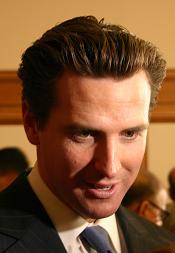
The one thing it got right was naming Aaron Peskin as one of the frontrunners to succeed Newsom if he is elected lieutenant governor. Peskin is really the only politico in town he has been putting big plays together these days, whether it be keeping Democratic Party leadership in progressive hands or defeating the 555 Washington project. So he might be the only one who can count to six with this current progressive-dominated board.

But nobody really thinks David Chiu is a frontrunner, despite Shih’s claim. Chiu has been a pretty good board president, but remember that he was elected as a compromise candidate (with lots of help from Peskin) after the then-frontrunners, Ross Mirkarimi and Bevan Dufty, couldn’t put the votes together. And since then, he has disappointed his progressive colleagues on several votes, making them unlikely to support him for mayor.

Besides, it will be difficult for any supervisor to get six votes when they can’t vote for themselves, which also makes me scoff at Shih’s contention that John Avalos and David Campos are running for mayor (two supervisors who are close to the Guardian and have never indicated to us that they’re running, even when we’ve asked, although they might each eventually become mayors). Ross Mirkarimi is more likely and wants the job, but would have a tough time getting a board majority to give is to him.

Shih told the Guardian that he’s been getting lots of critical feedback on his article today, and while he said Chiu and Peskin are names that kept coming up in his interviews, Shih admits that the attractive narrative of the protege challenging his mentor perhaps skewed the final analysis: “The relationship between those two guys ended up getting played up in the story.”

The article makes several other mistakes as well (and not just the obvious factual errors, like getting the mayoral election year wrong, as well as the year Feinstein left office, both of which have since been corrected online). It left City Attorney Dennis Herrera’s name out entirely, despite the fact that he’s already declared his intention to run for mayor and could certainly be a compromise candidate. Public Defender Jeff Adachi also wasn’t mentioned, even though he has a better chance than half the people on Shiu’s list, such as Willie Brown or Ed Harrington, who downtown may like but progressives really don’t.

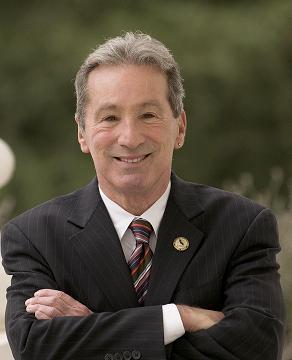
Two strong possibilities for mayor – Mark Leno and Leland Yee – were given only passing mention in the article even though they are far more likely choices than Chiu. Both Leno and Yee have aggressively worked both the centrist and progressive sides of the aisle and are in great positions to run for mayor or be appointed by the board.

The hopes for a Chinese-American mayor that Shih placed with Chiu are probably better placed with Yee, who has worked with Rose Pak and other business interests while also having a history of endorsing progressive candidates, which he’ll be able to call in when he runs (and yes, unlike other candidates on Shih’s list, Yee has actually declared his intention to run).

Similarly, Leno has good relations with progressives on the board, which will be tested a bit this fall as he campaigns for moderate supervisorial candidate Scott Wiener and navigates the wedge issue minefield, but it’s easy to see how with the right outcomes this fall and key deals cut, Leno could emerge as the frontrunner.

The dynamics of this thing are incredibly complicated, but if I was in Shih’s shoes and was asked to name the two frontrunners, I’d probably say Peskin and Leno, with Yee a close third and Herrera as an outside possibility. Or it could be none of them if nobody can count to six and the option of a caretaker mayor who agrees not to run later (such as an Art Agnos) seems like the only way forward.

As politicos Alex Clemens and David Latterman said in their post-election analysis on June 10, this is very complicated and will be the subject of many deals by experienced insiders (of which Chiu really isn’t one just yet). “Everyone is gaming this thing out and trying to figure out what happens,” Clemens said.

But there is one scenario in which I could see Chiu figuring prominently, and that’s in what happens if both Newsom and Kamala Harris win their respective state races. Chiu has expressed a desire to be District Attorney, a chance that he might get if he can help play kingmaker with whoever becomes our next mayor.

So perhaps that qualifies him as a frontrunner of sorts after all.

The Gaza resolution

25

I know that the discussion over the John Avalos/Sophie Maxwell resolution on the Gaza flotilla took a long time, and kept the supervisors and assorted city employees at work until midnight, and Sweet Melissa says that cost the city some money. And she makes the same argument we hear all the time when these things come up:


Run for Congress. Jump onto a plane. Send money to a worthy organization. But don’t pat yourselves on the back for a job well done for getting a resolution passed at the San Francisco Board of Supervisors. No one cares what supervisors in San Francisco think about foreign policy — not other governments, not the U.S. government and especially not those of us who live here.


And while I agree that the Avalos/Maxwell resolution was long, and isn’t going to change anyone’s foreign policy, and a lot of the other supervisors wish the thing had never come up and consider it a terrible time suck, let me gently argue the contrary.


I remember back in 1984, when a group of Berkeley activists put a measure on that city’s ballot calling on the United States to reduce its aid to Israel by the amount that Israel was spending on settlements in the occupied territories. It bitterly divided the Berkeley City Council, stirred up a giant fuss on the city’s left and led to a long, dramatic meeting of the progressive coalition called Berkeley Citizens Action. BCA was at that point the equivalent of a political party that dominated city politics.


There were some BCA members who thought the measure was horrible, anti-semitic and needed to be killed. There were some who argued that the situation in the occupied territories was so bad that Americans needed to take a stand. There were others who said this was none of Berkeley’s business — much as a lot of San Francisco pundits say that the Avalos resolution was none of San Francisco’s business.


But I was there and I watched all of this come down — and in the end, it was a good thing for Berkeley, for progressive politics, and for the way the left in the Bay Area thought about the Middle East.


Lee Halterman, who was an aide to then-Rep Ron Dellums, chaired the BCA meeting where the measure was debated, and he did a fabulous job — everyone got a chance to speak, nobody was cut off, the discussion was remarkably civil and in the end, the group voted not to endorse either side. “This was healthy for BCA,” Halterman told me afterward. “This was a discussion that we needed to have.”


I didn’t know much of anything about the politics of Israel’s settlement policies back then, and I got quite an education. The Arab-American Anti-Discrimination committee folks came down to the Guardian and — calmly, without harsh rhetoric, explained why the continuing settlement construction was creating a serious obstacle to future peace (they were absolutely right). I learned that John B. Oakes, the former editorial page editor of the New York Times, had written a series of columns saying, in essence, that building all the new settlements was going to make a two-state solution almost impossible. Slowly, political observers who fully supported Israel on almost every issue were starting to question the Israeli government’s actions.


We heard the other side, too: Anna Rabkin, the Berkeley city auditor and an icon on the Berkeley left, came in and told us how painful this would be to progressive Jews and how harmful it would be to the progressive agenda. She made a powerful, impassioned argument. 


And all of this came to a head with a ballot campaign that generated both heat and light. We endorsed Measure E (I wrote the endorsement myself); it went down overwhelmingly, but it got a lot of people thinking. I think today it would pass overwhelmingly. And while the usual snipers complained the “Berserkeley” was wasting everyone’s time and money on a foreign policy statement that nobody would pay attention to anyway, I think a lot of us were glad it happened.


And I think that the members of Congress who represented the Bay Area were paying close attention.


So let’s not trash the Avalos/Maxwell resolution so quickly. Sometimes these debates are good; sometimes they help the local voters — who, after all, decide who to elect to Congress, the U.S. Senate and the White House — hear conflicting sides of a complicated story.


The Gaza flotilla wasn’t just about breaking the blockade; it was about getting people in the United States to pay attention to a terrible situation that the daily papers and TV stations typically ignore. I don’t see why it’s so bad for the San Francisco supervisors to help spread that word. 

Following Recology’s $$$ to Environment Commission and DCCC

7

If you’ve been looking for a financial connection between the city’s tentative decision to award the next landfill disposal contract to Recology, which plans to dispose of our trash in Yuba County, then you’ll be interested in this campaign finance item: Because records show that Recology contributed $5,000 last year to SF Forward, a San Francisco Chamber of Commerce political action committee, which also got Money  from Bechtel, Medjool, PG&E, Charles Schwab, and Shorenstein Realty.

Recology Vice President and Group Manager John Legnitto is Chamber’s Chair Elect.

In the last two years, the Chamber contributed $10,000 to Plan C, a political action committee that advocates for more condo conversions and less tenants’ rights.And Plan C gave Commission of the Environment President Matt Tuchow $3,300 for his failed 2010 Democratic CCC bid.

So, while the transactions were legal, with the money laundered twice in between, these dollar connections will probably have folks opposed to the city’s plan to dispose of its waste in Recology’s landfill in Yuba County asking if this explains why Tuchow decided to limit public comment to only one minute when folks wanted to voice concerns at a March 23 hearing at the Environment Commission about an alleged lack of fairness and transparency in the decision to award the contract to Recology.

Especially those folks who drove three hours from Yuba County, which is where Recology proposes to send our trash. And folks who helped negotiate the city’s current trash disposal contract and were shocked that the city would set a one-minute time limit on what they claim is a $1 billion contract, once you factor in the cost of transportation, new trash processing facilities and an as yet unbuilt rail spur that Recology needs inYuba County to transfer trash from the Union Pacific line to its landfill in Wheatland,

Tuchow, who works in the Global Compliance and Ethics Division of McKesson Corporation in San Francisco, had not returned calls as of blog post  time, but if and when he does, I’ll be sure to post an update here.

Meanwhile, it doesn’t look as if Recology’s bucks and/or Mayor Gavin Newsom’s powergrabbing antics, are going to be able to help shoehorn Tuchow onto the DCCC, even in light of Newsom’s newly hatched plan for dominion for the following reasons:

1. Results from the June 8 election show that Tuchow was fourth failed runner up in the DCCC 12th district. (Milton Marks, Sup. Eric Mar, Melanie Nutter, Arlo Smith, Connie O’Connor, Tom A. Hsieh, Jane Morrison, Mary Jung, Sandra Lee Fewer, Michael Bornstein, Sup. John Avalos and Bill Fazio were the top vote getters to win seats, beating out Larry Yee, Jake McGoldrick, Hene Kelly and then Tuchow, in that order.)

2.. It’s not clear if Newsom’s plan for the DCCC is even legal.

3. Even if Newsom’s plan survives a legal challenge, it’s not clear that the law would have the retroactive effect necessary to oust Mar and Avalos.

4. And even if it did, under state law,  DCCC Chair Aaron Peskin would get to appoint folks to fill those vacancies,
“This is about clean money and good government,” Newsom spokesman Tony Winnicker told reporters of Newsom’s DCCC plan.

So, let’s hope the Mayor’s Office applies the same standards when it comes to opening the landfill disposal contract bids this summer and shining light on the money that’s influencing the city’s garbage disposal contract. 

Meanwhile, Peskin, who was reached by cell phone somewhere near Moab, in Utah, where he’s taking his annual camping and hiking trip with his wife, told the Guardian that Newsom “is not thinking very far ahead” with his latest dominion scheme.


The public-employee pension fight

11

Public employees are getting attacked on all fronts, and one of the major issues is pensions. Forum did a show on it this morning, and all the usual suspects were there arguing that the public is outraged, that pensions are out of control, that nobody in the private sector gets these kinds of deals and that high pensions are damaging the very social programs that progressives love. Jeff Adachi, SF’s public defender, is making some of the same arguments in his pension-reform proposal.


Let me add a little perspective.


First of all, the majority of the public-sector workers who get pensions in CA don’t get huge payouts — the average pension, SEIU’s Terry Brennand pointed out on the show, is a little over $2,000 a month. Teachers get a little more, but they don’t get social security; they give up that federal benefit in exchange for pensions that pay maybe $3,000 a month.


There are serious problems with pensions — and most of them involve two categories of workers: Management employees and public safety. Those $100K-plus pensions? Check em out. In San Francisco, anyway, and I’m sure it’s the same in most of the state, the majority of them go to cops, firefighers and people in senior positions who manage to figure out how to bump their pay scales up in their final years.


The bigger cost may be retiree health care — but that’s a bit misleading, too. If we had a single-payer health care system, we wouldn’t need to worry about all these retiree health costs busting state and local budgets. And if retired public employees weren’t getting health care through a pension system, a lot of them would wind up in the public-health system anyway, through Medicare or Medi-Cal; we, the taxpayers, would be covering that cost anyway.


You want to save money on pensions? Quit giving the cops and prison guards everything they want.

Turning Clinton’s words into Brewer and Whitman’s problem

9

“Obama Admin has decided to sue AZ and we had to learn about it through Ecuadorean TV. Outrageous!”
So tweeted accidental Arizona Governor Jan Brewer, after Sec. of State Hillary’s Clinton admitted that the US DOJ has decided to sue Arizona over SB 1070. 
Brewer, who faces a gubernatorial primary August 24,  is betting that  talk about immigration, will help her win the race.
“This is no way to treat the people of Arizona,” Brewer said.

But wasn’t that exactly the point Clinton was making?

And isn’t it about time that the Dems figured out ways to counter the right’s “illegal alien” meme?

Not just in Arizona, but also in California where Republican gubernatorial nominee Meg Whitman recently told reporters in San Francisco that, “We have to prosecute illegal aliens and criminal illegal aliens in all of our cities, in every part of California.”

As far as I’m concerned, (and I’m speaking as an immigrant to North America) the only beings on the planet who can truly be defined as “aliens” are extra terrestrial visitors. The rest of us are humans, thank you very much. And most of us immigrants are economic refugees, not subhumans who somehow deserve to be  treated like shit by a bunch of white folks who turn red in the California and Arizona sun, and whose ancestors came here for similar reasons–and without paperwork–not so very long ago.

Newsom’s plan for DCCC domination

4

Gavin’s not quite ready to take over the world, or even California, but he’s not leaving office without trying to mess up the progressive majority on the Democratic County Central Committee. The plan he hatched June 15: Ban elected city officials from sitting on the DCCC. The idea: Get rid of Supervisors David Campos, David Chiu, John Avalos and Eric Mar. The overall plan: With the progressive supervisors — who have high name recognition and thus get easily elected — gone, the Newsom allies can take back control of the local Democratic Party.


It’s a pretty blatant move — far beyond Aaron Peskin’s so-called coup. And I must say, it’s a bit hypocritical.


See, the DCCC isn’t just made up of 24 elected members. Every San Francisco Democrat who holds state or national office — or who is a candidate for state or national office — is also an automatic member. So Senator Diane Feinstein is a DCCC member; so is House Speaker Nancy Pelosi, Assemblymember Tom Ammiano and Sen. Mark Leno. And guess who gets a seat this fall? Lt. governor candidate Gavin Newsom. People like Feinstein and Pelosi never show up; at best, they send a proxy. They rarely pay much attention to the local party, don’t help out much with party fundraising, don’t even come to the party’s annual dinner (Newsom didn’t show this year, even though he’s the mayor of a Democratic city.)


There have been members of the Board of Supervisors on the DCCC for years. The late Sue Bierman was always a member, and actually cared about and paid attention to the local Democratic Party. Leslie Katz was a member as a supe, and still is. It’s never been that big a deal to anyone — until the progressives starting winning seats. Then suddenly it’s a horrible conflict.


The real conflict has nothing to do with city officials sitting on the committee; it’s the fundraising issue. The city’s campaign finance rules don’t apply to DCCC races, so candidates for DCCC who are also running for supervisor — Scott Wiener, Rafael Mandelman, Debra Walker — can raise unlimited money for their DCCC races and use that additional name recognition for the fall elections. The thing is, I think most of the candidates who benefit from this loophole agree that it needs to be fixed; Mandelman certainly does, and he’s told me that several times. I couldn’t reach Walker or Wiener this morning, but I’d be very surprised if both of them wouldn’t endorse some kind of contribution limits for DCCC races.


I asked Newsom’s press spokesperson, Tony Winnicker, if the mayor would support fundraising limits. Apparently he doesn’t (or at least, he doesn’t want to push the issue):


“For this November’s local ballot, which the Mayor can place an initiative on, we propose eliminating the potential conflict that exists between City officeholders also holding office as elected County Party Committee members.”


How about getting rid of all the elected officials, and creating a real grassroots county committee? No, that won’t fly with Newsom either. Winnicker:


It’s appropriate for state and federal Democratic elected officials from San Francisco to serve on the Democratic County Central Committee.


The city/local offices — Mayor, Board, Treasurer, Assessor, City Atty, Sheriff, District Atty, Public Defender — are nonpartisan offices who have direct oversight over City business. That’s the difference and conflict. This is a local initiative, so our focus and concern is local good government and local conflicts or appearance of conflicts.


From everything I can figure, Newsom doesn’t want campaign-finance reform and doesn’t want to put the party in the hands of local activists; he just wants to get rid of the supervisors who take positions he doesn’t like. That seems like a pretty bad way to make public policy. 


UPDATE: Just talked to Scott Wiener, who told me he agrees that the whole issue of DCCC campaign spending ought to be on the table. And he said he is not at this point prepared to support Newsom’s initiative. “I have concerns with the number of elected officials on the DCCC,” he said, “but there are times when it’s entirely appropriate to have people who have a demonstrated commitment to the DCCC and then get elected supervisor to stay on it.”

SF’s bike project ban is coming to an end

5

Despite high-profile recent improvements to San Francisco’s bicycle network – including a half-dozen new bike lanes since last fall, a green bike lane on Market Street separated from cars, and new on-street bike parking on Valencia and Divisidero streets – the city is still prevented by a court injunction from creating bike lanes that have been sought for a decade. But that could change as early as next week.

On Tuesday, June 22, Superior Court Judge Peter Busch will hear oral arguments and consider whether to end the four-year-old injunction against the city executing any of the projects or policies outlined in its Bicycle Plan, a ban perversely created by the court finding the plan violated the California Environmental Quality Act because it wasn’t subjected to a full-blown environmental impact report, which cost more than a million bucks and took two years.

Despite the fact that EIR was completed and certified last year, the plaintiffs who sued the city over the plan five years ago – anti-bike activist Rob Anderson and his attorney, Mary Miles – sued again, claiming the study was inadequate and decrying how the plan would take space from cars to improve bicycle safety.

In her brief, Miles noted how the EIR finds “89 significant impacts of traffic, transit, and loading but fails to mitigate or offer feasible alternatives to each of these impacts.” Referring to the near universal political support in San Francisco for making improvements to the bike network despite these impacts, Anderson told the Guardian last month,“It’s a leap of faith they’re making here that this will be good for the city.”

But the brief that the city filed in the case argues that leap of faith is a decision for policymakers, whether or not Anderson and Miles agree with it. The city position is that cars have ruled the roads for long enough and now it’s time they shared some space with the fastest growing transportation choice in San Francisco, where the number of regular cyclists has nearly doubled in recent years.

“Petitioners are clearly disappointed that, despite the disproportionate number of drivers over bicyclists, City decisionmakers chose to implement improvements to the bicycle network that may inconvenience some drivers and some transit riders on certain streets at certain times. But the CEQA process does not approve or deny projects; it merely requires that decisions be made with environmental consequences in mind. By improving the City’s bicycle network, the decisionmakers determined that the City would encourage more people to use a bicycle for everyday transportation,” Deputy City Attorney Audrey Williams Pearson wrote in her brief.

With oil continuing to spew into the Gulf of Mexico, the atmosphere becoming steadily more concentrated with planet-threatening fossil fuel emissions, and the politicians in Washington DC offering only hollow rhetoric about our stubborn addiction to oil-powered convenience, San Francisco elected officials from across the ideological spectrum took a small but important step in promoting safer bicycling.

Now, it’s up to Judge Busch (who partially lifted the injunction last fall, allowing the handful of projects I mentioned above) to take the next step, which he will do probably within days (or weeks at the latest) after hearing from both sides June 22 starting at 9:30 a.m. in Superior Court, Department 301, at the corner of Polk and McAllister streets.


P.S. If you want to celebrate the impending end of the bike injunction with thousands of other bicyclists, walkers, dancers, and other non-motorized movers and shakers, show up on car-free Valencia, Harrison, and 24th streets this Sunday from 10 a.m. to 3 p.m. for the latest installment of Sunday Streets.

Muni workers and common sense

7

I’m never the one arguing that city workers should take pay cuts, furloughs, benefit cuts or layoffs when there are ways to bring in new revenue. Remember: Layoffs and furloughs are, by definition, service cuts. And it’s a good thing to have city employees make enough money to live in San Francisco, raise families, send their kids to college etc. Maintaining a middle class in San Francisco through public-sector jobs is a fine use of taxpayer dollars (particularly if those dollars can come from the rich).


But I have to say: The Muni workers union isn’t being very smart. Refusing to accept any concessions at a time when every other union in the city — particularly SEIU Local 1021, whose members typically earn a lot less money than the bus drivers — have stepped up to the plate and accepted painful cut is politically foolish.


And for the Muni union leaders to say that the system’s budget problems aren’t their responsibility sounds terrible. Most other city employee unions show some loyalty to the people they serve, and are interested in making their departments work, and understand that in very bad times, everyone’s got to give a little.


The problem is that Sup. Sean Elsbernd wants to change the way Muni workers are paid, and his ballot measure could lead to significant pay cuts and work-rule changes, things the union really doesn’t want. And every headline about Muni workers refusing concessions gives Elsbernd more signatures, more supporters and more votes. 

A very cinematic Juneteenth: previews from the SF Black Film Festival

0

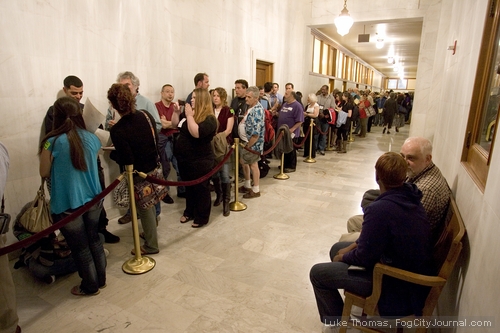
General Gordon Granger could hardly have known that by signing General Order No. 3 into effect that sunny June 19th, 1865 in Galveston, Texas, he’d be providing an occasion for San Francisco’s young black filmmakers to share their artistic voice. He (most likely) didn’t appreciate that Juneteenth – as the day would come to be called – would mark a time for Bay area African Americans to reflect on the past, present, and future of their community. Probably not. But we get it. So as you munch your popcorn through these previews of the stories screening at this year’s San Francisco Black Film Festival (Thurs/17-Sat/19), take a moment to think on history’s – often unseen – framing of today.

Sounds of Poetry

When I first watched this preview, the young poet’s eloquence struck me. Child actors these days are something else, I thought. But Dawntavia Butler, who plays the lead role of Monique, a girl striving to rise above her mother’s addictions, is only half acting. Filmmaker Henderson Maddox based the script of Sounds of Poetry on Dawntavia and her sisters’ real life experiences at home. In light of the challenges she faced, Bullard’s spoken word performance takes on new meaning.

Flags, Feathers, Lies

The Mardi Gras Indians is a long standing tradition in New Orleans, a group that honors the role Native Americans played in helping slaves escape their bondage. But ask around at the parades these days – nary a party goer knows their name. Filmmaker Pablo Palacios makes the connection between the disappearing Indians with the devastating displacement Katrina left in its wake.


Mountains That Take Wing: Angela Davis & Yuri Kochiyama

Sure, you know about Angela Davis. But what about Yuri Kochiyama, who was interned with her family during World War II, and grew up to join the struggle for Puerto Rican independence, liberation of political prisoners, and nuclear disarmament? What about what those two civil rights leaders would chat about, if they got the chance to hang? Mountains That Take Wing is here for you so that you can find out.


Trapped Haitian Nights

Of course, it’s not all civil rights and social problems. Take this action packed suspense, the last movie shot in Haiti before the disaster. The plot follows Vivica A. Fox investigating the murder of a doctor’s wife, a yellow boa, and rumors of voodoo craziness.

San Francisco Black Film Festival

Thurs/17-Sat/19

various venues and times, SF

(415) 400-4602

www.sfbff.org

Elsbernd blocks state budget resolution

1

The Democratic leadership in the state Assembly has a budget plan that challenges the entire approach Gov. Schwarzenegger is taking on the state budget. It’s not perfect; it relies on borrowing (although it’s borrowing against the revenues from a new oil severance tax). But it will, Speaker John Perez says, save more than 400,000 jobs. And it’s way, way better than what the governor wants to do. “It’s good,” Assembly member Tom Ammiano, who has always been willing to challenge party leadership and take progressive stands. “It’s something we can support.”

Among other things, it would bring San Francisco another $40 million next year as part of a plan to end the raids on city and county treasuries.

So the Dems in the Assembly are trying to get cities, counties and school boards to endorse their plan. Sup. David Chiu did the honors in San Francisco, asking the supes to approve, on consent calendar, a fairly innocuous resolution endorsing the so-called “Jobs Budget.” Nobody objected — except Sup. Sean Elsbernd, who demanded that the measure be sent to committee for further review.

I don’t get that; San Francisco’s support won’t determine the future of this budget, and it’s not a huge deal — but Elsbernd’s a Democrat, he doesn’t like what the governor is doing, and if this could help even a little bit with the forces pushing for an alternative, what’s the big deal?

Well, I talked to Elsbernd about it (one of the things I respect about Elsbernd is that he never ducks questions; unlike some politicians I know, he always returns my calls, always responds, is willing to have an intelligent discussion and doesn’t try to hide). His argument: “I’m not following the details of the state budget yet. I would love to hear a little more about it.” His concern is with the borrowing; “I’m sure,” he said (perhaps a bit sarcastically) “that President Chiu will be able to explain to me why this isn’t just kicking the can down the road.”

He went further: “If the mayor tried to balance the budget by borrowing money with general obligation bonds, you guys would blast him, right?” Well, not necessarily, I told him. Sometimes, governments ought to borrow money, to save and create jobs during an economic downtown. In fact, that’s exactly what President Obama did, borrowing heavily and adding to the already massive federal debt with a stimulus plan that probably prevented the recession from becoming another depression.

I mean, didn’t Sup. Elsbernd support the Obama stimulus package?

“Frankly, Tim,” he said, “I’ve been too busy trying to do my job in San Francisco to be taking a stand on state and federal issues.”

Okay, Sean — it’s a good line. But every elected official in every city in America was paying attention to the Obama economic plans. And SF supervisors have to be paying attention to the state budget. Counties are, in part, the local arms of the state; making sure there’s money to do what the state tells us is part of the job.

Zion I’s Amp Live steps into the solo album spotlight

1

It’s hard to think of a Bay hip hop DJ with a more diverse footprint than Amp Live. Rising to prominence as the mixing half of duo Zion I, he’s since spread his futuristic tinkerings through tracks featuring Goapele, Too Short, Charlie 2na, and Del the Funky Homosapien. More recently, he funked up Radiohead’s In Rainbows – dubbing his new vision Rainydayz Remixes, and releasing it to the public before, well, really clearing it with the music’s progenitors. In exchange for his hip hop creativity, he received a cease and desist order from the band. Luckily, their camps found a way to talk it out, and Radiohead eventually gave Amp Live the go ahead to offer up the project, which you can still find on his Myspace page as a free download (he also issued a creative, yet heartfelt apology for his role in the conflict).

We caught up with Amp Live via email on his Mexico vacation – where he’s no doubt “amping” (ha!) up for his CD release party this weekend (Shattuck Down Low, Sat/19). You might recognize some of the other cats that will be onstage; Amp Live’s graciously sharing the playbill with Kev Choice, Deuce Eclipse, Trackademicks — and Zion I will take over as the headliner. 

Murder at the Discotech‘s first single, “Gary Is a Robot” featuring Tracademicks and Mr. Micro is one play from being your 2010 summer anthem


San Francisco Bay Guardian: You’ve said in the past that you’ve been looking at adding more “live music” performance on stage to your DJ sets. Can you explain what you are looking at with that?

Amp Live: I think live [music] is very important in creating a good show. During my production set, I create music on the spot using live video and visuals, and will also feature other musicians. 


SFBG: What kind of unique resources did you find coming up as a musician in the Bay? Besides your music, is there any one artist today that you think speaks most eloquently about what it’s like to live out here?

AL: There is definitely a large amount of accomplished and talented musicians in the Bay Area. So many tight drummers, keyboardist, horn players, singer, etc. That makes it easy in collaborations and studio work. I like what comes from the DJ Shadow camp. I think he captures the vibe out here pretty well. Also, like what Traxamillion is doing. 


SFBG: Your DJing, and general work as an artist, make it clear that you’ve got very deep skills when it comes to technology. Where do you think you would have wound up if it hadn’t been for music? 

AL: Well, I graduated from college with a bachelor’s in science. I was going to go to medical school basically, and be a cardiologist. 


SFBG: What ways will the Amp Live solo shows differ from the performances you’ve done as part of Zion I?

AL: The main difference is that it is mostly me on stage, so it’s all eyes on what I am doing. I have to keep the crowd engaged. 


Sat/19 9 p.m., $15-20

Shattuck Down Low

2284 Shattuck, Berkeley

(510) 548-1159

www.amplivesworld.com 

www.shattuckdownlow.com

Before I die, if printing still exists: An interview with Daniel Clowes

0

By Sam Stander

Daniel Clowes has made the leap over the past decade from underground comics hero to a more mainstream identity, with an Oscar nomination for screenwriting, several New Yorker covers, and a comic serialized in the New York Times Magazine under his belt. Despite his raised profile, his newest work, Wilson (Drawn and Quarterly, 80 pages, $15.37), comes closer to home than ever before. The cynical comic strip-based book is largely set in Oakland, of which he is a proud denizen. Clowes recently appeared at Diesel in Oakland, in conversation with McSweeney’s editor Eli Horowitz and the audience. On the setting of the comic, he proclaimed, “I’m pro-Oakland, I’m not sure Wilson is.” He also discussed his forays into film, his debt to Charles M. Schulz and R. Crumb, and the slight controversy over his recent New Yorker cover, among other things.

A lengthy signing followed, where fans presented everything from freshly purchased copies of Wilson to old favorites like David Boring to collector’s items like Lout Rampage for signing. Once the line had dwindled, Clowes sat down for a one-on-one interview.

San Francisco Bay Guardian One of the things I wanted to ask you, if the Oakland observations haven’t been beaten into the ground, was that you also used to live in Berkeley, right? When you were writing Ghost World?
Daniel Clowes Yeah, I was living up by College and Ashby.

SFBG Why are you explicitly writing about Oakland now, and why did you choose to live in Oakland? What do you see as the differences between the different areas?
DC It’s funny, I sort of wound up in Oakland by default. We were living in Berkeley, because my wife was going to Berkeley, and our landlord doubled our rent one month, which I actually didn’t think was legal. And so we said, well, maybe we should try to buy a house. This was years ago. We looked all around Berkeley and it was really expensive, and we found this neighborhood in Oakland that we didn’t even know about, over where we live now, and wound up buying a house there.
You know, I never really thought about Oakland. Even living there for two or three years, I thought, well, we’re near San Francisco and Berkeley. Then I started to walk around and embrace the idea of Oakland. I kind of learned to like Oakland above all its other surrounding cities. I’ve gotten to the point where I almost never go to San Francisco. It’s like, I go to LA more than I go to San Francisco. I just don’t relate to San Francisco at all, and somehow Oakland feels — I grew up in Chicago, and Oakland has this kind of second-tier quality that I find appealing.

SFBG Second-tier?
DC It’s not San Francisco. It’s [its] ugly sister across the Bay, and I prefer that somehow. I was in New York recently, and I was on a block in the Upper East 70s, I think, and I was looking around and I realized every building on the block was a beautiful art deco building built in the ’20s. And I thought, well, Oakland has one building like that. It has the Bellevue-Staten down by Lake Merritt. That’s it. But I’d prefer that, because, to see 20 of them, it has no impact anymore. It’s just, wow, a lot of buildings, and your brain can’t grasp that. But somehow I’m obsessed with this one building in Oakland and I know all about it. I can fixate on that one thing, so I like a city that has one of everything rather than hundreds of the same thing.

SFBG One of the strips in Wilson is him talking about all the bookstores closing down. I was wondering if that was you speaking through him at all, and if so, what bookstore are you saddest to see close down?
DC Well, that was really all about Cody’s. My wife worked at Cody’s, and when I moved here, I sort of agreed to move to Berkeley with my wife because of Cody’s. I thought that [was] something I needed, this world-class bookstore. It was sort of the focal point of my life for many years. I would go there two, three times a week and see what was new, and it just felt like the focus of my world in a way. And when it closed down, it was really hard for me to accept. It was like, you know, you always hear stories of guys who talk about their baseball team leaving town. The guys from Brooklyn are like, “The Dodgers left town in 1958,” or whenever it was. It felt like that to me…Still, when I go to downtown Berkeley and see that empty building, it seems so awful. It seems just like an awful thing that the world couldn’t support that.

SFBG At least it didn’t become a CVS.
DC Exactly.

SFBG [There] was a brief interlude where it was going to be a CVS.
DC Yeah, that’s true. There is that. At least the tomb of Cody’s is still there. And you think, “Well, somebody could just reopen it. Why not? Nobody’s paying rent.”

SFBG Looming over Moe’s.
DC Yeah, I should count my blessings. At least Moe’s is still around, and this place. Better than most cities.

SFBG You were talking about Wilson sort of materializing as a character, [that] you didn’t know who he was at first, but that it was you interacting with him. I was wondering if you’ve ever had experiences with a character who you didn’t have such a productive relationship with, or if you’ve ever had characters who worked against you?
DC Oh, that’s a good question. It’s more that they just run out of — it’s usually a character that I’ve kind of predetermined. Like, I need a character who’s a certain type of person to fit into a story, like, “I need a comic relief character.” Something where you have a role for them, and then they’re never that interesting. I find the best way to do it is to just let the characters come naturally. If they’re forced at all, they tend to [be] artificial. They have to seem like real people. There are characters that I’ve written the hell out of for page after page and they never quite are real people to me. Those are the things that never work, and that I usually have the good sense to throw away before they see print. [Laughs]

SFBG You’ve always had a really strong interest in perversity and human weirdness, and that’s not so central in Wilson. Was that a conscious move away or a permanent move away, or just a change in interests?
DC I think that’s true, you know. I always had a real interest in outsider culture. When I first began doing comics, that kind of thing was so inaccessible. I had a little group of friends who would send me all these weird things. You’d find out about little groups of people who were all linked together by some really odd interest, but they were so segregated. They’d maybe have some little newsletter that they all communicated through, but it felt like the world was filled with these little secret societies. And ever since the Internet has taken hold, it doesn’t feel like that anymore. It feels like the minute anybody hears about any weird little perversion or interest or anything like that, that everybody finds out about it and they know all about it, so it’s sort of lost its interest.
Also, having a child, you sort of reassess what you’re interested in, and you think, would this make me proud for my son to find my collection of books of pictures of freaks, or whatever? You just think, “Ehhh, I’m not sure I want to stand behind that.” Certain [times], you [decide] “I really do think this is cool and I will defend this,” but you weed out a lot of things that were just there because they would get a good reaction out of people.

SFBG Possibly spinning off from that question, but on another angle: You said [during the Q&A] that, specifically, no filmmaker has a strong specific influence on you, but certain films or certain scenes do. Are there any films or scenes you have in mind for Wilson or any of your other works?
DC I feel like Wilson is very non-filmic as far as most of my books go. It’s not about the images at all. A lot of my comics come from ideas that are images, that then turn into stories. Like David Boring and the Velvet Glove thing, and even a little bit of Ghost World. But Wilson was really all about this guy. If it were a movie, it would be more like a Mike Leigh movie or something than a Stanley Kubrick movie. [Laughs]

SFBG And you were saying that to make it into a film would be a strange format for a film.
DC It would be a strange format. I mean, you could certainly rethink it as a story about a guy, and sort of have the same elements, but to replicate the feel of the book would be a very odd thing. That’s the beauty of comics, is you can do all those different styles and they actually resonate off of each other, and even a really amateurish reader, a non-reader of comics, can tell the difference between the styles, whereas in a movie it’d be very hard to do different styles. Only film experts would get that you’re doing, you know, Michael Bay and then Alfred Hitchcock, or whatever.

SFBG Have you seen Natural Born Killers?
DC Yeah, that’s a perfect example.

SFBG Where it’s kind of off-putting at the end of the movie.
DC Right, it’s just a little irritating. Although I think that was the idea, I suppose. I haven’t seen that movie in a long time, I bet it’s really irritating now.

SFBG I’ve never seen all of it, actually. I’ve had friends show me parts.
DC I barely could tolerate it in theaters.

SFBG Woody Harrelson and Juliette Lewis are —
DC Yeah, she’s great. I like him, too.

SFBG In the right role.
DC Yeah, yeah.

SFBG Somebody was asking you about drawing eyes and mouths and conceiving of how people look in each panel, and you were saying that you do [stick-figure] sketches beforehand. How much do you script or plan out or storyboard versus just drawing a comic?
DC It depends on, not even the story, but just on my mood before I start. I usually try to do each story somewhat consistently, but I’m always trying to come up with a new way to do things. Not to be different or to give myself a challenge, but [because] I’m looking for a better way to work. And I always have this carrot dangling in front of me that there’s some other way, that if I could only find that way, it’ll make everything easy. And then it never does, and it always comes out exactly the same, no matter if I script the thing carefully or if I make it up off the top of my head. I could show those comics to a hundred people, and they would have no idea what was the planned-out one and what was the one I just made up. It all turns out the same. And I think that’s true of most artists. You can’t really tell what they’re going through, it’s just their work is always them, you know.

SFBG Do you always get a stack of other people’s works [at signings]?
DC [Holding a thick stack of various printed matter presented by fans] This was a good stack, I’d have to say. Often it’s much more, like, Xeroxed stuff. This actually looks like some pretty decent stuff that people have actually printed up. But yeah, usually you get a big pile of stuff, although not as much anymore, because a lot of people don’t print anything. So now I get business cards, like, “Check out my webcomic.” I have to go type it in at home.

SFBG You have the thing in the little author’s bio in Wilson about [how] you have danielclowes.com reserved.
DC That’s right.

SFBG Do you have any ideas for using that, or anything you want to use it for?
DC Well, my publisher actually said, “Now you have to put something on there, since you said that in the book.” So they just put an ad for Wilson that links right back to their website. I don’t want to get into doing, like, a blog or responding to people, ’cause my life is already so taken up by just responding to e-mails from my friends that I can’t imagine introducing a whole ’nother element of that. But it would be good to make announcements, and just to clarify things. I feel like the average reader doesn’t understand that I used to do a comic called Eightball and the stories were serialized — I figure if there’s some way [to] really concisely explain my career, then I won’t have to explain it to everybody over and over. [Laughs]

SFBG Are the original sequences of Eightball ever going to be made available again, and things that aren’t collected?
DC One of these days we’re going to do the complete Eightball, and do like a hardcover thing, but that’s nine projects down the road or something. But before I die, if printing still exists.

SFBG As far as film projects, is there anything on the horizon or anything you’re excited about working on?
DC With Ghost World, I learned, don’t tell anybody about your film projects until they have a release date. I used to tell people, “Oh, they’re going to make a Ghost World movie,” and then five years later, they finally actually made it. I felt like such a chump. But I wrote a screenplay for this thing that Michel Gondry came up with, this crazy dystopian sci-fi epic. I wrote a script based on his ideas. His son is going to do the drawings for it. I’m not animating it, but I think he wants to do that as his next film, so that should be fun, if that actually happens.

SFBG Have you ever done any animation?
DC I did a video for the Ramones in 1995, and that was it.

SFBG Would you ever do it again?
DC Yeah, I’d like to, I’d like to. I need to sort of come up with an idea that’s only appropriate for animation, and then actually try to get somebody interested in producing it. So there’s lots of hurdles there. [Laughs] But yeah, I’d love to. I feel like I should do that one of these days.


 

SFBG Radio: Tim and Johnny on Obama, Whitman and the hypocrisy of sit-lie

2

Today Tim and Johnny talk about Obama’s energy policy, Whitman’s only hope — and why it’s so silly for the mayor of San Francisco to be pushing a sit-lie law that can only lead to selective enforcement. You can listen after the jump.

sfbgradio6162010 by sfbgradio

San Franciscans decry Newsom’s public health cuts

8

By Alex Emslie

More than 100 concerned citizens, mental health providers, SRO hotel representatives, and clients of San Francisco’s community behavioral health programs spoke to the Board of Supervisors yesterday at a Beilenson hearing, which the state requires of counties that slash public health services, decrying crippling cuts in the mayor’s proposed budget.

Mayor Gavin Newsom proposed cutting the Department of Public Health’s funding by close to $31 million in next year’s budget currently before the Board of Supervisors. The board can choose to add funding back into departments that were cut before approving the final budget by the end of July.

“These are all services that we value,” DPH director Dr. Mitch Katz said following nearly four hours of public testimony. “We have to make difficult choices because of the state of the city’s budget. We recognize that it is never desirable for us to make cuts.”

Sup. John Avalos, who chairs the Budget and Finance Committee, said the city Budget Analyst’s Office was examining cost savings within the police and fire departments to free up money for the DPH. “I, as budget chair, am working with my colleagues to prevent these cuts that you are concerned about. We have to find cost savings in our budget across other departments.”

Avalos added that cutting other departments wouldn’t solve San Francisco’s looming deficit for years to come, and that taxation must be part of San Francisco’s budget solution. “If we don’t find a significant amount of revenue, looking at progressive forms of taxation, we’ll be in the same boat next year, but even worse, because we don’t expect to have the authorization of federal money [that the city received last year] to help us out.”

Hot sexy events June 16-22

0

How’s this fix for ailing municipal governments across the country; quit using law enforcement to harass sex workers doing their thing. Good, right? The Desiree Alliance would have to agree. The sex worker led advocate coalition is taking over Las Vegas next month for their annual conference, where they’ll discuss implementation of the harm reduction, political advocacy, and health services they provide for fellow escorts. Sexy guest speakers include Stephen Eliot (who will lead a storytelling session, and speak in an expert panel on taking your sex worker art to the next level), and Lauren McClubbin (an ACLU lawyer and Las Vegas performer).

But they need your help to make it all the awesomeness it can be. A big old public performance-demonstration is planned for the Strip — but the gambling tourists won’t get their dose of reality unless the Alliance raises the $2,500 they need to make the damn thing happen. You can donate on their Kickstarter page here. And learn more about the group’s antics right here, if you’re wondering. And now, in local news…

——————————————-

Asking For What You Want in the Bedroom and Beyond

Do you find it difficult to speak up for what you want between the sheets? Out of the sheets? In life, generally speaking? Well, who doesn’t, really (besides maybe Kanye West). Enter Marcia Baczynski, whose skills as a relationship counselor and sex educator lead her to create Cuddle Party – and this class, which gives you some excellent universal pointers on how to speak up and get yours.

Wed/16 8-9:30 p.m.

Center for Sex and Culture

1519 Mission, SF

(415) 255-1155

www.sexandculture.org

——————————————-

Latex Fashion School

Polly Pandemonium has been making high quality latex couture since 1995 in the London fetish scene, and now she wants to teach you, her San Francisco disciples! Learn about the shiniest, stretchiest, naughtiest ways to DIY. Apparently, it’s a very forgiving medium for the beginning seamstress or seamster.

Wed/16 6-9 p.m., $250

central SF location

(415) 269-8616

email polly@superstaravatar.com for information and reservations

www.latexfashionschool.com

——————————————-

Daddy and Boy: A Journey

Daddy Sal (founder of The Exiles) and boyjean, long time activists in the leather community, explicate their daddy/boy BDSM relationship, and go into the different dynamics of ways to be romantically involved for the long run in the domme/sub rainbow.

Fri/18 8-10 p.m., $4-10

Women’s Building

3543 18th St., SF

www.theexiles.org

——————————————-

Rope Dance: Dynamic Passionate Movements

Japanese bondage expert Midori leads you in this course on dancing, stretching, seducing, connecting… on the ropes. Bring a yoga mat, comfy clothes to move in and your sexiest, sassiest ‘tude.

Sun/20 2-5 p.m., $30 solo, $50 couple

SF Citadel

1277 Mission, SF

(415) 626-1746

www.sfcitadel.org

——————————————-

David Jedeikin

What usually happens when you give up your liver in a risky transplant to your ailing man? Usually not a sexy solo journey around the world. But life is complicated, and that’s what happened to Mr. Jedeikin, whose “flashpacking” (apparently a term used to describe the party backpacker) took him all over the world to the sexiest spots and parties in the gay world. In his book Wander the Rainbow, we get to hear about his trysts with exchange students in Beijing, and sex club bartenders in Berlin. So read all about it, sticky hands – and get your copy signed at this in store appearance.

Tues/22 7:30 p.m., free

A Different Light bookstore

489 Castro, SF

(415) 431 0891

www.adleventscastro.blogspot.com

——————————————-

Amos Mac’s “Boys in their Bedrooms”

A photographic exhibition of the city’s hottest FTMs in their pjs and Power Ranger blankies shot by photog extraordinaire Amos Mac. DJ Katastrophe will spin as you take in the sexy studs featured in Original Plumbing magazine.

Tues/22 7 p.m., free

The Lexington Club

3464 19th St., SF

(415) 863-2052

www.originalplumbing.com

Mirkarimi to PG&E: We want our $46 million back

Speaking at the June 15 Board of Supervisors meeting, Sup. Ross Mirkarimi introduced a non-binding resolution calling on Pacific Gas & Electric Co. to refund ratepayers for the $46 million it spent on a failed bid to pass Proposition 16, a ballot initiative dubbed the “Taxpayer’s Right to Vote Act” that would have impeded the creation of municipal electricity programs.

While PG&E has publicly stated that its campaign costs were covered by “shareholder funds,” the sole source of income for the parent corporation is money that the utility makes selling electricity, so the $46 million originated in ratepayers’ pockets.

At the meeting, Mirkarimi displayed a map of PG&E’s service territory beside a map of the California counties that rejected Prop 16, highlighting the striking similarity. In San Francisco, Prop 16 was rejected by more than two-thirds of the vote.

Mirkarimi’s resolution included several other improbable requests. He extended an invitation to PG&E CEO Peter Darbee to attend a Board of Supervisors meeting, to “discuss what it really and truly means to peacefully coexist,” he explained. “We look forward to Mr. Darbee coming to meet with us.”

The third aspect of the resolution deals with SFERS, San Francisco’s employment retirement system, which owns 106,348 shares of PG&E common stock valued at $4.38 million on the day the information was accessed. Institutional investors such as CalPERS and SFERS account for more than a 60 percent share of ownership of PG&E, according to the resolution.

Mirkarimi is calling on PG&E to refund SFERS, and “urges CALPERS and SFERS to consider divesting its holdings in PG&E stock” if the company refuses.

The resolution also asks the California Public Utilities Commission to carefully scrutinize PG&E’s requested rate hike.

PG&E didn’t return our requests for comment the last 10 times we called, but we tried again — even though the result is predictable.

And now, the race to replace Kamala Harris

2

David Onek, who has strong political connections and little courtroom experience, sent out a email today announcing that he wants to be San Francisco’s next district attorney:


As many of you know, District Attorney Kamala Harris is very likely to become California’s next Attorney General. DA Harris is a friend and I would never run against her, but her victory in November will open up the office as early as the end of this year. This means the time to get organized is right now.


He adds his name to the list of people, including former chief homicide prosecutor Jim Hammer, who want the job. But it’s going to be an unconventional campaign, to say the least. Because if Harris wins, her successor won’t be chosen by the voters of San Francisco.


There are three relevant scenarios here.


1. Harris loses the AG race. Entirely possible; she’s got a tough campaign ahead of her. Then all of this talk is moot; Onek clearly isn’t going to run against her, although Hammer might.


2. Harris wins the AG race, and Newsom loses his race for lieutenant governor. In that case, Newsom will be mayor of San Francisco when Harris resigns to move up to Sacramento — and under the City Charter, he will appoint someone to serve out the rest of Harris’s term.


3. Harris and Newsom both win — in which case there’s a fascinating legal issue. Do Harris and Newsom leave at the same moment — in which case the Board of Supervisors appoint the next mayor, who appoints the next DA? Or does Newsom try to fill Harris’s job before he resigns himself? In the end, Matt Dorsey, spokesperson for City Attorney Dennis Herrera told me, “that’s a question that will be answered by the attorney general. Theoretically, it could get very complicated.”


Under the state Constitution, the governor, lt. governor and attorney general all take office the same day, the first monday after Jan. 1st, which in this case is Jan. 3. The constitution doesn’t say what time of day that happens. In theory, then, Harris could take the oath of office at 9 am, Newsom could wait until 10 am, and appoint a new DA in between. Then somebody who didn’t get appointed (or, frankly, any angry citizen of San Francisco) could sue — because if Newsom’s term technically starts at 12:01 am Jan. 3d, then at that moment, by city law, the president of the Board of Supervisors instantly becomes mayor, meaning David Chiu should be the one making the DA appointment.


Or Harris and Newsom (and whatever other parties wanted to play ball) could cut a deal. Harris could resign a day early, and Newsom could appoint her replacement with no legal consequences at all. That would look sleazy as hell and be a rotten way for the mayor to start his term as lieutentant governor, but he could do it.


Of course, that will all depend on an interpretation from the attorney general on when the AG and lt. gov. terms actually begin — and the AG at that point will be Jerry Brown, who may have just been elected governor on a ticket with Newsom and Harris.


What a clusterfuck.


At any rate, David Onek now has to build a campaign aimed not really at winning an election, but at convincing either Newsom or Chiu (or, potentially, the next mayor, who would be named by the supervisors) that he ought to be district attorney. Part of that calculation will hinge on whether he can hold onto the job when it comes up for a real election in November.


If it’s a simple deal with Newsom, Onek will be relying on his political allies. He notes:


A broad range of leaders in government, in law enforcement and in the broader criminal justice community have already pledged their support – including former San Francisco City Attorney and Police Commission President Louise Renne, former state Treasurer Phil Angelides, Supervisor Carmen Chu, School Board Commissioner Hydra Mendoza, former Mayor Art Agnos, former Police Chief Heather Fong, Berkeley Law School Dean Christopher Edley, Jr., Police Commission President Joe Marshall and former Chief Probation Officer Jeanne Woodford. 


Although I’m not sure that Newsom cares much these days what Louise Renne, Art Agnos or Phil Angelides think.


So what Onek — and anyone else who wants to be the next DA — needs to do is convince the next mayor that he’s not only going to be a good chief prosecutor (already a hurdle for someone with no background as a prosecutor) but that he has the political ability to convince the actual voters that he’s qualified. Otherwise he’s just another Kim Burton waiting to happen.


I haven’t been able to reach Onek yet to discuss all of this, but the minute he calls me I’ll post an update.

Deep red bells

0

A few months ago, Impact Theater premiered Enrique Urueta’s Learn to Be Latina, a raucous satire of market-driven multiculturalism that pivoted on the ethnic dos-and-don’ts of the music industry. That production only partly prepares one for Crowded Fire’s premiere of the Bay Area playwright’s latest effort, Forever Never Comes. There’s a notable strain here of the effervescent humor that propelled Latina (beginning with Forever ‘s blithe subtitle, A Psycho-Southern Queer Country Dance Tragedy), as well as a similar concern with the trials of cultural and sexual identity, familial roots, and the will to be oneself. But Forever is a darker, more complex story, a working-class gothic that draws inspiration from Urueta’s own background as a gay Latino growing up in a small Virginia town. But if the play’s reach is admirably wider, its focus is disappointingly fuzzier.

Its central character is Sandra (Marilet Martinez), a young Latina burdened with guilt after the suicide of her gay brother Ricardo (Shoresh Alaudini), and living again in semirural South Boston, Va., with her sad, widowed mother (Carla Pantoja) whose first language is somewhat ominously slipping away from her like her disintegrating family.

Sandra, stalked by a mysterious demon named the Fox Confessor (Lawrence Radecker), “has a debt to pay” associated with feelings of culpability for her brother’s death, and Fox Confessor is keen to collect it, haunting her dreams (including in several ghostly folk dance sequences) and menacing her small circle of friends and loved ones. Although the other characters do not see him, we witness this mischievous, brooding underworld figure alternately pacing the stage or revealed, courtesy of Marilee Talkington’s eerie video design, in isolated “snapshots” of the action that appear projected onto a screen at the back.

While running from what seems like the mythological incarnation of her grief-stricken conscience, Sandra reconnects hesitantly with ex-girlfriend Deborah, now called Dylan (a compelling Kathryn Zdan). A transgender preop bent on escape to San Francisco, Dylan is back in town to visit her pregnant unwed sis, Beth Ann (Marissa Keltie), on the eve of their parents’ 25th wedding anniversary. Dylan remains smitten with Sandra. Sandra, however, seems almost as uncomfortable with Dylan’s physical transformation as Dylan’s mother (Michele Levy), a compulsively chatty, addled woman stunned into a rare moment of silence by the unexpected arrival of her one-time daughter.

Beth Ann, meanwhile, negotiates life with her oddball family; haunted best friend Sandra; and abusive, domineering boyfriend Hunter (a solid Daniel Petzold) while confining herself to soda pop at the local watering hole and doing her best not to smoke another Virginia Slim. Soon a tragic accident — if it is an accident and not the handiwork of the increasingly impatient Fox Confessor — throws everyone off-balance, and Dylan and Sandra back into each other’s arms, while setting up a parallel between two grief-stricken households and their contrasting crises of identity and unity. As Fox Confessor stirs up more and more trouble, the way forward remains unclear, multiple possible endings hovering over the action thanks to an out-of-sequence scene in which Sandra and Dylan flee for the West Coast in a blood-stained car.

Sandra and Dylan’s relationship adds momentum to the story, which otherwise tends to dissipate among its various subplots. Ironically, the central issue of Sandra’s guilt and her debt to Fox Confessor lacks the requisite poignancy and urgency, at least partly because there’s little sense of a relationship between Sandra and her deceased brother (who has only a flickering afterworld presence here, despite a key intervention near the end). The only hint of a tangible sibling connection comes when Sandra, in one of the more comical moments, repeats Ricardo’s detailed impressions of San Francisco to Dylan, at length and seemingly verbatim.

Director Mary Guzmán (who also helmed Learn to Be Latina) gets some nice performances across a generally strong cast. But the staging — around Emily Greene’s elegantly elemental thrust stage, complete with intermittent sheets of rain heralding Fox Confessor’s serious mischief — can be lackluster. The dose of underworld dosey doe, for example, proves sluggish and repetitive, despite sound designer Colin Trevor’s steady injections of the gorgeously moody songs of Neko Case. In the end, the play’s defiantly romantic spirit has charm, but Forever Never Comes leaves too much hanging.

FOREVER NEVER COMES

Wed-Sat, 8 p.m. (through June 26), $10–$30

Boxcar Playhouse

505 Natoma, SF

(800) 838-3006

www.boxcartheatre.org


Summer in bloom

0

By Sam Stander

It’s that time of year again! You know, the time when Ulysses happens. That’s right, it’s Bloomsday, the holiday commemorating James Joyce’s epic modernist tome, ranked by the Modern Library as the greatest novel of the 20th century. The novel’s events span a single day — June 16, 1904, the date of Joyce’s first date with his future wife, Nora Barnacle.


Though the epicenter of all things Bloom-related is, for obvious reasons, Dublin, San Francisco hardly skips out on the fun. The Mechanics’ Institute Library is hosting ”The Voices of James Joyce: Readings from Ulysses and Beyond #2,” their ninth annual Bloomsday event. It will feature readings and musical performances, as well as a “special Bloom’s Menu” at the Mechanics’ Saloon.

http://www.youtube.com/watch?v=YbMOhRL6wsA

The Voices of James Joyce: Readings from Ulysses and Beyond #2
7 p.m., $10-$12
Mechanics’ Institute Library
57 Post, SF
(415) 393-0114
www.milibrary.org

Dear John

1

arts@sfbg.com

HAIRY EYEBALL What does it mean to call John Waters’ art “bad”? The question is hard to shake while surveying “Rush,” the filmmaker and part-time San Francisco resident’s fourth show at Rena Bransten Gallery. It’s tricky with Waters, whose creative practice has always exulted in its bad taste. He would probably respond to my query with a knowing smile.

Time has certainly been on his side. What was once reviled someday becomes celebrated, and so even Waters’ most extreme examples of cinematic filth are now part of the cultural canon. In his post-Hairspray crossover years, Waters has settled into the role of practiced raconteur, having whittled his biographical anecdotes and wry observations into a recombinant set of talking points.

This stand-up-like approach has informed his visual art as well. Waters’ early stabs at photography — horizontally grouped freeze-frames from Hollywood classics, obscure gems, and gay porn, all shot from the television screen — riffed on the innate humor of their subjects, further underscoring the awkwardness of each pause through canny juxtaposition.

The photo-collages in “Rush” are more aggressively puerile. Less documents of the chance encounter between a TV set and a camera, they offer up a series of crudely Photoshopped one-liners: a bevy of Hollywood royalty are given hairlips; Charlton Heston as Moses holds a can of soda; Audrey Hepburn’s swan-like neck is covered in monstrous hickeys.

The sharper collages — like the series of characters lying in state — elicit a chuckle. The dumber ones recall in their approach Boulevard of Broken Dreams, Gottfried Helnwein’s frequently copied, cheesy Hollywood riff on Edward Hopper’s Nighthawks. Again, I sense Waters would be just as proud having his work compared to Helnwein’s as he would to his more obvious precedents in business and in art: Koons and Warhol.

Instead of cardboard Brillo boxes, Waters — or, one presumes, a workshop — has fabricated bigger-than-life versions of an ant trap, a spilled bottle of Rush-brand “liquid incense” (from which the show takes its name), and a tub of the exorbitantly priced facial cream La Mer. There’s also an Ike Turner doll, posed on bended knee, holding a smaller marionette of Tina Turner, called “Control.”.

The sculptures are by far the smartest works in the show — gaudy, oversized lawn ornaments to hucksterism, the fleeting nature of pleasure, and the futile postponement of time’s onward creep through conspicuous consumption. In short, they are monuments to the follies and vanities of the art world itself, which, judging by the show’s price list, is willing to pay top dollar for a spanking from John Waters.

For those of us who are simply content with our dog-eared copies of Shock Value and our Pink Flamingos and Desperate Living DVDs, “Rush” is too often like that overturned bottle of poppers: all flash but no high.


TRASH HUMPING

While in 77 Geary, head over to Marx & Zavattero for a different but no less trashy example of queer sensibility. James Gobel’s yarn, felt, and acrylic paintings construct a rock ‘n’ roll fantasy camp for bears in which hirsute and chubby fanboys do their best Jem impressions in truly outrageous color combinations. More interesting are Gobel’s “couture beanbags,” whose doughy amorphousness and “designer” plaid covers evoke the physicality and dress of his painted subjects in a far more tactile manner that’s as inviting as it is unsettling. Gobel understands that with subcultures, as with lovers, snuggling can sometimes turn to smothering.

RUSH

Through July 10, free

Rena Bransten

77 Geary, SF

(415) 982-3292

www.renabranstengallery.com

I GET WHAT I WANT, & ALWAYS GET IT AGAIN!

Through July 17, free

Marx & Zavattero

77 Geary, SF

(415) 627-9111

www.marxzav.com