San Francisco

Wanderlust

0

arts@sfbg.com

DANCE In the sunlit studio at 499 Alabama St., Jessica Swanson affixed her blonde wig atop loose pin curls to rehearse a scene from Joe Goode’s new work, The Rambler, premiering at Yerba Buena Center for the Arts Friday, June 10. She recited a line about how freedom skips a generation as Goode, clutching a cup of coffee, closed his eyes to listen. Then meticulously, word-by-word, he adjusted the script, recording each edit on his open laptop. The rigor continued to clarify every movement and tune for Swanson, who plays a character left behind by a certain rambler.

“We started very simply with the peripatetic impulse to roam in a general way, and then I became interested in what it means for the person who is attached,” Goode said. “The rambler is a romantic figure, particularly in American culture, the wanderer and seeker. So we’ve been asking questions on both ends — about being the rebel and being left.” In addition, his team explored the redemptive quality of moving forward, even without a clear direction, versus staying still. “Dancing is also that — not really about going anywhere, but about movement, feeling the body and its ability to be alive and move.”

Joining forces with Goode, puppeteer Basil Twist created a photographic lens with curtains that will serve as a moving frame to zoom in and scope out, following the action onstage. In the role of scenic designer, Twist provides possibilities for Goode to amplify certain aspects of the production with the aperture. In a rehearsal three weeks prior to the premiere, Swanson also manipulated a life-size puppet of Twist’s making, although its presence in The Rambler is still to be determined.

“We always have about 100 pieces of material and end up using about 20, and decisions really can’t happen until the end when we have all the variables,” Goode explained. Continuing to direct each detail, Goode demonstrated precise and dramatic gestures as Swanson translated the choreography for the puppet. She grasped the molded hand with her human one, skillfully performing for two characters simultaneously. Alongside the puppets, The Rambler also features an original score composed by Jesse Olsen Bay, lighting design by Jack Carpenter, and costumes by Wendy Sparks.

Goode constantly edits his work even after performances begin. “My pieces look very different three years after opening. For me, nothing is fixed,” he said. “I’m not interested in having masterworks that can be caught and frozen in the Louvre.”

The impulse to update and stay current permeates his attitude about legacy as well. “I feel at this point in my career, I want to codify that technique and find some ways to disseminate it. I’m not interested in having my works performed by people who didn’t originally make them, say 25 years from now. I’m more interested in passing along a technique of how to approach work, build it, and keep art-making an exciting pastime. Sharing that journey and discovery is a real service to provide to the world.”

His technique entails taking an idea’s temperature and acknowledging a personal perspective, then approaching the results like a collision, juxtaposing stories and ideas that don’t necessarily go together to render new possibilities.

Now in its 25th year, Joe Goode Performance Group enjoys its new Alabama Street home and dedicated facility. “One of the reasons for having my own space is that I feel in San Francisco we are a little bit bereft of international conversation about dance theater and interdisciplinary art-making. I really want to do a lot of exchange and present an opportunity for people to come, talk about, and show their work — particularly people from out of the country,” Goode said.

“I’d also like to present some kind of a platform series where more established artists can curate and mentor a younger artist and present them while trying to explain their work and why he or she is attracted to it,” he continued. “Again, it’s something you’ll see a lot in Europe — artists curating series — and I think it’s an important thing to do.”

Furthermore, Goode acknowledges the potential for installation work in the vast new space. With impossibly high ceilings, the building can be transformed to accommodate a variety of installations and sets, also of increasing interest to the choreographer: “The proscenium assumes that we’re the professional and you’re the person who gives us money. The separation of feeling and the distance takes away some of the volition of the viewer. When you think about installation work, you have to get involved. You have to make decisions and discover on your own — and then it’s much more personal.”

Mining human terrain to develop his work, Goode champions going deeply into tactile, embodied, and sensual moments. He considers the practice especially relevant in a society that tends toward thinking and technology. “I’m really beginning to understand after so many years my own values about making folk art and the simple connection of delving into material that people can understand,” he said. “I do want to start beating the drum very loudly for this kind of work — an alternative approach that really values the human experience, especially in our troubled times.”

For Goode, making art is a sort of survival technique for living in a world that’s dangerous, threatening, and bewildering. “Its a way of locating myself and understanding where I am in a given time — and hopefully providing others with a kind of perspective.”

THE RAMBLER

Fri/10–Sat/11 and June 16–18, 8 p.m.;

Sun/12, 7 p.m., $19–$49

Yerba Buena Center for the Arts

Novellus Theater

701 Mission, SF

(415) 978-2787

www.joegoode.org


Around the bay, around the world

0

arts@sfbg.com

DANCE “When one door closes, another opens” is the kind of cliché that drives you batty when you’ve been fired, or your lover has literally showed you the door. But once in a while even clichés prove their right to exist. Take the San Francisco Ethnic Dance Festival, which last year faced homelessness when Caltrans requisitioned the Palace of Fine Arts’ parking lot for the duration of the Doyle Drive reconstruction. With poor access to MUNI and no parking lot, EDF had no choice but to start a frantic search for another venue. The crisis challenged them to rethink a format that has worked for them since 1989 — potentially very risky, because, to quote another cliché: “Don’t mess with success.”

With a need to move from one temporary shelter to another, EDF took the opportunity to reshape its offerings in a way that might yet prove beneficial to both audiences and performers.

For one group of dancers, however, this year’s EDF is a homecoming. For the first time in more than 200 years, dancers and musicians from the Rumsen Ohlone Tribe will perform on their own land. Decimated by disease and dispersed because of persecution and discrimination, most live in a diaspora in their own country. But they did not, as popular history and the federal government would have it, die out; the tribe is 2,000 members strong. Many, including tribal chief Tony Cerda have settled in the Pomona area. But their ancestors are buried below what is now Yerba Buena Center for the Arts.

On Friday, June 3, in the presence of tribal dancers and musicians, San Francisco Mayor Ed Lee presented Cerda with the EDF’s annual Malonga Casquelourd Lifetime Achievement Award. The homecoming festivities continue on June 18, when a half-dozen other California tribes join the Ohlones for an all-day “California Indian Big Time Gathering” at Yerba Buena Gardens.

Two other aspects of this year’s program deserve special attention. June 11 and 12, eight companies will perform at Zellerbach Hall in Berkeley for the first time. For dancers used to showing their work in community halls, stepping onto a generous professional stage (and in front of a potential audience of 2,000) will be both a challenge and a delight. In January, EDF held its auditions at Zellerbach to an enthusiastic response from the primarily East Bay crowd. The word clearly had gotten out about how much fun these auditions are. In previous years at the Palace, the events regularly sold out.

The Zellerbach lineup aims to offer a similarly broad perspective of world dance. The eight companies will present taiko and Bharatanatyam contextualizing each other; African music and dance as practiced in Benin and Ghana; ancient belly dancing with a modern twist; and theatrically appropriate rituals from the Philippines and Bali. It also includes a barefoot version of flamenco, dances from a multicultural Veracruz, and, to top off the evening, a premiere for 100 celebrating Tahitian culture.

This year’s other innovation relates to performances June 19, 25, and 26 at YBCA’s Forum, where audience members will have the opportunity to enter the world of these dances. It makes sense. Culturally-rooted dance is integral to a community’s sense of well-being. It enhances milestones — courting, funerals, the changing of seasons, coming-of-age ceremonies, and thanksgiving practices.

These dances are not primarily meant to entertain — although of course they do — and many are participatory. When divorced from their contexts and put on a proscenium stage, something is inevitably lost. The Forum performances will restore some of the communal aspect of world dance. Each program offers a different quartet of companies that will perform a short piece, then invite the audience to join them in one aspect of their practice. You can choose among Balinese, Polish, square, Filipino, capoeira or African dance.

Or how about a piece of poppy seed cake served on a sword?

SAN FRANCISCO ETHNIC DANCE FESTIVAL

Through July 3, $18–$58

Various venues

www.sfethnicdancefestival.org


Will SF lose a senate seat?

7

The new draft lines for state Assembly and Senate seats are out, and it’s not good news for San Francisco. It’s particularly bad news for Sen. Mark Leno, who could potentially be reapportioned out of a seat.


It’s a tricky process, but here’s how I understand it will work. The draft lines now, which put Leno and Sen. Leland Yee in the same seat (covering all of San Francisco and some of San Mateo County, down to Colma), will be updated June 9th. At some point a few weeks later, the redistricting commission will also decide whether to give the San Francisco seat (just one, we used to have two) an even or an odd number. If it’s an even number, it’s Yee’s seat — and as of Jan. 1, 2013, Leno is out of office for two years, at which point he could run again for the new seat.


Of course, if it’s an odd number, then it’s Leno’s seat, and Yee would finish his term representing his old seat — assuming he’s not elected mayor, which would create a vacancy in a seat that might only exist for a year.


More important in the long run than the individuals is the harsh reality that this will be a more conservative seat (tougher, say, for Tom Ammiano to win). The Marin County seat will be more conservative, too. And San Francisco will have only one state senator.


Ammiano still has an Assembly seat, but it includes more of the Peninsula.


The whole process is going to turn the state Legislature more conservative. We’ll likely get more Republicans in a state that has an overwhelming Democratic majority. And it’s not as if the new maps are free of what used to be called gerrymandering: “When voters get a look at the new districts, they’ll see as much modern art as Phil Burton ever created,” Leno said.


OPINION: The “people’s seat” on the Police Commission

68

Editor’s note: School Board member Kim-Shree Maufas submitted this opinion piece on the upcoming Police Commission appointment.


On Friday, October 11, 2002, what began as an early morning school fight turned into a uniformed police officer-driven melee against students and teachers at Thurgoom Marshall High School. A total of 126 cops (some in SWAT/Riot gear) and sheriff’s deputites (tactical training was nearby) with firefighter and helicopter air support occupied the campus into the late afternoon.


That was so awful — but the real crime and shame for San Francisco was the subsequent behavior of the then Police Commission, which ignored hundreds of requests (delivered in writing and in person at commission meetings) for accountability, transparency, and reform to address ongoing police misconduct and bad practices so that San Francisco and its youth could actually feel safe and secure – not just from the criminals but from the city’s police force. 


I recall that one woman, who lived in Pacific Heights, asking the commission to “deal with what happened at that high school across town because we all want to know what happened.” 


After attending Police Commission meeting after Police Commission meeting with staff from the Ella Baker Center, Coleman Advocates for Youth and their Families and the ACLU of Northern California, the only response that I ever heard from that commission about the incident was: “We handle things in our own time.” 


These painful memories had me in tears as I walked home after attending the recent Board of Supervisor’s Rules Committee meeting on June 2, 2011, where I watched the recommendation for the board’s appointment to the commission go forward.


Back in October 2002, I was the Parent Teacher Student Association president at Marshall, my daughter was a student, and I suddenly thrust forward to a public podium over and over again to demand justice for our families … goodbye fundraising and bake sales.


My social justice journey to the Board of Education is closely tied to the 2003 Proposition H, the police reform measure that gave people a voice for reform and accountability by expanding the  Police Commission from five to seven, three to be selected by the Board of Supervisors and four by the mayor.  San Franciscans slapped the old Police Commission squarely in the face, screaming that the people MUST have a VOICE.


Because of what my family and countless others have been through and died for, I will forever consider the seats appoinnted by the board as “the People’s Seats for the People’s Voice,” meaning that those seats are for people who openly fight on behalf of disenfranchised community members, for people who stand as unashamed/outspoken advocates for common sense police policies and practices — and as seats for those who don’t get mayoral appointments because they’re a part of the in crowd.


On June 14, 2011, the entire Board of Supervisors will vote for the Police Commission appointment — and it doesn’t have to be the recommendation from the Rules Committee. The supervisors can take a different position – they can stand with the people on this one.


With all due serious respect to the other applicants, this opening on the Police Commission belongs to David Waggoner, who represents that “People’s Voice for the People’s Seat” — and I believe all those voters who reformed the commission in 2003 would say so too.


How Recology will attack the garbage initiative

4

We got an interesting call June 5 from a polling company. These folks typically ask if any member of the household works for the news media, and we have to figure out whether to lie and hear the questions or tell the truth and save 20 minutes. This time, the caller didn’t bother. So we agreed to answer “a few questions about the upcoming mayor’s race.”

Except the questions weren’t about the mayor’s race at all. They were about the proposal to mandate competitive bidding in the city’s garbage contract. And the poll, which was clearly testing different pro and con arguments, gave a good sense of how Recology, which holds the current monopoly, will try to frame the issues.

For starters, the pollster kept saying — without any evidence — that the proposal was the work of Waste Management Inc., a giant national garbage company. Among the arguments he presented: “This initiative is pushed by WMI, which puts profits ahead of customer service.” The pollster also charged that WMI had broken environmental laws and had a bad labor record.

Among the other arguments: “San Francisco should stick with a home-grown company that has done a good job.”

“The recycling system works.”

“A multinational Houston-based conglomerate wants to take over San Francisco’s recycling program.”

“Workers would lose their jobs.”

“Garbage rates would go up, and recycling would go down.”

“Politicians would have control over your garbage rates.”

That’s a nice snapshot of the campaign we’re going to see in the fall — and it’s utter bullshit.

The initiative is the work of retired Judge Quentin Kopp, Potrero Hill activist Tony Kelly and a few others. And it’s all about bringing competitive bidding to the city’s garbage contract. Waste Management Inc. has zero involvement.

“They haven’t give us a dime,” Kelly told me. “Nobody from Waste Management was involved in any way in our meetings or discussions. This isn’t about Waste Management Inc.; this has to do with the city and competitive bidding.”

In fact, the original idea came from the board’s budget analyst, Harvey Rose.

David Tucker, Waste Management’s community and public relations director, was happy to go on the record and “let the world know that WM has not contributed any funding to this effort.”

“While it would be nice to be able to compete in San Francisco, the truth is that our focus is on the city’s landfill disposal and facilitation agreements,” Tucker said, referring to the battle that WM has been waging for several years now to have a fair chance at being selected as the company that disposes San Francisco’s trash in a landfill outside city limits. (Right now, WM disposes the city’s trash at its Altamont Landfill near Livermore, and Recology hauls the city’s trash across the Bay Bridge to Livermore. But the city’s Department of Environment has tentatively awarded the landfill disposal AND the facilitation (which refers to transporting the trash) to Recology, essentially giving them a monopoly over the city’s entire waste stream, starting in 2016.)

Kelly told us he has nothing against Recology: “If Recology wins the competitive bid for the next century, it’s fine with me.”

Fine with us, too — and the odds are that’s exactly what will happen. The initiative states clearly that the bids have to include zero waste goals and worker protections — and the city already gives preference to locally owned companies. (You can read the text here (pdf)).

But in the process, Recology will have to accept better controls on rates — and will no doubt have to pay a franchise fee. So the city will get a better deal.

Recology knows that if the question on the ballot is framed as whether the garbage contract should be up for competitive bidding, about 90 percent of the voters will say yes. So the only way to block this initiative is to muddy the waters and make it about another company that has no role in the campaign.

Recology’s got a sweet deal, a no-bid $220 million deal that dates back to the 1930s. The company wants to protect it — and apparently is prepared to use whatever misinformation is necessary to do that.

Avalos introduces SF-San Mateo Local Hire agreement

7

Last year, when Sup. John Avalos introduced and eventually won passage of the city’s landmark local hiring ordinance, a number of battles broke out, as folks in neighboring municipalities began fretting that the new law could shut them out of construction jobs in San Francisco. Avalos worked hard to make sure their concerns were addressed, but he continued to encounter resistance from San Mateo County.
And in February Assemblymember Jerry Hill (D-San Mateo) who is facing term limits and reapportionment, introduced a bill in Sacramento that was intended to limit the reach of the Avalos legislation, which aimed to put more San Francisco residents to work on city-funded construction projects.
Hill’s legislation, AB 356, sought to prohibit the use of state money on local-hire projects and prevent Avalos’ legislation from being applied to the city’s projects in counties within 70 miles of San Francisco, including upgrades to the Hetch Hetchy water system on the Peninsula.
“San Francisco can use its own money any way it wants,” Hill said at the time, “Taxpayers from San Mateo, Ventura, Solano and other California counties shouldn’t have to pay for the increased construction costs that will result from San Francisco’s local-hire ordinance.”
Plus, he said the city should be thinking regionally, not hyper-local.
But, as Avalos repeatedly pointed out, his local hire law doesn’t apply to projects funded with state money, and it only mandates 20 percent local hire this year, gradually increasing to 50 percent local hire over the next seven years.
At the time, the Guardian predicted that Hill’s bill would “probably go down the crapper because the San Francisco legislators, who have a fair amount of clout up in Sacramento these days, aren’t going to support it. Assemblymember Tom Ammiano and state Sens. Mark Leno and Leland Yee have all signed a letter supporting the city’s local hire law.”
And sure enough, after the mayors of San Francisco and Los Angeles, not to mention organizations from San Francisco, Oakland, Los Angeles and San Diego, and the State Building Trades Council made their views known, Assemblymember Charles Calderon requested June 3 that Hill’s legislation by ordered to the inactive file.
Local supporters of Avalos’ legislation say Hill’s bill got pulled because there was no chance in hell that it would ever get out of the State Assembly.
But Hill’s office claims it was because San Francisco and San Mateo reached a deal last week, and that this outcome was Hill’s intention all along.
“What happened was that the Assemblymember Jerry Hill put together a bill and his intention was to get his constituents in San Mateo a memorandum of understanding with San Francisco—and that MOU was signed last Friday (June 3) by San Francisco Mayor Ed Lee and San Mateo County Board President Carole Groom,” Hill’s legislative aide Aurelio Rojos told the Guardian.
And according to a statement that Hill’s office released June 3, Hill welcomed the signing of a reciprocity agreement that “ends a dispute between the counties of San Mateo and San Francisco by creating a level playing field for San Mateo County residents working on construction  projects in the county funded by San Francisco.”
Hill’s press release claims the MOU was “forged following weeks of negotiations that began in February after Hill introduced legislation that would have limited San Francisco’s recently enacted local hire ordinance to its geographic boundaries. The agreement allows contractors working on San Francisco public works projects located in San Mateo County to hire an equal number of workers from the two counties.  As a result of the agreement, Hill has agreed not to move forward with his legislation, Assembly Bill 356.”
 “San Mateo County construction workers will no longer be penalized by San Francisco’s local hire ordinance as a result of the agreement,” Hill said.  “I applaud Mayor Lee and Supervisor Groom for creating a level playing field that will enable San Mateo residents to work on construction projects within their county.”
 Hill claims that  with San Francisco scheduled to award $27 billion in public contracts during the next decade, the city’s local hire  provision would have impacted the ability of San Mateo County residents to work on construction projects in their county, including the San Francisco International Airport, the jail in San Bruno, Hetch Hetchy waterworks and other facilities on the Peninsula.”
Either way, today, Avalos, who has long maintained that Hill either didn’t understand his legislation or was refusing to understand the legislation, and Mayor Ed Lee are introducing a resolution, “approving a local hiring agreement between San Francisco and San Mateo County,” and reinforcing equal opportunity guaranteed under San Francisco’s Local Hire Policy and community-labor partnerships
Avalos, who is running for mayor, apparently led the negotiations alongside Lee to forge the agreement which allows contractors performing San Francisco public works projects in San Mateo County to equally draw workers from San Francisco and San Mateo to meet required staffing levels under the local hiring ordinance.
The agreement covers San Francisco-funded projects located in San Mateo County, including the San Francisco airport.  Under the agreement, San Mateo workers are included by the local hiring requirement for projects  in San Mateo County, and will be able to fill up to half of the local hiring requirement.
“This is a win-win for workers in San Francisco and San Mateo. Whatever we can do to support job creation in the Bay Area region during this very long recession is going to be very meaningful to the families that are struggling to stay in this area,” Avalos said.
“The achievement in securing this resolution is really a testament to the strength of communities united,” said Brightline executive director Joshua Arce. “Sup. Avalos always intended that his legislation would expand, in terms of opportunities on city-funded projects, outside San Francisco. On San Francisco-funded work in San Mateo, San Francisco and San Mateo workers will be working side by side, taking advantage of the local and regional aspects of the legislation.”
Or as Avalos put it,  “The local hiring ordinance is about making sure we create job opportunities in San Francisco when the city invests taxpayer dollars in construction projects. We included the flexibility to craft reciprocal agreements with other cities and counties, and that’s exactly what was accomplished in the deal that was reached between San Francisco and San Mateo.”

Stage Listings

0

Stage listings are compiled by Guardian staff. Performance times may change; call venues to confirm. Reviewers are Robert Avila, Rita Felciano, and Nicole Gluckstern. Submit items for the listings at listings@sfbg.com. For further information on how to submit items for the listings, see Picks. 

THEATER

OPENING

Wish We Were Here New Conservatory Theatre Center, 25 Van Ness, SF; (415) 861-8972, www.nctcsf.org. $20-32. Previews Thurs/9, 8pm. Opens Fri/10, 8pm. Runs Thurs-Sat, 8pm; Sun, 2pm. Through June 25. Slacker meets genie in this Michael Phillis comedy.

BAY AREA

Metamorphosis Aurora Theatre, 2081 Addison, Berk; (510) 843-4822, www.auroratheatre.org. $10-55. Previews Fri/10-Sat/11 and June 15, 8pm; Sun/12, 2pm; Tues/14, 7pm. Opens June 16, 8pm. Runs Tues, 7pm; Wed-Sat, 8pm; Sun, 2 and 7pm. Through July 17. Aurora Theatre Company performs a terrifying yet comic adaptation of Kafka’s classic by David Farr and Gísli Örn Gardarsson.


ONGOING

All Atheists Are Muslim Stage Werx, 533 Sutter, SF; www.brownpapertickets.com. $20. Runs Sun, 7pm. Through July 10. Zahra Noorbakhsh returns with her timely comedy.

Assassins Eureka Theatre, 215 Jackson, SF; www.roltheatre.com. $20-36. Thurs-Sat, 8pm (also Sat, 2pm); Sun, 2pm. Through June 25. Ray of Light Theatre performs the Sondheim musical.

*Blue Man Group Golden Gate Theatre, 1 Taylor, SF; www.tickets.shnsf.com. $50-200. Tues-Sat, 8pm (also Sat, 2pm); Sun, 2pm. Through June 19. Jaw-slackening feats of circus skill combine with elaborate otherworldly percussion, subtle fresh-off-the-spaceship clowning, and of course lots of blue body paint in the updated version of the long-running now internationally strewn multi-group Blue Man Group. Mutatis mutandis, it’s a two decades–old formula. But its driving, eyeball-popping musical spectacle and wry, deft way with mass culture send-ups and (albeit rather pushy) audience participation can’t help but entertain. (Avila)

Fighting Mac! Thick House Theatre, 1695 18th St, SF; 1-800-838-3006, www.therhino.org. $15-30. Opens Fri/10, 8pm. Runs Wed-Sat, 8pm; Sun, 3pm. Through June 19. Theatre Rhinoceros performs John Fisher’s play about real-life queer British general Hector MacDonald.

“Fury Factory 2011” Various venues and prices; www.brownpapertickets.com. Through July 12. Over 30 Bay Area and national companies participate in this bi-annual theater festival.

*Little Shop of Horrors Boxcar Theatre Playhouse. 505 Natoma; www.boxcartheatre.org. $20-50. Tues-Sat, 8pm; Sun, 2pm. Through June 26. From the moment the irritable Mr. Mushnik (Alex Shafer) chases his temp clerk (Amy Lizardo) out the lobby door and onto the street for the opening number, it’s clear that Boxcar Theatre’s production of Little Shop of Horrors is going to be unique. Boasting an energetic cast, an ingenious set, a few updated lyrics, and a marvelously menacing man-eating plant, Little Shop is engaging enough to distract from the somewhat awkwardly-mixed wireless mikes, and the fact that the doo-wop trio (Nikki Arias, Lauren Spencer, and Kelly Sanchez), though each individually blessed with awesome pipes, don’t always vocally blend well together. But they play their streetwise characters to a tough and tender T, while the awkwardly schlubby Seymour Kleborn (John R. Lewis) and his battered muse Audrey (Bryn Laux) tend Seymour’s mysterious botanical discovery and their burgeoning love affair with real sweetness. Everyone’s favorite badass dentist is played to sadistic perfection by Kevin Clarke, who rolls up Natoma Street on an actual motorcycle, while the able chorus morphs from skid row bums to cynical ad execs without missing a musical beat. As usual, Boxcar Theatre’s design team is a strong one, particularly in the case of puppet designers Greg Frisbee and Thomas John, whose trio of Audrey Jrs. are superbly executed. (Gluckstern)

Much Ado About Lebowski Cellspace, 2050 Bryant, SF; www.sfindie.com. $25. Fri-Sun, 8pm. Through June 28. SF IndieFest and the Primitive Screwheads perform a Shakespeare-inflected take on the Coen Brothers’ classic film.

Nobody Move Intersection for the Arts, 925 Mission, Golden Gate; 626-2787, www.brownpapertickets.com. $20-35. Thurs/9-Sat/11, 8pm; Sun/12, 3pm. Intersection for the Arts and Campo Santo present a play based on the novel by Denis Johnson.

The Pride New Conservatory Theatre Center, 25 Van Ness, SF; (415) 861-8972, www.nctcsf.org. $24-40. Wed-Sat, 8pm; Sun, 2pm. Through July 10. New Conservatory Theatre Center performs the West Coast premiere of Alexi Kaye Campbell’s love-triangle time warp drama.

Reborning SF Playhouse, 533 Sutter; 677-9596. www.sfplayhouse.org. Wed/8, 7pm; Thurs/9-Sat/11, 8pm (also Sat/11, 3pm). Though emphatically fictional, Zayd Dohrn’s play Reborning, currently receiving its world premiere at the SF Playhouse, provides an intriguing introduction to a decidedly fringe occupation. That of reborning: the art of crafting photo-realistic doll children commissioned by collectors, and sometimes by grieving parents. The play opens with an act of creation, as Kelly (Lauren English) tidies up a closed eye with a sculptor’s blade while a joint burns in the ashtray beside her. Enter Lorri Holt as Emily, a crisp, efficient businesswoman, and a client, come to check on the progress of her “baby” Eva. Things start to go South when Emily suggests some modifications and Kelly’s own obsession with the project eventually spirals out of control. Amiable foil, Alexander Alioto as Kelly’s boyfriend Daizy, exudes eager, golden retriever-like loyalty, but as Emily coolly observes, has “nothing to offer someone who is drowning.” All three actors are top-notch and do a fine job processing thoroughly uncomfortable moments, and the crack design team set the stage and mood precisely. Unfortunately the script itself skews towards melodrama and certain themes (dildo-design, drug abuse, “the dumpster darling”) imbue Reborning with an almost seedy, Jerry Springer vibe that seems inconsistent with director Josh Costello’s strictly straightforward approach to the charged material. (Gluckstern)

Risk is This…The Cutting Ball New Experimental Plays Festival EXIT on Taylor, 227 Taylor; (800) 838-3006, www.cuttingball.com. Free. Fri-Sat, 8pm. Through June 25. Cutting Ball Theater closes its 11th season with a festival of experimental plays, including works by Eugenie Chan, Rob Melrose, and Annie Elias.

The Stops New Conservatory Theatre Center, 25 Van Ness; 861-8972, www.nctcsf.org. $24-40. Wed-Sat, 8pm; Sun, 2pm. Through June 25. New Conservatory Theater Center presents a musical comedy set in San Francisco.

A Streetcar Named Desire Actors Theatre, 855 Bush; 345-1287, www.actorstheatresf.org. $26-38. Wed-Sat, 8pm. Through June 25. Actors Theatre of San Francisco presents the Tennessee Williams tale.

*Vice Palace: The Last Cockettes Musical Thrillpeddlers’ Hypnodrome, 575 10th St; (800) 838-3006, www.brownpapertickets.com. $30-35. Fri-Sat, 8pm; Sun, 7pm. Through July 31. Hot on the high heels of a 22-month run of Pearls Over Shanghai, the Thrillpeddlers are continuing their Theatre of the Ridiculous revival with a tits-up, balls-out production of the Cockettes’ last musical, Vice Palace. Loosely based on the terrifyingly grim “Masque of the Red Death” by Edgar Allan Poe, part of the thrill of Palace is the way that it weds the campy drag-glamour of Pearls Over Shanghai with the Thrillpeddlers’ signature Grand Guignol aesthetic. From an opening number set on a plague-stricken street (“There’s Blood on Your Face”) to a charming little cabaret about Caligula, staged with live assassinations, an undercurrent of darkness runs like blood beneath the shameless slapstick of the thinly-plotted revue. As plague-obsessed hostess Divina (Leigh Crow) and her right-hand “gal” Bella (Eric Tyson Wertz) try to distract a group of stir-crazy socialites from the dangers outside the villa walls, the entertainments range from silly to salacious: a suggestively-sung song about camel’s humps, the wistful ballad “Just a Lonely Little Turd,” a truly unexpected Rite of Spring-style dance number entitled “Flesh Ballet.” Sumptuously costumed by Kara Emry, cleverly lit by Nicholas Torre, accompanied by songwriter/lyricist (and original Cockette) Scrumbly Koldewyn, and anchored by a core of Thrillpeddler regulars, Palace is one nice vice. (Gluckstern)

BAY AREA

Care of Trees Ashby Stage, 1901 Ashby, Berk; (510) 841-6500, www.shotgunplayers.org. $17-26. Thurs-Sat, 8pm; Sun, 5pm. Through June 26. E. Hunter Spreen’s Care of Trees, which is receiving an inventively bold world premiere production in Shotgun’s capable hands is at once ambitious yet unsatisfying. The basic plot — “girl meets boy then turns into a tree &ldots; sort of” — is a quirky premise full of untapped potential. With so many possible interpretations of Georgia’s (Liz Sklar) unique predicament, the one that seems most predominant is an unwitting critique of the banality of the self-realization movement. “If I don’t do &ldots; what I see as right, then I’ll be lost to myself,” she tells her understandably frustrated husband Travis (Patrick Russell), as she abruptly shuts off her empathy-meter and bids him to do the same. During isolated pockets of dramatic tension, Georgia is stabbed in an altercation with a tree-hugger, suffers a series of violent seizures, is shuttled off to a battery of clueless doctors, and granted an audience with a Peruvian shaman, yet the underlying significance of actually turning into a tree, is barely explored, certainly never understood. Sklar and Russell turn in standout performances as the forest-crossed lovers, and the canopy of Nina Ball’s inventive set soars, but overall this Tree could stand to develop some stronger roots. (Gluckstern)

Distracted 529 South Second St, San Jose; (408) 295-4200, www.cltc.org. $15-35. Thurs-Sat, 8pm; Sun, 2pm. Through June 19. City Lights Theater Company of San Jose presents a drama written by Lisa Loomer and directed by Lisa Mallette.

Edward Albee’s Tiny Alice Marin Theatre Company, 397 Miller, Mill Valley; (415) 388-5208, www.marintheatre.org. $32-53. Tues, Thurs-Sat, 8pm (also June 16, 1pm; Sat/11 and June 25, 2pm); Wed and Sun, 7:30pm (also Sun, 2pm). Through June 26. Marin Theatre Company performs Albee’s most divisive play, an erotic thriller-cum-comic allegory.

Let Me Down Easy Berkeley Repertory Theatre, Roda Theatre, 2015 Addison, Berk; (510) 647-2949, www.berkeleyrep.org. $17-73. Tues and Thurs-Sat, 8pm (also Sat, 2pm); Wed, 7pm; Sun, 2pm. Through June 26. Anna Deavere Smith performs her latest solo show.

Open Central Stage, 5221 Central, Richmond; 1-800-838-3006, www.raggedwing.org. $20-35. Thurs/9-Sat/11, 8pm. Ragged Wing Ensemble performs Amy Sass’s world-premiere play, inspired by the story of Bluebeard.

[title of show] TheatreWorks at the Mountain View Center for the Performing Arts, 500 Castro, Mtn View; (650) 463-1960, www.theatreworks.org. $24-42. Tues-Wed, 7:30pm; Thurs-Sat, 8pm (also Sat, 2pm); Sun, 2 and 7pm. Through June 26. TheatreWorks performs a new musical about musicals by Hunter Bell and Jeff Bowen.

*Welcome Home, Julie Sutter Marion E. Greene Black Box Theater, 531 19th St, Oakl; www.theatrefirst.com. $10-30. Thurs-Sat, 8pm; Sun, 2pm. Through June 19. On her first day back from Iraq, African American Marine, mother, and amputee Jenny Sutter (a pensive, quietly affecting Omoze Idehenre) sits in Beckett-like stasis at a bus depot operated by a wound-up cockroach-crazed attendant (Joe Estlack), until a chatty middle-aged woman named Louise (Nancy Carlin), recovering from addiction to everything, convinces her to come to Slab City. The off-the-grid settlement of semi-permanent campers and kooks on the desert edge of Los Angeles turns out to have once been a Marine base, much to the dismay of traumatized and anguished Jenny, who can’t work up the courage to answer the cell phone calls from her mother and children, let alone return to them. A physically handicapped internet-certified preacher (Brett David Williams) meanwhile takes it upon himself to help Jenny, with assistance from sometime girlfriend and recidivist Louise and a local soi-disant shrink (Karol Strempke). They throw a public coming-home ceremony for the cast-off vet. It’s Slab City’s socially awkward and pugnacious jewelry maker Donald (a sharp Jon Tracy) who challenges the militarism and religious pabulum in this enterprise, even as he finds himself irresistibly drawn to the deeply wounded Jenny. Nevertheless, playwright Julie Marie Myatt’s involving story (smoothly and engagingly directed for TheatreFIRST by Domenique Lozano) carries a real if not quite heavy-handed spiritual dimension, peppered with traditional gospel tunes (heard in Johnny cash recordings during scene transitions but echoed by cast members at other times) and undergirded by doubting Jenny’s unconscious quest for signs of a seemingly absent Christian god. What she finds is a community of equally messed up but compassionate souls, and that’s enough. (Avila)

PERFORMANCE/DANCE

Dance Continuum SF Dance Mission Theater, 3316 24th St, SF; www.brownpapertickets.com. Fri-Sun, 8pm. $20. The dance-theater company performs their fifth annual concert, Darkness Before Light, featuring three premieres and two repertory works.

Garrett + Moulton Productions ODC Theater, 3153 17th St, SF; (415) 863-9834, www.odctheater.org. Thurs-Fri, 8pm; Sat-Sun, 2pm (also Sun, 7pm). $24-30. Janice Garrett and Charles Moulton join forces to co-choreograph the new dance theater work The Experience of Flight in Dreams.

Joe Goode Performance Group Yerba Buena Center for the Arts, Novellus Theater, 701 Mission, SF; (415) 978-2787, www.joegoode.org. Fri/10-Sat/11 and June 16-18, 8pm; Sun/12, 7pm. $19-49. The acclaimed choreographer presents a world premiere work about a restless soul.

“The Legend of Hedgehog Boy” San Francisco LGBT Center, 1800 Market, SF; www.renecapone.com. Sat, 7:30pm. $12. Author René Capone reads from his graphic novel in a staged, multi-media performance.

Mary Carbonara Dances Kunst-Stoff Arts, 1 Grove, SF; www.brownpapertickets.com. Wed-Sat, 8pm. $20. The world premiere What Does It Feel Like to Kill Someone? addresses acts of violence in the contemporary world.

BAY AREA

San Francisco Ethnic Dance Festival Zellerbach Hall, UC Berkeley, Bancroft at Telegraph, Berk; (415) 474-3914, www.worldartswest.org. Sat, 8pm; Sun, 3pm. $18-58. The 33rd annual festival continues with its second of five weekends of performances. Performers include Gadung Katsuri Balinese Dance and Music, Shabnam Dance Company, African Heritage Ensemble, and more. 


Treasure Island: So “special”

2

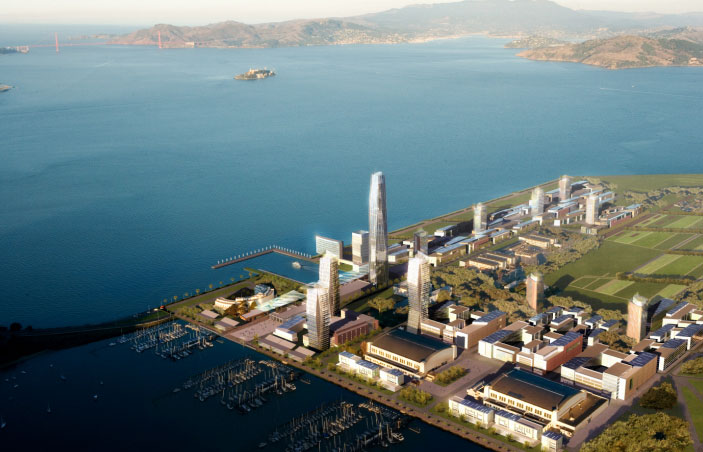
Actually, there are a bunch of problems. The Chron says the developers want to make the place “special,” a community of its own:


Developers hope the project, which goes before the Board of Supervisors for approval today, will feel like an urban village in the middle of a bustling metropolitan area. They hope urban farms, plentiful public transit and shared community spaces will give residents of the island a sense of community not found in other developments. …


For Treasure Island to be successful, developers and city planning experts agree that the residents of the island must feel like part of a special, distinct neighborhood where people want to spend time, and not just another community of commuters to San Francisco.


But the numbers don’t add up.

The plans call for 19,000 people living on the island — and there won’t be anywhere near enough employment opportunities for even a fraction of that number. So most of the residents are going to work somewhere else. Which means that twice a day they’ll have to travel — to and from San Francisco or to and from the East Bay — and there’s just no easy way to get that many people off that island to those locations.

Ther Bay Bridge is already beyond capacity during the periods when most of these people are going to be commuting. Yes, you can add a bunch of Muni buses to carry a lot of people, but that’s going to cost a lot of money. So would increasing ferry service to the level that this project would require. And if the past 50 years of San Francisco development is any guide (and it ought to be), the developers won’t pay enough for the transportation and the city won’t have the money to do it right so it won’t happen.

And even if the project meets the developers’ dreams in 30 years, it’s going to be a long, messy slog along the way. 

How, for example, will people who live on the island get their kids to school? Given San Francisco’s school-choice system, and the fact that there won’t be elementary, middle and high schools on the island anyway, and the school district can’t pay for the bus routes it has now, much less for new buses going to Treasure Island, you’re going to have hundreds of parents going to schools all over the city — and there will be only one way to get there: In cars.

(I’m all for no-car travel, but let’s be serious: Who’s got the time to take a kindergartener on the ferry downtown and on one or maybe two bus connections to a school — then turn around and take another bus to work? It isn’t going to happen. And nobody’s sending elementary school kids on Muni to school alone.)

If the supermarket isn’t built before most people move in, then you’ve got the grocery problem: It’s hard to do a week’s shopping on Muni and then a ferry. And what happens when you forget the milk (or run out of beer on the weekend?) No way to walk to the store, so you get in the car.

To make it even worse, 80 percent of the people who live there will be rich (since that’s who can afford market-rate housing). They’ll all have cars (and the developer kindly is providing parking spaces for all of them).

I just don’t see how it’s going to work. 

Alerts

0

ALERTS

By Jackie Andrews


THURSDAY, JUNE 9

Reporting back from Cuba

Gloria la Riva, recent winner of the Friendship Medal by the Cuban Council of State, will update the public on the new Cuban economic policies, their impact on the country’s economy, and the Latin American struggle for liberation — often called the Bolivarian Revolution. Afterward, check out a special screening of South of the Border, Oliver Stone’s investigative documentary that exposes the mainstream media’s misrepresentation of Latin America in its demonization of the Venezuelan President Hugo Chavez.

7–9 p.m., free

ANSWER Coalition

2969 Mission, SF

www.answersf.org


FRIDAY, JUNE 10

Protest nuclear power

It’s been almost three months since the earthquake in Japan and resulting Fukushima nuclear disaster, and many fear that California’s coast is similarly vulnerable. Rally against the corporations that influence the U.S. government in favor of nuclear industry despite its dangers to people and the environment. Demand that all U.S. power plants — funded by tax dollars — be shut down and help promote a cleaner public power.

3:30–5:30 p.m., free

The Consulate General of Japan

50 Fremont, SF

Facebook: No Nukes Action SF-Solidarity with 6.11 Action in Japan


SATURDAY, JUNE 11

World Naked Bike Ride

Ride your bike in the buff to express the public’s vulnerability to the social, economic, and environmental dangers caused by a global dependence on oil. A kind of naked Critical Mass, this fun, provocative bike ride will tour the city’s hot spots including Fisherman’s Wharf, the Marina, and Civic Center. All are welcome, so ride as you dare — bare or square — but don’t forget the sunscreen.

11 a.m., free

Justin Herman Plaza

Market and Embarcadero , SF

Facebook: World Naked Bike Ride-San Francisco


International Day of Solidarity

Enjoy an evening of solidarity and support for Marie Mason and Eric McDavid, two political prisoners sentenced for Earth Liberation Front-endorsed actions — what the feds call ecoterrorism. This event features a screening of If a Tree Falls: A Story Of the Earth Liberation Front, as well as information about the so-called “green scare,” or the recent wave of government repression meant to disrupt and discredit environmental activism.

7–9:30 p.m., $15

Women’s Building

3543 18th St., SF

www.june11.org 


Mail items for Alerts to the Guardian Building, 135 Mississippi St., SF, CA 94107; fax to (415) 437-3658; or e-mail alert@sfbg.com. Please include a contact telephone number. Items must be received at least one week prior to the publication date.

Treasure Island goes to the Board

37

There’s three reasons I’ll always remember the Chronicle’s Phil Bronstein: he used to be married to Sharon Stone, he got bitten by a Komodo Dragon at the L.A. zoo, and he had the audacity to write a column in the Chronicle that was titled “Treasure Island eco-dream is bad choice for funds.”
Now it’s true that Bronstein was a 1986 Pulitzer Prize finalist for his work in the Philippines. But that was 25 years ago, and I didn’t read what he wrote, so I can’t comment on the quality of his work  then. But now I live in the East Bay and drive past Treasure Island most days of the week—and I have been waiting for someone at the Chronicle to finally voice something other than their usual preppy praise for this increasingly large development in the middle of the Bay.
 
And Bronstein certainly did have plenty to say about Treasure Island. And it wasn’t the usual upbeat pap about “bold and robust visions” that the Chron usually serves up when it concerns anything that involves Lennar and public-private development. Instead,  Bronstein began by describing T.I.  as a “onetime secretive Navy base filled with deer, political patronage and who knows what buried in the ground.”

Now, part of Bronstein’s fire may have been a result of him writing his column in April, a few weeks after a massive earthquake and tsunami hit Japan, triggering a nuclear meltdown. Or two or three.

Bronstein’s infamous rant even mentioned some of the radiologically impacted things at Treasure Island that, as he put it, “leached into the soil from weaponry or other deadly items: radium and PCBs 100,000 times the acceptable levels.”
And then he compared Lennar and billionaire Ron Burkle to “contemporary development pirates.” Believe me, that was a surprise to read in the Chronicle.

“This year, they’re scheduled to break ground on a huge multibillion-dollar public-private ecotopia mini-city built upon toxic waste and landfill,” Bronstein wrote. “This glorious contradiction might become a triumph of super-green living and high-end dreams. But it also represents something else: bad choices about how to spend public money in ever tighter times.”

Bronstein noted that the Board has a brief panic in April when they considered whether a Japan-style disaster could wipe out the T.I. plan, but that Rich Hills of the Mayor’s Office said the “disaster potential has already been addressed.”
“Unless we have what Hills called ‘a freak disaster,’” Bronstein added with a cutting bite that his Komodo dragon would have been proud of, including Bronstein’s inclusion of the fact that Treasure Island is on the California Emergency Management Agency’s tsunami inundation map, and that while we are coughing up $105 million to developers who want to profit from high-density living on T. I, all of us are neglecting aging infrastructure that we already have.

“While T.I. developers are busy putting some kind of shower cap-like cover over the land so trees and foundations don’t touch toxic ground that can’t and won’t be cleaned up, our children stand a pretty good chance of being flattened like pancakes in existing structures while they’re learning math and history during the next, inevitable big quake,” Bronstein concluded.
Meanwhile, those of us who drive the seismically-compromised Bay Bridge each day can’t help wondering how folks who decide to move to the development that’s being planned for Treasure Island will ever get off the island—unless they have a pirate ship.

That’s because every morning, we get to see a long line of drivers waiting—without much success—for drivers on the Bay Bridge to slow down and let them into the traffic.

Those of us who sometimes commute by ferry also know how tricky it is try and catch the last ferry, which leaves the San Francisco Ferry Building at 8:25 p.m. That’s way earlier than most commission meetings end. And earlier than most nightlife begins.

And then there’s the question of what happens when you get back to Treasure Island–and realize you forgot to buy milk, collect the dog, or pick up the kids from day care.

Now, maybe the city and the developers believe they have thoroughly considered and answered all these questions. But have they done any outreach to East Bay commuters, whose journey will likely be further impacted by the T.I. plan? If so, I certainly haven’t heard about it. And what about the folks in Berkeley who likely won’t be able to see San Francisco once a bunch of high-rises pop up in the Bay? Have they been consulted?

This Tuesday (June 7) at 5 p.m., the Board will hear an appeal of the city’s Treasure Island environmental impact report and consider a huge batch of related documents. (And I’m willing to bet that most current supervisors don’t know too much about this plan, and probably have only flipped through the thousands of pages of documentation related to it)

The appeal was filed by the Sierra Club, Golden Gate Audubon Society, and Arc Ecology, who last year filed an appeal around the city’s EIR for Lennar’s massive Hunters Point Shipyard/Candlestick Project. Only this time, this trio is being joined by a group of Treasure Island residents—and former Board President Aaron Peskin.

Which reminds me: Three weeks after Bronstein wrote his amazing Treasure Island hit, piece, his fellow columnists at the Chronicle, Phillip Matier and Andy Ross, were back, sounding much more like the Chronicle’s attack dogs usually do, when it comes to anyone who dares to find the city and Lennar’s massive plans less than perfect: “Peskin, who as a supervisor was notorious for his middle-of-night phone rants to department heads, called the proposed high-rise plan that just squeaked by the Planning Commission a ‘laughingstock mistake,’” M& R crowed.

But in the end, they quoted the very thought that Peskin wants M&R to print and Chronicle readers to consider about the city’s current Treasure Island plan:

“It will horrify San Francisco and the Bay Area for decades to come,” Peskin said.

Now, as the folks joining Peskin in opposing the city’s current plan note, they aren’t trying to stop the development of Treasure Island. They are simply fighting the latest plan.

“The developer and the city already have an approved EIR and project plan for a 6,000 unit smaller scale, more transit friendly project that was passed in 2006,” Arc Ecology states in a flier that it plans to distribute at the June 7 hearing. “Environmentalists and many of the appellants supported that plan. Don’t be fooled by the rhetoric. It was the earlier plan that won all the awards for sustainability.”

And as Arc points out, the city’s latest EIR and the plan currently before the Board is an entirely different animal from the city’s 2006 plan.

“It’s 25 percent bigger than the 2006 plan, tipping the scales on its impacts,” Arc states. “It increases the housing by 25 percent to 8,000 units, decreases transit service and affordable housing and competes with hotels and businesses that already exist downtown.”

“What can you do? Tell the Board to go back to the 2006 plan,” Arc advises.

The flier also lists a bunch of bullet points that outline some of the coalition’s objections.

“It’s unsustainable,” the flier states, claiming that under the new plan, there will be, “too many cars, too much traffic, too much air pollution.”

Under the new plan, there is also a seven percent reduction on the affordable housing set aside and a 17 percent reduction in overall affordable housing units, Arc notes. That’s another way of saying, “There is not enough affordable housing.”

And Arc claims the island will remain contaminated (see Bronstein’s rant about radionuclides and PCBs at the beginning of this post) even after the Navy completes its toxic and radiological cleanup. That the 40-story high-rise towers will obstruct views of San Francisco from the East Bay, and vice versa. And that the project financing plan will drive the city further into debt for at least another 15 years.

Arc’s flier concludes by asserting that the whole plan is undemocratic.
“Once approved, there will be no further environmental review of project plans—ever!” Arc claims. “Once approved the project will be implemented by an unelected nonprofit corporation. There has been no outreach or involvement of East Bay residents despite traffic and view impacts. The plan repays $55 million in additional developer costs to purchase this island with hundreds of millions of dollars of impacts on Bay Area residents.”

Now, I’m sure officials for the City and the developer will have plenty of counter arguments–and possibly busloads of low-income T.I. residents/unemployed SF workers, who will be shipped into the Board’s Chambers to argue that they need the Board to approve this plan so they can have new homes and jobs. Because that’s what happened last year, when Arc and the Sierra Club and Golden Gate Audubon expressed their concerns about plans to carve up the Candlestick State Park Recreation Area and build a bridge over the Yosemite Slough. And suddenly found themselves cast as the big bad villains, when it came to the city and Lennar’s wish to ram through the Candlestick/Shipyard plan.

But regardless of whether you believe in the project, oppose it, or don’t know much about it, make sure you show up at 5pm in Room 250 at City Hall on June 7, if you want to hear what actually goes down. Especially if you work in San Francisco, and live in the East Bay, because much of the Treasure Island traffic will directly impact the East Bay. 

Or as Arc puts it, “This new project is 25 percent larger than the prior one and like the difference between a 75 degree day and a 100 degree day – this increase in size makes all the difference. The new project will overdrive bridge capacity, create too much traffic, not enough transit, reduced levels of affordable housing, and vests enormous public power in an unaccountable, unelected development authority.  Please tell the Board they don’t have to go back to the drawing board – just to the 2006 plan and recirculate the EIR.”
 

Sneaky campaign to draft Lee sullies political environment

92

At a time when City Hall is taking on several important issues – from the budget and pension reform to massive projects such CPMC’s mega hospital and housing project and the redevelopment of Parkmerced and Treasure Island – an ambitious cabal of political operators bent of convincing Mayor Ed Lee to break his word and run for office is poisoning the environment under the dome.

A series of unfolding events over the last week makes it clear that Sup. Jane Kim’s campaign team – political consultants Enrique Pearce and David Ho, Tenderloin shot-caller Randy Shaw, and their political benefactors Willie Brown and Rose Pak – are orchestrating another campaign to convince Lee to run for office, apparently abandoning the mayoral campaign of Board President David Chiu.

The Bay Citizen reported that Pearce was pursuing creation of a mayoral campaign that Lee could simply step into, while blogger Michael Petrelis caught Pearce creating fake signs of a grassroots groundswell for Lee over the weekend. That effort joins another one by the Chronicle and a couple of downtown politicos to create the appearance of popular demand for Lee to run despite a large field of well-qualified mayoral candidates representing a wide variety of constituencies.

And then today, Shaw joined the effort with a post in his Beyond Chron blog that posed as political analysis, praising the John Avalos campaign – an obvious effort to ingratiate himself to the progressive movement that Shaw alienated by aggressively pushing the Twitter tax break deal and Kim’s candidacy – while trying to torpedo the other mayoral campaigns, calling for Lee to run, and offering a logic-tortured take on why the public wouldn’t care if Lee breaks his word.

Pearce and Ho – who sources say have been aggressively trying to drum up support for Lee in private meetings around town over the last couple weeks – didn’t return our calls. Kim, who is close to both Chiu and Avalos, told us she is withholding her mayoral endorsement until after the budget season – which, probably not coincidentally, is when Lee would get into the race if he runs.

Fog City Journal owner Luke Thomas, who Petrelis caught taking photos for Pearce over the weekend – told us Pearce’s Left Coast Communications, “hired me in my capacity as a professional photographer to take photographs of people holding ‘Run Ed Run!’ signs and should not be construed as an endorsement of the effort to draft Ed Lee into the mayor’s race.”

In an interview with the Guardian last week, Lee reiterated his pledge not to run for mayor – which was the basis for his appointment as a caretaker mayor to finish the last year of Gavin Newsom’s term – but acknowledged that Pak and others have been actively trying to convince him to run. Pak has an open disdain for candidate Leland Yee and fears his ascension to Room 200 would end the strong influence that Pak and Brown have over the Mayor’s Office and various department heads.

“I am not running. I’ve told people that. Obviously, there is a group of good friends and people who would be happy for me to make a different decision, so they’re going to use their time trying to persuade me. I’ve told them I’m not interested and I have my personal reasons for doing that but they’re not convinced that someone who has held this office for five months and not fallen into a deep abyss would not want to be in this office and run for mayor. I’ve been honest with people that I’m not a politician. I’ve never really run for office nor have I ever indicated to people that I’d like to run for mayor of San Francisco. That’s just not in my nature so it’s been a discussion that is very foreign to me that has been very distracting for me in many ways because I set myself a pretty aggressive piece of work that this office has to get to. The way I do it is very intensely. I do meet a lot of people and seek their input before I made a decision,” Lee told us.

Even Sup. Sean Elsbernd, who nominated Lee for mayor, told the Chronicle that he doesn’t support the effort to pressure Lee into running and he feels like it could hurt sensitive efforts to craft compromises on the budget and pension reform. When asked by the Guardian whether he would categorically rule out a run for mayor, Lee told us he would.

“I’ve been very adamant about that yet my friends will still come up to me and they’ll spend half their time talking to me about it. And I say thank you, I’m glad you’re not calling me a bum and trying to kick me out,” Lee told us, noting that Pak – a longtime ally who helped engineer the deal to get Lee into office, for which Chiu was the swing vote, parting from his five one-time progressive supervisorial allies in the process – has been one of the more vociferous advocates on him running.

Asked whether there are any conditions under which he might change his mind, Lee told us, “If every one of the current supervisors in office asked me to run and those supervisors who are running voluntarily dropped out.” But Avalos says he’s committed to remain in the race, and his campaign has been endorsed by three other progressive supervisors.

Locals shine at the Slumberland Showcase

0

This year’s SF Popfest culminated in last Saturday’s doozy of a Slumberland Showcase, boasting 10 bands in eight hours’ time for a day-to-night festival of jangly art-pop for the twinkle-toes in all of us. Despite the draw of bigger names like 14 Iced Bears and the June Brides’ Phil Wilson — both of 1980s UK pop and C86 fame — it’s safe to say that a few local bands truly represented and made us all proud, possibly even stealing the show.


Oakland’s Kids on a Crime Spree features Mario Hernandez of Ciao Bella and From Bubblegum to Sky, writing in his usual style of layered and lush melodies with vocal harmonies — and handclaps! Also noteworthy is righteous drummer babe, Becky Barron, who has apparently mastered the art of dancing and drumming at the same time, and doing a pretty good job at it.

Here’s a video for “Sweet Tooth,” a catchy track off of their brand new LP “We Love You So Much” on, you guessed it, Slumberland. Children, the elderly, and those prone to epileptic seizures beware — it’s super stroboscopic.


Not quite local, but close enough, Oxnard’s Sea Lions delivered an amazing follow-up performance to their January 22 show and San Francisco debut at the Knockout. Those of us in attendance earlier this year have been waiting with bated breath for this eclectic bunch to grace the stage once again, and it was well worth the wait. Adrian Pillado’s reverb-y Calvin Johnson-esque voice juxtoposed with the band’s nerdy and jangly pop numbers is unexpected, yet works really well.  

Check out the vintage celluloid artifacts of old Oxnard in the 1960s and 70s in the band’s music video for the tunes “I Loved Her So Much” and “I Wish I Was Lou Reed”:


What the hell is a Terry Malts and why is it so amazing?

Jokes aside, the band plowed through a perfect set of expertly crafted pop songs, this time amping up the volume and speed, as well as their signature crunchy fuzz that left the croud unaware of what hit them. Many say this local trio stole the show.

Behold, the music, but beware — you will have these catchy tunes stuck in your head for days:


Tumble Down by corey_lee Terry Malts – Distracted by Slumberland Records


Art Musems are always a delight! This band’s resemlance to the Clean and other Flying Nun acts is unmistakable. Their unconventional set-up on stage and their slightly folky flavor set them apart from the rest of the evening’s line up, and the electronic stylings of Virginia Weatherby is mezmerizing to watch. With releases on both Slumberland and Woodsist, we will certainly be seeing more of these guys soon.


Unfortunately I missed Brilliant Colors while, um, running an errand — the performance turnaround was so speedy!– but I’m sure they were fabulous as always with their disjointed-yet-lovely Raincoats-y melodies, like these numbers:

Brilliant Colors – How Much Younger by Slumberland Records Never Mine by brilliantcolorsinfo

Protesters target Apple as a tax cheat

32

By Oona Robertson

Tomorrow (Sat/4), the economic justice organization US Uncut is protesting Apple Computers for trying to avoid paying $4 billion in federal taxes and for joining a corporate tax cheat lobbying group. Ironically, it is Apple’s good corporate reputation that has made it a target, as protesters hope the attention might shame the company into doing the right thing.

Apple has kept billions of dollars in profits in offshore tax havens and low-tax countries such as Ireland and the Netherlands. Through an organization called WIN America that Apple belongs to along with Google, Microsoft, and other large corporations, it is lobbying Congress for a tax holiday to bring $1.2 trillion in profits back to the U.S. to supposedly invest in the economy. Apple’s share of this tax break, $4 billion, would equal salaries for 90,000 teachers.

US Uncut is aware that the technology giant is an unlikely target for protest, due to its popularity and positive public image. Protesters are hoping that because Apple seems to care about its image in the eyes of consumers, it is more likely to respond to a protest.

“Most of the other companies aren’t really gonna give a damn if we go after them. They’re not concerned for their reputation. [With Apple] there’s a little more leverage,” US Uncut spokesperson Joanne Gifford told us. Apple did not return requests for comment.

Protesters hope to creatively drive their message home using flash mobs to get people’s attention. They are demanding Apple, “Leave the Tax Cheat Lobbying Group and Stop Lobbing Congress for More Tax Loopholes,” according to its website.

This Saturday’s action coincides with similar protests in 15 other U.S. cities, all organized by US Uncut as part of what it calls a national day of action. In San Francisco, protesters are meeting at Union Square to “discuss action ideas,” before heading over to the Apple flagship store on Market Street. Chanting, handing out leaflets and holding signs will be recommended, boasting slogans such as “Love the iPhone, hate the tax cheat,” and, “It only takes one bad apple.”

US Uncut’s website lists creative action ideas for protesters to employ, such as impersonating Apple employees by wearing turquoise blue shirts and nametags, or approaching the Genius Bar to ask questions such as, “Why can’t I sync my iPhone with my values?”

Teachers are being told to bring their pink slips and ask the “geniuses” how to save their jobs. The protesters’ last major flash mob, a music and dance number targeting Bank of America, made headlines and the hope is to replicate that level of publicity this Saturday.

Squeeze in and put out at Elegantly Waisted

5

Luscious, overflowing breasts, a shrunken waist and accented hips may not align with today’s emaciated super-model physique but the hourglass figure still remains as an undeniably arousing shape. The Victorians were notoriously prude but their super-sexed up version of the modern corset ironically brought attention to all the right assets and it still appeals to modern lust today. This weekend ladies and gents will pay tribute to the iconic garment at Luscious: Elegantly Wasted, the SF Citadel‘s “celebration of curves” and play party for corset kinks.

Lacey, leather, feminine or masculine; the variety in today’s corset world is ready to please all kinds of fantasies and theatrical characters. Whether you like to wear the gear or just admire, the Citadel’s dungeon will be filled with bodies neatly tucked and squeezed into juicy packages, ready to inspire some costume-friendly BDSM play. If you’re new to corsets, the owner of local supplier Dark Garden, Autumn Adamme, will be on call to answer questions, give expert lace-up lessons and offer shopping tips. It’s corset 101 and the students are sure to pay attention. 

corset1

Adamme showing off her spectacular goods. Find more photos at www.DarkGarden.com

Adamme started Dark Garden in 1989, offering drool-worthy custom corsets that promise to be more comfortable than the competitors. Comfort? Is it possible for organs to be comfortable when they’re jammed into that sausage casing turned gorgeous top? Jeggings, skinny jeans, and American Apparel are hard enough to wear if you’ve got a body with any actual substance (ie. bones and muscles). Wedging into such an exaggerated old-time silhouette sounds awfully uncomfortable, right? Dark Garden’s shop girl, Natalie Rantanen has been wearing corsets since age 13 and begs anyone with such an impression to step into the fitting room. 

“I can sit, eat, dance, everything. Well, I wouldn’t suggest running a marathon or doing yoga,” she says. “Corsets aren’t as torturous or limiting as one may think. We’re obsessed with proper fitting at Dark Garden. If it’s painful, it doesn’t fit you right.”

dg_men

A piece from Dark Garden’s Spring 2011 Collection. Photo by Daniel Silveira

Contrary to most corsets that are sewn to fit a mannequin, this San Francisco shop creates patterns designed for human bodies, basing measurements on their own costumer base. So what about all those movies where ladies are short of breath and choking in their fancy gowns? Will the Citadel need to set up a bunch of fainting couches? Rantanen says absolutely not and reiterates the importance of a proper fitting. When curious shoppers tiptoe into the shop, Rantanen is responsible for making sure they can achieve the look they want without feeling like they’ve lost a lung. She’ll also teach you how to lace up on your own, just in case you don’t have servants to do your bidding. 

“I’m not going to lie– there is a learning curve, but by the fourth or fifth time, you’ll be a pro,” she assures. It only takes Rantanen five or ten minutes to suit up in the morning, but for newbies, it’s important that you take your time to avoid body shock; your spleen isn’t used to sharing a room with your liver. Getting out is even easier and in case there’s a rush to untie, the setback may only be a two-minute tease. Beauty is patience and vis versa. 

corset3

Photo by Malcolm Weir

Elegantly Waisted attendees probably won’t be interested in de-corseting and instead, they’ll take their time flogging, stroking, and spanking the accentuated goods. Even if a corset finds it’s way into the bedroom post-event, most models leave clear access to the major erogenous zones. Good to keep in mind for a spicy mid-week romp. 


LUSCIOUS: ELEGANTLY WAISTED

Sat./4, 8 p.m., $25: Citadel membership required — $10 yearly membership available at the door

SF Citadel

1277 Mission, SF

www.SFCitadel.org


The Performant: Bar Crawl

0

Burroughs and Shakespeare served neat, no chaser.

Stop me if you’ve heard this one before. A man walks into a bar. Ouch! Just kidding. A man walked into a bar. He idly scoped out a handsome youth leaning against the wall (Jorge Rodolfo De Hoyos Jr.) and began to sing: “I could use that, if the family jewels weren’t pawned to uncle junk…” Music swelled from the five-piece chamber orchestra in the corner of the stage: pizzicato on the violin, a bowed double bass, high-pitched urgent keys. An angular, haunting, sometimes dissonant music; just what you might expect the score for an operetta based on the semi-autobiographical William S. Burroughs II novel Queer to be.

The man onstage inhabited a familiar silhouette — rumpled suit jacket, a wide, silk tie, soft fedora — but rather than the reptilian demeanor of Burroughs’ legend, this representation of his protagonist Lee (Joe Wicht a.k.a. Trauma Flintstone) was both lusty and manic. He pursued the object of his desires, the diffident American Allerton (James Graham) with a single-minded frenzy, over-shadowed only by trembling bouts of junk-sickness and a burgeoning obsession with the psychotropic yage, or ayahuasca plant of South America.

Premiered in 2001, the Erling Wold operatic adaptation stuck to the text of the original pretty faithfully, the addition of Cid Pearlman’s silent balletic choreography lending the entire production the quality of an extended dream sequence. The show ended as it begins — in an expat bar somewhere in Mexico city—the slumped character of Lee as alone as in the opening sequence, older but not wiser, his longing for Allerton unabated, them usic underscoring his solitude in mournful adagio. 

Meanwhile, at the Café Royale, briefly transformed into The Boar’s Head Tavern of Shakespeare’s Henry IV and V by the ever-ambitious San Francisco Theatre Pub, an adaptation of both (called The Boar’s Head, natch) played to a full house on Monday night. Concentrating mainly on the scenes set in the infamous pub, The Boar’s Head tracked the coming-of-age of the king-to-be, Prince Hal (Bennett Fisher), and his relationships to the two men who shaped him most—his austere father, the king (Ted Barker), and the jocular, petty criminal, Falstaff (Paul Jennings).

With no clearly defined stage space, the actors roamed around the whole room as well as on the Mezzanine, giving their pub-set play an air of authenticity better than any spray-painted flat and borrowed barstools could ever hope to. Their inventive use of space included using the pool table as an erstwhile deathbed, and the end of the bar for, well, the end of the bar, where Falstaff called repeatedly for his cup of sack and the French princess Katherine (Larissa Archer) learned halting English, body part by body part.

At the play’s end, the newly coroneted Hal banished the lusty Falstaff from his presence for a distance of 10 miles. Despite the somewhat gloomy resonance with Lee’s downfall from the night before, it’s actually encouraging to note that the libertine spirit has been under attack for literally hundreds of years and has yet to succumb entirely to the guardians of dour morality. At the very least, we should toast its tenacity with a cup of sack.

A rather odd endorsement

94

I got a press release today from the Dennis Herrera for Mayor campaign proudly announcing the endorsement of … Frank Jordan.


Jordan was mayor of San Francisco once. Back in the 1990s. His term ran from 1992 to 1996, and was, to be polite, mediocre. Nice guy; awful mayor. He was one of the more conservative mayors in memory, left office pretty unpopular, and a lot of people don’t even remember him. Those who do, particularly progressives, don’t remember him fondly at all.


Ah, but Herrera does.


“I’m deeply honored by Mayor Jordan’s praise for my leadership, and grateful for his endorsement for my mayoral candidacy,” said Herrera.  “Few can claim to have done as much to serve our City with such integrity, skill and courage as Frank Jordan.”


While Leland Yee is out trying to get support on the left, which might actually help him win, Herrera seems to be moving, if anything, to the right (which is what Jordan’s endorsement represents). Very odd. Very odd indeed.


I couldn’t reach Herrera today to ask him about it, but I’m sure he’ll call me and I’ll update this post. Meanwhile: WTF?  


UPDATE: I heard from Herrera late in the day. He told me that “there are only six people alive who have ever held the office of mayor of San Francisco and know what it’s really like to manage this city, and I would be proud to have the endorsement of any of them.” I asked: Including Willie Brown? Herrera: “He’s a columnist now so he doesn’t do endorsements.”


Herrera also pointed out, correctly, that he has the endorsement of Mike Hennessey, the progressive sheriff. And he’ll wind up with some more leftish endorsements, too. Still: Frank Jordan?

A different Mayor’s Office

10

A group of Guardian reporters and editors met with Mayor Ed Lee June 2, and while the mayor and I don’t agree on everything, I have to say: It was refreshing.


Refreshing because the mayor has a sense of humor and doesn’t act like an infallible monarch. Refreshing because his office looks like, well, a working office. Refreshing because he smiled, was polite and never said “I dispute the premise of your question.”


What a difference.


Under Willie Brown, the mayor’s office was an imperial sanctum. If His Royal Williness deigned to favor one of his servants or subjects with the boon of a royal visit, you were expected to crawl on your hands and knees and kiss the floor. 


When Gavin Newsom was the occupant, the place was a cross between a museum and an Architectural Digest showplace — not a scrap of paper on the desk, every hair perfectly in place, the Robert Kennedy pictures and books lined up perfectly for the visitor to admire.


Both mayors treated the press with hostility. Both expected to be treated as potentates. The mayor was better than you and I — and you needed to understand that right away, or risk disdain and dimissal.


Ed Lee isn’t doing what I want with the budget. He’s not talking about raising taxes on the rich. He’s probably going to go along with ParkMerced and maybe even Treasure Island. He signed the Twitter tax break. I worry (a lot) about his ties to past corrupt regimes.


But he’s happy to have reporters in his office. He’s got stacks of reports on his desk and a notepad that suggests he’s actually reading them. He showed us his private “man cave” in the back, and offered us walnuts. He’s not always right on policy, and I don’t think he should run in the fall … but he’s not a jerk. And given the recent history of San Francisco mayors, that’s pretty radical.


Roccopura is back and wild as ever

0

I’ve been covering San Francisco’s indie circus scene for years, first for a Guardian cover story and then for my book The Tribes of Burning Man, and I’ve always loved the colorful chaos it injects into the city’s nightlife scene. And if you really want to see these creative and talented characters at their very best, in a show that brings all its myriad parts and beautiful pieces together into a big messy money shot, check out Roccopura tonight (Thu/2) or later this month at DNA Lounge.

Written by Gooferman frontman Boenobo the Klown, the creative force behind Bohemian Carnival and Burning Man’s Rednose District, Roccopura is a circus-inspired rock opera that spills from a stage packed with various indie circus troupes right out into the audience, which it jostles, gooses, and brings into the entire performance.

When I caught the show’s premiere on April 1, it was controlled chaos at its finest, a wild ride that had me alternatively laughing, dancing, mesmerized, and cheering throughout the show. And afterward, I felt like I’d been traveling right along with protagonist Sancho Panza during his bullfight, brawls, ocean voyage, mushroom trip, romance, and his other misadventures.

“We’ve spent the past few weeks honing stuff and doing fixes from the last show. It’s much improved now,” Boenobo told me by phone as he worked on final preparations, but I’m not sure that I believed him. Surely, it was a chaotic experience, but I’m not sure how they could improve it, although I’ll take this veteran showman’s word for it and happily pay them another visit.

In addition to a live soundtrack and other performances by Gooferman, the show features the Vau de Vire Society, Sisters of Honk, and the Burley Sisters, all of them bringing sex appeal, acrobatic talents, and a wild sartorial style to the show. Check it out.

Through the lens of hip-hop

1

Photographer/filmmaker Brian Cross charts a musical map of the African diaspora in the Americas — and opens new Summit Peek Gallery show tonight (6/2), “If It Fits in the Backpack: 10 Years on the Road with Mochilla”

Last year, Los Angeles-based production group Mochilla released Timeless,a trilogy film series documenting three concerts performed in L.A., early 2009. For these concerts, the photographer/filmmaker/DJ duo behind Mochilla, Brian Cross and Eric Coleman, shined light on three composers who have helped influence and shape hip-hop in different ways: the originator of Ethio-jazz, Mulatu Astatke; leftfield Brazilian arranger, Arthur Verocai; and a gutsy rendition of J Dilla’s beats crafted by Miguel Atwood-Ferguson with 60-piece orchestra. The films paint intimate portraits of musical exchange and live performance while paying tribute to some of the overlooked giants of the sprawling African musical diaspora.

In many ways Timeless is a culmination of themes explored in Mochilla’s films from the past decade. Their first project, Keepintime: Talking Drums and Whispering Vinyl (2001), and the follow-up live recording and DVD release in 2004, captured improvisational collaboration between L.A. hiphop producers and DJs, such as Madlib and J.Rocc, among others, with some of the powerhouse session drummers who inspired their sample-based work. Brasilintime: Batucada Com Discos (2007) also navigated the dynamic tension between an older generation of drummers, this time including legendary Brazilian percussionists, and the new school of analog producer/turntablists.


But not only did Mochilla depict creative partnership between these two forms of percussionists, they also translated the cut-up aesthetic of the DJ and rhythmic momentum of the drummer to the inner workings of the films themselves. A pastiche of words, music, and imagery composed of still shots and footage drive forward the fragmented stories, and striking moments of reconciliation, which unfold on screen.

More recently, Cross (known more familiarly as B+) set off to Columbia to document the Petronio Alvarez music festival as well as collaborative work between Will Holland (a.k.a. Quantic) and Ernesto “Fruko” Estrada, who could be credited with forging the rootsy, Afro-Columbian take on salsa. Mochilla also shot a good deal of the footage for Banksy’s street art disaster film from last year, Exit Through the Gift Shop, caught wayward rapper Jay Electronica at the Pyramids in Egypt and recording in South Africa, and documented Nas and Damian Marley on tour. To put it short, the dudes put in work.

“I look more for the off-handed moments that can be sustained as photos in themselves,” Cross tells me over the phone, while working in the dark room basement of his home in Los Angeles. He says that he’s excited to see how the large hand-printed photos will look in the upcoming Mochilla showcase at the new Peek Gallery in the Mission, this Thursday. “I’m trying to be iconic, but at the same time I don’t want to make publicity photos for record companies,” Cross says. “The videos, in a way, can be much more interesting because the fluidity allows for a certain kind of candidness.”

Cross, 44, has quite a history with such candidness in his work. Born in Limerick, Ireland, Cross moved to San Francisco’s Mission district in 1990 before attending CalArts in Southern California to study photography. While still completing his degree, Cross started writing what would become a landmark book on the emergence and socio-political implications of hiphop in L.A., It’s Not About a Salary: Rap, Race, and Resistance in Los Angeles (Verso Books, 1993). He is responsible for a number of iconic album covers of underground hiphop acts, from Freestyle Fellowship to Ras Kass and Mos Def. And Cross also made headway with more than a few magazine photo spreads and music videos throughout the past couple decades, notably including an arresting multi-textured piece for DJ Shadow’s “Midnight in a Perfect World” off Entroducing….. (Mo’ Wax Records, 1996).


Looking over Cross’ ever-growing body of work, some primary themes consistently arise: Through the lens of hiphop, Cross orients a number of conversations, multi-generational interchanges, rhythmic confluences, and resistant divergences that weave through the diaspora of African musical traditions in the Americas. “There’s an anthropological side as well as an ethnomusicologist side to it—an attempt to make a map of the diaspora in terms of the music set by the present,” Cross explains. “The goal is ultimately to document in a way that is not strictly historical, but to let the past speak to now rather than the other way round.”

SFBG I find an interesting dynamic in your film work and the documented live performances. On the one hand, you’ll take hiphop producers and DJs and pair them with percussionists, so as to put the contemporary in tension with the recent past that informed those contemporaries. On the other hand, there’s another element of featuring the music of those composers themselves. In what way do you think the past speaks to the present, as you put it, in both those approaches?

Brian Cross The idea is that somehow you don’t want to frame it off. In other words, for Keepintime, we didn’t want to get Paul Humphrey or Earl Palmer involved in something and frame off the dialogue in terms of, ‘Ok Paul, we want you to play the classic break on “One Man Band (Plays all Alone),” and now we’re going to layer something on top of it and develop a routine.’ But that’s not what’s interesting about Paul Humphrey. Yeah, it’s amazing he did that, and that’s why we’re choosing to work with him. But Paul Humphrey is somebody living and breathing; he’s our past, but he’s also our present. We want to open up a space of dialogue that is open to this series of works but isn’t limited to it.

For the Brasilintime project, we could have gone to Brazil and found obscure musicians who made amazing recordings and complete the narrative in the way that normal Eurocentric or Western versions of the story go: We bring them to Carnegie Hall, we do a concert, venerate them, and show them that Carnegie Hall is in fact the best venue in the world and is the most important place to see music. Whoa whoa whoa, back it up, we’re not going to do that. We’re going to go to there and engage, and try to actually build a bridge to the music. Let’s not have this as a one-sided sentence that leads in a single direction. Generally, what we try to do is to de-center, to find ways in which we can open up, because, invariably, when you do these things, that’s when you make discoveries. Oh, Mamao and Wilson das Neves played on the Jose Mauro record, he died before the record came out, and then Dilla sampled it … that’s when you make these discoveries.

You know I don’t mind the Buena Vista Social Club [1997] record. Ry Cooder is a great producer and a great musician, but the film is fucking awful. It’s so fucking wrongheaded. And that director, Wim Wenders, is smarter than that, man. We’re people of the left, he knows better than that. Of course, everybody got involved and was super happy that these guys were finally discovered, and we can fully appreciate how beautiful their music is and the contributions they’ve made. But then Carnegie Hall is put into the equation; we don’t need to reaffirm the same set of cultural values. We don’t need that. Maybe that’s kind of a trite example, but I’m interested in trying to forge ways to talk about music, or to explore possibilities of music, that don’t fall into the same set of traps that most writing and television and documentaries about music fall into.

SFBG Yeah, there are standard methods for placing outsider music, or the marginal narratives of musical traditions and musicianship, into the mainstream narrative, one of validation internal to our own frameworks of understanding. As a photography and filmmaker, how do you approach a sense of the outsider, or the musician who is resistant, or peripheral to the grand narratives? What techniques do you take up in order to engage these musicians and traditions and make them visible for a broader audience?

BC Well, when it comes to Brazilian music, I’m pretty serious about my shit. I do my research thoroughly. I try to put my best foot into it. But other than that, it’s pure human relationships, man. For me, here’s my pet peeve: Too much of the stuff happening right now is done without real social engagement. It’s through the Internet, whether it’s digital digging, or people paying 800 dollars for an obscure record from Ethiopia or Angola, when you could buy a ticket to go there for the same amount. You should be going. That’s the responsibility. The responsibility is to go there, actually experience it, and see what works on the ground.

To go back to Ry Cooder, when he went to Cuba to make Buena Vista, that wasn’t the music people were listening to in Cuba. People were listening to Timba, and Timba is a completely different thing. I just think there’s a lot more to be gained from actually going to say, Baranquilla, and spending time there in the town—meeting people, buying records, meeting musicians—than there is from surfing the Internet and finding the latest hot cumbia re-groove from Argentina or whatever. If you’re serious about your shit you have to go there, engage on the ground, and see what makes sense. You like Wu-Tang? Go to Staten Island. Go for a walk around the projects. Go visit P.L.O. Liquors where all those songs came from. That’s the kind of compliment you need to be paying people. And there’s ways to do this that aren’t touristic. You can go and feel the vibe there. It might seem obvious, but it gets lost in these discussions.

SFBG Do you see that as your primary motivational force? That your projects are prefaced on this desire to travel, meet these musicians that inspire you where they live and make music; find out what they’re doing, why they’re doing it, and be a part of it?

BC Well, the two things are kind of contingent. It’s cyclical somehow. I’m there, experiencing, helping to build bridges as best as I can, and I’m also thinking about photographs because that’s what I do.

SFBG How do you think this approach fits back into your earlier photo work in Los Angeles and your book, ‘It’s Not about a Salary?’

BC It’s an extension of it, really. You know the book is a very primitive thing, if you actually sit there and read it from cover to cover, which I did for a project a couple years ago, and I was highly embarrassed (laughs). But there was no model. It’s not like Can’t Stop Won’t Stop [Picador, 2005] existed, and someone had put that work down. I was 26, I had been into hiphop since I was 17, and I gave it a stab. And, of course, I put myself into a cultural debate that I didn’t know much about, for my own peril.

Ostensibly, the work isn’t much different. In that book, yeah, it’s about hiphop in Los Angeles, but I also managed to talk to Roy Porter, The Watts Prophets, Kamau Daaoood, Horace Tapscott, and a whole slew of other people who didn’t straightforwardly have anything to do with hiphop in Los Angeles. But in another way, they had everything to do with it. What has always been interesting for me with hiphop is that it has this historical reach. That’s what I tried to bring into the book. There’s definitely things which I don’t agree with now, and suppositions that I made or thought what would happen which didn’t. But it was a critical moment, right before The Chronic [Death Row, 1992], which I think was really a world changer.

The amazing thing about the golden era of hiphop, as they call it now, that era up to ‘95 or ’96, is that it was incredibly inclusive music. There was Japanese Koto, all sorts of rhythms from the Caribbean, rock, jazz, funk, you name it. That sourced people into record stores in different ways. The categories didn’t make sense as they did previously. That’s the magnetic lure of it. Somehow, hiphop allowed this extraordinary ability to look at previously recorded things and make them work in the present. For me, that was a critical modernist moment, or as the prevailing discourse has it a post-modernist moment—the collage and montage.

SFBG That brings up another interesting point in your work in the idea that when listening to hiphop not only is the origin of the break or the sample concealed, but also the artist’s background is concealed. The identity of the artist is mystified. Would you say that your projects aim towards making visible the musician as a person rooted in an environment or social setting?

BC The two-sided sword of the invention of youth culture is that it posits a kind of energy and dynamism to what we call youth. The problem is that the way it’s commodified is made contingent on the exclusion of anything outside youthful values or youthful thinking. I don’t agree with that. And if you look at the music of the diaspora, it’s not there. These kind of generational fishers don’t exist in other traditions of music: not in Latin, not in African-oriented music, and in my understanding of European folk traditions, they’re not there either.

While I find aspects of youth admirable, it shouldn’t ever be considered an exclusive category. For instance, David Axelrod is in his late 70s, and he has as much to contribute, and as many interesting things to say now as he did when he was 30. The thing is we’ve consigned him off to a category as if he doesn’t exist. And that seems ridiculous to me. I mean James Gadson still has fire now as a drummer just as he did when he played with Bill Withers. Why would we decide that he no longer has importance? It’s not like people have stopped listening to Bill Withers. But that’s how our music culture works. We fetishize the appearance of youth, but we’re not entirely clear on the implications of that. So, I like the idea of putting the person in the room if I can. For inclusivity, it has to be that.

And we have to get past the old ways of thinking, too. When I was first doing this, it was all super secretive. No one was supposed to know what your samples were or where your drums came from, because that was your tool kit, and if everyone had the same tool kit, it wouldn’t be interesting anymore. But I don’t buy that. In the end, there’s a deluge of information out there, it’s what you do with it that’s important. Your understanding and ability to manipulate the history is what’s important.

SFBG Even when you put out ‘Keepintime,’ I imagine that people worried that you would unveil the alchemic creative process, otherwise covered up, behind a hiphop record.

BC It goes back even before that. Take the video I did for DJ Shadow’s “Midnight In A Perfect World.” It plots out a series of concerns that I’m still interested in. You know, Earl Palmer is in there, and the sample is from a David Axelrod record. And they didn’t clear the sample. Shadow was terrified that Earl was going to recognize the song. But Earl didn’t even remember David Axelrod the person, let alone the record (laughs). They weren’t hits! Earl wasn’t sitting around listening to Axelrod records. But if you’re going to be too scared to talk to him, we’ll never learn anything from the guy. And then he shows up, and we’re transported to a whole different world: New Orleans before World War II.

You could say rock n’ roll came from the soles of Earl Palmer’s shoes. He was a child vaudeville performer, a tap dancer, and he battled against Sammy Davis Junior, and a lot of cats from that era. But he was never the best dude, and he was always interested in drums, so he taught himself how to play drums. So, that shuffle beat, that swamp beat as they call it, which became the foundation of rock n’ roll drumming, came from a guy who’s a tap dancer in black vaudeville as a child, who figured out a way to transform his tap dancing onto a drum kit. Think of the multi-billion dollar industry that rock n’ roll has become, and we still don’t know these things. We have to sit down and talk to these guys to find out these stories.

If It Fits in the Backpack: 10 Years on the Road with Mochilla
Opening photo exhibition w/ film screenings and Q&A
With Brian Cross and Eric Coleman
Thurs./02, 7p.m.-11p.m., free (thru 06/30)
Peek Gallery (Summit SF)
780 Valencia Ave. @19th St., SF
(415) 861-5330
www.thesummit-sf.com/peekgallery.html

HANC gets a new eviction notice

The City and County of San Francisco voluntarily dismissed an eviction notice it had issued to the Haight Ashbury Neighborhood Council Recycling Center, but then the Recreation & Parks Department promptly sent a new one with a deadline of June 30.

The HANC recycling center and native plant nursery has continued operating in Golden Gate Park’s Kezar Triangle despite an effort initiated last year under former Mayor Gavin Newsom to evict the facility. The recycling center, which also offers compost for urban gardeners and a place to drop off used veggie oil, has been in Golden Gate Park for decades and has formed partnerships with community gardening projects throughout the city.

Rec & Park started making plans to replace it with a community garden last year amid concerns about “quality of life” issues. Some neighbors were bothered by recyclers filling up shopping carts with containers plucked from their sidewalk recycling bins, to trade in for small amounts of cash. Members of HANC, meanwhile, saw the eviction as political payback from Newsom, who encountered stiff opposition from the progressive neighborhood group when he led the charge to place San Francisco’s sit / lie ordinance on the ballot. 

The request for dismissal, filed May 26 in San Francisco Superior Court and signed by Attorney David Ammons in the office of City Attorney Dennis Herrera, doesn’t provide a clear reason for the move. But Robert De Vries, HANC’s attorney, said the tactic was likely meant to avert legal entanglement by dissolving the first, and more legally problematic, attempt at eviction and replacing it with a new one that may be harder to challenge in court. In a letter to Rec & Park commissioners dated Dec. 2, 2010, De Vries wrote that the first eviction notice was illegal under the structure of the lease that HANC had signed with the city, and asserted that HANC could legally possess the property until June 30, 2011.

Because the dismissal of the first eviction was done “without prejudice,” there was nothing preventing Rec & Park from issuing a new eviction notice, which it did the same day. Rec & Park did not respond to an email seeking comment.

“Your attorney has argued in court that the notice was not effective to terminate the lease,” notes a May 26 letter from Rec & Park General Manager Phil Ginsburg. “While we continue to believe that we gave you more than adequate notice of the Lease termination and to disagree with the assertion that the Lease has continued on a year-to-year basis, to avoid that dispute, we are superseding the earlier notice with this one.”

HANC’s Jim Rhoads told the Guardian that he wasn’t very surprised by Rec & Park’s latest move. “We knew this would happen,” he said. “We’re going to meet with our lawyers, and decide on the legal front what we do next.”

De Vries said he could not discuss all the possible legal angles that HANC could use to try and fight the eviction, but he hinted that the eviction could be considered retaliatory. “This … termination was initiated under Newsom as payback for my client [for opposing] sit / lie,” he said.

Waggoner for Police Commission

6

By Harry Britt, Matt Gonzalez, and Aaron Peskin

OPINION Given the escalating scandals in the San Francisco Police Department, the time is ripe to appoint a police commissioner who understands the recurring problems and the need for reform.

The supervisors have the opportunity to appoint such a commissioner: David Waggoner. Waggoner’s extensive background in policy reform, community policing, and criminal justice issues will be a valuable asset to the commission.

Waggoner has worked as a pro bono attorney before the Oakland Civilian Police Review Board and has earned the respect and admiration of people from highly diverse political and social backgrounds. His integrity and sense of justice and fairness inspire trust and confidence — and frankly, we could use a lot more of that in this city.

Credibility with historically marginalized communities — including people of color, new immigrants, the homeless, people with disabilities and the LGBT community — is essential in developing the kind of mutual respect that makes the department’s work effective or even possible. David Waggoner has that credibility.

In 2003, in response to years of strained relations between the SFPD and the community, the voters approved Proposition H. Prop. H gave the Police Commission more authority to adjudicate cases of officer misconduct and changed the makeup of the commission by giving the board three appointments to balance the mayor’s four.

Despite these significant steps toward reform, eight years later we have a Police Department that is under investigation by the Justice Department and the FBI and struggling to overcome serious credibility and morale problems.

Case in point: in the last year alone, the department’s credibility was undermined by a major crime lab scandal, the disclosure of Fourth Amendment violations in SRO hotels, use of excessive force on the mentally ill, and widespread withholding of evidence of officer misconduct from attorneys. These scandals resulted in the dismissal of hundreds of cases.

A number of outstanding policy issues remain in need of serious attention. In 2005, the Civil Grand Jury published a report on compensation in the Police Department, finding that officers receive greater salary increases than other city employees while San Francisco is in a state of fiscal stress. In 2007, the grand jury recommended filling significant numbers of desk jobs with civilians. When the department finally rolled out a pilot program this year, it called for only 15 civilians.

The San Francisco Police Department needs to improve its training of officers, including fostering a respect for the civil liberties that San Franciscans cherish. This should be basic to all police work. However, last year San Francisco paid $11.5 million in lawsuits because of police misconduct.

San Francisco needs police commissioners who understand the challenges of police work but who also are willing to explore the nature of endemic problems that have led to embarrassing scandals. We need commissioners who have a broader understanding of criminal justice policy and how it can be changed to promote public safety.

We join with the San Francisco La Raza Lawyers Association, Community United Against Violence, the Harvey Milk LGBT Democratic Club, and a host of other elected officials, community activists, attorneys, and local leaders in wholeheartedly supporting the appointment of David Waggoner to the San Francisco Police Commission. It’s about time. 


Harry Britt is a former president of the Board of Supervisors and the author of the landmark 1982 legislation that created the Office of Citizen Complaints. Matt Gonzalez is chief attorney in the Public Defender’s Office, a former president of the Board of Supervisors, and a co-sponsor of Prop. H. Aaron Peskin is chair of the San Francisco Democratic Party, a former president of the Board of Supervisors, and a co-sponsor of Prop H.