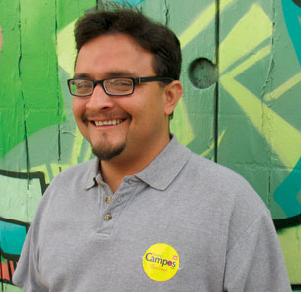
Ross Mirkarimi

Editorial: No matter who wins on Prop 16, full speed ahead with CCA

0

EDITORIAL Proposition 16 — Pacific Gas and Electric Co.’s monopoly power grab — has to rank as the most venal, corrupt abuse of the initiative system in California history. The utility spent nearly $50 million to pay for a misleading signature drive, mount a campaign of lies and distortions, create bogus front groups, and flood the airwaves with ads — all in an effort to convince Californians to vote against their own interests. It’s a case study in why the state needs initiative reform (a ban on paid signature gatherers and limits on corporate campaign contributions would be good places to start).

At press time, we didn’t know how the election would turn out — but this much is clear: San Francisco needs to move ahead with community choice aggregation and continue to push for public power anyway.


Prop. 16 was never about “taxpayer rights.” The whole point of the initiative was to block communities from replacing PG&E with public power. But it’s too late to stop San Francisco. Thanks to heroic efforts by Sup. Ross Mirkarimi, the city has already reached a deal with Power Choice LLC to create and operate a CCA system in town. Under state law, every resident and business in the city is automatically a customer of the CCA unless they opt out — so Prop. 16, which bars public-power agencies from signing up new customers, doesn’t apply.

It was a battle royal to get to this point. The PG&E-friendly San Francisco Public Utilities Commission, operating under a PG&E-friendly mayor, had more than a year to find a vendor and negotiate a contract. But PUC General Manager Ed Harrington dragged his feet at every turn. In fact, just a few weeks ago, Harrington tried to delay the contract until after the June election — thus giving PG&E a better shot at invalidating any contract. But with enough pressure from the supervisors, the basic terms of the deal were sealed in plenty of time.

Besides, San Francisco is in a unique position. Federal law (the Raker Act) requires the city to operate a public power system — and that act of Congress would trump any state law.

So the supervisors should move forward on finalizing the CCA, Mayor Gavin Newsom should sign off on it, and City Attorney Dennis Herrera should prepare to defend it vigorously if PG&E tries to sue.

Herrera has told us repeatedly that he thinks the city’s legal position is sound. In the past, he’s refused to use the Raker Act as a legal strategy — to go to court and force his own city to follow the law — but he needs to be ready to use that powerful weapon if PG&E tries to interfere with the implementation of CCA.
City officials at every level also have to make a concerted effort to counter PG&E’s lies — particularly the sort of misinformation that made it into the Matier and Ross column in the Chron June 7, the day before the election. Quoting unnamed sources, the reporters insisted that San Francisco CCA’s electricity rates would be higher than PG&E’s. That’s only true if you ignore the fact that PG&E’s rates are unstable and going up every year and that the cost of alternative energy is coming down every year — and if you don’t consider the costs of climate change, oil spills, coal mining disasters, nuclear waste storage, and all the other impacts of PG&E’s nonrenewable energy mix. And remember: San Francisco is asking the CCA to provide 51 percent renewables by 2019; PG&E’s portfolio doesn’t even meet the state’s weak 15 percent requirement. (There is also, of course, the multibillion dollar risk that San Francisco could lose the Hetch Hetchy dam if the city continues to violate the Raker Act.)

But the private utility that spent gobs of money on the Prop. 16 campaign will spend millions more in San Francisco to convince customers to opt out of the CCA. So the city needs its own campaign to explain why public power is not only much greener, but in the long run, much, much cheaper.

San Francisco has had a mandate for public power since 1913, nearly 100 years. The implementation of CCA would be a big step toward fulfilling that mandate. The supervisors should let  nothing stand in the way.

Public employees step up; when will Newsom and downtown?

7

With news that Muni union leaders are backing salary givebacks to help close San Francisco’s $483 million budget deficit, all city employees are now making sacrifices to preserve city services that we all rely on. But as we eagerly await the release of the mayor’s budget on June 1 – in which some city departments have been asked to make cuts of up to 30 percent – the question is whether Mayor Gavin Newsom will find the courage to ask other San Francisco entities to help.

For example, will he support the 2 percent increase in the hotel tax that labor is pushing (and which polls show would probably pass muster with voters if Newsom backed it), a real estate transfer tax that would hit the comfortably rich, or a downtown transit assessment district that would make corporations finally help pay for the transit services their employees rely on?

So far, it’s doesn’t look like it (and his Communications Office won’t respond to the question). Instead, Newsom has cynically engaged in deceptive blame games that scapegoat public employees for a problem he created (for example, by approving bloated police and fire contracts to win political support and then blocking efforts to seek new revenue sources), while still pushing gimmicky new spending programs designed to burnish his political image as he runs for state office.

This could be Newsom’s last chance to finally show some leadership, and now is the time when it’s needed most. After offering cuts-only city budgets his entire tenure in office, most city departments are unable to go any further without sacrificing needed services.

The situation has become dire, as workers said Wednesday during a budget rally outside City Hall. Guardian news intern Kaitlyn Paris was there covering the action and offers this report:

Community groups from around San Francisco rallied in front of City Hall on Wednesday to protest the drastic reductions that health and human services face in the Governor’s proposed state budget and Mayor Newsom’s impending city budget.

A graveyard of tombstones representing each of the organizations stuck out of the sand next to the grassy square where participants gathered. Identifiable by their maroon sweatshirts, the largest faction present was the Community Housing Partnership. The proposed budget would cut over $100,000 from the agency and its programs that provide help with employment, substance abuse, and habitation development.

“Supervisors need to be constantly reminded of the merits of these services,” CHP employee Gabriel Haywood told us.

The partnership runs a jobs retention program that Haywood says has exceeded its city-mandated job retention rate by 25 percent, keeping 75 percent of the people it serves employed for longer than three months. Still, Cameron McHenry told the Guardian the city thinks the groups services are duplicative. [Editor’s Note: information in this paragraph has been corrected since his article was posted].

The city’s OneStop employment service is suited to workers displaced by the recession, not the multiple-burdened clients helped by CHP, said McHenry: “We can’t take a 30 percent cut and still do the work we do.”

After speakers from various groups addressed the crowd from a flatbed truck, District 5 Sup. Ross Mirkarimi took to the stage to demand alternative ways of generating revenue. The progressive revenue tactics championed mainly involved increased hotel tax to reduce the budget burden felt by community service groups. Mirkarimi and members of the crowd also criticized the city for its continued funding of Sharp golf course in Pacifica.

“We’re trying to force the Mayor to have a fair budget,” Coalition on Homelessness Director Jennifer Fredenbach told us. “We believe he can do it through alternative revenue like the hotel tax, a more progressive tax base, and a property transfer tax on high end real estate. It has real consequences for poor San Franciscans, not only in quality of life, but in the ability to live.”

Fees rise in SF, but some supervisors prefer taxes

5

By Brittany Baguio

 The Board of Supervisors this week voted to impose non-resident fees for admission into Botanical Gardens in an effort to help alleviate the city’s $483 million budget deficit, as requested by the Mayor’s Office. But even supervisors who supported it say they hope to end the fees if they can find some general revenue sources, a process that will begin next week after Mayor Gavin Newsom releases his budget on June 1.

Sup. John Avalos, who chairs the Budget Committee, began Tuesday’s discussion by stating that he believed that this non-resident fee would stop the layoffs of Botanical Gardens staff and help offset the 30 percent drop in their budget. Despite supporting the fees, Avalos expressed hope that they could be replaced by a 2 percent increase in the hotel tax, something labor and community groups are pushing that would raise $38 million to $45 million per year.

He even amended the item to include a provision that the non-resident fee will be eliminated within 90 days from the effective date of the new tax. Despite Avalos’s amendment, AIDS Grove founder and volunteer community gardener Nancy McNally said she was appalled that Avalos would support a non-resident fee. “He is not committed to preserving significant public park commons that San Franciscan generations before him have paid taxes to preserve,” McNally told the Guardian. “No one wants to brainstorm and come up with creative options to alleviate this crisis that is not really a crisis. Greed is the crisis.”

One thing McNally did appreciate was sober assessments made at the hearing by Sup. Eric Mar, who stated that Botanical Gardens serves as a haven for low-income and immigrant families who can only enjoy the facilities because admission is free. He declared that once fees are attached to Botanical Gardens, it will lose its appeal. He also added that passing this fee will be the first step in initiating fees for all.

San Francisco resident Daniele Erville shared Mar’s concerns. “A fee acts as a deterrent to a place that by its very nature is welcoming,” Erville told us. “The place makes us feel at home, it reminds us that we are a part of nature and reminds us of our common humanity. Spirituality means that you are in touch with what unites us all, and so differentiating on any level just clashes.”

The imposition of fees – $7 for non-resident adults, $5 for seniors, and $2 for children – was approved on a 8-3 vote, with Sups. Mar, Bevan Dufty, and Ross Mirkarimi in dissent.

Beating the reaper

1

rebeccab@sfbg.com

The wholesome-looking woman in the Pacific Gas and Electric Co.-funded Yes on Proposition 16 commercial seems trustworthy. "Voters should have the final say," she intones over a background of soothing music, "because we’re paying the bills."

TV-friendly slogans aside, many have deemed PG&E’s $45 million (a new figure well over the $35 million initially committed by the company — paid for by ratepayers who had no say) Prop. 16 campaign to be a subversion of the democratic process and corporate deception at its worst. And it’s aimed in part at stopping San Francisco — one of PG&E’s most lucrative territories and the home of its central office — from implementing a modest public power program called community choice aggregation (CCA).

But San Francisco may be slipping under the deadline. With a last-minute push by Sup. Ross Mirkarimi and other public-power supporters, it appears that the city will have the legal underpinning of a CCA program in place before the June 8 election.

It’s still complicated and a bit tricky, but under questioning by Mirkarimi April 21, SF Public Utilities Commission general manager Ed Harrington said that the city is going to meet all the necessary deadlines.

Prop. 16 seeks to require a two-thirds majority vote before a local government can move forward with a municipal electricity program. Voter approval of the measure on June 8 would effectively weed out any potential competition within PG&E’s service territory, particularly given that PG&E overwhelms all campaigns with multimillion dollar propaganda blitzes.

Paul Fenn helped craft the state law that created CCA, which allows local governments to purchase power on behalf of their citizens, a vision for an alternative to PG&E that lies squarely in the crosshairs of Prop 16. "Unfortunately, it’s mostly up to Republicans in Southern California how it turns out," Fenn said, because this election will attract conservatives to the polls to decide between gubernatorial candidates in the GOP primary. "Unless people in the Bay Area become aware."

BEAT THE CLOCK


Public power advocates are fighting to stop Prop. 16 — but at the same time, in San Francisco, there’s a frantic effort to gets its own CCA in place. The city is poised to have completed a CCA contract by June 8 — election day.

Although the contract will not be finally approved by committees, the Board of Supervisors, and the mayor until after the election, City Attorney Dennis Herrera says the steps are solid enough to protect the city against the inevitable PG&E lawsuit.

The approaching election day has sent the SFPUC scrambling in a months-long race against the clock to seal the deal on CleanPower SF, the CCA program that envisions offering energy customers the choice of a climate-friendly, 51 percent renewable mix by 2019.

Had the city agency failed to strike a deal with Power Choice Inc. (PCI), the program’s service provider, before the June 8 election, years of effort to get the clean power program off the ground could have gone down the tubes. Mirkarimi, City Hall’s strongest advocate for CleanPower SF, urged the SFPUC to get into gear, nicknaming Prop. 16 "the grim reaper."
Things grew tense in April and May as contract negotiating sessions wore on without success, green-power advocates sparred publicly with the SFPUC, and the "grim reaper" approached. A breakthrough came May 21: the SFPUC announced at a meeting of the city’s Local Agency Formation Commission (LAFCo) that it had finally signed a term sheet agreement with PCI.

A contract based on the terms is expected to be prepared by early June, Harrington said, adding that it could be introduced to the Board of Supervisors on June 8. A month-long review period is expected to follow.

"Today was an announcement of a very critical milestone," Mirkarimi, who chairs LAFCo, noted after the meeting. "I’m delighted to see us turn a corner, and I think … having a term-sheet signed, having a CCA implementation plan approved by the CPUC, and having literature sent out in three different languages to 250,000 households in San Francisco is all a testament that we are, as a city, absolutely serious in implementing and delivering our clean power energy program."

He nonetheless kept cracking the whip on advancing the goals of the program during the meeting. "Any hiccup whatsoever on timelines is a dangerous hiccup," Mirkarimi said.

"We fully expect to meet all deadlines," Harrington responded.

Public power advocate Eric Brooks, who has helped move the CCA program forward since the outset, expressed trepidation at a stakeholders meeting about the SFPUC’s commitment to the program, saying he believed that the city could have cleared the deadline months earlier without having to worry about Prop. 16 as a deadline.

Brooks advocated for Local Power, Fenn’s firm and a city contractor, to play a more central role in program design, saying that as long as the SFPUC remained at the helm, the program would be shaped by "the same inside-the-box thinking" and limited enthusiasm.

LITIGATION LIKELY


Despite recent leaps forward, the common wisdom around City Hall is that CleanPower SF is nonetheless unlikely to escape PG&E’s litigious wrath — particularly if Prop. 16 gets a thumbs up at the polls. If it passed, Prop. 16 would become effective immediately, according to the City Attorney’s Office.

"It’s not a foregone conclusion that Prop 16 will pass," City Attorney’s Office spokesperson Matt Dorsey pointed out. And if it does? "In our view," he said, "San Francisco has already implemented its CCA program," making it capable of withstanding a legal challenge.

"We are talking to the city attorney every single day," Harrington noted during a recent SFPUC stakeholders meeting.

But Fenn warned that a complicated lawsuit could still inflict damage. "Litigation processes can outlast political possibility," he cautioned. "San Francisco may be caught up in the courts." Or, if Prop 16 passes and the program moves forward as planned, "[CCA] might be a weird new variant that only exists in San Francisco and Marin."

Marin County’s CCA program is already up and running, and the Marin Energy Authority recently began providing power to its customers. PG&E — which is bound by state law to "cooperate fully" with CCA implementation — fought it by contacting customers to persuade them to opt out of the program via mailers sent in violation of CPUC laws that only allow CCAs to solicit opt-outs. PG&E earned a sharp rebuke in a May 3 letter from CPUC executive director Paul Clanon, specifically warning the company to "refrain from sending any mailers of this nature in the future."

On May 12, Clanon was back with a second letter. "On May 4, PG&E mailed a letter to every customer that had not opted out of MEA’s service, formatted in a manner that directly conflicts with the direction I provided to PG&E just one day earlier," he wrote. This time, he warned the utility that it was "in danger of the commission’s imposing significant and continuing fines and other penalties."

PG&E responded by saying the mass mailing of illegal opt-out notices had been an accident, and apologized. "They accidentally licked envelopes, accidentally stuck the stamps, and accidentally sent them out?" asked an incredulous Ben Zolno, a Prop 16 opponent, in a phone conversation with the Guardian.

"Nobody quite remembers PG&E acting so outrageously," Sen. Mark Leno remarked to the Guardian in the wake of the debacle. The CPUC later determined that any opt-outs solicited by PG&E’s illegal mailers were void.

At a May 20 meeting, the CPUC bolstered restrictions prohibiting PG&E from printing false statements about CCA programs in mailers but made no move to impose penalty fines. City officials characterized the decision as falling short of the action needed to halt the utility’s attempts to sabotage Bay Area CCAs.

"We would expect the CPUC to tell them to cooperate," Harrington told the Guardian. "What the CPUC said was ‘you can’t lie.’"

Meanwhile it’s up to the CPUC to decide whether to honor PG&E’s request for a $4 billion rate hike, which will amount to an average 30 percent increase on customer bills over three years. "They’re not always guaranteed to get what they ask for," CPUC spokesperson Andrew Kotch noted. Public hearings on the increase are coming soon, with a final decision scheduled for December.

"There have been other sizable rate increases and PG&E keeps coming back for more," says Dwight Cocke of The Utility Reform Network (TURN), which is also part of the Prop. 16 opposition campaign. "Up until recently, PG&E was shutting off 15,000 customers per month" for nonpayment, forcing customers to pay extra deposits and reconnect fees to get their electric service back.

"For a lot of people on fixed incomes and low incomes," he said, "it spirals out of control."

Read up: www.prop16.org; www.powergrab.info

Violence in the Bayview — and solutions

5

By Chris Jackson

OPINION The outpouring of emotion surrounding the tragic death of Tian Sheng Yu — the elderly Chinese man who was savagely beaten to death by two African Americans — resonates with me. My family has been in the Bayview for more than 40 years, and I know firsthand the pain caused by street violence.

I, too, have witnessed what seems to be going on now: the polarizing of people who use race as a shorthand to determine who is dangerous and who is not. It’s a sad realization to see these sorts of divisions creep into the public discourse in San Francisco in 2010.

Let’s be clear. The Asian American community has every right to feel outrage over being targeted for violent attacks. As a black elected official, I am the first to stand with them in solidarity — violence against my neighbor is violence against me. Pure and simple.

But there is more to this story, as is often the case. For as it turns out, in San Francisco, African Americans are also prime targets of violent crime, and at a disturbing rate. My neighborhood is a good example of what’s going on. In District 10, which includes the southeastern part of the city, 36 percent of our residents are Asian American, and 28 percent are African-American. But if you take a look at the last 136 reported aggravated assaults, African Americans were targeted 89 times — that’s more than 68 percent of the total aggravated assaults.

Pitting one racial group against another is cowardly and wholly misguided. Recent reports of community meetings where inflammatory language is used to divide us by race do nothing to solve the underlying problems. The truth is, we are all suffering and need to work together to find solutions to make our community safer.

Sup. Ross Mirkarimi’s legislation to mandate foot patrols is a good start. We need a real community policing model that emphasizes on-the-ground, respectful contact between the police and community members.

But our main focus should be on preventive measures. We need to expand drop-in center hours from one afternoon a week to five days a week beginning this summer. Crime happens every day, not just once a week.

Our youth should be put to work on neighborhood beautification projects. If young people are busy working to beautify their neighborhood, they will take more pride and personal responsibility for what happens in it.

We need to get back to the basics as well, and address the poor lighting that exists in areas of high crime. As a city, this is a cosmetic fix that can reap big rewards.

These are simple solutions, and the problems unleashed by Tian Sheng Yu’s death run far deeper. But every journey starts with a first step. Let’s just make sure that first step takes us forward, to a place of shared concern so we can all contribute to making our community safer.

Chris Jackson is an elected member of the Community College Board and lives in the Bayview-Hunters Point neighborhood.


Insecure Sanctuary

9

Sarah@sfbg.com

The Board of Supervisors is urging San Francisco officials not to participate in Secure Communities, a controversial federal-local fingerprinting collaboration set to be activated June 1. But opting out of a program that threatens to make debates over “sanctuary city” protections of immigrants irrelevant may not be easy.

Speaking at a May 18 rally, Sup. Eric Mar warned that the use of Secure Communities by U.S. Immigration and Customs Enforcement (ICE) could cause the deportation of innocent residents and destroy local community policing efforts. “The police-ICE entanglement will hurt our communities and many people accused of minor crimes will see families torn apart,” Mar warned, as he urged the city to opt out of the Department of Homeland Security initiative, which identifies immigrants who are sitting in U.S. jails and may be deportable under federal immigration laws.

Cosponsored by Sups. John Avalos, David Campos, David Chiu, Chris Daly, Bevan Dufty, Sophie Maxwell, and Ross Mirkarimi, Mar’s resolution was scheduled for a May 25 vote that would make San Francisco the first jurisdiction in the nation to pursue withdrawing from the system.

“The shadow of Arizona is starting to cover other cities,” Mar said, referring to Arizona’s anti-immigrant legislation, SB 1070. “We can’t let Arizona come to San Francisco.”

ICE spokesperson Virginia Kice said the program’s focus is on criminal aliens. “These are folks who have been charged with or found guilty of felonies and have ignored deportation orders,” Kice said.

But ICE statistics show that the program mostly deports those with minor offenses. Between October 2008 and March 2010, Secure Communities submitted 1.9 million sets of digital fingerprints and deported 33,326 people nationwide. Fifteen percent of those deported (4,903 people) had criminal histories that included major drug and violent offenses such as murder, manslaughter, rape, robbery, and kidnapping (Level 1 crimes). The other 85 percent (28,423 people) were deported for less serious drug and property offenses (Level 2 crimes) and other minor charges (Level 3 crimes).

Kice admits that Level 2 and 3 offenders constitute the largest percentage of SC cases. “That’s because representatively more people are arrested for Level 2 and 3 offenses than Level 1,” she said. “That’s probably fortunate, because Level 1 crimes are very serious.”

But American Civil Liberties Union legislative counsel Joanne Lin warns that Secure Communities allows the federal government to circumvent local sanctuary policies and fast-track deportation. “It allows the Department of Homeland Security to identifty everyone who is booked, whether they are here lawfully or their charges are subsequently dropped or dismissed,” Lin said.

Mayor Gavin Newsom said he has no reservations about the program, which the Bush administration first announced in March 2008. “Sanctuary city policies were never meant to protect criminal behavior,” mayoral spokesperson Tony Winnicker said May 7, when San Francisco Sheriff Mike Hennessey blew the whistle on the federal-local fingerprinting collaboration. “At the end of the day, federal officials should enforce immigration laws. We report — we don’t deport.”

The program links local law enforcement databases to the Department of Homeland Security’s biometric system through interoperability agreements with states, allowing instantaneous information-sharing among local jails, ICE, and the FBI.

ICE implemented the program in North Carolina and Texas in October 2008. Under President Obama, the program has been activated in 169 jurisdictions in 20 states. ICE plans to have a Secure Communities presence in each state by 2011, and in each of the 3,100 state and local jails nationwide by 2013, according to its Web site.

Under the program, participating jails submit fingerprints of arrestees to immigration and criminal databases, thereby giving ICE a technological presence in prisons and jails. An overview conducted by the Washington, D.C.-based nonpartisan National Immigration Law Center observes that “the critical element” of the program is that, during booking in jail, arrestees’ fingerprints will be checked against DHS databases, rather than just against FBI criminal databases.

“ICE asserts that the purpose of the Secure Communities program is to target violent criminals for removal,” NILC observed. “Advocates had criticized the program’s operation because it took place at the beginning of the criminal process and therefore indiscriminately targeted persons arrested for crimes of all magnitudes, rather than persons convicted of serious crimes.”

“The underlying purpose may be to lay the groundwork for real immigration reform,” NILC concludes. “But the mechanisms put in place will be difficult to dismantle, and the civil rights violations they produce cannot be undone.”

Scott Lorigan of the California Department of Justice’s Bureau of Criminal Identification and Information signed an interoperability agreement with ICE’s John P. Torres in April 2009. Since then, the system has been activated in Alameda, Contra Costa, Fresno, Imperial, Los Angeles, Monterey, Orange, Sacramento, San Bernardino, San Diego, San Joaquin, San Luis Obispo, Santa Barbara, Solano, Sonoma, Stanislaus, and Ventura counties. Now it’s set to get switched on in San Francisco.

Campos thanks Hennessey for blowing the whistle, and lays the blame at Obama’s door. “None of us would have known this was happening,” Campos said. “This is the time for all San Francisco’s elected officials to stand up in support of the principles that led us to establish a sanctuary city. It’s not just the board, but also the mayor who needs to step up and say what just happened is not acceptable. This program eviscerates sanctuary city.”

Hennessey has written to California Attorney General Jerry Brown asking for assistance in opting out of the ICE program. Brown’s office is reviewing his request. “The California Department of Justice manages the statewide database of fingerprints that are essential to solving crimes, but we have no direct role in enforcing federal immigration laws,” Brown’s press secretary Christine Gasparac clarified. “We were informed by ICE that they will work with counties to opt out of their program. Because that is a process directly between the county and ICE, we’re advising local authorities who want to opt out to contact ICE directly.”

But it’s not clear what opting out will achieve. ICE’s Kice said jurisdictions can choose not to receive the immigration-related information on individuals who are fingerprinted, but that information will still be provided to ICE, which can act on it. Kice said that after an arrestee’s biometrics are forwarded to the feds, the information is bounced off FBI and DHS databases, and the information that comes back says if they have a record.

“What comes out is a recap of whatever relevant information is in the database,” she said. “For example, whether there has been a prior formal deportation or a prior arrest. It also shows if they have an adjusted status — whether they have legal permanent status. It will indicate if they are naturalized, in which case they are not subject to removal. That’s the information the community could cut off.”

“ICE always did these checks, but it was only available to local law enforcement agencies if they queried the system themselves, which required them to take a couple of extra steps,” Kice continued. “And it was name based. And that could be problematic, given duplicate names in system. That’s what fingerprints eliminate. Our concern is that municipalities are dependent to a large extent on information provided by the individual at the moment of arrest. We think the use of biometrics will ensure that folks who provide false information to local law enforcement officials don’t escape detection.”

Kice acknowledged that not everyone in the database is a violator. “The fact of having a record does not mean that you are a deportable alien,” she said. “And we understand that someone may get arrested and may not get convicted on their current charges. But what about a prior history? We know that folks have eluded detection, escaped, or been released from custody. So the individual may be someone who has other prior convictions. It’s the totality of their record that we are talking about here.”

At present, the San Francisco County Sheriff’s Department only reports noncitizens who are booked on felony charges. Hennessey expressed concerns about the unintended consequences of ICE technology interfacing with that of the Department of Justice’s fingerprint database.

He also warned that the 2,000 or so ICE referrals his office makes annually could explode. “We’ll be fingerprinting 35,000-40,000 persons annually,” Hennessey claimed. “And ICE has a record of secrecy. They won’t tell me what happened to folks they pick up. They won’t say if they are still in custody, been released or deported. The basis of sanctuary city is to protect immigrants who are not doing anything wrong or serious. When ICE grabs someone who failed to pay a traffic ticket and that person is supporting a family, I don’t think those crimes should rise to the level of deportation.”

The battle over Muni reform

1

Sup. Sean Elsbernd is getting a lot of attention for his plan to change the way Muni drivers are paid, and although he’s going to have a hard time getting 70,000 signatures for a Charter Amendment, the fact that Muni’s unions have given back to the city less than the other major employee unions gives he move a boost. There are arguments in favor of the current salary structure, but as long as it’s set in the Charter this way, it’s hard for the city to get any leverage on work-rul changes, which are really what Elsbernd is after.


But if you want to look at reforming Muni, you have to go beyond this one issue — and that may be the battle that takes place this fall. Sup. David Campos, along with Sups. Ross Mirkarimi and Eric Mar, has put together a comprehesive Muni reform Charter amendment that includes some of the changes Elsbernd is proposing — but addresses Muni governance and funding, too.


The Municipal Transportation Agency, which oversees Muni, is now run by a seven-member board, with all the members appointed by the mayor. That’s hardly created the sort of political independence that the supporters of the system wanted. So under the Campos proposal, three members would be appointed by the mayor, three by the Rules Committee of the Board of Supervisors, and the final member, the potential swing vote, would be appointed jointly by the mayor and board president (boy, that meeting will be fun). All seven would be subject to board confirmation.


The MTA would also be guaranteed a stream of income equivalent to 2.5 cents for every hundred dollars of property tax valuation.


The reform plan creates an Office of Inspector General in the MTA, and gives that person the authority to conduct audits and monitor waste and fraud — something sorely needed in the agency. And it would allow the supervisors to reject the MTA budget by a simply majority vote.


It’s likely that Campos, Mirkarimi and Mar will get the six votes they need to put this on the ballot, so they won’t have to go out and get signatures. Which means that even if Elsbernd’s ambitious grassroots effort is successful, the voters won’t be deciding whether to accept or reject a Muni reform measure; they’ll be choosing between one that only addresses pay for Muni workers and one that changes the pay system — but also seeks to overhaul how the system is run.

Alerts

0

alert@sfbg.com

WEDNESDAY, MAY 19

Solutions for Survival

Empower young people, support vivacious media, and support work on climate justice at this launch/fundraiser for this global youth media program that aims to uncover local, equitable solutions for climate change. Featuring guest speakers, food and wine, DJs, a silent art auction, and more.

7:30 p.m., free

Women’s Building

3543 18th St., SF

www.projectsurvivalmedia.org

THURSDAY, MAY 20

"Stand-In" for Safety


Protest the proposed "sit/lie" ordinance, which would make it illegal to sit or lie on SF sidewalks. The law would target sex workers, homeless people, youths, and immigrants, pushing them further underground and into more isolated, dangerous situations and areas.

Noon, free

Corner of Polk and Sutter, SF

www.allwomencount.net

FRIDAY, MAY 21

Rally for Peace


Say no to the war in Afghanistan, where deaths of U.S. troop Afghan civilians continue to rise. Demand that we bring our troops home now.

2 p.m., free

Corner of Acton and University, Berk.

(510) 841-4143

Berkeleygraypanthers.mysite.com

SATURDAY, MAY 22

Live in Peace March


Join KIPP Bayview Academy (KBA) students and community members for this peace march through the Bayview neighborhood to promote peaceful resolutions to social issues culminating in a scholarship ceremony. The Live in Peace March offers students and community members the opportunity to take a public stance against issues plaguing southeastern SF and attempts to ignite social change from within neighborhoods.

Noon, free

KIPP Bayview Academy

1060 Key, SF

www.kippbayarea.org

Walk to End Poverty


Help raise awareness about poverty at this walk around Lake Merritt followed by a multicultural family party featuring jazz, dance, kids activities, a community awards ceremony, and more.

10 a.m. walk, 11 a.m. party; free

Lake Merritt Bandstand

666 Bellevue, Oakl.

(510) 238-2362

SUNDAY, MAY 23

Beach cleanup


Celebrate World Turtle Day by removing plastic litter and garbage from Ocean Beach to help endangered leatherback sea turtles. The waters off San Francisco are popular with leatherbacks looking to feed on jellyfish, but ingesting plastic bags and other human garbage is known to kill leatherbacks worldwide.

10 a.m., free

Meet at north Ocean Beach

1000 Great Highway, SF

www.seaturtles.org

Rally against the pope


Join San Francisco and East Bay atheists in a call for a transparent investigation into the policies of the Catholic Church, which have perpetuated the sexual abuse of children all over the world. Demand the resignation of Pope Benedict XVI.

9:30 a.m., free

St. Mary’s of the Assumption Catholic Church

111 Gough, SF

www.atheists.meetup.com

Save the Whales


Show your opposition to the International Whaling Commission’s proposal to remove the ban on commercial whaling at this rally featuring SF Sup. Ross Mirkarimi and others.

Noon, free

Steps of San Francisco City Hall

1 Dr. Carlton B. Goodlett Place, SF

www.greenpeace.org 2

Mail items for Alerts to the Guardian Building, 135 Mississippi St., SF, CA 94107; fax to (415) 255-8762; or e-mail alert@sfbg.com. Please include a contact telephone number. Items must be received at least one week prior to the publication date.

Ending the crackdown is as easy as ABC

0

Sup. Bevan Dufty brought a surprise guest to the “Death of Fun” panel at SPUR that we each served on last night: Steve Hardy, director of the California Department of Alcoholic Beverage Control, an agency that has played a key role in the crackdown on San Francisco nightlife.

Hardy sounded a conciliatory tone, telling me that ABC agent Michelle Ott is no longer working with SFPD officer Larry Bertrand – the undercover duo has wreaked havoc on clubs and parties – and telling the large crowd that he’s trying to heed the criticisms and change his agency’s ways. Well, sort of.

“We’re working very hard to create an image that does not draw so much hostility,” Hardy said, later complaining about the state budget shortfall’s squeeze on his agency and saying, “It’s wearing thin and there’s no relief.”

Hardy said he was raised and still lives in San Francisco and served as an SFPD beat cop before a 25-year career staffing the California Legislature, mostly with the Senate Committee on Government Organization. Three years ago, he was appointed by Gov. Arnold Schwarzenegger to run the ABC, an agency that has cited many SF clubs for noise complaints and not serving enough food with their booze, and private parties for serving alcohol without permits.

“We do have a tremendous relationship with the SFPD,” he told the crowd, as if that weren’t already clear.

SFPD Inspector Dave Falzon of the Vice Crimes Division, another panelist, repeatedly emphasized the department’s desire to improve communications with the community, which has organized against the crackdown by forming the California Music and Culture Association. And Falzon announced a new SFPD initiative to centralize and streamline its permitting functions for clubs and special events.

But when I was answered a question about what we’d like to see in terms of improved communication by saying I wanted the SFPD to finally grant the Guardian’s longstanding request to interview Bertrand (whose brutal and illegal actions have been publicly condoned by his captain) and to directly address the community’s concerns about the SFPD’s hostility to nightlife, I didn’t get much of a responsive answer from Falzon.

Two separate legal teams who are suing the department for its overreaching tactics are also seeking to depose Bertrand and his superiors, and to review Bertrand’s personnel file, but the city has so far been stonewalling them. The consensus on the panel was that city leaders haven’t adequately valued nightlife or special events or sent the message to various city departments that protecting the urban culture from bureaucratic excess is important.

For example, in the current budget crisis, most departments that deal with clubs and special events have adopted full cost recovery policies, and then jacked up those costs with demands that promoters pay for excessive police protection and other services. Just a few weeks ago, the Municipal Transportation Agency approved a budget that made full cost recovery official policy, thus jacking up prices for all events that require street closures or Muni diversions.

Who’s to blame? Well, Dufty and Sup. Ross Mirkarimi (who also served on the panel) each laid the blame squarely on Mayor Gavin Newsom, who they say has abdicated his responsibility to lead city departments through the sometimes complicated balancing act between protecting the urban culture and being sensitive to neighborhood concerns, leaving the city essentially rudderless on an issue vital to maintaining San Francisco’s status as a world-class city.

Democratizing the streets

steve@sbg.com

It’s hard to keep up with all the changes occurring on the streets of San Francisco, where an evolving view of who and what roadways are for cuts across ideological lines. The car is no longer king, dethroned by buses, bikes, pedestrians, and a movement to reclaim the streets as essential public spaces.

Sure, there are still divisive battles now underway over street space and funding, many centered around the San Francisco Municipal Transportation Agency, which has more control over the streets than any other local agency, particularly after the passage of Proposition A in 2007 placed all transportation modes under its purview.

Transit riders, environmentalists, and progressive members of the Board of Supervisors are frustrated that Mayor Gavin Newsom and his appointed SFMTA board members have raised Muni fares and slashed service rather than tapping downtown corporations, property owners, and/or car drivers for more revenue.

Board President David Chiu is leading the effort to reject the latest SFMTA budget and its 10 percent Muni service cut, and he and fellow progressive Sups. David Campos, Eric Mar, and Ross Mirkarimi have been working on SFMTA reform measures for the fall ballot, which need to be introduced by May 18.

But as nasty as those fights might get in the coming weeks, they mask a surprising amount of consensus around a new view of streets. “The mayor has made democratizing the streets one of his major initiatives,” Newsom Press Secretary Tony Winnicker told the Guardian.

And it’s true. Newsom has promoted removing cars from the streets for a few hours at a time through Sunday Streets and his “parklets” in parking spaces, for a few weeks or months at a time through Pavement to Parks, and permanently through Market Street traffic diversions and many projects in the city’s Bicycle Plan, which could finally be removed from a four-year court injunction after a hearing next month.

Even after this long ban on new bike projects, San Francisco has seen the number of regular bicycle commuters double in recent years. Bike to Work Day, this year held on May 13, has become like a civic holiday as almost every elected official pedals to work and traffic surveys from the last two years show bikes outnumbering cars on Market Street during the morning commute.

If it wasn’t for the fiscal crisis gripping this and other California cities, this could be a real kumbaya moment for the streets of San Francisco. Instead, it’s something closer to a moment of truth — when we’ll have to decide whether to put our money and political will into “democratizing the streets.”


RECONSIDERING ROADWAYS

After some early clashes between Newsom and progressives on the Board of Supervisors and in the alternative transportation community over a proposal to ban cars from a portion of John F. Kennedy Drive in Golden Gate Park — a polarizing debate that ended in compromise after almost two acrimonious years — there’s been a remarkable harmony over once-controversial changes to the streets.

In fact, the changes have come so fast and furious in the last couple of years that it’s tough to keep track of all the parking spaces turned into miniparks or extended sidewalks, replacement of once-banished benches on Market and other streets, car-free street closures and festivals, and healthy competition with other U.S. cities to offer bike-sharing or other green innovations.

So much is happening in the streets that SF Streetsblog has quickly become a popular, go-to clearinghouse for stories about and discussions of our evolving streets, a role that the San Francisco Bicycle Coalition — itself the largest grassroots group in the city, with more than 11,000 paid members — recently recognized with its Golden Wheel award.

“I think we are at a tipping point. All these little things have been percolating,” said San Francisco Planning Urban Research Association director Gabriel Metcalf, listing examples such as the creative reuse of San Francisco street space by Rebar and other groups (see “Seizing space,” 11/18/09), experiments in New York and other cities to convert traffic lanes to bicycle and pedestrian spaces, a new generation of more forward-thinking traffic engineers and planning professionals working in government, and more aggressive advocacy work by the SFBC, SPUR, and other groups.

“I think it’s all starting to coalesce,” Metcalf said. “Go to 17th and Valencia [streets] and feel what it’s like to have a sidewalk that’s wide enough to be comfortable. Or go ride in the physically separated bike lane on Market Street. Or take your kids to the playground at Hayes Green that used to be a freeway ramp.”

Politically, this is a rare area of almost universal agreement. “This is an issue where this mayor and this board have been very aligned,” Metcalf said. Winnicker, Newsom’s spokesperson, agreed: “The mayor and the board do see this issue very similarly.”

Mirkarimi, a progressive who chairs the Transportation Authority, also agreed that this new way of looking at the streets has been a bright spot in board-mayoral relations. “It is evolving and developing, and that’s a very good thing,” Mirkarimi said.

Both Winnicker and Mirkarimi separately singled out the improvements on Divisidero Street — where the median and sidewalks have been planted with trees and vegetation and some street parking spaces have been turned into designated bicycle parking and outdoor seating — as an example of the new approach.

“It really is a microcosm of an evolving consciousness,” Mirkarimi said of the strip.

Sunday Streets, a series of events when the streets are closed to cars and blossom with life, is an initiative proposed by SFBC and Livable City that has been championed by Newsom and supported by the board as it overcame initial opposition from the business community and some car drivers.

“There is a growing synergy toward connecting the movements that deal with repurposing space that has been used primarily for automobiles,” Sunday Streets coordinator Susan King told us.

Newsom has cast the greening initiatives as simply common sense uses of space and low-cost ways of improving the city. “A lot of what the mayor and the board have disagreements on, some of that is ideological,” Winnicker said. “But streets, parks, medians, and green spaces, they are not ideological.”

Maybe not, but where the rubber is starting to meet the road is on how to fund this shift, particularly when it comes to transit services that aren’t cheap — and to Newsom’s seemingly ideological aversion to new taxes or charges on motorists.

“We’re completely aligned when it comes to the Bike Plan and testing different things as far as our streets, but that all changes with the MTA budget,” said board President David Chiu, who is leading the charge to reject the budget because of its deep Muni service cuts. “Progressives are focused on the plight of everyday people who can’t afford to drive and park a car and have to rely on Muni. So it’s a question of on whose back will you balance the MTA budget.”


WHOSE STREETS?

The MTA governs San Francisco’s streets, from deciding how their space is allocated to who pays for their upkeep. The agency runs Muni, sets and administers parking policies, regulates taxis, approves bicycle-related improvements, and tries to protect pedestrians.

So when the mayoral-appointed MTA Board of Directors last month approved a budget that cuts Muni service by 10 percent without sharing the pain with motorists or pursuing significant new revenue sources — in defiance of pleas by the public and progressive supervisors over the last 18 months — it triggered a real street fight.

The Budget and Finance Committee will begin taking up the MTA budget May 12. And progressive supervisors, frustrated at having to replay this fight for a second year in a row, are pursuing a variety of MTA reforms for the November ballot, which must be submitted by May 18.

“We’re going to have a very serious discussion about MTA reform,” Chiu said, adding, “I expect there to be a very robust discussion about the MTA and balancing that budget on the backs of transit riders.”

Among the reforms being discussed are shared appointments between the mayor and board, greater ability for the board to reject individual initiatives rather than just the whole budget, changes to Muni work rules and compensation, and revenue measures like a local surcharge on vehicle license fees or a downtown transit assessment district.

Last week Chiu met with Newsom on the MTA budget issue and didn’t come away hopeful that there will be a collaborative solution such as last year’s compromise. But Chiu said he and other supervisors were committed to holding the line on Muni service cuts.

“I think the MTA needs to get more creative. We have to make sure the MTA isn’t being used as an ATM with these work orders,” Chiu said, referring to the $65 million the MTA pays to the Police Department and other agencies every year, a figure that steeply increased after 2007. “My hope is that the MTA board does the right thing and rolls back some of these service reductions.”

Transit riders have been universal in condemning the MTA budget. “The budget is irresponsible and dishonest,” said San Francisco Transit Riders Union project director Dave Snyder. “It reveals the hypocrisy in the mayor’s stated environmental commitments. This action will cut public transit permanently and that’s irresponsible.”

But the Mayor’s Office blames declining state funding and says the MTA had no choice. “It’s an economic reality. None of us want service reductions, but show us the money,” Winnicker said.

That’s precisely what the progressive supervisors are trying to do by exploring several revenue measures for the November ballot. But they say Newsom’s lack of leadership on the issue has made that difficult, particularly given the two-third vote requirement.

“There’s been a real failure of leadership by Gavin Newsom,” Mirkarimi said.

Newsom addressed the issue in December as he, Mirkarimi, and other city officials and bicycle advocates helped create the city’s first green “bike box” and honor the partial lifting of the bike injunction, sounding a message of unity on the issue.

“I can say this is the best relationship we’ve had for years with the advocacy community, with the Bicycle Coalition. We’ve begun to strike a nice balance where this is not about cars versus bikes. This is about cars and bikes and pedestrians cohabitating in a different mindset,” Newsom said.

Yet afterward, during an impromptu press conference, Newsom spoke with disdain about those who argued that improving the streets and maintaining Muni service during hard economic times requires money, and Newsom has been the biggest impediment to finding new revenue sources.

“Everyone is just so aggressive on trying to raise revenue. We’ve been increasing the cost of going on Muni the last few years. I think people need to consider that,” Newsom said. “We’ve increased the cost of parking tickets, increased the cost of using a parking meter, and we’ve raised the fares. It’s important to remind people of that. The first answer to every question shouldn’t be, OK, we’re going to tax people more or increase their costs.

“You have to be careful about that,” he continued. “So my answer to your question is two-fold. We’re going to look at revenue, but not necessarily tax increases. We’re going to look at revenue, but not necessarily fine increases. We’re going to look at revenue, but not necessarily parking meter increases. We’re going to look at new strategies.”

Yet that was six months ago, and with the exception of grudgingly agreeing to allow a small pilot program in a few commercial corridors to eliminate free parking in metered spots on Sunday, Newsom still hasn’t proposed any new revenue options.

“The voters aren’t receptive to new taxes now,” Winnicker said last week. Mirkarimi doesn’t necessarily agree, citing polling data showing that voters in San Francisco may be open to the VLF surcharge, if we can muster the same kind of political will we’re applying to other street questions.

“It polls well, even in a climate when taxation scares people,” Mirkarimi said.


BIKING IS BACK

It was almost four years ago that a judge stuck down the San Francisco Bicycle Plan, ruling that it should have been subjected to a full-blown environmental impact report (EIR) and ordering an injunction against any projects in the plan.

That EIR was completed and certified by the city last year, but the same anti-bike duo who originally sued to stop the plan again challenged it as inadequate. The case will finally be heard June 22, with a ruling on lifting the injunction expected within a month.

“The San Francisco Bicycle Plan project eliminates 56 traffic lanes and more than 2,000 parking spaces on city streets,” attorney Mary Miles wrote in her April 23 brief challenging the plan. “According to City’s EIR, the project will cause ‘significant unavoidable impacts’ on traffic, transit, and loading; degrade level of service to unacceptable levels at many major intersections; and cause delays of more than six minutes per street segment to many bus lines. The EIR admits that the “near-term” parts of the project alone will have 89 significant impacts of traffic, transit, and loading but fails to mitigate or offer feasible alternatives to each of these impacts.”

Yet for all that, elected officials in San Francisco are nearly unanimous in their support for the plan, signaling how far San Francisco has come in viewing the streets as more than just conduits for cars.

City officials deny that the bike plan is legally inadequate and they may quibble with a few of the details Miles cites, but they basically agree with her main point. The plan will take away parking spaces and it will slow traffic in some areas. But they also say those are acceptable trade-offs for facilitating safe urban bicycling.

The city’s main overriding consideration is that we must do more to get people out of their cars, for reasons ranging from traffic congestion to global warming. City Attorney’s Office spokesperson Matt Dorsey said that it’s absurd that the state’s main environmental law has been used to hinder progress toward the most environmentally beneficial and efficient transportation option.

“We have to stop solving for cars, and that’s an objective shared by the Board of Supervisors, and other cities, and the mayor as well,” Dorsey said.

Even anti-bike activist Rob Anderson, who brought the lawsuit challenging the bike plan, admits the City Hall has united around this plan to facilitate bicycling even if it means taking space from automobiles, although he believes that it’s a misguided effort.

“It’s a leap of faith they’re making here that this will be good for the city,” Anderson told us. “This is a complicated legal argument, and I don’t think the city has made the case.”

A judge will decide that question following the June 22 hearing. But whatever way that legal case is decided, it’s clear that San Francisco has already changed its view of its streets and other once-marginalized transportation choices like the bicycle.

Even the local business community has benefited from this new sensibility, with bicycle shops thriving around San Francisco and local bike messenger bag companies Timbuk2 and Rickshaw Bags experiencing rapid growth thanks to a doubling of the number of regular bicyclists in recent years.

“That’s who we’re aiming at, people who bike every day and make bikes a central part of their lives,” said Mike Waffenfels, CEO of Timbuk2, which in February moved into a larger location to handle it’s growth. “It’s about a lifestyle.”

For urban planners and advocates, it’s about making the streets of San Francisco work for everyone. As Metcalf said, “People need to be able to get where they’re going without a car.”


Muni reform that might actually work

0

EDITORIAL The 2007 ballot measure that was supposed to give Muni more political independence and more money has failed to provide either. It’s time to say that Proposition A, which we supported, hasn’t worked — in significant part because the administration of Mayor Gavin Newsom hasn’t allowed it to work. It’s time for a new reform effort, one that looks at Muni’s governance structure, funding, and the way it spends money.

There are several proposals in the works. Sup. David Campos has asked for a management audit of the Municipal Transportation Agency, which runs Muni, and that’s likely to show some shoddy oversight practices and hugely wasteful overtime spending. Sup. Sean Elsbernd wants to change the way Muni workers get paid, and Sups. Ross Mirkarimi and David Chiu are talking about changing the way the MTA board is appointed. There are merits to all the reform plans, but in the end, none of them will work if they don’t address the fundamental fact that Muni doesn’t have enough money to provide the level of transit service San Francisco needs.

The basic outlines of what a progressive Muni reform measure would look like are pretty obvious. It ought to include three basic principles: work-rule and overtime reform; a change in the way other departments, particularly the police, charge Muni for work orders — and a sizable new source of revenue.

The work orders are, in many ways, the easiest issue. Last year, the San Francisco Police Department charged Muni more than $12 million in work orders. For what? Well, for doing what the Police Department gets paid to do anyway: patrolling Muni garages, putting cops on the buses, and dealing with Muni-related traffic issues. And a lot of that $12 million is police overtime.

The labor and revenue issues are trickier — mostly because they’re being addressed separately. Elsbernd, for example, wants to Muni workers to engage in the same collective bargaining that other city unions do, which makes a certain amount of sense. But he’s wrong to make it appear that the union and the workers are the major source of Muni’s financial problems — and that approach won’t get far. The bus drivers and mechanics didn’t make millions on large commercial developments that put a huge strain on the transit system — and the developers who profit from having bus service for the occupants of their buildings have never paid their fair share. Nor is it the fault of the union that car traffic downtown clogs the streets and makes it hard for buses to run on time.

We agree that the transit union needs to come to the table and talk, seriously, about work-rule changes. Every other city union, particularly SEIU Local 1021, whose members are among the lowest-paid workers in the city, has given something up to help the city’s budget problems.

But any attempt to change Muni’s labor contract needs to be paired with a serious new revenue program aimed at putting the transit system on a stronger financial footing — and traffic management plans that give buses an advantage over cars. The city can add a modest fee on car owners now, and if a Democratic governor wins in November, it’s likely that state Sen. Mark Leno’s bill to allow a local car tax will become law. That’s part of the solution, as is expanded parking meter hours. (And someone needs to talk about charging churchgoers for parking in the middle of the streets on Sundays.) But Muni also needs a regular stream of income from fees on developers.

And a seven-member MTA appointed entirely by the mayor does nothing for political independence; at the very least, the supervisors should get three of the appointments.

The city badly needs Muni reform — and the elements are all in place. But it can’t be a piecemeal approach.

Muni reform that might actually work

7

EDITORIAL The 2007 ballot measure that was supposed to give Muni more political independence and more money has failed to provide either. It’s time to say that Proposition A, which we supported, hasn’t worked — in significant part because the administration of Mayor Gavin Newsom hasn’t allowed it to work. It’s time for a new reform effort, one that looks at Muni’s governance structure, funding, and the way it spends money.

There are several proposals in the works. Sup. David Campos has asked for a management audit of the Municipal Transportation Agency, which runs Muni, and that’s likely to show some shoddy oversight practices and hugely wasteful overtime spending. Sup. Sean Elsbernd wants to change the way Muni workers get paid, and Sups. Ross Mirkarimi and David Chiu are talking about changing the way the MTA board is appointed. There are merits to all the reform plans, but in the end, none of them will work if they don’t address the fundamental fact that Muni doesn’t have enough money to provide the level of transit service San Francisco needs.

The basic outlines of what a progressive Muni reform measure would look like are pretty obvious. It ought to include three basic principles: work-rule and overtime reform; a change in the way other departments, particularly the police, charge Muni for work orders — and a sizable new source of revenue.

The work orders are, in many ways, the easiest issue. Last year, the San Francisco Police Department charged Muni more than $12 million in work orders. For what? Well, for doing what the Police Department gets paid to do anyway: patrolling Muni garages, putting cops on the buses, and dealing with Muni-related traffic issues. And a lot of that $12 million is police overtime.

The labor and revenue issues are trickier — mostly because they’re being addressed separately. Elsbernd, for example, wants to Muni workers to engage in the same collective bargaining that other city unions do, which makes a certain amount of sense. But he’s wrong to make it appear that the union and the workers are the major source of Muni’s financial problems — and that approach won’t get far. The bus drivers and mechanics didn’t make millions on large commercial developments that put a huge strain on the transit system — and the developers who profit from having bus service for the occupants of their buildings have never paid their fair share. Nor is it the fault of the union that car traffic downtown clogs the streets and makes it hard for buses to run on time.

We agree that the transit union needs to come to the table and talk, seriously, about work-rule changes. Every other city union, particularly SEIU Local 1021, whose members are among the lowest-paid workers in the city, has given something up to help the city’s budget problems.

But any attempt to change Muni’s labor contract needs to be paired with a serious new revenue program aimed at putting the transit system on a stronger financial footing — and traffic management plans that give buses an advantage over cars. The city can add a modest fee on car owners now, and if a Democratic governor wins in November, it’s likely that state Sen. Mark Leno’s bill to allow a local car tax will become law. That’s part of the solution, as is expanded parking meter hours. (And someone needs to talk about charging churchgoers for parking in the middle of the streets on Sundays.) But Muni also needs a regular stream of income from fees on developers.

And a seven-member MTA appointed entirely by the mayor does nothing for political independence; at the very least, the supervisors should get three of the appointments.

The city badly needs Muni reform — and the elements are all in place. But it can’t be a piecemeal approach.

Newsom’s puppet show

0

Mayor Gavin Newsom, who has been doing exactly what Pacific Gas and Electric Co. wants at City Hall, is complaining that some of the supervisors are Bay Guardian puppets.


Supes try applying pressure to urge CCA contract

At the April 27 Board of Supervisors meeting, Sup. David Campos made a motion to push back board approval for San Francisco Public Utilities Commission infrastructure improvement projects until a contract was in hand for the city’s Community Choice Aggregation program. If a contract isn’t signed by June 8, when voters will decide on Pacific Gas & Electric Co.’s Prop 16 in the June election, the city could be vulnerable to a legal strike against its green municipal power program from PG&E.

“Having watched the very slow process” of negotiating a contract, “I believe CCA should be the top priority,” Campos said.

Sup. Ross Mirkarimi, who chairs the Local Agency Formation Commission (LAFCo) and has been the primary driver behind CCA on the board, acknowledged that asking the board to withhold funding for city infrastructure projects was “an extraordinary act,” but warned that the imminent threat of Prop 16 called for drastic measures. “Given this external threat from a corporation that is doing everything in its power to subvert and deny San Francisco’s right to move forward, it alarms me, like I know some of you, that we do not have a contract in hand … knowing very well the kind of resources and fervor that have been demonstrated or exemplified in the past by the PUC or by the administration or by whatever other combinations of political forces who insist on something getting done by certain timelines and deadlines,” Mirkarimi said.

But while Campos and Mirkarimi won the support of Sups. Chris Daly and Eric Mar, they failed to bring the others around. The tactic of withholding approval on an ordinance in order to send a clear message to a city department about a separate issue “sets a real, real bad precedent for how we’re going to be doing our work here,” Avalos said, though he did voice his support for CCA.

Sup. Sean Elsbernd came out strongly against the move, and made a motion to table Campos’ initial motion to push the vote back for two weeks until a CCA contract was finalized. Then, in one of those dizzying contests the Supes sometimes get into, Daly made a motion to table Elsbernd’s motion to table Campos’ motion to table the vote.

To put it simply, six supervisors voted to move forward with the vote as scheduled, while four voted to hold back on approving funding for SFPUC projects until a finalized CCA contract was in hand. Sups. Mirkarimi, Chris Daly, and Eric Mar voted with Campos to hold off; Sups. Bevan Dufty, John Avalos, David Chiu, Michela Alioto-Pier, and Carmen Chu voted with Elsbernd to proceed. (Sup. Sophie Maxwell was absent.) After that skirmish went down, all ten voted to approve the funding for the SFPUC infrastructure projects.

When reached later by phone, Board President David Chiu said, “We are fully committed to seeing a CCA contract happen before the June election,” and noted that he brought up the urgency of the matter in a meeting with the mayor, who in turn voiced his own commitment.

The CCA “conundrum”

The negotiations for the city’s green municipal power program still haven’t resulted in a finalized contract, and time is running out.

In 42 days, voters will decide whether Prop 16, the ballot initiative dubbed the “Taxpayers Right to Vote Act,” ought to be enshrined into state law. If a simple majority votes yes, the state constitution will be changed to require a two-thirds supermajority vote at the ballot before any municipal electricity program can move forward, effectively making it impossible for local governments to offer alternatives to investor-owned utility companies. Pacific Gas & Electric Co., the 105-year-old utility that gained infamy with the movie Erin Brockovich after it was accused of causing groundwater pollution which led to a cancer cluster in Hinkley, Calif., is poised to spend $35 million to pass Prop 16.

Here in San Francisco, where the vision for a green municipal power program goes back at least half a decade (and PG&E’s monopolistic grip dates back much farther), the plan’s most dedicated proponents have come to view Prop 16 as “the grim reaper.” At a meeting in City Hall last Friday about CleanPower SF, the community choice aggregation (CCA) program that could provide San Franciscans with 51 percent renewable electricity, Sup. Ross Mirkarimi repeated a mantra he’s intoned since approximately last year at this time: “All hands on deck.” Mirkarimi’s face looked tense, and his anxiety about the closing window of opportunity was plain even as he tried to display optimism. If a CleanPower SF program contract is not signed before June 8, when Prop 16 is decided, years of hard work and effort could be lost. With $35 million worth of carefully crafted PR messaging that reveals nothing about the sole financier of the measure or its anti-competitive intentions, Prop 16 has a decent shot at voter approval.

The race against the clock has been intensified by the fact that the San Francisco Public Utilities Commission, the city agency tasked with implementing CCA, has been unable (or unwilling, some critics charge) to broker a deal with Power Choice Inc., the energy service provider selected for CCA. Negotiating sessions have been ongoing since February, with SFPUC staff members, SFPUC General Manager Ed Harrington, three city attorneys, and staff of the Local Agency Formation Commission devoting hours to negotiations. “We are continuing to work hard to secure a contract,” SFPUC Assistant General Manager of Power Barbara Hale told the Guardian.

Yet as the days pass, the absence of a signed contract in hand has program advocates increasingly worried, frustrated, and suspicious of the SFPUC. “My sense, and my fear quite frankly, has been that the level of commitment [from the SFPUC] isn’t there, and if it were there … then we would have a finalized contract,” Sup. David Campos noted at a joint meeting between LAFCo and the SFPUC on Friday.

John Rizzo of the Sierra Club told the Guardian that Harrington approached the environmental group last week requesting that it join the SFPUC in issuing a press release blaming PG&E’s Prop 16 for marring CCA’s prospects. Harrington was ready to announce that the CCA had reached a preliminary contract, but not really a contract at all, since key terms such as a rate structure would not be hammered down till after the June 8 election. The Sierra Club declined to go along with that idea. Such a move would have jeopardized the program’s shot at success. Campos highlighted this problem at the meeting, saying, “Even though there are risks associated with CCA, the risk of not doing this and not having as concrete a contract by the election is greater.”

Green power advocate Eric Brooks noted that he had received a call from Nancy Miller, the executive director of LAFCo, notifying him that the SFPUC felt that Prop 16 had created a climate that made it too difficult to negotiate, and that a press release would be issued explaining as much. In the end, the SFPUC agreed to stay the course at the negotiating table. At Friday’s meeting, there was no mention of pushing the contract back to a later date. Instead, everyone nodded in polite agreement that all hands were, indeed, on deck.

But during his presentation to commissioners, Harrington emphasized the difficulty in meeting the twin program goals: green power on one hand, and competitive pricing on the other. He displayed charts showing how much more expensive wind and solar were than “brown power,” the fossil fuel and nuclear variety currently offered by PG&E. When challenged on the SFPUC’s commitment, Harrington responded tersely, “Staff commitment does not change the economic reality of the world.”

Brooks, who has weighed in and watched the process unfold since the beginning, later charged that Harrington was presenting a wholly different picture from what was originally agreed to as a way of subverting the program. “He purposely showed the numbers so that they would look worse,” Brooks said. “His key trick was … allowing the contractor the option of a 3-to-5 year contract. No one thinks you can pay renewable energy off in three years, that’s ridiculous. … He knows that the plan was to pay this off over 15 years. There’s no way he didn’t know that the idea is to pay it off in 15 years.”

Harrington was not available for comment. But Hale, who did speak with the Guardian, told us, “We’re absolutely open to a longer-term contract.” The problem, she said, has been determining a rate that makes sense both to guarantee the long-term viability of the program while meeting the renewable-energy program goals and the financial commitment necessary to make it worthwhile for the service provider. It’s like a big control board with multiple dials, and the problem seems to lie in twisting the knobs to find the appropriate setting. So far, they haven’t hit the sweet spot.

Meanwhile, the political backdrop of this “conundrum,” as Harrington called it, is that Mayor Gavin Newsom, now a candidate for Lieutenant Governor, would be placed in an awkward position if a Board-approved contract for the CCA program landed on his desk before June 8. If he endorsed the contract with his signature, he would earn the ire of PG&E, a moneyed political ally that could help him reach the office he aspires to. But if he vetoed CCA, it would amount to a stunning display of hypocrisy, since he would be a green mayor rejecting the greenest municipal power program ever attempted. Newsom, who wants to name a street after former Mayor Willie Brown even as Brown is publicly arguing in favor of Prop 16, could avoid that dilemma altogether if the contract negotiations just imploded, or were at least delayed till after June 8.

No more stalling on CCA

1

EDITORIAL There’s nothing wrong with city officials taking tough stands in negotiations with private contractors. Hundreds, thousands of times in the past few years, San Francisco department heads have rolled over and given away the store in sweetheart deals that put the city on the hook for all the money, make the public take all the risk, and give a private outfit all the profit. Pacific Gas and Electric Co. (remember the Tulock-Modesto sellout contract?), Lennar Corp., Recurrent Energy, and countless other developers, builders, suppliers, and service providers have easily taken the public to the cleaners with contracts that never seemed to get stuck in the due diligence process.

But when there’s a looming deadline, hundreds of millions of dollars, and the city’s energy future and environmental footprint at stake, why is the San Francisco Public Utilities Commission moving so incredibly slowly to hammer out a deal for the city’s community choice aggregation (CCA) program? And why is PUC general manager Ed Harrington doing everything in his power to make sure that nothing happens that might put the city in the power business until after PG&E’s initiative, Prop. 16 — which would block public power efforts — passes at the polls?

It’s infuriating — and the supervisors need to tell the PUC that they won’t approve anything the agency does or wants to do until this contract is completed.

Harrington’s shop has known for more than a year that it needed to work out a business deal with a supplier that could replace PG&E and manage a program to buy greener, cheaper power in bulk and resell it to San Francisco residents. Marin County is setting up a similar program and is far ahead of San Francisco. The city has chosen a vendor, Powerchoice Inc., run by people completely qualified to handle the business.

And now there’s a absolute, drop-deal mandate: the city has to complete negotiations and get the program underway before the June 8 election. That’s because PG&E is spending $35 million to try to pass an initiative that would mandate a two-thirds vote of the public before any new CCA can begin selling power to customers. If San Francisco wants to present a solid legal case that its CCA is already in business, the contract with Powerchoice needs to be completed and signed, now.

But Harrington has, to put it kindly, been dragging his feet. The negotiations are hung up on a few points, although none are deal-breakers; Powerchoice already has agreed to assume some of the financial risk, which was the biggest obstacle to a deal. Now it’s just a matter of hammering out the details — but the PUC staff isn’t acting as if there is any time pressure at all.

In fact, last week Harrington circulated a draft press release all but announcing that he was tossing the whole deal under the bus and postponing negotiations until after the June election. He wanted to say that the "uncertainly" surrounding Prop. 16 made a deal impossible.

But Powerchoice isn’t walking away or complaining about the initiative. The company’s CEO, Sam Enoka, made it clear to us in an interview April 26 that he is eager to move forward. If Harrington — an experienced negotiator with a large staff at his disposal — and his boss, Mayor Gavin Newsom, wanted a deal, it could be finished well ahead of the deadline.

Instead, Harrington showed up at the Local Agency Formation Commission meeting April 23 with charts and a PowerPoint presentation purporting to show that renewable energy is too expensive to sell at rates comparable to what PG&E charges local customers. That misses the point — PG&E’s rates are going up every year and renewables are coming down, and the greatest risk to the city, the ratepayers, and the planet is sticking with the unreliable private utility that relies on fossil fuels and nuclear power for much of its electricity portfolio.

If the city has legitimate issues with Powerchoice, fine: Sit down and begin working them out. Now. But the only thing we can see at this point is the administration of a mayor who wants to be lieutenant governor intentionally delaying the process and giving PG&E exactly what it wants. (We called the PUC April 26, our print deadline, to ask why there were no talks scheduled that day, but Harrington wasn’t available; he was taking the day off.)

Sups. Ross Mirkarimi and David Campos suggest that the board simply refuse to sign off on any contracts, appropriations, or other approvals for anything the SFPUC does until this contract is completed. That’s a fine idea; they should start today.

No more stalling on CCA

0

EDITORIAL There’s nothing wrong with city officials taking tough stands in negotiations with private contractors. Hundreds, thousands of times in the past few years, San Francisco department heads have rolled over and given away the store in sweetheart deals that put the city on the hook for all the money, make the public take all the risk, and give a private outfit all the profit. Pacific Gas and Electric Co. (remember the Tulock-Modesto sellout contract?), Lennar Corp., Recurrent Energy, and countless other developers, builders, suppliers, and service providers have easily taken the public to the cleaners with contracts that never seemed to get stuck in the due diligence process.

But when there’s a looming deadline, hundreds of millions of dollars, and the city’s energy future and environmental footprint at stake, why is the San Francisco Public Utilities Commission moving so incredibly slowly to hammer out a deal for the city’s community choice aggregation (CCA) program? And why is PUC general manager Ed Harrington doing everything in his power to make sure that nothing happens that might put the city in the power business until after PG&E’s initiative, Prop. 16 — which would block public power efforts — passes at the polls?

It’s infuriating — and the supervisors need to tell the PUC that they won’t approve anything the agency does or wants to do until this contract is completed.

Harrington’s shop has known for more than a year that it needed to work out a business deal with a supplier that could replace PG&E and manage a program to buy greener, cheaper power in bulk and resell it to San Francisco residents. Marin County is setting up a similar program and is far ahead of San Francisco. The city has chosen a vendor, Powerchoice Inc., run by people completely qualified to handle the business.

And now there’s a absolute, drop-deal mandate: the city has to complete negotiations and get the program underway before the June 8 election. That’s because PG&E is spending $35 million to try to pass an initiative that would mandate a two-thirds vote of the public before any new CCA can begin selling power to customers. If San Francisco wants to present a solid legal case that its CCA is already in business, the contract with Powerchoice needs to be completed and signed, now.

But Harrington has, to put it kindly, been dragging his feet. The negotiations are hung up on a few points, although none are deal-breakers; Powerchoice already has agreed to assume some of the financial risk, which was the biggest obstacle to a deal. Now it’s just a matter of hammering out the details — but the PUC staff isn’t acting as if there is any time pressure at all.

In fact, last week Harrington circulated a draft press release all but announcing that he was tossing the whole deal under the bus and postponing negotiations until after the June election. He wanted to say that the "uncertainly" surrounding Prop. 16 made a deal impossible.

But Powerchoice isn’t walking away or complaining about the initiative. The company’s CEO, Sam Enoka, made it clear to us in an interview April 26 that he is eager to move forward. If Harrington — an experienced negotiator with a large staff at his disposal — and his boss, Mayor Gavin Newsom, wanted a deal, it could be finished well ahead of the deadline.

Instead, Harrington showed up at the Local Agency Formation Commission meeting April 23 with charts and a PowerPoint presentation purporting to show that renewable energy is too expensive to sell at rates comparable to what PG&E charges local customers. That misses the point — PG&E’s rates are going up every year and renewables are coming down, and the greatest risk to the city, the ratepayers, and the planet is sticking with the unreliable private utility that relies on fossil fuels and nuclear power for much of its electricity portfolio.

If the city has legitimate issues with Powerchoice, fine: Sit down and begin working them out. Now. But the only thing we can see at this point is the administration of a mayor who wants to be lieutenant governor intentionally delaying the process and giving PG&E exactly what it wants. (We called the PUC April 26, our print deadline, to ask why there were no talks scheduled that day, but Harrington wasn’t available; he was taking the day off.)

Sups. Ross Mirkarimi and David Campos suggest that the board simply refuse to sign off on any contracts, appropriations, or other approvals for anything the SFPUC does until this contract is completed. That’s a fine idea; they should start today.

Rolling forward

7

By Adrian Castañeda

news@sfbg.com

San Francisco’s Potrero del Sol Skatepark is often packed with skaterboarders, a testament to the sport’s popularity and to the dearth of places in the city where it’s legal to skate. But that will soon change with the city’s commitment to build two new skateparks: one in SoMa and the other in the Haight.

Both have been tentatively approved by the Board of Supervisors. But before any concrete is poured, the skaters will have to overcome budget crises, angry homeowners, and their own bad reputations, particularly in the Haight, where the proposed park has gotten caught up in the furor over vagrants and the proposed sit-lie ordinance.

San Francisco has long been a skateboarding hub, yet there’s always been friction with police, businesses, and everyday city life. Even though it’s legal, there just aren’t that many places to do it anymore, partially because the city and property owners routinely attach barriers to any surfaces that might be appealing to skaters.

Skateboarders, long accustomed to being ignored and disenfranchised, have responded in their usual DIY fashion, such as building a few obstacles in an empty parking lot under a freeway overpass. The city took notice of the demand and after three years of planning and meetings, the newest of San Francisco’s skate parks has finally been allotted the necessary funds to begin construction around the end of summer.

The Central Freeway Skate Park will be located in what is now a parking lot at the intersection of Duboce and Stevenson streets in the north Mission District area. With $2 million collected through the Central Freeway Corridor Housing and Transportation Improvement Act of 1999, which provides for the sale and lease of parcels of city land that were under the now-demolished freeway, officials plan to develop the park to eventually include basketball courts and a dog run.

Rich Hillis of the Mayor’s Office of Economic Development said the city is considering a variety of improvements, but confirmed that “we think the skate park is the priority.” He attributes the park’s relatively unopposed approval to the demands of the city’s skaters and to the community as a whole. “They embraced the idea of a skatepark early on,” Hillis said of the forward-thinking residents of the area. He jokingly adds that the park should be named “Hornbeck Park” after Bryan Hornbeck, director of the San Francisco Skateboard Association. Hornbeck and his associates started the SFSA to push the city to build new parks designed with skaters in mind.

“San Francisco has to have a world-class skatepark,” Hornbeck said at one of the many skate events his group organizes. Hornbeck said the city has been receptive, working with skaters on the design of the park, but left SFSA to organize skaters and raise the funds. “It’s bake sale; it’s lemonade stand; it’s the best we can do,” Hornbeck said. “We’re not trying to take anything, we’re trying to make our own thing.”

Plans for the park, drawn up by notable skatepark design firm New Line Skateparks, are currently under review by civil engineers. After the plans are finalized, the project will be bid out to find a contractor. Tentative 3-D renderings have been online for months, sparking heated debate on skateboarding Web sites.

When the acclaimed Potrero del Sol Skatepark opened in 2008, many skaters felt that while it was well-designed and enjoyable, it didn’t have enough terrain that mimicked street riding. New Line has designed a number of skating plazas, most recently in Los Angeles. Its involvement gives many skaters hope that the new park will incorporate obstacles that represent the city’s rich street skating history.

But things are not moving as swiftly for the city’s other planned skate park, just beyond where Waller dead-ends at Stanyan in the Haight, which doesn’t have the same guaranteed funding stream. While bids for a design have been submitted, the Recreation and Park Department needs to get approval for $1 million–$2 million in construction funds before moving forward. The city proposed the 120,000-square-foot cul-de-sac at the end of Waller and next to SFPD’s Park Station after the original site near the Golden Gate Park horseshoe pits was found to be too small and lacking the necessary sight-lines for safety. But according to some residents groups, the parking lot is less safe for youths.

Citing police incident reports, Lena Emmery, president of the Cole Valley Improvement Association, told us the Waller park would be in an area with a high number of reported assaults and drug arrests and would add to noise pollution. “This location puts a skateboard park too close to a dense residential area, as well as some businesses that would be negatively impacted by the noise from the skaters,” she wrote via e-mail.

While the lot is occasionally used for bicycle safety classes and overflow parking at Kezar Stadium, it sits empty most of the year, although a farmers market will hold its grand opening there April 28. Will Keating, a Waller Street resident and skateboarder who works on Haight Street, is excited about the proposed park. He disagrees with claims that the park would be a negative impact on his neighborhood. “I hear homeless mutants going crazy outside my window every night, I would much prefer skateboards,” Keating said of the current noise pollution.

The Haight Ashbury Improvement Association, which is leading the charge for a sit-lie ordinance, conducted a survey on its Web site and found that many of its visitors feel the skatepark would increase noise and safety problems in the Haight. Visitors to the site also said the lot would be better used as a farmers market. Yet city officials say the two are not mutually exclusive, and early designs for the project are said to include a large public plaza adjacent to the park intended for community events.

“We realize this is going to be a multiuse space,” said Nick Kinsey, property manager for the Recreation and Park Department. “Throughout San Francisco there are thousands and thousands of skateboarders but only two places where it is legal to skate.” Kinsey called the park is “a done deal,” citing a 2007 ordinance introduced by Sup. Ross Mirkarimi that mandates the department build a skatepark on the cul-de-sac.

Kent Uyehara, merchant chair for the HAIA and owner of FTC skateshop on Haight, said the community’s fears about pedestrian safety are understandable, but that fears of increased violence and drug use are irrational. “If you can’t have a skate park next to a police station, then basically you are saying you can’t have it.”

If the city enacts the sit-lie ordinance, which Uyehara supports, it would be easy to imagine that a skate park would be a magnet for homeless and others looking to escape police harassment. But Uyehara is adamant that the park would not become a haven for Haight Street refugees. “Skateboarders self-police their own areas,” he said. “We’re not trying to kick the homeless out,” he added. “We’re trying to make the neighborhood attractive for everyone, whether they’re buying something or not.”

Uyehara is no stranger to opposition. When his shop first moved to the Haight in 1994, he had to deal with threats from residents and a neighborhood organization, similar to the one he is now a part of, because of what skateboarding represented to them. Since then skateboarding and his business have prospered, and FTC now has four locations worldwide. “For a city that hosted the X-Games, it’s pathetic how skateboarding has been treated.”

Uyehara says the Waller park, along with the Central Freeway and Potrero del Sol parks, are part of a plan developed by the San Francisco Skate Task Force, created in 2002 by then-Sup. Gavin Newsom to address the growing friction between the city and its skateboard population. The task force envisioned “a series of five parks located in a star pattern, and one in the middle of the city, [that] would make it possible for users to easily get to a park within at least two miles of their home.”

All the meetings and fundraising will be in vain if the park is poorly designed and built, said Jake Phelps, editor-in-chief of Thrasher Magazine. He says locals should design the park “so we have no one to blame but ourselves,” and avoid another flawed park like Crocker Amazon in Sunnydale where, he says, “the fence costs more than the skatepark.” Unimpressed with preliminary designs for the park on Duboce, the notoriously blunt Phelps says, “They’re going to come to our town, drop a turd, and leave.”

The veteran skater is wary of “landscape designers” with grandiose ideas. “There are people who get too involved. They don’t skate. Who are they to tell anybody what it is?” Newer skateparks are too crowded with obstacles trying to please all different kinds of skaters, he said. Instead, he urges a simple design similar to the streets of downtown. “The whole idea of skating is being utilitarian with your environment.” Regardless of the design, he believes it won’t have a dramatic effect on the Haight community: “Homeless people are gonna sleep there,” he said. “People are gonna tag on it and think it’s theirs.”

“The whole city’s a park, but people need somewhere to go when they get kicked out of everywhere,” says pro skater Tony Trujillo, who is able to skate to the Potrero park from his house and thinks others should have the same proximity to hassle-free skating. Julien Stranger, another local pro, feels a park in the Haight would benefit youth in the area by giving them a healthy, creative outlet, something the Haight symbolizes to many. “I don’t think that the neighborhood should be complaining about the energy a skate park will bring,” he said. “Skate parks are pretty positive.”

Earlier this month, an informational meeting hosted by the Haight Ashbury Neighborhood Council, Kinsey, Hornbeck, and other residents raised concerns that noise pollution and property damage would increase because of the skate park. “There’s been no public outreach,” said Martha Hoffman, who lives across from where the park is slated to be built. “If we’d known about it sooner, we would have opposed earlier.”

Thuy Nguyen of the SF Skate Club, an after-school program that promotes skateboarding as a safe and positive activity, urged residents to look beyond their property values and consider the benefits for the city’s youth. “It’s important for kids who feel that traditional sports aren’t for them.” Her partner, Shawn Connolly, added that skateboarding has grown in popularity with children. “It’s right after baseball,” he said.

“If the city doesn’t have a skatepark, the city is the skatepark,” Hornbeck said of the Waller Street lot where he often hosts skate events with donated ramps to ease the community into the idea of skateboarders using the area. But until the city budget can provide for skateboarders, the debate over the park will rage — and the underused parking lot at the end of Waller will remain just that.

The crime-lab mess: Who knew?

2

It’s no secret that the San Francisco crime lab is a godawful mess; in fact, we first pointed out problems in the lab back in 2001. Nobody took it seriously, and things continued to deteriorate.


Now the Examiner is pointing fingers at District Attorney Kamala Harris, saying her office had word that things weren’t exactly hunkey-dorey at the testing facility long before the current mess emerged. And if, indeed, a senior deputy in the D.A.’s office knew that the crime lab was bungling cases, Harris should have been informed, and she should have gone to the police chief and demanded to know what was going on; after all, lots and lots of her cases are now going south because of screw-ups in the lab.


But let me add another element to this, one that the daily newspapers haven’t put much focus on:


Where the hell was the chief of police, the assistant chief in charge of the crime lab, the crime lab director — all the top SFPD brass — whose job it was to monitor the lab and ensure its quality — while a truly nasty, messy situation was developing? Now, much of this pre-dates Chief George Gascon, and the guy he brought in from L.A., Assistant Chief Jeff Godown, who’s now trying to patch things up. But if the D.A.’s office knew there were problems, and a deputy D.A. was able to point to one lab employee who was allegedly calling in sick just to screw up lab operations, it’s almost inconceivable that nobody at the Police Department had a clue what was going on.


Godown appeared April 19 at the Board of Supervisors Public Safety Committee, and Sup. Ross Mirkarimi grilled him about how the situation was allowed to get so bad. Godown’s answer: “We’re still trying to piece together who knew what at the crime lab. Did the commanding officer know? Did the command staff at the Hall of Justice know?”


Good questions, because either somebody knew — and didn’t report it — or nobody knew anything, in which case you wonder why the SFPD is allowed to run a crime lab in the first place.

The danger of Props. 16 and 17

2

The problem here is not just two awful laws – it’s the idea that a single company, with loads of cash, can utterly subvert the basic premise of Democracy

EDITORIAL The California Democratic Party voted at its statewide convention April 17 to oppose Propositions 16 and 17. The San Francisco Chronicle — no friend of public power and consumer rights — endorsed strongly against both measures April 18. In fact, most major newspapers and civic groups have come out against what amounts to the most blatant attempt in California history by a pair of big corporations to buy favorable legislation at the ballot box.


And for Pacific Gas and Electric Co. and Mercury Insurance, none of that matters much.

This campaign is all about money — big gobs of money — and PG&E and Mercury have it and their opponents, so far, don’t. And if that doesn’t change in the next few weeks — if Democratic Party leaders, starting with Speaker of the House Nancy Pelosi and Sens. Dianne Feinstein and Barbara Boxer — don’t immediately start making the defeat of these two measures a priority, California will send a signal to every big corporate interest in the world that its laws and policies are for sale.

Prop. 16 is being sold — in slick TV ads and mailers so deceptive they can only be called intentional lies — as giving the voters the right to have a say before local government gets into the business of selling electricity. The proposition, one PG&E flyer notes, “is our best protection against government spending your money to get into a business they [sic] know nothing about.”

Actually, government knows a lot about the electricity business. All over California, public power agencies offer better service and lower rates than the private utilities. Nationwide, residents of more than 2,000 communities have public power — and few want to give it up and return to buying electricity from private utilities.

But that’s not the point. Prop. 16 exists entirely because PG&E wanted to stop competition. The company is spending at least $35 million of its money to pass a law that would require a two-thirds vote (a nearly insurmountable obstacle) before any local agency can offer or expand local electricity service. The Chronicle, which has always opposed public power in San Francisco, argues that “Californians should be skeptical of any local government’s claim that it can deliver cheaper and cleaner power than an established utility. But they should be at least as wary when that monopoly utility wants to deprive them of that choice.”

Prop. 17 is another blatant single-interest measure, sponsored and underwritten entirely by one giant insurance company, to change the way car insurance is regulated in California. It would, among other things, allow insurers to raise rates for people who don’t already have coverage. Give up your car for a year (because you lost your job and couldn’t afford it, or decided that you could commute just as well by bicycle, or for any other reason) and the next time you buy insurance, your rates could soar — even if your driving record was clean.

The problem here is not just two awful laws — it’s the idea that a single company, with loads of cash, can utterly subvert not only the intent of California’s initiative law but the basic premise of Democracy. PG&E and Mercury were unable to get the state Legislature to do what they wanted, so they hired campaign consultants, paid millions for people to gather signatures on petitions, put the self-serving measures on the ballot, and are now flooding airwaves and mailboxes with well-crafted, effective lies. If they succeed, what’s going to stop every other sleazy big-money interest from doing the same?

Well, right now, nothing.

It’s absolutely critical, both for the issues of public power and consumer rights and for the fundamental notion that you can’t simply buy a new law, that Props. 16 and 17 are defeated. But we’re not seeing a lot of evidence that any of the most influential people in California are taking this seriously.

State Sen. Mark Leno has done tremendous work in getting the state party to oppose Prop. 16. Assembly Member Tom Ammiano has been working nonstop in Sacramento to try to get some money into the No on 16 coffers. San Francisco Sup. Ross Mirkarimi has led the statewide organizing efforts. And San Francisco City Attorney Dennis Herrera joined a lawsuit to invalidate the law.

But in all the speeches and public statements that Pelosi, Boxer, Attorney General Jerry Brown, Lt. Gov. candidates Janice Hahn and Gavin Newsom, party chair John Burton, and others delivered at the state party convention, there was nary a mention of the fundamental importance of voting no on 16 and 17. None of the people who are capable of raising millions of dollars, the sort of money needed to defeat these measures, is making much of an effort to do it.

Props. 16 and 17 can be defeated. All it takes is a massive campaign to educate voters in a low turnout election about what these two measures actually are. But if the state’s political leaders allow these two measures to pass, California in 2010 will go down in history as the most corrupt and ungovernable state in America. And it’s very close to happening.


The danger of Props. 16 and 17

0

EDITORIAL The California Democratic Party voted at its statewide convention April 17 to oppose Propositions 16 and 17. The San Francisco Chronicle — no friend of public power and consumer rights — endorsed strongly against both measures April 18. In fact, most major newspapers and civic groups have come out against what amounts to the most blatant attempt in California history by a pair of big corporations to buy favorable legislation at the ballot box.

And for Pacific Gas and Electric Co. and Mercury Insurance, none of that matters much.

This campaign is all about money — big gobs of money — and PG&E and Mercury have it and their opponents, so far, don’t. And if that doesn’t change in the next few weeks — if Democratic Party leaders, starting with Speaker of the House Nancy Pelosi and Sens. Dianne Feinstein and Barbara Boxer — don’t immediately start making the defeat of these two measures a priority, California will send a signal to every big corporate interest in the world that its laws and policies are for sale.

Prop. 16 is being sold — in slick TV ads and mailers so deceptive they can only be called intentional lies — as giving the voters the right to have a say before local government gets into the business of selling electricity. The proposition, one PG&E flyer notes, "is our best protection against government spending your money to get into a business they [sic] know nothing about."

Actually, government knows a lot about the electricity business. All over California, public power agencies offer better service and lower rates than the private utilities. Nationwide, residents of more than 2,000 communities have public power — and few want to give it up and return to buying electricity from private utilities.

But that’s not the point. Prop. 16 exists entirely because PG&E wanted to stop competition. The company is spending at least $35 million of its money to pass a law that would require a two-thirds vote (a nearly insurmountable obstacle) before any local agency can offer or expand local electricity service. The Chronicle, which has always opposed public power in San Francisco, argues that "Californians should be skeptical of any local government’s claim that it can deliver cheaper and cleaner power than an established utility. But they should be at least as wary when that monopoly utility wants to deprive them of that choice."

Prop. 17 is another blatant single-interest measure, sponsored and underwritten entirely by one giant insurance company, to change the way car insurance is regulated in California. It would, among other things, allow insurers to raise rates for people who don’t already have coverage. Give up your car for a year (because you lost your job and couldn’t afford it, or decided that you could commute just as well by bicycle, or for any other reason) and the next time you buy insurance, your rates could soar — even if your driving record was clean.

The problem here is not just two awful laws — it’s the idea that a single company, with loads of cash, can utterly subvert not only the intent of California’s initiative law but the basic premise of Democracy. PG&E and Mercury were unable to get the state Legislature to do what they wanted, so they hired campaign consultants, paid millions for people to gather signatures on petitions, put the self-serving measures on the ballot, and are now flooding airwaves and mailboxes with well-crafted, effective lies. If they succeed, what’s going to stop every other sleazy big-money interest from doing the same?

Well, right now, nothing.

It’s absolutely critical, both for the issues of public power and consumer rights and for the fundamental notion that you can’t simply buy a new law, that Props. 16 and 17 are defeated. But we’re not seeing a lot of evidence that any of the most influential people in California are taking this seriously.

State Sen. Mark Leno has done tremendous work in getting the state party to oppose Prop. 16. Assembly Member Tom Ammiano has been working nonstop in Sacramento to try to get some money into the No on 16 coffers. San Francisco Sup. Ross Mirkarimi has led the statewide organizing efforts. And San Francisco City Attorney Dennis Herrera joined a lawsuit to invalidate the law.

But in all the speeches and public statements that Pelosi, Boxer, Attorney General Jerry Brown, Lt. Gov. candidates Janice Hahn and Gavin Newsom, party chair John Burton, and others delivered at the state party convention, there was nary a mention of the fundamental importance of voting no on 16 and 17. None of the people who are capable of raising millions of dollars, the sort of money needed to defeat these measures, is making much of an effort to do it.

Props. 16 and 17 can be defeated. All it takes is a massive campaign to educate voters in a low turnout election about what these two measures actually are. But if the state’s political leaders allow these two measures to pass, California in 2010 will go down in history as the most corrupt and ungovernable state in America. And it’s very close to happening.